| ABC
ABC Family Arquivos Brasileiros de Cardiologia International Journal of Cardiovascular Sciences ABC Heart Failure & Cardiomyopathy ABC Imagem Cardiovascular
Português English
ABC Family | ABC
Português English
  • About
    • About the Journal
    • Internal Regulation
    • Editors Section
    • Editorial Board
    • History
    • SBC Award
  • Instructions to Authors
    • Guidelines for Publication
    • Editorial Policy
    • Ethics Policy
    • Policy on the Use of Artificial Intelligence
    • Mandatory Publication Form
    • Publication Fee
  • Issues
  • SBC Guidelines
  • Abstracts
    • How to Publish an Abstract Supplement?
    • Supplements from the Brazilian Congress of Cardiology
  • About
    • About the Journal
    • Internal Regulation
    • Editors Section
    • Editorial Board
    • History
    • SBC Award
  • Instructions to Authors
    • Guidelines for Publication
    • Editorial Policy
    • Ethics Policy
    • Policy on the Use of Artificial Intelligence
    • Mandatory Publication Form
    • Publication Fee
  • Issues
  • SBC Guidelines
  • Abstracts
    • How to Publish an Abstract Supplement?
    • Supplements from the Brazilian Congress of Cardiology

ABC Family

  • ABC Family
  • Arquivos Brasileiros de Cardiologia
  • International Journal of Cardiovascular Sciences
  • ABC Heart Failure & Cardiomyopathy
  • ABC Imagem Cardiovascular
Search in

No content found.

Journals
Ordering
Article types
Others

  1. Home
  2. ABC
  3. Issues
  4. 2021, Volume 116, Number 5
Figure 1
Review Article

Dysautonomia: A Forgotten Condition — Part II

Eduardo Arrais Rocha et al. Niraj Mehta Maria Zildany Pinheiro Távora-Mehta Camila Ferreira Roncari … Alan Alves de Lima Cidrão Jorge Elias Neto

General and Cardiovascular Clinical Manifestations

The pathologies that affect the autonomic nervous system (ANS) can manifest in different ways, depending on the etiology, degree of impairment, disease duration, presence of comorbidities, age or use of associated drugs. Many symptoms can be completely debilitating, such as severe pain in peripheral neuropathy and falls or syncope in autonomic neuropathies. Progression to severe orthostatic intolerance may occur in more advanced cases of dysautonomies, with severe early orthostatic hypotension and supine hypertension, making treatment difficult ().–

[…]

  • Autonomic Nervous System
  • Cardiovascular Autonomic Neuropathy
  • diabetes
  • Fatigue
  • Hypotension, Orthostatic
  • Hypothension, Postural
  • Primary Dysautonomias
  • Syncope
Read Full Article
Creative Commons Attribution (CC BY) Creative Commons license
17/05/2021 DOI: 10.36660/abc.20200422
Figure 1
Viewpoint

Percutaneous Treatment of Secondary Mitral Regurgitation by MitraClip: Mitra-FR vs. COAPT

Sergio Barros-Gomes et al. Flávio Tarasoutchi Ana Clara Tude Rodrigues Lara Ferreira Nhola … Pedro Alves Lemos Samira Saady Morhy Claudio Henrique Fischer Marcelo Luiz Campos Vieira

Introduction

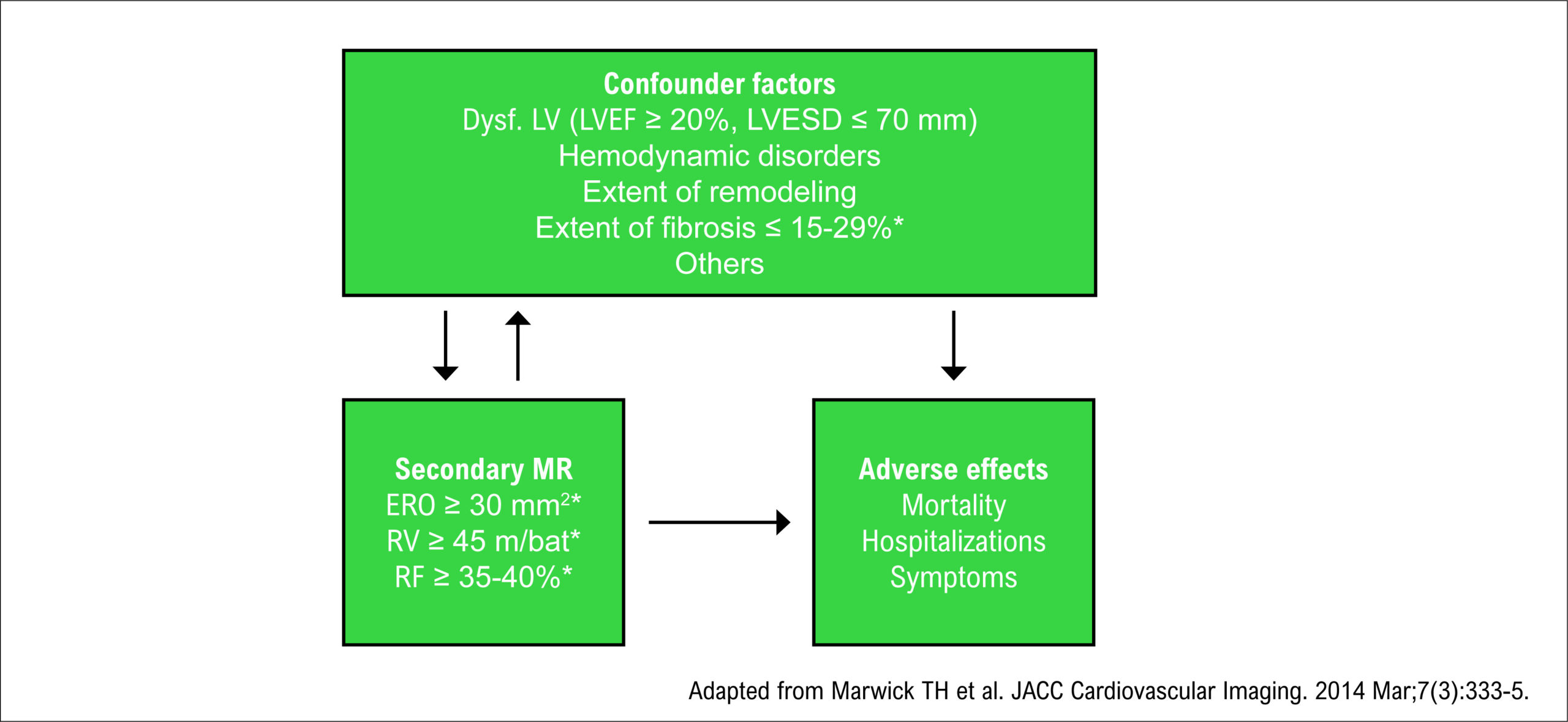
Secondary or functional mitral regurgitation (MR) is due to changes in the geometry of the left ventricle (LV) secondary to ventricular dysfunction. It occurs when an ischemic heart disease or a dilated cardiomyopathy of any etiology causes dilation of the LV, dilation of the mitral ring, and/or displacement of the papillary muscle, resulting in poor coaptation of the valve cusps and valve regurgitation. the American Heart Association indicates that 16,250 per million North Americans have secondary MR,, totaling more than 5 million cases in the United States of America alone, and this number is estimated to be even greater due to the continued growth and aging of the population. This is noteworthy, as secondary MR causes a poor prognosis and is an independent predictor of mortality.,

For many years, the mechanical intervention of secondary MR (surgical or percutaneous) has been restricted to cases refractory to conventional clinical treatment,, with evidence mainly supported by two important studies conducted by the Cardiothoracic Surgical Trials Network group., The first study randomized 301 patients with moderate ischemic MR and found no differences in ventricular geometry between patients who undergone surgical myocardial revascularization versus the combination of surgical revascularization and mitral valve repair. The second study surveyed 251 patients with severe MR and found no differences regarding mortality, in addition to the greater recurrence of mitral regurgitation and complication rates among patients treated with mitral valve repair versus valve replacement. Considering these two studies, the recommendations of the American Heart Association/American College of Cardiology and the Brazilian Guidelines for Valvular Heart Disease classified surgical or percutaneous mitral valve intervention as a Class IIb indication.

[…]

  • clinical trials
  • Echocardiography/methods
  • Heart Failure
  • Mitral Valve Insufficiency
Read Full Article
Creative Commons Attribution (CC BY) Creative Commons license
17/05/2021 DOI: 10.36660/abc.20200063
Figure 1
Original Article

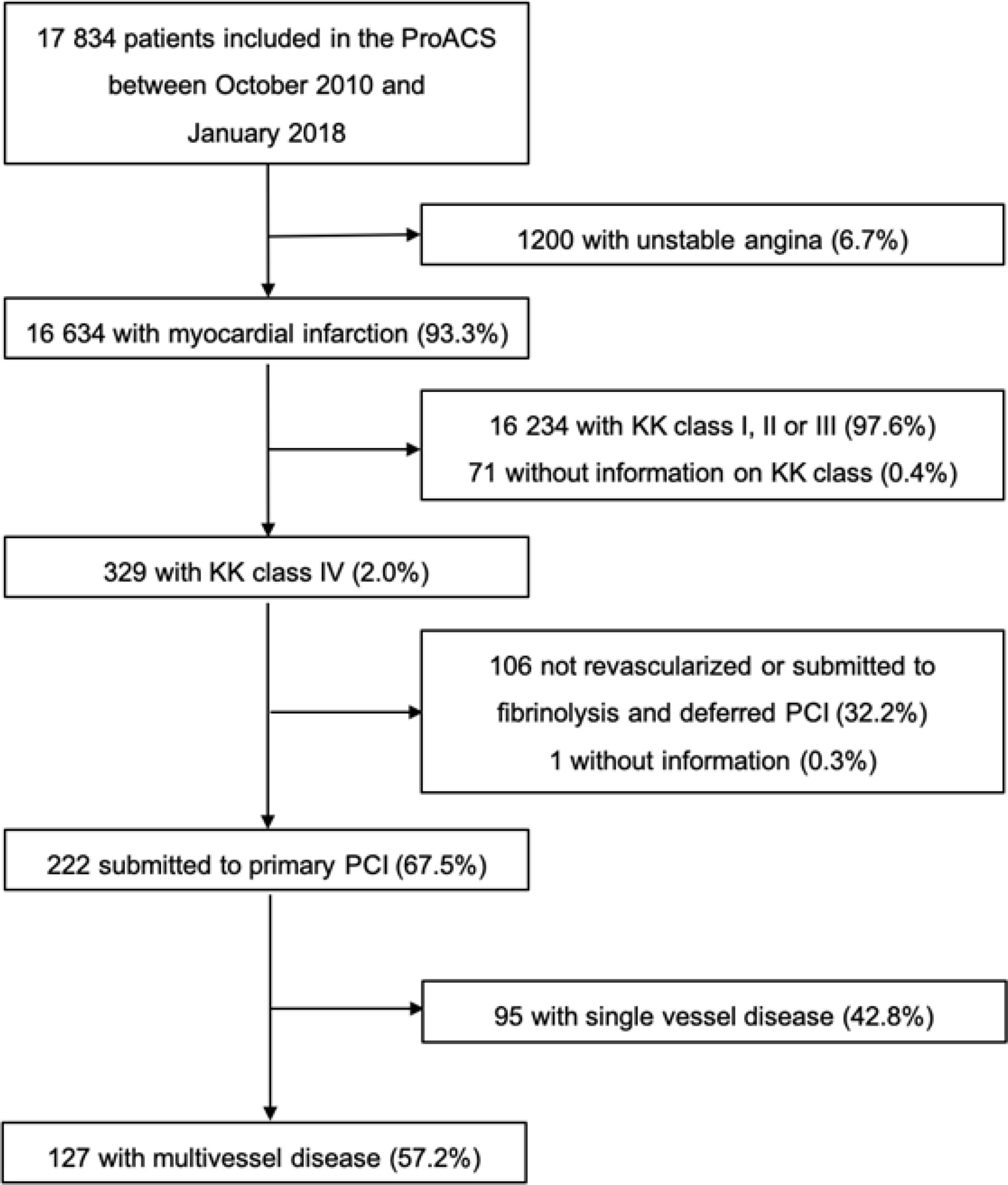
Revascularization Strategies in Patients with Acute Myocardial Infarction and Cardiogenic Shock: Results from the Portuguese Registry on Acute Coronary Syndromes

Sofia Alegria et al. Ana Marques Ana Catarina Gomes Ana Rita F. Pereira … Daniel Sebaiti Gonçalo Morgado Rita Calé Cristina Martins Adriana Belo Inês Rangel Hélder Pereira

Abstract

Background:

In patients with acute myocardial infarction (MI), cardiogenic shock (CS), and multivessel disease (MVD) questions remain unanswered when it comes to intervention on non-culprit arteries.

Objective:

This article aims to 1) characterize patients with MI, CS and MVD included in the Portuguese Registry on Acute Coronary Syndromes (ProACS); 2) compare different revascularization strategies in the sample; 3) identify predictors of in-hospital mortality among these patients.

Methods:

Observational retrospective study of patients with MI, CS and MVD included in the ProACS between 2010 and 2018. Two revascularization strategies were compared: complete during the index procedure (group 1); and complete or incomplete during the index hospitalization (groups 2-3). The primary endpoint was a composite of in-hospital death or MI. Statistical significance was defined by a p-value <0.05.

Results:

We identified 127 patients with MI, CS, and MVD (18.1% in group 1, and 81.9% in groups 2-3), with a mean age of 7012 years, and 92.9% of the sample being diagnosed with ST-segment elevation MI (STEMI). The primary endpoint occurred in 47.8% of the patients in group 1 and 37.5% in group 2-3 (p = 0.359). The rates of in-hospital death, recurrent MI, stroke, and major bleeding were also similar. The predictors of in-hospital death in this sample were the presence of left ventricle systolic dysfunction on admission (OR 16.8), right bundle branch block (OR 7.6), and anemia (OR 5.2) (p ≤ 0.02 for both).

Conclusions:

Among patients with MI, CS, and MVD included in the ProACS, there was no significant difference between complete and incomplete revascularization during the index hospitalization regarding the occurrence of in-hospital death or MI. (Arq Bras Cardiol. 2021; 116(5):867-876)
  • Acute coronary syndrome
  • Biomarkers
  • Cardiogenic
  • Intracranial Hemorrhage
  • left
  • Mortality
  • Myocardial Infarction
  • Myocardial Revascularization
  • Shock
  • Ventricular Dysfunction
Read Full Article
Creative Commons Attribution (CC BY) Creative Commons license
17/05/2021 DOI: 10.36660/abc.20190739
Figure 1
Research Letter

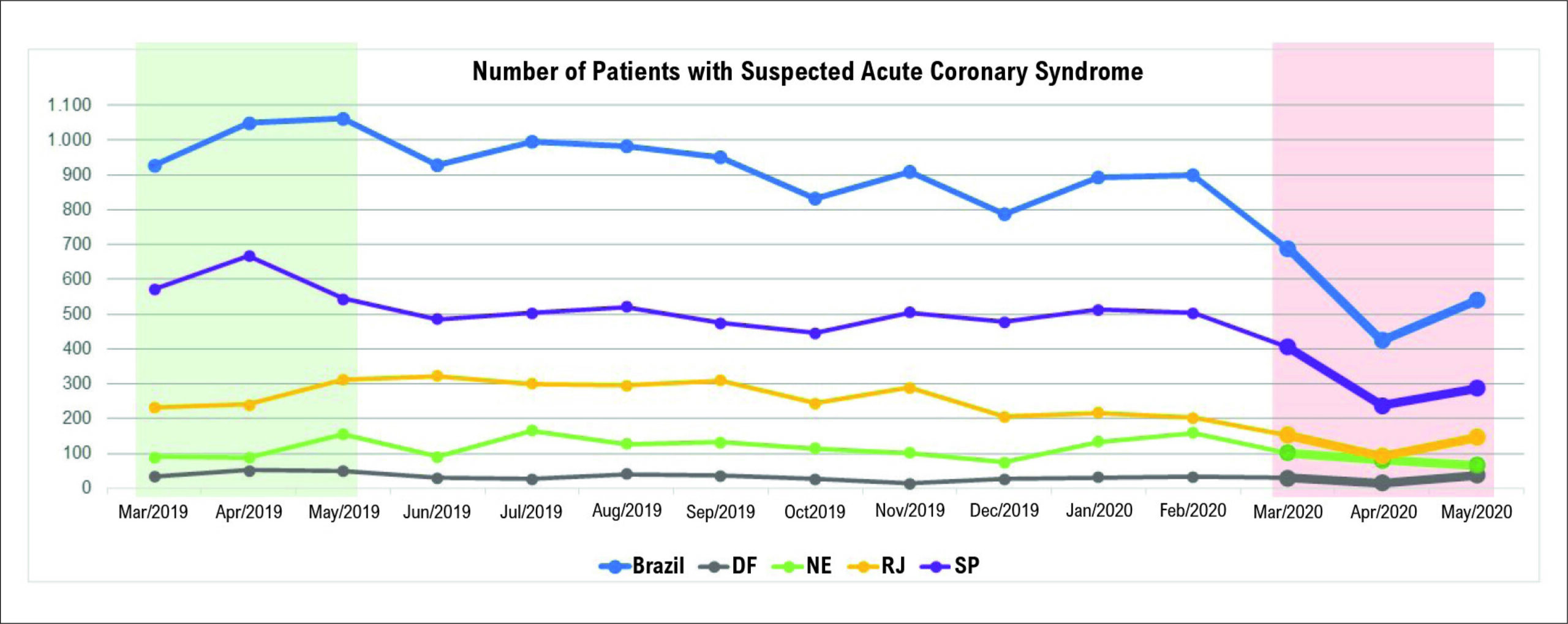
Reduction in the Number of Patients with Suspected and Confirmed Acute Coronary Syndrome during the early months of the Covid-19 Pandemic: Analysis of a Brazilian Network

Pedro Gabriel Melo de Barros e Silva et al. Ana Amaral Ferreira Dutra Adriana Bertolami Manfredi Pedro Paulo Nogueres Sampaio … Celso Musa Correa Hemilo Borba Griz Daniel Setta Valter Furlan

Introduction

The first reports of infections by the severe acute respiratory syndrome coronavirus 2 (SARS-CoV-2) occurred in December of 2019 in Wuhan, China., This disease (named as coronavirus disease-2019, Covid-19) rapidly spread globally and, on March 11, 2020, the World Health Organization (WHO) declared the state of pandemic., Lockdown was a common recommendation for countries affected by the outbreak.

Despite all the attention put on Covid-19 by the health authorities, other diseases could also be impacted by this new circumstance. Rates of acute cardiovascular diseases changed in countries such as Italy and United States, with a reduction in hospital admissions.– Previous national data regarding acute coronary syndrome (ACS) is already well and largely described, but these studies did not include the Covid-19 period., Thus, despite the fact that Brazil was the second most affected country when it comes to number of Covid-19 cases,9 the impact in hospital admissions due to suspected or confirmed ACS is still not well defined in both private and public Brazilian healthcare systems.

[…]

  • Acute Coronary Syndrome Pandemics
  • Chest Pain
  • Comparative Study
  • Epidemiology
  • Hospitals, Private
  • Hospitals, Public
Read Full Article
Creative Commons Attribution (CC BY) Creative Commons license
17/05/2021 DOI: 10.36660/abc.20200873 Views 2
Original Article

The Comparison between Two Risk Scores as for the Prediction of Coronary Microvascular Obstruction during Primary Percutaneous Intervention

Yuyang Xiao et al. Hua Chen Dongxia Liu Yanbo Wang … Wenlu Wang Qian Zhang Yuping Han Xianghua Fu

Abstract

Background:

For patients with ST-segment elevation myocardial infarction (STEMI) that are suffering from subsequent coronary microvascular functional and structural obstruction (CMVO), no specific and definitive therapeutic approaches of attenuation have been proven valid in up-to-date large-scale tests, which highlights the urge to address its early recognition.

Objectives:

This study aimed to compare the performance of two clinical risk scores with an objective measurement of CMVO during percutaneous coronary intervention (PCI) with STEMI.

Methods:

The Index of Microcirculatory Resistance (IMR) measurement was conducted and the baseline clinical and angiographic parameters were also recorded. The patients were divided into MO (Microvascular obstruction) or NMO (Non-microvascular obstruction) groups according to the post-procedure IMR value. The CMVO risk was evaluated for all participants by SAK and ATI predictive scores, respectively. Each system was calculated by summing the scores of all variables. The receiver operator characteristic (ROC) curves and the area under the curve (AUC) of two risk models were used to evaluate the discriminatory performance. An echocardiography was performed seven days after the procedure to evaluate left ventricular ejection fraction (LVEF). A two-sided P-value of <0.05 was considered statistically significant.

Results:

Among the 65 eligible STEMI patients, 48 patients were allocated in the NMO group and 17 in the MO group, with a CMVO incidence of 26.15%. There was no significant difference in the AUC between both scores. The LVEF evaluated for the NMO group was higher than that of MO group.

Conclusion:

Both SAK and ATI scores performed well in estimating CMVO risk after primary PCI for STEMI patients.

  • Coronary Obstruction
  • Forecasting
  • Myocardial Infarction
  • Percutaneous Coronary Intervention
  • Risk Index
Read Full Article
Creative Commons Attribution (CC BY) Creative Commons license
17/05/2021 DOI: 10.36660/abc.20200115 Views 1
Figure 1
Research Letter

The Evolution of Percutaneous Coronary Intervention in Latin America

Costantino Roberto Costantini et al. Rafael Michel de Macedo Marcos Antônio Denk Sergio Gustavo Tarbine … Lazaro Garcia Mario Fernando Camargo Maranhão Costantino Ortiz Costantini

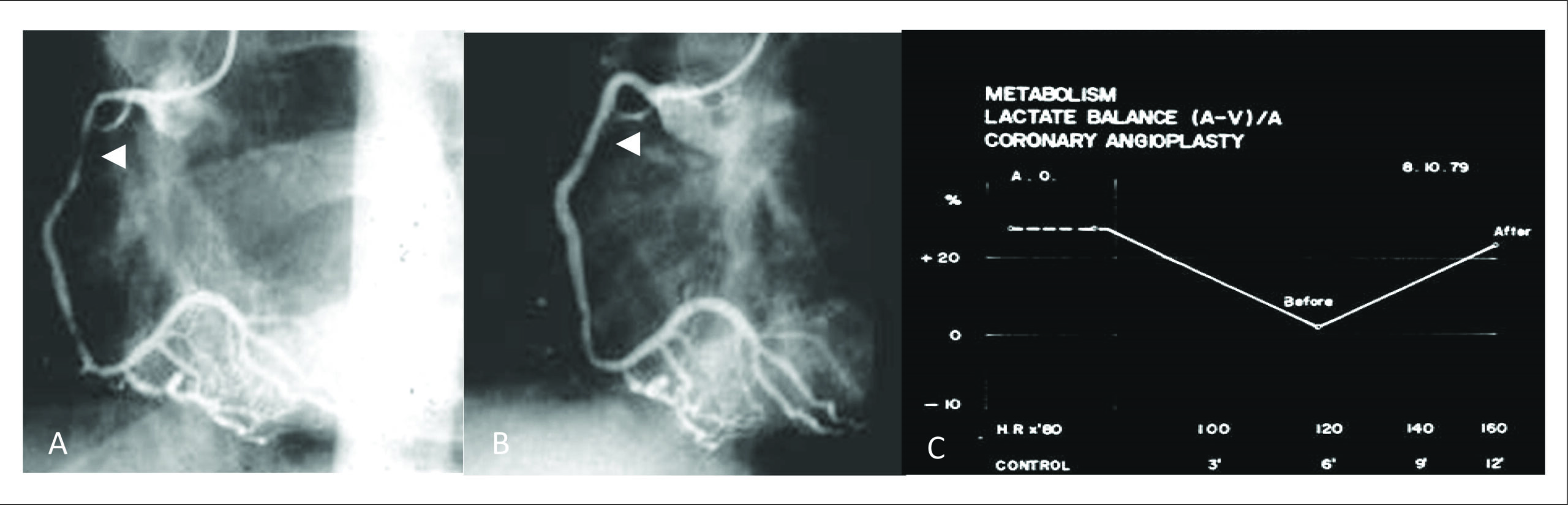
In August 1979, two years and one month after the first percutaneous coronary intervention (PCI) was performed in the world by Andreas Grüntzig, we received at Santa Casa de Misericordia in Curitiba (SCMC) a 55-year-old male patient (A.S.O.) with Canadian Cardiovascular Society (CCS) class 2 stable angina. Coronary angiography showed a severe (75-80 DS%) lesion in the middle segment of the Right Coronary Artery (RCA). The left coronary artery system did not have any significant atherosclerotic lesion and the left ventriculogram showed mild inferior wall hypokinesia with competent mitral and aortic valves.

That was the opportunity to put into practice the technique described by Gruntzig et al. for the first time in Latin America. The clinical presentation and the angiographic characteristics of the lesion met all the criteria described by Gruntzig: Single lesion, short length (<10mm), proximal arterial segment, without vasospasm, concentric, non-calcified and feasible for CABG. Thus, after discussing it with the clinical and cardiovascular surgery staff, it was decided to propose the dilation of the RCA obstruction to the patient as an attempt to treat his coronary disease.

[…]

  • Angina Pectoris
  • Angioplasty Balloon, Coronary/trends
  • Angioplasty, Balloon, Coronary/history
  • Cineangiography/history
  • Clinical Evolution
  • Myocardium/metabolism
  • Stents
Read Full Article
Creative Commons Attribution (CC BY) Creative Commons license
17/05/2021 DOI: 10.36660/abc.20200927
Editorial

Obesity, Body Fat Content and Cardiovascular Outcome: Beyond Body Mass Index

Desiderio Favarato

Obesity pandemic has been associated with an increment of cardiovascular disease (CVD). Diagnosis of CVD is delivered ten years early in obese people.

Although body mass index (BMI) has been widely used as the main index of obesity, it is not an accurate predictor of cardiovascular disease. There are other ways to measure obesity, varying from a simple waist circumference (WC) measurement to more sophisticated methods, like bioelectrical impedance and dual energy X-ray densitometry.

[…]

  • abdominal circumference
  • Adipose Tissue
  • body mass index
  • Cardiovascular Diseases
  • Obesity
  • Risk Factors
Read Full Article
Creative Commons Attribution (CC BY) Creative Commons license
17/05/2021 DOI: 10.36660/abc.20210074
Figure 1
Original Article

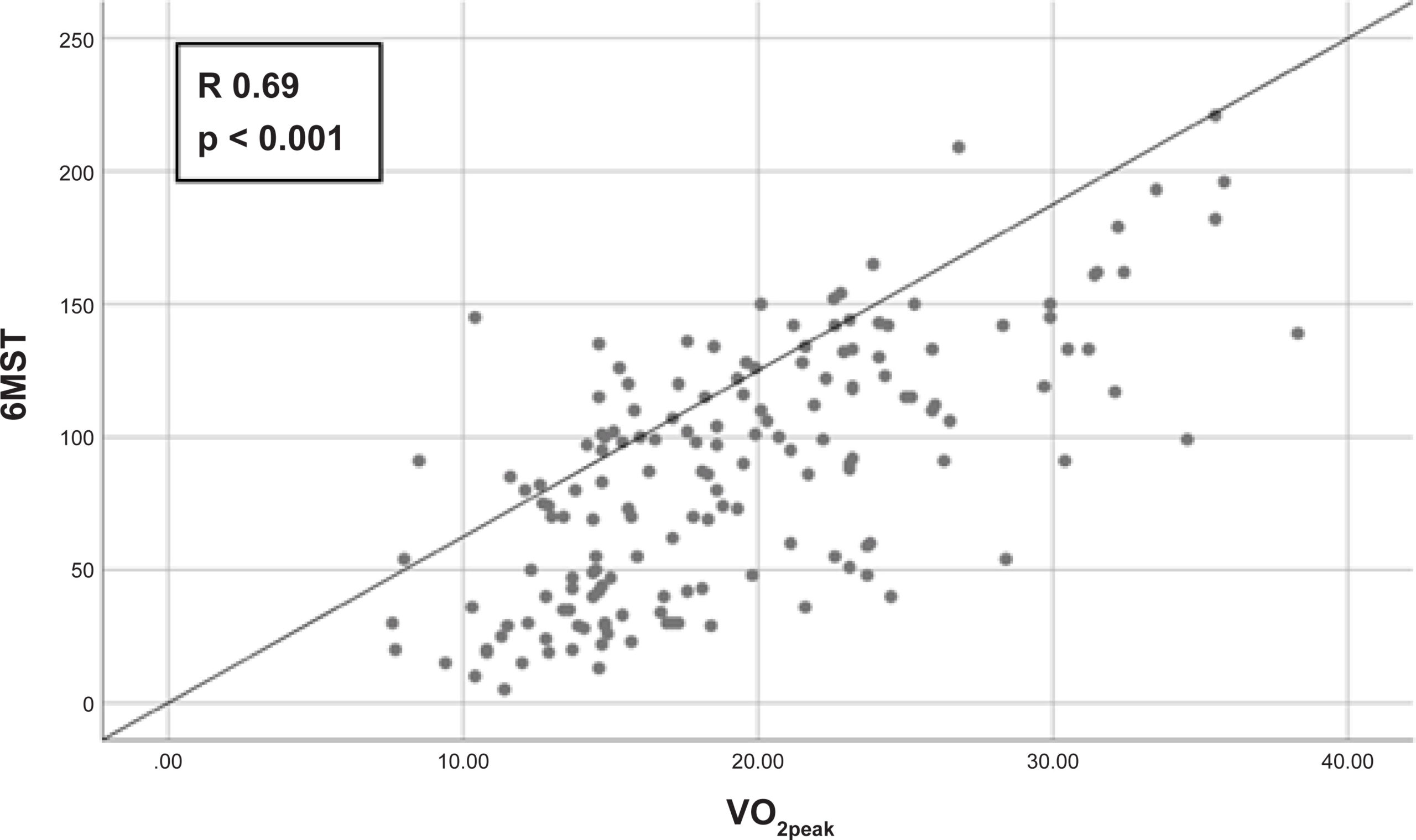
The Six-Minute Step Test as a Predictor of Functional Capacity according to Peak VO2 in Cardiac Patients

Luiz Eduardo Fonteles Ritt et al. Eduardo Sahade Darzé Gustavo Freitas Feitosa Jessica Santana Porto … Gabriela Bastos Renata Braga Linhares de Albuquerque Cristiane Miura Feitosa Thaissa Costa Claro Eloisa Ferreira Prado Queila Borges de Oliveira Ricardo Stein

Abstract

Background:

Six-minute step test (6MST) is a simple way to evaluate functional capacity, although it has not been well studied in patients with coronary artery disease (CAD) or heart failure (HF).

Objective:

Analyze the association between the 6MST and peak oxygen uptake (VO2peak) and develop an equation for estimating VO2peak based on the 6MST, as well as to determine a cutoff point for the 6MST that predicts a VO2peak ≥20 mL.Kg-1.min-1

Methods:

In 171 patients who underwent the 6MST and a cardiopulmonary exercise test, correlation, regression, and ROC analysis were used and a p < 0.05 was admitted as significant.

Results:

mean age was 60±14 years and 74% were male. Mean left ventricle ejection fraction was 57±16%, 74% had CAD and 28% had HF. Mean VO2peak was 19±6 mL.Kg-1.min-1 and mean 6MST performance was 87±45 steps. Association between 6MST and VO2peak was r 0.69 (p <0.001). The model VO2peak =19.6 + (0.075 x 6MST) – (0.10 x age) for men and VO2peak =19.6 + (0.075 x 6MST) – (0.10 x age) – 2 for women could predict VO2peak based on 6MST results (adjusted R 0.72; adjusted R2 0.53). The most accurate cutoff point for 6MST to predict a VO2peak ≥20 mL.Kg-1.min-1 was >105 steps (AUC 0.85; 95% CI 0.79 -0.90; p <0.001).

Conclusion:

An equation for predicting VO2peak based on 6MST results was derived, and a significant association was found between 6MST and VO2peak. The cutoff point for 6MST, which predicts a VO2peak ≥20 mL.Kg-1.min-1, was >105 steps. (Arq Bras Cardiol. 2021; 116(5):889-895)

  • Exercise Test
  • Heart Failure
  • Mortalidade
  • Oxygen Consumption
  • Prognóstico
  • Respiratoty Capacity
  • Tidal Volume
Read Full Article
Creative Commons Attribution (CC BY) Creative Commons license
17/05/2021 DOI: 10.36660/abc.20190624 Views 1
Editorial

Supplementation of Vitamin D

Marina P. Okoshi et al. Rosana M. Cortez Luana U. Pagan Paula F. Martinez Filipe W. L. Pereira

Vitamin D (Vit D) is a fat-soluble vitamin that is essential in mineral and bone metabolism. Vit D status is evaluated by measuring serum 25-hydroxyvitamin D [25(OH)D]) levels. Currently, Vit D supplementation is mainly indicated in cases of vitamin deficiency. However, there are two main issues concerning Vit D supplementation. The first is related to the definition of the lower limit of normal for serum 25(OH) D. In recent years, extensive clinical research has revealed that large percentages of global populations have low Vit D levels, i.e., serum [25(OH)D] concentrations below 20 ng/mL. However, several investigators have considered that this value is probably overestimated, therefore putting more people in need for supplementation. Several medical societies are now intensively debating on when to screen for Vit D deficiency and when to supplement Vit D.,

The other issue concerning Vit D supplementation relates to the fact that convincing experimental and epidemiological studies have suggested that Vit D deficiency is associated with increased risk of chronic cardiovascular and immunological diseases and cancer. Therefore, Vit D has been supplemented in the general population without a specific indication. However, more recent studies have reported that Vit D supplementation for preventing or controlling chronic diseases such as cancer, diabetes mellitus, dementia or cardiovascular disease has failed to provide benefits.– Furthermore, not only were no benefits found. In advanced heart failure, a daily Vit D supplement was associated with a greater need for mechanical circulatory support devices, which indicates caution regarding long-term supplementation.

[…]

  • Bone and Bones/metabolism
  • Dietary Supplements/adverse effects
  • nutritional status
  • Vitamin D
Read Full Article
Creative Commons Attribution (CC BY) Creative Commons license
17/05/2021 DOI: 10.36660/abc.20210181 Views 1
Editorial

The Six-Minute Step Test as an Alternative for Functional Capacity Assessment in Patients with Cardiovascular Diseases

Raphael Mendes Ritti-Dias et al. Breno Quintella

Functional capacity is an important morbimortality marker in patients with cardiopulmonary diseases., Although the direct measurement of peak oxygen consumption (VO2peak), using cardiopulmonary tests (the gold standard), is the most adequate method for assessing functional capacity, its use in clinical practice is still restricted due to its high cost.,

The 6-minute step test (6MST), in addition to being fast, has as its main advantage the need for minimum space for its performance. These factors, added to the fact that it does not require audible signals, become very attractive for its use in clinics and hospitals. Step tests have been used for a long time to assess functional capacity, especially in healthy individuals or those with lung diseases. In patients with pulmonary diseases, a positive correlation (r = 0.76) was observed between the 6MST and the 6-minute walk test (6MWT), a test that requires more space to be carried out. Interestingly, correlation data between the 6MST and the direct measurement of functional capacity are scarce, especially in patients with cardiovascular diseases.

[…]

  • Athletes
  • Blood Pressure
  • Endothelium
  • Exercise
  • Football
  • Heredity/genetic;
  • Hypertension
  • Sports
Read Full Article
Creative Commons Attribution (CC BY) Creative Commons license
17/05/2021 DOI: 10.36660/abc.20210252 Views 1
Editorial

T1 Mapping in Heart Failure: Prognostic Implications

Sarah Moharem-Elgamal

Myocardial fibrosis leads to impaired diastolic and systolic function and is associated with increased major adverse cardiovascular events. It is a structural correlate that can be found in the different stages of heart failure. The two main types of myocardial fibrosis are interstitial fibrosis and replacement fibrosis. Interstitial fibrosis is a reversible process that occurs early in the disease process as increased collagen synthesis in diffuse microscopic distribution within the myocardium and sometimes by localized perivascular distribution. Replacement fibrosis typically occurs in the later stages of the disease after irreversible myocyte injury or death, in which cell apoptosis triggers fibroblasts and promotes macroscopic deposition of collagen fibrous tissue in the myocardium.

Cardiac magnetic resonance (CMR) has the capability to accurately quantify ventricular volumes and ejection fraction, as well as the non-invasive characterization of the myocardium. These unique features have led to the increased use of CMR in the assessment of patients with heart failure (HF). CMR can detect the presence and extent of replacement fibrosis through late gadolinium enhancement imaging and diffuse interstitial fibrosis through native T1 mapping. Interstitial fibrosis identified by native T1 mapping has been used as a marker of disease activity,– risk stratification and monitoring of the therapeutic management in heart failure patients.

[…]

  • Cellular Apoptose Susceptibility Protein
  • Endomyocardial Fibrosis
  • Fibroblasts
  • Heart Failure
  • Magnetic Resonance Spectroscopy/ methods
  • Mortality
Read Full Article
Creative Commons Attribution (CC BY) Creative Commons license
17/05/2021 DOI: 10.36660/abc.20210205
Figure 1
Brief Communication

Heart Failure with Supra-normal Left Ventricular Ejection Fraction – State of the Art

Ziyin Huang et al. Yufeng Jiang Yafeng Zhou

Abstract

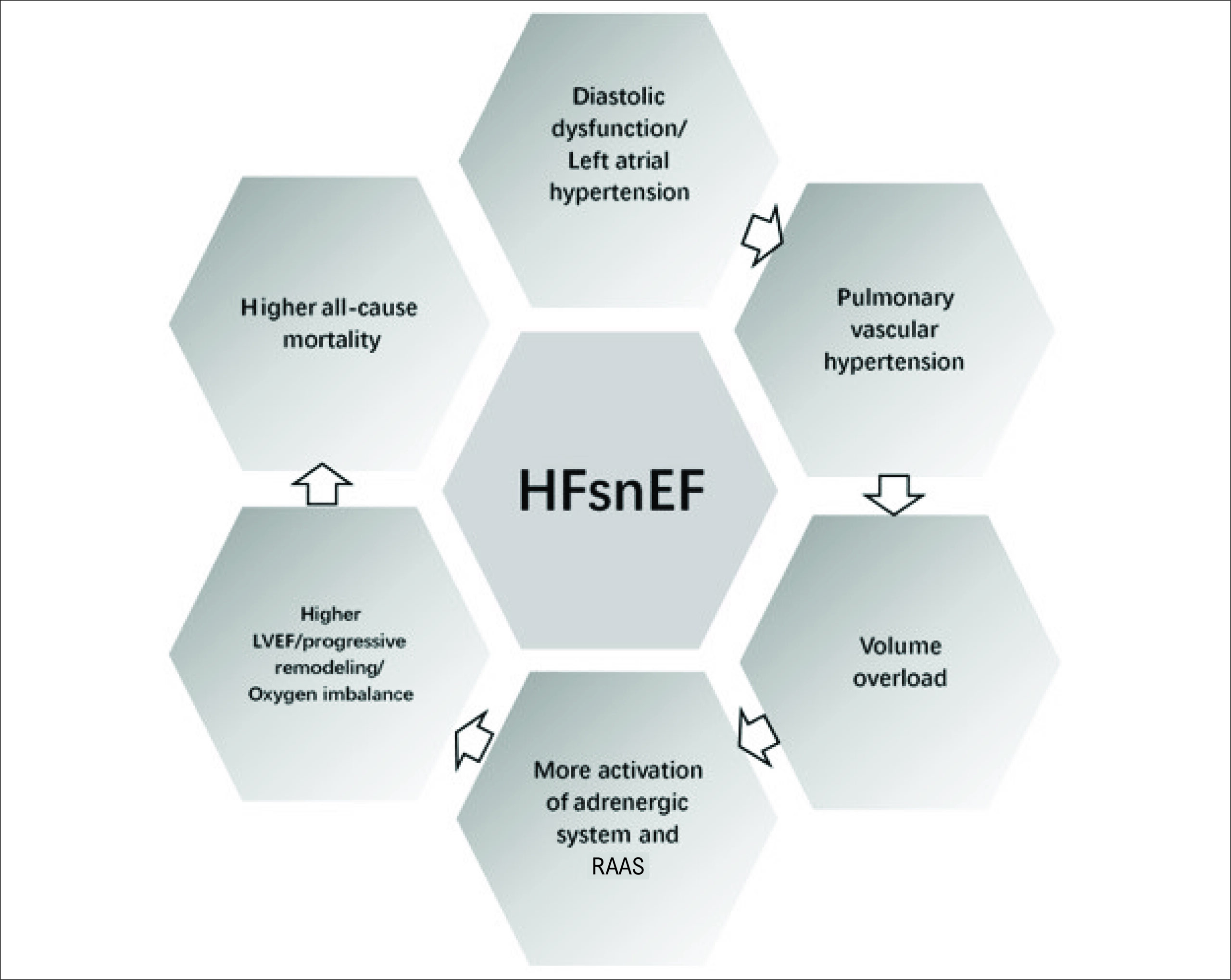
In 2019, an article published in the European Heart Journal recognized for the first time heart failure (HF) with left ventricular ejection fraction (LVEF)≥ 65% as a new HF phenotype, heart failure with supra-normal left ventricular ejection fraction (HFsnEF), with the main purpose of promoting research on this new category. They analyzed mortality in people with HF and found that there was a u-shaped relationship between mortality and LVEF. Accordingly, HFsnEF patients had a higher all-cause mortality compared with other patients diagnosed with HF with preserved ejection fraction (HFpEF). This article describes the current situation of HFsnEF and discusses future perspectives based on the preliminary results of our group. To better treat patients with HFsnEF, it is fundamental that cardiologists and physicians understand the differences and similarities of this new phenotype.

  • Cardiomegaly
  • Echocardiography/methods
  • Heart Failure
  • Heart Failure, Diastolic
  • Mortality
  • Prognosis
  • Stroke Volume
Read Full Article
Creative Commons Attribution (CC BY) Creative Commons license
17/05/2021 DOI: 10.36660/abc.20190835
Original Article

The Direct Effect of Body Mass Index on Cardiovascular Outcomes among Participants Without Central Obesity by Targeted Maximum Likelihood Estimation

Hossein Mozafar Saadati et al. Siamak Sabour Mohammad Ali Mansournia Yadollah Mehrabi Seyed Saeed Hashemi Nazari

Background:

Body mass index (BMI) is the most commonly used index to categorize a person as obese or non-obese, which is subject to important limitations.

Objective:

To evaluate the direct effect of BMI on cardiovascular outcomes among participants without central obesity.

Methods:

This analysis included 14,983 males and females aged 45-75 years from the Atherosclerosis Risk in Communities Study (ARIC). BMI was measured as general obesity, and waist circumference (WC), waist-to-hip ratio (WHR) and hip circumference as central obesity. Targeted maximum likelihood estimation (TMLE) was used to estimate the total effects (TEs) and the controlled direct effects (CDEs). The proportion of TE that would be eliminated if all participants were non-obese regarding central obesity was computed using the proportion eliminated (PE) index. P <0.05 was considered statistically significant. Analyses were performed in the TMLE R package.

Results:

The risk of cardiovascular outcomes attributed to BMI was significantly reversed by eliminating WHR obesity (p<0.001). The proportion eliminated of BMI effects was more tangible for non-obese participants regarding WC (PE=127%; 95%CI (126,128)) and WHR (PE=97%; 95%CI (96,98)) for coronary heart disease (CHD), and WHR (PE=92%; 95%CI (91,94)) for stroke, respectively. With respect to sex, the proportion eliminated of BMI effects was more tangible for non-obese participants regarding WHR (PE=428%; 95%CI (408,439)) for CHD in males, and WC (PE=99%; 95%CI (89,111)) for stroke in females, respectively.

Conclusion:

These results indicate different potential effects of eliminating central obesity on the association between BMI and cardiovascular outcomes for males and females. (Arq Bras Cardiol. 2021; 116(5):879-886)

  • body mass index
  • cardiovascular
  • Central obesity
  • controlled direct effect
  • proportion eliminated
Read Full Article
Creative Commons Attribution (CC BY) Creative Commons license
17/05/2021 DOI: 10.36660/abc.20200231 Views 1
Editorial

Walking Training Improve Ambulatorial Blood Pressure Variability in Claudicants

Leandro Franzoni et al. Gabriel Pereira de Reis Zubaran Stephanie Bastos da Motta

Peripheral arterial disease (PAD) has been shown to be increasingly prevalent worldwide. Clinical diagnosis is based on evaluation of the ankle brachial index (ABI), where the ankle systolic blood pressure (BP) is divided by the systolic BP of the arm.² Value <0.9 indicate the presence of PAD. Reduction in systolic BP of the ankle is due to atherosclerosis in the lower limbs. Individuals with PAD have significant hemodynamic abnormalities, such as an increase in BP levels. In addition, high BP variability is correlated with the development of PAD in diabetic individuals.

It is important to reduce BP levels in PAD individuals. Physical training is a useful tool that can assist the treatment of clinical symptoms., It was what Chehuen et al. did; they investigated the effect of walking training (WT) on ambulatory BP variability in PAD individuals. It is an elegant randomized clinical trial in which individuals with PAD and claudication symptoms were divided into two groups: control (n=16) and WT (n=19). 24-hour ambulatory BP was assessed before and after 12 weeks. As an outcome, they evaluated the mean systolic BP and ambulatory diastolic BP, as well as variables representing systolic, diastolic and average BP variability (24-hour standard deviation – SD24, awake and asleep weighted standard deviation – SDdn, and 24-hour average real variability – ARV24).

[…]

  • Ankle Brachial Index
  • Arterial Pressure
  • Atherosclerosis
  • Diabetes Melllitus
  • Intermittent Clauduication
  • Peripheral Arterial Disease
  • Prevalence
  • walking
Read Full Article
Creative Commons Attribution (CC BY) Creative Commons license
17/05/2021 DOI: 10.36660/abc.20210140
Editorial

No Reflow in Acute Coronary Syndromes: An Old Foe or a New Frontier?

Stefano Garzon

According to the World Health Organization (WHO), ischemic heart disease is the leading cause of death worldwide, accounting for 16% of the world’s deaths in 2019. However, due to continuous evolution in medical treatment and revascularization techniques, a steady decline in death rates in acute coronary syndromes (ACS) has been observed in recent years.

Currently, percutaneous coronary intervention (PCI) is the gold-standard treatment for ST-elevation myocardial infarction (STEMI) and a mainstay therapeutic option for non-STEMI ACS and stable coronary artery disease. Nonetheless, and particularly in STEMI patients, PCI can be very challenging at times. One of the most dreaded events during PCI in STEMI is the phenomenon commonly referred as “no-reflow”, an impaired myocardial perfusion secondary to microvascular obstruction without angiographic evidence of coronary obstruction(6). Initially described in animal models,, it was also recognized in humans in the following decades,, being first described after PCI for STEMI by Feld in 1992. Its occurrence is related to poorer short- and long-term outcomes following PCI,, and it is present in more than 20% of patients undergoing primary PCI for STEMI.

[…]

  • Cardiovascular Diseases, mortality
  • Coronary Artery Disease
  • Myocardial Infarction
  • Myocardial Ischemic
  • percutaneous coronary interventions
  • Risk Factors
  • Vascular Resistance
Read Full Article
Creative Commons Attribution (CC BY) Creative Commons license
17/05/2021 DOI: 10.36660/abc.20210118 Views 1
Figure 1
Original Article

Percutaneous Removal of Cardiac Leads in a Single Center in South America

Bruna Costa Lemos Silva Di Nubila et al. Gustavo de Castro Lacerda Helena Cramer Veiga Rey Rodrigo Minati Barbosa

Abstract

Background:

In the last decade, the number of cardiac electronic devices has risen considerably and consequently the occasional need for their removal. Concurrently, the transvenous lead removal became a safe procedure that could prevent open-heart surgery.

Objective:

The primary objective of this study was to describe the successful performance and the complication rates of pacemaker removals in a Brazilian public hospital. Our secondary aim was to describe the variables associated to successes and complications.

Methods:

A retrospective case series was conducted in patients submitted to pacemaker removal in a Brazilian public hospital from January 2013 to June 2018. Removal, explant, extraction, success and complication rates were defined by the 2017 Heart Rhythm Society Guideline. Categorical variables were compared using x2 or Fisher’s tests, while continuous variables were compared by unpaired tests. A p-value of 0.05 was considered statistically significant.

Results:

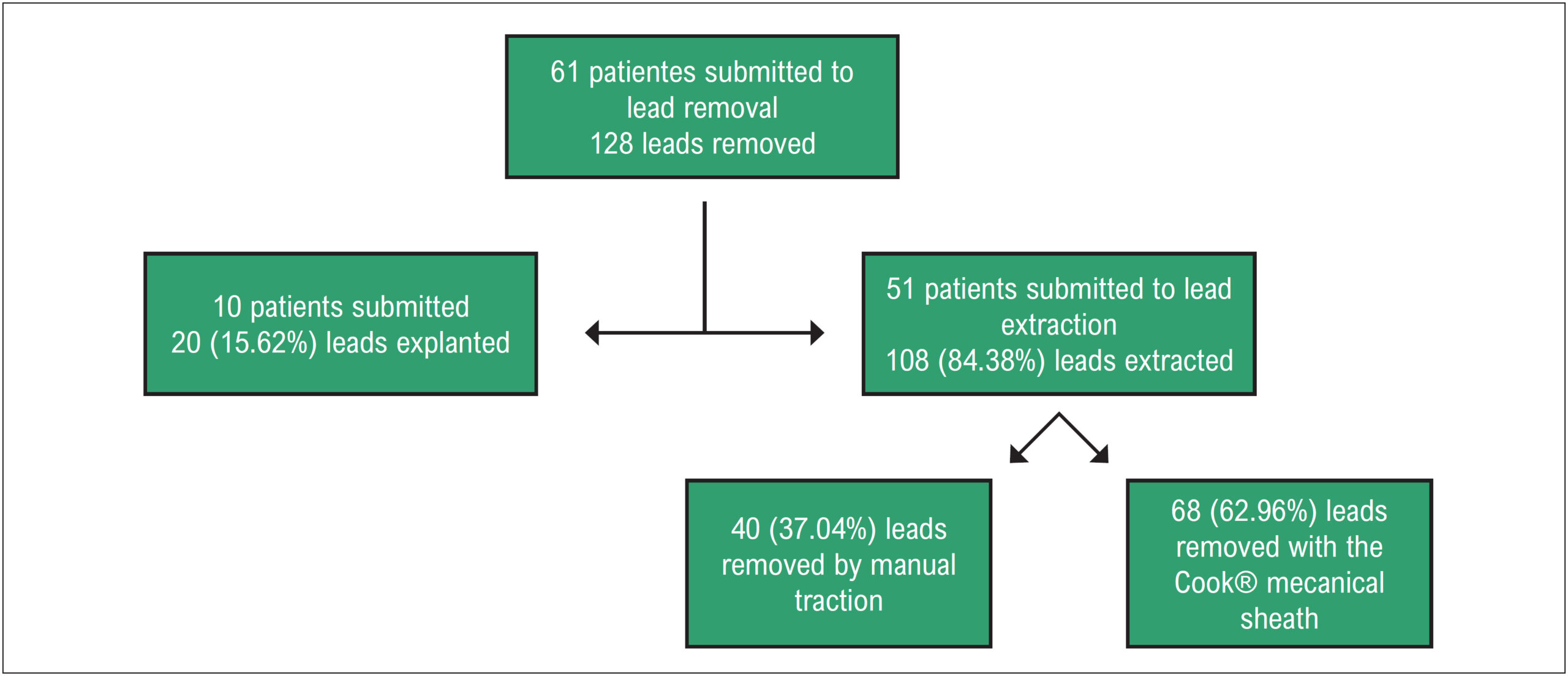
Cardiac device removals were performed in 61 patients, of which 51 were submitted to lead extractions and 10 to lead explants. In total, 128 leads were removed. Our clinical success rate was 100% in the explant group and 90.2% in the extraction one (p=0.58). Major complications were observed in 6.6% patients. Procedure failure was associated to older right ventricle (p=0.05) and atrial leads (p=0,04). Procedure duration (p=0.003) and need for blood transfusion (p<0,001) were associated to more complications.

Conclusion:

Complications and clinical success were observed in 11.5% and 91.8% of the population, respectively. Removal of older atrial and ventricular leads were associated with lower success rates. Longer procedures and blood transfusions were associated with complications.

  • Artificial Pacemaker
  • Cardiac Resynchronization Therapy
  • Implantable Electrodes
Read Full Article
Creative Commons Attribution (CC BY) Creative Commons license
17/05/2021 DOI: 10.36660/abc.20190726 Views 2
Figure 1
Original Article

Vitamin D Supplementation Induces Cardiac Remodeling in Rats: Association with Thioredoxin-Interacting Protein and Thioredoxin

Priscila P. dos Santos et al. Bruna P. M. Rafacho Andrea F. Gonçalves Vanessa C. M. Pires … Meliza G. Roscani Paula S. Azevedo Bertha F. Polegato Marcos F. Minicucci Ana Angélica H. Fernandes Suzana E. Tanni Leonardo A. M. Zornoff Sergio A. R. de Paiva

Abstract

Background:

Vitamin D (VD) has been shown to play an important role in cardiac function. However, this vitamin exerts a biphasic “dose response” curve in cardiovascular pathophysiology and may cause deleterious effects, even in non-toxic doses. VD exerts its cellular functions by binding to VD receptor. Additionally, it was identified that the thioredoxin-interacting protein (TXNIP) expression is positively regulated by VD. TXNIP modulate different cell signaling pathways that may be important for cardiac remodeling.

Objective:

To evaluate whether VD supplementation lead to cardiac remodeling and if TXNIP and thioredoxin (Trx) proteins are associated with the process.

Methods:

A total of 250 Male Wistar rats were allocated into three groups: control (C, n=21), with no VD supplementation; VD3 (n = 22) and VD10 (n=21), supplemented with 3,000 and 10,000 IU of VD/ kg of chow respectively, for two months. The groups were compared by one-way analysis of variance (ANOVA) and Holm-Sidak post hoc analysis, (variables with normal distribution), or by Kruskal-Wallis test and Dunn’s test post hoc analysis. The significance level for all tests was 5%.

Results:

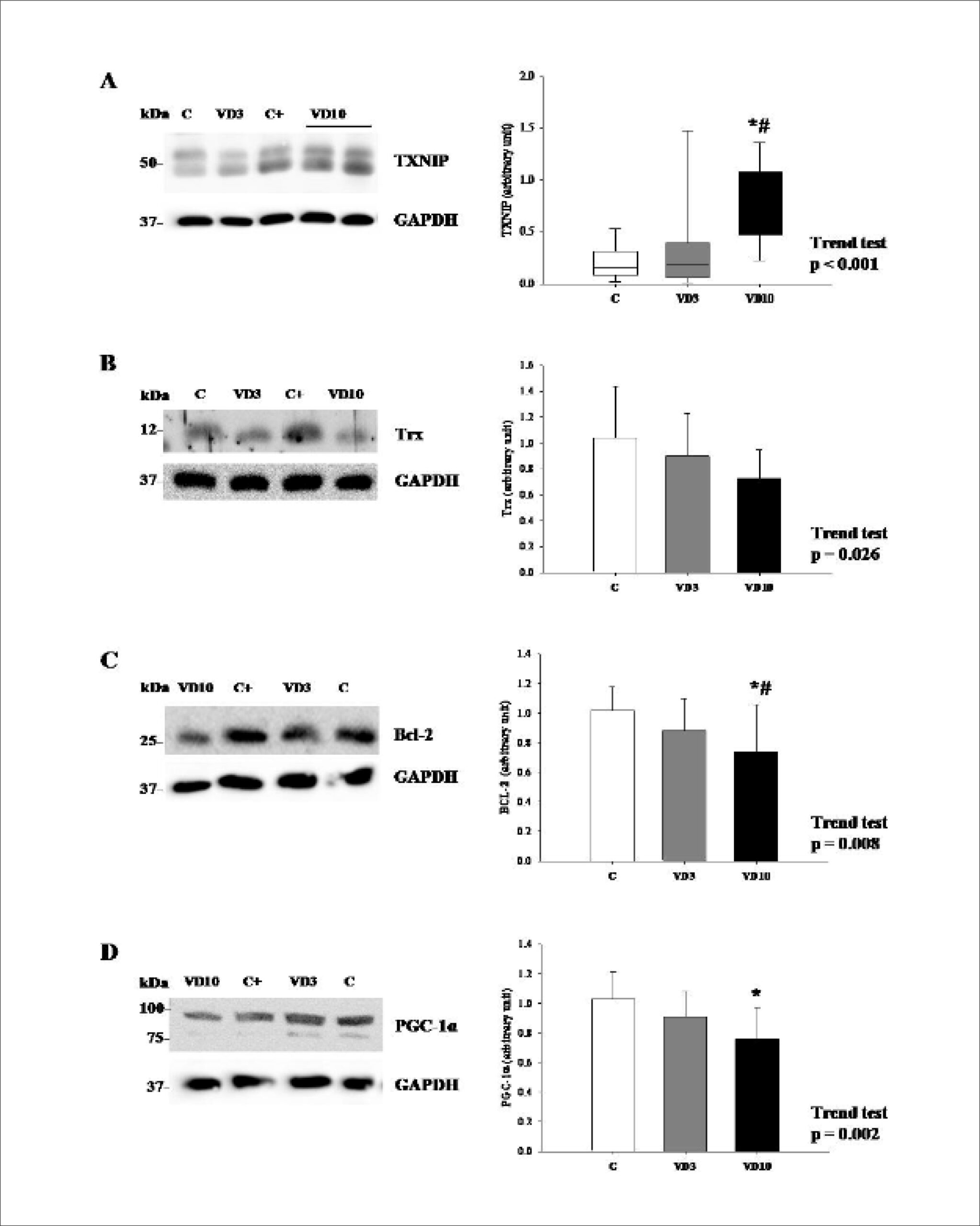
TXNIP protein expression was higher and Trx activity was lower in VD10. The animals supplemented with VD showed increased lipid hydroperoxide and decreased superoxide dismutase and glutathione peroxidase. The protein Bcl-2 was lower in VD10. There was a decrease in fatty acid β-oxidation, tricarboxylic acid cycle and electron transport chain with shift to increase in glycolytic pathway.

Conclusion:

VD supplementation led to cardiac remodeling and this process may be modulated by TXNIP and Trx proteins and consequently oxidative stress.

  • Oxidative Stress
  • Rats
  • Thioredoxins
  • Ventricular Remodeling
  • Vitamin D
Read Full Article
Creative Commons Attribution (CC BY) Creative Commons license
17/05/2021 DOI: 10.36660/abc.20190633 Views 1
Figure 1
Original Article

Walking Training Improves Ambulatory Blood Pressure Variability in Claudication

Marcel da Rocha Chehuen et al. Gabriel Grizzo Cucato Celso Ricardo Fernandes de Carvalho Antonio Eduardo Zerati … Anthony Leicht Nelson Wolosker Raphael Mendes Ritti-Dias Claudia Lucia de Moraes Forjaz

Background:

Walking training (WT) improves walking capacity and reduces clinic blood pressure (BP) in patients with peripheral artery disease (PAD), but its effects on ambulatory BP remains unknown.

Objective:

To investigate the effect of 12 weeks of WT on ambulatory BP and its variability in patients with PAD.

Methods:

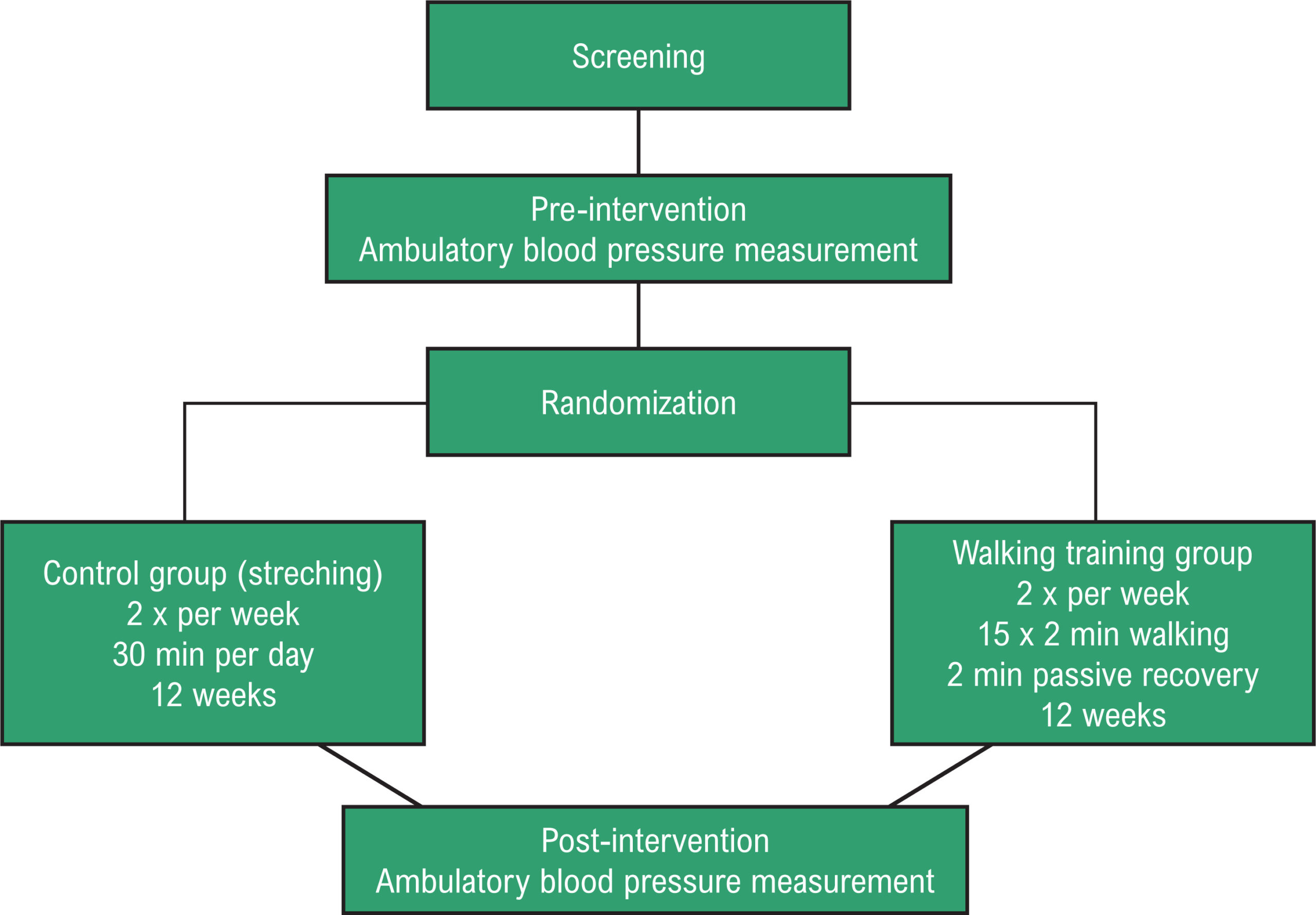
Thirty-five male patients with PAD and claudication symptoms were randomly allocated into two groups: control (n = 16, 30 min of stretching) and WT (n = 19, 15 bouts of 2 min of walking at the heart rate of leg pain threshold interspersed by 2 min of upright rest). Before and after 12 weeks, 24-hour ambulatory BP was assessed. Ambulatory BP variability indices assessed at both time points included the 24-hour standard deviation (SD24), the awake and asleep weighted standard deviation (SDdn), and the 24-hour average real variability (ARV24). Data were analyzed by mixed two-way ANOVAs, considering P<0.05 as significant.

Results:

After 12 weeks, neither group had significant changes in 24-hour, awake and sleep BPs. The WT decreased systolic and mean BP variabilities (Systolic BP – 13.3±2.8 vs 11.8±2.3, 12.1±2.84 vs 10.7±2.5 and 9.4±2.3 vs 8.8±2.2 mmHg); Mean BP – 11.0±1.7 vs 10.4±1.9, 10.1±1.6 vs 9.1±1.7 and 8.0.±1.7 vs 7.2±1.5 mmHg) for SD24, SDdn and ARV24, respectively). Neither group had significant changes in diastolic BP variabilities after 12 weeks.

Conclusions:

The WT does not change ambulatory BP levels but decreases ambulatory BP variability in patients with PAD. This improvement may have a favorable impact on the cardiovascular risk of patients with symptomatic PAD. (Arq Bras Cardiol. 2021; 116(5):898-905)

  • Blood Pressure
  • Blood Pressure Monitoring, Ambulatory
  • Endurance Training
  • Intermittent Claudication
  • Muscle Weakness
  • walking
Read Full Article
Creative Commons Attribution (CC BY) Creative Commons license
17/05/2021 DOI: 10.36660/abc.20190822 Views 1
Figure 1
Original Article

Comparison of the Outcomes between Coronary No-Reflow and Slow-Flow Phenomenon in Non-STEMI Patients

Mustafa Ahmet Huyut

Abstract

Background:

Coronary slow-flow phenomenon (CSFP) and coronary no-reflow phenomenon (CNP) are associated with increased risk of major cardiovascular adverse events (MACE).

Objectives:

This study aimed to evaluate and compare the one-year clinical follow-up outcomes among patients with CNP and CSFP who underwent percutaneous coronary interventions (PCI) in non-ST elevation myocardial infarction (NSTEMI).

Methods:

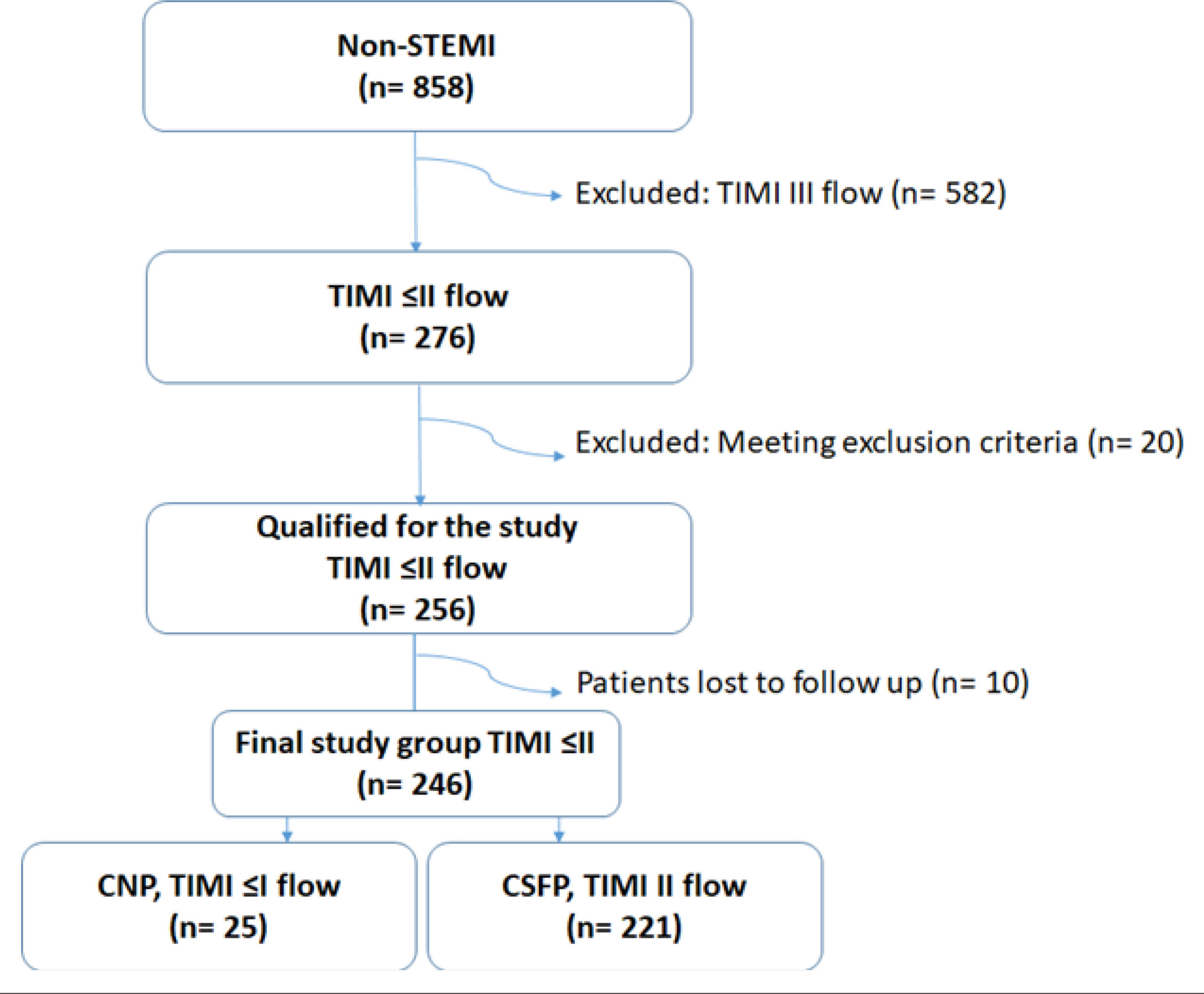
This study included a total of 858 patients who were diagnosed with NSTEMI and underwent PCI within 24 h of symptom onset. The patients were divided into two groups, the CSFP group (n=221) and the CNP group (n=25), regarding the angiographic characteristics of thrombolysis in myocardial infarction (TIMI) flow of the infarct-related artery. Patients were followed for one-year. A p-value of <0.05 was considered significant.

Results:

CNP was observed in 2.91%, and CSFP was observed in 25.75% of the patients. Clinical endpoints analyzed that stroke was significantly higher in the CNP group than in the CSFP group (6 (24%) vs. 6 (2.70%), p<0.001) and MACE was significantly higher in the CNP group than in the CSFP group (11 (44%) vs. 51 (23.10%), p=0.022). Forward conditional logistic regression analysis demonstrated that body mass index (BMI) (OR=1.11, 95%CI: 1.00-1.24, p=0.038) and baseline heart rate (HR) (OR=0.923, 95%CI: 0.88-0.96, p<0.001) were the independent predictors of CNP in NSTEMI.

Conclusion:

CNP patients have worse clinical outcomes and a higher risk of stroke compared with CSFP patients in NSTEMI. (Arq Bras Cardiol. 2021; 116(5):856-864)

  • Acute Coronary Syndrome / complications
  • Coronary Angiography
  • Myocardial Infarction
  • No-Reflow Phenomenon
  • Percutaneous Coronary Interventon
  • Risk Factors
  • Stroke
Read Full Article
Creative Commons Attribution (CC BY) Creative Commons license
17/05/2021 DOI: 10.36660/abc.20190905
Editorial

Exercise Training and Endothelial Function in Hypertension: Effects of Aerobic and Resistance Training

Gustavo F. Oliveira et al. Thais C. Marin Cláudia L. M. Forjaz Leandro C. Brito

Hypertension is one of the most important risk factors for cardiovascular events, which is strongly related with endothelial dysfunction. Endothelial function assessed by flow-mediated dilation (FMD) is 3.2% lower in hypertensives than in normotensives. The negative balance between damage and regeneration of endothelial cells indicated by a high number of circulating endothelial microparticles (EMP) and reduced levels of endothelial progenitor cells (EPC) is predictor of cardiovascular events in hypertensives. Thus, therapies able to positively influence endothelial function are important to improve prognosis in hypertension.

Regular practice of exercise is recommended not only for the benefit of lowering blood pressure, but also for reducing cardiovascular morbidity and mortality in hypertensives. Important exercise-induced vascular adaptations, mainly resulting in increased endothelium-dependent vasodilation, may partially explain these exercise benefits. A previous meta-analysis showed positive effects of aerobic exercise on the endothelial function of hypertensives. However, the variation of results suggests that different exercise protocols (types and intensity) and subjects’ characteristics may influence the response of endothelial function to exercise training. In addition, the underlying mechanisms for endothelial improvement need to be known.

[…]

  • Endothelium, Vascular
  • Endurance Training
  • Exercise
  • Hypertension
  • Physical Resistance
Read Full Article
Creative Commons Attribution (CC BY) Creative Commons license
17/05/2021 DOI: 10.36660/abc.20210111 Views 2
Figure 1
Original Article

Prognostic Value of Isolated Elevated Troponin I Levels in Patients without Acute Coronary Syndrome Admitted to the Emergency Department

Célia Domingues et al. Maria João Vidigal Ferreira Joana Moura Ferreira Ana Vera Marinho … Patrícia Marques Alves Cátia Ferreira Isabel Fonseca Lino Gonçalves

Abstract

Background:

Although non-ischemic troponin elevation is frequently seen in patients admitted to the emergency department (ED), consensus regarding its management is lacking.

Objectives:

This study aimed to characterize patients admitted to the ED with non-ischemic troponin elevation and to identify potential mortality predictors in this population.

Methods:

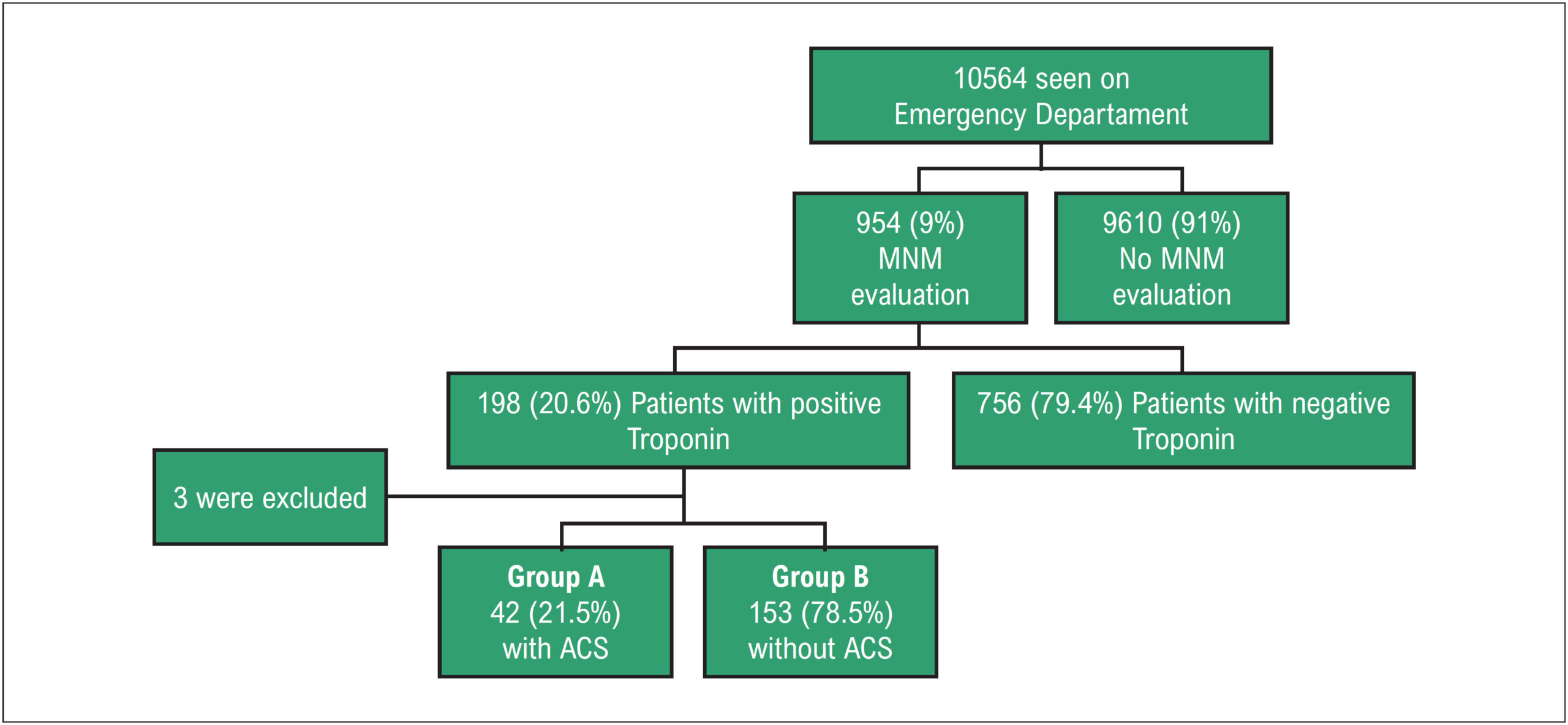
This retrospective observational study included ED patients with a positive troponin test result between June and July of 2015. Patients with a clinical diagnosis of acute coronary syndrome (ACS) were excluded. Data on patient demographics and clinical and laboratory variables were extracted from medical records. Follow-up data were obtained for 16 months or until death occurred. The statistical significance level was 5%.

Results:

Troponin elevation without ACS was found in 153 ED patients. The median (IQR) patient age was 78 (19) years, 80 (52.3%) were female and 59(38.6%) died during follow-up. The median (IQR) follow-up period was 477(316) days. Survivors were significantly younger 76 (24) vs. 84 (13) years; p=0.004) and featured a higher proportion of isolated troponin elevation (without creatine kinase or myoglobin elevation) in two consecutive evaluations: 48 (53.9%) vs. 8 (17.4%), p<0.001. Survivors also presented a lower rate of antiplatelet treatment and same-day hospitalization. In the multivariate logistic regression with adjustment for significant variables in the univariate analysis, isolated troponin elevation in two consecutive evaluations showed a hazard ratio= 0.43 (95%CI 0.17–0.96, p=0.039); hospitalization, previous antiplatelet treatment and age remained independently associated with mortality.

Conclusions:

Isolated troponin elevation in two consecutive measurements was a strong predictor of survival in ED patients with troponin elevation but without ACS.

  • emergency department
  • Myocardial Non-Ischemic Injury
  • Prognosis
  • Troponin I
Read Full Article
Creative Commons Attribution (CC BY) Creative Commons license
17/05/2021 DOI: 10.36660/abc.20190356
Editorial

Analysis of Revascularization Strategies in Patients with Acute Myocardial Infarction and Cardiogenic Shock – Results from the Portuguese Registry on Acute Coronary Syndromes

Gabriel Porto Soares

The Portuguese Registry on Acute Coronary Syndromes was drafted in 2002 by the Portuguese Cardiology Society due to the need for a broader knowledge concerning the national approach to Acute Coronary Syndromes (ACS) and created the National Cardiology Data Collection Center (NCDCC) to centralize all of the information and support its analysis, culminating in the creation of its first records: The National Registry of Acute Coronary Syndromes (NRACS) was created simultaneously with the National Register of Interventional Cardiology. The NRACS is a prospective and continuous observational registry. All Portuguese hospital cardiology services and departments were invited to participate voluntarily in this study. The inclusion of patients began on January 1, 2002, and has been maintained to the present day without interruption. Briefly, each center received a request to consecutively include all patients hospitalized with a diagnosis of ACS (including acute ST-elevation myocardial infarction (STEMI), without unstable ST-elevation or angina), based on clinical evaluation, on the electrocardiogram, and on the biomarkers of myocardial necrosis. The collected data include demographic data, baseline characteristics, laboratory evolution, clinical evolution, executed therapy, data on percutaneous intervention, as well as data on hospital discharge and follow-up for six months (in the first stage of the registry) or for one year (in the second stage of the registry). Initially, the data were collected on paper and then transferred to an electronic data base, but since 2004, they are being submitted directly in electronic form. Upon consulting the NRACS e-mail address in February 2021, 62,029 records were found.,

One question arises in the ACS revascularization approach, which evolves with cardiogenic shock: Treat only the culprit blood vessel or treat all of the significant coronary lesions? The study of revascularization strategies in patients with acute myocardial infarction in cardiogenic shock stemming from the results of the Portuguese Registry of Acute Coronary Syndromes sheds light on the issue and aids professionals in decision-making. Currently, the recommendations from the Brazilian Society of Hemodynamics and Interventional Cardiology are as follows: “The invasive strategy seeking to achieve the myocardial revascularization of the culprit blood vessel and, potentially, of the non-culprit blood vessels with significant coronary disease, is recommended in the cases of acute STEMI (IAMCSST) evolving with heart failure and cardiogenic shock, regardless of the time elapsed since its onset.”

[…]

  • Acute coronary syndrome
  • Myocardial Infarction
  • Myocardial Revascularization
  • Shock, Cardiogenic
Read Full Article
Creative Commons Attribution (CC BY) Creative Commons license
17/05/2021 DOI: 10.36660/abc.20210127 Views 1
Figure 1
Research Letter

Persistent Aneurysm of the Right Coronary Artery, Even after Correction of a Fistula with the Right Ventricle

Edmar Atik

Introduction

Among the coronary-cavitary fistulas, the most commonly found type corresponds to that involving the right coronary artery and the right cardiac cavities, with corresponding volume overload due to arteriovenous deviation. The clinical manifestations correspond to heart failure, angina with myocardial infarction and arrhythmias. A continuous murmur easily suggests the diagnosis of a congenital defect, which is consolidated by the imaging examinations. Other fistulas should always be suspected in the differential diagnosis, such as the patent ductus arteriosus, aortopulmonary window, systemic-pulmonary collaterals, and fistulas of the sinus of Valsalva with the right ventricle cavity. Cardiac surgery and / or percutaneous interventions comprise the therapeutic basis for fistula resolution. Little is said, however, about the evolution after the procedures, given that the previous coronary dilation persists and may constitute another evolution problem in the longer term.

This aspect comprises the main reason for this assessment.

[…]

  • Arteriovenous Fistula/surgery
  • Artery Coronary Cavitary, Fistula/surgery
  • Clinical Evolution
  • Coronary Fistula Right
  • Heart Defects, Congenital
  • Ventricular Dysfunction Right
Read Full Article
Creative Commons Attribution (CC BY) Creative Commons license
17/05/2021 DOI: 10.36660/abc.20201010
Editorial

Blood Pressure in Children. The Key Role of Physical Activity and Body Fatness

César A. Agostinis-Sobrinho et al. Katiane Vilan

High blood pressure is the leading global risk factor for chronic kidney disease and cardiovascular diseases and is the leading cause of premature death worldwide. The number of adults with high blood pressure increased from 594 million in 1975 to 1.13 billion in 2015. The World Health Organization (WHO) estimates 1 in 4 men and 1 in 5 women had hypertension and that by 2025, 1.56 billion adults will be living with hypertension.

Childhood raised blood pressure is becoming more common in the general pediatric population, representing a considerable public health challenge worldwide. Studies have suggested that childhood high blood pressure seems to track from childhood to adulthood and is associated with detrimental lifelong cardiovascular events. However, raised blood pressure is one of the most important preventable contributors to disease and death and is considered to be one of the major modifiable risk factors for cardiovascular disease with roots in childhood., Studies indicate that high blood pressure levels during childhood are a multifactorial condition. Genetics, age, gender, ethnicity, overweight/obesity, sodium and potassium intake, physical inactivity, and socioeconomic factors have been named as the main risk factors for hypertension.

[…]

  • Blood Arterial
  • Child
  • Exercise
  • Hypertension/heredity
  • Obesity
  • Overweight
  • Physical activity
  • Public Health
  • Risk Factors
  • Sedentarism
Read Full Article
Creative Commons Attribution (CC BY) Creative Commons license
17/05/2021 DOI: 10.36660/abc.20210117 Views 2

Could not load more articles. Please try again.

How to cite this article

EndNote RIS

Electronic Document Format (Vancouver)

Rocha EA, Mehta N, Távora-Mehta MZP, Roncari CF, Cidrão AAL, Elias Neto J. Dysautonomia: A Forgotten Condition — Part II. Arquivos Brasileiros de Cardiologia 2021;116(5):981-98.

Electronic Document Format (ABNT)

Rocha, Eduardo Arrais; Mehta, Niraj; Távora-Mehta, Maria Zildany Pinheiro; Roncari, Camila Ferreira; Cidrão, Alan Alves de Lima; Elias Neto, Jorge. Dysautonomia: A Forgotten Condition — Part II. Arquivos Brasileiros de Cardiologia, v. 116, n. 5, p. 981-998, May. 2021.

Electronic Document Format (APA)

Rocha, E. A., Mehta, N., Távora-Mehta, M. Z. P., Roncari, C. F., Cidrão, A. A. L., & Elias Neto, J. (2021). Dysautonomia: A Forgotten Condition — Part II. Arquivos Brasileiros de Cardiologia, 116(5), 981-998.

Electronic Document Format (ISO)

Rocha, Eduardo Arrais and Mehta, Niraj and Távora-Mehta, Maria Zildany Pinheiro and Roncari, Camila Ferreira and Cidrão, Alan Alves de Lima and Elias Neto, Jorge. Dysautonomia: A Forgotten Condition — Part II. Arquivos Brasileiros de Cardiologia [online]. 2021, vol. 116, n. 5, [cited 2026-10-14], pp. 981-998. Available from: <https://journals.cardiol.br/en/article/dysautonomia-a-forgotten-condition-part-ii/>. ISSN 0066-782X

EndNote RIS

Electronic Document Format (Vancouver)

Barros-Gomes S, Tarasoutchi F, Rodrigues ACT, Nhola LF, Lemos PA, Morhy SS, Fischer CH, et al. Percutaneous Treatment of Secondary Mitral Regurgitation by MitraClip: Mitra-FR vs. COAPT. Arquivos Brasileiros de Cardiologia 2021;116(5):1011-8.

Electronic Document Format (ABNT)

Barros-Gomes, Sergio; Tarasoutchi, Flávio; Rodrigues, Ana Clara Tude; Nhola, Lara Ferreira; Lemos, Pedro Alves; Morhy, Samira Saady; Fischer, Claudio Henrique; Vieira, Marcelo Luiz Campos. Percutaneous Treatment of Secondary Mitral Regurgitation by MitraClip: Mitra-FR vs. COAPT. Arquivos Brasileiros de Cardiologia, v. 116, n. 5, p. 1011-1018, May. 2021.

Electronic Document Format (APA)

Barros-Gomes, S., Tarasoutchi, F., Rodrigues, A. C. T., Nhola, L. F., Lemos, P. A., Morhy, S. S., Fischer, C. H., & Vieira, M. L. C. (2021). Percutaneous Treatment of Secondary Mitral Regurgitation by MitraClip: Mitra-FR vs. COAPT. Arquivos Brasileiros de Cardiologia, 116(5), 1011-1018.

Electronic Document Format (ISO)

Barros-Gomes, Sergio and Tarasoutchi, Flávio and Rodrigues, Ana Clara Tude and Nhola, Lara Ferreira and Lemos, Pedro Alves and Morhy, Samira Saady and Fischer, Claudio Henrique and Vieira, Marcelo Luiz Campos. Percutaneous Treatment of Secondary Mitral Regurgitation by MitraClip: Mitra-FR vs. COAPT. Arquivos Brasileiros de Cardiologia [online]. 2021, vol. 116, n. 5, [cited 2026-10-14], pp. 1011-1018. Available from: <https://journals.cardiol.br/en/article/percutaneous-treatment-of-secondary-mitral-regurgitation-by-mitraclip-mitra-fr-vs-coapt/>. ISSN 0066-782X

EndNote RIS

Electronic Document Format (Vancouver)

Alegria S, Marques A, Gomes AC, Pereira ARF, Sebaiti D, Morgado G, Calé R, et al. Revascularization Strategies in Patients with Acute Myocardial Infarction and Cardiogenic Shock: Results from the Portuguese Registry on Acute Coronary Syndromes. Arquivos Brasileiros de Cardiologia 2021;116(5):867-76.

Electronic Document Format (ABNT)

Alegria, Sofia; Marques, Ana; Gomes, Ana Catarina; Pereira, Ana Rita F.; Sebaiti, Daniel; Morgado, Gonçalo; Calé, Rita; Martins, Cristina; Belo, Adriana; Rangel, Inês; Pereira, Hélder. Revascularization Strategies in Patients with Acute Myocardial Infarction and Cardiogenic Shock: Results from the Portuguese Registry on Acute Coronary Syndromes. Arquivos Brasileiros de Cardiologia, v. 116, n. 5, p. 867-876, May. 2021.

Electronic Document Format (APA)

Alegria, S., Marques, A., Gomes, A. C., Pereira, A. R. F., Sebaiti, D., Morgado, G., Calé, R., Martins, C., Belo, A., Rangel, I., & Pereira, H. (2021). Revascularization Strategies in Patients with Acute Myocardial Infarction and Cardiogenic Shock: Results from the Portuguese Registry on Acute Coronary Syndromes. Arquivos Brasileiros de Cardiologia, 116(5), 867-876.

Electronic Document Format (ISO)

Alegria, Sofia and Marques, Ana and Gomes, Ana Catarina and Pereira, Ana Rita F. and Sebaiti, Daniel and Morgado, Gonçalo and Calé, Rita and Martins, Cristina and Belo, Adriana and Rangel, Inês and Pereira, Hélder. Revascularization Strategies in Patients with Acute Myocardial Infarction and Cardiogenic Shock: Results from the Portuguese Registry on Acute Coronary Syndromes. Arquivos Brasileiros de Cardiologia [online]. 2021, vol. 116, n. 5, [cited 2026-10-14], pp. 867-876. Available from: <https://journals.cardiol.br/en/article/revascularization-strategies-in-patients-with-acute-myocardial-infarction-and-cardiogenic-shock-results-from-the-portuguese-registry-on-acute-coronary-syndromes/>. ISSN 0066-782X

EndNote RIS

Electronic Document Format (Vancouver)

Silva PGMB, Dutra AAF, Manfredi AB, Sampaio PPN, Correa CM, Griz HB, Setta D, et al. Reduction in the Number of Patients with Suspected and Confirmed Acute Coronary Syndrome during the early months of the Covid-19 Pandemic: Analysis of a Brazilian Network. Arquivos Brasileiros de Cardiologia 2021;116(5):1003-6.

Electronic Document Format (ABNT)

Silva, Pedro Gabriel Melo de Barros e; Dutra, Ana Amaral Ferreira; Manfredi, Adriana Bertolami; Sampaio, Pedro Paulo Nogueres; Correa, Celso Musa; Griz, Hemilo Borba; Setta, Daniel; Furlan, Valter. Reduction in the Number of Patients with Suspected and Confirmed Acute Coronary Syndrome during the early months of the Covid-19 Pandemic: Analysis of a Brazilian Network. Arquivos Brasileiros de Cardiologia, v. 116, n. 5, p. 1003-1006, May. 2021.

Electronic Document Format (APA)

Silva, P. G. M. B. , Dutra, A. A. F., Manfredi, A. B., Sampaio, P. P. N., Correa, C. M., Griz, H. B., Setta, D., & Furlan, V. (2021). Reduction in the Number of Patients with Suspected and Confirmed Acute Coronary Syndrome during the early months of the Covid-19 Pandemic: Analysis of a Brazilian Network. Arquivos Brasileiros de Cardiologia, 116(5), 1003-1006.

Electronic Document Format (ISO)

Silva, Pedro Gabriel Melo de Barros e and Dutra, Ana Amaral Ferreira and Manfredi, Adriana Bertolami and Sampaio, Pedro Paulo Nogueres and Correa, Celso Musa and Griz, Hemilo Borba and Setta, Daniel and Furlan, Valter. Reduction in the Number of Patients with Suspected and Confirmed Acute Coronary Syndrome during the early months of the Covid-19 Pandemic: Analysis of a Brazilian Network. Arquivos Brasileiros de Cardiologia [online]. 2021, vol. 116, n. 5, [cited 2026-10-14], pp. 1003-1006. Available from: <https://journals.cardiol.br/en/article/reduction-in-the-number-of-patients-with-suspected-and-confirmed-acute-coronary-syndrome-during-the-early-months-of-the-covid-19-pandemic-analysis-of-a-brazilian-network/>. ISSN 0066-782X

EndNote RIS

Electronic Document Format (Vancouver)

Xiao Y, Chen H, Liu D, Wang Y, Wang W, Zhang Q, Han Y, et al. The Comparison between Two Risk Scores as for the Prediction of Coronary Microvascular Obstruction during Primary Percutaneous Intervention. Arquivos Brasileiros de Cardiologia 2021;116(5):959-67.

Electronic Document Format (ABNT)

Xiao, Yuyang; Chen, Hua; Liu, Dongxia; Wang, Yanbo; Wang, Wenlu; Zhang, Qian; Han, Yuping; Fu, Xianghua. The Comparison between Two Risk Scores as for the Prediction of Coronary Microvascular Obstruction during Primary Percutaneous Intervention. Arquivos Brasileiros de Cardiologia, v. 116, n. 5, p. 959-967, May. 2021.

Electronic Document Format (APA)

Xiao, Y., Chen, H., Liu, D., Wang, Y., Wang, W., Zhang, Q., Han, Y., & Fu, X. (2021). The Comparison between Two Risk Scores as for the Prediction of Coronary Microvascular Obstruction during Primary Percutaneous Intervention. Arquivos Brasileiros de Cardiologia, 116(5), 959-967.

Electronic Document Format (ISO)

Xiao, Yuyang and Chen, Hua and Liu, Dongxia and Wang, Yanbo and Wang, Wenlu and Zhang, Qian and Han, Yuping and Fu, Xianghua. The Comparison between Two Risk Scores as for the Prediction of Coronary Microvascular Obstruction during Primary Percutaneous Intervention. Arquivos Brasileiros de Cardiologia [online]. 2021, vol. 116, n. 5, [cited 2026-10-14], pp. 959-967. Available from: <https://journals.cardiol.br/en/article/the-comparison-between-two-risk-scores-as-for-the-prediction-of-coronary-microvascular-obstruction-during-primary-percutaneous-intervention/>. ISSN 0066-782X

EndNote RIS

Electronic Document Format (Vancouver)

Costantini CR, Macedo RM, Denk MA, Tarbine SG, Garcia L, Maranhão MFC, Costantini CO, et al. The Evolution of Percutaneous Coronary Intervention in Latin America. Arquivos Brasileiros de Cardiologia 2021;116(5):1007-10.

Electronic Document Format (ABNT)

Costantini, Costantino Roberto; Macedo, Rafael Michel de; Denk, Marcos Antônio; Tarbine, Sergio Gustavo; Garcia, Lazaro; Maranhão, Mario Fernando Camargo; Costantini, Costantino Ortiz. The Evolution of Percutaneous Coronary Intervention in Latin America. Arquivos Brasileiros de Cardiologia, v. 116, n. 5, p. 1007-1010, May. 2021.

Electronic Document Format (APA)

Costantini, C. R., Macedo, R. M. , Denk, M. A., Tarbine, S. G., Garcia, L., Maranhão, M. F. C., & Costantini, C. O. (2021). The Evolution of Percutaneous Coronary Intervention in Latin America. Arquivos Brasileiros de Cardiologia, 116(5), 1007-1010.

Electronic Document Format (ISO)

Costantini, Costantino Roberto and Macedo, Rafael Michel de and Denk, Marcos Antônio and Tarbine, Sergio Gustavo and Garcia, Lazaro and Maranhão, Mario Fernando Camargo and Costantini, Costantino Ortiz. The Evolution of Percutaneous Coronary Intervention in Latin America. Arquivos Brasileiros de Cardiologia [online]. 2021, vol. 116, n. 5, [cited 2026-10-14], pp. 1007-1010. Available from: <https://journals.cardiol.br/en/article/the-evolution-of-percutaneous-coronary-intervention-in-latin-america/>. ISSN 0066-782X

EndNote RIS

Electronic Document Format (Vancouver)

Favarato D. Obesity, Body Fat Content and Cardiovascular Outcome: Beyond Body Mass Index. Arquivos Brasileiros de Cardiologia 2021;116(5):887-8.

Electronic Document Format (ABNT)

Favarato, Desiderio. Obesity, Body Fat Content and Cardiovascular Outcome: Beyond Body Mass Index. Arquivos Brasileiros de Cardiologia, v. 116, n. 5, p. 887-888, May. 2021.

Electronic Document Format (APA)

Favarato, D. (2021). Obesity, Body Fat Content and Cardiovascular Outcome: Beyond Body Mass Index. Arquivos Brasileiros de Cardiologia, 116(5), 887-888.

Electronic Document Format (ISO)

Favarato, Desiderio. Obesity, Body Fat Content and Cardiovascular Outcome: Beyond Body Mass Index. Arquivos Brasileiros de Cardiologia [online]. 2021, vol. 116, n. 5, [cited 2026-10-14], pp. 887-888. Available from: <https://journals.cardiol.br/en/article/obesity-body-fat-content-and-cardiovascular-outcome-beyond-body-mass-index/>. ISSN 0066-782X

EndNote RIS

Electronic Document Format (Vancouver)

Ritt LEF, Darzé ES, Feitosa GF, Porto JS, Bastos G, Albuquerque RBL, Feitosa CM, et al. The Six-Minute Step Test as a Predictor of Functional Capacity according to Peak VO2 in Cardiac Patients. Arquivos Brasileiros de Cardiologia 2021;116(5):889-95.

Electronic Document Format (ABNT)

Ritt, Luiz Eduardo Fonteles; Darzé, Eduardo Sahade; Feitosa, Gustavo Freitas; Porto, Jessica Santana; Bastos, Gabriela; Albuquerque, Renata Braga Linhares de; Feitosa, Cristiane Miura; Claro, Thaissa Costa; Prado, Eloisa Ferreira; Oliveira, Queila Borges de; Stein, Ricardo. The Six-Minute Step Test as a Predictor of Functional Capacity according to Peak VO2 in Cardiac Patients. Arquivos Brasileiros de Cardiologia, v. 116, n. 5, p. 889-895, May. 2021.

Electronic Document Format (APA)

Ritt, L. E. F., Darzé, E. S., Feitosa, G. F., Porto, J. S., Bastos, G., Albuquerque, R. B. L. , Feitosa, C. M., Claro, T. C., Prado, E. F., Oliveira, Q. B. , & Stein, R. (2021). The Six-Minute Step Test as a Predictor of Functional Capacity according to Peak VO2 in Cardiac Patients. Arquivos Brasileiros de Cardiologia, 116(5), 889-895.

Electronic Document Format (ISO)

Ritt, Luiz Eduardo Fonteles and Darzé, Eduardo Sahade and Feitosa, Gustavo Freitas and Porto, Jessica Santana and Bastos, Gabriela and Albuquerque, Renata Braga Linhares de and Feitosa, Cristiane Miura and Claro, Thaissa Costa and Prado, Eloisa Ferreira and Oliveira, Queila Borges de and Stein, Ricardo. The Six-Minute Step Test as a Predictor of Functional Capacity according to Peak VO2 in Cardiac Patients. Arquivos Brasileiros de Cardiologia [online]. 2021, vol. 116, n. 5, [cited 2026-10-14], pp. 889-895. Available from: <https://journals.cardiol.br/en/article/the-six-minute-step-test-as-a-predictor-of-functional-capacity-according-to-peak-vo2-in-cardiac-patients/>. ISSN 0066-782X

EndNote RIS

Electronic Document Format (Vancouver)

Okoshi MP, Cortez RM, Pagan LU, Martinez PF, Pereira FWL. Supplementation of Vitamin D. Arquivos Brasileiros de Cardiologia 2021;116(5):979-80.

Electronic Document Format (ABNT)

Okoshi, Marina P.; Cortez, Rosana M.; Pagan, Luana U.; Martinez, Paula F.; Pereira, Filipe W. L.. Supplementation of Vitamin D. Arquivos Brasileiros de Cardiologia, v. 116, n. 5, p. 979-980, May. 2021.

Electronic Document Format (APA)

Okoshi, M. P., Cortez, R. M., Pagan, L. U., Martinez, P. F., & Pereira, F. W. L. (2021). Supplementation of Vitamin D. Arquivos Brasileiros de Cardiologia, 116(5), 979-980.

Electronic Document Format (ISO)

Okoshi, Marina P. and Cortez, Rosana M. and Pagan, Luana U. and Martinez, Paula F. and Pereira, Filipe W. L.. Supplementation of Vitamin D. Arquivos Brasileiros de Cardiologia [online]. 2021, vol. 116, n. 5, [cited 2026-10-14], pp. 979-980. Available from: <https://journals.cardiol.br/en/article/supplementation-of-vitamin-d/>. ISSN 0066-782X

EndNote RIS

Electronic Document Format (Vancouver)

Ritti-Dias RM, Quintella B. The Six-Minute Step Test as an Alternative for Functional Capacity Assessment in Patients with Cardiovascular Diseases. Arquivos Brasileiros de Cardiologia 2021;116(5):896-7.

Electronic Document Format (ABNT)

Ritti-Dias, Raphael Mendes; Quintella, Breno. The Six-Minute Step Test as an Alternative for Functional Capacity Assessment in Patients with Cardiovascular Diseases. Arquivos Brasileiros de Cardiologia, v. 116, n. 5, p. 896-897, May. 2021.

Electronic Document Format (APA)

Ritti-Dias, R. M., & Quintella, B. (2021). The Six-Minute Step Test as an Alternative for Functional Capacity Assessment in Patients with Cardiovascular Diseases. Arquivos Brasileiros de Cardiologia, 116(5), 896-897.

Electronic Document Format (ISO)

Ritti-Dias, Raphael Mendes and Quintella, Breno. The Six-Minute Step Test as an Alternative for Functional Capacity Assessment in Patients with Cardiovascular Diseases. Arquivos Brasileiros de Cardiologia [online]. 2021, vol. 116, n. 5, [cited 2026-10-14], pp. 896-897. Available from: <https://journals.cardiol.br/en/article/the-six-minute-step-test-as-an-alternative-for-functional-capacity-assessment-in-patients-with-cardiovascular-diseases/>. ISSN 0066-782X

EndNote RIS

Electronic Document Format (Vancouver)

Moharem-Elgamal S. T1 Mapping in Heart Failure: Prognostic Implications. Arquivos Brasileiros de Cardiologia 2021;116(5):926-7.

Electronic Document Format (ABNT)

Moharem-Elgamal, Sarah. T1 Mapping in Heart Failure: Prognostic Implications. Arquivos Brasileiros de Cardiologia, v. 116, n. 5, p. 926-927, May. 2021.

Electronic Document Format (APA)

Moharem-Elgamal, S. (2021). T1 Mapping in Heart Failure: Prognostic Implications. Arquivos Brasileiros de Cardiologia, 116(5), 926-927.

Electronic Document Format (ISO)

Moharem-Elgamal, Sarah. T1 Mapping in Heart Failure: Prognostic Implications. Arquivos Brasileiros de Cardiologia [online]. 2021, vol. 116, n. 5, [cited 2026-10-14], pp. 926-927. Available from: <https://journals.cardiol.br/en/article/t1-mapping-in-heart-failure-prognostic-implications/>. ISSN 0066-782X

EndNote RIS

Electronic Document Format (Vancouver)

Huang Z, Jiang Y, Zhou Y. Heart Failure with Supra-normal Left Ventricular Ejection Fraction – State of the Art. Arquivos Brasileiros de Cardiologia 2021;116(5):1019-22.

Electronic Document Format (ABNT)

Huang, Ziyin; Jiang, Yufeng; Zhou, Yafeng. Heart Failure with Supra-normal Left Ventricular Ejection Fraction – State of the Art. Arquivos Brasileiros de Cardiologia, v. 116, n. 5, p. 1019-1022, May. 2021.

Electronic Document Format (APA)

Huang, Z., Jiang, Y., & Zhou, Y. (2021). Heart Failure with Supra-normal Left Ventricular Ejection Fraction – State of the Art. Arquivos Brasileiros de Cardiologia, 116(5), 1019-1022.

Electronic Document Format (ISO)

Huang, Ziyin and Jiang, Yufeng and Zhou, Yafeng. Heart Failure with Supra-normal Left Ventricular Ejection Fraction – State of the Art. Arquivos Brasileiros de Cardiologia [online]. 2021, vol. 116, n. 5, [cited 2026-10-14], pp. 1019-1022. Available from: <https://journals.cardiol.br/en/article/heart-failure-with-supra-normal-left-ventricular-ejection-fraction-state-of-the-art/>. ISSN 0066-782X

EndNote RIS

Electronic Document Format (Vancouver)

Saadati HM, Sabour S, Mansournia MA, Mehrabi Y, Nazari SSH. The Direct Effect of Body Mass Index on Cardiovascular Outcomes among Participants Without Central Obesity by Targeted Maximum Likelihood Estimation. Arquivos Brasileiros de Cardiologia 2021;116(5):879-86.

Electronic Document Format (ABNT)

Saadati, Hossein Mozafar; Sabour, Siamak; Mansournia, Mohammad Ali; Mehrabi, Yadollah; Nazari, Seyed Saeed Hashemi. The Direct Effect of Body Mass Index on Cardiovascular Outcomes among Participants Without Central Obesity by Targeted Maximum Likelihood Estimation. Arquivos Brasileiros de Cardiologia, v. 116, n. 5, p. 879-886, May. 2021.

Electronic Document Format (APA)

Saadati, H. M., Sabour, S., Mansournia, M. A., Mehrabi, Y., & Nazari, S. S. H. (2021). The Direct Effect of Body Mass Index on Cardiovascular Outcomes among Participants Without Central Obesity by Targeted Maximum Likelihood Estimation. Arquivos Brasileiros de Cardiologia, 116(5), 879-886.

Electronic Document Format (ISO)

Saadati, Hossein Mozafar and Sabour, Siamak and Mansournia, Mohammad Ali and Mehrabi, Yadollah and Nazari, Seyed Saeed Hashemi. The Direct Effect of Body Mass Index on Cardiovascular Outcomes among Participants Without Central Obesity by Targeted Maximum Likelihood Estimation. Arquivos Brasileiros de Cardiologia [online]. 2021, vol. 116, n. 5, [cited 2026-10-14], pp. 879-886. Available from: <https://journals.cardiol.br/en/article/the-direct-effect-of-body-mass-index-on-cardiovascular-outcomes-among-participants-without-central-obesity-by-targeted-maximum-likelihood-estimation/>. ISSN 0066-782X

EndNote RIS

Electronic Document Format (Vancouver)

Franzoni L, Zubaran GPR, Motta SB. Walking Training Improve Ambulatorial Blood Pressure Variability in Claudicants. Arquivos Brasileiros de Cardiologia 2021;116(5):906-7.

Electronic Document Format (ABNT)

Franzoni, Leandro; Zubaran, Gabriel Pereira de Reis; Motta, Stephanie Bastos da. Walking Training Improve Ambulatorial Blood Pressure Variability in Claudicants. Arquivos Brasileiros de Cardiologia, v. 116, n. 5, p. 906-907, May. 2021.

Electronic Document Format (APA)

Franzoni, L., Zubaran, G. P. R., & Motta, S. B. (2021). Walking Training Improve Ambulatorial Blood Pressure Variability in Claudicants. Arquivos Brasileiros de Cardiologia, 116(5), 906-907.

Electronic Document Format (ISO)

Franzoni, Leandro and Zubaran, Gabriel Pereira de Reis and Motta, Stephanie Bastos da. Walking Training Improve Ambulatorial Blood Pressure Variability in Claudicants. Arquivos Brasileiros de Cardiologia [online]. 2021, vol. 116, n. 5, [cited 2026-10-14], pp. 906-907. Available from: <https://journals.cardiol.br/en/article/walking-training-improve-ambulatorial-blood-pressure-variability-in-claudicants/>. ISSN 0066-782X

EndNote RIS

Electronic Document Format (Vancouver)

Garzon S. No Reflow in Acute Coronary Syndromes: An Old Foe or a New Frontier?. Arquivos Brasileiros de Cardiologia 2021;116(5):968-9.

Electronic Document Format (ABNT)

Garzon, Stefano. No Reflow in Acute Coronary Syndromes: An Old Foe or a New Frontier?. Arquivos Brasileiros de Cardiologia, v. 116, n. 5, p. 968-969, May. 2021.

Electronic Document Format (APA)

Garzon, S. (2021). No Reflow in Acute Coronary Syndromes: An Old Foe or a New Frontier?. Arquivos Brasileiros de Cardiologia, 116(5), 968-969.

Electronic Document Format (ISO)

Garzon, Stefano. No Reflow in Acute Coronary Syndromes: An Old Foe or a New Frontier?. Arquivos Brasileiros de Cardiologia [online]. 2021, vol. 116, n. 5, [cited 2026-10-14], pp. 968-969. Available from: <https://journals.cardiol.br/en/article/no-reflow-in-acute-coronary-syndromes-an-old-foe-or-a-new-frontier/>. ISSN 0066-782X

EndNote RIS

Electronic Document Format (Vancouver)

Nubila BCLSD, Lacerda GC, Rey HCV, Barbosa RM. Percutaneous Removal of Cardiac Leads in a Single Center in South America. Arquivos Brasileiros de Cardiologia 2021;116(5):908-16.

Electronic Document Format (ABNT)

Nubila, Bruna Costa Lemos Silva Di; Lacerda, Gustavo de Castro; Rey, Helena Cramer Veiga; Barbosa, Rodrigo Minati. Percutaneous Removal of Cardiac Leads in a Single Center in South America. Arquivos Brasileiros de Cardiologia, v. 116, n. 5, p. 908-916, May. 2021.

Electronic Document Format (APA)

Nubila, B. C. L. S. D., Lacerda, G. C., Rey, H. C. V., & Barbosa, R. M. (2021). Percutaneous Removal of Cardiac Leads in a Single Center in South America. Arquivos Brasileiros de Cardiologia, 116(5), 908-916.

Electronic Document Format (ISO)

Nubila, Bruna Costa Lemos Silva Di and Lacerda, Gustavo de Castro and Rey, Helena Cramer Veiga and Barbosa, Rodrigo Minati. Percutaneous Removal of Cardiac Leads in a Single Center in South America. Arquivos Brasileiros de Cardiologia [online]. 2021, vol. 116, n. 5, [cited 2026-10-14], pp. 908-916. Available from: <https://journals.cardiol.br/en/article/percutaneous-removal-of-cardiac-leads-in-a-single-center-in-south-america/>. ISSN 0066-782X

EndNote RIS

Electronic Document Format (Vancouver)

Santos PP, Rafacho BPM, Gonçalves AF, Pires VCM, Roscani MG, Azevedo PS, Polegato BF, et al. Vitamin D Supplementation Induces Cardiac Remodeling in Rats: Association with Thioredoxin-Interacting Protein and Thioredoxin. Arquivos Brasileiros de Cardiologia 2021;116(5):970-8.

Electronic Document Format (ABNT)

Santos, Priscila P. dos; Rafacho, Bruna P. M.; Gonçalves, Andrea F.; Pires, Vanessa C. M.; Roscani, Meliza G.; Azevedo, Paula S.; Polegato, Bertha F.; Minicucci, Marcos F.; Fernandes, Ana Angélica H.; Tanni, Suzana E.; Zornoff, Leonardo A. M.; Paiva, Sergio A. R. de. Vitamin D Supplementation Induces Cardiac Remodeling in Rats: Association with Thioredoxin-Interacting Protein and Thioredoxin. Arquivos Brasileiros de Cardiologia, v. 116, n. 5, p. 970-978, May. 2021.

Electronic Document Format (APA)

Santos, P. P. , Rafacho, B. P. M., Gonçalves, A. F., Pires, V. C. M., Roscani, M. G., Azevedo, P. S., Polegato, B. F., Minicucci, M. F., Fernandes, A. A. H., Tanni, S. E., Zornoff, L. A. M., & Paiva, S. A. R. (2021). Vitamin D Supplementation Induces Cardiac Remodeling in Rats: Association with Thioredoxin-Interacting Protein and Thioredoxin. Arquivos Brasileiros de Cardiologia, 116(5), 970-978.

Electronic Document Format (ISO)

Santos, Priscila P. dos and Rafacho, Bruna P. M. and Gonçalves, Andrea F. and Pires, Vanessa C. M. and Roscani, Meliza G. and Azevedo, Paula S. and Polegato, Bertha F. and Minicucci, Marcos F. and Fernandes, Ana Angélica H. and Tanni, Suzana E. and Zornoff, Leonardo A. M. and Paiva, Sergio A. R. de. Vitamin D Supplementation Induces Cardiac Remodeling in Rats: Association with Thioredoxin-Interacting Protein and Thioredoxin. Arquivos Brasileiros de Cardiologia [online]. 2021, vol. 116, n. 5, [cited 2026-10-14], pp. 970-978. Available from: <https://journals.cardiol.br/en/article/vitamin-d-supplementation-induces-cardiac-remodeling-in-rats-association-with-thioredoxin-interacting-protein-and-thioredoxin/>. ISSN 0066-782X

EndNote RIS

Electronic Document Format (Vancouver)

Chehuen MR, Cucato GG, Carvalho CRF, Zerati AE, Leicht A, Wolosker N, Ritti-Dias RM, et al. Walking Training Improves Ambulatory Blood Pressure Variability in Claudication. Arquivos Brasileiros de Cardiologia 2021;116(5):898-905.

Electronic Document Format (ABNT)

Chehuen, Marcel da Rocha; Cucato, Gabriel Grizzo; Carvalho, Celso Ricardo Fernandes de; Zerati, Antonio Eduardo; Leicht, Anthony; Wolosker, Nelson; Ritti-Dias, Raphael Mendes; Forjaz, Claudia Lucia de Moraes. Walking Training Improves Ambulatory Blood Pressure Variability in Claudication. Arquivos Brasileiros de Cardiologia, v. 116, n. 5, p. 898-905, May. 2021.

Electronic Document Format (APA)

Chehuen, M. R., Cucato, G. G., Carvalho, C. R. F. , Zerati, A. E., Leicht, A., Wolosker, N., Ritti-Dias, R. M., & Forjaz, C. L. M. (2021). Walking Training Improves Ambulatory Blood Pressure Variability in Claudication. Arquivos Brasileiros de Cardiologia, 116(5), 898-905.

Electronic Document Format (ISO)

Chehuen, Marcel da Rocha and Cucato, Gabriel Grizzo and Carvalho, Celso Ricardo Fernandes de and Zerati, Antonio Eduardo and Leicht, Anthony and Wolosker, Nelson and Ritti-Dias, Raphael Mendes and Forjaz, Claudia Lucia de Moraes. Walking Training Improves Ambulatory Blood Pressure Variability in Claudication. Arquivos Brasileiros de Cardiologia [online]. 2021, vol. 116, n. 5, [cited 2026-10-14], pp. 898-905. Available from: <https://journals.cardiol.br/en/article/walking-training-improves-ambulatory-blood-pressure-variability-in-claudication/>. ISSN 0066-782X

EndNote RIS

Electronic Document Format (Vancouver)

Huyut MA. Comparison of the Outcomes between Coronary No-Reflow and Slow-Flow Phenomenon in Non-STEMI Patients. Arquivos Brasileiros de Cardiologia 2021;116(5):856-64.

Electronic Document Format (ABNT)

Huyut, Mustafa Ahmet. Comparison of the Outcomes between Coronary No-Reflow and Slow-Flow Phenomenon in Non-STEMI Patients. Arquivos Brasileiros de Cardiologia, v. 116, n. 5, p. 856-864, May. 2021.

Electronic Document Format (APA)

Huyut, M. A. (2021). Comparison of the Outcomes between Coronary No-Reflow and Slow-Flow Phenomenon in Non-STEMI Patients. Arquivos Brasileiros de Cardiologia, 116(5), 856-864.

Electronic Document Format (ISO)

Huyut, Mustafa Ahmet. Comparison of the Outcomes between Coronary No-Reflow and Slow-Flow Phenomenon in Non-STEMI Patients. Arquivos Brasileiros de Cardiologia [online]. 2021, vol. 116, n. 5, [cited 2026-10-14], pp. 856-864. Available from: <https://journals.cardiol.br/en/article/comparison-of-the-outcomes-between-coronary-no-reflow-and-slow-flow-phenomenon-in-non-stemi-patients/>. ISSN 0066-782X

EndNote RIS

Electronic Document Format (Vancouver)

Oliveira GF, Marin TC, Forjaz CLM, Brito LC. Exercise Training and Endothelial Function in Hypertension: Effects of Aerobic and Resistance Training. Arquivos Brasileiros de Cardiologia 2021;116(5):948-9.

Electronic Document Format (ABNT)

Oliveira, Gustavo F.; Marin, Thais C.; Forjaz, Cláudia L. M.; Brito, Leandro C.. Exercise Training and Endothelial Function in Hypertension: Effects of Aerobic and Resistance Training. Arquivos Brasileiros de Cardiologia, v. 116, n. 5, p. 948-949, May. 2021.

Electronic Document Format (APA)

Oliveira, G. F., Marin, T. C., Forjaz, C. L. M., & Brito, L. C. (2021). Exercise Training and Endothelial Function in Hypertension: Effects of Aerobic and Resistance Training. Arquivos Brasileiros de Cardiologia, 116(5), 948-949.

Electronic Document Format (ISO)

Oliveira, Gustavo F. and Marin, Thais C. and Forjaz, Cláudia L. M. and Brito, Leandro C.. Exercise Training and Endothelial Function in Hypertension: Effects of Aerobic and Resistance Training. Arquivos Brasileiros de Cardiologia [online]. 2021, vol. 116, n. 5, [cited 2026-10-14], pp. 948-949. Available from: <https://journals.cardiol.br/en/article/exercise-training-and-endothelial-function-in-hypertension-effects-of-aerobic-and-resistance-training/>. ISSN 0066-782X

EndNote RIS

Electronic Document Format (Vancouver)

Domingues C, Ferreira MJV, Ferreira JM, Marinho AV, Alves PM, Ferreira C, Fonseca I, et al. Prognostic Value of Isolated Elevated Troponin I Levels in Patients without Acute Coronary Syndrome Admitted to the Emergency Department. Arquivos Brasileiros de Cardiologia 2021;116(5):928-37.

Electronic Document Format (ABNT)

Domingues, Célia; Ferreira, Maria João Vidigal; Ferreira, Joana Moura; Marinho, Ana Vera; Alves, Patrícia Marques; Ferreira, Cátia; Fonseca, Isabel; Gonçalves, Lino. Prognostic Value of Isolated Elevated Troponin I Levels in Patients without Acute Coronary Syndrome Admitted to the Emergency Department. Arquivos Brasileiros de Cardiologia, v. 116, n. 5, p. 928-937, May. 2021.

Electronic Document Format (APA)

Domingues, C., Ferreira, M. J. V., Ferreira, J. M., Marinho, A. V., Alves, P. M., Ferreira, C., Fonseca, I., & Gonçalves, L. (2021). Prognostic Value of Isolated Elevated Troponin I Levels in Patients without Acute Coronary Syndrome Admitted to the Emergency Department. Arquivos Brasileiros de Cardiologia, 116(5), 928-937.

Electronic Document Format (ISO)

Domingues, Célia and Ferreira, Maria João Vidigal and Ferreira, Joana Moura and Marinho, Ana Vera and Alves, Patrícia Marques and Ferreira, Cátia and Fonseca, Isabel and Gonçalves, Lino. Prognostic Value of Isolated Elevated Troponin I Levels in Patients without Acute Coronary Syndrome Admitted to the Emergency Department. Arquivos Brasileiros de Cardiologia [online]. 2021, vol. 116, n. 5, [cited 2026-10-14], pp. 928-937. Available from: <https://journals.cardiol.br/en/article/prognostic-value-of-isolated-elevated-troponin-i-levels-in-patients-without-acute-coronary-syndrome-admitted-to-the-emergency-department/>. ISSN 0066-782X

EndNote RIS

Electronic Document Format (Vancouver)

Soares GP. Analysis of Revascularization Strategies in Patients with Acute Myocardial Infarction and Cardiogenic Shock – Results from the Portuguese Registry on Acute Coronary Syndromes. Arquivos Brasileiros de Cardiologia 2021;116(5):877-8.

Electronic Document Format (ABNT)

Soares, Gabriel Porto. Analysis of Revascularization Strategies in Patients with Acute Myocardial Infarction and Cardiogenic Shock – Results from the Portuguese Registry on Acute Coronary Syndromes. Arquivos Brasileiros de Cardiologia, v. 116, n. 5, p. 877-878, May. 2021.

Electronic Document Format (APA)

Soares, G. P. (2021). Analysis of Revascularization Strategies in Patients with Acute Myocardial Infarction and Cardiogenic Shock – Results from the Portuguese Registry on Acute Coronary Syndromes. Arquivos Brasileiros de Cardiologia, 116(5), 877-878.

Electronic Document Format (ISO)

Soares, Gabriel Porto. Analysis of Revascularization Strategies in Patients with Acute Myocardial Infarction and Cardiogenic Shock – Results from the Portuguese Registry on Acute Coronary Syndromes. Arquivos Brasileiros de Cardiologia [online]. 2021, vol. 116, n. 5, [cited 2026-10-14], pp. 877-878. Available from: <https://journals.cardiol.br/en/article/analysis-of-revascularization-strategies-in-patients-with-acute-myocardial-infarction-and-cardiogenic-shock-results-from-the-portuguese-registry-on-acute-coronary-syndromes/>. ISSN 0066-782X

EndNote RIS

Electronic Document Format (Vancouver)

Atik E. Persistent Aneurysm of the Right Coronary Artery, Even after Correction of a Fistula with the Right Ventricle. Arquivos Brasileiros de Cardiologia 2021;116(5):999-1002.

Electronic Document Format (ABNT)

Atik, Edmar. Persistent Aneurysm of the Right Coronary Artery, Even after Correction of a Fistula with the Right Ventricle. Arquivos Brasileiros de Cardiologia, v. 116, n. 5, p. 999-1002, May. 2021.

Electronic Document Format (APA)

Atik, E. (2021). Persistent Aneurysm of the Right Coronary Artery, Even after Correction of a Fistula with the Right Ventricle. Arquivos Brasileiros de Cardiologia, 116(5), 999-1002.

Electronic Document Format (ISO)

Atik, Edmar. Persistent Aneurysm of the Right Coronary Artery, Even after Correction of a Fistula with the Right Ventricle. Arquivos Brasileiros de Cardiologia [online]. 2021, vol. 116, n. 5, [cited 2026-10-14], pp. 999-1002. Available from: <https://journals.cardiol.br/en/article/persistent-aneurysm-of-the-right-coronary-artery-even-after-correction-of-a-fistula-with-the-right-ventricle/>. ISSN 0066-782X

EndNote RIS

Electronic Document Format (Vancouver)

Agostinis-Sobrinho CA, Vilan K. Blood Pressure in Children. The Key Role of Physical Activity and Body Fatness. Arquivos Brasileiros de Cardiologia 2021;116(5):957-8.

Electronic Document Format (ABNT)

Agostinis-Sobrinho, César A.; Vilan, Katiane. Blood Pressure in Children. The Key Role of Physical Activity and Body Fatness. Arquivos Brasileiros de Cardiologia, v. 116, n. 5, p. 957-958, May. 2021.

Electronic Document Format (APA)

Agostinis-Sobrinho, C. A., & Vilan, K. (2021). Blood Pressure in Children. The Key Role of Physical Activity and Body Fatness. Arquivos Brasileiros de Cardiologia, 116(5), 957-958.

Electronic Document Format (ISO)

Agostinis-Sobrinho, César A. and Vilan, Katiane. Blood Pressure in Children. The Key Role of Physical Activity and Body Fatness. Arquivos Brasileiros de Cardiologia [online]. 2021, vol. 116, n. 5, [cited 2026-10-14], pp. 957-958. Available from: <https://journals.cardiol.br/en/article/blood-pressure-in-children-the-key-role-of-physical-activity-and-body-fatness/>. ISSN 0066-782X

Sede – Rio de Janeiro
Av. Marechal Câmara, 160
3º andar – Sala: 330 – Centro
Rio de Janeiro – CEP: 20020-907
Tel.: (55 +21) 3478-2700
ou (21) 99386-3961
E-mail: revista@cardiol.br

Sede – São Paulo
Alameda Santos, 705 – 11º andar
Cerqueira César | São Paulo
CEP: 01419-001
Tel.: (55 +11) 3411-5500
E-mail: revista@cardiol.br

  • About the Journal
  • Internal Regulation
  • Editors Section
  • Editorial Board
  • History
  • SBC Award

  • Guidelines for Publication
  • Editorial Policy
  • Ethics Policy
  • Policy on the Use of Artificial Intelligence
  • Mandatory Publication Form
  • Publication Fee

Issues

SBC Guidelines

  • How to Publish an Abstract Supplement?
  • Supplements from the Brazilian Congress of Cardiology