ABC Family Arquivos Brasileiros de Cardiologia International Journal of Cardiovascular Sciences ABC Heart Failure & Cardiomyopathy ABC Imagem Cardiovascular
Português English
ABC Family
Português English
  • About
    • About ABC Family
    • Internal Regulation
    • Editorial Board
    • Brazilian Society of Cardiology (SBC)
  • Issues
  • SBC Guidelines
  • Content
    • Videos
    • Podcasts
    • News
  • About
    • About ABC Family
    • Internal Regulation
    • Editorial Board
    • Brazilian Society of Cardiology (SBC)
  • Issues
  • SBC Guidelines
  • Content
    • Videos
    • Podcasts
    • News

ABC Family

  • ABC Family
  • Arquivos Brasileiros de Cardiologia
  • International Journal of Cardiovascular Sciences
  • ABC Heart Failure & Cardiomyopathy
  • ABC Imagem Cardiovascular
Search in

No content found.

Journals
Ordering
Article types
Others

  1. Home
  2. Keyword: Epidemiology
Figure 1
ABCHF
Original Article

Shifting Patterns of Out-Of-Hospital Mortality and Premature Life Loss in Cardiomyopathies: A Nationwide Population-Based Study

Alvaro Perazzo et al. Gabriel Kaleb Martins Arina Peixoto Nobre Arthur Línniker Lopes de Oliveira … Jose Roberto de Araújo Junior Gabriela Lucena Montenegro Carlos Eduardo Lucena Montenegro Patricia Bezerra Rocha Montenegro João Henrique Torres Flavio Feijó Deuzenny Tenório Diana Patrícia Lamprea Sepúlveda Samuel Padovani Steffen Sérgio Tavares Montenegro Fábio Antonio Gaiotto Fernando Moraes

Abstract

Background:

Cardiomyopathies are a major cause of cardiovascular mortality, presenting age-dependent phenotypes ranging from sudden cardiac death (SCD) to progressive heart failure. Despite declining mortality rates, gaps in prevention and access to advanced therapies may manifest as shifts in the place of death and persistent premature mortality.

Objectives:

To evaluate temporal trends in cardiomyopathy-related mortality in Brazil, assess age-related patterns in the place of death, and quantify premature mortality through years of life lost (YLL).

Methods:

This nationwide, population-based ecological study analyzed 369,570 deaths in Brazil (1996–2024) in which cardiomyopathy (ICD-10 I42) was the underlying cause. Temporal trends were assessed using Poisson regression, and associations between age and place of death were evaluated using odds ratios (OR). The YLL were calculated using national life tables.

Results:

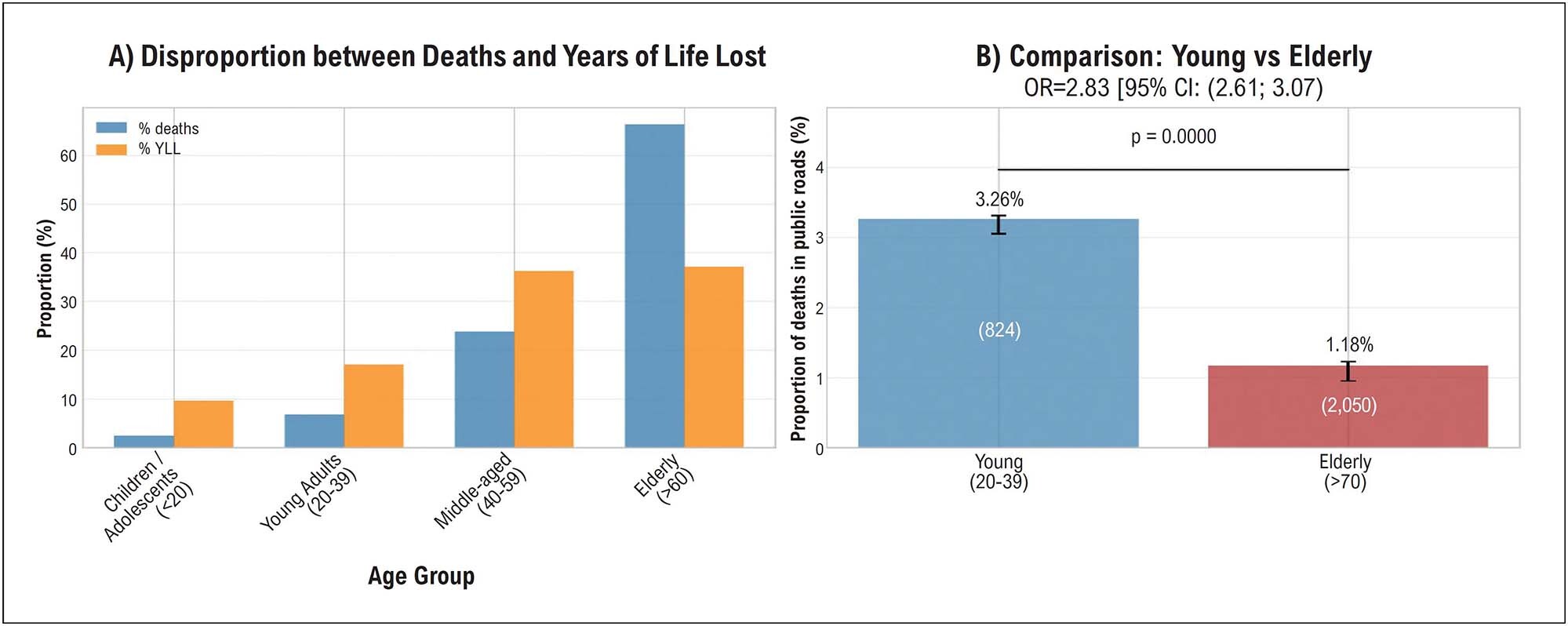
Age-adjusted mortality declined by 1.7% annually (p<0.001). Hospital deaths decreased from 75% to 43%, whereas home deaths increased from 20% to 38%, with a significant inflection point around 2011. Public roadway deaths, used as a proxy for SCD, were more frequent among adults aged 20–39 years (4.8%) than among those aged ≥60 years (0.8%; OR 2.88, 95% CI 2.68–3.10). Total YLL reached 6.83 million years. Individuals aged 20–39 years accounted for only 5.5% of deaths but contributed 12.8% of total YLL, averaging 42.9 years lost per death.

Conclusions:

Despite declining mortality, out-of-hospital deaths have become more frequent. Excess YLL among young adults highlights gaps in SCD prevention. Age-tailored strategies are needed to reduce premature mortality.
  • Cardiomyopathies
  • Epidemiology
  • Life Expectancy
  • Mortality
Read Full Article
Creative Commons Attribution (CC BY) Creative Commons license
29/09/2026 DOI: 10.36660/abchf.20260024i Views 15
ABC
Editorial

Women's Cardiovascular Health: A Current Challenge

Paolo Blanco Villela et al. Larissa Franco de Andrade

The growing attention paid to women’s cardiovascular health reflects a necessary paradigm shift in contemporary medicine. This transformation is based on evidence that cardiovascular diseases (CVD) are the leading cause of death among women, accounting for approximately 35% of all global female deaths, surpassing mortality from all cancers combined.

Despite the expansion of awareness campaigns and advances in scientific knowledge on the subject, a worrying stagnation in the reduction of the global burden of these diseases has been observed in the last decade. Women still face less recognition of their cardiovascular risk, delays in diagnosis, and less access to evidence-based therapies., In Latin America and the Caribbean (LAC), this scenario is even more challenging, as the presence of social and structural inequalities imposes additional barriers to the diagnosis and adequate treatment of CVD.,

[…]

  • Caribbean Region
  • Epidemiology
  • Latin America
  • Mortality
  • Women's Health
Read Full Article
Creative Commons Attribution (CC BY) Creative Commons license
21/09/2026 DOI: 10.36660/abc.20260532i Views 2
IJCS
Editorial

The Importance of Observational Studies

Paolo Blanco Villela et al. Larissa Franco de Andrade

Discussing coronary artery disease without beginning with the traditional phrase “cardiovascular diseases are the leading cause of death worldwide” becomes challenging – especially because that statement, unfortunately, is no longer sufficient. There is no way to avoid it except by expanding upon it: in addition to leading global mortality statistics, cardiovascular diseases represented the primary cause of disability-adjusted life years (DALYs) in 2023, accounting for 437 million (95% UI: 401–465 million) DALYs worldwide – a 1.4-fold increase compared with 1990.

Naturally, ischemic heart diseases are included in this group and ranked first, with 193 million DALYs in 2023 and an age-standardized mortality rate of 99.8 (89.9–108.4) per 100,000 inhabitants, according to data from the Global Burden of Disease (GBD).

[…]

  • Epidemiology
  • Myocardial Ischemia
  • Observational Study
Read Full Article
Creative Commons Attribution (CC BY) Creative Commons license
07/09/2026 DOI: 10.36660/ijcs.20260130 Views 2
ABC
Editorial

Sick Individuals and Sick Populations

Érique José Farias Peixoto de Miranda

The article by Lederman et al. discusses an epidemiological investigation of mortality from diseases of the circulatory, respiratory, and endocrine systems, as well as neoplasms, in the São Paulo Metropolitan Region (SPMR), analyzed using geoprocessing.

It is noteworthy that the study combined a database of over 1.3 million hospital records from a tertiary hospital with state mortality records through deterministic linkage. In other words, identical variables from the same patient present in the different databases were used to combine them, allowing for the tracking of long-term outcomes of patients frequently lost to care after hospital discharge.

[…]

  • Chronic Disease
  • Epidemiology
  • geographic information systems
  • Mortality
Read Full Article
Creative Commons Attribution (CC BY) Creative Commons license
03/08/2026 DOI: 10.36660/abc.20260436i Views 1
Spatiotemporal Analysis of Mortality from Cardiomyopathies in Brazil between 2001 and 2021
ABC
Original Article

Spatiotemporal Analysis of Mortality from Cardiomyopathies in Brazil between 2001 and 2021

Luiz Fernando Kubrusly et al. Ana Clara Abdo Lopes Fernanda Ritt de Souza Gustavo Ferrucio Dieter … Laura Nadolny Leonardo Moreira Dias Letícia Moreira Dias Luis Gustavo Machado Farias Roberto Oliveira Basso Vitória Naomi Okimura

Abstract

Background

Brazil presents regional variations in mortality from cardiomyopathies, influenced by demographic characteristics, socioeconomic inequalities, and differences in access to health services. Between 2001 and 2021, 272,448 deaths from the disease were recorded in the country.

Objective

To analyze, at the national level, the epidemiological profile and the spatiotemporal distribution of mortality from cardiomyopathies in Brazil, from 2001 to 2021.

Methods

Epidemiological study based on secondary data from the Mortality Information System (SIM/DATASUS) and population estimates from IBGE. Crude mortality rates were calculated per municipality. Temporal analysis was performed using Joinpoint, estimating the annual percentage change (APC). Spatial analysis used GeoDa, with Bayesian smoothing and evaluation of spatial autocorrelation using the Global Moran’s I and LISA indices. Statistical significance was set at p < 0.05.

Results

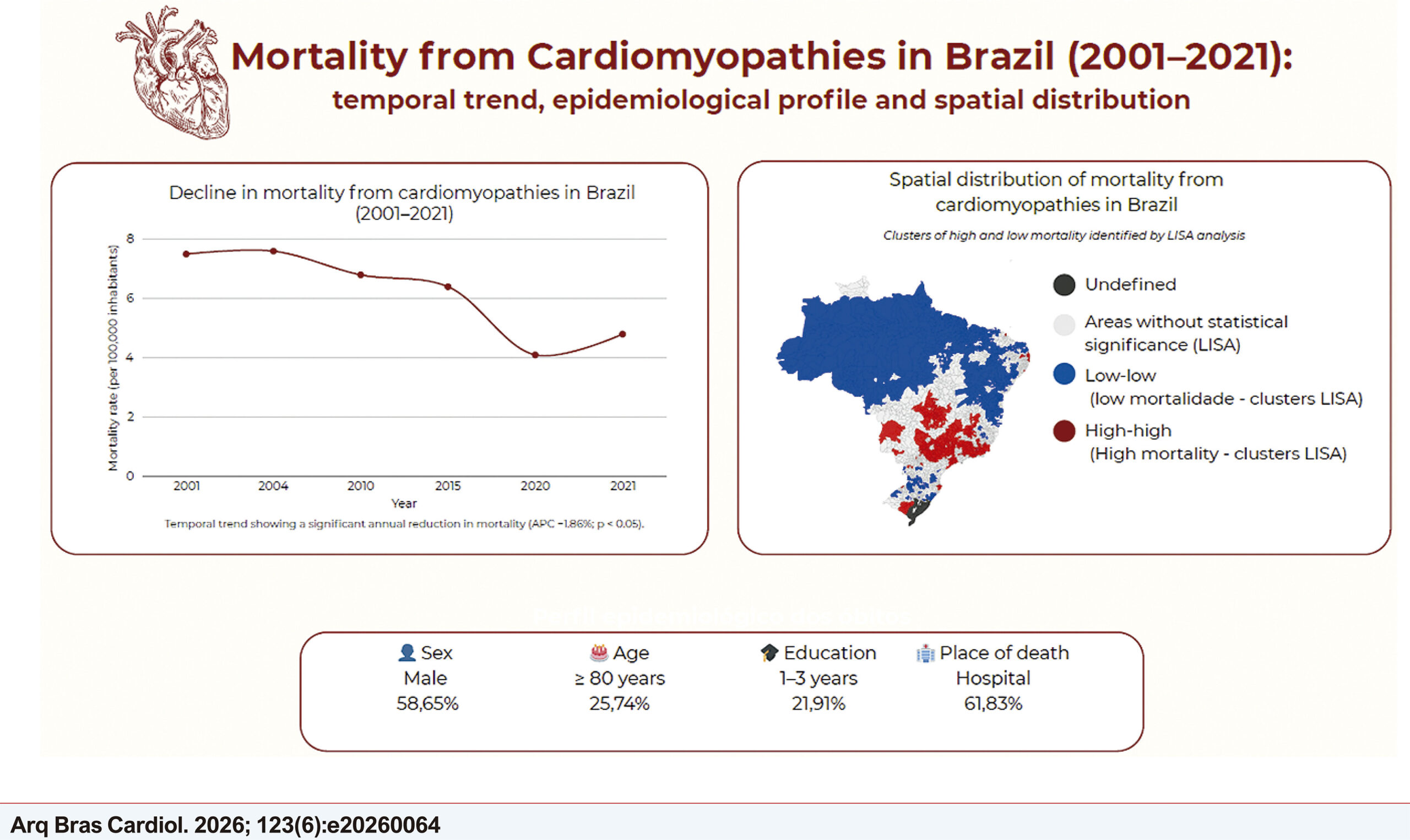
There were 272,448 deaths due to cardiomyopathies, predominantly in men (58.65%), individuals aged 80 or older (25.74%), white individuals (52.18%), married individuals (36.77%), and those with 1 to 3 years of completed schooling (21.91%). The average mortality rate was 6.66 per 100,000 inhabitants, reaching 7.64 per 100,000 in 2004 and falling to 4.15 per 100,000 in 2020. A significant annual reduction of 1.86% was observed (p < 0.05). Spatial analysis revealed clusters of high mortality, mainly in the Midwest, South, and Southeast regions, with Corumbá de Goiás standing out (49.34/100,000).

Conclusion

There was a significant reduction in mortality from cardiomyopathies, despite the persistence of critical areas that require targeted strategies for surveillance, early diagnosis, and appropriate management.

  • Cardiomyopathies
  • Epidemiology
  • Mortality
  • Spatio-Temporal Analysis
Read Full Article
Creative Commons Attribution (CC BY) Creative Commons license
27/07/2026 DOI: 10.36660/abc.20260064i Views 3
Epidemiology and Mortality of Valvular Heart Disease in Brazilian Adults: Findings from the ELSA-Brasil Cohort
ABC
Original Article

Epidemiology and Mortality of Valvular Heart Disease in Brazilian Adults: Findings from the ELSA-Brasil Cohort

Guilia Bevilacqua Schmitz et al. Eduardo Gatti Pianca Maria Do Carmo Pereira Nunes Bruce Bartholow Duncan … Murilo Foppa Angela Barreto Santiago Santos

Abstract

Background

Most of the current evidence on valvular heart disease (VHD) comes from high-income countries. Access to treatment and the impact of VHD on quality of life may vary substantially across nations, largely due to socioeconomic differences.

Objective

This study aimed to estimate the burden of VHD and its association with mortality in a middle-income country.

Methods

We included participants from the ELSA-Brasil cohort who underwent transthoracic echocardiography at baseline (3,267 participants; 1,539 males; mean age 60.6 ± 8.8 years) across six Brazilian states. Participants were categorized into three groups—no VHD, trace/mild VHD, and moderate/severe VHD—and their characteristics and associated factors were analyzed. P-values < 0.05 were considered statistically significant.

Results

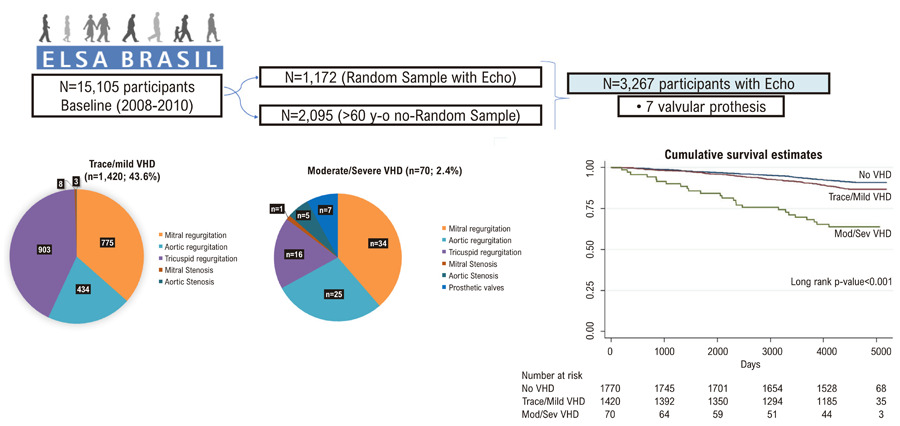
Among all participants, 2.4% had moderate/severe VHD (including 7 participants with prosthetic valves), and 43.6% had trace/mild VHD. The most prevalent moderate/severe VHD was mitral regurgitation, followed by aortic and tricuspid regurgitation, with 56 participants (86%) presenting isolated valvular regurgitation. Moderate/severe VHD was more common in older individuals and was associated with a higher prevalence of most cardiovascular comorbidities, but with lower obesity rates. It was also associated with greater cardiac remodeling and reduced systolic function, with phenotypic variations depending on the affected valve. Moderate/severe VHD was linked to increased 10-year mortality (HR: 3.7; 95% CI [2.17–6.31]), independent of age, sex, and hypertension.

Conclusion

VHD is common among community-dwelling adults in this middle-income country and increases with age. Participants with moderate/severe VHD exhibited a greater burden of comorbidities, more pronounced cardiac remodeling, worse systolic function, and substantially reduced long-term survival.

  • Adult
  • Epidemiology
  • Heart Valve Diseases
  • Mortality
Read Full Article
Creative Commons Attribution (CC BY) Creative Commons license
24/07/2026 DOI: 10.36660/abc.20260060i Views 2
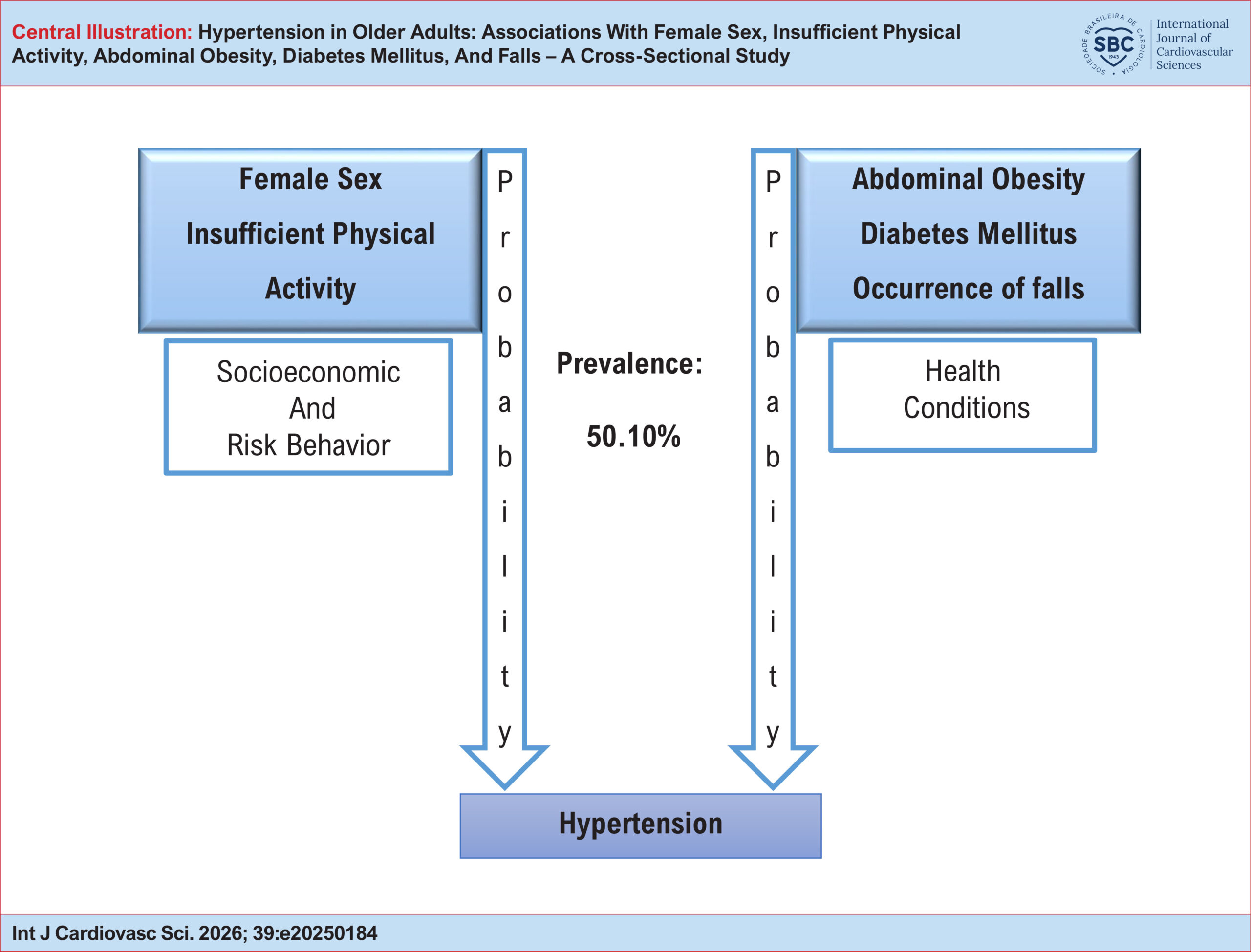
Hypertension in Older Adults: Associations With Female Sex, Insufficient Physical Activity, Abdominal Obesity, Diabetes Mellitus, And Falls – A Cross-Sectional Study
IJCS
Original Article

Hypertension in Older Adults: Associations With Female Sex, Insufficient Physical Activity, Abdominal Obesity, Diabetes Mellitus, And Falls – A Cross-Sectional Study

Emylly Carlos da Silva et al. Paulo da Fonseca Valença Neto Cezar Augusto Casotti Claudio Bispo de Almeida … Débora Jesus da Silva Saulo Sacramento Meira Beatriz Cardoso Roriz Janayna Araújo Viana Vanessa Silva Souza Viana Renata de Sá Ribeiro Késia Chaves da Silva Dennis Gonçalves Novais Maiara Bernardes Marques Lunalva Aurelio Pedroso Sallet Lucas dos Santos

Abstract

Background:

Systemic Arterial Hypertension (SAH) is a major public health issue, particularly among older adults, due to its high prevalence and impact on morbidity and mortality.

Objective:

To investigate factors associated with SAH in older adults from a small municipality in northeastern Brazil.

Methods:

A population-based cross-sectional epidemiological study was conducted among 232 community-dwelling older adults. Independent variables included socioeconomic, behavioral, and health-related factors, with SAH as the outcome. Prevalence ratios (PR) and 95% confidence intervals (CI) were calculated using Poisson regression with a robust estimator. Crude models were followed by a hierarchical multiple explanatory model (Level 1: socioeconomic variables; Level 2: behavioral aspects; Level 3: health conditions). Associations were considered statistically significant at the 5% level (p < 0.05).

Results:

The prevalence of SAH was 59.1% (men: 50.0%; women: 65.4%). An increased likelihood of SAH was associated with female sex (PR: 1.33; 95% CI: 1.05–1.68), insufficient physical activity (PR: 1.24; 95% CI: 1.01–1.54), abdominal obesity (PR: 1.40; 95% CI: 1.09–1.79), diabetes mellitus (PR: 1.30; 95% CI: 1.03–1.64), and falls (PR: 1.37; 95% CI: 1.07–1.74).

Conclusion:

A high prevalence of SAH was identified, particularly among women and those with insufficient physical activity, abdominal obesity, diabetes mellitus, and a history of falls.

  • aging
  • Arterial Pressure
  • Epidemiology
  • Public Health
Read Full Article
Creative Commons Attribution (CC BY) Creative Commons license
10/07/2026 DOI: 10.36660/ijcs.20250184 Views 2
IJCS
Editorial

Infective Endocarditis Epidemiology Over Time: An Analysis of a National Registry Between 1996 and 2023

Alfredo Jose Mansur

One of the approaches of studying diseases is how they evolve over time in different scenarios. Time may refer to years, decades, even centuries; scenarios may refer to different geographic peculiarities, epidemiological conditions, clinical and surgical therapeutic medical facilities available, access to proper health care, access to the diagnosis, and access to the treatment.

Infective endocarditis has been subject to this approach over time after the description of the disease in seventheenth century. Among the historical outstanding contributions were the three famous Gulstonian Lectures delivered by William Osler. As a rare disease, incidence of infective endocarditis was estimated to be between 3 and 10 episodes per 100,000 person-years in different surveys. Decades ago, institutional reports of large series of patients over time were traditional in the literature.– Some of these series were published before the advent of large epidemiological studies that were feasible due to new technologies related to data science and data analyses. More recent reports have studied the changing nature of the disease over time: in France, in an American county, in England, in Italy, in Europe, in an international collaboration, and in one Brazilian institution over a four-decade period.

[…]

  • Endocarditis
  • Epidemiology
  • Registros de Doenças
Read Full Article
Creative Commons Attribution (CC BY) Creative Commons license
27/04/2026 DOI: 10.36660/ijcs.20250285 Views 2
ABC
Editorial

Prevalence of Hypertrophic Cardiomyopathy in Brazil: What is Our Reality?

Silvia Moreira Ayub-Ferreira

Hypertrophic cardiomyopathy (HCM) is a hereditary heart disease whose prevalence is underestimated in several regions of the world. In Brazil, this challenge is also significant, especially given the country’s population heterogeneity. In this issue, we highlight a pioneering study that investigated the occurrence of the echocardiographic phenotype of HCM in the ELSA-Brasil cohort.1

For those unfamiliar, the Brazilian Longitudinal Study of Adult Health (ELSA-Brasil) is a large, multicenter cohort study designed to investigate risk factors for obesity, diabetes, and cardiovascular diseases in Brazilian public servants from large urban centers, aged 35 to 74 years.

[…]

  • Echocardiogram
  • Epidemiology
  • Hypertrophic Cardiomyopathy
Read Full Article
Creative Commons Attribution (CC BY) Creative Commons license
30/03/2026 DOI: 10.36660/abc.20260100i
Endocarditis – A 27-Year Epidemiological Analysis of Mortality in Brazil
IJCS
Original Article

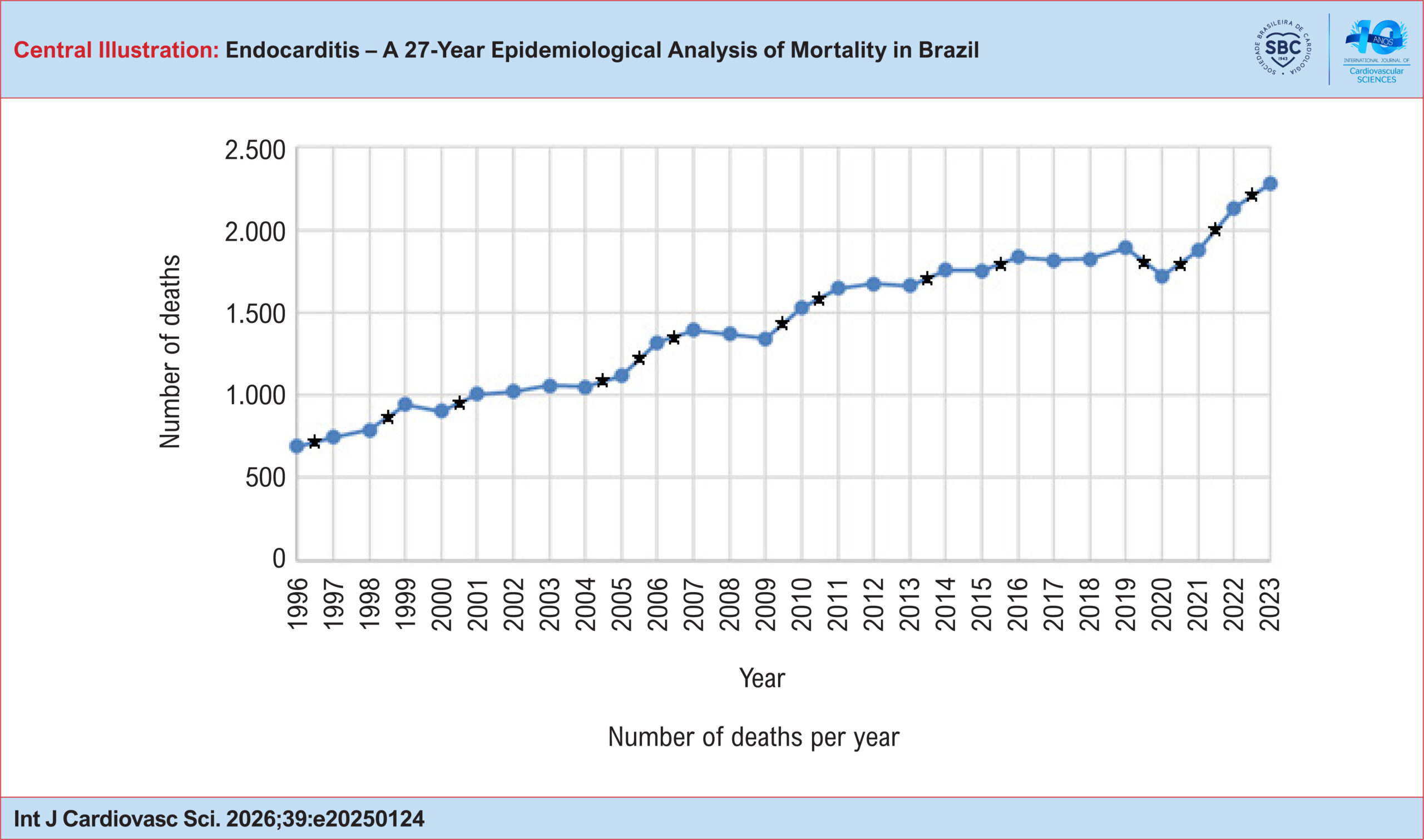
Endocarditis – A 27-Year Epidemiological Analysis of Mortality in Brazil

Leticia da Costa Santana Silva et al. Luana Yasmim Fernández Avelaneda Castanheira Maria Dalila Santos Salim Ruy Felipe Melo Viegas … Gilson Fernandes Ruivo Sheila Cavalca Cortelli Davi Romeiro Aquino Taciana Mara Rezende Fortes Viégas

Abstract

Background:

Infective endocarditis (IE) is frequently caused by viridans streptococci. Short-term in-hospital mortality in high-income settings ranges from 11% to 25%. In Brazil, rheumatic heart disease remains a leading valvular substrate; however, its declining prevalence in developing nations has limited country-specific analyses.

Objective:

To describe the epidemiological profile of mortality from IE in Brazil, characterizing its magnitude and temporal trend.

Methods:

We conducted a retrospective, exploratory epidemiological study with descriptive and analytic components using data from the Mortality Information System of the Department of Informatics of Brazil’s Unified Health System. Chi-square tests of independence were applied (p < 0.05), and results were summarized in tables and figures. Variables included International Statistical Classification of Diseases and Related Health Problems, 10th Revision categories, year of death, region, and sex.

Results:

From 1996 to 2022, 40,157 deaths associated with IE were recorded in Brazil (chi-square = 1,701.43). The Southeast region accounted for the greatest burden, with 21,429 deaths (53.36%; chi-square = 15,236.00). By sex (chi-square = 999.32), men were more affected than women (55.57% [22,315] vs 44.41% [17,835]); in 0.02% of records, sex was unspecified.

Conclusions:

IE remains a condition of national and international concern, with substantial mortality in Brazil over the last 27 years. This overview of mortality patterns highlights regional disparities and sex differences and can inform public-health strategies and evidence-based interventions.

  • Endocarditis
  • Epidemiology
  • Mortality
Read Full Article
Creative Commons Attribution (CC BY) Creative Commons license
02/03/2026 DOI: 10.36660/ijcs.20250124 Views 6
IJCS
Editorial

The Burden of Cardiovascular Disease in Brazil: Insights From a Decade of Emergency Hospital Admissions

Fernando Yue Cesena

Cardiovascular disease (CVD) remains the leading cause of death both globally and in Brazil., Although cancer has surpassed CVD as the top cause in some countries, projections indicate that CVD will continue to be the primary cause of mortality in Brazil for the decades to come.,

Epidemiological analyses are essential for evaluating current public health strategies and informing future policy decisions. In this issue of the International Journal of Cardiovascular Sciences, an epidemiological study of recent emergency hospital admissions for CVD in Brazil is presented. Using data from the Department of Informatics of the Brazilian Unified Health System (DATASUS), the authors report data from over eight million hospital admissions from 2013 to 2023.

[…]

  • Cardiovascular Diseases
  • COVID-19
  • Epidemiology
  • Hospitalization
Read Full Article
Creative Commons Attribution (CC BY) Creative Commons license
09/01/2026 DOI: 10.36660/ijcs.20250128 Views 1
ABC
Editorial

The ELSA-BRASIL Study and Physical Activity in Protecting Against the Development of Type 2 Diabetes

Rodrigo Delevatti et al. Larissa dos Santos Leonel Leandro Franzoni

Type 2 diabetes mellitus (T2DM) is a highly prevalent disease, considered a major public health problem, which implies personal costs, as well as representing a significant financial burden on health services., In its preventive and therapeutic approach, the protective role of physical education has been established, but the optimization of its benefits, especially analyzing the relationship between characteristics inherent to the practice of physical activity and the development of DMT2, is still open.

In this scenario, the article “Dose-Response Association between Leisure-Time Physical Activity Intensity Trajectories and Diabetes among Men and Women in ELSA-Brasil” collaborates significantly, following a significant sample of individuals from different locations in Brazil, testing the association between different doses of leisure-time physical activity and pre-diabetes and T2DM in adults and older adults. The exposure is based on the different activity profiles, considered here as doses (the product of frequency, duration, and intensity), classified as low, moderate, and high, terms that refer to the intensity of the effort.

[…]

  • Diabetes Mellitus
  • Epidemiology
  • Exercise
Read Full Article
Creative Commons Attribution (CC BY) Creative Commons license
29/09/2025 DOI: 10.36660/abc.20250464i Views 2
Social Vulnerability Index and Mortality from Ischemic Heart Diseases and Cerebrovascular Diseases in Brazil from 2000 to 2021
ABC
Original Article

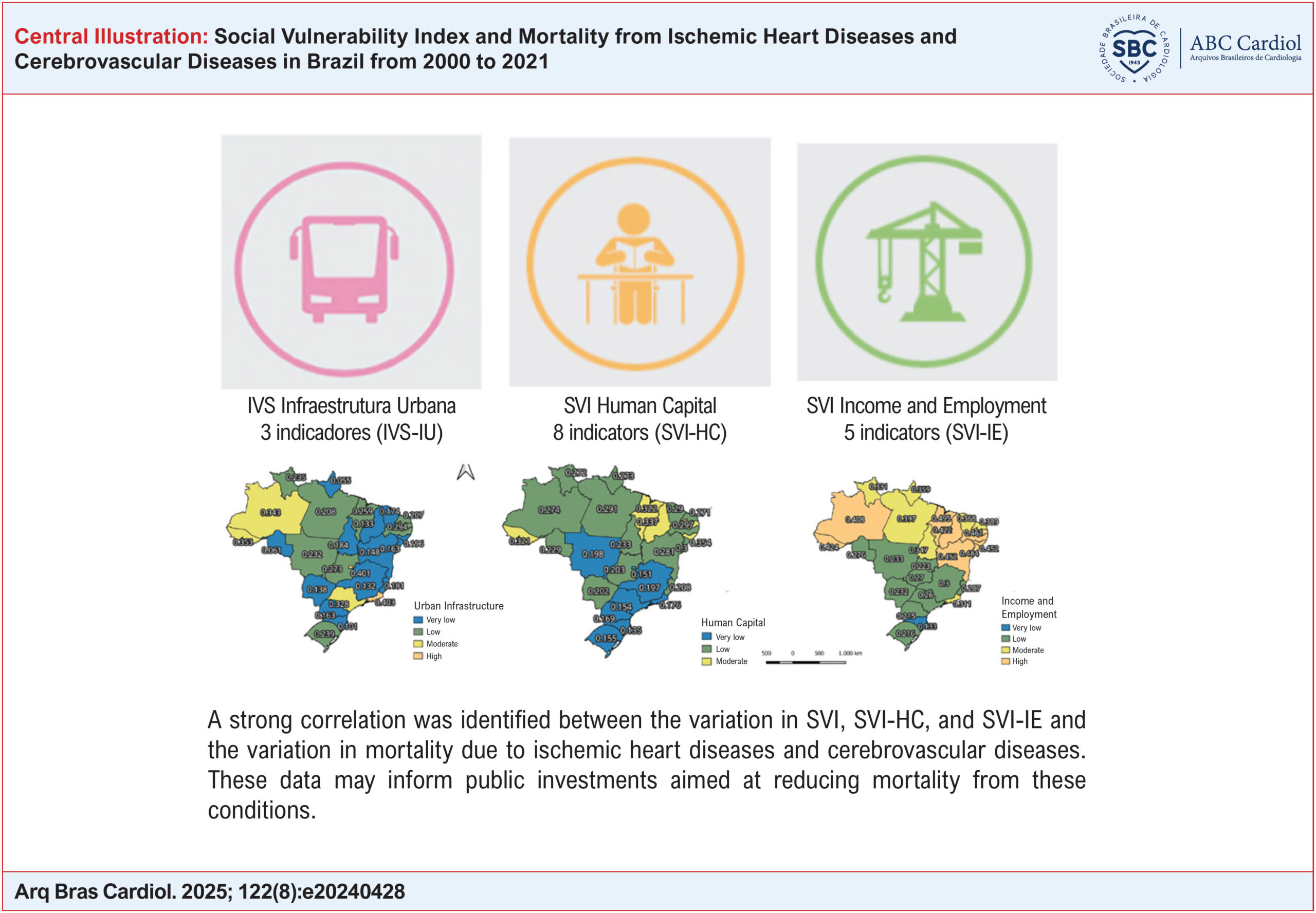
Social Vulnerability Index and Mortality from Ischemic Heart Diseases and Cerebrovascular Diseases in Brazil from 2000 to 2021

José Lucas Bichara et al. Luiz Antônio Bastos Eric Delgado dos Santos Mafra Lino Paolo Blanco Villela Gláucia Maria Moraes de Oliveira

Abstract

Background:

Previous studies have observed a correlation between mortality rates from ischemic heart diseases (IHDs), cerebrovascular diseases (CBVDs), and the Social Vulnerability Index (SVI). However, doubts persist about the association between the overall SVI and its dimensions and mortality stratified by sex, ethnicity, and population clusters.

Objective:

To analyze the evolution of the overall SVI and its dimensions and correlate it with mortality rates due to IHD and CBVD in Brazil and its Federative Units (FUs) from 2000 to 2021.

Methods:

Ecological study of time series of standardized mortality rates (using the direct method with the Brazilian population in 2000) due to IHD and CBVD categorized by age, sex, and FUs between 2000 and 2021, correlated with the SVI and its dimensions. Data on the underlying causes of death were obtained from the Mortality Information System, while SVI data were sourced from the Social Vulnerability Atlas. Spearman correlation (considered significant if p<0.05) was employed to calculate each analyzed stratum.

Results:

The SVI and its Human Capital (SVI-HC) dimension and Income and Employment (SVI-IE) dimension in 2010 showed a strong correlation with variations in mortality rates due to CBVD and IHD (SVI x CBVD: Rho(p)=0.85; SVI x IHD: Rho(p)=0.75; SVI-HC x CBVD: Rho(p)=0.84; SVI-HC x IHD: Rho(p)=0.84; SVI-IE x CBVD: Rho(p)=0.81; SVI-IE x IHD: Rho(p)=0.71). The Urban Infrastructure dimension (SVI-UI) showed a weak correlation with CBVD and IHD, respectively (SVI-UI x CBVD: Rho(p)=0.33; SVI-UI x IHD: Rho(p)=0.25).

Conclusion:

Both SVI-HC and SVI-IE demonstrated strong correlations with variations in mortality rates from IHD and CBVD.

  • Cardiovascular Diseases
  • Cerebrovascular Disorders
  • Epidemiology
  • Myocardial Ischemia
  • Social Vulnerability
Read Full Article
Creative Commons Attribution (CC BY) Creative Commons license
19/09/2025 DOI: 10.36660/abc.20240428i Views 2
Temporal Trends in the Epidemiology of Acute Rheumatic Fever: A Nationwide Analysis from 2008 to 2022
ABC
Original Article

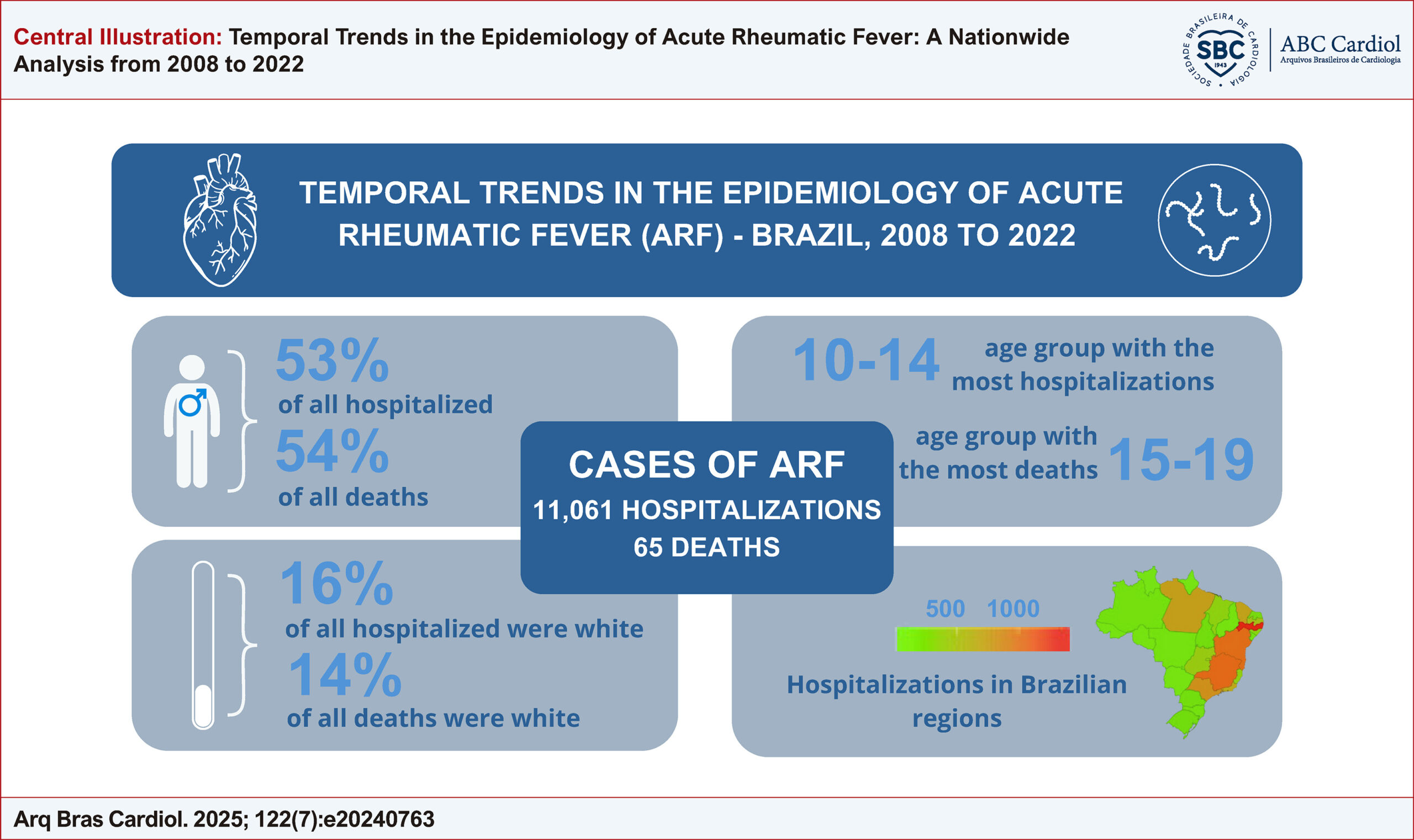
Temporal Trends in the Epidemiology of Acute Rheumatic Fever: A Nationwide Analysis from 2008 to 2022

Antonio Mutarelli et al. Larissa Armelin Alexandre Negrão Pantaleão Alleh Nogueira … Carla Jorge Machado José Luiz P Silva Jagdip Kang Walderez O. Dutra Maria C. P. Nunes

Abstract

Background

Acute rheumatic fever (ARF) remains a significant public health challenge, especially in low- and middle-income countries. It disproportionately affects non-white populations in underprivileged regions and may lead to rheumatic heart disease (RHD), which has high morbidity and mortality.

Objectives

Analyze hospitalizations and deaths related to ARF in Brazil between 2008 and 2022, highlighting regional and demographic inequalities.

Methods

We conducted a cross-sectional study analyzing hospitalization and mortality data caused by ARF from 2008 to 2022 in Brazil, collected through the Hospital Information System (SIH/SUS). Data were stratified by demographics, region, and hospital visit type (urgent or elective) and analyzed using generalized linear autoregressive moving average models to assess the impact of age, sex, and race. Statistical significance was set at p < 0.05.

Results

Of 11,061 hospitalizations and 65 deaths from ARF, 53% were male and 16% were white. The 10–14-year-old age group had the highest hospitalization rates, while the 15–19-year-old group had more deaths. Hospitalizations were higher among non-white individuals and concentrated in Brazil’s Northeast. Over time, ARF-related hospitalizations declined across all demographics, with a gradual convergence between male and female rates by 2022.

Conclusion

Our findings highlight a decline in ARF-related hospitalizations across regions and demographics, though disparities remain. There is no significant difference in ARF cases between men and women. The study highlights a correlation between socioeconomic factors and disease burden, with low-income groups experiencing a higher rate of ARF hospitalizations.

  • Acute Rheumatic Fever
  • Brazil
  • Epidemiology
  • Hospitalization
  • Prevalence
Read Full Article
Creative Commons Attribution (CC BY) Creative Commons license
15/08/2025 DOI: 10.36660/abc.20240763i
Figure 1
IJCS
Original Article

Epidemiological Analysis of Emergency Hospitalizations in Brazil Due to Cardiovascular Diseases From 2013 to 2023

Yago Souza Luiz et al. Vitor Moreira Alvarenga Mikaela de Miranda Lopes Lara Gomes Silva

Abstract

Introduction:

Cardiovascular diseases (CVDs) remain among the leading causes of morbidity and mortality worldwide, posing a significant public health challenge. Thus, analyzing their prevalence over time is crucial.

Objective:

To perform an epidemiological analysis of emergency hospital admissions due to CVD in Brazil between 2013 and 2023.

Methods:

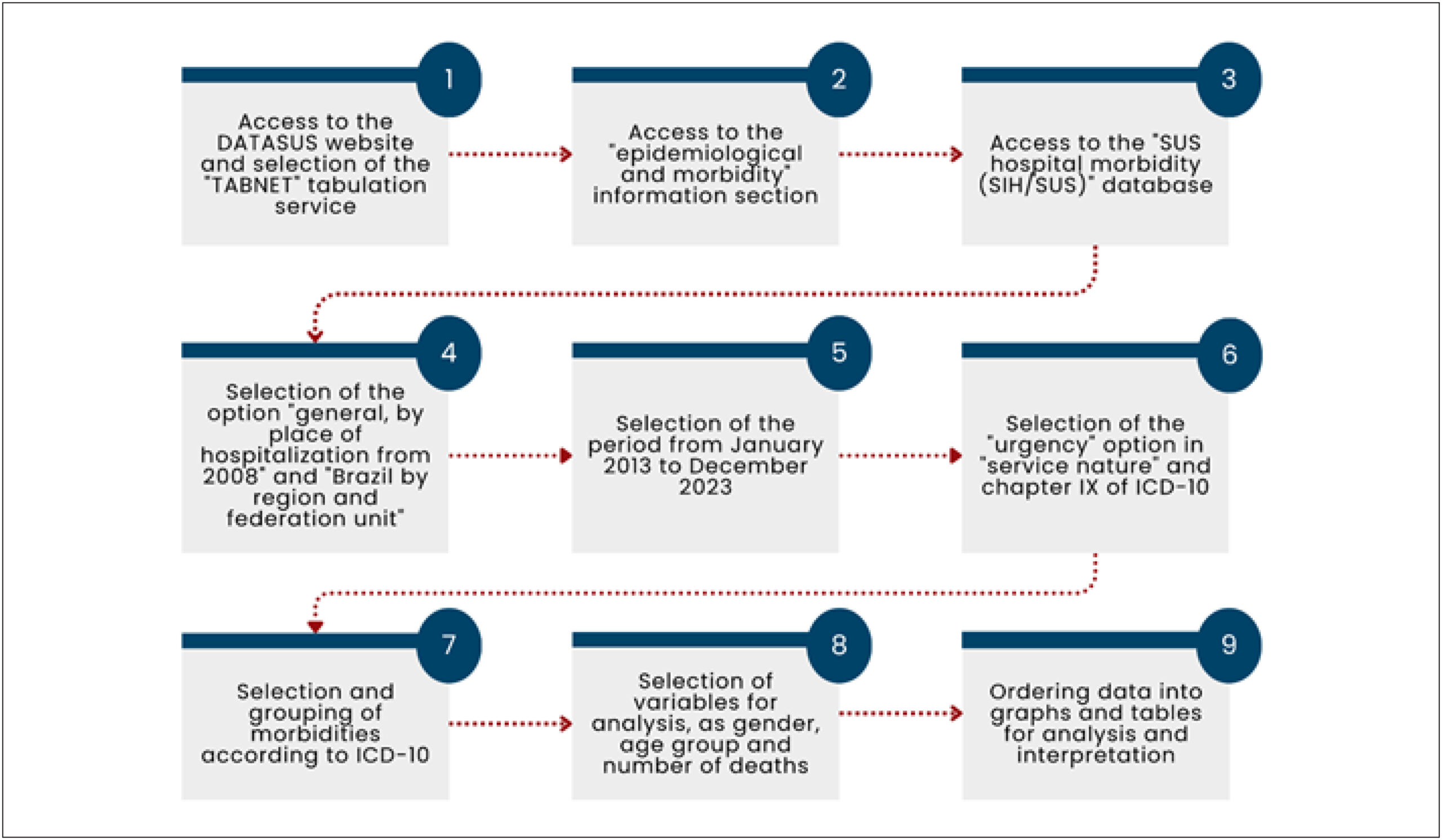
This is an ecological, descriptive study based on data from the DATASUS database. Cardiovascular morbidities classified by ICD-10, along with variables such as sex and age group, were selected for analysis. Data was collected in October 2024 and organized into graphs and tables.

Results:

From January 2013 to December 2023, 8,208,282 patients were admitted for emergency cardiovascular conditions, 53.7% of whom were male, with 26% aged between 60 and 69 years. A significant reduction in hospital admissions was observed in 2020 and 2021. Ischemic heart diseases were the most frequent cause of hospitalization, accounting for 29.72% of cases. A notable increase in mortality was recorded in 2021 and 2022, with higher mortality rates among male patients and those admitted for cerebrovascular diseases.

Conclusion:

The observed increase in hospitalizations is attributed to the demographic transition occurring in the country, while the sharp decline in 2020 and 2021 appears to be a consequence of COVID-19-related measures, which is a trend also observed in other countries. These findings underscore the importance of studying the epidemiology of CVD in Brazil and reinforce the need for public investment aimed at reducing their prevalence.

  • Brazil
  • Cardiovascular Diseases
  • Epidemiology
  • Hospitalization
Read Full Article
Creative Commons Attribution (CC BY) Creative Commons license
27/06/2025 DOI: 10.36660/ijcs.20240200 Views 2
ABC
Editorial

Hypertrophic Cardiomyopathy in Brazil: Advances in Knowledge and Clinical Implications

Danielle Louvet Guazzelli et al. Mônica Samuel Avila

Hypertrophic cardiomyopathy (HCM) is the most prevalent genetically determined heart disease and remains a diagnostic and prognostic challenge. The estimated prevalence of this condition in the general population is approximately 1 case per 200 individuals. In Brazil, it is estimated that 400,000 people are affected.

The natural history of HCM is heterogeneous, with an unpredictable course that may manifest from childhood to the eighth decade of life. The disease also exhibits phenotypic heterogeneity, with two main clinical forms: left ventricular outflow tract obstruction (LVOTO) and non-obstructive.

[…]

  • Epidemiology
  • Hypertrophic Cardiomyopathy
  • Prognosis
Read Full Article
Creative Commons Attribution (CC BY) Creative Commons license
16/06/2025 DOI: 10.36660/abc.20250185i
Figure 1
ABCHF
Viewpoint

What is Happening with Heart Failure in Brazil? An Insight from DATASUS Data Analysis

Tainá Clayton Pellini Simões et al. Rosane Aparecida Monteiro Afonso Diniz C. Passos Marcus V. Simões

Introduction

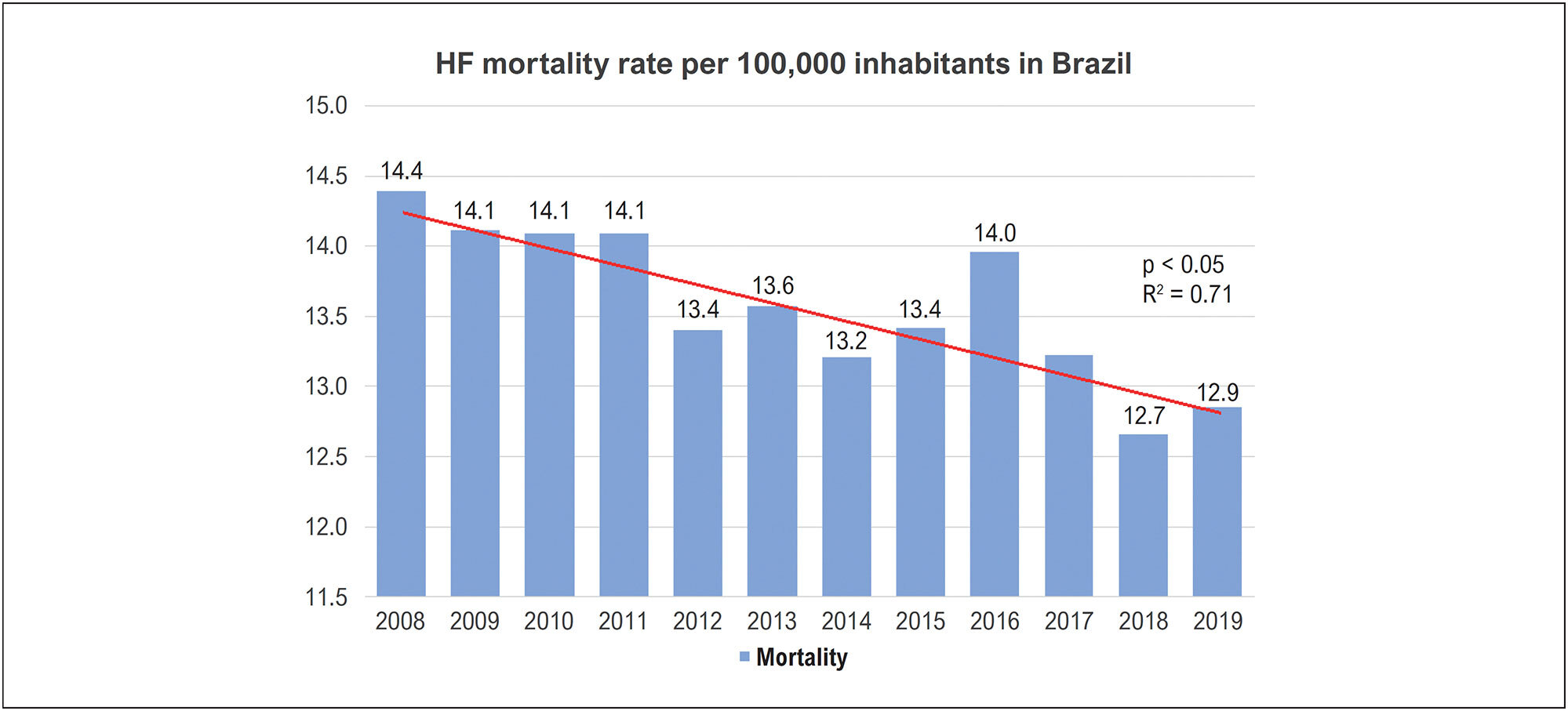
Heart failure (HF) is a chronic and progressive clinical syndrome caused by a structural or functional cardiac abnormality, whose symptoms include dyspnea and fatigue and are accompanied by physical signs such as peripheral edema, pulmonary rales, and jugular venous distension. The natural history of HF often involves rapid worsening of symptoms and signs, leading to severe manifestations at rest, characterizing acute decompensated HF (AHF), usually requiring hospitalization for its control.

AHF is responsible for a large part of the costs of HF for the health system and represents a serious clinical problem with an in-hospital mortality rate of around 4%.

[…]

  • Epidemiology
  • Heart Failure
  • Hospitalization
Read Full Article
Creative Commons Attribution (CC BY) Creative Commons license
15/05/2025 DOI: 10.36660/abchf.20250001i Views 1
Characteristics Associated with Prevalent Atrial Fibrillation and Risk Profile for Incident Atrial Fibrillation an Elderly Population from ELSA-Brasil
ABC
Original Article

Characteristics Associated with Prevalent Atrial Fibrillation and Risk Profile for Incident Atrial Fibrillation an Elderly Population from ELSA-Brasil

Bernardo Boccalon et al. Murilo Foppa Luisa C.C Brant Marcelo M. Pinto-Filho … Antonio L. Ribeiro Bruce B. Duncan Angela Barreto Santiago Santos

Abstract

Background

Atrial fibrillation (AF) is an arrhythmia causing significant symptoms and raising the risk of complications.

Objectives

To evaluate the association of clinical, electrocardiographic, and echocardiographic parameters with prevalent atrial fibrillation or flutter (AFF) and assess the risk profile for incident AFF using the AF prediction scores CHARGE-AF and EHR in an elderly population from a developing country.

Methods

We included all participants in ELSA-Brasil aged 60 and over whose diagnosis of AFF could be defined through self-report or electrocardiogram and who had echocardiography performed at the study’s baseline. For statistical analysis, results with p values < 0.05 were considered statistically significant.

Results

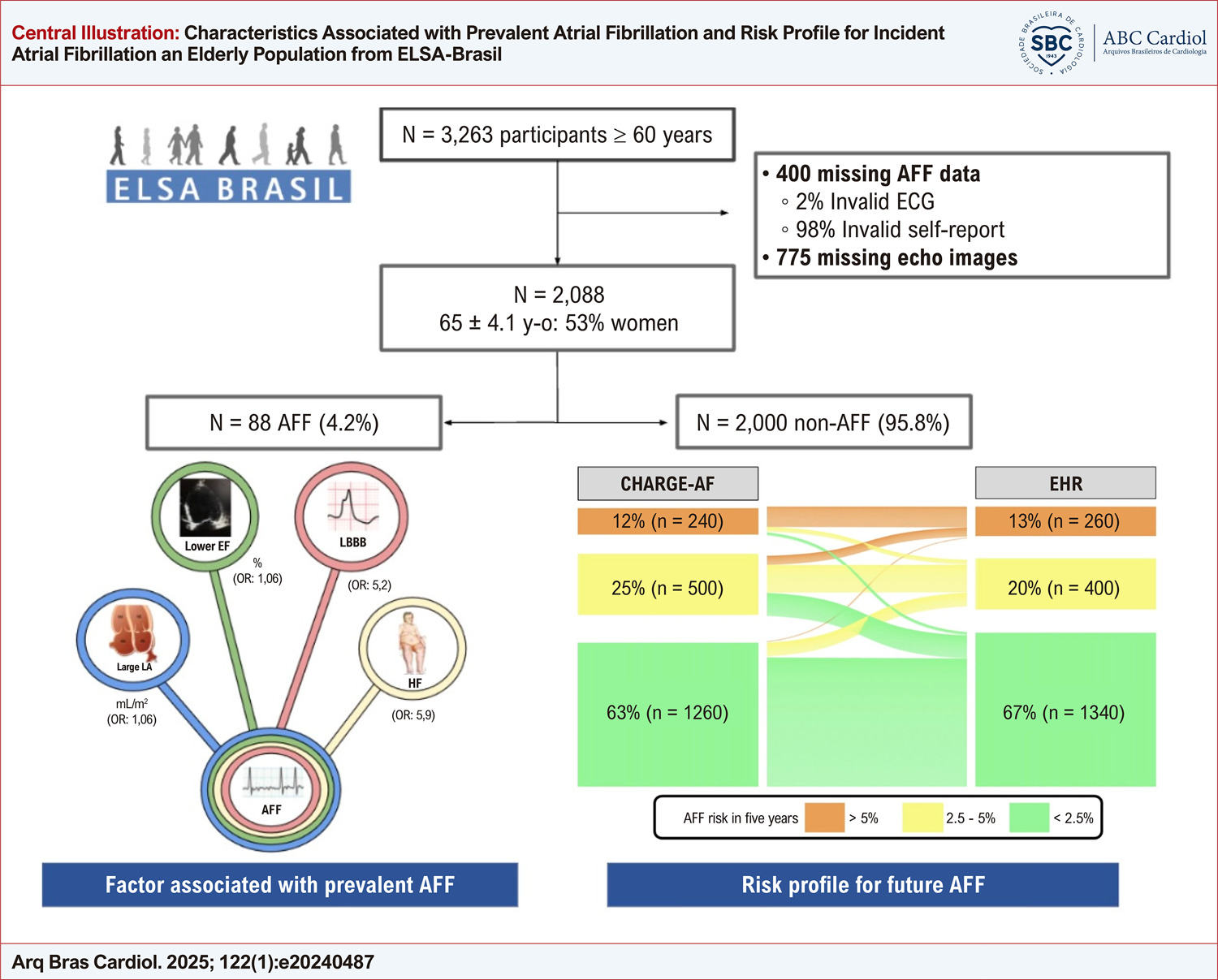
Among the 2,088 participants (65 ± 4.1 years; 53% women), 88 (4.2%) had AFF. Those with AFF were older and had higher rates of heart failure (HF), previous myocardial infarction, left bundle branch block (LBBB), prolonged QT interval, supraventricular extrasystoles, and sinus bradycardia. They also had larger left atrial and left ventricular dimensions, and lower left ventricular ejection fraction (LVEF). Multivariable analysis showed that HF, LBBB, larger left atrium, and lower LVEF were independently associated with AFF. The 5-year risk for incident AFF was low ( 5%) in 12% of individuals according to the CHARGE-AF score, and low in 67% and high in 13% according to the EHR.

Conclusion

AFF was found in 4.2% of this older Brazilian cohort. AFF was linked to HF history, LBBB, left atrial dilation, and reduced LVEF. Additionally, 12% to 13% of patients in sinus rhythm were at high risk for AFF. Monitoring clinical, electrocardiographic, and echocardiographic parameters can aid in early identification of high-risk individuals.

  • Aged
  • Atrial Fibrillation
  • Epidemiology
  • Risk Factors
Read Full Article
Creative Commons Attribution (CC BY) Creative Commons license
17/03/2025 DOI: 10.36660/abc.20240487i Views 1
ABC
Editorial

Additional Data on Atrial Fibrillation from ELSA-Brasil Study

Victor Sarli Issa et al. Alfredo José Mansur

Atrial fibrillation is currently recognized as a medical condition associated with clinically relevant symptoms, worse prognosis, and increased medical costs. Atrial fibrillation does not seem to be a homogenous disease but presents significant variability in terms of epidemiology, clinical presentation, risk factors, access to treatment, and prognosis. Understanding regional, social, and ethnic variations is thus of paramount importance.

It is estimated that more than 33 million individuals worldwide are affected with atrial fibrillation, and the prevalence is expected to grow as the population of individuals aged 65-year-old or older will almost double from 12% in 2010 to an estimated 22% in 2040. This will probably bring additional burden for cardiovascular disease and atrial fibrillation. It has been argued that this health and economic burden might be concentrated in low- and middle-income countries. In this sense, available data suggests that the atrial fibrillation burden in Brazil is at least equivalent to that seen in other countries.

[…]

  • Atrial Fibrillation
  • Epidemiology
  • Longitudinal Studies
Read Full Article
Creative Commons Attribution (CC BY) Creative Commons license
10/02/2025 DOI: 10.36660/abc.20240827i Views 2
ABC
Editorial

Impact of Technological Innovation in the Treatment and Prognosis of Heart Failure

João Marcos Bemfica Barbosa Ferreira et al. Maria Helena Costa de Vasconcelos Andreza Araújo de Oliveira Maria Eduarda da Silva Corrêa

The manuscript entitled “Assessment of Pulmonary Congestion According to Ultrasound and Remote Dielectric Sensing (ReDS) in Patients Hospitalized With Heart Failure” brings us an important contribution to the adequate evaluation of patients with heart failure (HF) who present pulmonary congestion, which represents a frequent cause of decompensation and hospitalization in patients with HF.

HF, both with preserved and reduced ejection fraction, has a high prevalence, with an increase due to the aging of the population. Furthermore, it presents high mortality even with the advent of new drugs and new therapeutic targets.

[…]

  • Epidemiology
  • Heart Failure
  • Prognosis
Read Full Article
Creative Commons Attribution (CC BY) Creative Commons license
02/12/2024 DOI: 10.36660/abc.20240680i
Hypertension, Hypercholesterolemia, and Insufficient Physical Activity Associated with Diabesity in Older Adults: A Cross-Sectional Study
IJCS
Original Article

Hypertension, Hypercholesterolemia, and Insufficient Physical Activity Associated with Diabesity in Older Adults: A Cross-Sectional Study

Gabriel Alves Godinho et al. Paulo da Fonseca Valença Neto Claudio Bispo de Almeida Saulo Sacramento Meira … Beatriz Cardoso Roriz Raquel dos Santos Barbosa Cezar Augusto Casotti Lucas dos Santos

Abstract

Background

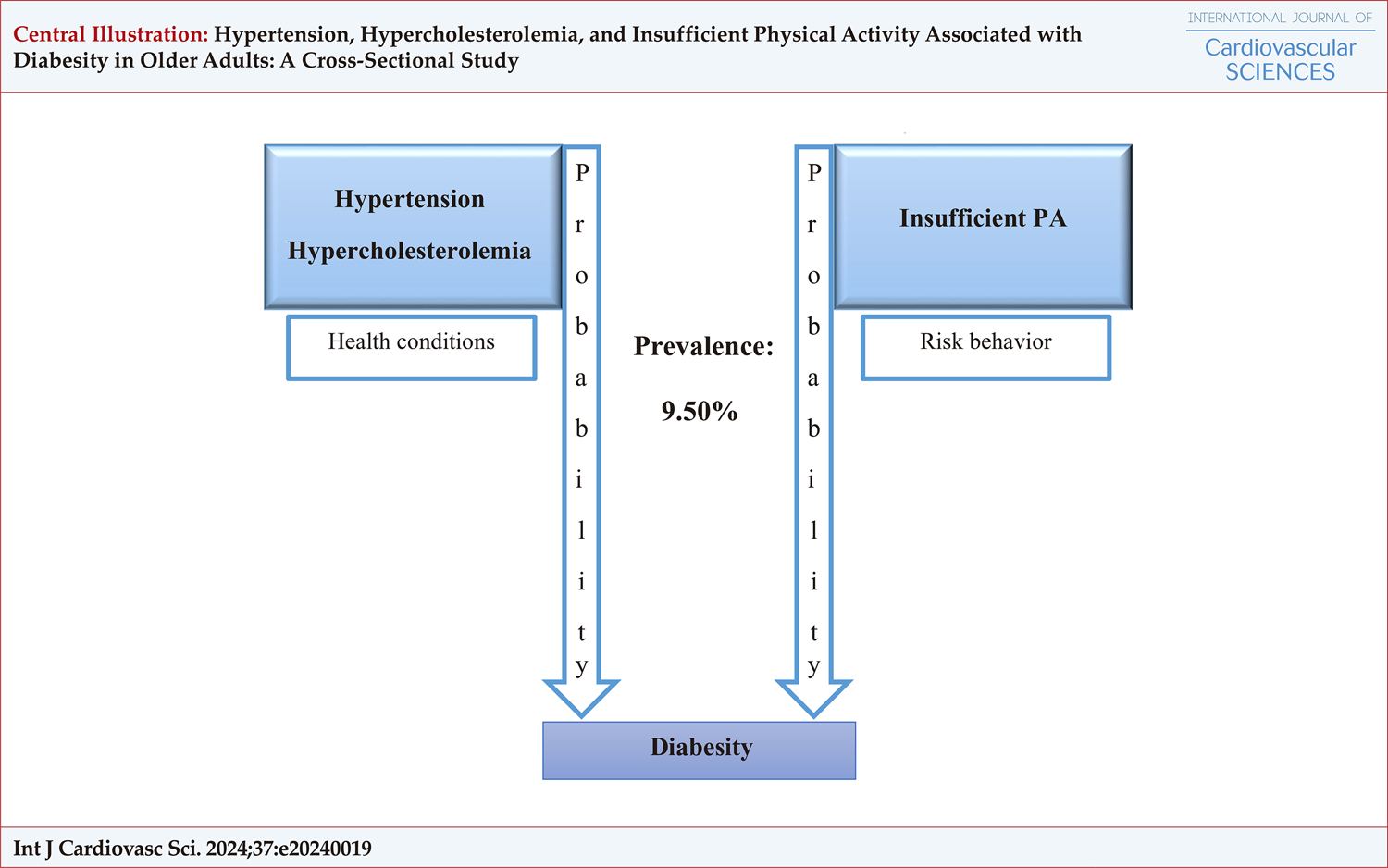
During aging, physiological and behavioral changes occur that lead to the development of diabesity (diabetes + obesity). Hence, the hypothesis that behavioral and health aspects can increase the probability of this outcome is plausible. In this framework, it is essential to carry out health surveys to investigate the factors that increase the probability of diabesity, as this information could be used to help monitor this outcome in the older population more accurately.

Objective

To verify the factors associated with diabesity in older adults.

Methods

This is an epidemiological survey, with a cross-sectional design, conducted with 211 older adults (58.80% women) from Aiquara, Bahia, Brazil. To assess the outcome, body mass index (BMI > 27 kg/m2) and the concomitant presence of diabetes mellitus were used. In the inferential analyses, crude models and, subsequently, a multiple hierarchical explanatory model were constructed (level 1: socioeconomic variables; level 2: behavioral aspects; level 3: health conditions). This was performed using Poisson regression, with a robust estimator, calculations of prevalence ratios (PR) and their relevant 95% confidence intervals (CI).

Results

The prevalence of diabesity observed was around 9.50%. Furthermore, older adults who were insufficiently active (RP: 2.55; 95% CI: 1.20 to 6.36), those with arterial hypertension (PR: 5.32; 95% CI: 1.10 to 25.73), and those with hypercholesterolemia (PR: 2.80; 95% CI: 1.08 to 7.23) were more likely to have this outcome.

Conclusion

In the older population of Aiquara, Bahia, Brazil, the factors associated with diabesity were insufficient level of physical activity (PA), arterial hypertension, and hypercholesterolemia.

  • aging
  • Epidemiology
  • Heart Disease Risk Factors
Read Full Article
Creative Commons Attribution (CC BY) Creative Commons license
09/08/2024 DOI: 10.36660/ijcs.20240019 Views 1
Leisure Time Physical Activity and Incidence of Arterial Hypertension in ELSA-Brasil Participants
ABC
Original Article

Leisure Time Physical Activity and Incidence of Arterial Hypertension in ELSA-Brasil Participants

Tarcísio C. Souza et al. Sheila M. A. Matos Maria da C. C. de Almeida Maria J. M. Fonseca … Maria del Carmen B. Molina Rosane H. Griep Cristiano P. S. Pitanga Francisco J. G. Pitanga

Abstract

Background:

Evidence indicates that physical activity (PA) has a protective effect against chronic diseases, including high arterial hypertension (AH).

Objective:

This study investigated, longitudinally, the association between changes in leisure time physical activity (LTPA) and the incidence of hypertension in ELSA-Brasil participants.

Methods:

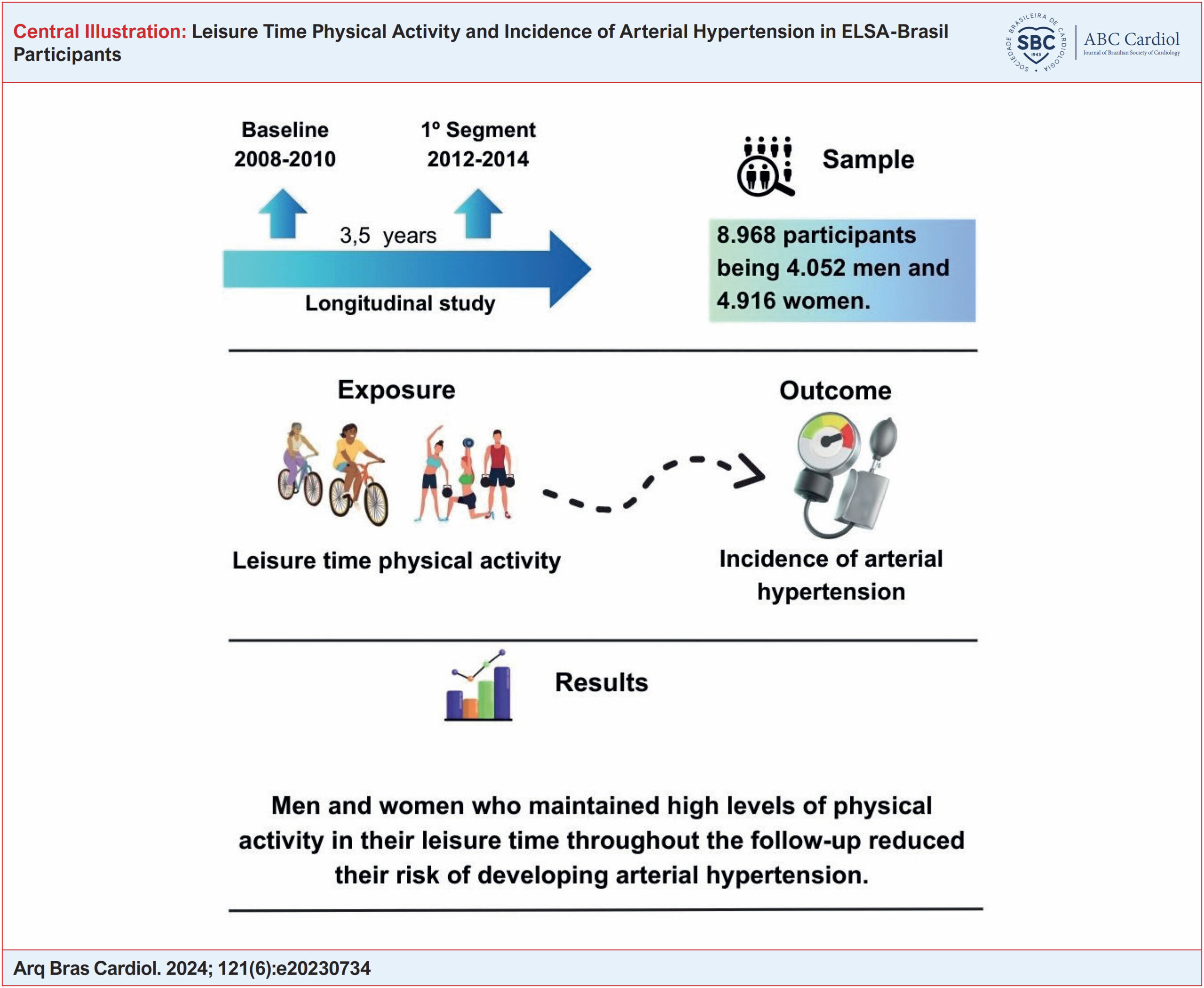
Data from 8,968 participants were analyzed at two different times (2008-2010 and 2012-2014). The International Physical Activity Questionnaire (IPAQ), long version, was used to assess LTPA. The association between LTPA and AH was tested using Poisson regression with relative risk (RR) estimation, with a significance level of 5% and a 95% confidence interval.

Results:

When the LTPA level variable was categorized as sufficient and insufficient, no statistically significant associations were found between LTPA and AH incidence as a function of changes in PA during follow-up. However, when the LTPA variable was categorized as inactive, little active, active, and very active, a statistically significant association was observed between LTPA and AH in participants classified as very physically active. The risk of AH was reduced by 35% among men RR 0.65 (95% CI 0.50-0.86) and by 66% among women RR 0.34 (95% CI 0.20-0.58) who maintained high levels of LTPA at both moments of follow-up.

Conclusion:

These results suggest that maintaining high levels of PA over time is associated with a lower risk of developing AH, highlighting the importance of PA in preventing this condition, for both men and women.

  • Cardiovascular Diseases
  • Epidemiology
  • Longitudinal Studies
  • Public Health
Read Full Article
Creative Commons Attribution (CC BY) Creative Commons license
02/08/2024 DOI: 10.36660/abc.20230734i Views 2
Ethnic Differences in Survival among Brazilian Modern-era Olympic Medalists from 1920 to 1992: A Cohort Study
ABC
Original Article

Ethnic Differences in Survival among Brazilian Modern-era Olympic Medalists from 1920 to 1992: A Cohort Study

Fabricio Braga et al. Paula de Medeiros Ana Carolina Neno Diogo Meira … João Magalhães Michael S. Emery

Abstract

Background:

Disparities in health outcomes among racial groups warrant investigation, even among elite athletes. Therefore, understanding the impact of race upon post-medal survival in Brazilian Olympians becomes essential.

Objective:

To compare post-medal survival between white and non-white Brazilian Olympic medalists from 1920 to 1992.

Methods:

This study used publicly available data for a retrospective cohort study on all Brazilian Olympic medalists from 1920 to 1992 (males only). Athletes were classified into white and non-white groups using structured ethnicity determination. Kaplan–Meier analyses computed the restricted mean survival time (RMST) for each ethnic group. A Cox proportional hazards analysis assessed ethnicity-based survival differences, adjusting for medal-winning age and birth year (p<0.05)

Results:

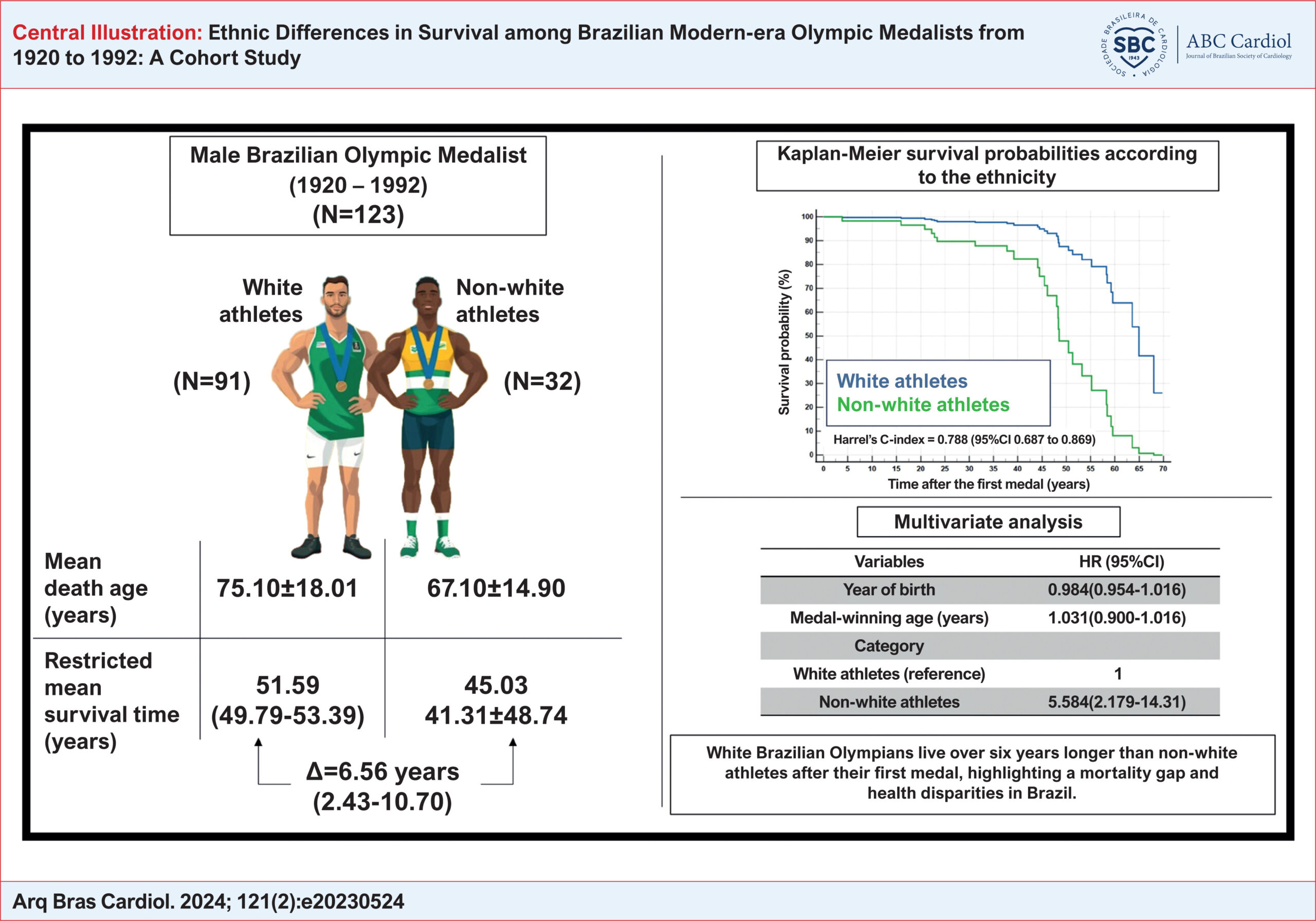
Among 123 athletes (73.9% white), the mean age of medal achievement was 25.03±4.8 years. During the study, 18.7% of white and 37.5% of non-white athletes died (p=0.031). White athletes had a mean age at death of 75.10±18.01 years, while non-white athletes had an age of 67.13±14.90 years (p=0.109). The RMST for white athletes was 51.59 (95% CI 49.79-53.39) years, while for non-white athletes, it was 45.026 (95% CI 41.31-48.74) years, resulting in a ΔRMST of 6.56 (95% CI 2.43-10.70; p=0.0018). Multivariate analysis showed that non-white athletes had a higher mortality risk than did white athletes (HR 5.58; 95% CI, 2.18-14.31).

Conclusion:

Following their first medal, white Brazilian Olympians typically enjoy a six-year longer lifespan than their non-white counterparts, illustrating a marked mortality gap and health disparities among healthy individuals in Brazil.

  • Demography
  • Epidemiology
  • Sports Medicine
Read Full Article
Creative Commons Attribution (CC BY) Creative Commons license
05/04/2024 DOI: 10.36660/abc.20230524 Views 2
ABC
Editorial

Chronic Coronary Syndrome In Brazil: We Need To Know More

Adriana Lopes Latado et al. Julio Cesar Vieira Braga

Chronic coronary syndrome (CCS) is a heterogeneous group of diseases encompassing obstructive and non-obstructive coronary atherosclerotic disease with or without previous myocardial infarction (MI) or coronary revascularization, in addition to the disease diagnosed only by non-invasive tests. According to data from the Global Burden of Disease (GBD) Study, the total number of people living with ischemic heart disease in Brazil, whether symptomatic or not, increased from 1.48 million to more than 4 million between 1990 and 2019. Population growth, aging, and the increase in diagnosis are the main justifications for this phenomenon.,

Although remaining the main cause of death, mortality from ischemic heart disease has decreased over the last three decades in practically all of Brazil, although some regional variations have been described.– Men are more affected than women, and an inverse relationship is described between the mortality rate from ischemic heart disease and the educational or economic level of the regions., Despite the growing existence of national data on ischemic heart disease, regional or local cohorts to assess its long-term prognosis are scarce, even more so if we consider the need for frequent updates regarding emerging treatment strategies.

[…]

  • aging
  • Cardiovascular Diseases
  • Coronary Artery Disease
  • Epidemiology
  • Mortality
  • Prognosis, Syndrome Acute Coronary
Read Full Article
Creative Commons Attribution (CC BY) Creative Commons license
05/01/2024 DOI: 10.36660/abc.20230723 Views 1

Could not load more articles. Please try again.

How to cite this article

EndNote RIS

Electronic Document Format (Vancouver)

Perazzo A, Martins GK, Nobre AP, Oliveira ALL, Araújo Junior JR, Montenegro GL, Montenegro CEL, et al. Shifting Patterns of Out-Of-Hospital Mortality and Premature Life Loss in Cardiomyopathies: A Nationwide Population-Based Study. ABC Heart Fail Cardiomyop 2026;6:e20260024.

Electronic Document Format (ABNT)

Perazzo, Alvaro; Martins, Gabriel Kaleb; Nobre, Arina Peixoto; Oliveira, Arthur Línniker Lopes de; Araújo Junior, Jose Roberto de; Montenegro, Gabriela Lucena; Montenegro, Carlos Eduardo Lucena; Montenegro, Patricia Bezerra Rocha; Torres, João Henrique; Feijó, Flavio; Tenório, Deuzenny; Sepúlveda, Diana Patrícia Lamprea; Steffen, Samuel Padovani; Montenegro, Sérgio Tavares; Gaiotto, Fábio Antonio; Moraes, Fernando. Shifting Patterns of Out-Of-Hospital Mortality and Premature Life Loss in Cardiomyopathies: A Nationwide Population-Based Study. ABC Heart Fail Cardiomyop, v. 6, e20260024, Sep. 2026.

Electronic Document Format (APA)

Perazzo, A., Martins, G. K., Nobre, A. P., Oliveira, A. L. L. , Araújo Junior, J. R. , Montenegro, G. L., Montenegro, C. E. L., Montenegro, P. B. R., Torres, J. H., Feijó, F., Tenório, D., Sepúlveda, D. P. L., Steffen, S. P., Montenegro, S. T., Gaiotto, F. A., & Moraes, F. (2026). Shifting Patterns of Out-Of-Hospital Mortality and Premature Life Loss in Cardiomyopathies: A Nationwide Population-Based Study. ABC Heart Fail Cardiomyop, 6, e20260024.

Electronic Document Format (ISO)

Perazzo, Alvaro and Martins, Gabriel Kaleb and Nobre, Arina Peixoto and Oliveira, Arthur Línniker Lopes de and Araújo Junior, Jose Roberto de and Montenegro, Gabriela Lucena and Montenegro, Carlos Eduardo Lucena and Montenegro, Patricia Bezerra Rocha and Torres, João Henrique and Feijó, Flavio and Tenório, Deuzenny and Sepúlveda, Diana Patrícia Lamprea and Steffen, Samuel Padovani and Montenegro, Sérgio Tavares and Gaiotto, Fábio Antonio and Moraes, Fernando. Shifting Patterns of Out-Of-Hospital Mortality and Premature Life Loss in Cardiomyopathies: A Nationwide Population-Based Study. ABC Heart Fail Cardiomyop [online]. 2026, vol. 6, [cited 2026-10-14], e20260024. Available from: <https://journals.cardiol.br/en/article/shifting-patterns-of-out-of-hospital-mortality-and-premature-life-loss-in-cardiomyopathies-a-nationwide-population-based-study/>

EndNote RIS

Electronic Document Format (Vancouver)

Villela PB, Andrade LF. Women’s Cardiovascular Health: A Current Challenge. Arquivos Brasileiros de Cardiologia 2026;123(7):e20260532.

Electronic Document Format (ABNT)

Villela, Paolo Blanco; Andrade, Larissa Franco de. Women’s Cardiovascular Health: A Current Challenge. Arquivos Brasileiros de Cardiologia, v. 123, n. 7, e20260532, Sep. 2026.

Electronic Document Format (APA)

Villela, P. B., & Andrade, L. F. (2026). Women’s Cardiovascular Health: A Current Challenge. Arquivos Brasileiros de Cardiologia, 123(7), e20260532.

Electronic Document Format (ISO)

Villela, Paolo Blanco and Andrade, Larissa Franco de. Women’s Cardiovascular Health: A Current Challenge. Arquivos Brasileiros de Cardiologia [online]. 2026, vol. 123, n. 7, [cited 2026-10-14], e20260532. Available from: <https://journals.cardiol.br/en/article/womens-cardiovascular-health-a-current-challenge/>. ISSN 0066-782X

EndNote RIS

Electronic Document Format (Vancouver)

Villela PB, Andrade LF. The Importance of Observational Studies. International Journal of Cardiovascular Sciences 2026;39:e20260130.

Electronic Document Format (ABNT)

Villela, Paolo Blanco; Andrade, Larissa Franco de. The Importance of Observational Studies. International Journal of Cardiovascular Sciences, v. 39, e20260130, Sep. 2026.

Electronic Document Format (APA)

Villela, P. B., & Andrade, L. F. (2026). The Importance of Observational Studies. International Journal of Cardiovascular Sciences, 39, e20260130.

Electronic Document Format (ISO)

Villela, Paolo Blanco and Andrade, Larissa Franco de. The Importance of Observational Studies. International Journal of Cardiovascular Sciences [online]. 2026, vol. 39, [cited 2026-10-14], e20260130. Available from: <https://journals.cardiol.br/en/article/the-importance-of-observational-studies/>. ISSN 2359-4802

EndNote RIS

Electronic Document Format (Vancouver)

Miranda JFP. Sick Individuals and Sick Populations. Arquivos Brasileiros de Cardiologia 2026;123(6):e20260436.

Electronic Document Format (ABNT)

Miranda, Érique José Farias Peixoto de. Sick Individuals and Sick Populations. Arquivos Brasileiros de Cardiologia, v. 123, n. 6, e20260436, Aug. 2026.

Electronic Document Format (APA)

Miranda, J. F. P. (2026). Sick Individuals and Sick Populations. Arquivos Brasileiros de Cardiologia, 123(6), e20260436.

Electronic Document Format (ISO)

Miranda, Érique José Farias Peixoto de. Sick Individuals and Sick Populations. Arquivos Brasileiros de Cardiologia [online]. 2026, vol. 123, n. 6, [cited 2026-10-14], e20260436. Available from: <https://journals.cardiol.br/en/article/sick-individuals-and-sick-populations/>. ISSN 0066-782X

EndNote RIS

Electronic Document Format (Vancouver)

Kubrusly LF, Lopes ACA, Souza FR, Dieter GF, Nadolny L, Dias LM, Dias LM, et al. Spatiotemporal Analysis of Mortality from Cardiomyopathies in Brazil between 2001 and 2021. Arquivos Brasileiros de Cardiologia 2026;123(6):e20260064.

Electronic Document Format (ABNT)

Kubrusly, Luiz Fernando; Lopes, Ana Clara Abdo; Souza, Fernanda Ritt de; Dieter, Gustavo Ferrucio; Nadolny, Laura; Dias, Leonardo Moreira; Dias, Letícia Moreira; Farias, Luis Gustavo Machado; Basso, Roberto Oliveira; Okimura, Vitória Naomi. Spatiotemporal Analysis of Mortality from Cardiomyopathies in Brazil between 2001 and 2021. Arquivos Brasileiros de Cardiologia, v. 123, n. 6, e20260064, Jul. 2026.

Electronic Document Format (APA)

Kubrusly, L. F., Lopes, A. C. A., Souza, F. R. , Dieter, G. F., Nadolny, L., Dias, L. M., Dias, L. M., Farias, L. G. M., Basso, R. O., & Okimura, V. N. (2026). Spatiotemporal Analysis of Mortality from Cardiomyopathies in Brazil between 2001 and 2021. Arquivos Brasileiros de Cardiologia, 123(6), e20260064.

Electronic Document Format (ISO)

Kubrusly, Luiz Fernando and Lopes, Ana Clara Abdo and Souza, Fernanda Ritt de and Dieter, Gustavo Ferrucio and Nadolny, Laura and Dias, Leonardo Moreira and Dias, Letícia Moreira and Farias, Luis Gustavo Machado and Basso, Roberto Oliveira and Okimura, Vitória Naomi. Spatiotemporal Analysis of Mortality from Cardiomyopathies in Brazil between 2001 and 2021. Arquivos Brasileiros de Cardiologia [online]. 2026, vol. 123, n. 6, [cited 2026-10-14], e20260064. Available from: <https://journals.cardiol.br/en/article/spatiotemporal-analysis-of-mortality-from-cardiomyopathies-in-brazil-between-2001-and-2021/>. ISSN 0066-782X

EndNote RIS

Electronic Document Format (Vancouver)

Schmitz GB, Pianca EG, Nunes MDCP, Duncan BB, Foppa M, Santos ABS. Epidemiology and Mortality of Valvular Heart Disease in Brazilian Adults: Findings from the ELSA-Brasil Cohort. Arquivos Brasileiros de Cardiologia 2026;123(6):e20260060.

Electronic Document Format (ABNT)

Schmitz, Guilia Bevilacqua; Pianca, Eduardo Gatti; Nunes, Maria Do Carmo Pereira; Duncan, Bruce Bartholow; Foppa, Murilo; Santos, Angela Barreto Santiago. Epidemiology and Mortality of Valvular Heart Disease in Brazilian Adults: Findings from the ELSA-Brasil Cohort. Arquivos Brasileiros de Cardiologia, v. 123, n. 6, e20260060, Jul. 2026.

Electronic Document Format (APA)

Schmitz, G. B., Pianca, E. G., Nunes, M. D. C. P., Duncan, B. B., Foppa, M., & Santos, A. B. S. (2026). Epidemiology and Mortality of Valvular Heart Disease in Brazilian Adults: Findings from the ELSA-Brasil Cohort. Arquivos Brasileiros de Cardiologia, 123(6), e20260060.

Electronic Document Format (ISO)

Schmitz, Guilia Bevilacqua and Pianca, Eduardo Gatti and Nunes, Maria Do Carmo Pereira and Duncan, Bruce Bartholow and Foppa, Murilo and Santos, Angela Barreto Santiago. Epidemiology and Mortality of Valvular Heart Disease in Brazilian Adults: Findings from the ELSA-Brasil Cohort. Arquivos Brasileiros de Cardiologia [online]. 2026, vol. 123, n. 6, [cited 2026-10-14], e20260060. Available from: <https://journals.cardiol.br/en/article/epidemiology-and-mortality-of-valvular-heart-disease-in-brazilian-adults-findings-from-the-elsa-brasil-cohort/>. ISSN 0066-782X

EndNote RIS

Electronic Document Format (Vancouver)

Silva EC, Valença Neto PF, Casotti CA, Almeida CB, Silva DJ, Meira SS, Roriz BC, et al. Hypertension in Older Adults: Associations With Female Sex, Insufficient Physical Activity, Abdominal Obesity, Diabetes Mellitus, And Falls – A Cross-Sectional Study. International Journal of Cardiovascular Sciences 2026;39:e20250184.

Electronic Document Format (ABNT)

Silva, Emylly Carlos da; Valença Neto, Paulo da Fonseca; Casotti, Cezar Augusto; Almeida, Claudio Bispo de; Silva, Débora Jesus da; Meira, Saulo Sacramento; Roriz, Beatriz Cardoso; Viana, Janayna Araújo; Viana, Vanessa Silva Souza; Ribeiro, Renata de Sá; Silva, Késia Chaves da; Novais, Dennis Gonçalves; Marques, Maiara Bernardes; Sallet, Lunalva Aurelio Pedroso; Santos, Lucas dos. Hypertension in Older Adults: Associations With Female Sex, Insufficient Physical Activity, Abdominal Obesity, Diabetes Mellitus, And Falls – A Cross-Sectional Study. International Journal of Cardiovascular Sciences, v. 39, e20250184, Jul. 2026.

Electronic Document Format (APA)

Silva, E. C. , Valença Neto, P. F., Casotti, C. A., Almeida, C. B. , Silva, D. J. , Meira, S. S., Roriz, B. C., Viana, J. A., Viana, V. S. S., Ribeiro, R. S., Silva, K. C. , Novais, D. G., Marques, M. B., Sallet, L. A. P., & Santos, L. (2026). Hypertension in Older Adults: Associations With Female Sex, Insufficient Physical Activity, Abdominal Obesity, Diabetes Mellitus, And Falls – A Cross-Sectional Study. International Journal of Cardiovascular Sciences, 39, e20250184.

Electronic Document Format (ISO)

Silva, Emylly Carlos da and Valença Neto, Paulo da Fonseca and Casotti, Cezar Augusto and Almeida, Claudio Bispo de and Silva, Débora Jesus da and Meira, Saulo Sacramento and Roriz, Beatriz Cardoso and Viana, Janayna Araújo and Viana, Vanessa Silva Souza and Ribeiro, Renata de Sá and Silva, Késia Chaves da and Novais, Dennis Gonçalves and Marques, Maiara Bernardes and Sallet, Lunalva Aurelio Pedroso and Santos, Lucas dos. Hypertension in Older Adults: Associations With Female Sex, Insufficient Physical Activity, Abdominal Obesity, Diabetes Mellitus, And Falls – A Cross-Sectional Study. International Journal of Cardiovascular Sciences [online]. 2026, vol. 39, [cited 2026-10-14], e20250184. Available from: <https://journals.cardiol.br/en/article/hypertension-in-older-adults-associations-with-female-sex-insufficient-physical-activity-abdominal-obesity-diabetes-mellitus-and-falls-a-cross-sectional-study/>. ISSN 2359-4802

EndNote RIS

Electronic Document Format (Vancouver)

Mansur AJ. Infective Endocarditis Epidemiology Over Time: An Analysis of a National Registry Between 1996 and 2023. International Journal of Cardiovascular Sciences 2026;39:e20250285.

Electronic Document Format (ABNT)

Mansur, Alfredo Jose. Infective Endocarditis Epidemiology Over Time: An Analysis of a National Registry Between 1996 and 2023. International Journal of Cardiovascular Sciences, v. 39, e20250285, Apr. 2026.

Electronic Document Format (APA)

Mansur, A. J. (2026). Infective Endocarditis Epidemiology Over Time: An Analysis of a National Registry Between 1996 and 2023. International Journal of Cardiovascular Sciences, 39, e20250285.

Electronic Document Format (ISO)

Mansur, Alfredo Jose. Infective Endocarditis Epidemiology Over Time: An Analysis of a National Registry Between 1996 and 2023. International Journal of Cardiovascular Sciences [online]. 2026, vol. 39, [cited 2026-10-14], e20250285. Available from: <https://journals.cardiol.br/en/article/infective-endocarditis-epidemiology-over-time-an-analysis-of-a-national-registry-between-1996-and-2023/>. ISSN 2359-4802

EndNote RIS

Electronic Document Format (Vancouver)

Ayub-Ferreira SM. Prevalence of Hypertrophic Cardiomyopathy in Brazil: What is Our Reality?. Arquivos Brasileiros de Cardiologia 2026;123(1):e20260100.

Electronic Document Format (ABNT)

Ayub-Ferreira, Silvia Moreira. Prevalence of Hypertrophic Cardiomyopathy in Brazil: What is Our Reality?. Arquivos Brasileiros de Cardiologia, v. 123, n. 1, e20260100, Mar. 2026.

Electronic Document Format (APA)

Ayub-Ferreira, S. M. (2026). Prevalence of Hypertrophic Cardiomyopathy in Brazil: What is Our Reality?. Arquivos Brasileiros de Cardiologia, 123(1), e20260100.

Electronic Document Format (ISO)

Ayub-Ferreira, Silvia Moreira. Prevalence of Hypertrophic Cardiomyopathy in Brazil: What is Our Reality?. Arquivos Brasileiros de Cardiologia [online]. 2026, vol. 123, n. 1, [cited 2026-10-14], e20260100. Available from: <https://journals.cardiol.br/en/article/prevalence-of-hypertrophic-cardiomyopathy-in-brazil-what-is-our-reality/>. ISSN 0066-782X

EndNote RIS

Electronic Document Format (Vancouver)

Silva LCS, Castanheira LYFA, Salim MDS, Viegas RFM, Ruivo GF, Cortelli SC, Aquino DR, et al. Endocarditis – A 27-Year Epidemiological Analysis of Mortality in Brazil. International Journal of Cardiovascular Sciences 2026;39:e20250124.

Electronic Document Format (ABNT)

Silva, Leticia da Costa Santana; Castanheira, Luana Yasmim Fernández Avelaneda; Salim, Maria Dalila Santos; Viegas, Ruy Felipe Melo; Ruivo, Gilson Fernandes; Cortelli, Sheila Cavalca; Aquino, Davi Romeiro; Viégas, Taciana Mara Rezende Fortes. Endocarditis – A 27-Year Epidemiological Analysis of Mortality in Brazil. International Journal of Cardiovascular Sciences, v. 39, e20250124, Mar. 2026.

Electronic Document Format (APA)

Silva, L. C. S., Castanheira, L. Y. F. A., Salim, M. D. S., Viegas, R. F. M., Ruivo, G. F., Cortelli, S. C., Aquino, D. R., & Viégas, T. M. R. F. (2026). Endocarditis – A 27-Year Epidemiological Analysis of Mortality in Brazil. International Journal of Cardiovascular Sciences, 39, e20250124.

Electronic Document Format (ISO)

Silva, Leticia da Costa Santana and Castanheira, Luana Yasmim Fernández Avelaneda and Salim, Maria Dalila Santos and Viegas, Ruy Felipe Melo and Ruivo, Gilson Fernandes and Cortelli, Sheila Cavalca and Aquino, Davi Romeiro and Viégas, Taciana Mara Rezende Fortes. Endocarditis – A 27-Year Epidemiological Analysis of Mortality in Brazil. International Journal of Cardiovascular Sciences [online]. 2026, vol. 39, [cited 2026-10-14], e20250124. Available from: <https://journals.cardiol.br/en/article/endocarditis-a-27-year-epidemiological-analysis-of-mortality-in-brazil/>. ISSN 2359-4802

EndNote RIS

Electronic Document Format (Vancouver)

Cesena FY. The Burden of Cardiovascular Disease in Brazil: Insights From a Decade of Emergency Hospital Admissions. International Journal of Cardiovascular Sciences 2026;38:e20250128.

Electronic Document Format (ABNT)

Cesena, Fernando Yue. The Burden of Cardiovascular Disease in Brazil: Insights From a Decade of Emergency Hospital Admissions. International Journal of Cardiovascular Sciences, v. 38, e20250128, Jan. 2026.

Electronic Document Format (APA)

Cesena, F. Y. (2026). The Burden of Cardiovascular Disease in Brazil: Insights From a Decade of Emergency Hospital Admissions. International Journal of Cardiovascular Sciences, 38, e20250128.

Electronic Document Format (ISO)

Cesena, Fernando Yue. The Burden of Cardiovascular Disease in Brazil: Insights From a Decade of Emergency Hospital Admissions. International Journal of Cardiovascular Sciences [online]. 2026, vol. 38, [cited 2026-10-14], e20250128. Available from: <https://journals.cardiol.br/en/article/the-burden-of-cardiovascular-disease-in-brazil-insights-from-a-decade-of-emergency-hospital-admissions/>. ISSN 2359-4802

EndNote RIS

Electronic Document Format (Vancouver)

Delevatti R, Leonel LS, Franzoni L. The ELSA-BRASIL Study and Physical Activity in Protecting Against the Development of Type 2 Diabetes. Arquivos Brasileiros de Cardiologia 2025;122(8):e20250464.

Electronic Document Format (ABNT)

Delevatti, Rodrigo; Leonel, Larissa dos Santos; Franzoni, Leandro. The ELSA-BRASIL Study and Physical Activity in Protecting Against the Development of Type 2 Diabetes. Arquivos Brasileiros de Cardiologia, v. 122, n. 8, e20250464, Sep. 2025.

Electronic Document Format (APA)

Delevatti, R., Leonel, L. S., & Franzoni, L. (2025). The ELSA-BRASIL Study and Physical Activity in Protecting Against the Development of Type 2 Diabetes. Arquivos Brasileiros de Cardiologia, 122(8), e20250464.

Electronic Document Format (ISO)

Delevatti, Rodrigo and Leonel, Larissa dos Santos and Franzoni, Leandro. The ELSA-BRASIL Study and Physical Activity in Protecting Against the Development of Type 2 Diabetes. Arquivos Brasileiros de Cardiologia [online]. 2025, vol. 122, n. 8, [cited 2026-10-14], e20250464. Available from: <https://journals.cardiol.br/en/article/the-elsa-brasil-study-and-physical-activity-in-protecting-against-the-development-of-type-2-diabetes/>. ISSN 0066-782X

EndNote RIS

Electronic Document Format (Vancouver)

Bichara JL, Bastos LA, Lino EDSM, Villela PB, Oliveira GMM. Social Vulnerability Index and Mortality from Ischemic Heart Diseases and Cerebrovascular Diseases in Brazil from 2000 to 2021. Arquivos Brasileiros de Cardiologia 2025;122(8):e20240428.

Electronic Document Format (ABNT)

Bichara, José Lucas; Bastos, Luiz Antônio; Lino, Eric Delgado dos Santos Mafra; Villela, Paolo Blanco; Oliveira, Gláucia Maria Moraes de. Social Vulnerability Index and Mortality from Ischemic Heart Diseases and Cerebrovascular Diseases in Brazil from 2000 to 2021. Arquivos Brasileiros de Cardiologia, v. 122, n. 8, e20240428, Sep. 2025.

Electronic Document Format (APA)

Bichara, J. L., Bastos, L. A., Lino, E. D. S. M., Villela, P. B., & Oliveira, G. M. M. (2025). Social Vulnerability Index and Mortality from Ischemic Heart Diseases and Cerebrovascular Diseases in Brazil from 2000 to 2021. Arquivos Brasileiros de Cardiologia, 122(8), e20240428.

Electronic Document Format (ISO)

Bichara, José Lucas and Bastos, Luiz Antônio and Lino, Eric Delgado dos Santos Mafra and Villela, Paolo Blanco and Oliveira, Gláucia Maria Moraes de. Social Vulnerability Index and Mortality from Ischemic Heart Diseases and Cerebrovascular Diseases in Brazil from 2000 to 2021. Arquivos Brasileiros de Cardiologia [online]. 2025, vol. 122, n. 8, [cited 2026-10-14], e20240428. Available from: <https://journals.cardiol.br/en/article/social-vulnerability-index-and-mortality-from-ischemic-heart-diseases-and-cerebrovascular-diseases-in-brazil-from-2000-to-2021/>. ISSN 0066-782X

EndNote RIS

Electronic Document Format (Vancouver)

Mutarelli A, Armelin L, Pantaleão AN, Nogueira A, Machado CJ, Silva JLP, Kang J, et al. Temporal Trends in the Epidemiology of Acute Rheumatic Fever: A Nationwide Analysis from 2008 to 2022. Arquivos Brasileiros de Cardiologia 2025;122(7):e20240763.

Electronic Document Format (ABNT)

Mutarelli, Antonio; Armelin, Larissa; Pantaleão, Alexandre Negrão; Nogueira, Alleh; Machado, Carla Jorge; Silva, José Luiz P; Kang, Jagdip; Dutra, Walderez O.; Nunes, Maria C. P.. Temporal Trends in the Epidemiology of Acute Rheumatic Fever: A Nationwide Analysis from 2008 to 2022. Arquivos Brasileiros de Cardiologia, v. 122, n. 7, e20240763, Aug. 2025.

Electronic Document Format (APA)

Mutarelli, A., Armelin, L., Pantaleão, A. N., Nogueira, A., Machado, C. J., Silva, J. L. P., Kang, J., Dutra, W. O., & Nunes, M. C. P. (2025). Temporal Trends in the Epidemiology of Acute Rheumatic Fever: A Nationwide Analysis from 2008 to 2022. Arquivos Brasileiros de Cardiologia, 122(7), e20240763.

Electronic Document Format (ISO)

Mutarelli, Antonio and Armelin, Larissa and Pantaleão, Alexandre Negrão and Nogueira, Alleh and Machado, Carla Jorge and Silva, José Luiz P and Kang, Jagdip and Dutra, Walderez O. and Nunes, Maria C. P.. Temporal Trends in the Epidemiology of Acute Rheumatic Fever: A Nationwide Analysis from 2008 to 2022. Arquivos Brasileiros de Cardiologia [online]. 2025, vol. 122, n. 7, [cited 2026-10-14], e20240763. Available from: <https://journals.cardiol.br/en/article/temporal-trends-in-the-epidemiology-of-acute-rheumatic-fever-a-nationwide-analysis-from-2008-to-2022/>. ISSN 0066-782X

EndNote RIS

Electronic Document Format (Vancouver)

Luiz YS, Alvarenga VM, Lopes MM, Silva LG. Epidemiological Analysis of Emergency Hospitalizations in Brazil Due to Cardiovascular Diseases From 2013 to 2023. International Journal of Cardiovascular Sciences 2025;38:e20240200.

Electronic Document Format (ABNT)

Luiz, Yago Souza; Alvarenga, Vitor Moreira; Lopes, Mikaela de Miranda; Silva, Lara Gomes. Epidemiological Analysis of Emergency Hospitalizations in Brazil Due to Cardiovascular Diseases From 2013 to 2023. International Journal of Cardiovascular Sciences, v. 38, e20240200, Jun. 2025.

Electronic Document Format (APA)

Luiz, Y. S., Alvarenga, V. M., Lopes, M. M., & Silva, L. G. (2025). Epidemiological Analysis of Emergency Hospitalizations in Brazil Due to Cardiovascular Diseases From 2013 to 2023. International Journal of Cardiovascular Sciences, 38, e20240200.

Electronic Document Format (ISO)

Luiz, Yago Souza and Alvarenga, Vitor Moreira and Lopes, Mikaela de Miranda and Silva, Lara Gomes. Epidemiological Analysis of Emergency Hospitalizations in Brazil Due to Cardiovascular Diseases From 2013 to 2023. International Journal of Cardiovascular Sciences [online]. 2025, vol. 38, [cited 2026-10-14], e20240200. Available from: <https://journals.cardiol.br/en/article/epidemiological-analysis-of-emergency-hospitalizations-in-brazil-due-to-cardiovascular-diseases-from-2013-to-2023/>. ISSN 2359-4802

EndNote RIS

Electronic Document Format (Vancouver)

Guazzelli DL, Avila MS. Hypertrophic Cardiomyopathy in Brazil: Advances in Knowledge and Clinical Implications. Arquivos Brasileiros de Cardiologia 2025;122(4):e20250185.

Electronic Document Format (ABNT)

Guazzelli, Danielle Louvet; Avila, Mônica Samuel. Hypertrophic Cardiomyopathy in Brazil: Advances in Knowledge and Clinical Implications. Arquivos Brasileiros de Cardiologia, v. 122, n. 4, e20250185, Jun. 2025.

Electronic Document Format (APA)

Guazzelli, D. L., & Avila, M. S. (2025). Hypertrophic Cardiomyopathy in Brazil: Advances in Knowledge and Clinical Implications. Arquivos Brasileiros de Cardiologia, 122(4), e20250185.

Electronic Document Format (ISO)

Guazzelli, Danielle Louvet and Avila, Mônica Samuel. Hypertrophic Cardiomyopathy in Brazil: Advances in Knowledge and Clinical Implications. Arquivos Brasileiros de Cardiologia [online]. 2025, vol. 122, n. 4, [cited 2026-10-14], e20250185. Available from: <https://journals.cardiol.br/en/article/hypertrophic-cardiomyopathy-in-brazil-advances-in-knowledge-and-clinical-implications/>. ISSN 0066-782X

EndNote RIS

Electronic Document Format (Vancouver)

Simões TCP, Monteiro RA, Passos ADC, Simões MV. What is Happening with Heart Failure in Brazil? An Insight from DATASUS Data Analysis. ABC Heart Fail Cardiomyop 2025;5(2):e20250001.

Electronic Document Format (ABNT)

Simões, Tainá Clayton Pellini; Monteiro, Rosane Aparecida; Passos, Afonso Diniz C.; Simões, Marcus V.. What is Happening with Heart Failure in Brazil? An Insight from DATASUS Data Analysis. ABC Heart Fail Cardiomyop, v. 5, n. 2, e20250001, May. 2025.

Electronic Document Format (APA)

Simões, T. C. P., Monteiro, R. A., Passos, A. D. C., & Simões, M. V. (2025). What is Happening with Heart Failure in Brazil? An Insight from DATASUS Data Analysis. ABC Heart Fail Cardiomyop, 5(2), e20250001.

Electronic Document Format (ISO)

Simões, Tainá Clayton Pellini and Monteiro, Rosane Aparecida and Passos, Afonso Diniz C. and Simões, Marcus V.. What is Happening with Heart Failure in Brazil? An Insight from DATASUS Data Analysis. ABC Heart Fail Cardiomyop [online]. 2025, vol. 5, n. 2, [cited 2026-10-14], e20250001. Available from: <https://journals.cardiol.br/en/article/what-is-happening-with-heart-failure-in-brazil-an-insight-from-datasus-data-analysis/>

EndNote RIS

Electronic Document Format (Vancouver)

Boccalon B, Foppa M, Brant LC, Pinto-Filho MM, Ribeiro AL, Duncan BB, Santos ABS, et al. Characteristics Associated with Prevalent Atrial Fibrillation and Risk Profile for Incident Atrial Fibrillation an Elderly Population from ELSA-Brasil. Arquivos Brasileiros de Cardiologia 2025;122(1):e20240487.

Electronic Document Format (ABNT)

Boccalon, Bernardo; Foppa, Murilo; Brant, Luisa C.C; Pinto-Filho, Marcelo M.; Ribeiro, Antonio L.; Duncan, Bruce B.; Santos, Angela Barreto Santiago. Characteristics Associated with Prevalent Atrial Fibrillation and Risk Profile for Incident Atrial Fibrillation an Elderly Population from ELSA-Brasil. Arquivos Brasileiros de Cardiologia, v. 122, n. 1, e20240487, Mar. 2025.

Electronic Document Format (APA)

Boccalon, B., Foppa, M., Brant, L. C., Pinto-Filho, M. M., Ribeiro, A. L., Duncan, B. B., & Santos, A. B. S. (2025). Characteristics Associated with Prevalent Atrial Fibrillation and Risk Profile for Incident Atrial Fibrillation an Elderly Population from ELSA-Brasil. Arquivos Brasileiros de Cardiologia, 122(1), e20240487.

Electronic Document Format (ISO)

Boccalon, Bernardo and Foppa, Murilo and Brant, Luisa C.C and Pinto-Filho, Marcelo M. and Ribeiro, Antonio L. and Duncan, Bruce B. and Santos, Angela Barreto Santiago. Characteristics Associated with Prevalent Atrial Fibrillation and Risk Profile for Incident Atrial Fibrillation an Elderly Population from ELSA-Brasil. Arquivos Brasileiros de Cardiologia [online]. 2025, vol. 122, n. 1, [cited 2026-10-14], e20240487. Available from: <https://journals.cardiol.br/en/article/characteristics-associated-with-prevalent-atrial-fibrillation-and-risk-profile-for-incident-atrial-fibrillation-an-elderly-population-from-elsa-brasil/>. ISSN 0066-782X

EndNote RIS

Electronic Document Format (Vancouver)

Issa VS, Mansur AJ. Additional Data on Atrial Fibrillation from ELSA-Brasil Study. Arquivos Brasileiros de Cardiologia 2025;122(1):e20240827.

Electronic Document Format (ABNT)

Issa, Victor Sarli; Mansur, Alfredo José. Additional Data on Atrial Fibrillation from ELSA-Brasil Study. Arquivos Brasileiros de Cardiologia, v. 122, n. 1, e20240827, Feb. 2025.

Electronic Document Format (APA)

Issa, V. S., & Mansur, A. J. (2025). Additional Data on Atrial Fibrillation from ELSA-Brasil Study. Arquivos Brasileiros de Cardiologia, 122(1), e20240827.

Electronic Document Format (ISO)

Issa, Victor Sarli and Mansur, Alfredo José. Additional Data on Atrial Fibrillation from ELSA-Brasil Study. Arquivos Brasileiros de Cardiologia [online]. 2025, vol. 122, n. 1, [cited 2026-10-14], e20240827. Available from: <https://journals.cardiol.br/en/article/additional-data-on-atrial-fibrillation-from-elsa-brasil-study/>. ISSN 0066-782X

EndNote RIS

Electronic Document Format (Vancouver)

Ferreira JMBB, Vasconcelos MHC, Oliveira AA, Corrêa MES. Impact of Technological Innovation in the Treatment and Prognosis of Heart Failure. Arquivos Brasileiros de Cardiologia 2024;121(10):e20240680.

Electronic Document Format (ABNT)

Ferreira, João Marcos Bemfica Barbosa; Vasconcelos, Maria Helena Costa de; Oliveira, Andreza Araújo de; Corrêa, Maria Eduarda da Silva. Impact of Technological Innovation in the Treatment and Prognosis of Heart Failure. Arquivos Brasileiros de Cardiologia, v. 121, n. 10, e20240680, Dec. 2024.

Electronic Document Format (APA)

Ferreira, J. M. B. B., Vasconcelos, M. H. C. , Oliveira, A. A. , & Corrêa, M. E. S. (2024). Impact of Technological Innovation in the Treatment and Prognosis of Heart Failure. Arquivos Brasileiros de Cardiologia, 121(10), e20240680.

Electronic Document Format (ISO)

Ferreira, João Marcos Bemfica Barbosa and Vasconcelos, Maria Helena Costa de and Oliveira, Andreza Araújo de and Corrêa, Maria Eduarda da Silva. Impact of Technological Innovation in the Treatment and Prognosis of Heart Failure. Arquivos Brasileiros de Cardiologia [online]. 2024, vol. 121, n. 10, [cited 2026-10-14], e20240680. Available from: <https://journals.cardiol.br/en/article/impact-of-technological-innovation-in-the-treatment-and-prognosis-of-heart-failure/>. ISSN 0066-782X

EndNote RIS

Electronic Document Format (Vancouver)

Godinho GA, Valença Neto PF, Almeida CB, Meira SS, Roriz BC, Barbosa RS, Casotti CA, et al. Hypertension, Hypercholesterolemia, and Insufficient Physical Activity Associated with Diabesity in Older Adults: A Cross-Sectional Study. International Journal of Cardiovascular Sciences 2024;37:e20240019.

Electronic Document Format (ABNT)

Godinho, Gabriel Alves; Valença Neto, Paulo da Fonseca; Almeida, Claudio Bispo de; Meira, Saulo Sacramento; Roriz, Beatriz Cardoso; Barbosa, Raquel dos Santos; Casotti, Cezar Augusto; Santos, Lucas dos. Hypertension, Hypercholesterolemia, and Insufficient Physical Activity Associated with Diabesity in Older Adults: A Cross-Sectional Study. International Journal of Cardiovascular Sciences, v. 37, e20240019, Aug. 2024.

Electronic Document Format (APA)

Godinho, G. A., Valença Neto, P. F., Almeida, C. B. , Meira, S. S., Roriz, B. C., Barbosa, R. S., Casotti, C. A., & Santos, L. (2024). Hypertension, Hypercholesterolemia, and Insufficient Physical Activity Associated with Diabesity in Older Adults: A Cross-Sectional Study. International Journal of Cardiovascular Sciences, 37, e20240019.

Electronic Document Format (ISO)

Godinho, Gabriel Alves and Valença Neto, Paulo da Fonseca and Almeida, Claudio Bispo de and Meira, Saulo Sacramento and Roriz, Beatriz Cardoso and Barbosa, Raquel dos Santos and Casotti, Cezar Augusto and Santos, Lucas dos. Hypertension, Hypercholesterolemia, and Insufficient Physical Activity Associated with Diabesity in Older Adults: A Cross-Sectional Study. International Journal of Cardiovascular Sciences [online]. 2024, vol. 37, [cited 2026-10-14], e20240019. Available from: <https://journals.cardiol.br/en/article/hypertension-hypercholesterolemia-and-insufficient-physical-activity-associated-with-diabesity-in-older-adults-a-cross-sectional-study/>. ISSN 2359-4802

EndNote RIS

Electronic Document Format (Vancouver)

Souza TC, Matos SMA, Almeida MCC, Fonseca MJM, Molina MCB, Griep RH, Pitanga CPS, et al. Leisure Time Physical Activity and Incidence of Arterial Hypertension in ELSA-Brasil Participants. Arquivos Brasileiros de Cardiologia 2024;121(6):e20230734.

Electronic Document Format (ABNT)

Souza, Tarcísio C.; Matos, Sheila M. A.; Almeida, Maria da C. C. de; Fonseca, Maria J. M.; Molina, Maria del Carmen B.; Griep, Rosane H.; Pitanga, Cristiano P. S.; Pitanga, Francisco J. G.. Leisure Time Physical Activity and Incidence of Arterial Hypertension in ELSA-Brasil Participants. Arquivos Brasileiros de Cardiologia, v. 121, n. 6, e20230734, Aug. 2024.

Electronic Document Format (APA)

Souza, T. C., Matos, S. M. A., Almeida, M. C. C. , Fonseca, M. J. M., Molina, M. C. B., Griep, R. H., Pitanga, C. P. S., & Pitanga, F. J. G. (2024). Leisure Time Physical Activity and Incidence of Arterial Hypertension in ELSA-Brasil Participants. Arquivos Brasileiros de Cardiologia, 121(6), e20230734.

Electronic Document Format (ISO)

Souza, Tarcísio C. and Matos, Sheila M. A. and Almeida, Maria da C. C. de and Fonseca, Maria J. M. and Molina, Maria del Carmen B. and Griep, Rosane H. and Pitanga, Cristiano P. S. and Pitanga, Francisco J. G.. Leisure Time Physical Activity and Incidence of Arterial Hypertension in ELSA-Brasil Participants. Arquivos Brasileiros de Cardiologia [online]. 2024, vol. 121, n. 6, [cited 2026-10-14], e20230734. Available from: <https://journals.cardiol.br/en/article/leisure-time-physical-activity-and-incidence-of-arterial-hypertension-in-elsa-brasil-participants/>. ISSN 0066-782X

EndNote RIS

Electronic Document Format (Vancouver)

Braga F, Medeiros P, Neno AC, Meira D, Magalhães J, Emery MS. Ethnic Differences in Survival among Brazilian Modern-era Olympic Medalists from 1920 to 1992: A Cohort Study. Arquivos Brasileiros de Cardiologia 2024;121(2):e20230524.

Electronic Document Format (ABNT)

Braga, Fabricio; Medeiros, Paula de; Neno, Ana Carolina; Meira, Diogo; Magalhães, João; Emery, Michael S.. Ethnic Differences in Survival among Brazilian Modern-era Olympic Medalists from 1920 to 1992: A Cohort Study. Arquivos Brasileiros de Cardiologia, v. 121, n. 2, e20230524, Apr. 2024.

Electronic Document Format (APA)

Braga, F., Medeiros, P. , Neno, A. C., Meira, D., Magalhães, J., & Emery, M. S. (2024). Ethnic Differences in Survival among Brazilian Modern-era Olympic Medalists from 1920 to 1992: A Cohort Study. Arquivos Brasileiros de Cardiologia, 121(2), e20230524.

Electronic Document Format (ISO)

Braga, Fabricio and Medeiros, Paula de and Neno, Ana Carolina and Meira, Diogo and Magalhães, João and Emery, Michael S.. Ethnic Differences in Survival among Brazilian Modern-era Olympic Medalists from 1920 to 1992: A Cohort Study. Arquivos Brasileiros de Cardiologia [online]. 2024, vol. 121, n. 2, [cited 2026-10-14], e20230524. Available from: <https://journals.cardiol.br/en/article/ethnic-differences-in-survival-among-brazilian-modern-era-olympic-medalists-from-1920-to-1992-a-cohort-study/>. ISSN 0066-782X

EndNote RIS

Electronic Document Format (Vancouver)

Latado AL, Braga JCV. Chronic Coronary Syndrome In Brazil: We Need To Know More. Arquivos Brasileiros de Cardiologia 2024;120(10):e20230723.

Electronic Document Format (ABNT)

Latado, Adriana Lopes; Braga, Julio Cesar Vieira. Chronic Coronary Syndrome In Brazil: We Need To Know More. Arquivos Brasileiros de Cardiologia, v. 120, n. 10, e20230723, Jan. 2024.

Electronic Document Format (APA)

Latado, A. L., & Braga, J. C. V. (2024). Chronic Coronary Syndrome In Brazil: We Need To Know More. Arquivos Brasileiros de Cardiologia, 120(10), e20230723.

Electronic Document Format (ISO)

Latado, Adriana Lopes and Braga, Julio Cesar Vieira. Chronic Coronary Syndrome In Brazil: We Need To Know More. Arquivos Brasileiros de Cardiologia [online]. 2024, vol. 120, n. 10, [cited 2026-10-14], e20230723. Available from: <https://journals.cardiol.br/en/article/chronic-coronary-syndrome-in-brazil-we-need-to-know-more/>. ISSN 0066-782X

  • About ABC Family
  • Internal Regulation
  • Editorial Board
  • Brazilian Society of Cardiology (SBC)

Issues

SBC Guidelines

  • Videos
  • Podcasts
  • News