ABC Family Arquivos Brasileiros de Cardiologia International Journal of Cardiovascular Sciences ABC Heart Failure & Cardiomyopathy ABC Imagem Cardiovascular
Português English
ABC Family
Português English
  • About
    • About ABC Family
    • Internal Regulation
    • Editorial Board
    • Brazilian Society of Cardiology (SBC)
  • Issues
  • SBC Guidelines
  • Content
    • Videos
    • Podcasts
    • News
  • About
    • About ABC Family
    • Internal Regulation
    • Editorial Board
    • Brazilian Society of Cardiology (SBC)
  • Issues
  • SBC Guidelines
  • Content
    • Videos
    • Podcasts
    • News

ABC Family

  • ABC Family
  • Arquivos Brasileiros de Cardiologia
  • International Journal of Cardiovascular Sciences
  • ABC Heart Failure & Cardiomyopathy
  • ABC Imagem Cardiovascular
Search in

No content found.

Journals
Ordering
Article types
Others

  1. Home
  2. Keyword: Forecasting
IJCS
Editorial

Risk Scores in Acute Coronary Syndrome: Current Applications and Future Perspectives

Pedro G. M. de Barros e Silva et al. Renato D. Lopes

Editorial referring to the article: Validation of the Grace Risk Score to Predict In-Hospital and 6-Month Post-Discharge Mortality in Patients with Acute Coronary Syndrome

Acute Coronary Syndrome (ACS) is the most common cause of death worldwide. Nevertheless, ACS represents a heterogenous group of diseases, encompassing since low-risk unstable angina (30-day mortality below 1%), until patients with ST-elevation myocardial infarction (STEMI) and cardiogenic shock (30-day mortality around 50%). Multivariable prediction models have been developed to classify short-term and long-term risk of these patients (). For patients with the diagnosis of ACS, the TIMI risk score and the Global Registry of Acute Coronary Events (GRACE) score have been largely used in clinical practice; the latter, despite being more complex, has shown better performance as a prognostic tool, including prognostic information not only about the acute phase but also about the risk within six months after the cardiac event.

[…]

  • Acute Coronary Syndrome / mortality
  • Forecasting
  • Models
  • Prognosis
  • Statistical
Read Full Article
Creative Commons Attribution (CC BY) Creative Commons license
09/03/2022 DOI: 10.36660/ijcs.20220006 Views 1
ABC
Original Article

The Comparison between Two Risk Scores as for the Prediction of Coronary Microvascular Obstruction during Primary Percutaneous Intervention

Yuyang Xiao et al. Hua Chen Dongxia Liu Yanbo Wang … Wenlu Wang Qian Zhang Yuping Han Xianghua Fu

Abstract

Background:

For patients with ST-segment elevation myocardial infarction (STEMI) that are suffering from subsequent coronary microvascular functional and structural obstruction (CMVO), no specific and definitive therapeutic approaches of attenuation have been proven valid in up-to-date large-scale tests, which highlights the urge to address its early recognition.

Objectives:

This study aimed to compare the performance of two clinical risk scores with an objective measurement of CMVO during percutaneous coronary intervention (PCI) with STEMI.

Methods:

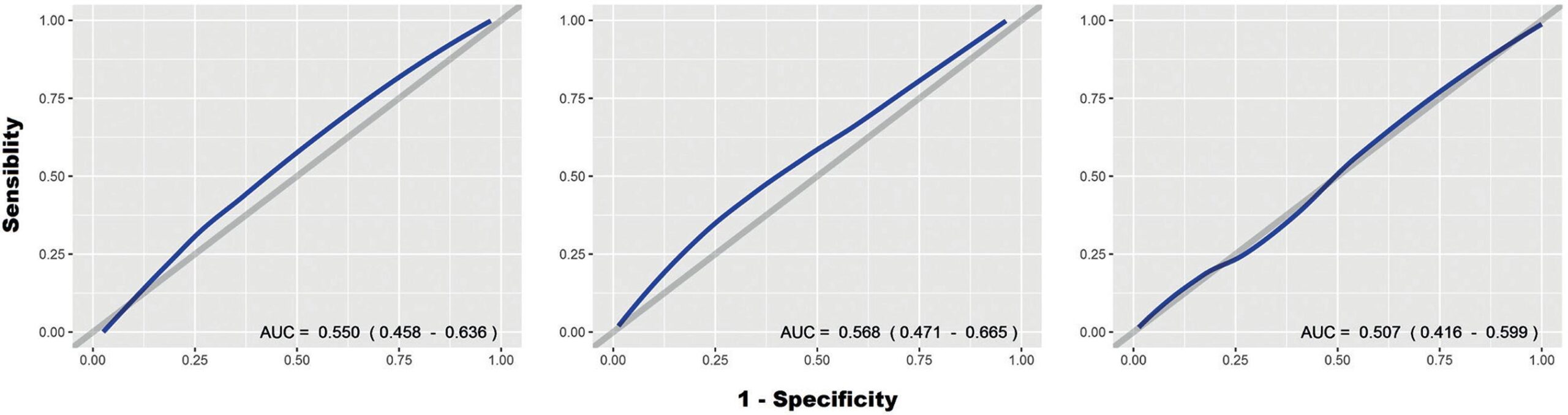
The Index of Microcirculatory Resistance (IMR) measurement was conducted and the baseline clinical and angiographic parameters were also recorded. The patients were divided into MO (Microvascular obstruction) or NMO (Non-microvascular obstruction) groups according to the post-procedure IMR value. The CMVO risk was evaluated for all participants by SAK and ATI predictive scores, respectively. Each system was calculated by summing the scores of all variables. The receiver operator characteristic (ROC) curves and the area under the curve (AUC) of two risk models were used to evaluate the discriminatory performance. An echocardiography was performed seven days after the procedure to evaluate left ventricular ejection fraction (LVEF). A two-sided P-value of <0.05 was considered statistically significant.

Results:

Among the 65 eligible STEMI patients, 48 patients were allocated in the NMO group and 17 in the MO group, with a CMVO incidence of 26.15%. There was no significant difference in the AUC between both scores. The LVEF evaluated for the NMO group was higher than that of MO group.

Conclusion:

Both SAK and ATI scores performed well in estimating CMVO risk after primary PCI for STEMI patients.

  • Coronary Obstruction
  • Forecasting
  • Myocardial Infarction
  • Percutaneous Coronary Intervention
  • Risk Index
Read Full Article
Creative Commons Attribution (CC BY) Creative Commons license
17/05/2021 DOI: 10.36660/abc.20200115 Views 1
Figure 1
IJCS
Original Article

Probabilistic Model for Prediction of Prognostics in Myocardial Revascularization: Complications in Coronary Surgery

Valcellos José da Cruz Viana et al. Felipe Coelho Argolo Nilzo Augusto Mendes Ribeiro Augusto Ferreira da Silva Junior Luis Claudio Lemos Correia

Abstract

Introduction:

Risk scores evaluate pre-operatory risk and present support for clinical decisions, however the performance of these tools in samples different from the original ones remains unclear.

Objectives:

Investigate the external validity of risk scores (STS and Euroscore) in cardiac surgery and the predictive performance of clinical features derived from the sample.

Methods:

Retrospective Cohort study conducted between October, 2010, and April, 2015. We used logistic regression to identify risk factors for hospital morbidity. The sample was divided for cross-validation, with 2/3 of the patients selected for model fitting and 1/3 for prediction testing. The performance of risk scores and clinical features was evaluated through AUROC and calibraton the Hosmer-Lemeshow test (H-L).

Results:

Data was retrieved from 472 patients who underwent coronary cardiac surgery in Hospital Santa Izabel da Santa Casa, BA. Mean age was 62.8 years old and 32.5% of the sample were women. Traditional surgical risk scores did not present significant discriminative performance for this sample. Factors associated with the outcome after adjusting for covariates were: age, previous myocardial revascularization and pre-surgical creatinine levels. The adjusted model presented similar discrimination and calibration values during training (AUROC = 0,72; IC 95% 0,59-0,84; H-L valor p: 0,41) and validation (AUROC = 0,70; IC 95% 0,55 – 0,84; H-L valor p: 0,197).

Conclusion:

Traditional scores may be inaccurate when applied to different environments. New risk scores with good predictive power can be developed using local clinical variables.

  • Forecasting
  • Myocardial Infarction
  • Myocardial Revascularization
  • Risk Factors
  • Thoracic Surgery/complications
Read Full Article
Creative Commons Attribution (CC BY) Creative Commons license
01/01/2017 DOI: 10.5935/2359-4802.20170049 Views 2
Figure 1
ABC
Original Article

An Equation for the Prediction of Oxygen Consumption in a Brazilian Population

Antonio Eduardo Monteiro de Almeida et al. Charles de Moraes Stefani João Agnaldo do Nascimento Narla Miranda de Almeida … Amilton da Cruz Santos Jorge Pinto Ribeiro (in memoriam) Ricardo Stein

Background:

The equations predicting maximal oxygen uptake (VO2max or peak) presently in use in cardiopulmonary exercise testing (CPET) softwares in Brazil have not been adequately validated. These equations are very important for the diagnostic capacity of this method.

Objective:

Build and validate a Brazilian Equation (BE) for prediction of VO2peak in comparison to the equation cited by Jones (JE) and the Wasserman algorithm (WA).

Methods:

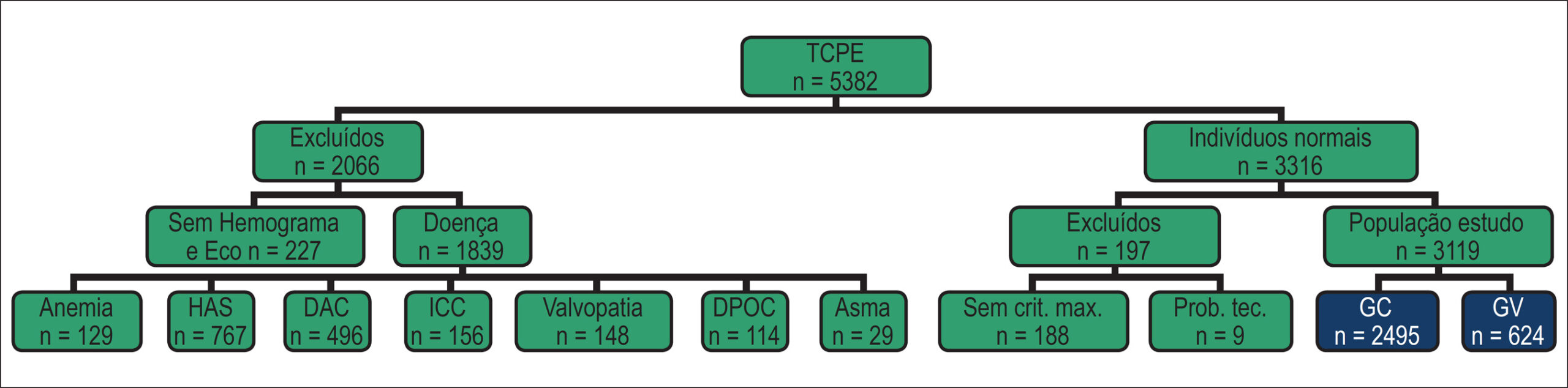
Treadmill evaluation was performed on 3119 individuals with CPET (breath by breath). The construction group (CG) of the equation consisted of 2495 healthy participants. The other 624 individuals were allocated to the external validation group (EVG). At the BE (derived from a multivariate regression model), age, gender, body mass index (BMI) and physical activity level were considered. The same equation was also tested in the EVG. Dispersion graphs and Bland-Altman analyses were built.

Results:

In the CG, the mean age was 42.6 years, 51.5% were male, the average BMI was 27.2, and the physical activity distribution level was: 51.3% sedentary, 44.4% active and 4.3% athletes. An optimal correlation between the BE and the CPET measured VO2peak was observed (0.807). On the other hand, difference came up between the average VO2peak expected by the JE and WA and the CPET measured VO2peak, as well as the one gotten from the BE (p = 0.001).

Conclusion:

BE presents VO2peak values close to those directly measured by CPET, while Jones and Wasserman differ significantly from the real VO2peak.

  • Brazil
  • Forecasting
  • Oxygen Consumption
  • population
  • Respiratory Function Tests
Read Full Article
Creative Commons Attribution (CC BY) Creative Commons license
12/09/2014 DOI: 10.5935/abc.20140137 Views 1

How to cite this article

EndNote RIS

Electronic Document Format (Vancouver)

Silva PGMB, Lopes RD. Risk Scores in Acute Coronary Syndrome: Current Applications and Future Perspectives. International Journal of Cardiovascular Sciences 2022;35(2):181-3.

Electronic Document Format (ABNT)

Silva, Pedro G. M. de Barros e; Lopes, Renato D.. Risk Scores in Acute Coronary Syndrome: Current Applications and Future Perspectives. International Journal of Cardiovascular Sciences, v. 35, n. 2, p. 181-183, Mar. 2022.

Electronic Document Format (APA)

Silva, P. G. M. B. , & Lopes, R. D. (2022). Risk Scores in Acute Coronary Syndrome: Current Applications and Future Perspectives. International Journal of Cardiovascular Sciences, 35(2), 181-183.

Electronic Document Format (ISO)

Silva, Pedro G. M. de Barros e and Lopes, Renato D.. Risk Scores in Acute Coronary Syndrome: Current Applications and Future Perspectives. International Journal of Cardiovascular Sciences [online]. 2022, vol. 35, n. 2, [cited 2026-10-14], pp. 181-183. Available from: <https://journals.cardiol.br/en/article/risk-scores-in-acute-coronary-syndrome-current-applications-and-future-perspectives/>. ISSN 2359-4802

EndNote RIS

Electronic Document Format (Vancouver)

Xiao Y, Chen H, Liu D, Wang Y, Wang W, Zhang Q, Han Y, et al. The Comparison between Two Risk Scores as for the Prediction of Coronary Microvascular Obstruction during Primary Percutaneous Intervention. Arquivos Brasileiros de Cardiologia 2021;116(5):959-67.

Electronic Document Format (ABNT)

Xiao, Yuyang; Chen, Hua; Liu, Dongxia; Wang, Yanbo; Wang, Wenlu; Zhang, Qian; Han, Yuping; Fu, Xianghua. The Comparison between Two Risk Scores as for the Prediction of Coronary Microvascular Obstruction during Primary Percutaneous Intervention. Arquivos Brasileiros de Cardiologia, v. 116, n. 5, p. 959-967, May. 2021.

Electronic Document Format (APA)

Xiao, Y., Chen, H., Liu, D., Wang, Y., Wang, W., Zhang, Q., Han, Y., & Fu, X. (2021). The Comparison between Two Risk Scores as for the Prediction of Coronary Microvascular Obstruction during Primary Percutaneous Intervention. Arquivos Brasileiros de Cardiologia, 116(5), 959-967.

Electronic Document Format (ISO)

Xiao, Yuyang and Chen, Hua and Liu, Dongxia and Wang, Yanbo and Wang, Wenlu and Zhang, Qian and Han, Yuping and Fu, Xianghua. The Comparison between Two Risk Scores as for the Prediction of Coronary Microvascular Obstruction during Primary Percutaneous Intervention. Arquivos Brasileiros de Cardiologia [online]. 2021, vol. 116, n. 5, [cited 2026-10-14], pp. 959-967. Available from: <https://journals.cardiol.br/en/article/the-comparison-between-two-risk-scores-as-for-the-prediction-of-coronary-microvascular-obstruction-during-primary-percutaneous-intervention/>. ISSN 0066-782X

EndNote RIS

Electronic Document Format (Vancouver)

Viana VJC, Argolo FC, Ribeiro NAM, Silva Junior AF, Correia LCL. Probabilistic Model for Prediction of Prognostics in Myocardial Revascularization: Complications in Coronary Surgery. International Journal of Cardiovascular Sciences 2017;30(4):307-12.

Electronic Document Format (ABNT)

Viana, Valcellos José da Cruz; Argolo, Felipe Coelho; Ribeiro, Nilzo Augusto Mendes; Silva Junior, Augusto Ferreira da; Correia, Luis Claudio Lemos. Probabilistic Model for Prediction of Prognostics in Myocardial Revascularization: Complications in Coronary Surgery. International Journal of Cardiovascular Sciences, v. 30, n. 4, p. 307-312, Dec. 2016.

Electronic Document Format (APA)

Viana, V. J. C., Argolo, F. C., Ribeiro, N. A. M., Silva Junior, A. F. , & Correia, L. C. L. (2017). Probabilistic Model for Prediction of Prognostics in Myocardial Revascularization: Complications in Coronary Surgery. International Journal of Cardiovascular Sciences, 30(4), 307-312.

Electronic Document Format (ISO)

Viana, Valcellos José da Cruz and Argolo, Felipe Coelho and Ribeiro, Nilzo Augusto Mendes and Silva Junior, Augusto Ferreira da and Correia, Luis Claudio Lemos. Probabilistic Model for Prediction of Prognostics in Myocardial Revascularization: Complications in Coronary Surgery. International Journal of Cardiovascular Sciences [online]. 2017, vol. 30, n. 4, [cited 2026-10-14], pp. 307-312. Available from: <https://journals.cardiol.br/en/article/probabilistic-model-for-prediction-of-prognostics-in-myocardial-revascularization-complications-in-coronary-surgery/>. ISSN 2359-4802

EndNote RIS

Electronic Document Format (Vancouver)

Almeida AEM, Stefani CM, Nascimento JA, Almeida NM, Santos AC, memoriam) JPR, Stein R, et al. An Equation for the Prediction of Oxygen Consumption in a Brazilian Population. Arquivos Brasileiros de Cardiologia 2014;103(4):299-307.

Electronic Document Format (ABNT)

Almeida, Antonio Eduardo Monteiro de; Stefani, Charles de Moraes; Nascimento, João Agnaldo do; Almeida, Narla Miranda de; Santos, Amilton da Cruz; memoriam), Jorge Pinto Ribeiro (in; Stein, Ricardo. An Equation for the Prediction of Oxygen Consumption in a Brazilian Population. Arquivos Brasileiros de Cardiologia, v. 103, n. 4, p. 299-307, Sep. 2014.

Electronic Document Format (APA)

Almeida, A. E. M. , Stefani, C. M., Nascimento, J. A. , Almeida, N. M. , Santos, A. C., memoriam), J. P. R. , & Stein, R. (2014). An Equation for the Prediction of Oxygen Consumption in a Brazilian Population. Arquivos Brasileiros de Cardiologia, 103(4), 299-307.

Electronic Document Format (ISO)

Almeida, Antonio Eduardo Monteiro de and Stefani, Charles de Moraes and Nascimento, João Agnaldo do and Almeida, Narla Miranda de and Santos, Amilton da Cruz and memoriam), Jorge Pinto Ribeiro (in and Stein, Ricardo. An Equation for the Prediction of Oxygen Consumption in a Brazilian Population. Arquivos Brasileiros de Cardiologia [online]. 2014, vol. 103, n. 4, [cited 2026-10-14], pp. 299-307. Available from: <https://journals.cardiol.br/en/article/an-equation-for-the-prediction-of-oxygen-consumption-in-a-brazilian-population/>. ISSN 0066-782X

  • About ABC Family
  • Internal Regulation
  • Editorial Board
  • Brazilian Society of Cardiology (SBC)

Issues

SBC Guidelines

  • Videos
  • Podcasts
  • News