ABC Family Arquivos Brasileiros de Cardiologia International Journal of Cardiovascular Sciences ABC Heart Failure & Cardiomyopathy ABC Imagem Cardiovascular
Português English
ABC Family
Português English
  • About
    • About ABC Family
    • Internal Regulation
    • Editorial Board
    • Brazilian Society of Cardiology (SBC)
  • Issues
  • SBC Guidelines
  • Content
    • Videos
    • Podcasts
    • News
  • About
    • About ABC Family
    • Internal Regulation
    • Editorial Board
    • Brazilian Society of Cardiology (SBC)
  • Issues
  • SBC Guidelines
  • Content
    • Videos
    • Podcasts
    • News

ABC Family

  • ABC Family
  • Arquivos Brasileiros de Cardiologia
  • International Journal of Cardiovascular Sciences
  • ABC Heart Failure & Cardiomyopathy
  • ABC Imagem Cardiovascular
Search in

No content found.

Journals
Ordering
Article types
Others

  1. Home
  2. Keyword: Overweight
ABC
Special Article

Cardiovascular Statistics – Brazil 2026

Gláucia Maria Moraes de Oliveira et al. Luisa Campos Caldeira Brant Carisi Anne Polanczyk Deborah Carvalho Malta … Andreia Biolo Bruno Ramos Nascimento Maria de Fatima Marinho de Souza Andrea Rocha De Lorenzo Antonio Aurélio de Paiva Fagundes Júnior Arthur Gus Manfro Beatriz D. Schaan Christina Grüne de Souza e Silva Fábio Morato de Castilho Fernando Henpin Yue Cesena Gabriel Porto Soares Gesner Francisco Xavier Junior Jose Augusto Soares Barreto Filho Lucia Campos Pellanda Luciana Nicolau Aranha Luis Eduardo Paim Rohde Luiz Guilherme Passaglia Marcelo Martins Pinto-Filho M. Julia Machline-Carrion Marcio Sommer Bittencourt Octavio M. Pontes Neto Paolo Blanco Villela Paulo Henrique Godoy Renato Azeredo Teixeira Ricardo Stein Roney Orismar Sampaio Thais Rocha Salim Thomas A. Gaziano Pablo Perel Gregory A. Roth Antonio Luiz Pinho Ribeiro

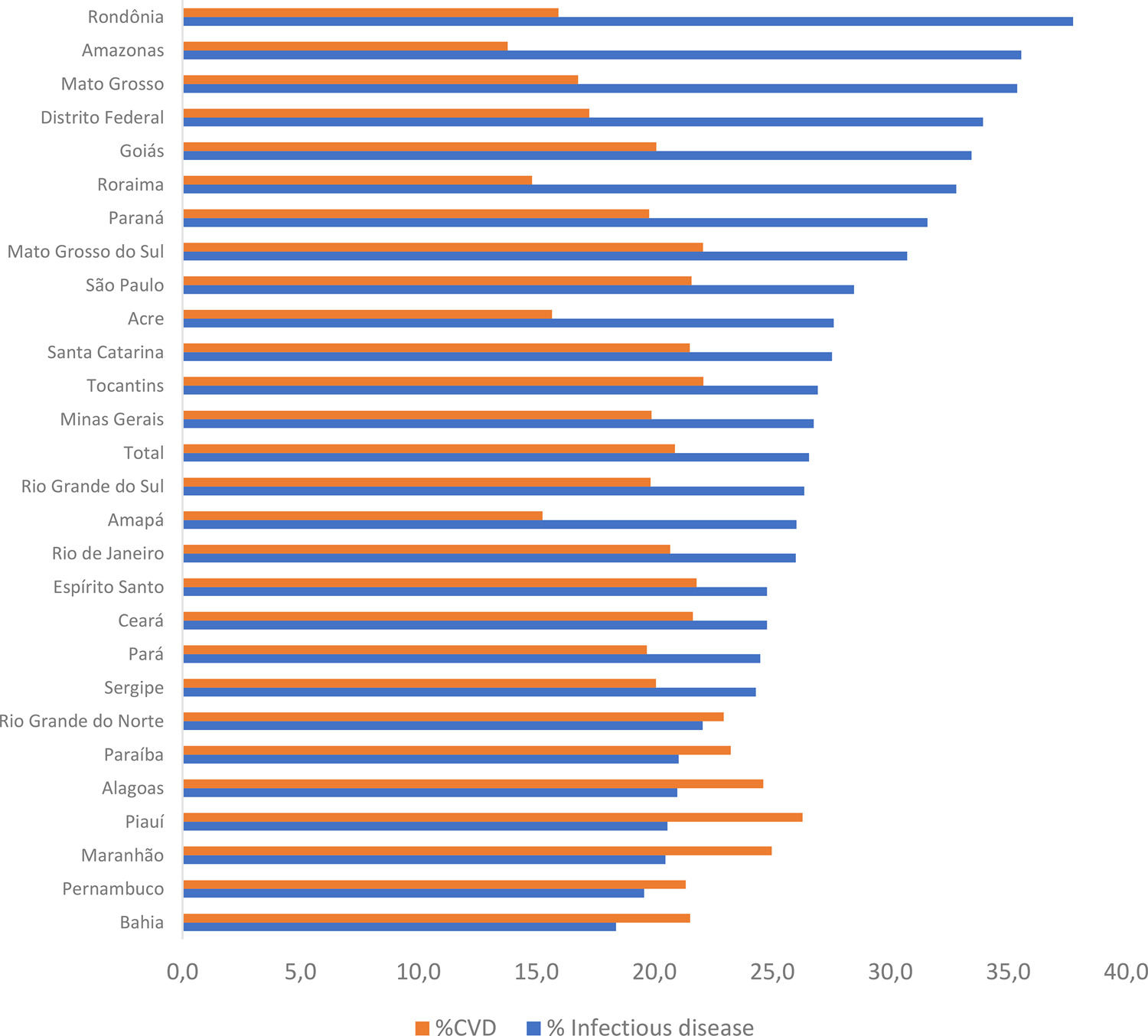
Cardiovascular Statistics – Brazil was established to provide a periodic, comprehensive, evidence-based assessment of cardiovascular health in Brazil and to support clinical practice, research, public health planning, and policy development. Developed under the auspices of the Brazilian Society of Cardiology, the initiative brings together a multidisciplinary network of investigators from academic institutions across the country who are responsible for reviewing, analyzing, and interpreting data from multiple complementary sources. Since its first edition in 2020, Cardiovascular Statistics – Brazil has sought not only to quantify the burden of cardiovascular diseases (CVDs) and their risk factors but also to identify temporal trends, regional disparities, gaps in care, and emerging challenges for the Brazilian health system. The project is modeled on international initiatives such as the American Heart Association’s Heart Disease and Stroke Statistics Update, while incorporating data sources and perspectives that reflect Brazil’s unique epidemiological, demographic, and healthcare characteristics.

(…)

  • Atrial Fibrillation
  • Atrial flutter
  • Brazil
  • Cardiomyopathies
  • Cardiovascular Diseases
  • Cerebrovascular Disorders
  • chronic renal insufficiency
  • Congenital Heart Defects
  • Coronary Disease
  • Diabetes Mellitus
  • Diet
  • Dyslipidemias
  • Exercise
  • Heart Failure
  • Heart Valve Diseases
  • Hypertension
  • Obesity
  • Overweight
  • Statistics
  • Tobacco Use Disorder
Read Full Article
Creative Commons Attribution (CC BY) Creative Commons license
07/10/2026 DOI: 10.36660/abc.20260832i Views 1
IJCS
Editorial

Gender differences in Body Adiposity and Endothelial Dysfunction in Overweight and Obese Individuals with Suboptimal Vitamin D Status

Marcelo Chiara Bertolami

The article by Faria et al. explored anthropometric indices, vascular and autonomic function in obese and overweight individuals with suboptimal vitamin D status.

Obesity has a significant impact on human health through multiple mechanisms. One potential mechanism involves the association between obesity and low vitamin D levels. The authors used advanced techniques to evaluate endothelial function in an overweight and obese population with suboptimal vitamin D levels.

[…]

  • Adiposity
  • Gender Identity
  • Obesity
  • Overweight
Read Full Article
Creative Commons Attribution (CC BY) Creative Commons license
07/08/2026 DOI: 10.36660/ijcs.20260094
Chart 1-1
ABC
Special Article

Cardiovascular Statistics – Brazil 2023

Gláucia Maria Moraes de Oliveira et al. Luisa Campos Caldeira Brant Carisi Anne Polanczyk Deborah Carvalho Malta … Andreia Biolo Bruno Ramos Nascimento Maria de Fatima Marinho de Souza Andrea Rocha De Lorenzo Antonio Aurélio de Paiva Fagundes Júnior Beatriz D. Schaan Christina Grüne de Souza e Silva Fábio Morato de Castilho Fernando Henpin Yue Cesena Gabriel Porto Soares Gesner Francisco Xavier Junior Jose Augusto Soares Barreto Filho Luiz Guilherme Passaglia Marcelo Martins Pinto Filho M. Julia Machline-Carrion Marcio Sommer Bittencourt Octavio M. Pontes Neto Paolo Blanco Villela Renato Azeredo Teixeira Ricardo Stein Roney Orismar Sampaio Thomaz A. Gaziano Pablo Perel Gregory A. Roth Antonio Luiz Pinho Ribeiro

ABOUT THESE STATISTICS

The publication Cardiovascular Statistics – Brazil aims to provide an annual compilation of data and research on the epidemiology of CVDs in Brazil. The report integrates official statistics from the Brazilian Ministry of Health and other governmental entities alongside data from the GBD project, coordinated by the IHME at the University of Washington. Additionally, it incorporates data derived from various sources and scientific studies, including cohorts and registries, that relate to CVDs and their associated risk factors. This publication is intended for a wide range of individuals, including researchers, clinicians, patients, healthcare policymakers, media professionals, the general public, and other interested parties seeking extensive national data about heart disease and stroke. Volunteer researchers from various Brazilian universities and research institutions carry out the project. The group is led by a five-member steering committee (ALPR, CAP, DCM, GMMO, and LCCB). The Brazilian Society of Cardiology fully supports this initiative, and the project receives collaborative support from the GBD Brazil Networkand an International Committee (GAR, PP, and TAG) from both the IHME/University of Washington (GAR) and the World Heart Federation (PP and TAG).

[…]

  • Atrial Fibrillation
  • Atrial flutter
  • Brazil
  • Cardiomyopathies
  • Cardiovascular Diseases
  • Cerebrovascular Disorders
  • Coronary Disease
  • Diabetes Mellitus
  • Dyslipidemias
  • Exercise
  • Heart Failure
  • Heart Valve Diseases
  • Hypertension
  • Obesity
  • Overweight
  • Statistics
  • Tobacco Use Disorder
Read Full Article
Creative Commons Attribution (CC BY) Creative Commons license
17/06/2024 DOI: 10.36660/abc.20240079 Views 1
IJCS
Editorial

Is Patient Education about the Benefits of Physical Activity a Good Adjunct Treatment Strategy in Hypertension?

Dário C. Sobral Filho et al. Maria de Fátima Monteiro

Systemic arterial hypertension (SAH) is a chronic condition that is highly prevalent worldwide. It occurs without symptoms in most individuals and represents the main modifiable risk factor for cardiovascular disease. The adoption of behaviors that do not involve medication, such as changes in lifestyle and regular practice of physical exercise, along with strict adherence to prescribed medication, is a major challenge in the treatment of this disorder.,

The guidelines of the American Heart Association and the American College of Cardiology on hypertension recommend the implementation of lifestyle changes as the first line of treatment for low- to moderate-risk groups, thereby emphasizing the importance of such measures.

[…]

  • Antihipertensive Drugs
  • Cardiovascular Diseases
  • Exercise, Blood Pressure
  • Hypertension
  • Life Style
  • Overweight
  • Physical activity
  • Risk Factors
Read Full Article
Creative Commons Attribution (CC BY) Creative Commons license
13/07/2022 DOI: 10.36660/ijcs.20210257 Views 1
Figure 1
ABC
Review Article

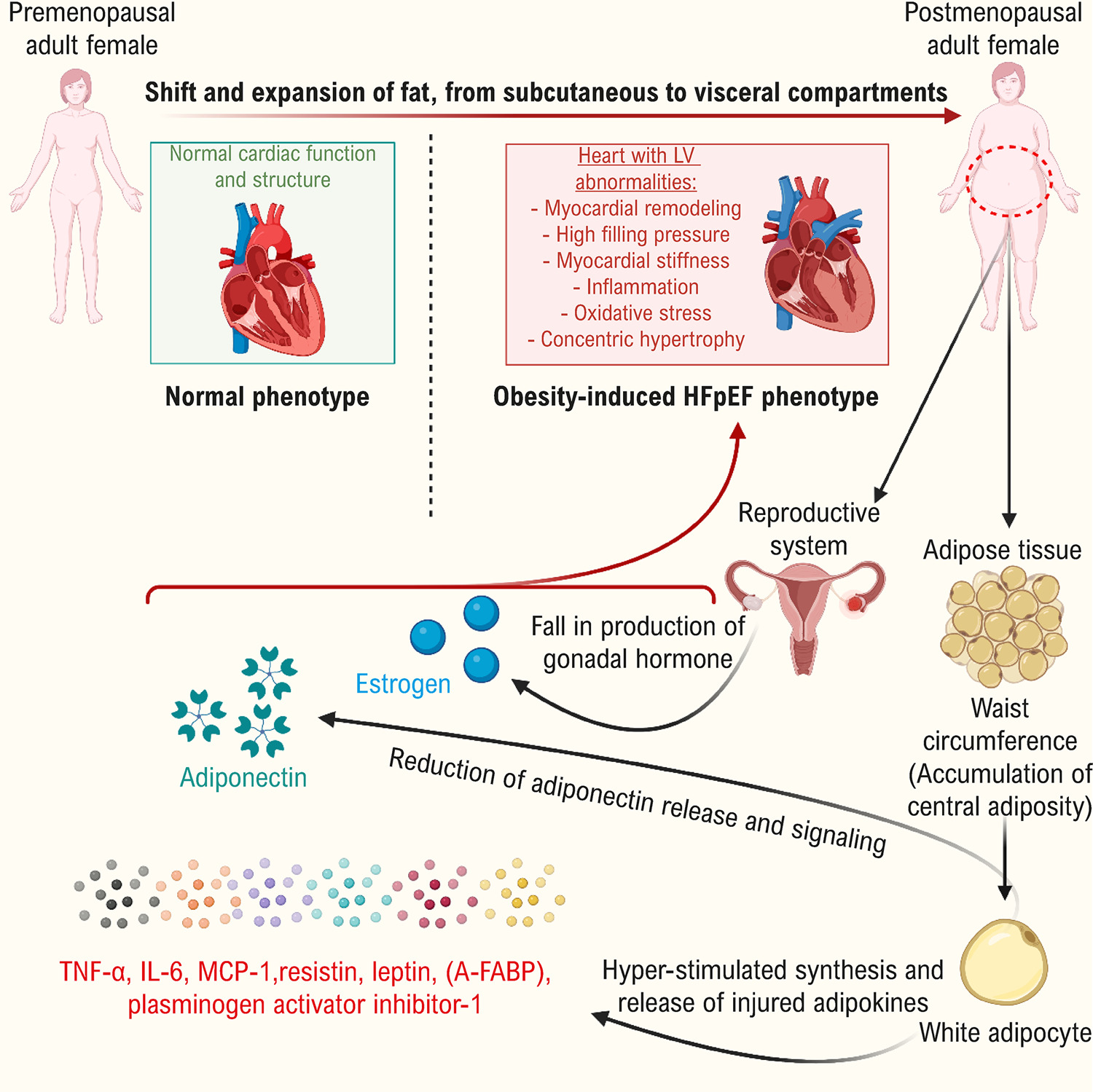
Crossroads between Estrogen Loss, Obesity, and Heart Failure with Preserved Ejection Fraction

Allan Kardec Nogueira de Alencar et al. Hao Wang Gláucia Maria Moraes de Oliveira Xuming Sun … Gisele Zapata-Sudo Leanne Groban

Abstract

The prevalence of obesity and heart failure with preserved ejection fraction (HFpEF) increases significantly in postmenopausal women. Although obesity is a risk factor for left ventricular diastolic dysfunction (LVDD), the mechanisms that link the cessation of ovarian hormone production, and particularly estrogens, to the development of obesity, LVDD, and HFpEF in aging females are unclear. Clinical, and epidemiologic studies show that postmenopausal women with abdominal obesity (defined by waist circumference) are at greater risk for developing HFpEF than men or women without abdominal obesity. The study presents a review of clinical data that support a mechanistic link between estrogen loss plus obesity and left ventricular remodeling with LVDD. It also seeks to discuss potential cell and molecular mechanisms for estrogen-mediated protection against adverse adipocyte cell types, tissue depots, function, and metabolism that may contribute to LVDD and HFpEF.

  • Adiposity
  • body mass index
  • Echocardiography/methods
  • Estrogens
  • Heart Failure
  • Menopause
  • Obesity
  • Overweight
  • Stroke Volume
Read Full Article
Creative Commons Attribution (CC BY) Creative Commons license
08/10/2021 DOI: 10.36660/abc.20200855
DD Genotype and Atherosclerosis in Overweight Menopausal Women
IJCS
Original Article

DD Genotype and Atherosclerosis in Overweight Menopausal Women

José Ramón Lanz-Luces et al. Fernando Alves Costa Luis Fernando Escobar Guzman Antonio Ricardo de Toledo Gagliardi … José Antonio Lanz-Luces José Daniel Lanz-Souquett Leandro Menezes Alves da Costa

Abstract

Background

Sex-specific pathology of coronary artery disease (CAD) has not been recognized. Women with obstructive or nonobstructive CAD associated with traditional risk factors have similar events; no studies have explored both populations in association with genetic markers.

Objective

To evaluate the DD genotype in overweight menopausal women and its association with CAD and traditional risk factors.

Method

This cross-sectional study included 356 menopausal women who underwent coronary angiography as CAD assessment. The patients’ DNA was extracted and polymorphisms were detected with a single polymerase chain reaction assay. Two groups were formed based on luminal lesions (normal [n = 134] or pathological [n = 222]) with a cutoff value > 30%, considering overweight and age. The chi-square test, Student’s t-test, and multivariate logistic regression were performed as appropriate (p < 0.05) using the following variables: overweight, diabetes, hypertension, dyslipidemia, smoking status, sedentary lifestyle, and a family history of CAD.

Results

The mean age of the sample was 63 8 years, and the mean BMI was 28 5 kg/m2. The DD genotype was slightly more prevalent in the pathological group (30.2% vs. 21.6%, p = 0.079), but this significantly changed when BMI > 25 was considered (33% vs. 18%, p = 0.012). In multivariate analysis with two threshold levels (> 50 and > 60 years), diabetes was significantly associated with CAD in both models (p = 0.021 vs. 0.009) but the genotype was only associated with younger age (p = 0.034).

Conclusion

These data support an association between atherosclerosis and the renin–angiotensin system in overweight menopausal women that is dependent on the age at which the ischemic event occurs.

  • Coronary Artery Disease
  • DD Genotype
  • genetic markers
  • Menopause
  • Overweight
Read Full Article
Creative Commons Attribution (CC BY) Creative Commons license
16/07/2021 DOI: 10.36660/ijcs.20200400 Views 2
ABC
Editorial

Blood Pressure in Children. The Key Role of Physical Activity and Body Fatness

César A. Agostinis-Sobrinho et al. Katiane Vilan

High blood pressure is the leading global risk factor for chronic kidney disease and cardiovascular diseases and is the leading cause of premature death worldwide. The number of adults with high blood pressure increased from 594 million in 1975 to 1.13 billion in 2015. The World Health Organization (WHO) estimates 1 in 4 men and 1 in 5 women had hypertension and that by 2025, 1.56 billion adults will be living with hypertension.

Childhood raised blood pressure is becoming more common in the general pediatric population, representing a considerable public health challenge worldwide. Studies have suggested that childhood high blood pressure seems to track from childhood to adulthood and is associated with detrimental lifelong cardiovascular events. However, raised blood pressure is one of the most important preventable contributors to disease and death and is considered to be one of the major modifiable risk factors for cardiovascular disease with roots in childhood., Studies indicate that high blood pressure levels during childhood are a multifactorial condition. Genetics, age, gender, ethnicity, overweight/obesity, sodium and potassium intake, physical inactivity, and socioeconomic factors have been named as the main risk factors for hypertension.

[…]

  • Blood Arterial
  • Child
  • Exercise
  • Hypertension/heredity
  • Obesity
  • Overweight
  • Physical activity
  • Public Health
  • Risk Factors
  • Sedentarism
Read Full Article
Creative Commons Attribution (CC BY) Creative Commons license
17/05/2021 DOI: 10.36660/abc.20210117 Views 2
IJCS
Viewpoint

Physical Exercise, Energy Expenditure and Weight Loss: An Assumption not Always Observed in Practice

Vitor Barreto Paravidino et al. Mauro Felippe Felix Mediano Rosely Sichieri

The increased prevalence of overweight and obesity observed in recent decades has been attributed mainly to behavioral changes, such as excessive food consumption and reduction in physical activity level over time, leading to a positive energy balance. Due to the technological advances in recent years, less physical effort is required to perform daily tasks. Moreover, the lifestyle has become more sedentary, with an increasing amount of time spent using digital gadgets, such as computers, televisions and mobile phones. However, Westerterp & Speakman did not find a decrease in physical activity energy expenditure during the last 30 years preceding their study, despite an increase in the prevalence of obesity. Other studies have also reported that the total energy expenditure of rural populations was similar to that of populations living in developed countries, despite the clear difference in behavioral patterns, particularly in relation to daily physical activities.– This study aimed at presenting the “compensatory effect” as a possible explanation for these findings. When there is an increase in physical activity at a given time, behavioral and metabolic changes take place to maintain an energy setpoint, as presented below.

Physical exercise has been recommended as an important component for the prevention and treatment of obesity. For substantial adults’ health benefits, at least 150 minutes of moderate-intensity aerobic exercise, or 75 minutes of vigorous-intensity aerobic exercise; in addition, 2-3 times per week of resistance training is recommended. However, for a clinically significant reduction in body weight, Donnelly et al., recommended that individuals should gradually increase the amount of physical activity and achieve a weekly volume of moderate physical exercise of over 250 minutes. The authors also reported a dose-response effect between physical activity and weight loss.

[…]

  • Energy metabolism
  • Exercise
  • Lifestyle
  • Overweight
  • Sedentary Behavior
  • Weight loss Programs
Read Full Article
Creative Commons Attribution (CC BY) Creative Commons license
12/05/2021 DOI: 10.36660/ijcs.20200090 Views 3
ABC
Editorial

Obesity, Overweight, Body Adiposity and Cardiovascular Risk in Children and Adolescents

Weimar Kunz Sebba Barroso et al. Ana Luiza Lima Souza

Obesity and overweight are considered a global public health problem and contribute strongly to several chronic non-communicable diseases (NCDs), including metabolic syndrome, diabetes mellitus (DM), cardiovascular diseases (CVD) and cancer. More than 1.9 billion overweight adults are estimated, representing 39% of the world population, and 13% of obese adults. The World Health Organization estimated, for 2019, more than 38 million overweight or obese children under the age of five. Childhood obesity is associated with higher chances of premature death, increased risk of high blood pressure, DM and cancer. Besides, obese children have early CVD markers, increased risk of fractures, breathing difficulties and insulin resistance.

Obesity, as an independent risk factor for cardiovascular diseases, is related to increased levels of apolipoproteins B (ApoB) and consequent endothelial dysfunction. The presence of obesity and dyslipidemia during childhood reflects the development of cardiovascular morbidities in adulthood.

[…]

  • Adolescent
  • Child
  • Diabetes Mellitus
  • Hypertension
  • Metabolic Synrome
  • Obesity
  • Overweight
  • Public Health
  • Risk Factors
Read Full Article
Creative Commons Attribution (CC BY) Creative Commons license
28/08/2020 DOI: 10.36660/abc.20200540 Views 1
Figure 1
ABC
Original Article

Body Adiposity and Apolipoproteins in Children and Adolescents: A Meta-Analysis of Prospective Studies

Gabriela dos Santos de Jesus et al. Priscila Ribas de Farias Costa Lucivalda Pereira Magalhães de Oliveira Valterlinda Alves de Oliveira Queiroz … Carla de Magalhães Cunha Emile Miranda Pereira Ana Marlúcia de Oliveira

Abstract

Background

Excess Weight and Cardiovascular Diseases are health problems with increasing prevalence among children and adolescents, hence the need to investigate the issues related to them to better deal with the problem.

Objective

To investigate the influence of excess adiposity on the levels of apolipoprotein B and A1 in children and adolescents.

Methods

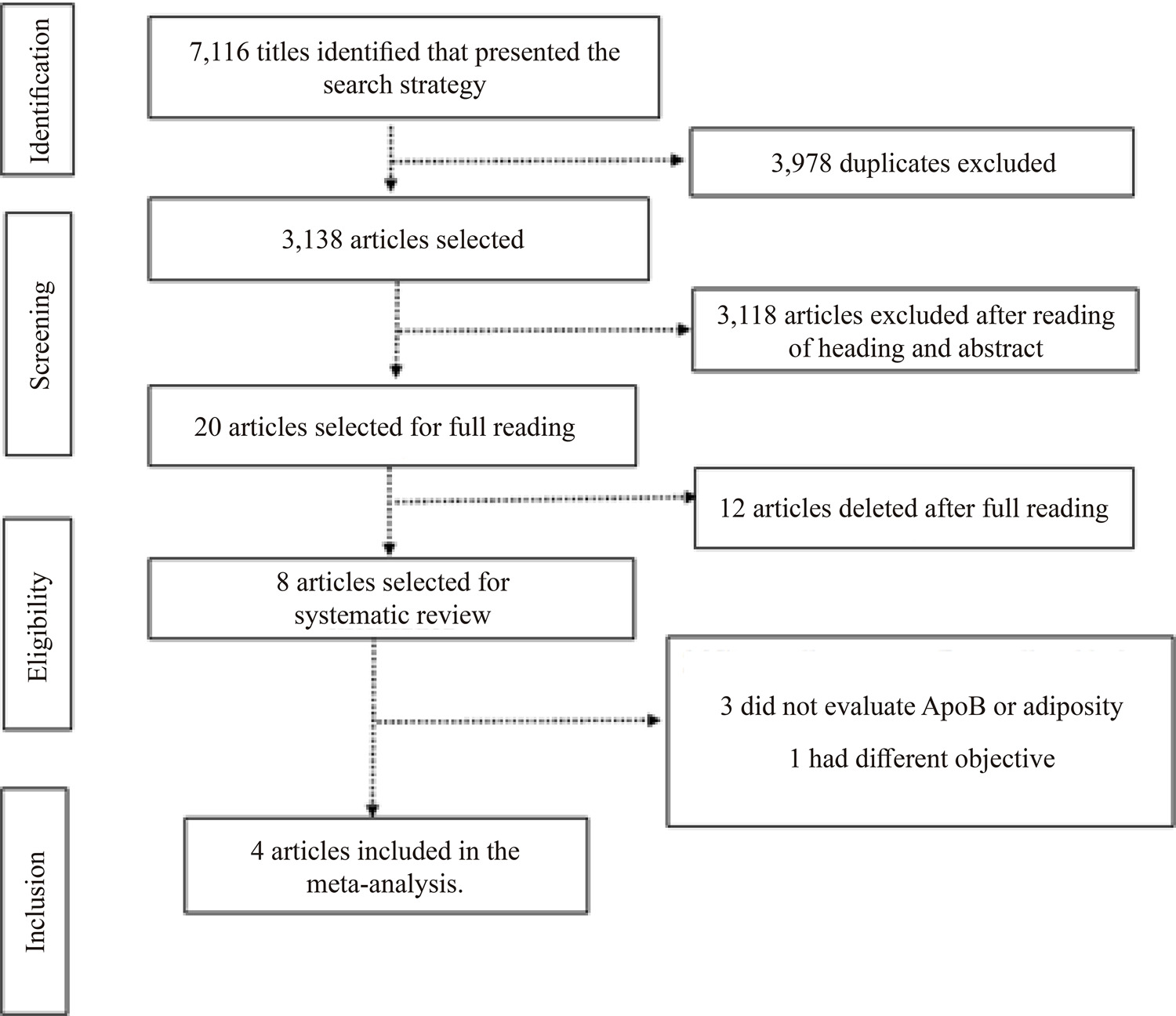
A systematic search was conducted in the PubMed, Embase, Lilacs, Web of Science, Ovid and Science direct databases, searching for cohort eligible studies and evaluating their results, methodological quality and risk of bias; combinable studies with good quality and low risk of bias were evaluated by meta-analysis. The summary measure used was the weighted mean difference (WMD) with its respective 95% confidence interval.

Results

8 articles attended the eligibility criteria including individuals with age mean varying from 9 to 15.7 years of age. The meta-analysis included 4 articles with a total of 7,974 children and adolescents. It was observed a mean increase of 4,94mg/dL (95%CI: 4,22 to 5,67) in the ApoB levels in individuals with excess of body adiposity. For the ApoA1, we identified a mean reduction of -8,13mg/dL (95%CI: -9,09 to -7,17 mg/dL) in its levels in children and adolescents with higher body adiposity. Beside this, the influence of excess adiposity on the ApoB and ApoA1 levels was higher between adolescents than children.

Conclusions

The excess of body adiposity influenced both the reduction of ApoA1 values and the increase of ApoB levels, being these changes more relevant among adolescents. (Arq Bras Cardiol. 2020; [online].ahead print, PP.0-0)

  • Adolescent
  • Apolipoproteins
  • Child
  • Meta-Analysis
  • Obesity
  • Overweight
  • Waist Circumference
Read Full Article
Creative Commons Attribution (CC BY) Creative Commons license
15/07/2020 DOI: 10.36660/abc.20190331 Views 1
ABC
Editorial

Waist Circumference: A Simple Measure for Childhood Obesity?

Luciana Nicolau Aranha et al. Gláucia Maria Moraes de Oliveira

Childhood obesity has been increasing all over the world and considered one of the major challenges in public health. The prevalence increased from less than 1% in 1975 to 5.6% and 7.8% among girls and boys, respectively, in 2016. No less worrying are the recent data from the Brazilian Institute of Geography and Statistics (IBGE) showing that in 2008-2009, 51.4% of boys and 43.8% of girls aged between 5 and 9 years were overweight or obese.

Obese children and adolescents are five times more likely to become obese adults. Besides, childhood obesity has been associated with hypertension, insulin resistance, diabetes mellitus, dyslipidemia, and increased morbidity and mortality in adult life. Therefore, it is important to screen for excess body fat in this population and create strategies to prevent the development of chronic diseases in the future.

[…]

  • Adolescent
  • Body Weights and Measures
  • Child
  • Overweight
  • Pediatric Obesity
  • Risk Factors
Read Full Article
Creative Commons Attribution (CC BY) Creative Commons license
06/04/2020 DOI: 10.36660/abc.20200031 Views 1
Figure 1
ABC
Editorial

Overweight, the Cardiovascular Risk of the Century

Paulo César B. Veiga Jardim

The challenge of the century: overweight

Published studies have shown that, worldwide, over the past 50 years, the population has increased in weight. A 2014 publication reported that between 1980 and 2013 individuals had an increase in body mass index above 25 kg/m2, which classifies them as overweight, from 28.8% to 36.9% among men and 29.8% to 38.0% among women. Worse than that, children and adolescents also had weight gain both in developed countries where, in 2013, 23.8% of boys and 22.6% of girls were overweight or obese, and in developing countries, where 12.9% of boys and 13.4% of girls were also overweight.

In 2016, another publication that evaluated the period from 1975 to 2014 also showed that obesity increased from 3.2% to 10.8% among men and from 6.4% to 14.9% among women. These studies estimate that if this trend continues, in 2025, the prevalence of obesity around the world will be greater than 18% among men and 21% among women.

[…]

  • Cardiovascular Diseases
  • Feeding Behavior/trends
  • Indicators of Morbidity and Mortality
  • Obesity
  • Overweight
  • Prevention & Control
  • Risk Factors
Read Full Article
Creative Commons Attribution (CC BY) Creative Commons license
02/09/2019 DOI: 10.5935/abc.20190171 Views 2
ABC
Original Article

The Olympic Experimental Gymnasium Program and its Association with the Prevalence of Cardiovascular Risk Factors in Adolescents: A Cross-Sectional Study

Carlos Scherr et al. Lucas Helal Filipe Ferrari Luciano Juaçaba Belém … Leonardo Correa Castro Fabiano Ludmila Talita Pinheiro Ricardo Stein

Abstract

Background:

Cardiovascular disease (CVD) is the leading cause of death worldwide. Physical activity (PA) and appropriate diet, if adopted in childhood and adolescence, may reduce the CVD burden in later life. The Olympic Experimental Gymnasium (OEG) project was implemented to increase the PA levels of students by means of regular physical exercise and healthy eating habits.

Objectives:

To estimate and compare the prevalence of CVD risk factors in OEG schools versus regular schools (RSch) and to examine associations between the school environment and CVD risk factors.

Methods:

In this cross-sectional study with a comparator group, adolescents aged 12-13 years attending three OEG schools (n = 719) and three RSch (n = 394) were evaluated after one year of the ongoing program to estimate the prevalence of overweight, pre-hypertension/hypertension, altered glycemia, and lipid profile. An α level of 0.05 was set for statistical analysis.

Results:

RSch students had higher odds to have high blood pressure (OR 1.86, 1.36-2.54) and to be overweight (OR 1.49, 1.13-1.98) than OEG students. Glucose levels were not altered in most cases regardless of school type, and no differences were found in lipid profile. In the sensitivity analysis stratified by gender, girls from RSch were more likely to have high body mass index than boys.

Conclusions:

Exposure of adolescents to the OEG policies was positively associated with an important reduction in CVD risk factors, including high blood pressure and overweight.

  • Adolescent
  • Cardiovascular Diseases, mortality
  • Child
  • Diet
  • Dyslipidemias
  • Exercise
  • Hypertension
  • Life Style
  • Overweight
Read Full Article
Creative Commons Attribution (CC BY) Creative Commons license
08/04/2019 DOI: 10.5935/abc.20190067 Views 1
ABC
Editorial

The Importance of Identifying Risk Factors in Childhood and Adolescence

Ana Paula Marte Chacra

The study “Dyslipidemia in Adolescents Seen in a University Hospital in the city of Rio de Janeiro/Brazil: Prevalence and Association” showed a high prevalence of obesity (53%) followed by overweight (25.2%) in adolescents. The obese group had a predominance of low HDL-c besides the positive association of body mass index (BMI) and abdominal circumference with triglyceride values. These date are fundamental and warn of the importance of early assessment of risk factors.

Elevated triglycerides and low HDL-c are strongly linked to obesity, especially in youth and early exposure to that unfavourable metabolic profile will contribute to a higher cardiovascular risk.

[…]

  • Adolescent
  • Atherosclerosis
  • Cholesterol LDL-C
  • Dyslipidemias
  • Obesity
  • Overweight
  • Risk Factors
  • Triglycerides
Read Full Article
Creative Commons Attribution (CC BY) Creative Commons license
01/02/2019 DOI: 10.5935/abc.20190016 Views 1
Figure 1
ABC
Original Article

Waist Circumference is Associated with Blood Pressure in Children with Normal Body Mass Index: A Cross-Sectional Analysis of 3,417 School Children

Daiane Cristina Pazin et al. Caroline Filla Rosaneli Márcia Olandoski Edna Regina Netto de Oliveira … Cristina Pellegrino Baena Alyne S Figueredo Analin Ono Baraniuk Tatiana Lorena da Luz Kaestner Luiz Cesar Guarita-Souza José Rocha Faria-Neto

Abstract

Background:

The prevalence of childhood obesity and associated conditions, such as hypertension, has become a major problem of public health. Although waist circumference (WC) is a marker of cardiovascular risk in adults, it is unclear whether this index is associated with cardiovascular risk factors in children.

Objective:

Our aim was to evaluate the association between increased WC and elevated blood pressure (BP) in children with normal body mass index (BMI) ranges.

Methods:

Cross-sectional evaluation of students between 6 and 11 years with normal BMI. WC was categorized by quartile for each age group. Normal BP was defined as values < 90th percentile, and levels above this range were considered elevated. Values of p < 0.05 were considered statistically significant.

Results:

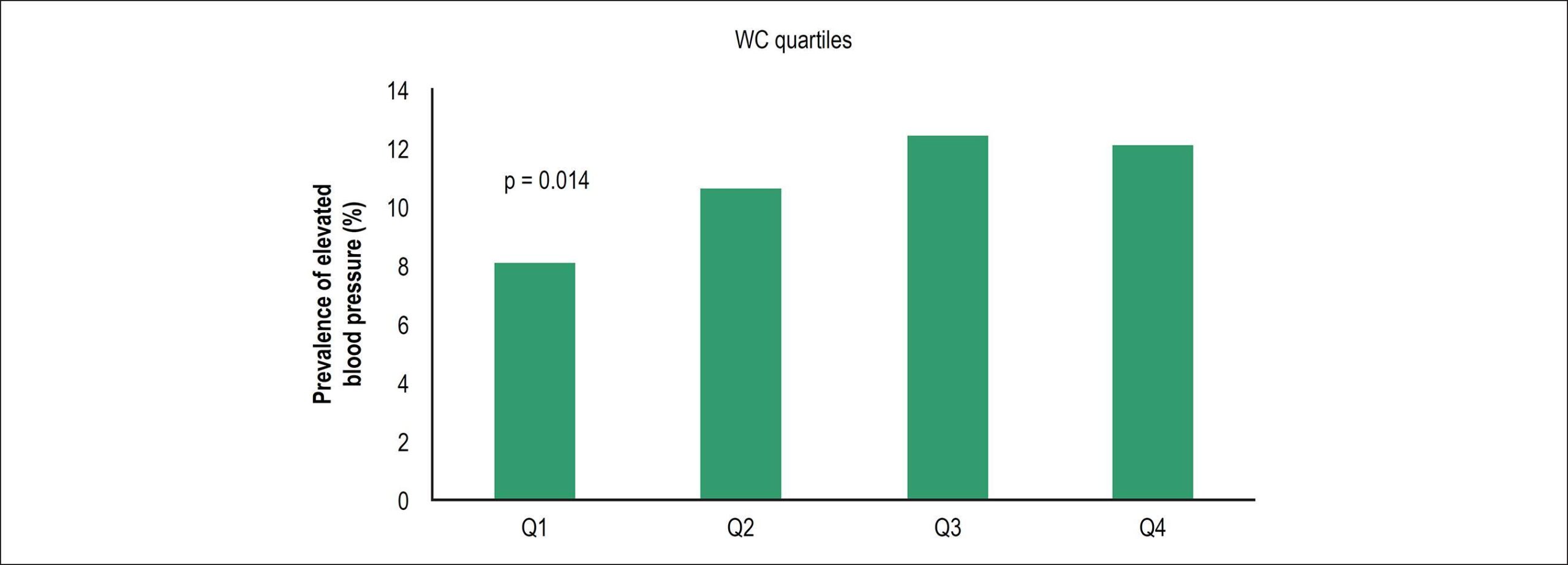
Of the 5,037 children initially assessed, 404 (8%) were excluded for being underweight and 1,216 (24.1%) were excluded for being overweight or obese. A final sample of 3,417 children was evaluated. The prevalence of elevated BP was 10.7%. In children with WC in the lowest quartile, the prevalence of elevated BP was 8.1%. This prevalence increased in upper quartiles: 10.6% in the second, 12.4% in third and 12.1% in the upper quartile. So, in this group, being in the highest WC quartile was associated with a 57% higher likelihood to present elevated BP when compared to those in the lowest quartile (Q4 vs Q1; OR 1.57 – 95%CI 1.14 – 2.17).

Conclusion:

In children aged 6 to 11 years, increased waist circumference is associated with elevated BP even when BMI is normal.

  • Child Pediatric Obesity
  • Hypertension
  • Overweight
  • Public Health
  • Waist Circumference
Read Full Article
Creative Commons Attribution (CC BY) Creative Commons license
27/11/2017 DOI: 10.5935/abc.20170162 Views 1
ABC
Letter to the Editor

Childhood Obesity, MMP-9 Levels, and Vitamin D

Zeynep Cerit

Dear Editor,

I have read the article entitled “MMP-9 Levels and IMT of Carotid Arteries are Elevated in Obese Children and Adolescents Compared to Non-Obese” by Andrade et al., recently published in journal, with great interest. The investigators reported that obese children and adolescents present higher mean intima-media thickness (IMT), plasma matrix metalloproteinase (MMP)-9 and MMP-9/tissue inhibitor of metalloproteinase-1 ratio compared to the non-obese. Thus, these findings indicate that this group presents a risk profile for early atherosclerosis.

[…]

  • Adolescents
  • Cardiovascular Diseases
  • Child
  • Matrix Metaloproteinase 9
  • Overweight
  • Pediatric Obesity
Read Full Article
Creative Commons Attribution (CC BY) Creative Commons license
01/10/2017 DOI: 10.5935/abc.20170127
Figure 1
IJCS
Original Article

Prevalence of Hypertension in Children from Public Schools

Camila Brandão de Souza et al. Cláudia de Souza Dourado José Geraldo Mill Luciane Bresciane Salaroli Maria del Carmen Bisi Molina

Abstract

Background:

There is a discrepancy between protocols used for the diagnosis of childhood hypertension, and the most recommended one is the measurement of blood pressure in at least three different moments.

Objective:

To identify the prevalence of hypertension in children, and to associate it with the nutritional status variable.

Methods:

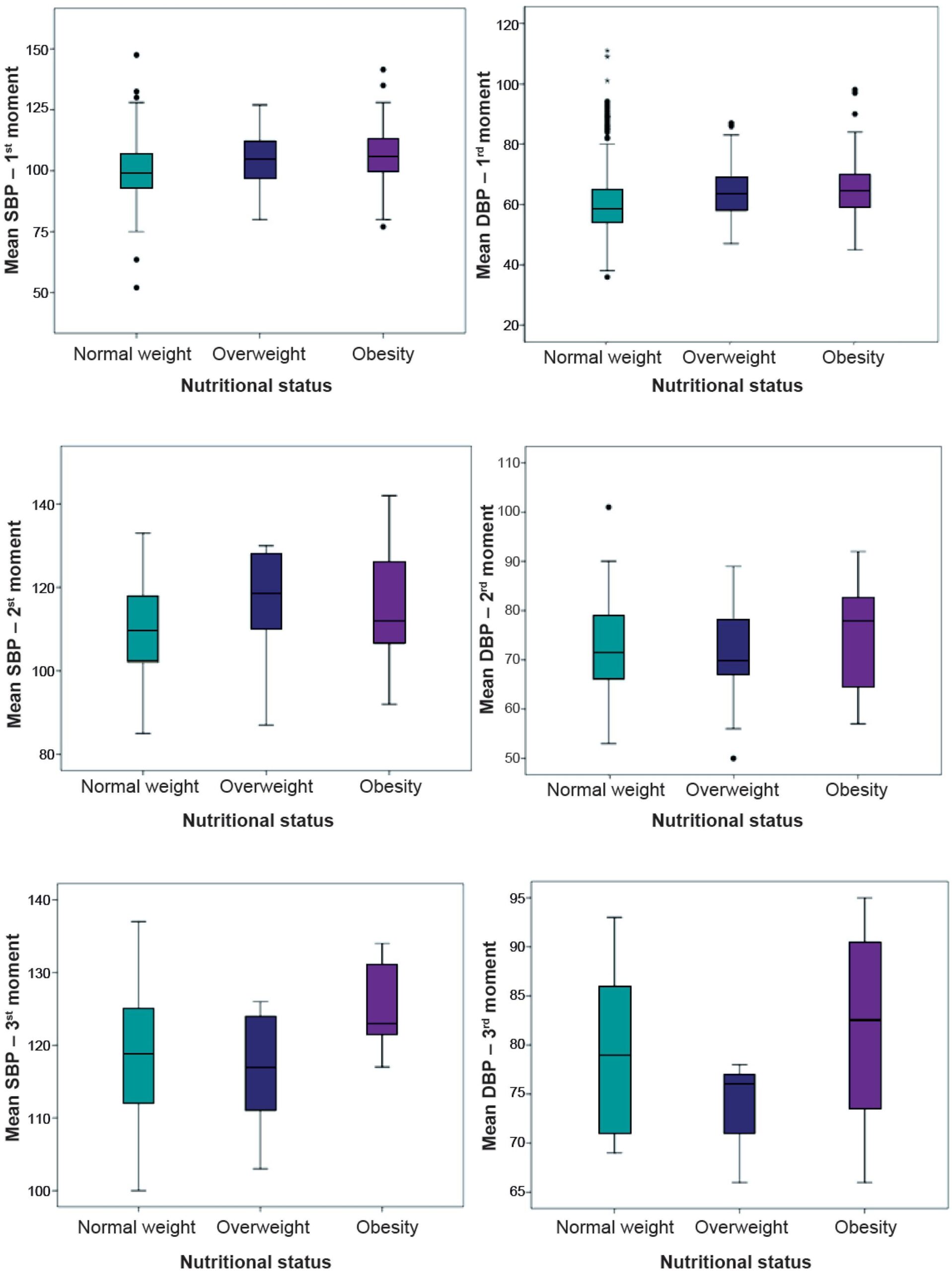
This is a longitudinal study, which included all children aged 7 to 10 years enrolled in public schools and had the authorization of their parents/guardians, totaling 722 children. In the first evaluation, the child’s family answered a questionnaire, and the child was submitted to anthropometric and hemodynamic evaluation. Blood pressure was measured three times at three different times. Children who had high blood pressure at the first moment were reassessed at a second time; those who persisted with high blood pressure were re-evaluated at a third moment.

Results:

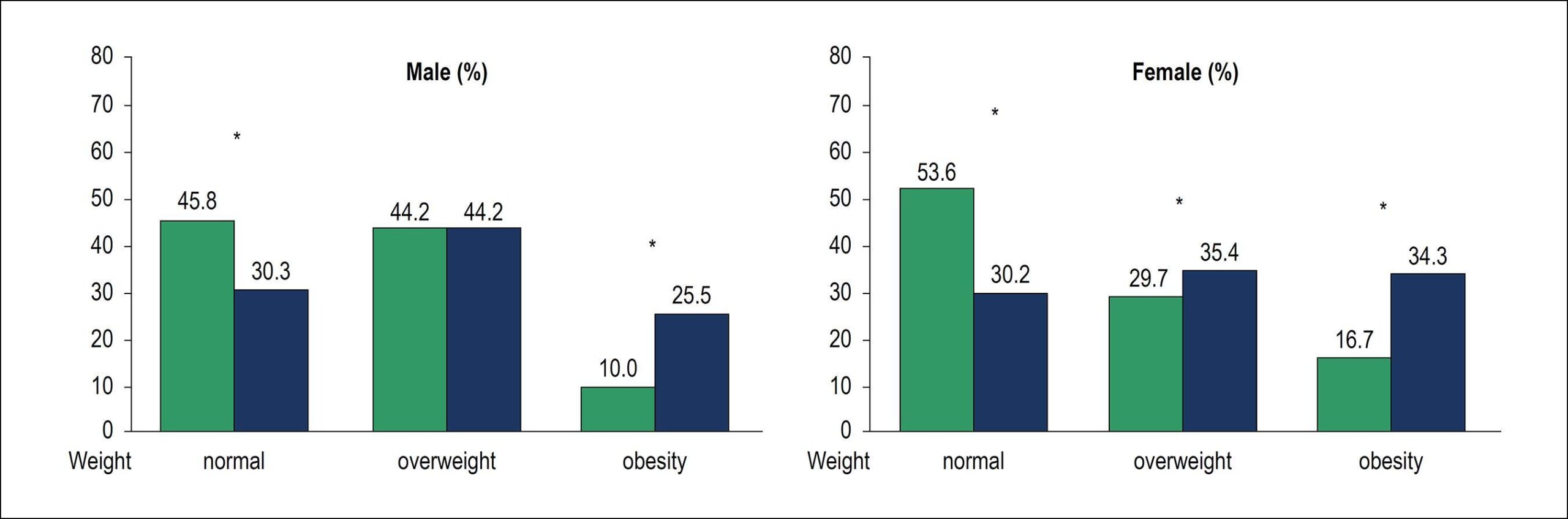
The prevalence of high blood pressure at the first moment was 8.1%, being 3.2% in the second and 2.1% in the third. The nutritional status was significantly associated with the increase in systolic and diastolic blood pressures, being higher in overweight and obese children. The highest prevalence of high blood pressure was found in children classified as obese, at all moments.

Conclusion:

By performing blood pressure measurements of children at different moments, it was possible to reduce false-positive cases for arterial hypertension. The nutritional status was directly associated with the increase in blood pressure values. Performing the measurements in routine consultations becomes essential for diagnosis and early intervention.

  • Child
  • Hypertension/epidemiology
  • Obesity, Nutritional Status
  • Overweight
  • Prevalence
Read Full Article
Creative Commons Attribution (CC BY) Creative Commons license
01/01/2017 DOI: 10.5935/2359-4802.20170023 Views 2
ABC
Original Article

Dyslipidemia is Associated with Unfit and Overweight-Obese Children and Adolescents

Cézane Priscila Reuter et al. Priscila Tatiana da Silva Jane Dagmar Pollo Renner Elza Daniel de Mello … Andréia Rosane de Moura Valim Luiza Pasa Rafaela da Silva Miria Suzana Burgos

Abstract

Background:

Both poor aerobic fitness and obesity, separately, are associated with abnormal lipid profiles.

Objective:

To identify possible relationships of dyslipidemia with cardiorespiratory fitness and obesity, evaluated together, in children and adolescents.

Methods:

This cross-sectional study included 1,243 children and adolescents (563 males and 680 females) between 7 and 17 years of age from 19 schools. Obesity was assessed using body mass index (BMI) measurements, and cardiorespiratory fitness was determined via a 9-minute run/walk test. To analyze the lipid profile of each subject, the following markers were used: total cholesterol, cholesterol fractions (high-density lipoprotein and low-density lipoprotein) and triglycerides. Data were analyzed using SPSS v. 20.0, via prevalence ratio (PR), using the Poisson regression.

Results:

Dyslipidemia is more prevalent among unfit/overweight-obese children and adolescents compared with fit/underweight-normal weight boys (PR: 1.25; p = 0.007) and girls (PR: 1.30, p = 0.001).

Conclusions:

The prevalence of dyslipidemia is directly related to both obesity and lower levels of cardiorespiratory fitness.

  • Dyslipidemias
  • Obesity
  • Overweight
  • physical fitness
Read Full Article
Creative Commons Attribution (CC BY) Creative Commons license
16/02/2016 DOI: 10.5935/abc.20160025 Views 1
ABC
Original Article

Metabolic Syndrome and Importance of Associated Variables in Children and Adolescents in Guabiruba – SC, Brazil

Nilton Rosini et al. Solange A. Z. Oppermann Moura Rodrigo Diegoli Rosini Marcos José Machado Edson Luiz da Silva

Background:

The risk factors that characterize metabolic syndrome (MetS) may be present in childhood and adolescence, increasing the risk of cardiovascular disease in adulthood.

Objective:

Evaluate the prevalence of MetS and the importance of its associated variables, including insulin resistance (IR), in children and adolescents in the city of Guabiruba-SC, Brazil.

Methods:

Cross-sectional study with 1011 students (6–14 years, 52.4% girls, 58.5% children). Blood samples were collected for measurement of biochemical parameters by routine laboratory methods. IR was estimated by the HOMA-IR index, and weight, height, waist circumference and blood pressure were determined. Multivariate logistic regression models were used to examine the associations between risk variables and MetS.

Results:

The prevalence of MetS, IR, overweight and obesity in the cohort were 14%, 8.5%, 21% and 13%, respectively. Among students with MetS, 27% had IR, 33% were overweight, 45.5% were obese and 22% were eutrophic. IR was more common in overweight (48%) and obese (41%) students when compared with eutrophic individuals (11%; p = 0.034). The variables with greatest influence on the development of MetS were obesity (OR = 32.7), overweight (OR = 6.1), IR (OR = 4.4; p ≤ 0.0001 for all) and age (OR = 1.15; p = 0.014).

Conclusion:

There was a high prevalence of MetS in children and adolescents evaluated in this study. Students who were obese, overweight or insulin resistant had higher chances of developing the syndrome.

  • Insulin Resistance
  • Metabolic Syndrome
  • Overweight
  • Risk Factors
  • students
Read Full Article
Creative Commons Attribution (CC BY) Creative Commons license
08/05/2015 DOI: 10.5935/abc.20150040 Views 1
Mild stunting is associated with higher blood pressure in overweight adolescents
ABC
Artigo Original

Mild stunting is associated with higher blood pressure in overweight adolescents

Ana Paula Grotti Clemente et al. Carla Danusa Santos Ana Amelia Benedito Silva Vinicius Jose Martins … Anna Carolina Marchesano Mariana Belluca Fernandes Maria Paula Albuquerque Ana Lydia Sawaya

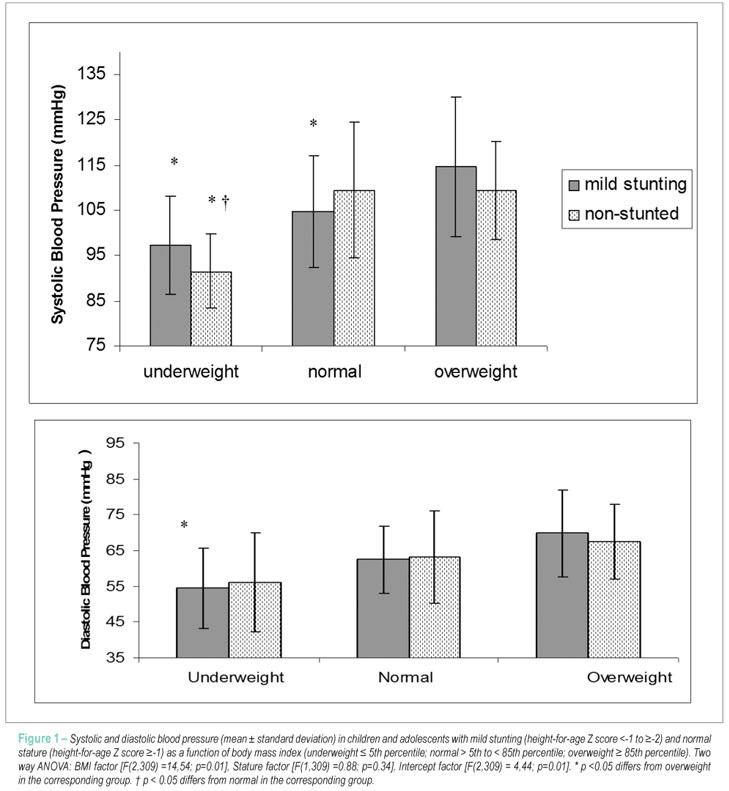
BACKGROUND: Studies have shown that pre/postnatal undernutrition leads to higher risk of non communicable diseases such as diabetes, hypertension and obesity in adulthood. OBJECTIVE: To determine whether overweight adolescents with mild stunting [height-for-age Z scores (HAZ) in the range -2] have higher blood pressure than overweight individuals with normal stature (HAZ >-1). MEHTODS: Participants were classified as mildly stunted or of normal stature, and further stratified according to body mass index-for-age percentiles as overweight, normal or underweight. Systolic (SBP) and diastolic (DPB) blood pressures were determined according to guidelines, and abdominal fat was analyzed by dual energy X-ray absorptiometry. RESULTS: Mild stunted overweight individuals showed higher DBP values (p=0.001) than their underweight counterparts (69.75 ± 12.03 and 54.46±11.24 mmHg, respectively), but similar to those of normal BMI. No differences were found in DBP values of normal, overweight and underweight individuals among the normal stature groups. An increase in SBP (p=0.01) among mild stunted individuals was found when those with overweight were compared to their underweight and normal BMI counterparts (114.70 ± 15.46, 97.38 ± 10.87 and 104.72 ± 12.24 mmHg, respectively). Although no differences were observed in the means of SBP between mild stunting and normal stature groups, a significant intercept was found (p=0.01), revealing higher SBP among stunted individuals. There was a correlation between SBP and abdominal fat (r=0.42, ρ=0.02) in the stunted group. CONCLUSION: Stunted individuals with overweight showed higher SBP than those of normal stature and overweight. These findings confirm that mild stunting increase the risk of future hypertension and alterations are evident at early age.

  • Adolescent
  • Blood Pressure
  • Overweight
  • poverty
Read Full Article
Creative Commons Attribution (CC BY) Creative Commons license
08/12/2011 DOI: 10.1590/S0066-782X2011005000115 Views 1
High blood pressure detection in adolescents by clustering overall and abdominal adiposity markers
ABC
Artigo Original

High blood pressure detection in adolescents by clustering overall and abdominal adiposity markers

Diego G. D Christofaro et al. Raphael M Ritti-Dias Rômulo A Fernandes Marcos D Polito … Selma M. de Andrade Jefferson R Cardoso Arli Ramos de Oliveira

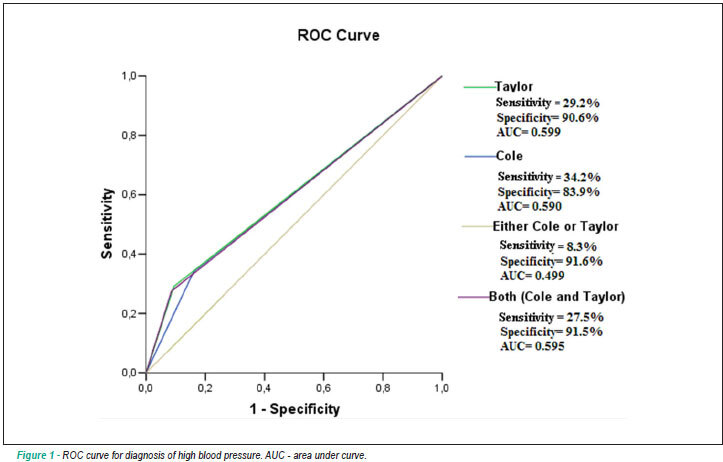
BACKGROUND: Obesity is linked to high blood pressure (HBP) in childhood. However, the role of fat as a predictor of HBP in adolescents remains unknown. OBJECTIVE: To investigate the association between general and abdominal obesity with HBP and to identify the sensitivity and specificity of these indicators to detect HBP in adolescents. METHODS: The sample was composed of 1,021 adolescents aged 10-17 years. Subjects were classified as normal, overweight/obese, according to BMI measurements, and as non-obese and with abdominal obesity, according to waist circumference (WC) measurements. Systolic (SBP) and diastolic (DBP) blood pressure were assessed using an oscillometric device. Logistic regression and ROC curves were used in the statistical analysis. RESULTS: The overall prevalence of HBP was 11.8% (13.4% in boys and 10.2% in girls). The prevalence of HBP among general overweight/obese boys and girls was 10% and 11.1%, respectively. The prevalence of HBP among boys with abdominal obesity was 28.6%. For both genders, the odds ratio (OR) for HBP was higher in abdominal obesity than in general overweight/obesity (4.09 [OR95%CI = 2.57-6.51]) versus 1.83 [OR95%CI = 1.83-4.30]). The OR for HBP was higher when general overweight/obesity and abdominal obesity were clustered (OR = 4.35 [OR95%CI = 2.68-7.05]), than when identified by either general overweight/obesity or abdominal obesity alone (OR = 1.32 [OR95%CI = 0.65-2.68]). However, both types of obesity had low predictive power in HBP detection. CONCLUSION: General and abdominal obesity were associated to HBP, however, the sensitivity and specificity of these variables to detect HBP are low in Brazilian adolescents.

  • Adolescent
  • Blood Pressure
  • Obesity, Abdominal
  • Overweight
  • Waist Circumference
Read Full Article
Creative Commons Attribution (CC BY) Creative Commons license
29/04/2011 DOI: 10.1590/S0066-782X2011005000050 Views 1
Prediction of metabolic syndrome in children through anthropometric indicators
ABC
Artigo Original

Prediction of metabolic syndrome in children through anthropometric indicators

Aparecido Pimentel Ferreira et al. Cristiane Batisti Ferreira Ciro José Brito Francisco José Gondim Pitanga … Clayton Franco Moraes Luciana Ansaneli Naves Otávio de Toledo Nóbrega Nancí Maria de França

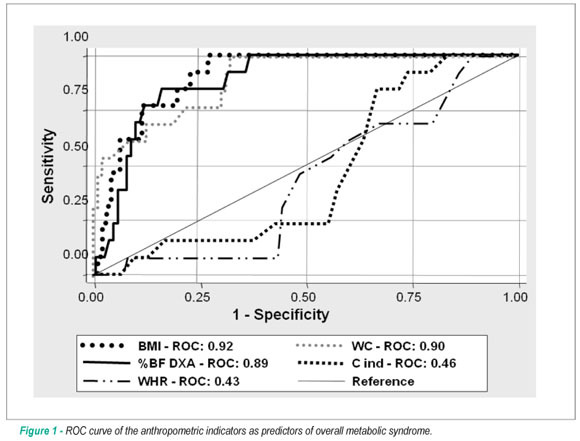
BACKGROUND: Because of the need to measure anthropometric, biochemical and hemodynamic variables for the diagnosis of metabolic syndrome, we realize how difficult it is to analyze large populations, especially children, due to the poor accessibility and the invasive character. There is an urgent need to develop easy-to-use, accurate and low-cost diagnostic tools in order to predict metabolic syndrome at early ages. OBJECTIVE: To verify the prevalence of metabolic syndrome in children and to test predictive anthropometric indicators. METHODS: Cross-sectional study conducted among 109 children aged 7 to 11 years. The age-adjusted National Cholesterol Education Program definition was used for the diagnosis of metabolic syndrome. The following parameters were tested as possible predictors: body mass index (BMI), waist circumference (WC), waist-to-hip ratio (WHR), conicity index (C index), and body fat percentage. RESULTS: The prevalence of metabolic syndrome was 13.3% and 36% for boys and girls, respectively. The main anthropometric indicators were: BMI = 0.81 (0.69 – 0.94), WC = 0.79 (0.64 – 0.94), body fat = 0.79 (0.66 – 0.92) and WHR = 0.37 (0.21 – 0.54). CONCLUSION: WC higher than 78 cm, body fat higher than 41%, and BMI higher than 24.5 kg/m² were considered predictors of metabolic syndrome. The C index and WHR were not considered predictors.

  • Child
  • Metabolic Syndrome
  • Obesity
  • Overweight
  • prediction
Read Full Article
Creative Commons Attribution (CC BY) Creative Commons license
14/01/2011 DOI: 10.1590/S0066-782X2011005000005 Views 1
ABC
Artigo Original

Effect of diet and indoor cycling on body composition and serum lipid

Valéria Sales do Valle et al. Danielli Braga de Mello Marcos de Sá Rego Fortes Estélio Henrique Martin Dantas Marco Antonio de Mattos

BACKGROUND: Indoor cycling is an aerobic exercise that employs large muscle groups of the lower limbs, lacking osteoarticular impact and high energy expenditure, which makes it interesting to generate a non-pharmacological strategy. OBJECTIVE: To assess body composition and lipid profile in overweight women after twelve weeks of low-calorie diet and indoor cycling training. METHODS: We randomly assigned 40 women (23.90 ± 3.10 years), divided into four groups: control (C), indoor cycling (CI), indoor cycling combined with low-calorie diet (CD) and low-calorie diet (D). The variables were: height and body mass, BMI, fat percentage, lean body mass, triglycerides, cholesterol and lipoproteins (HDL, LDL, VLDL). The indoor cycling training consisted of three weekly sessions of 45 minutes each and an energy restriction of about 1,200 kcal. The study lasted 12 weeks. We used descriptive statistics (mean and standard deviation) and inferential statistics (Student’s t test). The level of significance was p < 0.05. RESULTS: The groups CI, CD and D significantly reduced the mean anthropometric variables after 12 weeks of intervention (body mass, fat percentage and body mass index), and serum levels of total cholesterol and triglycerides. HDL cholesterol increased significantly for groups CI and CD. CONCLUSION: According to the results, the indoor cycling and the low-calorie diet helped fight overweight and control serum lipids.

  • bicycling
  • Body Composition
  • Lipids
  • Overweight
Read Full Article
Creative Commons Attribution (CC BY) Creative Commons license
02/07/2010 DOI: 10.1590/S0066-782X2010005000080 Views 1
Lifestyle and cardiovascular health in school adolescents from São Paulo
ABC
Artigo Original

Lifestyle and cardiovascular health in school adolescents from São Paulo

Inês Lancarotte et al. Moacyr Roberto Nobre Rachel Zanetta Marcio Polydoro

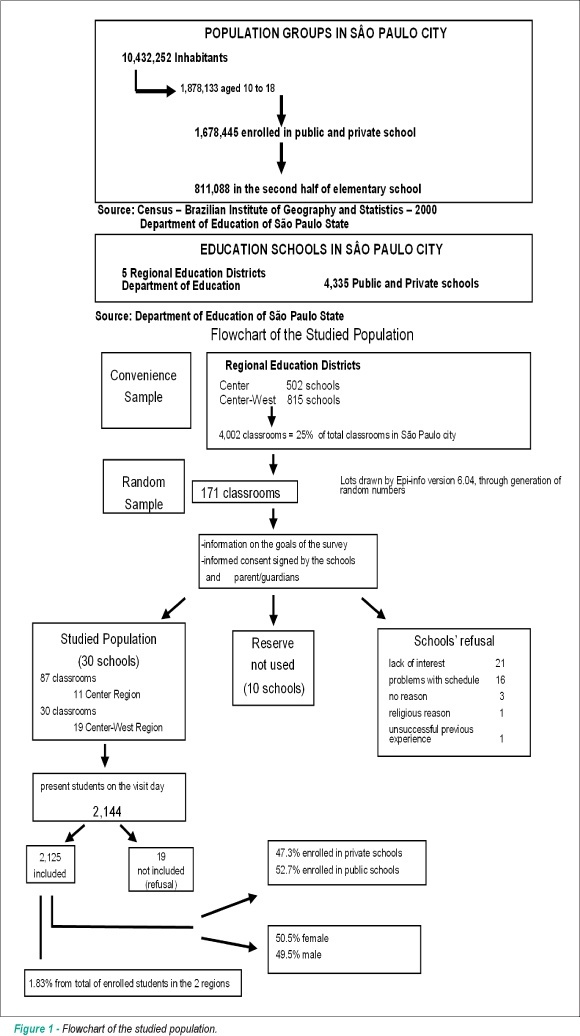
BACKGROUND: Cardiovascular disease is the leading cause of mortality worldwide. There is evidence demonstrating the association of this disease with cardiovascular risk factors related to lifestyle, incorporated in adolescence. OBJECTIVE: To identify, in adolescents, the prevalence of overweight and lifestyle factors associated with risk for developing cardiovascular diseases, and the factors that influence them. METHODS: It was conducted an observational study of individual cross-sectional data with adolescents enrolled in public and private schools in São Paulo, covering grades 5 to 8 of elementary school. The information was obtained through the application of an anonymous questionnaire and weight and height measurements. RESULTS: 2,125 adolescents with mean age of 12.9 years were studied. From the total sample: 14.4% to 32.1% did not practice sports or competitions; 56.0% to 73.6% remained more than two hours watching TV, playing video game or working on the computer; approximately 80% consumed fruits and vegetables improperly; 34.9% to 45.3% reported high salt consumption; and 60.9% to 74.4% reported consumption of soft drinks. Prevalence of overweight ranged from 18.7% to 41.6%. CONCLUSION: In school adolescents, this study found high prevalence of risk factors associated with the development of cardiovascular disease in adults. Further studies are required to better understand how these risk factors are related and thus enable the implementation of preventive measures in adolescence in order to prevent cardiovascular disease in adults.

  • Adolescent
  • Life Style
  • Overweight
  • Risk Factors
Read Full Article
Creative Commons Attribution (CC BY) Creative Commons license
25/06/2010 DOI: 10.1590/S0066-782X2010005000077 Views 1

Could not load more articles. Please try again.

How to cite this article

EndNote RIS

Electronic Document Format (Vancouver)

Oliveira GMM, Brant LCC, Polanczyk CA, Malta DC, Biolo A, Nascimento BR, Souza MFM, et al. Cardiovascular Statistics – Brazil 2026. Arquivos Brasileiros de Cardiologia 2026;:e20260832.

Electronic Document Format (ABNT)

Oliveira, Gláucia Maria Moraes de; Brant, Luisa Campos Caldeira; Polanczyk, Carisi Anne; Malta, Deborah Carvalho; Biolo, Andreia; Nascimento, Bruno Ramos; Souza, Maria de Fatima Marinho de; Lorenzo, Andrea Rocha De; Fagundes Júnior, Antonio Aurélio de Paiva; Manfro, Arthur Gus; Schaan, Beatriz D.; Silva, Christina Grüne de Souza e; Castilho, Fábio Morato de; Cesena, Fernando Henpin Yue; Soares, Gabriel Porto; Xavier Junior, Gesner Francisco; Barreto Filho, Jose Augusto Soares; Pellanda, Lucia Campos; Aranha, Luciana Nicolau; Rohde, Luis Eduardo Paim; Passaglia, Luiz Guilherme; Pinto-Filho, Marcelo Martins; Machline-Carrion, M. Julia; Bittencourt, Marcio Sommer; Pontes Neto, Octavio M.; Villela, Paolo Blanco; Godoy, Paulo Henrique; Teixeira, Renato Azeredo; Stein, Ricardo; Sampaio, Roney Orismar; Salim, Thais Rocha; Gaziano, Thomas A.; Perel, Pablo; Roth, Gregory A.; Ribeiro, Antonio Luiz Pinho. Cardiovascular Statistics – Brazil 2026. Arquivos Brasileiros de Cardiologia, e20260832, Oct. 2026.

Electronic Document Format (APA)

Oliveira, G. M. M. , Brant, L. C. C., Polanczyk, C. A., Malta, D. C., Biolo, A., Nascimento, B. R., Souza, M. F. M. , Lorenzo, A. R. D., Fagundes Júnior, A. A. P., Manfro, A. G., Schaan, B. D., Silva, C. G. S. , Castilho, F. M. , Cesena, F. H. Y., Soares, G. P., Xavier Junior, G. F., Barreto Filho, J. A. S., Pellanda, L. C., Aranha, L. N., Rohde, L. E. P., Passaglia, L. G., Pinto-Filho, M. M., Machline-Carrion, M. J., Bittencourt, M. S., Pontes Neto, O. M., Villela, P. B., Godoy, P. H., Teixeira, R. A., Stein, R., Sampaio, R. O., Salim, T. R., Gaziano, T. A., Perel, P., Roth, G. A., & Ribeiro, A. L. P. (2026). Cardiovascular Statistics – Brazil 2026. Arquivos Brasileiros de Cardiologia, , e20260832.

Electronic Document Format (ISO)

Oliveira, Gláucia Maria Moraes de and Brant, Luisa Campos Caldeira and Polanczyk, Carisi Anne and Malta, Deborah Carvalho and Biolo, Andreia and Nascimento, Bruno Ramos and Souza, Maria de Fatima Marinho de and Lorenzo, Andrea Rocha De and Fagundes Júnior, Antonio Aurélio de Paiva and Manfro, Arthur Gus and Schaan, Beatriz D. and Silva, Christina Grüne de Souza e and Castilho, Fábio Morato de and Cesena, Fernando Henpin Yue and Soares, Gabriel Porto and Xavier Junior, Gesner Francisco and Barreto Filho, Jose Augusto Soares and Pellanda, Lucia Campos and Aranha, Luciana Nicolau and Rohde, Luis Eduardo Paim and Passaglia, Luiz Guilherme and Pinto-Filho, Marcelo Martins and Machline-Carrion, M. Julia and Bittencourt, Marcio Sommer and Pontes Neto, Octavio M. and Villela, Paolo Blanco and Godoy, Paulo Henrique and Teixeira, Renato Azeredo and Stein, Ricardo and Sampaio, Roney Orismar and Salim, Thais Rocha and Gaziano, Thomas A. and Perel, Pablo and Roth, Gregory A. and Ribeiro, Antonio Luiz Pinho. Cardiovascular Statistics – Brazil 2026. Arquivos Brasileiros de Cardiologia [online]. 2026, [cited 2026-10-14], e20260832. Available from: <https://journals.cardiol.br/en/article/cardiovascular-statistics-brazil-2026/>. ISSN 0066-782X

EndNote RIS

Electronic Document Format (Vancouver)

Bertolami MC. Gender differences in Body Adiposity and Endothelial Dysfunction in Overweight and Obese Individuals with Suboptimal Vitamin D Status. International Journal of Cardiovascular Sciences 2026;39:e20260094.

Electronic Document Format (ABNT)

Bertolami, Marcelo Chiara. Gender differences in Body Adiposity and Endothelial Dysfunction in Overweight and Obese Individuals with Suboptimal Vitamin D Status. International Journal of Cardiovascular Sciences, v. 39, e20260094, Aug. 2026.

Electronic Document Format (APA)

Bertolami, M. C. (2026). Gender differences in Body Adiposity and Endothelial Dysfunction in Overweight and Obese Individuals with Suboptimal Vitamin D Status. International Journal of Cardiovascular Sciences, 39, e20260094.

Electronic Document Format (ISO)

Bertolami, Marcelo Chiara. Gender differences in Body Adiposity and Endothelial Dysfunction in Overweight and Obese Individuals with Suboptimal Vitamin D Status. International Journal of Cardiovascular Sciences [online]. 2026, vol. 39, [cited 2026-10-14], e20260094. Available from: <https://journals.cardiol.br/en/article/gender-differences-in-body-adiposity-and-endothelial-dysfunction-in-overweight-and-obese-individuals-with-suboptimal-vitamin-d-status/>. ISSN 2359-4802

EndNote RIS

Electronic Document Format (Vancouver)

Oliveira GMM, Brant LCC, Polanczyk CA, Malta DC, Biolo A, Nascimento BR, Souza MFM, et al. Cardiovascular Statistics – Brazil 2023. Arquivos Brasileiros de Cardiologia 2024;121(2):e20240079.

Electronic Document Format (ABNT)

Oliveira, Gláucia Maria Moraes de; Brant, Luisa Campos Caldeira; Polanczyk, Carisi Anne; Malta, Deborah Carvalho; Biolo, Andreia; Nascimento, Bruno Ramos; Souza, Maria de Fatima Marinho de; Lorenzo, Andrea Rocha De; Fagundes Júnior, Antonio Aurélio de Paiva; Schaan, Beatriz D.; Silva, Christina Grüne de Souza e; Castilho, Fábio Morato de; Cesena, Fernando Henpin Yue; Soares, Gabriel Porto; Xavier Junior, Gesner Francisco; Barreto Filho, Jose Augusto Soares; Passaglia, Luiz Guilherme; Pinto Filho, Marcelo Martins; Machline-Carrion, M. Julia; Bittencourt, Marcio Sommer; Pontes Neto, Octavio M.; Villela, Paolo Blanco; Teixeira, Renato Azeredo; Stein, Ricardo; Sampaio, Roney Orismar; Gaziano, Thomaz A.; Perel, Pablo; Roth, Gregory A.; Ribeiro, Antonio Luiz Pinho. Cardiovascular Statistics – Brazil 2023. Arquivos Brasileiros de Cardiologia, v. 121, n. 2, e20240079, Jun. 2024.

Electronic Document Format (APA)

Oliveira, G. M. M. , Brant, L. C. C., Polanczyk, C. A., Malta, D. C., Biolo, A., Nascimento, B. R., Souza, M. F. M. , Lorenzo, A. R. D., Fagundes Júnior, A. A. P., Schaan, B. D., Silva, C. G. S. , Castilho, F. M. , Cesena, F. H. Y., Soares, G. P., Xavier Junior, G. F., Barreto Filho, J. A. S., Passaglia, L. G., Pinto Filho, M. M., Machline-Carrion, M. J., Bittencourt, M. S., Pontes Neto, O. M., Villela, P. B., Teixeira, R. A., Stein, R., Sampaio, R. O., Gaziano, T. A., Perel, P., Roth, G. A., & Ribeiro, A. L. P. (2024). Cardiovascular Statistics – Brazil 2023. Arquivos Brasileiros de Cardiologia, 121(2), e20240079.

Electronic Document Format (ISO)

Oliveira, Gláucia Maria Moraes de and Brant, Luisa Campos Caldeira and Polanczyk, Carisi Anne and Malta, Deborah Carvalho and Biolo, Andreia and Nascimento, Bruno Ramos and Souza, Maria de Fatima Marinho de and Lorenzo, Andrea Rocha De and Fagundes Júnior, Antonio Aurélio de Paiva and Schaan, Beatriz D. and Silva, Christina Grüne de Souza e and Castilho, Fábio Morato de and Cesena, Fernando Henpin Yue and Soares, Gabriel Porto and Xavier Junior, Gesner Francisco and Barreto Filho, Jose Augusto Soares and Passaglia, Luiz Guilherme and Pinto Filho, Marcelo Martins and Machline-Carrion, M. Julia and Bittencourt, Marcio Sommer and Pontes Neto, Octavio M. and Villela, Paolo Blanco and Teixeira, Renato Azeredo and Stein, Ricardo and Sampaio, Roney Orismar and Gaziano, Thomaz A. and Perel, Pablo and Roth, Gregory A. and Ribeiro, Antonio Luiz Pinho. Cardiovascular Statistics – Brazil 2023. Arquivos Brasileiros de Cardiologia [online]. 2024, vol. 121, n. 2, [cited 2026-10-14], e20240079. Available from: <https://journals.cardiol.br/en/article/cardiovascular-statistics-brazil-2023/>. ISSN 0066-782X

EndNote RIS

Electronic Document Format (Vancouver)

Sobral Filho DC, Monteiro MF. Is Patient Education about the Benefits of Physical Activity a Good Adjunct Treatment Strategy in Hypertension?. International Journal of Cardiovascular Sciences 2022;35(4):431-3.

Electronic Document Format (ABNT)

Sobral Filho, Dário C.; Monteiro, Maria de Fátima. Is Patient Education about the Benefits of Physical Activity a Good Adjunct Treatment Strategy in Hypertension?. International Journal of Cardiovascular Sciences, v. 35, n. 4, p. 431-433, Jul. 2022.

Electronic Document Format (APA)

Sobral Filho, D. C., & Monteiro, M. F. (2022). Is Patient Education about the Benefits of Physical Activity a Good Adjunct Treatment Strategy in Hypertension?. International Journal of Cardiovascular Sciences, 35(4), 431-433.

Electronic Document Format (ISO)

Sobral Filho, Dário C. and Monteiro, Maria de Fátima. Is Patient Education about the Benefits of Physical Activity a Good Adjunct Treatment Strategy in Hypertension?. International Journal of Cardiovascular Sciences [online]. 2022, vol. 35, n. 4, [cited 2026-10-14], pp. 431-433. Available from: <https://journals.cardiol.br/en/article/is-patient-education-about-the-benefits-of-physical-activity-a-good-adjunct-treatment-strategy-in-hypertension/>. ISSN 2359-4802

EndNote RIS

Electronic Document Format (Vancouver)

Alencar AKN, Wang H, Oliveira GMM, Sun X, Zapata-Sudo G, Groban L. Crossroads between Estrogen Loss, Obesity, and Heart Failure with Preserved Ejection Fraction. Arquivos Brasileiros de Cardiologia 2021;117(6):1191-20.

Electronic Document Format (ABNT)

Alencar, Allan Kardec Nogueira de; Wang, Hao; Oliveira, Gláucia Maria Moraes de; Sun, Xuming; Zapata-Sudo, Gisele; Groban, Leanne. Crossroads between Estrogen Loss, Obesity, and Heart Failure with Preserved Ejection Fraction. Arquivos Brasileiros de Cardiologia, v. 117, n. 6, p. 1191-1201, Oct. 2021.

Electronic Document Format (APA)

Alencar, A. K. N. , Wang, H., Oliveira, G. M. M. , Sun, X., Zapata-Sudo, G., & Groban, L. (2021). Crossroads between Estrogen Loss, Obesity, and Heart Failure with Preserved Ejection Fraction. Arquivos Brasileiros de Cardiologia, 117(6), 1191-1201.

Electronic Document Format (ISO)

Alencar, Allan Kardec Nogueira de and Wang, Hao and Oliveira, Gláucia Maria Moraes de and Sun, Xuming and Zapata-Sudo, Gisele and Groban, Leanne. Crossroads between Estrogen Loss, Obesity, and Heart Failure with Preserved Ejection Fraction. Arquivos Brasileiros de Cardiologia [online]. 2021, vol. 117, n. 6, [cited 2026-10-14], pp. 1191-1201. Available from: <https://journals.cardiol.br/en/article/crossroads-between-estrogen-loss-obesity-and-heart-failure-with-preserved-ejection-fraction/>. ISSN 0066-782X

EndNote RIS

Electronic Document Format (Vancouver)

Lanz-Luces JR, Costa FA, Guzman LFE, Gagliardi ART, Lanz-Luces JA, Lanz-Souquett JD, Costa LMA, et al. DD Genotype and Atherosclerosis in Overweight Menopausal Women. International Journal of Cardiovascular Sciences 2021;34(4):411-9.

Electronic Document Format (ABNT)

Lanz-Luces, José Ramón; Costa, Fernando Alves; Guzman, Luis Fernando Escobar; Gagliardi, Antonio Ricardo de Toledo; Lanz-Luces, José Antonio; Lanz-Souquett, José Daniel; Costa, Leandro Menezes Alves da. DD Genotype and Atherosclerosis in Overweight Menopausal Women. International Journal of Cardiovascular Sciences, v. 34, n. 4, p. 411-419, Jul. 2021.

Electronic Document Format (APA)

Lanz-Luces, J. R., Costa, F. A., Guzman, L. F. E., Gagliardi, A. R. T., Lanz-Luces, J. A., Lanz-Souquett, J. D., & Costa, L. M. A. (2021). DD Genotype and Atherosclerosis in Overweight Menopausal Women. International Journal of Cardiovascular Sciences, 34(4), 411-419.

Electronic Document Format (ISO)

Lanz-Luces, José Ramón and Costa, Fernando Alves and Guzman, Luis Fernando Escobar and Gagliardi, Antonio Ricardo de Toledo and Lanz-Luces, José Antonio and Lanz-Souquett, José Daniel and Costa, Leandro Menezes Alves da. DD Genotype and Atherosclerosis in Overweight Menopausal Women. International Journal of Cardiovascular Sciences [online]. 2021, vol. 34, n. 4, [cited 2026-10-14], pp. 411-419. Available from: <https://journals.cardiol.br/en/article/dd-genotype-and-atherosclerosis-in-overweight-menopausal-women/>. ISSN 2359-4802

EndNote RIS

Electronic Document Format (Vancouver)

Agostinis-Sobrinho CA, Vilan K. Blood Pressure in Children. The Key Role of Physical Activity and Body Fatness. Arquivos Brasileiros de Cardiologia 2021;116(5):957-8.

Electronic Document Format (ABNT)

Agostinis-Sobrinho, César A.; Vilan, Katiane. Blood Pressure in Children. The Key Role of Physical Activity and Body Fatness. Arquivos Brasileiros de Cardiologia, v. 116, n. 5, p. 957-958, May. 2021.

Electronic Document Format (APA)

Agostinis-Sobrinho, C. A., & Vilan, K. (2021). Blood Pressure in Children. The Key Role of Physical Activity and Body Fatness. Arquivos Brasileiros de Cardiologia, 116(5), 957-958.

Electronic Document Format (ISO)

Agostinis-Sobrinho, César A. and Vilan, Katiane. Blood Pressure in Children. The Key Role of Physical Activity and Body Fatness. Arquivos Brasileiros de Cardiologia [online]. 2021, vol. 116, n. 5, [cited 2026-10-14], pp. 957-958. Available from: <https://journals.cardiol.br/en/article/blood-pressure-in-children-the-key-role-of-physical-activity-and-body-fatness/>. ISSN 0066-782X

EndNote RIS

Electronic Document Format (Vancouver)

Paravidino VB, Mediano MFF, Sichieri R. Physical Exercise, Energy Expenditure and Weight Loss: An Assumption not Always Observed in Practice. International Journal of Cardiovascular Sciences 2021;34(6):734-6.

Electronic Document Format (ABNT)

Paravidino, Vitor Barreto; Mediano, Mauro Felippe Felix; Sichieri, Rosely. Physical Exercise, Energy Expenditure and Weight Loss: An Assumption not Always Observed in Practice. International Journal of Cardiovascular Sciences, v. 34, n. 6, p. 734-736, May. 2021.

Electronic Document Format (APA)

Paravidino, V. B., Mediano, M. F. F., & Sichieri, R. (2021). Physical Exercise, Energy Expenditure and Weight Loss: An Assumption not Always Observed in Practice. International Journal of Cardiovascular Sciences, 34(6), 734-736.

Electronic Document Format (ISO)

Paravidino, Vitor Barreto and Mediano, Mauro Felippe Felix and Sichieri, Rosely. Physical Exercise, Energy Expenditure and Weight Loss: An Assumption not Always Observed in Practice. International Journal of Cardiovascular Sciences [online]. 2021, vol. 34, n. 6, [cited 2026-10-14], pp. 734-736. Available from: <https://journals.cardiol.br/en/article/physical-exercise-energy-expenditure-and-weight-loss-an-assumption-not-always-observed-in-practice/>. ISSN 2359-4802

EndNote RIS

Electronic Document Format (Vancouver)

Barroso WKS, Souza ALL. Obesity, Overweight, Body Adiposity and Cardiovascular Risk in Children and Adolescents. Arquivos Brasileiros de Cardiologia 2020;115(2):172-3.

Electronic Document Format (ABNT)

Barroso, Weimar Kunz Sebba; Souza, Ana Luiza Lima. Obesity, Overweight, Body Adiposity and Cardiovascular Risk in Children and Adolescents. Arquivos Brasileiros de Cardiologia, v. 115, n. 2, p. 172-173, Aug. 2020.

Electronic Document Format (APA)

Barroso, W. K. S., & Souza, A. L. L. (2020). Obesity, Overweight, Body Adiposity and Cardiovascular Risk in Children and Adolescents. Arquivos Brasileiros de Cardiologia, 115(2), 172-173.

Electronic Document Format (ISO)

Barroso, Weimar Kunz Sebba and Souza, Ana Luiza Lima. Obesity, Overweight, Body Adiposity and Cardiovascular Risk in Children and Adolescents. Arquivos Brasileiros de Cardiologia [online]. 2020, vol. 115, n. 2, [cited 2026-10-14], pp. 172-173. Available from: <https://journals.cardiol.br/en/article/obesity-overweight-body-adiposity-and-cardiovascular-risk-in-children-and-adolescents/>. ISSN 0066-782X

EndNote RIS

Electronic Document Format (Vancouver)

Jesus GS, Costa PRF, Oliveira LPM, Queiroz VAO, Cunha CM, Pereira EM, Oliveira AM, et al. Body Adiposity and Apolipoproteins in Children and Adolescents: A Meta-Analysis of Prospective Studies. Arquivos Brasileiros de Cardiologia 2020;115(2):163-71.

Electronic Document Format (ABNT)

Jesus, Gabriela dos Santos de; Costa, Priscila Ribas de Farias; Oliveira, Lucivalda Pereira Magalhães de; Queiroz, Valterlinda Alves de Oliveira; Cunha, Carla de Magalhães; Pereira, Emile Miranda; Oliveira, Ana Marlúcia de. Body Adiposity and Apolipoproteins in Children and Adolescents: A Meta-Analysis of Prospective Studies. Arquivos Brasileiros de Cardiologia, v. 115, n. 2, p. 163-171, Jul. 2020.

Electronic Document Format (APA)

Jesus, G. S. , Costa, P. R. F., Oliveira, L. P. M. , Queiroz, V. A. O., Cunha, C. M., Pereira, E. M., & Oliveira, A. M. (2020). Body Adiposity and Apolipoproteins in Children and Adolescents: A Meta-Analysis of Prospective Studies. Arquivos Brasileiros de Cardiologia, 115(2), 163-171.

Electronic Document Format (ISO)

Jesus, Gabriela dos Santos de and Costa, Priscila Ribas de Farias and Oliveira, Lucivalda Pereira Magalhães de and Queiroz, Valterlinda Alves de Oliveira and Cunha, Carla de Magalhães and Pereira, Emile Miranda and Oliveira, Ana Marlúcia de. Body Adiposity and Apolipoproteins in Children and Adolescents: A Meta-Analysis of Prospective Studies. Arquivos Brasileiros de Cardiologia [online]. 2020, vol. 115, n. 2, [cited 2026-10-14], pp. 163-171. Available from: <https://journals.cardiol.br/en/article/body-adiposity-and-apolipoproteins-in-children-and-adolescents-a-meta-analysis-of-prospective-studies/>. ISSN 0066-782X

EndNote RIS

Electronic Document Format (Vancouver)

Aranha LN, Oliveira GMM. Waist Circumference: A Simple Measure for Childhood Obesity?. Arquivos Brasileiros de Cardiologia 2020;114(3):538-9.

Electronic Document Format (ABNT)

Aranha, Luciana Nicolau; Oliveira, Gláucia Maria Moraes de. Waist Circumference: A Simple Measure for Childhood Obesity?. Arquivos Brasileiros de Cardiologia, v. 114, n. 3, p. 538-539, Apr. 2020.

Electronic Document Format (APA)

Aranha, L. N., & Oliveira, G. M. M. (2020). Waist Circumference: A Simple Measure for Childhood Obesity?. Arquivos Brasileiros de Cardiologia, 114(3), 538-539.

Electronic Document Format (ISO)

Aranha, Luciana Nicolau and Oliveira, Gláucia Maria Moraes de. Waist Circumference: A Simple Measure for Childhood Obesity?. Arquivos Brasileiros de Cardiologia [online]. 2020, vol. 114, n. 3, [cited 2026-10-14], pp. 538-539. Available from: <https://journals.cardiol.br/en/article/waist-circumference-a-simple-measure-for-childhood-obesity/>. ISSN 0066-782X

EndNote RIS

Electronic Document Format (Vancouver)

Jardim PCBV. Overweight, the Cardiovascular Risk of the Century. Arquivos Brasileiros de Cardiologia 2019;113(2):185-7.

Electronic Document Format (ABNT)

Jardim, Paulo César B. Veiga. Overweight, the Cardiovascular Risk of the Century. Arquivos Brasileiros de Cardiologia, v. 113, n. 2, p. 185-187, Sep. 2019.

Electronic Document Format (APA)

Jardim, P. C. B. V. (2019). Overweight, the Cardiovascular Risk of the Century. Arquivos Brasileiros de Cardiologia, 113(2), 185-187.

Electronic Document Format (ISO)

Jardim, Paulo César B. Veiga. Overweight, the Cardiovascular Risk of the Century. Arquivos Brasileiros de Cardiologia [online]. 2019, vol. 113, n. 2, [cited 2026-10-14], pp. 185-187. Available from: <https://journals.cardiol.br/en/article/overweight-the-cardiovascular-risk-of-the-century/>. ISSN 0066-782X

EndNote RIS

Electronic Document Format (Vancouver)

Scherr C, Helal L, Ferrari F, Belém LJ, Fabiano LCC, Pinheiro LT, Stein R, et al. The Olympic Experimental Gymnasium Program and its Association with the Prevalence of Cardiovascular Risk Factors in Adolescents: A Cross-Sectional Study. Arquivos Brasileiros de Cardiologia 2019;112(6):775-81.

Electronic Document Format (ABNT)

Scherr, Carlos; Helal, Lucas; Ferrari, Filipe; Belém, Luciano Juaçaba; Fabiano, Leonardo Correa Castro; Pinheiro, Ludmila Talita; Stein, Ricardo. The Olympic Experimental Gymnasium Program and its Association with the Prevalence of Cardiovascular Risk Factors in Adolescents: A Cross-Sectional Study. Arquivos Brasileiros de Cardiologia, v. 112, n. 6, p. 775-781, Apr. 2019.

Electronic Document Format (APA)

Scherr, C., Helal, L., Ferrari, F., Belém, L. J., Fabiano, L. C. C., Pinheiro, L. T., & Stein, R. (2019). The Olympic Experimental Gymnasium Program and its Association with the Prevalence of Cardiovascular Risk Factors in Adolescents: A Cross-Sectional Study. Arquivos Brasileiros de Cardiologia, 112(6), 775-781.

Electronic Document Format (ISO)

Scherr, Carlos and Helal, Lucas and Ferrari, Filipe and Belém, Luciano Juaçaba and Fabiano, Leonardo Correa Castro and Pinheiro, Ludmila Talita and Stein, Ricardo. The Olympic Experimental Gymnasium Program and its Association with the Prevalence of Cardiovascular Risk Factors in Adolescents: A Cross-Sectional Study. Arquivos Brasileiros de Cardiologia [online]. 2019, vol. 112, n. 6, [cited 2026-10-14], pp. 775-781. Available from: <https://journals.cardiol.br/en/article/the-olympic-experimental-gymnasium-program-and-its-association-with-the-prevalence-of-cardiovascular-risk-factors-in-adolescents-a-cross-sectional-study/>. ISSN 0066-782X

EndNote RIS

Electronic Document Format (Vancouver)

Chacra APM. The Importance of Identifying Risk Factors in Childhood and Adolescence. Arquivos Brasileiros de Cardiologia 2019;112(2):152-3.

Electronic Document Format (ABNT)

Chacra, Ana Paula Marte. The Importance of Identifying Risk Factors in Childhood and Adolescence. Arquivos Brasileiros de Cardiologia, v. 112, n. 2, p. 152-153, Jan. 2019.

Electronic Document Format (APA)

Chacra, A. P. M. (2019). The Importance of Identifying Risk Factors in Childhood and Adolescence. Arquivos Brasileiros de Cardiologia, 112(2), 152-153.

Electronic Document Format (ISO)

Chacra, Ana Paula Marte. The Importance of Identifying Risk Factors in Childhood and Adolescence. Arquivos Brasileiros de Cardiologia [online]. 2019, vol. 112, n. 2, [cited 2026-10-14], pp. 152-153. Available from: <https://journals.cardiol.br/en/article/the-importance-of-identifying-risk-factors-in-childhood-and-adolescence/>. ISSN 0066-782X

EndNote RIS

Electronic Document Format (Vancouver)

Pazin DC, Rosaneli CF, Olandoski M, Oliveira ERN, Baena CP, Figueredo AS, Baraniuk AO, et al. Waist Circumference is Associated with Blood Pressure in Children with Normal Body Mass Index: A Cross-Sectional Analysis of 3,417 School Children. Arquivos Brasileiros de Cardiologia 2017;109(6):509-15.

Electronic Document Format (ABNT)

Pazin, Daiane Cristina; Rosaneli, Caroline Filla; Olandoski, Márcia; Oliveira, Edna Regina Netto de; Baena, Cristina Pellegrino; Figueredo, Alyne S; Baraniuk, Analin Ono; Kaestner, Tatiana Lorena da Luz; Guarita-Souza, Luiz Cesar; Faria-Neto, José Rocha. Waist Circumference is Associated with Blood Pressure in Children with Normal Body Mass Index: A Cross-Sectional Analysis of 3,417 School Children. Arquivos Brasileiros de Cardiologia, v. 109, n. 6, p. 509-515, Nov. 2017.

Electronic Document Format (APA)

Pazin, D. C., Rosaneli, C. F., Olandoski, M., Oliveira, E. R. N. , Baena, C. P., Figueredo, A. S., Baraniuk, A. O., Kaestner, T. L. L., Guarita-Souza, L. C., & Faria-Neto, J. R. (2017). Waist Circumference is Associated with Blood Pressure in Children with Normal Body Mass Index: A Cross-Sectional Analysis of 3,417 School Children. Arquivos Brasileiros de Cardiologia, 109(6), 509-515.

Electronic Document Format (ISO)

Pazin, Daiane Cristina and Rosaneli, Caroline Filla and Olandoski, Márcia and Oliveira, Edna Regina Netto de and Baena, Cristina Pellegrino and Figueredo, Alyne S and Baraniuk, Analin Ono and Kaestner, Tatiana Lorena da Luz and Guarita-Souza, Luiz Cesar and Faria-Neto, José Rocha. Waist Circumference is Associated with Blood Pressure in Children with Normal Body Mass Index: A Cross-Sectional Analysis of 3,417 School Children. Arquivos Brasileiros de Cardiologia [online]. 2017, vol. 109, n. 6, [cited 2026-10-14], pp. 509-515. Available from: <https://journals.cardiol.br/en/article/waist-circumference-is-associated-with-blood-pressure-in-children-with-normal-body-mass-index-a-cross-sectional-analysis-of-3417-school-children/>. ISSN 0066-782X

EndNote RIS

Electronic Document Format (Vancouver)

Cerit Z. Childhood Obesity, MMP-9 Levels, and Vitamin D. Arquivos Brasileiros de Cardiologia 2017;109(4):380-1.

Electronic Document Format (ABNT)

Cerit, Zeynep. Childhood Obesity, MMP-9 Levels, and Vitamin D. Arquivos Brasileiros de Cardiologia, v. 109, n. 4, p. 380-381, Sep. 2017.

Electronic Document Format (APA)

Cerit, Z. (2017). Childhood Obesity, MMP-9 Levels, and Vitamin D. Arquivos Brasileiros de Cardiologia, 109(4), 380-381.

Electronic Document Format (ISO)

Cerit, Zeynep. Childhood Obesity, MMP-9 Levels, and Vitamin D. Arquivos Brasileiros de Cardiologia [online]. 2017, vol. 109, n. 4, [cited 2026-10-14], pp. 380-381. Available from: <https://journals.cardiol.br/en/article/childhood-obesity-mmp-9-levels-and-vitamin-d/>. ISSN 0066-782X

EndNote RIS

Electronic Document Format (Vancouver)

Souza CB, Dourado CS, Mill JG, Salaroli LB, Molina MCB. Prevalence of Hypertension in Children from Public Schools. International Journal of Cardiovascular Sciences 2017;30(1):42-51.

Electronic Document Format (ABNT)

Souza, Camila Brandão de; Dourado, Cláudia de Souza; Mill, José Geraldo; Salaroli, Luciane Bresciane; Molina, Maria del Carmen Bisi. Prevalence of Hypertension in Children from Public Schools. International Journal of Cardiovascular Sciences, v. 30, n. 1, p. 42-51, Dec. 2016.

Electronic Document Format (APA)

Souza, C. B. , Dourado, C. S., Mill, J. G., Salaroli, L. B., & Molina, M. C. B. (2017). Prevalence of Hypertension in Children from Public Schools. International Journal of Cardiovascular Sciences, 30(1), 42-51.

Electronic Document Format (ISO)

Souza, Camila Brandão de and Dourado, Cláudia de Souza and Mill, José Geraldo and Salaroli, Luciane Bresciane and Molina, Maria del Carmen Bisi. Prevalence of Hypertension in Children from Public Schools. International Journal of Cardiovascular Sciences [online]. 2017, vol. 30, n. 1, [cited 2026-10-14], pp. 42-51. Available from: <https://journals.cardiol.br/en/article/prevalence-of-hypertension-in-children-from-public-schools/>. ISSN 2359-4802

EndNote RIS

Electronic Document Format (Vancouver)

Reuter CP, Silva PT, Renner JDP, Mello ED, Valim ARM, Pasa L, Silva R, et al. Dyslipidemia is Associated with Unfit and Overweight-Obese Children and Adolescents. Arquivos Brasileiros de Cardiologia 2016;106(3):188-93.

Electronic Document Format (ABNT)

Reuter, Cézane Priscila; Silva, Priscila Tatiana da; Renner, Jane Dagmar Pollo; Mello, Elza Daniel de; Valim, Andréia Rosane de Moura; Pasa, Luiza; Silva, Rafaela da; Burgos, Miria Suzana. Dyslipidemia is Associated with Unfit and Overweight-Obese Children and Adolescents. Arquivos Brasileiros de Cardiologia, v. 106, n. 3, p. 188-193, Feb. 2016.

Electronic Document Format (APA)

Reuter, C. P., Silva, P. T. , Renner, J. D. P., Mello, E. D. , Valim, A. R. M., Pasa, L., Silva, R. , & Burgos, M. S. (2016). Dyslipidemia is Associated with Unfit and Overweight-Obese Children and Adolescents. Arquivos Brasileiros de Cardiologia, 106(3), 188-193.

Electronic Document Format (ISO)

Reuter, Cézane Priscila and Silva, Priscila Tatiana da and Renner, Jane Dagmar Pollo and Mello, Elza Daniel de and Valim, Andréia Rosane de Moura and Pasa, Luiza and Silva, Rafaela da and Burgos, Miria Suzana. Dyslipidemia is Associated with Unfit and Overweight-Obese Children and Adolescents. Arquivos Brasileiros de Cardiologia [online]. 2016, vol. 106, n. 3, [cited 2026-10-14], pp. 188-193. Available from: <https://journals.cardiol.br/en/article/dyslipidemia-is-associated-with-unfit-and-overweight-obese-children-and-adolescents/>. ISSN 0066-782X

EndNote RIS

Electronic Document Format (Vancouver)

Rosini N, Moura SAZO, Rosini RD, Machado MJ, Silva EL. Metabolic Syndrome and Importance of Associated Variables in Children and Adolescents in Guabiruba – SC, Brazil. Arquivos Brasileiros de Cardiologia 2015;105(1):37-44.

Electronic Document Format (ABNT)

Rosini, Nilton; Moura, Solange A. Z. Oppermann; Rosini, Rodrigo Diegoli; Machado, Marcos José; Silva, Edson Luiz da. Metabolic Syndrome and Importance of Associated Variables in Children and Adolescents in Guabiruba – SC, Brazil. Arquivos Brasileiros de Cardiologia, v. 105, n. 1, p. 37-44, May. 2015.

Electronic Document Format (APA)

Rosini, N., Moura, S. A. Z. O., Rosini, R. D., Machado, M. J., & Silva, E. L. (2015). Metabolic Syndrome and Importance of Associated Variables in Children and Adolescents in Guabiruba – SC, Brazil. Arquivos Brasileiros de Cardiologia, 105(1), 37-44.

Electronic Document Format (ISO)

Rosini, Nilton and Moura, Solange A. Z. Oppermann and Rosini, Rodrigo Diegoli and Machado, Marcos José and Silva, Edson Luiz da. Metabolic Syndrome and Importance of Associated Variables in Children and Adolescents in Guabiruba – SC, Brazil. Arquivos Brasileiros de Cardiologia [online]. 2015, vol. 105, n. 1, [cited 2026-10-14], pp. 37-44. Available from: <https://journals.cardiol.br/en/article/metabolic-syndrome-and-importance-of-associated-variables-in-children-and-adolescents-in-guabiruba-sc-brazil/>. ISSN 0066-782X

EndNote RIS

Electronic Document Format (Vancouver)

Clemente APG, Santos CD, Silva AAB, Martins VJ, Marchesano AC, Fernandes MB, Albuquerque MP, et al. Mild stunting is associated with higher blood pressure in overweight adolescents. Arquivos Brasileiros de Cardiologia 2011;98(1):06-12.

Electronic Document Format (ABNT)

Clemente, Ana Paula Grotti; Santos, Carla Danusa; Silva, Ana Amelia Benedito; Martins, Vinicius Jose; Marchesano, Anna Carolina; Fernandes, Mariana Belluca; Albuquerque, Maria Paula; Sawaya, Ana Lydia. Mild stunting is associated with higher blood pressure in overweight adolescents. Arquivos Brasileiros de Cardiologia, v. 98, n. 1, p. 06-12, Dec. 2011.

Electronic Document Format (APA)

Clemente, A. P. G., Santos, C. D., Silva, A. A. B., Martins, V. J., Marchesano, A. C., Fernandes, M. B., Albuquerque, M. P., & Sawaya, A. L. (2011). Mild stunting is associated with higher blood pressure in overweight adolescents. Arquivos Brasileiros de Cardiologia, 98(1), 06-12.

Electronic Document Format (ISO)

Clemente, Ana Paula Grotti and Santos, Carla Danusa and Silva, Ana Amelia Benedito and Martins, Vinicius Jose and Marchesano, Anna Carolina and Fernandes, Mariana Belluca and Albuquerque, Maria Paula and Sawaya, Ana Lydia. Mild stunting is associated with higher blood pressure in overweight adolescents. Arquivos Brasileiros de Cardiologia [online]. 2011, vol. 98, n. 1, [cited 2026-10-14], pp. 06-12. Available from: <https://journals.cardiol.br/en/article/mild-stunting-is-associated-with-higher-blood-pressure-in-overweight-adolescents/>. ISSN 0066-782X

EndNote RIS

Electronic Document Format (Vancouver)

Christofaro DGD, Ritti-Dias RM, Fernandes RA, Polito MD, Andrade SM, Cardoso JR, Oliveira AR, et al. High blood pressure detection in adolescents by clustering overall and abdominal adiposity markers. Arquivos Brasileiros de Cardiologia 2011;96(6):465-70.

Electronic Document Format (ABNT)

Christofaro, Diego G. D; Ritti-Dias, Raphael M; Fernandes, Rômulo A; Polito, Marcos D; Andrade, Selma M. de; Cardoso, Jefferson R; Oliveira, Arli Ramos de. High blood pressure detection in adolescents by clustering overall and abdominal adiposity markers. Arquivos Brasileiros de Cardiologia, v. 96, n. 6, p. 465-470, Apr. 2011.

Electronic Document Format (APA)

Christofaro, D. G. D., Ritti-Dias, R. M., Fernandes, R. A., Polito, M. D., Andrade, S. M. , Cardoso, J. R., & Oliveira, A. R. (2011). High blood pressure detection in adolescents by clustering overall and abdominal adiposity markers. Arquivos Brasileiros de Cardiologia, 96(6), 465-470.

Electronic Document Format (ISO)

Christofaro, Diego G. D and Ritti-Dias, Raphael M and Fernandes, Rômulo A and Polito, Marcos D and Andrade, Selma M. de and Cardoso, Jefferson R and Oliveira, Arli Ramos de. High blood pressure detection in adolescents by clustering overall and abdominal adiposity markers. Arquivos Brasileiros de Cardiologia [online]. 2011, vol. 96, n. 6, [cited 2026-10-14], pp. 465-470. Available from: <https://journals.cardiol.br/en/article/high-blood-pressure-detection-in-adolescents-by-clustering-overall-and-abdominal-adiposity-markers/>. ISSN 0066-782X

EndNote RIS

Electronic Document Format (Vancouver)

Ferreira AP, Ferreira CB, Brito CJ, Pitanga FJG, Moraes CF, Naves LA, Nóbrega OT, et al. Prediction of metabolic syndrome in children through anthropometric indicators. Arquivos Brasileiros de Cardiologia 2011;96(2):121-5.

Electronic Document Format (ABNT)

Ferreira, Aparecido Pimentel; Ferreira, Cristiane Batisti; Brito, Ciro José; Pitanga, Francisco José Gondim; Moraes, Clayton Franco; Naves, Luciana Ansaneli; Nóbrega, Otávio de Toledo; França, Nancí Maria de. Prediction of metabolic syndrome in children through anthropometric indicators. Arquivos Brasileiros de Cardiologia, v. 96, n. 2, p. 121-125, Jan. 2011.

Electronic Document Format (APA)

Ferreira, A. P., Ferreira, C. B., Brito, C. J., Pitanga, F. J. G., Moraes, C. F., Naves, L. A., Nóbrega, O. T., & França, N. M. (2011). Prediction of metabolic syndrome in children through anthropometric indicators. Arquivos Brasileiros de Cardiologia, 96(2), 121-125.

Electronic Document Format (ISO)

Ferreira, Aparecido Pimentel and Ferreira, Cristiane Batisti and Brito, Ciro José and Pitanga, Francisco José Gondim and Moraes, Clayton Franco and Naves, Luciana Ansaneli and Nóbrega, Otávio de Toledo and França, Nancí Maria de. Prediction of metabolic syndrome in children through anthropometric indicators. Arquivos Brasileiros de Cardiologia [online]. 2011, vol. 96, n. 2, [cited 2026-10-14], pp. 121-125. Available from: <https://journals.cardiol.br/en/article/prediction-of-metabolic-syndrome-in-children-through-anthropometric-indicators/>. ISSN 0066-782X

EndNote RIS

Electronic Document Format (Vancouver)

Valle VS, Mello DB, Fortes MSR, Dantas EHM, Mattos MA. Effect of diet and indoor cycling on body composition and serum lipid. Arquivos Brasileiros de Cardiologia 2010;95(2):173-8.

Electronic Document Format (ABNT)

Valle, Valéria Sales do; Mello, Danielli Braga de; Fortes, Marcos de Sá Rego; Dantas, Estélio Henrique Martin; Mattos, Marco Antonio de. Effect of diet and indoor cycling on body composition and serum lipid. Arquivos Brasileiros de Cardiologia, v. 95, n. 2, p. 173-178, Jul. 2010.

Electronic Document Format (APA)

Valle, V. S. , Mello, D. B. , Fortes, M. S. R., Dantas, E. H. M., & Mattos, M. A. (2010). Effect of diet and indoor cycling on body composition and serum lipid. Arquivos Brasileiros de Cardiologia, 95(2), 173-178.

Electronic Document Format (ISO)

Valle, Valéria Sales do and Mello, Danielli Braga de and Fortes, Marcos de Sá Rego and Dantas, Estélio Henrique Martin and Mattos, Marco Antonio de. Effect of diet and indoor cycling on body composition and serum lipid. Arquivos Brasileiros de Cardiologia [online]. 2010, vol. 95, n. 2, [cited 2026-10-14], pp. 173-178. Available from: <https://journals.cardiol.br/en/article/effect-of-diet-and-indoor-cycling-on-body-composition-and-serum-lipid/>. ISSN 0066-782X

EndNote RIS

Electronic Document Format (Vancouver)

Lancarotte I, Nobre MR, Zanetta R, Polydoro M. Lifestyle and cardiovascular health in school adolescents from São Paulo. Arquivos Brasileiros de Cardiologia 2010;95(1):61-9.

Electronic Document Format (ABNT)

Lancarotte, Inês; Nobre, Moacyr Roberto; Zanetta, Rachel; Polydoro, Marcio. Lifestyle and cardiovascular health in school adolescents from São Paulo. Arquivos Brasileiros de Cardiologia, v. 95, n. 1, p. 61-69, Jun. 2010.

Electronic Document Format (APA)

Lancarotte, I., Nobre, M. R., Zanetta, R., & Polydoro, M. (2010). Lifestyle and cardiovascular health in school adolescents from São Paulo. Arquivos Brasileiros de Cardiologia, 95(1), 61-69.

Electronic Document Format (ISO)

Lancarotte, Inês and Nobre, Moacyr Roberto and Zanetta, Rachel and Polydoro, Marcio. Lifestyle and cardiovascular health in school adolescents from São Paulo. Arquivos Brasileiros de Cardiologia [online]. 2010, vol. 95, n. 1, [cited 2026-10-14], pp. 61-69. Available from: <https://journals.cardiol.br/en/article/lifestyle-and-cardiovascular-health-in-school-adolescents-from-sao-paulo/>. ISSN 0066-782X

  • About ABC Family
  • Internal Regulation
  • Editorial Board
  • Brazilian Society of Cardiology (SBC)

Issues

SBC Guidelines

  • Videos
  • Podcasts
  • News