ABC Family Arquivos Brasileiros de Cardiologia International Journal of Cardiovascular Sciences ABC Heart Failure & Cardiomyopathy ABC Imagem Cardiovascular
Português English
ABC Family
Português English
  • About
    • About ABC Family
    • Internal Regulation
    • Editorial Board
    • Brazilian Society of Cardiology (SBC)
  • Issues
  • SBC Guidelines
  • Content
    • Videos
    • Podcasts
    • News
  • About
    • About ABC Family
    • Internal Regulation
    • Editorial Board
    • Brazilian Society of Cardiology (SBC)
  • Issues
  • SBC Guidelines
  • Content
    • Videos
    • Podcasts
    • News

ABC Family

  • ABC Family
  • Arquivos Brasileiros de Cardiologia
  • International Journal of Cardiovascular Sciences
  • ABC Heart Failure & Cardiomyopathy
  • ABC Imagem Cardiovascular
Search in

No content found.

Journals
Ordering
Article types
Others

  1. Home
  2. Keyword: Artificial Pacemaker
Effects of Pacemakers on Ventricular Functions and Early Variables Associated with Induced Cardiomyopathy
ABC
Original Article

Effects of Pacemakers on Ventricular Functions and Early Variables Associated with Induced Cardiomyopathy

Sanjeev Kumar et al. Chandra Bhan Meena Navida Babbar Anil Bhandari … Dhananjay Singh Shekhawat Ankita Meel

Abstract

Background

Right ventricular (RV) pacing can alter ventricular mechanics and may lead to ventricular dysfunction, even in patients with preserved baseline left ventricular ejection fraction (LVEF) and structurally normal hearts.

Objective

This study examines the hemodynamic effects of right ventricular pacing on left ventricular function and volume, and identifies early variables associated with pacemaker-induced left ventricular dysfunction and cardiomyopathy in patients with dual-chamber RV pacemakers.

Methods

The study enrolled patients undergoing dual-chamber RV pacemaker implantation without any structural abnormality of the heart. Data on biventricular functions, LV volumes, and global longitudinal strain (GLS) were collected with 2D, speckle tracking, and 3D echocardiography. Paired continuous variables were compared using two-sided tests with a significance level of 0.05.

Result

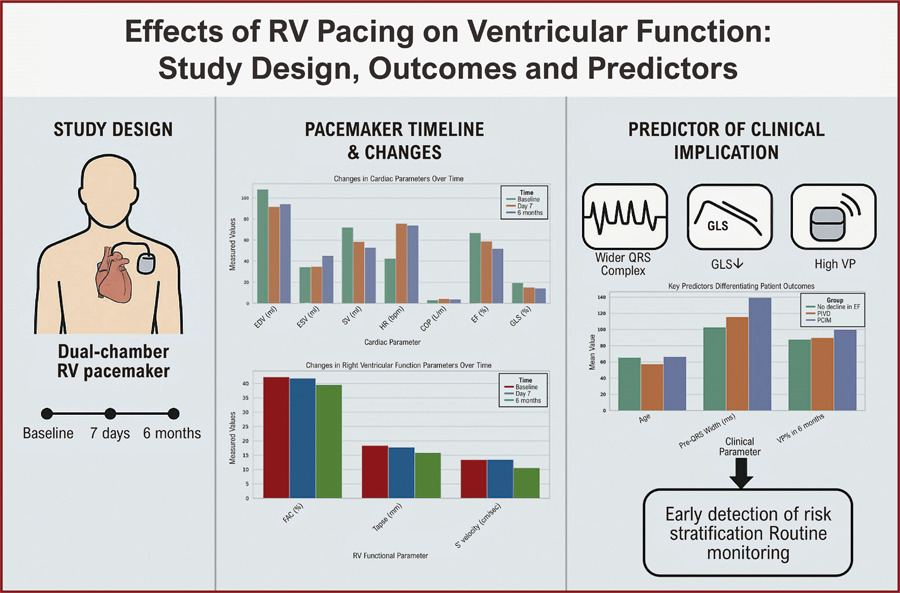
Out of 75 patients, 20 experienced LV systolic dysfunction, 15 developed PIVD, and five developed PICM. In comparison to the control group, patients with PICM had lower GLS (17.02 vs. 19.27; p<0.05), wider QRS width (139.57 vs. 102.75; p < 0.05), and greater ventricular pacing percentage (VP%; 94.32 vs. 84.03; p = 0.06).

Conclusion

RV pacing resulted in a substantial decline in LV systolic function in the short and long term. Concurrently, RV functions declined over the long term (six months). Diminished GLS at seven days, a broader pre-implantation QRS complex, and an elevation in VP% are early indicators of PIVD and PICM. Routine patient monitoring for these indicators can be beneficial for timely intervention on a case-by-case basis.
  • Artificial Pacemaker
  • Cardiomyopathies
  • Heart Failure
  • Three-Dimensional Echocardiography
Read Full Article
Creative Commons Attribution (CC BY) Creative Commons license
18/09/2026 DOI: 10.36660/abc.20250566i Views 1
ABC
Editorial

Beyond Ventricular Pacing: Is Atrial Cardiomyopathy a Determinant of Clinical Outcome after Pacemaker Implantation?

Bianca Lopes Cunha et al. Helena Nogueira Brasil Patrícia de Araújo Matias Eduardo Arrais Rocha

The study “Clinical Outcomes Following Pacemaker Implantation: A 3-Year Comparative Study of Sick Sinus Syndrome and Atrioventricular Block” presents a relevant comparative analysis between patients with sick sinus syndrome (SSS) and atrioventricular block (AVB) who underwent permanent pacemaker implantation and were followed for three years. The main merit of the work lies in the clinical evaluation and assessment of cardiac remodeling, atrial fibrillation (AF) rates, readmissions, and mortality compared between the two groups.

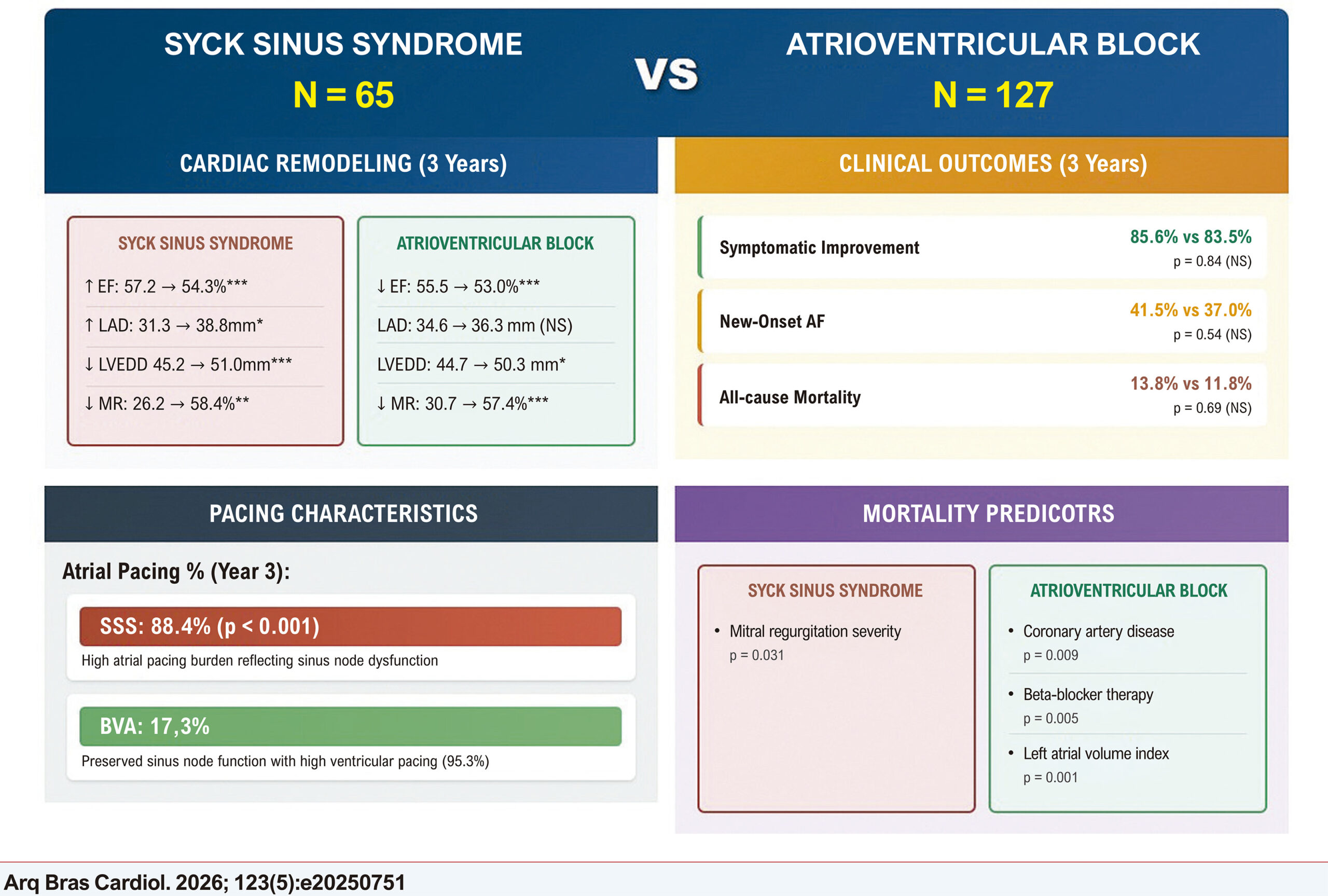
Among the study’s strengths are the relatively long follow-up period, with serial echocardiographic evaluation, showing important differences between the patterns of cardiac remodeling. Patients with SSS showed a progressive increase in left atrial volume (LAV) and left ventricular end-diastolic diameter (LVDD), in addition to a significant worsening of mitral regurgitation (MR). In contrast, patients with left atrial block (LAB), even with a ventricular pacing load above 90%, showed relative stability in atrial and ventricular dimensions. Both groups had slight reductions in ejection fraction (EF), high rates of AF, hospitalizations, and mortality, without significant differences between the groups. These findings partially challenge the classic concept that right ventricular pacing alone is the main cause of cardiac remodeling.

[…]

  • Artificial Pacemaker
  • Cardiomyopathies
  • Ventricular Remodeling
Read Full Article
Creative Commons Attribution (CC BY) Creative Commons license
27/07/2026 DOI: 10.36660/abc.20260425i Views 1
Clinical Outcomes Following PM Implantation: A 3-Year Comparative Study of Sick Sinus Syndrome and Atrioventricular Block
ABC
Original Article

Clinical Outcomes Following PM Implantation: A 3-Year Comparative Study of Sick Sinus Syndrome and Atrioventricular Block

Fuat Polat et al. Haşim Tüner Veysi Can Sait Terzi

Abstract

Background

Permanent pacemaker implantation is an established treatment for both sick sinus syndrome (SSS) and atrioventricular block (AVB), yet limited data exist comparing long-term clinical outcomes and cardiac remodeling patterns between these distinct bradyarrhythmic etiologies.

Objectives

To compare three-year clinical outcomes and cardiac structural changes between SSS and AVB patients following permanent pacemaker implantation.

Methods

This retrospective observational study enrolled 192 adult patients (65 SSS, 127 AVB) who underwent pacemaker implantation between January 2018 and December 2020. Demographic data, echocardiographic parameters, pacemaker-recorded data, and clinical outcomes were assessed at baseline, one month, six months, one year, and three years. Primary outcomes included changes in cardiac structure and function, symptomatic improvement, new-onset atrial fibrillation, rehospitalization, and all-cause mortality.

Results

Both groups demonstrated significant declines in left ventricular ejection fraction over three years (SSS: 57.2±6.0% to 54.3±8.3%, p<0.001; AVB: 55.5±7.0% to 53.0±6.8%, p<0.001). Despite similar ventricular dysfunction progression, distinct remodeling patterns emerged: SSS patients exhibited significant increases in left atrial diameter (31.3 to 38.8 mm, p=0.040), left ventricular end-diastolic diameter (45.2 to 51.0 mm, p90%). Symptomatic improvement was comparable (SSS: 85.6% vs. AVB: 83.5%, p=0.84), as were new-onset atrial fibrillation (41.5% vs. 37.0%, p=0.54), rehospitalization (50.8% vs. 58.3%, p=0.38), and all-cause mortality (13.8% vs. 11.8%, p=0.69). Mortality predictors differed: mitral regurgitation severity in SSS versus coronary artery disease, beta-blocker therapy, and left atrial volume in AVB patients.

Conclusions

Despite similar symptomatic benefits and clinical outcomes, SSS and AVB patients demonstrate distinct cardiac remodeling patterns and different mortality predictors, supporting the need for etiology-specific follow-up strategies in pacemaker recipients.

  • Artificial Pacemaker
  • Atrial Fibrillation
  • Atrioventricular block
  • Sick Sinus Syndrome
Read Full Article
Creative Commons Attribution (CC BY) Creative Commons license
17/07/2026 DOI: 10.36660/abc.20250751i Views 2
Figure 1
ABC
Editorial

Permanent Artificial Cardiac Pacemaker in the Treatment of Bradyarrhythmias Caused by Chagas Disease

Roberto Costa

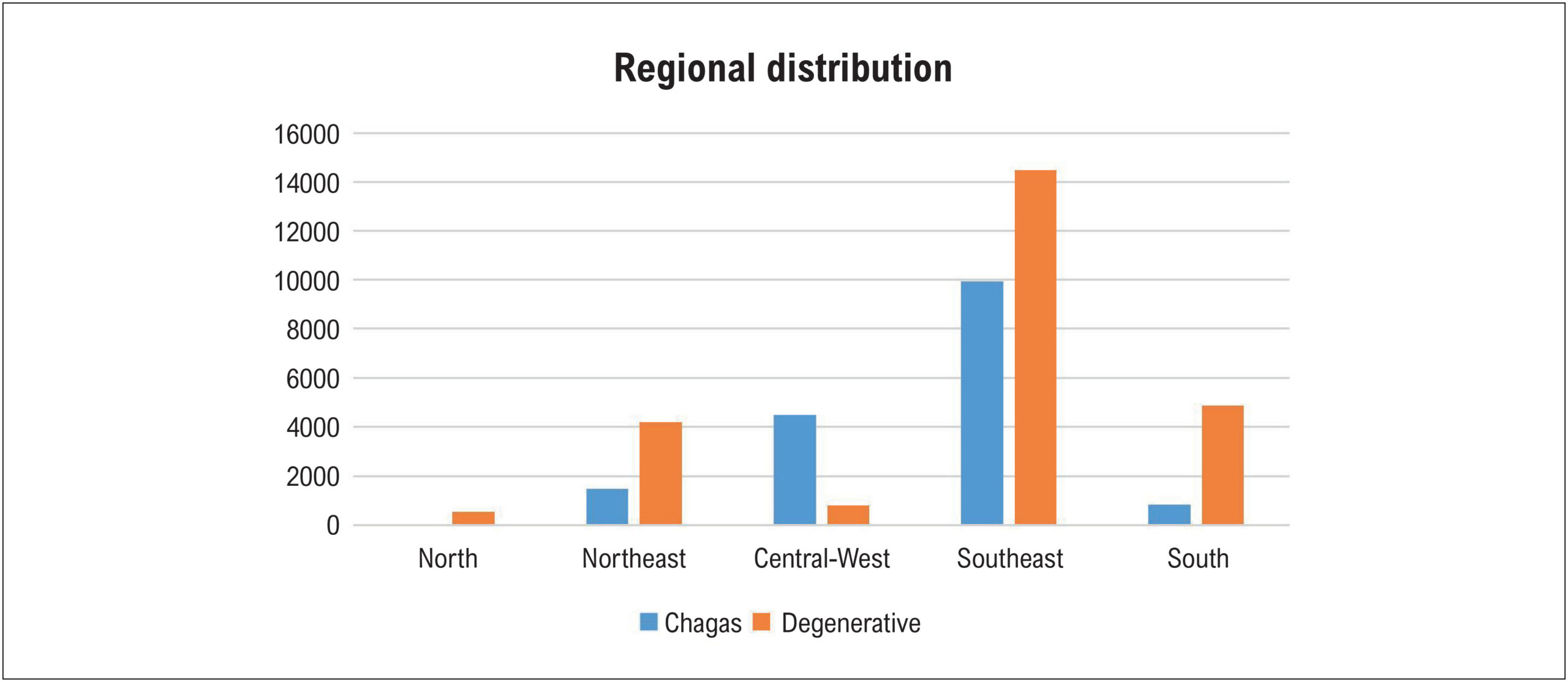
Government programs aimed at eliminating vector-borne transmission of Chagas disease have had a strong impact on the prevalence of cardiac bradyarrhythmias secondary to this etiology and, consequently, on the number of pacemaker implants performed in Brazil.– Data from the Brazilian Pacemaker Registry show that in 1995, of the 6,542 initial pacemaker implants reported, 30.2% were related to patients with Chagas disease. The proportion of patients with Chagas disease, however, decreased over time, and seven years later, when the 2002 data were presented, of the 11,347 initial implants reported, Chagas disease was reported as the etiology in 25.0% of cases. The total figures for the first 10 years of this century showed that Chagas disease accounted for 17.8% of initial pacemaker implants, falling to 11.7% in the latest publication of data from the Brazilian Pacemaker Registry, referring to the period from 2009 to 2014. Among the initial implants of conventional pacemakers performed at the Heart Institute-HC-FMUSP in the last six years (01/01/2020 to 31/12/2025), of the 2689 patients operated on, only 236 (8.8%) had Chagas disease as the etiology of their bradyarrhythmia, according to clinical and demographic data of consecutive patients undergoing procedures for implantation of electronic cardiac devices from 01/01/2020 to 31/12/2025 at Incor-HC-FMUSP.

A comparative analysis of the demographic and clinical data of 25,648 individuals with Chagas disease and 31,984 with degenerative heart disease who underwent conventional pacemaker implantation between 1995 and 2003 showed similarities between these two groups of individuals regarding sex distribution, with 47.8% women among those with Chagas disease and 48.5% in the degenerative disease group (p=0.186). On the other hand, a significant difference was observed when evaluating the average age of these two populations, with 58.6 ± 15.3 years for Chagas disease and 73.5 ± 12.6 for the degenerative disease group (p=0.001).

[…]

  • Artificial Pacemaker
  • Chagas disease
  • Mortality
  • Prevalence
  • Risk Factors
Read Full Article
Creative Commons Attribution (CC BY) Creative Commons license
05/06/2026 DOI: 10.36660/abc.20260180i Views 1
Figure 1
ABC
Image

Chatterjee Phenomenon: The Heart Remembers What the Mind Forgets

Miguel Vicente et al. Eric Monteiro Domingos Ramos Lino Gonçalves

Introduction

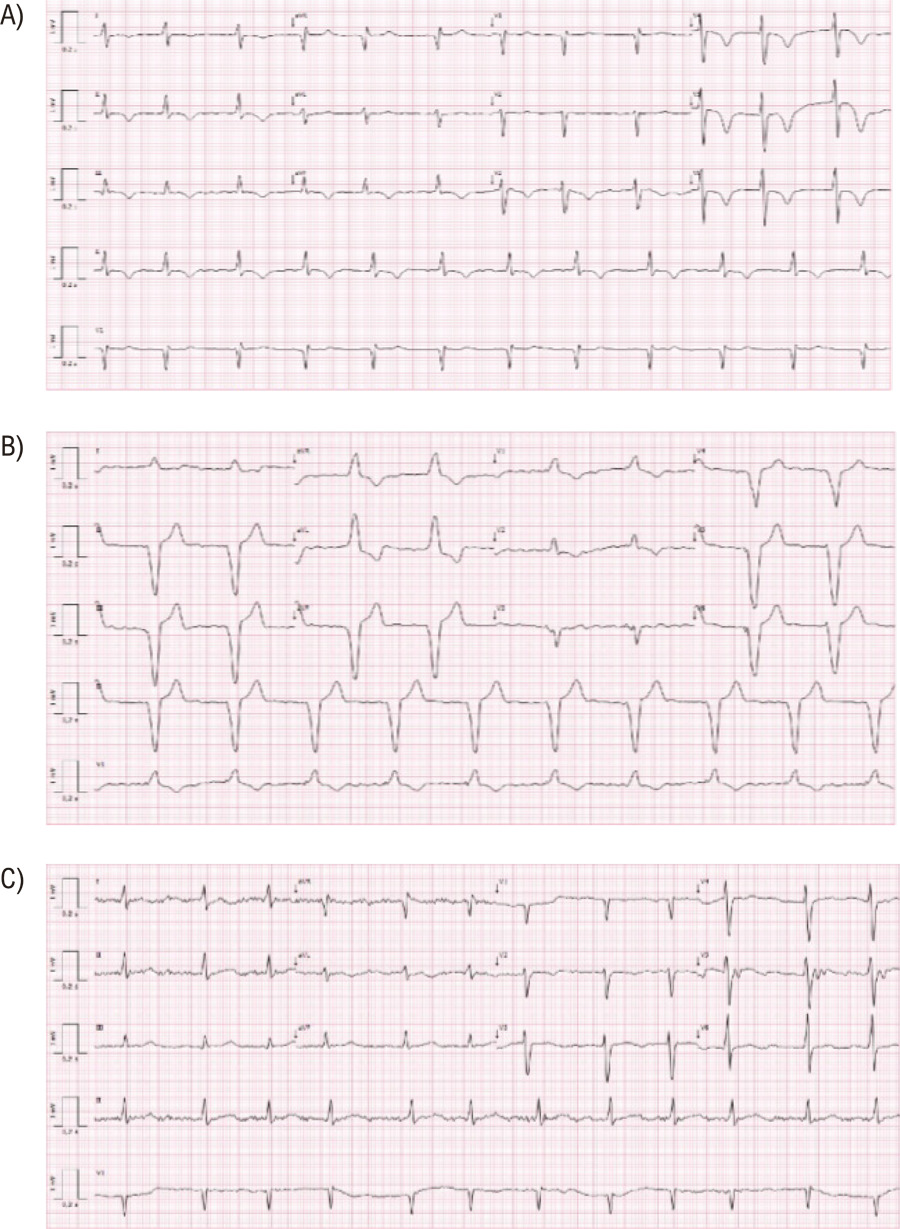
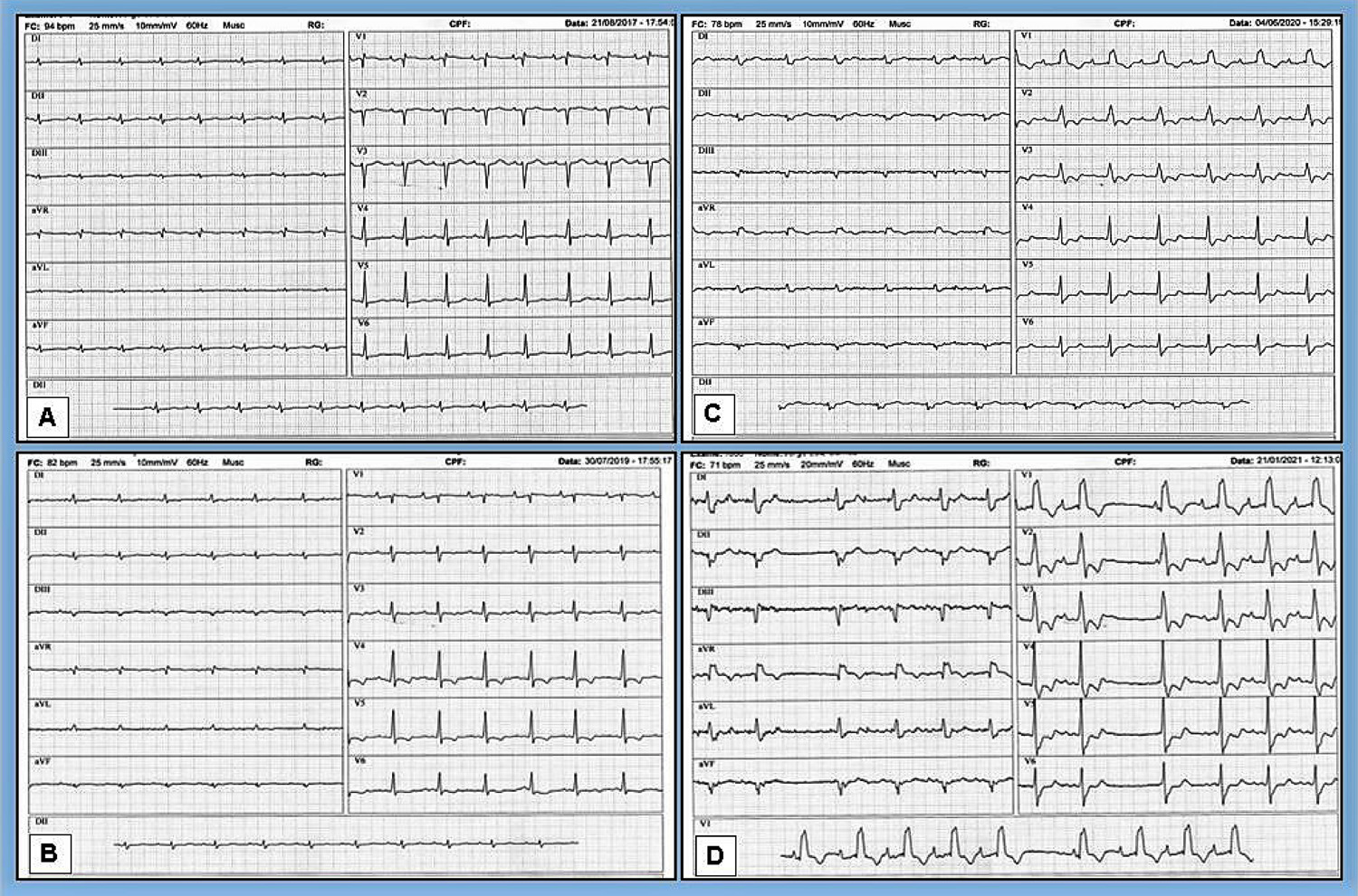
The Chatterjee phenomenon, also known as cardiac memory (CM), is defined as persistent changes in the T wave on the electrocardiogram after episodes of stimulated rhythms. These changes become evident when the normal pattern of ventricular activation is reestablished, which is often confused with pathological conditions such as myocarditis, hypertrophy, and ventricular pre-excitation, hydroelectrolytic disorders, and intracranial hypertension, where the most serious scenario is acute myocardial ischemia.–

This nosological entity, observed in about one-third of patients with pacemakers and with a prevalence of around 80% in cases with a high percentage of ventricular stimulation, was first reported exactly 110 years ago by White, who described transient T wave inversion (TWI) after premature ventricular beats. Twenty-five years later, abnormal T waves of varying duration were described after periods of intermittent ventricular pre-excitation, post-ventricular tachycardia syndrome, and ventricular complexes augmented by sodium channel blocker toxicity.

[…]

  • Artificial Pacemaker
  • Cardiac Arrhythmias
  • Case Reports
Read Full Article
Creative Commons Attribution (CC BY) Creative Commons license
20/03/2026 DOI: 10.36660/abc.20250418i Views 1
Implantation of Pacemakers in Patients with Chagas disease: A Case-Control Study of Associated Contextual Factors and Prognosis
ABC
Original Article

Implantation of Pacemakers in Patients with Chagas disease: A Case-Control Study of Associated Contextual Factors and Prognosis

Sâmara Fernandes Leite et al. Maria Carmo Pereira Nunes Cesar Augusto Taconeli Mathaus Henrique Reis Silva … Dardiane Santos Cruz Lea Campos Oliveira Ester Cerdeira Sabino Marco Paulo Tomáz Barbosa Antonio Luis Pinho Ribeiro Ariela Mota Ferreira Desirée Sant’Ana Haikal

Abstract

Background

Chronic Chagas cardiomyopathy (CCC) is the most severe manifestation of Chagas disease and may present with bradyarrhythmias requiring pacemaker (PM) implantation.

Objective

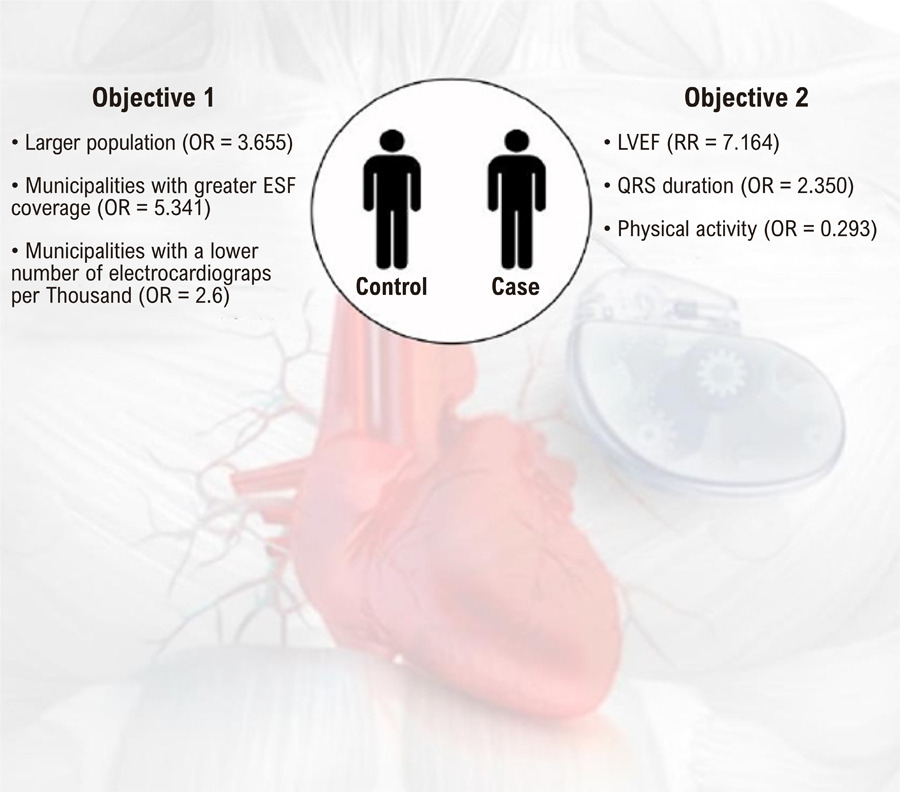
1. To identify contextual factors associated with PM implantation among individuals with CCC. 2. To assess the prognosis (death) in these groups over a 4-year follow-up period.

Method

1. Nested case-control study within the SaMi-Trop cohort. We matched cases (patients with CCC who had a PM implanted between waves 1 and 2 of the study) with controls at a 1:3 ratio, considering equivalence in baseline cardiac severity. Independent variables related to the municipal context were considered. Binary logistic regression was conducted. 2. Survival analysis to evaluate the prognosis of these groups, adjusted for clinical variables (Cox regression), considering death as the outcome. Conclusions were based on a significance level of 5%.

Results

The study included 46 cases and 138 controls. The odds of PM implantation were higher among individuals residing in municipalities with: larger population (odds ratio [OR]: 3.6; 95% confidence interval [CI]: 1.3 to 9.6), higher coverage of the Family Health Strategy (OR: 5.3; 95% CI: 1.8 to 15.8), and with a lower number of electrocardiographs per thousand inhabitants (OR: 2.6; 95% CI: 1.0 to 6.6). Considering 4 years of follow-up, death was observed in 32.6% of cases and 21.2% of controls. Only ejection fraction affected survival (relative risk: 7.2; 95% CI: 3.6 to 14.2).

Conclusion

Contextual factors interfered with PM implantation. However, PM implantation did not influence death over 4 years of follow-up, which was associated only with ejection fraction.

  • Artificial Pacemaker
  • Chagas Cardiomyopathy
  • Chagas disease
  • Mortality
  • Survival
Read Full Article
Creative Commons Attribution (CC BY) Creative Commons license
20/03/2026 DOI: 10.36660/abc.20250003i Views 2
ABC
Editorial

Cardiac Implantable Electronic Devices in Chagasic and Non-Chagasic Patients: A Critical Look at the Prognosis

Fernanda Almeida Andrade

Factors that may explain the results

One possible explanation for the lack of significant difference in prognosis between patients with and without Chagas disease may be related to improvements in clinical management and the structuring of health care for this population over the past few years., The study was conducted in a tertiary referral center, with likely access to cutting-edge technology and specialized monitoring. Specialized outpatient follow-up programs and adherence to recommended treatments may have reduced the disparities in outcomes between the two groups.

Furthermore, the study analyzed patient data across three different eras, which allowed for the assessment of possible changes over time. The fact that there were no differences in mortality between chagasic and non-chagasic patients in each of these eras reinforces the idea that progress in treatment, both clinical and surgical, may have diluted the adverse prognostic impact previously attributed to ChC.,

[…]

  • Artificial Pacemaker
  • Cardiac Resynchronization Therapy
  • Chagas disease
  • Dilated Cardiomyopathy
Read Full Article
Creative Commons Attribution (CC BY) Creative Commons license
02/12/2024 DOI: 10.36660/abc.20240629i Views 2
Prognostic Evaluation of Chagasic and Non-Chagasic Patients Undergoing Pacemaker Implantation and Cardiac Resynchronization in a Tertiary Center
ABC
Original Article

Prognostic Evaluation of Chagasic and Non-Chagasic Patients Undergoing Pacemaker Implantation and Cardiac Resynchronization in a Tertiary Center

Laís Toledo de Vasconcelos et al. Larissa Natany Almeida Martins Anna Terra França Fábio Morato de Castilho Antônio Luiz Pinho Ribeiro

Abstract

Background:

Chagas cardiomyopathy (ChCC) is one of the causes of the implantation of pacemakers (PM) in many patients and has been associated with an adverse prognosis.

Objectives:

To compare the prognosis of the chagasic and non-chagasic populations undergoing PM and cardiac resynchronizer implantation.

Methods:

Observational, retrospective study, which analyzed a cohort of patients who underwent implantation of these devices, in a tertiary center, from October 2007 to December 2017, comparing the chagasic group with non-chagasic patients. The non-parametric Kaplan-Meier method was used to calculate patient survival. The significance level adopted in the statistical analysis was 5%. The primary outcome was mortality from any cause, while the secondary outcomes were the occurrence of hospitalization and the combination of hospitalization and death.

Results:

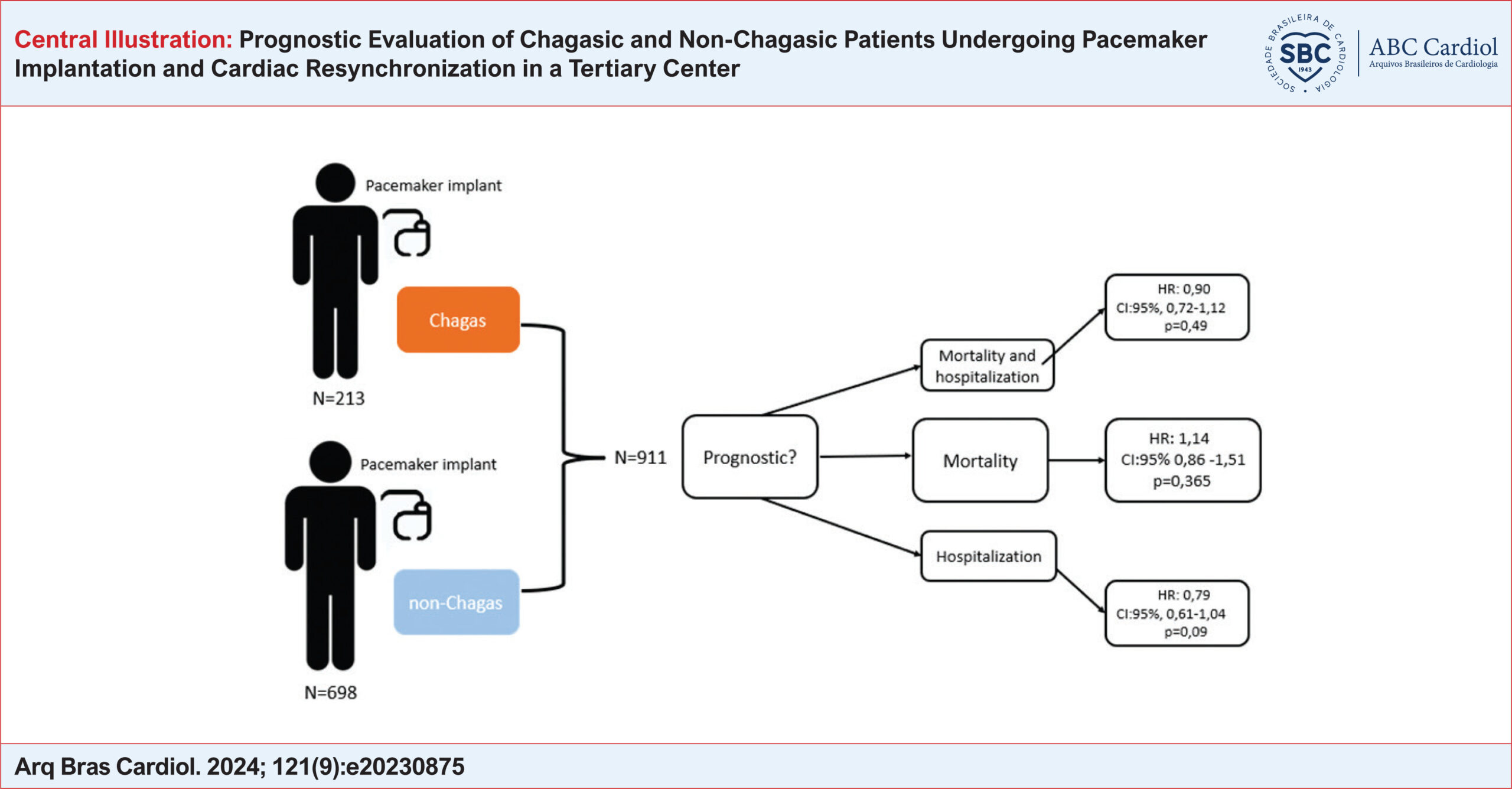
A total of 911 patients were included, of which 23.4% had ChCC. In a Cox analysis adjusted for sex and age, Chagas disease (ChD) was not associated with an increased risk of death (HR: 1.14, CI:95%, 0.86-1.51, p=0.365), hospitalization (HR: 0.79, CI:95%, 0.61-1.04, p=0.09) or combined outcome of death and hospitalization (HR: 0.90, CI:95%, 0.72-1 .12, p=0.49).

Conclusions:

ChD was not associated with an increased risk of death, hospitalization, or combined outcome of death and hospitalization, even after adjustment for sex and age. These results contrast with those of previous studies and suggest changes in the quality of care of patients with cardiomyopathy.

  • Artificial Cardiac Pacing
  • Artificial Pacemaker
  • Chagas Cardiomyopathy
Read Full Article
Creative Commons Attribution (CC BY) Creative Commons license
18/10/2024 DOI: 10.36660/abc.20230875i Views 1
Figure 1
IJCS
Editorial

Assessment of Quality of Life after Diagnosis of Reflex Syncope: A Subjective Outcome of Great Clinical Importance with Multifactorial Cause

Nágela Nunes et al. Alfredo de Souza Bomfim

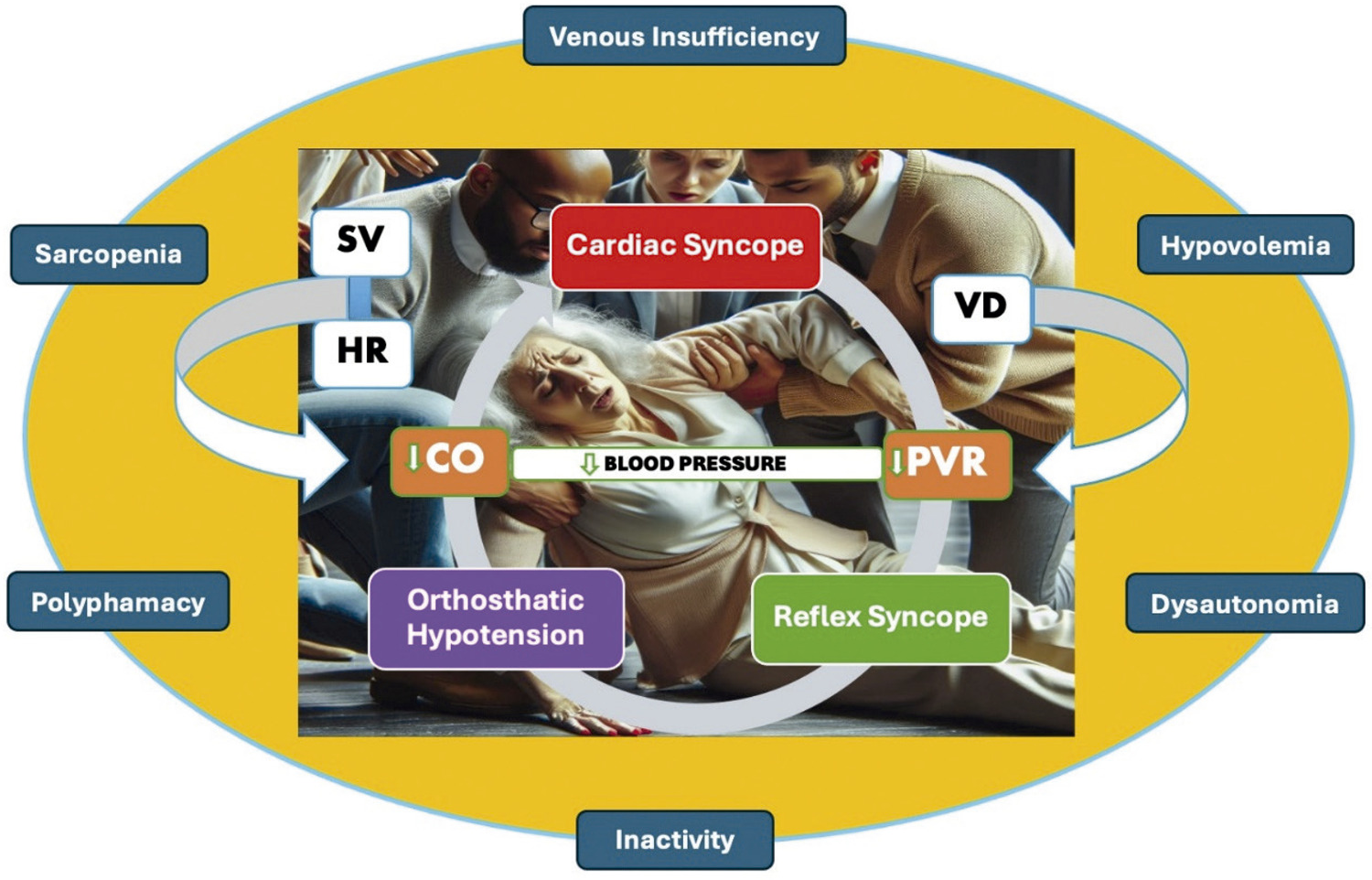
Syncope, a clinical syndrome characterized by transient loss of consciousness (TLOC), is defined by specific elements, namely: sudden onset and rapid recovery, loss of postural tone, full recovery of consciousness, amnesia of the event, nonresponsiveness, and a typical event duration of up to 5 minutes (usually lasting seconds). The pathophysiology of syncope involves global cerebral hypoperfusion, primarily due to a drop in blood pressure (BP), with various factors contributing individually or in combination to syncope (). Even brief periods of cessation of cerebral blood flow (6–8 s) or a systolic BP of 50–60 mmHg at the level of the heart (equivalent to 30–45 mmHg at the level of the brain in the upright position) can lead to TLOC. Pathophysiological mechanisms may include a decrease in peripheral vascular resistance, cardiac output, or a decrease in both. The etiology of syncope is didactically classified into three types: 1) orthostatic hypotension (OH); 2) reflex syncope (also termed vasovagal or neurally mediated syncope); and 3) cardiac syncope.

[…]

  • Artificial Pacemaker
  • Quality of life
  • Vasovagal Syncope
Read Full Article
Creative Commons Attribution (CC BY) Creative Commons license
05/07/2024 DOI: 10.36660/ijcs.20240076 Views 1
ABC
Editorial

Cost-Effectiveness Related to Implantable Electronic Cardiac Devices: An Ever-Constant Concern

Luiz Eduardo Montenegro Camanho

Implantable electronic cardiac devices (IECDs) play a crucial role in patients with bradyarrhythmias, with proven effectiveness in improving quality of life and maintaining life itself, and their use in clinical practice is unquestionable. However, the technology used and its possible complications represent a considerable cost to regulatory agencies and the respective paying sources. If, on the one hand, the benefit of IECDs in different clinical scenarios is not questioned, on the other hand, the associated cost, including possible complications, should also be a reason for reflection.

The initial cost related to the procedure is high, as is the cost related to possible complications, such as pneumothorax, hemothorax, electrode disposition, infection, and clinical complications in general.–

[…]

  • Artificial Pacemaker
  • Cost-Effectiveness Analysis
  • Hematoma
  • Pneumothorax
Read Full Article
Creative Commons Attribution (CC BY) Creative Commons license
03/05/2024 DOI: 10.36660/abc.20240185i
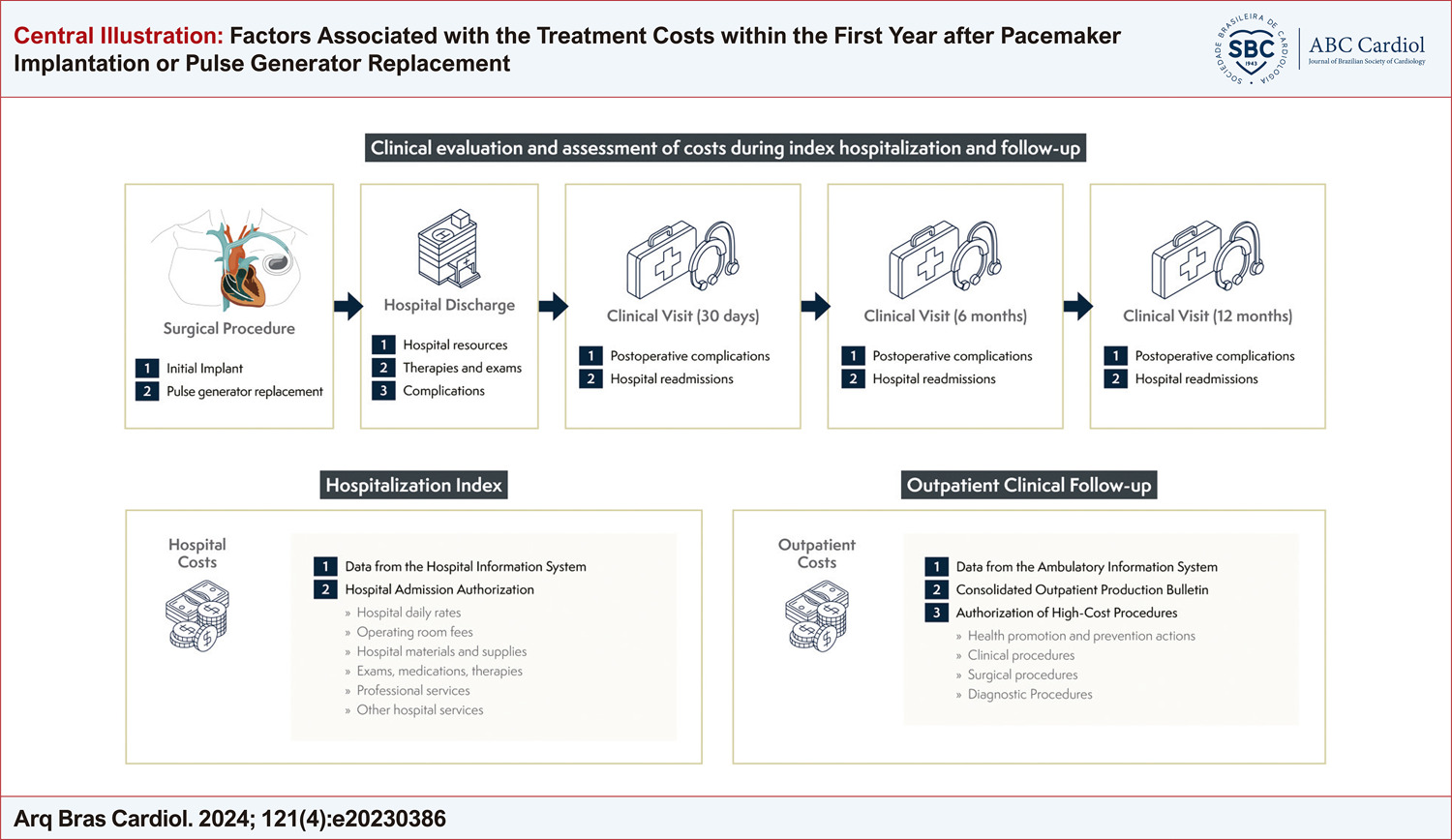
Factors Associated with the Treatment Costs within the First Year after Pacemaker Implantation or Pulse Generator Replacement
ABC
Original Article

Factors Associated with the Treatment Costs within the First Year after Pacemaker Implantation or Pulse Generator Replacement

Lucas Bassoli de Oliveira Alves et al. Katia Regina Silva Jacson Venancio Barros Fernando Antonio Basile Colugnati … Martino Martinelli Filho Roberto Costa

Abstract

Background

The use of artificial cardiac pacemakers has grown steadily in line with the aging population.

Objectives

To determine the rates of hospital readmissions and complications after pacemaker implantation or pulse generator replacement and to assess the impact of these events on annual treatment costs from the perspective of the Unified Health System (SUS).

Methods

A prospective registry, with data derived from clinical practice, collected during index hospitalization and during the first 12 months after the surgical procedure. The cost of index hospitalization, the procedure, and clinical follow-up were estimated according to the values reimbursed by SUS and analyzed at the patient level. Generalized linear models were used to study factors associated with the total annual treatment cost, adopting a significance level of 5%.

Results

A total of 1,223 consecutive patients underwent initial implantation (n=634) or pulse generator replacement (n=589). Seventy episodes of complication were observed in 63 patients (5.1%). The incidence of hospital readmissions within one year was 16.4% (95% CI 13.7% – 19.6%) after initial implants and 10.6% (95% CI 8.3% – 13.4%) after generator replacements. Chronic kidney disease, history of stroke, length of hospital stays, need for postoperative intensive care, complications, and hospital readmissions showed a significant impact on the total annual treatment cost.

Conclusions

The results confirm the influence of age, comorbidities, postoperative complications, and hospital readmissions as factors associated with increased total annual treatment cost for patients with pacemakers.

  • Artificial Pacemaker
  • health evaluation
  • Patient Readmission
  • postoperative complications
Read Full Article
Creative Commons Attribution (CC BY) Creative Commons license
26/04/2024 DOI: 10.36660/abc.20230386i Views 2
Figure 1
IJCS
Case Report

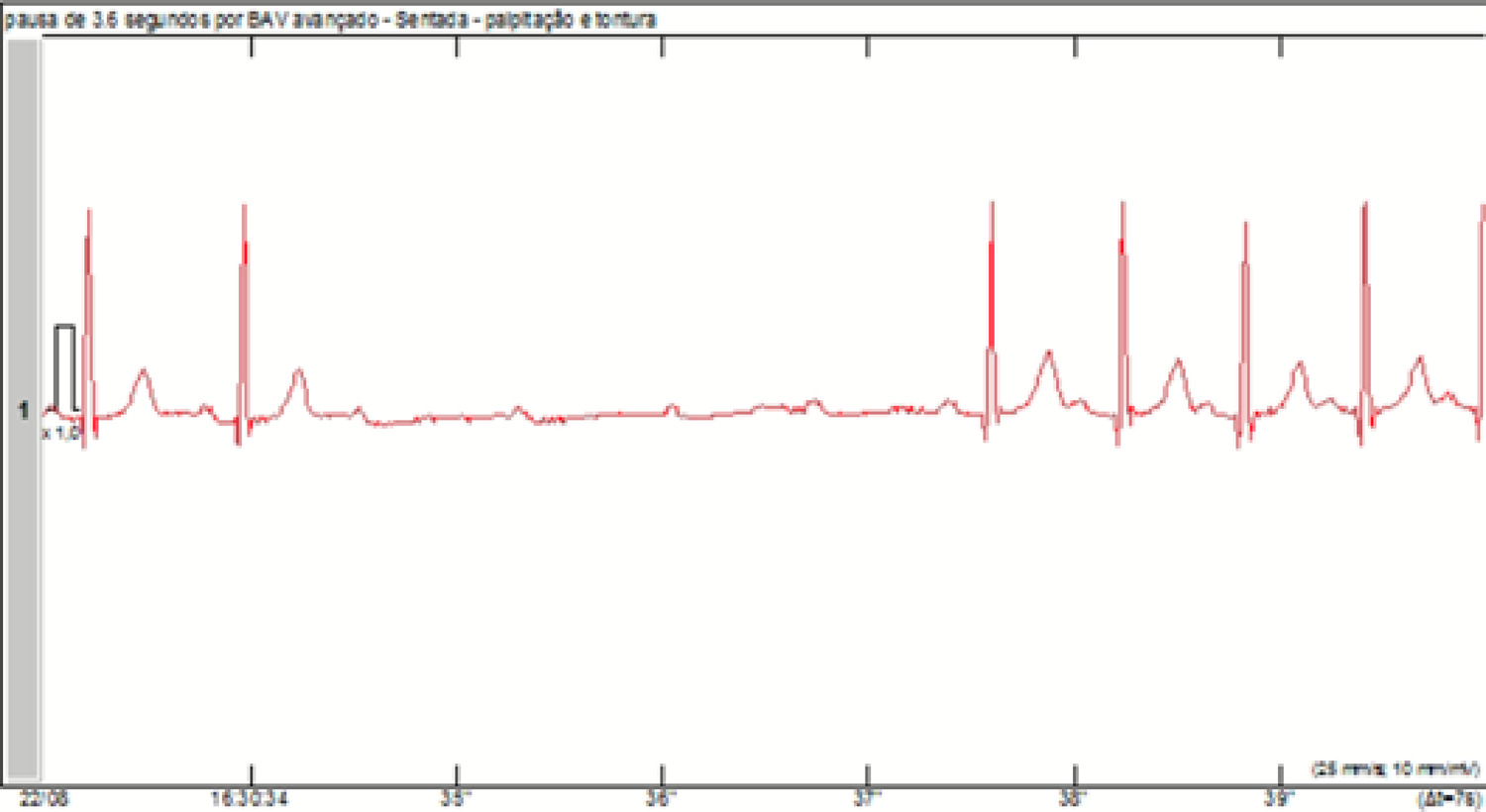
First-degree Atrioventricular Block as an Early Marker of Advanced Disease of the Conduction System in a Patient with Hereditary Val142Ile Cardiac Amyloidosis

Nágela S. V. Nunes et al. Evandro Tinoco Mesquita Claudio Tinoco Mesquita Paulo Roberto Benchimol-Barbosa

Introduction

Cardiac amyloidosis (CA) is a type of restrictive cardiomyopathy secondary to amyloid infiltration in the heart. The most common clinical forms are immunoglobulin light chain amyloidosis (AL) and amyloidosis resulting from amyloid deposits secondary to the destabilization of the protein tetramer transthyretin (ATTR), which is divided into two types: the hereditary form (ATTRm) and the wild type (ATTRwt).

Cardiac impulse conduction disorders and atrial arrhythmias are more frequent in ATTR than in the AL form, and this seems to reflect the longer survival of patients affected by ATTR, given that the AL form manifests with high mortality up to 6 months from diagnosis, because conduction system disease appears to be a later manifestation.

[…]

  • Artificial Pacemaker
  • Atrioventricular Block/genetics
  • Bradycardia/complications
  • cardiomyopathy
  • Diagnostic Imaging
  • Familial Amyloidodis/complications
  • Sick Sinus Syndrome/genetics
Read Full Article
Creative Commons Attribution (CC BY) Creative Commons license
09/05/2022 DOI: 10.36660/ijcs.20210081 Views 2
Figure 1
IJCS
Case Report

Pacemaker Implantation without Fluoroscopy and Guided by Anatomical Mapping

Mauricio Montemezzo et al. Ahmed AlTurki Marcos Jakolinski Jose Carlos Moura Jorge

Introduction

Cardiogenic syncope is an uncommon pathology in the context of pregnancy, and an associated transient atrioventricular block is even more rare. The harmful effects of radiation exposure for fetus are already well-known. Thus, alternative guiding techniques are being proposed as an alternative in order to avoid radiation exposure. Previous reports have described the use of intracardiac echocardiography or three-dimensional (3D) electroanatomical mapping. Despite efforts to develop non-fluoroscopic approaches, cardiac device implantation still requires some fluoroscopic imaging. Each hour of fluoroscopic imaging is estimated to increase the lifetime risk of developing a fatal malignancy by up to 1%, as well as being an increased risk of a genetic defect in up to 20 in every 1 million births. ,

With technological advancement, the use of less invasive techniques, together with short procedure times and less radiation exposure is essential. Therefore, repurposing technologies, which were originally developed for other applications, but that have been proven to be safe, should be encouraged. In this light, the present study advocates the use of the CARTO system technology (Biosense Webster, INC., Diamond Bar, CA) to delineate right atrium and right ventricle geometry so as to allow the pacemaker lead to be identified as a catheter to navigate the cardiac cavity without fluoroscopic exposure.

[…]

  • Artificial Pacemaker
  • Fluoroscopy
  • Pregnancy
Read Full Article
Creative Commons Attribution (CC BY) Creative Commons license
09/05/2022 DOI: 10.36660/ijcs.20210005 Views 1
ABC
Original Article

Left Bundle Branch Pacing of His-Purkinje Conduction System: Initial Experience

Alexander Romeno Janner Dal Forno et al. Caique M. P. Ternes João Vítor Ternes Rech Helcio Garcia Nascimento … Andrei Lewandowski Grazyelle Damasceno Andre d’Avila

Abstract

Background

Conventional right ventricular pacing increases the risk of atrial fibrillation and heart failure in pacemaker patients. Stimulation of the left bundle branch (LBB) of the His-Purkinje system can prevent the unwanted outcomes of right ventricular pacing.

Objective

To retrospectively analyze the intraoperative outcomes, electrocardiographic and clinical data from the initial follow-up of patients submitted to stimulation of the LBB.

Methods

The electronic parameters of the implant and of possible early complications of 52 consecutive patients submitted to stimulation of the conduction system were evaluated. The adopted significance level was 0.05.

Results

Fifty-two patients underwent left bundle branch stimulation, with 50 successful procedures; 69.2% of the patients were male, and the median and interquartile range of age at the time of implantation was 73.5 (65.0-80.0) years. The pre-implant QRS duration was 146 (104-175) ms and 120 (112-130) ms after the procedure. The left ventricle activation time was 78 (70-84) ms. The R-wave amplitude was 12.00 (7.95-15.30) mV, with a stimulation threshold of 0.5 (0.4-0.7) V x 0.4 ms and impedance of 676 (534-780) ohms. The procedure duration was 116 (90-130) min, and the fluoroscopy time was 14.2 (10.0-21.6) min.

Conclusion

Cardiac stimulation of the His-Purkinje conduction system through the stimulation of the left bundle branch is a safe and feasible technique. In this study, it showed a high success rate, with low procedure and fluoroscopy periods, achieving adequate electronic measurements.

  • Artificial Cardiac Pacing
  • Artificial Pacemaker
  • Electric Stimulation Therapy
Read Full Article
Creative Commons Attribution (CC BY) Creative Commons license
07/03/2022 DOI: 10.36660/abc.20201085 Views 1
ABC
Original Article

Ventricular Synchrony in Para-Hisian Cardiac Pacing as an Alternative for Physiological Cardiac Activation (Indirect Recruitment of the His Bundle?)

Andres Di Leoni Ferrari et al. Guilherme Ferreira Gazzoni Luis Manuel Ley Domingues Jessica Caroline Feltrin Willes … Gustavo Chiari Cabral Flavio Vinicius Costa Ferreira Laura Orlandini Lodi Gustavo Reis

Abstract

Background

Artificial cardiac pacing by direct or indirect His bundle capture results in synchronous ventricular contraction (physiological pacing).

Objectives

To compare cardiac synchronization, technical characteristics, and electronic parameters between two techniques of indirect His-bundle pacing: non-selective (NS-HBP) vs para-Hisian pacing (PHP).

Methods

The experimental intervention (between November 2019 and April 2020) consisted of implanting a DDD pacemaker in patients who had left ventricular ejection fraction (LVEF) > 35%. The resulting cardiac synchronization was compared using an electrocardiographic algorithm that analyzed QRS variation and the technical characteristics of non-selective Hisian pacing (DDD-His) and para-Hisian pacing (DDD-Var).

Results

Of 51 total patients (men: 28), 66.7% (34) were allocated to the DDD-Var group and 33.3% (17) to the DDD-His group. The mean ages in each group were 74 and 79 years, respectively. In the DDD-Var group, QRS variation (ventricular synchrony) improved after implantation (p < 0.001). In post-implantation ECG, 91.2% of the DDD-Var group presented a physiological pacing pattern, which was similar to the DDD-His group (88.2%; p = 0.999). The paced QRS axis was also similar (physiological) for both groups. Intraoperative fluoroscopy time (XRay) during implantation was lower for the para-Hisian technique (median 7 min in the DDD-Var group vs 21 min in the DDD-His group, p < 0.001). The mean QRS duration increased in the DDD-Var group (114.7 ms pre-implantation vs 128.2 ms post-implantation, p = 0.044). The mean post-implantation R-wave amplitude was 11.2 mV in the DDD-Var group vs 6.0 mV in the DDD-His group, p = 0.001.

Conclusion

Para-Hisian pacing appears to indirectly recruit the His bundle, which would make this an effective and comparable strategy for physiological pacing, resulting in synchronous ventricular contraction similar to that of non-selective Hisian pacing.

  • Artificial Cardiac Pacing
  • Artificial Pacemaker
  • Electric Stimulation Therapy
Read Full Article
Creative Commons Attribution (CC BY) Creative Commons license
07/03/2022 DOI: 10.36660/abc.20201233 Views 1
Figure 1
IJCS
Review Article

Cardiac Arrhythmias and Covid-19

Alexsandro Alves Fagundes et al. Sissy Lara de Melo Luciana Armaganijan Ricardo Kuniyoshi … Luis Gustavo Belo de Moraes Vanessa Alves Guimarães Borges Mauricio Scanavacca Martino Martinelli Filho Ricardo Alkmim Teixeira

Abstract

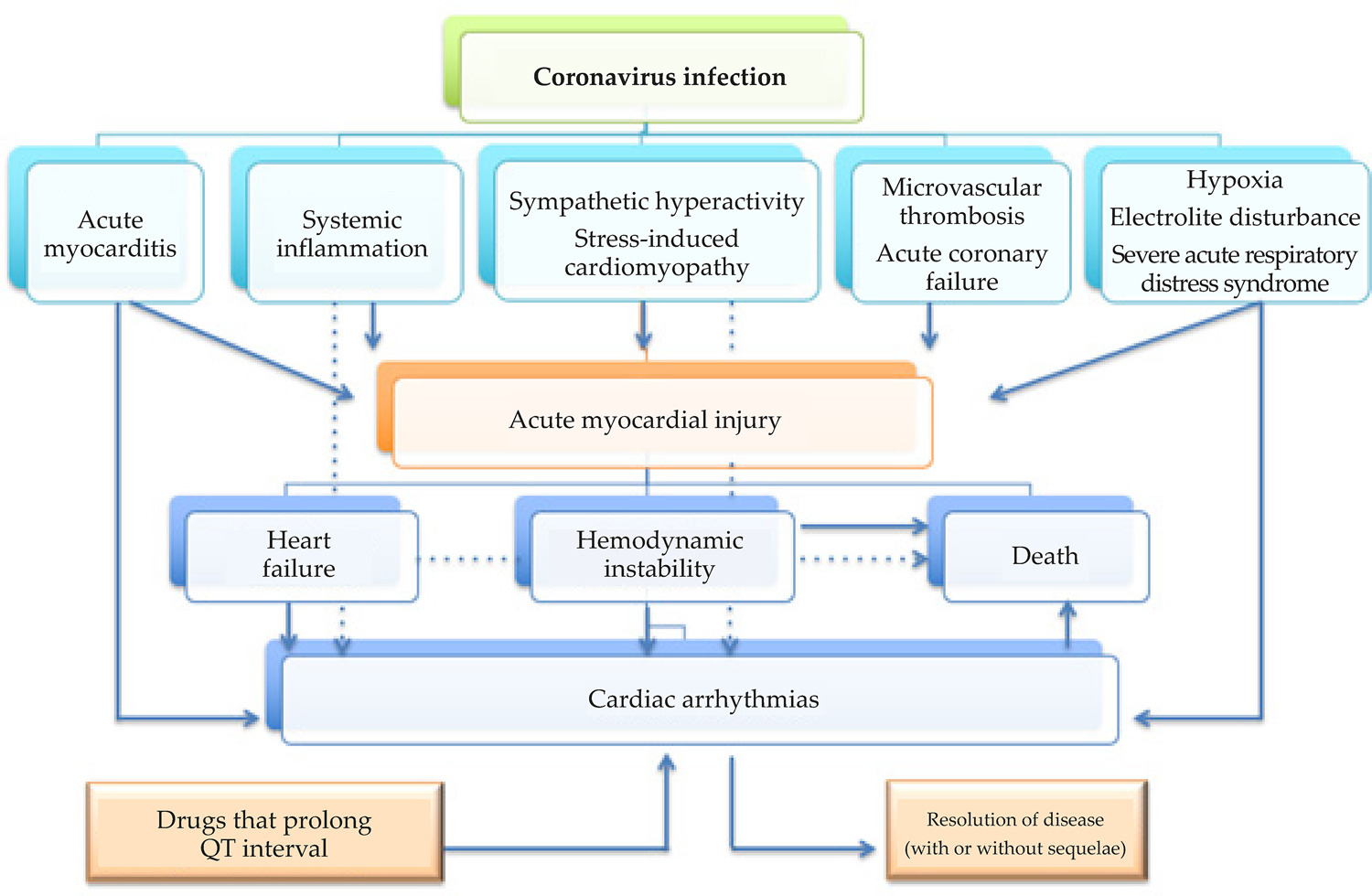
Cardiovascular manifestations of COVID-19 include cardiac rhythm disturbances, whose mechanisms, incidence, and most common types are not well established in this population. Intense inflammatory response and metabolic activity contribute to recurrence of pre-existing arrhythmias, and other arrhythmias can occur due to myocardial injury, acute coronary insufficiency, and electrolyte disturbances. Brady- and tachyarrhythmias, as well as conduction disorders have been described. QT interval prolongation and fatal ventricular arrhythmias ( Torsades de Pointes ) may result from the pathological process or adverse effect of drugs (antiarrhythmics, chloroquine / hydroxychloroquine, azithromycin and antivirals). Patients with congenital heart disease and hemodynamic repercussions, patients with signs of heart failure, pulmonary hypertension, cyanosis, hypoxemia, and those who underwent heart transplantation and immunosuppression are at greater risk. In patients with implantable cardioverter-defibrillators (ICDs), the risk depends on the presence of structural heart disease. In the course of COVID-19, in-person assessment of these patients should be limited to high-risk situations, including syncope, worsening of heart failure and shock delivery by ICDs. Likewise, cardiac implantable electronic device implantation or replacement surgery should be limited to emergency and urgent cases, including symptomatic high-degree atrioventricular block, ICD for secondary prevention and pulse generator replacement due to battery drain.

  • Artificial Pacemaker
  • Cardiac Arrhythmias
  • Coronavirus infections
Read Full Article
Creative Commons Attribution (CC BY) Creative Commons license
03/09/2021 DOI: 10.36660/ijcs.20200123 Views 1
Figure 1
ABC
Original Article

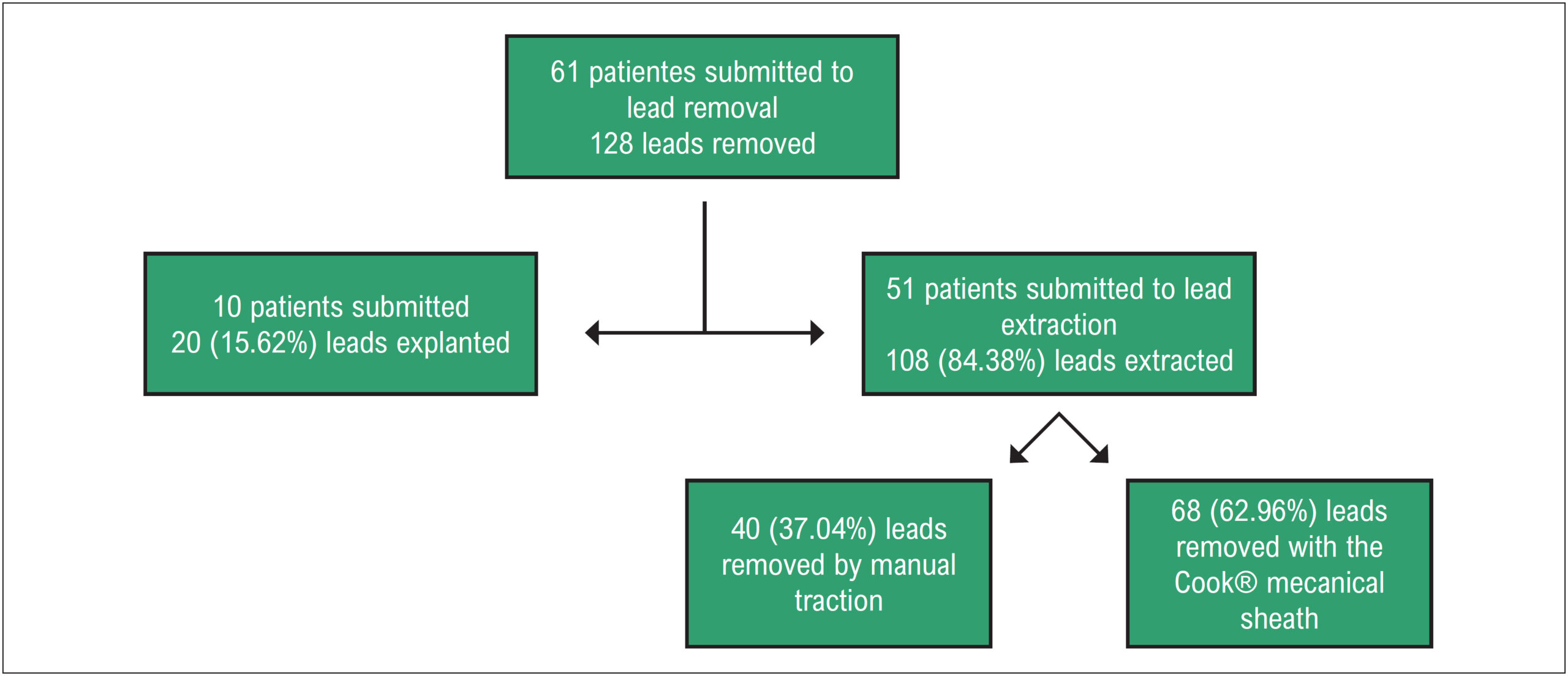
Percutaneous Removal of Cardiac Leads in a Single Center in South America

Bruna Costa Lemos Silva Di Nubila et al. Gustavo de Castro Lacerda Helena Cramer Veiga Rey Rodrigo Minati Barbosa

Abstract

Background:

In the last decade, the number of cardiac electronic devices has risen considerably and consequently the occasional need for their removal. Concurrently, the transvenous lead removal became a safe procedure that could prevent open-heart surgery.

Objective:

The primary objective of this study was to describe the successful performance and the complication rates of pacemaker removals in a Brazilian public hospital. Our secondary aim was to describe the variables associated to successes and complications.

Methods:

A retrospective case series was conducted in patients submitted to pacemaker removal in a Brazilian public hospital from January 2013 to June 2018. Removal, explant, extraction, success and complication rates were defined by the 2017 Heart Rhythm Society Guideline. Categorical variables were compared using x2 or Fisher’s tests, while continuous variables were compared by unpaired tests. A p-value of 0.05 was considered statistically significant.

Results:

Cardiac device removals were performed in 61 patients, of which 51 were submitted to lead extractions and 10 to lead explants. In total, 128 leads were removed. Our clinical success rate was 100% in the explant group and 90.2% in the extraction one (p=0.58). Major complications were observed in 6.6% patients. Procedure failure was associated to older right ventricle (p=0.05) and atrial leads (p=0,04). Procedure duration (p=0.003) and need for blood transfusion (p<0,001) were associated to more complications.

Conclusion:

Complications and clinical success were observed in 11.5% and 91.8% of the population, respectively. Removal of older atrial and ventricular leads were associated with lower success rates. Longer procedures and blood transfusions were associated with complications.

  • Artificial Pacemaker
  • Cardiac Resynchronization Therapy
  • Implantable Electrodes
Read Full Article
Creative Commons Attribution (CC BY) Creative Commons license
17/05/2021 DOI: 10.36660/abc.20190726 Views 2
Figure 1
ABC
Original Article

Functional Capacity of Patients with Pacemaker Due to Isolated Congenital Atrioventricular Block

Roberto Márcio de Oliveira Júnior et al. Kátia Regina da Silva Tatiana Satie Kawauchi Lucas Bassolli de Oliveira Alves … Elizabeth Sartori Crevelari Martino Martinelli Filho Roberto Costa

Background:

Isolated congenital atrioventricular block (CAVB) is a rare condition with multiple clinical outcomes. Ventricular remodeling can occur in approximately 10% of the patients after pacemaker (PM) implantation.

Objectives:

To assess the functional capacity of children and young adults with isolated CAVB and chronic pacing of the right ventricle (RV) and evaluate its correlation with predictors of ventricular remodeling.

Methods:

This cross-sectional study used a cohort of patients with isolated CAVB and RV pacing for over a year. The subjects underwent clinical and echocardiographic evaluation. Functional capacity was assessed using the six-minute walk test. Chi-square test, Fisher’s exact test, and Pearson correlation coefficient were used, considering a significance level of 5%.

Results:

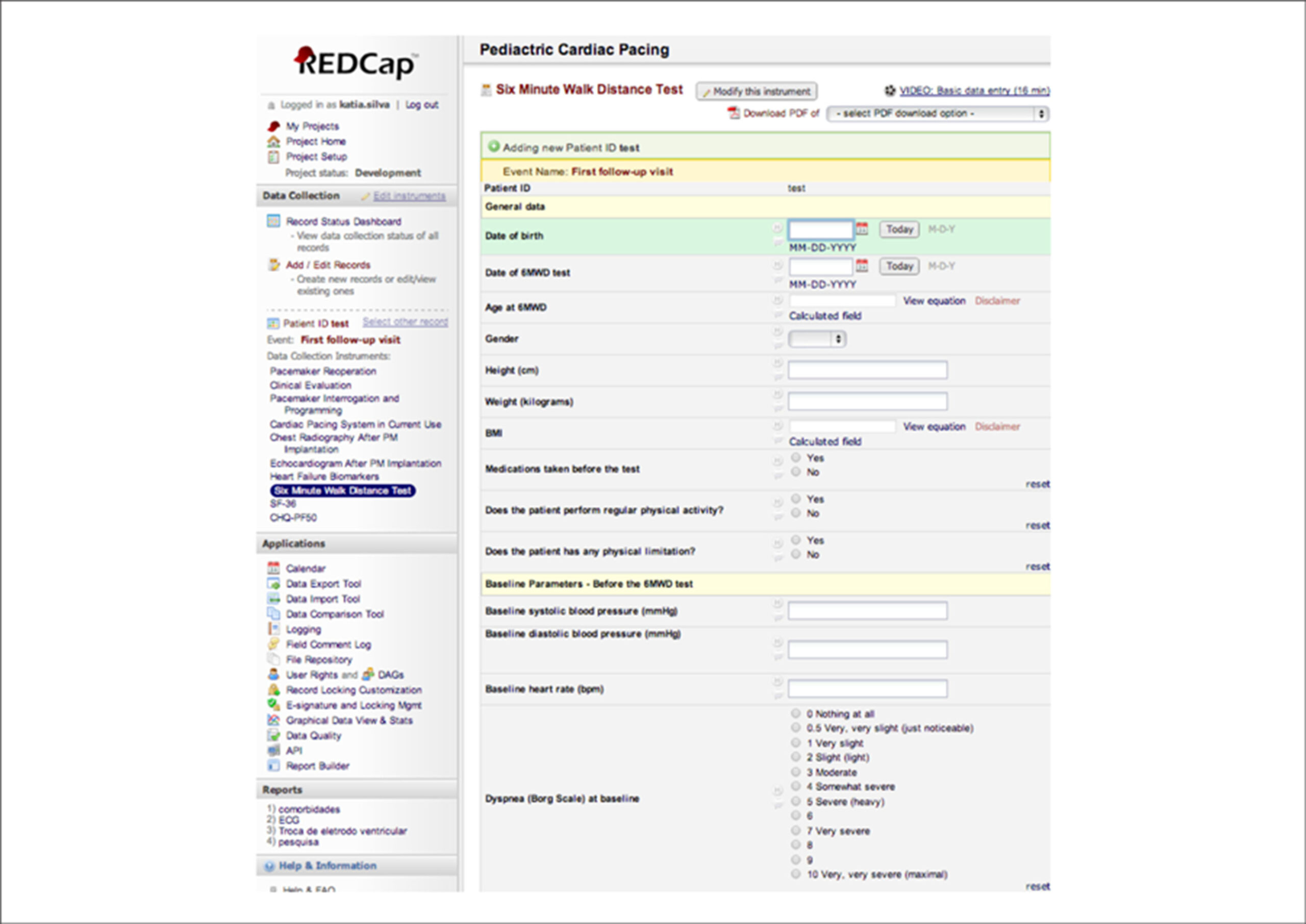
A total of 61 individuals were evaluated between March 2010 and December 2013, of which 67.2% were women, aged between 7 and 41 years, who were using PMs for 13.5 ± 6.3 years. The percentage of ventricular pacing was 97.9 ± 4.1%, and the duration of the paced QRS complex was 153.7 ± 19.1 ms. Majority of the subjects (95.1%) were asymptomatic and did not use any medication. The mean distance walked was 546.9 ± 76.2 meters and was strongly correlated with the predicted distance (r = 0.907, p = 0.001) but not with risk factors for ventricular remodeling. (Arq Bras Cardiol. 2014; [online].ahead print, PP.0-0)

Conclusions:

The functional capacity of isolated CAVB patients with chronic RV pacing was satisfactory but did not correlate with risk factors for ventricular remodeling.

  • Artificial Pacemaker
  • Atrioventricular block
  • Child
  • congenital heart diseases
  • Walk
  • Young Adult
Read Full Article
Creative Commons Attribution (CC BY) Creative Commons license
11/11/2014 DOI: 10.5935/abc.20140168
Ventricular remodeling in right ventricular apical pacing
ABC
Artigo Original

Ventricular remodeling in right ventricular apical pacing

Rodrigo Tavares Silva et al. Martino Martinelli Filho Júlio César de Oliveira Carlos Eduardo Batista de Lima … Daniela Garcia Moreno Cabral Martins Cinthya Ibraim Guirao Silvana Angelina Dório Nishióka Roberto Costa Eduardo Argentino Sosa José Antonio Franchini Ramires

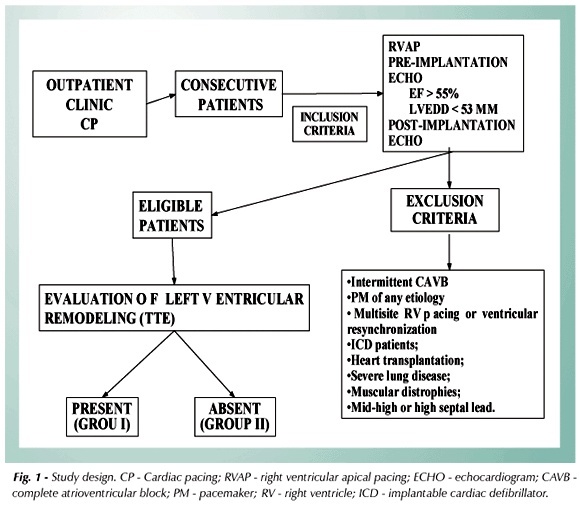
OBJECTIVE: To determine ventricular remodeling (VR) and the role of clinical and functional variables in patients with normal cardiac function who underwent right ventricular apical pacing (RVAP). METHODS: Among the 268 consecutive patients with standard pacemaker due to complete atrioventricular block (CAVB), those with left ventricular ejection fraction (LVEF) 53 mm on Doppler echocardiography were excluded. Ventricular remodeling was defined as echocardiographic changes documented at least six months after implantation, namely, a >10% increase in LVEDD and a > 20% decrease in LVEF. The following variables were analyzed: underlying heart disease, NYHA functional class of heart failure (HF), time of ventricular stimulation, and QRS duration. Statistical analysis included likelihood ratio test, Fisher’s exact test, and Wilcoxon rank-sum test. A p value < 0.05 was considered statistically significant. RESULTS: The study included 75 patients, mean age 70.9 ± 14, of whom 22.6% were male. Mean time between both evaluations was 80.2 months. Before implantation, mean LVEF was 72% and LVEDD was 46 mm; after implantation this values were 69.7% (p = 0.0025) and 48.5 mm (p = 0.0001), respectively. Mean QRS duration after implantation was 156 ms. Ventricular remodeling was observed only in four patients (5.3%), and no exploratory variable specified this behavior. CONCLUSION: In a long-term follow-up, patients without ventricular dysfunction who underwent RV apical pacing (RVAP) showed low VR rate, and no analyzed variable was associated with its occurrence.

  • Artificial Pacemaker
  • Heart block
  • Ventricular Function
  • Ventricular Remodeling
Read Full Article
Creative Commons Attribution (CC BY) Creative Commons license
22/03/2007 DOI: 10.1590/S0066-782X2007000200004 Views 2

How to cite this article

EndNote RIS

Electronic Document Format (Vancouver)

Kumar S, Meena CB, Babbar N, Bhandari A, Shekhawat DS, Meel A. Effects of Pacemakers on Ventricular Functions and Early Variables Associated with Induced Cardiomyopathy. Arquivos Brasileiros de Cardiologia 2026;123(7):e20250566.

Electronic Document Format (ABNT)

Kumar, Sanjeev; Meena, Chandra Bhan; Babbar, Navida; Bhandari, Anil; Shekhawat, Dhananjay Singh; Meel, Ankita. Effects of Pacemakers on Ventricular Functions and Early Variables Associated with Induced Cardiomyopathy. Arquivos Brasileiros de Cardiologia, v. 123, n. 7, e20250566, Sep. 2026.

Electronic Document Format (APA)

Kumar, S., Meena, C. B., Babbar, N., Bhandari, A., Shekhawat, D. S., & Meel, A. (2026). Effects of Pacemakers on Ventricular Functions and Early Variables Associated with Induced Cardiomyopathy. Arquivos Brasileiros de Cardiologia, 123(7), e20250566.

Electronic Document Format (ISO)

Kumar, Sanjeev and Meena, Chandra Bhan and Babbar, Navida and Bhandari, Anil and Shekhawat, Dhananjay Singh and Meel, Ankita. Effects of Pacemakers on Ventricular Functions and Early Variables Associated with Induced Cardiomyopathy. Arquivos Brasileiros de Cardiologia [online]. 2026, vol. 123, n. 7, [cited 2026-10-14], e20250566. Available from: <https://journals.cardiol.br/en/article/effects-of-pacemakers-on-ventricular-functions-and-early-variables-associated-with-induced-cardiomyopathy/>. ISSN 0066-782X

EndNote RIS

Electronic Document Format (Vancouver)

Cunha BL, Brasil HN, Matias PA, Rocha EA. Beyond Ventricular Pacing: Is Atrial Cardiomyopathy a Determinant of Clinical Outcome after Pacemaker Implantation?. Arquivos Brasileiros de Cardiologia 2026;123(5):e20260425.

Electronic Document Format (ABNT)

Cunha, Bianca Lopes; Brasil, Helena Nogueira; Matias, Patrícia de Araújo; Rocha, Eduardo Arrais. Beyond Ventricular Pacing: Is Atrial Cardiomyopathy a Determinant of Clinical Outcome after Pacemaker Implantation?. Arquivos Brasileiros de Cardiologia, v. 123, n. 5, e20260425, Jul. 2026.

Electronic Document Format (APA)

Cunha, B. L., Brasil, H. N., Matias, P. A., & Rocha, E. A. (2026). Beyond Ventricular Pacing: Is Atrial Cardiomyopathy a Determinant of Clinical Outcome after Pacemaker Implantation?. Arquivos Brasileiros de Cardiologia, 123(5), e20260425.

Electronic Document Format (ISO)

Cunha, Bianca Lopes and Brasil, Helena Nogueira and Matias, Patrícia de Araújo and Rocha, Eduardo Arrais. Beyond Ventricular Pacing: Is Atrial Cardiomyopathy a Determinant of Clinical Outcome after Pacemaker Implantation?. Arquivos Brasileiros de Cardiologia [online]. 2026, vol. 123, n. 5, [cited 2026-10-14], e20260425. Available from: <https://journals.cardiol.br/en/article/beyond-ventricular-pacing-is-atrial-cardiomyopathy-a-determinant-of-clinical-outcome-after-pacemaker-implantation/>. ISSN 0066-782X

EndNote RIS

Electronic Document Format (Vancouver)

Polat F, Tüner H, Can V, Terzi S. Clinical Outcomes Following PM Implantation: A 3-Year Comparative Study of Sick Sinus Syndrome and Atrioventricular Block. Arquivos Brasileiros de Cardiologia 2026;123(5):e20250751.

Electronic Document Format (ABNT)

Polat, Fuat; Tüner, Haşim; Can, Veysi; Terzi, Sait. Clinical Outcomes Following PM Implantation: A 3-Year Comparative Study of Sick Sinus Syndrome and Atrioventricular Block. Arquivos Brasileiros de Cardiologia, v. 123, n. 5, e20250751, Jul. 2026.

Electronic Document Format (APA)

Polat, F., Tüner, H., Can, V., & Terzi, S. (2026). Clinical Outcomes Following PM Implantation: A 3-Year Comparative Study of Sick Sinus Syndrome and Atrioventricular Block. Arquivos Brasileiros de Cardiologia, 123(5), e20250751.

Electronic Document Format (ISO)

Polat, Fuat and Tüner, Haşim and Can, Veysi and Terzi, Sait. Clinical Outcomes Following PM Implantation: A 3-Year Comparative Study of Sick Sinus Syndrome and Atrioventricular Block. Arquivos Brasileiros de Cardiologia [online]. 2026, vol. 123, n. 5, [cited 2026-10-14], e20250751. Available from: <https://journals.cardiol.br/en/article/clinical-outcomes-following-pm-implantation-a-3-year-comparative-study-of-sick-sinus-syndrome-and-atrioventricular-block/>. ISSN 0066-782X

EndNote RIS

Electronic Document Format (Vancouver)

Costa R. Permanent Artificial Cardiac Pacemaker in the Treatment of Bradyarrhythmias Caused by Chagas Disease. Arquivos Brasileiros de Cardiologia 2026;123(2):e20260180.

Electronic Document Format (ABNT)

Costa, Roberto. Permanent Artificial Cardiac Pacemaker in the Treatment of Bradyarrhythmias Caused by Chagas Disease. Arquivos Brasileiros de Cardiologia, v. 123, n. 2, e20260180, Jun. 2026.

Electronic Document Format (APA)

Costa, R. (2026). Permanent Artificial Cardiac Pacemaker in the Treatment of Bradyarrhythmias Caused by Chagas Disease. Arquivos Brasileiros de Cardiologia, 123(2), e20260180.

Electronic Document Format (ISO)

Costa, Roberto. Permanent Artificial Cardiac Pacemaker in the Treatment of Bradyarrhythmias Caused by Chagas Disease. Arquivos Brasileiros de Cardiologia [online]. 2026, vol. 123, n. 2, [cited 2026-10-14], e20260180. Available from: <https://journals.cardiol.br/en/article/permanent-artificial-cardiac-pacemaker-in-the-treatment-of-bradyarrhythmias-caused-by-chagas-disease/>. ISSN 0066-782X

EndNote RIS

Electronic Document Format (Vancouver)

Vicente M, Monteiro E, Ramos D, Gonçalves L. Chatterjee Phenomenon: The Heart Remembers What the Mind Forgets. Arquivos Brasileiros de Cardiologia 2026;123(2):e20250418.

Electronic Document Format (ABNT)

Vicente, Miguel; Monteiro, Eric; Ramos, Domingos; Gonçalves, Lino. Chatterjee Phenomenon: The Heart Remembers What the Mind Forgets. Arquivos Brasileiros de Cardiologia, v. 123, n. 2, e20250418, Mar. 2026.

Electronic Document Format (APA)

Vicente, M., Monteiro, E., Ramos, D., & Gonçalves, L. (2026). Chatterjee Phenomenon: The Heart Remembers What the Mind Forgets. Arquivos Brasileiros de Cardiologia, 123(2), e20250418.

Electronic Document Format (ISO)

Vicente, Miguel and Monteiro, Eric and Ramos, Domingos and Gonçalves, Lino. Chatterjee Phenomenon: The Heart Remembers What the Mind Forgets. Arquivos Brasileiros de Cardiologia [online]. 2026, vol. 123, n. 2, [cited 2026-10-14], e20250418. Available from: <https://journals.cardiol.br/en/article/chatterjee-phenomenon-the-heart-remembers-what-the-mind-forgets/>. ISSN 0066-782X

EndNote RIS

Electronic Document Format (Vancouver)

Leite SF, Nunes MCP, Taconeli CA, Silva MHR, Cruz DS, Oliveira LC, Sabino EC, et al. Implantation of Pacemakers in Patients with Chagas disease: A Case-Control Study of Associated Contextual Factors and Prognosis. Arquivos Brasileiros de Cardiologia 2026;123(2):e20250003.

Electronic Document Format (ABNT)

Leite, Sâmara Fernandes; Nunes, Maria Carmo Pereira; Taconeli, Cesar Augusto; Silva, Mathaus Henrique Reis; Cruz, Dardiane Santos; Oliveira, Lea Campos; Sabino, Ester Cerdeira; Barbosa, Marco Paulo Tomáz; Ribeiro, Antonio Luis Pinho; Ferreira, Ariela Mota; Haikal, Desirée Sant’Ana. Implantation of Pacemakers in Patients with Chagas disease: A Case-Control Study of Associated Contextual Factors and Prognosis. Arquivos Brasileiros de Cardiologia, v. 123, n. 2, e20250003, Mar. 2026.

Electronic Document Format (APA)

Leite, S. F., Nunes, M. C. P., Taconeli, C. A., Silva, M. H. R., Cruz, D. S., Oliveira, L. C., Sabino, E. C., Barbosa, M. P. T., Ribeiro, A. L. P., Ferreira, A. M., & Haikal, D. S. (2026). Implantation of Pacemakers in Patients with Chagas disease: A Case-Control Study of Associated Contextual Factors and Prognosis. Arquivos Brasileiros de Cardiologia, 123(2), e20250003.

Electronic Document Format (ISO)

Leite, Sâmara Fernandes and Nunes, Maria Carmo Pereira and Taconeli, Cesar Augusto and Silva, Mathaus Henrique Reis and Cruz, Dardiane Santos and Oliveira, Lea Campos and Sabino, Ester Cerdeira and Barbosa, Marco Paulo Tomáz and Ribeiro, Antonio Luis Pinho and Ferreira, Ariela Mota and Haikal, Desirée Sant’Ana. Implantation of Pacemakers in Patients with Chagas disease: A Case-Control Study of Associated Contextual Factors and Prognosis. Arquivos Brasileiros de Cardiologia [online]. 2026, vol. 123, n. 2, [cited 2026-10-14], e20250003. Available from: <https://journals.cardiol.br/en/article/implantation-of-pacemakers-in-patients-with-chagas-disease-a-case-control-study-of-associated-contextual-factors-and-prognosis/>. ISSN 0066-782X

EndNote RIS

Electronic Document Format (Vancouver)

Andrade FA. Cardiac Implantable Electronic Devices in Chagasic and Non-Chagasic Patients: A Critical Look at the Prognosis. Arquivos Brasileiros de Cardiologia 2024;121(9):e20240629.

Electronic Document Format (ABNT)

Andrade, Fernanda Almeida. Cardiac Implantable Electronic Devices in Chagasic and Non-Chagasic Patients: A Critical Look at the Prognosis. Arquivos Brasileiros de Cardiologia, v. 121, n. 9, e20240629, Dec. 2024.

Electronic Document Format (APA)

Andrade, F. A. (2024). Cardiac Implantable Electronic Devices in Chagasic and Non-Chagasic Patients: A Critical Look at the Prognosis. Arquivos Brasileiros de Cardiologia, 121(9), e20240629.

Electronic Document Format (ISO)

Andrade, Fernanda Almeida. Cardiac Implantable Electronic Devices in Chagasic and Non-Chagasic Patients: A Critical Look at the Prognosis. Arquivos Brasileiros de Cardiologia [online]. 2024, vol. 121, n. 9, [cited 2026-10-14], e20240629. Available from: <https://journals.cardiol.br/en/article/cardiac-implantable-electronic-devices-in-chagasic-and-non-chagasic-patients-a-critical-look-at-the-prognosis/>. ISSN 0066-782X

EndNote RIS

Electronic Document Format (Vancouver)

Vasconcelos LT, Martins LNA, França AT, Castilho FM, Ribeiro ALP. Prognostic Evaluation of Chagasic and Non-Chagasic Patients Undergoing Pacemaker Implantation and Cardiac Resynchronization in a Tertiary Center. Arquivos Brasileiros de Cardiologia 2024;121(9):e20230875.

Electronic Document Format (ABNT)

Vasconcelos, Laís Toledo de; Martins, Larissa Natany Almeida; França, Anna Terra; Castilho, Fábio Morato de; Ribeiro, Antônio Luiz Pinho. Prognostic Evaluation of Chagasic and Non-Chagasic Patients Undergoing Pacemaker Implantation and Cardiac Resynchronization in a Tertiary Center. Arquivos Brasileiros de Cardiologia, v. 121, n. 9, e20230875, Oct. 2024.

Electronic Document Format (APA)

Vasconcelos, L. T. , Martins, L. N. A., França, A. T., Castilho, F. M. , & Ribeiro, A. L. P. (2024). Prognostic Evaluation of Chagasic and Non-Chagasic Patients Undergoing Pacemaker Implantation and Cardiac Resynchronization in a Tertiary Center. Arquivos Brasileiros de Cardiologia, 121(9), e20230875.

Electronic Document Format (ISO)

Vasconcelos, Laís Toledo de and Martins, Larissa Natany Almeida and França, Anna Terra and Castilho, Fábio Morato de and Ribeiro, Antônio Luiz Pinho. Prognostic Evaluation of Chagasic and Non-Chagasic Patients Undergoing Pacemaker Implantation and Cardiac Resynchronization in a Tertiary Center. Arquivos Brasileiros de Cardiologia [online]. 2024, vol. 121, n. 9, [cited 2026-10-14], e20230875. Available from: <https://journals.cardiol.br/en/article/prognostic-evaluation-of-chagasic-and-non-chagasic-patients-undergoing-pacemaker-implantation-and-cardiac-resynchronization-in-a-tertiary-center/>. ISSN 0066-782X

EndNote RIS

Electronic Document Format (Vancouver)

Nunes N, Bomfim AS. Assessment of Quality of Life after Diagnosis of Reflex Syncope: A Subjective Outcome of Great Clinical Importance with Multifactorial Cause. International Journal of Cardiovascular Sciences 2024;37:e20240076.

Electronic Document Format (ABNT)

Nunes, Nágela; Bomfim, Alfredo de Souza. Assessment of Quality of Life after Diagnosis of Reflex Syncope: A Subjective Outcome of Great Clinical Importance with Multifactorial Cause. International Journal of Cardiovascular Sciences, v. 37, e20240076, Jul. 2024.

Electronic Document Format (APA)

Nunes, N., & Bomfim, A. S. (2024). Assessment of Quality of Life after Diagnosis of Reflex Syncope: A Subjective Outcome of Great Clinical Importance with Multifactorial Cause. International Journal of Cardiovascular Sciences, 37, e20240076.

Electronic Document Format (ISO)

Nunes, Nágela and Bomfim, Alfredo de Souza. Assessment of Quality of Life after Diagnosis of Reflex Syncope: A Subjective Outcome of Great Clinical Importance with Multifactorial Cause. International Journal of Cardiovascular Sciences [online]. 2024, vol. 37, [cited 2026-10-14], e20240076. Available from: <https://journals.cardiol.br/en/article/assessment-of-quality-of-life-after-diagnosis-of-reflex-syncope-a-subjective-outcome-of-great-clinical-importance-with-multifactorial-cause/>. ISSN 2359-4802

EndNote RIS

Electronic Document Format (Vancouver)

Camanho LEM. Cost-Effectiveness Related to Implantable Electronic Cardiac Devices: An Ever-Constant Concern. Arquivos Brasileiros de Cardiologia 2024;121(4):e20240185.

Electronic Document Format (ABNT)

Camanho, Luiz Eduardo Montenegro. Cost-Effectiveness Related to Implantable Electronic Cardiac Devices: An Ever-Constant Concern. Arquivos Brasileiros de Cardiologia, v. 121, n. 4, e20240185, May. 2024.

Electronic Document Format (APA)

Camanho, L. E. M. (2024). Cost-Effectiveness Related to Implantable Electronic Cardiac Devices: An Ever-Constant Concern. Arquivos Brasileiros de Cardiologia, 121(4), e20240185.

Electronic Document Format (ISO)

Camanho, Luiz Eduardo Montenegro. Cost-Effectiveness Related to Implantable Electronic Cardiac Devices: An Ever-Constant Concern. Arquivos Brasileiros de Cardiologia [online]. 2024, vol. 121, n. 4, [cited 2026-10-14], e20240185. Available from: <https://journals.cardiol.br/en/article/cost-effectiveness-related-to-implantable-electronic-cardiac-devices-an-ever-constant-concern/>. ISSN 0066-782X

EndNote RIS

Electronic Document Format (Vancouver)

Alves LBO, Silva KR, Barros JV, Colugnati FAB, Martinelli Filho M, Costa R. Factors Associated with the Treatment Costs within the First Year after Pacemaker Implantation or Pulse Generator Replacement. Arquivos Brasileiros de Cardiologia 2024;121(4):e20230386.

Electronic Document Format (ABNT)

Alves, Lucas Bassoli de Oliveira; Silva, Katia Regina; Barros, Jacson Venancio; Colugnati, Fernando Antonio Basile; Martinelli Filho, Martino; Costa, Roberto. Factors Associated with the Treatment Costs within the First Year after Pacemaker Implantation or Pulse Generator Replacement. Arquivos Brasileiros de Cardiologia, v. 121, n. 4, e20230386, Apr. 2024.

Electronic Document Format (APA)

Alves, L. B. O., Silva, K. R., Barros, J. V., Colugnati, F. A. B., Martinelli Filho, M., & Costa, R. (2024). Factors Associated with the Treatment Costs within the First Year after Pacemaker Implantation or Pulse Generator Replacement. Arquivos Brasileiros de Cardiologia, 121(4), e20230386.

Electronic Document Format (ISO)

Alves, Lucas Bassoli de Oliveira and Silva, Katia Regina and Barros, Jacson Venancio and Colugnati, Fernando Antonio Basile and Martinelli Filho, Martino and Costa, Roberto. Factors Associated with the Treatment Costs within the First Year after Pacemaker Implantation or Pulse Generator Replacement. Arquivos Brasileiros de Cardiologia [online]. 2024, vol. 121, n. 4, [cited 2026-10-14], e20230386. Available from: <https://journals.cardiol.br/en/article/factors-associated-with-the-treatment-costs-within-the-first-year-after-pacemaker-implantation-or-pulse-generator-replacement/>. ISSN 0066-782X

EndNote RIS

Electronic Document Format (Vancouver)

Nunes NSV, Mesquita ET, Mesquita CT, Benchimol-Barbosa PR. First-degree Atrioventricular Block as an Early Marker of Advanced Disease of the Conduction System in a Patient with Hereditary Val142Ile Cardiac Amyloidosis. International Journal of Cardiovascular Sciences 2022;36:e20210081.

Electronic Document Format (ABNT)

Nunes, Nágela S. V.; Mesquita, Evandro Tinoco; Mesquita, Claudio Tinoco; Benchimol-Barbosa, Paulo Roberto. First-degree Atrioventricular Block as an Early Marker of Advanced Disease of the Conduction System in a Patient with Hereditary Val142Ile Cardiac Amyloidosis. International Journal of Cardiovascular Sciences, v. 36, e20210081, May. 2022.

Electronic Document Format (APA)

Nunes, N. S. V., Mesquita, E. T., Mesquita, C. T., & Benchimol-Barbosa, P. R. (2022). First-degree Atrioventricular Block as an Early Marker of Advanced Disease of the Conduction System in a Patient with Hereditary Val142Ile Cardiac Amyloidosis. International Journal of Cardiovascular Sciences, 36, e20210081.

Electronic Document Format (ISO)

Nunes, Nágela S. V. and Mesquita, Evandro Tinoco and Mesquita, Claudio Tinoco and Benchimol-Barbosa, Paulo Roberto. First-degree Atrioventricular Block as an Early Marker of Advanced Disease of the Conduction System in a Patient with Hereditary Val142Ile Cardiac Amyloidosis. International Journal of Cardiovascular Sciences [online]. 2022, vol. 36, [cited 2026-10-14], e20210081. Available from: <https://journals.cardiol.br/en/article/first-degree-atrioventricular-block-as-an-early-marker-of-advanced-disease-of-the-conduction-system-in-a-patient-with-hereditary-val142ile-cardiac-amyloidosis/>. ISSN 2359-4802

EndNote RIS

Electronic Document Format (Vancouver)

Montemezzo M, AlTurki A, Jakolinski M, Jorge JCM. Pacemaker Implantation without Fluoroscopy and Guided by Anatomical Mapping. International Journal of Cardiovascular Sciences 2022;35(5):676-80.

Electronic Document Format (ABNT)

Montemezzo, Mauricio; AlTurki, Ahmed; Jakolinski, Marcos; Jorge, Jose Carlos Moura. Pacemaker Implantation without Fluoroscopy and Guided by Anatomical Mapping. International Journal of Cardiovascular Sciences, v. 35, n. 5, p. 676-680, May. 2022.

Electronic Document Format (APA)

Montemezzo, M., AlTurki, A., Jakolinski, M., & Jorge, J. C. M. (2022). Pacemaker Implantation without Fluoroscopy and Guided by Anatomical Mapping. International Journal of Cardiovascular Sciences, 35(5), 676-680.

Electronic Document Format (ISO)

Montemezzo, Mauricio and AlTurki, Ahmed and Jakolinski, Marcos and Jorge, Jose Carlos Moura. Pacemaker Implantation without Fluoroscopy and Guided by Anatomical Mapping. International Journal of Cardiovascular Sciences [online]. 2022, vol. 35, n. 5, [cited 2026-10-14], pp. 676-680. Available from: <https://journals.cardiol.br/en/article/pacemaker-implantation-without-fluoroscopy-and-guided-by-anatomical-mapping/>. ISSN 2359-4802

EndNote RIS

Electronic Document Format (Vancouver)

Forno ARJD, Ternes CMP, Rech JVT, Nascimento HG, Lewandowski A, Damasceno G, d’Avila A, et al. Left Bundle Branch Pacing of His-Purkinje Conduction System: Initial Experience. Arquivos Brasileiros de Cardiologia 2022;118(2):505-16.

Electronic Document Format (ABNT)

Forno, Alexander Romeno Janner Dal; Ternes, Caique M. P.; Rech, João Vítor Ternes; Nascimento, Helcio Garcia; Lewandowski, Andrei; Damasceno, Grazyelle; d’Avila, Andre. Left Bundle Branch Pacing of His-Purkinje Conduction System: Initial Experience. Arquivos Brasileiros de Cardiologia, v. 118, n. 2, p. 505-516, Mar. 2022.

Electronic Document Format (APA)

Forno, A. R. J. D., Ternes, C. M. P., Rech, J. V. T., Nascimento, H. G., Lewandowski, A., Damasceno, G., & d’Avila, A. (2022). Left Bundle Branch Pacing of His-Purkinje Conduction System: Initial Experience. Arquivos Brasileiros de Cardiologia, 118(2), 505-516.

Electronic Document Format (ISO)

Forno, Alexander Romeno Janner Dal and Ternes, Caique M. P. and Rech, João Vítor Ternes and Nascimento, Helcio Garcia and Lewandowski, Andrei and Damasceno, Grazyelle and d’Avila, Andre. Left Bundle Branch Pacing of His-Purkinje Conduction System: Initial Experience. Arquivos Brasileiros de Cardiologia [online]. 2022, vol. 118, n. 2, [cited 2026-10-14], pp. 505-516. Available from: <https://journals.cardiol.br/en/article/left-bundle-branch-pacing-of-his-purkinje-conduction-system-initial-experience/>. ISSN 0066-782X

EndNote RIS

Electronic Document Format (Vancouver)

Ferrari ADL, Gazzoni GF, Domingues LML, Willes JCF, Cabral GC, Ferreira FVC, Lodi LO, et al. Ventricular Synchrony in Para-Hisian Cardiac Pacing as an Alternative for Physiological Cardiac Activation (Indirect Recruitment of the His Bundle?). Arquivos Brasileiros de Cardiologia 2022;118(2):488-502.

Electronic Document Format (ABNT)

Ferrari, Andres Di Leoni; Gazzoni, Guilherme Ferreira; Domingues, Luis Manuel Ley; Willes, Jessica Caroline Feltrin; Cabral, Gustavo Chiari; Ferreira, Flavio Vinicius Costa; Lodi, Laura Orlandini; Reis, Gustavo. Ventricular Synchrony in Para-Hisian Cardiac Pacing as an Alternative for Physiological Cardiac Activation (Indirect Recruitment of the His Bundle?). Arquivos Brasileiros de Cardiologia, v. 118, n. 2, p. 488-502, Mar. 2022.

Electronic Document Format (APA)

Ferrari, A. D. L., Gazzoni, G. F., Domingues, L. M. L., Willes, J. C. F., Cabral, G. C., Ferreira, F. V. C., Lodi, L. O., & Reis, G. (2022). Ventricular Synchrony in Para-Hisian Cardiac Pacing as an Alternative for Physiological Cardiac Activation (Indirect Recruitment of the His Bundle?). Arquivos Brasileiros de Cardiologia, 118(2), 488-502.

Electronic Document Format (ISO)

Ferrari, Andres Di Leoni and Gazzoni, Guilherme Ferreira and Domingues, Luis Manuel Ley and Willes, Jessica Caroline Feltrin and Cabral, Gustavo Chiari and Ferreira, Flavio Vinicius Costa and Lodi, Laura Orlandini and Reis, Gustavo. Ventricular Synchrony in Para-Hisian Cardiac Pacing as an Alternative for Physiological Cardiac Activation (Indirect Recruitment of the His Bundle?). Arquivos Brasileiros de Cardiologia [online]. 2022, vol. 118, n. 2, [cited 2026-10-14], pp. 488-502. Available from: <https://journals.cardiol.br/en/article/ventricular-synchrony-in-para-hisian-cardiac-pacing-as-an-alternative-for-physiological-cardiac-activation-indirect-recruitment-of-the-his-bundle/>. ISSN 0066-782X

EndNote RIS

Electronic Document Format (Vancouver)

Fagundes AA, Melo SL, Armaganijan L, Kuniyoshi R, Moraes LGB, Borges VAG, Scanavacca M, et al. Cardiac Arrhythmias and Covid-19. International Journal of Cardiovascular Sciences 2021;34(6):717-2.

Electronic Document Format (ABNT)

Fagundes, Alexsandro Alves; Melo, Sissy Lara de; Armaganijan, Luciana; Kuniyoshi, Ricardo; Moraes, Luis Gustavo Belo de; Borges, Vanessa Alves Guimarães; Scanavacca, Mauricio; Martinelli Filho, Martino; Teixeira, Ricardo Alkmim. Cardiac Arrhythmias and Covid-19. International Journal of Cardiovascular Sciences, v. 34, n. 6, p. 717-727, Sep. 2021.

Electronic Document Format (APA)

Fagundes, A. A., Melo, S. L. , Armaganijan, L., Kuniyoshi, R., Moraes, L. G. B. , Borges, V. A. G., Scanavacca, M., Martinelli Filho, M., & Teixeira, R. A. (2021). Cardiac Arrhythmias and Covid-19. International Journal of Cardiovascular Sciences, 34(6), 717-727.

Electronic Document Format (ISO)

Fagundes, Alexsandro Alves and Melo, Sissy Lara de and Armaganijan, Luciana and Kuniyoshi, Ricardo and Moraes, Luis Gustavo Belo de and Borges, Vanessa Alves Guimarães and Scanavacca, Mauricio and Martinelli Filho, Martino and Teixeira, Ricardo Alkmim. Cardiac Arrhythmias and Covid-19. International Journal of Cardiovascular Sciences [online]. 2021, vol. 34, n. 6, [cited 2026-10-14], pp. 717-727. Available from: <https://journals.cardiol.br/en/article/cardiac-arrhythmias-and-covid-19/>. ISSN 2359-4802

EndNote RIS

Electronic Document Format (Vancouver)

Nubila BCLSD, Lacerda GC, Rey HCV, Barbosa RM. Percutaneous Removal of Cardiac Leads in a Single Center in South America. Arquivos Brasileiros de Cardiologia 2021;116(5):908-16.

Electronic Document Format (ABNT)

Nubila, Bruna Costa Lemos Silva Di; Lacerda, Gustavo de Castro; Rey, Helena Cramer Veiga; Barbosa, Rodrigo Minati. Percutaneous Removal of Cardiac Leads in a Single Center in South America. Arquivos Brasileiros de Cardiologia, v. 116, n. 5, p. 908-916, May. 2021.

Electronic Document Format (APA)

Nubila, B. C. L. S. D., Lacerda, G. C., Rey, H. C. V., & Barbosa, R. M. (2021). Percutaneous Removal of Cardiac Leads in a Single Center in South America. Arquivos Brasileiros de Cardiologia, 116(5), 908-916.

Electronic Document Format (ISO)

Nubila, Bruna Costa Lemos Silva Di and Lacerda, Gustavo de Castro and Rey, Helena Cramer Veiga and Barbosa, Rodrigo Minati. Percutaneous Removal of Cardiac Leads in a Single Center in South America. Arquivos Brasileiros de Cardiologia [online]. 2021, vol. 116, n. 5, [cited 2026-10-14], pp. 908-916. Available from: <https://journals.cardiol.br/en/article/percutaneous-removal-of-cardiac-leads-in-a-single-center-in-south-america/>. ISSN 0066-782X

EndNote RIS

Electronic Document Format (Vancouver)

Oliveira Júnior RM, Silva KR, Kawauchi TS, Alves LBO, Crevelari ES, Martinelli Filho M, Costa R, et al. Functional Capacity of Patients with Pacemaker Due to Isolated Congenital Atrioventricular Block. Arquivos Brasileiros de Cardiologia 2014;104(1):67-7.

Electronic Document Format (ABNT)

Oliveira Júnior, Roberto Márcio de; Silva, Kátia Regina da; Kawauchi, Tatiana Satie; Alves, Lucas Bassolli de Oliveira; Crevelari, Elizabeth Sartori; Martinelli Filho, Martino; Costa, Roberto. Functional Capacity of Patients with Pacemaker Due to Isolated Congenital Atrioventricular Block. Arquivos Brasileiros de Cardiologia, v. 104, n. 1, p. 67-77, Nov. 2014.

Electronic Document Format (APA)

Oliveira Júnior, R. M. , Silva, K. R. , Kawauchi, T. S., Alves, L. B. O., Crevelari, E. S., Martinelli Filho, M., & Costa, R. (2014). Functional Capacity of Patients with Pacemaker Due to Isolated Congenital Atrioventricular Block. Arquivos Brasileiros de Cardiologia, 104(1), 67-77.

Electronic Document Format (ISO)

Oliveira Júnior, Roberto Márcio de and Silva, Kátia Regina da and Kawauchi, Tatiana Satie and Alves, Lucas Bassolli de Oliveira and Crevelari, Elizabeth Sartori and Martinelli Filho, Martino and Costa, Roberto. Functional Capacity of Patients with Pacemaker Due to Isolated Congenital Atrioventricular Block. Arquivos Brasileiros de Cardiologia [online]. 2014, vol. 104, n. 1, [cited 2026-10-14], pp. 67-77. Available from: <https://journals.cardiol.br/en/article/functional-capacity-of-patients-with-pacemaker-due-to-isolated-congenital-atrioventricular-block/>. ISSN 0066-782X

EndNote RIS

Electronic Document Format (Vancouver)

Silva RT, Martinelli Filho M, Oliveira JC, Lima CEB, Martins DGMC, Guirao CI, Nishióka SAD, et al. Ventricular remodeling in right ventricular apical pacing. Arquivos Brasileiros de Cardiologia 2007;88(2):152-8.

Electronic Document Format (ABNT)

Silva, Rodrigo Tavares; Martinelli Filho, Martino; Oliveira, Júlio César de; Lima, Carlos Eduardo Batista de; Martins, Daniela Garcia Moreno Cabral; Guirao, Cinthya Ibraim; Nishióka, Silvana Angelina Dório; Costa, Roberto; Sosa, Eduardo Argentino; Ramires, José Antonio Franchini. Ventricular remodeling in right ventricular apical pacing. Arquivos Brasileiros de Cardiologia, v. 88, n. 2, p. 152-158, Mar. 2007.

Electronic Document Format (APA)

Silva, R. T., Martinelli Filho, M., Oliveira, J. C. , Lima, C. E. B. , Martins, D. G. M. C., Guirao, C. I., Nishióka, S. A. D., Costa, R., Sosa, E. A., & Ramires, J. A. F. (2007). Ventricular remodeling in right ventricular apical pacing. Arquivos Brasileiros de Cardiologia, 88(2), 152-158.

Electronic Document Format (ISO)

Silva, Rodrigo Tavares and Martinelli Filho, Martino and Oliveira, Júlio César de and Lima, Carlos Eduardo Batista de and Martins, Daniela Garcia Moreno Cabral and Guirao, Cinthya Ibraim and Nishióka, Silvana Angelina Dório and Costa, Roberto and Sosa, Eduardo Argentino and Ramires, José Antonio Franchini. Ventricular remodeling in right ventricular apical pacing. Arquivos Brasileiros de Cardiologia [online]. 2007, vol. 88, n. 2, [cited 2026-10-14], pp. 152-158. Available from: <https://journals.cardiol.br/en/article/ventricular-remodeling-in-right-ventricular-apical-pacing/>. ISSN 0066-782X

  • About ABC Family
  • Internal Regulation
  • Editorial Board
  • Brazilian Society of Cardiology (SBC)

Issues

SBC Guidelines

  • Videos
  • Podcasts
  • News