ABC Family Arquivos Brasileiros de Cardiologia International Journal of Cardiovascular Sciences ABC Heart Failure & Cardiomyopathy ABC Imagem Cardiovascular
Português English
ABC Family
Português English
  • About
    • About ABC Family
    • Internal Regulation
    • Editorial Board
    • Brazilian Society of Cardiology (SBC)
  • Issues
  • SBC Guidelines
  • Content
    • Videos
    • Podcasts
    • News
  • About
    • About ABC Family
    • Internal Regulation
    • Editorial Board
    • Brazilian Society of Cardiology (SBC)
  • Issues
  • SBC Guidelines
  • Content
    • Videos
    • Podcasts
    • News

ABC Family

  • ABC Family
  • Arquivos Brasileiros de Cardiologia
  • International Journal of Cardiovascular Sciences
  • ABC Heart Failure & Cardiomyopathy
  • ABC Imagem Cardiovascular
Search in

No content found.

Journals
Ordering
Article types
Others

  1. Home
  2. Keyword: Prognosis
ABC
Editorial

Beyond Baseline: Dynamic Prognostic Assessment in Acute Pulmonary Embolism

Marcio Roberto Moraes de Carvalho

Acute pulmonary embolism (PE) remains one of the most challenging cardiovascular emergencies. Diagnostic accuracy has improved substantially, and current therapeutic strategies include systemic thrombolysis, catheter-based interventions, and multidisciplinary response teams. However, the greatest clinical uncertainty persists in patients with intermediate-to-high-risk PE, in whom the natural progression of right ventricular (RV) dysfunction must be balanced against the risk of bleeding associated with reperfusion therapy.

This uncertainty reflects a major limitation of current risk assessment. Contemporary prognostic models rely largely on variables measured at hospital admission. Clinical scores, biomarkers, and imaging studies have substantially improved early prognostic discrimination; however, they derive their prognostic value primarily from the initial assessment (PESI). Acute PE is inherently a dynamic disease. RV adaptation, pulmonary vascular resistance, systemic arterial pressure, and myocardial injury continue to evolve after treatment begins. Consequently, prognostic information should also reflect the patient’s physiological trajectory.

[…]

  • Prognosis
  • Pulmonary embolism
  • Right Ventricular Dysfunction
Read Full Article
Creative Commons Attribution (CC BY) Creative Commons license
21/09/2026 DOI: 10.36660/abc.20260580i Views 1
ABC
Original Article

Persistent Right Ventricular Dysfunction and Hemodynamic Evolution Predict In-Hospital Deterioration in Intermediate-High- and High-Risk Pulmonary Embolism

Miguel A. Quintana et al. Joaquín Perea Ricardo Villarreal Mauricio Soto … Marildes Castro Rafael Cortês Patricio Sanhueza Iván Saavedra Yhaquelina Quispe Roger Tenezaca Roberto Colque Alexandra Arias Alex Rivera Toquica Manuel Álvarez Ysmenia D. Pérez Paola Morejón Karina G. Fernández Adriana Mogollón Marcelo Cardona Gonzalo Emanuel Pérez Arnaldo López-Ruiz

Abstract

Background

Risk stratification in acute pulmonary embolism (PE) is based primarily on findings obtained at hospital admission. However, whether serial assessment of right ventricular (RV) dysfunction and hemodynamic changes provides incremental prognostic value beyond the initial risk stratification remains uncertain.

Objectives

To evaluate longitudinal clinical and imaging variables associated with adverse in-hospital outcomes in patients with intermediate-high- and high-risk acute PE.

Methods

This prospective registry included patients with intermediate-high- and high-risk acute PE. The primary composite endpoint comprised in-hospital mortality, invasive mechanical ventilation, persistent shock or hypotension, and extracorporeal membrane oxygenation. Longitudinal variables were assessed 24-72 hours after admission. All statistical tests were two-tailed, and a p-value < 0.05 was considered statistically significant. Multivariable logistic regression models were constructed, and discriminative performance was evaluated using the area under the receiver operating characteristic curve (AUC-ROC). A prespecified missing-data analysis was performed to assess the availability of follow-up computed tomography pulmonary angiography (CTPA).

Results

The primary composite endpoint occurred in 21.2% of the 151 patients, with an in-hospital mortality rate of 9.3%. Persistent RV dysfunction on follow-up CTPA (χ2 = 15.48; p < 0.001) and follow-up systolic blood pressure (SBP; p < 0.001) were the strongest individual predictors of adverse outcomes. In the longitudinal multivariable model (n = 60), persistent RV dysfunction on follow-up CTPA (OR 9.70; 95%CI, 1.96-47.89; p = 0.005) and follow-up SBP (OR 0.90; 95%CI, 0.83-0.96; p = 0.003) remained independent predictors. The model demonstrated excellent discrimination (AUC-ROC = 0.874) and adequate calibration. The missing-data analysis showed that patients without follow-up CTPA were more severely ill at baseline, consistent with a missing not at random mechanism.

Conclusions

Reassessment of established risk markers during hospitalization may improve identification of patients who remain at high risk despite initial risk classification and treatment. Persistent RV dysfunction and lower follow-up SBP were independently associated with adverse in-hospital outcomes, which supports the use of dynamic risk stratification in acute PE.

  • Cardiogenic shock
  • Hemodynamics
  • Logistic Models
  • Prognosis
  • Pulmonary embolism
  • Reperfusion
  • Right Ventricular Dysfunction
  • Thrombectomy
Read Full Article
Creative Commons Attribution (CC BY) Creative Commons license
18/09/2026 DOI: 10.36660/abc.20260468i Views 3
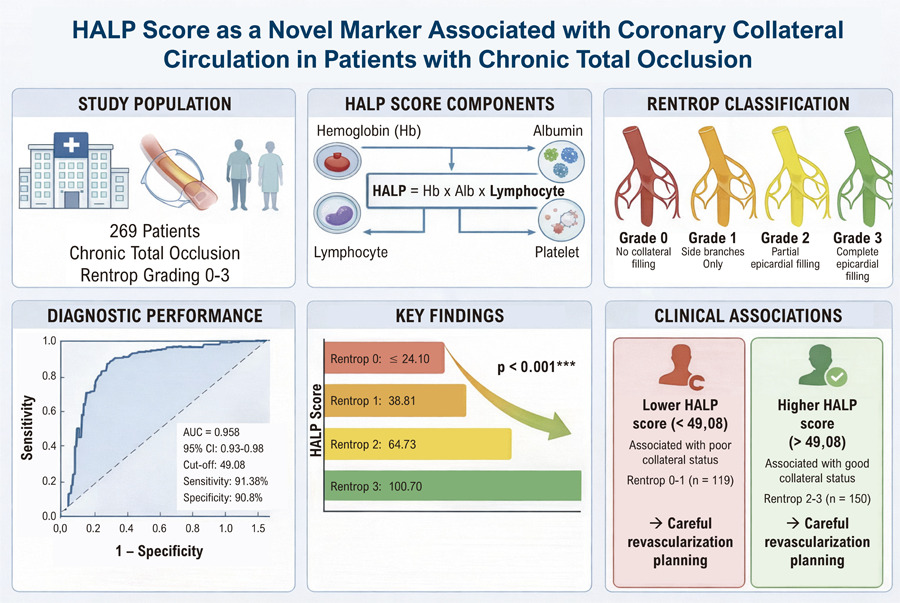
HALP Score as a Novel Marker Associated with Coronary Collateral Circulation in Patients with Chronic Total Occlusion
ABC
Original Article

HALP Score as a Novel Marker Associated with Coronary Collateral Circulation in Patients with Chronic Total Occlusion

Hasan Akkaya et al. Muhammet Öztürk

Abstract

Background

Coronary collateral circulation (CCC) is a key determinant of myocardial viability and prognosis in patients with chronic total occlusion (CTO). The hemoglobin, albumin, lymphocyte, and platelet (HALP) score reflects nutritional status, immune competence, and systemic inflammation.

Objectives

To investigate the association between HALP score and CCC in patients with CTO.

Methods

This retrospective, single-center study included 269 patients with chronic coronary syndrome and angiographically confirmed CTO. Patients were classified according to Rentrop grades and dichotomized into poor CCC (Rentrop 0–1; n=119) and good CCC (Rentrop 2–3; n=150). HALP score, inflammatory markers, atherogenic indices, and angiographic scores were compared between groups. Multivariate logistic regression and receiver operating characteristic (ROC) analyses were performed. A p-value <0.05 was considered statistically significant.

Results

HALP score increased significantly across Rentrop grades (p<0.001) and was higher in patients with good CCC than in those with poor CCC (75.52±13.91 vs. 35.10±11.29; p<0.001). In multivariable analysis, HALP score (OR:0.88, 95% CI: 0.83–0.93; p49.08 (91.3% sensitivity, 90.8% specificity). Atherogenic lipid indices were not significantly associated with CCC.

Conclusions

HALP score is an independent and readily available marker associated with CCC in CTO patients and may serve as a practical tool for risk stratification, highlighting the importance of inflammatory, nutritional, and immune pathways in collateral development.

  • Collateral Circulation
  • Coronary Occlusion
  • Inflammation
  • Prognosis
Read Full Article
Creative Commons Attribution (CC BY) Creative Commons license
17/08/2026 DOI: 10.36660/abc.20260206i Views 1
IJCS
Letter to the Editor

Prognostic Value of C-reactive Protein (CRP) in Patients With Acute Heart Failure (AHF) Admitted to General Wards in Brazil

Vanessa Souza Silva Medrado et al. João Emmanuel Coelho de Morais Domingos Sávio de Oliveira e Silva João Pedro Lopes Azevedo … Thalisson Gonçalves Almeida Pedro Pereira Tenório

Dear Editor,

We read with great interest the article by Ferigato et al. investigating the prognostic value of C-reactive protein (CRP) in patients with acute heart failure (AHF) admitted to general wards in Brazil. We would like to congratulate the authors for addressing a topic of substantial practical relevance: the search for accessible biomarkers in settings where gold-standard tools, such as natriuretic peptides, have inconsistent availability.

[…]

  • C-Reactive Protein
  • Heart Failure
  • Prognosis
Read Full Article
Creative Commons Attribution (CC BY) Creative Commons license
17/08/2026 DOI: 10.36660/ijcs.20260053 Views 1
Central Illustration
ABCHF
Original Article

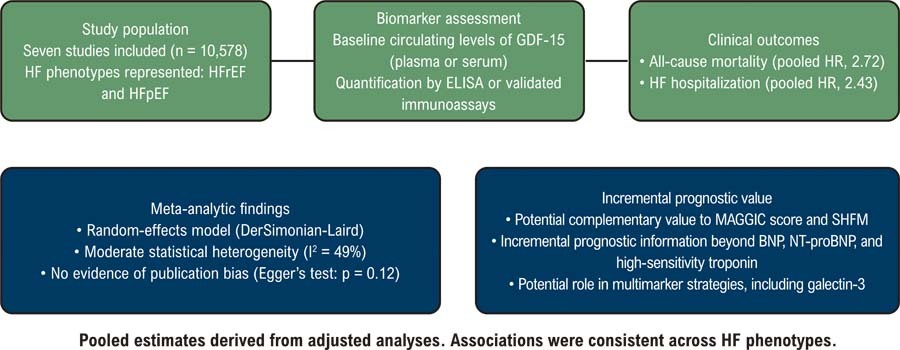
Prognostic Value of Growth Differentiation Factor-15 in Heart Failure: A Systematic Review with Meta-Analysis

Lorena dos Santos Marreto Rimolo et al. Humberto Villacorta

Abstract

Background

Growth differentiation factor-15 (GDF-15) has emerged as a promising biomarker in heart failure (HF), reflecting multiple pathophysiological mechanisms, including inflammation, oxidative stress, and cardiac remodeling. However, evidence regarding its prognostic value remains inconsistent.

Objective

To systematically evaluate the association between circulating levels of GDF-15 and adverse clinical outcomes, including all-cause mortality and HF hospitalization.

Methods

A systematic review was conducted in accordance with Preferred Reporting Items for Systematic Reviews and Meta-Analyses 2020 guidelines. PubMed, Embase, Cochrane Library, and Web of Science were searched through April 2025. Studies reporting baseline levels of GDF-15 and adjusted hazard ratios (HRs) for mortality and/or HF hospitalization were included. Pooled HRs were calculated using a random-effects model (DerSimonian and Laird method). Statistical heterogeneity was assessed using Higgins’ I2 statistic, and publication bias was evaluated using Egger’s test.

Results

Seven studies (n = 10,578 patients [mean age, 67 ± 11 years; 58% male]) met the inclusion criteria. Increased levels of GDF-15 were significantly associated with increased all-cause mortality (pooled HR, 2.72; 95% CI, 1.55-4.17; p < 0.001; I2 = 49%) and HF hospitalization (HR, 2.43; 95% CI, 1.79-3.30; p < 0.001). Subgroup analyses demonstrated consistent associations across different HF phenotypes. Funnel plot assessment and Egger’s test (p = 0.12) showed no evidence of publication bias.

Conclusions

Higher circulating levels of GDF-15 are independently associated with increased risks of mortality and HF hospitalization. Incorporating GDF-15 into multimarker prognostic models may improve risk stratification and support earlier, more individualized management strategies in HF.

  • Biomarkers
  • Growth differentiation factor 15
  • Heart Failure
  • Prognosis
Read Full Article
Creative Commons Attribution (CC BY) Creative Commons license
22/07/2026 DOI: 10.36660/abchf.20260006i Views 1
Prognostic Value of the Hata Angiographic Classification for Long-Term Outcomes in Takayasu Arteritis: A Single-Center, Retrospective Study
ABC
Original Article

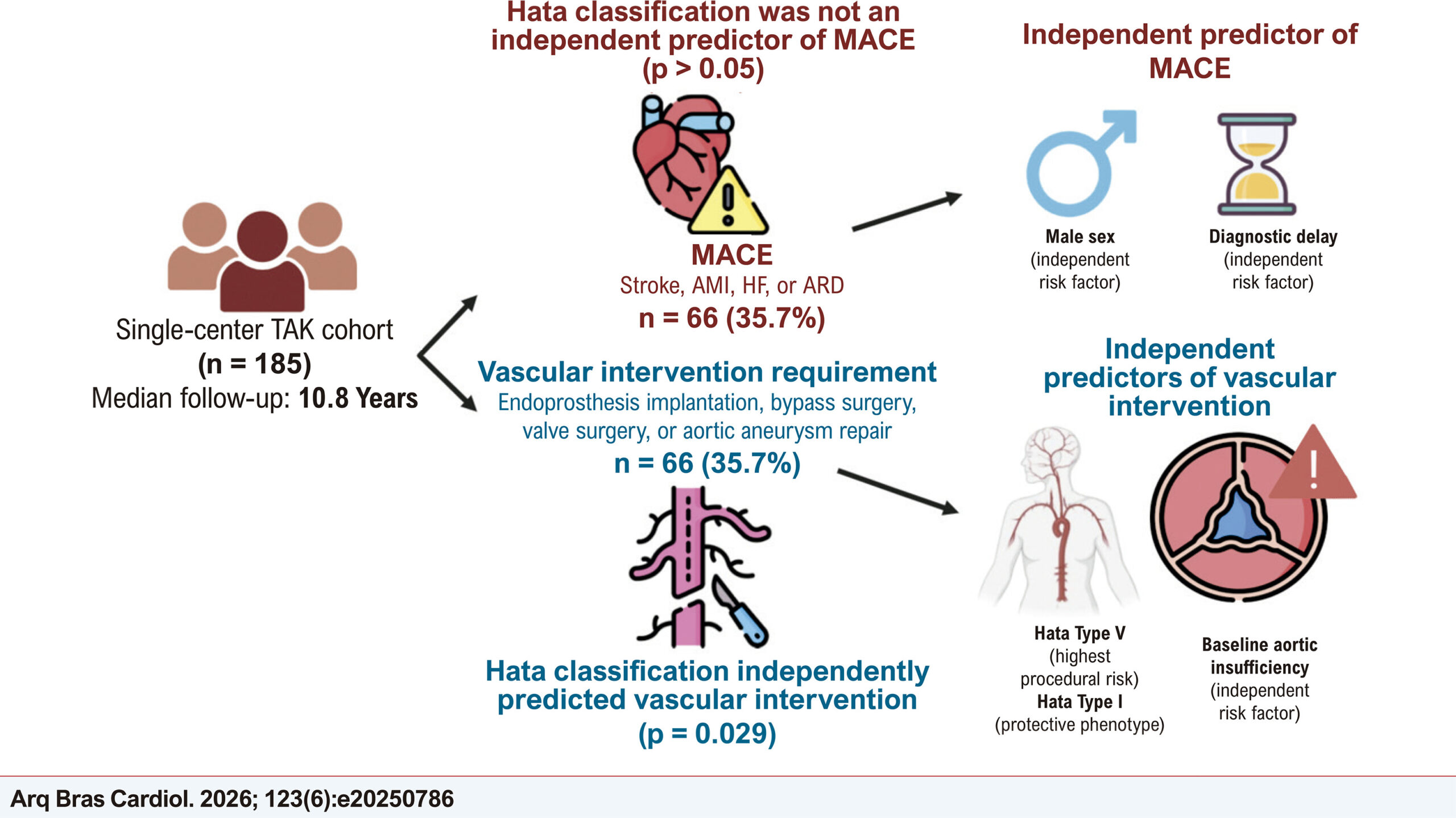
Prognostic Value of the Hata Angiographic Classification for Long-Term Outcomes in Takayasu Arteritis: A Single-Center, Retrospective Study

Anisio Uchoa Leite Santana et al. Samuel Katsuyuki Shinjo

Abstract

Background

The prognostic utility of the Hata angiographic classification for long-term outcomes in Takayasu arteritis (TAK) remains unclear.

Objectives

To evaluate the prognostic value of the Hata classification for predicting major adverse cardiovascular events (MACE) and the need for vascular interventions in patients with TAK.

Methods

This single-center, retrospective cohort study included patients diagnosed with TAK between 2000 and 2025. Multivariate logistic regression analyses were performed to identify independent predictors, with statistical significance defined as p < 0.05.

Results

Of 203 patients initially identified, 18 were excluded. The final cohort included 185 patients, of whom 80.0% were women, with a median age at diagnosis of 29 years. Type V was the predominant angiographic pattern (64.9%). During a median follow-up of 10.8 years, MACE occurred in 35.7% of patients, while 37.3% required vascular intervention. The Hata classification was not associated with MACE occurrence. Independent predictors of MACE included female sex, which was protective (odds ratio [OR], 0.38; 95% CI, 0.17-0.86; p = 0.021), and longer symptom onset-to-diagnosis time, which increased risk (OR, 1.10; 95% CI, 1.03-1.18; p = 0.006). In contrast, the Hata classification independently predicted the need for vascular intervention. Hata Type I showed a strong protective association compared with Type V (OR, 0.10; 95% CI, 0.01-0.53; p = 0.029). Baseline aortic insufficiency was also independently associated with a higher likelihood of intervention (OR, 2.54; 95% CI, 1.18-5.60; p = 0.018) ().

Conclusions

The Hata classification appears to be a robust predictor of vascular intervention but not MACE in TAK. Greater anatomical disease extension (Type V) and baseline aortic insufficiency were associated with increased procedural risk, whereas MACE risk was associated with diagnostic delay and male sex. The observed long-term dissociation between high rates of clinical remission (92.4%) and continued disease progression underscores the importance of imaging-based surveillance and highlights the need for prospective multicenter studies to validate these findings.

  • Prognosis
  • Systemic Vasculitis
  • Takayasu Arteritis
Read Full Article
Creative Commons Attribution (CC BY) Creative Commons license
20/07/2026 DOI: 10.36660/abc.20250786i Views 1
Central Illustration
ABCHF
Original Article

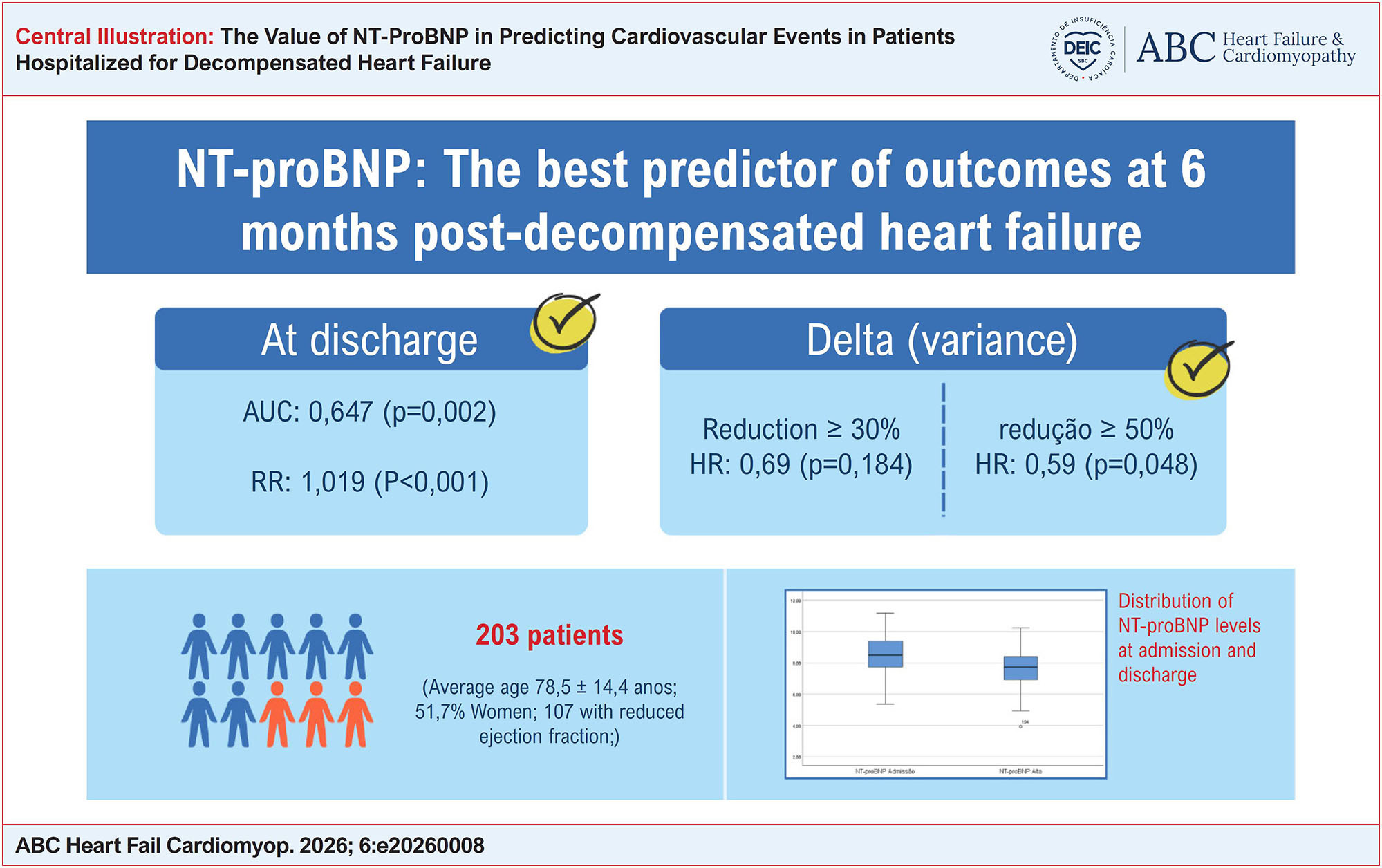
The Value of NT-ProBNP in Predicting Cardiovascular Events in Patients Hospitalized for Decompensated Heart Failure

Rafael Felipe Coelho Siqueira et al. Tainá Teixeira Viana Natália Duarte Barroso Nina Vieira Coutinho … Luiz Paulo Oliveira Martins João Pedro Fernandes Gonçalves Pedro Vogel Almeida Djaine Haila Silva Rocha Raisa Mainarte Franco Barros Rodrigo Morel Vieira Melo

Abstract

Background:

Serum levels of natriuretic peptides at hospital admission and discharge, as well as their percentage reduction (delta NT-proBNP), have been associated with cardiovascular outcomes in decompensated heart failure.

Objective:

To evaluate the prognostic accuracy of NT-proBNP parameters and determine the usefulness of in-hospital percentage reduction targets.

Methods:

This was a retrospective cohort study including patients ≥18 years old admitted to a heart failure protocol between January 2022 and December 2023 at a tertiary hospital. The primary outcome was a composite of all-cause mortality and readmission for heart failure within 6 months.

Results:

Two hundred and three patients were included (mean age 78.5 ± 14.4 years; 51.7% women). The outcome occurred in 67 (33.0%) within 6 months. The NT-proBNP at discharge showed the best accuracy (AUC 0.647; 95% CI 0.559–0.735; p=0.002). In multivariate analysis, only the NT-proBNP at discharge remained an independent predictor (p<0.05), outperforming continuous variation (delta). Regarding therapeutic goals, a reduction of ≥ 50% was associated with a lower risk of events (HR 0.59; 95% CI 0.36–0.99; p=0.048), while a reduction of ≥ 30% showed no association (p=0.184).

Conclusion:

NT-proBNP at discharge was the best independent predictor of outcomes at 6 months. Additionally, achieving an in-hospital reduction of ≥ 50% was associated with better prognosis, suggesting its usefulness as a therapeutic target.

  • Brain Natriuretic Peptide
  • Cardiovascular Diseases
  • Heart Failure
  • Prognosis
Read Full Article
Creative Commons Attribution (CC BY) Creative Commons license
08/07/2026 DOI: 10.36660/abchf.20260008i Views 2
ABC
Editorial

Surgery is the Means, Not the End: Late Follow-Up of Coronary Artery Bypass Graft Surgery

João Carlos Ferreira Leal et al. Rafael Alessandro Ferreira Gomes Walter J. Gomes

Coronary artery bypass grafting (CABG) remains a leading treatment for coronary artery disease (CAD), particularly in high-risk patient subgroups such as those with multivessel disease, left ventricular dysfunction, diabetes mellitus, and high ischemic burden, as evidenced by decades of scientific evidence and its consistent long-term results.

Coronary artery disease (CAD) has a progressive, systemic, and chronic evolution, which makes long-term follow-up essential for interpreting the results in therapeutic strategies. Therefore, outcomes after coronary artery bypass grafting (CABG) cannot be limited solely to the technical success of the procedure or to in-hospital outcomes but must encompass a broader and more integrative long-term perspective.

[…]

  • Coronary Artery Disease
  • Myocardial Revascularization
  • Prognosis
Read Full Article
Creative Commons Attribution (CC BY) Creative Commons license
06/07/2026 DOI: 10.36660/abc.20260351i
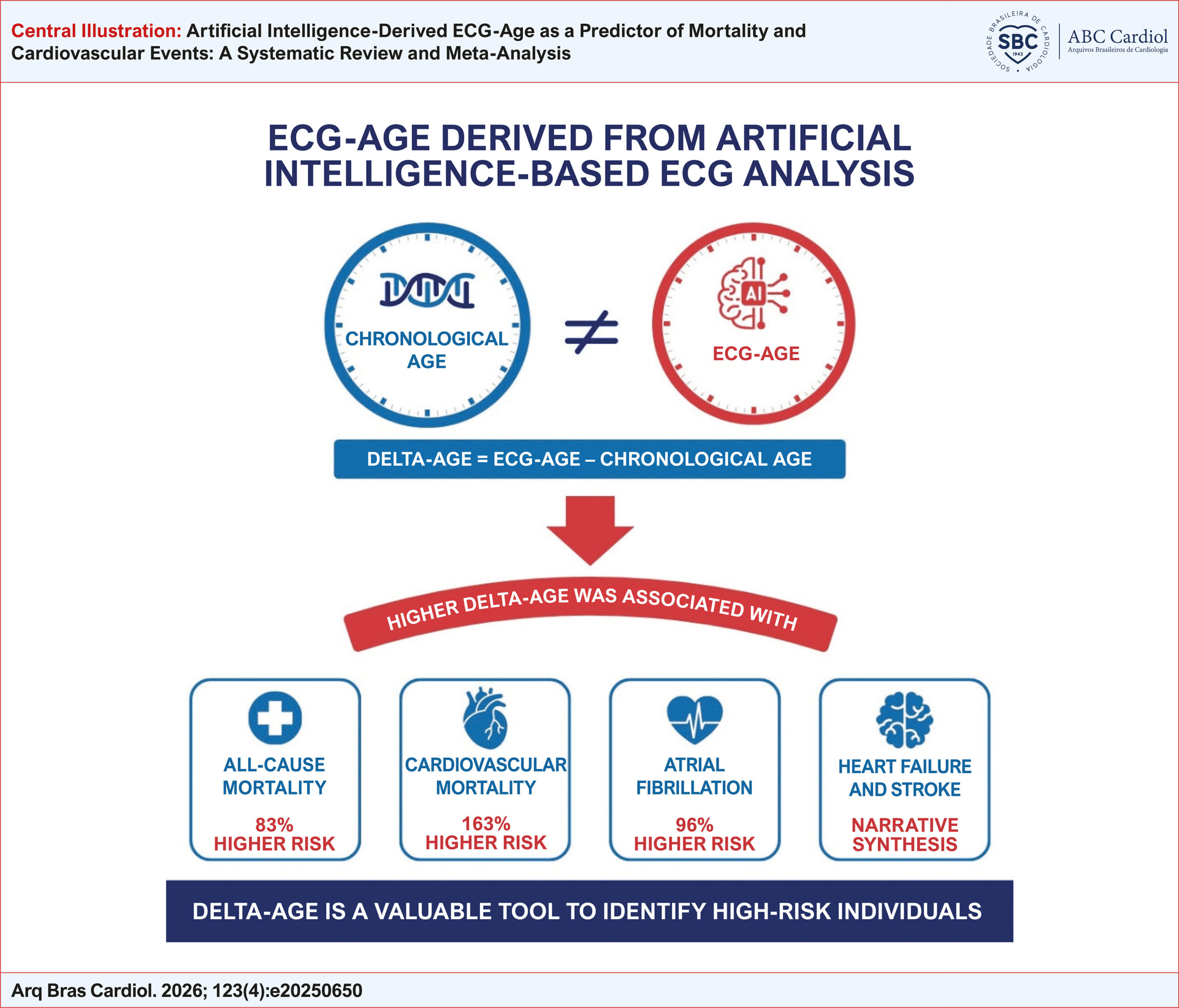
Artificial Intelligence-Derived ECG-Age as a Predictor of Mortality and Cardiovascular Events: A Systematic Review and Meta-Analysis
ABC
Original Article

Artificial Intelligence-Derived ECG-Age as a Predictor of Mortality and Cardiovascular Events: A Systematic Review and Meta-Analysis

Isadora Cristine Reis Sguizzato Bozzi et al. Maria Clara de Araujo Gontijo Lima Antonio Luiz Pinho Ribeiro Gabriela Miana de Mattos Paixão

Abstract

Background

Artificial intelligence (AI)-derived electrocardiographic age (ECG-age) and the difference between ECG-age and chronological age (delta-age) are emerging biomarkers of cardiovascular aging and adverse outcomes, but their prognostic value remains unclear.

Objectives

We performed a systematic review and meta-analysis to evaluate associations between AI-derived ECG-age or delta-age and clinical outcomes.

Methods

Nine databases were searched through May 1, 2025. Eligible studies evaluated mortality or cardiovascular events and reported measures of association. Pooled hazard ratios (pHRs) with 95% confidence intervals (CIs) were calculated via fixed- or random-effects models, with statistical significance set at p < 0.05. The protocol was registered in PROSPERO (CRD420251042467).

Results

Ten studies (2021–2025) with over 550,000 participants from East Asia, the Americas, and the UK were included. Most used convolutional neural networks to estimate ECG-age; delta-age was calculated as ECG-age minus chronological age. Elevated delta-age was associated with increased all-cause mortality (pHR = 1.83, 95% CI: 1.45–2.32) and cardiovascular mortality (pHR = 2.63, 95% CI: 1.93–3.58). Three studies reported increased risk of atrial fibrillation (pHR = 1.96, 95% CI: 1.43–2.69), although data were limited and heterogeneous. Descriptive analyses suggested that greater delta-age predicts incident heart failure and stroke.

Conclusions

AI-derived ECG-age, particularly delta-age, is associated with all-cause and cardiovascular mortality, supporting its role as a noninvasive biomarker of cardiovascular aging. Evidence for atrial fibrillation is suggestive but limited. Standardized algorithms, robust external validation, and prospective multicenter studies are needed to confirm clinical utility and integrate ECG-age into risk stratification, even in asymptomatic individuals.

  • Artificial Intelligence
  • Deep Learning
  • Electrocardiography
  • Machine Learning
  • Prognosis
Read Full Article
Creative Commons Attribution (CC BY) Creative Commons license
12/06/2026 DOI: 10.36660/abc.20250650i
Accuracy and Prognosis of Electrocardiographic and Echocardiographic Left Ventricular Hypertrophy in Brazilian Adults - ELSA-Brasil Study
ABC
Original Article

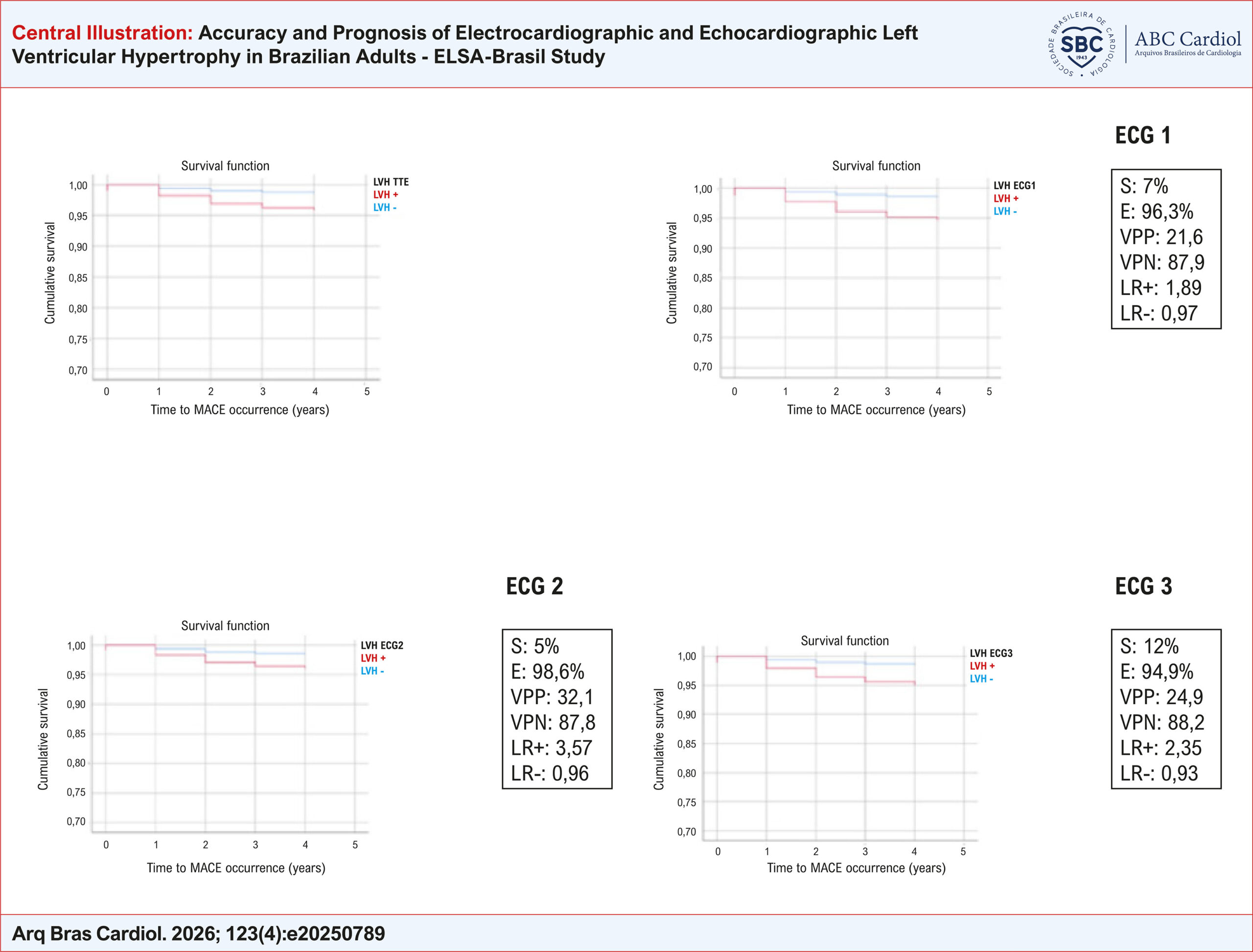
Accuracy and Prognosis of Electrocardiographic and Echocardiographic Left Ventricular Hypertrophy in Brazilian Adults – ELSA-Brasil Study

Marcelo M. Pinto-Filho et al. Lillian Guimarães de Faria Murilo Foppa Angela Barreto Santiago Santos … Sandhi Maria Barreto Antonio Luiz Pinho Ribeiro

Abstract

Background

Left ventricular hypertrophy (LVH), defined by increased left ventricular mass, is an independent predictor of cardiovascular mortality. Evidence suggests that LVH identified by electrocardiogram (ECG) and echocardiography represents distinct entities with potentially different prognostic implications.

Objectives

Assess the diagnostic accuracy of electrocardiographic criteria for LVH compared with transthoracic echocardiogram (TTE) and to evaluate their predictive value for fatal cardiovascular outcomes.

Methods

We conducted a cross-sectional diagnostic accuracy analysis and a prospective follow-up within the Longitudinal Study of Adult Health. LVH on ECG was defined by Minnesota Code criteria, and LVH on TTE by increased calculated left ventricular mass. Significance level was defined at 0,05.

Results

Among 2,849 participants (43.6% male), median age 62 years, 12.5% had LVH by TTE and 5.9% by ECG criteria. ECG-defined LVH showed, from different criteria, very low sensitivity (5–12%) but high specificity (95–99%) compared with TTE. In prognostic analyses, TTE-defined LVH was associated with significant fatal adverse cardiovascular events (FMACE) (HR 3.2, 95% CI 1.7–5.9). ECG-defined LVH also predicted FMACE, with HR close to 3.5 across the different MC criteria in multivariate regression analysis. The predictive capacity remained significant after further adjustment for hypertrophy defined by either of the methods.

Conclusions

Although electrocardiographic criteria demonstrated poor diagnostic accuracy for LVH compared with TTE, both modalities were independently associated with adverse cardiovascular outcomes. These findings suggest that ECG-defined and TTE-defined LVH provide complementary prognostic information and may reflect distinct pathophysiological processes.

  • Electrocardiography
  • Left Ventricular Hypertrophy
  • Longitudinal Studies
  • Prognosis
Read Full Article
Creative Commons Attribution (CC BY) Creative Commons license
12/06/2026 DOI: 10.36660/abc.20250789i Views 1
Prognostic Value of Myocardial Perfusion Scintigraphy with IQ∙SPECT Technology in Patients with Suspected or Known Coronary Artery Disease
IJCS
Original Article

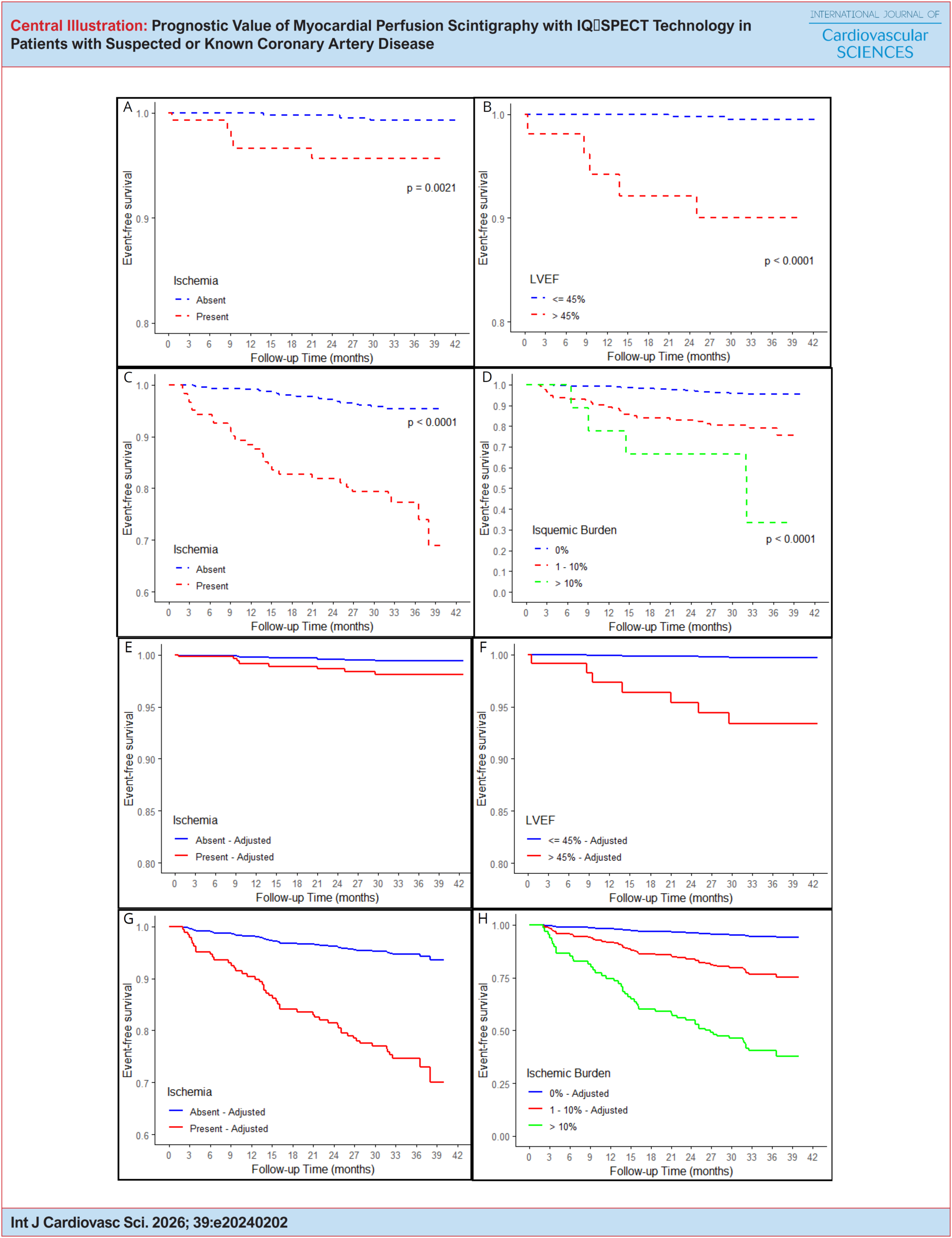
Prognostic Value of Myocardial Perfusion Scintigraphy with IQ∙SPECT Technology in Patients with Suspected or Known Coronary Artery Disease

Maria Fernanda Rezende et al. Davi Shunji Yahiro Fernando de Amorim Fernandes Jader Azevedo Claudio Tinoco Mesquita

Abstract

Background:

IQ∙SPECT is a collimator design coupled with a cardio-centric acquisition orbit and specific reconstruction algorithm that increases camera efficiency. However, there is no prognostic data derived from IQ∙SPECT exams.

Objectives:

To evaluate the prognostic value of IQ∙SPECT myocardial perfusion scintigraphy (MPS) in patients with suspected or known coronary artery disease (CAD).

Methods:

The study population consisted of 734 consecutive patients with suspected or known CAD submitted to MPS with IQ∙SPECT. Adequate follow-up was obtained in 625 patients. We retrospectively analyzed imaging and clinical data. The follow-up was obtained for no less than 12 months after the MPS study. Statistical significance was taken at p < 0.05.

Results:

Normal IQ∙SPECT compared to abnormal IQ∙SPECT had lower annualized incidence of hard events (0.2% and 1.1%, respectively, p = 0.02), late combined events (1.1% and 5.5%, respectively, p = 0.008), and revascularization (1% and 14%, respectively, p < 0.001). Left ventricular ejection fraction ≤ 45% was found to be the only clinical predictor of hard events (p < 0.0003, confidence interval [CI] = 5.25 to 129.02). However, for combined events, abnormal MPS (p < 0.0001, CI = 3.39 to 11.13, hazard ratio [HR] = 6.14) and dyspnea/fatigue (p = 0.013, CI = 1.28 to 8.4, HR = 3.3) obtained statistical significance. In contrast, ischemic burden ≥ 5% (p < 0.0001, HR = 30.3) was the most relevant parameter for revascularization, followed by thoracic pain (p = 0.002, HR = 2.4).

Conclusion:

Our study demonstrates that IQ SPECT MPS has significant prognostic capabilities with very low risk of adverse events in patients with normal findings.

  • Coronary Artery Disease
  • myocardial perfusion scintigraphy
  • Prognosis
Read Full Article
Creative Commons Attribution (CC BY) Creative Commons license
01/06/2026 DOI: 10.36660/ijcs.20240202 Views 1
Performance of the MAGGIC Score in Individuals with Heart Failure: Validation in a Brazilian Population
ABC
Original Article

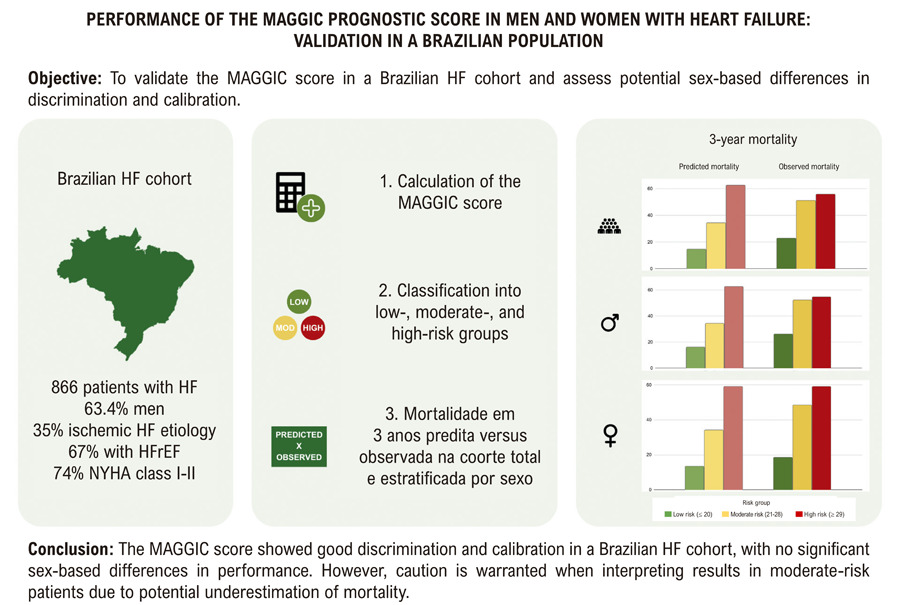
Performance of the MAGGIC Score in Individuals with Heart Failure: Validation in a Brazilian Population

Gabriela Gomes de Paula et al. Henrique Iahnke Garbin Maria Eduarda Kaminski Dayana Dias Mendonça … Gabriela Corrêa Souza Luis Eduardo Rohde Luis Beck da Silva Neto Andreia Biolo

Abstract

Background

The Meta-Analysis Global Group in Chronic Heart Failure (MAGGIC) score is a risk stratification tool used to predict mortality in heart failure (HF). However, potential sex-related differences in its performance and its applicability to the Brazilian population remain uncertain.

Objectives

To evaluate sex-based differences in the performance of the MAGGIC score and to validate the score in a Brazilian HF cohort.

Methods

This retrospective cohort study included 866 patients followed at a HF outpatient clinic. The primary outcome was 3-year all-cause mortality. The MAGGIC score was calculated for each patient. Discrimination was assessed using the area under the receiver operating characteristic curve, and calibration was evaluated using the Hosmer-Lemeshow test. Analyses were performed for the overall cohort and stratified by sex. A p-value < 0.05 was considered statistically significant.

Results

The overall 3-year mortality rate was 33.4% (36.4% in men and 27.8% in women; p = 0.010). Predicted mortality was 20.9% (mean score 18.3 ± 7), with 22.7% for men and 19.1% for women. The score demonstrated good discrimination (area under the curve = 0.72; 95% CI: 0.686-0.754), with similar performance in men (0.704 [0.661-0.747]) and women (0.733 [0.674-0.792]). Calibration showed good agreement: overall chi-square (χ2) = 1.1 (p = 0.998), men χ2 = 0.9 (p = 0.999), and women χ2 = 1.3 (p = 0.995). Observed mortality was higher in moderate-risk groups, with no significant difference between moderate- and high-risk groups (p = 0.236).

Conclusion

The MAGGIC score showed good performance in a Brazilian HF cohort, with no significant sex-based differences, although higher observed mortality was identified among moderate-risk patients.

  • Heart Failure
  • Prognosis
  • Risk Assessment
  • Validation Study
Read Full Article
Creative Commons Attribution (CC BY) Creative Commons license
01/05/2026 DOI: 10.36660/abc.20250614i Views 1
Figure 1
IJCS
Editorial

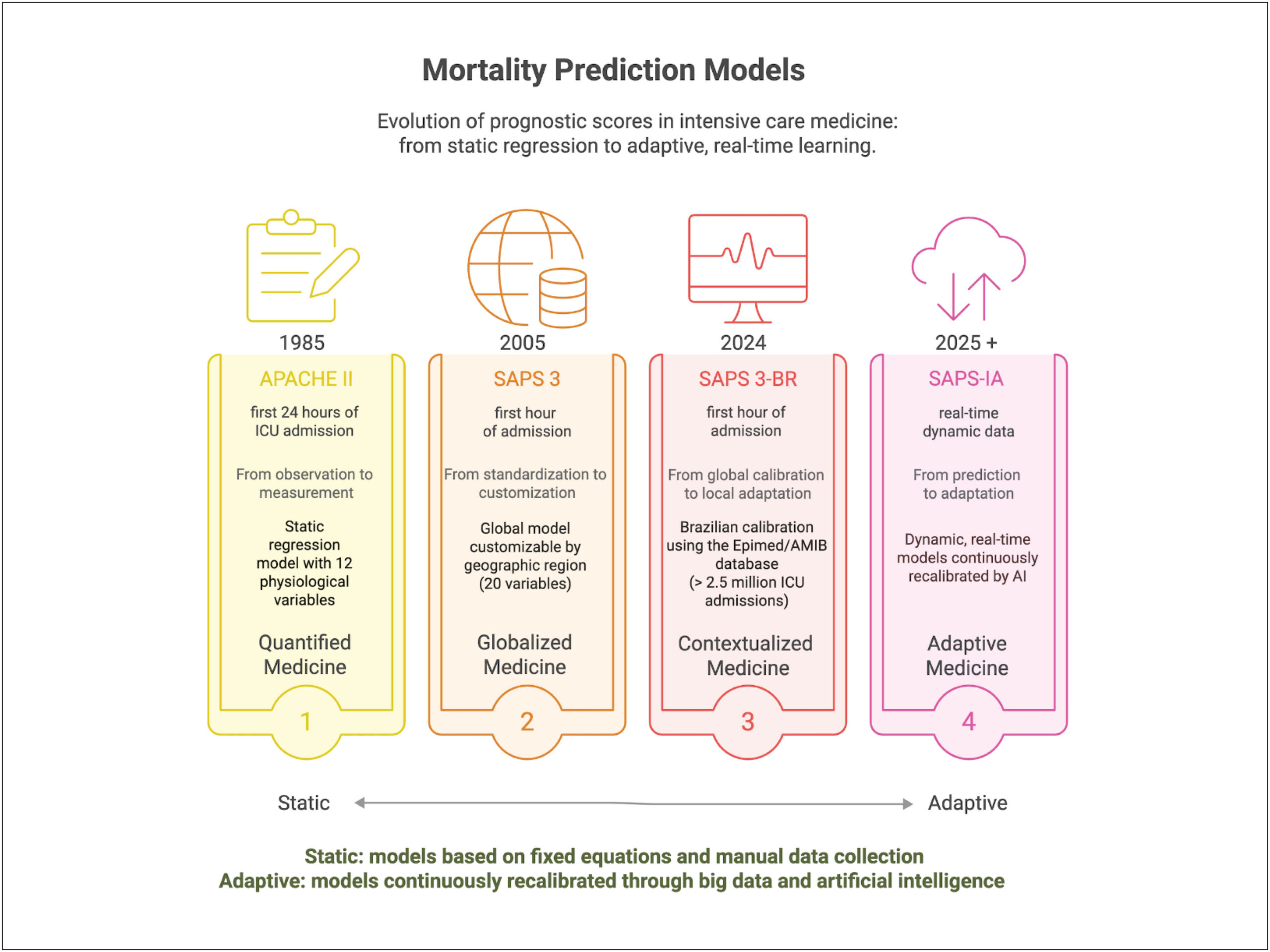
Forty Years of Silent Revolutions in ICUs: From Clinical Records to Intelligent and Predictive Surveillance

Rubens Carmo Costa-Filho et al. Hugo Caire Castro Faria-Neto

Introduction

In the mid-1980s, as modern intensive care medicine was still consolidating as a specialty, a conceptual challenge emerged that would redefine critical care: how to objectively and comparably quantify the severity of illness across different patients and units. In 1985, William A. Knaus et al. published the Acute Physiology and Chronic Health Evaluation II (APACHE II). This landmark model translated clinical observations into a mathematical framework capable of estimating hospital mortality based on 12 physiological and chronic health variables collected during the first 24 hours of ICU admission.

At that time, computing power was limited, and data were collected manually, the technological ceiling of that era.

[…]

  • APACHE
  • Artificial Intelligence
  • Critical Care
  • Prognosis
  • Simplified Acute Physiology Score
Read Full Article
Creative Commons Attribution (CC BY) Creative Commons license
27/04/2026 DOI: 10.36660/ijcs.20250255 Views 1
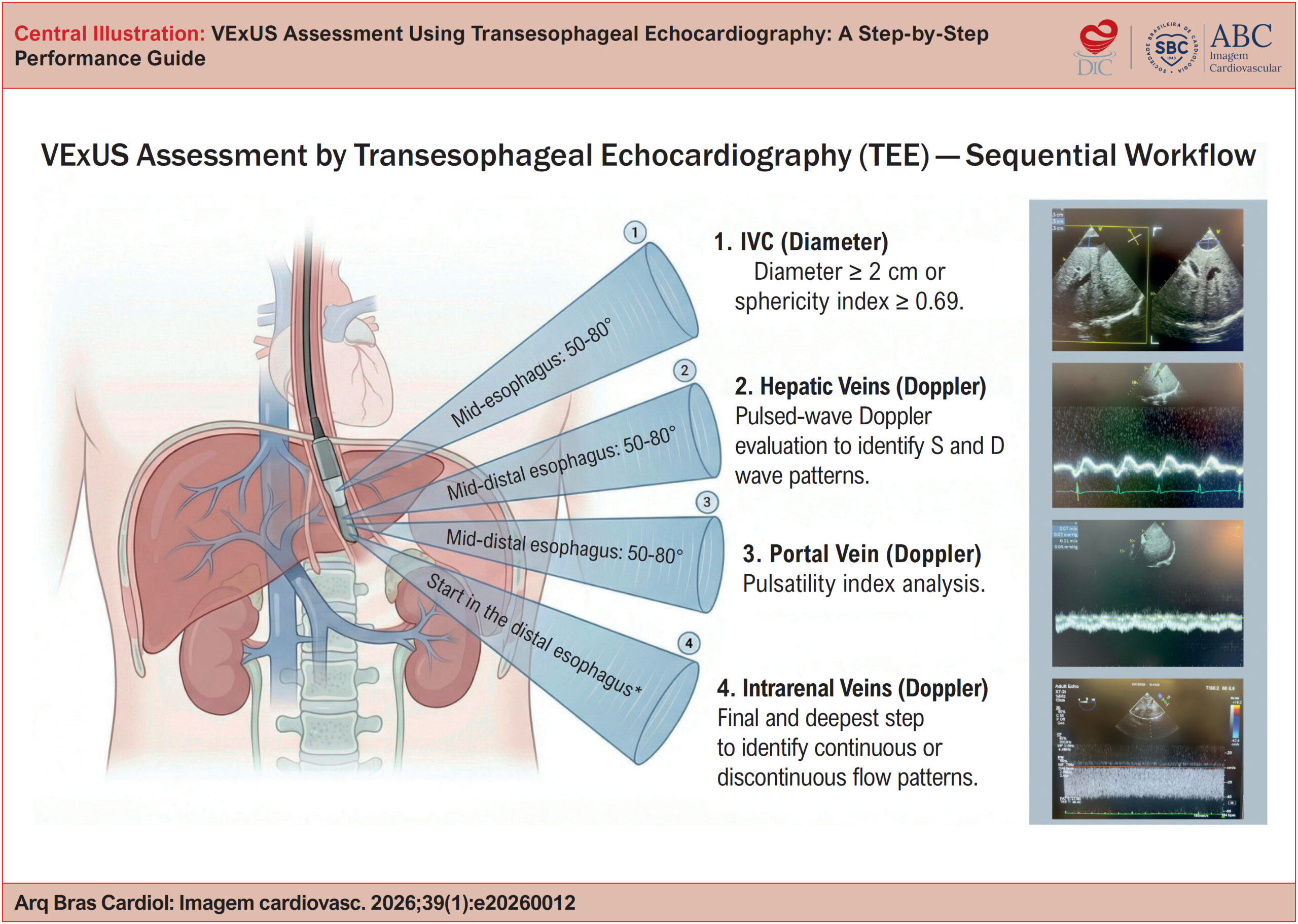
My Approach to VExUS Assessment Using Transesophageal Echocardiography: A Step-by-Step Performance Guide
ABCIC
Review Article

My Approach to VExUS Assessment Using Transesophageal Echocardiography: A Step-by-Step Performance Guide

Angelo Antunes Salgado et al. Marcos Paulo Lacerda Bernardo Marcelo Ramalho Fernandes

ABSTRACT

Monitoring systemic venous congestion has become essential in the management of critically ill patients, enabling accurate diagnosis, severity grading, and prognostic stratification. Literature shows that congestion is strongly associated with the development of acute kidney injury and increased mortality when compared with optimized volume states.

In this setting, intraoperative Transesophageal Echocardiography (TEE) has emerged as an advanced and versatile tool. In addition to allowing detailed assessment of cardiac function, TEE is effective in assessing intravascular volume status and predicting fluid responsiveness through dynamic measurement of stroke volume and the degree of systemic congestion. TEE also enables direct visualization of abdominal vessels, such as the hepatic, portal, and intrarenal veins, thereby facilitating the identification of pathological pulsatile flow patterns even in patients with limited transthoracic acoustic windows.

The integration of protocols such as VExUS (or its modified version, mVExUS) allows for a personalized approach focused on “perfusion without congestion.” This review outlines the practical application of VExUS assessment using TEE, its technical limitations, and how to use it to guide hemodynamic resuscitation, minimizing organ injury and optimizing clinical outcomes.

  • Operative Surgical Procedures
  • Prognosis
  • Transesophageal echocardiography
Read Full Article
Creative Commons Attribution (CC BY) Creative Commons license
20/04/2026 DOI: 10.36660/abcimg.20260012i Views 1
ABC
Editorial

Coronary Artery Disease and Chronic Kidney Disease: A Tale of Two Organs

Igor Kranjec

“It was the best of times, it was the worst of times…” So begins Charles Dickens’s A Tale of Two Cities, a novel deeply rooted in London while casting a watchful eye across the Channel toward the upheaval of revolutionary Paris. In contrast to Dickens’s narrative of division, the two vital organs at the heart of this Editorial exist not in conflict, but in synergy. The heart and the kidneys work in tandem to maintain homeostasis; when one falters, the other inevitably follows. Cardiovascular abnormalities in chronic kidney disease (CKD) are driven by a complex interplay of traditional risk factors and non-traditional, CKD-specific stressors. As the glomerular filtration rate (GFR) declines, the clinical manifestations of coronary artery disease (CAD) become increasingly prevalent. Patients with concomitant CAD and CKD represent a distinct and challenging subgroup. They frequently present with atypical symptoms and are more likely to experience non-ST-segment myocardial infarction than stable exertional angina. Furthermore, sudden cardiac death is a tragically common endpoint in end-stage kidney disease.

Diagnostic clarity is often elusive in this population. Cardiac troponins are frequently chronically elevated even in the absence of acute coronary syndrome, though the exact mechanisms remain debated. Moreover, the diagnostic yield of exercise testing and pharmacologic perfusion imaging is diminished, leading to a higher incidence of both false-negative and false-positive results. While coronary calcification is ubiquitous in CKD and carries prognostic weight similar to that in the general population, its progression is significantly accelerated as renal function deteriorates. Histological studies further reveal a higher inflammatory burden within coronary plaques compared to non-renal controls. Despite these complexities, CKD patients remain systematically under-represented in clinical trials, leaving a vacuum of evidence-based guidelines regarding statin use, elective revascularization, and the optimal duration of dual antiplatelet therapy. The evaluation of CAD traditionally relies on clinical assessment integrated with diagnostic tools such as electrocardiography, stress testing, and echocardiography. Despite its known limitations, coronary luminal stenosis remains the conventional benchmark for CAD severity in daily practice, guiding management decisions following invasive coronary angiography or computed tomography angiography (CTA). However, emerging evidence suggests that plaque burden, rather than the degree of stenosis alone, is the primary predictor of cardiovascular risk, regardless of whether the CAD is obstructive or non-obstructive. CTA allows for an extensive characterization of this burden and the identification of high-risk plaque features. Furthermore, incorporating fractional flow reserve methods to account for diffuse CAD may refine the anatomical assessment of vessel-specific ischemia. GFR remains the definitive metric of kidney function. While the »gold standard« involves measuring the clearance of exogenous markers like inulin, this approach is too invasive, time-consuming, and costly for routine use. Consequently, clinical practice relies on GFR estimates (eGFR) derived from creatinine or cystatin C. The accuracy of these estimates is often compromised by non-GFR determinants of creatinine, such as diet, muscle mass, tubular secretion, and extrarenal elimination. Even in well-validated populations, 10% of patients may have estimation errors exceeding 30%. The Cockcroft-Gault (C-G) equation shares the inherent flaws of measured creatinine clearance. The Modification of Diet in Renal Disease (MDRD) equation is widely utilized, particularly in patients with advanced renal impairment, yet it loses precision in those with preserved kidney function. In contrast, the CKD-EPI (Chronic Kidney Disease Epidemiology Collaboration) equation—which utilizes the same variables as MDRD—offers superior accuracy at higher GFR levels by reducing systematic bias. Accordingly, the CKD-EPI equation is now the internationally recommended standard for routine laboratory practice.

[…]

  • chronic renal insufficiency
  • Coronary Artery Disease
  • Prognosis
Read Full Article
Creative Commons Attribution (CC BY) Creative Commons license
16/03/2026 DOI: 10.36660/abc.20260028i Views 1
Exploring the Correlations between Initial Clinical and Radiological Manifestations in Takayasu’s Arteritis
ABC
Original Article

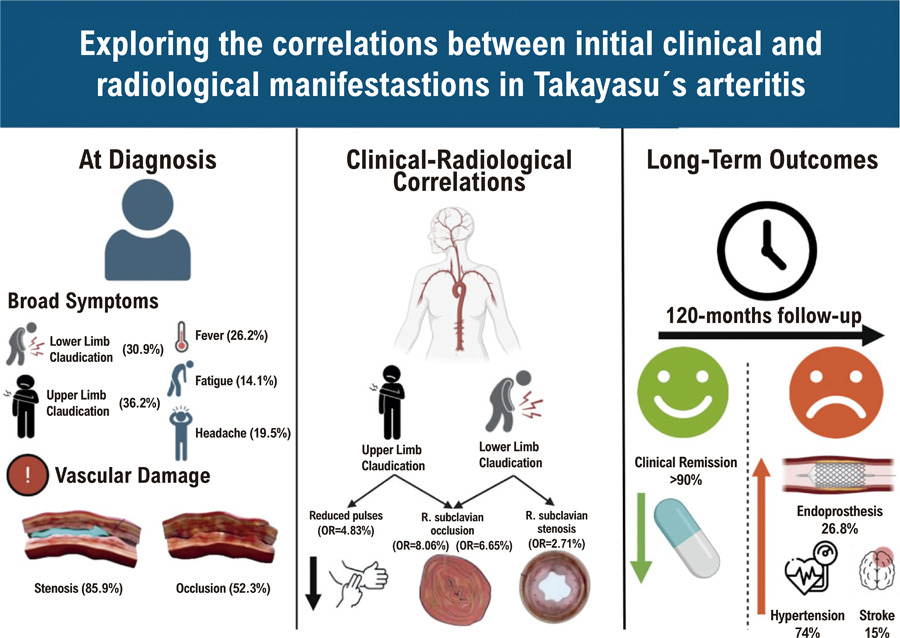
Exploring the Correlations between Initial Clinical and Radiological Manifestations in Takayasu’s Arteritis

Anísio Uchoa Leite Santana et al. Samuel Katsuyuki Shinjo

Abstract

Background

Initial clinical and imaging associations in Takayasu’s arteritis (TAK) are poorly defined.

Objectives

To characterize initial manifestations, their associations, and long-term outcomes in a TAK cohort.

Methods

A single-center retrospective cohort study (2000 to 2024) included patients diagnosed with TAK. The significance level was set at p<0.05.

Results

Among 203 patients identified, 54 were excluded due to incomplete data. The final cohort comprised 149 patients (89.9% female), with a median age at diagnosis of 31 years. At diagnosis, 92.6% were symptomatic. Claudication of upper (36.2%) and lower (30.9%) limbs was frequent, alongside advanced vascular damage like stenosis (85.9%) and occlusions (52.3%). Upper limb claudication was independently predicted by reduced upper limb pulses (OR=4.83; 95%CI=2.08-11.24; p=0.001) and right subclavian artery occlusion (OR=8.06; 95%CI=1.94-33.44; p=0.004). Lower limb claudication was predicted by right subclavian artery occlusion (OR=6.65; 95%CI=2.05-21.61; p=0.002), right subclavian artery thickening (OR=5.12; 95%CI=1.18-22.71; p=0.029), and left subclavian artery stenosis (OR=2.71; 95%CI=1.21-60.56; p=0.016). Over a median 10-year follow-up, despite 91.3% remission, cardiovascular comorbidities increased, and 26.8% required surgery.

Conclusions

Limb claudication is a key prognostic indicator of advanced radiological damage and diagnostic delay. This is reinforced by a long-term dissociation between high clinical remission and progressive vascular disease, demanding vigilant monitoring.

  • Prognosis
  • Systemic Vasculitis
  • Takayasu Arteritis
Read Full Article
Creative Commons Attribution (CC BY) Creative Commons license
02/02/2026 DOI: 10.36660/abc.20250534i Views 2
Assessment of the Accuracy of the ADHERE Score in a Brazilian Acute Heart Failure Cohort
ABC
Original Article

Assessment of the Accuracy of the ADHERE Score in a Brazilian Acute Heart Failure Cohort

Bruno Reznik Wajsbrot et al. Ana Luiza Ferreira Sales Andre Luis Sales Feitosa Carolina Pereira de Barros … Daniel Xavier de Brito Setta Felipe Neves de Albuquerque Marcelo Imbroinise Bittencourt Pedro Pimenta de Mello Spineti Simone Offrede Rego Denilson Campos de Albuquerque Roberto Esporcatte Ricardo Mourilhe-Rocha

Abstract

Background

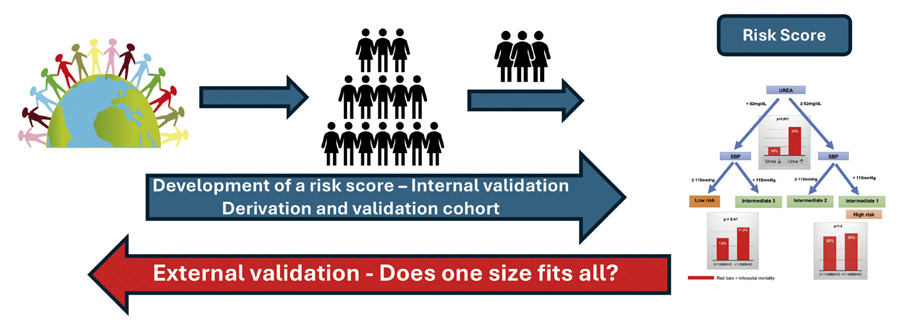
Patients hospitalized for acute heart failure present a high mortality rate, so risk stratification for in-hospital death is of utmost importance. Risk scores can help physicians to identify patients at higher risk, but it is important to validate those scores in different populations, since sociodemographic characteristics may be very heterogeneous.

Objectives

This study aimed to evaluate the ADHERE (Acute Decompensated Heart Failure Registry) risk score in a Brazilian quaternary teaching care center.

Methods

This was a retrospective cohort study involving 304 patients with acute heart failure aged ≥ 18 years old, conducted between September 2019 and July 2022. The primary endpoint was the evaluation of the ADHERE score by analysis of the discriminatory index and classification. The secondary endpoint was the evaluation of other prognostic factors for in-hospital mortality. A p-value < 0.05 was considered statistically significant.

Results

ADHERE score presented a discriminatory index of 0.69. ADHERE classification index was suboptimal, since the score did not stratify mortality risk on five strata as proposed originally. Furthermore, the score underestimates risk in the studied population. Admission serum urea was the only isolated prognostic factor for the endpoint (OR 1.043; CI 95% 1.024-1.062; p<0.001).

Conclusion

The ADHERE risk score cannot be entirely validated in our cohort, since classification was not achieved despite an ideal discriminatory index. Admission serum Urea was the only independent risk factor associated with in-hospital mortality. Our study emphasizes the importance of correct external validation of a prognostic score, especially if the demographic and clinical characteristics of cohorts are not comparable.

  • Heart Failure
  • Mortality
  • Prognosis
Read Full Article
Creative Commons Attribution (CC BY) Creative Commons license
16/01/2026 DOI: 10.36660/abc.20250031i Views 2
Central Illustration
ABCHF
Original Article

Current Diagnostic and Prognostic Applications of Cardiopulmonary Exercise Testing in Heart Failure with Preserved Ejection Fraction – A Narrative Review

Fernando Colares Barros et al. Jéssica Cristina de Cezaro Eduardo Gatti Pianca Willian Roberto Menegazzo … Fernando Luís Scolari Anderson Donelli da Silveira

Abstract

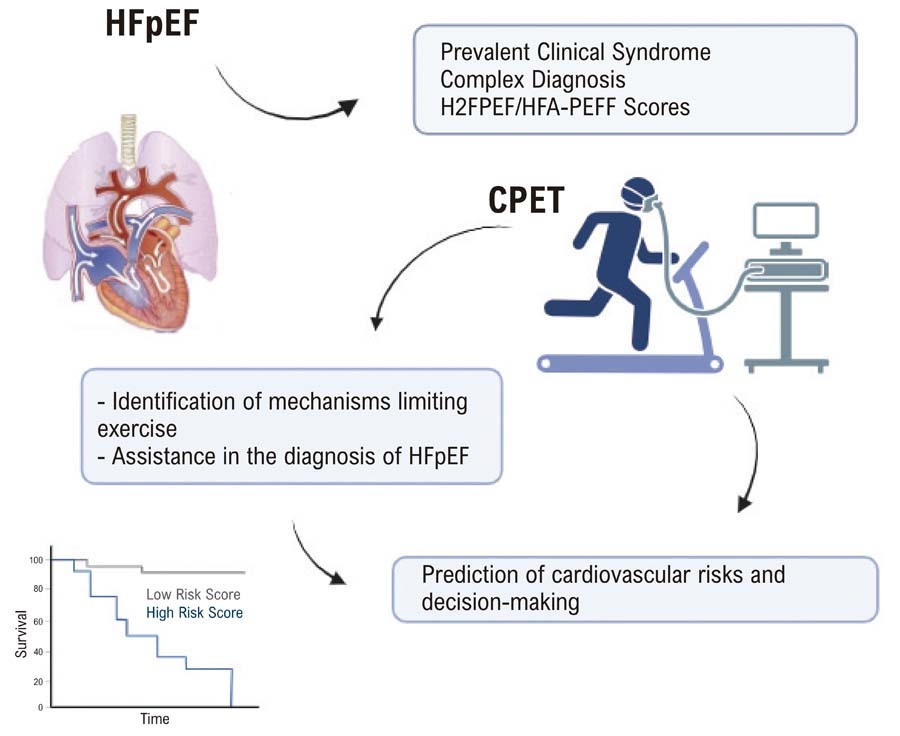
Heart failure with preserved ejection fraction (HFpEF) is a prevalent clinical syndrome with a complex diagnosis, associated with various comorbidities and high rates of cardiovascular events. Cardiopulmonary exercise testing (CPET) plays an essential role in understanding the mechanisms of exercise limitation and in complementing the diagnosis of HFpEF, but it presents several gaps to be explored in risk prediction. This article reviews the literature on current pathophysiological, diagnostic, and prognostic aspects of HFpEF. Subsequently, the role of CPET in diagnosis and prognostic prediction in HFpEF is explored. A critical analysis of the main observational and cohort studies that used CPET in this setting is performed, selected after a qualified search on the PubMed platform. For diagnostic purposes, peak VO2 is not very specific, with a high diagnostic probability for values 20 ml/kg/min. However, when peak VO2 is evaluated together with other ventilatory parameters, there is an increase in the diagnostic value of CPET in HFpEF. For prognostic purposes, variables such as peak VO2, VE/VCO2 slope, and the presence of periodic ventilation correlate with a higher risk prediction. However, there are notable sample differences between studies in HFpEF, hindering the generalization of the use of CPET in clinical practice. This review concludes that conducting prospective studies with more rigorous patient selection and using some variables adjusted for body composition differences, such as lean VO2, may allow for better incorporation of CPET in risk stratification in HFpEF.

  • Exercise Test
  • Heart Failure
  • Prognosis
Read Full Article
Creative Commons Attribution (CC BY) Creative Commons license
31/12/2025 DOI: 10.36660/abc.20250014i Views 8
Cardiopulmonary Exercise Testing in Heart Failure: Updating the Theory into Clinical Practice
ABCHF
Review Article

Cardiopulmonary Exercise Testing in Heart Failure: Updating the Theory into Clinical Practice

João Manoel Rossi Neto et al. Raphael Machado Rossi Victor B. M. Mattos Plinio J. W. Wolf … Marco Aurelio A. Finger Carolina Casadei dos Santos

Abstract

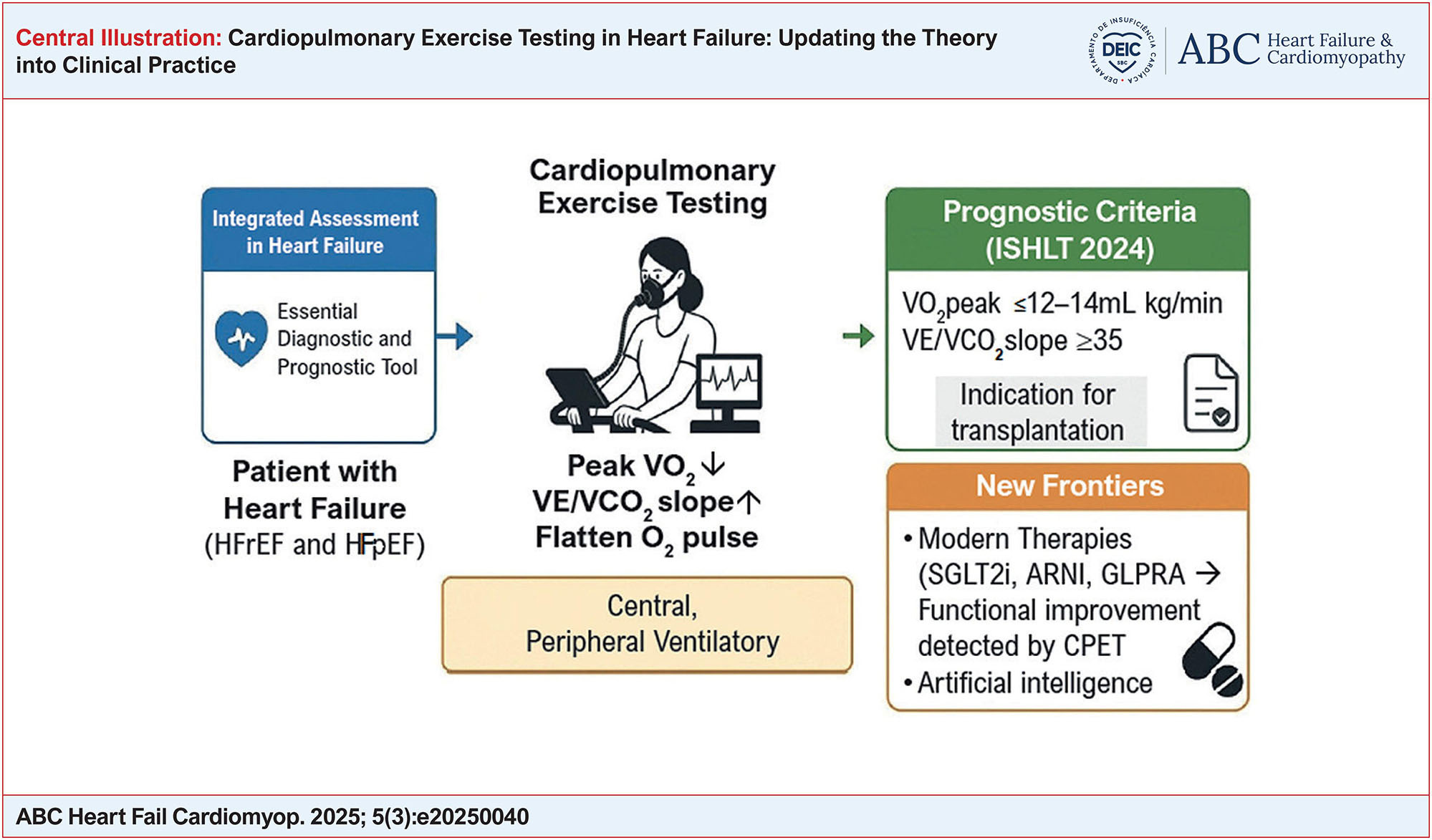
Cardiopulmonary exercise testing (CPET) is a central tool in the functional assessment of heart failure (HF), integrating cardiovascular, ventilatory, and metabolic responses into a single examination. In light of evidence published between 2023 and 2025, its diagnostic and prognostic role has been expanded, incorporating more refined pathophysiological foundations, submaximal parameters, and updated criteria for heart transplantation according to ISHLT 2024. This narrative review, based on studies indexed in PubMed, international consensus statements, and contemporary analyses, addresses the main mechanisms of exercise limitation in HF with reduced ejection fraction (HFrEF) and preserved ejection fraction (HFpEF), as well as the clinical relevance of key CPET variables, including peak VO2, VE/VCO2 slope, OUES, O2 pulse, chronotropic response, and VO2 recovery kinetics.

The body of evidence confirms that the CPET is the most comprehensive tool for characterizing cardiocirculatory, ventilatory, and peripheral limitations, with reduced peak VO2 and elevated VE/VCO2 slope remaining the most robust prognostic markers, even in submaximal tests. Recent studies also demonstrate that emerging therapies — such as SGLT2 inhibitors, ARNIs, and GLP-1 agonists — promote functional benefits detectable by CPET before cardiac structural changes, highlighting its role as a monitor of therapeutic response. Additionally, CPET remains fundamental in risk stratification and transplant decision-making, following the updated thresholds of the ISHLT. Thus, the examination is consolidated as an essential instrument in modern HF practice, integrating diagnosis, prognosis, and therapeutic monitoring, as well as guiding rehabilitation strategies and the selection of advanced therapies.

  • Cardiac Rehabilitation
  • Exercise Test
  • Gas exchange
  • Heart Failure
  • Prognosis
Read Full Article
Creative Commons Attribution (CC BY) Creative Commons license
31/12/2025 DOI: 10.36660/abchf.20250040i Views 2
The Role of Indexed Left Atrial Volume in Detecting Adverse Outcomes in Patients with Chronic Obstructive Pulmonary Disease: A Cohort Study
ABC
Original Article

The Role of Indexed Left Atrial Volume in Detecting Adverse Outcomes in Patients with Chronic Obstructive Pulmonary Disease: A Cohort Study

Maria Clara C. Sposito et al. Leticia A. Branco Jaqueline Bianchi Fernanda O. Duarte … Krissia F. Godoy Joice M. A. Rodolpho Bruna Dias de Lima Fragelli Renan S. Marinho Stella Maris Firmino Audrey Borghi Silva Fernanda Freitas Anibal Meliza Goi Roscani

Abstract

Background

Chronic obstructive pulmonary disease (COPD) is a progressive disease with high mortality, and understanding the predictors of adverse outcomes can aid in developing individualized therapeutic approaches and in making decisions regarding hospital or intensive care unit admissions.

Objective

To assess the epidemiological and laboratory profiles of patients with COPD and to correlate clinical, echocardiographic, and biomarker variables with unfavorable outcomes due to exacerbation.

Method

This was a prospective study involving patients with COPD who underwent clinical evaluation, spirometry, transthoracic echocardiography, and laboratory tests. Patients were followed for 1 year to monitor for unfavorable outcomes. The significance level considered for all analyses was p < 0.05.

Results

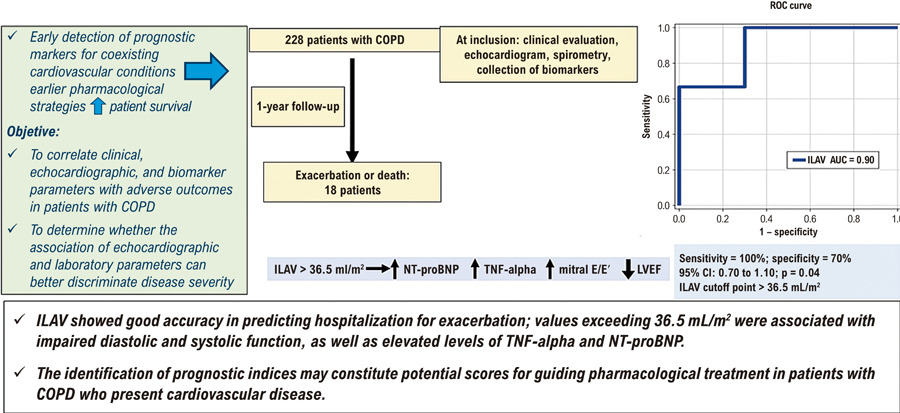
A total of 228 patients were included, with the mean age of 71 ± 9 years. The majority of patients were male (58%), and smoking (72%), hypertension (66%), and GOLD B (55%) were predominant. Indexed left atrial volume (ILAV) demonstrated good accuracy in detecting hospitalization for exacerbation, with a cutoff point of 36.5 ml/m2, yielding 100% sensitivity and 70% specificity. Patients with ILAV > 36.5 ml/m2 exhibited worsening diastolic and systolic function, as indicated by mitral E wave peak velocity in the rapid filling phase/E′ velocity of displacement of the septal or lateral mitral annulus in the rapid filling phase (E/E′) (p = 0.02) and left ventricle ejection fraction (p = 0.01), along with elevated levels of tumor necrosis factor alpha (p = 0.05) and NT-proBNP (p = 0.03).

Conclusion

ILAV may be a reliable marker for predicting unfavorable outcomes in patients with COPD. Individualized strategies should be implemented to improve disease severity and cardiovascular function.

  • Biomarkers
  • Prognosis
  • Pulmonary Emphysema
Read Full Article
Creative Commons Attribution (CC BY) Creative Commons license
19/12/2025 DOI: 10.36660/abc.20250131i
Association between the Use of Fondaparinux Plus Radial Access and Clinical Outcomes in Patients with Non-ST Elevation Acute Coronary Syndrome
ABC
Original Article

Association between the Use of Fondaparinux Plus Radial Access and Clinical Outcomes in Patients with Non-ST Elevation Acute Coronary Syndrome

Luiz Eduardo Fonteles Ritt et al. Eduardo Sahade Darze Pedro Gabriel Melo de Barros e Silva Gilson Soares Feitosa-Filho … João Victor Santos Pereira Ramos Márcia A. Viana Priscila Neri Lacerda Emanoela Lima Freitas Queila Oliveira Borges Adriano Oliveira Martins Renato Delascio Lopes

Abstract

Background:

Both fondaparinux and radial access have been associated with lower rates of major adverse cardiovascular events (MACE) in acute coronary syndrome (ACS).

Objective:

To evaluate the association between the use of fondaparinux plus radial access and clinical outcomes.

Methods:

In this study, 956 patients admitted with ACS and treated with an invasive strategy were analyzed. The primary outcome — a composite of major bleeding (according to OASIS-5 criteria) and MACE — was compared across groups defined by anticoagulation regimen (fondaparinux or enoxaparin) plus arterial access site (femoral vs. radial). A p-value < 0.05 was considered statistically significant.

Results:

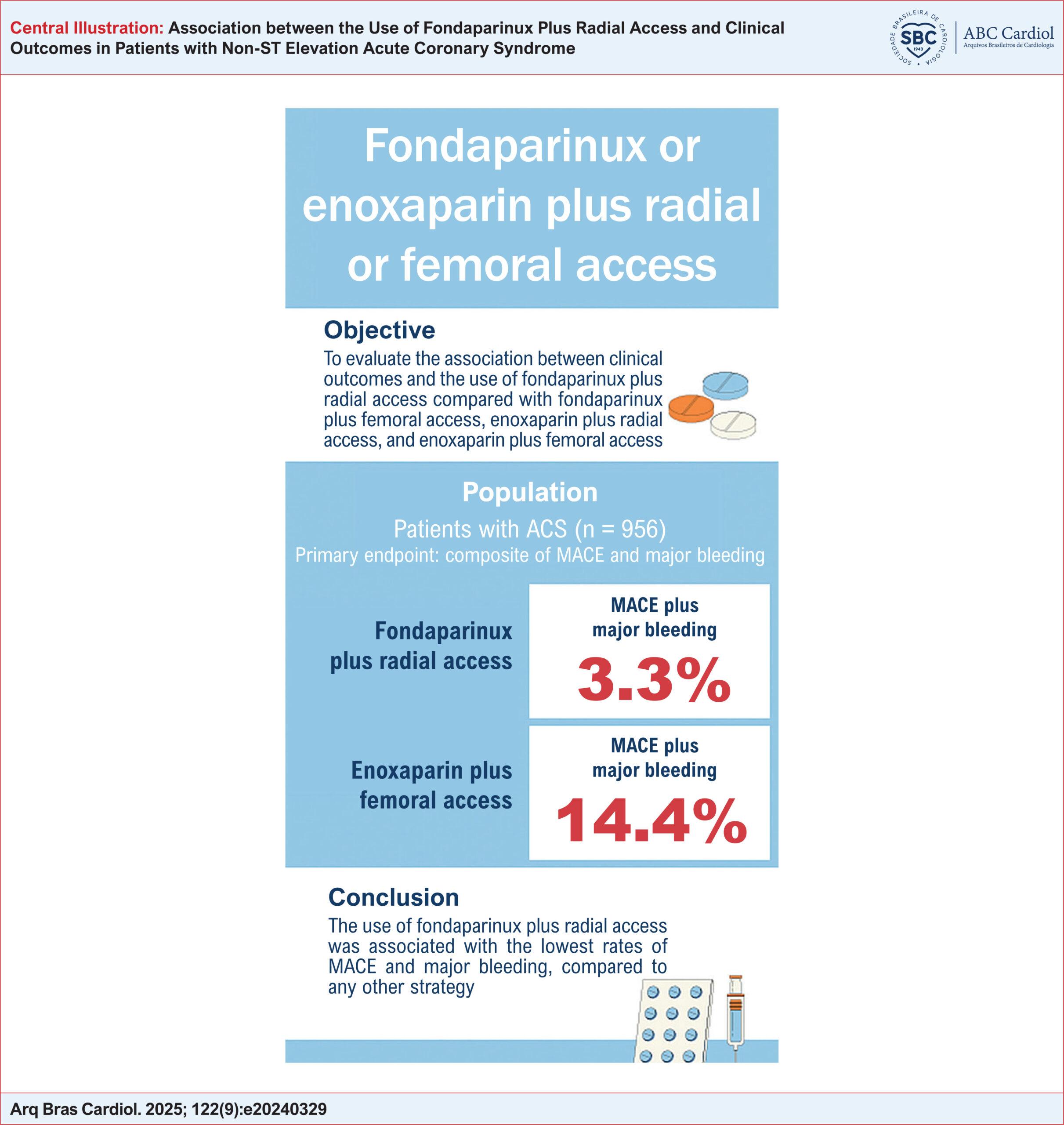
The mean age of the study population was 65 ± 12.4 years, and 49.5% presented with non-ST segment elevation myocardial infarction (NSTEMI). Fondaparinux and radial access were used concurrently in 366 patients. The primary endpoint occurred in 78 patients (8.1%): MACE in 50 (5.2%) and major bleeding in 32 (3.3%). The event rate was lowest in the fondaparinux plus radial access group (3.3%), compared with enoxaparin plus radial access (9.8%), fondaparinux plus femoral access (8.6%), and enoxaparin plus femoral access (14.4%) (p < 0.001). Multivariable analysis showed that the use of fondaparinux was associated with a 43% reduction in the primary outcome (OR, 0.57; 95% CI, 0.34-0.96; p < 0.05), and radial access was independently associated with a 54% reduction (OR, 0.46; 95% CI, 0.26-0.83; p = 0.01).

Conclusion:

The combination of fondaparinux and radial access was associated with the lowest rates of MACE and major bleeding, compared to either strategy alone.

  • acute coronary syndromes
  • Cardiac Catheterization
  • Prognosis
Read Full Article
Creative Commons Attribution (CC BY) Creative Commons license
01/12/2025 DOI: 10.36660/abc.20240329i Views 1
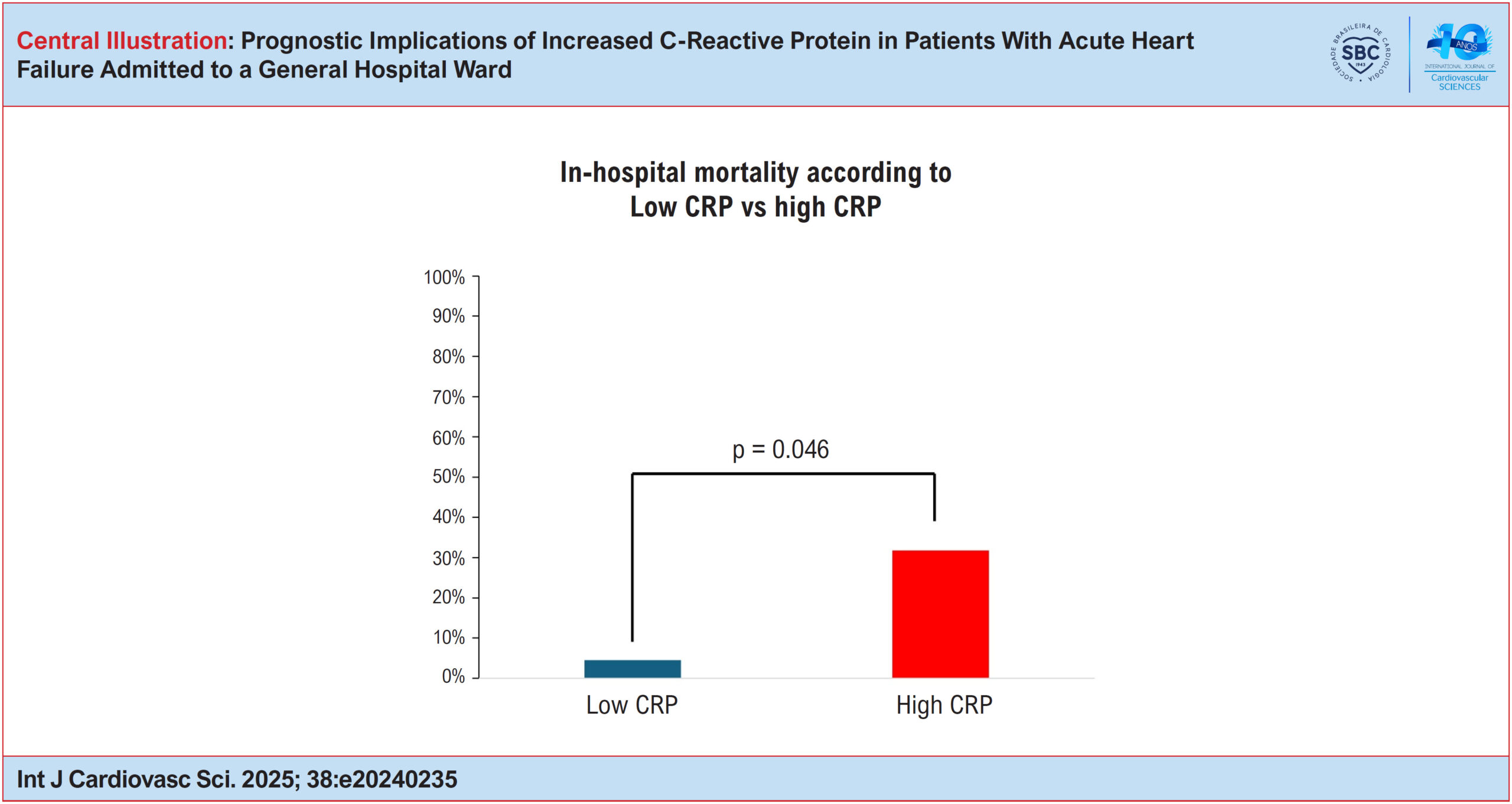
Prognostic Implications of Increased C-Reactive Protein in Patients With Acute Heart Failure Admitted to a General Hospital Ward
IJCS
Original Article

Prognostic Implications of Increased C-Reactive Protein in Patients With Acute Heart Failure Admitted to a General Hospital Ward

Vinicius Ferigato et al. Fernanda Takeyama Mario De Divitiis Giulio Checchinato Facchini … Bruna Gandra Bruno Maciel Goncalves Helder Jorge Andrade Gomes Gustavo A. B. Boros Alcides Rocha de Figueredo Junior

Abstract

Background:

C-reactive protein (CRP) is a widely available inflammatory biomarker. Its prognostic role during hospitalization in patients with acute heart failure (HF) remains unclear.

Objective:

To assess whether CRP measured at hospital admission predicts in-hospital mortality in patients with acute HF admitted to a general public hospital ward.

Methods:

This prospective study enrolled patients (≥18 years old) admitted to a medical ward with a primary diagnosis of acute HF directly from the emergency department. CRP was measured within 72 hours of hospital admission. All patients underwent a structured clinical assessment by a cardiologist and transthoracic echocardiography (TTE). A p-value <0.05 was considered statistically significant.

Results:

A total of 44 patients were included (mean age 68 ± 16 years). TTE showed left ventricular ejection fraction (LVEF) <50% in 43% of patients, preserved LVEF in 43%, and specific causes of HF in the remaining 14%. The median CRP level (2.5 mg/dL) was used to define high and low CRP groups. Reduced LVEF (<50%) was more common, and heart failure with preserved ejection fraction (HFpEF) was less frequent, in the high CRP group (p = 0.014). Clinical assessment showed no differences in hemodynamic profiles (congestion vs. perfusion). Comorbidities, renal function, and infection diagnoses were also similar between groups. In-hospital mortality was 30% in the high CRP group versus 4.8% in the low CRP group (p = 0.046). In multivariable analysis, increased CRP remained independently associated with in-hospital mortality.

Conclusion:

CRP measured near the time of hospital admission may serve as a prognostic marker for in-hospital mortality in patients with acute HF.

  • C-Reactive Protein
  • Heart Failure
  • Prognosis
Read Full Article
Creative Commons Attribution (CC BY) Creative Commons license
29/08/2025 DOI: 10.36660/ijcs.20240235
ABC
Editorial

Brazilian Evidence Reinforces the Applicability of the H2FPEF and HFA-PEFF Scores in HFpEF

Pedro Silvio Farsky

Heart failure with preserved ejection fraction (HFpEF) remains a diagnostic challenge in modern cardiology. Representing approximately half of all heart failure cases, this condition presents with complex pathophysiology, often subjective diagnostic criteria, and more limited therapeutic options., In this context, the use of diagnostic scoring systems, such as H2FPEF and HFA-PEFF, has gained importance, providing clinicians with standardized and evidence-based tools to guide both diagnosis and risk stratification.,

A prospective study conducted at a Brazilian tertiary hospital provides relevant data on the applicability of these scores in our population. Conducted between March 2019 and December 2021, the study included 103 patients diagnosed with HFpEF, who were followed for approximately 2.4 years. In addition to clinical and echocardiographic characterization, all patients underwent exercise testing, and both the H2FPEF and HFA-PEFF scores were calculated. Patients were then categorized into intermediate- and high-probability groups according to the score points obtained and followed for the composite outcome of all-cause mortality and heart failure hospitalizations.

[…]

  • Diastolic Heart Failure
  • Prognosis
  • Risk Assessment
Read Full Article
Creative Commons Attribution (CC BY) Creative Commons license
29/08/2025 DOI: 10.36660/abc.20250361i Views 2
Central Illustration
ABC
Original Article

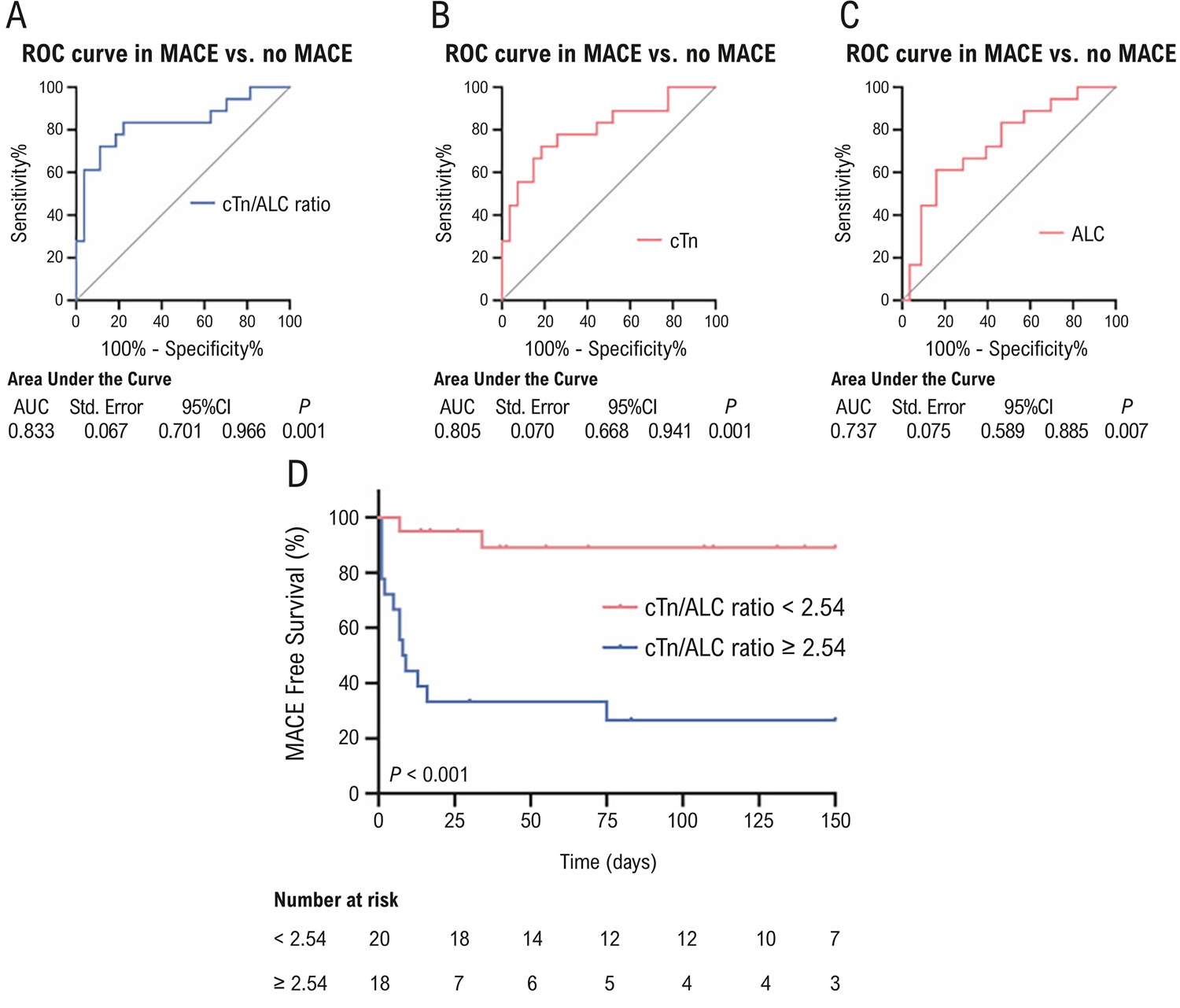
Prognostic Value of Troponin to Lymphocyte Ratio in Patients with Immune Checkpoint Inhibitor-associated Myocarditis

Wanwen Chen et al. Wenhao Zhang Caiyin Luo Junying Cai … Xinqing Lin Chengzhi Zhou Yuwen He

Abstract

Background

Immune checkpoint inhibitor (ICI)-associated myocarditis is a rare but life-threatening immune-related adverse event (irAE). Cardiac troponin (cTn) and absolute lymphocyte count (ALC) have been reported to be associated with ICI-myocarditis.

Objective

We aimed to investigate the prognostic value of the combination of these two features (cTn/ALC ratio) in ICI-associated myocarditis.

Methods

Our center performed a retrospective analysis of 46 patients with ICI myocarditis (cases) and 46 patients without myocarditis after receiving ICI (controls). We obtained data on cardiac enzymes, routine blood parameters, and other clinical biomarkers. Statistical significance was defined as a two-sided α level of 0.05. The association between these covariates and the clinical outcomes of ICI-mediated myocarditis was also tested.

Results

Abnormally elevated cTn (p < 0.001), cTn/ALC ratio (p < 0.001), and decreased ALC (p < 0.001) were observed in patients who developed ICI-myocarditis. The cTn/ALC ratio was associated with the development of severe myocarditis (OR, 5.05; 95% CI, 1.22-20.84; p = 0.025). Survival analysis and Cox regression analysis indicated that a higher cTn/ALC ratio emerged as a significant independent predictor for major adverse cardiac events (MACE) [HR, 5.64; 95%CI, 1.43-22.34; p = 0.014].

Conclusions

An increase in the cTn/ALC ratio was associated with the severity of ICI-myocarditis and could be an effective predictor of poor prognosis in patients with ICI-associated myocarditis.

  • Immune Checkpoint Inhibitors
  • Lymphocyte Count
  • Myocarditis
  • Prognosis
  • Troponin
Read Full Article
Creative Commons Attribution (CC BY) Creative Commons license
18/08/2025 DOI: 10.36660/abc.20250047i Views 1

Could not load more articles. Please try again.

How to cite this article

EndNote RIS

Electronic Document Format (Vancouver)

Carvalho MRM. Beyond Baseline: Dynamic Prognostic Assessment in Acute Pulmonary Embolism. Arquivos Brasileiros de Cardiologia 2026;123(7):e2060580.

Electronic Document Format (ABNT)

Carvalho, Marcio Roberto Moraes de. Beyond Baseline: Dynamic Prognostic Assessment in Acute Pulmonary Embolism. Arquivos Brasileiros de Cardiologia, v. 123, n. 7, e2060580, Sep. 2026.

Electronic Document Format (APA)

Carvalho, M. R. M. (2026). Beyond Baseline: Dynamic Prognostic Assessment in Acute Pulmonary Embolism. Arquivos Brasileiros de Cardiologia, 123(7), e2060580.

Electronic Document Format (ISO)

Carvalho, Marcio Roberto Moraes de. Beyond Baseline: Dynamic Prognostic Assessment in Acute Pulmonary Embolism. Arquivos Brasileiros de Cardiologia [online]. 2026, vol. 123, n. 7, [cited 2026-10-14], e2060580. Available from: <https://journals.cardiol.br/en/article/beyond-baseline-dynamic-prognostic-assessment-in-acute-pulmonary-embolism/>. ISSN 0066-782X

EndNote RIS

Electronic Document Format (Vancouver)

Quintana MA, Perea J, Villarreal R, Soto M, Castro M, Cortês R, Sanhueza P, et al. Persistent Right Ventricular Dysfunction and Hemodynamic Evolution Predict In-Hospital Deterioration in Intermediate-High- and High-Risk Pulmonary Embolism. Arquivos Brasileiros de Cardiologia 2026;123(7):e20260468.

Electronic Document Format (ABNT)

Quintana, Miguel A.; Perea, Joaquín; Villarreal, Ricardo; Soto, Mauricio; Castro, Marildes; Cortês, Rafael; Sanhueza, Patricio; Saavedra, Iván; Quispe, Yhaquelina; Tenezaca, Roger; Colque, Roberto; Arias, Alexandra; Toquica, Alex Rivera; Álvarez, Manuel; Pérez, Ysmenia D.; Morejón, Paola; Fernández, Karina G.; Mogollón, Adriana; Cardona, Marcelo; Pérez, Gonzalo Emanuel; López-Ruiz, Arnaldo. Persistent Right Ventricular Dysfunction and Hemodynamic Evolution Predict In-Hospital Deterioration in Intermediate-High- and High-Risk Pulmonary Embolism. Arquivos Brasileiros de Cardiologia, v. 123, n. 7, e20260468, Sep. 2026.

Electronic Document Format (APA)

Quintana, M. A., Perea, J., Villarreal, R., Soto, M., Castro, M., Cortês, R., Sanhueza, P., Saavedra, I., Quispe, Y., Tenezaca, R., Colque, R., Arias, A., Toquica, A. R., Álvarez, M., Pérez, Y. D., Morejón, P., Fernández, K. G., Mogollón, A., Cardona, M., Pérez, G. E., & López-Ruiz, A. (2026). Persistent Right Ventricular Dysfunction and Hemodynamic Evolution Predict In-Hospital Deterioration in Intermediate-High- and High-Risk Pulmonary Embolism. Arquivos Brasileiros de Cardiologia, 123(7), e20260468.

Electronic Document Format (ISO)

Quintana, Miguel A. and Perea, Joaquín and Villarreal, Ricardo and Soto, Mauricio and Castro, Marildes and Cortês, Rafael and Sanhueza, Patricio and Saavedra, Iván and Quispe, Yhaquelina and Tenezaca, Roger and Colque, Roberto and Arias, Alexandra and Toquica, Alex Rivera and Álvarez, Manuel and Pérez, Ysmenia D. and Morejón, Paola and Fernández, Karina G. and Mogollón, Adriana and Cardona, Marcelo and Pérez, Gonzalo Emanuel and López-Ruiz, Arnaldo. Persistent Right Ventricular Dysfunction and Hemodynamic Evolution Predict In-Hospital Deterioration in Intermediate-High- and High-Risk Pulmonary Embolism. Arquivos Brasileiros de Cardiologia [online]. 2026, vol. 123, n. 7, [cited 2026-10-14], e20260468. Available from: <https://journals.cardiol.br/en/article/persistent-right-ventricular-dysfunction-and-hemodynamic-evolution-predict-in-hospital-deterioration-in-intermediate-high-and-high-risk-pulmonary-embolism/>. ISSN 0066-782X

EndNote RIS

Electronic Document Format (Vancouver)

Akkaya H, Öztürk M. HALP Score as a Novel Marker Associated with Coronary Collateral Circulation in Patients with Chronic Total Occlusion. Arquivos Brasileiros de Cardiologia 2026;123(7):e20260206.

Electronic Document Format (ABNT)

Akkaya, Hasan; Öztürk, Muhammet. HALP Score as a Novel Marker Associated with Coronary Collateral Circulation in Patients with Chronic Total Occlusion. Arquivos Brasileiros de Cardiologia, v. 123, n. 7, e20260206, Aug. 2026.

Electronic Document Format (APA)

Akkaya, H., & Öztürk, M. (2026). HALP Score as a Novel Marker Associated with Coronary Collateral Circulation in Patients with Chronic Total Occlusion. Arquivos Brasileiros de Cardiologia, 123(7), e20260206.

Electronic Document Format (ISO)

Akkaya, Hasan and Öztürk, Muhammet. HALP Score as a Novel Marker Associated with Coronary Collateral Circulation in Patients with Chronic Total Occlusion. Arquivos Brasileiros de Cardiologia [online]. 2026, vol. 123, n. 7, [cited 2026-10-14], e20260206. Available from: <https://journals.cardiol.br/en/article/halp-score-as-a-novel-marker-associated-with-coronary-collateral-circulation-in-patients-with-chronic-total-occlusion/>. ISSN 0066-782X

EndNote RIS

Electronic Document Format (Vancouver)

Medrado VSS, Morais JEC, Silva DSO, Azevedo JPL, Almeida TG, Tenório PP. Prognostic Value of C-reactive Protein (CRP) in Patients With Acute Heart Failure (AHF) Admitted to General Wards in Brazil. International Journal of Cardiovascular Sciences 2026;39:e20260053.

Electronic Document Format (ABNT)

Medrado, Vanessa Souza Silva; Morais, João Emmanuel Coelho de; Silva, Domingos Sávio de Oliveira e; Azevedo, João Pedro Lopes; Almeida, Thalisson Gonçalves; Tenório, Pedro Pereira. Prognostic Value of C-reactive Protein (CRP) in Patients With Acute Heart Failure (AHF) Admitted to General Wards in Brazil. International Journal of Cardiovascular Sciences, v. 39, e20260053, Aug. 2026.

Electronic Document Format (APA)

Medrado, V. S. S., Morais, J. E. C. , Silva, D. S. O. , Azevedo, J. P. L., Almeida, T. G., & Tenório, P. P. (2026). Prognostic Value of C-reactive Protein (CRP) in Patients With Acute Heart Failure (AHF) Admitted to General Wards in Brazil. International Journal of Cardiovascular Sciences, 39, e20260053.

Electronic Document Format (ISO)

Medrado, Vanessa Souza Silva and Morais, João Emmanuel Coelho de and Silva, Domingos Sávio de Oliveira e and Azevedo, João Pedro Lopes and Almeida, Thalisson Gonçalves and Tenório, Pedro Pereira. Prognostic Value of C-reactive Protein (CRP) in Patients With Acute Heart Failure (AHF) Admitted to General Wards in Brazil. International Journal of Cardiovascular Sciences [online]. 2026, vol. 39, [cited 2026-10-14], e20260053. Available from: <https://journals.cardiol.br/en/article/prognostic-value-of-c-reactive-protein-crp-in-patients-with-acute-heart-failure-ahf-admitted-to-general-wards-in-brazil/>. ISSN 2359-4802

EndNote RIS

Electronic Document Format (Vancouver)

Rimolo LSM, Villacorta H. Prognostic Value of Growth Differentiation Factor-15 in Heart Failure: A Systematic Review with Meta-Analysis. ABC Heart Fail Cardiomyop 2026;6:e20260006.

Electronic Document Format (ABNT)

Rimolo, Lorena dos Santos Marreto; Villacorta, Humberto. Prognostic Value of Growth Differentiation Factor-15 in Heart Failure: A Systematic Review with Meta-Analysis. ABC Heart Fail Cardiomyop, v. 6, e20260006, Jul. 2026.

Electronic Document Format (APA)

Rimolo, L. S. M., & Villacorta, H. (2026). Prognostic Value of Growth Differentiation Factor-15 in Heart Failure: A Systematic Review with Meta-Analysis. ABC Heart Fail Cardiomyop, 6, e20260006.

Electronic Document Format (ISO)

Rimolo, Lorena dos Santos Marreto and Villacorta, Humberto. Prognostic Value of Growth Differentiation Factor-15 in Heart Failure: A Systematic Review with Meta-Analysis. ABC Heart Fail Cardiomyop [online]. 2026, vol. 6, [cited 2026-10-14], e20260006. Available from: <https://journals.cardiol.br/en/article/prognostic-value-of-growth-differentiation-factor-15-in-heart-failure-a-systematic-review-with-meta-analysis/>

EndNote RIS

Electronic Document Format (Vancouver)

Santana AUL, Shinjo SK. Prognostic Value of the Hata Angiographic Classification for Long-Term Outcomes in Takayasu Arteritis: A Single-Center, Retrospective Study. Arquivos Brasileiros de Cardiologia 2026;123(6):e20250786.

Electronic Document Format (ABNT)

Santana, Anisio Uchoa Leite; Shinjo, Samuel Katsuyuki. Prognostic Value of the Hata Angiographic Classification for Long-Term Outcomes in Takayasu Arteritis: A Single-Center, Retrospective Study. Arquivos Brasileiros de Cardiologia, v. 123, n. 6, e20250786, Jul. 2026.

Electronic Document Format (APA)

Santana, A. U. L., & Shinjo, S. K. (2026). Prognostic Value of the Hata Angiographic Classification for Long-Term Outcomes in Takayasu Arteritis: A Single-Center, Retrospective Study. Arquivos Brasileiros de Cardiologia, 123(6), e20250786.

Electronic Document Format (ISO)

Santana, Anisio Uchoa Leite and Shinjo, Samuel Katsuyuki. Prognostic Value of the Hata Angiographic Classification for Long-Term Outcomes in Takayasu Arteritis: A Single-Center, Retrospective Study. Arquivos Brasileiros de Cardiologia [online]. 2026, vol. 123, n. 6, [cited 2026-10-14], e20250786. Available from: <https://journals.cardiol.br/en/article/prognostic-value-of-the-hata-angiographic-classification-for-long-term-outcomes-in-takayasu-arteritis-a-single-center-retrospective-study/>. ISSN 0066-782X

EndNote RIS

Electronic Document Format (Vancouver)

Siqueira RFC, Viana TT, Barroso ND, Coutinho NV, Martins LPO, Gonçalves JPF, Almeida PV, et al. The Value of NT-ProBNP in Predicting Cardiovascular Events in Patients Hospitalized for Decompensated Heart Failure. ABC Heart Fail Cardiomyop 2026;6:e20260008.

Electronic Document Format (ABNT)

Siqueira, Rafael Felipe Coelho; Viana, Tainá Teixeira; Barroso, Natália Duarte; Coutinho, Nina Vieira; Martins, Luiz Paulo Oliveira; Gonçalves, João Pedro Fernandes; Almeida, Pedro Vogel; Rocha, Djaine Haila Silva; Barros, Raisa Mainarte Franco; Melo, Rodrigo Morel Vieira. The Value of NT-ProBNP in Predicting Cardiovascular Events in Patients Hospitalized for Decompensated Heart Failure. ABC Heart Fail Cardiomyop, v. 6, e20260008, Jul. 2026.

Electronic Document Format (APA)

Siqueira, R. F. C., Viana, T. T., Barroso, N. D., Coutinho, N. V., Martins, L. P. O., Gonçalves, J. P. F., Almeida, P. V., Rocha, D. H. S., Barros, R. M. F., & Melo, R. M. V. (2026). The Value of NT-ProBNP in Predicting Cardiovascular Events in Patients Hospitalized for Decompensated Heart Failure. ABC Heart Fail Cardiomyop, 6, e20260008.

Electronic Document Format (ISO)

Siqueira, Rafael Felipe Coelho and Viana, Tainá Teixeira and Barroso, Natália Duarte and Coutinho, Nina Vieira and Martins, Luiz Paulo Oliveira and Gonçalves, João Pedro Fernandes and Almeida, Pedro Vogel and Rocha, Djaine Haila Silva and Barros, Raisa Mainarte Franco and Melo, Rodrigo Morel Vieira. The Value of NT-ProBNP in Predicting Cardiovascular Events in Patients Hospitalized for Decompensated Heart Failure. ABC Heart Fail Cardiomyop [online]. 2026, vol. 6, [cited 2026-10-14], e20260008. Available from: <https://journals.cardiol.br/en/article/the-value-of-nt-probnp-in-predicting-cardiovascular-events-in-patients-hospitalized-for-decompensated-heart-failure/>

EndNote RIS

Electronic Document Format (Vancouver)

Leal JCF, Gomes RAF, Gomes WJ. Surgery is the Means, Not the End: Late Follow-Up of Coronary Artery Bypass Graft Surgery. Arquivos Brasileiros de Cardiologia 2026;123(4):e20260351.

Electronic Document Format (ABNT)

Leal, João Carlos Ferreira; Gomes, Rafael Alessandro Ferreira; Gomes, Walter J.. Surgery is the Means, Not the End: Late Follow-Up of Coronary Artery Bypass Graft Surgery. Arquivos Brasileiros de Cardiologia, v. 123, n. 4, e20260351, Jul. 2026.

Electronic Document Format (APA)

Leal, J. C. F., Gomes, R. A. F., & Gomes, W. J. (2026). Surgery is the Means, Not the End: Late Follow-Up of Coronary Artery Bypass Graft Surgery. Arquivos Brasileiros de Cardiologia, 123(4), e20260351.

Electronic Document Format (ISO)

Leal, João Carlos Ferreira and Gomes, Rafael Alessandro Ferreira and Gomes, Walter J.. Surgery is the Means, Not the End: Late Follow-Up of Coronary Artery Bypass Graft Surgery. Arquivos Brasileiros de Cardiologia [online]. 2026, vol. 123, n. 4, [cited 2026-10-14], e20260351. Available from: <https://journals.cardiol.br/en/article/surgery-is-the-means-not-the-end-late-follow-up-of-coronary-artery-bypass-graft-surgery/>. ISSN 0066-782X

EndNote RIS

Electronic Document Format (Vancouver)

Bozzi ICRS, Lima MCAG, Ribeiro ALP, Paixão GMM. Artificial Intelligence-Derived ECG-Age as a Predictor of Mortality and Cardiovascular Events: A Systematic Review and Meta-Analysis. Arquivos Brasileiros de Cardiologia 2026;123(4):e20250650.

Electronic Document Format (ABNT)

Bozzi, Isadora Cristine Reis Sguizzato; Lima, Maria Clara de Araujo Gontijo; Ribeiro, Antonio Luiz Pinho; Paixão, Gabriela Miana de Mattos. Artificial Intelligence-Derived ECG-Age as a Predictor of Mortality and Cardiovascular Events: A Systematic Review and Meta-Analysis. Arquivos Brasileiros de Cardiologia, v. 123, n. 4, e20250650, Jun. 2026.

Electronic Document Format (APA)

Bozzi, I. C. R. S., Lima, M. C. A. G., Ribeiro, A. L. P., & Paixão, G. M. M. (2026). Artificial Intelligence-Derived ECG-Age as a Predictor of Mortality and Cardiovascular Events: A Systematic Review and Meta-Analysis. Arquivos Brasileiros de Cardiologia, 123(4), e20250650.

Electronic Document Format (ISO)

Bozzi, Isadora Cristine Reis Sguizzato and Lima, Maria Clara de Araujo Gontijo and Ribeiro, Antonio Luiz Pinho and Paixão, Gabriela Miana de Mattos. Artificial Intelligence-Derived ECG-Age as a Predictor of Mortality and Cardiovascular Events: A Systematic Review and Meta-Analysis. Arquivos Brasileiros de Cardiologia [online]. 2026, vol. 123, n. 4, [cited 2026-10-14], e20250650. Available from: <https://journals.cardiol.br/en/article/artificial-intelligence-derived-ecg-age-as-a-predictor-of-mortality-and-cardiovascular-events-a-systematic-review-and-meta-analysis/>. ISSN 0066-782X

EndNote RIS

Electronic Document Format (Vancouver)

Pinto-Filho MM, Faria LG, Foppa M, Santos ABS, Barreto SM, Ribeiro ALP. Accuracy and Prognosis of Electrocardiographic and Echocardiographic Left Ventricular Hypertrophy in Brazilian Adults – ELSA-Brasil Study. Arquivos Brasileiros de Cardiologia 2026;123(4):e20250789.

Electronic Document Format (ABNT)

Pinto-Filho, Marcelo M.; Faria, Lillian Guimarães de; Foppa, Murilo; Santos, Angela Barreto Santiago; Barreto, Sandhi Maria; Ribeiro, Antonio Luiz Pinho. Accuracy and Prognosis of Electrocardiographic and Echocardiographic Left Ventricular Hypertrophy in Brazilian Adults – ELSA-Brasil Study. Arquivos Brasileiros de Cardiologia, v. 123, n. 4, e20250789, Jun. 2026.

Electronic Document Format (APA)

Pinto-Filho, M. M., Faria, L. G. , Foppa, M., Santos, A. B. S., Barreto, S. M., & Ribeiro, A. L. P. (2026). Accuracy and Prognosis of Electrocardiographic and Echocardiographic Left Ventricular Hypertrophy in Brazilian Adults – ELSA-Brasil Study. Arquivos Brasileiros de Cardiologia, 123(4), e20250789.

Electronic Document Format (ISO)

Pinto-Filho, Marcelo M. and Faria, Lillian Guimarães de and Foppa, Murilo and Santos, Angela Barreto Santiago and Barreto, Sandhi Maria and Ribeiro, Antonio Luiz Pinho. Accuracy and Prognosis of Electrocardiographic and Echocardiographic Left Ventricular Hypertrophy in Brazilian Adults – ELSA-Brasil Study. Arquivos Brasileiros de Cardiologia [online]. 2026, vol. 123, n. 4, [cited 2026-10-14], e20250789. Available from: <https://journals.cardiol.br/en/article/accuracy-and-prognosis-of-electrocardiographic-and-echocardiographic-left-ventricular-hypertrophy-in-brazilian-adults-elsa-brasil-study/>. ISSN 0066-782X

EndNote RIS

Electronic Document Format (Vancouver)

Rezende MF, Yahiro DS, Fernandes FA, Azevedo J, Mesquita CT. Prognostic Value of Myocardial Perfusion Scintigraphy with IQ∙SPECT Technology in Patients with Suspected or Known Coronary Artery Disease. International Journal of Cardiovascular Sciences 2026;39:e20240202.

Electronic Document Format (ABNT)

Rezende, Maria Fernanda; Yahiro, Davi Shunji; Fernandes, Fernando de Amorim; Azevedo, Jader; Mesquita, Claudio Tinoco. Prognostic Value of Myocardial Perfusion Scintigraphy with IQ∙SPECT Technology in Patients with Suspected or Known Coronary Artery Disease. International Journal of Cardiovascular Sciences, v. 39, e20240202, May. 2026.

Electronic Document Format (APA)

Rezende, M. F., Yahiro, D. S., Fernandes, F. A., Azevedo, J., & Mesquita, C. T. (2026). Prognostic Value of Myocardial Perfusion Scintigraphy with IQ∙SPECT Technology in Patients with Suspected or Known Coronary Artery Disease. International Journal of Cardiovascular Sciences, 39, e20240202.

Electronic Document Format (ISO)

Rezende, Maria Fernanda and Yahiro, Davi Shunji and Fernandes, Fernando de Amorim and Azevedo, Jader and Mesquita, Claudio Tinoco. Prognostic Value of Myocardial Perfusion Scintigraphy with IQ∙SPECT Technology in Patients with Suspected or Known Coronary Artery Disease. International Journal of Cardiovascular Sciences [online]. 2026, vol. 39, [cited 2026-10-14], e20240202. Available from: <https://journals.cardiol.br/en/article/prognostic-value-of-myocardial-perfusion-scintigraphy-with-iq%e2%88%99spect-technology-in-patients-with-suspected-or-known-coronary-artery-disease/>. ISSN 2359-4802

EndNote RIS

Electronic Document Format (Vancouver)

Paula GG, Garbin HI, Kaminski ME, Mendonça DD, Souza GC, Rohde LE, Silva Neto LB, et al. Performance of the MAGGIC Score in Individuals with Heart Failure: Validation in a Brazilian Population. Arquivos Brasileiros de Cardiologia 2026;123(3):e20250614.

Electronic Document Format (ABNT)

Paula, Gabriela Gomes de; Garbin, Henrique Iahnke; Kaminski, Maria Eduarda; Mendonça, Dayana Dias; Souza, Gabriela Corrêa; Rohde, Luis Eduardo; Silva Neto, Luis Beck da; Biolo, Andreia. Performance of the MAGGIC Score in Individuals with Heart Failure: Validation in a Brazilian Population. Arquivos Brasileiros de Cardiologia, v. 123, n. 3, e20250614, Apr. 2026.

Electronic Document Format (APA)

Paula, G. G. , Garbin, H. I., Kaminski, M. E., Mendonça, D. D., Souza, G. C., Rohde, L. E., Silva Neto, L. B. , & Biolo, A. (2026). Performance of the MAGGIC Score in Individuals with Heart Failure: Validation in a Brazilian Population. Arquivos Brasileiros de Cardiologia, 123(3), e20250614.

Electronic Document Format (ISO)

Paula, Gabriela Gomes de and Garbin, Henrique Iahnke and Kaminski, Maria Eduarda and Mendonça, Dayana Dias and Souza, Gabriela Corrêa and Rohde, Luis Eduardo and Silva Neto, Luis Beck da and Biolo, Andreia. Performance of the MAGGIC Score in Individuals with Heart Failure: Validation in a Brazilian Population. Arquivos Brasileiros de Cardiologia [online]. 2026, vol. 123, n. 3, [cited 2026-10-14], e20250614. Available from: <https://journals.cardiol.br/en/article/performance-of-the-maggic-score-in-individuals-with-heart-failure-validation-in-a-brazilian-population/>. ISSN 0066-782X

EndNote RIS

Electronic Document Format (Vancouver)

Costa-Filho RC, Faria-Neto HCC. Forty Years of Silent Revolutions in ICUs: From Clinical Records to Intelligent and Predictive Surveillance. International Journal of Cardiovascular Sciences 2026;39:e20250255.

Electronic Document Format (ABNT)

Costa-Filho, Rubens Carmo; Faria-Neto, Hugo Caire Castro. Forty Years of Silent Revolutions in ICUs: From Clinical Records to Intelligent and Predictive Surveillance. International Journal of Cardiovascular Sciences, v. 39, e20250255, Apr. 2026.

Electronic Document Format (APA)

Costa-Filho, R. C., & Faria-Neto, H. C. C. (2026). Forty Years of Silent Revolutions in ICUs: From Clinical Records to Intelligent and Predictive Surveillance. International Journal of Cardiovascular Sciences, 39, e20250255.

Electronic Document Format (ISO)

Costa-Filho, Rubens Carmo and Faria-Neto, Hugo Caire Castro. Forty Years of Silent Revolutions in ICUs: From Clinical Records to Intelligent and Predictive Surveillance. International Journal of Cardiovascular Sciences [online]. 2026, vol. 39, [cited 2026-10-14], e20250255. Available from: <https://journals.cardiol.br/en/article/forty-years-of-silent-revolutions-in-icus-from-clinical-records-to-intelligent-and-predictive-surveillance/>. ISSN 2359-4802

EndNote RIS

Electronic Document Format (Vancouver)

Salgado AA, Bernardo MPL, Fernandes MR. My Approach to VExUS Assessment Using Transesophageal Echocardiography: A Step-by-Step Performance Guide. ABC Imagem Cardiovascular 2026;39(1):e20260012.

Electronic Document Format (ABNT)

Salgado, Angelo Antunes; Bernardo, Marcos Paulo Lacerda; Fernandes, Marcelo Ramalho. My Approach to VExUS Assessment Using Transesophageal Echocardiography: A Step-by-Step Performance Guide. ABC Imagem Cardiovascular, v. 39, n. 1, e20260012, Apr. 2026.

Electronic Document Format (APA)

Salgado, A. A., Bernardo, M. P. L., & Fernandes, M. R. (2026). My Approach to VExUS Assessment Using Transesophageal Echocardiography: A Step-by-Step Performance Guide. ABC Imagem Cardiovascular, 39(1), e20260012.

Electronic Document Format (ISO)

Salgado, Angelo Antunes and Bernardo, Marcos Paulo Lacerda and Fernandes, Marcelo Ramalho. My Approach to VExUS Assessment Using Transesophageal Echocardiography: A Step-by-Step Performance Guide. ABC Imagem Cardiovascular [online]. 2026, vol. 39, n. 1, [cited 2026-10-14], e20260012. Available from: <https://journals.cardiol.br/en/article/my-approach-to-vexus-assessment-using-transesophageal-echocardiography-a-step-by-step-performance-guide/>. ISSN 2318-8219

EndNote RIS

Electronic Document Format (Vancouver)

Kranjec I. Coronary Artery Disease and Chronic Kidney Disease: A Tale of Two Organs. Arquivos Brasileiros de Cardiologia 2026;123(1):e20260028.

Electronic Document Format (ABNT)

Kranjec, Igor. Coronary Artery Disease and Chronic Kidney Disease: A Tale of Two Organs. Arquivos Brasileiros de Cardiologia, v. 123, n. 1, e20260028, Mar. 2026.

Electronic Document Format (APA)

Kranjec, I. (2026). Coronary Artery Disease and Chronic Kidney Disease: A Tale of Two Organs. Arquivos Brasileiros de Cardiologia, 123(1), e20260028.

Electronic Document Format (ISO)

Kranjec, Igor. Coronary Artery Disease and Chronic Kidney Disease: A Tale of Two Organs. Arquivos Brasileiros de Cardiologia [online]. 2026, vol. 123, n. 1, [cited 2026-10-14], e20260028. Available from: <https://journals.cardiol.br/en/article/coronary-artery-disease-and-chronic-kidney-disease-a-tale-of-two-organs/>. ISSN 0066-782X

EndNote RIS

Electronic Document Format (Vancouver)

Santana AUL, Shinjo SK. Exploring the Correlations between Initial Clinical and Radiological Manifestations in Takayasu’s Arteritis. Arquivos Brasileiros de Cardiologia 2026;122(12):e20250534.

Electronic Document Format (ABNT)

Santana, Anísio Uchoa Leite; Shinjo, Samuel Katsuyuki. Exploring the Correlations between Initial Clinical and Radiological Manifestations in Takayasu’s Arteritis. Arquivos Brasileiros de Cardiologia, v. 122, n. 12, e20250534, Feb. 2026.

Electronic Document Format (APA)

Santana, A. U. L., & Shinjo, S. K. (2026). Exploring the Correlations between Initial Clinical and Radiological Manifestations in Takayasu’s Arteritis. Arquivos Brasileiros de Cardiologia, 122(12), e20250534.

Electronic Document Format (ISO)

Santana, Anísio Uchoa Leite and Shinjo, Samuel Katsuyuki. Exploring the Correlations between Initial Clinical and Radiological Manifestations in Takayasu’s Arteritis. Arquivos Brasileiros de Cardiologia [online]. 2026, vol. 122, n. 12, [cited 2026-10-14], e20250534. Available from: <https://journals.cardiol.br/en/article/exploring-the-correlations-between-initial-clinical-and-radiological-manifestations-in-takayasus-arteritis/>. ISSN 0066-782X

EndNote RIS

Electronic Document Format (Vancouver)

Wajsbrot BR, Sales ALF, Feitosa ALS, Barros CP, Setta DXB, Albuquerque FN, Bittencourt MI, et al. Assessment of the Accuracy of the ADHERE Score in a Brazilian Acute Heart Failure Cohort. Arquivos Brasileiros de Cardiologia 2026;122(11):e20250031.

Electronic Document Format (ABNT)

Wajsbrot, Bruno Reznik; Sales, Ana Luiza Ferreira; Feitosa, Andre Luis Sales; Barros, Carolina Pereira de; Setta, Daniel Xavier de Brito; Albuquerque, Felipe Neves de; Bittencourt, Marcelo Imbroinise; Spineti, Pedro Pimenta de Mello; Rego, Simone Offrede; Albuquerque, Denilson Campos de; Esporcatte, Roberto; Mourilhe-Rocha, Ricardo. Assessment of the Accuracy of the ADHERE Score in a Brazilian Acute Heart Failure Cohort. Arquivos Brasileiros de Cardiologia, v. 122, n. 11, e20250031, Jan. 2026.

Electronic Document Format (APA)

Wajsbrot, B. R., Sales, A. L. F., Feitosa, A. L. S., Barros, C. P. , Setta, D. X. B., Albuquerque, F. N. , Bittencourt, M. I., Spineti, P. P. M., Rego, S. O., Albuquerque, D. C. , Esporcatte, R., & Mourilhe-Rocha, R. (2026). Assessment of the Accuracy of the ADHERE Score in a Brazilian Acute Heart Failure Cohort. Arquivos Brasileiros de Cardiologia, 122(11), e20250031.

Electronic Document Format (ISO)

Wajsbrot, Bruno Reznik and Sales, Ana Luiza Ferreira and Feitosa, Andre Luis Sales and Barros, Carolina Pereira de and Setta, Daniel Xavier de Brito and Albuquerque, Felipe Neves de and Bittencourt, Marcelo Imbroinise and Spineti, Pedro Pimenta de Mello and Rego, Simone Offrede and Albuquerque, Denilson Campos de and Esporcatte, Roberto and Mourilhe-Rocha, Ricardo. Assessment of the Accuracy of the ADHERE Score in a Brazilian Acute Heart Failure Cohort. Arquivos Brasileiros de Cardiologia [online]. 2026, vol. 122, n. 11, [cited 2026-10-14], e20250031. Available from: <https://journals.cardiol.br/en/article/assessment-of-the-accuracy-of-the-adhere-score-in-a-brazilian-acute-heart-failure-cohort/>. ISSN 0066-782X

EndNote RIS

Electronic Document Format (Vancouver)

Barros FC, Cezaro JC, Pianca EG, Menegazzo WR, Scolari FL, Silveira AD. Current Diagnostic and Prognostic Applications of Cardiopulmonary Exercise Testing in Heart Failure with Preserved Ejection Fraction – A Narrative Review. ABC Heart Fail Cardiomyop 2025;5(3):e20250014.

Electronic Document Format (ABNT)

Barros, Fernando Colares; Cezaro, Jéssica Cristina de; Pianca, Eduardo Gatti; Menegazzo, Willian Roberto; Scolari, Fernando Luís; Silveira, Anderson Donelli da. Current Diagnostic and Prognostic Applications of Cardiopulmonary Exercise Testing in Heart Failure with Preserved Ejection Fraction – A Narrative Review. ABC Heart Fail Cardiomyop, v. 5, n. 3, e20250014, Dec. 2025.

Electronic Document Format (APA)

Barros, F. C., Cezaro, J. C. , Pianca, E. G., Menegazzo, W. R., Scolari, F. L., & Silveira, A. D. (2025). Current Diagnostic and Prognostic Applications of Cardiopulmonary Exercise Testing in Heart Failure with Preserved Ejection Fraction – A Narrative Review. ABC Heart Fail Cardiomyop, 5(3), e20250014.

Electronic Document Format (ISO)

Barros, Fernando Colares and Cezaro, Jéssica Cristina de and Pianca, Eduardo Gatti and Menegazzo, Willian Roberto and Scolari, Fernando Luís and Silveira, Anderson Donelli da. Current Diagnostic and Prognostic Applications of Cardiopulmonary Exercise Testing in Heart Failure with Preserved Ejection Fraction – A Narrative Review. ABC Heart Fail Cardiomyop [online]. 2025, vol. 5, n. 3, [cited 2026-10-14], e20250014. Available from: <https://journals.cardiol.br/en/article/current-diagnostic-and-prognostic-applications-of-cardiopulmonary-exercise-testing-in-heart-failure-with-preserved-ejection-fraction-a-narrative-review/>

EndNote RIS

Electronic Document Format (Vancouver)

Rossi Neto JM, Rossi RM, Mattos VBM, Wolf PJW, Finger MAA, Santos CC. Cardiopulmonary Exercise Testing in Heart Failure: Updating the Theory into Clinical Practice. ABC Heart Fail Cardiomyop 2025;5(3):e20250040.

Electronic Document Format (ABNT)

Rossi Neto, João Manoel; Rossi, Raphael Machado; Mattos, Victor B. M.; Wolf, Plinio J. W.; Finger, Marco Aurelio A.; Santos, Carolina Casadei dos. Cardiopulmonary Exercise Testing in Heart Failure: Updating the Theory into Clinical Practice. ABC Heart Fail Cardiomyop, v. 5, n. 3, e20250040, Dec. 2025.

Electronic Document Format (APA)

Rossi Neto, J. M., Rossi, R. M., Mattos, V. B. M., Wolf, P. J. W., Finger, M. A. A., & Santos, C. C. (2025). Cardiopulmonary Exercise Testing in Heart Failure: Updating the Theory into Clinical Practice. ABC Heart Fail Cardiomyop, 5(3), e20250040.

Electronic Document Format (ISO)

Rossi Neto, João Manoel and Rossi, Raphael Machado and Mattos, Victor B. M. and Wolf, Plinio J. W. and Finger, Marco Aurelio A. and Santos, Carolina Casadei dos. Cardiopulmonary Exercise Testing in Heart Failure: Updating the Theory into Clinical Practice. ABC Heart Fail Cardiomyop [online]. 2025, vol. 5, n. 3, [cited 2026-10-14], e20250040. Available from: <https://journals.cardiol.br/en/article/cardiopulmonary-exercise-testing-in-heart-failure-updating-the-theory-into-clinical-practice/>

EndNote RIS

Electronic Document Format (Vancouver)

Sposito MCC, Branco LA, Bianchi J, Duarte FO, Godoy KF, Rodolpho JMA, Fragelli BDL, et al. The Role of Indexed Left Atrial Volume in Detecting Adverse Outcomes in Patients with Chronic Obstructive Pulmonary Disease: A Cohort Study. Arquivos Brasileiros de Cardiologia 2025;122(10):e20250131.

Electronic Document Format (ABNT)

Sposito, Maria Clara C.; Branco, Leticia A.; Bianchi, Jaqueline; Duarte, Fernanda O.; Godoy, Krissia F.; Rodolpho, Joice M. A.; Fragelli, Bruna Dias de Lima; Marinho, Renan S.; Firmino, Stella Maris; Silva, Audrey Borghi; Anibal, Fernanda Freitas; Roscani, Meliza Goi. The Role of Indexed Left Atrial Volume in Detecting Adverse Outcomes in Patients with Chronic Obstructive Pulmonary Disease: A Cohort Study. Arquivos Brasileiros de Cardiologia, v. 122, n. 10, e20250131, Dec. 2025.

Electronic Document Format (APA)

Sposito, M. C. C., Branco, L. A., Bianchi, J., Duarte, F. O., Godoy, K. F., Rodolpho, J. M. A., Fragelli, B. D. L., Marinho, R. S., Firmino, S. M., Silva, A. B., Anibal, F. F., & Roscani, M. G. (2025). The Role of Indexed Left Atrial Volume in Detecting Adverse Outcomes in Patients with Chronic Obstructive Pulmonary Disease: A Cohort Study. Arquivos Brasileiros de Cardiologia, 122(10), e20250131.

Electronic Document Format (ISO)

Sposito, Maria Clara C. and Branco, Leticia A. and Bianchi, Jaqueline and Duarte, Fernanda O. and Godoy, Krissia F. and Rodolpho, Joice M. A. and Fragelli, Bruna Dias de Lima and Marinho, Renan S. and Firmino, Stella Maris and Silva, Audrey Borghi and Anibal, Fernanda Freitas and Roscani, Meliza Goi. The Role of Indexed Left Atrial Volume in Detecting Adverse Outcomes in Patients with Chronic Obstructive Pulmonary Disease: A Cohort Study. Arquivos Brasileiros de Cardiologia [online]. 2025, vol. 122, n. 10, [cited 2026-10-14], e20250131. Available from: <https://journals.cardiol.br/en/article/the-role-of-indexed-left-atrial-volume-in-detecting-adverse-outcomes-in-patients-with-chronic-obstructive-pulmonary-disease-a-cohort-study/>. ISSN 0066-782X

EndNote RIS

Electronic Document Format (Vancouver)

Ritt LEF, Darze ES, Silva PGMB, Feitosa-Filho GS, Ramos JVSP, Viana MA, Lacerda PN, et al. Association between the Use of Fondaparinux Plus Radial Access and Clinical Outcomes in Patients with Non-ST Elevation Acute Coronary Syndrome. Arquivos Brasileiros de Cardiologia 2025;122(9):e20240329.

Electronic Document Format (ABNT)

Ritt, Luiz Eduardo Fonteles; Darze, Eduardo Sahade; Silva, Pedro Gabriel Melo de Barros e; Feitosa-Filho, Gilson Soares; Ramos, João Victor Santos Pereira; Viana, Márcia A.; Lacerda, Priscila Neri; Freitas, Emanoela Lima; Borges, Queila Oliveira; Martins, Adriano Oliveira; Lopes, Renato Delascio. Association between the Use of Fondaparinux Plus Radial Access and Clinical Outcomes in Patients with Non-ST Elevation Acute Coronary Syndrome. Arquivos Brasileiros de Cardiologia, v. 122, n. 9, e20240329, Nov. 2025.

Electronic Document Format (APA)

Ritt, L. E. F., Darze, E. S., Silva, P. G. M. B. , Feitosa-Filho, G. S., Ramos, J. V. S. P., Viana, M. A., Lacerda, P. N., Freitas, E. L., Borges, Q. O., Martins, A. O., & Lopes, R. D. (2025). Association between the Use of Fondaparinux Plus Radial Access and Clinical Outcomes in Patients with Non-ST Elevation Acute Coronary Syndrome. Arquivos Brasileiros de Cardiologia, 122(9), e20240329.

Electronic Document Format (ISO)

Ritt, Luiz Eduardo Fonteles and Darze, Eduardo Sahade and Silva, Pedro Gabriel Melo de Barros e and Feitosa-Filho, Gilson Soares and Ramos, João Victor Santos Pereira and Viana, Márcia A. and Lacerda, Priscila Neri and Freitas, Emanoela Lima and Borges, Queila Oliveira and Martins, Adriano Oliveira and Lopes, Renato Delascio. Association between the Use of Fondaparinux Plus Radial Access and Clinical Outcomes in Patients with Non-ST Elevation Acute Coronary Syndrome. Arquivos Brasileiros de Cardiologia [online]. 2025, vol. 122, n. 9, [cited 2026-10-14], e20240329. Available from: <https://journals.cardiol.br/en/article/association-between-the-use-of-fondaparinux-plus-radial-access-and-clinical-outcomes-in-patients-with-non-st-elevation-acute-coronary-syndrome/>. ISSN 0066-782X

EndNote RIS

Electronic Document Format (Vancouver)

Ferigato V, Takeyama F, Divitiis MD, Facchini GC, Gandra B, Goncalves BM, Gomes HJA, et al. Prognostic Implications of Increased C-Reactive Protein in Patients With Acute Heart Failure Admitted to a General Hospital Ward. International Journal of Cardiovascular Sciences 2025;38:e20240235.

Electronic Document Format (ABNT)

Ferigato, Vinicius; Takeyama, Fernanda; Divitiis, Mario De; Facchini, Giulio Checchinato; Gandra, Bruna; Goncalves, Bruno Maciel; Gomes, Helder Jorge Andrade; Boros, Gustavo A. B.; Figueredo Junior, Alcides Rocha de. Prognostic Implications of Increased C-Reactive Protein in Patients With Acute Heart Failure Admitted to a General Hospital Ward. International Journal of Cardiovascular Sciences, v. 38, e20240235, Aug. 2025.

Electronic Document Format (APA)

Ferigato, V., Takeyama, F., Divitiis, M. D., Facchini, G. C., Gandra, B., Goncalves, B. M., Gomes, H. J. A., Boros, G. A. B., & Figueredo Junior, A. R. (2025). Prognostic Implications of Increased C-Reactive Protein in Patients With Acute Heart Failure Admitted to a General Hospital Ward. International Journal of Cardiovascular Sciences, 38, e20240235.

Electronic Document Format (ISO)

Ferigato, Vinicius and Takeyama, Fernanda and Divitiis, Mario De and Facchini, Giulio Checchinato and Gandra, Bruna and Goncalves, Bruno Maciel and Gomes, Helder Jorge Andrade and Boros, Gustavo A. B. and Figueredo Junior, Alcides Rocha de. Prognostic Implications of Increased C-Reactive Protein in Patients With Acute Heart Failure Admitted to a General Hospital Ward. International Journal of Cardiovascular Sciences [online]. 2025, vol. 38, [cited 2026-10-14], e20240235. Available from: <https://journals.cardiol.br/en/article/prognostic-implications-of-increased-c-reactive-protein-in-patients-with-acute-heart-failure-admitted-to-a-general-hospital-ward/>. ISSN 2359-4802

EndNote RIS

Electronic Document Format (Vancouver)

Farsky PS. Brazilian Evidence Reinforces the Applicability of the H2FPEF and HFA-PEFF Scores in HFpEF. Arquivos Brasileiros de Cardiologia 2025;122(6):e20250361.

Electronic Document Format (ABNT)

Farsky, Pedro Silvio. Brazilian Evidence Reinforces the Applicability of the H2FPEF and HFA-PEFF Scores in HFpEF. Arquivos Brasileiros de Cardiologia, v. 122, n. 6, e20250361, Aug. 2025.

Electronic Document Format (APA)

Farsky, P. S. (2025). Brazilian Evidence Reinforces the Applicability of the H2FPEF and HFA-PEFF Scores in HFpEF. Arquivos Brasileiros de Cardiologia, 122(6), e20250361.

Electronic Document Format (ISO)

Farsky, Pedro Silvio. Brazilian Evidence Reinforces the Applicability of the H2FPEF and HFA-PEFF Scores in HFpEF. Arquivos Brasileiros de Cardiologia [online]. 2025, vol. 122, n. 6, [cited 2026-10-14], e20250361. Available from: <https://journals.cardiol.br/en/article/brazilian-evidence-reinforces-the-applicability-of-the-h2fpef-and-hfa-peff-scores-in-hfpef/>. ISSN 0066-782X

EndNote RIS

Electronic Document Format (Vancouver)

Chen W, Zhang W, Luo C, Cai J, Lin X, Zhou C, He Y, et al. Prognostic Value of Troponin to Lymphocyte Ratio in Patients with Immune Checkpoint Inhibitor-associated Myocarditis. Arquivos Brasileiros de Cardiologia 2025;122(8):e20250047.

Electronic Document Format (ABNT)

Chen, Wanwen; Zhang, Wenhao; Luo, Caiyin; Cai, Junying; Lin, Xinqing; Zhou, Chengzhi; He, Yuwen. Prognostic Value of Troponin to Lymphocyte Ratio in Patients with Immune Checkpoint Inhibitor-associated Myocarditis. Arquivos Brasileiros de Cardiologia, v. 122, n. 8, e20250047, Aug. 2025.

Electronic Document Format (APA)

Chen, W., Zhang, W., Luo, C., Cai, J., Lin, X., Zhou, C., & He, Y. (2025). Prognostic Value of Troponin to Lymphocyte Ratio in Patients with Immune Checkpoint Inhibitor-associated Myocarditis. Arquivos Brasileiros de Cardiologia, 122(8), e20250047.

Electronic Document Format (ISO)

Chen, Wanwen and Zhang, Wenhao and Luo, Caiyin and Cai, Junying and Lin, Xinqing and Zhou, Chengzhi and He, Yuwen. Prognostic Value of Troponin to Lymphocyte Ratio in Patients with Immune Checkpoint Inhibitor-associated Myocarditis. Arquivos Brasileiros de Cardiologia [online]. 2025, vol. 122, n. 8, [cited 2026-10-14], e20250047. Available from: <https://journals.cardiol.br/en/article/prognostic-value-of-troponin-to-lymphocyte-ratio-in-patients-with-immune-checkpoint-inhibitor-associated-myocarditis/>. ISSN 0066-782X

  • About ABC Family
  • Internal Regulation
  • Editorial Board
  • Brazilian Society of Cardiology (SBC)

Issues

SBC Guidelines

  • Videos
  • Podcasts
  • News