ABC Family Arquivos Brasileiros de Cardiologia International Journal of Cardiovascular Sciences ABC Heart Failure & Cardiomyopathy ABC Imagem Cardiovascular
Português English
ABC Family
Português English
  • About
    • About ABC Family
    • Internal Regulation
    • Editorial Board
    • Brazilian Society of Cardiology (SBC)
  • Issues
  • SBC Guidelines
  • Content
    • Videos
    • Podcasts
    • News
  • About
    • About ABC Family
    • Internal Regulation
    • Editorial Board
    • Brazilian Society of Cardiology (SBC)
  • Issues
  • SBC Guidelines
  • Content
    • Videos
    • Podcasts
    • News

ABC Family

  • ABC Family
  • Arquivos Brasileiros de Cardiologia
  • International Journal of Cardiovascular Sciences
  • ABC Heart Failure & Cardiomyopathy
  • ABC Imagem Cardiovascular
Search in

No content found.

Journals
Ordering
Article types
Others

  1. Home
  2. Keyword: Ventricular Remodeling
Echocardiographic Changes Associated With Sacubitril/Valsartan Therapy in Patients With Heart Failure With Reduced Ejection Fraction (HFrEF): A Descriptive 12-Month Follow-Up Analysis
IJCS
Original Article

Echocardiographic Changes Associated With Sacubitril/Valsartan Therapy in Patients With Heart Failure With Reduced Ejection Fraction (HFrEF): A Descriptive 12-Month Follow-Up Analysis

Marcely Bonatto et al. Ana Karyn Ehrenfried de Freitas Caio Berwanger Takatuzi Luiz Gustavo Esmanhoto Franco … Danielle Rodrigues Vendramini Luka David Lechinewski Gustavo Gavazzoni Blume Lidia Zytynski Moura

Abstract

Background:

Although randomized controlled trials have demonstrated the efficacy of Sacubitril/Valsartan in heart failure (HF), real-world evidence regarding its impact on cardiac remodeling, particularly in Heart Failure With Reduced Ejection Fraction (HFrEF), remains limited.

Objectives:

This real-world study aimed to evaluate echocardiographic changes, including ejection fraction (EF), in a cohort of patients with HFrEF treated at a public hospital in Curitiba, Brazil, and to assess clinical outcomes at 6 and 12 months of follow-up.

Methods:

Longitudinal data were collected from 200 patients with HFrEF at baseline and at 6- and 12-month follow-up. Echocardiographic assessments included EF, left ventricular (LV) dimensions, and other cardiac parameters. Clinical outcomes included HF-related hospitalizations and New York Heart Association (NYHA) functional class.

Results:

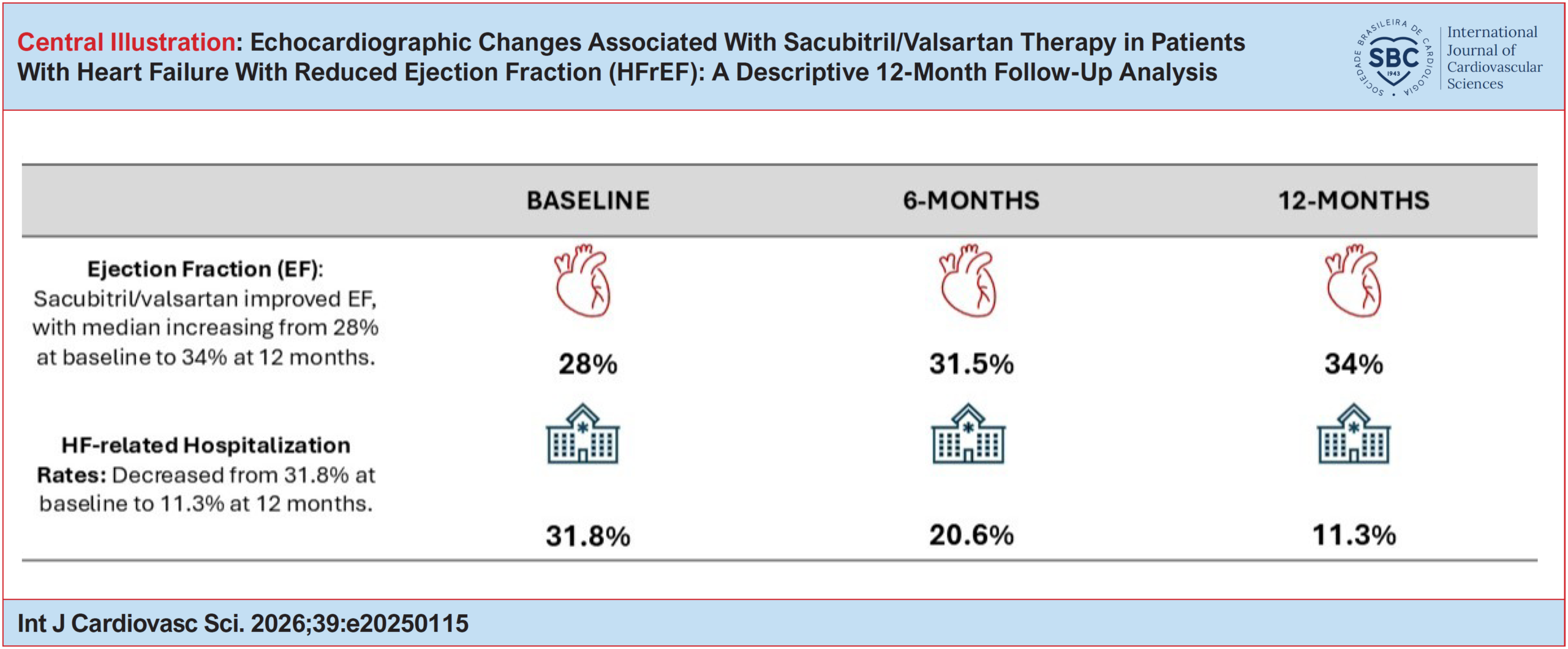
Sacubitril/Valsartan therapy was associated with improvements in EF, with the median increasing from 28% at baseline to 31.5% at 6 months and 34% at 12 months (Teichholz method). Structural remodeling was observed, including reductions in LV end-systolic and end-diastolic dimensions, as well as left atrial (LA) diameter. HF-related hospitalization rates decreased from 31.8% at baseline to 20.6% at 6 months and 11.3% at 12 months. NYHA functional class improved, with the proportion of patients in Classes III and IV decreasing from 53.2% at baseline to 17.4% at 6 months. Renal function remained stable throughout treatment. Improvements in EF were associated with a lower risk of hospitalization at 6 months (OR = 0.95) and 12 months (OR = 0.93), whereas a larger LA diameter was associated with a higher risk of hospitalization at 12 months (OR = 1.06).

Conclusions:

Sacubitril/Valsartan therapy was associated with improvements in EF, echocardiographic parameters, and NYHA functional class, as well as reductions in hospitalization rates. These findings underscore the role of the therapy in promoting reverse remodeling and suggest that its clinical benefits may extend beyond direct effects on cardiac structure.
  • Echocardiography
  • Heart Failure
  • Systolic Heart Failure
  • Ventricular Remodeling
Read Full Article
Creative Commons Attribution (CC BY) Creative Commons license
27/07/2026 DOI: 10.36660/ijcs.20250115 Views 3
ABC
Editorial

Beyond Ventricular Pacing: Is Atrial Cardiomyopathy a Determinant of Clinical Outcome after Pacemaker Implantation?

Bianca Lopes Cunha et al. Helena Nogueira Brasil Patrícia de Araújo Matias Eduardo Arrais Rocha

The study “Clinical Outcomes Following Pacemaker Implantation: A 3-Year Comparative Study of Sick Sinus Syndrome and Atrioventricular Block” presents a relevant comparative analysis between patients with sick sinus syndrome (SSS) and atrioventricular block (AVB) who underwent permanent pacemaker implantation and were followed for three years. The main merit of the work lies in the clinical evaluation and assessment of cardiac remodeling, atrial fibrillation (AF) rates, readmissions, and mortality compared between the two groups.

Among the study’s strengths are the relatively long follow-up period, with serial echocardiographic evaluation, showing important differences between the patterns of cardiac remodeling. Patients with SSS showed a progressive increase in left atrial volume (LAV) and left ventricular end-diastolic diameter (LVDD), in addition to a significant worsening of mitral regurgitation (MR). In contrast, patients with left atrial block (LAB), even with a ventricular pacing load above 90%, showed relative stability in atrial and ventricular dimensions. Both groups had slight reductions in ejection fraction (EF), high rates of AF, hospitalizations, and mortality, without significant differences between the groups. These findings partially challenge the classic concept that right ventricular pacing alone is the main cause of cardiac remodeling.

[…]

  • Artificial Pacemaker
  • Cardiomyopathies
  • Ventricular Remodeling
Read Full Article
Creative Commons Attribution (CC BY) Creative Commons license
27/07/2026 DOI: 10.36660/abc.20260425i Views 1
ABC
Case Report

Reversal of Left Bundle Branch Block Following Treatment in Alcoholic Cardiomyopathy

Manuela Cristina Ribeiro Dias Barroso et al. Heleutério da Conceição Nicolau Madogolele Deborah de Sá Pereira Belfort Bruno Biselli … Silvia Moreira Ayub-Ferreira Edimar Alcides Bocchi

Introduction

Left bundle branch block occurs in the context of several cardiomyopathies; however, its reversal is rarely described. We describe a case of alcoholic cardiomyopathy with left bundle branch block that presented reversal after institution of targeted treatment and alcohol cessation.

[…]

  • Alcoholic Cardiomyopathy
  • Bundle Branch Block
  • Ventricular Remodeling
Read Full Article
Creative Commons Attribution (CC BY) Creative Commons license
15/12/2025 DOI: 10.36660/abc.20250327i
ABC
Editorial

Long Non-Coding RNA CCAT2 and Pathological Cardiac Remodeling

Gustavo Augusto Ferreira Mota et al. Mariana Gatto Claudia Maria Silva Cyrino Silvio Assis de Oliveira Júnior Marina Politi Okoshi

Despite advances in cardiovascular medicine, heart disease is a serious public health problem due to its high prevalence, elevated cost, and high morbidity and mortality. Therefore, it is necessary to improve the understanding of molecular mechanisms involved in the pathophysiology of cardiovascular disease.

Following cardiac injury, the heart undergoes a remodeling process, initially characterized by alterations in the genome expression. The changes lead to molecular, cellular, and interstitial modifications that manifest clinically as variations in the size, shape, and function of the heart. Cardiac remodeling is usually accompanied by activation of neurohormonal systems. Under physiological conditions, the renin-angiotensin system plays a fundamental role in regulating blood pressure and fluid-electrolyte balance. However, when excessively activated, it induces deleterious effects on the heart, such as myocyte hypertrophy and death and interstitial myocardial fibrosis.

[…]

  • Cardiovascular Diseases
  • Renin-Angiotensin System
  • Systems Biology
  • Ventricular Remodeling
Read Full Article
Creative Commons Attribution (CC BY) Creative Commons license
02/12/2024 DOI: 10.36660/abc.20240698i Views 1
ABC
Editorial

mRNA, miRNA, lncRNA, ceRNA: The Future of Cardiovascular Research?

Gustavo Augusto Ferreira Mota et al. Mariana Gatto Cristina Schmitt Gregolin Sérgio Luiz Borges de Souza Marina Politi Okoshi

Despite significant advances in cardiovascular biomedicine, heart diseases still represent a major public health problem. Thus, it is important to understand the molecular mechanisms involved in the pathophysiology of cardiovascular disease.

Cardiac injury is followed by cardiac remodeling, a process defined as genomic alterations triggering molecular, cellular, and interstitial modifications that manifest clinically as changes in the heart’s size, shape, and function., Therefore, alterations in the synthesis and degradation of cellular proteins characterize cardiac remodeling.

[…]

  • Cardiomegaly
  • Epigenesis, Genetic
  • Heart Failure
  • Nucleic Acids
  • Ventricular Remodeling
Read Full Article
Creative Commons Attribution (CC BY) Creative Commons license
12/05/2023 DOI: 10.36660/abc.20230209 Views 1
Figure 1
ABC
Original Article

The Relationship between Extracellular Volume Compartments and Matrix Metalloproteinases-2 in Left Ventricular Remodeling after Myocardial Infarction

Ferhat Eyyupkoca et al. Nilnur Eyerci Mehmet Sait Altintas Mehmet Ali Felekoglu … Halil Ibrahim Biter Siho Hidayet Serkan Sivri Bekir Demirtas Omer Faruk Ates

Abstract

Background:

Matrix metalloproteinases (MMPs) can affect myocardial extracellular volume (ECV) and its compartments, and this can provide more detailed information about the mechanism of adverse left ventricular (LV) remodeling (AR) after acute myocardial infarction (MI).

Objectives:

To investigate the role of changes (Δ) in ECV compartments (matrix volume (MVi) and cell volume (CVi)) in the development of AR after MI, and their relationship with MMP-2 expressions.

Methods:

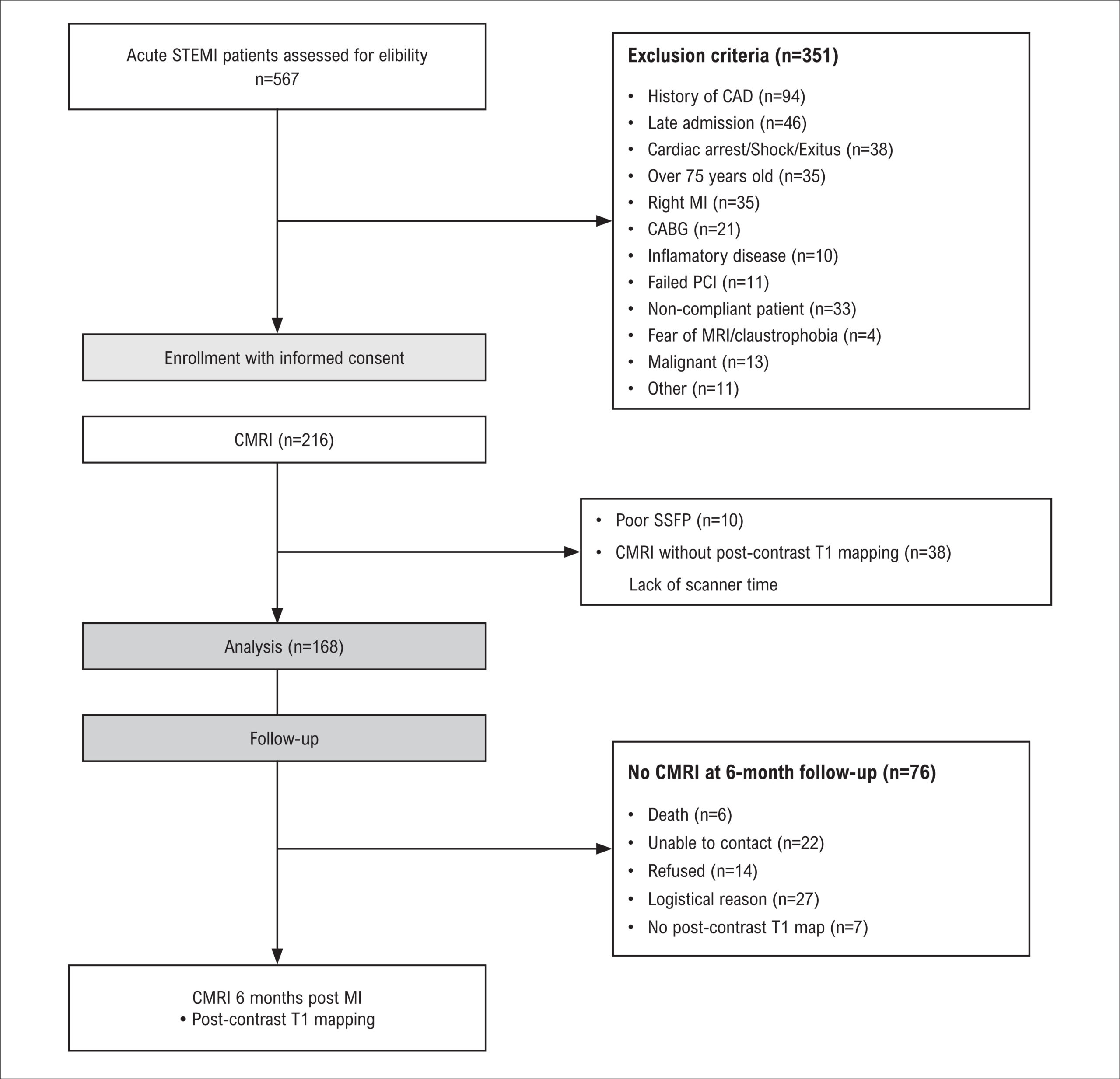
Ninety-two first MI patients who underwent 3 Tesla cardiovascular magnetic resonance imaging performed 2 weeks (baseline) and 6 months post-MI. We measured T1 mapping with MOLLI sequences. ECV was performed post-gadolinium enhancement. ECV and LV mass were used to calculate MVi and CVi. AR was defined as an increase of ≥ 12% in LV end-diastolic volume in 6 months. MMPs were measured using a bead-based multiplex immunoassay system at first day (baseline) and 2 weeks post-MI. P <0.05 was accepted as statistically significant.

Results:

Mean ECV and mean MVi baseline levels were higher in AR group compared to without AR group (42.9±6.4 vs 39.3±8.2%, p= 0.037; 65.2±13.7 vs 56.7±14.7 mL/m2, p=0.010; respectively). CVi levels was similar between groups. A positive correlation was found between baseline levels of MMP-2 and baseline levels of ECV (r=0.535, p<0.001) and MVi (r=0.549, p<0.001). Increased ΔMVi levels was independently predictor of AR (OR=1.03, p=0.010). ΔMVi had superior diagnostic performance compared to ΔECV in predicting AR (ΔAUC: 0.215±0.07, p<0.001).

Conclusion:

High MVi levels are associated with AR, and ΔMVi was independently predictor of AR. This may be associated with MMP-2 release due to increased inflammatory response.

  • Matrix Metaloproteinase
  • Myocardial Infarction / metabolism
  • Myofibroblasts/cytology
  • TI Mapping/cytology
  • Ventricular Remodeling
Read Full Article
Creative Commons Attribution (CC BY) Creative Commons license
19/12/2022 DOI: 10.36660/abc.20220061
ABC
Editorial

The Year in Basic Research 2021: the Search for Translational Models

Mariana Gatto et al. Gustavo Augusto Ferreira Mota Marina Politi Okoshi

Cardiovascular diseases (CVD) are responsible for approximately 19 million deaths annually in the world.In Brazil, they are involved in one third of deaths. A significant improvement in cardiovascular medicine has been observed in the last decades. However, cardiac failure, which is the final common pathway following heart injury, remains with a high incidence, prevalence, and mortality. A better understanding of CVD may allow the development of new pharmacological and non-pharmacological approaches to their treatment. In 2021, the Arquivos Brasileiros de Cardiologia published articles in the area of basic sciences that were mostly related to experimental models. These studies can provide the basis for a translational approach to expand the understanding of CVD treatment. In this Editorial, we present an overview of recently published articles with emphasis on experimental models for a future translational approach.

The molecular mechanisms involved in the cardiac remodeling development are still widely investigated. Micro-RNAs (miRNA) participate in the control of major cellular functions, such as proliferation, differentiation, apoptosis, stress response, and transcriptional regulation. In an elegant study, Xu e Fang observed that miR-34a and miR-125b are downregulated in the heart from patients with diabetic cardiomyopathy at the time of transplant. Additionally, in vitro data from rat cardiomyocytes showed that miR-125b and miR-34a overexpression prevents hyperglycemia-induced cardiomyocyte death.

[…]

  • Cardiovascular Diseases
  • Exercise
  • Experimental Research
  • Heart Failure
  • Research Design
  • Translacional Medical Research
  • Ventricular Remodeling
Read Full Article
Creative Commons Attribution (CC BY) Creative Commons license
29/04/2022 DOI: 10.36660/abc.20220186 Views 1
ABC
Editorial

The Importance of Time-Course Studies Using Experimental Models of Cardiac Diseases

Diego Santos Souza et al. Danilo Roman-Campos

According to the American College of Cardiology, Heart Failure (HF) Syndrome is defined as a complex clinical syndrome that results from any structural or functional impairment of ventricular filling or ejection of blood. The etiological agent of the clinical syndrome of HF may result from different causes, which impact the prognosis and impose the necessity for specific treatment strategies, underlining the relevance of specific data elements for emphasizing these differences in HF, including the time course evolution of HF. This view is similar to the current Brazilian guideline for HF. Despite improvement in HF treatment and management, with a reduction in overall mortality rate over time, the death number and economic costs are still high. In 2014 a deep revision including 197 countries showed that HF’s overall global economic cost in 2012 was estimated at $108 billion per annum. Importantly, HF spending was largely different in high-income, middle, and low-income countries. For example, between 2014-2020, the annual median total medical costs for heart failure care were estimated at $24,383 per patient in the United States of America, meanwhile in Brazil in 2015, the average cost per patient with HF was 1,569 US$, taking into account the exchange rate in 2015. The high cost per patient is probably related to the lack of effective therapies to improve human health during HF. Then unveiling the molecular basis of cardiac remodeling found in the disease is one of the main challenges in cardiovascular medicine.

In the last years, significant advances in understanding molecular mechanisms of adaptive and maladaptive hypertrophy and heart failure in response to stress signals have shown that many extracellular factors and signaling pathways are involved in the remodeling of cardiomyocytes, the working cells found in the heart tissue. Since the time course of HF is etiological-dependent, it is fundamental to understand how the HF syndrome develops. For example, the intracellular dynamics of Ca2are modified in the different etiologies of HF with reduced (HFrEF) or preserved (HFpEF) ejection fraction. In animal models of diabetic or hypertensive HFpEF and HFrEF, studies have shown that magnitude and kinetics of Ca2release remain unchanged in both HFpEF models but impaired in HFrEF. Although Sarco/endoplasmic reticulum Ca2adenosine triphosphatase-2a (SERCA) protein density was reduced in these HFrEF and HFpEF models, in the HFpEF model for hypertension, this is offset by increased PLB phosphorylation (Phospholamban is a protein able to modulate SERCA2A), but not in diabetic HFrEF and HFpEF resulting in delay intracellular Ca2reuptake by SERCA.

[…]

  • Cardiovascular Diseases
  • Health Care Costs
  • Heart Failure
  • Mortality
  • Myoctes Cardiac
  • Rats
  • Ventricular Remodeling
Read Full Article
Creative Commons Attribution (CC BY) Creative Commons license
07/03/2022 DOI: 10.36660/abc.20210997 Views 1
Figure 1
ABC
Original Article

Influence of Consumption of Orange Juice (Citrus Sinensis) on Cardiac Remodeling of Rats Submitted to Myocardial Infarction

Bruna C. Oliveira et al. Priscila P. Santos Amanda M. Figueiredo Bruna P. M. Rafacho … Larissa Ishikawa Silméia G. Zanati Ana A. H. Fernandes Paula S. Azevedo Bertha F. Polegato Leonardo A. M. Zornoff Marcos F. Minicucci Sergio A. R. Paiva

Abstract

Background

Orange juice (OJ) is rich in polyphenols with anti-inflammatory and antioxidant properties. After myocardial infarction (MI), complex changes occur in cardiac structure and function, which is known as cardiac remodeling (CR). Oxidative stress and inflammation can modulate this process. We hypothesized that the consumption of OJ attenuates the CR after MI.

Objectives

To evaluate the influence of OJ on CR after MI by analysis of functional, morphological, oxidative stress, inflammation, and energy metabolism variables.

Methods

A total of 242 male rats weighing 200-250 g were submitted to a surgical procedure (coronary artery ligation or simulated surgery). Seven days after surgery, survivors were assigned to one of the four groups 1) SM, sham animals with water and maltodextrin (n= 20); 2) SOJ, sham animals with OJ (n= 20); 3) IM, infarcted animals with water and maltodextrin (n= 40); and 4) IOJ, infarcted animals with OJ (n = 40). Statistical analysis was performed by the two-way ANOVA supplemented by Holm-Sidak. Results are presented as mean ± standard deviation, the level of significance adopted was 5%.

Results

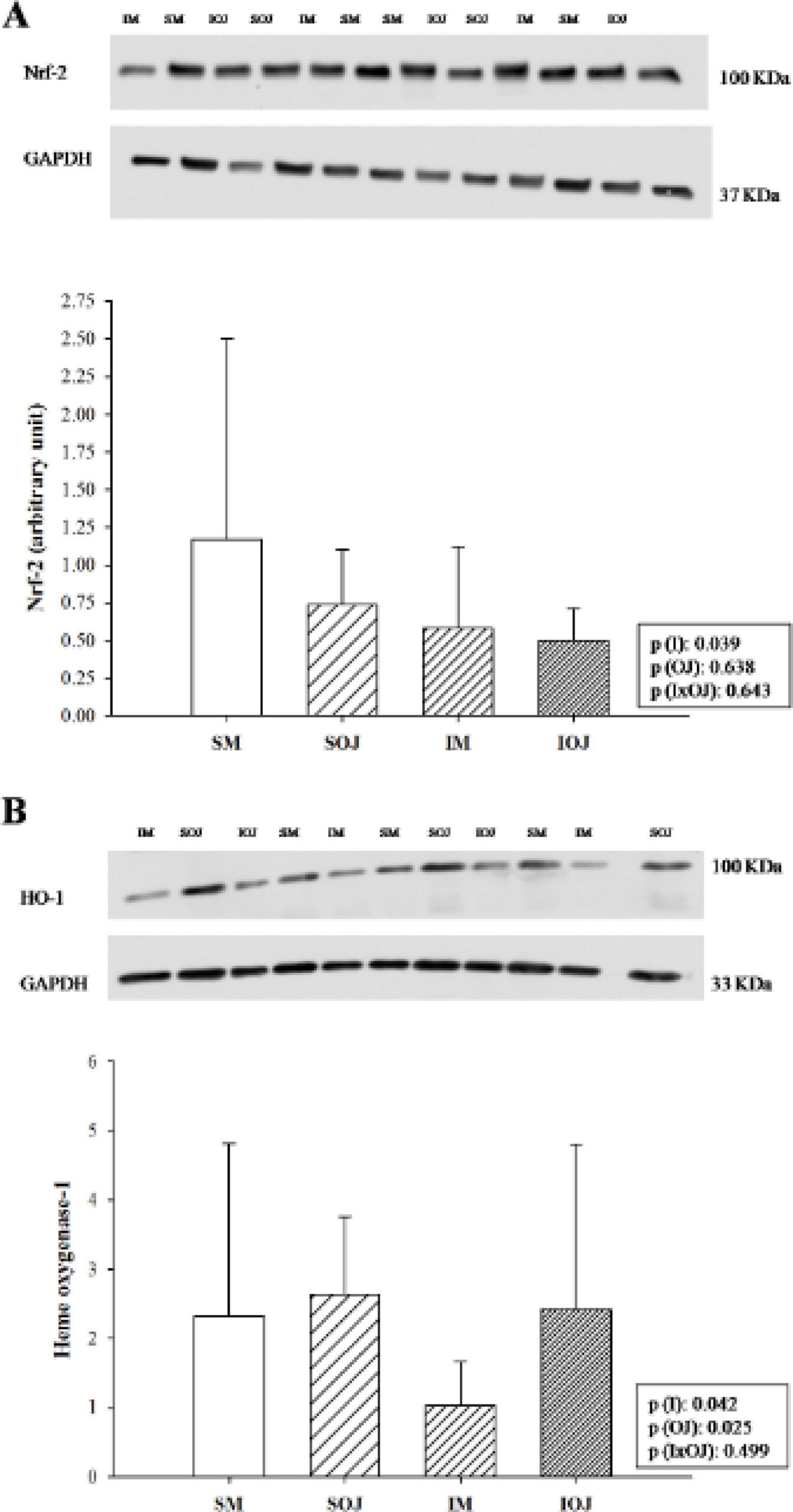
After 3 months, MI led to left ventricular (LV) hypertrophy, with systolic and diastolic dysfunction, and increased oxidative stress and inflammatory mediators. OJ intake reduced LV cavity and improved systolic and diastolic function. The OJ animals presented lower activity of glutathione peroxidase and higher expression of heme-oxygenase-1 (HO-1).

Conclusion

OJ attenuated CR in infarcted rats and HO-1 may be play an important role in this process.

  • Anti-Inflammatory Agents
  • Antioxidants
  • Fruits Juices (orange)
  • Myocardial Infarction
  • Polyphenols
  • Ventricular Remodeling
Read Full Article
Creative Commons Attribution (CC BY) Creative Commons license
14/06/2021 DOI: 10.36660/abc.20190397 Views 2
ABC
Editorial

Antioxidant and Anti-Inflammatory Effects of Orange Juice

Paula Felippe Martinez et al. Marianna Rabelo de Carvalho Maria Lua Marques Mendonça Marina Politi Okoshi Silvio Assis de Oliveira-Junior

Post myocardial infarction cardiac remodelling progression is a complex event involving several biological reactions; these include oxidative stress and inflammatory response. – The release of reactive oxygen species (ROS) after myocardial ischemia stimulates pro-inflammatory mediators involved in fibroblast proliferation and tissue repair in the infarcted area. However, sustained ROS production in combination with hemodynamic overload and antioxidant system incapacity leads to oxidative stress in non-infarcted areas, which also undergo cardiac remodelling. – These changes, associated with energy metabolism disorders, metalloproteinases activation, cardiomyocyte death and hypertrophy, interstitial fibrosis, and cardiac dysfunction characterize the cardiac remodelling process.

Studies on various bioactive compounds, often extracted from food, have been undertaken to assess their attenuating powers on disorders common to cardiac remodelling, such as oxidative stress and inflammation. – However, the extraction and isolation of these substances can require a complex network of costly specialized technical procedures making it financially difficult for a large part of the population to access this resource. Additionally, taken in isolation one cannot evaluate the potential effects of interactions between food matrix components and the organism which may alter the metabolic effects. Alternatively, consuming the food in its entirety acts as a buffer in the digestive system allowing greater bioavailability of its active compounds. Therefore, nutritional approaches involving ingestion of natural foods, such as fruits and their products (peels, juices, pulps, puree, and jams, etc), which contain substances with antioxidant and anti-inflammatory properties, have increasingly gained interest. , It is worth mentioning citrus fruits, which are rich in bioactive compounds that may change the metabolism and protect tissues from ROS accumulation injuries. Citrus fruit juices, in general, are abundant sources of vitamin C and other nutrients, such as potassium, folate, magnesium, vitamin A, and polyphenolic compounds. In this sense, orange juice is a complex food matrix with cardioprotective potential due to its antioxidant and anti-inflammatory capacity. –

[…]

  • Anti-Inflammatory Agents
  • Antioxidants
  • Citrus Sinensis
  • Fruit and Vegetable Juices
  • Metabolism
  • Oxidative Stress
  • Ventricular Remodeling
Read Full Article
Creative Commons Attribution (CC BY) Creative Commons license
14/06/2021 DOI: 10.36660/abc.20210418 Views 1
Figure 1
IJCS
Review Article

Reperfusion Strategies in Acute Myocardial Infarction: State of the Art

Fernando Oswaldo Dias Rangel

Abstract

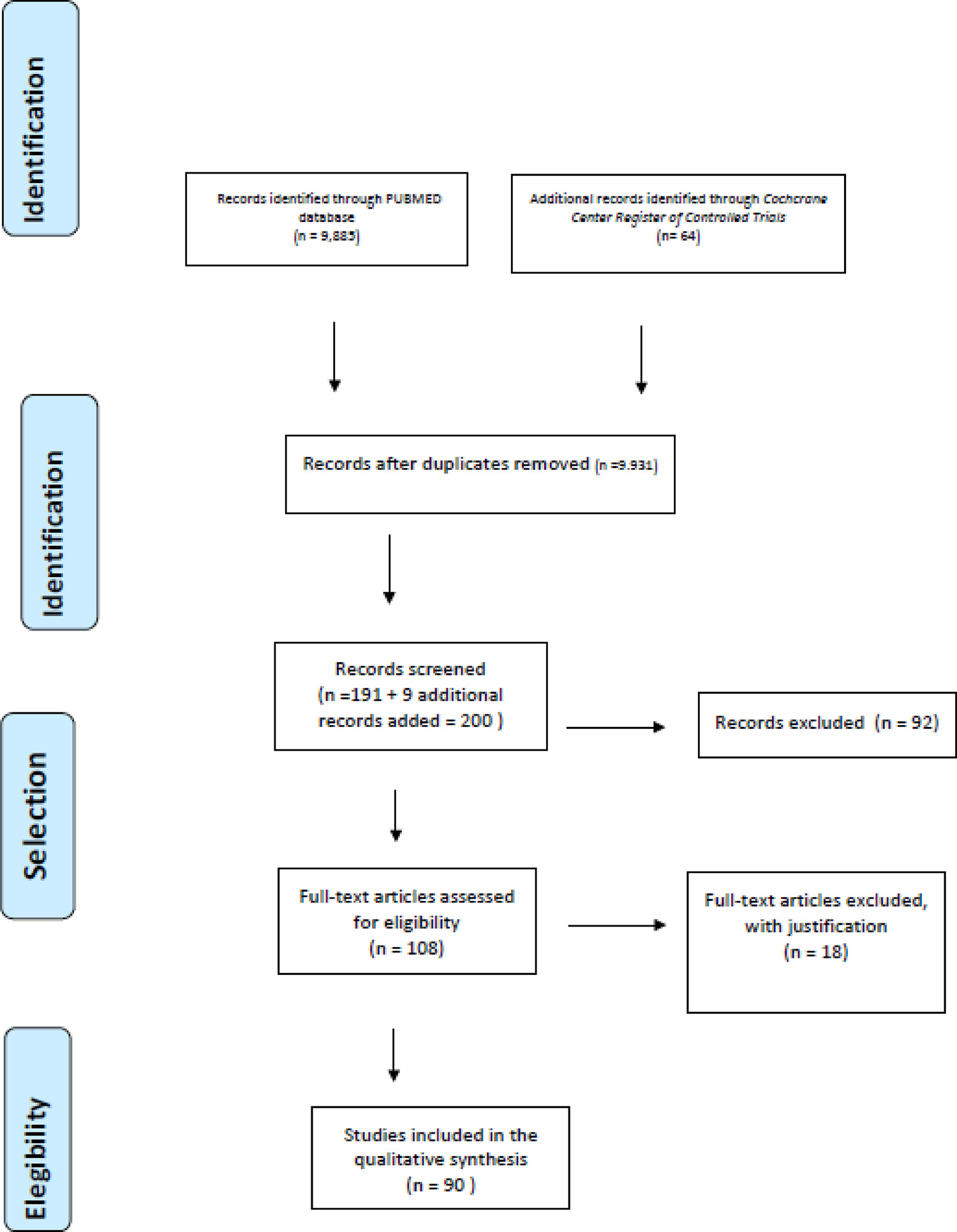
ST elevation myocardial infarction (STEMI) is a highly prevalent condition worldwide. Reperfusion therapy is strongly associated with the prognosis of STEMI and must be performed with a high standard of quality and without delay. A systematic review of different reperfusion strategies for STEMI was conducted, including randomized controlled trials that included major cardiovascular events (MACE), and systematic reviews in the last 5 years through the PRISMA ( Preferred Reporting Items for Systematic Reviews and Meta-Analysis) methodology. The research was done in the PubMed and Cochrane Central Register of Controlled Trials databases, in addition to a few manual searches. After the exclusion criteria were applied, 90 articles were selected for this review. Despite the reestablishment of IRA patency in PCI for STEMI, microvascular lesions occur in a significant proportion of these patients, which can compromise ventricular function and clinical course. Several therapeutic strategies – intracoronary administration of nicorandil, nitrates, melatonin, antioxidant drugs (quercetin, glutathione), anti-inflammatory substances (tocilizumab [an inhibitor of interleukin 6], inclacumab, P-selectin inhibitor), immunosuppressants (cyclosporine), erythropoietin and ischemic pre- and post-conditioning and stem cell therapy – have been tested to reduce reperfusion injury, ventricular remodeling and serious cardiovascular events, with heterogeneous results: These therapies need confirmation in larger studies to be implemented in clinical practice

  • Acute Myocardial Infarction/therapy
  • Morbidity and Mortality
  • Myocardial Reperfusion
  • Myocardial Stunning
  • Ventricular Remodeling
Read Full Article
Creative Commons Attribution (CC BY) Creative Commons license
09/06/2021 DOI: 10.36660/ijcs.20200226 Views 2
Figure 1
ABC
Original Article

Vitamin D Supplementation Induces Cardiac Remodeling in Rats: Association with Thioredoxin-Interacting Protein and Thioredoxin

Priscila P. dos Santos et al. Bruna P. M. Rafacho Andrea F. Gonçalves Vanessa C. M. Pires … Meliza G. Roscani Paula S. Azevedo Bertha F. Polegato Marcos F. Minicucci Ana Angélica H. Fernandes Suzana E. Tanni Leonardo A. M. Zornoff Sergio A. R. de Paiva

Abstract

Background:

Vitamin D (VD) has been shown to play an important role in cardiac function. However, this vitamin exerts a biphasic “dose response” curve in cardiovascular pathophysiology and may cause deleterious effects, even in non-toxic doses. VD exerts its cellular functions by binding to VD receptor. Additionally, it was identified that the thioredoxin-interacting protein (TXNIP) expression is positively regulated by VD. TXNIP modulate different cell signaling pathways that may be important for cardiac remodeling.

Objective:

To evaluate whether VD supplementation lead to cardiac remodeling and if TXNIP and thioredoxin (Trx) proteins are associated with the process.

Methods:

A total of 250 Male Wistar rats were allocated into three groups: control (C, n=21), with no VD supplementation; VD3 (n = 22) and VD10 (n=21), supplemented with 3,000 and 10,000 IU of VD/ kg of chow respectively, for two months. The groups were compared by one-way analysis of variance (ANOVA) and Holm-Sidak post hoc analysis, (variables with normal distribution), or by Kruskal-Wallis test and Dunn’s test post hoc analysis. The significance level for all tests was 5%.

Results:

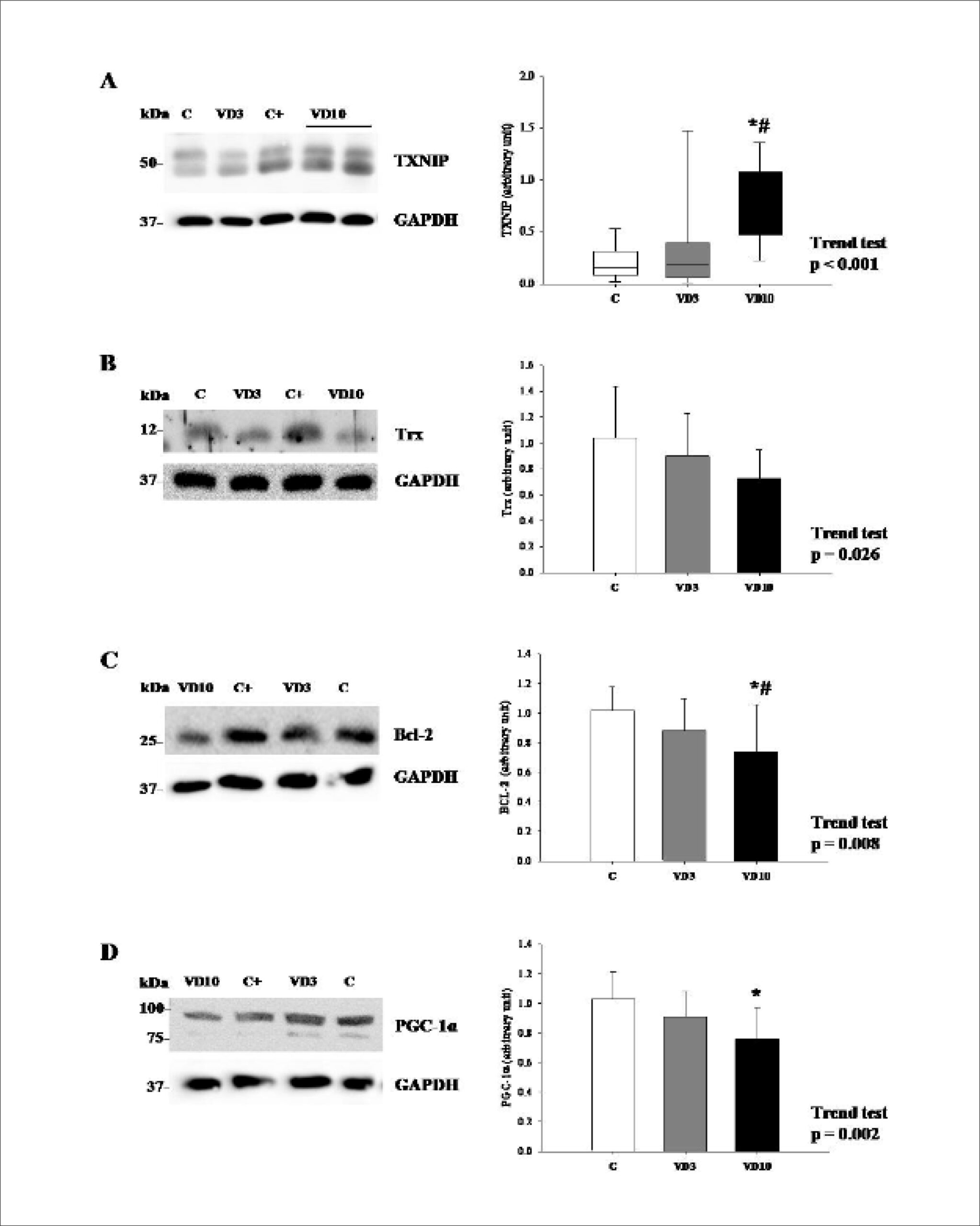
TXNIP protein expression was higher and Trx activity was lower in VD10. The animals supplemented with VD showed increased lipid hydroperoxide and decreased superoxide dismutase and glutathione peroxidase. The protein Bcl-2 was lower in VD10. There was a decrease in fatty acid β-oxidation, tricarboxylic acid cycle and electron transport chain with shift to increase in glycolytic pathway.

Conclusion:

VD supplementation led to cardiac remodeling and this process may be modulated by TXNIP and Trx proteins and consequently oxidative stress.

  • Oxidative Stress
  • Rats
  • Thioredoxins
  • Ventricular Remodeling
  • Vitamin D
Read Full Article
Creative Commons Attribution (CC BY) Creative Commons license
17/05/2021 DOI: 10.36660/abc.20190633 Views 1
Figure 1
ABC
Original Article

Effects of Late Aerobic Exercise on Cardiac Remodeling of Rats with Small-Sized Myocardial Infarction

Lidiane M. Souza et al. Marina P. Okoshi Mariana J. Gomes Mariana Gatto … Eder A. Rodrigues Thierres H. D. Pontes Felipe C. Damatto Leiliane R. S. Oliveira Patrícia Aparecida Borim Aline R. R. Lima Leonardo A. M. Zornoff Katashi Okoshi Luana U. Pagan

Abstract

Background:

Physical exercise has been considered an important non-pharmacological therapy for the prevention and treatment of cardiovascular diseases. However, its effects on minor cardiac remodeling are not clear.

Objective:

To evaluate the influence of aerobic exercise on the functional capacity, cardiac structure, left ventricular (LV) function, and gene expression of NADPH oxidase subunits in rats with small-sized myocardial infarction (MI).

Methods:

Three months after MI induction, Wistar rats were divided into three groups: Sham; sedentary MI (MI-SED); and aerobic exercised MI (MI-AE). The rats exercised on a treadmill three times a week for 12 weeks. An echocardiogram was performed before and after training. The infarction size was evaluated by histology, and gene expression was assessed by RT-PCR. The significance level for statistical analysis was set at 5%.

Results:

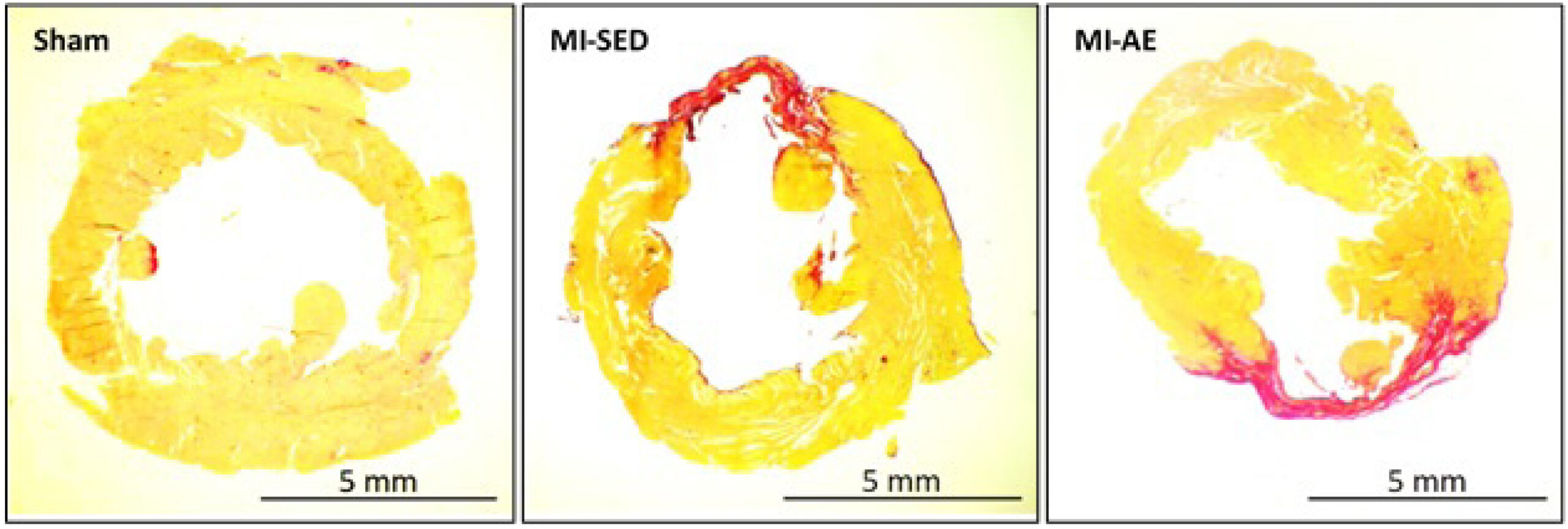
Rats with MI lower than 30% of the LV total area were included in the study. Functional capacity was higher in MI-AE than in Sham and MI-SED rats. The infarction size did not differ between groups. Infarcted rats had increased LV diastolic and systolic diameter, left atrial diameter, and LV mass, with systolic dysfunction. Relative wall thickness was lower in MI-SED than in the MI-AE and Sham groups. Gene expression of the NADPH oxidase subunits NOX2, NOX4, p22phox, and p47phox did not differ between groups.

Conclusion:

Small-sized MI changes cardiac structure and LV systolic function. Late aerobic exercise is able to improve functional capacity and cardiac remodeling by preserving the left ventricular geometry. NADPH oxidase subunits gene expression is not involved in cardiac remodeling or modulated by aerobic exercise in rats with small-sized MI.

  • Echocardiography/methods
  • Exercise, Physical Exercise
  • Myocardial Infarction
  • NADPH Oxidase
  • Rats
  • Ventricular Dysfunction
  • Ventricular Remodeling
Read Full Article
Creative Commons Attribution (CC BY) Creative Commons license
16/04/2021 DOI: 10.36660/abc.20190813 Views 1
ABC
Editorial

Pulmonary Hypertension in Polycystic Ovarian Syndrome

Yogesh N. V. Reddy

Polycystic Ovarian Syndrome (PCOS) is a complex endocrinological syndrome that presents in women with obesity, insulin resistance and sex hormone abnormalities. It is intriguing that in otherwise ‘idiopathic’ pulmonary hypertension, there also seems to be a high prevalence of the same features of obesity, insulin resistance, and sex hormone abnormalities.– However, despite this overlap and a theoretical risk of pulmonary hypertension in PCOS, little is known about the intersection of the two conditions. Given the young age of patients at the time of PCOS diagnosis, only subtle impairments in left heart function have been consistently described,, with overt cardiovascular disease often manifesting many decades later., But, surprisingly, little is known about subclinical right heart remodeling or pulmonary hypertension in this condition.

On this background, Abacioglu et al. provide novel information on cardiac structural remodeling in patients with PCOS, with careful attention to right heart structure and function. They included 44 patients with PCOS and 60 matched controls who underwent comprehensive echocardiography and insulin resistance assessment by the Homeostatic Model Assessment for Insulin Resistance (HOMA-IR). In addition to left heart measures of diastolic function, the authors also performed pulse wave Doppler of the right ventricular outflow tract to estimate pulmonary arterial stiffness, and used the well validated TAPSE/RVSP ratio to quantify RV-PA coupling.

[…]

  • body mass index
  • Echocardiography/methods
  • Insulin Resistance
  • Obesity
  • Polycystic Ovary Syndrome
  • Pulmonary Hypertension
  • Ventricular Remodeling
Read Full Article
Creative Commons Attribution (CC BY) Creative Commons license
16/04/2021 DOI: 10.36660/abc.20210106
ABC
Editorial

Moderate-Intensity Resistance Training Improves Oxidative Stress in Heart

Marcelo Diarcadia Mariano Cezar et al. Silvio Assis de Oliveira Junior Ricardo Luiz Damatto

Renovascular hypertension (RVHT) is one of the main causes of secondary hypertension, often leading to resistant hypertension, that is, that does not respond well to aggressive medical treatment. This condition is defined as systemic hypertension that manifests as a result of compromised blood supply to the kidneys., In an epidemiological context, RVHT accounts for 1 to 5% of all cases of hypertension and 5.4% of secondary hypertension among young adults.

Studies have shown an association this disease with low levels of physical activity or physical fitness in hypertensive individuals., It is known that physical training has a protective action against cardiovascular diseases.– In 2016, the 7th Brazilian Guideline of Arterial Hypertension, by the Brazilian Society of Cardiology, stated that blood pressure reduction is the most effective measure to decrease cardiovascular risk and slow kidney damage progression, regardless of the antihypertensive drug used. Endurance/aerobic exercise training promotes an important hypotensive effect in hypertensive patients and, therefore, has been recommended as the preferential type of exercise for arterial hypertension prevention and treatment.,

[…]

  • Blood Pressure/prevention and control
  • Hypertension
  • Oxidative Stress
  • Resistance Training
  • Ventricular Remodeling
Read Full Article
Creative Commons Attribution (CC BY) Creative Commons license
03/02/2021 DOI: 10.36660/abc.20200561 Views 1
Figure 1
ABC
Original Article

Intermittent Fasting Attenuates Exercise Training-Induced Cardiac Remodeling

Priscilla Gois Basilio et al. Ana Priscila Cayres de Oliveira Ana Carolini Ferreira de Castro Marianna Rabelo de Carvalho … Alessandro Moura Zagatto Paula Felippe Martinez Marina Politi Okoshi Katashi Okoshi Gabriel Elias Ota Filipe Abdalla dos Reis Silvio Assis de Oliveira-Junior

Abstract

Background

The effects of non-pharmacological interventions such as calorie restriction and exercise training on health and prevention of cardiovascular diseases have been investigated in clinical and experimental studies.

Objective

To analyze the influence of intermittent fasting and exercise training on functional fitness, glycemia and cardiac remodeling.

Methods

Wistar rats (n=60) were randomly divided into four groups: control, exercise training (ET), intermittent fasting (IF) and exercise training plus intermittent fasting (ETI). Over 12 weeks, control and ET animals were fed daily a standard commercial diet ad libitum , while IF and ETI animals were fed every other day. In addition, the ET and ETI groups were submitted to a running protocol on a treadmill. After this period, functional fitness, nutritional parameters and blood glucose levels were analyzed. In addition to heart morphology, myocardial protein expression of extracellular signal-regulated kinase (ERK) and c-Jun N-terminal kinase (JNK) was assessed by Western-blot. The results were analyzed using two-way ANOVA and Student-Newman-Keuls test. The level of significance considered was 5%.

Results

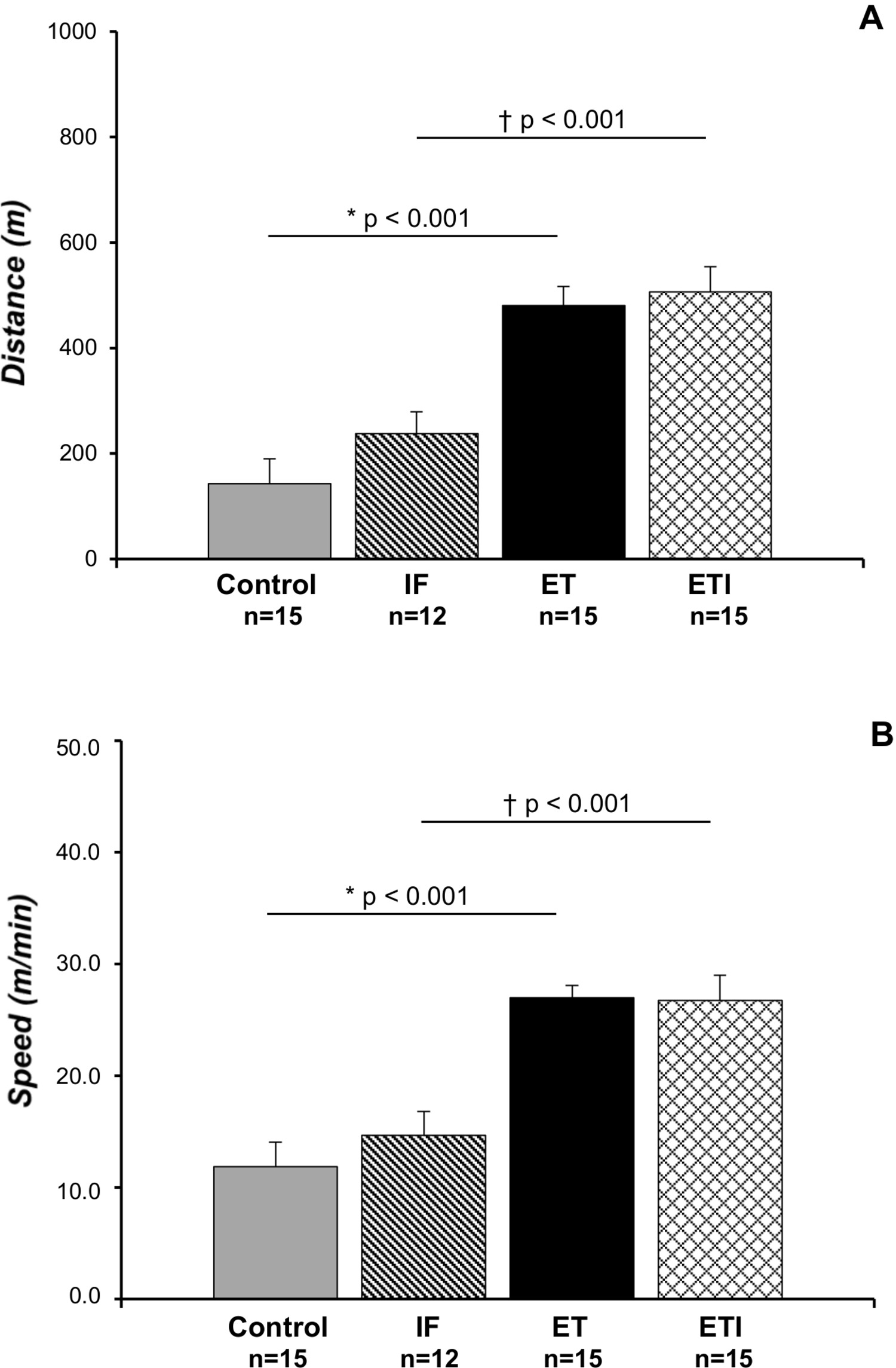
Exercise training increased functional fitness in the ET and ETI groups and promoted cardiac fibrosis. The combination of intermittent fasting and exercise training resulted in a smaller area under the blood glucose curve and reduced cardiomyocyte cross-sectional area and interstitial collagen fraction in the ETI group compared to ET. ERK and JNK expression levels were similar among groups (p>0.05).

Conclusions

Intermittent fasting is associated with improved glucose tolerance and attenuates cardiac remodeling induced by exercise training (Arq Bras Cardiol. 2020; 115(2):184-193)

  • Calorie Restriction
  • Diet
  • Exercise
  • Glucose
  • Health Promotion
  • Running
  • Ventricular Remodeling
Read Full Article
Creative Commons Attribution (CC BY) Creative Commons license
28/08/2020 DOI: 10.36660/abc.20190349
ABC
Editorial

Atrioventricular Conduction System Disorders and Potential Risks of Arrhythmic Events in Endurance Athletes

Carlos Alberto Cordeiro Hossri

Short Editorial related to the article: Assessing Dynamic Atrioventricular Conduction Time to RR-interval Coupling in Athletes and Sedentary Subjects

Some disorders found on electrocardiograms are commonly seen in endurance or high-performance athletes and often have characteristics that are similar to those observed in elderly individuals or in those with cardiovascular disease. –

[…]

  • Arrhythmias Cardiac
  • Eletrocardiography/methods
  • Keywords: Athletes
  • physical fitness
  • Resistance Training
  • Sedentarism
  • Ventricular Function
  • Ventricular Remodeling
Read Full Article
Creative Commons Attribution (CC BY) Creative Commons license
07/08/2020 DOI: 10.36660/abc.20200668
Figure 1
ABC
Original Article

Assessing Dynamic Atrioventricular Conduction Time to RR-interval Coupling in Athletes and Sedentary Subjects

Paulo Roberto Benchimol-Barbosa et al. Olivassé Nasario Junior Jurandir Nadal

Abstract

Background

Atrioventricular conduction time ( AVCT ) is influenced by autonomic input and subject to physiological remodeling.

Objective

To evaluate beat-by-beat AVCT and RR-interval variability in athletes and healthy sedentary subjects.

Methods

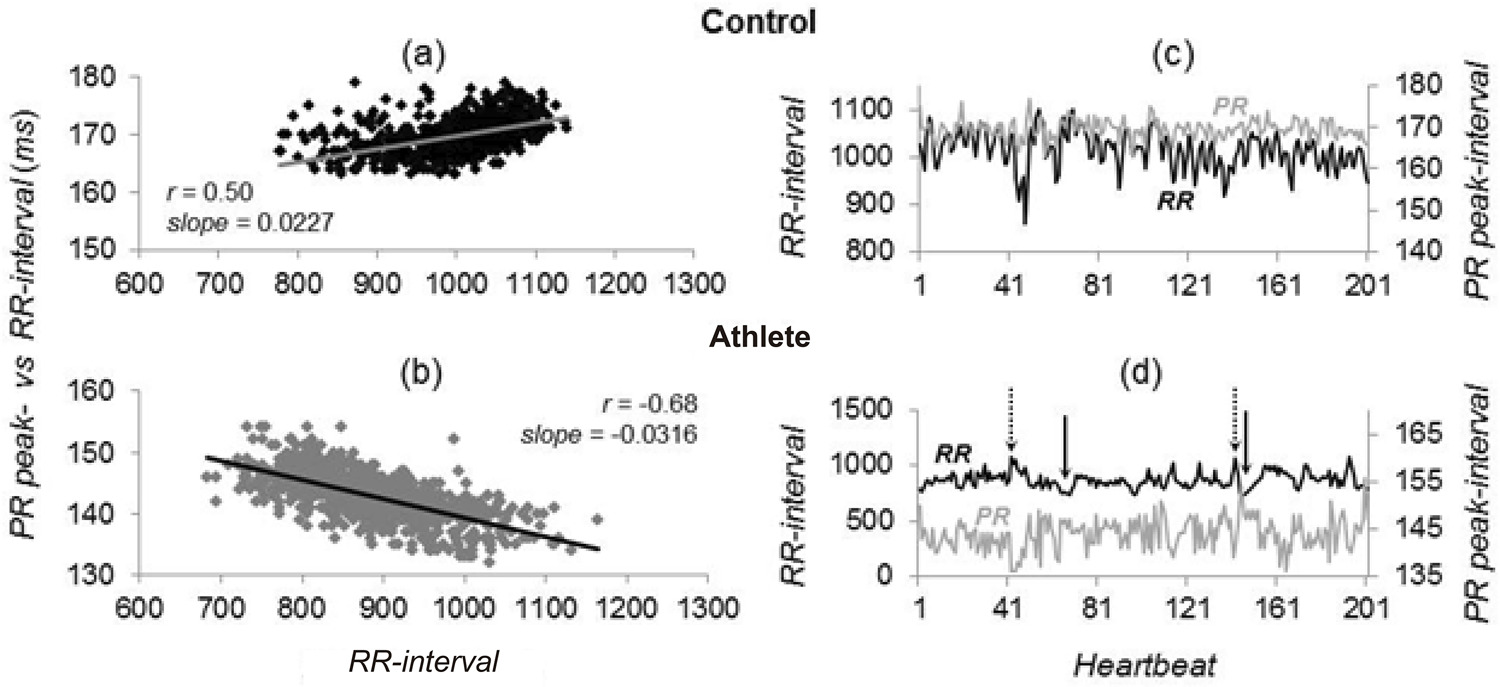
Twenty adults, including 10 healthy sedentary (Controls) and 10 elite long-distance runners (Athletes), age, weight and height-adjusted, underwent maximal metabolic equivalent (MET) assessment, and 15-min supine resting ECG recording seven days later. The interval between P-wave and R-wave peaks defined the AVCT . Mean (M) and standard deviation (SD) of consecutive RR-intervals (RR) and coupled AVCT were calculated, as well as regression lines of RR vs. AVCT (RR-AVCT) . Concordant AV conduction was defined as positive RR-AVCT slope and discordant otherwise. A multivariate linear regression model was developed to explain MET based on AVCT and RR-interval variability parameters. Significance-level: 5 %.

Results

In Athletes, M-RR and SD-RR values were higher than in Controls, whereas M-AVCT and SD-AVCT were not. RR-AVCT slopes were, respectively, 0.038 ± 0.022 and 0.0034 ± 0.017 (p < 0.05). Using a cut-off value of 0.0044 (AUC 0.92 ± 0.07; p < 0.001), RR-AVCT slope showed 100% specificity and 80% sensitivity. In a multivariate model, SD-RR and RR-AVCT slope were independent explanatory variables of MET (F-ratio: 17.2; p < 0.001), showing 100% specificity and 90% sensitivity (AUC 0.99 ± 0.02; p < 0.001).

Conclusion

In elite runners, AVCT to RR -interval dynamic coupling shows spontaneous discordant AV conduction, characterized by negative AVCT vs. RR -interval regression line slope. RR -intervals standard deviation and AVCT vs. RR -interval regression line slope are independent explanatory variables of MET (Arq Bras Cardiol. 2020; [online].ahead print, PP.0-0)

  • Adults
  • Athletes
  • Electrocardiography/methods
  • Heart Ventricles
  • physical fitness
  • Resistance Training
  • Sedentarism
  • Ventricular Function
  • Ventricular Remodeling
Read Full Article
Creative Commons Attribution (CC BY) Creative Commons license
08/05/2020 DOI: 10.36660/abc.20190281
Figure 1
ABC
Original Article

Left Ventricular Remodeling Patterns in Primary Healthcare

Roberto de Castro Meirelles de Almeida et al. Antonio José Lagoeiro Jorge Maria Luiza Garcia Rosa Adson Renato Leite … Dayse Mary S. Correia Evandro Tinoco Mesquita Sergio Chermont Jocemir Ronaldo Lugon Wolney de Andrade Martins

Abstract

Background:

Left ventricular remodeling (LVR) is related to both non-fatal and fatal outcomes.

Objective:

To describe the geometric patterns of the LV and their associations.

Methods:

A total of 636 individuals between the ages of 45 and 99 years in Rio de Janeiro, Brazil, were submitted to clinical evaluation, laboratory tests, electrocardiogram, and tissue Doppler echocardiography (TDE). The difference between categories was tested with Kruskall-Wallis with post hoc tests, once all variables studied are non-normally distributed and Pearson’s Qui-square (categorical variables). Gross and adjusted ORs were estimated by logistic regression. The level of significance was 5% for all tests. Subjects had LVR characterized as: normal geometry (NG), concentric remodeling (CR), concentric hypertrophy (CH), and eccentric hypertrophy (EH).

Results:

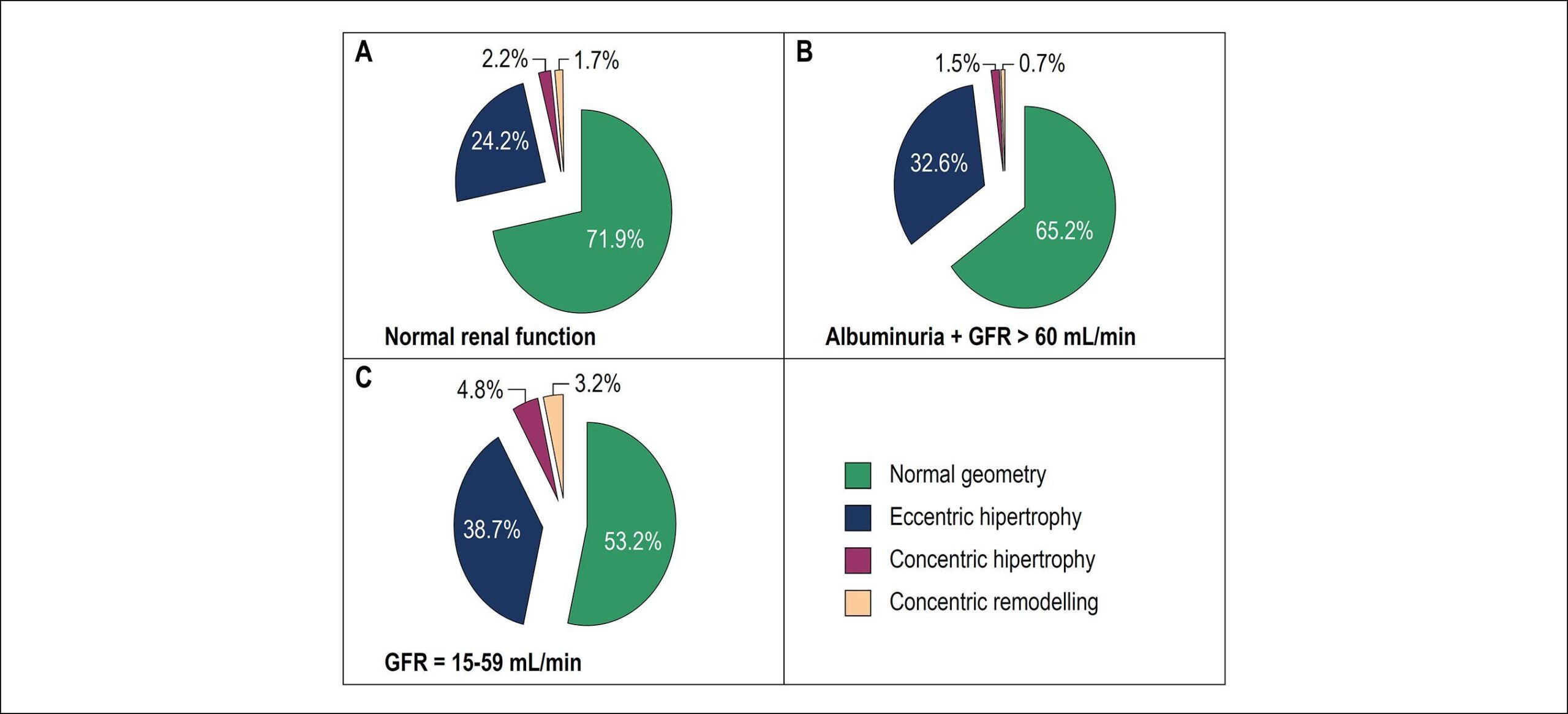
The prevalence of altered patterns was 33%. Subjects presented NG (n = 423; 67%); EH (n = 186; 29%); CH (n = 14; 2%); and CR (n = 13; 2%). The variables of gender, age, level of education and albumin/creatinine ratio (A/C), showed a relationship with the chance of EH even after adjustment.

Conclusion:

Approximately one third of the studied individuals had LVR and were at risk for developing heart failure. Altered A/C in urine was associated with EH, indicating an early relationship between cardiac and renal dysfunction.

  • Cardiovascular Diseases/physiopathology
  • Comorbidity
  • Heart Failure
  • Hypertrophy Left Ventricular
  • Renal Insufficiency
  • Risk Factors/complications
  • Ventricular Remodeling
Read Full Article
Creative Commons Attribution (CC BY) Creative Commons license
10/02/2020 DOI: 10.36660/abc.20180258
ABC
Editorial

Do We Need to Know the Left Ventricular Geometry Patterns of the Brazilian Population?

Roberto M. Saraiva

In this issue of the Arquivos Brasileiros de Cardiologia, Almeida et al. describe the left ventricular (LV) remodeling patterns frequencies found in a Brazilian population followed at primary healthcare clinics in Niterói city, state of Rio de Janeiro. The authors found that a LV abnormal geometry was present in up to 33% of 636 studied individuals (mean age 59.5±10.3 years old; 62% women). Eccentric LV hypertrophy (LVH) was the most common abnormal LV geometry pattern (29%), followed by concentric LVH and concentric remodeling (2% each).

LV remodeling is no longer considered solely an adaptative mechanism but a response to several different stimuli that lead to gene activation, cellular hypertrophy, apoptosis, fibrosis, and, finally, LV remodeling with different degrees of LV function compromise and increase in cardiovascular risk. In fact, the relation between LVH diagnosed by electrocardiogram and mortality has been long recognized. LV mass is considered an independent risk factor for heart failure (HF),, stroke, sudden cardiac death, supraventricular and ventricular tachycardia, and all-cause and cardiovascular mortality. Therefore, hypertension (HTN) is considered stage A HF and LVH is considered stage B HF on the American College of Cardiology/American Heart Association guidelines on HF management. Surprisingly, it was not up to the study of Almeida et al. that LV geometry patterns were studied in Brazilian population. We need to know exactly what are the frequency and value of LV geometry patterns in the Brazilian population and not only apply knowledge obtained with other populations.

[…]

  • Echocardiography/métodos
  • Heart Failure
  • Heart Ventricles/cirurgia
  • Hypertension
  • Hypertrophy Left Ventricular
  • Ventricular Remodeling
Read Full Article
Creative Commons Attribution (CC BY) Creative Commons license
10/02/2020 DOI: 10.36660/abc.20190838 Views 3
ABC
Editorial

Non-Pharmacological Treatment of Cardiovascular Disease | Importance of Physical Exercise

Mariana Janini Gomes et al. Luana Urbano Pagan Marina Politi Okoshi

Cardiovascular diseases are currently the major health problem and are directly involved in more than 17 million deaths each year, which represents 50% of all deaths from noncommunicable diseases. In addition to their effects on individual well-being, cardiovascular diseases are responsible for a high economic impact. A recently published study showed that in Brazil, only four diseases – arterial hypertension, myocardial infarction, atrial fibrillation and heart failure – reached an estimated total financial cost of 56.2 billion reais in the year 2015.

The treatment of cardiovascular diseases involves the use of specific drugs and adherence to non-pharmacological interventions. This Editorial will be dedicated to the role of physical exercise in the treatment of cardiovascular diseases.

[…]

  • Cardiovascular Diseases
  • Exercise/prevention and control
  • Heart Failure
  • physical fitness
  • Quality of life
  • Ventricular Remodeling
Read Full Article
Creative Commons Attribution (CC BY) Creative Commons license
08/08/2019 DOI: 10.5935/abc.20190118 Views 1
Figure 1
ABC
Original Article

Efficacy, Safety, and Performance of Isolated Left vs. Right Ventricular Pacing in Patients with Bradyarrhythmias: A Randomized Controlled Trial

Elizabeth Sartori Crevelari et al. Katia Regina da Silva Caio Marcos de Moraes Albertini Marcelo Luiz Campos Vieira … Martino Martinelli Filho Roberto Costa

Abstract

Background:

Considering the potential deleterious effects of right ventricular (RV) pacing, the hypothesis of this study is that isolated left ventricular (LV) pacing through the coronary sinus is safe and may provide better clinical and echocardiographic benefits to patients with bradyarrhythmias and normal ventricular function requiring heart rate correction alone.

Objective:

To assess the safety, efficacy, and effects of LV pacing using an active-fixation coronary sinus lead in comparison with RV pacing, in patients eligible for conventional pacemaker (PM) implantation.

Methods:

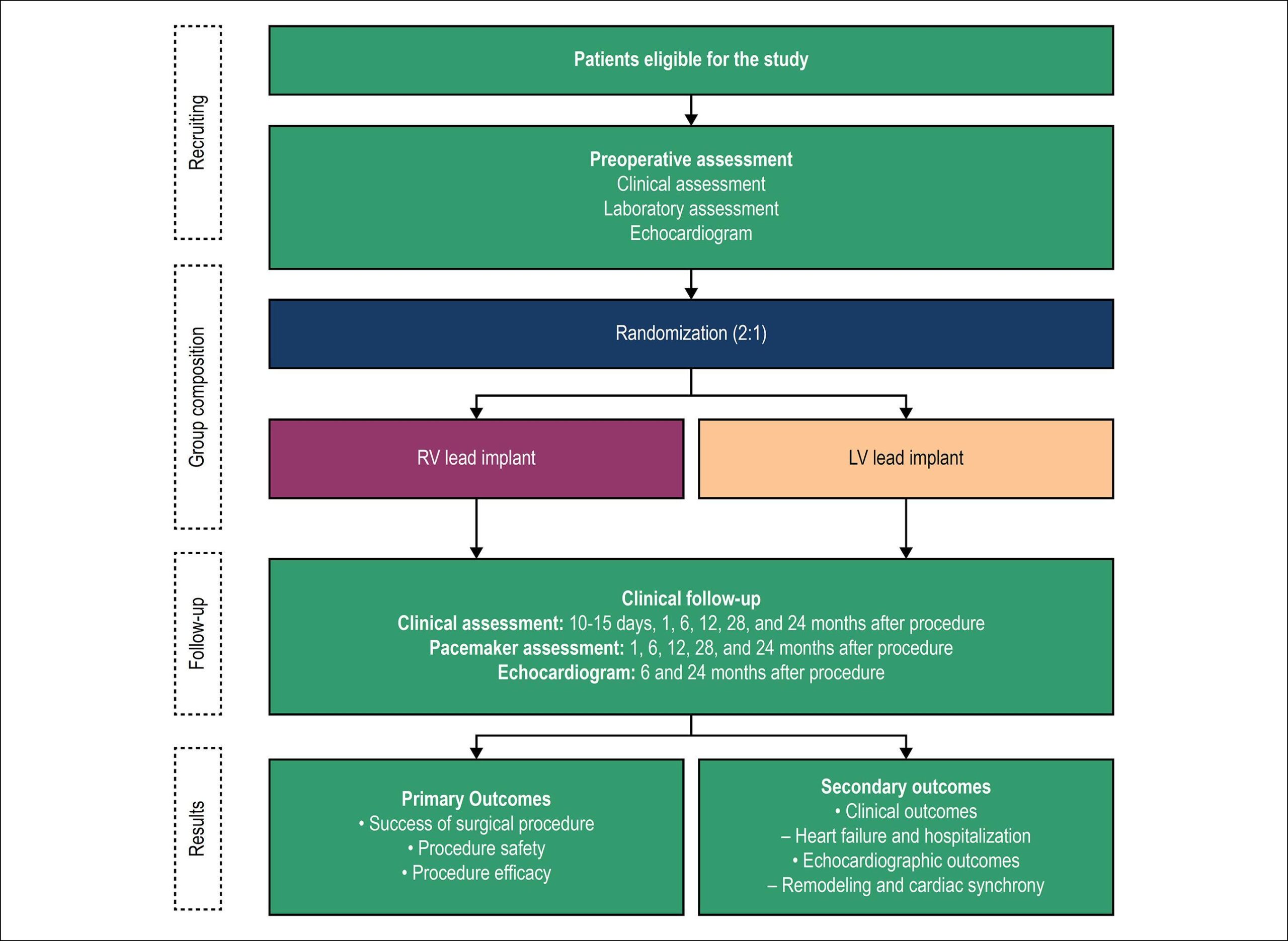
Randomized, controlled, and single-blinded clinical trial in adult patients submitted to PM implantation due to bradyarrhythmias and systolic ventricular function ≥ 0.40. Randomization (RV vs. LV) occurred before PM implantation. The main results of the study were procedural success, safety, and efficacy. Secondary results were clinical and echocardiographic changes. Chi-squared test, Fisher’s exact test and Student’s t-test were used, considering a significance level of 5%.

Results:

From June 2012 to January 2014, 91 patients were included, 36 in the RV Group and 55 in the LV Group. Baseline characteristics of patients in both groups were similar. PM implantation was performed successfully and without any complications in all patients in the RV group. Of the 55 patients initially allocated into the LV group, active-fixation coronary sinus lead implantation was not possible in 20 (36.4%) patients. The most frequent complication was phrenic nerve stimulation, detected in 9 (25.7%) patients in the LV group. During the follow-up period, there were no hospitalizations due to heart failure. Reductions of more than 10% in left ventricular ejection fraction were observed in 23.5% of patients in the RV group and 20.6% of those in the LV group (p = 0.767). Tissue Doppler analysis showed that 91.2% of subjects in the RV group and 68.8% of those in the LV group had interventricular dyssynchrony (p = 0.022).

Conclusion:

The procedural success rate of LV implant was low, and the safety of the procedure was influenced mainly by the high rate of phrenic nerve stimulation in the postoperative period.

  • Arrhythmias Cardiac
  • Bradycardia
  • Cardiac Pacing, Artificial
  • Pacemaker, Artificial
  • Ventricular Remodeling
Read Full Article
Creative Commons Attribution (CC BY) Creative Commons license
15/04/2019 DOI: 10.5935/abc.20180275 Views 1
ABC
Editorial

The Nature of Cardiac Remodeling Due to Physical Exercise: More Evidence Towards to the Normal Adaptive Responses of the Heart

Lucas Helal et al. Anderson Donelli da Silveira

Cardiac remodeling due to exercise training overload (the so-called “athlete’s heart”) has been widely investigated since the 70’s and is still acknowledged by the scientific community. To differentiate normal adaptive responses (“benign”) from abnormal ones remains a challenge. Here we address some important issues related to the discussion on cardiac remodeling in exercise, recently revisited by Vidaletti-Silva and colleagues in this issue.

In terms of morphological adaptations, the left atrial and ventricular hypertrophy call attention due to their potential association with the onset of supraventricular tachyarrhythmias and also of ventricular arrhythmias, which may result in undesirable events.

[…]

  • Arrhythmias
  • Atrial Remodeling
  • Blood Pressure
  • Cardiac Remodeling
  • Exercise
  • Exercise Movement Techniques
  • Resistance Training
  • Running
  • Ventricular Remodeling
  • Weight Lifting
Read Full Article
Creative Commons Attribution (CC BY) Creative Commons license
01/12/2018 DOI: 10.5935/abc.20180238
Figura 1
ABC
Original Article

Obstructive Sleep Apnea is Common and Associated with Heart Remodeling in Patients with Chagas Disease

Carolina de Araújo Medeiros et al. Isaac Vieira Secundo Carlos Antônio da Mota Silveira José Maria del Castilho … Afonso Luiz Tavares de Albuquerque Sílvia Marinho Martins Wilson de Oliveira Júnior Geraldo Lorenzi-Filho Luciano F. Drager Rodrigo Pinto Pedrosa

Abstract

Background:

Chagas Disease (CD) is an important cause of morbimortality due to heart failure and malignant arrhythmias worldwide, especially in Latin America.

Objective:

To investigate the association of obstructive sleep apnea (OSA) with heart remodeling and cardiac arrhythmias in patients CD.

Methods:

Consecutive patients with CD, aged between 30 to 65 years old were enrolled. Participants underwent clinical evaluation, sleep study, 24-hour Holter monitoring, echocardiogram and ambulatory blood pressure monitoring.

Results:

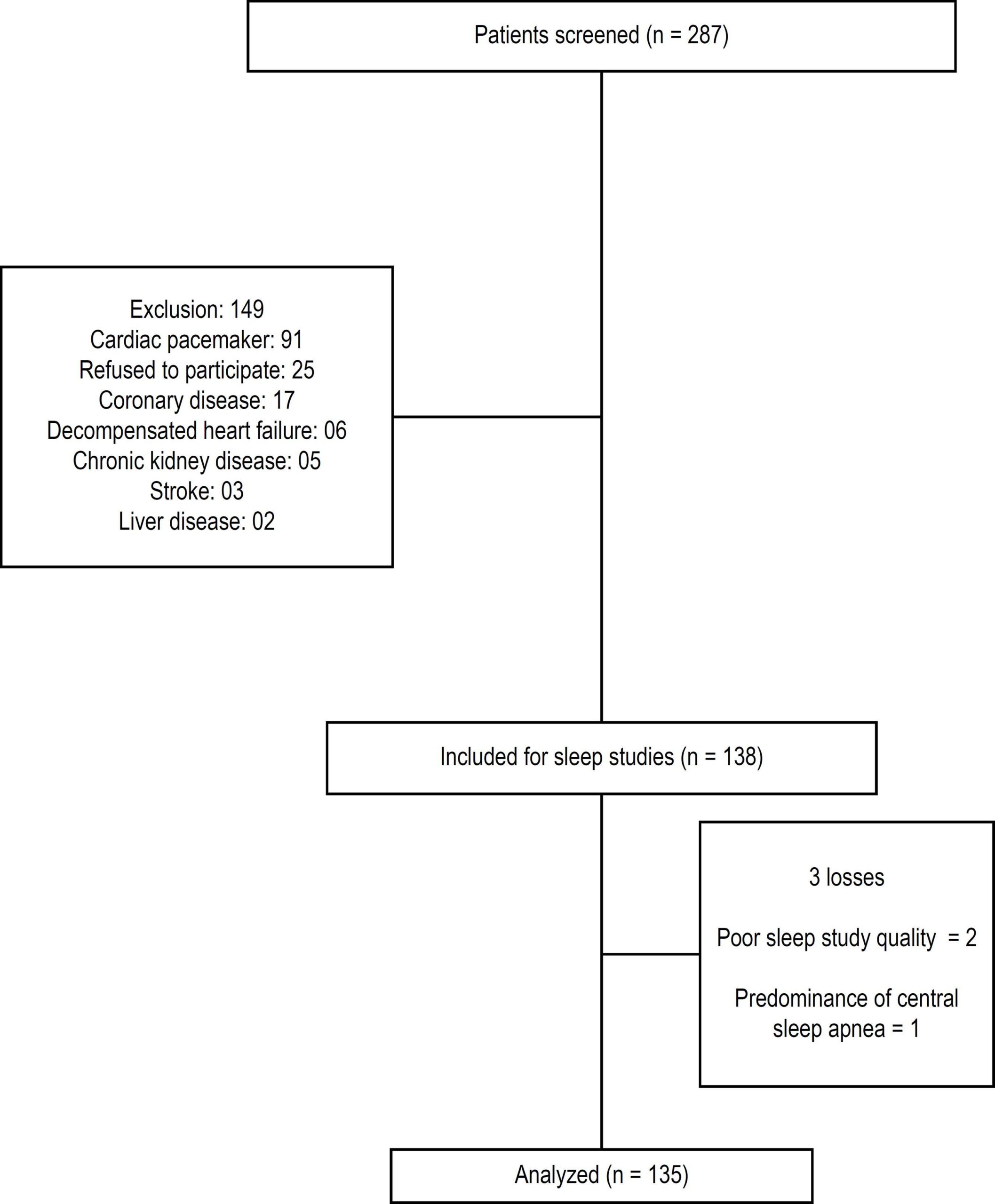
We evaluated 135 patients [age: 56 (45-62) years; 30% men; BMI: 26 ± 4 kg/m2, Chagas cardiomyopathy: 70%]. Moderate to severe OSA (apnea-hypopnea index, AHI, ≥ 15 events/h) was present in 21% of the patients. OSA was not associated with arrhythmias in this population. As compared to patients with mild or no OSA, patients with moderate to severe OSA had higher frequency of hypertension (79% vs. 72% vs. 44%, p < 0.01) higher nocturnal systolic blood pressure: 119 ± 17 vs. 113 ± 13 vs. 110 ± 11 mmHg, p = 0.01; larger left atrial diameter [37 (33-42) vs. 35 (33-39) vs. 33 (30-36) mm, p < 0.01]; and a greater proportion of left ventricular dysfunction [LVEF < 50% (39% vs. 28% vs. 11%), p < 0.01], respectively. Predictor of left atrial dimension was Log10 (AHI) (b = 3.86, 95% CI: 1.91 to 5.81; p 15 events/h (OR = 3.61, 95% CI: 1.31 – 9.98; p = 0.01), systolic blood pressure (OR = 1.06, 95% CI: 1.02 – 1.10; p < 0.01) and male gender (OR = 3.24, 95% CI: 1.31 – 8.01; p = 0.01).

Conclusions:

OSA is independently associated with atrial and ventricular remodeling in patients with CD.

  • Arrhythmias Cardiac
  • Chagas disease
  • Sleep Apnea, Obstructive
  • Ventricular Remodeling
Read Full Article
Creative Commons Attribution (CC BY) Creative Commons license
06/08/2018 DOI: 10.5935/abc.20180131 Views 1

Could not load more articles. Please try again.

How to cite this article

EndNote RIS

Electronic Document Format (Vancouver)

Bonatto M, Freitas AKE, Takatuzi CB, Franco LGE, Vendramini DR, Lechinewski LD, Blume GG, et al. Echocardiographic Changes Associated With Sacubitril/Valsartan Therapy in Patients With Heart Failure With Reduced Ejection Fraction (HFrEF): A Descriptive 12-Month Follow-Up Analysis. International Journal of Cardiovascular Sciences 2026;39:e20250115.

Electronic Document Format (ABNT)

Bonatto, Marcely; Freitas, Ana Karyn Ehrenfried de; Takatuzi, Caio Berwanger; Franco, Luiz Gustavo Esmanhoto; Vendramini, Danielle Rodrigues; Lechinewski, Luka David; Blume, Gustavo Gavazzoni; Moura, Lidia Zytynski. Echocardiographic Changes Associated With Sacubitril/Valsartan Therapy in Patients With Heart Failure With Reduced Ejection Fraction (HFrEF): A Descriptive 12-Month Follow-Up Analysis. International Journal of Cardiovascular Sciences, v. 39, e20250115, Jul. 2026.

Electronic Document Format (APA)

Bonatto, M., Freitas, A. K. E. , Takatuzi, C. B., Franco, L. G. E., Vendramini, D. R., Lechinewski, L. D., Blume, G. G., & Moura, L. Z. (2026). Echocardiographic Changes Associated With Sacubitril/Valsartan Therapy in Patients With Heart Failure With Reduced Ejection Fraction (HFrEF): A Descriptive 12-Month Follow-Up Analysis. International Journal of Cardiovascular Sciences, 39, e20250115.

Electronic Document Format (ISO)

Bonatto, Marcely and Freitas, Ana Karyn Ehrenfried de and Takatuzi, Caio Berwanger and Franco, Luiz Gustavo Esmanhoto and Vendramini, Danielle Rodrigues and Lechinewski, Luka David and Blume, Gustavo Gavazzoni and Moura, Lidia Zytynski. Echocardiographic Changes Associated With Sacubitril/Valsartan Therapy in Patients With Heart Failure With Reduced Ejection Fraction (HFrEF): A Descriptive 12-Month Follow-Up Analysis. International Journal of Cardiovascular Sciences [online]. 2026, vol. 39, [cited 2026-10-14], e20250115. Available from: <https://journals.cardiol.br/en/article/echocardiographic-changes-associated-with-sacubitril-valsartan-therapy-in-patients-with-heart-failure-with-reduced-ejection-fraction-hfref-a-descriptive-12-month-follow-up-analysis/>. ISSN 2359-4802

EndNote RIS

Electronic Document Format (Vancouver)

Cunha BL, Brasil HN, Matias PA, Rocha EA. Beyond Ventricular Pacing: Is Atrial Cardiomyopathy a Determinant of Clinical Outcome after Pacemaker Implantation?. Arquivos Brasileiros de Cardiologia 2026;123(5):e20260425.

Electronic Document Format (ABNT)

Cunha, Bianca Lopes; Brasil, Helena Nogueira; Matias, Patrícia de Araújo; Rocha, Eduardo Arrais. Beyond Ventricular Pacing: Is Atrial Cardiomyopathy a Determinant of Clinical Outcome after Pacemaker Implantation?. Arquivos Brasileiros de Cardiologia, v. 123, n. 5, e20260425, Jul. 2026.

Electronic Document Format (APA)

Cunha, B. L., Brasil, H. N., Matias, P. A., & Rocha, E. A. (2026). Beyond Ventricular Pacing: Is Atrial Cardiomyopathy a Determinant of Clinical Outcome after Pacemaker Implantation?. Arquivos Brasileiros de Cardiologia, 123(5), e20260425.

Electronic Document Format (ISO)

Cunha, Bianca Lopes and Brasil, Helena Nogueira and Matias, Patrícia de Araújo and Rocha, Eduardo Arrais. Beyond Ventricular Pacing: Is Atrial Cardiomyopathy a Determinant of Clinical Outcome after Pacemaker Implantation?. Arquivos Brasileiros de Cardiologia [online]. 2026, vol. 123, n. 5, [cited 2026-10-14], e20260425. Available from: <https://journals.cardiol.br/en/article/beyond-ventricular-pacing-is-atrial-cardiomyopathy-a-determinant-of-clinical-outcome-after-pacemaker-implantation/>. ISSN 0066-782X

EndNote RIS

Electronic Document Format (Vancouver)

Barroso MCRD, Madogolele HCN, Belfort DSP, Biselli B, Ayub-Ferreira SM, Bocchi EA. Reversal of Left Bundle Branch Block Following Treatment in Alcoholic Cardiomyopathy. Arquivos Brasileiros de Cardiologia 2025;122(10):e20250327.

Electronic Document Format (ABNT)

Barroso, Manuela Cristina Ribeiro Dias; Madogolele, Heleutério da Conceição Nicolau; Belfort, Deborah de Sá Pereira; Biselli, Bruno; Ayub-Ferreira, Silvia Moreira; Bocchi, Edimar Alcides. Reversal of Left Bundle Branch Block Following Treatment in Alcoholic Cardiomyopathy. Arquivos Brasileiros de Cardiologia, v. 122, n. 10, e20250327, Dec. 2025.

Electronic Document Format (APA)

Barroso, M. C. R. D., Madogolele, H. C. N., Belfort, D. S. P., Biselli, B., Ayub-Ferreira, S. M., & Bocchi, E. A. (2025). Reversal of Left Bundle Branch Block Following Treatment in Alcoholic Cardiomyopathy. Arquivos Brasileiros de Cardiologia, 122(10), e20250327.

Electronic Document Format (ISO)

Barroso, Manuela Cristina Ribeiro Dias and Madogolele, Heleutério da Conceição Nicolau and Belfort, Deborah de Sá Pereira and Biselli, Bruno and Ayub-Ferreira, Silvia Moreira and Bocchi, Edimar Alcides. Reversal of Left Bundle Branch Block Following Treatment in Alcoholic Cardiomyopathy. Arquivos Brasileiros de Cardiologia [online]. 2025, vol. 122, n. 10, [cited 2026-10-14], e20250327. Available from: <https://journals.cardiol.br/en/article/reversal-of-left-bundle-branch-block-following-treatment-in-alcoholic-cardiomyopathy/>. ISSN 0066-782X

EndNote RIS

Electronic Document Format (Vancouver)

Mota GAF, Gatto M, Cyrino CMS, Oliveira Júnior SA, Okoshi MP. Long Non-Coding RNA CCAT2 and Pathological Cardiac Remodeling. Arquivos Brasileiros de Cardiologia 2024;121(10):e20240698.

Electronic Document Format (ABNT)

Mota, Gustavo Augusto Ferreira; Gatto, Mariana; Cyrino, Claudia Maria Silva; Oliveira Júnior, Silvio Assis de; Okoshi, Marina Politi. Long Non-Coding RNA CCAT2 and Pathological Cardiac Remodeling. Arquivos Brasileiros de Cardiologia, v. 121, n. 10, e20240698, Dec. 2024.

Electronic Document Format (APA)

Mota, G. A. F., Gatto, M., Cyrino, C. M. S., Oliveira Júnior, S. A. , & Okoshi, M. P. (2024). Long Non-Coding RNA CCAT2 and Pathological Cardiac Remodeling. Arquivos Brasileiros de Cardiologia, 121(10), e20240698.

Electronic Document Format (ISO)

Mota, Gustavo Augusto Ferreira and Gatto, Mariana and Cyrino, Claudia Maria Silva and Oliveira Júnior, Silvio Assis de and Okoshi, Marina Politi. Long Non-Coding RNA CCAT2 and Pathological Cardiac Remodeling. Arquivos Brasileiros de Cardiologia [online]. 2024, vol. 121, n. 10, [cited 2026-10-14], e20240698. Available from: <https://journals.cardiol.br/en/article/long-non-coding-rna-ccat2-and-pathological-cardiac-remodeling/>. ISSN 0066-782X

EndNote RIS

Electronic Document Format (Vancouver)

Mota GAF, Gatto M, Gregolin CS, Souza SLB, Okoshi MP. mRNA, miRNA, lncRNA, ceRNA: The Future of Cardiovascular Research?. Arquivos Brasileiros de Cardiologia 2023;120(4):e20230209.

Electronic Document Format (ABNT)

Mota, Gustavo Augusto Ferreira; Gatto, Mariana; Gregolin, Cristina Schmitt; Souza, Sérgio Luiz Borges de; Okoshi, Marina Politi. mRNA, miRNA, lncRNA, ceRNA: The Future of Cardiovascular Research?. Arquivos Brasileiros de Cardiologia, v. 120, n. 4, e20230209, May. 2023.

Electronic Document Format (APA)

Mota, G. A. F., Gatto, M., Gregolin, C. S., Souza, S. L. B. , & Okoshi, M. P. (2023). mRNA, miRNA, lncRNA, ceRNA: The Future of Cardiovascular Research?. Arquivos Brasileiros de Cardiologia, 120(4), e20230209.

Electronic Document Format (ISO)

Mota, Gustavo Augusto Ferreira and Gatto, Mariana and Gregolin, Cristina Schmitt and Souza, Sérgio Luiz Borges de and Okoshi, Marina Politi. mRNA, miRNA, lncRNA, ceRNA: The Future of Cardiovascular Research?. Arquivos Brasileiros de Cardiologia [online]. 2023, vol. 120, n. 4, [cited 2026-10-14], e20230209. Available from: <https://journals.cardiol.br/en/article/mrna-mirna-lncrna-cerna-the-future-of-cardiovascular-research/>. ISSN 0066-782X

EndNote RIS

Electronic Document Format (Vancouver)

Eyyupkoca F, Eyerci N, Altintas MS, Felekoglu MA, Biter HI, Hidayet S, Sivri S, et al. The Relationship between Extracellular Volume Compartments and Matrix Metalloproteinases-2 in Left Ventricular Remodeling after Myocardial Infarction. Arquivos Brasileiros de Cardiologia 2022;119(6):946-57.

Electronic Document Format (ABNT)

Eyyupkoca, Ferhat; Eyerci, Nilnur; Altintas, Mehmet Sait; Felekoglu, Mehmet Ali; Biter, Halil Ibrahim; Hidayet, Siho; Sivri, Serkan; Demirtas, Bekir; Ates, Omer Faruk. The Relationship between Extracellular Volume Compartments and Matrix Metalloproteinases-2 in Left Ventricular Remodeling after Myocardial Infarction. Arquivos Brasileiros de Cardiologia, v. 119, n. 6, p. 946-957, Dec. 2022.

Electronic Document Format (APA)

Eyyupkoca, F., Eyerci, N., Altintas, M. S., Felekoglu, M. A., Biter, H. I., Hidayet, S., Sivri, S., Demirtas, B., & Ates, O. F. (2022). The Relationship between Extracellular Volume Compartments and Matrix Metalloproteinases-2 in Left Ventricular Remodeling after Myocardial Infarction. Arquivos Brasileiros de Cardiologia, 119(6), 946-957.

Electronic Document Format (ISO)

Eyyupkoca, Ferhat and Eyerci, Nilnur and Altintas, Mehmet Sait and Felekoglu, Mehmet Ali and Biter, Halil Ibrahim and Hidayet, Siho and Sivri, Serkan and Demirtas, Bekir and Ates, Omer Faruk. The Relationship between Extracellular Volume Compartments and Matrix Metalloproteinases-2 in Left Ventricular Remodeling after Myocardial Infarction. Arquivos Brasileiros de Cardiologia [online]. 2022, vol. 119, n. 6, [cited 2026-10-14], pp. 946-957. Available from: <https://journals.cardiol.br/en/article/the-relationship-between-extracellular-volume-compartments-and-matrix-metalloproteinases-2-in-left-ventricular-remodeling-after-myocardial-infarction/>. ISSN 0066-782X

EndNote RIS

Electronic Document Format (Vancouver)

Gatto M, Mota GAF, Okoshi MP. The Year in Basic Research 2021: the Search for Translational Models. Arquivos Brasileiros de Cardiologia 2022;118(4):667-8.

Electronic Document Format (ABNT)

Gatto, Mariana; Mota, Gustavo Augusto Ferreira; Okoshi, Marina Politi. The Year in Basic Research 2021: the Search for Translational Models. Arquivos Brasileiros de Cardiologia, v. 118, n. 4, p. 667-668, Apr. 2022.

Electronic Document Format (APA)

Gatto, M., Mota, G. A. F., & Okoshi, M. P. (2022). The Year in Basic Research 2021: the Search for Translational Models. Arquivos Brasileiros de Cardiologia, 118(4), 667-668.

Electronic Document Format (ISO)

Gatto, Mariana and Mota, Gustavo Augusto Ferreira and Okoshi, Marina Politi. The Year in Basic Research 2021: the Search for Translational Models. Arquivos Brasileiros de Cardiologia [online]. 2022, vol. 118, n. 4, [cited 2026-10-14], pp. 667-668. Available from: <https://journals.cardiol.br/en/article/the-year-in-basic-research-2021-the-search-for-translational-models/>. ISSN 0066-782X

EndNote RIS

Electronic Document Format (Vancouver)

Souza DS, Roman-Campos D. The Importance of Time-Course Studies Using Experimental Models of Cardiac Diseases. Arquivos Brasileiros de Cardiologia 2022;118(2):476-7.

Electronic Document Format (ABNT)

Souza, Diego Santos; Roman-Campos, Danilo. The Importance of Time-Course Studies Using Experimental Models of Cardiac Diseases. Arquivos Brasileiros de Cardiologia, v. 118, n. 2, p. 476-477, Mar. 2022.

Electronic Document Format (APA)

Souza, D. S., & Roman-Campos, D. (2022). The Importance of Time-Course Studies Using Experimental Models of Cardiac Diseases. Arquivos Brasileiros de Cardiologia, 118(2), 476-477.

Electronic Document Format (ISO)

Souza, Diego Santos and Roman-Campos, Danilo. The Importance of Time-Course Studies Using Experimental Models of Cardiac Diseases. Arquivos Brasileiros de Cardiologia [online]. 2022, vol. 118, n. 2, [cited 2026-10-14], pp. 476-477. Available from: <https://journals.cardiol.br/en/article/the-importance-of-time-course-studies-using-experimental-models-of-cardiac-diseases/>. ISSN 0066-782X

EndNote RIS

Electronic Document Format (Vancouver)

Oliveira BC, Santos PP, Figueiredo AM, Rafacho BPM, Ishikawa L, Zanati SG, Fernandes AAH, et al. Influence of Consumption of Orange Juice (Citrus Sinensis) on Cardiac Remodeling of Rats Submitted to Myocardial Infarction. Arquivos Brasileiros de Cardiologia 2021;116(6):1127-36.

Electronic Document Format (ABNT)

Oliveira, Bruna C.; Santos, Priscila P.; Figueiredo, Amanda M.; Rafacho, Bruna P. M.; Ishikawa, Larissa; Zanati, Silméia G.; Fernandes, Ana A. H.; Azevedo, Paula S.; Polegato, Bertha F.; Zornoff, Leonardo A. M.; Minicucci, Marcos F.; Paiva, Sergio A. R.. Influence of Consumption of Orange Juice (Citrus Sinensis) on Cardiac Remodeling of Rats Submitted to Myocardial Infarction. Arquivos Brasileiros de Cardiologia, v. 116, n. 6, p. 1127-1136, Jun. 2021.

Electronic Document Format (APA)

Oliveira, B. C., Santos, P. P., Figueiredo, A. M., Rafacho, B. P. M., Ishikawa, L., Zanati, S. G., Fernandes, A. A. H., Azevedo, P. S., Polegato, B. F., Zornoff, L. A. M., Minicucci, M. F., & Paiva, S. A. R. (2021). Influence of Consumption of Orange Juice (Citrus Sinensis) on Cardiac Remodeling of Rats Submitted to Myocardial Infarction. Arquivos Brasileiros de Cardiologia, 116(6), 1127-1136.

Electronic Document Format (ISO)

Oliveira, Bruna C. and Santos, Priscila P. and Figueiredo, Amanda M. and Rafacho, Bruna P. M. and Ishikawa, Larissa and Zanati, Silméia G. and Fernandes, Ana A. H. and Azevedo, Paula S. and Polegato, Bertha F. and Zornoff, Leonardo A. M. and Minicucci, Marcos F. and Paiva, Sergio A. R.. Influence of Consumption of Orange Juice (Citrus Sinensis) on Cardiac Remodeling of Rats Submitted to Myocardial Infarction. Arquivos Brasileiros de Cardiologia [online]. 2021, vol. 116, n. 6, [cited 2026-10-14], pp. 1127-1136. Available from: <https://journals.cardiol.br/en/article/influence-of-consumption-of-orange-juice-citrus-sinensis-on-cardiac-remodeling-of-rats-submitted-to-myocardial-infarction/>. ISSN 0066-782X

EndNote RIS

Electronic Document Format (Vancouver)

Martinez PF, Carvalho MR, Mendonça MLM, Okoshi MP, Oliveira-Junior SA. Antioxidant and Anti-Inflammatory Effects of Orange Juice. Arquivos Brasileiros de Cardiologia 2021;116(6):1137-8.

Electronic Document Format (ABNT)

Martinez, Paula Felippe; Carvalho, Marianna Rabelo de; Mendonça, Maria Lua Marques; Okoshi, Marina Politi; Oliveira-Junior, Silvio Assis de. Antioxidant and Anti-Inflammatory Effects of Orange Juice. Arquivos Brasileiros de Cardiologia, v. 116, n. 6, p. 1137-1138, Jun. 2021.

Electronic Document Format (APA)

Martinez, P. F., Carvalho, M. R. , Mendonça, M. L. M., Okoshi, M. P., & Oliveira-Junior, S. A. (2021). Antioxidant and Anti-Inflammatory Effects of Orange Juice. Arquivos Brasileiros de Cardiologia, 116(6), 1137-1138.

Electronic Document Format (ISO)

Martinez, Paula Felippe and Carvalho, Marianna Rabelo de and Mendonça, Maria Lua Marques and Okoshi, Marina Politi and Oliveira-Junior, Silvio Assis de. Antioxidant and Anti-Inflammatory Effects of Orange Juice. Arquivos Brasileiros de Cardiologia [online]. 2021, vol. 116, n. 6, [cited 2026-10-14], pp. 1137-1138. Available from: <https://journals.cardiol.br/en/article/antioxidant-and-anti-inflammatory-effects-of-orange-juice/>. ISSN 0066-782X

EndNote RIS

Electronic Document Format (Vancouver)

Rangel FOD. Reperfusion Strategies in Acute Myocardial Infarction: State of the Art. International Journal of Cardiovascular Sciences 2021;35(1):113-22.

Electronic Document Format (ABNT)

Rangel, Fernando Oswaldo Dias. Reperfusion Strategies in Acute Myocardial Infarction: State of the Art. International Journal of Cardiovascular Sciences, v. 35, n. 1, p. 113-122, Jun. 2021.

Electronic Document Format (APA)

Rangel, F. O. D. (2021). Reperfusion Strategies in Acute Myocardial Infarction: State of the Art. International Journal of Cardiovascular Sciences, 35(1), 113-122.

Electronic Document Format (ISO)

Rangel, Fernando Oswaldo Dias. Reperfusion Strategies in Acute Myocardial Infarction: State of the Art. International Journal of Cardiovascular Sciences [online]. 2021, vol. 35, n. 1, [cited 2026-10-14], pp. 113-122. Available from: <https://journals.cardiol.br/en/article/reperfusion-strategies-in-acute-myocardial-infarction-state-of-the-art/>. ISSN 2359-4802

EndNote RIS

Electronic Document Format (Vancouver)

Santos PP, Rafacho BPM, Gonçalves AF, Pires VCM, Roscani MG, Azevedo PS, Polegato BF, et al. Vitamin D Supplementation Induces Cardiac Remodeling in Rats: Association with Thioredoxin-Interacting Protein and Thioredoxin. Arquivos Brasileiros de Cardiologia 2021;116(5):970-8.

Electronic Document Format (ABNT)

Santos, Priscila P. dos; Rafacho, Bruna P. M.; Gonçalves, Andrea F.; Pires, Vanessa C. M.; Roscani, Meliza G.; Azevedo, Paula S.; Polegato, Bertha F.; Minicucci, Marcos F.; Fernandes, Ana Angélica H.; Tanni, Suzana E.; Zornoff, Leonardo A. M.; Paiva, Sergio A. R. de. Vitamin D Supplementation Induces Cardiac Remodeling in Rats: Association with Thioredoxin-Interacting Protein and Thioredoxin. Arquivos Brasileiros de Cardiologia, v. 116, n. 5, p. 970-978, May. 2021.

Electronic Document Format (APA)

Santos, P. P. , Rafacho, B. P. M., Gonçalves, A. F., Pires, V. C. M., Roscani, M. G., Azevedo, P. S., Polegato, B. F., Minicucci, M. F., Fernandes, A. A. H., Tanni, S. E., Zornoff, L. A. M., & Paiva, S. A. R. (2021). Vitamin D Supplementation Induces Cardiac Remodeling in Rats: Association with Thioredoxin-Interacting Protein and Thioredoxin. Arquivos Brasileiros de Cardiologia, 116(5), 970-978.

Electronic Document Format (ISO)

Santos, Priscila P. dos and Rafacho, Bruna P. M. and Gonçalves, Andrea F. and Pires, Vanessa C. M. and Roscani, Meliza G. and Azevedo, Paula S. and Polegato, Bertha F. and Minicucci, Marcos F. and Fernandes, Ana Angélica H. and Tanni, Suzana E. and Zornoff, Leonardo A. M. and Paiva, Sergio A. R. de. Vitamin D Supplementation Induces Cardiac Remodeling in Rats: Association with Thioredoxin-Interacting Protein and Thioredoxin. Arquivos Brasileiros de Cardiologia [online]. 2021, vol. 116, n. 5, [cited 2026-10-14], pp. 970-978. Available from: <https://journals.cardiol.br/en/article/vitamin-d-supplementation-induces-cardiac-remodeling-in-rats-association-with-thioredoxin-interacting-protein-and-thioredoxin/>. ISSN 0066-782X

EndNote RIS

Electronic Document Format (Vancouver)

Souza LM, Okoshi MP, Gomes MJ, Gatto M, Rodrigues EA, Pontes THD, Damatto FC, et al. Effects of Late Aerobic Exercise on Cardiac Remodeling of Rats with Small-Sized Myocardial Infarction. Arquivos Brasileiros de Cardiologia 2021;116(4):784-92.

Electronic Document Format (ABNT)

Souza, Lidiane M.; Okoshi, Marina P.; Gomes, Mariana J.; Gatto, Mariana; Rodrigues, Eder A.; Pontes, Thierres H. D.; Damatto, Felipe C.; Oliveira, Leiliane R. S.; Borim, Patrícia Aparecida; Lima, Aline R. R.; Zornoff, Leonardo A. M.; Okoshi, Katashi; Pagan, Luana U.. Effects of Late Aerobic Exercise on Cardiac Remodeling of Rats with Small-Sized Myocardial Infarction. Arquivos Brasileiros de Cardiologia, v. 116, n. 4, p. 784-792, Apr. 2021.

Electronic Document Format (APA)

Souza, L. M., Okoshi, M. P., Gomes, M. J., Gatto, M., Rodrigues, E. A., Pontes, T. H. D., Damatto, F. C., Oliveira, L. R. S., Borim, P. A., Lima, A. R. R., Zornoff, L. A. M., Okoshi, K., & Pagan, L. U. (2021). Effects of Late Aerobic Exercise on Cardiac Remodeling of Rats with Small-Sized Myocardial Infarction. Arquivos Brasileiros de Cardiologia, 116(4), 784-792.

Electronic Document Format (ISO)

Souza, Lidiane M. and Okoshi, Marina P. and Gomes, Mariana J. and Gatto, Mariana and Rodrigues, Eder A. and Pontes, Thierres H. D. and Damatto, Felipe C. and Oliveira, Leiliane R. S. and Borim, Patrícia Aparecida and Lima, Aline R. R. and Zornoff, Leonardo A. M. and Okoshi, Katashi and Pagan, Luana U.. Effects of Late Aerobic Exercise on Cardiac Remodeling of Rats with Small-Sized Myocardial Infarction. Arquivos Brasileiros de Cardiologia [online]. 2021, vol. 116, n. 4, [cited 2026-10-14], pp. 784-792. Available from: <https://journals.cardiol.br/en/article/effects-of-late-aerobic-exercise-on-cardiac-remodeling-of-rats-with-small-sized-myocardial-infarction/>. ISSN 0066-782X

EndNote RIS

Electronic Document Format (Vancouver)

Reddy YNV. Pulmonary Hypertension in Polycystic Ovarian Syndrome. Arquivos Brasileiros de Cardiologia 2021;116(4):812-3.

Electronic Document Format (ABNT)

Reddy, Yogesh N. V.. Pulmonary Hypertension in Polycystic Ovarian Syndrome. Arquivos Brasileiros de Cardiologia, v. 116, n. 4, p. 812-813, Apr. 2021.

Electronic Document Format (APA)

Reddy, Y. N. V. (2021). Pulmonary Hypertension in Polycystic Ovarian Syndrome. Arquivos Brasileiros de Cardiologia, 116(4), 812-813.

Electronic Document Format (ISO)

Reddy, Yogesh N. V.. Pulmonary Hypertension in Polycystic Ovarian Syndrome. Arquivos Brasileiros de Cardiologia [online]. 2021, vol. 116, n. 4, [cited 2026-10-14], pp. 812-813. Available from: <https://journals.cardiol.br/en/article/pulmonary-hypertension-in-polycystic-ovarian-syndrome/>. ISSN 0066-782X

EndNote RIS

Electronic Document Format (Vancouver)

Cezar MDM, Oliveira Junior SA, Damatto RL. Moderate-Intensity Resistance Training Improves Oxidative Stress in Heart. Arquivos Brasileiros de Cardiologia 2021;116(1):12-3.

Electronic Document Format (ABNT)

Cezar, Marcelo Diarcadia Mariano; Oliveira Junior, Silvio Assis de; Damatto, Ricardo Luiz. Moderate-Intensity Resistance Training Improves Oxidative Stress in Heart. Arquivos Brasileiros de Cardiologia, v. 116, n. 1, p. 12-13, Feb. 2021.

Electronic Document Format (APA)

Cezar, M. D. M., Oliveira Junior, S. A. , & Damatto, R. L. (2021). Moderate-Intensity Resistance Training Improves Oxidative Stress in Heart. Arquivos Brasileiros de Cardiologia, 116(1), 12-13.

Electronic Document Format (ISO)

Cezar, Marcelo Diarcadia Mariano and Oliveira Junior, Silvio Assis de and Damatto, Ricardo Luiz. Moderate-Intensity Resistance Training Improves Oxidative Stress in Heart. Arquivos Brasileiros de Cardiologia [online]. 2021, vol. 116, n. 1, [cited 2026-10-14], pp. 12-13. Available from: <https://journals.cardiol.br/en/article/moderate-intensity-resistance-training-improves-oxidative-stress-in-heart/>. ISSN 0066-782X

EndNote RIS

Electronic Document Format (Vancouver)

Basilio PG, Oliveira APC, Castro ACF, Carvalho MR, Zagatto AM, Martinez PF, Okoshi MP, et al. Intermittent Fasting Attenuates Exercise Training-Induced Cardiac Remodeling. Arquivos Brasileiros de Cardiologia 2020;115(2):184-93.

Electronic Document Format (ABNT)

Basilio, Priscilla Gois; Oliveira, Ana Priscila Cayres de; Castro, Ana Carolini Ferreira de; Carvalho, Marianna Rabelo de; Zagatto, Alessandro Moura; Martinez, Paula Felippe; Okoshi, Marina Politi; Okoshi, Katashi; Ota, Gabriel Elias; Reis, Filipe Abdalla dos; Oliveira-Junior, Silvio Assis de. Intermittent Fasting Attenuates Exercise Training-Induced Cardiac Remodeling. Arquivos Brasileiros de Cardiologia, v. 115, n. 2, p. 184-193, Aug. 2020.

Electronic Document Format (APA)

Basilio, P. G., Oliveira, A. P. C. , Castro, A. C. F. , Carvalho, M. R. , Zagatto, A. M., Martinez, P. F., Okoshi, M. P., Okoshi, K., Ota, G. E., Reis, F. A. , & Oliveira-Junior, S. A. (2020). Intermittent Fasting Attenuates Exercise Training-Induced Cardiac Remodeling. Arquivos Brasileiros de Cardiologia, 115(2), 184-193.

Electronic Document Format (ISO)

Basilio, Priscilla Gois and Oliveira, Ana Priscila Cayres de and Castro, Ana Carolini Ferreira de and Carvalho, Marianna Rabelo de and Zagatto, Alessandro Moura and Martinez, Paula Felippe and Okoshi, Marina Politi and Okoshi, Katashi and Ota, Gabriel Elias and Reis, Filipe Abdalla dos and Oliveira-Junior, Silvio Assis de. Intermittent Fasting Attenuates Exercise Training-Induced Cardiac Remodeling. Arquivos Brasileiros de Cardiologia [online]. 2020, vol. 115, n. 2, [cited 2026-10-14], pp. 184-193. Available from: <https://journals.cardiol.br/en/article/intermittent-fasting-attenuates-exercise-training-induced-cardiac-remodeling/>. ISSN 0066-782X

EndNote RIS

Electronic Document Format (Vancouver)

Hossri CAC. Atrioventricular Conduction System Disorders and Potential Risks of Arrhythmic Events in Endurance Athletes. Arquivos Brasileiros de Cardiologia 2020;115(1):78-9.

Electronic Document Format (ABNT)

Hossri, Carlos Alberto Cordeiro. Atrioventricular Conduction System Disorders and Potential Risks of Arrhythmic Events in Endurance Athletes. Arquivos Brasileiros de Cardiologia, v. 115, n. 1, p. 78-79, Aug. 2020.

Electronic Document Format (APA)

Hossri, C. A. C. (2020). Atrioventricular Conduction System Disorders and Potential Risks of Arrhythmic Events in Endurance Athletes. Arquivos Brasileiros de Cardiologia, 115(1), 78-79.

Electronic Document Format (ISO)

Hossri, Carlos Alberto Cordeiro. Atrioventricular Conduction System Disorders and Potential Risks of Arrhythmic Events in Endurance Athletes. Arquivos Brasileiros de Cardiologia [online]. 2020, vol. 115, n. 1, [cited 2026-10-14], pp. 78-79. Available from: <https://journals.cardiol.br/en/article/atrioventricular-conduction-system-disorders-and-potential-risks-of-arrhythmic-events-in-endurance-athletes/>. ISSN 0066-782X

EndNote RIS

Electronic Document Format (Vancouver)

Benchimol-Barbosa PR, Nasario Junior O, Nadal J. Assessing Dynamic Atrioventricular Conduction Time to RR-interval Coupling in Athletes and Sedentary Subjects. Arquivos Brasileiros de Cardiologia 2020;115(1):71-7.

Electronic Document Format (ABNT)

Benchimol-Barbosa, Paulo Roberto; Nasario Junior, Olivassé; Nadal, Jurandir. Assessing Dynamic Atrioventricular Conduction Time to RR-interval Coupling in Athletes and Sedentary Subjects. Arquivos Brasileiros de Cardiologia, v. 115, n. 1, p. 71-77, May. 2020.

Electronic Document Format (APA)

Benchimol-Barbosa, P. R., Nasario Junior, O., & Nadal, J. (2020). Assessing Dynamic Atrioventricular Conduction Time to RR-interval Coupling in Athletes and Sedentary Subjects. Arquivos Brasileiros de Cardiologia, 115(1), 71-77.

Electronic Document Format (ISO)

Benchimol-Barbosa, Paulo Roberto and Nasario Junior, Olivassé and Nadal, Jurandir. Assessing Dynamic Atrioventricular Conduction Time to RR-interval Coupling in Athletes and Sedentary Subjects. Arquivos Brasileiros de Cardiologia [online]. 2020, vol. 115, n. 1, [cited 2026-10-14], pp. 71-77. Available from: <https://journals.cardiol.br/en/article/assessing-dynamic-atrioventricular-conduction-time-to-rr-interval-coupling-in-athletes-and-sedentary-subjects/>. ISSN 0066-782X

EndNote RIS

Electronic Document Format (Vancouver)

Almeida RCM, Jorge AJL, Rosa MLG, Leite AR, Correia DMS, Mesquita ET, Chermont S, et al. Left Ventricular Remodeling Patterns in Primary Healthcare. Arquivos Brasileiros de Cardiologia 2020;114(1):59-65.

Electronic Document Format (ABNT)

Almeida, Roberto de Castro Meirelles de; Jorge, Antonio José Lagoeiro; Rosa, Maria Luiza Garcia; Leite, Adson Renato; Correia, Dayse Mary S.; Mesquita, Evandro Tinoco; Chermont, Sergio; Lugon, Jocemir Ronaldo; Martins, Wolney de Andrade. Left Ventricular Remodeling Patterns in Primary Healthcare. Arquivos Brasileiros de Cardiologia, v. 114, n. 1, p. 59-65, Feb. 2020.

Electronic Document Format (APA)

Almeida, R. C. M. , Jorge, A. J. L., Rosa, M. L. G., Leite, A. R., Correia, D. M. S., Mesquita, E. T., Chermont, S., Lugon, J. R., & Martins, W. A. (2020). Left Ventricular Remodeling Patterns in Primary Healthcare. Arquivos Brasileiros de Cardiologia, 114(1), 59-65.

Electronic Document Format (ISO)

Almeida, Roberto de Castro Meirelles de and Jorge, Antonio José Lagoeiro and Rosa, Maria Luiza Garcia and Leite, Adson Renato and Correia, Dayse Mary S. and Mesquita, Evandro Tinoco and Chermont, Sergio and Lugon, Jocemir Ronaldo and Martins, Wolney de Andrade. Left Ventricular Remodeling Patterns in Primary Healthcare. Arquivos Brasileiros de Cardiologia [online]. 2020, vol. 114, n. 1, [cited 2026-10-14], pp. 59-65. Available from: <https://journals.cardiol.br/en/article/left-ventricular-remodeling-patterns-in-primary-healthcare/>. ISSN 0066-782X

EndNote RIS

Electronic Document Format (Vancouver)

Saraiva RM. Do We Need to Know the Left Ventricular Geometry Patterns of the Brazilian Population?. Arquivos Brasileiros de Cardiologia 2020;114(1):66-7.

Electronic Document Format (ABNT)

Saraiva, Roberto M.. Do We Need to Know the Left Ventricular Geometry Patterns of the Brazilian Population?. Arquivos Brasileiros de Cardiologia, v. 114, n. 1, p. 66-67, Feb. 2020.

Electronic Document Format (APA)

Saraiva, R. M. (2020). Do We Need to Know the Left Ventricular Geometry Patterns of the Brazilian Population?. Arquivos Brasileiros de Cardiologia, 114(1), 66-67.

Electronic Document Format (ISO)

Saraiva, Roberto M.. Do We Need to Know the Left Ventricular Geometry Patterns of the Brazilian Population?. Arquivos Brasileiros de Cardiologia [online]. 2020, vol. 114, n. 1, [cited 2026-10-14], pp. 66-67. Available from: <https://journals.cardiol.br/en/article/do-we-need-to-know-the-left-ventricular-geometry-patterns-of-the-brazilian-population/>. ISSN 0066-782X

EndNote RIS

Electronic Document Format (Vancouver)

Gomes MJ, Pagan LU, Okoshi MP. Non-Pharmacological Treatment of Cardiovascular Disease | Importance of Physical Exercise. Arquivos Brasileiros de Cardiologia 2019;113(1):09-10.

Electronic Document Format (ABNT)

Gomes, Mariana Janini; Pagan, Luana Urbano; Okoshi, Marina Politi. Non-Pharmacological Treatment of Cardiovascular Disease | Importance of Physical Exercise. Arquivos Brasileiros de Cardiologia, v. 113, n. 1, p. 09-10, Aug. 2019.

Electronic Document Format (APA)

Gomes, M. J., Pagan, L. U., & Okoshi, M. P. (2019). Non-Pharmacological Treatment of Cardiovascular Disease | Importance of Physical Exercise. Arquivos Brasileiros de Cardiologia, 113(1), 09-10.

Electronic Document Format (ISO)

Gomes, Mariana Janini and Pagan, Luana Urbano and Okoshi, Marina Politi. Non-Pharmacological Treatment of Cardiovascular Disease | Importance of Physical Exercise. Arquivos Brasileiros de Cardiologia [online]. 2019, vol. 113, n. 1, [cited 2026-10-14], pp. 09-10. Available from: <https://journals.cardiol.br/en/article/non-pharmacological-treatment-of-cardiovascular-disease-importance-of-physical-exercise/>. ISSN 0066-782X

EndNote RIS

Electronic Document Format (Vancouver)

Crevelari ES, Silva KR, Albertini CMM, Vieira MLC, Martinelli Filho M, Costa R. Efficacy, Safety, and Performance of Isolated Left vs. Right Ventricular Pacing in Patients with Bradyarrhythmias: A Randomized Controlled Trial. Arquivos Brasileiros de Cardiologia 2019;112(4):410-21.

Electronic Document Format (ABNT)

Crevelari, Elizabeth Sartori; Silva, Katia Regina da; Albertini, Caio Marcos de Moraes; Vieira, Marcelo Luiz Campos; Martinelli Filho, Martino; Costa, Roberto. Efficacy, Safety, and Performance of Isolated Left vs. Right Ventricular Pacing in Patients with Bradyarrhythmias: A Randomized Controlled Trial. Arquivos Brasileiros de Cardiologia, v. 112, n. 4, p. 410-421, Apr. 2019.

Electronic Document Format (APA)

Crevelari, E. S., Silva, K. R. , Albertini, C. M. M., Vieira, M. L. C., Martinelli Filho, M., & Costa, R. (2019). Efficacy, Safety, and Performance of Isolated Left vs. Right Ventricular Pacing in Patients with Bradyarrhythmias: A Randomized Controlled Trial. Arquivos Brasileiros de Cardiologia, 112(4), 410-421.

Electronic Document Format (ISO)

Crevelari, Elizabeth Sartori and Silva, Katia Regina da and Albertini, Caio Marcos de Moraes and Vieira, Marcelo Luiz Campos and Martinelli Filho, Martino and Costa, Roberto. Efficacy, Safety, and Performance of Isolated Left vs. Right Ventricular Pacing in Patients with Bradyarrhythmias: A Randomized Controlled Trial. Arquivos Brasileiros de Cardiologia [online]. 2019, vol. 112, n. 4, [cited 2026-10-14], pp. 410-421. Available from: <https://journals.cardiol.br/en/article/efficacy-safety-and-performance-of-isolated-left-vs-right-ventricular-pacing-in-patients-with-bradyarrhythmias-a-randomized-controlled-trial/>. ISSN 0066-782X

EndNote RIS

Electronic Document Format (Vancouver)

Helal L, Silveira AD. The Nature of Cardiac Remodeling Due to Physical Exercise: More Evidence Towards to the Normal Adaptive Responses of the Heart. Arquivos Brasileiros de Cardiologia 2018;111(6):782.

Electronic Document Format (ABNT)

Helal, Lucas; Silveira, Anderson Donelli da. The Nature of Cardiac Remodeling Due to Physical Exercise: More Evidence Towards to the Normal Adaptive Responses of the Heart. Arquivos Brasileiros de Cardiologia, v. 111, n. 6, p. 782-782, Nov. 2018.

Electronic Document Format (APA)

Helal, L., & Silveira, A. D. (2018). The Nature of Cardiac Remodeling Due to Physical Exercise: More Evidence Towards to the Normal Adaptive Responses of the Heart. Arquivos Brasileiros de Cardiologia, 111(6), 782-782.

Electronic Document Format (ISO)

Helal, Lucas and Silveira, Anderson Donelli da. The Nature of Cardiac Remodeling Due to Physical Exercise: More Evidence Towards to the Normal Adaptive Responses of the Heart. Arquivos Brasileiros de Cardiologia [online]. 2018, vol. 111, n. 6, [cited 2026-10-14], pp. 782-782. Available from: <https://journals.cardiol.br/en/article/the-nature-of-cardiac-remodeling-due-to-physical-exercise-more-evidence-towards-to-the-normal-adaptive-responses-of-the-heart/>. ISSN 0066-782X

EndNote RIS

Electronic Document Format (Vancouver)

Medeiros CA, Secundo IV, Silveira CAM, Castilho JM, Albuquerque ALT, Martins SM, Oliveira Júnior W, et al. Obstructive Sleep Apnea is Common and Associated with Heart Remodeling in Patients with Chagas Disease. Arquivos Brasileiros de Cardiologia 2018;111(3):364-72.

Electronic Document Format (ABNT)

Medeiros, Carolina de Araújo; Secundo, Isaac Vieira; Silveira, Carlos Antônio da Mota; Castilho, José Maria del; Albuquerque, Afonso Luiz Tavares de; Martins, Sílvia Marinho; Oliveira Júnior, Wilson de; Lorenzi-Filho, Geraldo; Drager, Luciano F.; Pedrosa, Rodrigo Pinto. Obstructive Sleep Apnea is Common and Associated with Heart Remodeling in Patients with Chagas Disease. Arquivos Brasileiros de Cardiologia, v. 111, n. 3, p. 364-372, Aug. 2018.

Electronic Document Format (APA)

Medeiros, C. A., Secundo, I. V., Silveira, C. A. M., Castilho, J. M. , Albuquerque, A. L. T. , Martins, S. M., Oliveira Júnior, W. , Lorenzi-Filho, G., Drager, L. F., & Pedrosa, R. P. (2018). Obstructive Sleep Apnea is Common and Associated with Heart Remodeling in Patients with Chagas Disease. Arquivos Brasileiros de Cardiologia, 111(3), 364-372.

Electronic Document Format (ISO)

Medeiros, Carolina de Araújo and Secundo, Isaac Vieira and Silveira, Carlos Antônio da Mota and Castilho, José Maria del and Albuquerque, Afonso Luiz Tavares de and Martins, Sílvia Marinho and Oliveira Júnior, Wilson de and Lorenzi-Filho, Geraldo and Drager, Luciano F. and Pedrosa, Rodrigo Pinto. Obstructive Sleep Apnea is Common and Associated with Heart Remodeling in Patients with Chagas Disease. Arquivos Brasileiros de Cardiologia [online]. 2018, vol. 111, n. 3, [cited 2026-10-14], pp. 364-372. Available from: <https://journals.cardiol.br/en/article/obstructive-sleep-apnea-is-common-and-associated-with-heart-remodeling-in-patients-with-chagas-disease/>. ISSN 0066-782X

  • About ABC Family
  • Internal Regulation
  • Editorial Board
  • Brazilian Society of Cardiology (SBC)

Issues

SBC Guidelines

  • Videos
  • Podcasts
  • News