ABC Family Arquivos Brasileiros de Cardiologia International Journal of Cardiovascular Sciences ABC Heart Failure & Cardiomyopathy ABC Imagem Cardiovascular
Português English
ABC Family
Português English
  • About
    • About ABC Family
    • Internal Regulation
    • Editorial Board
    • Brazilian Society of Cardiology (SBC)
  • Issues
  • SBC Guidelines
  • Content
    • Videos
    • Podcasts
    • News
  • About
    • About ABC Family
    • Internal Regulation
    • Editorial Board
    • Brazilian Society of Cardiology (SBC)
  • Issues
  • SBC Guidelines
  • Content
    • Videos
    • Podcasts
    • News

ABC Family

  • ABC Family
  • Arquivos Brasileiros de Cardiologia
  • International Journal of Cardiovascular Sciences
  • ABC Heart Failure & Cardiomyopathy
  • ABC Imagem Cardiovascular
Search in

No content found.

Journals
Ordering
Article types
Others

  1. Home
  2. Keyword: Acute Coronary Syndrome / complications
Figure 1
ABC
Original Article

Comparison of the Outcomes between Coronary No-Reflow and Slow-Flow Phenomenon in Non-STEMI Patients

Mustafa Ahmet Huyut

Abstract

Background:

Coronary slow-flow phenomenon (CSFP) and coronary no-reflow phenomenon (CNP) are associated with increased risk of major cardiovascular adverse events (MACE).

Objectives:

This study aimed to evaluate and compare the one-year clinical follow-up outcomes among patients with CNP and CSFP who underwent percutaneous coronary interventions (PCI) in non-ST elevation myocardial infarction (NSTEMI).

Methods:

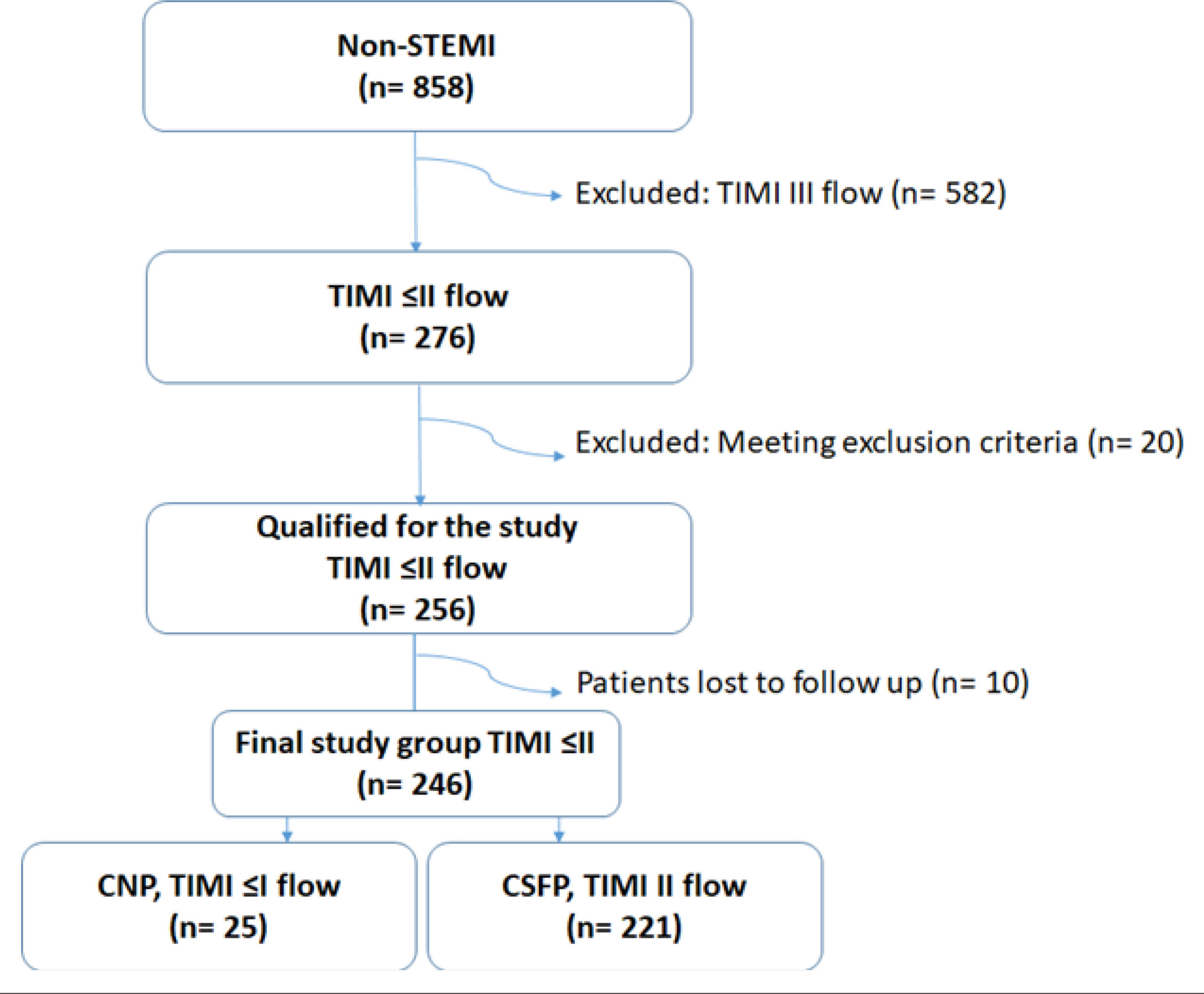
This study included a total of 858 patients who were diagnosed with NSTEMI and underwent PCI within 24 h of symptom onset. The patients were divided into two groups, the CSFP group (n=221) and the CNP group (n=25), regarding the angiographic characteristics of thrombolysis in myocardial infarction (TIMI) flow of the infarct-related artery. Patients were followed for one-year. A p-value of <0.05 was considered significant.

Results:

CNP was observed in 2.91%, and CSFP was observed in 25.75% of the patients. Clinical endpoints analyzed that stroke was significantly higher in the CNP group than in the CSFP group (6 (24%) vs. 6 (2.70%), p<0.001) and MACE was significantly higher in the CNP group than in the CSFP group (11 (44%) vs. 51 (23.10%), p=0.022). Forward conditional logistic regression analysis demonstrated that body mass index (BMI) (OR=1.11, 95%CI: 1.00-1.24, p=0.038) and baseline heart rate (HR) (OR=0.923, 95%CI: 0.88-0.96, p<0.001) were the independent predictors of CNP in NSTEMI.

Conclusion:

CNP patients have worse clinical outcomes and a higher risk of stroke compared with CSFP patients in NSTEMI. (Arq Bras Cardiol. 2021; 116(5):856-864)

  • Acute Coronary Syndrome / complications
  • Coronary Angiography
  • Myocardial Infarction
  • No-Reflow Phenomenon
  • Percutaneous Coronary Interventon
  • Risk Factors
  • Stroke
Read Full Article
Creative Commons Attribution (CC BY) Creative Commons license
17/05/2021 DOI: 10.36660/abc.20190905
Figure 1
ABC
Viewpoint

Acute Coronary Syndromes in the Current Context of the Covid-19 Pandemic

Raphael Boesche Guimarães et al. Breno Falcão Ricardo Alves Costa Marcelo Antônio Cartaxo Queiroga Lopes … Roberto Vieira Botelho Ricardo Petraco Rogério Sarmento-Leite

Introduction

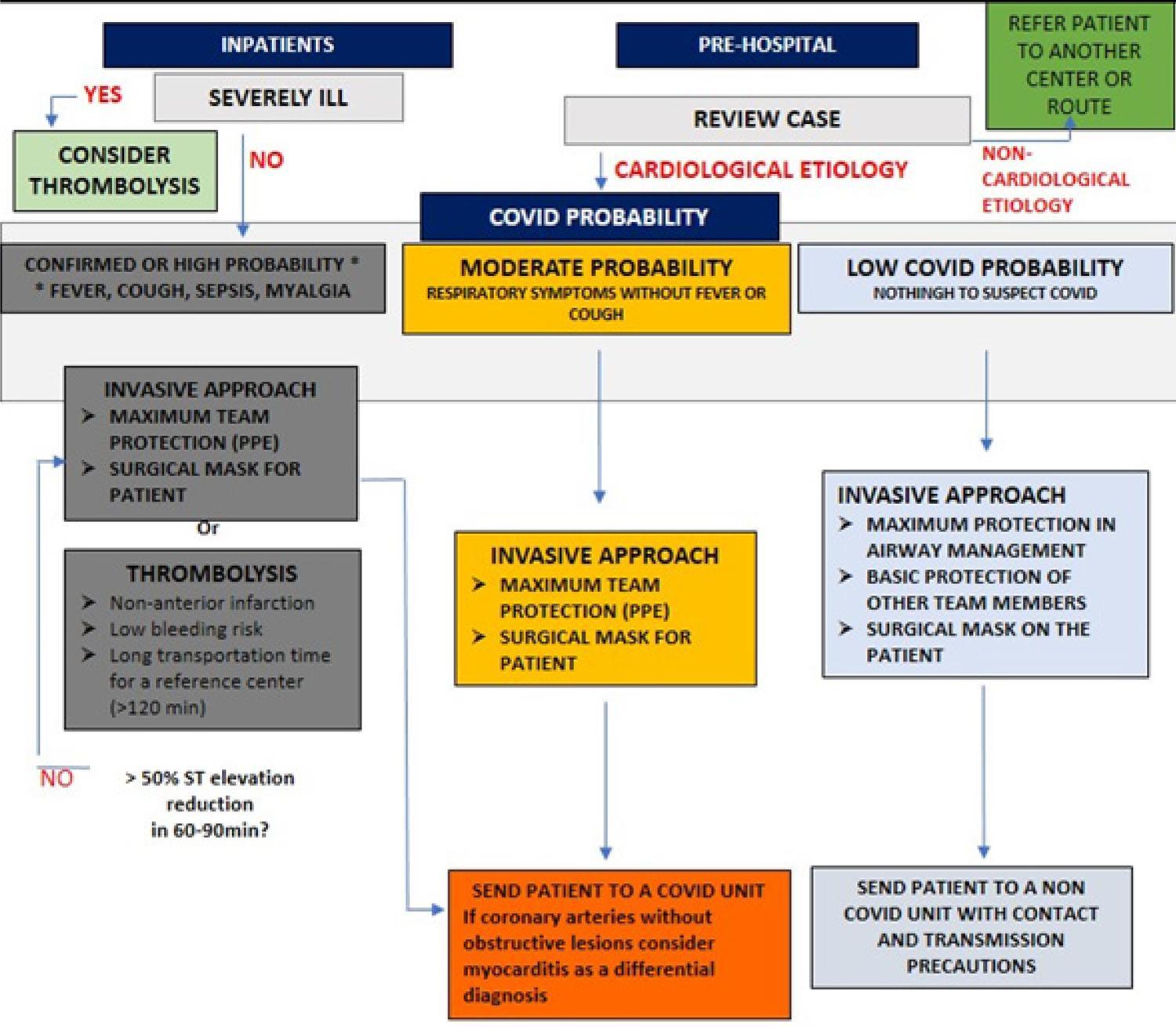
COVID-19, initially described at the end of 2019 in China, may present as atypical pneumonia and severe respiratory failure. Classified in February 2020 as a pandemic by the World Health Organization (WHO), COVID-19 has had major clinical, social, political and economic implications. Society as a whole has had to adapt to a new reality, forcing hospitals to rewrite their routine practices and clinical pathways. Specific measures have had to be put in place to prevent hospital transmission of the infection. Also, dedicated COVID units have been set up and infection control protocols implemented. Finally, additional human, material and financial resources have been allocated in order to provide patients with the best possible care, without compromising the safety of healthcare workers.

Social isolation as a way of containing the spread of the disease may have helped, in some places, to “flatten the curve”, preventing the collapse of healthcare systems. However, the duration of the pandemic, as well as the precise risk of transmission are still largely unknown.

[…]

  • Acute Coronary Syndrome / complications
  • Acute Myocardial Infarction/prevention and control
  • Coronavirus
  • COVID-19
  • Pandemics
  • Quarantine
  • Telemedicine/trends
Read Full Article
Creative Commons Attribution (CC BY) Creative Commons license
03/07/2020 DOI: 10.36660/abc.20200358
Figure 1
IJCS
Original Article

Is There Safety in the Use of Clopidogrel Loading Dose in Patients Over 75 Years of Age with Acute Coronary Syndrome?

Alexandre de Matos Soeiro et al. Guilherme Casale Maria Antonieta Albanez Albuquerque de Medeiros Lopes Lucas Colombo Godoy … Aline Siqueira Bossa Bruno Biselli Tatiana de Carvalho Andreucci Torres Leal Maria Carolina Feres de Almeida Soeiro Carlos V Serrano Jr. Múcio Tavares Oliveira Jr.

Abstract

Background:

There is limited evidence in the literature regarding the administration of clopidogrel to acute coronary syndrome (ACS) in patients over 75 years of age. Most studies excluded this age group, making the subject controversial due to the increased risk of bleeding in this population.

Objective:

This is a retrospective, unicentric, and observational study aimed at assessing whether the administration of clopidogrel loading dose increases bleeding rates in patients over 75 years of age.

Methods:

Patients were divided into two groups: group I: 75 mg of clopidogrel; group II: 300-to 600-mg loading dose of clopidogrel. A total of 174 patients (129 in group I and 45 in group II) were included between May 2010 and May 2015. Statistical analysis: The primary outcome was bleeding (major and/or minor). The secondary outcome was combined events (cardiogenic shock, reinfarction, death, stroke and bleeding). The comparison between groups was performed through Q-square and T-test. The multivariate analysis was performed by logistic regression, being considered significant p < 0.05.

Results:

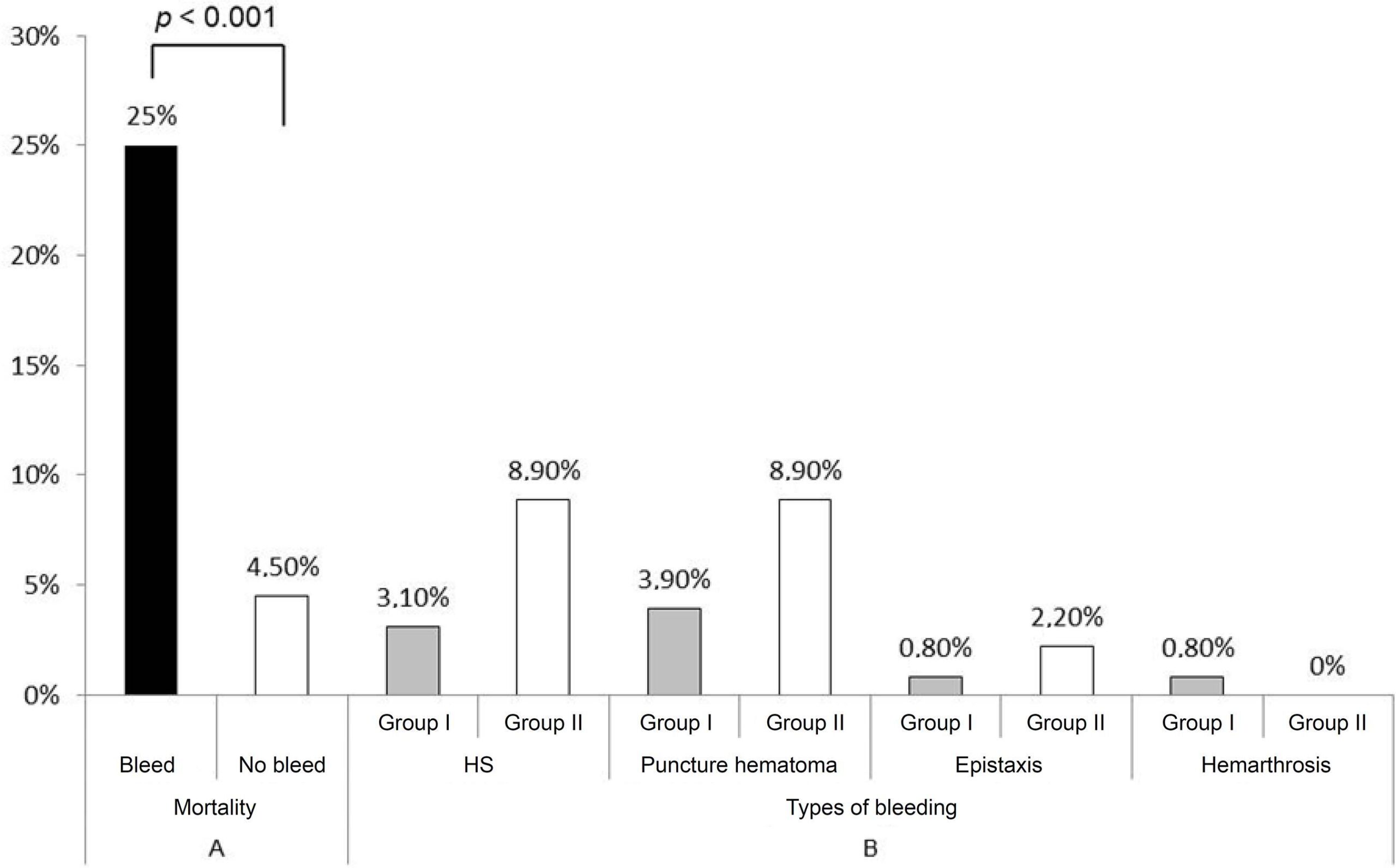
Comparisons between groups I and II showed differences in the prevalence of diabetes (46.5% vs. 24.4%, p = 0.01), arterial hypertension (90.7% vs. 75, p = 0.01), dyslipidemia (62% vs. 42.2%, p = 0.021), ST segment elevation (11.6% vs. 26.6%, p = 0.016) and coronary intervention percutaneous (16.5% vs. 62.2%, p < 0.0001), respectively. In the multivariate analysis, significant differences were observed between groups I and II in relation to the occurrence of bleeding (8.5% vs. 20%, OR = 0.173, 95% CI: 0.049 – 0.614, p = 0.007).

Conclusion:

A loading dose of 300 mg or more of clopidogrel.

  • Acute Coronary Syndrome / complications
  • Aged
  • Hemorrhage
  • Platelet Aggregation Inhibitors/therapeutic use
  • Treatment Outcome
Read Full Article
Creative Commons Attribution (CC BY) Creative Commons license
15/04/2019 DOI: 10.5935/2359-4802.20190031 Views 2
ABC
Letter to the Editor

The Relation between Epicardial Fat Thickness and Prognostic Risk Scores

Sevket Balta et al. Cengiz Ozturk Turgay Celik

Dear Editor,

We read the article “The Relationship between GRACE Score and Epicardial Fat Thickness(EFT) in non-STEMI Patients” by Gul et al. The authors concluded that end-systolic and end-diastolic EFTs were found to be increased in the higher GRACE group.

[…]

  • Acute Coronary Syndrome / complications
  • Adipose Tissue
  • Echocardiography
  • Pericardium
  • Score GRACE
Read Full Article
Creative Commons Attribution (CC BY) Creative Commons license
01/12/2016 DOI: 10.5935/abc.20160185
Figure 1
ABC
Original Article

Comparison of ACUITY and CRUSADE Scores in Predicting Major Bleeding during Acute Coronary Syndrome

Luis C. L. Correia et al. Felipe Ferreira Felipe Kalil André Silva … Luisa Pereira Manuela Carvalhal Maurício Cerqueira Fernanda Lopes Nicole de Sá Márcia Noya-Rabelo

Background:

The ACUITY and CRUSADE scores are validated models for prediction of major bleeding events in acute coronary syndrome (ACS). However, the comparative performances of these scores are not known.

Objective:

To compare the accuracy of ACUITY and CRUSADE in predicting major bleeding events during ACS.

Methods:

This study included 519 patients consecutively admitted for unstable angina, non-ST-elevation or ST-elevation myocardial infarction. The scores were calculated based on admission data. We considered major bleeding events during hospitalization and not related to cardiac surgery, according to the Bleeding Academic Research Consortium (BARC) criteria (type 3 or 5: hemodynamic instability, need for transfusion, drop in hemoglobin ≥ 3 g, and intracranial, intraocular or fatal bleeding).

Results:

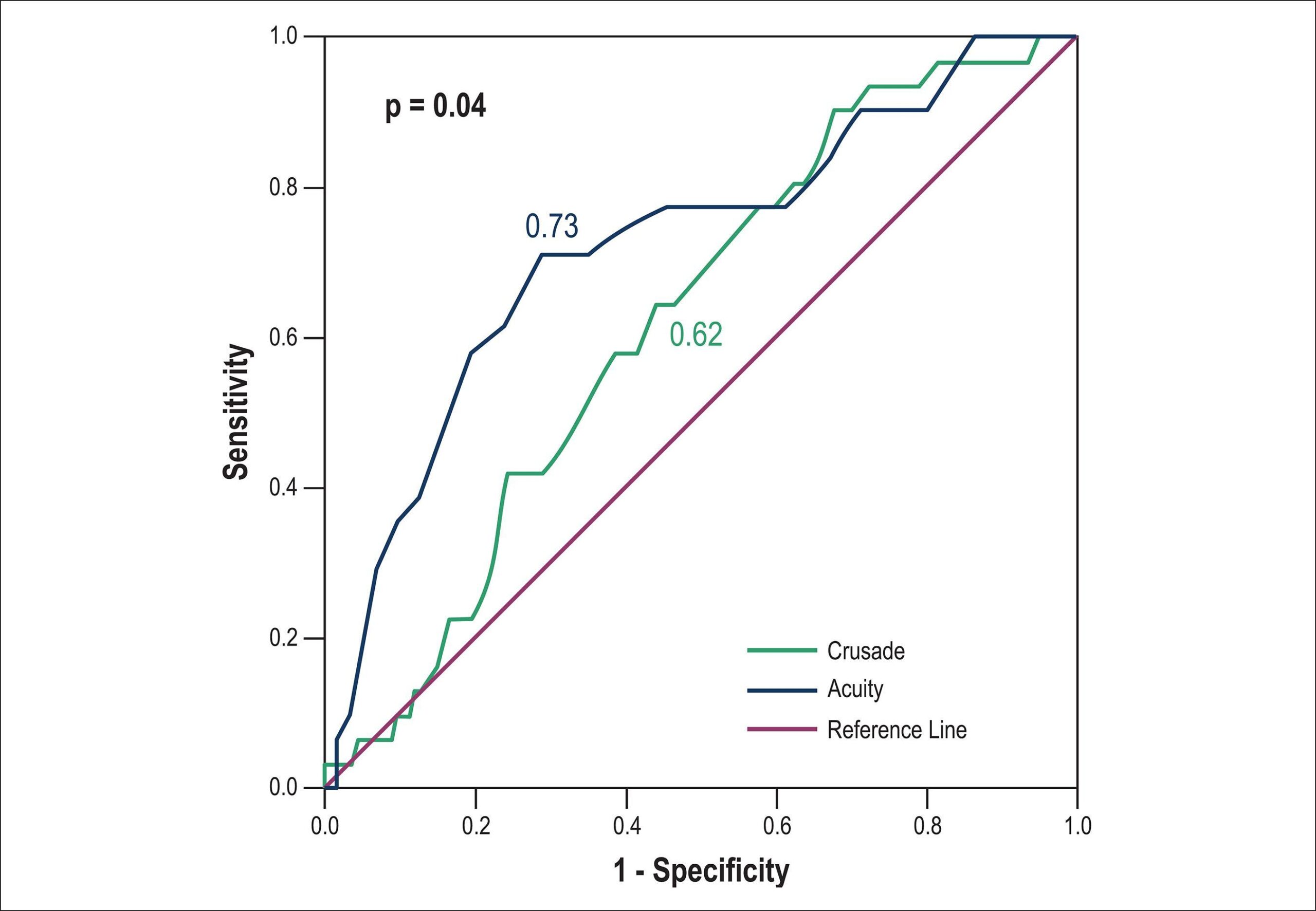
Major bleeding was observed in 31 patients (23 caused by femoral puncture, 5 digestive, 3 in other sites), an incidence of 6%. While both scores were associated with bleeding, ACUITY demonstrated better C-statistics (0.73, 95% CI = 0.63 – 0.82) as compared with CRUSADE (0.62, 95% CI = 0.53 – 0.71; p = 0.04). The best performance of ACUITY was also reflected by a net reclassification improvement of + 0.19 (p = 0.02) over CRUSADE’s definition of low or high risk. Exploratory analysis suggested that the presence of the variables ‘age’ and ‘type of ACS’ in ACUITY was the main reason for its superiority.

Conclusion:

The ACUITY Score is a better predictor of major bleeding when compared with the CRUSADE Score in patients hospitalized for ACS.

  • Acute Coronary Syndrome / complications
  • Angina, Unstable / complications
  • Hemorrhage
  • Patient Acuity
Read Full Article
Creative Commons Attribution (CC BY) Creative Commons license
02/06/2015 DOI: 10.5935/abc.20150058 Views 2

How to cite this article

EndNote RIS

Electronic Document Format (Vancouver)

Huyut MA. Comparison of the Outcomes between Coronary No-Reflow and Slow-Flow Phenomenon in Non-STEMI Patients. Arquivos Brasileiros de Cardiologia 2021;116(5):856-64.

Electronic Document Format (ABNT)

Huyut, Mustafa Ahmet. Comparison of the Outcomes between Coronary No-Reflow and Slow-Flow Phenomenon in Non-STEMI Patients. Arquivos Brasileiros de Cardiologia, v. 116, n. 5, p. 856-864, May. 2021.

Electronic Document Format (APA)

Huyut, M. A. (2021). Comparison of the Outcomes between Coronary No-Reflow and Slow-Flow Phenomenon in Non-STEMI Patients. Arquivos Brasileiros de Cardiologia, 116(5), 856-864.

Electronic Document Format (ISO)

Huyut, Mustafa Ahmet. Comparison of the Outcomes between Coronary No-Reflow and Slow-Flow Phenomenon in Non-STEMI Patients. Arquivos Brasileiros de Cardiologia [online]. 2021, vol. 116, n. 5, [cited 2026-10-14], pp. 856-864. Available from: <https://journals.cardiol.br/en/article/comparison-of-the-outcomes-between-coronary-no-reflow-and-slow-flow-phenomenon-in-non-stemi-patients/>. ISSN 0066-782X

EndNote RIS

Electronic Document Format (Vancouver)

Guimarães RB, Falcão B, Costa RA, Lopes MACQ, Botelho RV, Petraco R, Sarmento-Leite R, et al. Acute Coronary Syndromes in the Current Context of the Covid-19 Pandemic. Arquivos Brasileiros de Cardiologia 2020;114(6):1067-71.

Electronic Document Format (ABNT)

Guimarães, Raphael Boesche; Falcão, Breno; Costa, Ricardo Alves; Lopes, Marcelo Antônio Cartaxo Queiroga; Botelho, Roberto Vieira; Petraco, Ricardo; Sarmento-Leite, Rogério. Acute Coronary Syndromes in the Current Context of the Covid-19 Pandemic. Arquivos Brasileiros de Cardiologia, v. 114, n. 6, p. 1067-1071, Jul. 2020.

Electronic Document Format (APA)

Guimarães, R. B., Falcão, B., Costa, R. A., Lopes, M. A. C. Q., Botelho, R. V., Petraco, R., & Sarmento-Leite, R. (2020). Acute Coronary Syndromes in the Current Context of the Covid-19 Pandemic. Arquivos Brasileiros de Cardiologia, 114(6), 1067-1071.

Electronic Document Format (ISO)

Guimarães, Raphael Boesche and Falcão, Breno and Costa, Ricardo Alves and Lopes, Marcelo Antônio Cartaxo Queiroga and Botelho, Roberto Vieira and Petraco, Ricardo and Sarmento-Leite, Rogério. Acute Coronary Syndromes in the Current Context of the Covid-19 Pandemic. Arquivos Brasileiros de Cardiologia [online]. 2020, vol. 114, n. 6, [cited 2026-10-14], pp. 1067-1071. Available from: <https://journals.cardiol.br/en/article/acute-coronary-syndromes-in-the-current-context-of-the-covid-19-pandemic/>. ISSN 0066-782X

EndNote RIS

Electronic Document Format (Vancouver)

Soeiro AM, Casale G, Lopes MAAAM, Godoy LC, Bossa AS, Biselli B, Leal TCAT, et al. Is There Safety in the Use of Clopidogrel Loading Dose in Patients Over 75 Years of Age with Acute Coronary Syndrome?. International Journal of Cardiovascular Sciences 2019;32(5):449-56.

Electronic Document Format (ABNT)

Soeiro, Alexandre de Matos; Casale, Guilherme; Lopes, Maria Antonieta Albanez Albuquerque de Medeiros; Godoy, Lucas Colombo; Bossa, Aline Siqueira; Biselli, Bruno; Leal, Tatiana de Carvalho Andreucci Torres; Soeiro, Maria Carolina Feres de Almeida; Serrano Jr., Carlos V; Oliveira Jr., Múcio Tavares. Is There Safety in the Use of Clopidogrel Loading Dose in Patients Over 75 Years of Age with Acute Coronary Syndrome?. International Journal of Cardiovascular Sciences, v. 32, n. 5, p. 449-456, Apr. 2019.

Electronic Document Format (APA)

Soeiro, A. M., Casale, G., Lopes, M. A. A. A. M., Godoy, L. C., Bossa, A. S., Biselli, B., Leal, T. C. A. T., Soeiro, M. C. F. A., Serrano Jr., C. V., & Oliveira Jr., M. T. (2019). Is There Safety in the Use of Clopidogrel Loading Dose in Patients Over 75 Years of Age with Acute Coronary Syndrome?. International Journal of Cardiovascular Sciences, 32(5), 449-456.

Electronic Document Format (ISO)

Soeiro, Alexandre de Matos and Casale, Guilherme and Lopes, Maria Antonieta Albanez Albuquerque de Medeiros and Godoy, Lucas Colombo and Bossa, Aline Siqueira and Biselli, Bruno and Leal, Tatiana de Carvalho Andreucci Torres and Soeiro, Maria Carolina Feres de Almeida and Serrano Jr., Carlos V and Oliveira Jr., Múcio Tavares. Is There Safety in the Use of Clopidogrel Loading Dose in Patients Over 75 Years of Age with Acute Coronary Syndrome?. International Journal of Cardiovascular Sciences [online]. 2019, vol. 32, n. 5, [cited 2026-10-14], pp. 449-456. Available from: <https://journals.cardiol.br/en/article/is-there-safety-in-the-use-of-clopidogrel-loading-dose-in-patients-over-75-years-of-age-with-acute-coronary-syndrome/>. ISSN 2359-4802

EndNote RIS

Electronic Document Format (Vancouver)

Balta S, Ozturk C, Celik T. The Relation between Epicardial Fat Thickness and Prognostic Risk Scores. Arquivos Brasileiros de Cardiologia 2016;107(6):607.

Electronic Document Format (ABNT)

Balta, Sevket; Ozturk, Cengiz; Celik, Turgay. The Relation between Epicardial Fat Thickness and Prognostic Risk Scores. Arquivos Brasileiros de Cardiologia, v. 107, n. 6, p. 607-607, Nov. 2016.

Electronic Document Format (APA)

Balta, S., Ozturk, C., & Celik, T. (2016). The Relation between Epicardial Fat Thickness and Prognostic Risk Scores. Arquivos Brasileiros de Cardiologia, 107(6), 607-607.

Electronic Document Format (ISO)

Balta, Sevket and Ozturk, Cengiz and Celik, Turgay. The Relation between Epicardial Fat Thickness and Prognostic Risk Scores. Arquivos Brasileiros de Cardiologia [online]. 2016, vol. 107, n. 6, [cited 2026-10-14], pp. 607-607. Available from: <https://journals.cardiol.br/en/article/the-relation-between-epicardial-fat-thickness-and-prognostic-risk-scores/>. ISSN 0066-782X

EndNote RIS

Electronic Document Format (Vancouver)

Correia LCL, Ferreira F, Kalil F, Silva A, Pereira L, Carvalhal M, Cerqueira M, et al. Comparison of ACUITY and CRUSADE Scores in Predicting Major Bleeding during Acute Coronary Syndrome. Arquivos Brasileiros de Cardiologia 2015;105(1):20-7.

Electronic Document Format (ABNT)

Correia, Luis C. L.; Ferreira, Felipe; Kalil, Felipe; Silva, André; Pereira, Luisa; Carvalhal, Manuela; Cerqueira, Maurício; Lopes, Fernanda; Sá, Nicole de; Noya-Rabelo, Márcia. Comparison of ACUITY and CRUSADE Scores in Predicting Major Bleeding during Acute Coronary Syndrome. Arquivos Brasileiros de Cardiologia, v. 105, n. 1, p. 20-27, Jun. 2015.

Electronic Document Format (APA)

Correia, L. C. L., Ferreira, F., Kalil, F., Silva, A., Pereira, L., Carvalhal, M., Cerqueira, M., Lopes, F., Sá, N. , & Noya-Rabelo, M. (2015). Comparison of ACUITY and CRUSADE Scores in Predicting Major Bleeding during Acute Coronary Syndrome. Arquivos Brasileiros de Cardiologia, 105(1), 20-27.

Electronic Document Format (ISO)

Correia, Luis C. L. and Ferreira, Felipe and Kalil, Felipe and Silva, André and Pereira, Luisa and Carvalhal, Manuela and Cerqueira, Maurício and Lopes, Fernanda and Sá, Nicole de and Noya-Rabelo, Márcia. Comparison of ACUITY and CRUSADE Scores in Predicting Major Bleeding during Acute Coronary Syndrome. Arquivos Brasileiros de Cardiologia [online]. 2015, vol. 105, n. 1, [cited 2026-10-14], pp. 20-27. Available from: <https://journals.cardiol.br/en/article/comparison-of-acuity-and-crusade-scores-in-predicting-major-bleeding-during-acute-coronary-syndrome/>. ISSN 0066-782X

  • About ABC Family
  • Internal Regulation
  • Editorial Board
  • Brazilian Society of Cardiology (SBC)

Issues

SBC Guidelines

  • Videos
  • Podcasts
  • News