ABC Family Arquivos Brasileiros de Cardiologia International Journal of Cardiovascular Sciences ABC Heart Failure & Cardiomyopathy ABC Imagem Cardiovascular
Português English
ABC Family
Português English
  • About
    • About ABC Family
    • Internal Regulation
    • Editorial Board
    • Brazilian Society of Cardiology (SBC)
  • Issues
  • SBC Guidelines
  • Content
    • Videos
    • Podcasts
    • News
  • About
    • About ABC Family
    • Internal Regulation
    • Editorial Board
    • Brazilian Society of Cardiology (SBC)
  • Issues
  • SBC Guidelines
  • Content
    • Videos
    • Podcasts
    • News

ABC Family

  • ABC Family
  • Arquivos Brasileiros de Cardiologia
  • International Journal of Cardiovascular Sciences
  • ABC Heart Failure & Cardiomyopathy
  • ABC Imagem Cardiovascular
Search in

No content found.

Journals
Ordering
Article types
Others

  1. Home
  2. Keyword: Acute coronary syndrome
Reversal of Therapeutic Recommendations in the American College of Cardiology Coronary Artery Disease Guidelines
IJCS
Original Article

Reversal of Therapeutic Recommendations in the American College of Cardiology Coronary Artery Disease Guidelines

Alessandra Carvalho Caldas et al. Denise Matias Daniel Medina Luis Claudio Lemos Correia

Abstract

Background:

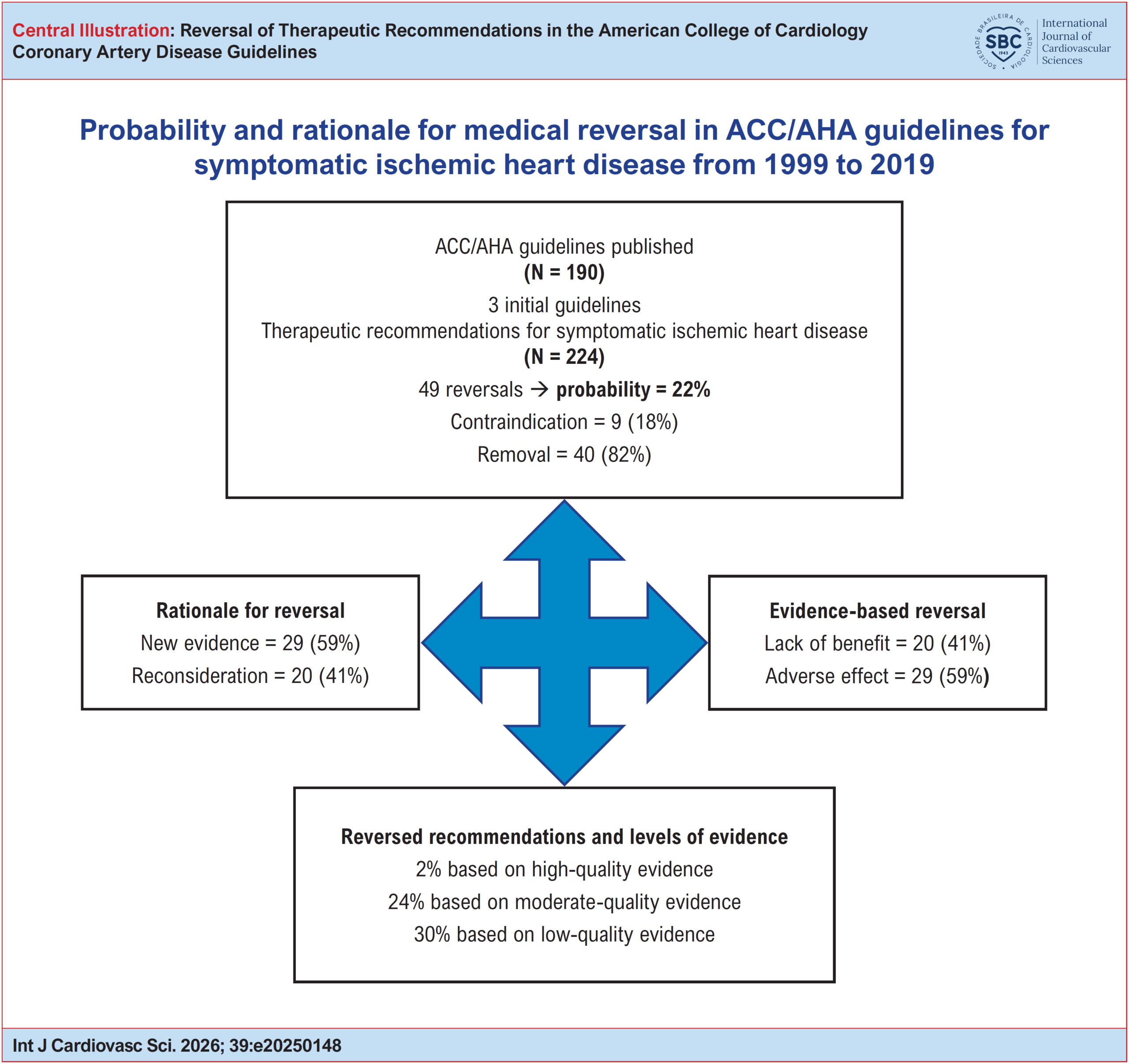
Medical reversal is defined as the discontinuation of a procedure’s recommendation due to new evidence regarding its efficacy or safety. Cardiology is the specialty with the highest number of documented reversals, yet there is no information available about the probability of reversal.

Objectives:

To describe the frequency of medical reversal in the ischemic heart disease guidelines published by the American College of Cardiology/American Heart Association (ACC/AHA), according to levels of evidence.

Methods:

The most recent guidelines for stable coronary disease, non-ST-elevation acute coronary syndrome, and ST-elevation myocardial infarction were compared with the first version. Medical reversal was defined as a shift from a recommended procedure to a contraindicated one or the removal of the recommendation. The quality of evidence was categorized by the guidelines as high, moderate, or low.

Results:

A total of 224 therapeutic recommendations were identified, with 19% based on high-quality evidence, 42% on moderate-quality evidence, and 39% on low-quality evidence. Forty-nine medical reversals were observed, constituting 22% of all therapeutic recommendations included in the first version of the guidelines. The probability of reversal for procedures based on high-quality evidence was 2%, compared with 25% for procedures with moderate-quality evidence and 30% for procedures with low-quality evidence.

Conclusion:

In the ACC/AHA ischemic heart disease guidelines, medical reversal is common in recommendations based on moderate or low-quality evidence, but rare in those with high-quality evidence.
  • Acute coronary syndrome
  • Coronary Artery Disease
  • Myocardial Infarction
Read Full Article
Creative Commons Attribution (CC BY) Creative Commons license
07/09/2026 DOI: 10.36660/ijcs.20250148 Views 2
IJCS
Viewpoint

Asymptomatic Patients With Suspected Coronary Artery Disease: What Are Clinicians Afraid Of?

Antônio Sérgio Cordeiro da Rocha et al. Dany Kruczan

Introduction

In contemporary practice, myocardial revascularization, particularly Percutaneous Coronary Intervention (PCI), is frequently performed in asymptomatic individuals with suspected Coronary Artery Disease (CAD). This occurs despite robust evidence from Randomized Clinical Trials (RCTs) over the past two decades demonstrating that, in patients with Chronic Coronary Syndromes (CCS), neither PCI nor Coronary Artery Bypass Grafting (CABG) reduces mortality when compared with Guideline-directed Medical Therapy (GDMT). In selected populations, revascularization confers symptomatic relief, particularly among patients with frequent angina, but without prognostic advantage.

The persistence of invasive strategies in asymptomatic patients appears to be driven largely by two cognitive biases: the “oculostenotic reflex”, the impulse to correct angiographically visible stenoses, and the “oculoischemic reflex”, the perceived need to revascularize documented ischemia irrespective of symptoms. Both are rooted in the fear that untreated coronary obstructions inevitably herald sudden cardiac death or Acute Myocardial Infarction (AMI).,

[…]

  • Acute coronary syndrome
  • Coronary Artery Disease
  • Percutaneous Coronary Intervention
  • Risk Factors
Read Full Article
Creative Commons Attribution (CC BY) Creative Commons license
21/08/2026 DOI: 10.36660/ijcs.20250075 Views 2
Association Between Inflammatory Hematologic Indices and Acute Coronary Syndrome Phenotypes
IJCS
Original Article

Association Between Inflammatory Hematologic Indices and Acute Coronary Syndrome Phenotypes

Fabiele de Lima Righi et al. Gustavo Sugai Paula Araujo Renato Jorge Alves

Abstract

Background:

The systemic immune-inflammation index (SII) and the systemic inflammation response index (SIRI) are inflammatory biomarkers derived from neutrophil (N), platelet (P), lymphocyte (L), and monocyte (M) counts. These indices have been associated with prognostic value in patients with coronary artery disease (CAD) and may contribute to risk stratification in acute coronary syndrome (ACS).

Objectives:

To evaluate the independent association between inflammatory hematologic indices and ACS phenotypes and to explore their relationship with cardiovascular risk factors.

Methods:

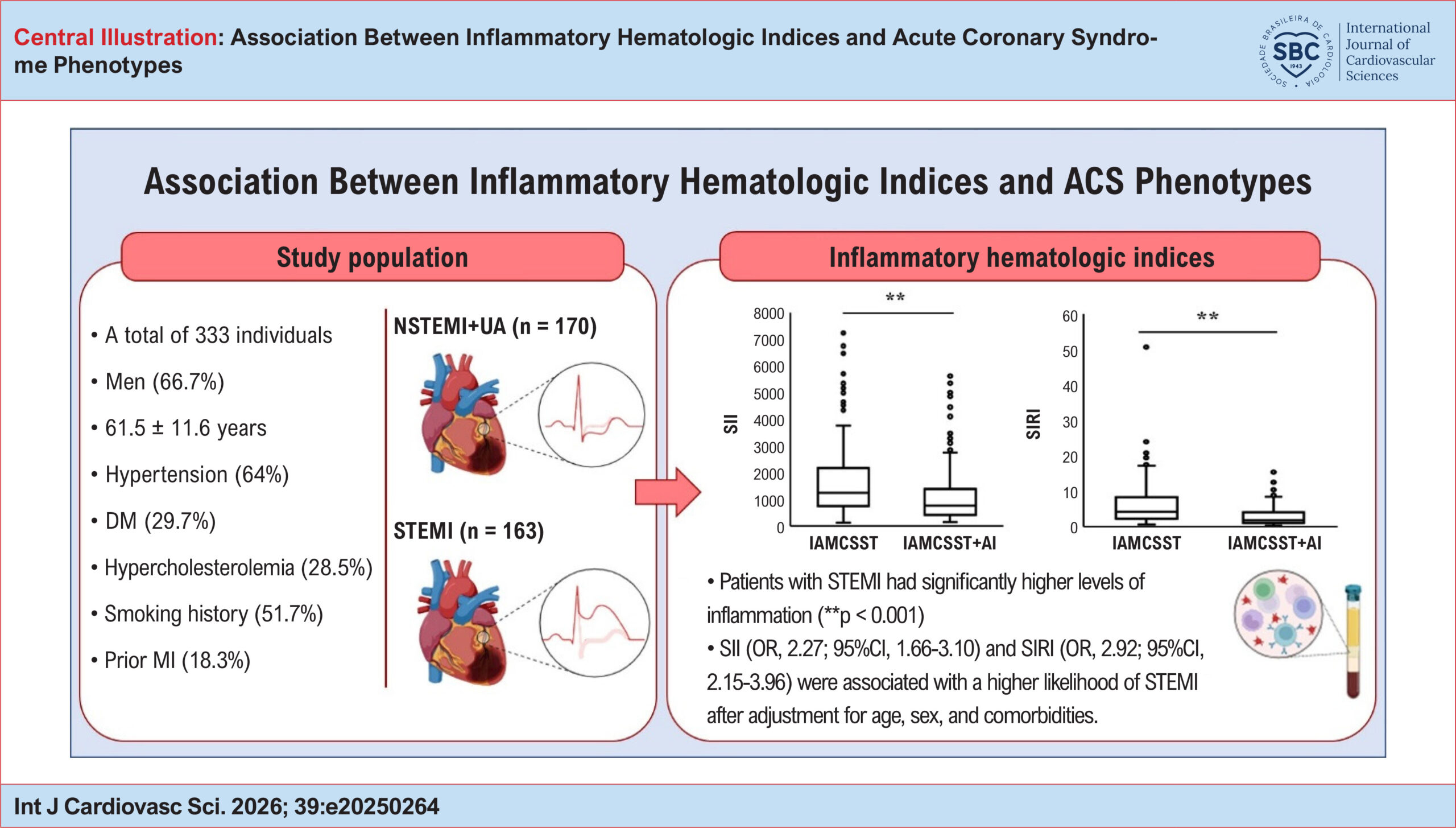
This retrospective study analyzed data collected from medical records between July 2022 and July 2023, including 333 patients aged ≥ 18 years of both sexes diagnosed with ACS and admitted to the emergency department of a public hospital in the state of São Paulo, Brazil. Sample was divided into two groups: i) ST-segment elevation myocardial infarction (STEMI) and ii) non-ST-segment elevation myocardial infarction plus unstable angina (NSTEMI+UA). SII was calculated as N × P / L and SIRI as N × M / L. The association between inflammatory indices and ACS phenotypes was assessed using multivariable logistic regression models. Statistical significance was set at 5%.

Results:

Higher values of the inflammatory indices SII (odds ratio [OR], 2.27; 95%CI, 1.66-3.10) and SIRI (OR, 2.92; 95%CI, 2.15-3.96), as well as a history of smoking, were independently associated with a higher likelihood of STEMI diagnosis. Additionally, the STEMI group showed significantly higher values of SII, SIRI, MLR, NLR, and PLR compared with the NSTEMI+UA group.

Conclusions:

Higher SII and SIRI values were independently associated with STEMI diagnosis, which suggests these indices may reflect differences in the inflammatory profile across ACS phenotypes.

  • Acute coronary syndrome
  • Biomarcadores
  • Coronary Artery Disease
  • Inflammation
Read Full Article
Creative Commons Attribution (CC BY) Creative Commons license
07/08/2026 DOI: 10.36660/ijcs.20250264 Views 1
Figure 1
IJCS
Case Report

Allergy and Ischemia: A Case Report of Type II Kounis Syndrome

Rafael Viana et al. Miguel Carias Diogo Brás

Introduction

Kounis Syndrome (KS), also known as “allergic angina,” is a rare condition in which an allergic reaction triggers acute coronary events. Its mechanism involves mast cell degranulation, releasing inflammatory mediators such as histamine, cytokines, and proteases. These substances can induce coronary artery spasm, plaque rupture, or thrombus formation. KS is classified into three types: Type I (occurring in patients without coronary artery disease, CAD), Type II (in patients with pre-existing CAD), and Type III (associated with stent thrombosis). In this report, we present a case of Type II KS.

[…]

  • Acute coronary syndrome
  • Anaphylaxis
  • Kounis Syndrome
Read Full Article
Creative Commons Attribution (CC BY) Creative Commons license
03/08/2026 DOI: 10.36660/ijcs.20250037
IJCS
Original Article

Prognostic Value of Adding Admission Blood Glucose to the GRACE Score: Systematic Review and Meta-Analysis

Loren Lacerda-Rodrigues et al. Alleh Nogueira Hayala M. Cavalcante Conceicao Sarah C. Fernandez … Nicole Felix Rafael Modesto Fernandes

Abstract

Background:

Hyperglycemia at admission is associated with higher morbidity and mortality in patients with Acute Coronary Syndrome (ACS). However, it remains unclear whether the inclusion of admission glycemia improves risk prediction atop established prognostic models.

Objectives:

To evaluate the incremental prognostic value of admission glycemia when added to the Global Registry of Acute Coronary Events (GRACE) risk score.

Methods:

A systematic search of PubMed, Embase, and ScienceDirect was conducted to identify cohort studies comparing GRACE with models that included admission blood glucose in patients with ACS. Random-effects meta-analyses were performed to compare mean differences (MDs) in predictive discrimination between models, measured by the area under the receiver operating characteristic curve (AUROC). Statistical significance was defined as p <0.05. Heterogeneity was assessed using Cochran's Q and Higgins–Thompson's I² statistics. In accordance with Cochrane recommendations, the risk of bias in individual studies was evaluated using the Quality in Prognosis Studies (QUIPS) tool.

Results:

In a pooled analysis of eight independent comparisons from seven studies encompassing 6,536 patients, a statistically significant difference was observed between GRACE and GRACE-glucose models (MD, 0.03; 95% CI, 0.00–0.05; p = 0.027; I² = 0%). Leave-one-out sensitivity analyses confirmed statistically significant differences in AUROCs. Meta-regression analyses did not demonstrate any modification in predictive discrimination based on overall risk of bias, mortality follow-up, or baseline prevalence of STEMI. Underreporting of calibration measures precluded a definitive assessment of predictive calibration.

Conclusions:

In this systematic review and meta-analysis, the inclusion of admission blood glucose enhanced prognostic value beyond the GRACE score alone.

  • Acute coronary syndrome
  • Hyperglycemia
  • risk stratification
Read Full Article
Creative Commons Attribution (CC BY) Creative Commons license
12/06/2026 DOI: 10.36660/ijcs.20240108
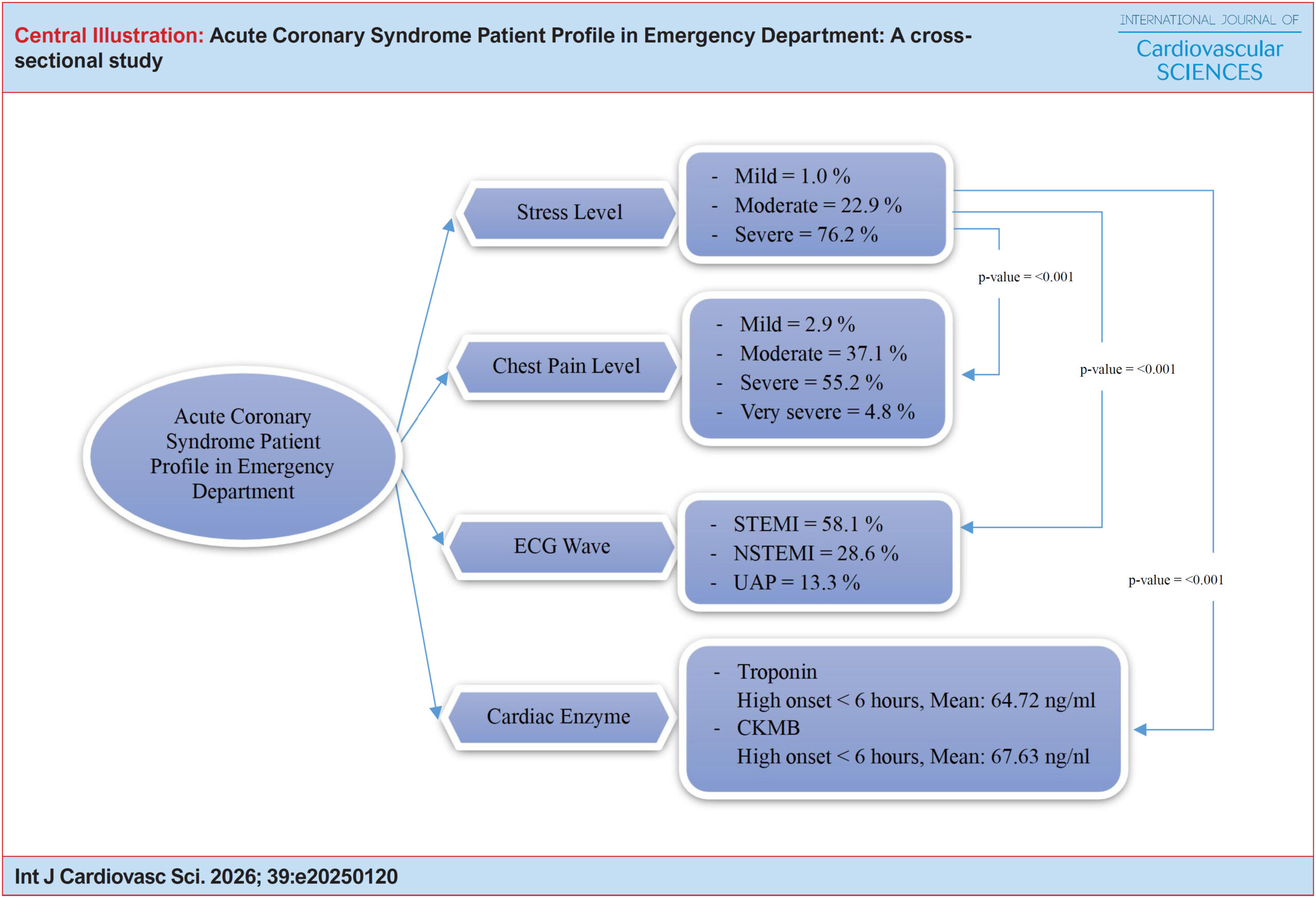
Acute Coronary Syndrome Patient Profile in Emergency Department: A cross-sectional study
IJCS
Original Article

Acute Coronary Syndrome Patient Profile in Emergency Department: A cross-sectional study

Riza Fikriana et al. Al Afik Randy Eka Prasetya

Abstract

Background:

Acute Coronary Syndrome (ACS) remains one of the leading causes of high morbidity and mortality worldwide. Psychological factors are considered important contributors to increasing recurrence rates in patients.

Objective:

This study aimed to analyze the association between stress, chest pain complaints, electrocardiographic changes, and cardiac enzyme levels.

Methods:

A cross-sectional design was employed. A sample of 105 ACS patients presenting to the hospital emergency department was selected using an accidental sampling technique. Variables measured included stress scores, chest pain, electrocardiographic findings, troponin, and CK-MB levels. Data were analyzed using the Spearman rank test and linear regression, with a significance level set at p < 0.05.

Results:

Stress scores were significantly associated with chest pain (p < 0.001), electrocardiographic changes (p < 0.001), troponin levels (p < 0.001), and CK-MB levels (p < 0.001). ECG findings showed that most STEMI patients (68.9%) experienced severe pain. Linear regression analysis indicated that troponin and CK-MB levels were significantly influenced by chest pain (p < 0.001).

Conclusions:

Stress is positively correlated with chest pain in ACS patients and is reflected in ECG changes and elevated cardiac enzymes (troponin and CK-MB).

  • Acute coronary syndrome
  • Chest Pain
  • Electrocardiography
Read Full Article
Creative Commons Attribution (CC BY) Creative Commons license
01/06/2026 DOI: 10.36660/ijcs.20250120 Views 1
Right Ventricle Infarction in Current Practice: Insights from a Contemporary Registry at a High-Volume Tertiary Center in Brazil
IJCS
Original Article

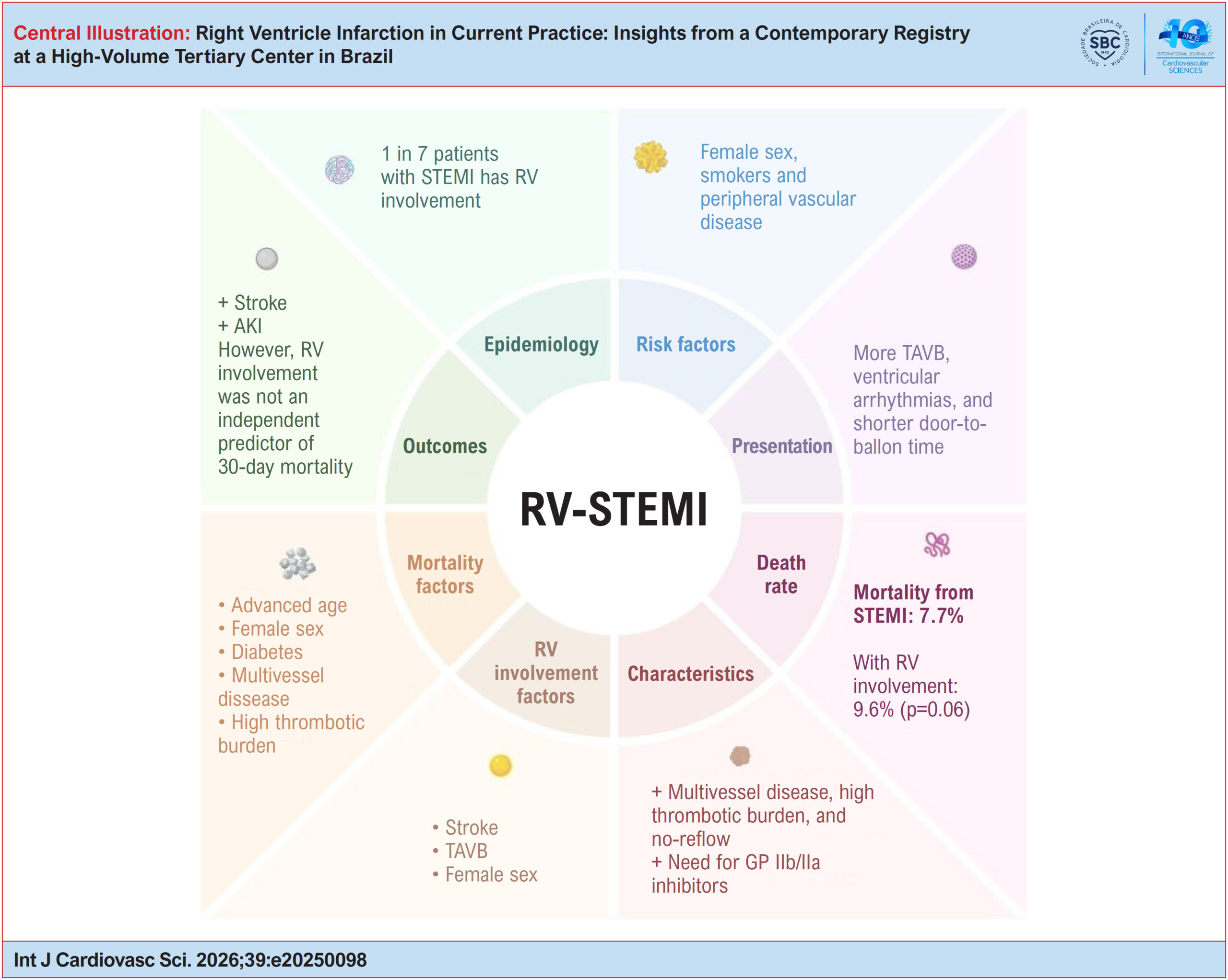
Right Ventricle Infarction in Current Practice: Insights from a Contemporary Registry at a High-Volume Tertiary Center in Brazil

Giulia Bonatto Reichert et al. Pedro Henrique Torres Tietz Vitoria Silva Marcia Moura Schmidt … Carlos A. M. Gottschall Alexandre Schaan de Quadros

Abstract

Background:

Right ventricular (RV) involvement in acute ST-segment elevation myocardial infarction (STEMI) has scarcely been studied in contemporary cardiology practice.

Objective:

To evaluate the clinical, angiographic, procedural characteristics and outcomes of patients with STEMI and RV involvement undergoing primary percutaneous coronary intervention (pPCI).

Methods:

This prospective cohort included consecutive patients with STEMI presenting within 12 hours of symptom onset and undergoing pPCI between 2009 and 2023 at a high-volume tertiary cardiology center in Brazil. Clinical characteristics and outcomes of patients with RV infarction were compared to those without RV involvement. Continuous and categorical variables were analyzed using appropriate statistical tests, with a significance level of 5% (p < 0.05). Logistic regression models were used to identify independent predictors.

Results:

Among 5,611 patients, 13% had RV involvement. These individuals were more frequently female, had right coronary artery as the culprit vessel, had greater thrombotic burden, and more often presented with total atrioventricular block (TAVB). Acute kidney injury (5.8% versus 4.1%, p = 0.03) and stroke (1.6% versus 0.8%, p = 0.04) were more common in the RV group. Thirty-day (10.5% versus 8.7%, p = 0.16) and 2-year mortality (19.5% versus 18.5%, p = 0.11) were higher among patients with RV infarction, although not statistically significant. In multivariable analysis, TAVB and female sex were independently associated with RV involvement. RV infarction was not an independent predictor of 30-day mortality.

Conclusion:

In current practice, approximately 1 in 7 STEMI patients present with RV involvement. These patients have a higher-risk profile, though RV infarction was not independently associated with short-term mortality.

  • Acute coronary syndrome
  • Myocardial Infarction
  • Right Ventricular
  • ST-segment Elevation Myocardial Infarction
Read Full Article
Creative Commons Attribution (CC BY) Creative Commons license
13/03/2026 DOI: 10.36660/ijcs.20250098 Views 1
Predictive Value of Atherogenic Index for No-Reflow in Patients Undergoing Coronary Intervention for Saphenous Vein Graft with Acute Coronary Syndrome
ABC
Original Article

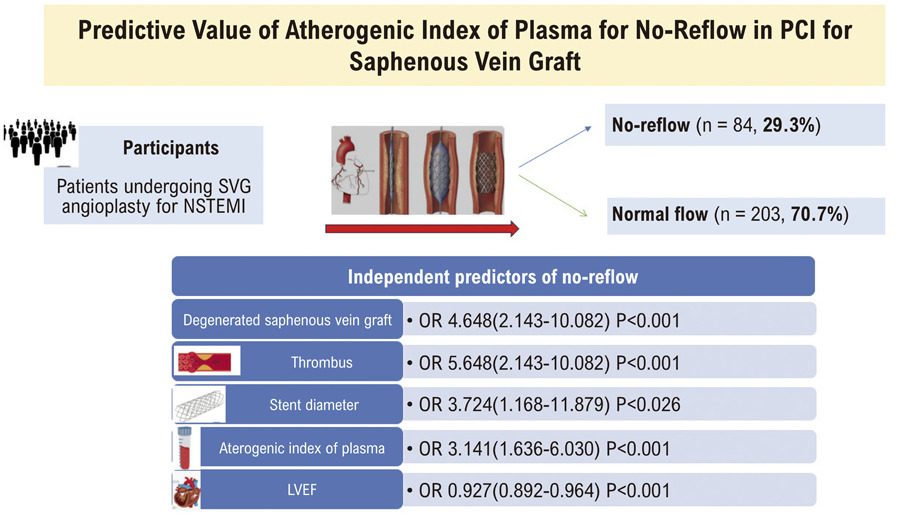
Predictive Value of Atherogenic Index for No-Reflow in Patients Undergoing Coronary Intervention for Saphenous Vein Graft with Acute Coronary Syndrome

Onur Erdoğan et al. Cafer Panç

Abstract

Background

The no-reflow phenomenon is a critical complication of percutaneous coronary intervention (PCI), especially in patients with saphenous vein graft (SVG) disease. Identifying predictors of no-reflow is crucial to improving risk stratification. The atherogenic index of plasma (AIP), calculated as log(triglyceride/HDL-C), is a marker of atherosclerosis and microvascular dysfunction. However, its role in predicting no-reflow during SVG interventions remains unclear.

Objective

This study aimed to evaluate the association between AIP and the no-reflow phenomenon in patients undergoing PCI for SVG lesions presenting with non-ST elevation myocardial infarction (NSTEMI).

Methods

This single-center retrospective study included 287 patients who underwent PCI for significant SVG stenosis. Patients were categorized into normal reflow and no-reflow groups based on post-PCI TIMI (Thrombolysis in Myocardial Infarction) flow grades. Baseline demographic, clinical, laboratory, and angiographic data were extracted. AIP was calculated using formula log (TG/HDL-C). Logistic regression analyses were performed to determine independent predictors of the no-reflow. Statistical significance was set at p<0.05.

Results

The no-reflow group was older and had a higher prevalence of comorbidities, including diabetes, atrial fibrillation, chronic heart failure, chronic kidney disease, and stroke history. They also exhibited lower HDL-C levels, higher triglyceride levels, and consequently higher AIP values compared to the normal reflow group. Multivariate analysis identified degenerated SVG (OR: 4.65, p<0.001), thrombus presence (OR: 5.65, p<0.001), reduced left ventricular ejection fraction (OR: 0.927, p<0.001), and elevated AIP (OR: 3.141, p=0.001) as independent predictors of the no-reflow.

Conclusion

Elevated AIP is an independent risk factor for no-reflow in NSTEMI patients undergoing PCI for Saphenous Vein Graft, highlighting its potential role in early risk stratification.

  • Acute coronary syndrome
  • Atherosclerosis
  • No-Reflow Phenomenon
  • Percutaneous Coronary Intervention
Read Full Article
Creative Commons Attribution (CC BY) Creative Commons license
16/01/2026 DOI: 10.36660/abc.20250162i Views 1
Comparison between Five Risk Scores in Patients with Acute Coronary Syndromes Undergoing Surgical Revascularization during the Index Hospitalization
ABC
Original Article

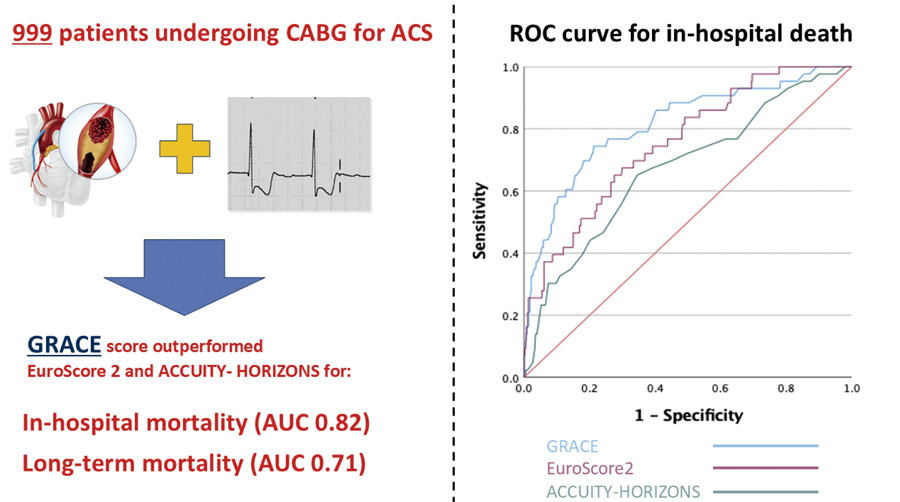
Comparison between Five Risk Scores in Patients with Acute Coronary Syndromes Undergoing Surgical Revascularization during the Index Hospitalization

José C. Nicolau et al. Roberto R. C. V. Giraldez Fabio B. Jatene Luís A. O. Dallan … Luiz A. Lisboa Omar A. V. Mejia Jorge L. M. Ribera Adriadne J. Bertolin Luciano M. Baracioli Felipe G. Lima Maria C. D. Andrade Santiago A. C. Vintimilla Leonardo Salis Fabiane L. de Freitas Maxim Goncharov Lucas C. Godoy Remo H. de M. Furtado Michael E. Farkouh

Abstract

Background

Risk scores (RS) for patients with acute coronary syndromes (ACS) and coronary artery bypass grafting (CABG) have been tested previously, but little is known about their value in ACS patients undergoing CABG during the index hospitalization.

Objectives

To compare five different RS in ACS patients undergoing CABG during the index hospitalization.

Methods

The analyzed RS were GRACE, TIMI-non-ST-elevation ACS (TIMI-NSTEACS), TIMI-ST-elevation acute myocardial infarction (TIMI-STEMI), ACUITY/HORIZONS (A-H) bleeding, and EuroSCORE II. The RS were evaluated regarding their performance during the in-hospital phase and the long-term follow-up after discharge; a p-value <0.05 was considered significant.

Results

A total of 999 patients were included between 1998 and 2022. The mean time from symptom onset to CABG was 6.3 ± 5.5 days. The areas under the ROC curves were 0.82 (95% CI 0.74 – 0.89, p<0.001) for GRACE, 0.78 (95% CI 0.62-0.93, P=0.004) for TIMI-STEMI, 0.75 (95% CI 0.61-0.83, p<0.001) for EuroSCORE II, 0.67 (95% CI 0.59-0.76, P<0.001) for A-H bleeding, and 0.58 (95% CI 0.49-0.67, p=0.131) for TIMI-NSTEACS. Excluding in-hospital deaths, only GRACE and TIMI-STEMI were significantly associated with long-term mortality (mean follow-up of 5.5 ± 4 years). In the multivariable analyses, the GRACE score was the only RS significantly associated with in-hospital and long-term mortality in all adjusted models.

Conclusion

In patients with ACS who underwent CABG during the index hospitalization, the GRACE score was the only risk score that remained independently associated with both in-hospital and long-term mortality across all developed models, after adjustment for potential confounders. Moreover, the GRACE score performed better than others in predicting in-hospital deaths. These findings may influence the clinical decision-making process in this high-risk population.

  • Acute coronary syndrome
  • Continuity of Patient Care
  • Mortality
  • Myocardial Revascularization
Read Full Article
Creative Commons Attribution (CC BY) Creative Commons license
09/01/2026 DOI: 10.36660/abc.20250320i Views 1
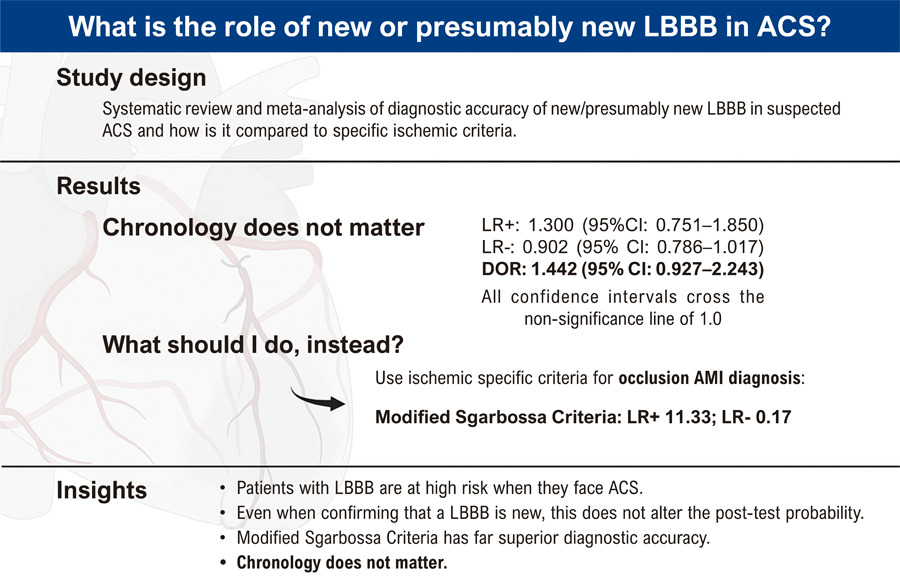
Accuracy of Left Bundle Branch Block Chronology and Electrocardiography Criteria for Acute Myocardial Infarction Diagnosis: A Systematic Review and Meta-analysis
ABC
Original Article

Accuracy of Left Bundle Branch Block Chronology and Electrocardiography Criteria for Acute Myocardial Infarction Diagnosis: A Systematic Review and Meta-analysis

José Nunes de Alencar et al. Gleydson Wesley Freire Lima Haissa Assad dos Santos Geraldo Rinaldo Carvalho Fernandes … Matheus Kiszka Scheffer Sandro Pinelli Felicioni Mariana Fuziy Nogueira De Marchi

Abstract

Background

The diagnostic utility of new or presumed new left bundle branch block (LBBB) for acute myocardial infarction (AMI) in the setting of acute coronary syndrome (ACS) remains controversial.

Objective

To evaluate whether the timing of LBBB predicts AMI and to compare its diagnostic accuracy with ischemic electrocardiography (ECG) criteria, particularly the Modified Sgarbossa Criteria (MSC).

Methods

We searched PubMed and Scopus for studies involving patients with ACS with LBBB through December 2023. Sensitivity, specificity, positive (LR+) and negative (LR–) likelihood ratios, and diagnostic odds ratios (DOR) were calculated to assess diagnostic accuracy. Incidence and mortality data were also analyzed. Risk of bias was evaluated using the Newcastle-Ottawa Scale (NOS) and the revised Quality Assessment of Diagnostic Accuracy Studies (QUADAS-2) tool.

Results

A total of 51 studies were included. LBBB occurred in 3.3% of ACS presentations and was associated with higher in-hospital mortality. Differentiating new from old LBBB was diagnostically neutral: LR+ 1.30 (95% CI: 0.75 to 1.85), LR– 0.90 (95% CI: 0.79 to 1.02), and DOR 1.44 (95% CI: 0.93 to 2.24); all confidence intervals crossed the null value of 1.0. In contrast, MSC demonstrated 83.6% sensitivity (95% CI: 55.4 to 95.5%) and 92.6% specificity (95% CI: 78.9 to 97.7%) for angiographically confirmed occlusive AMI, with LR+ 11.34 (95% CI: 3.67 to 34.99) and LR– 0.18 (95% CI: 0.054 to 0.575).

Conclusion

LBBB chronology alone does not significantly impact the likelihood of AMI. Ischemic ECG criteria — especially the MSC — provide substantially greater diagnostic accuracy and should guide clinical decision-making in ACS patients with LBBB.

  • Acute coronary syndrome
  • Electrocardiography
  • Myocardial Infarction
Read Full Article
Creative Commons Attribution (CC BY) Creative Commons license
03/11/2025 DOI: 10.36660/abc.20250109i
Central Illustration
ABCIC
Review Article

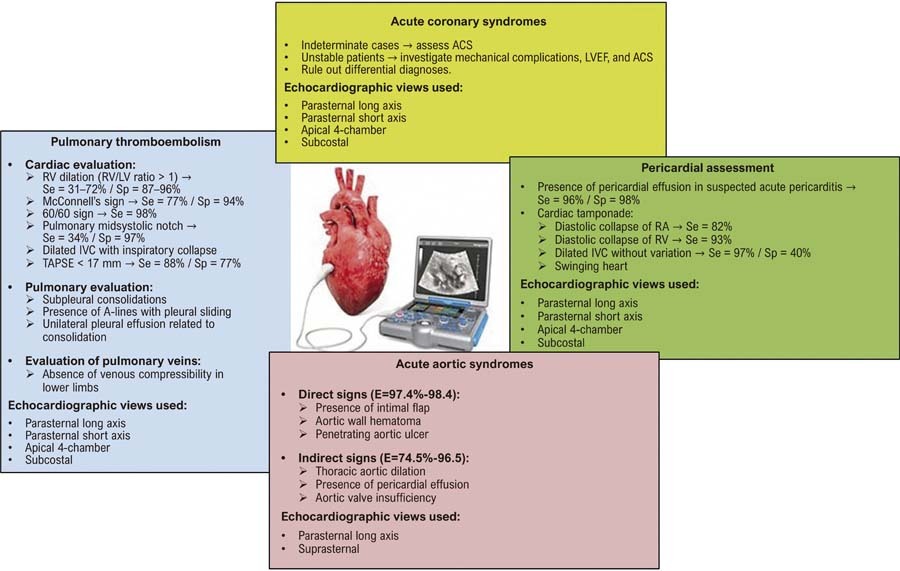
Assessment of Acute Chest Pain in the Emergency Department: How Point-of-Care Ultrasound Can Assist the Cardiologist

Alexandre de Matos Soeiro et al. Lucas Lentini Herling de Oliveira Rômulo Fonseca de Moraes Tatiana de Carvalho Andreucci Torres Leal

Abstract

The use of point-of-care ultrasound (POCUS) in emergency settings is now well established as part of the initial assessment of critically ill patients. In cases of acute chest pain, POCUS plays a significant role in differential diagnosis, helping to reduce diagnostic errors and, most importantly, preventing the discharge of patients with potentially life-threatening conditions. In this context, the main diagnostic considerations include acute coronary syndrome (ACS), pericarditis, pulmonary thromboembolism (PTE), and acute aortic syndromes (AAS). POCUS has proven effective in all of these scenarios and can be widely applied with proper training, both by novice physicians and experienced echocardiographers. This article aims to discuss the key ways in which POCUS can specifically aid in the differential diagnosis of chest pain.

  • Acute coronary syndrome
  • Aortic Dissection
  • Emergencies
  • Pulmonary embolism
Read Full Article
Creative Commons Attribution (CC BY) Creative Commons license
08/10/2025 DOI: 10.36660/abcimg.20250045i
ABC
Editorial

Renal Function and Cardiovascular Risk: An Overlooked Prognostic Ally

Gabriel Porto Soares et al. Thais Rocha Salim

The subanalysis of the Catarina Heart Study brings relevant and timely evidence to a well-known yet often underappreciated clinical relationship: the impact of renal function on cardiovascular outcomes. By showing that lower creatinine clearance at hospital admission independently predicts major adverse cardiovascular events (MACE) and mortality after acute myocardial infarction (AMI), the study reinforces the kidney as an essential prognostic organ in cardiology.

Cardiorenal interaction is not a novel concept. The bidirectional relationship between the heart and kidneys has been documented in large-scale studies like the Chronic Kidney Disease Prognosis Consortium and ARIC. What makes the present analysis relevant is its practical and local applicability: in a Brazilian population, using a simple, widely available tool—creatinine clearance by the Cockcroft-Gault formula—clinicians can identify high-risk patients early in the course of AMI.

[…]

  • Acute coronary syndrome
  • Cardiovascular risk
  • Mortality
  • Renal Function
Read Full Article
Creative Commons Attribution (CC BY) Creative Commons license
25/08/2025 DOI: 10.36660/abc.20250414i Views 1
Figure 1
ABC
Research Letter

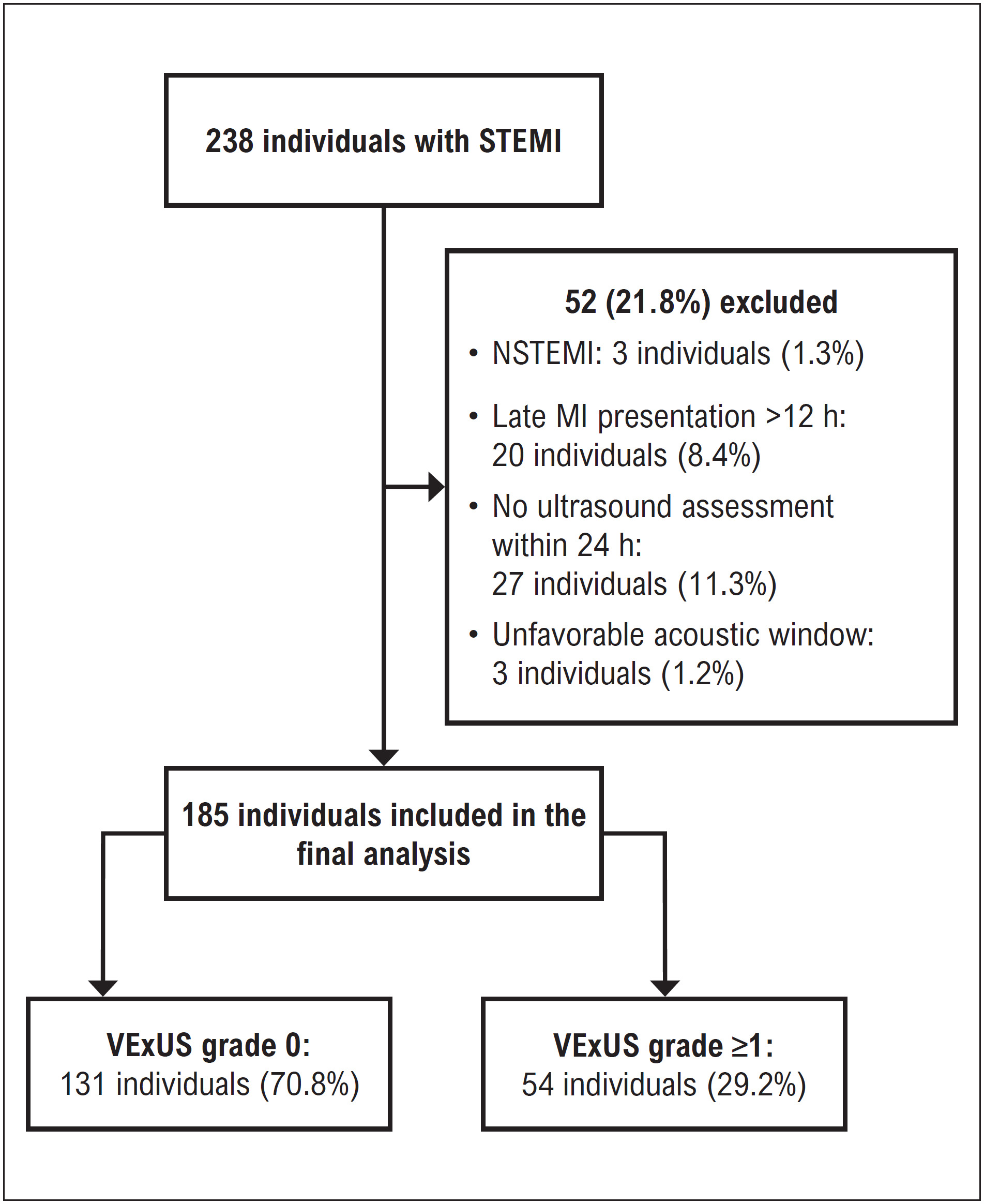
Venous Excess Ultrasound (VExUS) Score in Patients with ST-Elevation Myocardial Infarction to Predict In-Hospital Mortality

Guilherme Pinheiro Machado et al. Guilherme Heiden Telo João Pedro da Rosa Barbato Marina Petersen Saadi … Gustavo Neves de Araujo Angelo Chies Julia Carvalho da Silva Rodrigo Wainstein Marco Wainstein

Key points

[…]

  • Acute coronary syndrome
  • Acute Kidney Injury
  • Myocardial Infarction
Read Full Article
Creative Commons Attribution (CC BY) Creative Commons license
28/07/2025 DOI: 10.36660/abc.20250093i
Figure 1
IJCS
Case Report

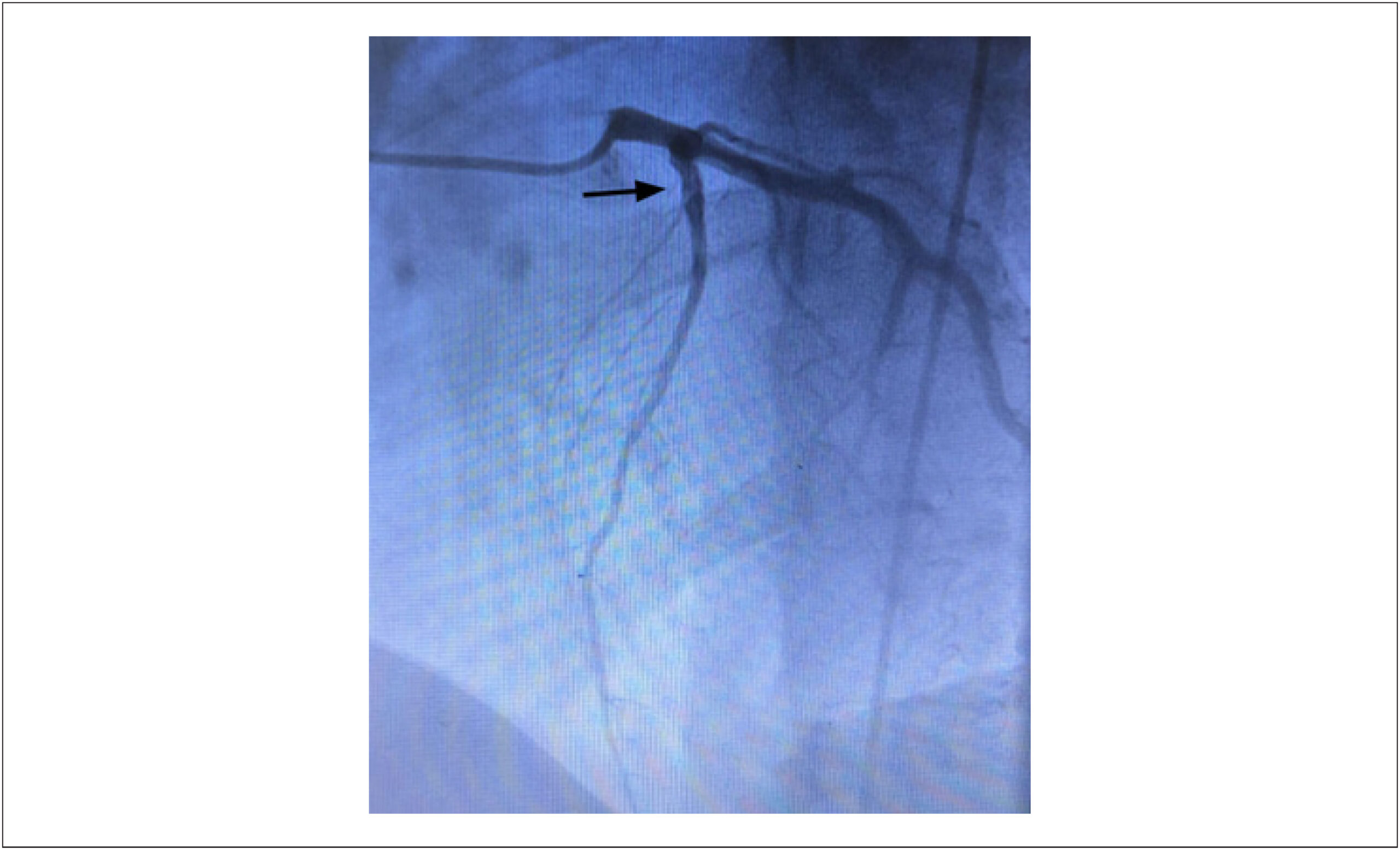
Spontaneous Multivessel Coronary Artery Dissection: Case Report

Ana Paula Schonarth et al. Ottávia Zainho Helbok Caroline de Oliveira Fischer Bacca Arieli Carini Michels

Abstract

Spontaneous coronary artery dissection (SCAD) is a rare condition that can cause acute myocardial infarction (AMI), especially in young women without risk factors for coronary artery disease. Diagnosis is made by cardiac catheterization, and treatment varies from conservative to surgical approaches, depending on the severity. We report the case of a woman with a history of AMI who underwent initial catheterization without requiring percutaneous coronary intervention due to the absence of an obstructive lesion. Subsequently, the patient presented episodes of angina, and a new catheterization was performed, which revealed dissection in the left anterior descending and right coronary arteries. Given the lack of spontaneous resolution of the dissection, which was initially unilateral and progressed to bilateral, the patient underwent myocardial revascularization with mammary artery and saphenous vein bypass grafts. The objective of this study is to document a case of SCAD and to describe its characteristics, diagnosis, and therapeutic management.

  • Acute coronary syndrome
  • Aortic Dissection
  • Myocardial Infarction
Read Full Article
Creative Commons Attribution (CC BY) Creative Commons license
16/06/2025 DOI: 10.36660/ijcs.20240013 Views 1
Influence of Obesity on the Safety and Efficacy of Antithrombotic Therapy: A Systematic Review and Meta-Analysis
ABC
Original Article

Influence of Obesity on the Safety and Efficacy of Antithrombotic Therapy: A Systematic Review and Meta-Analysis

Beatriz Rocha Darzé et al. Queila Oliveira Borges Mateus S. Viana Eduardo Sahade Darzé Luiz Eduardo Fonteles Ritt

Abstract

Background

Obese individuals have been historically underrepresented in clinical trials. Considering their association with a higher risk of venous thromboembolism (VTE) and acute coronary syndrome (ACS), it is necessary to establish a more suitable anticoagulation regimen for this group of patients.

Objectives

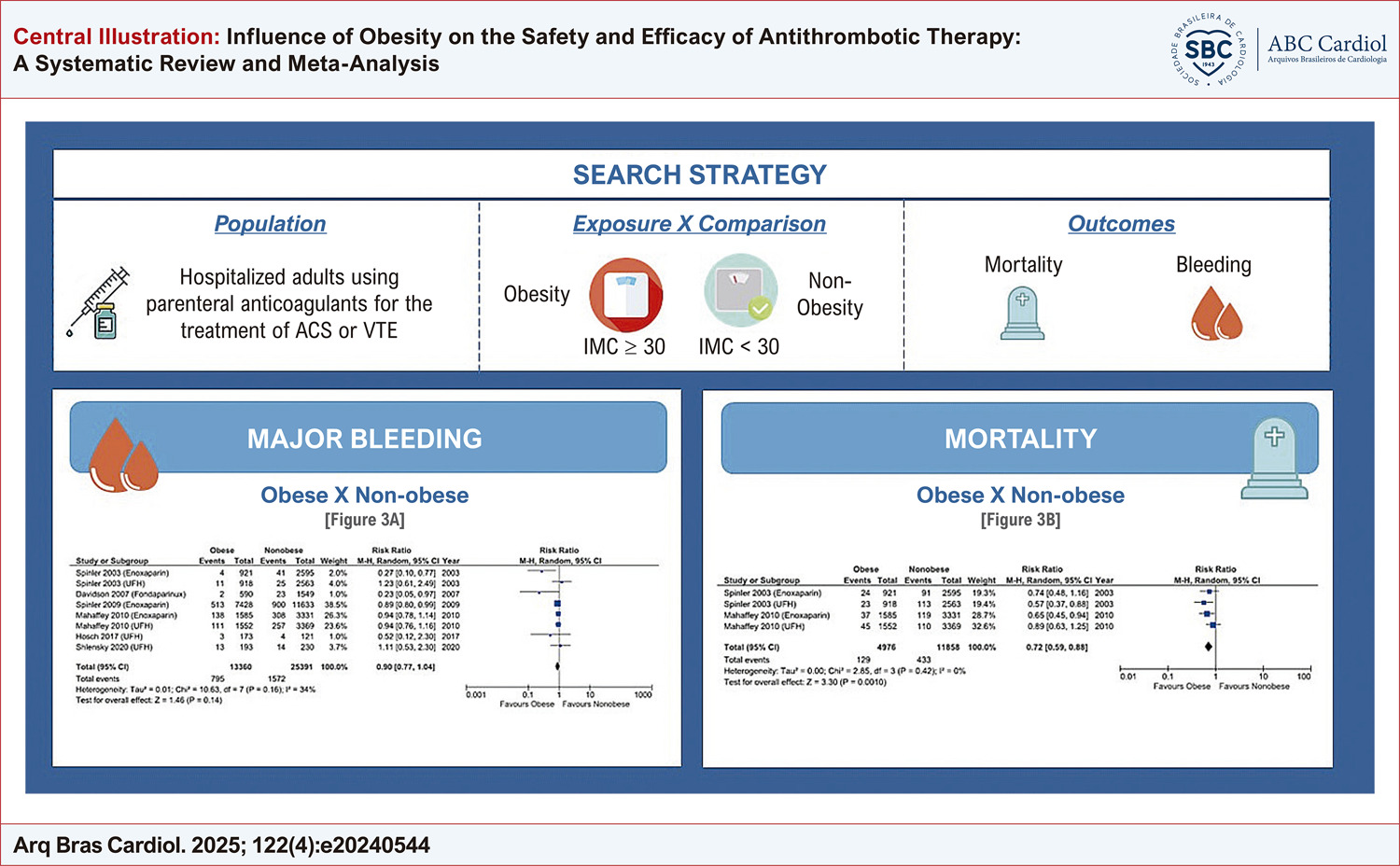
To evaluate the influence of obesity on the safety and efficacy of antithrombotic therapy in patients with ACS or VTE.

Methods

This is a systematic review and meta-analysis that used 5 main international databases. We selected clinical trials or observational studies that compared the occurrence of clinical outcomes (mortality or bleeding) between obese and non-obese patients using parenteral anticoagulants for the treatment of ACS or VTE. P value < 0.05 was used for all analyses.

Results

Six articles, with a total of 40,939 patients, were eligible, being 3 randomized clinical trials and 3 retrospective cohorts. Of the patients, 87.7% had ACS. The incidence of major bleeding was similar between groups (relative risk [RR]: 0.90, 95% confidence interval [CI]: 0.77 to 1.04, p = 0.14). The outcome remained comparable when studies were analyzed separately by anticoagulant: enoxaparin (RR: 0.87, 95% CI, 0.70 to 1.08, p = 0.21) or unfractionated heparin (RR: 0.96, 95% CI, 0.79 to 1.17, p = 0.67). The mortality rate was measured in only 2 studies, both in ACS, and it was lower in obese patients (RR: 0.71, 95% CI 0.59 to 0.87, p = 0.0007).

Conclusion

In patients treated for VTE or ACS, rates of bleeding were comparable between obese and non-obese patients, regardless of the anticoagulant used. The lower mortality rate observed in obese patients may represent the effect of unaccounted confounding.

  • Acute coronary syndrome
  • Fibrinolytic Agents
  • Obesity
  • Prognosis
  • Venous Thromboembolism
Read Full Article
Creative Commons Attribution (CC BY) Creative Commons license
26/05/2025 DOI: 10.36660/abc.20240544i Views 1
IJCS
Editorial

Platelet Distribution Width: A New Prognostic Marker for Patients with Acute Coronary Syndrome?

Angelo Roncalli Ramalho Sampaio

The study by Polat et al. published in the International Journal of Cardiovascular Sciences explored the association between platelet distribution width (PDW) and the severity and extent of coronary artery disease (CAD) in patients with acute coronary syndrome (ACS). This retrospective study involved a comprehensive analysis of clinical, angiographic, and laboratory data obtained from a consecutive cohort of 1043 patients diagnosed with ACS, stratified into two groups based on PDW values (> 11.8 fL and ≤ 11.8 fL), with the aim of investigating the association of PDW levels with the clinical severity and extent of CAD in patients diagnosed with ACS.

GRACE (Global Registry of Acute Coronary Events) score, SYNTAX score, TIMI flow grade, thrombosis grades of culprit lesions, and neutrophil-lymphocyte ratio (NLR) were calculated in patients. The associations of these with PDW were also examined.

[…]

  • Acute coronary syndrome
  • Blood Platelets
  • Coronary Artery Disease
Read Full Article
Creative Commons Attribution (CC BY) Creative Commons license
11/04/2025 DOI: 10.36660/ijcs.20250021 Views 1
Impact of Digital Technology Intervention on Medication Compliance, Modification of Risk Factors, and Clinical Outcome in Patients With Acute Coronary Syndrome: A Follow-Up Study
IJCS
Original Article

Impact of Digital Technology Intervention on Medication Compliance, Modification of Risk Factors, and Clinical Outcome in Patients With Acute Coronary Syndrome: A Follow-Up Study

C. J Devaraju et al. S Sunil Kumar K. S. Sadananda K Vinay Kumar … Veena Nanjappa K. S. Rajith K. S. Ravindranath

Abstract

Background

Coronary artery disease (CAD) is prevalent worldwide, presenting significant morbidity and mortality. Despite the advances in the management of CAD, the primary focus continues to be risk factor reduction, lifestyle changes, and medication adherence, all of which contribute considerably to favorable outcomes. Long-term CAD outcomes tend to be poor, especially in developing countries, due to medication non-compliance, a lack of education, and appropriate measures for the modification of risk factors.

Objectives

The present study aims to investigate the use of digital technology in assessing medication compliance, modifying risk factors, and evaluating clinical outcomes in patients with acute coronary syndrome (ACS).

Methods

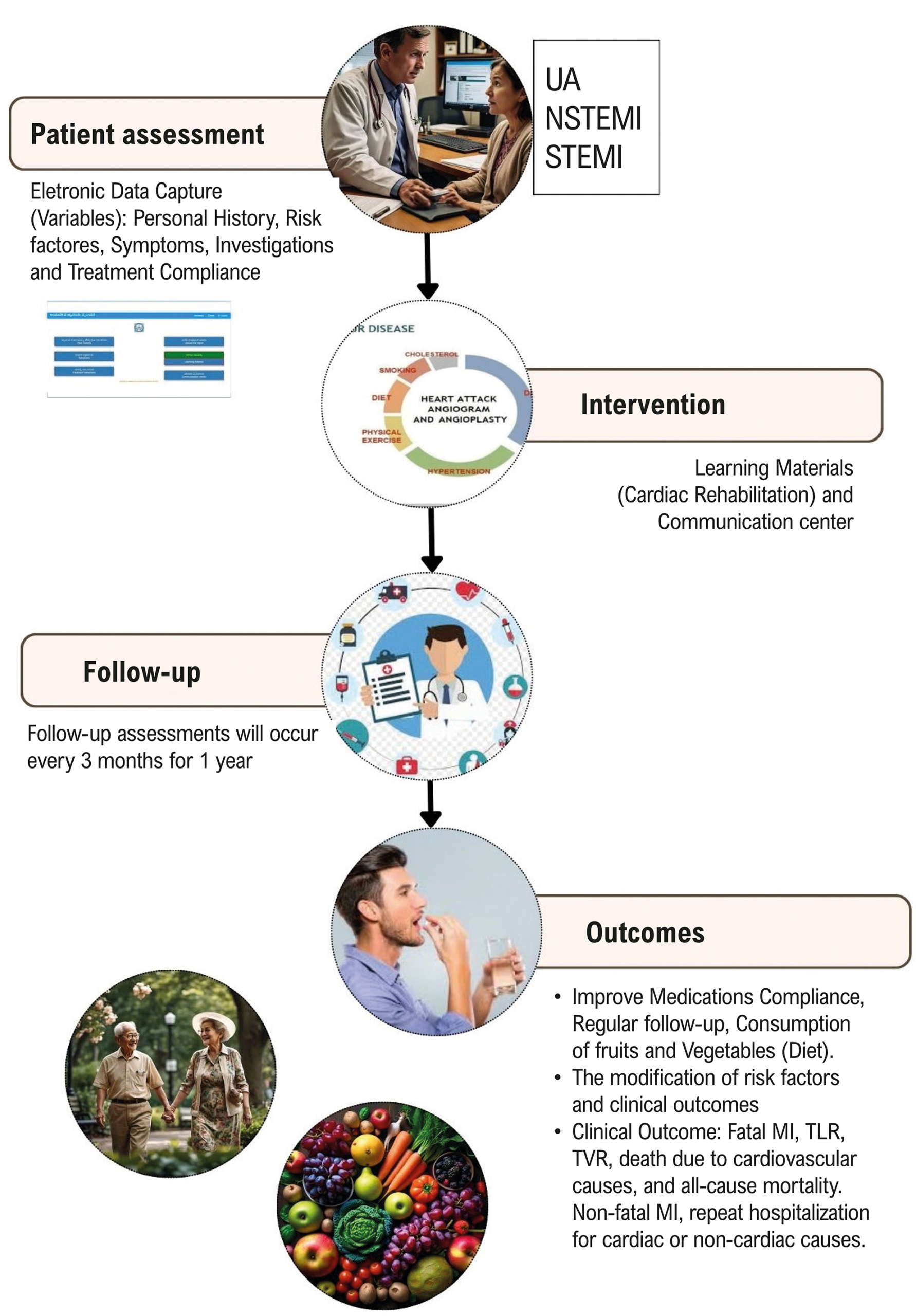
A prospective, randomized study will be conducted with patients diagnosed with ACS at the Sri Jayadeva Institute of Cardiovascular Disease and Research, Mysore, and JSS Medical College, Mysore, India. A total of 522 patients will be randomized in a 1:1 ratio into either the digital intervention group or the control group. Digital technology registration will be completed during hospitalization, with guidance from the research team. Follow-up assessments will occur every three months for one year. Statistical analysis will be conducted at a 5% significance level. Categorical variables will be analyzed using the Z test for proportions or the Chi-square test, while continuous variables will be assessed using the independent sample t-test.

Results

The results will be presented after data collection and statistical analysis. This study aims to focus on clinical outcomes in patients with ACS, highlighting the importance of lifestyle modification, adherence to medications, and modifications of risk factors by digital technology, bridging the gap between patients and healthcare providers.

Conclusions

We intend for the outcomes of this study to produce an initiative for larger randomized control trials regarding web application in the management of ACS. Favorable outcomes could significantly impact the management of ACS, and web applications can be recommended as part of a routine standard of care established by societal guidelines.

  • Acute coronary syndrome
  • digital health
  • digital technology
  • Risk Factors
Read Full Article
Creative Commons Attribution (CC BY) Creative Commons license
03/03/2025 DOI: 10.36660/ijcs.20240127 Views 1
Figure 1
IJCS
Original Article

Platelet Distribution Width as a Marker for Severity and Extent of Coronary Artery Disease in Acute Coronary Syndrome

Fuat Polat et al. Zeynettin Kaya Atakan Yanikoğlu

Abstract

Background

Previous studies have demonstrated an association between larger platelet volume and coronary thrombus formation in acute coronary syndrome (ACS).

Objectives

We aimed to investigate the association of platelet distribution width (PDW) levels with both the clinical severity and the extent of coronary artery disease (CAD) in patients diagnosed with ACS.

Methods

A retrospective evaluation was conducted on 1043 consecutive patients diagnosed with ACS. Patients were stratified into two groups based on their PDW values: group 1 (PDW > 11.8 fL) and group 2 (PDW ≤ 11.8 fL). For each patient, Global Registry of Acute Coronary Events (GRACE) score, SYNTAX score, Thrombolysis in Myocardial Infarction (TIMI) flow grade, thrombus grades of culprit lesions, and neutrophil–lymphocyte ratio (NLR) were calculated, and their associations with PDW were examined.

Results

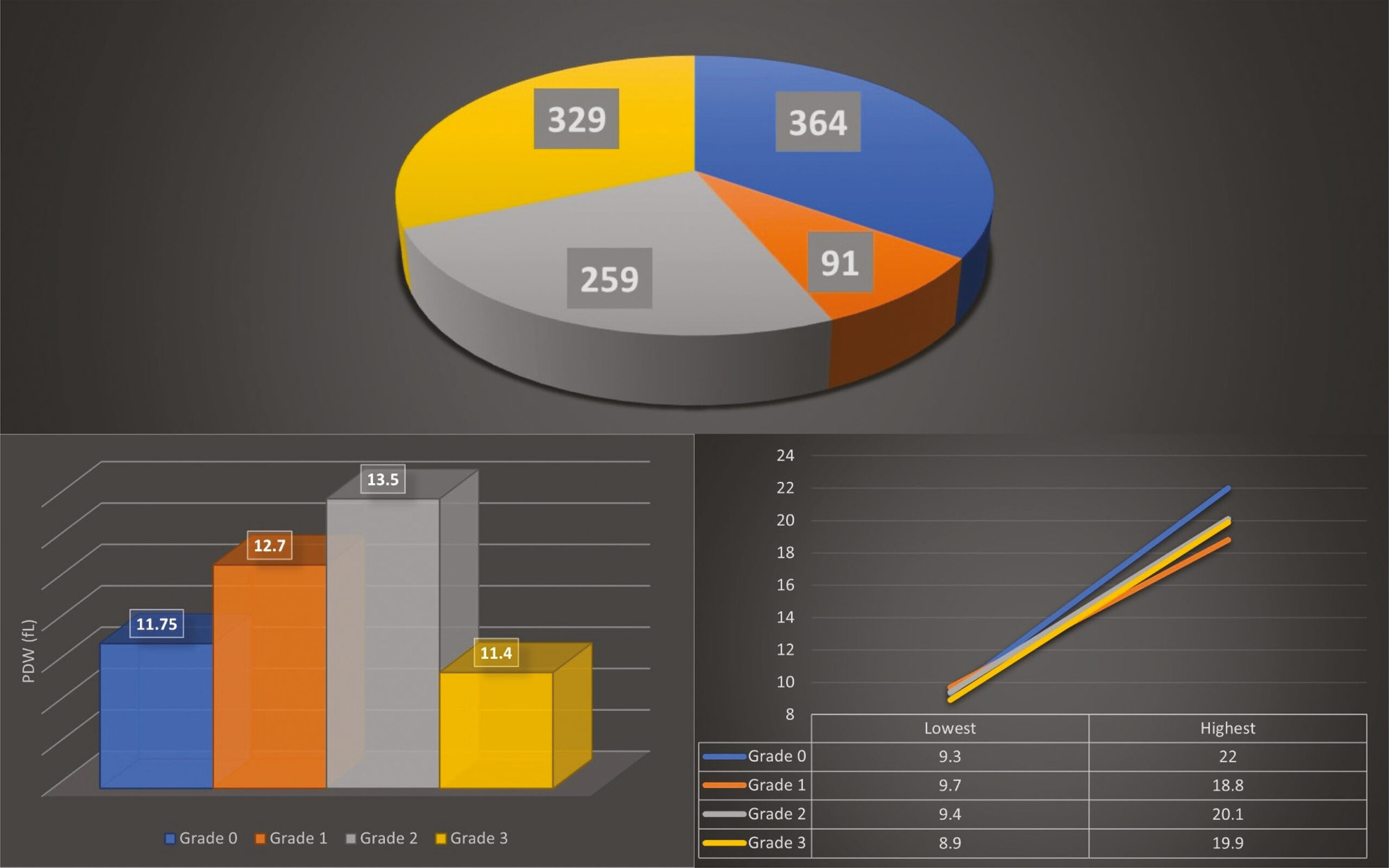
The mean age of the patients was 60.1 ± 12.4 years, with the majority being male (78.5%). The mean PDW was 11.8 fL (range: 8.9 to 22.0). Patients in group 1 exhibited higher NLR (3.21 versus 2.13, p < 0.05) and higher GRACE scores (139 versus 126, p < 0.05) compared to group 2. Group 1 patients also showed lower TIMI flow grades (0 and 1). A positive correlation was observed between PDW and GRACE score (R: 0.304, p = 0.01), but not with the SYNTAX score.

Conclusion

Elevated PDW levels in patients with ACS were associated with more severe disease, as indicated by higher GRACE scores and reduced TIMI flow grades.

  • Acute coronary syndrome
  • Blood Platelets
  • Coronary Artery Disease
Read Full Article
Creative Commons Attribution (CC BY) Creative Commons license
03/03/2025 DOI: 10.36660/ijcs.20240055
Figure 1
IJCS
Original Article

Enoxaparin Versus Unfractionated Heparin in Acute Coronary Syndrome Without St-Segment Elevation: A Systematic Review and Meta-Analysis

Edmundo Damiani Bertoli et al. Maria Luísa Siegloch Barros Eric Pasqualotto Pedro Lucas Gomes Lima … Raphael Camerotte Thiago Faraco Nienkötter Maria Eduarda Cavalcanti Souza Isabela Tonon Floriano Francinny Alves Kelly

Abstract

Introduction

Enoxaparin is a known alternative to the use of unfractionated heparin (UFH) in patients with acute coronary syndrome (ACS). However, the evidence about which of these medications would have the best benefit for these patients in 48 hours and 14 days is limited.

Objectives

Perform a meta-analysis of randomized controlled trials (RCTs) comparing the safety of enoxaparin versus UFH in ACS without ST-segment elevation (NSTE-ACS).

Methods

PubMed and Scopus databases were searched for RCTs that compared enoxaparin versus UFH in patients with NSTE-ACS. Risk ratios (RRs) for binary endpoints were computed with 95% confidence intervals (CIs). Heterogeneity was examined with I2 statistics. Statistical significance was defined as P-value <0.05.

Results

Five RCTs with 17,644 patients were included, of whom 8,898 (50.4%) were treated with enoxaparin. There were no significant differences between groups in myocardial infarction (MI) at 48h (RR 0.87; 95% CI 0.75-1.01) and 14 days (RR 0.91; 95% CI 0.79-1.05), all-cause mortality at 48h (RR 1.02; 95% CI 0.62-1.69) and 14 days (RR 0.93; 95% CI 0.74-1.18), composite endpoint of death or MI at 48h (RR 0.87; 95% CI 0.75-1.00) and 14 days (RR 0.91; 95% CI 0.82-1.01), and urgent revascularization at 48h (RR 0.40; 95% CI 0.08-1.95).

Conclusion

These findings suggest that the use of enoxaparin in the treatment of NSTE-ACS presents similar results to UFH.

  • Acute coronary syndrome
  • Enoxaparin
  • Heparin
Read Full Article
Creative Commons Attribution (CC BY) Creative Commons license
10/02/2025 DOI: 10.36660/ijcs.20240149 Views 1
Figure 1
ABC
Editorial

Worse Prognosis of STEMI Patients during Off-Hours: What are we Missing?

Marco Antônio Smiderle Gelain et al. Henrique Barbosa Ribeiro

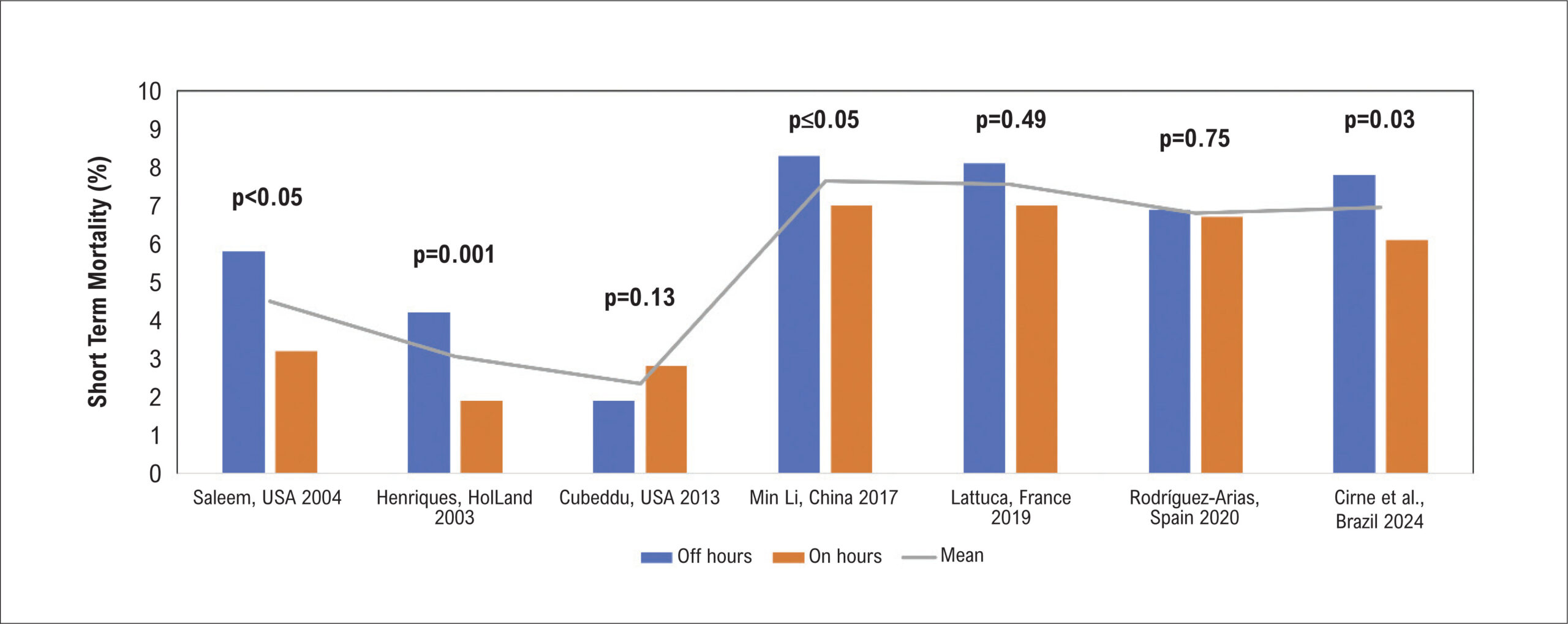
In Brazil, the annual incidence of myocardial infarction is estimated at approximately 300,000 to 400,000 cases. Despite advancements in treatment, myocardial infarction remains the leading cause of death in Brazil and globally, with a lethality rate of around 9%. According to the BRACE registry, acute coronary syndrome (ACS) accounts for 45% of hospitalizations in Brazil, with two-thirds attributed to acute myocardial infarction (AMI), including both ST-segment elevation myocardial infarction (STEMI) and non-ST-segment elevation myocardial infarction (NSTEMI). Notably, 40% to 60% of STEMI patients present during off-hours, between 7 PM and 7 AM, and on weekends., Given that the treatment of STEMI is time-sensitive and requires a complex multidisciplinary team in the catheterization laboratory, the impact of presentation timing on patient outcomes remains a contentious issue. Thus, the question of whether off-hours presentation results in a poorer prognosis is still debated.

In this issue of the journal, Cirne et al. examined a prospective registry from a high-volume ACS center in Southern Brazil, encompassing 4,436 consecutive STEMI patients who underwent primary percutaneous coronary intervention (PPCI) between 2009 and 2019. Patients were stratified by presentation time: on-hours versus off-hours. The primary outcome was a composite of major adverse cardiac events (MACE), which included death, AMI, or stroke at one year, along with MACE at 30 days, stent thrombosis, and the need for new revascularization. Among the cohort, 2,576 (57%) patients were treated during off-hours, with no significant differences between the groups concerning age, sex, infarction-related artery, or Killip classification. Additionally, symptom-to-hospital time (mean 240 minutes) and door-to-balloon time (DTB) (mean 70 minutes) were similar. No differences were observed in procedural complexity, complications, intra-aortic balloon pump usage, or angioplasty success rates; however, off-hours patients exhibited a higher thrombotic burden (49.6% vs. 45.5%, p<0.01). Despite comparable baseline clinical and angiographic characteristics, those presenting off-hours had higher rates of MACE at 30 days and one year (10.2% vs. 8.5% and 15.4% vs. 13.1%, respectively), as well as increased mortality (in-hospital: 7.9% vs. 6.1%; 30 days: 7.8% vs. 6.1%; 1 year: 11.1% vs. 9%, respectively). No differences were noted in AMI or stroke incidence.

[…]

  • Acute coronary syndrome
  • Off-hours
  • STEMI
Read Full Article
Creative Commons Attribution (CC BY) Creative Commons license
10/02/2025 DOI: 10.36660/abc.20240701i
Acute Coronary Syndrome in Brazil: Registration of Predisposing Factors and Population Profile in a National Public Reference Cardiological Institute
ABC
Original Article

Acute Coronary Syndrome in Brazil: Registration of Predisposing Factors and Population Profile in a National Public Reference Cardiological Institute

Kaliana Nascimento et al. Hugo Ribeiro Ramadan Bruno Mendonça Baccaro Vinicius Vaz de Sales Bicalho … Italo Menezes Ferreira Louis Nakayama Ohe Vitor Sobreira Souza Santos Fausto Feres Kleber Franchini Ari Timerman Diandro Marinho Mota

Abstract

Background

Acute coronary syndrome (ACS) is one of the leading causes of mortality worldwide. Knowing the predisposing factors is essential for preventing it.

Objectives

To describe the etiological and epidemiological characteristics of the population with ACS admitted to an emergency room in the State of São Paulo.

Methods

The prospective cohort study, based on electronic medical records from a public cardiology institute located in the state of São Paulo, Brazil, describes 5,580 patients hospitalized with ACS between August 2018 and October 2022. The main epidemiological characteristics, the association between confirmed ACS and risk scores, and adverse events during hospitalization and in the 30-day follow-up after hospital discharge were evaluated. The significance level was set at 5%.

Results

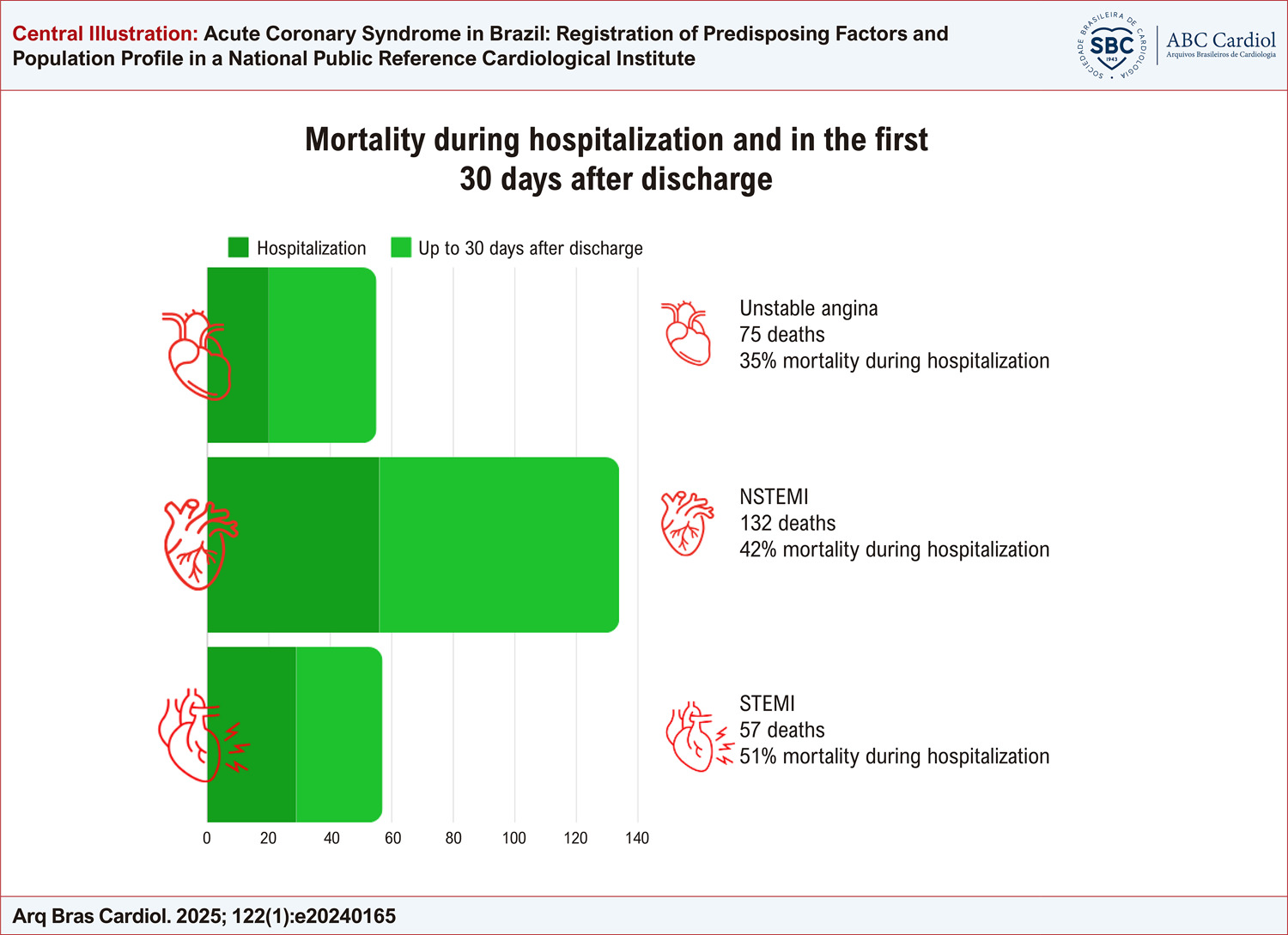
The main factors associated with ACS were hypertension (80.38%), obesity or overweight (72.47%), and previous coronary artery disease (CAD) (59.11%). In the GRACE score, 65.10% were considered low risk, while 81.34% in the TIMI and 71.16% in the HEART were identified as moderate risk. Catheterization represented 84.93% of the diagnostic methods. Clinical treatment was the strategy adopted in 46.47% of the cases. In the 30-day evolution, 3.10% presented major bleeding, 7.86% infarction/reinfarction, 5.55% stroke, and 2.53% evolved to death.

Conclusion

The results of the largest Brazilian ACS registry to date highlight the impact of potentially modifiable risk factors on the occurrence of ischemic events in the local population. The findings may contribute to the development of public policies aimed at preventing and controlling the burden of ischemic disease in the country.

  • Acute coronary syndrome
  • Cardiovascular Diseases
  • Coronary Disease
  • Myocardial Ischemia
Read Full Article
Creative Commons Attribution (CC BY) Creative Commons license
13/01/2025 DOI: 10.36660/abc.20240165i Views 1
Myocardial Infarction with ST Elevation and Reperfusion Therapy in Brazil: Data from the ACCEPT Registry
ABC
Original Article

Myocardial Infarction with ST Elevation and Reperfusion Therapy in Brazil: Data from the ACCEPT Registry

Luiz Eduardo Fonteles Ritt et al. Pedro Gabriel Melo de Barros e Silva Eduardo Sahade Darzé Renato Hideo Nakagawa Santos … Queila Borges de Oliveira Otavio Berwanger Luiz Alberto Piva e Mattos Elizabete Silva dos Santos Antonio Carlos Sobral Souza Margaret Assad Cavalcante Pedro Beraldo de Andrade Fernando Carvalho Neuenschwander Hugo Vargas Filho Jorge Ilha Guimarães Jadelson Pinheiro de Andrade Angelo Amato Vincenzo de Paola Marcus Vinícius Bolívar Malachias Dalton Bertolim Précoma Fernando Bacal Oscar Pereira Dutra

ABSTRACT

Background:

There is a lack of information from Brazil regarding therapies used and outcomes in patients with acute coronary syndrome with ST elevation (STEMI).

Objectives:

To evaluate evidence-based therapies, occurrence of outcomes, reperfusion use, and predictors of not receiving reperfusion in patients with STEMI in a national multicenter registry.

Methods:

Patients with STEMI from the ACCEPT registry, with up to 12 hours of symptoms, were followed for 1 year for the occurrence of major adverse cardiovascular events. A significance level of p < 0.05 was applied for all analyses.

Results:

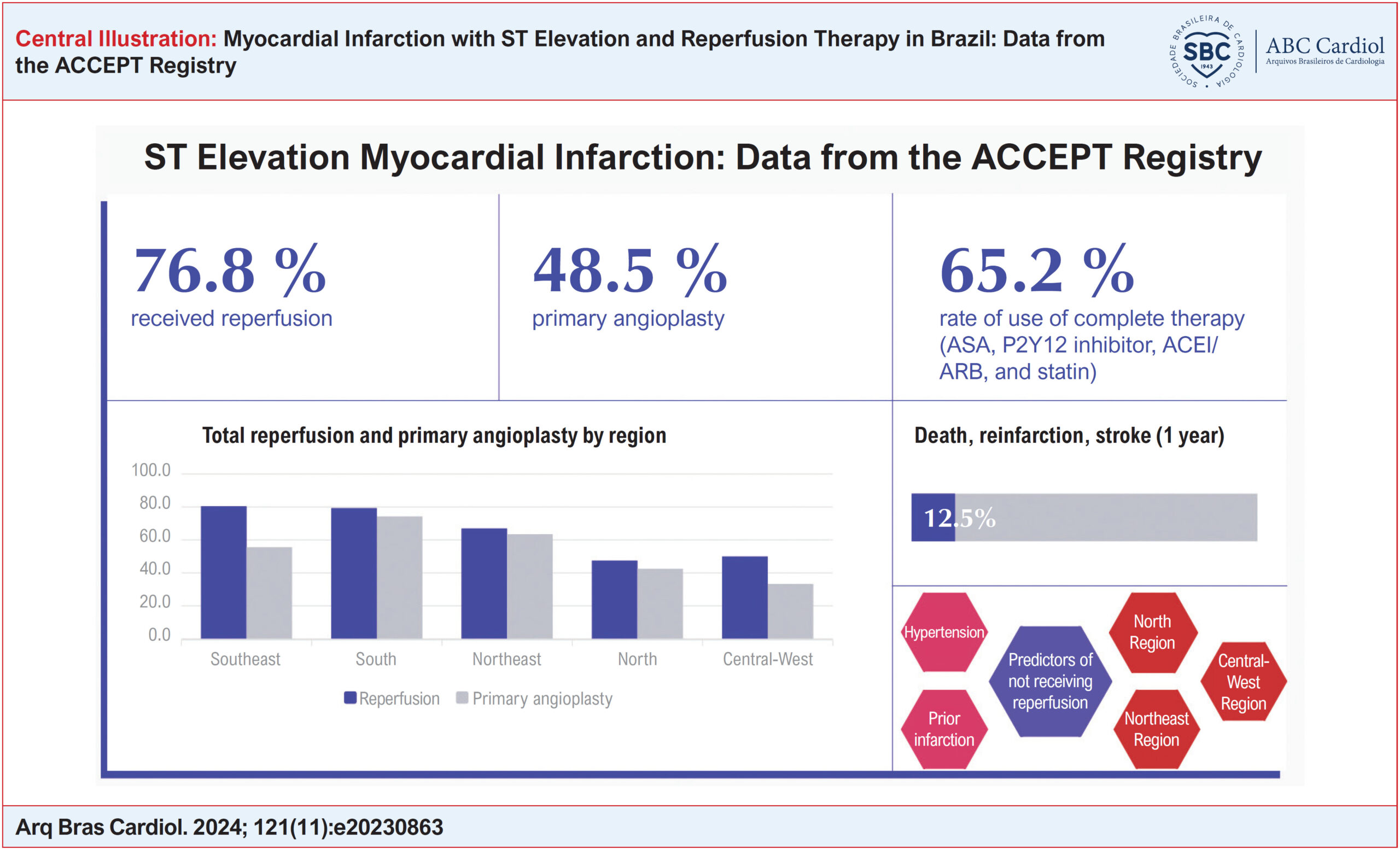
In the analysis of 1553 patients, the reperfusion rate was 76.8%, ranging from 47.5% in the North Region to 80.5% in the Southeast Region. The rate of major adverse cardiovascular events was 12.5% at 1 year. The prescription of evidence-based therapies at hospital admission was 65.6%. The presence of hypertension (odds ratio [OR] 1.47; 95% confidence interval [CI] 1.11 to 1.96; p < 0.01); prior acute myocardial infarction (OR 1.81; 95% CI 1.32 to 2.48; p < 0.001); and the North (OR 4.65; 95% CI 2.87 to 7.52; p < 0.001), Central-West (OR 4.02; 95% CI 1.26 to 12.7; p < 0.05), and Northeast Regions (OR 1.70; 95% CI 1.17 to 2.46; p < 0.01) were independent predictors of not receiving reperfusion therapy.

Conclusion:

In the 1-year follow-up of the ACCEPT Registry, we were able to verify a wide variation within Brazilian geographical regions regarding adherence to best care practices. The following were independent predictors of not receiving reperfusion therapy: being treated in the North, Central-West, and Northeast Regions; having systemic arterial hypertension; and prior infarction.

  • Acute coronary syndrome
  • Medical Record Linkage
  • Myocardial Infarction
Read Full Article
Creative Commons Attribution (CC BY) Creative Commons license
06/12/2024 DOI: 10.36660/abc.20230863i Views 1
ABC
Editorial

The ACCEPT Study and the Management of Ischemic Myocardial Disease in Brazil: Challenges and Opportunities in a Continental Country

Henrique Tria Bianco

Ischemic myocardial disease, particularly in its acute manifestation as an acute coronary syndrome (ACS), remains one of the main public health challenges in Brazil and the world., In this context, the ACCEPT (Acute Coronary Syndrome Registry) study emerges as a crucial source of epidemiological and clinical information on the management of ACS in the Brazilian scenario, with the aim of evaluating evidence-based therapies, the occurrence of outcomes, use of reperfusion and predictors for not receiving reperfusion in patients with ACS in a multicenter national registry.,

Brazil, with its continental dimensions and marked regional disparities, presents a unique challenge in implementing uniform strategies for the treatment of SCA. The study ACCEPT not only provides valuable data on the prevalence and types of ACS found in the country but also sheds light on the different therapeutic approaches adopted in different regions. Myocardial revascularization is a fundamental pillar in the treatment of ACS, especially in ST-segment elevation myocardial infarction (STEMI). ACCEPT demonstrates that, although primary pPCI (Primary Percutaneous Coronary Intervention) is considered the gold standard for STEMI, its availability and application vary significantly between Brazilian regions. In metropolitan areas and referral centers, primary PCI is often the first choice, in line with international guidelines that recommend its performance within 90 minutes after first medical contact. However, in less developed or rural regions, where access to hemodynamic centers is limited, fibrinolysis still plays a crucial role as an initial reperfusion strategy. This regional disparity in access to advanced healthcare resources highlights the importance of adaptive strategies in the management of ACS. The pharmaco-invasive approach, which combines initial fibrinolysis with subsequent transfer for PCI, emerges as a promising alternative in settings where immediate access to PCI is not feasible.–

[…]

  • Acute coronary syndrome
  • Medical Record Linkage
  • Myocardial Infarction
Read Full Article
Creative Commons Attribution (CC BY) Creative Commons license
06/12/2024 DOI: 10.36660/abc.20240604i
Triglyceride-Glucose Index: Evaluation as a Potential New Risk Marker for SYNTAX Score in Acute Coronary Syndrome
IJCS
Original Article

Triglyceride-Glucose Index: Evaluation as a Potential New Risk Marker for SYNTAX Score in Acute Coronary Syndrome

Murat Özmen et al. Erhan Arikan Faik Ozel İsa Ardahanlı

Abstract

Background:

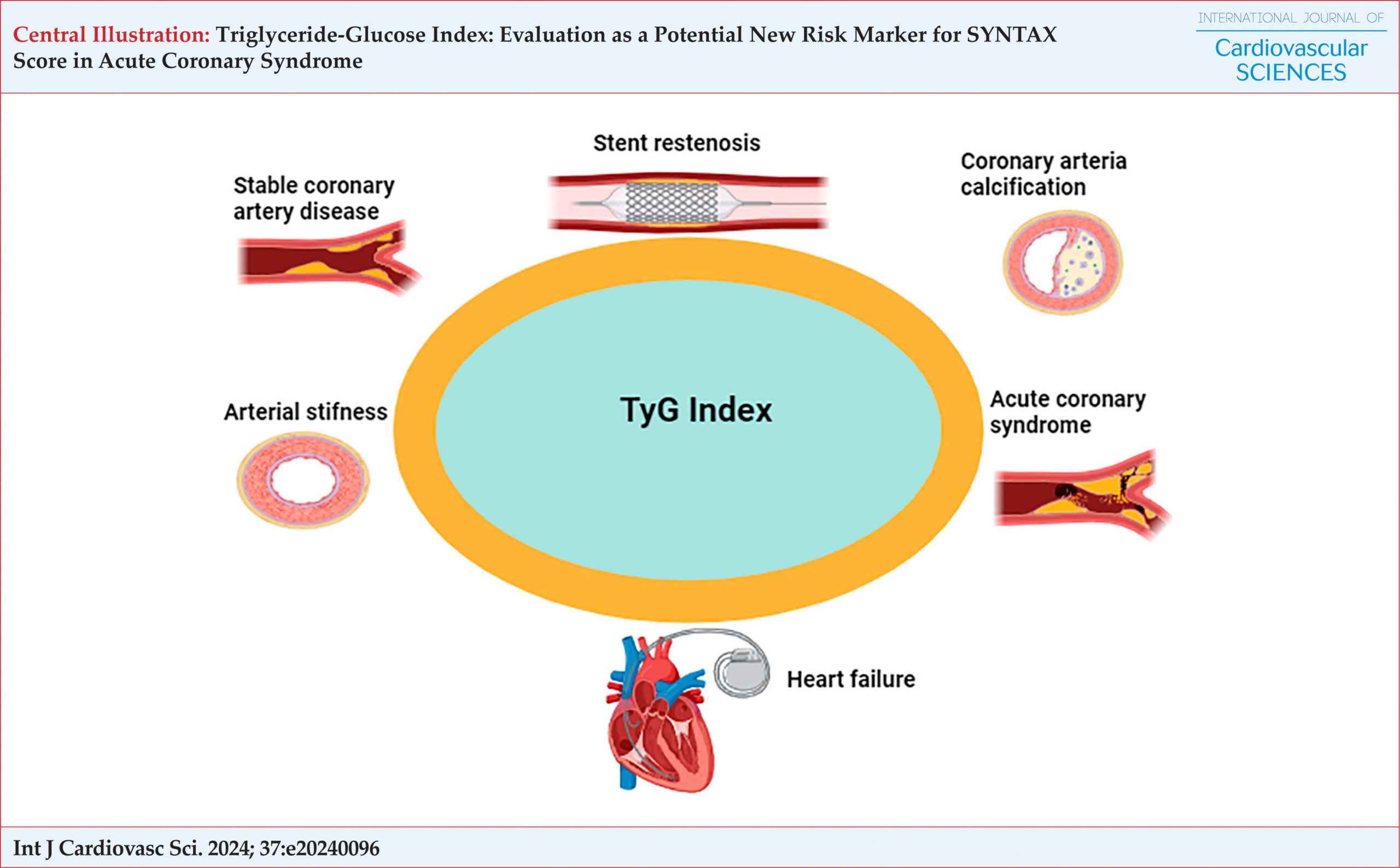
The triglyceride glucose (TyG) index is known to indicate conditions such as metabolic syndrome and atherosclerotic process. SYNergy between PCI with TAXUS (SYNTAX) and Cardiac Surgery scoring systems (SS) can show coronary anatomic severity and complexity because it is a quantitative and reproducible basic measurement before revascularization. There is no study in the literature investigating the relationship between the TyG index and the SYNTAX SS.

Objective:

This study aims to investigate a potential association between the TyG index and the SYNTAX score in patients with acute coronary syndrome (ACS).

Methods:

We retrospectively analyzed 214 patients hospitalized for ACS. Patient demographics and clinical characteristics were recorded, and participants were categorized into low, intermediate, and high SYNTAX score groups. The relationship between SS and TyG index was then evaluated using statistical analysis (chi-square test, p < 0.05).

Results:

The mean age of participants was 63.15 ± 12.69 years, with 67.8% being male. The majority (65.4%) had low SS, while 24.3% had intermediate SS, and 10.3% had high SS. As expected, the SYNTAX score correlated significantly with diabetes mellitus (DM) (p < 0.001). However, no statistically significant association was found between the SYNTAX score and the TyG index (p = 0.312).

Conclusion:

In patients diagnosed with ACS and undergoing coronary angiography (CAG), our study confirmed a strong link between SYNTAX score and DM. Unexpectedly, we did not find a significant relationship between the TyG index and SYNTAX score, suggesting that TyG may not directly reflect coronary artery disease (CAD) complexity as assessed by the SS.

  • Acute coronary syndrome
  • Coronary Artery Disease
  • Triglycerides
Read Full Article
Creative Commons Attribution (CC BY) Creative Commons license
04/11/2024 DOI: 10.36660/ijcs.20240096 Views 1

Could not load more articles. Please try again.

How to cite this article

EndNote RIS

Electronic Document Format (Vancouver)

Caldas AC, Matias D, Medina D, Correia LCL. Reversal of Therapeutic Recommendations in the American College of Cardiology Coronary Artery Disease Guidelines. International Journal of Cardiovascular Sciences 2026;39:e20250148.

Electronic Document Format (ABNT)

Caldas, Alessandra Carvalho; Matias, Denise; Medina, Daniel; Correia, Luis Claudio Lemos. Reversal of Therapeutic Recommendations in the American College of Cardiology Coronary Artery Disease Guidelines. International Journal of Cardiovascular Sciences, v. 39, e20250148, Sep. 2026.

Electronic Document Format (APA)

Caldas, A. C., Matias, D., Medina, D., & Correia, L. C. L. (2026). Reversal of Therapeutic Recommendations in the American College of Cardiology Coronary Artery Disease Guidelines. International Journal of Cardiovascular Sciences, 39, e20250148.

Electronic Document Format (ISO)

Caldas, Alessandra Carvalho and Matias, Denise and Medina, Daniel and Correia, Luis Claudio Lemos. Reversal of Therapeutic Recommendations in the American College of Cardiology Coronary Artery Disease Guidelines. International Journal of Cardiovascular Sciences [online]. 2026, vol. 39, [cited 2026-10-14], e20250148. Available from: <https://journals.cardiol.br/en/article/reversal-of-therapeutic-recommendations-in-the-american-college-of-cardiology-coronary-artery-disease-guidelines/>. ISSN 2359-4802

EndNote RIS

Electronic Document Format (Vancouver)

Rocha ASC, Kruczan D. Asymptomatic Patients With Suspected Coronary Artery Disease: What Are Clinicians Afraid Of?. International Journal of Cardiovascular Sciences 2026;39:e20250075.

Electronic Document Format (ABNT)

Rocha, Antônio Sérgio Cordeiro da; Kruczan, Dany. Asymptomatic Patients With Suspected Coronary Artery Disease: What Are Clinicians Afraid Of?. International Journal of Cardiovascular Sciences, v. 39, e20250075, Aug. 2026.

Electronic Document Format (APA)

Rocha, A. S. C. , & Kruczan, D. (2026). Asymptomatic Patients With Suspected Coronary Artery Disease: What Are Clinicians Afraid Of?. International Journal of Cardiovascular Sciences, 39, e20250075.

Electronic Document Format (ISO)

Rocha, Antônio Sérgio Cordeiro da and Kruczan, Dany. Asymptomatic Patients With Suspected Coronary Artery Disease: What Are Clinicians Afraid Of?. International Journal of Cardiovascular Sciences [online]. 2026, vol. 39, [cited 2026-10-14], e20250075. Available from: <https://journals.cardiol.br/en/article/asymptomatic-patients-with-suspected-coronary-artery-disease-what-are-clinicians-afraid-of/>. ISSN 2359-4802

EndNote RIS

Electronic Document Format (Vancouver)

Righi FL, Sugai G, Araujo P, Alves RJ. Association Between Inflammatory Hematologic Indices and Acute Coronary Syndrome Phenotypes. International Journal of Cardiovascular Sciences 2026;39:e20250264.

Electronic Document Format (ABNT)

Righi, Fabiele de Lima; Sugai, Gustavo; Araujo, Paula; Alves, Renato Jorge. Association Between Inflammatory Hematologic Indices and Acute Coronary Syndrome Phenotypes. International Journal of Cardiovascular Sciences, v. 39, e20250264, Aug. 2026.

Electronic Document Format (APA)

Righi, F. L., Sugai, G., Araujo, P., & Alves, R. J. (2026). Association Between Inflammatory Hematologic Indices and Acute Coronary Syndrome Phenotypes. International Journal of Cardiovascular Sciences, 39, e20250264.

Electronic Document Format (ISO)

Righi, Fabiele de Lima and Sugai, Gustavo and Araujo, Paula and Alves, Renato Jorge. Association Between Inflammatory Hematologic Indices and Acute Coronary Syndrome Phenotypes. International Journal of Cardiovascular Sciences [online]. 2026, vol. 39, [cited 2026-10-14], e20250264. Available from: <https://journals.cardiol.br/en/article/association-between-inflammatory-hematologic-indices-and-acute-coronary-syndrome-phenotypes/>. ISSN 2359-4802

EndNote RIS

Electronic Document Format (Vancouver)

Viana R, Carias M, Brás D. Allergy and Ischemia: A Case Report of Type II Kounis Syndrome. International Journal of Cardiovascular Sciences 2026;39:e20250037.

Electronic Document Format (ABNT)

Viana, Rafael; Carias, Miguel; Brás, Diogo. Allergy and Ischemia: A Case Report of Type II Kounis Syndrome. International Journal of Cardiovascular Sciences, v. 39, e20250037, Aug. 2026.

Electronic Document Format (APA)

Viana, R., Carias, M., & Brás, D. (2026). Allergy and Ischemia: A Case Report of Type II Kounis Syndrome. International Journal of Cardiovascular Sciences, 39, e20250037.

Electronic Document Format (ISO)

Viana, Rafael and Carias, Miguel and Brás, Diogo. Allergy and Ischemia: A Case Report of Type II Kounis Syndrome. International Journal of Cardiovascular Sciences [online]. 2026, vol. 39, [cited 2026-10-14], e20250037. Available from: <https://journals.cardiol.br/en/article/allergy-and-ischemia-a-case-report-of-type-ii-kounis-syndrome/>. ISSN 2359-4802

EndNote RIS

Electronic Document Format (Vancouver)

Lacerda-Rodrigues L, Nogueira A, Conceicao HMC, Fernandez SC, Felix N, Fernandes RM. Prognostic Value of Adding Admission Blood Glucose to the GRACE Score: Systematic Review and Meta-Analysis. International Journal of Cardiovascular Sciences 2026;39:e20240108.

Electronic Document Format (ABNT)

Lacerda-Rodrigues, Loren; Nogueira, Alleh; Conceicao, Hayala M. Cavalcante; Fernandez, Sarah C.; Felix, Nicole; Fernandes, Rafael Modesto. Prognostic Value of Adding Admission Blood Glucose to the GRACE Score: Systematic Review and Meta-Analysis. International Journal of Cardiovascular Sciences, v. 39, e20240108, Jun. 2026.

Electronic Document Format (APA)

Lacerda-Rodrigues, L., Nogueira, A., Conceicao, H. M. C., Fernandez, S. C., Felix, N., & Fernandes, R. M. (2026). Prognostic Value of Adding Admission Blood Glucose to the GRACE Score: Systematic Review and Meta-Analysis. International Journal of Cardiovascular Sciences, 39, e20240108.

Electronic Document Format (ISO)

Lacerda-Rodrigues, Loren and Nogueira, Alleh and Conceicao, Hayala M. Cavalcante and Fernandez, Sarah C. and Felix, Nicole and Fernandes, Rafael Modesto. Prognostic Value of Adding Admission Blood Glucose to the GRACE Score: Systematic Review and Meta-Analysis. International Journal of Cardiovascular Sciences [online]. 2026, vol. 39, [cited 2026-10-14], e20240108. Available from: <https://journals.cardiol.br/en/article/prognostic-value-of-adding-admission-blood-glucose-to-the-grace-score-systematic-review-and-meta-analysis/>. ISSN 2359-4802

EndNote RIS

Electronic Document Format (Vancouver)

Fikriana R, Afik A, Prasetya RE. Acute Coronary Syndrome Patient Profile in Emergency Department: A cross-sectional study. International Journal of Cardiovascular Sciences 2026;39:e20250120.

Electronic Document Format (ABNT)

Fikriana, Riza; Afik, Al; Prasetya, Randy Eka. Acute Coronary Syndrome Patient Profile in Emergency Department: A cross-sectional study. International Journal of Cardiovascular Sciences, v. 39, e20250120, May. 2026.

Electronic Document Format (APA)

Fikriana, R., Afik, A., & Prasetya, R. E. (2026). Acute Coronary Syndrome Patient Profile in Emergency Department: A cross-sectional study. International Journal of Cardiovascular Sciences, 39, e20250120.

Electronic Document Format (ISO)

Fikriana, Riza and Afik, Al and Prasetya, Randy Eka. Acute Coronary Syndrome Patient Profile in Emergency Department: A cross-sectional study. International Journal of Cardiovascular Sciences [online]. 2026, vol. 39, [cited 2026-10-14], e20250120. Available from: <https://journals.cardiol.br/en/article/acute-coronary-syndrome-patient-profile-in-emergency-department-a-cross-sectional-study/>. ISSN 2359-4802

EndNote RIS

Electronic Document Format (Vancouver)

Reichert GB, Tietz PHT, Silva V, Schmidt MM, Gottschall CAM, Quadros AS. Right Ventricle Infarction in Current Practice: Insights from a Contemporary Registry at a High-Volume Tertiary Center in Brazil. International Journal of Cardiovascular Sciences 2026;39:e20250098.

Electronic Document Format (ABNT)

Reichert, Giulia Bonatto; Tietz, Pedro Henrique Torres; Silva, Vitoria; Schmidt, Marcia Moura; Gottschall, Carlos A. M.; Quadros, Alexandre Schaan de. Right Ventricle Infarction in Current Practice: Insights from a Contemporary Registry at a High-Volume Tertiary Center in Brazil. International Journal of Cardiovascular Sciences, v. 39, e20250098, Mar. 2026.

Electronic Document Format (APA)

Reichert, G. B., Tietz, P. H. T., Silva, V., Schmidt, M. M., Gottschall, C. A. M., & Quadros, A. S. (2026). Right Ventricle Infarction in Current Practice: Insights from a Contemporary Registry at a High-Volume Tertiary Center in Brazil. International Journal of Cardiovascular Sciences, 39, e20250098.

Electronic Document Format (ISO)

Reichert, Giulia Bonatto and Tietz, Pedro Henrique Torres and Silva, Vitoria and Schmidt, Marcia Moura and Gottschall, Carlos A. M. and Quadros, Alexandre Schaan de. Right Ventricle Infarction in Current Practice: Insights from a Contemporary Registry at a High-Volume Tertiary Center in Brazil. International Journal of Cardiovascular Sciences [online]. 2026, vol. 39, [cited 2026-10-14], e20250098. Available from: <https://journals.cardiol.br/en/article/right-ventricle-infarction-in-current-practice-insights-from-a-contemporary-registry-at-a-high-volume-tertiary-center-in-brazil/>. ISSN 2359-4802

EndNote RIS

Electronic Document Format (Vancouver)

Erdoğan O, Panç C. Predictive Value of Atherogenic Index for No-Reflow in Patients Undergoing Coronary Intervention for Saphenous Vein Graft with Acute Coronary Syndrome. Arquivos Brasileiros de Cardiologia 2026;122(11):e20250162.

Electronic Document Format (ABNT)

Erdoğan, Onur; Panç, Cafer. Predictive Value of Atherogenic Index for No-Reflow in Patients Undergoing Coronary Intervention for Saphenous Vein Graft with Acute Coronary Syndrome. Arquivos Brasileiros de Cardiologia, v. 122, n. 11, e20250162, Jan. 2026.

Electronic Document Format (APA)

Erdoğan, O., & Panç, C. (2026). Predictive Value of Atherogenic Index for No-Reflow in Patients Undergoing Coronary Intervention for Saphenous Vein Graft with Acute Coronary Syndrome. Arquivos Brasileiros de Cardiologia, 122(11), e20250162.

Electronic Document Format (ISO)

Erdoğan, Onur and Panç, Cafer. Predictive Value of Atherogenic Index for No-Reflow in Patients Undergoing Coronary Intervention for Saphenous Vein Graft with Acute Coronary Syndrome. Arquivos Brasileiros de Cardiologia [online]. 2026, vol. 122, n. 11, [cited 2026-10-14], e20250162. Available from: <https://journals.cardiol.br/en/article/predictive-value-of-atherogenic-index-for-no-reflow-in-patients-undergoing-coronary-intervention-for-saphenous-vein-graft-with-acute-coronary-syndrome/>. ISSN 0066-782X

EndNote RIS

Electronic Document Format (Vancouver)

Nicolau JC, Giraldez RRCV, Jatene FB, Dallan LAO, Lisboa LA, Mejia OAV, Ribera JLM, et al. Comparison between Five Risk Scores in Patients with Acute Coronary Syndromes Undergoing Surgical Revascularization during the Index Hospitalization. Arquivos Brasileiros de Cardiologia 2026;122(11):e20250320.

Electronic Document Format (ABNT)

Nicolau, José C.; Giraldez, Roberto R. C. V.; Jatene, Fabio B.; Dallan, Luís A. O.; Lisboa, Luiz A.; Mejia, Omar A. V.; Ribera, Jorge L. M.; Bertolin, Adriadne J.; Baracioli, Luciano M.; Lima, Felipe G.; Andrade, Maria C. D.; Vintimilla, Santiago A. C.; Salis, Leonardo; Freitas, Fabiane L. de; Goncharov, Maxim; Godoy, Lucas C.; Furtado, Remo H. de M.; Farkouh, Michael E.. Comparison between Five Risk Scores in Patients with Acute Coronary Syndromes Undergoing Surgical Revascularization during the Index Hospitalization. Arquivos Brasileiros de Cardiologia, v. 122, n. 11, e20250320, Jan. 2026.

Electronic Document Format (APA)

Nicolau, J. C., Giraldez, R. R. C. V., Jatene, F. B., Dallan, L. A. O., Lisboa, L. A., Mejia, O. A. V., Ribera, J. L. M., Bertolin, A. J., Baracioli, L. M., Lima, F. G., Andrade, M. C. D., Vintimilla, S. A. C., Salis, L., Freitas, F. L. , Goncharov, M., Godoy, L. C., Furtado, R. H. M., & Farkouh, M. E. (2026). Comparison between Five Risk Scores in Patients with Acute Coronary Syndromes Undergoing Surgical Revascularization during the Index Hospitalization. Arquivos Brasileiros de Cardiologia, 122(11), e20250320.

Electronic Document Format (ISO)

Nicolau, José C. and Giraldez, Roberto R. C. V. and Jatene, Fabio B. and Dallan, Luís A. O. and Lisboa, Luiz A. and Mejia, Omar A. V. and Ribera, Jorge L. M. and Bertolin, Adriadne J. and Baracioli, Luciano M. and Lima, Felipe G. and Andrade, Maria C. D. and Vintimilla, Santiago A. C. and Salis, Leonardo and Freitas, Fabiane L. de and Goncharov, Maxim and Godoy, Lucas C. and Furtado, Remo H. de M. and Farkouh, Michael E.. Comparison between Five Risk Scores in Patients with Acute Coronary Syndromes Undergoing Surgical Revascularization during the Index Hospitalization. Arquivos Brasileiros de Cardiologia [online]. 2026, vol. 122, n. 11, [cited 2026-10-14], e20250320. Available from: <https://journals.cardiol.br/en/article/comparison-between-five-risk-scores-in-patients-with-acute-coronary-syndromes-undergoing-surgical-revascularization-during-the-index-hospitalization/>. ISSN 0066-782X

EndNote RIS

Electronic Document Format (Vancouver)

Alencar JN, Lima GWF, Geraldo HAS, Fernandes RC, Scheffer MK, Felicioni SP, Marchi MFND, et al. Accuracy of Left Bundle Branch Block Chronology and Electrocardiography Criteria for Acute Myocardial Infarction Diagnosis: A Systematic Review and Meta-analysis. Arquivos Brasileiros de Cardiologia 2025;122(10):e20250109.

Electronic Document Format (ABNT)

Alencar, José Nunes de; Lima, Gleydson Wesley Freire; Geraldo, Haissa Assad dos Santos; Fernandes, Rinaldo Carvalho; Scheffer, Matheus Kiszka; Felicioni, Sandro Pinelli; Marchi, Mariana Fuziy Nogueira De. Accuracy of Left Bundle Branch Block Chronology and Electrocardiography Criteria for Acute Myocardial Infarction Diagnosis: A Systematic Review and Meta-analysis. Arquivos Brasileiros de Cardiologia, v. 122, n. 10, e20250109, Nov. 2025.

Electronic Document Format (APA)

Alencar, J. N. , Lima, G. W. F., Geraldo, H. A. S., Fernandes, R. C., Scheffer, M. K., Felicioni, S. P., & Marchi, M. F. N. D. (2025). Accuracy of Left Bundle Branch Block Chronology and Electrocardiography Criteria for Acute Myocardial Infarction Diagnosis: A Systematic Review and Meta-analysis. Arquivos Brasileiros de Cardiologia, 122(10), e20250109.

Electronic Document Format (ISO)

Alencar, José Nunes de and Lima, Gleydson Wesley Freire and Geraldo, Haissa Assad dos Santos and Fernandes, Rinaldo Carvalho and Scheffer, Matheus Kiszka and Felicioni, Sandro Pinelli and Marchi, Mariana Fuziy Nogueira De. Accuracy of Left Bundle Branch Block Chronology and Electrocardiography Criteria for Acute Myocardial Infarction Diagnosis: A Systematic Review and Meta-analysis. Arquivos Brasileiros de Cardiologia [online]. 2025, vol. 122, n. 10, [cited 2026-10-14], e20250109. Available from: <https://journals.cardiol.br/en/article/accuracy-of-left-bundle-branch-block-chronology-and-electrocardiography-criteria-for-acute-myocardial-infarction-diagnosis-a-systematic-review-and-meta-analysis/>. ISSN 0066-782X

EndNote RIS

Electronic Document Format (Vancouver)

Soeiro AM, Oliveira LLH, Moraes RF, Leal TCAT. Assessment of Acute Chest Pain in the Emergency Department: How Point-of-Care Ultrasound Can Assist the Cardiologist. ABC Imagem Cardiovascular 2025;38(3):e20250045.

Electronic Document Format (ABNT)

Soeiro, Alexandre de Matos; Oliveira, Lucas Lentini Herling de; Moraes, Rômulo Fonseca de; Leal, Tatiana de Carvalho Andreucci Torres. Assessment of Acute Chest Pain in the Emergency Department: How Point-of-Care Ultrasound Can Assist the Cardiologist. ABC Imagem Cardiovascular, v. 38, n. 3, e20250045, Oct. 2025.

Electronic Document Format (APA)

Soeiro, A. M., Oliveira, L. L. H. , Moraes, R. F. , & Leal, T. C. A. T. (2025). Assessment of Acute Chest Pain in the Emergency Department: How Point-of-Care Ultrasound Can Assist the Cardiologist. ABC Imagem Cardiovascular, 38(3), e20250045.

Electronic Document Format (ISO)

Soeiro, Alexandre de Matos and Oliveira, Lucas Lentini Herling de and Moraes, Rômulo Fonseca de and Leal, Tatiana de Carvalho Andreucci Torres. Assessment of Acute Chest Pain in the Emergency Department: How Point-of-Care Ultrasound Can Assist the Cardiologist. ABC Imagem Cardiovascular [online]. 2025, vol. 38, n. 3, [cited 2026-10-14], e20250045. Available from: <https://journals.cardiol.br/en/article/assessment-of-acute-chest-pain-in-the-emergency-department-how-point-of-care-ultrasound-can-assist-the-cardiologist/>. ISSN 2318-8219

EndNote RIS

Electronic Document Format (Vancouver)

Soares GP, Salim TR. Renal Function and Cardiovascular Risk: An Overlooked Prognostic Ally. Arquivos Brasileiros de Cardiologia 2025;122(7):e20250414.

Electronic Document Format (ABNT)

Soares, Gabriel Porto; Salim, Thais Rocha. Renal Function and Cardiovascular Risk: An Overlooked Prognostic Ally. Arquivos Brasileiros de Cardiologia, v. 122, n. 7, e20250414, Aug. 2025.

Electronic Document Format (APA)

Soares, G. P., & Salim, T. R. (2025). Renal Function and Cardiovascular Risk: An Overlooked Prognostic Ally. Arquivos Brasileiros de Cardiologia, 122(7), e20250414.

Electronic Document Format (ISO)

Soares, Gabriel Porto and Salim, Thais Rocha. Renal Function and Cardiovascular Risk: An Overlooked Prognostic Ally. Arquivos Brasileiros de Cardiologia [online]. 2025, vol. 122, n. 7, [cited 2026-10-14], e20250414. Available from: <https://journals.cardiol.br/en/article/renal-function-and-cardiovascular-risk-an-overlooked-prognostic-ally/>. ISSN 0066-782X

EndNote RIS

Electronic Document Format (Vancouver)

Machado GP, Telo GH, Barbato JPR, Saadi MP, Araujo GN, Chies A, Silva JC, et al. Venous Excess Ultrasound (VExUS) Score in Patients with ST-Elevation Myocardial Infarction to Predict In-Hospital Mortality. Arquivos Brasileiros de Cardiologia 2025;122(6):e20250093.

Electronic Document Format (ABNT)

Machado, Guilherme Pinheiro; Telo, Guilherme Heiden; Barbato, João Pedro da Rosa; Saadi, Marina Petersen; Araujo, Gustavo Neves de; Chies, Angelo; Silva, Julia Carvalho da; Wainstein, Rodrigo; Wainstein, Marco. Venous Excess Ultrasound (VExUS) Score in Patients with ST-Elevation Myocardial Infarction to Predict In-Hospital Mortality. Arquivos Brasileiros de Cardiologia, v. 122, n. 6, e20250093, Jul. 2025.

Electronic Document Format (APA)

Machado, G. P., Telo, G. H., Barbato, J. P. R., Saadi, M. P., Araujo, G. N. , Chies, A., Silva, J. C. , Wainstein, R., & Wainstein, M. (2025). Venous Excess Ultrasound (VExUS) Score in Patients with ST-Elevation Myocardial Infarction to Predict In-Hospital Mortality. Arquivos Brasileiros de Cardiologia, 122(6), e20250093.

Electronic Document Format (ISO)

Machado, Guilherme Pinheiro and Telo, Guilherme Heiden and Barbato, João Pedro da Rosa and Saadi, Marina Petersen and Araujo, Gustavo Neves de and Chies, Angelo and Silva, Julia Carvalho da and Wainstein, Rodrigo and Wainstein, Marco. Venous Excess Ultrasound (VExUS) Score in Patients with ST-Elevation Myocardial Infarction to Predict In-Hospital Mortality. Arquivos Brasileiros de Cardiologia [online]. 2025, vol. 122, n. 6, [cited 2026-10-14], e20250093. Available from: <https://journals.cardiol.br/en/article/venous-excess-ultrasound-vexus-score-in-patients-with-st-elevation-myocardial-infarction-to-predict-in-hospital-mortality/>. ISSN 0066-782X

EndNote RIS

Electronic Document Format (Vancouver)

Schonarth AP, Helbok OZ, Bacca COF, Michels AC. Spontaneous Multivessel Coronary Artery Dissection: Case Report. International Journal of Cardiovascular Sciences 2025;38:e20240013.

Electronic Document Format (ABNT)

Schonarth, Ana Paula; Helbok, Ottávia Zainho; Bacca, Caroline de Oliveira Fischer; Michels, Arieli Carini. Spontaneous Multivessel Coronary Artery Dissection: Case Report. International Journal of Cardiovascular Sciences, v. 38, e20240013, Jun. 2025.

Electronic Document Format (APA)

Schonarth, A. P., Helbok, O. Z., Bacca, C. O. F., & Michels, A. C. (2025). Spontaneous Multivessel Coronary Artery Dissection: Case Report. International Journal of Cardiovascular Sciences, 38, e20240013.

Electronic Document Format (ISO)

Schonarth, Ana Paula and Helbok, Ottávia Zainho and Bacca, Caroline de Oliveira Fischer and Michels, Arieli Carini. Spontaneous Multivessel Coronary Artery Dissection: Case Report. International Journal of Cardiovascular Sciences [online]. 2025, vol. 38, [cited 2026-10-14], e20240013. Available from: <https://journals.cardiol.br/en/article/spontaneous-multivessel-coronary-artery-dissection-case-report/>. ISSN 2359-4802

EndNote RIS

Electronic Document Format (Vancouver)

Darzé BR, Borges QO, Viana MS, Darzé ES, Ritt LEF. Influence of Obesity on the Safety and Efficacy of Antithrombotic Therapy: A Systematic Review and Meta-Analysis. Arquivos Brasileiros de Cardiologia 2025;122(4):e20240544.

Electronic Document Format (ABNT)

Darzé, Beatriz Rocha; Borges, Queila Oliveira; Viana, Mateus S.; Darzé, Eduardo Sahade; Ritt, Luiz Eduardo Fonteles. Influence of Obesity on the Safety and Efficacy of Antithrombotic Therapy: A Systematic Review and Meta-Analysis. Arquivos Brasileiros de Cardiologia, v. 122, n. 4, e20240544, May. 2025.

Electronic Document Format (APA)

Darzé, B. R., Borges, Q. O., Viana, M. S., Darzé, E. S., & Ritt, L. E. F. (2025). Influence of Obesity on the Safety and Efficacy of Antithrombotic Therapy: A Systematic Review and Meta-Analysis. Arquivos Brasileiros de Cardiologia, 122(4), e20240544.

Electronic Document Format (ISO)

Darzé, Beatriz Rocha and Borges, Queila Oliveira and Viana, Mateus S. and Darzé, Eduardo Sahade and Ritt, Luiz Eduardo Fonteles. Influence of Obesity on the Safety and Efficacy of Antithrombotic Therapy: A Systematic Review and Meta-Analysis. Arquivos Brasileiros de Cardiologia [online]. 2025, vol. 122, n. 4, [cited 2026-10-14], e20240544. Available from: <https://journals.cardiol.br/en/article/influence-of-obesity-on-the-safety-and-efficacy-of-antithrombotic-therapy-a-systematic-review-and-meta-analysis/>. ISSN 0066-782X

EndNote RIS

Electronic Document Format (Vancouver)

Sampaio ARR. Platelet Distribution Width: A New Prognostic Marker for Patients with Acute Coronary Syndrome?. International Journal of Cardiovascular Sciences 2025;38:e20250021.

Electronic Document Format (ABNT)

Sampaio, Angelo Roncalli Ramalho. Platelet Distribution Width: A New Prognostic Marker for Patients with Acute Coronary Syndrome?. International Journal of Cardiovascular Sciences, v. 38, e20250021, Apr. 2025.

Electronic Document Format (APA)

Sampaio, A. R. R. (2025). Platelet Distribution Width: A New Prognostic Marker for Patients with Acute Coronary Syndrome?. International Journal of Cardiovascular Sciences, 38, e20250021.

Electronic Document Format (ISO)

Sampaio, Angelo Roncalli Ramalho. Platelet Distribution Width: A New Prognostic Marker for Patients with Acute Coronary Syndrome?. International Journal of Cardiovascular Sciences [online]. 2025, vol. 38, [cited 2026-10-14], e20250021. Available from: <https://journals.cardiol.br/en/article/platelet-distribution-width-a-new-prognostic-marker-for-patients-with-acute-coronary-syndrome/>. ISSN 2359-4802

EndNote RIS

Electronic Document Format (Vancouver)

Devaraju CJ, Kumar SS, Sadananda KS, Kumar KV, Nanjappa V, Rajith KS, Ravindranath KS, et al. Impact of Digital Technology Intervention on Medication Compliance, Modification of Risk Factors, and Clinical Outcome in Patients With Acute Coronary Syndrome: A Follow-Up Study. International Journal of Cardiovascular Sciences 2025;38:e20240127.

Electronic Document Format (ABNT)

Devaraju, C. J; Kumar, S Sunil; Sadananda, K. S.; Kumar, K Vinay; Nanjappa, Veena; Rajith, K. S.; Ravindranath, K. S.. Impact of Digital Technology Intervention on Medication Compliance, Modification of Risk Factors, and Clinical Outcome in Patients With Acute Coronary Syndrome: A Follow-Up Study. International Journal of Cardiovascular Sciences, v. 38, e20240127, Mar. 2025.

Electronic Document Format (APA)

Devaraju, C. J., Kumar, S. S., Sadananda, K. S., Kumar, K. V., Nanjappa, V., Rajith, K. S., & Ravindranath, K. S. (2025). Impact of Digital Technology Intervention on Medication Compliance, Modification of Risk Factors, and Clinical Outcome in Patients With Acute Coronary Syndrome: A Follow-Up Study. International Journal of Cardiovascular Sciences, 38, e20240127.

Electronic Document Format (ISO)

Devaraju, C. J and Kumar, S Sunil and Sadananda, K. S. and Kumar, K Vinay and Nanjappa, Veena and Rajith, K. S. and Ravindranath, K. S.. Impact of Digital Technology Intervention on Medication Compliance, Modification of Risk Factors, and Clinical Outcome in Patients With Acute Coronary Syndrome: A Follow-Up Study. International Journal of Cardiovascular Sciences [online]. 2025, vol. 38, [cited 2026-10-14], e20240127. Available from: <https://journals.cardiol.br/en/article/impact-of-digital-technology-intervention-on-medication-compliance-modification-of-risk-factors-and-clinical-outcome-in-patients-with-acute-coronary-syndrome-a-follow-up-study/>. ISSN 2359-4802

EndNote RIS

Electronic Document Format (Vancouver)

Polat F, Kaya Z, Yanikoğlu A. Platelet Distribution Width as a Marker for Severity and Extent of Coronary Artery Disease in Acute Coronary Syndrome. International Journal of Cardiovascular Sciences 2025;38:e20240055.

Electronic Document Format (ABNT)

Polat, Fuat; Kaya, Zeynettin; Yanikoğlu, Atakan. Platelet Distribution Width as a Marker for Severity and Extent of Coronary Artery Disease in Acute Coronary Syndrome. International Journal of Cardiovascular Sciences, v. 38, e20240055, Mar. 2025.

Electronic Document Format (APA)

Polat, F., Kaya, Z., & Yanikoğlu, A. (2025). Platelet Distribution Width as a Marker for Severity and Extent of Coronary Artery Disease in Acute Coronary Syndrome. International Journal of Cardiovascular Sciences, 38, e20240055.

Electronic Document Format (ISO)

Polat, Fuat and Kaya, Zeynettin and Yanikoğlu, Atakan. Platelet Distribution Width as a Marker for Severity and Extent of Coronary Artery Disease in Acute Coronary Syndrome. International Journal of Cardiovascular Sciences [online]. 2025, vol. 38, [cited 2026-10-14], e20240055. Available from: <https://journals.cardiol.br/en/article/platelet-distribution-width-as-a-marker-for-severity-and-extent-of-coronary-artery-disease-in-acute-coronary-syndrome/>. ISSN 2359-4802

EndNote RIS

Electronic Document Format (Vancouver)

Bertoli ED, Barros MLS, Pasqualotto E, Lima PLG, Camerotte R, Nienkötter TF, Souza MEC, et al. Enoxaparin Versus Unfractionated Heparin in Acute Coronary Syndrome Without St-Segment Elevation: A Systematic Review and Meta-Analysis. International Journal of Cardiovascular Sciences 2025;38:e20240149.

Electronic Document Format (ABNT)

Bertoli, Edmundo Damiani; Barros, Maria Luísa Siegloch; Pasqualotto, Eric; Lima, Pedro Lucas Gomes; Camerotte, Raphael; Nienkötter, Thiago Faraco; Souza, Maria Eduarda Cavalcanti; Floriano, Isabela Tonon; Kelly, Francinny Alves. Enoxaparin Versus Unfractionated Heparin in Acute Coronary Syndrome Without St-Segment Elevation: A Systematic Review and Meta-Analysis. International Journal of Cardiovascular Sciences, v. 38, e20240149, Feb. 2025.

Electronic Document Format (APA)

Bertoli, E. D., Barros, M. L. S., Pasqualotto, E., Lima, P. L. G., Camerotte, R., Nienkötter, T. F., Souza, M. E. C., Floriano, I. T., & Kelly, F. A. (2025). Enoxaparin Versus Unfractionated Heparin in Acute Coronary Syndrome Without St-Segment Elevation: A Systematic Review and Meta-Analysis. International Journal of Cardiovascular Sciences, 38, e20240149.

Electronic Document Format (ISO)

Bertoli, Edmundo Damiani and Barros, Maria Luísa Siegloch and Pasqualotto, Eric and Lima, Pedro Lucas Gomes and Camerotte, Raphael and Nienkötter, Thiago Faraco and Souza, Maria Eduarda Cavalcanti and Floriano, Isabela Tonon and Kelly, Francinny Alves. Enoxaparin Versus Unfractionated Heparin in Acute Coronary Syndrome Without St-Segment Elevation: A Systematic Review and Meta-Analysis. International Journal of Cardiovascular Sciences [online]. 2025, vol. 38, [cited 2026-10-14], e20240149. Available from: <https://journals.cardiol.br/en/article/enoxaparin-versus-unfractionated-heparin-in-acute-coronary-syndrome-without-st-segment-elevation-a-systematic-review-and-meta-analysis/>. ISSN 2359-4802

EndNote RIS

Electronic Document Format (Vancouver)

Gelain MAS, Ribeiro HB. Worse Prognosis of STEMI Patients during Off-Hours: What are we Missing?. Arquivos Brasileiros de Cardiologia 2025;121(11):e20240701.

Electronic Document Format (ABNT)

Gelain, Marco Antônio Smiderle; Ribeiro, Henrique Barbosa. Worse Prognosis of STEMI Patients during Off-Hours: What are we Missing?. Arquivos Brasileiros de Cardiologia, v. 121, n. 11, e20240701, Feb. 2025.

Electronic Document Format (APA)

Gelain, M. A. S., & Ribeiro, H. B. (2025). Worse Prognosis of STEMI Patients during Off-Hours: What are we Missing?. Arquivos Brasileiros de Cardiologia, 121(11), e20240701.

Electronic Document Format (ISO)

Gelain, Marco Antônio Smiderle and Ribeiro, Henrique Barbosa. Worse Prognosis of STEMI Patients during Off-Hours: What are we Missing?. Arquivos Brasileiros de Cardiologia [online]. 2025, vol. 121, n. 11, [cited 2026-10-14], e20240701. Available from: <https://journals.cardiol.br/en/article/worse-prognosis-of-stemi-patients-during-off-hours-what-are-we-missing/>. ISSN 0066-782X

EndNote RIS

Electronic Document Format (Vancouver)

Nascimento K, Ramadan HR, Baccaro BM, Bicalho VVS, Ferreira IM, Ohe LN, Santos VSS, et al. Acute Coronary Syndrome in Brazil: Registration of Predisposing Factors and Population Profile in a National Public Reference Cardiological Institute. Arquivos Brasileiros de Cardiologia 2025;122(1):e20240165.

Electronic Document Format (ABNT)

Nascimento, Kaliana; Ramadan, Hugo Ribeiro; Baccaro, Bruno Mendonça; Bicalho, Vinicius Vaz de Sales; Ferreira, Italo Menezes; Ohe, Louis Nakayama; Santos, Vitor Sobreira Souza; Feres, Fausto; Franchini, Kleber; Timerman, Ari; Mota, Diandro Marinho. Acute Coronary Syndrome in Brazil: Registration of Predisposing Factors and Population Profile in a National Public Reference Cardiological Institute. Arquivos Brasileiros de Cardiologia, v. 122, n. 1, e20240165, Jan. 2025.

Electronic Document Format (APA)

Nascimento, K., Ramadan, H. R., Baccaro, B. M., Bicalho, V. V. S., Ferreira, I. M., Ohe, L. N., Santos, V. S. S., Feres, F., Franchini, K., Timerman, A., & Mota, D. M. (2025). Acute Coronary Syndrome in Brazil: Registration of Predisposing Factors and Population Profile in a National Public Reference Cardiological Institute. Arquivos Brasileiros de Cardiologia, 122(1), e20240165.

Electronic Document Format (ISO)

Nascimento, Kaliana and Ramadan, Hugo Ribeiro and Baccaro, Bruno Mendonça and Bicalho, Vinicius Vaz de Sales and Ferreira, Italo Menezes and Ohe, Louis Nakayama and Santos, Vitor Sobreira Souza and Feres, Fausto and Franchini, Kleber and Timerman, Ari and Mota, Diandro Marinho. Acute Coronary Syndrome in Brazil: Registration of Predisposing Factors and Population Profile in a National Public Reference Cardiological Institute. Arquivos Brasileiros de Cardiologia [online]. 2025, vol. 122, n. 1, [cited 2026-10-14], e20240165. Available from: <https://journals.cardiol.br/en/article/acute-coronary-syndrome-in-brazil-registration-of-predisposing-factors-and-population-profile-in-a-national-public-reference-cardiological-institute/>. ISSN 0066-782X

EndNote RIS

Electronic Document Format (Vancouver)

Ritt LEF, Silva PGMB, Darzé ES, Santos RHN, Oliveira QB, Berwanger O, Mattos LAP, et al. Myocardial Infarction with ST Elevation and Reperfusion Therapy in Brazil: Data from the ACCEPT Registry. Arquivos Brasileiros de Cardiologia 2024;121(11):e20230863.

Electronic Document Format (ABNT)

Ritt, Luiz Eduardo Fonteles; Silva, Pedro Gabriel Melo de Barros e; Darzé, Eduardo Sahade; Santos, Renato Hideo Nakagawa; Oliveira, Queila Borges de; Berwanger, Otavio; Mattos, Luiz Alberto Piva e; Santos, Elizabete Silva dos; Souza, Antonio Carlos Sobral; Cavalcante, Margaret Assad; Andrade, Pedro Beraldo de; Neuenschwander, Fernando Carvalho; Vargas Filho, Hugo; Guimarães, Jorge Ilha; Andrade, Jadelson Pinheiro de; Paola, Angelo Amato Vincenzo de; Malachias, Marcus Vinícius Bolívar; Précoma, Dalton Bertolim; Bacal, Fernando; Dutra, Oscar Pereira. Myocardial Infarction with ST Elevation and Reperfusion Therapy in Brazil: Data from the ACCEPT Registry. Arquivos Brasileiros de Cardiologia, v. 121, n. 11, e20230863, Dec. 2024.

Electronic Document Format (APA)

Ritt, L. E. F., Silva, P. G. M. B. , Darzé, E. S., Santos, R. H. N., Oliveira, Q. B. , Berwanger, O., Mattos, L. A. P. , Santos, E. S. , Souza, A. C. S., Cavalcante, M. A., Andrade, P. B. , Neuenschwander, F. C., Vargas Filho, H., Guimarães, J. I., Andrade, J. P. , Paola, A. A. V. , Malachias, M. V. B., Précoma, D. B., Bacal, F., & Dutra, O. P. (2024). Myocardial Infarction with ST Elevation and Reperfusion Therapy in Brazil: Data from the ACCEPT Registry. Arquivos Brasileiros de Cardiologia, 121(11), e20230863.

Electronic Document Format (ISO)

Ritt, Luiz Eduardo Fonteles and Silva, Pedro Gabriel Melo de Barros e and Darzé, Eduardo Sahade and Santos, Renato Hideo Nakagawa and Oliveira, Queila Borges de and Berwanger, Otavio and Mattos, Luiz Alberto Piva e and Santos, Elizabete Silva dos and Souza, Antonio Carlos Sobral and Cavalcante, Margaret Assad and Andrade, Pedro Beraldo de and Neuenschwander, Fernando Carvalho and Vargas Filho, Hugo and Guimarães, Jorge Ilha and Andrade, Jadelson Pinheiro de and Paola, Angelo Amato Vincenzo de and Malachias, Marcus Vinícius Bolívar and Précoma, Dalton Bertolim and Bacal, Fernando and Dutra, Oscar Pereira. Myocardial Infarction with ST Elevation and Reperfusion Therapy in Brazil: Data from the ACCEPT Registry. Arquivos Brasileiros de Cardiologia [online]. 2024, vol. 121, n. 11, [cited 2026-10-14], e20230863. Available from: <https://journals.cardiol.br/en/article/myocardial-infarction-with-st-elevation-and-reperfusion-therapy-in-brazil-data-from-the-accept-registry/>. ISSN 0066-782X

EndNote RIS

Electronic Document Format (Vancouver)

Bianco HT. The ACCEPT Study and the Management of Ischemic Myocardial Disease in Brazil: Challenges and Opportunities in a Continental Country. Arquivos Brasileiros de Cardiologia 2024;121(11):e20240604.

Electronic Document Format (ABNT)

Bianco, Henrique Tria. The ACCEPT Study and the Management of Ischemic Myocardial Disease in Brazil: Challenges and Opportunities in a Continental Country. Arquivos Brasileiros de Cardiologia, v. 121, n. 11, e20240604, Dec. 2024.

Electronic Document Format (APA)

Bianco, H. T. (2024). The ACCEPT Study and the Management of Ischemic Myocardial Disease in Brazil: Challenges and Opportunities in a Continental Country. Arquivos Brasileiros de Cardiologia, 121(11), e20240604.

Electronic Document Format (ISO)

Bianco, Henrique Tria. The ACCEPT Study and the Management of Ischemic Myocardial Disease in Brazil: Challenges and Opportunities in a Continental Country. Arquivos Brasileiros de Cardiologia [online]. 2024, vol. 121, n. 11, [cited 2026-10-14], e20240604. Available from: <https://journals.cardiol.br/en/article/the-accept-study-and-the-management-of-ischemic-myocardial-disease-in-brazil-challenges-and-opportunities-in-a-continental-country/>. ISSN 0066-782X

EndNote RIS

Electronic Document Format (Vancouver)

Özmen M, Arikan E, Ozel F, Ardahanlı . Triglyceride-Glucose Index: Evaluation as a Potential New Risk Marker for SYNTAX Score in Acute Coronary Syndrome. International Journal of Cardiovascular Sciences 2024;37:e20240096.

Electronic Document Format (ABNT)

Özmen, Murat; Arikan, Erhan; Ozel, Faik; Ardahanlı, İsa. Triglyceride-Glucose Index: Evaluation as a Potential New Risk Marker for SYNTAX Score in Acute Coronary Syndrome. International Journal of Cardiovascular Sciences, v. 37, e20240096, Nov. 2024.

Electronic Document Format (APA)

Özmen, M., Arikan, E., Ozel, F., & Ardahanlı, (2024). Triglyceride-Glucose Index: Evaluation as a Potential New Risk Marker for SYNTAX Score in Acute Coronary Syndrome. International Journal of Cardiovascular Sciences, 37, e20240096.

Electronic Document Format (ISO)

Özmen, Murat and Arikan, Erhan and Ozel, Faik and Ardahanlı, İsa. Triglyceride-Glucose Index: Evaluation as a Potential New Risk Marker for SYNTAX Score in Acute Coronary Syndrome. International Journal of Cardiovascular Sciences [online]. 2024, vol. 37, [cited 2026-10-14], e20240096. Available from: <https://journals.cardiol.br/en/article/triglyceride-glucose-index-evaluation-as-a-potential-new-risk-marker-for-syntax-score-in-acute-coronary-syndrome/>. ISSN 2359-4802

  • About ABC Family
  • Internal Regulation
  • Editorial Board
  • Brazilian Society of Cardiology (SBC)

Issues

SBC Guidelines

  • Videos
  • Podcasts
  • News