ABC Family Arquivos Brasileiros de Cardiologia International Journal of Cardiovascular Sciences ABC Heart Failure & Cardiomyopathy ABC Imagem Cardiovascular
Português English
ABC Family
Português English
  • About
    • About ABC Family
    • Internal Regulation
    • Editorial Board
    • Brazilian Society of Cardiology (SBC)
  • Issues
  • SBC Guidelines
  • Content
    • Videos
    • Podcasts
    • News
  • About
    • About ABC Family
    • Internal Regulation
    • Editorial Board
    • Brazilian Society of Cardiology (SBC)
  • Issues
  • SBC Guidelines
  • Content
    • Videos
    • Podcasts
    • News

ABC Family

  • ABC Family
  • Arquivos Brasileiros de Cardiologia
  • International Journal of Cardiovascular Sciences
  • ABC Heart Failure & Cardiomyopathy
  • ABC Imagem Cardiovascular
Search in

No content found.

Journals
Ordering
Article types
Others

  1. Home
  2. Keyword: Exercise
ABC
Special Article

Cardiovascular Statistics – Brazil 2026

Gláucia Maria Moraes de Oliveira et al. Luisa Campos Caldeira Brant Carisi Anne Polanczyk Deborah Carvalho Malta … Andreia Biolo Bruno Ramos Nascimento Maria de Fatima Marinho de Souza Andrea Rocha De Lorenzo Antonio Aurélio de Paiva Fagundes Júnior Arthur Gus Manfro Beatriz D. Schaan Christina Grüne de Souza e Silva Fábio Morato de Castilho Fernando Henpin Yue Cesena Gabriel Porto Soares Gesner Francisco Xavier Junior Jose Augusto Soares Barreto Filho Lucia Campos Pellanda Luciana Nicolau Aranha Luis Eduardo Paim Rohde Luiz Guilherme Passaglia Marcelo Martins Pinto-Filho M. Julia Machline-Carrion Marcio Sommer Bittencourt Octavio M. Pontes Neto Paolo Blanco Villela Paulo Henrique Godoy Renato Azeredo Teixeira Ricardo Stein Roney Orismar Sampaio Thais Rocha Salim Thomas A. Gaziano Pablo Perel Gregory A. Roth Antonio Luiz Pinho Ribeiro

Cardiovascular Statistics – Brazil was established to provide a periodic, comprehensive, evidence-based assessment of cardiovascular health in Brazil and to support clinical practice, research, public health planning, and policy development. Developed under the auspices of the Brazilian Society of Cardiology, the initiative brings together a multidisciplinary network of investigators from academic institutions across the country who are responsible for reviewing, analyzing, and interpreting data from multiple complementary sources. Since its first edition in 2020, Cardiovascular Statistics – Brazil has sought not only to quantify the burden of cardiovascular diseases (CVDs) and their risk factors but also to identify temporal trends, regional disparities, gaps in care, and emerging challenges for the Brazilian health system. The project is modeled on international initiatives such as the American Heart Association’s Heart Disease and Stroke Statistics Update, while incorporating data sources and perspectives that reflect Brazil’s unique epidemiological, demographic, and healthcare characteristics.

(…)

  • Atrial Fibrillation
  • Atrial flutter
  • Brazil
  • Cardiomyopathies
  • Cardiovascular Diseases
  • Cerebrovascular Disorders
  • chronic renal insufficiency
  • Congenital Heart Defects
  • Coronary Disease
  • Diabetes Mellitus
  • Diet
  • Dyslipidemias
  • Exercise
  • Heart Failure
  • Heart Valve Diseases
  • Hypertension
  • Obesity
  • Overweight
  • Statistics
  • Tobacco Use Disorder
Read Full Article
Creative Commons Attribution (CC BY) Creative Commons license
07/10/2026 DOI: 10.36660/abc.20260832i Views 1
Systematic Review on the Safety of Physical Exercise in Hypertrophic Cardiomyopathy: Recommendations from the Brazilian Society of Cardiology
ABC
Original Article

Systematic Review on the Safety of Physical Exercise in Hypertrophic Cardiomyopathy: Recommendations from the Brazilian Society of Cardiology

Ricardo Stein et al. Rodrigo Otávio Bougleux Alô Luiz Eduardo Fonteles Ritt Alexsandro Alves Fagundes … Anderson Donelli da Silveira Artur Haddad Herdy Clea Colombo Cristiano Faria Pisani Fabrício Braga Frank Nunes Luciana Sacilotto Marconi Gomes Silva Mauricio Milani Mauricio Pimentel Milena dos Santos Barros Campos Nágela Simão Vinhosa Nunes Pablo Marino Nascimento Susimeire Buglia José Ronyeryson dos Santos Evangelista Filipe Ferrari Leonardo Castro Luna

Abstract

Background

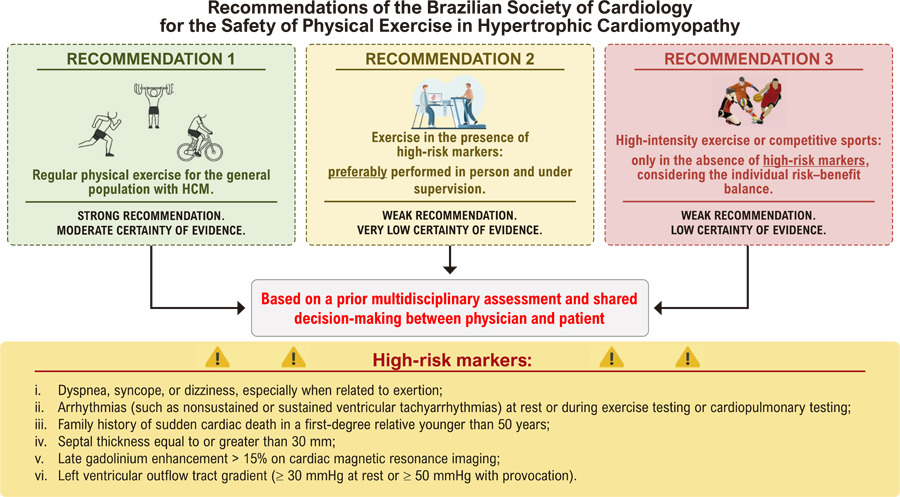
Although historically discouraged due to the risk of arrhythmias and sudden cardiac death (SCD), physical exercise (PE) may be safe and beneficial for individuals with hypertrophic cardiomyopathy (HCM).

Objective

To evaluate the association between PE and the incidence of mortality and arrhythmic events in adults with HCM, stratifying the analysis according to different types and intensities of exercise.

Methods

Systematic review of randomized clinical trials (RCTs) and observational studies identified in PubMed, Embase, and the Cochrane Library through December 2024. Studies including individuals exposed to different intensities of PE were eligible. Risk of bias was assessed using the RoB 2 and ROBINS-I tools, and certainty of evidence using GRADE. Recommendations were developed by an expert panel of the Brazilian Society of Cardiology.

Results

Eight studies (four RCTs and four observational studies; 9,744 participants) were included. None reported an increased risk of mortality or severe arrhythmic events associated with PE, even at moderate or vigorous intensities. Syncope was rare. Additionally, a Korean observational study involving more than 7,000 participants (mean age: 59 years) demonstrated reduced all-cause mortality with higher physical activity intensity (dose–response curve). In low-risk athletes, competitive sports were not associated with severe adverse events. The quality of evidence ranged from moderate to very low.

Conclusion

PE in HCM should be encouraged based on individualized assessment. In patients without high-risk criteria for SCD, benefits appear to outweigh risks. For higher-risk subgroups, recommendations are more cautious and based on expert consensus.

  • Cardiac Arrhythmias
  • Exercise
  • Hypertrophic Cardiomyopathy
  • Mortality
  • systematic review
Read Full Article
Creative Commons Attribution (CC BY) Creative Commons license
21/09/2026 DOI: 10.36660/abc.20260423i Views 6
Home-Based Vs. Usual and Center-Based Cardiac Rehabilitation: Effects on Aerobic Fitness and Quality of Life
IJCS
Review Article

Home-Based Vs. Usual and Center-Based Cardiac Rehabilitation: Effects on Aerobic Fitness and Quality of Life

Cauã Teixeira Mota et al. Claudia Lucia de Moraes Forjaz

Abstract

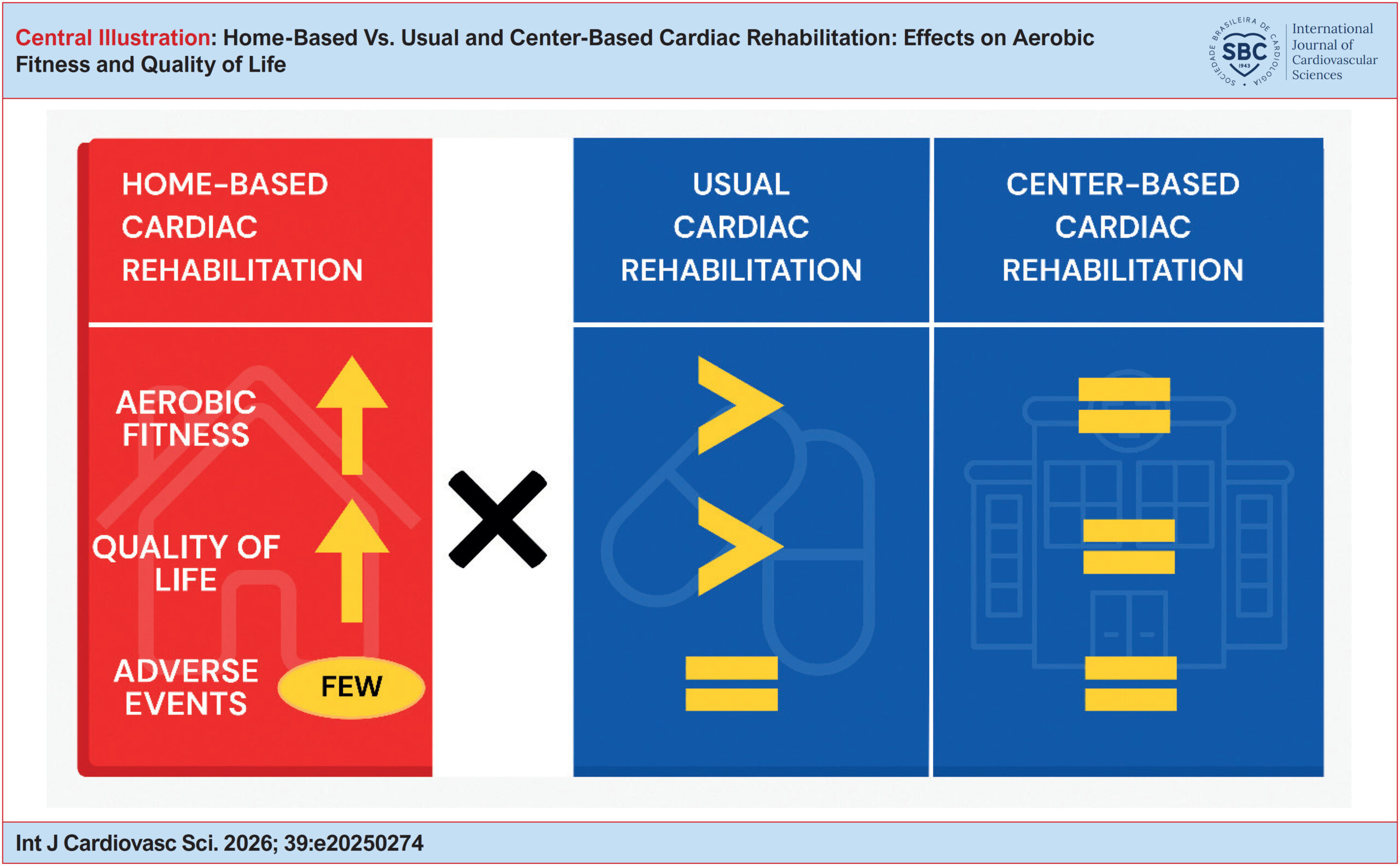
Home-based cardiac rehabilitation has been proposed as an alternative to expand access to treatment for patients with cardiovascular diseases. This systematic review evaluated the effects of home-based cardiac rehabilitation, with emphasis on physical exercise, on aerobic fitness, quality of life, and adverse events compared with usual cardiac rehabilitation and center-based cardiac rehabilitation. A literature search was conducted in the PubMed database, including only randomized controlled clinical trials involving adults and older adults with coronary artery disease or heart failure. Twenty-three studies conducted in different countries were identified; however, none was performed in Brazil. The total sample comprised 2,298 participants, of whom 24% were women. All studies implemented aerobic training, either alone or combined with resistance training, and the vast majority maintained remote contact with participants every one to two weeks. Comparisons between pre- and post-intervention outcomes showed that home-based cardiac rehabilitation improved aerobic fitness and/or quality of life in 22 studies, with greater improvements than those observed with usual cardiac rehabilitation and outcomes comparable to those achieved with center-based cardiac rehabilitation. Furthermore, the incidence of adverse events was low and similar across the three rehabilitation models. Overall, home-based cardiac rehabilitation improves aerobic fitness and quality of life more effectively than usual cardiac rehabilitation and provides benefits comparable to those of center-based cardiac rehabilitation without increasing the risk of adverse events, supporting its use in the treatment of cardiovascular diseases. Nevertheless, the absence of studies conducted in Brazil highlights the need for further research on this rehabilitation model in the Brazilian context.

  • Cardiac Rehabilitation
  • Exercise
  • Quality of life
Read Full Article
Creative Commons Attribution (CC BY) Creative Commons license
21/08/2026 DOI: 10.36660/ijcs.20250274 Views 2
Figure 1
ABC
Brief Communication

Physical Activity Levels and Quality of Life in Outpatients with Cardiac Arrhythmias and Preserved Left Ventricular Function: Understanding Their Profile

Savia Christina Pereira Bueno et al. Patrícia Alves Oliveira Márya Pagotti Luciana Sacilotto … Gabrielle D’Arezzo Pessente Pedro Gabriel Senger Braga Aline L. Souza Alexandra Regia Dantas Brigido Carlos E. Negrão Francisco C. C. Darrieux Mauricio Scanavacca

Abstract

Cardiac arrhythmias are heterogeneous conditions that may limit physical activity (PA) and impair quality of life (QoL).

To describe levels of PA and perceived barriers as well as to assess their associations with arrhythmia phenotype and QoL in tertiary care outpatients with preserved left ventricular (LV) function.

This pilot cross-sectional study enrolled adults with documented arrhythmias and LV ejection fraction (LVEF) ≥ 50%. PA was assessed using the International Physical Activity Questionnaire (IPAQ) short form, and QoL using the 12- Item Short Form Survey (SF-12). Arrhythmias were classified as supraventricular tachycardia (SVT), atrial fibrillation (AF) and/or atrial tachycardia (AT) (including atrial flutter when applicable), ventricular, inherited, or multiple. Associations were analyzed using chi-square tests, multinomial regression, and linear regression models.

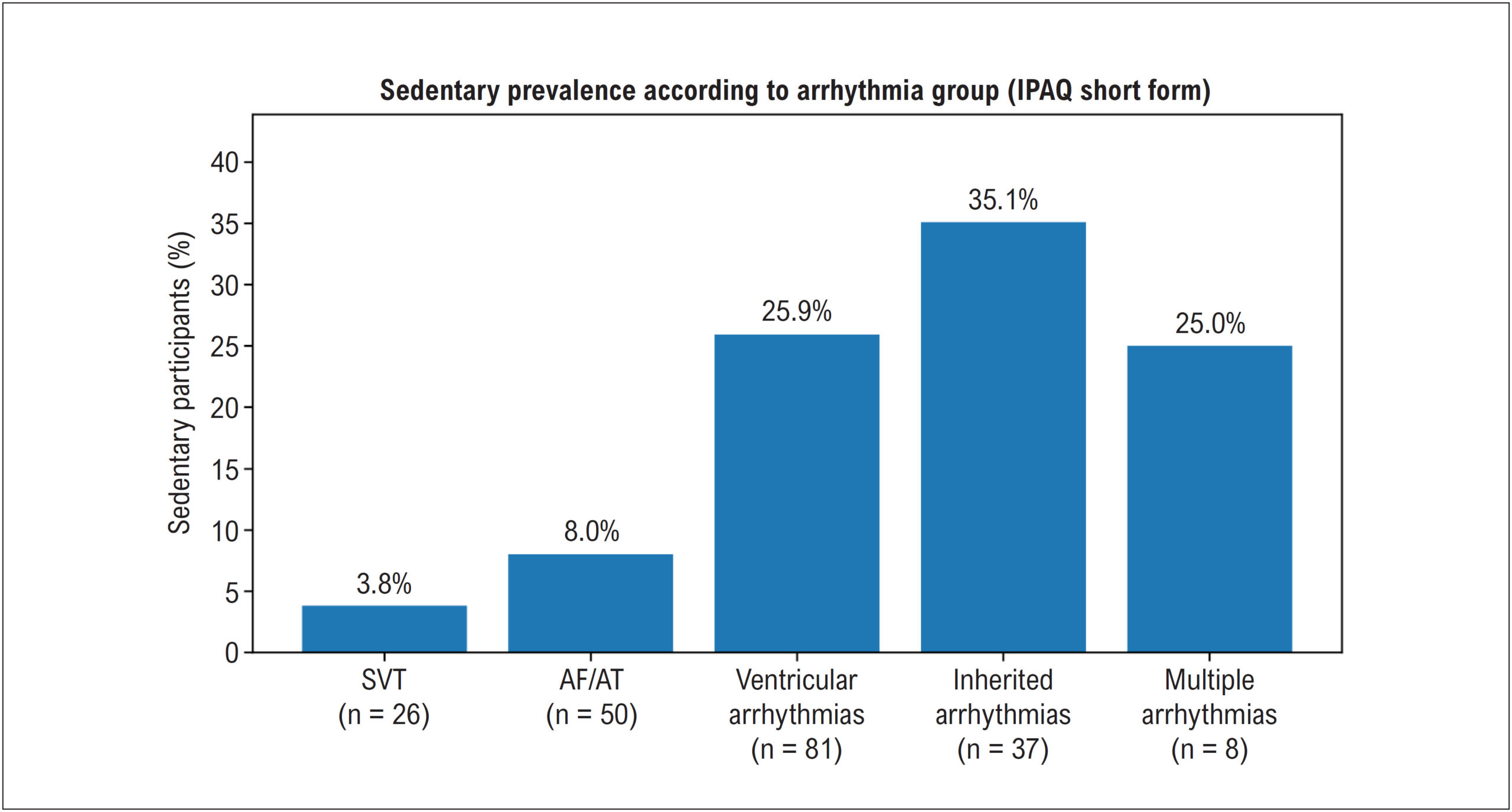
Among 202 participants (mean age 50.5 ± 15.3 years; 58.9% men), 20.3% were sedentary and 45.6% were active or very active. The prevalence of sedentary behavior was higher among patients with ventricular arrhythmias (25.9%), inherited arrhythmias (35.1%), and multiple arrhythmias (25.0%) compared with those with SVT (3.8%) and AF/AT (8.0%) (p = 0.043). In adjusted models, active or very active PA showed a trend toward higher SF-12 physical component scores (p = 0.08), whereas mental component scores were primarily influenced by symptom status and sex.

In this tertiary outpatient cohort with arrhythmias and preserved LVEF, physical inactivity clustered among higher-risk phenotypes and was frequently associated with potentially modifiable barriers, including medical advice and lack of time. Higher levels of PA tended to be associated with better physical health status, supporting individualized, risk-based counseling and supervised strategies to safely promote PA in patients with arrhythmias.

  • Cardiac Arrhythmias
  • Exercise
  • Quality of life
Read Full Article
Creative Commons Attribution (CC BY) Creative Commons license
20/07/2026 DOI: 10.36660/abc.20250831i Views 1
ABC
Letter to the Editor

Technology-Based Cardiac Rehabilitation and Exercise Capacity in Coronary Artery Disease: An Artificial Intelligence Analysis

Benil Nesli Ata

I read with great interest the article by Saklica et al. entitled “The Impact of Technology-Based Cardiac Rehabilitation on Exercise Capacity and Adherence in Patients with Coronary Artery Disease: An Artificial Intelligence Analysis,” recently published in Arquivos Brasileiros de Cardiologia. The study addresses an important and timely topic by examining the potential role of technology-supported cardiac rehabilitation programs and exploring the integration of artificial intelligence (AI)–based analyses in the evaluation of rehabilitation outcomes. Considering the persistent global underutilization of cardiac rehabilitation programs, studies exploring innovative and accessible rehabilitation strategies are of clear clinical importance.

One methodological aspect that warrants further consideration is the assessment of exercise capacity. In the present study, functional improvement was evaluated using the incremental shuttle walk test (ISWT). Although the ISWT is a practical and validated field test frequently used in rehabilitation settings, it remains a submaximal and effort-dependent measure. In patients with coronary artery disease, cardiopulmonary exercise testing (CPET) is generally regarded as the reference standard for evaluating exercise capacity because it provides objective physiological parameters such as peak oxygen uptake and ventilatory thresholds. The inclusion of CPET-derived variables could therefore have offered a more comprehensive evaluation of cardiopulmonary adaptations and strengthened the interpretation of the observed improvements in functional capacity.

[…]

  • Artificial Intelligence
  • Cardiac Rehabilitation
  • Coronary Artery Disease
  • digital health
  • Exercise
Read Full Article
Creative Commons Attribution (CC BY) Creative Commons license
20/07/2026 DOI: 10.36660/abc.20260179i Views 2
Impact of Isometric Exercise on Left Ventricular Mechanics Assessed by Global Longitudinal Strain and Myocardial Work in Healthy Adults
ABCIC
Original Article

Impact of Isometric Exercise on Left Ventricular Mechanics Assessed by Global Longitudinal Strain and Myocardial Work in Healthy Adults

Marcio Mendes Pereira et al. Maria Estefania Bosco Otto Juliana Lins da Paz Portela

Abstract

Background:

Traditional volumetric parameters have limitations in detecting subtle left ventricular (LV) systolic dysfunction. Global longitudinal strain (GLS) and myocardial work (MW) allow a more sensitive assessment of ventricular mechanics.

Objectives:

To evaluate changes in GLS and MW indices during isometric handgrip exercise compared with resting conditions.

Methods:

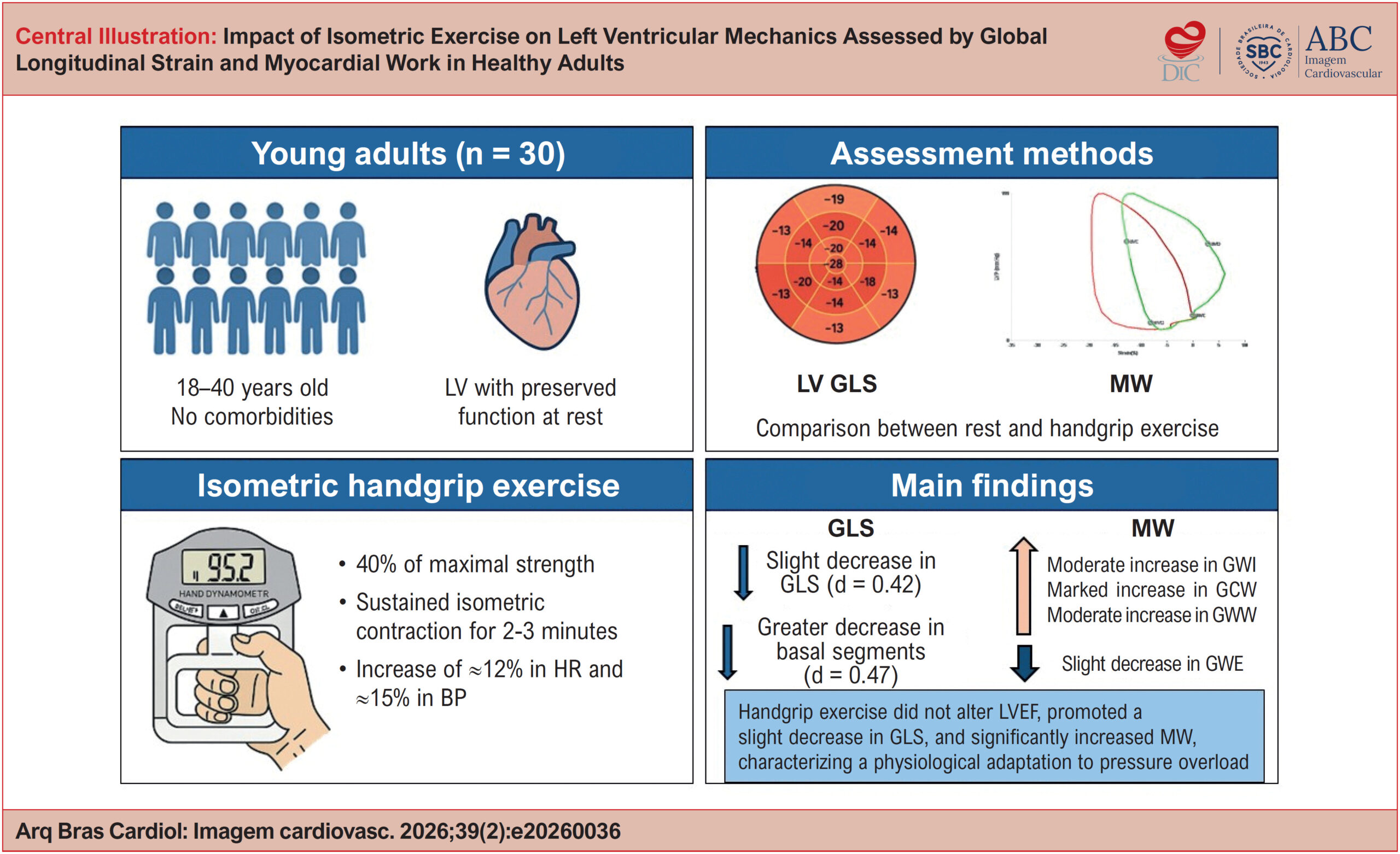
A total of 30 healthy individuals (29.3 ± 6.1 years; 50% male) were included in the sample. Echocardiography was performed at rest and during handgrip exercise (30%-40% of maximal strength). GLS, LV ejection fraction (LVEF), and MW indices were assessed: i) global work index (GWI), ii) global constructive work (GCW), iii) global wasted work (GWW), and iv) global work efficiency (GWE). Comparisons were performed using paired tests. Statistical significance was set at p < 0.05.

Results:

Handgrip exercise increased both systolic blood pressure (115 ± 16 vs 133 ± 18 mmHg; p < 0.0001) and diastolic blood pressure (69 ± 9 vs 79 ± 13 mmHg; p = 0.0002), without significant changes in LVEF (64.8% vs 64.4%; p = 0.62). A decrease in GLS was observed (20.38% ± 2.57% vs 19.60% ± 2.52%; p = 0.028), along with increases in GWI (+244 mmHg%; p = 0.0002), GCW (+313 mmHg%; p < 0.0001), and GWW (+52 mmHg%; p = 0.0008) as well as a decrease in GWE (94.8% ± 1.8% vs 93.6% ± 2.5%; p = 0.022).

Conclusions:

Handgrip exercise induces measurable ventricular mechanical changes in healthy individuals, reflecting a physiological response to acute pressure overload.

  • Echocardiography
  • Exercise
  • Left Ventricular Dysfunction
Read Full Article
Creative Commons Attribution (CC BY) Creative Commons license
20/07/2026 DOI: 10.36660/abcimg.20260036i Views 2
ABC
Editorial

HDL Functionality, CETP Inhibitors, and Exercise Training: Where are We?

Raul D. Santos et al. Pedro Gabriel Senger Braga

Exercise training is well established as an effective strategy to increase high-density lipoprotein cholesterol (HDL-C) concentrations, especially in people with high triglycerides and excess visceral adiposity, and is consistently associated with a lower risk of cardiovascular disease (CVD). However, the traditional stratification of CVD risk based solely on HDL-C levels has been increasingly challenged by evidence highlighting the importance of assessing HDL particle functionality rather than HDL-C levels alone. This paradigm shift gained particular attention following clinical trials of cholesteryl ester transfer protein (CETP) inhibitors, in which substantial pharmacologically mediated increases in HDL-C failed to translate into improved cardiovascular outcomes. CETP inhibitor trials reported marked elevations in HDL-C, ranging from approximately 31% to 133%, whereas exercise training typically induces a much more modest increase, on the order of 2% to 5%.– Despite these quantitative differences, both interventions have been shown to enhance aspects of HDL functionality. In exercise-based interventions, increases in HDL-C are accompanied by improvements in HDL-mediated cholesterol uptake, commonly assessed by cholesterol efflux capacity (CEC), a metric that more accurately reflects reverse cholesterol transport and CVD risk than HDL-C concentration alone.– Mechanistically, CETP inhibition also enhances HDL cholesterol efflux capacity, indicating that pharmacologically enlarged HDL particles may retain functional properties. Nevertheless, adverse off-target effects and the artificial modulation of lipoprotein metabolism may partly explain the neutral or unfavorable cardiovascular outcomes observed in several CETP inhibitor trials.,, Together, these findings underscore that, although both exercise training and CETP inhibition substantially increase circulating HDL-C, the biological context, qualitative effects on HDL particles, and clinical implications differ fundamentally between these interventions, reinforcing the need to move beyond HDL-C quantity when evaluating cardiovascular risk and therapeutic strategies.

[…]

  • Cholesterol Ester Transfer Proteins
  • Exercise
  • HDL, Cholesterol
Read Full Article
Creative Commons Attribution (CC BY) Creative Commons license
17/07/2026 DOI: 10.36660/abc.20260145i Views 1
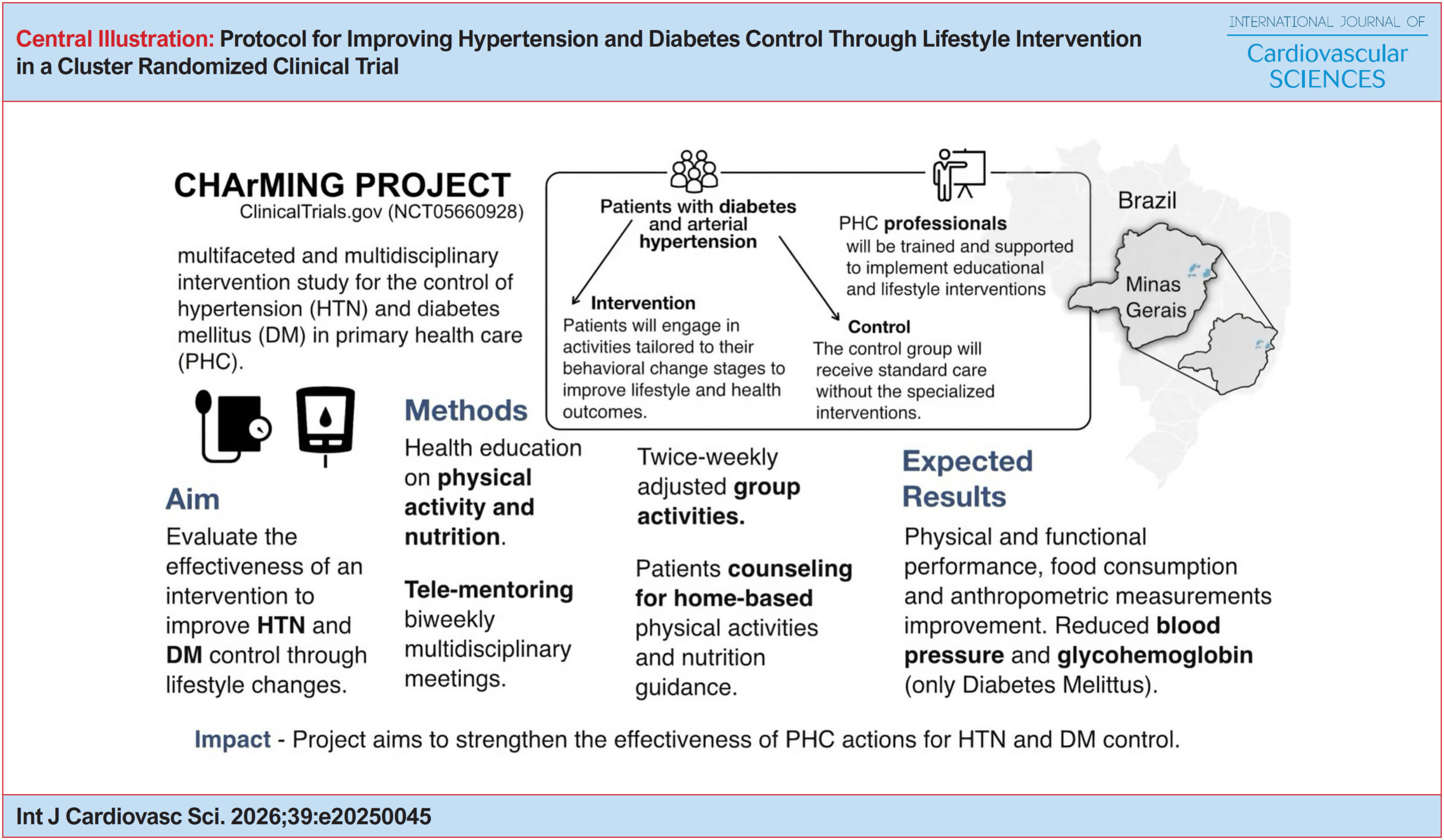
Protocol for Improving Hypertension and Diabetes Control Through Lifestyle Intervention in a Cluster Randomized Clinical Trial
IJCS
Original Article

Protocol for Improving Hypertension and Diabetes Control Through Lifestyle Intervention in a Cluster Randomized Clinical Trial

Daisy Motta-Santos et al. Thiago Barbabela de Castro Soares Maria Cecília Ramos de Carvalho Regina Márcia Faria de Moura … Sueli Ferreira da Fonseca Larissa Morelli Ferraz Guimarães Reginaldo Gonçalves Clara Rodrigues Alves de Oliveira Aline Cristine Souza Lopes Milena Soriano Marcolino

Abstract

Background:

Hypertension and Diabetes Mellitus (DM) are prevalent chronic conditions and major risk factors for cardiovascular diseases. Adequate control of these conditions is challenging, and lifestyle changes are crucial to achieving better management.

Objectives:

To evaluate the effectiveness of a multifaceted and multidisciplinary intervention to improve the control of hypertension and DM in the primary care setting.

Methods:

This cluster randomized clinical trial focuses on lifestyle modifications for managing hypertension and DM, addressing gaps in current non-pharmacological interventions. Primary care professionals are trained to promote health education on physical activity and nutrition. Support is provided through a telementoring program, including messaging app communication, biweekly online meetings (teletutoring), and asynchronous teleconsultations. Primary care professionals conduct twice-weekly group activities with structured intensity adjustments and biweekly health education sessions using interactive methods like conversations, games, and group dynamics. For patients unable to join group activities, brief counseling and guidance on unsupervised physical activity are offered.

Results:

The primary outcomes are blood pressure and glycated hemoglobin values. The innovative intervention program aims to empower primary care professionals and reduce barriers to care through lifestyle changes, improved health education, and support systems for both supervised and unsupervised interventions. Conclusions: Supporting primary care professionals through education and remote assistance can enhance the effectiveness of lifestyle interventions, contributing significantly to the control of hypertension and DM in primary care settings. Trial registration: Previously registered with .

  • Exercise
  • Glycemic Control
  • Healthy Diet
  • Hypertension
  • Primary Health Care
Read Full Article
Creative Commons Attribution (CC BY) Creative Commons license
01/06/2026 DOI: 10.36660/ijcs.20250045 Views 1
IJCS
Editorial

Strengthening Our Understanding of Muscle Metaboreflex Control in Patients with Coronary Artery Disease: (Dis)association Between Physical Fitness and Hemodynamic Responses

André L. Teixeira

Ischemic Heart Disease remains a leading cause of mortality worldwide. In addition to pharmacologic therapy and coronary revascularization, healthy lifestyle interventions such as diet and exercise are essential components of disease management. Although exercise training is a Class I recommendation for patients with ischemic heart disease, physical exertion is not without risk in this population. Indeed, an exercise stress test is a well-established method for inducing myocardial ischemia. Furthermore, patients with ischemic heart disease often exhibit abnormal cardiovascular responses during exercise, which makes exercise prescription both challenging and potentially risky in this clinical population. Therefore, understanding the physiological mechanisms underlying the altered cardiovascular control at rest and during exercise, as well as the cardioprotective effects of exercise training in patients with ischemic heart disease, is critical for improving treatment strategies and optimizing disease management.

The cardiovascular responses to exercise are orchestrated by several integrative neural control mechanisms, including central command, the exercise pressor reflex, the arterial and cardiopulmonary baroreflexes, and the central and peripheral chemoreflexes. The exercise pressor reflex comprises group III and IV skeletal muscle afferents that discharge in response to mechanical deformation (i.e., muscle mechanoreflex) and the accumulation of metabolic by-products of muscle contraction (i.e., muscle metaboreflex)., Inputs from group III/IV afferent fibers synapse within cardiovascular control areas in the brainstem that reflexively decrease parasympathetic and increase sympathetic nerve activity, leading to increased Heart Rate (HR), cardiac output, total peripheral resistance, and arterial blood pressure during exercise., It has been shown that the blood pressure responses to exercise and metaboreflex activation are directly associated with absolute muscle strength in young, healthy adults., Moreover, exercise training-induced improvements in cardiorespiratory fitness can modulate metaboreflex control. Nevertheless, the extent to which the cardiovascular responses to muscle metaboreflex activation are related to markers of physical fitness in patients with Coronary Artery Disease (CAD) is currently unknown.

[…]

  • Cardiovascular System
  • Exercise
  • Myocardial Ischemia
Read Full Article
Creative Commons Attribution (CC BY) Creative Commons license
27/04/2026 DOI: 10.36660/ijcs.20250227 Views 2
Figure 1
ABCIC
Case Report

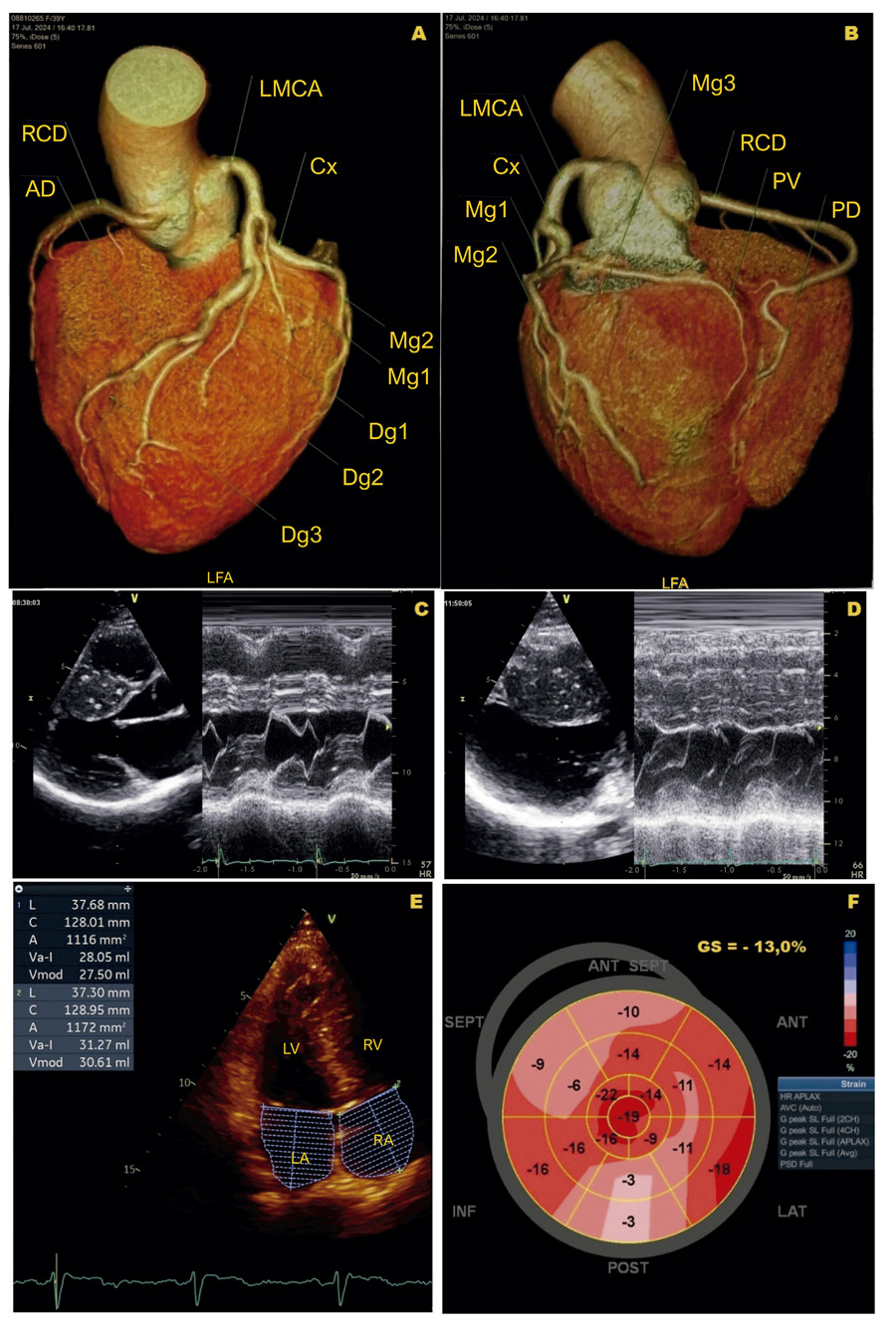
Hemodynamic Impact of Hypertrophic Cardiomyopathy at Rest and During Supine Bicycle Exercise: Additional Value of Postprandial Assessment

Marília Esther Benevides Abreu et al. Tereza Cristina Pinheiro Diógenes Isadora Sucupira Machado Chagas Humberto Mororó Xerex José Sebastião De Abreu

Abstract

A patient with severe, symptomatic hypertrophic cardiomyopathy (HCM) without a significant left ventricular outflow tract (LVOT) gradient at rest requires further evaluation. During exercise echocardiography (EE) performed on a supine bicycle, a latent or underestimated dynamic obstruction may be identified in real time, with postprandial assessment being particularly relevant.

  • Exercise
  • Exercise Test
  • Hypertrophic Cardiomyopathy
  • Postprandial
Read Full Article
Creative Commons Attribution (CC BY) Creative Commons license
17/04/2026 DOI: 10.36660/abcimg.20250049i
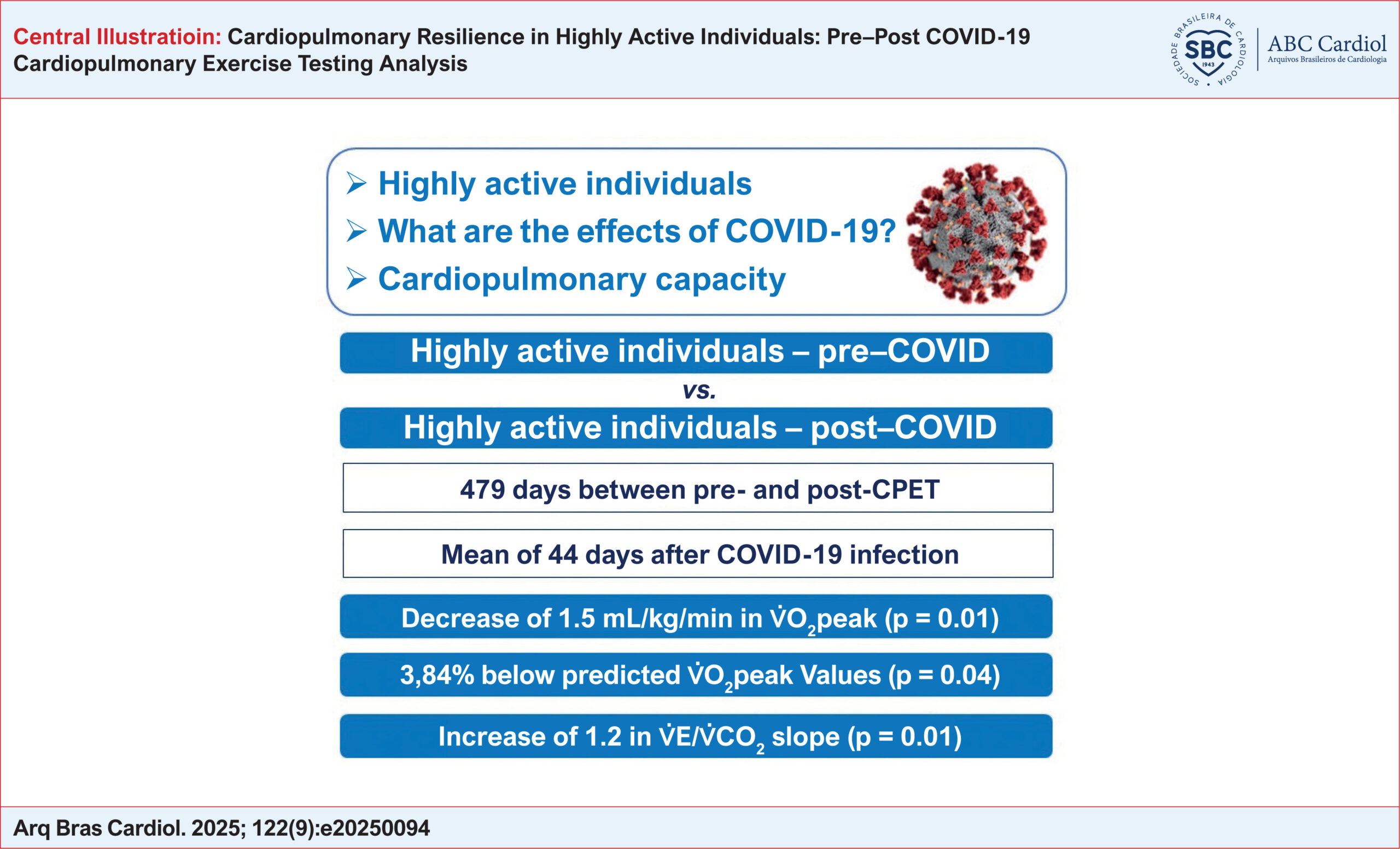
Cardiopulmonary Resilience in Highly Active Individuals: Pre–Post COVID-19 Cardiopulmonary Exercise Testing Analysis
ABC
Original Article

Cardiopulmonary Resilience in Highly Active Individuals: Pre–Post COVID-19 Cardiopulmonary Exercise Testing Analysis

Fabrício Braga et al. Gabriel Espinosa Amanda Monteiro Mauricio Milani … Juliana Paiva Juliana Goulart Prata Oliveira Milani Leandro Franzoni Ricardo Stein Gerson Cipriano Jr. Jonas Lírio Gurgel Ricardo Mourilhe-Rocha

Abstract

Background:

The COVID-19 pandemic has affected millions globally, with persistent impacts extending beyond the acute phase. One such effect is post-COVID (long COVID), characterized by symptoms such as fatigue and exercise intolerance lasting more than 60 days. Although regular exercise is associated with reduced risk of severe outcomes, reports of decreased athletic performance after COVID-19 — even among highly active individuals (HAIs) — have raised concerns regarding the long-term effects on physical health. Cardiopulmonary exercise testing (CPET) is a valuable tool to assess exercise intolerance and to investigate the metabolic and ventilatory consequences of COVID-19.

Objectives:

To evaluate the impact of COVID-19 on cardiopulmonary function in HAIs by analyzing metabolic and ventilatory responses using CPET before and after infection.

Methods:

CPET data were retrospectively analyzed from HAIs of both sexes. Primary outcomes included changes in peak oxygen uptake (O2peak) and ventilatory efficiency (E/CO2 slope). Statistical significance was set at 5% (p < 0.05).

Results:

A total of 43 HAIs (72.1% male; 44 ± 10 years) were included. The median interval between CPETs was 479 days, with testing performed a mean of 44 ± 27 days after COVID-19. O2peak decreased by a mean of 1.5 mL/kg/min (p = 0.017), representing a 3.84% reduction in predicted O2peak values (p = 0.045). E/CO2 slope increased by 1.2 (p = 0.017).

Conclusion:

Although HAIs are not immune to the effects of COVID-19, their high baseline physical activity levels appear to confer substantial cardiopulmonary resilience. Only minimal post-infection alterations were observed, which suggests that maintaining fitness may provide protective benefits against long-term sequelae of COVID-19.

  • athletic performance
  • Cardiorespiratory Fitness
  • Exercise
  • Exercise Test
Read Full Article
Creative Commons Attribution (CC BY) Creative Commons license
14/11/2025 DOI: 10.36660/abc.20250094i Views 1
ABC
Editorial

The ELSA-BRASIL Study and Physical Activity in Protecting Against the Development of Type 2 Diabetes

Rodrigo Delevatti et al. Larissa dos Santos Leonel Leandro Franzoni

Type 2 diabetes mellitus (T2DM) is a highly prevalent disease, considered a major public health problem, which implies personal costs, as well as representing a significant financial burden on health services., In its preventive and therapeutic approach, the protective role of physical education has been established, but the optimization of its benefits, especially analyzing the relationship between characteristics inherent to the practice of physical activity and the development of DMT2, is still open.

In this scenario, the article “Dose-Response Association between Leisure-Time Physical Activity Intensity Trajectories and Diabetes among Men and Women in ELSA-Brasil” collaborates significantly, following a significant sample of individuals from different locations in Brazil, testing the association between different doses of leisure-time physical activity and pre-diabetes and T2DM in adults and older adults. The exposure is based on the different activity profiles, considered here as doses (the product of frequency, duration, and intensity), classified as low, moderate, and high, terms that refer to the intensity of the effort.

[…]

  • Diabetes Mellitus
  • Epidemiology
  • Exercise
Read Full Article
Creative Commons Attribution (CC BY) Creative Commons license
29/09/2025 DOI: 10.36660/abc.20250464i Views 2
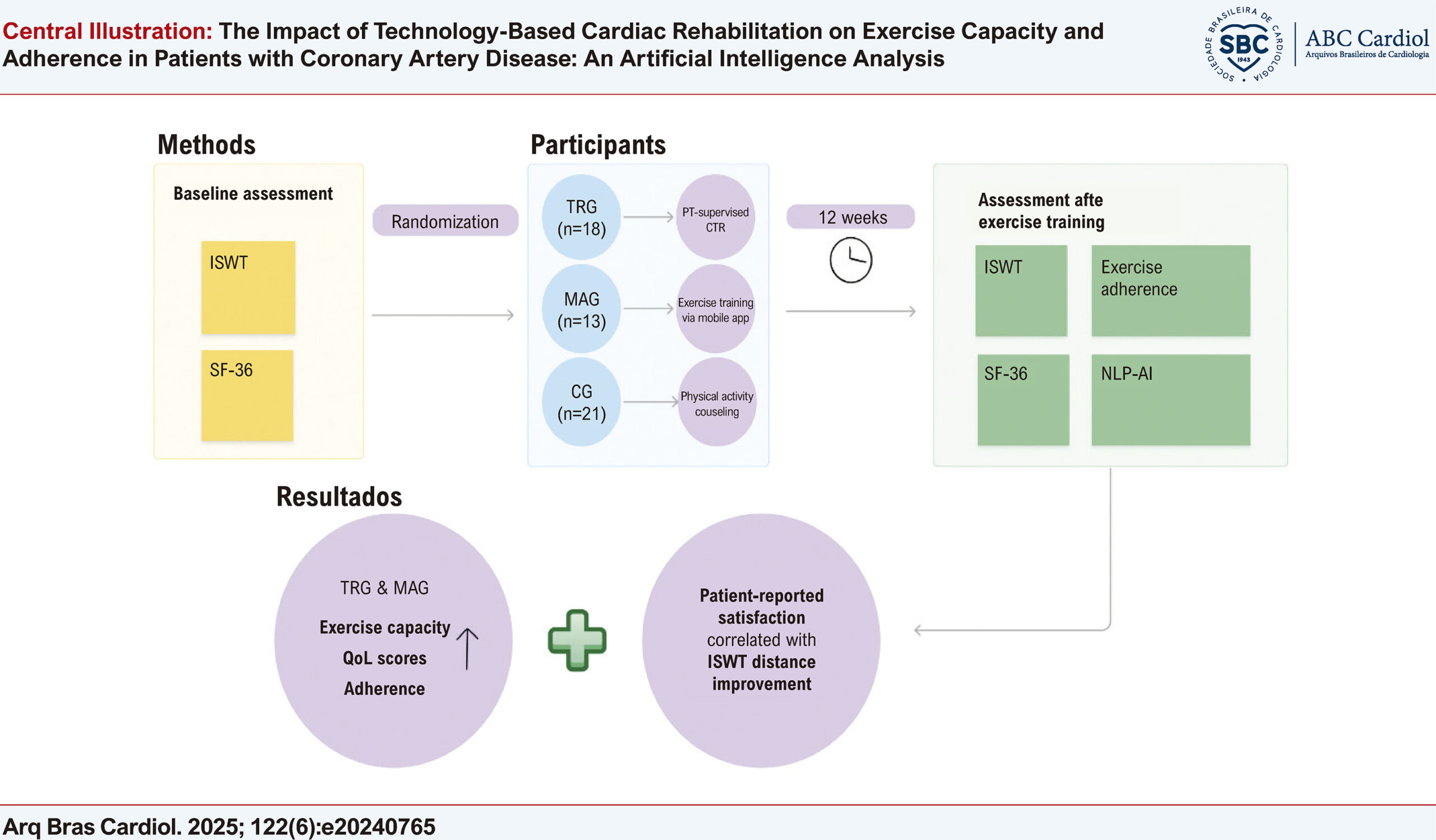
The Impact of Technology-Based Cardiac Rehabilitation on Exercise Capacity and Adherence in Patients with Coronary Artery Disease: An Artificial Intelligence Analysis
ABC
Original Article

The Impact of Technology-Based Cardiac Rehabilitation on Exercise Capacity and Adherence in Patients with Coronary Artery Disease: An Artificial Intelligence Analysis

Dilara Saklica et al. Naciye Vardar-Yagli Melda Saglam Deniz Yuce … Ahmet Hakan Ates Hikmet Yorgun

Abstract

Background

Exercise training programs improve exercise capacity and quality of life (QoL) in patients with coronary artery disease (CAD). Although artificial intelligence (AI) has been used to design such programs, there are still few studies evaluating their effectiveness.

Objectives

This study compared the effects of technology-based and traditional programs for cardiac rehabilitation (CR) on exercise capacity and participation in patients with CAD using AI for data analysis.

Methods

A total of 52 patients with CAD were randomly assigned to three groups: i) telerehabilitation group (TRG) (n=18); ii) mobile application group (MAG) (n=13); and iii) control group (CG), which received only physical activity recommendations (n=21). TRG and MAG participants completed a 12-week program with calisthenic and resistance exercises three times a week. Exercise capacity was assessed using the Incremental Shuttle Walk Test (ISWT), and QoL was measured with the Short Form-36 (SF-36). Patient feedback was analyzed using a fine-tuned BERT-based natural language processing (NLP) model. Anomaly detection methods were applied to find mismatches between self-reported adherence and ISWT results. Statistical significance was set at p<0.05.

Results

Both TRG [44.4% female] (Δ=87.2±15.2 m) and MAG [50% female] (Δ=89.4±70.4 m) had significant ISWT improvements compared to CG [47.6% female] (Δ=10.9±28.2 m) (p=0.001). Adherence was higher in TRG (100%) and MAG (80%) than in CG (30%) (p<0.001). Patient-reported satisfaction, analyzed via NLP, showed a significant positive correlation with ISWT improvements (r=0.75, p<0.001). Findings show the potential of AI to support outcome assessment in CR.

Conclusions

Technology-based CR programs improve exercise capacity and adherence in patients with CAD, supporting the use of AI-driven tools. NLP analysis helped link patient feedback to exercise outcomes and detect inconsistencies, showing its value in enhancing CR evaluation.

  • Artificial Intelligence
  • Cardiac Rehabilitation
  • Coronary Artery Disease
  • Exercise
Read Full Article
Creative Commons Attribution (CC BY) Creative Commons license
06/06/2025 DOI: 10.36660/abc.20240765i Views 1
ABC
Editorial

Nitrite Supplementation Attenuates Vascular Stiffness Independently of Physical Exercise

Alex Yuiti Ogura et al. Claudiane Maria Barbosa Silvio Assis de Oliveira-Junior

Exercise training is considered one of the most efficient non-pharmacological measures for reducing blood pressure and increasing the redox state in blood vessel walls. Indeed, regular exercise training can cause endothelial relaxation by increasing nitric oxide (NO) levels, with or without a reduction in the amount of reactive oxygen species (ROS). Excessive production and/or accumulation of ROS can result in redox imbalance, with decreased NO bioavailability and consequent endothelial dysfunction., In this regard, reduced NO release is one of the critical factors for the development of systemic arterial hypertension.,

Importantly, NO is a diatomic gaseous signaling molecule that is water-soluble and can freely pass through the cell membrane. This peptide is essential in the regulation of several physiological actions in the body, being of utmost importance for vasodilation, immune response, neurotransmission, apoptosis, and genetic regulation. When released, NO diffuses from endothelial cells to vascular smooth muscle cells, promoting relaxation and vasodilation. Through this mechanism, NO can reduce vascular peripheral resistance and, consequently, decrease blood pressure. In the endogenous context, NO production results from the oxidation and cleavage of the guanidine group of L-arginine, with the release of NO and L-citrulline. Then, free NO is easily transformed into nitrite and nitrate, the current products are later recycled into NO and other forms of nitrogen oxidation, through the nitrate/nitrite/NO pathway.

[…]

  • Exercise
  • Nitrites
  • Vascular Remodeling
  • Vascular Stiffness
Read Full Article
Creative Commons Attribution (CC BY) Creative Commons license
14/02/2025 DOI: 10.36660/abc.20240836i Views 1
Figure 1
ABC
Brief Communication

Heart Rate Reduction after Effort Test Is Higher in Physically Active Adults without Familial Cardiovascular Risk Factor

Larissa de Almeida Dourado et al. Paulo Magno Martins Dourado Jaciara Gomes de Oliveira Evandra Maria da Silva … João Paulo de Almeida Dourado Pedro Gabriel Senger Braga

Abstract

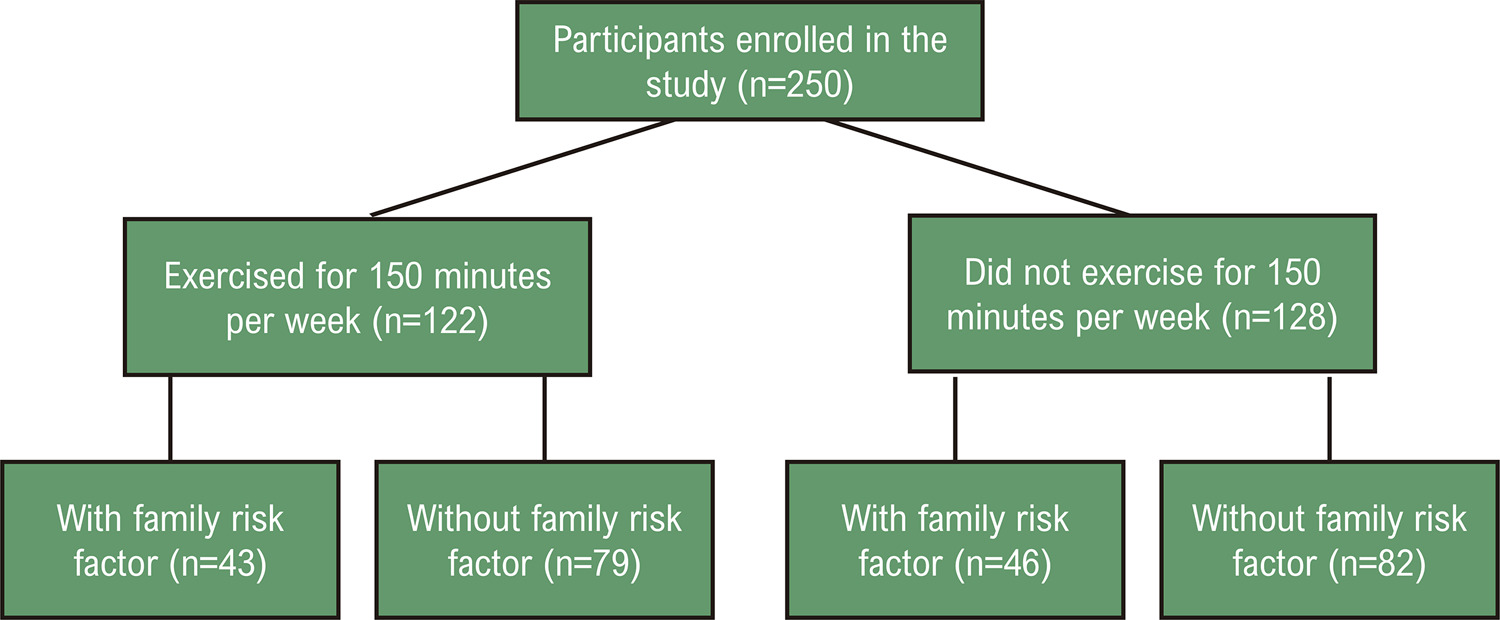
The objective of this study is to investigate the influence of physical activity on heart rate (HR) recovery, after treadmill exercise testing, in asymptomatic adults, with and without familial risk factors (FR) for cardiovascular disease. Two hundred and fifty (250) adults of both sexes aged 18 to 59 years were included in the study. None of the participants had a history of cardiovascular disease or used medications for chronic diseases. All individuals underwent exercise testing using the Ellestad protocol. Delta values were calculated by subtracting peak HR from HR in the first, second, fourth, and sixth minutes of recovery. The family history of cardiovascular disease and physical activity were documented. For statistical analysis, ANOVA was performed, followed by Bonferroni or Kruskall-Wallis multiple comparisons, followed by Dunn’s multiple comparisons. The delta values at the first, second, fourth, and sixth minutes of recovery were lower in individuals who did not engage in physical activity and had no family cardiovascular risk factor, compared to those who were physically active and had no family risk factor. No differences in delta values were observed between physically active individuals with cardiovascular risk factors and physically inactive individuals with a family history at the time points studied. In individuals without a family risk factor, physical activity appears to enhance autonomic control, increasing the capacity to reduce HR after exercise. However, this effect was not evident in those with a family risk factor, as physical activity did not impact recovery HR.

  • Autonomic Nervous System
  • Autonomic Nervous System Diseases
  • Exercise
  • Heart Rate
  • Risk Factors
Read Full Article
Creative Commons Attribution (CC BY) Creative Commons license
03/02/2025 DOI: 10.36660/abc.20240435i Views 1
Figure 1
ABCIC
Review Article

Left Ventricular Strain in Heart Failure with Preserved Ejection Fraction: A Fast Dive into Diagnosis, Response to Exercise and Afterload Challenge

Renato A. Hortegal et al. David Le Bihan Mariana Mendes Mathias Rodrigo Barretto Wilson Mathias Jr

Abstract

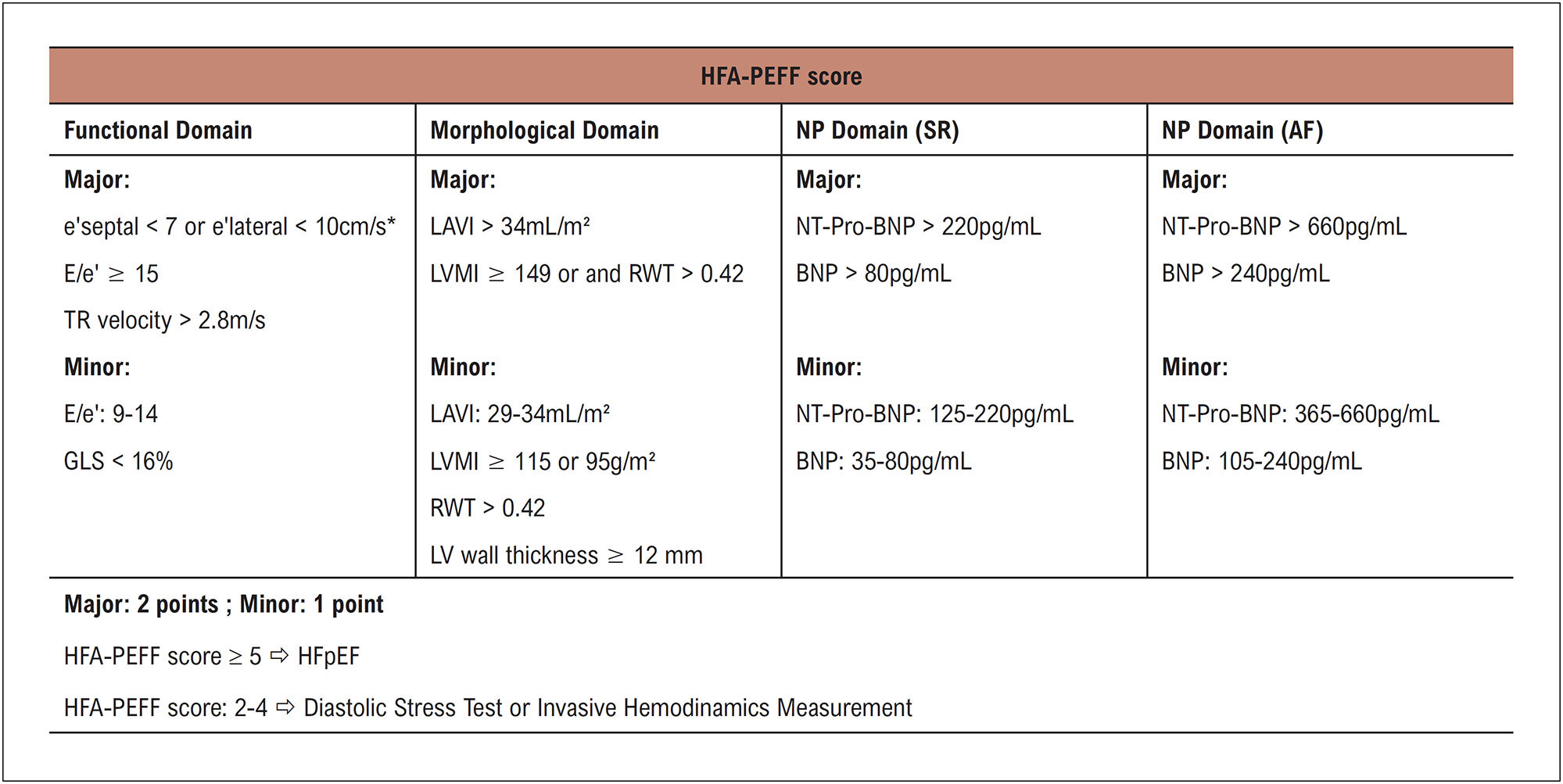
Heart Failure with Preserved Ejection Fraction (HFpEF) is an increasing challenge in cardiology, marked by impairments in systolic and/or diastolic function. HFpEF patients often present with exercise intolerance, yet diagnosis is complicated by overlapping comorbidities, such as obesity and hypertension. Left ventricular Global Longitudinal Strain (GLS) enables the detection of subtle systolic dysfunction, with studies indicating a stronger correlation between GLS and exercise capacity than ejection fraction (EF). In exercise echocardiography, GLS displays a characteristic bimodal pattern due to hemodynamic adaptations, with deviations suggesting HFpEF. When exercise testing is unfeasible or when a specific evaluation of ventricular-arterial coupling is desired, an afterload challenge offers a controlled alternative by increasing systemic resistance. Beyond GLS, mechanical dispersion (MD) measures contractile heterogeneity, while left atrial strain (LAS) has shown promise in identifying atrial dysfunction linked to HFpEF. These parameters, evaluated alongside E/e’ ratios and pulmonary systolic pressure during exercise, enhance HFpEF diagnosis, provide a more comprehensive view of the syndrome’s pathophysiology, and offer insights to support treatment.

  • Echocardiography
  • Exercise
  • Heart Failure
Read Full Article
Creative Commons Attribution (CC BY) Creative Commons license
16/12/2024 DOI: 10.36660/abcimg.20240104i Views 1
Examining the Role of Exercise Training in Enhancing Life for Adult Congenital Heart Disease: Systematic Review
ABC
Original Article

Examining the Role of Exercise Training in Enhancing Life for Adult Congenital Heart Disease: Systematic Review

Tugba Siyah et al. Naciye Vardar Yagli Ilker Ertugrul Hayrettin Hakan Aykan Melda Saglam

Abstract

Background

Current guidelines advise exercise for most congenital heart disease patients (CHD). However, physical activity remains low in CHD individuals, with limited research on exercise’s effects in adults.

Objectives

The aim of this study is to evaluate the safety and efficacy of exercise training on exercise capacity and quality of life in adult congenital heart disease (ACHD) patients.

Methods

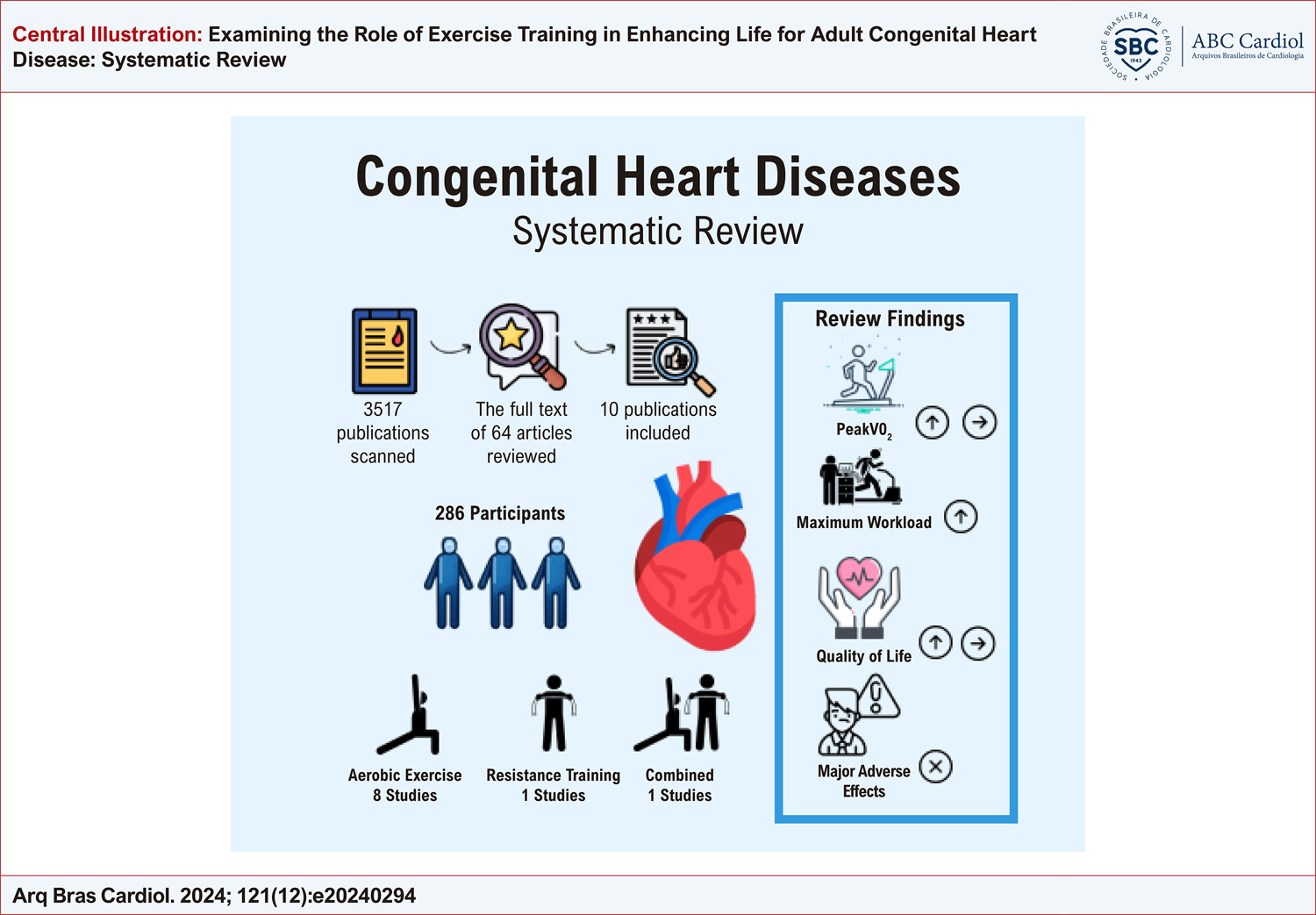
We searched PubMed/Medline, Cochrane Library, Web of Science, and Scopus through December 2022 for randomized controlled trials assessing aerobic and resistance training effects on exercise capacity and quality of life in ACHD. Out of 3,517 citations, ten eligible articles were included.

Results

Meta-analysis of the included randomized controlled trials (286 participants) found no significant change in peak oxygen consumption or quality of life in ACHD with exercise training (pooled mean difference = 0.33 ml/kg/min [95% CI, -0.88 to 1.54 ml/kg/min]; p = 0.60; I2= 3%). However, the increase in maximum workload was significant (pooled mean difference = 8.86 watts [95% CI, 0.78 to 16.93], p = 0.03, I2 = 0%).

Conclusions

Our review confirms that exercise training increases the maximum workload in ACHD patients. However, the lack of a standardized protocol among exercise interventions in this population may have contributed to the absence of a significant change in peak VO2 and quality of life observed in the conducted studies. The heterogeneity of exercise programs could be a contributing factor to the inconsistency of the results. In this context, the implementation of standardized exercise protocols in future research, particularly with larger sample sizes, is crucial to enhance the comparability of outcomes. Well-designed randomized controlled trials studying structured exercise training in ACHD patients will provide clearer insights.

  • Congenital Heart Defects
  • Endurance Training
  • Exercise
  • Quality of life
Read Full Article
Creative Commons Attribution (CC BY) Creative Commons license
13/12/2024 DOI: 10.36660/abc.20240294i Views 1
Short-term Oral Nitrite Administration Decreases Arterial Stiffness in Both Trained and Sedentary Wistar Rats
ABC
Original Article

Short-term Oral Nitrite Administration Decreases Arterial Stiffness in Both Trained and Sedentary Wistar Rats

Thiago Pereira Souza et al. Lidieli Pazin Tardelli Rafael Antunes Nicoletti André Mourão Jacomini … Gabriel Francisco de Mello Martins Lucas Cézar Pinheiro José Eduardo Tanus-Santos Sandra Lia do Amaral Anderson Saranz Zago

Abstract

Background

Nitric Oxide (NO) plays an important role in blood pressure (BP) regulation, acting directly on peripheral vascular resistance through vasodilation. Physical training (via eNOS/NO) and intake of nitrite have been considered major stimuli to increase NO.

Objective

We examined the effects of oral nitrite administration and aerobic exercise training on BP and arterial stiffness in Wistar rats.

Methods

Thirty-nine (39) young male Wistar rats were divided into the following groups (n = 9 or 10 per group): Sedentary-Control (SC), Sedentary-Nitrite (SN), Trained-Control (TC), and Trained-Nitrite (TN). They were submitted to aerobic physical training on treadmills for 8 weeks (50-60% of physical capacity, 1h/day, 5 days/week) or kept sedentary. In the last 6 days of training, oral nitrite was administered (15 mg/Kg by gavage). BP, arterial stiffness, and plasma and tissue nitrite concentrations were assessed after the training and oral nitrite administration period. The significant level was defined as p < 0.05.

Results

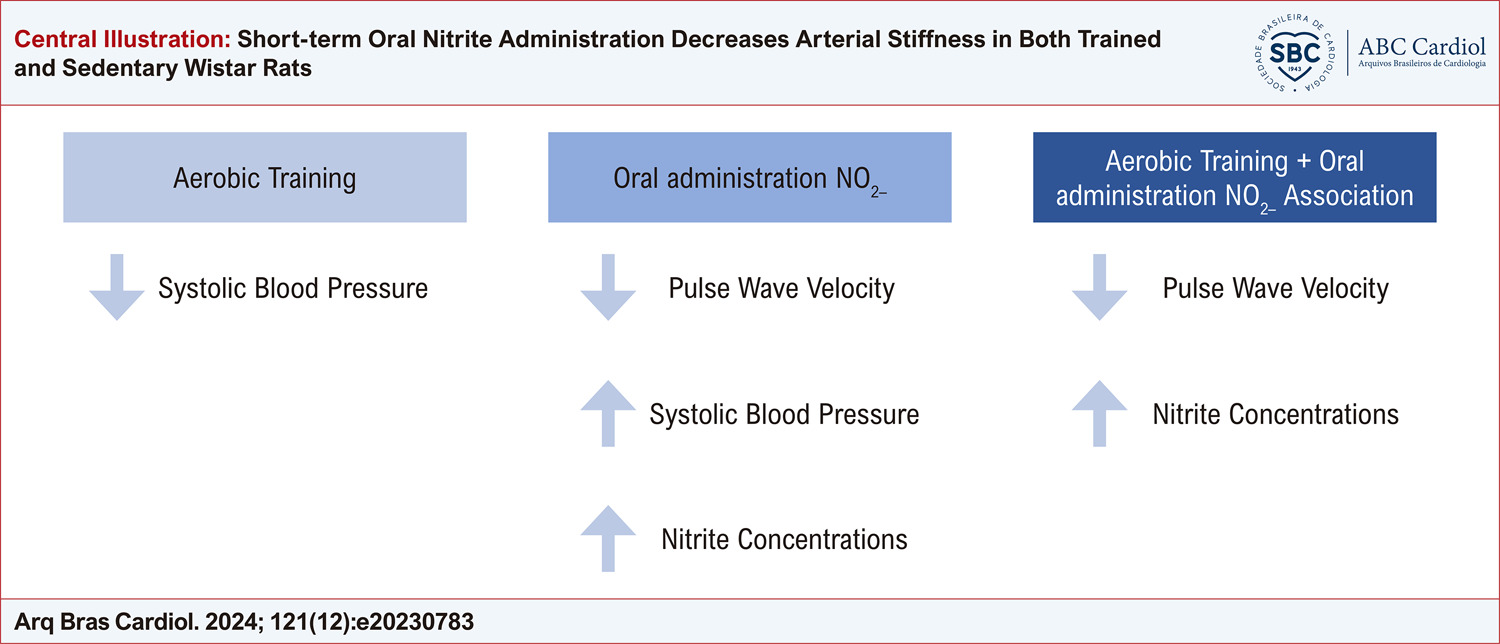
Oral administration of nitrite was effective in reducing arterial stiffness values (TN, -23%; and SN, -15%). Both groups that had only one type of intervention showed lower systolic BP compared with control (TC vs. SC, -14.23; and SN vs. SC, – 12.46).

Conclusion

We conclude that short-term oral administration for 6 days and an aerobic physical training program promote several hemodynamic benefits in male Wistar rats, such as improvements in arterial stiffness and BP. These responses suggest that physical training and sodium nitrite supplementation can be alternatives for the prevention and treatment of hypertension.

  • Exercise
  • Hypertension
  • Nitric Oxide
  • Nitrites
  • Pulse Wave Analysis
Read Full Article
Creative Commons Attribution (CC BY) Creative Commons license
13/12/2024 DOI: 10.36660/abc.20230783i Views 1
ABC
Editorial

Chronic Chagasic Cardiomyopathy: Influence of Physical Exercise

Gustavo Augusto Ferreira Mota et al. Mariana Gatto Vitor Loureiro da Silva Paula Felippe Martinez Marina Politi Okoshi

Chronic Chagas cardiomyopathy results from infection with Trypanosoma cruzi, transmitted by triatomine insects. The disease, endemic in Latin America, affects millions of individuals worldwide. In recent decades, the increase in migration has elevated the number of infected people in non-endemic regions from Europe and the United States. Chagas disease remains a neglected disease, characterized by difficulty in early diagnosis and poorly understood pathogenesis.

T. cruzi infects cardiomyocytes, immune cells, and fibroblasts, activating an inflammatory response that can reduce the parasite load and cause the death of infected cells. The parasite induces the production of chemokines and cytokines that increase the microbicidal capacity of macrophages and stimulate nitric oxide synthases and the production of reactive oxygen species. CD4 and CD8 T lymphocytes also participate in the inflammatory response with the production of IFN-γ and degranulation of cytotoxic T lymphocytes that lysis compromised cells.

[…]

  • Cardiomyopathies
  • Chagas disease
  • Exercise
  • Functional Status
  • Inflammation
  • Myocardial Perfusion Imaging
Read Full Article
Creative Commons Attribution (CC BY) Creative Commons license
27/09/2024 DOI: 10.36660/abc.20240507i Views 1
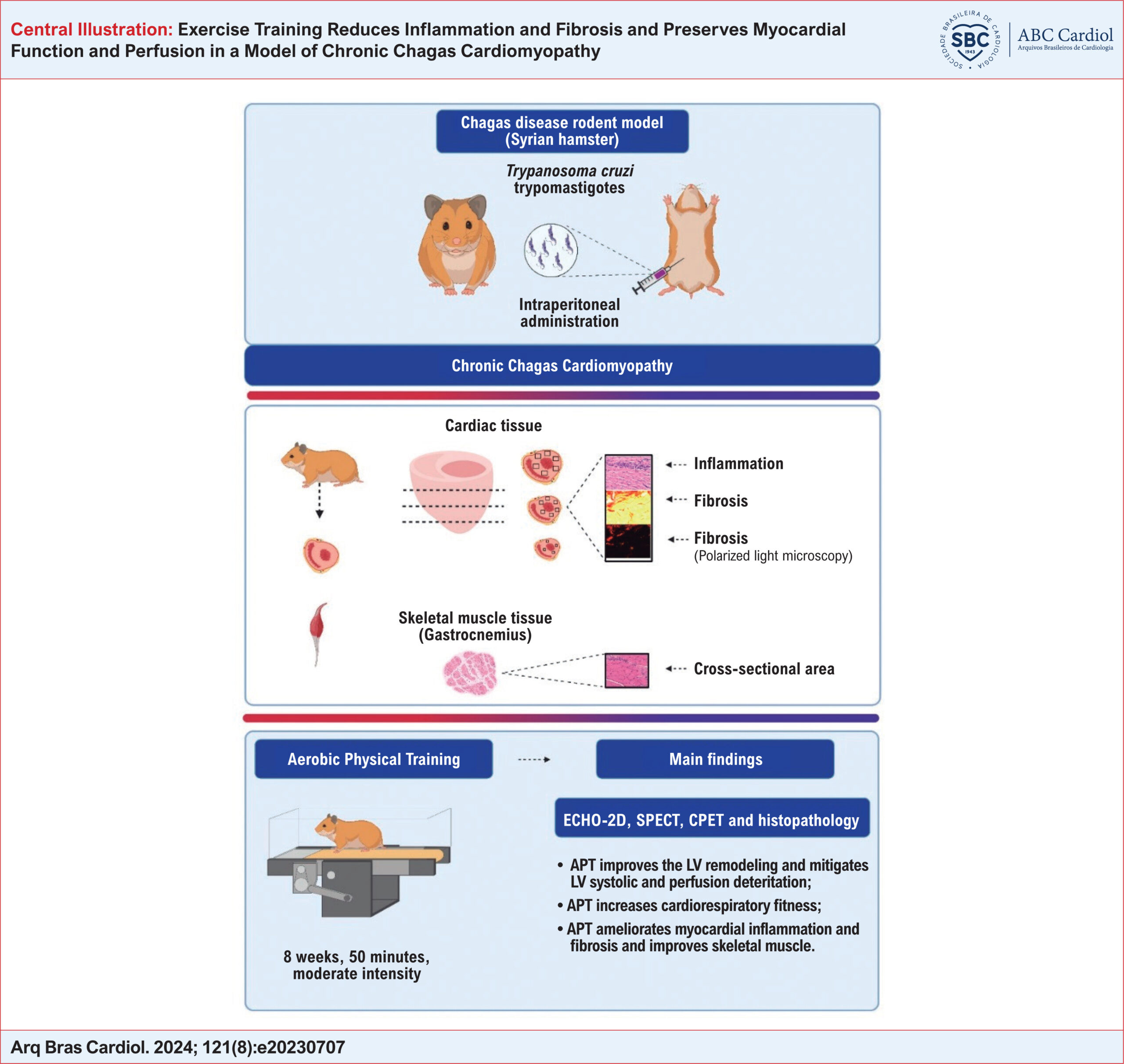
Exercise Training Reduces Inflammation and Fibrosis and Preserves Myocardial Function and Perfusion in a Model of Chronic Chagas Cardiomyopathy
ABC
Original Article

Exercise Training Reduces Inflammation and Fibrosis and Preserves Myocardial Function and Perfusion in a Model of Chronic Chagas Cardiomyopathy

Thayrine R. Damasceno et al. Denise M. Tanaka Enrico F. Magnani Rafael D. B. Oliveira … Danielle A. G. Pereira Ildernandes Vieira-Alves Virginia S. Lemos Jorge M. Cabeza Camila G. Fabricio Alessandra A. Resende Dawit A. P. Gonçalves Gustavo de Oliveira Zanetti Eduardo E. Vieira de Carvalho Marcus V. Simões Luciano F. L. Oliveira

Abstract

Background:

Chronic Chagas cardiomyopathy (CCC) is caused by an inflammatory process induced by Trypanosoma cruzi, which leads to myocarditis with reactive and reparative fibrosis. CCC progresses with myocardial perfusion abnormalities and histopathological events that affect cardiorespiratory fitness (CRF).

Objectives:

We evaluated the effects of aerobic physical training (APT) on myocardial perfusion and on morphological and functional impairments related with inflammation and fibrosis in Syrian hamsters with CCC. As a secondary objective, we analyzed the cross-sectional areas of the skeletal muscle.

Methods:

Hamsters with CCC and their respective controls were divided into four groups: CCC sedentary, CCC-APT, sedentary control and APT control. Seven months after infection, the animals underwent echocardiography, myocardial perfusion scintigraphy and cardiopulmonary exercise testing. Moderate-intensity APT was performed for fifty minutes, five times a week, for eight weeks. Subsequently, the animals were reassessed. Histopathological analysis was conducted after the above-mentioned procedures. The level of significance was set at 5% in all analyses (p<0.05).

Results:

CCC sedentary animals presented worse myocardial perfusion defects (MPD) over time, reduced left ventricle ejection fraction (LVEF) and showed more inflammation and fibrosis when compared to other groups (mixed ANOVA analysis). Conversely, APT was able to mitigate the progression of MPD, ameliorate inflammation and fibrosis and improve CRF efficiency in CCC-APT animals.

Conclusions:

Our study demonstrated that APT ameliorated cardiac dysfunction, MPD, and reduced inflammation and fibrosis in CCC hamster models. Additionally, CCC-SED animals presented skeletal muscle atrophy while CCC-APT animals showed preserved skeletal muscle CSA. Understanding APT’s effects on CCC’s pathophysiological dimensions is crucial for future research and therapeutic interventions.

  • Cardiorespiratory Fitness
  • Chagas Cardiomyopathy
  • Exercise
  • Myocardial Perfusion Imaging
  • Myocarditis
Read Full Article
Creative Commons Attribution (CC BY) Creative Commons license
09/09/2024 DOI: 10.36660/abc.20230707i Views 1
Figure 1
ABCIC
Review Article

My Approach to Semi-Supine Bicycle Stress Echocardiography: Is It the Best Modality for Brazil?

Carolina Stangenhaus et al. Fernando Rodrigues da Camara Oliveira Adriana Cordovil

Introduction

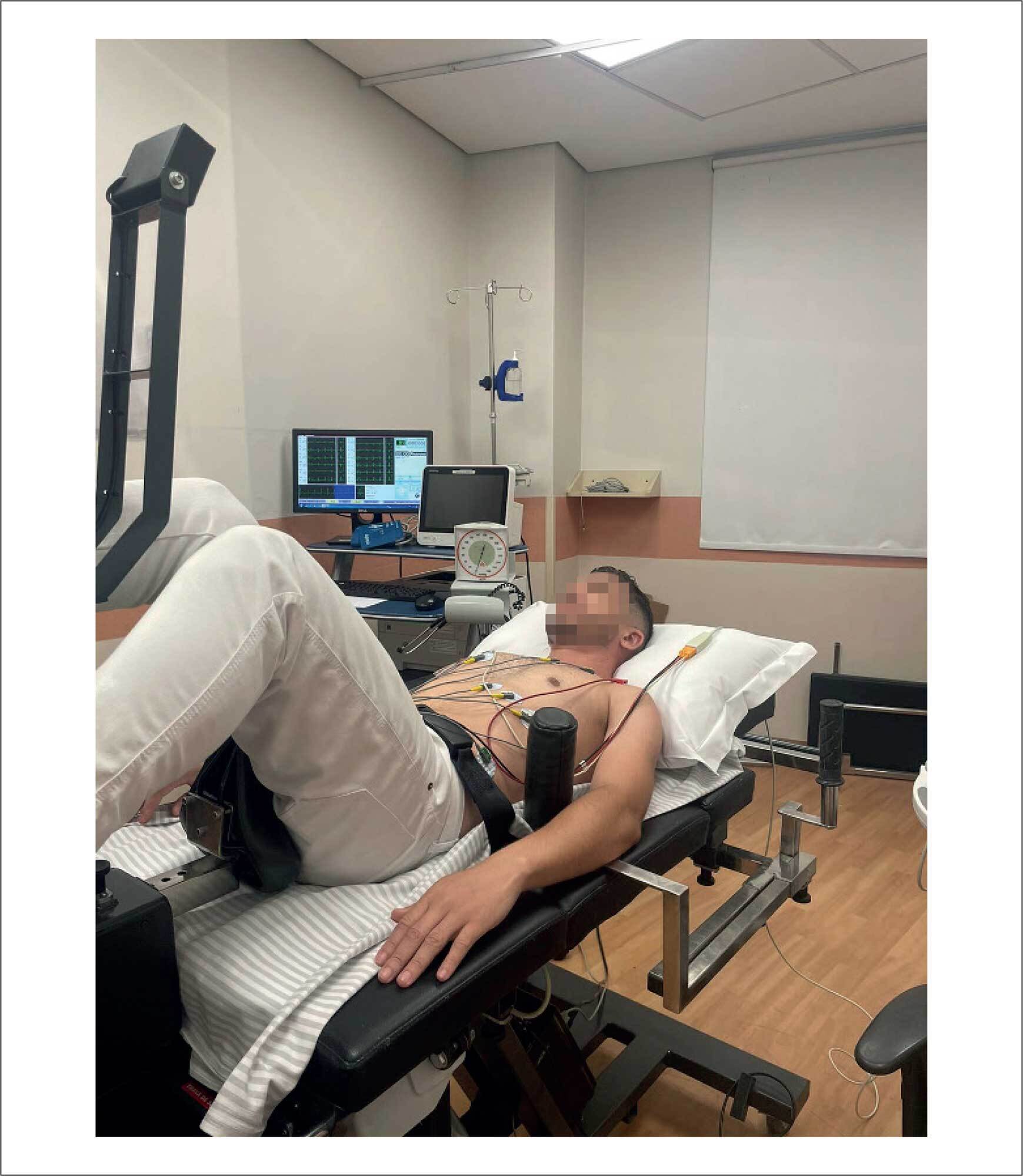
Physical stress echocardiography is a firmly established method in the diagnosis and prognosis of coronary artery disease.– Compared to pharmacological stress echocardiography, it is physiological, does not depend on venoclysis, and is free of side effects. Physical exercise preserves the normal electromechanical response and provides valuable prognostic information about a patient’s functional status. Therefore, physical stress is the test of choice for assessment of myocardial ischemia in patients who are capable of exercise. The main differences between methods are displayed in .

The most frequently used tools for this method are treadmill and cycle ergometer (ergometric bicycle or semi-supine bicycle). Echocardiography performed during physical exertion on a bicycle offers an advantage in relation to a treadmill, because it is possible to obtain images in real time, rather than after exercise. Continuous monitoring of myocardial contractility makes it possible to define the exact moment, that is, at which heart rate the change occurs in patients with a positive test. If this alteration occurs at low heart rates or low double product, the presence of severe coronary stenosis or multivessel disease is inferred, thus providing valuable prognostic information. A semi-supine bicycle offers advantages in relation to a supine bicycle due to its structure, which consists of coupling a cycle ergometer system to a hospital bed, where the patient can lie or sit to pedal while the doctor acquires the images.

[…]

  • Coronary Artery Disease
  • Echocardiography
  • Exercise
Read Full Article
Creative Commons Attribution (CC BY) Creative Commons license
26/08/2024 DOI: 10.36660/abcimg.20240042i Views 2
ABC
Editorial

Is There a Relationship Between Physical Activity in Free Time and the Incidence of High Blood Pressure?

Jacqueline Lima et al. Leandro Franzoni Elren Passos Monteiro

Cardiovascular diseases (CVDs) are a group of diseases linked to blood vessels, the heart, and adjacent tissues that impact health and normal life, and it is a disease that has one of the highest morbidity and mortality rates in the world., In 2019, the biggest cause of death in the world was CVDs, responsible for 16% of total deaths. In the same year, there were a total of 8.9 million deaths around the world.

CVDs are the main cause of death, hospitalizations, and outpatient care throughout the world, including in developing countries such as Brazil., Just like CVDs, arterial hypertension (AH) is the main risk factor for morbidity, mortality, and disability due to CVDs.

[…]

  • Cardiovascular Diseases
  • Exercise
  • Hypertension
Read Full Article
Creative Commons Attribution (CC BY) Creative Commons license
19/08/2024 DOI: 10.36660/abc.20240318i Views 1
Chart 1-1
ABC
Special Article

Cardiovascular Statistics – Brazil 2023

Gláucia Maria Moraes de Oliveira et al. Luisa Campos Caldeira Brant Carisi Anne Polanczyk Deborah Carvalho Malta … Andreia Biolo Bruno Ramos Nascimento Maria de Fatima Marinho de Souza Andrea Rocha De Lorenzo Antonio Aurélio de Paiva Fagundes Júnior Beatriz D. Schaan Christina Grüne de Souza e Silva Fábio Morato de Castilho Fernando Henpin Yue Cesena Gabriel Porto Soares Gesner Francisco Xavier Junior Jose Augusto Soares Barreto Filho Luiz Guilherme Passaglia Marcelo Martins Pinto Filho M. Julia Machline-Carrion Marcio Sommer Bittencourt Octavio M. Pontes Neto Paolo Blanco Villela Renato Azeredo Teixeira Ricardo Stein Roney Orismar Sampaio Thomaz A. Gaziano Pablo Perel Gregory A. Roth Antonio Luiz Pinho Ribeiro

ABOUT THESE STATISTICS

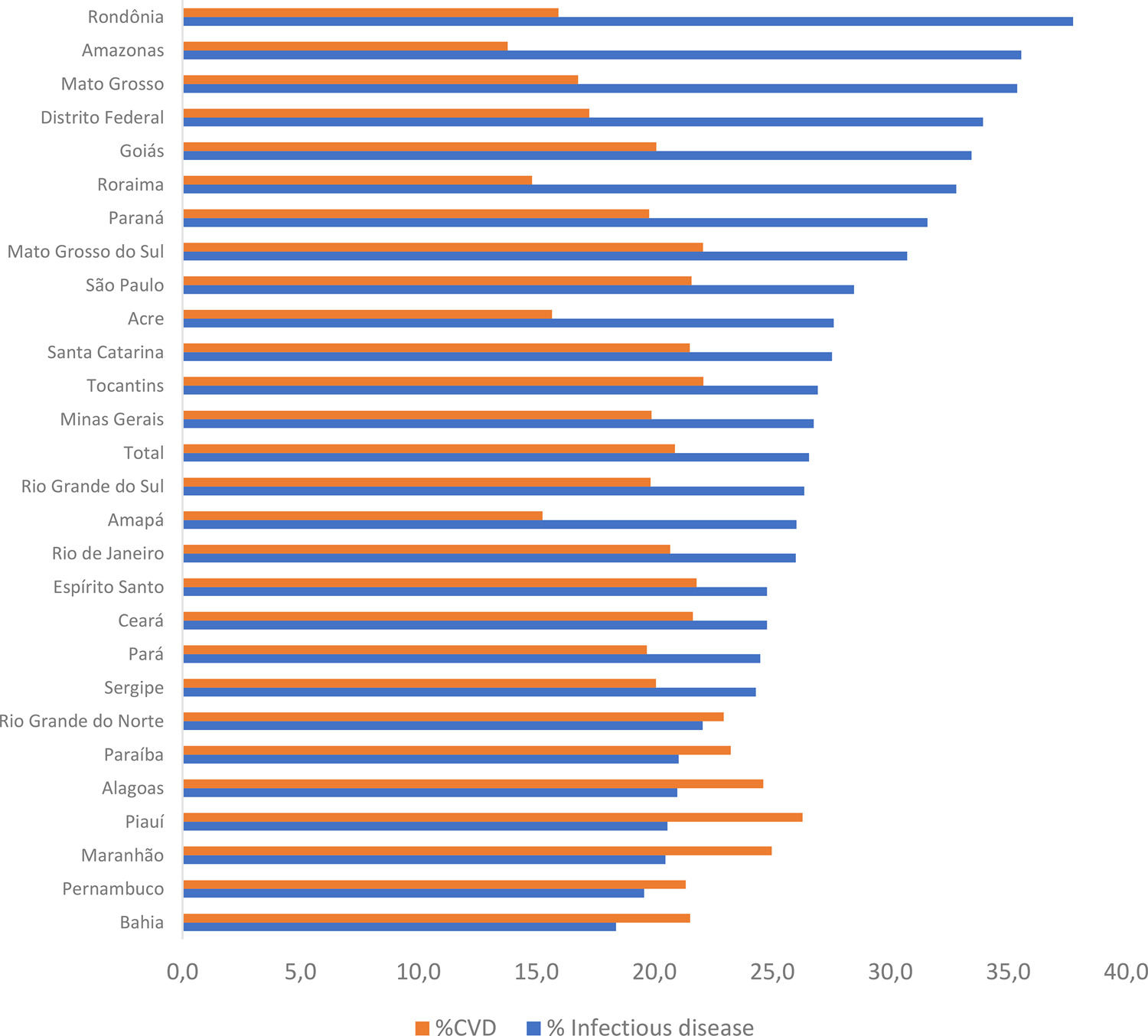
The publication Cardiovascular Statistics – Brazil aims to provide an annual compilation of data and research on the epidemiology of CVDs in Brazil. The report integrates official statistics from the Brazilian Ministry of Health and other governmental entities alongside data from the GBD project, coordinated by the IHME at the University of Washington. Additionally, it incorporates data derived from various sources and scientific studies, including cohorts and registries, that relate to CVDs and their associated risk factors. This publication is intended for a wide range of individuals, including researchers, clinicians, patients, healthcare policymakers, media professionals, the general public, and other interested parties seeking extensive national data about heart disease and stroke. Volunteer researchers from various Brazilian universities and research institutions carry out the project. The group is led by a five-member steering committee (ALPR, CAP, DCM, GMMO, and LCCB). The Brazilian Society of Cardiology fully supports this initiative, and the project receives collaborative support from the GBD Brazil Networkand an International Committee (GAR, PP, and TAG) from both the IHME/University of Washington (GAR) and the World Heart Federation (PP and TAG).

[…]

  • Atrial Fibrillation
  • Atrial flutter
  • Brazil
  • Cardiomyopathies
  • Cardiovascular Diseases
  • Cerebrovascular Disorders
  • Coronary Disease
  • Diabetes Mellitus
  • Dyslipidemias
  • Exercise
  • Heart Failure
  • Heart Valve Diseases
  • Hypertension
  • Obesity
  • Overweight
  • Statistics
  • Tobacco Use Disorder
Read Full Article
Creative Commons Attribution (CC BY) Creative Commons license
17/06/2024 DOI: 10.36660/abc.20240079 Views 1
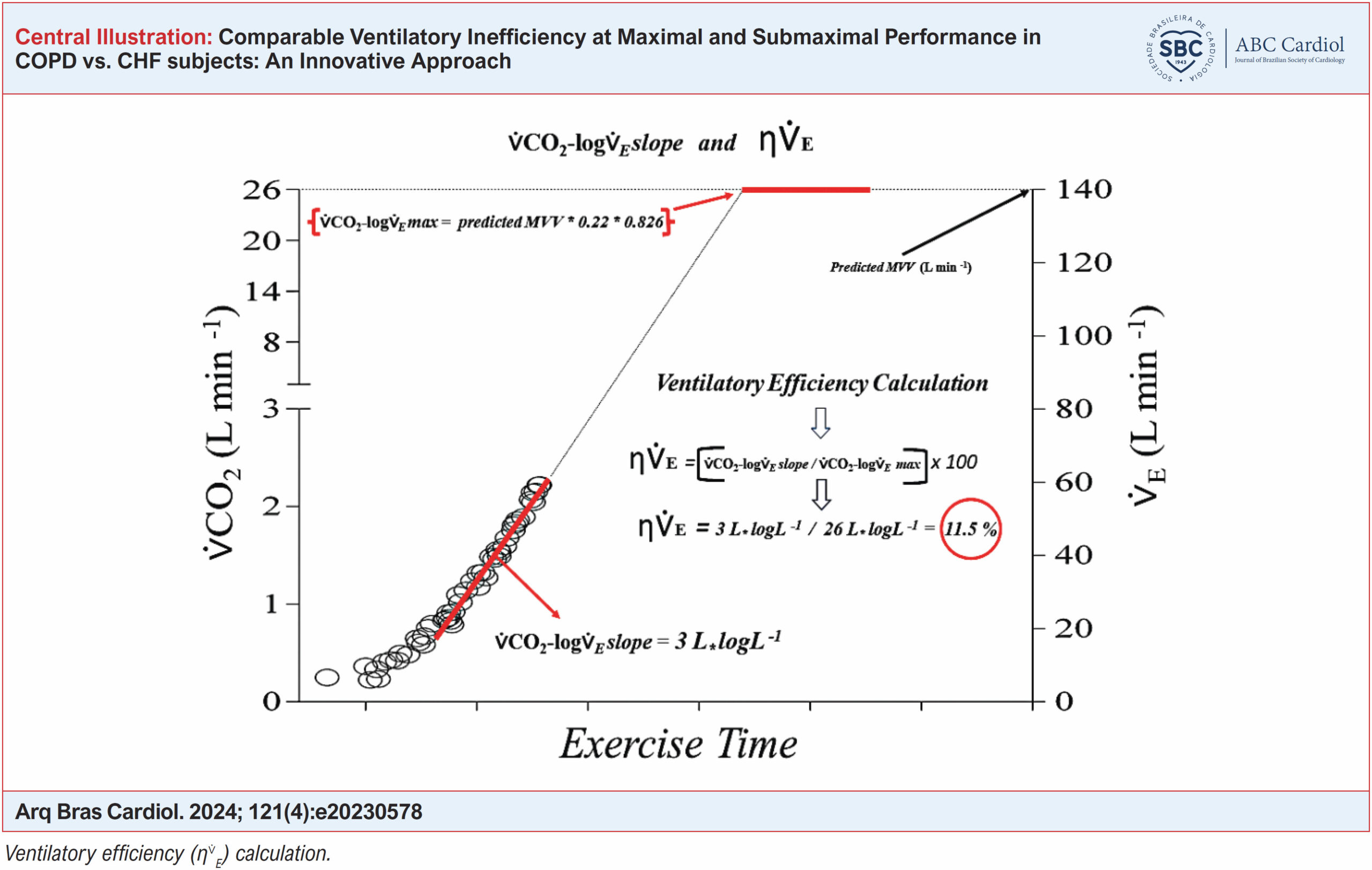
Comparable Ventilatory Inefficiency at Maximal and Submaximal Performance in COPD vs. CHF subjects: An Innovative Approach
ABC
Original Article

Comparable Ventilatory Inefficiency at Maximal and Submaximal Performance in COPD vs. CHF subjects: An Innovative Approach

Gerson Gatass Orro de Campos et al. Leandro Steinhorst Goelzer Tiago Rodrigues de Lemos Augusto Gisele Walter Barbosa … Gaspar R. Chiappa Erik H. van Iterson Paulo T. Muller

Abstract

Background:

Currently, excess ventilation has been grounded under the relationship between minute-ventilation/carbon dioxide output (). Alternatively, a new approach for ventilatory efficiency () has been published.

Objective:

Our main hypothesis is that comparatively low levels of between chronic heart failure (CHF) and chronic obstructive pulmonary disease (COPD) are attainable for a similar level of maximum and submaximal aerobic performance, conversely to long-established methods ( slope and intercept).

Methods:

Both groups performed lung function tests, echocardiography, and cardiopulmonary exercise testing. The significance level adopted in the statistical analysis was 5%. Thus, nineteen COPD and nineteen CHF-eligible subjects completed the study. With the aim of contrasting full values of and for the exercise period (100%), correlations were made with smaller fractions, such as 90% and 75% of the maximum values.

Results:

The two groups attained matched characteristics for age (62±6 vs. 59±9 yrs, p>.05), sex (10/9 vs. 14/5, p>0.05), BMI (26±4 vs. 27±3 Kg m2, p>0.05), and peak (72±19 vs. 74±20 %pred, p>0.05), respectively. The slope and intercept were significantly different for COPD and CHF (27.2±1.4 vs. 33.1±5.7 and 5.3±1.9 vs. 1.7±3.6, p0.850 for both).

Conclusion:

The is a valuable method for comparison between cardiopulmonary diseases, with so far distinct physiopathological mechanisms, including ventilatory constraints in COPD.

  • Chronic Obstructive Pulmonary Disease
  • Exercise
  • Exercise Test
  • Heart Failure
Read Full Article
Creative Commons Attribution (CC BY) Creative Commons license
29/04/2024 DOI: 10.36660/abc.20230578i

Could not load more articles. Please try again.

How to cite this article

EndNote RIS

Electronic Document Format (Vancouver)

Oliveira GMM, Brant LCC, Polanczyk CA, Malta DC, Biolo A, Nascimento BR, Souza MFM, et al. Cardiovascular Statistics – Brazil 2026. Arquivos Brasileiros de Cardiologia 2026;:e20260832.

Electronic Document Format (ABNT)

Oliveira, Gláucia Maria Moraes de; Brant, Luisa Campos Caldeira; Polanczyk, Carisi Anne; Malta, Deborah Carvalho; Biolo, Andreia; Nascimento, Bruno Ramos; Souza, Maria de Fatima Marinho de; Lorenzo, Andrea Rocha De; Fagundes Júnior, Antonio Aurélio de Paiva; Manfro, Arthur Gus; Schaan, Beatriz D.; Silva, Christina Grüne de Souza e; Castilho, Fábio Morato de; Cesena, Fernando Henpin Yue; Soares, Gabriel Porto; Xavier Junior, Gesner Francisco; Barreto Filho, Jose Augusto Soares; Pellanda, Lucia Campos; Aranha, Luciana Nicolau; Rohde, Luis Eduardo Paim; Passaglia, Luiz Guilherme; Pinto-Filho, Marcelo Martins; Machline-Carrion, M. Julia; Bittencourt, Marcio Sommer; Pontes Neto, Octavio M.; Villela, Paolo Blanco; Godoy, Paulo Henrique; Teixeira, Renato Azeredo; Stein, Ricardo; Sampaio, Roney Orismar; Salim, Thais Rocha; Gaziano, Thomas A.; Perel, Pablo; Roth, Gregory A.; Ribeiro, Antonio Luiz Pinho. Cardiovascular Statistics – Brazil 2026. Arquivos Brasileiros de Cardiologia, e20260832, Oct. 2026.

Electronic Document Format (APA)

Oliveira, G. M. M. , Brant, L. C. C., Polanczyk, C. A., Malta, D. C., Biolo, A., Nascimento, B. R., Souza, M. F. M. , Lorenzo, A. R. D., Fagundes Júnior, A. A. P., Manfro, A. G., Schaan, B. D., Silva, C. G. S. , Castilho, F. M. , Cesena, F. H. Y., Soares, G. P., Xavier Junior, G. F., Barreto Filho, J. A. S., Pellanda, L. C., Aranha, L. N., Rohde, L. E. P., Passaglia, L. G., Pinto-Filho, M. M., Machline-Carrion, M. J., Bittencourt, M. S., Pontes Neto, O. M., Villela, P. B., Godoy, P. H., Teixeira, R. A., Stein, R., Sampaio, R. O., Salim, T. R., Gaziano, T. A., Perel, P., Roth, G. A., & Ribeiro, A. L. P. (2026). Cardiovascular Statistics – Brazil 2026. Arquivos Brasileiros de Cardiologia, , e20260832.

Electronic Document Format (ISO)

Oliveira, Gláucia Maria Moraes de and Brant, Luisa Campos Caldeira and Polanczyk, Carisi Anne and Malta, Deborah Carvalho and Biolo, Andreia and Nascimento, Bruno Ramos and Souza, Maria de Fatima Marinho de and Lorenzo, Andrea Rocha De and Fagundes Júnior, Antonio Aurélio de Paiva and Manfro, Arthur Gus and Schaan, Beatriz D. and Silva, Christina Grüne de Souza e and Castilho, Fábio Morato de and Cesena, Fernando Henpin Yue and Soares, Gabriel Porto and Xavier Junior, Gesner Francisco and Barreto Filho, Jose Augusto Soares and Pellanda, Lucia Campos and Aranha, Luciana Nicolau and Rohde, Luis Eduardo Paim and Passaglia, Luiz Guilherme and Pinto-Filho, Marcelo Martins and Machline-Carrion, M. Julia and Bittencourt, Marcio Sommer and Pontes Neto, Octavio M. and Villela, Paolo Blanco and Godoy, Paulo Henrique and Teixeira, Renato Azeredo and Stein, Ricardo and Sampaio, Roney Orismar and Salim, Thais Rocha and Gaziano, Thomas A. and Perel, Pablo and Roth, Gregory A. and Ribeiro, Antonio Luiz Pinho. Cardiovascular Statistics – Brazil 2026. Arquivos Brasileiros de Cardiologia [online]. 2026, [cited 2026-10-14], e20260832. Available from: <https://journals.cardiol.br/en/article/cardiovascular-statistics-brazil-2026/>. ISSN 0066-782X

EndNote RIS

Electronic Document Format (Vancouver)

Stein R, Alô ROB, Ritt LEF, Fagundes AA, Silveira AD, Herdy AH, Colombo C, et al. Systematic Review on the Safety of Physical Exercise in Hypertrophic Cardiomyopathy: Recommendations from the Brazilian Society of Cardiology. Arquivos Brasileiros de Cardiologia 2026;123(8):e20260423.

Electronic Document Format (ABNT)

Stein, Ricardo; Alô, Rodrigo Otávio Bougleux; Ritt, Luiz Eduardo Fonteles; Fagundes, Alexsandro Alves; Silveira, Anderson Donelli da; Herdy, Artur Haddad; Colombo, Clea; Pisani, Cristiano Faria; Braga, Fabrício; Nunes, Frank; Sacilotto, Luciana; Silva, Marconi Gomes; Milani, Mauricio; Pimentel, Mauricio; Campos, Milena dos Santos Barros; Nunes, Nágela Simão Vinhosa; Nascimento, Pablo Marino; Buglia, Susimeire; Evangelista, José Ronyeryson dos Santos; Ferrari, Filipe; Luna, Leonardo Castro. Systematic Review on the Safety of Physical Exercise in Hypertrophic Cardiomyopathy: Recommendations from the Brazilian Society of Cardiology. Arquivos Brasileiros de Cardiologia, v. 123, n. 8, e20260423, Sep. 2026.

Electronic Document Format (APA)

Stein, R., Alô, R. O. B., Ritt, L. E. F., Fagundes, A. A., Silveira, A. D. , Herdy, A. H., Colombo, C., Pisani, C. F., Braga, F., Nunes, F., Sacilotto, L., Silva, M. G., Milani, M., Pimentel, M., Campos, M. S. B., Nunes, N. S. V., Nascimento, P. M., Buglia, S., Evangelista, J. R. S., Ferrari, F., & Luna, L. C. (2026). Systematic Review on the Safety of Physical Exercise in Hypertrophic Cardiomyopathy: Recommendations from the Brazilian Society of Cardiology. Arquivos Brasileiros de Cardiologia, 123(8), e20260423.

Electronic Document Format (ISO)

Stein, Ricardo and Alô, Rodrigo Otávio Bougleux and Ritt, Luiz Eduardo Fonteles and Fagundes, Alexsandro Alves and Silveira, Anderson Donelli da and Herdy, Artur Haddad and Colombo, Clea and Pisani, Cristiano Faria and Braga, Fabrício and Nunes, Frank and Sacilotto, Luciana and Silva, Marconi Gomes and Milani, Mauricio and Pimentel, Mauricio and Campos, Milena dos Santos Barros and Nunes, Nágela Simão Vinhosa and Nascimento, Pablo Marino and Buglia, Susimeire and Evangelista, José Ronyeryson dos Santos and Ferrari, Filipe and Luna, Leonardo Castro. Systematic Review on the Safety of Physical Exercise in Hypertrophic Cardiomyopathy: Recommendations from the Brazilian Society of Cardiology. Arquivos Brasileiros de Cardiologia [online]. 2026, vol. 123, n. 8, [cited 2026-10-14], e20260423. Available from: <https://journals.cardiol.br/en/article/systematic-review-on-the-safety-of-physical-exercise-in-hypertrophic-cardiomyopathy-recommendations-from-the-brazilian-society-of-cardiology/>. ISSN 0066-782X

EndNote RIS

Electronic Document Format (Vancouver)

Mota CT, Forjaz CLM. Home-Based Vs. Usual and Center-Based Cardiac Rehabilitation: Effects on Aerobic Fitness and Quality of Life. International Journal of Cardiovascular Sciences 2026;39:e20250274.

Electronic Document Format (ABNT)

Mota, Cauã Teixeira; Forjaz, Claudia Lucia de Moraes. Home-Based Vs. Usual and Center-Based Cardiac Rehabilitation: Effects on Aerobic Fitness and Quality of Life. International Journal of Cardiovascular Sciences, v. 39, e20250274, Aug. 2026.

Electronic Document Format (APA)

Mota, C. T., & Forjaz, C. L. M. (2026). Home-Based Vs. Usual and Center-Based Cardiac Rehabilitation: Effects on Aerobic Fitness and Quality of Life. International Journal of Cardiovascular Sciences, 39, e20250274.

Electronic Document Format (ISO)

Mota, Cauã Teixeira and Forjaz, Claudia Lucia de Moraes. Home-Based Vs. Usual and Center-Based Cardiac Rehabilitation: Effects on Aerobic Fitness and Quality of Life. International Journal of Cardiovascular Sciences [online]. 2026, vol. 39, [cited 2026-10-14], e20250274. Available from: <https://journals.cardiol.br/en/article/home-based-vs-usual-and-center-based-cardiac-rehabilitation-effects-on-aerobic-fitness-and-quality-of-life/>. ISSN 2359-4802

EndNote RIS

Electronic Document Format (Vancouver)

Bueno SCP, Oliveira PA, Pagotti M, Sacilotto L, Pessente GD, Braga PGS, Souza AL, et al. Physical Activity Levels and Quality of Life in Outpatients with Cardiac Arrhythmias and Preserved Left Ventricular Function: Understanding Their Profile. Arquivos Brasileiros de Cardiologia 2026;123(5):e20250831.

Electronic Document Format (ABNT)

Bueno, Savia Christina Pereira; Oliveira, Patrícia Alves; Pagotti, Márya; Sacilotto, Luciana; Pessente, Gabrielle D’Arezzo; Braga, Pedro Gabriel Senger; Souza, Aline L.; Brigido, Alexandra Regia Dantas; Negrão, Carlos E.; Darrieux, Francisco C. C.; Scanavacca, Mauricio. Physical Activity Levels and Quality of Life in Outpatients with Cardiac Arrhythmias and Preserved Left Ventricular Function: Understanding Their Profile. Arquivos Brasileiros de Cardiologia, v. 123, n. 5, e20250831, Jul. 2026.

Electronic Document Format (APA)

Bueno, S. C. P., Oliveira, P. A., Pagotti, M., Sacilotto, L., Pessente, G. D., Braga, P. G. S., Souza, A. L., Brigido, A. R. D., Negrão, C. E., Darrieux, F. C. C., & Scanavacca, M. (2026). Physical Activity Levels and Quality of Life in Outpatients with Cardiac Arrhythmias and Preserved Left Ventricular Function: Understanding Their Profile. Arquivos Brasileiros de Cardiologia, 123(5), e20250831.

Electronic Document Format (ISO)

Bueno, Savia Christina Pereira and Oliveira, Patrícia Alves and Pagotti, Márya and Sacilotto, Luciana and Pessente, Gabrielle D’Arezzo and Braga, Pedro Gabriel Senger and Souza, Aline L. and Brigido, Alexandra Regia Dantas and Negrão, Carlos E. and Darrieux, Francisco C. C. and Scanavacca, Mauricio. Physical Activity Levels and Quality of Life in Outpatients with Cardiac Arrhythmias and Preserved Left Ventricular Function: Understanding Their Profile. Arquivos Brasileiros de Cardiologia [online]. 2026, vol. 123, n. 5, [cited 2026-10-14], e20250831. Available from: <https://journals.cardiol.br/en/article/physical-activity-levels-and-quality-of-life-in-outpatients-with-cardiac-arrhythmias-and-preserved-left-ventricular-function-understanding-their-profile/>. ISSN 0066-782X

EndNote RIS

Electronic Document Format (Vancouver)

Ata BN. Technology-Based Cardiac Rehabilitation and Exercise Capacity in Coronary Artery Disease: An Artificial Intelligence Analysis. Arquivos Brasileiros de Cardiologia 2026;123(5):e20260179.

Electronic Document Format (ABNT)

Ata, Benil Nesli. Technology-Based Cardiac Rehabilitation and Exercise Capacity in Coronary Artery Disease: An Artificial Intelligence Analysis. Arquivos Brasileiros de Cardiologia, v. 123, n. 5, e20260179, Jul. 2026.

Electronic Document Format (APA)

Ata, B. N. (2026). Technology-Based Cardiac Rehabilitation and Exercise Capacity in Coronary Artery Disease: An Artificial Intelligence Analysis. Arquivos Brasileiros de Cardiologia, 123(5), e20260179.

Electronic Document Format (ISO)

Ata, Benil Nesli. Technology-Based Cardiac Rehabilitation and Exercise Capacity in Coronary Artery Disease: An Artificial Intelligence Analysis. Arquivos Brasileiros de Cardiologia [online]. 2026, vol. 123, n. 5, [cited 2026-10-14], e20260179. Available from: <https://journals.cardiol.br/en/article/technology-based-cardiac-rehabilitation-and-exercise-capacity-in-coronary-artery-disease-an-artificial-intelligence-analysis/>. ISSN 0066-782X

EndNote RIS

Electronic Document Format (Vancouver)

Pereira MM, Otto MEB, Portela JLP. Impact of Isometric Exercise on Left Ventricular Mechanics Assessed by Global Longitudinal Strain and Myocardial Work in Healthy Adults. ABC Imagem Cardiovascular 2026;39(2):e20260036.

Electronic Document Format (ABNT)

Pereira, Marcio Mendes; Otto, Maria Estefania Bosco; Portela, Juliana Lins da Paz. Impact of Isometric Exercise on Left Ventricular Mechanics Assessed by Global Longitudinal Strain and Myocardial Work in Healthy Adults. ABC Imagem Cardiovascular, v. 39, n. 2, e20260036, Jul. 2026.

Electronic Document Format (APA)

Pereira, M. M., Otto, M. E. B., & Portela, J. L. P. (2026). Impact of Isometric Exercise on Left Ventricular Mechanics Assessed by Global Longitudinal Strain and Myocardial Work in Healthy Adults. ABC Imagem Cardiovascular, 39(2), e20260036.

Electronic Document Format (ISO)

Pereira, Marcio Mendes and Otto, Maria Estefania Bosco and Portela, Juliana Lins da Paz. Impact of Isometric Exercise on Left Ventricular Mechanics Assessed by Global Longitudinal Strain and Myocardial Work in Healthy Adults. ABC Imagem Cardiovascular [online]. 2026, vol. 39, n. 2, [cited 2026-10-14], e20260036. Available from: <https://journals.cardiol.br/en/article/impact-of-isometric-exercise-on-left-ventricular-mechanics-assessed-by-global-longitudinal-strain-and-myocardial-work-in-healthy-adults/>. ISSN 2318-8219

EndNote RIS

Electronic Document Format (Vancouver)

Santos RD, Braga PGS. HDL Functionality, CETP Inhibitors, and Exercise Training: Where are We?. Arquivos Brasileiros de Cardiologia 2026;123(5):e20260145.

Electronic Document Format (ABNT)

Santos, Raul D.; Braga, Pedro Gabriel Senger. HDL Functionality, CETP Inhibitors, and Exercise Training: Where are We?. Arquivos Brasileiros de Cardiologia, v. 123, n. 5, e20260145, Jul. 2026.

Electronic Document Format (APA)

Santos, R. D., & Braga, P. G. S. (2026). HDL Functionality, CETP Inhibitors, and Exercise Training: Where are We?. Arquivos Brasileiros de Cardiologia, 123(5), e20260145.

Electronic Document Format (ISO)

Santos, Raul D. and Braga, Pedro Gabriel Senger. HDL Functionality, CETP Inhibitors, and Exercise Training: Where are We?. Arquivos Brasileiros de Cardiologia [online]. 2026, vol. 123, n. 5, [cited 2026-10-14], e20260145. Available from: <https://journals.cardiol.br/en/article/hdl-functionality-cetp-inhibitors-and-exercise-training-where-are-we/>. ISSN 0066-782X

EndNote RIS

Electronic Document Format (Vancouver)

Motta-Santos D, Soares TBC, Carvalho MCR, Moura RMF, Fonseca SF, Guimarães LMF, Gonçalves R, et al. Protocol for Improving Hypertension and Diabetes Control Through Lifestyle Intervention in a Cluster Randomized Clinical Trial. International Journal of Cardiovascular Sciences 2026;39:e20250045.

Electronic Document Format (ABNT)

Motta-Santos, Daisy; Soares, Thiago Barbabela de Castro; Carvalho, Maria Cecília Ramos de; Moura, Regina Márcia Faria de; Fonseca, Sueli Ferreira da; Guimarães, Larissa Morelli Ferraz; Gonçalves, Reginaldo; Oliveira, Clara Rodrigues Alves de; Lopes, Aline Cristine Souza; Marcolino, Milena Soriano. Protocol for Improving Hypertension and Diabetes Control Through Lifestyle Intervention in a Cluster Randomized Clinical Trial. International Journal of Cardiovascular Sciences, v. 39, e20250045, May. 2026.

Electronic Document Format (APA)

Motta-Santos, D., Soares, T. B. C., Carvalho, M. C. R. , Moura, R. M. F. , Fonseca, S. F. , Guimarães, L. M. F., Gonçalves, R., Oliveira, C. R. A. , Lopes, A. C. S., & Marcolino, M. S. (2026). Protocol for Improving Hypertension and Diabetes Control Through Lifestyle Intervention in a Cluster Randomized Clinical Trial. International Journal of Cardiovascular Sciences, 39, e20250045.

Electronic Document Format (ISO)

Motta-Santos, Daisy and Soares, Thiago Barbabela de Castro and Carvalho, Maria Cecília Ramos de and Moura, Regina Márcia Faria de and Fonseca, Sueli Ferreira da and Guimarães, Larissa Morelli Ferraz and Gonçalves, Reginaldo and Oliveira, Clara Rodrigues Alves de and Lopes, Aline Cristine Souza and Marcolino, Milena Soriano. Protocol for Improving Hypertension and Diabetes Control Through Lifestyle Intervention in a Cluster Randomized Clinical Trial. International Journal of Cardiovascular Sciences [online]. 2026, vol. 39, [cited 2026-10-14], e20250045. Available from: <https://journals.cardiol.br/en/article/protocol-for-improving-hypertension-and-diabetes-control-through-lifestyle-intervention-in-a-cluster-randomized-clinical-trial/>. ISSN 2359-4802

EndNote RIS

Electronic Document Format (Vancouver)

Teixeira AL. Strengthening Our Understanding of Muscle Metaboreflex Control in Patients with Coronary Artery Disease: (Dis)association Between Physical Fitness and Hemodynamic Responses. International Journal of Cardiovascular Sciences 2026;39:e20250227.

Electronic Document Format (ABNT)

Teixeira, André L.. Strengthening Our Understanding of Muscle Metaboreflex Control in Patients with Coronary Artery Disease: (Dis)association Between Physical Fitness and Hemodynamic Responses. International Journal of Cardiovascular Sciences, v. 39, e20250227, Apr. 2026.

Electronic Document Format (APA)

Teixeira, A. L. (2026). Strengthening Our Understanding of Muscle Metaboreflex Control in Patients with Coronary Artery Disease: (Dis)association Between Physical Fitness and Hemodynamic Responses. International Journal of Cardiovascular Sciences, 39, e20250227.

Electronic Document Format (ISO)

Teixeira, André L.. Strengthening Our Understanding of Muscle Metaboreflex Control in Patients with Coronary Artery Disease: (Dis)association Between Physical Fitness and Hemodynamic Responses. International Journal of Cardiovascular Sciences [online]. 2026, vol. 39, [cited 2026-10-14], e20250227. Available from: <https://journals.cardiol.br/en/article/strengthening-our-understanding-of-muscle-metaboreflex-control-in-patients-with-coronary-artery-disease-disassociation-between-physical-fitness-and-hemodynamic-responses/>. ISSN 2359-4802

EndNote RIS

Electronic Document Format (Vancouver)

Abreu MEB, Diógenes TCP, Chagas ISM, Xerex HM, Abreu JSD. Hemodynamic Impact of Hypertrophic Cardiomyopathy at Rest and During Supine Bicycle Exercise: Additional Value of Postprandial Assessment. ABC Imagem Cardiovascular 2026;39(1):e20250049.

Electronic Document Format (ABNT)

Abreu, Marília Esther Benevides; Diógenes, Tereza Cristina Pinheiro; Chagas, Isadora Sucupira Machado; Xerex, Humberto Mororó; Abreu, José Sebastião De. Hemodynamic Impact of Hypertrophic Cardiomyopathy at Rest and During Supine Bicycle Exercise: Additional Value of Postprandial Assessment. ABC Imagem Cardiovascular, v. 39, n. 1, e20250049, Apr. 2026.

Electronic Document Format (APA)

Abreu, M. E. B., Diógenes, T. C. P., Chagas, I. S. M., Xerex, H. M., & Abreu, J. S. D. (2026). Hemodynamic Impact of Hypertrophic Cardiomyopathy at Rest and During Supine Bicycle Exercise: Additional Value of Postprandial Assessment. ABC Imagem Cardiovascular, 39(1), e20250049.

Electronic Document Format (ISO)

Abreu, Marília Esther Benevides and Diógenes, Tereza Cristina Pinheiro and Chagas, Isadora Sucupira Machado and Xerex, Humberto Mororó and Abreu, José Sebastião De. Hemodynamic Impact of Hypertrophic Cardiomyopathy at Rest and During Supine Bicycle Exercise: Additional Value of Postprandial Assessment. ABC Imagem Cardiovascular [online]. 2026, vol. 39, n. 1, [cited 2026-10-14], e20250049. Available from: <https://journals.cardiol.br/en/article/hemodynamic-impact-of-hypertrophic-cardiomyopathy-at-rest-and-during-supine-bicycle-exercise-additional-value-of-postprandial-assessment/>. ISSN 2318-8219

EndNote RIS

Electronic Document Format (Vancouver)

Braga F, Espinosa G, Monteiro A, Milani M, Paiva J, Milani JGPO, Franzoni L, et al. Cardiopulmonary Resilience in Highly Active Individuals: Pre–Post COVID-19 Cardiopulmonary Exercise Testing Analysis. Arquivos Brasileiros de Cardiologia 2025;122(9):e20250094.

Electronic Document Format (ABNT)

Braga, Fabrício; Espinosa, Gabriel; Monteiro, Amanda; Milani, Mauricio; Paiva, Juliana; Milani, Juliana Goulart Prata Oliveira; Franzoni, Leandro; Stein, Ricardo; Cipriano Jr., Gerson; Gurgel, Jonas Lírio; Mourilhe-Rocha, Ricardo. Cardiopulmonary Resilience in Highly Active Individuals: Pre–Post COVID-19 Cardiopulmonary Exercise Testing Analysis. Arquivos Brasileiros de Cardiologia, v. 122, n. 9, e20250094, Nov. 2025.

Electronic Document Format (APA)

Braga, F., Espinosa, G., Monteiro, A., Milani, M., Paiva, J., Milani, J. G. P. O., Franzoni, L., Stein, R., Cipriano Jr., G., Gurgel, J. L., & Mourilhe-Rocha, R. (2025). Cardiopulmonary Resilience in Highly Active Individuals: Pre–Post COVID-19 Cardiopulmonary Exercise Testing Analysis. Arquivos Brasileiros de Cardiologia, 122(9), e20250094.

Electronic Document Format (ISO)

Braga, Fabrício and Espinosa, Gabriel and Monteiro, Amanda and Milani, Mauricio and Paiva, Juliana and Milani, Juliana Goulart Prata Oliveira and Franzoni, Leandro and Stein, Ricardo and Cipriano Jr., Gerson and Gurgel, Jonas Lírio and Mourilhe-Rocha, Ricardo. Cardiopulmonary Resilience in Highly Active Individuals: Pre–Post COVID-19 Cardiopulmonary Exercise Testing Analysis. Arquivos Brasileiros de Cardiologia [online]. 2025, vol. 122, n. 9, [cited 2026-10-14], e20250094. Available from: <https://journals.cardiol.br/en/article/cardiopulmonary-resilience-in-highly-active-individuals-pre-post-covid-19-cardiopulmonary-exercise-testing-analysis/>. ISSN 0066-782X

EndNote RIS

Electronic Document Format (Vancouver)

Delevatti R, Leonel LS, Franzoni L. The ELSA-BRASIL Study and Physical Activity in Protecting Against the Development of Type 2 Diabetes. Arquivos Brasileiros de Cardiologia 2025;122(8):e20250464.

Electronic Document Format (ABNT)

Delevatti, Rodrigo; Leonel, Larissa dos Santos; Franzoni, Leandro. The ELSA-BRASIL Study and Physical Activity in Protecting Against the Development of Type 2 Diabetes. Arquivos Brasileiros de Cardiologia, v. 122, n. 8, e20250464, Sep. 2025.

Electronic Document Format (APA)

Delevatti, R., Leonel, L. S., & Franzoni, L. (2025). The ELSA-BRASIL Study and Physical Activity in Protecting Against the Development of Type 2 Diabetes. Arquivos Brasileiros de Cardiologia, 122(8), e20250464.

Electronic Document Format (ISO)

Delevatti, Rodrigo and Leonel, Larissa dos Santos and Franzoni, Leandro. The ELSA-BRASIL Study and Physical Activity in Protecting Against the Development of Type 2 Diabetes. Arquivos Brasileiros de Cardiologia [online]. 2025, vol. 122, n. 8, [cited 2026-10-14], e20250464. Available from: <https://journals.cardiol.br/en/article/the-elsa-brasil-study-and-physical-activity-in-protecting-against-the-development-of-type-2-diabetes/>. ISSN 0066-782X

EndNote RIS

Electronic Document Format (Vancouver)

Saklica D, Vardar-Yagli N, Saglam M, Yuce D, Ates AH, Yorgun H. The Impact of Technology-Based Cardiac Rehabilitation on Exercise Capacity and Adherence in Patients with Coronary Artery Disease: An Artificial Intelligence Analysis. Arquivos Brasileiros de Cardiologia 2025;122(6):e20240765.

Electronic Document Format (ABNT)

Saklica, Dilara; Vardar-Yagli, Naciye; Saglam, Melda; Yuce, Deniz; Ates, Ahmet Hakan; Yorgun, Hikmet. The Impact of Technology-Based Cardiac Rehabilitation on Exercise Capacity and Adherence in Patients with Coronary Artery Disease: An Artificial Intelligence Analysis. Arquivos Brasileiros de Cardiologia, v. 122, n. 6, e20240765, Jun. 2025.

Electronic Document Format (APA)

Saklica, D., Vardar-Yagli, N., Saglam, M., Yuce, D., Ates, A. H., & Yorgun, H. (2025). The Impact of Technology-Based Cardiac Rehabilitation on Exercise Capacity and Adherence in Patients with Coronary Artery Disease: An Artificial Intelligence Analysis. Arquivos Brasileiros de Cardiologia, 122(6), e20240765.

Electronic Document Format (ISO)

Saklica, Dilara and Vardar-Yagli, Naciye and Saglam, Melda and Yuce, Deniz and Ates, Ahmet Hakan and Yorgun, Hikmet. The Impact of Technology-Based Cardiac Rehabilitation on Exercise Capacity and Adherence in Patients with Coronary Artery Disease: An Artificial Intelligence Analysis. Arquivos Brasileiros de Cardiologia [online]. 2025, vol. 122, n. 6, [cited 2026-10-14], e20240765. Available from: <https://journals.cardiol.br/en/article/the-impact-of-technology-based-cardiac-rehabilitation-on-exercise-capacity-and-adherence-in-patients-with-coronary-artery-disease-an-artificial-intelligence-analysis/>. ISSN 0066-782X

EndNote RIS

Electronic Document Format (Vancouver)

Ogura AY, Barbosa CM, Oliveira-Junior SA. Nitrite Supplementation Attenuates Vascular Stiffness Independently of Physical Exercise. Arquivos Brasileiros de Cardiologia 2025;121(12):e20240836.

Electronic Document Format (ABNT)

Ogura, Alex Yuiti; Barbosa, Claudiane Maria; Oliveira-Junior, Silvio Assis de. Nitrite Supplementation Attenuates Vascular Stiffness Independently of Physical Exercise. Arquivos Brasileiros de Cardiologia, v. 121, n. 12, e20240836, Feb. 2025.

Electronic Document Format (APA)

Ogura, A. Y., Barbosa, C. M., & Oliveira-Junior, S. A. (2025). Nitrite Supplementation Attenuates Vascular Stiffness Independently of Physical Exercise. Arquivos Brasileiros de Cardiologia, 121(12), e20240836.

Electronic Document Format (ISO)

Ogura, Alex Yuiti and Barbosa, Claudiane Maria and Oliveira-Junior, Silvio Assis de. Nitrite Supplementation Attenuates Vascular Stiffness Independently of Physical Exercise. Arquivos Brasileiros de Cardiologia [online]. 2025, vol. 121, n. 12, [cited 2026-10-14], e20240836. Available from: <https://journals.cardiol.br/en/article/nitrite-supplementation-attenuates-vascular-stiffness-independently-of-physical-exercise/>. ISSN 0066-782X

EndNote RIS

Electronic Document Format (Vancouver)

Dourado LA, Dourado PMM, Oliveira JG, Silva EM, Dourado JPA, Braga PGS. Heart Rate Reduction after Effort Test Is Higher in Physically Active Adults without Familial Cardiovascular Risk Factor. Arquivos Brasileiros de Cardiologia 2025;122(1):e20240435.

Electronic Document Format (ABNT)

Dourado, Larissa de Almeida; Dourado, Paulo Magno Martins; Oliveira, Jaciara Gomes de; Silva, Evandra Maria da; Dourado, João Paulo de Almeida; Braga, Pedro Gabriel Senger. Heart Rate Reduction after Effort Test Is Higher in Physically Active Adults without Familial Cardiovascular Risk Factor. Arquivos Brasileiros de Cardiologia, v. 122, n. 1, e20240435, Feb. 2025.

Electronic Document Format (APA)

Dourado, L. A., Dourado, P. M. M., Oliveira, J. G. , Silva, E. M. , Dourado, J. P. A., & Braga, P. G. S. (2025). Heart Rate Reduction after Effort Test Is Higher in Physically Active Adults without Familial Cardiovascular Risk Factor. Arquivos Brasileiros de Cardiologia, 122(1), e20240435.

Electronic Document Format (ISO)

Dourado, Larissa de Almeida and Dourado, Paulo Magno Martins and Oliveira, Jaciara Gomes de and Silva, Evandra Maria da and Dourado, João Paulo de Almeida and Braga, Pedro Gabriel Senger. Heart Rate Reduction after Effort Test Is Higher in Physically Active Adults without Familial Cardiovascular Risk Factor. Arquivos Brasileiros de Cardiologia [online]. 2025, vol. 122, n. 1, [cited 2026-10-14], e20240435. Available from: <https://journals.cardiol.br/en/article/heart-rate-reduction-after-effort-test-is-higher-in-physically-active-adults-without-familial-cardiovascular-risk-factor/>. ISSN 0066-782X

EndNote RIS

Electronic Document Format (Vancouver)

Hortegal RA, Bihan DL, Mathias MM, Barretto R, Mathias Jr W. Left Ventricular Strain in Heart Failure with Preserved Ejection Fraction: A Fast Dive into Diagnosis, Response to Exercise and Afterload Challenge. ABC Imagem Cardiovascular 2024;37(4):e20240104.

Electronic Document Format (ABNT)

Hortegal, Renato A.; Bihan, David Le; Mathias, Mariana Mendes; Barretto, Rodrigo; Mathias Jr, Wilson. Left Ventricular Strain in Heart Failure with Preserved Ejection Fraction: A Fast Dive into Diagnosis, Response to Exercise and Afterload Challenge. ABC Imagem Cardiovascular, v. 37, n. 4, e20240104, Dec. 2024.

Electronic Document Format (APA)

Hortegal, R. A., Bihan, D. L., Mathias, M. M., Barretto, R., & Mathias Jr, W. (2024). Left Ventricular Strain in Heart Failure with Preserved Ejection Fraction: A Fast Dive into Diagnosis, Response to Exercise and Afterload Challenge. ABC Imagem Cardiovascular, 37(4), e20240104.

Electronic Document Format (ISO)

Hortegal, Renato A. and Bihan, David Le and Mathias, Mariana Mendes and Barretto, Rodrigo and Mathias Jr, Wilson. Left Ventricular Strain in Heart Failure with Preserved Ejection Fraction: A Fast Dive into Diagnosis, Response to Exercise and Afterload Challenge. ABC Imagem Cardiovascular [online]. 2024, vol. 37, n. 4, [cited 2026-10-14], e20240104. Available from: <https://journals.cardiol.br/en/article/left-ventricular-strain-in-heart-failure-with-preserved-ejection-fraction-a-fast-dive-into-diagnosis-response-to-exercise-and-afterload-challenge/>. ISSN 2318-8219

EndNote RIS

Electronic Document Format (Vancouver)

Siyah T, Yagli NV, Ertugrul I, Aykan HH, Saglam M. Examining the Role of Exercise Training in Enhancing Life for Adult Congenital Heart Disease: Systematic Review. Arquivos Brasileiros de Cardiologia 2024;121(12):e20240294.

Electronic Document Format (ABNT)

Siyah, Tugba; Yagli, Naciye Vardar; Ertugrul, Ilker; Aykan, Hayrettin Hakan; Saglam, Melda. Examining the Role of Exercise Training in Enhancing Life for Adult Congenital Heart Disease: Systematic Review. Arquivos Brasileiros de Cardiologia, v. 121, n. 12, e20240294, Dec. 2024.

Electronic Document Format (APA)

Siyah, T., Yagli, N. V., Ertugrul, I., Aykan, H. H., & Saglam, M. (2024). Examining the Role of Exercise Training in Enhancing Life for Adult Congenital Heart Disease: Systematic Review. Arquivos Brasileiros de Cardiologia, 121(12), e20240294.

Electronic Document Format (ISO)

Siyah, Tugba and Yagli, Naciye Vardar and Ertugrul, Ilker and Aykan, Hayrettin Hakan and Saglam, Melda. Examining the Role of Exercise Training in Enhancing Life for Adult Congenital Heart Disease: Systematic Review. Arquivos Brasileiros de Cardiologia [online]. 2024, vol. 121, n. 12, [cited 2026-10-14], e20240294. Available from: <https://journals.cardiol.br/en/article/examining-the-role-of-exercise-training-in-enhancing-life-for-adult-congenital-heart-disease-systematic-review/>. ISSN 0066-782X

EndNote RIS

Electronic Document Format (Vancouver)

Souza TP, Tardelli LP, Nicoletti RA, Jacomini AM, Martins GFM, Pinheiro LC, Tanus-Santos JE, et al. Short-term Oral Nitrite Administration Decreases Arterial Stiffness in Both Trained and Sedentary Wistar Rats. Arquivos Brasileiros de Cardiologia 2024;121(12):e20230783.

Electronic Document Format (ABNT)

Souza, Thiago Pereira; Tardelli, Lidieli Pazin; Nicoletti, Rafael Antunes; Jacomini, André Mourão; Martins, Gabriel Francisco de Mello; Pinheiro, Lucas Cézar; Tanus-Santos, José Eduardo; Amaral, Sandra Lia do; Zago, Anderson Saranz. Short-term Oral Nitrite Administration Decreases Arterial Stiffness in Both Trained and Sedentary Wistar Rats. Arquivos Brasileiros de Cardiologia, v. 121, n. 12, e20230783, Dec. 2024.

Electronic Document Format (APA)

Souza, T. P., Tardelli, L. P., Nicoletti, R. A., Jacomini, A. M., Martins, G. F. M., Pinheiro, L. C., Tanus-Santos, J. E., Amaral, S. L. , & Zago, A. S. (2024). Short-term Oral Nitrite Administration Decreases Arterial Stiffness in Both Trained and Sedentary Wistar Rats. Arquivos Brasileiros de Cardiologia, 121(12), e20230783.

Electronic Document Format (ISO)

Souza, Thiago Pereira and Tardelli, Lidieli Pazin and Nicoletti, Rafael Antunes and Jacomini, André Mourão and Martins, Gabriel Francisco de Mello and Pinheiro, Lucas Cézar and Tanus-Santos, José Eduardo and Amaral, Sandra Lia do and Zago, Anderson Saranz. Short-term Oral Nitrite Administration Decreases Arterial Stiffness in Both Trained and Sedentary Wistar Rats. Arquivos Brasileiros de Cardiologia [online]. 2024, vol. 121, n. 12, [cited 2026-10-14], e20230783. Available from: <https://journals.cardiol.br/en/article/short-term-oral-nitrite-administration-decreases-arterial-stiffness-in-both-trained-and-sedentary-wistar-rats/>. ISSN 0066-782X

EndNote RIS

Electronic Document Format (Vancouver)

Mota GAF, Gatto M, Silva VL, Martinez PF, Okoshi MP. Chronic Chagasic Cardiomyopathy: Influence of Physical Exercise. Arquivos Brasileiros de Cardiologia 2024;121(8):e20240507.

Electronic Document Format (ABNT)

Mota, Gustavo Augusto Ferreira; Gatto, Mariana; Silva, Vitor Loureiro da; Martinez, Paula Felippe; Okoshi, Marina Politi. Chronic Chagasic Cardiomyopathy: Influence of Physical Exercise. Arquivos Brasileiros de Cardiologia, v. 121, n. 8, e20240507, Sep. 2024.

Electronic Document Format (APA)

Mota, G. A. F., Gatto, M., Silva, V. L. , Martinez, P. F., & Okoshi, M. P. (2024). Chronic Chagasic Cardiomyopathy: Influence of Physical Exercise. Arquivos Brasileiros de Cardiologia, 121(8), e20240507.

Electronic Document Format (ISO)

Mota, Gustavo Augusto Ferreira and Gatto, Mariana and Silva, Vitor Loureiro da and Martinez, Paula Felippe and Okoshi, Marina Politi. Chronic Chagasic Cardiomyopathy: Influence of Physical Exercise. Arquivos Brasileiros de Cardiologia [online]. 2024, vol. 121, n. 8, [cited 2026-10-14], e20240507. Available from: <https://journals.cardiol.br/en/article/chronic-chagasic-cardiomyopathy-influence-of-physical-exercise/>. ISSN 0066-782X

EndNote RIS

Electronic Document Format (Vancouver)

Damasceno TR, Tanaka DM, Magnani EF, Oliveira RDB, Pereira DAG, Vieira-Alves I, Lemos VS, et al. Exercise Training Reduces Inflammation and Fibrosis and Preserves Myocardial Function and Perfusion in a Model of Chronic Chagas Cardiomyopathy. Arquivos Brasileiros de Cardiologia 2024;121(8):e20230707.

Electronic Document Format (ABNT)

Damasceno, Thayrine R.; Tanaka, Denise M.; Magnani, Enrico F.; Oliveira, Rafael D. B.; Pereira, Danielle A. G.; Vieira-Alves, Ildernandes; Lemos, Virginia S.; Cabeza, Jorge M.; Fabricio, Camila G.; Resende, Alessandra A.; Gonçalves, Dawit A. P.; Zanetti, Gustavo de Oliveira; Carvalho, Eduardo E. Vieira de; Simões, Marcus V.; Oliveira, Luciano F. L.. Exercise Training Reduces Inflammation and Fibrosis and Preserves Myocardial Function and Perfusion in a Model of Chronic Chagas Cardiomyopathy. Arquivos Brasileiros de Cardiologia, v. 121, n. 8, e20230707, Sep. 2024.

Electronic Document Format (APA)

Damasceno, T. R., Tanaka, D. M., Magnani, E. F., Oliveira, R. D. B., Pereira, D. A. G., Vieira-Alves, I., Lemos, V. S., Cabeza, J. M., Fabricio, C. G., Resende, A. A., Gonçalves, D. A. P., Zanetti, G. O., Carvalho, E. E. V. , Simões, M. V., & Oliveira, L. F. L. (2024). Exercise Training Reduces Inflammation and Fibrosis and Preserves Myocardial Function and Perfusion in a Model of Chronic Chagas Cardiomyopathy. Arquivos Brasileiros de Cardiologia, 121(8), e20230707.

Electronic Document Format (ISO)

Damasceno, Thayrine R. and Tanaka, Denise M. and Magnani, Enrico F. and Oliveira, Rafael D. B. and Pereira, Danielle A. G. and Vieira-Alves, Ildernandes and Lemos, Virginia S. and Cabeza, Jorge M. and Fabricio, Camila G. and Resende, Alessandra A. and Gonçalves, Dawit A. P. and Zanetti, Gustavo de Oliveira and Carvalho, Eduardo E. Vieira de and Simões, Marcus V. and Oliveira, Luciano F. L.. Exercise Training Reduces Inflammation and Fibrosis and Preserves Myocardial Function and Perfusion in a Model of Chronic Chagas Cardiomyopathy. Arquivos Brasileiros de Cardiologia [online]. 2024, vol. 121, n. 8, [cited 2026-10-14], e20230707. Available from: <https://journals.cardiol.br/en/article/exercise-training-reduces-inflammation-and-fibrosis-and-preserves-myocardial-function-and-perfusion-in-a-model-of-chronic-chagas-cardiomyopathy/>. ISSN 0066-782X

EndNote RIS

Electronic Document Format (Vancouver)

Stangenhaus C, Oliveira FRC, Cordovil A. My Approach to Semi-Supine Bicycle Stress Echocardiography: Is It the Best Modality for Brazil?. ABC Imagem Cardiovascular 2024;37(3):e20240042.

Electronic Document Format (ABNT)

Stangenhaus, Carolina; Oliveira, Fernando Rodrigues da Camara; Cordovil, Adriana. My Approach to Semi-Supine Bicycle Stress Echocardiography: Is It the Best Modality for Brazil?. ABC Imagem Cardiovascular, v. 37, n. 3, e20240042, Aug. 2024.

Electronic Document Format (APA)

Stangenhaus, C., Oliveira, F. R. C., & Cordovil, A. (2024). My Approach to Semi-Supine Bicycle Stress Echocardiography: Is It the Best Modality for Brazil?. ABC Imagem Cardiovascular, 37(3), e20240042.

Electronic Document Format (ISO)

Stangenhaus, Carolina and Oliveira, Fernando Rodrigues da Camara and Cordovil, Adriana. My Approach to Semi-Supine Bicycle Stress Echocardiography: Is It the Best Modality for Brazil?. ABC Imagem Cardiovascular [online]. 2024, vol. 37, n. 3, [cited 2026-10-14], e20240042. Available from: <https://journals.cardiol.br/en/article/my-approach-to-semi-supine-bicycle-stress-echocardiography-is-it-the-best-modality-for-brazil/>. ISSN 2318-8219

EndNote RIS

Electronic Document Format (Vancouver)

Lima J, Franzoni L, Monteiro EP. Is There a Relationship Between Physical Activity in Free Time and the Incidence of High Blood Pressure?. Arquivos Brasileiros de Cardiologia 2024;121(6):e20240318.

Electronic Document Format (ABNT)

Lima, Jacqueline; Franzoni, Leandro; Monteiro, Elren Passos. Is There a Relationship Between Physical Activity in Free Time and the Incidence of High Blood Pressure?. Arquivos Brasileiros de Cardiologia, v. 121, n. 6, e20240318, Aug. 2024.

Electronic Document Format (APA)

Lima, J., Franzoni, L., & Monteiro, E. P. (2024). Is There a Relationship Between Physical Activity in Free Time and the Incidence of High Blood Pressure?. Arquivos Brasileiros de Cardiologia, 121(6), e20240318.

Electronic Document Format (ISO)

Lima, Jacqueline and Franzoni, Leandro and Monteiro, Elren Passos. Is There a Relationship Between Physical Activity in Free Time and the Incidence of High Blood Pressure?. Arquivos Brasileiros de Cardiologia [online]. 2024, vol. 121, n. 6, [cited 2026-10-14], e20240318. Available from: <https://journals.cardiol.br/en/article/is-there-a-relationship-between-physical-activity-in-free-time-and-the-incidence-of-high-blood-pressure/>. ISSN 0066-782X

EndNote RIS

Electronic Document Format (Vancouver)

Oliveira GMM, Brant LCC, Polanczyk CA, Malta DC, Biolo A, Nascimento BR, Souza MFM, et al. Cardiovascular Statistics – Brazil 2023. Arquivos Brasileiros de Cardiologia 2024;121(2):e20240079.

Electronic Document Format (ABNT)

Oliveira, Gláucia Maria Moraes de; Brant, Luisa Campos Caldeira; Polanczyk, Carisi Anne; Malta, Deborah Carvalho; Biolo, Andreia; Nascimento, Bruno Ramos; Souza, Maria de Fatima Marinho de; Lorenzo, Andrea Rocha De; Fagundes Júnior, Antonio Aurélio de Paiva; Schaan, Beatriz D.; Silva, Christina Grüne de Souza e; Castilho, Fábio Morato de; Cesena, Fernando Henpin Yue; Soares, Gabriel Porto; Xavier Junior, Gesner Francisco; Barreto Filho, Jose Augusto Soares; Passaglia, Luiz Guilherme; Pinto Filho, Marcelo Martins; Machline-Carrion, M. Julia; Bittencourt, Marcio Sommer; Pontes Neto, Octavio M.; Villela, Paolo Blanco; Teixeira, Renato Azeredo; Stein, Ricardo; Sampaio, Roney Orismar; Gaziano, Thomaz A.; Perel, Pablo; Roth, Gregory A.; Ribeiro, Antonio Luiz Pinho. Cardiovascular Statistics – Brazil 2023. Arquivos Brasileiros de Cardiologia, v. 121, n. 2, e20240079, Jun. 2024.

Electronic Document Format (APA)

Oliveira, G. M. M. , Brant, L. C. C., Polanczyk, C. A., Malta, D. C., Biolo, A., Nascimento, B. R., Souza, M. F. M. , Lorenzo, A. R. D., Fagundes Júnior, A. A. P., Schaan, B. D., Silva, C. G. S. , Castilho, F. M. , Cesena, F. H. Y., Soares, G. P., Xavier Junior, G. F., Barreto Filho, J. A. S., Passaglia, L. G., Pinto Filho, M. M., Machline-Carrion, M. J., Bittencourt, M. S., Pontes Neto, O. M., Villela, P. B., Teixeira, R. A., Stein, R., Sampaio, R. O., Gaziano, T. A., Perel, P., Roth, G. A., & Ribeiro, A. L. P. (2024). Cardiovascular Statistics – Brazil 2023. Arquivos Brasileiros de Cardiologia, 121(2), e20240079.

Electronic Document Format (ISO)

Oliveira, Gláucia Maria Moraes de and Brant, Luisa Campos Caldeira and Polanczyk, Carisi Anne and Malta, Deborah Carvalho and Biolo, Andreia and Nascimento, Bruno Ramos and Souza, Maria de Fatima Marinho de and Lorenzo, Andrea Rocha De and Fagundes Júnior, Antonio Aurélio de Paiva and Schaan, Beatriz D. and Silva, Christina Grüne de Souza e and Castilho, Fábio Morato de and Cesena, Fernando Henpin Yue and Soares, Gabriel Porto and Xavier Junior, Gesner Francisco and Barreto Filho, Jose Augusto Soares and Passaglia, Luiz Guilherme and Pinto Filho, Marcelo Martins and Machline-Carrion, M. Julia and Bittencourt, Marcio Sommer and Pontes Neto, Octavio M. and Villela, Paolo Blanco and Teixeira, Renato Azeredo and Stein, Ricardo and Sampaio, Roney Orismar and Gaziano, Thomaz A. and Perel, Pablo and Roth, Gregory A. and Ribeiro, Antonio Luiz Pinho. Cardiovascular Statistics – Brazil 2023. Arquivos Brasileiros de Cardiologia [online]. 2024, vol. 121, n. 2, [cited 2026-10-14], e20240079. Available from: <https://journals.cardiol.br/en/article/cardiovascular-statistics-brazil-2023/>. ISSN 0066-782X

EndNote RIS

Electronic Document Format (Vancouver)

Campos GGO, Goelzer LS, Augusto TRL, Barbosa GW, Chiappa GR, Iterson EH, Muller PT, et al. Comparable Ventilatory Inefficiency at Maximal and Submaximal Performance in COPD vs. CHF subjects: An Innovative Approach. Arquivos Brasileiros de Cardiologia 2024;121(4):e20230578.

Electronic Document Format (ABNT)

Campos, Gerson Gatass Orro de; Goelzer, Leandro Steinhorst; Augusto, Tiago Rodrigues de Lemos; Barbosa, Gisele Walter; Chiappa, Gaspar R.; Iterson, Erik H. van; Muller, Paulo T.. Comparable Ventilatory Inefficiency at Maximal and Submaximal Performance in COPD vs. CHF subjects: An Innovative Approach. Arquivos Brasileiros de Cardiologia, v. 121, n. 4, e20230578, Apr. 2024.

Electronic Document Format (APA)

Campos, G. G. O. , Goelzer, L. S., Augusto, T. R. L., Barbosa, G. W., Chiappa, G. R., Iterson, E. H. , & Muller, P. T. (2024). Comparable Ventilatory Inefficiency at Maximal and Submaximal Performance in COPD vs. CHF subjects: An Innovative Approach. Arquivos Brasileiros de Cardiologia, 121(4), e20230578.

Electronic Document Format (ISO)

Campos, Gerson Gatass Orro de and Goelzer, Leandro Steinhorst and Augusto, Tiago Rodrigues de Lemos and Barbosa, Gisele Walter and Chiappa, Gaspar R. and Iterson, Erik H. van and Muller, Paulo T.. Comparable Ventilatory Inefficiency at Maximal and Submaximal Performance in COPD vs. CHF subjects: An Innovative Approach. Arquivos Brasileiros de Cardiologia [online]. 2024, vol. 121, n. 4, [cited 2026-10-14], e20230578. Available from: <https://journals.cardiol.br/en/article/comparable-ventilatory-inefficiency-at-maximal-and-submaximal-performance-in-copd-vs-chf-subjects-an-innovative-approach/>. ISSN 0066-782X

  • About ABC Family
  • Internal Regulation
  • Editorial Board
  • Brazilian Society of Cardiology (SBC)

Issues

SBC Guidelines

  • Videos
  • Podcasts
  • News