ABC Family Arquivos Brasileiros de Cardiologia International Journal of Cardiovascular Sciences ABC Heart Failure & Cardiomyopathy ABC Imagem Cardiovascular
Português English
ABC Family
Português English
  • About
    • About ABC Family
    • Internal Regulation
    • Editorial Board
    • Brazilian Society of Cardiology (SBC)
  • Issues
  • SBC Guidelines
  • Content
    • Videos
    • Podcasts
    • News
  • About
    • About ABC Family
    • Internal Regulation
    • Editorial Board
    • Brazilian Society of Cardiology (SBC)
  • Issues
  • SBC Guidelines
  • Content
    • Videos
    • Podcasts
    • News

ABC Family

  • ABC Family
  • Arquivos Brasileiros de Cardiologia
  • International Journal of Cardiovascular Sciences
  • ABC Heart Failure & Cardiomyopathy
  • ABC Imagem Cardiovascular
Search in

No content found.

Journals
Ordering
Article types
Others

  1. Home
  2. Keyword: walking
ABC
Editorial

The Paradox of Exercise Intensity in Preventing Cardiovascular Events in Peripheral Arterial Occlusive Disease

Pablo de Souza et al. Cássio Perfete

Peripheral arterial disease (PAD) is characterized by narrowing of the arteries of the lower limbs due to atherosclerotic involvement. Its clinical manifestations go far beyond just a reduction in blood flow, leading to chronic ischemia. Current evidence shows that endothelial dysfunction, oxidative stress, arterial stiffness and inflammation also lead to functional impairment, consequently to patient decline.

All these factors end up impacting the quality of life of individuals, as it reduces their walking resistance, with intermittent claudication (IC) as the main symptom. Last but not least, we have also found progressive damage to muscle fibers caused by this chronic ischemia, further worsening the dysfunction of the skeletal muscle and metabolic morphology of the limb. This ends up creating an important barrier to the practice of physical activity, perpetuating and increasing the risk of cardiovascular events.–

[…]

  • Coronary Artery Disease
  • Exercise
  • Intermittent Claudication
  • Motor Activity
  • Rehabilitation
  • Risk Factors
  • walking
Read Full Article
Creative Commons Attribution (CC BY) Creative Commons license
06/09/2021 DOI: 10.36660/abc.20210595 Views 2
ABC
Original Article

Physiological Responses to Maximal and Submaximal Walking in Patients with Symptomatic Peripheral Artery Disease

Marcel Chehuen et al. Aluisio Andrade-Lima Natan Silva Junior Roberto Miyasato … Rodrigo W. Alves de Souza Anthony Leicht Patricia Chakur Brum Edilamar M. Oliveira Nelson Wolosker Claudia Lucia de Moraes Forjaz

Abstract

Background:

Although maximal and submaximal walking are recommended for patients with peripheral artery disease (PAD), performing these exercises may induce different physiological responses.

Objectives:

To compare the acute effects of maximal and submaximal walking on post-exercise cardiovascular function, regulation, and associated pathophysiological processes in patients with symptomatic PAD.

Methods:

Thirty male patients underwent 2 sessions: maximal walking (Gardner’s protocol) and submaximal walking (15 bouts of 2 minutes of walking separated by 2 minutes of upright rest). In each session, blood pressure (BP), heart rate (HR), cardiac autonomic modulation (HR variability), forearm and calf blood flows (BF), vasodilatory capacity (reactive hyperemia), nitric oxide (NO), oxidative stress (lipid peroxidation), and inflammation (four markers) were measured pre- and post-walking. ANOVAs were employed, and p < 0.05 was considered significant.

Results:

Systolic and mean BP decreased after the submaximal session, but they increased after the maximal session (interactions, p 0.05), and it increased after maximal walking (interaction, p < 0.001). HR, sympathovagal balance, and BF increased similarly after both sessions (moment, p < 0.001, p = 0.04, and p 0.05). Vascular and intercellular adhesion molecules increased similarly after both maximal and submaximal walking sessions (moment, p = 0.001).

Conclusions:

In patients with symptomatic PAD, submaximal, but not maximal walking reduced post-exercise BP, while maximal walking maintained elevated cardiac overload during the recovery period. On the other hand, maximal and submaximal walking sessions similarly increased post-exercise HR, cardiac sympathovagal balance, and inflammation, while they did not change post-exercise NO bioavailability and oxidative stress.

  • Byomarkers
  • Hemodynamic Monitoring
  • Intermittent Claudication
  • Oxidative Stress
  • Peripheral Arterial Disease
  • walking
  • Walking Speed
Read Full Article
Creative Commons Attribution (CC BY) Creative Commons license
06/09/2021 DOI: 10.36660/abc.20200156 Views 2
Figure 1
IJCS
Original Article

Electromyographical and Physiological Correlation in Patient with Heart Disease

Renata Luísa Bona et al. Artur Bonezi Carlo M Biancardi Flavio Antonio de Souza Castro Nadine Clausell

Abstract

Background:

Walking is an economic activity, the more efficient the mechanical contribution, the less metabolic energy is necessary to keep walking. Patients with chronic heart failure and heart transplant present peripheral musculoskeletal disorders, dyspnea, and fatigue in their activities.

Objective:

In this scenario, the present study sought to verify the correlations between metabolic and electromyographic variables in chronic heart failure, heart transplant patients, and healthy controls.

Methods:

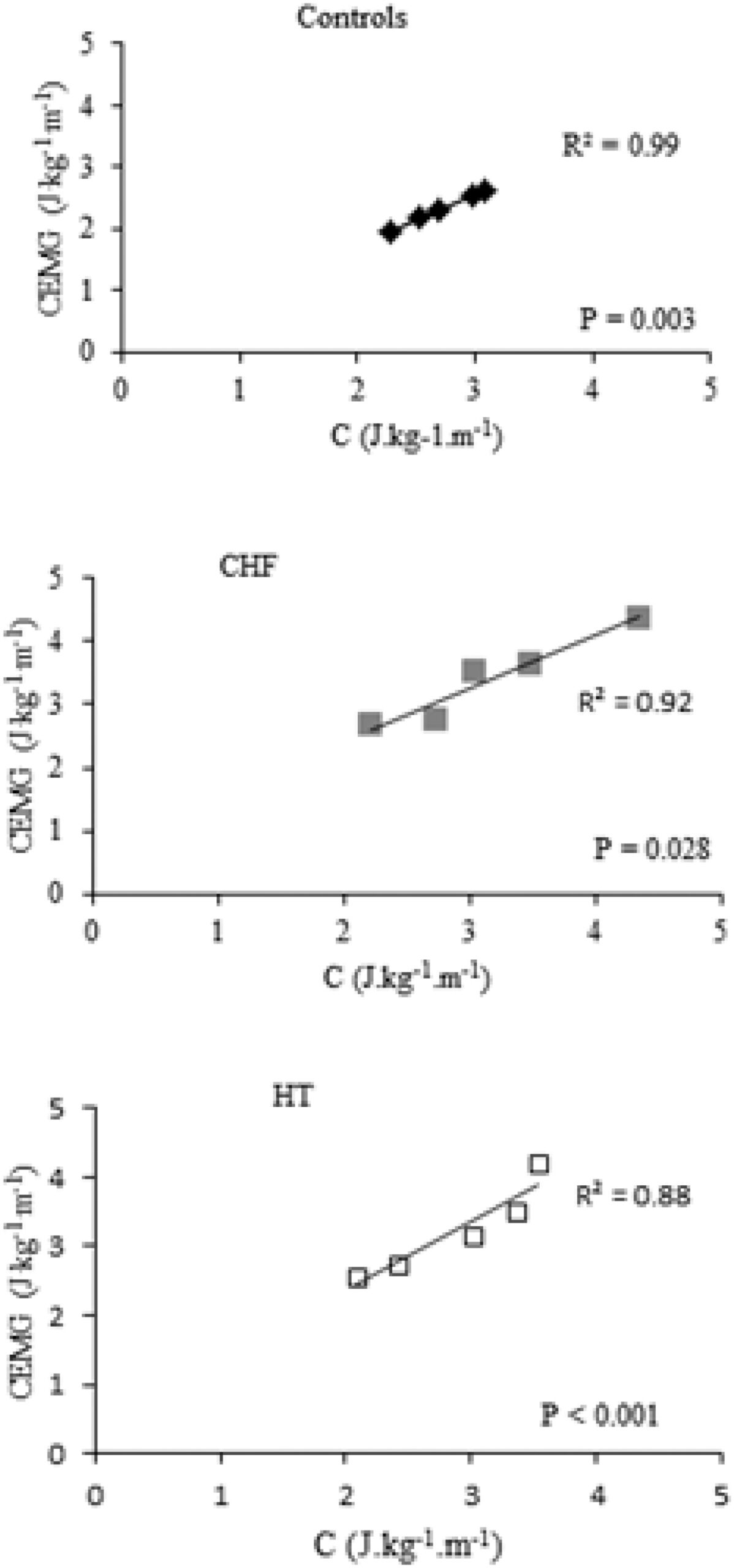
Regression and correlation between cost of transport and electromyographic cost, as well as correlation between oxygen consumption and muscle coactivation in patients and controls at five different walking speeds have been performed, with alpha = 0.05.

Results:

Strong correlation values (r controls: 0.99; chronic heart failure: 0.92; heart transplant: 0.88) indicate a linear relationship between the cost of transport and electromyographic cost. Oxygen consumption was significantly correlated to muscle activation in all groups.

Conclusion:

These results suggested that dynamic muscle coactivation was an important factor, especially for CHF and HT. These data support the idea that peripheral muscle limitations play an important role in people with CHF and HT. These findings indicate a strong relation between metabolic and electromyographic variables. For chronic heart failure and heart transplant patients, it can help to explain some difficulties in daily activities and aid in physical rehabilitation.

  • Costs and Analysis
  • Electromyographic/methods
  • Gait
  • Heart Failure
  • Heart Transplantation
  • Running
  • Transportation
  • walking
Read Full Article
Creative Commons Attribution (CC BY) Creative Commons license
26/07/2021 DOI: 10.36660/ijcs.20200063 Views 1
ABC
Original Article

Association between Leisure Time Physical Activity and HDL-C in the Elsa-Brasil Study Participants: Are There Any Gender Differences in the Dose-Response Effect?

Francisco José Gondim Pitanga et al. Rosane Harter Griep Maria da Conceição Almeida Maria de Jesus Mendes da Fonseca … Andreia Rios de Souza Raiane de Carvalho Silva Sheila Maria Alvim Matos

Abstract

Background

High levels of high-density lipoprotein (HDL-C) are known for their protective effect against cardiovascular diseases and the regular practice of leisure time physical activity (LTPA) may be associated with their increase.

Objective

To verify the existence of differences between genders in the dose-response effect regarding the association between LTPA and HDL-C in the ELSA-Brasil study cohort.

Methods

Cross-sectional study with data from wave 2 of 13,931 participants of both genders (7,607 women) from the Longitudinal Study of Adult Health ELSA-Brasil. The LTPA was measured using the International Physical Activity Questionnaire (IPAQ) and classified into four categories: sedentary, low active, active and very active. The discriminatory power of LTPA at different intensities analyzed for high HDL-C was tested using ROC curves. Associations, adjusted for confounders between LTPA and HDL-C were analyzed by logistic regression. A 95% confidence interval was used.

Results

A positive association, with a dose-response effect, was observed between LTPA and HDL-C in both men and women. With regard to intensity, only vigorous physical activity discriminated high HDL-C in men, while both walking and moderate and vigorous physical activity discriminated high HDL-C in women.

Conclusions

LTPA shows a positive association with gradient dose-response and HDL-C, but in men, the association is not observed for those classified as physically unfit. In women, both walking intensity and moderate or vigorous physical activity can discriminate high HDL-C levels, whereas only vigorous intensity-exercise discriminate elevated HDL-C levels in men, demonstrating that males need to do more physical activity for this benefit to be observed.

  • Cardiovascular Diseases
  • Cross-Sectional Studies
  • Epidemiology
  • Exercise
  • HDL, Cholesterol
  • Physical activity
  • walking
Read Full Article
Creative Commons Attribution (CC BY) Creative Commons license
02/07/2021 DOI: 10.36660/abc.20200438 Views 1
Figure 1
ABC
Original Article

Walking Training Improves Ambulatory Blood Pressure Variability in Claudication

Marcel da Rocha Chehuen et al. Gabriel Grizzo Cucato Celso Ricardo Fernandes de Carvalho Antonio Eduardo Zerati … Anthony Leicht Nelson Wolosker Raphael Mendes Ritti-Dias Claudia Lucia de Moraes Forjaz

Background:

Walking training (WT) improves walking capacity and reduces clinic blood pressure (BP) in patients with peripheral artery disease (PAD), but its effects on ambulatory BP remains unknown.

Objective:

To investigate the effect of 12 weeks of WT on ambulatory BP and its variability in patients with PAD.

Methods:

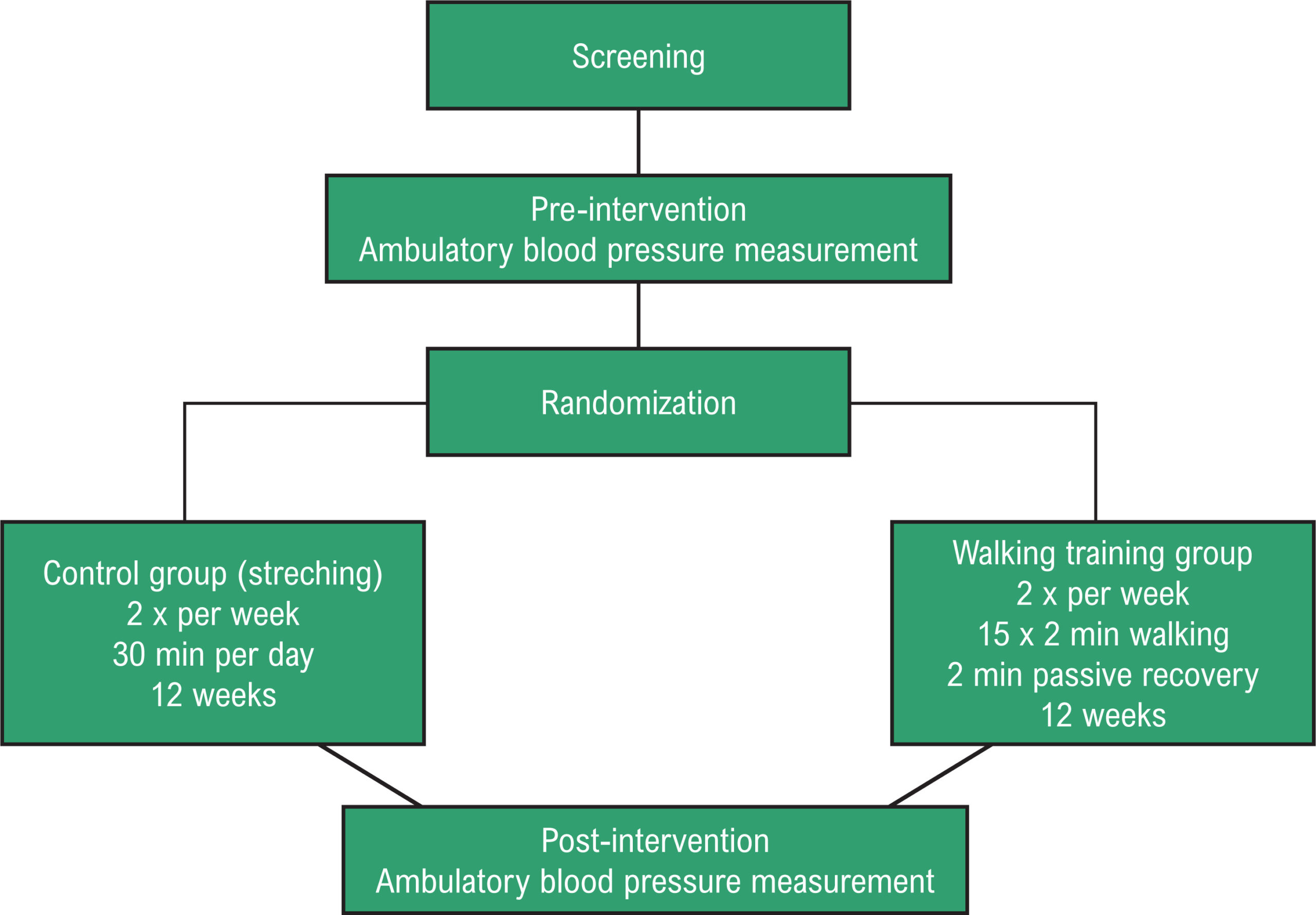
Thirty-five male patients with PAD and claudication symptoms were randomly allocated into two groups: control (n = 16, 30 min of stretching) and WT (n = 19, 15 bouts of 2 min of walking at the heart rate of leg pain threshold interspersed by 2 min of upright rest). Before and after 12 weeks, 24-hour ambulatory BP was assessed. Ambulatory BP variability indices assessed at both time points included the 24-hour standard deviation (SD24), the awake and asleep weighted standard deviation (SDdn), and the 24-hour average real variability (ARV24). Data were analyzed by mixed two-way ANOVAs, considering P<0.05 as significant.

Results:

After 12 weeks, neither group had significant changes in 24-hour, awake and sleep BPs. The WT decreased systolic and mean BP variabilities (Systolic BP – 13.3±2.8 vs 11.8±2.3, 12.1±2.84 vs 10.7±2.5 and 9.4±2.3 vs 8.8±2.2 mmHg); Mean BP – 11.0±1.7 vs 10.4±1.9, 10.1±1.6 vs 9.1±1.7 and 8.0.±1.7 vs 7.2±1.5 mmHg) for SD24, SDdn and ARV24, respectively). Neither group had significant changes in diastolic BP variabilities after 12 weeks.

Conclusions:

The WT does not change ambulatory BP levels but decreases ambulatory BP variability in patients with PAD. This improvement may have a favorable impact on the cardiovascular risk of patients with symptomatic PAD. (Arq Bras Cardiol. 2021; 116(5):898-905)

  • Blood Pressure
  • Blood Pressure Monitoring, Ambulatory
  • Endurance Training
  • Intermittent Claudication
  • Muscle Weakness
  • walking
Read Full Article
Creative Commons Attribution (CC BY) Creative Commons license
17/05/2021 DOI: 10.36660/abc.20190822 Views 1
ABC
Editorial

Walking Training Improve Ambulatorial Blood Pressure Variability in Claudicants

Leandro Franzoni et al. Gabriel Pereira de Reis Zubaran Stephanie Bastos da Motta

Peripheral arterial disease (PAD) has been shown to be increasingly prevalent worldwide. Clinical diagnosis is based on evaluation of the ankle brachial index (ABI), where the ankle systolic blood pressure (BP) is divided by the systolic BP of the arm.² Value <0.9 indicate the presence of PAD. Reduction in systolic BP of the ankle is due to atherosclerosis in the lower limbs. Individuals with PAD have significant hemodynamic abnormalities, such as an increase in BP levels. In addition, high BP variability is correlated with the development of PAD in diabetic individuals.

It is important to reduce BP levels in PAD individuals. Physical training is a useful tool that can assist the treatment of clinical symptoms., It was what Chehuen et al. did; they investigated the effect of walking training (WT) on ambulatory BP variability in PAD individuals. It is an elegant randomized clinical trial in which individuals with PAD and claudication symptoms were divided into two groups: control (n=16) and WT (n=19). 24-hour ambulatory BP was assessed before and after 12 weeks. As an outcome, they evaluated the mean systolic BP and ambulatory diastolic BP, as well as variables representing systolic, diastolic and average BP variability (24-hour standard deviation – SD24, awake and asleep weighted standard deviation – SDdn, and 24-hour average real variability – ARV24).

[…]

  • Ankle Brachial Index
  • Arterial Pressure
  • Atherosclerosis
  • Diabetes Melllitus
  • Intermittent Clauduication
  • Peripheral Arterial Disease
  • Prevalence
  • walking
Read Full Article
Creative Commons Attribution (CC BY) Creative Commons license
17/05/2021 DOI: 10.36660/abc.20210140
ABC
Editorial

Can Long-Distance Walking alter Cardiac Biomarkers and Echocardiographic Variables Related to Diastolic Function?

Leandro Franzoni

Walking is one of the most practiced physical activities worldwide. It is also included in physical exercise programs aiming at improving the health-related parameters in different populations., Therefore, the demand for amateur events encompassing walking has been increasing, especially those related to nature and the culture of a specific region. One of the best known amateur events in the world that involves walking is the “Camino de Santiago de la Compostela”. Moreover, here in Brazil, we have the “Rota das Missões”, located in the south of the country. The trajectories can have different distances, reaching nearly 40km of walking on the same day. These are two examples of activities that involve walking and add a cultural experience to the event.

In addition to the two abovementioned events, there are long-distance ecological hikes, where participants experience direct contact with nature, going through different terrain characteristics on the same day, reaching a total walking distance of up to 250 km during a 4-day event. We know that each individual responds differently to a certain stimulus; however, walking more than 50 km in one day going up and down slopes, on rough terrain, can have a negative physiological impact on any individual who undergoes this type of modality. In addition to the physiological damage, we are also concerned with the impact on the cardiovascular system in relation to the volume and intensity of this type of modality.,

[…]

  • Biomarkers
  • Blood Pressure
  • Creatin Kinase
  • Echocardiography/methods
  • Natriuretic Peptide, Brain
  • Physical Exertion
  • Troponin T
  • walking
Read Full Article
Creative Commons Attribution (CC BY) Creative Commons license
23/10/2020 DOI: 10.36660/abc.20200457 Views 2
Figure 1
ABC
Original Article

Diastolic Function and Biomarkers of Long-Distance Walking Participants

Maicon Borges Euzebio et al. Priscila Valverde de O. Vitorino Watila Moura Sousa Milena Andrade Melo … Sérgio Henrique Nascente Costa Ana Luiza Lima Sousa Thiago de Souza Veiga Jardim Ana Carolina Arantes Paulo Cesar B. Veiga Jardim Weimar Kunz Sebba Barroso

Abstract

Background:

The effects of long-distance walking on the cardiovascular system have been little studied.

Objectives:

The general objective of this study was to verify these effects on the behavior of diastolic function and the cardiac biomarkers CK-MB (mass), troponin T, and NT-proBNP, in amateur athletes.

Method:

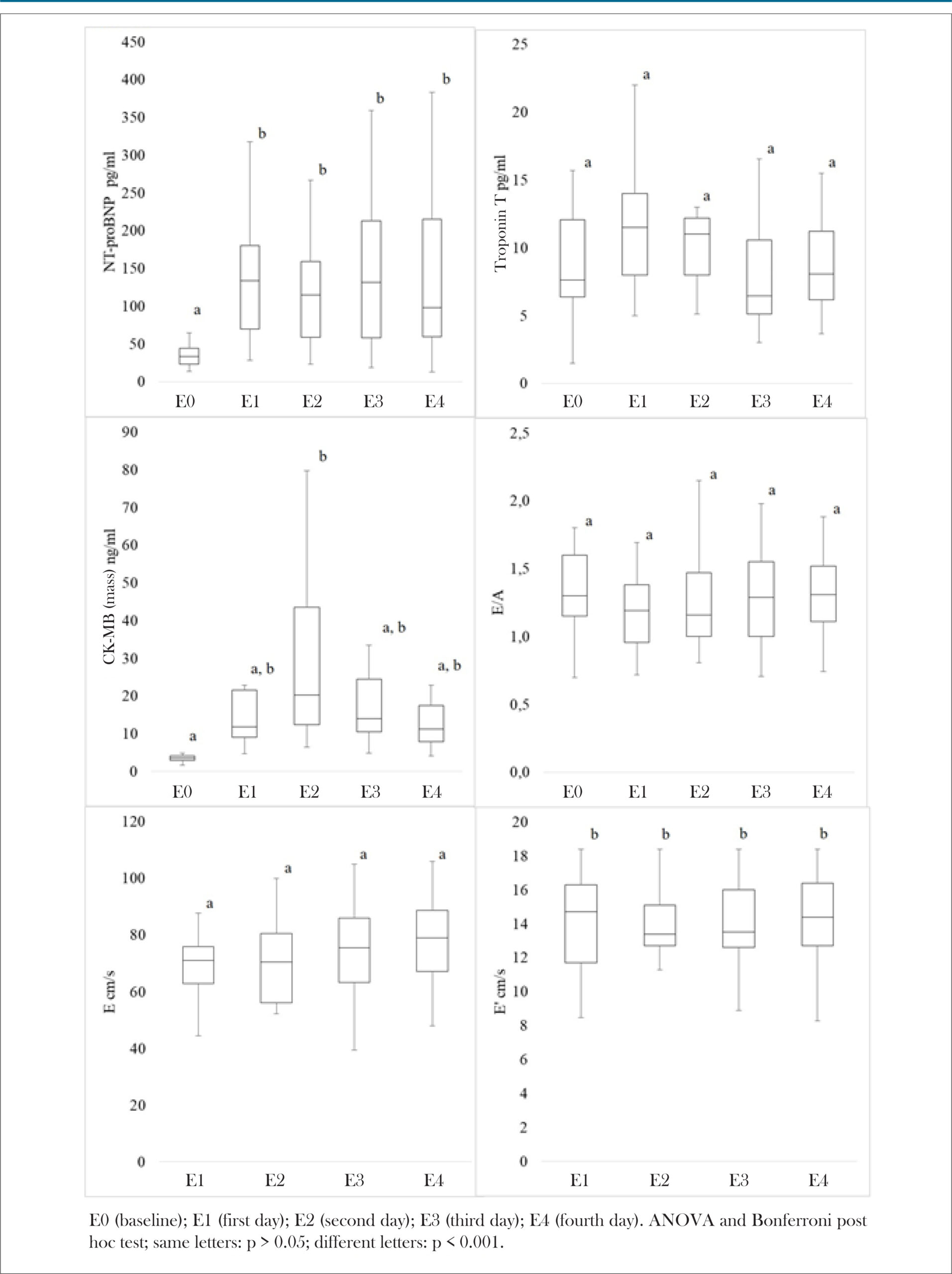
This longitudinal study, conducted in 2015, evaluated participants during the following 5 stages: E0 (baseline) before starting the trajectory and the others, E1, E2, E3, and E4, at the end of each day, totaling 244.7 km. At all stages, the biomarkers NT-proBNP, CK-MB (mass), and troponin T were measured. Echocardiogram was performed to analyze the E, A and E’ waves. P < 0.05 was adopted as significant.

Results:

The study evaluated 25 participants, with an average age of 46 ± 10.5 years and body mass index of 20.2 ± 2.3 kg/m2. Increased values were found for NT-proBNP from E0 to E1, E2, E3, and E4 (p < 0.001), CK-MB (mass) from E0 to E2 (p < 0.001), and E' wave from E0 to E1, E2, E3, and E4 (p < 0.001). Positive correlations were identified between the following: CK-MB (mass) and troponin T (E1: r = 0.524, p = 0.010; E4: r = 0.413, p = 0.044); CK-MB (mass) and NT-proBNP (E4: r = 0.539, p = 0.006); and E/A and E' (E0: r = 0.603, p < 0.001; E1: r = 0.639, p < 0.001; E4: r = 0.593, p = 0.002). A negative correlation was found between CK-MB (mass) and E/A (E1: r = −0.428, p = 0.041).

Conclusion:

The effects of intense, prolonged, and interspersed physical activity were verified based on significant variations in the behavior of CK-MB (mass), NT-proBNP, and the E’ wave. Notwithstanding the alterations found, there were no criteria suggestive of myocardial damage

  • Athletes
  • Biomarkers, Biological
  • Blood Pressure
  • Echocardiography, Doppler/methods
  • Natriuretic Peptide, Brain
  • Troponin T
  • walking
Read Full Article
Creative Commons Attribution (CC BY) Creative Commons license
23/10/2020 DOI: 10.36660/abc.20190271 Views 1
Figure 1
IJCS
Original Article

Moderate-Intensity Walking Training Improves Depressive Symptoms and Pain in Older Adults with Good Quality of Life: A Controlled Randomized Trial

Silvio Lopes Alabarse et al. Hélio José Coelho Júnior Ricardo Yukio Asano Braulio Luna Filho … Wagner Correa Santos Japy Angelini Oliveira Filho

Abstract

Background:

Walking training can be an adequate choice to improve physical and psychological conditions in the elderly. Studies have reported positive changes in the quality of life, depressive symptoms and pain. However, baseline characteristics of volunteers have been controlled, and some of previous studies have not investigated these parameters concomitantly.

Objectives:

To assess the effects of moderate-intensity walking on quality of life, depressive symptoms and physical pain in physically active elderly individuals.

Methods:

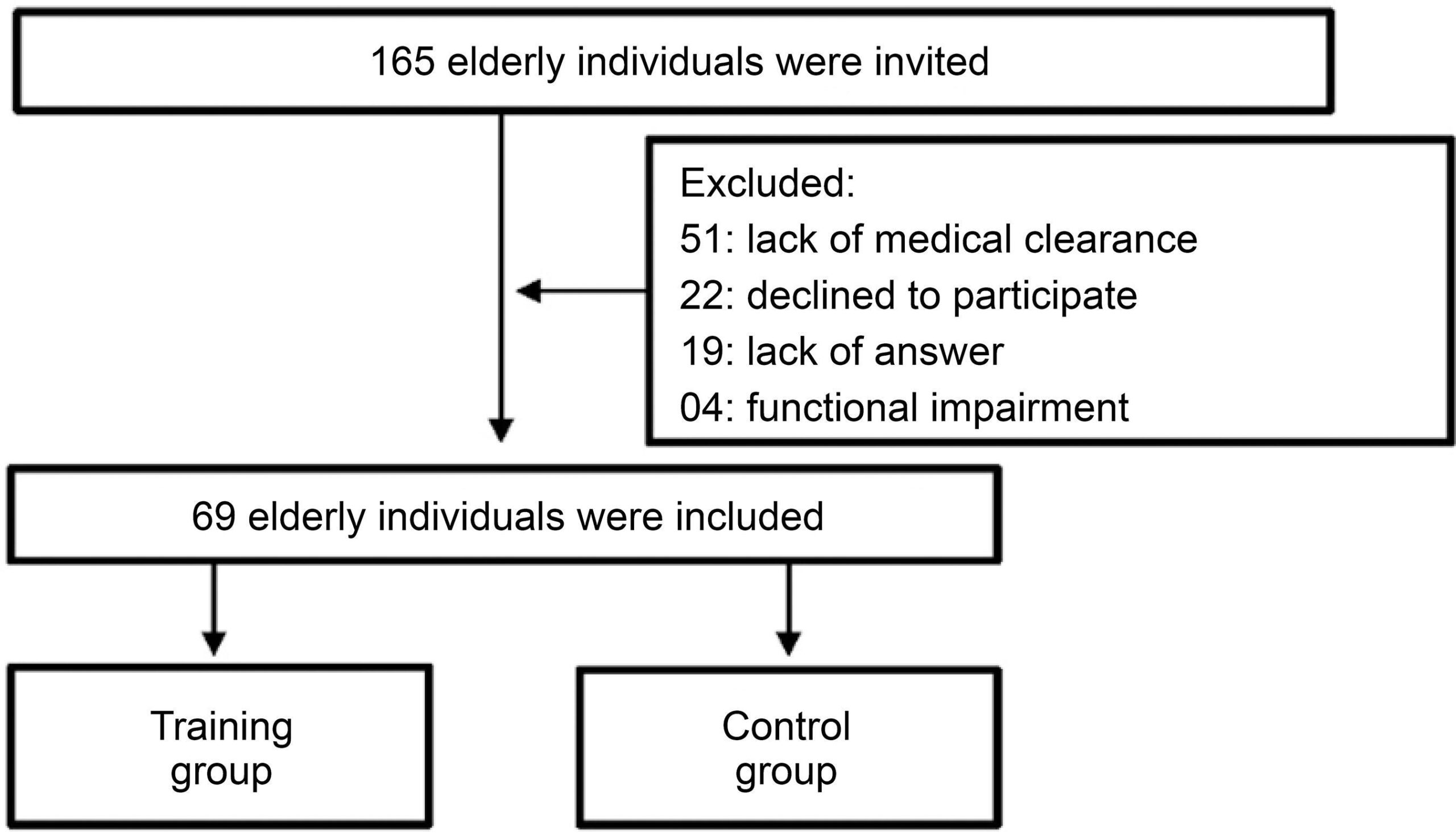
Sixty-nine subjects were recruited and allocated into two groups: training group (n = 40) and control group (n = 29). All were evaluated for quality of life, depressive symptoms and pain. Training group underwent 40 minutes of walking (50-70% of maximum heart rate), 3 days a week for 12 weeks. For statistical analysis, we used the Kolmogorov-Smirnov test, Student’s t-test and Split-Plot ANOVA with Bonferroni post hoc, Pearson correlation. Significance level was set at 5%.

Results:

After 12 weeks of training, depressive symptoms and physical pain significantly reduced in the training group (2.7 ± 2.4 to 1.9 ± 1.8 and 4.3 ± 3.1 to 2.8 ± 2.9, respectively) compared with baseline values, and remained unchanged in the control group. There was a positive, moderate correlation between depressive symptoms and pain (r = 0.30).

Conclusion:

physically active elderly individuals with good quality of life show improved depressive symptoms after a short-term moderate-intensity walking training program.

  • Aged
  • Depression
  • pain
  • Quality of life
  • walking
  • Walking Speed
Read Full Article
Creative Commons Attribution (CC BY) Creative Commons license
01/04/2019 DOI: 10.5935/2359-4802.20190026 Views 1
Figure 1
IJCS
Original Article

Assessment of Central Blood Pressure and Arterial Stiffness in Practicing Long-Distance Walking Race

Edison Nunes Pereira et al. Priscila Valverde de Oliveira Vitorino Weimar Kunz Sebba Barroso de Souza Mariana Cardoso Pinheiro … Ana Luiza Lima Sousa Paulo Cesar Brandão Veiga Jardim Jeeziane Marcelino Rezende Antonio Coca

Abstract

Background:

An ecological hiking occurs yearly in Brazil. It is a unique event because of its distance (310 km) and dynamics (mean of 62 km/day for 5 days with mean pace of 7.6 km/h). Although beneficial effects of moderate-intensity exercises are well-known, the effects of intense and long-duration exercise still require study.

Objective:

To evaluate the effects of mixed walking/running race on various blood pressure (BP) parameters 30 days before (A0), on the 2nd (A2), 3rd (A3), and 4th (A4) days after completing the day’s stage.

Methods:

Central systolic (cSBP) and diastolic BP (cDBP), peripheral systolic (pSBP) and diastolic BP (pDBP), central pulse pressure (cPP), peripheral pulse pressure (pPP), amplified pulse pressure (aPP), corrected augmentation index (AIx75%) and pulse wave velocity (PWV) were measured using an oscillometric Mobil-O-Graph® (IEM, Stolberg, Germany) in 25 male athletes (mean age of 45.3 ± 9.1 years). A p value < 0.05 was considered a statistically-significant difference.

Results:

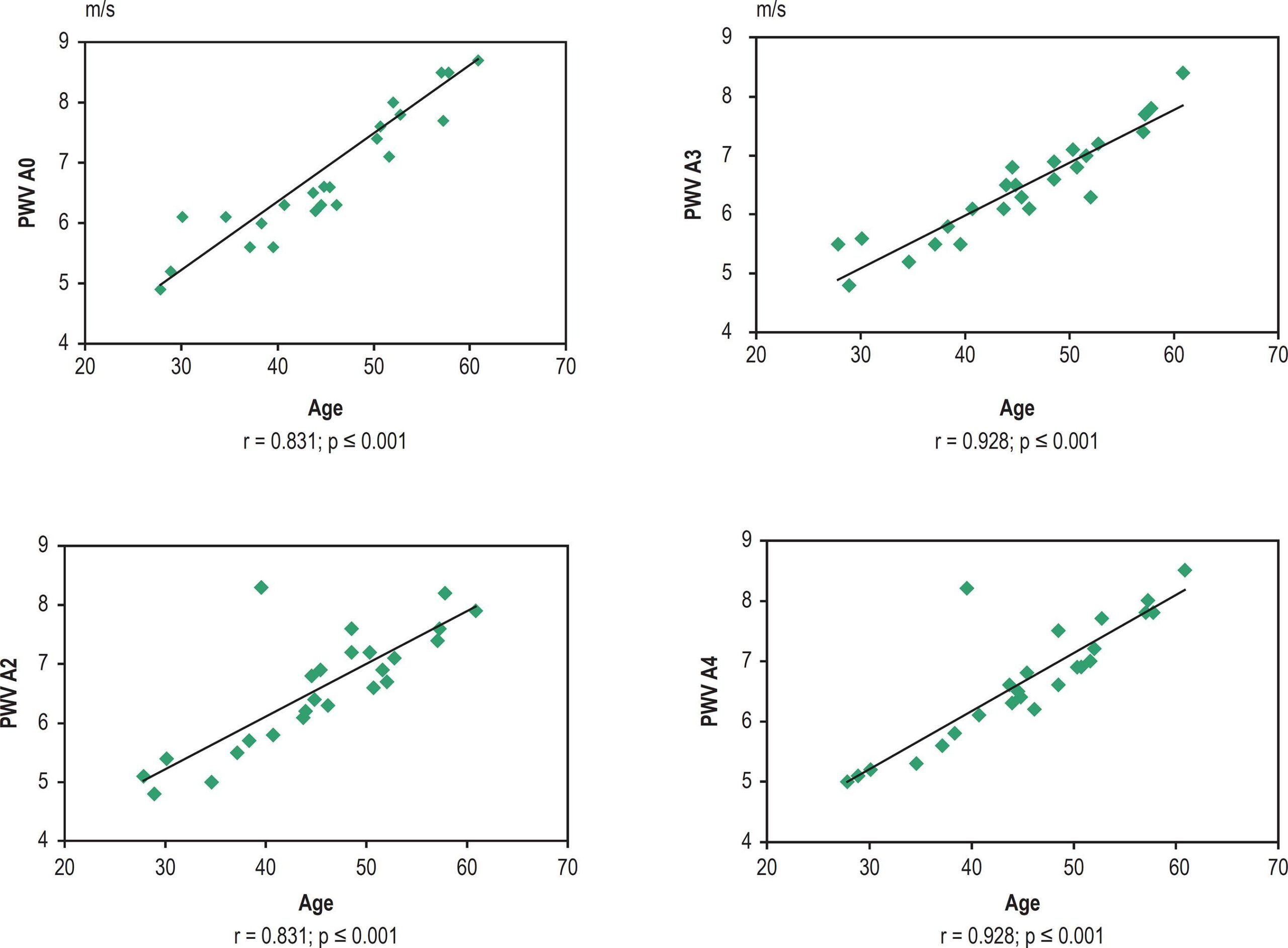
cSBP decreased from A0 to A2 (109.5 to 118.1 mmHg) and from A0 to A3 (109.5 to 102.5 mmHg); pPP decrease from A0 to A2 (49.2 to 38.2 mmHg) and from A0 to A4 (49.2 to 41.2 mmHg); aPP decrease from A0 to A1 (15.6 to 9.5 mmHg), from A0 to A2 (15.6 to 8.0 mmHg) and from A0 to A3 (15.6 to 11.2 mmHg). PWV correlated with age.

Conclusions:

Blood pressure dropped on the first days of the race and returned to close to baseline values at the end. PWV correlates strongly with age. This type of exercise promotes effects on BP and PWV similar to those seen in long-duration, high-intensity sports. These changes in trained healthy individuals do not seem to increase cardiovascular risks. This was the first study to assess the effects of this type of exercise on the cardiovascular system.

  • Blood Pressure
  • Exercise
  • Hypertension
  • Pulse Wave Analysis
  • Vascular Stiffness
  • walking
Read Full Article
Creative Commons Attribution (CC BY) Creative Commons license
21/09/2017 DOI: 10.5935/2359-4802.20170076 Views 1
IJCS
Original Article

Correlation between Length of Hospital Stay and Gait Speed in Patients Submitted to Cardiac Surgery

André Luiz Lisboa Cordeiro et al. Daniel Lago Borges Max Paulo Peruna André Raimundo Guimarães Lucas de Assis Cacau

Abstract

Background:

Cardiovascular diseases have been increasing worldwide in recent decades due to the increased occurrence of triggering factors. In the postoperative period of cardiovascular surgery, patients experience a functional decline, which may be potentiated by the length of hospital stay. Therefore, it is important to evaluate these patients’ functional capacity.

Objective:

To compare the length of hospital stay with the gait speed in patients undergoing cardiac surgery.

Method:

Prospective, cohort study carried out at the Instituto Nobre de Cardiologia (Incardio) at Santa Casa de Misericórdia (Feira de Santana, Bahia). Upon discharge, all patients were evaluated with the 6-minute walk test (6MWT). The length of hospital stay in the postoperative period was also recorded at the same time and correlate with the gait speed. We used the Kolmogorov-Smirnov test to evaluate the assumption of normality, and Spearman’s correlation to correlate the gait velocity with age, length of hospital stay, and duration of cardiopulmonary bypass (CPB) and invasive mechanical ventilation (IMV). All conclusions were based on a significance level of 5%.

Results:

In all, 64 patients were included (33 males [51.5%], mean age 57.2 ± 14.06 years). The mean distance walked by the patients was 375.8 ± 197.6 meters, the mean gait speed was 0.98 ± 0.53 m/s, and the mean hospital stay was 8.2 ± 2.3 days. A weak correlation was observed between the length of hospital stay and gait speed (r = 0.27 and p = 0.02).

Conclusion:

The length of hospital stay correlated weakly with the gait speed upon hospital discharge in a sample of patients undergoing cardiac surgery.

Trial registration:

Registered at CAAE (41151214.5.0000.5654) on June 26, 2015.

  • Cardiovascular Diseases/surgery
  • Hospitalization
  • Physiotherapy
  • Thoracic Surgery
  • Velocity Measurement
  • walking
Read Full Article
Creative Commons Attribution (CC BY) Creative Commons license
01/01/2017 DOI: 10.5935/2359-4802.20170029
Figure 1
ABC
Original Article

Validation of a Brazilian Portuguese Version of the Walking Estimated-Limitation Calculated by History (WELCH)

Gabriel Grizzo Cucato et al. Marilia de Almeida Correia Breno Quintella Farah Glauco Fernandes Saes … Aluísio Henrique de Andrade Lima Raphael Mendes Ritti-Dias Nelson Wolosker

Abstract

Background:

The Walking Estimated-Limitation Calculated by History (WELCH) questionnaire has been proposed to evaluate walking impairment in patients with intermittent claudication (IC), presenting satisfactory psychometric properties. However, a Brazilian Portuguese version of the questionnaire is unavailable, limiting its application in Brazilian patients.

Objective:

To analyze the psychometric properties of a translated Brazilian Portuguese version of the WELCH in Brazilian patients with IC.

Methods:

Eighty-four patients with IC participated in the study. After translation and back-translation, carried out by two independent translators, the concurrent validity of the WELCH was analyzed by correlating the questionnaire scores with the walking capacity assessed with the Gardner treadmill test. To determine the reliability of the WELCH, internal consistency and test–retest reliability with a seven-day interval between the two questionnaire applications were calculated.

Results:

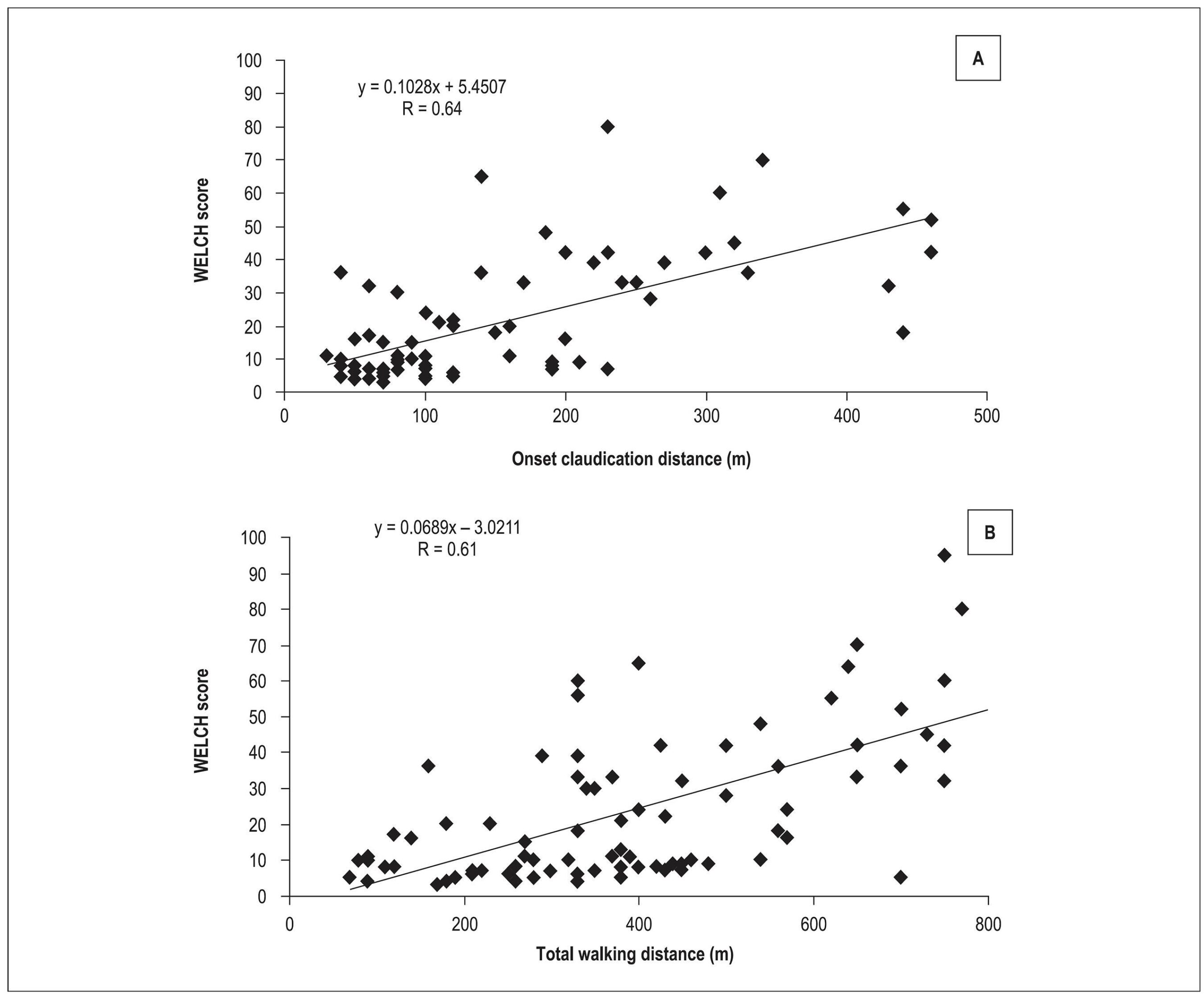
There were significant correlations between the WELCH score and the claudication onset distance (r = 0.64, p = 0.01) and total walking distance (r = 0.61, p = 0.01). The internal consistency was 0.84 and the intraclass correlation coefficient between questionnaire evaluations was 0.84. There were no differences in WELCH scores between the two questionnaire applications.

Conclusion:

The Brazilian Portuguese version of the WELCH presents adequate validity and reliability indicators, which support its application to Brazilian patients with IC.

  • Brazil
  • Disability Evaluation
  • Gait
  • Intermittent Claudication
  • Predictive Value of Tests
  • questionnaires
  • walking
Read Full Article
Creative Commons Attribution (CC BY) Creative Commons license
08/12/2015 DOI: 10.5935/abc.20160004 Views 2
Figure 1
ABC
Artigo Original

Heart Rate Recovery in the First Minute at the Six-Minute Walk Test in Patients with Heart Failure

Sabrina Lindemberg et al. Sergio Chermont Mônica Quintão Milena Derossi … Sergio Guilhon Sabrina Bernardez Luana Marchese Wolney Martins Antônio Claudio L. Nóbrega Evandro Tinoco Mesquita

Background:

Heart rate recovery at one minute of rest (HRR1) is a predictor of mortality in heart failure (HF), but its prognosis has not been assessed at six-minute walk test (6MWT) in these patients.

Objective:

This study aimed to determine the HRR1 at 6MWT in patients with HF and its correlation with six-minute walk distance (6MWD).

Methods:

Cross-sectional, controlled protocol with 161 individuals, 126 patients with stable systolic HF, allocated into 2 groups (G1 and G2) receiving or not β-blocker and 35 volunteers in control group (G3) had HRR1 recorded at the 6MWT.

Results:

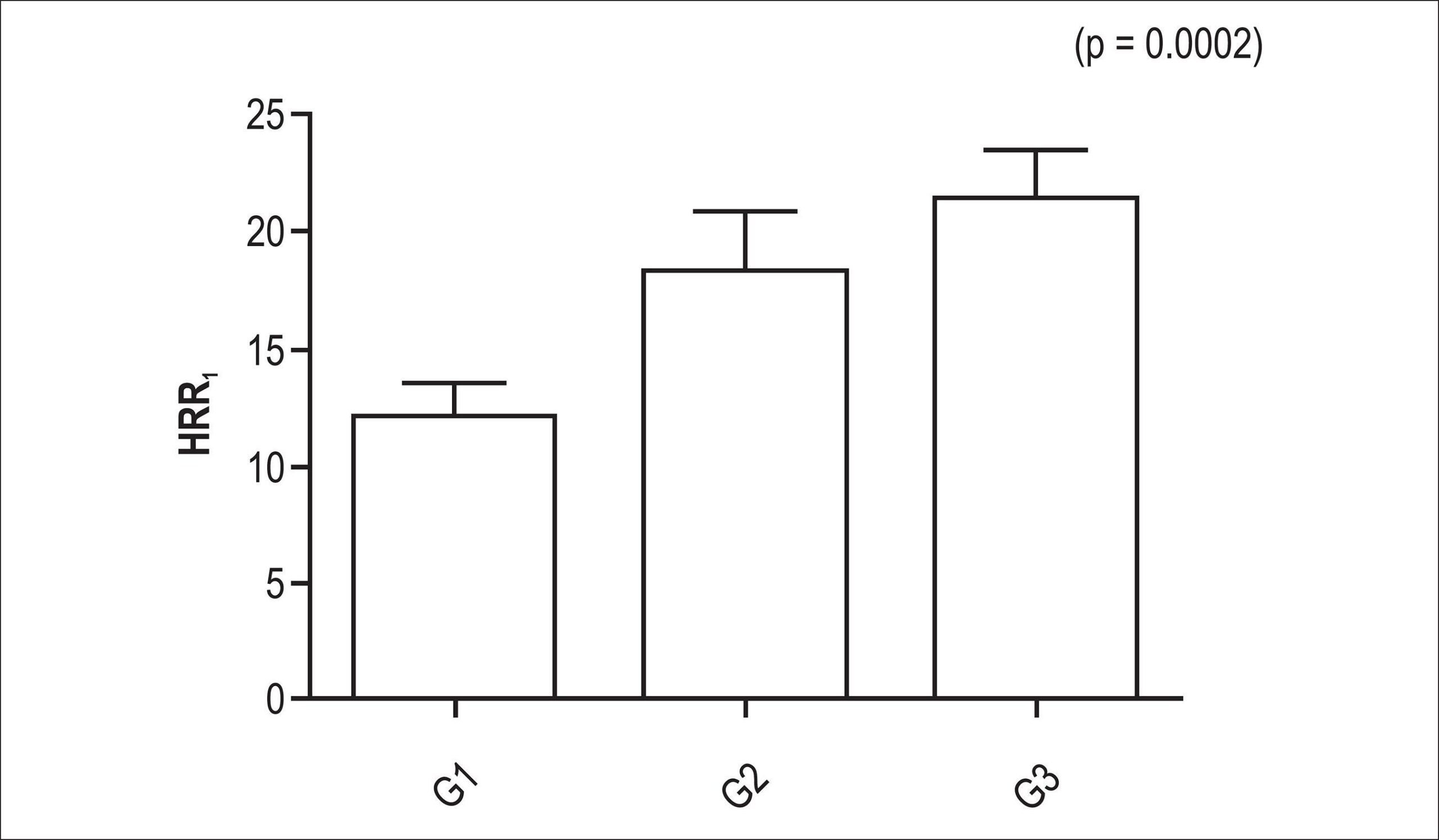
HRR1 and 6MWD were significantly different in the 3 groups. Mean values of HRR1 and 6MWD were: HRR1 = 12 ± 14 beat/min G1; 18 ± 16 beat/min G2 and 21 ± 13 beat/min G3; 6MWD = 423 ± 102 m G1; 396 ± 101m G2 and 484 ± 96 m G3 (p < 0.05). Results showed a correlation between HRR1 and 6MWD in G1(r = 0.3; p = 0.04) and in G3(r = 0.4; p= 0.03), but not in G2 (r= 0.12; p= 0.48).

Conclusion:

HRR1 response was attenuated in patients using βB and showed correlation with 6MWD, reflecting better exercise tolerance. HRR1 after 6MWT seems to represent an alternative when treadmill tests could not be tolerated.

  • Exercise
  • Heart Failure
  • Heart Rate
  • walking
Read Full Article
Creative Commons Attribution (CC BY) Creative Commons license
01/03/2014 DOI: 10.5935/abc.20140036 Views 1
ABC
Artigo Original

Hemodynamic profile of severity at pulmonary vasoreactivity test in schistosomiasis patients

Flávio A. A. Japyassú et al. Adriano A. Mendes Ângela P. Bandeira Flávio R. A. Oliveira Dário Sobral Filho

BACKGROUND: The pulmonary vasoreactivity rate of Schistosomal Pulmonary Artery Hypertension (SPAH) is not known. Hemodynamic data obtained by cardiac catheterization are associated with the most commonly used clinical criteria of severity. OBJECTIVE: To estimate the percentage of positive vasoreactivity to nitric oxide in schistosomal pulmonary arterial hypertension and verify the association of hemodynamic parameters with WHO functional classification and the six-minute walk test in these patients. METHODS: A total of 84 patients with schistosomal pulmonary hypertension were selected from a database, who had been submitted to the right and left cardiac catheterization and pulmonary vasoreactivity test with nitric oxide. Data on WHO functional classification and six-minute walk test were collected for comparison with invasive data. RESULTS: Of the 84 patients with SPAH, 3 (3.5%) had positive criteria for pulmonary vasoreactivity. The increase in pulmonary vascular resistance was significantly associated with lower exercise capacity measured by the six-minute walk test (p = 0.045) and greater symptom severity by higher functional classifications (WHO class III/IV) (p = 0.013). The decrease in oxygen saturation in the pulmonary artery was significantly associated with higher functional classifications (p = 0.041). CONCLUSION: The pulmonary response rate to the vasodilation test of schistosomiasis patients is below the values found for idiopathic pulmonary hypertension. Pulmonary vascular resistance and oxygen saturation in the pulmonary artery are hemodynamic data that can be used as markers of severity in schistosomal pulmonary hypertension.

  • Pulmonary Artery
  • Pulmonary Hypertension
  • Schistosomiasis
  • Vascular Resistance
  • walking
Read Full Article
Creative Commons Attribution (CC BY) Creative Commons license
26/07/2012 DOI: 10.1590/S0066-782X2012005000071 Views 1
Functional limitation and intermittent claudication: impact of blood pressure measurements
ABC
Artigo Original

Functional limitation and intermittent claudication: impact of blood pressure measurements

Rita de Cássia Gengo e Silva et al. Cassiana Rosa Galvão Giribela Nelson Wolosker Fernanda Marciano Consolim-Colombo

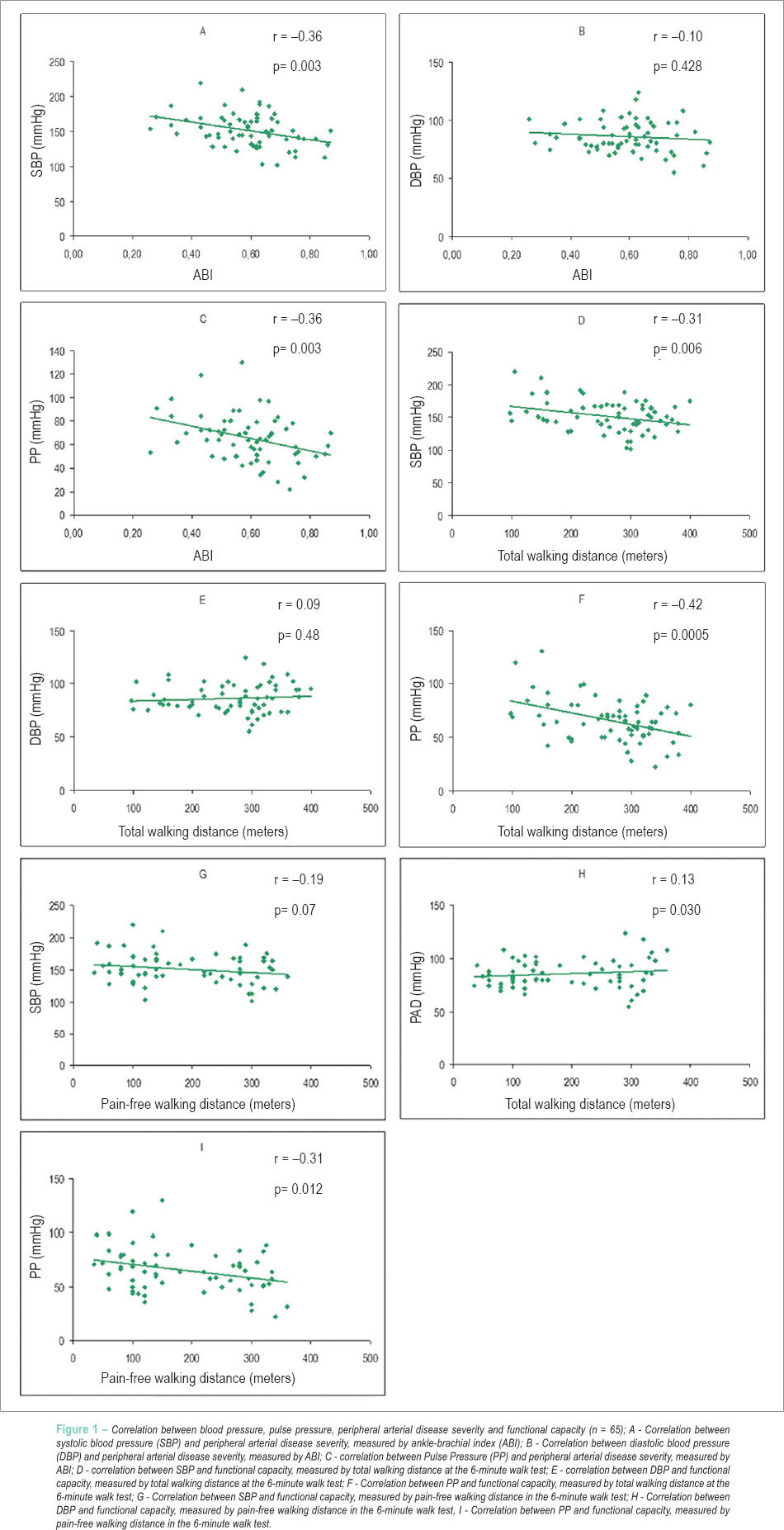
BACKGROUND: Arterial hypertension is an important risk factor for Lower-Limb Occlusive Arterial Disease (LLOAD). However, the correlation between blood pressure and pulse pressure (PP) with LLOAD severity and functional impairment resulting from this disease is not well established in the Brazilian population. OBJECTIVE: To verify whether there is a correlation between blood pressure, PP, LLOAD severity and functional capacity in patients with symptomatic LLOAD. METHODS: A total of 65 patients (62.2 + 8.1 years, 56.9% males) were evaluated. They were divided into two groups: normal (A) and high (B) blood pressure. LLOAD severity was assessed using the ankle-brachial index (ABI) and functional capacity by the total and pain-free walking distance at the 6-minute walking test (6MWT). RESULTS: Group A consisted of 17 (26.1%) patients. The systolic (SBP), diastolic blood pressure (DBP), and PP were, respectively, 125.4 ±11.7, 74.5 ± 9.1 and 50.9 ± 10.0 mmHg in group A and 160.7 ± 19.6, 90.0 ± 12.2 and 70.7 ± 20.2 mmHg in group B. The ABI was significantly lower in group B (0.66 ± 0.12 vs. 0.57 ± 0.13, p 40 mmHg walked shorter distances. CONCLUSION: SBP and PP significantly correlated with the distances walked in the 6MWT, suggesting they are clinical markers of functional capacity impairment in patients with symptomatic LLOAD.

  • Blood Pressure
  • Hypertension
  • Intermittent Claudication
  • Peripheral Arterial Disease
  • walking
Read Full Article
Creative Commons Attribution (CC BY) Creative Commons license
06/01/2012 DOI: 10.1590/S0066-782X2012005000001 Views 2
Heart failure: comparison between six-minute walk test and cardiopulmonary test
ABC
Artigo Original

Heart failure: comparison between six-minute walk test and cardiopulmonary test

Eduardo Elias Vieira de Carvalho et al. Daniela Caetano Costa Júlio César Crescêncio Giovani Luiz De Santi … Valéria Papa Fabiana Marques André Schmidt José Antonio Marin-Neto Marcus Vinícius Simões Lourenço Gallo Junior

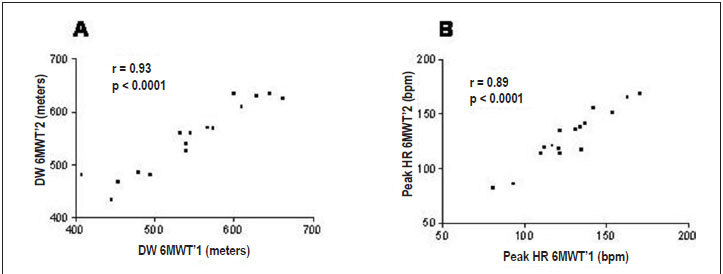
BACKGROUND: Chronic heart failure (HF) is a syndrome characterized by reduced cardiac output in relation to the metabolic needs of the organism, as well as metabolic and neurohormonal axis abnormalities. Symptoms such as fatigue and dyspnoea are notorious and stress tests are widely used to assess functional capacity, prognosis and effectiveness of therapeutic interventions in this syndrome. OBJECTIVE: To evaluate the reproducibility of the six-minute walk test (6MW) in patients with HF and correlate the magnitude of the variables reached at peak exercise of the 6MWT with a cardiopulmonary exercise test (CPET). METHODS: We studied 16 patients (12 men and 4 women) diagnosed with HF FC I-II (NYHA). The volunteers underwent two 6MWT (6MWT’1 and 6MWT’2) with 30-minute interval between them; then, they underwent a maximum CPET. RESULTS: All variables obtained in the two 6MWT’ proved to be significant with high correlations: distance walked (DW) (r = 0.93, p < 0.0001), heart rate (HR) (r = 0.89, p < 0.0001), oxygen consumption (VO2) (r = 0.93, p < 0.0001) and scale of perceived exertion (r = 0.85, p < 0.0001). In turn, all variables analyzed in the 6MWT' showed significant and moderate correlations with the variables obtained from the CPET, namely: peak HR (r = 0.66; p = 0.005); VO2 (r = 0.57; p = 0.02) and VO2 in the CPET and DT in the 6MWT'2 (r = 0.70; p = 0.002). CONCLUSION: The 6MWT was reproducible in this group of patients with HF (NYHA – I-II) and correlated with the CPET. Therefore, it is a tool for reliable evaluation, and a suitable, safe and low-cost alternative for the prescription of aerobic exercise in patients with HF.

  • Exercise
  • Heart Failure
  • Respiratory Function Tests
  • walking
Read Full Article
Creative Commons Attribution (CC BY) Creative Commons license
06/05/2011 DOI: 10.1590/S0066-782X2011005000056 Views 1
ABC
Letter to the Editor

Safety of the cardiopulmonary 6-minute walk test

Guilherme Veiga Guimarães et al. Vitor Oliveira Carvalho Juliana Fernanda Belli

LETTER TO THE EDITOR

[…]

  • Exercise
  • Safety
  • walking
Read Full Article
Creative Commons Attribution (CC BY) Creative Commons license
13/04/2011 DOI: 10.1590/S0066-782X2010001500017 Views 2
ABC
Atualização

Reference equations for the 6-minute walk test in healthy individuals

Victor Zuniga Dourado

El test de caminata de 6 minutos (TC6) ha sido ampliamente utilizado en el ambiente clínico. Algunas ecuaciones de referencia para la previsión de la distancia recorrida en el test (DTC6) están disponibles en la literatura. Esta revisión tuvo como objetivo discutir críticamente los hallazgos de la literatura, publicados en portugués y en inglés (LILACS, SCIELO, MEDLINE y PUBMED), que evaluaron los valores normales y elaboraron ecuaciones de referencia para la previsión de la DTC6 en individuos sanos, comparándolos a los resultados recientemente obtenidos en individuos brasileños. Edad, género, peso, estatura e índice de masa corporal fueron los atributos demográficos y antropométricos más frecuentemente correlacionados con la DTC6. Las ecuaciones resultantes de esos atributos fueron capaces de explicar entre 25 y 66% de la variabilidad total de la DTC6. Lamentablemente, las ecuaciones extranjeras no son adecuadas para la población brasileña. Aun cuando el test es realizado bajo estandarización rigurosa, la diferencia de performance en el TC6 entre extranjeros y brasileños permanece, indicando la necesidad de los valores de referencias específicos para cada población y/o etnia. En ese sentido, las ecuaciones desarrolladas recientemente en el Brasil son, probablemente, las más apropiadas para interpretar la performance de caminata de nuestros compatriotas con enfermedades crónicas que afectan su capacidad para realizar ejercicios. Estudios futuros con muestras substancialmente mayores (p.e. multicéntricos) y con técnica de muestreo randomizada son necesarios para que los valores de referencia de la DTC6 sean más representativos.

  • Exercise
  • Reference Values
  • walking
Read Full Article
Creative Commons Attribution (CC BY) Creative Commons license
25/02/2011 DOI: 10.1590/S0066-782X2011005000024 Views 2
Aerobic exercise improves physical capacity in patients under chronic hemodialysis
ABC
Artigo Original

Aerobic exercise improves physical capacity in patients under chronic hemodialysis

Diane Michela Nery Henrique et al. Maycon de Moura Reboredo Alfredo Chaoubah Rogério Baumgratz de Paula

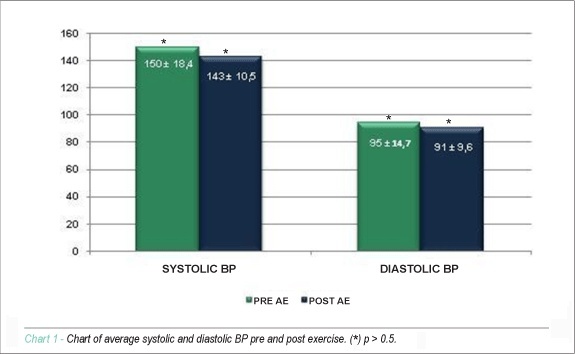
BACKGROUND: In the general population, regular practice of physical exercises is associated with improved physical capacity and reduction of cardiovascular events. Concerning patients with chronic kidney disease, a population with significant impairment of physical capacity and high rates of cardiovascular mortality, few studies have evaluated the effects of physical activity. OBJECTIVE: To evaluate the effect of aerobic exercise during hemodialysis on the physical capacity and blood pressure of patients with chronic renal failure. METHODS: We evaluated 14 patients with chronic kidney disease under hemodialysis, before and after 12 weeks of aerobic exercise performed during hemodialysis sessions. Patients underwent ambulatory blood pressure monitoring for 24 hours, 6-minute walk test and cardiopulmonary exercise test before and after the exercise period. RESULTS: After the exercise, there was a significant increase in the distance walked during the 6-minute walk test from 509 ± 91.9 m to 555 ± 105.8 m, and a significant reduction in systolic blood pressure of 151 ± 18.4 mmHg to 143 ± 14.7 mmHg, diastolic blood pressure of 94 ± 10.5 mmHg to 91 ± 9.6 mmHg and average arterial pressure from 114 ± 13.0 mmHg to 109 ± 11.4 mmHg. CONCLUSION: Aerobic exercise conducted during hemodialysis sessions contributed to the improvement of physical capacity and control of hypertension in patients with chronic kidney disease.

  • Blood Pressure
  • Exercise
  • renal dialysis
  • vital capacity
  • walking
Read Full Article
Creative Commons Attribution (CC BY) Creative Commons license
07/05/2010 DOI: 10.1590/S0066-782X2010005000043 Views 2
Cardiorespiratory and perceptual responses to walking and running at the same speed
ABC
Artigo Original

Cardiorespiratory and perceptual responses to walking and running at the same speed

Walace David Monteiro et al. Claudio Gil Soares de Araújo

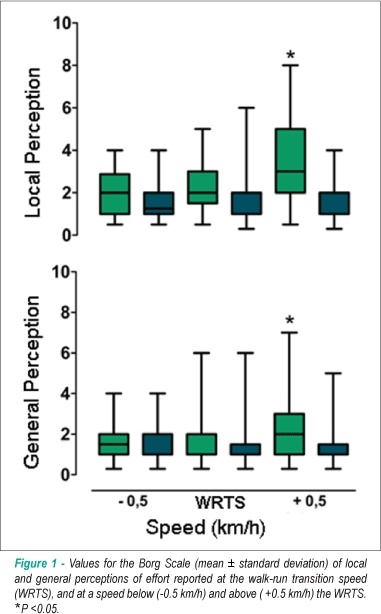
BACKGROUND: It is possible that different forms of locomotion, when carried out at the same speed, may have a distinct influence on the physiological and perceptual responses to exercise. OBJECTIVE: To compare the cardiorespiratory responses and the subjective perception of the effort to walk and run at the same speed, as determined from the walk-run transition speed (WRTS). METHODS: From an initial sample of 453 subjects enrolled in the compulsory military service, 12 young adult men were selected and carefully homogenized as to age, sex, anthropometric characteristics, aerobic condition and experience in a treadmill. In preliminary sessions, the individual WRTS was determined. Thereafter, on three different days, the subjects walked and ran in balanced order, in each of the following speeds: WRTS; WRTS – 0.5 km/h; WRTS + 0.5 km/h, so as to obtain exhaled gases, heart rate (HR) and perception of effort measurements. RESULTS: The protocol for WRTS detection was highly reproducible (r = 0.92, p <0.05). In an intensity of exercise above the WRTS, the perceived effort, the HR, and the ventilatory variables-VE, VO2, VCO2 and R-showed higher values during walking than during running (p 0.05). CONCLUSION: Walking at a speed above the WRTS tends to be more stressful to the subject, from a physiological and perceptual point of view. It seems appropriate to individualize the WRTS and standardize the form of locomotion for determining a more accurate and physiological intensity of the aerobe exercises.

  • Exercise
  • Heart Rate
  • Oxygen Consumption
  • Running
  • walking
Read Full Article
Creative Commons Attribution (CC BY) Creative Commons license
24/11/2009 DOI: 10.1590/S0066-782X2009001000016 Views 1
Analysis of 6-minute walk test safety in pre-heart transplantation patients
ABC
Artigo Original

Analysis of 6-minute walk test safety in pre-heart transplantation patients

Gerson Cipriano Jr et al. Darlene Yuri Graziella França Bernardelli Vanessa Mair … Enio Buffolo João Nelson Rodrigues Branco

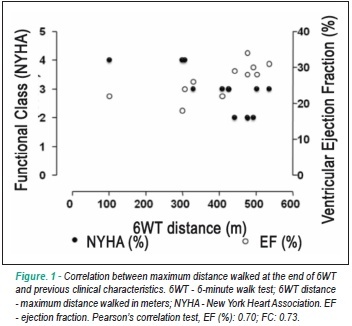
BACKGROUND: The 6-minute walk test (6WT) has been used as a means of assessment of the functional capacity, clinical staging and cardiovascular prognosis. Its safety and metabolic impact have not been frequently described in the literature, especially in patients with severe heart failure with clinical indication for cardiovascular transplantation. OBJECTIVE: To evaluate the occurrence of arrhythmias and cardiovascular changes during 6WT. To correlate 6WT performance with clinical staging and cardiovascular prognosis. METHODS: Twelve patients, 10 of whom males, aged 52 ± 8 years were evaluated at baseline. 6WT was performed with telemetry electrocardiography, vital signs and lactate monitoring. The patients were followed-up for 12 months. RESULTS: The patients walked 399.4±122.5 (D, m), reaching a perceived exertion (PE) of 14.3±1.5 and a 34% baseline heart rate variation. Two patients presented more severe pre-6WT arrhythmia which did not worsen with the exercice, four patients presented a significant increase of blood lactate levels (>5 mmol/dl), and three interrupted the test. The distance walked correlated with the ejection fraction (%) and functional class (NYHA). After 12-month follow-up, three patients died and seven were rehospitalized for cardiac decompensation. The D/PE ratio and 2-minute heart rate recovery (HRR2, bpm) were lower in the death group. CONCLUSION: The clinical and electrocardiographic behaviors suggest that the method is safe, but it may be considered too strenuous for some patients with severe heart failure. Variables related to 6WT performance may be associated with the one-year follow-up mortality.

  • Effectiveness
  • health evaluation
  • Heart Failure
  • walking
Read Full Article
Creative Commons Attribution (CC BY) Creative Commons license
23/06/2009 DOI: 10.1590/S0066-782X2009000400011 Views 2
chocardiography and 6-minute walk test in left ventricular systolic dysfunction
ABC
Artigo Original

chocardiography and 6-minute walk test in left ventricular systolic dysfunction

Venera Berisha et al. Gani Bajraktari Dritero Dobra Edmond Haliti … Reshat Bajrami Shpend Elezi

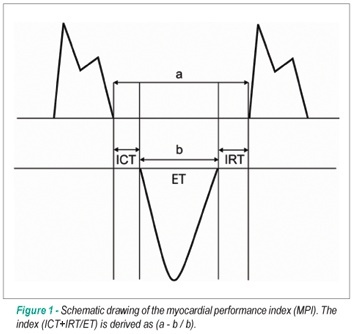
BACKGROUND: Chronic heart failure is a major cardiovascular disorder. OBJECTIVE: The aim of this study was to prospectively examine whether a 6-min walk test (6-MWT) result correlates with echocardiographic variables in patients with left ventricular systolic dysfunction and stable chronic heart failure. METHODS: We prospectively studied 52 patients (65% male; mean age 60±11 years) who had chronic heart failure secondary to ischemic heart disease or idiopathic cardiomyopathy. All patients had left ventricular systolic dysfunction (ejection fraction <0.45), and were in stable NYHA class II or III heart failure. An echo-Doppler study and a 6-MWT were performed on the same day. RESULTS: 6-MWT had moderate, but statistically significant correlation with end-systolic diameter (ESD) (r=-0.46; p=0.0006), with shortening fraction-SF (r=0.52; p=0.0001), and with ejection fraction-EF (r=0.5; p=0.0001), whereas it had poor, but statistically significant correlation with myocardial performance index-MPI (r=-0.39; p=0.0046), E/A(tricuspid) ratio (r=-0.333; p=0.016), pulmonary acceleration time (r=0.328; p=0.018), and lateral long axis amplitude (r=0.283; p=0.04). Linear regression model demonstrated that age (χ2=-0.59, p=<0.001), restrictive transmitral filling pattern (χ2=-0.44, p=0.004) and left ventricular end-systolic dimension (χ2=-0.34, p=0.012) were independent factors that influenced the 6-MWT. CONCLUSION: In patients with heart failure due to left ventricular systolic dysfunction, the 6-MWT as a clinical assessment tool of the functional capacity has a significant correlation with the most important global LV systolic function parameters, as well as with LV MPI. In patients with LV systolic dysfunction, age, restrictive transmitral filling pattern, and left ventricular systolic dimension, were independently associated with the 6-MWT.

  • Echocardiography
  • Heart Failure
  • Quality of life
  • walking
Read Full Article
Creative Commons Attribution (CC BY) Creative Commons license
06/04/2009 DOI: 10.1590/S0066-782X2009000200009 Views 2

How to cite this article

EndNote RIS

Electronic Document Format (Vancouver)

Souza P, Perfete C. The Paradox of Exercise Intensity in Preventing Cardiovascular Events in Peripheral Arterial Occlusive Disease. Arquivos Brasileiros de Cardiologia 2021;117(2):317-8.

Electronic Document Format (ABNT)

Souza, Pablo de; Perfete, Cássio. The Paradox of Exercise Intensity in Preventing Cardiovascular Events in Peripheral Arterial Occlusive Disease. Arquivos Brasileiros de Cardiologia, v. 117, n. 2, p. 317-318, Sep. 2021.

Electronic Document Format (APA)

Souza, P. , & Perfete, C. (2021). The Paradox of Exercise Intensity in Preventing Cardiovascular Events in Peripheral Arterial Occlusive Disease. Arquivos Brasileiros de Cardiologia, 117(2), 317-318.

Electronic Document Format (ISO)

Souza, Pablo de and Perfete, Cássio. The Paradox of Exercise Intensity in Preventing Cardiovascular Events in Peripheral Arterial Occlusive Disease. Arquivos Brasileiros de Cardiologia [online]. 2021, vol. 117, n. 2, [cited 2026-10-14], pp. 317-318. Available from: <https://journals.cardiol.br/en/article/the-paradox-of-exercise-intensity-in-preventing-cardiovascular-events-in-peripheral-arterial-occlusive-disease/>. ISSN 0066-782X

EndNote RIS

Electronic Document Format (Vancouver)

Chehuen M, Andrade-Lima A, Silva Junior N, Miyasato R, Souza RWA, Leicht A, Brum PC, et al. Physiological Responses to Maximal and Submaximal Walking in Patients with Symptomatic Peripheral Artery Disease. Arquivos Brasileiros de Cardiologia 2021;117(2):309-16.

Electronic Document Format (ABNT)

Chehuen, Marcel; Andrade-Lima, Aluisio; Silva Junior, Natan; Miyasato, Roberto; Souza, Rodrigo W. Alves de; Leicht, Anthony; Brum, Patricia Chakur; Oliveira, Edilamar M.; Wolosker, Nelson; Forjaz, Claudia Lucia de Moraes. Physiological Responses to Maximal and Submaximal Walking in Patients with Symptomatic Peripheral Artery Disease. Arquivos Brasileiros de Cardiologia, v. 117, n. 2, p. 309-316, Sep. 2021.

Electronic Document Format (APA)

Chehuen, M., Andrade-Lima, A., Silva Junior, N., Miyasato, R., Souza, R. W. A. , Leicht, A., Brum, P. C., Oliveira, E. M., Wolosker, N., & Forjaz, C. L. M. (2021). Physiological Responses to Maximal and Submaximal Walking in Patients with Symptomatic Peripheral Artery Disease. Arquivos Brasileiros de Cardiologia, 117(2), 309-316.

Electronic Document Format (ISO)

Chehuen, Marcel and Andrade-Lima, Aluisio and Silva Junior, Natan and Miyasato, Roberto and Souza, Rodrigo W. Alves de and Leicht, Anthony and Brum, Patricia Chakur and Oliveira, Edilamar M. and Wolosker, Nelson and Forjaz, Claudia Lucia de Moraes. Physiological Responses to Maximal and Submaximal Walking in Patients with Symptomatic Peripheral Artery Disease. Arquivos Brasileiros de Cardiologia [online]. 2021, vol. 117, n. 2, [cited 2026-10-14], pp. 309-316. Available from: <https://journals.cardiol.br/en/article/physiological-responses-to-maximal-and-submaximal-walking-in-patients-with-symptomatic-peripheral-artery-disease/>. ISSN 0066-782X

EndNote RIS

Electronic Document Format (Vancouver)

Bona RL, Bonezi A, Biancardi CM, Castro FAS, Clausell N. Electromyographical and Physiological Correlation in Patient with Heart Disease. International Journal of Cardiovascular Sciences 2021;34(6):665-74.

Electronic Document Format (ABNT)

Bona, Renata Luísa; Bonezi, Artur; Biancardi, Carlo M; Castro, Flavio Antonio de Souza; Clausell, Nadine. Electromyographical and Physiological Correlation in Patient with Heart Disease. International Journal of Cardiovascular Sciences, v. 34, n. 6, p. 665-674, Jul. 2021.

Electronic Document Format (APA)

Bona, R. L., Bonezi, A., Biancardi, C. M., Castro, F. A. S., & Clausell, N. (2021). Electromyographical and Physiological Correlation in Patient with Heart Disease. International Journal of Cardiovascular Sciences, 34(6), 665-674.

Electronic Document Format (ISO)

Bona, Renata Luísa and Bonezi, Artur and Biancardi, Carlo M and Castro, Flavio Antonio de Souza and Clausell, Nadine. Electromyographical and Physiological Correlation in Patient with Heart Disease. International Journal of Cardiovascular Sciences [online]. 2021, vol. 34, n. 6, [cited 2026-10-14], pp. 665-674. Available from: <https://journals.cardiol.br/en/article/electromyographical-and-physiological-correlation-in-patient-with-heart-disease/>. ISSN 2359-4802

EndNote RIS

Electronic Document Format (Vancouver)

Pitanga FJG, Griep RH, Almeida MC, Fonseca MJM, Souza AR, Silva RC, Matos SMA, et al. Association between Leisure Time Physical Activity and HDL-C in the Elsa-Brasil Study Participants: Are There Any Gender Differences in the Dose-Response Effect?. Arquivos Brasileiros de Cardiologia 2021;117(3):494-500.

Electronic Document Format (ABNT)

Pitanga, Francisco José Gondim; Griep, Rosane Harter; Almeida, Maria da Conceição; Fonseca, Maria de Jesus Mendes da; Souza, Andreia Rios de; Silva, Raiane de Carvalho; Matos, Sheila Maria Alvim. Association between Leisure Time Physical Activity and HDL-C in the Elsa-Brasil Study Participants: Are There Any Gender Differences in the Dose-Response Effect?. Arquivos Brasileiros de Cardiologia, v. 117, n. 3, p. 494-500, Jul. 2021.

Electronic Document Format (APA)

Pitanga, F. J. G., Griep, R. H., Almeida, M. C., Fonseca, M. J. M. , Souza, A. R. , Silva, R. C., & Matos, S. M. A. (2021). Association between Leisure Time Physical Activity and HDL-C in the Elsa-Brasil Study Participants: Are There Any Gender Differences in the Dose-Response Effect?. Arquivos Brasileiros de Cardiologia, 117(3), 494-500.

Electronic Document Format (ISO)

Pitanga, Francisco José Gondim and Griep, Rosane Harter and Almeida, Maria da Conceição and Fonseca, Maria de Jesus Mendes da and Souza, Andreia Rios de and Silva, Raiane de Carvalho and Matos, Sheila Maria Alvim. Association between Leisure Time Physical Activity and HDL-C in the Elsa-Brasil Study Participants: Are There Any Gender Differences in the Dose-Response Effect?. Arquivos Brasileiros de Cardiologia [online]. 2021, vol. 117, n. 3, [cited 2026-10-14], pp. 494-500. Available from: <https://journals.cardiol.br/en/article/association-between-leisure-time-physical-activity-and-hdl-c-in-the-elsa-brasil-study-participants-are-there-any-gender-differences-in-the-dose-response-effect/>. ISSN 0066-782X

EndNote RIS

Electronic Document Format (Vancouver)

Chehuen MR, Cucato GG, Carvalho CRF, Zerati AE, Leicht A, Wolosker N, Ritti-Dias RM, et al. Walking Training Improves Ambulatory Blood Pressure Variability in Claudication. Arquivos Brasileiros de Cardiologia 2021;116(5):898-905.

Electronic Document Format (ABNT)

Chehuen, Marcel da Rocha; Cucato, Gabriel Grizzo; Carvalho, Celso Ricardo Fernandes de; Zerati, Antonio Eduardo; Leicht, Anthony; Wolosker, Nelson; Ritti-Dias, Raphael Mendes; Forjaz, Claudia Lucia de Moraes. Walking Training Improves Ambulatory Blood Pressure Variability in Claudication. Arquivos Brasileiros de Cardiologia, v. 116, n. 5, p. 898-905, May. 2021.

Electronic Document Format (APA)

Chehuen, M. R., Cucato, G. G., Carvalho, C. R. F. , Zerati, A. E., Leicht, A., Wolosker, N., Ritti-Dias, R. M., & Forjaz, C. L. M. (2021). Walking Training Improves Ambulatory Blood Pressure Variability in Claudication. Arquivos Brasileiros de Cardiologia, 116(5), 898-905.

Electronic Document Format (ISO)

Chehuen, Marcel da Rocha and Cucato, Gabriel Grizzo and Carvalho, Celso Ricardo Fernandes de and Zerati, Antonio Eduardo and Leicht, Anthony and Wolosker, Nelson and Ritti-Dias, Raphael Mendes and Forjaz, Claudia Lucia de Moraes. Walking Training Improves Ambulatory Blood Pressure Variability in Claudication. Arquivos Brasileiros de Cardiologia [online]. 2021, vol. 116, n. 5, [cited 2026-10-14], pp. 898-905. Available from: <https://journals.cardiol.br/en/article/walking-training-improves-ambulatory-blood-pressure-variability-in-claudication/>. ISSN 0066-782X

EndNote RIS

Electronic Document Format (Vancouver)

Franzoni L, Zubaran GPR, Motta SB. Walking Training Improve Ambulatorial Blood Pressure Variability in Claudicants. Arquivos Brasileiros de Cardiologia 2021;116(5):906-7.

Electronic Document Format (ABNT)

Franzoni, Leandro; Zubaran, Gabriel Pereira de Reis; Motta, Stephanie Bastos da. Walking Training Improve Ambulatorial Blood Pressure Variability in Claudicants. Arquivos Brasileiros de Cardiologia, v. 116, n. 5, p. 906-907, May. 2021.

Electronic Document Format (APA)

Franzoni, L., Zubaran, G. P. R., & Motta, S. B. (2021). Walking Training Improve Ambulatorial Blood Pressure Variability in Claudicants. Arquivos Brasileiros de Cardiologia, 116(5), 906-907.

Electronic Document Format (ISO)

Franzoni, Leandro and Zubaran, Gabriel Pereira de Reis and Motta, Stephanie Bastos da. Walking Training Improve Ambulatorial Blood Pressure Variability in Claudicants. Arquivos Brasileiros de Cardiologia [online]. 2021, vol. 116, n. 5, [cited 2026-10-14], pp. 906-907. Available from: <https://journals.cardiol.br/en/article/walking-training-improve-ambulatorial-blood-pressure-variability-in-claudicants/>. ISSN 0066-782X

EndNote RIS

Electronic Document Format (Vancouver)

Franzoni L. Can Long-Distance Walking alter Cardiac Biomarkers and Echocardiographic Variables Related to Diastolic Function?. Arquivos Brasileiros de Cardiologia 2020;115(4):628-9.

Electronic Document Format (ABNT)

Franzoni, Leandro. Can Long-Distance Walking alter Cardiac Biomarkers and Echocardiographic Variables Related to Diastolic Function?. Arquivos Brasileiros de Cardiologia, v. 115, n. 4, p. 628-629, Oct. 2020.

Electronic Document Format (APA)

Franzoni, L. (2020). Can Long-Distance Walking alter Cardiac Biomarkers and Echocardiographic Variables Related to Diastolic Function?. Arquivos Brasileiros de Cardiologia, 115(4), 628-629.

Electronic Document Format (ISO)

Franzoni, Leandro. Can Long-Distance Walking alter Cardiac Biomarkers and Echocardiographic Variables Related to Diastolic Function?. Arquivos Brasileiros de Cardiologia [online]. 2020, vol. 115, n. 4, [cited 2026-10-14], pp. 628-629. Available from: <https://journals.cardiol.br/en/article/can-long-distance-walking-alter-cardiac-biomarkers-and-echocardiographic-variables-related-to-diastolic-function/>. ISSN 0066-782X

EndNote RIS

Electronic Document Format (Vancouver)

Euzebio MB, Vitorino PVO, Sousa WM, Melo MA, Costa SHN, Sousa ALL, Jardim TSV, et al. Diastolic Function and Biomarkers of Long-Distance Walking Participants. Arquivos Brasileiros de Cardiologia 2020;115(4):620-7.

Electronic Document Format (ABNT)

Euzebio, Maicon Borges; Vitorino, Priscila Valverde de O.; Sousa, Watila Moura; Melo, Milena Andrade; Costa, Sérgio Henrique Nascente; Sousa, Ana Luiza Lima; Jardim, Thiago de Souza Veiga; Arantes, Ana Carolina; Jardim, Paulo Cesar B. Veiga; Barroso, Weimar Kunz Sebba. Diastolic Function and Biomarkers of Long-Distance Walking Participants. Arquivos Brasileiros de Cardiologia, v. 115, n. 4, p. 620-627, Oct. 2020.

Electronic Document Format (APA)

Euzebio, M. B., Vitorino, P. V. O., Sousa, W. M., Melo, M. A., Costa, S. H. N., Sousa, A. L. L., Jardim, T. S. V., Arantes, A. C., Jardim, P. C. B. V., & Barroso, W. K. S. (2020). Diastolic Function and Biomarkers of Long-Distance Walking Participants. Arquivos Brasileiros de Cardiologia, 115(4), 620-627.

Electronic Document Format (ISO)

Euzebio, Maicon Borges and Vitorino, Priscila Valverde de O. and Sousa, Watila Moura and Melo, Milena Andrade and Costa, Sérgio Henrique Nascente and Sousa, Ana Luiza Lima and Jardim, Thiago de Souza Veiga and Arantes, Ana Carolina and Jardim, Paulo Cesar B. Veiga and Barroso, Weimar Kunz Sebba. Diastolic Function and Biomarkers of Long-Distance Walking Participants. Arquivos Brasileiros de Cardiologia [online]. 2020, vol. 115, n. 4, [cited 2026-10-14], pp. 620-627. Available from: <https://journals.cardiol.br/en/article/diastolic-function-and-biomarkers-of-long-distance-walking-participants/>. ISSN 0066-782X

EndNote RIS

Electronic Document Format (Vancouver)

Alabarse SL, Coelho Júnior HJ, Asano RY, Luna Filho B, Santos WC, Oliveira Filho JA. Moderate-Intensity Walking Training Improves Depressive Symptoms and Pain in Older Adults with Good Quality of Life: A Controlled Randomized Trial. International Journal of Cardiovascular Sciences 2019;32(6):553-62.

Electronic Document Format (ABNT)

Alabarse, Silvio Lopes; Coelho Júnior, Hélio José; Asano, Ricardo Yukio; Luna Filho, Braulio; Santos, Wagner Correa; Oliveira Filho, Japy Angelini. Moderate-Intensity Walking Training Improves Depressive Symptoms and Pain in Older Adults with Good Quality of Life: A Controlled Randomized Trial. International Journal of Cardiovascular Sciences, v. 32, n. 6, p. 553-562, Mar. 2019.

Electronic Document Format (APA)

Alabarse, S. L., Coelho Júnior, H. J., Asano, R. Y., Luna Filho, B., Santos, W. C., & Oliveira Filho, J. A. (2019). Moderate-Intensity Walking Training Improves Depressive Symptoms and Pain in Older Adults with Good Quality of Life: A Controlled Randomized Trial. International Journal of Cardiovascular Sciences, 32(6), 553-562.

Electronic Document Format (ISO)

Alabarse, Silvio Lopes and Coelho Júnior, Hélio José and Asano, Ricardo Yukio and Luna Filho, Braulio and Santos, Wagner Correa and Oliveira Filho, Japy Angelini. Moderate-Intensity Walking Training Improves Depressive Symptoms and Pain in Older Adults with Good Quality of Life: A Controlled Randomized Trial. International Journal of Cardiovascular Sciences [online]. 2019, vol. 32, n. 6, [cited 2026-10-14], pp. 553-562. Available from: <https://journals.cardiol.br/en/article/moderate-intensity-walking-training-improves-depressive-symptoms-and-pain-in-older-adults-with-good-quality-of-life-a-controlled-randomized-trial/>. ISSN 2359-4802

EndNote RIS

Electronic Document Format (Vancouver)

Pereira EN, Vitorino PVO, Souza WKSB, Pinheiro MC, Sousa ALL, Jardim PCBV, Rezende JM, et al. Assessment of Central Blood Pressure and Arterial Stiffness in Practicing Long-Distance Walking Race. International Journal of Cardiovascular Sciences 2017;30(6):510-6.

Electronic Document Format (ABNT)

Pereira, Edison Nunes; Vitorino, Priscila Valverde de Oliveira; Souza, Weimar Kunz Sebba Barroso de; Pinheiro, Mariana Cardoso; Sousa, Ana Luiza Lima; Jardim, Paulo Cesar Brandão Veiga; Rezende, Jeeziane Marcelino; Coca, Antonio. Assessment of Central Blood Pressure and Arterial Stiffness in Practicing Long-Distance Walking Race. International Journal of Cardiovascular Sciences, v. 30, n. 6, p. 510-516, Sep. 2017.

Electronic Document Format (APA)

Pereira, E. N., Vitorino, P. V. O., Souza, W. K. S. B. , Pinheiro, M. C., Sousa, A. L. L., Jardim, P. C. B. V., Rezende, J. M., & Coca, A. (2017). Assessment of Central Blood Pressure and Arterial Stiffness in Practicing Long-Distance Walking Race. International Journal of Cardiovascular Sciences, 30(6), 510-516.

Electronic Document Format (ISO)

Pereira, Edison Nunes and Vitorino, Priscila Valverde de Oliveira and Souza, Weimar Kunz Sebba Barroso de and Pinheiro, Mariana Cardoso and Sousa, Ana Luiza Lima and Jardim, Paulo Cesar Brandão Veiga and Rezende, Jeeziane Marcelino and Coca, Antonio. Assessment of Central Blood Pressure and Arterial Stiffness in Practicing Long-Distance Walking Race. International Journal of Cardiovascular Sciences [online]. 2017, vol. 30, n. 6, [cited 2026-10-14], pp. 510-516. Available from: <https://journals.cardiol.br/en/article/assessment-of-central-blood-pressure-and-arterial-stiffness-in-practicing-long-distance-walking-race/>. ISSN 2359-4802

EndNote RIS

Electronic Document Format (Vancouver)

Cordeiro ALL, Borges DL, Peruna MP, Guimarães AR, Cacau LA. Correlation between Length of Hospital Stay and Gait Speed in Patients Submitted to Cardiac Surgery. International Journal of Cardiovascular Sciences 2017;30(2):123-7.

Electronic Document Format (ABNT)

Cordeiro, André Luiz Lisboa; Borges, Daniel Lago; Peruna, Max Paulo; Guimarães, André Raimundo; Cacau, Lucas de Assis. Correlation between Length of Hospital Stay and Gait Speed in Patients Submitted to Cardiac Surgery. International Journal of Cardiovascular Sciences, v. 30, n. 2, p. 123-127, Dec. 2016.

Electronic Document Format (APA)

Cordeiro, A. L. L., Borges, D. L., Peruna, M. P., Guimarães, A. R., & Cacau, L. A. (2017). Correlation between Length of Hospital Stay and Gait Speed in Patients Submitted to Cardiac Surgery. International Journal of Cardiovascular Sciences, 30(2), 123-127.

Electronic Document Format (ISO)

Cordeiro, André Luiz Lisboa and Borges, Daniel Lago and Peruna, Max Paulo and Guimarães, André Raimundo and Cacau, Lucas de Assis. Correlation between Length of Hospital Stay and Gait Speed in Patients Submitted to Cardiac Surgery. International Journal of Cardiovascular Sciences [online]. 2017, vol. 30, n. 2, [cited 2026-10-14], pp. 123-127. Available from: <https://journals.cardiol.br/en/article/correlation-between-length-of-hospital-stay-and-gait-speed-in-patients-submitted-to-cardiac-surgery/>. ISSN 2359-4802

EndNote RIS

Electronic Document Format (Vancouver)

Cucato GG, Correia MA, Farah BQ, Saes GF, Lima AHA, Ritti-Dias RM, Wolosker N, et al. Validation of a Brazilian Portuguese Version of the Walking Estimated-Limitation Calculated by History (WELCH). Arquivos Brasileiros de Cardiologia 2015;106(1):49-55.

Electronic Document Format (ABNT)

Cucato, Gabriel Grizzo; Correia, Marilia de Almeida; Farah, Breno Quintella; Saes, Glauco Fernandes; Lima, Aluísio Henrique de Andrade; Ritti-Dias, Raphael Mendes; Wolosker, Nelson. Validation of a Brazilian Portuguese Version of the Walking Estimated-Limitation Calculated by History (WELCH). Arquivos Brasileiros de Cardiologia, v. 106, n. 1, p. 49-55, Dec. 2015.

Electronic Document Format (APA)

Cucato, G. G., Correia, M. A., Farah, B. Q., Saes, G. F., Lima, A. H. A., Ritti-Dias, R. M., & Wolosker, N. (2015). Validation of a Brazilian Portuguese Version of the Walking Estimated-Limitation Calculated by History (WELCH). Arquivos Brasileiros de Cardiologia, 106(1), 49-55.

Electronic Document Format (ISO)

Cucato, Gabriel Grizzo and Correia, Marilia de Almeida and Farah, Breno Quintella and Saes, Glauco Fernandes and Lima, Aluísio Henrique de Andrade and Ritti-Dias, Raphael Mendes and Wolosker, Nelson. Validation of a Brazilian Portuguese Version of the Walking Estimated-Limitation Calculated by History (WELCH). Arquivos Brasileiros de Cardiologia [online]. 2015, vol. 106, n. 1, [cited 2026-10-14], pp. 49-55. Available from: <https://journals.cardiol.br/en/article/validation-of-a-brazilian-portuguese-version-of-the-walking-estimated-limitation-calculated-by-history-welch/>. ISSN 0066-782X

EndNote RIS

Electronic Document Format (Vancouver)

Lindemberg S, Chermont S, Quintão M, Derossi M, Guilhon S, Bernardez S, Marchese L, et al. Heart Rate Recovery in the First Minute at the Six-Minute Walk Test in Patients with Heart Failure. Arquivos Brasileiros de Cardiologia 2014;102(3):279-87.

Electronic Document Format (ABNT)

Lindemberg, Sabrina; Chermont, Sergio; Quintão, Mônica; Derossi, Milena; Guilhon, Sergio; Bernardez, Sabrina; Marchese, Luana; Martins, Wolney; Nóbrega, Antônio Claudio L.; Mesquita, Evandro Tinoco. Heart Rate Recovery in the First Minute at the Six-Minute Walk Test in Patients with Heart Failure. Arquivos Brasileiros de Cardiologia, v. 102, n. 3, p. 279-287, Feb. 2014.

Electronic Document Format (APA)

Lindemberg, S., Chermont, S., Quintão, M., Derossi, M., Guilhon, S., Bernardez, S., Marchese, L., Martins, W., Nóbrega, A. C. L., & Mesquita, E. T. (2014). Heart Rate Recovery in the First Minute at the Six-Minute Walk Test in Patients with Heart Failure. Arquivos Brasileiros de Cardiologia, 102(3), 279-287.

Electronic Document Format (ISO)

Lindemberg, Sabrina and Chermont, Sergio and Quintão, Mônica and Derossi, Milena and Guilhon, Sergio and Bernardez, Sabrina and Marchese, Luana and Martins, Wolney and Nóbrega, Antônio Claudio L. and Mesquita, Evandro Tinoco. Heart Rate Recovery in the First Minute at the Six-Minute Walk Test in Patients with Heart Failure. Arquivos Brasileiros de Cardiologia [online]. 2014, vol. 102, n. 3, [cited 2026-10-14], pp. 279-287. Available from: <https://journals.cardiol.br/en/article/heart-rate-recovery-in-the-first-minute-at-the-six-minute-walk-test-in-patients-with-heart-failure/>. ISSN 0066-782X

EndNote RIS

Electronic Document Format (Vancouver)

Japyassú FAA, Mendes AA, Bandeira P, Oliveira FRA, Sobral Filho D. Hemodynamic profile of severity at pulmonary vasoreactivity test in schistosomiasis patients. Arquivos Brasileiros de Cardiologia 2012;99(3):789-96.

Electronic Document Format (ABNT)

Japyassú, Flávio A. A.; Mendes, Adriano A.; Bandeira, Ângela P.; Oliveira, Flávio R. A.; Sobral Filho, Dário. Hemodynamic profile of severity at pulmonary vasoreactivity test in schistosomiasis patients. Arquivos Brasileiros de Cardiologia, v. 99, n. 3, p. 789-796, Jul. 2012.

Electronic Document Format (APA)

Japyassú, F. A. A., Mendes, A. A., Bandeira, P., Oliveira, F. R. A., & Sobral Filho, D. (2012). Hemodynamic profile of severity at pulmonary vasoreactivity test in schistosomiasis patients. Arquivos Brasileiros de Cardiologia, 99(3), 789-796.

Electronic Document Format (ISO)

Japyassú, Flávio A. A. and Mendes, Adriano A. and Bandeira, Ângela P. and Oliveira, Flávio R. A. and Sobral Filho, Dário. Hemodynamic profile of severity at pulmonary vasoreactivity test in schistosomiasis patients. Arquivos Brasileiros de Cardiologia [online]. 2012, vol. 99, n. 3, [cited 2026-10-14], pp. 789-796. Available from: <https://journals.cardiol.br/en/article/hemodynamic-profile-of-severity-at-pulmonary-vasoreactivity-test-in-schistosomiasis-patients/>. ISSN 0066-782X

EndNote RIS

Electronic Document Format (Vancouver)

Silva RCG, Giribela CRG, Wolosker N, Consolim-Colombo FM. Functional limitation and intermittent claudication: impact of blood pressure measurements. Arquivos Brasileiros de Cardiologia 2012;98(2):161-6.

Electronic Document Format (ABNT)

Silva, Rita de Cássia Gengo e; Giribela, Cassiana Rosa Galvão; Wolosker, Nelson; Consolim-Colombo, Fernanda Marciano. Functional limitation and intermittent claudication: impact of blood pressure measurements. Arquivos Brasileiros de Cardiologia, v. 98, n. 2, p. 161-166, Jan. 2012.

Electronic Document Format (APA)

Silva, R. C. G. , Giribela, C. R. G., Wolosker, N., & Consolim-Colombo, F. M. (2012). Functional limitation and intermittent claudication: impact of blood pressure measurements. Arquivos Brasileiros de Cardiologia, 98(2), 161-166.

Electronic Document Format (ISO)

Silva, Rita de Cássia Gengo e and Giribela, Cassiana Rosa Galvão and Wolosker, Nelson and Consolim-Colombo, Fernanda Marciano. Functional limitation and intermittent claudication: impact of blood pressure measurements. Arquivos Brasileiros de Cardiologia [online]. 2012, vol. 98, n. 2, [cited 2026-10-14], pp. 161-166. Available from: <https://journals.cardiol.br/en/article/functional-limitation-and-intermittent-claudication-impact-of-blood-pressure-measurements/>. ISSN 0066-782X

EndNote RIS

Electronic Document Format (Vancouver)

Carvalho EEV, Costa DC, Crescêncio JC, Santi GLD, Papa V, Marques F, Schmidt A, et al. Heart failure: comparison between six-minute walk test and cardiopulmonary test. Arquivos Brasileiros de Cardiologia 2011;97(1):59-64.

Electronic Document Format (ABNT)

Carvalho, Eduardo Elias Vieira de; Costa, Daniela Caetano; Crescêncio, Júlio César; Santi, Giovani Luiz De; Papa, Valéria; Marques, Fabiana; Schmidt, André; Marin-Neto, José Antonio; Simões, Marcus Vinícius; Gallo Junior, Lourenço. Heart failure: comparison between six-minute walk test and cardiopulmonary test. Arquivos Brasileiros de Cardiologia, v. 97, n. 1, p. 59-64, May. 2011.

Electronic Document Format (APA)

Carvalho, E. E. V. , Costa, D. C., Crescêncio, J. C., Santi, G. L. D., Papa, V., Marques, F., Schmidt, A., Marin-Neto, J. A., Simões, M. V., & Gallo Junior, L. (2011). Heart failure: comparison between six-minute walk test and cardiopulmonary test. Arquivos Brasileiros de Cardiologia, 97(1), 59-64.

Electronic Document Format (ISO)

Carvalho, Eduardo Elias Vieira de and Costa, Daniela Caetano and Crescêncio, Júlio César and Santi, Giovani Luiz De and Papa, Valéria and Marques, Fabiana and Schmidt, André and Marin-Neto, José Antonio and Simões, Marcus Vinícius and Gallo Junior, Lourenço. Heart failure: comparison between six-minute walk test and cardiopulmonary test. Arquivos Brasileiros de Cardiologia [online]. 2011, vol. 97, n. 1, [cited 2026-10-14], pp. 59-64. Available from: <https://journals.cardiol.br/en/article/heart-failure-comparison-between-six-minute-walk-test-and-cardiopulmonary-test/>. ISSN 0066-782X

EndNote RIS

Electronic Document Format (Vancouver)

Guimarães GV, Carvalho VO, Belli JF. Safety of the cardiopulmonary 6-minute walk test. Arquivos Brasileiros de Cardiologia 2011;95(5):671.

Electronic Document Format (ABNT)

Guimarães, Guilherme Veiga; Carvalho, Vitor Oliveira; Belli, Juliana Fernanda. Safety of the cardiopulmonary 6-minute walk test. Arquivos Brasileiros de Cardiologia, v. 95, n. 5, p. 671-671, Apr. 2011.

Electronic Document Format (APA)

Guimarães, G. V., Carvalho, V. O., & Belli, J. F. (2011). Safety of the cardiopulmonary 6-minute walk test. Arquivos Brasileiros de Cardiologia, 95(5), 671-671.

Electronic Document Format (ISO)

Guimarães, Guilherme Veiga and Carvalho, Vitor Oliveira and Belli, Juliana Fernanda. Safety of the cardiopulmonary 6-minute walk test. Arquivos Brasileiros de Cardiologia [online]. 2011, vol. 95, n. 5, [cited 2026-10-14], pp. 671-671. Available from: <https://journals.cardiol.br/en/article/safety-of-the-cardiopulmonary-6-minute-walk-test/>. ISSN 0066-782X

EndNote RIS

Electronic Document Format (Vancouver)

Dourado VZ. Reference equations for the 6-minute walk test in healthy individuals. Arquivos Brasileiros de Cardiologia 2011;96(6):e128-3.

Electronic Document Format (ABNT)

Dourado, Victor Zuniga. Reference equations for the 6-minute walk test in healthy individuals. Arquivos Brasileiros de Cardiologia, v. 96, n. 6, p. e128-e138, Feb. 2011.

Electronic Document Format (APA)

Dourado, V. Z. (2011). Reference equations for the 6-minute walk test in healthy individuals. Arquivos Brasileiros de Cardiologia, 96(6), e128-e138.

Electronic Document Format (ISO)

Dourado, Victor Zuniga. Reference equations for the 6-minute walk test in healthy individuals. Arquivos Brasileiros de Cardiologia [online]. 2011, vol. 96, n. 6, [cited 2026-10-14], pp. e128-e138. Available from: <https://journals.cardiol.br/en/article/reference-equations-for-the-6-minute-walk-test-in-healthy-individuals/>. ISSN 0066-782X

EndNote RIS

Electronic Document Format (Vancouver)

Henrique DMN, Reboredo MM, Chaoubah A, Paula RB. Aerobic exercise improves physical capacity in patients under chronic hemodialysis. Arquivos Brasileiros de Cardiologia 2010;94(6):823-8.

Electronic Document Format (ABNT)

Henrique, Diane Michela Nery; Reboredo, Maycon de Moura; Chaoubah, Alfredo; Paula, Rogério Baumgratz de. Aerobic exercise improves physical capacity in patients under chronic hemodialysis. Arquivos Brasileiros de Cardiologia, v. 94, n. 6, p. 823-828, May. 2010.

Electronic Document Format (APA)

Henrique, D. M. N., Reboredo, M. M., Chaoubah, A., & Paula, R. B. (2010). Aerobic exercise improves physical capacity in patients under chronic hemodialysis. Arquivos Brasileiros de Cardiologia, 94(6), 823-828.

Electronic Document Format (ISO)

Henrique, Diane Michela Nery and Reboredo, Maycon de Moura and Chaoubah, Alfredo and Paula, Rogério Baumgratz de. Aerobic exercise improves physical capacity in patients under chronic hemodialysis. Arquivos Brasileiros de Cardiologia [online]. 2010, vol. 94, n. 6, [cited 2026-10-14], pp. 823-828. Available from: <https://journals.cardiol.br/en/article/aerobic-exercise-improves-physical-capacity-in-patients-under-chronic-hemodialysis/>. ISSN 0066-782X

EndNote RIS

Electronic Document Format (Vancouver)

Monteiro WD, Araújo CGS. Cardiorespiratory and perceptual responses to walking and running at the same speed. Arquivos Brasileiros de Cardiologia 2009;93(4):418-25.

Electronic Document Format (ABNT)

Monteiro, Walace David; Araújo, Claudio Gil Soares de. Cardiorespiratory and perceptual responses to walking and running at the same speed. Arquivos Brasileiros de Cardiologia, v. 93, n. 4, p. 418-425, Nov. 2009.

Electronic Document Format (APA)

Monteiro, W. D., & Araújo, C. G. S. (2009). Cardiorespiratory and perceptual responses to walking and running at the same speed. Arquivos Brasileiros de Cardiologia, 93(4), 418-425.

Electronic Document Format (ISO)

Monteiro, Walace David and Araújo, Claudio Gil Soares de. Cardiorespiratory and perceptual responses to walking and running at the same speed. Arquivos Brasileiros de Cardiologia [online]. 2009, vol. 93, n. 4, [cited 2026-10-14], pp. 418-425. Available from: <https://journals.cardiol.br/en/article/cardiorespiratory-and-perceptual-responses-to-walking-and-running-at-the-same-speed/>. ISSN 0066-782X

EndNote RIS

Electronic Document Format (Vancouver)

Cipriano Jr G, Yuri D, Bernardelli GF, Mair V, Buffolo E, Branco JNR. Analysis of 6-minute walk test safety in pre-heart transplantation patients. Arquivos Brasileiros de Cardiologia 2009;92(4):312-9.

Electronic Document Format (ABNT)

Cipriano Jr, Gerson; Yuri, Darlene; Bernardelli, Graziella França; Mair, Vanessa; Buffolo, Enio; Branco, João Nelson Rodrigues. Analysis of 6-minute walk test safety in pre-heart transplantation patients. Arquivos Brasileiros de Cardiologia, v. 92, n. 4, p. 312-319, Jun. 2009.

Electronic Document Format (APA)

Cipriano Jr, G., Yuri, D., Bernardelli, G. F., Mair, V., Buffolo, E., & Branco, J. N. R. (2009). Analysis of 6-minute walk test safety in pre-heart transplantation patients. Arquivos Brasileiros de Cardiologia, 92(4), 312-319.

Electronic Document Format (ISO)

Cipriano Jr, Gerson and Yuri, Darlene and Bernardelli, Graziella França and Mair, Vanessa and Buffolo, Enio and Branco, João Nelson Rodrigues. Analysis of 6-minute walk test safety in pre-heart transplantation patients. Arquivos Brasileiros de Cardiologia [online]. 2009, vol. 92, n. 4, [cited 2026-10-14], pp. 312-319. Available from: <https://journals.cardiol.br/en/article/analysis-of-6-minute-walk-test-safety-in-pre-heart-transplantation-patients/>. ISSN 0066-782X

EndNote RIS

Electronic Document Format (Vancouver)

Berisha V, Bajraktari G, Dobra D, Haliti E, Bajrami R, Elezi S. chocardiography and 6-minute walk test in left ventricular systolic dysfunction. Arquivos Brasileiros de Cardiologia 2009;92(2):127-34.

Electronic Document Format (ABNT)

Berisha, Venera; Bajraktari, Gani; Dobra, Dritero; Haliti, Edmond; Bajrami, Reshat; Elezi, Shpend. chocardiography and 6-minute walk test in left ventricular systolic dysfunction. Arquivos Brasileiros de Cardiologia, v. 92, n. 2, p. 127-134, Apr. 2009.

Electronic Document Format (APA)

Berisha, V., Bajraktari, G., Dobra, D., Haliti, E., Bajrami, R., & Elezi, S. (2009). chocardiography and 6-minute walk test in left ventricular systolic dysfunction. Arquivos Brasileiros de Cardiologia, 92(2), 127-134.

Electronic Document Format (ISO)

Berisha, Venera and Bajraktari, Gani and Dobra, Dritero and Haliti, Edmond and Bajrami, Reshat and Elezi, Shpend. chocardiography and 6-minute walk test in left ventricular systolic dysfunction. Arquivos Brasileiros de Cardiologia [online]. 2009, vol. 92, n. 2, [cited 2026-10-14], pp. 127-134. Available from: <https://journals.cardiol.br/en/article/chocardiography-and-6-minute-walk-test-in-left-ventricular-systolic-dysfunction/>. ISSN 0066-782X

  • About ABC Family
  • Internal Regulation
  • Editorial Board
  • Brazilian Society of Cardiology (SBC)

Issues

SBC Guidelines

  • Videos
  • Podcasts
  • News