
ABC Family Arquivos Brasileiros de Cardiologia International Journal of Cardiovascular Sciences ABC Heart Failure & Cardiomyopathy ABC Imagem Cardiovascular
Português English
ABC Family
Português English
  • About
    • About ABC Family
    • Internal Regulation
    • Editorial Board
    • Brazilian Society of Cardiology (SBC)
  • Issues
  • SBC Guidelines
  • Content
    • Videos
    • Podcasts
    • News
  • About
    • About ABC Family
    • Internal Regulation
    • Editorial Board
    • Brazilian Society of Cardiology (SBC)
  • Issues
  • SBC Guidelines
  • Content
    • Videos
    • Podcasts
    • News

ABC Family

  • ABC Family
  • Arquivos Brasileiros de Cardiologia
  • International Journal of Cardiovascular Sciences
  • ABC Heart Failure & Cardiomyopathy
  • ABC Imagem Cardiovascular
Search in

No content found.

Journals
Ordering
Article types
Others

  1. Home
  2. Keyword: Athletes
ABC
Viewpoint

Pre-Participation Evaluation in Football: A Strategic Pillar for the 2026 and 2027 World Cups

Ricardo Stein

Two major events on the immediate sporting horizon will redefine the demands of high-performance football: the expanded format of the FIFA World Cup 2026™ and the FIFA Women’s World Cup Brazil 2027™, which symbolizes the consolidation of the sport. In this context, the pre-participation evaluation (PPE) of footballers is no longer just a mandatory clinical protocol, but rather, it plays a central strategic role in athletic performance and career sustainability.

In particular, the 2026 World Cup presents an extreme challenge: 48 teams, 104 matches, and continental travel across the United States, Canada, and Mexico, all within a condensed schedule. Above all, the tournament will be a test of endurance unlike anything in its history. Thus, PPE cannot be limited to traditional cardiological and orthopedic checkups. A continuous, integrated monitoring model is necessary and should include a detailed analysis of the athlete’s workload over the previous 12 months. This analysis aims to identify athletes at the threshold of overload. It also includes an assessment of mental resilience and stress tolerance, which are decisive factors in prolonged, high-pressure competitions. Additionally, biomolecular monitoring is necessary for the early detection of accumulated fatigue and injury risk. This proactive approach is the first line of defense in preparing athletes for a “marathon” where physical integrity is as important as technical ability.

[…]

  • Athletes
  • Soccer
  • Triage
Read Full Article
Creative Commons Attribution (CC BY) Creative Commons license
06/07/2026 DOI: 10.36660/abc.20260084i Views 1
Figure 1
ABCIC
Review Article

New Perspectives in The Assessments of Left Atrial Function in Athletes

Rômulo Leal Almeida et al. Maria do Socorro Brasileiro Santos Isabelle Adjanine Borges de Lima Eduardo Porto dos Santos … Stephanney Karolinne Mercer Souza Freitas de Moura Marcelo Tavares Amilton da Cruz Santos

Abstract

In high-performance athletes, especially those who practice endurance sports that involve high-intensity training for long periods, the heart shows electrical, functional, and structural changes, increasing the likelihood of ventricular and atrial arrhythmias. It is already known that these athletes have increased left atrium (LA) diameter and indexed volume. However, the effects of these changes on atrial function are not yet fully understood. The mechanics of the LA involve three functions: 1) it acts as a reservoir that collects venous flow from the pulmonary veins, occurring during ventricular systole; 2) it acts as a conduit, allowing the passive filling of the left ventricle; and 3) it acts as a contractile pump, expressed by atrial contraction. Recently, the analysis of atrial function through myocardial deformation using the speckle tracking technique has been increasingly used and contributed to the understanding of atrial mechanics. Endurance athletes have greater atrial adaptations, including greater LA diameter and volume, probably caused by the repetitive and sustained increase in effort preload to meet the cardiac output demand during high-intensity training. In addition to an increased LA, studies have shown a reduced reservoir function in athletes when compared to the control group. Therefore, we believe these findings may contribute to a more effective stratification of patients at higher risk of developing atrial fibrillation (AF). Finally, we understand that further studies are needed to better understand the dose-response relationship between exercise and left atrial function.

  • Athletes
  • Atrial Function
  • Echocardiography
Read Full Article
Creative Commons Attribution (CC BY) Creative Commons license
01/10/2024 DOI: 10.36660/abcimg.20240077i Views 1
Body Surface Potential Mapping during Ventricular Depolarization in Athletes with Prolonged PQ Interval after Exercise
ABC
Original Article

Body Surface Potential Mapping during Ventricular Depolarization in Athletes with Prolonged PQ Interval after Exercise

Natalya I. Ivonina et al. Alexey G. Ivonin Irina M. Roshchevskaya

Abstract

Background:

Prolongation of the PQ interval, generally associated with an atrioventricular conduction delay, may be related to changes in intraventricular impulse spreading.

Objective:

To assess, using body surface potential mapping (BSPM), the process of ventricular depolarization in athletes with prolonged PQ intervals at rest and after exercise.

Methods:

The study included 7 cross-country skiers with a PQ interval of more than 200 ms (Prolonged-PQ group) and 7 with a PQ interval of less than 200 ms (Normal-PQ group). The BSPM from 64 unipolar torso leads was performed before (Pre-Ex) and after the bicycle exercise test (Post-Ex). Body surface equipotential maps were analyzed during ventricular depolarization. The significance level was 5%.

Results:

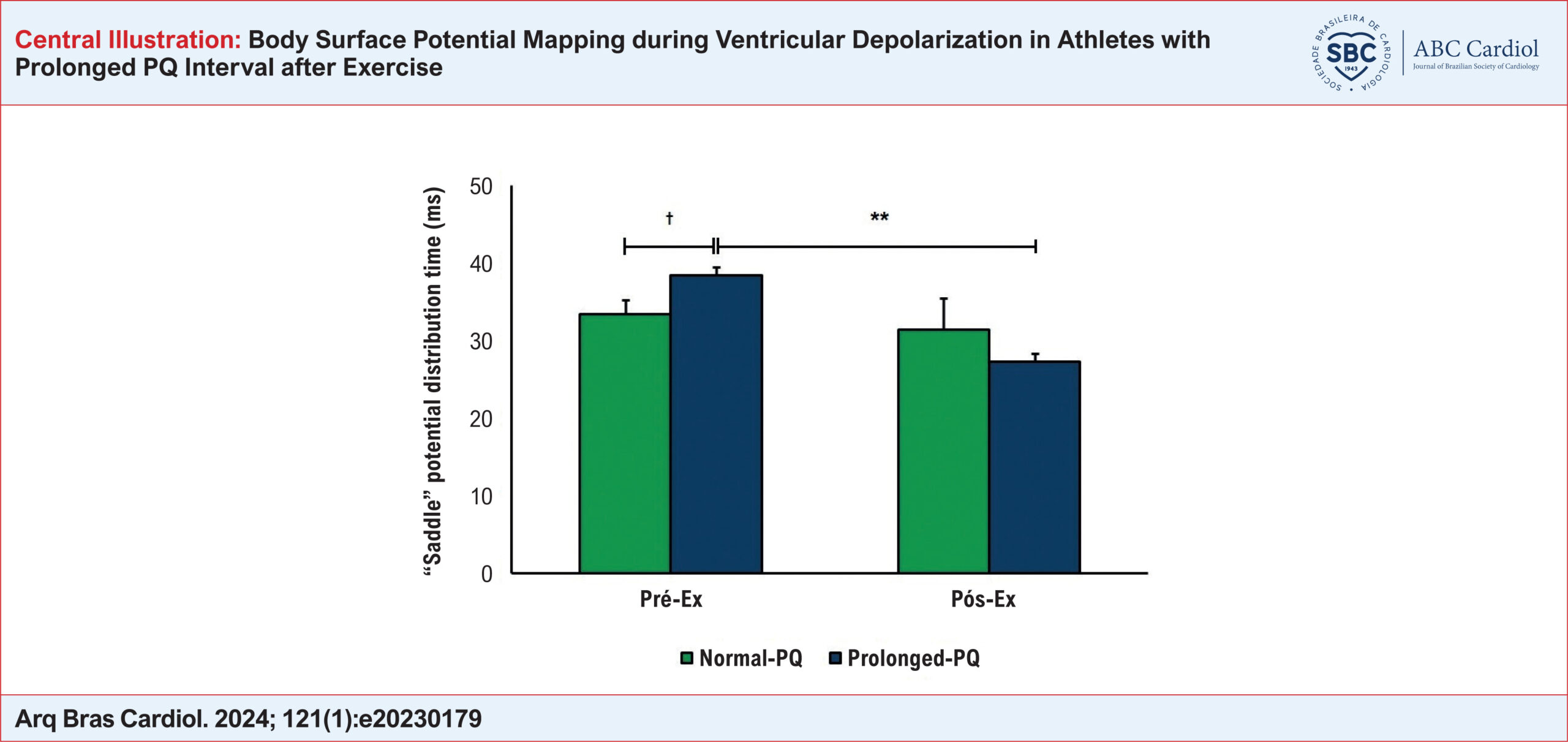
Compared to Normal-PQ athletes, the first and second periods of the stable position of cardiac potentials on the torso surface were longer, and the formation of the “saddle” potential distribution occurred later, at Pre-Ex, in Prolonged-PQ athletes. At Post-Ex, the Prolonged-PQ group showed a shortening of the first and second periods of stable potential distributions and a decrease in appearance time of the “saddle” phenomenon relative to Pre-Ex (to the values near to those of the Normal-PQ group). Additionally, at Post-Ex, the first inversion of potential distributions and the total duration of ventricular depolarization in Prolonged-PQ athletes decreased compared to Pre-Ex and with similar values in Normal-PQ athletes. Compared to Normal-PQ athletes, the second inversion was longer at Pre-Ex and Post-Ex in Prolonged-PQ athletes.

Conclusion:

Prolonged-PQ athletes had significant differences in the temporal characteristics of BSPM during ventricular depolarization both at rest and after exercise as compared to Normal-PQ athletes.

  • Athletes
  • Atrioventricular block
  • body surface potential mapping
  • Exercise Test
  • Heart Ventricles
Read Full Article
Creative Commons Attribution (CC BY) Creative Commons license
04/03/2024 DOI: 10.36660/abc.20230179 Views 1
Figure 1
ABC
Editorial

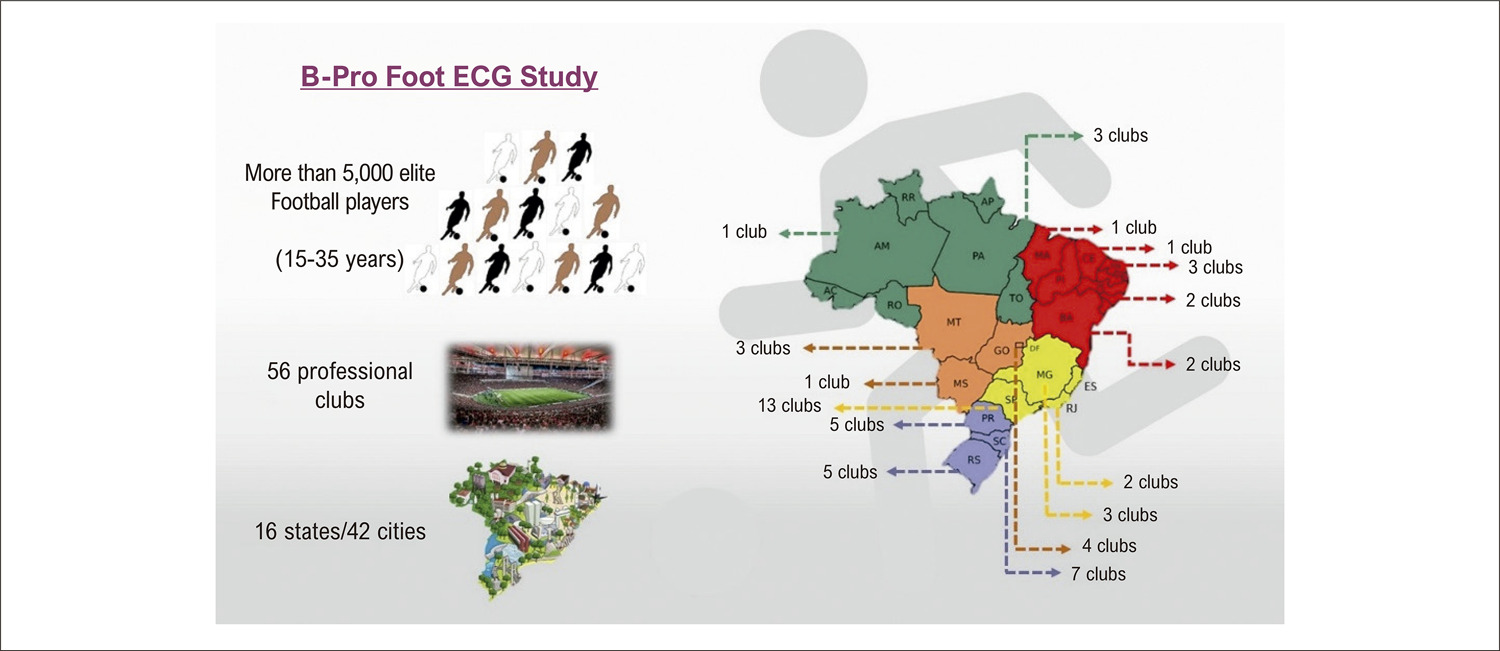
Electrocardiogram of Brazilian Elite Football Players: Filling a Gap

Ricardo Stein et al. Filipe Ferrari Anderson Donelli da Silveira

Introduction

The sudden death of a young, apparently healthy athlete is a tragedy, and the true incidence of sudden cardiac death (SCD) among athletes is controversial. Although estimates from studies in the United States and Europe are limited by various methodological issues, it is known that physical exertion in sports activity and training poses a 2.5 to 4.5 times higher risk of sudden cardiac arrest and SCD in relation to non-athletes and recreational athletes.–On the other hand, a consistent finding across studies is that male athletes have a three to five times higher incidence of SCD than female athletes.

Over the past few decades, much has been discussed about the role of the resting 12-lead electrocardiogram (ECG) in preventing SCD in young athletes. Studies carried out in different parts of the world have been published, and expert consensuses have been developed to standardize a very peculiar type of ECG.–

[…]

  • Athletes
  • Ethnicity and Health
  • Exercise
  • Heart Arrest
  • Mass Sreening
  • Soccer
  • Sudden Cardiac Death
Read Full Article
Creative Commons Attribution (CC BY) Creative Commons license
01/05/2023 DOI: 10.36660/abc.20230090 Views 2
ABCIC
Original Article

Heart Adaptation Mechanisms in Elite Female Athletes: Comparison With Healthy Individuals and Time of Training

José Maria Del Castillo et al. Thiago Boschilia Nemi Sabeh Junior Carlos Antônio da Mota Silveira Djair Brindeiro Filho

Abstract

Background:

Intense continuous exercise provokes adaptive remodeling phenotypes in athletes, the parameters of which can be evaluated through conventional echocardiography and myocardial deformation. We compared myocardial remodeling in female athletes (athlete group) with sedentary women of the same age range (control group) and between older and younger athletes.

Methods:

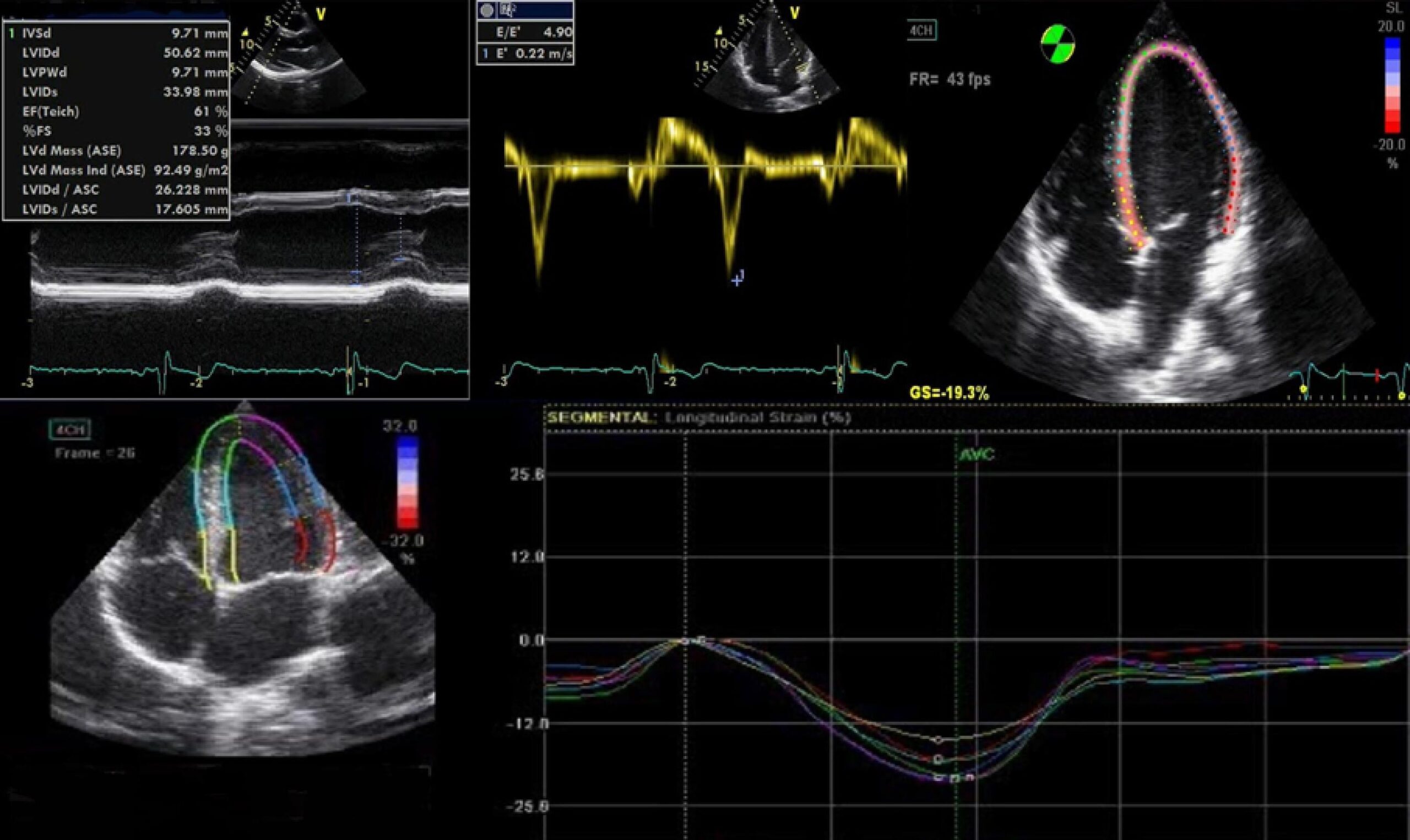
A total of 57 female soccer players and 25 healthy sedentary women were selected. The athlete group was subdivided into a main group and those under 17 years of age (< 17 group). The dimensions and systolic and diastolic function of the cardiac chambers and myocardial deformation (longitudinal and circumferential, as well as radial strain and rotational mechanics) was determined through echocardiography, using the Z statistic with a significance level of p< 0.05.

Results:

The mean age of the athlete, control, main, and < 17 groups was 22.1 (SD, 6.3); 21.2 (SD, 5.0); 26.5 (SD, 5.1); 16.5 (SD, 0.6) years, respectively. Weight, body mass index and heart rate were lower in the athlete group. Wall thickness, left ventricular mass index, left atrial (LA) volume, ejection fraction, and right ventricular dimensions were higher in athlete group, but remained within normal ranges. Regarding myocardial deformation, there was decreased radial strain, basal rotation, apical rotation, and twisting in the athlete group, suggesting a contractile reserve mechanism. These parameters were lesser in the main athlete group, who also had greater wall thickness, greater volume in the left atrium (LA) and larger size in the right ventricle (RV), suggesting that increased contractile reserve is related to longer time spent in the sport.

Conclusions:

In female athletes who had undergone intense long-term training, we observed adaptive remodeling of the cardiac chambers and increased contractile reserve (at rest), and these changes were more pronounced in those with longer involvement in the sport.

  • Athletes
  • Atrial Remodeling
  • Echocardiography
Read Full Article
Creative Commons Attribution (CC BY) Creative Commons license
31/03/2023 DOI: 10.36660/abcimg.2023372i Views 2
ABC
Letter to the Editor

Comments Regarding the Athlete’s Electrocardiogram in the Brazilian Society of Cardiology Guidelines on the Analysis and Issuance of Electrocardiographic Reports – 2022

Filipe Ferrari et al. Anderson Donelli da Silveira Ricardo Stein

Dear Editor,

It was with great interest that we had access to the document entitled “Brazilian Society of Cardiology Guidelines on the Analysis and Issuance of Electrocardiographic Reports – 2022”, developed by Brazilian experts on the subject. It is our opinion that an update was necessary, as it is detailed and pleasant to read.

However, we draw attention to two pieces of information presented about the interpretation of the athlete’s electrocardiogram that caused us concern. The first is found in the section “ Cardiac Chambers Hypertrophy” (Page 18), in which the authors describe that the Sokolow-Lyon Criteria SHOULD NOT be used to determine left ventricular hypertrophy (LVH) IN ATHLETES.

[…]

  • Athletes
  • Electrocardiography
  • Practice Guideline
Read Full Article
Creative Commons Attribution (CC BY) Creative Commons license
09/01/2023 DOI: 10.36660/abc.20220670 Views 2
ABCIC
Original Article

Evaluation of Strain Parameters by Three Dimensional Speckle Tracking Echocardiography in Competitive Athletes

Edgar Daminello et al. Ana Clara Tude Rodrigues Adriana Cordovil Wércules Antônio Oliveira … Edgar Bezerra Lira Filho Rafael Bonafim Piveta Marcelo Luiz Campos Vieira Cláudio Henrique Fischer Samira S. Morhy

Summary

Introduction

Echocardiography is fundamental in the distinction between physiological adaptations promoted by physical activity and pathological abnormalities. Three-dimensional speckle tracking echocardiography (3D-STE) could prove accurate in detecting subclinical abnormalities in cardiac function.

Objectives

To determine the effect of exercise on the parameters of myocardial strain in athletes through 3D STE.

Method

Elite boxers underwent conventional three-dimensional echocardiography (3D-echo) and 3D-STE to analyze left ventricular (LV) volumes, left ventricular mass indexed to body surface area (LVMIBSA), ejection fraction (EF), longitudinal global strain (LGS), circumferential global strain (CGS), radial global strain (RGS), twist, torsion and tracking area. These data were compared with measurements performed on untrained control individuals.

Results

The analyses included 16 athletes and 14 controls with similar age (23 ± 4 vs. 21 ± 4 years; p = NS) and gender (14 vs. 12 males). LVEF was normal and similar in the 2 groups. LVMIBSA was higher in the athletes (83 ± 21 vs. 65 ± 15 g/m2, p < 0.05), as well as RGS (24.7 ± 5.2 vs. 16.3 ± 7.2; p = 0.007). There was no significant difference for the other parameters, such as CGS (-26 ± 2 vs. -28 ± 6), LGS (-16 ± 2 vs. -17 ± 3), twist (3.1 ± 1.3 vs. 3.7 ± 1.9), torsion (2.0 ± 0.8 vs. 1.4 ± 0.4) and tracking area (37 ± 4 vs. 41 ± 6).

Conclusion

Athletes and untrained individuals have comparable myocardial strain parameters on 3D-STE. However, an increase in RGS was observed only in the athletes. 3D-STE could help in the early detection of subclinical cardiac issues in athletes. (Arq Bras Cardiol: Imagem cardiovasc. 2017;30(3):92-97)

  • Athletes
  • Echocardiography, Three Dimensional / methods
  • Heart/diagnostic imaging
  • Parameters/analysis
  • Speckle Tracking
Read Full Article
Creative Commons Attribution (CC BY) Creative Commons license
04/02/2022 DOI: 10.5935/2318-8219.20170026 Views 1
IJCS
Editorial

Exercise Is Medicine! How to Safely Return to Sports after COVID-19? A Meta-Analysis and a Practical Flowchart for Cardiovascular Risk Assessment may Help you

Clea Colombo

Exercise is medicine! Although this premise is well established, how to maintain this “treatment” for various diseases during the COVID-19 pandemic? This has been a concern of all doctors in the world since exercise contributes to the control of cardiovascular diseases and other comorbidities recognized as risk factors for a worse outcome in COVID-19. Moreover, it has already been shown that higher cardiorespiratory fitness is inversely associated with the likelihood of hospitalization due to COVID-19.

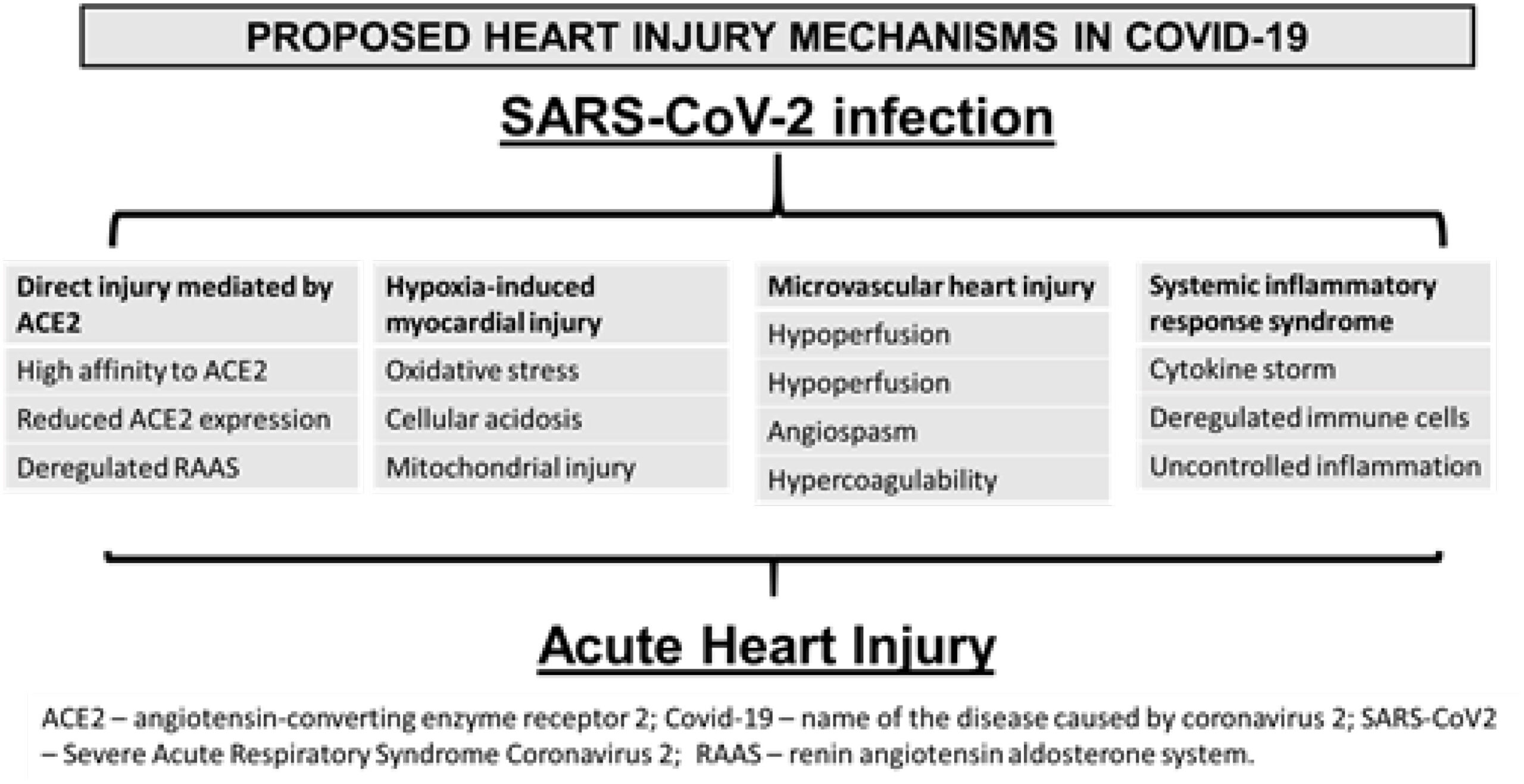
In addition to the hygiene and social distancing measures necessary to prevent coronavirus infection, cardiovascular sequelae in individuals recovering from COVID-19 may contribute to the delay in resuming exercise. Cardiovascular complications, including myocarditis, are relatively common in patients affected by SARS-CoV-2. Although the occurrence of myocarditis as a consequence of COVID-19 was initially described in hospitalized patients with severe presentation of the disease, subsequent studies have reported its occurrence in individuals with mild COVID-19 and even in asymptomatic patients.

[…]

  • Athletes
  • Cardiovascular Diseases
  • Comorbidities
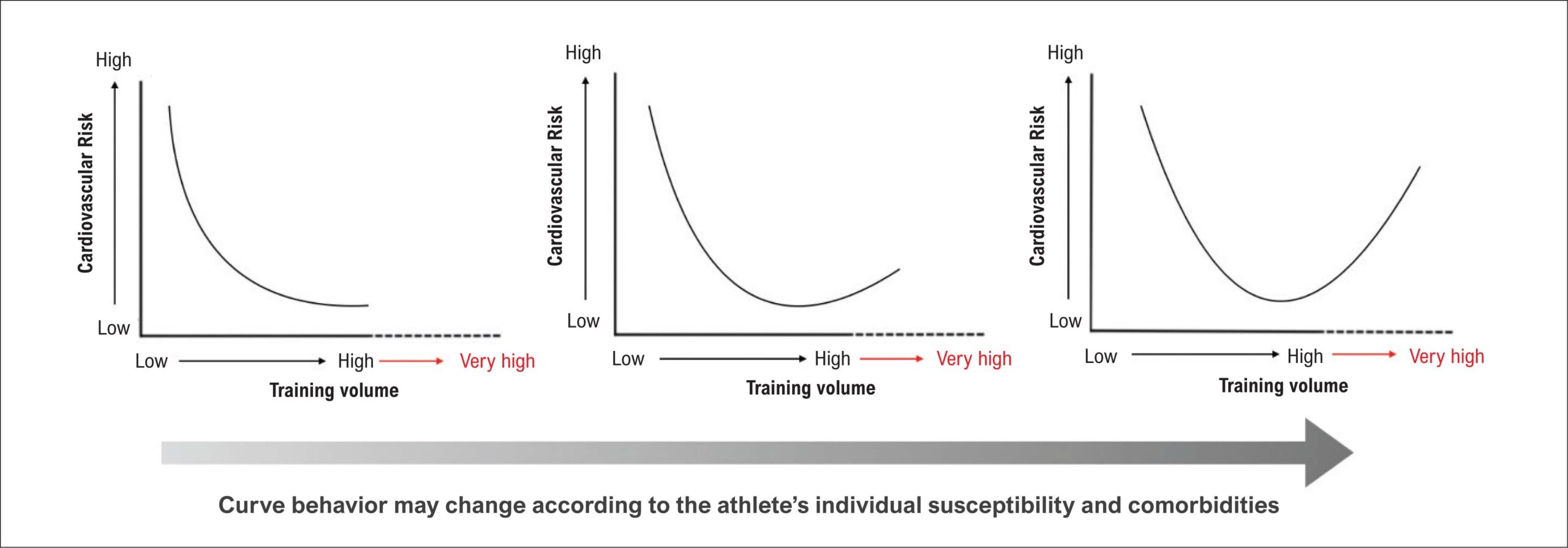
  • COVID-19
  • Exercise
  • Pandemic
  • SARS-CoV-2, Sport
  • Sudden Death
Read Full Article
Creative Commons Attribution (CC BY) Creative Commons license
14/01/2022 DOI: 10.36660/ijcs.20210202 Views 2
ABC
Editorial

The Six-Minute Step Test as an Alternative for Functional Capacity Assessment in Patients with Cardiovascular Diseases

Raphael Mendes Ritti-Dias et al. Breno Quintella

Functional capacity is an important morbimortality marker in patients with cardiopulmonary diseases., Although the direct measurement of peak oxygen consumption (VO2peak), using cardiopulmonary tests (the gold standard), is the most adequate method for assessing functional capacity, its use in clinical practice is still restricted due to its high cost.,

The 6-minute step test (6MST), in addition to being fast, has as its main advantage the need for minimum space for its performance. These factors, added to the fact that it does not require audible signals, become very attractive for its use in clinics and hospitals. Step tests have been used for a long time to assess functional capacity, especially in healthy individuals or those with lung diseases. In patients with pulmonary diseases, a positive correlation (r = 0.76) was observed between the 6MST and the 6-minute walk test (6MWT), a test that requires more space to be carried out. Interestingly, correlation data between the 6MST and the direct measurement of functional capacity are scarce, especially in patients with cardiovascular diseases.

[…]

  • Athletes
  • Blood Pressure
  • Endothelium
  • Exercise
  • Football
  • Heredity/genetic;
  • Hypertension
  • Sports
Read Full Article
Creative Commons Attribution (CC BY) Creative Commons license
17/05/2021 DOI: 10.36660/abc.20210252 Views 1
Figure 1
IJCS
Viewpoint

The Athlete's Return in the Post-COVID-19

José Antônio Caldas Teixeira et al. Mateus Freitas Teixeira Pedro Soares Teixeira Juliana Grael Jorge

Specific Complications in the Organs and Influences in Athletes

[…]

  • Athletes
  • Betacoronavirus
  • COVID-19
  • Exercise
  • Pandemic
  • Patient Discharge
  • Return to Sport/psychology
  • Sport
Read Full Article
Creative Commons Attribution (CC BY) Creative Commons license
30/04/2021 DOI: 10.36660/ijcs.20200181
Figure 1
ABC
Original Article

Diastolic Function and Biomarkers of Long-Distance Walking Participants

Maicon Borges Euzebio et al. Priscila Valverde de O. Vitorino Watila Moura Sousa Milena Andrade Melo … Sérgio Henrique Nascente Costa Ana Luiza Lima Sousa Thiago de Souza Veiga Jardim Ana Carolina Arantes Paulo Cesar B. Veiga Jardim Weimar Kunz Sebba Barroso

Abstract

Background:

The effects of long-distance walking on the cardiovascular system have been little studied.

Objectives:

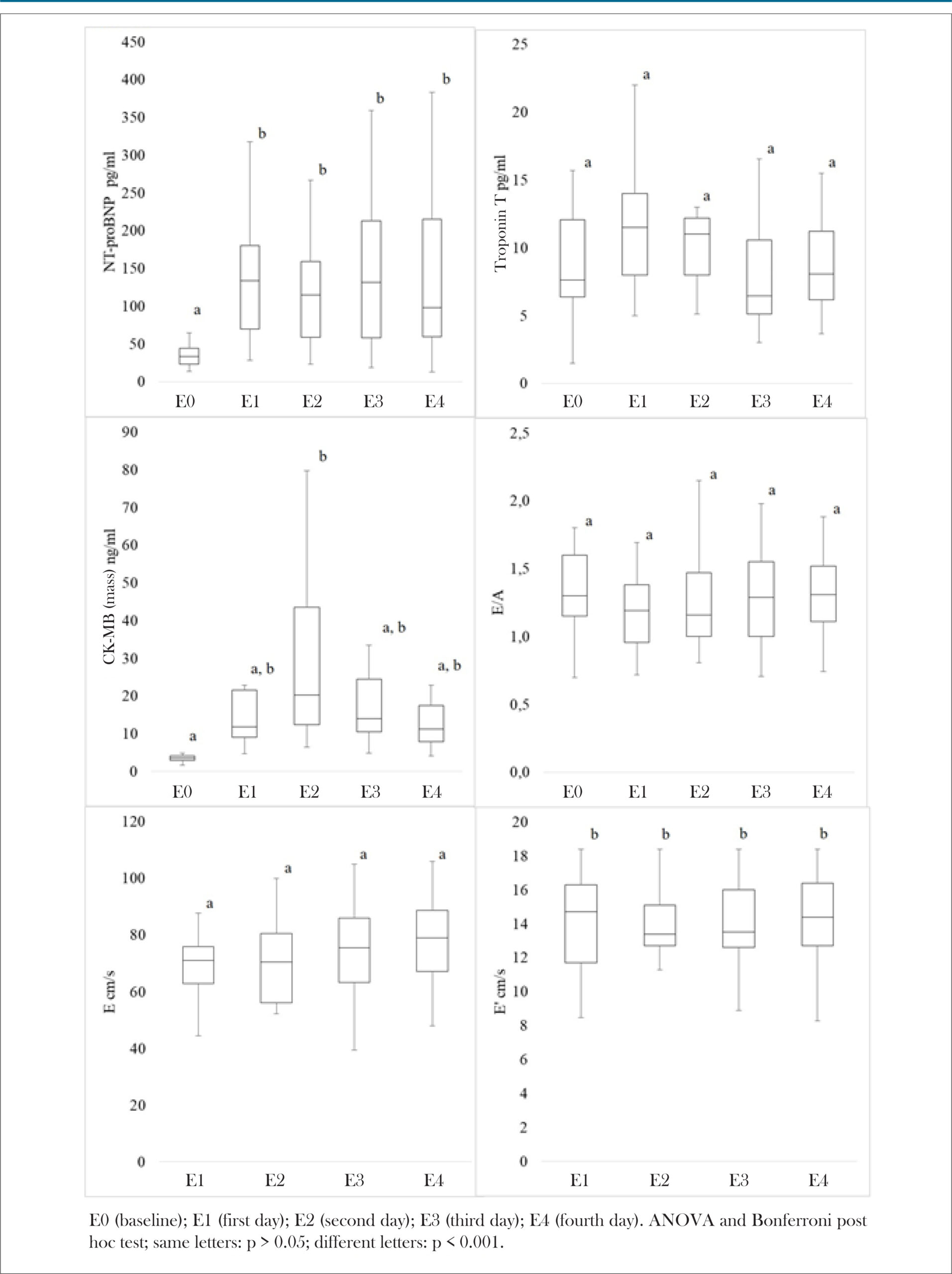
The general objective of this study was to verify these effects on the behavior of diastolic function and the cardiac biomarkers CK-MB (mass), troponin T, and NT-proBNP, in amateur athletes.

Method:

This longitudinal study, conducted in 2015, evaluated participants during the following 5 stages: E0 (baseline) before starting the trajectory and the others, E1, E2, E3, and E4, at the end of each day, totaling 244.7 km. At all stages, the biomarkers NT-proBNP, CK-MB (mass), and troponin T were measured. Echocardiogram was performed to analyze the E, A and E’ waves. P < 0.05 was adopted as significant.

Results:

The study evaluated 25 participants, with an average age of 46 ± 10.5 years and body mass index of 20.2 ± 2.3 kg/m2. Increased values were found for NT-proBNP from E0 to E1, E2, E3, and E4 (p < 0.001), CK-MB (mass) from E0 to E2 (p < 0.001), and E' wave from E0 to E1, E2, E3, and E4 (p < 0.001). Positive correlations were identified between the following: CK-MB (mass) and troponin T (E1: r = 0.524, p = 0.010; E4: r = 0.413, p = 0.044); CK-MB (mass) and NT-proBNP (E4: r = 0.539, p = 0.006); and E/A and E' (E0: r = 0.603, p < 0.001; E1: r = 0.639, p < 0.001; E4: r = 0.593, p = 0.002). A negative correlation was found between CK-MB (mass) and E/A (E1: r = −0.428, p = 0.041).

Conclusion:

The effects of intense, prolonged, and interspersed physical activity were verified based on significant variations in the behavior of CK-MB (mass), NT-proBNP, and the E’ wave. Notwithstanding the alterations found, there were no criteria suggestive of myocardial damage

  • Athletes
  • Biomarkers, Biological
  • Blood Pressure
  • Echocardiography, Doppler/methods
  • Natriuretic Peptide, Brain
  • Troponin T
  • walking
Read Full Article
Creative Commons Attribution (CC BY) Creative Commons license
23/10/2020 DOI: 10.36660/abc.20190271 Views 1
Figure 1
ABC
Viewpoint

Appropriate Use of Diastolic Function Guideline When Evaluating Athletes: It is not Always what it Seems to Be

Carlos Eduardo Suaide Silva

The complete echocardiographic evaluation of the diastolic function has always been a great challenge for cardiologists and sonographers, either because of frequent changes found in every new guideline, due to a great amount of recent information about this complex subject, or because of some confusion created by the guidelines themselves, which are many times contradictory or not explanatory. However, we are moving towards a better understanding of what really happens on this important phase of the cardiac cycle. The last published guideline of 2016, despite presenting some inconsistencies and still not making certain situations clear, clarified several points and corrected some distortions of the previous one.

As usual in Medicine, every time we have a paradigm shift or a new clinical entity appears, we pass first through a moment of overdiagnosis followed by some discredit to finally reach a balance with the maturity and the knowledge acquired over time. The same happened with mitral valve prolapse, which showed an incidence of more than 30% in young women in the early 1970s, but nowadays it is known of about 2.5% in both sexes. Ventricular non-compaction and many other diseases followed the same pattern, as well as diastolic disfunction. How many healthy elderly people were diagnosed with mild diastolic disfunction (or grade I) due to presence of E/A inversion on spectral Doppler of the mitral inflow? Almeida et al. tested the impact of using the 2009 guidelines against 2016 for diagnosing diastolic disfunction in 1,000 elderly individuals (over 45 y/o). They found that only 1.4% had some degree of diastolic disfunction according to the 2016 guideline. On the other hand, if the 2009 guideline had been used, this number would rise to 38.2%.

[…]

  • Athletes
  • Diagnostic Imaging
  • Echocardiography/methods
  • Exercise
  • Guidelines as Topic
  • Sports
  • Ventricular Dysfunction
Read Full Article
Creative Commons Attribution (CC BY) Creative Commons license
07/08/2020 DOI: 10.36660/abc.20190689
Figure 1
ABC
Original Article

Family History of Hypertension Impairs the Autonomic Balance, but not the Endothelial Function, in Young Soccer Players

Walter Vargas et al. Katya Rigatto

Abstract

Background

The family history of hypertension (FHH) imposes consistent risk for diverse chronic diseases that are accompanied by hypertension. Furthermore, the heart rate variability (HRV) and flow-mediated dilation (FMD) are both related to maximal oxygen uptake (VO2max), and are usually impaired during hypertension

Objective

To compare the autonomic modulation, the endothelial function (EF) and maximum oxygen uptake (VO2max) of young athletes, separated according to their parents’ blood pressure (BP) history, in order to study the influence of their genetic background on those parameters.

Methods

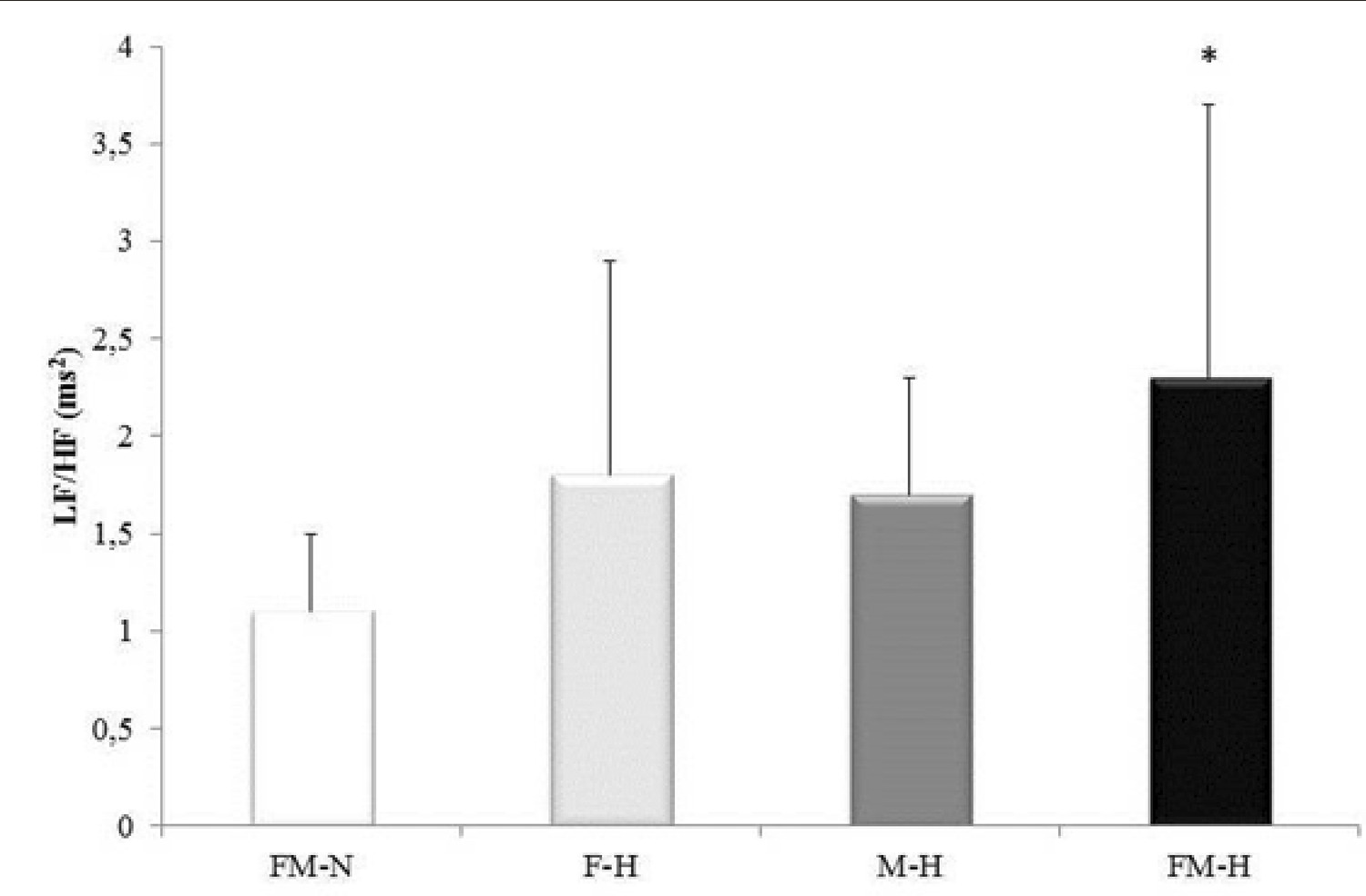
A total of 46 young male soccer players (18±2 years of age) were divided into four groups: 1-normotensive father and mother (FM-N); 2-only father was hypertensive (F-H); 3-only mother was hypertensive (M-H); 4-father and mother were hypertensive (FM-H). Measurements of BP, FMD, HRV and VO2maxwere performed. The significance level adopted in the statistical analysis was 5%.

Results

The standard deviation of normal RR intervals (SDNN; FM-N=314±185; FM-H=182.4± 57.8), the square root of the mean squared differences in successive RR intervals (RMSSD; FM-N=248±134; FM-H=87±51), the number of interval differences of successive NN intervals greater than 50ms (NN50; FM-N=367±83.4; FM-H=229±55), the ratio derived by dividing NN50 by the total number of NN intervals (pNN50; FM-N=32.4±6.2; FM-H=21.1±5.3) and the high (HF; FM-N=49±8.9; FM-H=35.3±12) and low-frequency (LF; FM-N=50.9±8.9; FM-H=64.6±12) components, in normalized units (%), were significantly lower in the FM-H group than in the FM-N group (p<0.05). On the other hand, the LF/HF ratio (ms2) was significantly higher (p<0.05). We found no significant difference between the groups in VO2maxand FMD (p<0.05).

Conclusions

In young male soccer players, the FHH plays a potentially role in autonomic balance impairment, especially when both parents are hypertensive, but present no changes in VO2maxand FMD. In this case, there is a decrease in the sympathetic-vagal control, which seems to precede the endothelial damage (Arq Bras Cardiol. 2020; 115(1):52-58)

  • Athletes
  • Blood Pressure
  • Endothelium/function
  • Heredity/genetics
  • Hypertension
  • Soccer
  • Youth Sports
Read Full Article
Creative Commons Attribution (CC BY) Creative Commons license
07/08/2020 DOI: 10.36660/abc.20180441 Views 2
ABC
Editorial

Heart Rate Variability as an Indicator of Cardiovascular Risk in Young Individuals

Breno Quintella Farah

The autonomic nervous system, which consists of the sympathetic and parasympathetic systems, plays an important role in regulating the functions of several systems in the human body, such as the cardiovascular system. Neural control of the heart is directly related to changes in heart rate and baroreceptor reflex activity, of which oscillation results from environmental stimuli. , These stimuli can lead to heart rate reduction through the parasympathetic nervous system, by decreasing the frequency of sinus node depolarization through the effect of acetylcholine on the cardiac neuroeffector junction. In turn, the sympathetic nervous system promotes an increase in heart rate through the norepinephrine release, which acts through the connection with β-adrenergic receptors, increasing the depolarization rate of the sinus pacemaker. ,

Healthy individuals or athletes, with an intact autonomic nervous system, show a predominance of parasympathetic modulation to the detriment of sympathetic modulation to the heart. On the other hand, in individuals with cardiovascular diseases, such as arterial hypertension, this pattern is reversed, with greater sympathetic modulation and less parasympathetic modulation being observed, which characterizes a picture of cardiac autonomic dysfunction. – This is particularly important, considering that changes in cardiac autonomic modulation and, consequently, in heart rate, can have a direct impact on cardiac output, which can result in BP changes.

[…]

  • Athletes
  • Blood Pressure
  • Endothelial function
  • Heredity/genetics
  • Hypertension
  • Soccer
  • Youth Sports
Read Full Article
Creative Commons Attribution (CC BY) Creative Commons license
07/08/2020 DOI: 10.36660/abc.20200444
Figure 1
ABC
Original Article

Assessing Dynamic Atrioventricular Conduction Time to RR-interval Coupling in Athletes and Sedentary Subjects

Paulo Roberto Benchimol-Barbosa et al. Olivassé Nasario Junior Jurandir Nadal

Abstract

Background

Atrioventricular conduction time ( AVCT ) is influenced by autonomic input and subject to physiological remodeling.

Objective

To evaluate beat-by-beat AVCT and RR-interval variability in athletes and healthy sedentary subjects.

Methods

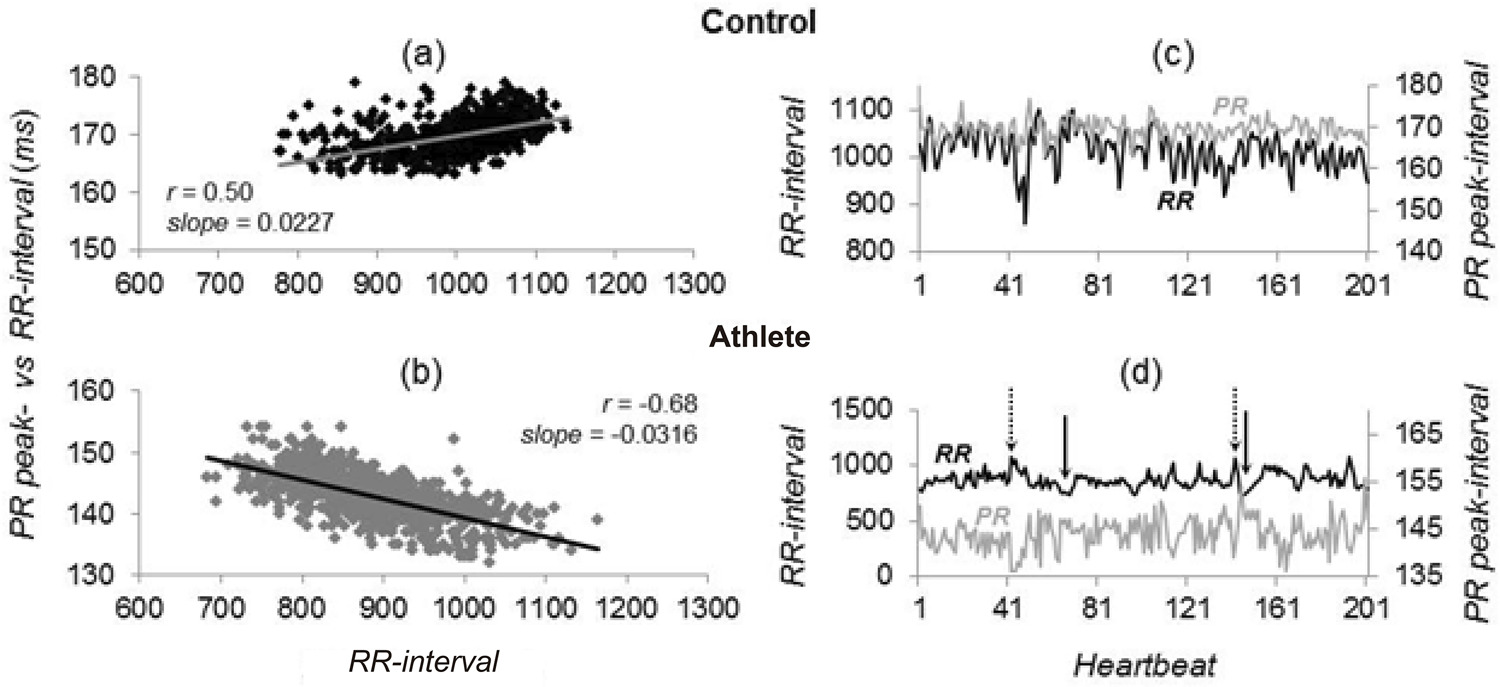
Twenty adults, including 10 healthy sedentary (Controls) and 10 elite long-distance runners (Athletes), age, weight and height-adjusted, underwent maximal metabolic equivalent (MET) assessment, and 15-min supine resting ECG recording seven days later. The interval between P-wave and R-wave peaks defined the AVCT . Mean (M) and standard deviation (SD) of consecutive RR-intervals (RR) and coupled AVCT were calculated, as well as regression lines of RR vs. AVCT (RR-AVCT) . Concordant AV conduction was defined as positive RR-AVCT slope and discordant otherwise. A multivariate linear regression model was developed to explain MET based on AVCT and RR-interval variability parameters. Significance-level: 5 %.

Results

In Athletes, M-RR and SD-RR values were higher than in Controls, whereas M-AVCT and SD-AVCT were not. RR-AVCT slopes were, respectively, 0.038 ± 0.022 and 0.0034 ± 0.017 (p < 0.05). Using a cut-off value of 0.0044 (AUC 0.92 ± 0.07; p < 0.001), RR-AVCT slope showed 100% specificity and 80% sensitivity. In a multivariate model, SD-RR and RR-AVCT slope were independent explanatory variables of MET (F-ratio: 17.2; p < 0.001), showing 100% specificity and 90% sensitivity (AUC 0.99 ± 0.02; p < 0.001).

Conclusion

In elite runners, AVCT to RR -interval dynamic coupling shows spontaneous discordant AV conduction, characterized by negative AVCT vs. RR -interval regression line slope. RR -intervals standard deviation and AVCT vs. RR -interval regression line slope are independent explanatory variables of MET (Arq Bras Cardiol. 2020; [online].ahead print, PP.0-0)

  • Adults
  • Athletes
  • Electrocardiography/methods
  • Heart Ventricles
  • physical fitness
  • Resistance Training
  • Sedentarism
  • Ventricular Function
  • Ventricular Remodeling
Read Full Article
Creative Commons Attribution (CC BY) Creative Commons license
08/05/2020 DOI: 10.36660/abc.20190281
IJCS
Viewpoint

Invasive Coronary Physiological Assessment in Symptomatic Middle-Aged Endurance Athletes

Omar M. Issa et al. J. Sawalla Guseh Ignacio Inglessis Aaron L. Baggish

Abstract

Despite the health benefits of routine exercise, coronary artery disease (CAD) is common among older competitive athletes and is an important cause of sudden cardiac death. Athletes with suspected or confirmed CAD routinely undergo conventional coronary angiography involving the performance of invasive coronary physiological assessment using the fractional flow reserve (FFR) or the instantaneous-wave free ratio (iFR). Data defining the role of invasive coronary physiological assessment, while robust in general clinical populations, are untested among older competitive athletes with CAD. The paper discusses the challenges and uncertainties surrounding the use of the FFR and iFR in this unique population with an emphasis on the need for future work to better define this approach.

  • Adult
  • Athletes
  • Circuit Based Exercise/mortality
  • Coronary Angiography/methods
  • Coronary Artery Disease
  • Fractional Flow Reserve
  • Myocardial
  • physical fitness
Read Full Article
Creative Commons Attribution (CC BY) Creative Commons license
12/08/2019 DOI: 10.5935/2359-4802.20190063
Figure 1
IJCS
Case Report

Sudden Cardiac Arrest in Athletes: Do not Miss Suspicious Details

Marta Luísa Braga et al. Paula Dias Mariana Vasconcelos Rui Almeida … Paulo Araújo Maria Maciel

Introduction

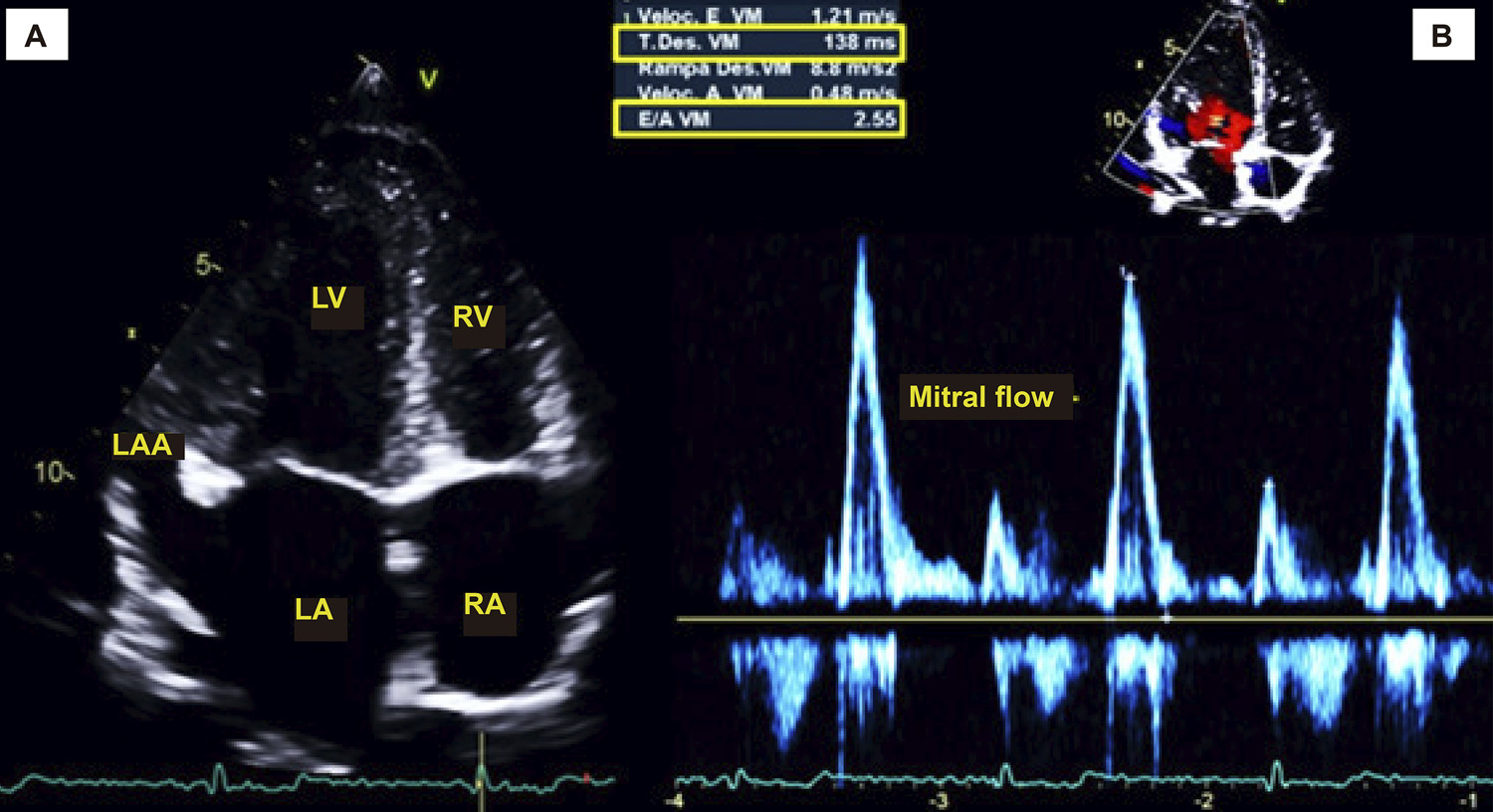
Sudden cardiac death (SCD) related to sports activities is an unexpected and rare event, usually occurring in young and apparently healthy athletes. The main cause of SCD in young athletes (< 35 years old) is ventricular arrhythmia (VA) associated with arrhythmogenic disorders (e.g. hypertrophic cardiomyopathy, arrhythmogenic right ventricular cardiomyopathy – ARVC, channelopathies). Some of these conditions can be suspected by routine pre-participation clinical evaluation, while others remain undetectable even after careful screening.– This paper presents the case of a professional athlete with undiagnosed ARVC, whose first manifestation was malignant VA and biventricular dysfunction.

[…]

  • Arrhythmias Cardiac
  • Arrhytmogenic Right Ventricular Dysplasia
  • Athletes
  • Cardiac arrest
  • Physical Endurance
  • Risk Assessment
  • Spots
  • Sudden Death
Read Full Article
Creative Commons Attribution (CC BY) Creative Commons license
12/08/2019 DOI: 10.5935/2359-4802.20190065 Views 1
Figure 1
IJCS
Editorial

Physical Activity, Exercise and Sport: A Five-Star Path for a Better Cardiovascular Health

Claudio Gil Soares de Araújo et al. Claudio Tinoco Mesquita

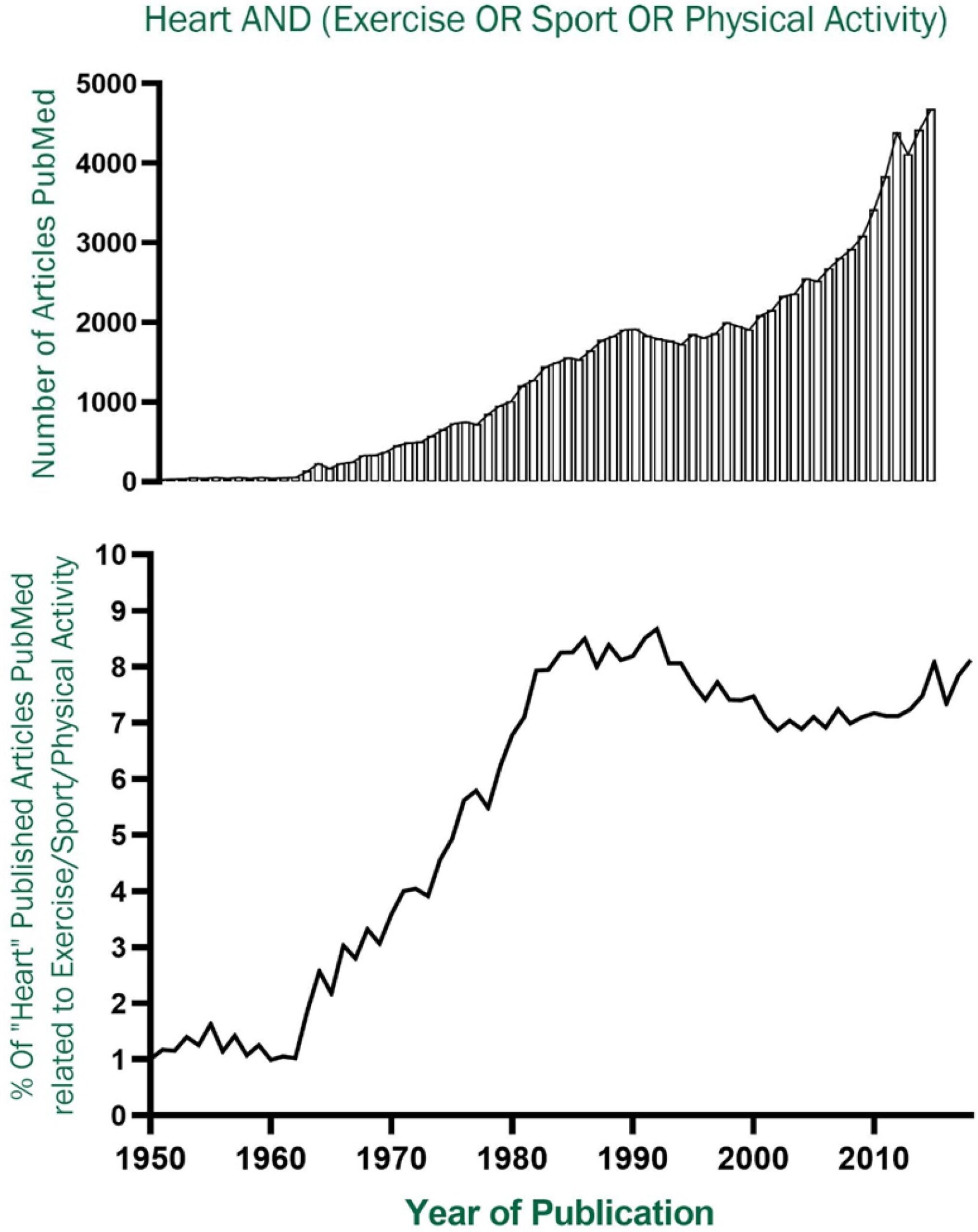
Why we must exercise? Although this question has many answers, many other questions arise from it. Which are the benefits of exercising? How much exercise is good for health? Is high-intensity exercise better than moderate-intensity exercise? Are there risks in exercising? What to do if someone does not like to exercise? Do cardiologists know the literature on exercise and heart? These are sounding questions that should be covered to understand the real need of exercising.

[…]

  • Athletes
  • Cardiac Rehabilitation
  • Exercise Test, Exercise
  • Sports, Cardiovascular Diseases
Read Full Article
Creative Commons Attribution (CC BY) Creative Commons license
12/08/2019 DOI: 10.5935/2359-4802.20190062 Views 1
Figure 1
ABC
Viewpoint

Sudden Death in Young Brazilian Athletes: Isn't It Time We Created a Genuinely National Register?

Lucas Helal et al. Filipe Ferrari Ricardo Stein

Abstract

Young competitive athletes (≤ 35 years old) with or without a previous diagnosis of cardiovascular disease may suddenly die in competitive activities, potentially leading to an impact in society through the media. Although the relative risk for sudden death (SD) in athletes is twice as high as for their counterparts, the absolute incidence is low. While there is consensus among medical societies worldwide that early detection of causal factors is highly desirable, there is debate among different screening schemes to that end. In Brazil, the recommendations of the Brazilian Society of Cardiology mirror the guidelines of the European Society of Cardiology (ESC), which indicate a clinical examination combined with a 12-lead resting electrocardiogram, regardless of the presence of risk factors. The possibility of genetic screening is also plausible, since most clinical entities that cause SD in young competitive athletes are related to genotype. Finally, considering the diversity of practiced sports, and the population miscegenation, we emphasize the need to a national registry of cases.

  • Adolescent
  • Athletes
  • Cardiovascular Diseases
  • Death, Sudden, Cardiac
  • Genotype
  • Youth Sports
Read Full Article
Creative Commons Attribution (CC BY) Creative Commons license
01/12/2018 DOI: 10.5935/abc.20180207 Views 1
IJCS
Editorial

Is Cardiorespiratory Optimal Point Measured During the Maximal Cardiopulmonary Exercise Test a Relevant Indicator of Sports Performance?

Jari A. Laukkanen

Cardiorespiratory fitness (CRF) is considered the gold standard for assessing aerobic performance among athletes and normal population and has recently been named as a clinical vital sign, being an essential indicator of cardiovascular and pulmonary function. Cardiorespiratory fitness is associated with lower risk of non-fatal and fatal cardiovascular disease (CVD) events, with studies demonstrating a consistent, inverse association between CRF and mortality even after adjustment for the traditional risk factor burden. Additionally, both maximal oxygen consumption (VO2max) and VO2 at ventilatory threshold (VT) have been associated with a reduced risk of adverse health outcomes.,– A literature-based meta-analysis of 33 observational cohort studies has better delineated the relationship of CRF with CVD and all-cause mortality outcomes. However, VO2max and VT are often used to evaluate athletes’ performance and to monitor their training responses. During the cardiopulmonary exercise test (CPX), many variables could be used to assess specific training responses to the cardiovascular, respiratory and musculoskeletal systems based on the analysis of submaximal and maximal responses to a progressively incremental exercise.

Modern CPX systems allow for the analysis of gas exchange at rest, during mild, moderate and maximal exercise levels, and during recovery and yield measures of VO2, carbon dioxide output (VCO2), and ventilation (VE). These advanced computerized systems provide both simple and complex analyses of these data that are easy to retrieve and store, which makes CPX widely available. Oxygen uptake at VT, often referred to as the anaerobic threshold, is a variable assessed at submaximal level of CPX. For majority of healthy individuals, the anaerobic threshold lies at exercise intensities between 50% and 75% of VO2max, while in trained endurance athletes, it can reach intensities as high as 80% of VO2max.

[…]

  • Athletes
  • athletic performance
  • Cardiorespiratory Fitness
  • Exercise
  • Respiratory Function Tests
Read Full Article
Creative Commons Attribution (CC BY) Creative Commons license
01/01/2018 DOI: 10.5935/2359-4802.20180041
Figure 1
IJCS
Original Article

Additional Cardiac Remodeling Induced by Intense Military Training in Competitive Athletes

Paulo Dinis et al. Hélder Dores Rogério Teixeira Luís Moreno … Joselito Mónico Marie Bergman Hanna Lekedal Maria Carmo Cachulo Joaquim Cardoso Lino Gonçalves

Abstract

Background:

Cardiac remodeling depends on the intensity, duration, and training method.

Objective:

To evaluate if the training performed in a Portuguese military special operations troop increases cardiac remodeling in a sample of young individuals who previously practiced competitive sports.

Methods:

A prospective study involving 76 military candidates for military special operations, 45 of whom previously practiced at competitive level (> 10 hours per week). Of these military athletes, only 17 successfully completed the course. The evaluation was performed at 6 months intervals and included a complete clinical history, physical examination, vital signs, anthropometric data and echocardiographic evaluation. Statistical significance was considered when p < 0.05, with a 95% confidence interval.

Results:

At the end of the course, there was a decrease in the percentage of fat mass (19.1 ± 3.3% vs. 13.1 ± 3.5%; p < 0.01), an increase in the percentage of lean mass (41.3 ± 2.1% vs. 44.4 ± 1.8%; p < 0.01), and decreased systolic and diastolic blood pressure and heart rate. Regarding cardiac remodeling, there was an increase in left ventricular diastolic diameter (49.7 ± 3.2 mm vs. 52.8 ± 3.4 mm; p < 0.01), an increase trend in left atrial volume (27.3 ± 4.5 mL/m2 vs. 28.2 ± 4.1 mL/m2; p = 0.07) and increased left ventricular mass (93.1 ± 7.7 g/m2 vs. 100.2 ± 11.4 g/m2; p < 0.01). Functional variables also changed, with an increase in S' (15 (13-16) cm/s vs. 17 (16-18) cm/s; p < 0,01) and a decrease in left ventricular ejection fraction (60 ± 6% vs. 54 ± 6%; p < 0.01).

Conclusion:

Intense military physical training resulted in additional cardiac remodeling in athletes of competitive level, both structural and functional.

  • Athletes
  • Atrial Remodeling
  • Exercise
  • military personnel
Read Full Article
Creative Commons Attribution (CC BY) Creative Commons license
01/01/2018 DOI: 10.5935/2359-4802.20180012 Views 1
Figure 1
ABC
Original Article

Minute-Ventilation Variability during Cardiopulmonary Exercise Test is Higher in Sedentary Men Than in Athletes

Renata Rodrigues Teixeira de Castro et al. Sabrina Pedrosa Lima Allan Robson Kluser Sales Antonio Claudio Lucas da Nóbrega

Abstract

Background:

The occurrence of minute-ventilation oscillations during exercise, named periodic breathing, exhibits important prognostic information in heart failure. Considering that exercise training could influence the fluctuation of ventilatory components during exercise, we hypothesized that ventilatory variability during exercise would be greater in sedentary men than athletes.

Objective:

To compare time-domain variability of ventilatory components of sedentary healthy men and athletes during a progressive maximal exercise test, evaluating their relationship to other variables usually obtained during a cardiopulmonary exercise test.

Methods:

Analysis of time-domain variability (SD/n and RMSSD/n) of minute-ventilation (Ve), respiratory rate (RR) and tidal volume (Vt) during a maximal cardiopulmonary exercise test of 9 athletes and 9 sedentary men was performed. Data was compared by two-tailed Student T test and Pearson´s correlations test.

Results:

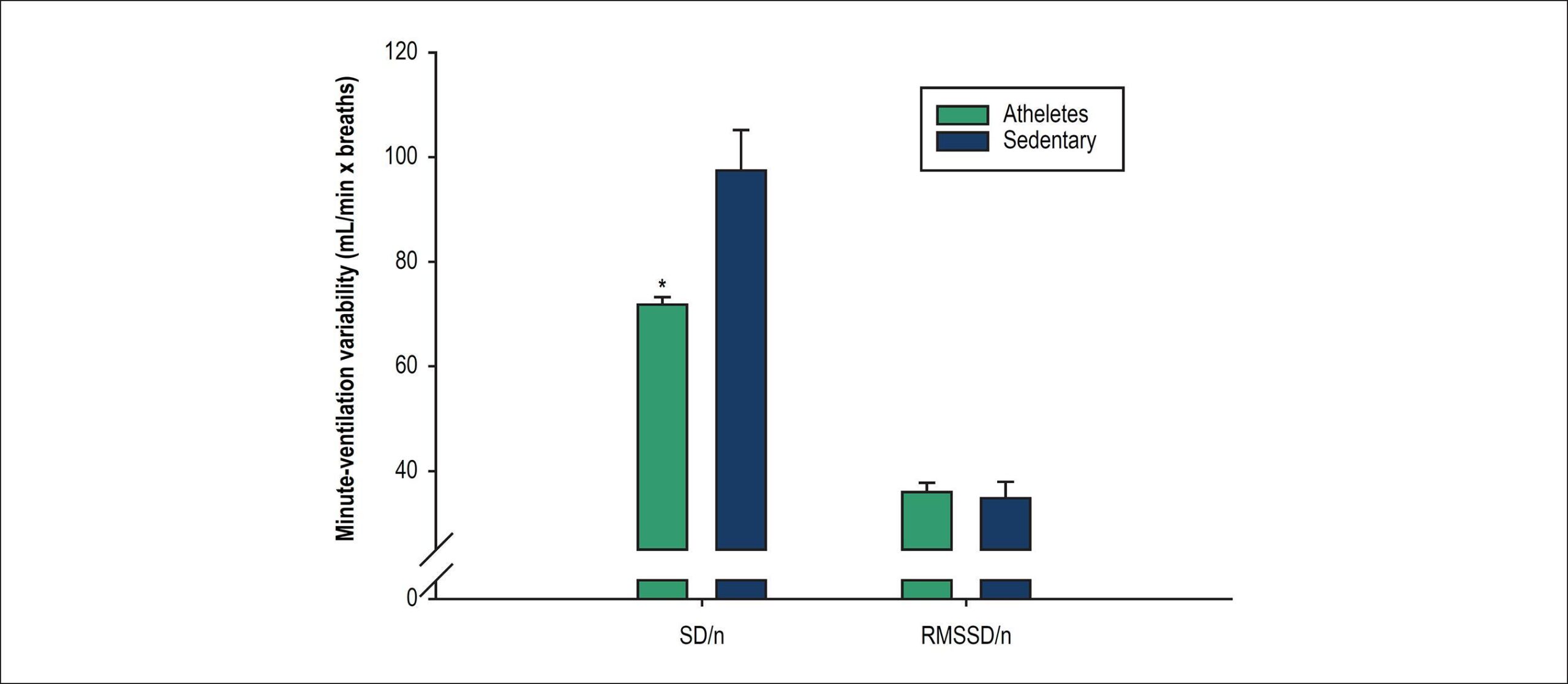
Sedentary men exhibited greater Vt (SD/n: 1.6 ± 0.3 vs. 0.9 ± 0.3 mL/breaths; p < 0.001) and Ve (SD/n: 97.5 ± 23.1 vs. 71.6 ± 4.8 mL/min x breaths; p = 0.038) variabilities than athletes. VE/VCO2 correlated to Vt variability (RMSSD/n) in both groups.

Conclusions:

Time-domain variability of Vt and Ve during exercise is greater in sedentary than athletes, with a positive relationship between VE/VCO2 pointing to a possible influence of ventilation-perfusion ratio on ventilatory variability during exercise in healthy volunteers.

  • Athletes
  • Breathing
  • Exercise
  • Pulmonary Ventilation
  • Respiratory Function Tests
  • Sedentary Lifestyle
Read Full Article
Creative Commons Attribution (CC BY) Creative Commons license
01/09/2017 DOI: 10.5935/abc.20170104 Views 2
Figure 1
ABC
Case Report

Symptomatic Exercise-induced Intraventricular Gradient in Competitive Athlete

Helder Dores et al. Lígia Mendes António Ferreira Jose Ferreira Santos

Case Report

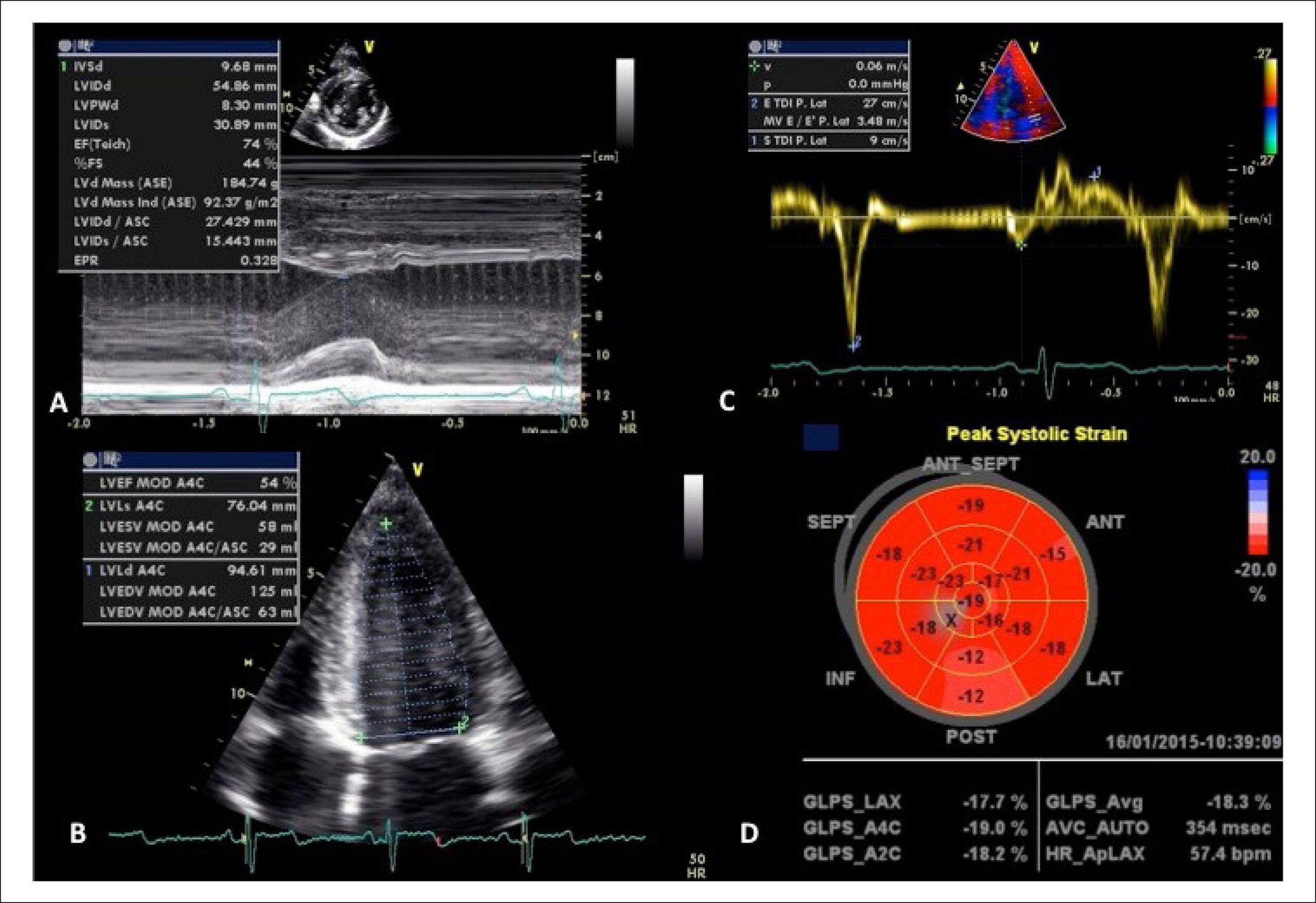
We describe the case of a 17-year-old caucasian male tennis player, training a mean of 20-24h/week, refereed for evaluation in Sport’s Cardiology clinic due to symptoms of dizziness on strenuous exercise, relieving soon after decubitus. The athlete denied other concomitant complaints, namely thoracic pain, palpitations, syncope or decrease in physical performance. Although this is the most symptomatic episode, he revealed other prior episodes with similar presentation, but less intense and occurring in environments with high temperatures. Personal/family history was unremarkable and all pre-competitive evaluations were normal and without restrictions for competitive sport. Physical examination did not show significant findings – cardiac evaluation was normal, heart rate and blood pressure at rest were 52 bpm 121/64mmHg respectively.

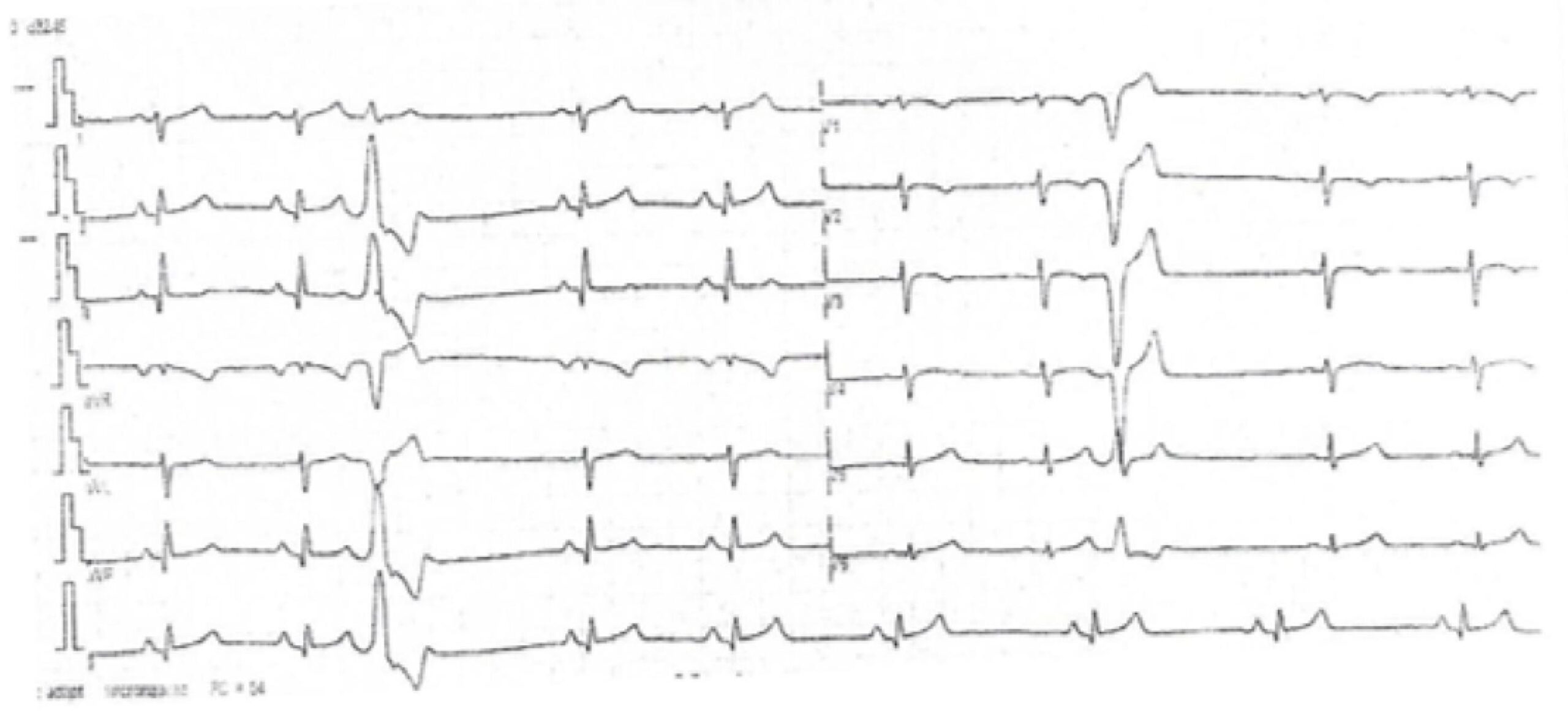
The 12-lead electrocardiogram and transthoracic echocardiogram did not show pathological findings, only cardiac physiological adaptations to exercise (). Subsequently the athlete underwent a treadmill exercise stress echocardiogram revealing an excellent functional capacity (19’09’’ of Bruce protocol, 19.3METs), but with reproduction of symptoms (dizziness) in the peak of exercise with simultaneous decrease in systolic blood pressure (185➔90mmHg) and detection of intraventricular gradient (IVG) – at least 69mmHg (). In the first minute of recovery the symptoms disappeared and blood pressure normalized.

[…]

  • Athletes
  • Echocardiography, Stress
  • Exercise Test/adverse effects
  • Heart Ventricles/physiopathology
  • Ventricular Dysfunction/etiology
Read Full Article
Creative Commons Attribution (CC BY) Creative Commons license
01/07/2017 DOI: 10.5935/abc.20170075
Figure 1
ABC
Original Article

Effects of Chronic Exercise on Endothelial Progenitor Cells and Microparticles in Professional Runners

Célia Regina de Oliveira Bittencourt et al. Maria Cristina de Oliveira Izar Carolina Nunes França Valdir Lauro Schwerz … Rui Manuel dos Santos Póvoa Francisco Antonio Helfenstein Fonseca

Abstract

Background:

The effects of chronic exposure to exercise training on vascular biomarkers have been poorly explored.

Objective:

Our study aimed to compare the amounts of endothelial progenitor cells (EPCs), and endothelial (EMP) and platelet (PMP) microparticles between professional runners and healthy controls.

Methods:

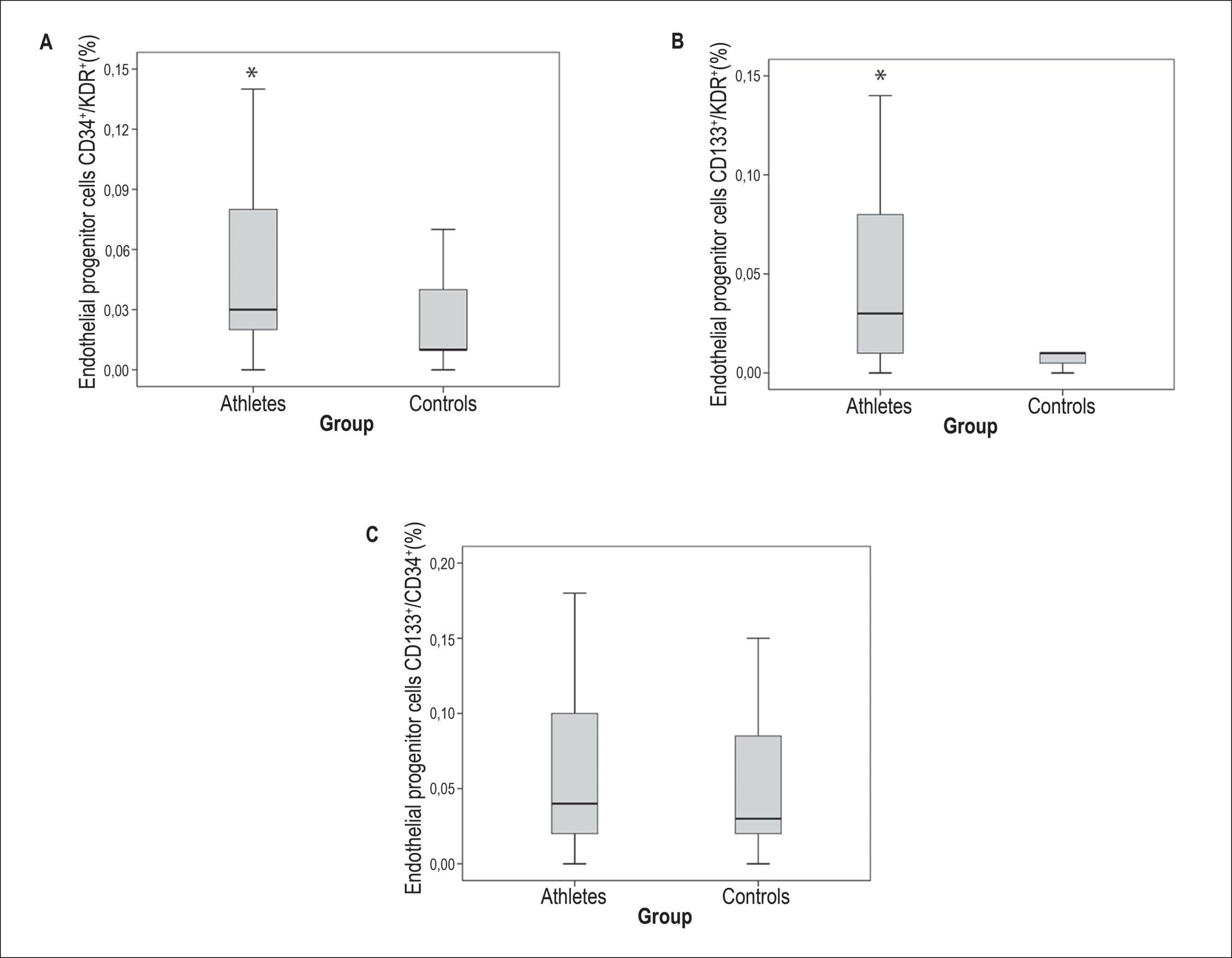
Twenty-five half-marathon runners and 24 age- and gender-matched healthy controls were included in the study. EPCs (CD34+/KDR+, CD133+/KDR+, and CD34+/CD133+), EMP (CD51+) and PMP (CD42+/CD31+) were quantified by flow-cytometry. All blood samples were obtained after 12 h of fasting and the athletes were encouraged to perform their routine exercises on the day before.

Results:

As compared with controls, the CD34+/KDR+ EPCs (p=0.038) and CD133+/KDR+ EPCs (p=0.018) were increased, whereas CD34+/CD133+ EPCs were not different (p=0.51) in athletes. In addition, there was no difference in MPs levels between the groups.

Conclusion:

Chronic exposure to exercise in professional runners was associated with higher percentage of EPCs. Taking into account the similar number of MPs in athletes and controls, the study suggests a favorable effect of exercise on these vascular biomarkers.

  • Athletes
  • Biomarkers
  • Endothelial Progenitor Cells
  • Running
  • Sports
Read Full Article
Creative Commons Attribution (CC BY) Creative Commons license
01/03/2017 DOI: 10.5935/abc.20170022 Views 1

Could not load more articles. Please try again.

How to cite this article

EndNote RIS

Electronic Document Format (Vancouver)

Stein R. Pre-Participation Evaluation in Football: A Strategic Pillar for the 2026 and 2027 World Cups. Arquivos Brasileiros de Cardiologia 2026;123(4):e20260084.

Electronic Document Format (ABNT)

Stein, Ricardo. Pre-Participation Evaluation in Football: A Strategic Pillar for the 2026 and 2027 World Cups. Arquivos Brasileiros de Cardiologia, v. 123, n. 4, e20260084, Jul. 2026.

Electronic Document Format (APA)

Stein, R. (2026). Pre-Participation Evaluation in Football: A Strategic Pillar for the 2026 and 2027 World Cups. Arquivos Brasileiros de Cardiologia, 123(4), e20260084.

Electronic Document Format (ISO)

Stein, Ricardo. Pre-Participation Evaluation in Football: A Strategic Pillar for the 2026 and 2027 World Cups. Arquivos Brasileiros de Cardiologia [online]. 2026, vol. 123, n. 4, [cited 2026-10-14], e20260084. Available from: <https://journals.cardiol.br/en/article/pre-participation-evaluation-in-football-a-strategic-pillar-for-the-2026-and-2027-world-cups/>. ISSN 0066-782X

EndNote RIS

Electronic Document Format (Vancouver)

Almeida RL, Santos MSB, Lima IAB, Santos EP, Moura SKMSF, Tavares M, Santos AC, et al. New Perspectives in The Assessments of Left Atrial Function in Athletes. ABC Imagem Cardiovascular 2024;37(3):e20240077.

Electronic Document Format (ABNT)

Almeida, Rômulo Leal; Santos, Maria do Socorro Brasileiro; Lima, Isabelle Adjanine Borges de; Santos, Eduardo Porto dos; Moura, Stephanney Karolinne Mercer Souza Freitas de; Tavares, Marcelo; Santos, Amilton da Cruz. New Perspectives in The Assessments of Left Atrial Function in Athletes. ABC Imagem Cardiovascular, v. 37, n. 3, e20240077, Sep. 2024.

Electronic Document Format (APA)

Almeida, R. L., Santos, M. S. B., Lima, I. A. B. , Santos, E. P. , Moura, S. K. M. S. F. , Tavares, M., & Santos, A. C. (2024). New Perspectives in The Assessments of Left Atrial Function in Athletes. ABC Imagem Cardiovascular, 37(3), e20240077.

Electronic Document Format (ISO)

Almeida, Rômulo Leal and Santos, Maria do Socorro Brasileiro and Lima, Isabelle Adjanine Borges de and Santos, Eduardo Porto dos and Moura, Stephanney Karolinne Mercer Souza Freitas de and Tavares, Marcelo and Santos, Amilton da Cruz. New Perspectives in The Assessments of Left Atrial Function in Athletes. ABC Imagem Cardiovascular [online]. 2024, vol. 37, n. 3, [cited 2026-10-14], e20240077. Available from: <https://journals.cardiol.br/en/article/new-perspectives-in-the-assessments-of-left-atrial-function-in-athletes/>. ISSN 2318-8219

EndNote RIS

Electronic Document Format (Vancouver)

Ivonina NI, Ivonin AG, Roshchevskaya IM. Body Surface Potential Mapping during Ventricular Depolarization in Athletes with Prolonged PQ Interval after Exercise. Arquivos Brasileiros de Cardiologia 2024;121(1):e20230179.

Electronic Document Format (ABNT)

Ivonina, Natalya I.; Ivonin, Alexey G.; Roshchevskaya, Irina M.. Body Surface Potential Mapping during Ventricular Depolarization in Athletes with Prolonged PQ Interval after Exercise. Arquivos Brasileiros de Cardiologia, v. 121, n. 1, e20230179, Mar. 2024.

Electronic Document Format (APA)

Ivonina, N. I., Ivonin, A. G., & Roshchevskaya, I. M. (2024). Body Surface Potential Mapping during Ventricular Depolarization in Athletes with Prolonged PQ Interval after Exercise. Arquivos Brasileiros de Cardiologia, 121(1), e20230179.

Electronic Document Format (ISO)

Ivonina, Natalya I. and Ivonin, Alexey G. and Roshchevskaya, Irina M.. Body Surface Potential Mapping during Ventricular Depolarization in Athletes with Prolonged PQ Interval after Exercise. Arquivos Brasileiros de Cardiologia [online]. 2024, vol. 121, n. 1, [cited 2026-10-14], e20230179. Available from: <https://journals.cardiol.br/en/article/body-surface-potential-mapping-during-ventricular-depolarization-in-athletes-with-prolonged-pq-interval-after-exercise/>. ISSN 0066-782X

EndNote RIS

Electronic Document Format (Vancouver)

Stein R, Ferrari F, Silveira AD. Electrocardiogram of Brazilian Elite Football Players: Filling a Gap. Arquivos Brasileiros de Cardiologia 2023;120(4):e20230090.

Electronic Document Format (ABNT)

Stein, Ricardo; Ferrari, Filipe; Silveira, Anderson Donelli da. Electrocardiogram of Brazilian Elite Football Players: Filling a Gap. Arquivos Brasileiros de Cardiologia, v. 120, n. 4, e20230090, Apr. 2023.

Electronic Document Format (APA)

Stein, R., Ferrari, F., & Silveira, A. D. (2023). Electrocardiogram of Brazilian Elite Football Players: Filling a Gap. Arquivos Brasileiros de Cardiologia, 120(4), e20230090.

Electronic Document Format (ISO)

Stein, Ricardo and Ferrari, Filipe and Silveira, Anderson Donelli da. Electrocardiogram of Brazilian Elite Football Players: Filling a Gap. Arquivos Brasileiros de Cardiologia [online]. 2023, vol. 120, n. 4, [cited 2026-10-14], e20230090. Available from: <https://journals.cardiol.br/en/article/electrocardiogram-of-brazilian-elite-football-players-filling-a-gap/>. ISSN 0066-782X

EndNote RIS

Electronic Document Format (Vancouver)

Castillo JMD, Boschilia T, Sabeh Junior N, Silveira CAM, Brindeiro Filho D. Heart Adaptation Mechanisms in Elite Female Athletes: Comparison With Healthy Individuals and Time of Training. ABC Imagem Cardiovascular 2023;36(1):e372.

Electronic Document Format (ABNT)

Castillo, José Maria Del; Boschilia, Thiago; Sabeh Junior, Nemi; Silveira, Carlos Antônio da Mota; Brindeiro Filho, Djair. Heart Adaptation Mechanisms in Elite Female Athletes: Comparison With Healthy Individuals and Time of Training. ABC Imagem Cardiovascular, v. 36, n. 1, e372, Mar. 2023.

Electronic Document Format (APA)

Castillo, J. M. D., Boschilia, T., Sabeh Junior, N., Silveira, C. A. M., & Brindeiro Filho, D. (2023). Heart Adaptation Mechanisms in Elite Female Athletes: Comparison With Healthy Individuals and Time of Training. ABC Imagem Cardiovascular, 36(1), e372.

Electronic Document Format (ISO)

Castillo, José Maria Del and Boschilia, Thiago and Sabeh Junior, Nemi and Silveira, Carlos Antônio da Mota and Brindeiro Filho, Djair. Heart Adaptation Mechanisms in Elite Female Athletes: Comparison With Healthy Individuals and Time of Training. ABC Imagem Cardiovascular [online]. 2023, vol. 36, n. 1, [cited 2026-10-14], e372. Available from: <https://journals.cardiol.br/en/article/heart-adaptation-mechanisms-in-elite-female-athletes-comparison-with-healthy-individuals-and-time-of-training/>. ISSN 2318-8219

EndNote RIS

Electronic Document Format (Vancouver)

Ferrari F, Silveira AD, Stein R. Comments Regarding the Athlete’s Electrocardiogram in the Brazilian Society of Cardiology Guidelines on the Analysis and Issuance of Electrocardiographic Reports – 2022. Arquivos Brasileiros de Cardiologia 2023;120(1):e20220670.

Electronic Document Format (ABNT)

Ferrari, Filipe; Silveira, Anderson Donelli da; Stein, Ricardo. Comments Regarding the Athlete’s Electrocardiogram in the Brazilian Society of Cardiology Guidelines on the Analysis and Issuance of Electrocardiographic Reports – 2022. Arquivos Brasileiros de Cardiologia, v. 120, n. 1, e20220670, Jan. 2023.

Electronic Document Format (APA)

Ferrari, F., Silveira, A. D. , & Stein, R. (2023). Comments Regarding the Athlete’s Electrocardiogram in the Brazilian Society of Cardiology Guidelines on the Analysis and Issuance of Electrocardiographic Reports – 2022. Arquivos Brasileiros de Cardiologia, 120(1), e20220670.

Electronic Document Format (ISO)

Ferrari, Filipe and Silveira, Anderson Donelli da and Stein, Ricardo. Comments Regarding the Athlete’s Electrocardiogram in the Brazilian Society of Cardiology Guidelines on the Analysis and Issuance of Electrocardiographic Reports – 2022. Arquivos Brasileiros de Cardiologia [online]. 2023, vol. 120, n. 1, [cited 2026-10-14], e20220670. Available from: <https://journals.cardiol.br/en/article/comments-regarding-the-athletes-electrocardiogram-in-the-brazilian-society-of-cardiology-guidelines-on-the-analysis-and-issuance-of-electrocardiographic-reports-2022/>. ISSN 0066-782X

EndNote RIS

Electronic Document Format (Vancouver)

Daminello E, Rodrigues ACT, Cordovil A, Oliveira WA, Lira Filho EB, Piveta RB, Vieira MLC, et al. Evaluation of Strain Parameters by Three Dimensional Speckle Tracking Echocardiography in Competitive Athletes. Arquivos Brasileiros de Cardiologia Imagem cardiovascular 2022;30(3):92-7.

Electronic Document Format (ABNT)

Daminello, Edgar; Rodrigues, Ana Clara Tude; Cordovil, Adriana; Oliveira, Wércules Antônio; Lira Filho, Edgar Bezerra; Piveta, Rafael Bonafim; Vieira, Marcelo Luiz Campos; Fischer, Cláudio Henrique; Morhy, Samira S.. Evaluation of Strain Parameters by Three Dimensional Speckle Tracking Echocardiography in Competitive Athletes. Arquivos Brasileiros de Cardiologia Imagem cardiovascular, v. 30, n. 3, p. 92-97, Feb. 2022.

Electronic Document Format (APA)

Daminello, E., Rodrigues, A. C. T., Cordovil, A., Oliveira, W. A., Lira Filho, E. B., Piveta, R. B., Vieira, M. L. C., Fischer, C. H., & Morhy, S. S. (2022). Evaluation of Strain Parameters by Three Dimensional Speckle Tracking Echocardiography in Competitive Athletes. Arquivos Brasileiros de Cardiologia Imagem cardiovascular, 30(3), 92-97.

Electronic Document Format (ISO)

Daminello, Edgar and Rodrigues, Ana Clara Tude and Cordovil, Adriana and Oliveira, Wércules Antônio and Lira Filho, Edgar Bezerra and Piveta, Rafael Bonafim and Vieira, Marcelo Luiz Campos and Fischer, Cláudio Henrique and Morhy, Samira S.. Evaluation of Strain Parameters by Three Dimensional Speckle Tracking Echocardiography in Competitive Athletes. Arquivos Brasileiros de Cardiologia Imagem cardiovascular [online]. 2022, vol. 30, n. 3, [cited 2026-10-14], pp. 92-97. Available from: <https://journals.cardiol.br/en/article/evaluation-of-strain-parameters-by-three-dimensional-speckle-tracking-echocardiography-in-competitive-athletes/>. ISSN 2318-8219

EndNote RIS

Electronic Document Format (Vancouver)

Colombo C. Exercise Is Medicine! How to Safely Return to Sports after COVID-19? A Meta-Analysis and a Practical Flowchart for Cardiovascular Risk Assessment may Help you. International Journal of Cardiovascular Sciences 2022;35(1):25-7.

Electronic Document Format (ABNT)

Colombo, Clea. Exercise Is Medicine! How to Safely Return to Sports after COVID-19? A Meta-Analysis and a Practical Flowchart for Cardiovascular Risk Assessment may Help you. International Journal of Cardiovascular Sciences, v. 35, n. 1, p. 25-27, Jan. 2022.

Electronic Document Format (APA)

Colombo, C. (2022). Exercise Is Medicine! How to Safely Return to Sports after COVID-19? A Meta-Analysis and a Practical Flowchart for Cardiovascular Risk Assessment may Help you. International Journal of Cardiovascular Sciences, 35(1), 25-27.

Electronic Document Format (ISO)

Colombo, Clea. Exercise Is Medicine! How to Safely Return to Sports after COVID-19? A Meta-Analysis and a Practical Flowchart for Cardiovascular Risk Assessment may Help you. International Journal of Cardiovascular Sciences [online]. 2022, vol. 35, n. 1, [cited 2026-10-14], pp. 25-27. Available from: <https://journals.cardiol.br/en/article/exercise-is-medicine-how-to-safely-return-to-sports-after-covid-19-a-meta-analysis-and-a-practical-flowchart-for-cardiovascular-risk-assessment-may-help-you/>. ISSN 2359-4802

EndNote RIS

Electronic Document Format (Vancouver)

Ritti-Dias RM, Quintella B. The Six-Minute Step Test as an Alternative for Functional Capacity Assessment in Patients with Cardiovascular Diseases. Arquivos Brasileiros de Cardiologia 2021;116(5):896-7.

Electronic Document Format (ABNT)

Ritti-Dias, Raphael Mendes; Quintella, Breno. The Six-Minute Step Test as an Alternative for Functional Capacity Assessment in Patients with Cardiovascular Diseases. Arquivos Brasileiros de Cardiologia, v. 116, n. 5, p. 896-897, May. 2021.

Electronic Document Format (APA)

Ritti-Dias, R. M., & Quintella, B. (2021). The Six-Minute Step Test as an Alternative for Functional Capacity Assessment in Patients with Cardiovascular Diseases. Arquivos Brasileiros de Cardiologia, 116(5), 896-897.

Electronic Document Format (ISO)

Ritti-Dias, Raphael Mendes and Quintella, Breno. The Six-Minute Step Test as an Alternative for Functional Capacity Assessment in Patients with Cardiovascular Diseases. Arquivos Brasileiros de Cardiologia [online]. 2021, vol. 116, n. 5, [cited 2026-10-14], pp. 896-897. Available from: <https://journals.cardiol.br/en/article/the-six-minute-step-test-as-an-alternative-for-functional-capacity-assessment-in-patients-with-cardiovascular-diseases/>. ISSN 0066-782X

EndNote RIS

Electronic Document Format (Vancouver)

Teixeira JAC, Teixeira MF, Teixeira PS, Jorge JG. The Athlete’s Return in the Post-COVID-19. International Journal of Cardiovascular Sciences 2021;34(5):575-81.

Electronic Document Format (ABNT)

Teixeira, José Antônio Caldas; Teixeira, Mateus Freitas; Teixeira, Pedro Soares; Jorge, Juliana Grael. The Athlete’s Return in the Post-COVID-19. International Journal of Cardiovascular Sciences, v. 34, n. 5, p. 575-581, Apr. 2021.

Electronic Document Format (APA)

Teixeira, J. A. C., Teixeira, M. F., Teixeira, P. S., & Jorge, J. G. (2021). The Athlete’s Return in the Post-COVID-19. International Journal of Cardiovascular Sciences, 34(5), 575-581.

Electronic Document Format (ISO)

Teixeira, José Antônio Caldas and Teixeira, Mateus Freitas and Teixeira, Pedro Soares and Jorge, Juliana Grael. The Athlete’s Return in the Post-COVID-19. International Journal of Cardiovascular Sciences [online]. 2021, vol. 34, n. 5, [cited 2026-10-14], pp. 575-581. Available from: <https://journals.cardiol.br/en/article/the-athletes-return-in-the-post-covid-19/>. ISSN 2359-4802

EndNote RIS

Electronic Document Format (Vancouver)

Euzebio MB, Vitorino PVO, Sousa WM, Melo MA, Costa SHN, Sousa ALL, Jardim TSV, et al. Diastolic Function and Biomarkers of Long-Distance Walking Participants. Arquivos Brasileiros de Cardiologia 2020;115(4):620-7.

Electronic Document Format (ABNT)

Euzebio, Maicon Borges; Vitorino, Priscila Valverde de O.; Sousa, Watila Moura; Melo, Milena Andrade; Costa, Sérgio Henrique Nascente; Sousa, Ana Luiza Lima; Jardim, Thiago de Souza Veiga; Arantes, Ana Carolina; Jardim, Paulo Cesar B. Veiga; Barroso, Weimar Kunz Sebba. Diastolic Function and Biomarkers of Long-Distance Walking Participants. Arquivos Brasileiros de Cardiologia, v. 115, n. 4, p. 620-627, Oct. 2020.

Electronic Document Format (APA)

Euzebio, M. B., Vitorino, P. V. O., Sousa, W. M., Melo, M. A., Costa, S. H. N., Sousa, A. L. L., Jardim, T. S. V., Arantes, A. C., Jardim, P. C. B. V., & Barroso, W. K. S. (2020). Diastolic Function and Biomarkers of Long-Distance Walking Participants. Arquivos Brasileiros de Cardiologia, 115(4), 620-627.

Electronic Document Format (ISO)

Euzebio, Maicon Borges and Vitorino, Priscila Valverde de O. and Sousa, Watila Moura and Melo, Milena Andrade and Costa, Sérgio Henrique Nascente and Sousa, Ana Luiza Lima and Jardim, Thiago de Souza Veiga and Arantes, Ana Carolina and Jardim, Paulo Cesar B. Veiga and Barroso, Weimar Kunz Sebba. Diastolic Function and Biomarkers of Long-Distance Walking Participants. Arquivos Brasileiros de Cardiologia [online]. 2020, vol. 115, n. 4, [cited 2026-10-14], pp. 620-627. Available from: <https://journals.cardiol.br/en/article/diastolic-function-and-biomarkers-of-long-distance-walking-participants/>. ISSN 0066-782X

EndNote RIS

Electronic Document Format (Vancouver)

Silva CES. Appropriate Use of Diastolic Function Guideline When Evaluating Athletes: It is not Always what it Seems to Be. Arquivos Brasileiros de Cardiologia 2020;115(1):134-8.

Electronic Document Format (ABNT)

Silva, Carlos Eduardo Suaide. Appropriate Use of Diastolic Function Guideline When Evaluating Athletes: It is not Always what it Seems to Be. Arquivos Brasileiros de Cardiologia, v. 115, n. 1, p. 134-138, Aug. 2020.

Electronic Document Format (APA)

Silva, C. E. S. (2020). Appropriate Use of Diastolic Function Guideline When Evaluating Athletes: It is not Always what it Seems to Be. Arquivos Brasileiros de Cardiologia, 115(1), 134-138.

Electronic Document Format (ISO)

Silva, Carlos Eduardo Suaide. Appropriate Use of Diastolic Function Guideline When Evaluating Athletes: It is not Always what it Seems to Be. Arquivos Brasileiros de Cardiologia [online]. 2020, vol. 115, n. 1, [cited 2026-10-14], pp. 134-138. Available from: <https://journals.cardiol.br/en/article/appropriate-use-of-diastolic-function-guideline-when-evaluating-athletes-it-is-not-always-what-it-seems-to-be/>. ISSN 0066-782X

EndNote RIS

Electronic Document Format (Vancouver)

Vargas W, Rigatto K. Family History of Hypertension Impairs the Autonomic Balance, but not the Endothelial Function, in Young Soccer Players. Arquivos Brasileiros de Cardiologia 2020;115(1):52-8.

Electronic Document Format (ABNT)

Vargas, Walter; Rigatto, Katya. Family History of Hypertension Impairs the Autonomic Balance, but not the Endothelial Function, in Young Soccer Players. Arquivos Brasileiros de Cardiologia, v. 115, n. 1, p. 52-58, Aug. 2020.

Electronic Document Format (APA)

Vargas, W., & Rigatto, K. (2020). Family History of Hypertension Impairs the Autonomic Balance, but not the Endothelial Function, in Young Soccer Players. Arquivos Brasileiros de Cardiologia, 115(1), 52-58.

Electronic Document Format (ISO)

Vargas, Walter and Rigatto, Katya. Family History of Hypertension Impairs the Autonomic Balance, but not the Endothelial Function, in Young Soccer Players. Arquivos Brasileiros de Cardiologia [online]. 2020, vol. 115, n. 1, [cited 2026-10-14], pp. 52-58. Available from: <https://journals.cardiol.br/en/article/family-history-of-hypertension-impairs-the-autonomic-balance-but-not-the-endothelial-function-in-young-soccer-players/>. ISSN 0066-782X

EndNote RIS

Electronic Document Format (Vancouver)

Farah BQ. Heart Rate Variability as an Indicator of Cardiovascular Risk in Young Individuals. Arquivos Brasileiros de Cardiologia 2020;115(1):59-60.

Electronic Document Format (ABNT)

Farah, Breno Quintella. Heart Rate Variability as an Indicator of Cardiovascular Risk in Young Individuals. Arquivos Brasileiros de Cardiologia, v. 115, n. 1, p. 59-60, Aug. 2020.

Electronic Document Format (APA)

Farah, B. Q. (2020). Heart Rate Variability as an Indicator of Cardiovascular Risk in Young Individuals. Arquivos Brasileiros de Cardiologia, 115(1), 59-60.

Electronic Document Format (ISO)

Farah, Breno Quintella. Heart Rate Variability as an Indicator of Cardiovascular Risk in Young Individuals. Arquivos Brasileiros de Cardiologia [online]. 2020, vol. 115, n. 1, [cited 2026-10-14], pp. 59-60. Available from: <https://journals.cardiol.br/en/article/heart-rate-variability-as-an-indicator-of-cardiovascular-risk-in-young-individuals/>. ISSN 0066-782X

EndNote RIS

Electronic Document Format (Vancouver)

Benchimol-Barbosa PR, Nasario Junior O, Nadal J. Assessing Dynamic Atrioventricular Conduction Time to RR-interval Coupling in Athletes and Sedentary Subjects. Arquivos Brasileiros de Cardiologia 2020;115(1):71-7.

Electronic Document Format (ABNT)

Benchimol-Barbosa, Paulo Roberto; Nasario Junior, Olivassé; Nadal, Jurandir. Assessing Dynamic Atrioventricular Conduction Time to RR-interval Coupling in Athletes and Sedentary Subjects. Arquivos Brasileiros de Cardiologia, v. 115, n. 1, p. 71-77, May. 2020.

Electronic Document Format (APA)

Benchimol-Barbosa, P. R., Nasario Junior, O., & Nadal, J. (2020). Assessing Dynamic Atrioventricular Conduction Time to RR-interval Coupling in Athletes and Sedentary Subjects. Arquivos Brasileiros de Cardiologia, 115(1), 71-77.

Electronic Document Format (ISO)

Benchimol-Barbosa, Paulo Roberto and Nasario Junior, Olivassé and Nadal, Jurandir. Assessing Dynamic Atrioventricular Conduction Time to RR-interval Coupling in Athletes and Sedentary Subjects. Arquivos Brasileiros de Cardiologia [online]. 2020, vol. 115, n. 1, [cited 2026-10-14], pp. 71-77. Available from: <https://journals.cardiol.br/en/article/assessing-dynamic-atrioventricular-conduction-time-to-rr-interval-coupling-in-athletes-and-sedentary-subjects/>. ISSN 0066-782X

EndNote RIS

Electronic Document Format (Vancouver)

Issa OM, Guseh JS, Inglessis I, Baggish AL. Invasive Coronary Physiological Assessment in Symptomatic Middle-Aged Endurance Athletes. International Journal of Cardiovascular Sciences 2019;32(4):326-30.

Electronic Document Format (ABNT)

Issa, Omar M.; Guseh, J. Sawalla; Inglessis, Ignacio; Baggish, Aaron L.. Invasive Coronary Physiological Assessment in Symptomatic Middle-Aged Endurance Athletes. International Journal of Cardiovascular Sciences, v. 32, n. 4, p. 326-330, Aug. 2019.

Electronic Document Format (APA)

Issa, O. M., Guseh, J. S., Inglessis, I., & Baggish, A. L. (2019). Invasive Coronary Physiological Assessment in Symptomatic Middle-Aged Endurance Athletes. International Journal of Cardiovascular Sciences, 32(4), 326-330.

Electronic Document Format (ISO)

Issa, Omar M. and Guseh, J. Sawalla and Inglessis, Ignacio and Baggish, Aaron L.. Invasive Coronary Physiological Assessment in Symptomatic Middle-Aged Endurance Athletes. International Journal of Cardiovascular Sciences [online]. 2019, vol. 32, n. 4, [cited 2026-10-14], pp. 326-330. Available from: <https://journals.cardiol.br/en/article/invasive-coronary-physiological-assessment-in-symptomatic-middle-aged-endurance-athletes/>. ISSN 2359-4802

EndNote RIS

Electronic Document Format (Vancouver)

Braga ML, Dias P, Vasconcelos M, Almeida R, Araújo P, Maciel M. Sudden Cardiac Arrest in Athletes: Do not Miss Suspicious Details. International Journal of Cardiovascular Sciences 2019;32(4):428-32.

Electronic Document Format (ABNT)

Braga, Marta Luísa; Dias, Paula; Vasconcelos, Mariana; Almeida, Rui; Araújo, Paulo; Maciel, Maria. Sudden Cardiac Arrest in Athletes: Do not Miss Suspicious Details. International Journal of Cardiovascular Sciences, v. 32, n. 4, p. 428-432, Aug. 2019.

Electronic Document Format (APA)

Braga, M. L., Dias, P., Vasconcelos, M., Almeida, R., Araújo, P., & Maciel, M. (2019). Sudden Cardiac Arrest in Athletes: Do not Miss Suspicious Details. International Journal of Cardiovascular Sciences, 32(4), 428-432.

Electronic Document Format (ISO)

Braga, Marta Luísa and Dias, Paula and Vasconcelos, Mariana and Almeida, Rui and Araújo, Paulo and Maciel, Maria. Sudden Cardiac Arrest in Athletes: Do not Miss Suspicious Details. International Journal of Cardiovascular Sciences [online]. 2019, vol. 32, n. 4, [cited 2026-10-14], pp. 428-432. Available from: <https://journals.cardiol.br/en/article/sudden-cardiac-arrest-in-athletes-do-not-miss-suspicious-details/>. ISSN 2359-4802

EndNote RIS

Electronic Document Format (Vancouver)

Araújo CGS, Mesquita CT. Physical Activity, Exercise and Sport: A Five-Star Path for a Better Cardiovascular Health. International Journal of Cardiovascular Sciences 2019;32(4):313-6.

Electronic Document Format (ABNT)

Araújo, Claudio Gil Soares de; Mesquita, Claudio Tinoco. Physical Activity, Exercise and Sport: A Five-Star Path for a Better Cardiovascular Health. International Journal of Cardiovascular Sciences, v. 32, n. 4, p. 313-316, Aug. 2019.

Electronic Document Format (APA)

Araújo, C. G. S. , & Mesquita, C. T. (2019). Physical Activity, Exercise and Sport: A Five-Star Path for a Better Cardiovascular Health. International Journal of Cardiovascular Sciences, 32(4), 313-316.

Electronic Document Format (ISO)

Araújo, Claudio Gil Soares de and Mesquita, Claudio Tinoco. Physical Activity, Exercise and Sport: A Five-Star Path for a Better Cardiovascular Health. International Journal of Cardiovascular Sciences [online]. 2019, vol. 32, n. 4, [cited 2026-10-14], pp. 313-316. Available from: <https://journals.cardiol.br/en/article/physical-activity-exercise-and-sport-a-five-star-path-for-a-better-cardiovascular-health/>. ISSN 2359-4802

EndNote RIS

Electronic Document Format (Vancouver)

Helal L, Ferrari F, Stein R. Sudden Death in Young Brazilian Athletes: Isn’t It Time We Created a Genuinely National Register?. Arquivos Brasileiros de Cardiologia 2018;111(6):856-9.

Electronic Document Format (ABNT)

Helal, Lucas; Ferrari, Filipe; Stein, Ricardo. Sudden Death in Young Brazilian Athletes: Isn’t It Time We Created a Genuinely National Register?. Arquivos Brasileiros de Cardiologia, v. 111, n. 6, p. 856-859, Nov. 2018.

Electronic Document Format (APA)

Helal, L., Ferrari, F., & Stein, R. (2018). Sudden Death in Young Brazilian Athletes: Isn’t It Time We Created a Genuinely National Register?. Arquivos Brasileiros de Cardiologia, 111(6), 856-859.

Electronic Document Format (ISO)

Helal, Lucas and Ferrari, Filipe and Stein, Ricardo. Sudden Death in Young Brazilian Athletes: Isn’t It Time We Created a Genuinely National Register?. Arquivos Brasileiros de Cardiologia [online]. 2018, vol. 111, n. 6, [cited 2026-10-14], pp. 856-859. Available from: <https://journals.cardiol.br/en/article/sudden-death-in-young-brazilian-athletes-isnt-it-time-we-created-a-genuinely-national-register/>. ISSN 0066-782X

EndNote RIS

Electronic Document Format (Vancouver)

Laukkanen JA. Is Cardiorespiratory Optimal Point Measured During the Maximal Cardiopulmonary Exercise Test a Relevant Indicator of Sports Performance?. International Journal of Cardiovascular Sciences 2018;31(4):320-2.

Electronic Document Format (ABNT)

Laukkanen, Jari A.. Is Cardiorespiratory Optimal Point Measured During the Maximal Cardiopulmonary Exercise Test a Relevant Indicator of Sports Performance?. International Journal of Cardiovascular Sciences, v. 31, n. 4, p. 320-322, Dec. 2017.

Electronic Document Format (APA)

Laukkanen, J. A. (2018). Is Cardiorespiratory Optimal Point Measured During the Maximal Cardiopulmonary Exercise Test a Relevant Indicator of Sports Performance?. International Journal of Cardiovascular Sciences, 31(4), 320-322.

Electronic Document Format (ISO)

Laukkanen, Jari A.. Is Cardiorespiratory Optimal Point Measured During the Maximal Cardiopulmonary Exercise Test a Relevant Indicator of Sports Performance?. International Journal of Cardiovascular Sciences [online]. 2018, vol. 31, n. 4, [cited 2026-10-14], pp. 320-322. Available from: <https://journals.cardiol.br/en/article/is-cardiorespiratory-optimal-point-measured-during-the-maximal-cardiopulmonary-exercise-test-a-relevant-indicator-of-sports-performance/>. ISSN 2359-4802

EndNote RIS

Electronic Document Format (Vancouver)

Dinis P, Dores H, Teixeira R, Moreno L, Mónico J, Bergman M, Lekedal H, et al. Additional Cardiac Remodeling Induced by Intense Military Training in Competitive Athletes. International Journal of Cardiovascular Sciences 2018;31(3):209-17.

Electronic Document Format (ABNT)

Dinis, Paulo; Dores, Hélder; Teixeira, Rogério; Moreno, Luís; Mónico, Joselito; Bergman, Marie; Lekedal, Hanna; Cachulo, Maria Carmo; Cardoso, Joaquim; Gonçalves, Lino. Additional Cardiac Remodeling Induced by Intense Military Training in Competitive Athletes. International Journal of Cardiovascular Sciences, v. 31, n. 3, p. 209-217, Dec. 2017.

Electronic Document Format (APA)

Dinis, P., Dores, H., Teixeira, R., Moreno, L., Mónico, J., Bergman, M., Lekedal, H., Cachulo, M. C., Cardoso, J., & Gonçalves, L. (2018). Additional Cardiac Remodeling Induced by Intense Military Training in Competitive Athletes. International Journal of Cardiovascular Sciences, 31(3), 209-217.

Electronic Document Format (ISO)

Dinis, Paulo and Dores, Hélder and Teixeira, Rogério and Moreno, Luís and Mónico, Joselito and Bergman, Marie and Lekedal, Hanna and Cachulo, Maria Carmo and Cardoso, Joaquim and Gonçalves, Lino. Additional Cardiac Remodeling Induced by Intense Military Training in Competitive Athletes. International Journal of Cardiovascular Sciences [online]. 2018, vol. 31, n. 3, [cited 2026-10-14], pp. 209-217. Available from: <https://journals.cardiol.br/en/article/additional-cardiac-remodeling-induced-by-intense-military-training-in-competitive-athletes/>. ISSN 2359-4802

EndNote RIS

Electronic Document Format (Vancouver)

Castro RRT, Lima SP, Sales ARK, Nóbrega ACL. Minute-Ventilation Variability during Cardiopulmonary Exercise Test is Higher in Sedentary Men Than in Athletes. Arquivos Brasileiros de Cardiologia 2017;109(3):185-90.

Electronic Document Format (ABNT)

Castro, Renata Rodrigues Teixeira de; Lima, Sabrina Pedrosa; Sales, Allan Robson Kluser; Nóbrega, Antonio Claudio Lucas da. Minute-Ventilation Variability during Cardiopulmonary Exercise Test is Higher in Sedentary Men Than in Athletes. Arquivos Brasileiros de Cardiologia, v. 109, n. 3, p. 185-190, Aug. 2017.

Electronic Document Format (APA)

Castro, R. R. T. , Lima, S. P., Sales, A. R. K., & Nóbrega, A. C. L. (2017). Minute-Ventilation Variability during Cardiopulmonary Exercise Test is Higher in Sedentary Men Than in Athletes. Arquivos Brasileiros de Cardiologia, 109(3), 185-190.

Electronic Document Format (ISO)

Castro, Renata Rodrigues Teixeira de and Lima, Sabrina Pedrosa and Sales, Allan Robson Kluser and Nóbrega, Antonio Claudio Lucas da. Minute-Ventilation Variability during Cardiopulmonary Exercise Test is Higher in Sedentary Men Than in Athletes. Arquivos Brasileiros de Cardiologia [online]. 2017, vol. 109, n. 3, [cited 2026-10-14], pp. 185-190. Available from: <https://journals.cardiol.br/en/article/minute-ventilation-variability-during-cardiopulmonary-exercise-test-is-higher-in-sedentary-men-than-in-athletes/>. ISSN 0066-782X

EndNote RIS

Electronic Document Format (Vancouver)

Dores H, Mendes L, Ferreira A, Santos JF. Symptomatic Exercise-induced Intraventricular Gradient in Competitive Athlete. Arquivos Brasileiros de Cardiologia 2017;109(1):87-9.

Electronic Document Format (ABNT)

Dores, Helder; Mendes, Lígia; Ferreira, António; Santos, Jose Ferreira. Symptomatic Exercise-induced Intraventricular Gradient in Competitive Athlete. Arquivos Brasileiros de Cardiologia, v. 109, n. 1, p. 87-89, Jun. 2017.

Electronic Document Format (APA)

Dores, H., Mendes, L., Ferreira, A., & Santos, J. F. (2017). Symptomatic Exercise-induced Intraventricular Gradient in Competitive Athlete. Arquivos Brasileiros de Cardiologia, 109(1), 87-89.

Electronic Document Format (ISO)

Dores, Helder and Mendes, Lígia and Ferreira, António and Santos, Jose Ferreira. Symptomatic Exercise-induced Intraventricular Gradient in Competitive Athlete. Arquivos Brasileiros de Cardiologia [online]. 2017, vol. 109, n. 1, [cited 2026-10-14], pp. 87-89. Available from: <https://journals.cardiol.br/en/article/symptomatic-exercise-induced-intraventricular-gradient-in-competitive-athlete/>. ISSN 0066-782X

EndNote RIS

Electronic Document Format (Vancouver)

Bittencourt CRO, Izar MCO, França CN, Schwerz VL, Póvoa RMS, Fonseca FAH. Effects of Chronic Exercise on Endothelial Progenitor Cells and Microparticles in Professional Runners. Arquivos Brasileiros de Cardiologia 2017;108(3):212-6.

Electronic Document Format (ABNT)

Bittencourt, Célia Regina de Oliveira; Izar, Maria Cristina de Oliveira; França, Carolina Nunes; Schwerz, Valdir Lauro; Póvoa, Rui Manuel dos Santos; Fonseca, Francisco Antonio Helfenstein. Effects of Chronic Exercise on Endothelial Progenitor Cells and Microparticles in Professional Runners. Arquivos Brasileiros de Cardiologia, v. 108, n. 3, p. 212-216, Feb. 2017.

Electronic Document Format (APA)

Bittencourt, C. R. O., Izar, M. C. O., França, C. N., Schwerz, V. L., Póvoa, R. M. S., & Fonseca, F. A. H. (2017). Effects of Chronic Exercise on Endothelial Progenitor Cells and Microparticles in Professional Runners. Arquivos Brasileiros de Cardiologia, 108(3), 212-216.

Electronic Document Format (ISO)

Bittencourt, Célia Regina de Oliveira and Izar, Maria Cristina de Oliveira and França, Carolina Nunes and Schwerz, Valdir Lauro and Póvoa, Rui Manuel dos Santos and Fonseca, Francisco Antonio Helfenstein. Effects of Chronic Exercise on Endothelial Progenitor Cells and Microparticles in Professional Runners. Arquivos Brasileiros de Cardiologia [online]. 2017, vol. 108, n. 3, [cited 2026-10-14], pp. 212-216. Available from: <https://journals.cardiol.br/en/article/effects-of-chronic-exercise-on-endothelial-progenitor-cells-and-microparticles-in-professional-runners/>. ISSN 0066-782X

  • About ABC Family
  • Internal Regulation
  • Editorial Board
  • Brazilian Society of Cardiology (SBC)

Issues

SBC Guidelines

  • Videos
  • Podcasts
  • News