ABC Family Arquivos Brasileiros de Cardiologia International Journal of Cardiovascular Sciences ABC Heart Failure & Cardiomyopathy ABC Imagem Cardiovascular
Português English
ABC Family
Português English
  • About
    • About ABC Family
    • Internal Regulation
    • Editorial Board
    • Brazilian Society of Cardiology (SBC)
  • Issues
  • SBC Guidelines
  • Content
    • Videos
    • Podcasts
    • News
  • About
    • About ABC Family
    • Internal Regulation
    • Editorial Board
    • Brazilian Society of Cardiology (SBC)
  • Issues
  • SBC Guidelines
  • Content
    • Videos
    • Podcasts
    • News

ABC Family

  • ABC Family
  • Arquivos Brasileiros de Cardiologia
  • International Journal of Cardiovascular Sciences
  • ABC Heart Failure & Cardiomyopathy
  • ABC Imagem Cardiovascular
Search in

No content found.

Journals
Ordering
Article types
Others

  1. Home
  2. Keyword: Exercise Test
Figure 1
ABCIC
Case Report

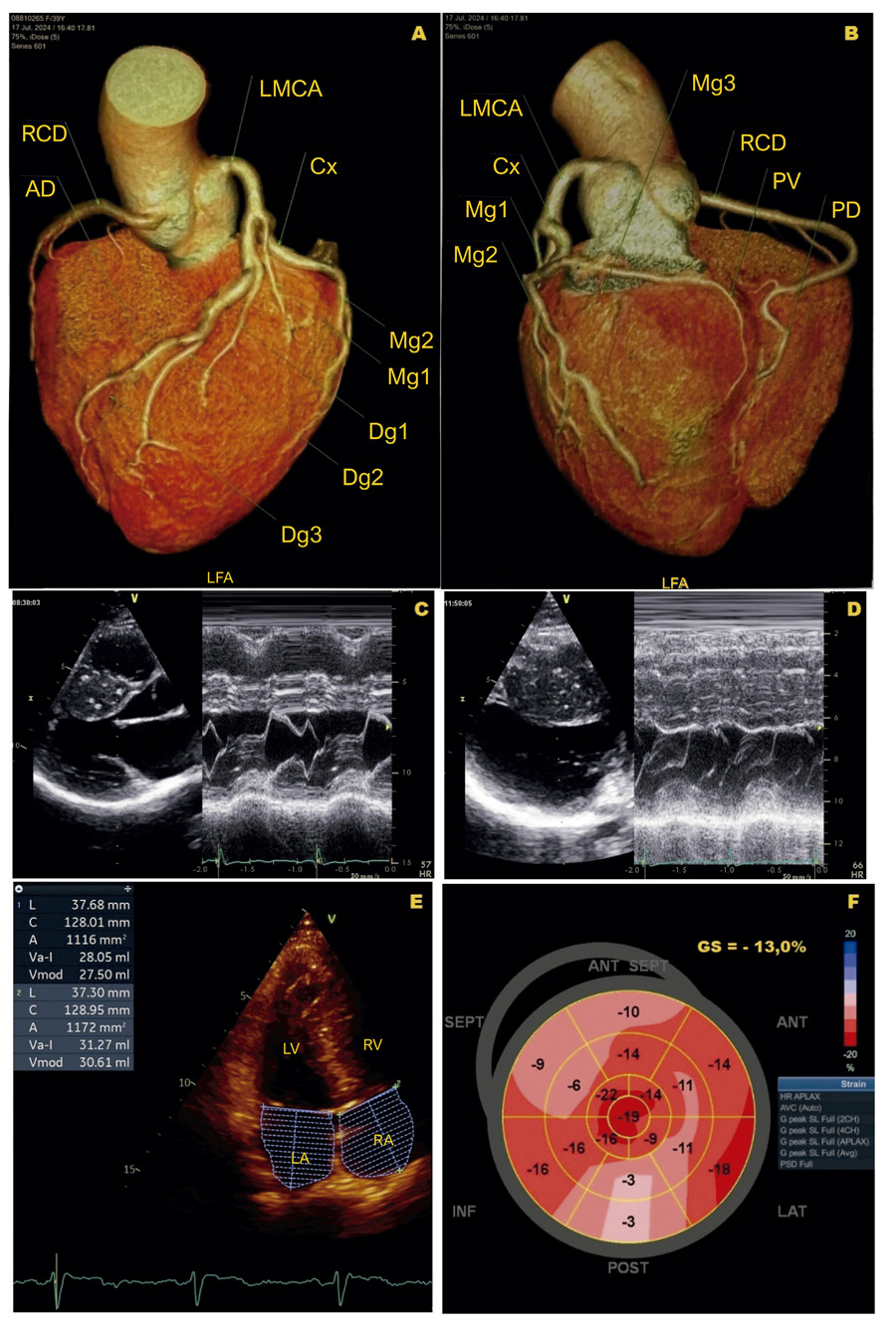
Hemodynamic Impact of Hypertrophic Cardiomyopathy at Rest and During Supine Bicycle Exercise: Additional Value of Postprandial Assessment

Marília Esther Benevides Abreu et al. Tereza Cristina Pinheiro Diógenes Isadora Sucupira Machado Chagas Humberto Mororó Xerex José Sebastião De Abreu

Abstract

A patient with severe, symptomatic hypertrophic cardiomyopathy (HCM) without a significant left ventricular outflow tract (LVOT) gradient at rest requires further evaluation. During exercise echocardiography (EE) performed on a supine bicycle, a latent or underestimated dynamic obstruction may be identified in real time, with postprandial assessment being particularly relevant.

  • Exercise
  • Exercise Test
  • Hypertrophic Cardiomyopathy
  • Postprandial
Read Full Article
Creative Commons Attribution (CC BY) Creative Commons license
17/04/2026 DOI: 10.36660/abcimg.20250049i
Figure 1
ABC
Brief Communication

Treadmill Test and Ambulatory Blood Pressure Monitoring: Can They Be Performed on the Same Day? Can the Effort Reached on the Treadmill Interfere?

Paulo Magno Martins Dourado et al. Larissa de Almeida Dourado Letícia Raiane dos Anjos Silva Jaciara Gomes de Oliveira … Karolyne de Oliveira Matos João Paulo de Almeida Dourado Ludhmila Abrahão Hajjar Pedro Gabriel Senger Braga

Abstract

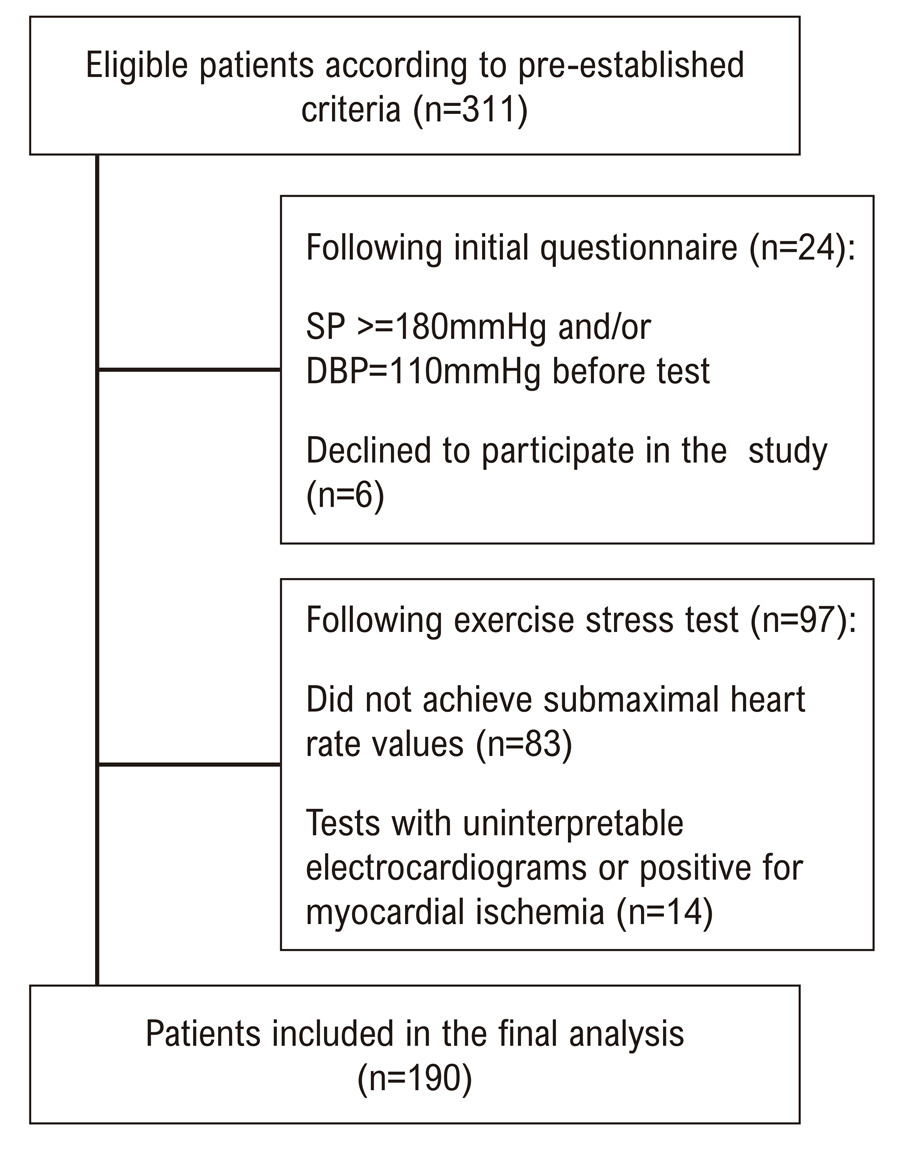
The present study aimed to assess whether the exercise stress test influences the results of ambulatory blood pressure monitoring (ABPM) in individuals who undergo both examinations on the same day, and whether the intensity reached during the test affects the blood pressure values obtained through ABPM. A total of 190 adults participated in the study, which included two analyses: performing the tests on the same day (n=145) versus on different days (n=45) and reaching submaximal (n=95) versus maximal (n=50) heart rate during the exercise stress test. Performing the exercise stress test and ABPM on the same day did not affect maximum systolic blood pressure during wakefulness (p=0.5307) or sleep (p=0.7383), maximum diastolic pressure during wakefulness (p=0.2691) or sleep (p=0.3974), minimum systolic pressure during wakefulness (p=0.4615) or sleep (p=0.5584), or minimum diastolic pressure during wakefulness (p=0.1289) or sleep (p=0.8075). When comparing the intensity of effort reached, there were no differences in maximum systolic pressure during wakefulness (p=0.1029) or sleep (p=0.2149), maximum diastolic pressure during wakefulness (p=0.2062) or sleep (p=0.1851), minimum systolic pressure during wakefulness (p=0.7964) or sleep (p=0.8991), and minimum diastolic pressure during wakefulness (p=0.8864) or sleep (p=0.4892). No differences were found in ABPM blood pressure values between individuals who performed the exercise stress test on the same day and those who did so on different days. Additionally, the intensity reached during the test, whether submaximal or maximal, did not influence ABPM results.

  • Ambulatory Blood Pressure Monitoring
  • Arterial Pressure
  • Exercise Test
Read Full Article
Creative Commons Attribution (CC BY) Creative Commons license
02/03/2026 DOI: 10.36660/abc.20250412i Views 1
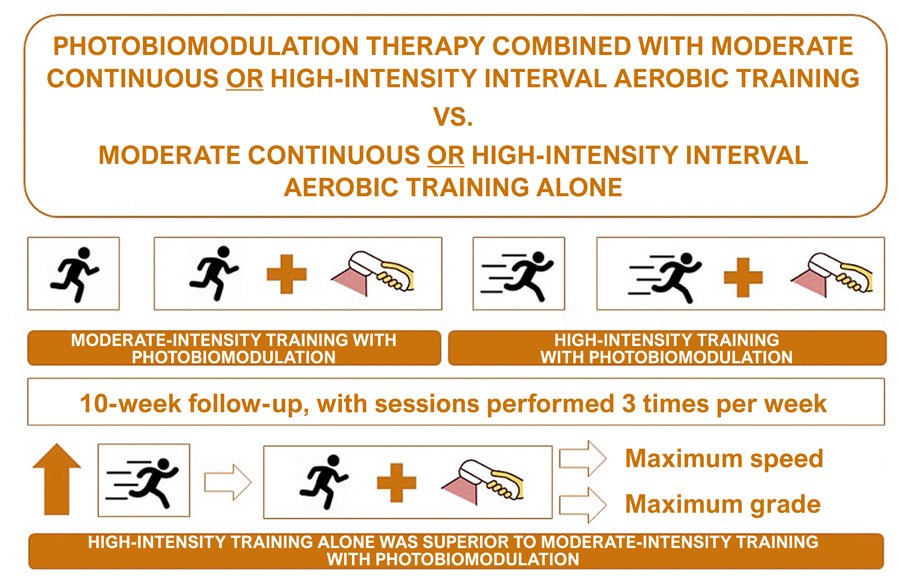
Photobiomodulation Combined with Moderate or High-Intensity Interval Training on Oxygen Consumption and Exercise Tolerance in Patients with Heart Failure
ABC
Original Article

Photobiomodulation Combined with Moderate or High-Intensity Interval Training on Oxygen Consumption and Exercise Tolerance in Patients with Heart Failure

Diego Busin et al. Leandro Tolfo Franzoni Douglas Turella Olga Sergueevna Tairova … Anderson Donelli da Silveira Ricardo Stein Gabriel Lopes Amorim Pedro Dal Lago Ramiro Barcos Nunes

Abstract

Background

Aerobic training (AT), whether moderate or high intensity, is widely employed in cardiovascular rehabilitation. Photobiomodulation therapy (PBMT) has shown potential to enhance exercise performance in athletes; however, its effects in patients with heart failure (HF) remain uncertain.

Objective

To investigate whether the addition of PBMT to moderate- or high-intensity AT improves cardiopulmonary exercise performance in individuals with HF.

Methods

This nonrandomized clinical trial included 49 patients with HF (mean age 62.7 years; ejection fraction < 40%), allocated into 5 groups: i) moderate training alone, ii) moderate training + PBMT, iii) high-intensity training alone, iv) high-intensity training + PBMT, and iv) control group. All participants underwent a 10-week intervention. Cardiopulmonary exercise testing was used to assess VO2peak, ventilatory efficiency, and exercise tolerance. Statistical analysis was performed using Generalized Estimating Equations, with alpha set at 5% (p < 0.05).

Results

Significant improvements in speed and grade during the exercise test were observed in the training groups, particularly in the high-intensity training group. This group demonstrated a greater increase in oxygen consumption (mean difference: 1.80 ml.kg-1.min-1 ± 0.59 ml.kg-1.min-1; p = 0.002) and superior performance in time to exhaustion (speed: p = 0.05; grade: p < 0.01). Comparisons across groups revealed that PBMT did not provide any relevant additional effects when combined with training.

Conclusion

AT, especially at high intensity, enhances exercise performance in patients with HF. The addition of PBMT did not confer significant additional benefits in this study. Further trials using optimized PBMT protocols are warranted.

  • Endurance Training
  • Exercise Test
  • Insuficiência Cardíaca
  • Low-Level Light Therapy
Read Full Article
Creative Commons Attribution (CC BY) Creative Commons license
09/01/2026 DOI: 10.36660/abc.20250086i Views 1
Central Illustration
ABCHF
Original Article

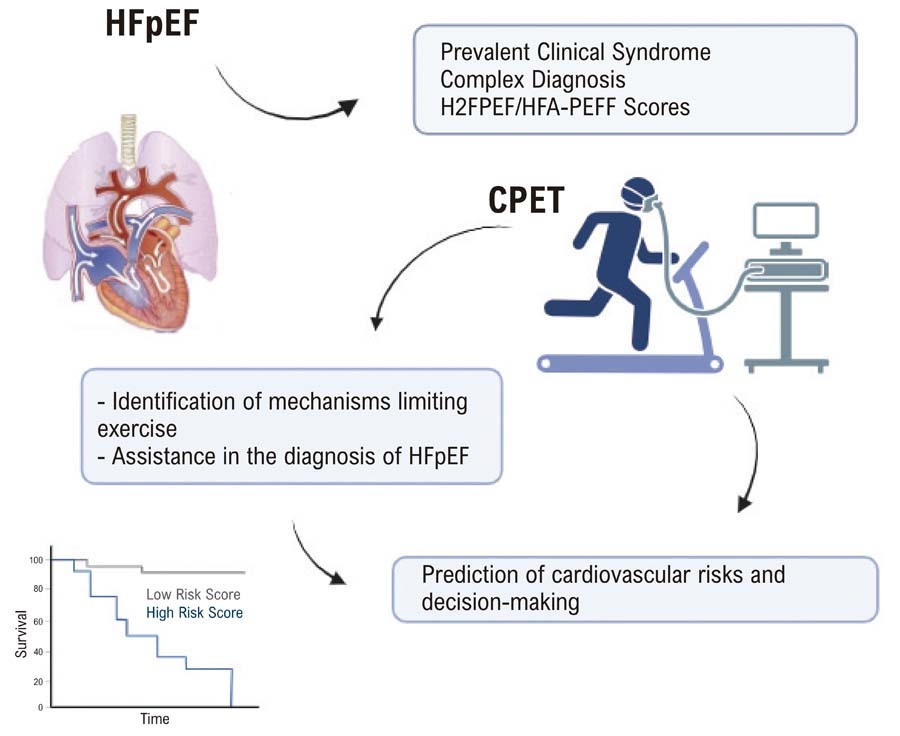
Current Diagnostic and Prognostic Applications of Cardiopulmonary Exercise Testing in Heart Failure with Preserved Ejection Fraction – A Narrative Review

Fernando Colares Barros et al. Jéssica Cristina de Cezaro Eduardo Gatti Pianca Willian Roberto Menegazzo … Fernando Luís Scolari Anderson Donelli da Silveira

Abstract

Heart failure with preserved ejection fraction (HFpEF) is a prevalent clinical syndrome with a complex diagnosis, associated with various comorbidities and high rates of cardiovascular events. Cardiopulmonary exercise testing (CPET) plays an essential role in understanding the mechanisms of exercise limitation and in complementing the diagnosis of HFpEF, but it presents several gaps to be explored in risk prediction. This article reviews the literature on current pathophysiological, diagnostic, and prognostic aspects of HFpEF. Subsequently, the role of CPET in diagnosis and prognostic prediction in HFpEF is explored. A critical analysis of the main observational and cohort studies that used CPET in this setting is performed, selected after a qualified search on the PubMed platform. For diagnostic purposes, peak VO2 is not very specific, with a high diagnostic probability for values 20 ml/kg/min. However, when peak VO2 is evaluated together with other ventilatory parameters, there is an increase in the diagnostic value of CPET in HFpEF. For prognostic purposes, variables such as peak VO2, VE/VCO2 slope, and the presence of periodic ventilation correlate with a higher risk prediction. However, there are notable sample differences between studies in HFpEF, hindering the generalization of the use of CPET in clinical practice. This review concludes that conducting prospective studies with more rigorous patient selection and using some variables adjusted for body composition differences, such as lean VO2, may allow for better incorporation of CPET in risk stratification in HFpEF.

  • Exercise Test
  • Heart Failure
  • Prognosis
Read Full Article
Creative Commons Attribution (CC BY) Creative Commons license
31/12/2025 DOI: 10.36660/abc.20250014i Views 8
Central Illustration
ABCHF
Original Article

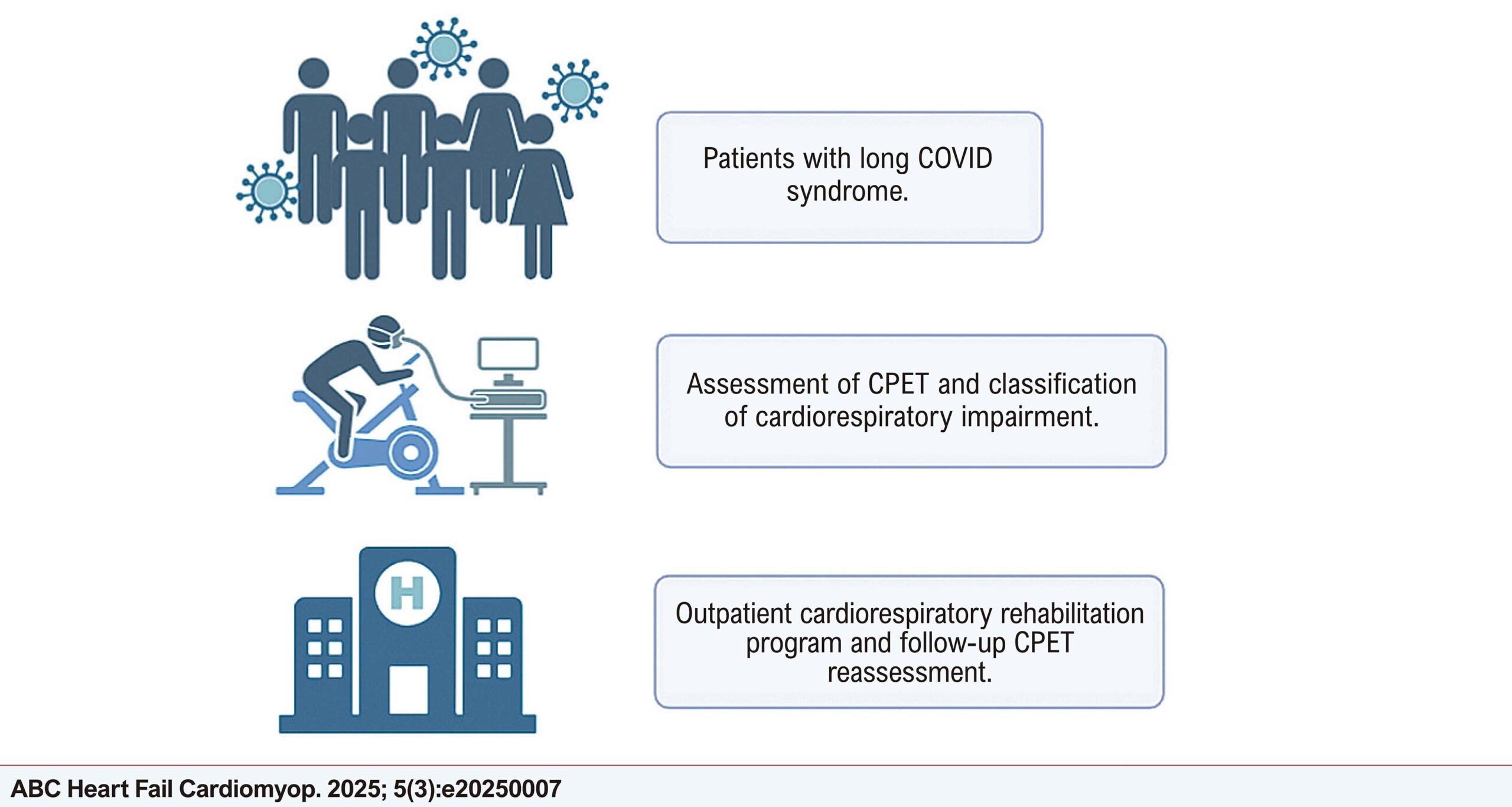
Efficacy of Cardiopulmonary Rehabilitation on Cardiorespiratory Function in Patients with Long COVID Syndrome

Silvia Sarullo et al. Cinzia Nugara Annamaria Lo Voi Antonino Zarcone … Gabriele Di Francesco Sergio Bosco Sergio Carollo Luigi Mazzara Francesco Giallauria Francesco Cappello Filippo M. Sarullo

Abstract

Background

Long COVID syndrome (LCS) refers to persistent sequelae following acute SARS-CoV-2 infection and affects approximately 5%-20% of individuals.

Objective

This study evaluated functional capacity limitations in patients with LCS using cardiopulmonary exercise testing (CPET) and quantified the effects of a structured cardiorespiratory rehabilitation (CR) program.

Methods

In this prospective observational study, 67 outpatients with LCS completed CPET before and after participation in a supervised CR program. At baseline, patients demonstrated reduced functional capacity, including decreased VO2peak (19.47 ± 7.86 mL/kg/min), lower O2 pulse (10.65 ± 3.11 mL/beat), increased VE/VCO2 slope (31.26 ± 7.98), and impaired ventilation (VE = 57.83 ± 17.37%). Most participants either did not achieve the anaerobic threshold (AT) or reached it prematurely, although VO2/work slope values remained within normal limits.

Results

After a median 45-day CR intervention, significant improvements were observed in several parameters: resting heart rate decreased by 8.88% (p < 0.0001), minute ventilation increased by 30.46% (p < 0.0001), VO2peak rose by 18.85% (p < 0.0001), and peak workload increased by 26.82% (p < 0.0001). Additionally, 95% of patients achieved AT following CR, with a 16.21% delay in AT onset (p < 0.0001). The VE/VCO2 slope showed a modest but significant reduction of 4.03% (p = 0.0443).

Conclusions

Exercise-based CR substantially improved functional capacity in patients with LCS, demonstrated by increases in VO2peak, O2 pulse, and ventilatory efficiency. Although these results support CR as a beneficial therapeutic strategy, the underlying pathophysiological mechanisms of LCS remain incompletely understood.

  • Cardiac Rehabilitation
  • exercise capacity
  • Exercise Test
  • Post-Acute COVID-19 Syndrome
Read Full Article
Creative Commons Attribution (CC BY) Creative Commons license
31/12/2025 DOI: 10.36660/abchf.20250007i
Cardiopulmonary Exercise Testing in Heart Failure: Updating the Theory into Clinical Practice
ABCHF
Review Article

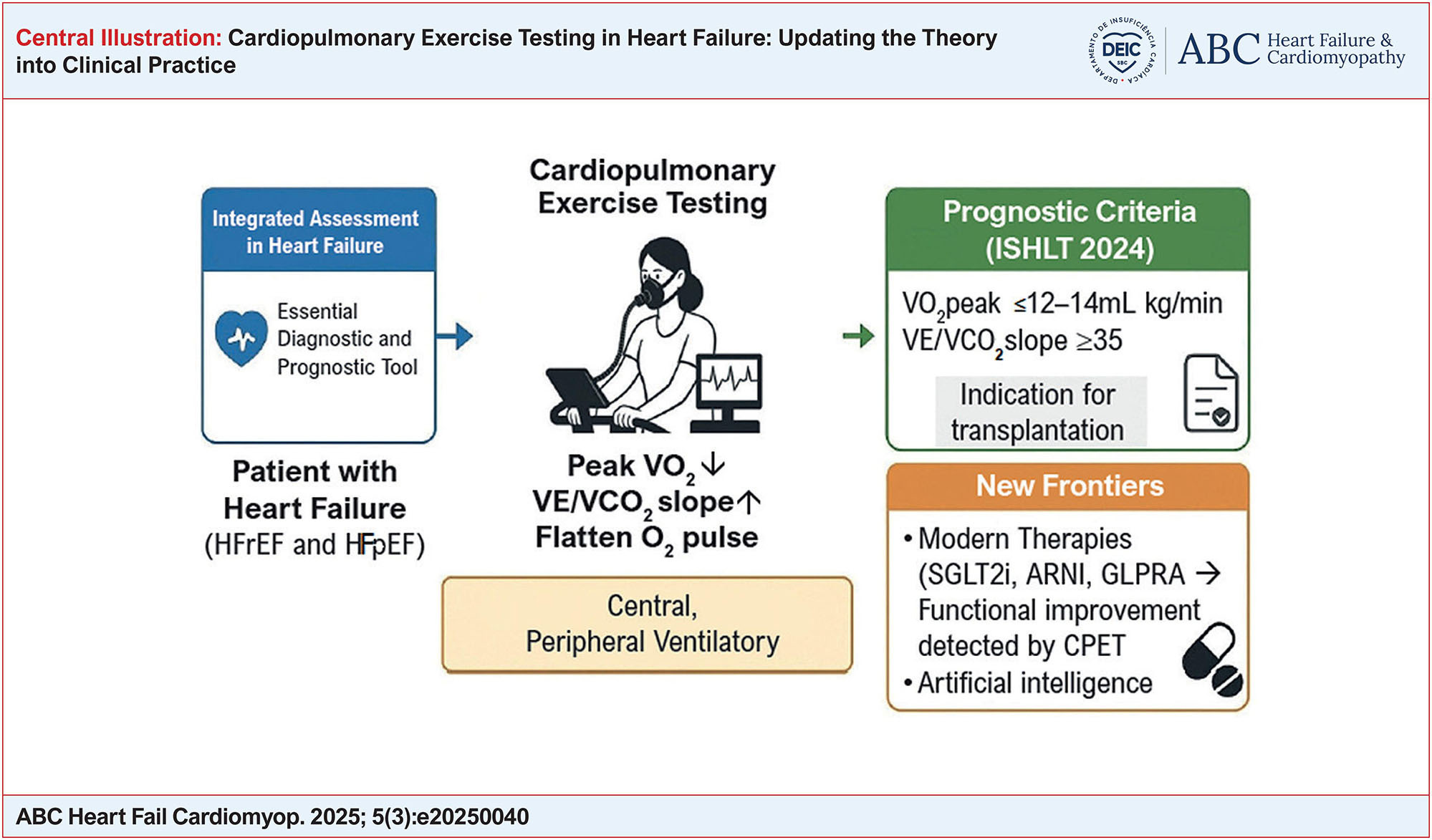
Cardiopulmonary Exercise Testing in Heart Failure: Updating the Theory into Clinical Practice

João Manoel Rossi Neto et al. Raphael Machado Rossi Victor B. M. Mattos Plinio J. W. Wolf … Marco Aurelio A. Finger Carolina Casadei dos Santos

Abstract

Cardiopulmonary exercise testing (CPET) is a central tool in the functional assessment of heart failure (HF), integrating cardiovascular, ventilatory, and metabolic responses into a single examination. In light of evidence published between 2023 and 2025, its diagnostic and prognostic role has been expanded, incorporating more refined pathophysiological foundations, submaximal parameters, and updated criteria for heart transplantation according to ISHLT 2024. This narrative review, based on studies indexed in PubMed, international consensus statements, and contemporary analyses, addresses the main mechanisms of exercise limitation in HF with reduced ejection fraction (HFrEF) and preserved ejection fraction (HFpEF), as well as the clinical relevance of key CPET variables, including peak VO2, VE/VCO2 slope, OUES, O2 pulse, chronotropic response, and VO2 recovery kinetics.

The body of evidence confirms that the CPET is the most comprehensive tool for characterizing cardiocirculatory, ventilatory, and peripheral limitations, with reduced peak VO2 and elevated VE/VCO2 slope remaining the most robust prognostic markers, even in submaximal tests. Recent studies also demonstrate that emerging therapies — such as SGLT2 inhibitors, ARNIs, and GLP-1 agonists — promote functional benefits detectable by CPET before cardiac structural changes, highlighting its role as a monitor of therapeutic response. Additionally, CPET remains fundamental in risk stratification and transplant decision-making, following the updated thresholds of the ISHLT. Thus, the examination is consolidated as an essential instrument in modern HF practice, integrating diagnosis, prognosis, and therapeutic monitoring, as well as guiding rehabilitation strategies and the selection of advanced therapies.

  • Cardiac Rehabilitation
  • Exercise Test
  • Gas exchange
  • Heart Failure
  • Prognosis
Read Full Article
Creative Commons Attribution (CC BY) Creative Commons license
31/12/2025 DOI: 10.36660/abchf.20250040i Views 2
ABC
Editorial

Analysis of Cardiopulmonary Exercise Test in Pre- and Post-COVID-19

José Antônio Caldas Teixeira

The SARS-CoV-2 (COVID-19) pandemic that began in December 2019 in the city of Wuhan, Hubei Province, China, quickly became a pandemic affecting over 600 million people, resulting in over 6 million deaths. COVID-19 has been associated with significant mortality and morbidity, including adverse pulmonary and cardiac sequelae.

It is known that COVID-19 symptoms persist beyond the acute phase, leading to post-acute sequelae, known as Long COVID Syndrome, which lasts for more than 60 days or indefinitely. Although the precise mechanisms are not fully elucidated, it is associated with various symptoms, with fatigue and exercise intolerance being the most prevalent.

[…]

  • Exercise Test
  • physical fitness
  • Post-Acute COVID-19 Syndrome
Read Full Article
Creative Commons Attribution (CC BY) Creative Commons license
14/11/2025 DOI: 10.36660/abc.20250544i Views 1
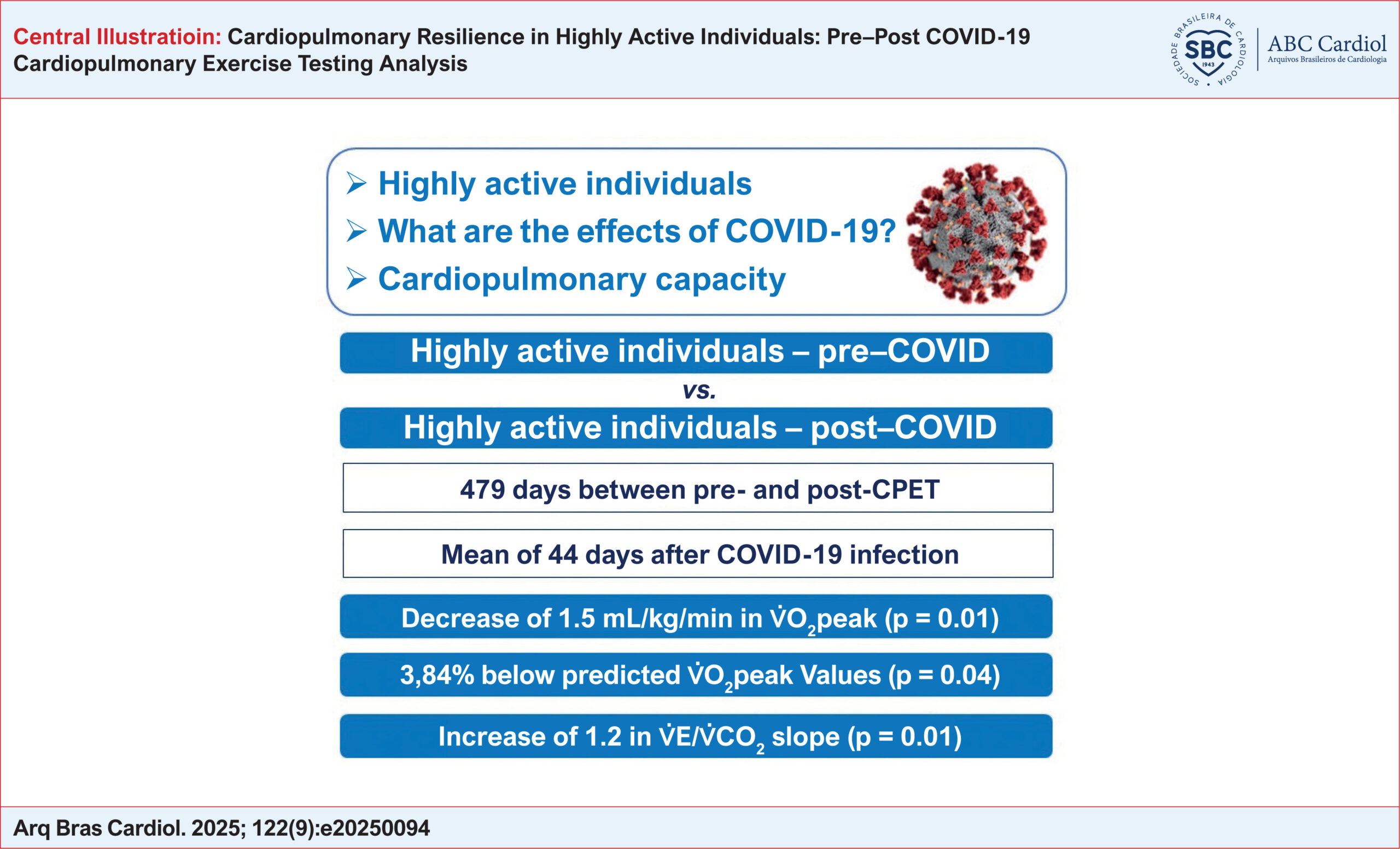
Cardiopulmonary Resilience in Highly Active Individuals: Pre–Post COVID-19 Cardiopulmonary Exercise Testing Analysis
ABC
Original Article

Cardiopulmonary Resilience in Highly Active Individuals: Pre–Post COVID-19 Cardiopulmonary Exercise Testing Analysis

Fabrício Braga et al. Gabriel Espinosa Amanda Monteiro Mauricio Milani … Juliana Paiva Juliana Goulart Prata Oliveira Milani Leandro Franzoni Ricardo Stein Gerson Cipriano Jr. Jonas Lírio Gurgel Ricardo Mourilhe-Rocha

Abstract

Background:

The COVID-19 pandemic has affected millions globally, with persistent impacts extending beyond the acute phase. One such effect is post-COVID (long COVID), characterized by symptoms such as fatigue and exercise intolerance lasting more than 60 days. Although regular exercise is associated with reduced risk of severe outcomes, reports of decreased athletic performance after COVID-19 — even among highly active individuals (HAIs) — have raised concerns regarding the long-term effects on physical health. Cardiopulmonary exercise testing (CPET) is a valuable tool to assess exercise intolerance and to investigate the metabolic and ventilatory consequences of COVID-19.

Objectives:

To evaluate the impact of COVID-19 on cardiopulmonary function in HAIs by analyzing metabolic and ventilatory responses using CPET before and after infection.

Methods:

CPET data were retrospectively analyzed from HAIs of both sexes. Primary outcomes included changes in peak oxygen uptake (O2peak) and ventilatory efficiency (E/CO2 slope). Statistical significance was set at 5% (p < 0.05).

Results:

A total of 43 HAIs (72.1% male; 44 ± 10 years) were included. The median interval between CPETs was 479 days, with testing performed a mean of 44 ± 27 days after COVID-19. O2peak decreased by a mean of 1.5 mL/kg/min (p = 0.017), representing a 3.84% reduction in predicted O2peak values (p = 0.045). E/CO2 slope increased by 1.2 (p = 0.017).

Conclusion:

Although HAIs are not immune to the effects of COVID-19, their high baseline physical activity levels appear to confer substantial cardiopulmonary resilience. Only minimal post-infection alterations were observed, which suggests that maintaining fitness may provide protective benefits against long-term sequelae of COVID-19.

  • athletic performance
  • Cardiorespiratory Fitness
  • Exercise
  • Exercise Test
Read Full Article
Creative Commons Attribution (CC BY) Creative Commons license
14/11/2025 DOI: 10.36660/abc.20250094i Views 1
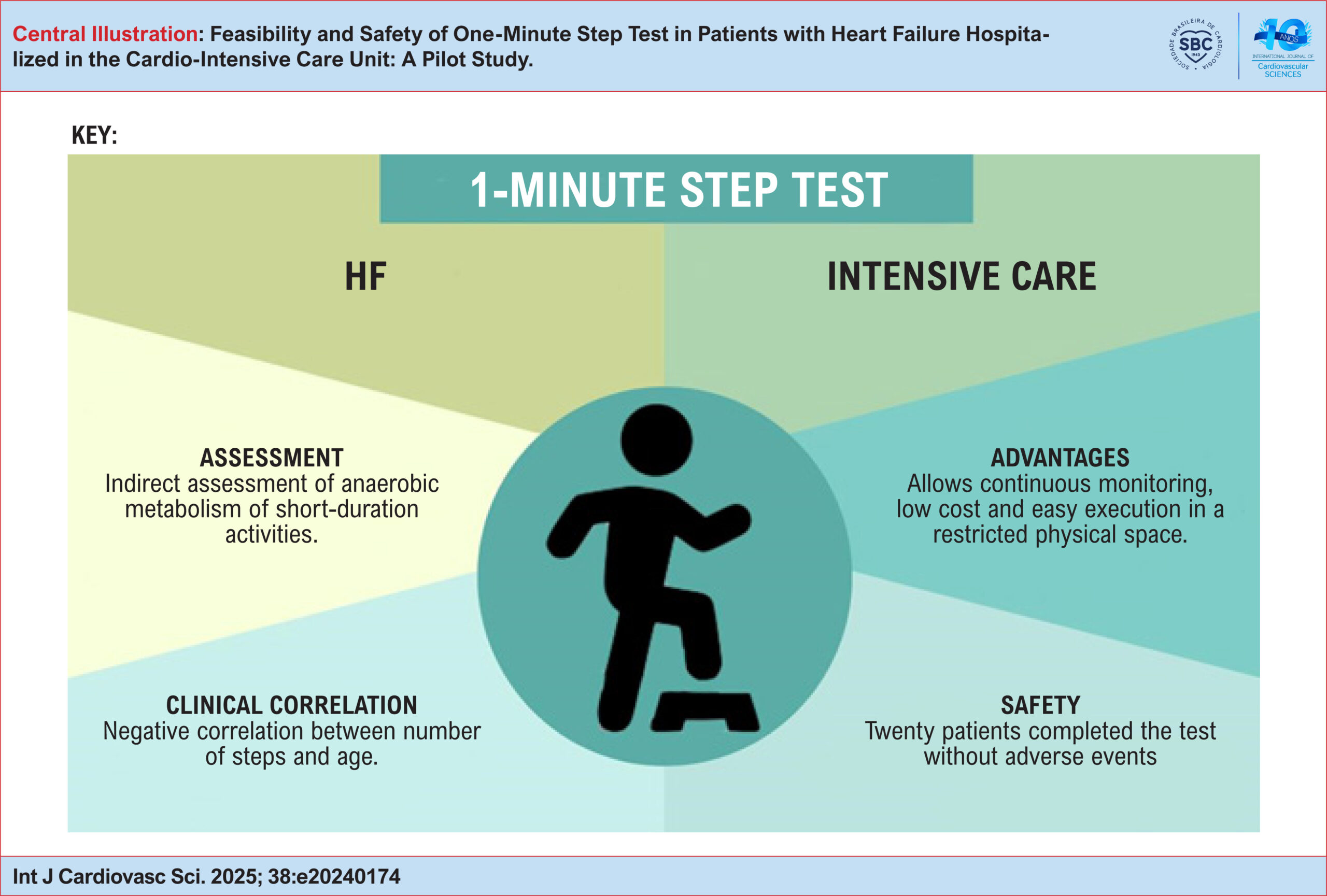
Feasibility and Safety of One-Minute Step Test in Patients with Heart Failure Hospitalized in the Cardio-Intensive Care Unit: A Pilot Study.
IJCS
Original Article

Feasibility and Safety of One-Minute Step Test in Patients with Heart Failure Hospitalized in the Cardio-Intensive Care Unit: A Pilot Study.

Andresa Narcizo Volotão et al. Clara Pinto Diniz Ana Carolina Cossio Rodriguez Vivian de Freitas Martins da Silva … Juliana Rega de Oliveira Ana Paula Nunes Carneiro Mariana Barcellos de Avila Carolina Nigro Di Leone

Abstract

Background:

The One-Minute Step Test (1MST) seems to be a useful tool for exploring the component of energy metabolism used in Activities of Daily Living (ADL), but it is still little explored in patients with Heart Failure (HF) in the hospital environment.

Objective:

To evaluate the feasibility and safety of performing 1MST in hospitalized patients with HF.

Methods:

Data were collected using electronic medical records and evaluative tests from patients with HF. The safety of the 1MST was assessed through vital signs records, perceived exertion, adverse events, and feasibility based on the ability to complete the test. The paired Student’s T-test and Wilcoxon test were employed to compare the data before and after the test, depending on the distribution of the data, while the relationship between the variables was examined using Pearson’s correlation test. The significance level set was p < 0.05.

Results:

Twenty patients were evaluated between May and December 2022. All patients completed the test, and no adverse events were recorded. Heart rate (HR) (p < 0.001), systolic blood pressure (SBP) (p = 0.01), mean arterial pressure (MBP) (p = 0.03), and respiratory rate (p < 0.001), and peripheral oxygen saturation showed a reduction (p = 0.04). A negative correlation was observed between 1MST and age (r = −0.46; p = 0.03) and a positive correlation between 1MST and length of stay in the CICU (r = 0.44; p = 0.04).

Conclusion:

It is concluded that the 1MST is a safe and viable tool for assessing the anaerobic metabolism of patients with HF.

  • Exercise Test
  • Heart Failure
  • Hospitalization
Read Full Article
Creative Commons Attribution (CC BY) Creative Commons license
15/08/2025 DOI: 10.36660/ijcs.20240174
ABC
Editorial

Exercise Stress Test For Detecting High-Risk Accessory Pathways In Patients With Wolff-Parkinson-White Syndrome

Fabricio Vassallo

In the description of Wolff, Parkinson, and White in 1930 of accessory pathway exhibiting antegrade conduction much work had been done to describe the anatomy, electrophysiology, and natural history of the syndrome. During sinus rhythm, a typical pattern in the resting electrocardiogram (ECG) is present: a short PR interval (120ms). In most cases, accessory pathways giving rise to the WPW patterns are seen in structurally normal hearts.

Patients with WPW syndrome presented with palpitations caused by an atrioventricular tachycardia or, less commonly, due to primary atrial tachycardia or fibrillation.

[…]

  • Diagnostic Techniques and Procedures
  • Exercise Test
  • Wolff-Parkinson White Syndrome
Read Full Article
Creative Commons Attribution (CC BY) Creative Commons license
23/05/2025 DOI: 10.36660/abc.20250194i Views 2
Figure 1
ABC
Original Article

Diagnostic Test Accuracy of Exercise Testing in Detecting High-Risk Accessory Pathways in WPW: A Systematic Review and Meta-Analysis

José Nunes de Alencar et al. Fabio Mahamad Rassi Raquel Pereira Rios Matheus Kiszka Scheffer Guilherme Dagostin de Carvalho

Abstract

Background

Wolff-Parkinson-White (WPW) syndrome is characterized by ventricular pre-excitation, which can lead to severe arrhythmic events such as supraventricular tachycardia and pre-excited atrial fibrillation. The diagnostic value of non-invasive exercise tests in detecting high-risk accessory pathways remains inconsistent in the literature.

Objectives

To evaluate the diagnostic accuracy of non-invasive exercise tests compared to invasive electrophysiological studies (EPS) for identifying high-risk accessory pathways in WPW syndrome.

Methods

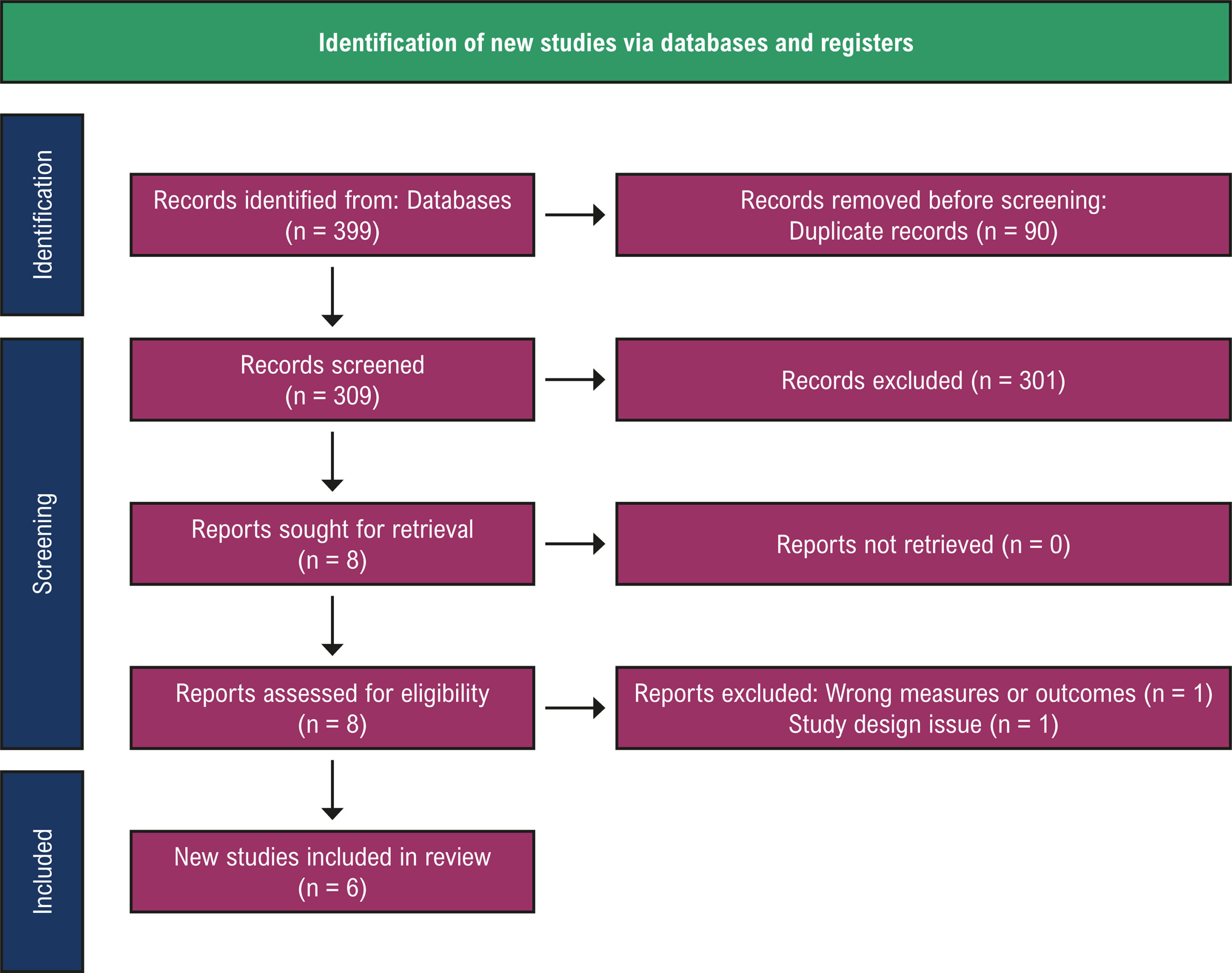
Following PRISMA-DTA guidelines, a comprehensive search was conducted in PubMed, Scopus, and Web of Science databases. Eligible studies assessed the sensitivity, specificity, and likelihood ratios of non-invasive exercise tests in WPW patients, using EPS as the reference standard. A bivariate random-effects model was applied for meta-analysis.

Results

Six studies, comprising a total of 765 patients, met the inclusion criteria. The pooled sensitivity was 92.7% (95% CI: 88.0% – 94.0%), while the pooled specificity was 28.1% (95% CI: 23% – 35.1%). A negative likelihood ratio (LR-) of 0.260 (95% CI: 0.174 – 0.387) indicated that the presence of a high-risk accessory pathway is about four times less likely after a negative test result. Sensitivity analysis restricted to pediatric patients showed consistent results.

Conclusion

Non-invasive exercise tests demonstrate a reasonable diagnostic utility for ruling out high-risk pathways in WPW syndrome. However, caution is advised when using these tests as standalone criteria for risk stratification.

  • Exercise Test
  • Meta-Analysis
  • systematic review
  • Wolff-Parkinson White Syndrome
Read Full Article
Creative Commons Attribution (CC BY) Creative Commons license
12/05/2025 DOI: 10.36660/abc.20240663i
Figure 1
IJCS
Case Report

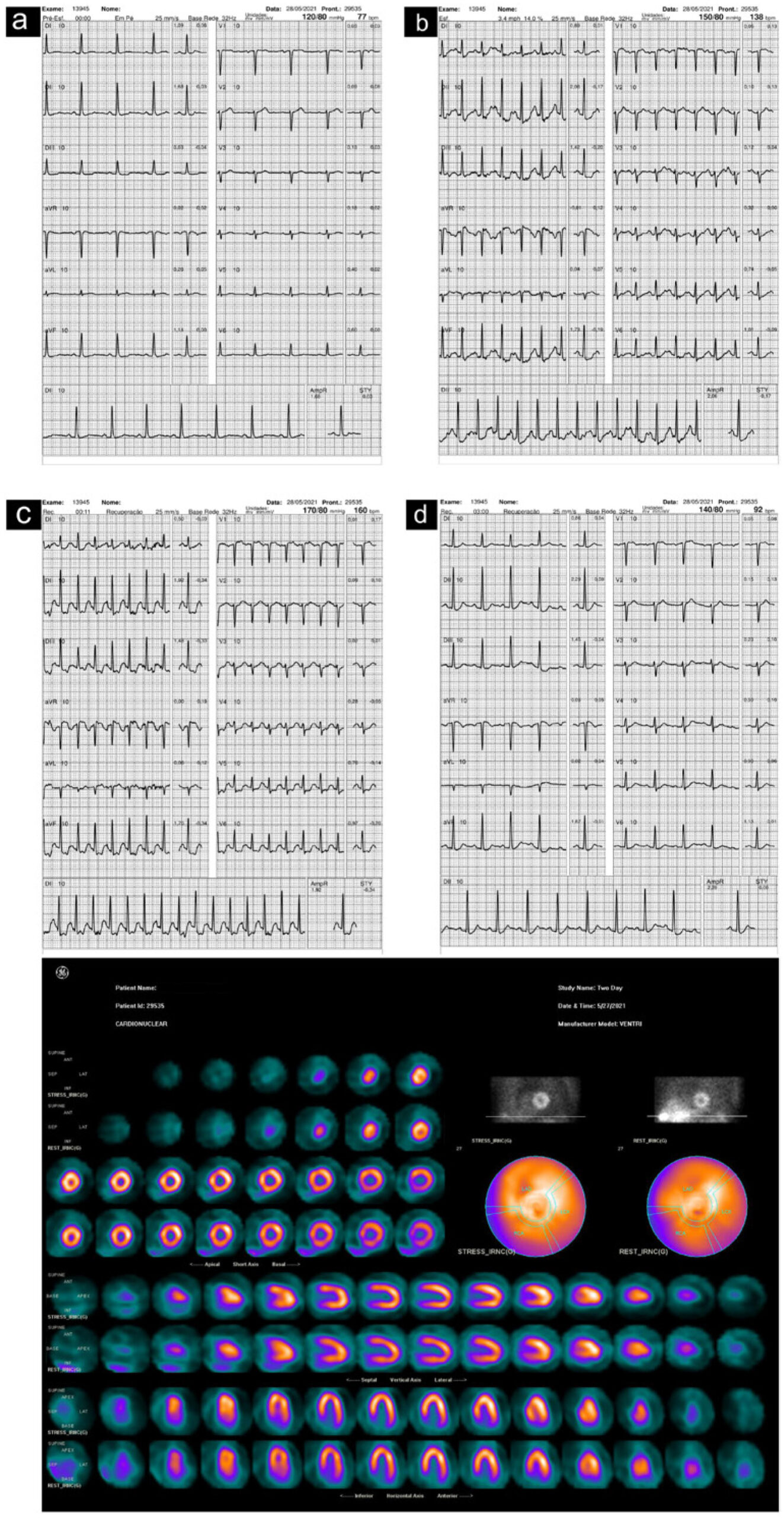
ECG's AVR ST elevation Analysis by Perfusion Scintilography in the Context of Myocardial Ischemia

Miriana Basso Gomes et al. Carolina Feijó Bombana Felipe C. Fuchs

Introduction

The presence of ST-segment elevation in two or more contiguous leads indicates a current subepicardial lesion that often requires early intervention, either by angioplasty or thrombolytic therapy., ST elevation, only in aVR, may also indicate the presence of an acute infarction. This finding was first made by Wellens et al. However, this is not always true, and physicians should be aware of the details surrounding changes in Right Vector amplification (aVR).

The medical literature has a wide range of articles reporting on the association between ST elevation in aVR during exercise testing and left main coronary artery injury.– However, this concept began at a time when fewer imaging tests and catheterizations were performed. Altered stress tests are a common indication of myocardial scintigraphy, which is why the Nuclear Medicine laboratory is the perfect place to perform this type of analysis. There is now evidence that aVR elevation in this context may not indicate coronary lesions and may be present, for example, in patients with aortic stenosis, hypertrophy and hypoxia..– Since these are stress tests, it is important to analyze the heart rate in which the aVR elevation occurs as well as the pattern of the other leads.

[…]

  • Electrocardiography
  • Exercise Test
  • Myocardial Ischemia
  • Radionuclide Imaging
Read Full Article
Creative Commons Attribution (CC BY) Creative Commons license
11/04/2025 DOI: 10.36660/ijcs.20230080 Views 1
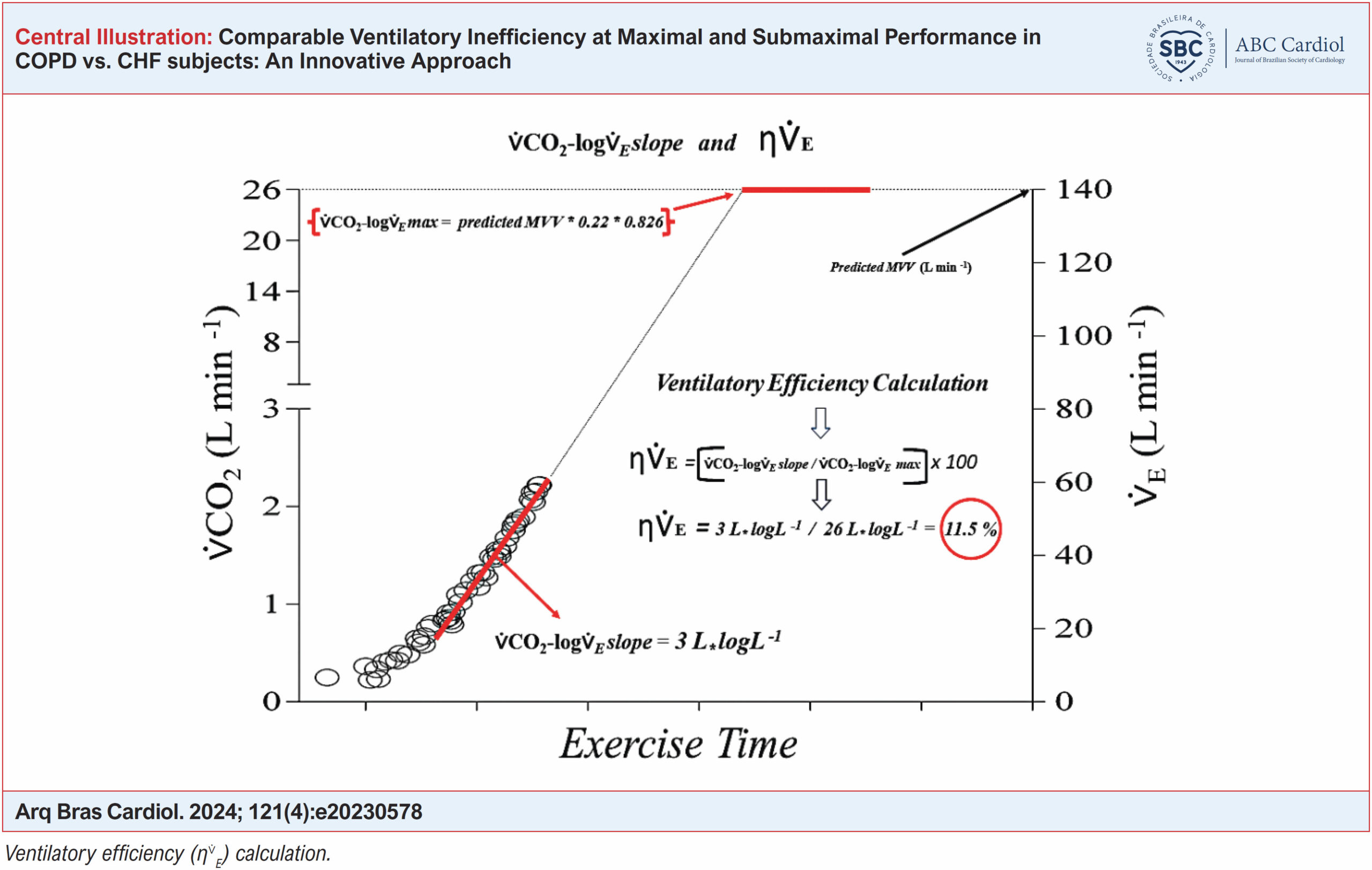
Comparable Ventilatory Inefficiency at Maximal and Submaximal Performance in COPD vs. CHF subjects: An Innovative Approach
ABC
Original Article

Comparable Ventilatory Inefficiency at Maximal and Submaximal Performance in COPD vs. CHF subjects: An Innovative Approach

Gerson Gatass Orro de Campos et al. Leandro Steinhorst Goelzer Tiago Rodrigues de Lemos Augusto Gisele Walter Barbosa … Gaspar R. Chiappa Erik H. van Iterson Paulo T. Muller

Abstract

Background:

Currently, excess ventilation has been grounded under the relationship between minute-ventilation/carbon dioxide output (). Alternatively, a new approach for ventilatory efficiency () has been published.

Objective:

Our main hypothesis is that comparatively low levels of between chronic heart failure (CHF) and chronic obstructive pulmonary disease (COPD) are attainable for a similar level of maximum and submaximal aerobic performance, conversely to long-established methods ( slope and intercept).

Methods:

Both groups performed lung function tests, echocardiography, and cardiopulmonary exercise testing. The significance level adopted in the statistical analysis was 5%. Thus, nineteen COPD and nineteen CHF-eligible subjects completed the study. With the aim of contrasting full values of and for the exercise period (100%), correlations were made with smaller fractions, such as 90% and 75% of the maximum values.

Results:

The two groups attained matched characteristics for age (62±6 vs. 59±9 yrs, p>.05), sex (10/9 vs. 14/5, p>0.05), BMI (26±4 vs. 27±3 Kg m2, p>0.05), and peak (72±19 vs. 74±20 %pred, p>0.05), respectively. The slope and intercept were significantly different for COPD and CHF (27.2±1.4 vs. 33.1±5.7 and 5.3±1.9 vs. 1.7±3.6, p0.850 for both).

Conclusion:

The is a valuable method for comparison between cardiopulmonary diseases, with so far distinct physiopathological mechanisms, including ventilatory constraints in COPD.

  • Chronic Obstructive Pulmonary Disease
  • Exercise
  • Exercise Test
  • Heart Failure
Read Full Article
Creative Commons Attribution (CC BY) Creative Commons license
29/04/2024 DOI: 10.36660/abc.20230578i
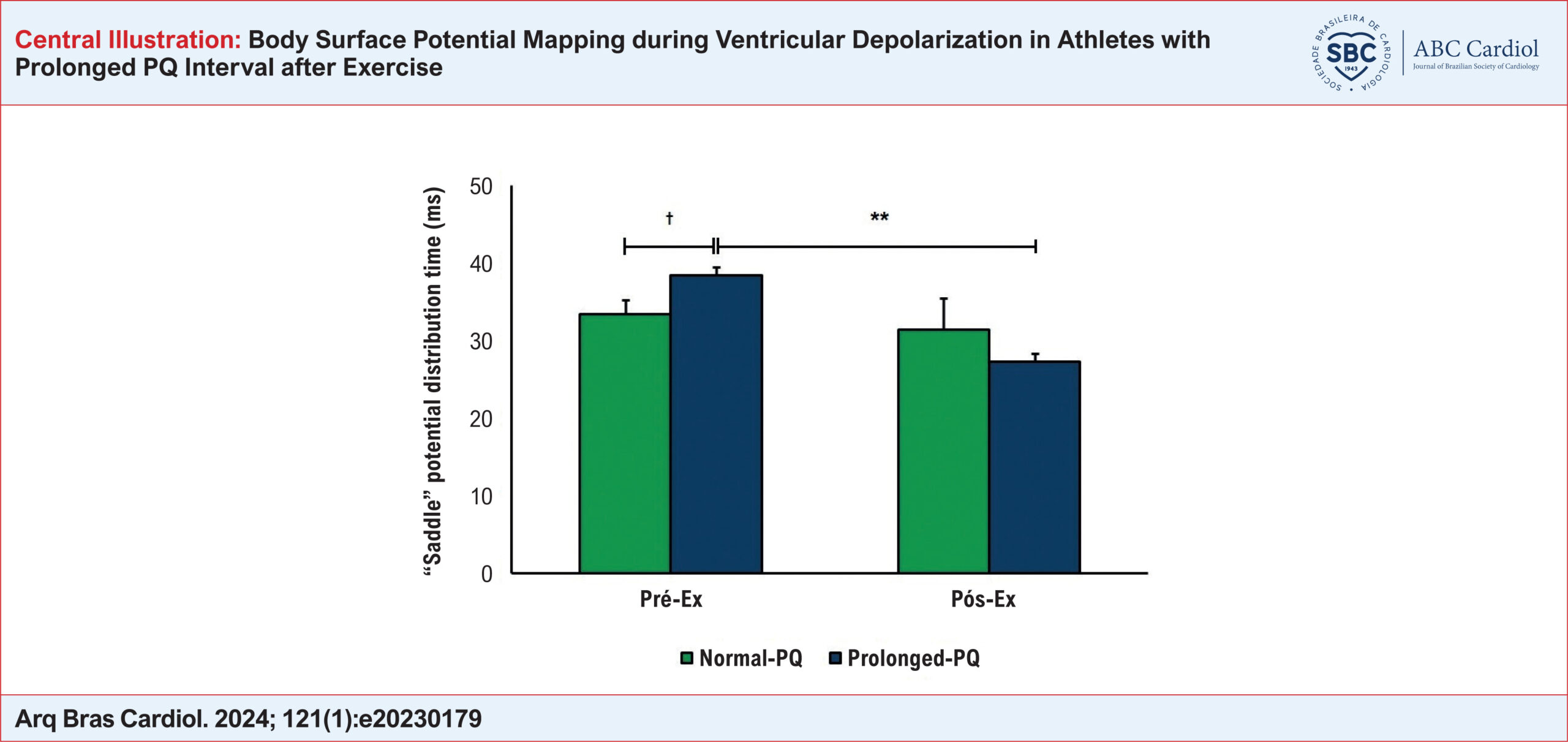
Body Surface Potential Mapping during Ventricular Depolarization in Athletes with Prolonged PQ Interval after Exercise
ABC
Original Article

Body Surface Potential Mapping during Ventricular Depolarization in Athletes with Prolonged PQ Interval after Exercise

Natalya I. Ivonina et al. Alexey G. Ivonin Irina M. Roshchevskaya

Abstract

Background:

Prolongation of the PQ interval, generally associated with an atrioventricular conduction delay, may be related to changes in intraventricular impulse spreading.

Objective:

To assess, using body surface potential mapping (BSPM), the process of ventricular depolarization in athletes with prolonged PQ intervals at rest and after exercise.

Methods:

The study included 7 cross-country skiers with a PQ interval of more than 200 ms (Prolonged-PQ group) and 7 with a PQ interval of less than 200 ms (Normal-PQ group). The BSPM from 64 unipolar torso leads was performed before (Pre-Ex) and after the bicycle exercise test (Post-Ex). Body surface equipotential maps were analyzed during ventricular depolarization. The significance level was 5%.

Results:

Compared to Normal-PQ athletes, the first and second periods of the stable position of cardiac potentials on the torso surface were longer, and the formation of the “saddle” potential distribution occurred later, at Pre-Ex, in Prolonged-PQ athletes. At Post-Ex, the Prolonged-PQ group showed a shortening of the first and second periods of stable potential distributions and a decrease in appearance time of the “saddle” phenomenon relative to Pre-Ex (to the values near to those of the Normal-PQ group). Additionally, at Post-Ex, the first inversion of potential distributions and the total duration of ventricular depolarization in Prolonged-PQ athletes decreased compared to Pre-Ex and with similar values in Normal-PQ athletes. Compared to Normal-PQ athletes, the second inversion was longer at Pre-Ex and Post-Ex in Prolonged-PQ athletes.

Conclusion:

Prolonged-PQ athletes had significant differences in the temporal characteristics of BSPM during ventricular depolarization both at rest and after exercise as compared to Normal-PQ athletes.

  • Athletes
  • Atrioventricular block
  • body surface potential mapping
  • Exercise Test
  • Heart Ventricles
Read Full Article
Creative Commons Attribution (CC BY) Creative Commons license
04/03/2024 DOI: 10.36660/abc.20230179 Views 1
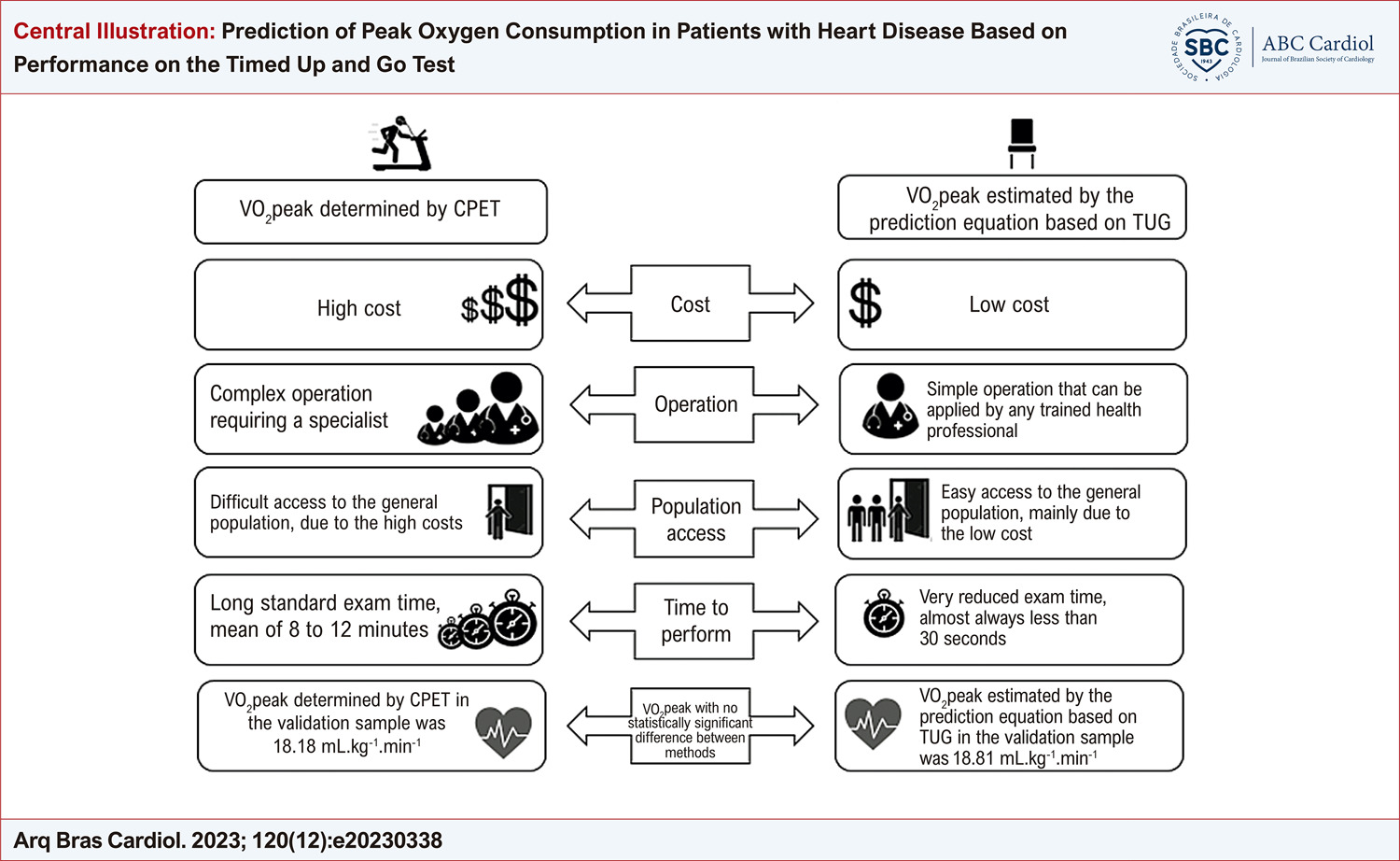
Prediction of Peak Oxygen Consumption in Patients with Heart Disease Based on Performance on the Timed Up and Go Test
ABC
Original Article

Prediction of Peak Oxygen Consumption in Patients with Heart Disease Based on Performance on the Timed Up and Go Test

Danilo Silva dos Santos et al. Ciro Oliveira Queiroz Cristiane Maria Carvalho Costa Dias Gerson Cipriano Junior … Queila Oliveira Borges Luiz Eduardo Fonteles Ritt

Abstract

Background

The use of the timed up and go (TUG) test to assess cardiorespiratory fitness in patients with heart disease has not been well defined in the literature.

Objectives

Test the association between TUG and peak oxygen consumption (VO2peak), construct an equation based on TUG to predict VO2peak, and determine a cutoff point to estimate VO2peak ≥ 20 mL/kg/min.

Methods

This cross-sectional study included 201 patients with coronary artery disease or heart failure, between 36 and 92 years of age, who underwent TUG and cardiopulmonary exercise test. Correlation, ROC curve, multiple linear regression, and Bland-Altman analyses were performed. The significance level was set at p < 0.05.

Results

The mean age of the total sample was 67 ± 13 years, and 70% of participants were male. The mean VO2peak was 17 ± 6 mL/kg/min, and the mean TUG time was 7 ± 2.5 seconds. The correlation between VO2peak and TUG was r = −0.54 (p < 0.001), and R2 was 0.30. The following equation was developed based on ; a value of 0 was assigned to the male sex and 1 to the female sex (adjusted R: 0.41; adjusted R2: 0.40). The VO2peak estimated by the equation was 18.81 ± 3.2 mL/kg/min, and the VO2peak determined by cardiopulmonary exercise test was 18.18 ± 5.9 mL/kg/min (p > 0.05). The best cutoff point in the TUG for VO2peak ≥ 20 mL/kg/min was ≤ 5.47 seconds (area under the curve: 0.80; 95% confidence interval: 0.74 to 0.86).

Conclusions

TUG and VO2peak showed a significant association. A prediction equation for VO2peak was developed and validated internally with good performance. The cutoff point in the TUG to predict VO2peak ≥ 20 mL/kg/min was ≤ 5.47 seconds.

  • Cardiovascular Diseases
  • Exercise Test
  • Oxygen Consumption
Read Full Article
Creative Commons Attribution (CC BY) Creative Commons license
22/12/2023 DOI: 10.36660/abc.20230338 Views 2
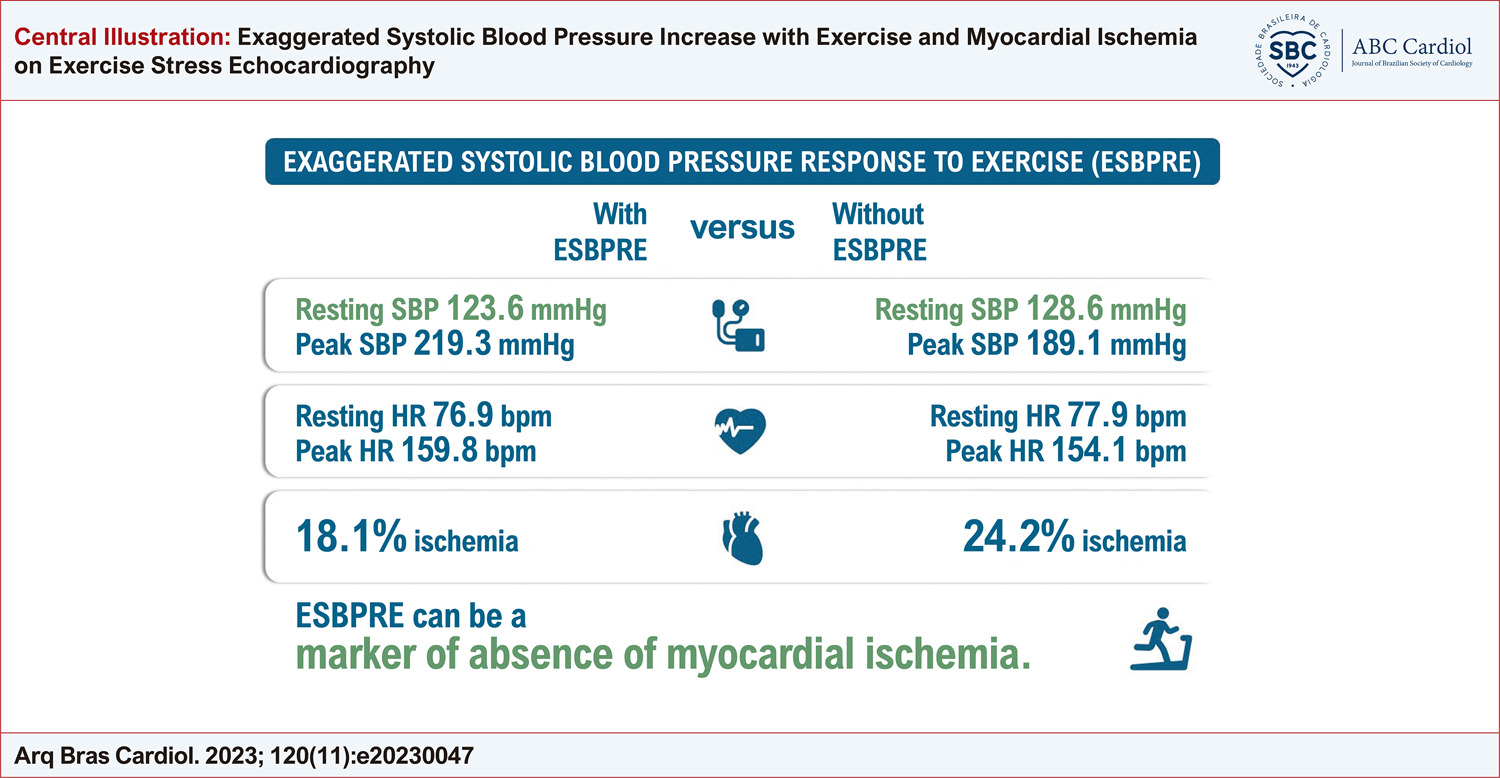
Exaggerated Systolic Blood Pressure Increase with Exercise and Myocardial Ischemia on Exercise Stress Echocardiography
ABC
Original Article

Exaggerated Systolic Blood Pressure Increase with Exercise and Myocardial Ischemia on Exercise Stress Echocardiography

Cláudia Bispo Martins-Santos et al. Lara Teles Alencar Duarte Cleovaldo Ribeiro Ferreira-Junior Allexa Gabriele Teixeira Feitosa … Edvaldo Victor Gois Oliveira Iana Carine Machado Bispo Campos Enaldo Vieira de Melo Stephanie Macedo Andrade Antônio Carlos Sobral Sousa Joselina Luzia Menezes Oliveira

Abstract

Background

The association between exaggerated systolic blood pressure response to exercise (ESBPRE) and myocardial ischemia is controversial and little studied in patients with established or suspected chronic coronary syndrome.

Objective

To verify the relationship between myocardial ischemia and ESBPRE in patients undergoing exercise stress echocardiography (ESE).

Methods

This is a cross-sectional study with 14,367 patients undergoing ESE, from January 2000 to January 2022, divided into the following 2 groups: G1, composed of patients whose peak systolic pressure increased ≥ 90 mmHg (value corresponding to the 95th percentile of the study population), and G2, patients who did not demonstrate an exaggerated hypertensive response. The groups were compared using Student’s t and chi-square tests. P values < 0.05 were considered significant. Logistic regression was also performed to identify independent risk factors for myocardial ischemia, ESBPRE, complaints of typical chest pain prior to the exam, and angina during the test.

Results

Of the 14,367 patients, 1,500 (10.4%) developed ESBPRE, and 7,471 (52.0%) were female. The percentages of previous complaints of typical chest pain, angina during the test, and myocardial ischemia in patients with ESBPRE were 5.8%, 2.4% and 18.1%, compared to 7.4%, 3.9%, and 24.2%, in patients without ESBPRE, respectively (p = 0.021,p = 0.004, p < 0.001). In multivariate analysis, ESBPRE was independently associated with a lower probability of myocardial ischemia (odds ratio: 0.73; 95% confidence interval: 0.58 to 0.93; p = 0.009).

Conclusion

Exaggerated increase in systolic blood pressure during ESE may be a marker for excluding myocardial ischemia.
  • Arterial Pressure
  • Coronary Artery Disease
  • Exercise Test
  • Myocardial Ischemia
  • Stress echocardiography
Read Full Article
Creative Commons Attribution (CC BY) Creative Commons license
18/12/2023 DOI: 10.36660/abc.20230047 Views 1
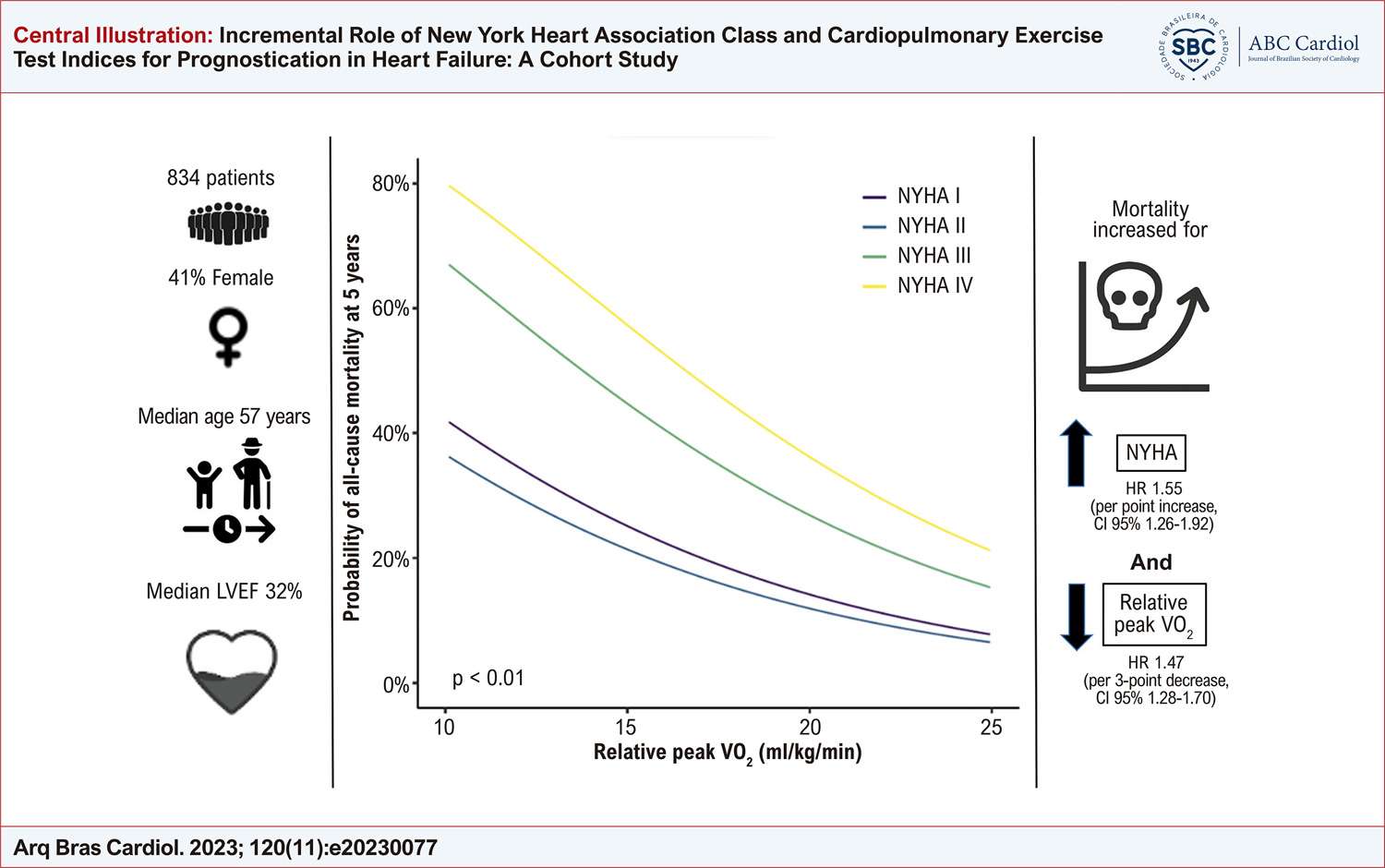
Incremental Role of New York Heart Association Class and Cardiopulmonary Exercise Test Indices for Prognostication in Heart Failure: A Cohort Study
ABC
Original Article

Incremental Role of New York Heart Association Class and Cardiopulmonary Exercise Test Indices for Prognostication in Heart Failure: A Cohort Study

Pedro Henrique de Borba Engster et al. André Zimerman Thomas Schaan Marina S. Borges … Gabriel Souza Giovanni Donelli Costa Luis Eduardo Rohde Anderson Donelli da Silveira

Abstract

Background

The accuracy of the New York Heart Association (NYHA) classification to assess prognosis may be limited compared with objective cardiopulmonary exercise test (CPET) parameters in heart failure (HF).

Objective

To investigate the prognostic value of the NYHA classification in addition to Weber class.

Methods

Adult outpatients with HF undergoing CPET in a Brazilian tertiary care center were included. The physician-assigned NYHA class and the CPET-derived Weber class were stratified into “favorable” (NYHA I or II; Weber A or B) or “adverse” (NYHA III or IV; Weber C or D). Patients with one favorable class and one adverse class were defined as “discordant.” The primary endpoint was time to all-cause mortality. A 2-sided p value < 0.05 was considered statistically significant.

Results

A total of 834 patients were included. Median age was 57 years; 42% (351) were female, and median left ventricular ejection fraction was 32%. Among patients with concordant NYHA and Weber classes, those with adverse NYHA and Weber classes had significantly higher all-cause mortality compared to those with favorable classes (hazard ratio [HR]: 5.65; 95% confidence interval [CI]: 3.38 to 9.42). Among patients with discordant classes, there was no significant difference in all-cause mortality (HR: 1.38; 95% CI: 0.82 to 2.34). In the multivariable model, increments in NYHA class (HR: 1.55 per class increase; 95% CI: 1.26 to 1.92) and reductions in peak VO 2 (HR: 1.47 per 3 ml/kg/min decrease; 95% CI: 1.28 to 1.70) significantly predicted mortality.

Conclusions

Physician-assigned NYHA class and objective CPET measures provide complementary prognostic information for patients with HF.

  • Exercise Test
  • Heart Failure
  • Prognosis
Read Full Article
Creative Commons Attribution (CC BY) Creative Commons license
18/12/2023 DOI: 10.36660/abc.20230077 Views 2
Figure 1
ABC
Research Letter

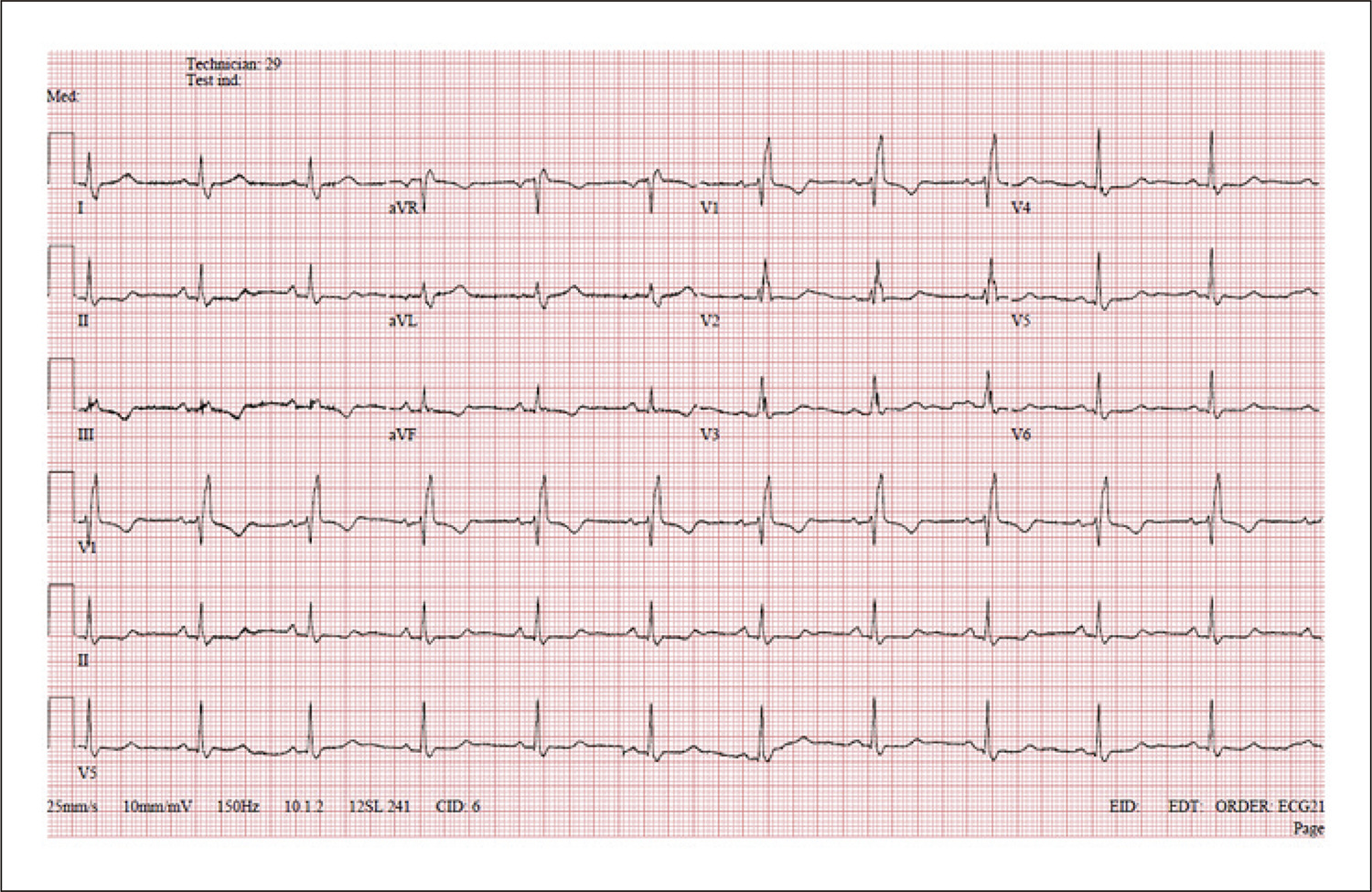
Left Anterior Fascicular Block Associated with Atrioventricular Block during Exercise Stress Test

Andréa Marinho Falcão et al. Vagner L. Suares William A. Chalela

Introduction

The exercise stress test (EST) has been indicated in various clinical situations. Despite the robust evidence about the clinical significance of ST-T abnormalities during exercise, little attention has been paid to the development of exercise-induced intraventricular conduction disorders.

Conduction disorders and fascicular blocks induced during EST are rare. The prevalence of stress-induced left bundle-branch blocks (LBBB) ranges from 0.3%-0.5%, and frequently, the prognosis is more adverse (greater CAD and heart failure prevalence).

[…]

  • Cardiac Conduction System Disease
  • Coronary Artery Disease
  • Exercise Test
Read Full Article
Creative Commons Attribution (CC BY) Creative Commons license
20/11/2023 DOI: 10.36660/abc.20230200
Figure 1
ABCHF
Research Letter

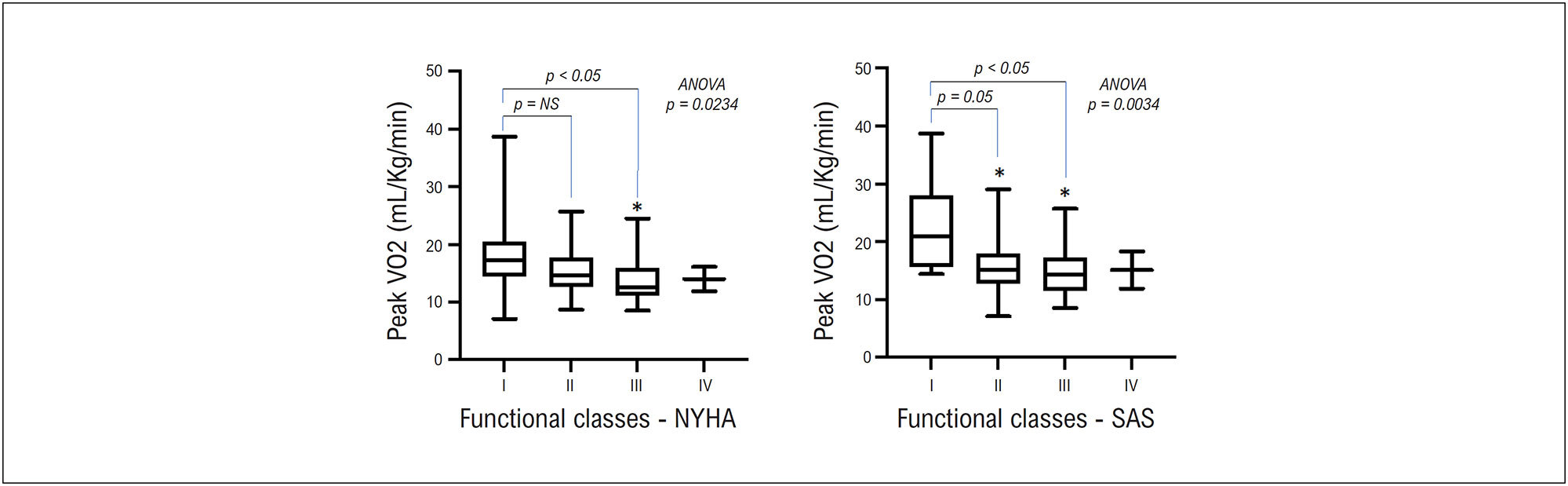
Specific Activity Scale Improves the Detection of Symptomatic Chronic Heart Failure Patients

Eduardo Rubio Azevedo et al. Julio César Crescencio Débora Cristine Prévide da Cunha André Schmidt … Denise Mayumi Tanaka Luciano Fonseca Lemos de Oliveira Marcus Vinicius Simões

Introduction

Heart failure (HF) is a highly prevalent, complex clinical syndrome, that is associated with significant morbidity and mortality. HF severity can be estimated by the New York Heart Association (NYHA) classification, however, this has several limitations, including high subjectivity, poor reproducibility, and poor correlation with objective physical capacity measures. Recent studies have suggested limitations of the NYHA classification in differentiating asymptomatic patients, with NYHA functional class (FC) I from patients with mild symptoms.,

The Specific Activity Scale (SAS) is an alternative method to measure functional capacity, by measuring the capacity of patients in performing activities with known oxygen consumption. This method has potentially higher reproducibility and more accurate characterization of physical restriction of HF patients.,

[…]

  • Exercise Test
  • Functional Class
  • Heart Failure
Read Full Article
Creative Commons Attribution (CC BY) Creative Commons license
08/11/2023 DOI: 10.36660/abchf.20230046 Views 2
ABC
Editorial

Cardiopulmonary Exercise Testing in Post-COVID-19 Patients: New Insights Into the Exercise Intolerance

Marina Petersen Saadi et al. Anderson Donelli da Silveira

COVID-19 has affected thousands of people worldwide, and a considerable percentage of those complain of persistent exercise limitation, unrelated to the disease`s severity and persisting even months after the infection.,It is well known that the severe form of COVID-19 predominantly involves the respiratory system, presenting with acute respiratory distress syndrome. One could speculate that the persistent functional limitation seen after infection may originate in the respiratory system, a fact reinforced by studies that showed ventilatory limitation in spirometry after hospital discharge.,

Cardiopulmonary Exercise Test (CPET) allows a complete assessment of the cardiorespiratory system. It is the gold standard exam to define prognosis in several heart and lung diseases and can discriminate the underlying mechanisms associated with reduced functional capacity.,

[…]

  • Exercise Test
  • Lung Diseases
  • lung volume measurements
  • Pandemics
  • Physical activity
  • Post-Covid-19/complications
  • Respiratory Distress Syndrome Adult/rehabilitation
  • Spirometry/methods
Read Full Article
Creative Commons Attribution (CC BY) Creative Commons license
20/03/2023 DOI: 10.36660/abc.20230058 Views 1
Central Illustration
ABC
Original Article

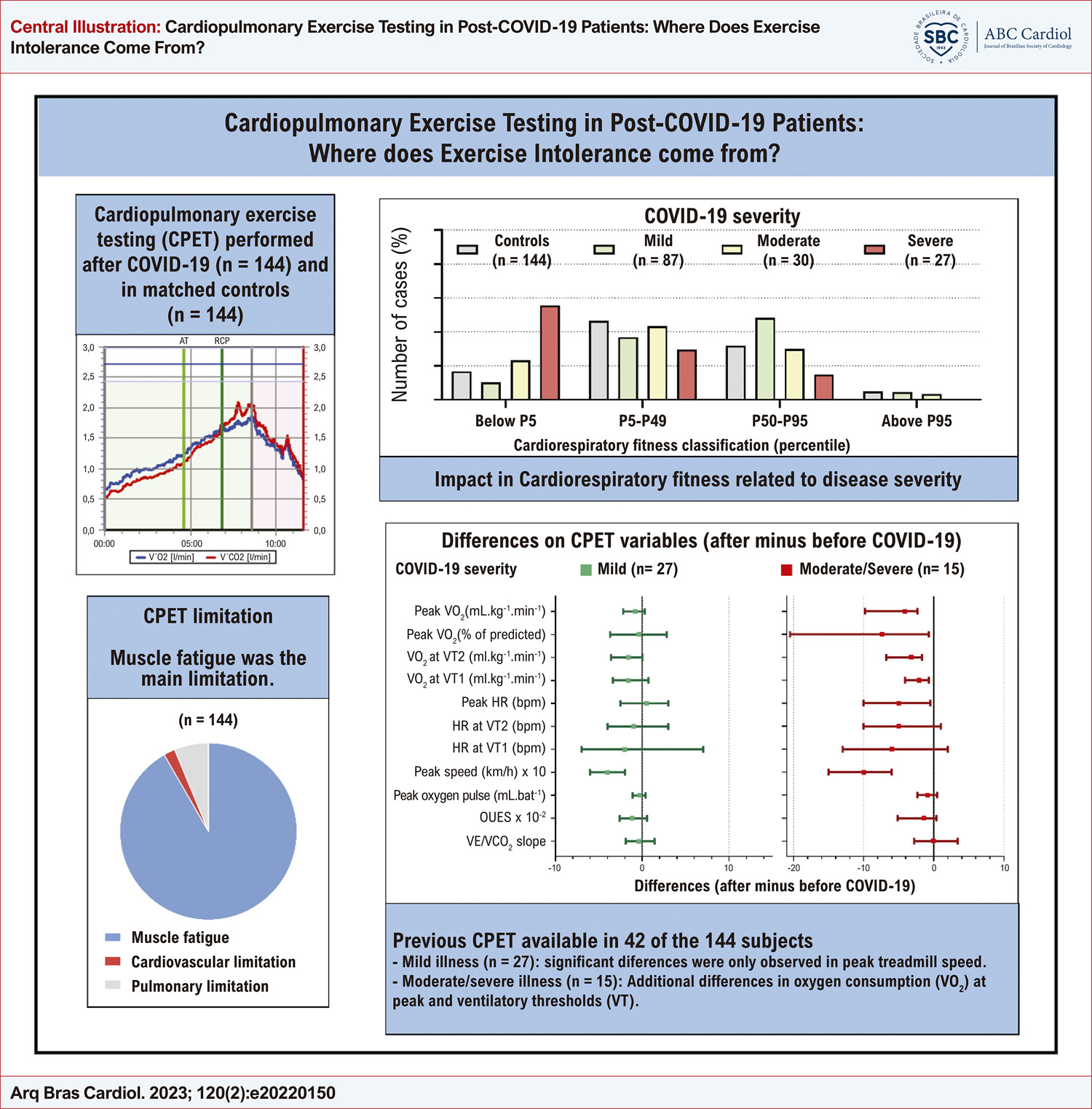
Cardiopulmonary Exercise Testing in Post-COVID-19 Patients: Where Does Exercise Intolerance Come From?

Mauricio Milani et al. Juliana Goulart Prata Oliveira Milani Graziella França Bernardelli Cipriano Lawrence Patrick Cahalin … Ricardo Stein Gerson Cipriano Jr.

Abstract

Background

Post-COVID-19 exercise intolerance is poorly understood. Cardiopulmonary exercise testing (CPET) can identify the underlying exercise limitations.

Objectives

To evaluate the source and magnitude of exercise intolerance in post-COVID-19 subjects.

Methods

Cohort study assessing subjects with different COVID-19 illness severities and a control group selected by propensity score matching. In a selected sample with CPET prior to viral infection, before and after comparisons were performed. Level of significance was 5% in the entire analysis.

Results

One hundred forty-four subjects with COVID-19 were assessed (median age: 43.0 years, 57% male), with different illness severities (60% mild, 21% moderate, 19% severe). CPET was performed 11.5 (7.0, 21.2) weeks after disease onset, with exercise limitations being attributed to the peripheral muscle (92%), and the pulmonary (6%), and cardiovascular (2%) systems. Lower median percent-predicted peak oxygen uptake was observed in the severe subgroup (72.2%) as compared to the controls (91.6%). Oxygen uptake differed among illness severities and controls at peak and ventilatory thresholds. Conversely, ventilatory equivalents, oxygen uptake efficiency slope, and peak oxygen pulse were similar. Subgroup analysis of 42 subjects with prior CPET revealed significant reduction in only peak treadmill speed in the mild subgroup and in oxygen uptake at peak and ventilatory thresholds in the moderate/severe subgroup. By contrast, ventilatory equivalents, oxygen uptake efficiency slope, and peak oxygen pulse did not change significantly.

Conclusions

Peripheral muscle fatigue was the most common exercise limitation etiology in post-COVID-19 patients regardless of the illness severity. Data suggest that treatment should emphasize comprehensive rehabilitation programs, including aerobic and muscle strengthening components.

  • Cardiorespiratory Fitness
  • COVID-19
  • Exercise Test
Read Full Article
Creative Commons Attribution (CC BY) Creative Commons license
06/03/2023 DOI: 10.36660/abc.20220150 Views 1
IJCS
Editorial

Exercise-induced Bronchoconstriction and its Relevance in Public Health

Tales de Carvalho

The case report from Castro et al., entitles Exercise-Induced Bronchoconstriction: A Frequent, but Neglected Cause of Chest Pain, opportunely sheds light on a highly relevant question in terms of public health, as it treats important aspects that encompass from the diagnosis to the pharmacological treatment of Exercise-Induced Bronchoconstriction (EIB).–

EIB often leads to an isolated cough, as well as thoracic and abdominal pain, which should always be contemplated after having discarded other causes of dyspnea and exercise-induced chest pain.– It is an acute airway obstruction that is transitory and spontaneously reversible, and occurs during and after exercise and physical effort, regardless of the previous diagnosis of bronchial asthma. EIB normally arises 2 to 5 min after exercise, reaching a peak at 10 min and disappearing in up to 60 min.,,

[…]

  • Exercise Test
  • Exercise-induced asthma
  • Primary Health Care
  • Spirometry
Read Full Article
Creative Commons Attribution (CC BY) Creative Commons license
28/11/2022 DOI: 10.36660/ijcs.20220166 Views 2
ABC
Editorial

Stress CMR in the Elderly: Does It Provide the Answers?

Vera Vaz Ferreira et al. Boban Thomas

After the ISCHEMIA clinical trial, despite the ongoing debate, clinicians need to contemplate all strategies for patients with chronic stable ischemic heart disease (SIHD). The management of SIHD has two aims – improve prognosis and/or relieve symptoms. Most studies have shown that revascularisation provides greater symptom benefits than optimal medical therapy (OMT) alone, but data on hard outcomes have been elusive. Therefore, improving our clinical decision-making tools in selecting patients for revascularization is important. This becomes particularly important when we select elderly patients for revascularisation because the risk-benefit ratio is probably more tenuous than a younger cohort. The elderly present difficulties in the evaluation of SIHD due to multiple reasons. One refinement is the adequate selection of the method to evaluate SIHD. A panoply of non-invasive techniques exists for imaging, including cardiac computed tomography, echocardiography, nuclear medicine techniques and cardiac magnetic resonance (CMR). Combining the right patient and the right method of evaluation followed by the right therapeutic strategy improves outcomes. In clinical medicine, what is important is not how much we do but how well our patients do after what we do.

CMR stress perfusion is a valuable resource with a high negative predictive value in those who do not have perfusion defects irrespective of the presence or absence of coronary artery disease. Few studies exist on the prognostic value of adenosine stress perfusion CMR in elderly patients with or without established SIHD. The study by Boonyasirinant and Kaolawanich, although not the first, is a welcome addition to the repository of existing literature that provides a cogent reason for using stress CMR for the evaluation of ischemia now addressing the elderly age group. Their findings demonstrate that while clinical data were combined with information on left ventricular function, no incremental value was seen compared to clinical data alone in predicting serious cardiac events. The presence of ischemia as detected by CMR helped predict events significantly better. The predictive power was not increased with the addition of information on late gadolinium enhancement. Esteban-Fernandez et al. found that elderly patients with a moderate or severe degree of ischemia on stress CMR have a higher risk of having an event during follow-up. Taken together, these two studies provide evidence for the use of adenosine stress CMR in predicting outcomes in elderly patients. A notable feature of both studies is the absence of significant adverse events of adenosine. However, the ISCHEMIA clinical trial reflected the limited availability of both equipment and expertise, where CMR was the least chosen method to evaluate for ischemia (5%), reflecting real-world practice.

[…]

  • Aged
  • Coronary Artery Disease/surgery
  • Diagnostic,Imaging
  • Exercise Test
  • Magnetic Resonance Spectroscopy/ methods
Read Full Article
Creative Commons Attribution (CC BY) Creative Commons license
11/07/2022 DOI: 10.36660/abc.20220385 Views 1
ABC
Editorial

NYHA Classification and Cardiopulmonary Exercise Test Variables in Patients with Heart Failure

Ricardo Vivacqua Cardoso Costa

Heart failure (HF) is considered a prevalent disease, limiting survival and constituting one of the leading causes of hospitalization or death in several countries, including Brazil. Therefore, clinical classification in patients with HF can be considered important as an initial reference, as it informs the functional condition of these patients. Classically, the subjective classification of the New York Heart Association (NYHA) and the objective classification of Weber are the most used. The NYHA functional classification and oxygen consumption at peak exertion were decisive in determining the functional condition of patients with Chagas disease. However, certain patients with minor symptoms are at high risk of hospitalization or death.

In patients with HF, the 6-minute walk test is also considered in assessing functional and prognostic capacity. This test has a predictive value for mortality in patients with HF functional class II and III (NYHA).

[…]

  • Exercise Test
  • Heart Failure
  • Hospitalization
  • Life Style
  • Mortality
  • Oxygen Consumption
  • Physical activity
  • Walk Test
Read Full Article
Creative Commons Attribution (CC BY) Creative Commons license
10/06/2022 DOI: 10.36660/abc.20220196 Views 2

Could not load more articles. Please try again.

How to cite this article

EndNote RIS

Electronic Document Format (Vancouver)

Abreu MEB, Diógenes TCP, Chagas ISM, Xerex HM, Abreu JSD. Hemodynamic Impact of Hypertrophic Cardiomyopathy at Rest and During Supine Bicycle Exercise: Additional Value of Postprandial Assessment. ABC Imagem Cardiovascular 2026;39(1):e20250049.

Electronic Document Format (ABNT)

Abreu, Marília Esther Benevides; Diógenes, Tereza Cristina Pinheiro; Chagas, Isadora Sucupira Machado; Xerex, Humberto Mororó; Abreu, José Sebastião De. Hemodynamic Impact of Hypertrophic Cardiomyopathy at Rest and During Supine Bicycle Exercise: Additional Value of Postprandial Assessment. ABC Imagem Cardiovascular, v. 39, n. 1, e20250049, Apr. 2026.

Electronic Document Format (APA)

Abreu, M. E. B., Diógenes, T. C. P., Chagas, I. S. M., Xerex, H. M., & Abreu, J. S. D. (2026). Hemodynamic Impact of Hypertrophic Cardiomyopathy at Rest and During Supine Bicycle Exercise: Additional Value of Postprandial Assessment. ABC Imagem Cardiovascular, 39(1), e20250049.

Electronic Document Format (ISO)

Abreu, Marília Esther Benevides and Diógenes, Tereza Cristina Pinheiro and Chagas, Isadora Sucupira Machado and Xerex, Humberto Mororó and Abreu, José Sebastião De. Hemodynamic Impact of Hypertrophic Cardiomyopathy at Rest and During Supine Bicycle Exercise: Additional Value of Postprandial Assessment. ABC Imagem Cardiovascular [online]. 2026, vol. 39, n. 1, [cited 2026-10-15], e20250049. Available from: <https://journals.cardiol.br/en/article/hemodynamic-impact-of-hypertrophic-cardiomyopathy-at-rest-and-during-supine-bicycle-exercise-additional-value-of-postprandial-assessment/>. ISSN 2318-8219

EndNote RIS

Electronic Document Format (Vancouver)

Dourado PMM, Dourado LA, Silva LRA, Oliveira JG, Matos KO, Dourado JPA, Hajjar LA, et al. Treadmill Test and Ambulatory Blood Pressure Monitoring: Can They Be Performed on the Same Day? Can the Effort Reached on the Treadmill Interfere?. Arquivos Brasileiros de Cardiologia 2026;123(1):e20250412.

Electronic Document Format (ABNT)

Dourado, Paulo Magno Martins; Dourado, Larissa de Almeida; Silva, Letícia Raiane dos Anjos; Oliveira, Jaciara Gomes de; Matos, Karolyne de Oliveira; Dourado, João Paulo de Almeida; Hajjar, Ludhmila Abrahão; Braga, Pedro Gabriel Senger. Treadmill Test and Ambulatory Blood Pressure Monitoring: Can They Be Performed on the Same Day? Can the Effort Reached on the Treadmill Interfere?. Arquivos Brasileiros de Cardiologia, v. 123, n. 1, e20250412, Mar. 2026.

Electronic Document Format (APA)

Dourado, P. M. M., Dourado, L. A., Silva, L. R. A., Oliveira, J. G. , Matos, K. O., Dourado, J. P. A., Hajjar, L. A., & Braga, P. G. S. (2026). Treadmill Test and Ambulatory Blood Pressure Monitoring: Can They Be Performed on the Same Day? Can the Effort Reached on the Treadmill Interfere?. Arquivos Brasileiros de Cardiologia, 123(1), e20250412.

Electronic Document Format (ISO)

Dourado, Paulo Magno Martins and Dourado, Larissa de Almeida and Silva, Letícia Raiane dos Anjos and Oliveira, Jaciara Gomes de and Matos, Karolyne de Oliveira and Dourado, João Paulo de Almeida and Hajjar, Ludhmila Abrahão and Braga, Pedro Gabriel Senger. Treadmill Test and Ambulatory Blood Pressure Monitoring: Can They Be Performed on the Same Day? Can the Effort Reached on the Treadmill Interfere?. Arquivos Brasileiros de Cardiologia [online]. 2026, vol. 123, n. 1, [cited 2026-10-15], e20250412. Available from: <https://journals.cardiol.br/en/article/treadmill-test-and-ambulatory-blood-pressure-monitoring-can-they-be-performed-on-the-same-day-can-the-effort-reached-on-the-treadmill-interfere/>. ISSN 0066-782X

EndNote RIS

Electronic Document Format (Vancouver)

Busin D, Franzoni LT, Turella D, Tairova OS, Silveira AD, Stein R, Amorim GL, et al. Photobiomodulation Combined with Moderate or High-Intensity Interval Training on Oxygen Consumption and Exercise Tolerance in Patients with Heart Failure. Arquivos Brasileiros de Cardiologia 2026;122(11):e20250086.

Electronic Document Format (ABNT)

Busin, Diego; Franzoni, Leandro Tolfo; Turella, Douglas; Tairova, Olga Sergueevna; Silveira, Anderson Donelli da; Stein, Ricardo; Amorim, Gabriel Lopes; Lago, Pedro Dal; Nunes, Ramiro Barcos. Photobiomodulation Combined with Moderate or High-Intensity Interval Training on Oxygen Consumption and Exercise Tolerance in Patients with Heart Failure. Arquivos Brasileiros de Cardiologia, v. 122, n. 11, e20250086, Jan. 2026.

Electronic Document Format (APA)

Busin, D., Franzoni, L. T., Turella, D., Tairova, O. S., Silveira, A. D. , Stein, R., Amorim, G. L., Lago, P. D., & Nunes, R. B. (2026). Photobiomodulation Combined with Moderate or High-Intensity Interval Training on Oxygen Consumption and Exercise Tolerance in Patients with Heart Failure. Arquivos Brasileiros de Cardiologia, 122(11), e20250086.

Electronic Document Format (ISO)

Busin, Diego and Franzoni, Leandro Tolfo and Turella, Douglas and Tairova, Olga Sergueevna and Silveira, Anderson Donelli da and Stein, Ricardo and Amorim, Gabriel Lopes and Lago, Pedro Dal and Nunes, Ramiro Barcos. Photobiomodulation Combined with Moderate or High-Intensity Interval Training on Oxygen Consumption and Exercise Tolerance in Patients with Heart Failure. Arquivos Brasileiros de Cardiologia [online]. 2026, vol. 122, n. 11, [cited 2026-10-15], e20250086. Available from: <https://journals.cardiol.br/en/article/photobiomodulation-combined-with-moderate-or-high-intensity-interval-training-on-oxygen-consumption-and-exercise-tolerance-in-patients-with-heart-failure/>. ISSN 0066-782X

EndNote RIS

Electronic Document Format (Vancouver)

Barros FC, Cezaro JC, Pianca EG, Menegazzo WR, Scolari FL, Silveira AD. Current Diagnostic and Prognostic Applications of Cardiopulmonary Exercise Testing in Heart Failure with Preserved Ejection Fraction – A Narrative Review. ABC Heart Fail Cardiomyop 2025;5(3):e20250014.

Electronic Document Format (ABNT)

Barros, Fernando Colares; Cezaro, Jéssica Cristina de; Pianca, Eduardo Gatti; Menegazzo, Willian Roberto; Scolari, Fernando Luís; Silveira, Anderson Donelli da. Current Diagnostic and Prognostic Applications of Cardiopulmonary Exercise Testing in Heart Failure with Preserved Ejection Fraction – A Narrative Review. ABC Heart Fail Cardiomyop, v. 5, n. 3, e20250014, Dec. 2025.

Electronic Document Format (APA)

Barros, F. C., Cezaro, J. C. , Pianca, E. G., Menegazzo, W. R., Scolari, F. L., & Silveira, A. D. (2025). Current Diagnostic and Prognostic Applications of Cardiopulmonary Exercise Testing in Heart Failure with Preserved Ejection Fraction – A Narrative Review. ABC Heart Fail Cardiomyop, 5(3), e20250014.

Electronic Document Format (ISO)

Barros, Fernando Colares and Cezaro, Jéssica Cristina de and Pianca, Eduardo Gatti and Menegazzo, Willian Roberto and Scolari, Fernando Luís and Silveira, Anderson Donelli da. Current Diagnostic and Prognostic Applications of Cardiopulmonary Exercise Testing in Heart Failure with Preserved Ejection Fraction – A Narrative Review. ABC Heart Fail Cardiomyop [online]. 2025, vol. 5, n. 3, [cited 2026-10-15], e20250014. Available from: <https://journals.cardiol.br/en/article/current-diagnostic-and-prognostic-applications-of-cardiopulmonary-exercise-testing-in-heart-failure-with-preserved-ejection-fraction-a-narrative-review/>

EndNote RIS

Electronic Document Format (Vancouver)

Sarullo S, Nugara C, Voi AL, Zarcone A, Francesco GD, Bosco S, Carollo S, et al. Efficacy of Cardiopulmonary Rehabilitation on Cardiorespiratory Function in Patients with Long COVID Syndrome. ABC Heart Fail Cardiomyop 2025;5(3):e20250007.

Electronic Document Format (ABNT)

Sarullo, Silvia; Nugara, Cinzia; Voi, Annamaria Lo; Zarcone, Antonino; Francesco, Gabriele Di; Bosco, Sergio; Carollo, Sergio; Mazzara, Luigi; Giallauria, Francesco; Cappello, Francesco; Sarullo, Filippo M.. Efficacy of Cardiopulmonary Rehabilitation on Cardiorespiratory Function in Patients with Long COVID Syndrome. ABC Heart Fail Cardiomyop, v. 5, n. 3, e20250007, Dec. 2025.

Electronic Document Format (APA)

Sarullo, S., Nugara, C., Voi, A. L., Zarcone, A., Francesco, G. D., Bosco, S., Carollo, S., Mazzara, L., Giallauria, F., Cappello, F., & Sarullo, F. M. (2025). Efficacy of Cardiopulmonary Rehabilitation on Cardiorespiratory Function in Patients with Long COVID Syndrome. ABC Heart Fail Cardiomyop, 5(3), e20250007.

Electronic Document Format (ISO)

Sarullo, Silvia and Nugara, Cinzia and Voi, Annamaria Lo and Zarcone, Antonino and Francesco, Gabriele Di and Bosco, Sergio and Carollo, Sergio and Mazzara, Luigi and Giallauria, Francesco and Cappello, Francesco and Sarullo, Filippo M.. Efficacy of Cardiopulmonary Rehabilitation on Cardiorespiratory Function in Patients with Long COVID Syndrome. ABC Heart Fail Cardiomyop [online]. 2025, vol. 5, n. 3, [cited 2026-10-15], e20250007. Available from: <https://journals.cardiol.br/en/article/efficacy-of-cardiopulmonary-rehabilitation-on-cardiorespiratory-function-in-patients-with-long-covid-syndrome/>

EndNote RIS

Electronic Document Format (Vancouver)

Rossi Neto JM, Rossi RM, Mattos VBM, Wolf PJW, Finger MAA, Santos CC. Cardiopulmonary Exercise Testing in Heart Failure: Updating the Theory into Clinical Practice. ABC Heart Fail Cardiomyop 2025;5(3):e20250040.

Electronic Document Format (ABNT)

Rossi Neto, João Manoel; Rossi, Raphael Machado; Mattos, Victor B. M.; Wolf, Plinio J. W.; Finger, Marco Aurelio A.; Santos, Carolina Casadei dos. Cardiopulmonary Exercise Testing in Heart Failure: Updating the Theory into Clinical Practice. ABC Heart Fail Cardiomyop, v. 5, n. 3, e20250040, Dec. 2025.

Electronic Document Format (APA)

Rossi Neto, J. M., Rossi, R. M., Mattos, V. B. M., Wolf, P. J. W., Finger, M. A. A., & Santos, C. C. (2025). Cardiopulmonary Exercise Testing in Heart Failure: Updating the Theory into Clinical Practice. ABC Heart Fail Cardiomyop, 5(3), e20250040.

Electronic Document Format (ISO)

Rossi Neto, João Manoel and Rossi, Raphael Machado and Mattos, Victor B. M. and Wolf, Plinio J. W. and Finger, Marco Aurelio A. and Santos, Carolina Casadei dos. Cardiopulmonary Exercise Testing in Heart Failure: Updating the Theory into Clinical Practice. ABC Heart Fail Cardiomyop [online]. 2025, vol. 5, n. 3, [cited 2026-10-15], e20250040. Available from: <https://journals.cardiol.br/en/article/cardiopulmonary-exercise-testing-in-heart-failure-updating-the-theory-into-clinical-practice/>

EndNote RIS

Electronic Document Format (Vancouver)

Teixeira JAC. Analysis of Cardiopulmonary Exercise Test in Pre- and Post-COVID-19. Arquivos Brasileiros de Cardiologia 2025;122(9):e20250544.

Electronic Document Format (ABNT)

Teixeira, José Antônio Caldas. Analysis of Cardiopulmonary Exercise Test in Pre- and Post-COVID-19. Arquivos Brasileiros de Cardiologia, v. 122, n. 9, e20250544, Nov. 2025.

Electronic Document Format (APA)

Teixeira, J. A. C. (2025). Analysis of Cardiopulmonary Exercise Test in Pre- and Post-COVID-19. Arquivos Brasileiros de Cardiologia, 122(9), e20250544.

Electronic Document Format (ISO)

Teixeira, José Antônio Caldas. Analysis of Cardiopulmonary Exercise Test in Pre- and Post-COVID-19. Arquivos Brasileiros de Cardiologia [online]. 2025, vol. 122, n. 9, [cited 2026-10-15], e20250544. Available from: <https://journals.cardiol.br/en/article/analysis-of-cardiopulmonary-exercise-test-in-pre-and-post-covid-19/>. ISSN 0066-782X

EndNote RIS

Electronic Document Format (Vancouver)

Braga F, Espinosa G, Monteiro A, Milani M, Paiva J, Milani JGPO, Franzoni L, et al. Cardiopulmonary Resilience in Highly Active Individuals: Pre–Post COVID-19 Cardiopulmonary Exercise Testing Analysis. Arquivos Brasileiros de Cardiologia 2025;122(9):e20250094.

Electronic Document Format (ABNT)

Braga, Fabrício; Espinosa, Gabriel; Monteiro, Amanda; Milani, Mauricio; Paiva, Juliana; Milani, Juliana Goulart Prata Oliveira; Franzoni, Leandro; Stein, Ricardo; Cipriano Jr., Gerson; Gurgel, Jonas Lírio; Mourilhe-Rocha, Ricardo. Cardiopulmonary Resilience in Highly Active Individuals: Pre–Post COVID-19 Cardiopulmonary Exercise Testing Analysis. Arquivos Brasileiros de Cardiologia, v. 122, n. 9, e20250094, Nov. 2025.

Electronic Document Format (APA)

Braga, F., Espinosa, G., Monteiro, A., Milani, M., Paiva, J., Milani, J. G. P. O., Franzoni, L., Stein, R., Cipriano Jr., G., Gurgel, J. L., & Mourilhe-Rocha, R. (2025). Cardiopulmonary Resilience in Highly Active Individuals: Pre–Post COVID-19 Cardiopulmonary Exercise Testing Analysis. Arquivos Brasileiros de Cardiologia, 122(9), e20250094.

Electronic Document Format (ISO)

Braga, Fabrício and Espinosa, Gabriel and Monteiro, Amanda and Milani, Mauricio and Paiva, Juliana and Milani, Juliana Goulart Prata Oliveira and Franzoni, Leandro and Stein, Ricardo and Cipriano Jr., Gerson and Gurgel, Jonas Lírio and Mourilhe-Rocha, Ricardo. Cardiopulmonary Resilience in Highly Active Individuals: Pre–Post COVID-19 Cardiopulmonary Exercise Testing Analysis. Arquivos Brasileiros de Cardiologia [online]. 2025, vol. 122, n. 9, [cited 2026-10-15], e20250094. Available from: <https://journals.cardiol.br/en/article/cardiopulmonary-resilience-in-highly-active-individuals-pre-post-covid-19-cardiopulmonary-exercise-testing-analysis/>. ISSN 0066-782X

EndNote RIS

Electronic Document Format (Vancouver)

Volotão AN, Diniz CP, Rodriguez ACC, Silva VFM, Oliveira JR, Carneiro APN, Avila MB, et al. Feasibility and Safety of One-Minute Step Test in Patients with Heart Failure Hospitalized in the Cardio-Intensive Care Unit: A Pilot Study.. International Journal of Cardiovascular Sciences 2025;38:e20240174.

Electronic Document Format (ABNT)

Volotão, Andresa Narcizo; Diniz, Clara Pinto; Rodriguez, Ana Carolina Cossio; Silva, Vivian de Freitas Martins da; Oliveira, Juliana Rega de; Carneiro, Ana Paula Nunes; Avila, Mariana Barcellos de; Leone, Carolina Nigro Di. Feasibility and Safety of One-Minute Step Test in Patients with Heart Failure Hospitalized in the Cardio-Intensive Care Unit: A Pilot Study.. International Journal of Cardiovascular Sciences, v. 38, e20240174, Aug. 2025.

Electronic Document Format (APA)

Volotão, A. N., Diniz, C. P., Rodriguez, A. C. C., Silva, V. F. M. , Oliveira, J. R. , Carneiro, A. P. N., Avila, M. B. , & Leone, C. N. D. (2025). Feasibility and Safety of One-Minute Step Test in Patients with Heart Failure Hospitalized in the Cardio-Intensive Care Unit: A Pilot Study.. International Journal of Cardiovascular Sciences, 38, e20240174.

Electronic Document Format (ISO)

Volotão, Andresa Narcizo and Diniz, Clara Pinto and Rodriguez, Ana Carolina Cossio and Silva, Vivian de Freitas Martins da and Oliveira, Juliana Rega de and Carneiro, Ana Paula Nunes and Avila, Mariana Barcellos de and Leone, Carolina Nigro Di. Feasibility and Safety of One-Minute Step Test in Patients with Heart Failure Hospitalized in the Cardio-Intensive Care Unit: A Pilot Study.. International Journal of Cardiovascular Sciences [online]. 2025, vol. 38, [cited 2026-10-15], e20240174. Available from: <https://journals.cardiol.br/en/article/feasibility-and-safety-of-one-minute-step-test-in-patients-with-heart-failure-hospitalized-in-the-cardio-intensive-care-unit-a-pilot-study/>. ISSN 2359-4802

EndNote RIS

Electronic Document Format (Vancouver)

Vassallo F. Exercise Stress Test For Detecting High-Risk Accessory Pathways In Patients With Wolff-Parkinson-White Syndrome. Arquivos Brasileiros de Cardiologia 2025;122(4):e20250194.

Electronic Document Format (ABNT)

Vassallo, Fabricio. Exercise Stress Test For Detecting High-Risk Accessory Pathways In Patients With Wolff-Parkinson-White Syndrome. Arquivos Brasileiros de Cardiologia, v. 122, n. 4, e20250194, May. 2025.

Electronic Document Format (APA)

Vassallo, F. (2025). Exercise Stress Test For Detecting High-Risk Accessory Pathways In Patients With Wolff-Parkinson-White Syndrome. Arquivos Brasileiros de Cardiologia, 122(4), e20250194.

Electronic Document Format (ISO)

Vassallo, Fabricio. Exercise Stress Test For Detecting High-Risk Accessory Pathways In Patients With Wolff-Parkinson-White Syndrome. Arquivos Brasileiros de Cardiologia [online]. 2025, vol. 122, n. 4, [cited 2026-10-15], e20250194. Available from: <https://journals.cardiol.br/en/article/exercise-stress-test-for-detecting-high-risk-accessory-pathways-in-patients-with-wolff-parkinson-white-syndrome/>. ISSN 0066-782X

EndNote RIS

Electronic Document Format (Vancouver)

Alencar JN, Rassi FM, Rios RP, Scheffer MK, Carvalho GD. Diagnostic Test Accuracy of Exercise Testing in Detecting High-Risk Accessory Pathways in WPW: A Systematic Review and Meta-Analysis. Arquivos Brasileiros de Cardiologia 2025;122(4):e20240663.

Electronic Document Format (ABNT)

Alencar, José Nunes de; Rassi, Fabio Mahamad; Rios, Raquel Pereira; Scheffer, Matheus Kiszka; Carvalho, Guilherme Dagostin de. Diagnostic Test Accuracy of Exercise Testing in Detecting High-Risk Accessory Pathways in WPW: A Systematic Review and Meta-Analysis. Arquivos Brasileiros de Cardiologia, v. 122, n. 4, e20240663, May. 2025.

Electronic Document Format (APA)

Alencar, J. N. , Rassi, F. M., Rios, R. P., Scheffer, M. K., & Carvalho, G. D. (2025). Diagnostic Test Accuracy of Exercise Testing in Detecting High-Risk Accessory Pathways in WPW: A Systematic Review and Meta-Analysis. Arquivos Brasileiros de Cardiologia, 122(4), e20240663.

Electronic Document Format (ISO)

Alencar, José Nunes de and Rassi, Fabio Mahamad and Rios, Raquel Pereira and Scheffer, Matheus Kiszka and Carvalho, Guilherme Dagostin de. Diagnostic Test Accuracy of Exercise Testing in Detecting High-Risk Accessory Pathways in WPW: A Systematic Review and Meta-Analysis. Arquivos Brasileiros de Cardiologia [online]. 2025, vol. 122, n. 4, [cited 2026-10-15], e20240663. Available from: <https://journals.cardiol.br/en/article/diagnostic-test-accuracy-of-exercise-testing-in-detecting-high-risk-accessory-pathways-in-wpw-a-systematic-review-and-meta-analysis/>. ISSN 0066-782X

EndNote RIS

Electronic Document Format (Vancouver)

Gomes MB, Bombana CF, Fuchs FC. ECG’s AVR ST elevation Analysis by Perfusion Scintilography in the Context of Myocardial Ischemia. International Journal of Cardiovascular Sciences 2025;38:e20230080.

Electronic Document Format (ABNT)

Gomes, Miriana Basso; Bombana, Carolina Feijó; Fuchs, Felipe C.. ECG’s AVR ST elevation Analysis by Perfusion Scintilography in the Context of Myocardial Ischemia. International Journal of Cardiovascular Sciences, v. 38, e20230080, Apr. 2025.

Electronic Document Format (APA)

Gomes, M. B., Bombana, C. F., & Fuchs, F. C. (2025). ECG’s AVR ST elevation Analysis by Perfusion Scintilography in the Context of Myocardial Ischemia. International Journal of Cardiovascular Sciences, 38, e20230080.

Electronic Document Format (ISO)

Gomes, Miriana Basso and Bombana, Carolina Feijó and Fuchs, Felipe C.. ECG’s AVR ST elevation Analysis by Perfusion Scintilography in the Context of Myocardial Ischemia. International Journal of Cardiovascular Sciences [online]. 2025, vol. 38, [cited 2026-10-15], e20230080. Available from: <https://journals.cardiol.br/en/article/ecgs-avr-st-elevation-analysis-by-perfusion-scintilography-in-the-context-of-myocardial-ischemia/>. ISSN 2359-4802

EndNote RIS

Electronic Document Format (Vancouver)

Campos GGO, Goelzer LS, Augusto TRL, Barbosa GW, Chiappa GR, Iterson EH, Muller PT, et al. Comparable Ventilatory Inefficiency at Maximal and Submaximal Performance in COPD vs. CHF subjects: An Innovative Approach. Arquivos Brasileiros de Cardiologia 2024;121(4):e20230578.

Electronic Document Format (ABNT)

Campos, Gerson Gatass Orro de; Goelzer, Leandro Steinhorst; Augusto, Tiago Rodrigues de Lemos; Barbosa, Gisele Walter; Chiappa, Gaspar R.; Iterson, Erik H. van; Muller, Paulo T.. Comparable Ventilatory Inefficiency at Maximal and Submaximal Performance in COPD vs. CHF subjects: An Innovative Approach. Arquivos Brasileiros de Cardiologia, v. 121, n. 4, e20230578, Apr. 2024.

Electronic Document Format (APA)

Campos, G. G. O. , Goelzer, L. S., Augusto, T. R. L., Barbosa, G. W., Chiappa, G. R., Iterson, E. H. , & Muller, P. T. (2024). Comparable Ventilatory Inefficiency at Maximal and Submaximal Performance in COPD vs. CHF subjects: An Innovative Approach. Arquivos Brasileiros de Cardiologia, 121(4), e20230578.

Electronic Document Format (ISO)

Campos, Gerson Gatass Orro de and Goelzer, Leandro Steinhorst and Augusto, Tiago Rodrigues de Lemos and Barbosa, Gisele Walter and Chiappa, Gaspar R. and Iterson, Erik H. van and Muller, Paulo T.. Comparable Ventilatory Inefficiency at Maximal and Submaximal Performance in COPD vs. CHF subjects: An Innovative Approach. Arquivos Brasileiros de Cardiologia [online]. 2024, vol. 121, n. 4, [cited 2026-10-15], e20230578. Available from: <https://journals.cardiol.br/en/article/comparable-ventilatory-inefficiency-at-maximal-and-submaximal-performance-in-copd-vs-chf-subjects-an-innovative-approach/>. ISSN 0066-782X

EndNote RIS

Electronic Document Format (Vancouver)

Ivonina NI, Ivonin AG, Roshchevskaya IM. Body Surface Potential Mapping during Ventricular Depolarization in Athletes with Prolonged PQ Interval after Exercise. Arquivos Brasileiros de Cardiologia 2024;121(1):e20230179.

Electronic Document Format (ABNT)

Ivonina, Natalya I.; Ivonin, Alexey G.; Roshchevskaya, Irina M.. Body Surface Potential Mapping during Ventricular Depolarization in Athletes with Prolonged PQ Interval after Exercise. Arquivos Brasileiros de Cardiologia, v. 121, n. 1, e20230179, Mar. 2024.

Electronic Document Format (APA)

Ivonina, N. I., Ivonin, A. G., & Roshchevskaya, I. M. (2024). Body Surface Potential Mapping during Ventricular Depolarization in Athletes with Prolonged PQ Interval after Exercise. Arquivos Brasileiros de Cardiologia, 121(1), e20230179.

Electronic Document Format (ISO)

Ivonina, Natalya I. and Ivonin, Alexey G. and Roshchevskaya, Irina M.. Body Surface Potential Mapping during Ventricular Depolarization in Athletes with Prolonged PQ Interval after Exercise. Arquivos Brasileiros de Cardiologia [online]. 2024, vol. 121, n. 1, [cited 2026-10-15], e20230179. Available from: <https://journals.cardiol.br/en/article/body-surface-potential-mapping-during-ventricular-depolarization-in-athletes-with-prolonged-pq-interval-after-exercise/>. ISSN 0066-782X

EndNote RIS

Electronic Document Format (Vancouver)

Santos DS, Queiroz CO, Dias CMCC, Cipriano Junior G, Borges QO, Ritt LEF. Prediction of Peak Oxygen Consumption in Patients with Heart Disease Based on Performance on the Timed Up and Go Test. Arquivos Brasileiros de Cardiologia 2023;120(12):e20230338.

Electronic Document Format (ABNT)

Santos, Danilo Silva dos; Queiroz, Ciro Oliveira; Dias, Cristiane Maria Carvalho Costa; Cipriano Junior, Gerson; Borges, Queila Oliveira; Ritt, Luiz Eduardo Fonteles. Prediction of Peak Oxygen Consumption in Patients with Heart Disease Based on Performance on the Timed Up and Go Test. Arquivos Brasileiros de Cardiologia, v. 120, n. 12, e20230338, Dec. 2023.

Electronic Document Format (APA)

Santos, D. S. , Queiroz, C. O., Dias, C. M. C. C., Cipriano Junior, G., Borges, Q. O., & Ritt, L. E. F. (2023). Prediction of Peak Oxygen Consumption in Patients with Heart Disease Based on Performance on the Timed Up and Go Test. Arquivos Brasileiros de Cardiologia, 120(12), e20230338.

Electronic Document Format (ISO)

Santos, Danilo Silva dos and Queiroz, Ciro Oliveira and Dias, Cristiane Maria Carvalho Costa and Cipriano Junior, Gerson and Borges, Queila Oliveira and Ritt, Luiz Eduardo Fonteles. Prediction of Peak Oxygen Consumption in Patients with Heart Disease Based on Performance on the Timed Up and Go Test. Arquivos Brasileiros de Cardiologia [online]. 2023, vol. 120, n. 12, [cited 2026-10-15], e20230338. Available from: <https://journals.cardiol.br/en/article/prediction-of-peak-oxygen-consumption-in-patients-with-heart-disease-based-on-performance-on-the-timed-up-and-go-test/>. ISSN 0066-782X

EndNote RIS

Electronic Document Format (Vancouver)

Martins-Santos CB, Duarte LTA, Ferreira-Junior CR, Feitosa AGT, Oliveira EVG, Campos ICMB, Melo EV, et al. Exaggerated Systolic Blood Pressure Increase with Exercise and Myocardial Ischemia on Exercise Stress Echocardiography. Arquivos Brasileiros de Cardiologia 2023;120(11):e20230047.

Electronic Document Format (ABNT)

Martins-Santos, Cláudia Bispo; Duarte, Lara Teles Alencar; Ferreira-Junior, Cleovaldo Ribeiro; Feitosa, Allexa Gabriele Teixeira; Oliveira, Edvaldo Victor Gois; Campos, Iana Carine Machado Bispo; Melo, Enaldo Vieira de; Andrade, Stephanie Macedo; Sousa, Antônio Carlos Sobral; Oliveira, Joselina Luzia Menezes. Exaggerated Systolic Blood Pressure Increase with Exercise and Myocardial Ischemia on Exercise Stress Echocardiography. Arquivos Brasileiros de Cardiologia, v. 120, n. 11, e20230047, Dec. 2023.

Electronic Document Format (APA)

Martins-Santos, C. B., Duarte, L. T. A., Ferreira-Junior, C. R., Feitosa, A. G. T., Oliveira, E. V. G., Campos, I. C. M. B., Melo, E. V. , Andrade, S. M., Sousa, A. C. S., & Oliveira, J. L. M. (2023). Exaggerated Systolic Blood Pressure Increase with Exercise and Myocardial Ischemia on Exercise Stress Echocardiography. Arquivos Brasileiros de Cardiologia, 120(11), e20230047.

Electronic Document Format (ISO)

Martins-Santos, Cláudia Bispo and Duarte, Lara Teles Alencar and Ferreira-Junior, Cleovaldo Ribeiro and Feitosa, Allexa Gabriele Teixeira and Oliveira, Edvaldo Victor Gois and Campos, Iana Carine Machado Bispo and Melo, Enaldo Vieira de and Andrade, Stephanie Macedo and Sousa, Antônio Carlos Sobral and Oliveira, Joselina Luzia Menezes. Exaggerated Systolic Blood Pressure Increase with Exercise and Myocardial Ischemia on Exercise Stress Echocardiography. Arquivos Brasileiros de Cardiologia [online]. 2023, vol. 120, n. 11, [cited 2026-10-15], e20230047. Available from: <https://journals.cardiol.br/en/article/exaggerated-systolic-blood-pressure-increase-with-exercise-and-myocardial-ischemia-on-exercise-stress-echocardiography/>. ISSN 0066-782X

EndNote RIS

Electronic Document Format (Vancouver)

Engster PHB, Zimerman A, Schaan T, Borges MS, Souza G, Costa GD, Rohde LE, et al. Incremental Role of New York Heart Association Class and Cardiopulmonary Exercise Test Indices for Prognostication in Heart Failure: A Cohort Study. Arquivos Brasileiros de Cardiologia 2023;120(11):e20230077.

Electronic Document Format (ABNT)

Engster, Pedro Henrique de Borba; Zimerman, André; Schaan, Thomas; Borges, Marina S.; Souza, Gabriel; Costa, Giovanni Donelli; Rohde, Luis Eduardo; Silveira, Anderson Donelli da. Incremental Role of New York Heart Association Class and Cardiopulmonary Exercise Test Indices for Prognostication in Heart Failure: A Cohort Study. Arquivos Brasileiros de Cardiologia, v. 120, n. 11, e20230077, Dec. 2023.

Electronic Document Format (APA)

Engster, P. H. B., Zimerman, A., Schaan, T., Borges, M. S., Souza, G., Costa, G. D., Rohde, L. E., & Silveira, A. D. (2023). Incremental Role of New York Heart Association Class and Cardiopulmonary Exercise Test Indices for Prognostication in Heart Failure: A Cohort Study. Arquivos Brasileiros de Cardiologia, 120(11), e20230077.

Electronic Document Format (ISO)

Engster, Pedro Henrique de Borba and Zimerman, André and Schaan, Thomas and Borges, Marina S. and Souza, Gabriel and Costa, Giovanni Donelli and Rohde, Luis Eduardo and Silveira, Anderson Donelli da. Incremental Role of New York Heart Association Class and Cardiopulmonary Exercise Test Indices for Prognostication in Heart Failure: A Cohort Study. Arquivos Brasileiros de Cardiologia [online]. 2023, vol. 120, n. 11, [cited 2026-10-15], e20230077. Available from: <https://journals.cardiol.br/en/article/incremental-role-of-new-york-heart-association-class-and-cardiopulmonary-exercise-test-indices-for-prognostication-in-heart-failure-a-cohort-study/>. ISSN 0066-782X

EndNote RIS

Electronic Document Format (Vancouver)

Falcão AM, Suares VL, Chalela WA. Left Anterior Fascicular Block Associated with Atrioventricular Block during Exercise Stress Test. Arquivos Brasileiros de Cardiologia 2023;120(11):e20230200.

Electronic Document Format (ABNT)

Falcão, Andréa Marinho; Suares, Vagner L.; Chalela, William A.. Left Anterior Fascicular Block Associated with Atrioventricular Block during Exercise Stress Test. Arquivos Brasileiros de Cardiologia, v. 120, n. 11, e20230200, Nov. 2023.

Electronic Document Format (APA)

Falcão, A. M., Suares, V. L., & Chalela, W. A. (2023). Left Anterior Fascicular Block Associated with Atrioventricular Block during Exercise Stress Test. Arquivos Brasileiros de Cardiologia, 120(11), e20230200.

Electronic Document Format (ISO)

Falcão, Andréa Marinho and Suares, Vagner L. and Chalela, William A.. Left Anterior Fascicular Block Associated with Atrioventricular Block during Exercise Stress Test. Arquivos Brasileiros de Cardiologia [online]. 2023, vol. 120, n. 11, [cited 2026-10-15], e20230200. Available from: <https://journals.cardiol.br/en/article/left-anterior-fascicular-block-associated-with-atrioventricular-block-during-exercise-stress-test/>. ISSN 0066-782X

EndNote RIS

Electronic Document Format (Vancouver)

Azevedo ER, Crescencio JC, Cunha DCP, Schmidt A, Tanaka DM, Oliveira LFL, Simões MV, et al. Specific Activity Scale Improves the Detection of Symptomatic Chronic Heart Failure Patients. ABC: Heart Failure & Cardiomyopathy 2023;3(3):e20230046.

Electronic Document Format (ABNT)

Azevedo, Eduardo Rubio; Crescencio, Julio César; Cunha, Débora Cristine Prévide da; Schmidt, André; Tanaka, Denise Mayumi; Oliveira, Luciano Fonseca Lemos de; Simões, Marcus Vinicius. Specific Activity Scale Improves the Detection of Symptomatic Chronic Heart Failure Patients. ABC: Heart Failure & Cardiomyopathy, v. 3, n. 3, e20230046, Nov. 2023.

Electronic Document Format (APA)

Azevedo, E. R., Crescencio, J. C., Cunha, D. C. P. , Schmidt, A., Tanaka, D. M., Oliveira, L. F. L. , & Simões, M. V. (2023). Specific Activity Scale Improves the Detection of Symptomatic Chronic Heart Failure Patients. ABC: Heart Failure & Cardiomyopathy, 3(3), e20230046.

Electronic Document Format (ISO)

Azevedo, Eduardo Rubio and Crescencio, Julio César and Cunha, Débora Cristine Prévide da and Schmidt, André and Tanaka, Denise Mayumi and Oliveira, Luciano Fonseca Lemos de and Simões, Marcus Vinicius. Specific Activity Scale Improves the Detection of Symptomatic Chronic Heart Failure Patients. ABC: Heart Failure & Cardiomyopathy [online]. 2023, vol. 3, n. 3, [cited 2026-10-15], e20230046. Available from: <https://journals.cardiol.br/en/article/specific-activity-scale-improves-the-detection-of-symptomatic-chronic-heart-failure-patients/>

EndNote RIS

Electronic Document Format (Vancouver)

Saadi MP, Silveira AD. Cardiopulmonary Exercise Testing in Post-COVID-19 Patients: New Insights Into the Exercise Intolerance. Arquivos Brasileiros de Cardiologia 2023;120(2):e20230058.

Electronic Document Format (ABNT)

Saadi, Marina Petersen; Silveira, Anderson Donelli da. Cardiopulmonary Exercise Testing in Post-COVID-19 Patients: New Insights Into the Exercise Intolerance. Arquivos Brasileiros de Cardiologia, v. 120, n. 2, e20230058, Mar. 2023.

Electronic Document Format (APA)

Saadi, M. P., & Silveira, A. D. (2023). Cardiopulmonary Exercise Testing in Post-COVID-19 Patients: New Insights Into the Exercise Intolerance. Arquivos Brasileiros de Cardiologia, 120(2), e20230058.

Electronic Document Format (ISO)

Saadi, Marina Petersen and Silveira, Anderson Donelli da. Cardiopulmonary Exercise Testing in Post-COVID-19 Patients: New Insights Into the Exercise Intolerance. Arquivos Brasileiros de Cardiologia [online]. 2023, vol. 120, n. 2, [cited 2026-10-15], e20230058. Available from: <https://journals.cardiol.br/en/article/cardiopulmonary-exercise-testing-in-post-covid-19-patients-new-insights-into-the-exercise-intolerance/>. ISSN 0066-782X

EndNote RIS

Electronic Document Format (Vancouver)

Milani M, Milani JGPO, Cipriano GFB, Cahalin LP, Stein R, Cipriano Jr. G. Cardiopulmonary Exercise Testing in Post-COVID-19 Patients: Where Does Exercise Intolerance Come From?. Arquivos Brasileiros de Cardiologia 2023;120(2):e20220150.

Electronic Document Format (ABNT)

Milani, Mauricio; Milani, Juliana Goulart Prata Oliveira; Cipriano, Graziella França Bernardelli; Cahalin, Lawrence Patrick; Stein, Ricardo; Cipriano Jr., Gerson. Cardiopulmonary Exercise Testing in Post-COVID-19 Patients: Where Does Exercise Intolerance Come From?. Arquivos Brasileiros de Cardiologia, v. 120, n. 2, e20220150, Mar. 2023.

Electronic Document Format (APA)

Milani, M., Milani, J. G. P. O., Cipriano, G. F. B., Cahalin, L. P., Stein, R., & Cipriano Jr., G. (2023). Cardiopulmonary Exercise Testing in Post-COVID-19 Patients: Where Does Exercise Intolerance Come From?. Arquivos Brasileiros de Cardiologia, 120(2), e20220150.

Electronic Document Format (ISO)

Milani, Mauricio and Milani, Juliana Goulart Prata Oliveira and Cipriano, Graziella França Bernardelli and Cahalin, Lawrence Patrick and Stein, Ricardo and Cipriano Jr., Gerson. Cardiopulmonary Exercise Testing in Post-COVID-19 Patients: Where Does Exercise Intolerance Come From?. Arquivos Brasileiros de Cardiologia [online]. 2023, vol. 120, n. 2, [cited 2026-10-15], e20220150. Available from: <https://journals.cardiol.br/en/article/cardiopulmonary-exercise-testing-in-post-covid-19-patients-where-does-exercise-intolerance-come-from/>. ISSN 0066-782X

EndNote RIS

Electronic Document Format (Vancouver)

Carvalho T. Exercise-induced Bronchoconstriction and its Relevance in Public Health. International Journal of Cardiovascular Sciences 2022;35(6):824-5.

Electronic Document Format (ABNT)

Carvalho, Tales de. Exercise-induced Bronchoconstriction and its Relevance in Public Health. International Journal of Cardiovascular Sciences, v. 35, n. 6, p. 824-825, Nov. 2022.

Electronic Document Format (APA)

Carvalho, T. (2022). Exercise-induced Bronchoconstriction and its Relevance in Public Health. International Journal of Cardiovascular Sciences, 35(6), 824-825.

Electronic Document Format (ISO)

Carvalho, Tales de. Exercise-induced Bronchoconstriction and its Relevance in Public Health. International Journal of Cardiovascular Sciences [online]. 2022, vol. 35, n. 6, [cited 2026-10-15], pp. 824-825. Available from: <https://journals.cardiol.br/en/article/exercise-induced-bronchoconstriction-and-its-relevance-in-public-health/>. ISSN 2359-4802

EndNote RIS

Electronic Document Format (Vancouver)

Ferreira VV, Thomas B. Stress CMR in the Elderly: Does It Provide the Answers?. Arquivos Brasileiros de Cardiologia 2022;119(1):107-8.

Electronic Document Format (ABNT)

Ferreira, Vera Vaz; Thomas, Boban. Stress CMR in the Elderly: Does It Provide the Answers?. Arquivos Brasileiros de Cardiologia, v. 119, n. 1, p. 107-108, Jul. 2022.

Electronic Document Format (APA)

Ferreira, V. V., & Thomas, B. (2022). Stress CMR in the Elderly: Does It Provide the Answers?. Arquivos Brasileiros de Cardiologia, 119(1), 107-108.

Electronic Document Format (ISO)

Ferreira, Vera Vaz and Thomas, Boban. Stress CMR in the Elderly: Does It Provide the Answers?. Arquivos Brasileiros de Cardiologia [online]. 2022, vol. 119, n. 1, [cited 2026-10-15], pp. 107-108. Available from: <https://journals.cardiol.br/en/article/stress-cmr-in-the-elderly-does-it-provide-the-answers/>. ISSN 0066-782X

EndNote RIS

Electronic Document Format (Vancouver)

Costa RVC. NYHA Classification and Cardiopulmonary Exercise Test Variables in Patients with Heart Failure. Arquivos Brasileiros de Cardiologia 2022;118(6):1124-5.

Electronic Document Format (ABNT)

Costa, Ricardo Vivacqua Cardoso. NYHA Classification and Cardiopulmonary Exercise Test Variables in Patients with Heart Failure. Arquivos Brasileiros de Cardiologia, v. 118, n. 6, p. 1124-1125, Jun. 2022.

Electronic Document Format (APA)

Costa, R. V. C. (2022). NYHA Classification and Cardiopulmonary Exercise Test Variables in Patients with Heart Failure. Arquivos Brasileiros de Cardiologia, 118(6), 1124-1125.

Electronic Document Format (ISO)

Costa, Ricardo Vivacqua Cardoso. NYHA Classification and Cardiopulmonary Exercise Test Variables in Patients with Heart Failure. Arquivos Brasileiros de Cardiologia [online]. 2022, vol. 118, n. 6, [cited 2026-10-15], pp. 1124-1125. Available from: <https://journals.cardiol.br/en/article/nyha-classification-and-cardiopulmonary-exercise-test-variables-in-patients-with-heart-failure/>. ISSN 0066-782X

  • About ABC Family
  • Internal Regulation
  • Editorial Board
  • Brazilian Society of Cardiology (SBC)

Issues

SBC Guidelines

  • Videos
  • Podcasts
  • News