ABC Family Arquivos Brasileiros de Cardiologia International Journal of Cardiovascular Sciences ABC Heart Failure & Cardiomyopathy ABC Imagem Cardiovascular
Português English
ABC Family
Português English
  • About
    • About ABC Family
    • Internal Regulation
    • Editorial Board
    • Brazilian Society of Cardiology (SBC)
  • Issues
  • SBC Guidelines
  • Content
    • Videos
    • Podcasts
    • News
  • About
    • About ABC Family
    • Internal Regulation
    • Editorial Board
    • Brazilian Society of Cardiology (SBC)
  • Issues
  • SBC Guidelines
  • Content
    • Videos
    • Podcasts
    • News

ABC Family

  • ABC Family
  • Arquivos Brasileiros de Cardiologia
  • International Journal of Cardiovascular Sciences
  • ABC Heart Failure & Cardiomyopathy
  • ABC Imagem Cardiovascular
Search in

No content found.

Journals
Ordering
Article types
Others

  1. Home
  2. Keyword: Syncope
Figure 1
ABC
Research Letter

Conflicting Clues in Severe LV Hypertrophy: An Unusual Presentation of ATTR Amyloidosis

Ana Sofia Nogueira Fernandes et al. João Faria Catarina Ferreira Vieira

Introduction

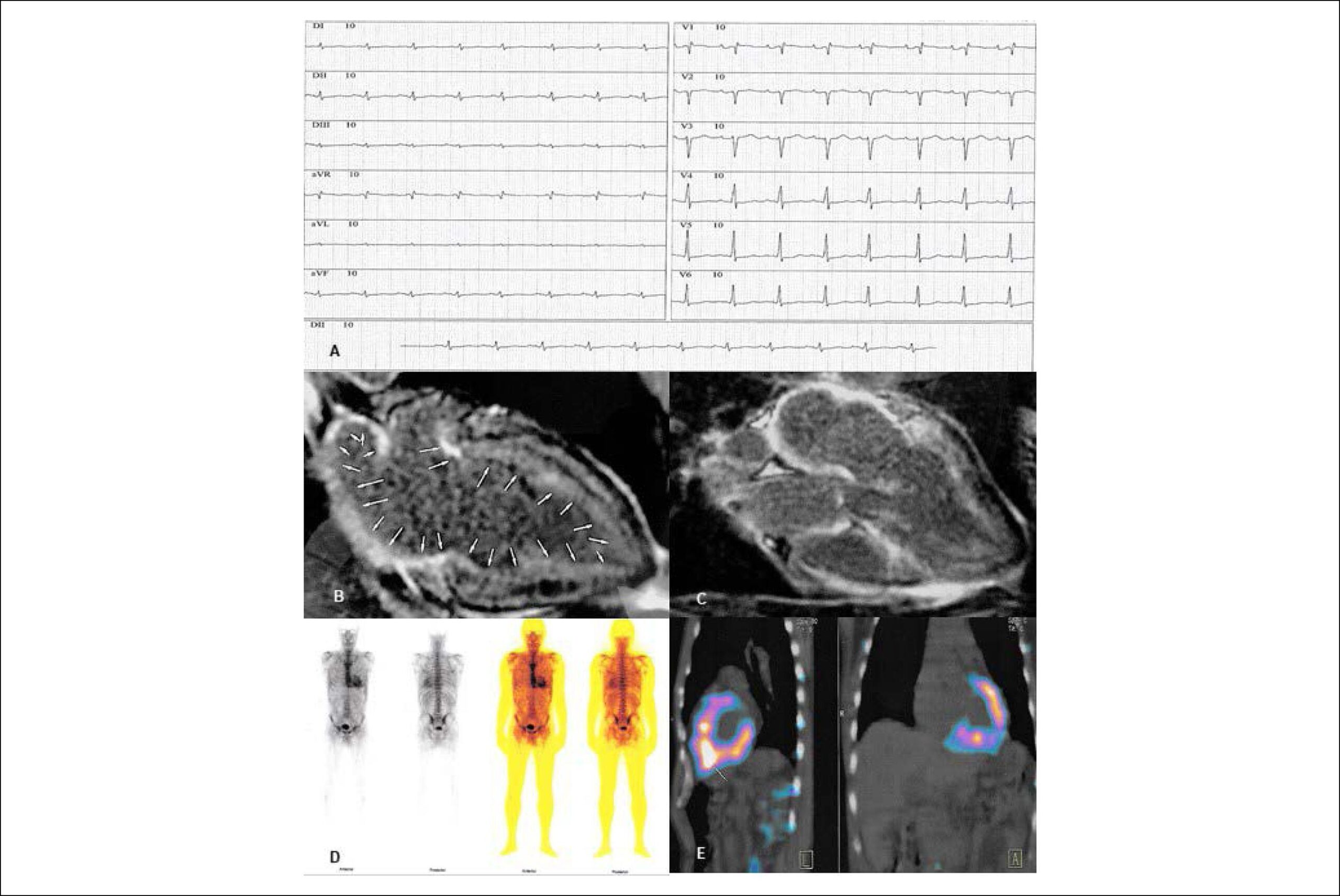
In recent decades, major advances have reshaped the clinical and epidemiological understanding of transthyretin (TTR) cardiac amyloidosis (ATTR). Progress in cardiovascular imaging has enabled earlier and more accurate identification of the disease. In particular, bone scintigraphy with 99mTc-labeled tracers has markedly simplified the non-invasive diagnosis of ATTR cardiomyopathy, substantially reducing the need for endomyocardial biopsy in most cases., Nevertheless, diagnostic challenges may arise when clinical, genetic, and imaging findings are discordant. We report a case of biopsy-proven hereditary ATTR (ATTRv) cardiomyopathy with negative bone scintigraphy, illustrating an important diagnostic pitfall within the contemporary diagnostic algorithm.

[…]

  • Amyloidosis
  • Cardiomyopathies
  • Hypertrophy
  • Syncope
Read Full Article
Creative Commons Attribution (CC BY) Creative Commons license
20/07/2026 DOI: 10.36660/abc.20250832i Views 1
Syncope and Rhythm Disturbances as Common Clinical Manifestations in Amyloidosis
IJCS
Review Article

Syncope and Rhythm Disturbances as Common Clinical Manifestations in Amyloidosis

Nágela S. V. Nunes et al. Erivelton Nascimento Ronaldo Altenburg Gismondi Erito Marques de Souza Filho

Abstract

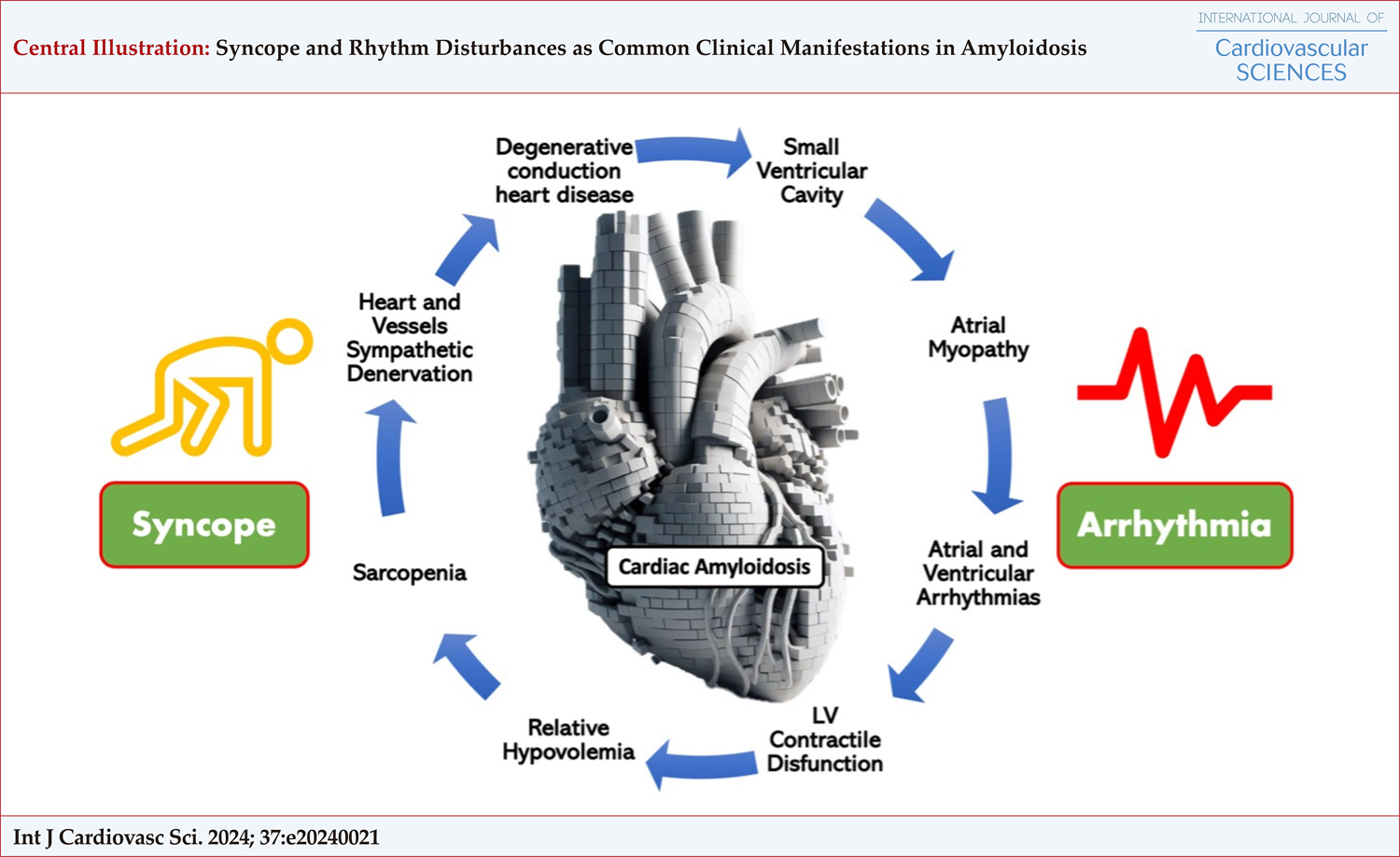
Amyloidosis results from deposition of insoluble fibrillar protein compounds in various organs, including the heart. Cardiac involvement occurs in both atria and ventricles, leading to restrictive cardiomyopathy, heart failure (HF), and arrhythmias. Five amyloid proteins affect cardiac tissue: light and heavy chain forms of immunoglobulin, transthyretin (TTR), apolipoprotein 1, and amyloid A. Approximately 95% of cardiac involvement stems from light chain of immunoglobulin and TTR deposition in heart. Chamber stiffness and rhythm disturbances occur in cardiac amyloidosis (CA), encompassing from HF to atrial and ventricular arrhythmias (VA), and both can compromise each other. It is known that conduction system disorders and VA increase sudden death risk, as amyloid infiltration, inflammation, and fibrosis alter myocardial electrophysiology. Beyond the heart, autonomous nerve systems suffer amyloid deposition, contributing to syncope manifestation and increasing the risk of death and poor prognosis. In this context, our review sheds light on the importance of recognizing syncope and rhythm disturbances as crucial markers in the early identification and management of CA, potentially offering avenues for prompt intervention and improved patient outcomes.

  • Autonomic Denervation
  • Cardiac Arrhythmias
  • Cardiac resynchronization-therapy devices
  • Familial Cerebral Amyloid Angiopathy
  • Syncope
Read Full Article
Creative Commons Attribution (CC BY) Creative Commons license
19/08/2024 DOI: 10.36660/ijcs.20240021 Views 1
Figure 1
ABC
Research Letter

Carotid Sinus Syndrome Associated with Carcinoma Ex-Pleomorphic Adenoma: What Is the Role of Artificial Cardiac Stimulation?

Vanessa Sanson Lani et al. Jorge Elias Neto Márcio Augusto Silva Helena Alves de Andrade … Elisama Pimentel Zamian Cotias Fernando Luiz Torres Gomes

Introduction

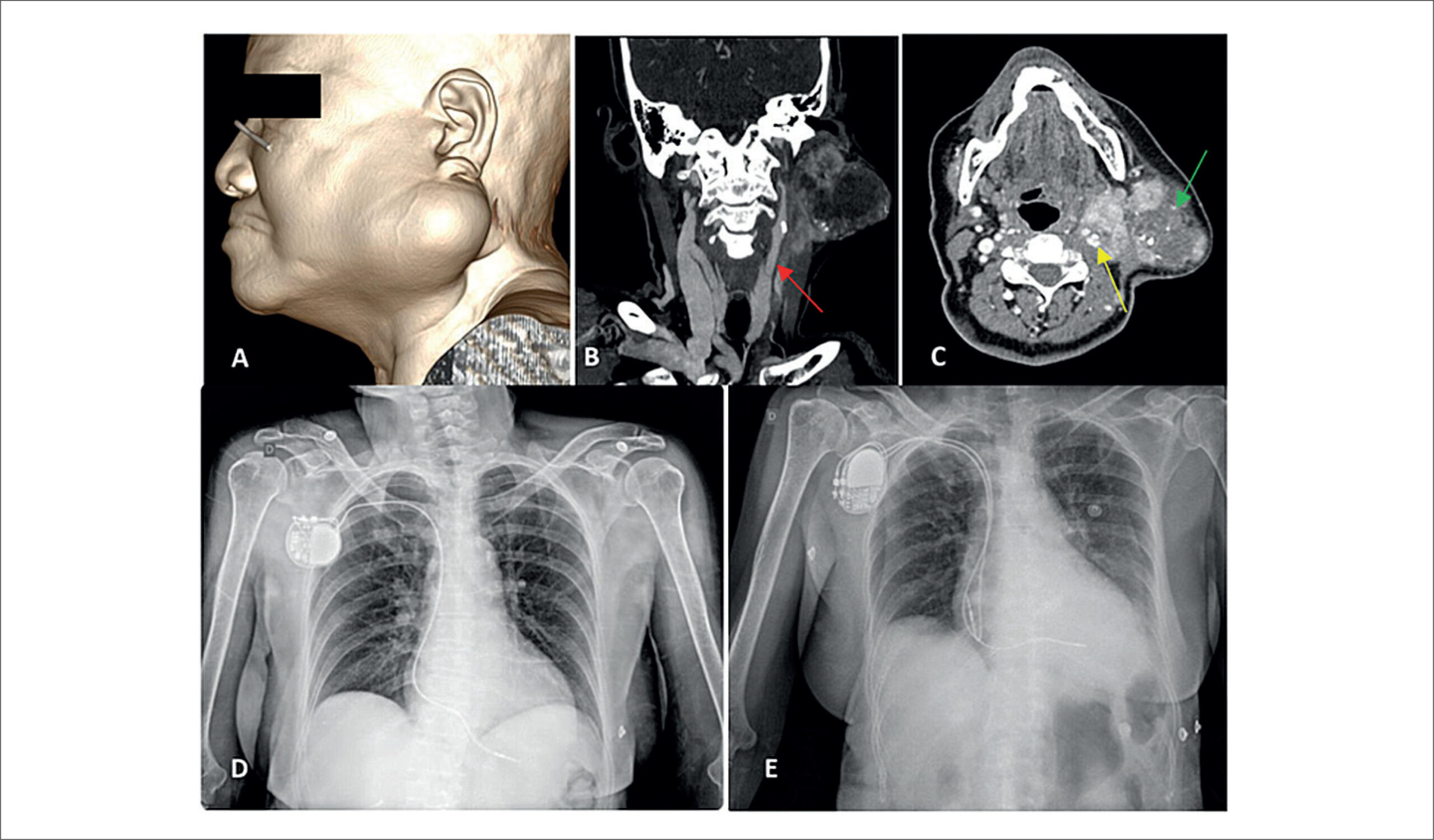
Carotid sinus syndrome (CSS) is defined as syncope or pre-syncope associated with at least 3 seconds of asystole (cardioinhibitory response) and/or a drop of at least 50 mmHg in arterial systolic blood pressure (vasodepressor response) in response to stimulation of the carotid sinus. First recognized by Weiss and Baker in 1933, there have been since then reports of the association between neck masses and the occurrence of syncope. Among its causes is carcinoma ex-pleomorphic adenoma (CXAP), a rare malignant neoplasm that develops from a primary or recurrent pleomorphic adenoma. It represents 3.6% of all salivary gland neoplasms and 11.6% of all malignant neoplasms of these glands. CSS caused by neck masses is due to compression and invasion of the carotid sinus and nerve branches. This syndrome has 3 subtypes: cardioinhibitory, vasodepressor, and the mixed type. A fourth type of “cerebral response” has been previously described in the literature, in which direct compression of the carotid artery causes ipsilateral cerebral ischemia leading to seizures.

[…]

  • Adenoma Pleomorphic
  • Cardiac Pacing, Artificial
  • Carotid sinus
  • Head and Neck Neoplasms
  • Syncope
Read Full Article
Creative Commons Attribution (CC BY) Creative Commons license
12/08/2024 DOI: 10.36660/abc.20240026i Views 1
Figure 1
IJCS
Original Article

Quality of Life After Diagnosis of Neurally Mediated Reflex Syncope by Tilt Test

Claudia Madeira Miranda et al. Rose Mary Ferreira Lisboa da Silva Edson Del Amore Filho Izabela Maria Azeredo Nascimento Pedro Santos Carvalho

Abstract

Background:

Vasovagal syncope (VVS) results in impaired quality of life (QoL). The response during the head-up tilt test (HUTT) influences QoL and recurrence.

Objectives:

To analyze the influence of the type of HUTT response on QoL in patients with VVS and recurrence of events after the exam.

Methods:

The SF-36 and Impact of Syncope on Quality of Life (ISQL) questionnaires were applied over 12 months after the HUTT. Unpaired Student’s t test was used for differences between 2 groups of quantitative data with normal distribution. The recurrence of syncope episodes was analyzed using a Kaplan-Meier curve, and the log-rank test was applied to compare the curves regarding responses to the HUTT. Statistical significance was set at p value < 0.05.

Results:

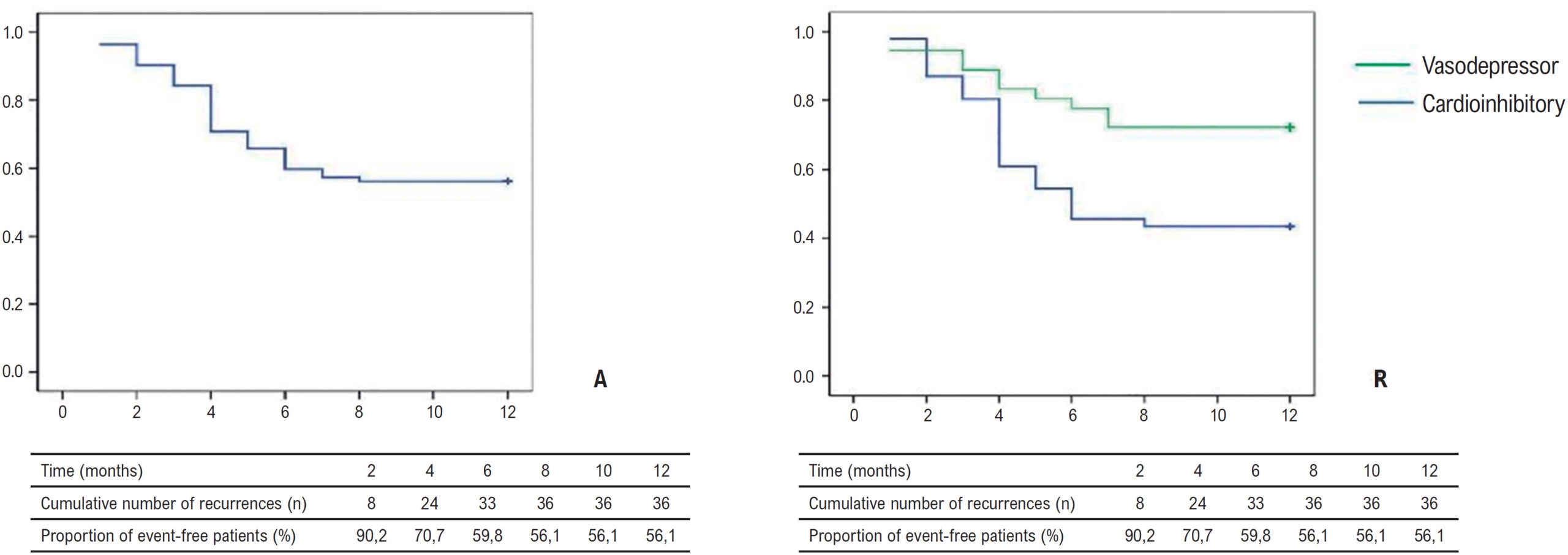
We analyzed 82 patients (43.7 years old), 69% with previous recurrence (2.8 prior episodes). Cardioinhibitory response occurred in 46 patients; vasodepressor response occurred in 36, and 85.4% of patients received non-pharmacological treatment after the HUTT. During clinical follow-up, 43.9% had recurrence, mainly young patients (35.7 years; p = 0.002). On the SF-36, the best score was in functional capacity in men (p = 0.04) and patients without prior trauma (p = 0.001). There were lower limitations due to pain in patients without prior trauma (p = 0.003) and patients without prodromes (p = 0.009). On the ISQL, there were better mean scores in men (p = 0.002) and in patients without prior trauma (p = 0.02). Patients with cardioinhibitory response had better SF-36 and ISQL scores (p < 0.001). There was greater VVS recurrence in the cardioinhibitory response group (log-rank p = 0.011; hazard ratio: 8.48; 95% confidence interval: 7.59 to 9.3) from the second to the fourth month, with stabilization in the eighth month after the HUTT, when compared to patients with vasodepressor response.

Conclusion:

The majority of patients with VVS reproduced during the HUTT under non-pharmacological treatment did not report worsening of QoL during clinical follow-up. Worse QoL was observed in non-young patients and in patients with vasodepressor response, and it was not influenced by recurrence after the HUTT.

  • Physical Examination
  • Quality of life
  • Syncope
Read Full Article
Creative Commons Attribution (CC BY) Creative Commons license
05/04/2024 DOI: 10.36660/ijcs.20230017 Views 1
ABC
Editorial

What Pieces are Missing in the Puzzle of Cardiovascular Adaptation to Orthostatism?

Jorge Elias Neto

The bipedalism of the human species is an evolutionary milestone and has motivated extensive research in the physiological and anthropological areas. ,

Although the gravitational force (+Gz), acting at a mean velocity of 9.8 m/s , creates a gradient of pressure at the level of the circulatory system, the human being is capable of maintaining an upright posture because the gravitational pressure is partially neutralized by autonomic and cardiovascular compensatory mechanisms that prevent hypotension and loss of consciousness would ensue after orthostasis. –

[…]

  • Head-up Tilt Test
  • Ortostasis
  • Pulse Wave Velocity
  • R-R Variability
  • Syncope
Read Full Article
Creative Commons Attribution (CC BY) Creative Commons license
07/08/2023 DOI: 10.36660/abc.20230417 Views 1
Figure 1
ABC
Viewpoint

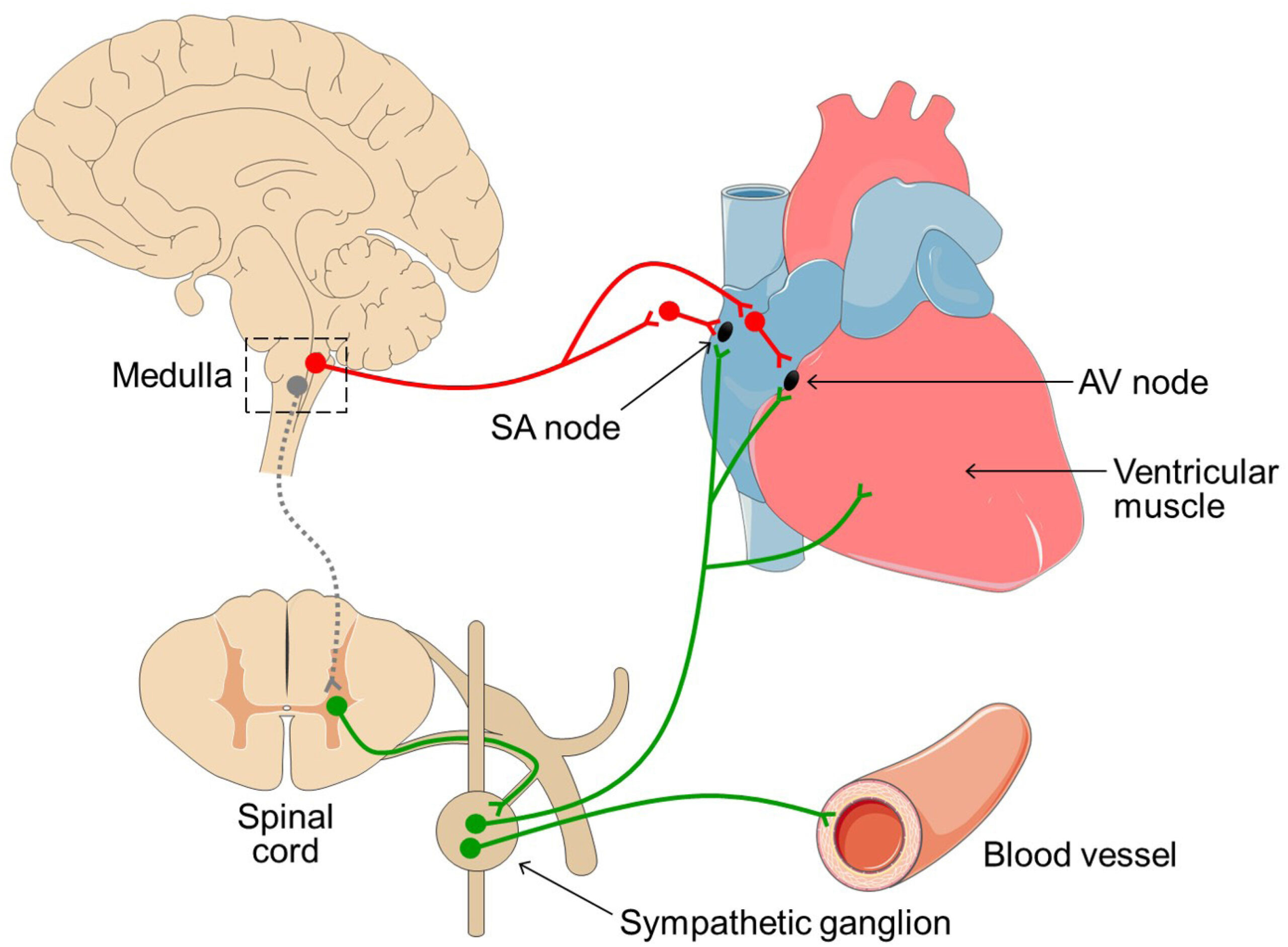
The “Five Malignant Waves” of the Electrocardiography

Mitermayer Reis Brito

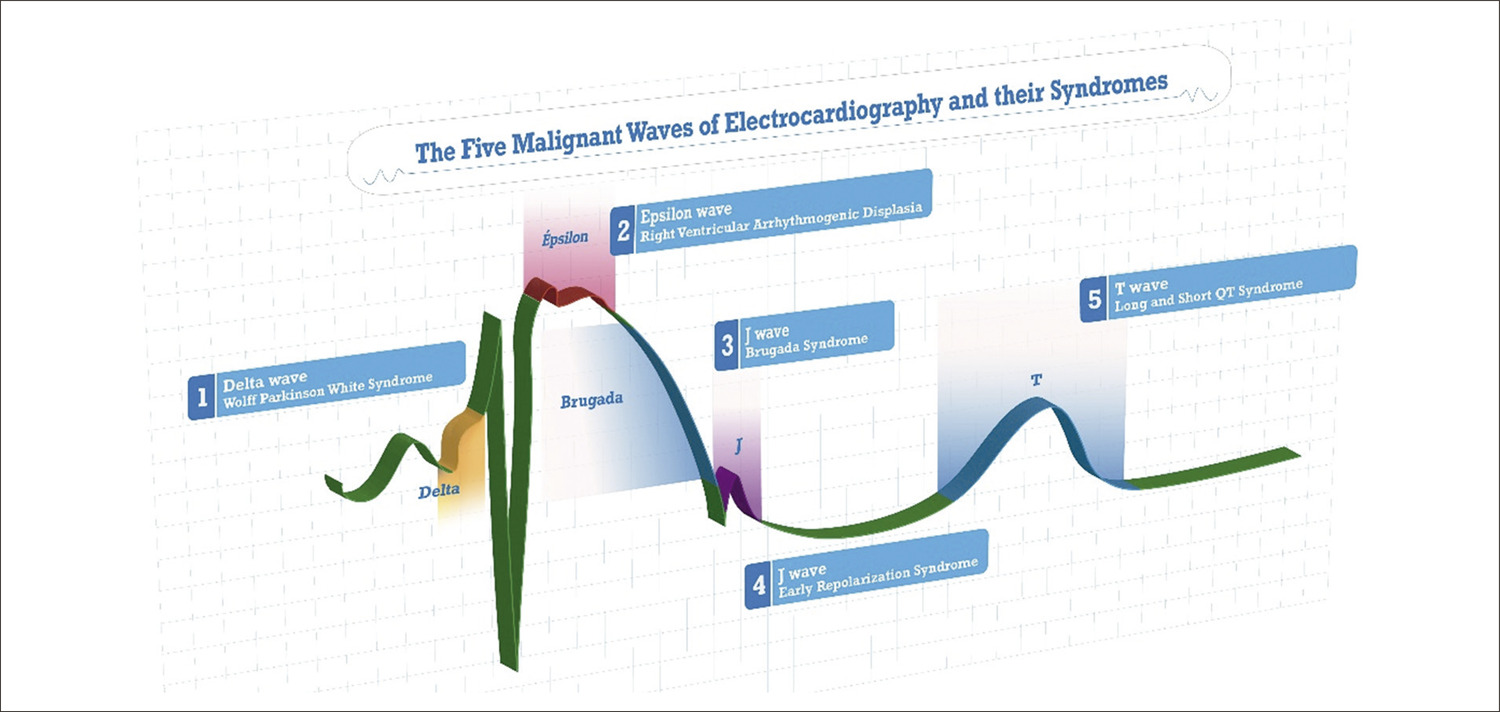
The main ECG features of the five malignant waves and their syndromes

The Main ECG features of the “Five Malignant Waves” and their syndromes are presented in .

[…]

  • Arrhythmias Cardiac
  • Death, Sudden
  • Diagnostic Imaging/methods
  • Electrocardiography/methods
  • Syncope
  • Tachycardia, Ventricular
Read Full Article
Creative Commons Attribution (CC BY) Creative Commons license
23/02/2023 DOI: 10.36660/abc.20220649 Views 1
ABC
Editorial

Left Bundle Pacing: Has Cardiac Pacing Changed Forever?

José Carlos Pachón-M et al. Juán Carlos Pachón-M Carlos Thiene C. Pachón

A hidden and deleterious side effect

Despite the great benefit of the AV synchronized pacing, the endocardial lead at the apex of the right ventricle remained causing unwanted pacing with wide QRS and complete left bundle branch block effect, with significant dyssynchrony of the left ventricular walls given rise to a second problem: the “Ventricular Pacemaker Syndrome or Wide QRS Syndrome”, whose prevention and treatment gave origin to resynchronization therapy. – . Despite being present in the entire cardiac stimulation, this dyssynchrony was neglected for a long time due to the great benefit resulting of the bradycardia correction.

[…]

  • Bradyarrhythmias
  • Cardiac Pacemaker Artificial
  • Cardiac Resynchronization
  • Dilated Cardiomyopathy
  • Syncope
Read Full Article
Creative Commons Attribution (CC BY) Creative Commons license
07/03/2022 DOI: 10.36660/abc.20211004
ABCIC
Case Report

Rare Cause of Chest Pain in Young Patient: Left Ventricular Myxoma

Gustavo Henrique Belarmino Góes et al. José Candido de Souza Ferraz Neto Ivaldo Pedrosa Calado Filho Ricardo de Carvalho Lima Dário Celestino Sobral Filho

[…]

  • Chest Pain
  • Dyspnea
  • Echocardiography/diagnostic Imaging
  • Heart Neoplasms
  • Myxoma/surgery
  • Syncope
  • Tachycardia
Read Full Article
Creative Commons Attribution (CC BY) Creative Commons license
20/01/2022 DOI: 10.5935/2318-8219.20190013
Figure 1
ABCHF
Case Report

Recurrent Syncope: Initial Presentation of Transthyretin Amyloidosis. Benefits of Disease-Modifying Treatment

Edileide de Barros Correia et al. Larissa Ventura Ribeiro Bruscky Berenice Cataldo Oliveira Valério Ana Cristina de Souza Murta … Fabiano Castro Albrecht Ibraim Masciarelli Francisco Pinto Paola Emanuela Poggio Smanio

Introduction

Syncope is a symptom that can occur in normal hearts, but it may also have multiple causes, both cardiological and neurological. It is not frequently reported as an initial manifestation of cardiac amyloidosis, but, when it occurs, it can be determined by severe atrioventricular block, ventricular tachyarrhythmia, or, as we will describe in the following case report, autonomic dysfunction and postural arterial hypotension. The objective of this study is to describe the case of a patient with transthyretin (TTR) cardiac amyloidosis, with the Val50met mutation, historically known as Val30met,, whose initial clinical presentation was syncope.

[…]

  • Cardiomyopathy, Restrictive
  • Familial Amyloidosis
  • Primary Dysautonomias
  • Syncope
Read Full Article
Creative Commons Attribution (CC BY) Creative Commons license
10/12/2021 DOI: 10.36660/abchf.20210014 Views 1
ABC
Letter to the Editor

Risk Stratification for Primary Prevention of Sudden Cardiac Death in Hypertrophic Cardiomyopathy

Styliani Vakrou et al. Charalampos Vlachopoulos Konstantinos A. Gatzoulis

Reply

Sudden cardiac death (SCD) is considered the most dramatic complication of hypertrophic cardiomyopathy (HCM) with an estimated annual incidence of 0.5–1%. Over the years, the ACC/AHA and the ESC have published consensus guidelines providing different approaches for SCD risk stratification based on independent clinical predictors. Despite the relatively low accuracy of these markers, current strategies are considered to have a reasonable discriminatory power for the recognition of high-risk patients. However, prognostic assessment is challenging in HCM, especially in low to moderate risk patients. SCD may arise in the absence of known risk factors and some approaches show conflicting results in different populations. Moreover, methodological discrepancies between the North American and the European guidelines may determine discordant levels of recommendation regarding implantable cardioverter defibrillator (ICD) in primary prevention. Therefore, risk stratification is still imprecise and requires further investigation.

The 2018 manuscript of Gatzoulis et al. reevaluates the role of electrophysiological study for prognostic assessment in a low to intermediate risk single-center HCM cohort stratified according to contemporary guidelines. The authors conclude that programmed ventricular stimulation (PVS) combined with current models add sensitivity and negative predictive value to risk stratification. Results are interesting but need to be confirmed in larger prospective trials. PVS has been downgraded to class III in current guidelines due to the low sensitivity and potential risks. Similarly, fractionation of right ventricle electrograms has been related to SCD but was not assimilated due to the invasive nature of the procedure, which may impact feasibility in some settings. Electrical instability is transitory in HCM and should be periodically evaluated such as other predictors with dynamic characteristics. , The guidelines recommend the reassessment of SCD risk during follow-up. Clinical and more easily acquired non-invasive approaches favor routine patient evaluation.

[…]

  • Defibrillators, Implantable
  • Hypertrophic Cardiomyopathy
  • Prevention and Control
  • Sudden Cardiac Death
  • Syncope
Read Full Article
Creative Commons Attribution (CC BY) Creative Commons license
26/07/2021 DOI: 10.36660/abc.20201339 Views 1
Figure 1
ABC
Case Report

Life-Threatening Ventricular Arrhythmia Induced by Atrial Tachycardia in a Child with an SCN5A Mutation

Márcio Augusto Silva et al. Jorge Elias Neto Guilherme Muller de Campos Futuro Erick Sessa Merçon … Deborah Vasconcelos Ricardo Kuniyoshi

Introduction

Mutations in the SCN5A gene, encoding the cardiac Na+channel, can result in several life-threatening arrhythmias. These mutations have proven to be causative for inherited and primarily electrical diseases, including Brugada Syndrome (BrS), Long QT Syndrome, and other cardiac conduction disturbances., BrS, the most reported condition in this group of disorders, has typically been described in adult populations and related to approximately 20% of all sudden deaths (SD) in patients with apparently normal hearts.– Therefore, few reports have shown significant arrhythmic events (AE) caused by this mutation in childhood.

Atrial arrhythmias, as well as sick sinus syndrome (SSS), may be related to Na+channel abnormalities. In BrS, atrial arrhythmias are being diagnosed in up to 38% of patients and are related to worse prognosis.

[…]

  • Brugada Syndrome
  • Cardiac, Arrhythmia
  • Child
  • Syncope
Read Full Article
Creative Commons Attribution (CC BY) Creative Commons license
19/07/2021 DOI: 10.36660/abc.20200509 Views 2
Figure 1
ABC
Review Article

Dysautonomia: A Forgotten Condition — Part II

Eduardo Arrais Rocha et al. Niraj Mehta Maria Zildany Pinheiro Távora-Mehta Camila Ferreira Roncari … Alan Alves de Lima Cidrão Jorge Elias Neto

General and Cardiovascular Clinical Manifestations

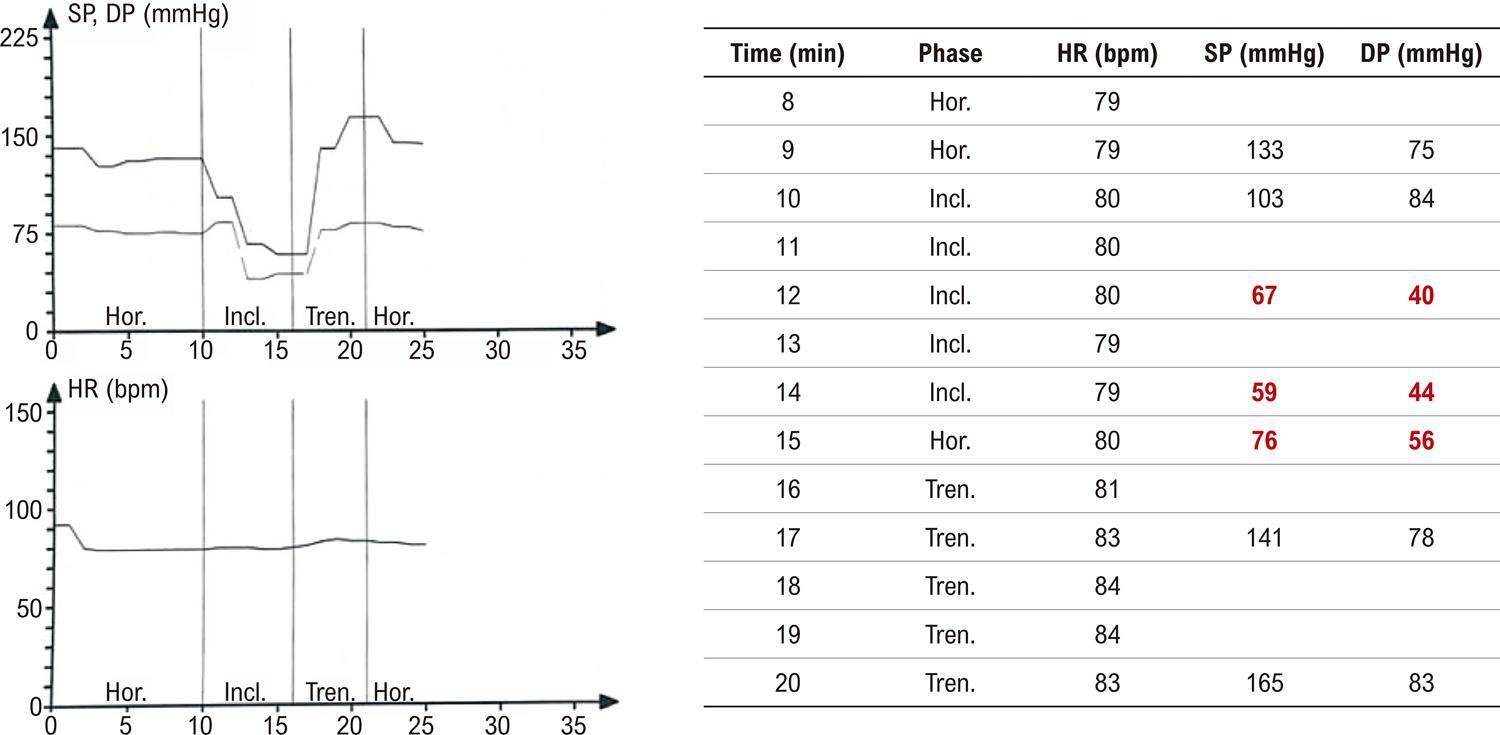
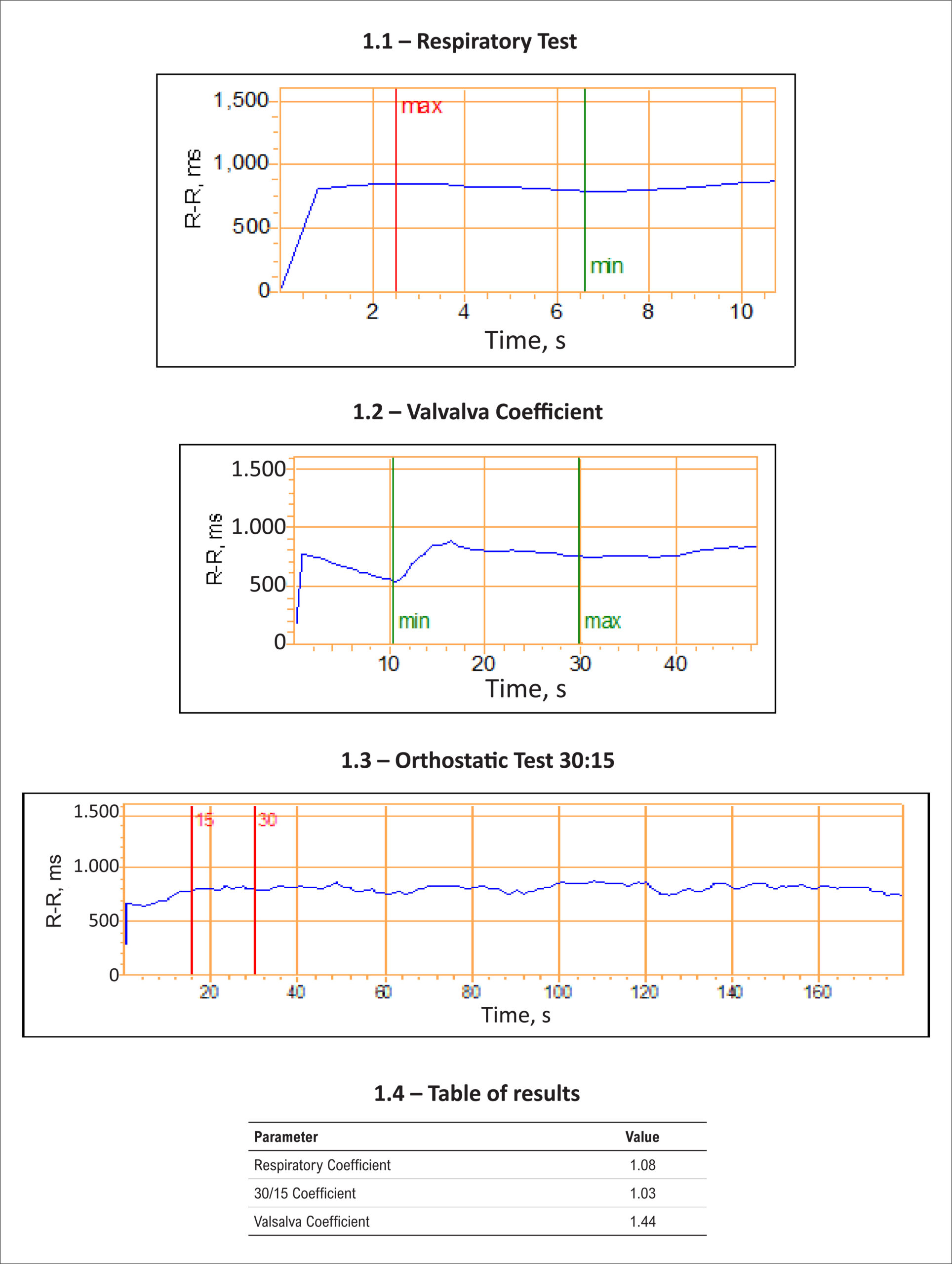
The pathologies that affect the autonomic nervous system (ANS) can manifest in different ways, depending on the etiology, degree of impairment, disease duration, presence of comorbidities, age or use of associated drugs. Many symptoms can be completely debilitating, such as severe pain in peripheral neuropathy and falls or syncope in autonomic neuropathies. Progression to severe orthostatic intolerance may occur in more advanced cases of dysautonomies, with severe early orthostatic hypotension and supine hypertension, making treatment difficult ().–

[…]

  • Autonomic Nervous System
  • Cardiovascular Autonomic Neuropathy
  • diabetes
  • Fatigue
  • Hypotension, Orthostatic
  • Hypothension, Postural
  • Primary Dysautonomias
  • Syncope
Read Full Article
Creative Commons Attribution (CC BY) Creative Commons license
17/05/2021 DOI: 10.36660/abc.20200422
Figure 1
ABC
Review Article

Dysautonomia: A Forgotten Condition — Part 1

Eduardo Arrais Rocha et al. Niraj Mehta Maria Zildany Pinheiro Távora-Mehta Camila Ferreira Roncari … Alan Alves de Lima Cidrão Jorge Elias Neto

Abstract — Key Points

Dysautonomia covers a range of clinical conditions with different characteristics and prognoses. They are classified as Reflex Syndromes, Postural Orthostatic Tachycardia Syndrome (POTS), Chronic Fatigue Syndrome, Neurogenic Orthostatic Hypotension (nOH) and Carotid Sinus Hypersensitivity Syndrome. Reflex (vasovagal) syndromes will not be discussed in this article.

  • Amyloidosis
  • Cardiovascular Autonomic Neuropathy
  • Carotid Sinus Hipersensitivity
  • Chagas disease
  • Chronic Fatigue Disease
  • COVID-19
  • Diabetes Mellitus
  • Dysautonomia
  • Hypotension, Orthostatic
  • Syncope
Read Full Article
Creative Commons Attribution (CC BY) Creative Commons license
16/04/2021 DOI: 10.36660/abc.20200420
Figure 1
ABC
Image

One Patient, Two Cardiomyopathies

Christopher Strong et al. Pedro Freitas António Ferreira Gustavo Rodrigues Miguel Mendes

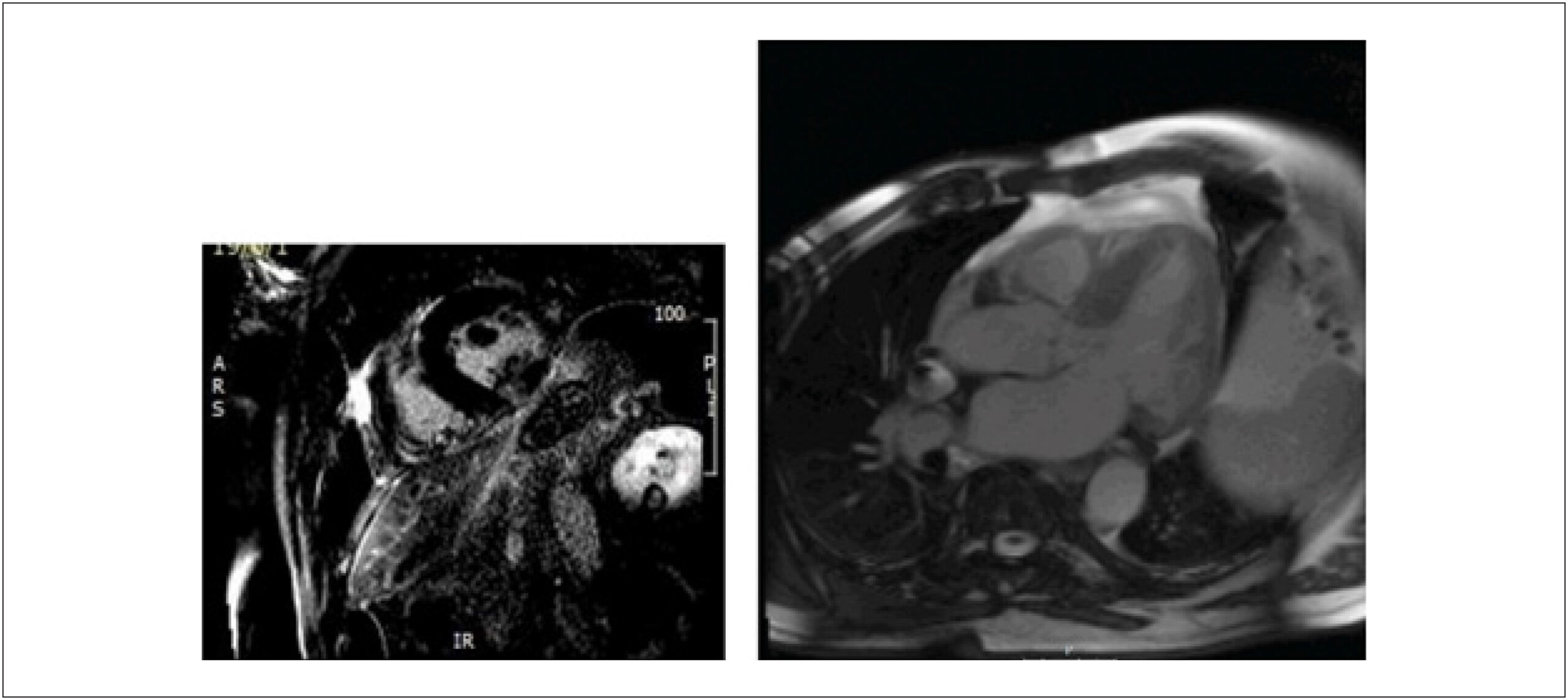
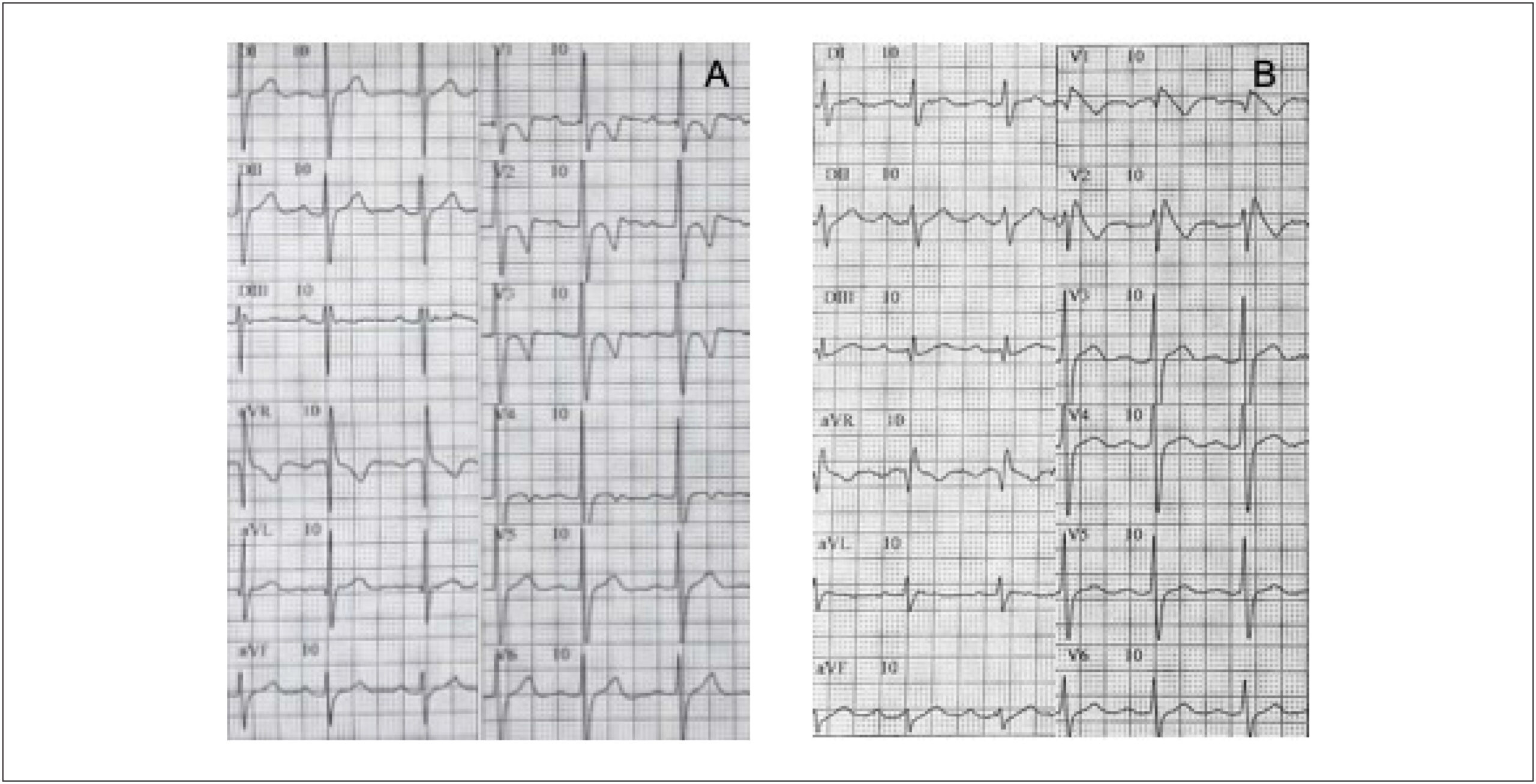
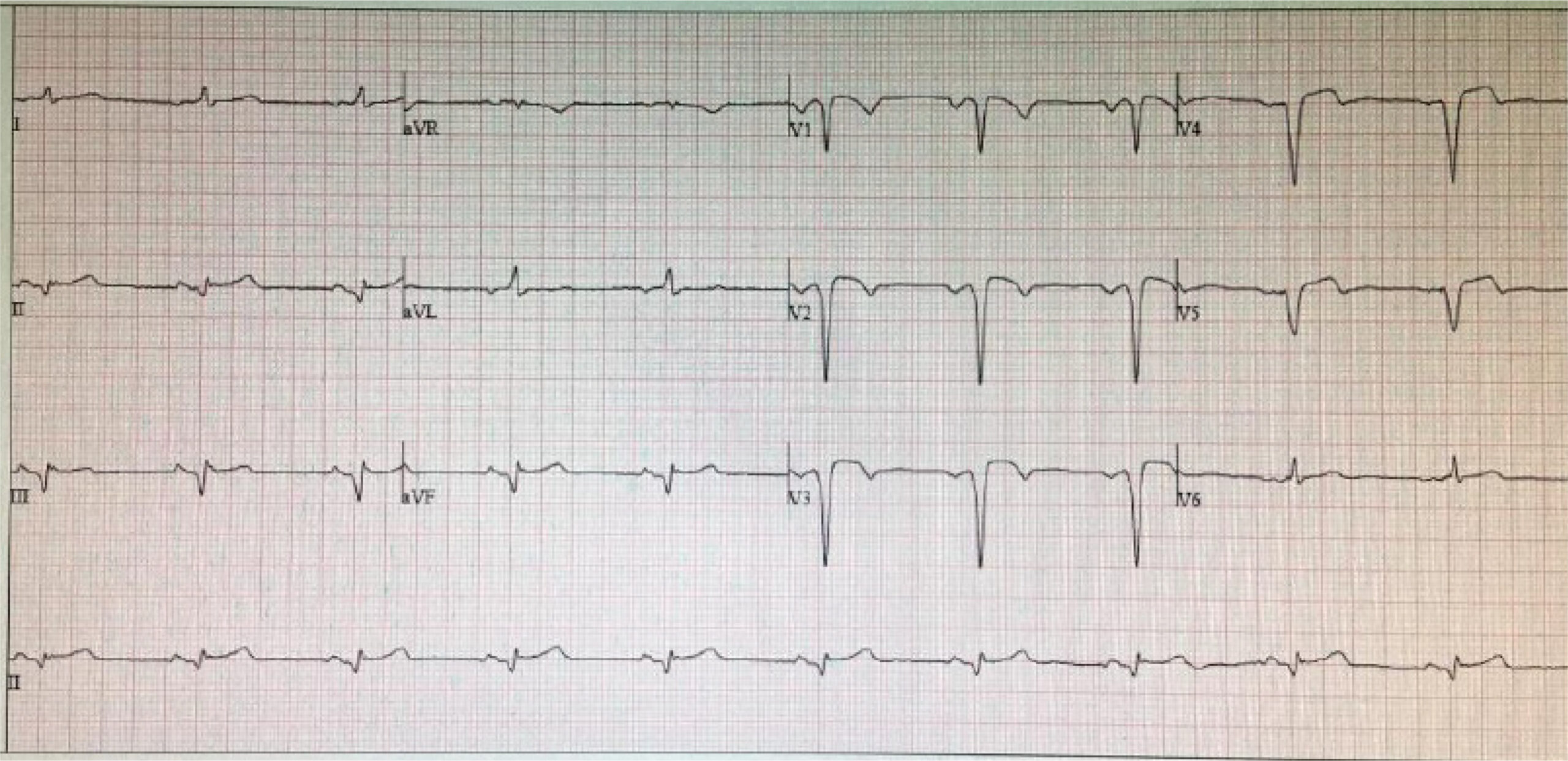
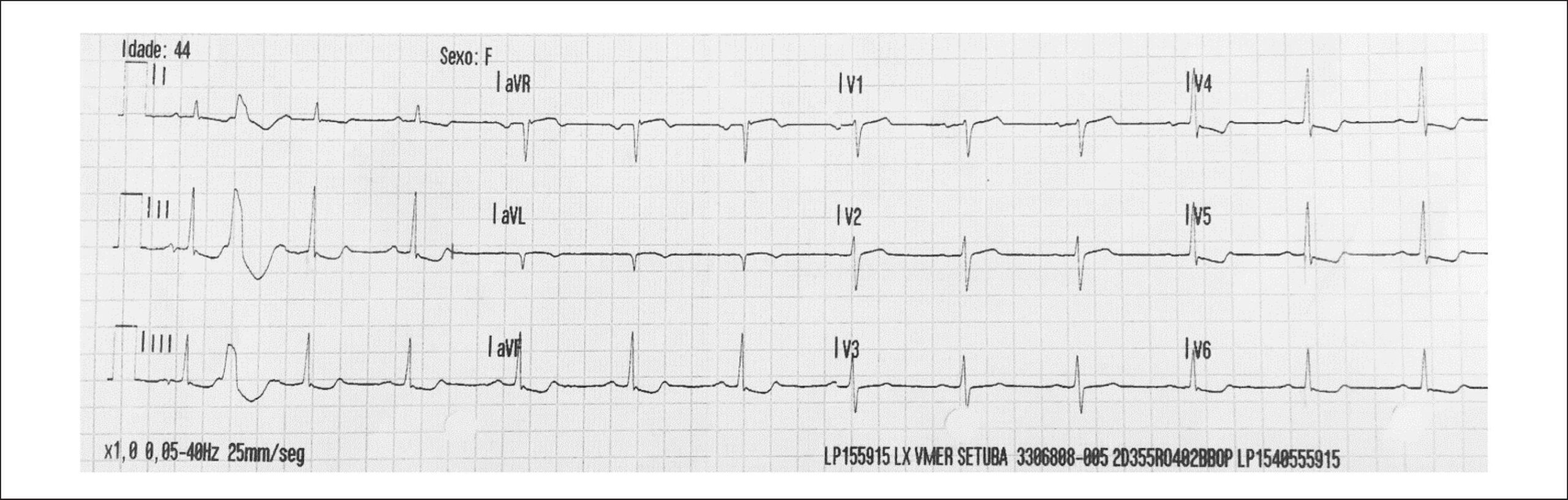
A 50-year-old male patient, with history of well-controlled hypertension and no known personal or family history of cardiac disease, presented with chest pain followed by syncope during strenuous physical activity. The electrocardiogram showed sustained monomorphic ventricular tachycardia. Electrical cardioversion was performed, with conversion to sinus rhythm with Q waves on leads V2-5 and III-aVF (). Transthoracic echocardiography (TTE) showed asymmetric left ventricular (LV) hypertrophy, preserved ejection fraction (EF) with apical akinesia, and hypertrabeculated right ventricle (RV). Coronary angiography showed no significant lesions. Cardiac MRI confirmed the TTE findings, showing a maximum LV wall thickness of 17 mm at the interventricular septum (Figure S1 — supplementary material), apical LV aneurysm and abnormal insertion of papillary muscles. The right side was remarkable for hypertrabeculated and hypokinetic free and inferior walls, and mildly dilated RV with reduced EF (33%). Besides having transmural delayed enhancement (DE) on the LV apex, there was also nodular DE on the LV/RV junction and on the free and inferior basal walls of the RV (; –; Figure S2 of supplementary material). Genetic analysis found a heterozygous mutation on the PKP2 gene (p.Thr50Serfs*61), a pathogenic variant associated with arrhythmogenic RV cardiomyopathy. However, no known mutation on genes related to hypertrophic cardiomyopathy (HCM) were found on a panel of 204 genes, 118 related to HCM. No association has been firmly made between mutations on the PKP2 gene and HCM. The overlap between genetics and cardiomyopathy phenotypes is a well-known phenomenon. We hypothesize that this patient either had an additional unknown HCM gene mutation or, less likely, a phenotypic expression of two different cardiomyopathies in the context a PKP2 gene mutation.

[…]

  • Arrhythmogenic right ventricular dysplasia;
  • Cardiomyopathy, Hypertrophic
  • Electric Countershock
  • Exercise
  • Mutagenesis
  • Syncope
  • Tachycardia, Ventricular
Read Full Article
Creative Commons Attribution (CC BY) Creative Commons license
28/09/2020 DOI: 10.36660/abc.20190853
Figure 1
ABC
Original Article

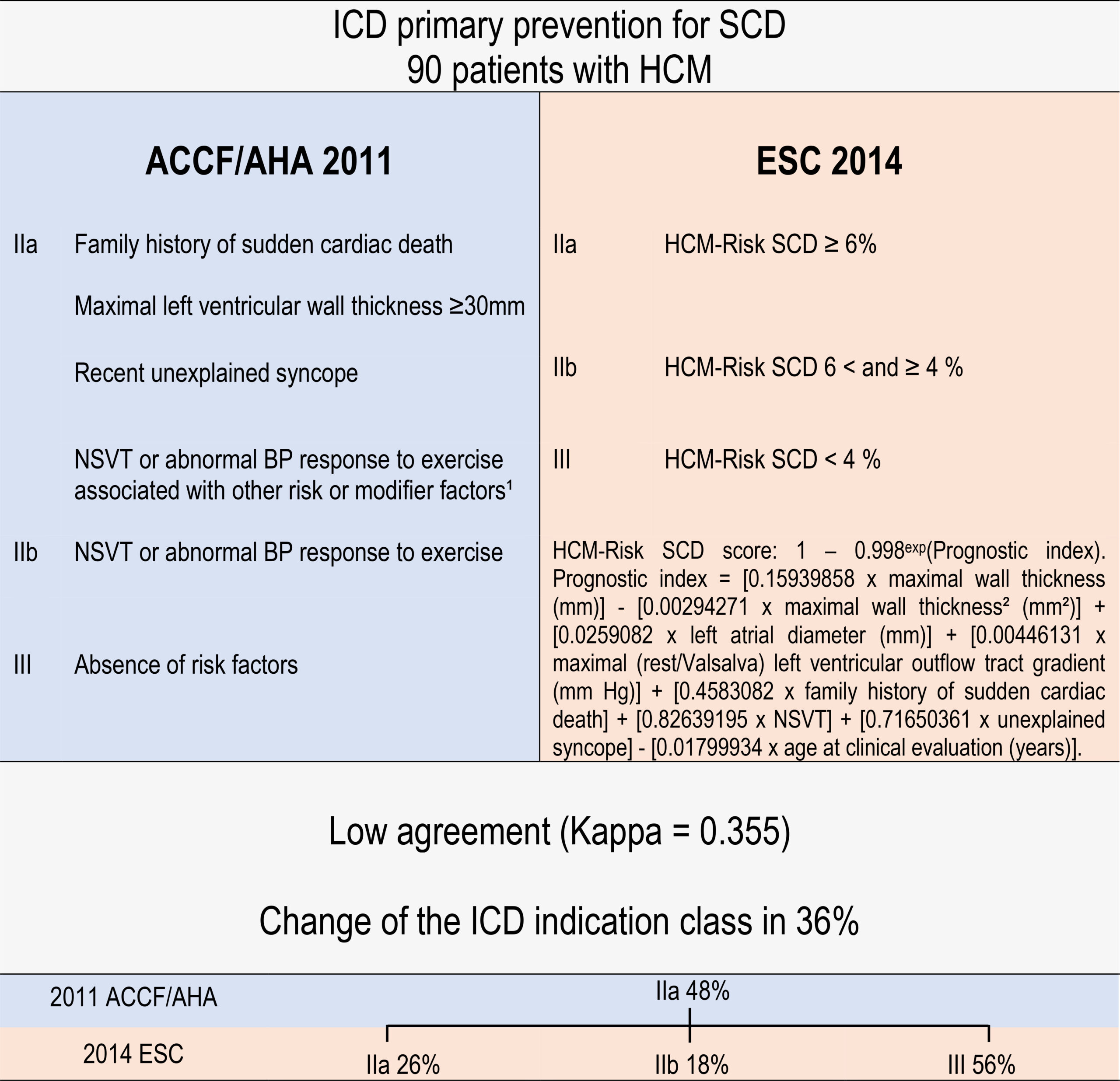
Discrepancy between International Guidelines on the Criteria for Primary Prevention of Sudden Cardiac Death in Hypertrophic Cardiomyopathy

Beatriz Piva e Mattos et al. Fernando Luís Scolari Henrique Iahnke Garbin

Abstract

Background

Risk stratification for sudden cardiac death (SCD) in hypertrophic cardiomyopathy (HCM) is based on different algorithms proposed by the 2011 ACCF/AHA and 2014 ESC guidelines.

Objective

To analyze the 2014 ESC model for SCD risk stratification and primary prevention ICD (implantable cardioverter defibrillator) in HCM in comparison to the North American guideline.

Methods

An HCM cohort was evaluated and the ESC HCM-Risk SCD score was calculated. Agreement of ICD recommendations criteria between the two guidelines was analyzed with Kappa coefficient. P<0.05 was adopted for the statistical analysis.

Results

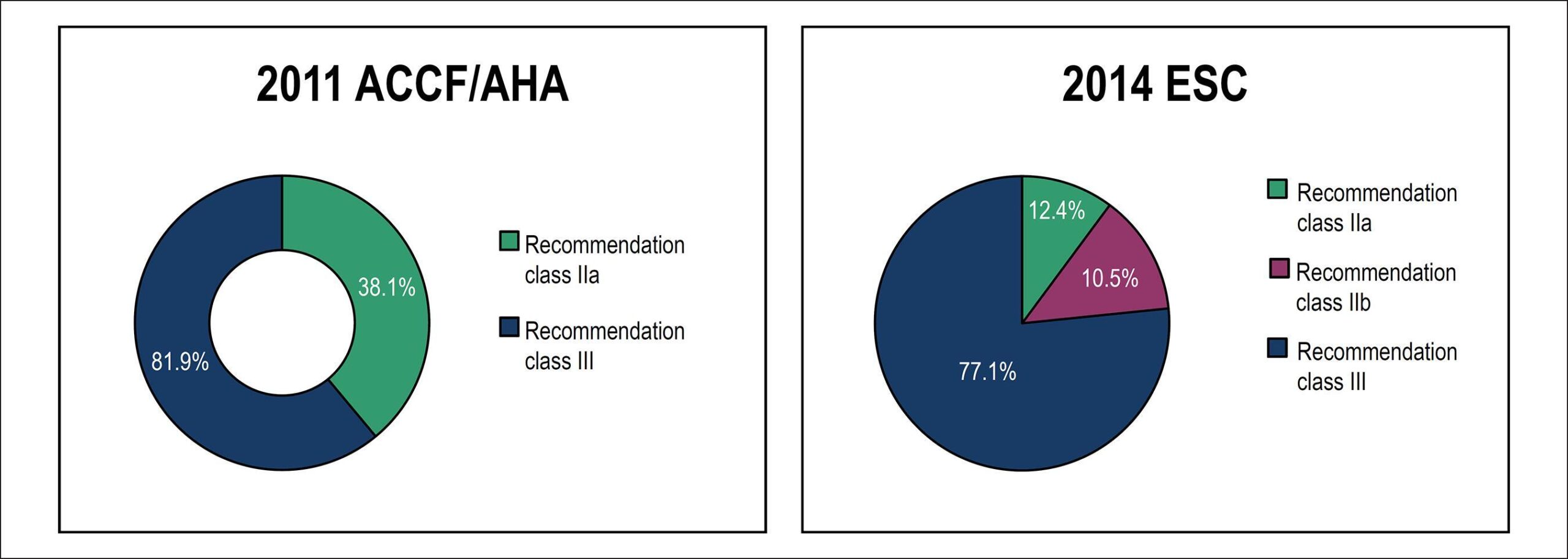
In 90 consecutive patients followed for 6±3 years, the mean calculated ESC risk score was 3.2±2.5%. The risk predictors that have mainly contributed to the score calculation in the low (1.88% [1.42–2.67]), intermediate (5.17% [4.89–5.70]) and high-risk (7.82% [7.06–9.19]) categories were: maximal left ventricular wall thickness (1.60% [1.25–2.02]; 3.20% [3.18–3.36]; 4.46% [4.07–5.09]), left atrial diameter (0.97% [0.83–1.21]; 1.86% [1.67-2.40]; 2.48% [2.21–3.51]) and age (-0.91% [0.8–1.13]; -1.90% [1.12–2.03]; -2.34% [1.49–2.73]). The European model decreased the ICD recommendations in 32 (36%) patients. Among the 43 (48%) individuals with class IIa recommendation under the 2011 ACCF/AHA guideline, 8 (18%) were downgraded to class IIb and 24 (56%) to class III. Low agreement was found between the two systems: Kappa=0.355 and p=0.0001. In 8 (9%) patients with SCD or appropriate shock, 4 (50%) met class IIa indication with the 2011 ACCF/AHA guideline, but none achieved this class of recommendation with the 2014 ESC model.

Conclusion

Low agreement was found between the two strategies. The novel ESC model decreased the ICD recommendations, especially in those with class IIa recommendation, but left unprotected all patients with SCD or appropriate shock. (Arq Bras Cardiol. 2020; 115(2):197-204)

  • Arrhythmias Cardiac
  • Cardiomyopathy,Hypertrophic/genetics
  • Cohort Studies
  • Death,Sudden, Cardiac
  • Defibrillators,Implantable
  • Heredity
  • Syncope
Read Full Article
Creative Commons Attribution (CC BY) Creative Commons license
28/08/2020 DOI: 10.36660/abc.20190161 Views 3
Figure 1
ABC
Original Article

Long-Term Mortality in Cardioinhibitory Carotid Sinus Hypersensitivity Patient Cohort

Gustavo de Castro Lacerda et al. Andrea Rocha de Lorenzo Bernardo Rangel Tura Marcela Cedenilla dos Santos … Artur Eduardo Cotrim Guimarães Renato Côrtes de Lacerda Roberto Coury Pedrosa

Abstract

Background:

Cardioinhibitory carotid sinus hypersensitivity (CICSH) is defined as ventricular asystole ≥ 3 seconds in response to 5-10 seconds of carotid sinus massage (CSM). There is a common concern that a prolonged asystole episode could lead to death directly from bradycardia or as a consequence of serious trauma, brain injury or pause-dependent ventricular arrhythmias.

Objective:

To describe total mortality, cardiovascular mortality and trauma-related mortality of a cohort of CICSH patients, and to compare those mortalities with those found in a non-CICSH patient cohort.

Methods:

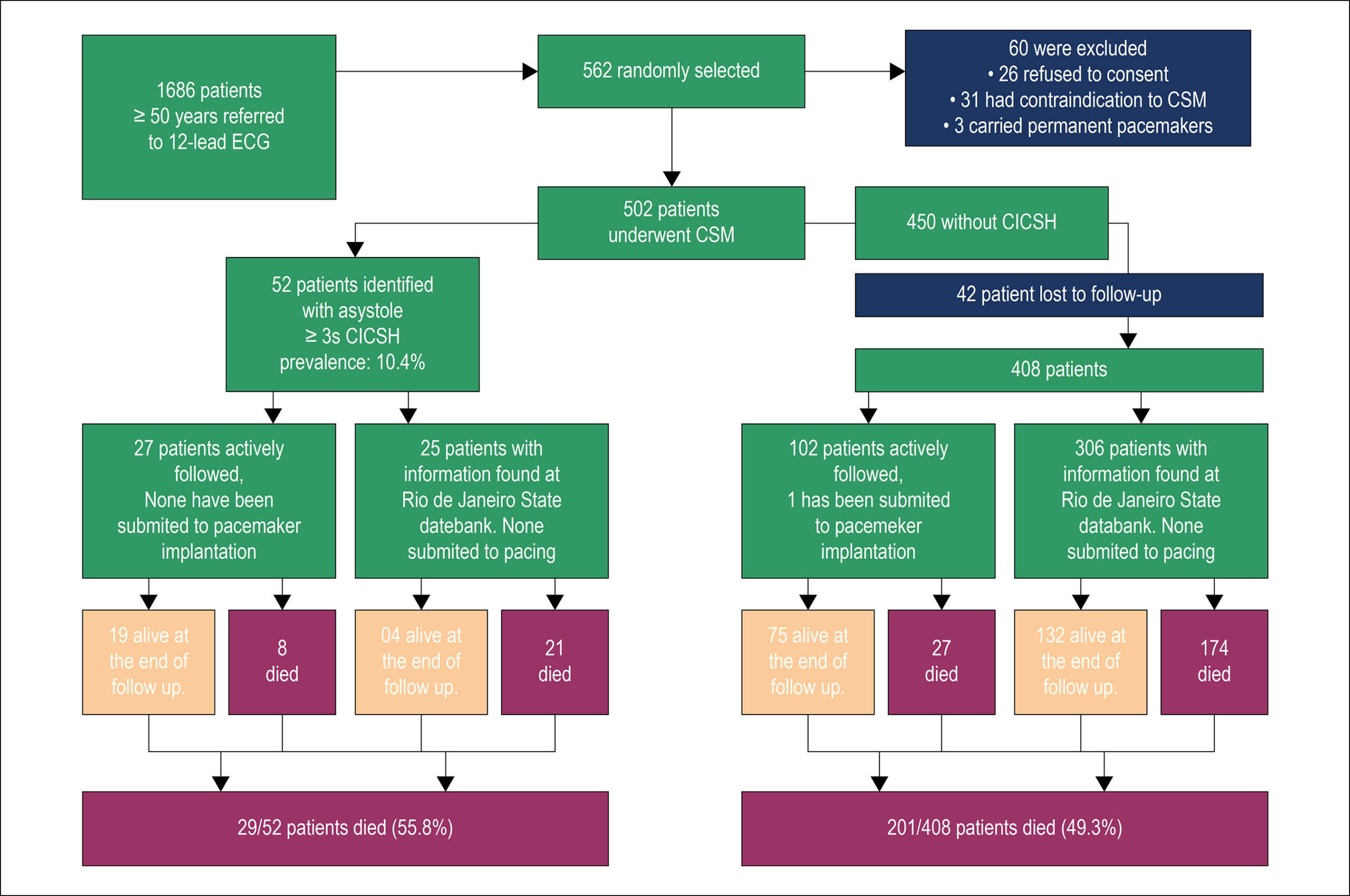
In 2006, 502 patients ≥ 50 years of age were submitted to CSM. Fifty-two patients (10,4%) were identified with CICSH. Survival of this cohort was compared with that of another cohort of 408 non-CICSH patients using Kaplan-Meier curves. Cox regression was used to examine the relation between CICSH and mortality. The level of statistical significance was set at 0.05.

Results:

After a maximum follow-up of 11.6 years, 29 of the 52 CICSH patients (55.8%) were dead. Cardiovascular mortality, trauma-related mortality and the total mortality rate of this population were not statistically different from that found in 408 patients without CICSH. (Total mortality of CICSH patients 55.8% vs. 49,3% of non-CICSH patients; p: 0.38).

Conclusion:

At the end of follow-up, the 52 CICSH patient cohort had total mortality, cardiovascular mortality and trauma-related mortality similar to that found in 408 patients without CICSH.

  • Bradycardia
  • Cardiac Pacing, Artificial
  • Carotid Sinus,Massage/mortality
  • Syncope
Read Full Article
Creative Commons Attribution (CC BY) Creative Commons license
20/03/2020 DOI: 10.36660/abc.20190008 Views 2
ABC
Editorial

What is the Real Clinical Significance of Carotid Sinus Hypersensitivity in Clinical Practice? A Dilemma Still Waiting for Answers

Tan Chen Wu

Carotid sinus hypersensitivity (CSH) is defined by pause ≥ 3 seconds (sinus or atrioventricular block) and/or systolic blood pressure drop ≥ 50mmHg during carotid sinus massage (CSM). The prevalence of CSH varies according to the method and population evaluated in up to 68% of elderly patients with syncope and 35% of asymptomatic individuals over 65 years of age. Therefore, the cause-effect relationship between carotid sinus hypersensitivity and syncope should always be questioned, and may only be a casual finding and not necessarily the carotid sinus syndrome (CSS), one of the causes of syncope seen mainly in elderly patients.

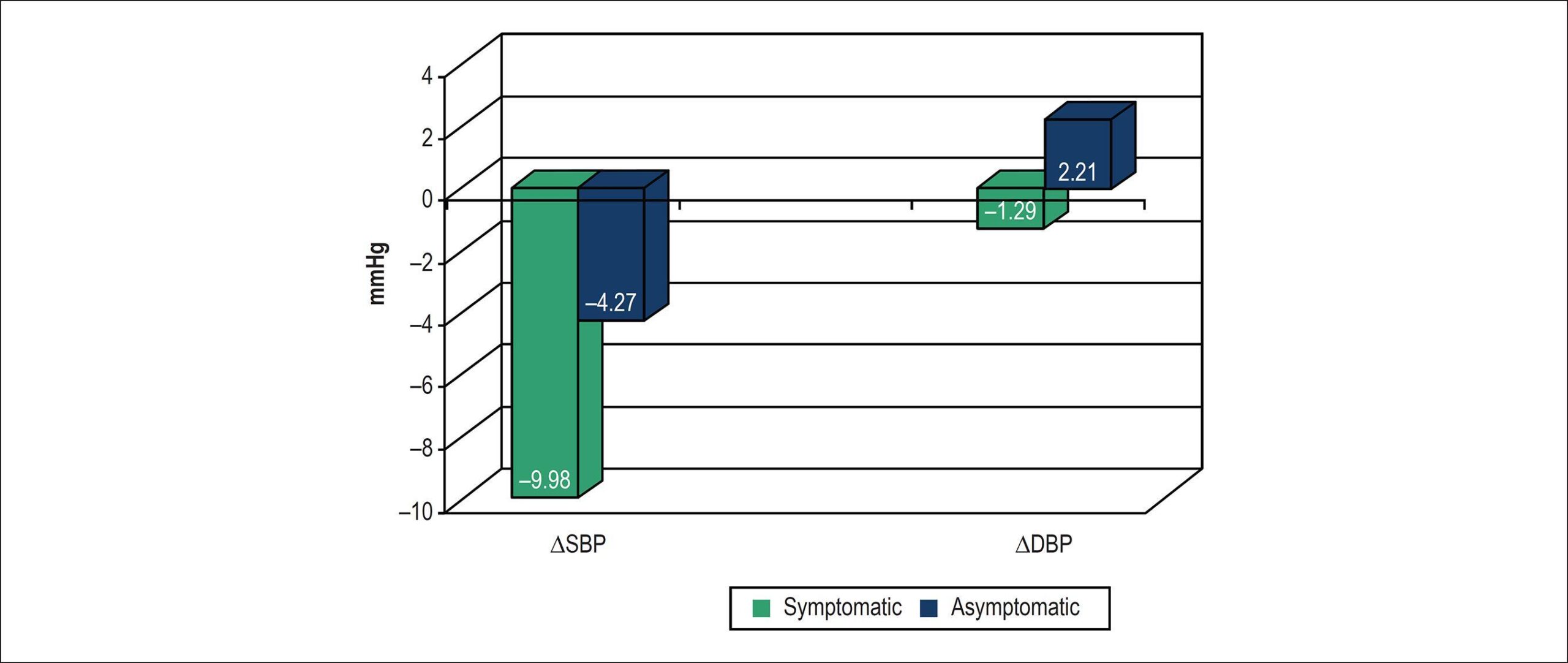
The clinical relevance of CSH obtained with CSM was questioned in a study recently published by Wu et al. The authors compared the response to CSM between 99 patients with syncope to clarify and 66 asymptomatic patients and found similar rates of CSH between the two groups, with cardioinhibitory response in 24.2 and 25.8% and vasodepressor response in 8.1 and 13.6%, in symptomatic and asymptomatic patients respectively (p = 0.466). Therefore, CSH may be a nonspecific response in the evaluation of syncope in these patients with dubious clinical significance, especially in the elderly population with multiple comorbidities, often with the possibility of varying etiologies.

[…]

  • Aged
  • Cardiac Pacing, Artificial
  • Carotid Sinus Massage/physiopathology
  • Hypotension
  • Mortality
  • Syncope
Read Full Article
Creative Commons Attribution (CC BY) Creative Commons license
20/03/2020 DOI: 10.36660/abc.20200005
Figure 1
ABC
Case Report

Syncope as a Phenotypic Expression of Hereditary Transthyretin Amyloidosis Val142Ile (Val122Ile)

Nágela S. V. Nunes et al. João Paulo Moreira Carvalho Fernanda Salomão Costa Marcelo Souto Nacif … Joelma Dominato Claudio Tinoco Mesquita Evandro Tinoco Mesquita

Introduction

Transthyretin amyloidosis (ATTR) is a familial disease caused by one of more than 100 described mutations, where there is production of amyloids that are deposited in tissues. Phenocopies include neuropathy (autonomic and peripheral), cardiomyopathy, renal, gastrointestinal, vitreous and meningeal involvement, which vary according to the genetic mutation, ethnicity and geographical origin, even among individuals with the same mutation or within the same family.

Syncope (transient loss of consciousness caused by global cerebral hypoperfusion) in the presence of heart disease confers risk of fatal events. The Val142Ile mutation has heart failure with preserved ejection fraction (HFpEF) as the predominant clinical phenotype, with syncope being an uncommon symptom.,

[…]

  • Amyloid Neuropathies, Familial
  • Amyloidosis, Familial/genetics
  • Cardiomyopathies/diagnosis
  • Diagnostic Imaging/methods
  • Prevalence
  • Syncope
Read Full Article
Creative Commons Attribution (CC BY) Creative Commons license
14/11/2019 DOI: 10.36660/abc.20180130
Figure 1
ABC
Original Article

Carotid Sinus Massage in Syncope Evaluation: A Nonspecific and Dubious Diagnostic Method

Tan Chen Wu et al. Denise T. Hachul Francisco Carlos da Costa Darrieux Maurício I. Scanavacca

Abstract

Background:

Carotid sinus hypersensitivity (CSH) is a frequent finding in the evaluation of syncope. However, its significance in the clinical setting is still dubious. A new criterion was proposed by Solari et al. with a symptomatic systolic blood pressure (SBP) cut-off value of ≤ 85 mmHg to refine the vasodepressor (VD) response diagnosis.

Objective:

To determine and compare the response to carotid sinus massage (CSM) in patients with and without syncope according to standard and proposed criteria.

Methods:

CSM was performed in 99 patients with and 66 patients without syncope. CSH was defined as cardioinhibitory (CI) for asystole ≥ 3 seconds, or as VD for SBP decrease ≥ 50 mmHg.

Results:

No differences in the hemodynamic responses were observed during CSM between the groups, with 24.2% and 25.8% CI, and 8.1% and 13.6% VD in the symptomatic and asymptomatic groups, respectively (p = 0.466). A p value 2.5 seconds, regardless of the pattern of response or the presence of previous syncope.

Conclusion:

The response to CSM in patients with and without syncope was similar; therefore, CSH may be an unspecific condition. Clinical correlation and other methods of evaluation, such as long-lasting ECG monitoring, may be necessary to confirm CSH as the cause of syncope.

  • Accidental Falls
  • Aged
  • Carotid Sinus / physiopathology
  • Hypotension
  • Syncope
Read Full Article
Creative Commons Attribution (CC BY) Creative Commons license
01/07/2018 DOI: 10.5935/abc.20180114
ABC
Editorial

Cohort of Patients Referred for Brugada Syndrome Investigation in an Electrophysiology Service – 19-Year Registry

Alvaro Valentim Lima Sarabanda

Brugada syndrome (BrS) was described by Pedro and Josep Brugada in 1992 as a new clinical entity characterized by specific electrocardiographic (ECG) changes, such as the patterns of right bundle-branch block and persistent ST-segment elevation in right precordial leads, associated with increased risk for sudden death.

Brugada syndrome is an autosomal dominant channelopathy, with clinical manifestation at the age of 30 to 40 years, affecting mainly men. Currently, BrS is estimated to account for 12% of all sudden cardiac deaths and up to 20% of the sudden cardiac deaths in individuals with no structural heart disease. The real prevalence of BrS in the general population is difficult to establish, being estimated at 5 to 20 in every 10,000 individuals. Several genetic mutations have been associated with BrS, most of them related to the encoding of sodium channel proteins (INa), calcium channel proteins (ICa) or potassium channel proteins (usually Ito) of the sarcoplasmatic membrane.–

[…]

  • Brugada Syndrome
  • Bundle Branch Block
  • Death, Sudden
  • Syncope
  • Tachycardia, Ventricular
Read Full Article
Creative Commons Attribution (CC BY) Creative Commons license
01/07/2018 DOI: 10.5935/abc.20180120 Views 1
Figure 1
ABC
Original Article

Prevention of Sudden Cardiac Death in Hypertrophic Cardiomyopathy: What has Changed in The Guidelines?

Liliana Reis et al. Rogerio Teixeira Andreia Fernandes Inês Almeida … Marta Madeira Joana Silva Ana Botelho João Pais José Nascimento Lino Gonçalves

Abstract

Background:

The new European Society of Cardiology guidelines for hypertrophic cardiomyopathy (HCM) define the estimation of sudden cardiac death (SCD) risk as an integral part of clinical management. An implantable cardioverter defibrillator (ICD) is recommended (class IIa) when the risk is ≥ 6%.

Objectives:

To compare the SCD risk stratification according to the 2011 and 2014 recommendations for ICD implantation in patients with HCM.

Methods:

Retrospective study including 105 patients diagnosed with HCM. The indication for ICD was assessed using the 2011 and 2014 guidelines. Statistical analysis was performed using SPSS software version 19.0.0.2®. The tests performed were bilateral, considering the significance level of 5% (p < 0.05).

Results:

Regarding primary prevention, according to the 2011 ACCF/AHA recommendations, 39.0% of the patients had indication for ICD implantation (level of evidence IIa). Using the 2014 guidelines, only 12.4% of the patients had an indication for ICD implantation. Comparing the two risk stratification models for patients with HCM, we detected a significant reduction in the number of indications for ICD implantation (p < 0.001). Of the 41 patients classified as IIa according to the 2011 recommendations, 68.3% received a different classification according to the 2014 guidelines.

Conclusion:

Significant differences were found when comparing the SCD risk stratification for ICD implantation in the two guidelines. The current SCD risk score seems to identify many low-risk patients who are not candidates for ICD implantation. The use of this new score results in a significant reduction in the number of ICD implanted.

  • Cardiomyopathy, Hypertrophic / complications
  • Death, Sudden, Cardiac/prevention & control
  • Defibrillators, Implantable / trends
  • Diagnostic Imaging
  • Syncope
Read Full Article
Creative Commons Attribution (CC BY) Creative Commons license
01/06/2018 DOI: 10.5935/abc.20180099 Views 1
Figure 1
ABC
Clinicoradiological Correlation

Case 3 / 2018 – Corrected Transposition of the Great Arteries with Natural Progression to Severe Biventricular Dysfunction and No Associated Defects in a 51-Year Old Man

Edmar Atik et al. Fidel Leal Ivanhoé S. L. Leite

Clinical data

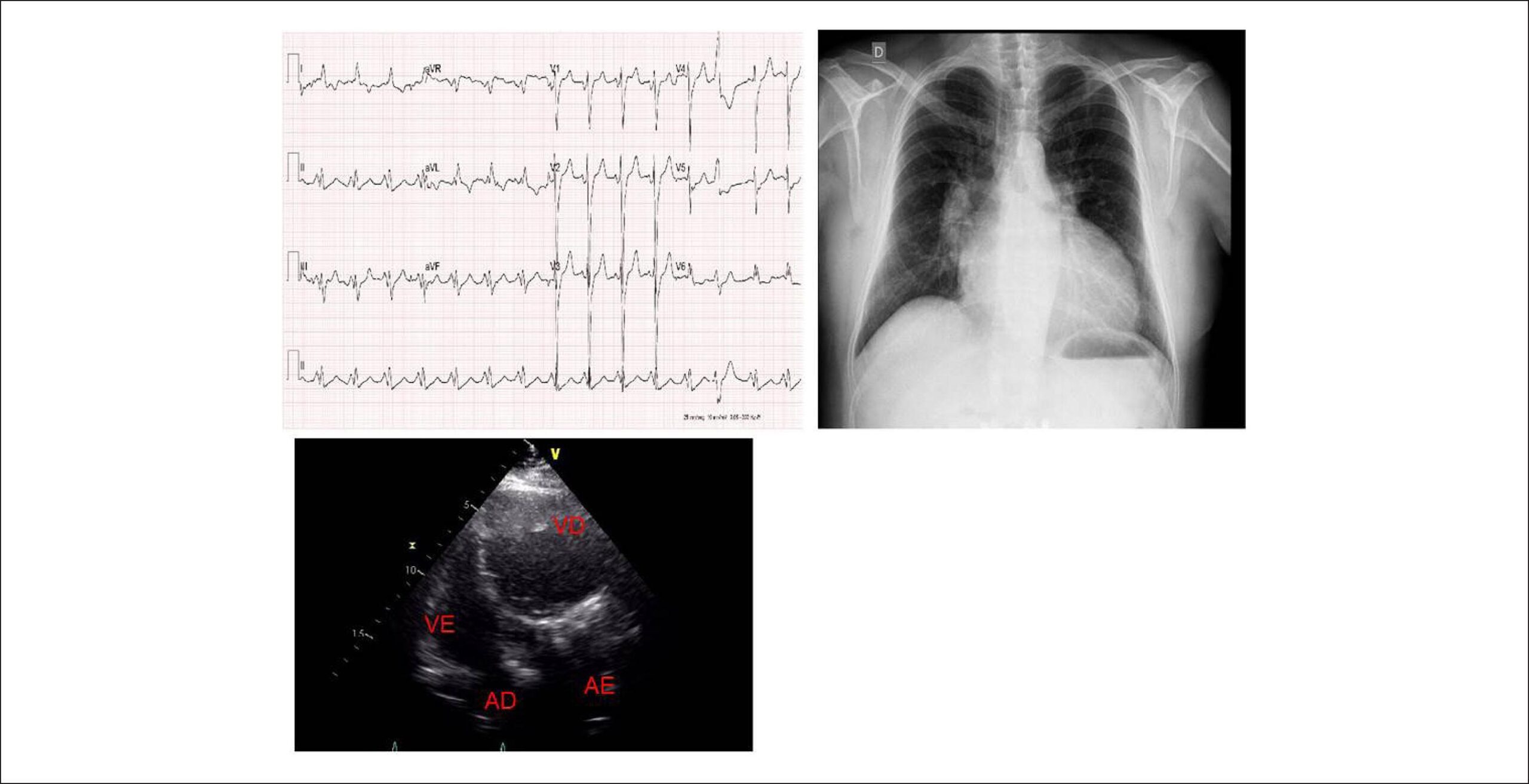
Dyspnea on exertion for two years, progressing to low cardiac output and syncope lately, treated with dobutamine and usual drugs for congestive heart disease (currently using furosemide 40 mg, spironolactone 25 mg and losartan 12.5 mg).

Physical examination: Good general condition, eupneic, acyanotic, normal pulse rate in the four limbs. Weight: 70 Kg, Height: 160 cm, blood pressure (right arm): 90/60 mmHg, HR: 94 bpm.

[…]

  • Congenitally Corrected Transposition of Great Arteries
  • Heart Failure, Cardiac Output, Low
  • Syncope
  • Ventricular Dysfunction / surgery
Read Full Article
Creative Commons Attribution (CC BY) Creative Commons license
01/05/2018 DOI: 10.5935/abc.20180080 Views 1
Figure 1
ABC
Case Report

Primary Ventricular Fibrillation in a Patient with Mild Hypercalcemia

Rita Marinheiro et al. Leonor Parreira Pedro Amador Francisco Sardinha … Sara Gonçalves Sónia Serra

Introduction

An abnormally short QT interval can be caused by several situations such as hypercalcemia, hyperkalemia, acidosis, hyperthermia, effects of drugs like digitalis or congenital short QT syndrome (SQTS). Primary hyperparathyroidism (PHPT) can ultimately cause short QT interval since overproduction of parathyroid hormone (PTH) causes hypercalcemia. However, cardiac arrhythmias are uncommon and electrical storm has been rarely described in patients with hypercalcemia.

Secondary causes of short QT must be ruled out before considering the diagnosis of SQTS. First described in 2000, SQTS is a congenital primary electric disorder characterized by abnormally short corrected QT interval (QTc) on the surface electrocardiogram (ECG) that is associated with sudden cardiac death (SCD) in individuals with structurally normal heart. According to 2015 ESC Guidelines for the management of patients with ventricular arrhythmias, SQTS is diagnosed in the presence of a QTc ≤ 330 msec or it can be diagnosed in the presence of a QTc < 360 ms and one or more of the following factors: pathogenic mutation, family history of SQTS, family history of sudden death before 40 years old and/or survival of a ventricular tacchycardia (VT)/ ventricular fibrillation (VF) episode in the absence of heart disease.

[…]

  • Hypercalcemia
  • Shock, Cardiogenic
  • Syncope
  • Unconsciousness
  • Ventricular Fibrillation
Read Full Article
Creative Commons Attribution (CC BY) Creative Commons license
01/04/2018 DOI: 10.5935/abc.20180059
Figure 1
ABC
Original Article

Heart Rate and its Variability Assessed by Spectral Analysis in Elderly Subjects with Orthostatic Hypotension: A Case-Control Study

Rose Mary Ferreira Lisboa da Silva et al. Carlos Eduardo de Souza Miranda Maira Tonidandel Barbosa Maria Aparecida Camargos Bicalho

Abstract

Background:

The prevalence of orthostatic hypotension (OH) increases with age and is associated with changes in autonomic regulation of blood pressure (BP) and heart rate (HR).

Objective:

to assess HR and HR variability (HRV) in elderly subjects with OH and determine OH predictors.

Methods:

a total of 105 patients aged ≥ 60 years, 39 with OH (case group) and 66 without OH (control group) (age-matched) were studied. Patients underwent clinical assessment, electrocardiogram, biochemistry tests and Holter monitoring for spectral analysis of HRV (Fourier transform) in the supine and orthostatism positions to identify low frequency (LF) and high frequency (HF) components, as well as the LF/HF ratio.

Results:

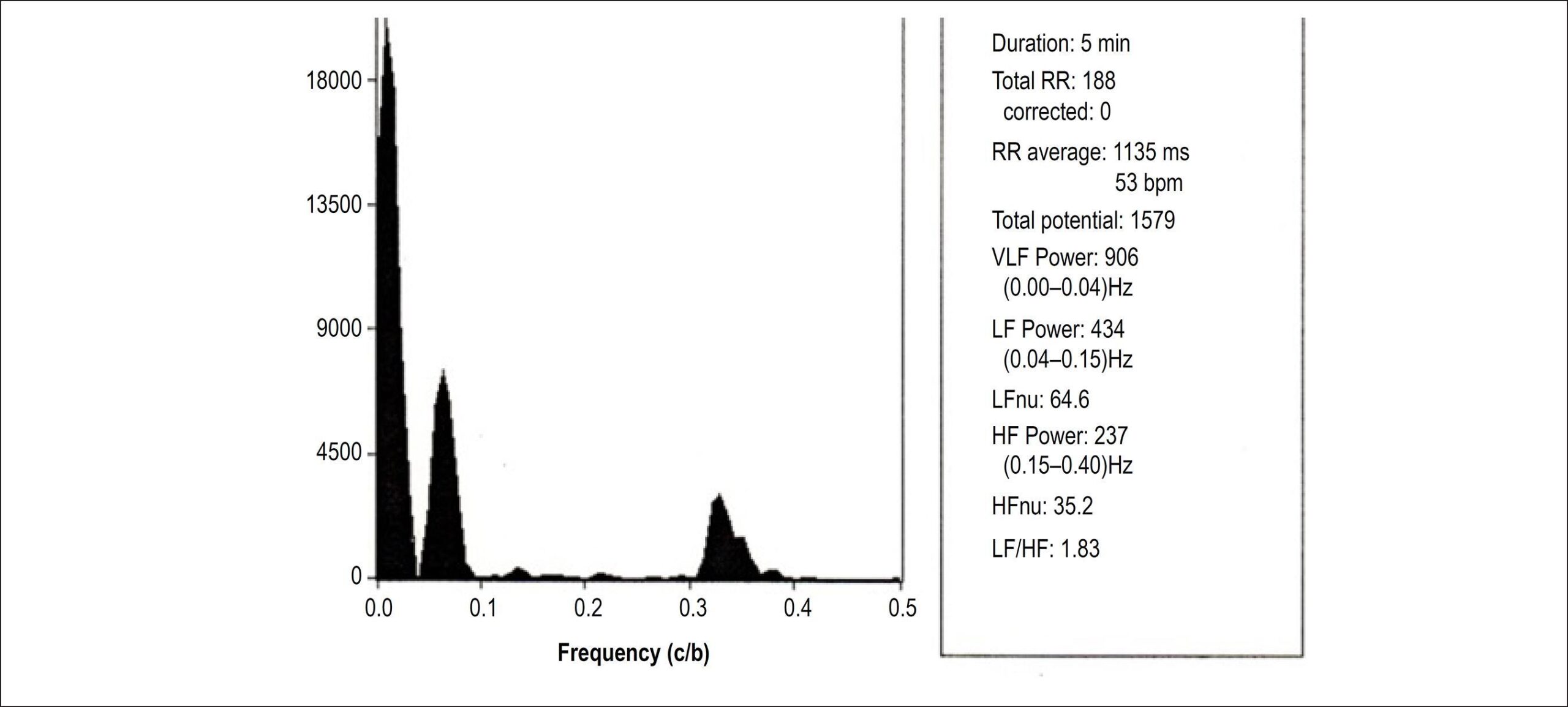
median age was 73.0 years, 64 patients were women. In all participants, there was a reduction in HF (133.0 versus 76.0 ms2, p = 0.001) and increase in LF/HF (1.6 vs 2.1; p < 0.001) and no change in LF (233.0 versus 218.0 ms2, p = 0.080). Between-group comparisons revealed significant differences in the median values of HR in the supine position (62.0 vs. 69.0 bpm, p = 0.001) and LF in the supine position (157.0 in case group vs. 275.0 ms2 in the control group, p = 0.014). Spearman’s correlation coefficient of 0.27 was found between the groups. Multivariate analysis revealed that HR in the supine position was an independent variable for OH (p = 0.001- 95%CI = -0.022 and -0.006). Using the operating characteristic curve, the best cutoff point was 61 bpm, with a sensitivity of 77.3% and specificity of 51.3%, positive predictive value of 61.3%, and negative predictive value 69.3%. Odds ratio was 3.23 for OH in patients with a HR lower than 61 bpm.

Conclusions:

lower LF and HR in the supine position were found in patients with OH, regardless of age and gender. The independent predictor for OH was HR in the supine position, with an odds ratio of 3.23 for values lower than 61 bpm.

  • Accidental Falls
  • Aged
  • Dizziness
  • Heart Rate
  • Hypotension, Orthostatic
  • Syncope
Read Full Article
Creative Commons Attribution (CC BY) Creative Commons license
19/03/2018 DOI: 10.5935/abc.20180043

Could not load more articles. Please try again.

How to cite this article

EndNote RIS

Electronic Document Format (Vancouver)

Fernandes ASN, Faria J, Vieira CF. Conflicting Clues in Severe LV Hypertrophy: An Unusual Presentation of ATTR Amyloidosis. Arquivos Brasileiros de Cardiologia 2026;123(5):e20250832.

Electronic Document Format (ABNT)

Fernandes, Ana Sofia Nogueira; Faria, João; Vieira, Catarina Ferreira. Conflicting Clues in Severe LV Hypertrophy: An Unusual Presentation of ATTR Amyloidosis. Arquivos Brasileiros de Cardiologia, v. 123, n. 5, e20250832, Jul. 2026.

Electronic Document Format (APA)

Fernandes, A. S. N., Faria, J., & Vieira, C. F. (2026). Conflicting Clues in Severe LV Hypertrophy: An Unusual Presentation of ATTR Amyloidosis. Arquivos Brasileiros de Cardiologia, 123(5), e20250832.

Electronic Document Format (ISO)

Fernandes, Ana Sofia Nogueira and Faria, João and Vieira, Catarina Ferreira. Conflicting Clues in Severe LV Hypertrophy: An Unusual Presentation of ATTR Amyloidosis. Arquivos Brasileiros de Cardiologia [online]. 2026, vol. 123, n. 5, [cited 2026-10-14], e20250832. Available from: <https://journals.cardiol.br/en/article/conflicting-clues-in-severe-lv-hypertrophy-an-unusual-presentation-of-attr-amyloidosis/>. ISSN 0066-782X

EndNote RIS

Electronic Document Format (Vancouver)

Nunes NSV, Nascimento E, Gismondi RA, Souza Filho EM. Syncope and Rhythm Disturbances as Common Clinical Manifestations in Amyloidosis. International Journal of Cardiovascular Sciences 2024;37:e20240021.

Electronic Document Format (ABNT)

Nunes, Nágela S. V.; Nascimento, Erivelton; Gismondi, Ronaldo Altenburg; Souza Filho, Erito Marques de. Syncope and Rhythm Disturbances as Common Clinical Manifestations in Amyloidosis. International Journal of Cardiovascular Sciences, v. 37, e20240021, Aug. 2024.

Electronic Document Format (APA)

Nunes, N. S. V., Nascimento, E., Gismondi, R. A., & Souza Filho, E. M. (2024). Syncope and Rhythm Disturbances as Common Clinical Manifestations in Amyloidosis. International Journal of Cardiovascular Sciences, 37, e20240021.

Electronic Document Format (ISO)

Nunes, Nágela S. V. and Nascimento, Erivelton and Gismondi, Ronaldo Altenburg and Souza Filho, Erito Marques de. Syncope and Rhythm Disturbances as Common Clinical Manifestations in Amyloidosis. International Journal of Cardiovascular Sciences [online]. 2024, vol. 37, [cited 2026-10-14], e20240021. Available from: <https://journals.cardiol.br/en/article/syncope-and-rhythm-disturbances-as-common-clinical-manifestations-in-amyloidosis/>. ISSN 2359-4802

EndNote RIS

Electronic Document Format (Vancouver)

Lani VS, Elias Neto J, Silva MA, Andrade HA, Cotias EPZ, Gomes FLT. Carotid Sinus Syndrome Associated with Carcinoma Ex-Pleomorphic Adenoma: What Is the Role of Artificial Cardiac Stimulation?. Arquivos Brasileiros de Cardiologia 2024;121(7):e20240026.

Electronic Document Format (ABNT)

Lani, Vanessa Sanson; Elias Neto, Jorge; Silva, Márcio Augusto; Andrade, Helena Alves de; Cotias, Elisama Pimentel Zamian; Gomes, Fernando Luiz Torres. Carotid Sinus Syndrome Associated with Carcinoma Ex-Pleomorphic Adenoma: What Is the Role of Artificial Cardiac Stimulation?. Arquivos Brasileiros de Cardiologia, v. 121, n. 7, e20240026, Aug. 2024.

Electronic Document Format (APA)

Lani, V. S., Elias Neto, J., Silva, M. A., Andrade, H. A. , Cotias, E. P. Z., & Gomes, F. L. T. (2024). Carotid Sinus Syndrome Associated with Carcinoma Ex-Pleomorphic Adenoma: What Is the Role of Artificial Cardiac Stimulation?. Arquivos Brasileiros de Cardiologia, 121(7), e20240026.

Electronic Document Format (ISO)

Lani, Vanessa Sanson and Elias Neto, Jorge and Silva, Márcio Augusto and Andrade, Helena Alves de and Cotias, Elisama Pimentel Zamian and Gomes, Fernando Luiz Torres. Carotid Sinus Syndrome Associated with Carcinoma Ex-Pleomorphic Adenoma: What Is the Role of Artificial Cardiac Stimulation?. Arquivos Brasileiros de Cardiologia [online]. 2024, vol. 121, n. 7, [cited 2026-10-14], e20240026. Available from: <https://journals.cardiol.br/en/article/carotid-sinus-syndrome-associated-with-carcinoma-ex-pleomorphic-adenoma-what-is-the-role-of-artificial-cardiac-stimulation/>. ISSN 0066-782X

EndNote RIS

Electronic Document Format (Vancouver)

Miranda CM, Silva RMFL, Amore Filho ED, Nascimento IMA, Carvalho PS. Quality of Life After Diagnosis of Neurally Mediated Reflex Syncope by Tilt Test. International Journal of Cardiovascular Sciences 2024;37:e20230017.

Electronic Document Format (ABNT)

Miranda, Claudia Madeira; Silva, Rose Mary Ferreira Lisboa da; Amore Filho, Edson Del; Nascimento, Izabela Maria Azeredo; Carvalho, Pedro Santos. Quality of Life After Diagnosis of Neurally Mediated Reflex Syncope by Tilt Test. International Journal of Cardiovascular Sciences, v. 37, e20230017, Apr. 2024.

Electronic Document Format (APA)

Miranda, C. M., Silva, R. M. F. L. , Amore Filho, E. D., Nascimento, I. M. A., & Carvalho, P. S. (2024). Quality of Life After Diagnosis of Neurally Mediated Reflex Syncope by Tilt Test. International Journal of Cardiovascular Sciences, 37, e20230017.

Electronic Document Format (ISO)

Miranda, Claudia Madeira and Silva, Rose Mary Ferreira Lisboa da and Amore Filho, Edson Del and Nascimento, Izabela Maria Azeredo and Carvalho, Pedro Santos. Quality of Life After Diagnosis of Neurally Mediated Reflex Syncope by Tilt Test. International Journal of Cardiovascular Sciences [online]. 2024, vol. 37, [cited 2026-10-14], e20230017. Available from: <https://journals.cardiol.br/en/article/quality-of-life-after-diagnosis-of-neurally-mediated-reflex-syncope-by-tilt-test/>. ISSN 2359-4802

EndNote RIS

Electronic Document Format (Vancouver)

Elias Neto J. What Pieces are Missing in the Puzzle of Cardiovascular Adaptation to Orthostatism?. Arquivos Brasileiros de Cardiologia 2023;120(7):e20230417.

Electronic Document Format (ABNT)

Elias Neto, Jorge. What Pieces are Missing in the Puzzle of Cardiovascular Adaptation to Orthostatism?. Arquivos Brasileiros de Cardiologia, v. 120, n. 7, e20230417, Aug. 2023.

Electronic Document Format (APA)

Elias Neto, J. (2023). What Pieces are Missing in the Puzzle of Cardiovascular Adaptation to Orthostatism?. Arquivos Brasileiros de Cardiologia, 120(7), e20230417.

Electronic Document Format (ISO)

Elias Neto, Jorge. What Pieces are Missing in the Puzzle of Cardiovascular Adaptation to Orthostatism?. Arquivos Brasileiros de Cardiologia [online]. 2023, vol. 120, n. 7, [cited 2026-10-14], e20230417. Available from: <https://journals.cardiol.br/en/article/what-pieces-are-missing-in-the-puzzle-of-cardiovascular-adaptation-to-orthostatism/>. ISSN 0066-782X

EndNote RIS

Electronic Document Format (Vancouver)

Brito MR. The “Five Malignant Waves” of the Electrocardiography. Arquivos Brasileiros de Cardiologia 2023;120(3):e20220649.

Electronic Document Format (ABNT)

Brito, Mitermayer Reis. The “Five Malignant Waves” of the Electrocardiography. Arquivos Brasileiros de Cardiologia, v. 120, n. 3, e20220649, Feb. 2023.

Electronic Document Format (APA)

Brito, M. R. (2023). The “Five Malignant Waves” of the Electrocardiography. Arquivos Brasileiros de Cardiologia, 120(3), e20220649.

Electronic Document Format (ISO)

Brito, Mitermayer Reis. The “Five Malignant Waves” of the Electrocardiography. Arquivos Brasileiros de Cardiologia [online]. 2023, vol. 120, n. 3, [cited 2026-10-14], e20220649. Available from: <https://journals.cardiol.br/en/article/the-five-malignant-waves-of-the-electrocardiography/>. ISSN 0066-782X

EndNote RIS

Electronic Document Format (Vancouver)

Pachón-M JC, Pachón-M JC, Pachón CTC. Left Bundle Pacing: Has Cardiac Pacing Changed Forever?. Arquivos Brasileiros de Cardiologia 2022;118(2):517-8.

Electronic Document Format (ABNT)

Pachón-M, José Carlos; Pachón-M, Juán Carlos; Pachón, Carlos Thiene C.. Left Bundle Pacing: Has Cardiac Pacing Changed Forever?. Arquivos Brasileiros de Cardiologia, v. 118, n. 2, p. 517-518, Mar. 2022.

Electronic Document Format (APA)

Pachón-M, J. C., Pachón-M, J. C., & Pachón, C. T. C. (2022). Left Bundle Pacing: Has Cardiac Pacing Changed Forever?. Arquivos Brasileiros de Cardiologia, 118(2), 517-518.

Electronic Document Format (ISO)

Pachón-M, José Carlos and Pachón-M, Juán Carlos and Pachón, Carlos Thiene C.. Left Bundle Pacing: Has Cardiac Pacing Changed Forever?. Arquivos Brasileiros de Cardiologia [online]. 2022, vol. 118, n. 2, [cited 2026-10-14], pp. 517-518. Available from: <https://journals.cardiol.br/en/article/left-bundle-pacing-has-cardiac-pacing-changed-forever/>. ISSN 0066-782X

EndNote RIS

Electronic Document Format (Vancouver)

Góes GHB, Ferraz Neto JCS, Calado Filho IP, Lima RC, Sobral Filho DC. Rare Cause of Chest Pain in Young Patient: Left Ventricular Myxoma. Arquivos Brasileiros de Cardiologia Imagem cardiovascular 2022;32(1):67-70.

Electronic Document Format (ABNT)

Góes, Gustavo Henrique Belarmino; Ferraz Neto, José Candido de Souza; Calado Filho, Ivaldo Pedrosa; Lima, Ricardo de Carvalho; Sobral Filho, Dário Celestino. Rare Cause of Chest Pain in Young Patient: Left Ventricular Myxoma. Arquivos Brasileiros de Cardiologia Imagem cardiovascular, v. 32, n. 1, p. 67-70, Jan. 2022.

Electronic Document Format (APA)

Góes, G. H. B., Ferraz Neto, J. C. S., Calado Filho, I. P., Lima, R. C., & Sobral Filho, D. C. (2022). Rare Cause of Chest Pain in Young Patient: Left Ventricular Myxoma. Arquivos Brasileiros de Cardiologia Imagem cardiovascular, 32(1), 67-70.

Electronic Document Format (ISO)

Góes, Gustavo Henrique Belarmino and Ferraz Neto, José Candido de Souza and Calado Filho, Ivaldo Pedrosa and Lima, Ricardo de Carvalho and Sobral Filho, Dário Celestino. Rare Cause of Chest Pain in Young Patient: Left Ventricular Myxoma. Arquivos Brasileiros de Cardiologia Imagem cardiovascular [online]. 2022, vol. 32, n. 1, [cited 2026-10-14], pp. 67-70. Available from: <https://journals.cardiol.br/en/article/rare-cause-of-chest-pain-in-young-patient-left-ventricular-myxoma/>. ISSN 2318-8219

EndNote RIS

Electronic Document Format (Vancouver)

Correia EB, Bruscky LVR, Valério BCO, Murta ACS, Albrecht FC, Pinto IMF, Smanio PEP, et al. Recurrent Syncope: Initial Presentation of Transthyretin Amyloidosis. Benefits of Disease-Modifying Treatment. Phenomenology, Humanities and Sciences – Fenomenologia, Humanidades e Ciências 2021;1(2):149-52.

Electronic Document Format (ABNT)

Correia, Edileide de Barros; Bruscky, Larissa Ventura Ribeiro; Valério, Berenice Cataldo Oliveira; Murta, Ana Cristina de Souza; Albrecht, Fabiano Castro; Pinto, Ibraim Masciarelli Francisco; Smanio, Paola Emanuela Poggio. Recurrent Syncope: Initial Presentation of Transthyretin Amyloidosis. Benefits of Disease-Modifying Treatment. Phenomenology, Humanities and Sciences – Fenomenologia, Humanidades e Ciências, v. 1, n. 2, p. 149-152, Dec. 2021.

Electronic Document Format (APA)

Correia, E. B., Bruscky, L. V. R., Valério, B. C. O., Murta, A. C. S., Albrecht, F. C., Pinto, I. M. F., & Smanio, P. E. P. (2021). Recurrent Syncope: Initial Presentation of Transthyretin Amyloidosis. Benefits of Disease-Modifying Treatment. Phenomenology, Humanities and Sciences – Fenomenologia, Humanidades e Ciências, 1(2), 149-152.

Electronic Document Format (ISO)

Correia, Edileide de Barros and Bruscky, Larissa Ventura Ribeiro and Valério, Berenice Cataldo Oliveira and Murta, Ana Cristina de Souza and Albrecht, Fabiano Castro and Pinto, Ibraim Masciarelli Francisco and Smanio, Paola Emanuela Poggio. Recurrent Syncope: Initial Presentation of Transthyretin Amyloidosis. Benefits of Disease-Modifying Treatment. Phenomenology, Humanities and Sciences – Fenomenologia, Humanidades e Ciências [online]. 2021, vol. 1, n. 2, [cited 2026-10-14], pp. 149-152. Available from: <https://journals.cardiol.br/en/article/recurrent-syncope-initial-presentation-of-transthyretin-amyloidosis-benefits-of-disease-modifying-treatment/>

EndNote RIS

Electronic Document Format (Vancouver)

Vakrou S, Vlachopoulos C, Gatzoulis KA. Risk Stratification for Primary Prevention of Sudden Cardiac Death in Hypertrophic Cardiomyopathy. Arquivos Brasileiros de Cardiologia 2021;117(1):157-9.

Electronic Document Format (ABNT)

Vakrou, Styliani; Vlachopoulos, Charalampos; Gatzoulis, Konstantinos A.. Risk Stratification for Primary Prevention of Sudden Cardiac Death in Hypertrophic Cardiomyopathy. Arquivos Brasileiros de Cardiologia, v. 117, n. 1, p. 157-159, Jul. 2021.

Electronic Document Format (APA)

Vakrou, S., Vlachopoulos, C., & Gatzoulis, K. A. (2021). Risk Stratification for Primary Prevention of Sudden Cardiac Death in Hypertrophic Cardiomyopathy. Arquivos Brasileiros de Cardiologia, 117(1), 157-159.

Electronic Document Format (ISO)

Vakrou, Styliani and Vlachopoulos, Charalampos and Gatzoulis, Konstantinos A.. Risk Stratification for Primary Prevention of Sudden Cardiac Death in Hypertrophic Cardiomyopathy. Arquivos Brasileiros de Cardiologia [online]. 2021, vol. 117, n. 1, [cited 2026-10-14], pp. 157-159. Available from: <https://journals.cardiol.br/en/article/risk-stratification-for-primary-prevention-of-sudden-cardiac-death-in-hypertrophic-cardiomyopathy/>. ISSN 0066-782X

EndNote RIS

Electronic Document Format (Vancouver)

Silva MA, Elias Neto J, Futuro GMC, Merçon ES, Vasconcelos D, Kuniyoshi R. Life-Threatening Ventricular Arrhythmia Induced by Atrial Tachycardia in a Child with an SCN5A Mutation. Arquivos Brasileiros de Cardiologia 2021;117(1 suppl 1):19-22.

Electronic Document Format (ABNT)

Silva, Márcio Augusto; Elias Neto, Jorge; Futuro, Guilherme Muller de Campos; Merçon, Erick Sessa; Vasconcelos, Deborah; Kuniyoshi, Ricardo. Life-Threatening Ventricular Arrhythmia Induced by Atrial Tachycardia in a Child with an SCN5A Mutation. Arquivos Brasileiros de Cardiologia, v. 117, n. 1 suppl 1, p. 19-22, Jul. 2021.

Electronic Document Format (APA)

Silva, M. A., Elias Neto, J., Futuro, G. M. C., Merçon, E. S., Vasconcelos, D., & Kuniyoshi, R. (2021). Life-Threatening Ventricular Arrhythmia Induced by Atrial Tachycardia in a Child with an SCN5A Mutation. Arquivos Brasileiros de Cardiologia, 117(1 suppl 1), 19-22.

Electronic Document Format (ISO)

Silva, Márcio Augusto and Elias Neto, Jorge and Futuro, Guilherme Muller de Campos and Merçon, Erick Sessa and Vasconcelos, Deborah and Kuniyoshi, Ricardo. Life-Threatening Ventricular Arrhythmia Induced by Atrial Tachycardia in a Child with an SCN5A Mutation. Arquivos Brasileiros de Cardiologia [online]. 2021, vol. 117, n. 1 suppl 1, [cited 2026-10-14], pp. 19-22. Available from: <https://journals.cardiol.br/en/article/life-threatening-ventricular-arrhythmia-induced-by-atrial-tachycardia-in-a-child-with-an-scn5a-mutation/>. ISSN 0066-782X

EndNote RIS

Electronic Document Format (Vancouver)

Rocha EA, Mehta N, Távora-Mehta MZP, Roncari CF, Cidrão AAL, Elias Neto J. Dysautonomia: A Forgotten Condition — Part II. Arquivos Brasileiros de Cardiologia 2021;116(5):981-98.

Electronic Document Format (ABNT)

Rocha, Eduardo Arrais; Mehta, Niraj; Távora-Mehta, Maria Zildany Pinheiro; Roncari, Camila Ferreira; Cidrão, Alan Alves de Lima; Elias Neto, Jorge. Dysautonomia: A Forgotten Condition — Part II. Arquivos Brasileiros de Cardiologia, v. 116, n. 5, p. 981-998, May. 2021.

Electronic Document Format (APA)

Rocha, E. A., Mehta, N., Távora-Mehta, M. Z. P., Roncari, C. F., Cidrão, A. A. L., & Elias Neto, J. (2021). Dysautonomia: A Forgotten Condition — Part II. Arquivos Brasileiros de Cardiologia, 116(5), 981-998.

Electronic Document Format (ISO)

Rocha, Eduardo Arrais and Mehta, Niraj and Távora-Mehta, Maria Zildany Pinheiro and Roncari, Camila Ferreira and Cidrão, Alan Alves de Lima and Elias Neto, Jorge. Dysautonomia: A Forgotten Condition — Part II. Arquivos Brasileiros de Cardiologia [online]. 2021, vol. 116, n. 5, [cited 2026-10-14], pp. 981-998. Available from: <https://journals.cardiol.br/en/article/dysautonomia-a-forgotten-condition-part-ii/>. ISSN 0066-782X

EndNote RIS

Electronic Document Format (Vancouver)

Rocha EA, Mehta N, Távora-Mehta MZP, Roncari CF, Cidrão AAL, Elias Neto J. Dysautonomia: A Forgotten Condition — Part 1. Arquivos Brasileiros de Cardiologia 2021;116(4):814-35.

Electronic Document Format (ABNT)

Rocha, Eduardo Arrais; Mehta, Niraj; Távora-Mehta, Maria Zildany Pinheiro; Roncari, Camila Ferreira; Cidrão, Alan Alves de Lima; Elias Neto, Jorge. Dysautonomia: A Forgotten Condition — Part 1. Arquivos Brasileiros de Cardiologia, v. 116, n. 4, p. 814-835, Apr. 2021.

Electronic Document Format (APA)

Rocha, E. A., Mehta, N., Távora-Mehta, M. Z. P., Roncari, C. F., Cidrão, A. A. L., & Elias Neto, J. (2021). Dysautonomia: A Forgotten Condition — Part 1. Arquivos Brasileiros de Cardiologia, 116(4), 814-835.

Electronic Document Format (ISO)

Rocha, Eduardo Arrais and Mehta, Niraj and Távora-Mehta, Maria Zildany Pinheiro and Roncari, Camila Ferreira and Cidrão, Alan Alves de Lima and Elias Neto, Jorge. Dysautonomia: A Forgotten Condition — Part 1. Arquivos Brasileiros de Cardiologia [online]. 2021, vol. 116, n. 4, [cited 2026-10-14], pp. 814-835. Available from: <https://journals.cardiol.br/en/article/dysautonomia-a-forgotten-condition-part-1/>. ISSN 0066-782X

EndNote RIS

Electronic Document Format (Vancouver)

Strong C, Freitas P, Ferreira A, Rodrigues G, Mendes M. One Patient, Two Cardiomyopathies. Arquivos Brasileiros de Cardiologia 2020;115(3):584-6.

Electronic Document Format (ABNT)

Strong, Christopher; Freitas, Pedro; Ferreira, António; Rodrigues, Gustavo; Mendes, Miguel. One Patient, Two Cardiomyopathies. Arquivos Brasileiros de Cardiologia, v. 115, n. 3, p. 584-586, Sep. 2020.

Electronic Document Format (APA)

Strong, C., Freitas, P., Ferreira, A., Rodrigues, G., & Mendes, M. (2020). One Patient, Two Cardiomyopathies. Arquivos Brasileiros de Cardiologia, 115(3), 584-586.

Electronic Document Format (ISO)

Strong, Christopher and Freitas, Pedro and Ferreira, António and Rodrigues, Gustavo and Mendes, Miguel. One Patient, Two Cardiomyopathies. Arquivos Brasileiros de Cardiologia [online]. 2020, vol. 115, n. 3, [cited 2026-10-14], pp. 584-586. Available from: <https://journals.cardiol.br/en/article/one-patient-two-cardiomyopathies/>. ISSN 0066-782X

EndNote RIS

Electronic Document Format (Vancouver)

Mattos BP, Scolari FL, Garbin HI. Discrepancy between International Guidelines on the Criteria for Primary Prevention of Sudden Cardiac Death in Hypertrophic Cardiomyopathy. Arquivos Brasileiros de Cardiologia 2020;115(2):197-204.

Electronic Document Format (ABNT)

Mattos, Beatriz Piva e; Scolari, Fernando Luís; Garbin, Henrique Iahnke. Discrepancy between International Guidelines on the Criteria for Primary Prevention of Sudden Cardiac Death in Hypertrophic Cardiomyopathy. Arquivos Brasileiros de Cardiologia, v. 115, n. 2, p. 197-204, Aug. 2020.

Electronic Document Format (APA)

Mattos, B. P. , Scolari, F. L., & Garbin, H. I. (2020). Discrepancy between International Guidelines on the Criteria for Primary Prevention of Sudden Cardiac Death in Hypertrophic Cardiomyopathy. Arquivos Brasileiros de Cardiologia, 115(2), 197-204.

Electronic Document Format (ISO)

Mattos, Beatriz Piva e and Scolari, Fernando Luís and Garbin, Henrique Iahnke. Discrepancy between International Guidelines on the Criteria for Primary Prevention of Sudden Cardiac Death in Hypertrophic Cardiomyopathy. Arquivos Brasileiros de Cardiologia [online]. 2020, vol. 115, n. 2, [cited 2026-10-14], pp. 197-204. Available from: <https://journals.cardiol.br/en/article/discrepancy-between-international-guidelines-on-the-criteria-for-primary-prevention-of-sudden-cardiac-death-in-hypertrophic-cardiomyopathy/>. ISSN 0066-782X

EndNote RIS

Electronic Document Format (Vancouver)

Lacerda GC, Lorenzo AR, Tura BR, Santos MC, Guimarães AEC, Lacerda RC, Pedrosa RC, et al. Long-Term Mortality in Cardioinhibitory Carotid Sinus Hypersensitivity Patient Cohort. Arquivos Brasileiros de Cardiologia 2020;114(2):245-53.

Electronic Document Format (ABNT)

Lacerda, Gustavo de Castro; Lorenzo, Andrea Rocha de; Tura, Bernardo Rangel; Santos, Marcela Cedenilla dos; Guimarães, Artur Eduardo Cotrim; Lacerda, Renato Côrtes de; Pedrosa, Roberto Coury. Long-Term Mortality in Cardioinhibitory Carotid Sinus Hypersensitivity Patient Cohort. Arquivos Brasileiros de Cardiologia, v. 114, n. 2, p. 245-253, Mar. 2020.

Electronic Document Format (APA)

Lacerda, G. C., Lorenzo, A. R. , Tura, B. R., Santos, M. C. , Guimarães, A. E. C., Lacerda, R. C. , & Pedrosa, R. C. (2020). Long-Term Mortality in Cardioinhibitory Carotid Sinus Hypersensitivity Patient Cohort. Arquivos Brasileiros de Cardiologia, 114(2), 245-253.

Electronic Document Format (ISO)

Lacerda, Gustavo de Castro and Lorenzo, Andrea Rocha de and Tura, Bernardo Rangel and Santos, Marcela Cedenilla dos and Guimarães, Artur Eduardo Cotrim and Lacerda, Renato Côrtes de and Pedrosa, Roberto Coury. Long-Term Mortality in Cardioinhibitory Carotid Sinus Hypersensitivity Patient Cohort. Arquivos Brasileiros de Cardiologia [online]. 2020, vol. 114, n. 2, [cited 2026-10-14], pp. 245-253. Available from: <https://journals.cardiol.br/en/article/long-term-mortality-in-cardioinhibitory-carotid-sinus-hypersensitivity-patient-cohort/>. ISSN 0066-782X

EndNote RIS

Electronic Document Format (Vancouver)

Wu TC. What is the Real Clinical Significance of Carotid Sinus Hypersensitivity in Clinical Practice? A Dilemma Still Waiting for Answers. Arquivos Brasileiros de Cardiologia 2020;114(2):254-5.

Electronic Document Format (ABNT)

Wu, Tan Chen. What is the Real Clinical Significance of Carotid Sinus Hypersensitivity in Clinical Practice? A Dilemma Still Waiting for Answers. Arquivos Brasileiros de Cardiologia, v. 114, n. 2, p. 254-255, Mar. 2020.

Electronic Document Format (APA)

Wu, T. C. (2020). What is the Real Clinical Significance of Carotid Sinus Hypersensitivity in Clinical Practice? A Dilemma Still Waiting for Answers. Arquivos Brasileiros de Cardiologia, 114(2), 254-255.

Electronic Document Format (ISO)

Wu, Tan Chen. What is the Real Clinical Significance of Carotid Sinus Hypersensitivity in Clinical Practice? A Dilemma Still Waiting for Answers. Arquivos Brasileiros de Cardiologia [online]. 2020, vol. 114, n. 2, [cited 2026-10-14], pp. 254-255. Available from: <https://journals.cardiol.br/en/article/what-is-the-real-clinical-significance-of-carotid-sinus-hypersensitivity-in-clinical-practice-a-dilemma-still-waiting-for-answers/>. ISSN 0066-782X

EndNote RIS

Electronic Document Format (Vancouver)

Nunes NSV, Carvalho JPM, Costa FS, Nacif MS, Dominato J, Mesquita CT, Mesquita ET, et al. Syncope as a Phenotypic Expression of Hereditary Transthyretin Amyloidosis Val142Ile (Val122Ile). Arquivos Brasileiros de Cardiologia 2019;114(4 suppl 1):1-3.

Electronic Document Format (ABNT)

Nunes, Nágela S. V.; Carvalho, João Paulo Moreira; Costa, Fernanda Salomão; Nacif, Marcelo Souto; Dominato, Joelma; Mesquita, Claudio Tinoco; Mesquita, Evandro Tinoco. Syncope as a Phenotypic Expression of Hereditary Transthyretin Amyloidosis Val142Ile (Val122Ile). Arquivos Brasileiros de Cardiologia, v. 114, n. 4 suppl 1, p. 1-3, Nov. 2019.

Electronic Document Format (APA)

Nunes, N. S. V., Carvalho, J. P. M., Costa, F. S., Nacif, M. S., Dominato, J., Mesquita, C. T., & Mesquita, E. T. (2019). Syncope as a Phenotypic Expression of Hereditary Transthyretin Amyloidosis Val142Ile (Val122Ile). Arquivos Brasileiros de Cardiologia, 114(4 suppl 1), 1-3.

Electronic Document Format (ISO)

Nunes, Nágela S. V. and Carvalho, João Paulo Moreira and Costa, Fernanda Salomão and Nacif, Marcelo Souto and Dominato, Joelma and Mesquita, Claudio Tinoco and Mesquita, Evandro Tinoco. Syncope as a Phenotypic Expression of Hereditary Transthyretin Amyloidosis Val142Ile (Val122Ile). Arquivos Brasileiros de Cardiologia [online]. 2019, vol. 114, n. 4 suppl 1, [cited 2026-10-14], pp. 1-3. Available from: <https://journals.cardiol.br/en/article/syncope-as-a-phenotypic-expression-of-hereditary-transthyretin-amyloidosis-val142ile-val122ile/>. ISSN 0066-782X

EndNote RIS

Electronic Document Format (Vancouver)

Wu TC, Hachul DT, Darrieux FCC, Scanavacca MI. Carotid Sinus Massage in Syncope Evaluation: A Nonspecific and Dubious Diagnostic Method. Arquivos Brasileiros de Cardiologia 2018;111(1):84-91.

Electronic Document Format (ABNT)

Wu, Tan Chen; Hachul, Denise T.; Darrieux, Francisco Carlos da Costa; Scanavacca, Maurício I.. Carotid Sinus Massage in Syncope Evaluation: A Nonspecific and Dubious Diagnostic Method. Arquivos Brasileiros de Cardiologia, v. 111, n. 1, p. 84-91, Jun. 2018.

Electronic Document Format (APA)

Wu, T. C., Hachul, D. T., Darrieux, F. C. C., & Scanavacca, M. I. (2018). Carotid Sinus Massage in Syncope Evaluation: A Nonspecific and Dubious Diagnostic Method. Arquivos Brasileiros de Cardiologia, 111(1), 84-91.

Electronic Document Format (ISO)

Wu, Tan Chen and Hachul, Denise T. and Darrieux, Francisco Carlos da Costa and Scanavacca, Maurício I.. Carotid Sinus Massage in Syncope Evaluation: A Nonspecific and Dubious Diagnostic Method. Arquivos Brasileiros de Cardiologia [online]. 2018, vol. 111, n. 1, [cited 2026-10-14], pp. 84-91. Available from: <https://journals.cardiol.br/en/article/carotid-sinus-massage-in-syncope-evaluation-a-nonspecific-and-dubious-diagnostic-method-2/>. ISSN 0066-782X

EndNote RIS

Electronic Document Format (Vancouver)

Sarabanda AVL. Cohort of Patients Referred for Brugada Syndrome Investigation in an Electrophysiology Service – 19-Year Registry. Arquivos Brasileiros de Cardiologia 2018;111(1):19-20.

Electronic Document Format (ABNT)

Sarabanda, Alvaro Valentim Lima. Cohort of Patients Referred for Brugada Syndrome Investigation in an Electrophysiology Service – 19-Year Registry. Arquivos Brasileiros de Cardiologia, v. 111, n. 1, p. 19-20, Jun. 2018.

Electronic Document Format (APA)

Sarabanda, A. V. L. (2018). Cohort of Patients Referred for Brugada Syndrome Investigation in an Electrophysiology Service – 19-Year Registry. Arquivos Brasileiros de Cardiologia, 111(1), 19-20.

Electronic Document Format (ISO)

Sarabanda, Alvaro Valentim Lima. Cohort of Patients Referred for Brugada Syndrome Investigation in an Electrophysiology Service – 19-Year Registry. Arquivos Brasileiros de Cardiologia [online]. 2018, vol. 111, n. 1, [cited 2026-10-14], pp. 19-20. Available from: <https://journals.cardiol.br/en/article/cohort-of-patients-referred-for-brugada-syndrome-investigation-in-an-electrophysiology-service-19-year-registry/>. ISSN 0066-782X

EndNote RIS

Electronic Document Format (Vancouver)

Reis L, Teixeira R, Fernandes A, Almeida I, Madeira M, Silva J, Botelho A, et al. Prevention of Sudden Cardiac Death in Hypertrophic Cardiomyopathy: What has Changed in The Guidelines?. Arquivos Brasileiros de Cardiologia 2018;110(6):524-31.

Electronic Document Format (ABNT)

Reis, Liliana; Teixeira, Rogerio; Fernandes, Andreia; Almeida, Inês; Madeira, Marta; Silva, Joana; Botelho, Ana; Pais, João; Nascimento, José; Gonçalves, Lino. Prevention of Sudden Cardiac Death in Hypertrophic Cardiomyopathy: What has Changed in The Guidelines?. Arquivos Brasileiros de Cardiologia, v. 110, n. 6, p. 524-531, May. 2018.

Electronic Document Format (APA)

Reis, L., Teixeira, R., Fernandes, A., Almeida, I., Madeira, M., Silva, J., Botelho, A., Pais, J., Nascimento, J., & Gonçalves, L. (2018). Prevention of Sudden Cardiac Death in Hypertrophic Cardiomyopathy: What has Changed in The Guidelines?. Arquivos Brasileiros de Cardiologia, 110(6), 524-531.

Electronic Document Format (ISO)

Reis, Liliana and Teixeira, Rogerio and Fernandes, Andreia and Almeida, Inês and Madeira, Marta and Silva, Joana and Botelho, Ana and Pais, João and Nascimento, José and Gonçalves, Lino. Prevention of Sudden Cardiac Death in Hypertrophic Cardiomyopathy: What has Changed in The Guidelines?. Arquivos Brasileiros de Cardiologia [online]. 2018, vol. 110, n. 6, [cited 2026-10-14], pp. 524-531. Available from: <https://journals.cardiol.br/en/article/prevention-of-sudden-cardiac-death-in-hypertrophic-cardiomyopathy-what-has-changed-in-the-guidelines/>. ISSN 0066-782X

EndNote RIS

Electronic Document Format (Vancouver)

Atik E, Leal F, Leite ISL. Case 3 / 2018 – Corrected Transposition of the Great Arteries with Natural Progression to Severe Biventricular Dysfunction and No Associated Defects in a 51-Year Old Man. Arquivos Brasileiros de Cardiologia 2018;110(5):487-9.

Electronic Document Format (ABNT)

Atik, Edmar; Leal, Fidel; Leite, Ivanhoé S. L.. Case 3 / 2018 – Corrected Transposition of the Great Arteries with Natural Progression to Severe Biventricular Dysfunction and No Associated Defects in a 51-Year Old Man. Arquivos Brasileiros de Cardiologia, v. 110, n. 5, p. 487-489, Apr. 2018.

Electronic Document Format (APA)

Atik, E., Leal, F., & Leite, I. S. L. (2018). Case 3 / 2018 – Corrected Transposition of the Great Arteries with Natural Progression to Severe Biventricular Dysfunction and No Associated Defects in a 51-Year Old Man. Arquivos Brasileiros de Cardiologia, 110(5), 487-489.

Electronic Document Format (ISO)

Atik, Edmar and Leal, Fidel and Leite, Ivanhoé S. L.. Case 3 / 2018 – Corrected Transposition of the Great Arteries with Natural Progression to Severe Biventricular Dysfunction and No Associated Defects in a 51-Year Old Man. Arquivos Brasileiros de Cardiologia [online]. 2018, vol. 110, n. 5, [cited 2026-10-14], pp. 487-489. Available from: <https://journals.cardiol.br/en/article/case-3-2018-corrected-transposition-of-the-great-arteries-with-natural-progression-to-severe-biventricular-dysfunction-and-no-associated-defects-in-a-51-year-old-man/>. ISSN 0066-782X

EndNote RIS

Electronic Document Format (Vancouver)

Marinheiro R, Parreira L, Amador P, Sardinha F, Gonçalves S, Serra S. Primary Ventricular Fibrillation in a Patient with Mild Hypercalcemia. Arquivos Brasileiros de Cardiologia 2018;110(4):393-6.

Electronic Document Format (ABNT)

Marinheiro, Rita; Parreira, Leonor; Amador, Pedro; Sardinha, Francisco; Gonçalves, Sara; Serra, Sónia. Primary Ventricular Fibrillation in a Patient with Mild Hypercalcemia. Arquivos Brasileiros de Cardiologia, v. 110, n. 4, p. 393-396, Mar. 2018.

Electronic Document Format (APA)

Marinheiro, R., Parreira, L., Amador, P., Sardinha, F., Gonçalves, S., & Serra, S. (2018). Primary Ventricular Fibrillation in a Patient with Mild Hypercalcemia. Arquivos Brasileiros de Cardiologia, 110(4), 393-396.

Electronic Document Format (ISO)

Marinheiro, Rita and Parreira, Leonor and Amador, Pedro and Sardinha, Francisco and Gonçalves, Sara and Serra, Sónia. Primary Ventricular Fibrillation in a Patient with Mild Hypercalcemia. Arquivos Brasileiros de Cardiologia [online]. 2018, vol. 110, n. 4, [cited 2026-10-14], pp. 393-396. Available from: <https://journals.cardiol.br/en/article/primary-ventricular-fibrillation-in-a-patient-with-mild-hypercalcemia/>. ISSN 0066-782X

EndNote RIS

Electronic Document Format (Vancouver)

Silva RMFL, Miranda CES, Barbosa MT, Bicalho MAC. Heart Rate and its Variability Assessed by Spectral Analysis in Elderly Subjects with Orthostatic Hypotension: A Case-Control Study. Arquivos Brasileiros de Cardiologia 2018;110(4):303-11.

Electronic Document Format (ABNT)

Silva, Rose Mary Ferreira Lisboa da; Miranda, Carlos Eduardo de Souza; Barbosa, Maira Tonidandel; Bicalho, Maria Aparecida Camargos. Heart Rate and its Variability Assessed by Spectral Analysis in Elderly Subjects with Orthostatic Hypotension: A Case-Control Study. Arquivos Brasileiros de Cardiologia, v. 110, n. 4, p. 303-311, Mar. 2018.

Electronic Document Format (APA)

Silva, R. M. F. L. , Miranda, C. E. S., Barbosa, M. T., & Bicalho, M. A. C. (2018). Heart Rate and its Variability Assessed by Spectral Analysis in Elderly Subjects with Orthostatic Hypotension: A Case-Control Study. Arquivos Brasileiros de Cardiologia, 110(4), 303-311.

Electronic Document Format (ISO)

Silva, Rose Mary Ferreira Lisboa da and Miranda, Carlos Eduardo de Souza and Barbosa, Maira Tonidandel and Bicalho, Maria Aparecida Camargos. Heart Rate and its Variability Assessed by Spectral Analysis in Elderly Subjects with Orthostatic Hypotension: A Case-Control Study. Arquivos Brasileiros de Cardiologia [online]. 2018, vol. 110, n. 4, [cited 2026-10-14], pp. 303-311. Available from: <https://journals.cardiol.br/en/article/heart-rate-and-its-variability-assessed-by-spectral-analysis-in-elderly-subjects-with-orthostatic-hypotension-a-case-control-study/>. ISSN 0066-782X

  • About ABC Family
  • Internal Regulation
  • Editorial Board
  • Brazilian Society of Cardiology (SBC)

Issues

SBC Guidelines

  • Videos
  • Podcasts
  • News