ABC Family Arquivos Brasileiros de Cardiologia International Journal of Cardiovascular Sciences ABC Heart Failure & Cardiomyopathy ABC Imagem Cardiovascular
Português English
ABC Family
Português English
  • About
    • About ABC Family
    • Internal Regulation
    • Editorial Board
    • Brazilian Society of Cardiology (SBC)
  • Issues
  • SBC Guidelines
  • Content
    • Videos
    • Podcasts
    • News
  • About
    • About ABC Family
    • Internal Regulation
    • Editorial Board
    • Brazilian Society of Cardiology (SBC)
  • Issues
  • SBC Guidelines
  • Content
    • Videos
    • Podcasts
    • News

ABC Family

  • ABC Family
  • Arquivos Brasileiros de Cardiologia
  • International Journal of Cardiovascular Sciences
  • ABC Heart Failure & Cardiomyopathy
  • ABC Imagem Cardiovascular
Search in

No content found.

Journals
Ordering
Article types
Others

  1. Home
  2. Keyword: Blood Pressure
IJCS
Letter to the Editor

Comments on "Assessment of Overweight/Obesity and Elevation of Blood Pressure in Schools in Rural and Urban Areas in the Backlands of Bahia – A Cross-Sectional Study"

Rubah Noor et al. Ritika Kumari

Dear Editor,

I recently came across the article titled “Assessment of Overweight/Obesity and Elevation of Blood Pressure in Schools in Rural and Urban Areas in the Backlands of Bahia – A Cross-Sectional Study,” and I felt compelled to write in. First and foremost, I want to commend the authors for tackling a subject that’s growing more urgent with each passing year. Childhood obesity and elevated blood pressure are emerging earlier and becoming more frequent across the globe, and this study makes a meaningful contribution by examining the problem in a region that’s often overlooked.

[…]

  • Blood Pressure
  • Brazil
  • Pediatric Obesity
  • Rural Health
  • Urban Health
Read Full Article
Creative Commons Attribution (CC BY) Creative Commons license
25/05/2026 DOI: 10.36660/ijcs.20250126 Views 2
ABC
Editorial

Peripheral Cuff Measurements for the Estimation of Mean Aortic Pressure

Weimar Kunz Sebba Barroso et al. Sayuri Inuzuka

For more than a century, the simple, office-based method of measuring blood pressure in the upper arm with a sphygmomanometer has remained the established standard for its measurement and management. Accordingly to hemodynamic principles, the primary function of the cardiovascular system is to ensure continuous perfusion of vital organs and tissues. The cardiac function and vascular dynamics generate the force known as arterial pressure. Aortic pressure describes the dynamic, pulsatile force exerted within the body’s largest artery, reflecting the beat-to-beat interaction between the heart and the arterial tree. In contrast, mean arterial pressure (MAP) represents the time-averaged pressure that serves as the steady driving force for systemic blood flow. A comprehensive grasp of their core distinctions, underlying physiological mechanisms, and clinical significance is crucial for the proper diagnosis and treatment of a broad spectrum of cardiovascular diseases.

MAP is the average pressure that ensures a steady, continuous flow of blood to your body’s tissues and organs. This constant perfusion is essential for delivering the oxygen cells need to function properly. The clinical concern is that to perfuse vital organs, there is a requirement of a minimum MAP of 60mmHg. If MAP drops below 60mmHg for an extended period, it may result in manifestations such as ischemia and infarction. There are several formulas for MAP calculation, and Gauer’s formula was the first suggested.

[…]

  • Blood Pressure
  • Measurements
Read Full Article
Creative Commons Attribution (CC BY) Creative Commons license
01/12/2025 DOI: 10.36660/abc.20250543i Views 1
Figure 1
ABC
Brief Communication

Intrarater Reliability and Agreement of Blood Pressure, Arterial Stiffness, and Heart Rate Variability Assessments in Patients With Parkinson’s Disease

Verônica de Fátima Souza Lima et al. Rafael Yokoyama Fecchio Maria Elisa Pimentel Piemonte Marilia de Almeida Correia … Hélcio Kanegusuku Raphael Mendes Ritti-Dias

Abstract

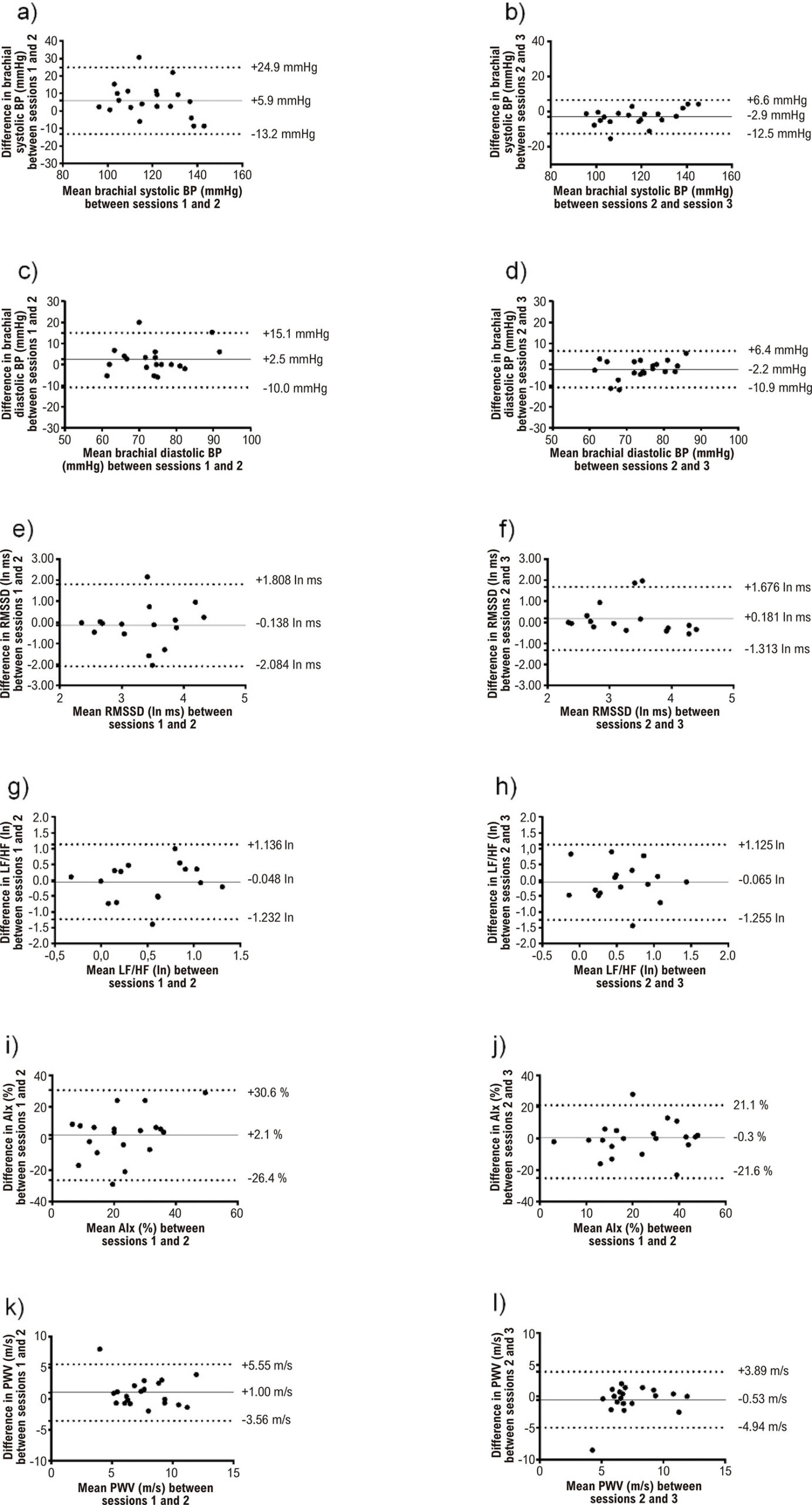
To assess the intrarater reliability and agreement of blood pressure (BP), arterial stiffness, and heart rate variability (HRV) assessments in patients with Parkinson`s disease (PD). Twenty patients with PD visited the laboratory three times, during which brachial and central BP (auscultatory and applanation tonometry, respectively), arterial stiffness (carotid-femoral pulse wave velocity and augmentation index), and HRV assessments were performed at rest. Brachial and central systolic BP presented greater values on visit 1 when compared to visits 2 and 3 (122±13 vs. 116±16 vs. 120±15, p=0.029). There were no significant differences (p>0.05) among the experimental visits for other parameters. Brachial and central BP showed an intraclass correlation coefficient (ICC) above 0.842 and a standard error of measurement (SEM) lower than 5.0%. Bland–Altman plots indicated low agreement between visits 1 and 2 and good agreement between visits 2 and 3. Arterial stiffness indices exhibited ICC values between 0.781 and 0.886, and SEM ranged from 7.3% to 25.2%. Bland–Altman plots indicated moderate to good agreement among visits for arterial stiffness parameters. HRV indices presented ICC values ranging from 0.558 to 0.854 and SEM values ranging from 5.1% to 76.0%. Bland–Altman plots indicated moderate agreement among visits for HRV parameters. In PD patients, brachial and central BP present low intrarater reliability and agreement between visits 1 and 2 and good intrarater reliability and agreement between visits 2 and 3. In general, arterial stiffness and HRV assessments present acceptable intrarater reliability and agreement among visits, except for cardiac sympathovagal balance.

  • Blood Pressure
  • Heart Rate
  • Parkinson Disease
  • Vascular Stiffness
Read Full Article
Creative Commons Attribution (CC BY) Creative Commons license
11/11/2024 DOI: 10.36660/abc.20240132i Views 1
ABC
Letter to the Editor

Intermittent Fasting in the Control of Hypertension: Do We Have Enough Evidence?

Adriana Camargo Oliveira et al. Natália de Filippo Mariosa Marcos Pereira Caetano Mikaelle Costa Correia

Dear Editor,

The study published by Demirci et al. brings up an interesting and current discussion by evaluating the effect of intermittent fasting (IF) on blood pressure, the renin-angiotensin system (RAS), and the autonomic nervous system (ANS) in hypertensive patients using 24-hour ambulatory blood pressure monitoring (ABPM), Holter electrocardiogram, serum levels of Ang-I and Ang-II and ACE activity before and after IF. Among the findings was a notable reduction in blood pressure in patients undergoing IF, as well as a decreased expression of Ang-II and ACE in this same group. In addition, the reduction in Ang-II levels was identified as a predictive factor for blood pressure improvement after IF.

[…]

  • Arterial Stiffness
  • Blood Pressure
  • Fasting
  • Hypertension
Read Full Article
Creative Commons Attribution (CC BY) Creative Commons license
05/04/2024 DOI: 10.36660/abc.20230607i Views 1
Risk Factors for In-Hospital Mortality from Cardiac Causes After Acute Myocardial Infarction
IJCS
Original Article

Risk Factors for In-Hospital Mortality from Cardiac Causes After Acute Myocardial Infarction

Gabriel Vasconcelos Oliveira et al. Maria Beatriz Guimarães Raponi Patricia Magnabosco Maria Angélica Melo e Oliveira … Suely Amorim de Araújo Vanderlei José Haas Valéria Nasser Figueiredo

Abstract

Background:

Risk stratification on admission of patients with acute ST-elevation myocardial infarction (STEMI) is considered a clear strategy for effective treatment, early intervention, and survival.

Objective:

The purpose of this study was to determine the risk factors for in-hospital mortality from cardiac causes after STEMI.

Methods:

Observational, retrospective, longitudinal study, with a quantitative approach, based on data from the medical records of individuals diagnosed with STEMI treated at the Emergency Room of a large hospital in the state of Minas Gerais, Brazil, from January 2011 to July 2016. The outcome of interest was 30-day in-hospital mortality from after STEMI. For statistical analysis, the Pearson’s chi-square test, Spearman’s correlation and multivariable Cox-regression analysis were used, with a significance level of α = 0.05.

Results:

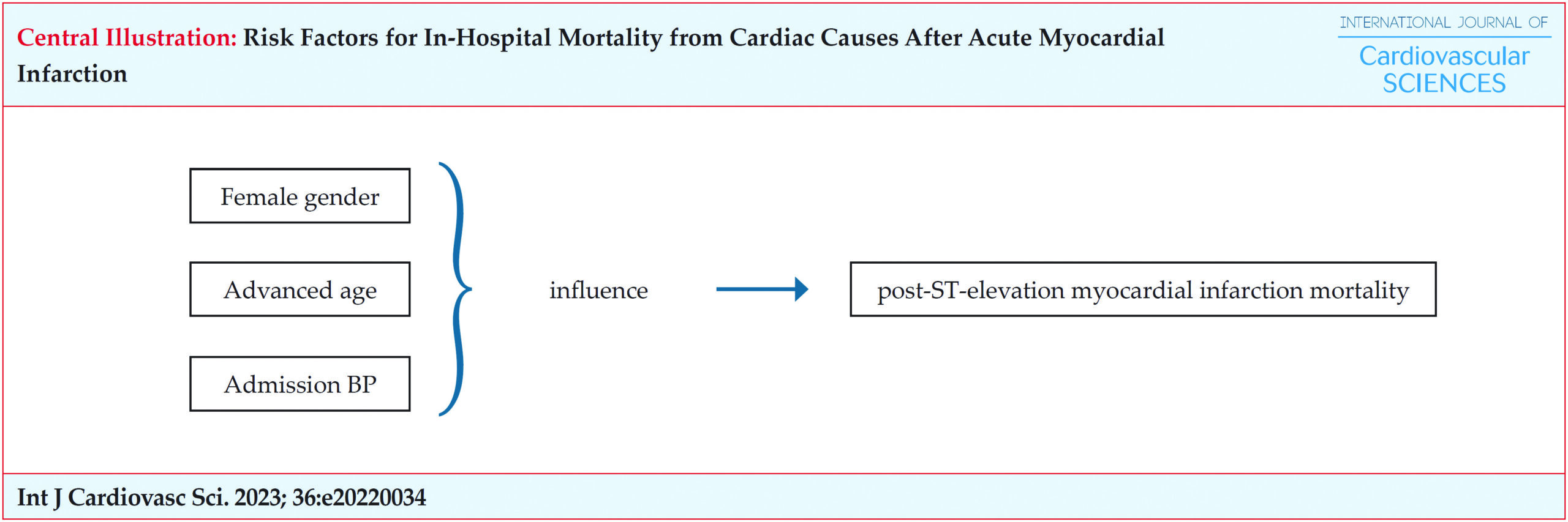
Of the 459 patients, 55 (12%) died from cardiac causes within 30 days after STEMI. Mean admission SBP of these patients was 109.08mmHg. The incidence of death was higher in women (23.7%), patients with systemic arterial hypertension (SAH) (13.8%) and elderly patients (16.5%). The elderly — heart rate (HR) = 3.54 — and women — HR = 2.55 — had a statistically significant higher risk of progressing to death when compared to younger adults and men. The highest admission SBP had a protective effect (HR = 0.97), reducing the chance of death by 3%.

Conclusion:

SBP on admission, female gender and advanced age were significant risk factors for death within 30 days after STEMI.

  • Blood Pressure
  • Mortality
  • Myocardial Infarction
  • Risk Factors
Read Full Article
Creative Commons Attribution (CC BY) Creative Commons license
27/11/2023 DOI: 10.36660/ijcs.20220034 Views 1
Figure 1
ABC
Letter to the Editor

Suspension of Thiazide Diuretics in Advanced Chronic Kidney Disease. Time to Review an Old Concept

Rodrigo Bezerra et al. Flávio Teles de Farias Filho Audes Feitosa Wilson Nadruz … Andrea Araújo Brandão Weimar Kunz Sebba Barroso

The Hypertension Guidelines of the Sociedade Brasileira de Cardiologia (SBC), Brazilian Society of Hypertension (BSH), and Brazilian Society of Nephrology (BSN) recommend the use of loop diuretics to replace thiazides in patients with chronic kidney disease (CKD) stages 4 and 5, who have glomerular filtration rate (GFR) ≤ 30ml/min/1.73m2.

These guidelines are in line with other guidelines, such as the European Hypertension Guideline (ESC/ESH 2018), which states that thiazide and thiazide-like diuretics are less effective in patients with GFR < 45ml/min/1.73m2 and ineffective when GFR < 30ml/min/1.73m2. However, the study that established this concept dates from 1961 and evaluated only 11 patients, among whom 5 had GFR < 37ml/min/1.73m2. Despite this, this concept generated a dogma exported to textbooks, which has been propagated for decades as an incontestable truth.

[…]

  • Blood Pressure
  • Diuretics
  • Hypertension
  • Hypocalcemia
  • Renal Insufficiency Chronic/complications
Read Full Article
Creative Commons Attribution (CC BY) Creative Commons license
20/10/2023 DOI: 10.36660/abc.20230115
Figure 1
ABCHF
Original Article

Correlation between Pulse Pressure and Sub-maximal Functional Capacity in Patients with Heart Failure with Preserved Ejection Fraction

Gustavo Matas Kern et al. Luiz Claudio Danzmann Leticia Kunst Ludmila Limpias Terrazas Binkowski Carla Alessandra Smiderle

ABSTRACT

Background:

Heart failure with preserved ejection fraction (HFpEF) is characterized by diastolic dysfunction, as well as alterations in ventricular filling and remodelling. This change in diastolic function without reduced ejection fraction is manifested as exercise intolerance, and arterial stiffness, measured by pulse pressure, is considered an independent predictor of functional capacity.

Objective:

To evaluate the correlation between sub-maximal functional capacity and pulse pressure (PP) in patients with HFpEF.

Methods:

Patients with HFpEF performed the 6-minute walk test (6MWT) in a 45-meter hallway at the University Hospital. Patients were instructed to walk at a speed consistent with their daily activities. Their vital signs were monitored, and the Borg scale was applied for symptoms such as dyspnea and fatigue. Blood pressure was measured at rest. PP was estimated using the formula PP = systolic blood pressure − diastolic blood pressure, with 65 mmHg as the cutoff point.

Results:

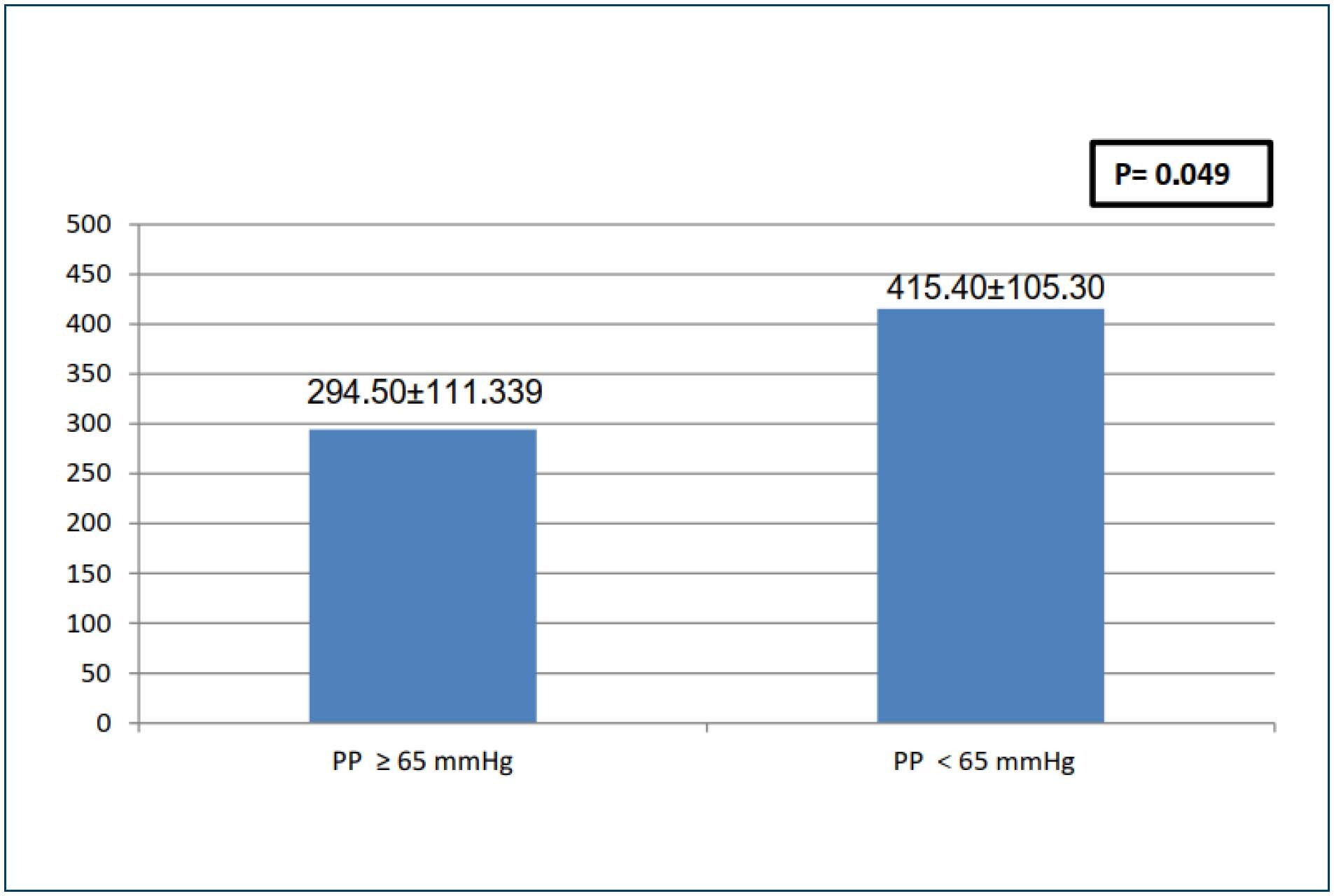
We observed a difference of 120.5 ± 43.97 meters between the mean distances walked during the 6MWT between the groups with increased and normal PP (294.5 ± 111.3 m versus 415.4 ± 105.3 m, p = 0.01). Pearson’s test demonstrated a slight inverse correlation between PP values and the distance walked by patients during the 6MWT (r = −0.4, p = 0.049).

Conclusion:

There was a reduction in sub-maximal capacity in patients with increased PP, as shown by the slight inverse correlation between PP and distance walked during the 6MWT.

  • Blood Pressure
  • Heart Failure
  • Vascular Stiffness
Read Full Article
Creative Commons Attribution (CC BY) Creative Commons license
17/08/2023 DOI: 10.36660/abchf.20220097 Views 2
Central Illustration
ABC
Original Article

National Registry of Hypertension Control Evaluated by Office and Home Measurements: The LHAR National Registry

Roberto Dischinger Miranda et al. Andréa Araujo Brandão Weimar Kunz Sebba Barroso Marco Antonio Mota-Gomes … Eduardo Costa Duarte Barbosa Lucio Paulo Ribeiro Claudinelli Alvarenga Aguilar Fabio Serra Silveira Cristiano de Melo Rangel Gomes Abraham Epelman Annelise Machado Gomes de Paiva Audes Diógenes Magalhães Feitosa

Abstract

Background

It is known that around 30% of patients have higher blood pressure (BP) values when examined at the office than at home. Worldwide, only 35% of patients with hypertension undergoing treatment have reached their BP targets.

Objective

To provide epidemiological data on BP control in the offices of a sample of Brazilian cardiologists, considering office and home BP measurement.

Methods

This is a cross-sectional analysis of patients with a hypertension diagnosis and undergoing antihypertensive treatment, with controlled BP or not. BP was assayed in the office by a medical professional and at home using home BP monitoring (HBPM). The association between categorical variables was verified using the chi-square test (p<0.05).

Results

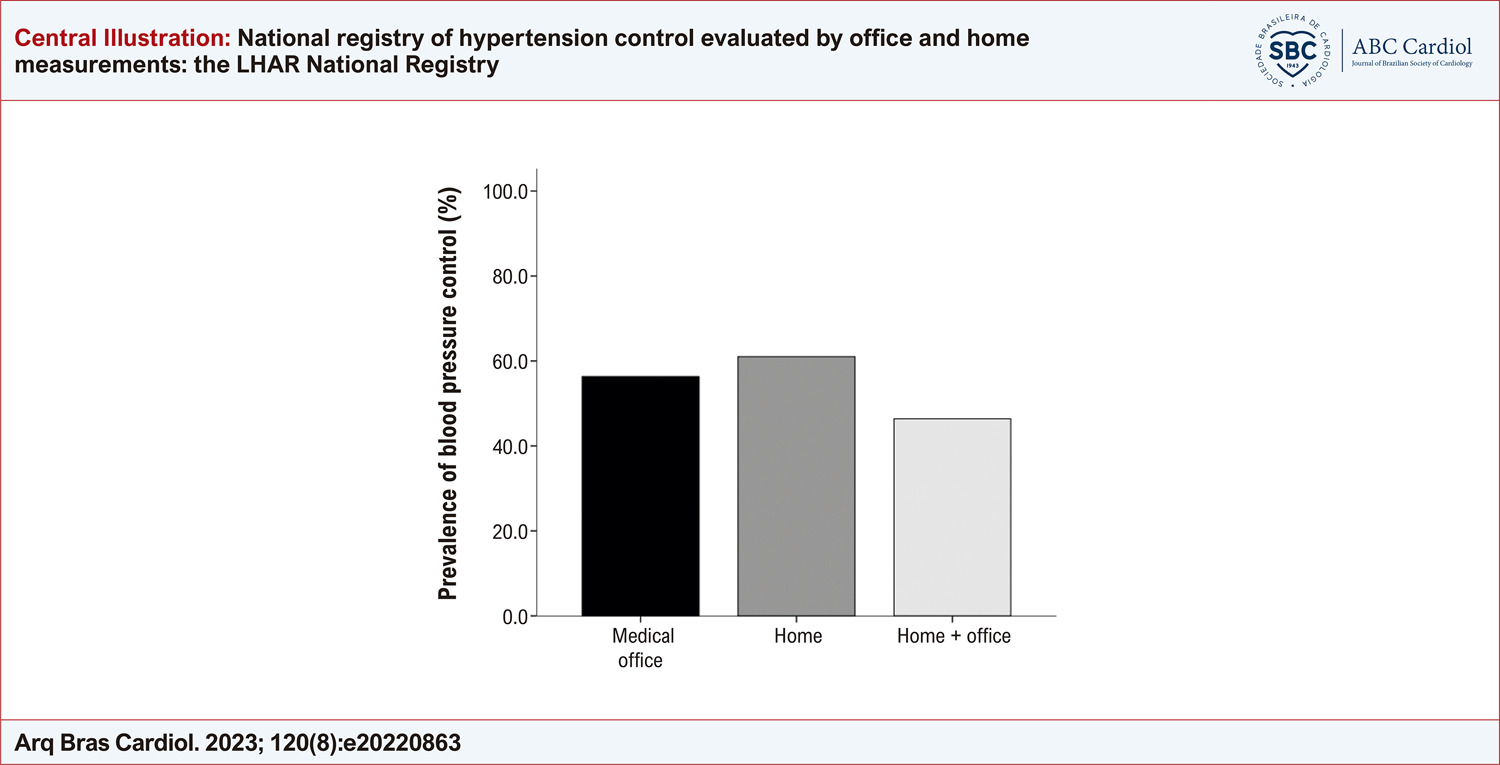
The study included 2540 patients, with a mean age of 59.7 ± 15.2 years. Most patients were women (62%; n=1575). Prevalence rates of 15% (n=382) for uncontrolled white coat hypertension and 10% (n=253) for uncontrolled masked hypertension were observed. The rate of BP control in the office was 56.3% and at home, 61%. Meanwhile, 46.4% of the patients had controlled BP in and outside of the office. Greater control was observed in women and in the 49-61 years age group. Considering the new DBHA 2020 threshold for home BP control, the control rate was 42.4%.

Conclusion

BP control in the offices of a sample of Brazilian cardiologists was 56.3%; this rate was 61% when BP was measured at home and 46.4% when considering both the office and home.

  • Blood Pressure
  • blood pressure control
  • Home blood pressure monitoring
  • Hypertension
Read Full Article
Creative Commons Attribution (CC BY) Creative Commons license
11/08/2023 DOI: 10.36660/abc.20220863 Views 4
Figure 1
ABC
Review Article

Effects of High-Intensity Interval Training on Central Blood Pressure: A Systematic Review and Meta-Analysis

Gustavo Henrique de Oliveira et al. Rogério Toshiro Passos Okawa Caroline Ferraz Simões João Carlos Locatelli … Victor Hugo de Souza Mendes Higor Barbosa Reck Wendell Arthur Lopes

Abstract

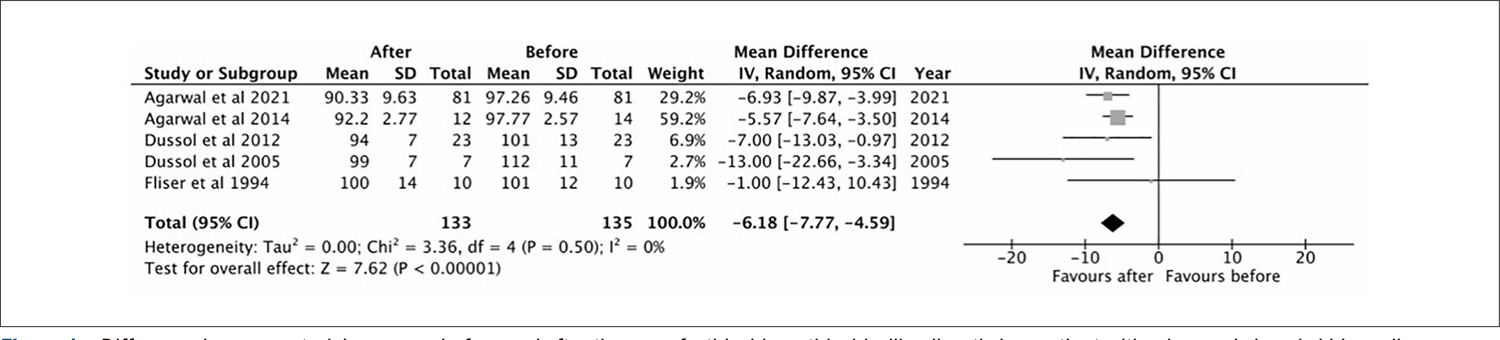
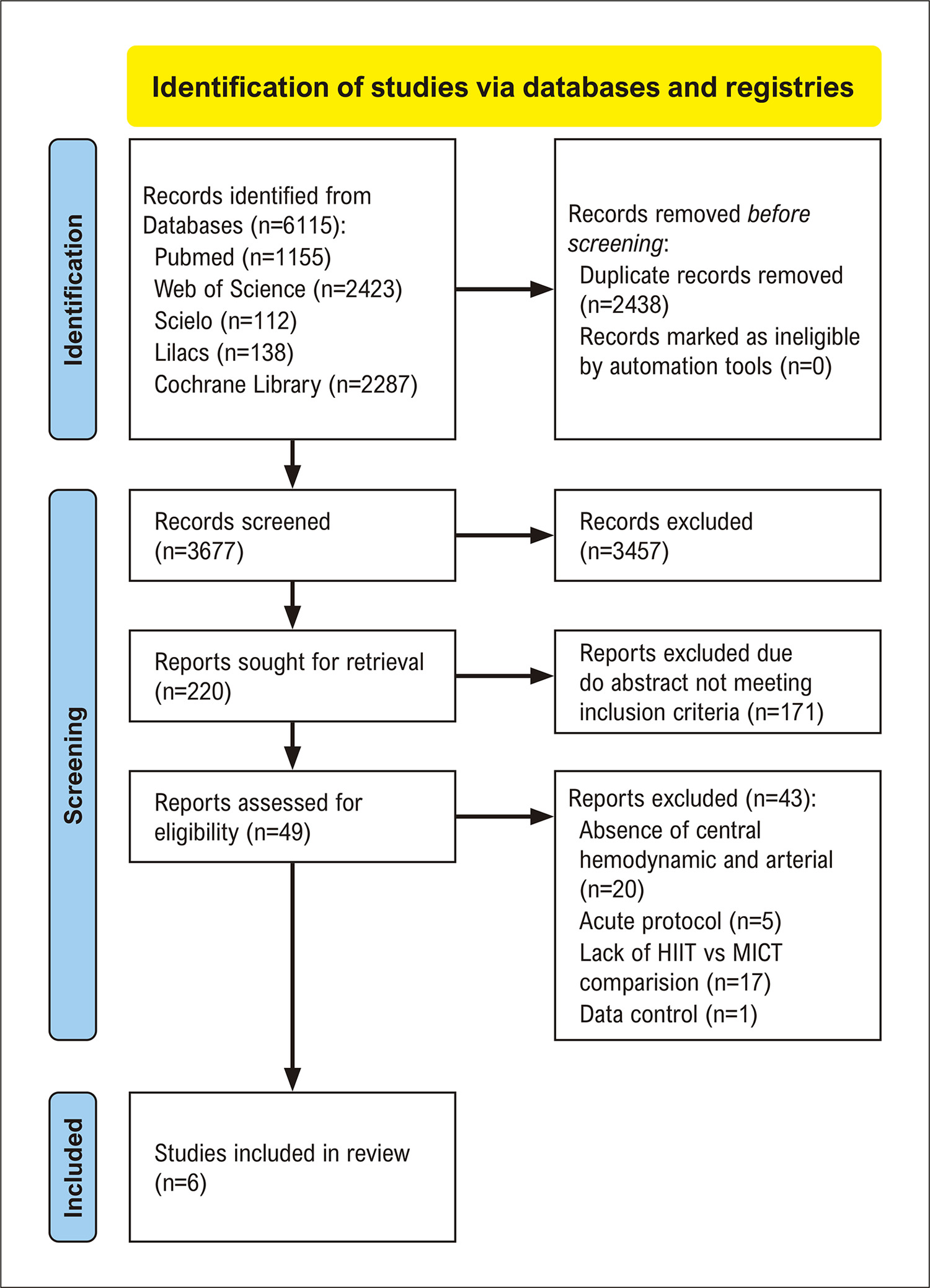
Central blood pressure (cBP) is considered an independent predictor of organ damage, cardiovascular events and all-cause mortality. Evidence has shown that high intensity interval training (HIIT) is superior to moderate-intensity continuous training (MICT) for improving cardiorespiratory fitness and vascular function. However, the effects of these aerobic training modalities on cBP have not yet been properly reviewed.This meta-analysis aims to investigate to effects of HIIT versus MICT on cBP.We conducted a meta-analysis of randomized controlled trials that compared HIIT versus MICT on cBP. Primary outcomes were measures of central systolic blood pressure (cSBP) and central diastolic blood pressure (cDBP). Peripheral systolic blood pressure (pSBP) and diastolic blood pressure (pDBP), pulse wave velocity (PWV) and maximal oxygen uptake (VO2max) were analyzed as second outcomes. Meta-analysis of mean differences (MD) was conducted using the random effects model.Our study included 163 patients enrolled in six trials. We found that HIIT was superior to MICT in reducing the cSBP (MD = -3.12 mmHg, 95% CI: -4.75 to -1.50, p = 0.0002) and SBP (MD = -2.67 mmHg, 95% CI: -5.18 to -0.16, p = 0.04), and increasing VO2max(MD = 2.49 mL/kg/min, 95% CI: 1.25 to 3.73, p = 0.001). However, no significant differences were reported for cDBP, DBP and PWV.HIIT was superior to MICT in reducing the cSBP, which suggests its potential role as a non-pharmacological therapy for high blood pressure.

  • Blood Pressure
  • Endurance Training
  • Hemodynamics
  • High-Intensity Interval Training
  • Vascular Stiffness
Read Full Article
Creative Commons Attribution (CC BY) Creative Commons license
21/04/2023 DOI: 10.36660/abc.20220398 Views 1
Central Illustration
ABC
Original Article

Improvement in Blood Pressure After Intermittent Fasting in Hipertension: Could Renin-Angiotensin System and Autonomic Nervous System Have a Role?

Erkan Demirci et al. Bekir Çalapkorur Oguzhan Celik Derya Koçer … Selami Demirelli Ziya Şimsek

Abstract

Background

Although it has been reported that the intermittent fasting (IF) diet has positive effects on heart health and improvement in blood pressure, it has not been sufficiently clarified how it could have these positive effects yet.

Objective

We aimed to evaluate the effects of IF on the autonomic nervous system (ANS) and renin-angiotensin system (RAS), which are closely related to blood pressure.

Methods

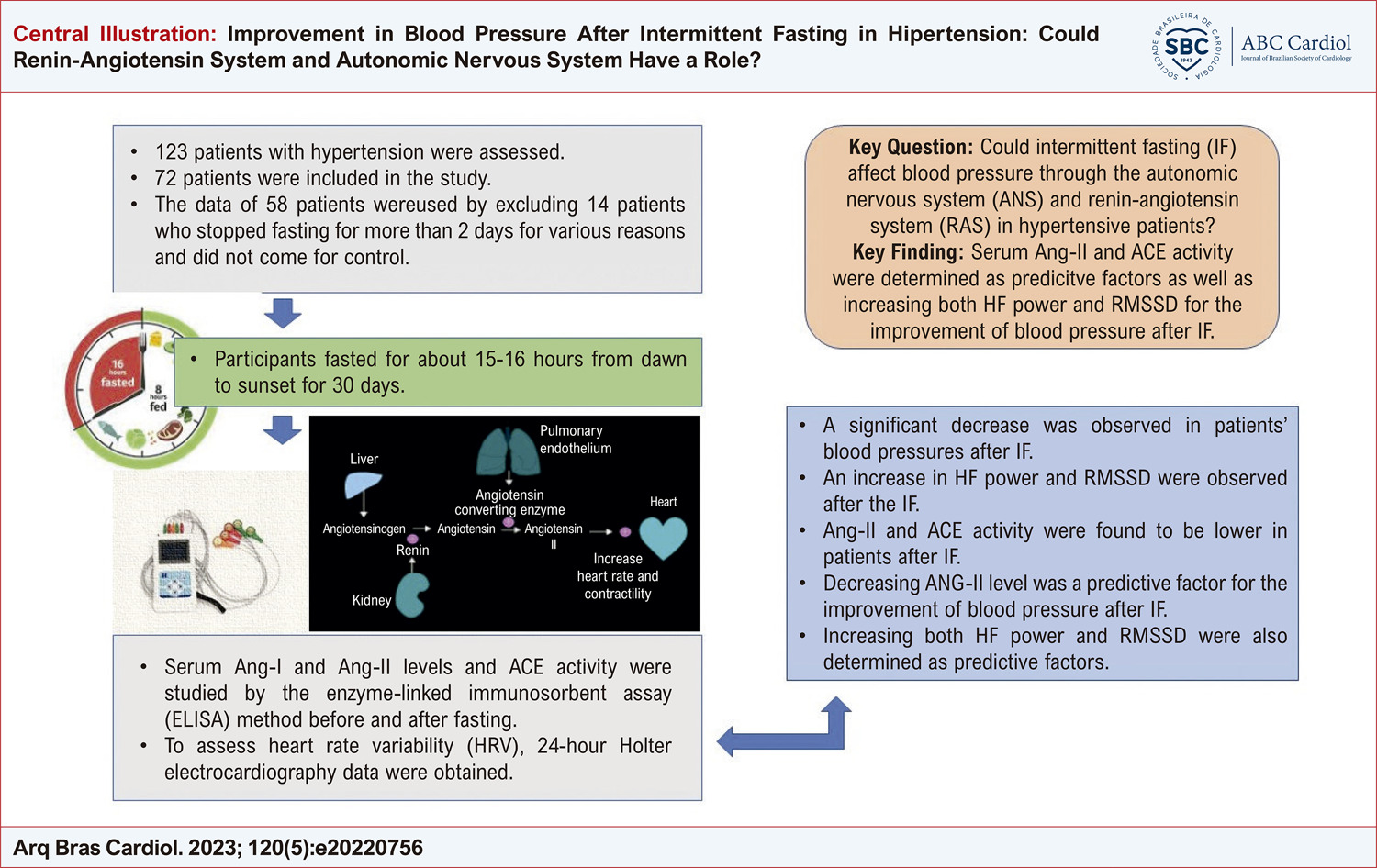
Seventy-two hypertensive patients were included in the study, and the data of 58 patients were used. All the participants fasted for about 15-16 hours for 30 days. Participants were evaluated with 24-hour ambulatory blood pressure monitoring and Holter electrocardiography before and after IF; also, 5 ml venous blood samples were taken for assessment of Serum angiotensin I (Ang-I) and angiotensin II (Ang-II) levels and angiotensin-converting enzyme (ACE) activity. For data analysis, the p-value <0.05 was accepted as significant.

Results

Compared to pre-IF, a significant decrease was observed in the patients’ blood pressures in post-IF. An increase in high-frequency (HF) power and the mean root square of the sum of squares of differences between adjacent NN intervals (RMSSD) were observed after the IF protocol (p=0.039, p=0.043). Ang-II and ACE activity were lower in patients after IF (p=0.034, p=0.004), and decreasing Ang-II levels were determined as predictive factors for improvement of the blood pressure, like the increase in HF power and RMSSD.

Conclusion

The present findings of our study demonstrated an improvement in blood pressure and the relationship of blood pressure with positive outcomes, including HRV, ACE activity, and Ang-II levels after the IF protocol.

  • Autonomic Nervous System
  • Blood Pressure
  • Fasting
  • Hypertension
  • Renin-Angiotensin System
Read Full Article
Creative Commons Attribution (CC BY) Creative Commons license
21/04/2023 DOI: 10.36660/abc.20220756
IJCS
Original Article

Factors Associated With Elevated Blood Pressure in Nursing Workers

Vivian de Moraes Coelho et al. Camila Oliveira Sinhoroto Patrícia Magnabosco Maria Beatriz Guimarães Raponi … Maria Angélica Melo e Oliveira Omar Pereira de Almeida Neto Valéria Nasser Figueiredo

Abstract

Introduction

Nurses from the night shift are exposed to sleep deprivation, which is associated with circadian rhythm alteration, lifestyle changes, psychosocial stress, and, consequently, increased risk of blood pressure (BP) deregulation and hypertension.

Objective

To analyze risk factors associated with elevated BP levels in nursing workers.

Methods

A transversal, quantitative study was conducted with 172 nursing professionals of a large hospital in the state of Minas Gerais, Brazil. The following data were collected: anthropometric and BP measurements, sociodemographic characteristics, clinical variables, and lifestyle habits. Results were evaluated by bivariate analysis and logistic regression. The level of significance adopted in the statistical analysis was 5%.

Results

Participants’ average age was 42.7 ± 9.6 years old; 86.6% (n = 149) were female, and 20.3% (n = 35) had previous diagnosis of hypertension. Overweight and obesity (odds ratio [OR]: 2.187, 95% confidence interval [CI]: 1.060 – 4.509) and night shift (OR: 2.100, CI 95%: 1.061 – 4.158) were statistically significant (p < 0.05) for increased risk of elevated BP level.

Conclusion

Excessive weight and night shift were significant factors for increased BP in nursing workers.

  • Blood Pressure
  • Body weight
  • Nursing team
  • Shift work schedule
Read Full Article
Creative Commons Attribution (CC BY) Creative Commons license
03/03/2023 DOI: 10.36660/ijcs.20220001 Views 1
ABC
Research Letter

Influence of Spiritual Well-Being on Blood Pressure, Central Hemodynamics and Endothelial Function

Maria Emília Figueiredo Teixeira et al. Priscila Valverde de Oliveira Vitorino Andrea A. Brandão Ana Luiza Lima Souza … Talles Marcelo Gonçalves de Andrade Barbosa Roberto Esporcatte Mário Henrique Elesbão de Borba Álvaro Avezum Weimar Kunz Sebba Barroso

Introduction

Spirituality and religiosity (S/R) are cultural aspects that have existed since the beginnings of human existence. Having been long considered as opponent to science, only recently, S/R have gained importance in the context of health.

Definitions of S/R have been constantly evolving, according to the need for adaptation to new knowledge. Today, religion has been related to organizational, institutional and dogmatic aspects, that is, the contact with deity occurs through predetermined formats, specific to each religious segment. Spirituality is a wider term, encompassing a quest for personal, psychological and spiritual well-being, and good-quality interpersonal relationships. According to the Department of Studies in Spirituality and Cardiovascular Medicine (DEMCA, Departamento de Estudos em Espiritualidade e Medicina Cardiovascular ) of the Brazilian Cardiology Society, “spirituality is a set of moral, mental and emotional values that guide thoughts, behaviors and attitudes in life circumstances of intra and interpersonal relationships”.

[…]

  • Blood Pressure
  • Endothelium / physiology
  • Hemodynamic
  • Quality of life
  • Religion and Medicine
  • Social Values
  • Spirituality
  • Value of Life
Read Full Article
Creative Commons Attribution (CC BY) Creative Commons license
21/10/2022 DOI: 10.36660/abc.20210886 Views 1
ABC
Editorial

Blood Pressure Variability and Cardiovascular Risk in ELSA-Brasil: A Potential Surrogate Marker for Predicting Mortality and Cardiovascular Outcomes?

Maria Cristina Izar et al. Francisco A. H. Fonseca

Blood pressure (BP) homeostasis is a crucial element in the protection of cardiovascular events. Many national and international guidelines – have proposed target values for blood pressure, and these recommendations consider slightly different goals according to hypertension stages, risk stratification and presence of renal or cardiovascular diseases, and target organ lesion. However, these values are based on office measures, ambulatory blood pressure monitoring (ABPM) and home blood pressure monitoring (HBPM), not accounting for blood pressure variability (BPV). BP intraindividual variability is an independent risk factor for cardiovascular diseases regardless of mean BP. – Fluctuations in physiological measures of blood pressure do not occur randomly and can contribute or be predictors of cardiovascular outcomes.

Most studies evaluated BPV on short (24h), medium (>2 days) or long-term (weekly, monthly, or annually). , Short-term BPV can be associated with increased cardiovascular risk. ,

[…]

  • Blood Pressure
  • Cardiovascular Diseases
  • Homeostasis
  • Hypertension
  • Risk Factors
Read Full Article
Creative Commons Attribution (CC BY) Creative Commons license
21/10/2022 DOI: 10.36660/abc.20220525 Views 1
ABC
Editorial

Waist Circumference: A Parameter of Vascular Health

Erika Maria Gonçalves Campana et al. Andréa Araujo Brandão

Obesity plays a central role in chronic noncommunicable diseases due to its high prevalence and strong correlation with risk factors like hypertension, dyslipidemia, diabetes mellitus, and morbidity and mortality. In particular, abdominal obesity has been renowned as an emerging risk factor for an inflammatory and prothrombotic state, which is associated with an increased prevalence of hypertension and increased risk of cardiovascular (CV) events. These data are of utmost importance in the scenario of increasing prevalence of obesity not only in adults, but also among children and adolescents., Results of a study conducted in Rio de Janeiro showed an unfavorable relationship of elevated blood pressure (BP) and excess weight in adolescents with increased BP levels and anthropometric and metabolic variables in young adults.

Over the last years, the understanding of the CV continuum has grown, and CV disease has been seen in the context of vascular damage. In this sense, endothelial dysfunction, which results in atherosclerotic disease and its complications, involves the tunica media of large arteries, affected by an accelerated aging of the vessel, resulting in early arterial stiffness and arteriosclerosis, which in turn contributes to CV morbidity and mortality.–

[…]

  • Atherosclerosis
  • Blood Pressure
  • Cardiovascular Diseases/complications
  • Dyslipidemias
  • Outcome Assessment (Health Care)
  • Pulse Wave Analysis
  • Vascular Stiffness
  • Waist Circumference
Read Full Article
Creative Commons Attribution (CC BY) Creative Commons license
05/08/2022 DOI: 10.36660/abc.20220508
ABC
Editorial

Can Attenuated Nocturnal Dipping be a Predictor of the Severity and Complexity of Coronary Artery Disease in Hospitalized Patients with Acute Coronary Syndrome?

Andrea Pio-Abreu

It is well established that there are significant prognostic implications resulting from the abnormal behavior of some 24-hour blood pressure (BP) parameters obtained through Ambulatory Blood Pressure Monitoring (ABPM). Among them, the abnormal behavior of the mean systolic blood pressure (SBP) and diastolic (DBP) in 24 hours, wakefulness and sleep, stand out. Specifically regarding the behavior of BP during sleep, it is already well established that the absence of nocturnal dipping has, independently, a significant impact on the increased cardiovascular risk., Other parameters that may have prognostic implications are early morning BP elevation and greater 24-hour BP variability.,

Some recommendations are essential for the success of the ABPM exam, among them, the orientation for the patient to maintain their usual activities during the monitoring day. In this sense, assessing the circadian pattern of BP in hospitalized patients is not one of the indications of the method, even intending to study specific outcomes.

[…]

  • Acute coronary syndrome
  • arterial hypertension
  • Blood Pressure
  • Coronary Artery Disease
  • Nocturnal Dipping
Read Full Article
Creative Commons Attribution (CC BY) Creative Commons license
11/07/2022 DOI: 10.36660/abc.20220401 Views 1
ABC
Letter to the Editor

Letter to the Editor Regarding the Brazilian Guidelines of Hypertension – 2020

Leticia Costa Rebello et al. Marcos Christiano Lange Rodrigo Bazan Maramelia Miranda Alves … Gisele Sampaio Silva Octavio Pontes Neto

Dear Editor

Initially, the Brazilian Society of Cerebrovascular Diseases (SBDCV) congratulates the Department of Arterial Hypertension of the Brazilian Societies of Cardiology, Hypertension, and Nephrology for the Brazilian Guidelines on Arterial Hypertension 2020 publication. Our aim is to raise some issues related to stroke care and BP management in acute setting, an important topic of discussion and controversy. The guideline correctly attributes arterial hypertension as the main cause of ischemic stroke and intracranial hemorrhage. We would like to point out some issues regarding managing blood pressure (BP) in these patients.

[…]

  • Acute Treatment
  • Blood Pressure
  • Hypertension
  • Intracranial Hemorrhage
  • Isquemic Stroke
  • Mortality
  • Risk Factors
Read Full Article
Creative Commons Attribution (CC BY) Creative Commons license
11/07/2022 DOI: 10.36660/abc.20210873 Views 1
ABC
Editorial

Is it Possible to Non-Invasively Study the Hemodynamic Adaptations of Chagas Cardiomyopathy by the Volume-Time Curve Using 3D Echocardiography?

José Luiz Barros Pena

Three-dimensional echocardiography (3DE) represents a great innovation in cardiovascular ultrasound. Increased computer processing power and advances in the development of transducers have allowed acquiring of cardiac structures from any spatial point of view, without assumptions about their shape. Recent studies have demonstrated that when cardiac chamber sizes are quantified using 3DE, their volumes are similar to those obtained using cardiac magnetic resonance imaging compared to two-dimensional echocardiography (2DE)., The usefulness of 3DE has particularly been demonstrated primarily in realistic anatomical heart valve images and in guiding and monitoring cardiac procedures.

3DE allows volume calculation of the left ventricle (LV) throughout the cardiac cycle, making it possible to construct a volume-time curve. This method is more accurate than 2DE because the left ventricular volume is constructed by analyzing hundreds of points at the edge of the endocardium. No specific plane or geometric model is necessary to describe the complex LV structure. In this paper, Pinto et al. tested the hypothesis of studying the hemodynamic adaptations of non-invasive Chagas cardiomyopathy using the volume-time curve generated by 3DE. They generated a polynomial adjusted to the LV volume curve using specific software. Their objective was to present a cross-sectional study evaluating LV function, comparing volume curves in 20 patients with Chagas cardiomyopathy (CC) and 15 gender- and age-matched healthy controls.

[…]

  • Blood Pressure
  • Chagas Caddiomyopathy
  • Echocardiography, Three Dimensional / methods
  • Heart Failure
  • Stroke Volume
Read Full Article
Creative Commons Attribution (CC BY) Creative Commons license
10/06/2022 DOI: 10.36660/abc.20220284 Views 1
ABC
Original Article

Correlation among Waist Circumference and Central Measures of Blood Pressure

Gilberto Campos Guimarães Filho et al. Lucas Tavares Silva Ruth Mellina Castro e Silva

Abstract

Background:

Arterial stiffness is a strong predictor of cardiovascular disease (CVD). Body fat measures such as waist circumference (WC) have been associated with CVD in adulthood.

Objectives:

The objective of this study was to evaluate the association of arterial stiffness, measured by applanation tonometry-Sphygmocor, with WC.

Methods:

Observational study with 240 participants who make routine consultations at the outpatient clinic of a university hospital. Participants were interviewed and had central blood pressure measurements (CBPM), anthropometric parameters, abdominal fat and visceral fat measured. Paired and unpaired t and chi-square tests were used. A significance level of 5% was adopted.

Results:

Of the 240 participants, 51.82% were male with a mean age of 59.71(±14.81) years and a mean WC of 99.87 (11.54) cm. Mean CBPM values were: Central arterial pressure (CAP) = 130.23 (91-223) mmHg, pulse wave velocity (PWV) = 9.8 (5.28-19.6)m/s and Augmentation Index [Amplification Index (AI)] = 29.45 (-14-60). PWV and CAP were highly correlated with WC with p<0.001 and p=0.02, respectively; however, the same positive correlation was not found between WC and AI (p=0.06).

Conclusion:

The present study showed a positive association between WC and arterial stiffness, through the femoral carotid pulse wave velocity (cf-PWV) and AI, being stronger with cf-PWV, suggesting the evaluation of the effect of WC in vascular health as a method of aid in the early treatment of CVD and in the prevention of clinical outcomes.

  • Atherosclerosis
  • Blood Pressure
  • Cardiovascular Diseases
  • health care
  • outcome assessment
  • Pulse Wave Analysis
  • Vascular Stiffness
  • Waist Circumference
Read Full Article
Creative Commons Attribution (CC BY) Creative Commons license
03/06/2022 DOI: 10.36660/abc.20210432
Figure 1
IJCS
Original Article

Possible Effects of Oriented Magnetic Fields on Human Blood Pressure

Eugenio E. Vogel et al. Nataly Belmar Benjamín Stockins

Abstract

Background:

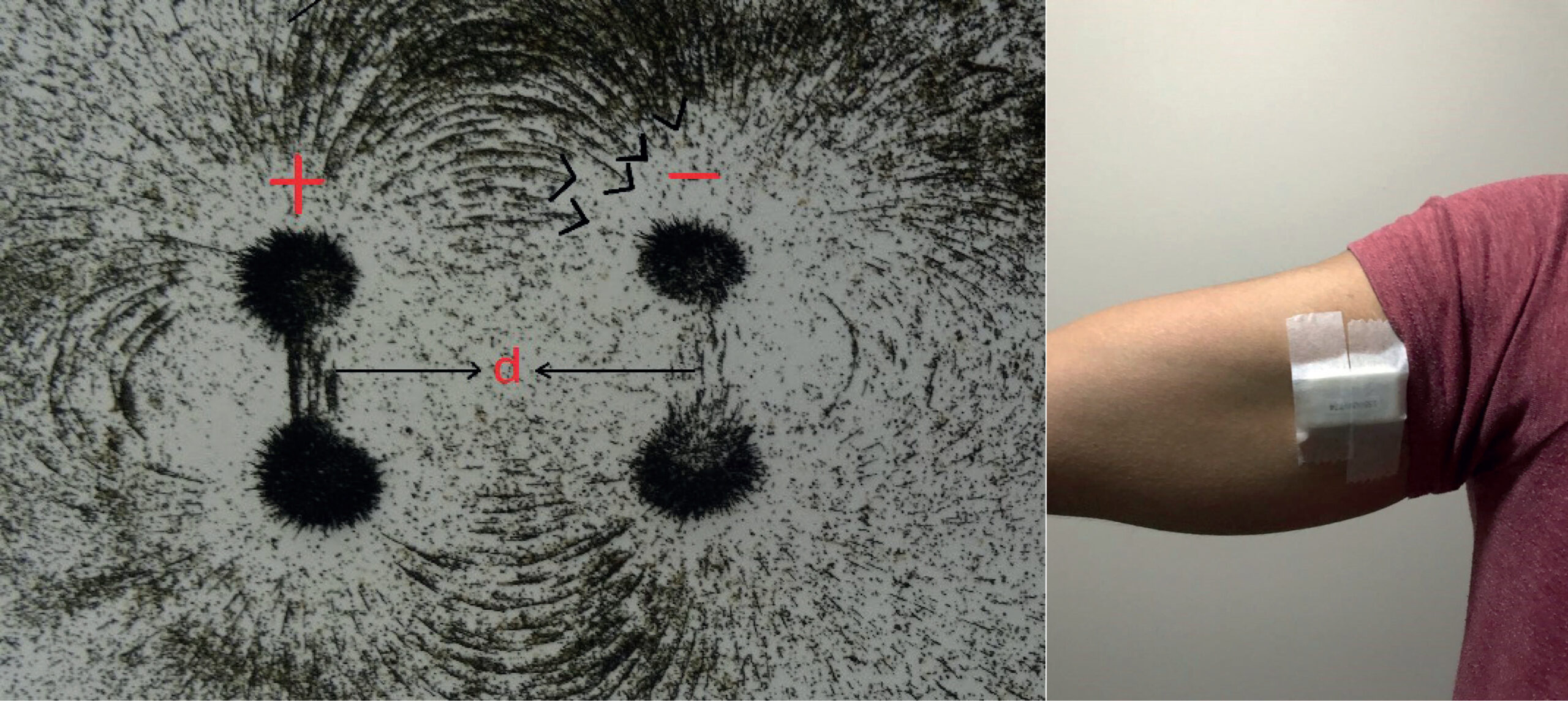
There have been scattered reports indicating the possibility that applied magnetic fields can lower human blood viscosity, which has been considered as encouraging for decreasing blood pressure as a result of greater fluidity. Additional motivation comes from partial studies in animals showing some response of vascular variables to magnetic fields. Recently developed FeNbB magnets enable topical application to appropriate sites of much stronger permanent magnetic fields than previously available.

Objectives:

To establish whether powerful magnetic fields permanently applied along important arteries of the human body can lower blood pressure and, if so, to what extent.

Methods:

Ambulatory blood pressure tests were performed on 70 patients, half of them wearing real magnets, while the other 35 patients were wearing a similar placebo. Magnets or placebo devices were assigned at random. Each patient underwent two consecutive ambulatory 24-hour blood pressure (BP) tests; the first without a device and the second one with a device.

Results:

Results were compiled and analyzed only after the last measurement was completed. Individual responses, average values, standard deviations, information content, and Student’s t test showed that no difference was found between measurements in either group.

Conclusion:

Permanent strong magnetic fields applied along the main arteries of the human body do not alter blood pressure. This was observed both in statistical terms and in individuals as well.

  • Blood Pressure
  • Heart Disease Risk Factors
  • Hypertension
  • Magnetic Fields
  • Viscosity
Read Full Article
Creative Commons Attribution (CC BY) Creative Commons license
16/05/2022 DOI: 10.36660/ijcs.20200289 Views 1
IJCS
Editorial

Are Wistar Rats the Most Suitable Normotensive Controls for Spontaneously Hypertensive Rats to Assess Blood Pressure and Cardiac Structure and Function?

Nazareth Novaes Rocha

The first animal models of hypertension involved constriction of renal arteries (the Goldblatt kidney) or parenchyma (the Page kidney). Although these human analogs closely mimicked the pathophysiology of the disease, renovascular hypertension and the Page kidney represent only a small fraction of human hypertension.

Most experimental studies of hypertension using animals have focused on understanding the mechanisms of primary hypertension. Models of primary hypertension have been more difficult to develop. Some models may have greater face validity than others with respect to phenotypic aspects of hypertension such as age at onset, temporal course, severity, variability, and associated comorbidities. Given the clinical importance of hypertension-related target organ damage, it is noteworthy that models exhibiting face validity for left ventricular hypertrophy, metabolic abnormalities, heart failure, renal damage, and stroke (e.g., spontaneously hypertensive rats [SHR] and Dahl salt-sensitive [DSS] rats) are also available. However, other conditions such as spontaneous development of atherosclerosis or acute myocardial infarction are not typically observed in current models.

[…]

  • Animal, Rats, Wistar
  • Blood Pressure
  • constriction, pathologic
  • Epigenesis,genetic
  • Heart Function Tests
  • Hypertension / genetic
  • renal artery
Read Full Article
Creative Commons Attribution (CC BY) Creative Commons license
09/03/2022 DOI: 10.36660/ijcs.20210286 Views 2
IJCS
Editorial

We need to talk about why we don’t talk about exercise!

Fabrício Braga da Silva

We usually avoid subjects that make us feel uncomfortable. As in general these subjects are those we cannot deal with, the consequences of such omission can be really bad. Problems with our children are classical examples of topics we avoid. Published in 2003, “We Need to Talk About Kevin” is a novel written by Lionel Shriver, adapted to the big screen in 2011. The film addresses the vicious cycle of problems caused by the mother who neglects her child with overt psychopathy, culminating in a catastrophe. In this fiction, avoiding the subject cost the lives of many people.

This introductory metaphor was the preamble to the following question: based on available evidence, why do we not have proper conversation about exercise with our patients? Why is physical exercise little addressed in medical visits? Why are healthcare providers not concerned about individual and collective consequences of physical inactivity?

[…]

  • Blood Pressure
  • Endothelium Dependent Relaxing Factors
  • Exercise
  • Hypertension
  • Nitric Oxide
  • Physical Conditioning Human
Read Full Article
Creative Commons Attribution (CC BY) Creative Commons license
09/03/2022 DOI: 10.36660/ijcs.20220008 Views 2
IJCS
Original Article

Family History of Hypertension: Impact on Blood Pressure, Anthropometric Measurements and Physical Activity Level in Schoolchildren

Tatiana Affornali Tozo et al. Beatriz Oliveira Pereira Francisco José de Menezes Junior Cristianne Morgado Montenegro … Carla Marisa Maia Moreira Neiva Leite

Abstract

Background:

A family history of arterial hypertension (AH), combined with environmental risk factors, is directly related to the development of AH.

Objectives:

To evaluate the frequency of AH, anthropometric indicators and level of physical activity and their association with a family history (FH) of AH in school children.

Methods:

Cross-sectional study with 118 students, aged between 11 and 17 years, of both sexes. Waist circumference (WC), weight, height, level of physical activity and FH of HA were collected. Body mass index z score (BMI-z) and waist-to-height ratio (WHtR) were calculated. Binary logistic regression model was used to verify the chance risk, with significance p <0.05.

Results:

Of the 118 parents who answered the questionnaire, 34.7% had a positive FH of AH. Girls with a positive FH had higher means of WC (p= 0,004), BMI (p=0,020), and systolic blood pressure (SBP) (p=0,006) than boys, and a higher risk of being overweight (OR=4,48; 95%CI:1,55–12,94), and having elevated WHtR (OR=5.98; 95%CI:1.66– 21.47) and SBP (OR=3,07; 95%CI:1,03–9,13) than girls without a FH, but they practice more vigorours moderate physical activity (MVPA) (p=0,039). On the other hand, no differences in these parameters were observed between boys with and without a FM of AH.

Conclusion:

Overweight and a FH of hypertension were associated with an increased risk for AH in girls. This was not observed among boys, perhaps due to more active lifestyle.

  • Anthropometry
  • Blood Pressure
  • Heredity/genetics
  • Hypertension/genetics
  • Obesity
  • Physical activity
  • Schoolchildren
Read Full Article
Creative Commons Attribution (CC BY) Creative Commons license
25/02/2022 DOI: 10.36660/ijcs.20200346 Views 1
ABC
Original Article

Comparison between the Effects of Hymalaian Salt and Common Salt Intake on Urinary Sodium and Blood Pressure in Hypertensive Individuals

Isabela P. Loyola et al. Mauri Félix de Sousa Thiago Veiga Jardim Marcela M. Mendes … Weimar Kunz Sebba Barroso Ana Luiza Lima Sousa Paulo César B. Veiga Jardim

Abstract

Background

The Himalayan salt (HS) has become a popular alternative for the traditional table salt (TS) due to its health benefit claims, particularly for individuals with arterial hypertension. However, despite the increase in HS consumption, there is still a lack of clinical evidence to support a recommendation for its consumption by health professionals.

Objective

This cross-over study aimed to compare the impact of HS and TS intake on systolic blood pressure (SBP) and diastolic blood pressure (DBP), and urinary sodium concentration in individuals with arterial hypertension.

Methods

This study recruited 17 female patients with arterial hypertension who ate out no more than once a week. Participants were randomized into two groups, to receive and consume either HS or TS. Before and after each intervention, participants had their blood pressure measured and urine collected for mineral analysis. A p-value < 0.05 was considered statistically significant.

Results

There were no statistically significant differences before and after the HS intervention for DBP (70mmHg vs. 68.5mmHg; p=0.977), SBP (118.5 mmHg vs. 117.5 mmHg; p= 0.932) and sodium urinary concentration (151 mEq/24h vs. 159 mEq/24; p=0.875). Moreover, the between-group analysis showed no significant differences after the intervention regarding SBP (117mmHg vs 119 mmHg; p=0.908), DBP (68.5 mmHg vs. 71mmHg; p= 0,645) or sodium urinary concentration (159 mEq/24h vs. 155 mEq/24h; p=0.734).

Conclusion

This study suggests that there are no significant differences on the impact of HS consumption compared to TS on blood pressure and sodium urinary concentration in individuals with arterial hypertension.

  • Blood Pressure
  • Cardiovascular Diseases
  • Hypertension
  • Risk Factors
  • Sodium Chloride
  • Sodium Chloride,Dietary
  • Urinalysis
Read Full Article
Creative Commons Attribution (CC BY) Creative Commons license
07/02/2022 DOI: 10.36660/abc.20210069 Views 1
ABCIC
Original Article

Correlation between Degrees of Pulmonary Hypertension and Findings in Complementary Tests

João Arthur Pazello et al. Ana Cristina Camarozano

Abstract

Introduction

Pulmonary hypertension is potentially fatal and courses with important day-to-day limitation. While the treatment is capable of slowing the disease’s progression, increase in life expectancy is directly linked to early diagnosis and treatment.

Objectives

To analyze the relation between alterations detectable on routine exams performed on pulmonary hypertension patients (echocardiography, electrocardiography and computerized tomography) and increases on pulmonary artery systolic pressure.

Methods

We analyzed the recordings of patients presented with pulmonary hypertension, and separated them in two groups based on their echocardiography-estimated pulmonary artery systolic pressure. Group 1 was composed of patients with pulmonary artery systolic pressure between 35 mmHg and 65 mmHg, and Group 2 of patients with pulmonary artery systolic pressure > 65 mmHg. We analyzed the prevalence of alterations suggestive of pulmonary hypertension on echocardiography, electrocardiography and computerized tomography. A descriptive analysis of the findings was conducted, followed by comparative analysis between the groups.

Results

We analyzed 101 patients (43 from Group 1 and 58 from Group 2). Most were women (82). Higher pulmonary artery systolic pressure values were correlated with right-heart dilation on echocardiography (p < 0.001). Electrocardiography findings revealed that right-heart hypertrophy and ventricular strain pattern were more common on Group 2 (p < 0.05). Computerized tomography analysis showed Group 2 patients had superior pulmonary artery diameters (p < 0.05). There was correlation between high pulmonary artery systolic pressure and clinical progression of the disease measured via the NYHA score (p < 0.05).

Conclusion

It is possible to make use of clinical examination and a simple electrocardiography to stratify the severity of a pulmonary artery patient. Computerized tomography and echocardiography should be used to confirm these findings. (Arq Bras Cardiol: Imagem cardiovasc. 2018;31(3):175-182)

  • Blood Pressure
  • Diagnostic Imaging
  • Echocardiography/methods
  • Electrocardiography
  • Hypertension Pulmonary
  • Pulmonary Arterial
  • Tomography, X-Ray Computed
Read Full Article
Creative Commons Attribution (CC BY) Creative Commons license
20/01/2022 DOI: 10.5935/2318-8219.20180026

Could not load more articles. Please try again.

How to cite this article

EndNote RIS

Electronic Document Format (Vancouver)

Noor R, Kumari R. Comments on “Assessment of Overweight/Obesity and Elevation of Blood Pressure in Schools in Rural and Urban Areas in the Backlands of Bahia – A Cross-Sectional Study”. International Journal of Cardiovascular Sciences 2026;39:e20250126.

Electronic Document Format (ABNT)

Noor, Rubah; Kumari, Ritika. Comments on “Assessment of Overweight/Obesity and Elevation of Blood Pressure in Schools in Rural and Urban Areas in the Backlands of Bahia – A Cross-Sectional Study”. International Journal of Cardiovascular Sciences, v. 39, e20250126, May. 2026.

Electronic Document Format (APA)

Noor, R., & Kumari, R. (2026). Comments on “Assessment of Overweight/Obesity and Elevation of Blood Pressure in Schools in Rural and Urban Areas in the Backlands of Bahia – A Cross-Sectional Study”. International Journal of Cardiovascular Sciences, 39, e20250126.

Electronic Document Format (ISO)

Noor, Rubah and Kumari, Ritika. Comments on “Assessment of Overweight/Obesity and Elevation of Blood Pressure in Schools in Rural and Urban Areas in the Backlands of Bahia – A Cross-Sectional Study”. International Journal of Cardiovascular Sciences [online]. 2026, vol. 39, [cited 2026-10-14], e20250126. Available from: <https://journals.cardiol.br/en/article/comments-on-assessment-of-overweight-obesity-and-elevation-of-blood-pressure-in-schools-in-rural-and-urban-areas-in-the-backlands-of-bahia-a-cross-sectional-study/>. ISSN 2359-4802

EndNote RIS

Electronic Document Format (Vancouver)

Barroso WKS, Inuzuka S. Peripheral Cuff Measurements for the Estimation of Mean Aortic Pressure. Arquivos Brasileiros de Cardiologia 2025;122(9):e20250543.

Electronic Document Format (ABNT)

Barroso, Weimar Kunz Sebba; Inuzuka, Sayuri. Peripheral Cuff Measurements for the Estimation of Mean Aortic Pressure. Arquivos Brasileiros de Cardiologia, v. 122, n. 9, e20250543, Nov. 2025.

Electronic Document Format (APA)

Barroso, W. K. S., & Inuzuka, S. (2025). Peripheral Cuff Measurements for the Estimation of Mean Aortic Pressure. Arquivos Brasileiros de Cardiologia, 122(9), e20250543.

Electronic Document Format (ISO)

Barroso, Weimar Kunz Sebba and Inuzuka, Sayuri. Peripheral Cuff Measurements for the Estimation of Mean Aortic Pressure. Arquivos Brasileiros de Cardiologia [online]. 2025, vol. 122, n. 9, [cited 2026-10-14], e20250543. Available from: <https://journals.cardiol.br/en/article/peripheral-cuff-measurements-for-the-estimation-of-mean-aortic-pressure/>. ISSN 0066-782X

EndNote RIS

Electronic Document Format (Vancouver)

Lima VFS, Fecchio RY, Piemonte MEP, Correia MA, Kanegusuku H, Ritti-Dias RM. Intrarater Reliability and Agreement of Blood Pressure, Arterial Stiffness, and Heart Rate Variability Assessments in Patients With Parkinson’s Disease. Arquivos Brasileiros de Cardiologia 2024;121(10):e20240132.

Electronic Document Format (ABNT)

Lima, Verônica de Fátima Souza; Fecchio, Rafael Yokoyama; Piemonte, Maria Elisa Pimentel; Correia, Marilia de Almeida; Kanegusuku, Hélcio; Ritti-Dias, Raphael Mendes. Intrarater Reliability and Agreement of Blood Pressure, Arterial Stiffness, and Heart Rate Variability Assessments in Patients With Parkinson’s Disease. Arquivos Brasileiros de Cardiologia, v. 121, n. 10, e20240132, Nov. 2024.

Electronic Document Format (APA)

Lima, V. F. S., Fecchio, R. Y., Piemonte, M. E. P., Correia, M. A., Kanegusuku, H., & Ritti-Dias, R. M. (2024). Intrarater Reliability and Agreement of Blood Pressure, Arterial Stiffness, and Heart Rate Variability Assessments in Patients With Parkinson’s Disease. Arquivos Brasileiros de Cardiologia, 121(10), e20240132.

Electronic Document Format (ISO)

Lima, Verônica de Fátima Souza and Fecchio, Rafael Yokoyama and Piemonte, Maria Elisa Pimentel and Correia, Marilia de Almeida and Kanegusuku, Hélcio and Ritti-Dias, Raphael Mendes. Intrarater Reliability and Agreement of Blood Pressure, Arterial Stiffness, and Heart Rate Variability Assessments in Patients With Parkinson’s Disease. Arquivos Brasileiros de Cardiologia [online]. 2024, vol. 121, n. 10, [cited 2026-10-14], e20240132. Available from: <https://journals.cardiol.br/en/article/intrarater-reliability-and-agreement-of-blood-pressure-arterial-stiffness-and-heart-rate-variability-assessments-in-patients-with-parkinsons-disease/>. ISSN 0066-782X

EndNote RIS

Electronic Document Format (Vancouver)

Oliveira AC, Mariosa NF, Caetano MP, Correia MC. Intermittent Fasting in the Control of Hypertension: Do We Have Enough Evidence?. Arquivos Brasileiros de Cardiologia 2024;121(3):e20230607.

Electronic Document Format (ABNT)

Oliveira, Adriana Camargo; Mariosa, Natália de Filippo; Caetano, Marcos Pereira; Correia, Mikaelle Costa. Intermittent Fasting in the Control of Hypertension: Do We Have Enough Evidence?. Arquivos Brasileiros de Cardiologia, v. 121, n. 3, e20230607, Apr. 2024.

Electronic Document Format (APA)

Oliveira, A. C., Mariosa, N. F., Caetano, M. P., & Correia, M. C. (2024). Intermittent Fasting in the Control of Hypertension: Do We Have Enough Evidence?. Arquivos Brasileiros de Cardiologia, 121(3), e20230607.

Electronic Document Format (ISO)

Oliveira, Adriana Camargo and Mariosa, Natália de Filippo and Caetano, Marcos Pereira and Correia, Mikaelle Costa. Intermittent Fasting in the Control of Hypertension: Do We Have Enough Evidence?. Arquivos Brasileiros de Cardiologia [online]. 2024, vol. 121, n. 3, [cited 2026-10-14], e20230607. Available from: <https://journals.cardiol.br/en/article/intermittent-fasting-in-the-control-of-hypertension-do-we-have-enough-evidence/>. ISSN 0066-782X

EndNote RIS

Electronic Document Format (Vancouver)

Oliveira GV, Raponi MBG, Magnabosco P, Oliveira MAM, Araújo SA, Haas VJ, Figueiredo VN, et al. Risk Factors for In-Hospital Mortality from Cardiac Causes After Acute Myocardial Infarction. International Journal of Cardiovascular Sciences 2023;36:e20220034.

Electronic Document Format (ABNT)

Oliveira, Gabriel Vasconcelos; Raponi, Maria Beatriz Guimarães; Magnabosco, Patricia; Oliveira, Maria Angélica Melo e; Araújo, Suely Amorim de; Haas, Vanderlei José; Figueiredo, Valéria Nasser. Risk Factors for In-Hospital Mortality from Cardiac Causes After Acute Myocardial Infarction. International Journal of Cardiovascular Sciences, v. 36, e20220034, Nov. 2023.

Electronic Document Format (APA)

Oliveira, G. V., Raponi, M. B. G., Magnabosco, P., Oliveira, M. A. M. , Araújo, S. A. , Haas, V. J., & Figueiredo, V. N. (2023). Risk Factors for In-Hospital Mortality from Cardiac Causes After Acute Myocardial Infarction. International Journal of Cardiovascular Sciences, 36, e20220034.

Electronic Document Format (ISO)

Oliveira, Gabriel Vasconcelos and Raponi, Maria Beatriz Guimarães and Magnabosco, Patricia and Oliveira, Maria Angélica Melo e and Araújo, Suely Amorim de and Haas, Vanderlei José and Figueiredo, Valéria Nasser. Risk Factors for In-Hospital Mortality from Cardiac Causes After Acute Myocardial Infarction. International Journal of Cardiovascular Sciences [online]. 2023, vol. 36, [cited 2026-10-14], e20220034. Available from: <https://journals.cardiol.br/en/article/risk-factors-for-in-hospital-mortality-from-cardiac-causes-after-acute-myocardial-infarction/>. ISSN 2359-4802

EndNote RIS

Electronic Document Format (Vancouver)

Bezerra R, Farias Filho FT, Feitosa A, Nadruz W, Brandão AA, Barroso WKS. Suspension of Thiazide Diuretics in Advanced Chronic Kidney Disease. Time to Review an Old Concept. Arquivos Brasileiros de Cardiologia 2023;120(9):e20230115.

Electronic Document Format (ABNT)

Bezerra, Rodrigo; Farias Filho, Flávio Teles de; Feitosa, Audes; Nadruz, Wilson; Brandão, Andrea Araújo; Barroso, Weimar Kunz Sebba. Suspension of Thiazide Diuretics in Advanced Chronic Kidney Disease. Time to Review an Old Concept. Arquivos Brasileiros de Cardiologia, v. 120, n. 9, e20230115, Oct. 2023.

Electronic Document Format (APA)

Bezerra, R., Farias Filho, F. T. , Feitosa, A., Nadruz, W., Brandão, A. A., & Barroso, W. K. S. (2023). Suspension of Thiazide Diuretics in Advanced Chronic Kidney Disease. Time to Review an Old Concept. Arquivos Brasileiros de Cardiologia, 120(9), e20230115.

Electronic Document Format (ISO)

Bezerra, Rodrigo and Farias Filho, Flávio Teles de and Feitosa, Audes and Nadruz, Wilson and Brandão, Andrea Araújo and Barroso, Weimar Kunz Sebba. Suspension of Thiazide Diuretics in Advanced Chronic Kidney Disease. Time to Review an Old Concept. Arquivos Brasileiros de Cardiologia [online]. 2023, vol. 120, n. 9, [cited 2026-10-14], e20230115. Available from: <https://journals.cardiol.br/en/article/suspension-of-thiazide-diuretics-in-advanced-chronic-kidney-disease-time-to-review-an-old-concept/>. ISSN 0066-782X

EndNote RIS

Electronic Document Format (Vancouver)

Kern GM, Danzmann LC, Kunst L, Binkowski LLT, Smiderle CA. Correlation between Pulse Pressure and Sub-maximal Functional Capacity in Patients with Heart Failure with Preserved Ejection Fraction. ABC: Heart Failure & Cardiomyopathy 2023;3(2):e20220097.

Electronic Document Format (ABNT)

Kern, Gustavo Matas; Danzmann, Luiz Claudio; Kunst, Leticia; Binkowski, Ludmila Limpias Terrazas; Smiderle, Carla Alessandra. Correlation between Pulse Pressure and Sub-maximal Functional Capacity in Patients with Heart Failure with Preserved Ejection Fraction. ABC: Heart Failure & Cardiomyopathy, v. 3, n. 2, e20220097, Aug. 2023.

Electronic Document Format (APA)

Kern, G. M., Danzmann, L. C., Kunst, L., Binkowski, L. L. T., & Smiderle, C. A. (2023). Correlation between Pulse Pressure and Sub-maximal Functional Capacity in Patients with Heart Failure with Preserved Ejection Fraction. ABC: Heart Failure & Cardiomyopathy, 3(2), e20220097.

Electronic Document Format (ISO)

Kern, Gustavo Matas and Danzmann, Luiz Claudio and Kunst, Leticia and Binkowski, Ludmila Limpias Terrazas and Smiderle, Carla Alessandra. Correlation between Pulse Pressure and Sub-maximal Functional Capacity in Patients with Heart Failure with Preserved Ejection Fraction. ABC: Heart Failure & Cardiomyopathy [online]. 2023, vol. 3, n. 2, [cited 2026-10-14], e20220097. Available from: <https://journals.cardiol.br/en/article/correlation-between-pulse-pressure-and-sub-maximal-functional-capacity-in-patients-with-heart-failure-with-preserved-ejection-fraction/>

EndNote RIS

Electronic Document Format (Vancouver)

Miranda RD, Brandão AA, Barroso WKS, Mota-Gomes MA, Barbosa ECD, Ribeiro LP, Aguilar CA, et al. National Registry of Hypertension Control Evaluated by Office and Home Measurements: The LHAR National Registry. Arquivos Brasileiros de Cardiologia 2023;120(8):e20220863.

Electronic Document Format (ABNT)

Miranda, Roberto Dischinger; Brandão, Andréa Araujo; Barroso, Weimar Kunz Sebba; Mota-Gomes, Marco Antonio; Barbosa, Eduardo Costa Duarte; Ribeiro, Lucio Paulo; Aguilar, Claudinelli Alvarenga; Silveira, Fabio Serra; Gomes, Cristiano de Melo Rangel; Epelman, Abraham; Paiva, Annelise Machado Gomes de; Feitosa, Audes Diógenes Magalhães. National Registry of Hypertension Control Evaluated by Office and Home Measurements: The LHAR National Registry. Arquivos Brasileiros de Cardiologia, v. 120, n. 8, e20220863, Aug. 2023.

Electronic Document Format (APA)

Miranda, R. D., Brandão, A. A., Barroso, W. K. S., Mota-Gomes, M. A., Barbosa, E. C. D., Ribeiro, L. P., Aguilar, C. A., Silveira, F. S., Gomes, C. M. R., Epelman, A., Paiva, A. M. G. , & Feitosa, A. D. M. (2023). National Registry of Hypertension Control Evaluated by Office and Home Measurements: The LHAR National Registry. Arquivos Brasileiros de Cardiologia, 120(8), e20220863.

Electronic Document Format (ISO)

Miranda, Roberto Dischinger and Brandão, Andréa Araujo and Barroso, Weimar Kunz Sebba and Mota-Gomes, Marco Antonio and Barbosa, Eduardo Costa Duarte and Ribeiro, Lucio Paulo and Aguilar, Claudinelli Alvarenga and Silveira, Fabio Serra and Gomes, Cristiano de Melo Rangel and Epelman, Abraham and Paiva, Annelise Machado Gomes de and Feitosa, Audes Diógenes Magalhães. National Registry of Hypertension Control Evaluated by Office and Home Measurements: The LHAR National Registry. Arquivos Brasileiros de Cardiologia [online]. 2023, vol. 120, n. 8, [cited 2026-10-14], e20220863. Available from: <https://journals.cardiol.br/en/article/national-registry-of-hypertension-control-evaluated-by-office-and-home-measurements-the-lhar-national-registry/>. ISSN 0066-782X

EndNote RIS

Electronic Document Format (Vancouver)

Oliveira GH, Okawa RTP, Simões CF, Locatelli JC, Mendes VHS, Reck HB, Lopes WA, et al. Effects of High-Intensity Interval Training on Central Blood Pressure: A Systematic Review and Meta-Analysis. Arquivos Brasileiros de Cardiologia 2023;120(4):e20220398.

Electronic Document Format (ABNT)

Oliveira, Gustavo Henrique de; Okawa, Rogério Toshiro Passos; Simões, Caroline Ferraz; Locatelli, João Carlos; Mendes, Victor Hugo de Souza; Reck, Higor Barbosa; Lopes, Wendell Arthur. Effects of High-Intensity Interval Training on Central Blood Pressure: A Systematic Review and Meta-Analysis. Arquivos Brasileiros de Cardiologia, v. 120, n. 4, e20220398, Apr. 2023.

Electronic Document Format (APA)

Oliveira, G. H. , Okawa, R. T. P., Simões, C. F., Locatelli, J. C., Mendes, V. H. S., Reck, H. B., & Lopes, W. A. (2023). Effects of High-Intensity Interval Training on Central Blood Pressure: A Systematic Review and Meta-Analysis. Arquivos Brasileiros de Cardiologia, 120(4), e20220398.

Electronic Document Format (ISO)

Oliveira, Gustavo Henrique de and Okawa, Rogério Toshiro Passos and Simões, Caroline Ferraz and Locatelli, João Carlos and Mendes, Victor Hugo de Souza and Reck, Higor Barbosa and Lopes, Wendell Arthur. Effects of High-Intensity Interval Training on Central Blood Pressure: A Systematic Review and Meta-Analysis. Arquivos Brasileiros de Cardiologia [online]. 2023, vol. 120, n. 4, [cited 2026-10-14], e20220398. Available from: <https://journals.cardiol.br/en/article/effects-of-high-intensity-interval-training-on-central-blood-pressure-a-systematic-review-and-meta-analysis/>. ISSN 0066-782X

EndNote RIS

Electronic Document Format (Vancouver)

Demirci E, Çalapkorur B, Celik O, Koçer D, Demirelli S, Şimsek Z. Improvement in Blood Pressure After Intermittent Fasting in Hipertension: Could Renin-Angiotensin System and Autonomic Nervous System Have a Role?. Arquivos Brasileiros de Cardiologia 2023;120(5):e20220756.

Electronic Document Format (ABNT)

Demirci, Erkan; Çalapkorur, Bekir; Celik, Oguzhan; Koçer, Derya; Demirelli, Selami; Şimsek, Ziya. Improvement in Blood Pressure After Intermittent Fasting in Hipertension: Could Renin-Angiotensin System and Autonomic Nervous System Have a Role?. Arquivos Brasileiros de Cardiologia, v. 120, n. 5, e20220756, Apr. 2023.

Electronic Document Format (APA)

Demirci, E., Çalapkorur, B., Celik, O., Koçer, D., Demirelli, S., & Şimsek, Z. (2023). Improvement in Blood Pressure After Intermittent Fasting in Hipertension: Could Renin-Angiotensin System and Autonomic Nervous System Have a Role?. Arquivos Brasileiros de Cardiologia, 120(5), e20220756.

Electronic Document Format (ISO)

Demirci, Erkan and Çalapkorur, Bekir and Celik, Oguzhan and Koçer, Derya and Demirelli, Selami and Şimsek, Ziya. Improvement in Blood Pressure After Intermittent Fasting in Hipertension: Could Renin-Angiotensin System and Autonomic Nervous System Have a Role?. Arquivos Brasileiros de Cardiologia [online]. 2023, vol. 120, n. 5, [cited 2026-10-14], e20220756. Available from: <https://journals.cardiol.br/en/article/improvement-in-blood-pressure-after-intermittent-fasting-in-hipertension-could-renin-angiotensin-system-and-autonomic-nervous-system-have-a-role/>. ISSN 0066-782X

EndNote RIS

Electronic Document Format (Vancouver)

Coelho VM, Sinhoroto CO, Magnabosco P, Raponi MBG, Oliveira MAM, Almeida Neto OP, Figueiredo VN, et al. Factors Associated With Elevated Blood Pressure in Nursing Workers. International Journal of Cardiovascular Sciences 2023;36:e20220001.

Electronic Document Format (ABNT)

Coelho, Vivian de Moraes; Sinhoroto, Camila Oliveira; Magnabosco, Patrícia; Raponi, Maria Beatriz Guimarães; Oliveira, Maria Angélica Melo e; Almeida Neto, Omar Pereira de; Figueiredo, Valéria Nasser. Factors Associated With Elevated Blood Pressure in Nursing Workers. International Journal of Cardiovascular Sciences, v. 36, e20220001, Mar. 2023.

Electronic Document Format (APA)

Coelho, V. M., Sinhoroto, C. O., Magnabosco, P., Raponi, M. B. G., Oliveira, M. A. M. , Almeida Neto, O. P. , & Figueiredo, V. N. (2023). Factors Associated With Elevated Blood Pressure in Nursing Workers. International Journal of Cardiovascular Sciences, 36, e20220001.

Electronic Document Format (ISO)

Coelho, Vivian de Moraes and Sinhoroto, Camila Oliveira and Magnabosco, Patrícia and Raponi, Maria Beatriz Guimarães and Oliveira, Maria Angélica Melo e and Almeida Neto, Omar Pereira de and Figueiredo, Valéria Nasser. Factors Associated With Elevated Blood Pressure in Nursing Workers. International Journal of Cardiovascular Sciences [online]. 2023, vol. 36, [cited 2026-10-14], e20220001. Available from: <https://journals.cardiol.br/en/article/factors-associated-with-elevated-blood-pressure-in-nursing-workers/>. ISSN 2359-4802

EndNote RIS

Electronic Document Format (Vancouver)

Teixeira MEF, Vitorino PVO, Brandão AA, Souza ALL, Barbosa TMGA, Esporcatte R, Borba MHE, et al. Influence of Spiritual Well-Being on Blood Pressure, Central Hemodynamics and Endothelial Function. Arquivos Brasileiros de Cardiologia 2022;119(4):622-6.

Electronic Document Format (ABNT)

Teixeira, Maria Emília Figueiredo; Vitorino, Priscila Valverde de Oliveira; Brandão, Andrea A.; Souza, Ana Luiza Lima; Barbosa, Talles Marcelo Gonçalves de Andrade; Esporcatte, Roberto; Borba, Mário Henrique Elesbão de; Avezum, Álvaro; Barroso, Weimar Kunz Sebba. Influence of Spiritual Well-Being on Blood Pressure, Central Hemodynamics and Endothelial Function. Arquivos Brasileiros de Cardiologia, v. 119, n. 4, p. 622-626, Oct. 2022.

Electronic Document Format (APA)

Teixeira, M. E. F., Vitorino, P. V. O., Brandão, A. A., Souza, A. L. L., Barbosa, T. M. G. A., Esporcatte, R., Borba, M. H. E. , Avezum, , & Barroso, W. K. S. (2022). Influence of Spiritual Well-Being on Blood Pressure, Central Hemodynamics and Endothelial Function. Arquivos Brasileiros de Cardiologia, 119(4), 622-626.

Electronic Document Format (ISO)

Teixeira, Maria Emília Figueiredo and Vitorino, Priscila Valverde de Oliveira and Brandão, Andrea A. and Souza, Ana Luiza Lima and Barbosa, Talles Marcelo Gonçalves de Andrade and Esporcatte, Roberto and Borba, Mário Henrique Elesbão de and Avezum, Álvaro and Barroso, Weimar Kunz Sebba. Influence of Spiritual Well-Being on Blood Pressure, Central Hemodynamics and Endothelial Function. Arquivos Brasileiros de Cardiologia [online]. 2022, vol. 119, n. 4, [cited 2026-10-14], pp. 622-626. Available from: <https://journals.cardiol.br/en/article/influence-of-spiritual-well-being-on-blood-pressure-central-hemodynamics-and-endothelial-function/>. ISSN 0066-782X

EndNote RIS

Electronic Document Format (Vancouver)

Izar MC, Fonseca FAH. Blood Pressure Variability and Cardiovascular Risk in ELSA-Brasil: A Potential Surrogate Marker for Predicting Mortality and Cardiovascular Outcomes?. Arquivos Brasileiros de Cardiologia 2022;119(4):512-3.

Electronic Document Format (ABNT)

Izar, Maria Cristina; Fonseca, Francisco A. H.. Blood Pressure Variability and Cardiovascular Risk in ELSA-Brasil: A Potential Surrogate Marker for Predicting Mortality and Cardiovascular Outcomes?. Arquivos Brasileiros de Cardiologia, v. 119, n. 4, p. 512-513, Oct. 2022.

Electronic Document Format (APA)

Izar, M. C., & Fonseca, F. A. H. (2022). Blood Pressure Variability and Cardiovascular Risk in ELSA-Brasil: A Potential Surrogate Marker for Predicting Mortality and Cardiovascular Outcomes?. Arquivos Brasileiros de Cardiologia, 119(4), 512-513.

Electronic Document Format (ISO)

Izar, Maria Cristina and Fonseca, Francisco A. H.. Blood Pressure Variability and Cardiovascular Risk in ELSA-Brasil: A Potential Surrogate Marker for Predicting Mortality and Cardiovascular Outcomes?. Arquivos Brasileiros de Cardiologia [online]. 2022, vol. 119, n. 4, [cited 2026-10-14], pp. 512-513. Available from: <https://journals.cardiol.br/en/article/blood-pressure-variability-and-cardiovascular-risk-in-elsa-brasil-a-potential-surrogate-marker-for-predicting-mortality-and-cardiovascular-outcomes/>. ISSN 0066-782X

EndNote RIS

Electronic Document Format (Vancouver)

Campana EMG, Brandão AA. Waist Circumference: A Parameter of Vascular Health. Arquivos Brasileiros de Cardiologia 2022;119(2):265-6.

Electronic Document Format (ABNT)

Campana, Erika Maria Gonçalves; Brandão, Andréa Araujo. Waist Circumference: A Parameter of Vascular Health. Arquivos Brasileiros de Cardiologia, v. 119, n. 2, p. 265-266, Aug. 2022.

Electronic Document Format (APA)

Campana, E. M. G., & Brandão, A. A. (2022). Waist Circumference: A Parameter of Vascular Health. Arquivos Brasileiros de Cardiologia, 119(2), 265-266.

Electronic Document Format (ISO)

Campana, Erika Maria Gonçalves and Brandão, Andréa Araujo. Waist Circumference: A Parameter of Vascular Health. Arquivos Brasileiros de Cardiologia [online]. 2022, vol. 119, n. 2, [cited 2026-10-14], pp. 265-266. Available from: <https://journals.cardiol.br/en/article/waist-circumference-a-parameter-of-vascular-health/>. ISSN 0066-782X

EndNote RIS

Electronic Document Format (Vancouver)

Pio-Abreu A. Can Attenuated Nocturnal Dipping be a Predictor of the Severity and Complexity of Coronary Artery Disease in Hospitalized Patients with Acute Coronary Syndrome?. Arquivos Brasileiros de Cardiologia 2022;119(1):85-6.

Electronic Document Format (ABNT)

Pio-Abreu, Andrea. Can Attenuated Nocturnal Dipping be a Predictor of the Severity and Complexity of Coronary Artery Disease in Hospitalized Patients with Acute Coronary Syndrome?. Arquivos Brasileiros de Cardiologia, v. 119, n. 1, p. 85-86, Jul. 2022.

Electronic Document Format (APA)

Pio-Abreu, A. (2022). Can Attenuated Nocturnal Dipping be a Predictor of the Severity and Complexity of Coronary Artery Disease in Hospitalized Patients with Acute Coronary Syndrome?. Arquivos Brasileiros de Cardiologia, 119(1), 85-86.

Electronic Document Format (ISO)

Pio-Abreu, Andrea. Can Attenuated Nocturnal Dipping be a Predictor of the Severity and Complexity of Coronary Artery Disease in Hospitalized Patients with Acute Coronary Syndrome?. Arquivos Brasileiros de Cardiologia [online]. 2022, vol. 119, n. 1, [cited 2026-10-14], pp. 85-86. Available from: <https://journals.cardiol.br/en/article/can-attenuated-nocturnal-dipping-be-a-predictor-of-the-severity-and-complexity-of-coronary-artery-disease-in-hospitalized-patients-with-acute-coronary-syndrome/>. ISSN 0066-782X

EndNote RIS

Electronic Document Format (Vancouver)

Rebello LC, Lange MC, Bazan R, Alves MM, Silva GS, Pontes Neto O. Letter to the Editor Regarding the Brazilian Guidelines of Hypertension – 2020. Arquivos Brasileiros de Cardiologia 2022;119(1):139-42.

Electronic Document Format (ABNT)

Rebello, Leticia Costa; Lange, Marcos Christiano; Bazan, Rodrigo; Alves, Maramelia Miranda; Silva, Gisele Sampaio; Pontes Neto, Octavio. Letter to the Editor Regarding the Brazilian Guidelines of Hypertension – 2020. Arquivos Brasileiros de Cardiologia, v. 119, n. 1, p. 139-142, Jul. 2022.

Electronic Document Format (APA)

Rebello, L. C., Lange, M. C., Bazan, R., Alves, M. M., Silva, G. S., & Pontes Neto, O. (2022). Letter to the Editor Regarding the Brazilian Guidelines of Hypertension – 2020. Arquivos Brasileiros de Cardiologia, 119(1), 139-142.

Electronic Document Format (ISO)

Rebello, Leticia Costa and Lange, Marcos Christiano and Bazan, Rodrigo and Alves, Maramelia Miranda and Silva, Gisele Sampaio and Pontes Neto, Octavio. Letter to the Editor Regarding the Brazilian Guidelines of Hypertension – 2020. Arquivos Brasileiros de Cardiologia [online]. 2022, vol. 119, n. 1, [cited 2026-10-14], pp. 139-142. Available from: <https://journals.cardiol.br/en/article/letter-to-the-editor-regarding-the-brazilian-guidelines-of-hypertension-2020/>. ISSN 0066-782X

EndNote RIS

Electronic Document Format (Vancouver)

Pena JLB. Is it Possible to Non-Invasively Study the Hemodynamic Adaptations of Chagas Cardiomyopathy by the Volume-Time Curve Using 3D Echocardiography?. Arquivos Brasileiros de Cardiologia 2022;118(6):1106-7.

Electronic Document Format (ABNT)

Pena, José Luiz Barros. Is it Possible to Non-Invasively Study the Hemodynamic Adaptations of Chagas Cardiomyopathy by the Volume-Time Curve Using 3D Echocardiography?. Arquivos Brasileiros de Cardiologia, v. 118, n. 6, p. 1106-1107, Jun. 2022.

Electronic Document Format (APA)

Pena, J. L. B. (2022). Is it Possible to Non-Invasively Study the Hemodynamic Adaptations of Chagas Cardiomyopathy by the Volume-Time Curve Using 3D Echocardiography?. Arquivos Brasileiros de Cardiologia, 118(6), 1106-1107.

Electronic Document Format (ISO)

Pena, José Luiz Barros. Is it Possible to Non-Invasively Study the Hemodynamic Adaptations of Chagas Cardiomyopathy by the Volume-Time Curve Using 3D Echocardiography?. Arquivos Brasileiros de Cardiologia [online]. 2022, vol. 118, n. 6, [cited 2026-10-14], pp. 1106-1107. Available from: <https://journals.cardiol.br/en/article/is-it-possible-to-non-invasively-study-the-hemodynamic-adaptations-of-chagas-cardiomyopathy-by-the-volume-time-curve-using-3d-echocardiography/>. ISSN 0066-782X

EndNote RIS

Electronic Document Format (Vancouver)

Guimarães Filho GC, Silva LT, Silva RMC. Correlation among Waist Circumference and Central Measures of Blood Pressure. Arquivos Brasileiros de Cardiologia 2022;119(2):257-64.

Electronic Document Format (ABNT)

Guimarães Filho, Gilberto Campos; Silva, Lucas Tavares; Silva, Ruth Mellina Castro e. Correlation among Waist Circumference and Central Measures of Blood Pressure. Arquivos Brasileiros de Cardiologia, v. 119, n. 2, p. 257-264, Jun. 2022.

Electronic Document Format (APA)

Guimarães Filho, G. C., Silva, L. T., & Silva, R. M. C. (2022). Correlation among Waist Circumference and Central Measures of Blood Pressure. Arquivos Brasileiros de Cardiologia, 119(2), 257-264.

Electronic Document Format (ISO)

Guimarães Filho, Gilberto Campos and Silva, Lucas Tavares and Silva, Ruth Mellina Castro e. Correlation among Waist Circumference and Central Measures of Blood Pressure. Arquivos Brasileiros de Cardiologia [online]. 2022, vol. 119, n. 2, [cited 2026-10-14], pp. 257-264. Available from: <https://journals.cardiol.br/en/article/correlation-among-waist-circumference-and-central-measures-of-blood-pressure/>. ISSN 0066-782X

EndNote RIS

Electronic Document Format (Vancouver)

Vogel EE, Belmar N, Stockins B. Possible Effects of Oriented Magnetic Fields on Human Blood Pressure. International Journal of Cardiovascular Sciences 2022;35(6):697-705.

Electronic Document Format (ABNT)

Vogel, Eugenio E.; Belmar, Nataly; Stockins, Benjamín. Possible Effects of Oriented Magnetic Fields on Human Blood Pressure. International Journal of Cardiovascular Sciences, v. 35, n. 6, p. 697-705, May. 2022.

Electronic Document Format (APA)

Vogel, E. E., Belmar, N., & Stockins, B. (2022). Possible Effects of Oriented Magnetic Fields on Human Blood Pressure. International Journal of Cardiovascular Sciences, 35(6), 697-705.

Electronic Document Format (ISO)

Vogel, Eugenio E. and Belmar, Nataly and Stockins, Benjamín. Possible Effects of Oriented Magnetic Fields on Human Blood Pressure. International Journal of Cardiovascular Sciences [online]. 2022, vol. 35, n. 6, [cited 2026-10-14], pp. 697-705. Available from: <https://journals.cardiol.br/en/article/possible-effects-of-oriented-magnetic-fields-on-human-blood-pressure/>. ISSN 2359-4802

EndNote RIS

Electronic Document Format (Vancouver)

Rocha NN. Are Wistar Rats the Most Suitable Normotensive Controls for Spontaneously Hypertensive Rats to Assess Blood Pressure and Cardiac Structure and Function?. International Journal of Cardiovascular Sciences 2022;35(2):172-3.

Electronic Document Format (ABNT)

Rocha, Nazareth Novaes. Are Wistar Rats the Most Suitable Normotensive Controls for Spontaneously Hypertensive Rats to Assess Blood Pressure and Cardiac Structure and Function?. International Journal of Cardiovascular Sciences, v. 35, n. 2, p. 172-173, Mar. 2022.

Electronic Document Format (APA)

Rocha, N. N. (2022). Are Wistar Rats the Most Suitable Normotensive Controls for Spontaneously Hypertensive Rats to Assess Blood Pressure and Cardiac Structure and Function?. International Journal of Cardiovascular Sciences, 35(2), 172-173.

Electronic Document Format (ISO)

Rocha, Nazareth Novaes. Are Wistar Rats the Most Suitable Normotensive Controls for Spontaneously Hypertensive Rats to Assess Blood Pressure and Cardiac Structure and Function?. International Journal of Cardiovascular Sciences [online]. 2022, vol. 35, n. 2, [cited 2026-10-14], pp. 172-173. Available from: <https://journals.cardiol.br/en/article/are-wistar-rats-the-most-suitable-normotensive-controls-for-spontaneously-hypertensive-rats-to-assess-blood-pressure-and-cardiac-structure-and-function/>. ISSN 2359-4802

EndNote RIS

Electronic Document Format (Vancouver)

Silva FB. We need to talk about why we don’t talk about exercise!. International Journal of Cardiovascular Sciences 2022;35(2):265-6.

Electronic Document Format (ABNT)

Silva, Fabrício Braga da. We need to talk about why we don’t talk about exercise!. International Journal of Cardiovascular Sciences, v. 35, n. 2, p. 265-266, Mar. 2022.

Electronic Document Format (APA)

Silva, F. B. (2022). We need to talk about why we don’t talk about exercise!. International Journal of Cardiovascular Sciences, 35(2), 265-266.

Electronic Document Format (ISO)

Silva, Fabrício Braga da. We need to talk about why we don’t talk about exercise!. International Journal of Cardiovascular Sciences [online]. 2022, vol. 35, n. 2, [cited 2026-10-14], pp. 265-266. Available from: <https://journals.cardiol.br/en/article/we-need-to-talk-about-why-we-dont-talk-about-exercise/>. ISSN 2359-4802

EndNote RIS

Electronic Document Format (Vancouver)

Tozo TA, Pereira BO, Menezes Junior FJ, Montenegro CM, Moreira CMM, Leite N. Family History of Hypertension: Impact on Blood Pressure, Anthropometric Measurements and Physical Activity Level in Schoolchildren. International Journal of Cardiovascular Sciences 2022;35(3):382-90.

Electronic Document Format (ABNT)

Tozo, Tatiana Affornali; Pereira, Beatriz Oliveira; Menezes Junior, Francisco José de; Montenegro, Cristianne Morgado; Moreira, Carla Marisa Maia; Leite, Neiva. Family History of Hypertension: Impact on Blood Pressure, Anthropometric Measurements and Physical Activity Level in Schoolchildren. International Journal of Cardiovascular Sciences, v. 35, n. 3, p. 382-390, Feb. 2022.

Electronic Document Format (APA)

Tozo, T. A., Pereira, B. O., Menezes Junior, F. J. , Montenegro, C. M., Moreira, C. M. M., & Leite, N. (2022). Family History of Hypertension: Impact on Blood Pressure, Anthropometric Measurements and Physical Activity Level in Schoolchildren. International Journal of Cardiovascular Sciences, 35(3), 382-390.

Electronic Document Format (ISO)

Tozo, Tatiana Affornali and Pereira, Beatriz Oliveira and Menezes Junior, Francisco José de and Montenegro, Cristianne Morgado and Moreira, Carla Marisa Maia and Leite, Neiva. Family History of Hypertension: Impact on Blood Pressure, Anthropometric Measurements and Physical Activity Level in Schoolchildren. International Journal of Cardiovascular Sciences [online]. 2022, vol. 35, n. 3, [cited 2026-10-14], pp. 382-390. Available from: <https://journals.cardiol.br/en/article/family-history-of-hypertension-impact-on-blood-pressure-anthropometric-measurements-and-physical-activity-level-in-schoolchildren/>. ISSN 2359-4802

EndNote RIS

Electronic Document Format (Vancouver)

Loyola IP, Sousa MF, Jardim TV, Mendes MM, Barroso WKS, Sousa ALL, Jardim PCBV, et al. Comparison between the Effects of Hymalaian Salt and Common Salt Intake on Urinary Sodium and Blood Pressure in Hypertensive Individuals. Arquivos Brasileiros de Cardiologia 2022;118(5):875-82.

Electronic Document Format (ABNT)

Loyola, Isabela P.; Sousa, Mauri Félix de; Jardim, Thiago Veiga; Mendes, Marcela M.; Barroso, Weimar Kunz Sebba; Sousa, Ana Luiza Lima; Jardim, Paulo César B. Veiga. Comparison between the Effects of Hymalaian Salt and Common Salt Intake on Urinary Sodium and Blood Pressure in Hypertensive Individuals. Arquivos Brasileiros de Cardiologia, v. 118, n. 5, p. 875-882, Feb. 2022.

Electronic Document Format (APA)

Loyola, I. P., Sousa, M. F. , Jardim, T. V., Mendes, M. M., Barroso, W. K. S., Sousa, A. L. L., & Jardim, P. C. B. V. (2022). Comparison between the Effects of Hymalaian Salt and Common Salt Intake on Urinary Sodium and Blood Pressure in Hypertensive Individuals. Arquivos Brasileiros de Cardiologia, 118(5), 875-882.

Electronic Document Format (ISO)

Loyola, Isabela P. and Sousa, Mauri Félix de and Jardim, Thiago Veiga and Mendes, Marcela M. and Barroso, Weimar Kunz Sebba and Sousa, Ana Luiza Lima and Jardim, Paulo César B. Veiga. Comparison between the Effects of Hymalaian Salt and Common Salt Intake on Urinary Sodium and Blood Pressure in Hypertensive Individuals. Arquivos Brasileiros de Cardiologia [online]. 2022, vol. 118, n. 5, [cited 2026-10-14], pp. 875-882. Available from: <https://journals.cardiol.br/en/article/comparison-between-the-effects-of-hymalaian-salt-and-common-salt-intake-on-urinary-sodium-and-blood-pressure-in-hypertensive-individuals/>. ISSN 0066-782X

EndNote RIS

Electronic Document Format (Vancouver)

Pazello JA, Camarozano AC. Correlation between Degrees of Pulmonary Hypertension and Findings in Complementary Tests. Arquivos Brasileiros de Cardiologia Imagem cardiovascular 2022;31(3):175-82.

Electronic Document Format (ABNT)

Pazello, João Arthur; Camarozano, Ana Cristina. Correlation between Degrees of Pulmonary Hypertension and Findings in Complementary Tests. Arquivos Brasileiros de Cardiologia Imagem cardiovascular, v. 31, n. 3, p. 175-182, Jan. 2022.

Electronic Document Format (APA)

Pazello, J. A., & Camarozano, A. C. (2022). Correlation between Degrees of Pulmonary Hypertension and Findings in Complementary Tests. Arquivos Brasileiros de Cardiologia Imagem cardiovascular, 31(3), 175-182.

Electronic Document Format (ISO)

Pazello, João Arthur and Camarozano, Ana Cristina. Correlation between Degrees of Pulmonary Hypertension and Findings in Complementary Tests. Arquivos Brasileiros de Cardiologia Imagem cardiovascular [online]. 2022, vol. 31, n. 3, [cited 2026-10-14], pp. 175-182. Available from: <https://journals.cardiol.br/en/article/correlation-between-degrees-of-pulmonary-hypertension-and-findings-in-complementary-tests/>. ISSN 2318-8219

  • About ABC Family
  • Internal Regulation
  • Editorial Board
  • Brazilian Society of Cardiology (SBC)

Issues

SBC Guidelines

  • Videos
  • Podcasts
  • News