ABC Family Arquivos Brasileiros de Cardiologia International Journal of Cardiovascular Sciences ABC Heart Failure & Cardiomyopathy ABC Imagem Cardiovascular
Português English
ABC Family
Português English
  • About
    • About ABC Family
    • Internal Regulation
    • Editorial Board
    • Brazilian Society of Cardiology (SBC)
  • Issues
  • SBC Guidelines
  • Content
    • Videos
    • Podcasts
    • News
  • About
    • About ABC Family
    • Internal Regulation
    • Editorial Board
    • Brazilian Society of Cardiology (SBC)
  • Issues
  • SBC Guidelines
  • Content
    • Videos
    • Podcasts
    • News

ABC Family

  • ABC Family
  • Arquivos Brasileiros de Cardiologia
  • International Journal of Cardiovascular Sciences
  • ABC Heart Failure & Cardiomyopathy
  • ABC Imagem Cardiovascular
Search in

No content found.

Journals
Ordering
Article types
Others

  1. Home
  2. Keyword: Coronary Angiography
ABC
Letter to the Editor

Geometric Models in Left Main Coronary Bifurcation: Mathematical Accuracy and Clinical Limits in the Era of Intravascular Imaging

Guilherme O. Araújo et al. Henrique Barbosa Ribeiro

The geometry of coronary bifurcations plays a fundamental role in the pathophysiology of atherosclerosis and in the planning of percutaneous coronary intervention. Among these structures, the bifurcation of the left main coronary artery (LMCA) assumes singular relevance, not only due to the large myocardial territory it irrigates, but also due to the complex interaction between hemodynamic forces, vascular remodeling, and the progression of atherosclerotic disease. In this context, geometric models that estimate the diameter of the main vessel from the dimensions of the distal branches have been proposed as auxiliary tools for vessel sizing and for optimizing interventional strategies. However, studies systematically comparing these models with intravascular imaging tools, which are more precise in measuring coronary arteries, are lacking.–

Garzon et al. evaluated the reliability of the Murray, Finet, and Huo-Kassab models in estimating the dimensions of the LMCA bifurcation in arteries with moderate atherosclerosis, using quantitative coronary angiography (QCA) and Intravascular ultrasound (IVUS) as reference methods.The authors demonstrated that the Murray and Huo-Kassab models exhibit greater accuracy and precision compared to the Finet model, with the Murray model performing particularly better when IVUS is used as the reference standard. These findings are consistent with the theoretical robustness of models based on fluid dynamics principles and energy optimization, in contrast to the Finet model, which is empirically derived from angiographic fractal geometry.–

[…]

  • Angioplasty, Balloon, Coronary
  • Coronary Angiography
  • Interventional Ultrasonography
Read Full Article
Creative Commons Attribution (CC BY) Creative Commons license
03/08/2026 DOI: 10.36660/abc.20260239i Views 1
Figure 1
ABCIC
Case Report

Single Coronary Artery and Stress Cardiomyopathy: An Association Demonstrated by Multimodality Imaging

Marcus Vinicius Silva Ferreira et al. Julia Pereira Afonso dos Santos Tormin Roberto Nery Dantas Jr Roberto Vitor Almeida Torres … Renan Andreos Cordeiro José de Arimateia Batista Araújo Filho Luiz Francisco Cardoso

Case Report

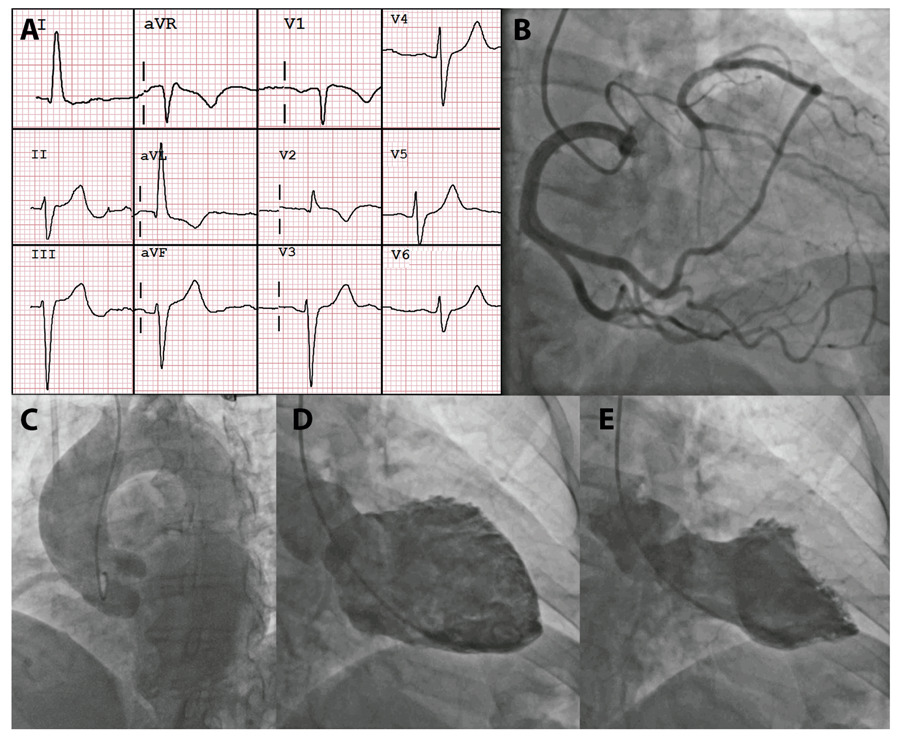
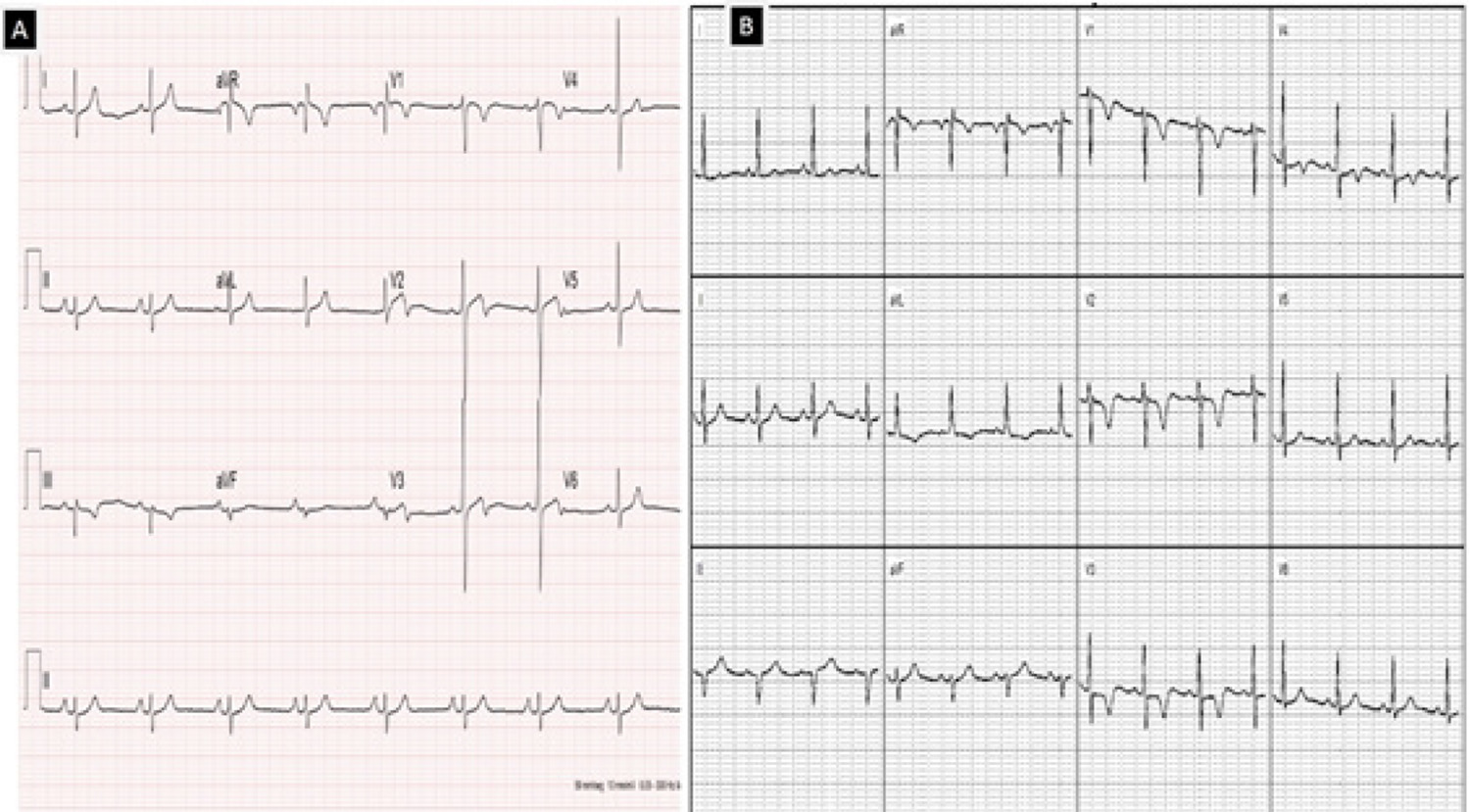
A 58-years-old female patient was admitted with retrosternal chest pain described as a continuous, oppressive tightness that had started two days earlier, after a tooth extraction procedure performed under ineffective local anesthesia. The patient’s past medical history included diabetes, dyslipidemia, and ovarian cancer, and she was receiving aspirin, rosuvastatin, metformin, dapagliflozin, and semaglutide. Physical examination was unremarkable. The chest pain protocol was initiated, and the initial electrocardiogram showed sinus rhythm with left anterior fascicular block, early repolarization in the inferior leads, and T-wave inversion in aVL, V1, and V2 (). The patient received 5 mg of sublingual isosorbide dinitrate, and blood samples were collected for laboratory testing. High-sensitivity troponin T (hs-cTnT) was 171 ng/L, confirming myocardial injury. An initial diagnosis of non–ST-elevation myocardial infarction (NSTEMI) was made, and the patient underwent coronary angiography (CA) for anatomic assessment ( / Video S1).

[…]

  • Coronary Angiography
  • Coronary Vessels
  • Echocardiography
  • Magnetic Resonance Imaging
  • Takotsubo Cardiomyopathy
Read Full Article
Creative Commons Attribution (CC BY) Creative Commons license
17/07/2026 DOI: 10.36660/abcimg.20260023i Views 1
IJCS
Editorial

From Right to Left Radial Access in Older Patients: Are We Witnessing the Next Procedural Shift?

Sandro Cadaval Gonçalves

The steady rise in percutaneous coronary interventions performed in older patients reflects not only demographic trends but also the growing body of evidence supporting the effectiveness of invasive strategies in this population. Three decades ago, the femoral approach was the undisputed standard. Early reports of transradial access in the early 1990s were met with skepticism, mainly due to concerns about procedural complexity and unfamiliarity with the required technical adjustments. Over time, radial access became the preferred approach. The transition from radial to femoral access offered elderly patients a clear reduction in bleeding and vascular complications. Operators naturally shifted from right femoral to right radial access, remaining on the same side of the patient and often overlooking the more distant left side. As a result, right radial access (RRA) became the default. The choice between RRA and left radial access (LRA) is often driven by habit, operator ergonomics, equipment availability, and catheterization laboratory setup. Emerging evidence suggests this decision warrants closer consideration. In older patients, atherosclerotic and tortuous changes in the subclavian and brachiocephalic arteries are disproportionately more common on the right side. A left radial approach may reduce technical challenges, potentially shortening procedure time and lowering radiation exposure and contrast volume.,

In this issue of the International Journal of Cardiovascular Sciences, Gonçalves et al. shed light on this important topic. In an elegant and technically well-performed systematic review and meta-analysis, including 1,094 patients from three randomized trials and one observational study, the authors provide compelling evidence to reconsider the choice of radial access in elderly patients. While numerous previous reviews have compared LRA and RRA, this study is unique in its exclusive focus on the elderly population. The analysis included studies involving patients aged ≥70 years undergoing diagnostic or therapeutic coronary procedures, comparing RRA and LRA, and reporting at least one of three outcomes: fluoroscopy time, contrast volume, and procedural difficulty.

[…]

  • Aged
  • Coronary Angiography
  • Radial Artery
Read Full Article
Creative Commons Attribution (CC BY) Creative Commons license
27/04/2026 DOI: 10.36660/ijcs.20250195
ABCIC
Editorial

Coronary CT Angiography in 2025: Long-Term Evidence, Artificial Intelligence, and the Photon-Counting Era

Tiago A. Magalhães

Coronary CT Angiography (CCTA) has become established as a first-line test in the evaluation of chest pain, supported by robust evidence of prognostic impact, advances in Artificial Intelligence (AI), and technological evolution with photon-counting CT. Publications in 2025 reposition CCTA as a central platform for risk stratification and therapeutic guidance in coronary artery disease.

The 10-year follow-up of the SCOT-HEART trial represents a major milestone in this process. Among 4,146 patients with stable chest pain randomized to standard care with or without CCTA, there was a sustained reduction in death from coronary heart disease or nonfatal myocardial infarction in the CCTA-guided group (HR 0.79; 95% CI 0.63–0.99). Although revascularization rates did not differ between groups, the use of preventive therapies was more intensive and consistently maintained over time in the CCTA arm. These findings demonstrate that the direct identification of atherosclerosis leads to more aggressive preventive interventions, with durable effects on clinical outcomes, establishing CCTA as a disease-modifying tool in chronic coronary syndromes.

[…]

  • Coronary Angiography
  • Coronary Artery Disease
  • Tomography
Read Full Article
Creative Commons Attribution (CC BY) Creative Commons license
04/03/2026 DOI: 10.36660/abcimg.20250106i Views 8
ABC
Original Article

Estimating Left Main Bifurcation Geometry: Are Geometric Models Reliable in Diseased Arteries?

Stefano Garzon et al. Lucas Pilotto José Mariani Felipe Bezerra … Guy Prado Willterson Bandeira Breno Almeida Pedro Lemos

Abstract

Background:

Accurate characterization of coronary bifurcation geometry is essential for planning and optimizing percutaneous coronary interventions. Although several geometric models have been proposed to predict coronary bifurcation dimensions, their performance in diseased vessels remains insufficiently explored.

Objective:

To assess the accuracy and precision of three geometric prediction models (Murray, Finet, and Huo–Kassab) in estimating left main coronary artery (LMCA) bifurcation diameters, using quantitative coronary angiography (QCA) and intravascular ultrasound (IVUS) as reference standards.

Methods:

This retrospective, single-center study included 13 patients undergoing IVUS evaluation of the LMCA, left anterior descending artery, and left circumflex artery. Bifurcation diameters predicted by each geometric model were compared with measurements obtained by QCA and IVUS. Accuracy, precision, and model ratios were calculated for each comparison. Agreement between predicted and measured values was further assessed using Bland–Altman analysis.

Results:

When compared with QCA, the Murray and Huo–Kassab models demonstrated higher accuracy (0.06 mm and −0.03 mm, respectively) and similar precision (0.95 mm for both) than the Finet model (accuracy −0.35 mm, precision 0.96 mm). In comparisons with IVUS, the Murray model showed the best performance, with an accuracy of −0.49 mm and a precision of 0.84 mm. Bland–Altman analysis indicated superior agreement for the Murray model, particularly when IVUS was used as the reference standard.

Conclusions:

In this population of patients with moderately diseased LMCA bifurcations, the Murray and Huo–Kassab models provided more accurate geometric predictions than the Finet model. Overall, the Murray model demonstrated the best performance, especially in IVUS-based assessments.

  • Coronary Angiography
  • Coronary Artery Disease
  • Coronary Vessels
Read Full Article
Creative Commons Attribution (CC BY) Creative Commons license
02/03/2026 DOI: 10.36660/abc.20250605i Views 1
Figure 1
ABC
Research Letter

Coronary-Cavitary Fistula, an Unusual Cause of Heart Failure

Hernán Patricio García Mejía et al. Matheus Carvalho Alves Nogueira Bruno Mahler Mioto Nilson Tavares Poppi … Luiz Antonio Machado Cesar Luhanda Leonora Cardoso Monti Sousa Luís Roberto Palma Dallan

Introduction

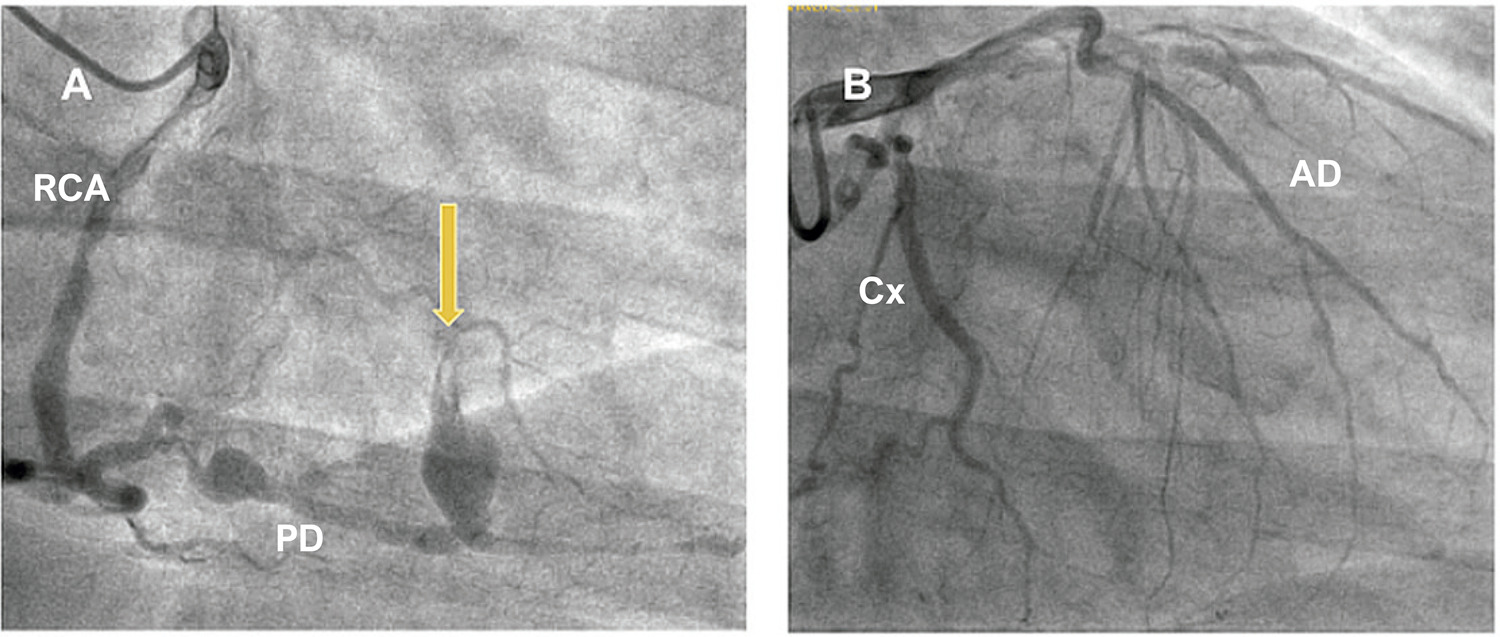
Coronary fistulas (CFs) are defined as a direct anomalous connection between one or more coronary arteries with a large vessel or cardiac chamber. Most CFs drain into a lower pressure system, such as the right ventricle (RV) 40%, right atrium (RA) 26%, pulmonary artery (PA) 17%, coronary sinus 7%, and vena cava 1%. The clinical presentation will depend on the location and volume of the shunt generated by the fistula. Approximately 50% of cases are asymptomatic and, when present, may include dyspnea, palpitations, chest pain, or, in more severe cases, heart failure (HF), acute coronary syndromes, and arrhythmias.,

[…]

  • Coronary Angiography
  • Fistula
  • Heart Failure
  • Myocardial Ischemia
Read Full Article
Creative Commons Attribution (CC BY) Creative Commons license
04/04/2025 DOI: 10.36660/abc.20240809i Views 2
Distal Transradial Access for Coronary Procedures: Insights from 6,800 Consecutive All-Comers Patients from the DISTRACTION Registry
IJCS
Original Article

Distal Transradial Access for Coronary Procedures: Insights from 6,800 Consecutive All-Comers Patients from the DISTRACTION Registry

Marcos Danillo Oliveira et al. Ricardo Fonseca Oliveira Suruagy Motta Adriano Caixeta

Abstract

Background:

Distal transradial access (dTRA), an improvement of the conventional proximal transradial access (pTRA), has advantages in terms of faster hemostasis and lower rates of proximal radial artery occlusion (RAO).

Objectives:

We aim to describe our real-world experience with dTRA as the default approach for routine coronary angiography and percutaneous coronary interventions (PCI) in a large-scale sample of all-comers patients.

Methods:

From February 2019 to April 2024, 6,800 consecutive patients undergoing coronary procedures via dTRA were enrolled in the DISTRACTION (DIStal TRAnsradial access as default approach for Coronary angiography and intervenTIONs) Registry.

Results:

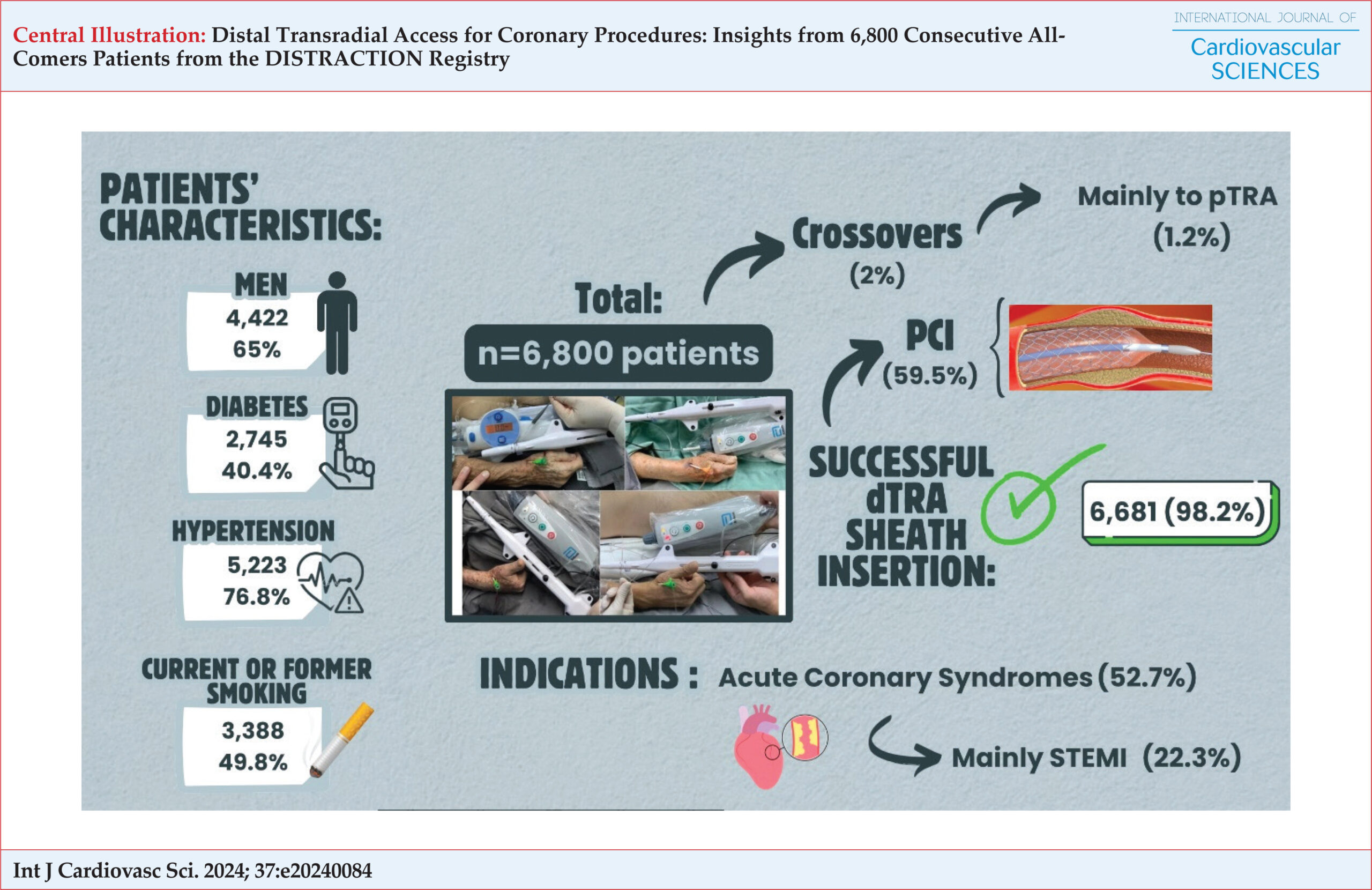
Mean patient age was 63.8 ± 15.7 years; 65% were male. Overall, 20.8% of patients had non-ST-elevation myocardial infarction (NSTEMI); 22.3% had ST-elevation myocardial infarction (STEMI), and 2.5% presented in cardiogenic shock. There were only 2% access site crossovers, mainly to ipsilateral pTRA. In only 119 patients dTRA sheath insertion could not be obtained. Right dTRA was the most frequent access, followed by redo ipsilateral dTRA, left dTRA, and simultaneous bilateral dTRA. PCI was performed in 59.5% of all cases, and the left anterior descending artery was the most treated vessel. No significant access site-related bleeding and no hand/thumb dysfunction after any procedure were documented. There were neither major complications nor major adverse cerebrovascular and cardiac events directly related to dTRA.

Conclusions:

In this real-world large-scale registry of all-comers patients, the adoption of dTRA by proficient operators as the default for routine coronary angiography and interventions was safe and feasible.

  • Coronary Angiography
  • Percutaneous Coronary Intervention
  • Registries
Read Full Article
Creative Commons Attribution (CC BY) Creative Commons license
04/11/2024 DOI: 10.36660/ijcs.20240084 Views 1
Figure 1
IJCS
Original Article

Comparison of Chitosan-Containing Hemostatic Pad and Manual Compression after Coronary Angiography with Femoral Access

Raif Kiliç et al. Tuncay Güzel Adem Aktan Ahmet Ferhat Kaya

Abstract

Background

Femoral access remains a common choice in coronary angiography due to its easy accessibility and high success rate. Various techniques exist for achieving hemostasis following femoral artery catheterization.

Objectives

The aim of our study is to compare the methods of chitosan-containing hemostatic pad (HP) and manual compression (MC) in terms of efficacy and safety in patients undergoing percutaneous coronary intervention (PCI) with coronary angiography via femoral access.

Method

A total of 204 patients from 3 centers were included in our study between August 2021 and June 2023. The patients were divided into 2 groups, HP and MC, with 102 patients in each. Patients were evaluated for back and low back pain, complications, and duration of hemostasis immediately after angiography and up to 24 hours. Student’s t test and Mann-Whitney U test were used for numerical variables, while chi-square test was used for categorical variables. P < 0.05 was considered statistically significant.

Results

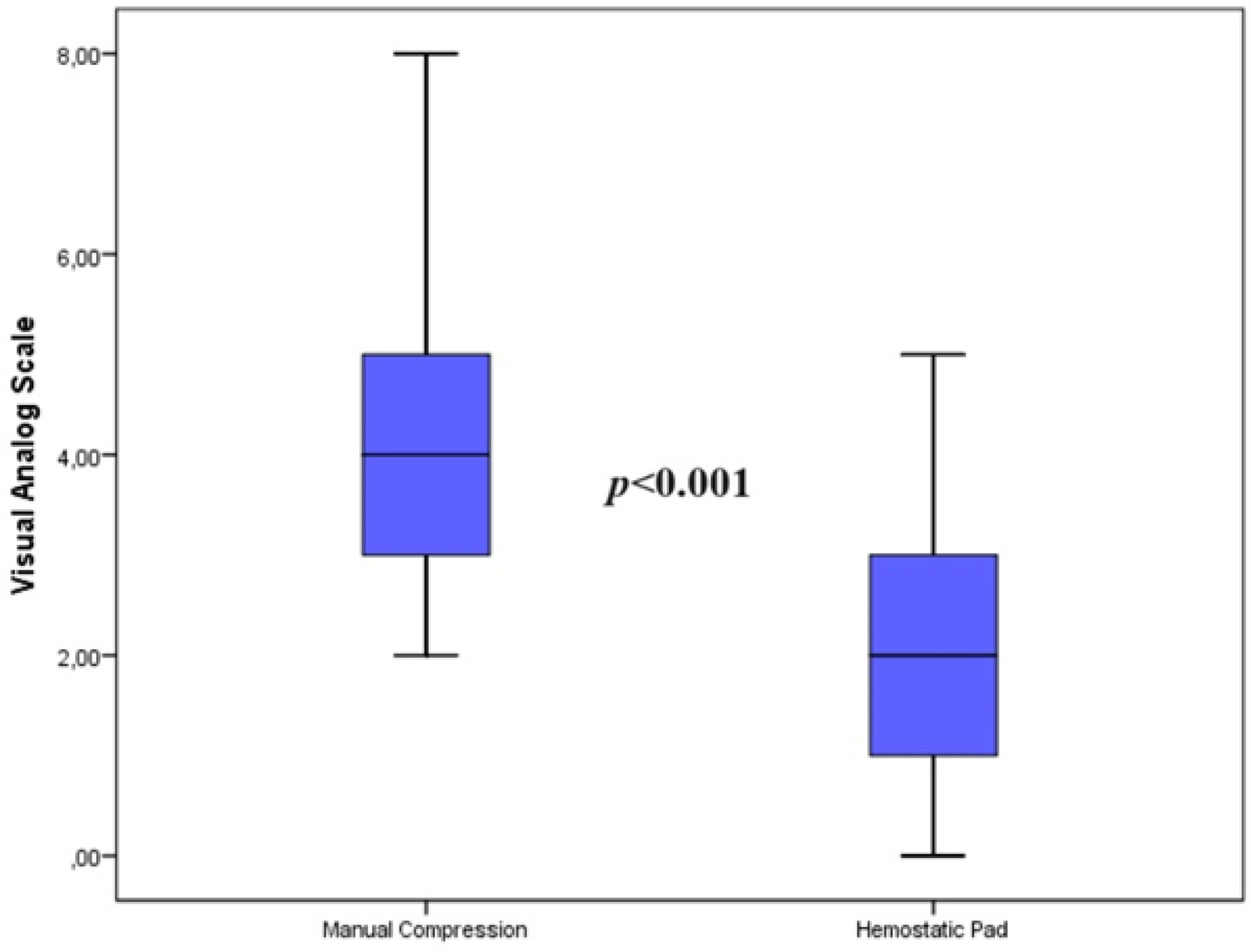
Hemostasis time and back and low back pain were significantly lower in the HP group (7.5 ± 1.1 versus 15.1 ± 1.6, p < 0.001 and 2.13 ± 1.29 versus 4.22 ± 1.69, p < 0.001, respectively). While ecchymosis was found to be significantly lower in the HP group (2.9% versus 14.7%, p = 0.003), there was no significant difference in terms of other complications.

Conclusion

HP was found to be more advantageous than MC in patients who underwent coronary angiography with femoral access. While ecchymosis and back and low back pain were found to be lower in the HP group, the absence of the need for sandbags also increases patient comfort.

  • Chitosan
  • Coronary Angiography
  • Hemostatics
Read Full Article
Creative Commons Attribution (CC BY) Creative Commons license
19/08/2024 DOI: 10.36660/ijcs.20240020
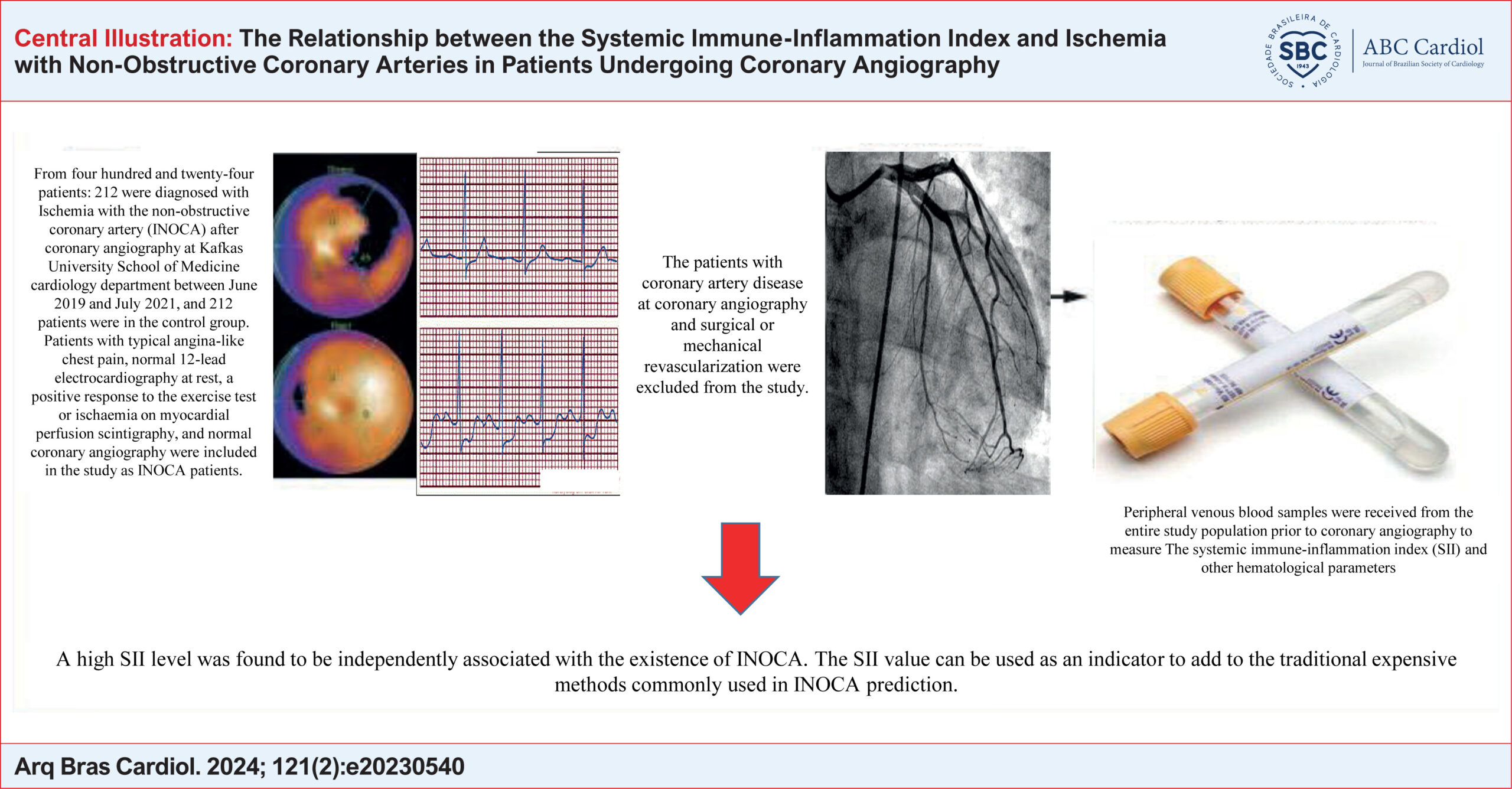
The Relationship between the Systemic Immune-Inflammation Index and Ischemia with Non-Obstructive Coronary Arteries in Patients Undergoing Coronary Angiography
ABC
Original Article

The Relationship between the Systemic Immune-Inflammation Index and Ischemia with Non-Obstructive Coronary Arteries in Patients Undergoing Coronary Angiography

Muammer Karakayali et al. Mehmet Altunova Turab Yakisan Serkan Aslan … Timor Omar Inanc Artac Doğan Ilis Ayca Arslan Zihni Cagin Yavuz Karabag Ibrahim Rencuzogullari

Abstract

Background:

Ischemia with the non-obstructive coronary artery (INOCA) is an ischemic heart disease that mostly includes coronary microvascular dysfunction and/or epicardial coronary vasospasm due to underlying coronary vascular dysfunction and can be seen more commonly in female patients. The systemic immune-inflammation index (SII, platelet × neutrophil/lymphocyte ratio) is a new marker that predicts adverse clinical outcomes in coronary artery disease (CAD).

Objective:

This study aims to investigate the relationship between INOCA and SII, a new marker associated with inflammation.

Methods:

A total of 424 patients (212 patients with INOCA and 212 normal controls) were included in the study. Peripheral venous blood samples were received from the entire study population prior to coronary angiography to measure SII and other hematological parameters. In our study, the value of p<0.05’ was considered statistically significant.

Results:

The optimal cut-off value of SII for predicting INOCA was 153.8 with a sensitivity of 44.8% and a specificity of 78.77% (Area under the curve [AUC]: 0.651 [95% CI: 0.603–0.696, p=0.0265]). Their ROC curves were compared to assess whether SII had an additional predictive value over components. The AUC value of SII was found to be significantly higher than that of lymphocyte (AUC: 0.607 [95% CI: 0.559–0.654, p = 0.0273]), neutrophil (AUC: 0.559 [95%CI: 0.511–0.607, p=0.028]) and platelet (AUC: 0.590 [95% CI: 0.541–0.637, p = 0.0276]) in INOCA patients.

Conclusions:

A high SII level was found to be independently associated with the existence of INOCA. The SII value can be used as an indicator to add to the traditional expensive methods commonly used in INOCA prediction.

  • Coronary Angiography
  • Coronary Artery Disease
  • Ischemia
Read Full Article
Creative Commons Attribution (CC BY) Creative Commons license
05/04/2024 DOI: 10.36660/abc.20230540 Views 2
Figure 1
ABC
Image

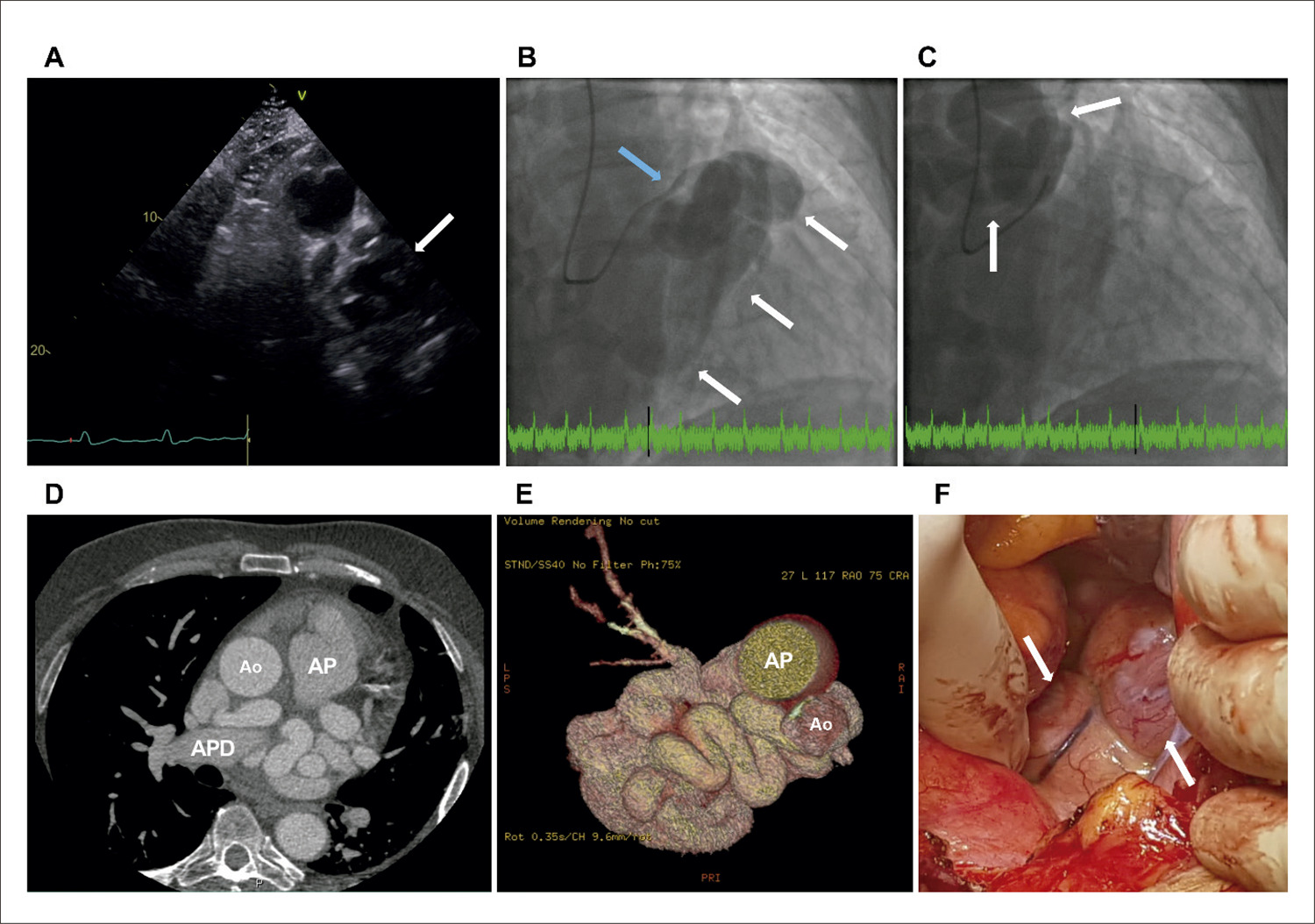
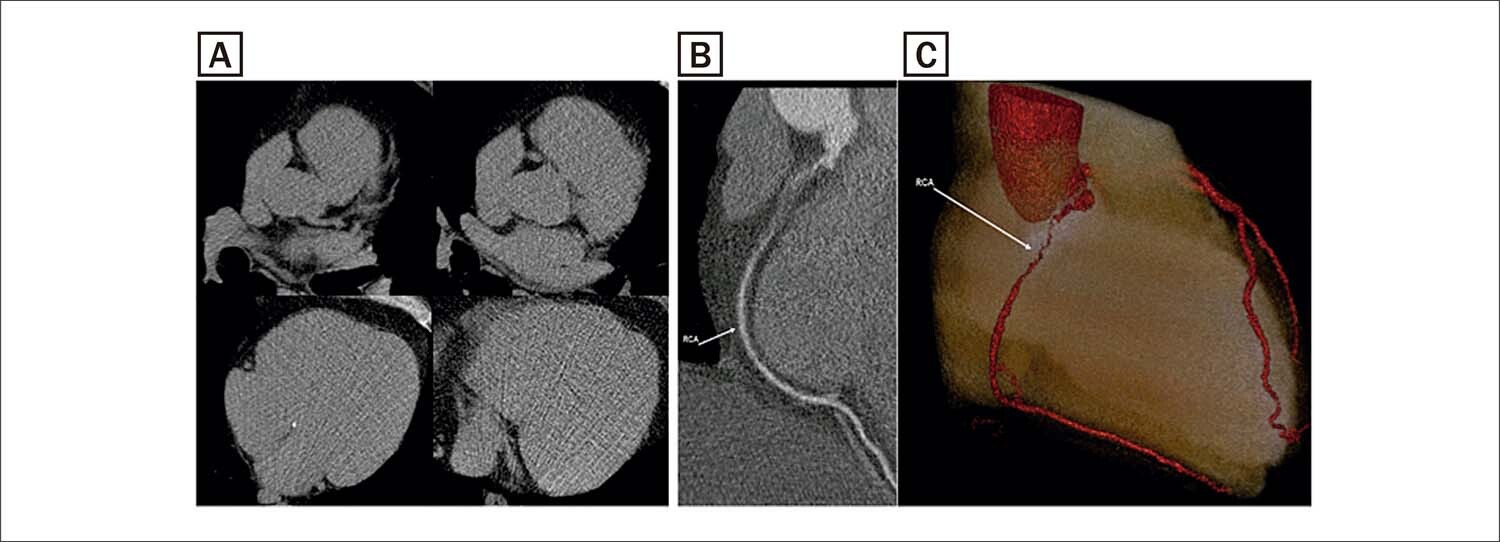
A Rare Coronary Anomaly in the Adult: Large-Caliber Arteriovenous Fistula

Pedro Garcia Brás et al. Duarte Cacela Rui Cerejo Rui Rodrigues

Case description

A 57-year-old Caucasian male patient with a past medical history of hypertension and pulmonary emphysema presented to the Cardiology outpatient clinic with exertional dyspnea, peripheral edema, orthopnea, and new-onset atrial fibrillation, with a III/VI continuous murmur, raising the possibility of an intrathoracic arteriovenous communication.

A transthoracic echocardiogram revealed a dilated left ventricle with mildly reduced global systolic function (ejection fraction of 44%), biatrial enlargement, and mild pericardial effusion. Notably, this study showed multiple ‘rosary-like’ folds (, , Supplementary Videos S1-S2) with color Doppler flow, revealing a possible coronary fistula. The Qp/Qs ratio was normal. ,

[…]

  • Arteriovenous Fistula
  • Computerized Tomography Coronary Angiogram
  • Coronary Angiography
  • Coronary Disease
  • Echocardiography
Read Full Article
Creative Commons Attribution (CC BY) Creative Commons license
26/02/2024 DOI: 10.36660/abc.20230307 Views 2
Clinical Profile and its Associations with Coronary Angiography Results in a Public University Hospital
IJCS
Original Article

Clinical Profile and its Associations with Coronary Angiography Results in a Public University Hospital

Guilherme Costa et al. Esmeralci Ferreira Denilson Campos Albuquerque

Abstract

Background:

Ischemic heart disease is one of the most common causes of death worldwide. There are few data in the literature about the association of clinical profile and coronary angiography results in the Brazilian population.

Objectives:

To assess clinical variables and their associations with the results of coronary angiography and to evaluate the safety of coronary angiography in a public university hospital.

Methods:

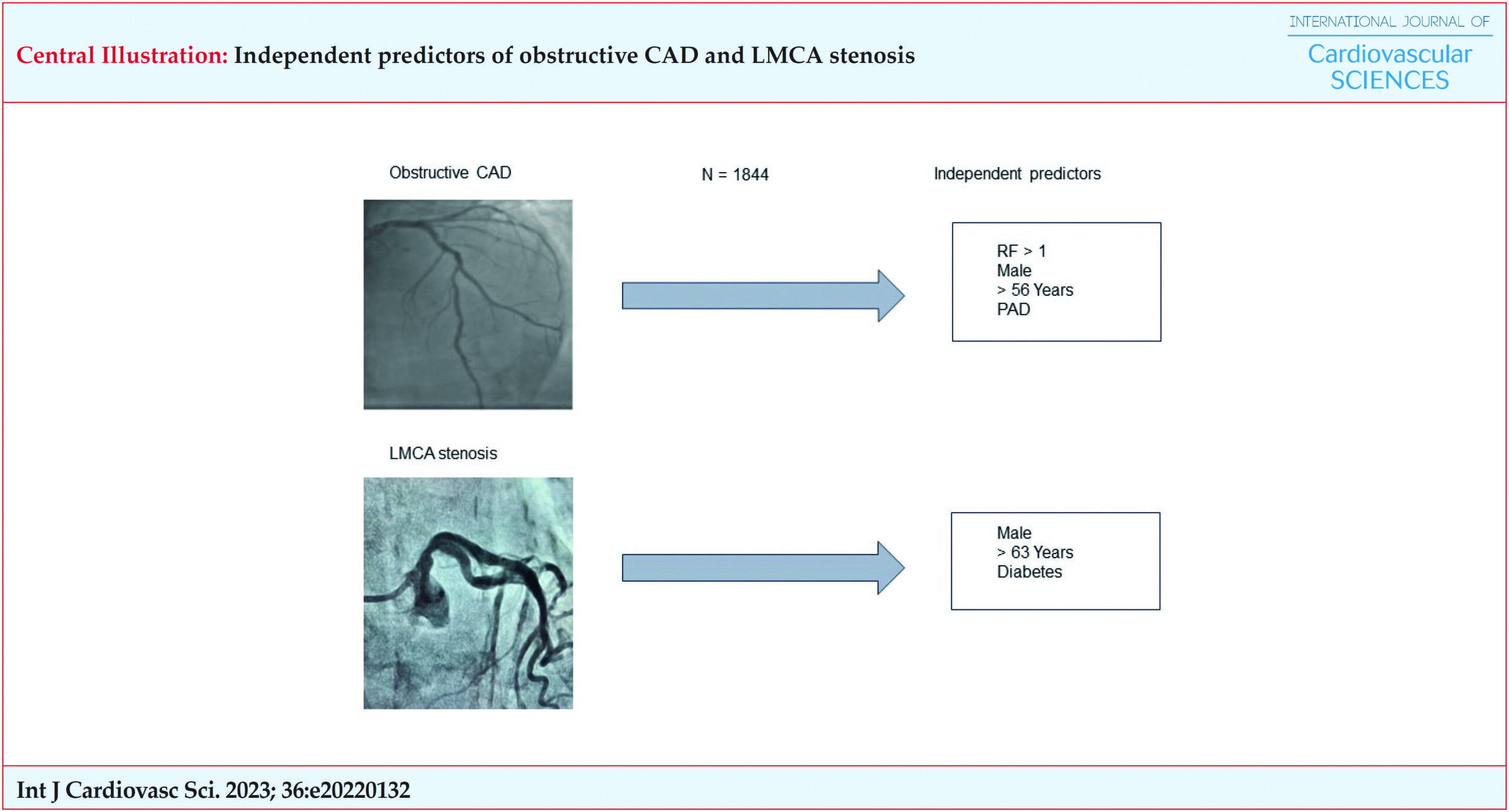
From August 2015 to April 2018, 1 844 patients submitted to coronary angiography at the Pedro Ernesto University Hospital (HUPE, acronym in Portuguese) were enrolled in this cross-sectional study. They were evaluated by their clinical variables, angiographic results, and procedure complications. Logistic regression was used, and the criterion for determining significance was set at 5%.

Results:

The median age was 62 years, and most of the population (71%) were outpatients. Stable angina was the most common indication (62.9%). Only 19.7% underwent noninvasive cardiac testing. Arterial hypertension was the most prevalent (88.2%), followed by dyslipidemia (60.2%). Most patients (65%) had obstructive coronary artery disease (CAD). Left main coronary artery (LMCA) stenosis was found in 8.1% of patients. Older age, male sex, quantity of risk factors (RF), and peripheral artery disease were risk predictors for CAD. Death occurred only in 0.16% of the population, and acute coronary artery occlusion in 0.2%.

Conclusion:

Classic RF showed an association with CAD. The low incidence of complications suggests that coronary angiography is a safe procedure to be conducted in a public university hospital.

  • Coronary Angiography
  • Coronary Artery Disease
  • Risk Factors
Read Full Article
Creative Commons Attribution (CC BY) Creative Commons license
27/11/2023 DOI: 10.36660/ijcs.20220132 Views 1
Figure 1
ABC
Original Article

Brazilian Registry of Interventional Cardiology during the COVID-19 Pandemic (RBCI-COVID19)

Viviana Guzzo Lemke et al. Maria Sanali Souza Paiva Giordana Zeferino Mariano Thales Siqueira Alves … Esmeralci Ferreira Leonardo Avany Nunes Flavio Roberto Azevedo Oliveira Rodrigo Cantarelli Emilia Matos do Nascimento Gláucia Maria Moraes de Oliveira

Abstract

Background

At the beginning of the COVID-19 pandemic, patients with myocardial infarction (MI) took longer to present to hospitals because of fear of contamination and health care access difficulties.

Objectives

To assess interventional cardiology procedures performed during the COVID-19 pandemic and its implications for MI approach.

Methods

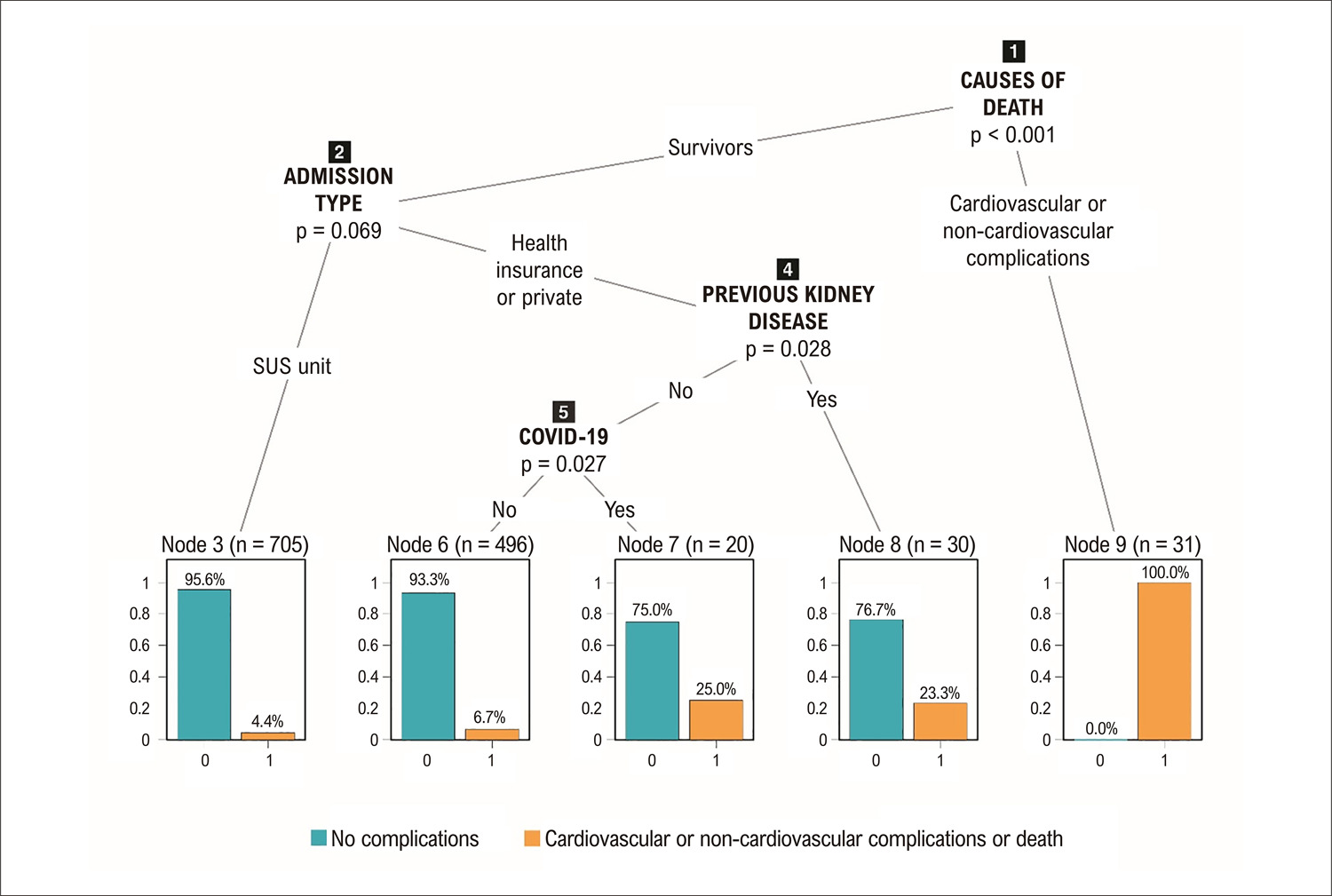
Prospective registry of 24 cardiac catheterization laboratories in Brazil, with adult patients undergoing interventional cardiology procedures between May 26 and November 30, 2020. The outcomes were cardiovascular (CV) and non-CV complications, death, and MI. Concomitant COVID-19 was confirmed using RT-PCR. Machine learning techniques were used with nonparametric Classification Trees models, and Simple Correspondence Analysis, with R statistical software package. Significance level adopted of 5%.

Results

This study included 1282 patients, 435 of whom (33.9%) had MI as follows: ST-segment elevation MI (STEMI), 239 (54.9%); and non-ST-segment elevation MI (NSTEMI), 196 (45.1%). Of the 1282 patients, 29 had CV complications, 47 had non-CV complications, and 31 died. The diagnosis of COVID-19 was confirmed in 77 patients (6%), with 15.58% mortality and non-CV complications in 6.49%. Most patients had significant coronary artery disease (63%), and an intracoronary thrombus was more often found in the presence of STEMI (3.4%) and COVID-19 (4%). A door-to-table time longer than 12 hours in NSTEMI was associated with 30.8% of complications, 25% in COVID-19 patients.

Conclusions

All deaths were preceded by CV or non-CV complications. The presence of COVID-19 was associated with death and non-fatal complications of patients undergoing interventional cardiology procedures during the pandemic.

  • Coronary Angiography
  • Coronary Artery Disease
  • COVID-19
  • Myocardial Infarction
  • Percutaneous Coronary Intervention
Read Full Article
Creative Commons Attribution (CC BY) Creative Commons license
01/09/2023 DOI: 10.36660/abc.20220840 Views 2
Figure 1
ABC
Original Article

Predicting Significant Coronary Obstruction in a Population with Suspected Coronary Disease and Absence of Coronary Calcium: CORE-64 / CORE320 Studies

Anderson C. Armstrong et al. Rodrigo Cerci Matthew B. Matheson Tiago Magalhães … Satoru Kishi Jeff Brinker Melvin E. Clouse Carlos E. Rochitte Christopher Cox João A. C. Lima Armin Arbab-Zadeh

Abstract

Background

Coronary artery calcium (CAC) scanning can be performed using non-contrast computed tomography to predict cardiovascular events, but has less value for risk stratification in symptomatic patients.

Objective

To identify and validate predictors of significant coronary obstruction (SCO) in symptomatic patients without coronary artery calcification.

Methods

A total of 4,258 participants were screened from the CORE64 and CORE320 studies that enrolled patients referred for invasive angiography, and from the Quanta Registry that included patients referred for coronary computed tomography angiography (CTA). Logistic regression models evaluated associations between cardiovascular risk factors, CAC, and SCO. An algorithm to assess the risk of SCO was proposed for patients without CAC. Significance level of 5% was used in the analyses.

Results

Of the 509 participants of the CORE study, 117 (23%) had zero coronary calcium score; 13 (11%) patients without CAC had SCO. Zero calcium score was related to younger age, female gender, lower body mass index, no diabetes, and no dyslipidemia. Being a current smoker increased ~3.5 fold the probability of SCO and other CV risk factors were not significantly associated. Considering the clinical findings, an algorithm to further stratify zero calcium score patients was proposed and had a limited performance in the validation cohort (AUC 58; 95%CI 43, 72).

Conclusion

A lower cardiovascular risk profile is associated with zero calcium score in a setting of high-risk patients. Smoking is the strongest predictor of SCO in patients without CAC.

  • Chest Pain
  • Coronary Angiography
  • Coronary Artery Disease / complications
  • Diagnostic Imaging/methods
  • Indice Calcio
  • Tomography
  • X-Ray Computed/methods
Read Full Article
Creative Commons Attribution (CC BY) Creative Commons license
20/03/2023 DOI: 10.36660/abc.20220183
Figure 1
ABC
Original Article

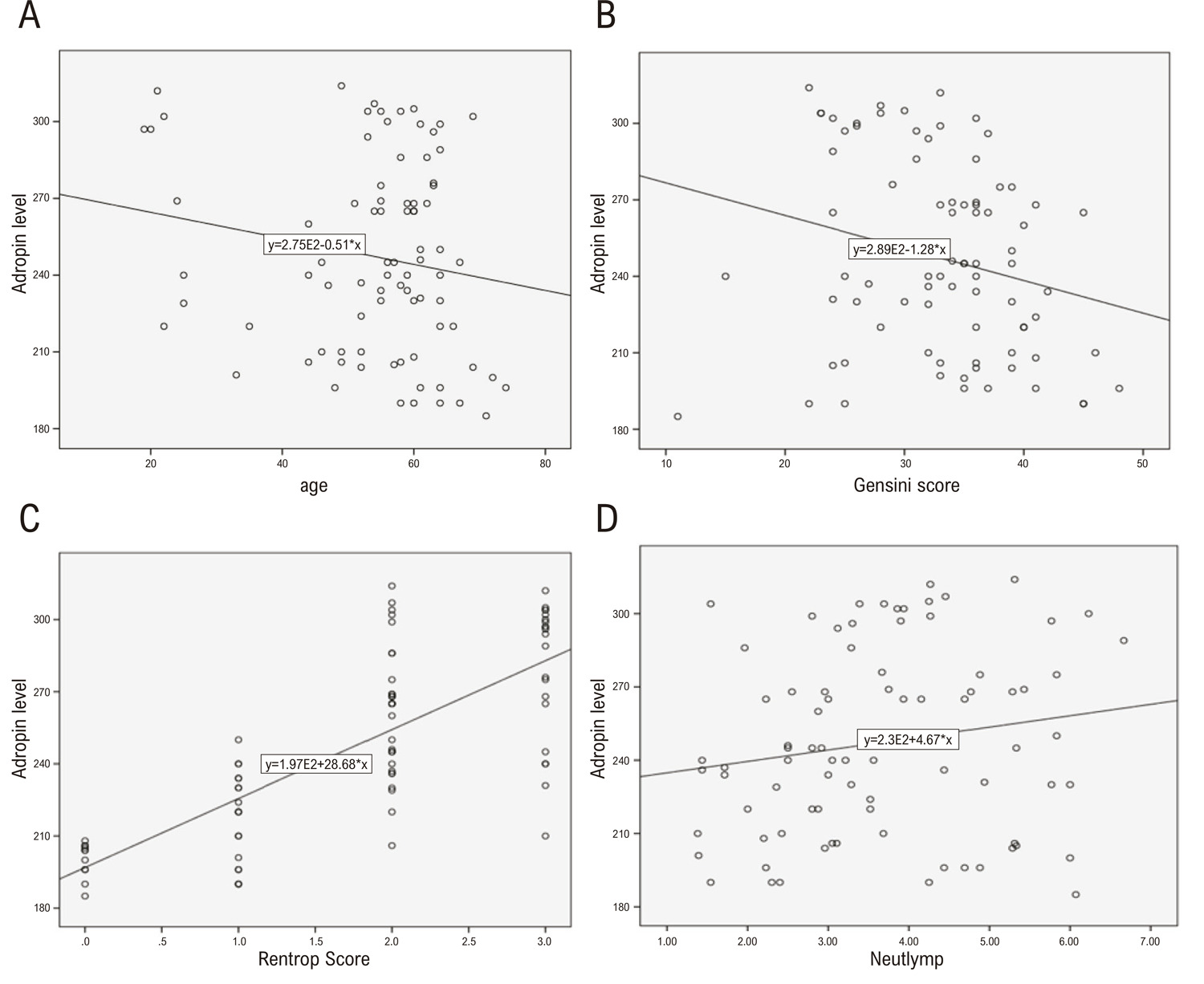
Assessment of the Relationship Between the Adropin Levels and the Coronary Collateral Circulation in Patients wıth Chronic Coronary Syndrome

Hasan Akkaya et al. Ertuğrul Emre Güntürk Fulya Akkaya Uğur Karabıyık … İnayet Güntürk Samet Yılmaz

Abstract

Background

Coronary collateral circulation (CCC) provides an alternative blood flow to myocardial tissue exposed to ischemia and helps to preserve myocardial functions. Endothelial-derived nitric-oxide (NO) production and vascular endothelial growth factor (VEGF) have been suggested as the most important factors in the development of CCC. Adropin is a peptide hormone responsible for energy hemostasis, and is known for its positive effects on the endothelium through NO and VEGF.

Objective

The aim of this study is to investigate the association between adropin and the presence of CCC in patients with chronic coronary syndrome (CCS).

Methods

A total of 102 patients with CCS, who had complete occlusion of at least one major epicardial coronary artery, were included in the study and were divided into two groups: the group of patients (n:50) with poor CCC (Rentrop 0-1) and the group of patients (n:52) with good CCC (Rentrop 2-3). The level of significance adopted in the statistical analysis was 5%.

Results

Mean adropine levels were found as 210.83±17.76 pg/mL and 268.25±28.94 pg/mL in the poor and good CCC groups, respectively (p<0.001). Adropin levels proved to be positively correlated with neutrophil-to-lymphocyte ratios (r:0.17, p:0.04) and the rentrop scores (r:0.76, p<0.001), and negatively correlated with age (r:-0.23, p:0.01) and Gensini scores (r:-0.19, p:0.02). Adropin level is a strong independent predictor of good CCC development (OR:1.12, 95% CI:(1.06–1.18), p<0.001).

Conclusion

This study suggests that adropin levels may be a possible factor associated with the presence of CCC in CCS patients.

  • Acute coronary syndrome
  • Adropin
  • Atherosclerosis
  • Coronary Angiography
  • Coronary Artery Diseases
  • Coronary Collateral Circulation
  • Diagnostic Imaging
  • Peptides
Read Full Article
Creative Commons Attribution (CC BY) Creative Commons license
27/06/2022 DOI: 10.36660/abc.20210573 Views 1
ABCIC
Viewpoint

Coronary Tomography Angiography and a New View on How to Investigate Coronary Artery Disease — New English Guideline

Marcio Sommer Bittencourt

[…]

  • Chest Pain/diagnostic imaging
  • Coronary Angiography
  • Coronary Artery Disease/physiopathology
  • Coronary, Angiotomography
  • Echocardiography, Stress
Read Full Article
Creative Commons Attribution (CC BY) Creative Commons license
20/01/2022 DOI: 10.5935/2318-8219.20180019 Views 1
Figure 1
ABC
Original Article

Physiology or Angiography-Guided Coronary Artery Bypass Grafting: A Meta-Analysis

José Martins et al. Vera Afreixo Luís Santos Luís Fernandes Ana Briosa

Abstract

Background:

While invasive coronary angiography is considered the gold standard for the diagnosis of coronary artery disease (CAD) involving the epicardial coronary vessels, coronary physiology-guided revascularization represents a contemporary gold-standard practice for the invasive management of patients with intermediate CAD. Nevertheless, the long-term results of assessing the severity of stenosis through physiology compared to the angiogram as the guide to bypass surgery – coronary artery bypass grafting (CABG) are still uncertain. This meta-analysis aims to assess the clinical outcomes of a physiology guided CABG compared to the angiography-guided CABG.

Objectives:

We sought to determine if outcomes differ between a physiology guided CABG compared to an angiography-guided CABG.

Methods:

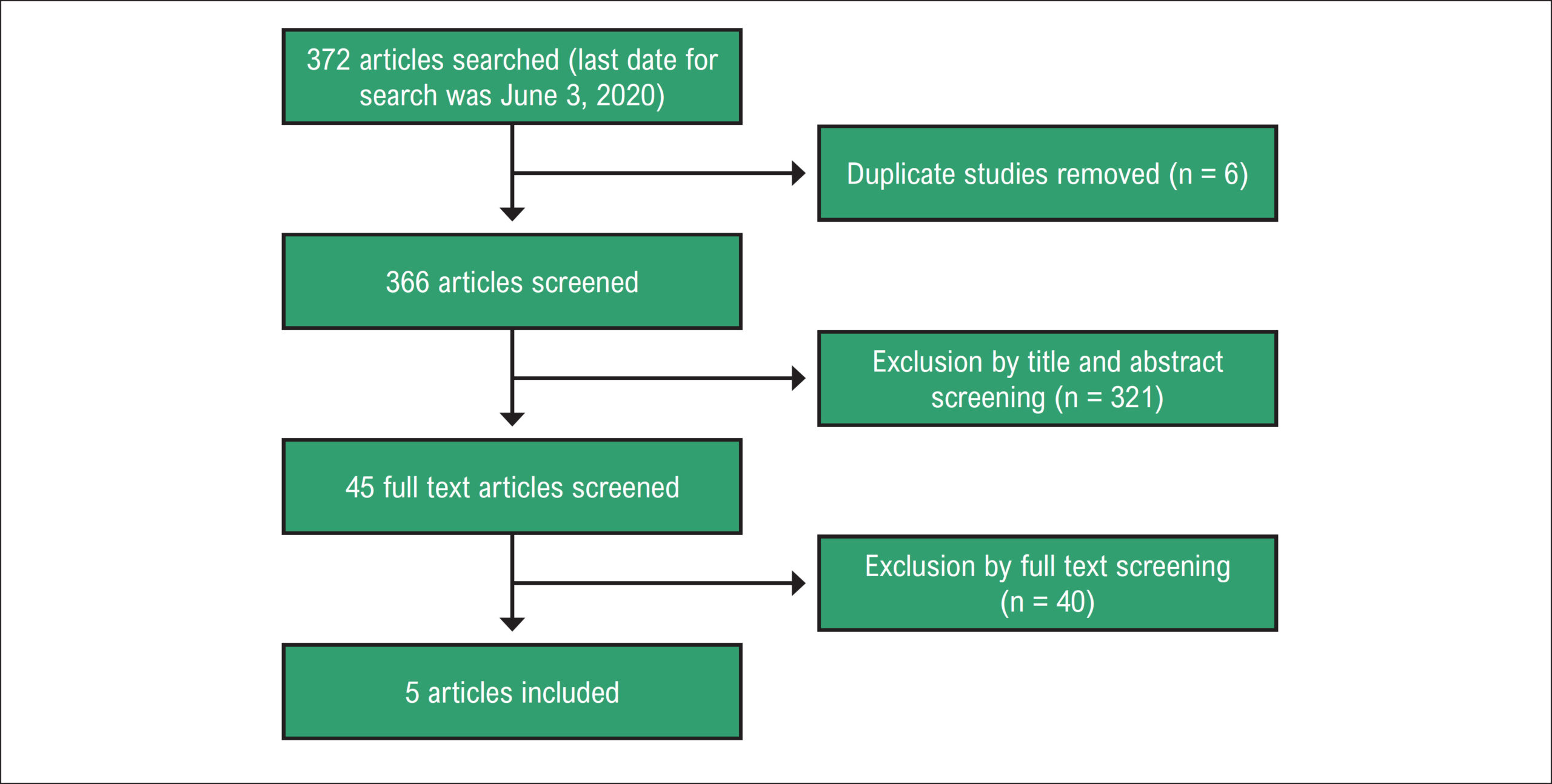
We searched Medline, EMBASE, and the Cochrane Library. The last date for this search was June 2020, and all of the previous studies were included. We conducted a pooled risk-ratio meta-analysis for four main outcomes: all-cause death, myocardial infarction (MI), target vessel revascularization (TVR) and major adverse cardiovascular events (MACE). P-value <0.05 was considered as statistically significant. Heterogeneity was assessed with Cochran's Q test and quantified by the I2 index.

Results:

We identified five studies that included a total of 1,114 patients. A pooled meta-analysis showed no significant difference between a physiology guided strategy and an angiography-guided strategy in MI (risk ratio [RR] = 0.72; 95%CI, 0.39–1.33; I2 = 0%; p = 0.65), TVR (RR = 1.25; 95%CI = 0.73–2.13; I2 = 0%; p = 0.52), or MACE (RR = 0.81; 95%CI = 0.62–1.07; I2 = 0%; p = 1). The physiology guided strategy has 0.63 times the risk of all-cause death compared to the angiography-guided strategy (RR = 0.63; 95%CI = 0.42–0.96; I2 = 0%; p = 0.55).

Conclusion:

This meta-analysis demonstrated a reduction in all-cause death when a physiology guided CABG strategy was used. Nevertheless, the short follow-up period, small sample size of the included studies and the non-discrimination of the causes of death can largely justify these conclusions. Studies with an extended follow-up period of observation are required to draw more robust and definitive conclusions.

  • Angiography
  • Coronary Angiography
  • Coronary Artery Bypass
  • Coronary Artery Disease
  • Coronary Artery/physiology
  • Metanalysis
Read Full Article
Creative Commons Attribution (CC BY) Creative Commons license
03/12/2021 DOI: 10.36660/abc.20200763 Views 1
IJCS
Editorial

Back to The Future: How To Define Prognosis in MINOCA?

Luiz Eduardo Fonteles Ritt et al. Mateus dos Santos Viana

Myocardial Infarction with non-Obstructive Coronary Arteries (MINOCA) is the final diagnosis in 6-10% of all acute coronary syndromes (ACS). It is mostly present in female individuals. MINOCA was defined by the European Society of Cardiology (ESC) in 2017, and the Fourth Universal Definition of Myocardial Infarction (2018) further reinforced this concept. ,

Dreyer et al., analyzing Medicare data in the United States, determined an incidence for MINOCA of 5.9%. Lower rates of one-year MACE (1.7% vs 27.6%), mortality (12.3% vs 16.7%) and re-hospitalization for ACS (1.3% vs 6.1%) were observed in MINOCA compared with ACS with coronary obstruction. Although the prognosis of MINOCA seems to be better than conventional ACS, a better understanding of which conditions are associated with better or worse prognosis within the MINOCA spectrum is needed.

[…]

  • Acute coronary syndrome
  • Cardiovascular Diseases
  • Coronary Angiography
  • Coronary Artery Disease
  • Magnetic Resonance/diagnostic imaging
  • Myocardial Infarction
Read Full Article
Creative Commons Attribution (CC BY) Creative Commons license
01/11/2021 DOI: 10.36660/ijcs.20210229 Views 2
Figure 1
ABC
Original Article

Accuracy of Post-thrombolysis ST-segment Reduction as an Adequate Reperfusion Predictor in the Pharmaco-Invasive Approach

Henrique Tria Bianco et al. Rui Povoa Maria Cristina Izar Braulio Luna Filho … Flavio Tocci Moreira Edson Stefanini Henrique Andrade Fonseca Adriano Henrique Pereira Barbosa Claudia Maria Rodrigues Alves Adriano Mendes Caixeta Iran Gonçalves Jr Pedro Ivo de Marqui Moraes Renato Delascio Lopes Angelo Amato Vincenzo de Paola Dirceu Almeida Valdir Ambrosio Moises Francisco A. H. Fonseca

Abstract

Background

Primary percutaneous coronary intervention is considered the “gold standard” for coronary reperfusion. However, when not available, the drug-invasive strategy is an alternative method and the electrocardiogram (ECG) has been used to identify reperfusion success.

Objectives

Our study aimed to assess ST-Segment changes in post-thrombolysis and their power to predict recanalization and using the angiographic scores TIMI-flow and Myocardial Blush Grade (MBG) as an ideal reperfusion criterion.

Methods

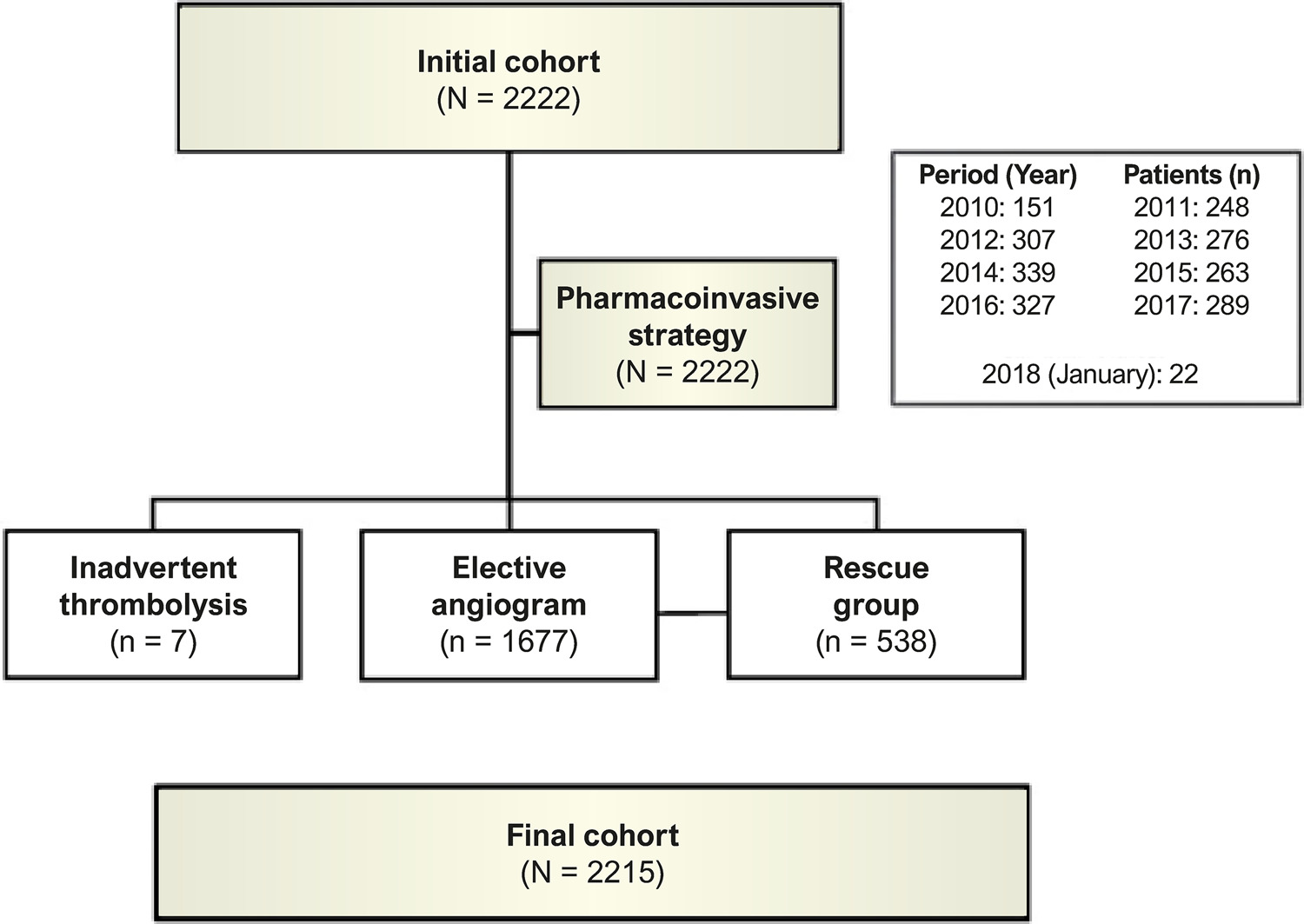
2,215 patients with ST-Segment Elevation Myocardial Infarction (STEMI) undergoing fibrinolysis [(Tenecteplase)-TNK] and referred to coronary angiography within 24 h post-fibrinolysis or immediately referred to rescue therapy were studied. The ECG was performed pre- and 60 min-post-TNK. The patients were categorized into 2 groups: those with ideal reperfusion (TIMI-3 and MBG-3) and those with inadequate reperfusion (TIMI and MBG 50%. A p-value <0.05 was considered for the analyses, with bicaudal tests.

Results

The ECG reperfusion criterion showed a positive predictive value of 56%; negative predictive value of 66%; sensitivity of 79%; and specificity of 40%. There was a weak positive correlation between ST-Segment reduction and ideal reperfusion angiographic data (r = 0.21; p <0.001) and low diagnostic accuracy, with an AUC of 0.60 (95%CI: 0.57-0.62).

Conclusion

The ST-Segment reduction was not able to accurately identify patients with adequate angiographic reperfusion. Therefore, even patients with apparently successful reperfusion should be referred to angiography soon, to ensure adequate macro and microvascular coronary flow.

  • Chest Pain
  • Coronary Angiography
  • Electrocardiography/methods
  • Myocardial Infarction
  • Myocardial Reperfusion
  • Percutaneous Coronary Intervention
  • Thrombolytic Therapy
Read Full Article
Creative Commons Attribution (CC BY) Creative Commons license
26/07/2021 DOI: 10.36660/abc.20200241 Views 2
Figure 1
IJCS
Original Article

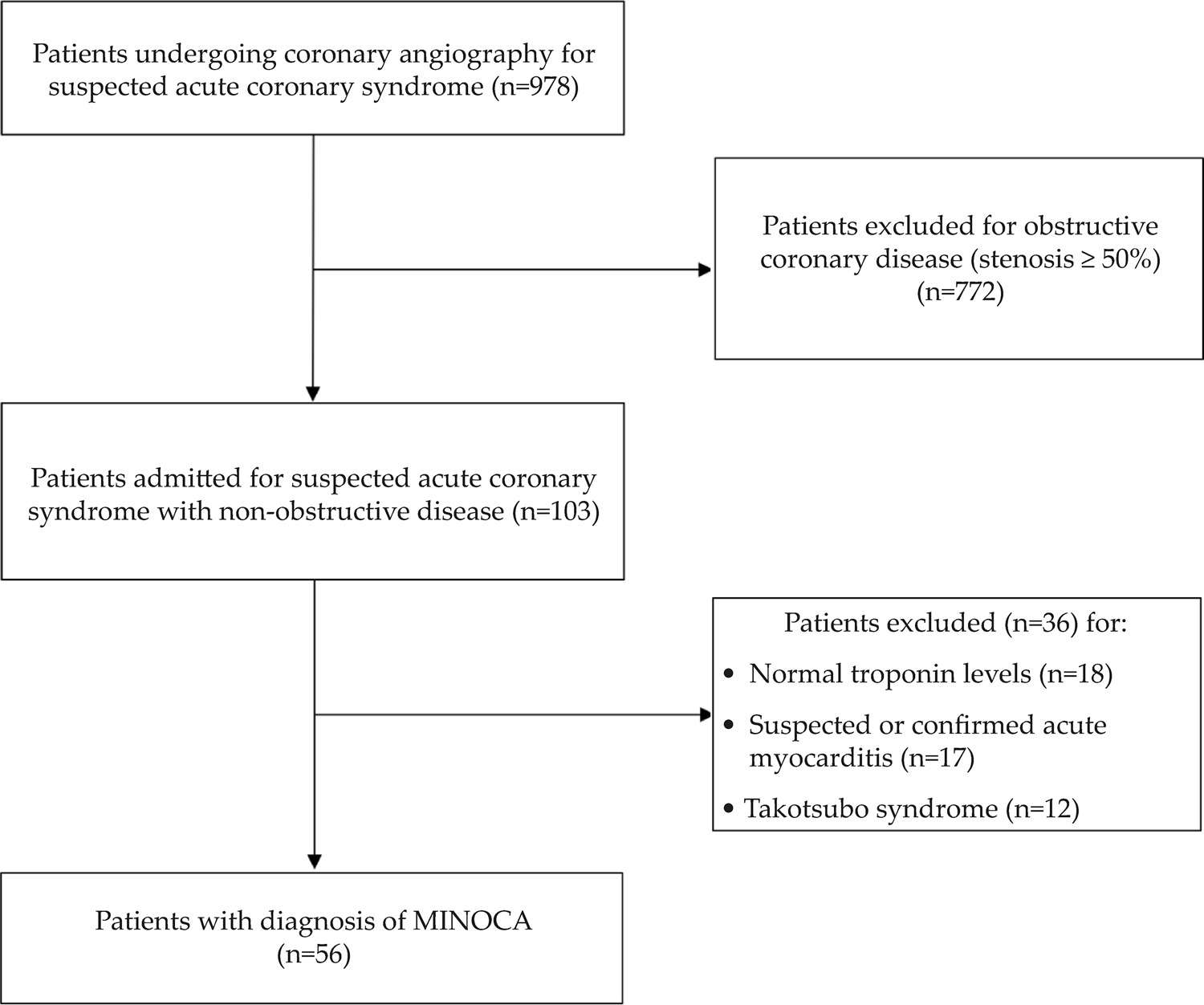
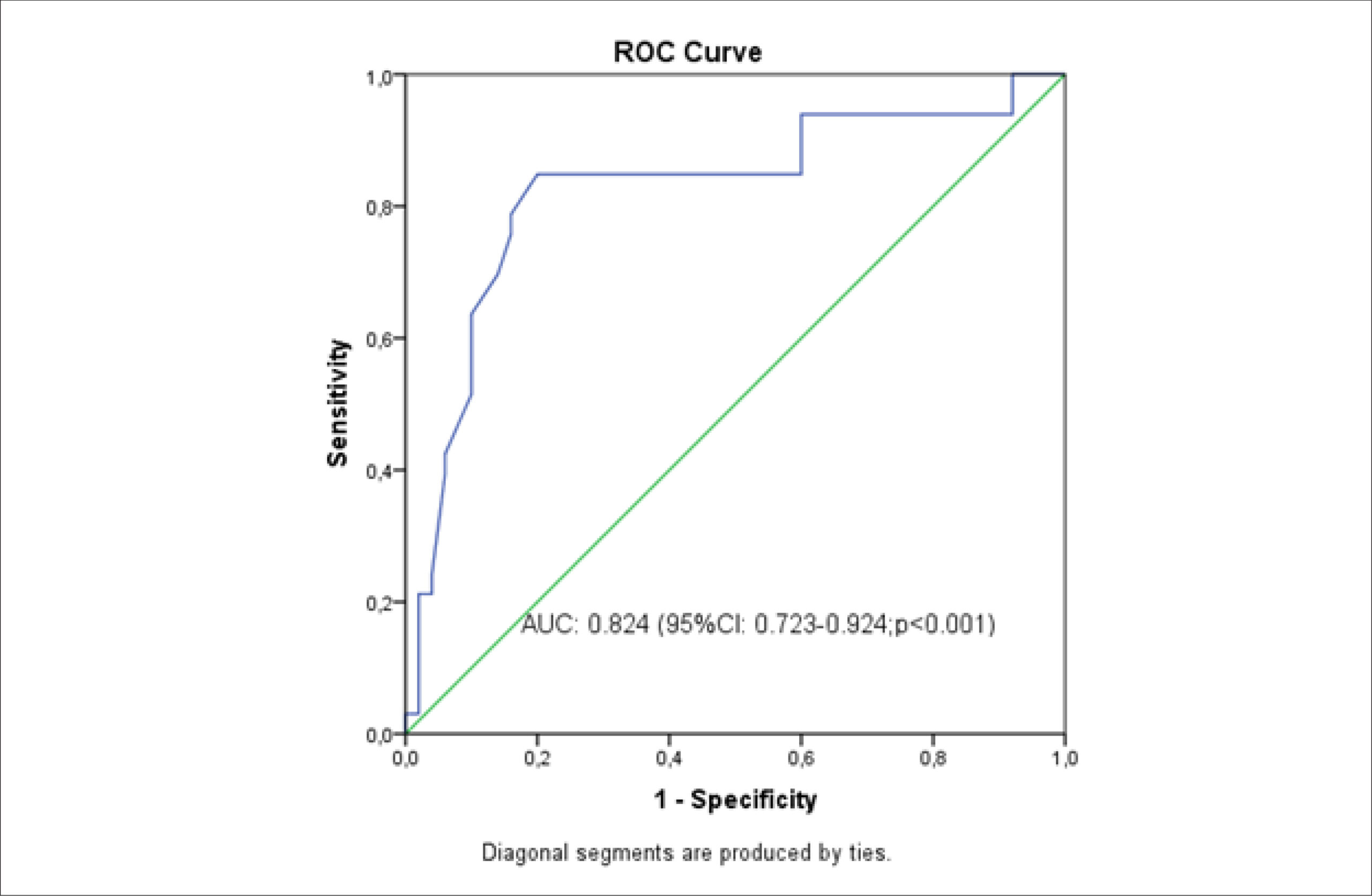
Acute Myocardial Infarction with Non-Obstructive Coronary Arteries – Stratifying the Risk of a “new” Clinical Entity using an “Old” Tool

Pedro Carvalho et al. Mariana Caçoilo Vera Afreixo José Mesquita Bastos … Lisa Ferraz Manuela Vieira Luís Santos Anabela Gonzaga Raquel Ferreira Tiago Adrega Ana Faustino Ana Briosa

Abstract

Background

Some of the patients admitted for acute myocardial infarction have non-obstructive coronary artery disease (MINOCA). Their prognosis is not always benign, making it necessary the development of tools for risk stratification of these patients.

Objectives

To describe the characteristics of a sample of patients admitted for suspected MINOCA and to evaluate the prognostic value of GRACE score in this population.

Methods

This was a retrospective, observational, single-center, cohort study involving 56 consecutive patients with MINOCA. During one-year follow-up, patients were assessed for mortality and major adverse cardiovascular events (MACE) – a composite of all-cause mortality and hospitalization due to acute myocardial infarction, heart failure, ischemic stroke, and acute limb ischemia. Statistical analysis was performed using a non-parametric approach, with the Mann-Whitney U test for quantitative variables and ROC curves for assessing the discriminatory power of the Grace score in predicting cardiovascular events. The level of significance was set at 5%.

Results

Of the 56 MINOCA patients included in the study (median age 67 years), 55.4% were female. During the one-year follow-up, mortality rate was 5.5% and 9.1% of patients had MACE. A higher GRACE score was associated with mortality (p = 0.019; AUC 0.907; 95%CI 0.812–1.000; cut off 138) and MACE (p =0.034; AUC 0.790; 95%CI 0.632–0.948; cutoff 114).

Conclusion

The definition of MINOCA includes various diagnoses and prognoses, and the GRACE score is useful for risk stratification of patients with this condition.

  • Coronary Angiography
  • Coronary Artery Disease
  • Magnetic Resonance Spectroscopy/diagnosis
  • Myocardial Infarction
  • Prognosis
Read Full Article
Creative Commons Attribution (CC BY) Creative Commons license
30/06/2021 DOI: 10.36660/ijcs.20190218 Views 1
Figure 1
ABC
Original Article

Association Between Serum Elabela Levels and Chronic Totally Occlusion in Patients with Stable Angina Pectoris

Fethi Yavuz et al. Mehmet Kaplan

Abstract

Background:

The beneficial effects of Elabela on the cardiovascular system have been shown in studies.

Objective:

To compare serum Elabela levels of chronic total occlusion (CTO) patients with control patients with normal coronary arteries, and to investigate whether there is a correlation with collateral development.

Methods:

The study was planned cross-sectionally and prospectively. Fifty patients (28.0% female, mean age 61.6±7.3years) with CTO in at least one coronary vessel and 50 patients (38% female, mean age 60,7±6.38 years) with normal coronary arteries were included in the study. Patients in the CTO group were divided into two groups as Rentrop 0-1, those with weak collateral development, and Rentrop 2-3 with good collateral development. In addition to the age, sex, demographic characteristics and routine laboratory tests of the patients, Elabela levels were measured.

Results:

Demographic characteristics and laboratory values were similar in both groups. While the mean NT-proBNP and troponin were higher in the CTO group, the Elabela mean was lower (p <0.05 for all). In the multivariate regression analysis, NT-proBNP and Elabela levels were found to be independent predictors for CTO. Also, Elabela level was found to be statistically higher in Rentrop class 2-3 patients compared to Rentrop class 0-1 patients (p<0.05).

Conclusion:

In our study, we showed that the average Elabela level was low in CTO patients compared to normal patients. In addition, we found the level of Elabela to be lower in patients with weak collateral development compared to patients with good collateral development. (Arq Bras Cardiol. 2021; [online].ahead print, PP.0-0)

  • Angina Pectoris
  • Apelin
  • Chronic Total Occlusion
  • Colateral Circulation
  • Coronary Angiography
  • Coronary Occlusion
  • Elabela
  • Peptides
Read Full Article
Creative Commons Attribution (CC BY) Creative Commons license
31/05/2021 DOI: 10.36660/abc.20200492 Views 1
Figure 1
ABC
Original Article

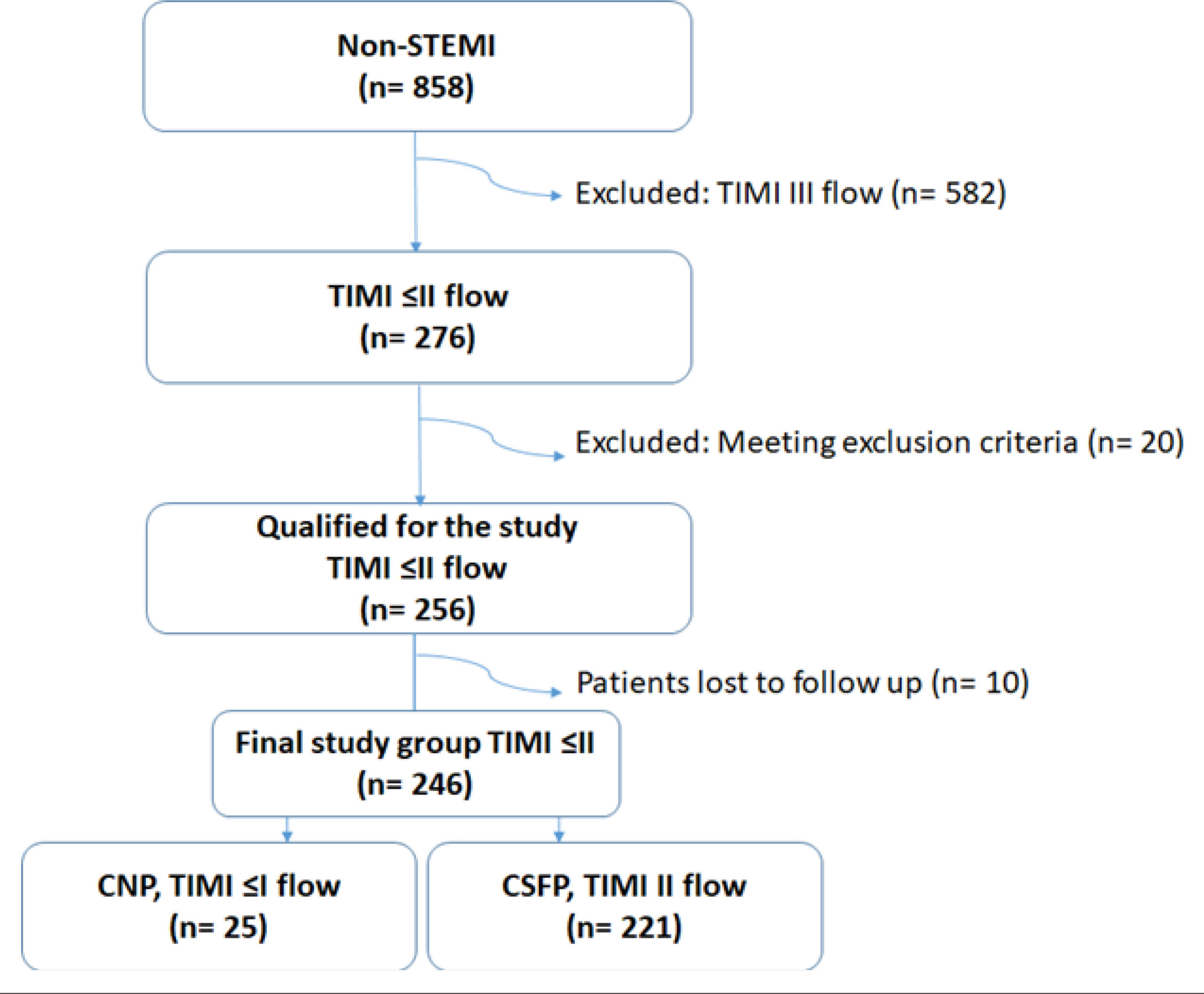
Comparison of the Outcomes between Coronary No-Reflow and Slow-Flow Phenomenon in Non-STEMI Patients

Mustafa Ahmet Huyut

Abstract

Background:

Coronary slow-flow phenomenon (CSFP) and coronary no-reflow phenomenon (CNP) are associated with increased risk of major cardiovascular adverse events (MACE).

Objectives:

This study aimed to evaluate and compare the one-year clinical follow-up outcomes among patients with CNP and CSFP who underwent percutaneous coronary interventions (PCI) in non-ST elevation myocardial infarction (NSTEMI).

Methods:

This study included a total of 858 patients who were diagnosed with NSTEMI and underwent PCI within 24 h of symptom onset. The patients were divided into two groups, the CSFP group (n=221) and the CNP group (n=25), regarding the angiographic characteristics of thrombolysis in myocardial infarction (TIMI) flow of the infarct-related artery. Patients were followed for one-year. A p-value of <0.05 was considered significant.

Results:

CNP was observed in 2.91%, and CSFP was observed in 25.75% of the patients. Clinical endpoints analyzed that stroke was significantly higher in the CNP group than in the CSFP group (6 (24%) vs. 6 (2.70%), p<0.001) and MACE was significantly higher in the CNP group than in the CSFP group (11 (44%) vs. 51 (23.10%), p=0.022). Forward conditional logistic regression analysis demonstrated that body mass index (BMI) (OR=1.11, 95%CI: 1.00-1.24, p=0.038) and baseline heart rate (HR) (OR=0.923, 95%CI: 0.88-0.96, p<0.001) were the independent predictors of CNP in NSTEMI.

Conclusion:

CNP patients have worse clinical outcomes and a higher risk of stroke compared with CSFP patients in NSTEMI. (Arq Bras Cardiol. 2021; 116(5):856-864)

  • Acute Coronary Syndrome / complications
  • Coronary Angiography
  • Myocardial Infarction
  • No-Reflow Phenomenon
  • Percutaneous Coronary Interventon
  • Risk Factors
  • Stroke
Read Full Article
Creative Commons Attribution (CC BY) Creative Commons license
17/05/2021 DOI: 10.36660/abc.20190905
Figure 1
ABC
Image

Radiologic-Electrocardiography Correlation in Wellens Syndrome

Eduardo Kaiser Ururahy Nunes Fonseca et al. Nevelton Heringer Filho Marcelo L. Montemor Luiz Francisco Rodrigues de Ávila Carlos Eduardo Rochitte

Wellens Syndrome, also known as “Anterior Descending Coronary T-wave syndrome”, was described in 1982 by Dr. Henrick Joan Joost (Hein) Wellens, a Dutch physician who also contributed to the characterization of the reentry mechanism in Wolff–Parkinson–White syndrome (WPWS).

Originally described during hospital admission (60% at admission and 40% at the follow-up) of patients with unstable angina, it was characterized by the occurrence of 2 electrocardiographic patterns, with pattern A in 25% of patients and B in 75% of patients.

[…]

  • Computed Tomography Angiography
  • Coronary Angiography
  • Coronary Vessels
  • Electrocardiography
  • Myocardial Infarction
Read Full Article
Creative Commons Attribution (CC BY) Creative Commons license
01/03/2021 DOI: 10.36660/abc.20200200 Views 1
IJCS
Original Article

The Role of Cardiovascular Risk Factors and Risk Scoring Systems in Predicting Coronary Atherosclerosis

Suat Gormel et al. Uygar Cagdas Yuksel Murat Celik Salim Yasar … Erkan Yildirim Baris Bugan Yalcin Gokoglan Hasan Kutsi Kabul Salim Yasar Mustafa Köklü Cem Barçın

Abstract

Background

Comparative data on the performance of cardiovascular risk scoring systems (CRSSs) in patients with severe coronary artery disease (CAD) are lacking.

Objectives

To compare different CRSSs regarding their ability to discriminate patients with severe CAD.

Method

A total of 414 patients (297 men; 61.3±12.3 years of age) undergoing coronary angiography were enrolled and evaluated for major risk factors. Cardiovascular risk and risk category were defined for each patient using the Framingham, Systemic Coronary Risk Evaluation (SCORE), and Pooled Cohort Risk Assessment Equation (PCRAE) tools. Severe CAD was defined as ≥ 50% stenosis in at least one major coronary artery and/or previous coronary stenting or coronary artery bypass grafting. A p < 0.05 was considered statistically significant.

Results

Severe CAD was identified in 271 (65.4%) patients. The ROC curves of the 3 CRSSs for predicting severe CAD were compared and showed no significant difference: the area under the ROC curve was 0.727, 0.694, and 0.717 for the Framingham, SCORE, and PCRAE tools, respectively (p > 0.05). However, when individual patients were classified as having low, intermediate, or high cardiovascular risk, the rate of patients in the high-risk group was significantly different between the PCRAE, Framingham, and SCORE tools (73.4%, 27.5%, and 37.9%, respectively; p < 0.001).

Discussion

PCRAE had higher positive and negative predictive values for detecting severe CAD in high-risk patients than the Framingham and SCORE tools.

Conclusion

We can speculate that currently used CRSSs are not sufficient, and new scoring systems are needed. In addition, other risk factors, such as serum creatinine, should be considered in future CRSSs. Int J Cardiovasc Sci. 2020; [online].ahead print, PP.0-0

  • Atherosclerosis
  • Cardiovascular Diseases
  • Coronary Angiography
  • Coronary Artery Diseases
  • Diabetes Mellitus
  • Epidemiology
  • Heredity
  • Hypertension
  • Renal Insufficiency
  • Risk Factors
Read Full Article
Creative Commons Attribution (CC BY) Creative Commons license
06/11/2020 DOI: 10.36660/ijcs.20190134 Views 1
Figure 1
IJCS
Viewpoint

Controversies in the Indications of Percutaneous Angioplasty Or Coronary Artery Bypass Grafting In The Treatment Of Left Main Disease

Renato A. K. Kalil et al. Roberto T. Sant´Anna Felipe Borsu de Salles

Introduction

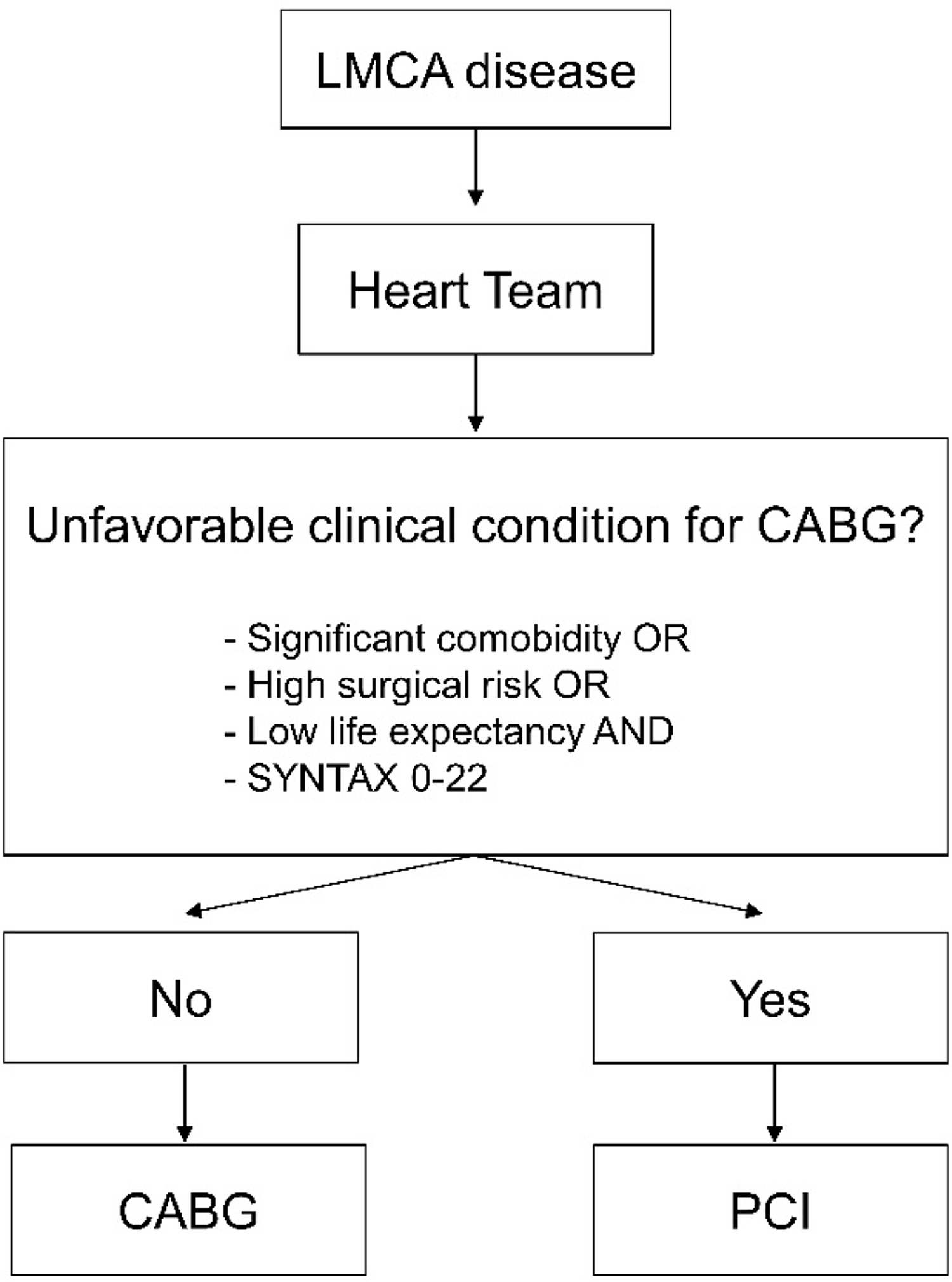
Left main coronary artery (LMCA) disease is a high-risk clinical situation, since this artery is responsible for the irrigation of more than two-thirds of the myocardial tissue, LMCA disease is associated with increased risk of adverse cardiac events. Traditionally, the gold standard of treatment for significant LMCA disase, understood as a stenosis> 50%, is coronary artery bypass grafting (CABG) surgery. –

The technological evolution of percutaneous treatment and its safe application for LMCA disease in the PRECOMBAT study made it a viable alternative, initially restricted to patients at high surgical risk and with LMCA disease confined to the proximal portion of the trunk. Subsequent studies have suggested the equivalence of percutaneous coronary intervention (PCI) and CABG in low and moderate complexity LMCA disease, which was reflected in the most recent guidelines ( ). Clinical registries, with real-patient outcomes, – and long-term results from the EXCEL study, contest this notion of equivalence between therapies in terms of mortality. The study was controversial, especially regarding the definition of clinical outcomes.

[…]

  • Coronary Angiography
  • Coronary Artery Bypass
  • Coronary Artery Disease
  • Coronary Restenosis
  • Left Main Coronary Artery
  • Myocardial Revascularization
  • Percutaneous Coronary Intervention
Read Full Article
Creative Commons Attribution (CC BY) Creative Commons license
17/07/2020 DOI: 10.36660/ijcs.20200037 Views 1

Could not load more articles. Please try again.

How to cite this article

EndNote RIS

Electronic Document Format (Vancouver)

Araújo GO, Ribeiro HB. Geometric Models in Left Main Coronary Bifurcation: Mathematical Accuracy and Clinical Limits in the Era of Intravascular Imaging. Arquivos Brasileiros de Cardiologia 2026;123(7):e20260239.

Electronic Document Format (ABNT)

Araújo, Guilherme O.; Ribeiro, Henrique Barbosa. Geometric Models in Left Main Coronary Bifurcation: Mathematical Accuracy and Clinical Limits in the Era of Intravascular Imaging. Arquivos Brasileiros de Cardiologia, v. 123, n. 7, e20260239, Aug. 2026.

Electronic Document Format (APA)

Araújo, G. O., & Ribeiro, H. B. (2026). Geometric Models in Left Main Coronary Bifurcation: Mathematical Accuracy and Clinical Limits in the Era of Intravascular Imaging. Arquivos Brasileiros de Cardiologia, 123(7), e20260239.

Electronic Document Format (ISO)

Araújo, Guilherme O. and Ribeiro, Henrique Barbosa. Geometric Models in Left Main Coronary Bifurcation: Mathematical Accuracy and Clinical Limits in the Era of Intravascular Imaging. Arquivos Brasileiros de Cardiologia [online]. 2026, vol. 123, n. 7, [cited 2026-10-14], e20260239. Available from: <https://journals.cardiol.br/en/article/geometric-models-in-left-main-coronary-bifurcation-mathematical-accuracy-and-clinical-limits-in-the-era-of-intravascular-imaging/>. ISSN 0066-782X

EndNote RIS

Electronic Document Format (Vancouver)

Ferreira MVS, Tormin JPAS, Dantas Jr RN, Torres RVA, Cordeiro RA, Araújo Filho JAB, Cardoso LF, et al. Single Coronary Artery and Stress Cardiomyopathy: An Association Demonstrated by Multimodality Imaging. ABC Imagem Cardiovascular 2026;39(2):e20260023.

Electronic Document Format (ABNT)

Ferreira, Marcus Vinicius Silva; Tormin, Julia Pereira Afonso dos Santos; Dantas Jr, Roberto Nery; Torres, Roberto Vitor Almeida; Cordeiro, Renan Andreos; Araújo Filho, José de Arimateia Batista; Cardoso, Luiz Francisco. Single Coronary Artery and Stress Cardiomyopathy: An Association Demonstrated by Multimodality Imaging. ABC Imagem Cardiovascular, v. 39, n. 2, e20260023, Jul. 2026.

Electronic Document Format (APA)

Ferreira, M. V. S., Tormin, J. P. A. S., Dantas Jr, R. N., Torres, R. V. A., Cordeiro, R. A., Araújo Filho, J. A. B., & Cardoso, L. F. (2026). Single Coronary Artery and Stress Cardiomyopathy: An Association Demonstrated by Multimodality Imaging. ABC Imagem Cardiovascular, 39(2), e20260023.

Electronic Document Format (ISO)

Ferreira, Marcus Vinicius Silva and Tormin, Julia Pereira Afonso dos Santos and Dantas Jr, Roberto Nery and Torres, Roberto Vitor Almeida and Cordeiro, Renan Andreos and Araújo Filho, José de Arimateia Batista and Cardoso, Luiz Francisco. Single Coronary Artery and Stress Cardiomyopathy: An Association Demonstrated by Multimodality Imaging. ABC Imagem Cardiovascular [online]. 2026, vol. 39, n. 2, [cited 2026-10-14], e20260023. Available from: <https://journals.cardiol.br/en/article/single-coronary-artery-and-stress-cardiomyopathy-an-association-demonstrated-by-multimodality-imaging/>. ISSN 2318-8219

EndNote RIS

Electronic Document Format (Vancouver)

Gonçalves SC. From Right to Left Radial Access in Older Patients: Are We Witnessing the Next Procedural Shift?. International Journal of Cardiovascular Sciences 2026;39:e20250195.

Electronic Document Format (ABNT)

Gonçalves, Sandro Cadaval. From Right to Left Radial Access in Older Patients: Are We Witnessing the Next Procedural Shift?. International Journal of Cardiovascular Sciences, v. 39, e20250195, Apr. 2026.

Electronic Document Format (APA)

Gonçalves, S. C. (2026). From Right to Left Radial Access in Older Patients: Are We Witnessing the Next Procedural Shift?. International Journal of Cardiovascular Sciences, 39, e20250195.

Electronic Document Format (ISO)

Gonçalves, Sandro Cadaval. From Right to Left Radial Access in Older Patients: Are We Witnessing the Next Procedural Shift?. International Journal of Cardiovascular Sciences [online]. 2026, vol. 39, [cited 2026-10-14], e20250195. Available from: <https://journals.cardiol.br/en/article/from-right-to-left-radial-access-in-older-patients-are-we-witnessing-the-next-procedural-shift/>. ISSN 2359-4802

EndNote RIS

Electronic Document Format (Vancouver)

Magalhães TA. Coronary CT Angiography in 2025: Long-Term Evidence, Artificial Intelligence, and the Photon-Counting Era. ABC Imagem Cardiovascular 2026;39(1):e20250106.

Electronic Document Format (ABNT)

Magalhães, Tiago A.. Coronary CT Angiography in 2025: Long-Term Evidence, Artificial Intelligence, and the Photon-Counting Era. ABC Imagem Cardiovascular, v. 39, n. 1, e20250106, Mar. 2026.

Electronic Document Format (APA)

Magalhães, T. A. (2026). Coronary CT Angiography in 2025: Long-Term Evidence, Artificial Intelligence, and the Photon-Counting Era. ABC Imagem Cardiovascular, 39(1), e20250106.

Electronic Document Format (ISO)

Magalhães, Tiago A.. Coronary CT Angiography in 2025: Long-Term Evidence, Artificial Intelligence, and the Photon-Counting Era. ABC Imagem Cardiovascular [online]. 2026, vol. 39, n. 1, [cited 2026-10-14], e20250106. Available from: <https://journals.cardiol.br/en/article/coronary-ct-angiography-in-2025-long-term-evidence-artificial-intelligence-and-the-photon-counting-era/>. ISSN 2318-8219

EndNote RIS

Electronic Document Format (Vancouver)

Garzon S, Pilotto L, Mariani J, Bezerra F, Prado G, Bandeira W, Almeida B, et al. Estimating Left Main Bifurcation Geometry: Are Geometric Models Reliable in Diseased Arteries?. Arquivos Brasileiros de Cardiologia 2026;123(1):e20250605.

Electronic Document Format (ABNT)

Garzon, Stefano; Pilotto, Lucas; Mariani, José; Bezerra, Felipe; Prado, Guy; Bandeira, Willterson; Almeida, Breno; Lemos, Pedro. Estimating Left Main Bifurcation Geometry: Are Geometric Models Reliable in Diseased Arteries?. Arquivos Brasileiros de Cardiologia, v. 123, n. 1, e20250605, Mar. 2026.

Electronic Document Format (APA)

Garzon, S., Pilotto, L., Mariani, J., Bezerra, F., Prado, G., Bandeira, W., Almeida, B., & Lemos, P. (2026). Estimating Left Main Bifurcation Geometry: Are Geometric Models Reliable in Diseased Arteries?. Arquivos Brasileiros de Cardiologia, 123(1), e20250605.

Electronic Document Format (ISO)

Garzon, Stefano and Pilotto, Lucas and Mariani, José and Bezerra, Felipe and Prado, Guy and Bandeira, Willterson and Almeida, Breno and Lemos, Pedro. Estimating Left Main Bifurcation Geometry: Are Geometric Models Reliable in Diseased Arteries?. Arquivos Brasileiros de Cardiologia [online]. 2026, vol. 123, n. 1, [cited 2026-10-14], e20250605. Available from: <https://journals.cardiol.br/en/article/estimating-left-main-bifurcation-geometry-are-geometric-models-reliable-in-diseased-arteries/>. ISSN 0066-782X

EndNote RIS

Electronic Document Format (Vancouver)

Mejía HPG, Nogueira MCA, Mioto BM, Poppi NT, Cesar LAM, Sousa LLCM, Dallan LRP, et al. Coronary-Cavitary Fistula, an Unusual Cause of Heart Failure. Arquivos Brasileiros de Cardiologia 2025;122(3):e20240809.

Electronic Document Format (ABNT)

Mejía, Hernán Patricio García; Nogueira, Matheus Carvalho Alves; Mioto, Bruno Mahler; Poppi, Nilson Tavares; Cesar, Luiz Antonio Machado; Sousa, Luhanda Leonora Cardoso Monti; Dallan, Luís Roberto Palma. Coronary-Cavitary Fistula, an Unusual Cause of Heart Failure. Arquivos Brasileiros de Cardiologia, v. 122, n. 3, e20240809, Apr. 2025.

Electronic Document Format (APA)

Mejía, H. P. G., Nogueira, M. C. A., Mioto, B. M., Poppi, N. T., Cesar, L. A. M., Sousa, L. L. C. M., & Dallan, L. R. P. (2025). Coronary-Cavitary Fistula, an Unusual Cause of Heart Failure. Arquivos Brasileiros de Cardiologia, 122(3), e20240809.

Electronic Document Format (ISO)

Mejía, Hernán Patricio García and Nogueira, Matheus Carvalho Alves and Mioto, Bruno Mahler and Poppi, Nilson Tavares and Cesar, Luiz Antonio Machado and Sousa, Luhanda Leonora Cardoso Monti and Dallan, Luís Roberto Palma. Coronary-Cavitary Fistula, an Unusual Cause of Heart Failure. Arquivos Brasileiros de Cardiologia [online]. 2025, vol. 122, n. 3, [cited 2026-10-14], e20240809. Available from: <https://journals.cardiol.br/en/article/coronary-cavitary-fistula-an-unusual-cause-of-heart-failure/>. ISSN 0066-782X

EndNote RIS

Electronic Document Format (Vancouver)

Oliveira MD, Motta RFOS, Caixeta A. Distal Transradial Access for Coronary Procedures: Insights from 6,800 Consecutive All-Comers Patients from the DISTRACTION Registry. International Journal of Cardiovascular Sciences 2024;37:e20240084.

Electronic Document Format (ABNT)

Oliveira, Marcos Danillo; Motta, Ricardo Fonseca Oliveira Suruagy; Caixeta, Adriano. Distal Transradial Access for Coronary Procedures: Insights from 6,800 Consecutive All-Comers Patients from the DISTRACTION Registry. International Journal of Cardiovascular Sciences, v. 37, e20240084, Nov. 2024.

Electronic Document Format (APA)

Oliveira, M. D., Motta, R. F. O. S., & Caixeta, A. (2024). Distal Transradial Access for Coronary Procedures: Insights from 6,800 Consecutive All-Comers Patients from the DISTRACTION Registry. International Journal of Cardiovascular Sciences, 37, e20240084.

Electronic Document Format (ISO)

Oliveira, Marcos Danillo and Motta, Ricardo Fonseca Oliveira Suruagy and Caixeta, Adriano. Distal Transradial Access for Coronary Procedures: Insights from 6,800 Consecutive All-Comers Patients from the DISTRACTION Registry. International Journal of Cardiovascular Sciences [online]. 2024, vol. 37, [cited 2026-10-14], e20240084. Available from: <https://journals.cardiol.br/en/article/distal-transradial-access-for-coronary-procedures-insights-from-6800-consecutive-all-comers-patients-from-the-distraction-registry/>. ISSN 2359-4802

EndNote RIS

Electronic Document Format (Vancouver)

Kiliç R, Güzel T, Aktan A, Kaya AF. Comparison of Chitosan-Containing Hemostatic Pad and Manual Compression after Coronary Angiography with Femoral Access. International Journal of Cardiovascular Sciences 2024;37:e20240020.

Electronic Document Format (ABNT)

Kiliç, Raif; Güzel, Tuncay; Aktan, Adem; Kaya, Ahmet Ferhat. Comparison of Chitosan-Containing Hemostatic Pad and Manual Compression after Coronary Angiography with Femoral Access. International Journal of Cardiovascular Sciences, v. 37, e20240020, Aug. 2024.

Electronic Document Format (APA)

Kiliç, R., Güzel, T., Aktan, A., & Kaya, A. F. (2024). Comparison of Chitosan-Containing Hemostatic Pad and Manual Compression after Coronary Angiography with Femoral Access. International Journal of Cardiovascular Sciences, 37, e20240020.

Electronic Document Format (ISO)

Kiliç, Raif and Güzel, Tuncay and Aktan, Adem and Kaya, Ahmet Ferhat. Comparison of Chitosan-Containing Hemostatic Pad and Manual Compression after Coronary Angiography with Femoral Access. International Journal of Cardiovascular Sciences [online]. 2024, vol. 37, [cited 2026-10-14], e20240020. Available from: <https://journals.cardiol.br/en/article/comparison-of-chitosan-containing-hemostatic-pad-and-manual-compression-after-coronary-angiography-with-femoral-access/>. ISSN 2359-4802

EndNote RIS

Electronic Document Format (Vancouver)

Karakayali M, Altunova M, Yakisan T, Aslan S, Omar T, Artac I, Ilis D, et al. The Relationship between the Systemic Immune-Inflammation Index and Ischemia with Non-Obstructive Coronary Arteries in Patients Undergoing Coronary Angiography. Arquivos Brasileiros de Cardiologia 2024;121(2):e20230540.

Electronic Document Format (ABNT)

Karakayali, Muammer; Altunova, Mehmet; Yakisan, Turab; Aslan, Serkan; Omar, Timor; Artac, Inanc; Ilis, Doğan; Arslan, Ayca; Cagin, Zihni; Karabag, Yavuz; Rencuzogullari, Ibrahim. The Relationship between the Systemic Immune-Inflammation Index and Ischemia with Non-Obstructive Coronary Arteries in Patients Undergoing Coronary Angiography. Arquivos Brasileiros de Cardiologia, v. 121, n. 2, e20230540, Apr. 2024.

Electronic Document Format (APA)

Karakayali, M., Altunova, M., Yakisan, T., Aslan, S., Omar, T., Artac, I., Ilis, D., Arslan, A., Cagin, Z., Karabag, Y., & Rencuzogullari, I. (2024). The Relationship between the Systemic Immune-Inflammation Index and Ischemia with Non-Obstructive Coronary Arteries in Patients Undergoing Coronary Angiography. Arquivos Brasileiros de Cardiologia, 121(2), e20230540.

Electronic Document Format (ISO)

Karakayali, Muammer and Altunova, Mehmet and Yakisan, Turab and Aslan, Serkan and Omar, Timor and Artac, Inanc and Ilis, Doğan and Arslan, Ayca and Cagin, Zihni and Karabag, Yavuz and Rencuzogullari, Ibrahim. The Relationship between the Systemic Immune-Inflammation Index and Ischemia with Non-Obstructive Coronary Arteries in Patients Undergoing Coronary Angiography. Arquivos Brasileiros de Cardiologia [online]. 2024, vol. 121, n. 2, [cited 2026-10-14], e20230540. Available from: <https://journals.cardiol.br/en/article/the-relationship-between-the-systemic-immune-inflammation-index-and-ischemia-with-non-obstructive-coronary-arteries-in-patients-undergoing-coronary-angiography/>. ISSN 0066-782X

EndNote RIS

Electronic Document Format (Vancouver)

Brás PG, Cacela D, Cerejo R, Rodrigues R. A Rare Coronary Anomaly in the Adult: Large-Caliber Arteriovenous Fistula. Arquivos Brasileiros de Cardiologia 2024;121(1):e2023037.

Electronic Document Format (ABNT)

Brás, Pedro Garcia; Cacela, Duarte; Cerejo, Rui; Rodrigues, Rui. A Rare Coronary Anomaly in the Adult: Large-Caliber Arteriovenous Fistula. Arquivos Brasileiros de Cardiologia, v. 121, n. 1, e2023037, Feb. 2024.

Electronic Document Format (APA)

Brás, P. G., Cacela, D., Cerejo, R., & Rodrigues, R. (2024). A Rare Coronary Anomaly in the Adult: Large-Caliber Arteriovenous Fistula. Arquivos Brasileiros de Cardiologia, 121(1), e2023037.

Electronic Document Format (ISO)

Brás, Pedro Garcia and Cacela, Duarte and Cerejo, Rui and Rodrigues, Rui. A Rare Coronary Anomaly in the Adult: Large-Caliber Arteriovenous Fistula. Arquivos Brasileiros de Cardiologia [online]. 2024, vol. 121, n. 1, [cited 2026-10-14], e2023037. Available from: <https://journals.cardiol.br/en/article/a-rare-coronary-anomaly-in-the-adult-large-caliber-arteriovenous-fistula/>. ISSN 0066-782X

EndNote RIS

Electronic Document Format (Vancouver)

Costa G, Ferreira E, Albuquerque DC. Clinical Profile and its Associations with Coronary Angiography Results in a Public University Hospital. International Journal of Cardiovascular Sciences 2023;36:e20220132.

Electronic Document Format (ABNT)

Costa, Guilherme; Ferreira, Esmeralci; Albuquerque, Denilson Campos. Clinical Profile and its Associations with Coronary Angiography Results in a Public University Hospital. International Journal of Cardiovascular Sciences, v. 36, e20220132, Nov. 2023.

Electronic Document Format (APA)

Costa, G., Ferreira, E., & Albuquerque, D. C. (2023). Clinical Profile and its Associations with Coronary Angiography Results in a Public University Hospital. International Journal of Cardiovascular Sciences, 36, e20220132.

Electronic Document Format (ISO)

Costa, Guilherme and Ferreira, Esmeralci and Albuquerque, Denilson Campos. Clinical Profile and its Associations with Coronary Angiography Results in a Public University Hospital. International Journal of Cardiovascular Sciences [online]. 2023, vol. 36, [cited 2026-10-14], e20220132. Available from: <https://journals.cardiol.br/en/article/clinical-profile-and-its-associations-with-coronary-angiography-results-in-a-public-university-hospital/>. ISSN 2359-4802

EndNote RIS

Electronic Document Format (Vancouver)

Lemke VG, Paiva MSS, Mariano GZ, Alves TS, Ferreira E, Nunes LA, Oliveira FRA, et al. Brazilian Registry of Interventional Cardiology during the COVID-19 Pandemic (RBCI-COVID19). Arquivos Brasileiros de Cardiologia 2023;120(8):e20220840.

Electronic Document Format (ABNT)

Lemke, Viviana Guzzo; Paiva, Maria Sanali Souza; Mariano, Giordana Zeferino; Alves, Thales Siqueira; Ferreira, Esmeralci; Nunes, Leonardo Avany; Oliveira, Flavio Roberto Azevedo; Cantarelli, Rodrigo; Nascimento, Emilia Matos do; Oliveira, Gláucia Maria Moraes de. Brazilian Registry of Interventional Cardiology during the COVID-19 Pandemic (RBCI-COVID19). Arquivos Brasileiros de Cardiologia, v. 120, n. 8, e20220840, Aug. 2023.

Electronic Document Format (APA)

Lemke, V. G., Paiva, M. S. S., Mariano, G. Z., Alves, T. S., Ferreira, E., Nunes, L. A., Oliveira, F. R. A., Cantarelli, R., Nascimento, E. M. , & Oliveira, G. M. M. (2023). Brazilian Registry of Interventional Cardiology during the COVID-19 Pandemic (RBCI-COVID19). Arquivos Brasileiros de Cardiologia, 120(8), e20220840.

Electronic Document Format (ISO)

Lemke, Viviana Guzzo and Paiva, Maria Sanali Souza and Mariano, Giordana Zeferino and Alves, Thales Siqueira and Ferreira, Esmeralci and Nunes, Leonardo Avany and Oliveira, Flavio Roberto Azevedo and Cantarelli, Rodrigo and Nascimento, Emilia Matos do and Oliveira, Gláucia Maria Moraes de. Brazilian Registry of Interventional Cardiology during the COVID-19 Pandemic (RBCI-COVID19). Arquivos Brasileiros de Cardiologia [online]. 2023, vol. 120, n. 8, [cited 2026-10-14], e20220840. Available from: <https://journals.cardiol.br/en/article/brazilian-registry-of-interventional-cardiology-during-the-covid-19-pandemic-rbci-covid19/>. ISSN 0066-782X

EndNote RIS

Electronic Document Format (Vancouver)

Armstrong AC, Cerci R, Matheson MB, Magalhães T, Kishi S, Brinker J, Clouse ME, et al. Predicting Significant Coronary Obstruction in a Population with Suspected Coronary Disease and Absence of Coronary Calcium: CORE-64 / CORE320 Studies. Arquivos Brasileiros de Cardiologia 2023;120(3):e20220183.

Electronic Document Format (ABNT)

Armstrong, Anderson C.; Cerci, Rodrigo; Matheson, Matthew B.; Magalhães, Tiago; Kishi, Satoru; Brinker, Jeff; Clouse, Melvin E.; Rochitte, Carlos E.; Cox, Christopher; Lima, João A. C.; Arbab-Zadeh, Armin. Predicting Significant Coronary Obstruction in a Population with Suspected Coronary Disease and Absence of Coronary Calcium: CORE-64 / CORE320 Studies. Arquivos Brasileiros de Cardiologia, v. 120, n. 3, e20220183, Mar. 2023.

Electronic Document Format (APA)

Armstrong, A. C., Cerci, R., Matheson, M. B., Magalhães, T., Kishi, S., Brinker, J., Clouse, M. E., Rochitte, C. E., Cox, C., Lima, J. A. C., & Arbab-Zadeh, A. (2023). Predicting Significant Coronary Obstruction in a Population with Suspected Coronary Disease and Absence of Coronary Calcium: CORE-64 / CORE320 Studies. Arquivos Brasileiros de Cardiologia, 120(3), e20220183.

Electronic Document Format (ISO)

Armstrong, Anderson C. and Cerci, Rodrigo and Matheson, Matthew B. and Magalhães, Tiago and Kishi, Satoru and Brinker, Jeff and Clouse, Melvin E. and Rochitte, Carlos E. and Cox, Christopher and Lima, João A. C. and Arbab-Zadeh, Armin. Predicting Significant Coronary Obstruction in a Population with Suspected Coronary Disease and Absence of Coronary Calcium: CORE-64 / CORE320 Studies. Arquivos Brasileiros de Cardiologia [online]. 2023, vol. 120, n. 3, [cited 2026-10-14], e20220183. Available from: <https://journals.cardiol.br/en/article/predicting-significant-coronary-obstruction-in-a-population-with-suspected-coronary-disease-and-absence-of-coronary-calcium-core-64-core320-studies/>. ISSN 0066-782X

EndNote RIS

Electronic Document Format (Vancouver)

Akkaya H, Güntürk EE, Akkaya F, Karabıyık U, Güntürk , Yılmaz S. Assessment of the Relationship Between the Adropin Levels and the Coronary Collateral Circulation in Patients wıth Chronic Coronary Syndrome. Arquivos Brasileiros de Cardiologia 2022;119(3):402-10.

Electronic Document Format (ABNT)

Akkaya, Hasan; Güntürk, Ertuğrul Emre; Akkaya, Fulya; Karabıyık, Uğur; Güntürk, İnayet; Yılmaz, Samet. Assessment of the Relationship Between the Adropin Levels and the Coronary Collateral Circulation in Patients wıth Chronic Coronary Syndrome. Arquivos Brasileiros de Cardiologia, v. 119, n. 3, p. 402-410, Jun. 2022.

Electronic Document Format (APA)

Akkaya, H., Güntürk, E. E., Akkaya, F., Karabıyık, U., Güntürk, , & Yılmaz, S. (2022). Assessment of the Relationship Between the Adropin Levels and the Coronary Collateral Circulation in Patients wıth Chronic Coronary Syndrome. Arquivos Brasileiros de Cardiologia, 119(3), 402-410.

Electronic Document Format (ISO)

Akkaya, Hasan and Güntürk, Ertuğrul Emre and Akkaya, Fulya and Karabıyık, Uğur and Güntürk, İnayet and Yılmaz, Samet. Assessment of the Relationship Between the Adropin Levels and the Coronary Collateral Circulation in Patients wıth Chronic Coronary Syndrome. Arquivos Brasileiros de Cardiologia [online]. 2022, vol. 119, n. 3, [cited 2026-10-14], pp. 402-410. Available from: <https://journals.cardiol.br/en/article/assessment-of-the-relationship-between-the-adropin-levels-and-the-coronary-collateral-circulation-in-patients-with-chronic-coronary-syndrome/>. ISSN 0066-782X

EndNote RIS

Electronic Document Format (Vancouver)

Bittencourt MS. Coronary Tomography Angiography and a New View on How to Investigate Coronary Artery Disease — New English Guideline. Arquivos Brasileiros de Cardiologia Imagem cardiovascular 2022;31(2):115-7.

Electronic Document Format (ABNT)

Bittencourt, Marcio Sommer. Coronary Tomography Angiography and a New View on How to Investigate Coronary Artery Disease — New English Guideline. Arquivos Brasileiros de Cardiologia Imagem cardiovascular, v. 31, n. 2, p. 115-117, Jan. 2022.

Electronic Document Format (APA)

Bittencourt, M. S. (2022). Coronary Tomography Angiography and a New View on How to Investigate Coronary Artery Disease — New English Guideline. Arquivos Brasileiros de Cardiologia Imagem cardiovascular, 31(2), 115-117.

Electronic Document Format (ISO)

Bittencourt, Marcio Sommer. Coronary Tomography Angiography and a New View on How to Investigate Coronary Artery Disease — New English Guideline. Arquivos Brasileiros de Cardiologia Imagem cardiovascular [online]. 2022, vol. 31, n. 2, [cited 2026-10-14], pp. 115-117. Available from: <https://journals.cardiol.br/en/article/coronary-tomography-angiography-and-a-new-view-on-how-to-investigate-coronary-artery-disease-new-english-guideline/>. ISSN 2318-8219

EndNote RIS

Electronic Document Format (Vancouver)

Martins J, Afreixo V, Santos L, Fernandes L, Briosa A. Physiology or Angiography-Guided Coronary Artery Bypass Grafting: A Meta-Analysis. Arquivos Brasileiros de Cardiologia 2021;117(6):1115-23.

Electronic Document Format (ABNT)

Martins, José; Afreixo, Vera; Santos, Luís; Fernandes, Luís; Briosa, Ana. Physiology or Angiography-Guided Coronary Artery Bypass Grafting: A Meta-Analysis. Arquivos Brasileiros de Cardiologia, v. 117, n. 6, p. 1115-1123, Dec. 2021.

Electronic Document Format (APA)

Martins, J., Afreixo, V., Santos, L., Fernandes, L., & Briosa, A. (2021). Physiology or Angiography-Guided Coronary Artery Bypass Grafting: A Meta-Analysis. Arquivos Brasileiros de Cardiologia, 117(6), 1115-1123.

Electronic Document Format (ISO)

Martins, José and Afreixo, Vera and Santos, Luís and Fernandes, Luís and Briosa, Ana. Physiology or Angiography-Guided Coronary Artery Bypass Grafting: A Meta-Analysis. Arquivos Brasileiros de Cardiologia [online]. 2021, vol. 117, n. 6, [cited 2026-10-14], pp. 1115-1123. Available from: <https://journals.cardiol.br/en/article/physiology-or-angiography-guided-coronary-artery-bypass-grafting-a-meta-analysis/>. ISSN 0066-782X

EndNote RIS

Electronic Document Format (Vancouver)

Ritt LEF, Viana MS. Back to The Future: How To Define Prognosis in MINOCA?. International Journal of Cardiovascular Sciences 2021;34(5 Supl 1):10-1.

Electronic Document Format (ABNT)

Ritt, Luiz Eduardo Fonteles; Viana, Mateus dos Santos. Back to The Future: How To Define Prognosis in MINOCA?. International Journal of Cardiovascular Sciences, v. 34, n. 5 Supl 1, p. 10-11, Oct. 2021.

Electronic Document Format (APA)

Ritt, L. E. F., & Viana, M. S. (2021). Back to The Future: How To Define Prognosis in MINOCA?. International Journal of Cardiovascular Sciences, 34(5 Supl 1), 10-11.

Electronic Document Format (ISO)

Ritt, Luiz Eduardo Fonteles and Viana, Mateus dos Santos. Back to The Future: How To Define Prognosis in MINOCA?. International Journal of Cardiovascular Sciences [online]. 2021, vol. 34, n. 5 Supl 1, [cited 2026-10-14], pp. 10-11. Available from: <https://journals.cardiol.br/en/article/back-to-the-future-how-to-define-prognosis-in-minoca/>. ISSN 2359-4802

EndNote RIS

Electronic Document Format (Vancouver)

Bianco HT, Povoa R, Izar MC, Luna Filho B, Moreira FT, Stefanini E, Fonseca HA, et al. Accuracy of Post-thrombolysis ST-segment Reduction as an Adequate Reperfusion Predictor in the Pharmaco-Invasive Approach. Arquivos Brasileiros de Cardiologia 2021;117(1):15-2.

Electronic Document Format (ABNT)

Bianco, Henrique Tria; Povoa, Rui; Izar, Maria Cristina; Luna Filho, Braulio; Moreira, Flavio Tocci; Stefanini, Edson; Fonseca, Henrique Andrade; Barbosa, Adriano Henrique Pereira; Alves, Claudia Maria Rodrigues; Caixeta, Adriano Mendes; Gonçalves Jr, Iran; Moraes, Pedro Ivo de Marqui; Lopes, Renato Delascio; Paola, Angelo Amato Vincenzo de; Almeida, Dirceu; Moises, Valdir Ambrosio; Fonseca, Francisco A. H.. Accuracy of Post-thrombolysis ST-segment Reduction as an Adequate Reperfusion Predictor in the Pharmaco-Invasive Approach. Arquivos Brasileiros de Cardiologia, v. 117, n. 1, p. 15-25, Jul. 2021.

Electronic Document Format (APA)

Bianco, H. T., Povoa, R., Izar, M. C., Luna Filho, B., Moreira, F. T., Stefanini, E., Fonseca, H. A., Barbosa, A. H. P., Alves, C. M. R., Caixeta, A. M., Gonçalves Jr, I., Moraes, P. I. M., Lopes, R. D., Paola, A. A. V. , Almeida, D., Moises, V. A., & Fonseca, F. A. H. (2021). Accuracy of Post-thrombolysis ST-segment Reduction as an Adequate Reperfusion Predictor in the Pharmaco-Invasive Approach. Arquivos Brasileiros de Cardiologia, 117(1), 15-25.

Electronic Document Format (ISO)

Bianco, Henrique Tria and Povoa, Rui and Izar, Maria Cristina and Luna Filho, Braulio and Moreira, Flavio Tocci and Stefanini, Edson and Fonseca, Henrique Andrade and Barbosa, Adriano Henrique Pereira and Alves, Claudia Maria Rodrigues and Caixeta, Adriano Mendes and Gonçalves Jr, Iran and Moraes, Pedro Ivo de Marqui and Lopes, Renato Delascio and Paola, Angelo Amato Vincenzo de and Almeida, Dirceu and Moises, Valdir Ambrosio and Fonseca, Francisco A. H.. Accuracy of Post-thrombolysis ST-segment Reduction as an Adequate Reperfusion Predictor in the Pharmaco-Invasive Approach. Arquivos Brasileiros de Cardiologia [online]. 2021, vol. 117, n. 1, [cited 2026-10-14], pp. 15-25. Available from: <https://journals.cardiol.br/en/article/accuracy-of-post-thrombolysis-st-segment-reduction-as-an-adequate-reperfusion-predictor-in-the-pharmaco-invasive-approach/>. ISSN 0066-782X

EndNote RIS

Electronic Document Format (Vancouver)

Carvalho P, Caçoilo M, Afreixo V, Bastos JM, Ferraz L, Vieira M, Santos L, et al. Acute Myocardial Infarction with Non-Obstructive Coronary Arteries – Stratifying the Risk of a “new” Clinical Entity using an “Old” Tool. International Journal of Cardiovascular Sciences 2021;34(5 Supl 1):1-9.

Electronic Document Format (ABNT)

Carvalho, Pedro; Caçoilo, Mariana; Afreixo, Vera; Bastos, José Mesquita; Ferraz, Lisa; Vieira, Manuela; Santos, Luís; Gonzaga, Anabela; Ferreira, Raquel; Adrega, Tiago; Faustino, Ana; Briosa, Ana. Acute Myocardial Infarction with Non-Obstructive Coronary Arteries – Stratifying the Risk of a “new” Clinical Entity using an “Old” Tool. International Journal of Cardiovascular Sciences, v. 34, n. 5 Supl 1, p. 1-9, Jun. 2021.

Electronic Document Format (APA)

Carvalho, P., Caçoilo, M., Afreixo, V., Bastos, J. M., Ferraz, L., Vieira, M., Santos, L., Gonzaga, A., Ferreira, R., Adrega, T., Faustino, A., & Briosa, A. (2021). Acute Myocardial Infarction with Non-Obstructive Coronary Arteries – Stratifying the Risk of a “new” Clinical Entity using an “Old” Tool. International Journal of Cardiovascular Sciences, 34(5 Supl 1), 1-9.

Electronic Document Format (ISO)

Carvalho, Pedro and Caçoilo, Mariana and Afreixo, Vera and Bastos, José Mesquita and Ferraz, Lisa and Vieira, Manuela and Santos, Luís and Gonzaga, Anabela and Ferreira, Raquel and Adrega, Tiago and Faustino, Ana and Briosa, Ana. Acute Myocardial Infarction with Non-Obstructive Coronary Arteries – Stratifying the Risk of a “new” Clinical Entity using an “Old” Tool. International Journal of Cardiovascular Sciences [online]. 2021, vol. 34, n. 5 Supl 1, [cited 2026-10-14], pp. 1-9. Available from: <https://journals.cardiol.br/en/article/acute-myocardial-infarction-with-non-obstructive-coronary-arteries-stratifying-the-risk-of-a-new-clinical-entity-using-an-old-tool/>. ISSN 2359-4802

EndNote RIS

Electronic Document Format (Vancouver)

Yavuz F, Kaplan M. Association Between Serum Elabela Levels and Chronic Totally Occlusion in Patients with Stable Angina Pectoris. Arquivos Brasileiros de Cardiologia 2021;117(3):503-10.

Electronic Document Format (ABNT)

Yavuz, Fethi; Kaplan, Mehmet. Association Between Serum Elabela Levels and Chronic Totally Occlusion in Patients with Stable Angina Pectoris. Arquivos Brasileiros de Cardiologia, v. 117, n. 3, p. 503-510, May. 2021.

Electronic Document Format (APA)

Yavuz, F., & Kaplan, M. (2021). Association Between Serum Elabela Levels and Chronic Totally Occlusion in Patients with Stable Angina Pectoris. Arquivos Brasileiros de Cardiologia, 117(3), 503-510.

Electronic Document Format (ISO)

Yavuz, Fethi and Kaplan, Mehmet. Association Between Serum Elabela Levels and Chronic Totally Occlusion in Patients with Stable Angina Pectoris. Arquivos Brasileiros de Cardiologia [online]. 2021, vol. 117, n. 3, [cited 2026-10-14], pp. 503-510. Available from: <https://journals.cardiol.br/en/article/association-between-serum-elabela-levels-and-chronic-totally-occlusion-in-patients-with-stable-angina-pectoris/>. ISSN 0066-782X

EndNote RIS

Electronic Document Format (Vancouver)

Huyut MA. Comparison of the Outcomes between Coronary No-Reflow and Slow-Flow Phenomenon in Non-STEMI Patients. Arquivos Brasileiros de Cardiologia 2021;116(5):856-64.

Electronic Document Format (ABNT)

Huyut, Mustafa Ahmet. Comparison of the Outcomes between Coronary No-Reflow and Slow-Flow Phenomenon in Non-STEMI Patients. Arquivos Brasileiros de Cardiologia, v. 116, n. 5, p. 856-864, May. 2021.

Electronic Document Format (APA)

Huyut, M. A. (2021). Comparison of the Outcomes between Coronary No-Reflow and Slow-Flow Phenomenon in Non-STEMI Patients. Arquivos Brasileiros de Cardiologia, 116(5), 856-864.

Electronic Document Format (ISO)

Huyut, Mustafa Ahmet. Comparison of the Outcomes between Coronary No-Reflow and Slow-Flow Phenomenon in Non-STEMI Patients. Arquivos Brasileiros de Cardiologia [online]. 2021, vol. 116, n. 5, [cited 2026-10-14], pp. 856-864. Available from: <https://journals.cardiol.br/en/article/comparison-of-the-outcomes-between-coronary-no-reflow-and-slow-flow-phenomenon-in-non-stemi-patients/>. ISSN 0066-782X

EndNote RIS

Electronic Document Format (Vancouver)

Fonseca EKUN, Heringer Filho N, Montemor ML, Ávila LFR, Rochitte CE. Radiologic-Electrocardiography Correlation in Wellens Syndrome. Arquivos Brasileiros de Cardiologia 2021;116(2):363-6.

Electronic Document Format (ABNT)

Fonseca, Eduardo Kaiser Ururahy Nunes; Heringer Filho, Nevelton; Montemor, Marcelo L.; Ávila, Luiz Francisco Rodrigues de; Rochitte, Carlos Eduardo. Radiologic-Electrocardiography Correlation in Wellens Syndrome. Arquivos Brasileiros de Cardiologia, v. 116, n. 2, p. 363-366, Feb. 2021.

Electronic Document Format (APA)

Fonseca, E. K. U. N., Heringer Filho, N., Montemor, M. L., Ávila, L. F. R. , & Rochitte, C. E. (2021). Radiologic-Electrocardiography Correlation in Wellens Syndrome. Arquivos Brasileiros de Cardiologia, 116(2), 363-366.

Electronic Document Format (ISO)

Fonseca, Eduardo Kaiser Ururahy Nunes and Heringer Filho, Nevelton and Montemor, Marcelo L. and Ávila, Luiz Francisco Rodrigues de and Rochitte, Carlos Eduardo. Radiologic-Electrocardiography Correlation in Wellens Syndrome. Arquivos Brasileiros de Cardiologia [online]. 2021, vol. 116, n. 2, [cited 2026-10-14], pp. 363-366. Available from: <https://journals.cardiol.br/en/article/radiologic-electrocardiography-correlation-in-wellens-syndrome/>. ISSN 0066-782X

EndNote RIS

Electronic Document Format (Vancouver)

Gormel S, Yuksel UC, Celik M, Yasar S, Yildirim E, Bugan B, Gokoglan Y, et al. The Role of Cardiovascular Risk Factors and Risk Scoring Systems in Predicting Coronary Atherosclerosis. International Journal of Cardiovascular Sciences 2020;34(1):32-8.

Electronic Document Format (ABNT)

Gormel, Suat; Yuksel, Uygar Cagdas; Celik, Murat; Yasar, Salim; Yildirim, Erkan; Bugan, Baris; Gokoglan, Yalcin; Kabul, Hasan Kutsi; Yasar, Salim; Köklü, Mustafa; Barçın, Cem. The Role of Cardiovascular Risk Factors and Risk Scoring Systems in Predicting Coronary Atherosclerosis. International Journal of Cardiovascular Sciences, v. 34, n. 1, p. 32-38, Nov. 2020.

Electronic Document Format (APA)

Gormel, S., Yuksel, U. C., Celik, M., Yasar, S., Yildirim, E., Bugan, B., Gokoglan, Y., Kabul, H. K., Yasar, S., Köklü, M., & Barçın, C. (2020). The Role of Cardiovascular Risk Factors and Risk Scoring Systems in Predicting Coronary Atherosclerosis. International Journal of Cardiovascular Sciences, 34(1), 32-38.

Electronic Document Format (ISO)

Gormel, Suat and Yuksel, Uygar Cagdas and Celik, Murat and Yasar, Salim and Yildirim, Erkan and Bugan, Baris and Gokoglan, Yalcin and Kabul, Hasan Kutsi and Yasar, Salim and Köklü, Mustafa and Barçın, Cem. The Role of Cardiovascular Risk Factors and Risk Scoring Systems in Predicting Coronary Atherosclerosis. International Journal of Cardiovascular Sciences [online]. 2020, vol. 34, n. 1, [cited 2026-10-14], pp. 32-38. Available from: <https://journals.cardiol.br/en/article/the-role-of-cardiovascular-risk-factors-and-risk-scoring-systems-in-predicting-coronary-atherosclerosis/>. ISSN 2359-4802

EndNote RIS

Electronic Document Format (Vancouver)

Kalil RAK, Sant´Anna RT, Salles FB. Controversies in the Indications of Percutaneous Angioplasty Or Coronary Artery Bypass Grafting In The Treatment Of Left Main Disease. International Journal of Cardiovascular Sciences 2020;33(5):565-71.

Electronic Document Format (ABNT)

Kalil, Renato A. K.; Sant´Anna, Roberto T.; Salles, Felipe Borsu de. Controversies in the Indications of Percutaneous Angioplasty Or Coronary Artery Bypass Grafting In The Treatment Of Left Main Disease. International Journal of Cardiovascular Sciences, v. 33, n. 5, p. 565-571, Jul. 2020.

Electronic Document Format (APA)

Kalil, R. A. K., Sant´Anna, R. T., & Salles, F. B. (2020). Controversies in the Indications of Percutaneous Angioplasty Or Coronary Artery Bypass Grafting In The Treatment Of Left Main Disease. International Journal of Cardiovascular Sciences, 33(5), 565-571.

Electronic Document Format (ISO)

Kalil, Renato A. K. and Sant´Anna, Roberto T. and Salles, Felipe Borsu de. Controversies in the Indications of Percutaneous Angioplasty Or Coronary Artery Bypass Grafting In The Treatment Of Left Main Disease. International Journal of Cardiovascular Sciences [online]. 2020, vol. 33, n. 5, [cited 2026-10-14], pp. 565-571. Available from: <https://journals.cardiol.br/en/article/controversies-in-the-indications-of-percutaneous-angioplasty-or-coronary-artery-bypass-grafting-in-the-treatment-of-left-main-disease/>. ISSN 2359-4802

  • About ABC Family
  • Internal Regulation
  • Editorial Board
  • Brazilian Society of Cardiology (SBC)

Issues

SBC Guidelines

  • Videos
  • Podcasts
  • News