ABC Family Arquivos Brasileiros de Cardiologia International Journal of Cardiovascular Sciences ABC Heart Failure & Cardiomyopathy ABC Imagem Cardiovascular
Português English
ABC Family
Português English
  • About
    • About ABC Family
    • Internal Regulation
    • Editorial Board
    • Brazilian Society of Cardiology (SBC)
  • Issues
  • SBC Guidelines
  • Content
    • Videos
    • Podcasts
    • News
  • About
    • About ABC Family
    • Internal Regulation
    • Editorial Board
    • Brazilian Society of Cardiology (SBC)
  • Issues
  • SBC Guidelines
  • Content
    • Videos
    • Podcasts
    • News

ABC Family

  • ABC Family
  • Arquivos Brasileiros de Cardiologia
  • International Journal of Cardiovascular Sciences
  • ABC Heart Failure & Cardiomyopathy
  • ABC Imagem Cardiovascular
Search in

No content found.

Journals
Ordering
Article types
Others

  1. Home
  2. Keyword: Percutaneous Coronary Intervention
Incorporating Intracoronary Lithotripsy into Daily Practice: A Temporal Comparative Analysis of Safety, Efficacy, and Learning Curve
ABC
Original Article

Incorporating Intracoronary Lithotripsy into Daily Practice: A Temporal Comparative Analysis of Safety, Efficacy, and Learning Curve

Guy F. A. Prado et al. Stefano Garzon José Mariani Junior Willterson Bandeira … Felipe Mateus Teixeira Bezerra Breno Oliveira Almeida Gustavo Neves de Araujo Ana Claudia Conrado João Silveira Emanuele Barbato Flavio Ribichini Pedro Alves Lemos

Abstract

Background

Intravascular lithotripsy (IVL) has emerged as a groundbreaking technology for treating calcified coronary lesions.

Objective

To assess whether case selection and interventional performance with IVL have evolved over time after its incorporation into daily practice.

Methods

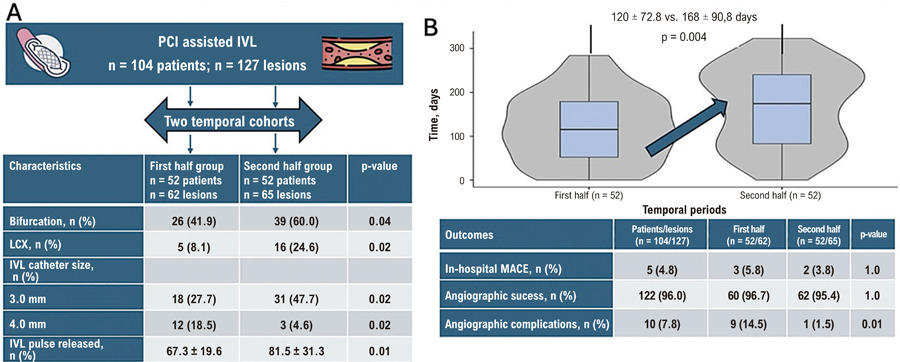
We prospectively included 104 consecutive patients with 127 calcified coronary lesions treated with IVL. The cohort was divided into two temporal groups (52 patients each) based on the order of patient inclusion. Clinical data and procedural performance were compared between the groups. All statistical tests were two-sided, with a significance level of 0.05.

Results

The mean age was 73.2 ± 10.2 years, and 62.5% of patients presented with acute coronary syndromes. Severe calcification and type B2/C lesions were identified in 73.2% and 98.4%, respectively. Upfront IVL was performed in 92.9% of lesions, intravascular imaging was used in 78%, rotational atherectomy in 6.3%, and angiographic success was achieved in 96.0%. Compared with the first cohort, the latter cohort had more bifurcation lesions (60.0% vs. 41.9%; p = 0.04), more interventions in the circumflex artery (24.6% vs. 8.1%; p = 0.02), and a lower use of 4.0-mm diameter balloons (4.6% vs. 18.5%; p = 0.02). The latter cohort spanned a longer inclusion period (168 ± 90.8 vs. 120 ± 72.8 days; p = 0.004) and had fewer angiographic complications (1.5% vs. 14.5%; p = 0.01), whereas in-hospital major adverse cardiac events did not differ (3.8% vs. 5.8%; p = 1.0).

Conclusion

IVL is an effective modality for coronary calcium modification. Temporal changes in case selection and interventional performance may reflect a learning-adaptation curve.
  • Interventional Ultrasonography
  • Learning Curve
  • Lithotripsy
  • Percutaneous Coronary Intervention
Read Full Article
Creative Commons Attribution (CC BY) Creative Commons license
21/09/2026 DOI: 10.36660/abc.20250783i Views 3
Figure 1
ABCIC
Case Report

Coronary Artery Disease In A Rare Anatomical Scenario: Type IV Duplicated Left Anterior Descending Artery

Matheus Sacco Gomes et al. Amanda Raquel Costa Cruz Bruno Leal Martins Mario Henrique Caliano … Patricia de Souza Magalhães Daniel Bandeira Ricardo Costa Marinella Patrizia Centemero

Introduction

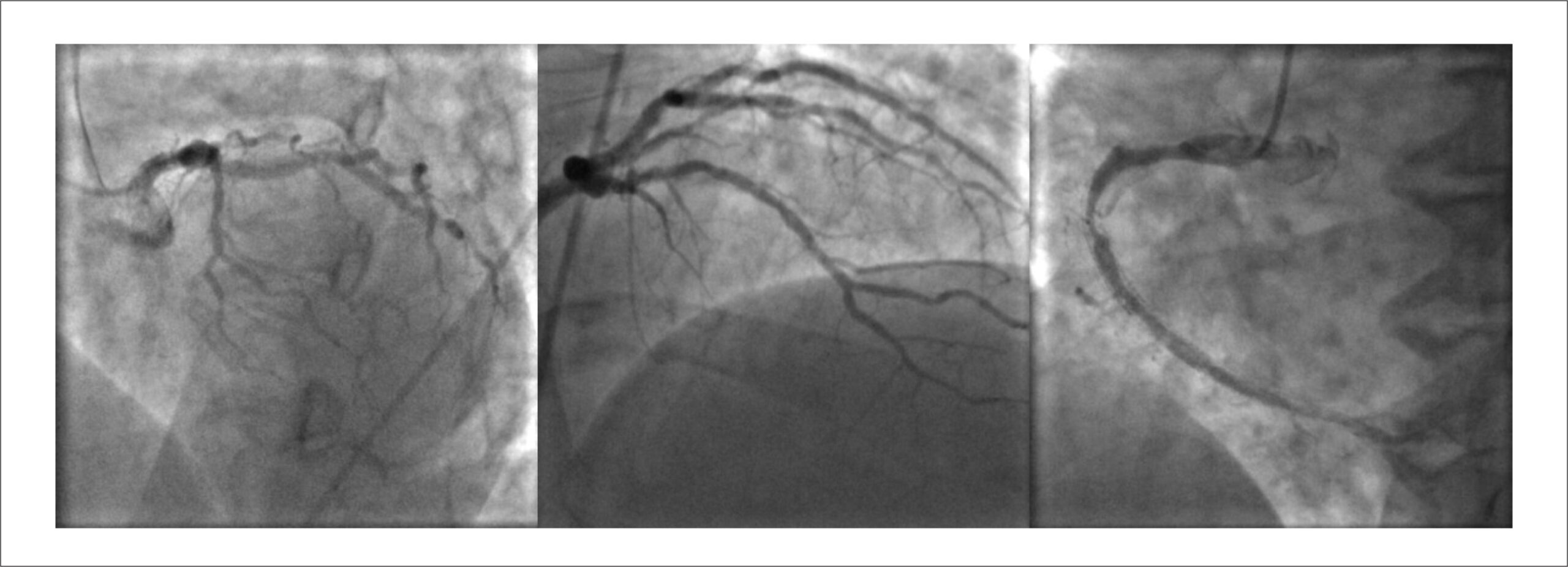
Congenital coronary anomalies comprise a heterogeneous group of anatomical variations, most often identified incidentally during non-invasive imaging studies or invasive diagnostic and therapeutic procedures. Studies show that approximately 1.3% of individuals undergoing coronary angiography present some form of coronary anomaly. Although most are considered benign, certain anomalies may be associated with myocardial ischemia, ventricular arrhythmias, and, in rare cases, sudden cardiac death. It is important to emphasize that coexistence with obstructive coronary artery disease (CAD) may amplify their clinical impact.

Among these variations, duplication of the left anterior descending (LAD) artery stands out due to its rarity and diagnostic relevance. According to the classification proposed by Spindola-Franco et al. (), this anomaly is divided into four types based on the origin and course of the branches. In Type I, the most frequent form, the short and long LAD originate from the bifurcation of the main LAD artery; the short LAD artery follows the anterior interventricular groove and terminates early, whereas the long LAD artery runs parallel along the left ventricular surface before rejoining the distal groove. In Type II, the short and long LAD also arise from the bifurcation of the main LAD artery; however, the long LAD artery courses to the right of the anterior interventricular groove before reaching the apex. In Type III, the long LAD artery has an initial intramyocardial trajectory before emerging distally on the epicardial surface. Finally, in Type IV, the rarest type, a short LAD artery originates from the left coronary artery, while a long LAD artery arises anomalously from the right coronary artery (RCA) or its sinus of Valsalva.² This long branch follows an intraseptal course before emerging in the anterior interventricular groove and reaching the apex, occurring in approximately 0.2% of patients undergoing coronary angiography.

[…]

  • Coronary Artery Disease
  • Drug-Eluting Stents
  • Interventional Ultrasonography
  • Percutaneous Coronary Intervention
Read Full Article
Creative Commons Attribution (CC BY) Creative Commons license
03/09/2026 DOI: 10.36660/abcimg.20260032i Views 1
IJCS
Viewpoint

Asymptomatic Patients With Suspected Coronary Artery Disease: What Are Clinicians Afraid Of?

Antônio Sérgio Cordeiro da Rocha et al. Dany Kruczan

Introduction

In contemporary practice, myocardial revascularization, particularly Percutaneous Coronary Intervention (PCI), is frequently performed in asymptomatic individuals with suspected Coronary Artery Disease (CAD). This occurs despite robust evidence from Randomized Clinical Trials (RCTs) over the past two decades demonstrating that, in patients with Chronic Coronary Syndromes (CCS), neither PCI nor Coronary Artery Bypass Grafting (CABG) reduces mortality when compared with Guideline-directed Medical Therapy (GDMT). In selected populations, revascularization confers symptomatic relief, particularly among patients with frequent angina, but without prognostic advantage.

The persistence of invasive strategies in asymptomatic patients appears to be driven largely by two cognitive biases: the “oculostenotic reflex”, the impulse to correct angiographically visible stenoses, and the “oculoischemic reflex”, the perceived need to revascularize documented ischemia irrespective of symptoms. Both are rooted in the fear that untreated coronary obstructions inevitably herald sudden cardiac death or Acute Myocardial Infarction (AMI).,

[…]

  • Acute coronary syndrome
  • Coronary Artery Disease
  • Percutaneous Coronary Intervention
  • Risk Factors
Read Full Article
Creative Commons Attribution (CC BY) Creative Commons license
21/08/2026 DOI: 10.36660/ijcs.20250075 Views 2
Ultra-Low Contrast versus Conventional Percutaneous Coronary Intervention for Patients with Baseline Renal Impairment: A Systematic Review and Meta-Analysis of Clinical Outcomes
ABC
Original Article

Ultra-Low Contrast versus Conventional Percutaneous Coronary Intervention for Patients with Baseline Renal Impairment: A Systematic Review and Meta-Analysis of Clinical Outcomes

Marcos Danillo Oliveira et al. Ricardo Fonseca Oliveira Suruagy-Motta Leonardo Dexheimer da Silva Karlos Daniell Araújo dos Santos Adriano Caixeta

Abstract

Background

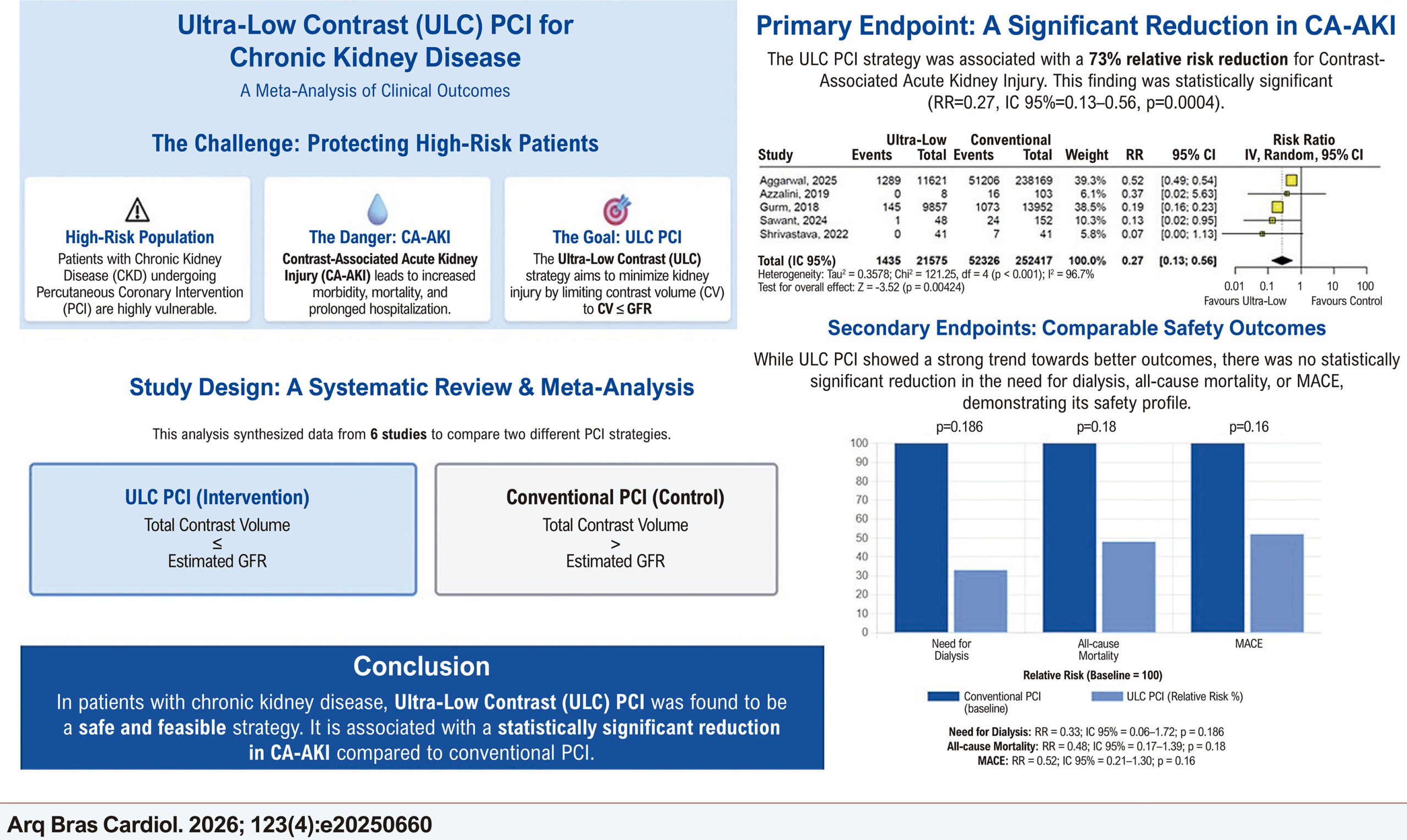
Contrast-associated acute kidney injury (CA-AKI) results in increased morbidity and mortality, prolonged hospitalization, and worse clinical outcomes. Prior studies have shown that limiting contrast volume (CV) to less than 3 times the estimated glomerular filtration rate (eGFR) implies a lower risk of CA-AKI, and both efficacy and superior outcomes are associated with ultra-low contrast (ULC) volume coronary procedures (total CV ≤ eGFR).

Objectives

This systematic review and meta-analysis aimed to compare clinical outcomes of ULC versus conventional percutaneous coronary intervention (PCI) in patients with chronic kidney disease.

Methods

The search was conducted in the databases PubMed/MEDLINE, Cochrane, Embase, Scopus, and Web of Science, including all studies reporting clinical outcomes of ULC PCI. The primary efficacy endpoint was the incidence of CA-AKI, and secondary endpoints were need for dialysis, all-cause mortality, and major adverse cardiovascular events (MACE), defined as the composite endpoint of all-cause mortality, non-fatal myocardial infarction, and clinically driven target lesion revascularization.

Results

Six studies met the inclusion criteria and were included in the final analysis, encompassing a total of 274,102 patients. ULC PCI was associated with a statistically significant reduction of CA-AKI (risk ratio=0.27; 95% CI=0.13–0.56; p=0.0004). In turn, ULC PCI did not result in statistically significant reduction of need for dialysis (risk ratio=0.33; 95% CI=0.06–1.72; p=0.186), all-cause mortality (risk ratio=0.48; 95% CI=0.17–1.39; p=0.18), and MACE (risk ratio=0.52; 95% CI= 0.21–1.30; p=0.16).

Conclusions

ULC, as compared to conventional PCI, in patients with chronic kidney disease, was found to be safe, feasible, and associated with a statistically significant reduction of CA-AKI. Further, larger, well-powered, randomized, and controlled trials are warranted in order to reassure these findings.

  • Acute Kidney Injury
  • Contrast Media
  • Meta-Analysis
  • Percutaneous Coronary Intervention
  • systematic review
Read Full Article
Creative Commons Attribution (CC BY) Creative Commons license
20/07/2026 DOI: 10.36660/abc.20250660i Views 2
ABC
Letter to the Editor

Beyond Contrast Volume: Patient-Related Determinants and Methodological Considerations in Contrast-Induced Nephropathy

Ömer Faruk Yilmaz et al. Yusuf Ziya Şener

Dear Editor,

We read with great interest the article by Freitas et al. , entitled “Impact of Contrast Volume Used After Percutaneous Coronary Procedures in Patients at Risk for Contrast-Induced Nephropathy“. By evaluating the interaction between contrast type and volume through a post hoc analysis, the authors addressed a clinically relevant question in a high-risk population managed with contemporary preventive strategies, providing a valuable contribution to the literature.

[…]

  • Contrast Media
  • Kidney, Diseases
  • Percutaneous Coronary Intervention
Read Full Article
Creative Commons Attribution (CC BY) Creative Commons license
20/07/2026 DOI: 10.36660/abc.20260111i Views 2
Figure 1
ABC
Editorial

Small Vessels, Big Decisions

José Airton de Arruda et al. José de Ribamar Costa Junior

Percutaneous coronary intervention (PCI) in small-caliber vessels remains one of the most challenging scenarios in contemporary interventional cardiology.

Historically, a small vessel was considered to be one with a diameter ≤2.75 mm. With the technological evolution of devices and the greater refinement of interventional techniques, this concept has been progressively redefined. In contemporary practice, small vessels are standardized as those with a diameter <2.5 mm, while very small or extremely small vessels often include segments <2.25 mm.,

[…]

  • Coronary Restenosis
  • Coronary Vessels
  • Drug-Eluting Stents
  • Percutaneous Coronary Intervention
  • Sirolimus
Read Full Article
Creative Commons Attribution (CC BY) Creative Commons license
01/06/2026 DOI: 10.36660/abc.20260207i Views 2
ABC
Letter to the Editor

Volume-Independent Renal Injury: Why Contrast-Induced Nephropathy Can Occur Even at Ultra-Low Contrast Doses

Fahri Çakan

Dear Editor,

I reviewed with great interest the article titled “Impact of Contrast Volume Used After Percutaneous Coronary Procedures in Patients at Risk for Contrast-Induced Nephropathy,” authored by Freitas et al. This post-hoc subgroup analysis, designed to assess contrast-induced nephropathy (CIN) risk management, provides clinically valuable data on the interaction between contrast type and volume, particularly in high-risk patient populations (n=2,268).

[…]

  • Acute Kidney Injury
  • Contrast Media
  • Kidney, Diseases
  • Percutaneous Coronary Intervention
Read Full Article
Creative Commons Attribution (CC BY) Creative Commons license
01/06/2026 DOI: 10.36660/abc.20260016i Views 1
ABC
Editorial

Reconsidering the CHA2DS2-VASc Score for No-Reflow Risk Stratification after Percutaneous Coronary Intervention

Irfan Sahin et al. Muhammed Furkan Deniz

The no-reflow phenomenon remains one of the most complex and clinically challenging complications of percutaneous coronary intervention (PCI)., Although advanced imaging techniques, novel stent technologies, and contemporary pharmacological therapies are widely used today, there is still no universally accepted scoring system capable of reliably predicting no-reflow either before or during the procedure. This gap remains an important unmet clinical need.–

In this context, the systematic review and meta-analysis presented by Ozbay et al. make a significant contribution to the existing literature by addressing the association between the CHA2DS2-VASc score and the occurrence of no-reflow after PCI. By synthesizing data from ten observational studies involving more than 6,500 patients, the authors demonstrated a significant and consistent association between higher CHA2DS2-VASc scores and an increased likelihood of no-reflow. These findings suggest that observations previously reported in single-center studies with relatively small sample sizes are confirmed in a larger population within a more robust methodological approach.–

[…]

  • No-Reflow Phenomenon
  • Percutaneous Coronary Intervention
  • postoperative complications
Read Full Article
Creative Commons Attribution (CC BY) Creative Commons license
16/03/2026 DOI: 10.36660/abc.20260022i Views 1
Registry of Percutaneous Coronary Interventions in Very Small-Caliber Vessels: Analysis of a Sirolimus-Eluting Stent and Other Contemporary Drug-Eluting Stents
ABC
Original Article

Registry of Percutaneous Coronary Interventions in Very Small-Caliber Vessels: Analysis of a Sirolimus-Eluting Stent and Other Contemporary Drug-Eluting Stents

João Vitor Slaviero et al. André Luiz Langer Manica Rogério Eduardo Gomes Sarmento Leite Eduarda Paiva Borsa … Marcia Moura Schmidt Rodrigo Campos Ogando Julia Kurtz Teixeira Raphael Boesche Guimarães Alexandre Damiani Azmus Carlos A. M. Gottschall

Abstract

Background

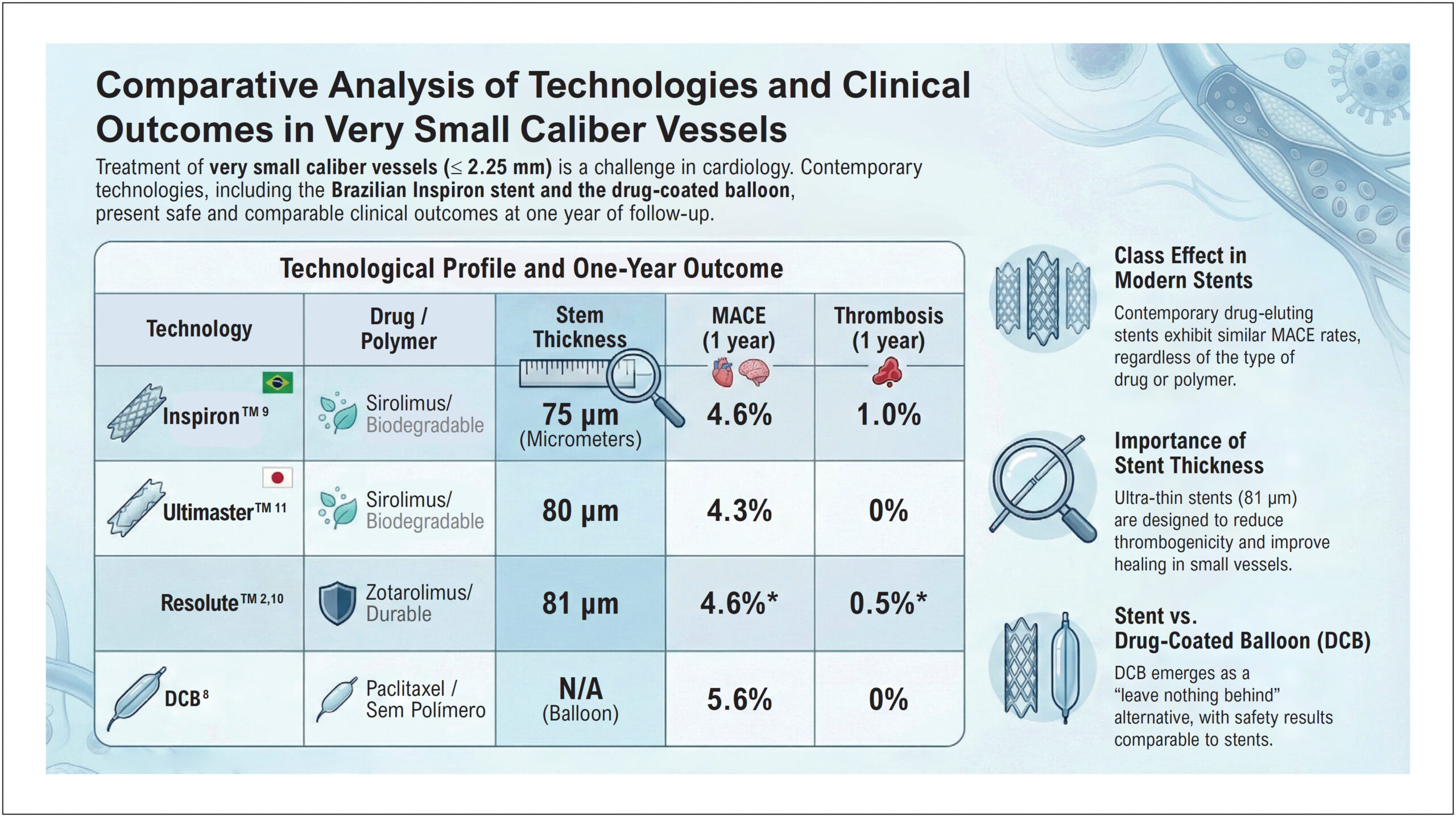
Percutaneous coronary intervention (PCI) in very small-caliber vessels (≤2.25 mm) presents technical challenges and is associated with poorer outcomes compared to larger vessels. The Inspiron® stent, a drug-eluting stent (DES) manufactured in Brazil, has been evaluated in multiple studies; however, data on its performance in vessels smaller than 2.5 mm are lacking.

Objectives

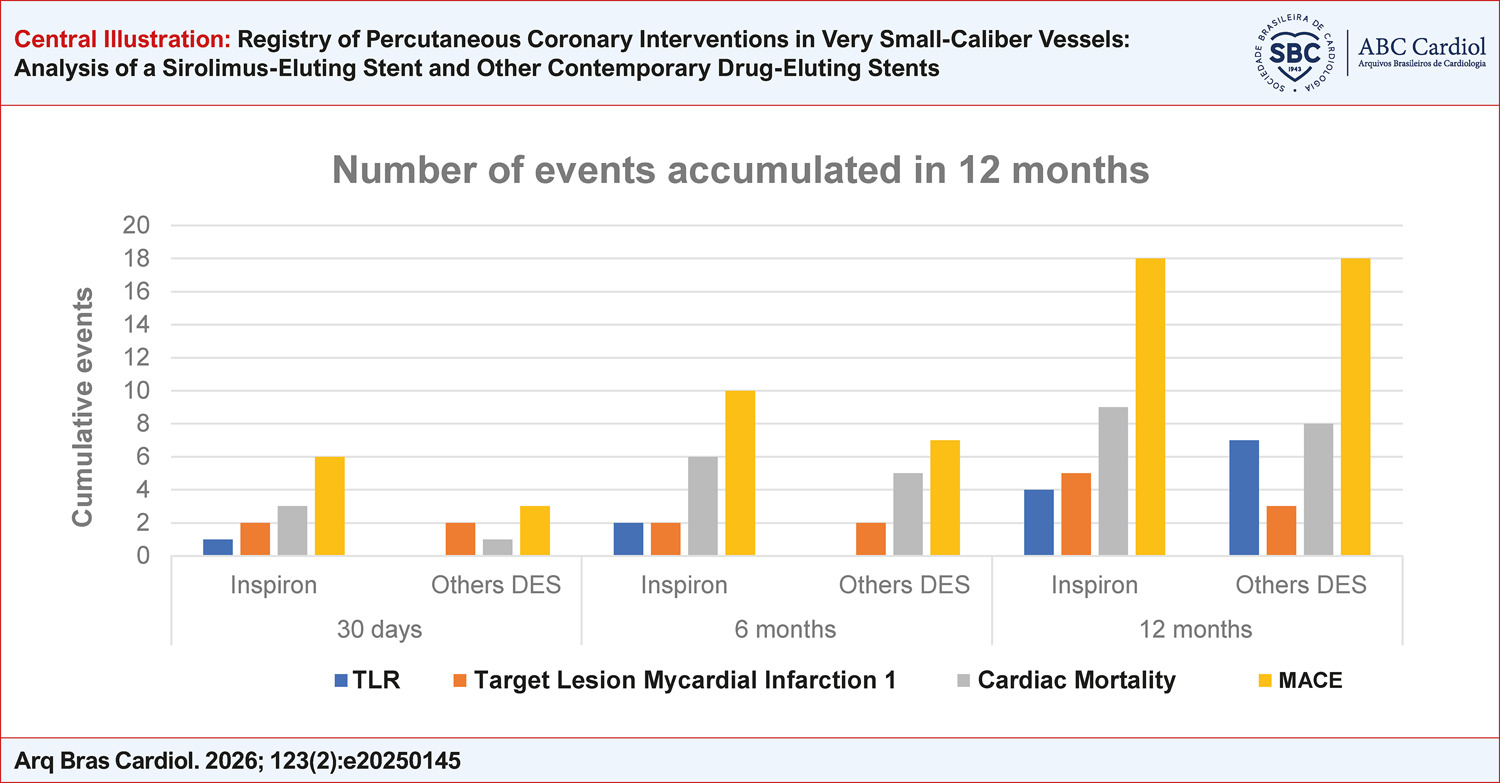
This study aimed to evaluate the clinical outcomes of PCI using DES in very small-caliber vessels and to compare the Inspiron® stent with other contemporary DES platforms. The primary endpoint was major adverse cardiac events (MACE), defined as cardiac death, target lesion myocardial infarction, and clinically driven target lesion revascularization.

Methods

We conducted an observational study including a consecutive sample at a Brazilian reference center from 2017 to 2021. Outcomes were assessed in-hospital, at 30 days, 6 months, and 12 months, using a 5% threshold for statistical significance.

Results

A total of 783 DES were implanted: 47% Inspiron® and 46.8% other DES. The mean patient age was 64.7 ± 11 years; 61% were male, and 42% had diabetes mellitus. At 12 months, the overall MACE rate was 4.54% (36/793), with no difference between groups (Inspiron®: 4.6% vs. other DES: 4.6%; p=1.000). Individual endpoints and stent thrombosis rates were also similar (4 [1.0%] vs. 2 [0.5%]; p=0.868).

Conclusion

our findings show that the Inspiron® stent has acceptable safety and efficacy and provides comparable 12-month clinical outcomes to other contemporary DES in very small-caliber coronary vessels.

  • Coronary Artery Disease
  • Drug-Eluting Stents
  • Percutaneous Coronary Intervention
  • Sirolimus
Read Full Article
Creative Commons Attribution (CC BY) Creative Commons license
16/03/2026 DOI: 10.36660/abc.20250145i Views 2
Figure 1
IJCS
Editorial

The "Right" Side of Myocardial Infarction: Sinister Outcomes?

Monica Verdoia

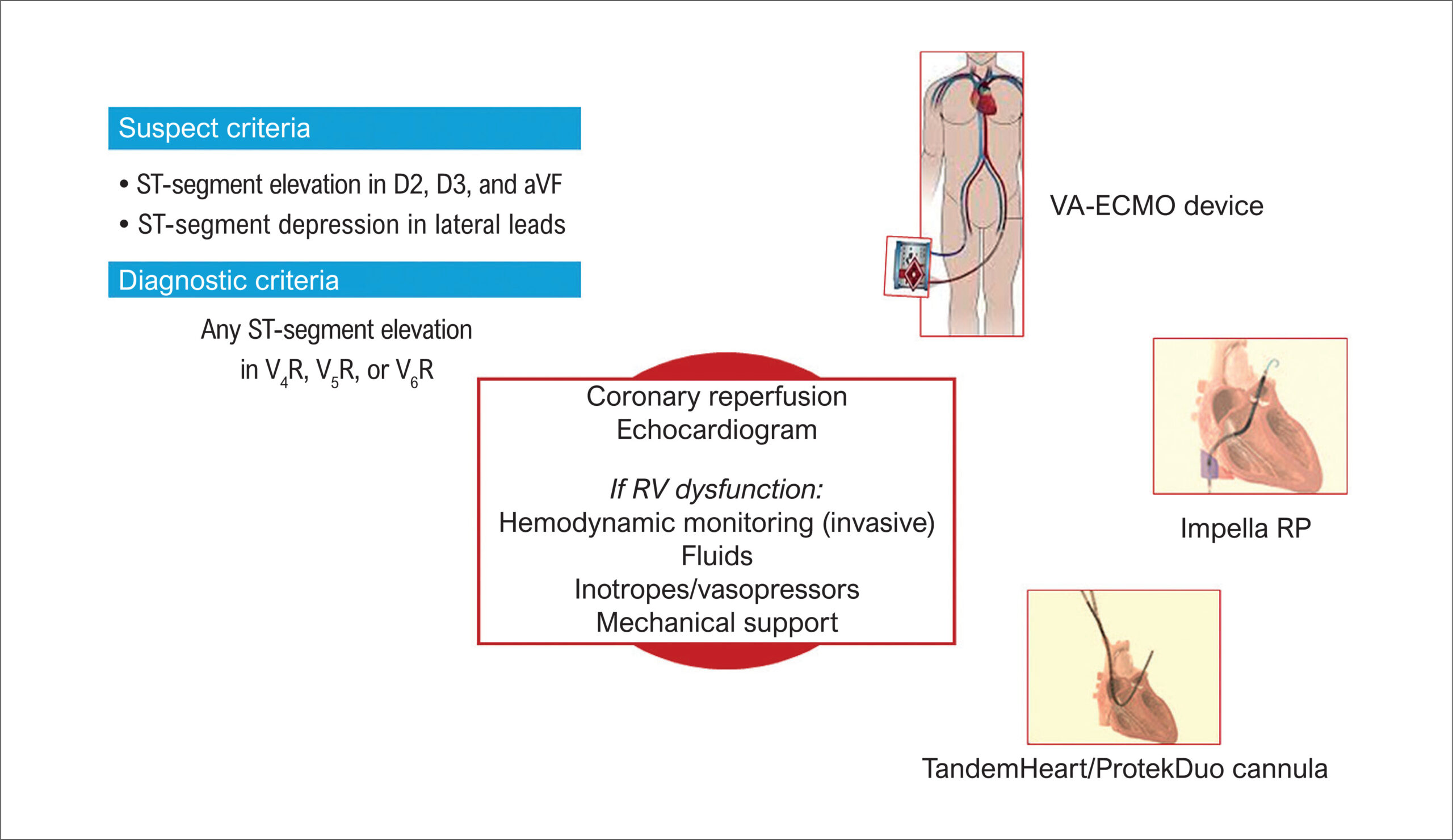
Right ventricular myocardial infarction (RVI) is rarely an isolated event; rather, it generally complicates 10% to 50% of cases of acute inferior ST-segment elevation myocardial infarction (STEMI)., Proximal right coronary artery occlusion, impairing right ventricular (RV) branch flow, is most frequently the culprit vessel, although it depends on coronary tree anatomy.

Previous studies underlined that RVI is often unrecognized, since RV ischemic dysfunction is generally transient, due to the different composition and higher resistance to hypoxia of the RV wall. In addition, the diagnostic criteria for RVI, which are mainly based on electrocardiogram (), can lead to underestimation, unless RV involvement becomes clinically manifest with hemodynamic complications. In fact, acute RV dysfunction can lead to reduced output, insufficient left heart filling, and cardiogenic shock, despite preserved left contractility. Moreover, intrapericardial ventricular interaction can translate into an abrupt RV dilation and further compression of the left chambers.

[…]

  • Heart Ventricles
  • Myocardial Infarction
  • Percutaneous Coronary Intervention
Read Full Article
Creative Commons Attribution (CC BY) Creative Commons license
13/03/2026 DOI: 10.36660/ijcs.20250249
Association of CHA2DS2-VASc Score with No-Reflow Phenomenon after PCI: A Systematic Review and Meta-Analysis
ABC
Original Article

Association of CHA2DS2-VASc Score with No-Reflow Phenomenon after PCI: A Systematic Review and Meta-Analysis

Mustafa Bilal Ozbay et al. Aysenur Gullu Serhat Degirmen Bede Nnaemeka Nriagu … Yasin Ozen Cagri Yayla

Abstract

Background

The no-reflow (NR) phenomenon is a serious complication of percutaneous coronary intervention (PCI), associated with poor clinical outcomes. The CHA2DS2-VASc score, originally developed to assess thromboembolic risk in atrial fibrillation, has shown potential in being associated with adverse cardiovascular events, but its predictive value for NR remains uncertain.

Objective

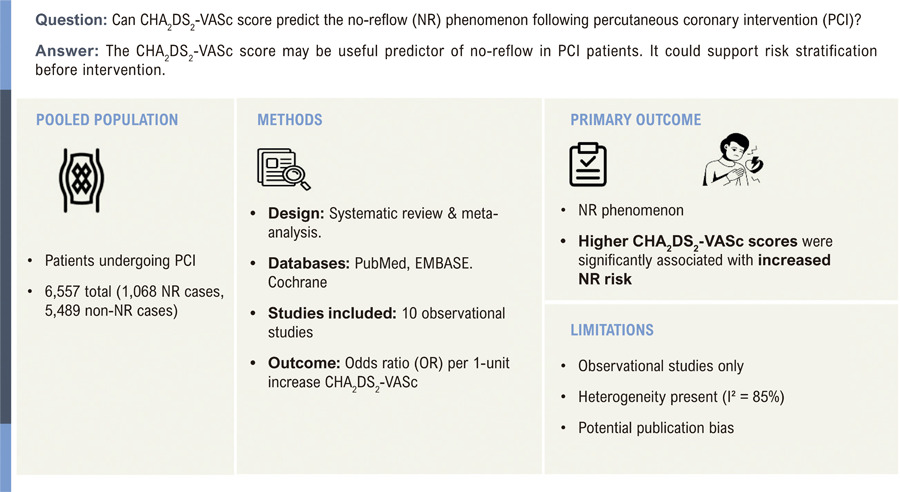
To evaluate the association between the CHA2DS2-VASc score and the occurrence of NR in patients undergoing PCI through a systematic review and meta-analysis.

Methods

A systematic review of the literature was performed across Cochrane, EMBASE, and PubMed databases to identify studies examining the relationship between the CHA2DS2-VASc score and the occurrence of NR following PCI. A random-effects meta-analysis was conducted, using odds ratios (ORs) and 95% confidence intervals (CIs) as the measures of effect size. Heterogeneity was calculated by using Cochran’s Q test and Higgins’ I2 statistics.

Results

A total of 10 studies including 6,557 patients (1,068 NR cases and 5,489 non-NR cases) were analyzed. An elevated CHA2DS2-VASc score was strongly associated with a higher risk of NR occurrence after PCI (OR, 1.86; 95% CI, 1.51–2.29; p < .00001; I2 = 85%).

Conclusion

This meta-analysis supports that the CHA2DS2-VASc score may be a useful tool for identifying patients at increased risk of NR during PCI. Further prospective studies are required to validate these findings and optimize risk stratification approaches.

  • Meta-Analysis
  • Percutaneous Coronary Intervention
Read Full Article
Creative Commons Attribution (CC BY) Creative Commons license
02/03/2026 DOI: 10.36660/abc.20250356i Views 2
Figure 1
ABCIC
Case Report

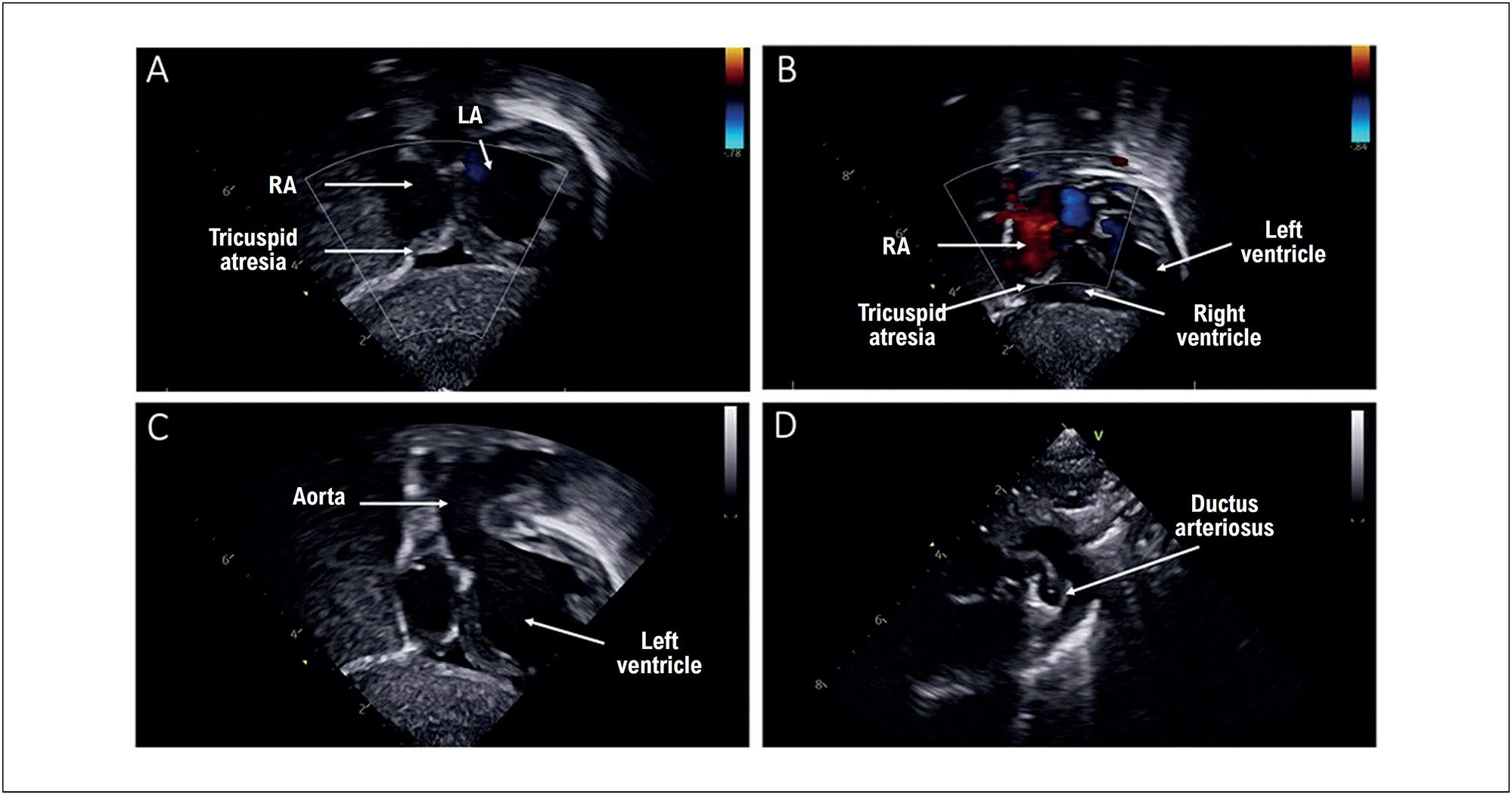
Acute Thrombosis During Ductus Arteriosus Stenting Successfully Treated with Balloon Angioplasty and In Situ Alteplase Infusion: Case Report

Jonathan Guimarães Lombardi et al. Paulo Correia Calamita Mayra Rosana Palmeira Barreto Luiza Silveira Neves Ficht Giulliano Gardenghi

Introduction

Tricuspid atresia with pulmonary atresia is a rare congenital heart defect, representing about 1% to 3% of all congenital heart diseases. Tricuspid atresia is subdivided into type I (normal position of the great arteries) and type II (transposition of the great arteries), with type 1A characterized by the presence of associated pulmonary atresia or stenosis. Pulmonary blood flow in these patients is dependent on the patency of the ductus arteriosus, making its maintenance essential in the neonatal period.

The treatment of tricuspid atresia follows a staged surgical approach, aiming for a Fontan circulation as the final goal. In the neonatal period, the focus is to ensure adequate pulmonary blood flow through hemodynamic or surgical interventions, including systemic-pulmonary shunts or ductal interventions.

[…]

  • Congenital Heart Defects
  • Ductus Arteriosus
  • Percutaneous Coronary Intervention
  • Thrombosis
  • Tricuspid Atresia
Read Full Article
Creative Commons Attribution (CC BY) Creative Commons license
03/02/2026 DOI: 10.36660/abcimg.20250084i Views 2
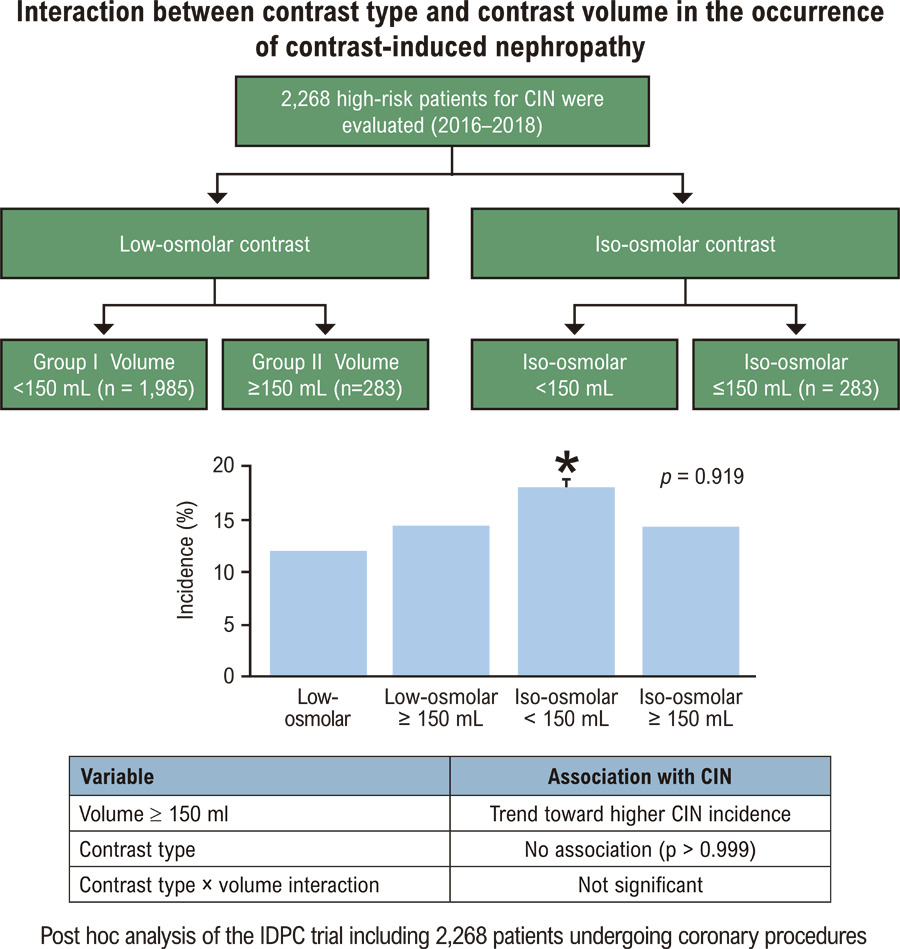
Impact of Contrast Volume Used After Percutaneous Coronary Procedures in Patients at Risk for Contrast-Induced Nephropathy
ABC
Original Article

Impact of Contrast Volume Used After Percutaneous Coronary Procedures in Patients at Risk for Contrast-Induced Nephropathy

Rafaela Andrade Penalva Freitas et al. Luiz Fernando Leite Tanajura Amanda Guerra M. R Sousa Fausto Feres José Ribamar Costa

Abstract

Background

Contrast-induced nephropathy (CIN) is a common complication following angiographic procedures, potentially related to the volume of contrast agent administered. However, it is unclear whether the type of contrast also influences its occurrence.

Objective

To evaluate the interaction between contrast volume and contrast type (iso-osmolar vs low-osmolar) in the development of CIN.

Methods

A post hoc subanalysis was performed on patients undergoing diagnostic or therapeutic coronary procedures who were randomized 1:1 to receive low-osmolar or iso-osmolar contrast media. The overall sample (n = 2,268) was stratified by contrast volume: Group I (< 150 mL; n = 1,985) and Group II (≥ 150 mL; n = 283), and groups were compared by contrast type. The primary endpoint was CIN at 48- and 96-hours post-procedure. CIN was defined as a ≥ 25% or ≥ 0.5 mg/dL increase in serum creatinine from baseline at 48 hours. The effects of contrast type and volume were tested with logistic regression including an interaction term, adjusted for acute coronary syndrome, ventricular dysfunction, baseline creatinine, sex, and age (p < 0.05).

Results

We included 2,268 consecutive patients; two-thirds were male; hypertension was present in 85%, diabetes in 52%, and chronic kidney disease in 31%. Mean contrast volume was 75.3 ± 28.0 mL in Group I and 188.6 ± 46.9 mL in Group II. The incidence of CIN was higher with greater volume (14.8% vs 17.7%) but not statistically significant (adjusted odds ratio = 1.25; 95% CI = 0.89-1.73; p = 0.191). The model with the interaction term showed no evidence of an interaction between the type of contrast and volume (p > 0.999).

Conclusion

The type of contrast was not associated with CIN, even among patients exposed to higher contrast volumes.

  • Contrast Media
  • Kidney, Diseases
  • Percutaneous Coronary Intervention
Read Full Article
Creative Commons Attribution (CC BY) Creative Commons license
23/01/2026 DOI: 10.36660/abc.20250270i Views 2
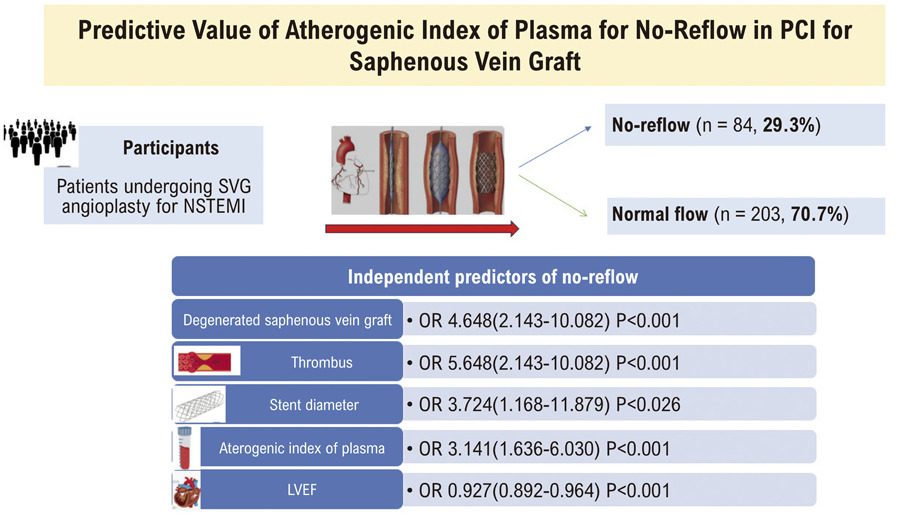
Predictive Value of Atherogenic Index for No-Reflow in Patients Undergoing Coronary Intervention for Saphenous Vein Graft with Acute Coronary Syndrome
ABC
Original Article

Predictive Value of Atherogenic Index for No-Reflow in Patients Undergoing Coronary Intervention for Saphenous Vein Graft with Acute Coronary Syndrome

Onur Erdoğan et al. Cafer Panç

Abstract

Background

The no-reflow phenomenon is a critical complication of percutaneous coronary intervention (PCI), especially in patients with saphenous vein graft (SVG) disease. Identifying predictors of no-reflow is crucial to improving risk stratification. The atherogenic index of plasma (AIP), calculated as log(triglyceride/HDL-C), is a marker of atherosclerosis and microvascular dysfunction. However, its role in predicting no-reflow during SVG interventions remains unclear.

Objective

This study aimed to evaluate the association between AIP and the no-reflow phenomenon in patients undergoing PCI for SVG lesions presenting with non-ST elevation myocardial infarction (NSTEMI).

Methods

This single-center retrospective study included 287 patients who underwent PCI for significant SVG stenosis. Patients were categorized into normal reflow and no-reflow groups based on post-PCI TIMI (Thrombolysis in Myocardial Infarction) flow grades. Baseline demographic, clinical, laboratory, and angiographic data were extracted. AIP was calculated using formula log (TG/HDL-C). Logistic regression analyses were performed to determine independent predictors of the no-reflow. Statistical significance was set at p<0.05.

Results

The no-reflow group was older and had a higher prevalence of comorbidities, including diabetes, atrial fibrillation, chronic heart failure, chronic kidney disease, and stroke history. They also exhibited lower HDL-C levels, higher triglyceride levels, and consequently higher AIP values compared to the normal reflow group. Multivariate analysis identified degenerated SVG (OR: 4.65, p<0.001), thrombus presence (OR: 5.65, p<0.001), reduced left ventricular ejection fraction (OR: 0.927, p<0.001), and elevated AIP (OR: 3.141, p=0.001) as independent predictors of the no-reflow.

Conclusion

Elevated AIP is an independent risk factor for no-reflow in NSTEMI patients undergoing PCI for Saphenous Vein Graft, highlighting its potential role in early risk stratification.

  • Acute coronary syndrome
  • Atherosclerosis
  • No-Reflow Phenomenon
  • Percutaneous Coronary Intervention
Read Full Article
Creative Commons Attribution (CC BY) Creative Commons license
16/01/2026 DOI: 10.36660/abc.20250162i Views 1
Figure 1
ABC
Editorial

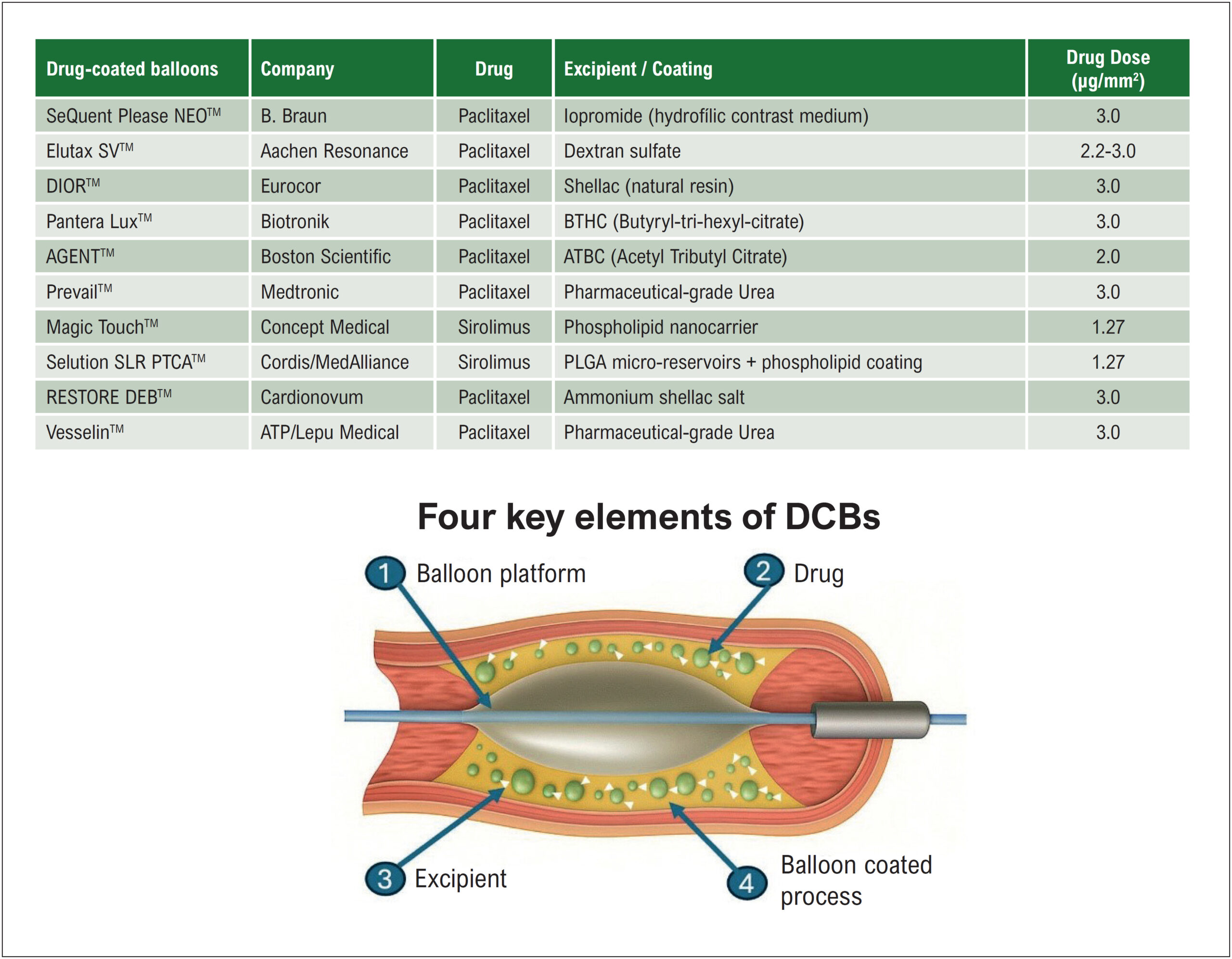
Small-Vessel Coronary Disease and Drug-Coated Balloons: Time to Reconsider Our Strategy?

Guy F. A. Prado et al. Henrique Barbosa Ribeiro

Percutaneous coronary intervention (PCI) with drug-eluting stents (DES) has dramatically transformed coronary revascularization, reducing restenosis and the need for repeat interventions. Nevertheless, despite major advances in stent bioengineering and procedural techniques, the permanent implantation of metallic platforms and polymer coatings remains associated with long-term stent failure, particularly in small coronary arteries, with an annual incidence of stent thrombosis of approximately 1–2%. The underlying mechanisms include neointimal hyperplasia, neoatherosclerosis, stent fracture, and the inability to achieve positive remodeling, all resulting from the “caging” of vessels with metallic struts. Against this background, the use of drug-coated balloons (DCBs) for the treatment of de novo lesions—embodying the “leave nothing behind” strategy—has emerged as an attractive alternative to overcome limitations inherent to stent implantation.

In recent years, an increasing number of trials have underscored the clinical relevance of DCB angioplasty for de novo lesions. The avoidance of permanent device implantation into the vessel wall is particularly appealing. On the other hand, a key objective of PCI is to achieve acute luminal gain while minimizing dissections and impaired flow—an aspect where stents retain a clear advantage. Still, PCI with DES in small arteries has consistently been associated with higher rates of target lesion failure. In this context, a DCB-based angioplasty is compelling. Recent evidence has suggested comparable outcomes between DCBs and DES in small-vessel disease; however, non-inferiority designs and small sample sizes have limited these findings.

[…]

  • Coronary Artery Disease
  • Drug-Eluting Stents
  • Percutaneous Coronary Intervention
Read Full Article
Creative Commons Attribution (CC BY) Creative Commons license
15/12/2025 DOI: 10.36660/abc.20250652i Views 2
Figure 1
ABC
Case Report

Brazil's First High-Risk Percutaneous Coronary Intervention with Hemodynamic Support from a Percutaneous Pulsatile Device: A Case Report

André M. Nicolau et al. Pedro H. M. C. de Melo Lucas Aguiar Alencar de Oliveira Rafael Bergo … Thiago A. Kleinsorge Roger Renault Godinho Fábio Sândoli de Brito Jr Alexandre A. Abizaid Carlos de Magalhães Campos

Abstract

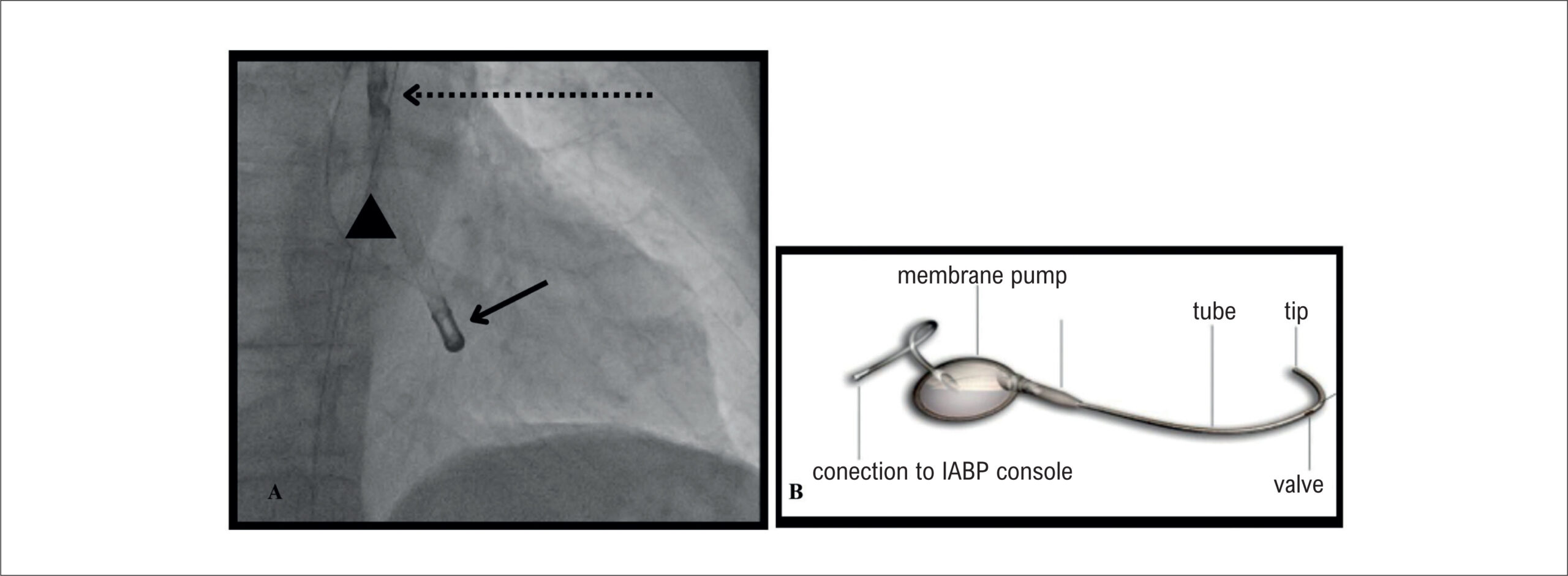
Percutaneous coronary intervention (PCI) is the most widely used coronary revascularization method worldwide, even in cases of high anatomical complexity. However, this increasing complexity has increased the risks associated with the procedure. Mechanical circulatory assist devices (MCADs), such as the iVAC 2L, have been used for hemodynamic support in high-risk PCIs.

We describe the first case in Brazil of PCI performed with the support of the iVAC 2L, a pulsatile MCAD. The patient, an 81-year-old man, had functional class III angina and severe lesions in the left main coronary artery (LMCA), left anterior descending artery (LAD), and circumflex artery (CX), associated with extensive calcification. The procedure was performed with the support of the iVAC 2L, and PCI was performed with stenting of the LMCA, LAD, and CX. The entire procedure was performed without the need for vasoactive drugs, and the device was removed without vascular complications.

High-risk PCI has become increasingly common, often requiring ventricular mechanical support. The iVAC 2L offers advantages such as pulsatile flow and ease of implantation, making it an alternative to the intra-aortic balloon pump and Impella. This report highlights the potential use of the iVAC 2L in Brazil, expanding therapeutic options for high-risk patients.

  • Coronary Artery Disease
  • Heart-Assist Devices
  • Percutaneous Coronary Intervention
Read Full Article
Creative Commons Attribution (CC BY) Creative Commons license
15/12/2025 DOI: 10.36660/abc.202250236i Views 1
Paclitaxel-Coated Balloons versus Drug-Eluting Stents in Small Vessel Coronary Artery Disease: A Systematic Review and Meta-Analysis
ABC
Original Article

Paclitaxel-Coated Balloons versus Drug-Eluting Stents in Small Vessel Coronary Artery Disease: A Systematic Review and Meta-Analysis

Marília Oberto da Silva Gobbo et al. Renan Yuji Ura Sudo Ancy Jenil Franco Mable Pereira … Tanize Louize Milbradt Zeynep Eylul Bakir Iago Zang Pires Stephen Akinfenwa Gustavo Luís Agostini Denise Pellegrini Paulo R. A. Caramori

Abstract

Background

Drug-eluting stents (DES) remain the standard of care for percutaneous coronary intervention in small vessel coronary artery disease (SVD). Paclitaxel-coated balloons (PCB) have emerged as an alternative, with recent trials suggesting favorable short- and mid-term outcomes, although most were limited by small sample sizes.

Objectives

To compare angiographic and clinical outcomes between DES and PCB in patients with SVD.

Methods

Searches were conducted in PubMed, Embase, the Cochrane Library, and ClinicalTrials.gov for studies comparing PCB and DES in SVD, defined as a reference vessel diameter < 3.0 mm. A random-effects meta-analysis was performed, and results were reported as mean differences (MD) or risk ratios (RR). Statistical significance was set at p < 0.05. Heterogeneity was assessed using the chi-square, Tau, and Tau2 tests. The review protocol was registered in PROSPERO (CRD42024506502).

Results

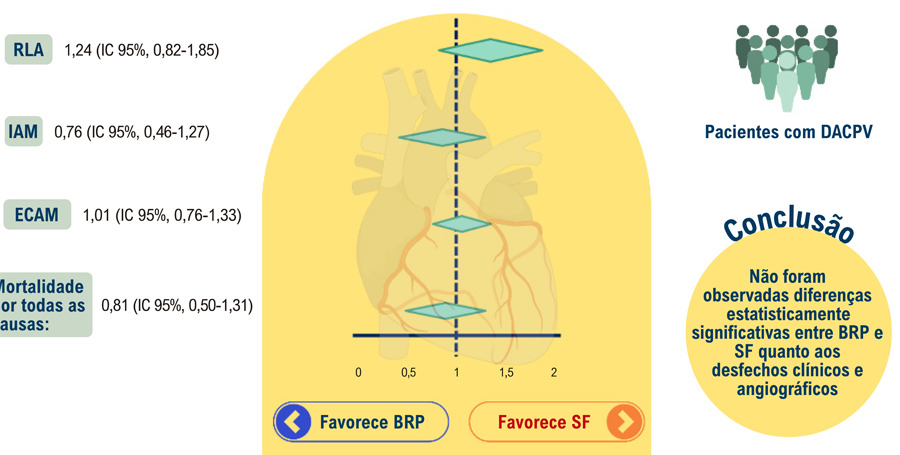
A total of 12 studies comprising 17,441 patients (mean age of 58-73 years) were included, with clinical follow-up of 8 to 36 months. All studies evaluated PCB. No significant differences were found between PCB and DES in target lesion revascularization (RR, 1.24; 95% CI, 0.82-1.85; p = 0.30), late lumen loss (MD, –0.09 mm; 95% CI, –0.41 to 0.23; p = 0.57), major adverse cardiovascular events (RR, 1.01; 95% CI, 0.76-1.33; p = 0.95), all-cause mortality (RR, 0.81; 95% CI, 0.50-1.31; p = 0.39), cardiovascular mortality (RR, 1.74; 95% CI, 0.78-3.89; p = 0.17), and myocardial infarction (RR, 0.76; 95% CI, 0.46-1.27; p = 0.30).

Conclusions

PCB angioplasty demonstrated clinical and angiographic outcomes comparable to DES in SVD, supporting its role as a safe, effective alternative in selected patients.

  • Coronary Artery Disease
  • Drug-Eluting Stents
  • Percutaneous Coronary Intervention
Read Full Article
Creative Commons Attribution (CC BY) Creative Commons license
15/12/2025 DOI: 10.36660/abc.20250069i Views 1
Evaluation of Different Therapeutic Approaches for Acute Coronary Syndromes in Patients Undergoing Chronic Dialysis: A Retrospective Cohort Study
IJCS
Original Article

Evaluation of Different Therapeutic Approaches for Acute Coronary Syndromes in Patients Undergoing Chronic Dialysis: A Retrospective Cohort Study

Matheus Eduardo França et al. Ana Luiza de Fragas Franciani Rodrigues da Rocha Leonardo Claudino Ribeiro Silvia R. Froes Toniazzo

Abstract

Background:

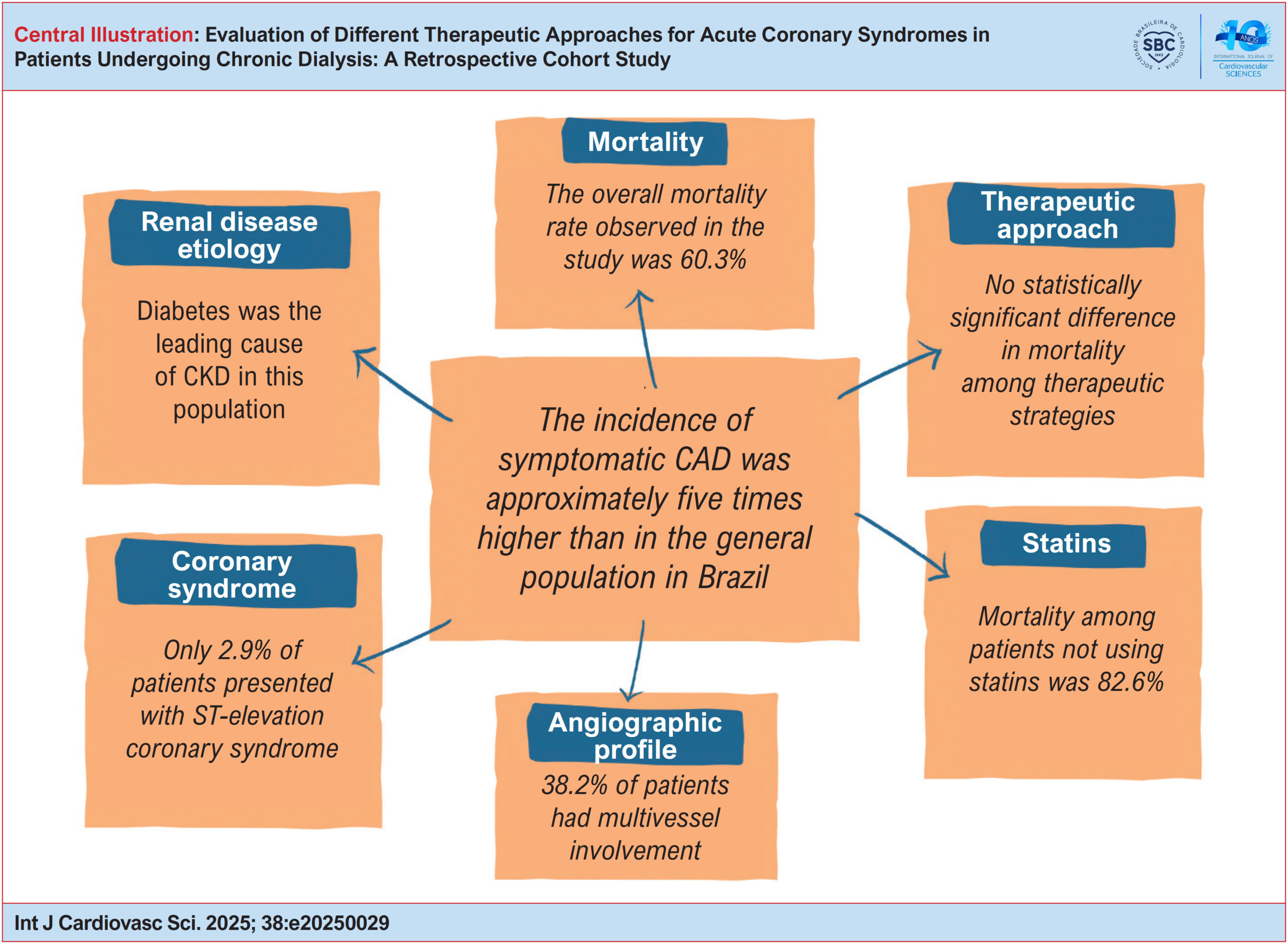
Cardiovascular disease (CVD) is the leading cause of death among individuals with chronic kidney disease (CKD), particularly those undergoing dialysis, accounting for approximately 40% of deaths. The prevalence of ischemic coronary disease among patients undergoing hemodialysis over the age of 45 reaches 41%.

Objective:

To analyze outcomes of symptomatic coronary artery disease (CAD) in patients undergoing chronic dialysis, stratified by invasive assessment, and treated with one of three approaches: medical therapy alone (MTA), percutaneous coronary intervention (PCI), or coronary artery bypass grafting.

Methods:

This was a retrospective, analytical, observational cohort study based on data from electronic medical records collected between 2013 and 2023, including a total of 68 patients. Quantitative variables were analyzed using one-way Analysis of Variance (ANOVA), and qualitative variables were assessed using Pearson’s chi-square test. A p-value <0.05 was considered statistically significant.

Results:

The mean age was 60.2 ± 13.1 years, with a male predominance of 42 patients (62.8%). The highest mortality was observed in the MTA group with 25 deaths (69.4%), followed by PCI with 10 deaths (56.6%), and the lowest in the coronary artery bypass grafting group with six deaths (42.9%). Among patients who did not use statins, 19 (82.6%) died (p < 0.01). The lowest rate of readmission due to coronary syndrome occurred in the MTA group (two patients; 18.2%), while the highest was in the PCI group (six patients; 54.5%) (p = 0.02).

Conclusion:

Although no statistically significant difference in mortality was found among the three therapeutic strategies, MTA was associated with lower rates of readmission and repeat cardiac catheterization. In contrast, PCI was linked to a higher risk of readmission due to coronary syndrome.

  • Coronary Artery Bypass
  • Coronary Artery Disease
  • Drug Therapy
  • Percutaneous Coronary Intervention
  • renal dialysis
Read Full Article
Creative Commons Attribution (CC BY) Creative Commons license
17/11/2025 DOI: 10.36660/ijcs.20250029 Views 1
ABC
Editorial

Coronary Compression in Pulmonary Hypertension: A Treatable Threat Hidden in Plain Sight

Allan K. N. Alencar

Pulmonary hypertension (PH) represents a severe, progressive condition associated with right ventricular failure, impaired functional capacity, and increased mortality., Although angina is not a hallmark symptom of PH, it can affect up to 30% of patients and is frequently overlooked in clinical practice. The study published in this issue of Arquivos Brasileiros de Cardiologia addresses a rare yet critical cause of chest pain in PH: extrinsic compression of the left main coronary artery (LMCA) by a dilated pulmonary artery. The authors present an observational case series of 12 patients undergoing percutaneous coronary intervention (PCI) with stenting for LMCA compression, reporting both feasibility and sustained symptom relief.

While LMCA atherosclerosis is well recognized for its prognostic impact, compression of this vessel due to pulmonary artery dilation in PH remains underdiagnosed. The authors highlight that up to 76% of patients with advanced PH exhibit pulmonary artery enlargement, which may result in significant extrinsic compression of the LMCA, even in the absence of coronary atherosclerosis., Importantly, LMCA compression has been associated with sudden cardiac death in PH cohorts, emphasizing the need for high clinical suspicion.–

[…]

  • Angioplasty
  • Percutaneous Coronary Intervention
  • Pulmonary Hypertension
Read Full Article
Creative Commons Attribution (CC BY) Creative Commons license
18/08/2025 DOI: 10.36660/abc.20250352i Views 1
Delay Times in Acute Myocardial Infarction Care: Comparison Between Periods Before and During the COVID-19 Pandemic
IJCS
Original Article

Delay Times in Acute Myocardial Infarction Care: Comparison Between Periods Before and During the COVID-19 Pandemic

Layla Pasolini Lott et al. Roberto Ramos Barbosa Rhaaby Rodrigues Muzi Camila Marianelli … Isadora Cardozo Bragatto Valentin Trevizani Neto Glícia Chierici Baptista Eduardo Gomes Vieira Rodolfo Costa Sylvestre Osmar Araújo Calil Renato Giestas Serpa Lucas Crespo de Barros Larissa Novaes Paganini Lucas Martins Frizzera Borges Luiz Fernando Machado Barbosa

Abstract

Background

The success of acute myocardial infarction with ST-segment elevation (STEMI) treatment is time-dependent, requiring prompt access, diagnosis, and immediate medical intervention. The COVID-19 pandemic has significantly impacted the care of patients with STEMI.

Objective

To analyze delay times and clinical outcomes of patients with STEMI undergoing primary percutaneous coronary intervention (PPCI) before and during the COVID-19 pandemic.

Methods

This retrospective observational study included patients with STEMI undergoing PPCI from June 2019 to July 2022. The COVID-19 pandemic period was divided into 3 time groups. Pandemic I referred to the interval from March to August 2020, pandemic II from September 2020 to July 2021, and pandemic III from August 2021 to July 2022. Delay times, clinical characteristics, and in-hospital mortality were analyzed. The chi-square, Fisher’s exact, Student’s t and one-way ANOVA tests were applied, with p values less than 0.05 being considered statistically significant.

Results

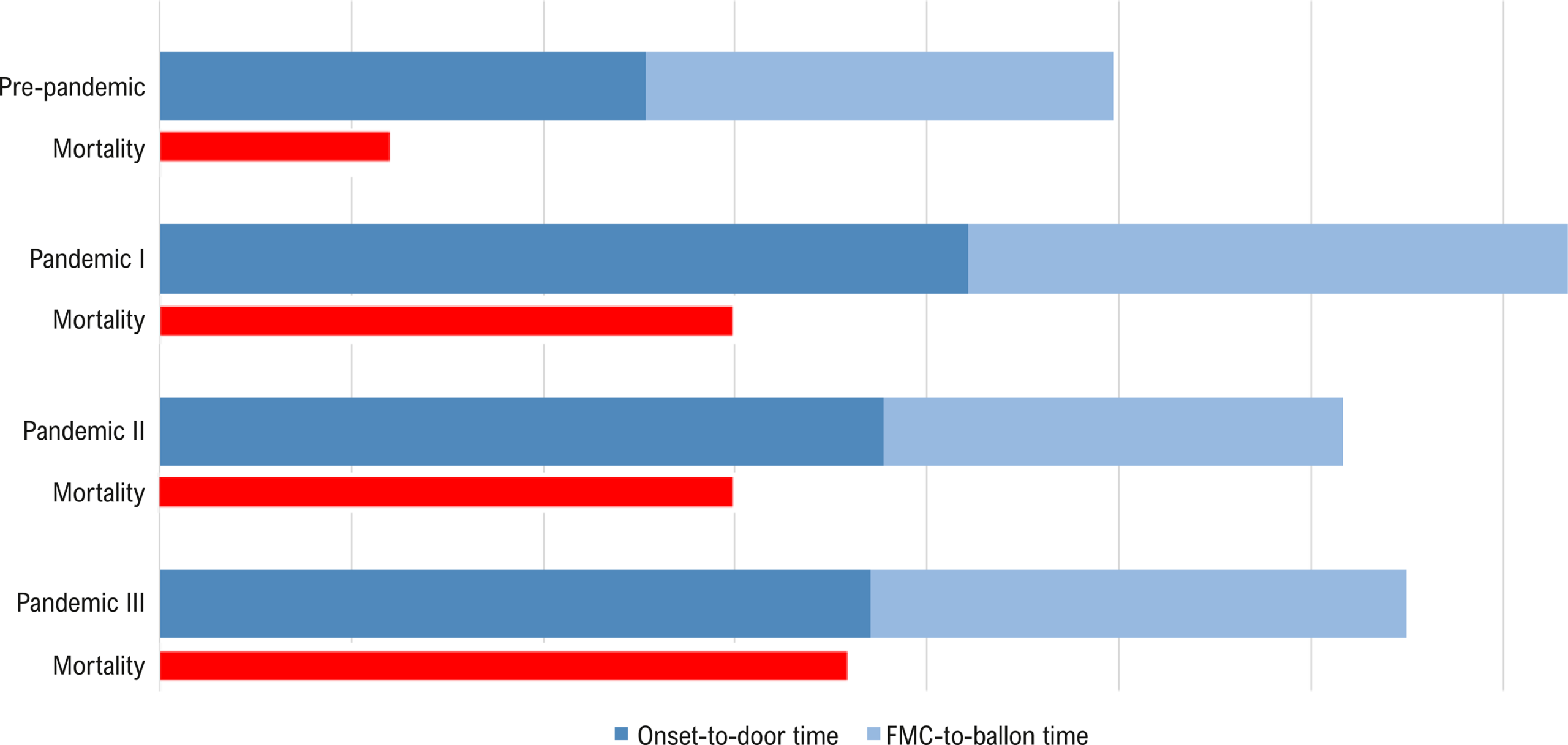
Comparing the periods, the total ischemic time to PPCI was 346.3 versus 448.4 versus 398.4 versus 348.4 minutes (p = 0.47); onset-to-door time 253.1 versus 421.1 versus 377.4 versus 370.6 minutes (p = 0.42); first medical contact (FMC)-to-balloon time 243.9 versus 313.0 versus 239.5 versus 279.4 minutes (p = 0.38); and door-to-balloon time 71.8 versus 76.8 versus 58.03 versus 88 minutes (p = 0.9). Mortality significantly increased in pandemic I compared to pre-pandemic (29.4% versus 5.0%, p = 0.01), with a marginal difference compared to pandemic II and III combined (12.2%, p = 0.05).

Conclusion

There was a trend toward increased onset-to-door time and FMC-to-balloon time in STEMI care during the pandemic compared to the pre-pandemic period, although not statistically significant. Higher mortality in STEMI was observed in the first months of the COVID-19 pandemic.

  • COVID-19
  • Mortality
  • Myocardial Infarction
  • Percutaneous Coronary Intervention
Read Full Article
Creative Commons Attribution (CC BY) Creative Commons license
03/03/2025 DOI: 10.36660/ijcs.20240022 Views 1
ABC
Editorial

Addressing Gender Disparities in Cardiovascular Care: Guideline-Oriented PCI for Women and the Hua-Mulan Conundrum

Pedro Guimarães Silva et al. Henrique Barbosa Ribeiro

The burden of cardiovascular disease (CVD) is not evenly distributed across populations. While biological factors contribute to its prevalence, social, cultural, economic, environmental, and gender-related issues also play significant roles in shaping the unfavorable outcomes associated with ischemic heart disease (IHD). Despite significant advances in cardiovascular care and the advent of modern percutaneous coronary interventions (PCI), gender disparities in the diagnosis, treatment, and outcomes of CVD persist.

According to the Global Burden of Disease (GBD) Network’s 2019 report, CVD accounted for 35% of all female deaths globally, with the impact particularly pronounced in developing countries, where socioeconomic barriers hinder access to adequate healthcare. In Brazil, GBD data revealed that 12% of deaths were attributed to IHD, comprising 32.3% of total CVD-related deaths. Although recent years have seen some improvements, women continue to experience slightly higher IHD-related mortality rates (29.9%) compared to men (27.6%). These statistics underscore the urgent need for targeted strategies to address gender inequities and the broader determinants of health in managing CVD.,

[…]

  • Coronary Disease
  • Gender Equity
  • Percutaneous Coronary Intervention
  • Stents
Read Full Article
Creative Commons Attribution (CC BY) Creative Commons license
28/02/2025 DOI: 10.36660/abc.20240824i Views 2
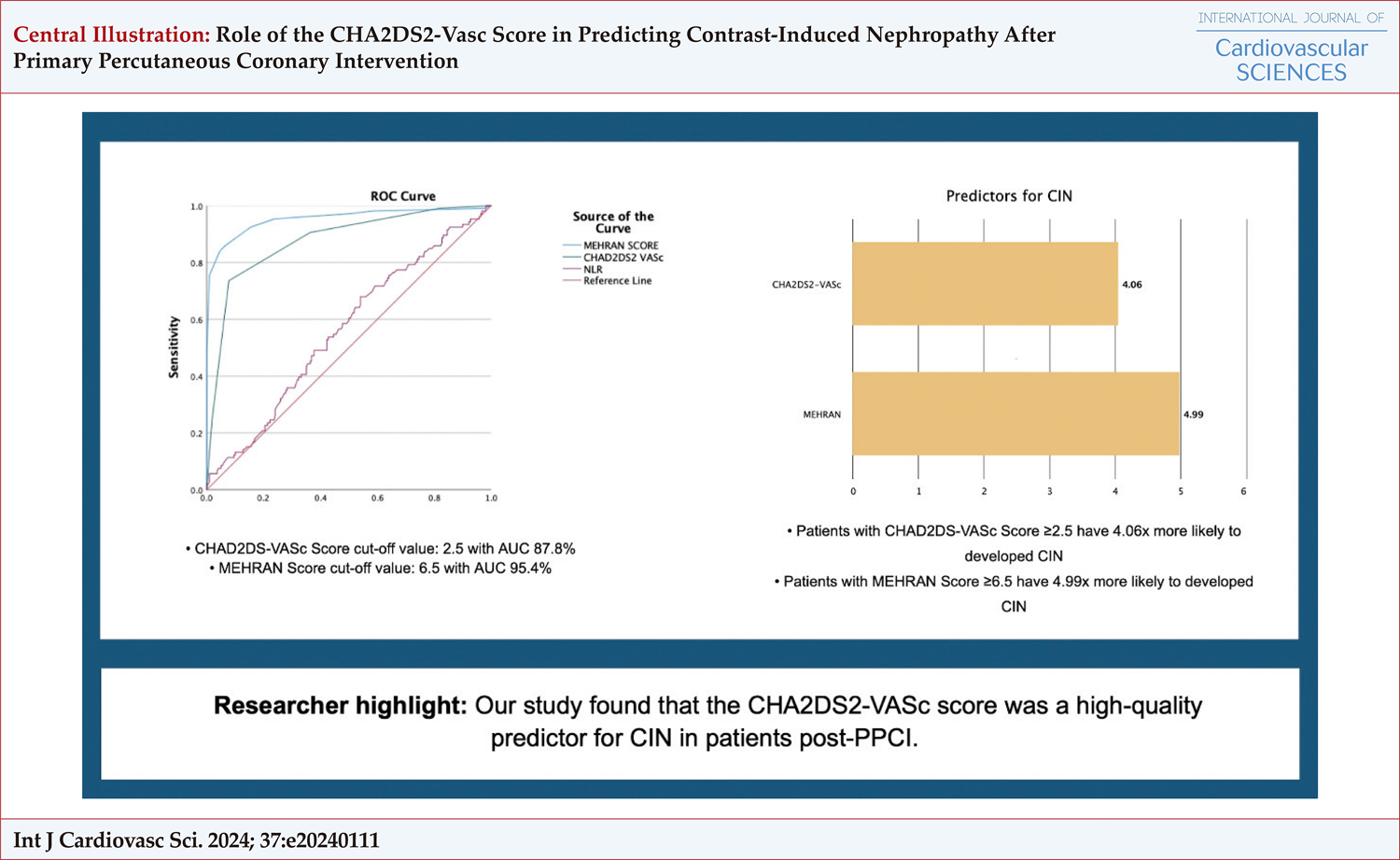
Role of the CHA2DS2-Vasc Score in Predicting Contrast-Induced Nephropathy After Primary Percutaneous Coronary Intervention
IJCS
Original Article

Role of the CHA2DS2-Vasc Score in Predicting Contrast-Induced Nephropathy After Primary Percutaneous Coronary Intervention

Nolly Octavianes Habel Rantung et al. Starry Homenta Rampengan Edmond Leonard Jim Dewa Gde Prema Ananda Fima Lanra Fredrik Gerarld Langi

Abstract

Background

Primary percutaneous coronary intervention (PPCI) is the preferred reperfusion strategy for ST-elevation myocardial infarction (STEMI) with an onset time <12 h. However, it poses a risk of contrast-induced nephropathy (CIN), occurring in one out of five patients. In this context, the CHA2DS2-VASc score can be used as a predictor of CIN in patients with STEMI undergoing PPCI.

Objectives

To evaluate the role of the CHA2DS2-VASc score in predicting CIN in patients with STEMI who underwent PPCI.

Methods

In this retrospective cohort study, data were collected from the medical records of patients with STEMI who underwent PPCI at the department of cardiovascular medicine of our institution from January 1, 2019, to October 31, 2021. The association of CIN with the CHA2DS2-VASc and Mehran scores, the and neutrophil–lymphocyte ratio were evaluated using a logistic regression model with a p value < 0.05.

Results

This study included 66 patients with CIN from a total of 326 patients with STEMI who underwent PPCI. Patients with CIN showed a higher CHA2DS2-VASc score compared with those without CIN (median [interquartile range — IQR], 2 [1–3] vs. 1 [1–2], p < 0.001). The sensitivity, specificity, negative predictive value, and positive predictive value of the CHA2DS2-VASc score in predicting CIN after PPCI were 73.6%, 92.3%, 87.9%, and 82.1%, respectively.

Conclusion

A CHA2DS2-VASc score ≥ 2.5 is as accurate as a Mehran score ≥6.5 in predicting CIN following PPCI, suggesting that the CHA2DS2-VASc score is a practical and efficient tool for clinical use.

  • Contrast Media
  • Infarto do Miocárdio com Supradesnível do Segmento ST
  • Percutaneous Coronary Intervention
Read Full Article
Creative Commons Attribution (CC BY) Creative Commons license
10/02/2025 DOI: 10.36660/ijcs.20240111 Views 1
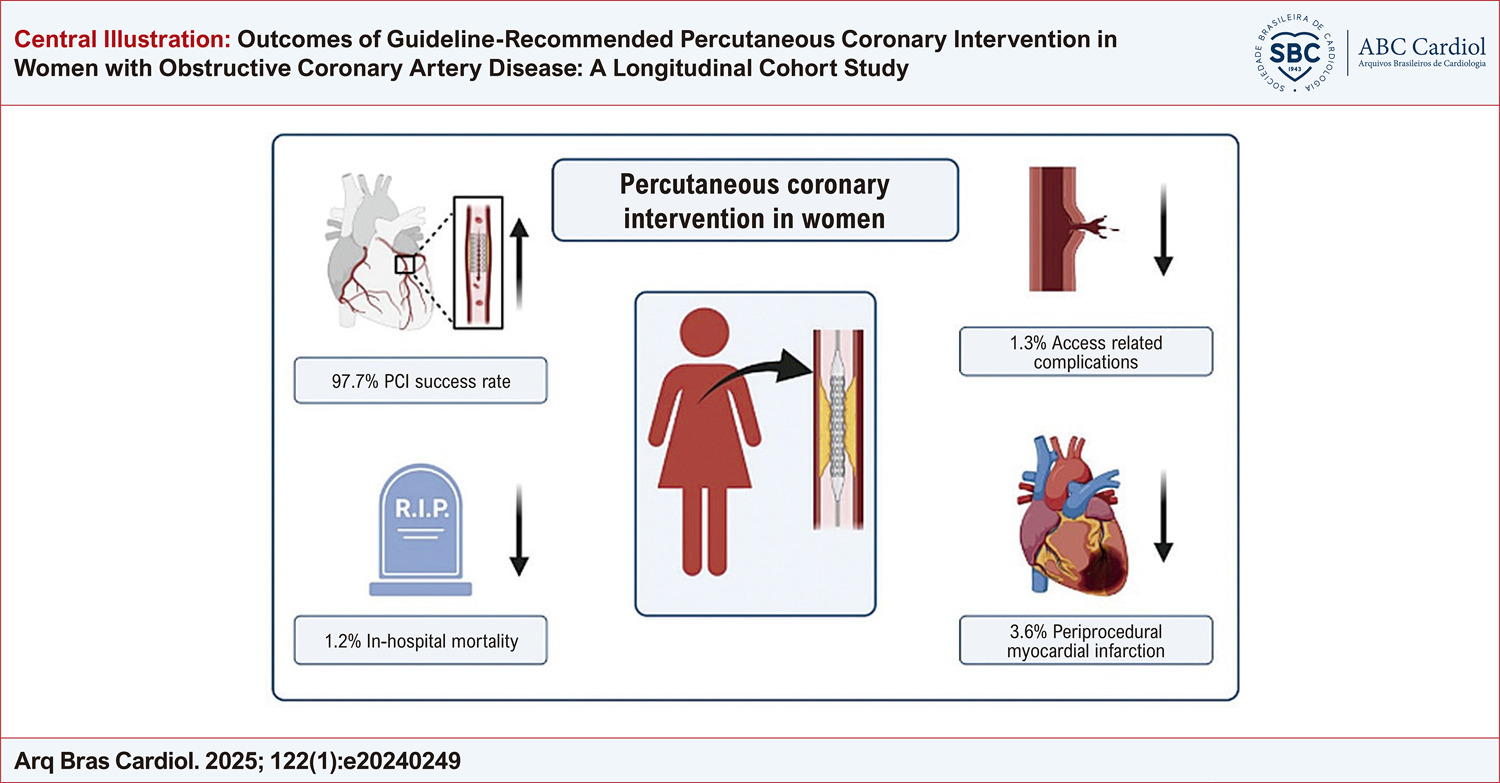
Outcomes of Guideline-Recommended Percutaneous Coronary Intervention in Women with Obstructive Coronary Artery Disease: A Longitudinal Cohort Study
ABC
Original Article

Outcomes of Guideline-Recommended Percutaneous Coronary Intervention in Women with Obstructive Coronary Artery Disease: A Longitudinal Cohort Study

Tacianne Rolemberg Braga Delamain et al. José Henrique Herrmann Delamain Sergio Luiz Navarro Braga Ricardo Costa … Dimytri Alexandre Alvim de Siqueira Fausto Feres Marinella Patrizia Centemero

Abstract

Background

Previous studies have shown that women with coronary artery disease (CAD) are less likely to undergo angiography and have less favorable outcomes after percutaneous coronary intervention (PCI).

Objectives

Assess the outcomes of women with acute coronary syndrome (ACS) and stable CAD (lesion>50%) treated with contemporary PCI using DES.

Methods

Observational, longitudinal cohort study with prospective follow-up included all female patients ≥ 18 years admitted at a tertiary public cardiovascular center in Brazil from January 2019 to December 2020. The level of significance adopted in the statistical analysis was 5%.

Results

1146 women (average age 65 years) underwent guideline-recommended PCI. Risk factors were frequent (hypertension: 88%, dyslipidemia: 85%, diabetes: 47.5%), and 69% were admitted due to ACS. Radial access was used in 59% of patients; 1516 vessels were treated with 1725 stents implanted (1.5 stents/patient). PCI was successful in 97.7%, in-hospital death occurred in 1.2%, peri-procedural MI in 3.6%, and TIA in 0.4%. Predictors of in-hospital major adverse cardiac and cerebrovascular events (MACCE): previous stroke (OR: 2.97; CI: 1.06-7.15; p= 0.023), CKD (OR: 3.11; CI: 1.49-6.20; p= 0.002), and at least one procedural failure during PCI (OR: 10.2; CI: 1.17-5.9; p<0.001). The average follow-up was 576.2 days in 1047 patients. All-cause mortality occurred in 5.3%, cardiac death in 3.5%, recurrent ACS in 8%, and additional revascularization procedures in 5.5%. The predictors for MACCE during FU were hospital admission for ACS for the index PCI (OR: 1.58; HR: 1.06-2.35; p=0.023) and the presence of MACCE during hospitalization (OR: 6.66; HR: 2.42- 18.3; p< 0.001).

Conclusion

In this pioneering study involving 1146 patients treated by contemporary PCI and followed for almost 2 years, we obtained very encouraging in-hospital and mid-term results.

  • Coronary Artery Disease
  • Percutaneous Coronary Intervention
  • Risk Factors
  • Women
Read Full Article
Creative Commons Attribution (CC BY) Creative Commons license
03/02/2025 DOI: 10.36660/abc.20240249i Views 1
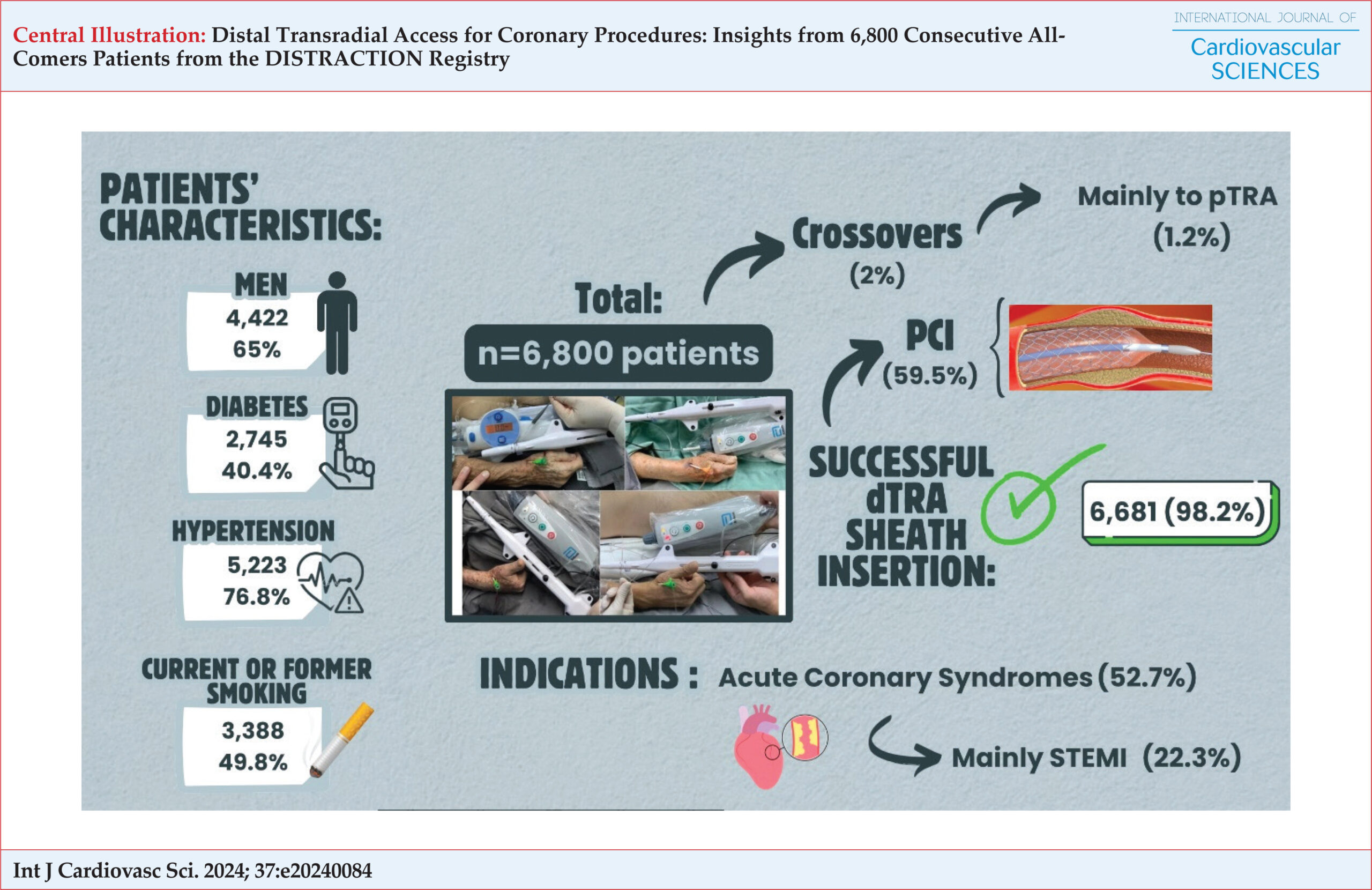
Distal Transradial Access for Coronary Procedures: Insights from 6,800 Consecutive All-Comers Patients from the DISTRACTION Registry
IJCS
Original Article

Distal Transradial Access for Coronary Procedures: Insights from 6,800 Consecutive All-Comers Patients from the DISTRACTION Registry

Marcos Danillo Oliveira et al. Ricardo Fonseca Oliveira Suruagy Motta Adriano Caixeta

Abstract

Background:

Distal transradial access (dTRA), an improvement of the conventional proximal transradial access (pTRA), has advantages in terms of faster hemostasis and lower rates of proximal radial artery occlusion (RAO).

Objectives:

We aim to describe our real-world experience with dTRA as the default approach for routine coronary angiography and percutaneous coronary interventions (PCI) in a large-scale sample of all-comers patients.

Methods:

From February 2019 to April 2024, 6,800 consecutive patients undergoing coronary procedures via dTRA were enrolled in the DISTRACTION (DIStal TRAnsradial access as default approach for Coronary angiography and intervenTIONs) Registry.

Results:

Mean patient age was 63.8 ± 15.7 years; 65% were male. Overall, 20.8% of patients had non-ST-elevation myocardial infarction (NSTEMI); 22.3% had ST-elevation myocardial infarction (STEMI), and 2.5% presented in cardiogenic shock. There were only 2% access site crossovers, mainly to ipsilateral pTRA. In only 119 patients dTRA sheath insertion could not be obtained. Right dTRA was the most frequent access, followed by redo ipsilateral dTRA, left dTRA, and simultaneous bilateral dTRA. PCI was performed in 59.5% of all cases, and the left anterior descending artery was the most treated vessel. No significant access site-related bleeding and no hand/thumb dysfunction after any procedure were documented. There were neither major complications nor major adverse cerebrovascular and cardiac events directly related to dTRA.

Conclusions:

In this real-world large-scale registry of all-comers patients, the adoption of dTRA by proficient operators as the default for routine coronary angiography and interventions was safe and feasible.

  • Coronary Angiography
  • Percutaneous Coronary Intervention
  • Registries
Read Full Article
Creative Commons Attribution (CC BY) Creative Commons license
04/11/2024 DOI: 10.36660/ijcs.20240084 Views 1

Could not load more articles. Please try again.

How to cite this article

EndNote RIS

Electronic Document Format (Vancouver)

Prado GFA, Garzon S, Mariani Junior J, Bandeira W, Bezerra FMT, Almeida BO, Araujo GN, et al. Incorporating Intracoronary Lithotripsy into Daily Practice: A Temporal Comparative Analysis of Safety, Efficacy, and Learning Curve. Arquivos Brasileiros de Cardiologia 2026;123(8):e20250783.

Electronic Document Format (ABNT)

Prado, Guy F. A.; Garzon, Stefano; Mariani Junior, José; Bandeira, Willterson; Bezerra, Felipe Mateus Teixeira; Almeida, Breno Oliveira; Araujo, Gustavo Neves de; Conrado, Ana Claudia; Silveira, João; Barbato, Emanuele; Ribichini, Flavio; Lemos, Pedro Alves. Incorporating Intracoronary Lithotripsy into Daily Practice: A Temporal Comparative Analysis of Safety, Efficacy, and Learning Curve. Arquivos Brasileiros de Cardiologia, v. 123, n. 8, e20250783, Sep. 2026.

Electronic Document Format (APA)

Prado, G. F. A., Garzon, S., Mariani Junior, J., Bandeira, W., Bezerra, F. M. T., Almeida, B. O., Araujo, G. N. , Conrado, A. C., Silveira, J., Barbato, E., Ribichini, F., & Lemos, P. A. (2026). Incorporating Intracoronary Lithotripsy into Daily Practice: A Temporal Comparative Analysis of Safety, Efficacy, and Learning Curve. Arquivos Brasileiros de Cardiologia, 123(8), e20250783.

Electronic Document Format (ISO)

Prado, Guy F. A. and Garzon, Stefano and Mariani Junior, José and Bandeira, Willterson and Bezerra, Felipe Mateus Teixeira and Almeida, Breno Oliveira and Araujo, Gustavo Neves de and Conrado, Ana Claudia and Silveira, João and Barbato, Emanuele and Ribichini, Flavio and Lemos, Pedro Alves. Incorporating Intracoronary Lithotripsy into Daily Practice: A Temporal Comparative Analysis of Safety, Efficacy, and Learning Curve. Arquivos Brasileiros de Cardiologia [online]. 2026, vol. 123, n. 8, [cited 2026-10-14], e20250783. Available from: <https://journals.cardiol.br/en/article/incorporating-intracoronary-lithotripsy-into-daily-practice-a-temporal-comparative-analysis-of-safety-efficacy-and-learning-curve/>. ISSN 0066-782X

EndNote RIS

Electronic Document Format (Vancouver)

Gomes MS, Cruz ARC, Martins BL, Caliano MH, Magalhães PS, Bandeira D, Costa R, et al. Coronary Artery Disease In A Rare Anatomical Scenario: Type IV Duplicated Left Anterior Descending Artery. ABC Imagem Cardiovascular 2026;39(3):e20260032.

Electronic Document Format (ABNT)

Gomes, Matheus Sacco; Cruz, Amanda Raquel Costa; Martins, Bruno Leal; Caliano, Mario Henrique; Magalhães, Patricia de Souza; Bandeira, Daniel; Costa, Ricardo; Centemero, Marinella Patrizia. Coronary Artery Disease In A Rare Anatomical Scenario: Type IV Duplicated Left Anterior Descending Artery. ABC Imagem Cardiovascular, v. 39, n. 3, e20260032, Sep. 2026.

Electronic Document Format (APA)

Gomes, M. S., Cruz, A. R. C., Martins, B. L., Caliano, M. H., Magalhães, P. S., Bandeira, D., Costa, R., & Centemero, M. P. (2026). Coronary Artery Disease In A Rare Anatomical Scenario: Type IV Duplicated Left Anterior Descending Artery. ABC Imagem Cardiovascular, 39(3), e20260032.

Electronic Document Format (ISO)

Gomes, Matheus Sacco and Cruz, Amanda Raquel Costa and Martins, Bruno Leal and Caliano, Mario Henrique and Magalhães, Patricia de Souza and Bandeira, Daniel and Costa, Ricardo and Centemero, Marinella Patrizia. Coronary Artery Disease In A Rare Anatomical Scenario: Type IV Duplicated Left Anterior Descending Artery. ABC Imagem Cardiovascular [online]. 2026, vol. 39, n. 3, [cited 2026-10-14], e20260032. Available from: <https://journals.cardiol.br/en/article/coronary-artery-disease-in-a-rare-anatomical-scenario-type-iv-duplicated-left-anterior-descending-artery/>. ISSN 2318-8219

EndNote RIS

Electronic Document Format (Vancouver)

Rocha ASC, Kruczan D. Asymptomatic Patients With Suspected Coronary Artery Disease: What Are Clinicians Afraid Of?. International Journal of Cardiovascular Sciences 2026;39:e20250075.

Electronic Document Format (ABNT)

Rocha, Antônio Sérgio Cordeiro da; Kruczan, Dany. Asymptomatic Patients With Suspected Coronary Artery Disease: What Are Clinicians Afraid Of?. International Journal of Cardiovascular Sciences, v. 39, e20250075, Aug. 2026.

Electronic Document Format (APA)

Rocha, A. S. C. , & Kruczan, D. (2026). Asymptomatic Patients With Suspected Coronary Artery Disease: What Are Clinicians Afraid Of?. International Journal of Cardiovascular Sciences, 39, e20250075.

Electronic Document Format (ISO)

Rocha, Antônio Sérgio Cordeiro da and Kruczan, Dany. Asymptomatic Patients With Suspected Coronary Artery Disease: What Are Clinicians Afraid Of?. International Journal of Cardiovascular Sciences [online]. 2026, vol. 39, [cited 2026-10-14], e20250075. Available from: <https://journals.cardiol.br/en/article/asymptomatic-patients-with-suspected-coronary-artery-disease-what-are-clinicians-afraid-of/>. ISSN 2359-4802

EndNote RIS

Electronic Document Format (Vancouver)

Oliveira MD, Suruagy-Motta RFO, Silva LD, Santos KDA, Caixeta A. Ultra-Low Contrast versus Conventional Percutaneous Coronary Intervention for Patients with Baseline Renal Impairment: A Systematic Review and Meta-Analysis of Clinical Outcomes. Arquivos Brasileiros de Cardiologia 2026;123(4):e20250660.

Electronic Document Format (ABNT)

Oliveira, Marcos Danillo; Suruagy-Motta, Ricardo Fonseca Oliveira; Silva, Leonardo Dexheimer da; Santos, Karlos Daniell Araújo dos; Caixeta, Adriano. Ultra-Low Contrast versus Conventional Percutaneous Coronary Intervention for Patients with Baseline Renal Impairment: A Systematic Review and Meta-Analysis of Clinical Outcomes. Arquivos Brasileiros de Cardiologia, v. 123, n. 4, e20250660, Jul. 2026.

Electronic Document Format (APA)

Oliveira, M. D., Suruagy-Motta, R. F. O., Silva, L. D. , Santos, K. D. A. , & Caixeta, A. (2026). Ultra-Low Contrast versus Conventional Percutaneous Coronary Intervention for Patients with Baseline Renal Impairment: A Systematic Review and Meta-Analysis of Clinical Outcomes. Arquivos Brasileiros de Cardiologia, 123(4), e20250660.

Electronic Document Format (ISO)

Oliveira, Marcos Danillo and Suruagy-Motta, Ricardo Fonseca Oliveira and Silva, Leonardo Dexheimer da and Santos, Karlos Daniell Araújo dos and Caixeta, Adriano. Ultra-Low Contrast versus Conventional Percutaneous Coronary Intervention for Patients with Baseline Renal Impairment: A Systematic Review and Meta-Analysis of Clinical Outcomes. Arquivos Brasileiros de Cardiologia [online]. 2026, vol. 123, n. 4, [cited 2026-10-14], e20250660. Available from: <https://journals.cardiol.br/en/article/ultra-low-contrast-versus-conventional-percutaneous-coronary-intervention-for-patients-with-baseline-renal-impairment-a-systematic-review-and-meta-analysis-of-clinical-outcomes/>. ISSN 0066-782X

EndNote RIS

Electronic Document Format (Vancouver)

Yilmaz F, Şener YZ. Beyond Contrast Volume: Patient-Related Determinants and Methodological Considerations in Contrast-Induced Nephropathy. Arquivos Brasileiros de Cardiologia 2026;123(5):e20260111.

Electronic Document Format (ABNT)

Yilmaz, Ömer Faruk; Şener, Yusuf Ziya. Beyond Contrast Volume: Patient-Related Determinants and Methodological Considerations in Contrast-Induced Nephropathy. Arquivos Brasileiros de Cardiologia, v. 123, n. 5, e20260111, Jul. 2026.

Electronic Document Format (APA)

Yilmaz, F., & Şener, Y. Z. (2026). Beyond Contrast Volume: Patient-Related Determinants and Methodological Considerations in Contrast-Induced Nephropathy. Arquivos Brasileiros de Cardiologia, 123(5), e20260111.

Electronic Document Format (ISO)

Yilmaz, Ömer Faruk and Şener, Yusuf Ziya. Beyond Contrast Volume: Patient-Related Determinants and Methodological Considerations in Contrast-Induced Nephropathy. Arquivos Brasileiros de Cardiologia [online]. 2026, vol. 123, n. 5, [cited 2026-10-14], e20260111. Available from: <https://journals.cardiol.br/en/article/beyond-contrast-volume-patient-related-determinants-and-methodological-considerations-in-contrast-induced-nephropathy/>. ISSN 0066-782X

EndNote RIS

Electronic Document Format (Vancouver)

Arruda JA, Costa Junior JR. Small Vessels, Big Decisions. Arquivos Brasileiros de Cardiologia 2026;123(2):e20260207.

Electronic Document Format (ABNT)

Arruda, José Airton de; Costa Junior, José de Ribamar. Small Vessels, Big Decisions. Arquivos Brasileiros de Cardiologia, v. 123, n. 2, e20260207, May. 2026.

Electronic Document Format (APA)

Arruda, J. A. , & Costa Junior, J. R. (2026). Small Vessels, Big Decisions. Arquivos Brasileiros de Cardiologia, 123(2), e20260207.

Electronic Document Format (ISO)

Arruda, José Airton de and Costa Junior, José de Ribamar. Small Vessels, Big Decisions. Arquivos Brasileiros de Cardiologia [online]. 2026, vol. 123, n. 2, [cited 2026-10-14], e20260207. Available from: <https://journals.cardiol.br/en/article/small-vessels-big-decisions/>. ISSN 0066-782X

EndNote RIS

Electronic Document Format (Vancouver)

Çakan F. Volume-Independent Renal Injury: Why Contrast-Induced Nephropathy Can Occur Even at Ultra-Low Contrast Doses. Arquivos Brasileiros de Cardiologia 2026;123(4):e20260016.

Electronic Document Format (ABNT)

Çakan, Fahri. Volume-Independent Renal Injury: Why Contrast-Induced Nephropathy Can Occur Even at Ultra-Low Contrast Doses. Arquivos Brasileiros de Cardiologia, v. 123, n. 4, e20260016, May. 2026.

Electronic Document Format (APA)

Çakan, F. (2026). Volume-Independent Renal Injury: Why Contrast-Induced Nephropathy Can Occur Even at Ultra-Low Contrast Doses. Arquivos Brasileiros de Cardiologia, 123(4), e20260016.

Electronic Document Format (ISO)

Çakan, Fahri. Volume-Independent Renal Injury: Why Contrast-Induced Nephropathy Can Occur Even at Ultra-Low Contrast Doses. Arquivos Brasileiros de Cardiologia [online]. 2026, vol. 123, n. 4, [cited 2026-10-14], e20260016. Available from: <https://journals.cardiol.br/en/article/volume-independent-renal-injury-why-contrast-induced-nephropathy-can-occur-even-at-ultra-low-contrast-doses/>. ISSN 0066-782X

EndNote RIS

Electronic Document Format (Vancouver)

Sahin I, Deniz MF. Reconsidering the CHA2DS2-VASc Score for No-Reflow Risk Stratification after Percutaneous Coronary Intervention. Arquivos Brasileiros de Cardiologia 2026;123(1):e20260022.

Electronic Document Format (ABNT)

Sahin, Irfan; Deniz, Muhammed Furkan. Reconsidering the CHA2DS2-VASc Score for No-Reflow Risk Stratification after Percutaneous Coronary Intervention. Arquivos Brasileiros de Cardiologia, v. 123, n. 1, e20260022, Mar. 2026.

Electronic Document Format (APA)

Sahin, I., & Deniz, M. F. (2026). Reconsidering the CHA2DS2-VASc Score for No-Reflow Risk Stratification after Percutaneous Coronary Intervention. Arquivos Brasileiros de Cardiologia, 123(1), e20260022.

Electronic Document Format (ISO)

Sahin, Irfan and Deniz, Muhammed Furkan. Reconsidering the CHA2DS2-VASc Score for No-Reflow Risk Stratification after Percutaneous Coronary Intervention. Arquivos Brasileiros de Cardiologia [online]. 2026, vol. 123, n. 1, [cited 2026-10-14], e20260022. Available from: <https://journals.cardiol.br/en/article/reconsidering-the-cha2ds2-vasc-score-for-no-reflow-risk-stratification-after-percutaneous-coronary-intervention/>. ISSN 0066-782X

EndNote RIS

Electronic Document Format (Vancouver)

Slaviero JV, Manica ALL, Leite REGS, Borsa EP, Schmidt MM, Ogando RC, Teixeira JK, et al. Registry of Percutaneous Coronary Interventions in Very Small-Caliber Vessels: Analysis of a Sirolimus-Eluting Stent and Other Contemporary Drug-Eluting Stents. Arquivos Brasileiros de Cardiologia 2026;123(2):e20250145.

Electronic Document Format (ABNT)

Slaviero, João Vitor; Manica, André Luiz Langer; Leite, Rogério Eduardo Gomes Sarmento; Borsa, Eduarda Paiva; Schmidt, Marcia Moura; Ogando, Rodrigo Campos; Teixeira, Julia Kurtz; Guimarães, Raphael Boesche; Azmus, Alexandre Damiani; Gottschall, Carlos A. M.. Registry of Percutaneous Coronary Interventions in Very Small-Caliber Vessels: Analysis of a Sirolimus-Eluting Stent and Other Contemporary Drug-Eluting Stents. Arquivos Brasileiros de Cardiologia, v. 123, n. 2, e20250145, Mar. 2026.

Electronic Document Format (APA)

Slaviero, J. V., Manica, A. L. L., Leite, R. E. G. S., Borsa, E. P., Schmidt, M. M., Ogando, R. C., Teixeira, J. K., Guimarães, R. B., Azmus, A. D., & Gottschall, C. A. M. (2026). Registry of Percutaneous Coronary Interventions in Very Small-Caliber Vessels: Analysis of a Sirolimus-Eluting Stent and Other Contemporary Drug-Eluting Stents. Arquivos Brasileiros de Cardiologia, 123(2), e20250145.

Electronic Document Format (ISO)

Slaviero, João Vitor and Manica, André Luiz Langer and Leite, Rogério Eduardo Gomes Sarmento and Borsa, Eduarda Paiva and Schmidt, Marcia Moura and Ogando, Rodrigo Campos and Teixeira, Julia Kurtz and Guimarães, Raphael Boesche and Azmus, Alexandre Damiani and Gottschall, Carlos A. M.. Registry of Percutaneous Coronary Interventions in Very Small-Caliber Vessels: Analysis of a Sirolimus-Eluting Stent and Other Contemporary Drug-Eluting Stents. Arquivos Brasileiros de Cardiologia [online]. 2026, vol. 123, n. 2, [cited 2026-10-14], e20250145. Available from: <https://journals.cardiol.br/en/article/registry-of-percutaneous-coronary-interventions-in-very-small-caliber-vessels-analysis-of-a-sirolimus-eluting-stent-and-other-contemporary-drug-eluting-stents/>. ISSN 0066-782X

EndNote RIS

Electronic Document Format (Vancouver)

Verdoia M. The “Right” Side of Myocardial Infarction: Sinister Outcomes?. International Journal of Cardiovascular Sciences 2026;39:e20250249.

Electronic Document Format (ABNT)

Verdoia, Monica. The “Right” Side of Myocardial Infarction: Sinister Outcomes?. International Journal of Cardiovascular Sciences, v. 39, e20250249, Mar. 2026.

Electronic Document Format (APA)

Verdoia, M. (2026). The “Right” Side of Myocardial Infarction: Sinister Outcomes?. International Journal of Cardiovascular Sciences, 39, e20250249.

Electronic Document Format (ISO)

Verdoia, Monica. The “Right” Side of Myocardial Infarction: Sinister Outcomes?. International Journal of Cardiovascular Sciences [online]. 2026, vol. 39, [cited 2026-10-14], e20250249. Available from: <https://journals.cardiol.br/en/article/the-right-side-of-myocardial-infarction-sinister-outcomes/>. ISSN 2359-4802

EndNote RIS

Electronic Document Format (Vancouver)

Ozbay MB, Gullu A, Degirmen S, Nriagu BN, Ozen Y, Yayla C. Association of CHA2DS2-VASc Score with No-Reflow Phenomenon after PCI: A Systematic Review and Meta-Analysis. Arquivos Brasileiros de Cardiologia 2026;123(1):e20250356.

Electronic Document Format (ABNT)

Ozbay, Mustafa Bilal; Gullu, Aysenur; Degirmen, Serhat; Nriagu, Bede Nnaemeka; Ozen, Yasin; Yayla, Cagri. Association of CHA2DS2-VASc Score with No-Reflow Phenomenon after PCI: A Systematic Review and Meta-Analysis. Arquivos Brasileiros de Cardiologia, v. 123, n. 1, e20250356, Mar. 2026.

Electronic Document Format (APA)

Ozbay, M. B., Gullu, A., Degirmen, S., Nriagu, B. N., Ozen, Y., & Yayla, C. (2026). Association of CHA2DS2-VASc Score with No-Reflow Phenomenon after PCI: A Systematic Review and Meta-Analysis. Arquivos Brasileiros de Cardiologia, 123(1), e20250356.

Electronic Document Format (ISO)

Ozbay, Mustafa Bilal and Gullu, Aysenur and Degirmen, Serhat and Nriagu, Bede Nnaemeka and Ozen, Yasin and Yayla, Cagri. Association of CHA2DS2-VASc Score with No-Reflow Phenomenon after PCI: A Systematic Review and Meta-Analysis. Arquivos Brasileiros de Cardiologia [online]. 2026, vol. 123, n. 1, [cited 2026-10-14], e20250356. Available from: <https://journals.cardiol.br/en/article/association-of-cha2ds2-vasc-score-with-no-reflow-phenomenon-after-pci-a-systematic-review-and-meta-analysis/>. ISSN 0066-782X

EndNote RIS

Electronic Document Format (Vancouver)

Lombardi JG, Calamita PC, Barreto MRP, Ficht LSN, Gardenghi G. Acute Thrombosis During Ductus Arteriosus Stenting Successfully Treated with Balloon Angioplasty and In Situ Alteplase Infusion: Case Report. ABC Imagem Cardiovascular 2026;38(4):e20250084.

Electronic Document Format (ABNT)

Lombardi, Jonathan Guimarães; Calamita, Paulo Correia; Barreto, Mayra Rosana Palmeira; Ficht, Luiza Silveira Neves; Gardenghi, Giulliano. Acute Thrombosis During Ductus Arteriosus Stenting Successfully Treated with Balloon Angioplasty and In Situ Alteplase Infusion: Case Report. ABC Imagem Cardiovascular, v. 38, n. 4, e20250084, Feb. 2026.

Electronic Document Format (APA)

Lombardi, J. G., Calamita, P. C., Barreto, M. R. P., Ficht, L. S. N., & Gardenghi, G. (2026). Acute Thrombosis During Ductus Arteriosus Stenting Successfully Treated with Balloon Angioplasty and In Situ Alteplase Infusion: Case Report. ABC Imagem Cardiovascular, 38(4), e20250084.

Electronic Document Format (ISO)

Lombardi, Jonathan Guimarães and Calamita, Paulo Correia and Barreto, Mayra Rosana Palmeira and Ficht, Luiza Silveira Neves and Gardenghi, Giulliano. Acute Thrombosis During Ductus Arteriosus Stenting Successfully Treated with Balloon Angioplasty and In Situ Alteplase Infusion: Case Report. ABC Imagem Cardiovascular [online]. 2026, vol. 38, n. 4, [cited 2026-10-14], e20250084. Available from: <https://journals.cardiol.br/en/article/acute-thrombosis-during-ductus-arteriosus-stenting-successfully-treated-with-balloon-angioplasty-and-in-situ-alteplase-infusion-case-report/>. ISSN 2318-8219

EndNote RIS

Electronic Document Format (Vancouver)

Freitas RAP, Tanajura LFL, Sousa AGMR, Feres F, Costa JR. Impact of Contrast Volume Used After Percutaneous Coronary Procedures in Patients at Risk for Contrast-Induced Nephropathy. Arquivos Brasileiros de Cardiologia 2026;122(12):e20250270.

Electronic Document Format (ABNT)

Freitas, Rafaela Andrade Penalva; Tanajura, Luiz Fernando Leite; Sousa, Amanda Guerra M. R; Feres, Fausto; Costa, José Ribamar. Impact of Contrast Volume Used After Percutaneous Coronary Procedures in Patients at Risk for Contrast-Induced Nephropathy. Arquivos Brasileiros de Cardiologia, v. 122, n. 12, e20250270, Jan. 2026.

Electronic Document Format (APA)

Freitas, R. A. P., Tanajura, L. F. L., Sousa, A. G. M. R., Feres, F., & Costa, J. R. (2026). Impact of Contrast Volume Used After Percutaneous Coronary Procedures in Patients at Risk for Contrast-Induced Nephropathy. Arquivos Brasileiros de Cardiologia, 122(12), e20250270.

Electronic Document Format (ISO)

Freitas, Rafaela Andrade Penalva and Tanajura, Luiz Fernando Leite and Sousa, Amanda Guerra M. R and Feres, Fausto and Costa, José Ribamar. Impact of Contrast Volume Used After Percutaneous Coronary Procedures in Patients at Risk for Contrast-Induced Nephropathy. Arquivos Brasileiros de Cardiologia [online]. 2026, vol. 122, n. 12, [cited 2026-10-14], e20250270. Available from: <https://journals.cardiol.br/en/article/impact-of-contrast-volume-used-after-percutaneous-coronary-procedures-in-patients-at-risk-for-contrast-induced-nephropathy/>. ISSN 0066-782X

EndNote RIS

Electronic Document Format (Vancouver)

Erdoğan O, Panç C. Predictive Value of Atherogenic Index for No-Reflow in Patients Undergoing Coronary Intervention for Saphenous Vein Graft with Acute Coronary Syndrome. Arquivos Brasileiros de Cardiologia 2026;122(11):e20250162.

Electronic Document Format (ABNT)

Erdoğan, Onur; Panç, Cafer. Predictive Value of Atherogenic Index for No-Reflow in Patients Undergoing Coronary Intervention for Saphenous Vein Graft with Acute Coronary Syndrome. Arquivos Brasileiros de Cardiologia, v. 122, n. 11, e20250162, Jan. 2026.

Electronic Document Format (APA)

Erdoğan, O., & Panç, C. (2026). Predictive Value of Atherogenic Index for No-Reflow in Patients Undergoing Coronary Intervention for Saphenous Vein Graft with Acute Coronary Syndrome. Arquivos Brasileiros de Cardiologia, 122(11), e20250162.

Electronic Document Format (ISO)

Erdoğan, Onur and Panç, Cafer. Predictive Value of Atherogenic Index for No-Reflow in Patients Undergoing Coronary Intervention for Saphenous Vein Graft with Acute Coronary Syndrome. Arquivos Brasileiros de Cardiologia [online]. 2026, vol. 122, n. 11, [cited 2026-10-14], e20250162. Available from: <https://journals.cardiol.br/en/article/predictive-value-of-atherogenic-index-for-no-reflow-in-patients-undergoing-coronary-intervention-for-saphenous-vein-graft-with-acute-coronary-syndrome/>. ISSN 0066-782X

EndNote RIS

Electronic Document Format (Vancouver)

Prado GFA, Ribeiro HB. Small-Vessel Coronary Disease and Drug-Coated Balloons: Time to Reconsider Our Strategy?. Arquivos Brasileiros de Cardiologia 2025;122(10):e20250652.

Electronic Document Format (ABNT)

Prado, Guy F. A.; Ribeiro, Henrique Barbosa. Small-Vessel Coronary Disease and Drug-Coated Balloons: Time to Reconsider Our Strategy?. Arquivos Brasileiros de Cardiologia, v. 122, n. 10, e20250652, Dec. 2025.

Electronic Document Format (APA)

Prado, G. F. A., & Ribeiro, H. B. (2025). Small-Vessel Coronary Disease and Drug-Coated Balloons: Time to Reconsider Our Strategy?. Arquivos Brasileiros de Cardiologia, 122(10), e20250652.

Electronic Document Format (ISO)

Prado, Guy F. A. and Ribeiro, Henrique Barbosa. Small-Vessel Coronary Disease and Drug-Coated Balloons: Time to Reconsider Our Strategy?. Arquivos Brasileiros de Cardiologia [online]. 2025, vol. 122, n. 10, [cited 2026-10-14], e20250652. Available from: <https://journals.cardiol.br/en/article/small-vessel-coronary-disease-and-drug-coated-balloons-time-to-reconsider-our-strategy/>. ISSN 0066-782X

EndNote RIS

Electronic Document Format (Vancouver)

Nicolau AM, Melo PHMC, Oliveira LAA, Bergo R, Kleinsorge TA, Godinho RR, Brito Jr FS, et al. Brazil’s First High-Risk Percutaneous Coronary Intervention with Hemodynamic Support from a Percutaneous Pulsatile Device: A Case Report. Arquivos Brasileiros de Cardiologia 2025;122(10):e20250236.

Electronic Document Format (ABNT)

Nicolau, André M.; Melo, Pedro H. M. C. de; Oliveira, Lucas Aguiar Alencar de; Bergo, Rafael; Kleinsorge, Thiago A.; Godinho, Roger Renault; Brito Jr, Fábio Sândoli de; Abizaid, Alexandre A.; Campos, Carlos de Magalhães. Brazil’s First High-Risk Percutaneous Coronary Intervention with Hemodynamic Support from a Percutaneous Pulsatile Device: A Case Report. Arquivos Brasileiros de Cardiologia, v. 122, n. 10, e20250236, Dec. 2025.

Electronic Document Format (APA)

Nicolau, A. M., Melo, P. H. M. C. , Oliveira, L. A. A. , Bergo, R., Kleinsorge, T. A., Godinho, R. R., Brito Jr, F. S. , Abizaid, A. A., & Campos, C. M. (2025). Brazil’s First High-Risk Percutaneous Coronary Intervention with Hemodynamic Support from a Percutaneous Pulsatile Device: A Case Report. Arquivos Brasileiros de Cardiologia, 122(10), e20250236.

Electronic Document Format (ISO)

Nicolau, André M. and Melo, Pedro H. M. C. de and Oliveira, Lucas Aguiar Alencar de and Bergo, Rafael and Kleinsorge, Thiago A. and Godinho, Roger Renault and Brito Jr, Fábio Sândoli de and Abizaid, Alexandre A. and Campos, Carlos de Magalhães. Brazil’s First High-Risk Percutaneous Coronary Intervention with Hemodynamic Support from a Percutaneous Pulsatile Device: A Case Report. Arquivos Brasileiros de Cardiologia [online]. 2025, vol. 122, n. 10, [cited 2026-10-14], e20250236. Available from: <https://journals.cardiol.br/en/article/brazils-first-high-risk-percutaneous-coronary-intervention-with-hemodynamic-support-from-a-percutaneous-pulsatile-device-a-case-report/>. ISSN 0066-782X

EndNote RIS

Electronic Document Format (Vancouver)

Gobbo MOS, Sudo RYU, Franco AJ, Pereira M, Milbradt TL, Bakir ZE, Pires IZ, et al. Paclitaxel-Coated Balloons versus Drug-Eluting Stents in Small Vessel Coronary Artery Disease: A Systematic Review and Meta-Analysis. Arquivos Brasileiros de Cardiologia 2025;122(10):e20250069.

Electronic Document Format (ABNT)

Gobbo, Marília Oberto da Silva; Sudo, Renan Yuji Ura; Franco, Ancy Jenil; Pereira, Mable; Milbradt, Tanize Louize; Bakir, Zeynep Eylul; Pires, Iago Zang; Akinfenwa, Stephen; Agostini, Gustavo Luís; Pellegrini, Denise; Caramori, Paulo R. A.. Paclitaxel-Coated Balloons versus Drug-Eluting Stents in Small Vessel Coronary Artery Disease: A Systematic Review and Meta-Analysis. Arquivos Brasileiros de Cardiologia, v. 122, n. 10, e20250069, Dec. 2025.

Electronic Document Format (APA)

Gobbo, M. O. S., Sudo, R. Y. U., Franco, A. J., Pereira, M., Milbradt, T. L., Bakir, Z. E., Pires, I. Z., Akinfenwa, S., Agostini, G. L., Pellegrini, D., & Caramori, P. R. A. (2025). Paclitaxel-Coated Balloons versus Drug-Eluting Stents in Small Vessel Coronary Artery Disease: A Systematic Review and Meta-Analysis. Arquivos Brasileiros de Cardiologia, 122(10), e20250069.

Electronic Document Format (ISO)

Gobbo, Marília Oberto da Silva and Sudo, Renan Yuji Ura and Franco, Ancy Jenil and Pereira, Mable and Milbradt, Tanize Louize and Bakir, Zeynep Eylul and Pires, Iago Zang and Akinfenwa, Stephen and Agostini, Gustavo Luís and Pellegrini, Denise and Caramori, Paulo R. A.. Paclitaxel-Coated Balloons versus Drug-Eluting Stents in Small Vessel Coronary Artery Disease: A Systematic Review and Meta-Analysis. Arquivos Brasileiros de Cardiologia [online]. 2025, vol. 122, n. 10, [cited 2026-10-14], e20250069. Available from: <https://journals.cardiol.br/en/article/paclitaxel-coated-balloons-versus-drug-eluting-stents-in-small-vessel-coronary-artery-disease-a-systematic-review-and-meta-analysis/>. ISSN 0066-782X

EndNote RIS

Electronic Document Format (Vancouver)

França ME, Fragas AL, Rocha FR, Ribeiro LC, Toniazzo SRF. Evaluation of Different Therapeutic Approaches for Acute Coronary Syndromes in Patients Undergoing Chronic Dialysis: A Retrospective Cohort Study. International Journal of Cardiovascular Sciences 2025;38:e20250029.

Electronic Document Format (ABNT)

França, Matheus Eduardo; Fragas, Ana Luiza de; Rocha, Franciani Rodrigues da; Ribeiro, Leonardo Claudino; Toniazzo, Silvia R. Froes. Evaluation of Different Therapeutic Approaches for Acute Coronary Syndromes in Patients Undergoing Chronic Dialysis: A Retrospective Cohort Study. International Journal of Cardiovascular Sciences, v. 38, e20250029, Nov. 2025.

Electronic Document Format (APA)

França, M. E., Fragas, A. L. , Rocha, F. R. , Ribeiro, L. C., & Toniazzo, S. R. F. (2025). Evaluation of Different Therapeutic Approaches for Acute Coronary Syndromes in Patients Undergoing Chronic Dialysis: A Retrospective Cohort Study. International Journal of Cardiovascular Sciences, 38, e20250029.

Electronic Document Format (ISO)

França, Matheus Eduardo and Fragas, Ana Luiza de and Rocha, Franciani Rodrigues da and Ribeiro, Leonardo Claudino and Toniazzo, Silvia R. Froes. Evaluation of Different Therapeutic Approaches for Acute Coronary Syndromes in Patients Undergoing Chronic Dialysis: A Retrospective Cohort Study. International Journal of Cardiovascular Sciences [online]. 2025, vol. 38, [cited 2026-10-14], e20250029. Available from: <https://journals.cardiol.br/en/article/evaluation-of-different-therapeutic-approaches-for-acute-coronary-syndromes-in-patients-undergoing-chronic-dialysis-a-retrospective-cohort-study/>. ISSN 2359-4802

EndNote RIS

Electronic Document Format (Vancouver)

Alencar AKN. Coronary Compression in Pulmonary Hypertension: A Treatable Threat Hidden in Plain Sight. Arquivos Brasileiros de Cardiologia 2025;122(7):e20250352.

Electronic Document Format (ABNT)

Alencar, Allan K. N.. Coronary Compression in Pulmonary Hypertension: A Treatable Threat Hidden in Plain Sight. Arquivos Brasileiros de Cardiologia, v. 122, n. 7, e20250352, Aug. 2025.

Electronic Document Format (APA)

Alencar, A. K. N. (2025). Coronary Compression in Pulmonary Hypertension: A Treatable Threat Hidden in Plain Sight. Arquivos Brasileiros de Cardiologia, 122(7), e20250352.

Electronic Document Format (ISO)

Alencar, Allan K. N.. Coronary Compression in Pulmonary Hypertension: A Treatable Threat Hidden in Plain Sight. Arquivos Brasileiros de Cardiologia [online]. 2025, vol. 122, n. 7, [cited 2026-10-14], e20250352. Available from: <https://journals.cardiol.br/en/article/coronary-compression-in-pulmonary-hypertension-a-treatable-threat-hidden-in-plain-sight/>. ISSN 0066-782X

EndNote RIS

Electronic Document Format (Vancouver)

Lott LP, Barbosa RR, Muzi RR, Marianelli C, Bragatto IC, Trevizani Neto V, Baptista GC, et al. Delay Times in Acute Myocardial Infarction Care: Comparison Between Periods Before and During the COVID-19 Pandemic. International Journal of Cardiovascular Sciences 2025;38:e20240022.

Electronic Document Format (ABNT)

Lott, Layla Pasolini; Barbosa, Roberto Ramos; Muzi, Rhaaby Rodrigues; Marianelli, Camila; Bragatto, Isadora Cardozo; Trevizani Neto, Valentin; Baptista, Glícia Chierici; Vieira, Eduardo Gomes; Sylvestre, Rodolfo Costa; Calil, Osmar Araújo; Serpa, Renato Giestas; Barros, Lucas Crespo de; Paganini, Larissa Novaes; Borges, Lucas Martins Frizzera; Barbosa, Luiz Fernando Machado. Delay Times in Acute Myocardial Infarction Care: Comparison Between Periods Before and During the COVID-19 Pandemic. International Journal of Cardiovascular Sciences, v. 38, e20240022, Mar. 2025.

Electronic Document Format (APA)

Lott, L. P., Barbosa, R. R., Muzi, R. R., Marianelli, C., Bragatto, I. C., Trevizani Neto, V., Baptista, G. C., Vieira, E. G., Sylvestre, R. C., Calil, O. A., Serpa, R. G., Barros, L. C. , Paganini, L. N., Borges, L. M. F., & Barbosa, L. F. M. (2025). Delay Times in Acute Myocardial Infarction Care: Comparison Between Periods Before and During the COVID-19 Pandemic. International Journal of Cardiovascular Sciences, 38, e20240022.

Electronic Document Format (ISO)

Lott, Layla Pasolini and Barbosa, Roberto Ramos and Muzi, Rhaaby Rodrigues and Marianelli, Camila and Bragatto, Isadora Cardozo and Trevizani Neto, Valentin and Baptista, Glícia Chierici and Vieira, Eduardo Gomes and Sylvestre, Rodolfo Costa and Calil, Osmar Araújo and Serpa, Renato Giestas and Barros, Lucas Crespo de and Paganini, Larissa Novaes and Borges, Lucas Martins Frizzera and Barbosa, Luiz Fernando Machado. Delay Times in Acute Myocardial Infarction Care: Comparison Between Periods Before and During the COVID-19 Pandemic. International Journal of Cardiovascular Sciences [online]. 2025, vol. 38, [cited 2026-10-14], e20240022. Available from: <https://journals.cardiol.br/en/article/delay-times-in-acute-myocardial-infarction-care-comparison-between-periods-before-and-during-the-covid-19-pandemic/>. ISSN 2359-4802

EndNote RIS

Electronic Document Format (Vancouver)

Silva PG, Ribeiro HB. Addressing Gender Disparities in Cardiovascular Care: Guideline-Oriented PCI for Women and the Hua-Mulan Conundrum. Arquivos Brasileiros de Cardiologia 2025;122(1):e20240824.

Electronic Document Format (ABNT)

Silva, Pedro Guimarães; Ribeiro, Henrique Barbosa. Addressing Gender Disparities in Cardiovascular Care: Guideline-Oriented PCI for Women and the Hua-Mulan Conundrum. Arquivos Brasileiros de Cardiologia, v. 122, n. 1, e20240824, Feb. 2025.

Electronic Document Format (APA)

Silva, P. G., & Ribeiro, H. B. (2025). Addressing Gender Disparities in Cardiovascular Care: Guideline-Oriented PCI for Women and the Hua-Mulan Conundrum. Arquivos Brasileiros de Cardiologia, 122(1), e20240824.

Electronic Document Format (ISO)

Silva, Pedro Guimarães and Ribeiro, Henrique Barbosa. Addressing Gender Disparities in Cardiovascular Care: Guideline-Oriented PCI for Women and the Hua-Mulan Conundrum. Arquivos Brasileiros de Cardiologia [online]. 2025, vol. 122, n. 1, [cited 2026-10-14], e20240824. Available from: <https://journals.cardiol.br/en/article/addressing-gender-disparities-in-cardiovascular-care-guideline-oriented-pci-for-women-and-the-hua-mulan-conundrum/>. ISSN 0066-782X

EndNote RIS

Electronic Document Format (Vancouver)

Rantung NOH, Rampengan SH, Jim EL, Ananda DGP, Langi FLFG. Role of the CHA2DS2-Vasc Score in Predicting Contrast-Induced Nephropathy After Primary Percutaneous Coronary Intervention. International Journal of Cardiovascular Sciences 2025;38:e20240111.

Electronic Document Format (ABNT)

Rantung, Nolly Octavianes Habel; Rampengan, Starry Homenta; Jim, Edmond Leonard; Ananda, Dewa Gde Prema; Langi, Fima Lanra Fredrik Gerarld. Role of the CHA2DS2-Vasc Score in Predicting Contrast-Induced Nephropathy After Primary Percutaneous Coronary Intervention. International Journal of Cardiovascular Sciences, v. 38, e20240111, Feb. 2025.

Electronic Document Format (APA)

Rantung, N. O. H., Rampengan, S. H., Jim, E. L., Ananda, D. G. P., & Langi, F. L. F. G. (2025). Role of the CHA2DS2-Vasc Score in Predicting Contrast-Induced Nephropathy After Primary Percutaneous Coronary Intervention. International Journal of Cardiovascular Sciences, 38, e20240111.

Electronic Document Format (ISO)

Rantung, Nolly Octavianes Habel and Rampengan, Starry Homenta and Jim, Edmond Leonard and Ananda, Dewa Gde Prema and Langi, Fima Lanra Fredrik Gerarld. Role of the CHA2DS2-Vasc Score in Predicting Contrast-Induced Nephropathy After Primary Percutaneous Coronary Intervention. International Journal of Cardiovascular Sciences [online]. 2025, vol. 38, [cited 2026-10-14], e20240111. Available from: <https://journals.cardiol.br/en/article/role-of-the-cha2ds2-vasc-score-in-predicting-contrast-induced-nephropathy-after-primary-percutaneous-coronary-intervention/>. ISSN 2359-4802

EndNote RIS

Electronic Document Format (Vancouver)

Delamain TRB, Delamain JHH, Braga SLN, Costa R, Siqueira DAA, Feres F, Centemero MP, et al. Outcomes of Guideline-Recommended Percutaneous Coronary Intervention in Women with Obstructive Coronary Artery Disease: A Longitudinal Cohort Study. Arquivos Brasileiros de Cardiologia 2025;122(1):e20240249.

Electronic Document Format (ABNT)

Delamain, Tacianne Rolemberg Braga; Delamain, José Henrique Herrmann; Braga, Sergio Luiz Navarro; Costa, Ricardo; Siqueira, Dimytri Alexandre Alvim de; Feres, Fausto; Centemero, Marinella Patrizia. Outcomes of Guideline-Recommended Percutaneous Coronary Intervention in Women with Obstructive Coronary Artery Disease: A Longitudinal Cohort Study. Arquivos Brasileiros de Cardiologia, v. 122, n. 1, e20240249, Feb. 2025.

Electronic Document Format (APA)

Delamain, T. R. B., Delamain, J. H. H., Braga, S. L. N., Costa, R., Siqueira, D. A. A. , Feres, F., & Centemero, M. P. (2025). Outcomes of Guideline-Recommended Percutaneous Coronary Intervention in Women with Obstructive Coronary Artery Disease: A Longitudinal Cohort Study. Arquivos Brasileiros de Cardiologia, 122(1), e20240249.

Electronic Document Format (ISO)

Delamain, Tacianne Rolemberg Braga and Delamain, José Henrique Herrmann and Braga, Sergio Luiz Navarro and Costa, Ricardo and Siqueira, Dimytri Alexandre Alvim de and Feres, Fausto and Centemero, Marinella Patrizia. Outcomes of Guideline-Recommended Percutaneous Coronary Intervention in Women with Obstructive Coronary Artery Disease: A Longitudinal Cohort Study. Arquivos Brasileiros de Cardiologia [online]. 2025, vol. 122, n. 1, [cited 2026-10-14], e20240249. Available from: <https://journals.cardiol.br/en/article/outcomes-of-guideline-recommended-percutaneous-coronary-intervention-in-women-with-obstructive-coronary-artery-disease-a-longitudinal-cohort-study/>. ISSN 0066-782X

EndNote RIS

Electronic Document Format (Vancouver)

Oliveira MD, Motta RFOS, Caixeta A. Distal Transradial Access for Coronary Procedures: Insights from 6,800 Consecutive All-Comers Patients from the DISTRACTION Registry. International Journal of Cardiovascular Sciences 2024;37:e20240084.

Electronic Document Format (ABNT)

Oliveira, Marcos Danillo; Motta, Ricardo Fonseca Oliveira Suruagy; Caixeta, Adriano. Distal Transradial Access for Coronary Procedures: Insights from 6,800 Consecutive All-Comers Patients from the DISTRACTION Registry. International Journal of Cardiovascular Sciences, v. 37, e20240084, Nov. 2024.

Electronic Document Format (APA)

Oliveira, M. D., Motta, R. F. O. S., & Caixeta, A. (2024). Distal Transradial Access for Coronary Procedures: Insights from 6,800 Consecutive All-Comers Patients from the DISTRACTION Registry. International Journal of Cardiovascular Sciences, 37, e20240084.

Electronic Document Format (ISO)

Oliveira, Marcos Danillo and Motta, Ricardo Fonseca Oliveira Suruagy and Caixeta, Adriano. Distal Transradial Access for Coronary Procedures: Insights from 6,800 Consecutive All-Comers Patients from the DISTRACTION Registry. International Journal of Cardiovascular Sciences [online]. 2024, vol. 37, [cited 2026-10-14], e20240084. Available from: <https://journals.cardiol.br/en/article/distal-transradial-access-for-coronary-procedures-insights-from-6800-consecutive-all-comers-patients-from-the-distraction-registry/>. ISSN 2359-4802

  • About ABC Family
  • Internal Regulation
  • Editorial Board
  • Brazilian Society of Cardiology (SBC)

Issues

SBC Guidelines

  • Videos
  • Podcasts
  • News