ABC Family Arquivos Brasileiros de Cardiologia International Journal of Cardiovascular Sciences ABC Heart Failure & Cardiomyopathy ABC Imagem Cardiovascular
Português English
ABC Family
Português English
  • About
    • About ABC Family
    • Internal Regulation
    • Editorial Board
    • Brazilian Society of Cardiology (SBC)
  • Issues
  • SBC Guidelines
  • Content
    • Videos
    • Podcasts
    • News
  • About
    • About ABC Family
    • Internal Regulation
    • Editorial Board
    • Brazilian Society of Cardiology (SBC)
  • Issues
  • SBC Guidelines
  • Content
    • Videos
    • Podcasts
    • News

ABC Family

  • ABC Family
  • Arquivos Brasileiros de Cardiologia
  • International Journal of Cardiovascular Sciences
  • ABC Heart Failure & Cardiomyopathy
  • ABC Imagem Cardiovascular
Search in

No content found.

Journals
Ordering
Article types
Others

  1. Home
  2. Keyword: No-Reflow Phenomenon
ABC
Editorial

Reconsidering the CHA2DS2-VASc Score for No-Reflow Risk Stratification after Percutaneous Coronary Intervention

Irfan Sahin et al. Muhammed Furkan Deniz

The no-reflow phenomenon remains one of the most complex and clinically challenging complications of percutaneous coronary intervention (PCI)., Although advanced imaging techniques, novel stent technologies, and contemporary pharmacological therapies are widely used today, there is still no universally accepted scoring system capable of reliably predicting no-reflow either before or during the procedure. This gap remains an important unmet clinical need.–

In this context, the systematic review and meta-analysis presented by Ozbay et al. make a significant contribution to the existing literature by addressing the association between the CHA2DS2-VASc score and the occurrence of no-reflow after PCI. By synthesizing data from ten observational studies involving more than 6,500 patients, the authors demonstrated a significant and consistent association between higher CHA2DS2-VASc scores and an increased likelihood of no-reflow. These findings suggest that observations previously reported in single-center studies with relatively small sample sizes are confirmed in a larger population within a more robust methodological approach.–

[…]

  • No-Reflow Phenomenon
  • Percutaneous Coronary Intervention
  • postoperative complications
Read Full Article
Creative Commons Attribution (CC BY) Creative Commons license
16/03/2026 DOI: 10.36660/abc.20260022i Views 1
Predictive Value of Atherogenic Index for No-Reflow in Patients Undergoing Coronary Intervention for Saphenous Vein Graft with Acute Coronary Syndrome
ABC
Original Article

Predictive Value of Atherogenic Index for No-Reflow in Patients Undergoing Coronary Intervention for Saphenous Vein Graft with Acute Coronary Syndrome

Onur Erdoğan et al. Cafer Panç

Abstract

Background

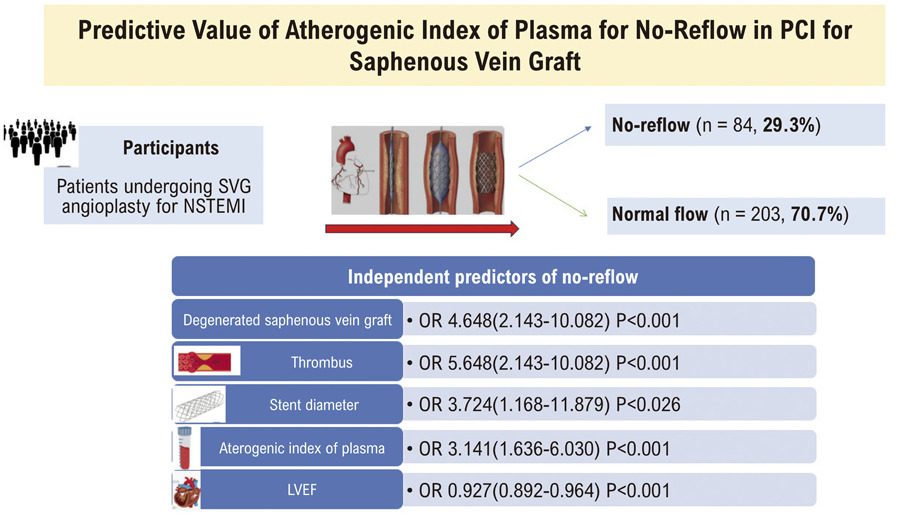
The no-reflow phenomenon is a critical complication of percutaneous coronary intervention (PCI), especially in patients with saphenous vein graft (SVG) disease. Identifying predictors of no-reflow is crucial to improving risk stratification. The atherogenic index of plasma (AIP), calculated as log(triglyceride/HDL-C), is a marker of atherosclerosis and microvascular dysfunction. However, its role in predicting no-reflow during SVG interventions remains unclear.

Objective

This study aimed to evaluate the association between AIP and the no-reflow phenomenon in patients undergoing PCI for SVG lesions presenting with non-ST elevation myocardial infarction (NSTEMI).

Methods

This single-center retrospective study included 287 patients who underwent PCI for significant SVG stenosis. Patients were categorized into normal reflow and no-reflow groups based on post-PCI TIMI (Thrombolysis in Myocardial Infarction) flow grades. Baseline demographic, clinical, laboratory, and angiographic data were extracted. AIP was calculated using formula log (TG/HDL-C). Logistic regression analyses were performed to determine independent predictors of the no-reflow. Statistical significance was set at p<0.05.

Results

The no-reflow group was older and had a higher prevalence of comorbidities, including diabetes, atrial fibrillation, chronic heart failure, chronic kidney disease, and stroke history. They also exhibited lower HDL-C levels, higher triglyceride levels, and consequently higher AIP values compared to the normal reflow group. Multivariate analysis identified degenerated SVG (OR: 4.65, p<0.001), thrombus presence (OR: 5.65, p<0.001), reduced left ventricular ejection fraction (OR: 0.927, p<0.001), and elevated AIP (OR: 3.141, p=0.001) as independent predictors of the no-reflow.

Conclusion

Elevated AIP is an independent risk factor for no-reflow in NSTEMI patients undergoing PCI for Saphenous Vein Graft, highlighting its potential role in early risk stratification.

  • Acute coronary syndrome
  • Atherosclerosis
  • No-Reflow Phenomenon
  • Percutaneous Coronary Intervention
Read Full Article
Creative Commons Attribution (CC BY) Creative Commons license
16/01/2026 DOI: 10.36660/abc.20250162i Views 1
ABC
Letter to the Editor

Percutaneous Coronary Intervention Induced-No-reflow in Saphenous Vein Grafts

Yücel Kanal

Dear Editor,

I have read with interest the study titled “The Predictive Value of the Inflammatory Prognostic Index for Detecting No-Reflow in ST-Elevation Myocardial Infarction Patients”, published in your journal. I would like to contribute to the study by providing some insights.

[…]

  • No-Reflow Phenomenon
  • Percutaneous Coronary Intervention
  • Saphenous Vein
Read Full Article
Creative Commons Attribution (CC BY) Creative Commons license
23/09/2024 DOI: 10.36660/abc.20240317i Views 1
ABC
Editorial

Inflammation and No-Reflow: Can it be a Game-Changer?

Ana Teresa Timóteo

No-reflow (NR) is a possible complication during percutaneous coronary intervention (PCI), particularly in the context of ST-segment elevation myocardial infarction (STEMI). It is highly dynamic in nature, develops gradually (over hours) following coronary blood flow restoration, and persists over days to weeks depending on severity, duration, and extent of myocardial ischemia and application of therapeutic measures aiming to prevent or alleviate ischemia/reperfusion injury. NR impacts negatively on the benefits provided by reperfusion therapy and contributes to poor clinical outcomes.,

The main pathophysiological mechanism of NR is microvascular obstruction developing as a consequence of myocardial ischemia, distal embolization, and reperfusion-related injury. The frequency of NR after primary PCI differs widely depending on the sensitivity of the tools used for diagnosis and the timing of examination. Coronary angiography is the most convenient, but it underestimates the true frequency of NR. Cardiac magnetic resonance (CMR) imaging is the most sensitive method in the clinical setting, providing information on the presence, localization, and extent of microvascular obstruction. With CMR, microvascular obstruction is diagnosed in up to 95% of patients with STEMI and restored TIMI flow grade 3, and in 57% of patients with STEMI within 7 days after primary PCI. Other techniques, such as ST-segment resolution and catheter-based coronary physiology tests are less sensitive or technically demanding.

[…]

  • Inflammation
  • No-Reflow Phenomenon
  • Percutaneous Coronary Intervention
Read Full Article
Creative Commons Attribution (CC BY) Creative Commons license
17/06/2024 DOI: 10.36660/abc.20240119i
The Predictive Value of the Inflammatory Prognostic Index for Detecting No-Reflow in ST-Elevation Myocardial Infarction Patients
ABC
Original Article

The Predictive Value of the Inflammatory Prognostic Index for Detecting No-Reflow in ST-Elevation Myocardial Infarction Patients

Faysal Şaylık et al. Tufan Çınar İbrahim Halil Tanboğa

Abstract

Background:

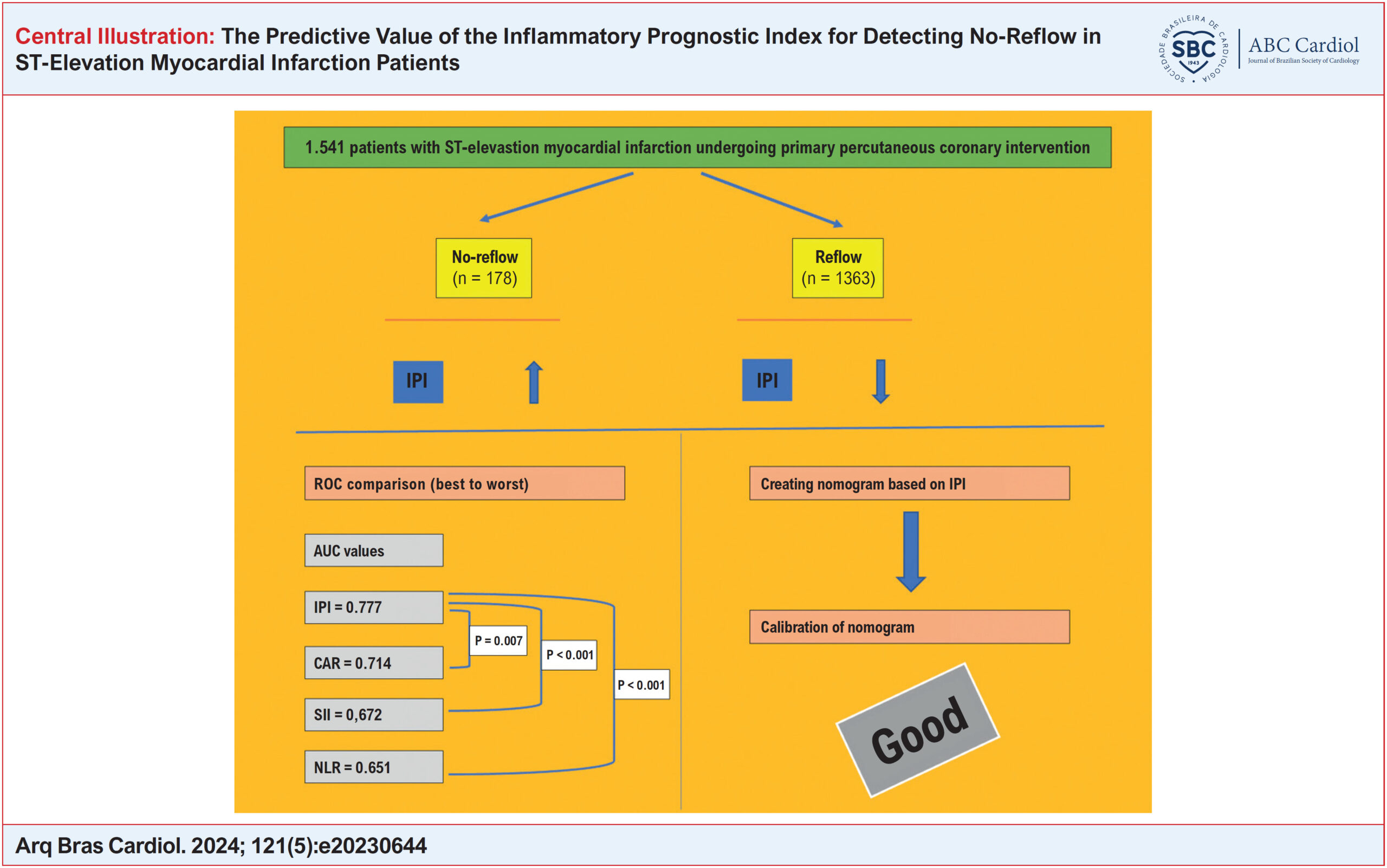
No-reflow (NR) is characterized by an acute reduction in coronary flow that is not accompanied by coronary spasm, thrombosis, or dissection. Inflammatory prognostic index (IPI) is a novel marker that was reported to have a prognostic role in cancer patients and is calculated by neutrophil/lymphocyte ratio (NLR) multiplied by C-reactive protein/albumin ratio.

Objective:

We aimed to investigate the relationship between IPI and NR in ST-segment elevation myocardial infarction (STEMI) patients undergoing primary percutaneous coronary intervention (pPCI).

Methods:

A total of 1541 patients were enrolled in this study (178 with NR and 1363 with reflow). Lasso panelized shrinkage was used for variable selection. A nomogram was created based on IPI for detecting the risk of NR development. Internal validation with Bootstrap resampling was used for model reproducibility. A two-sided p-value <0.05 was accepted as a significance level for statistical analyses.

Results:

IPI was higher in patients with NR than in patients with reflow. IPI was non-linearly associated with NR. IPI had a higher discriminative ability than the systemic immune-inflammation index, NLR, and CRP/albumin ratio. Adding IPI to the baseline multivariable logistic regression model improved the discrimination and net-clinical benefit effect of the model for detecting NR patients, and IPI was the most prominent variable in the full model. A nomogram was created based on IPI to predict the risk of NR. Bootstrap internal validation of nomogram showed a good calibration and discrimination ability.

Conclusion:

This is the first study that shows the association of IPI with NR in STEMI patients who undergo pPCI.

  • No-Reflow Phenomenon
  • Nomograms
  • Percutaneous Coronary Intervention
  • ST Elevation Myocardial Infarction
Read Full Article
Creative Commons Attribution (CC BY) Creative Commons license
29/04/2024 DOI: 10.36660/abc.20230644i
ABC
Editorial

Acute Myocardial Infarction: Do We Need Markers for Microcirculation Injury? Moreover, Would the Fibrinogen/Albumin Ratio Be the Answer?

Ricardo Wang et al. Fernando Carvalho Neuenschwander

Acute myocardial infarction (AMI) is the leading cause of death in the world and the second cause of death in Brazil. The biggest advance in its treatment was reperfusion therapy, be it medication, through the use of fibrinolytics or coronary angioplasty with stent implantation. The latter, in addition to the superiority in the quality of reperfusion, has been shown to be time-sensitive; the earlier the intervention, the greater the reduction in cardiovascular outcomes, both in the context of Acute Coronary Syndrome without ST-Segment Elevation and especially with ST segment elevation.

In the context of ST-segment elevation AMI (STEMI), the time between symptoms and reperfusion by primary angioplasty is considered the main reduction in cardiovascular death, leading to the preservation of ventricular function and earlier recovery.

[…]

  • Albumins
  • Fibrinolytic Agents
  • Mortality
  • Myocardial Infarction
  • Myocardial Reperfusion
  • No-Reflow Phenomenon
  • Stents
Read Full Article
Creative Commons Attribution (CC BY) Creative Commons license
04/03/2024 DOI: 10.36660/abc.20230809 Views 1
Figure 1
ABC
Original Article

Evaluation of Coronary Flow Level with Mots-C in Patients with STEMI Undergoing Primary PCI

Tolga Çakmak et al. Erdoğan Yaşar Esin Çakmak Suat Tekin … Yasin Karakuş Caner Türkoğlu Furkan Yüksel

Abstract

Background

The protective effects of mitochondrial open reading frame of the 12S rRNA-c (MOTS-C) on cardiovascular diseases have been shown in numerous studies. However, there is little documentation of the relationship between MOTS-C and coronary blood flow in ST-segment elevation myocardial infarction (STEMI).

Objective

We aimed to investigate the role of MOTS-C, which is known to have cytoprotective properties in the pathogenesis of the no-reflow phenomenon, by comparing the coronary flow rate and MOTS-C levels in patients with STEMI submitted to primary PCI.

Methods

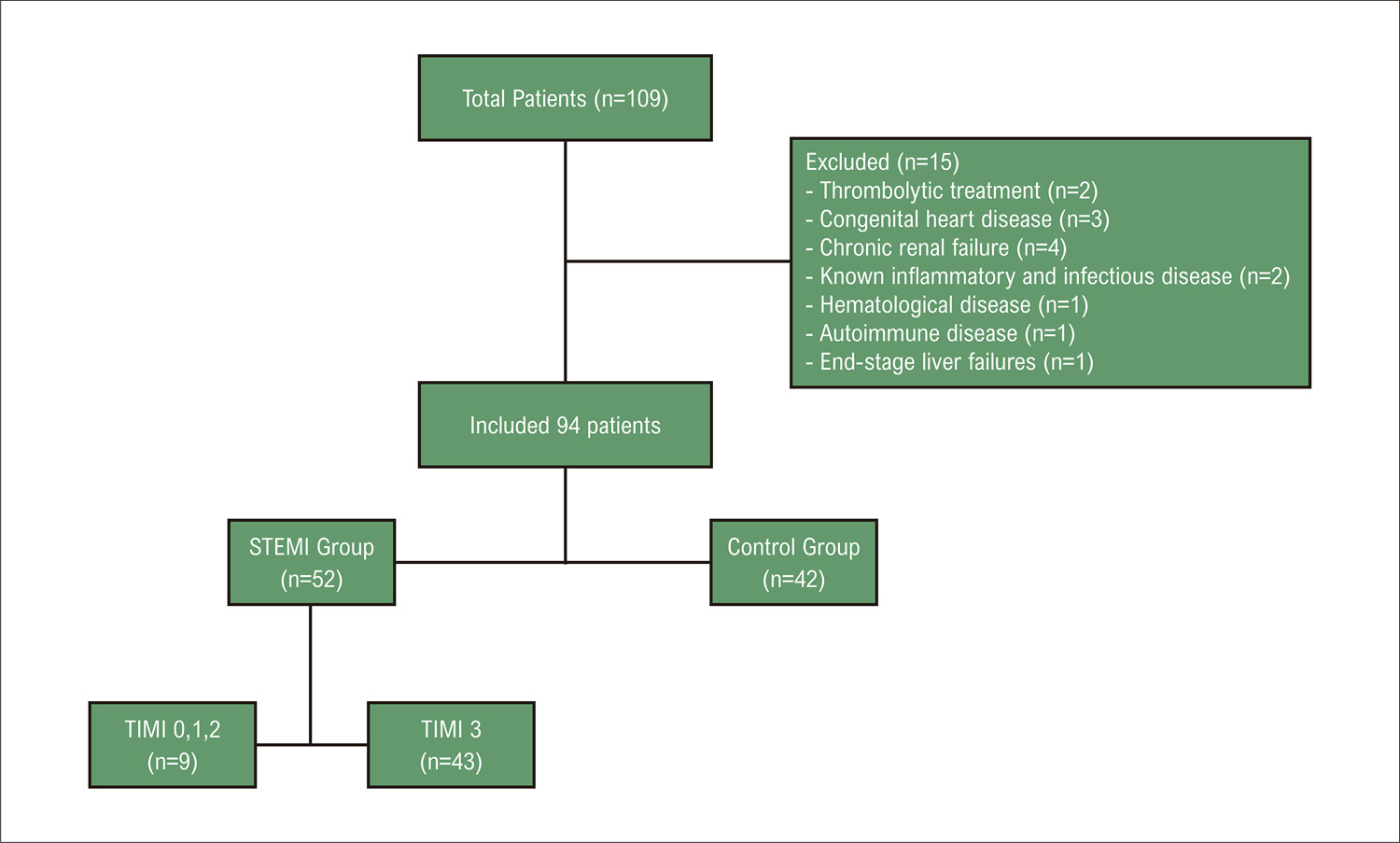
52 patients with STEMI and 42 patients without stenosis >50% in the coronary arteries were included in the study. The STEMI group was divided into two groups according to post-PCI TIMI (Thrombolysis In Myocardial Infarction) flow grade:(i) No-reflow: grade 0, 1, and 2 and (ii) grade 3(angiographic success). A p value of <0.05 was considered significant.

Results

MOTS-C levels were significantly lower in the STEMI group compared to the control group (91.9 ± 8.9 pg/mL vs. 171.8±12.5 pg/mL, p<0.001). In addition, the Receiver Operating Characteristics (ROC) curve analysis indicated that serum MOTS-C levels had a diagnostic value in predicting no-reflow (Area Under the ROC curve [AUC]:0.95, 95% CI:0.856-0.993, p<0.001). A MOTS-C ≥84.15 pg/mL measured at admission was shown to have 95.3% sensitivity and 88.9% specificity in predicting no-reflow.

Conclusion

MOTS-C is a strong and independent predictor of no-reflow and in-hospital MACE in patients with STEMI. It was also noted that low MOTS-C levels may be an important prognostic marker of and may have a role in the pathogenesis of STEMI.

  • No-Reflow Phenomenon
  • open reading frames
  • Percutaneous Coronary Intervention
  • ST Elevation Myocardial Infarction
Read Full Article
Creative Commons Attribution (CC BY) Creative Commons license
09/01/2023 DOI: 10.36660/abc.20220358 Views 1
Figure 1
ABC
Original Article

Comparison of the Outcomes between Coronary No-Reflow and Slow-Flow Phenomenon in Non-STEMI Patients

Mustafa Ahmet Huyut

Abstract

Background:

Coronary slow-flow phenomenon (CSFP) and coronary no-reflow phenomenon (CNP) are associated with increased risk of major cardiovascular adverse events (MACE).

Objectives:

This study aimed to evaluate and compare the one-year clinical follow-up outcomes among patients with CNP and CSFP who underwent percutaneous coronary interventions (PCI) in non-ST elevation myocardial infarction (NSTEMI).

Methods:

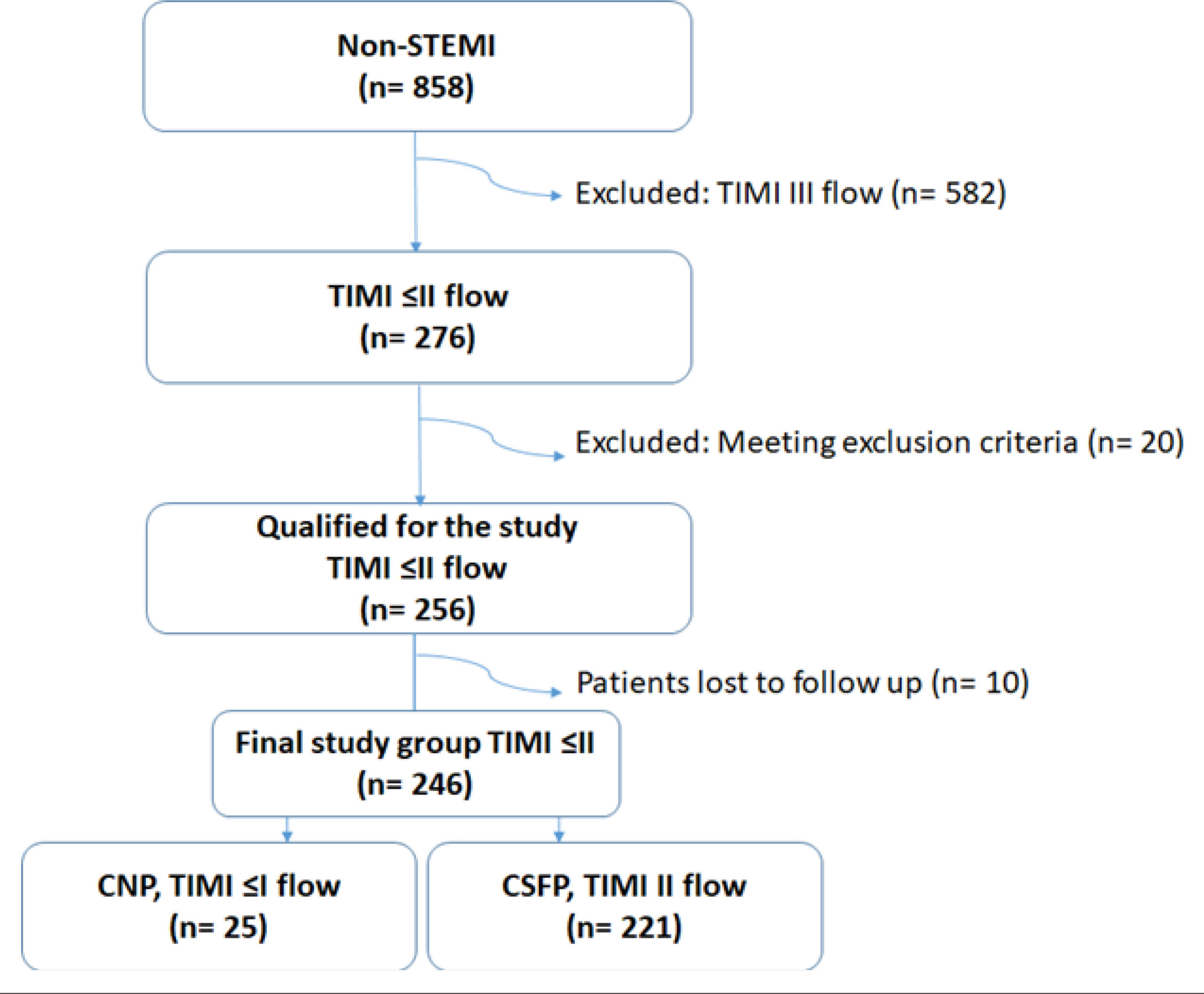
This study included a total of 858 patients who were diagnosed with NSTEMI and underwent PCI within 24 h of symptom onset. The patients were divided into two groups, the CSFP group (n=221) and the CNP group (n=25), regarding the angiographic characteristics of thrombolysis in myocardial infarction (TIMI) flow of the infarct-related artery. Patients were followed for one-year. A p-value of <0.05 was considered significant.

Results:

CNP was observed in 2.91%, and CSFP was observed in 25.75% of the patients. Clinical endpoints analyzed that stroke was significantly higher in the CNP group than in the CSFP group (6 (24%) vs. 6 (2.70%), p<0.001) and MACE was significantly higher in the CNP group than in the CSFP group (11 (44%) vs. 51 (23.10%), p=0.022). Forward conditional logistic regression analysis demonstrated that body mass index (BMI) (OR=1.11, 95%CI: 1.00-1.24, p=0.038) and baseline heart rate (HR) (OR=0.923, 95%CI: 0.88-0.96, p<0.001) were the independent predictors of CNP in NSTEMI.

Conclusion:

CNP patients have worse clinical outcomes and a higher risk of stroke compared with CSFP patients in NSTEMI. (Arq Bras Cardiol. 2021; 116(5):856-864)

  • Acute Coronary Syndrome / complications
  • Coronary Angiography
  • Myocardial Infarction
  • No-Reflow Phenomenon
  • Percutaneous Coronary Interventon
  • Risk Factors
  • Stroke
Read Full Article
Creative Commons Attribution (CC BY) Creative Commons license
17/05/2021 DOI: 10.36660/abc.20190905

How to cite this article

EndNote RIS

Electronic Document Format (Vancouver)

Sahin I, Deniz MF. Reconsidering the CHA2DS2-VASc Score for No-Reflow Risk Stratification after Percutaneous Coronary Intervention. Arquivos Brasileiros de Cardiologia 2026;123(1):e20260022.

Electronic Document Format (ABNT)

Sahin, Irfan; Deniz, Muhammed Furkan. Reconsidering the CHA2DS2-VASc Score for No-Reflow Risk Stratification after Percutaneous Coronary Intervention. Arquivos Brasileiros de Cardiologia, v. 123, n. 1, e20260022, Mar. 2026.

Electronic Document Format (APA)

Sahin, I., & Deniz, M. F. (2026). Reconsidering the CHA2DS2-VASc Score for No-Reflow Risk Stratification after Percutaneous Coronary Intervention. Arquivos Brasileiros de Cardiologia, 123(1), e20260022.

Electronic Document Format (ISO)

Sahin, Irfan and Deniz, Muhammed Furkan. Reconsidering the CHA2DS2-VASc Score for No-Reflow Risk Stratification after Percutaneous Coronary Intervention. Arquivos Brasileiros de Cardiologia [online]. 2026, vol. 123, n. 1, [cited 2026-10-14], e20260022. Available from: <https://journals.cardiol.br/en/article/reconsidering-the-cha2ds2-vasc-score-for-no-reflow-risk-stratification-after-percutaneous-coronary-intervention/>. ISSN 0066-782X

EndNote RIS

Electronic Document Format (Vancouver)

Erdoğan O, Panç C. Predictive Value of Atherogenic Index for No-Reflow in Patients Undergoing Coronary Intervention for Saphenous Vein Graft with Acute Coronary Syndrome. Arquivos Brasileiros de Cardiologia 2026;122(11):e20250162.

Electronic Document Format (ABNT)

Erdoğan, Onur; Panç, Cafer. Predictive Value of Atherogenic Index for No-Reflow in Patients Undergoing Coronary Intervention for Saphenous Vein Graft with Acute Coronary Syndrome. Arquivos Brasileiros de Cardiologia, v. 122, n. 11, e20250162, Jan. 2026.

Electronic Document Format (APA)

Erdoğan, O., & Panç, C. (2026). Predictive Value of Atherogenic Index for No-Reflow in Patients Undergoing Coronary Intervention for Saphenous Vein Graft with Acute Coronary Syndrome. Arquivos Brasileiros de Cardiologia, 122(11), e20250162.

Electronic Document Format (ISO)

Erdoğan, Onur and Panç, Cafer. Predictive Value of Atherogenic Index for No-Reflow in Patients Undergoing Coronary Intervention for Saphenous Vein Graft with Acute Coronary Syndrome. Arquivos Brasileiros de Cardiologia [online]. 2026, vol. 122, n. 11, [cited 2026-10-14], e20250162. Available from: <https://journals.cardiol.br/en/article/predictive-value-of-atherogenic-index-for-no-reflow-in-patients-undergoing-coronary-intervention-for-saphenous-vein-graft-with-acute-coronary-syndrome/>. ISSN 0066-782X

EndNote RIS

Electronic Document Format (Vancouver)

Kanal Y. Percutaneous Coronary Intervention Induced-No-reflow in Saphenous Vein Grafts. Arquivos Brasileiros de Cardiologia 2024;121(8):e20240317.

Electronic Document Format (ABNT)

Kanal, Yücel. Percutaneous Coronary Intervention Induced-No-reflow in Saphenous Vein Grafts. Arquivos Brasileiros de Cardiologia, v. 121, n. 8, e20240317, Sep. 2024.

Electronic Document Format (APA)

Kanal, Y. (2024). Percutaneous Coronary Intervention Induced-No-reflow in Saphenous Vein Grafts. Arquivos Brasileiros de Cardiologia, 121(8), e20240317.

Electronic Document Format (ISO)

Kanal, Yücel. Percutaneous Coronary Intervention Induced-No-reflow in Saphenous Vein Grafts. Arquivos Brasileiros de Cardiologia [online]. 2024, vol. 121, n. 8, [cited 2026-10-14], e20240317. Available from: <https://journals.cardiol.br/en/article/percutaneous-coronary-intervention-induced-no-reflow-in-saphenous-vein-grafts/>. ISSN 0066-782X

EndNote RIS

Electronic Document Format (Vancouver)

Timóteo AT. Inflammation and No-Reflow: Can it be a Game-Changer?. Arquivos Brasileiros de Cardiologia 2024;121(5):e20240119.

Electronic Document Format (ABNT)

Timóteo, Ana Teresa. Inflammation and No-Reflow: Can it be a Game-Changer?. Arquivos Brasileiros de Cardiologia, v. 121, n. 5, e20240119, Jun. 2024.

Electronic Document Format (APA)

Timóteo, A. T. (2024). Inflammation and No-Reflow: Can it be a Game-Changer?. Arquivos Brasileiros de Cardiologia, 121(5), e20240119.

Electronic Document Format (ISO)

Timóteo, Ana Teresa. Inflammation and No-Reflow: Can it be a Game-Changer?. Arquivos Brasileiros de Cardiologia [online]. 2024, vol. 121, n. 5, [cited 2026-10-14], e20240119. Available from: <https://journals.cardiol.br/en/article/inflammation-and-no-reflow-can-it-be-a-game-changer/>. ISSN 0066-782X

EndNote RIS

Electronic Document Format (Vancouver)

Şaylık F, Çınar T, Tanboğa H. The Predictive Value of the Inflammatory Prognostic Index for Detecting No-Reflow in ST-Elevation Myocardial Infarction Patients. Arquivos Brasileiros de Cardiologia 2024;121(4):e20230644.

Electronic Document Format (ABNT)

Şaylık, Faysal; Çınar, Tufan; Tanboğa, İbrahim Halil. The Predictive Value of the Inflammatory Prognostic Index for Detecting No-Reflow in ST-Elevation Myocardial Infarction Patients. Arquivos Brasileiros de Cardiologia, v. 121, n. 4, e20230644, Apr. 2024.

Electronic Document Format (APA)

Şaylık, F., Çınar, T., & Tanboğa, H. (2024). The Predictive Value of the Inflammatory Prognostic Index for Detecting No-Reflow in ST-Elevation Myocardial Infarction Patients. Arquivos Brasileiros de Cardiologia, 121(4), e20230644.

Electronic Document Format (ISO)

Şaylık, Faysal and Çınar, Tufan and Tanboğa, İbrahim Halil. The Predictive Value of the Inflammatory Prognostic Index for Detecting No-Reflow in ST-Elevation Myocardial Infarction Patients. Arquivos Brasileiros de Cardiologia [online]. 2024, vol. 121, n. 4, [cited 2026-10-14], e20230644. Available from: <https://journals.cardiol.br/en/article/the-predictive-value-of-the-inflammatory-prognostic-index-for-detecting-no-reflow-in-st-elevation-myocardial-infarction-patients/>. ISSN 0066-782X

EndNote RIS

Electronic Document Format (Vancouver)

Wang R, Neuenschwander FC. Acute Myocardial Infarction: Do We Need Markers for Microcirculation Injury? Moreover, Would the Fibrinogen/Albumin Ratio Be the Answer?. Arquivos Brasileiros de Cardiologia 2024;120(11):e20230809.

Electronic Document Format (ABNT)

Wang, Ricardo; Neuenschwander, Fernando Carvalho. Acute Myocardial Infarction: Do We Need Markers for Microcirculation Injury? Moreover, Would the Fibrinogen/Albumin Ratio Be the Answer?. Arquivos Brasileiros de Cardiologia, v. 120, n. 11, e20230809, Mar. 2024.

Electronic Document Format (APA)

Wang, R., & Neuenschwander, F. C. (2024). Acute Myocardial Infarction: Do We Need Markers for Microcirculation Injury? Moreover, Would the Fibrinogen/Albumin Ratio Be the Answer?. Arquivos Brasileiros de Cardiologia, 120(11), e20230809.

Electronic Document Format (ISO)

Wang, Ricardo and Neuenschwander, Fernando Carvalho. Acute Myocardial Infarction: Do We Need Markers for Microcirculation Injury? Moreover, Would the Fibrinogen/Albumin Ratio Be the Answer?. Arquivos Brasileiros de Cardiologia [online]. 2024, vol. 120, n. 11, [cited 2026-10-14], e20230809. Available from: <https://journals.cardiol.br/en/article/acute-myocardial-infarction-do-we-need-markers-for-microcirculation-injury-moreover-would-the-fibrinogen-albumin-ratio-be-the-answer/>. ISSN 0066-782X

EndNote RIS

Electronic Document Format (Vancouver)

Çakmak T, Yaşar E, Çakmak E, Tekin S, Karakuş Y, Türkoğlu C, Yüksel F, et al. Evaluation of Coronary Flow Level with Mots-C in Patients with STEMI Undergoing Primary PCI. Arquivos Brasileiros de Cardiologia 2023;120(1):e20220358.

Electronic Document Format (ABNT)

Çakmak, Tolga; Yaşar, Erdoğan; Çakmak, Esin; Tekin, Suat; Karakuş, Yasin; Türkoğlu, Caner; Yüksel, Furkan. Evaluation of Coronary Flow Level with Mots-C in Patients with STEMI Undergoing Primary PCI. Arquivos Brasileiros de Cardiologia, v. 120, n. 1, e20220358, Jan. 2023.

Electronic Document Format (APA)

Çakmak, T., Yaşar, E., Çakmak, E., Tekin, S., Karakuş, Y., Türkoğlu, C., & Yüksel, F. (2023). Evaluation of Coronary Flow Level with Mots-C in Patients with STEMI Undergoing Primary PCI. Arquivos Brasileiros de Cardiologia, 120(1), e20220358.

Electronic Document Format (ISO)

Çakmak, Tolga and Yaşar, Erdoğan and Çakmak, Esin and Tekin, Suat and Karakuş, Yasin and Türkoğlu, Caner and Yüksel, Furkan. Evaluation of Coronary Flow Level with Mots-C in Patients with STEMI Undergoing Primary PCI. Arquivos Brasileiros de Cardiologia [online]. 2023, vol. 120, n. 1, [cited 2026-10-14], e20220358. Available from: <https://journals.cardiol.br/en/article/evaluation-of-coronary-flow-level-with-mots-c-in-patients-with-stemi-undergoing-primary-pci/>. ISSN 0066-782X

EndNote RIS

Electronic Document Format (Vancouver)

Huyut MA. Comparison of the Outcomes between Coronary No-Reflow and Slow-Flow Phenomenon in Non-STEMI Patients. Arquivos Brasileiros de Cardiologia 2021;116(5):856-64.

Electronic Document Format (ABNT)

Huyut, Mustafa Ahmet. Comparison of the Outcomes between Coronary No-Reflow and Slow-Flow Phenomenon in Non-STEMI Patients. Arquivos Brasileiros de Cardiologia, v. 116, n. 5, p. 856-864, May. 2021.

Electronic Document Format (APA)

Huyut, M. A. (2021). Comparison of the Outcomes between Coronary No-Reflow and Slow-Flow Phenomenon in Non-STEMI Patients. Arquivos Brasileiros de Cardiologia, 116(5), 856-864.

Electronic Document Format (ISO)

Huyut, Mustafa Ahmet. Comparison of the Outcomes between Coronary No-Reflow and Slow-Flow Phenomenon in Non-STEMI Patients. Arquivos Brasileiros de Cardiologia [online]. 2021, vol. 116, n. 5, [cited 2026-10-14], pp. 856-864. Available from: <https://journals.cardiol.br/en/article/comparison-of-the-outcomes-between-coronary-no-reflow-and-slow-flow-phenomenon-in-non-stemi-patients/>. ISSN 0066-782X

  • About ABC Family
  • Internal Regulation
  • Editorial Board
  • Brazilian Society of Cardiology (SBC)

Issues

SBC Guidelines

  • Videos
  • Podcasts
  • News