ABC Family Arquivos Brasileiros de Cardiologia International Journal of Cardiovascular Sciences ABC Heart Failure & Cardiomyopathy ABC Imagem Cardiovascular
Português English
ABC Family
Português English
  • About
    • About ABC Family
    • Internal Regulation
    • Editorial Board
    • Brazilian Society of Cardiology (SBC)
  • Issues
  • SBC Guidelines
  • Content
    • Videos
    • Podcasts
    • News
  • About
    • About ABC Family
    • Internal Regulation
    • Editorial Board
    • Brazilian Society of Cardiology (SBC)
  • Issues
  • SBC Guidelines
  • Content
    • Videos
    • Podcasts
    • News

ABC Family

  • ABC Family
  • Arquivos Brasileiros de Cardiologia
  • International Journal of Cardiovascular Sciences
  • ABC Heart Failure & Cardiomyopathy
  • ABC Imagem Cardiovascular
Search in

No content found.

Journals
Ordering
Article types
Others

  1. Home
  2. Keyword: Hospitals, Private
Figure 1
ABC
Research Letter

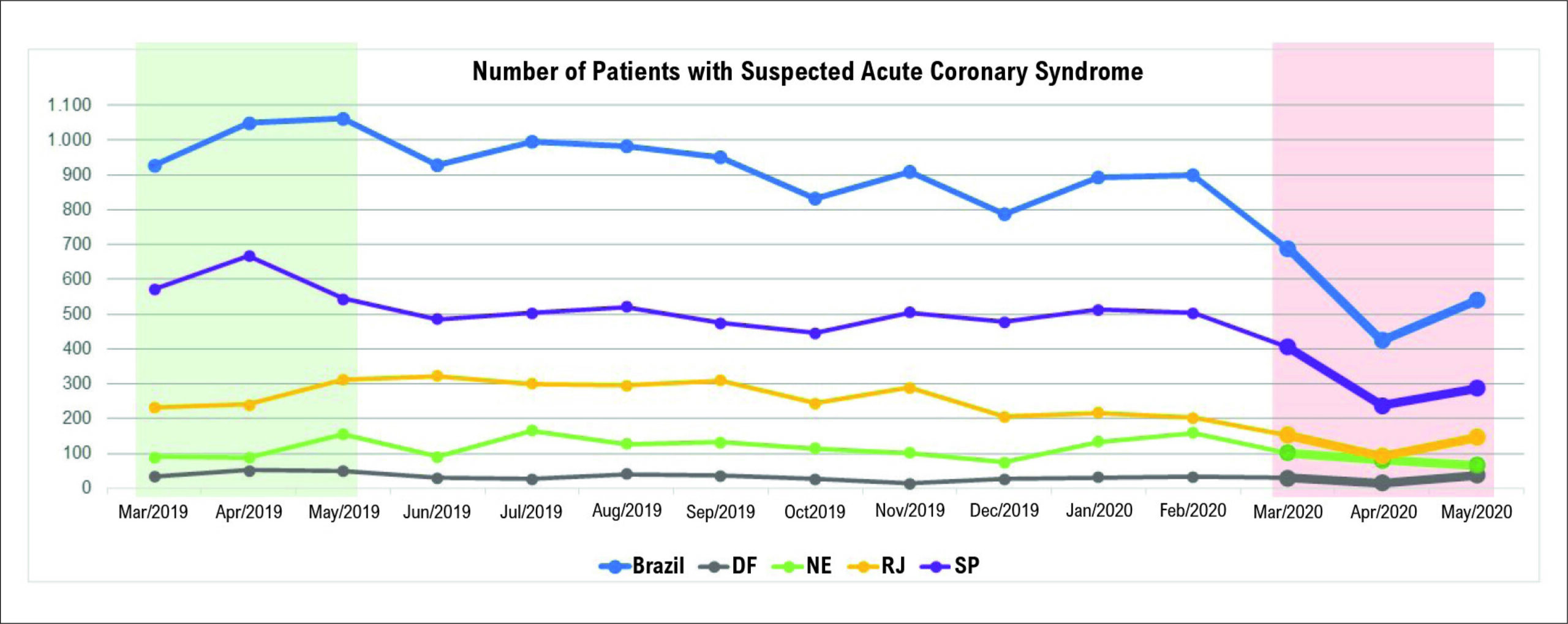
Reduction in the Number of Patients with Suspected and Confirmed Acute Coronary Syndrome during the early months of the Covid-19 Pandemic: Analysis of a Brazilian Network

Pedro Gabriel Melo de Barros e Silva et al. Ana Amaral Ferreira Dutra Adriana Bertolami Manfredi Pedro Paulo Nogueres Sampaio … Celso Musa Correa Hemilo Borba Griz Daniel Setta Valter Furlan

Introduction

The first reports of infections by the severe acute respiratory syndrome coronavirus 2 (SARS-CoV-2) occurred in December of 2019 in Wuhan, China., This disease (named as coronavirus disease-2019, Covid-19) rapidly spread globally and, on March 11, 2020, the World Health Organization (WHO) declared the state of pandemic., Lockdown was a common recommendation for countries affected by the outbreak.

Despite all the attention put on Covid-19 by the health authorities, other diseases could also be impacted by this new circumstance. Rates of acute cardiovascular diseases changed in countries such as Italy and United States, with a reduction in hospital admissions.– Previous national data regarding acute coronary syndrome (ACS) is already well and largely described, but these studies did not include the Covid-19 period., Thus, despite the fact that Brazil was the second most affected country when it comes to number of Covid-19 cases,9 the impact in hospital admissions due to suspected or confirmed ACS is still not well defined in both private and public Brazilian healthcare systems.

[…]
  • Acute Coronary Syndrome Pandemics
  • Chest Pain
  • Comparative Study
  • Epidemiology
  • Hospitals, Private
  • Hospitals, Public
Read Full Article
Creative Commons Attribution (CC BY) Creative Commons license
17/05/2021 DOI: 10.36660/abc.20200873 Views 2
ABC
Editorial

Hospital Readmissions after Acute Coronary Syndromes

Alfredo J. Mansur

Acute ischemic syndromes (myocardial infarction, unstable angina) may occur de novo in previously asymptomatic patients or may occur in the course of chronic diseases. After hospital-based acute care therapy, with or without percutaneous or surgical intervention, patients are discharged and receive advice for long-term therapy. However, some patients develop symptoms again in the short-term course and are readmitted to the hospital due to clinical as well as non-clinical causes and with clinical and other non-clinical consequences.

Hospital readmissions deserve studies in different settings and have been reported in medical literature. In one report, the readmission rate after one year in patients older than 65 years surviving myocardial infarction was 49.9% in 4.767 hospitals in United States of America between 2008 and 2010; the readmission rate, as well as mortality, were higher in the first months after discharge and decreased thereafter over 12 months. Additional studies compared not-for-profit hospitals (15.7%) with proprietary hospitals (16.6%) regarding readmission rates in the first month of discharge without demonstrating an association of hospital ownership with the success in programs devoted to decrease readmission rate; the results of such interventions were not statistically different between the two types of hospitals. Socioeconomic and ethnic factors were systemic influences without overt manifestations in a specific hospital. In many instances, the readmission rate was studied as a surrogate marker of quality of care;– the heterogeneity of patients and medical conditions made a clear association with the index admission elusive and not easily predicted.

[…]

  • Acute coronary syndrome
  • Hospitalization
  • Hospitals, Private
  • Mortality
  • Myocardial Infarction
  • Patient Readmission
Read Full Article
Creative Commons Attribution (CC BY) Creative Commons license
08/08/2019 DOI: 10.5935/abc.20190136 Views 1
Figure 1
ABC
Original Article

Quality of Intra-Hospital Nutritional Counseling in Patients with STEMI in the Public and Private Health Networks of Sergipe: The VICTIM Register

Ticiane Clair Remacre Munareto Lima et al. Danielle Góes da Silva Ikaro Daniel de Carvalho Barreto Jussiely Cunha Oliveira … Laís Costa Souza Oliveira Larissa Andreline Maia Arcelino Jeferson Cunha Oliveira Antônio Carlos Sobral Sousa José Augusto Soares Barreto Filho

Abstract

Background:

Having appropriate dietary habits is part of the recommendations after ST-Elevation Myocardial Infarction (STEMI), however, the quality of intra-hospital nutritional counselling in the different health services has been minimally explored.

Objective:

To evaluate the quality of intra-hospital nutritional counselling among patients with STEMI in the public and private health systems in Sergipe.

Methods:

A cross-sectional, with data from the Via Crucis for the Treatment of Myocardial Infarction (VICTIM) Register, conducted from April to November of 2017, with individuals aged ≥ 18 years diagnosed with STEMI, in one public health service hospital and three private hospitals. The occurrence and quality of nutritional counselling were analyzed based on current guidelines and the administration of questionnaires. A significance level of 0.05 was adopted.

Results:

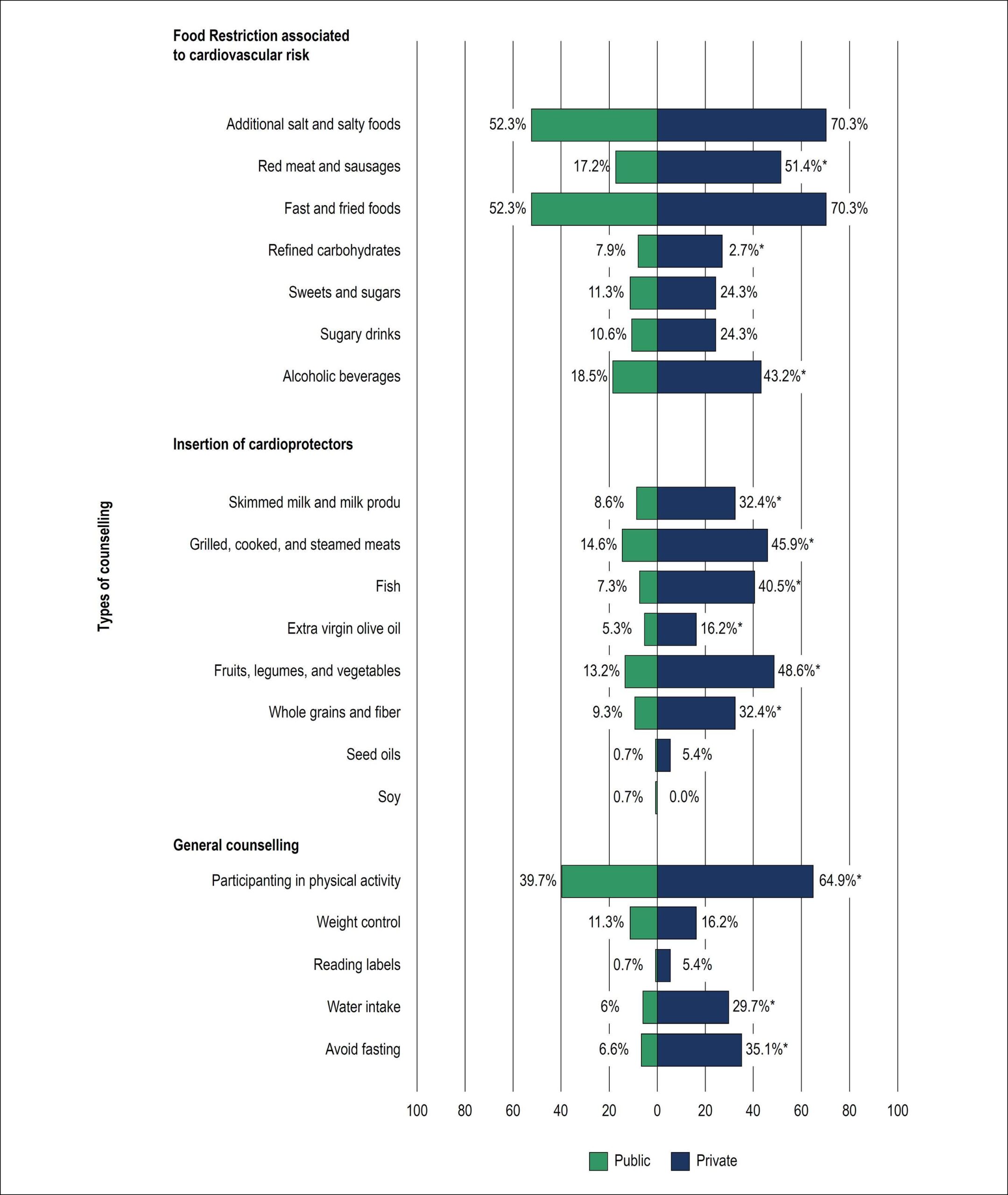
A total of 188 patients were analyzed; 80.3% were from the public health service facility. Among the interviewees, 57.6% of the public health service, and 70.3% of the private hospital patients received intra-hospital nutritional counselling (p = 0.191). The documentation of this practice, in medical records, was lower in the public service (2.6% vs. 37.8%, p < 0.001). A predominance of restrictive orientations was found in the public and private sectors, mainly regarding salt and fat, 52.3% and 70.3% respectively (p = 0.064). Patients from the private service were more counselling to introduce of cardioprotective foods, mainly fruit, vegetable/legume consumption (48.6% vs. 13.2%, p < 0.001). Among those who received counselling, nutritional knowledge was higher in the private sector (68.2% vs. 26.3%, p < 0.001).

Conclusion:

The intra-hospital nutritional counselling provided to patients with STEMI, in Sergipe, still presents poor quality in both services, especially in the public health system.

  • Health Education/methods
  • Healthcare Disparities
  • Healthy Diet
  • Hospitals, Private
  • Hospitals,Public
  • Nutritional Support
  • Risk reduction Behavior
  • ST Elevation Myocardial Infarction
Read Full Article
Creative Commons Attribution (CC BY) Creative Commons license
18/07/2019 DOI: 10.5935/abc.20190124 Views 1
IJCS
Original Article

Inadequacies of Sphygmomanometers Used in Emergency Care Services in a Large Capital City in Brazil

Kleisson Antonio Pontes Maia et al. Marcus Vinícius Bolívar Malachias Isabela Viana de Paiva Rafael da Mota Mariano Rodrigo Viana de Paiva

Abstract

Background:

Hypertension is the main risk factor for cardiovascular diseases. Technical quality of sphygmomanometers is a prerequisite for the correct measurement of arterial pressure.

Objectives:

To evaluate sphygmomanometers available in emergency services in the city of Belo Horizonte, Brazil.

Methods:

We performed a cross-sectional, observational, non-interventional study to evaluate characteristics of the sphygmomanometers available in adult emergency services of public and private hospitals in the city of Belo Horizonte, Brazil. We evaluated 337 sphygmomanometers of 25 hospitals – 15 (of 16) public hospitals and 10 (of 12) private hospitals.

Results:

Twenty-six percent (88/337) of devices were considered inadequate regarding the INMETRO (National Institute of Metrology, Quality and Technology) standards, 39.2% (132/337) for calibration dates, and 54% (188/337) for the mismatching between cuff’s and device’s brands. In 13 of 25 hospitals (52%), there were no spare cuffs in different sizes for different arm circumferences. Higher adequacy was found for aneroid and mercury sphygmomanometers used in private hospitals (p = 0.038 and p < 0.001, respectively) and electronic devices used in public hospitals (p < 0.001) compared with others.

Conclusion:

Seventy-eight percent of sphygmomanometers available in emergency services had technical inadequacies, and half of these services had no spare cuffs in different sizes available. These findings serve as a warning of the conditions of the equipment used in healthcare services provided to the general population in Brazil.

  • Emergency Medical Services
  • Equipment Failure
  • Hospitals, Private
  • Hospitals, Public
  • Hypertension
  • Sphygmomanometers
Read Full Article
Creative Commons Attribution (CC BY) Creative Commons license
01/01/2017 DOI: 10.5935/2359-4802.20170028 Views 1
ABC
Artigo Original

Prognostic Score for Acute Coronary Syndrome in a Private Terciary Hospital

Edson Renato Romano et al. Ieda Maria Liguori Jorge Alcantara Farran Rosa Maria Pimentel do Egito … Marcelo Luz Pereira Romano Vinícius Avellar Werneck Marco Antonio Oliveira Barbosa Enilton Sergio Tabosa do Egito Alexandre Biasi Cavalcanti Leopoldo Soares Piegas

Background:

Available predictive models for acute coronary syndromes (ACS) have limitations as they have been elaborated some years ago or limitations with applicability.

Objectives:

To develop scores for predicting adverse events in 30 days and 6 months in ST-segment elevation and non-ST-segment elevation ACS patients admitted to private tertiary hospital.

Methods:

Prospective cohort of ACS patients admitted between August, 2009 and June, 2012. Our primary composite outcome for both the 30-day and 6-month models was death from any cause, myocardial infarction or re-infarction, cerebrovascular accident (CVA), cardiac arrest and major bleeding. Predicting variables were selected for clinical, laboratory, electrocardiographic and therapeutic data. The final model was obtained with multiple logistic regression and submitted to internal validation with bootstrap analysis.

Results:

We considered 760 patients for the development sample, of which 132 had ST-segment elevation ACS and 628 non-ST-segment elevation ACS. The mean age was 63.2 ± 11.7 years, and 583 were men (76.7%). The final model to predict 30-day events is comprised by five independent variables: age ≥ 70 years, history of cancer, left ventricular ejection fraction (LVEF) 12.4 ng /ml and chemical thrombolysis. In the internal validation, the model showed good discrimination with C-statistic of 0.71. The predictors in the 6-month event final model are: history of cancer, LVEF 14.3 ng/ml, serum creatinine>1.2 mg/dl, history of chronic obstructive pulmonary disease and hemoglobin < 13.5 g/dl. In the internal validation, the model had good performance with C-statistic of 0.69.

Conclusion:

We have developed easy to apply scores for predicting 30-day and 6-month adverse events in patients with ST-elevation and non-ST-elevation ACS.

  • Acute coronary syndrome
  • Hospitals, Private
  • Probability
  • Prognosis
  • Risk Factors
Read Full Article
Creative Commons Attribution (CC BY) Creative Commons license
10/02/2014 DOI: 10.5935/abc.20140012 Views 1
Comparison of echocardiography request appropriateness between public and private hospitals
ABC
Artigo Original

Comparison of echocardiography request appropriateness between public and private hospitals

Flávia Candolo Pupo Barbosa et al. Evandro Tinoco Mesquita Laiz Baniziolli Barachi Angelo Salgado … Rafael Kazuo Maria Luiza Garcia Rosa Claudio Tinoco Mesquita

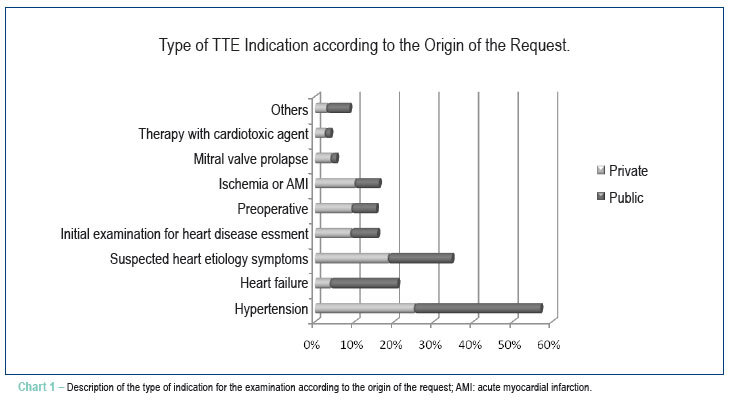
BACKGROUND: Aiming at improving the use of echocardiography tests, the Appropriateness Criteria (AC) were created by the American Society of Echocardiography (ASE)/American College of Cardiology (ACC). OBJECTIVE: To compare the appropriateness profile of transthoracic echocardiography (TTE) requests in accordance with the AC, between a public University Hospital (UH) and a Private Hospital (PH), and verify which characteristics are associated with a better TTE request profile. METHODS: We prospectively assessed 779 consecutive TTE requests in a PH (49.8%) and a UH (50.2%), with 55.6% of requests for women and 44.4% for men, aged 59.1 ± 15.7 years. The indications were classified as appropriate, inappropriate or non-classified, and adequacy to AC was correlated with age, patient gender, and the time since graduation of the requesting physician. The statistical analysis used Kappa coefficient and chi-square test. RESULTS: There was no significant difference regarding the adequacy profile of appropriate TTE requests in the two institutions (71% vs. 75%, p = 0.3). At PH, the factors associated with higher rates of appropriate tests were: female gender (p = 0.001) and age younger than 60 years (p <0.001). In the UH, physicians who had graduated between 5 and 10 years before had a higher rate of inappropriate requests (p = 0.02). The variables that were independent predictors of appropriate tests in the PH were: female sex (p = 0.001) and age <60 years (p = 0.001). CONCLUSION: In this evaluation, the PH and the UH profiles showed similar request appropriateness profiles. Female gender, time since graduation of the requesting physician and the patient's age influenced the appropriateness of requests.

  • Echocardiography
  • Hospitals, Private
  • Hospitals, Public
  • medical examination
  • quality
Read Full Article
Creative Commons Attribution (CC BY) Creative Commons license
21/10/2011 DOI: 10.1590/S0066-782X2011005000106 Views 1

How to cite this article

EndNote RIS

Electronic Document Format (Vancouver)

Silva PGMB, Dutra AAF, Manfredi AB, Sampaio PPN, Correa CM, Griz HB, Setta D, et al. Reduction in the Number of Patients with Suspected and Confirmed Acute Coronary Syndrome during the early months of the Covid-19 Pandemic: Analysis of a Brazilian Network. Arquivos Brasileiros de Cardiologia 2021;116(5):1003-6.

Electronic Document Format (ABNT)

Silva, Pedro Gabriel Melo de Barros e; Dutra, Ana Amaral Ferreira; Manfredi, Adriana Bertolami; Sampaio, Pedro Paulo Nogueres; Correa, Celso Musa; Griz, Hemilo Borba; Setta, Daniel; Furlan, Valter. Reduction in the Number of Patients with Suspected and Confirmed Acute Coronary Syndrome during the early months of the Covid-19 Pandemic: Analysis of a Brazilian Network. Arquivos Brasileiros de Cardiologia, v. 116, n. 5, p. 1003-1006, May. 2021.

Electronic Document Format (APA)

Silva, P. G. M. B. , Dutra, A. A. F., Manfredi, A. B., Sampaio, P. P. N., Correa, C. M., Griz, H. B., Setta, D., & Furlan, V. (2021). Reduction in the Number of Patients with Suspected and Confirmed Acute Coronary Syndrome during the early months of the Covid-19 Pandemic: Analysis of a Brazilian Network. Arquivos Brasileiros de Cardiologia, 116(5), 1003-1006.

Electronic Document Format (ISO)

Silva, Pedro Gabriel Melo de Barros e and Dutra, Ana Amaral Ferreira and Manfredi, Adriana Bertolami and Sampaio, Pedro Paulo Nogueres and Correa, Celso Musa and Griz, Hemilo Borba and Setta, Daniel and Furlan, Valter. Reduction in the Number of Patients with Suspected and Confirmed Acute Coronary Syndrome during the early months of the Covid-19 Pandemic: Analysis of a Brazilian Network. Arquivos Brasileiros de Cardiologia [online]. 2021, vol. 116, n. 5, [cited 2026-10-14], pp. 1003-1006. Available from: <https://journals.cardiol.br/en/article/reduction-in-the-number-of-patients-with-suspected-and-confirmed-acute-coronary-syndrome-during-the-early-months-of-the-covid-19-pandemic-analysis-of-a-brazilian-network/>. ISSN 0066-782X

EndNote RIS

Electronic Document Format (Vancouver)

Mansur AJ. Hospital Readmissions after Acute Coronary Syndromes. Arquivos Brasileiros de Cardiologia 2019;113(1):50-1.

Electronic Document Format (ABNT)

Mansur, Alfredo J.. Hospital Readmissions after Acute Coronary Syndromes. Arquivos Brasileiros de Cardiologia, v. 113, n. 1, p. 50-51, Aug. 2019.

Electronic Document Format (APA)

Mansur, A. J. (2019). Hospital Readmissions after Acute Coronary Syndromes. Arquivos Brasileiros de Cardiologia, 113(1), 50-51.

Electronic Document Format (ISO)

Mansur, Alfredo J.. Hospital Readmissions after Acute Coronary Syndromes. Arquivos Brasileiros de Cardiologia [online]. 2019, vol. 113, n. 1, [cited 2026-10-14], pp. 50-51. Available from: <https://journals.cardiol.br/en/article/hospital-readmissions-after-acute-coronary-syndromes/>. ISSN 0066-782X

EndNote RIS

Electronic Document Format (Vancouver)

Lima TCRM, Silva DG, Barreto IDC, Oliveira JC, Oliveira LCS, Arcelino LAM, Oliveira JC, et al. Quality of Intra-Hospital Nutritional Counseling in Patients with STEMI in the Public and Private Health Networks of Sergipe: The VICTIM Register. Arquivos Brasileiros de Cardiologia 2019;113(2):260-9.

Electronic Document Format (ABNT)

Lima, Ticiane Clair Remacre Munareto; Silva, Danielle Góes da; Barreto, Ikaro Daniel de Carvalho; Oliveira, Jussiely Cunha; Oliveira, Laís Costa Souza; Arcelino, Larissa Andreline Maia; Oliveira, Jeferson Cunha; Sousa, Antônio Carlos Sobral; Barreto Filho, José Augusto Soares. Quality of Intra-Hospital Nutritional Counseling in Patients with STEMI in the Public and Private Health Networks of Sergipe: The VICTIM Register. Arquivos Brasileiros de Cardiologia, v. 113, n. 2, p. 260-269, Jul. 2019.

Electronic Document Format (APA)

Lima, T. C. R. M., Silva, D. G. , Barreto, I. D. C., Oliveira, J. C., Oliveira, L. C. S., Arcelino, L. A. M., Oliveira, J. C., Sousa, A. C. S., & Barreto Filho, J. A. S. (2019). Quality of Intra-Hospital Nutritional Counseling in Patients with STEMI in the Public and Private Health Networks of Sergipe: The VICTIM Register. Arquivos Brasileiros de Cardiologia, 113(2), 260-269.

Electronic Document Format (ISO)

Lima, Ticiane Clair Remacre Munareto and Silva, Danielle Góes da and Barreto, Ikaro Daniel de Carvalho and Oliveira, Jussiely Cunha and Oliveira, Laís Costa Souza and Arcelino, Larissa Andreline Maia and Oliveira, Jeferson Cunha and Sousa, Antônio Carlos Sobral and Barreto Filho, José Augusto Soares. Quality of Intra-Hospital Nutritional Counseling in Patients with STEMI in the Public and Private Health Networks of Sergipe: The VICTIM Register. Arquivos Brasileiros de Cardiologia [online]. 2019, vol. 113, n. 2, [cited 2026-10-14], pp. 260-269. Available from: <https://journals.cardiol.br/en/article/quality-of-intra-hospital-nutritional-counseling-in-patients-with-stemi-in-the-public-and-private-health-networks-of-sergipe-the-victim-register/>. ISSN 0066-782X

EndNote RIS

Electronic Document Format (Vancouver)

Maia KAP, Malachias MVB, Paiva IV, Mariano RM, Paiva RV. Inadequacies of Sphygmomanometers Used in Emergency Care Services in a Large Capital City in Brazil. International Journal of Cardiovascular Sciences 2017;30(2):100-8.

Electronic Document Format (ABNT)

Maia, Kleisson Antonio Pontes; Malachias, Marcus Vinícius Bolívar; Paiva, Isabela Viana de; Mariano, Rafael da Mota; Paiva, Rodrigo Viana de. Inadequacies of Sphygmomanometers Used in Emergency Care Services in a Large Capital City in Brazil. International Journal of Cardiovascular Sciences, v. 30, n. 2, p. 100-108, Dec. 2016.

Electronic Document Format (APA)

Maia, K. A. P., Malachias, M. V. B., Paiva, I. V. , Mariano, R. M., & Paiva, R. V. (2017). Inadequacies of Sphygmomanometers Used in Emergency Care Services in a Large Capital City in Brazil. International Journal of Cardiovascular Sciences, 30(2), 100-108.

Electronic Document Format (ISO)

Maia, Kleisson Antonio Pontes and Malachias, Marcus Vinícius Bolívar and Paiva, Isabela Viana de and Mariano, Rafael da Mota and Paiva, Rodrigo Viana de. Inadequacies of Sphygmomanometers Used in Emergency Care Services in a Large Capital City in Brazil. International Journal of Cardiovascular Sciences [online]. 2017, vol. 30, n. 2, [cited 2026-10-14], pp. 100-108. Available from: <https://journals.cardiol.br/en/article/inadequacies-of-sphygmomanometers-used-in-emergency-care-services-in-a-large-capital-city-in-brazil/>. ISSN 2359-4802

EndNote RIS

Electronic Document Format (Vancouver)

Romano ER, Liguori IM, Farran JA, Egito RMP, Romano MLP, Werneck VA, Barbosa MAO, et al. Prognostic Score for Acute Coronary Syndrome in a Private Terciary Hospital. Arquivos Brasileiros de Cardiologia 2014;102(3):226-3.

Electronic Document Format (ABNT)

Romano, Edson Renato; Liguori, Ieda Maria; Farran, Jorge Alcantara; Egito, Rosa Maria Pimentel do; Romano, Marcelo Luz Pereira; Werneck, Vinícius Avellar; Barbosa, Marco Antonio Oliveira; Egito, Enilton Sergio Tabosa do; Cavalcanti, Alexandre Biasi; Piegas, Leopoldo Soares. Prognostic Score for Acute Coronary Syndrome in a Private Terciary Hospital. Arquivos Brasileiros de Cardiologia, v. 102, n. 3, p. 226-236, Feb. 2014.

Electronic Document Format (APA)

Romano, E. R., Liguori, I. M., Farran, J. A., Egito, R. M. P. , Romano, M. L. P., Werneck, V. A., Barbosa, M. A. O., Egito, E. S. T. , Cavalcanti, A. B., & Piegas, L. S. (2014). Prognostic Score for Acute Coronary Syndrome in a Private Terciary Hospital. Arquivos Brasileiros de Cardiologia, 102(3), 226-236.

Electronic Document Format (ISO)

Romano, Edson Renato and Liguori, Ieda Maria and Farran, Jorge Alcantara and Egito, Rosa Maria Pimentel do and Romano, Marcelo Luz Pereira and Werneck, Vinícius Avellar and Barbosa, Marco Antonio Oliveira and Egito, Enilton Sergio Tabosa do and Cavalcanti, Alexandre Biasi and Piegas, Leopoldo Soares. Prognostic Score for Acute Coronary Syndrome in a Private Terciary Hospital. Arquivos Brasileiros de Cardiologia [online]. 2014, vol. 102, n. 3, [cited 2026-10-14], pp. 226-236. Available from: <https://journals.cardiol.br/en/article/prognostic-score-for-acute-coronary-syndrome-in-a-private-terciary-hospital/>. ISSN 0066-782X

EndNote RIS

Electronic Document Format (Vancouver)

Barbosa FCP, Mesquita ET, Barachi LB, Salgado A, Kazuo R, Rosa MLG, Mesquita CT, et al. Comparison of echocardiography request appropriateness between public and private hospitals. Arquivos Brasileiros de Cardiologia 2011;97(4):281-8.

Electronic Document Format (ABNT)

Barbosa, Flávia Candolo Pupo; Mesquita, Evandro Tinoco; Barachi, Laiz Baniziolli; Salgado, Angelo; Kazuo, Rafael; Rosa, Maria Luiza Garcia; Mesquita, Claudio Tinoco. Comparison of echocardiography request appropriateness between public and private hospitals. Arquivos Brasileiros de Cardiologia, v. 97, n. 4, p. 281-288, Oct. 2011.

Electronic Document Format (APA)

Barbosa, F. C. P., Mesquita, E. T., Barachi, L. B., Salgado, A., Kazuo, R., Rosa, M. L. G., & Mesquita, C. T. (2011). Comparison of echocardiography request appropriateness between public and private hospitals. Arquivos Brasileiros de Cardiologia, 97(4), 281-288.

Electronic Document Format (ISO)

Barbosa, Flávia Candolo Pupo and Mesquita, Evandro Tinoco and Barachi, Laiz Baniziolli and Salgado, Angelo and Kazuo, Rafael and Rosa, Maria Luiza Garcia and Mesquita, Claudio Tinoco. Comparison of echocardiography request appropriateness between public and private hospitals. Arquivos Brasileiros de Cardiologia [online]. 2011, vol. 97, n. 4, [cited 2026-10-14], pp. 281-288. Available from: <https://journals.cardiol.br/en/article/comparison-of-echocardiography-request-appropriateness-between-public-and-private-hospitals/>. ISSN 0066-782X

  • About ABC Family
  • Internal Regulation
  • Editorial Board
  • Brazilian Society of Cardiology (SBC)

Issues

SBC Guidelines

  • Videos
  • Podcasts
  • News