ABC Family Arquivos Brasileiros de Cardiologia International Journal of Cardiovascular Sciences ABC Heart Failure & Cardiomyopathy ABC Imagem Cardiovascular
Português English
ABC Family
Português English
  • About
    • About ABC Family
    • Internal Regulation
    • Editorial Board
    • Brazilian Society of Cardiology (SBC)
  • Issues
  • SBC Guidelines
  • Content
    • Videos
    • Podcasts
    • News
  • About
    • About ABC Family
    • Internal Regulation
    • Editorial Board
    • Brazilian Society of Cardiology (SBC)
  • Issues
  • SBC Guidelines
  • Content
    • Videos
    • Podcasts
    • News

ABC Family

  • ABC Family
  • Arquivos Brasileiros de Cardiologia
  • International Journal of Cardiovascular Sciences
  • ABC Heart Failure & Cardiomyopathy
  • ABC Imagem Cardiovascular
Search in

No content found.

Journals
Ordering
Article types
Others

  1. Home
  2. Keyword: Blood Pressure Monitoring, Ambulatory
Association between Morning Surge and Left Ventricular Hypertrophy in Obese Hypertensive Patients
ABC
Original Article

Association between Morning Surge and Left Ventricular Hypertrophy in Obese Hypertensive Patients

Natascha Gonçalves Francisco Palmeira et al. Henrique Tria Bianco Maria Teresa Nogueira Bombig Fernando Focaccia Povoa … Francisco A. H. Fonseca Maria Cristina Izar José Marcos Thalenberg Braulio Luna Filho Fabiane Marui Simone Matheus Fischer Celso Amodeo Dilma do Socorro Moraes de Souza Rui Povoa

Abstract

Background

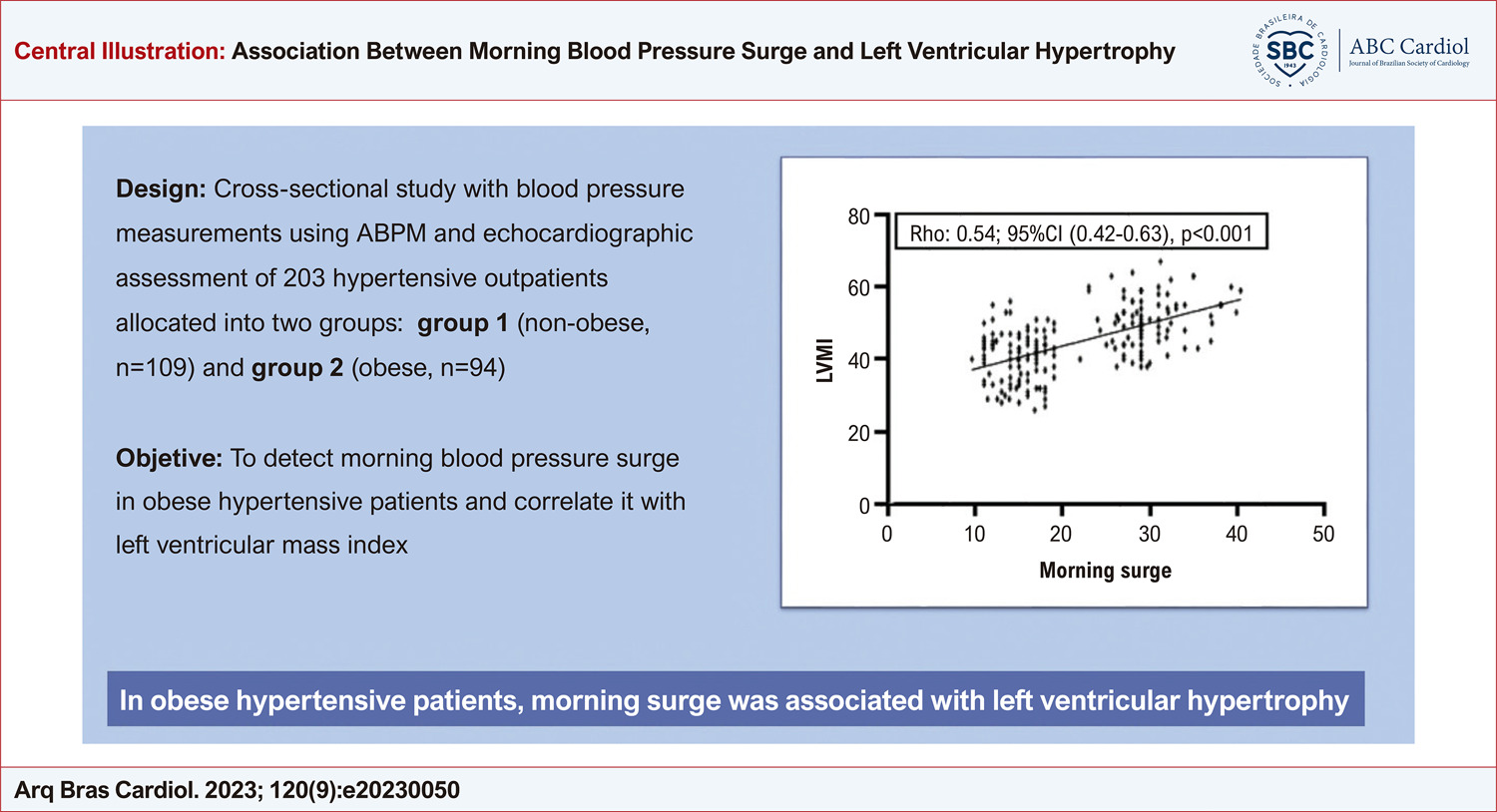
Weight gain can trigger mechanisms that increase blood pressure. Nevertheless, obesity causes structural changes in the myocardium, including increased ventricular mass, atrial dilatation, and diastolic and systolic dysfunction. Additionally, blood pressure variations, like morning surge (MS) in obese hypertensive patients may have clinical relevance in cardiovascular events. Although morning blood pressure surge is a physiological phenomenon, excess MS can be considered an independent risk factor for cardiovascular events.

Objective

To evaluate MS values and their association with left ventricular hypertrophy (LVH) and nocturnal dipping (ND) in obese and non-obese hypertensive patients.

Methods

A cross-sectional study that evaluated BP measurements by ambulatory blood pressure monitoring (ABPM) and the presence of LVH by echocardiography in 203 hypertensive outpatients, divided into two groups: 109 non-obese and 94 obese hypertensives patients. The significance level was set at 0.05 in two-tailed tests.

Results

A MS above 20 mmHg by ABPM was detected in 59.2% of patients in the non-obese group and 40.6% in the obese group. LVH was found in 18.1% and 39.3% of patients in the non-obese and obese groups, respectively, p16 mmHg was associated with LVH, [prevalence ratio: 2.80; 95%CI (1.12–6.98), p=0.03]. For the non-obese group, the cut-off point of MS for this association was >22 mmHg.

Conclusion

High MS was positively associated with LVH, with a particular behavior in the hypertensive obese group.
  • Blood Pressure Monitoring, Ambulatory
  • Hypertrophy Left Ventricular
  • Obesity
Read Full Article
Creative Commons Attribution (CC BY) Creative Commons license
09/10/2023 DOI: 10.36660/abc.20230050
The Relationship between Nocturnal Dipping Status, Morning Blood Pressure Surge, and Hospital Admissions in Patients with Systolic Heart Failure
ABC
Original Article

The Relationship between Nocturnal Dipping Status, Morning Blood Pressure Surge, and Hospital Admissions in Patients with Systolic Heart Failure

Ümmü Taş et al. Sedat Taş Efe Edem

Abstract

Background

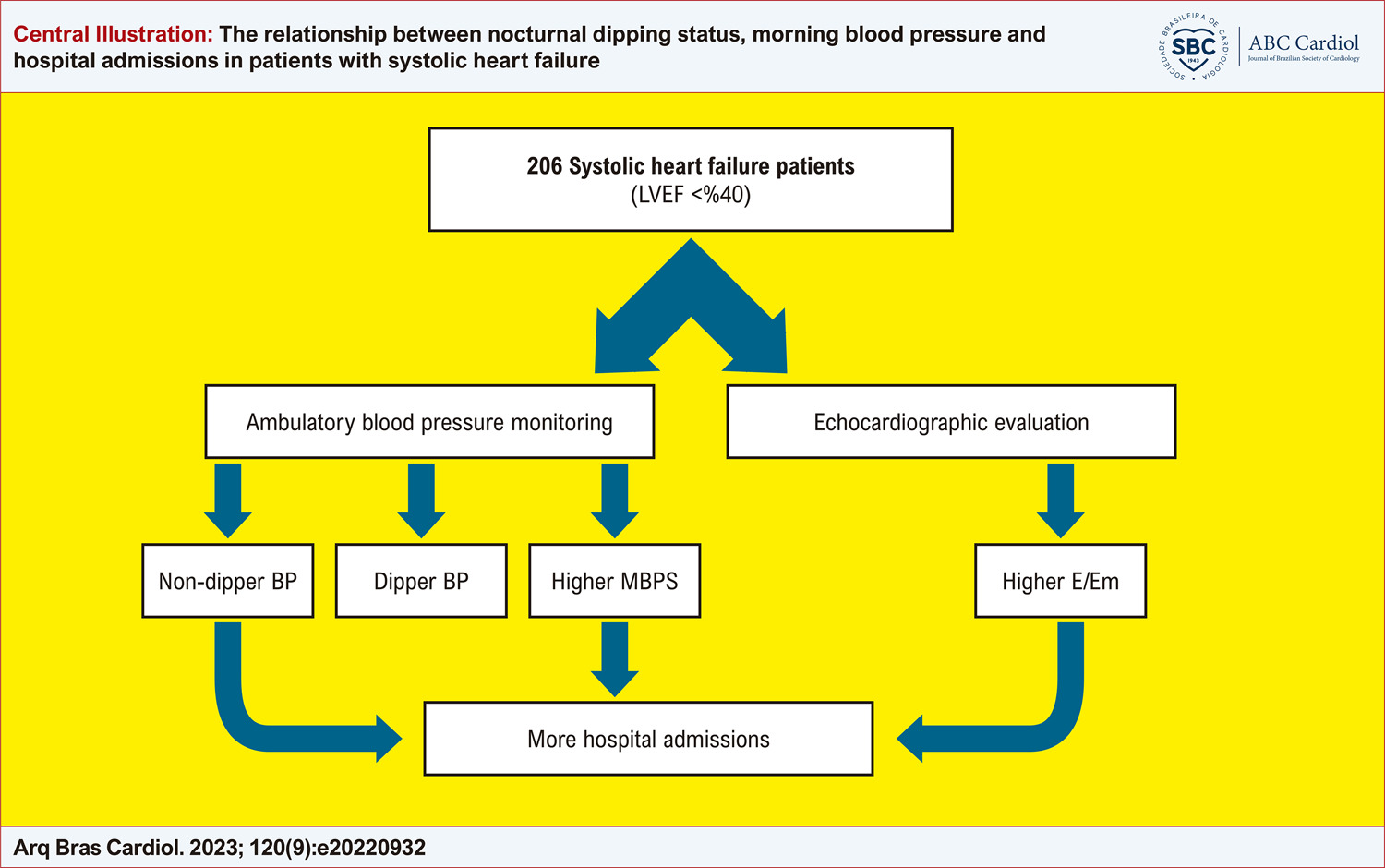
Hypertension is a known risk factor for developing heart failure. However, there is limited data to investigate the association between morning blood pressure surge (MBPS), dipping status, echocardiographic parameters, and hospital admissions in patients with systolic heart failure.

Objectives

To evaluate the relationship between morning blood pressure surge, non-dipper blood pressure pattern, echocardiographic parameters, and hospital admissions in patients with systolic heart failure.

Methods

We retrospectively analyzed data from 206 consecutive patients with hypertension and a left ventricular ejection fraction below 40%. We divided the patients into two groups according to 24-hour ambulatory blood pressure monitoring (ABPM) results: dippers (n=110) and non-dippers (n=96). Morning blood pressure surge was calculated. Echocardiographic findings and hospital admissions during follow-up were noted. Statistical significance was defined as p < 0.05.

Results

The study group comprised 206 patients with a male predominance and mean age of 63.5 ± 16.1 years. The non-dipper group had significantly more hospital admissions compared to dippers. There was a positive correlation between MBPS and left atrial volume index (r=0.331, p=0.001), the ratio between early mitral inflow velocity and flow propagation velocity (r= 0.326, p=0.001), and the ratio between early mitral inflow velocity and mitral annular early diastolic velocity (E/Em) (r= 0.314, p=0.001). Non-dipper BP, MBPS, and E/Em pattern were found to be independently associated with increased hospital admissions.

Conclusion

MBPS is associated with diastolic dysfunction and may be a sensitive predictor of hospital admission in patients with systolic heart failure.

  • Arterial Pressure
  • Blood Pressure Monitoring, Ambulatory
  • Heart Failure
  • Hospitalization
Read Full Article
Creative Commons Attribution (CC BY) Creative Commons license
18/09/2023 DOI: 10.36660/abc.20220932 Views 2
Figure 1
ABC
Original Article

Abnormal Circadian Blood Pressure Variation is Associated with SYNTAX Scores in Hospitalized Patients with Acute Coronary Syndrome

Turhan Turan et al. Ahmet Özderya Sinan Sahin Selim Kul … Ali Hakan Konuş Faruk Kara Gulay Uzun Ali Rıza Akyüz Muhammet Rasit Sayin

Abstract

Background

Blunted nocturnal blood pressure (BP) reduction, referred to as non-dipper hypertension, is a strong predictor of cardiovascular morbidity and mortality.

Objectives

This study aimed to investigate the relationship between non-dipper hypertension and the severity and complexity of coronary artery disease using SYNTAX score in hospitalized patients with acute coronary syndrome.

Methods

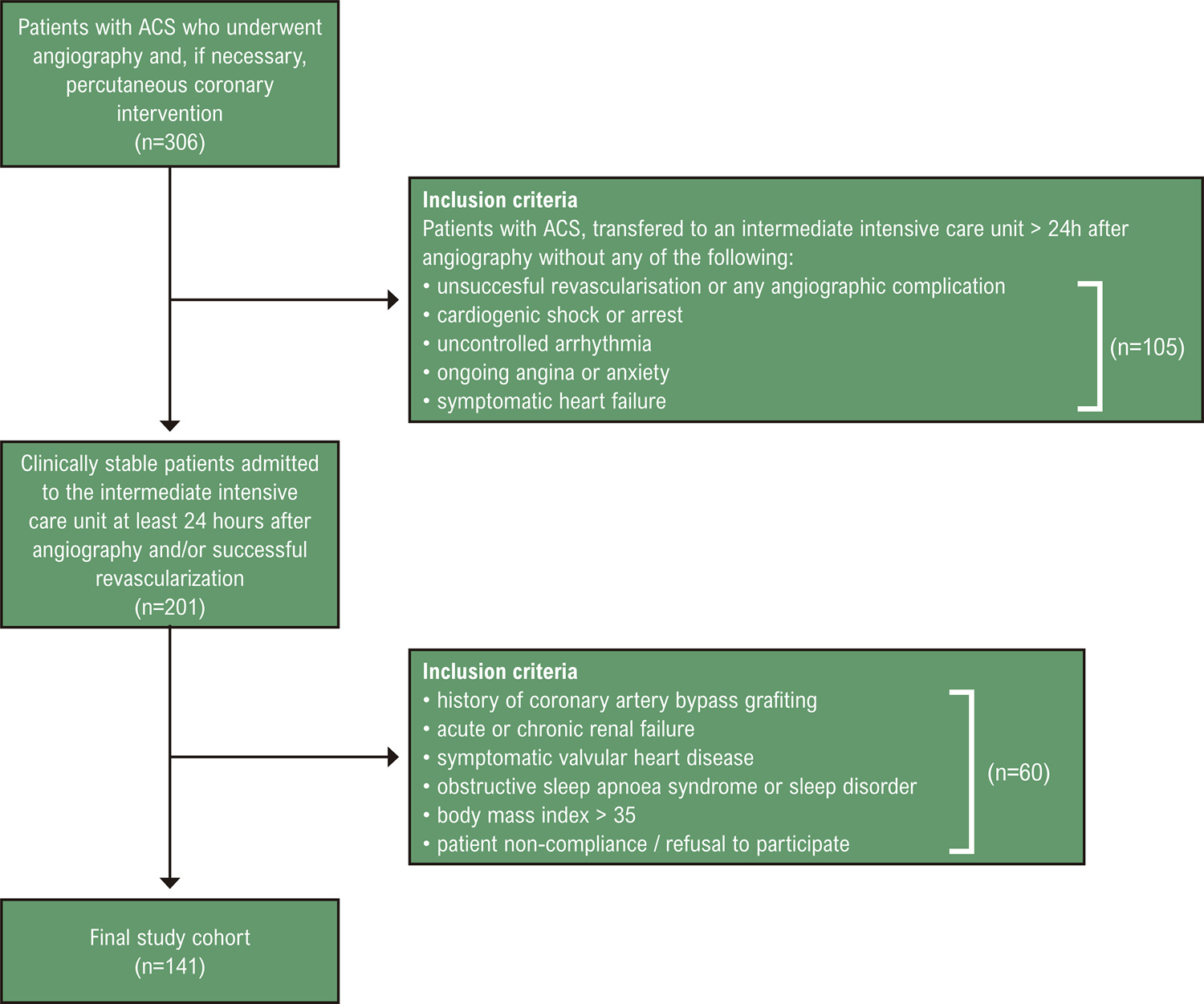
A total of 306 consecutive patients with acute coronary syndrome were screened. Patients who were clinically stable and admitted to the intermediate intensive care unit at least 24 hours after angiography and/or successful revascularization. After the exclusion criteria, 141 patients (34 female and 107 male; mean age 61 ± 11 years) were included. Non-dipper hypertension has been defined as a 0% to 10% decrease in average systolic BP at nighttime compared to daytime, measured at hourly intervals using the same automatic BP measuring device on bedside monitors (Vismo PVM-2701; Nihon Kohden Corp., Tokyo, Japan). SYNTAX score was calculated with an online calculator. The independent predictors of SYNTAX score were assessed using multivariable logistic regression analysis. P < 0.05 was considered statistically significant.

Results

The patients with non-dipper hypertension had higher SYNTAX score than the patients with dipper hypertension (11.12 ± 6.41 versus 6.74 ± 6.45, p < 0.0001). In a multivariable logistic regression model, non-dipper hypertension status (odds ratio: 5.159; 95% confidence interval: 2.246 to 11.852, p < 0.001), sex (p = 0.012) and low-density lipoprotein cholesterol (p = 0.008) emerged as independent predictors of high SYNTAX score.

Conclusions

The results of our study provide a possible additional mechanism linking abnormal circadian BP profile with coronary artery disease severity and complexity in patients with acute coronary syndrome.

  • Acute coronary syndrome
  • Blood Pressure Monitoring, Ambulatory
  • Coronary Artery Disease
  • Hypertension
  • Inpatients
Read Full Article
Creative Commons Attribution (CC BY) Creative Commons license
09/05/2022 DOI: 10.36660/abc.20210546 Views 1
Figure 1
ABC
Original Article

Walking Training Improves Ambulatory Blood Pressure Variability in Claudication

Marcel da Rocha Chehuen et al. Gabriel Grizzo Cucato Celso Ricardo Fernandes de Carvalho Antonio Eduardo Zerati … Anthony Leicht Nelson Wolosker Raphael Mendes Ritti-Dias Claudia Lucia de Moraes Forjaz

Background:

Walking training (WT) improves walking capacity and reduces clinic blood pressure (BP) in patients with peripheral artery disease (PAD), but its effects on ambulatory BP remains unknown.

Objective:

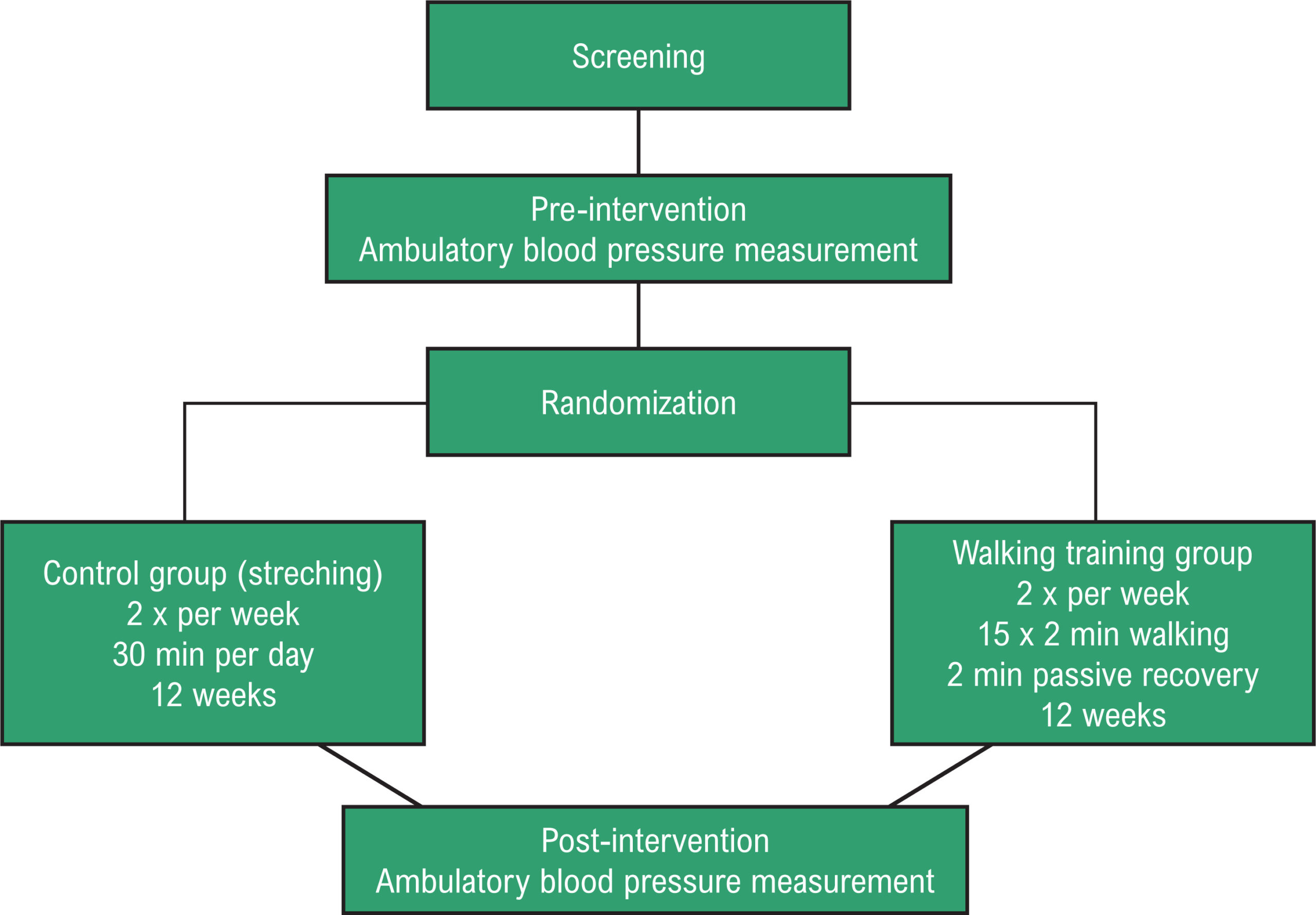
To investigate the effect of 12 weeks of WT on ambulatory BP and its variability in patients with PAD.

Methods:

Thirty-five male patients with PAD and claudication symptoms were randomly allocated into two groups: control (n = 16, 30 min of stretching) and WT (n = 19, 15 bouts of 2 min of walking at the heart rate of leg pain threshold interspersed by 2 min of upright rest). Before and after 12 weeks, 24-hour ambulatory BP was assessed. Ambulatory BP variability indices assessed at both time points included the 24-hour standard deviation (SD24), the awake and asleep weighted standard deviation (SDdn), and the 24-hour average real variability (ARV24). Data were analyzed by mixed two-way ANOVAs, considering P<0.05 as significant.

Results:

After 12 weeks, neither group had significant changes in 24-hour, awake and sleep BPs. The WT decreased systolic and mean BP variabilities (Systolic BP – 13.3±2.8 vs 11.8±2.3, 12.1±2.84 vs 10.7±2.5 and 9.4±2.3 vs 8.8±2.2 mmHg); Mean BP – 11.0±1.7 vs 10.4±1.9, 10.1±1.6 vs 9.1±1.7 and 8.0.±1.7 vs 7.2±1.5 mmHg) for SD24, SDdn and ARV24, respectively). Neither group had significant changes in diastolic BP variabilities after 12 weeks.

Conclusions:

The WT does not change ambulatory BP levels but decreases ambulatory BP variability in patients with PAD. This improvement may have a favorable impact on the cardiovascular risk of patients with symptomatic PAD. (Arq Bras Cardiol. 2021; 116(5):898-905)

  • Blood Pressure
  • Blood Pressure Monitoring, Ambulatory
  • Endurance Training
  • Intermittent Claudication
  • Muscle Weakness
  • walking
Read Full Article
Creative Commons Attribution (CC BY) Creative Commons license
17/05/2021 DOI: 10.36660/abc.20190822 Views 1
Figure 1
ABC
Case Report

Very Long Apneas during Prone Position in a Lean Patient with Coronary Artery Disease: Implications for the Cardiovascular Risk

Sofia Fontanello Furlan et al. Viktor Sinkunas Pedro Rodrigues Genta Geraldo Lorenzi Filho Luciano F. Drager

Introduction

Obstructive sleep apnea (OSA) is a common condition characterized by recurrent upper airway obstructions during sleep, promoting intermittent hypoxia and sleep fragmentation. Traditional risk factors for OSA include male gender and obesity. Overall, patients with severe OSA presented longer events and more severe hypoxemia. Supine sleep is consistently associated with more severe OSA rates in adults. However, the relationship between OSA indices and prone position is inconsistent. Here, we reported a very peculiar presentation of OSA characterized by very long respiratory events in a prone position in a lean female patient with a history of high blood pressure, diabetes mellitus, chronic kidney disease under dialysis therapy and a recent diagnosis of coronary artery disease (CAD).

[…]

  • Angioplasty
  • Blood Pressure Monitoring, Ambulatory
  • body mass index
  • Coronary Artery Disease
  • Obesity
  • Oxymetria
  • Percutaneous Coronary Intervention
  • Sleep Apnea, Obstructive
Read Full Article
Creative Commons Attribution (CC BY) Creative Commons license
05/02/2021 DOI: 10.36660/abc.20200191
Figure 1
ABC
Editorial

Nocturnal Blood Pressure Dipping and the Autonomic Nervous System

Fernando Antonio de Almeida

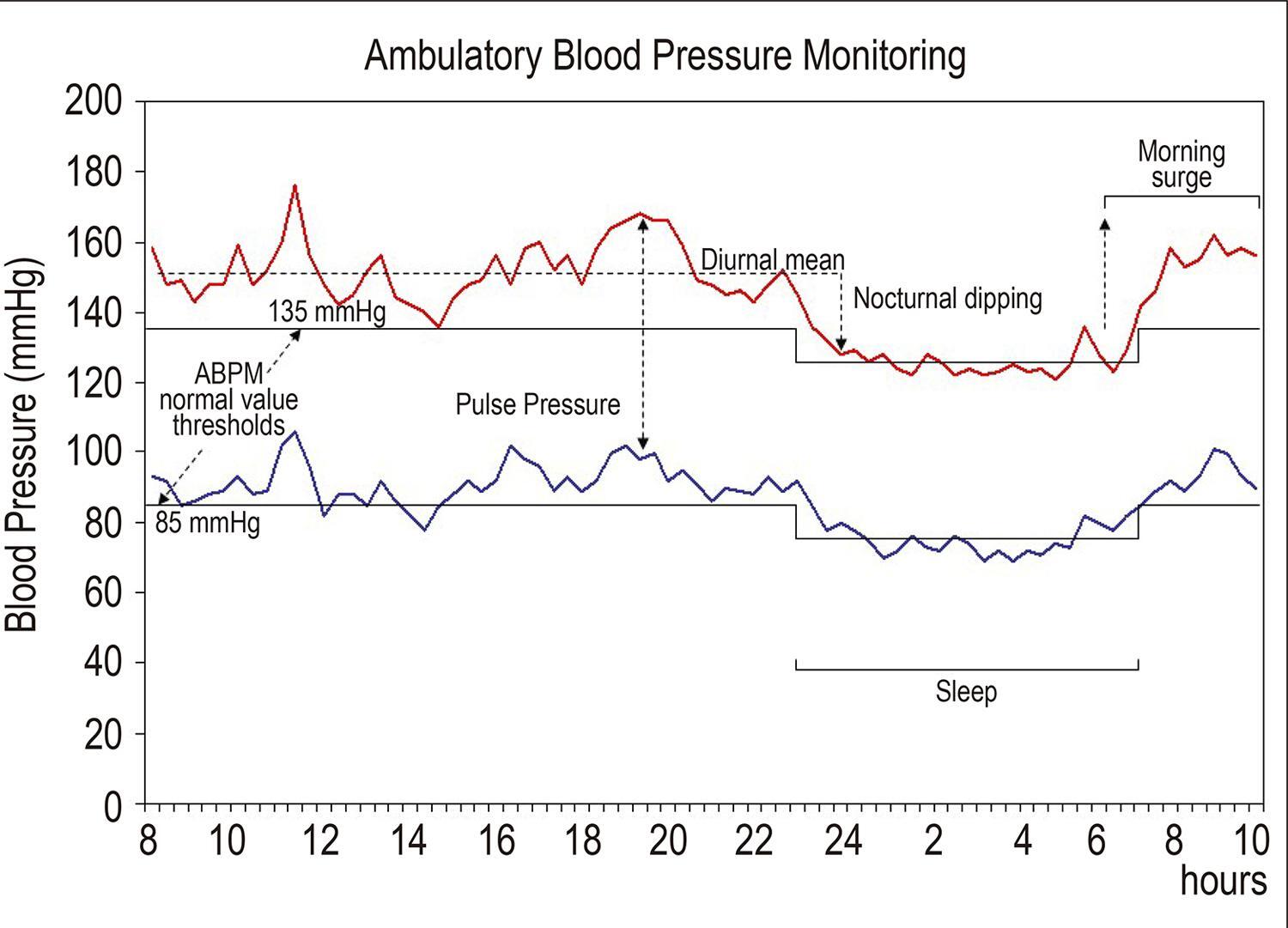
Blood Pressure (BP) is continuously controlled by complex mechanisms involving the structural characteristics of the arterial system, the autonomic nervous system (sympathetic and parasympathetic) integrated with the baroreceptor and chemoreceptor systems, the circulating volume and several vasoconstrictor and vasodilator hormone systems with systemic and local actions. The integration of these systems ensures that the blood pressure undergoes minimal variations in small intervals, but if we consider the whole day, there are times, such as during sleep and when getting up in the morning, when there are more intense variations in blood pressure, always around mean values. Ambulatory blood pressure monitoring (ABPM) allows this phenomenon to be recorded in clinical practice.

shows the ABPM graphical record of a person with arterial hypertension, indicating the main parameters evaluated in this exam. One of the most important phenomena that can be assessed by ABPM is the physiological BP dipping during sleep. This physiological behavior of BP during sleep occurs because many vasoconstrictor mechanisms are “disarmed” in this condition; among them, the autonomic nervous system is one of the most important. A direct consequence of this modulatory effect of the autonomic nervous system is that, in diseases or clinical conditions in which the system is affected, the absence of this modulatory effect is expressed by the absence of BP dipping during sleep. In some cases, there may even be an increase in BP during sleep. This is the classic example of individuals with diabetes mellitus with autonomic neuropathy. – These individuals frequently have postural hypotension, elevated BP at bedtime and absence of BP dipping during sleep. , , , The absence of BP dipping during sleep implies a higher pressure load on the circulatory system and increases the risk of cardiovascular events in the long-term. , There are other clinical conditions associated with the absence of BP dipping during sleep, but this is not the case of this discussion.

[…]

  • Autonomic Nervous System
  • Blood Pressure
  • Blood Pressure Monitoring, Ambulatory
  • Chagas disease
  • Diabetes Mellitus
  • Sleep
Read Full Article
Creative Commons Attribution (CC BY) Creative Commons license
29/05/2020 DOI: 10.36660/abc.20200280 Views 1
ABC
Editorial

Aortic Arch Calcification on routine Chest Radiography is Strongly and Independently Associated with Non-Dipper Blood Pressure Pattern

Rui Póvoa

Arterial hypertension is the most prevalent chronic disease worldwide, and it is estimated that in Brazil, according to the Vigitel study of 2018, the Brazilian population has 24.7% of hypertensive individuals. It is the most important risk factor for all cardiovascular diseases, being one of the main factors responsible for stroke, coronary artery disease, heart failure, renal failure, and so on.

Blood pressure is not simply a biological phenomenon characterized by two numbers expressed in mmHg that reflect systolic and diastolic pressure. It is a multiform event resulting from the hydrodynamic action of a complex fluid that exerts force on a compliant vascular wall, with elastic properties governed by multiple forces arising from vascular structures (muscle cells, extracellular matrix, elastic fibers, etc.). This vector wave of blood follows the laws of sympathetic and parasympathetic interaction, varying more or less depending on the conditions of each patient. Therefore, the simple measurement of blood pressure in the office does not reflect the reality of the patient’s true daily life.

[…]

  • antihypertensive agents
  • Blood Pressure Monitoring, Ambulatory
  • calcification
  • Calcinosis
  • Cardiomyopathies
  • Heart Rate
  • Hypertension
  • Thoracic, Aorta/physiopathology
  • Ventricular Function, Left
Read Full Article
Creative Commons Attribution (CC BY) Creative Commons license
10/02/2020 DOI: 10.36660/abc.20190790 Views 1
Figure 1
ABC
Original Article

Aortic Arch Calcification on Routine Chest Radiography is Strongly and Independently Associated with Non-Dipper Blood Pressure Pattern

Adem Adar et al. Orhan Onalan Fahri Cakan Ertan Akbay Ekrem Karakaya

Abstract

Background:

Non-dipper blood pressure (NDBP) is one of the important causes of hypertension-related target organ damage and future cardiovascular events. Currently, there is no practical tool to predict NDBP pattern.

Objectives:

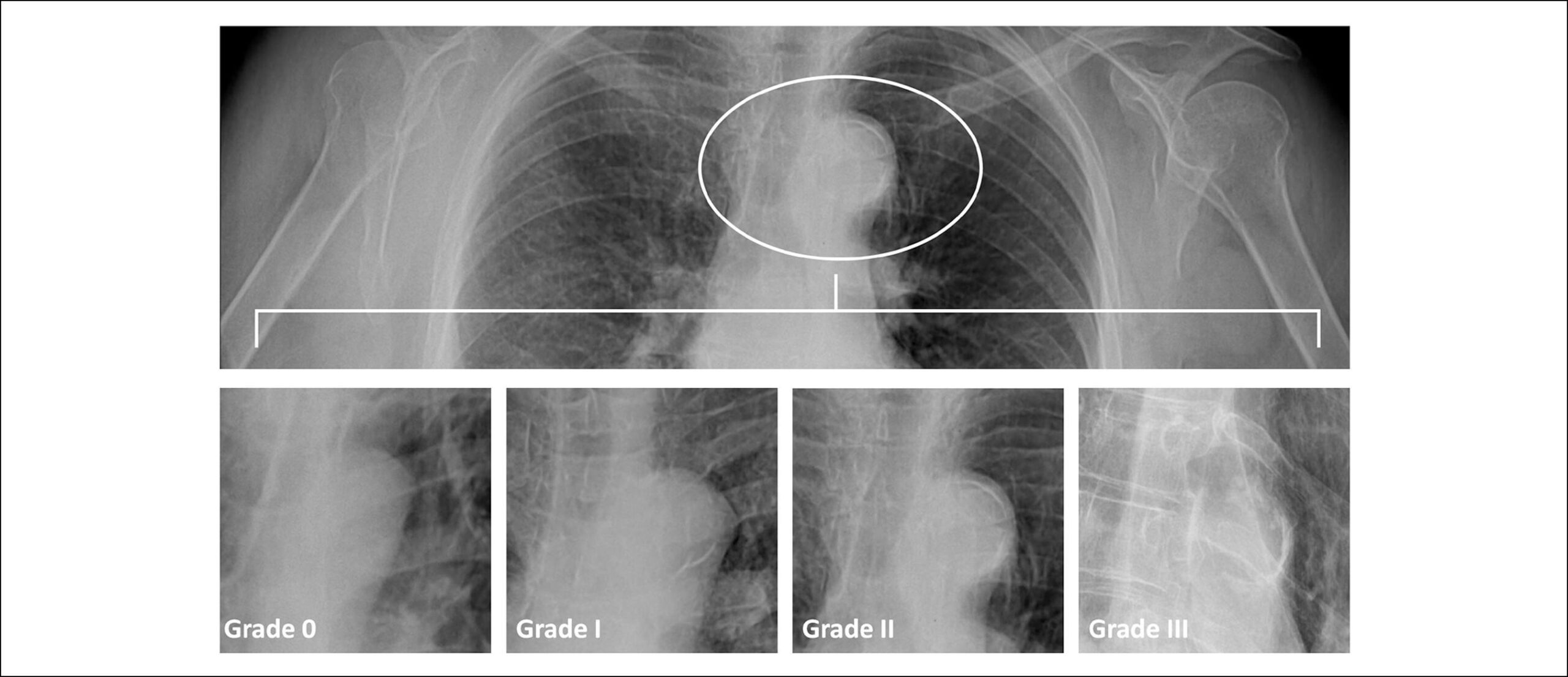
The aim of this study was to investigate the relationship between aortic arch calcification (AAC) on chest radiography and NDBP pattern.

Methods:

All patients referred for ambulatory BP monitoring test were approached for the study participation. NDBP was defined as the reduction of ≤10% in nighttime systolic BP as compared to the daytime values. AAC was evaluated with chest radiography and inter-observer agreement was analyzed by using kappa statistics. Univariate and multivariate logistic regression analysis was conducted to assess the association of AAC and NDBP pattern. A 2-tailed p-value < 0.05 was considered statistically significant.

Results:

A total of 406 patients (median age: 51.3) were included. Of these, 261(64%) had NDBP pattern. Overall, the prevalence of AAC was 230 (57%). Non-dipper group had significantly higher prevalence of AAC (70% vs. 33%, p < 0.0001) as compared to the dipper group. Presence of AAC was a strong and independent predictor of NDBP pattern (OR 3.919, 95%CI 2.39 to 6.42) in multivariate analysis.

Conclusions:

Presence of AAC on plain chest radiography is strongly and independently associated with the presence of NDBP pattern.

  • Antihypertensive Agents/therapeutic use
  • Blood Pressure Monitoring, Ambulatory
  • calcification
  • Calcinosis
  • Cardiomyopathies
  • Heart Rate
  • Hypertension/imaging diagnosis
  • Thoracic, Aorta/physiopathology
  • Ventricular Function,Left
Read Full Article
Creative Commons Attribution (CC BY) Creative Commons license
28/10/2019 DOI: 10.5935/abc.20190229 Views 1
Figure 1
ABC
Original Article

Inter-Individual Responses to Citrulline Malate Oral Supplementation on Post-Exercise Hypotension in Hypertensives: A 24-Hour Analysis

Juliano Casonatto et al. Daniel Massaharu Enokida Kamila Grandolfi

Abstract

Background:

Studies have persuasively demonstrated that citrulline has a key role in the arginine-nitric oxide system, increasing nitric oxide bioavailability, an important mediator of peripheral vasodilation.

Objective:

To analyze the inter-individual post-exercise hypotension responsiveness following acute citrulline supplementation in hypertensives.

Methods:

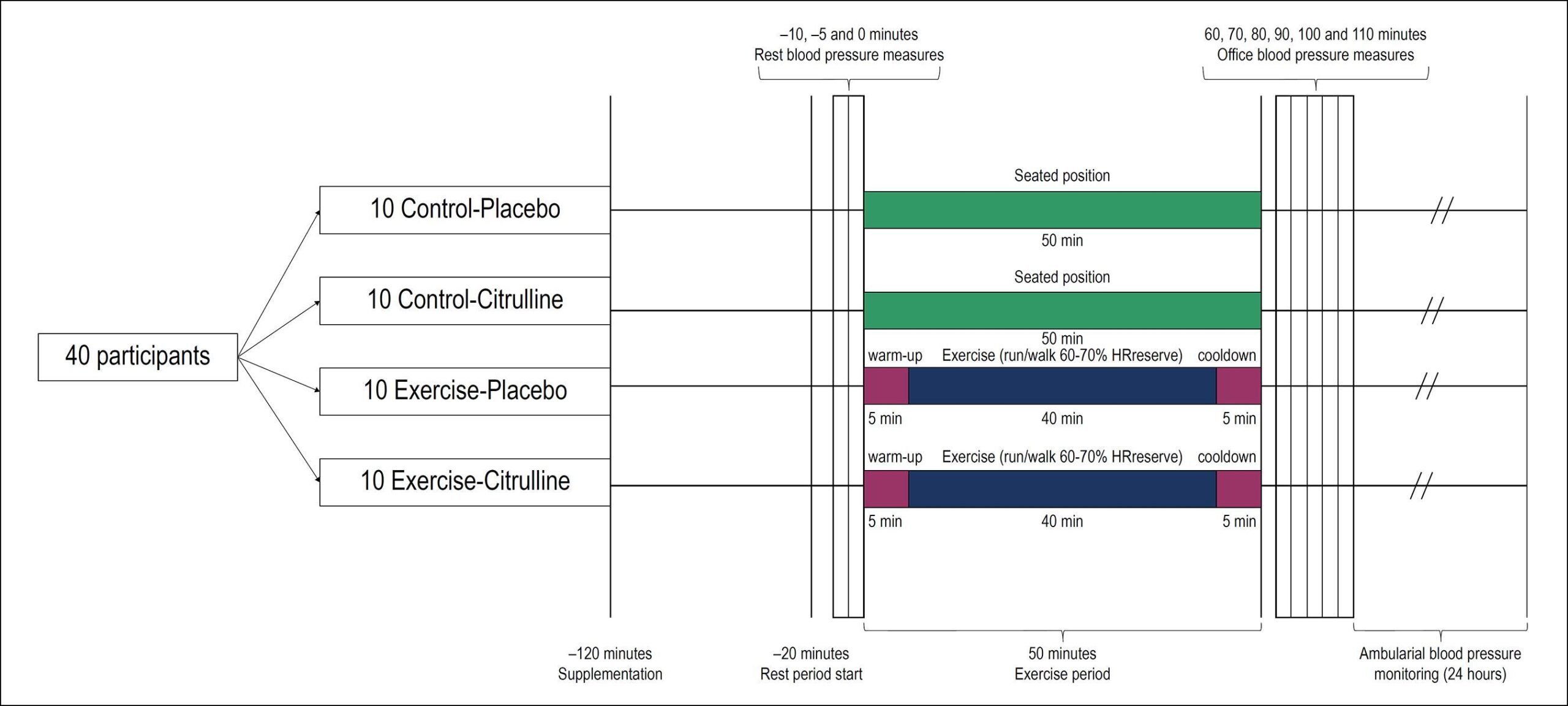
Forty hypertensives were randomly assigned to one of the four experimental groups (control-placebo, control-citrulline, exercise-placebo, and exercise-citrulline). They ingested placebo or citrulline malate [CM] (6 grams). During the exercise session, individuals performed 40 minutes of walking/running on a treadmill at 60-70% of HR reserve. For the control session, the individuals remained seated at rest for 40 minutes. Office blood pressure (BP) was taken every 10 minutes until completing 60 minutes after the experimental session. The ambulatory BP device was programmed to take the readings every 20 minutes (awake time) and every 30 minutes (sleep time) over the course of 24 hours of monitoring. Statistical significance was defined as p < 0.05.

Results:

Unlike the other experimental groups, there were no “non-responders” in the exercise/citrulline (EC) for “awake” (systolic and diastolic BP) and “24 hours” (diastolic BP). The effect sizes were more consistent in the EC for systolic and diastolic ambulatorial BP response. The effects were “large” (> 0.8) for “awake”, “asleep”, and “24 hours” only in the EC for diastolic BP.

Conclusion:

CM supplementation can increase the post-exercise hypotensive effects in hypertensives. In addition, the prevalence of non-responders is lower when associated with aerobic exercise and CM supplementation.

  • Amino Acids
  • Blood Pressure Monitoring, Ambulatory
  • Citruline
  • Dietary Supplements
  • Exercise
  • Hypertension
  • Nitric Oxide
Read Full Article
Creative Commons Attribution (CC BY) Creative Commons license
10/07/2019 DOI: 10.5935/abc.20190115
Figure 1
ABC
Original Article

Correlation between Very Short and Short-Term Blood Pressure Variability in Diabetic-Hypertensive and Healthy Subjects

Karina R. Casali et al. Beatriz D. Schaan Nicola Montano Daniela Massierer … Flávio M.F. Neto Gabriela H. Teló Priscila S. Ledur Marilia Reinheimer Graciele Sbruzzi Miguel Gus

Abstract

Background:

Blood pressure (BP) variability can be evaluated by 24-hour ambulatory BP monitoring (24h-ABPM), but its concordance with results from finger BP measurement (FBPM) has not been established yet.

Objective:

The aim of this study was to compare parameters of short-term (24h-ABPM) with very short-term BP variability (FBPM) in healthy (C) and diabetic-hypertensive (DH) subjects.

Methods:

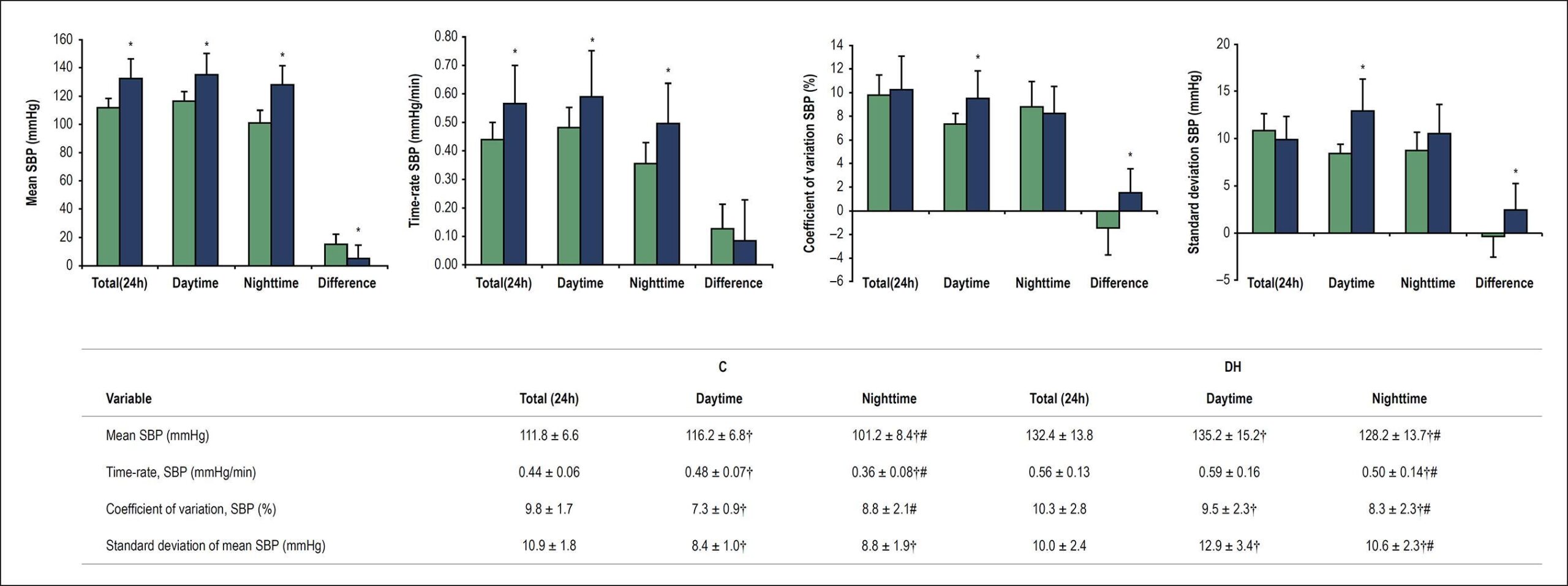
Cross-sectional study with 51 DH subjects and 12 C subjects who underwent 24h-ABPM [extracting time-rate, standard deviation (SD), coefficient of variation (CV)] and short-term beat-to-beat recording at rest and after standing-up maneuvers [FBPM, extracting BP and heart rate (HR) variability parameters in the frequency domain, autoregressive spectral analysis]. Spearman correlation coefficient was used to correlate BP and HR variability parameters obtained from both FBPM and 24h-ABPM (divided into daytime, nighttime, and total). Statistical significance was set at p < 0.05.

Results:

There was a circadian variation of BP levels in C and DH groups; systolic BP and time-rate were higher in DH subjects in all periods evaluated. In C subjects, high positive correlations were shown between time-rate index (24h-ABPM) and LF component of short-term variability (FBPM, total, R = 0.591, p = 0.043); standard deviation (24h-ABPM) with LF component BPV (FBPM, total, R = 0.608, p = 0.036), coefficient of variation (24h-ABPM) with total BPV (FBPM, daytime, -0.585, p = 0.046) and alpha index (FBPM, daytime, -0.592, p = 0.043), time rate (24h-ABPM) and delta LF/HF (FBPM, total, R = 0.636, p = 0.026; daytime R = 0,857, p < 0.001). Records obtained from DH showed weak positive correlations.

Conclusions:

Indices obtained from 24h-ABPM (total, daytime) reflect BP and HR variability evaluated by FBPM in healthy individuals. This does not apply for DH subjects.

  • Autonomic Nervous System
  • Blood Pressure Monitoring, Ambulatory
  • Diabetes Mellitus, Type 2
  • Hypertension
Read Full Article
Creative Commons Attribution (CC BY) Creative Commons license
01/02/2018 DOI: 10.5935/abc.20180020
Figure 1
ABC
Original Article

Twenty-four hour Blood Pressure in Obese Patients with Moderate-to-Severe Obstructive Sleep Apnea

Claudia M. Correa et al. Ronaldo A. Gismondi Ana Rosa Cunha Mario F. Neves Wille Oigman

Abstract

Background:

Obesity, systemic arterial hypertension (SAH) and obstructive sleep apnea (OSA) are closely related. Up to 70% of patients with OSA may be asymptomatic, and there is evidence that these patients have cardiovascular disease, especially nocturnal SAH.

Objectives:

The aim of this study was to evaluate 24-hour blood pressure circadian variation in asymptomatic, obese individuals with moderate-to-severe OSA and compare it with that in individuals with mild OSA or without OSA.

Methods:

Eighty-six obese subjects aged between 30 and 55 years (BMI 30-39 kg/m2), with casual blood pressure < 140/90 mmHg and without comorbidities were recruited. Eighty-one patients underwent clinical and anthropometric assessment, ambulatory blood pressure monitoring (ABPM), and Watch-PAT. Participants were divided into two groups, based on the apnea-hypopnea index (AHI): group 1, with AHI < 15 events/hour, and group 2 with AHI ≥ 15 events/hour.

Results:

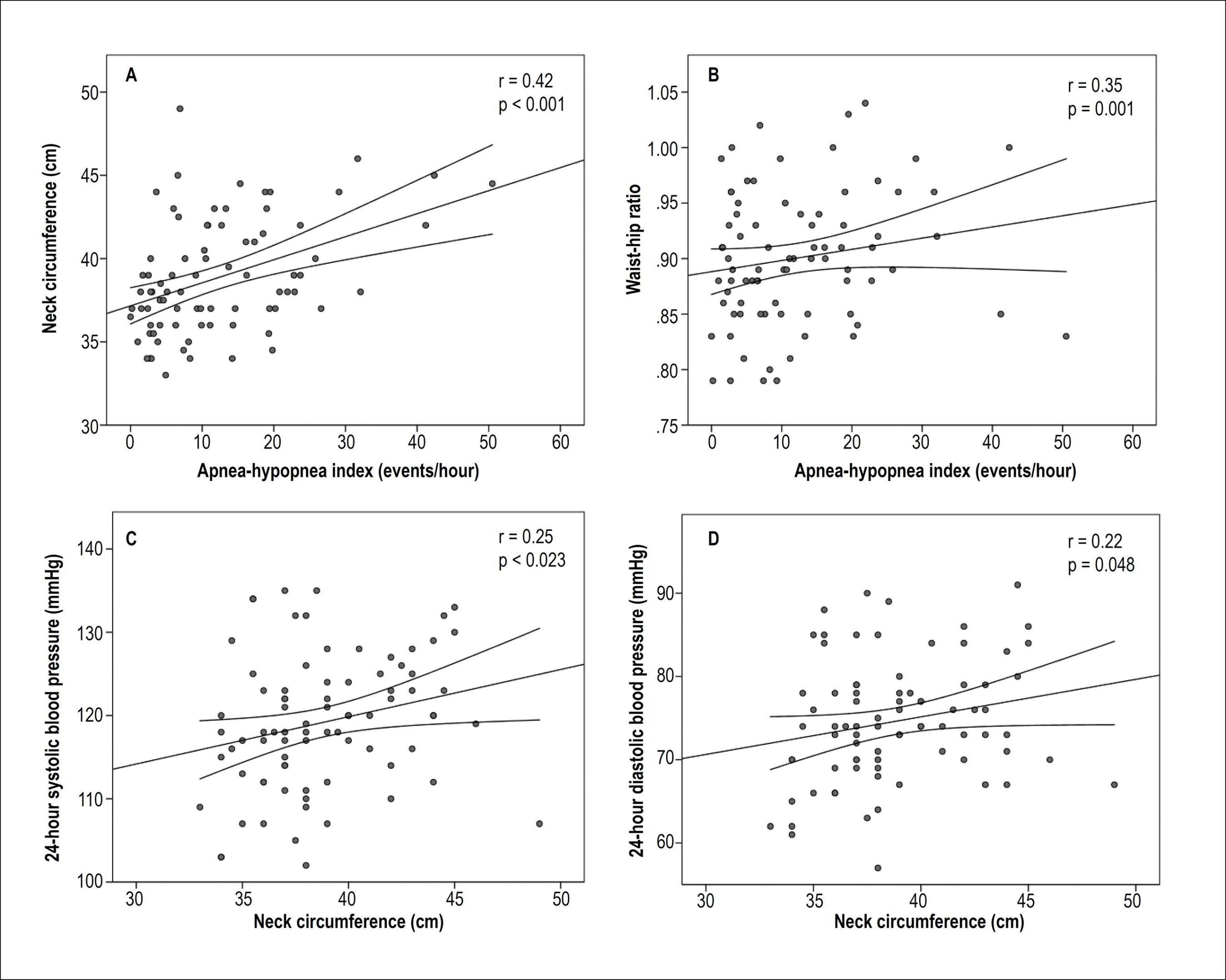
Compared with group 1, group 2 had higher neck circumference and waist-hip circumference (40.5 ± 3.2 cm vs. 38.0 ± 3.7 cm, p = 0.002, and 0.94 ± 0.05 vs. 0.89 ± 0.05, p = 0.001, respectively), higher systolic and diastolic blood pressure measured by the 24-h ABPM (122 ± 6 vs 118 ± 8 mmHg, p = 0.014, and 78 ± 6 vs 73 ± 7 mmHg, p = 0.008, respectively), and higher nocturnal diastolic pressure load (44,6 ± 25,9% vs 31,3 ± 27,3%, p = 0,041). Moreover, there was a positive correlation between nocturnal diastolic blood pressure and AHI (r = 0.43, p < 0.05).

Conclusions:

Asymptomatic obese subjects with moderate-to-severe OSA have higher systolic and diastolic blood pressure at 24 hours compared with those with absent / mild OSA, despite normal casual blood pressure between the groups. These results indicate that ABPM may be useful in the evaluation of asymptomatic obese patients with moderate-to-severe OSA.

  • Blood Pressure
  • Blood Pressure Monitoring, Ambulatory
  • Hypertension
  • Sleep Apnea, Obstructive
Read Full Article
Creative Commons Attribution (CC BY) Creative Commons license
04/09/2017 DOI: 10.5935/abc.20170130 Views 1
Figure 1
ABC
Original Article

Home Blood Pressure Monitoring as an Alternative to Confirm Diagnoses of Hypertension in Adolescents with Elevated Office Blood Pressure from a Brazilian State Capital

Thaís Inacio Rolim Póvoa et al. Thiago Veiga Jardim Carolina de Souza Carneiro Vanessa Roriz Ferreira … Karla Lorena Mendonça Polyana Resende Silva de Morais Flávia Miquetichuc Nogueira Nascente Weimar Kunz Sebba Barroso de Souza Ana Luiza Lima Sousa Paulo César Brandão Veiga Jardim

Abstract

Background:

Regional differences of using home blood pressure monitoring (HBPM) as an alternative to ambulatory blood pressure monitoring (ABPM) in hypertensive adolescents are unknown.

Objectives:

Define if HBPM is an option to confirm diagnoses of hypertension in adolescents from a Brazilian capital with elevated office blood pressure (BP).

Methods:

Adolescents (12-18years) from public and private schools with BP > 90th percentile were studied to compare and evaluate the agreement among office BP measurements, HBPM and ambulatory BP monitoring. Office BP measurements, HBPM and ABPM were performed according to guidelines recommendations. Semi-automatic devices were used for BP measurements. Values of p < 0.05 were considered significant.

Results:

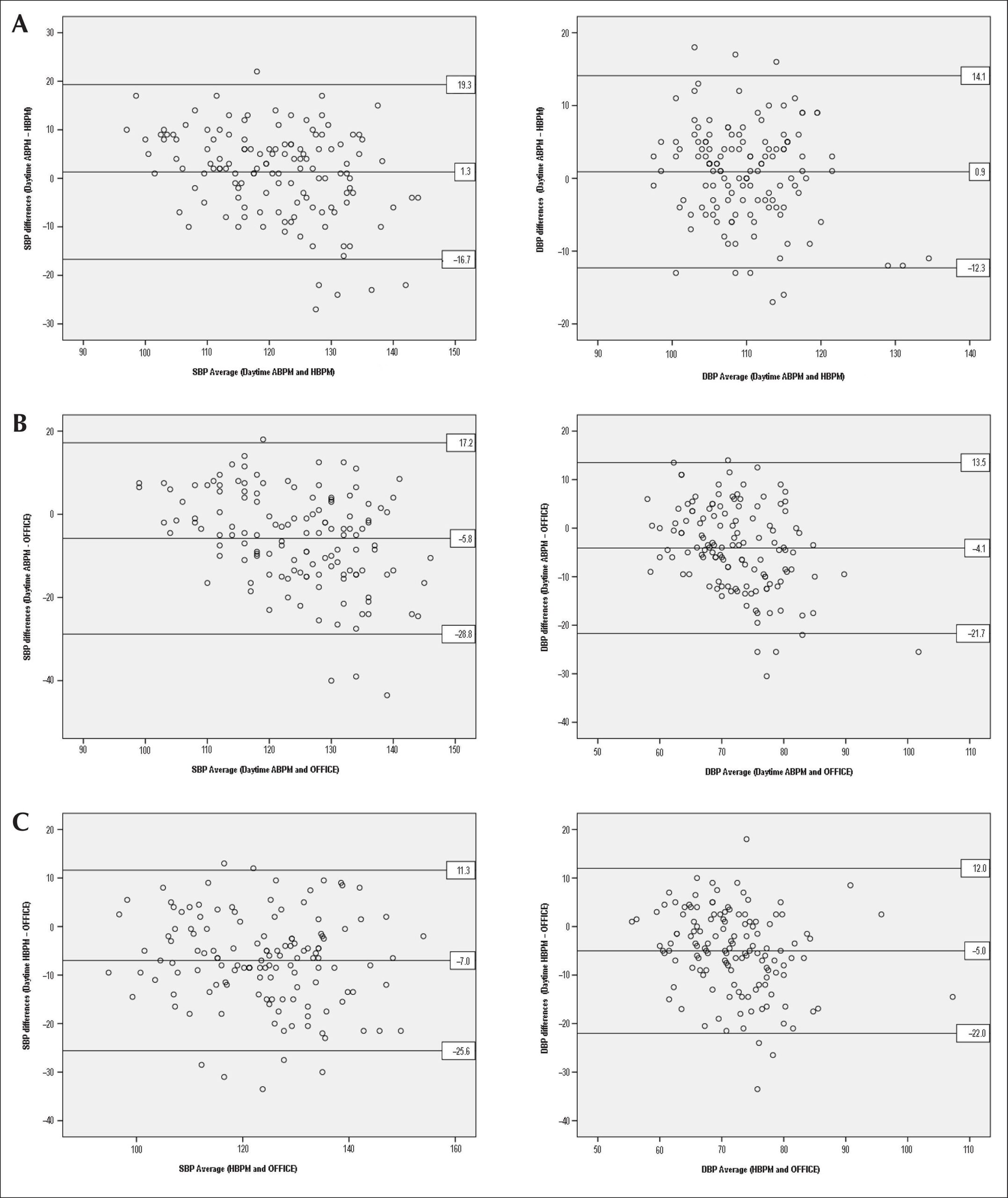
We included 133 predominantly males (63.2%) adolescents with a mean age of 15±1.6 years. HBPM systolic blood pressure and diastolic blood pressure mean values were similar to the daytime ABPM values (120.3 ± 12.6 mmHg x 121.5 ± 9.8 mmHg – p = 0.111 and 69.4 ± 7.7 mmHg x 70.2 ± 6.6 mmHg – p = 0.139) and lower than the office measurement values (127.3 ± 13.8 mmHg over 74.4 ± 9.5 mmHg – p < 0,001). The Bland-Altman plots showed good agreement between HBPM and ABPM.

Conclusions:

HBPM is an option to confirm diagnoses of hypertension in adolescents from a Brazilian state capital with elevated office BP and can be used as an alternative to ABPM.

  • Adolescent
  • Blood Pressure Monitoring, Ambulatory
  • Hypertension
  • Risk Factors
Read Full Article
Creative Commons Attribution (CC BY) Creative Commons license
07/08/2017 DOI: 10.5935/abc.20170114
ABC
Original Article

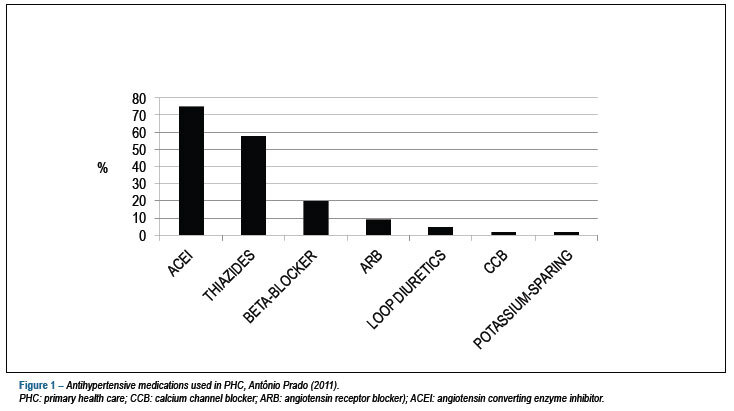
Impact of Different Normality Thresholds for 24-hour ABPM at the Primary Health Care Level

Guilherme Brasil Grezzana et al. David William Moraes Airton Tetelbon Stein Lucia Campos Pellanda

Abstract

Background:

Hypertension is an important risk factor for cardiovascular outcomes. Primary health care (PHC) physicians should be prepared to act appropriately in the prevention of cardiovascular risk factors. However, the rates of patients with control of blood pressure (BP) remain low. The impact of the reclassification of high BP by 24-hour ambulatory BP monitoring (ABPM) can lead to different medical decisions in PHC.

Objective:

To evaluate the agreement between the BP measured by a conventional method by PHC physicians and by 24-hour ABPM, considering different BP normal thresholds for the 24-hour ABPM according to the V Brazilian ABPM Guidelines and the European Society of Hypertension Guidelines.

Methods:

A cross-sectional study including 569 hypertensive patients. The BP was initially measured by the PHC physicians and, later, by 24-hour ABPM. The BP measurements were obtained independently between the two methods. The therapeutic targets for the conventional BP followed the guidelines by the Eighth Joint National Committee (JNC 8), the V ABPM Brazilian Guidelines, and the 2013 European Hypertension Guidelines.

Results:

There was an accuracy of 54.8% (95% confidence interval [95%CI] 0.51 – 0.58%) for the BP measured with the conventional method when compared with the 24-hour ABPM, with a sensitivity of 85% (95%CI 80.8 – 88.6%), specificity of 31.9% (95%CI 28.7 – 34.7%), and kappa value of 0.155, when considering the European Hypertension Guidelines. When using more stringent thresholds to characterize the BP as “normal” by ABPM, the accuracy was 45% (95%CI 0.41 – 0.47%) for conventional measurement when compared with 24-hour ABPM, with a sensitivity of 86.7% (95%CI 0.81 – 0.91%), specificity of 29% (95%CI 0.26 – 0.30%), and kappa value of 0.103.

Conclusion:

The BP measurements obtained by PHC physicians showed low accuracy when compared with those obtained by 24-hour ABPM, regardless of the threshold set by the different guidelines.

  • antihypertensive agents
  • Blood Pressure Monitoring, Ambulatory
  • Hypertension
  • Primary Health Care
  • Risk Factors
Read Full Article
Creative Commons Attribution (CC BY) Creative Commons license
16/01/2017 DOI: 10.5935/abc.20160204 Views 1
IJCS
Original Article

24-Hour Ambulatory Blood Pressure Monitoring Predicts Outcomes of Hypertensive Patients in Primary Care: A Cohort Study

Guilherme Brasil Grezzana et al. Airton Tetelbon Stein Lucia Campos Pellanda

Abstract

Background:

Arterial hypertension is an important risk factor for cardiovascular outcomes. However, in most Primary Health Care centers, blood pressure remains at inadequate control levels. Ambulatory Blood Pressure Monitoring (ABPM) is a useful tool in predicting cardiovascular morbidity and mortality. The implementation of 24-hour ABPM and evaluation of cardiovascular outcomes in Primary Health Care may be effective in improving strategies for monitoring hypertensive patients in this setting.

Objective:

To evaluate uncontrolled arterial hypertension detected by 24-hour ABPM as a predictor of cardiovascular outcomes in hypertensive patients from Primary Health Care in a low-resource environment.

Methods:

Cohort study based on primary health care centers. The study was carried out with 143 hypertensive patients, who underwent 24-hour ABPM at baseline. Therapeutic targets were based on the Eighth Joint National Committee, the Brazilian Hypertension Guideline, and the European Hypertension Guideline. Medical records of emergency care, hospital admissions, and death certificates were reviewed.

Results:

The sample consisted of 143 patients who met the inclusion criteria. After 4 years of follow-up, there were 17 deaths, 12 new cases of atrial fibrillation and 37 hospital admissions related to cardiovascular outcomes. During the follow-up period, the 24-hour ABPM showed a predictive result for new cases of atrial fibrillation (p = 0.015) and a combination of cardiovascular outcomes, mortality, and hospital admissions (p = 0.012).

Conclusion:

The 24-hour ABPM was an important predictor of cardiovascular outcomes in a hypertensive population that seeks assistance in Primary Health Care centers.

  • Blood Pressure Monitoring, Ambulatory
  • Cardiovascular Diseases
  • Hypertension/complications
  • Public Health
Read Full Article
Creative Commons Attribution (CC BY) Creative Commons license
01/01/2017 DOI: 10.5935/2359-4802.20170061 Views 1
Blood pressure treatment adherence and control through 24-hour ambulatory monitoring
ABC
Artigo Original

Blood pressure treatment adherence and control through 24-hour ambulatory monitoring

Guilherme Brasil Grezzana et al. Airton Tetelbon Stein Lúcia Campos Pellanda

BACKGROUND: Although systemic arterial hypertension (SAH) is an important cardiovascular risk factor, blood pressure level control often remains inadequate. Assessment of adherence to antihypertensive treatment through 24-hour ambulatory blood pressure monitoring (ABPM) may represent an important aid in the search for BP control targets. OBJECTIVE: To assess adherence to antihypertensive treatment and its association with BP values at 24-hour ABPM in hypertensive patients treated in primary health care (PHC) centers. METHODS: We carried out a cross-sectional study of 143 hypertensive patients, who constituted a representative sample of patients from PHC centers in the town of Antonio Prado, RS. The Morisky-Green test was used to evaluate adherence and verify the number of medications used by patients, followed by 24-hour ABPM. RESULTS: We observed that 65.7% of the sample was considered adherent to the proposed treatment, 20.3% were moderately adherent and only 14% were classified as non-adherent. Considering all the 143 patients evaluated, 79 (55.2%) were identified as having controlled hypertension (130/80 mmHg), 103 (72%) had absence of nocturnal BP dip and 60 (41.9%) were uncontrolled while awake. CONCLUSIONS: In this study, we observed a lack of adequate hypertension control with a consequent loss of opportunity for PHC professionals to adequately adjust the recommended BP control targets. This fact occurs in spite of proper adherence to antihypertensive treatment by patients in PHC centers.

  • Blood Pressure
  • Blood Pressure Monitoring, Ambulatory
  • Hypertension
  • medication adherence
Read Full Article
Creative Commons Attribution (CC BY) Creative Commons license
22/03/2013 DOI: 10.5935/abc.20130046 Views 1
Impact on hypertension reclassification by Ambulatory Blood Pressure Monitoring (ABPM) according to the V Brazilian Guidelines on ABPM
ABC
Artigo Original

Impact on hypertension reclassification by Ambulatory Blood Pressure Monitoring (ABPM) according to the V Brazilian Guidelines on ABPM

Daniel Forestiero et al. Juliana Lustoza Mauad Camila Forestiero Mario Lins Peixoto … Fabio Peixoto Ganassin Carolina Gonzaga Antonio Carlos Cordeiro Gabriel Doreto Rodrigues Tiago Bueno da Silveira Celso Amodeo

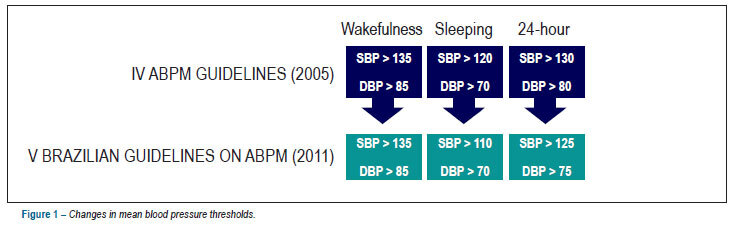
BACKGROUND: New recommendations on reference values for normal test results in ambulatory blood pressure monitoring (ABPM) were proposed by the V Brazilian Guidelines on Ambulatory Blood Pressure Monitoring, based mainly on the IDACO study. Objectives: This epidemiological study is aimed at evaluating the impact of adopting these new standards in an arterial hypertension referral center. METHODS: The results of 1,567 ABPM tests carried out between 2005 and 2010 were analyzed; 481 patients were excluded from the sample for not meeting minimum quality criteria of the test. Reference values from the IV Brazilian Guidelines on ABPM (2005) were used for the classification of these tests regarding the abnormality and compared with the changes proposed by the V Brazilian Guidelines on ABPM (2011). Statistical analysis was performed by Pearson’s chi-square method and p values < 0.05 were considered statistically significant. RESULTS: For the 1,086 tests evaluated, there was a significant difference in the proportion of patients with altered ABPM results, especially for the variable systolic pressure in the sleeping period: 49% when adopting the cutoff values of 2005 and 71% when adopting the values of 2011, with statistical significance, p < 0.0001. CONCLUSIONS: The recommendations of the new guidelines had a great impact on the hypertension classification by ABPM test results in the study population. The question of thresholds of these tests for therapeutic targets of patients known to be hypertensive is still open and requires further studies, preferably national ones, for better definition of the subject.

  • Blood Pressure Monitoring, Ambulatory
  • Guidelines
  • Hypertension
Read Full Article
Creative Commons Attribution (CC BY) Creative Commons license
11/03/2013 DOI: 10.5935/abc.20130031
Self measurement of blood pressure for control of blood pressure levels and adherence to treatment
ABC
Artigo Original

Self measurement of blood pressure for control of blood pressure levels and adherence to treatment

Weimar Kunz Sebba Barroso Souza et al. Paulo César Brandão Veiga Jardim Ludmila Porto Brito Fabrício Alves Araújo Ana Luíza Lima Sousa

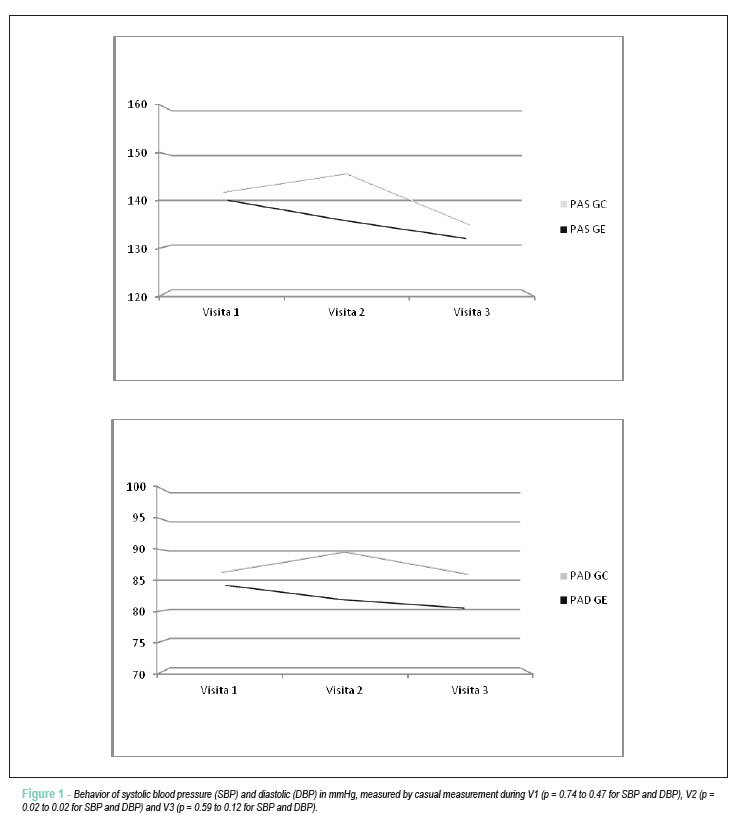
BACKGROUND: The measurement of blood pressure (BP) by the patient himself without strict protocols, adequate training, and validated equipment at their own household is defined as self measured blood pressure (SMBP). OBJECTIVE: To evaluate the interference of the SMBP in treatment adherence and blood pressure control. METHODS: The study included 57 patients, 38 in the study group (SG) and 19 in the control group (CG). These patients were followed for 12 months and assessed at randomization (V1) as well as in the sixth (V2) and the twelfth month (V3). Compare the mean blood pressure by casual measurement, by SMBP and by ambulatory monitoring of blood pressure (AMBP), laboratory tests and the answers to the questionnaire on lifestyle. The instruments used were: OMRON HEM 714, for SMBP; OMRON 705 CP, for the casual measurement, and Monitor SPACELABS 9002 for the AMBP. RESULTS: The average age was 62.05 ± 10.78 in the SG and 55.42 ± 11.87 in the CG (p = 0.03). The values of systolic blood pressure (SBP) by casual measurement in the SG and CG were: 140.01 ± 16.73 mmHg and 141.79 ± 23.21 mmHg in V1 (p = 0.72), 135.49 ± 12.73 mmHg and 145.69 ± 19.31 mmHg in V2 (p = 0.02), 131.64 ± 19.28 mmHg and 134.88 ± 23.21 mmHg at V3 (p = 0.59). The values of diastolic blood pressure (DBP) were: 84.13 ± 10.71 mmHg and 86.29 ± 10.35 mmHg in V1 (p = 0.47), 81.69 ± 10.88 mmHg and 89.61 V2 ± 11.58 mmHg (p = 0.02), 80.31 ± 11.83 mmHg and 86 ± 13.38 mmHg in V3 (p = 0.12). CONCLUSION: Patients in the SG had adherence to non-pharmacological treatment similar to the CG, but they had greater adherence to drug treatment and used fewer antihypertensive drugs. There was no difference between groups when comparing the metabolic profile and renal function. (Arq Bras Cardiol. 2011; [online].ahead print, PP.0-0)

  • Blood Pressure
  • Blood Pressure Monitoring, Ambulatory
  • medication adherence
Read Full Article
Creative Commons Attribution (CC BY) Creative Commons license
17/01/2012 DOI: 10.1590/S0066-782X2012005000010
Comparison and correlation between self-measured blood pressure, casual blood pressure measurement and ambulatory blood pressure monitoring
ABC
Artigo Original

Comparison and correlation between self-measured blood pressure, casual blood pressure measurement and ambulatory blood pressure monitoring

Weimar Kunz Sebba Barroso de Souza et al. Paulo César Brandão Veiga Jardim Ludmila Brito Porto Fabrício Alves Araújo … Ana Luíza Lima Sousa Cláudia Maria Salgado

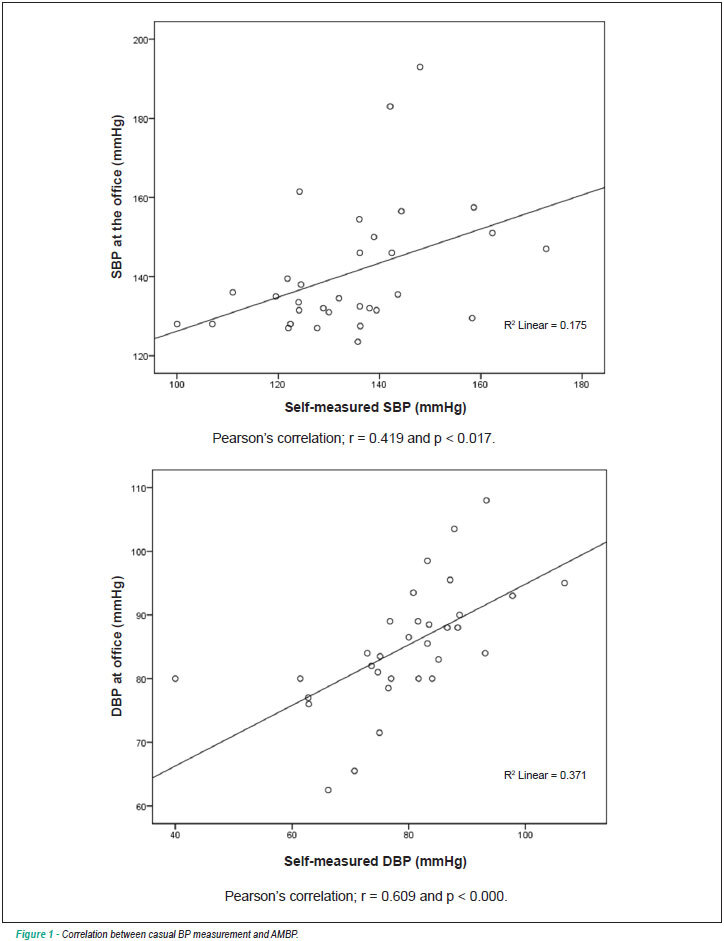
BACKGROUND: Casual blood pressure (BP) measurement by healthcare professionals is subject to great variability and new methods are necessary to overcome this limitation. OBJECTIVE: To compare and assess the correlation between the BP levels obtained by self-measured BP (SMBP), casual BP measurement and ambulatory blood pressure monitoring (ABPM). METHODS: We assessed hypertensive individuals submitted to the three methods of BP measurement at an interval 0.05) and different from the casual measurement (p < 0.05). At the analysis of correlation, SMBP values were higher than the casual measurements, considering ABPM as the reference standard in BP measurements. CONCLUSION: SMBP showed a better correlation with ABPM than the casual measurement and was also better correlated with the latter, especially regarding the DBP and should be considered as a low-cost alternative for the follow-up of the hypertensive patient.

  • Blood Pressure
  • Blood Pressure Monitoring, Ambulatory
  • Hypertension
  • Self-Care
Read Full Article
Creative Commons Attribution (CC BY) Creative Commons license
17/06/2011 DOI: 10.1590/S0066-782X2011005000076 Views 1
ABC
Artigo Original

Assessment of resistant hypertension with home blood pressure monitoring

Fabiane Rosa Rezende H. Marui et al. Maria Teresa Nogueira Bombig Yoná Afonso Francisco José Marcos Thalenberg … Francisco Antonio Helfenstein Fonseca Dilma de Souza Francisco de Assis Costa Maria Cristina Izar Antonio Carlos de Camargo Carvalho Rui Póvoa

BACKGROUND: Ambulatory blood pressure monitoring (ABPM) is considered the gold standard for the diagnostic confirmation of resistant hypertension (RH). However, home blood pressure monitoring (HBPM) has been considered an option, because of its lower cost and greater comfort. OBJECTIVE: To compare the values obtained by HBPM with those obtained by ABPM in the identification of patients with resistant hypertension. METHODS: A total of 51 consecutive patients with resistant hypertension were selected. All were adults of both genders and were undergoing treatment in an outpatient referral clinic from January 2007 to September 2009. Casual office blood pressure (BP), 24-hour ABPM, and HBPM were performed according to current guidelines, with a maximum two-week interval between the methods. RESULTS: The comparison of ABPM (mean daytime) with HBPM showed a good correlation between them, both for systolic blood pressure (SBP) and for diastolic blood pressure (DBP): SBP r = 0.70, CI = 0.51-0.82, DBP r = 0.69, CI = 0.52-0.81. RH was confirmed by ABPM in 33 patients and by HBPM in 37, with no significant difference between the methods. CONCLUSION: According to the results obtained, we conclude that HBPM is a method that can be used as an alternative to ABPM for the diagnostic confirmation of RH.

  • Blood Pressure
  • Blood Pressure Monitoring, Ambulatory
  • Hypertension
Read Full Article
Creative Commons Attribution (CC BY) Creative Commons license
08/09/2010 DOI: 10.1590/S0066-782X2010005000120 Views 2
Ambulatory blood pressure monitoring in normotensive patients with subclinical hypothyroidism
ABC
Artigo Original

Ambulatory blood pressure monitoring in normotensive patients with subclinical hypothyroidism

Marcia Martins Ferreira et al. Patricia de Fatima dos Santos Teixeira Vera Aleta R. Mansur Vaneska Spinelli Reuters … Cloyra Paiva Almeida Mario Vaisman

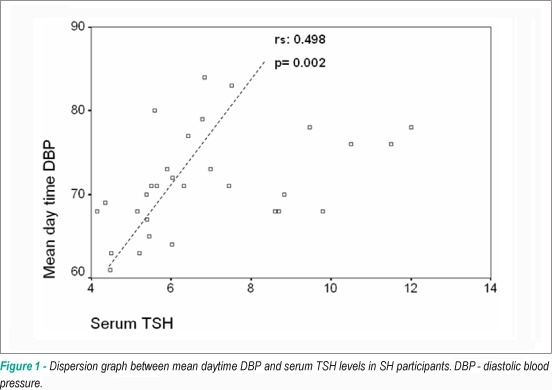
BACKGROUND: Overt hypothyroidism is associated with elevation of diastolic blood pressure; however the association of subclinical hypothyroidism (SH) with arterial blood pressure (ABP) alteration is unknown. OBJECTIVE: The aim of the present study was to evaluate ambulatory blood pressure monitoring (ABPM), over 24 hours, in normotensive patients with SH in comparison to euthyroid (EU) normotensive individuals. METHODS: A cross-sectional study was performed with 50 participants (SH = 30 and EU = 20) that did not differ regarding risk factors for hypertension. The ABPM was carried out with a DINAMAPA TM monitor, using the oscillometric method validated by AAMI (Association for the Advancement of Medical Instrumentation) and by the BHS (British Hypertension Society). RESULTS: The mean serum TSH and FT4 were respectively 6.9 ± 2.2 µUI/ml and 1.1 ± 0.2 ng/dl in SH patients. Although there was no difference in the mean values of systolic and diastolic blood pressure between the two groups, there was a positive correlation between the mean values of diastolic blood pressure (DBP) and serum TSH levels in SH patients (r:0.477; p = 0.004). These correlations were detected at daytime (r:0.498; p = 0.002) and sleep-time (r:0.322; p = 0.032) measurements. CONCLUSION: The blood pressure was not different between patients with or without SH; however, the results suggest that the progression of subclinical hypothyroidism to higher levels of TSH may increase the cardiovascular risk by increasing diastolic blood pressure.

  • Blood Pressure
  • Blood Pressure Monitoring, Ambulatory
  • Hypothyroidism
Read Full Article
Creative Commons Attribution (CC BY) Creative Commons license
30/04/2010 DOI: 10.1590/S0066-782X2010005000040
24-hour blood pressure in normotensive elderly women and elderly women with white-coat hypertension
ABC
Artigo Original

24-hour blood pressure in normotensive elderly women and elderly women with white-coat hypertension

Paulo Rogério W. Hekman et al. Juarez N. Barbisan Honório S. Menezes Vicente Antonello

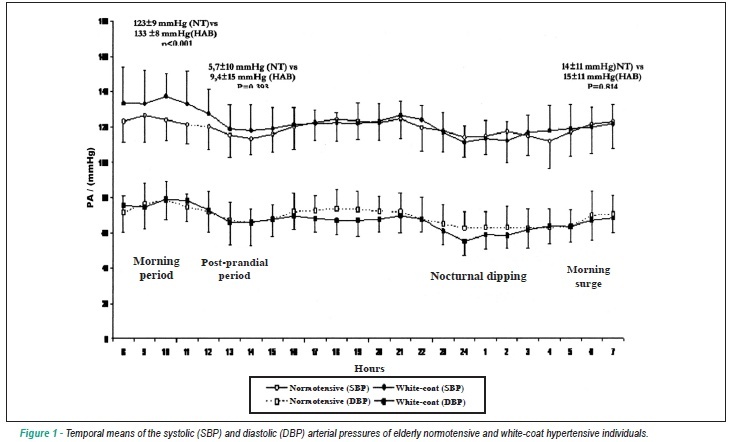
BACKGROUND: Changes in the behavior of the circadian rhythm can be deleterious, leading to target-organ damage, which suggests that they can have a prognostic significance and, eventually, can also demand therapeutic intervention. OBJECTIVE: To describe and compare the circadian rhythms of blood pressure (BP) in normotensive elderly women and in those with white-coat hypertension (WCH). METHODS: A cross-sectional study was carried out in sample of 36 patients, aged 60-83 years, submitted to ambulatory blood pressure monitoring (ABPM) for a period of 24 hours. Nineteen normotensive elderly women and 17 with WHC were compared regarding the nocturnal dipping and the BP variability, morning increase in systolic blood pressure (SBP), pulse pressure, post-prandial hypotension and correlation of 24-hour BP means. The statistical analysis used the Student’s t test, Chi-square test, Fisher’s exact test and Pearson’s linear correlation. RESULTS: The elderly women with WCH presented higher levels of SBP than the normotensive ones, between 8 am-12 pm (133 ± 8.0 mmHg vs 123 ± 9.0 mmHg, respectively, p < 0.001). The BP variability was higher in the WCH group only during the wakefulness period (between 7 am-11 pm, p = 0.02). A positive correlation was observed between the BMI and the SBP means at night, only in the elderly women with WCH (r = 0.578; p = 0.015 and r = 0.488; p = 0.055, respectively). CONCLUSION: The elderly women with WCH presented higher SBP and diastolic blood pressure (DBP) means during the wakefulness period. In the early hours of the morning, the elderly women with WCH presented significantly higher SBP means.

  • Aged
  • Blood Pressure Monitoring, Ambulatory
  • Hypertension
Read Full Article
Creative Commons Attribution (CC BY) Creative Commons license
26/03/2010 DOI: 10.1590/S0066-782X2010005000010 Views 1
Maternal-fetal monitoring during dental procedure in patients with heart valve disease
ABC
Artigo Original

Maternal-fetal monitoring during dental procedure in patients with heart valve disease

Itamara Lucia Itagiba Neves et al. Walkiria Samuel Avila Ricardo Simões Neves Dante Marcelo Artigas Giorgi … Jorge Francisco Kuhn dos Santos Ricardo Martins Oliveira Filho Cesar José Grupi Max Grinberg José Antonio Franchini Ramires

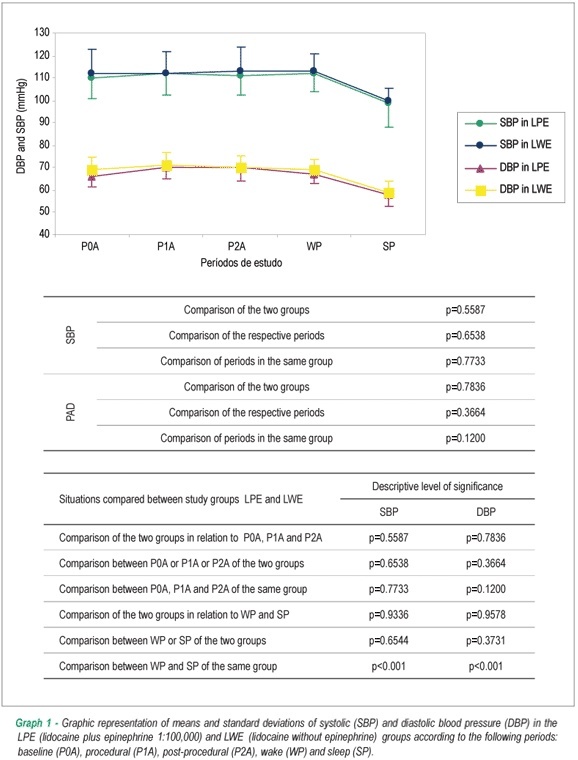
BACKGROUND: The effects of local dental anesthesia with lidocaine and epinephrine on cardiovascular parameters of pregnant women with heart valve diseases and their fetuses are not fully understood. OBJECTIVES: To assess and analyze cardiotocographic, blood pressure and electrocardiographic parameters of pregnant women with rheumatic heart valve disease undergoing local anesthesia with 1.8mL of lidocaine 2% with or without epinephrine 1:100,000 during restorative dental treatment. METHODS: Maternal ambulatory blood pressure and electrocardiographic monitoring as well as cardiotocography of 31 patients with rheumatic heart disease were performed between the 28th and 37th week of gestation. The patients were divided into two groups, those with or without vasoconstrictor. RESULTS: A significant reduction in maternal heart rate was shown in both groups during the procedure in comparison with the other periods (p0.05). The same occurred (p>0.05) with the number of uterine contractions, baseline level and variability, and number of accelerations of fetal heart rate. CONCLUSION: The use of 1.8mL of lidocaine 2% in combination with epinephrine was safe and efficient in restorative dental procedures during pregnancy in women with rheumatic heart valve disease.

  • anesthesia, local
  • Blood Pressure Monitoring, Ambulatory
  • cardiotocography
  • Electrocardiography, Ambulatory
  • Pregnant Women
  • rheumatic heart disease
Read Full Article
Creative Commons Attribution (CC BY) Creative Commons license
20/01/2010 DOI: 10.1590/S0066-782X2009001100005
Ambulatory blood pressure monitoring and cardiovascular risk in resistant hypertensive women
ABC
Artigo Original

Ambulatory blood pressure monitoring and cardiovascular risk in resistant hypertensive women

Monica Maria Ferreira Magnanini et al. Armando da Rocha Nogueira Marilia Sá Carvalho Katia Vergetti Bloch

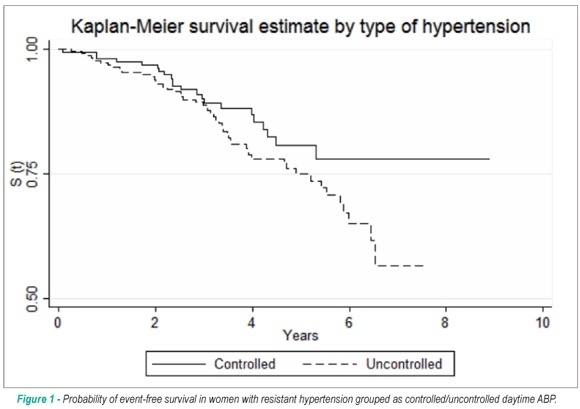
BACKGROUND: Few studies have explored the prognostic value of ambulatory blood pressure (ABP) in resistant hypertensive patients, a high-risk group. OBJECTIVE: To investigate the prognostic value of uncontrolled daytime ABP in resistant hypertensive women. METHODS: We followed 382 resistant hypertensive women, aged 24-92 years, from a hypertension unit of a university hospital, for up to 8.9 years (mean 3.9). Patients were classified as controlled (office BP>140/90mmHg and daytime ABP 140/90mmHg and daytime ABP >135/85 mmHg). We analyzed a combined endpoint, consisting of cardiovascular mortality, ischemic heart disease, stroke and nephropathy. Cox proportional hazard models were used to estimate the risk for cardiovascular events, adjusting for potential confounders. RESULTS: The total event rate was 5.0 per 100 women-years. In the controlled and uncontrolled groups, the rates were 3.7 vs. 5.8 events respectively, p=0.06. The relative risks adjusted for age and current smoking status associated with a 10 mmHg increment in systolic ABP were greater than the ones associated with a 5 mmHg increment in diastolic ABP. Non-dipper patients had a higher risk for cardiovascular events than dipper patients (RR = 1.42 (0.87 – 2.32)), although this association had no statistical significance. Uncontrolled daytime blood pressure (yes/no) was a stronger independent risk factor, 1.67 (1.00-2.78). CONCLUSIONS: There was a 67% increase in the risk of a cardiovascular event if daytime ambulatory blood pressure was uncontrolled in women with resistant hypertension. Therefore, it is mandatory to use ABP to evaluate control and to guide therapeutic strategies in resistant hypertensive patients.

  • Blood Pressure Monitoring, Ambulatory
  • Cardiovascular Diseases
  • Hypertension
  • Prognosis
Read Full Article
Creative Commons Attribution (CC BY) Creative Commons license
20/07/2009 DOI: 10.1590/S0066-782X2009000600012
Ambulatory blood pressure monitoring and type 2 diabetes mellitus
ABC
Revisão

Ambulatory blood pressure monitoring and type 2 diabetes mellitus

Cristiane Bauermann Leitão et al. Luís Henrique Canani Sandra Pinho Silveiro Jorge Luiz Gross

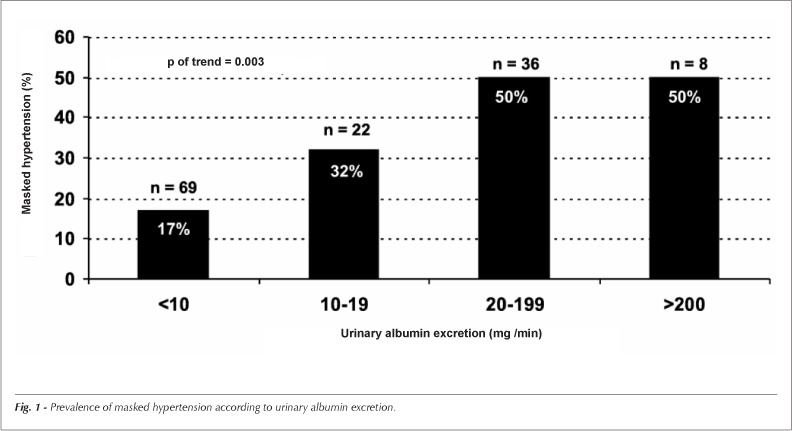
Hypertension is one of the main risk factors for the onset and progression of chronic complications in type 2 diabetes mellitus (DM). Ambulatory blood pressure (BP) monitoring (ABPM) provides a better correlation with target organ lesions than BP obtained in the office. Furthermore, it allows the evaluation of distinct BP parameters such as the 24-h, daytime and nighttime systolic and diastolic BP means, BP loads and the absence of nocturnal drop of BP, as well as the identification of white-coat and masked hypertension. DM patients have higher daytime and nighttime BP means than non-DM patients. In addition, one third of normotensive type 2 DM patients have masked hypertension, which is associated with an increase in albuminuria and in left ventricle wall thickness. On the other hand, the prevalence and effect of white-coat hypertension in type 2 DM patients have not yet been properly evaluated. The absence of nocturnal drop of BP does not add information to the 24 h, daytime or nighttime BP measurements, but the nighttime BP means seem to be relevant in DM retinopathy. In conclusion, BP determination by ABPM allows better patient risk stratification for the development of DM chronic complications and is an essential instrument for effective BP control in these patients.

  • Blood Pressure Monitoring, Ambulatory
  • Diabetes Mellitus, Type 2
Read Full Article
Creative Commons Attribution (CC BY) Creative Commons license
07/12/2007 DOI: 10.1590/S0066-782X2007001700012

Could not load more articles. Please try again.

How to cite this article

EndNote RIS

Electronic Document Format (Vancouver)

Palmeira NGF, Bianco HT, Bombig MTN, Povoa FF, Fonseca FAH, Izar MC, Thalenberg JM, et al. Association between Morning Surge and Left Ventricular Hypertrophy in Obese Hypertensive Patients. Arquivos Brasileiros de Cardiologia 2023;120(9):e20230050.

Electronic Document Format (ABNT)

Palmeira, Natascha Gonçalves Francisco; Bianco, Henrique Tria; Bombig, Maria Teresa Nogueira; Povoa, Fernando Focaccia; Fonseca, Francisco A. H.; Izar, Maria Cristina; Thalenberg, José Marcos; Luna Filho, Braulio; Marui, Fabiane; Fischer, Simone Matheus; Amodeo, Celso; Souza, Dilma do Socorro Moraes de; Povoa, Rui. Association between Morning Surge and Left Ventricular Hypertrophy in Obese Hypertensive Patients. Arquivos Brasileiros de Cardiologia, v. 120, n. 9, e20230050, Oct. 2023.

Electronic Document Format (APA)

Palmeira, N. G. F., Bianco, H. T., Bombig, M. T. N., Povoa, F. F., Fonseca, F. A. H., Izar, M. C., Thalenberg, J. M., Luna Filho, B., Marui, F., Fischer, S. M., Amodeo, C., Souza, D. S. M. , & Povoa, R. (2023). Association between Morning Surge and Left Ventricular Hypertrophy in Obese Hypertensive Patients. Arquivos Brasileiros de Cardiologia, 120(9), e20230050.

Electronic Document Format (ISO)

Palmeira, Natascha Gonçalves Francisco and Bianco, Henrique Tria and Bombig, Maria Teresa Nogueira and Povoa, Fernando Focaccia and Fonseca, Francisco A. H. and Izar, Maria Cristina and Thalenberg, José Marcos and Luna Filho, Braulio and Marui, Fabiane and Fischer, Simone Matheus and Amodeo, Celso and Souza, Dilma do Socorro Moraes de and Povoa, Rui. Association between Morning Surge and Left Ventricular Hypertrophy in Obese Hypertensive Patients. Arquivos Brasileiros de Cardiologia [online]. 2023, vol. 120, n. 9, [cited 2026-10-14], e20230050. Available from: <https://journals.cardiol.br/en/article/association-between-morning-surge-and-left-ventricular-hypertrophy-in-obese-hypertensive-patients/>. ISSN 0066-782X

EndNote RIS

Electronic Document Format (Vancouver)

Taş , Taş S, Edem E. The Relationship between Nocturnal Dipping Status, Morning Blood Pressure Surge, and Hospital Admissions in Patients with Systolic Heart Failure. Arquivos Brasileiros de Cardiologia 2023;120(9):e20220932.

Electronic Document Format (ABNT)

Taş, Ümmü; Taş, Sedat; Edem, Efe. The Relationship between Nocturnal Dipping Status, Morning Blood Pressure Surge, and Hospital Admissions in Patients with Systolic Heart Failure. Arquivos Brasileiros de Cardiologia, v. 120, n. 9, e20220932, Sep. 2023.

Electronic Document Format (APA)

Taş, , Taş, S., & Edem, E. (2023). The Relationship between Nocturnal Dipping Status, Morning Blood Pressure Surge, and Hospital Admissions in Patients with Systolic Heart Failure. Arquivos Brasileiros de Cardiologia, 120(9), e20220932.

Electronic Document Format (ISO)

Taş, Ümmü and Taş, Sedat and Edem, Efe. The Relationship between Nocturnal Dipping Status, Morning Blood Pressure Surge, and Hospital Admissions in Patients with Systolic Heart Failure. Arquivos Brasileiros de Cardiologia [online]. 2023, vol. 120, n. 9, [cited 2026-10-14], e20220932. Available from: <https://journals.cardiol.br/en/article/the-relationship-between-nocturnal-dipping-status-morning-blood-pressure-surge-and-hospital-admissions-in-patients-with-systolic-heart-failure/>. ISSN 0066-782X

EndNote RIS

Electronic Document Format (Vancouver)

Turan T, Özderya A, Sahin S, Kul S, Konuş AH, Kara F, Uzun G, et al. Abnormal Circadian Blood Pressure Variation is Associated with SYNTAX Scores in Hospitalized Patients with Acute Coronary Syndrome. Arquivos Brasileiros de Cardiologia 2022;119(1):76-84.

Electronic Document Format (ABNT)

Turan, Turhan; Özderya, Ahmet; Sahin, Sinan; Kul, Selim; Konuş, Ali Hakan; Kara, Faruk; Uzun, Gulay; Akyüz, Ali Rıza; Sayin, Muhammet Rasit. Abnormal Circadian Blood Pressure Variation is Associated with SYNTAX Scores in Hospitalized Patients with Acute Coronary Syndrome. Arquivos Brasileiros de Cardiologia, v. 119, n. 1, p. 76-84, May. 2022.

Electronic Document Format (APA)

Turan, T., Özderya, A., Sahin, S., Kul, S., Konuş, A. H., Kara, F., Uzun, G., Akyüz, A. R., & Sayin, M. R. (2022). Abnormal Circadian Blood Pressure Variation is Associated with SYNTAX Scores in Hospitalized Patients with Acute Coronary Syndrome. Arquivos Brasileiros de Cardiologia, 119(1), 76-84.

Electronic Document Format (ISO)

Turan, Turhan and Özderya, Ahmet and Sahin, Sinan and Kul, Selim and Konuş, Ali Hakan and Kara, Faruk and Uzun, Gulay and Akyüz, Ali Rıza and Sayin, Muhammet Rasit. Abnormal Circadian Blood Pressure Variation is Associated with SYNTAX Scores in Hospitalized Patients with Acute Coronary Syndrome. Arquivos Brasileiros de Cardiologia [online]. 2022, vol. 119, n. 1, [cited 2026-10-14], pp. 76-84. Available from: <https://journals.cardiol.br/en/article/abnormal-circadian-blood-pressure-variation-is-associated-with-syntax-scores-in-hospitalized-patients-with-acute-coronary-syndrome/>. ISSN 0066-782X

EndNote RIS

Electronic Document Format (Vancouver)

Chehuen MR, Cucato GG, Carvalho CRF, Zerati AE, Leicht A, Wolosker N, Ritti-Dias RM, et al. Walking Training Improves Ambulatory Blood Pressure Variability in Claudication. Arquivos Brasileiros de Cardiologia 2021;116(5):898-905.

Electronic Document Format (ABNT)

Chehuen, Marcel da Rocha; Cucato, Gabriel Grizzo; Carvalho, Celso Ricardo Fernandes de; Zerati, Antonio Eduardo; Leicht, Anthony; Wolosker, Nelson; Ritti-Dias, Raphael Mendes; Forjaz, Claudia Lucia de Moraes. Walking Training Improves Ambulatory Blood Pressure Variability in Claudication. Arquivos Brasileiros de Cardiologia, v. 116, n. 5, p. 898-905, May. 2021.

Electronic Document Format (APA)

Chehuen, M. R., Cucato, G. G., Carvalho, C. R. F. , Zerati, A. E., Leicht, A., Wolosker, N., Ritti-Dias, R. M., & Forjaz, C. L. M. (2021). Walking Training Improves Ambulatory Blood Pressure Variability in Claudication. Arquivos Brasileiros de Cardiologia, 116(5), 898-905.

Electronic Document Format (ISO)

Chehuen, Marcel da Rocha and Cucato, Gabriel Grizzo and Carvalho, Celso Ricardo Fernandes de and Zerati, Antonio Eduardo and Leicht, Anthony and Wolosker, Nelson and Ritti-Dias, Raphael Mendes and Forjaz, Claudia Lucia de Moraes. Walking Training Improves Ambulatory Blood Pressure Variability in Claudication. Arquivos Brasileiros de Cardiologia [online]. 2021, vol. 116, n. 5, [cited 2026-10-14], pp. 898-905. Available from: <https://journals.cardiol.br/en/article/walking-training-improves-ambulatory-blood-pressure-variability-in-claudication/>. ISSN 0066-782X

EndNote RIS

Electronic Document Format (Vancouver)

Furlan SF, Sinkunas V, Genta PR, Lorenzi Filho G, Drager LF. Very Long Apneas during Prone Position in a Lean Patient with Coronary Artery Disease: Implications for the Cardiovascular Risk. Arquivos Brasileiros de Cardiologia 2021;116(2 suppl 1):25-7.

Electronic Document Format (ABNT)

Furlan, Sofia Fontanello; Sinkunas, Viktor; Genta, Pedro Rodrigues; Lorenzi Filho, Geraldo; Drager, Luciano F.. Very Long Apneas during Prone Position in a Lean Patient with Coronary Artery Disease: Implications for the Cardiovascular Risk. Arquivos Brasileiros de Cardiologia, v. 116, n. 2 suppl 1, p. 25-27, Feb. 2021.

Electronic Document Format (APA)

Furlan, S. F., Sinkunas, V., Genta, P. R., Lorenzi Filho, G., & Drager, L. F. (2021). Very Long Apneas during Prone Position in a Lean Patient with Coronary Artery Disease: Implications for the Cardiovascular Risk. Arquivos Brasileiros de Cardiologia, 116(2 suppl 1), 25-27.

Electronic Document Format (ISO)

Furlan, Sofia Fontanello and Sinkunas, Viktor and Genta, Pedro Rodrigues and Lorenzi Filho, Geraldo and Drager, Luciano F.. Very Long Apneas during Prone Position in a Lean Patient with Coronary Artery Disease: Implications for the Cardiovascular Risk. Arquivos Brasileiros de Cardiologia [online]. 2021, vol. 116, n. 2 suppl 1, [cited 2026-10-14], pp. 25-27. Available from: <https://journals.cardiol.br/en/article/very-long-apneas-during-prone-position-in-a-lean-patient-with-coronary-artery-disease-implications-for-the-cardiovascular-risk/>. ISSN 0066-782X

EndNote RIS

Electronic Document Format (Vancouver)

Almeida FA. Nocturnal Blood Pressure Dipping and the Autonomic Nervous System. Arquivos Brasileiros de Cardiologia 2020;114(4):716-7.

Electronic Document Format (ABNT)

Almeida, Fernando Antonio de. Nocturnal Blood Pressure Dipping and the Autonomic Nervous System. Arquivos Brasileiros de Cardiologia, v. 114, n. 4, p. 716-717, May. 2020.

Electronic Document Format (APA)

Almeida, F. A. (2020). Nocturnal Blood Pressure Dipping and the Autonomic Nervous System. Arquivos Brasileiros de Cardiologia, 114(4), 716-717.

Electronic Document Format (ISO)

Almeida, Fernando Antonio de. Nocturnal Blood Pressure Dipping and the Autonomic Nervous System. Arquivos Brasileiros de Cardiologia [online]. 2020, vol. 114, n. 4, [cited 2026-10-14], pp. 716-717. Available from: <https://journals.cardiol.br/en/article/nocturnal-blood-pressure-dipping-and-the-autonomic-nervous-system/>. ISSN 0066-782X

EndNote RIS

Electronic Document Format (Vancouver)

Póvoa R. Aortic Arch Calcification on routine Chest Radiography is Strongly and Independently Associated with Non-Dipper Blood Pressure Pattern. Arquivos Brasileiros de Cardiologia 2020;114(1):118-9.

Electronic Document Format (ABNT)

Póvoa, Rui. Aortic Arch Calcification on routine Chest Radiography is Strongly and Independently Associated with Non-Dipper Blood Pressure Pattern. Arquivos Brasileiros de Cardiologia, v. 114, n. 1, p. 118-119, Feb. 2020.

Electronic Document Format (APA)

Póvoa, R. (2020). Aortic Arch Calcification on routine Chest Radiography is Strongly and Independently Associated with Non-Dipper Blood Pressure Pattern. Arquivos Brasileiros de Cardiologia, 114(1), 118-119.

Electronic Document Format (ISO)

Póvoa, Rui. Aortic Arch Calcification on routine Chest Radiography is Strongly and Independently Associated with Non-Dipper Blood Pressure Pattern. Arquivos Brasileiros de Cardiologia [online]. 2020, vol. 114, n. 1, [cited 2026-10-14], pp. 118-119. Available from: <https://journals.cardiol.br/en/article/aortic-arch-calcification-on-routine-chest-radiography-is-strongly-and-independently-associated-with-non-dipper-blood-pressure-pattern-2/>. ISSN 0066-782X

EndNote RIS

Electronic Document Format (Vancouver)

Adar A, Onalan O, Cakan F, Akbay E, Karakaya E. Aortic Arch Calcification on Routine Chest Radiography is Strongly and Independently Associated with Non-Dipper Blood Pressure Pattern. Arquivos Brasileiros de Cardiologia 2019;114(1):109-17.

Electronic Document Format (ABNT)

Adar, Adem; Onalan, Orhan; Cakan, Fahri; Akbay, Ertan; Karakaya, Ekrem. Aortic Arch Calcification on Routine Chest Radiography is Strongly and Independently Associated with Non-Dipper Blood Pressure Pattern. Arquivos Brasileiros de Cardiologia, v. 114, n. 1, p. 109-117, Oct. 2019.

Electronic Document Format (APA)

Adar, A., Onalan, O., Cakan, F., Akbay, E., & Karakaya, E. (2019). Aortic Arch Calcification on Routine Chest Radiography is Strongly and Independently Associated with Non-Dipper Blood Pressure Pattern. Arquivos Brasileiros de Cardiologia, 114(1), 109-117.

Electronic Document Format (ISO)

Adar, Adem and Onalan, Orhan and Cakan, Fahri and Akbay, Ertan and Karakaya, Ekrem. Aortic Arch Calcification on Routine Chest Radiography is Strongly and Independently Associated with Non-Dipper Blood Pressure Pattern. Arquivos Brasileiros de Cardiologia [online]. 2019, vol. 114, n. 1, [cited 2026-10-14], pp. 109-117. Available from: <https://journals.cardiol.br/en/article/aortic-arch-calcification-on-routine-chest-radiography-is-strongly-and-independently-associated-with-non-dipper-blood-pressure-pattern/>. ISSN 0066-782X

EndNote RIS

Electronic Document Format (Vancouver)

Casonatto J, Enokida DM, Grandolfi K. Inter-Individual Responses to Citrulline Malate Oral Supplementation on Post-Exercise Hypotension in Hypertensives: A 24-Hour Analysis. Arquivos Brasileiros de Cardiologia 2019;113(2):218-2.

Electronic Document Format (ABNT)

Casonatto, Juliano; Enokida, Daniel Massaharu; Grandolfi, Kamila. Inter-Individual Responses to Citrulline Malate Oral Supplementation on Post-Exercise Hypotension in Hypertensives: A 24-Hour Analysis. Arquivos Brasileiros de Cardiologia, v. 113, n. 2, p. 218-228, Jul. 2019.

Electronic Document Format (APA)

Casonatto, J., Enokida, D. M., & Grandolfi, K. (2019). Inter-Individual Responses to Citrulline Malate Oral Supplementation on Post-Exercise Hypotension in Hypertensives: A 24-Hour Analysis. Arquivos Brasileiros de Cardiologia, 113(2), 218-228.

Electronic Document Format (ISO)

Casonatto, Juliano and Enokida, Daniel Massaharu and Grandolfi, Kamila. Inter-Individual Responses to Citrulline Malate Oral Supplementation on Post-Exercise Hypotension in Hypertensives: A 24-Hour Analysis. Arquivos Brasileiros de Cardiologia [online]. 2019, vol. 113, n. 2, [cited 2026-10-14], pp. 218-228. Available from: <https://journals.cardiol.br/en/article/inter-individual-responses-to-citrulline-malate-oral-supplementation-on-post-exercise-hypotension-in-hypertensives-a-24-hour-analysis/>. ISSN 0066-782X

EndNote RIS

Electronic Document Format (Vancouver)

Casali KR, Schaan BD, Montano N, Massierer D, M.F. Neto F, Teló GH, Ledur PS, et al. Correlation between Very Short and Short-Term Blood Pressure Variability in Diabetic-Hypertensive and Healthy Subjects. Arquivos Brasileiros de Cardiologia 2018;110(2):157-65.

Electronic Document Format (ABNT)

Casali, Karina R.; Schaan, Beatriz D.; Montano, Nicola; Massierer, Daniela; M.F. Neto, Flávio; Teló, Gabriela H.; Ledur, Priscila S.; Reinheimer, Marilia; Sbruzzi, Graciele; Gus, Miguel. Correlation between Very Short and Short-Term Blood Pressure Variability in Diabetic-Hypertensive and Healthy Subjects. Arquivos Brasileiros de Cardiologia, v. 110, n. 2, p. 157-165, Jan. 2018.

Electronic Document Format (APA)

Casali, K. R., Schaan, B. D., Montano, N., Massierer, D., M.F. Neto, F., Teló, G. H., Ledur, P. S., Reinheimer, M., Sbruzzi, G., & Gus, M. (2018). Correlation between Very Short and Short-Term Blood Pressure Variability in Diabetic-Hypertensive and Healthy Subjects. Arquivos Brasileiros de Cardiologia, 110(2), 157-165.

Electronic Document Format (ISO)

Casali, Karina R. and Schaan, Beatriz D. and Montano, Nicola and Massierer, Daniela and M.F. Neto, Flávio and Teló, Gabriela H. and Ledur, Priscila S. and Reinheimer, Marilia and Sbruzzi, Graciele and Gus, Miguel. Correlation between Very Short and Short-Term Blood Pressure Variability in Diabetic-Hypertensive and Healthy Subjects. Arquivos Brasileiros de Cardiologia [online]. 2018, vol. 110, n. 2, [cited 2026-10-14], pp. 157-165. Available from: <https://journals.cardiol.br/en/article/correlation-between-very-short-and-short-term-blood-pressure-variability-in-diabetic-hypertensive-and-healthy-subjects/>. ISSN 0066-782X

EndNote RIS

Electronic Document Format (Vancouver)

Correa CM, Gismondi RA, Cunha AR, Neves MF, Oigman W. Twenty-four hour Blood Pressure in Obese Patients with Moderate-to-Severe Obstructive Sleep Apnea. Arquivos Brasileiros de Cardiologia 2017;109(4):313-20.

Electronic Document Format (ABNT)

Correa, Claudia M.; Gismondi, Ronaldo A.; Cunha, Ana Rosa; Neves, Mario F.; Oigman, Wille. Twenty-four hour Blood Pressure in Obese Patients with Moderate-to-Severe Obstructive Sleep Apnea. Arquivos Brasileiros de Cardiologia, v. 109, n. 4, p. 313-320, Sep. 2017.

Electronic Document Format (APA)

Correa, C. M., Gismondi, R. A., Cunha, A. R., Neves, M. F., & Oigman, W. (2017). Twenty-four hour Blood Pressure in Obese Patients with Moderate-to-Severe Obstructive Sleep Apnea. Arquivos Brasileiros de Cardiologia, 109(4), 313-320.

Electronic Document Format (ISO)

Correa, Claudia M. and Gismondi, Ronaldo A. and Cunha, Ana Rosa and Neves, Mario F. and Oigman, Wille. Twenty-four hour Blood Pressure in Obese Patients with Moderate-to-Severe Obstructive Sleep Apnea. Arquivos Brasileiros de Cardiologia [online]. 2017, vol. 109, n. 4, [cited 2026-10-14], pp. 313-320. Available from: <https://journals.cardiol.br/en/article/twenty-four-hour-blood-pressure-in-obese-patients-with-moderate-to-severe-obstructive-sleep-apnea/>. ISSN 0066-782X

EndNote RIS

Electronic Document Format (Vancouver)

Póvoa TIR, Jardim TV, Carneiro CS, Ferreira VR, Mendonça KL, Morais PRS, Nascente FMN, et al. Home Blood Pressure Monitoring as an Alternative to Confirm Diagnoses of Hypertension in Adolescents with Elevated Office Blood Pressure from a Brazilian State Capital. Arquivos Brasileiros de Cardiologia 2017;109(3):241-7.

Electronic Document Format (ABNT)

Póvoa, Thaís Inacio Rolim; Jardim, Thiago Veiga; Carneiro, Carolina de Souza; Ferreira, Vanessa Roriz; Mendonça, Karla Lorena; Morais, Polyana Resende Silva de; Nascente, Flávia Miquetichuc Nogueira; Souza, Weimar Kunz Sebba Barroso de; Sousa, Ana Luiza Lima; Jardim, Paulo César Brandão Veiga. Home Blood Pressure Monitoring as an Alternative to Confirm Diagnoses of Hypertension in Adolescents with Elevated Office Blood Pressure from a Brazilian State Capital. Arquivos Brasileiros de Cardiologia, v. 109, n. 3, p. 241-247, Aug. 2017.

Electronic Document Format (APA)

Póvoa, T. I. R., Jardim, T. V., Carneiro, C. S., Ferreira, V. R., Mendonça, K. L., Morais, P. R. S. , Nascente, F. M. N., Souza, W. K. S. B. , Sousa, A. L. L., & Jardim, P. C. B. V. (2017). Home Blood Pressure Monitoring as an Alternative to Confirm Diagnoses of Hypertension in Adolescents with Elevated Office Blood Pressure from a Brazilian State Capital. Arquivos Brasileiros de Cardiologia, 109(3), 241-247.

Electronic Document Format (ISO)

Póvoa, Thaís Inacio Rolim and Jardim, Thiago Veiga and Carneiro, Carolina de Souza and Ferreira, Vanessa Roriz and Mendonça, Karla Lorena and Morais, Polyana Resende Silva de and Nascente, Flávia Miquetichuc Nogueira and Souza, Weimar Kunz Sebba Barroso de and Sousa, Ana Luiza Lima and Jardim, Paulo César Brandão Veiga. Home Blood Pressure Monitoring as an Alternative to Confirm Diagnoses of Hypertension in Adolescents with Elevated Office Blood Pressure from a Brazilian State Capital. Arquivos Brasileiros de Cardiologia [online]. 2017, vol. 109, n. 3, [cited 2026-10-14], pp. 241-247. Available from: <https://journals.cardiol.br/en/article/home-blood-pressure-monitoring-as-an-alternative-to-confirm-diagnoses-of-hypertension-in-adolescents-with-elevated-office-blood-pressure-from-a-brazilian-state-capital/>. ISSN 0066-782X

EndNote RIS

Electronic Document Format (Vancouver)

Grezzana GB, Moraes DW, Stein AT, Pellanda LC. Impact of Different Normality Thresholds for 24-hour ABPM at the Primary Health Care Level. Arquivos Brasileiros de Cardiologia 2017;108(2):143-8.

Electronic Document Format (ABNT)

Grezzana, Guilherme Brasil; Moraes, David William; Stein, Airton Tetelbon; Pellanda, Lucia Campos. Impact of Different Normality Thresholds for 24-hour ABPM at the Primary Health Care Level. Arquivos Brasileiros de Cardiologia, v. 108, n. 2, p. 143-148, Jan. 2017.

Electronic Document Format (APA)

Grezzana, G. B., Moraes, D. W., Stein, A. T., & Pellanda, L. C. (2017). Impact of Different Normality Thresholds for 24-hour ABPM at the Primary Health Care Level. Arquivos Brasileiros de Cardiologia, 108(2), 143-148.

Electronic Document Format (ISO)

Grezzana, Guilherme Brasil and Moraes, David William and Stein, Airton Tetelbon and Pellanda, Lucia Campos. Impact of Different Normality Thresholds for 24-hour ABPM at the Primary Health Care Level. Arquivos Brasileiros de Cardiologia [online]. 2017, vol. 108, n. 2, [cited 2026-10-14], pp. 143-148. Available from: <https://journals.cardiol.br/en/article/impact-of-different-normality-thresholds-for-24-hour-abpm-at-the-primary-health-care-level/>. ISSN 0066-782X

EndNote RIS

Electronic Document Format (Vancouver)

Grezzana GB, Stein AT, Pellanda LC. 24-Hour Ambulatory Blood Pressure Monitoring Predicts Outcomes of Hypertensive Patients in Primary Care: A Cohort Study. International Journal of Cardiovascular Sciences 2017;30(4):285-92.

Electronic Document Format (ABNT)

Grezzana, Guilherme Brasil; Stein, Airton Tetelbon; Pellanda, Lucia Campos. 24-Hour Ambulatory Blood Pressure Monitoring Predicts Outcomes of Hypertensive Patients in Primary Care: A Cohort Study. International Journal of Cardiovascular Sciences, v. 30, n. 4, p. 285-292, Dec. 2016.

Electronic Document Format (APA)

Grezzana, G. B., Stein, A. T., & Pellanda, L. C. (2017). 24-Hour Ambulatory Blood Pressure Monitoring Predicts Outcomes of Hypertensive Patients in Primary Care: A Cohort Study. International Journal of Cardiovascular Sciences, 30(4), 285-292.

Electronic Document Format (ISO)

Grezzana, Guilherme Brasil and Stein, Airton Tetelbon and Pellanda, Lucia Campos. 24-Hour Ambulatory Blood Pressure Monitoring Predicts Outcomes of Hypertensive Patients in Primary Care: A Cohort Study. International Journal of Cardiovascular Sciences [online]. 2017, vol. 30, n. 4, [cited 2026-10-14], pp. 285-292. Available from: <https://journals.cardiol.br/en/article/24-hour-ambulatory-blood-pressure-monitoring-predicts-outcomes-of-hypertensive-patients-in-primary-care-a-cohort-study/>. ISSN 2359-4802

EndNote RIS

Electronic Document Format (Vancouver)

Grezzana GB, Stein AT, Pellanda LC. Blood pressure treatment adherence and control through 24-hour ambulatory monitoring. Arquivos Brasileiros de Cardiologia 2013;100(4):335-61.

Electronic Document Format (ABNT)

Grezzana, Guilherme Brasil; Stein, Airton Tetelbon; Pellanda, Lúcia Campos. Blood pressure treatment adherence and control through 24-hour ambulatory monitoring. Arquivos Brasileiros de Cardiologia, v. 100, n. 4, p. 335-361, Mar. 2013.

Electronic Document Format (APA)

Grezzana, G. B., Stein, A. T., & Pellanda, L. C. (2013). Blood pressure treatment adherence and control through 24-hour ambulatory monitoring. Arquivos Brasileiros de Cardiologia, 100(4), 335-361.

Electronic Document Format (ISO)

Grezzana, Guilherme Brasil and Stein, Airton Tetelbon and Pellanda, Lúcia Campos. Blood pressure treatment adherence and control through 24-hour ambulatory monitoring. Arquivos Brasileiros de Cardiologia [online]. 2013, vol. 100, n. 4, [cited 2026-10-14], pp. 335-361. Available from: <https://journals.cardiol.br/en/article/blood-pressure-treatment-adherence-and-control-through-24-hour-ambulatory-monitoring/>. ISSN 0066-782X

EndNote RIS

Electronic Document Format (Vancouver)

Forestiero D, Mauad JL, Forestiero C, Peixoto ML, Ganassin FP, Gonzaga C, Cordeiro AC, et al. Impact on hypertension reclassification by Ambulatory Blood Pressure Monitoring (ABPM) according to the V Brazilian Guidelines on ABPM. Arquivos Brasileiros de Cardiologia 2013;100(2):175-9.

Electronic Document Format (ABNT)

Forestiero, Daniel; Mauad, Juliana Lustoza; Forestiero, Camila; Peixoto, Mario Lins; Ganassin, Fabio Peixoto; Gonzaga, Carolina; Cordeiro, Antonio Carlos; Rodrigues, Gabriel Doreto; Silveira, Tiago Bueno da; Amodeo, Celso. Impact on hypertension reclassification by Ambulatory Blood Pressure Monitoring (ABPM) according to the V Brazilian Guidelines on ABPM. Arquivos Brasileiros de Cardiologia, v. 100, n. 2, p. 175-179, Mar. 2013.

Electronic Document Format (APA)

Forestiero, D., Mauad, J. L., Forestiero, C., Peixoto, M. L., Ganassin, F. P., Gonzaga, C., Cordeiro, A. C., Rodrigues, G. D., Silveira, T. B. , & Amodeo, C. (2013). Impact on hypertension reclassification by Ambulatory Blood Pressure Monitoring (ABPM) according to the V Brazilian Guidelines on ABPM. Arquivos Brasileiros de Cardiologia, 100(2), 175-179.

Electronic Document Format (ISO)

Forestiero, Daniel and Mauad, Juliana Lustoza and Forestiero, Camila and Peixoto, Mario Lins and Ganassin, Fabio Peixoto and Gonzaga, Carolina and Cordeiro, Antonio Carlos and Rodrigues, Gabriel Doreto and Silveira, Tiago Bueno da and Amodeo, Celso. Impact on hypertension reclassification by Ambulatory Blood Pressure Monitoring (ABPM) according to the V Brazilian Guidelines on ABPM. Arquivos Brasileiros de Cardiologia [online]. 2013, vol. 100, n. 2, [cited 2026-10-14], pp. 175-179. Available from: <https://journals.cardiol.br/en/article/impact-on-hypertension-reclassification-by-ambulatory-blood-pressure-monitoring-abpm-according-to-the-v-brazilian-guidelines-on-abpm/>. ISSN 0066-782X

EndNote RIS

Electronic Document Format (Vancouver)

Souza WKSB, Jardim PCBV, Brito LP, Araújo FA, Sousa ALL. Self measurement of blood pressure for control of blood pressure levels and adherence to treatment. Arquivos Brasileiros de Cardiologia 2012;98(2):167-74.

Electronic Document Format (ABNT)

Souza, Weimar Kunz Sebba Barroso; Jardim, Paulo César Brandão Veiga; Brito, Ludmila Porto; Araújo, Fabrício Alves; Sousa, Ana Luíza Lima. Self measurement of blood pressure for control of blood pressure levels and adherence to treatment. Arquivos Brasileiros de Cardiologia, v. 98, n. 2, p. 167-174, Jan. 2012.

Electronic Document Format (APA)

Souza, W. K. S. B., Jardim, P. C. B. V., Brito, L. P., Araújo, F. A., & Sousa, A. L. L. (2012). Self measurement of blood pressure for control of blood pressure levels and adherence to treatment. Arquivos Brasileiros de Cardiologia, 98(2), 167-174.

Electronic Document Format (ISO)

Souza, Weimar Kunz Sebba Barroso and Jardim, Paulo César Brandão Veiga and Brito, Ludmila Porto and Araújo, Fabrício Alves and Sousa, Ana Luíza Lima. Self measurement of blood pressure for control of blood pressure levels and adherence to treatment. Arquivos Brasileiros de Cardiologia [online]. 2012, vol. 98, n. 2, [cited 2026-10-14], pp. 167-174. Available from: <https://journals.cardiol.br/en/article/self-measurement-of-blood-pressure-for-control-of-blood-pressure-levels-and-adherence-to-treatment/>. ISSN 0066-782X

EndNote RIS

Electronic Document Format (Vancouver)

Souza WKSB, Jardim PCBV, Porto LB, Araújo FA, Sousa ALL, Salgado CM. Comparison and correlation between self-measured blood pressure, casual blood pressure measurement and ambulatory blood pressure monitoring. Arquivos Brasileiros de Cardiologia 2011;97(2):148-55.

Electronic Document Format (ABNT)

Souza, Weimar Kunz Sebba Barroso de; Jardim, Paulo César Brandão Veiga; Porto, Ludmila Brito; Araújo, Fabrício Alves; Sousa, Ana Luíza Lima; Salgado, Cláudia Maria. Comparison and correlation between self-measured blood pressure, casual blood pressure measurement and ambulatory blood pressure monitoring. Arquivos Brasileiros de Cardiologia, v. 97, n. 2, p. 148-155, Jun. 2011.

Electronic Document Format (APA)

Souza, W. K. S. B. , Jardim, P. C. B. V., Porto, L. B., Araújo, F. A., Sousa, A. L. L., & Salgado, C. M. (2011). Comparison and correlation between self-measured blood pressure, casual blood pressure measurement and ambulatory blood pressure monitoring. Arquivos Brasileiros de Cardiologia, 97(2), 148-155.

Electronic Document Format (ISO)

Souza, Weimar Kunz Sebba Barroso de and Jardim, Paulo César Brandão Veiga and Porto, Ludmila Brito and Araújo, Fabrício Alves and Sousa, Ana Luíza Lima and Salgado, Cláudia Maria. Comparison and correlation between self-measured blood pressure, casual blood pressure measurement and ambulatory blood pressure monitoring. Arquivos Brasileiros de Cardiologia [online]. 2011, vol. 97, n. 2, [cited 2026-10-14], pp. 148-155. Available from: <https://journals.cardiol.br/en/article/comparison-and-correlation-between-self-measured-blood-pressure-casual-blood-pressure-measurement-and-ambulatory-blood-pressure-monitoring/>. ISSN 0066-782X

EndNote RIS

Electronic Document Format (Vancouver)

Marui FRRH, Bombig MTN, Francisco YA, Thalenberg JM, Fonseca FAH, Souza D, Costa FA, et al. Assessment of resistant hypertension with home blood pressure monitoring. Arquivos Brasileiros de Cardiologia 2010;95(4):536-40.

Electronic Document Format (ABNT)

Marui, Fabiane Rosa Rezende H.; Bombig, Maria Teresa Nogueira; Francisco, Yoná Afonso; Thalenberg, José Marcos; Fonseca, Francisco Antonio Helfenstein; Souza, Dilma de; Costa, Francisco de Assis; Izar, Maria Cristina; Carvalho, Antonio Carlos de Camargo; Póvoa, Rui. Assessment of resistant hypertension with home blood pressure monitoring. Arquivos Brasileiros de Cardiologia, v. 95, n. 4, p. 536-540, Sep. 2010.

Electronic Document Format (APA)

Marui, F. R. R. H., Bombig, M. T. N., Francisco, Y. A., Thalenberg, J. M., Fonseca, F. A. H., Souza, D. , Costa, F. A., Izar, M. C., Carvalho, A. C. C., & Póvoa, R. (2010). Assessment of resistant hypertension with home blood pressure monitoring. Arquivos Brasileiros de Cardiologia, 95(4), 536-540.

Electronic Document Format (ISO)

Marui, Fabiane Rosa Rezende H. and Bombig, Maria Teresa Nogueira and Francisco, Yoná Afonso and Thalenberg, José Marcos and Fonseca, Francisco Antonio Helfenstein and Souza, Dilma de and Costa, Francisco de Assis and Izar, Maria Cristina and Carvalho, Antonio Carlos de Camargo and Póvoa, Rui. Assessment of resistant hypertension with home blood pressure monitoring. Arquivos Brasileiros de Cardiologia [online]. 2010, vol. 95, n. 4, [cited 2026-10-14], pp. 536-540. Available from: <https://journals.cardiol.br/en/article/assessment-of-resistant-hypertension-with-home-blood-pressure-monitoring/>. ISSN 0066-782X

EndNote RIS

Electronic Document Format (Vancouver)

Ferreira MM, Teixeira PFS, Mansur VAR, Reuters VS, Almeida CP, Vaisman M. Ambulatory blood pressure monitoring in normotensive patients with subclinical hypothyroidism. Arquivos Brasileiros de Cardiologia 2010;94(6):806-12.

Electronic Document Format (ABNT)

Ferreira, Marcia Martins; Teixeira, Patricia de Fatima dos Santos; Mansur, Vera Aleta R.; Reuters, Vaneska Spinelli; Almeida, Cloyra Paiva; Vaisman, Mario. Ambulatory blood pressure monitoring in normotensive patients with subclinical hypothyroidism. Arquivos Brasileiros de Cardiologia, v. 94, n. 6, p. 806-812, Apr. 2010.

Electronic Document Format (APA)

Ferreira, M. M., Teixeira, P. F. S., Mansur, V. A. R., Reuters, V. S., Almeida, C. P., & Vaisman, M. (2010). Ambulatory blood pressure monitoring in normotensive patients with subclinical hypothyroidism. Arquivos Brasileiros de Cardiologia, 94(6), 806-812.

Electronic Document Format (ISO)

Ferreira, Marcia Martins and Teixeira, Patricia de Fatima dos Santos and Mansur, Vera Aleta R. and Reuters, Vaneska Spinelli and Almeida, Cloyra Paiva and Vaisman, Mario. Ambulatory blood pressure monitoring in normotensive patients with subclinical hypothyroidism. Arquivos Brasileiros de Cardiologia [online]. 2010, vol. 94, n. 6, [cited 2026-10-14], pp. 806-812. Available from: <https://journals.cardiol.br/en/article/ambulatory-blood-pressure-monitoring-in-normotensive-patients-with-subclinical-hypothyroidism/>. ISSN 0066-782X

EndNote RIS

Electronic Document Format (Vancouver)

Hekman PRW, Barbisan JN, Menezes HS, Antonello V. 24-hour blood pressure in normotensive elderly women and elderly women with white-coat hypertension. Arquivos Brasileiros de Cardiologia 2010;94(4):431-7.

Electronic Document Format (ABNT)

Hekman, Paulo Rogério W.; Barbisan, Juarez N.; Menezes, Honório S.; Antonello, Vicente. 24-hour blood pressure in normotensive elderly women and elderly women with white-coat hypertension. Arquivos Brasileiros de Cardiologia, v. 94, n. 4, p. 431-437, Mar. 2010.

Electronic Document Format (APA)

Hekman, P. R. W., Barbisan, J. N., Menezes, H. S., & Antonello, V. (2010). 24-hour blood pressure in normotensive elderly women and elderly women with white-coat hypertension. Arquivos Brasileiros de Cardiologia, 94(4), 431-437.

Electronic Document Format (ISO)

Hekman, Paulo Rogério W. and Barbisan, Juarez N. and Menezes, Honório S. and Antonello, Vicente. 24-hour blood pressure in normotensive elderly women and elderly women with white-coat hypertension. Arquivos Brasileiros de Cardiologia [online]. 2010, vol. 94, n. 4, [cited 2026-10-14], pp. 431-437. Available from: <https://journals.cardiol.br/en/article/24-hour-blood-pressure-in-normotensive-elderly-women-and-elderly-women-with-white-coat-hypertension/>. ISSN 0066-782X

EndNote RIS

Electronic Document Format (Vancouver)

Neves ILI, Avila WS, Neves RS, Giorgi DMA, Santos JFK, Oliveira Filho RM, Grupi CJ, et al. Maternal-fetal monitoring during dental procedure in patients with heart valve disease. Arquivos Brasileiros de Cardiologia 2010;93(5):463-742.

Electronic Document Format (ABNT)

Neves, Itamara Lucia Itagiba; Avila, Walkiria Samuel; Neves, Ricardo Simões; Giorgi, Dante Marcelo Artigas; Santos, Jorge Francisco Kuhn dos; Oliveira Filho, Ricardo Martins; Grupi, Cesar José; Grinberg, Max; Ramires, José Antonio Franchini. Maternal-fetal monitoring during dental procedure in patients with heart valve disease. Arquivos Brasileiros de Cardiologia, v. 93, n. 5, p. 463-742, Jan. 2010.

Electronic Document Format (APA)

Neves, I. L. I., Avila, W. S., Neves, R. S., Giorgi, D. M. A., Santos, J. F. K. , Oliveira Filho, R. M., Grupi, C. J., Grinberg, M., & Ramires, J. A. F. (2010). Maternal-fetal monitoring during dental procedure in patients with heart valve disease. Arquivos Brasileiros de Cardiologia, 93(5), 463-742.

Electronic Document Format (ISO)

Neves, Itamara Lucia Itagiba and Avila, Walkiria Samuel and Neves, Ricardo Simões and Giorgi, Dante Marcelo Artigas and Santos, Jorge Francisco Kuhn dos and Oliveira Filho, Ricardo Martins and Grupi, Cesar José and Grinberg, Max and Ramires, José Antonio Franchini. Maternal-fetal monitoring during dental procedure in patients with heart valve disease. Arquivos Brasileiros de Cardiologia [online]. 2010, vol. 93, n. 5, [cited 2026-10-14], pp. 463-742. Available from: <https://journals.cardiol.br/en/article/maternal-fetal-monitoring-during-dental-procedure-in-patients-with-heart-valve-disease/>. ISSN 0066-782X

EndNote RIS

Electronic Document Format (Vancouver)

Magnanini MMF, Nogueira AR, Carvalho MS, Bloch KV. Ambulatory blood pressure monitoring and cardiovascular risk in resistant hypertensive women. Arquivos Brasileiros de Cardiologia 2009;92(6):484-9.

Electronic Document Format (ABNT)

Magnanini, Monica Maria Ferreira; Nogueira, Armando da Rocha; Carvalho, Marilia Sá; Bloch, Katia Vergetti. Ambulatory blood pressure monitoring and cardiovascular risk in resistant hypertensive women. Arquivos Brasileiros de Cardiologia, v. 92, n. 6, p. 484-489, Jul. 2009.

Electronic Document Format (APA)

Magnanini, M. M. F., Nogueira, A. R., Carvalho, M. S., & Bloch, K. V. (2009). Ambulatory blood pressure monitoring and cardiovascular risk in resistant hypertensive women. Arquivos Brasileiros de Cardiologia, 92(6), 484-489.

Electronic Document Format (ISO)

Magnanini, Monica Maria Ferreira and Nogueira, Armando da Rocha and Carvalho, Marilia Sá and Bloch, Katia Vergetti. Ambulatory blood pressure monitoring and cardiovascular risk in resistant hypertensive women. Arquivos Brasileiros de Cardiologia [online]. 2009, vol. 92, n. 6, [cited 2026-10-14], pp. 484-489. Available from: <https://journals.cardiol.br/en/article/ambulatory-blood-pressure-monitoring-and-cardiovascular-risk-in-resistant-hypertensive-women/>. ISSN 0066-782X

EndNote RIS

Electronic Document Format (Vancouver)

Leitão CB, Canani LH, Silveiro SP, Gross JL. Ambulatory blood pressure monitoring and type 2 diabetes mellitus. Arquivos Brasileiros de Cardiologia 2007;89(5):347-54.

Electronic Document Format (ABNT)

Leitão, Cristiane Bauermann; Canani, Luís Henrique; Silveiro, Sandra Pinho; Gross, Jorge Luiz. Ambulatory blood pressure monitoring and type 2 diabetes mellitus. Arquivos Brasileiros de Cardiologia, v. 89, n. 5, p. 347-354, Dec. 2007.

Electronic Document Format (APA)

Leitão, C. B., Canani, L. H., Silveiro, S. P., & Gross, J. L. (2007). Ambulatory blood pressure monitoring and type 2 diabetes mellitus. Arquivos Brasileiros de Cardiologia, 89(5), 347-354.

Electronic Document Format (ISO)

Leitão, Cristiane Bauermann and Canani, Luís Henrique and Silveiro, Sandra Pinho and Gross, Jorge Luiz. Ambulatory blood pressure monitoring and type 2 diabetes mellitus. Arquivos Brasileiros de Cardiologia [online]. 2007, vol. 89, n. 5, [cited 2026-10-14], pp. 347-354. Available from: <https://journals.cardiol.br/en/article/ambulatory-blood-pressure-monitoring-and-type-2-diabetes-mellitus/>. ISSN 0066-782X

  • About ABC Family
  • Internal Regulation
  • Editorial Board
  • Brazilian Society of Cardiology (SBC)

Issues

SBC Guidelines

  • Videos
  • Podcasts
  • News