ABC Family Arquivos Brasileiros de Cardiologia International Journal of Cardiovascular Sciences ABC Heart Failure & Cardiomyopathy ABC Imagem Cardiovascular
Português English
  • ABC Family
  • Arquivos Brasileiros de Cardiologia
  • International Journal of Cardiovascular Sciences
  • ABC Heart Failure & Cardiomyopathy
  • ABC Imagem Cardiovascular
Português English
  • About
    • About ABC Family
    • Internal Regulation
    • Editorial Board
    • Brazilian Society of Cardiology (SBC)
  • Issues
  • SBC Guidelines
  • Content
    • Videos
    • Podcasts
    • News
  • About
    • About ABC Family
    • Internal Regulation
    • Editorial Board
    • Brazilian Society of Cardiology (SBC)
  • Issues
  • SBC Guidelines
  • Content
    • Videos
    • Podcasts
    • News
Search in

No content found.

Journals
Ordering
Article types
Others

  1. Home
  2. Heart Failure
Figure 1
ABC
Brief Communication

SUS Reimbursement Values for Major Cardiovascular Disease Hospitalizations in Brazil, 2014–2024: Comparisons Across Regions and COVID-19 Periods

Ana Fátima Souza Melo de Andrade et al. Thialla Andrade Carvalho Antônio Carlos Sobral Sousa Paulo Ricardo Martins-Filho

Introduction

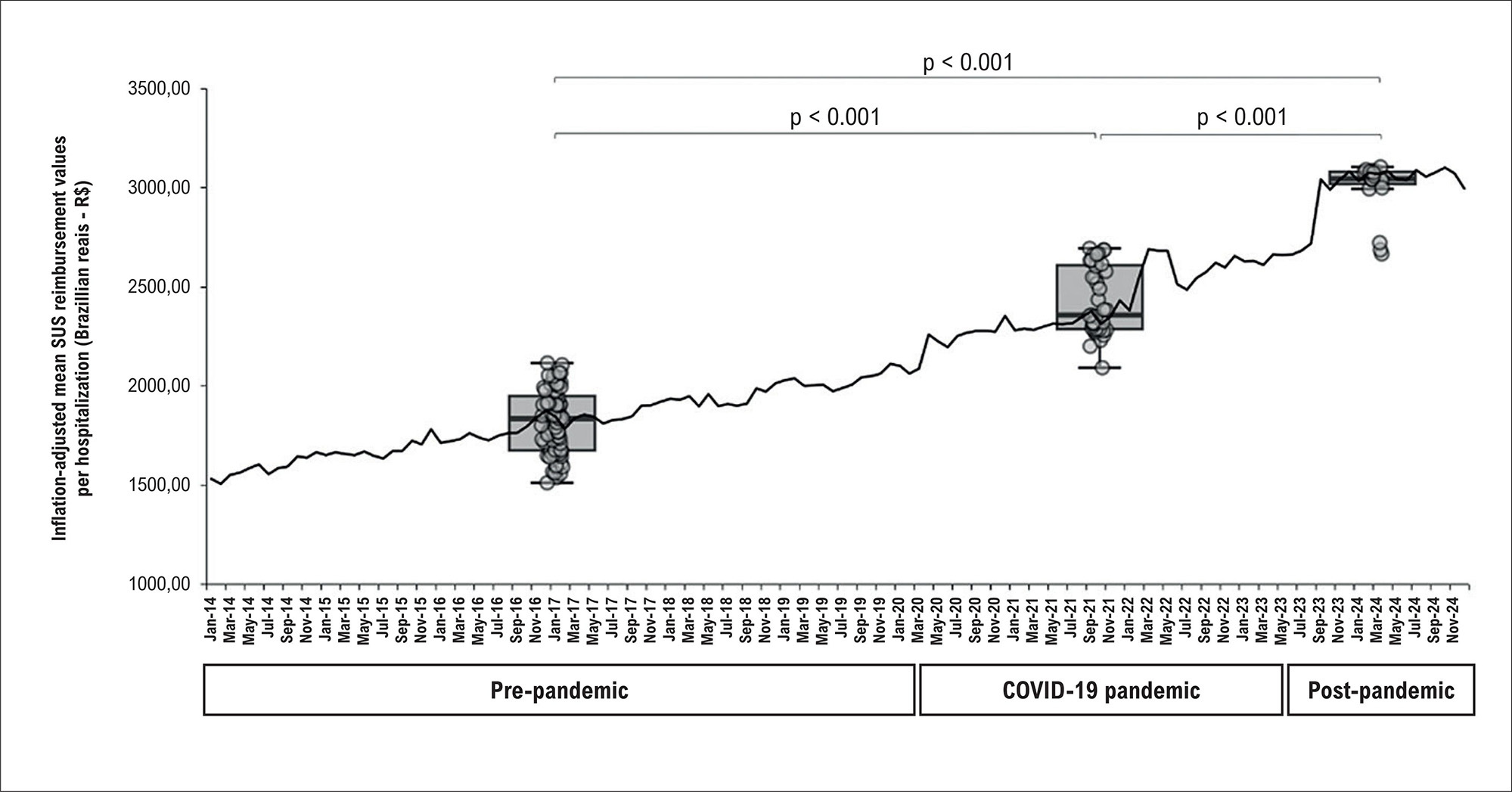
Cardiovascular diseases (CVDs) are the leading cause of death in Brazil, causing over 400,000 deaths annually and imposing a substantial clinical and economic burden on the healthcare system., Despite this burden, nationwide evidence on the hospital expenditures associated with CVDs remains limited and methodologically heterogeneous, reducing its usefulness for health planning in a country marked by substantial regional differences. In Brazil, hospital care financed by the Brazilian Unified Health System (Sistema Único de Saúde—SUS) is administratively recorded through amounts approved for reimbursement, which provide a standardized measure of direct hospital expenditure within the public health system. Understanding these reimbursement patterns became particularly relevant during the COVID-19 pandemic, which disrupted chronic disease management and altered healthcare utilization patterns. However, variations in SUS reimbursement values for CVD hospitalizations across regions and pandemic periods remain insufficiently characterized. This study aimed to compare inflation-adjusted SUS reimbursement values for hospitalizations due to CVDs in Brazil between 2014 and 2024 across geographic regions, sociodemographic and healthcare-related characteristics, and the pre-pandemic, pandemic, and post-pandemic periods.

[…]
  • Cardiovascular Diseases
  • COVID-19
  • Heart Failure
  • Hypertension
  • Stroke
Read Full Article
Creative Commons Attribution (CC BY) Creative Commons license
26/11/2026 DOI: 10.36660/abc.20250812i Views 3
ABC
Brief Communication

Cost-Benefit Analysis of Telemonitoring for Patients with Heart Failure after Hospital Discharge

Mônica Viegas Andrade et al. Nayara A. Julião Aline de Souza Kenya Noronha … André S. Motta-Santos Edmar G. Ribeiro Ana L. A. Ciminelli Deborah C. Malta Antonio L. P. Ribeiro Lilian C. Rezende Luisa C. C. Brant

Abstract

To estimate the cost-benefit of telemonitoring in patients with heart failure (HF) from the perspective of the Brazilian Unified Health System (SUS).

An economic analysis based on a clinical trial was conducted, comparing telemonitoring with usual care. Implementation costs per patient and the expected incremental net benefit resulting from avoided readmissions were estimated in scenarios based on hospitalization costs from SIH/SUS and DRG-Brasil. The potential benefit for the state of Minas Gerais was also estimated.

The implementation cost for SUS was estimated at R$426.00 per patient (2024). Telemonitoring showed a positive expected incremental net benefit, ranging from R$47.00 (SIH/SUS) to R$2,396.00 (DRG-Brasil) per patient. For Minas Gerais, the estimated annual net benefit ranged from R$1.3 million to R$65.7 million.

Telemonitoring for patients with HF proved economically favorable from the SUS perspective, supporting its adoption and scale-up in the public sector.

  • Cost-Benefit Analysis
  • Heart Failure
  • Remote Patient Monitoring
Read Full Article
Creative Commons Attribution (CC BY) Creative Commons license
26/11/2026 DOI: 10.36660/abc.20260191i Views 3
Central Illustration
ABCHF
Original Article

Factors Associated with Functional Capacity in Heart Failure Patients

Leandro Marques da Silva et al. Luiza Pinto Moreno José Albuquerque de Figueiredo Neto Thalya Brenda Mendes Lima Gedean Souza Pontes

Abstract

Background

Heart failure (HF) is a prevalent clinical condition that significantly impacts patient survival and represents one of the leading causes of hospitalization and mortality.

Objective

To analyze the association between functional capacity and clinical, socioeconomic, behavioral, and cognitive factors in individuals with HF.

Methods

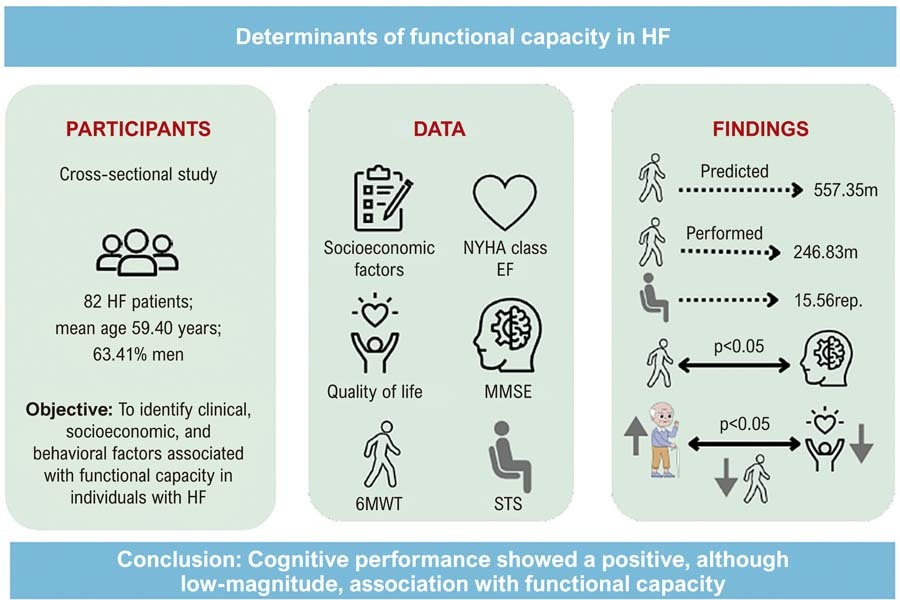
A cross-sectional study was conducted with 82 patients with HF undergoing outpatient follow-up. Functional capacity was assessed using the six-minute walk test (6MWT) and the sit-to-stand test (STS). Cognitive performance was measured using the mini-mental state examination (MMSE). Sociodemographic and clinical data were obtained from medical records and structured interviews.

Results

The sample consisted of 82 patients (63.4% male), with a mean age of 59.4 ± 12.9 years. In the 6MWT, the mean distance walked was significantly lower than the predicted distance (246.8 ± 86.5 m vs. 557.3 ± 47.5 m; p < 0.001). In the STS, participants performed an average of 15.6 ± 4.8 repetitions (p < 0.001). A positive and statistically significant correlation was observed between MMSE scores and functional capacity assessed by the 6MWT (ρ = 0.290; p = 0.020). Lower functional performance was also associated with older age, male sex, and poorer self-rated quality of life (p < 0.05).

Conclusion

In the sample studied, cognitive performance and clinical and sociodemographic factors were associated with functional capacity in individuals with HF.

  • Functional Status
  • Heart Failure
  • Risk Factors
Read Full Article
Creative Commons Attribution (CC BY) Creative Commons license
29/10/2026 DOI: 10.36660/abchf.20260028i Views 11
Figure 1
ABCHF
Viewpoint

From Recognition to Clinical Practice: Advances and Challenges in the Multidimensional Assessment of Frailty in Heart Failure

France Matos de Oliveira et al. Sandrigo Mangini Fabiana Goulart Marcondes-Braga

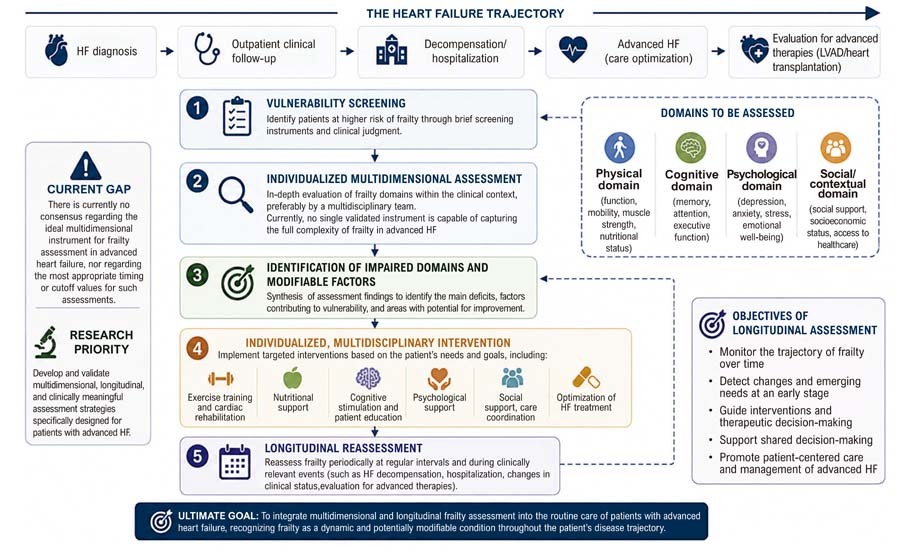
The concept of frailty has gained increasing relevance in recent years due to its association with worse clinical outcomes and prognosis across different health conditions. There is broad recognition of its role as a determinant of morbidity and mortality in patients with heart failure (HF); however, there is still no consensus regarding an optimal assessment model.– In addition to the absence of a universally accepted instrument, this scenario reflects a conceptual issue: can frailty in advanced HF be adequately represented by a single-point and predominantly physical assessment?

In this article, we argue that it cannot. Frailty in advanced HF should not be reduced to a physical marker of vulnerability. Rather, it is a multidimensional condition influenced by cognitive, psychosocial, and contextual factors, whose interpretation requires clinical integration and sensitivity from the healthcare team.

[…]

  • Cognition
  • Frailty
  • Heart Failure
  • Heart Transplantation
Read Full Article
Creative Commons Attribution (CC BY) Creative Commons license
29/10/2026 DOI: 10.36660/abchf.20260038i Views 13
Central Illustration
ABCIC
Special Article

Position Statement on the Use of Point-of-Care Ultrasound in Cardiovascular Medicine – 2026: Executive Summary

Monica Luiza de Alcantara et al. Marcos Paulo Lacerda Bernardo Adenalva Lima de Souza Beck Simone Nascimento Santos … Samira Saady Morhy Edgar Bezerra de Lira Filho Alex dos Santos Felix Daniel Goldwasser Maria Estefânia Bosco Otto Angelo Antunes Salgado Ana Paula dos Reis Velloso Siciliano Fernando Melo Netto Claudia Maria Vilas Freire Ana Cristina Lopes Albricker Rafael Modesto Fernandes Frederico José Neves Mancuso Dalton de Souza Barros Hatem Soliman Aboumarie Marcelo Haertel Miglioranza Salomon Israel do Amaral Marcelo Dantas Tavares de Melo Marcio Mendes Pereira Antonio Tito Paladin Filho Lidia Ana Zytynski Moura Pedro Gabriel Melo de Barros e Silva Alexandre de Matos Soeiro Carlos Eduardo Lucena Montenegro Luiz Cláudio Danzmann João Ricardo Cordeiro Fernandes Silvio Henrique Barberato

Abstract

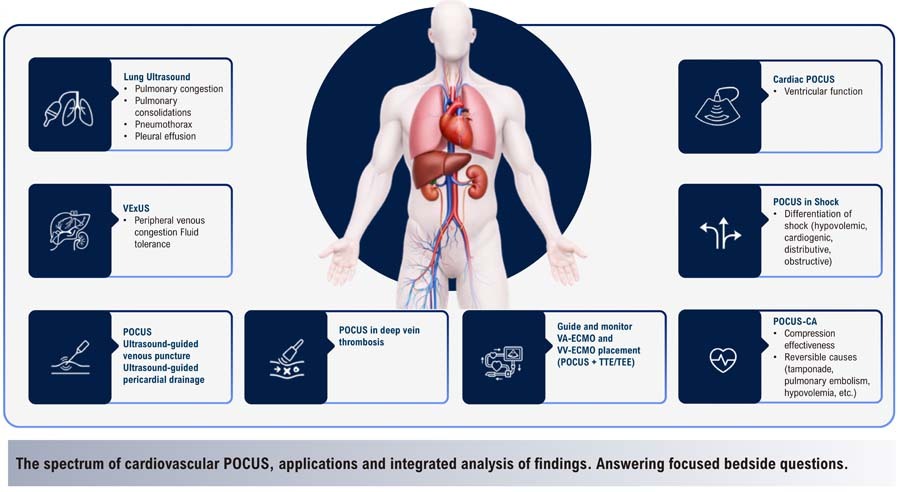
Point-of-care ultrasound (POCUS) is one of the most significant innovations in contemporary cardiovascular clinical practice, serving as an extension of the bedside physical examination. This executive summary outlines the Position Statement from the Department of Cardiovascular Imaging of the Brazilian Society of Cardiology (DIC-SBC), published in 2026, covering the key domains of cardiovascular POCUS application: cardiac assessment, lung ultrasound, assessment of systemic venous congestion (VExUS), screening for deep vein thrombosis, management of circulatory shock, short-term mechanical circulatory support, emergency medicine applications, cardiorespiratory arrest, and ultrasound-guided procedures. Fundamental concepts regarding training, certification, and ethical and legal aspects relevant to the Brazilian context are discussed. This document emphasizes that POCUS does not replace a comprehensive diagnostic echocardiogram, but rather adds substantial clinical value when performed by properly trained professionals within structured protocols.

  • Echocardiography
  • Emergencies
  • Heart Failure
  • Point-of-Care Systems
  • Shock
  • Ultrasonography
  • Venous Thrombosis
Read Full Article
Creative Commons Attribution (CC BY) Creative Commons license
19/10/2026 DOI: 10.36660/abcimg.20260103i Views 18
Figure 1
ABCHF
Viewpoint

Artificial Intelligence in Heart Failure: The New Role of the Cardiologist

Ana Karyn Freitas et al. Ana Luisa Trentini Bittencourt Carina Toledo Scoparo Barioni Renata Paes de Barros Wandresen … Aline Brizola Oberderfer Bruno Ceschin Chiaratti Gustavo Pichel Kakuda Salim Mussi Neto

Introduction

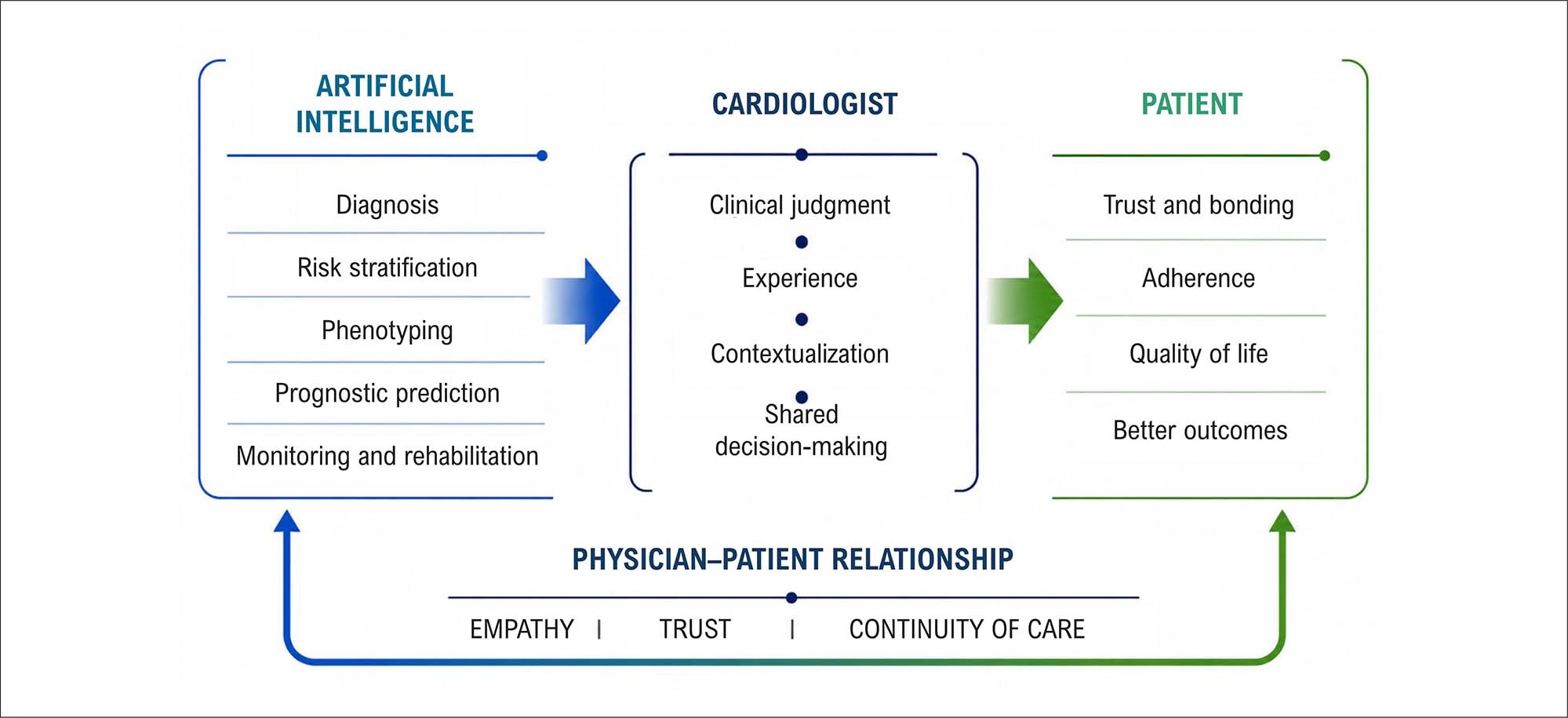
Artificial intelligence (AI) is no longer a distant promise – it has become a reality in medical practice. Tools capable of interpreting tests, stratifying risk, suggesting diagnoses, and even proposing management strategies have generated growing enthusiasm among healthcare professionals. In this rapidly expanding technological landscape, an inevitable question arises: what will be the role of the medical specialist in the age of AI?

Heart failure (HF) represents one of the best models for this discussion. It is one of the diseases with the greatest clinical impact worldwide, affecting approximately 64 million people., Despite advances in understanding its pathophysiology and in treatment options, HF remains a condition with high morbidity and mortality, with substantial residual risk even when disease-modifying therapies are implemented.– Much of this challenge lies in the complexity of its pathophysiological mechanisms, as well as the heterogeneity of clinical manifestations, disease progression, and associated comorbidities.,

[…]

  • Artificial Intelligence
  • Heart Failure
  • Machine Learning
  • Physician-Patient Relations
Read Full Article
Creative Commons Attribution (CC BY) Creative Commons license
16/10/2026 DOI: 10.36660/abchf.20260032i Views 11
ABCIC
Editorial

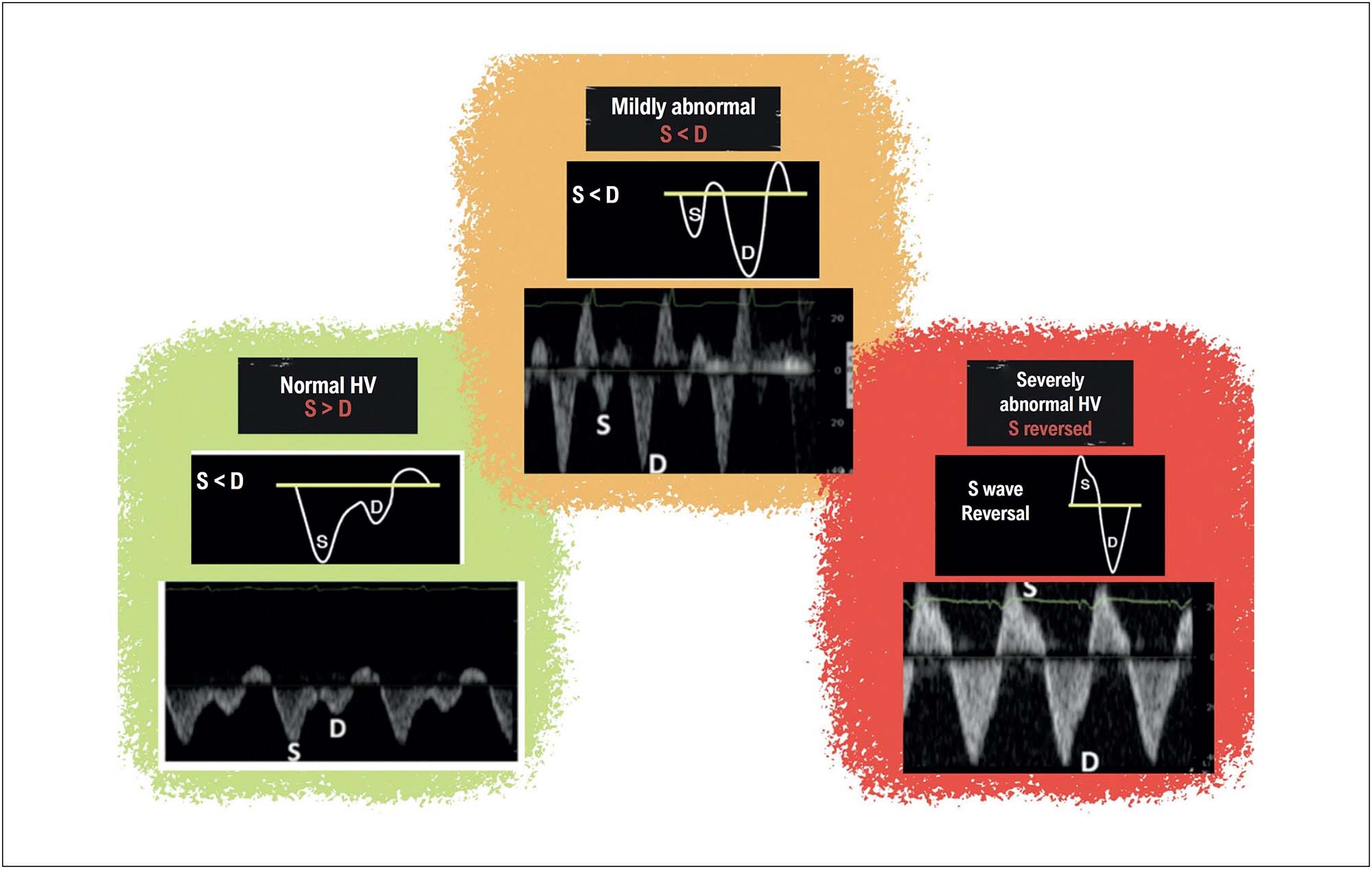
Invasive Assessment of the Hemodynamic Profile of Critically Ill Patients: When Is Echocardiographic Assessment Alone Sufficient

Angelo Antunes Salgado et al. Marcos Paulo Lacerda Bernardo

Assessing systemic and/or pulmonary congestion in patients with heart failure is fundamental to clinical management and prognosis. This congestive state is characterized by fluid accumulation in the body and represents the leading cause of hospitalization and hospital readmission in heart failure, both in patients with reduced or preserved ejection fraction, and directly contributes to increased mortality. Therefore, the early and accurate identification of fluid overload is indispensable for guiding therapeutic management, preventing complications, and optimizing clinical outcomes. However, conventional clinical signs generally have low sensitivity and specificity, limiting their effectiveness when used alone for disease diagnosis and management and making complementary methods necessary to better define the clinical condition.

Invasive tools to establish hemodynamic parameters are considered the gold standard for accurately determining the degree of congestion, assessing cardiac performance, and evaluating pulmonary and systemic vascular resistance. The use of invasive catheters, particularly right-sided catheters, has increased in recent years and has provided relevant prognostic information to guide appropriate treatment in patients with cardiac dysfunction and other diseases, particularly pulmonary hypertension.

[…]

  • Catheterization
  • Echocardiography
  • Heart Failure
Read Full Article
Creative Commons Attribution (CC BY) Creative Commons license
13/10/2026 DOI: 10.36660/abcimg.20260109i Views 8
Beyond Ejection Fraction: In Pacemaker-Induced Cardiomyopathy, are We Closer to Identifying At-Risk Patients Early?
ABC
Editorial

Beyond Ejection Fraction: In Pacemaker-Induced Cardiomyopathy, are We Closer to Identifying At-Risk Patients Early?

Silvia Moreira Ayub-Ferreira et al. Mabely Teixeira

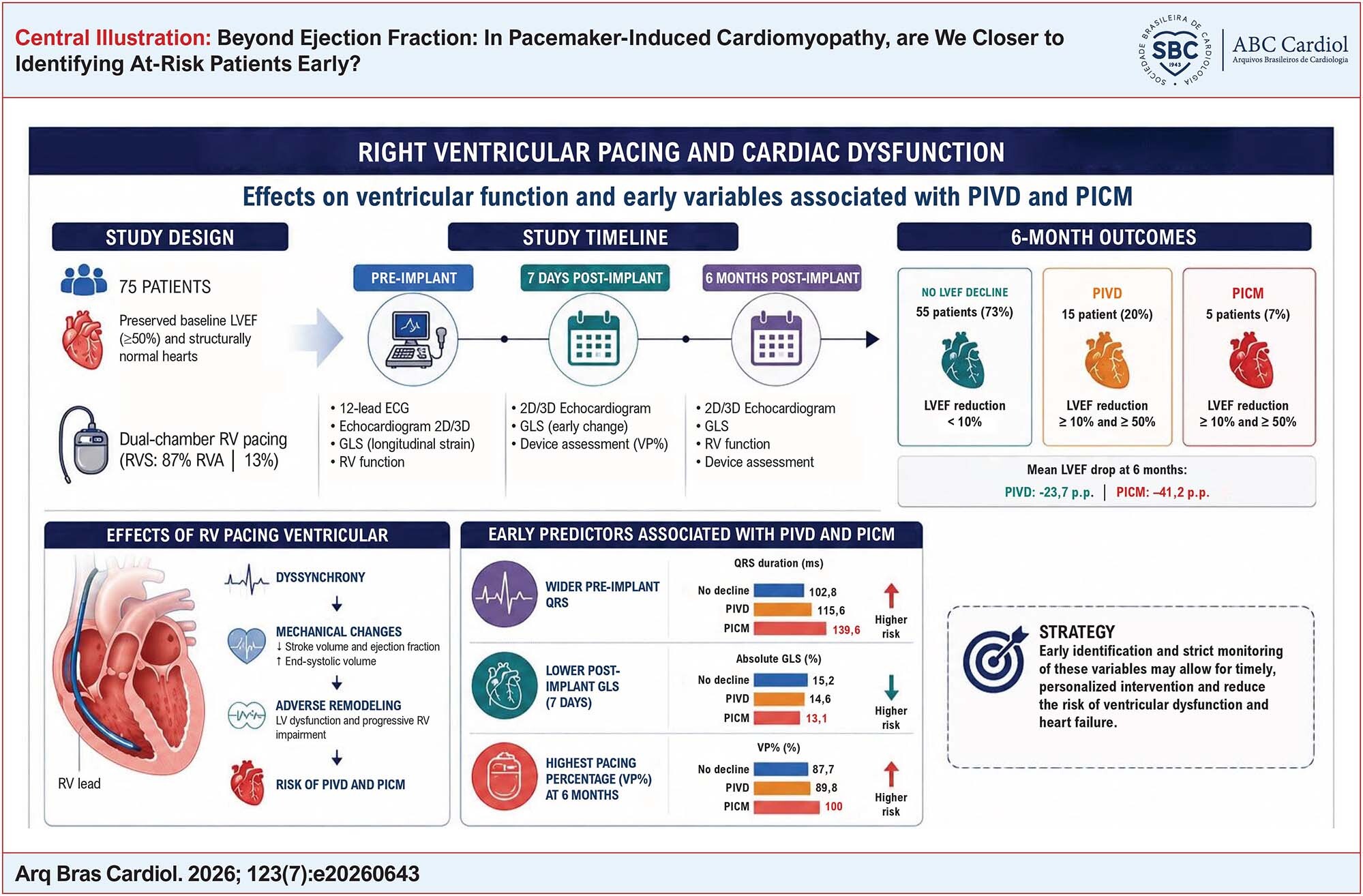
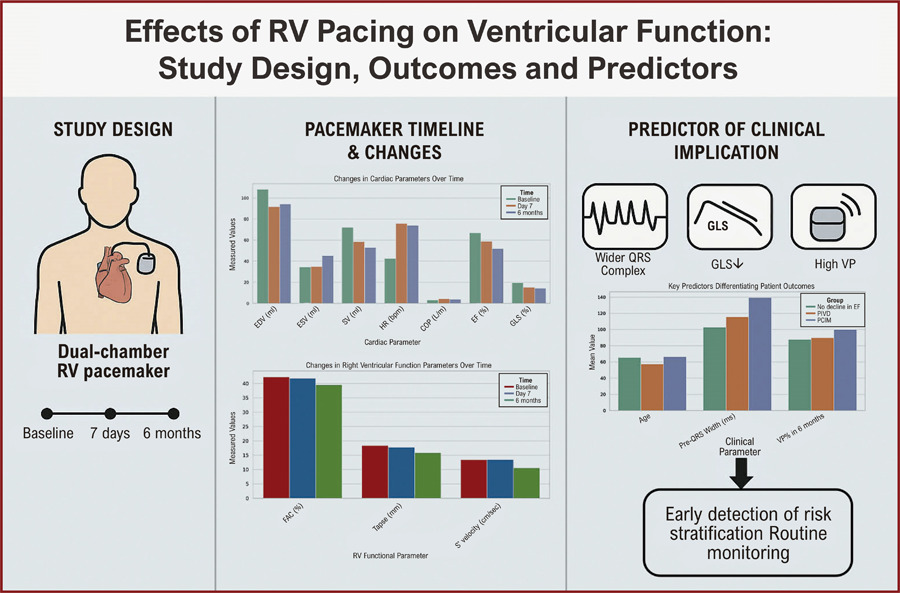
The natural history of symptomatic bradyarrhythmias was greatly impacted from the 1950s onwards with the implementation of cardiac pacemakers, initiating the era of Artificial Cardiac Stimulation. Dual-chamber pacemakers are routinely used in advanced atrioventricular blocks in structurally normal hearts. Right ventricular pacing, despite its effectiveness in correcting conduction disturbances, has deleterious effects on ventricular mechanics. It promotes ventricular dyssynchrony, triggering a reduction in systolic function and, in a portion of patients, the development of pacemaker-induced cardiomyopathy (PICM). In this context, in addition to ejection fraction, the identification of risk predictors for ventricular dysfunction (VID) and PICM allows for better clinical decision-making and a reduction in the impact of heart failure in patients dependent on right ventricular pacing.

This exploratory study presents global longitudinal strain (GLS) as an early marker of myocardial impairment. Although left ventricular ejection fraction (LVEF) remains the most widely used metric in clinical practice, its reduction is known to often represent a relatively late stage of functional injury. In contrast, GLS allows the identification of subclinical changes in longitudinal contractility before significant changes in LVEF occur. The study shows that GLS reductions are early, already observable as early as seven days after implantation in patients who subsequently developed IVP or PICM. The possibility of identifying vulnerable patients as early as the first week after implantation is particularly attractive.

[…]

  • Artificial Pacemaker
  • Cardiac resynchronization-therapy devices
  • Heart Failure
Read Full Article
Creative Commons Attribution (CC BY) Creative Commons license
09/10/2026 DOI: 10.36660/abc.20260643i Views 10
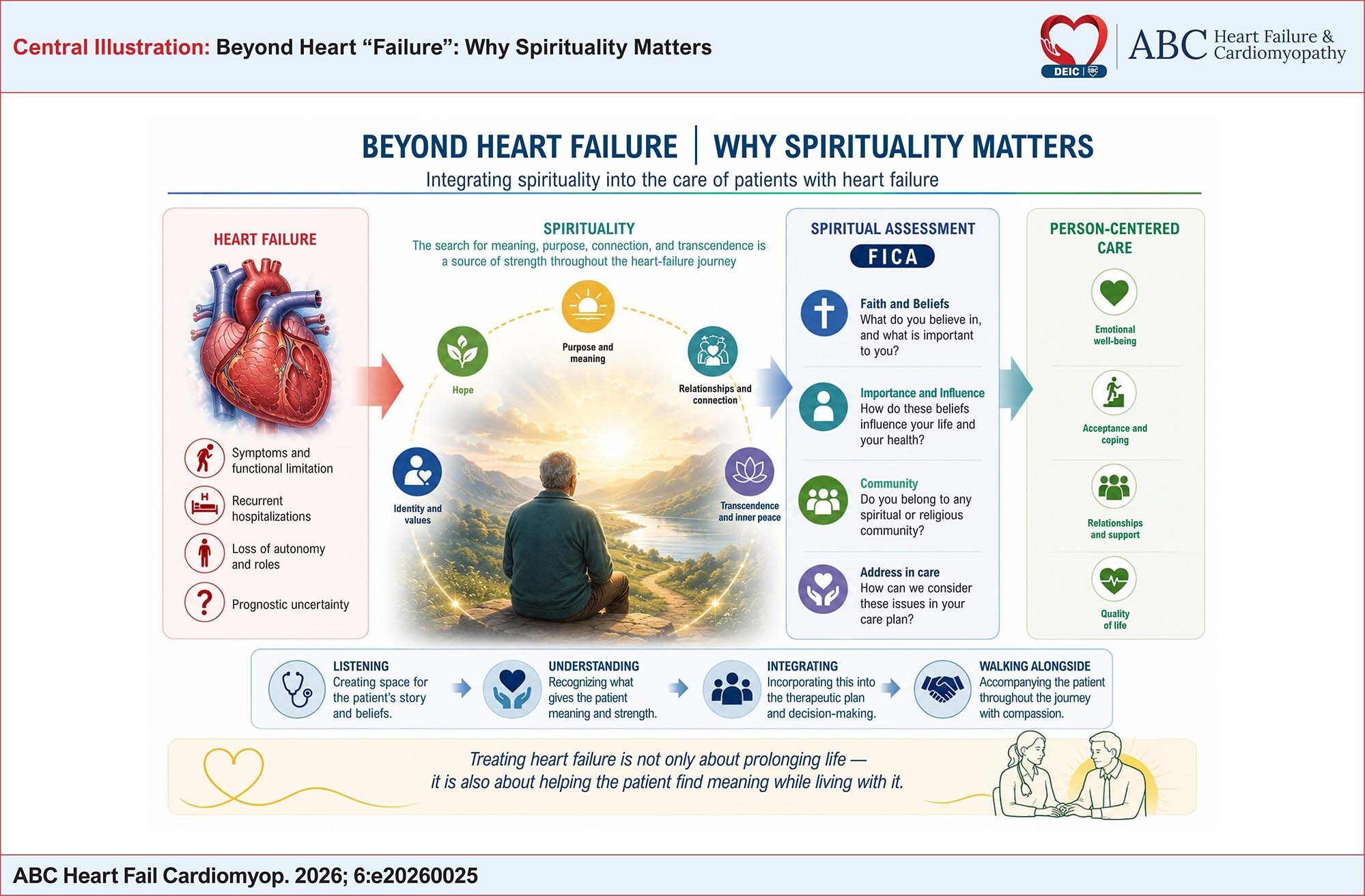
Beyond Heart "Failure": Why Spirituality Matters
ABCHF
Review Article

Beyond Heart "Failure": Why Spirituality Matters

Vanessa Simioni Faria et al. Amanda R. O. Siqueira Sara R. O. Siqueira

Abstract

Heart failure exemplifies a paradox of contemporary cardiology: as the possibilities for prolonging life and characterizing the disease with precision expand, aspects of the human experience that often shape how patients live with the condition remain insufficiently explored. In this review, spirituality is presented as a relevant dimension of person-centered care, highlighting its distinction from religiosity, its relationship with the experience of illness, and its potential role in promoting a more comprehensive approach to heart failure.

  • Coping Skills
  • Heart Failure
  • Spirituality
Read Full Article
Creative Commons Attribution (CC BY) Creative Commons license
09/10/2026 DOI: 10.36660/abchf.20260025i Views 9
Figure 1
ABC
Special Article

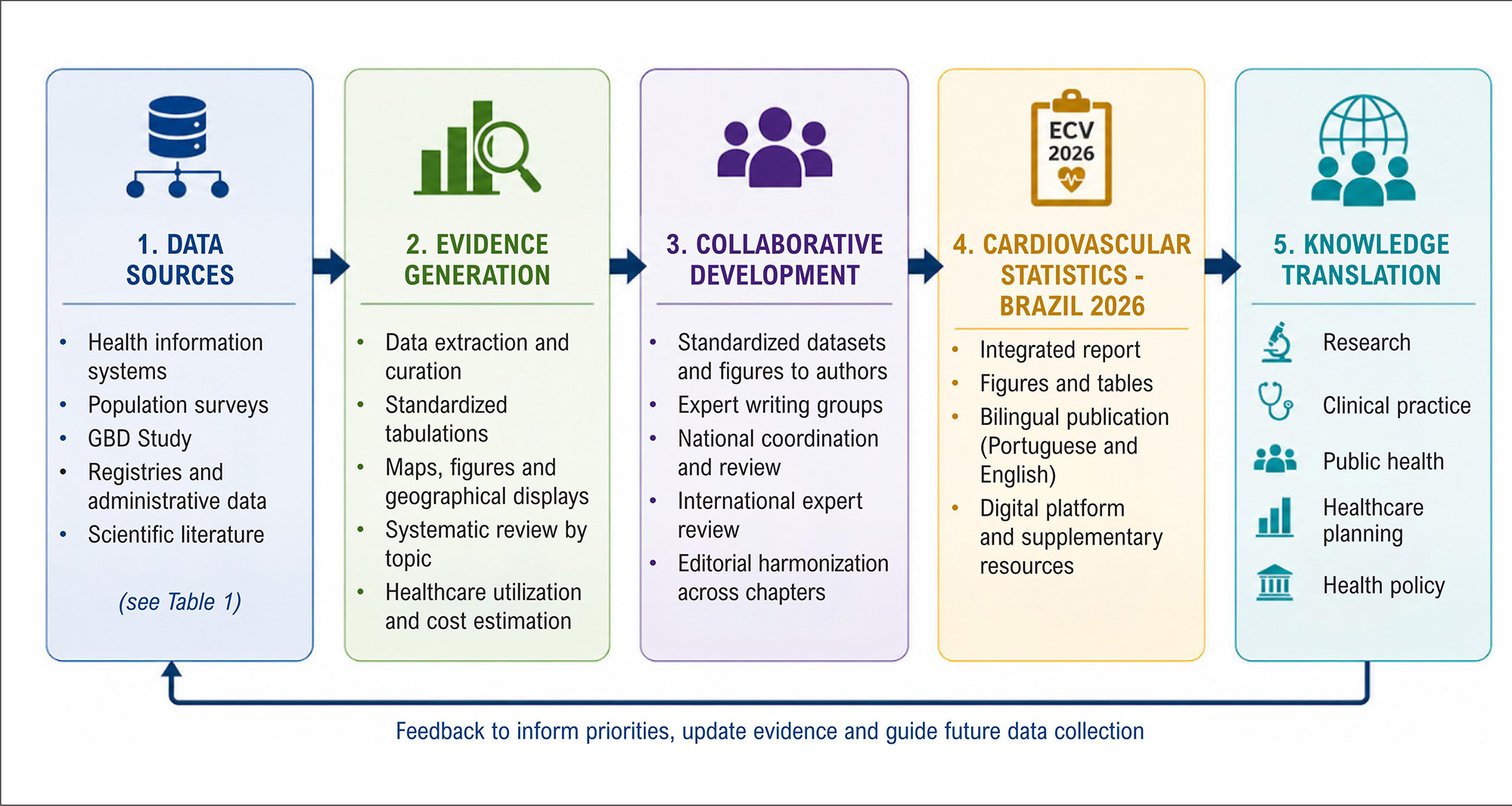
Cardiovascular Statistics – Brazil 2026

Gláucia Maria Moraes de Oliveira et al. Luisa Campos Caldeira Brant Carisi Anne Polanczyk Deborah Carvalho Malta … Andreia Biolo Bruno Ramos Nascimento Maria de Fatima Marinho de Souza Andrea Rocha De Lorenzo Antonio Aurélio de Paiva Fagundes Júnior Arthur Gus Manfro Beatriz D. Schaan Christina Grüne de Souza e Silva Fábio Morato de Castilho Fernando Henpin Yue Cesena Gabriel Porto Soares Gesner Francisco Xavier Junior Jose Augusto Soares Barreto Filho Lucia Campos Pellanda Luciana Nicolau Aranha Luis Eduardo Paim Rohde Luiz Guilherme Passaglia Marcelo Martins Pinto-Filho M. Julia Machline-Carrion Marcio Sommer Bittencourt Octavio M. Pontes Neto Paolo Blanco Villela Paulo Henrique Godoy Renato Azeredo Teixeira Ricardo Stein Roney Orismar Sampaio Thais Rocha Salim Thomaz A. Gaziano Pablo Perel Gregory A. Roth Antonio Luiz Pinho Ribeiro

ABOUT THESE STATISTICS

See and and .

Abbreviations used in the introduction

[…]

  • Atrial Fibrillation
  • Atrial flutter
  • Brazil
  • Cardiomyopathies
  • Cardiovascular Diseases
  • Cerebrovascular Disorders
  • chronic renal insufficiency
  • Congenital Heart Defects
  • Coronary Disease
  • Diabetes Mellitus
  • Diet
  • Dyslipidemias
  • Exercise
  • Heart Failure
  • Heart Valve Diseases
  • Hypertension
  • Obesity
  • Overweight
  • Statistics
  • Tobacco Use Disorder
Read Full Article
Creative Commons Attribution (CC BY) Creative Commons license
07/10/2026 DOI: 10.36660/abc.20260832i Views 186
Central Illustration
ABC
Original Article

Effectiveness of Implantable Cardioverter-Defibrillator Therapy for Primary Prevention in Patients with Nonischemic Heart Failure with Reduced Ejection Fraction

Luis E. Rohde et al. Leandro I. Zimerman Lídia Z. Moura Luis C. Danzmann … Silvia M. Martins Verônica Colpani Kelly Zucatti José Albuquerque de Figueiredo-Neto Fabiana G. Marcondes-Braga Ricardo Mourilhe-Rocha Denilson Campos de Albuquerque Mucio T. de Oliveira-Júnior Marcus V. Simões

Abstract

Background

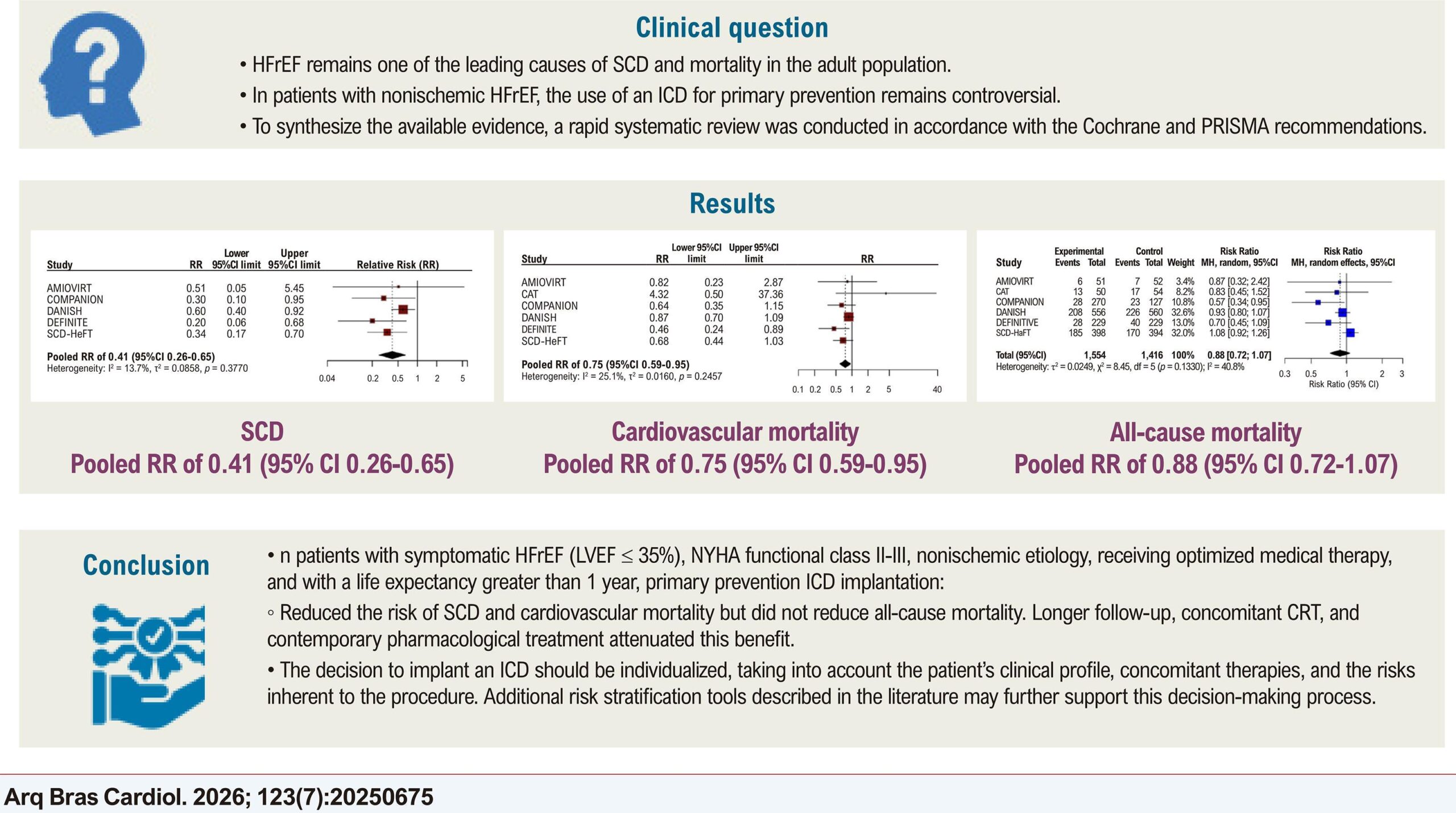
Primary prevention with an implantable cardioverter-defibrillator (ICD) has become an increasingly debated strategy, with its role in patients with nonischemic heart failure with reduced ejection fraction (HFrEF) undergoing continued reassessment.

Objective

To summarize the available scientific evidence on the effectiveness of ICD therapy for primary prevention in patients with nonischemic HFrEF.

Methods

A rapid systematic review and meta-analysis was conducted in accordance with the recommendations of the Cochrane Rapid Reviews Methods Group and the Preferred Reporting Items for Systematic Reviews and Meta-Analyses statement. Statistical significance was defined as a two-sided p-value < 0.05. Searches were performed in the MEDLINE, Embase, and CENTRAL databases. Randomized controlled trials (RCTs) evaluating ICD implantation for primary prevention were included, with sudden cardiac death (SCD), cardiovascular mortality, and all-cause mortality as the primary outcomes.

Results

A total of 18 publications reporting daata from six pivotal RCTs were included. ICD therapy was associated with a statistically significant reduction in SCD (relative risk [RR] 0.41; 95%CI 0.26-0.65; high-certainty evidence) and cardiovascular mortality (RR 0.75; 95%CI 0.59-0.95; high-certainty evidence). For all-cause mortality, the primary analysis showed no statistically significant difference between groups (RR 0.88; 95%CI 0.72-1.07; moderate-certainty evidence). In the subgroup analysis, studies with shorter follow-up (< 6.8 years) demonstrated a significant reduction in all-cause mortality (RR 0.69; 95%CI 0.52-0.92).

Conclusion

In patients with nonischemic HFrEF, ICD therapy reduced SCD and cardiovascular mortality but did not significantly reduce all-cause mortality in the primary analysis. These findings support the use of ICD therapy when guided by individualized clinical assessment.

  • Heart Failure
  • Implantable Defibrillators
  • Mortality
Read Full Article
Creative Commons Attribution (CC BY) Creative Commons license
02/10/2026 DOI: 10.36660/abc.20250675i Views 10
ABCHF
Viewpoint

The Adipokine Hypothesis: Does it Play a Major or Minor Role in HFpEF?

Luís Beck-da-Silva et al. Flávio D. Fuchs

We read with great interest the paper “The Adipokine Hypothesis of Heart Failure With a Preserved Ejection Fraction”.

The adipokine hypothesis explores biological mechanisms beyond the well-known risk factors for heart failure with preserved ejection fraction (HFpEF). The article presents a well-supported hypothesis based on data from bench research, animal studies, preclinical findings, and epidemiological evidence. The biological plausibility of the hypothesis is sound. However, certain considerations merit further discussion regarding the interpretation of HFpEF risk factors.

[…]

  • Diastolic Heart Failure
  • Heart Failure
  • Hypertension
  • Obesity
Read Full Article
Creative Commons Attribution (CC BY) Creative Commons license
29/09/2026 DOI: 10.36660/abchf.2060037i Views 12
ABC
Editorial

Axillary Intra-Aortic Balloon Pump: From Technical Feasibility to Preserving Functional Capacity

Felipe Lourenço Fernandes

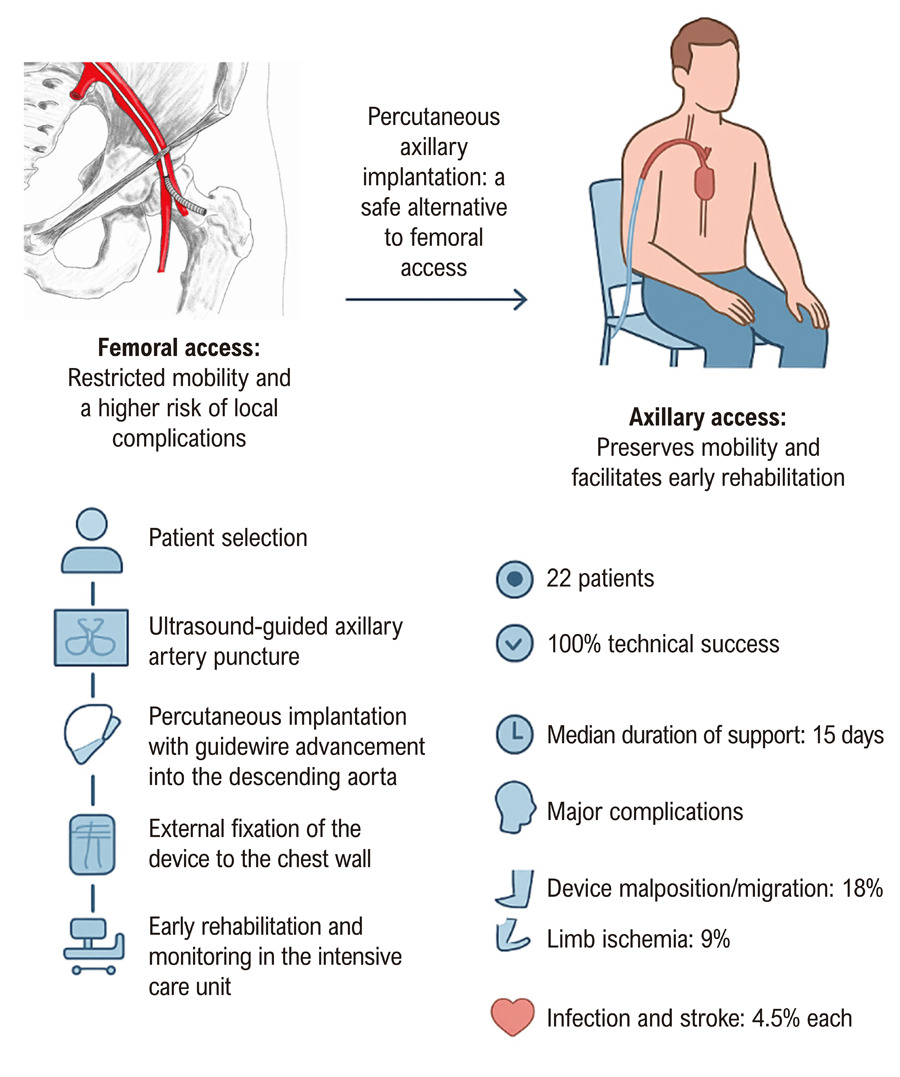
Temporary mechanical circulatory support has become an essential component in the management of advanced heart failure (HF), particularly for patients with progressive hemodynamic deterioration awaiting heart transplantation or other definitive therapies. Although higher-support devices, such as the Impella® and venoarterial extracorporeal membrane oxygenation, have broadened therapeutic options, the intra-aortic balloon pump (IABP) continues to play an important role owing to its widespread availability, lower cost, well-established safety profile, and technical simplicity. These characteristics make it especially valuable in healthcare systems with limited resources, such as Brazil’s.

However, the femoral approach—the most commonly used access route—has an important drawback: it severely limits patient mobility. Prolonged bed rest contributes to skeletal muscle loss, frailty, and declining functional capacity, all of which are associated with poorer outcomes following heart transplantation. Preserving mobility has therefore evolved from a rehabilitation goal into a key therapeutic objective in patients with advanced HF. Against this background, the study published in this issue of the Arquivos Brasileiros de Cardiologia reports the first Brazilian experience with percutaneous axillary IABP implantation in hospitalized heart transplant candidates. Even during the initial learning curve, the investigators achieved technical success in every procedure, with a median support duration of 15 days and complication rates comparable to those reported by experienced international centers, demonstrating that the technique can be safely adopted in specialized advanced HF programs.

[…]

  • Heart Failure
  • Heart Transplantation
  • Intra-Aortic Balloon Pumping
Read Full Article
Creative Commons Attribution (CC BY) Creative Commons license
29/09/2026 DOI: 10.36660/abc.20260602i Views 4
Figure 1
ABCIC
Editorial

Integrated Multiorgan Ultrasound for Assessment of Congestion in Heart Failure

Trisha Saha et al. Hatem Soliman Aboumarie

Introduction

Heart Failure (HF) is a complex clinical syndrome in which fluid overload and congestion play a central role in symptoms, hospitalization, and mortality. Traditional methods for assessing congestion, such as clinical examination and natriuretic peptide levels, often lack sensitivity and provide limited information about the distribution and severity of fluid accumulation.

Traditional bedside methods, such as auscultation for lung crepitations, chest radiography to detect overt pulmonary oedema, and palpation to grade pitting oedema, can help identify congestion. However, these approaches often only detect congestion after it is well established. In modern practice, echocardiography and focused ultrasound allow clinicians to identify congestion much earlier when applied systematically and evidence-based protocols. Echocardiography provides valuable information regarding Ejection Fraction (EF) and structural abnormalities that contribute to heart failure and fluid overload. Lung ultrasound, particularly the BLUE protocol with a B profile, can reveal early pulmonary congestion long before clinical signs become apparent, allowing timely intervention.,

[…]

  • Echocardiography
  • Heart Failure
  • Ultrasonography
Read Full Article
Creative Commons Attribution (CC BY) Creative Commons license
28/09/2026 DOI: 10.36660/abcimg.20260081i Views 15
Percutaneous Axillary Intra-Aortic Balloon Pump Implantation in Patients Hospitalized with Heart Failure: Initial Brazilian Experience
ABC
Original Article

Percutaneous Axillary Intra-Aortic Balloon Pump Implantation in Patients Hospitalized with Heart Failure: Initial Brazilian Experience

Bruno Alves da Mota Rocha et al. Pedro H. M. C. de Melo Luis Mapa Rafael Nunes Oliveira … Antônio Fernando Freire Hernán Patricio García Mejía Vanessa Corcioli Bellini Liliane Kopel Silvia Gelás Lage Fabiana Goulart Marcondes-Braga Sandrigo Mangini Monica S. Ávila Iascara Wozniak de Campos Fernando Bacal Fábio Sândoli de Brito Jr Alexandre A. Abizaid Pedro Felipe Gomes Nicz

Abstract

Background

The intra-aortic balloon pump (IABP) is the most widely used mechanical circulatory support device for patients with advanced heart failure (HF) in our setting. However, femoral implantation restricts patient mobility during support.

Objective

To report the initial experience of a Brazilian advanced HF referral center with percutaneous axillary IABP implantation.

Methods

Consecutive patients hospitalized for HF who underwent percutaneous axillary IABP implantation at a tertiary cardiology referral center were included. A p-value < 0.05 was considered statistically significant.

Results

Between December 2020 and December 2023, 22 patients underwent percutaneous axillary IABP implantation. The mean age was 53 ± 10.7 years. All patients were hospitalized with refractory HF and were listed for heart transplantation. The procedure was successfully performed in all patients selected for the axillary approach. The median duration of support was 15 days (interquartile range: 7–28 days). Observed complications included device migration (18.2%), limb ischemia (9.1%), and isolated infectious and neurological events. Half of the patients either underwent heart transplantation or were successfully weaned from mechanical support.

Conclusion

The initial experience with percutaneous axillary IABP implantation demonstrated that the technique is feasible, safe, and reproducible. Further studies are needed to establish the role of this strategy within the continuum of care for patients hospitalized with advanced HF while awaiting heart transplantation.

  • Heart Failure
  • Heart Transplantation
  • Heart-Assist Devices
  • Intra-Aortic Balloon Pumping
Read Full Article
Creative Commons Attribution (CC BY) Creative Commons license
25/09/2026 DOI: 10.36660/abc.20250735i Views 30
ABC
Editorial

HFREF Therapy: Randomized Evidence and Real-World Perspectives

Daniella Motta da Costa Dan

Abstract

Heart failure with reduced ejection fraction (HFrEF) has seen significant therapeutic advances with the consolidation of the four pharmacological pillars that modify prognosis. The widespread use of these therapies is associated with a substantial reduction in cardiovascular death and hospitalizations for heart failure, supporting contemporary strategies for rapid introduction and subsequent optimization to target or maximum tolerated doses. In this context, sacubitril/valsartan demonstrated prognostic benefit in PARADIGM-HF and a greater reduction in NT-proBNP in PIONEER-HF. However, different results were observed in other settings, such as PARADISE-MI and LIFE, helping to define the populations in which its benefit was demonstrated. The study published in this issue of the Arquivos Brasileiros de Cardiologia evaluated, in a real-world observational cohort, patients with HFrEF treated with maximum doses of sacubitril/valsartan, enalapril, or losartan. Compared to the group treated with enalapril or losartan, sacubitril/valsartan was not associated with a statistically significant reduction in hospitalization or mortality, although it was associated with an improvement in functional class. These findings should be interpreted considering methodological limitations, such as observational design, lack of randomization, limited number of events, and heterogeneity of the comparator group. Real-world studies broaden the understanding of the effectiveness, applicability, and implementation of therapies and should be analyzed in conjunction with the consolidated evidence from randomized clinical trials.

Heart failure (HF) is a complex and serious syndrome associated with high hospitalization and mortality rates. In heart failure with reduced ejection fraction (HFrEF), large clinical trials have established four pharmacological pillars that modify the prognosis: beta-blockers, which attenuate the activation of the sympathetic nervous system; inhibition of the renin-angiotensin system, through the use of angiotensin receptor and neprilysin inhibitors (ARNIs), angiotensin-converting enzyme inhibitors (ACEIs), or angiotensin receptor blockers (ARBs); mineralocorticoid receptor antagonists (MRAs); and sodium-glucose cotransporter type 2 inhibitors (SGLT2i).,

[…]

  • Evidence-Based Practice
  • Heart Failure
  • Systolic Heart Failure
Read Full Article
Creative Commons Attribution (CC BY) Creative Commons license
21/09/2026 DOI: 10.36660/abc.20260588i Views 17
ABC
Letter to the Editor

Treatment of Heart Failure in Brazil: Where Cost-Effectiveness Studies and Public Access Data to Therapies Meet

Henrique Iahnke Garbin et al. Fernando Luis Scolari Andreia Biolo

Heart failure (HF) remains a leading cause of hospitalization and cardiovascular mortality in Brazil. In recent years, new prognostically modifying pharmacological therapies have been shown to reduce cardiovascular mortality, HF hospitalizations, and improve quality of life. In this context, the availability of these therapies in the public health system becomes a determining factor in improving clinical outcomes at the population level. A recent systematic review on the cost-effectiveness of HF therapies in Brazil demonstrated that several pharmacological interventions, including mineralocorticoid receptor antagonists, sodium-glucose cotransporter 2 (SGLT2) inhibitors, and angiotensin-neprilysin receptor inhibitors, have high economic attractiveness in the national scenario. Dapagliflozin, for example, showed an incremental cost-effectiveness ratio of Int$ 9,000/QALY, and is considered cost-effective.

Interestingly, Brazilian population-based evidence reinforces the clinical impact of these strategies, supporting the cost-effectiveness study. One analysis evaluated the temporal evolution of cardiovascular mortality and hospitalizations for heart failure after the implementation of the public access program for dapagliflozin in Brazil. The policy was initially approved for patients with type 2 diabetes mellitus or established cardiovascular disease aged ≥ 65 years. The medication was also made available to patients ≥ 18 years with heart failure with reduced ejection fraction, type 2 diabetes mellitus, or chronic kidney disease, upon presentation of a specialized medication report. The population-based study demonstrated a reduction in cardiovascular mortality trends (a 6.6% reduction in 2022, 4.7% in 2023, and 5.9% in 2024 compared to 2017) and hospitalizations for heart failure (a 23.8% reduction in 2024 compared to 2017) after the availability and access to medication in patients aged ≥ 65 years.

[…]

  • Brazil
  • Cost-Effectiveness Analysis
  • Heart Failure
Read Full Article
Creative Commons Attribution (CC BY) Creative Commons license
21/09/2026 DOI: 10.36660/abc.20260314i Views 16
Effects of Pacemakers on Ventricular Functions and Early Variables Associated with Induced Cardiomyopathy
ABC
Original Article

Effects of Pacemakers on Ventricular Functions and Early Variables Associated with Induced Cardiomyopathy

Sanjeev Kumar et al. Chandra Bhan Meena Navida Babbar Anil Bhandari … Dhananjay Singh Shekhawat Ankita Meel

Abstract

Background

Right ventricular (RV) pacing can alter ventricular mechanics and may lead to ventricular dysfunction, even in patients with preserved baseline left ventricular ejection fraction (LVEF) and structurally normal hearts.

Objective

This study examines the hemodynamic effects of right ventricular pacing on left ventricular function and volume, and identifies early variables associated with pacemaker-induced left ventricular dysfunction and cardiomyopathy in patients with dual-chamber RV pacemakers.

Methods

The study enrolled patients undergoing dual-chamber RV pacemaker implantation without any structural abnormality of the heart. Data on biventricular functions, LV volumes, and global longitudinal strain (GLS) were collected with 2D, speckle tracking, and 3D echocardiography. Paired continuous variables were compared using two-sided tests with a significance level of 0.05.

Result

Out of 75 patients, 20 experienced LV systolic dysfunction, 15 developed PIVD, and five developed PICM. In comparison to the control group, patients with PICM had lower GLS (17.02 vs. 19.27; p<0.05), wider QRS width (139.57 vs. 102.75; p < 0.05), and greater ventricular pacing percentage (VP%; 94.32 vs. 84.03; p = 0.06).

Conclusion

RV pacing resulted in a substantial decline in LV systolic function in the short and long term. Concurrently, RV functions declined over the long term (six months). Diminished GLS at seven days, a broader pre-implantation QRS complex, and an elevation in VP% are early indicators of PIVD and PICM. Routine patient monitoring for these indicators can be beneficial for timely intervention on a case-by-case basis.

  • Artificial Pacemaker
  • Cardiomyopathies
  • Heart Failure
  • Three-Dimensional Echocardiography
Read Full Article
Creative Commons Attribution (CC BY) Creative Commons license
18/09/2026 DOI: 10.36660/abc.20250566i Views 15
ABC
Research Letter

Cardiac Resynchronization Therapy in Cardio-Oncology: Real-World Evidence of Benefit in Cancer Patients with Heart Failure

Catarina Gregório et al. Andreia Magalhães Beatriz Silva Inês Araújo … Marta Vilela Pedro Marques João de Sousa Miguel Nobre Menezes Fausto J. Pinto Manuela Fiuza

Introduction

Heart failure (HF) is a major cause of morbidity and mortality among patients with cancer. The incidence of HF in this high-risk population is increasing, partly due to the cardiotoxic effects associated with contemporary cancer therapies. Despite substantial advances in oncological treatments and the growing number of cancer survivors, HF remains a major determinant of adverse clinical outcomes.

Cardiac resynchronization therapy (CRT) is an established treatment that improves symptoms and reduces mortality in patients with chronic HF. However, patients with a history of cancer have been frequently excluded or underrepresented in pivotal CRT trials, resulting in a significant evidence gap regarding the efficacy and safety of CRT in this population. Concerns related to comorbidities, cancer prognosis, and procedural risk may further contribute to the underutilization of CRT in clinical practice.

[…]

  • Cardiac Resynchronization Therapy
  • Cardio-Oncology
  • Heart Failure
Read Full Article
Creative Commons Attribution (CC BY) Creative Commons license
18/09/2026 DOI: 10.36660/abc.20250888i Views 12
Figure 1
ABCHF
Viewpoint

What We Choose to Fund Defines Who We Choose to Save: Pediatric Heart Failure in Emerging Economies

Carolina Vieira de Campos et al. Luiz Fernando Caneo Tamara J. Pimenta Desiree S. Machado

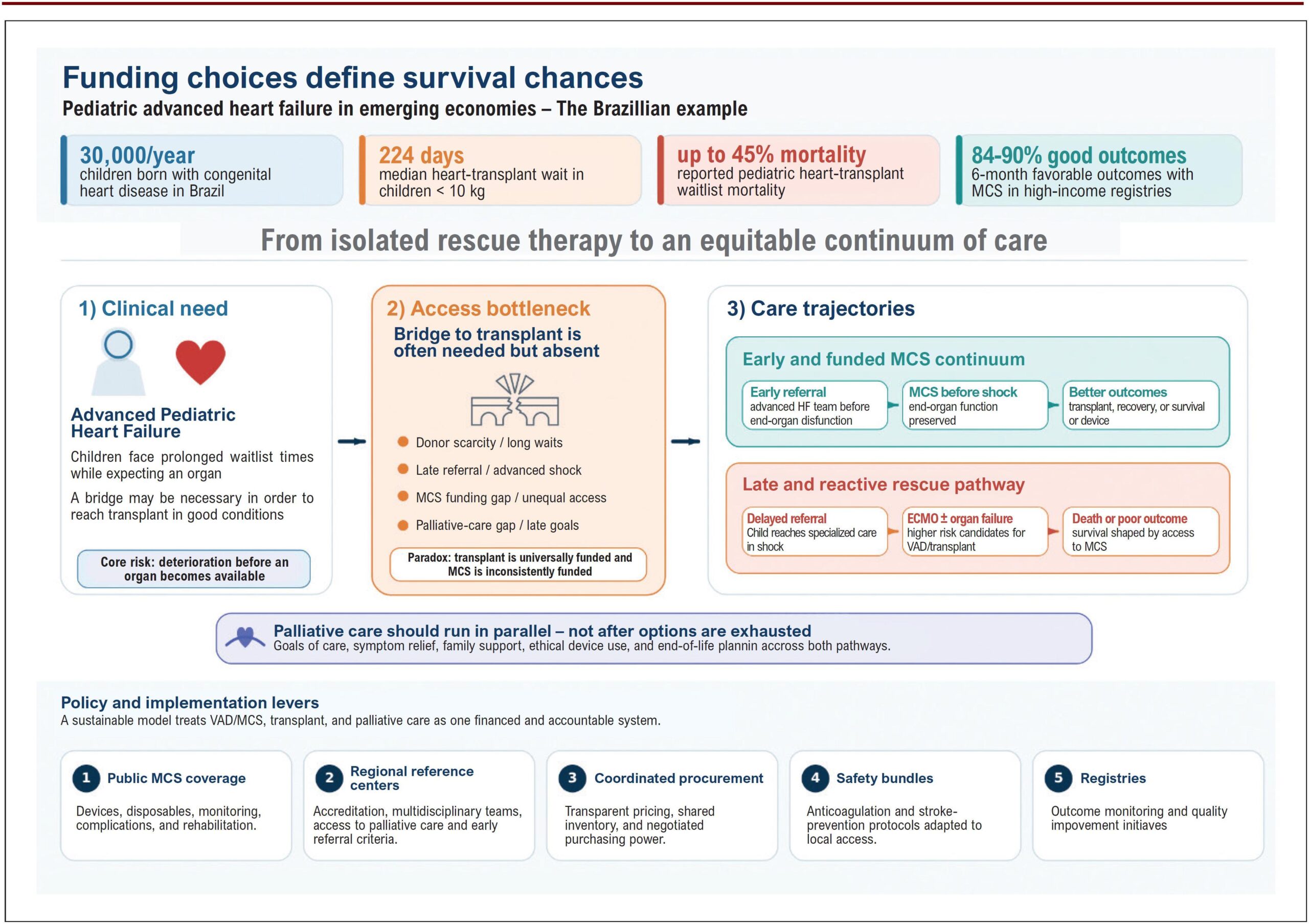
Management of pediatric advanced heart failure (HF) in low- to middle-income countries faces substantial and interconnected challenges, including severely limited access to specialized care, a shortage of adequately trained healthcare professionals, delayed referrals, and high mortality rates. These systemic constraints significantly restrict both the availability and the effectiveness of life-saving therapies for children with end-stage HF.

A deeper understanding of mechanical circulatory support (MCS) in emerging economies – illustrated here through the Brazilian experience – provides a valuable foundation for identifying structural, logistical, and ethical barriers to care. Such analysis also informs the development of strategies aimed at the sustainable and equitable expansion of advanced HF therapies for children.

[…]

  • Extracorporeal Membrane Oxygenation
  • Heart Failure
  • Heart Transplantation
  • Heart-Assist Devices
  • Pediatrics
Read Full Article
Creative Commons Attribution (CC BY) Creative Commons license
11/09/2026 DOI: 10.36660/abchf.20260014i Views 17
Figure 1
ABCHF
Editorial

ABC Heart Failure & Cardiomyopathy: Management Review and Indexing Perspectives

Germano Emílio Conceição-Souza

Introduction – context and mission

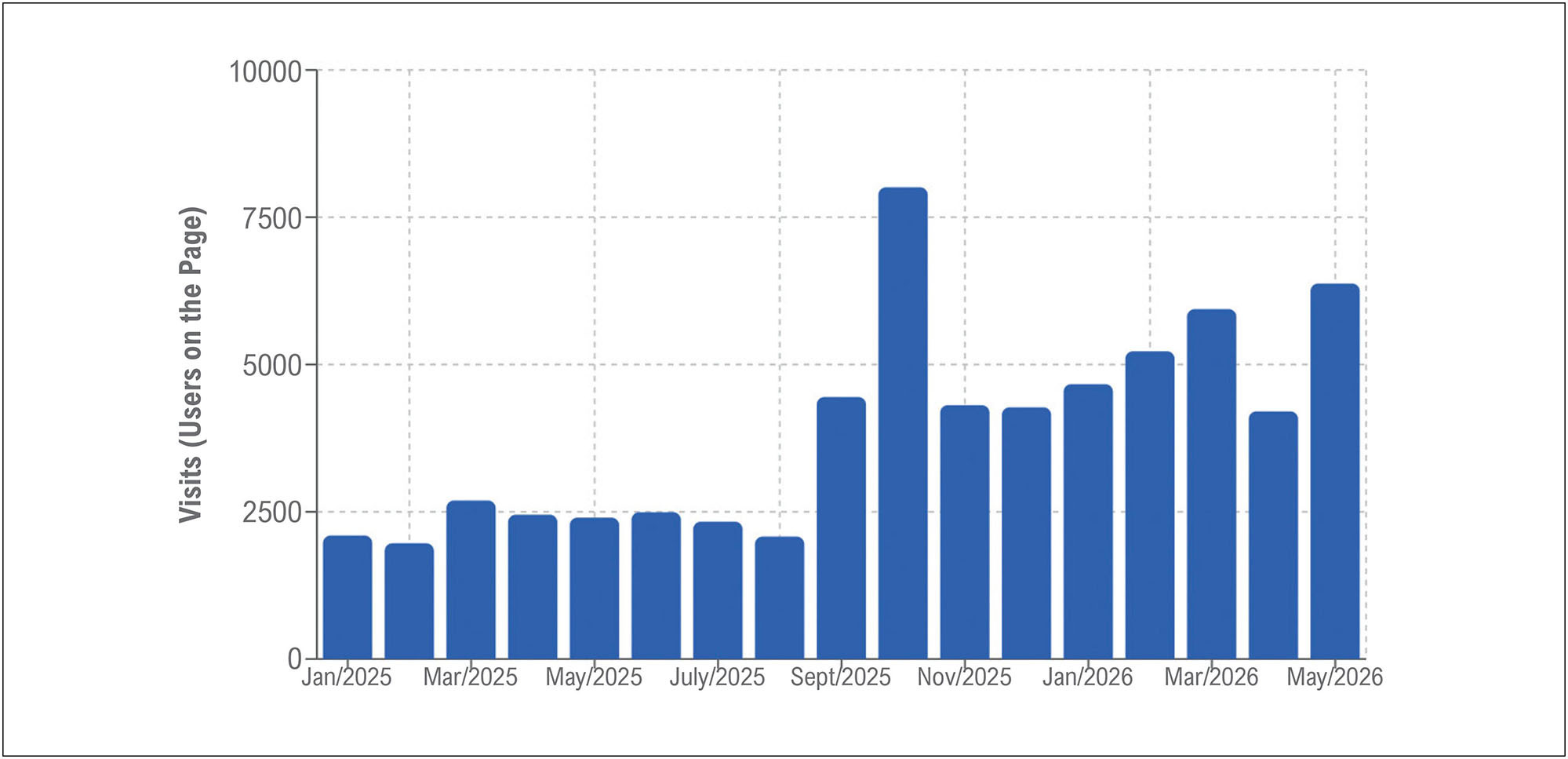
ABC Heart Failure & Cardiomyopathy (ABC HF) was established in 2021 as a specialized journal within Brazilian Society of Cardiology’s (SBC) family of scientific journals. The creation of ABC HF responded to a longstanding request from the Department of Heart Failure (DEIC-SBC) for a dedicated platform for disseminating high-quality research in the fields of heart failure and cardiomyopathies, including their various diagnostic and therapeutic approaches.

The mission of ABC HF goes beyond merely publishing scientific articles. The journal aims to create an environment that encourages the production and dissemination of knowledge, thereby strengthening scientific exchange and establishing itself as a reliable source of information for researchers and healthcare professionals in Portuguese-speaking countries and Latin America, regions that are particularly affected by the significant impact of heart failure.

[…]

  • Abstracting and Indexing
  • Cardiomyopathies
  • Heart Failure
  • Heart Transplantation
  • Publishing
Read Full Article
Creative Commons Attribution (CC BY) Creative Commons license
24/08/2026 DOI: 10.36660/abchf.20260033i Views 14
IJCS
Letter to the Editor

Prognostic Value of C-reactive Protein (CRP) in Patients With Acute Heart Failure (AHF) Admitted to General Wards in Brazil

Vanessa Souza Silva Medrado et al. João Emmanuel Coelho de Morais Domingos Sávio de Oliveira e Silva João Pedro Lopes Azevedo … Thalisson Gonçalves Almeida Pedro Pereira Tenório

Dear Editor,

We read with great interest the article by Ferigato et al. investigating the prognostic value of C-reactive protein (CRP) in patients with acute heart failure (AHF) admitted to general wards in Brazil. We would like to congratulate the authors for addressing a topic of substantial practical relevance: the search for accessible biomarkers in settings where gold-standard tools, such as natriuretic peptides, have inconsistent availability.

[…]

  • C-Reactive Protein
  • Heart Failure
  • Prognosis
Read Full Article
Creative Commons Attribution (CC BY) Creative Commons license
17/08/2026 DOI: 10.36660/ijcs.20260053 Views 9
Assessment of Adherence to Drug Therapy in Patients with Heart Failure Followed at a Specialized Outpatient Clinic
IJCS
Original Article

Assessment of Adherence to Drug Therapy in Patients with Heart Failure Followed at a Specialized Outpatient Clinic

Breno Gabriel Araújo Sampaio de Jesus et al. Felipe Barros Oliveira Felipe Caires Araújo Meira Lívia Brito Oliveira … Fabio Figueirêdo Costa Adriana Lopes Latado

Abstract

Background:

Heart failure (HF) is a severe syndrome with high global prevalence. Despite safe and effective pharmacological therapies, its prognosis remains unfavorable, and low treatment adherence is the leading cause of rehospitalizations and worse outcomes.

Objective:

To assess treatment adherence and its determinants in patients with HF followed at cardiology outpatient clinics of a specialized hospital.

Methods:

A single-center, cross-sectional, observational study was conducted, with data collection via in-person interviews. Treatment adherence was measured using the Brief Medication Questionnaire (BMQ). Variables associated with adherence with p < 0.10 were included in a multivariate model, considering a significance level of 5%.

Results:

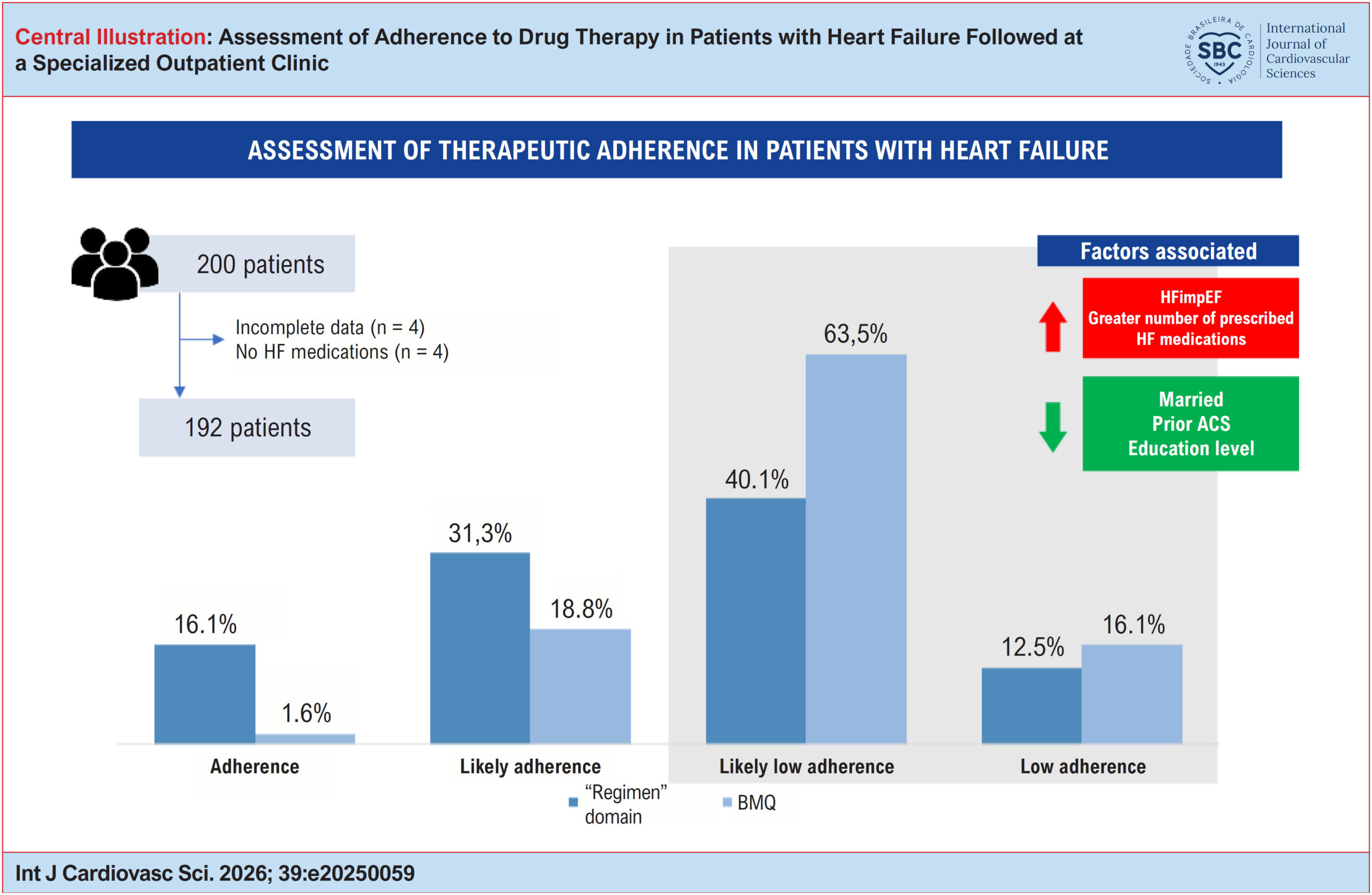
A total of 200 patients were included; 79.6% showed low adherence according to the BMQ, and 52.6% showed low adherence in the “regimen” domain. Only 3 (1.6%) patients presented no barriers to adherence. In multivariate analysis, being married (odds ratio [OR] 0.40; 95% confidence interval [CI] 0.16–0.96; p = 0.042), prior acute coronary syndrome (ACS) (OR 0.21; 95% CI 0.08–0.51; p < 0.001), education level (OR 0.90; 95% CI 0.82–0.98; p = 0.018), higher number of prescribed medications (OR 1.44; 95% CI 1.03–2.05; p = 0.037), and HF with improved ejection fraction (OR 2.76; 95% CI 1.06–7.63; p = 0.042) were independent predictors of low adherence.

Conclusion:

Low therapeutic adherence among patients with HF is prevalent and influenced by socioeconomic factors, social support, polypharmacy, and clinical characteristics. The results reinforce the need for health education and the simplification of therapeutic regimens.

  • Ambulatory Care
  • Heart Failure
  • medication adherence
Read Full Article
Creative Commons Attribution (CC BY) Creative Commons license
13/08/2026 DOI: 10.36660/ijcs.20250059 Views 12
Figure 1
ABC
Letter to the Editor

Non-dihydropyridine Calcium Channel Blockers in Atrial Fibrillation with Mildly Reduced Ejection Fraction: Caution is Still Advised

Jefferson Luis Vieira et al. Carlos Eduardo Lucena Montenegro

Conclusion

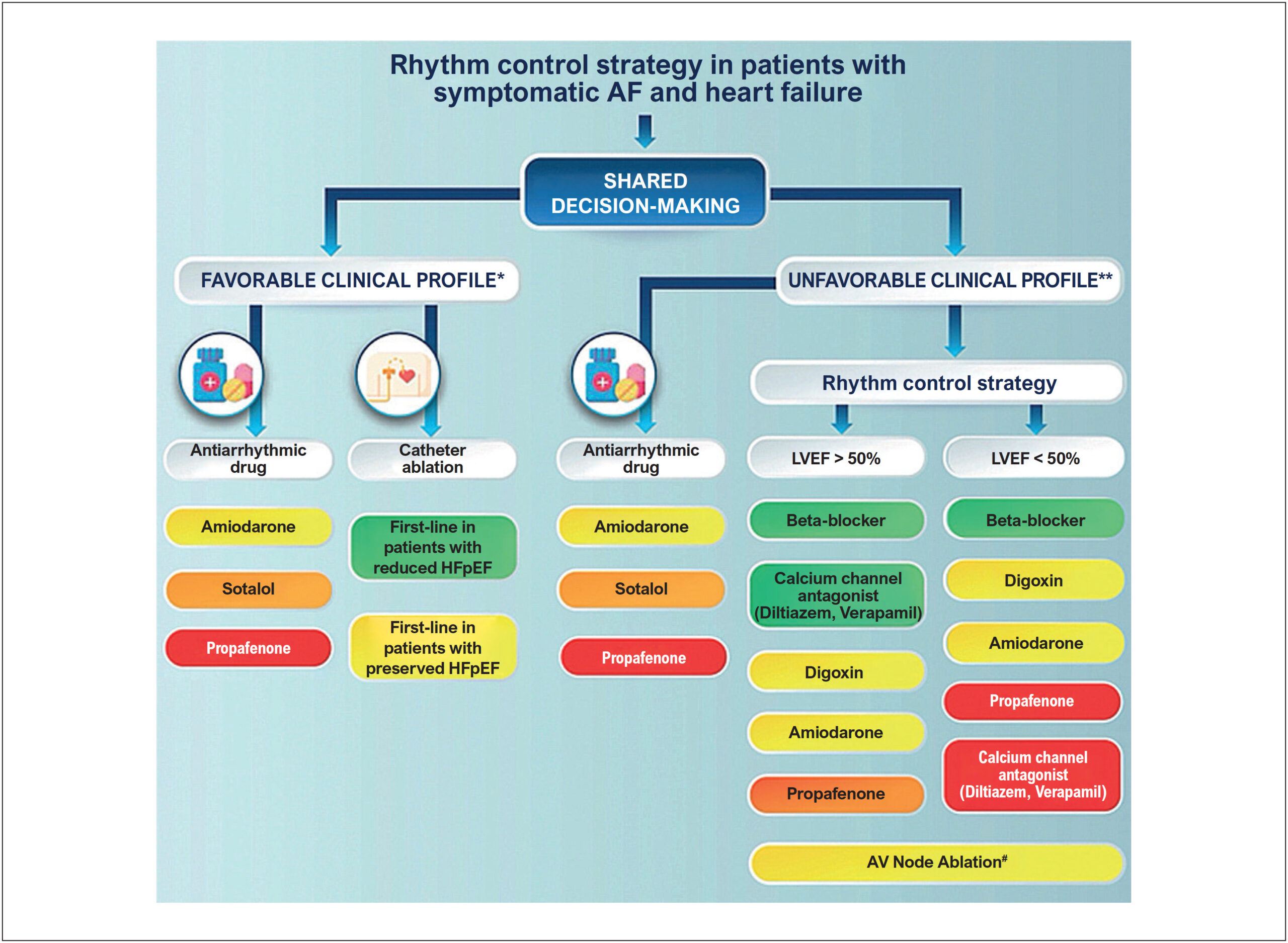
Given the lack of robust safety and benefit data for NDHP-CCBs in patients with HFmrEF and the existence of prognostically aligned alternatives, the current recommendation may be interpreted permissively and lead to potentially detrimental practices. Furthermore, the Second Universal Definition of Heart Failure provides additional conceptual support for this proposal by recognizing that patients with mildly reduced EF constitute a distinct biological phenotype and by discouraging therapeutic reasoning based solely on arbitrary LVEF thresholds. We advocate that the guideline explicitly reinforce the non-recommendation of verapamil/diltiazem when LVEF <50%, until specific studies in HFmrEF validate their safety and prognostic neutrality.

[…]

  • Atrial Fibrillation
  • calcium channel blockers
  • Heart Failure
Read Full Article
Creative Commons Attribution (CC BY) Creative Commons license
10/08/2026 DOI: 10.36660/abc.20260195i Views 14

Could not load more articles. Please try again.

How to cite this article

EndNote RIS

Electronic Document Format (Vancouver)

Andrade AFSM, Carvalho TA, Sousa ACS, Martins-Filho PR. SUS Reimbursement Values for Major Cardiovascular Disease Hospitalizations in Brazil, 2014–2024: Comparisons Across Regions and COVID-19 Periods. Arquivos Brasileiros de Cardiologia 2026;123(10):e20260812.

Electronic Document Format (ABNT)

Andrade, Ana Fátima Souza Melo de; Carvalho, Thialla Andrade; Sousa, Antônio Carlos Sobral; Martins-Filho, Paulo Ricardo. SUS Reimbursement Values for Major Cardiovascular Disease Hospitalizations in Brazil, 2014–2024: Comparisons Across Regions and COVID-19 Periods. Arquivos Brasileiros de Cardiologia, v. 123, n. 10, e20260812, Nov. 2026.

Electronic Document Format (APA)

Andrade, A. F. S. M. , Carvalho, T. A., Sousa, A. C. S., & Martins-Filho, P. R. (2026). SUS Reimbursement Values for Major Cardiovascular Disease Hospitalizations in Brazil, 2014–2024: Comparisons Across Regions and COVID-19 Periods. Arquivos Brasileiros de Cardiologia, 123(10), e20260812.

Electronic Document Format (ISO)

Andrade, Ana Fátima Souza Melo de and Carvalho, Thialla Andrade and Sousa, Antônio Carlos Sobral and Martins-Filho, Paulo Ricardo. SUS Reimbursement Values for Major Cardiovascular Disease Hospitalizations in Brazil, 2014–2024: Comparisons Across Regions and COVID-19 Periods. Arquivos Brasileiros de Cardiologia [online]. 2026, vol. 123, n. 10, [cited 2026-11-28], e20260812. Available from: <https://journals.cardiol.br/en/article/sus-reimbursement-values-for-major-cardiovascular-disease-hospitalizations-in-brazil-2014-2024-comparisons-across-regions-and-covid-19-periods/>. ISSN 0066-782X

EndNote RIS

Electronic Document Format (Vancouver)

Andrade MV, Julião NA, Souza A, Noronha K, Motta-Santos AS, Ribeiro EG, Ciminelli ALA, et al. Cost-Benefit Analysis of Telemonitoring for Patients with Heart Failure after Hospital Discharge. Arquivos Brasileiros de Cardiologia 2026;123(10):e20260191.

Electronic Document Format (ABNT)

Andrade, Mônica Viegas; Julião, Nayara A.; Souza, Aline de; Noronha, Kenya; Motta-Santos, André S.; Ribeiro, Edmar G.; Ciminelli, Ana L. A.; Malta, Deborah C.; Ribeiro, Antonio L. P.; Rezende, Lilian C.; Brant, Luisa C. C.. Cost-Benefit Analysis of Telemonitoring for Patients with Heart Failure after Hospital Discharge. Arquivos Brasileiros de Cardiologia, v. 123, n. 10, e20260191, Nov. 2026.

Electronic Document Format (APA)

Andrade, M. V., Julião, N. A., Souza, A. , Noronha, K., Motta-Santos, A. S., Ribeiro, E. G., Ciminelli, A. L. A., Malta, D. C., Ribeiro, A. L. P., Rezende, L. C., & Brant, L. C. C. (2026). Cost-Benefit Analysis of Telemonitoring for Patients with Heart Failure after Hospital Discharge. Arquivos Brasileiros de Cardiologia, 123(10), e20260191.

Electronic Document Format (ISO)

Andrade, Mônica Viegas and Julião, Nayara A. and Souza, Aline de and Noronha, Kenya and Motta-Santos, André S. and Ribeiro, Edmar G. and Ciminelli, Ana L. A. and Malta, Deborah C. and Ribeiro, Antonio L. P. and Rezende, Lilian C. and Brant, Luisa C. C.. Cost-Benefit Analysis of Telemonitoring for Patients with Heart Failure after Hospital Discharge. Arquivos Brasileiros de Cardiologia [online]. 2026, vol. 123, n. 10, [cited 2026-11-28], e20260191. Available from: <https://journals.cardiol.br/en/article/cost-benefit-analysis-of-telemonitoring-for-patients-with-heart-failure-after-hospital-discharge/>. ISSN 0066-782X

EndNote RIS

Electronic Document Format (Vancouver)

Silva LM, Moreno LP, Figueiredo Neto JA, Lima TBM, Pontes GS. Factors Associated with Functional Capacity in Heart Failure Patients. ABC Heart Fail Cardiomyop 2026;6:e20260028.

Electronic Document Format (ABNT)

Silva, Leandro Marques da; Moreno, Luiza Pinto; Figueiredo Neto, José Albuquerque de; Lima, Thalya Brenda Mendes; Pontes, Gedean Souza. Factors Associated with Functional Capacity in Heart Failure Patients. ABC Heart Fail Cardiomyop, v. 6, e20260028, Oct. 2026.

Electronic Document Format (APA)

Silva, L. M. , Moreno, L. P., Figueiredo Neto, J. A. , Lima, T. B. M., & Pontes, G. S. (2026). Factors Associated with Functional Capacity in Heart Failure Patients. ABC Heart Fail Cardiomyop, 6, e20260028.

Electronic Document Format (ISO)

Silva, Leandro Marques da and Moreno, Luiza Pinto and Figueiredo Neto, José Albuquerque de and Lima, Thalya Brenda Mendes and Pontes, Gedean Souza. Factors Associated with Functional Capacity in Heart Failure Patients. ABC Heart Fail Cardiomyop [online]. 2026, vol. 6, [cited 2026-11-28], e20260028. Available from: <https://journals.cardiol.br/en/article/factors-associated-with-functional-capacity-in-heart-failure-patients/>

EndNote RIS

Electronic Document Format (Vancouver)

Oliveira FM, Mangini S, Marcondes-Braga FG. From Recognition to Clinical Practice: Advances and Challenges in the Multidimensional Assessment of Frailty in Heart Failure. ABC Heart Fail Cardiomyop 2026;6:e20260038.

Electronic Document Format (ABNT)

Oliveira, France Matos de; Mangini, Sandrigo; Marcondes-Braga, Fabiana Goulart. From Recognition to Clinical Practice: Advances and Challenges in the Multidimensional Assessment of Frailty in Heart Failure. ABC Heart Fail Cardiomyop, v. 6, e20260038, Oct. 2026.

Electronic Document Format (APA)

Oliveira, F. M. , Mangini, S., & Marcondes-Braga, F. G. (2026). From Recognition to Clinical Practice: Advances and Challenges in the Multidimensional Assessment of Frailty in Heart Failure. ABC Heart Fail Cardiomyop, 6, e20260038.

Electronic Document Format (ISO)

Oliveira, France Matos de and Mangini, Sandrigo and Marcondes-Braga, Fabiana Goulart. From Recognition to Clinical Practice: Advances and Challenges in the Multidimensional Assessment of Frailty in Heart Failure. ABC Heart Fail Cardiomyop [online]. 2026, vol. 6, [cited 2026-11-28], e20260038. Available from: <https://journals.cardiol.br/en/article/from-recognition-to-clinical-practice-advances-and-challenges-in-the-multidimensional-assessment-of-frailty-in-heart-failure/>

EndNote RIS

Electronic Document Format (Vancouver)

Alcantara ML, Bernardo MPL, Beck ALS, Santos SN, Morhy SS, Lira Filho EB, Felix AS, et al. Position Statement on the Use of Point-of-Care Ultrasound in Cardiovascular Medicine – 2026: Executive Summary. ABC Imagem Cardiovascular 2026;39(3):e20260103.

Electronic Document Format (ABNT)

Alcantara, Monica Luiza de; Bernardo, Marcos Paulo Lacerda; Beck, Adenalva Lima de Souza; Santos, Simone Nascimento; Morhy, Samira Saady; Lira Filho, Edgar Bezerra de; Felix, Alex dos Santos; Goldwasser, Daniel; Otto, Maria Estefânia Bosco; Salgado, Angelo Antunes; Siciliano, Ana Paula dos Reis Velloso; Netto, Fernando Melo; Freire, Claudia Maria Vilas; Albricker, Ana Cristina Lopes; Fernandes, Rafael Modesto; Mancuso, Frederico José Neves; Barros, Dalton de Souza; Aboumarie, Hatem Soliman; Miglioranza, Marcelo Haertel; Amaral, Salomon Israel do; Melo, Marcelo Dantas Tavares de; Pereira, Marcio Mendes; Paladin Filho, Antonio Tito; Moura, Lidia Ana Zytynski; Silva, Pedro Gabriel Melo de Barros e; Soeiro, Alexandre de Matos; Montenegro, Carlos Eduardo Lucena; Danzmann, Luiz Cláudio; Fernandes, João Ricardo Cordeiro; Barberato, Silvio Henrique. Position Statement on the Use of Point-of-Care Ultrasound in Cardiovascular Medicine – 2026: Executive Summary. ABC Imagem Cardiovascular, v. 39, n. 3, e20260103, Oct. 2026.

Electronic Document Format (APA)

Alcantara, M. L. , Bernardo, M. P. L., Beck, A. L. S., Santos, S. N., Morhy, S. S., Lira Filho, E. B. , Felix, A. S., Goldwasser, D., Otto, M. E. B., Salgado, A. A., Siciliano, A. P. R. V., Netto, F. M., Freire, C. M. V., Albricker, A. C. L., Fernandes, R. M., Mancuso, F. J. N., Barros, D. S., Aboumarie, H. S., Miglioranza, M. H., Amaral, S. I. , Melo, M. D. T. , Pereira, M. M., Paladin Filho, A. T., Moura, L. A. Z., Silva, P. G. M. B. , Soeiro, A. M., Montenegro, C. E. L., Danzmann, L. C., Fernandes, J. R. C., & Barberato, S. H. (2026). Position Statement on the Use of Point-of-Care Ultrasound in Cardiovascular Medicine – 2026: Executive Summary. ABC Imagem Cardiovascular, 39(3), e20260103.

Electronic Document Format (ISO)

Alcantara, Monica Luiza de and Bernardo, Marcos Paulo Lacerda and Beck, Adenalva Lima de Souza and Santos, Simone Nascimento and Morhy, Samira Saady and Lira Filho, Edgar Bezerra de and Felix, Alex dos Santos and Goldwasser, Daniel and Otto, Maria Estefânia Bosco and Salgado, Angelo Antunes and Siciliano, Ana Paula dos Reis Velloso and Netto, Fernando Melo and Freire, Claudia Maria Vilas and Albricker, Ana Cristina Lopes and Fernandes, Rafael Modesto and Mancuso, Frederico José Neves and Barros, Dalton de Souza and Aboumarie, Hatem Soliman and Miglioranza, Marcelo Haertel and Amaral, Salomon Israel do and Melo, Marcelo Dantas Tavares de and Pereira, Marcio Mendes and Paladin Filho, Antonio Tito and Moura, Lidia Ana Zytynski and Silva, Pedro Gabriel Melo de Barros e and Soeiro, Alexandre de Matos and Montenegro, Carlos Eduardo Lucena and Danzmann, Luiz Cláudio and Fernandes, João Ricardo Cordeiro and Barberato, Silvio Henrique. Position Statement on the Use of Point-of-Care Ultrasound in Cardiovascular Medicine – 2026: Executive Summary. ABC Imagem Cardiovascular [online]. 2026, vol. 39, n. 3, [cited 2026-11-28], e20260103. Available from: <https://journals.cardiol.br/en/article/position-statement-on-the-use-of-point-of-care-ultrasound-in-cardiovascular-medicine-2026-executive-summary/>. ISSN 2318-8219

EndNote RIS

Electronic Document Format (Vancouver)

Freitas AK, Bittencourt ALT, Barioni CTS, Wandresen RPB, Oberderfer AB, Chiaratti BC, Kakuda GP, et al. Artificial Intelligence in Heart Failure: The New Role of the Cardiologist. ABC Heart Fail Cardiomyop 2026;6:e20260032.

Electronic Document Format (ABNT)

Freitas, Ana Karyn; Bittencourt, Ana Luisa Trentini; Barioni, Carina Toledo Scoparo; Wandresen, Renata Paes de Barros; Oberderfer, Aline Brizola; Chiaratti, Bruno Ceschin; Kakuda, Gustavo Pichel; Mussi Neto, Salim. Artificial Intelligence in Heart Failure: The New Role of the Cardiologist. ABC Heart Fail Cardiomyop, v. 6, e20260032, Oct. 2026.

Electronic Document Format (APA)

Freitas, A. K., Bittencourt, A. L. T., Barioni, C. T. S., Wandresen, R. P. B., Oberderfer, A. B., Chiaratti, B. C., Kakuda, G. P., & Mussi Neto, S. (2026). Artificial Intelligence in Heart Failure: The New Role of the Cardiologist. ABC Heart Fail Cardiomyop, 6, e20260032.

Electronic Document Format (ISO)

Freitas, Ana Karyn and Bittencourt, Ana Luisa Trentini and Barioni, Carina Toledo Scoparo and Wandresen, Renata Paes de Barros and Oberderfer, Aline Brizola and Chiaratti, Bruno Ceschin and Kakuda, Gustavo Pichel and Mussi Neto, Salim. Artificial Intelligence in Heart Failure: The New Role of the Cardiologist. ABC Heart Fail Cardiomyop [online]. 2026, vol. 6, [cited 2026-11-28], e20260032. Available from: <https://journals.cardiol.br/en/article/artificial-intelligence-in-heart-failure-the-new-role-of-the-cardiologist/>

EndNote RIS

Electronic Document Format (Vancouver)

Salgado AA, Bernardo MPL. Invasive Assessment of the Hemodynamic Profile of Critically Ill Patients: When Is Echocardiographic Assessment Alone Sufficient. ABC Imagem Cardiovascular 2026;39(3):e20260109.

Electronic Document Format (ABNT)

Salgado, Angelo Antunes; Bernardo, Marcos Paulo Lacerda. Invasive Assessment of the Hemodynamic Profile of Critically Ill Patients: When Is Echocardiographic Assessment Alone Sufficient. ABC Imagem Cardiovascular, v. 39, n. 3, e20260109, Oct. 2026.

Electronic Document Format (APA)

Salgado, A. A., & Bernardo, M. P. L. (2026). Invasive Assessment of the Hemodynamic Profile of Critically Ill Patients: When Is Echocardiographic Assessment Alone Sufficient. ABC Imagem Cardiovascular, 39(3), e20260109.

Electronic Document Format (ISO)

Salgado, Angelo Antunes and Bernardo, Marcos Paulo Lacerda. Invasive Assessment of the Hemodynamic Profile of Critically Ill Patients: When Is Echocardiographic Assessment Alone Sufficient. ABC Imagem Cardiovascular [online]. 2026, vol. 39, n. 3, [cited 2026-11-28], e20260109. Available from: <https://journals.cardiol.br/en/article/invasive-assessment-of-the-hemodynamic-profile-of-critically-ill-patients-when-is-echocardiographic-assessment-alone-sufficient/>. ISSN 2318-8219

EndNote RIS

Electronic Document Format (Vancouver)

Ayub-Ferreira SM, Teixeira M. Beyond Ejection Fraction: In Pacemaker-Induced Cardiomyopathy, are We Closer to Identifying At-Risk Patients Early?. Arquivos Brasileiros de Cardiologia 2026;123(7):e20260643.

Electronic Document Format (ABNT)

Ayub-Ferreira, Silvia Moreira; Teixeira, Mabely. Beyond Ejection Fraction: In Pacemaker-Induced Cardiomyopathy, are We Closer to Identifying At-Risk Patients Early?. Arquivos Brasileiros de Cardiologia, v. 123, n. 7, e20260643, Oct. 2026.

Electronic Document Format (APA)

Ayub-Ferreira, S. M., & Teixeira, M. (2026). Beyond Ejection Fraction: In Pacemaker-Induced Cardiomyopathy, are We Closer to Identifying At-Risk Patients Early?. Arquivos Brasileiros de Cardiologia, 123(7), e20260643.

Electronic Document Format (ISO)

Ayub-Ferreira, Silvia Moreira and Teixeira, Mabely. Beyond Ejection Fraction: In Pacemaker-Induced Cardiomyopathy, are We Closer to Identifying At-Risk Patients Early?. Arquivos Brasileiros de Cardiologia [online]. 2026, vol. 123, n. 7, [cited 2026-11-28], e20260643. Available from: <https://journals.cardiol.br/en/article/beyond-ejection-fraction-in-pacemaker-induced-cardiomyopathy-are-we-closer-to-identifying-at-risk-patients-early/>. ISSN 0066-782X

EndNote RIS

Electronic Document Format (Vancouver)

Faria VS, Siqueira ARO, Siqueira SRO. Beyond Heart “Failure”: Why Spirituality Matters. ABC Heart Fail Cardiomyop 2026;6:e20260025.

Electronic Document Format (ABNT)

Faria, Vanessa Simioni; Siqueira, Amanda R. O.; Siqueira, Sara R. O.. Beyond Heart “Failure”: Why Spirituality Matters. ABC Heart Fail Cardiomyop, v. 6, e20260025, Oct. 2026.

Electronic Document Format (APA)

Faria, V. S., Siqueira, A. R. O., & Siqueira, S. R. O. (2026). Beyond Heart “Failure”: Why Spirituality Matters. ABC Heart Fail Cardiomyop, 6, e20260025.

Electronic Document Format (ISO)

Faria, Vanessa Simioni and Siqueira, Amanda R. O. and Siqueira, Sara R. O.. Beyond Heart “Failure”: Why Spirituality Matters. ABC Heart Fail Cardiomyop [online]. 2026, vol. 6, [cited 2026-11-28], e20260025. Available from: <https://journals.cardiol.br/en/article/beyond-heart-failure-why-spirituality-matters/>

EndNote RIS

Electronic Document Format (Vancouver)

Oliveira GMM, Brant LCC, Polanczyk CA, Malta DC, Biolo A, Nascimento BR, Souza MFM, et al. Cardiovascular Statistics – Brazil 2026. Arquivos Brasileiros de Cardiologia 2026;123(10):e20260832.

Electronic Document Format (ABNT)

Oliveira, Gláucia Maria Moraes de; Brant, Luisa Campos Caldeira; Polanczyk, Carisi Anne; Malta, Deborah Carvalho; Biolo, Andreia; Nascimento, Bruno Ramos; Souza, Maria de Fatima Marinho de; Lorenzo, Andrea Rocha De; Fagundes Júnior, Antonio Aurélio de Paiva; Manfro, Arthur Gus; Schaan, Beatriz D.; Silva, Christina Grüne de Souza e; Castilho, Fábio Morato de; Cesena, Fernando Henpin Yue; Soares, Gabriel Porto; Xavier Junior, Gesner Francisco; Barreto Filho, Jose Augusto Soares; Pellanda, Lucia Campos; Aranha, Luciana Nicolau; Rohde, Luis Eduardo Paim; Passaglia, Luiz Guilherme; Pinto-Filho, Marcelo Martins; Machline-Carrion, M. Julia; Bittencourt, Marcio Sommer; Pontes Neto, Octavio M.; Villela, Paolo Blanco; Godoy, Paulo Henrique; Teixeira, Renato Azeredo; Stein, Ricardo; Sampaio, Roney Orismar; Salim, Thais Rocha; Gaziano, Thomaz A.; Perel, Pablo; Roth, Gregory A.; Ribeiro, Antonio Luiz Pinho. Cardiovascular Statistics – Brazil 2026. Arquivos Brasileiros de Cardiologia, v. 123, n. 10, e20260832, Oct. 2026.

Electronic Document Format (APA)

Oliveira, G. M. M. , Brant, L. C. C., Polanczyk, C. A., Malta, D. C., Biolo, A., Nascimento, B. R., Souza, M. F. M. , Lorenzo, A. R. D., Fagundes Júnior, A. A. P., Manfro, A. G., Schaan, B. D., Silva, C. G. S. , Castilho, F. M. , Cesena, F. H. Y., Soares, G. P., Xavier Junior, G. F., Barreto Filho, J. A. S., Pellanda, L. C., Aranha, L. N., Rohde, L. E. P., Passaglia, L. G., Pinto-Filho, M. M., Machline-Carrion, M. J., Bittencourt, M. S., Pontes Neto, O. M., Villela, P. B., Godoy, P. H., Teixeira, R. A., Stein, R., Sampaio, R. O., Salim, T. R., Gaziano, T. A., Perel, P., Roth, G. A., & Ribeiro, A. L. P. (2026). Cardiovascular Statistics – Brazil 2026. Arquivos Brasileiros de Cardiologia, 123(10), e20260832.

Electronic Document Format (ISO)

Oliveira, Gláucia Maria Moraes de and Brant, Luisa Campos Caldeira and Polanczyk, Carisi Anne and Malta, Deborah Carvalho and Biolo, Andreia and Nascimento, Bruno Ramos and Souza, Maria de Fatima Marinho de and Lorenzo, Andrea Rocha De and Fagundes Júnior, Antonio Aurélio de Paiva and Manfro, Arthur Gus and Schaan, Beatriz D. and Silva, Christina Grüne de Souza e and Castilho, Fábio Morato de and Cesena, Fernando Henpin Yue and Soares, Gabriel Porto and Xavier Junior, Gesner Francisco and Barreto Filho, Jose Augusto Soares and Pellanda, Lucia Campos and Aranha, Luciana Nicolau and Rohde, Luis Eduardo Paim and Passaglia, Luiz Guilherme and Pinto-Filho, Marcelo Martins and Machline-Carrion, M. Julia and Bittencourt, Marcio Sommer and Pontes Neto, Octavio M. and Villela, Paolo Blanco and Godoy, Paulo Henrique and Teixeira, Renato Azeredo and Stein, Ricardo and Sampaio, Roney Orismar and Salim, Thais Rocha and Gaziano, Thomaz A. and Perel, Pablo and Roth, Gregory A. and Ribeiro, Antonio Luiz Pinho. Cardiovascular Statistics – Brazil 2026. Arquivos Brasileiros de Cardiologia [online]. 2026, vol. 123, n. 10, [cited 2026-11-28], e20260832. Available from: <https://journals.cardiol.br/en/article/cardiovascular-statistics-brazil-2026/>. ISSN 0066-782X

EndNote RIS

Electronic Document Format (Vancouver)

Rohde LE, Zimerman LI, Moura LZ, Danzmann LC, Martins SM, Colpani V, Zucatti K, et al. Effectiveness of Implantable Cardioverter-Defibrillator Therapy for Primary Prevention in Patients with Nonischemic Heart Failure with Reduced Ejection Fraction. Arquivos Brasileiros de Cardiologia 2026;123(7):e20250675.

Electronic Document Format (ABNT)

Rohde, Luis E.; Zimerman, Leandro I.; Moura, Lídia Z.; Danzmann, Luis C.; Martins, Silvia M.; Colpani, Verônica; Zucatti, Kelly; Figueiredo-Neto, José Albuquerque de; Marcondes-Braga, Fabiana G.; Mourilhe-Rocha, Ricardo; Albuquerque, Denilson Campos de; Oliveira-Júnior, Mucio T. de; Simões, Marcus V.. Effectiveness of Implantable Cardioverter-Defibrillator Therapy for Primary Prevention in Patients with Nonischemic Heart Failure with Reduced Ejection Fraction. Arquivos Brasileiros de Cardiologia, v. 123, n. 7, e20250675, Oct. 2026.

Electronic Document Format (APA)

Rohde, L. E., Zimerman, L. I., Moura, L. Z., Danzmann, L. C., Martins, S. M., Colpani, V., Zucatti, K., Figueiredo-Neto, J. A. , Marcondes-Braga, F. G., Mourilhe-Rocha, R., Albuquerque, D. C. , Oliveira-Júnior, M. T. , & Simões, M. V. (2026). Effectiveness of Implantable Cardioverter-Defibrillator Therapy for Primary Prevention in Patients with Nonischemic Heart Failure with Reduced Ejection Fraction. Arquivos Brasileiros de Cardiologia, 123(7), e20250675.

Electronic Document Format (ISO)

Rohde, Luis E. and Zimerman, Leandro I. and Moura, Lídia Z. and Danzmann, Luis C. and Martins, Silvia M. and Colpani, Verônica and Zucatti, Kelly and Figueiredo-Neto, José Albuquerque de and Marcondes-Braga, Fabiana G. and Mourilhe-Rocha, Ricardo and Albuquerque, Denilson Campos de and Oliveira-Júnior, Mucio T. de and Simões, Marcus V.. Effectiveness of Implantable Cardioverter-Defibrillator Therapy for Primary Prevention in Patients with Nonischemic Heart Failure with Reduced Ejection Fraction. Arquivos Brasileiros de Cardiologia [online]. 2026, vol. 123, n. 7, [cited 2026-11-28], e20250675. Available from: <https://journals.cardiol.br/en/article/effectiveness-of-implantable-cardioverter-defibrillator-therapy-for-primary-prevention-in-patients-with-nonischemic-heart-failure-with-reduced-ejection-fraction/>. ISSN 0066-782X

EndNote RIS

Electronic Document Format (Vancouver)

Beck-da-Silva L, Fuchs FD. The Adipokine Hypothesis: Does it Play a Major or Minor Role in HFpEF?. ABC Heart Fail Cardiomyop 2026;6:e20260037.

Electronic Document Format (ABNT)

Beck-da-Silva, Luís; Fuchs, Flávio D.. The Adipokine Hypothesis: Does it Play a Major or Minor Role in HFpEF?. ABC Heart Fail Cardiomyop, v. 6, e20260037, Sep. 2026.

Electronic Document Format (APA)

Beck-da-Silva, L., & Fuchs, F. D. (2026). The Adipokine Hypothesis: Does it Play a Major or Minor Role in HFpEF?. ABC Heart Fail Cardiomyop, 6, e20260037.

Electronic Document Format (ISO)

Beck-da-Silva, Luís and Fuchs, Flávio D.. The Adipokine Hypothesis: Does it Play a Major or Minor Role in HFpEF?. ABC Heart Fail Cardiomyop [online]. 2026, vol. 6, [cited 2026-11-28], e20260037. Available from: <https://journals.cardiol.br/en/article/the-adipokine-hypothesis-does-it-play-a-major-or-minor-role-in-hfpef/>

EndNote RIS

Electronic Document Format (Vancouver)

Fernandes FL. Axillary Intra-Aortic Balloon Pump: From Technical Feasibility to Preserving Functional Capacity. Arquivos Brasileiros de Cardiologia 2026;123(8):e20260602.

Electronic Document Format (ABNT)

Fernandes, Felipe Lourenço. Axillary Intra-Aortic Balloon Pump: From Technical Feasibility to Preserving Functional Capacity. Arquivos Brasileiros de Cardiologia, v. 123, n. 8, e20260602, Sep. 2026.

Electronic Document Format (APA)

Fernandes, F. L. (2026). Axillary Intra-Aortic Balloon Pump: From Technical Feasibility to Preserving Functional Capacity. Arquivos Brasileiros de Cardiologia, 123(8), e20260602.

Electronic Document Format (ISO)

Fernandes, Felipe Lourenço. Axillary Intra-Aortic Balloon Pump: From Technical Feasibility to Preserving Functional Capacity. Arquivos Brasileiros de Cardiologia [online]. 2026, vol. 123, n. 8, [cited 2026-11-28], e20260602. Available from: <https://journals.cardiol.br/en/article/axillary-intra-aortic-balloon-pump-from-technical-feasibility-to-preserving-functional-capacity/>. ISSN 0066-782X

EndNote RIS

Electronic Document Format (Vancouver)

Saha T, Aboumarie HS. Integrated Multiorgan Ultrasound for Assessment of Congestion in Heart Failure. ABC Imagem Cardiovascular 2026;39(3):e20260081.

Electronic Document Format (ABNT)

Saha, Trisha; Aboumarie, Hatem Soliman. Integrated Multiorgan Ultrasound for Assessment of Congestion in Heart Failure. ABC Imagem Cardiovascular, v. 39, n. 3, e20260081, Sep. 2026.

Electronic Document Format (APA)

Saha, T., & Aboumarie, H. S. (2026). Integrated Multiorgan Ultrasound for Assessment of Congestion in Heart Failure. ABC Imagem Cardiovascular, 39(3), e20260081.

Electronic Document Format (ISO)

Saha, Trisha and Aboumarie, Hatem Soliman. Integrated Multiorgan Ultrasound for Assessment of Congestion in Heart Failure. ABC Imagem Cardiovascular [online]. 2026, vol. 39, n. 3, [cited 2026-11-28], e20260081. Available from: <https://journals.cardiol.br/en/article/integrated-multiorgan-ultrasound-for-assessment-of-congestion-in-heart-failure/>. ISSN 2318-8219

EndNote RIS

Electronic Document Format (Vancouver)

Rocha BAM, Melo PHMC, Mapa L, Oliveira RN, Freire AF, Mejía HPG, Bellini VC, et al. Percutaneous Axillary Intra-Aortic Balloon Pump Implantation in Patients Hospitalized with Heart Failure: Initial Brazilian Experience. Arquivos Brasileiros de Cardiologia 2026;123(8):e20250735.

Electronic Document Format (ABNT)

Rocha, Bruno Alves da Mota; Melo, Pedro H. M. C. de; Mapa, Luis; Oliveira, Rafael Nunes; Freire, Antônio Fernando; Mejía, Hernán Patricio García; Bellini, Vanessa Corcioli; Kopel, Liliane; Lage, Silvia Gelás; Marcondes-Braga, Fabiana Goulart; Mangini, Sandrigo; Ávila, Monica S.; Campos, Iascara Wozniak de; Bacal, Fernando; Brito Jr, Fábio Sândoli de; Abizaid, Alexandre A.; Nicz, Pedro Felipe Gomes. Percutaneous Axillary Intra-Aortic Balloon Pump Implantation in Patients Hospitalized with Heart Failure: Initial Brazilian Experience. Arquivos Brasileiros de Cardiologia, v. 123, n. 8, e20250735, Sep. 2026.

Electronic Document Format (APA)

Rocha, B. A. M., Melo, P. H. M. C. , Mapa, L., Oliveira, R. N., Freire, A. F., Mejía, H. P. G., Bellini, V. C., Kopel, L., Lage, S. G., Marcondes-Braga, F. G., Mangini, S., Ávila, M. S., Campos, I. W. , Bacal, F., Brito Jr, F. S. , Abizaid, A. A., & Nicz, P. F. G. (2026). Percutaneous Axillary Intra-Aortic Balloon Pump Implantation in Patients Hospitalized with Heart Failure: Initial Brazilian Experience. Arquivos Brasileiros de Cardiologia, 123(8), e20250735.

Electronic Document Format (ISO)

Rocha, Bruno Alves da Mota and Melo, Pedro H. M. C. de and Mapa, Luis and Oliveira, Rafael Nunes and Freire, Antônio Fernando and Mejía, Hernán Patricio García and Bellini, Vanessa Corcioli and Kopel, Liliane and Lage, Silvia Gelás and Marcondes-Braga, Fabiana Goulart and Mangini, Sandrigo and Ávila, Monica S. and Campos, Iascara Wozniak de and Bacal, Fernando and Brito Jr, Fábio Sândoli de and Abizaid, Alexandre A. and Nicz, Pedro Felipe Gomes. Percutaneous Axillary Intra-Aortic Balloon Pump Implantation in Patients Hospitalized with Heart Failure: Initial Brazilian Experience. Arquivos Brasileiros de Cardiologia [online]. 2026, vol. 123, n. 8, [cited 2026-11-28], e20250735. Available from: <https://journals.cardiol.br/en/article/percutaneous-axillary-intra-aortic-balloon-pump-implantation-in-patients-hospitalized-with-heart-failure-initial-brazilian-experience/>. ISSN 0066-782X

EndNote RIS

Electronic Document Format (Vancouver)

Dan MC. HFREF Therapy: Randomized Evidence and Real-World Perspectives. Arquivos Brasileiros de Cardiologia 2026;123(7):e20260588.

Electronic Document Format (ABNT)

Dan, iella Motta da Costa. HFREF Therapy: Randomized Evidence and Real-World Perspectives. Arquivos Brasileiros de Cardiologia, v. 123, n. 7, e20260588, Sep. 2026.

Electronic Document Format (APA)

Dan, M. C. (2026). HFREF Therapy: Randomized Evidence and Real-World Perspectives. Arquivos Brasileiros de Cardiologia, 123(7), e20260588.

Electronic Document Format (ISO)

Dan, iella Motta da Costa. HFREF Therapy: Randomized Evidence and Real-World Perspectives. Arquivos Brasileiros de Cardiologia [online]. 2026, vol. 123, n. 7, [cited 2026-11-28], e20260588. Available from: <https://journals.cardiol.br/en/article/hfref-therapy-randomized-evidence-and-real-world-perspectives/>. ISSN 0066-782X

EndNote RIS

Electronic Document Format (Vancouver)

Garbin HI, Scolari FL, Biolo A. Treatment of Heart Failure in Brazil: Where Cost-Effectiveness Studies and Public Access Data to Therapies Meet. Arquivos Brasileiros de Cardiologia 2026;123(8):e20260314.

Electronic Document Format (ABNT)

Garbin, Henrique Iahnke; Scolari, Fernando Luis; Biolo, Andreia. Treatment of Heart Failure in Brazil: Where Cost-Effectiveness Studies and Public Access Data to Therapies Meet. Arquivos Brasileiros de Cardiologia, v. 123, n. 8, e20260314, Sep. 2026.

Electronic Document Format (APA)

Garbin, H. I., Scolari, F. L., & Biolo, A. (2026). Treatment of Heart Failure in Brazil: Where Cost-Effectiveness Studies and Public Access Data to Therapies Meet. Arquivos Brasileiros de Cardiologia, 123(8), e20260314.

Electronic Document Format (ISO)

Garbin, Henrique Iahnke and Scolari, Fernando Luis and Biolo, Andreia. Treatment of Heart Failure in Brazil: Where Cost-Effectiveness Studies and Public Access Data to Therapies Meet. Arquivos Brasileiros de Cardiologia [online]. 2026, vol. 123, n. 8, [cited 2026-11-28], e20260314. Available from: <https://journals.cardiol.br/en/article/treatment-of-heart-failure-in-brazil-where-cost-effectiveness-studies-and-public-access-data-to-therapies-meet/>. ISSN 0066-782X

EndNote RIS

Electronic Document Format (Vancouver)

Kumar S, Meena CB, Babbar N, Bhandari A, Shekhawat DS, Meel A. Effects of Pacemakers on Ventricular Functions and Early Variables Associated with Induced Cardiomyopathy. Arquivos Brasileiros de Cardiologia 2026;123(7):e20250566.

Electronic Document Format (ABNT)

Kumar, Sanjeev; Meena, Chandra Bhan; Babbar, Navida; Bhandari, Anil; Shekhawat, Dhananjay Singh; Meel, Ankita. Effects of Pacemakers on Ventricular Functions and Early Variables Associated with Induced Cardiomyopathy. Arquivos Brasileiros de Cardiologia, v. 123, n. 7, e20250566, Sep. 2026.

Electronic Document Format (APA)

Kumar, S., Meena, C. B., Babbar, N., Bhandari, A., Shekhawat, D. S., & Meel, A. (2026). Effects of Pacemakers on Ventricular Functions and Early Variables Associated with Induced Cardiomyopathy. Arquivos Brasileiros de Cardiologia, 123(7), e20250566.

Electronic Document Format (ISO)

Kumar, Sanjeev and Meena, Chandra Bhan and Babbar, Navida and Bhandari, Anil and Shekhawat, Dhananjay Singh and Meel, Ankita. Effects of Pacemakers on Ventricular Functions and Early Variables Associated with Induced Cardiomyopathy. Arquivos Brasileiros de Cardiologia [online]. 2026, vol. 123, n. 7, [cited 2026-11-28], e20250566. Available from: <https://journals.cardiol.br/en/article/effects-of-pacemakers-on-ventricular-functions-and-early-variables-associated-with-induced-cardiomyopathy/>. ISSN 0066-782X

EndNote RIS

Electronic Document Format (Vancouver)

Gregório C, Magalhães A, Silva B, Araújo I, Vilela M, Marques P, Sousa J, et al. Cardiac Resynchronization Therapy in Cardio-Oncology: Real-World Evidence of Benefit in Cancer Patients with Heart Failure. Arquivos Brasileiros de Cardiologia 2026;123(7):e20250888.

Electronic Document Format (ABNT)

Gregório, Catarina; Magalhães, Andreia; Silva, Beatriz; Araújo, Inês; Vilela, Marta; Marques, Pedro; Sousa, João de; Menezes, Miguel Nobre; Pinto, Fausto J.; Fiuza, Manuela. Cardiac Resynchronization Therapy in Cardio-Oncology: Real-World Evidence of Benefit in Cancer Patients with Heart Failure. Arquivos Brasileiros de Cardiologia, v. 123, n. 7, e20250888, Sep. 2026.

Electronic Document Format (APA)

Gregório, C., Magalhães, A., Silva, B., Araújo, I., Vilela, M., Marques, P., Sousa, J. , Menezes, M. N., Pinto, F. J., & Fiuza, M. (2026). Cardiac Resynchronization Therapy in Cardio-Oncology: Real-World Evidence of Benefit in Cancer Patients with Heart Failure. Arquivos Brasileiros de Cardiologia, 123(7), e20250888.

Electronic Document Format (ISO)

Gregório, Catarina and Magalhães, Andreia and Silva, Beatriz and Araújo, Inês and Vilela, Marta and Marques, Pedro and Sousa, João de and Menezes, Miguel Nobre and Pinto, Fausto J. and Fiuza, Manuela. Cardiac Resynchronization Therapy in Cardio-Oncology: Real-World Evidence of Benefit in Cancer Patients with Heart Failure. Arquivos Brasileiros de Cardiologia [online]. 2026, vol. 123, n. 7, [cited 2026-11-28], e20250888. Available from: <https://journals.cardiol.br/en/article/cardiac-resynchronization-therapy-in-cardio-oncology-real-world-evidence-of-benefit-in-cancer-patients-with-heart-failure/>. ISSN 0066-782X

EndNote RIS

Electronic Document Format (Vancouver)

Campos CV, Caneo LF, Pimenta TJ, Machado DS. What We Choose to Fund Defines Who We Choose to Save: Pediatric Heart Failure in Emerging Economies. ABC Heart Fail Cardiomyop 2026;6:e20260014.

Electronic Document Format (ABNT)

Campos, Carolina Vieira de; Caneo, Luiz Fernando; Pimenta, Tamara J.; Machado, Desiree S.. What We Choose to Fund Defines Who We Choose to Save: Pediatric Heart Failure in Emerging Economies. ABC Heart Fail Cardiomyop, v. 6, e20260014, Sep. 2026.

Electronic Document Format (APA)

Campos, C. V. , Caneo, L. F., Pimenta, T. J., & Machado, D. S. (2026). What We Choose to Fund Defines Who We Choose to Save: Pediatric Heart Failure in Emerging Economies. ABC Heart Fail Cardiomyop, 6, e20260014.

Electronic Document Format (ISO)

Campos, Carolina Vieira de and Caneo, Luiz Fernando and Pimenta, Tamara J. and Machado, Desiree S.. What We Choose to Fund Defines Who We Choose to Save: Pediatric Heart Failure in Emerging Economies. ABC Heart Fail Cardiomyop [online]. 2026, vol. 6, [cited 2026-11-28], e20260014. Available from: <https://journals.cardiol.br/en/article/what-we-choose-to-fund-defines-who-we-choose-to-save-pediatric-heart-failure-in-emerging-economies/>

EndNote RIS

Electronic Document Format (Vancouver)

Conceição-Souza GE. ABC Heart Failure & Cardiomyopathy: Management Review and Indexing Perspectives. ABC Heart Fail Cardiomyop 2026;6:e20260033.

Electronic Document Format (ABNT)

Conceição-Souza, Germano Emílio. ABC Heart Failure & Cardiomyopathy: Management Review and Indexing Perspectives. ABC Heart Fail Cardiomyop, v. 6, e20260033, Aug. 2026.

Electronic Document Format (APA)

Conceição-Souza, G. E. (2026). ABC Heart Failure & Cardiomyopathy: Management Review and Indexing Perspectives. ABC Heart Fail Cardiomyop, 6, e20260033.

Electronic Document Format (ISO)

Conceição-Souza, Germano Emílio. ABC Heart Failure & Cardiomyopathy: Management Review and Indexing Perspectives. ABC Heart Fail Cardiomyop [online]. 2026, vol. 6, [cited 2026-11-28], e20260033. Available from: <https://journals.cardiol.br/en/article/abc-heart-failure-cardiomyopathy-management-review-and-indexing-perspectives/>

EndNote RIS

Electronic Document Format (Vancouver)

Medrado VSS, Morais JEC, Silva DSO, Azevedo JPL, Almeida TG, Tenório PP. Prognostic Value of C-reactive Protein (CRP) in Patients With Acute Heart Failure (AHF) Admitted to General Wards in Brazil. International Journal of Cardiovascular Sciences 2026;39:e20260053.

Electronic Document Format (ABNT)

Medrado, Vanessa Souza Silva; Morais, João Emmanuel Coelho de; Silva, Domingos Sávio de Oliveira e; Azevedo, João Pedro Lopes; Almeida, Thalisson Gonçalves; Tenório, Pedro Pereira. Prognostic Value of C-reactive Protein (CRP) in Patients With Acute Heart Failure (AHF) Admitted to General Wards in Brazil. International Journal of Cardiovascular Sciences, v. 39, e20260053, Aug. 2026.

Electronic Document Format (APA)

Medrado, V. S. S., Morais, J. E. C. , Silva, D. S. O. , Azevedo, J. P. L., Almeida, T. G., & Tenório, P. P. (2026). Prognostic Value of C-reactive Protein (CRP) in Patients With Acute Heart Failure (AHF) Admitted to General Wards in Brazil. International Journal of Cardiovascular Sciences, 39, e20260053.

Electronic Document Format (ISO)

Medrado, Vanessa Souza Silva and Morais, João Emmanuel Coelho de and Silva, Domingos Sávio de Oliveira e and Azevedo, João Pedro Lopes and Almeida, Thalisson Gonçalves and Tenório, Pedro Pereira. Prognostic Value of C-reactive Protein (CRP) in Patients With Acute Heart Failure (AHF) Admitted to General Wards in Brazil. International Journal of Cardiovascular Sciences [online]. 2026, vol. 39, [cited 2026-11-28], e20260053. Available from: <https://journals.cardiol.br/en/article/prognostic-value-of-c-reactive-protein-crp-in-patients-with-acute-heart-failure-ahf-admitted-to-general-wards-in-brazil/>. ISSN 2359-4802

EndNote RIS

Electronic Document Format (Vancouver)

Jesus BGAS, Oliveira FB, Meira FCA, Oliveira LB, Costa FF, Latado AL. Assessment of Adherence to Drug Therapy in Patients with Heart Failure Followed at a Specialized Outpatient Clinic. International Journal of Cardiovascular Sciences 2026;39:e20250059.

Electronic Document Format (ABNT)

Jesus, Breno Gabriel Araújo Sampaio de; Oliveira, Felipe Barros; Meira, Felipe Caires Araújo; Oliveira, Lívia Brito; Costa, Fabio Figueirêdo; Latado, Adriana Lopes. Assessment of Adherence to Drug Therapy in Patients with Heart Failure Followed at a Specialized Outpatient Clinic. International Journal of Cardiovascular Sciences, v. 39, e20250059, Aug. 2026.

Electronic Document Format (APA)

Jesus, B. G. A. S. , Oliveira, F. B., Meira, F. C. A., Oliveira, L. B., Costa, F. F., & Latado, A. L. (2026). Assessment of Adherence to Drug Therapy in Patients with Heart Failure Followed at a Specialized Outpatient Clinic. International Journal of Cardiovascular Sciences, 39, e20250059.

Electronic Document Format (ISO)

Jesus, Breno Gabriel Araújo Sampaio de and Oliveira, Felipe Barros and Meira, Felipe Caires Araújo and Oliveira, Lívia Brito and Costa, Fabio Figueirêdo and Latado, Adriana Lopes. Assessment of Adherence to Drug Therapy in Patients with Heart Failure Followed at a Specialized Outpatient Clinic. International Journal of Cardiovascular Sciences [online]. 2026, vol. 39, [cited 2026-11-28], e20250059. Available from: <https://journals.cardiol.br/en/article/assessment-of-adherence-to-drug-therapy-in-patients-with-heart-failure-followed-at-a-specialized-outpatient-clinic/>. ISSN 2359-4802

EndNote RIS

Electronic Document Format (Vancouver)

Vieira JL, Montenegro CEL. Non-dihydropyridine Calcium Channel Blockers in Atrial Fibrillation with Mildly Reduced Ejection Fraction: Caution is Still Advised. Arquivos Brasileiros de Cardiologia 2026;123(6):e20260195.

Electronic Document Format (ABNT)

Vieira, Jefferson Luis; Montenegro, Carlos Eduardo Lucena. Non-dihydropyridine Calcium Channel Blockers in Atrial Fibrillation with Mildly Reduced Ejection Fraction: Caution is Still Advised. Arquivos Brasileiros de Cardiologia, v. 123, n. 6, e20260195, Aug. 2026.

Electronic Document Format (APA)

Vieira, J. L., & Montenegro, C. E. L. (2026). Non-dihydropyridine Calcium Channel Blockers in Atrial Fibrillation with Mildly Reduced Ejection Fraction: Caution is Still Advised. Arquivos Brasileiros de Cardiologia, 123(6), e20260195.

Electronic Document Format (ISO)

Vieira, Jefferson Luis and Montenegro, Carlos Eduardo Lucena. Non-dihydropyridine Calcium Channel Blockers in Atrial Fibrillation with Mildly Reduced Ejection Fraction: Caution is Still Advised. Arquivos Brasileiros de Cardiologia [online]. 2026, vol. 123, n. 6, [cited 2026-11-28], e20260195. Available from: <https://journals.cardiol.br/en/article/non-dihydropyridine-calcium-channel-blockers-in-atrial-fibrillation-with-mildly-reduced-ejection-fraction-caution-is-still-advised/>. ISSN 0066-782X

  • About ABC Family
  • Internal Regulation
  • Editorial Board
  • Brazilian Society of Cardiology (SBC)

Issues

SBC Guidelines

  • Videos
  • Podcasts
  • News
Accessibility Adjustments

Powered by OneTap

How long do you want to hide the toolbar?
Hide Toolbar Duration
Select your accessibility profile
Vision Impaired Mode
Enhances website's visuals
Seizure Safe Profile
Clear flashes & reduces color
ADHD Friendly Mode
Focused browsing, distraction-free
Blindness Mode
Reduces distractions, improves focus
Epilepsy Safe Mode
Dims colors and stops blinking
Content Modules
Font Size

Default

Line Height

Default

Color Modules
Orientation Modules