ABC Family Arquivos Brasileiros de Cardiologia International Journal of Cardiovascular Sciences ABC Heart Failure & Cardiomyopathy ABC Imagem Cardiovascular
Português English
ABC Family
Português English
  • About
    • About ABC Family
    • Internal Regulation
    • Editorial Board
    • Brazilian Society of Cardiology (SBC)
  • Issues
  • SBC Guidelines
  • Content
    • Videos
    • Podcasts
    • News
  • About
    • About ABC Family
    • Internal Regulation
    • Editorial Board
    • Brazilian Society of Cardiology (SBC)
  • Issues
  • SBC Guidelines
  • Content
    • Videos
    • Podcasts
    • News

ABC Family

  • ABC Family
  • Arquivos Brasileiros de Cardiologia
  • International Journal of Cardiovascular Sciences
  • ABC Heart Failure & Cardiomyopathy
  • ABC Imagem Cardiovascular
Search in

No content found.

Journals
Ordering
Article types
Others

  1. Home
  2. Keyword: Myocardial Revascularization
ABC
Editorial

Surgery is the Means, Not the End: Late Follow-Up of Coronary Artery Bypass Graft Surgery

João Carlos Ferreira Leal et al. Rafael Alessandro Ferreira Gomes Walter J. Gomes

Coronary artery bypass grafting (CABG) remains a leading treatment for coronary artery disease (CAD), particularly in high-risk patient subgroups such as those with multivessel disease, left ventricular dysfunction, diabetes mellitus, and high ischemic burden, as evidenced by decades of scientific evidence and its consistent long-term results.

Coronary artery disease (CAD) has a progressive, systemic, and chronic evolution, which makes long-term follow-up essential for interpreting the results in therapeutic strategies. Therefore, outcomes after coronary artery bypass grafting (CABG) cannot be limited solely to the technical success of the procedure or to in-hospital outcomes but must encompass a broader and more integrative long-term perspective.

[…]

  • Coronary Artery Disease
  • Myocardial Revascularization
  • Prognosis
Read Full Article
Creative Commons Attribution (CC BY) Creative Commons license
06/07/2026 DOI: 10.36660/abc.20260351i
Five-Year Mortality among Survivors of Coronary Artery Bypass Graft Surgery: A Retrospective Study from a Tertiary Center
ABC
Original Article

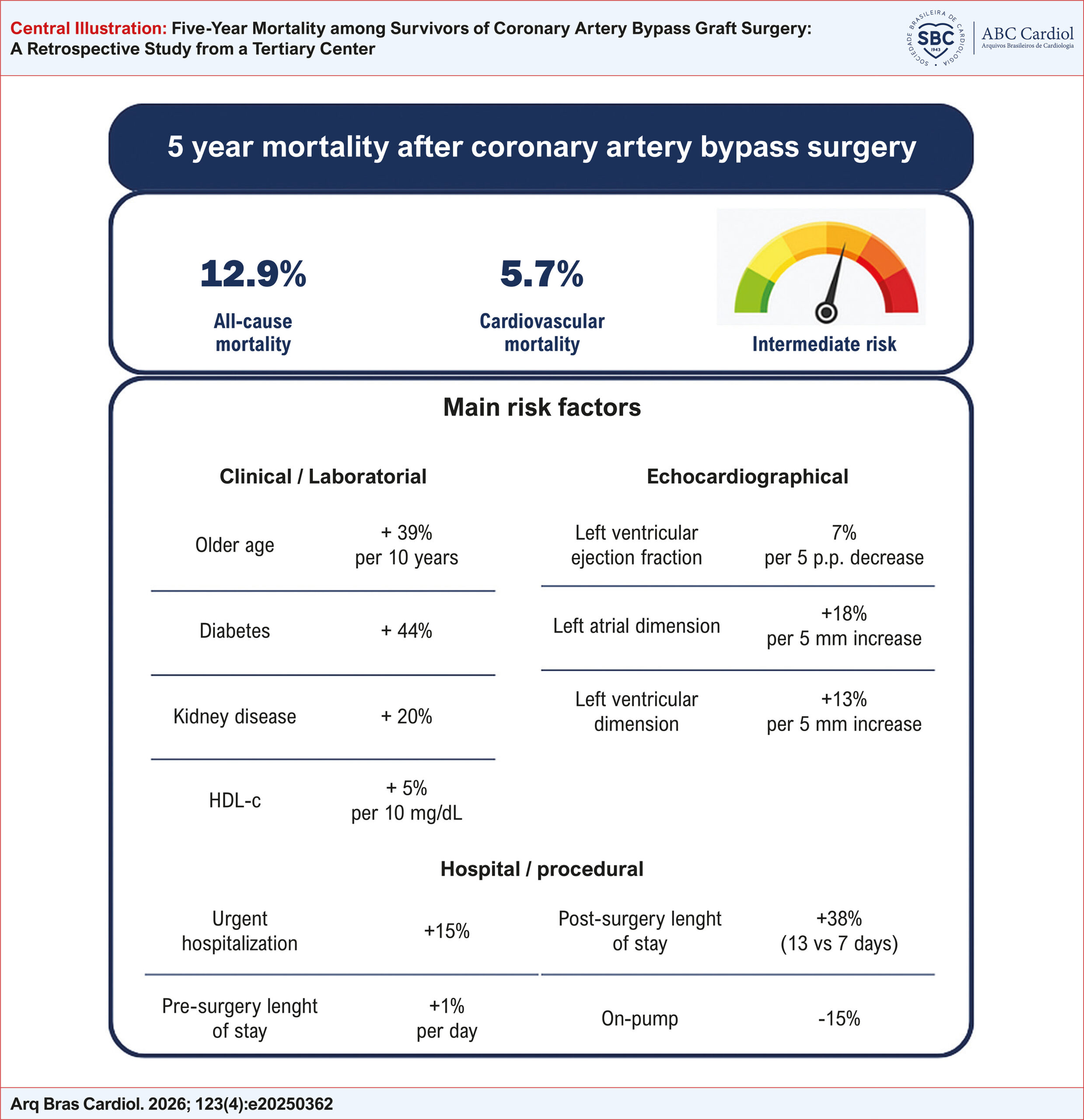
Five-Year Mortality among Survivors of Coronary Artery Bypass Graft Surgery: A Retrospective Study from a Tertiary Center

Eduardo Martelli Moreira et al. Bernadette Cunha Waldvogel Eduardo Bello Martins Desiderio Favarato … Eduardo Gomes Lima Fabio Grunspun Pitta Fabiana Hanna Rached Henrique Trombini Pinesi Omar Asdrúbal Vilca Mejia Carlos Vicente Serrano Jr

Background

Long-term outcome data following Coronary Artery Bypass Graft (CABG) surgery in Brazil remain limited, yet are essential for informing public health policies and guiding clinical practice.

Objectives

To estimate five-year all-cause and cause-specific mortality rates in patients undergoing CABG and to identify associated risk factors.

Methods

A retrospective analysis of 6,933 patients who underwent CABG at the Heart Institute, Faculty of Medicine, University of São Paulo, between 2007 and 2018. Mortality data up to 2018 were retrieved from government databases. A significance level of 5% was adopted.

Results

The study cohort included 4,854 men (72%) with a median age of 63 years (IQR: 57–70). Diabetes mellitus was present in 2,984 patients (43%), and 1,918 (29%) had chronic kidney disease. During follow-up, 1,075 deaths occurred, of which 506 (47.1%) were attributed to cardiovascular causes. The 5-year all-cause mortality rate was 12.9% (95% CI: 11.9–13.9), and the cardiovascular mortality rate was 5.7% (95% CI: 5.1–6.4). The leading cause of cardiovascular death was ischemic heart disease (290 deaths, 57.3%), followed by cerebrovascular disease (84 deaths, 16.6%). Factors significantly associated with all-cause mortality included older age, diabetes mellitus, glomerular filtration rate, HDL-cholesterol, left ventricular ejection fraction, left atrial and left ventricular diastolic dimensions, urgent hospitalization, on-pump surgery, and length of hospital stay.

Conclusion

Patients undergoing CABG at a tertiary care center exhibited moderate 5-year all-cause and cardiovascular mortality rates. These findings highlight key prognostic factors that may support risk stratification and guide postoperative management strategies.

  • Angina Pectoris
  • Descriptive Epidemiology
  • Myocardial Revascularization
Read Full Article
Creative Commons Attribution (CC BY) Creative Commons license
12/06/2026 DOI: 10.36660/abc.20250362i
Comparison between Five Risk Scores in Patients with Acute Coronary Syndromes Undergoing Surgical Revascularization during the Index Hospitalization
ABC
Original Article

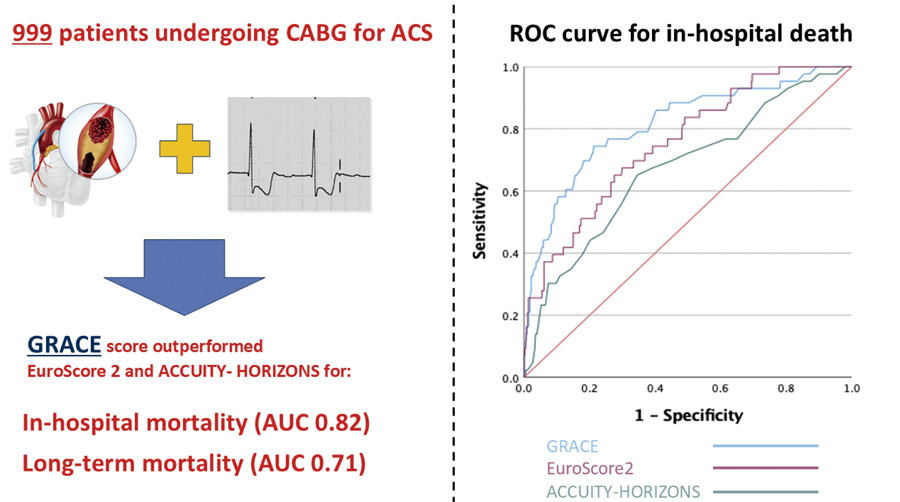
Comparison between Five Risk Scores in Patients with Acute Coronary Syndromes Undergoing Surgical Revascularization during the Index Hospitalization

José C. Nicolau et al. Roberto R. C. V. Giraldez Fabio B. Jatene Luís A. O. Dallan … Luiz A. Lisboa Omar A. V. Mejia Jorge L. M. Ribera Adriadne J. Bertolin Luciano M. Baracioli Felipe G. Lima Maria C. D. Andrade Santiago A. C. Vintimilla Leonardo Salis Fabiane L. de Freitas Maxim Goncharov Lucas C. Godoy Remo H. de M. Furtado Michael E. Farkouh

Abstract

Background

Risk scores (RS) for patients with acute coronary syndromes (ACS) and coronary artery bypass grafting (CABG) have been tested previously, but little is known about their value in ACS patients undergoing CABG during the index hospitalization.

Objectives

To compare five different RS in ACS patients undergoing CABG during the index hospitalization.

Methods

The analyzed RS were GRACE, TIMI-non-ST-elevation ACS (TIMI-NSTEACS), TIMI-ST-elevation acute myocardial infarction (TIMI-STEMI), ACUITY/HORIZONS (A-H) bleeding, and EuroSCORE II. The RS were evaluated regarding their performance during the in-hospital phase and the long-term follow-up after discharge; a p-value <0.05 was considered significant.

Results

A total of 999 patients were included between 1998 and 2022. The mean time from symptom onset to CABG was 6.3 ± 5.5 days. The areas under the ROC curves were 0.82 (95% CI 0.74 – 0.89, p<0.001) for GRACE, 0.78 (95% CI 0.62-0.93, P=0.004) for TIMI-STEMI, 0.75 (95% CI 0.61-0.83, p<0.001) for EuroSCORE II, 0.67 (95% CI 0.59-0.76, P<0.001) for A-H bleeding, and 0.58 (95% CI 0.49-0.67, p=0.131) for TIMI-NSTEACS. Excluding in-hospital deaths, only GRACE and TIMI-STEMI were significantly associated with long-term mortality (mean follow-up of 5.5 ± 4 years). In the multivariable analyses, the GRACE score was the only RS significantly associated with in-hospital and long-term mortality in all adjusted models.

Conclusion

In patients with ACS who underwent CABG during the index hospitalization, the GRACE score was the only risk score that remained independently associated with both in-hospital and long-term mortality across all developed models, after adjustment for potential confounders. Moreover, the GRACE score performed better than others in predicting in-hospital deaths. These findings may influence the clinical decision-making process in this high-risk population.

  • Acute coronary syndrome
  • Continuity of Patient Care
  • Mortality
  • Myocardial Revascularization
Read Full Article
Creative Commons Attribution (CC BY) Creative Commons license
09/01/2026 DOI: 10.36660/abc.20250320i Views 1
ABCHF
Case Report

Reverse Remodeling After Myocardial Revascularization in Severe Ischemic Heart Disease

Bruna Montingelli Espinola Trento et al. Daniela Gourlart Medeiros Maria Eduarda Soares Bizinelli Manuella Macedo Barão Ana Karyn Ehrenfried Freitas

Introduction

Heart failure with reduced ejection fraction (HFrEF), especially of ischemic etiology, is a challenging condition associated with high morbidity and mortality.¹ Patients with HFrEF frequently present with ventricular remodeling and progressive systolic dysfunction, making early identification of significant coronary artery disease (CAD) essential for defining therapy and optimizing prognosis.

Triple-vessel CAD involving the left main coronary artery (LMCA) constitutes a high-risk scenario. Guidelines recommend surgical revascularization in most cases, particularly in the presence of pronounced left ventricular dysfunction.² Evidence from studies such as STICH/STICHES has demonstrated that coronary artery bypass grafting (CABG) combined with optimized medical therapy in patients with ischemic cardiomyopathy and reduced left ventricular ejection fraction (LVEF) promotes improved long-term outcomes, although the perioperative risk remains high, with mortality up to 8.6% in patients with LVEF < 35%.³

[…]

  • Coronary Artery Disease
  • Echocardiography
  • Heart Failure
  • Myocardial Ischemia
  • Myocardial Revascularization
Read Full Article
Creative Commons Attribution (CC BY) Creative Commons license
31/12/2025 DOI: 10.36660/abchf.20250039i Views 1
Figure 1
ABCHF
Viewpoint

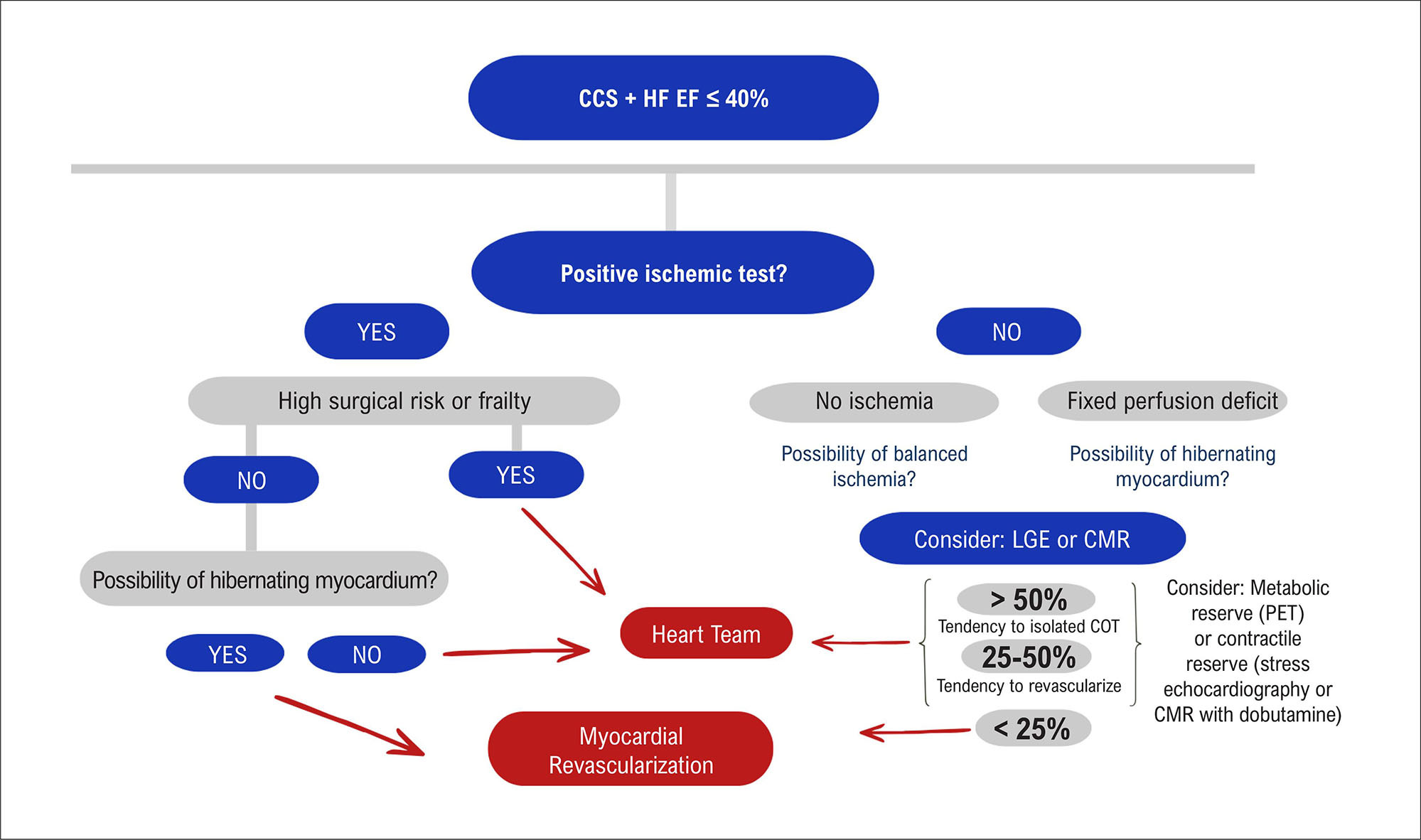
The Impact of Revascularization on the Prognosis of Patients with Ischemic Heart Failure in the Contemporary Era: Viewpoint

Luhanda Leonora Cardoso Monti Sousa et al. Luís Henrique Wolff Gowdak

Introduction

The impact of myocardial revascularization on the prognosis of patients with heart failure (HF) and reduced left ventricular(LV) ejection fraction (EF) of ischemic etiology, especially those with EF ≤ 40%, remains one of the most debated topics in contemporary cardiology. Historically, this subgroup of patients with chronic coronary syndrome (CCS) was indicated for revascularization to reduce hard cardiovascular outcomes, according to guidelines, primarily through coronary artery bypass grafting (CABG). However, recent results and the evolution of optimized clinical treatment (OCT), which now includes medications and devices, have questioned the prognostic benefit of revascularization in this context.–

The core of the controversy lies in the applicability and impact of the concept of myocardial viability. For a long time, the demonstration of viable hibernating myocardium was considered a prerequisite for indicating revascularization, based on the reasoning that functional recovery of the LV would lead to better long-term outcomes. More recent evidence, however, refutes this concept as a dichotomous criterion.,

[…]

  • Coronary Artery Disease
  • Heart Failure
  • Myocardial Revascularization
Read Full Article
Creative Commons Attribution (CC BY) Creative Commons license
31/12/2025 DOI: 10.36660/abchf.20250051i Views 2
Relationship Between the Naples Prognostic Score and Saphenous Vein Graft Disease after Coronary Artery Bypass Grafting Surgery
ABC
Original Article

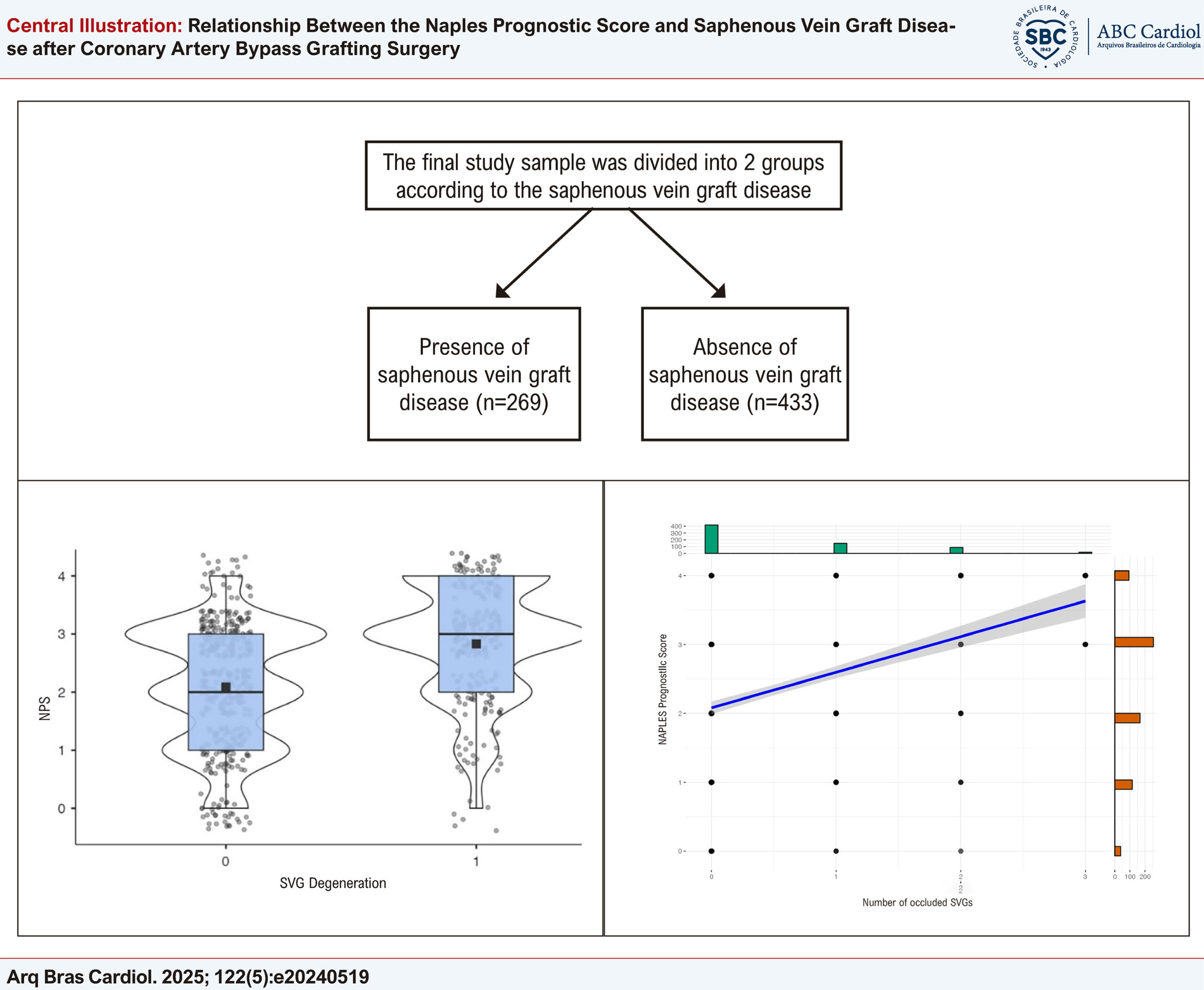
Relationship Between the Naples Prognostic Score and Saphenous Vein Graft Disease after Coronary Artery Bypass Grafting Surgery

Ahmet Karaduman et al. Cemalettin Yılmaz Muhammet Mucahit Tiryaki İsmail Balaban … Mustafa Ferhat Keten Tuba Unkun Servet İzci Suleyman Çağan Efe Elnur Alizade

Abstract

Background

Saphenous vein graft (SVG) patency remains a challenge in cases of coronary artery disease following coronary artery bypass grafting (CABG) surgery. The Naples prognostic score (NPS) constitutes a novel scoring system designed to assess both nutritional status and inflammation.

Objectives

Our study aimed to explore the association between the NPS and SVG disease in patients with a previous history of CABG surgery.

Methods

A total of 702 patients who had undergone CABG surgery and underwent coronary angiography were reviewed retrospectively. SVG disease was defined as the presence of ≥50% stenosis in at least one SVG. Patients were categorized into two groups based on the presence or absence of SVG disease. Values of p<0.05 were accepted as statistically significant.

Results

The study population consisted of 702 patients, with 269 (38.3%) having degenerative SVGs and 433 (61.7%) without degenerative SVGs. The NPS was higher in the group with saphenous vein degeneration and emerged as a significant predictor of SVG disease (OR: 1.596, 95% CI: 1.198-2.125, p=0.001). Additionally, hypertension (OR: 2.344, 95% CI: 1.137-4.833, p=0.02), chronic kidney disease (OR: 3.337, 95% CI: 1.554-7.168, p=0.002), statin usage (OR: 0.434, 95% CI: 0.239-0.789, p=0.006), time interval since CABG (OR: 1.138, 95% CI: 1.213-1.432, p<0.001), and number of SVGs (OR: 2.708, 95% CI: 1.902-3.855, p<0.001) were significant predictors of SVG disease.

Conclusion

The NPS, a useful tool for assessing inflammation and nutritional status, could provide valuable information about the patency of SVGs following CABG surgery. Patients with elevated NPS after CABG should undergo careful monitoring for the development of SVG disease.

  • Atherosclerosis
  • Inflammation
  • Myocardial Revascularization
  • Saphenous Vein
Read Full Article
Creative Commons Attribution (CC BY) Creative Commons license
02/06/2025 DOI: 10.36660/abc.20240519i Views 2
Central Illustration
ABC
Original Article

The Effect of Coronary Artery Bypass Graft Surgery on Contractile Function and Symptoms in Patients with Left Ventricular Dysfunction

Fernando Bassan et al. Roberto Esporcatte Marcelo Goulart Correia Octavio Drummond Guina … Guilherme de Souza Weigert Gracielle Christine do Nascimento Oliveira

Abstract

Background

The degree of left ventricular (LV) dysfunction is an independent risk factor for poor outcomes in patients with chronic coronary syndrome. Coronary artery bypass graft (CABG) is the standard care for the management of ischemic heart failure to improve symptoms and prognosis. However, the predictors of improvement are still uncertain.

Objective

To assess the effect of myocardial revascularization on LV function and symptoms in patients with CCS and reduced left ventricular ejection fraction (LVEF), as well as to identify the improvement predictors.

Methods

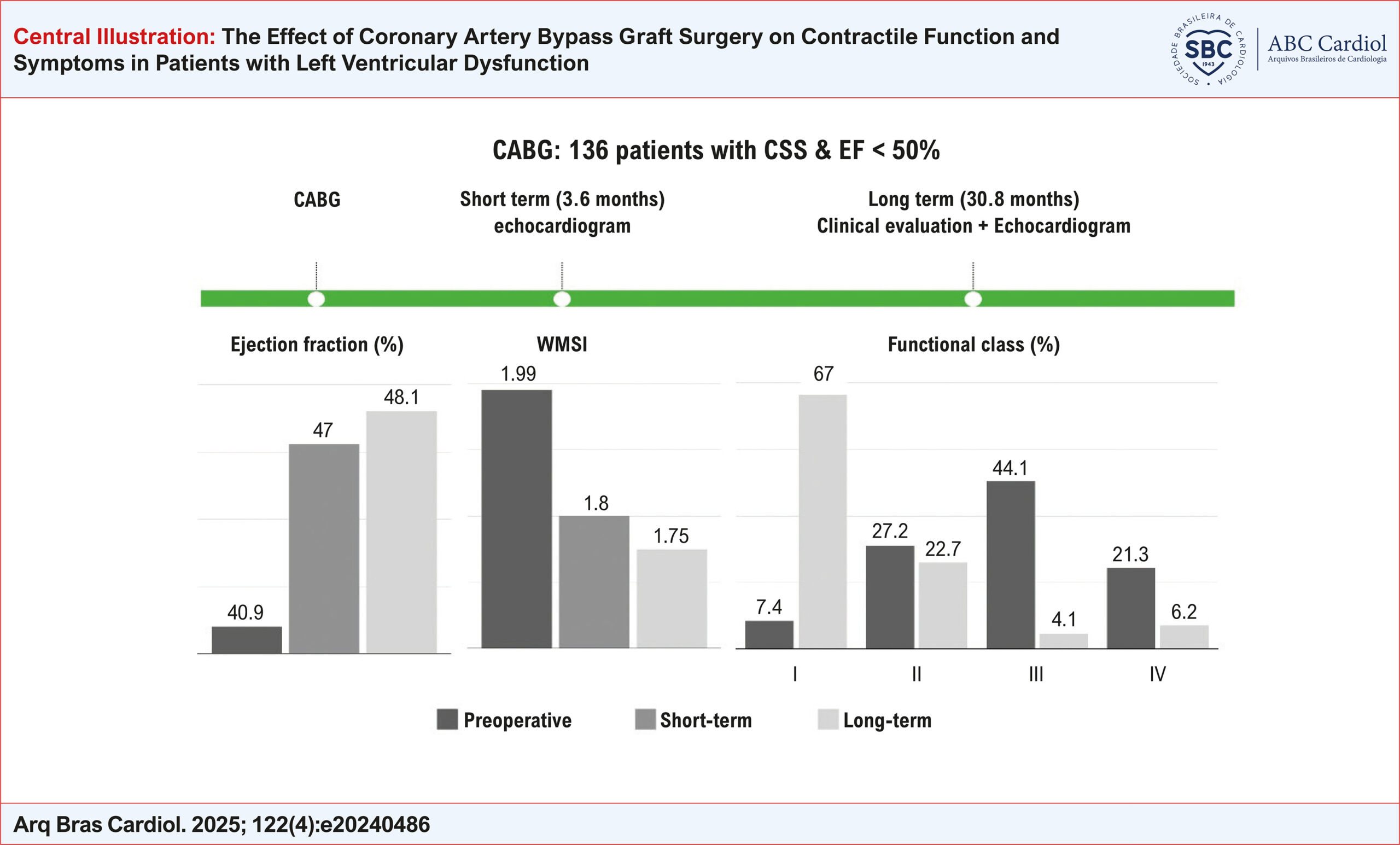
We retrospectively analyzed the data and clinical status of 136 consecutive patients with LVEF<50% that underwent CABG. During clinical follow-up echocardiographic LV function was reassessed at the short-term (3.6 months) and long-term (30.8 months), and compared to baseline.

Results

Mean pre-operative LVEF was 40.9 ± 8.6% and wall motion score index (WMSI) was 1.99 ± 0.36, both improving at long-term to 48.1 ± 15.0% (p<0.001) and 1.75 ± 0.49 (p<0.001), respectively. We observed that 55.7% of the patients presented an improvement of LVEF≥10% and 58.1% in WMSI ≥10%. Univariate logistic regression analysis revealed that cerebrovascular disease was the only variable to be predictor of LVEF improvement. At the end of follow-up, we observed a reduction in the rate of patients in functional class III/IV when compared to baseline (65.4 vs. 10.3% – p<0.001).

Conclusions

Patients with CCS and reduced LVEF undergoing CABG experienced improvement in both LV contractile function and size, with beneficial response in functional class.

  • Chronic Coronary Syndrome
  • Heart Failure
  • Left Ventricular Dysfunction
  • Myocardial Revascularization
Read Full Article
Creative Commons Attribution (CC BY) Creative Commons license
12/05/2025 DOI: 10.36660/abc.20240486i Views 1
ABC
Editorial

Predictors of Hospital Readmission After Coronary Artery Bypass Grafting – Reflections and Perspectives

Aurora Felice Castro Issa

Aspects such as the high cost of health care, the overload of health professionals, and the aging population with the consequent increase in chronic diseases highlight the need for attention to quality in highly complex cardiovascular care, especially in cardiac surgery. In this scenario, quality indicators are an extremely important instrument in the evaluation of care.

There are several quality indicators currently available, and one of them is the hospital readmission rate, which can be seen as an outcome often used as secondary and, despite being quite promising, depends on the methodology used to collect the data.

[…]

  • General Surgery
  • Myocardial Revascularization
  • Patient Readmission
Read Full Article
Creative Commons Attribution (CC BY) Creative Commons license
14/04/2025 DOI: 10.36660/abc.20250133i
ABC
Letter to the Editor

Prediction of Rehospitalization in Cardiac Bypass Surgery

Antônio Rafael Alves de Sá et al. Victoria Alves Prado Mateus Augusto Felix de Melo Pâmela Marillac Rodrigues Feijó de Melo … Maria Clara Filgueira Borba Achilles de Souza Andrade Jorge Fernando Pereira Silva Johnnatas Mikael Lopes

Coronary artery disease, a cardiovascular disease in which there is obstruction of blood flow in the myocardial vessels, causes a large number of deaths in Brazil every year. Myocardial revascularization surgery, associated with antiplatelet, lipid-lowering, and RAAS blocker medications, is the best option for treating and preventing new cases of vascular flow obstruction, thus allowing the restoration of ventricular function, reduction of angina and prevention of acute myocardial infarction. Thus, it has clinical and surgical importance, as it allows the treatment of multiple obstructions and improves patient survival.,

Percutaneous coronary intervention (PCI) is the most frequently used revascularization procedure in patients with coronary disease and is performed both electively and in acute situations. Unplanned rehospitalizations can be considered an adverse outcome for patients and may be related to complications of the PCI procedure or hospital treatment. Therefore, they are often used as an indicator of the quality of care provided. It is estimated that 1 in 7 patients undergoing PCI are readmitted within 30 days.

[…]

  • Cohort Studies
  • Myocardial Revascularization
  • Patient Readmission
Read Full Article
Creative Commons Attribution (CC BY) Creative Commons license
17/03/2025 DOI: 10.36660/abc.20240706i Views 1
Preoperative Predictors of Hospital Readmission within 5 Years Following CABG: Cohort Analysis of the REPLICCAR II Database
ABC
Original Article

Preoperative Predictors of Hospital Readmission within 5 Years Following CABG: Cohort Analysis of the REPLICCAR II Database

Carlos Alberto Sancio Junior et al. Fabiane Letícia de Freitas Gabrielle Barbosa Borgomoni Daniella de Lima Pes … Pedro Horigoshi Reis Pedro Gabriel Melo de Barros e Silva Marcelo Arruda Nakazone Marcos Gradim Tiveron Valquiria Pelisser Campagnucci Luiz Augusto Lisboa Luís Alberto Oliveira Dallan Fabio Biscegli Jatene Omar Asdrúbal Vilca Mejia

Abstract

Background

Reducing hospital readmissions following coronary artery bypass grafting (CABG) surgeries is essential to optimizing medium- and long-term patient outcomes.

Objective

To analyze preoperative predictors associated with all-cause and cardiac readmissions within 5 years following CABG.

Methods

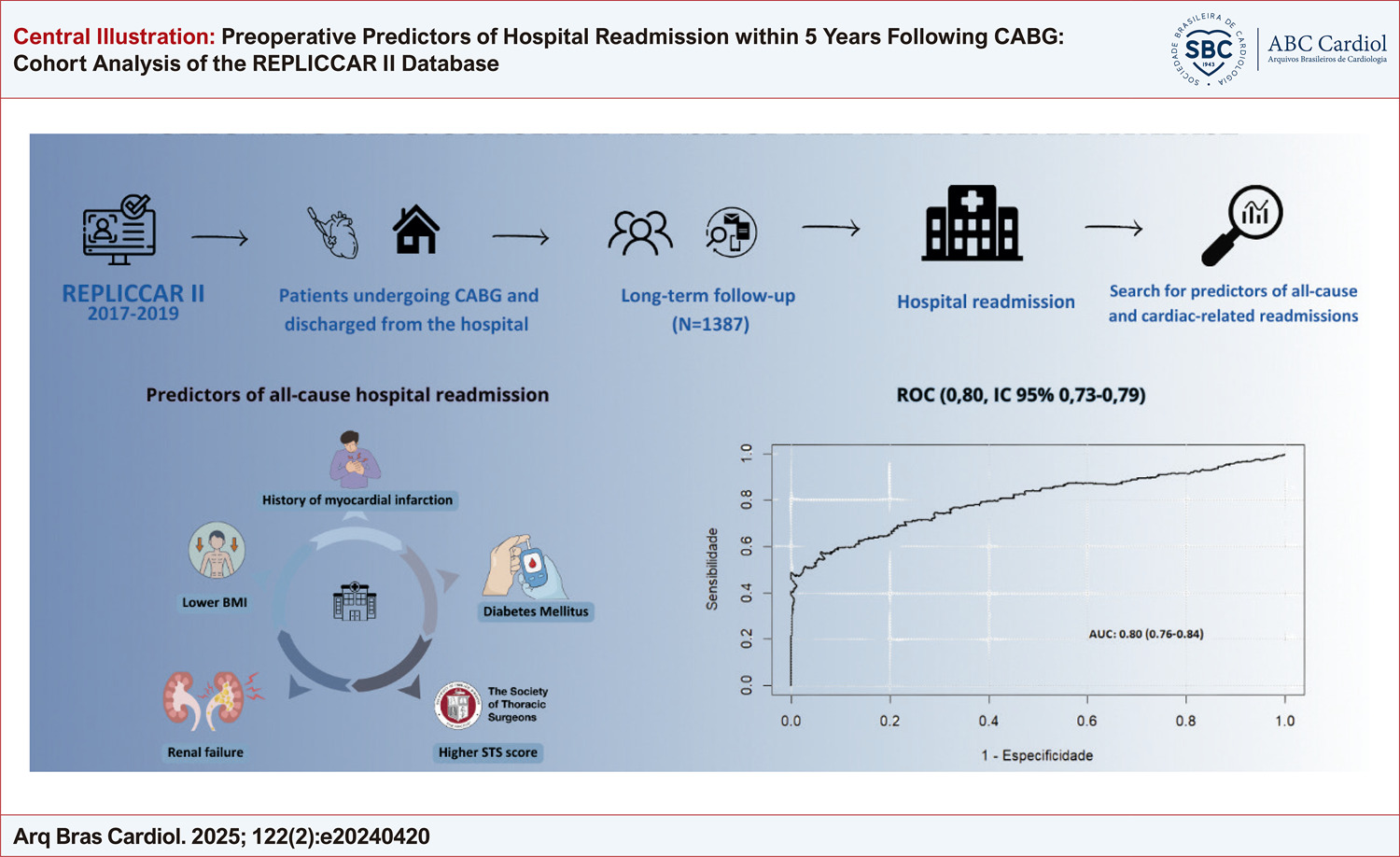
We analyzed 1,387 patients who underwent CABG between June 2017 and July 2019 using data from the multicenter REPLICCAR II registry. Follow-up was carried out by telephone interviews using a questionnaire structured in the REDCap platform. Statistical analysis included univariate and multivariate methods, with Cox regression and internal validation through calibration and discrimination tests. A significance level of 5% was applied.

Results

The cumulative incidence of all-cause readmission was 27.69%, with a mean follow-up of 4.3 years and a mean time to readmission of 2.4 years. Multivariate regression analysis indicated the following predictors of higher all-cause readmission risk: lower body mass index (HR=0.97, p=0.032), history of myocardial infarction (HR=1.27, p=0.024), diabetes mellitus (HR=1.35, p=0.004), renal failure (HR=1.62, p=0.004), and higher STS score (HR=1.22, p<0.001). A moderate correlation was observed between readmission and mortality (Rho=0.55).

Conclusions

This analysis demonstrates that lower body mass index, history of myocardial infarction, diabetes mellitus, renal failure, and elevated STS scores are significant predictors of increased hospital readmission risk following CABG.

  • Coronary Artery Disease
  • Hospitalization
  • Myocardial Revascularization
Read Full Article
Creative Commons Attribution (CC BY) Creative Commons license
17/03/2025 DOI: 10.36660/abc.20240420i Views 2
Figure 1
ABC
Editorial

Mitral Regurgitation after Acute Myocardial Infarction: A Multi-Faceted Condition

Carlos Henrique Miranda

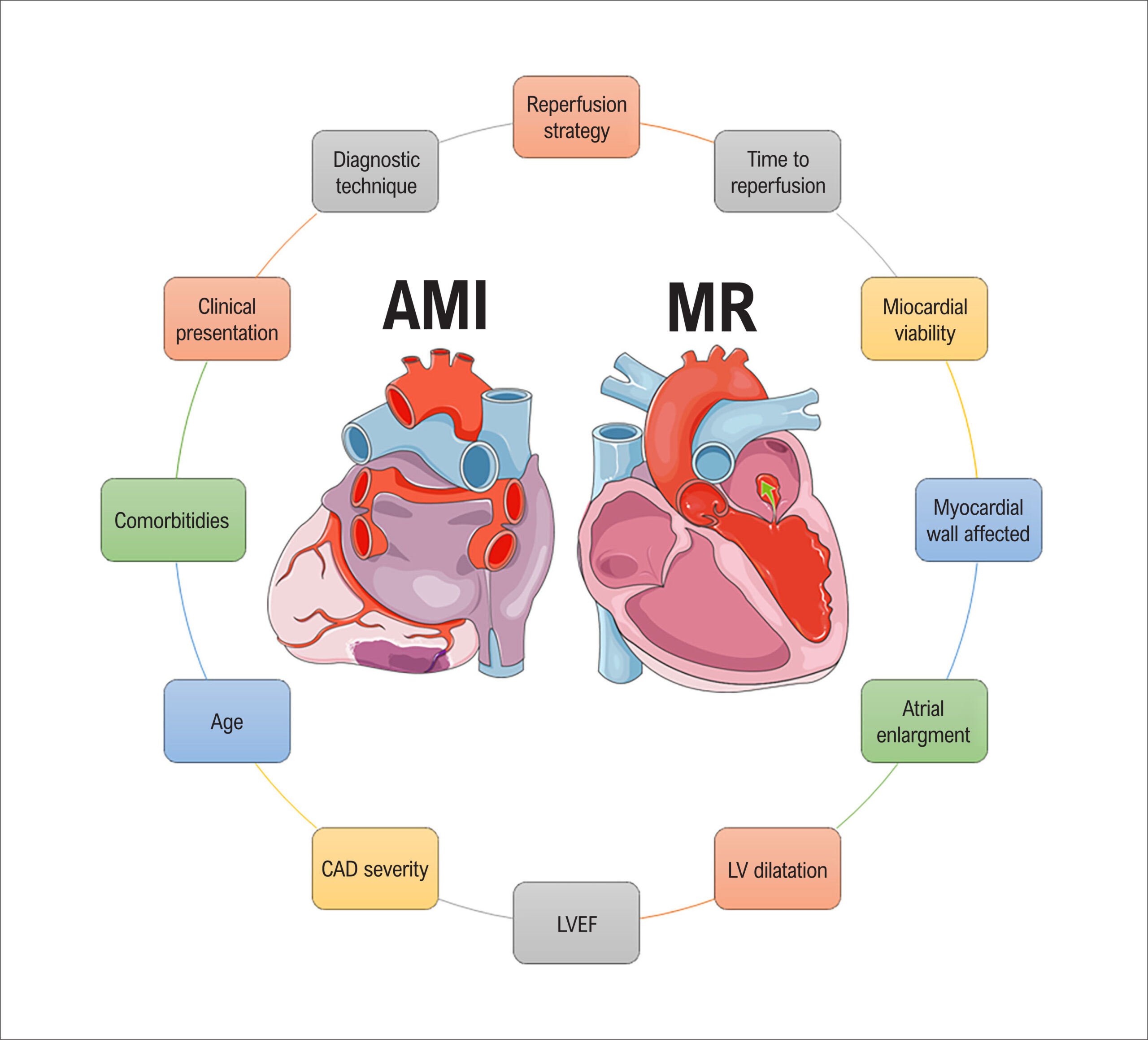
There are two leading causes of mitral regurgitation (MR) after acute myocardial infarction (AMI). First, the partial or complete papillary muscle rupture leads to MR; in this case, surgical repair is mandatory. Fortunately, the prevalence of this condition is low, around 0.05%. Second, the valve and the subvalvular apparatus are normal, and the MR results from leaflet tethering and regional left ventricular dilatation. The primary mechanism is the separation and excess angulation of the papillary muscle related to the regional wall motion in the myocardial infarction area. This second presentation is called the “functional” phenotype. This functional MR is a common echocardiographic finding after AMI. A recent investigation showed a mild MR in 76%, moderate MR in 21%, and severe MR in 3% of the patients after AMI. Vyas et al. found a significant MR (moderate + severe) prevalence of 7.21% after non-ST elevation myocardial infarction (NSTEMI). An important aspect to highlight is that most previous studies analyzed MR prevalence in all types of myocardial infarction together or ST-elevation AMI alone. The actual prevalence of MR in NSTEMI was unknown, and this study showed a considerable MR prevalence in this setting.

According to other previous studies,, this recent investigation showed that significant MR worst the patients’ prognosis, increasing the risk of death, pulmonary edema, heart failure, and cardiogenic shock. There are no doubts about the clinical impact of the MR after AMI. The more significant problem is that the mortality associated with this complication has not changed for decades, and there are still many doubts about the better management of these patients. Another feature deserves to be commented on: the clinical repercussions of severe MR are much more documented than those of moderate MR, and this classification is critical in making decisions about the treatment. In this recent investigation, the researchers analyzed the moderate and severe MR together, called significant MR; it was understandable because of the small sample size of severe MR; however, in the clinical setting, these two classifications have entirely different outcomes during the follow-up.

[…]

  • Mitral Valve Insufficiency
  • Myocardial Infarction
  • Myocardial Revascularization
Read Full Article
Creative Commons Attribution (CC BY) Creative Commons license
10/02/2025 DOI: 10.36660/abc.20240707i
Females are Associated with Lower Risks of Long-Term Mortality in Patients Undergoing Off-Pump Coronary Artery Bypass Grafting
ABC
Original Article

Females are Associated with Lower Risks of Long-Term Mortality in Patients Undergoing Off-Pump Coronary Artery Bypass Grafting

Chen Bai et al. Jiangang Wang Qing Ye Cheng Zhao

Abstract

Background

In patients who underwent off-pump coronary artery bypass grafting (OPCABG), females were reported to have lower rates of in-hospital mortality rate and postoperative atrial fibrillation than males. However, the association between gender and long-term prognosis following OPCABG is rarely reported.

Objective

This study aims to determine if women benefit more from OPCABG than men by comparing the difference in the risk of long-term all-cause mortality in patients with coronary chronic total occlusion (CTO).

Methods

This is an observational, retrospective cohort study conducted in adult patients (≥18 years) with coronary CTO undergoing OPCABG at our hospital from January 2011 to December 2014. A multivariate Cox proportional hazards model was employed to assess the association of gender with the risk of all-cause mortality. A p-value of <0.05 was considered statistically significant.

Results

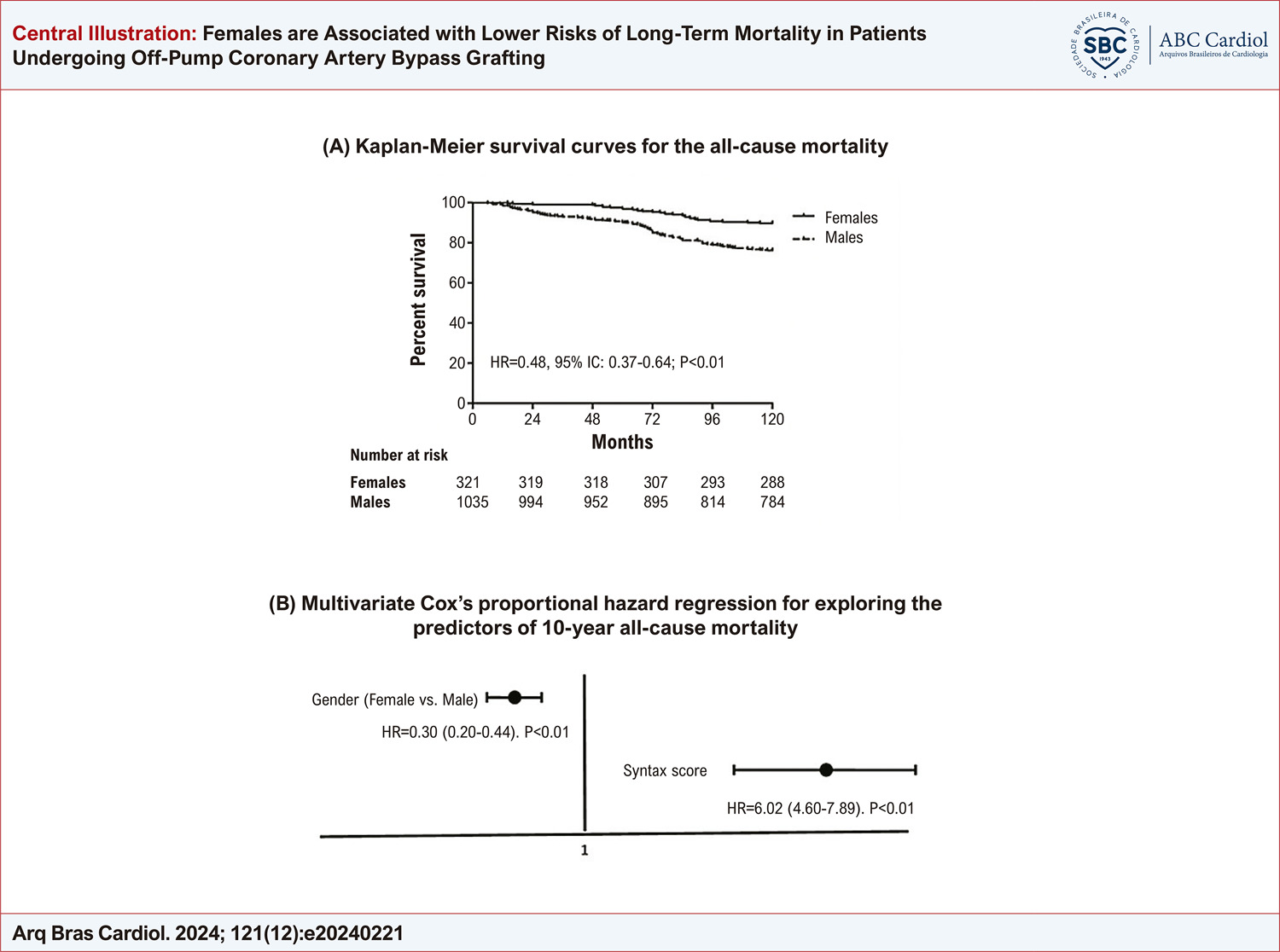
Totally 1,256 participants were enrolled, among which 321 (25.6%) were females and 935 (74.4%) were males. During a maximum follow-up of 10 years, the all-cause mortality rate in women was significantly lower than that in men (10.3% vs. 24.3%, p<0.01). Multivariate Cox regression analysis indicated that women were significantly associated with a lower risk of all-cause mortality (HR=0.30, 95% CI: 0.20-0.44; p<0.01) after controlling for potential confounding factors.

Conclusion

Women benefit more from OPCABG surgery than men, as they have a lower risk of long-term all-cause mortality in patients with coronary CTO.

  • Beating Heart Coronary Artery Bypass
  • Mortality
  • Myocardial Revascularization
  • Women
Read Full Article
Creative Commons Attribution (CC BY) Creative Commons license
13/12/2024 DOI: 10.36660/abc.20240221i Views 1
ABC
Editorial

Look Who is Coming Back? Enhancing Predictive Models for Hospital Readmission Post-CABG: Insights and Perspectives

Stephan Lachtermacher

The field of cardiovascular surgery continually evolves, with coronary artery bypass grafting (CABG) serving as a cornerstone procedure for managing severe coronary artery disease. Despite advancements in surgical techniques and perioperative care, the incidence of hospital readmissions within 30 days post-CABG remains a critical concern. These readmissions not only impact patient outcomes but also strain healthcare resources and increase costs. Understanding predictors of readmission is crucial for improving postoperative care strategies and optimizing patient outcomes.

The study titled ” Predictors of 30-Day Hospital Readmission Following CABG in a Multicenter Database: A Cross-Sectional Study” aims to identify variables associated with early readmission post-CABG in a Brazilian population. While the observed readmission rate was lower than current scientific literature, where rates vary between 8.3% and 21.1%,– it also emphasized non-cardiac-related causes. In this matter, one-third of all readmitted patients had infections as a primary cause. This finding corroborates existing literature highlighting the significant impact of infections, particularly surgical site infections, on readmission rates. Andrade et al. underscore the imperative for stringent infection control measures, including antibiotic prophylaxis and meticulous surgical techniques, to mitigate these complications.,

[…]

  • Myocardial Revascularization
  • Patient Readmission
  • Theoretical Models
Read Full Article
Creative Commons Attribution (CC BY) Creative Commons license
23/09/2024 DOI: 10.36660/abc.20240493i Views 1
Figure 1
IJCS
Original Article

Quality of Life Assessment of Patients Infected With COVID-19 and Prior Coronary Artery Bypass Graft Surgery in Brazil: Four Years Follow-up

Adnaldo da Silveira Maia et al. Matheus Maia Adnaldo Lucas da Silveira Maia Magaly Arrais dos Santos

Abstract

Background

The COVID-19 pandemic has been a worldwide challenge. In patients with coronary artery disease (CAD), previously submitted to coronary artery bypass graft surgery (CABG), such impact should be analyzed.

Objectives

Evaluate the impact on quality of life of COVID-19 infection in patients with prior CABG.

Methods

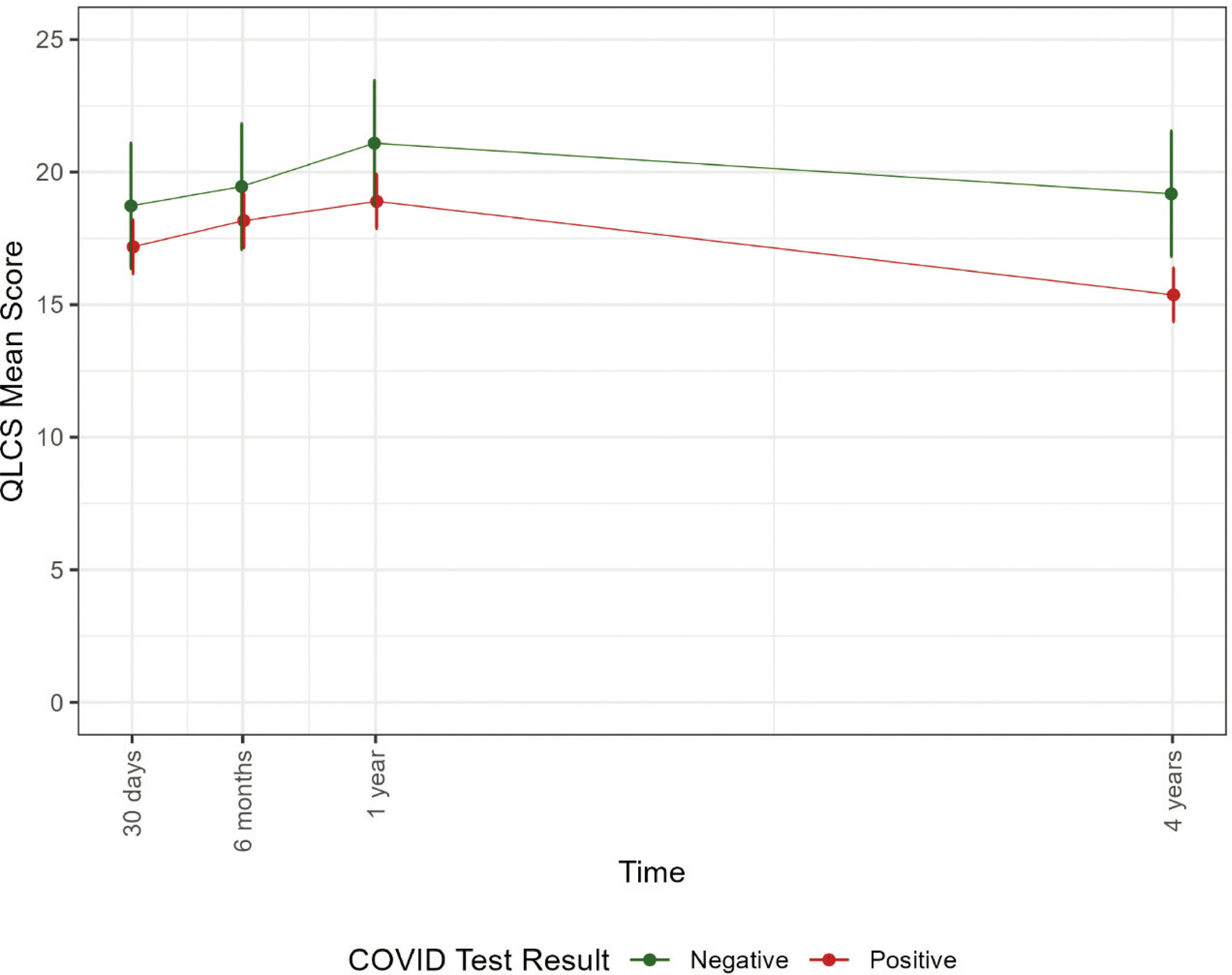
Patients undergoing isolated CABG between July 2016 and July 2017 were enrolled. This is an observational, cross-sectional, prospective study. Patients were divided into two groups: Group (COVID-19) and Group (No-COVID), for analysis of variables. The World Health Organization’s (WHO) definitions of confirmed cases were used to define the diagnosis of COVID-19 infection. Quality of life was assessed using the Quality of Life in Cardiovascular Surgery (QLCS) questionnaire, applied 30 days, 6 months, 1 year, and 4 years after surgery. The primary endpoint was improvement in quality of life at 4 years after CABG. The local ethics committee approved the study. Continuous variables were described by their means and standard deviations (SD). Categorical variables were described using absolute or relative frequencies. The items that make up the quality of life questionnaire were added together to calculate the score. A linear mixed model was used to assess the effect of time on the score. The significance level adopted was 5%. The analyses were carried out using R software, version 4.2.1.

Results

The total sample consisted of 434 patients who underwent isolated CABG; the mean age was 63 years, with a prevalence of males (71%). Among the patients followed up at the 4-year follow-up (115), 60 (52%) were positive according to the WHO’s definitions. After multiple comparisons, there was a statistical difference in quality of life in all periods (P<0.001). Between patients with and without COVID-19, a statistical difference was observed at 1 and 4 years (p = 0.0039).

Conclusion

Patients who underwent CABG and had a history of COVID-19 infection experienced worsening quality of life within 4 years. There was no difference between groups regarding new acute myocardial infarction (AMI), stroke, or hospitalization.

  • COVID-19
  • Myocardial Revascularization
  • Quality of life
Read Full Article
Creative Commons Attribution (CC BY) Creative Commons license
26/08/2024 DOI: 10.36660/ijcs.20230171 Views 1
Figure 1
ABC
Viewpoint

Angina Pectoris and Orbita 2 Trial: Reflections on the Future of Angina Treatment

Eduardo Bello Martins et al. Eduardo Gomes Lima Jaime Paula Pessoa Linhares Filho Henrique Trombini Pinesi … Fabio Grunspun Pitta Carlos Vicente Serrano Júnior

The ORBITA trial

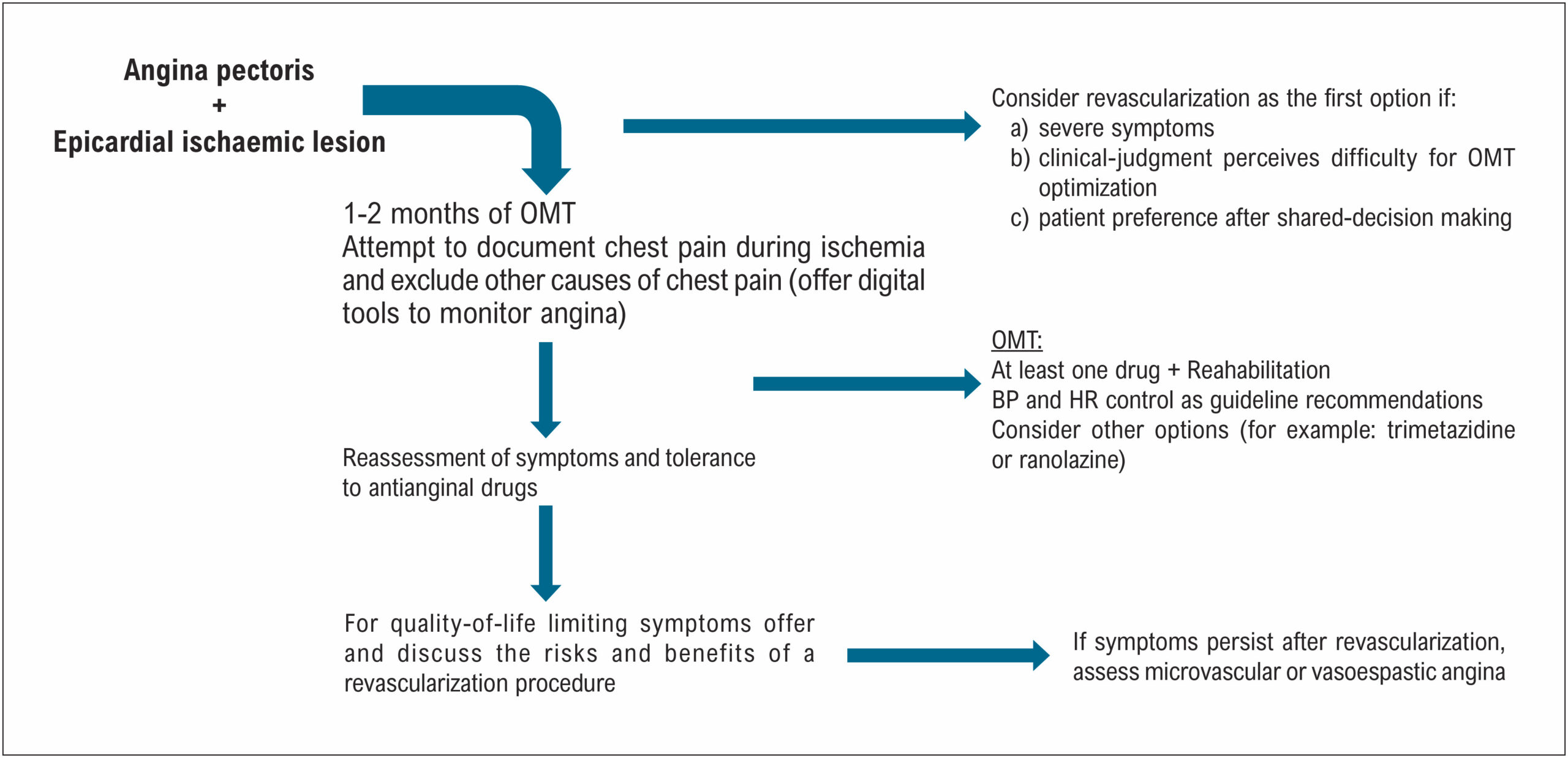
Although the above-mentioned studies have demonstrated some improvement in angina after myocardial revascularization, one of their major limitations is the open nature and a possible placebo effect. In this regard, the ORBITA study showed no benefit of PCI versus a placebo procedure on the primary end-point of an increase in exercise time. ORBITA was a well conducted study that demonstrated the possibility of a placebo component and lack of symptom improvement by PCI. However, several limitations could have influenced these results and have been discussed in the literature, such as the fact that it included patients with non-limiting symptoms, no ischemia in almost a quarter of the participants and short follow-up.

In 2023, the ORBITA 2 trial was finally published in NEJM and addressed for the first time the PCI as a monotherapy for angina relief at a placebo-controlled trial. It provides another piece of the puzzle of angina control and overcomes some of the first ORBITA limitations. ORBITA 2 was an investigator-initiated, multicenter, double-blind, randomized, placebo-controlled trial that was conducted at 14 sites in the United Kingdom and included 301 participants. Patients enrolled had angina or equivalent symptoms, anatomic evidence of severe coronary stenosis and objective evidence of ischemia based on noninvasive imaging or invasive coronary physiology testing. First, antianginal medications were discontinued (median number of antianginal drugs was only 1) and the participants were instructed to use a dedicated smartphone application to report the presence or absence of angina and the number of angina episodes daily. Patients also completed validated questionnaires on symptoms and quality of life. The Canadian Cardiovascular Society (CCS) functional classification was assessed, treadmill exercise test and dobutamine stress echocardiography were also performed. The patients then entered a two-week pre-randomization period during which they reported the number of episodes of angina daily, through the smartphone application. Patients were eligible to proceed to randomization if they reported at least one episode of angina during the symptom assessment phase.

[…]

  • Angina Pectoris
  • Coronary Disease
  • Myocardial Revascularization
Read Full Article
Creative Commons Attribution (CC BY) Creative Commons license
02/08/2024 DOI: 10.36660/abc.20230848i
Age, Renal Failure and Transfusion are Risk Predictors of Prolonged Hospital Stay after Coronary Artery Bypass Grafting Surgery
ABC
Original Article

Age, Renal Failure and Transfusion are Risk Predictors of Prolonged Hospital Stay after Coronary Artery Bypass Grafting Surgery

Diego Pereira Gregório de Andrade et al. Fabiane Letícia de Freitas Gabrielle Barbosa Borgomoni Maxim Goncharov … Pedro Gabriel Melo de Barros e Silva Marcelo Arruda Nakazone Valquiria Pelisser Campagnucci Marcos Gradim Tiveron Luiz Augusto Lisboa Luís Alberto Oliveira Dallan Fabio Biscegli Jatene Omar Asdrúbal Vilca Mejia

Abstract

Background:

Identifying risk factors in cardiovascular surgery assists in predictability, resulting in optimization of outcomes and cost reduction.

Objective:

This study aimed to identify preoperative and intraoperative risk predictors for prolonged hospitalization after coronary artery bypass grafting (CABG) surgery in the state of São Paulo, Brazil.

Methods:

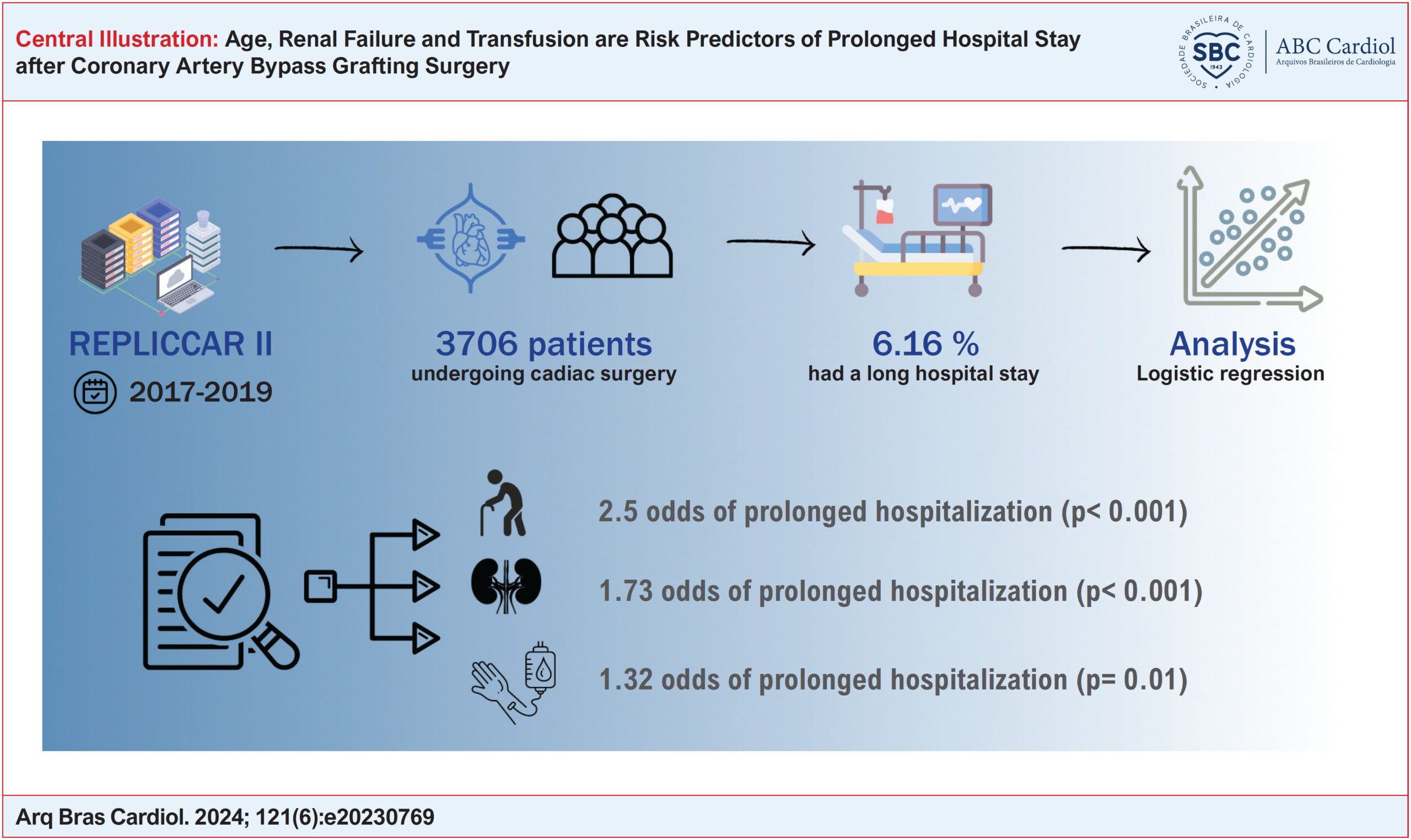
A cross-sectional analysis using data from the REPLICCAR II database, a prospective, consecutive, multicenter registry that included CABG surgeries performed between August 2017 and July 2019. The primary outcome was a prolonged hospital stay (PHS), defined as a postoperative period exceeding 14 days. Univariate and multivariate logistic regression analyses were performed to identify the predictors with significance set at p <0.05.

Results:

The median age was 63 (57-70) years and 26.55% of patients were female. Among the 3703 patients analyzed, 228 (6.16%) had a PHS after CABG, with a median hospital stay of 17 (16-20) days. Predictors of PHS after CABG included age >60 years (OR 2.05; 95% CI 1.43-2.87; p<0.001); renal failure (OR 1.73; 95% CI 1.29-2.32; p <0.001) and intraoperative red blood cell transfusion (OR 1.32; 95% CI 1.07-2.06; p=0.01).

Conclusion:

Age >60 years, renal failure, and intraoperative red blood cell transfusion were independent predictors of PHS after CABG. The identification of these variables can help in multiprofessional strategic planning aimed to enhance results and resource utilization in the state of São Paulo.

  • length of stay
  • Myocardial Revascularization
  • Process Optimization
Read Full Article
Creative Commons Attribution (CC BY) Creative Commons license
24/06/2024 DOI: 10.36660/abc.20230769i Views 1
Figure 1
ABCIC
Case Report

Anomalous Origin of the Coronary Artery from an Inappropriate Coronary Sinus

Mário Cruz Couto et al. Fernando Augusto Pacífico Dolly Brandão Lages Michelle Alves de Farias … Liliam de Souza Santos Eduardo Lins Paixão

Abstract

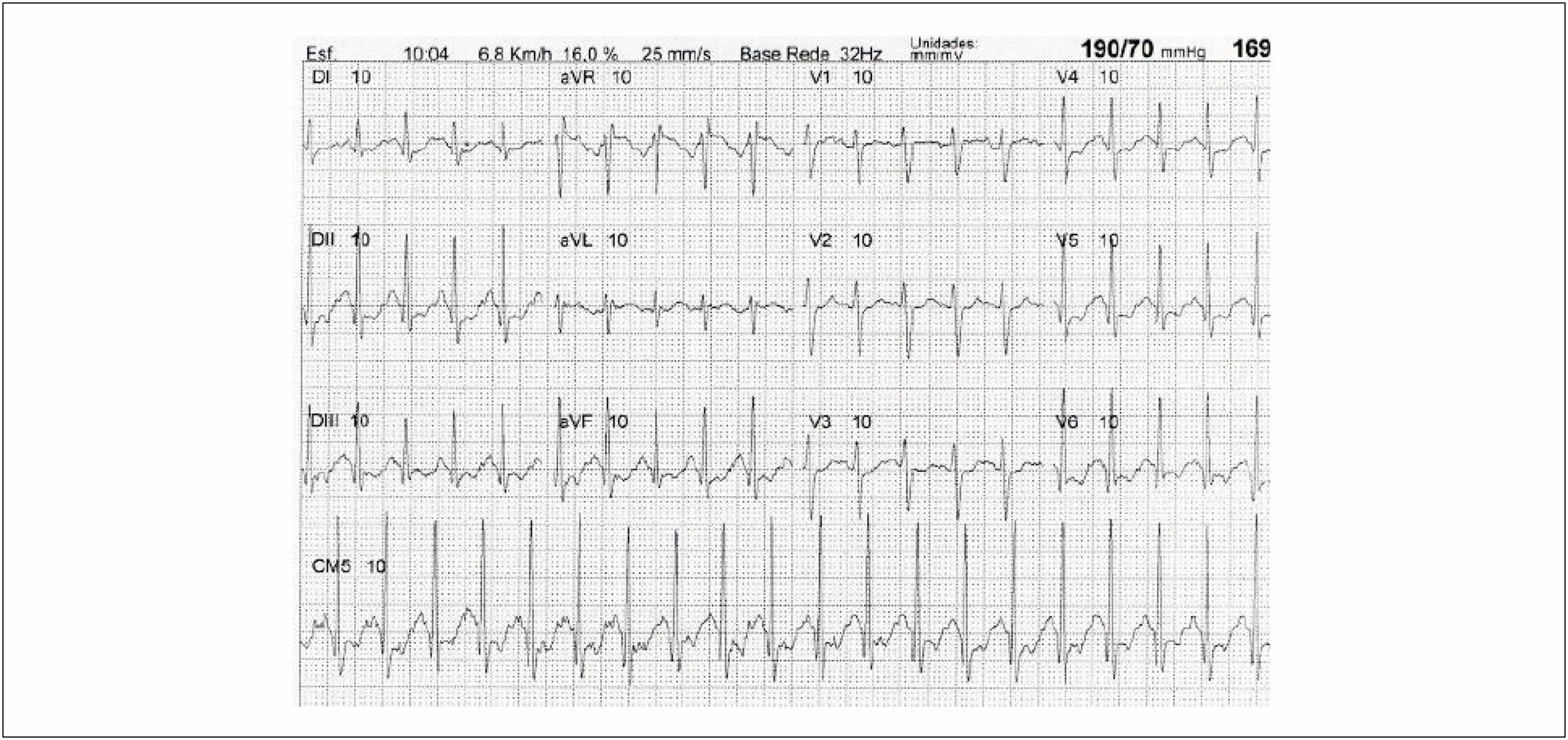
Congenital anomaly of the coronary arteries is a potentially lethal disease, especially in young people. Currently, non-invasive cardiovascular imaging tests have shown better definition of the origin and course of the coronary arteries. Surgical treatment should be indicated in symptomatic patients, while the ideal management of asymptomatic patients remains controversial. We report a case of anomalous origin of the left coronary artery from the right coronary sinus with an interarterial course, in an asymptomatic patient treated with revascularization surgery.

  • Coronary Vessel Anomalies
  • Myocardial Revascularization
  • Sudden Death
Read Full Article
Creative Commons Attribution (CC BY) Creative Commons license
21/12/2023 DOI: 10.36660/abcimg.20230090i Views 1
Central Illustration
IJCS
Original Article

Impact of the COVID-19 Outbreak on Coronary Artery Bypass Grafting in Brazil

Felipy de Almeida Machado et al. Rui M. S. Almeida

Abstract

Background

The COVID-19 pandemic has disrupted the routine of emergency centers around the world, including in Brazil, where the crisis has affected the volume of major cardiac surgeries such as coronary artery bypass grafting.

Objective

To analyze the impact of the COVID-19 pandemic on the number of surgical procedures for coronary artery bypass grafting in Brazil.

Methods

An ecological, cross-sectional, quantitative, and descriptive study was conducted. Data for the period from July 2018 to June 2019 and from July 2020 to June 2021 were collected from SIHSUS using DATASUS/Tabwin.

Results

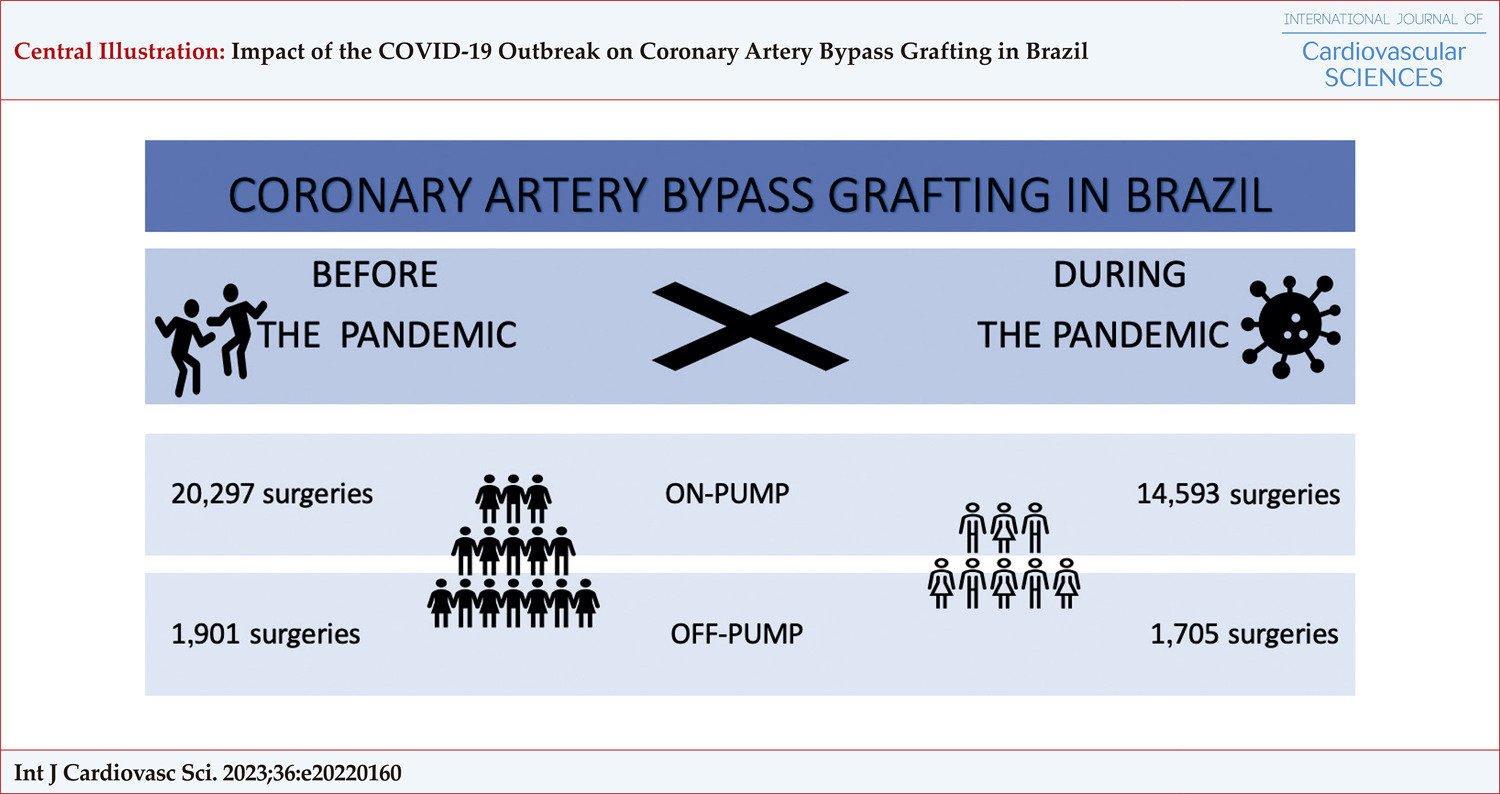
A global reduction of 26.58% was observed in the analyzed population, with on-pump coronary artery bypass grafting decreasing by 28.10%, and off-pump coronary artery bypass grafting reduced by only 10.31%.

Conclusion

During the pandemic, there was a 26.58% reduction in the number of surgical procedures for myocardial revascularization in Brazil.

  • Cardiovascular Surgical Procedures
  • Coronary Disease
  • COVID-19
  • Myocardial Revascularization
  • Public Health
Read Full Article
Creative Commons Attribution (CC BY) Creative Commons license
17/07/2023 DOI: 10.36660/ijcs.20220160 Views 2
Central Illustration
ABC
Original Article

Comparison of Cardioplegic Solutions in Coronary Bypass Surgery Over Autophagy and Apoptosis Mechanisms

Elif Funda Sener et al. Zuhal Hamurcu Serpil Taheri Reyhan Tahtasakal … Nesrin Delibasi Deniz Elcik Ecmel Mehmetbeyoglu Aydin Tuncay Fatma Dal Keziban Korkmaz Bayram Isın Gunes Omer Naci Emirogullari

Abstract

Background

Coronary artery disease (CAD) due to myocardial ischemia causes permanent loss of heart tissue.

Objectives

We aimed to demonstrate the possible damage to the myocardium at the molecular level through the mechanisms of autophagy and apoptosis in coronary bypass surgery patients.

Methods

One group was administered a Custodiol cardioplegia solution, and the other group was administered a Blood cardioplegia solution. Two myocardial samples were collected from each patient during the operation, just before cardiac arrest and after the aortic cross-clamp was released. The expressions of autophagy and apoptosis markers were evaluated. The level of statistical significance adopted was 5%.

Results

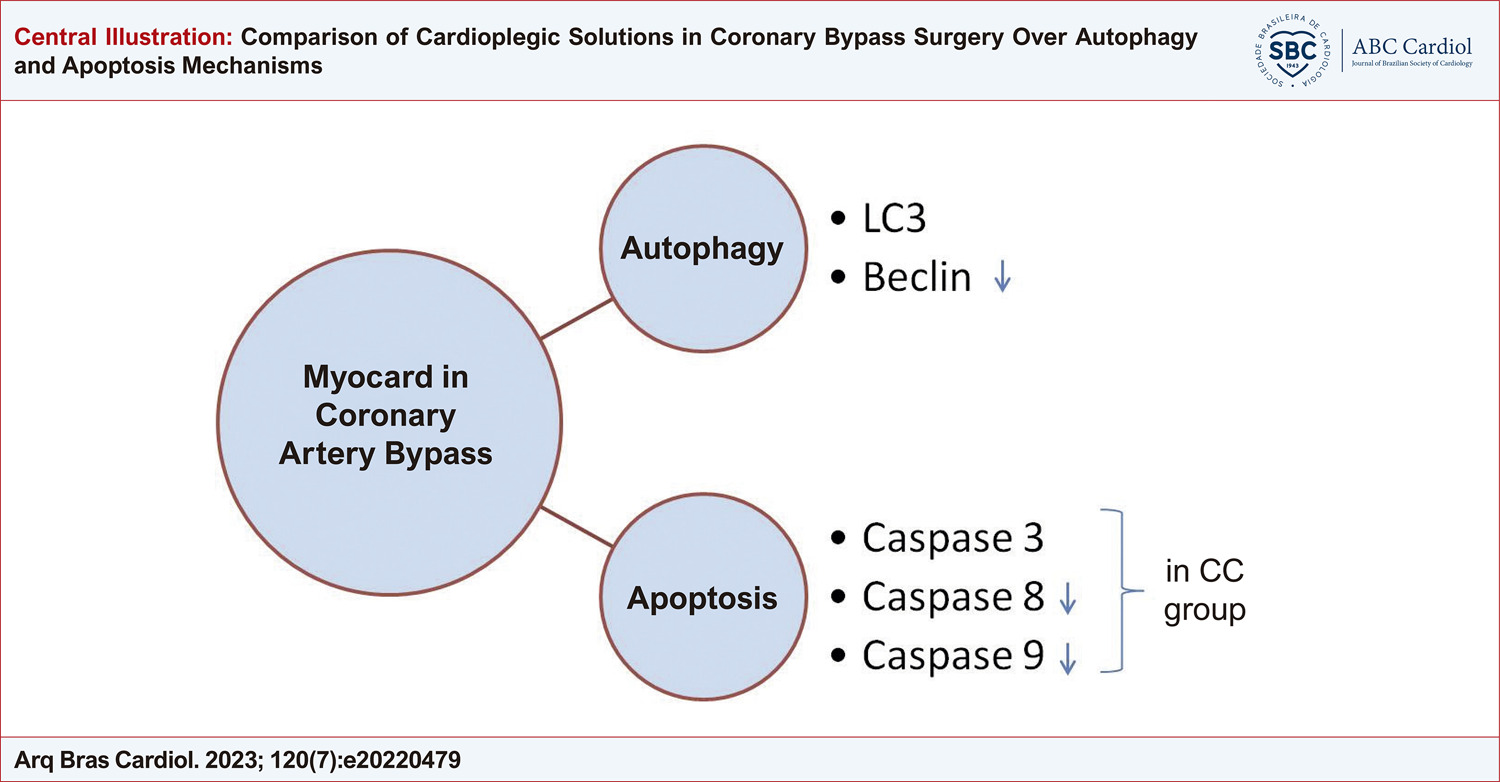
The expression of the BECLIN gene was significant in the myocardial tissues in the BC group (p=0.0078). CASPASE 3, 8, and 9 gene expression levels were significantly lower in the CC group. Postoperative TnT levels were significantly different between the groups (p=0.0072). CASPASE 8 and CASPASE 9 gene expressions were similar before and after aortic cross-clamping (p=0.8552, p=0.8891). In the CC group, CASPASE 3, CASPASE 8, and CASPASE 9 gene expression levels were not found to be significantly different in tissue samples taken after aortic cross-clamping (p=0.7354, p=0.0758, p=0.4128, respectively).

Conclusions

With our findings, we believe that CC and BC solutions do not have a significant difference in terms of myocardial protection during bypass operations.

  • Apoptosis
  • Autophagy
  • Cardioplegic Solutions
  • Coronary Artery Disease
  • Myocardial Ischemia
  • Myocardial Revascularization
Read Full Article
Creative Commons Attribution (CC BY) Creative Commons license
17/07/2023 DOI: 10.36660/abc.20220479 Views 1
Figure 1
IJCS
Original Article

Effectiveness of Early Mobilization in Prevention and Rehabilitation of Functional Impairment After Myocardial Revascularization Surgery: A Systematic Review

Marcia Cristina Lacerda das Judas et al. Rodrigo de Freitas Fontes Renata de Moura Larissa dos Santos … Mônica de Almeida Vinicius Gomes

Abstract

Introduction

Myocardial revascularization surgery is associated with high morbidity and mortality, due to factors like the general anesthesia and the surgical procedure itself. Physiotherapy, combined with early mobilization (EM), can provide the patient with better functional parameters.

Objective

To review, identify and describe the effectiveness of EM in the prevention and rehabilitation of functional parameters of coronary artery bypass graft surgery.

Methodology

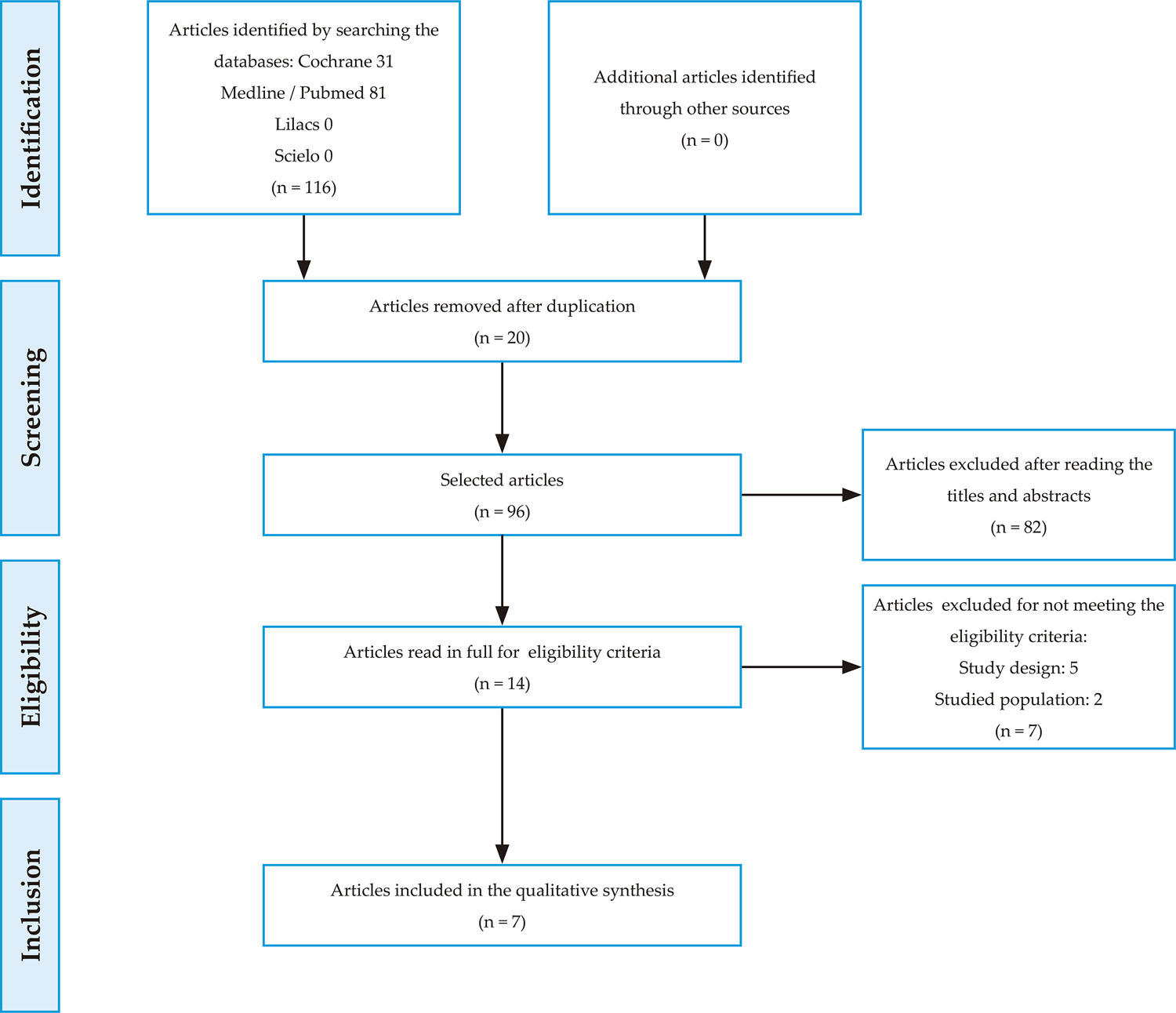
This is a systematic review conducted between February 2020 and 2021 of randomized clinical trials (RCTs) published in the Cochrane databases Library, LILACS, Scielo and Medline / PubMed. The Physiotherapy Evidence Database (PEDro) scale was used for assessment of the methodological quality of studies included.

Results

Four studies were reviewed. Two articles assessed functional capacity, one using the cycle ergometer and one with inspiratory muscle training (IMT) together with active exercises and early walking. One article reported a reduction in the incidence of atelectasis and pleural effusion with EM and one article reported improvements in the alveolus-artery gradient and inspiratory muscle power using an inspiratory muscle trainer combined with EM.

Conclusion

EM is effective in the prevention and rehabilitation of functional parameters after CABG surgery, by improving functional capacity, respiratory muscle power, quality of life and gas exchange, and reducing the incidence of atelectasis and pleural effusion.

  • Early mobilization
  • Myocardial Revascularization
  • Rehabilitation
Read Full Article
Creative Commons Attribution (CC BY) Creative Commons license
30/06/2023 DOI: 10.36660/ijcs.20210166
ABC
Research Letter

Change of Strategy in Coronary Artery Bypass Graft Surgery Waiting List during the COVID-19 Pandemic: One-Year Follow-Up

Franc Jorge Sampaio Santos Pereira et al. Marília Prudente Menezes Gabriela Carolina Santamaria Naranjo José Henrique Herrmann Delamain … José Ribamar Costa Mario Issa Vivian Lerner Amato Fausto Feres Pedro Silvio Farsky

Introduction

The COVID-19 pandemic led to a significant occupation of intensive care beds, causing the suspension of elective cases of coronary artery bypass grafting (CABG).

At the same time, the evolution of techniques for the percutaneous treatment of coronary artery disease (CAD) has expanded the possibilities for this modality, and published studies have not shown a reduction in outcomes in stable patients with moderate/high ischemic burden under optimized clinical treatment (OCT).

[…]

  • Coronary Artery Disease/surgery
  • COVID-19
  • Intervention Coronary Percutaneous, Myocardial Infarction/complications
  • Myocardial Revascularization
  • Pandemic
  • Technology Applied to Waiting Lists
  • waiting lists
Read Full Article
Creative Commons Attribution (CC BY) Creative Commons license
21/04/2023 DOI: 10.36660/abc.20220582
ABC
Letter to the Editor

CHA2DS2-VASc Score: What More Can it Predict?

Adnaldo da Silveira Maia

Dear Editor,

Kalkan et al. assessed the predictive value of the congestive heart failure, hypertension, age, diabetes mellitus, prior stroke, vascular disease, age, sex category (CHA2DS2-VASc) score for residual SYNTAX score (rSS) among patients with ST-segment elevation acute myocardial infarction (STEMI). The study included 688 patients divided into a low rSS group (group 1; scores up to 8) and a high rSS group (group 2; scores above 8).

[…]

  • Atrial Fibrillation
  • Covid-19/complications
  • Data Interpretation, Statistical
  • Myocardial Revascularization
  • ST Elevation Myocardial Infarction
Read Full Article
Creative Commons Attribution (CC BY) Creative Commons license
07/04/2023 DOI: 10.36660/abc.20220672 Views 1
IJCS
Original Article

Prevalence of Surgical Myocardial Revascularization in Diabetics and Non-diabetics After Acute Myocardial Infarction

Ariane Maggi Coelho Schwanck et al. Iara Schardosin Bayma de Menezes Marina Casagrande Canto

Abstract

Background

Diabetes mellitus (DM) is a metabolic disorder characterized by persistent hyperglycemia. The main cause of death among diabetics is cardiovascular disease (CVD), which is a precursor to acute myocardial infarction (AMI). Approximately 30% of diabetic patients with AMI require myocardial revascularization surgery (MRS).

Objective

To evaluate the prevalence of MRS in diabetic and non-diabetic patients after AMI in a hospital in the city Criciúma, Brazil, during the period from 2016 to 2019.

Methods

A cross-sectional study was carried out with secondary data collection, with analysis of 215 medical records of diabetic and non-diabetic patients with AMI, submitted or not to MRS during the study period. For statistical analysis, the Shapiro-Wilk test, Pearson’s chi-square test and Fisher’s exact test were used, with a significance level of α = 0.05.

Results

The frequency of diabetic AMI patients with hypertension (88.1%) was significantly higher (p<0.01) than of diabetic AMI patients without hypertension. Although no statistically significant differences were found in the other variables between the groups, smoking, hypertension and dyslipidemia were more prevalent in diabetic than in non-diabetic patients with AMI undergoing MRS.

Conclusion

The prevalence of MRS after AMI in diabetic patients was higher than in non-diabetic patients.

  • Diabetes Mellitus
  • Hyperglycemia
  • Myocardial Revascularization
Read Full Article
Creative Commons Attribution (CC BY) Creative Commons license
03/04/2023 DOI: 10.36660/ijcs.20210208 Views 2
Central Illustration
ABC
Original Article

Immediate Results after Multiple Arterial Grafts in Coronary Artery Bypass Graft Surgery in the São Paulo State: Cross Cohort Study

Raúl Armando Micalay Paredes et al. Gabrielle Barbosa Borgomoni Anny Kátia Puchalski Micalay José Carlos Arteaga Camacho … Luís Roberto Palma Dallan Luiz Augusto Ferreira Lisboa Luís Alberto de Oliveira Dallan Omar Asdrúbal Vilca Mejia Grupo de estudos REPLICCAR

Abstract

Background

The short-term results after using arterial grafts still raise questions and doubts for medical society.

Objective

To compare the immediate outcomes of patients undergoing single arterial graft versus multiple arterial grafts coronary artery bypass grafting surgery.

Methods

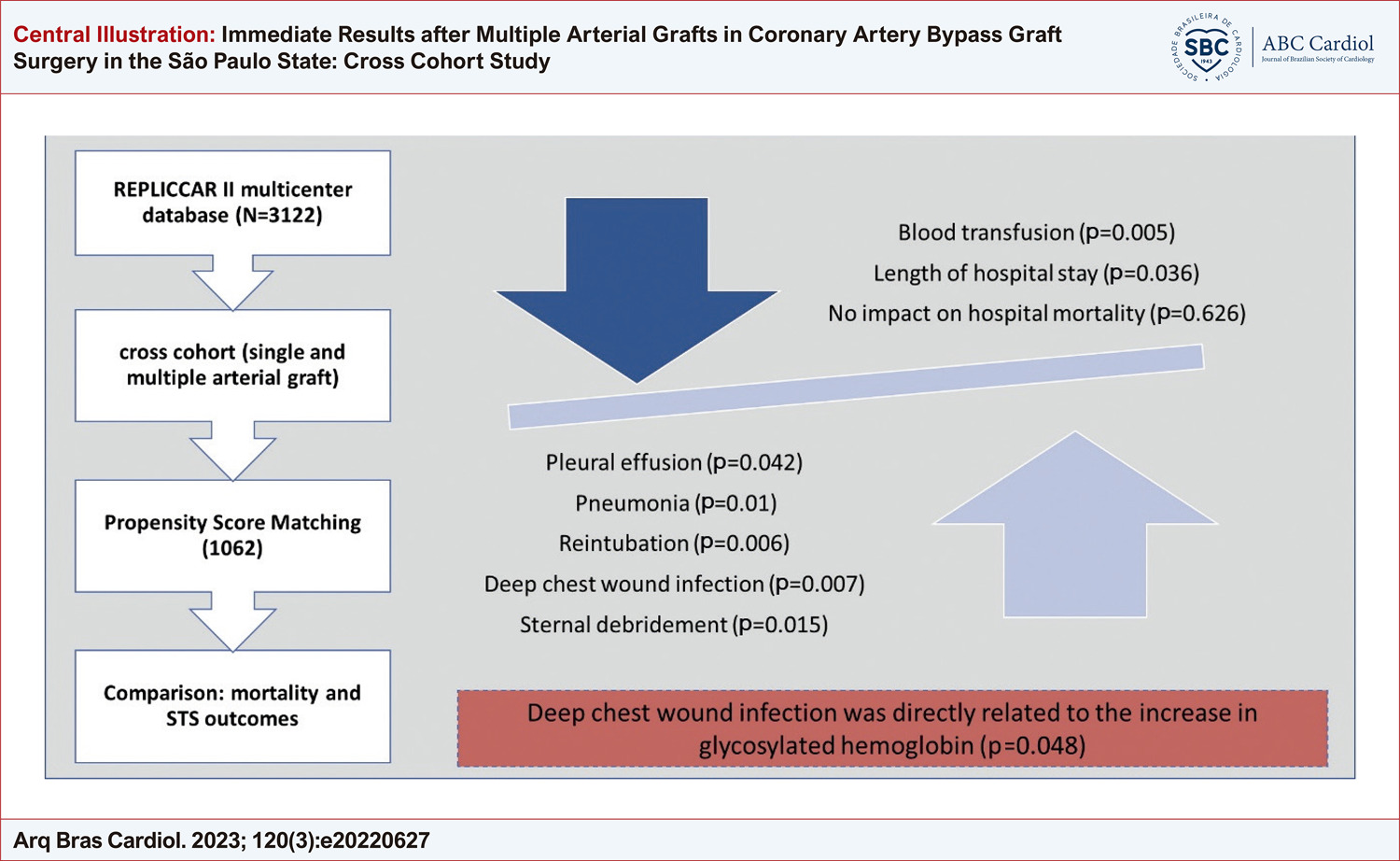
Cross-sectional cohort study in the São Paulo Registry of Cardiovascular Surgery II (REPLICCAR II). Perioperative data from 3122 patients were grouped by the number of arterial grafts used, and their outcomes were compared: reoperation, deep sternal wound infection (DSWI), stroke, acute kidney injury, prolonged intubation (>24 hours), short hospital stay (14 days), morbidity and mortality. Propensity Score Matching (PSM) matched 1062 patients, adjusted for the mortality risk.

Results

After PSM, the single arterial graft group showed patients with advanced age, more former smokers, hypertension, diabetes, stable angina, and previous myocardial infarction. In the multiple arterial grafts, there was a predominance of males, recent pneumonia, and urgent surgeries. After the procedure, there was a higher incidence of pleural effusion (p=0.042), pneumonia (p=0.01), reintubation (p=0.006), DSWI (p=0.007), and sternal debridement (p=0.015) in the multiple arterial grafts group, however, less need for blood transfusion (p=0.005), extremity infections (p=0.002) and shorter hospital stays (p=0.036). Bilateral use of the internal thoracic artery was not related to increased DSWI rate, but glycosylated hemoglobin >6.40% (p=0.048).

Conclusion

Patients undergoing the multiarterial technique had a higher incidence of pulmonary complications, and DSWI, where glycosylated hemoglobin ≥6.40%, had a greater influence on the infectious outcome than the choice of grafts.

  • Database
  • Glycated Hemoglobin A
  • Indicators of Morbidity and Mortality
  • Myocardial Revascularization
Read Full Article
Creative Commons Attribution (CC BY) Creative Commons license
17/03/2023 DOI: 10.36660/abc.20220627

Could not load more articles. Please try again.

How to cite this article

EndNote RIS

Electronic Document Format (Vancouver)

Leal JCF, Gomes RAF, Gomes WJ. Surgery is the Means, Not the End: Late Follow-Up of Coronary Artery Bypass Graft Surgery. Arquivos Brasileiros de Cardiologia 2026;123(4):e20260351.

Electronic Document Format (ABNT)

Leal, João Carlos Ferreira; Gomes, Rafael Alessandro Ferreira; Gomes, Walter J.. Surgery is the Means, Not the End: Late Follow-Up of Coronary Artery Bypass Graft Surgery. Arquivos Brasileiros de Cardiologia, v. 123, n. 4, e20260351, Jul. 2026.

Electronic Document Format (APA)

Leal, J. C. F., Gomes, R. A. F., & Gomes, W. J. (2026). Surgery is the Means, Not the End: Late Follow-Up of Coronary Artery Bypass Graft Surgery. Arquivos Brasileiros de Cardiologia, 123(4), e20260351.

Electronic Document Format (ISO)

Leal, João Carlos Ferreira and Gomes, Rafael Alessandro Ferreira and Gomes, Walter J.. Surgery is the Means, Not the End: Late Follow-Up of Coronary Artery Bypass Graft Surgery. Arquivos Brasileiros de Cardiologia [online]. 2026, vol. 123, n. 4, [cited 2026-10-14], e20260351. Available from: <https://journals.cardiol.br/en/article/surgery-is-the-means-not-the-end-late-follow-up-of-coronary-artery-bypass-graft-surgery/>. ISSN 0066-782X

EndNote RIS

Electronic Document Format (Vancouver)

Moreira EM, Waldvogel BC, Martins EB, Favarato D, Lima EG, Pitta FG, Rached FH, et al. Five-Year Mortality among Survivors of Coronary Artery Bypass Graft Surgery: A Retrospective Study from a Tertiary Center. Arquivos Brasileiros de Cardiologia 2026;123(4):e20250362.

Electronic Document Format (ABNT)

Moreira, Eduardo Martelli; Waldvogel, Bernadette Cunha; Martins, Eduardo Bello; Favarato, Desiderio; Lima, Eduardo Gomes; Pitta, Fabio Grunspun; Rached, Fabiana Hanna; Pinesi, Henrique Trombini; Mejia, Omar Asdrúbal Vilca; Serrano Jr, Carlos Vicente. Five-Year Mortality among Survivors of Coronary Artery Bypass Graft Surgery: A Retrospective Study from a Tertiary Center. Arquivos Brasileiros de Cardiologia, v. 123, n. 4, e20250362, Jun. 2026.

Electronic Document Format (APA)

Moreira, E. M., Waldvogel, B. C., Martins, E. B., Favarato, D., Lima, E. G., Pitta, F. G., Rached, F. H., Pinesi, H. T., Mejia, O. A. V., & Serrano Jr, C. V. (2026). Five-Year Mortality among Survivors of Coronary Artery Bypass Graft Surgery: A Retrospective Study from a Tertiary Center. Arquivos Brasileiros de Cardiologia, 123(4), e20250362.

Electronic Document Format (ISO)

Moreira, Eduardo Martelli and Waldvogel, Bernadette Cunha and Martins, Eduardo Bello and Favarato, Desiderio and Lima, Eduardo Gomes and Pitta, Fabio Grunspun and Rached, Fabiana Hanna and Pinesi, Henrique Trombini and Mejia, Omar Asdrúbal Vilca and Serrano Jr, Carlos Vicente. Five-Year Mortality among Survivors of Coronary Artery Bypass Graft Surgery: A Retrospective Study from a Tertiary Center. Arquivos Brasileiros de Cardiologia [online]. 2026, vol. 123, n. 4, [cited 2026-10-14], e20250362. Available from: <https://journals.cardiol.br/en/article/five-year-mortality-among-survivors-of-coronary-artery-bypass-graft-surgery-a-retrospective-study-from-a-tertiary-center/>. ISSN 0066-782X

EndNote RIS

Electronic Document Format (Vancouver)

Nicolau JC, Giraldez RRCV, Jatene FB, Dallan LAO, Lisboa LA, Mejia OAV, Ribera JLM, et al. Comparison between Five Risk Scores in Patients with Acute Coronary Syndromes Undergoing Surgical Revascularization during the Index Hospitalization. Arquivos Brasileiros de Cardiologia 2026;122(11):e20250320.

Electronic Document Format (ABNT)

Nicolau, José C.; Giraldez, Roberto R. C. V.; Jatene, Fabio B.; Dallan, Luís A. O.; Lisboa, Luiz A.; Mejia, Omar A. V.; Ribera, Jorge L. M.; Bertolin, Adriadne J.; Baracioli, Luciano M.; Lima, Felipe G.; Andrade, Maria C. D.; Vintimilla, Santiago A. C.; Salis, Leonardo; Freitas, Fabiane L. de; Goncharov, Maxim; Godoy, Lucas C.; Furtado, Remo H. de M.; Farkouh, Michael E.. Comparison between Five Risk Scores in Patients with Acute Coronary Syndromes Undergoing Surgical Revascularization during the Index Hospitalization. Arquivos Brasileiros de Cardiologia, v. 122, n. 11, e20250320, Jan. 2026.

Electronic Document Format (APA)

Nicolau, J. C., Giraldez, R. R. C. V., Jatene, F. B., Dallan, L. A. O., Lisboa, L. A., Mejia, O. A. V., Ribera, J. L. M., Bertolin, A. J., Baracioli, L. M., Lima, F. G., Andrade, M. C. D., Vintimilla, S. A. C., Salis, L., Freitas, F. L. , Goncharov, M., Godoy, L. C., Furtado, R. H. M., & Farkouh, M. E. (2026). Comparison between Five Risk Scores in Patients with Acute Coronary Syndromes Undergoing Surgical Revascularization during the Index Hospitalization. Arquivos Brasileiros de Cardiologia, 122(11), e20250320.

Electronic Document Format (ISO)

Nicolau, José C. and Giraldez, Roberto R. C. V. and Jatene, Fabio B. and Dallan, Luís A. O. and Lisboa, Luiz A. and Mejia, Omar A. V. and Ribera, Jorge L. M. and Bertolin, Adriadne J. and Baracioli, Luciano M. and Lima, Felipe G. and Andrade, Maria C. D. and Vintimilla, Santiago A. C. and Salis, Leonardo and Freitas, Fabiane L. de and Goncharov, Maxim and Godoy, Lucas C. and Furtado, Remo H. de M. and Farkouh, Michael E.. Comparison between Five Risk Scores in Patients with Acute Coronary Syndromes Undergoing Surgical Revascularization during the Index Hospitalization. Arquivos Brasileiros de Cardiologia [online]. 2026, vol. 122, n. 11, [cited 2026-10-14], e20250320. Available from: <https://journals.cardiol.br/en/article/comparison-between-five-risk-scores-in-patients-with-acute-coronary-syndromes-undergoing-surgical-revascularization-during-the-index-hospitalization/>. ISSN 0066-782X

EndNote RIS

Electronic Document Format (Vancouver)

Trento BME, Medeiros DG, Bizinelli MES, Barão MM, Freitas AKE. Reverse Remodeling After Myocardial Revascularization in Severe Ischemic Heart Disease. ABC Heart Fail Cardiomyop 2025;5(3):e20250039.

Electronic Document Format (ABNT)

Trento, Bruna Montingelli Espinola; Medeiros, Daniela Gourlart; Bizinelli, Maria Eduarda Soares; Barão, Manuella Macedo; Freitas, Ana Karyn Ehrenfried. Reverse Remodeling After Myocardial Revascularization in Severe Ischemic Heart Disease. ABC Heart Fail Cardiomyop, v. 5, n. 3, e20250039, Dec. 2025.

Electronic Document Format (APA)

Trento, B. M. E., Medeiros, D. G., Bizinelli, M. E. S., Barão, M. M., & Freitas, A. K. E. (2025). Reverse Remodeling After Myocardial Revascularization in Severe Ischemic Heart Disease. ABC Heart Fail Cardiomyop, 5(3), e20250039.

Electronic Document Format (ISO)

Trento, Bruna Montingelli Espinola and Medeiros, Daniela Gourlart and Bizinelli, Maria Eduarda Soares and Barão, Manuella Macedo and Freitas, Ana Karyn Ehrenfried. Reverse Remodeling After Myocardial Revascularization in Severe Ischemic Heart Disease. ABC Heart Fail Cardiomyop [online]. 2025, vol. 5, n. 3, [cited 2026-10-14], e20250039. Available from: <https://journals.cardiol.br/en/article/reverse-remodeling-after-myocardial-revascularization-in-severe-ischemic-heart-disease/>

EndNote RIS

Electronic Document Format (Vancouver)

Sousa LLCM, Gowdak LHW. The Impact of Revascularization on the Prognosis of Patients with Ischemic Heart Failure in the Contemporary Era: Viewpoint. ABC Heart Fail Cardiomyop 2025;5(4):e20250051.

Electronic Document Format (ABNT)

Sousa, Luhanda Leonora Cardoso Monti; Gowdak, Luís Henrique Wolff. The Impact of Revascularization on the Prognosis of Patients with Ischemic Heart Failure in the Contemporary Era: Viewpoint. ABC Heart Fail Cardiomyop, v. 5, n. 4, e20250051, Dec. 2025.

Electronic Document Format (APA)

Sousa, L. L. C. M., & Gowdak, L. H. W. (2025). The Impact of Revascularization on the Prognosis of Patients with Ischemic Heart Failure in the Contemporary Era: Viewpoint. ABC Heart Fail Cardiomyop, 5(4), e20250051.

Electronic Document Format (ISO)

Sousa, Luhanda Leonora Cardoso Monti and Gowdak, Luís Henrique Wolff. The Impact of Revascularization on the Prognosis of Patients with Ischemic Heart Failure in the Contemporary Era: Viewpoint. ABC Heart Fail Cardiomyop [online]. 2025, vol. 5, n. 4, [cited 2026-10-14], e20250051. Available from: <https://journals.cardiol.br/en/article/the-impact-of-revascularization-on-the-prognosis-of-patients-with-ischemic-heart-failure-in-the-contemporary-era-viewpoint/>

EndNote RIS

Electronic Document Format (Vancouver)

Karaduman A, Yılmaz C, Tiryaki MM, Balaban , Keten MF, Unkun T, İzci S, et al. Relationship Between the Naples Prognostic Score and Saphenous Vein Graft Disease after Coronary Artery Bypass Grafting Surgery. Arquivos Brasileiros de Cardiologia 2025;122(5):e20240519.

Electronic Document Format (ABNT)

Karaduman, Ahmet; Yılmaz, Cemalettin; Tiryaki, Muhammet Mucahit; Balaban, İsmail; Keten, Mustafa Ferhat; Unkun, Tuba; İzci, Servet; Efe, Suleyman Çağan; Alizade, Elnur. Relationship Between the Naples Prognostic Score and Saphenous Vein Graft Disease after Coronary Artery Bypass Grafting Surgery. Arquivos Brasileiros de Cardiologia, v. 122, n. 5, e20240519, Jun. 2025.

Electronic Document Format (APA)

Karaduman, A., Yılmaz, C., Tiryaki, M. M., Balaban, , Keten, M. F., Unkun, T., İzci, S., Efe, S. , & Alizade, E. (2025). Relationship Between the Naples Prognostic Score and Saphenous Vein Graft Disease after Coronary Artery Bypass Grafting Surgery. Arquivos Brasileiros de Cardiologia, 122(5), e20240519.

Electronic Document Format (ISO)

Karaduman, Ahmet and Yılmaz, Cemalettin and Tiryaki, Muhammet Mucahit and Balaban, İsmail and Keten, Mustafa Ferhat and Unkun, Tuba and İzci, Servet and Efe, Suleyman Çağan and Alizade, Elnur. Relationship Between the Naples Prognostic Score and Saphenous Vein Graft Disease after Coronary Artery Bypass Grafting Surgery. Arquivos Brasileiros de Cardiologia [online]. 2025, vol. 122, n. 5, [cited 2026-10-14], e20240519. Available from: <https://journals.cardiol.br/en/article/relationship-between-the-naples-prognostic-score-and-saphenous-vein-graft-disease-after-coronary-artery-bypass-grafting-surgery/>. ISSN 0066-782X

EndNote RIS

Electronic Document Format (Vancouver)

Bassan F, Esporcatte R, Correia MG, Guina OD, Weigert GS, Oliveira GCN. The Effect of Coronary Artery Bypass Graft Surgery on Contractile Function and Symptoms in Patients with Left Ventricular Dysfunction. Arquivos Brasileiros de Cardiologia 2025;122(4):e20240486.

Electronic Document Format (ABNT)

Bassan, Fernando; Esporcatte, Roberto; Correia, Marcelo Goulart; Guina, Octavio Drummond; Weigert, Guilherme de Souza; Oliveira, Gracielle Christine do Nascimento. The Effect of Coronary Artery Bypass Graft Surgery on Contractile Function and Symptoms in Patients with Left Ventricular Dysfunction. Arquivos Brasileiros de Cardiologia, v. 122, n. 4, e20240486, May. 2025.

Electronic Document Format (APA)

Bassan, F., Esporcatte, R., Correia, M. G., Guina, O. D., Weigert, G. S., & Oliveira, G. C. N. (2025). The Effect of Coronary Artery Bypass Graft Surgery on Contractile Function and Symptoms in Patients with Left Ventricular Dysfunction. Arquivos Brasileiros de Cardiologia, 122(4), e20240486.

Electronic Document Format (ISO)

Bassan, Fernando and Esporcatte, Roberto and Correia, Marcelo Goulart and Guina, Octavio Drummond and Weigert, Guilherme de Souza and Oliveira, Gracielle Christine do Nascimento. The Effect of Coronary Artery Bypass Graft Surgery on Contractile Function and Symptoms in Patients with Left Ventricular Dysfunction. Arquivos Brasileiros de Cardiologia [online]. 2025, vol. 122, n. 4, [cited 2026-10-14], e20240486. Available from: <https://journals.cardiol.br/en/article/the-effect-of-coronary-artery-bypass-graft-surgery-on-contractile-function-and-symptoms-in-patients-with-left-ventricular-dysfunction/>. ISSN 0066-782X

EndNote RIS

Electronic Document Format (Vancouver)

Issa AFC. Predictors of Hospital Readmission After Coronary Artery Bypass Grafting – Reflections and Perspectives. Arquivos Brasileiros de Cardiologia 2025;122(2):e20250133.

Electronic Document Format (ABNT)

Issa, Aurora Felice Castro. Predictors of Hospital Readmission After Coronary Artery Bypass Grafting – Reflections and Perspectives. Arquivos Brasileiros de Cardiologia, v. 122, n. 2, e20250133, Apr. 2025.

Electronic Document Format (APA)

Issa, A. F. C. (2025). Predictors of Hospital Readmission After Coronary Artery Bypass Grafting – Reflections and Perspectives. Arquivos Brasileiros de Cardiologia, 122(2), e20250133.

Electronic Document Format (ISO)

Issa, Aurora Felice Castro. Predictors of Hospital Readmission After Coronary Artery Bypass Grafting – Reflections and Perspectives. Arquivos Brasileiros de Cardiologia [online]. 2025, vol. 122, n. 2, [cited 2026-10-14], e20250133. Available from: <https://journals.cardiol.br/en/article/predictors-of-hospital-readmission-after-coronary-artery-bypass-grafting-reflections-and-perspectives/>. ISSN 0066-782X

EndNote RIS

Electronic Document Format (Vancouver)

Sá ARA, Prado VA, Melo MAF, Melo PMRF, Borba MCF, Andrade AS, Silva JFP, et al. Prediction of Rehospitalization in Cardiac Bypass Surgery. Arquivos Brasileiros de Cardiologia 2025;122(2):e20240706.

Electronic Document Format (ABNT)

Sá, Antônio Rafael Alves de; Prado, Victoria Alves; Melo, Mateus Augusto Felix de; Melo, Pâmela Marillac Rodrigues Feijó de; Borba, Maria Clara Filgueira; Andrade, Achilles de Souza; Silva, Jorge Fernando Pereira; Lopes, Johnnatas Mikael. Prediction of Rehospitalization in Cardiac Bypass Surgery. Arquivos Brasileiros de Cardiologia, v. 122, n. 2, e20240706, Mar. 2025.

Electronic Document Format (APA)

Sá, A. R. A. , Prado, V. A., Melo, M. A. F. , Melo, P. M. R. F. , Borba, M. C. F., Andrade, A. S., Silva, J. F. P., & Lopes, J. M. (2025). Prediction of Rehospitalization in Cardiac Bypass Surgery. Arquivos Brasileiros de Cardiologia, 122(2), e20240706.

Electronic Document Format (ISO)

Sá, Antônio Rafael Alves de and Prado, Victoria Alves and Melo, Mateus Augusto Felix de and Melo, Pâmela Marillac Rodrigues Feijó de and Borba, Maria Clara Filgueira and Andrade, Achilles de Souza and Silva, Jorge Fernando Pereira and Lopes, Johnnatas Mikael. Prediction of Rehospitalization in Cardiac Bypass Surgery. Arquivos Brasileiros de Cardiologia [online]. 2025, vol. 122, n. 2, [cited 2026-10-14], e20240706. Available from: <https://journals.cardiol.br/en/article/prediction-of-rehospitalization-in-cardiac-bypass-surgery/>. ISSN 0066-782X

EndNote RIS

Electronic Document Format (Vancouver)

Sancio Junior CA, Freitas FL, Borgomoni GB, Pes DL, Reis PH, Silva PGMB, Nakazone MA, et al. Preoperative Predictors of Hospital Readmission within 5 Years Following CABG: Cohort Analysis of the REPLICCAR II Database. Arquivos Brasileiros de Cardiologia 2025;122(2):e20240420.

Electronic Document Format (ABNT)

Sancio Junior, Carlos Alberto; Freitas, Fabiane Letícia de; Borgomoni, Gabrielle Barbosa; Pes, Daniella de Lima; Reis, Pedro Horigoshi; Silva, Pedro Gabriel Melo de Barros e; Nakazone, Marcelo Arruda; Tiveron, Marcos Gradim; Campagnucci, Valquiria Pelisser; Lisboa, Luiz Augusto; Dallan, Luís Alberto Oliveira; Jatene, Fabio Biscegli; Mejia, Omar Asdrúbal Vilca. Preoperative Predictors of Hospital Readmission within 5 Years Following CABG: Cohort Analysis of the REPLICCAR II Database. Arquivos Brasileiros de Cardiologia, v. 122, n. 2, e20240420, Mar. 2025.

Electronic Document Format (APA)

Sancio Junior, C. A., Freitas, F. L. , Borgomoni, G. B., Pes, D. L., Reis, P. H., Silva, P. G. M. B. , Nakazone, M. A., Tiveron, M. G., Campagnucci, V. P., Lisboa, L. A., Dallan, L. A. O., Jatene, F. B., & Mejia, O. A. V. (2025). Preoperative Predictors of Hospital Readmission within 5 Years Following CABG: Cohort Analysis of the REPLICCAR II Database. Arquivos Brasileiros de Cardiologia, 122(2), e20240420.

Electronic Document Format (ISO)

Sancio Junior, Carlos Alberto and Freitas, Fabiane Letícia de and Borgomoni, Gabrielle Barbosa and Pes, Daniella de Lima and Reis, Pedro Horigoshi and Silva, Pedro Gabriel Melo de Barros e and Nakazone, Marcelo Arruda and Tiveron, Marcos Gradim and Campagnucci, Valquiria Pelisser and Lisboa, Luiz Augusto and Dallan, Luís Alberto Oliveira and Jatene, Fabio Biscegli and Mejia, Omar Asdrúbal Vilca. Preoperative Predictors of Hospital Readmission within 5 Years Following CABG: Cohort Analysis of the REPLICCAR II Database. Arquivos Brasileiros de Cardiologia [online]. 2025, vol. 122, n. 2, [cited 2026-10-14], e20240420. Available from: <https://journals.cardiol.br/en/article/preoperative-predictors-of-hospital-readmission-within-5-years-following-cabg-cohort-analysis-of-the-repliccar-ii-database/>. ISSN 0066-782X

EndNote RIS

Electronic Document Format (Vancouver)

Miranda CH. Mitral Regurgitation after Acute Myocardial Infarction: A Multi-Faceted Condition. Arquivos Brasileiros de Cardiologia 2025;121(12):e20240707.

Electronic Document Format (ABNT)

Miranda, Carlos Henrique. Mitral Regurgitation after Acute Myocardial Infarction: A Multi-Faceted Condition. Arquivos Brasileiros de Cardiologia, v. 121, n. 12, e20240707, Feb. 2025.

Electronic Document Format (APA)

Miranda, C. H. (2025). Mitral Regurgitation after Acute Myocardial Infarction: A Multi-Faceted Condition. Arquivos Brasileiros de Cardiologia, 121(12), e20240707.

Electronic Document Format (ISO)

Miranda, Carlos Henrique. Mitral Regurgitation after Acute Myocardial Infarction: A Multi-Faceted Condition. Arquivos Brasileiros de Cardiologia [online]. 2025, vol. 121, n. 12, [cited 2026-10-14], e20240707. Available from: <https://journals.cardiol.br/en/article/mitral-regurgitation-after-acute-myocardial-infarction-a-multi-faceted-condition/>. ISSN 0066-782X

EndNote RIS

Electronic Document Format (Vancouver)

Bai C, Wang J, Ye Q, Zhao C. Females are Associated with Lower Risks of Long-Term Mortality in Patients Undergoing Off-Pump Coronary Artery Bypass Grafting. Arquivos Brasileiros de Cardiologia 2024;121(12):e20240221.

Electronic Document Format (ABNT)

Bai, Chen; Wang, Jiangang; Ye, Qing; Zhao, Cheng. Females are Associated with Lower Risks of Long-Term Mortality in Patients Undergoing Off-Pump Coronary Artery Bypass Grafting. Arquivos Brasileiros de Cardiologia, v. 121, n. 12, e20240221, Dec. 2024.

Electronic Document Format (APA)

Bai, C., Wang, J., Ye, Q., & Zhao, C. (2024). Females are Associated with Lower Risks of Long-Term Mortality in Patients Undergoing Off-Pump Coronary Artery Bypass Grafting. Arquivos Brasileiros de Cardiologia, 121(12), e20240221.

Electronic Document Format (ISO)

Bai, Chen and Wang, Jiangang and Ye, Qing and Zhao, Cheng. Females are Associated with Lower Risks of Long-Term Mortality in Patients Undergoing Off-Pump Coronary Artery Bypass Grafting. Arquivos Brasileiros de Cardiologia [online]. 2024, vol. 121, n. 12, [cited 2026-10-14], e20240221. Available from: <https://journals.cardiol.br/en/article/females-are-associated-with-lower-risks-of-long-term-mortality-in-patients-undergoing-off-pump-coronary-artery-bypass-grafting/>. ISSN 0066-782X

EndNote RIS

Electronic Document Format (Vancouver)

Lachtermacher S. Look Who is Coming Back? Enhancing Predictive Models for Hospital Readmission Post-CABG: Insights and Perspectives. Arquivos Brasileiros de Cardiologia 2024;121(9):e20240493.

Electronic Document Format (ABNT)

Lachtermacher, Stephan. Look Who is Coming Back? Enhancing Predictive Models for Hospital Readmission Post-CABG: Insights and Perspectives. Arquivos Brasileiros de Cardiologia, v. 121, n. 9, e20240493, Sep. 2024.

Electronic Document Format (APA)

Lachtermacher, S. (2024). Look Who is Coming Back? Enhancing Predictive Models for Hospital Readmission Post-CABG: Insights and Perspectives. Arquivos Brasileiros de Cardiologia, 121(9), e20240493.

Electronic Document Format (ISO)

Lachtermacher, Stephan. Look Who is Coming Back? Enhancing Predictive Models for Hospital Readmission Post-CABG: Insights and Perspectives. Arquivos Brasileiros de Cardiologia [online]. 2024, vol. 121, n. 9, [cited 2026-10-14], e20240493. Available from: <https://journals.cardiol.br/en/article/look-who-is-coming-back-enhancing-predictive-models-for-hospital-readmission-post-cabg-insights-and-perspectives/>. ISSN 0066-782X

EndNote RIS

Electronic Document Format (Vancouver)

Maia AS, Maia M, Maia ALS, Santos MA. Quality of Life Assessment of Patients Infected With COVID-19 and Prior Coronary Artery Bypass Graft Surgery in Brazil: Four Years Follow-up. International Journal of Cardiovascular Sciences 2024;37:e20230171.

Electronic Document Format (ABNT)

Maia, Adnaldo da Silveira; Maia, Matheus; Maia, Adnaldo Lucas da Silveira; Santos, Magaly Arrais dos. Quality of Life Assessment of Patients Infected With COVID-19 and Prior Coronary Artery Bypass Graft Surgery in Brazil: Four Years Follow-up. International Journal of Cardiovascular Sciences, v. 37, e20230171, Aug. 2024.

Electronic Document Format (APA)

Maia, A. S., Maia, M., Maia, A. L. S., & Santos, M. A. (2024). Quality of Life Assessment of Patients Infected With COVID-19 and Prior Coronary Artery Bypass Graft Surgery in Brazil: Four Years Follow-up. International Journal of Cardiovascular Sciences, 37, e20230171.

Electronic Document Format (ISO)

Maia, Adnaldo da Silveira and Maia, Matheus and Maia, Adnaldo Lucas da Silveira and Santos, Magaly Arrais dos. Quality of Life Assessment of Patients Infected With COVID-19 and Prior Coronary Artery Bypass Graft Surgery in Brazil: Four Years Follow-up. International Journal of Cardiovascular Sciences [online]. 2024, vol. 37, [cited 2026-10-14], e20230171. Available from: <https://journals.cardiol.br/en/article/quality-of-life-assessment-of-patients-infected-with-covid-19-and-prior-coronary-artery-bypass-graft-surgery-in-brazil-four-years-follow-up/>. ISSN 2359-4802

EndNote RIS

Electronic Document Format (Vancouver)

Martins EB, Lima EG, Linhares Filho JPP, Pinesi HT, Pitta FG, Serrano Júnior CV. Angina Pectoris and Orbita 2 Trial: Reflections on the Future of Angina Treatment. Arquivos Brasileiros de Cardiologia 2024;121(6):e20230848.

Electronic Document Format (ABNT)

Martins, Eduardo Bello; Lima, Eduardo Gomes; Linhares Filho, Jaime Paula Pessoa; Pinesi, Henrique Trombini; Pitta, Fabio Grunspun; Serrano Júnior, Carlos Vicente. Angina Pectoris and Orbita 2 Trial: Reflections on the Future of Angina Treatment. Arquivos Brasileiros de Cardiologia, v. 121, n. 6, e20230848, Aug. 2024.

Electronic Document Format (APA)

Martins, E. B., Lima, E. G., Linhares Filho, J. P. P., Pinesi, H. T., Pitta, F. G., & Serrano Júnior, C. V. (2024). Angina Pectoris and Orbita 2 Trial: Reflections on the Future of Angina Treatment. Arquivos Brasileiros de Cardiologia, 121(6), e20230848.

Electronic Document Format (ISO)

Martins, Eduardo Bello and Lima, Eduardo Gomes and Linhares Filho, Jaime Paula Pessoa and Pinesi, Henrique Trombini and Pitta, Fabio Grunspun and Serrano Júnior, Carlos Vicente. Angina Pectoris and Orbita 2 Trial: Reflections on the Future of Angina Treatment. Arquivos Brasileiros de Cardiologia [online]. 2024, vol. 121, n. 6, [cited 2026-10-14], e20230848. Available from: <https://journals.cardiol.br/en/article/angina-pectoris-and-orbita-2-trial-reflections-on-the-future-of-angina-treatment/>. ISSN 0066-782X

EndNote RIS

Electronic Document Format (Vancouver)

Andrade DPG, Freitas FL, Borgomoni GB, Goncharov M, Silva PGMB, Nakazone MA, Campagnucci VP, et al. Age, Renal Failure and Transfusion are Risk Predictors of Prolonged Hospital Stay after Coronary Artery Bypass Grafting Surgery. Arquivos Brasileiros de Cardiologia 2024;121(6):e20230769.

Electronic Document Format (ABNT)

Andrade, Diego Pereira Gregório de; Freitas, Fabiane Letícia de; Borgomoni, Gabrielle Barbosa; Goncharov, Maxim; Silva, Pedro Gabriel Melo de Barros e; Nakazone, Marcelo Arruda; Campagnucci, Valquiria Pelisser; Tiveron, Marcos Gradim; Lisboa, Luiz Augusto; Dallan, Luís Alberto Oliveira; Jatene, Fabio Biscegli; Mejia, Omar Asdrúbal Vilca. Age, Renal Failure and Transfusion are Risk Predictors of Prolonged Hospital Stay after Coronary Artery Bypass Grafting Surgery. Arquivos Brasileiros de Cardiologia, v. 121, n. 6, e20230769, Jun. 2024.

Electronic Document Format (APA)

Andrade, D. P. G. , Freitas, F. L. , Borgomoni, G. B., Goncharov, M., Silva, P. G. M. B. , Nakazone, M. A., Campagnucci, V. P., Tiveron, M. G., Lisboa, L. A., Dallan, L. A. O., Jatene, F. B., & Mejia, O. A. V. (2024). Age, Renal Failure and Transfusion are Risk Predictors of Prolonged Hospital Stay after Coronary Artery Bypass Grafting Surgery. Arquivos Brasileiros de Cardiologia, 121(6), e20230769.

Electronic Document Format (ISO)

Andrade, Diego Pereira Gregório de and Freitas, Fabiane Letícia de and Borgomoni, Gabrielle Barbosa and Goncharov, Maxim and Silva, Pedro Gabriel Melo de Barros e and Nakazone, Marcelo Arruda and Campagnucci, Valquiria Pelisser and Tiveron, Marcos Gradim and Lisboa, Luiz Augusto and Dallan, Luís Alberto Oliveira and Jatene, Fabio Biscegli and Mejia, Omar Asdrúbal Vilca. Age, Renal Failure and Transfusion are Risk Predictors of Prolonged Hospital Stay after Coronary Artery Bypass Grafting Surgery. Arquivos Brasileiros de Cardiologia [online]. 2024, vol. 121, n. 6, [cited 2026-10-14], e20230769. Available from: <https://journals.cardiol.br/en/article/age-renal-failure-and-transfusion-are-risk-predictors-of-prolonged-hospital-stay-after-coronary-artery-bypass-grafting-surgery/>. ISSN 0066-782X

EndNote RIS

Electronic Document Format (Vancouver)

Couto MC, Pacífico FA, Lages DB, Farias MA, Santos LS, Paixão EL. Anomalous Origin of the Coronary Artery from an Inappropriate Coronary Sinus. ABC Imagem Cardiovascular 2023;36(4):e20230090.

Electronic Document Format (ABNT)

Couto, Mário Cruz; Pacífico, Fernando Augusto; Lages, Dolly Brandão; Farias, Michelle Alves de; Santos, Liliam de Souza; Paixão, Eduardo Lins. Anomalous Origin of the Coronary Artery from an Inappropriate Coronary Sinus. ABC Imagem Cardiovascular, v. 36, n. 4, e20230090, Dec. 2023.

Electronic Document Format (APA)

Couto, M. C., Pacífico, F. A., Lages, D. B., Farias, M. A. , Santos, L. S., & Paixão, E. L. (2023). Anomalous Origin of the Coronary Artery from an Inappropriate Coronary Sinus. ABC Imagem Cardiovascular, 36(4), e20230090.

Electronic Document Format (ISO)

Couto, Mário Cruz and Pacífico, Fernando Augusto and Lages, Dolly Brandão and Farias, Michelle Alves de and Santos, Liliam de Souza and Paixão, Eduardo Lins. Anomalous Origin of the Coronary Artery from an Inappropriate Coronary Sinus. ABC Imagem Cardiovascular [online]. 2023, vol. 36, n. 4, [cited 2026-10-14], e20230090. Available from: <https://journals.cardiol.br/en/article/anomalous-origin-of-the-coronary-artery-from-an-inappropriate-coronary-sinus/>. ISSN 2318-8219

EndNote RIS

Electronic Document Format (Vancouver)

Machado FA, Almeida RMS. Impact of the COVID-19 Outbreak on Coronary Artery Bypass Grafting in Brazil. International Journal of Cardiovascular Sciences 2023;36:e20220160.

Electronic Document Format (ABNT)

Machado, Felipy de Almeida; Almeida, Rui M. S.. Impact of the COVID-19 Outbreak on Coronary Artery Bypass Grafting in Brazil. International Journal of Cardiovascular Sciences, v. 36, e20220160, Jul. 2023.

Electronic Document Format (APA)

Machado, F. A., & Almeida, R. M. S. (2023). Impact of the COVID-19 Outbreak on Coronary Artery Bypass Grafting in Brazil. International Journal of Cardiovascular Sciences, 36, e20220160.

Electronic Document Format (ISO)

Machado, Felipy de Almeida and Almeida, Rui M. S.. Impact of the COVID-19 Outbreak on Coronary Artery Bypass Grafting in Brazil. International Journal of Cardiovascular Sciences [online]. 2023, vol. 36, [cited 2026-10-14], e20220160. Available from: <https://journals.cardiol.br/en/article/impact-of-the-covid-19-outbreak-on-coronary-artery-bypass-grafting-in-brazil/>. ISSN 2359-4802

EndNote RIS

Electronic Document Format (Vancouver)

Sener EF, Hamurcu Z, Taheri S, Tahtasakal R, Delibasi N, Elcik D, Mehmetbeyoglu E, et al. Comparison of Cardioplegic Solutions in Coronary Bypass Surgery Over Autophagy and Apoptosis Mechanisms. Arquivos Brasileiros de Cardiologia 2023;120(7):e20220479.

Electronic Document Format (ABNT)

Sener, Elif Funda; Hamurcu, Zuhal; Taheri, Serpil; Tahtasakal, Reyhan; Delibasi, Nesrin; Elcik, Deniz; Mehmetbeyoglu, Ecmel; Tuncay, Aydin; Dal, Fatma; Bayram, Keziban Korkmaz; Gunes, Isın; Emirogullari, Omer Naci. Comparison of Cardioplegic Solutions in Coronary Bypass Surgery Over Autophagy and Apoptosis Mechanisms. Arquivos Brasileiros de Cardiologia, v. 120, n. 7, e20220479, Jul. 2023.

Electronic Document Format (APA)

Sener, E. F., Hamurcu, Z., Taheri, S., Tahtasakal, R., Delibasi, N., Elcik, D., Mehmetbeyoglu, E., Tuncay, A., Dal, F., Bayram, K. K., Gunes, I., & Emirogullari, O. N. (2023). Comparison of Cardioplegic Solutions in Coronary Bypass Surgery Over Autophagy and Apoptosis Mechanisms. Arquivos Brasileiros de Cardiologia, 120(7), e20220479.

Electronic Document Format (ISO)

Sener, Elif Funda and Hamurcu, Zuhal and Taheri, Serpil and Tahtasakal, Reyhan and Delibasi, Nesrin and Elcik, Deniz and Mehmetbeyoglu, Ecmel and Tuncay, Aydin and Dal, Fatma and Bayram, Keziban Korkmaz and Gunes, Isın and Emirogullari, Omer Naci. Comparison of Cardioplegic Solutions in Coronary Bypass Surgery Over Autophagy and Apoptosis Mechanisms. Arquivos Brasileiros de Cardiologia [online]. 2023, vol. 120, n. 7, [cited 2026-10-14], e20220479. Available from: <https://journals.cardiol.br/en/article/comparison-of-cardioplegic-solutions-in-coronary-bypass-surgery-over-autophagy-and-apoptosis-mechanisms/>. ISSN 0066-782X

EndNote RIS

Electronic Document Format (Vancouver)

Judas MCL, Fontes RF, Moura R, Santos L, Almeida M, Gomes V. Effectiveness of Early Mobilization in Prevention and Rehabilitation of Functional Impairment After Myocardial Revascularization Surgery: A Systematic Review. International Journal of Cardiovascular Sciences 2023;36:e20210166.

Electronic Document Format (ABNT)

Judas, Marcia Cristina Lacerda das; Fontes, Rodrigo de Freitas; Moura, Renata de; Santos, Larissa dos; Almeida, Mônica de; Gomes, Vinicius. Effectiveness of Early Mobilization in Prevention and Rehabilitation of Functional Impairment After Myocardial Revascularization Surgery: A Systematic Review. International Journal of Cardiovascular Sciences, v. 36, e20210166, Jun. 2023.

Electronic Document Format (APA)

Judas, M. C. L. , Fontes, R. F., Moura, R. , Santos, L. , Almeida, M. , & Gomes, V. (2023). Effectiveness of Early Mobilization in Prevention and Rehabilitation of Functional Impairment After Myocardial Revascularization Surgery: A Systematic Review. International Journal of Cardiovascular Sciences, 36, e20210166.

Electronic Document Format (ISO)

Judas, Marcia Cristina Lacerda das and Fontes, Rodrigo de Freitas and Moura, Renata de and Santos, Larissa dos and Almeida, Mônica de and Gomes, Vinicius. Effectiveness of Early Mobilization in Prevention and Rehabilitation of Functional Impairment After Myocardial Revascularization Surgery: A Systematic Review. International Journal of Cardiovascular Sciences [online]. 2023, vol. 36, [cited 2026-10-14], e20210166. Available from: <https://journals.cardiol.br/en/article/effectiveness-of-early-mobilization-in-prevention-and-rehabilitation-of-functional-impairment-after-myocardial-revascularization-surgery-a-systematic-review/>. ISSN 2359-4802

EndNote RIS

Electronic Document Format (Vancouver)

Pereira FJSS, Menezes MP, Naranjo GCS, Delamain JHH, Costa JR, Issa M, Amato VL, et al. Change of Strategy in Coronary Artery Bypass Graft Surgery Waiting List during the COVID-19 Pandemic: One-Year Follow-Up. Arquivos Brasileiros de Cardiologia 2023;120(4):e20220582.

Electronic Document Format (ABNT)

Pereira, Franc Jorge Sampaio Santos; Menezes, Marília Prudente; Naranjo, Gabriela Carolina Santamaria; Delamain, José Henrique Herrmann; Costa, José Ribamar; Issa, Mario; Amato, Vivian Lerner; Feres, Fausto; Farsky, Pedro Silvio. Change of Strategy in Coronary Artery Bypass Graft Surgery Waiting List during the COVID-19 Pandemic: One-Year Follow-Up. Arquivos Brasileiros de Cardiologia, v. 120, n. 4, e20220582, Apr. 2023.

Electronic Document Format (APA)

Pereira, F. J. S. S., Menezes, M. P., Naranjo, G. C. S., Delamain, J. H. H., Costa, J. R., Issa, M., Amato, V. L., Feres, F., & Farsky, P. S. (2023). Change of Strategy in Coronary Artery Bypass Graft Surgery Waiting List during the COVID-19 Pandemic: One-Year Follow-Up. Arquivos Brasileiros de Cardiologia, 120(4), e20220582.

Electronic Document Format (ISO)

Pereira, Franc Jorge Sampaio Santos and Menezes, Marília Prudente and Naranjo, Gabriela Carolina Santamaria and Delamain, José Henrique Herrmann and Costa, José Ribamar and Issa, Mario and Amato, Vivian Lerner and Feres, Fausto and Farsky, Pedro Silvio. Change of Strategy in Coronary Artery Bypass Graft Surgery Waiting List during the COVID-19 Pandemic: One-Year Follow-Up. Arquivos Brasileiros de Cardiologia [online]. 2023, vol. 120, n. 4, [cited 2026-10-14], e20220582. Available from: <https://journals.cardiol.br/en/article/change-of-strategy-in-coronary-artery-bypass-graft-surgery-waiting-list-during-the-covid-19-pandemic-one-year-follow-up/>. ISSN 0066-782X

EndNote RIS

Electronic Document Format (Vancouver)

Maia AS. CHA2DS2-VASc Score: What More Can it Predict?. Arquivos Brasileiros de Cardiologia 2023;120(4):e20220672.

Electronic Document Format (ABNT)

Maia, Adnaldo da Silveira. CHA2DS2-VASc Score: What More Can it Predict?. Arquivos Brasileiros de Cardiologia, v. 120, n. 4, e20220672, Apr. 2023.

Electronic Document Format (APA)

Maia, A. S. (2023). CHA2DS2-VASc Score: What More Can it Predict?. Arquivos Brasileiros de Cardiologia, 120(4), e20220672.

Electronic Document Format (ISO)

Maia, Adnaldo da Silveira. CHA2DS2-VASc Score: What More Can it Predict?. Arquivos Brasileiros de Cardiologia [online]. 2023, vol. 120, n. 4, [cited 2026-10-14], e20220672. Available from: <https://journals.cardiol.br/en/article/cha2ds2-vasc-score-what-more-can-it-predict/>. ISSN 0066-782X

EndNote RIS

Electronic Document Format (Vancouver)

Schwanck AMC, Menezes ISB, Canto MC. Prevalence of Surgical Myocardial Revascularization in Diabetics and Non-diabetics After Acute Myocardial Infarction. International Journal of Cardiovascular Sciences 2023;36:e20210208.

Electronic Document Format (ABNT)

Schwanck, Ariane Maggi Coelho; Menezes, Iara Schardosin Bayma de; Canto, Marina Casagrande. Prevalence of Surgical Myocardial Revascularization in Diabetics and Non-diabetics After Acute Myocardial Infarction. International Journal of Cardiovascular Sciences, v. 36, e20210208, Apr. 2023.

Electronic Document Format (APA)

Schwanck, A. M. C., Menezes, I. S. B. , & Canto, M. C. (2023). Prevalence of Surgical Myocardial Revascularization in Diabetics and Non-diabetics After Acute Myocardial Infarction. International Journal of Cardiovascular Sciences, 36, e20210208.

Electronic Document Format (ISO)

Schwanck, Ariane Maggi Coelho and Menezes, Iara Schardosin Bayma de and Canto, Marina Casagrande. Prevalence of Surgical Myocardial Revascularization in Diabetics and Non-diabetics After Acute Myocardial Infarction. International Journal of Cardiovascular Sciences [online]. 2023, vol. 36, [cited 2026-10-14], e20210208. Available from: <https://journals.cardiol.br/en/article/prevalence-of-surgical-myocardial-revascularization-in-diabetics-and-non-diabetics-after-acute-myocardial-infarction/>. ISSN 2359-4802

EndNote RIS

Electronic Document Format (Vancouver)

Paredes RAM, Borgomoni GB, Micalay AKP, Camacho JCA, Dallan LRP, Lisboa LAF, Dallan LAO, et al. Immediate Results after Multiple Arterial Grafts in Coronary Artery Bypass Graft Surgery in the São Paulo State: Cross Cohort Study. Arquivos Brasileiros de Cardiologia 2023;120(3):e20220627.

Electronic Document Format (ABNT)

Paredes, Raúl Armando Micalay; Borgomoni, Gabrielle Barbosa; Micalay, Anny Kátia Puchalski; Camacho, José Carlos Arteaga; Dallan, Luís Roberto Palma; Lisboa, Luiz Augusto Ferreira; Dallan, Luís Alberto de Oliveira; Mejia, Omar Asdrúbal Vilca; REPLICCAR, Grupo de estudos. Immediate Results after Multiple Arterial Grafts in Coronary Artery Bypass Graft Surgery in the São Paulo State: Cross Cohort Study. Arquivos Brasileiros de Cardiologia, v. 120, n. 3, e20220627, Mar. 2023.

Electronic Document Format (APA)

Paredes, R. A. M., Borgomoni, G. B., Micalay, A. K. P., Camacho, J. C. A., Dallan, L. R. P., Lisboa, L. A. F., Dallan, L. A. O., Mejia, O. A. V., & REPLICCAR, G. (2023). Immediate Results after Multiple Arterial Grafts in Coronary Artery Bypass Graft Surgery in the São Paulo State: Cross Cohort Study. Arquivos Brasileiros de Cardiologia, 120(3), e20220627.

Electronic Document Format (ISO)

Paredes, Raúl Armando Micalay and Borgomoni, Gabrielle Barbosa and Micalay, Anny Kátia Puchalski and Camacho, José Carlos Arteaga and Dallan, Luís Roberto Palma and Lisboa, Luiz Augusto Ferreira and Dallan, Luís Alberto de Oliveira and Mejia, Omar Asdrúbal Vilca and REPLICCAR, Grupo de estudos. Immediate Results after Multiple Arterial Grafts in Coronary Artery Bypass Graft Surgery in the São Paulo State: Cross Cohort Study. Arquivos Brasileiros de Cardiologia [online]. 2023, vol. 120, n. 3, [cited 2026-10-14], e20220627. Available from: <https://journals.cardiol.br/en/article/immediate-results-after-multiple-arterial-grafts-in-coronary-artery-bypass-graft-surgery-in-the-sao-paulo-state-cross-cohort-study/>. ISSN 0066-782X

  • About ABC Family
  • Internal Regulation
  • Editorial Board
  • Brazilian Society of Cardiology (SBC)

Issues

SBC Guidelines

  • Videos
  • Podcasts
  • News