ABC Family Arquivos Brasileiros de Cardiologia International Journal of Cardiovascular Sciences ABC Heart Failure & Cardiomyopathy ABC Imagem Cardiovascular
Português English
ABC Family
Português English
  • About
    • About ABC Family
    • Internal Regulation
    • Editorial Board
    • Brazilian Society of Cardiology (SBC)
  • Issues
  • SBC Guidelines
  • Content
    • Videos
    • Podcasts
    • News
  • About
    • About ABC Family
    • Internal Regulation
    • Editorial Board
    • Brazilian Society of Cardiology (SBC)
  • Issues
  • SBC Guidelines
  • Content
    • Videos
    • Podcasts
    • News

ABC Family

  • ABC Family
  • Arquivos Brasileiros de Cardiologia
  • International Journal of Cardiovascular Sciences
  • ABC Heart Failure & Cardiomyopathy
  • ABC Imagem Cardiovascular
Search in

No content found.

Journals
Ordering
Article types
Others

  1. Home
  2. Keyword: Cardiovascular Diseases
ABC
Special Article

Cardiovascular Statistics – Brazil 2026

Gláucia Maria Moraes de Oliveira et al. Luisa Campos Caldeira Brant Carisi Anne Polanczyk Deborah Carvalho Malta … Andreia Biolo Bruno Ramos Nascimento Maria de Fatima Marinho de Souza Andrea Rocha De Lorenzo Antonio Aurélio de Paiva Fagundes Júnior Arthur Gus Manfro Beatriz D. Schaan Christina Grüne de Souza e Silva Fábio Morato de Castilho Fernando Henpin Yue Cesena Gabriel Porto Soares Gesner Francisco Xavier Junior Jose Augusto Soares Barreto Filho Lucia Campos Pellanda Luciana Nicolau Aranha Luis Eduardo Paim Rohde Luiz Guilherme Passaglia Marcelo Martins Pinto-Filho M. Julia Machline-Carrion Marcio Sommer Bittencourt Octavio M. Pontes Neto Paolo Blanco Villela Paulo Henrique Godoy Renato Azeredo Teixeira Ricardo Stein Roney Orismar Sampaio Thais Rocha Salim Thomas A. Gaziano Pablo Perel Gregory A. Roth Antonio Luiz Pinho Ribeiro

Cardiovascular Statistics – Brazil was established to provide a periodic, comprehensive, evidence-based assessment of cardiovascular health in Brazil and to support clinical practice, research, public health planning, and policy development. Developed under the auspices of the Brazilian Society of Cardiology, the initiative brings together a multidisciplinary network of investigators from academic institutions across the country who are responsible for reviewing, analyzing, and interpreting data from multiple complementary sources. Since its first edition in 2020, Cardiovascular Statistics – Brazil has sought not only to quantify the burden of cardiovascular diseases (CVDs) and their risk factors but also to identify temporal trends, regional disparities, gaps in care, and emerging challenges for the Brazilian health system. The project is modeled on international initiatives such as the American Heart Association’s Heart Disease and Stroke Statistics Update, while incorporating data sources and perspectives that reflect Brazil’s unique epidemiological, demographic, and healthcare characteristics.

(…)

  • Atrial Fibrillation
  • Atrial flutter
  • Brazil
  • Cardiomyopathies
  • Cardiovascular Diseases
  • Cerebrovascular Disorders
  • chronic renal insufficiency
  • Congenital Heart Defects
  • Coronary Disease
  • Diabetes Mellitus
  • Diet
  • Dyslipidemias
  • Exercise
  • Heart Failure
  • Heart Valve Diseases
  • Hypertension
  • Obesity
  • Overweight
  • Statistics
  • Tobacco Use Disorder
Read Full Article
Creative Commons Attribution (CC BY) Creative Commons license
07/10/2026 DOI: 10.36660/abc.20260832i Views 1
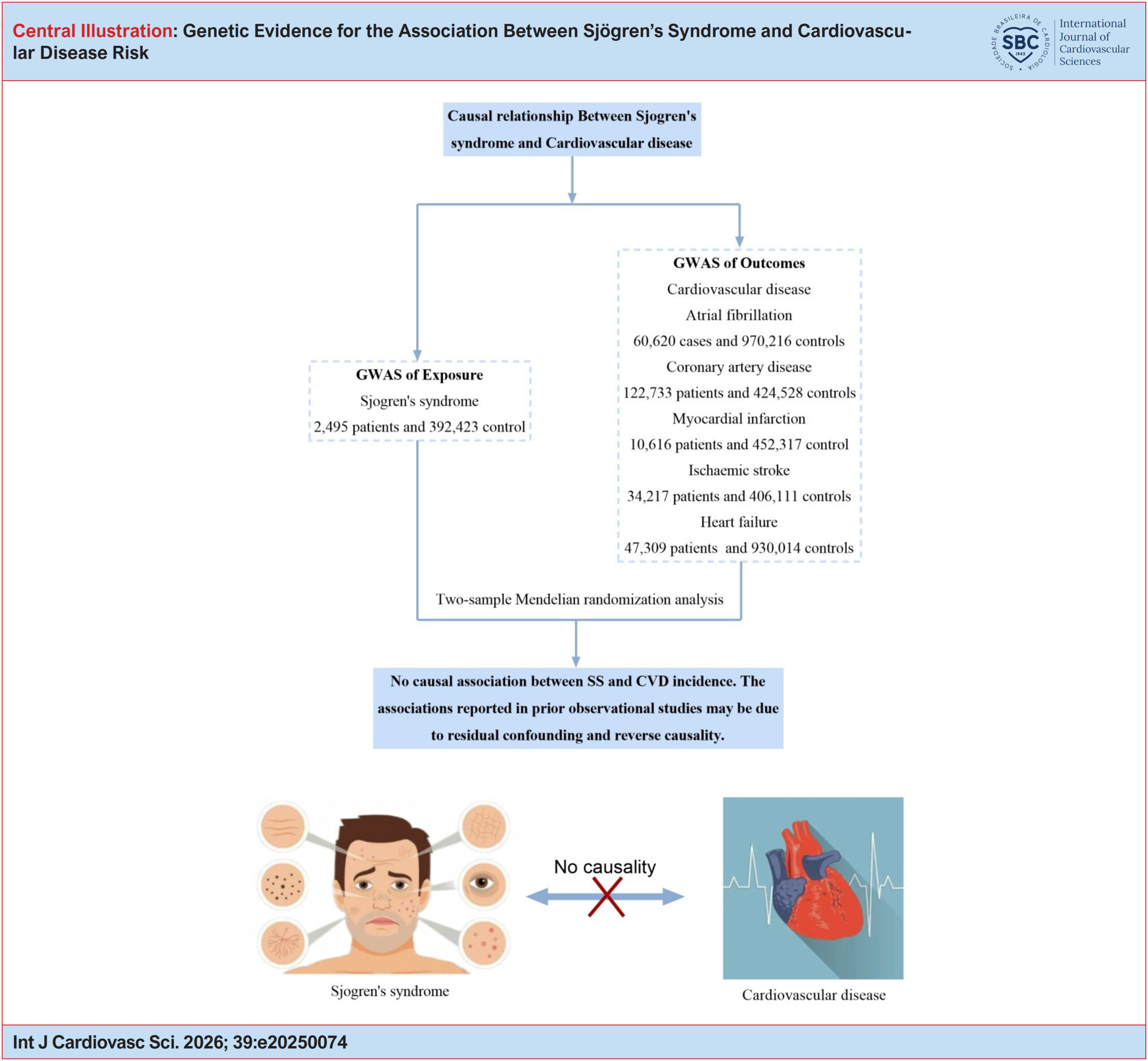
Genetic Evidence for the Association Between Sjögren's Syndrome and Cardiovascular Disease Risk
IJCS
Original Article

Genetic Evidence for the Association Between Sjögren's Syndrome and Cardiovascular Disease Risk

Yafang Gao et al. Guohua Wu Tianyu Jin Zhijie Shen … Nannan Zhou Xiaohong Huang

Abstract

Background:

Previous studies have indicated that patients with Sjögren’s syndrome (SS) exhibit an increased risk of cardiovascular disease (CVD). However, the causal association between SS and CVD risk remains to be elucidated.

Objectives:

This investigation explored the genetic relationship between SS and CVD risk through Mendelian randomization (MR).

Methods:

We identified the genetic association between SS and CVD incidence via two-sample MR analysis based on summary statistics from publicly available genome-wide association studies (GWAS). The inverse-variance weighting (IVW) method was used for the primary analysis in our study. Additionally, we conducted several sensitivity analyses to confirm the stability and reliability of the MR results.

Results:

MR analysis revealed that SS was not significantly associated with the risk of various CVDs, including atrial fibrillation (AF) (odds ratio [OR] = 0.98, 95% confidence interval [CI] = 0.95–1.01; p = 0.22), ischemic stroke (IS) (OR = 0.99, 95% CI = 0.93–1.05; p = 0.68), heart failure (HF) (OR = 1.00, 95% CI = 0.96–1.04; p = 0.91), coronary artery disease (CAD) (OR = 0.99, 95% CI = 0.94–1.04; p = 0.60), and myocardial infaion (MI) (OR = 1.01, 95% CI = 0.97–1.06; p = 0.61).

Conclusions:

Our MR study did not provide genetic evidence supporting a causal association between SS and CVD incidence. The associations reported in prior observational studies may be due to residual confounding and reverse causality.

  • Cardiovascular Diseases
  • Coronary Artery Disease
  • Mendelian Randomization Analysis
  • Sjogren's Syndrome
Read Full Article
Creative Commons Attribution (CC BY) Creative Commons license
11/09/2026 DOI: 10.36660/ijcs.20250074 Views 3
Infant Feeding Practices and Their Association with Stunting, Overweight, Obesity, and Other Cardiometabolic Risks in African Children: A Systematic Review
IJCS
Original Article

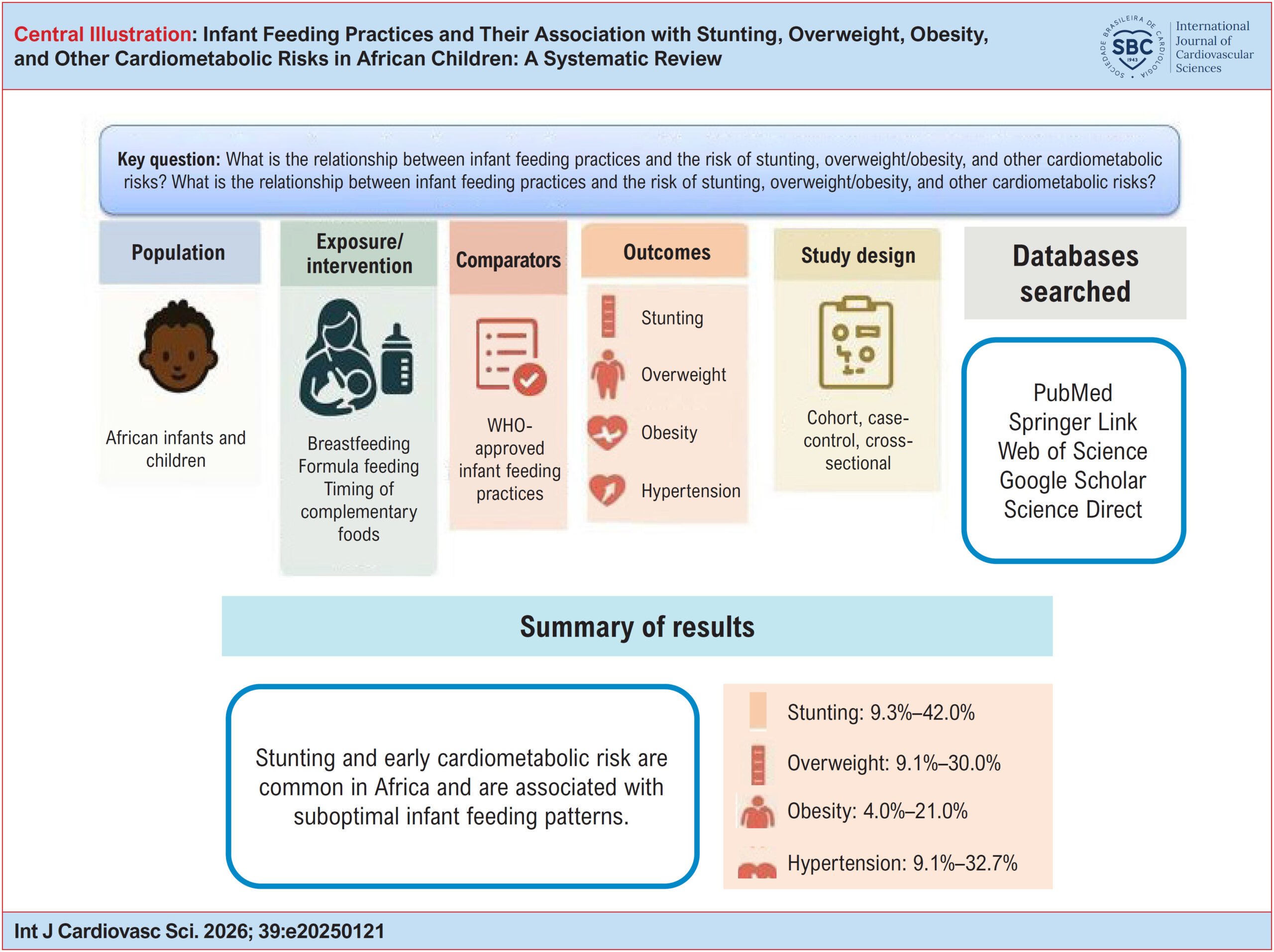
Infant Feeding Practices and Their Association with Stunting, Overweight, Obesity, and Other Cardiometabolic Risks in African Children: A Systematic Review

Jude Eteneneng Enoh et al. Roland Tiagha Akah Benedicta Ngwenchi Nkeh-Chungag

Abstract

Introduction:

Feeding patterns among infants, particularly in Africa, play a central role in shaping child growth and long-term health outcomes such as stunting, overweight, and obesity in early childhood.

Objectives:

This systematic review assessed infant feeding practices and their association with stunting, overweight, obesity, and cardiometabolic risk in children in Africa.

Methods:

PubMed, Springer Link, Web of Science, Google Scholar, and Science Direct databases were searched for articles published between 2004 and 2024. Infant feeding indicators (exclusive breastfeeding, complementary feeding, and dietary variety) and outcomes of the children (stunting, overweight, obesity, blood pressure, and lipid profiles) were retrieved.

Results:

The review identified 12 studies (7 cohort, 5 cross-sectional) involving approximately 15,620 participants. Cardiometabolic risk markers such as hypertension were identified in 2 studies, with the prevalence ranging from 9.1% to 32.7%. Obesity was reported in 5 studies, with prevalence ranging from 4.0% to 21.0%. Six studies identified stunting and overweight, with their prevalence ranging from 9.3% to 42% and 9.1% to 30.0%, respectively. Diabetes was reported in just 1 of the studies in South Africa and was observed more in males (2.6%) than females (1.9%).

Conclusion:

Stunting and early cardiometabolic risk are common in Africa and are associated with suboptimal infant feeding patterns. Inappropriate complementary feeding and early weaning of breastfeeding are linked to stunting as well as early overweight/obesity. Exclusive breastfeeding for up to 6 months is still a poorly achieved target in most settings, even though it is crucial for optimal growth.

  • Breast Feeding
  • Cardiovascular Diseases
  • Infant
  • Infant Nutritional Physiological Phenomena
Read Full Article
Creative Commons Attribution (CC BY) Creative Commons license
11/09/2026 DOI: 10.36660/ijcs.20250121 Views 1
Cardiovascular Disease and Risk Factors in Women in Latin America and the Caribbean
ABC
Original Article

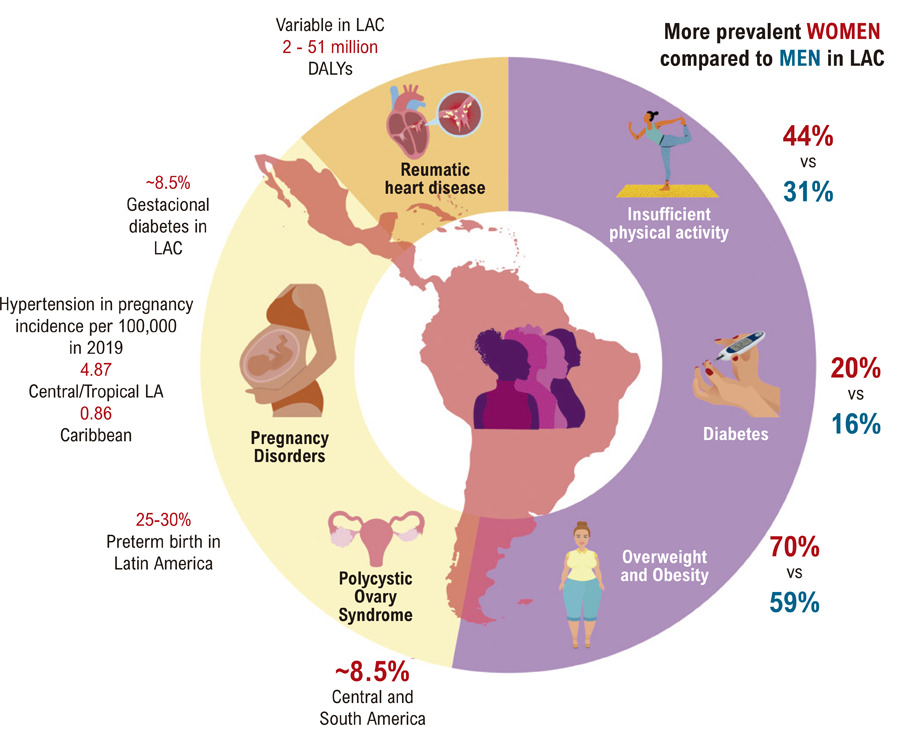
Cardiovascular Disease and Risk Factors in Women in Latin America and the Caribbean

Claudio T. Mesquita et al. Amalia Peix Diana I. Rodríguez Karen A. Dueñas-Criado … Claudia Gutiérrez-Villamil Adriana Puente Teresa Massardo Isabel Berrocal Andrea Astesiano Roberto N. Agüero Ryenne Bañolas Enrique Hiplan Mayra Sánchez Ana Ma. Barreda Vanessa V. Gómez Cynthia Fernández Silvia Portillo Yariela Herrera Aurelio Mendoza Miguel Kapitan Carlos Castellanos Enrique Estrada-Lobato Diana Paez

Abstract

Background

Cardiovascular disease (CVD) remains the leading cause of death among women in Latin America and the Caribbean (LAC), with ischemic heart disease as the primary contributor. Despite this burden, women’s health programs in the region have traditionally prioritized cancer prevention, often neglecting CVD.

Objective

To analyze the burden of CVD and the distribution of cardiovascular risk factors among women in LAC, highlighting sex-related differences and regional disparities.

Methods

This study analyzed epidemiological data on CVD mortality and cardiovascular risk factors across LAC countries, including behavioral, metabolic, and female-specific risk factors, and conducted comparisons with selected countries outside the region.

Results

Women in LAC showed a higher prevalence of sedentary lifestyle, dyslipidemia, elevated fasting blood glucose, and overweight/obesity, whereas smoking was more frequent among men. Female-specific risk factors – such as teenage pregnancy, preterm birth, gestational diabetes, and hypertensive disorders of pregnancy – were highly prevalent yet under-recognized, largely shaped by socioeconomic determinants. In 2021, COVID-19 temporarily surpassed ischemic heart disease and stroke as the leading cause of death in the Americas (176.7 deaths per 100,000 population), highlighting the vulnerability of women with underlying cardiometabolic risk. Premature CVD mortality varied widely, with the highest female probabilities of death between ages 30 and 70 observed in Haiti (21.9%) and Guyana (15.2%), associated with poorly controlled hypertension and elevated cholesterol, respectively. In contrast, Canada showed the lowest premature mortality (1.7%), reflecting stronger healthcare systems and lower prevalence of metabolic risk factors.

Conclusion

CVD remains the leading cause of mortality among women in LAC, marked by substantial regional disparities and a significant burden of both traditional and female-specific risk factors. These findings highlight the urgent need for sex-specific, context-sensitive strategies that integrate cardiovascular prevention into comprehensive women’s health policies, moving beyond cancer-centered approaches.

  • Cardiovascular Diseases
  • Latin America
  • Multimodal Imaging
  • Women
Read Full Article
Creative Commons Attribution (CC BY) Creative Commons license
17/08/2026 DOI: 10.36660/abc.20250655i Views 1
ABC
Editorial

iCardio And Business Intelligence-Based Tools: Opportunities in Public Health

Fernando Yue Cesena

We have witnessed an explosion of data generation in every field over the last decades. In healthcare, the widespread use of electronic medical records and the advent of wearable monitoring devices, for instance, have contributed to the generation of huge volumes of health data. In public health, it is now easier than before to use computational methods to create datasets with morbidity and mortality data. One challenge is that data collection methods and population characteristics, such as the age pyramid, vary across countries and over time, making it difficult to compare and analyze temporal trends. This is the task of the Global Burden of Disease (), which standardizes indicators of more than 400 health outcomes and risk factors in more than 200 countries and territories, allowing fair comparisons between countries and trends in epidemiological data over time, including in Brazil., Another challenge is that information is often fragmented in distinct datasets. This is the task of the so-called Business Intelligence, which may be used to create tools that transform fragmented, raw data frequently collected from different sources into visual insights, often dynamic, interactive, that allow real-time updates, facilitating whole data interpretation and supporting the decision-making process.

In this issue of Arquivos Brasileiros de Cardiologia, Souza et al. report a study using iCardio, an online platform that leverages Business Intelligence to visualize epidemiological data in interventional cardiology and heart surgery from DATASUS in Brazil (). iCardio, which is part of a project sponsored by the National Council for Scientific and Technological Development (Portuguese: Conselho Nacional de Desenvolvimento Científico e Tecnológico [CNPq]), was developed with data from the Hospital Information System (Portuguese: Sistema de Informações Hospitalares [SIH]) and Information System of Mortality (Portuguese: Sistema de Informação sobre Mortalidade [SIM]). The indicators include the number of high-complexity procedures and hospitalizations, the number of procedures per inhabitants, the geographical location where medical care was provided, the average displacement to the healthcare facility, the hospitalization length of stay, the re-hospitalization rate, the rates of in-hospital mortality and mortality up to 30 days after the procedure or hospital discharge, and costs. Importantly, data may be stratified per sex, age range, race/skin color, location, type of care (urgent/elective), diagnosis, and procedure.,

[…]

  • Cardiovascular Diseases
  • Information Management
  • Public Health
Read Full Article
Creative Commons Attribution (CC BY) Creative Commons license
27/07/2026 DOI: 10.36660/abc.20260419i Views 1
Figure 1
IJCS
Case Report

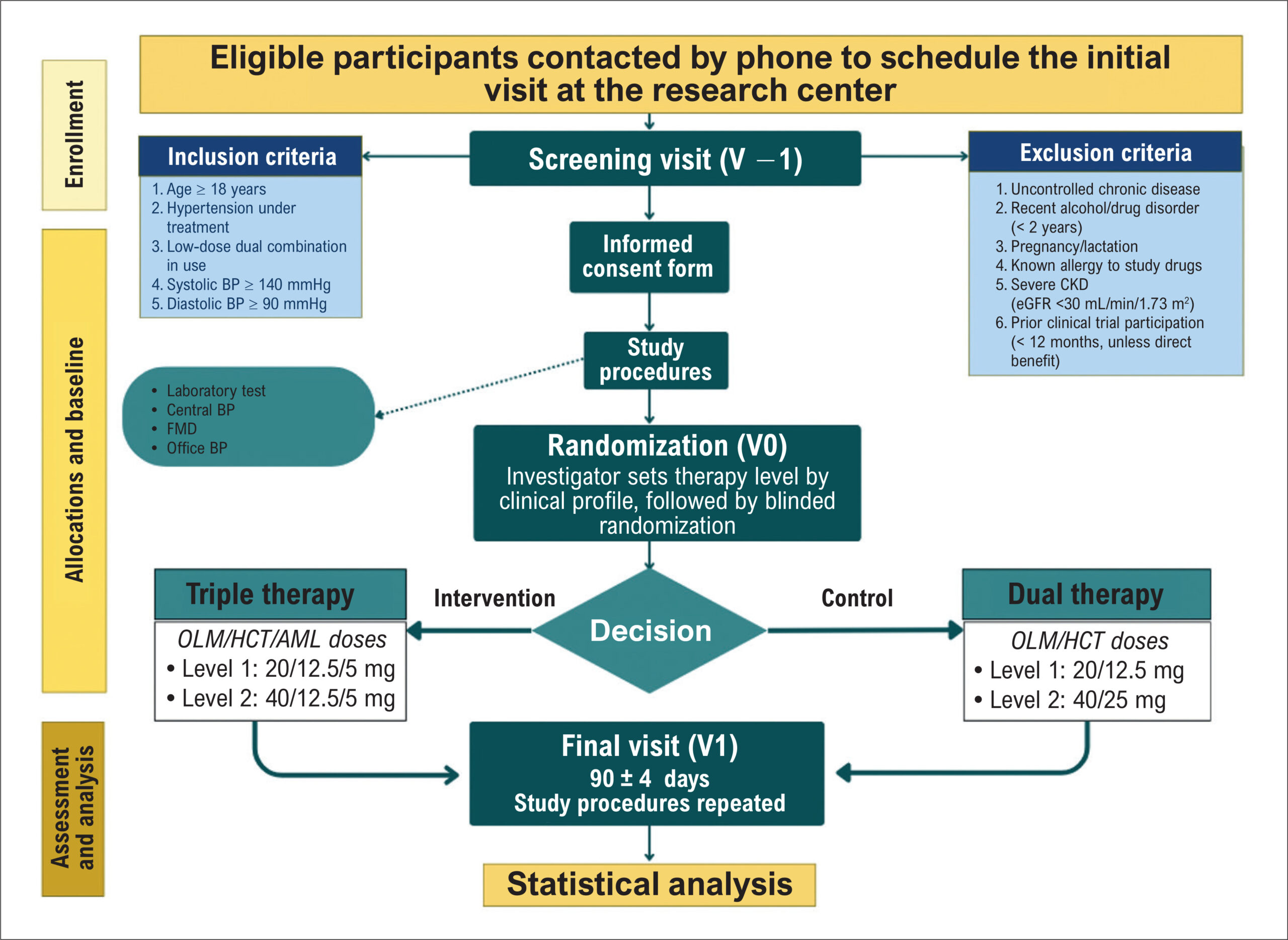
A Fixed-Dose Triple-Combination Therapy for the Initial Steps of Hypertension Treatment: Protocol for the NEXT Randomized Clinical Trial

Rogerio Orlow et al. Caroline Consuelo de Sousa Sayuri Inuzuka Audes Feitosa … Andréa Araujo Brandão Marco Mota Gomes Vanildo da Silva Guimarães Neto Elizabeth do Espírito Santo Cestario Eduardo Costa Duarte Barbosa Rodrigo Bezerra Mayara Cedrim Santos Ana Luiza Lima Sousa Sandro Rodrigues Batista Priscila Valverde de Oliveira Vitorino Weimar Kunz Sebba Barroso

Introduction

Complications from arterial hypertension account for an estimated 18 deaths per minute worldwide, establishing it as the second leading risk factor for global mortality. Between 1990 and 2019, the number of adults with arterial hypertension doubled from 650 million to 1.3 billion. Of these, only 54% are diagnosed, 42% are treated, and a mere 21% of those treated achieve adequate blood pressure (BP) control.

Although effective BP control often requires the use of multiple drugs, monotherapy remains a predominant initial approach to arterial hypertension management globally, which limits the timely achievement of therapeutic goals. This is significant because even modest reductions in systolic BP of 5 mmHg are associated with an approximate 10% reduction in the risk of major cardiovascular events, irrespective of pre-existing cardiovascular disease.

[…]

  • Cardiology
  • Cardiovascular Diseases
  • Hypertension
  • Randomized Controlled Trial
Read Full Article
Creative Commons Attribution (CC BY) Creative Commons license
24/07/2026 DOI: 10.36660/ijcs.20260025 Views 2
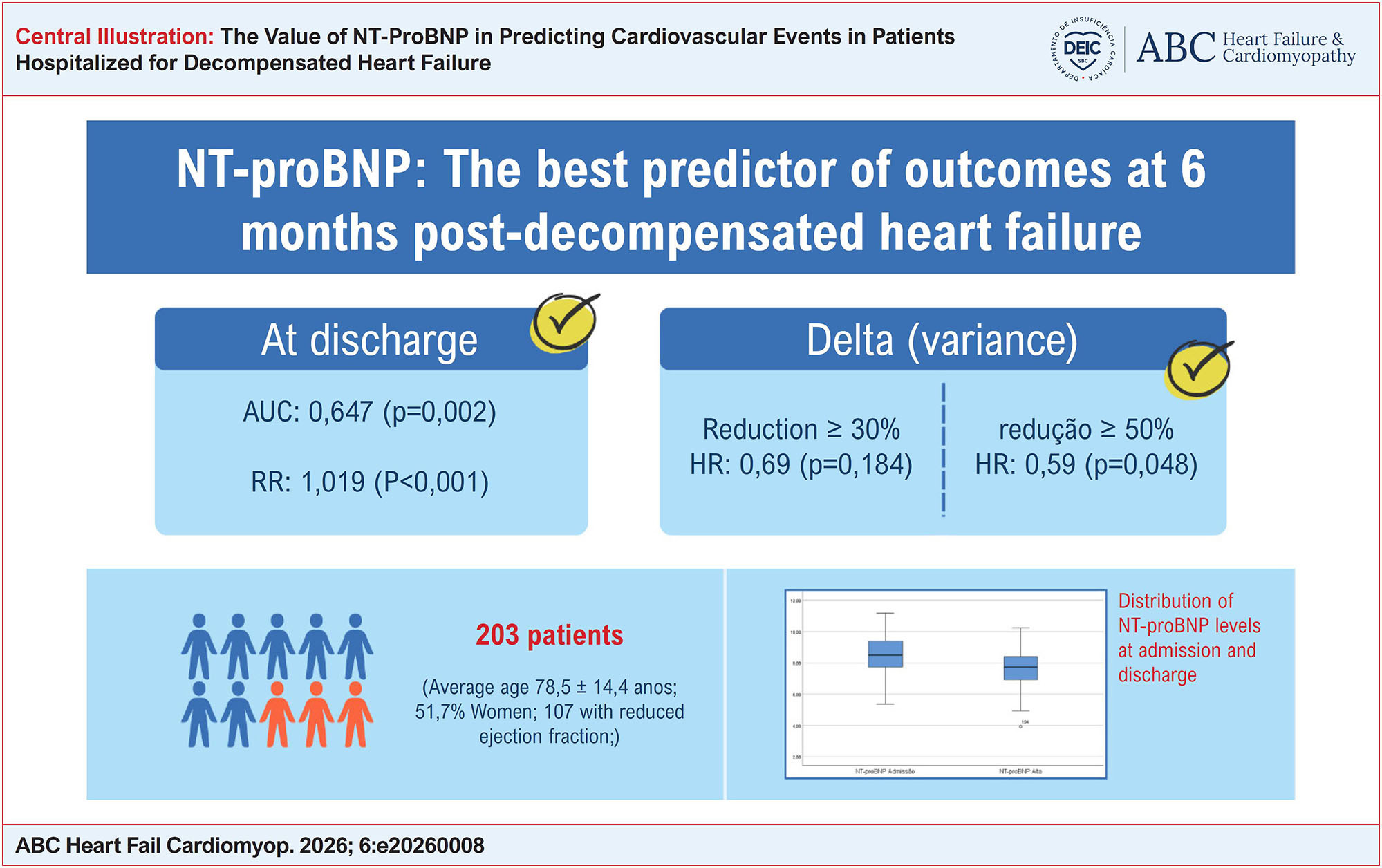
Central Illustration
ABCHF
Original Article

The Value of NT-ProBNP in Predicting Cardiovascular Events in Patients Hospitalized for Decompensated Heart Failure

Rafael Felipe Coelho Siqueira et al. Tainá Teixeira Viana Natália Duarte Barroso Nina Vieira Coutinho … Luiz Paulo Oliveira Martins João Pedro Fernandes Gonçalves Pedro Vogel Almeida Djaine Haila Silva Rocha Raisa Mainarte Franco Barros Rodrigo Morel Vieira Melo

Abstract

Background:

Serum levels of natriuretic peptides at hospital admission and discharge, as well as their percentage reduction (delta NT-proBNP), have been associated with cardiovascular outcomes in decompensated heart failure.

Objective:

To evaluate the prognostic accuracy of NT-proBNP parameters and determine the usefulness of in-hospital percentage reduction targets.

Methods:

This was a retrospective cohort study including patients ≥18 years old admitted to a heart failure protocol between January 2022 and December 2023 at a tertiary hospital. The primary outcome was a composite of all-cause mortality and readmission for heart failure within 6 months.

Results:

Two hundred and three patients were included (mean age 78.5 ± 14.4 years; 51.7% women). The outcome occurred in 67 (33.0%) within 6 months. The NT-proBNP at discharge showed the best accuracy (AUC 0.647; 95% CI 0.559–0.735; p=0.002). In multivariate analysis, only the NT-proBNP at discharge remained an independent predictor (p<0.05), outperforming continuous variation (delta). Regarding therapeutic goals, a reduction of ≥ 50% was associated with a lower risk of events (HR 0.59; 95% CI 0.36–0.99; p=0.048), while a reduction of ≥ 30% showed no association (p=0.184).

Conclusion:

NT-proBNP at discharge was the best independent predictor of outcomes at 6 months. Additionally, achieving an in-hospital reduction of ≥ 50% was associated with better prognosis, suggesting its usefulness as a therapeutic target.

  • Brain Natriuretic Peptide
  • Cardiovascular Diseases
  • Heart Failure
  • Prognosis
Read Full Article
Creative Commons Attribution (CC BY) Creative Commons license
08/07/2026 DOI: 10.36660/abchf.20260008i Views 2
Investigating the Causal Role of Inflammatory Cytokines in the Development of Cardiovascular, Kidney, and Metabolic Diseases
ABC
Original Article

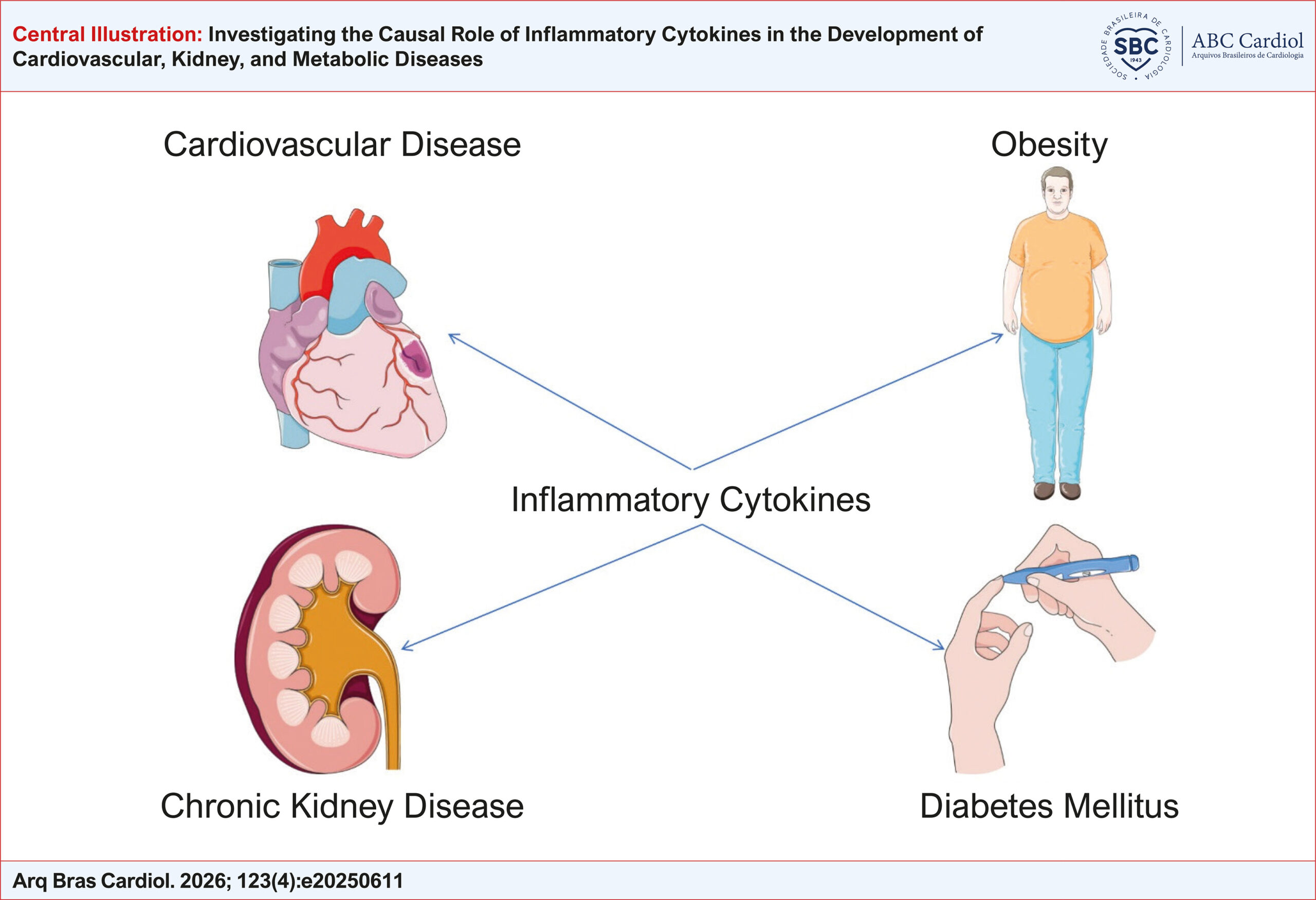
Investigating the Causal Role of Inflammatory Cytokines in the Development of Cardiovascular, Kidney, and Metabolic Diseases

Mengjin Hu et al. Zhaoting Gong Xiaosong Li Chunlin Yin

Abstract

Background

Observational studies have linked inflammatory cytokines to cardiometabolic disorders; however, whether these associations reflect causal effects across interconnected organ systems remains unclear.

Objectives

This Mendelian randomization (MR) study investigates causality between 91 inflammatory cytokines and multiorgan dysfunction across cardiovascular, kidney, and metabolic systems in the cardiovascular-kidney-metabolic (CKM) syndrome era.

Methods

Genetic instruments associated with 91 inflammatory cytokines were obtained from the Olink Target Inflammation panel across 11 European-ancestry cohorts. The inverse variance weighting (IVW) method was considered as the main analysis, complemented by sensitivity analyses including MR-Egger and weighted median methods.

Results

Genetically predicted levels of inflammatory cytokines showed widespread causal associations across CKM-related traits. Specifically, 31 cytokines were associated with cardiovascular outcomes, 26 with kidney traits, 10 with obesity-related traits, and 21 with diabetes-related traits, yielding a total of 60 cytokines with at least one significant association. Notably, FGF5 and IL6 emerged as paradoxical regulators, exerting opposing effects across different organ systems, while MCSF was consistently identified as a pan-vascular risk amplifier for cardiovascular diseases.

Conclusions

This comprehensive MR analysis reveals substantial causal heterogeneity in inflammatory cytokine effects across cardiovascular, kidney, and metabolic systems. These findings highlight the clinical importance of tissue- and context-specific inflammatory modulation, supporting the development of precision therapeutic strategies for CKM syndrome.

  • Cardiovascular Diseases
  • chronic renal insufficiency
  • Cytokines
  • Inflammation
  • Interleukin-6
  • Mendelian Randomization Analysis
Read Full Article
Creative Commons Attribution (CC BY) Creative Commons license
06/07/2026 DOI: 10.36660/abc.20250611i Views 2
Factors Associated With the High Prevalence of Metabolic Syndrome in Antineutrophil Cytoplasmic Antibody-Associated Vasculitis
ABC
Original Article

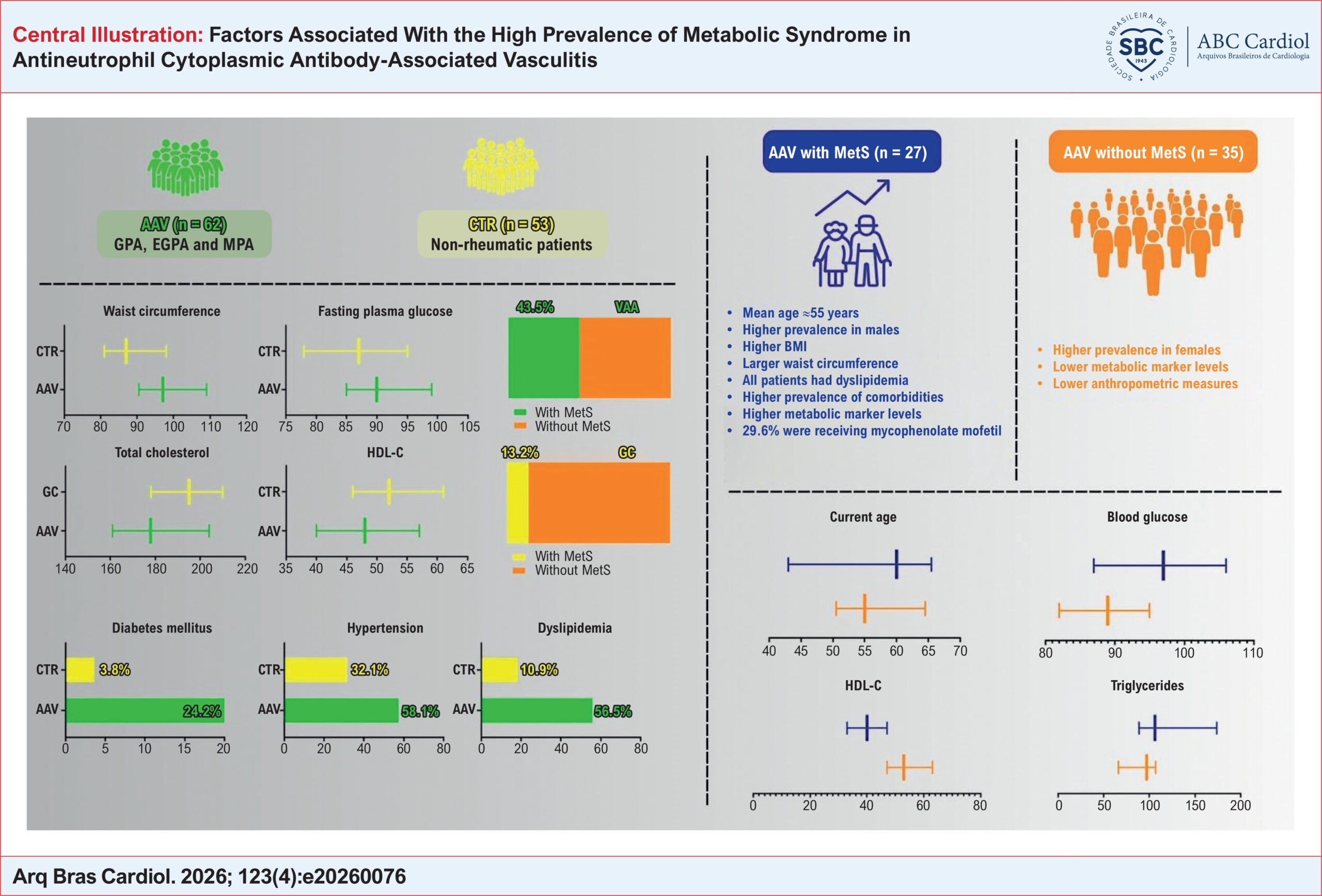
Factors Associated With the High Prevalence of Metabolic Syndrome in Antineutrophil Cytoplasmic Antibody-Associated Vasculitis

Marina Lamas Figueredo et al. Matheus Alves Amaral de Lima Alexandre Moura dos Santos Samuel Katsuyuki Shinjo

Abstract

Background:

Metabolic syndrome (MetS) remains incompletely characterized in antineutrophil cytoplasmic antibody-associated vasculitis (AAV). This study aimed to determine the prevalence of MetS in patients with AAV and to identify factors associated with its presence.

Methods:

This single-center, cross-sectional study included 62 patients with AAV (42 with granulomatosis with polyangiitis, 15 with eosinophilic granulomatosis with polyangiitis, and five with microscopic polyangiitis) who were under regular follow-up at a tertiary referral hospital. Patients were matched by age and sex with 53 controls. MetS was defined according to the National Cholesterol Education Program Adult Treatment Panel III criteria. Statistical significance was set at p < 0.05.

Results:

The median age of the patients was 56.1 years (interquartile range, 45.6-65.5); 53.2% were women, and 85.5% were White. The prevalence of MetS was significantly higher in the AAV group than in controls (43.5% vs 13.2%; p = 0.001). Diabetes mellitus, hypertension, and a family history of cardiovascular disease were more frequent among patients with AAV, whereas body mass index (BMI) and physical inactivity did not differ between groups. In multivariable analysis, MetS (odds ratio [OR], 4.52; 95%CI, 1.66-12.27; p = 0.003) and a family history of cardiovascular disease (OR, 3.81; 95%CI, 1.09-13.34; p < 0.05) were independently associated with AAV. Among patients with AAV, no differences were observed between those with and without MetS in terms of subtype of AAV, anthropometric measures, disease activity, family history, physical inactivity, or current treatment. In a multivariable analysis restricted to patients with AAV, MetS was independently associated with male sex (OR, 11.43; 95%CI, 2.81-46.52; p = 0.001) and higher BMI (OR, 1.13; 95%CI, 1.02-1.25; p = 0.022).

Conclusions:

MetS was highly prevalent among patients with AAV and was associated with male sex and higher BMI, contributing to an unfavorable cardiometabolic risk profile in this single-center cohort.

  • Anti-Neutrophil Cytoplasmic Antibody-Associated Vasculitis
  • Cardiovascular Diseases
  • Metabolic Syndrome
  • Systemic Vasculitis
Read Full Article
Creative Commons Attribution (CC BY) Creative Commons license
06/07/2026 DOI: 10.36660/abc.20260076i Views 2
Figure 1
ABC
Editorial

Eugene Braunwald: Lessons and Stories from the Father of Modern Cardiology

Marcus Vinicius Bolivar Malachias

On April 22, 2026, we received the news of the death of Eugene Braunwald in Boston at the age of 96, leaving orphaned thousands of cardiologists around the world who, like me, unanimously regard him as the father of modern cardiology. Upon receiving the honorable invitation from the Editor of the Arquivos Brasileiros de Cardiologia , Glaucia Maria Moraes de Oliveira, to write this editorial, I was faced with the difficult challenge of summarizing, in a few words, his trajectory, his teachings, and his importance to our specialty—a task I undertake from the personal perspective of a cardiologist.

I came to know Braunwald through books. During my Internal Medicine residency, I devoured Harrison’s Principles of Internal Medicine , in which Braunwald was the lead editor. Later, during my Cardiology residency, our bible was his Braunwald’s Heart Disease .

[…]

  • Cardiology
  • Cardiovascular Diseases
  • History
Read Full Article
Creative Commons Attribution (CC BY) Creative Commons license
22/06/2026 DOI: 10.36660/abc.20260349i
Figure 1
ABC
Viewpoint

Beyond Humor: Laughter as a Cardiovascular Stimulus

Ricardo Stein et al. Cleidiane da Silva Andrade Filipe Ferrari

Why Laughter Matters to the Cardiovascular System

Cardiovascular disease (CVD) remains the leading cause of mortality worldwide, despite substantial advances in pharmacological and interventional therapies. In this context, non-pharmacological strategies that are low-cost, scalable, and accessible have attracted growing interest. Laughter therapy (LT), traditionally associated with psychological well-being, has emerged as a potential adjunctive physiological stimulus capable of eliciting measurable cardiovascular responses.–

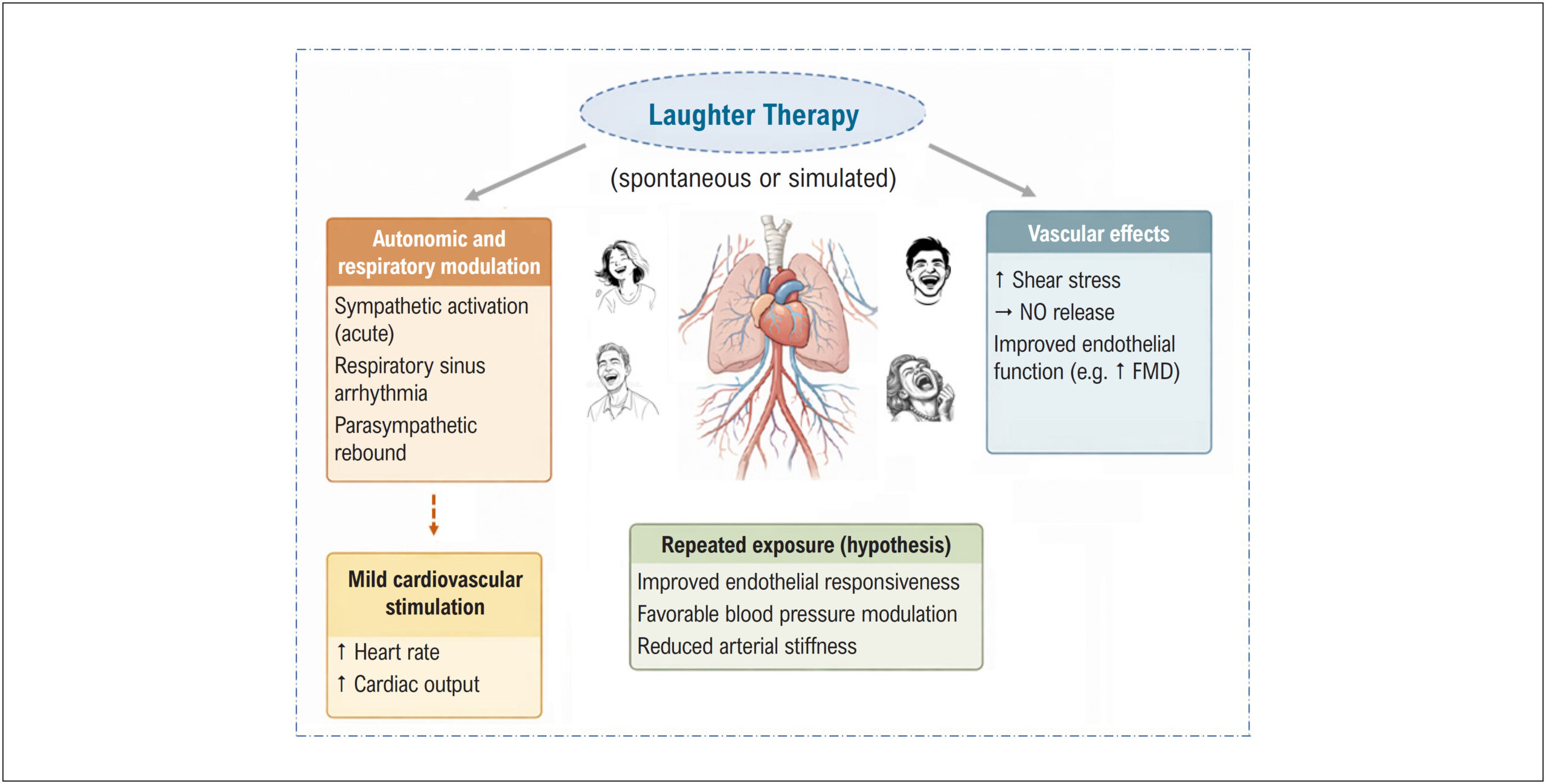
Observational data suggest that individuals with coronary artery disease laugh less frequently and exhibit higher levels of anger and hostility – psychological traits associated with adverse cardiovascular outcomes. Moreover, lower daily laughter frequency has been linked to increased CVD incidence and mortality., While these associations do not establish causality, they raise an important physiological question: can laughter itself act as a meaningful cardiovascular stimulus? The hypothesized physiological pathways through which LT may influence autonomic regulation, hemodynamics, and vascular function are summarized in .

[…]

  • Cardiac Rehabilitation
  • Cardiovascular Diseases
  • Laughter Therapy
Read Full Article
Creative Commons Attribution (CC BY) Creative Commons license
01/06/2026 DOI: 10.36660/abc.20250886i Views 1
IJCS
Letter to the Editor

Beyond the Numbers: A Critical Analysis of DATASUS on Cardiovascular Mortality

João Pedro Azevedo Lopes et al. João Emmanuel Coelho de Morais Pedro Pereira Tenório

Dear Editor,

We are writing to express our appreciation for the article “Epidemiological Analysis of Emergency Hospitalizations in Brazil Due to Cardiovascular Diseases From 2013 to 2023” by Luiz et al. This work is of great relevance, as it provides a robust and updated epidemiological overview (2013–2023) of Cardiovascular Diseases (CVD) in Brazil, which remain one of the country’s major public health challenges. The use of a decade of DATASUS data gives the study indispensable temporal breadth for long-term trend analysis, representing one of its greatest strengths.

[…]

  • Cardiovascular Diseases
  • Healthcare Disparities
  • Mortality
Read Full Article
Creative Commons Attribution (CC BY) Creative Commons license
25/05/2026 DOI: 10.36660/ijcs.20250261 Views 1
Cardiovascular Complications in Patients with COVID-19 and Their Relationship with Mortality: An Echocardiographic Perspective
ABCIC
Original Article

Cardiovascular Complications in Patients with COVID-19 and Their Relationship with Mortality: An Echocardiographic Perspective

João Henrique Andrade de Almeida et al. Gustavo Miranda de Azevedo Ferreira Marina de Azevedo Martins Andrade Heloísa Marceliano Nunes Igor Brasil Costa

Abstract

Background:

Echocardiography plays a fundamental role in the diagnosis of cardiovascular diseases related to SARS-CoV-2 infection. Despite prior investigation in the literature, studies focusing on cardiovascular manifestations among patients from the Brazilian Legal Amazon region remain scarce.

Objectives:

To identify cardiovascular complications of COVID-19 in patients admitted to a hospital in the North Region of Brazil and their potential association with mortality.

Methods:

We conducted a retrospective cohort study including 25 medical records of adults diagnosed with COVID-19. These patients were admitted to a hospital in Belém, Pará, in Northern Brazil, between March 2020 and December 2020. Demographic and clinical characteristics, as well as echocardiographic findings, were extracted from the medical records. Statistical analyses were performed adopting a significance level of α < 0.05. The project was approved by the Research Ethics Committee (approval number: 5.540.025).

Results:

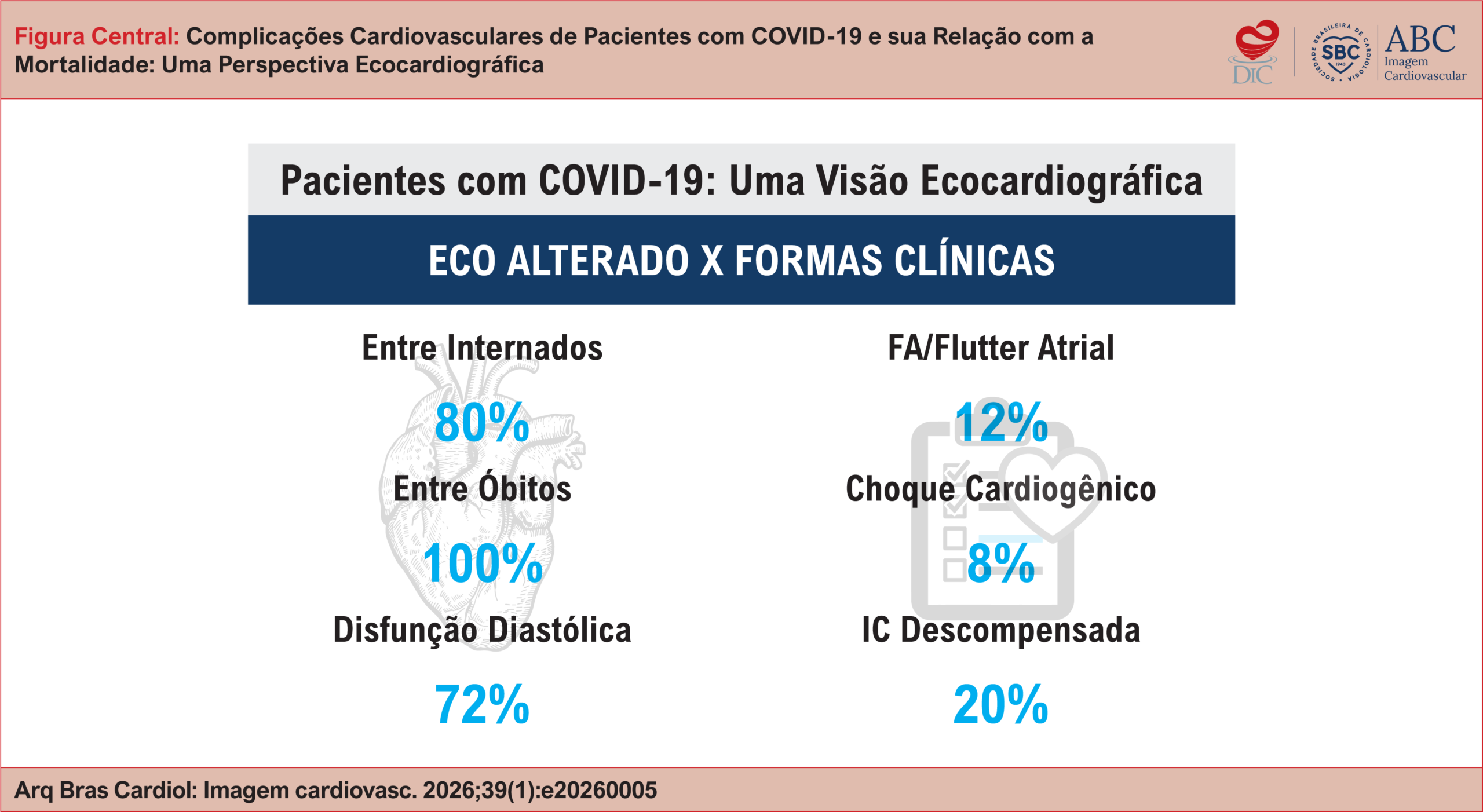
Among the 25 patients, 15 (60%) were male, with a mean age of 69.6 ± 14.4 years. Hypertension (n = 23; 92%) was the most prevalent cardiovascular risk factor, followed by diabetes (n = 11; 44%) and obesity (n = 8; 32%). We detected echocardiographic abnormalities in 20 (80%) individuals, with diastolic dysfunction being the most frequent (n = 18; 72%). All 7 patients who died showed abnormal echocardiography (p > 0.05). Atrial fibrillation or flutter (n = 5; 20%), decompensated heart failure (n = 3; 12%), and cardiogenic shock (n = 2; 8%) were the most common types of cardiovascular involvement.

Conclusions:

An increasing trend in COVID-19 mortality was observed among patients with cardiovascular complications. Nevertheless, the statistical power was limited by the small sample size.

  • Cardiovascular Diseases
  • COVID-19
  • Echocardiography
  • Mortality
Read Full Article
Creative Commons Attribution (CC BY) Creative Commons license
25/05/2026 DOI: 10.36660/abcimg.20260005i Views 3
ABC
Letter to the Editor

Use of Atherogenic Indices as Assessment Methods of Clinical Atherosclerotic Diseases

Muhammed Seyithanoğlu

To the Editor,

The recent publication by Araujo et al. provides valuable insight into the relationship between atherosclerosis and the atherogenic index of plasma (AIP), Castelli Risk Index I (CRI-I), and Castelli Risk Index II (CRI-II). Their results, showing elevated index values in patients with atherosclerotic disease compared with controls, underscore the potential role of these lipid-derived ratios as practical and inexpensive predictors of cardiovascular risk within a Brazilian population.

[…]

  • Atherosclerosis
  • Cardiovascular Diseases
  • HDL, Cholesterol
  • Risk Factors
  • Sex Characteristics
Read Full Article
Creative Commons Attribution (CC BY) Creative Commons license
15/05/2026 DOI: 10.36660/abc.20250691i Views 2
ABC
Editorial

Bridging Global Calls to Local Action: Advancing Cardiovascular Equity for Women in Brazil

Ariane Vieira Scarlatelli Macedo et al. Fernanda Souza de Carvalho Teresa Glynn Neil Johnson … Karen Padilla Cabrera Marlene Oliveira

The Global Burden of Disease 2023 highlights the catastrophic impact of cardiovascular disease, accounting for 19.2 million deaths worldwide in 2023. Women experience 20% higher post-myocardial infarction mortality, a greater prevalence of heart failure with preserved ejection fraction, and faster-rising metabolic risks (such as body mass index) compared with men. Critically, 79.6% of the global cardiovascular burden is attributable to modifiable risk factors – including high blood pressure, dyslipidemia, diet, and air pollution – yet age-standardized rates remain highest in low-income settings, where women are disproportionately affected.,

Evidence consistently shows that women face specific disadvantages across the cardiovascular care continuum.– They are more likely to experience late, missed, or misdiagnosed heart disease, driven by gaps in symptom recognition, male-centered diagnostic pathways, underrepresentation in research, and fragmented care., These systemic inequities contribute to delayed diagnosis and poorer treatment outcomes for women.

[…]

  • Cardiovascular Diseases
  • Health Equity
  • Health Status Disparities
  • Primary Prevention
  • Women
Read Full Article
Creative Commons Attribution (CC BY) Creative Commons license
11/05/2026 DOI: 10.36660/abc.20260110i Views 2
Figure 1
ABCIC
Case Report

Aneurysm of the Suprahepatic Inferior Vena Cava: A Case Report

Gabriella Ghattas Mariano et al. Calina Araujo Thaines Gabrielle Silva Desani Letícia de Castro Gouvêa … Paulo Vítor Cabral Covilo Rogério de Paula Garcia Caravante

Introduction

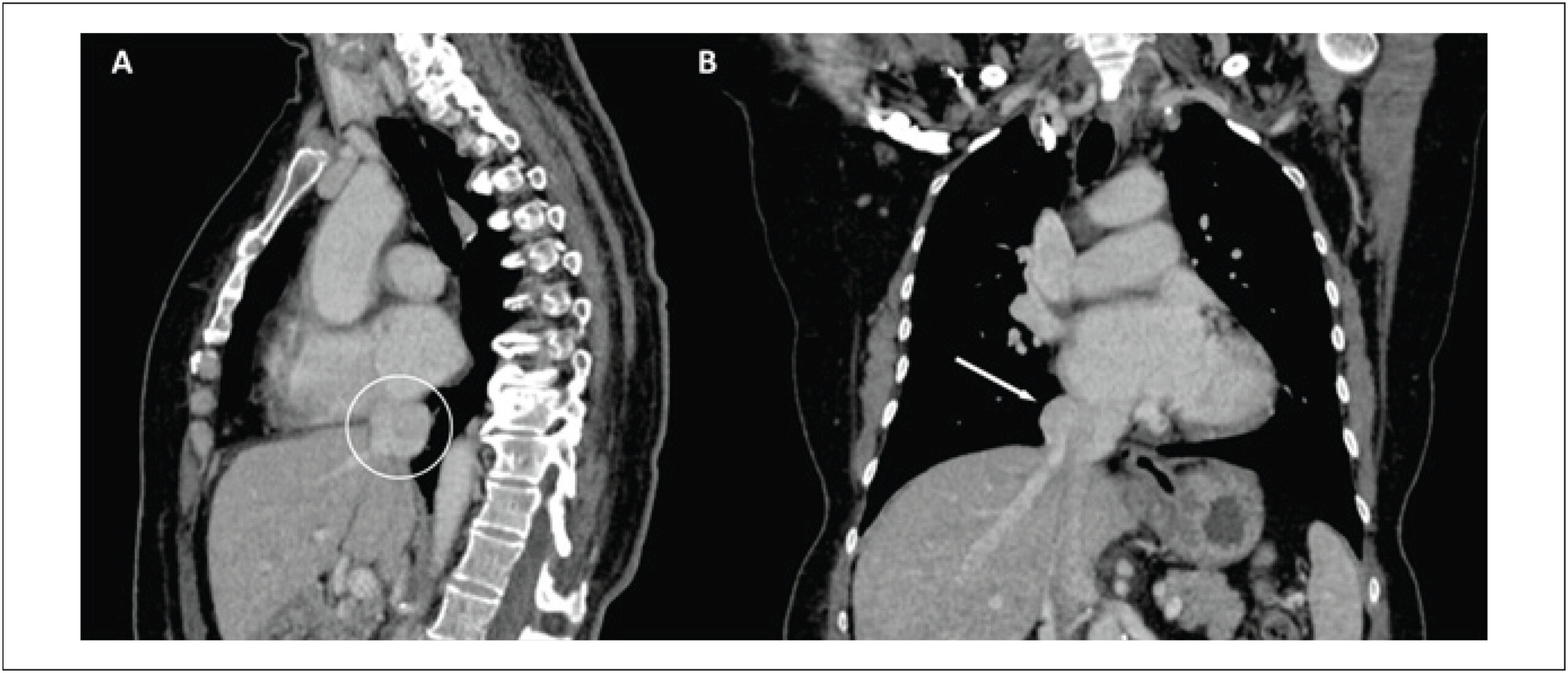
Aneurysms of the inferior vena cava (IVC) are a rare occurrence in the cardiovascular system and can present with a variety of signs and symptoms. In many cases, patients remain asymptomatic, which makes diagnosis difficult. Venous aneurysms are defined as an abnormal and persistent dilation of a vein in a specific area, with a diameter at least twice that considered normal. An IVC aneurysm is a specific type of venous aneurysm. This case report is relevant because this condition is rare; by 2021, only around 70 cases had been described in literature.

Aneurysms may arise due to fragility in the vessel wall and can be triggered by various factors, including hypertension, trauma, infection, and genetic conditions. Smoking, atherosclerosis, and chronic obstructive pulmonary disease are also considered risk factors for aneurysm development. Although they can occur in different regions of the body, they most frequently affect the cerebral arteries, the aorta, and the peripheral arteries.

[…]

  • Aneurysm
  • Cardiovascular Diseases
  • Case Reports
  • Inferior vena cava
Read Full Article
Creative Commons Attribution (CC BY) Creative Commons license
11/05/2026 DOI: 10.36660/abcimg.20250055i Views 1
Efficacy of a Salt Substitute on the Incidence of Hypertension: A Systematic Review with Meta-Analysis
ABC
Original Article

Efficacy of a Salt Substitute on the Incidence of Hypertension: A Systematic Review with Meta-Analysis

Francinny Alves Kelly et al. Clara Rocha Dantas Luis Eduardo Rodrigues Sobreira Artur Menegaz de Almeida … Fernando Baía Bezerra Márcio Gonçalves de Sousa Fernanda Consolim Antonio Gabriele Laurinavicius

Abstract

Background

A potassium-enriched salt substitute, in which part of sodium chloride is replaced with potassium chloride, has shown considerable potential as a population-level strategy to reduce sodium intake and prevent cardiovascular disease. In recent years, research has focused primarily on individuals with hypertension, demonstrating that salt substitutes can influence blood pressure (BP).

Objective

To perform a meta-analysis quantifying the magnitude of BP reduction in patients with hypertension using regular salt compared with those using a salt substitute.

Methods

PubMed, Scopus, and Web of Science were searched for randomized controlled trials (RCTs) comparing regular salt with a salt substitute. Mean differences (MD) with 95% CIs were calculated using a random-effects model. Heterogeneity was assessed using the I2 statistic. A p-value < 0.05 was considered statistically significant.

Results

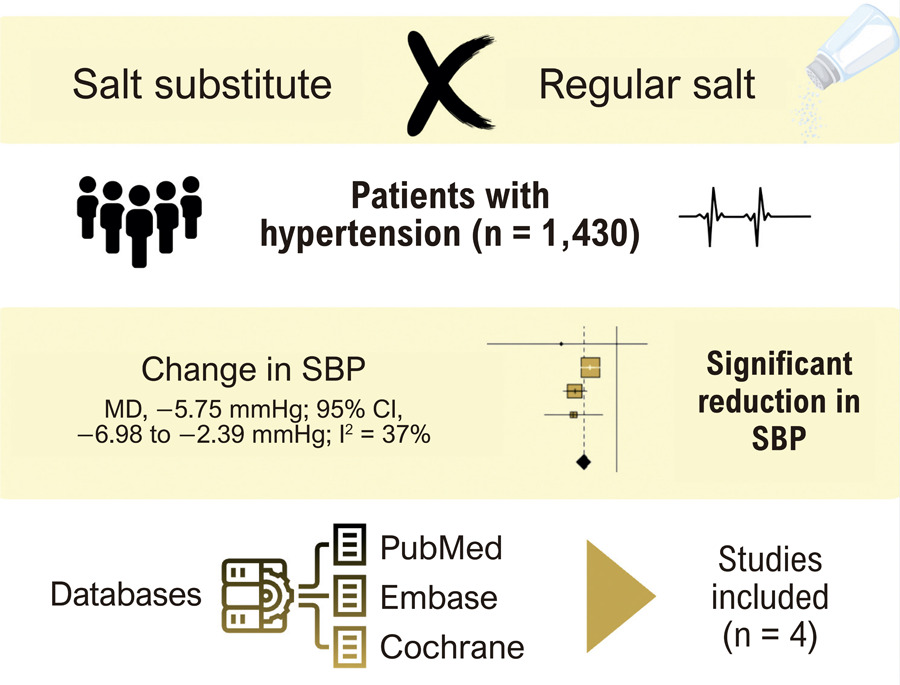
Four RCTs involving 1,430 participants were included, of whom 725 (49.57%) received the salt substitute. The use of a salt substitute was associated with a significant reduction in systolic BP (SBP) (MD, −5.75 mmHg; 95% CI, −6.98 to −2.39 mmHg; I2 = 37%; p < 0.01) and a significant reduction in diastolic BP (DBP) (MD, −1.62 mmHg; 95% CI, −2.34 to −0.91 mmHg; I2 = 0%; p < 0.001).

Conclusion

In patients with hypertension, the use of a salt substitute is associated with a significant reduction in both SBP and DBP compared with regular salt.

  • Arterial Pressure
  • Cardiovascular Diseases
  • Hypertension
Read Full Article
Creative Commons Attribution (CC BY) Creative Commons license
01/05/2026 DOI: 10.36660/abc.20250440i Views 2
Figure 1
ABC
Research Letter

Primary Hyperoxaluria With Cardiac Involvement: A Case Series

Diane Xavier de Ávila et al. Christine Zomer Dal Molin Josué dos Santos Barbosa Júnior Laís Corrêa de Carvalho … João Padula Rocha Maria Júlia Hallack Moura Davi Orli Machado Grüdtner Raquel Bittencourt

Introduction

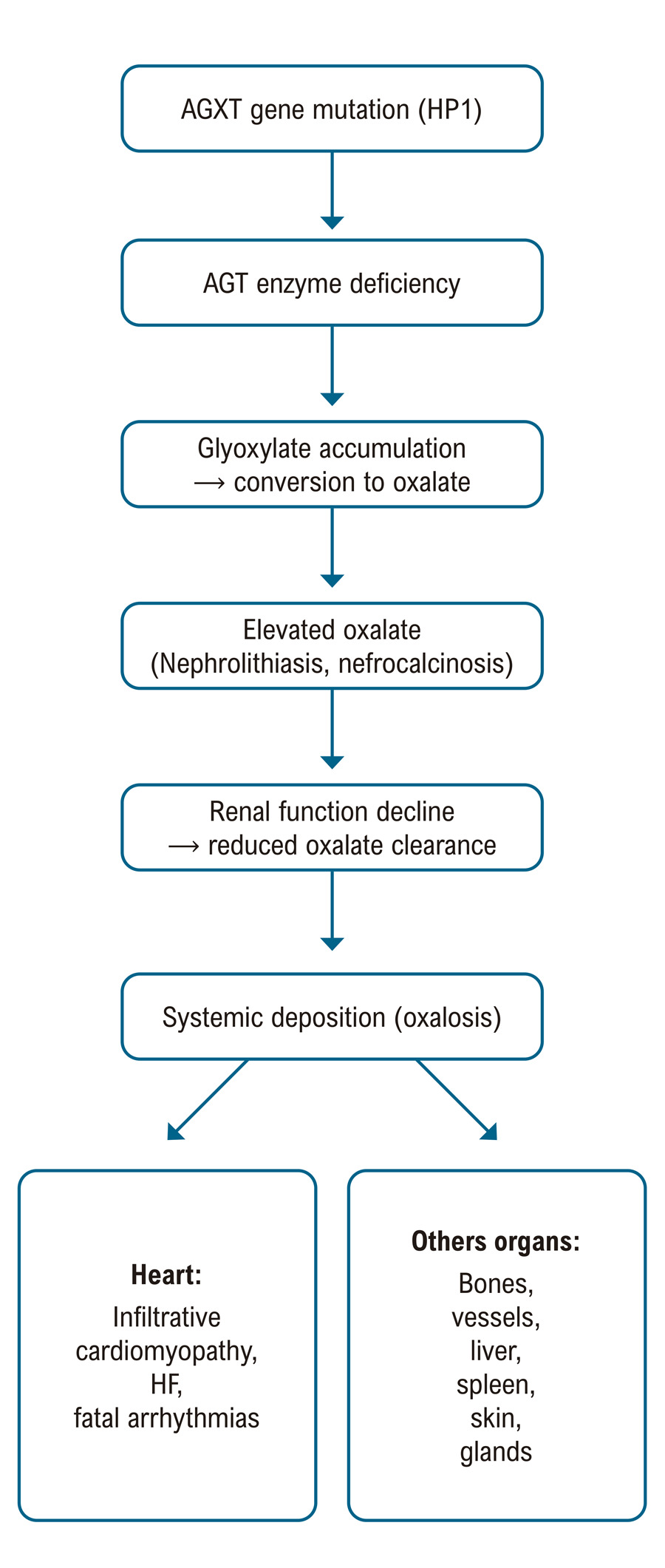
Primary Hyperoxaluria type 1 (PH1) is a rare autosomal recessive disorder caused by AGXT gene mutations, which encodes the enzyme responsible for metabolizing glyoxylate. This dysfunction leads to glyoxylate accumulation and its conversion to oxalate. This results in elevated oxalate levels, tissue deposition, and organ damage, particularly the kidneys and heart. Cardiac involvement may progress to heart failure (HF) and fatal arrhythmias., An overview of the pathophysiology of PH1 is illustrated in . This report presents two PH1 patients with oxalosis and its cardiac complications. This case series was prepared following the CARE guidelines, submitted and approved by the Ethics Committee of Federal University of Santa Catarina.

[…]

  • Cardiovascular Diseases
  • Chronic Kidney Failure
  • Primary Hyperoxaluria
Read Full Article
Creative Commons Attribution (CC BY) Creative Commons license
01/05/2026 DOI: 10.36660/abc.20250574i Views 1
ABC
Editorial

Beyond Translation: Building a Lusophone Alliance for Cardiovascular Care

Flávia Geraldes

The science of cardiovascular prevention has reached a plateau of implementation. Despite an extensive arsenal of effective interventions, including antihypertensive pharmacotherapy, lipid-lowering agents, tobacco control, and population-level risk reduction, the global burden of non-communicable diseases (NCDs) continues to rise, particularly in low-income and middle-income countries. But the failure is not one of discovery; it is of delivery. The prevailing model of cardiovascular evidence generation—largely produced, debated, and disseminated within high-income, research-intensive systems—has struggled to gain traction in other health-system contexts where NCDs account for the greatest share of morbidity and mortality.

Interventions validated in well-resourced, highly specialised environments will often be implemented, if at all, within systems challenged by workforce shortages, fragmented care pathways, constrained financing, and with different epidemiological profiles. As a result, evidence that is robust in principle may prove fragile in practice. Bridging this gap requires not just translation of language, but also of systems.

[…]

  • Cardiovascular Diseases
  • Health Systems
  • International Cooperation
  • Primary Health Care
Read Full Article
Creative Commons Attribution (CC BY) Creative Commons license
23/03/2026 DOI: 10.36660/abc.20260065i Views 1
IJCS
Editorial

Reflections on the Effectiveness of Cardiovascular Disease Prevention Programs in Corporate Settings

Mauro Alves

The International Journal of Cardiovascular Sciences (IJCS) publishes in this issue the original article entitled “Comparison Between Two Prevention and Control Programs for Risk Factors for Cardiovascular Diseases in an Oil Company.” This study, framed within the field of Epidemiology, addresses a question of growing relevance for public and occupational health: the effectiveness of different intervention strategies to mitigate cardiovascular risk in a specific work environment.

Cardiovascular Diseases (CVDs) remain the leading cause of morbidity and mortality globally,– and the workplace represents a crucial area for prevention and control strategies. Workers spend a significant portion of their lives at work, and occupational factors such as stress, sedentary behavior associated with certain roles, and exposure to shifts can directly influence cardiovascular risk., As CVDs continue to pose a significant global health concern, analyzing interventions aimed at mitigating them in corporate environments is more relevant than ever.

[…]

  • Cardiovascular Diseases
  • Health Promotion
  • Lifestyle
  • Occupational Health Services
Read Full Article
Creative Commons Attribution (CC BY) Creative Commons license
20/03/2026 DOI: 10.36660/ijcs.20250156 Views 1
ABC
Editorial

Fine Particulate Pollution is a Powerful Risk Factor for Cardiovascular Disease

Desiderio Favarato

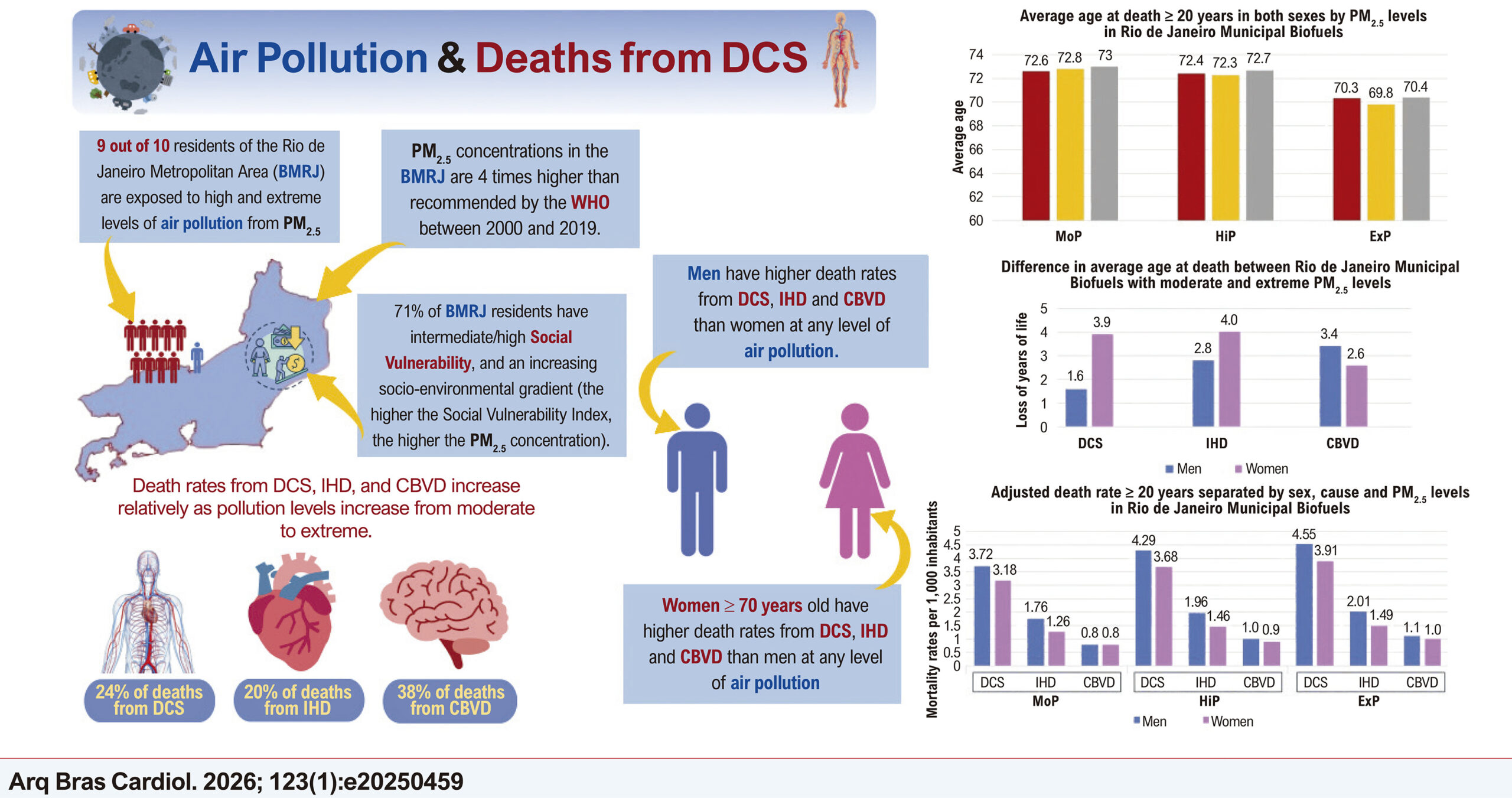
In this issue, Moura PH et al found that the Rio de Janeiro Metropolitan area, RJ, BR presents out-of-limit high levels of air pollution and there was a direct correlation between air pollution with PM2.5 (Particulate Matter of 2.5 μm) and higher incidence of cardiovascular disease, especially in lower socioeconomic status and in the elderly.

Since the Framingham Study had enumerated the so-called traditional risk factors – hypertension, high LDL-cholesterol, low HDL-cholesterol, diabetes, tobacco smoking, obesity, sedentary lifestyle, and male sex – a growing number of risk factors have been continuously added to that list.

[…]

  • Air Pollution
  • Cardiovascular Diseases
  • Particulate Matter
Read Full Article
Creative Commons Attribution (CC BY) Creative Commons license
16/03/2026 DOI: 10.36660/abc.20260006i Views 1
Impact of PM2.5 Air Pollution on Mortality from Circulatory System Diseases in the Neighborhoods of the City of Rio de Janeiro (2000-2019)
ABC
Original Article

Impact of PM2.5 Air Pollution on Mortality from Circulatory System Diseases in the Neighborhoods of the City of Rio de Janeiro (2000-2019)

Paulo Henrique de Moura et al. Leandro Dias Gomes de Carvalho Paulo Henrique Godoy Lucia Helena Alvares Salis … Marina Silva Paez Mariane Branco Alves Luiz Francisco Pires Guimarães Maia Renata Libonati dos Santos Nelson Albuquerque de Souza e Silva

Abstract

Background

Air pollution by fine particulate matter with an aerodynamic diameter ≤ 2.5 μm (PM2.5) is the main environmental risk factor associated with diseases of the circulatory system (DCS), ischemic heart disease (IHD), and cerebrovascular diseases (CBVD).

Objective

To estimate mortality rates from DCS, IHD, and CBVD (2000-2019) among residents of the 164 neighborhoods of Rio de Janeiro, according to PM2.5 levels.

Methods

This retrospective ecological study used georeferenced satellite data classified into three PM2.5 levels and mortality records from the Department of Information and Informatics of the Unified Health System for DCS, IHD, and CBVD among individuals of both sexes aged ≥ 20 years from 2000 to 2019. Age-adjusted mortality rates per 1,000 inhabitants were calculated, and comparative statistical analyses were performed by sex, PM2.5 level, and age group (5% significance).

Results

Approximately 91% of the 4.7 million residents (≥ 20 years) live in areas with high or extreme PM2.5 pollution. Deaths occurred up to 3.4 years earlier among men living in highly polluted areas compared with those in moderately polluted areas. The highest DCS mortality rates were observed in neighborhoods with high and extreme pollution (female = 3.9 ± 1.7; 95% CI = 3.5-4.2; male = 4.6 ± 2.1; 95% CI = 4.1-4.9), particularly in individuals aged ≥ 70 years. Significant associations were found between mortality rates and pollution levels for DCS (p = 0.019), IHD (p = 0.025), and CBVD (p = 0.002) in the 50-69-year age group when comparing moderately and extremely polluted areas. Intermediate/high social vulnerability was identified in 71% of neighborhoods, with an increasing socioenvironmental gradient linking higher vulnerability to higher PM2.5 concentrations (R = 0.354; p = 0.001).

Conclusion

Mean PM2.5 concentrations in the neighborhoods of Rio de Janeiro exceeded the World Health Organization’s recommended standard by a factor of four. Mortality from DCS is significantly higher and occurs earlier in areas with high or extreme levels of pollution.

  • Air Pollution
  • Cardiovascular Diseases
  • Geographic Mapping
  • Mortality
Read Full Article
Creative Commons Attribution (CC BY) Creative Commons license
27/02/2026 DOI: 10.36660/abc.20250459i Views 5
Figure 1
ABCIC
Case Report

Intramyocardial Cardiac Tumor: A Case Report

Luisa Latado et al. Fabio Figueiredo Costa Carlos Frederico Lopes Benevides Jorge Andion Torreão … Adna Keyne Lima Adelina Sanches de Melo Adriana Lopes Latado

Introduction

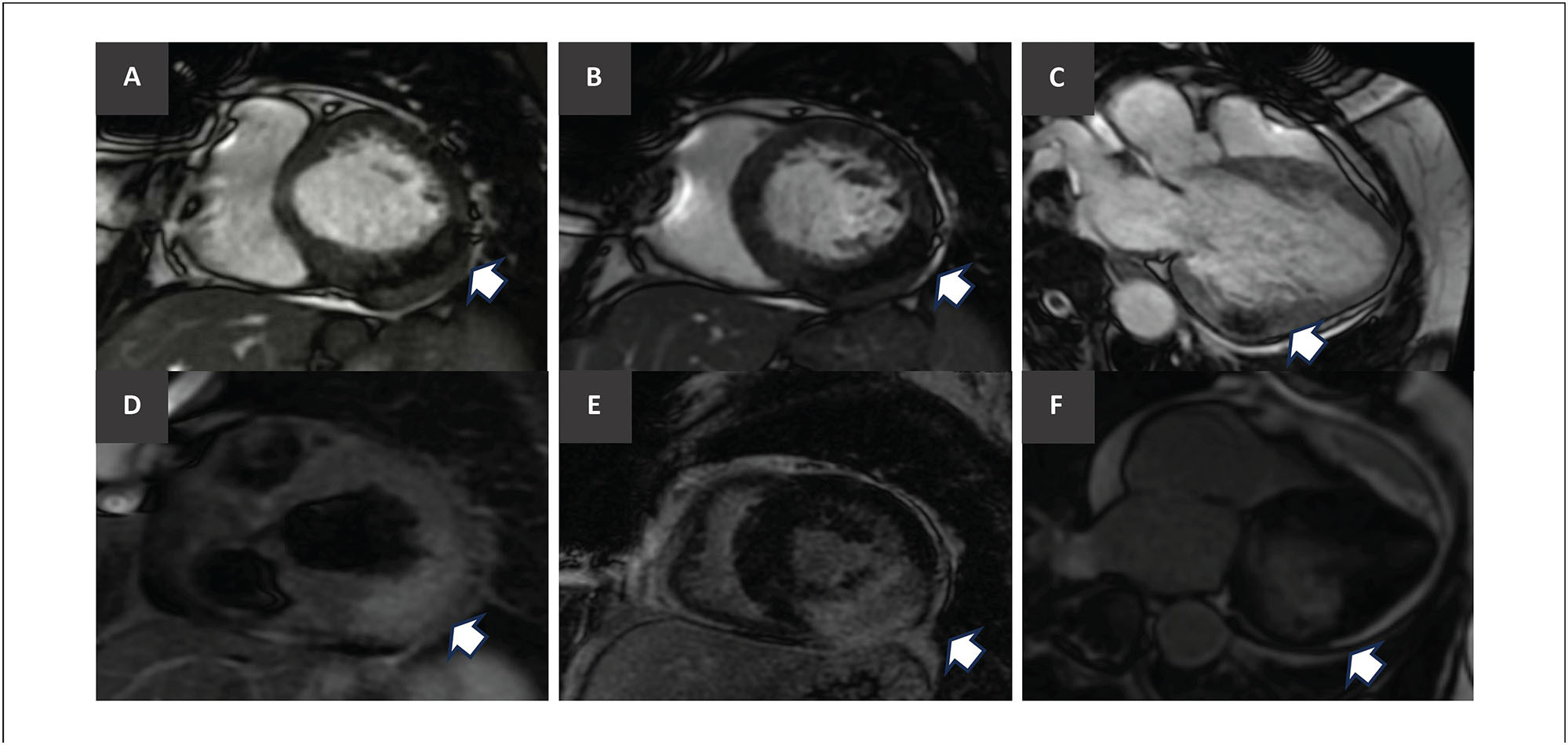
Primary cardiac tumors are rare entities, approximately 75% of which are benign, with myxoma as the most common type., Only about 15% of primary cardiac tumors are malignant, predominantly sarcomas. In contrast, metastatic cardiac involvement is relatively frequent and has been identified in up to 9% of patients who died from cancer.

Clinical manifestations are more closely related to tumor location than to histopathological classification. They may result from embolic phenomena, intracardiac obstruction with signs of heart failure (HF), valvular involvement, myocardial invasion with alterations in contractile function and electrical conduction, and pericardial involvement with the risk of effusion and cardiac tamponade, among other presentations.

[…]

  • Cardiovascular Diseases
  • Case Reports
  • Heart Neoplasms
Read Full Article
Creative Commons Attribution (CC BY) Creative Commons license
03/02/2026 DOI: 10.36660/abcimg.20250051i
Profile of Mortality Due to All Causes and Patterns of Diseases of the Circulatory System in Childhood Between 2019 and 2022 in Brazil
ABC
Original Article

Profile of Mortality Due to All Causes and Patterns of Diseases of the Circulatory System in Childhood Between 2019 and 2022 in Brazil

Thayanne Mendes de Andrade et al. Mariara Lopes da Costa Marques Julia Pereira Cavalcante Marques Maria Eduarda Miranda de Souza … Gláucia Maria Moraes de Oliveira Thais Rocha Salim

Abstract

Background

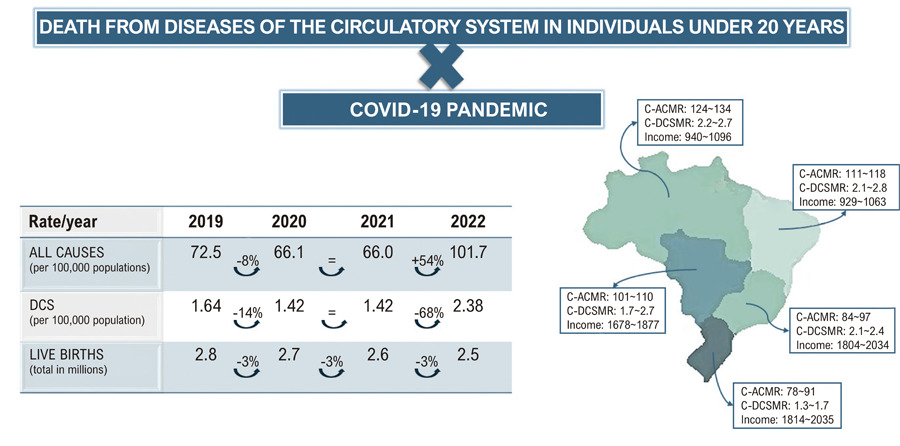
Between 2020 and 2023, the COVID-19 pandemic had a direct impact on population health. In Brazil, there is a lack of studies on the correlation between mortality from diseases of the circulatory system (DCS) and cardiorespiratory arrest (CRA) among people younger than 20 years during this period.

Objective

To analyze, using DCS and CRA, the mortality rates (MRs) due to underlying causes of death among people younger than 20 years in Brazil from 2019 to 2022 to understand the impact of the pandemic.

Methods

Ecological time-series study conducted between 2019 and 2022, focusing on deaths among people younger than 20 years. The analysis included the MRs and proportional mortality (PM) by cause of death, with data obtained from the DATASUS. Stata and Excel were used for statistical analysis.

Results

Between 2019 and 2022, there were 243,358 deaths among people younger than 20 years, with an MR of 101.7 per 100,000 inhabitants, which was higher among children younger than 1 year. The main causes of death were perinatal, external, and congenital malformations. There was a 9% reduction in MR between 2019 and 2020, followed by a 4.08% increase between 2021 and 2022, along with a 10% decrease in the number of live births. The highest MRs were in the North and Northeast regions. The MRs by DCS decreased between 2019 and 2021 but increased in 2022. Reporting of CRA as the cause of death was infrequent.

Conclusion

There was a reduction in MRs due to all causes and an increase in DCS in people older than 15 years during the pandemic, with disparities in lower-income regions.

  • Cardiovascular Diseases
  • Child Mortality
  • Heart Arrest
Read Full Article
Creative Commons Attribution (CC BY) Creative Commons license
19/01/2026 DOI: 10.36660/abc.20250191i Views 2

Could not load more articles. Please try again.

How to cite this article

EndNote RIS

Electronic Document Format (Vancouver)

Oliveira GMM, Brant LCC, Polanczyk CA, Malta DC, Biolo A, Nascimento BR, Souza MFM, et al. Cardiovascular Statistics – Brazil 2026. Arquivos Brasileiros de Cardiologia 2026;:e20260832.

Electronic Document Format (ABNT)

Oliveira, Gláucia Maria Moraes de; Brant, Luisa Campos Caldeira; Polanczyk, Carisi Anne; Malta, Deborah Carvalho; Biolo, Andreia; Nascimento, Bruno Ramos; Souza, Maria de Fatima Marinho de; Lorenzo, Andrea Rocha De; Fagundes Júnior, Antonio Aurélio de Paiva; Manfro, Arthur Gus; Schaan, Beatriz D.; Silva, Christina Grüne de Souza e; Castilho, Fábio Morato de; Cesena, Fernando Henpin Yue; Soares, Gabriel Porto; Xavier Junior, Gesner Francisco; Barreto Filho, Jose Augusto Soares; Pellanda, Lucia Campos; Aranha, Luciana Nicolau; Rohde, Luis Eduardo Paim; Passaglia, Luiz Guilherme; Pinto-Filho, Marcelo Martins; Machline-Carrion, M. Julia; Bittencourt, Marcio Sommer; Pontes Neto, Octavio M.; Villela, Paolo Blanco; Godoy, Paulo Henrique; Teixeira, Renato Azeredo; Stein, Ricardo; Sampaio, Roney Orismar; Salim, Thais Rocha; Gaziano, Thomas A.; Perel, Pablo; Roth, Gregory A.; Ribeiro, Antonio Luiz Pinho. Cardiovascular Statistics – Brazil 2026. Arquivos Brasileiros de Cardiologia, e20260832, Oct. 2026.

Electronic Document Format (APA)

Oliveira, G. M. M. , Brant, L. C. C., Polanczyk, C. A., Malta, D. C., Biolo, A., Nascimento, B. R., Souza, M. F. M. , Lorenzo, A. R. D., Fagundes Júnior, A. A. P., Manfro, A. G., Schaan, B. D., Silva, C. G. S. , Castilho, F. M. , Cesena, F. H. Y., Soares, G. P., Xavier Junior, G. F., Barreto Filho, J. A. S., Pellanda, L. C., Aranha, L. N., Rohde, L. E. P., Passaglia, L. G., Pinto-Filho, M. M., Machline-Carrion, M. J., Bittencourt, M. S., Pontes Neto, O. M., Villela, P. B., Godoy, P. H., Teixeira, R. A., Stein, R., Sampaio, R. O., Salim, T. R., Gaziano, T. A., Perel, P., Roth, G. A., & Ribeiro, A. L. P. (2026). Cardiovascular Statistics – Brazil 2026. Arquivos Brasileiros de Cardiologia, , e20260832.

Electronic Document Format (ISO)

Oliveira, Gláucia Maria Moraes de and Brant, Luisa Campos Caldeira and Polanczyk, Carisi Anne and Malta, Deborah Carvalho and Biolo, Andreia and Nascimento, Bruno Ramos and Souza, Maria de Fatima Marinho de and Lorenzo, Andrea Rocha De and Fagundes Júnior, Antonio Aurélio de Paiva and Manfro, Arthur Gus and Schaan, Beatriz D. and Silva, Christina Grüne de Souza e and Castilho, Fábio Morato de and Cesena, Fernando Henpin Yue and Soares, Gabriel Porto and Xavier Junior, Gesner Francisco and Barreto Filho, Jose Augusto Soares and Pellanda, Lucia Campos and Aranha, Luciana Nicolau and Rohde, Luis Eduardo Paim and Passaglia, Luiz Guilherme and Pinto-Filho, Marcelo Martins and Machline-Carrion, M. Julia and Bittencourt, Marcio Sommer and Pontes Neto, Octavio M. and Villela, Paolo Blanco and Godoy, Paulo Henrique and Teixeira, Renato Azeredo and Stein, Ricardo and Sampaio, Roney Orismar and Salim, Thais Rocha and Gaziano, Thomas A. and Perel, Pablo and Roth, Gregory A. and Ribeiro, Antonio Luiz Pinho. Cardiovascular Statistics – Brazil 2026. Arquivos Brasileiros de Cardiologia [online]. 2026, [cited 2026-10-14], e20260832. Available from: <https://journals.cardiol.br/en/article/cardiovascular-statistics-brazil-2026/>. ISSN 0066-782X

EndNote RIS

Electronic Document Format (Vancouver)

Gao Y, Wu G, Jin T, Shen Z, Zhou N, Huang X. Genetic Evidence for the Association Between Sjögren’s Syndrome and Cardiovascular Disease Risk. International Journal of Cardiovascular Sciences 2026;39:e20250074.

Electronic Document Format (ABNT)

Gao, Yafang; Wu, Guohua; Jin, Tianyu; Shen, Zhijie; Zhou, Nannan; Huang, Xiaohong. Genetic Evidence for the Association Between Sjögren’s Syndrome and Cardiovascular Disease Risk. International Journal of Cardiovascular Sciences, v. 39, e20250074, Sep. 2026.

Electronic Document Format (APA)

Gao, Y., Wu, G., Jin, T., Shen, Z., Zhou, N., & Huang, X. (2026). Genetic Evidence for the Association Between Sjögren’s Syndrome and Cardiovascular Disease Risk. International Journal of Cardiovascular Sciences, 39, e20250074.

Electronic Document Format (ISO)

Gao, Yafang and Wu, Guohua and Jin, Tianyu and Shen, Zhijie and Zhou, Nannan and Huang, Xiaohong. Genetic Evidence for the Association Between Sjögren’s Syndrome and Cardiovascular Disease Risk. International Journal of Cardiovascular Sciences [online]. 2026, vol. 39, [cited 2026-10-14], e20250074. Available from: <https://journals.cardiol.br/en/article/genetic-evidence-for-the-association-between-sjogrens-syndrome-and-cardiovascular-disease-risk/>. ISSN 2359-4802

EndNote RIS

Electronic Document Format (Vancouver)

Enoh JE, Akah RT, Nkeh-Chungag BN. Infant Feeding Practices and Their Association with Stunting, Overweight, Obesity, and Other Cardiometabolic Risks in African Children: A Systematic Review. International Journal of Cardiovascular Sciences 2026;39:e20250121.

Electronic Document Format (ABNT)

Enoh, Jude Eteneneng; Akah, Roland Tiagha; Nkeh-Chungag, Benedicta Ngwenchi. Infant Feeding Practices and Their Association with Stunting, Overweight, Obesity, and Other Cardiometabolic Risks in African Children: A Systematic Review. International Journal of Cardiovascular Sciences, v. 39, e20250121, Sep. 2026.

Electronic Document Format (APA)

Enoh, J. E., Akah, R. T., & Nkeh-Chungag, B. N. (2026). Infant Feeding Practices and Their Association with Stunting, Overweight, Obesity, and Other Cardiometabolic Risks in African Children: A Systematic Review. International Journal of Cardiovascular Sciences, 39, e20250121.

Electronic Document Format (ISO)

Enoh, Jude Eteneneng and Akah, Roland Tiagha and Nkeh-Chungag, Benedicta Ngwenchi. Infant Feeding Practices and Their Association with Stunting, Overweight, Obesity, and Other Cardiometabolic Risks in African Children: A Systematic Review. International Journal of Cardiovascular Sciences [online]. 2026, vol. 39, [cited 2026-10-14], e20250121. Available from: <https://journals.cardiol.br/en/article/infant-feeding-practices-and-their-association-with-stunting-overweight-obesity-and-other-cardiometabolic-risks-in-african-children-a-systematic-review/>. ISSN 2359-4802

EndNote RIS

Electronic Document Format (Vancouver)

Mesquita CT, Peix A, Rodríguez DI, Dueñas-Criado KA, Gutiérrez-Villamil C, Puente A, Massardo T, et al. Cardiovascular Disease and Risk Factors in Women in Latin America and the Caribbean. Arquivos Brasileiros de Cardiologia 2026;123(7):e20250655.

Electronic Document Format (ABNT)

Mesquita, Claudio T.; Peix, Amalia; Rodríguez, Diana I.; Dueñas-Criado, Karen A.; Gutiérrez-Villamil, Claudia; Puente, Adriana; Massardo, Teresa; Berrocal, Isabel; Astesiano, Andrea; Agüero, Roberto N.; Bañolas, Ryenne; Hiplan, Enrique; Sánchez, Mayra; Barreda, Ana Ma.; Gómez, Vanessa V.; Fernández, Cynthia; Portillo, Silvia; Herrera, Yariela; Mendoza, Aurelio; Kapitan, Miguel; Castellanos, Carlos; Estrada-Lobato, Enrique; Paez, Diana. Cardiovascular Disease and Risk Factors in Women in Latin America and the Caribbean. Arquivos Brasileiros de Cardiologia, v. 123, n. 7, e20250655, Aug. 2026.

Electronic Document Format (APA)

Mesquita, C. T., Peix, A., Rodríguez, D. I., Dueñas-Criado, K. A., Gutiérrez-Villamil, C., Puente, A., Massardo, T., Berrocal, I., Astesiano, A., Agüero, R. N., Bañolas, R., Hiplan, E., Sánchez, M., Barreda, A. M., Gómez, V. V., Fernández, C., Portillo, S., Herrera, Y., Mendoza, A., Kapitan, M., Castellanos, C., Estrada-Lobato, E., & Paez, D. (2026). Cardiovascular Disease and Risk Factors in Women in Latin America and the Caribbean. Arquivos Brasileiros de Cardiologia, 123(7), e20250655.

Electronic Document Format (ISO)

Mesquita, Claudio T. and Peix, Amalia and Rodríguez, Diana I. and Dueñas-Criado, Karen A. and Gutiérrez-Villamil, Claudia and Puente, Adriana and Massardo, Teresa and Berrocal, Isabel and Astesiano, Andrea and Agüero, Roberto N. and Bañolas, Ryenne and Hiplan, Enrique and Sánchez, Mayra and Barreda, Ana Ma. and Gómez, Vanessa V. and Fernández, Cynthia and Portillo, Silvia and Herrera, Yariela and Mendoza, Aurelio and Kapitan, Miguel and Castellanos, Carlos and Estrada-Lobato, Enrique and Paez, Diana. Cardiovascular Disease and Risk Factors in Women in Latin America and the Caribbean. Arquivos Brasileiros de Cardiologia [online]. 2026, vol. 123, n. 7, [cited 2026-10-14], e20250655. Available from: <https://journals.cardiol.br/en/article/cardiovascular-disease-and-risk-factors-in-women-in-latin-america-and-the-caribbean/>. ISSN 0066-782X

EndNote RIS

Electronic Document Format (Vancouver)

Cesena FY. iCardio And Business Intelligence-Based Tools: Opportunities in Public Health. Arquivos Brasileiros de Cardiologia 2026;123(4):e20260419.

Electronic Document Format (ABNT)

Cesena, Fernando Yue. iCardio And Business Intelligence-Based Tools: Opportunities in Public Health. Arquivos Brasileiros de Cardiologia, v. 123, n. 4, e20260419, Jul. 2026.

Electronic Document Format (APA)

Cesena, F. Y. (2026). iCardio And Business Intelligence-Based Tools: Opportunities in Public Health. Arquivos Brasileiros de Cardiologia, 123(4), e20260419.

Electronic Document Format (ISO)

Cesena, Fernando Yue. iCardio And Business Intelligence-Based Tools: Opportunities in Public Health. Arquivos Brasileiros de Cardiologia [online]. 2026, vol. 123, n. 4, [cited 2026-10-14], e20260419. Available from: <https://journals.cardiol.br/en/article/icardio-and-business-intelligence-based-tools-opportunities-in-public-health/>. ISSN 0066-782X

EndNote RIS

Electronic Document Format (Vancouver)

Orlow R, Sousa CC, Inuzuka S, Feitosa A, Brandão AA, Gomes MM, Guimarães Neto VS, et al. A Fixed-Dose Triple-Combination Therapy for the Initial Steps of Hypertension Treatment: Protocol for the NEXT Randomized Clinical Trial. International Journal of Cardiovascular Sciences 2026;39:e20260025.

Electronic Document Format (ABNT)

Orlow, Rogerio; Sousa, Caroline Consuelo de; Inuzuka, Sayuri; Feitosa, Audes; Brandão, Andréa Araujo; Gomes, Marco Mota; Guimarães Neto, Vanildo da Silva; Cestario, Elizabeth do Espírito Santo; Barbosa, Eduardo Costa Duarte; Bezerra, Rodrigo; Santos, Mayara Cedrim; Sousa, Ana Luiza Lima; Batista, Sandro Rodrigues; Vitorino, Priscila Valverde de Oliveira; Barroso, Weimar Kunz Sebba. A Fixed-Dose Triple-Combination Therapy for the Initial Steps of Hypertension Treatment: Protocol for the NEXT Randomized Clinical Trial. International Journal of Cardiovascular Sciences, v. 39, e20260025, Jul. 2026.

Electronic Document Format (APA)

Orlow, R., Sousa, C. C. , Inuzuka, S., Feitosa, A., Brandão, A. A., Gomes, M. M., Guimarães Neto, V. S., Cestario, E. E. S., Barbosa, E. C. D., Bezerra, R., Santos, M. C., Sousa, A. L. L., Batista, S. R., Vitorino, P. V. O., & Barroso, W. K. S. (2026). A Fixed-Dose Triple-Combination Therapy for the Initial Steps of Hypertension Treatment: Protocol for the NEXT Randomized Clinical Trial. International Journal of Cardiovascular Sciences, 39, e20260025.

Electronic Document Format (ISO)

Orlow, Rogerio and Sousa, Caroline Consuelo de and Inuzuka, Sayuri and Feitosa, Audes and Brandão, Andréa Araujo and Gomes, Marco Mota and Guimarães Neto, Vanildo da Silva and Cestario, Elizabeth do Espírito Santo and Barbosa, Eduardo Costa Duarte and Bezerra, Rodrigo and Santos, Mayara Cedrim and Sousa, Ana Luiza Lima and Batista, Sandro Rodrigues and Vitorino, Priscila Valverde de Oliveira and Barroso, Weimar Kunz Sebba. A Fixed-Dose Triple-Combination Therapy for the Initial Steps of Hypertension Treatment: Protocol for the NEXT Randomized Clinical Trial. International Journal of Cardiovascular Sciences [online]. 2026, vol. 39, [cited 2026-10-14], e20260025. Available from: <https://journals.cardiol.br/en/article/a-fixed-dose-triple-combination-therapy-for-the-initial-steps-of-hypertension-treatment-protocol-for-the-next-randomized-clinical-trial/>. ISSN 2359-4802

EndNote RIS

Electronic Document Format (Vancouver)

Siqueira RFC, Viana TT, Barroso ND, Coutinho NV, Martins LPO, Gonçalves JPF, Almeida PV, et al. The Value of NT-ProBNP in Predicting Cardiovascular Events in Patients Hospitalized for Decompensated Heart Failure. ABC Heart Fail Cardiomyop 2026;6:e20260008.

Electronic Document Format (ABNT)

Siqueira, Rafael Felipe Coelho; Viana, Tainá Teixeira; Barroso, Natália Duarte; Coutinho, Nina Vieira; Martins, Luiz Paulo Oliveira; Gonçalves, João Pedro Fernandes; Almeida, Pedro Vogel; Rocha, Djaine Haila Silva; Barros, Raisa Mainarte Franco; Melo, Rodrigo Morel Vieira. The Value of NT-ProBNP in Predicting Cardiovascular Events in Patients Hospitalized for Decompensated Heart Failure. ABC Heart Fail Cardiomyop, v. 6, e20260008, Jul. 2026.

Electronic Document Format (APA)

Siqueira, R. F. C., Viana, T. T., Barroso, N. D., Coutinho, N. V., Martins, L. P. O., Gonçalves, J. P. F., Almeida, P. V., Rocha, D. H. S., Barros, R. M. F., & Melo, R. M. V. (2026). The Value of NT-ProBNP in Predicting Cardiovascular Events in Patients Hospitalized for Decompensated Heart Failure. ABC Heart Fail Cardiomyop, 6, e20260008.

Electronic Document Format (ISO)

Siqueira, Rafael Felipe Coelho and Viana, Tainá Teixeira and Barroso, Natália Duarte and Coutinho, Nina Vieira and Martins, Luiz Paulo Oliveira and Gonçalves, João Pedro Fernandes and Almeida, Pedro Vogel and Rocha, Djaine Haila Silva and Barros, Raisa Mainarte Franco and Melo, Rodrigo Morel Vieira. The Value of NT-ProBNP in Predicting Cardiovascular Events in Patients Hospitalized for Decompensated Heart Failure. ABC Heart Fail Cardiomyop [online]. 2026, vol. 6, [cited 2026-10-14], e20260008. Available from: <https://journals.cardiol.br/en/article/the-value-of-nt-probnp-in-predicting-cardiovascular-events-in-patients-hospitalized-for-decompensated-heart-failure/>

EndNote RIS

Electronic Document Format (Vancouver)

Hu M, Gong Z, Li X, Yin C. Investigating the Causal Role of Inflammatory Cytokines in the Development of Cardiovascular, Kidney, and Metabolic Diseases. Arquivos Brasileiros de Cardiologia 2026;123(4):e20250611.

Electronic Document Format (ABNT)

Hu, Mengjin; Gong, Zhaoting; Li, Xiaosong; Yin, Chunlin. Investigating the Causal Role of Inflammatory Cytokines in the Development of Cardiovascular, Kidney, and Metabolic Diseases. Arquivos Brasileiros de Cardiologia, v. 123, n. 4, e20250611, Jul. 2026.

Electronic Document Format (APA)

Hu, M., Gong, Z., Li, X., & Yin, C. (2026). Investigating the Causal Role of Inflammatory Cytokines in the Development of Cardiovascular, Kidney, and Metabolic Diseases. Arquivos Brasileiros de Cardiologia, 123(4), e20250611.

Electronic Document Format (ISO)

Hu, Mengjin and Gong, Zhaoting and Li, Xiaosong and Yin, Chunlin. Investigating the Causal Role of Inflammatory Cytokines in the Development of Cardiovascular, Kidney, and Metabolic Diseases. Arquivos Brasileiros de Cardiologia [online]. 2026, vol. 123, n. 4, [cited 2026-10-14], e20250611. Available from: <https://journals.cardiol.br/en/article/investigating-the-causal-role-of-inflammatory-cytokines-in-the-development-of-cardiovascular-kidney-and-metabolic-diseases/>. ISSN 0066-782X

EndNote RIS

Electronic Document Format (Vancouver)

Figueredo ML, Lima MAA, Santos AM, Shinjo SK. Factors Associated With the High Prevalence of Metabolic Syndrome in Antineutrophil Cytoplasmic Antibody-Associated Vasculitis. Arquivos Brasileiros de Cardiologia 2026;123(4):e20260076.

Electronic Document Format (ABNT)

Figueredo, Marina Lamas; Lima, Matheus Alves Amaral de; Santos, Alexandre Moura dos; Shinjo, Samuel Katsuyuki. Factors Associated With the High Prevalence of Metabolic Syndrome in Antineutrophil Cytoplasmic Antibody-Associated Vasculitis. Arquivos Brasileiros de Cardiologia, v. 123, n. 4, e20260076, Jul. 2026.

Electronic Document Format (APA)

Figueredo, M. L., Lima, M. A. A. , Santos, A. M. , & Shinjo, S. K. (2026). Factors Associated With the High Prevalence of Metabolic Syndrome in Antineutrophil Cytoplasmic Antibody-Associated Vasculitis. Arquivos Brasileiros de Cardiologia, 123(4), e20260076.

Electronic Document Format (ISO)

Figueredo, Marina Lamas and Lima, Matheus Alves Amaral de and Santos, Alexandre Moura dos and Shinjo, Samuel Katsuyuki. Factors Associated With the High Prevalence of Metabolic Syndrome in Antineutrophil Cytoplasmic Antibody-Associated Vasculitis. Arquivos Brasileiros de Cardiologia [online]. 2026, vol. 123, n. 4, [cited 2026-10-14], e20260076. Available from: <https://journals.cardiol.br/en/article/factors-associated-with-the-high-prevalence-of-metabolic-syndrome-in-antineutrophil-cytoplasmic-antibody-associated-vasculitis/>. ISSN 0066-782X

EndNote RIS

Electronic Document Format (Vancouver)

Malachias MVB. Eugene Braunwald: Lessons and Stories from the Father of Modern Cardiology. Arquivos Brasileiros de Cardiologia 2026;123(4):e20260349.

Electronic Document Format (ABNT)

Malachias, Marcus Vinicius Bolivar. Eugene Braunwald: Lessons and Stories from the Father of Modern Cardiology. Arquivos Brasileiros de Cardiologia, v. 123, n. 4, e20260349, Jun. 2026.

Electronic Document Format (APA)

Malachias, M. V. B. (2026). Eugene Braunwald: Lessons and Stories from the Father of Modern Cardiology. Arquivos Brasileiros de Cardiologia, 123(4), e20260349.

Electronic Document Format (ISO)

Malachias, Marcus Vinicius Bolivar. Eugene Braunwald: Lessons and Stories from the Father of Modern Cardiology. Arquivos Brasileiros de Cardiologia [online]. 2026, vol. 123, n. 4, [cited 2026-10-14], e20260349. Available from: <https://journals.cardiol.br/en/article/eugene-braunwald-lessons-and-stories-from-the-father-of-modern-cardiology/>. ISSN 0066-782X

EndNote RIS

Electronic Document Format (Vancouver)

Stein R, Andrade CS, Ferrari F. Beyond Humor: Laughter as a Cardiovascular Stimulus. Arquivos Brasileiros de Cardiologia 2026;123(3):e20250886.

Electronic Document Format (ABNT)

Stein, Ricardo; Andrade, Cleidiane da Silva; Ferrari, Filipe. Beyond Humor: Laughter as a Cardiovascular Stimulus. Arquivos Brasileiros de Cardiologia, v. 123, n. 3, e20250886, May. 2026.

Electronic Document Format (APA)

Stein, R., Andrade, C. S., & Ferrari, F. (2026). Beyond Humor: Laughter as a Cardiovascular Stimulus. Arquivos Brasileiros de Cardiologia, 123(3), e20250886.

Electronic Document Format (ISO)

Stein, Ricardo and Andrade, Cleidiane da Silva and Ferrari, Filipe. Beyond Humor: Laughter as a Cardiovascular Stimulus. Arquivos Brasileiros de Cardiologia [online]. 2026, vol. 123, n. 3, [cited 2026-10-14], e20250886. Available from: <https://journals.cardiol.br/en/article/beyond-humor-laughter-as-a-cardiovascular-stimulus/>. ISSN 0066-782X

EndNote RIS

Electronic Document Format (Vancouver)

Lopes JPA, Morais JEC, Tenório PP. Beyond the Numbers: A Critical Analysis of DATASUS on Cardiovascular Mortality. International Journal of Cardiovascular Sciences 2026;39:e20250261.

Electronic Document Format (ABNT)

Lopes, João Pedro Azevedo; Morais, João Emmanuel Coelho de; Tenório, Pedro Pereira. Beyond the Numbers: A Critical Analysis of DATASUS on Cardiovascular Mortality. International Journal of Cardiovascular Sciences, v. 39, e20250261, May. 2026.

Electronic Document Format (APA)

Lopes, J. P. A., Morais, J. E. C. , & Tenório, P. P. (2026). Beyond the Numbers: A Critical Analysis of DATASUS on Cardiovascular Mortality. International Journal of Cardiovascular Sciences, 39, e20250261.

Electronic Document Format (ISO)

Lopes, João Pedro Azevedo and Morais, João Emmanuel Coelho de and Tenório, Pedro Pereira. Beyond the Numbers: A Critical Analysis of DATASUS on Cardiovascular Mortality. International Journal of Cardiovascular Sciences [online]. 2026, vol. 39, [cited 2026-10-14], e20250261. Available from: <https://journals.cardiol.br/en/article/beyond-the-numbers-a-critical-analysis-of-datasus-on-cardiovascular-mortality/>. ISSN 2359-4802

EndNote RIS

Electronic Document Format (Vancouver)

Almeida JHA, Ferreira GMA, Andrade MAM, Nunes HM, Costa IB. Cardiovascular Complications in Patients with COVID-19 and Their Relationship with Mortality: An Echocardiographic Perspective. ABC Imagem Cardiovascular 2026;39(1):e20260005.

Electronic Document Format (ABNT)

Almeida, João Henrique Andrade de; Ferreira, Gustavo Miranda de Azevedo; Andrade, Marina de Azevedo Martins; Nunes, Heloísa Marceliano; Costa, Igor Brasil. Cardiovascular Complications in Patients with COVID-19 and Their Relationship with Mortality: An Echocardiographic Perspective. ABC Imagem Cardiovascular, v. 39, n. 1, e20260005, May. 2026.

Electronic Document Format (APA)

Almeida, J. H. A. , Ferreira, G. M. A., Andrade, M. A. M., Nunes, H. M., & Costa, I. B. (2026). Cardiovascular Complications in Patients with COVID-19 and Their Relationship with Mortality: An Echocardiographic Perspective. ABC Imagem Cardiovascular, 39(1), e20260005.

Electronic Document Format (ISO)

Almeida, João Henrique Andrade de and Ferreira, Gustavo Miranda de Azevedo and Andrade, Marina de Azevedo Martins and Nunes, Heloísa Marceliano and Costa, Igor Brasil. Cardiovascular Complications in Patients with COVID-19 and Their Relationship with Mortality: An Echocardiographic Perspective. ABC Imagem Cardiovascular [online]. 2026, vol. 39, n. 1, [cited 2026-10-14], e20260005. Available from: <https://journals.cardiol.br/en/article/cardiovascular-complications-in-patients-with-covid-19-and-their-relationship-with-mortality-an-echocardiographic-perspective/>. ISSN 2318-8219

EndNote RIS

Electronic Document Format (Vancouver)

Seyithanoğlu M. Use of Atherogenic Indices as Assessment Methods of Clinical Atherosclerotic Diseases. Arquivos Brasileiros de Cardiologia 2026;123(3):e20250691.

Electronic Document Format (ABNT)

Seyithanoğlu, Muhammed. Use of Atherogenic Indices as Assessment Methods of Clinical Atherosclerotic Diseases. Arquivos Brasileiros de Cardiologia, v. 123, n. 3, e20250691, May. 2026.

Electronic Document Format (APA)

Seyithanoğlu, M. (2026). Use of Atherogenic Indices as Assessment Methods of Clinical Atherosclerotic Diseases. Arquivos Brasileiros de Cardiologia, 123(3), e20250691.

Electronic Document Format (ISO)

Seyithanoğlu, Muhammed. Use of Atherogenic Indices as Assessment Methods of Clinical Atherosclerotic Diseases. Arquivos Brasileiros de Cardiologia [online]. 2026, vol. 123, n. 3, [cited 2026-10-14], e20250691. Available from: <https://journals.cardiol.br/en/article/use-of-atherogenic-indices-as-assessment-methods-of-clinical-atherosclerotic-diseases-2/>. ISSN 0066-782X

EndNote RIS

Electronic Document Format (Vancouver)

Macedo AVS, Carvalho FS, Glynn T, Johnson N, Cabrera KP, Oliveira M. Bridging Global Calls to Local Action: Advancing Cardiovascular Equity for Women in Brazil. Arquivos Brasileiros de Cardiologia 2026;123(3):e20260110.

Electronic Document Format (ABNT)

Macedo, Ariane Vieira Scarlatelli; Carvalho, Fernanda Souza de; Glynn, Teresa; Johnson, Neil; Cabrera, Karen Padilla; Oliveira, Marlene. Bridging Global Calls to Local Action: Advancing Cardiovascular Equity for Women in Brazil. Arquivos Brasileiros de Cardiologia, v. 123, n. 3, e20260110, May. 2026.

Electronic Document Format (APA)

Macedo, A. V. S., Carvalho, F. S. , Glynn, T., Johnson, N., Cabrera, K. P., & Oliveira, M. (2026). Bridging Global Calls to Local Action: Advancing Cardiovascular Equity for Women in Brazil. Arquivos Brasileiros de Cardiologia, 123(3), e20260110.

Electronic Document Format (ISO)

Macedo, Ariane Vieira Scarlatelli and Carvalho, Fernanda Souza de and Glynn, Teresa and Johnson, Neil and Cabrera, Karen Padilla and Oliveira, Marlene. Bridging Global Calls to Local Action: Advancing Cardiovascular Equity for Women in Brazil. Arquivos Brasileiros de Cardiologia [online]. 2026, vol. 123, n. 3, [cited 2026-10-14], e20260110. Available from: <https://journals.cardiol.br/en/article/bridging-global-calls-to-local-action-advancing-cardiovascular-equity-for-women-in-brazil/>. ISSN 0066-782X

EndNote RIS

Electronic Document Format (Vancouver)

Mariano GG, Thaines CA, Desani GS, Gouvêa LC, Covilo PVC, Caravante RPG. Aneurysm of the Suprahepatic Inferior Vena Cava: A Case Report. ABC Imagem Cardiovascular 2026;39(1):e20250055.

Electronic Document Format (ABNT)

Mariano, Gabriella Ghattas; Thaines, Calina Araujo; Desani, Gabrielle Silva; Gouvêa, Letícia de Castro; Covilo, Paulo Vítor Cabral; Caravante, Rogério de Paula Garcia. Aneurysm of the Suprahepatic Inferior Vena Cava: A Case Report. ABC Imagem Cardiovascular, v. 39, n. 1, e20250055, May. 2026.

Electronic Document Format (APA)

Mariano, G. G., Thaines, C. A., Desani, G. S., Gouvêa, L. C., Covilo, P. V. C., & Caravante, R. P. G. (2026). Aneurysm of the Suprahepatic Inferior Vena Cava: A Case Report. ABC Imagem Cardiovascular, 39(1), e20250055.

Electronic Document Format (ISO)

Mariano, Gabriella Ghattas and Thaines, Calina Araujo and Desani, Gabrielle Silva and Gouvêa, Letícia de Castro and Covilo, Paulo Vítor Cabral and Caravante, Rogério de Paula Garcia. Aneurysm of the Suprahepatic Inferior Vena Cava: A Case Report. ABC Imagem Cardiovascular [online]. 2026, vol. 39, n. 1, [cited 2026-10-14], e20250055. Available from: <https://journals.cardiol.br/en/article/aneurysm-of-the-suprahepatic-inferior-vena-cava-a-case-report/>. ISSN 2318-8219

EndNote RIS

Electronic Document Format (Vancouver)

Kelly FA, Dantas CR, Sobreira LER, Almeida AM, Bezerra FB, Sousa MG, Consolim F, et al. Efficacy of a Salt Substitute on the Incidence of Hypertension: A Systematic Review with Meta-Analysis. Arquivos Brasileiros de Cardiologia 2026;123(3):e20250440.

Electronic Document Format (ABNT)

Kelly, Francinny Alves; Dantas, Clara Rocha; Sobreira, Luis Eduardo Rodrigues; Almeida, Artur Menegaz de; Bezerra, Fernando Baía; Sousa, Márcio Gonçalves de; Consolim, Fernanda; Laurinavicius, Antonio Gabriele. Efficacy of a Salt Substitute on the Incidence of Hypertension: A Systematic Review with Meta-Analysis. Arquivos Brasileiros de Cardiologia, v. 123, n. 3, e20250440, Apr. 2026.

Electronic Document Format (APA)

Kelly, F. A., Dantas, C. R., Sobreira, L. E. R., Almeida, A. M. , Bezerra, F. B., Sousa, M. G. , Consolim, F., & Laurinavicius, A. G. (2026). Efficacy of a Salt Substitute on the Incidence of Hypertension: A Systematic Review with Meta-Analysis. Arquivos Brasileiros de Cardiologia, 123(3), e20250440.

Electronic Document Format (ISO)

Kelly, Francinny Alves and Dantas, Clara Rocha and Sobreira, Luis Eduardo Rodrigues and Almeida, Artur Menegaz de and Bezerra, Fernando Baía and Sousa, Márcio Gonçalves de and Consolim, Fernanda and Laurinavicius, Antonio Gabriele. Efficacy of a Salt Substitute on the Incidence of Hypertension: A Systematic Review with Meta-Analysis. Arquivos Brasileiros de Cardiologia [online]. 2026, vol. 123, n. 3, [cited 2026-10-14], e20250440. Available from: <https://journals.cardiol.br/en/article/efficacy-of-a-salt-substitute-on-the-incidence-of-hypertension-a-systematic-review-with-meta-analysis/>. ISSN 0066-782X

EndNote RIS

Electronic Document Format (Vancouver)

Ávila DX, Molin CZD, Barbosa Júnior JS, Carvalho LC, Rocha JP, Moura MJH, Grüdtner DOM, et al. Primary Hyperoxaluria With Cardiac Involvement: A Case Series. Arquivos Brasileiros de Cardiologia 2026;123(3):e20250574.

Electronic Document Format (ABNT)

Ávila, Diane Xavier de; Molin, Christine Zomer Dal; Barbosa Júnior, Josué dos Santos; Carvalho, Laís Corrêa de; Rocha, João Padula; Moura, Maria Júlia Hallack; Grüdtner, Davi Orli Machado; Bittencourt, Raquel. Primary Hyperoxaluria With Cardiac Involvement: A Case Series. Arquivos Brasileiros de Cardiologia, v. 123, n. 3, e20250574, Apr. 2026.

Electronic Document Format (APA)

Ávila, D. X. , Molin, C. Z. D., Barbosa Júnior, J. S., Carvalho, L. C. , Rocha, J. P., Moura, M. J. H., Grüdtner, D. O. M., & Bittencourt, R. (2026). Primary Hyperoxaluria With Cardiac Involvement: A Case Series. Arquivos Brasileiros de Cardiologia, 123(3), e20250574.

Electronic Document Format (ISO)

Ávila, Diane Xavier de and Molin, Christine Zomer Dal and Barbosa Júnior, Josué dos Santos and Carvalho, Laís Corrêa de and Rocha, João Padula and Moura, Maria Júlia Hallack and Grüdtner, Davi Orli Machado and Bittencourt, Raquel. Primary Hyperoxaluria With Cardiac Involvement: A Case Series. Arquivos Brasileiros de Cardiologia [online]. 2026, vol. 123, n. 3, [cited 2026-10-14], e20250574. Available from: <https://journals.cardiol.br/en/article/primary-hyperoxaluria-with-cardiac-involvement-a-case-series/>. ISSN 0066-782X

EndNote RIS

Electronic Document Format (Vancouver)

Geraldes F. Beyond Translation: Building a Lusophone Alliance for Cardiovascular Care. Arquivos Brasileiros de Cardiologia 2026;123(2):e20260065.

Electronic Document Format (ABNT)

Geraldes, Flávia. Beyond Translation: Building a Lusophone Alliance for Cardiovascular Care. Arquivos Brasileiros de Cardiologia, v. 123, n. 2, e20260065, Mar. 2026.

Electronic Document Format (APA)

Geraldes, F. (2026). Beyond Translation: Building a Lusophone Alliance for Cardiovascular Care. Arquivos Brasileiros de Cardiologia, 123(2), e20260065.

Electronic Document Format (ISO)

Geraldes, Flávia. Beyond Translation: Building a Lusophone Alliance for Cardiovascular Care. Arquivos Brasileiros de Cardiologia [online]. 2026, vol. 123, n. 2, [cited 2026-10-14], e20260065. Available from: <https://journals.cardiol.br/en/article/beyond-translation-building-a-lusophone-alliance-for-cardiovascular-care/>. ISSN 0066-782X

EndNote RIS

Electronic Document Format (Vancouver)

Alves M. Reflections on the Effectiveness of Cardiovascular Disease Prevention Programs in Corporate Settings. International Journal of Cardiovascular Sciences 2026;39:e20250156.

Electronic Document Format (ABNT)

Alves, Mauro. Reflections on the Effectiveness of Cardiovascular Disease Prevention Programs in Corporate Settings. International Journal of Cardiovascular Sciences, v. 39, e20250156, Mar. 2026.

Electronic Document Format (APA)

Alves, M. (2026). Reflections on the Effectiveness of Cardiovascular Disease Prevention Programs in Corporate Settings. International Journal of Cardiovascular Sciences, 39, e20250156.

Electronic Document Format (ISO)

Alves, Mauro. Reflections on the Effectiveness of Cardiovascular Disease Prevention Programs in Corporate Settings. International Journal of Cardiovascular Sciences [online]. 2026, vol. 39, [cited 2026-10-14], e20250156. Available from: <https://journals.cardiol.br/en/article/reflections-on-the-effectiveness-of-cardiovascular-disease-prevention-programs-in-corporate-settings/>. ISSN 2359-4802

EndNote RIS

Electronic Document Format (Vancouver)

Favarato D. Fine Particulate Pollution is a Powerful Risk Factor for Cardiovascular Disease. Arquivos Brasileiros de Cardiologia 2026;123(1):e20260006.

Electronic Document Format (ABNT)

Favarato, Desiderio. Fine Particulate Pollution is a Powerful Risk Factor for Cardiovascular Disease. Arquivos Brasileiros de Cardiologia, v. 123, n. 1, e20260006, Mar. 2026.

Electronic Document Format (APA)

Favarato, D. (2026). Fine Particulate Pollution is a Powerful Risk Factor for Cardiovascular Disease. Arquivos Brasileiros de Cardiologia, 123(1), e20260006.

Electronic Document Format (ISO)

Favarato, Desiderio. Fine Particulate Pollution is a Powerful Risk Factor for Cardiovascular Disease. Arquivos Brasileiros de Cardiologia [online]. 2026, vol. 123, n. 1, [cited 2026-10-14], e20260006. Available from: <https://journals.cardiol.br/en/article/fine-particulate-pollution-is-a-powerful-risk-factor-for-cardiovascular-disease/>. ISSN 0066-782X

EndNote RIS

Electronic Document Format (Vancouver)

Moura PH, Carvalho LDG, Godoy PH, Salis LHA, Paez MS, Alves MB, Maia LFPG, et al. Impact of PM2.5 Air Pollution on Mortality from Circulatory System Diseases in the Neighborhoods of the City of Rio de Janeiro (2000-2019). Arquivos Brasileiros de Cardiologia 2026;123(1):e20250459.

Electronic Document Format (ABNT)

Moura, Paulo Henrique de; Carvalho, Leandro Dias Gomes de; Godoy, Paulo Henrique; Salis, Lucia Helena Alvares; Paez, Marina Silva; Alves, Mariane Branco; Maia, Luiz Francisco Pires Guimarães; Santos, Renata Libonati dos; Silva, Nelson Albuquerque de Souza e. Impact of PM2.5 Air Pollution on Mortality from Circulatory System Diseases in the Neighborhoods of the City of Rio de Janeiro (2000-2019). Arquivos Brasileiros de Cardiologia, v. 123, n. 1, e20250459, Feb. 2026.

Electronic Document Format (APA)

Moura, P. H. , Carvalho, L. D. G. , Godoy, P. H., Salis, L. H. A., Paez, M. S., Alves, M. B., Maia, L. F. P. G., Santos, R. L. , & Silva, N. A. S. (2026). Impact of PM2.5 Air Pollution on Mortality from Circulatory System Diseases in the Neighborhoods of the City of Rio de Janeiro (2000-2019). Arquivos Brasileiros de Cardiologia, 123(1), e20250459.

Electronic Document Format (ISO)

Moura, Paulo Henrique de and Carvalho, Leandro Dias Gomes de and Godoy, Paulo Henrique and Salis, Lucia Helena Alvares and Paez, Marina Silva and Alves, Mariane Branco and Maia, Luiz Francisco Pires Guimarães and Santos, Renata Libonati dos and Silva, Nelson Albuquerque de Souza e. Impact of PM2.5 Air Pollution on Mortality from Circulatory System Diseases in the Neighborhoods of the City of Rio de Janeiro (2000-2019). Arquivos Brasileiros de Cardiologia [online]. 2026, vol. 123, n. 1, [cited 2026-10-14], e20250459. Available from: <https://journals.cardiol.br/en/article/impact-of-pm2-5-air-pollution-on-mortality-from-circulatory-system-diseases-in-the-neighborhoods-of-the-city-of-rio-de-janeiro-2000-2019/>. ISSN 0066-782X

EndNote RIS

Electronic Document Format (Vancouver)

Latado L, Costa FF, Benevides CFL, Torreão JA, Lima AK, Melo AS, Latado AL, et al. Intramyocardial Cardiac Tumor: A Case Report. ABC Imagem Cardiovascular 2026;38(4):e20250051.

Electronic Document Format (ABNT)

Latado, Luisa; Costa, Fabio Figueiredo; Benevides, Carlos Frederico Lopes; Torreão, Jorge Andion; Lima, Adna Keyne; Melo, Adelina Sanches de; Latado, Adriana Lopes. Intramyocardial Cardiac Tumor: A Case Report. ABC Imagem Cardiovascular, v. 38, n. 4, e20250051, Feb. 2026.

Electronic Document Format (APA)

Latado, L., Costa, F. F., Benevides, C. F. L., Torreão, J. A., Lima, A. K., Melo, A. S. , & Latado, A. L. (2026). Intramyocardial Cardiac Tumor: A Case Report. ABC Imagem Cardiovascular, 38(4), e20250051.

Electronic Document Format (ISO)

Latado, Luisa and Costa, Fabio Figueiredo and Benevides, Carlos Frederico Lopes and Torreão, Jorge Andion and Lima, Adna Keyne and Melo, Adelina Sanches de and Latado, Adriana Lopes. Intramyocardial Cardiac Tumor: A Case Report. ABC Imagem Cardiovascular [online]. 2026, vol. 38, n. 4, [cited 2026-10-14], e20250051. Available from: <https://journals.cardiol.br/en/article/intramyocardial-cardiac-tumor-a-case-report/>. ISSN 2318-8219

EndNote RIS

Electronic Document Format (Vancouver)

Andrade TM, Marques MLC, Marques JPC, Souza MEM, Oliveira GMM, Salim TR. Profile of Mortality Due to All Causes and Patterns of Diseases of the Circulatory System in Childhood Between 2019 and 2022 in Brazil. Arquivos Brasileiros de Cardiologia 2026;122(12):e20250191.

Electronic Document Format (ABNT)

Andrade, Thayanne Mendes de; Marques, Mariara Lopes da Costa; Marques, Julia Pereira Cavalcante; Souza, Maria Eduarda Miranda de; Oliveira, Gláucia Maria Moraes de; Salim, Thais Rocha. Profile of Mortality Due to All Causes and Patterns of Diseases of the Circulatory System in Childhood Between 2019 and 2022 in Brazil. Arquivos Brasileiros de Cardiologia, v. 122, n. 12, e20250191, Jan. 2026.

Electronic Document Format (APA)

Andrade, T. M. , Marques, M. L. C., Marques, J. P. C., Souza, M. E. M. , Oliveira, G. M. M. , & Salim, T. R. (2026). Profile of Mortality Due to All Causes and Patterns of Diseases of the Circulatory System in Childhood Between 2019 and 2022 in Brazil. Arquivos Brasileiros de Cardiologia, 122(12), e20250191.

Electronic Document Format (ISO)

Andrade, Thayanne Mendes de and Marques, Mariara Lopes da Costa and Marques, Julia Pereira Cavalcante and Souza, Maria Eduarda Miranda de and Oliveira, Gláucia Maria Moraes de and Salim, Thais Rocha. Profile of Mortality Due to All Causes and Patterns of Diseases of the Circulatory System in Childhood Between 2019 and 2022 in Brazil. Arquivos Brasileiros de Cardiologia [online]. 2026, vol. 122, n. 12, [cited 2026-10-14], e20250191. Available from: <https://journals.cardiol.br/en/article/profile-of-mortality-due-to-all-causes-and-patterns-of-diseases-of-the-circulatory-system-in-childhood-between-2019-and-2022-in-brazil/>. ISSN 0066-782X

  • About ABC Family
  • Internal Regulation
  • Editorial Board
  • Brazilian Society of Cardiology (SBC)

Issues

SBC Guidelines

  • Videos
  • Podcasts
  • News