ABC Family Arquivos Brasileiros de Cardiologia International Journal of Cardiovascular Sciences ABC Heart Failure & Cardiomyopathy ABC Imagem Cardiovascular
Português English
ABC Family
Português English
  • About
    • About ABC Family
    • Internal Regulation
    • Editorial Board
    • Brazilian Society of Cardiology (SBC)
  • Issues
  • SBC Guidelines
  • Content
    • Videos
    • Podcasts
    • News
  • About
    • About ABC Family
    • Internal Regulation
    • Editorial Board
    • Brazilian Society of Cardiology (SBC)
  • Issues
  • SBC Guidelines
  • Content
    • Videos
    • Podcasts
    • News

ABC Family

  • ABC Family
  • Arquivos Brasileiros de Cardiologia
  • International Journal of Cardiovascular Sciences
  • ABC Heart Failure & Cardiomyopathy
  • ABC Imagem Cardiovascular
Search in

No content found.

Journals
Ordering
Article types
Others

  1. Home
  2. Keyword: Obesity
ABC
Special Article

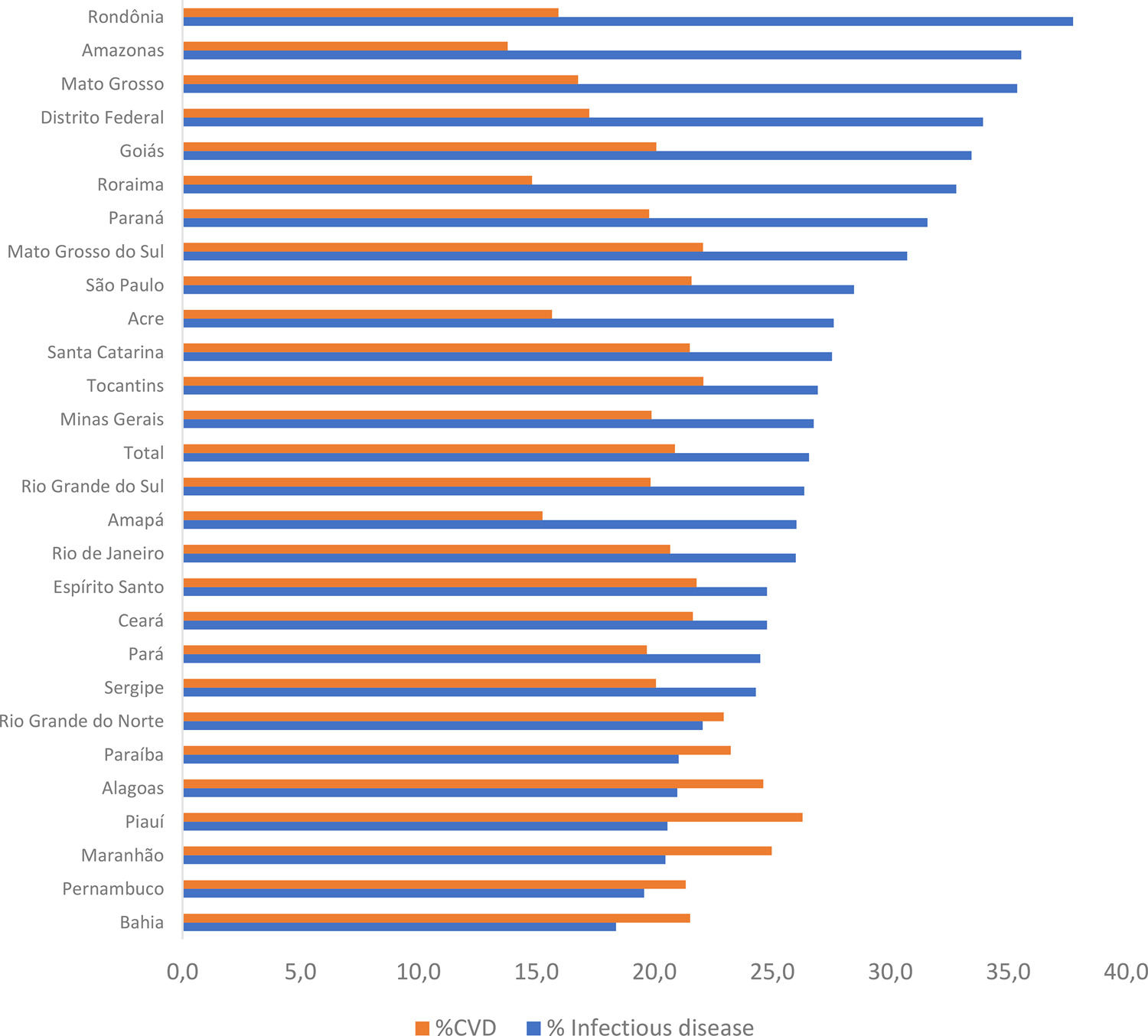
Cardiovascular Statistics – Brazil 2026

Gláucia Maria Moraes de Oliveira et al. Luisa Campos Caldeira Brant Carisi Anne Polanczyk Deborah Carvalho Malta … Andreia Biolo Bruno Ramos Nascimento Maria de Fatima Marinho de Souza Andrea Rocha De Lorenzo Antonio Aurélio de Paiva Fagundes Júnior Arthur Gus Manfro Beatriz D. Schaan Christina Grüne de Souza e Silva Fábio Morato de Castilho Fernando Henpin Yue Cesena Gabriel Porto Soares Gesner Francisco Xavier Junior Jose Augusto Soares Barreto Filho Lucia Campos Pellanda Luciana Nicolau Aranha Luis Eduardo Paim Rohde Luiz Guilherme Passaglia Marcelo Martins Pinto-Filho M. Julia Machline-Carrion Marcio Sommer Bittencourt Octavio M. Pontes Neto Paolo Blanco Villela Paulo Henrique Godoy Renato Azeredo Teixeira Ricardo Stein Roney Orismar Sampaio Thais Rocha Salim Thomas A. Gaziano Pablo Perel Gregory A. Roth Antonio Luiz Pinho Ribeiro

Cardiovascular Statistics – Brazil was established to provide a periodic, comprehensive, evidence-based assessment of cardiovascular health in Brazil and to support clinical practice, research, public health planning, and policy development. Developed under the auspices of the Brazilian Society of Cardiology, the initiative brings together a multidisciplinary network of investigators from academic institutions across the country who are responsible for reviewing, analyzing, and interpreting data from multiple complementary sources. Since its first edition in 2020, Cardiovascular Statistics – Brazil has sought not only to quantify the burden of cardiovascular diseases (CVDs) and their risk factors but also to identify temporal trends, regional disparities, gaps in care, and emerging challenges for the Brazilian health system. The project is modeled on international initiatives such as the American Heart Association’s Heart Disease and Stroke Statistics Update, while incorporating data sources and perspectives that reflect Brazil’s unique epidemiological, demographic, and healthcare characteristics.

(…)

  • Atrial Fibrillation
  • Atrial flutter
  • Brazil
  • Cardiomyopathies
  • Cardiovascular Diseases
  • Cerebrovascular Disorders
  • chronic renal insufficiency
  • Congenital Heart Defects
  • Coronary Disease
  • Diabetes Mellitus
  • Diet
  • Dyslipidemias
  • Exercise
  • Heart Failure
  • Heart Valve Diseases
  • Hypertension
  • Obesity
  • Overweight
  • Statistics
  • Tobacco Use Disorder
Read Full Article
Creative Commons Attribution (CC BY) Creative Commons license
07/10/2026 DOI: 10.36660/abc.20260832i Views 1
ABCHF
Viewpoint

The Adipokine Hypothesis: Does it Play a Major or Minor Role in HFpEF?

Luís Beck-da-Silva et al. Flávio D. Fuchs

We read with great interest the paper “The Adipokine Hypothesis of Heart Failure With a Preserved Ejection Fraction”.

The adipokine hypothesis explores biological mechanisms beyond the well-known risk factors for heart failure with preserved ejection fraction (HFpEF). The article presents a well-supported hypothesis based on data from bench research, animal studies, preclinical findings, and epidemiological evidence. The biological plausibility of the hypothesis is sound. However, certain considerations merit further discussion regarding the interpretation of HFpEF risk factors.

[…]

  • Diastolic Heart Failure
  • Heart Failure
  • Hypertension
  • Obesity
Read Full Article
Creative Commons Attribution (CC BY) Creative Commons license
29/09/2026 DOI: 10.36660/abchf.2060037i Views 2
IJCS
Letter to the Editor

Metabolic Challenges in The Semiarid Region: A Critical Analysis of Nutritional Transition and Early Cardiovascular Risk

Leonardo Alves Santos et al. Álvaro Eduardo Santos Oliveira Beatriz Vitória Carvalho Lordêlo Luis Antonio Cavalcanti Matias … Rodrigo Mendes Pedro Pereira Tenório

Dear Editor,

We had the opportunity to review the article entitled “Assessment of Overweight/Obesity and Elevation of Blood Pressure in Schools in Rural and Urban Area in the Backlands of Bahia.” We would like to congratulate the authors for their initiative in investigating a pediatric cohort in a region marked by social and climatic vulnerability, frequently underrepresented in scientific literature, as well as for highlighting the relevance of addressing childhood obesity and arterial hypertension – two major cardiovascular risk factors with direct impact on future morbidity and mortality.

[…]

  • Heart Disease Risk Factors
  • Hypertension
  • Metabolism
  • Obesity
Read Full Article
Creative Commons Attribution (CC BY) Creative Commons license
21/08/2026 DOI: 10.36660/ijcs.20260059 Views 2
IJCS
Editorial

Gender differences in Body Adiposity and Endothelial Dysfunction in Overweight and Obese Individuals with Suboptimal Vitamin D Status

Marcelo Chiara Bertolami

The article by Faria et al. explored anthropometric indices, vascular and autonomic function in obese and overweight individuals with suboptimal vitamin D status.

Obesity has a significant impact on human health through multiple mechanisms. One potential mechanism involves the association between obesity and low vitamin D levels. The authors used advanced techniques to evaluate endothelial function in an overweight and obese population with suboptimal vitamin D levels.

[…]

  • Adiposity
  • Gender Identity
  • Obesity
  • Overweight
Read Full Article
Creative Commons Attribution (CC BY) Creative Commons license
07/08/2026 DOI: 10.36660/ijcs.20260094
Treatment with Capsinoids Promotes Impaired Cardiomyocyte Contractility in Obesity without Positively Modulating Metabolic Parameters
ABC
Original Article

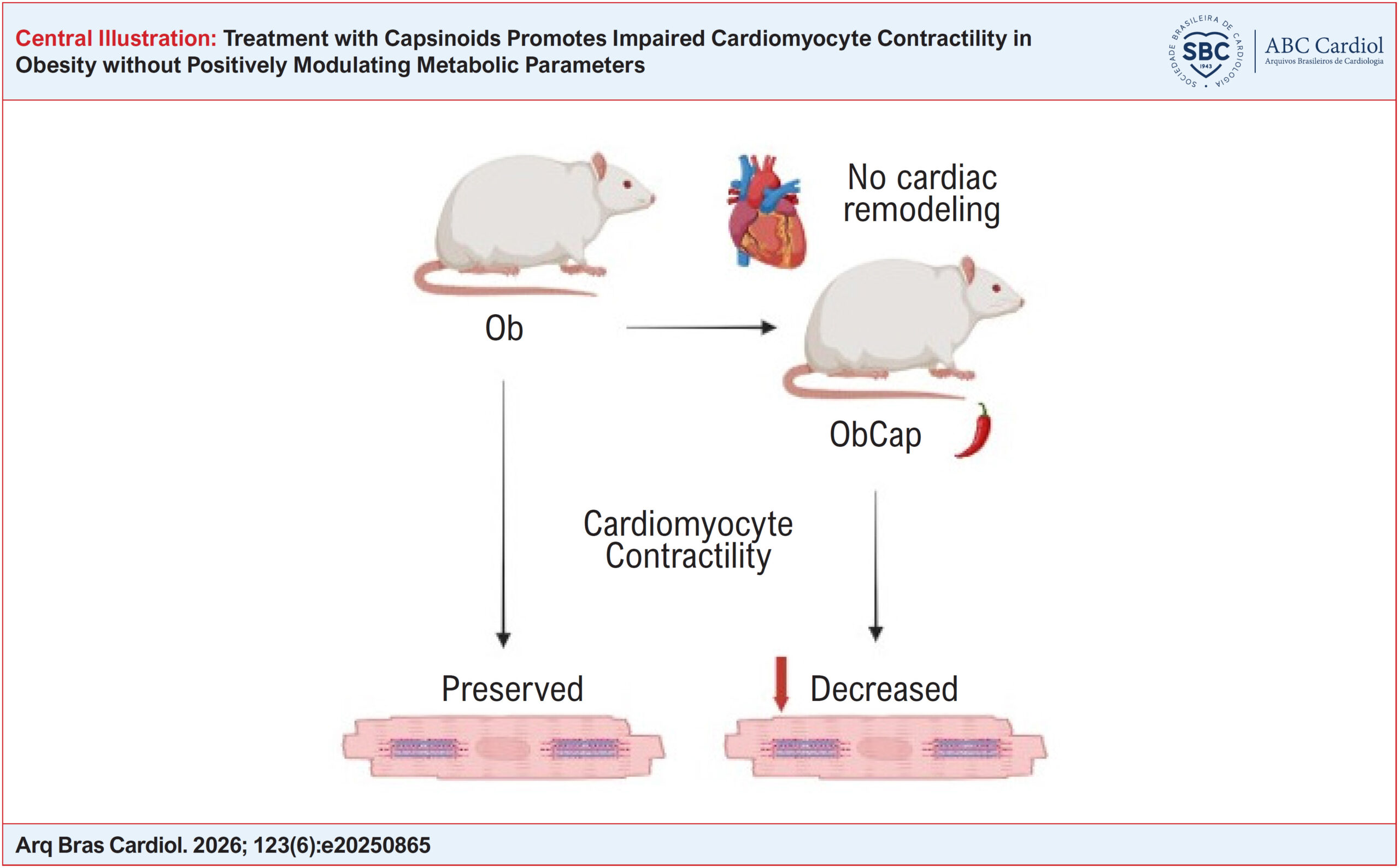
Treatment with Capsinoids Promotes Impaired Cardiomyocyte Contractility in Obesity without Positively Modulating Metabolic Parameters

Kiany Miranda et al. Késsia Cristina Carvalho Santos Janete Corrêa Cardoso Lucas Furtado Domingos … Fabiane Merigueti Nunes Luisa Martins Simmer Daniel Sesana Silva Marina Politi Okoshi Danilo Sales Bocalini Ana Paula Lima-Leopoldo André Soares Leopoldo

Abstract

Background:

Capsinoids (Cap) are bioactive compounds with thermogenic properties capable of promoting physiological changes and aiding digestion, potentially influencing fat loss in obesity. However, their effects on cardiac tissue remain unclear.

Objective:

This study investigated the effects of chronic Cap administration on cardiac contractility and morphology in obese (Ob) rats induced by a saturated high-fat diet (HFD).

Methods:

Male Wistar rats were assigned to standard diet (SD) or HFD groups for 19 weeks. After this period, animals were redistributed into Control (C), Obese (Ob), and Obese supplemented with capsinoids (ObCap). The ObCap group received Cap via orogastric gavage (10 mg/kg). Nutritional assessments, dietary profile, histological analyses, comorbidities, and cardiac evaluations were performed. A significance level of 5% was adopted for all tests.

Results:

Fat deposits and total adiposity were higher in Ob animals compared with the C group, with no differences between Ob and ObCap. Metabolic, hormonal, and lipid alterations were observed between Ob and ObCap. No differences in cardiac morphometry were detected among groups. The ObCap group exhibited reduced fractional shortening compared with Ob. Regarding shortening time, Ob animals showed a decrease compared with C, whereas ObCap showed an increase compared with Ob.

Conclusion:

Treatment with Cap did not prevent excessive fat accumulation nor improve metabolic parameters in obesity. Moreover, it impaired cardiomyocyte contractility.

  • Heart
  • High-Fat Diet
  • Obesity
Read Full Article
Creative Commons Attribution (CC BY) Creative Commons license
27/07/2026 DOI: 10.36660/abc.20250865i
IJCS
Original Article

Body Adiposity and Endothelial Dysfunction Assessed By Laser Speckle Contrast Imaging in Obese and Overweight Individuals With Suboptimal Vitamin D Status: Sex Differences

Adriana de Castro Carvalho Faria et al. Michelle Rabello Cunha Caroline Lyra Moreira Samanta Souza Mattos … Clara Castro Carvalho Oliveira Faria Leticia Castro Carvalho Oliveira Faria Wille Oigman Mario Fritsch Neves

Abstract

Background:

Low Vitamin D levels are prevalent in obesity and have been linked to adverse cardiovascular and metabolic outcomes.

Objective:

This cross-sectional study aimed to assess anthropometric indices, vascular, autonomic function in obese and overweight individuals with suboptimal vitamin D status.

Methods:

Participants of both sexes, 40-69 years, Body Mass Index (BMI) 25-40 kg/m², were divided into two groups above and under the median vitamin D level (22,6 ng/ml), named Suboptimal (SUB-D) and Lower (LOW-D) vitamin D, respectively. Vascular function was assessed using central hemodynamic parameters (Mobil-O-Graph®), endothelial function (microvascular reactivity; Laser Speckle Contrast Image system), and heart rate variability (Polar® monitor). The groups were compared using an unpaired Student’s t-test, and p-values < 0,05 were considered statistically significant.

Results:

The groups (n = 90) had similar ages and blood pressures. The LOW-D group had a higher body fat percentage (%BF; 29 ± 4 vs. 33 ± 3, p = 0.020) and glycated Hb (5.4 ± 0.4 vs. 5.8 ± 0.4, p = 0.029) in males. Females had higher Visceral Adiposity Index (VAI; 2.33 ± 0.86 vs. 3.32 ± 1.86, p = 0.008) and Lipid Accumulation Products (LAP; 39 ± 23 vs. 63 ± 40, p = 0.005). The LOW-D group showed a lower percentage increase in the area under the curve in post-occlusive reactive hyperemia (%AUC-PORH) (70 ± 30 vs. 55 ± 32%, p = 0.034). Females showed inverse correlation of vitamin D levels and VAI and LAP, and a positive correlation with %AUC-PORH.

Conclusions:

In obese and overweight individuals, lower vitamin D content was associated with higher levels of body adiposity in males. Furthermore, impaired metabolic functions and endothelial dysfunction were related to lower vitamin D levels in females, as in the central illustration.

  • Adiposity
  • Obesity
  • Vitamin D
  • Women
Read Full Article
Creative Commons Attribution (CC BY) Creative Commons license
12/06/2026 DOI: 10.36660/ijcs.20250173 Views 1
Figure 1
IJCS
Guideline

iCARDIO Alliance Global Implementation Guidelines for the Management of Obesity 2025

Stefan D. Anker et al. Linong Ji Tammy Kindel Andrew J.S. Coats … Dike Ojji Adriana Puente Barragán Peter Rossing Shelley Zieroth Shaaf Ahmad Shariq Usman Geeta Appannah Alison L. Bailey Ahmed Bennis Andrea Brandao Javed Butler Melanie J Davies Lubomira Fabryova Yuan-Lin Guo Hidetaka Itoh Uday M. Jadhav Carel W. Le Roux Fausto J. Pinto Julio Rosenstock Banshi Saboo Hani Sabbour Mangesh Tiwaskar Karol E. Watson Kwang Wei Tham Fernando Stuardo Wyss Walter P. Abhayaratna William T. Abraham Wael Al Mahmeed Alessia Argirò John J. Atherton Danielle Belardo Raquel Campuzano Nandini Chatterjee Vijay Chopra Marc-André Cornier Sarah Davies Clemencia de Rueda Panadero Anastase Dzudie Ty J. Gluckman Muhammad Shahzeb Khan Kamlesh Khunti Yuri Lopatin Zhiyi Ma Okechukwu S. Ogah Abraham Oomman Emilio S. Peralta Lopez Ping Li Paul Poirier Julie Redfern Giuseppe M.C. Rosano Donna Ryan Amit Saraf Sameh Shaheen Subodh Verma Stephan von Haehling Yuhui Zhang Martha Gulati Naveed Sattar Jose Luis Zamorano

Abstract

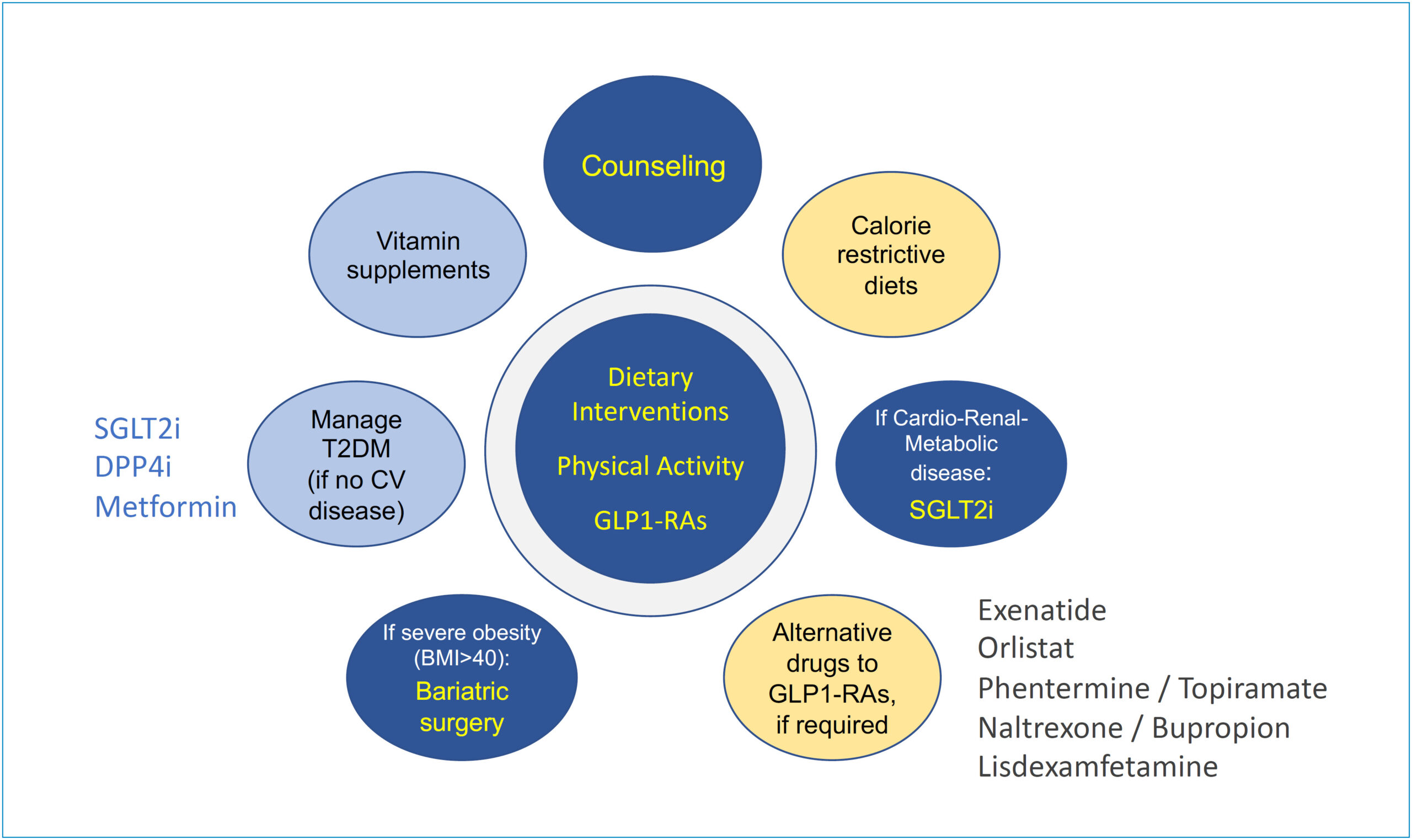
There are a number of guidelines on how to manage obesity, but inconsistencies in healthcare access, varying infrastructure, resource constraints and diverse local practices restrict their global applicability. This underscores the need for universal recommendations that address the unique challenges faced by patients and healthcare providers worldwide. Our Global Guidelines emphasize the incorporation of novel therapies, while integrating standards of care with the most up-to-date evidence to enable clinicians to optimize obesity management. Context-specific recommendations tailored to individual patient needs are highlighted, providing a thorough evaluation of the risks, benefits, and overall value of each therapy, aiming to establish a standard of care that improves patient outcomes and reduces the burden of hospitalization in this susceptible population. These Global Guidelines provide evidence-based recommendations that represent a group consensus considering the many other published guidelines that have reviewed many of the issues discussed here, but they also make new recommendations where new evidence has recently emerged, and – most importantly – also provide recommendations on several issues where resource limitations may put constraints on the care provided to patients living with obesity. Such “economic adjustment” recommendations aim to guide situations when “Resources are somewhat limited” or when “Resources are severely limited”. Hence, this document presents a comprehensive update to obesity management guidelines, thereby aiming to provide a unified strategy for the pharmacological, non-pharmacological, and invasive management of this significant global health challenge that is applicable to the needs of healthcare around the globe.

  • CARDIO Alliance
  • cardiometabolic disease
  • Guidelines
  • Obesity
Read Full Article
Creative Commons Attribution (CC BY) Creative Commons license
01/06/2026 DOI: 10.36660/ijcs.20260056 Views 1
Figure 1
IJCS
Editorial

The Relationship Between Obesity and the Risk of Systemic Arterial Hypertension in Children and Adolescents: Lessons Learned

John Jairo Araujo

One out of five children around the world is overweight or obese. This is shown in the meta-analysis published by Zhang X et al. in 2024, which included 2,033 studies from 154 different countries or regions. Although the prevalence of childhood obesity varies between global regions, it is evident that its incidence is growing significantly. According to the latest United Nations International Children’s Emergency Fund (UNICEF) and World Bank estimates, 33.6% of children and adolescents 5-19 years old are affected by overweight or obesity, as are 8% of children under the age of five. Recently, Muyulema SL et al. published the results of global childhood overweight and obesity trends over the last 20 years. In this study, they analyzed 194 countries around the world, showing that the global prevalence of childhood overweight and obesity increased from 5.4% to 5.7% between 2000 and 2022.

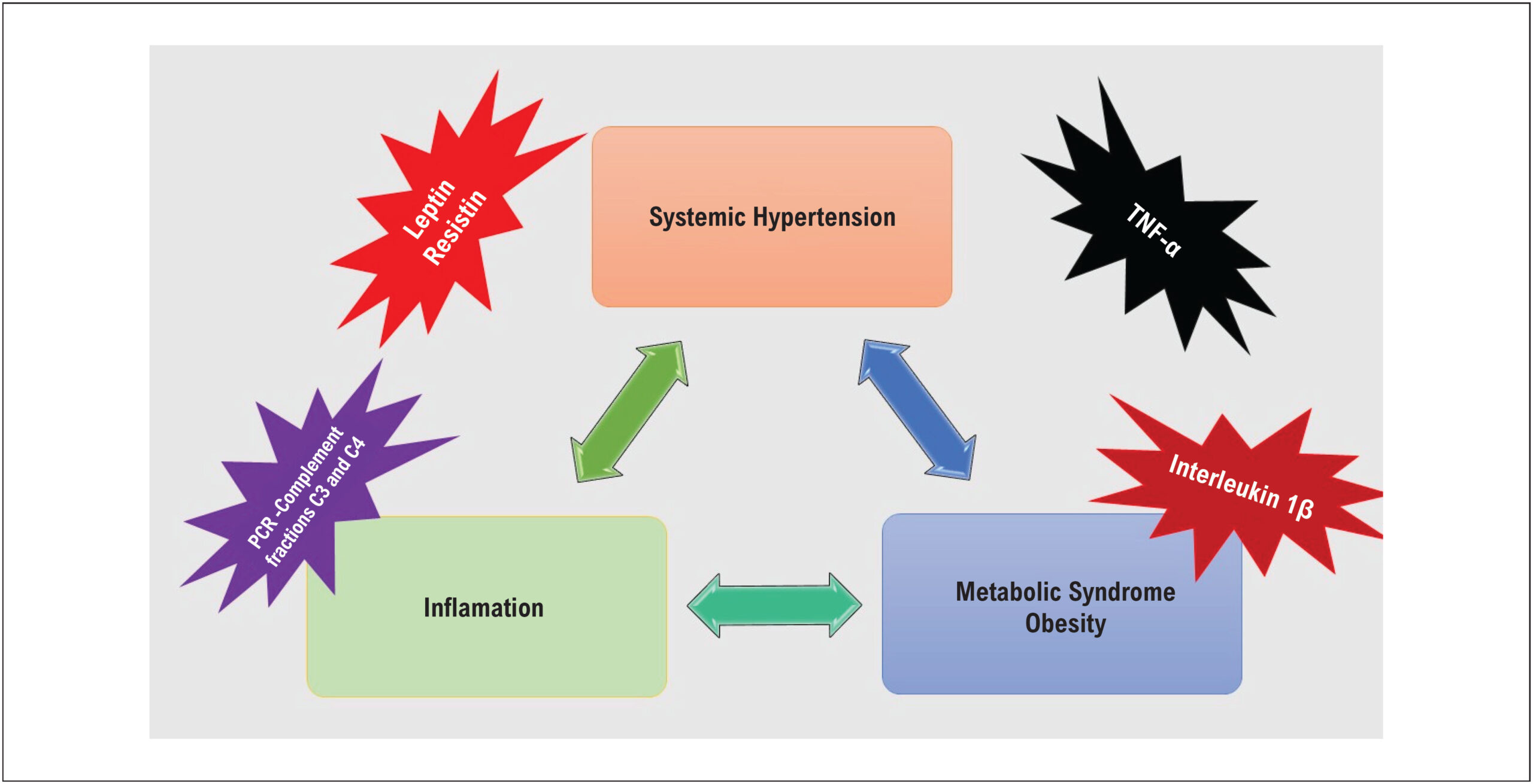
Inflammation, Metabolic Syndrome and Systemic Hypertension: “a dangerous and synergistic triad”: Metabolic Syndrome (MS) has been well defined in adults, and includes various conditions like Systemic Arterial Hypertension (SAH), elevated fasting blood sugar levels (greater than 100 mg/dl) or type 2 diabetes mellitus, low HDL cholesterol levels (less than 40 mg/dl in men or 50 mg/dl in women), high triglyceride concentrations (greater than 150 mg/dl), and a waist circumference greater than 101 cm (men) or 90 cm (women). It is not clearly defined in children, due to the imprecision of the various factors that compose it and the changes in different stages of life. However, risk factors like obesity, increased waist circumference (increased visceral fat), insulin resistance, and, in certain cases, lipid profile abnormalities, are compatible with MS, especially in children over the age of 10.

[…]

  • Child
  • Hypertension
  • Obesity
  • Risk Factors
Read Full Article
Creative Commons Attribution (CC BY) Creative Commons license
27/04/2026 DOI: 10.36660/ijcs.20250178 Views 2
ABC
Editorial

Beyond the Scale: Obesity as a Structural Driver of Refractory Hypertension

Eduardo Tibirica

Arterial hypertension remains a global challenge, yet its extreme phenotypes—Resistant Hypertension (RAH) and Refractory (RefH) Hypertension—represent the forefront of cardiovascular risk. While RAH involves uncontrolled blood pressure (BP) despite three drug classes, RefH is its most severe manifestation, defined by failure with five or more drugs. In Brazil, RAH is highly prevalent; the ELSA-Brasil study reported an 11% prevalence among treated patients, with higher risks for older, Black, and obese individuals.

Expanding this landscape, Costa et al. provide a timely analysis of a high-complexity cohort. Their findings reveal a striking correlation between body mass index and pharmacological burden (r = 0.45; p < 0.01). This "dose-response" relationship suggests that in obese individuals, the "ceiling effect" of conventional therapy is reached sooner, necessitating an escalation of polypharmacy. Furthermore, by focusing on a cohort predominantly composed of Afro-descendant women over 60 years of age, the authors address a critical gap regarding vulnerable groups often underrepresented in clinical research.

[…]

  • Arterial Pressure
  • Hypertension
  • Obesity
Read Full Article
Creative Commons Attribution (CC BY) Creative Commons license
20/04/2026 DOI: 10.36660/abc.20260139i
Impact of Obesity on Patients with Resistant and Refractory Arterial Hypertension: A Cross-Sectional Study
ABC
Original Article

Impact of Obesity on Patients with Resistant and Refractory Arterial Hypertension: A Cross-Sectional Study

Bárbara Victória Peixoto Lima da Costa et al. Fábio Bulhões Cristiano Macedo Alex Cleber Improta-Caria Roque Aras Júnior

Abstract

Background

Obesity is a serious public health problem and is associated with activation of the sympathetic nervous system and the development of resistant or refractory hypertension.

Objectives

To estimate the prevalence of obesity in the population of outpatients with refractory or resistant hypertension and its relationship between body mass index and hypertension severity.

Methods

A cross-sectional study was carried out in a referral outpatient clinic for severe arterial hypertension. Patients with resistant and refractory hypertension were included. Information related to demographic characteristics, anthropometric measurements, systolic and diastolic blood pressure, comorbidities, alcoholism, smoking, and sedentary lifestyle was collected. Continuous variables were compared using the Student’s t-test or Mann Whitney, and categorical variables were compared using the chi-square test. Pearson’s correlation test was used for anthropometric measurements and blood pressure. A significance level of p < 0.05 was adopted.

Results

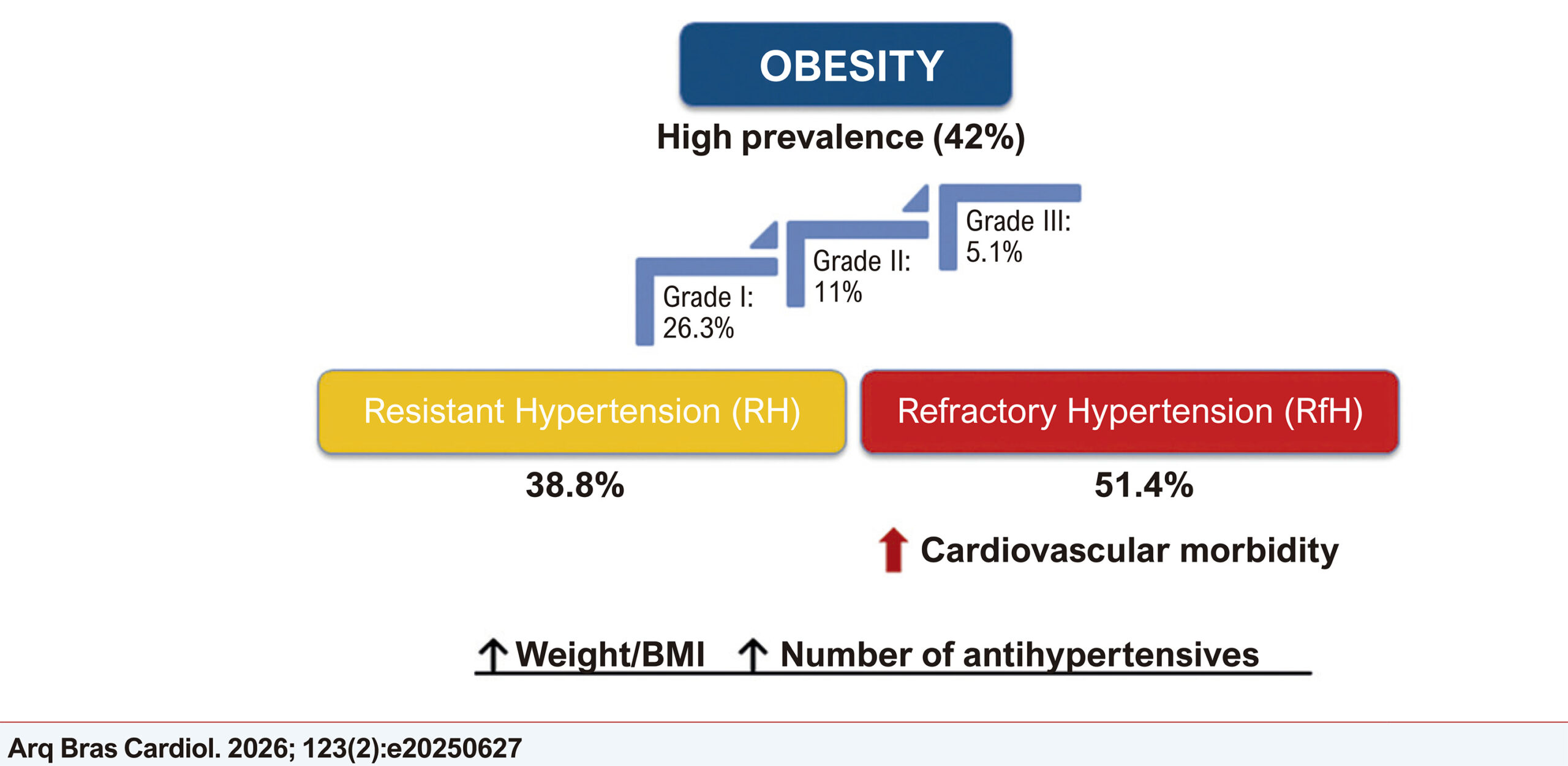
A total of 138 patients were collected, of whom 74.7% had resistant hypertension and 25.3% had refractory hypertension. There was a predominance of females and black ethnicities, representing 79.7% (p=0.307) and 91.3% (p=0.315), respectively. The mean age was 64.7± 10.8 (p=0.566). Obesity (BMI ≥ 30 kg/m2) was present in 42% (p=0.379), being higher in refractory hypertension (51.4% vs. 38.8%). Higher body mass index values were directly associated with an increased number of antihypertensive medications required for blood pressure control (r = 0.45; p < 0.01). Additionally, 74.6% of the patients had dyslipidemia (p=0.400).

Conclusion

In our population of patients with severe hypertension, obesity was prevalent and significantly influenced both the presentation and the control of blood pressure levels.

  • Hypertension
  • Obesity
  • Prevalence
Read Full Article
Creative Commons Attribution (CC BY) Creative Commons license
26/02/2026 DOI: 10.36660/abc.20250627i Views 1
Central Illustration
ABCHF
Review Article

Heart Failure with Preserved Ejection Fraction Beyond the Myocardium: Systemic Inflammation as the Central Axis of Pathophysiology

Mylena Miki Lopes Ideta et al. Camile Miyuki Ishikawa Nihei Paulo Henrique Brites Moreira Ana Karyn Ehrenfried de Freitas

Abstract

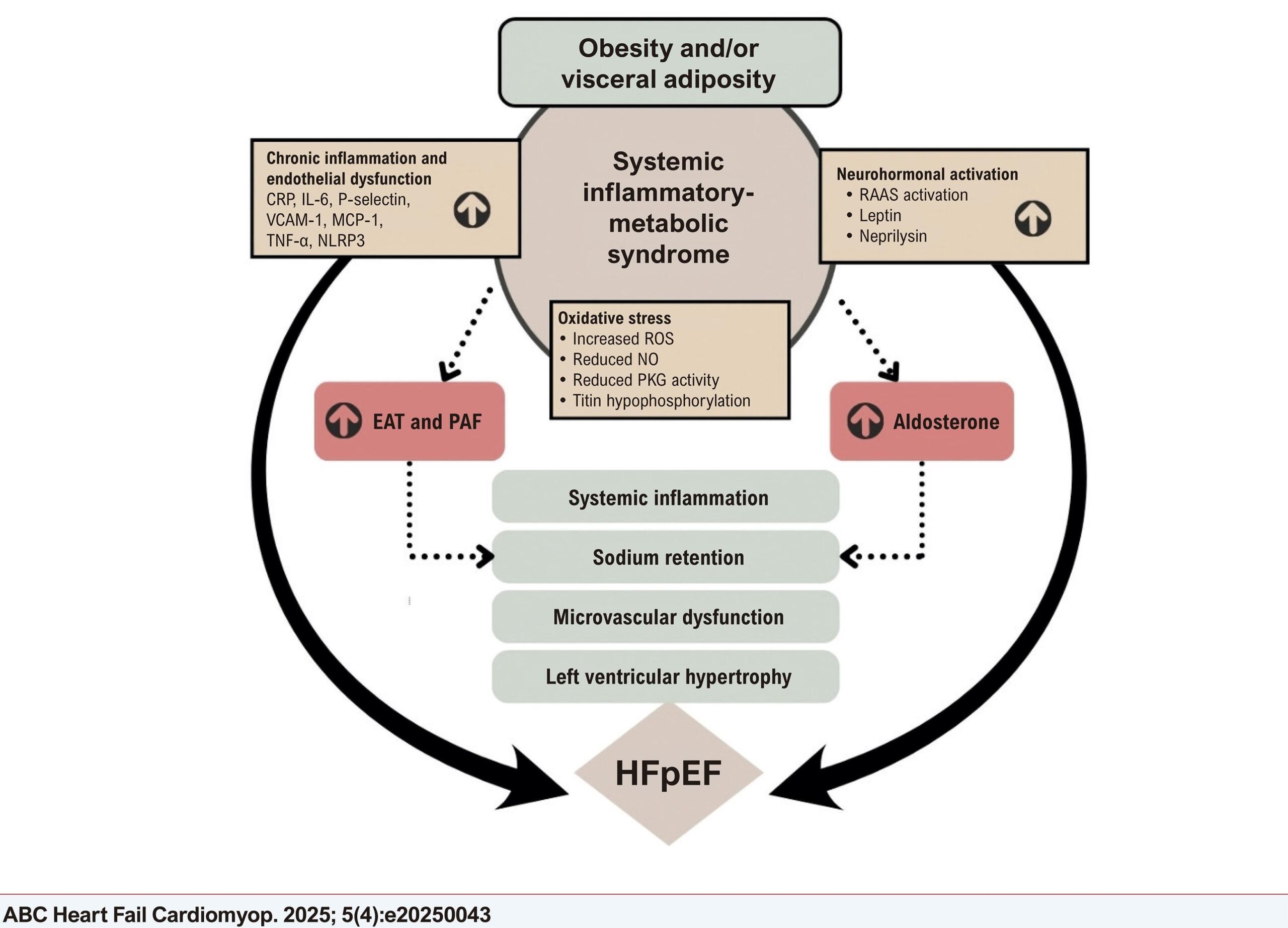
Heart failure (HF) with preserved ejection fraction (HFpEF) is currently the most prevalent subtype of HF, particularly among older women with multiple metabolic comorbidities. Despite recent therapeutic advances, its pathophysiology remains incompletely understood and markedly heterogeneous. In 2025, Milton Packer proposed a new conceptual framework: the adipokine hypothesis. According to this hypothesis, HFpEF is a condition primarily driven by the expansion and dysfunction of visceral adipose tissue. This remodeling of adipose tissue results in altered secretion of adipokines, which are biologically active molecules with endocrine and paracrine effects on the heart, kidneys, and vascular system. The imbalance between cardioprotective and proinflammatory adipokines promotes systemic inflammation, sodium retention, volume overload, myocardial hypertrophy, and fibrosis, ultimately leading to diastolic dysfunction and exercise intolerance, which are hallmarks of HFpEF. This article reviews the main pathophysiological foundations of this hypothesis as well as the experimental and clinical evidence and therapeutic implications, which propose a unifying paradigm for understanding and managing HFpEF.

  • Adipokines
  • Adiponectin
  • Heart Failure
  • Inflammation
  • Obesity
Read Full Article
Creative Commons Attribution (CC BY) Creative Commons license
31/12/2025 DOI: 10.36660/abchf.20250043i Views 1
Influence of Obesity on the Safety and Efficacy of Antithrombotic Therapy: A Systematic Review and Meta-Analysis
ABC
Original Article

Influence of Obesity on the Safety and Efficacy of Antithrombotic Therapy: A Systematic Review and Meta-Analysis

Beatriz Rocha Darzé et al. Queila Oliveira Borges Mateus S. Viana Eduardo Sahade Darzé Luiz Eduardo Fonteles Ritt

Abstract

Background

Obese individuals have been historically underrepresented in clinical trials. Considering their association with a higher risk of venous thromboembolism (VTE) and acute coronary syndrome (ACS), it is necessary to establish a more suitable anticoagulation regimen for this group of patients.

Objectives

To evaluate the influence of obesity on the safety and efficacy of antithrombotic therapy in patients with ACS or VTE.

Methods

This is a systematic review and meta-analysis that used 5 main international databases. We selected clinical trials or observational studies that compared the occurrence of clinical outcomes (mortality or bleeding) between obese and non-obese patients using parenteral anticoagulants for the treatment of ACS or VTE. P value < 0.05 was used for all analyses.

Results

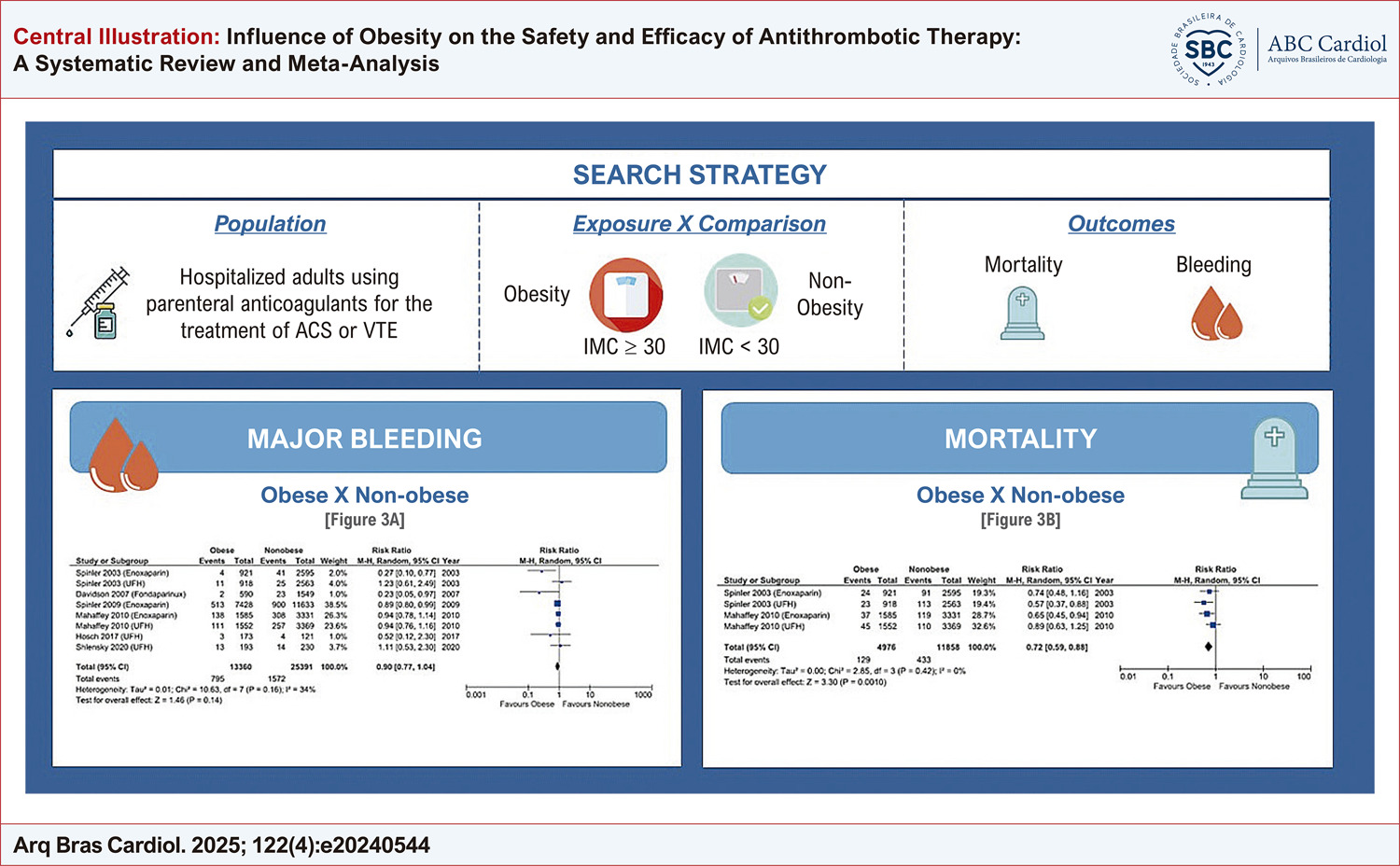
Six articles, with a total of 40,939 patients, were eligible, being 3 randomized clinical trials and 3 retrospective cohorts. Of the patients, 87.7% had ACS. The incidence of major bleeding was similar between groups (relative risk [RR]: 0.90, 95% confidence interval [CI]: 0.77 to 1.04, p = 0.14). The outcome remained comparable when studies were analyzed separately by anticoagulant: enoxaparin (RR: 0.87, 95% CI, 0.70 to 1.08, p = 0.21) or unfractionated heparin (RR: 0.96, 95% CI, 0.79 to 1.17, p = 0.67). The mortality rate was measured in only 2 studies, both in ACS, and it was lower in obese patients (RR: 0.71, 95% CI 0.59 to 0.87, p = 0.0007).

Conclusion

In patients treated for VTE or ACS, rates of bleeding were comparable between obese and non-obese patients, regardless of the anticoagulant used. The lower mortality rate observed in obese patients may represent the effect of unaccounted confounding.

  • Acute coronary syndrome
  • Fibrinolytic Agents
  • Obesity
  • Prognosis
  • Venous Thromboembolism
Read Full Article
Creative Commons Attribution (CC BY) Creative Commons license
26/05/2025 DOI: 10.36660/abc.20240544i Views 1
Figure 1
IJCS
Original Article

Assessment of Overweight/Obesity and Elevation of Blood Pressure in Schools in Rural and Urban Area in the Backlands of Bahia

Andressa Lopes et al. Ana Luisa Vaz Valois Hanna Louise de Almeida Lisboa Alexvon Nunes Gomes … Renata Lago Camilla Almeida Menezes Ana Marice Teixeira Ladeia

Abstract

Background:

Childhood and adolescent obesity has been increasing, particularly in countries with greater social vulnerability. Given this context, assessing schoolchildren from Bahia’s backlands — a region known for its low-income population — is essential.

Objective:

To assess the frequency of overweight and obesity and their association with high blood pressure (BP) in children from urban and rural areas in four municipalities in the backlands of Bahia.

Methods:

This study is part of a project evaluating the impact of a school meal intervention on the health of children and adolescents in Bahia’s backlands. A subset of children aged five to ten from public schools in both rural and urban areas of four cities in Bahia’s backlands was selected through random and proportional sampling. The participants had their weight, height, waist circumference and BP measured using standardized protocols. The Body Mass Index (BMI) was expressed as a z-score to determine nutritional status. The Student’s t-test and Chi-square tests were used, with 5% statistical significance.

Results:

The sample consisted of 461 students, 264 (57.3%) from urban areas and 238 (51.6%) males. The prevalence of overweight was 27.9%, and that of increased waist circumference was 7.4%. High BP or hypertension had a prevalence of 8%. A significant difference (p = 0.049) was observed between rural and urban areas in relation to the increased waist circumference.

Conclusion:

The research revealed a high frequency of overweight, increased waist circumference and systemic BP in students, mainly those from urban areas.

  • Child
  • Hypertension
  • Obesity
Read Full Article
Creative Commons Attribution (CC BY) Creative Commons license
11/04/2025 DOI: 10.36660/ijcs.20240136 Views 1
Body Profile Impact on Blood Pressure and Lipid Profile in Rural and Urban Schoolchildren of a Brazilian Semiarid Region in The State of Bahia
IJCS
Original Article

Body Profile Impact on Blood Pressure and Lipid Profile in Rural and Urban Schoolchildren of a Brazilian Semiarid Region in The State of Bahia

Lívia Assis Mendonça et al. Alexvon Gomes Renata Lago Camilla Menezes … Sérgio Roberto Lemos de Carvalho Ana Marice Teixeira Ladeia

Abstract

Background:

The present study describes the prevalence of excess weight, obesity, and high blood pressure (BP) in children from a Brazilian semiarid region (Sertão) and its association with lipid profile and area of residence.

Objective:

To describe the prevalence of excess weight, obesity, and high BP in children, as well as the association between these variables, lipid profile, and area of residence.

Methods:

Thi work is a cross-sectional study conducted with schoolchildren, aged 6 to 10 years, from three municipalities in the countryside of Brazil. Weight, height, waist circumference (WC), and BP, together with the analysis of lipid markers, were assessed. Z-scores (BMI-Age) were used to determine the anthropometric classification. Total cholesterol (TC), high-density lipoprotein (HDL), low-density lipoprotein (LDL), and triglycerides (TG) were meseared with eight hours of fasting. The Student’s t-test and the Mann-Whitney test were aplied. Perceptual maps were constructed through multiple correspondence analysis. A p-value<0.05 was considered statistically significant. The Institution's Ethics Committee approved this study (CAAE: 35038914.3.0000.5544).

Results:

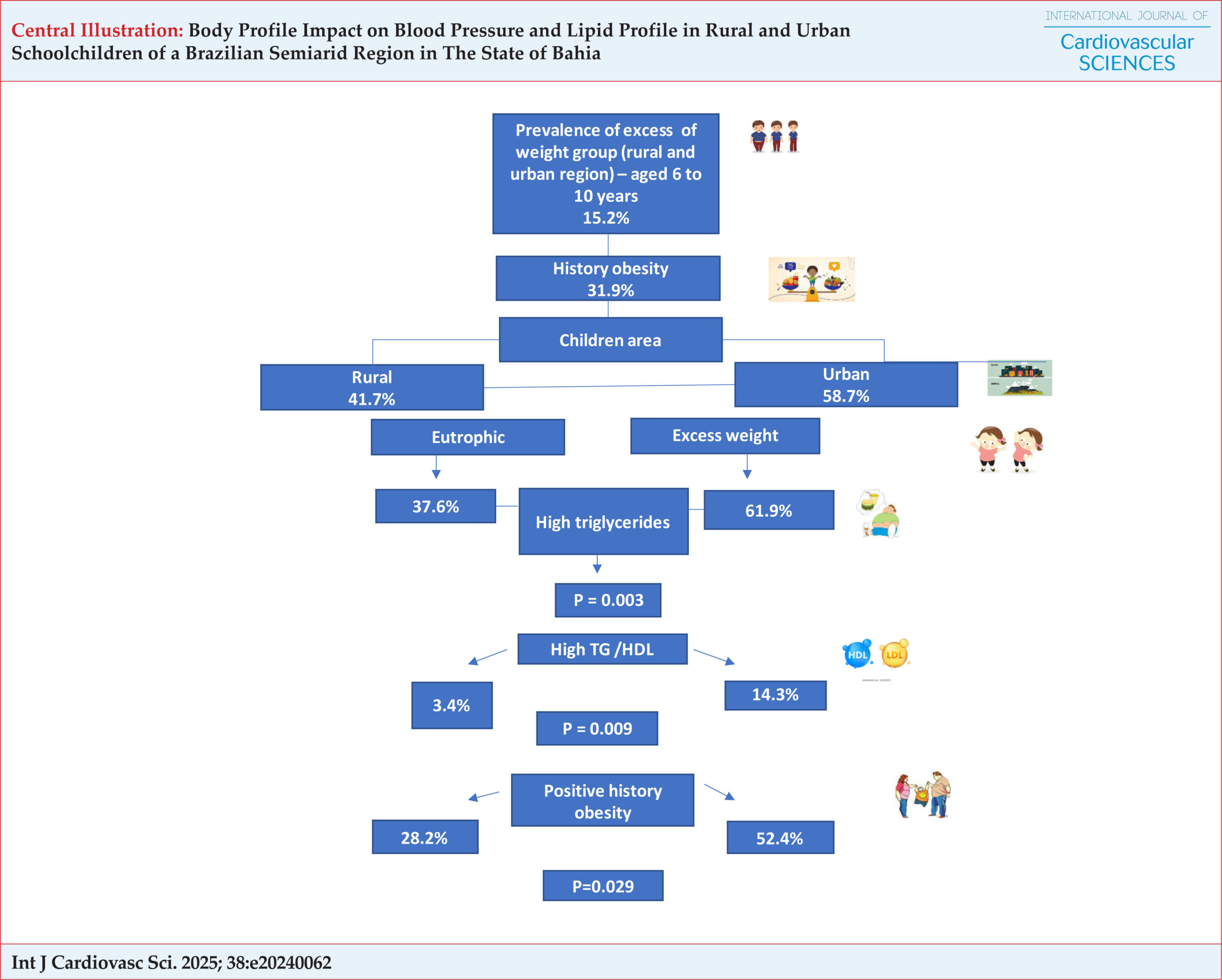
Among 138 schoolchildren in this study, 76 (55.07%) were female and 81 (58.7%) were from urban areas. Twenty-one children (15.2%) were overweight, and 44 (31.9%) had a family history of obesity. Children from rural areas showed higher levels of TC (p = 0.041) and systolic BP (p = 0.028). The correlation between excess weight and a family history of obesity (p = 0.029), TG (p = 0.003), TG/HDL ratio (p = 0.009), systolic BP (p = 0.000), and WC (p = 0.000) were observed. In the correspondence analysis, the eutrophic group presented expected values for lipid variables.

Conclusion:

Overweight indicators are associated with cardiometabolic risk factors, reinforcing the need for early monitoring.

  • Child
  • Dyslipidemias
  • Hypertension
  • Obesity
Read Full Article
Creative Commons Attribution (CC BY) Creative Commons license
24/03/2025 DOI: 10.36660/ijcs.20240062 Views 1
ABC
Editorial

Aiming for Health Equity: Why Does Diversity in Brazilian Medical Research Matter?

Christina Grüne de Souza e Silva

Over 35 years ago, Brazilian citizens earned their constitutional right to health. Guided by the fundamental principles of universality and equity, health access and actions provided by the Brazilian Unified Health System (Sistema Único de Saúde – SUS) are ever-since responsibilities of the State and should be, therefore, guaranteed by economic and social policies.

Since its creation, SUS has experienced significant improvements in disease prevention and health promotion. A dramatic drop in infant mortality and a significant increase in life expectancy are a couple of major outcomes that reflect the expansion in Brazilians’ population access to comprehensive health care. However, disparities across geographical regions and income groups persist, especially for vulnerable populations such as the quilombolas.

[…]

  • Diabetes Mellitus
  • Health Policy
  • Obesity
  • Risk Factors
  • Social Vulnerability
Read Full Article
Creative Commons Attribution (CC BY) Creative Commons license
13/01/2025 DOI: 10.36660/abc.20240731i Views 2
Cluster of Physical Inactivity and Other Risk Factors and Diabesity in Quilombol Adults
ABC
Original Article

Cluster of Physical Inactivity and Other Risk Factors and Diabesity in Quilombol Adults

Poliana Pereira Santana et al. Clarice Alves dos Santos Ricardo Franklin de Freitas Mussi Hector Luiz Rodrigues Munaro Saulo Vasconcelos Rocha

ABSTRACT

Background:

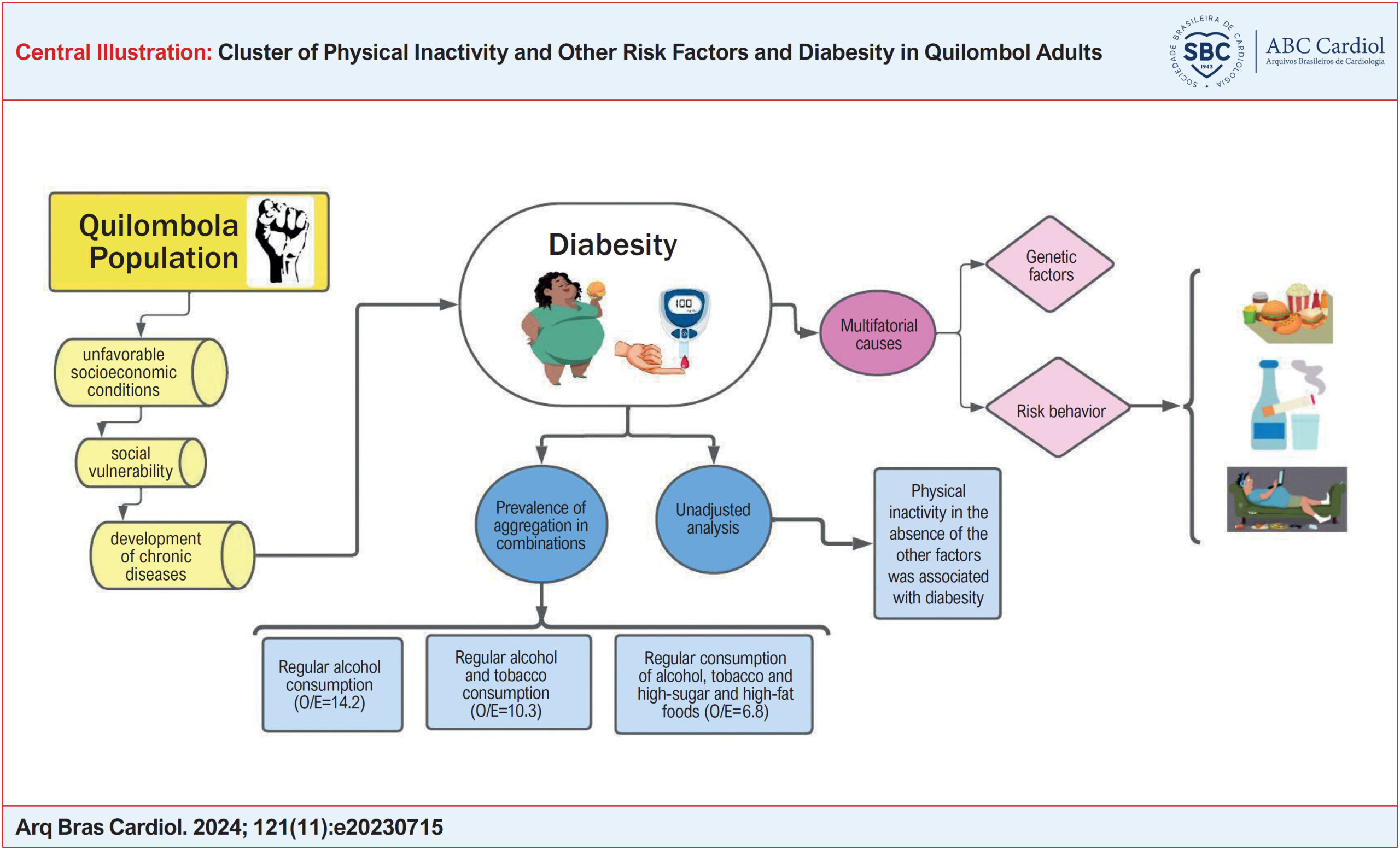
Diabesity is a condition characterized by the coexistence of type 02 diabetes and obesity. The causes are multifactorial, resulting from a complex interaction of genetic and behavioral factors. Among the behavioral factors, there are physical inactivity, inadequate eating habits and excessive consumption of alcohol and tobacco.

Objective:

To investigate the clustering of physical inactivity and other risk factors and the association between risk factor combinations and the presence of diabesity in quilombola adults.

Methods:

Cross-sectional study involving a sample of 332 middle-aged and older adults (≥ 50 years) selected among participants in the “Epidemiological Profile of Quilombolas in Bahia” study. Data were collected by interview and anthropometric assessment. Descriptive statistics, cluster analysis, and multinomial logistic regression procedures were used for data analysis.

Results:

The highest prevalence of clustering was identified for the combinations of regular alcohol consumption in the absence of the other factors (O/E=14.2; 95%CI 0.87-1.15), followed by regular alcohol and tobacco consumption (O/E=10.3; 95%CI 0.64-0.95) and regular consumption of alcohol, tobacco and foods high in sugar and fat (O/E=6.8; 95%CI= 1.31-1.75). Unadjusted analysis revealed an association between physical inactivity in the absence of the other factors (OR=0.82; 95%CI 0.78-0.86) and diabesity.

Conclusion:

Alcohol consumption was the most prevalent factor among the largest combinations evaluated. Furthermore, the presence of physical inactivity without the other behaviors analyzed and the absence of all behaviors were associated with diabesity only in unadjusted analysis.

  • Diabetes Mellitus
  • Obesity
  • Quilombola Communities
  • Risk Taking
Read Full Article
Creative Commons Attribution (CC BY) Creative Commons license
06/12/2024 DOI: 10.36660/abc.20230715i Views 1
Fondaparinux versus Enoxaparin in the Treatment of Obese Patients with Acute Coronary Syndrome
ABC
Original Article

Fondaparinux versus Enoxaparin in the Treatment of Obese Patients with Acute Coronary Syndrome

Beatriz Rocha Darzé et al. Carolina Costa da Silva Souza Queila Borges de Oliveira João Victor Santos Pereira Ramos … Mateus S. Viana Eduardo Sahade Darzé Luiz Eduardo Fonteles Ritt

Abstract

Background:

Fondaparinux is an effective and safe anticoagulant in the treatment of acute coronary syndromes (ACS). However, due to the low representation of obese individuals in clinical trials, the effects of applying the results of this drug to this population remain uncertain.

Objectives:

To compare Fondaparinux to Enoxaparin in the treatment of obese patients with ACS.

Methods:

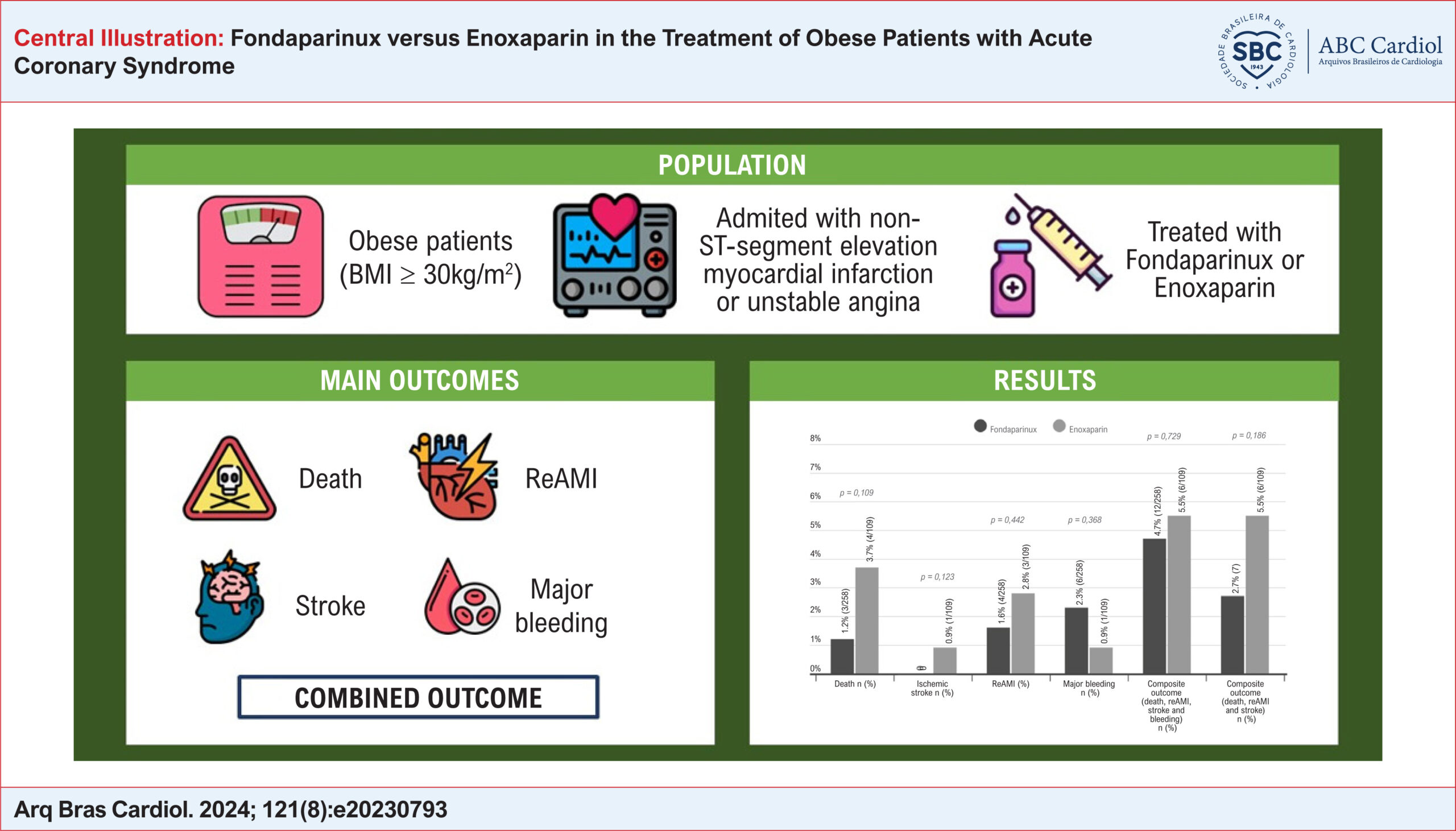
This is a retrospective cohort study, including obese individuals (BMI ≥ 30 Kg/m2) admitted with non-ST-segment elevation myocardial infarction (NSTEMI) or unstable angina (UA) and treated with Fondaparinux or Enoxaparin between 2010 and 2020. The Fondaparinux and Enoxaparin groups were compared for their clinical and laboratory characteristics using chi-square and Mann-Whitney tests, as appropriate. The incidence of primary outcomes (death, reinfarction, stroke, major bleeding) was compared between groups. P-value < 0.05 was considered significant for all analyses.

Results:

A total of 367 obese patients with NSTEMI or UA were included, of whom 258 used Fondaparinux and 109 used Enoxaparin. Mean age was 64 ± 12 years, and 52.9% were male. The prevalence of diabetes, hypertension, dyslipidemia, prior coronary artery disease, prior stroke, and implementation of invasive strategy was similar between groups. The incidence of the primary outcome was 4.7% in the Fondaparinux group and 5.5% in the Enoxaparin group (p = 0.729). There was no difference between groups when analyzing the components of the primary outcome separately.

Conclusion:

In a sample of obese patients with NSTEMI or UA, there was no difference in the occurrence of the composite outcome (death, stroke, reinfarction, major bleeding) between patients who used Fondaparinux or Enoxaparin.

  • Acute coronary syndrome
  • Anticoagulants
  • Enoxaparin
  • Fondaparinux
  • Obesity
Read Full Article
Creative Commons Attribution (CC BY) Creative Commons license
23/09/2024 DOI: 10.36660/abc.20230793i Views 2
ABC
Editorial

Use of Anticoagulant Therapy in Obese People: What is the Evidence for the Ideal Dose?

Marcia M. Noya-Rabelo et al. Eduardo Novaes Renata Moll-Bernardes Olga Souza

Data from the World Health Organization indicate that more than 1 billion people in the world, one in eight, are obese. In Brazil, according to research by the Chronic Disease Risk Factor Surveillance by Telephone Survey (VIGITEC), one in every four people in the adult population is obese. Obesity is defined by a body mass index (BMI) greater than or equal to 30 kg/m2, while morbid obesity is considered for those with a BMI above 40 kg/m2. Epidemiological data also points to a high prevalence of coronary disease in the Brazilian population, estimated at 5 to 8%.

Although obesity rates have reached epidemic proportions worldwide, the medical literature lacks precise data on changes in the pharmacokinetics and pharmacodynamics of different medications in patients with obesity. Possible physiological differences between obese and non-obese individuals may result in differences in the distribution and elimination of drugs, important factors to be considered when determining the appropriate dosage for pharmacological treatment. The ideal dose of most anticoagulants for obese people has not been established, including low molecular weight heparin and pentasaccharides. In this way, the therapeutic management of patients with acute coronary syndrome (ACS) and obesity is challenging and, consequently, can influence the efficacy and safety of anticoagulants.

[…]

  • Acute coronary syndrome
  • Anticoagulants
  • Enoxaparin
  • Fondaparinux
  • Obesity
Read Full Article
Creative Commons Attribution (CC BY) Creative Commons license
23/09/2024 DOI: 10.36660/abc.20240496i
Chart 1-1
ABC
Special Article

Cardiovascular Statistics – Brazil 2023

Gláucia Maria Moraes de Oliveira et al. Luisa Campos Caldeira Brant Carisi Anne Polanczyk Deborah Carvalho Malta … Andreia Biolo Bruno Ramos Nascimento Maria de Fatima Marinho de Souza Andrea Rocha De Lorenzo Antonio Aurélio de Paiva Fagundes Júnior Beatriz D. Schaan Christina Grüne de Souza e Silva Fábio Morato de Castilho Fernando Henpin Yue Cesena Gabriel Porto Soares Gesner Francisco Xavier Junior Jose Augusto Soares Barreto Filho Luiz Guilherme Passaglia Marcelo Martins Pinto Filho M. Julia Machline-Carrion Marcio Sommer Bittencourt Octavio M. Pontes Neto Paolo Blanco Villela Renato Azeredo Teixeira Ricardo Stein Roney Orismar Sampaio Thomaz A. Gaziano Pablo Perel Gregory A. Roth Antonio Luiz Pinho Ribeiro

ABOUT THESE STATISTICS

The publication Cardiovascular Statistics – Brazil aims to provide an annual compilation of data and research on the epidemiology of CVDs in Brazil. The report integrates official statistics from the Brazilian Ministry of Health and other governmental entities alongside data from the GBD project, coordinated by the IHME at the University of Washington. Additionally, it incorporates data derived from various sources and scientific studies, including cohorts and registries, that relate to CVDs and their associated risk factors. This publication is intended for a wide range of individuals, including researchers, clinicians, patients, healthcare policymakers, media professionals, the general public, and other interested parties seeking extensive national data about heart disease and stroke. Volunteer researchers from various Brazilian universities and research institutions carry out the project. The group is led by a five-member steering committee (ALPR, CAP, DCM, GMMO, and LCCB). The Brazilian Society of Cardiology fully supports this initiative, and the project receives collaborative support from the GBD Brazil Networkand an International Committee (GAR, PP, and TAG) from both the IHME/University of Washington (GAR) and the World Heart Federation (PP and TAG).

[…]

  • Atrial Fibrillation
  • Atrial flutter
  • Brazil
  • Cardiomyopathies
  • Cardiovascular Diseases
  • Cerebrovascular Disorders
  • Coronary Disease
  • Diabetes Mellitus
  • Dyslipidemias
  • Exercise
  • Heart Failure
  • Heart Valve Diseases
  • Hypertension
  • Obesity
  • Overweight
  • Statistics
  • Tobacco Use Disorder
Read Full Article
Creative Commons Attribution (CC BY) Creative Commons license
17/06/2024 DOI: 10.36660/abc.20240079 Views 1
ABC
Editorial

Relationship of Testosterone with Obesity and Arterial Hypertension

Rui Póvoa

Testosterone is the main male hormone and is responsible for the development of sexual organs, having importance in libido and sexual function in general. Although controversial, it is believed that this hormone gradually decreases with age, and some studies point to obesity as the main factor in hormonal reduction.,

Hormonal differences in men and women may explain some peculiarities in the behavior of certain diseases, especially cardiovascular (CV) diseases. Testosterone reaches a peak at 30 years of age, with a decline of 1-2% annually. In the elderly, the risk of developing testosterone deficiency (TD) increases significantly, which can lead to several symptoms. However, the effect of this hormonal reduction on CV risk is not yet well defined, as various comorbidities arise at later stages of life, especially obesity. In this mix of risk factors, it is somewhat difficult to typify the importance of DT objectively. Some studies, such as that by Laughlin et al., showed that DT increased CV risk. Others, such as “The Longitudinal Cardiovascular Health Study” and that of Collet et al. found no relationship.

[…]

  • Hypertension
  • Obesity
  • Testosterone
Read Full Article
Creative Commons Attribution (CC BY) Creative Commons license
06/05/2024 DOI: 10.36660/abc.20240138i Views 1
Correlation of Diagnostic Components of Metabolic Syndrome with Electrocardiographic and Echocardiographic Alterations in Patients with Obesity
IJCS
Original Article

Correlation of Diagnostic Components of Metabolic Syndrome with Electrocardiographic and Echocardiographic Alterations in Patients with Obesity

Alan Souza da Luz et al. João Gabriel da Costa Ramos Carolina Heitmann Mares Azevedo Ribeiro Roberto Márcio de Oliveira Júnior … Antônio Carmo da Costa Siqueira Neto Ralf Cardoso Mudesto Oliveira

Abstract

Introduction:

Metabolic syndrome (MS) and obesity are risk factors for cardiovascular diseases (CVD). However, the development of cardiovascular pathologies in obese individuals without MS is being investigated.

Objective:

To investigate whether there are similar electrocardiographic (ECG) and echocardiographic changes in individuals with obesity with and without MS.

Methodology:

A retrospective, descriptive cross-sectional study was carried out with obese patients at a university hospital in Belém, Pará, Brazil. Anthropometric, laboratory, ECG and echocardiographic data were evaluated in both populations. The chi-square test was used to describe the relationship between variables among groups; hypothesis tests with p < 0.05 were considered statistically significant values.

Results:

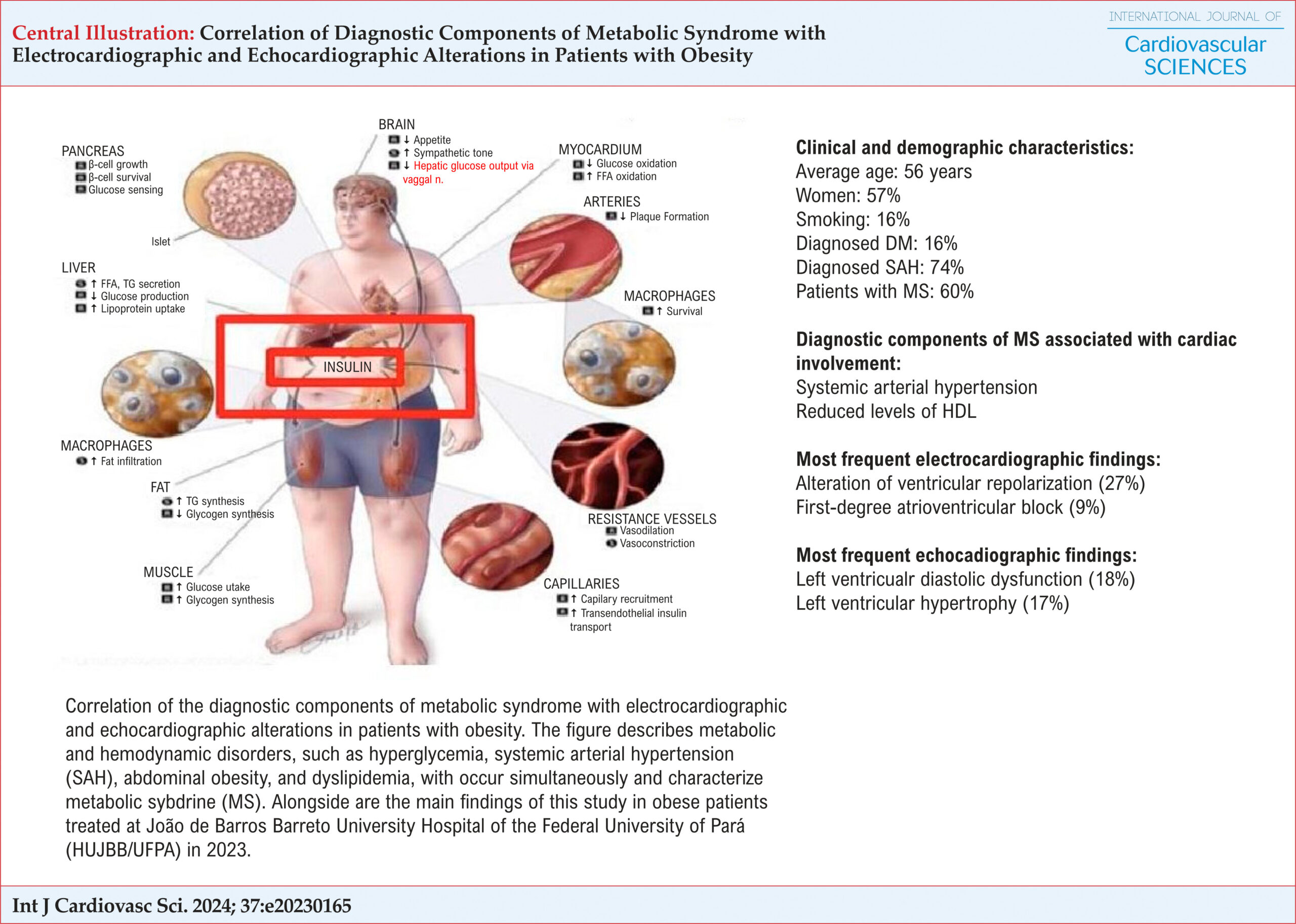
The study evaluated 100 individuals with obesity, 60 of whom had MS. The average age was 54 years, and the female sex was prevalent. Systolic blood pressure, HDL, and waist circumference were altered in both groups. Systemic arterial hypertension and low HDL demonstrated 4.27 times and 3.32 times greater likelihood of presenting changes in the ECG and echocardiogram for both groups. On the ECG, diffuse changes in ventricular repolarization were observed in both groups. On echocardiography, left ventricular diastolic dysfunction and left ventricular hypertrophy were present in both populations studied.

Conclusion:

Obese individuals without MS present a similar risk, requiring adequate attention to their cardiac health.

  • Cardiovascular Diseases
  • Metabolic Syndrome
  • Obesity
  • Risk Factors
Read Full Article
Creative Commons Attribution (CC BY) Creative Commons license
26/04/2024 DOI: 10.36660/ijcs.20230165 Views 2
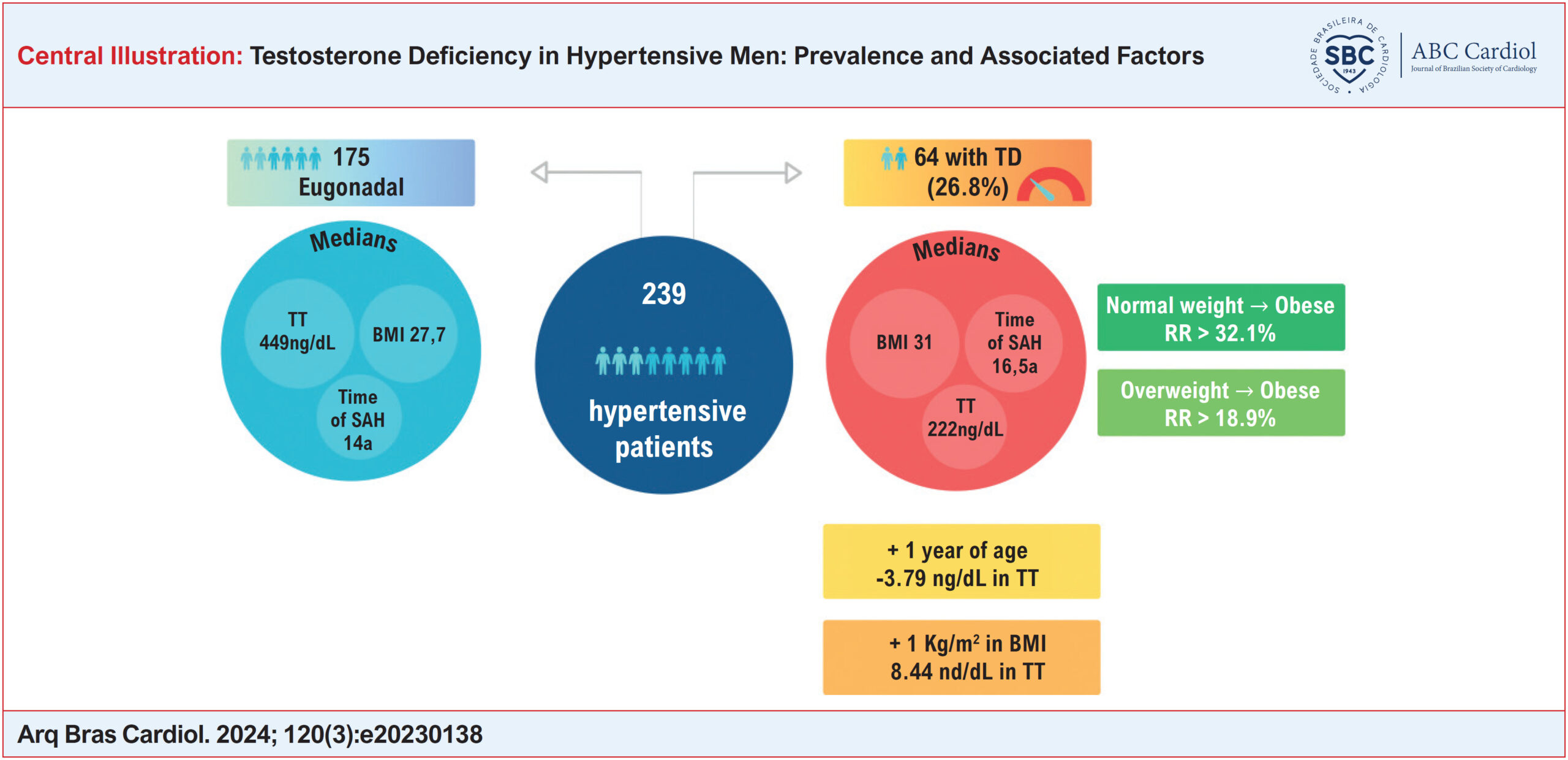
Testosterone Deficiency in Hypertensive Men: Prevalence and Associated Factors
ABC
Original Article

Testosterone Deficiency in Hypertensive Men: Prevalence and Associated Factors

Leandra Analia Freitas Negretto et al. Nelson Rassi Leonardo Ribeiro Soares Amanda Bueno Carvalho Saraiva … Maria Emília Figueiredo Teixeira Luciana da Ressurreição Santos Ana Luiza Lima Souza Paulo Cesar B. Veiga Jardim Weimar Kunz Sebba Barroso de Souza Thiago de Souza Veiga Jardim

Abstract

Background:

Testosterone deficiency (TD) is a prevalent condition in our midst and still very neglected. Arterial hypertension (AH) is one of the possible associated factors.

Objectives:

To determine the prevalence of TD in a hypertensive male population and the factors associated with its occurrence, such as age, time since hypertension diagnosis, number of antihypertensive classes, body mass index (BMI), diabetes, dyslipidemia, chronic kidney disease (CKD), positive symptoms of TD (positive ADAM questionnaire) and use of spironolactone.

Methods:

Cross-sectional study with administration of the ADAM questionnaire, assessment of biochemical, clinical, and anthropometric data. Patients were stratified into DT and normal testosterone groups. Categorical variables were compared using the chi-squared test and continuous variables using the Mann-Witney test; variables with significance (p<0,05) were analyzed by multivariable linear regression.

Results:

The prevalence of TD was 26.36%. There was an association between TD and body mass index (BMI) (p=0.0007) but there was no association with age (p=0.0520), time of hypertension diagnosis (p=0.1418), number of classes of antihypertensive drugs (p=0.732), diabetes (p=0.1112); dyslipidemia (p=0.3888); CKD (p=0.3321); use of spironolactone (p=0.3546) or positive ADAM questionnaire (p=0.2483).

Conclusions:

TD was highly prevalent and positively associated with BMI. Total testosterone (TT) declined by 8.44ng/dL with a one unit increase in BMI and dropped by 3.79ng/dL with a one-year increase in age.

  • Hypertension
  • Hypogonadism
  • Obesity
  • Testosterone
Read Full Article
Creative Commons Attribution (CC BY) Creative Commons license
05/04/2024 DOI: 10.36660/abc.20230138i Views 1
ABC
Editorial

Morning Surge Blood Pressure and Obesity in Hypertensive Patients

Sayuri Inuzuka et al. Weimar Kunz Sebba Barroso

Obesity and hypertension are two of the most common diseases and they are usually interrelated. The five main modifiable risk factors – dyslipidemia, diabetes, hypertension, obesity and smoking are estimated to account for more than 50% of cardiovascular mortality. There are many hypertensive patients with subclinical lesions in the early stages of the disease that are not generally identified by the traditional assessment model., The presence of left ventricular hypertrophy (LVH) determines general risk stratification and is a major therapeutic target in hypertension. Both obesity and hypertension may have additive and interactive effects on LVH. In order to identify early cardiovascular system damage, more specific complementary exams for biomarker analysis have been recommended by hypertension guidelines.–

Different methods to determine morning surge blood pressure (MSBP) elevation have been proposed,– but there are still several gaps regarding the establishment of cutoffs and clinical meaningful recommendations. Some studies showed that MSBP have an adverse prognostic value, independently of 24h mean blood pressure. However, due to the difficulty in standardizing the calculation of this parameter, the incremental predictive value is still unclear and its low reproducibility indicate that, according to guidelines, it should not be used in clinical practice.,

[…]

  • Ambulatory Blood Pressure Monitoring
  • Hypertension
  • Obesity
Read Full Article
Creative Commons Attribution (CC BY) Creative Commons license
03/11/2023 DOI: 10.36660/abc.20230608 Views 1
ABC
Letter to the Editor

Death by Covid-19 in Individuals with Hypertension and Overweight: Can Diabetes be a Risk Factor?

Nayara Ribeiro Máximo de Almeida et al. Brenda dos Santos Teixeira Breno Rennan de Souza Carvalho Egidio Bezerra da Silva Neto … Maria Alice Leitão Araújo de Melo Júlio Martinez Santos Johnnatas Mikael Lopes

In China, December 2019, the SARS-CoV-2 virus infection rapidly evolved into a pandemic. The S protein from the SARS-CoV-2 virus binds to angiotensin-converting enzyme 2 (ACE 2), which is part of the renin-angiotensin-aldosterone system (RAAS), to serve as a cell-entry receptor. These receptors are widely expressed in the heart, intestines, kidneys, pancreas and respiratory tract.

The RAAS is a signaling pathway that acts as a homeostatic regulator of vascular function, responsible for blood pressure control. ACE 2 is an enzyme that catalyzes the cleavage of Angiotensin II into Angiotensin (1-7), Angiotensin I into Angiotensin (1-9) and participates in the hydrolysis of other peptides. Thus, Angiotensin-Converting Enzyme Inhibitors (ACE) and Angiotensin 2 AT1 Receptor Blockers (ARB) have been extensively studied due to the possibility of increasing ACE expression 2.

[…]

  • Cohort Studies
  • COVID-19
  • Death
  • Hypertension
  • Obesity
Read Full Article
Creative Commons Attribution (CC BY) Creative Commons license
30/10/2023 DOI: 10.36660/abc.20230332 Views 1

Could not load more articles. Please try again.

How to cite this article

EndNote RIS

Electronic Document Format (Vancouver)

Oliveira GMM, Brant LCC, Polanczyk CA, Malta DC, Biolo A, Nascimento BR, Souza MFM, et al. Cardiovascular Statistics – Brazil 2026. Arquivos Brasileiros de Cardiologia 2026;:e20260832.

Electronic Document Format (ABNT)

Oliveira, Gláucia Maria Moraes de; Brant, Luisa Campos Caldeira; Polanczyk, Carisi Anne; Malta, Deborah Carvalho; Biolo, Andreia; Nascimento, Bruno Ramos; Souza, Maria de Fatima Marinho de; Lorenzo, Andrea Rocha De; Fagundes Júnior, Antonio Aurélio de Paiva; Manfro, Arthur Gus; Schaan, Beatriz D.; Silva, Christina Grüne de Souza e; Castilho, Fábio Morato de; Cesena, Fernando Henpin Yue; Soares, Gabriel Porto; Xavier Junior, Gesner Francisco; Barreto Filho, Jose Augusto Soares; Pellanda, Lucia Campos; Aranha, Luciana Nicolau; Rohde, Luis Eduardo Paim; Passaglia, Luiz Guilherme; Pinto-Filho, Marcelo Martins; Machline-Carrion, M. Julia; Bittencourt, Marcio Sommer; Pontes Neto, Octavio M.; Villela, Paolo Blanco; Godoy, Paulo Henrique; Teixeira, Renato Azeredo; Stein, Ricardo; Sampaio, Roney Orismar; Salim, Thais Rocha; Gaziano, Thomas A.; Perel, Pablo; Roth, Gregory A.; Ribeiro, Antonio Luiz Pinho. Cardiovascular Statistics – Brazil 2026. Arquivos Brasileiros de Cardiologia, e20260832, Oct. 2026.

Electronic Document Format (APA)

Oliveira, G. M. M. , Brant, L. C. C., Polanczyk, C. A., Malta, D. C., Biolo, A., Nascimento, B. R., Souza, M. F. M. , Lorenzo, A. R. D., Fagundes Júnior, A. A. P., Manfro, A. G., Schaan, B. D., Silva, C. G. S. , Castilho, F. M. , Cesena, F. H. Y., Soares, G. P., Xavier Junior, G. F., Barreto Filho, J. A. S., Pellanda, L. C., Aranha, L. N., Rohde, L. E. P., Passaglia, L. G., Pinto-Filho, M. M., Machline-Carrion, M. J., Bittencourt, M. S., Pontes Neto, O. M., Villela, P. B., Godoy, P. H., Teixeira, R. A., Stein, R., Sampaio, R. O., Salim, T. R., Gaziano, T. A., Perel, P., Roth, G. A., & Ribeiro, A. L. P. (2026). Cardiovascular Statistics – Brazil 2026. Arquivos Brasileiros de Cardiologia, , e20260832.

Electronic Document Format (ISO)

Oliveira, Gláucia Maria Moraes de and Brant, Luisa Campos Caldeira and Polanczyk, Carisi Anne and Malta, Deborah Carvalho and Biolo, Andreia and Nascimento, Bruno Ramos and Souza, Maria de Fatima Marinho de and Lorenzo, Andrea Rocha De and Fagundes Júnior, Antonio Aurélio de Paiva and Manfro, Arthur Gus and Schaan, Beatriz D. and Silva, Christina Grüne de Souza e and Castilho, Fábio Morato de and Cesena, Fernando Henpin Yue and Soares, Gabriel Porto and Xavier Junior, Gesner Francisco and Barreto Filho, Jose Augusto Soares and Pellanda, Lucia Campos and Aranha, Luciana Nicolau and Rohde, Luis Eduardo Paim and Passaglia, Luiz Guilherme and Pinto-Filho, Marcelo Martins and Machline-Carrion, M. Julia and Bittencourt, Marcio Sommer and Pontes Neto, Octavio M. and Villela, Paolo Blanco and Godoy, Paulo Henrique and Teixeira, Renato Azeredo and Stein, Ricardo and Sampaio, Roney Orismar and Salim, Thais Rocha and Gaziano, Thomas A. and Perel, Pablo and Roth, Gregory A. and Ribeiro, Antonio Luiz Pinho. Cardiovascular Statistics – Brazil 2026. Arquivos Brasileiros de Cardiologia [online]. 2026, [cited 2026-10-14], e20260832. Available from: <https://journals.cardiol.br/en/article/cardiovascular-statistics-brazil-2026/>. ISSN 0066-782X

EndNote RIS

Electronic Document Format (Vancouver)

Beck-da-Silva L, Fuchs FD. The Adipokine Hypothesis: Does it Play a Major or Minor Role in HFpEF?. ABC Heart Fail Cardiomyop 2026;6:e20260037.

Electronic Document Format (ABNT)

Beck-da-Silva, Luís; Fuchs, Flávio D.. The Adipokine Hypothesis: Does it Play a Major or Minor Role in HFpEF?. ABC Heart Fail Cardiomyop, v. 6, e20260037, Sep. 2026.

Electronic Document Format (APA)

Beck-da-Silva, L., & Fuchs, F. D. (2026). The Adipokine Hypothesis: Does it Play a Major or Minor Role in HFpEF?. ABC Heart Fail Cardiomyop, 6, e20260037.

Electronic Document Format (ISO)

Beck-da-Silva, Luís and Fuchs, Flávio D.. The Adipokine Hypothesis: Does it Play a Major or Minor Role in HFpEF?. ABC Heart Fail Cardiomyop [online]. 2026, vol. 6, [cited 2026-10-14], e20260037. Available from: <https://journals.cardiol.br/en/article/the-adipokine-hypothesis-does-it-play-a-major-or-minor-role-in-hfpef/>

EndNote RIS

Electronic Document Format (Vancouver)

Santos LA, Oliveira ES, Lordêlo BVC, Matias LAC, Mendes R, Tenório PP. Metabolic Challenges in The Semiarid Region: A Critical Analysis of Nutritional Transition and Early Cardiovascular Risk. International Journal of Cardiovascular Sciences 2026;39:e20260059.

Electronic Document Format (ABNT)

Santos, Leonardo Alves; Oliveira, Álvaro Eduardo Santos; Lordêlo, Beatriz Vitória Carvalho; Matias, Luis Antonio Cavalcanti; Mendes, Rodrigo; Tenório, Pedro Pereira. Metabolic Challenges in The Semiarid Region: A Critical Analysis of Nutritional Transition and Early Cardiovascular Risk. International Journal of Cardiovascular Sciences, v. 39, e20260059, Aug. 2026.

Electronic Document Format (APA)

Santos, L. A., Oliveira, E. S., Lordêlo, B. V. C., Matias, L. A. C., Mendes, R., & Tenório, P. P. (2026). Metabolic Challenges in The Semiarid Region: A Critical Analysis of Nutritional Transition and Early Cardiovascular Risk. International Journal of Cardiovascular Sciences, 39, e20260059.

Electronic Document Format (ISO)

Santos, Leonardo Alves and Oliveira, Álvaro Eduardo Santos and Lordêlo, Beatriz Vitória Carvalho and Matias, Luis Antonio Cavalcanti and Mendes, Rodrigo and Tenório, Pedro Pereira. Metabolic Challenges in The Semiarid Region: A Critical Analysis of Nutritional Transition and Early Cardiovascular Risk. International Journal of Cardiovascular Sciences [online]. 2026, vol. 39, [cited 2026-10-14], e20260059. Available from: <https://journals.cardiol.br/en/article/metabolic-challenges-in-the-semiarid-region-a-critical-analysis-of-nutritional-transition-and-early-cardiovascular-risk/>. ISSN 2359-4802

EndNote RIS

Electronic Document Format (Vancouver)

Bertolami MC. Gender differences in Body Adiposity and Endothelial Dysfunction in Overweight and Obese Individuals with Suboptimal Vitamin D Status. International Journal of Cardiovascular Sciences 2026;39:e20260094.

Electronic Document Format (ABNT)

Bertolami, Marcelo Chiara. Gender differences in Body Adiposity and Endothelial Dysfunction in Overweight and Obese Individuals with Suboptimal Vitamin D Status. International Journal of Cardiovascular Sciences, v. 39, e20260094, Aug. 2026.

Electronic Document Format (APA)

Bertolami, M. C. (2026). Gender differences in Body Adiposity and Endothelial Dysfunction in Overweight and Obese Individuals with Suboptimal Vitamin D Status. International Journal of Cardiovascular Sciences, 39, e20260094.

Electronic Document Format (ISO)

Bertolami, Marcelo Chiara. Gender differences in Body Adiposity and Endothelial Dysfunction in Overweight and Obese Individuals with Suboptimal Vitamin D Status. International Journal of Cardiovascular Sciences [online]. 2026, vol. 39, [cited 2026-10-14], e20260094. Available from: <https://journals.cardiol.br/en/article/gender-differences-in-body-adiposity-and-endothelial-dysfunction-in-overweight-and-obese-individuals-with-suboptimal-vitamin-d-status/>. ISSN 2359-4802

EndNote RIS

Electronic Document Format (Vancouver)

Miranda K, Santos KCC, Cardoso JC, Domingos LF, Nunes FM, Simmer LM, Silva DS, et al. Treatment with Capsinoids Promotes Impaired Cardiomyocyte Contractility in Obesity without Positively Modulating Metabolic Parameters. Arquivos Brasileiros de Cardiologia 2026;123(6):e20250865.

Electronic Document Format (ABNT)

Miranda, Kiany; Santos, Késsia Cristina Carvalho; Cardoso, Janete Corrêa; Domingos, Lucas Furtado; Nunes, Fabiane Merigueti; Simmer, Luisa Martins; Silva, Daniel Sesana; Okoshi, Marina Politi; Bocalini, Danilo Sales; Lima-Leopoldo, Ana Paula; Leopoldo, André Soares. Treatment with Capsinoids Promotes Impaired Cardiomyocyte Contractility in Obesity without Positively Modulating Metabolic Parameters. Arquivos Brasileiros de Cardiologia, v. 123, n. 6, e20250865, Jul. 2026.

Electronic Document Format (APA)

Miranda, K., Santos, K. C. C., Cardoso, J. C., Domingos, L. F., Nunes, F. M., Simmer, L. M., Silva, D. S., Okoshi, M. P., Bocalini, D. S., Lima-Leopoldo, A. P., & Leopoldo, A. S. (2026). Treatment with Capsinoids Promotes Impaired Cardiomyocyte Contractility in Obesity without Positively Modulating Metabolic Parameters. Arquivos Brasileiros de Cardiologia, 123(6), e20250865.

Electronic Document Format (ISO)

Miranda, Kiany and Santos, Késsia Cristina Carvalho and Cardoso, Janete Corrêa and Domingos, Lucas Furtado and Nunes, Fabiane Merigueti and Simmer, Luisa Martins and Silva, Daniel Sesana and Okoshi, Marina Politi and Bocalini, Danilo Sales and Lima-Leopoldo, Ana Paula and Leopoldo, André Soares. Treatment with Capsinoids Promotes Impaired Cardiomyocyte Contractility in Obesity without Positively Modulating Metabolic Parameters. Arquivos Brasileiros de Cardiologia [online]. 2026, vol. 123, n. 6, [cited 2026-10-14], e20250865. Available from: <https://journals.cardiol.br/en/article/treatment-with-capsinoids-promotes-impaired-cardiomyocyte-contractility-in-obesity-without-positively-modulating-metabolic-parameters/>. ISSN 0066-782X

EndNote RIS

Electronic Document Format (Vancouver)

Faria ACC, Cunha MR, Moreira CL, Mattos SS, Faria CCCO, Faria LCCO, Oigman W, et al. Body Adiposity and Endothelial Dysfunction Assessed By Laser Speckle Contrast Imaging in Obese and Overweight Individuals With Suboptimal Vitamin D Status: Sex Differences. International Journal of Cardiovascular Sciences 2026;39:e20250173.

Electronic Document Format (ABNT)

Faria, Adriana de Castro Carvalho; Cunha, Michelle Rabello; Moreira, Caroline Lyra; Mattos, Samanta Souza; Faria, Clara Castro Carvalho Oliveira; Faria, Leticia Castro Carvalho Oliveira; Oigman, Wille; Neves, Mario Fritsch. Body Adiposity and Endothelial Dysfunction Assessed By Laser Speckle Contrast Imaging in Obese and Overweight Individuals With Suboptimal Vitamin D Status: Sex Differences. International Journal of Cardiovascular Sciences, v. 39, e20250173, Jun. 2026.

Electronic Document Format (APA)

Faria, A. C. C., Cunha, M. R., Moreira, C. L., Mattos, S. S., Faria, C. C. C. O., Faria, L. C. C. O., Oigman, W., & Neves, M. F. (2026). Body Adiposity and Endothelial Dysfunction Assessed By Laser Speckle Contrast Imaging in Obese and Overweight Individuals With Suboptimal Vitamin D Status: Sex Differences. International Journal of Cardiovascular Sciences, 39, e20250173.

Electronic Document Format (ISO)

Faria, Adriana de Castro Carvalho and Cunha, Michelle Rabello and Moreira, Caroline Lyra and Mattos, Samanta Souza and Faria, Clara Castro Carvalho Oliveira and Faria, Leticia Castro Carvalho Oliveira and Oigman, Wille and Neves, Mario Fritsch. Body Adiposity and Endothelial Dysfunction Assessed By Laser Speckle Contrast Imaging in Obese and Overweight Individuals With Suboptimal Vitamin D Status: Sex Differences. International Journal of Cardiovascular Sciences [online]. 2026, vol. 39, [cited 2026-10-14], e20250173. Available from: <https://journals.cardiol.br/en/article/body-adiposity-and-endothelial-dysfunction-assessed-by-laser-speckle-contrast-imaging-in-obese-and-overweight-individuals-with-suboptimal-vitamin-d-status-sex-differences/>. ISSN 2359-4802

EndNote RIS

Electronic Document Format (Vancouver)

Anker SD, Ji L, Kindel T, Coats AJ, Ojji D, Barragán AP, Rossing P, et al. iCARDIO Alliance Global Implementation Guidelines for the Management of Obesity 2025. International Journal of Cardiovascular Sciences 2026;39:e20260056.

Electronic Document Format (ABNT)

Anker, Stefan D.; Ji, Linong; Kindel, Tammy; Coats, Andrew J.S.; Ojji, Dike; Barragán, Adriana Puente; Rossing, Peter; Zieroth, Shelley; Ahmad, Shaaf; Usman, Shariq; Appannah, Geeta; Bailey, Alison L.; Bennis, Ahmed; Brandao, Andrea; Butler, Javed; Davies, Melanie J; Fabryova, Lubomira; Guo, Yuan-Lin; Itoh, Hidetaka; Jadhav, Uday M.; Roux, Carel W. Le; Pinto, Fausto J.; Rosenstock, Julio; Saboo, Banshi; Sabbour, Hani; Tiwaskar, Mangesh; Watson, Karol E.; Tham, Kwang Wei; Wyss, Fernando Stuardo; Abhayaratna, Walter P.; Abraham, William T.; Mahmeed, Wael Al; Argirò, Alessia; Atherton, John J.; Belardo, Danielle; Campuzano, Raquel; Chatterjee, Nandini; Chopra, Vijay; Cornier, Marc-André; Davies, Sarah; Panadero, Clemencia de Rueda; Dzudie, Anastase; Gluckman, Ty J.; Khan, Muhammad Shahzeb; Khunti, Kamlesh; Lopatin, Yuri; Ma, Zhiyi; Ogah, Okechukwu S.; Oomman, Abraham; Lopez, Emilio S. Peralta; Li, Ping; Poirier, Paul; Redfern, Julie; Rosano, Giuseppe M.C.; Ryan, Donna; Saraf, Amit; Shaheen, Sameh; Verma, Subodh; Haehling, Stephan von; Zhang, Yuhui; Gulati, Martha; Sattar, Naveed; Zamorano, Jose Luis. iCARDIO Alliance Global Implementation Guidelines for the Management of Obesity 2025. International Journal of Cardiovascular Sciences, v. 39, e20260056, May. 2026.

Electronic Document Format (APA)

Anker, S. D., Ji, L., Kindel, T., Coats, A. J., Ojji, D., Barragán, A. P., Rossing, P., Zieroth, S., Ahmad, S., Usman, S., Appannah, G., Bailey, A. L., Bennis, A., Brandao, A., Butler, J., Davies, M. J., Fabryova, L., Guo, Y., Itoh, H., Jadhav, U. M., Roux, C. W. L., Pinto, F. J., Rosenstock, J., Saboo, B., Sabbour, H., Tiwaskar, M., Watson, K. E., Tham, K. W., Wyss, F. S., Abhayaratna, W. P., Abraham, W. T., Mahmeed, W. A., Argirò, A., Atherton, J. J., Belardo, D., Campuzano, R., Chatterjee, N., Chopra, V., Cornier, M., Davies, S., Panadero, C. R., Dzudie, A., Gluckman, T. J., Khan, M. S., Khunti, K., Lopatin, Y., Ma, Z., Ogah, O. S., Oomman, A., Lopez, E. S. P., Li, P., Poirier, P., Redfern, J., Rosano, G. M., Ryan, D., Saraf, A., Shaheen, S., Verma, S., Haehling, S. , Zhang, Y., Gulati, M., Sattar, N., & Zamorano, J. L. (2026). iCARDIO Alliance Global Implementation Guidelines for the Management of Obesity 2025. International Journal of Cardiovascular Sciences, 39, e20260056.

Electronic Document Format (ISO)

Anker, Stefan D. and Ji, Linong and Kindel, Tammy and Coats, Andrew J.S. and Ojji, Dike and Barragán, Adriana Puente and Rossing, Peter and Zieroth, Shelley and Ahmad, Shaaf and Usman, Shariq and Appannah, Geeta and Bailey, Alison L. and Bennis, Ahmed and Brandao, Andrea and Butler, Javed and Davies, Melanie J and Fabryova, Lubomira and Guo, Yuan-Lin and Itoh, Hidetaka and Jadhav, Uday M. and Roux, Carel W. Le and Pinto, Fausto J. and Rosenstock, Julio and Saboo, Banshi and Sabbour, Hani and Tiwaskar, Mangesh and Watson, Karol E. and Tham, Kwang Wei and Wyss, Fernando Stuardo and Abhayaratna, Walter P. and Abraham, William T. and Mahmeed, Wael Al and Argirò, Alessia and Atherton, John J. and Belardo, Danielle and Campuzano, Raquel and Chatterjee, Nandini and Chopra, Vijay and Cornier, Marc-André and Davies, Sarah and Panadero, Clemencia de Rueda and Dzudie, Anastase and Gluckman, Ty J. and Khan, Muhammad Shahzeb and Khunti, Kamlesh and Lopatin, Yuri and Ma, Zhiyi and Ogah, Okechukwu S. and Oomman, Abraham and Lopez, Emilio S. Peralta and Li, Ping and Poirier, Paul and Redfern, Julie and Rosano, Giuseppe M.C. and Ryan, Donna and Saraf, Amit and Shaheen, Sameh and Verma, Subodh and Haehling, Stephan von and Zhang, Yuhui and Gulati, Martha and Sattar, Naveed and Zamorano, Jose Luis. iCARDIO Alliance Global Implementation Guidelines for the Management of Obesity 2025. International Journal of Cardiovascular Sciences [online]. 2026, vol. 39, [cited 2026-10-14], e20260056. Available from: <https://journals.cardiol.br/en/article/icardio-alliance-global-implementation-guidelines-for-the-management-of-obesity-2025/>. ISSN 2359-4802

EndNote RIS

Electronic Document Format (Vancouver)

Araujo JJ. The Relationship Between Obesity and the Risk of Systemic Arterial Hypertension in Children and Adolescents: Lessons Learned. International Journal of Cardiovascular Sciences 2026;39:e20250178.

Electronic Document Format (ABNT)

Araujo, John Jairo. The Relationship Between Obesity and the Risk of Systemic Arterial Hypertension in Children and Adolescents: Lessons Learned. International Journal of Cardiovascular Sciences, v. 39, e20250178, Apr. 2026.

Electronic Document Format (APA)

Araujo, J. J. (2026). The Relationship Between Obesity and the Risk of Systemic Arterial Hypertension in Children and Adolescents: Lessons Learned. International Journal of Cardiovascular Sciences, 39, e20250178.

Electronic Document Format (ISO)

Araujo, John Jairo. The Relationship Between Obesity and the Risk of Systemic Arterial Hypertension in Children and Adolescents: Lessons Learned. International Journal of Cardiovascular Sciences [online]. 2026, vol. 39, [cited 2026-10-14], e20250178. Available from: <https://journals.cardiol.br/en/article/the-relationship-between-obesity-and-the-risk-of-systemic-arterial-hypertension-in-children-and-adolescents-lessons-learned/>. ISSN 2359-4802

EndNote RIS

Electronic Document Format (Vancouver)

Tibirica E. Beyond the Scale: Obesity as a Structural Driver of Refractory Hypertension. Arquivos Brasileiros de Cardiologia 2026;123(2):e20260139.

Electronic Document Format (ABNT)

Tibirica, Eduardo. Beyond the Scale: Obesity as a Structural Driver of Refractory Hypertension. Arquivos Brasileiros de Cardiologia, v. 123, n. 2, e20260139, Apr. 2026.

Electronic Document Format (APA)

Tibirica, E. (2026). Beyond the Scale: Obesity as a Structural Driver of Refractory Hypertension. Arquivos Brasileiros de Cardiologia, 123(2), e20260139.

Electronic Document Format (ISO)

Tibirica, Eduardo. Beyond the Scale: Obesity as a Structural Driver of Refractory Hypertension. Arquivos Brasileiros de Cardiologia [online]. 2026, vol. 123, n. 2, [cited 2026-10-14], e20260139. Available from: <https://journals.cardiol.br/en/article/beyond-the-scale-obesity-as-a-structural-driver-of-refractory-hypertension/>. ISSN 0066-782X

EndNote RIS

Electronic Document Format (Vancouver)

Costa BVPL, Bulhões F, Macedo C, Improta-Caria AC, Aras Júnior R. Impact of Obesity on Patients with Resistant and Refractory Arterial Hypertension: A Cross-Sectional Study. Arquivos Brasileiros de Cardiologia 2026;123(2):e20250627.

Electronic Document Format (ABNT)

Costa, Bárbara Victória Peixoto Lima da; Bulhões, Fábio; Macedo, Cristiano; Improta-Caria, Alex Cleber; Aras Júnior, Roque. Impact of Obesity on Patients with Resistant and Refractory Arterial Hypertension: A Cross-Sectional Study. Arquivos Brasileiros de Cardiologia, v. 123, n. 2, e20250627, Feb. 2026.

Electronic Document Format (APA)

Costa, B. V. P. L. , Bulhões, F., Macedo, C., Improta-Caria, A. C., & Aras Júnior, R. (2026). Impact of Obesity on Patients with Resistant and Refractory Arterial Hypertension: A Cross-Sectional Study. Arquivos Brasileiros de Cardiologia, 123(2), e20250627.

Electronic Document Format (ISO)

Costa, Bárbara Victória Peixoto Lima da and Bulhões, Fábio and Macedo, Cristiano and Improta-Caria, Alex Cleber and Aras Júnior, Roque. Impact of Obesity on Patients with Resistant and Refractory Arterial Hypertension: A Cross-Sectional Study. Arquivos Brasileiros de Cardiologia [online]. 2026, vol. 123, n. 2, [cited 2026-10-14], e20250627. Available from: <https://journals.cardiol.br/en/article/impact-of-obesity-on-patients-with-resistant-and-refractory-arterial-hypertension-a-cross-sectional-study/>. ISSN 0066-782X

EndNote RIS

Electronic Document Format (Vancouver)

Ideta MML, Nihei CMI, Moreira PHB, Freitas AKE. Heart Failure with Preserved Ejection Fraction Beyond the Myocardium: Systemic Inflammation as the Central Axis of Pathophysiology. ABC Heart Fail Cardiomyop 2025;5(4):e20250043.

Electronic Document Format (ABNT)

Ideta, Mylena Miki Lopes; Nihei, Camile Miyuki Ishikawa; Moreira, Paulo Henrique Brites; Freitas, Ana Karyn Ehrenfried de. Heart Failure with Preserved Ejection Fraction Beyond the Myocardium: Systemic Inflammation as the Central Axis of Pathophysiology. ABC Heart Fail Cardiomyop, v. 5, n. 4, e20250043, Dec. 2025.

Electronic Document Format (APA)

Ideta, M. M. L., Nihei, C. M. I., Moreira, P. H. B., & Freitas, A. K. E. (2025). Heart Failure with Preserved Ejection Fraction Beyond the Myocardium: Systemic Inflammation as the Central Axis of Pathophysiology. ABC Heart Fail Cardiomyop, 5(4), e20250043.

Electronic Document Format (ISO)

Ideta, Mylena Miki Lopes and Nihei, Camile Miyuki Ishikawa and Moreira, Paulo Henrique Brites and Freitas, Ana Karyn Ehrenfried de. Heart Failure with Preserved Ejection Fraction Beyond the Myocardium: Systemic Inflammation as the Central Axis of Pathophysiology. ABC Heart Fail Cardiomyop [online]. 2025, vol. 5, n. 4, [cited 2026-10-14], e20250043. Available from: <https://journals.cardiol.br/en/article/heart-failure-with-preserved-ejection-fraction-beyond-the-myocardium-systemic-inflammation-as-the-central-axis-of-pathophysiology/>

EndNote RIS

Electronic Document Format (Vancouver)

Darzé BR, Borges QO, Viana MS, Darzé ES, Ritt LEF. Influence of Obesity on the Safety and Efficacy of Antithrombotic Therapy: A Systematic Review and Meta-Analysis. Arquivos Brasileiros de Cardiologia 2025;122(4):e20240544.

Electronic Document Format (ABNT)

Darzé, Beatriz Rocha; Borges, Queila Oliveira; Viana, Mateus S.; Darzé, Eduardo Sahade; Ritt, Luiz Eduardo Fonteles. Influence of Obesity on the Safety and Efficacy of Antithrombotic Therapy: A Systematic Review and Meta-Analysis. Arquivos Brasileiros de Cardiologia, v. 122, n. 4, e20240544, May. 2025.

Electronic Document Format (APA)

Darzé, B. R., Borges, Q. O., Viana, M. S., Darzé, E. S., & Ritt, L. E. F. (2025). Influence of Obesity on the Safety and Efficacy of Antithrombotic Therapy: A Systematic Review and Meta-Analysis. Arquivos Brasileiros de Cardiologia, 122(4), e20240544.

Electronic Document Format (ISO)

Darzé, Beatriz Rocha and Borges, Queila Oliveira and Viana, Mateus S. and Darzé, Eduardo Sahade and Ritt, Luiz Eduardo Fonteles. Influence of Obesity on the Safety and Efficacy of Antithrombotic Therapy: A Systematic Review and Meta-Analysis. Arquivos Brasileiros de Cardiologia [online]. 2025, vol. 122, n. 4, [cited 2026-10-14], e20240544. Available from: <https://journals.cardiol.br/en/article/influence-of-obesity-on-the-safety-and-efficacy-of-antithrombotic-therapy-a-systematic-review-and-meta-analysis/>. ISSN 0066-782X

EndNote RIS

Electronic Document Format (Vancouver)

Lopes A, Valois ALV, Lisboa HLA, Gomes AN, Lago R, Menezes CA, Ladeia AMT, et al. Assessment of Overweight/Obesity and Elevation of Blood Pressure in Schools in Rural and Urban Area in the Backlands of Bahia. International Journal of Cardiovascular Sciences 2025;38:e20240136.

Electronic Document Format (ABNT)

Lopes, Andressa; Valois, Ana Luisa Vaz; Lisboa, Hanna Louise de Almeida; Gomes, Alexvon Nunes; Lago, Renata; Menezes, Camilla Almeida; Ladeia, Ana Marice Teixeira. Assessment of Overweight/Obesity and Elevation of Blood Pressure in Schools in Rural and Urban Area in the Backlands of Bahia. International Journal of Cardiovascular Sciences, v. 38, e20240136, Apr. 2025.

Electronic Document Format (APA)

Lopes, A., Valois, A. L. V., Lisboa, H. L. A., Gomes, A. N., Lago, R., Menezes, C. A., & Ladeia, A. M. T. (2025). Assessment of Overweight/Obesity and Elevation of Blood Pressure in Schools in Rural and Urban Area in the Backlands of Bahia. International Journal of Cardiovascular Sciences, 38, e20240136.

Electronic Document Format (ISO)

Lopes, Andressa and Valois, Ana Luisa Vaz and Lisboa, Hanna Louise de Almeida and Gomes, Alexvon Nunes and Lago, Renata and Menezes, Camilla Almeida and Ladeia, Ana Marice Teixeira. Assessment of Overweight/Obesity and Elevation of Blood Pressure in Schools in Rural and Urban Area in the Backlands of Bahia. International Journal of Cardiovascular Sciences [online]. 2025, vol. 38, [cited 2026-10-14], e20240136. Available from: <https://journals.cardiol.br/en/article/assessment-of-overweight-obesity-and-elevation-of-blood-pressure-in-schools-in-rural-and-urban-area-in-the-backlands-of-bahia/>. ISSN 2359-4802

EndNote RIS

Electronic Document Format (Vancouver)

Mendonça LA, Gomes A, Lago R, Menezes C, Carvalho SRL, Ladeia AMT. Body Profile Impact on Blood Pressure and Lipid Profile in Rural and Urban Schoolchildren of a Brazilian Semiarid Region in The State of Bahia. International Journal of Cardiovascular Sciences 2025;38:e20240062.

Electronic Document Format (ABNT)

Mendonça, Lívia Assis; Gomes, Alexvon; Lago, Renata; Menezes, Camilla; Carvalho, Sérgio Roberto Lemos de; Ladeia, Ana Marice Teixeira. Body Profile Impact on Blood Pressure and Lipid Profile in Rural and Urban Schoolchildren of a Brazilian Semiarid Region in The State of Bahia. International Journal of Cardiovascular Sciences, v. 38, e20240062, Mar. 2025.

Electronic Document Format (APA)

Mendonça, L. A., Gomes, A., Lago, R., Menezes, C., Carvalho, S. R. L. , & Ladeia, A. M. T. (2025). Body Profile Impact on Blood Pressure and Lipid Profile in Rural and Urban Schoolchildren of a Brazilian Semiarid Region in The State of Bahia. International Journal of Cardiovascular Sciences, 38, e20240062.

Electronic Document Format (ISO)

Mendonça, Lívia Assis and Gomes, Alexvon and Lago, Renata and Menezes, Camilla and Carvalho, Sérgio Roberto Lemos de and Ladeia, Ana Marice Teixeira. Body Profile Impact on Blood Pressure and Lipid Profile in Rural and Urban Schoolchildren of a Brazilian Semiarid Region in The State of Bahia. International Journal of Cardiovascular Sciences [online]. 2025, vol. 38, [cited 2026-10-14], e20240062. Available from: <https://journals.cardiol.br/en/article/body-profile-impact-on-blood-pressure-and-lipid-profile-in-rural-and-urban-schoolchildren-of-a-brazilian-semiarid-region-in-the-state-of-bahia/>. ISSN 2359-4802

EndNote RIS

Electronic Document Format (Vancouver)

Silva CGS. Aiming for Health Equity: Why Does Diversity in Brazilian Medical Research Matter?. Arquivos Brasileiros de Cardiologia 2025;121(11):e20240731.

Electronic Document Format (ABNT)

Silva, Christina Grüne de Souza e. Aiming for Health Equity: Why Does Diversity in Brazilian Medical Research Matter?. Arquivos Brasileiros de Cardiologia, v. 121, n. 11, e20240731, Jan. 2025.

Electronic Document Format (APA)

Silva, C. G. S. (2025). Aiming for Health Equity: Why Does Diversity in Brazilian Medical Research Matter?. Arquivos Brasileiros de Cardiologia, 121(11), e20240731.

Electronic Document Format (ISO)

Silva, Christina Grüne de Souza e. Aiming for Health Equity: Why Does Diversity in Brazilian Medical Research Matter?. Arquivos Brasileiros de Cardiologia [online]. 2025, vol. 121, n. 11, [cited 2026-10-14], e20240731. Available from: <https://journals.cardiol.br/en/article/aiming-for-health-equity-why-does-diversity-in-brazilian-medical-research-matter/>. ISSN 0066-782X

EndNote RIS

Electronic Document Format (Vancouver)

Santana PP, Santos CA, Mussi RFF, Munaro HLR, Rocha SV. Cluster of Physical Inactivity and Other Risk Factors and Diabesity in Quilombol Adults. Arquivos Brasileiros de Cardiologia 2024;121(11):e20230715.

Electronic Document Format (ABNT)

Santana, Poliana Pereira; Santos, Clarice Alves dos; Mussi, Ricardo Franklin de Freitas; Munaro, Hector Luiz Rodrigues; Rocha, Saulo Vasconcelos. Cluster of Physical Inactivity and Other Risk Factors and Diabesity in Quilombol Adults. Arquivos Brasileiros de Cardiologia, v. 121, n. 11, e20230715, Dec. 2024.

Electronic Document Format (APA)

Santana, P. P., Santos, C. A. , Mussi, R. F. F., Munaro, H. L. R., & Rocha, S. V. (2024). Cluster of Physical Inactivity and Other Risk Factors and Diabesity in Quilombol Adults. Arquivos Brasileiros de Cardiologia, 121(11), e20230715.

Electronic Document Format (ISO)

Santana, Poliana Pereira and Santos, Clarice Alves dos and Mussi, Ricardo Franklin de Freitas and Munaro, Hector Luiz Rodrigues and Rocha, Saulo Vasconcelos. Cluster of Physical Inactivity and Other Risk Factors and Diabesity in Quilombol Adults. Arquivos Brasileiros de Cardiologia [online]. 2024, vol. 121, n. 11, [cited 2026-10-14], e20230715. Available from: <https://journals.cardiol.br/en/article/cluster-of-physical-inactivity-and-other-risk-factors-and-diabesity-in-quilombol-adults/>. ISSN 0066-782X

EndNote RIS

Electronic Document Format (Vancouver)

Darzé BR, Souza CCS, Oliveira QB, Ramos JVSP, Viana MS, Darzé ES, Ritt LEF, et al. Fondaparinux versus Enoxaparin in the Treatment of Obese Patients with Acute Coronary Syndrome. Arquivos Brasileiros de Cardiologia 2024;121(8):e20230793.

Electronic Document Format (ABNT)

Darzé, Beatriz Rocha; Souza, Carolina Costa da Silva; Oliveira, Queila Borges de; Ramos, João Victor Santos Pereira; Viana, Mateus S.; Darzé, Eduardo Sahade; Ritt, Luiz Eduardo Fonteles. Fondaparinux versus Enoxaparin in the Treatment of Obese Patients with Acute Coronary Syndrome. Arquivos Brasileiros de Cardiologia, v. 121, n. 8, e20230793, Sep. 2024.

Electronic Document Format (APA)

Darzé, B. R., Souza, C. C. S., Oliveira, Q. B. , Ramos, J. V. S. P., Viana, M. S., Darzé, E. S., & Ritt, L. E. F. (2024). Fondaparinux versus Enoxaparin in the Treatment of Obese Patients with Acute Coronary Syndrome. Arquivos Brasileiros de Cardiologia, 121(8), e20230793.

Electronic Document Format (ISO)

Darzé, Beatriz Rocha and Souza, Carolina Costa da Silva and Oliveira, Queila Borges de and Ramos, João Victor Santos Pereira and Viana, Mateus S. and Darzé, Eduardo Sahade and Ritt, Luiz Eduardo Fonteles. Fondaparinux versus Enoxaparin in the Treatment of Obese Patients with Acute Coronary Syndrome. Arquivos Brasileiros de Cardiologia [online]. 2024, vol. 121, n. 8, [cited 2026-10-14], e20230793. Available from: <https://journals.cardiol.br/en/article/fondaparinux-versus-enoxaparin-in-the-treatment-of-obese-patients-with-acute-coronary-syndrome/>. ISSN 0066-782X

EndNote RIS

Electronic Document Format (Vancouver)

Noya-Rabelo MM, Novaes E, Moll-Bernardes R, Souza O. Use of Anticoagulant Therapy in Obese People: What is the Evidence for the Ideal Dose?. Arquivos Brasileiros de Cardiologia 2024;121(8):e20240496.

Electronic Document Format (ABNT)

Noya-Rabelo, Marcia M.; Novaes, Eduardo; Moll-Bernardes, Renata; Souza, Olga. Use of Anticoagulant Therapy in Obese People: What is the Evidence for the Ideal Dose?. Arquivos Brasileiros de Cardiologia, v. 121, n. 8, e20240496, Sep. 2024.

Electronic Document Format (APA)

Noya-Rabelo, M. M., Novaes, E., Moll-Bernardes, R., & Souza, O. (2024). Use of Anticoagulant Therapy in Obese People: What is the Evidence for the Ideal Dose?. Arquivos Brasileiros de Cardiologia, 121(8), e20240496.

Electronic Document Format (ISO)

Noya-Rabelo, Marcia M. and Novaes, Eduardo and Moll-Bernardes, Renata and Souza, Olga. Use of Anticoagulant Therapy in Obese People: What is the Evidence for the Ideal Dose?. Arquivos Brasileiros de Cardiologia [online]. 2024, vol. 121, n. 8, [cited 2026-10-14], e20240496. Available from: <https://journals.cardiol.br/en/article/use-of-anticoagulant-therapy-in-obese-people-what-is-the-evidence-for-the-ideal-dose/>. ISSN 0066-782X

EndNote RIS

Electronic Document Format (Vancouver)

Oliveira GMM, Brant LCC, Polanczyk CA, Malta DC, Biolo A, Nascimento BR, Souza MFM, et al. Cardiovascular Statistics – Brazil 2023. Arquivos Brasileiros de Cardiologia 2024;121(2):e20240079.

Electronic Document Format (ABNT)

Oliveira, Gláucia Maria Moraes de; Brant, Luisa Campos Caldeira; Polanczyk, Carisi Anne; Malta, Deborah Carvalho; Biolo, Andreia; Nascimento, Bruno Ramos; Souza, Maria de Fatima Marinho de; Lorenzo, Andrea Rocha De; Fagundes Júnior, Antonio Aurélio de Paiva; Schaan, Beatriz D.; Silva, Christina Grüne de Souza e; Castilho, Fábio Morato de; Cesena, Fernando Henpin Yue; Soares, Gabriel Porto; Xavier Junior, Gesner Francisco; Barreto Filho, Jose Augusto Soares; Passaglia, Luiz Guilherme; Pinto Filho, Marcelo Martins; Machline-Carrion, M. Julia; Bittencourt, Marcio Sommer; Pontes Neto, Octavio M.; Villela, Paolo Blanco; Teixeira, Renato Azeredo; Stein, Ricardo; Sampaio, Roney Orismar; Gaziano, Thomaz A.; Perel, Pablo; Roth, Gregory A.; Ribeiro, Antonio Luiz Pinho. Cardiovascular Statistics – Brazil 2023. Arquivos Brasileiros de Cardiologia, v. 121, n. 2, e20240079, Jun. 2024.

Electronic Document Format (APA)

Oliveira, G. M. M. , Brant, L. C. C., Polanczyk, C. A., Malta, D. C., Biolo, A., Nascimento, B. R., Souza, M. F. M. , Lorenzo, A. R. D., Fagundes Júnior, A. A. P., Schaan, B. D., Silva, C. G. S. , Castilho, F. M. , Cesena, F. H. Y., Soares, G. P., Xavier Junior, G. F., Barreto Filho, J. A. S., Passaglia, L. G., Pinto Filho, M. M., Machline-Carrion, M. J., Bittencourt, M. S., Pontes Neto, O. M., Villela, P. B., Teixeira, R. A., Stein, R., Sampaio, R. O., Gaziano, T. A., Perel, P., Roth, G. A., & Ribeiro, A. L. P. (2024). Cardiovascular Statistics – Brazil 2023. Arquivos Brasileiros de Cardiologia, 121(2), e20240079.

Electronic Document Format (ISO)

Oliveira, Gláucia Maria Moraes de and Brant, Luisa Campos Caldeira and Polanczyk, Carisi Anne and Malta, Deborah Carvalho and Biolo, Andreia and Nascimento, Bruno Ramos and Souza, Maria de Fatima Marinho de and Lorenzo, Andrea Rocha De and Fagundes Júnior, Antonio Aurélio de Paiva and Schaan, Beatriz D. and Silva, Christina Grüne de Souza e and Castilho, Fábio Morato de and Cesena, Fernando Henpin Yue and Soares, Gabriel Porto and Xavier Junior, Gesner Francisco and Barreto Filho, Jose Augusto Soares and Passaglia, Luiz Guilherme and Pinto Filho, Marcelo Martins and Machline-Carrion, M. Julia and Bittencourt, Marcio Sommer and Pontes Neto, Octavio M. and Villela, Paolo Blanco and Teixeira, Renato Azeredo and Stein, Ricardo and Sampaio, Roney Orismar and Gaziano, Thomaz A. and Perel, Pablo and Roth, Gregory A. and Ribeiro, Antonio Luiz Pinho. Cardiovascular Statistics – Brazil 2023. Arquivos Brasileiros de Cardiologia [online]. 2024, vol. 121, n. 2, [cited 2026-10-14], e20240079. Available from: <https://journals.cardiol.br/en/article/cardiovascular-statistics-brazil-2023/>. ISSN 0066-782X

EndNote RIS

Electronic Document Format (Vancouver)

Póvoa R. Relationship of Testosterone with Obesity and Arterial Hypertension. Arquivos Brasileiros de Cardiologia 2024;121(3):e20240138.

Electronic Document Format (ABNT)

Póvoa, Rui. Relationship of Testosterone with Obesity and Arterial Hypertension. Arquivos Brasileiros de Cardiologia, v. 121, n. 3, e20240138, May. 2024.

Electronic Document Format (APA)

Póvoa, R. (2024). Relationship of Testosterone with Obesity and Arterial Hypertension. Arquivos Brasileiros de Cardiologia, 121(3), e20240138.

Electronic Document Format (ISO)

Póvoa, Rui. Relationship of Testosterone with Obesity and Arterial Hypertension. Arquivos Brasileiros de Cardiologia [online]. 2024, vol. 121, n. 3, [cited 2026-10-14], e20240138. Available from: <https://journals.cardiol.br/en/article/relationship-of-testosterone-with-obesity-and-arterial-hypertension/>. ISSN 0066-782X

EndNote RIS

Electronic Document Format (Vancouver)

Luz AS, Ramos JGC, Ribeiro CHMA, Oliveira Júnior RM, Siqueira Neto ACC, Oliveira RCM. Correlation of Diagnostic Components of Metabolic Syndrome with Electrocardiographic and Echocardiographic Alterations in Patients with Obesity. International Journal of Cardiovascular Sciences 2024;37:e20230165.

Electronic Document Format (ABNT)

Luz, Alan Souza da; Ramos, João Gabriel da Costa; Ribeiro, Carolina Heitmann Mares Azevedo; Oliveira Júnior, Roberto Márcio de; Siqueira Neto, Antônio Carmo da Costa; Oliveira, Ralf Cardoso Mudesto. Correlation of Diagnostic Components of Metabolic Syndrome with Electrocardiographic and Echocardiographic Alterations in Patients with Obesity. International Journal of Cardiovascular Sciences, v. 37, e20230165, Apr. 2024.

Electronic Document Format (APA)

Luz, A. S. , Ramos, J. G. C., Ribeiro, C. H. M. A., Oliveira Júnior, R. M. , Siqueira Neto, A. C. C., & Oliveira, R. C. M. (2024). Correlation of Diagnostic Components of Metabolic Syndrome with Electrocardiographic and Echocardiographic Alterations in Patients with Obesity. International Journal of Cardiovascular Sciences, 37, e20230165.

Electronic Document Format (ISO)

Luz, Alan Souza da and Ramos, João Gabriel da Costa and Ribeiro, Carolina Heitmann Mares Azevedo and Oliveira Júnior, Roberto Márcio de and Siqueira Neto, Antônio Carmo da Costa and Oliveira, Ralf Cardoso Mudesto. Correlation of Diagnostic Components of Metabolic Syndrome with Electrocardiographic and Echocardiographic Alterations in Patients with Obesity. International Journal of Cardiovascular Sciences [online]. 2024, vol. 37, [cited 2026-10-14], e20230165. Available from: <https://journals.cardiol.br/en/article/correlation-of-diagnostic-components-of-metabolic-syndrome-with-electrocardiographic-and-echocardiographic-alterations-in-patients-with-obesity/>. ISSN 2359-4802

EndNote RIS

Electronic Document Format (Vancouver)

Negretto LAF, Rassi N, Soares LR, Saraiva ABC, Teixeira MEF, Santos LR, Souza ALL, et al. Testosterone Deficiency in Hypertensive Men: Prevalence and Associated Factors. Arquivos Brasileiros de Cardiologia 2024;121(3):e20230138.

Electronic Document Format (ABNT)

Negretto, Leandra Analia Freitas; Rassi, Nelson; Soares, Leonardo Ribeiro; Saraiva, Amanda Bueno Carvalho; Teixeira, Maria Emília Figueiredo; Santos, Luciana da Ressurreição; Souza, Ana Luiza Lima; Jardim, Paulo Cesar B. Veiga; Souza, Weimar Kunz Sebba Barroso de; Jardim, Thiago de Souza Veiga. Testosterone Deficiency in Hypertensive Men: Prevalence and Associated Factors. Arquivos Brasileiros de Cardiologia, v. 121, n. 3, e20230138, Apr. 2024.

Electronic Document Format (APA)

Negretto, L. A. F., Rassi, N., Soares, L. R., Saraiva, A. B. C., Teixeira, M. E. F., Santos, L. R., Souza, A. L. L., Jardim, P. C. B. V., Souza, W. K. S. B. , & Jardim, T. S. V. (2024). Testosterone Deficiency in Hypertensive Men: Prevalence and Associated Factors. Arquivos Brasileiros de Cardiologia, 121(3), e20230138.

Electronic Document Format (ISO)

Negretto, Leandra Analia Freitas and Rassi, Nelson and Soares, Leonardo Ribeiro and Saraiva, Amanda Bueno Carvalho and Teixeira, Maria Emília Figueiredo and Santos, Luciana da Ressurreição and Souza, Ana Luiza Lima and Jardim, Paulo Cesar B. Veiga and Souza, Weimar Kunz Sebba Barroso de and Jardim, Thiago de Souza Veiga. Testosterone Deficiency in Hypertensive Men: Prevalence and Associated Factors. Arquivos Brasileiros de Cardiologia [online]. 2024, vol. 121, n. 3, [cited 2026-10-14], e20230138. Available from: <https://journals.cardiol.br/en/article/testosterone-deficiency-in-hypertensive-men-prevalence-and-associated-factors/>. ISSN 0066-782X

EndNote RIS

Electronic Document Format (Vancouver)

Inuzuka S, Barroso WKS. Morning Surge Blood Pressure and Obesity in Hypertensive Patients. Arquivos Brasileiros de Cardiologia 2023;120(9):e20230608.

Electronic Document Format (ABNT)

Inuzuka, Sayuri; Barroso, Weimar Kunz Sebba. Morning Surge Blood Pressure and Obesity in Hypertensive Patients. Arquivos Brasileiros de Cardiologia, v. 120, n. 9, e20230608, Nov. 2023.

Electronic Document Format (APA)

Inuzuka, S., & Barroso, W. K. S. (2023). Morning Surge Blood Pressure and Obesity in Hypertensive Patients. Arquivos Brasileiros de Cardiologia, 120(9), e20230608.

Electronic Document Format (ISO)

Inuzuka, Sayuri and Barroso, Weimar Kunz Sebba. Morning Surge Blood Pressure and Obesity in Hypertensive Patients. Arquivos Brasileiros de Cardiologia [online]. 2023, vol. 120, n. 9, [cited 2026-10-14], e20230608. Available from: <https://journals.cardiol.br/en/article/morning-surge-blood-pressure-and-obesity-in-hypertensive-patients/>. ISSN 0066-782X

EndNote RIS

Electronic Document Format (Vancouver)

Almeida NRM, Teixeira BS, Carvalho BRS, Silva Neto EB, Melo MALA, Santos JM, Lopes JM, et al. Death by Covid-19 in Individuals with Hypertension and Overweight: Can Diabetes be a Risk Factor?. Arquivos Brasileiros de Cardiologia 2023;120(10):e20230332.

Electronic Document Format (ABNT)

Almeida, Nayara Ribeiro Máximo de; Teixeira, Brenda dos Santos; Carvalho, Breno Rennan de Souza; Silva Neto, Egidio Bezerra da; Melo, Maria Alice Leitão Araújo de; Santos, Júlio Martinez; Lopes, Johnnatas Mikael. Death by Covid-19 in Individuals with Hypertension and Overweight: Can Diabetes be a Risk Factor?. Arquivos Brasileiros de Cardiologia, v. 120, n. 10, e20230332, Oct. 2023.

Electronic Document Format (APA)

Almeida, N. R. M. , Teixeira, B. S., Carvalho, B. R. S., Silva Neto, E. B. , Melo, M. A. L. A. , Santos, J. M., & Lopes, J. M. (2023). Death by Covid-19 in Individuals with Hypertension and Overweight: Can Diabetes be a Risk Factor?. Arquivos Brasileiros de Cardiologia, 120(10), e20230332.

Electronic Document Format (ISO)

Almeida, Nayara Ribeiro Máximo de and Teixeira, Brenda dos Santos and Carvalho, Breno Rennan de Souza and Silva Neto, Egidio Bezerra da and Melo, Maria Alice Leitão Araújo de and Santos, Júlio Martinez and Lopes, Johnnatas Mikael. Death by Covid-19 in Individuals with Hypertension and Overweight: Can Diabetes be a Risk Factor?. Arquivos Brasileiros de Cardiologia [online]. 2023, vol. 120, n. 10, [cited 2026-10-14], e20230332. Available from: <https://journals.cardiol.br/en/article/death-by-covid-19-in-individuals-with-hypertension-and-overweight-can-diabetes-be-a-risk-factor/>. ISSN 0066-782X

  • About ABC Family
  • Internal Regulation
  • Editorial Board
  • Brazilian Society of Cardiology (SBC)

Issues

SBC Guidelines

  • Videos
  • Podcasts
  • News