ABC Family Arquivos Brasileiros de Cardiologia International Journal of Cardiovascular Sciences ABC Heart Failure & Cardiomyopathy ABC Imagem Cardiovascular
Português English
ABC Family
Português English
  • About
    • About ABC Family
    • Internal Regulation
    • Editorial Board
    • Brazilian Society of Cardiology (SBC)
  • Issues
  • SBC Guidelines
  • Content
    • Videos
    • Podcasts
    • News
  • About
    • About ABC Family
    • Internal Regulation
    • Editorial Board
    • Brazilian Society of Cardiology (SBC)
  • Issues
  • SBC Guidelines
  • Content
    • Videos
    • Podcasts
    • News

ABC Family

  • ABC Family
  • Arquivos Brasileiros de Cardiologia
  • International Journal of Cardiovascular Sciences
  • ABC Heart Failure & Cardiomyopathy
  • ABC Imagem Cardiovascular
Search in

No content found.

Journals
Ordering
Article types
Others

  1. Home
  2. Keyword: percutaneous coronary interventions
Figure 1
ABC
Original Article

Sex Differences in Outcomes of ST Elevation Myocardial Infarction Patients Submitted to Primary Percutaneous Coronary Intervention

Victoria B. Milan et al. Yasmin F. S. Alves Guilherme P. Machado Gustavo Neves de Araujo … Ana Maria Krepsky Angelo Chies Matheus Niches Julia Fracasso Sandro Cadaval Goncalves Marco Wainstein Carisi Anne Polanczyk

Abstract

Background

Several studies have shown that women are usually undertreated and have worse outcomes after ST-segment elevation myocardial infarction (STEMI), hence the need to investigate questions related to sex in Brazil to better deal with the problem.

Objective

To determine whether female sex is still associated with adverse events in a contemporary cohort of patients with STEMI undergoing primary percutaneous coronary intervention (pPCI).

Methods

This was a prospective cohort study of STEMI patients submitted to pPCI in a tertiary university hospital between March 2011 and December 2021. Patients were categorized into groups based on their sex at birth. The primary clinical outcome was long-term MACCE. Patients were followed-up for up to five years. All hypothesis tests had a two-sided significance level of 0.05.

Results

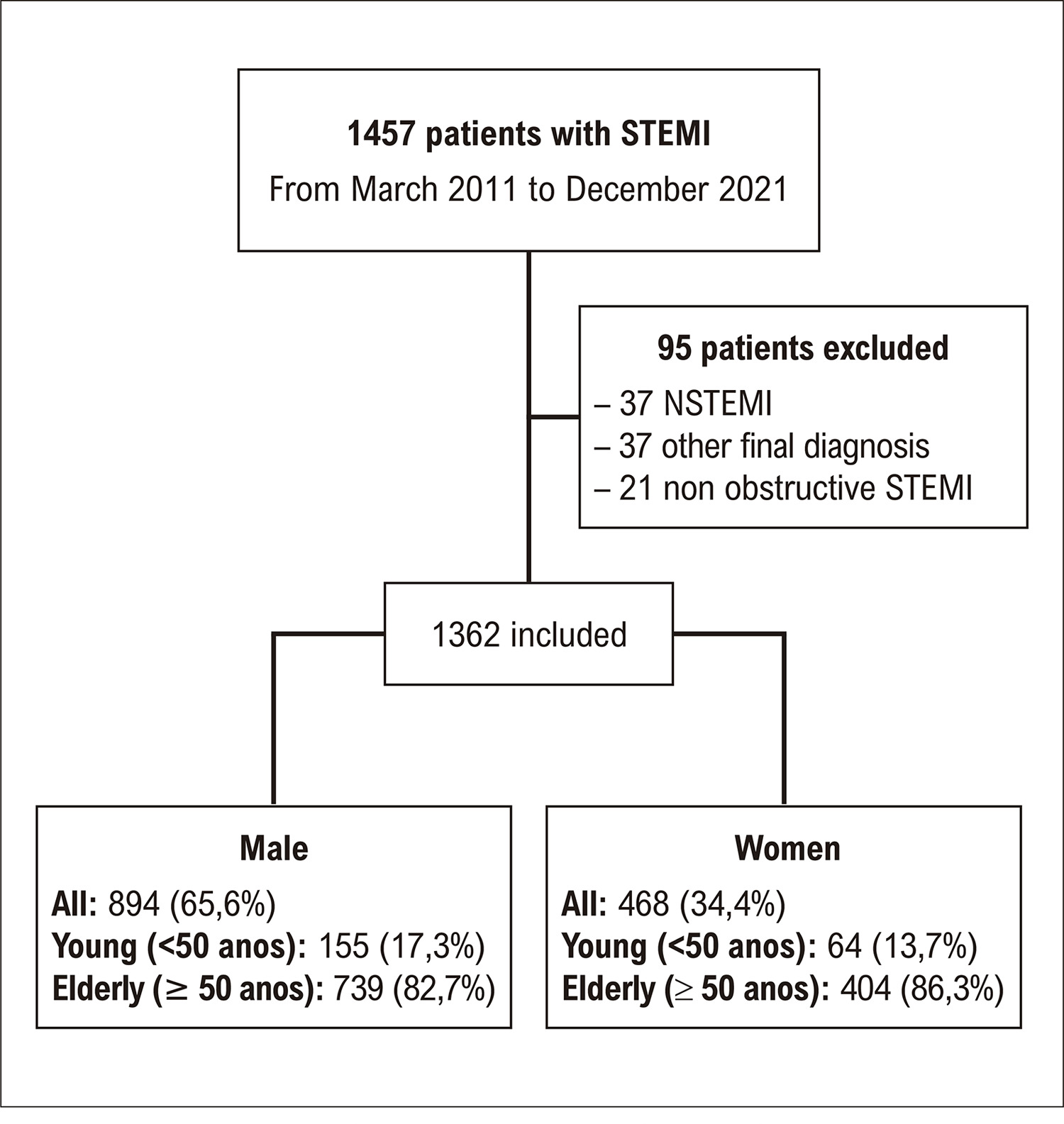
Among 1457 patients admitted with STEMI in the study period, 1362 were included and 468 (34.4%) were women. Female patients had a higher prevalence of hypertension (73% vs. 60%, p <0.001), diabetes (32% vs. 25%, p=0.003) and Killip class 3-4 at hospital admission (17% vs. 12%, p=0.01); TIMI risk score was higher among women (4 [2, 6] vs. 3 [2, 5], p<0.001). In-hospital mortality was not different between groups (12.8% vs. 10.5%, p=0.20). In-hospital MACCE (16.0% vs. 12.6%, p=0.085) and long-term MACCE (28.7% vs. 24.4%, p=0.089) were numerically higher in women, with borderline significance. After multivariate analysis, female sex was not associated with MACCE (HR = 1.14; 95% CI 0.86 – 1.51; p = 0.36).

Conclusion

In a prospective cohort of STEMI patients submitted to pPCI, female patients were older and had more comorbidities at baseline, but no significant differences were found in terms of long-term adverse outcomes.
  • Elderly
  • percutaneous coronary interventions
  • Sex Characteristics
  • ST-elevation myocardial infarction (STEMI
Read Full Article
Creative Commons Attribution (CC BY) Creative Commons license
09/06/2023 DOI: 10.36660/abc.20220673 Views 2
ABC
Editorial

No Reflow in Acute Coronary Syndromes: An Old Foe or a New Frontier?

Stefano Garzon

According to the World Health Organization (WHO), ischemic heart disease is the leading cause of death worldwide, accounting for 16% of the world’s deaths in 2019. However, due to continuous evolution in medical treatment and revascularization techniques, a steady decline in death rates in acute coronary syndromes (ACS) has been observed in recent years.

Currently, percutaneous coronary intervention (PCI) is the gold-standard treatment for ST-elevation myocardial infarction (STEMI) and a mainstay therapeutic option for non-STEMI ACS and stable coronary artery disease. Nonetheless, and particularly in STEMI patients, PCI can be very challenging at times. One of the most dreaded events during PCI in STEMI is the phenomenon commonly referred as “no-reflow”, an impaired myocardial perfusion secondary to microvascular obstruction without angiographic evidence of coronary obstruction(6). Initially described in animal models,, it was also recognized in humans in the following decades,, being first described after PCI for STEMI by Feld in 1992. Its occurrence is related to poorer short- and long-term outcomes following PCI,, and it is present in more than 20% of patients undergoing primary PCI for STEMI.

[…]

  • Cardiovascular Diseases, mortality
  • Coronary Artery Disease
  • Myocardial Infarction
  • Myocardial Ischemic
  • percutaneous coronary interventions
  • Risk Factors
  • Vascular Resistance
Read Full Article
Creative Commons Attribution (CC BY) Creative Commons license
17/05/2021 DOI: 10.36660/abc.20210118 Views 1
Figure 1
ABC
Original Article

Complete Revascularization Versus Treatment of the Culprit Artery Only in ST Elevation Myocardial Infarction: A Multicenter Registry

Julia Cremona Cadore et al. Mariana Vargas Furtado Rogério Tadeu Tumelero Alexandre Pereira Tognon … Ana Maria Krepsky Denis Cadore Karen Brasil Ruschel Julia Caldas Bedin Thais Conte Carisi Anne Polanczyk

Abstract

Background

Data on the management and prognosis of patients with ST-segment elevation myocardial infarction (STEMI) and multivessel disease are limited in Brazil, showing that the available revascularization strategies should be investigated

Objective

To assess the outcomes of complete revascularization versus treatment of the culprit artery only in patients with STEMI and multivessel disease.

Methods

A prospective cohort study was conducted at two medical centers in southern Brazil with a 1-year follow-up after the index procedure. The primary outcome was a composite of cardiac death, reinfarction, or recurrent angina, while the secondary outcome was stroke, nonfatal cardiac arrest, major bleeding, or need for reintervention. The probability of outcomes occurring was compared between the groups using binary logistic regression. A p-value < 0.05 was considered statistically significant.

Results

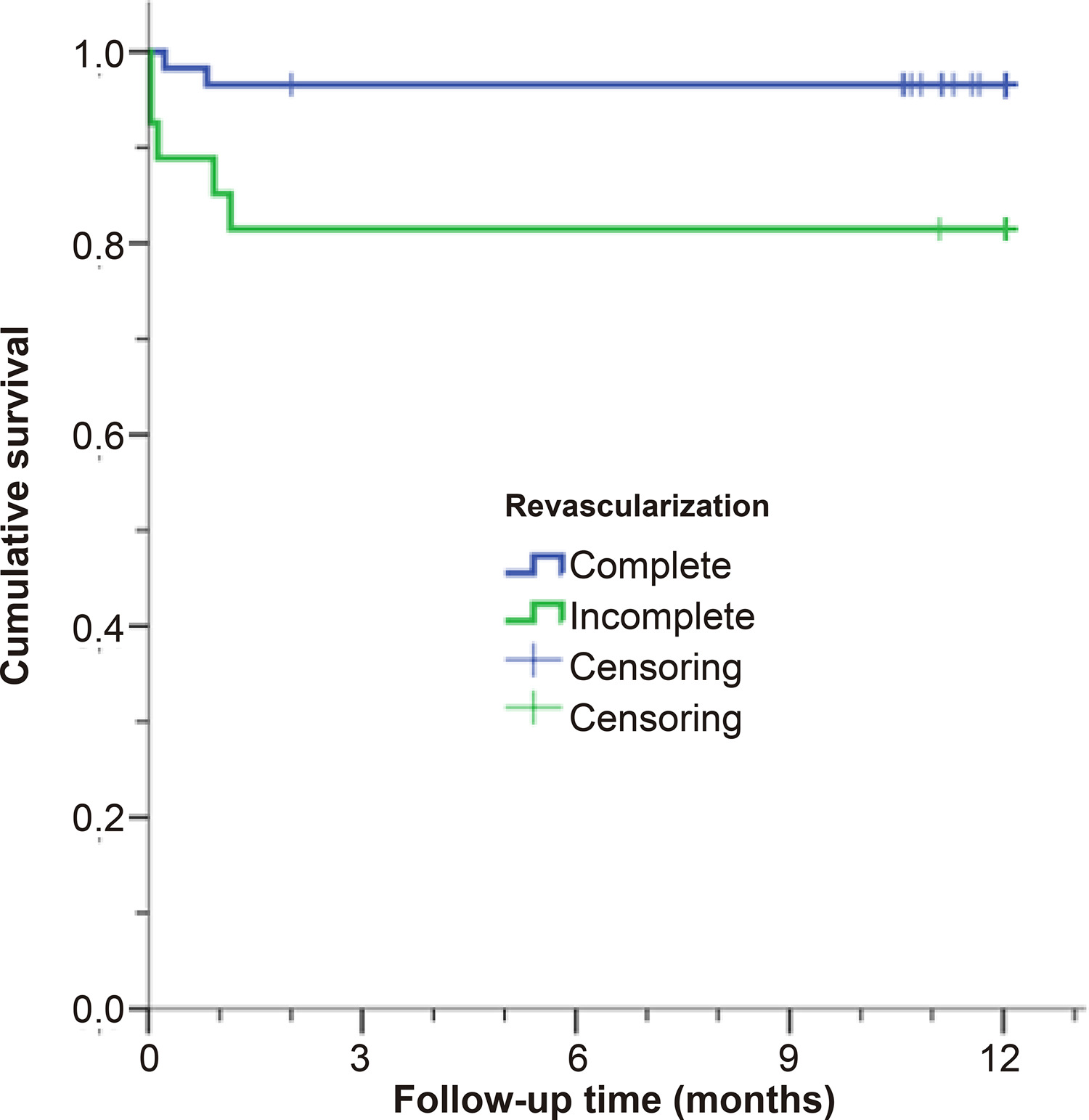
Eighty-five patients were included. Their mean age was 62±12 years, and 61 (71.8%) were male. Fifty-eight (68.2%) were treated with complete revascularization and 27 (31.8%) with incomplete revascularization. The chance of both the primary and secondary outcomes occurring was significantly greater among patients treated with incomplete revascularization when compared to those treated with complete revascularization (odds ratio [OR] 5.1, 95% confidence interval [CI] 1.6-16.1 vs. OR 5.2, 95% CI 1.2-22.9, respectively), as well as cardiac death (OR 6.4, 95% CI 1.2-35.3).

Conclusion

Registry data from two centers in southern Brazil demonstrate that the complete revascularization strategy is associated with a significant reduction in primary and secondary outcomes in a 1-year follow-up when compared to the incomplete revascularization strategy (Arq Bras Cardiol. 2020; 115(2):229-237)

  • Angina Pectoris
  • Death Certificates
  • Heart Arrest
  • Hemodynamic
  • percutaneous coronary interventions
  • ST Elevation Myocardial Infarction/mortality, Cohort Studies
  • Stroke
Read Full Article
Creative Commons Attribution (CC BY) Creative Commons license
28/08/2020 DOI: 10.36660/abc.20180346
Graph 1
ABC
Original Article

Femoral versus Radial Access in Primary Angioplasty. Analysis of the ACCEPT Registry

Pedro Beraldo de Andrade et al. Mônica Vieira Athanazio de Andrade Robson Alves Barbosa André Labrunie … Mauro Esteves Hernandes Roberto Luiz Marino Dalton Bertolim Precoma Francisco Carleial Feijó de Sá Otávio Berwanger Luiz Alberto Piva e Mattos

Background:

The radial access provides a lower risk of bleeding and vascular complications related to the puncture site in comparison to the femoral access. Recent studies have suggested a reduction in mortality associated with the radial access in patients with acute myocardial infarction undergoing percutaneous coronary intervention.

Objective:

To compare the occurrence of adverse cardiovascular ischemic and hemorrhagic events in patients undergoing primary angioplasty according to the type of arterial access route.

Methods:

From August 2010 to December 2011, 588 patients undergoing primary percutaneous coronary intervention during acute ST-segment elevation myocardial infarction were assessed; they were recruited from 47 centers participating in the ACCEPT registry. Patients were grouped and compared according to the arterial access used for the procedure.

Results:

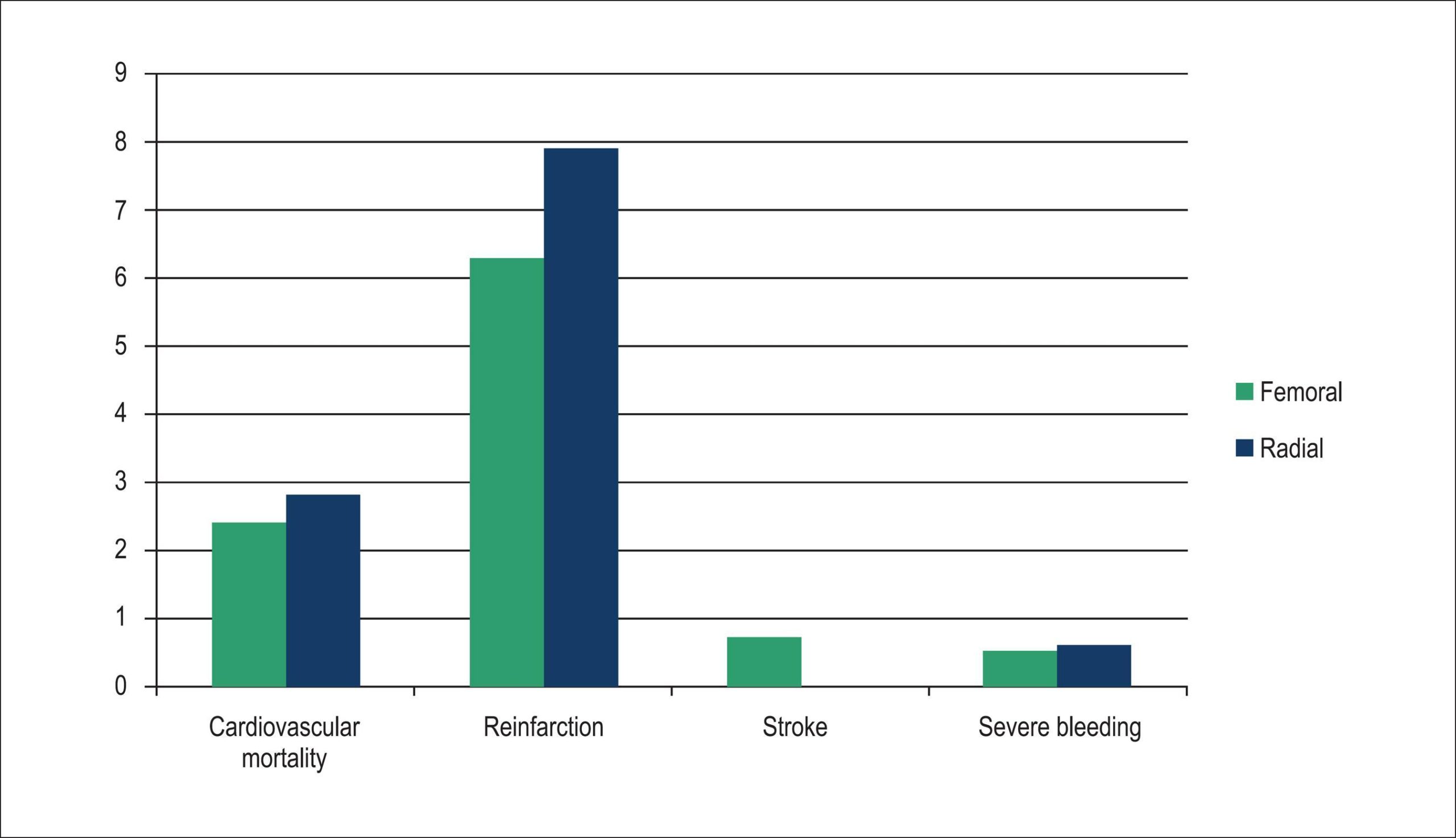
The mean age was 61.8 years; 75% were males and 24% had diabetes mellitus. There was no difference between groups as regards the procedure success rate, as well as regards the occurrence of death, reinfarction, or stroke at six months of follow-up. Severe bleeding was reported in 1.1% of the sample analyzed, with no statistical difference related to the access used.

Conclusions:

The femoral and radial accesses are equally safe and effective for the performance of primary percutaneous coronary intervention. The low rate of cardiovascular events and of hemorrhagic complications reflects the quality of the participating centers and the operators expertise with the use of both techniques.

  • Femoral artery / surgery
  • Myocardial Infarction
  • percutaneous coronary interventions
  • Radial Artery / surgery
Read Full Article
Creative Commons Attribution (CC BY) Creative Commons license
27/05/2014 DOI: 10.5935/abc.20140063 Views 1
ABC
Artigo Original

Intracoronary inflammatory markers after percutaneous coronary interventions

Wilson Salgado Filho et al. Eulógio E Martinez Filho Pedro Horta Pedro A Lemos … Bruno C Migueletto Carlos Vicente Serrano Jr José Antonio Franchini Ramires Tania Leme da Rocha Martinez

OBJECTIVE: To analyze intracoronary release of inflammatory markers (IM) after percutaneous coronary interventions (PCI) and compare their concentrations concerning the type of PCI used (rotablator vs. balloon angioplasty). METHODS: Twenty-two patients with average age of 60±11.9 years old, 12 of male sex, with stable coronary disease, submitted to elective treatment of a single coronary lesion, using rotablator (N=11) or balloon pre-dilatation (N=11) for stent implant were randomized. Samples were collected at aorta root and coronary sinus, immediately before and 15 minutes after intervention. All dosages were made before stent implant, and the cytokines TNF-a, IL-6 and IL-1 and the soluble adhesion molecules ICAM-1, E-selectin and P-selectin were analyzed by using ELISA method. RESULTS: TNF-a and IL-6 concentrations increased after PCI, respectively from 9.5±1.5 pg/ml to 9.9±1.8 pg/ml (p=0.017) and from 6.0±2.4 pg/ml to 6.9±3.0 pg/ml (p<0.001). There was no significant changes in IL-1, ICAM-1 and P-selectin, and a decrease in E-selectin concentrations after the procedures (52.0±17.5 ng/ml to 49.3±18.7 ng/ml; p=0.009) was observed. There were no significant differences between IM concentrations after PCI, concerning the type of procedure used. CONCLUSION: At the early period, post-percutaneous coronary interventions, an increase of intracoronary concentrations of TNF-a and IL-6, and absence of significant difference between concentrations of inflammatory markers released in coronary flow through rotablator and balloon angioplasty were observed.

  • inflammatory markers
  • percutaneous coronary interventions
  • stable coronary syndromes
Read Full Article
Creative Commons Attribution (CC BY) Creative Commons license
10/10/2005 DOI: 10.1590/S0066-782X2005001600006

How to cite this article

EndNote RIS

Electronic Document Format (Vancouver)

Milan VB, Alves YFS, Machado GP, Araujo GN, Krepsky AM, Chies A, Niches M, et al. Sex Differences in Outcomes of ST Elevation Myocardial Infarction Patients Submitted to Primary Percutaneous Coronary Intervention. Arquivos Brasileiros de Cardiologia 2023;120(6):e20220673.

Electronic Document Format (ABNT)

Milan, Victoria B.; Alves, Yasmin F. S.; Machado, Guilherme P.; Araujo, Gustavo Neves de; Krepsky, Ana Maria; Chies, Angelo; Niches, Matheus; Fracasso, Julia; Goncalves, Sandro Cadaval; Wainstein, Marco; Polanczyk, Carisi Anne. Sex Differences in Outcomes of ST Elevation Myocardial Infarction Patients Submitted to Primary Percutaneous Coronary Intervention. Arquivos Brasileiros de Cardiologia, v. 120, n. 6, e20220673, Jun. 2023.

Electronic Document Format (APA)

Milan, V. B., Alves, Y. F. S., Machado, G. P., Araujo, G. N. , Krepsky, A. M., Chies, A., Niches, M., Fracasso, J., Goncalves, S. C., Wainstein, M., & Polanczyk, C. A. (2023). Sex Differences in Outcomes of ST Elevation Myocardial Infarction Patients Submitted to Primary Percutaneous Coronary Intervention. Arquivos Brasileiros de Cardiologia, 120(6), e20220673.

Electronic Document Format (ISO)

Milan, Victoria B. and Alves, Yasmin F. S. and Machado, Guilherme P. and Araujo, Gustavo Neves de and Krepsky, Ana Maria and Chies, Angelo and Niches, Matheus and Fracasso, Julia and Goncalves, Sandro Cadaval and Wainstein, Marco and Polanczyk, Carisi Anne. Sex Differences in Outcomes of ST Elevation Myocardial Infarction Patients Submitted to Primary Percutaneous Coronary Intervention. Arquivos Brasileiros de Cardiologia [online]. 2023, vol. 120, n. 6, [cited 2026-10-14], e20220673. Available from: <https://journals.cardiol.br/en/article/sex-differences-in-outcomes-of-st-elevation-myocardial-infarction-patients-submitted-to-primary-percutaneous-coronary-intervention/>. ISSN 0066-782X

EndNote RIS

Electronic Document Format (Vancouver)

Garzon S. No Reflow in Acute Coronary Syndromes: An Old Foe or a New Frontier?. Arquivos Brasileiros de Cardiologia 2021;116(5):968-9.

Electronic Document Format (ABNT)

Garzon, Stefano. No Reflow in Acute Coronary Syndromes: An Old Foe or a New Frontier?. Arquivos Brasileiros de Cardiologia, v. 116, n. 5, p. 968-969, May. 2021.

Electronic Document Format (APA)

Garzon, S. (2021). No Reflow in Acute Coronary Syndromes: An Old Foe or a New Frontier?. Arquivos Brasileiros de Cardiologia, 116(5), 968-969.

Electronic Document Format (ISO)

Garzon, Stefano. No Reflow in Acute Coronary Syndromes: An Old Foe or a New Frontier?. Arquivos Brasileiros de Cardiologia [online]. 2021, vol. 116, n. 5, [cited 2026-10-14], pp. 968-969. Available from: <https://journals.cardiol.br/en/article/no-reflow-in-acute-coronary-syndromes-an-old-foe-or-a-new-frontier/>. ISSN 0066-782X

EndNote RIS

Electronic Document Format (Vancouver)

Cadore JC, Furtado MV, Tumelero RT, Tognon AP, Krepsky AM, Cadore D, Ruschel KB, et al. Complete Revascularization Versus Treatment of the Culprit Artery Only in ST Elevation Myocardial Infarction: A Multicenter Registry. Arquivos Brasileiros de Cardiologia 2020;115(2):229-37.

Electronic Document Format (ABNT)

Cadore, Julia Cremona; Furtado, Mariana Vargas; Tumelero, Rogério Tadeu; Tognon, Alexandre Pereira; Krepsky, Ana Maria; Cadore, Denis; Ruschel, Karen Brasil; Bedin, Julia Caldas; Conte, Thais; Polanczyk, Carisi Anne. Complete Revascularization Versus Treatment of the Culprit Artery Only in ST Elevation Myocardial Infarction: A Multicenter Registry. Arquivos Brasileiros de Cardiologia, v. 115, n. 2, p. 229-237, Aug. 2020.

Electronic Document Format (APA)

Cadore, J. C., Furtado, M. V., Tumelero, R. T., Tognon, A. P., Krepsky, A. M., Cadore, D., Ruschel, K. B., Bedin, J. C., Conte, T., & Polanczyk, C. A. (2020). Complete Revascularization Versus Treatment of the Culprit Artery Only in ST Elevation Myocardial Infarction: A Multicenter Registry. Arquivos Brasileiros de Cardiologia, 115(2), 229-237.

Electronic Document Format (ISO)

Cadore, Julia Cremona and Furtado, Mariana Vargas and Tumelero, Rogério Tadeu and Tognon, Alexandre Pereira and Krepsky, Ana Maria and Cadore, Denis and Ruschel, Karen Brasil and Bedin, Julia Caldas and Conte, Thais and Polanczyk, Carisi Anne. Complete Revascularization Versus Treatment of the Culprit Artery Only in ST Elevation Myocardial Infarction: A Multicenter Registry. Arquivos Brasileiros de Cardiologia [online]. 2020, vol. 115, n. 2, [cited 2026-10-14], pp. 229-237. Available from: <https://journals.cardiol.br/en/article/complete-revascularization-versus-treatment-of-the-culprit-artery-only-in-st-elevation-myocardial-infarction-a-multicenter-registry/>. ISSN 0066-782X

EndNote RIS

Electronic Document Format (Vancouver)

Andrade PB, Andrade MVA, Barbosa RA, Labrunie A, Hernandes ME, Marino RL, Precoma DB, et al. Femoral versus Radial Access in Primary Angioplasty. Analysis of the ACCEPT Registry. Arquivos Brasileiros de Cardiologia 2014;102(6):566-70.

Electronic Document Format (ABNT)

Andrade, Pedro Beraldo de; Andrade, Mônica Vieira Athanazio de; Barbosa, Robson Alves; Labrunie, André; Hernandes, Mauro Esteves; Marino, Roberto Luiz; Precoma, Dalton Bertolim; Sá, Francisco Carleial Feijó de; Berwanger, Otávio; Mattos, Luiz Alberto Piva e. Femoral versus Radial Access in Primary Angioplasty. Analysis of the ACCEPT Registry. Arquivos Brasileiros de Cardiologia, v. 102, n. 6, p. 566-570, May. 2014.

Electronic Document Format (APA)

Andrade, P. B. , Andrade, M. V. A. , Barbosa, R. A., Labrunie, A., Hernandes, M. E., Marino, R. L., Precoma, D. B., Sá, F. C. F. , Berwanger, O., & Mattos, L. A. P. (2014). Femoral versus Radial Access in Primary Angioplasty. Analysis of the ACCEPT Registry. Arquivos Brasileiros de Cardiologia, 102(6), 566-570.

Electronic Document Format (ISO)

Andrade, Pedro Beraldo de and Andrade, Mônica Vieira Athanazio de and Barbosa, Robson Alves and Labrunie, André and Hernandes, Mauro Esteves and Marino, Roberto Luiz and Precoma, Dalton Bertolim and Sá, Francisco Carleial Feijó de and Berwanger, Otávio and Mattos, Luiz Alberto Piva e. Femoral versus Radial Access in Primary Angioplasty. Analysis of the ACCEPT Registry. Arquivos Brasileiros de Cardiologia [online]. 2014, vol. 102, n. 6, [cited 2026-10-14], pp. 566-570. Available from: <https://journals.cardiol.br/en/article/femoral-versus-radial-access-in-primary-angioplasty-analysis-of-the-accept-registry/>. ISSN 0066-782X

EndNote RIS

Electronic Document Format (Vancouver)

Salgado Filho W, Martinez Filho EE, Horta P, Lemos PA, Migueletto BC, Serrano Jr CV, Ramires JAF, et al. Intracoronary inflammatory markers after percutaneous coronary interventions. Arquivos Brasileiros de Cardiologia 2005;85(3):180-5.

Electronic Document Format (ABNT)

Salgado Filho, Wilson; Martinez Filho, Eulógio E; Horta, Pedro; Lemos, Pedro A; Migueletto, Bruno C; Serrano Jr, Carlos Vicente; Ramires, José Antonio Franchini; Martinez, Tania Leme da Rocha. Intracoronary inflammatory markers after percutaneous coronary interventions. Arquivos Brasileiros de Cardiologia, v. 85, n. 3, p. 180-185, Oct. 2005.

Electronic Document Format (APA)

Salgado Filho, W., Martinez Filho, E. E., Horta, P., Lemos, P. A., Migueletto, B. C., Serrano Jr, C. V., Ramires, J. A. F., & Martinez, T. L. R. (2005). Intracoronary inflammatory markers after percutaneous coronary interventions. Arquivos Brasileiros de Cardiologia, 85(3), 180-185.

Electronic Document Format (ISO)

Salgado Filho, Wilson and Martinez Filho, Eulógio E and Horta, Pedro and Lemos, Pedro A and Migueletto, Bruno C and Serrano Jr, Carlos Vicente and Ramires, José Antonio Franchini and Martinez, Tania Leme da Rocha. Intracoronary inflammatory markers after percutaneous coronary interventions. Arquivos Brasileiros de Cardiologia [online]. 2005, vol. 85, n. 3, [cited 2026-10-14], pp. 180-185. Available from: <https://journals.cardiol.br/en/article/intracoronary-inflammatory-markers-after-percutaneous-coronary-interventions/>. ISSN 0066-782X

  • About ABC Family
  • Internal Regulation
  • Editorial Board
  • Brazilian Society of Cardiology (SBC)

Issues

SBC Guidelines

  • Videos
  • Podcasts
  • News