ABC Family Arquivos Brasileiros de Cardiologia International Journal of Cardiovascular Sciences ABC Heart Failure & Cardiomyopathy ABC Imagem Cardiovascular
Português English
ABC Family
Português English
  • About
    • About ABC Family
    • Internal Regulation
    • Editorial Board
    • Brazilian Society of Cardiology (SBC)
  • Issues
  • SBC Guidelines
  • Content
    • Videos
    • Podcasts
    • News
  • About
    • About ABC Family
    • Internal Regulation
    • Editorial Board
    • Brazilian Society of Cardiology (SBC)
  • Issues
  • SBC Guidelines
  • Content
    • Videos
    • Podcasts
    • News

ABC Family

  • ABC Family
  • Arquivos Brasileiros de Cardiologia
  • International Journal of Cardiovascular Sciences
  • ABC Heart Failure & Cardiomyopathy
  • ABC Imagem Cardiovascular
Search in

No content found.

Journals
Ordering
Article types
Others

  1. Home
  2. Keyword: Rats
Garlic Extract Reverses Ischemic Heart Disease in Female Rats Exposed to Combined Oral Contraceptive Pills
IJCS
Original Article

Garlic Extract Reverses Ischemic Heart Disease in Female Rats Exposed to Combined Oral Contraceptive Pills

Onitsha Enebrayi Nelson et al. Gborienemi George Simeon Okutu Jackson Borobuebi Mie-Ebi Martin Wankasi Ezeiruaku Ferdinand Chukwuma

Abstract

Background

Garlic is an herbal medicinal plant with several pharmacological properties used for the management of various ailments. However, its potential in the reversal of ischemic heart disease induced by combined oral contraceptive pills is not well reported.

Objective

This study investigated the cardioprotective potential of aqueous garlic extract against cardiotoxicity induced by oral contraceptive pills.

Methods

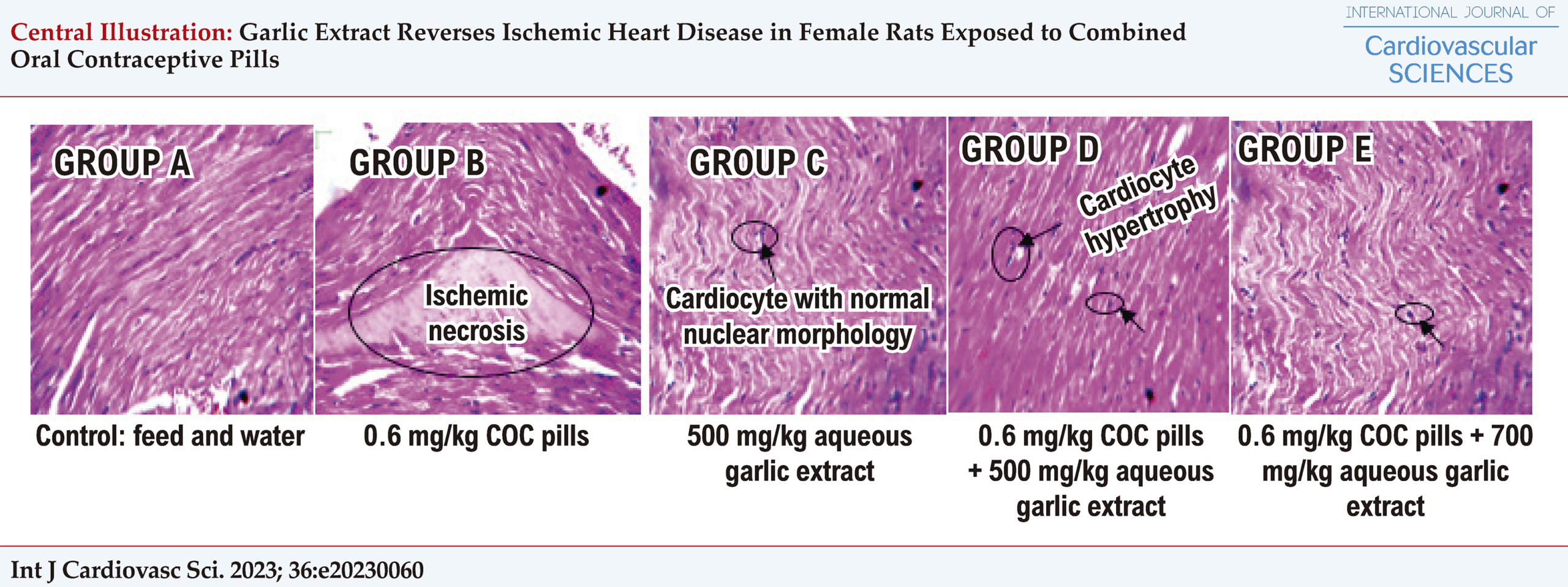
Forty-six rats were used for this study. Six were used to determine the lethal dose (LD50), and 40 rats were divided randomly into 5 groups of 8 rats each. Group A received feed and distilled water. Group B received 0.6 mg/kg of oral contraceptive pills. Group C received 500 mg/kg of garlic extract. Group D received 0.6 mg/kg of oral contraceptive pills + 500 mg/kg garlic extract. Group E received 0.6 mg/kg of oral contraceptive pills + 700 mg/kg garlic extract. The animals were sacrificed, and blood and tissue samples were collected for biochemical and histological analysis. Statistical analysis was done using SPSS, and p values < 0.05 were considered significant.

Results

The acute toxicity dose of combined oral contraceptive pills was 1.5 mg/kg for albino rats. Combined oral contraceptive pills induced ischemic necrosis as revealed by the photomicrographs, in addition to elevation of serum cardiac troponin-1, lactate dehydrogenase, creatine kinase, and malondialdehyde levels. Treatment with garlic extract demonstrated significant reduction in cardiac troponin-1 (p = 0.000), lactate dehydrogenase (p = 0.002), creatine kinase (p = 0.001), and malondialdehyde (p = 0.001) levels, as well as restoration of the cardiac cytoarchitecture changes caused by the combined oral contraceptive pills.

Conclusion

This study has demonstrated that aqueous garlic juice can reverse ischemic heart disease, lessen cytoarchitectural alterations of the heart caused by combined oral contraceptive pills, and thus ameliorate cardiac dysfunction.
  • Contraceptive Agents
  • Garlic
  • Myocardial Ischemia
  • Rats
Read Full Article
Creative Commons Attribution (CC BY) Creative Commons license
22/01/2024 DOI: 10.36660/ijcs.20230060 Views 1
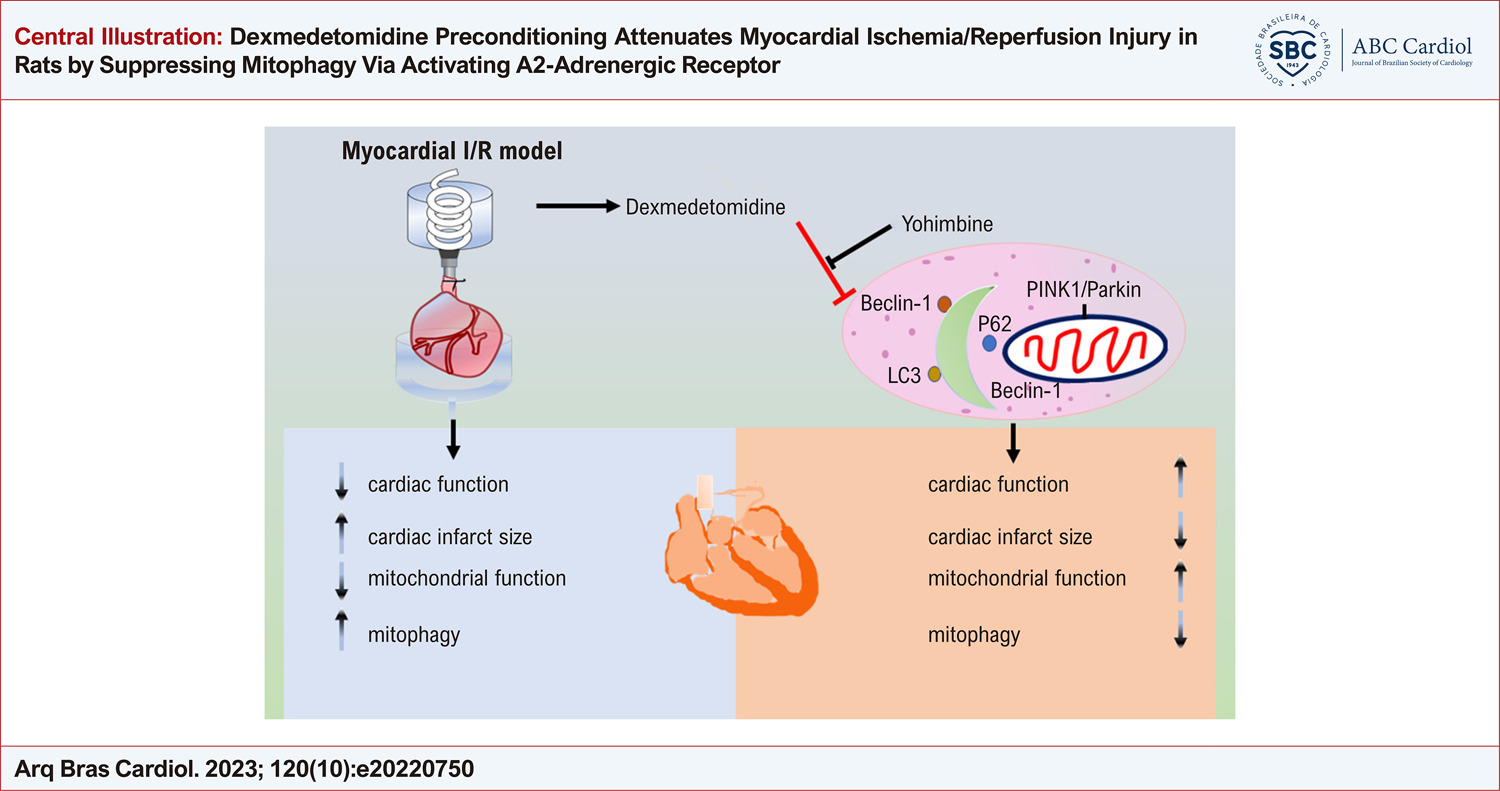
Dexmedetomidine Preconditioning Attenuates Myocardial Ischemia/Reperfusion Injury in Rats by Suppressing Mitophagy Via Activating Α2-Adrenergic Receptor
ABC
Original Article

Dexmedetomidine Preconditioning Attenuates Myocardial Ischemia/Reperfusion Injury in Rats by Suppressing Mitophagy Via Activating Α2-Adrenergic Receptor

YaHua Chen et al. Hui Chen YuJiao Chen ZaiQun Yang … Tao Zhou Wei Xu

Abstract

Background

Dexmedetomidine (DEX), a specific α2-adrenergic receptor agonist, is protective against myocardial ischemia/reperfusion injury (MIRI). However, the association between DEX preconditioning-induced cardioprotection and mitophagy suppression remains unclear.

Objective

Hence, we aimed to investigate whether DEX preconditioning alleviates MIRI by suppressing mitophagy via α2-adrenergic receptor activation.

Method

Sixty isolated rat hearts were treated with or without DEX before inducing ischemia and reperfusion; an α2-adrenergic receptor antagonist, yohimbine (YOH), was also administered before ischemia, alone or with DEX. The heart rate (HR), left ventricular diastolic pressure (LVDP), left ventricular end-diastolic pressure (LVEDP), maximal and minimal rate of left ventricular pressure development (±dp/dtmax), and myocardial infarction size were measured. The mitochondrial ultrastructure and autophagosomes were assessed using transmission electron microscopy. Mitochondrial membrane potential and reactive oxygen species (ROS) levels were measured using JC-1 and dichloride hydrofluorescein diacetate assays, respectively. The expression levels of the mitophagy-associated proteins Beclin1, LC3II/I ratio, p62, PINK1, and Parkin were detected by western blotting.

Results

Compared with the control group, in the ischemia/reperfusion group, the HR, LVDP, and ±dp/dtmax were remarkably decreased (p< 0.05), whereas LVEDP and infarct sizes were significantly increased (p< 0.05). DEX preconditioning significantly improved cardiac dysfunction reduced myocardial infarction size, maintained mitochondrial structural integrity, increased mitochondrial membrane potential, inhibited autophagosomes formation, and decreased ROS production and Beclin1, LC3II/I ratio, PINK1, Parkin, and p62 expression(p< 0.05). When DEX and YOH were combined, YOH canceled the effect of DEX, whereas the use of YOH alone had no effect.

Conclusion

Therefore, DEX preconditioning was cardioprotective against MIRI in rats by suppressing mitophagy via α2-adrenergic receptor activation.

  • Dexmedetomidine
  • Mitophagy
  • Rats
  • Reperfusion Injury
Read Full Article
Creative Commons Attribution (CC BY) Creative Commons license
30/10/2023 DOI: 10.36660/abc.20220750 Views 2
Figure 1
ABC
Original Article

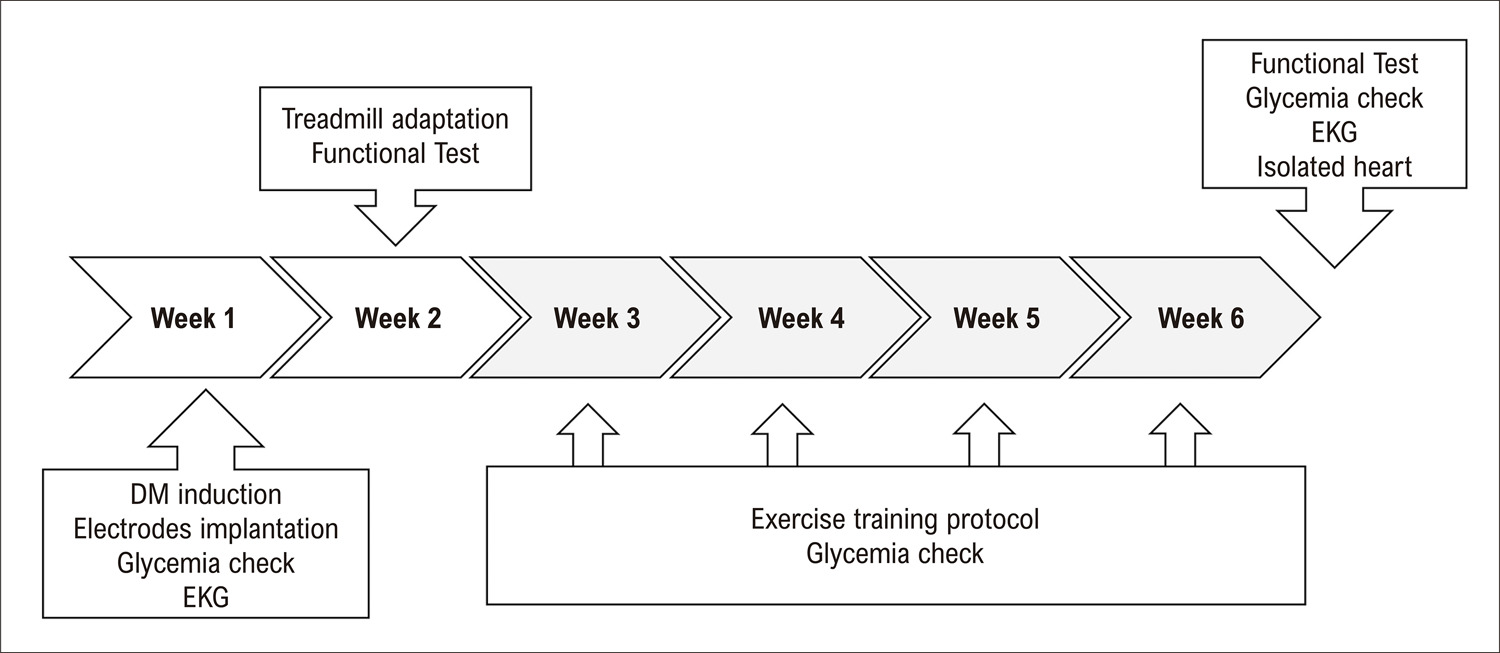
Effects of High-Intensity Interval Training and Continuous Training on Exercise Capacity, Heart Rate Variability and Isolated Hearts in Diabetic Rats

Eduardo Gomes de Souza Neto et al. João Victor Capelli Peixoto Claucio Rank Filho Ricardo Rasmussen Petterle … Rosalvo Tadeu Hochmuller Fogaça Beata Maria Wolska Fernando Augusto Lavezzo Dias

Abstract

Background

High-intensity interval training (HIIT) has been suggested as an alternative for continuous training (CT) in people with diabetes mellitus (DM) due to its short duration and potential to improve adherence to exercise. However, data on its impact on heart rate variability (HRV) are scarce.

Objectives

To assess and compare the effects of HIIT and CT on exercise capacity, HRV and isolated hearts in diabetic rats.

Methods

DM (intravenous streptozotocin, 45 mg.kg -1 ) and control (C) animals performed 20 sessions (5 days/week, 50 min, for 4 weeks) of CT on a treadmill (70% of maximal exercise capacity) or HIIT (cycles of 1:1min at 50% and 90% of maximal exercise capacity). HRV was assessed by continuous electrocardiogram, and cardiac function assessed in isolated perfused hearts. For data analysis, we used the framework of the multivariate covariance generalized linear model or one-way ANOVA followed by Tukey’s test, considering p<0.05 as significant.

Results

Higher exercise capacity (m/min) was achieved in HIIT (DM-HIIT: 36.5 [IQR 30.0-41.3]; C-HIIT: 41.5 [37.8-44.5], both n=10) compared to CT (DM-CT: 29.0 [23.8-33.0]; C-CT: 32.0 [29.5-37.0], both n=10) (p<0.001). Heart rate (bpm) was lower in DM compared to controls (p<0.001) both in vivo (DM-HIIT:348±51, C-HIIT:441±66, DM-CT:361±70, C-CT:437±38) and in isolated hearts. There were no differences in HRV between the groups. Maximum and minimal dP/dt were reduced in DM, except +dP/dt in DM-HIIT vs. C-HIIT (mean difference: 595.5±250.3, p=0.190).

Conclusion

Short-term HIIT promotes greater improvement in exercise performance compared to CT, including in DM, without causing significant changes in HRV.

  • Diabetes Mellitus
  • Exercise
  • Heart Rate
  • Physical Exertion
  • Rats
Read Full Article
Creative Commons Attribution (CC BY) Creative Commons license
09/01/2023 DOI: 10.36660/abc.20220396 Views 1
ABC
Editorial

Applicability of Body Surface Potential Mapping Through Exercise in Small Animals

Carlos Alberto Pastore

The electrical potentials of the heart have been recorded for over a hundred years to represent the distribution of these internal electrical events on the torso surface. Such recordings that started with Waller tried to establish a resultant vector from a bipolar source, the “heart vector,” assuming that this distribution of potentials would act as if an electrical bipole was inserted inside the thorax and applied to the body surface, with a third electrode adding the sagittal component of the vector. The three would be enough to supply all the electrocardiogram (ECG) information extracted from measurements from the body surface. It was not until the 1930s and 1940s that the number of electrodes on the chest surface was tentatively increased to detect events occurring in cardiac areas near the precordial leads. Finally, after 1950 some studies demonstrated that the complexity of the electrical information generated inside the heart was far greater than that generated by a sole bipole, with multiple wavefronts in the ventricles creating currents that flow into and from the heart in several places; the potentials, therefore, would exhibit maximum and minimum distributions varying with time, usually located in areas unexplored by the conventional electrocardiogram.

New methodologies complementing the ECG and vectorcardiogram (ECG) added new electrodes (dorsal and right precordial leads), and, since Wilson, the 12-lead ECG started to have three bipolar and three unipolar modified leads in the frontal plane, in addition to six unipolar (precordial) leads on the anterior chest, which can record most of the information about electrical events in the heart. However, the myocardial electrical activity global expression cannot be captured without a larger number of simultaneously recorded leads.

[…]

  • Animal
  • body surface potential mapping
  • Exercise
  • Heart Ventricle
  • Myocardial
  • Physical Conditionning
  • Rats
Read Full Article
Creative Commons Attribution (CC BY) Creative Commons license
25/11/2022 DOI: 10.36660/abc.20220646 Views 1
Figure 1
ABC
Original Article

Body Surface Potential Mapping during Ventricular Depolarization in Rats after Acute Exhaustive Exercise

Alexey G. Ivonin et al. Svetlana L. Smirnova Irina M. Roshchevskaya

Abstract

Background

Exhaustive physical exercise can cause substantial changes in the electrical properties of the myocardium.

Objective

To evaluate, using body surface potential mapping, the electrical activity of the heart in rats during ventricular depolarization after acute exhaustive exercise.

Methods

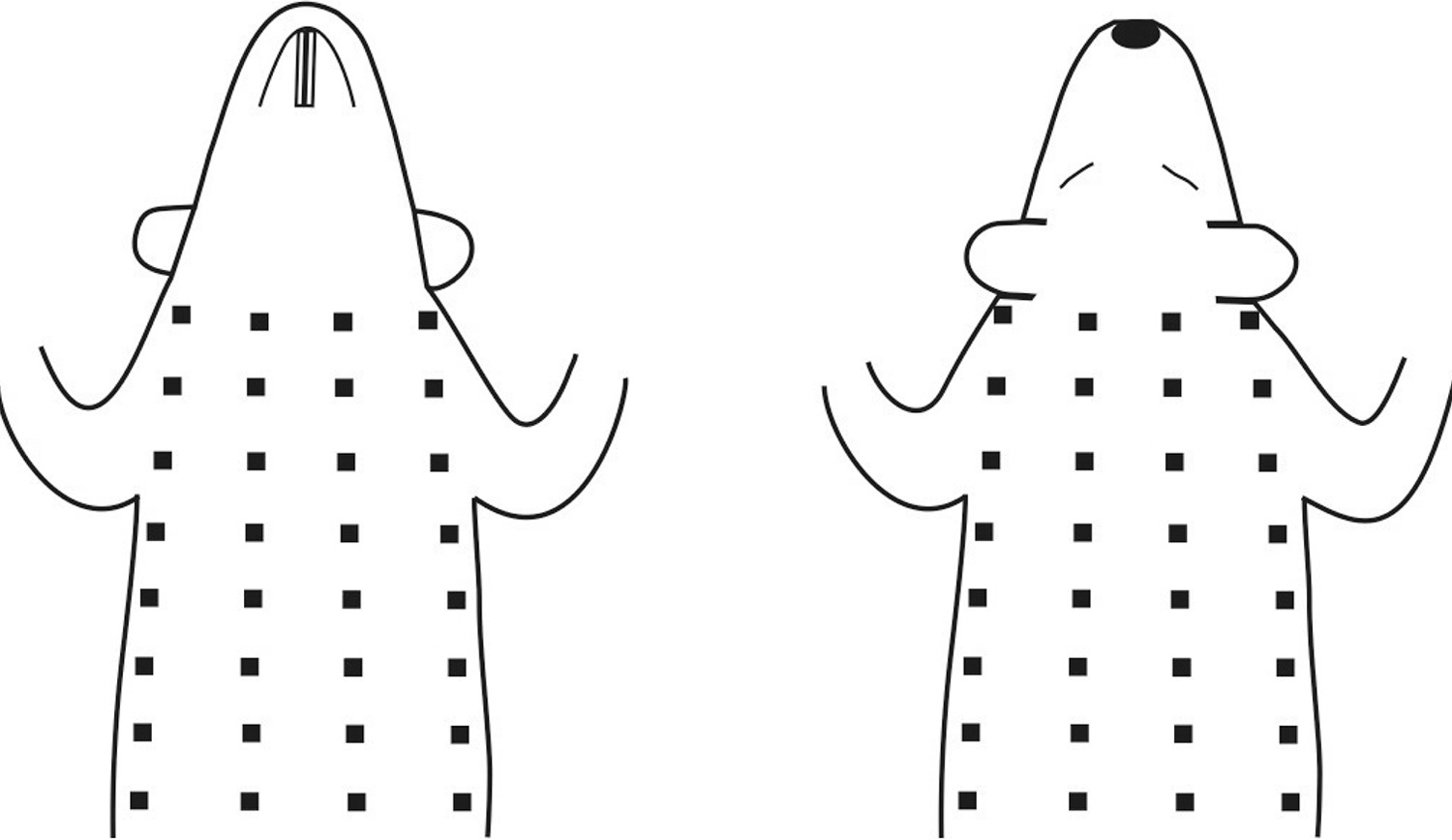
Twelve-week-old male rats were submitted to acute treadmill exercise at 36 m/min until exhaustion. Unipolar electrocardiograms (ECGs) from the torso surface were recorded in zoletil-anesthetized rats three to five days before (Pre-Ex), 5 and 10 minutes after exhaustive exercise (Post-Ex 5 and Post-Ex 10, respectively) simultaneously with ECGs in limb leads. The instantaneous body surface potential maps (BSPMs) were analyzed during ventricular depolarization. P values <0.05 were considered statistically significant.

Results

Compared with Pre-Ex, an early completion of the second inversion of potential distributions, an early completion of ventricular depolarization, as well as a decrease in the duration of the middle phase and the total duration of ventricular depolarization on BSPMs were revealed at Post-Ex 5. Also, compared with Pre-Ex, an increase in the amplitude of negative BSPM extremum at the R-wave peak on the ECG in lead II (RII-peak) and a decrease in the amplitude of negative BSPM extremum at 3 and 4 ms after RII-peak were showed at Post-Ex 5. At Post-Ex 10, parameters of BSPMs did not differ from those at Pre-Ex.

Conclusion

In rats, acute exhaustive exercise causes reversible changes in the temporal and amplitude characteristics of BSPMs during ventricular depolarization, most likely related to alterations in the excitation of the main mass of the ventricular myocardium.

  • acute
  • body surface potential mapping
  • Exercises
  • Heart Ventricles
  • Myocardium
  • Rats
Read Full Article
Creative Commons Attribution (CC BY) Creative Commons license
06/09/2022 DOI: 10.36660/abc.20211058
Figure 1
ABC
Original Article

Resistance Exercise Training Mitigates Left Ventricular Dysfunctions in Pulmonary Artery Hypertension Model

Leôncio Lopes Soares et al. Luciano Bernardes Leite Luiz Otávio Guimarães Ervilha Bruna Aparecida Fonseca da Silva … Maíra Oliveira de Freitas Alexandre Martins Oliveira Portes Leonardo Mateus Teixeira Rezende Filipe Rios Drummond Miguel Araújo Carneiro-Júnior Mariana Machado Neves Emily Correna Carlo Reis Antônio José Natali

Abstract

Background

The right ventricular hypertrophy and dilation observed in pulmonary artery hypertension (PAH) damages the left ventricle (LV) dynamics by flattening the interventricular septum.

Objective

To investigate whether low- to moderate-intensity resistance exercise training (RT) is beneficial to LV and cardiomyocyte contractile functions in rats during the development of monocrotaline (MCT)-induced PAH.

Methods

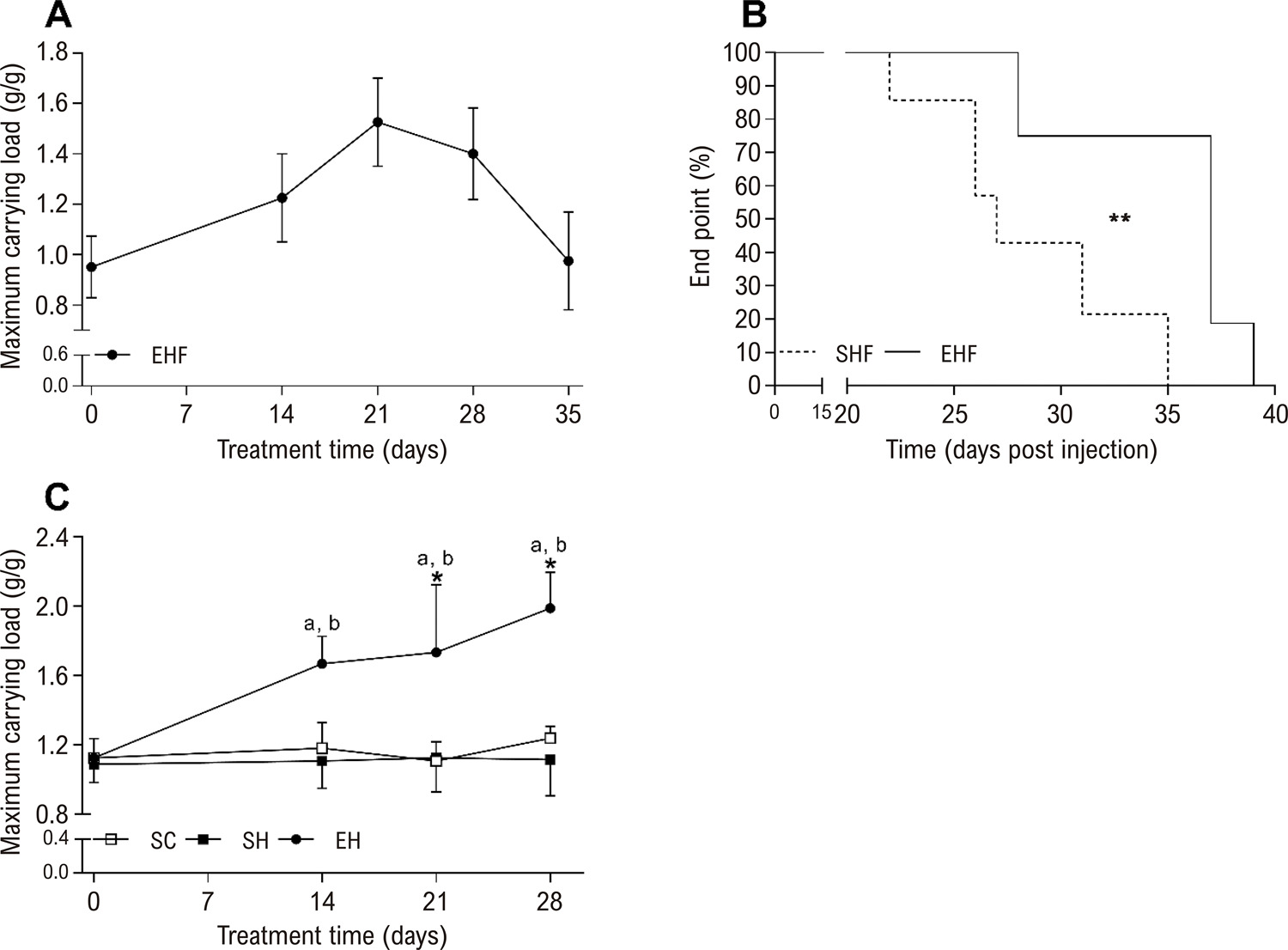
Male Wistar rats (Body weight: ~ 200 g) were used. To assess the time to potential heart failure onset (i.e., end point), rats were divided into sedentary hypertension until failure (SHF, n=6) and exercise hypertension until failure (EHF, n=6) groups. To test RT effects, rats were divided into sedentary control (SC, n = 7), sedentary hypertension (SH, n=7), and exercise hypertension (EH, n=7) groups. PAH was induced by two MCT injections (20 mg/kg, with 7 days interval). Exercise groups were submitted to an RT protocol (Ladder climbing; 55-65% of carrying maximal load), 5 times/week. Statistical significance was assumed at P < 0.05.

Results

RT prolonged the end point (~25 %), enhanced the physical effort tolerance (~ 55%), and mitigated the LV and cardiomyocyte contractility dysfunctions promoted by MCT by preserving the ejection fraction and fractional shortening, the amplitude of shortening, and the velocities of contraction and relaxation in cardiomyocytes. RT also prevented increases in left ventricle fibrosis and type I collagen caused by MCT, and maintained the type III collagen and myocyte dimensions reduced by MCT.

Conclusion

Low- to moderate-intensity RT benefits LV and cardiomyocyte contractile functions in rats during the development of MCT-induced PAH.

  • Exercise
  • Heart Failure
  • Myocytes, Cardiac
  • Physical Conditioning, Animal/methods
  • Pulmonary Hypertension
  • Rats
  • Ventricular Dysfunction, Left
Read Full Article
Creative Commons Attribution (CC BY) Creative Commons license
02/09/2022 DOI: 10.36660/abc.20210681 Views 1
Figure 1
ABC
Original Article

(-)-Carvone Modulates Intracellular Calcium Signaling with Antiarrhythmic Action in Rat Hearts

Gilmara Beatriz Andrade da Silva et al. Diego Santos Souza José Evaldo Rodrigues Menezes-Filho Júlio Alves da Silva-Neto … Jader dos Santos Cruz Danilo R. Roman-Campos Lucindo José Quintans-Júnior Carla Maria Lins de Vasconcelos

Abstract

Background:

(-)-Carvone is a monoterpene found in essential oils with antioxidant and anti-inflammatory activity.

Objective:

The aim of this paper was to analyze the antiarrhythmic property of (-)-carvone in the rat heart and its effects on the intracellular Ca2+ signaling.

Methods:

The effects of (-)-carvone were evaluated on the ventricular (0.5 mM) and atrial contractility (0.01 – 4 mM) and on electrocardiogram (0.5 mM). Fractional shortening, L-type calcium current (ICa,L) and Ca2+ signaling were measured in the isolated cardiomyocyte (0.5 mM). Antiarrhythmic effect was evaluated in arrhythmia model induced by calcium overload (0.5 mM) (n = 5). P < 0.05 was used as the significance level.

Results:

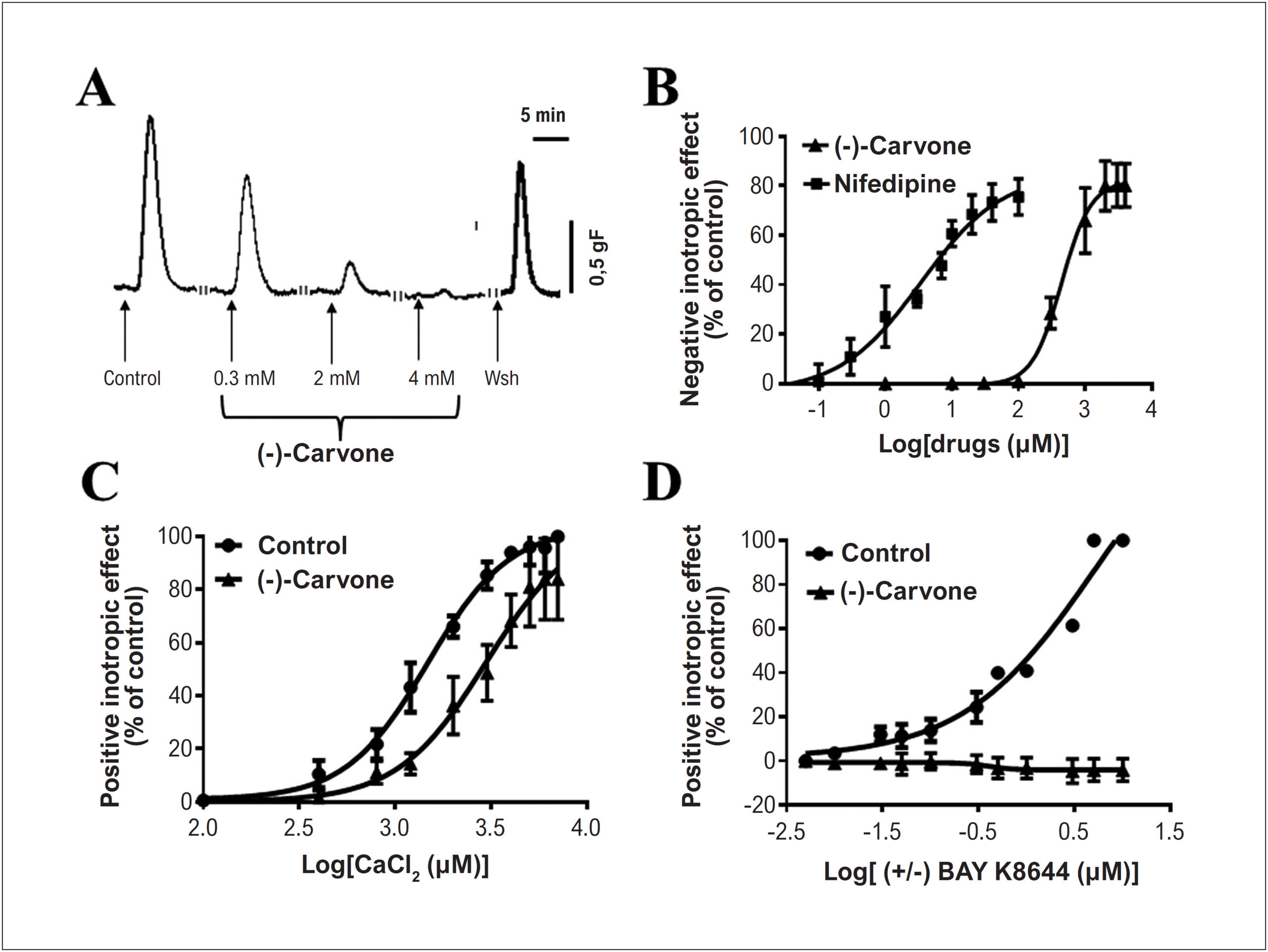
In the atrium, (-)-carvone evoked negative inotropism that was concentration-dependent (EC50 0.44 ± 0.11 mM) and decreased the positive inotropism evoked by CaCl2 (0.1 to 8.0 mM) or BAY K8644 (5 to 500 nM), an agonist of L-type Ca2+ channel. In isolated heart, (-)-carvone (0.5 mM) promoted reduction of ventricular contractility (73%) and heart rate (46%), increased PRi (30.7%, time from the onset of the P wave until the R wave) and QTc (9.2%, a measure of the depolarization and repolarization of the ventricles) without changing the QRS complex duration. (-)-Carvone decreased the fractional shortening (61%), ICa,L (79%) and Ca2+ intracellular transient (38%). Furthermore, (-)-carvone showed antiarrhythmic action, verified by decrease of the arrhythmia score (85%) and occurrence of ventricular fibrillation.

Conclusion:

(-)-Carvone decreases Ca2+ entry through L-type Ca2+ channels, reducing the cardiac contractility and intracellular Ca2+, and, therefore, presenting promising antiarrhythmic activity in the rat hearts.

  • Arrhythmias
  • cardiac
  • Monoterpenes
  • Rats
Read Full Article
Creative Commons Attribution (CC BY) Creative Commons license
05/08/2022 DOI: 10.36660/abc.20210499
IJCS
Editorial

Hyperthyroidism and Cardiac Contractility

Dhiãnah Santini de Oliveira Chachamovitz

Much information is lacking on hyperthyroidism and cardiac function, especially in isolated muscles. Certainly, the time the heart muscle is exposed to elevated thyroid hormones (TH) influences the magnitude of their effects. The primary changes seem to be related to increases in the heart mass/body mass ratio and in relaxation kinetics.

These cardiac changes may also be related not only to the time of exposure to excess thyroid hormones, but to the level or intensity of hyperthyroidism, as well as the underlying cardiac condition, which may reflect exercise conditioning and overload. In this sense, the cellular mechanisms of muscle adaptation, energy and oxygen consumption, certainly make differences. As well as muscle strength and sarcoplasmic/endoplasmic reticulum calcium (SRCa) activity, they may also have different individual adaptive characteristics.

[…]

  • Arrhythmias Cardiac
  • Calcium Channels
  • Heart Failure
  • Myocardial Contraction
  • Rats
  • thyroxine
Read Full Article
Creative Commons Attribution (CC BY) Creative Commons license
13/07/2022 DOI: 10.36660/ijcs.20220081 Views 1
Figure 1
ABC
Original Article

Pterostilbene Reduces Experimental Myocardial Infarction-Induced Oxidative Stress in Lung and Right Ventricle

Silvio Tasca et al. Cristina Campos Denise Lacerda Vanessa D. Ortiz … Patrick Turck Sara E. Bianchi Alexandre L. de Castro Adriane Belló-Klein Valquiria Bassani Alex Sander da Rosa Araújo

Abstract

Background

Pterostilbene (PS), a natural and antioxidant polyphenolic compound emerges as a promising intervention in improving the myocardial infarction (MI) damages.

Objetives

This study aimed to evaluate PS actions in promoting redox homeostasis in lungs and right ventricle (RV) of infarcted animals.

Methods

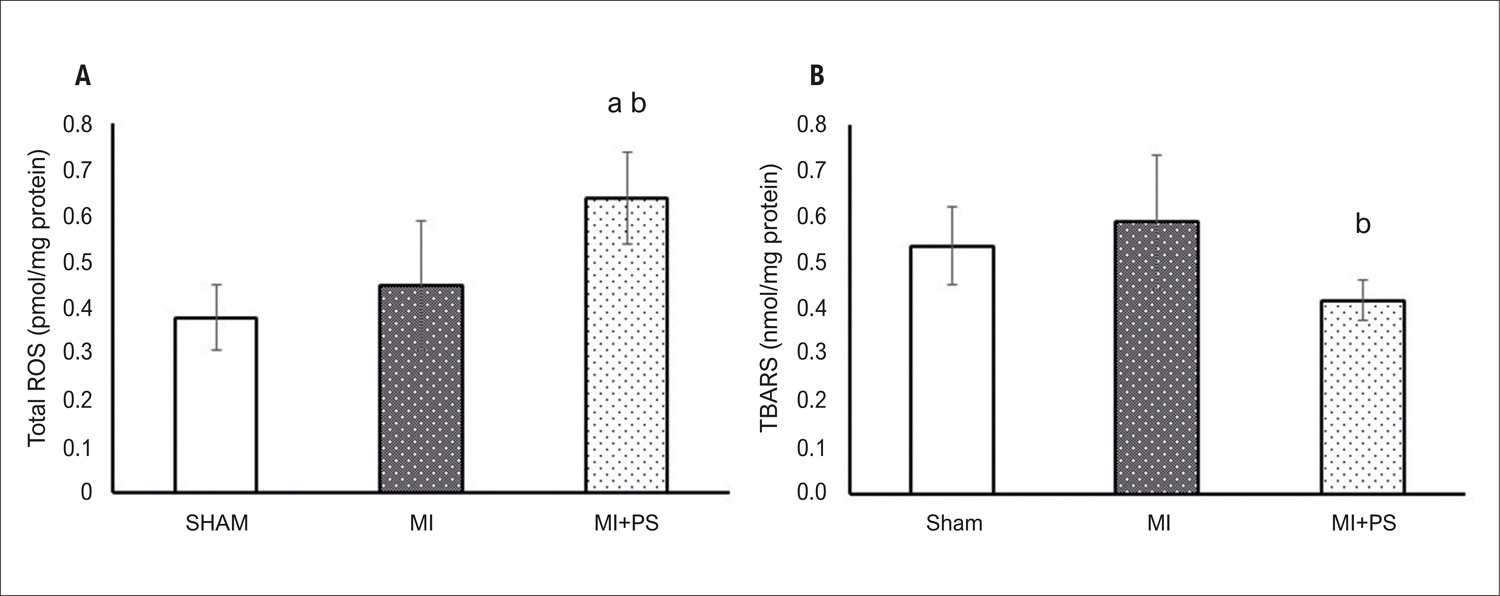
Male Wistar rats (60 day-old) were randomized into three groups: SHAM, MI (infarcted), and MI+PS (MI+pterostilbene). Seven days after MI procedure, rats were treated with PS (100 mg/kg/day) via gavage for eight days. Animals were euthanized and the lungs and RV were harvested for analyses of redox balance (Differences were considered significant when p<0.05).

Results

Our results show that MI triggers a redox disruption scenario in RV and lungs, which can contribute to MI-induced damage on these organs. Consistently, PS mitigated oxidative stress and restored antioxidant defenses (GSH in lungs: SHAM= 0.79±0.07; MI=0.67±0.05; MI+PS=0.86±0.14; p<0.05), indicating its protective role in this scenario.

Conclusions

Our work evidences the PS potential use as an adjuvant therapeutic approach after MI focusing on protecting pulmonary and right-sided heart tissues.

  • Antioxidants
  • Homeostasis
  • Hormesis
  • Myocardial Infarction
  • NADPH Oxidases
  • Oxidative Stress, Nitric Oxidase Synthase
  • Pterostilbene
  • Rats
Read Full Article
Creative Commons Attribution (CC BY) Creative Commons license
07/03/2022 DOI: 10.36660/abc.20201155 Views 2
ABC
Editorial

The Importance of Time-Course Studies Using Experimental Models of Cardiac Diseases

Diego Santos Souza et al. Danilo Roman-Campos

According to the American College of Cardiology, Heart Failure (HF) Syndrome is defined as a complex clinical syndrome that results from any structural or functional impairment of ventricular filling or ejection of blood. The etiological agent of the clinical syndrome of HF may result from different causes, which impact the prognosis and impose the necessity for specific treatment strategies, underlining the relevance of specific data elements for emphasizing these differences in HF, including the time course evolution of HF. This view is similar to the current Brazilian guideline for HF. Despite improvement in HF treatment and management, with a reduction in overall mortality rate over time, the death number and economic costs are still high. In 2014 a deep revision including 197 countries showed that HF’s overall global economic cost in 2012 was estimated at $108 billion per annum. Importantly, HF spending was largely different in high-income, middle, and low-income countries. For example, between 2014-2020, the annual median total medical costs for heart failure care were estimated at $24,383 per patient in the United States of America, meanwhile in Brazil in 2015, the average cost per patient with HF was 1,569 US$, taking into account the exchange rate in 2015. The high cost per patient is probably related to the lack of effective therapies to improve human health during HF. Then unveiling the molecular basis of cardiac remodeling found in the disease is one of the main challenges in cardiovascular medicine.

In the last years, significant advances in understanding molecular mechanisms of adaptive and maladaptive hypertrophy and heart failure in response to stress signals have shown that many extracellular factors and signaling pathways are involved in the remodeling of cardiomyocytes, the working cells found in the heart tissue. Since the time course of HF is etiological-dependent, it is fundamental to understand how the HF syndrome develops. For example, the intracellular dynamics of Ca2are modified in the different etiologies of HF with reduced (HFrEF) or preserved (HFpEF) ejection fraction. In animal models of diabetic or hypertensive HFpEF and HFrEF, studies have shown that magnitude and kinetics of Ca2release remain unchanged in both HFpEF models but impaired in HFrEF. Although Sarco/endoplasmic reticulum Ca2adenosine triphosphatase-2a (SERCA) protein density was reduced in these HFrEF and HFpEF models, in the HFpEF model for hypertension, this is offset by increased PLB phosphorylation (Phospholamban is a protein able to modulate SERCA2A), but not in diabetic HFrEF and HFpEF resulting in delay intracellular Ca2reuptake by SERCA.

[…]

  • Cardiovascular Diseases
  • Health Care Costs
  • Heart Failure
  • Mortality
  • Myoctes Cardiac
  • Rats
  • Ventricular Remodeling
Read Full Article
Creative Commons Attribution (CC BY) Creative Commons license
07/03/2022 DOI: 10.36660/abc.20210997 Views 1
IJCS
Original Article

Effects of Hyperthyroidism on Contractility and Na+/Ca2+ Exchanger Activity in the Isolated Papillary Muscle of Rats

Angela Mara Rambo et al. João Victor Capelli Peixoto Rebeca Alves Lins de Albuquerque Ilana Kassouf Silva Rosalvo Tadeu Hochmueller Fogaça

Abstract

Background:

Hyperthyroidism (Hy) is an endocrine disorder, in which the thyroid hormones markedly alter the cardiac function. Increased myocardial contractility and cardiac output, improvement in diastolic relaxation, changes in electrical activity, increments in ventricular mass, and arrhythmias have been reported. However, the influences of thyroid hormones upon molecular mechanisms of cardiac functions have not yet been fully understood.

Objectives:

To evaluate changes in cardiac contractile parameters and the Na+/Ca2+ exchanger (NCX) function in induced hyperthyroid rats.

Methods:

Hy was induced by intraperitoneal injections of T3 (15 μg/100 g) for 10 days. Contractile parameters and NCX function were evaluated in the isolated papillary muscle. Data normality was confirmed by the Shapiro-Wilk test. The comparison between groups was performed through an unpaired Student’s t-test. Results are expressed as mean ± SD. The accepted significance level was p < 0.05.

Results:

Our data revealed, in the Hy group, an increase of 30.98% in the maximum speed of diastolic relaxation (–284.64 ± 70.70 vs. –217.31 ± 40.30 mN/mm2/sec (p = 0.027)) and a boost of 149% in the NCX function in late phase of relaxation (20.17 ± 7.90 vs. 50.22 ± 11.94 minutes (p = 0.002)), with no changes in the maximum twitch force (p = 0.605) or maximum speed of systolic contraction (p = 0.208) when compared to the control.

Conclusion:

The improvement in relaxation parameters is hypothetically attributed to an increase in Sarco-Endoplasmic Reticulum Ca2+ATPase isoform 2 (SERCA2) expression and an increased calcium flow through L-type channels that boosted the NCX function.

  • Hyperthyroidism
  • Myocardial Contraction
  • papillary muscles
  • Rats
  • Sodium-Calcium Exchanger
  • Thyroid Hormones
Read Full Article
Creative Commons Attribution (CC BY) Creative Commons license
25/02/2022 DOI: 10.36660/ijcs.20210023 Views 2
IJCS
Original Article

Radioprotective Effect of Nigella Sativa Oil on Heart Tissues of Rats Exposed to Irradition

Mehmet Kaplan et al. Elif Demir Fethi Yavuz Gizem Ilgin Kaplan … Mehmet Resit Taysi Seyithan Taysi Mehmet Murat Sucu

Abstract

Background

Various studies are ongoing related to the radioprotective agents. Herbal preparations are currently becoming popular because of their beneficial effects with fewer side effects compared to the synthetic/semi-synthetic medicines, and Nigella sativa oil (NSO) is only one of them.

Objective

To investigate NSO for its antioxidant effects on the heart tissue of rats exposed to ionizing radiation (IR).

Methods

Thirty six male albino Wistar rats, divided into four groups, were designated to group I (IR plus NSO group) that received both 5 Gray of gamma IR to total cranium and NSO; group II (IR alone group) that received IR plus saline, group III (control group of NSO) that received saline and did not receive NSO or IR; group IV (control group) that received only sham IR. Alterations in Total antioxidant status (TAS) and Total oxidant status (TOS), Oxidative stres index (OSI), Sulhydryl group (SH), Lipid hydroperoxide (LOOH), Paraoxonase (PON) levels, Arylesterase (ARE) and Ceruloplasmin (CER) activities in homogenized heart tissue of rats were measured by biochemical methods.

Results

In heart tissue of the rats in the IR alone group (group II) LOOH, TOS and OSI levels were found to be higher, ARE activity and TAS level were found to be lower than all of the other groups (p < 0.01). These results also support that IR increases oxidative stress and NSO's protective effect.

Conclusion

NSO would reduce the oxidative damage in the irradiated heart tissue in the experimental rat model.

  • Anti-Inflammatory Agents/therapeutic use
  • Nigella Sativa Oil
  • Plants, Medicinal
  • radiation
  • Radiation, Effects
  • Rats
Read Full Article
Creative Commons Attribution (CC BY) Creative Commons license
07/01/2022 DOI: 10.36660/ijcs.20210055 Views 2
ABC
Editorial

Preconditioning in Ischemia-Reperfusion Lesion

Mariana Gatto et al. Gustavo Augusto Ferreira Mota Luana Urbano Pagan Mariana Janini Gomes Marina Politi Okoshi

Ischemic heart disease is characterized by a decrease in myocardial blood flow, which reduces the relationship between oxygen supply and demand. The condition has attracted the attention of the scientific community due to its high incidence, elevated morbidity and mortality, and high therapeutic cost. The treatment primarily relies on myocardial revascularization. Paradoxically, reperfusion and restoration of blood flow can cause additional damage, called myocardial ischemia-reperfusion (IR) injury. Several mechanisms are involved in the IR injury, such as ionic homeostasis change, intracellular calcium transient alteration, metabolic and mitochondrial dysfunction, inflammation, and reactive oxygen species increase., These factors may contribute to an increase in the myocardial necrosis size, post-ischemia heart failure, and death.

First identified in the mid-1980s, ischemic preconditioning is a process whereby repeated application of short periods of ischemia alternating with reperfusion protect the myocardium from longer ischemic insults, therefore reducing the infarction size., The beneficial effect of ischemic preconditioning was shown in angina patients; when evolving to myocardial infarction, they had a smaller infarcted area and a better clinical prognosis than previously asymptomatic patients., Additionally, preconditioning of rats with acute physical stress prior to the IR insult reduced infarct size and improved hemodynamic parameters.

[…]

  • Animal
  • Apoptosis
  • Drug Therapy
  • Myocardial Ischemia
  • Myocardial Reperfusion
  • Physical Conditioning
  • Rats
Read Full Article
Creative Commons Attribution (CC BY) Creative Commons license
03/12/2021 DOI: 10.36660/abc.20210908
ABC
Editorial

Searching Naturally Occurring Compounds to Treat Hypertension

Diego Santos Souza et al. Danilo Roman-Campos

Cardiovascular diseases (CDs) are the major cause of death worldwide. Impressively, approximately 17.9 million people died from CDs in 2019, representing almost 32% of global deaths. Also, nearly three-quarters of deaths due to CDs occur in low- and middle-income countries, which is a risk factor for Brazilians. There are several underlying mechanisms involved in CDs, and hypertension is a significant contributor. Today, it is thought that about 1.28 billion adults aged 30-79 years have hypertension in the world. Furthermore, it has been estimated that 60–70% of hypertension in adults is attributable to obesity, associated with insulin resistance, dyslipidemia and metabolic syndrome. Also, almost 50% of adults with hypertension are unaware of its condition, and only 20% have hypertension under control.

According to the American College of Cardiology and the American Heart Association, Normal Blood pressure (BP) is considering when Systolic Blood Pressure (SBP) is <120 mm Hg and < 80 mm Hg for diastolic blood pressure (DBP). Elevated BP is considered when SBP is 120-129, and DBP is 140 mm Hg, respectively, or DBP is 80-89 mm Hg or >90 mm Hg, respectively. These values follow the most recent Brazilian guideline to diagnostic hypertension.

[…]

  • Biological Products
  • Cardiovascular Diseases
  • Diet
  • Hypertension
  • Mortality
  • Prevention and Control
  • Rats
  • Sauromatum Gluttatum/therapeutic use
Read Full Article
Creative Commons Attribution (CC BY) Creative Commons license
03/12/2021 DOI: 10.36660/abc.20210869 Views 1
ABC
Editorial

A New Therapeutic Alternative for the Treatment of Pulmonary Hypertension?

Ricardo J Gelpi

In this issue of the journal Arquivos Brasileiros de Cardiologia, important and original research work on rats is published. The work is important because pulmonary hypertension represents a serious pathology that is very difficult to treat. The only way to relieve patients is lung transplantation, but are very well known the difficulties and limitations of this treatment. The work is also original because a lot has been published about the beneficial effects of copaiba oil, such as its anti-inflammatory action, analgesic effect, and ability to prevent infections and improve the healing process. However, the beneficial effect of copaiba oil on pulmonary hypertension had not been described. In this sense, the group led by Adriane Belló Klein has been working for several years on this important issue of pulmonary hypertension in general,– and the effects of copaiba oil on this particular pathology,, which has made this research group an international benchmark on this theme.

It is important to mention that pulmonary hypertension induced in rats by monocrotaline produces vascular lesions very similar to those found in patients with this pathology., In essence, what the work published in this issue of the journal Arquivos Brasileiros de Cardiologia shows is that the administration of copaiba oil to a group of rats with pulmonary hypertension induced by monocrotaline produces a clear beneficial effect, through the decrease in peripheral blood indicators of oxidative stress, a reduction in pulmonary vascular resistance, and a favorable remodeling of the right ventricle, with a reduction in hypertrophy, which translates into a better systolic function of that ventricle. This finding is very important because it is well known that myocardial hypertrophy is one of the most important causes of heart failure and sudden death. The positive relationship between the degree of hypertrophy and the decrease in oxidative stress shown by the authors is clearly proven in this work by the high r-value obtained when these two variables were correlated. However, and beyond this important correlation, future studies should determine if the beneficial effect on the right ventricle is due to the reduction of oxidative stress or if there is also a direct effect of copaiba oil on myocardial fibers. Perhaps experiments that could be carried out on isolated hearts would make it possible to detect or not a direct impact of this natural agent. In this sense, it is important to mention that the authors of this study also published an interesting work previously where they showed that the administration of copaiba oil decreased apoptosis signals in the hypertrophic right ventricle and attributed the better remodeling to a possible decrease in the apoptosis mentioned above; obviously this same mechanism could be acting in the work that we are commenting now. Nevertheless, here it is important to make some clarifications that may allow a better understanding of what is happening in these hearts with hypertrophy secondary to pulmonary hypertension.

[…]

  • Cardiomegaly
  • Copaiba Oil
  • Cor Pulmonale
  • Fabaceae
  • Heart Failure
  • Hypertension,Pulmonary
  • Lung Transplantation
  • Monocrotaline
  • Oxidative Stress
  • phytotherapy
  • Rats
Read Full Article
Creative Commons Attribution (CC BY) Creative Commons license
03/12/2021 DOI: 10.36660/abc.20210935
ABC
Editorial

Can We Pretreat Vein Grafts with Adiponectin to Improve Their Patency?

Maria Cristina de Oliveira Izar et al. Francisco A. H. Fonseca

Saphenous vein graft remains an option for patients with multivessel coronary artery disease,, mainly in individuals with type 2 diabetes. Although artery bypass should offer better patency rates than venous grafts, in many situations, complete revascularization cannot be achieved using solely arterial grafts. Venous graft failure has been associated with cardiovascular outcomes, including mortality., Therefore, there is a need to improve vein graft patency. The mechanisms involved in graft failure include intimal hyperplasia, smooth muscle cell proliferation, and endothelial dysfunction, among others., There have been some attempts to improve the preservation of saphenous vein grafts before implantation.

In the experimental study by Zhou et al. the authors used autologous jugular veins implanted as carotid interposition grafts in Sprague Dawley rats. Two groups received adiponectin (2.5 μg and 7.5 μg) applied externally to the vein bypass grafts, suspended in a 30% Pluronic-F127 gel. The other two groups (controls) received vehicle or no treatment (bypass only). At day 3, cell proliferation was significantly lower in adiponectin-treated versus control and vehicle-gel-treated grafts, both in intima and adventitia, whereas expression of VCAM-1 and ICAM-1 was significantly down-regulated in the adiponectin-treated vein grafts in week four. In addition, the treatment of vein grafts with adiponectin-loaded gels reduced intimal, media, and adventitia thickness when compared with the control and vehicle-gel-treated vein grafts at day 28.

[…]

  • Adiponectin/therapeutic use
  • Capillary Permeability
  • Coronary Artery Disease
  • Rats
  • Saphenous Vein
Read Full Article
Creative Commons Attribution (CC BY) Creative Commons license
03/12/2021 DOI: 10.36660/abc.20210902 Views 1
Figure 1
ABC
Original Article

Dexmedetomidine Preconditioning Reduces Myocardial Ischemia-Reperfusion Injury in Rats by Inhibiting the PERK Pathway

YuJiao Chen et al. Song Cao Hui Chen CunZhi Yin … XinPeng Xu ZaiQun Yang

Abstract

Background

Ischemic heart disease has attracted much attention due to its high mortality rates, treatment costs and the increasing morbidity in the young population. Strategies for reperfusion have reduced mortality. However, reperfusion can lead to cardiomyocyte death and subsequent irreversible myocardial damage. At present, the timely and targeted treatment of ischemia-reperfusion (I/R) injury is often lacking.

Objectives

To evaluate if dexmedetomidine (DEX) has a protective effect in myocardiual I/R and explore the possible mechanism behind it.

Methods

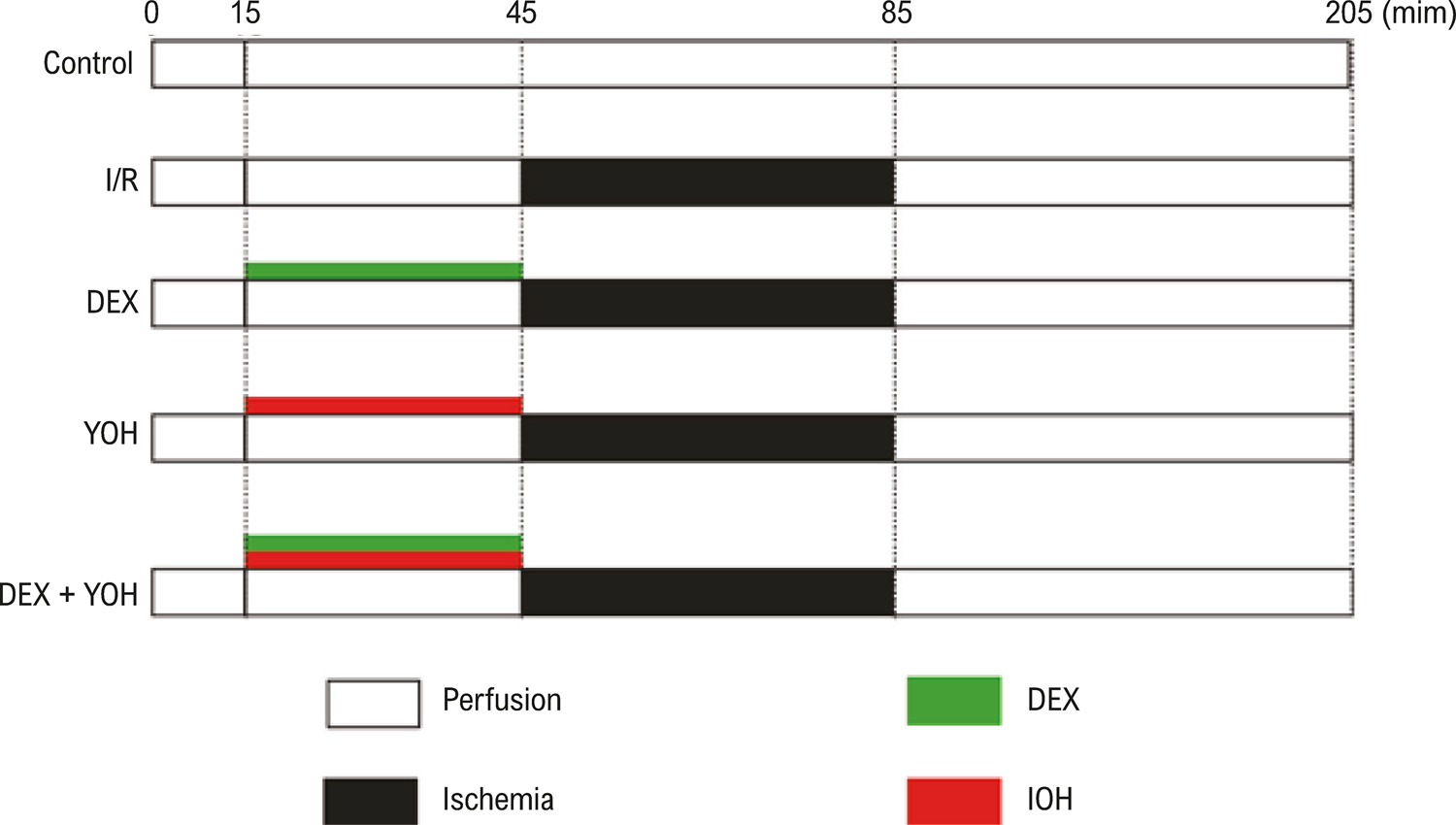
Rat hearts were perfused with a Langendorff perfusion system, and randomly assigned to five groups: control group, perfused with Krebs-Henseleit (K-H) solution for 205 minutes without ischemia; and four test groups that underwent 40 minutes of global ischemia and 120 min of reperfusion. The DEX group, the yohimbine (YOH) group and the DEX + YOH group were perfused with DEX (10 nM), YOH (1 μM) or the combination of DEX and YOH prior to reperfusion, respectively. Cardiac hemodynamics, myocardial infarct size, and myocardial histology were evaluated. The expression of glucose-related protein 78 (GRP78), protein kinase R-like ER kinase (PERK), phosphorylated PERK, eukaryotic initiation factor 2α (eIF2α), phosphorylated eIF2α, activating transcription factor 4 (ATF4), and CCAAT/enhancer-binding protein homologous protein (CHOP) were assessed. P<0.05 was considered to indicate a statistically significant difference.

Results

DEX preconditioning improved the cardiac function of I/R hearts, reduced myocardial infarction, myocardial apoptosis, and the expression of GRP78, p-PERK, eIF2α, p-eIF2α, ATF4 and CHOP.

Conclusions

DEX pretreatment reduced myocardial I/R injury by suppressing apoptosis, which was induced by the PERK pathway.

  • Dexmedetomidine
  • Hipnotics and Sedatives
  • Ischemic Cardiomyopathy/mortality
  • Myocardial Reperfusion
  • Protein Kinases
  • Rats
Read Full Article
Creative Commons Attribution (CC BY) Creative Commons license
08/10/2021 DOI: 10.36660/abc.20200672 Views 1
Figure 1
ABC
Original Article

Cardioprotective Effect of Maternal Supplementation with Resveratrol on Toxicity Induced by Doxorubicin in Offspring Cardiomyocytes

Verônica Bidinotto Brito et al. Leopoldo Vinicius Martins Nascimento Dinara Jaqueline Moura Jenifer Saffi

Abstract

Background

Doxorubicin (DOX) is frequently used to treat many types of cancers, despite its dose-dependent cardiotoxicity. Alternatively, resveratrol is a polyphenol that has shown useful cardioprotective effects in many heart dysfunction models.

Objective

This study investigated whether resveratrol treatment in pregnant rats protects against doxorubicin-induced toxicity in offspring cardiomyocytes.

Methods

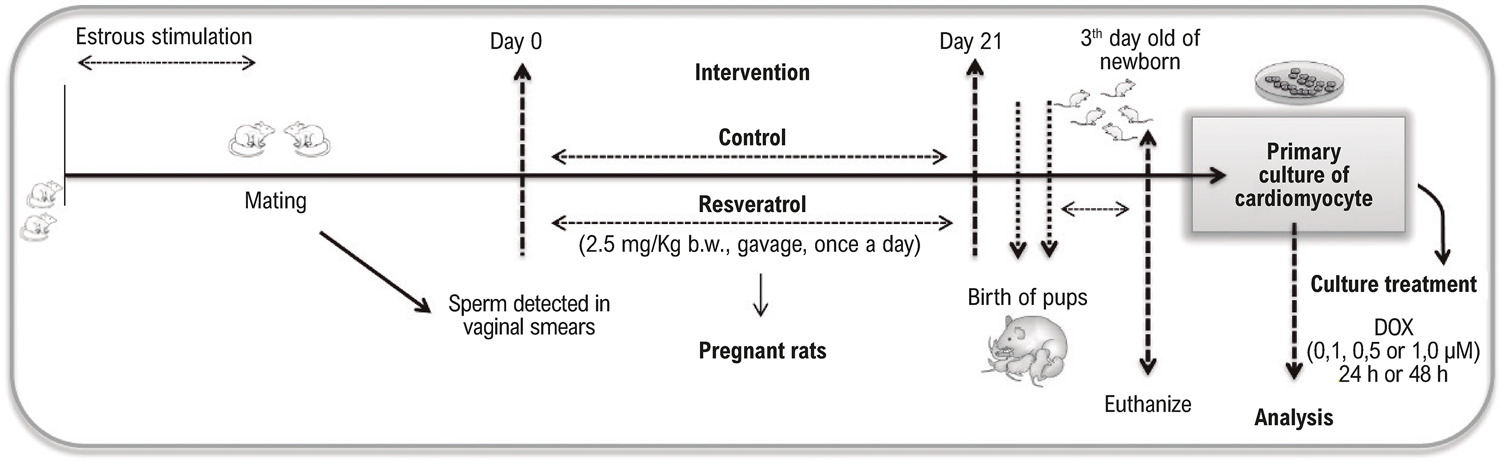
Wistar rats (n=8) were supplemented with dietary resveratrol during pregnancy. Upon the offspring’s birth, hearts (9-11) were used to obtain the primary culture of cardiomyocytes. DOX-induced cardiotoxicity and the effects of resveratrol supplementation were evaluated by oxidative stress markers, such as dichlorofluorescein diacetate oxidation, decrease in the activity of antioxidant enzymes, and oxidation of total sulfhydryl content, in addition to cell viability evaluation, DNA damage generation, and DNA damage repair response. A value of p<0.05 was considered statistically significant.

Results

Neonatal cardiomyocytes from resveratrol supplemented rats exhibiting an increase (p<0.01) in cell viability and lower (p<0.0001) apoptotic/necrotic cells after DOX treatment, which correlates with the activities of antioxidant enzymes and dichlorofluorescein production. Moreover, resveratrol protected cardiomyocytes from DOX-induced DNA damage, showing a decrease (p<0.05) in DNA breaks induced by oxidative stress, evaluated by the activity of DNA-repair enzymes endonuclease III and formamidopyrimidine glycosylase. Supplementation with resveratrol increased (p<0.05) the expression of the repair protein Sirt6 in the cardiomyocytes of the pups.

Conclusion

This research indicates that supplementation with resveratrol during the gestational period has a notable cardioprotective effect on the offspring’s heart against DOX-induced toxicity, which may well be due to its antioxidant function, and the increase in the DNA damage repair response.

  • cardiomyocytes
  • DNA Repair Enzymes
  • Doxorubicin
  • Rats
  • Resveratrol
Read Full Article
Creative Commons Attribution (CC BY) Creative Commons license
08/10/2021 DOI: 10.36660/abc.20200752 Views 2
Figure 1
ABC
Original Article

Antihypertensive Activity of Sauromatum guttatum Mediated by Vasorelaxation and Myocardial Depressant Effects

Bibi Rabia et al. Umme Salma Kashif Bashir Taous Khan Abdul Jabbar Shah

Abstract

Background:

Sauromatum guttatum (S. guttatum) is used in the treatment of blood disorders and reportedly has a spasmolytic activity through Ca2+channel inhibition.

Objectives:

The aim of this study was to investigate the antihypertensive potential of S. guttatum in high salt-induced hypertensive Sprague-Dawley (SD) rat model (HSHRs).

Methods:

SD rats were divided into normotensive, hypertensive, S. guttatum and verapamil treated groups. S. guttatum crude extract (Sg.Cr) (100, 150 and 300 mg/kg/day) and verapamil (5, 10 and 15 mg/kg/day) were administered orally along with NaCl. Aortic rings and right atrial strips from normotensive rats were used to investigate the underlying mechanisms. The level of statistical significance was set at 5%.

Results:

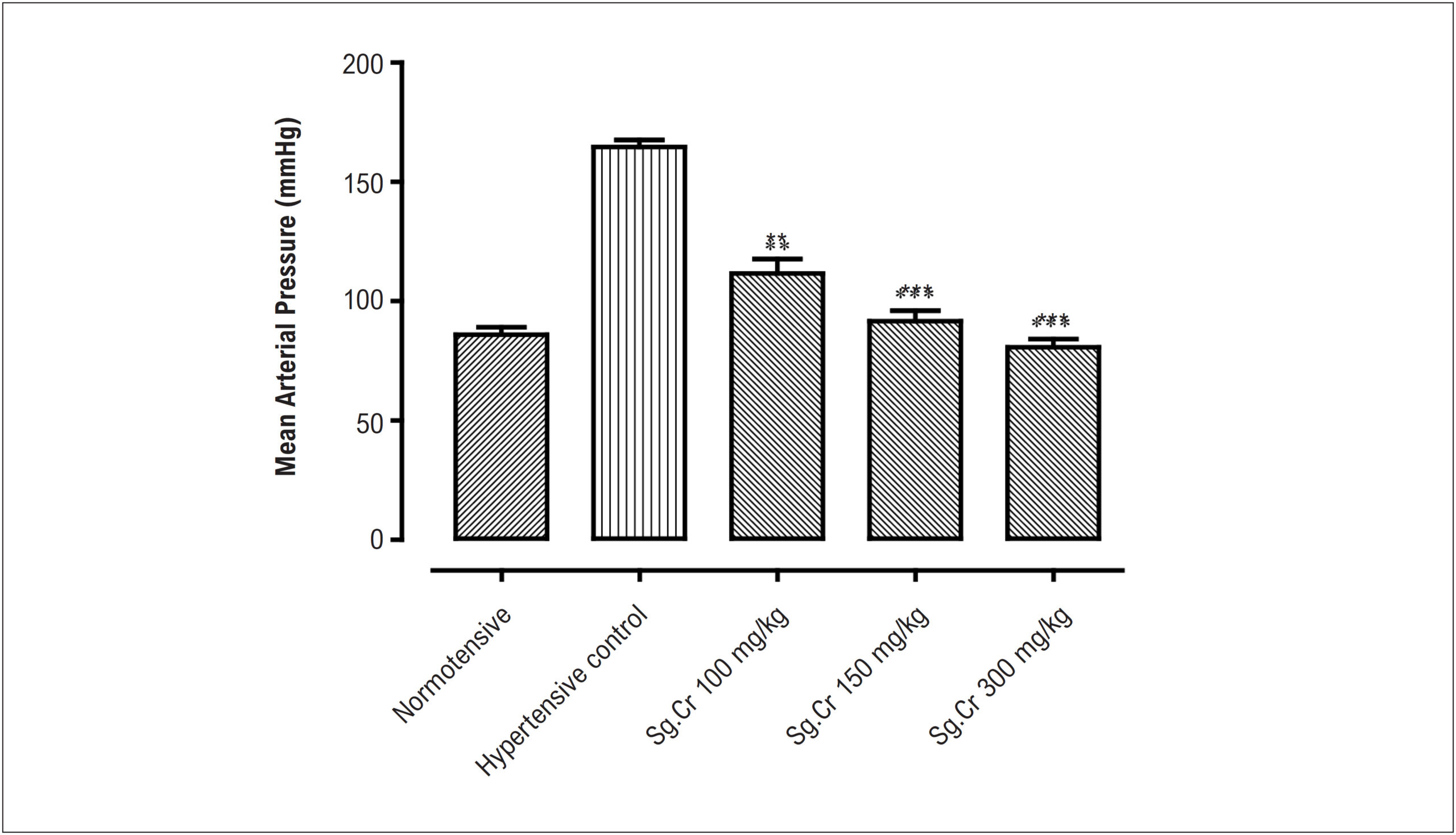
Mean arterial pressure decreased in the Sg.Cr and verapamil-treated hypertensive groups in a dose-dependent manner (p < 0.001). In the vascular reactivity study, acetylcholine induced relaxations with an EC50value of 0.6 µ g/mL (0.3–1.0) in Sg.Cr-treated hypertensive rats (300 mg/kg), suggesting endothelial preservation. In isolated normotensive rat aorta, Sg.Cr-treated rats showed vasorelaxation with an EC50value of 0.15 mg/mL (0.10-0.20), ablated by endothelial denudation or pretreatment withL-NAME and atropine. Sg.Cr treatment caused relaxation against high K+-induced contractions, like verapamil. Sg.Cr showed negative inotropic (82%) and chronotropic effects (56%) in isolated rat atrial preparations reduced with atropine. The phytochemical investigation indicated presence of alkaloids, flavonoids and tannins.

Conclusion:

S. guttatum has a vasodilatory effect through endothelial function preservation, muscarinic receptor-mediated NO release and Ca2+movement inhibition, while atrial myocardial depressant effect can be linked to the muscarinic receptor. These findings provide pharmacological base for using S. guttatum extract as an antihypertensive medication.

  • Antihypertensive
  • Blood Pressure
  • calcium channel blockers
  • Cardiac Performance
  • Hypertension
  • Rats
  • Sauromatum guttatum
  • Vasodilatation
Read Full Article
Creative Commons Attribution (CC BY) Creative Commons license
04/09/2021 DOI: 10.36660/abc.20200055
Figure 1
ABC
Original Article

Vitamin D Supplementation Induces Cardiac Remodeling in Rats: Association with Thioredoxin-Interacting Protein and Thioredoxin

Priscila P. dos Santos et al. Bruna P. M. Rafacho Andrea F. Gonçalves Vanessa C. M. Pires … Meliza G. Roscani Paula S. Azevedo Bertha F. Polegato Marcos F. Minicucci Ana Angélica H. Fernandes Suzana E. Tanni Leonardo A. M. Zornoff Sergio A. R. de Paiva

Abstract

Background:

Vitamin D (VD) has been shown to play an important role in cardiac function. However, this vitamin exerts a biphasic “dose response” curve in cardiovascular pathophysiology and may cause deleterious effects, even in non-toxic doses. VD exerts its cellular functions by binding to VD receptor. Additionally, it was identified that the thioredoxin-interacting protein (TXNIP) expression is positively regulated by VD. TXNIP modulate different cell signaling pathways that may be important for cardiac remodeling.

Objective:

To evaluate whether VD supplementation lead to cardiac remodeling and if TXNIP and thioredoxin (Trx) proteins are associated with the process.

Methods:

A total of 250 Male Wistar rats were allocated into three groups: control (C, n=21), with no VD supplementation; VD3 (n = 22) and VD10 (n=21), supplemented with 3,000 and 10,000 IU of VD/ kg of chow respectively, for two months. The groups were compared by one-way analysis of variance (ANOVA) and Holm-Sidak post hoc analysis, (variables with normal distribution), or by Kruskal-Wallis test and Dunn’s test post hoc analysis. The significance level for all tests was 5%.

Results:

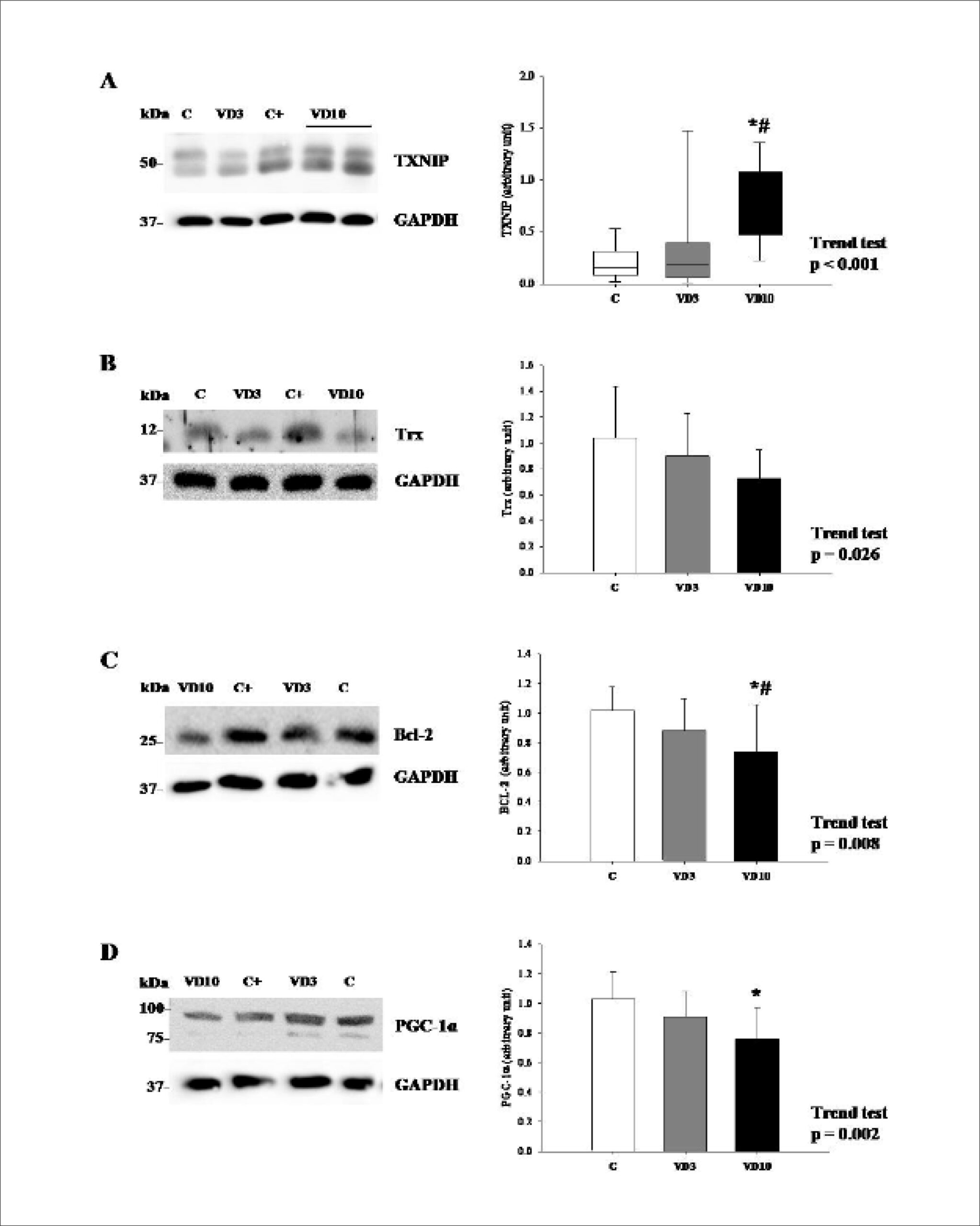
TXNIP protein expression was higher and Trx activity was lower in VD10. The animals supplemented with VD showed increased lipid hydroperoxide and decreased superoxide dismutase and glutathione peroxidase. The protein Bcl-2 was lower in VD10. There was a decrease in fatty acid β-oxidation, tricarboxylic acid cycle and electron transport chain with shift to increase in glycolytic pathway.

Conclusion:

VD supplementation led to cardiac remodeling and this process may be modulated by TXNIP and Trx proteins and consequently oxidative stress.

  • Oxidative Stress
  • Rats
  • Thioredoxins
  • Ventricular Remodeling
  • Vitamin D
Read Full Article
Creative Commons Attribution (CC BY) Creative Commons license
17/05/2021 DOI: 10.36660/abc.20190633 Views 1
Figure 1
ABC
Original Article

Inhibiting Glucose Metabolism By miR-34a and miR-125b Protects Against Hyperglycemia-Induced Cardiomyocyte Cell Death

Chao-rui Xu et al. Qiu-ju Fang

Abstract

Background:

It is well-known that insulin resistance and hyperglycemia are important pathological causes for the development of diabetic cardiomyopathy (DCM). However, its precise molecular mechanisms in the pathogenesis of DCM remain unclear.

Objectives:

Recent studies reveal that microRNAs (miRNA) play essential roles in the pathogenesis of DCM. This project aimed to determine the roles of miR-34a and miR-125b in hyperglycemia-induced cardiomyocyte cell death.

Methods:

Rat primary cardiomyocytes were isolated and exposed to normal and high concentrations of glucose. Cell viability was measured using MTT assay. Expressions of miR-34a and miR-125b were detected by qRT-PCR. Potential targets of miR-34a and miR-125b were predicted from www.Targetscan.org and validated from human heart tissues. A statistical significance of p<0.05 was considered.

Results:

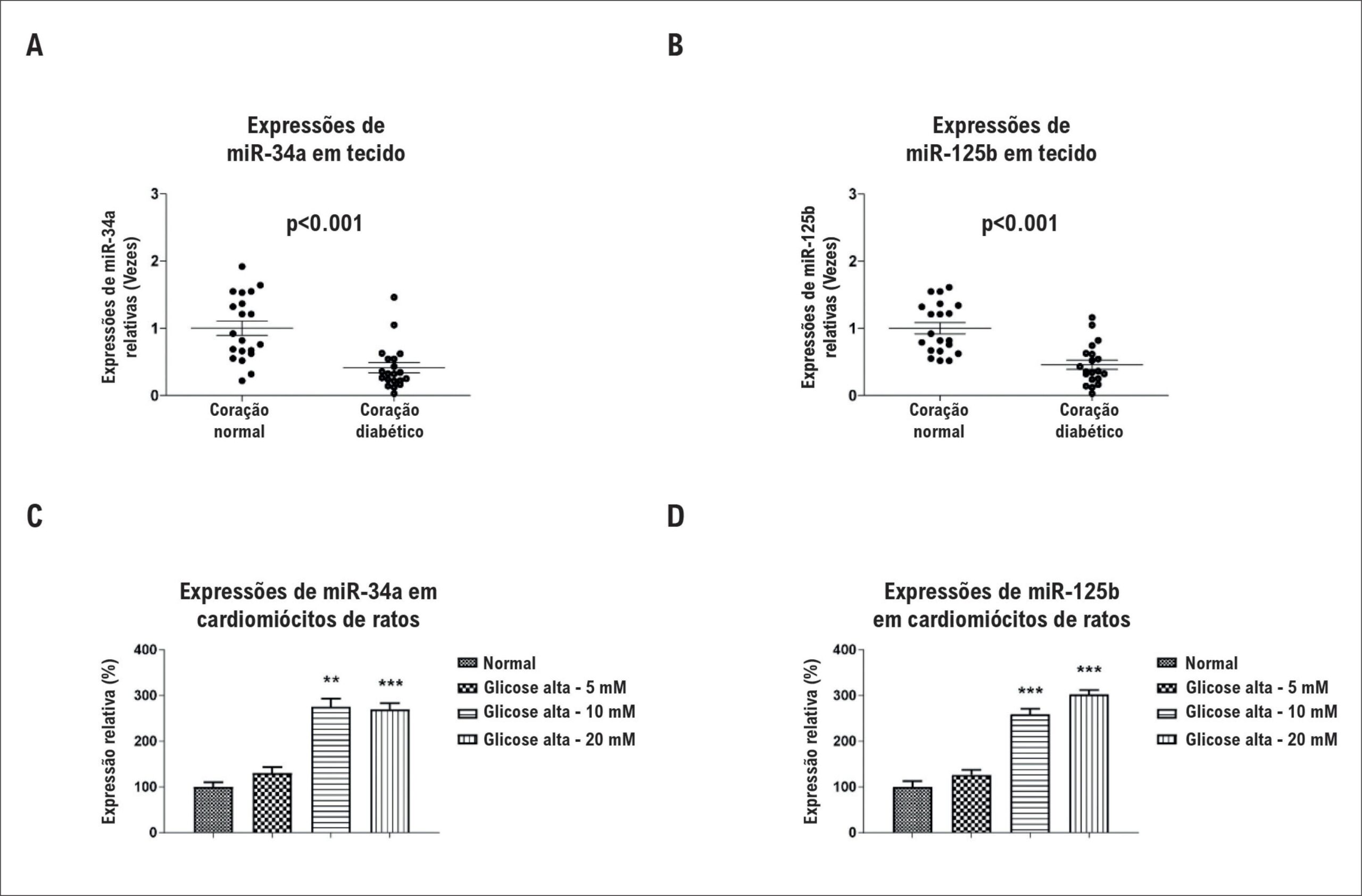
The present study shows that miR-34a and miR-125b are downregulated in a human diabetic heart. Moreover, in vitro data from rat primary cardiomyocytes showed that short-term high glucose treatment stimulates miR-34a and miR-125b expressions. Under high glucose, it was found that rat cardiomyocytes displayed increased intracellular glucose metabolism, and glucose uptake and lactate production were significantly increased. It was also found that the key glucose metabolic enzymes, Hexokinase 2 (HK2) and Lactate dehydrogenase-A (LDHA), were direct targets of miR-125b and miR-34a, respectively. Overexpression of miR-125b and miR-34a could prevent hyperglycemia-induced cardiomyocyte cell death. Finally, the restoration of HK2 and LDHA in miR-125b and miR-34a overexpressed cardiomyocytes recovered the cardiomyocytes’ sensitivity to hyperglycemia.

Conclusion:

Our results proposed a molecular mechanism for the microRNA-mediated diabetic cardiovascular protection and will contribute to developing treatment strategies for diabetes-associated cardiovascular dysfunction.

  • Cell Death
  • Diabetic Cardiomyopathies
  • Glicose Metabolism Disordes
  • Hiperglycemia
  • Myocytes,Cardiac
  • Rats
Read Full Article
Creative Commons Attribution (CC BY) Creative Commons license
23/04/2021 DOI: 10.36660/abc.20190529 Views 1
Figure 1
ABC
Original Article

Effects of Late Aerobic Exercise on Cardiac Remodeling of Rats with Small-Sized Myocardial Infarction

Lidiane M. Souza et al. Marina P. Okoshi Mariana J. Gomes Mariana Gatto … Eder A. Rodrigues Thierres H. D. Pontes Felipe C. Damatto Leiliane R. S. Oliveira Patrícia Aparecida Borim Aline R. R. Lima Leonardo A. M. Zornoff Katashi Okoshi Luana U. Pagan

Abstract

Background:

Physical exercise has been considered an important non-pharmacological therapy for the prevention and treatment of cardiovascular diseases. However, its effects on minor cardiac remodeling are not clear.

Objective:

To evaluate the influence of aerobic exercise on the functional capacity, cardiac structure, left ventricular (LV) function, and gene expression of NADPH oxidase subunits in rats with small-sized myocardial infarction (MI).

Methods:

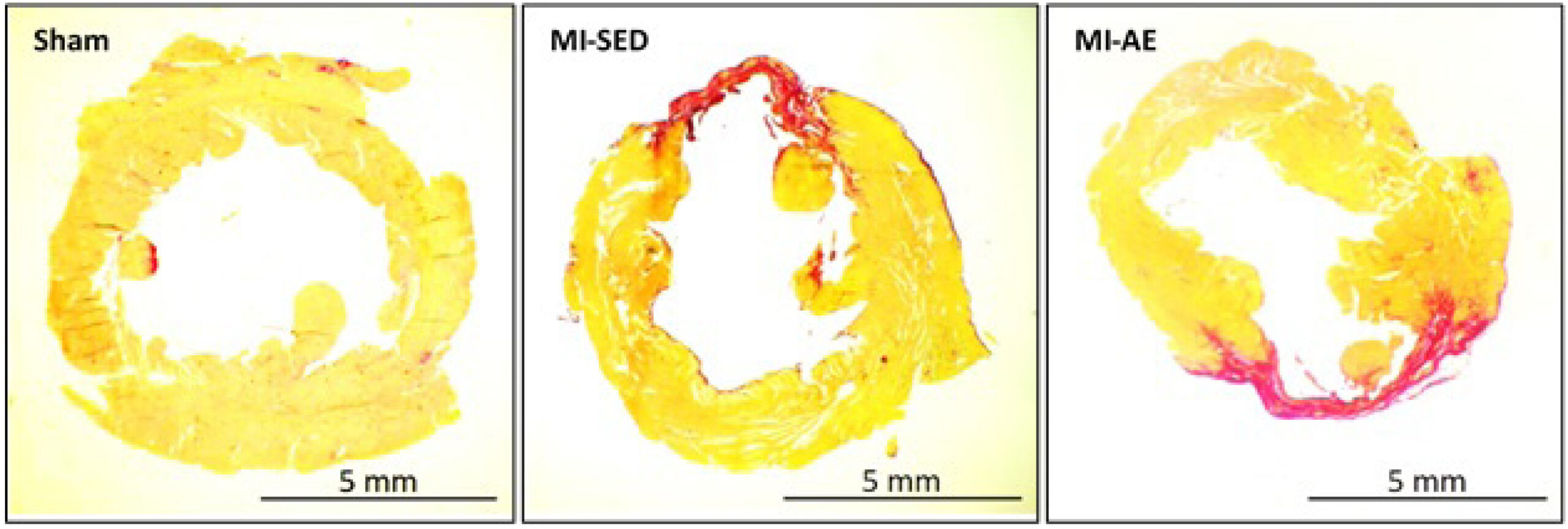
Three months after MI induction, Wistar rats were divided into three groups: Sham; sedentary MI (MI-SED); and aerobic exercised MI (MI-AE). The rats exercised on a treadmill three times a week for 12 weeks. An echocardiogram was performed before and after training. The infarction size was evaluated by histology, and gene expression was assessed by RT-PCR. The significance level for statistical analysis was set at 5%.

Results:

Rats with MI lower than 30% of the LV total area were included in the study. Functional capacity was higher in MI-AE than in Sham and MI-SED rats. The infarction size did not differ between groups. Infarcted rats had increased LV diastolic and systolic diameter, left atrial diameter, and LV mass, with systolic dysfunction. Relative wall thickness was lower in MI-SED than in the MI-AE and Sham groups. Gene expression of the NADPH oxidase subunits NOX2, NOX4, p22phox, and p47phox did not differ between groups.

Conclusion:

Small-sized MI changes cardiac structure and LV systolic function. Late aerobic exercise is able to improve functional capacity and cardiac remodeling by preserving the left ventricular geometry. NADPH oxidase subunits gene expression is not involved in cardiac remodeling or modulated by aerobic exercise in rats with small-sized MI.

  • Echocardiography/methods
  • Exercise, Physical Exercise
  • Myocardial Infarction
  • NADPH Oxidase
  • Rats
  • Ventricular Dysfunction
  • Ventricular Remodeling
Read Full Article
Creative Commons Attribution (CC BY) Creative Commons license
16/04/2021 DOI: 10.36660/abc.20190813 Views 1
ABC
Editorial

The Importance of Post-Infarction Exercise Programs

José Antônio Caldas Teixeira

Physical activity and exercising are said to reduce the risk of cardiovascular mortality in the general population by 30%–50%, and mortality from any cause by 20%–50%. In cardiac patients, for each 1 Met increment (3.5 mL O2 kg−1 min−1) in functional capacity (FC) obtained in a cardiac rehabilitation program (CRP), we have a reduction in overall mortality of up to 13%., They reduce global hospitalization by 18%, and improve quality of life (QoL) in this population., After an angioplasty, CRP results in a 20% reduction in cardiac events and in the number of hospitalizations compared to individuals who remained sedentary.,,

In this context, CRPs have established themselves as a safe therapeutic strategy, which mitigates the effects of progressive physical deconditioning resulting from cardiovascular diseases (CD). Well-oriented exercise is the cornerstone in handling CD and its main risk factors.– CRPs, especially in post-acute coronary syndrome (ACS) and patients with ventricular dysfunction, bring important benefits of clinical impact, with an evidence level IA in this population, referenced by numerous consensuses, meta analyses and guidelines.–,,

[…]

  • Cardiac Rehabilitation
  • Echocardiography/methods
  • Exercise
  • Myocardial Infarction/mortality
  • Physical activity
  • Rats
  • Ventricular Dysfunction
Read Full Article
Creative Commons Attribution (CC BY) Creative Commons license
16/04/2021 DOI: 10.36660/abc.20210109 Views 1
Figure 1
IJCS
Original Article

Maternal Intake of Flaxseed During Lactation and Exercise Training Protect Against Salt Overload-Induced Aortic Remodeling in Adult Offspring

Simoni Silva-Couto et al. André Manoel Correia-Santos Gabriela Câmara Vicente Caroline Luiza Codonho Castro … Vanessa de Lana Melo Barreto Joyce Eduarda Campos Martins Queila Lenzi Gilson Teles Boaventura Maurício Alves Chagas

Abstract

Background

High dietary sodium intake can induce endothelial stiffness even without changes in blood pressure.

Objectives

To evaluate the effects of exercise training and chronic intake of sodium chloride solution on aortic morphology of male offspring of rat dams who consumed flaxseed during lactation.

Methods

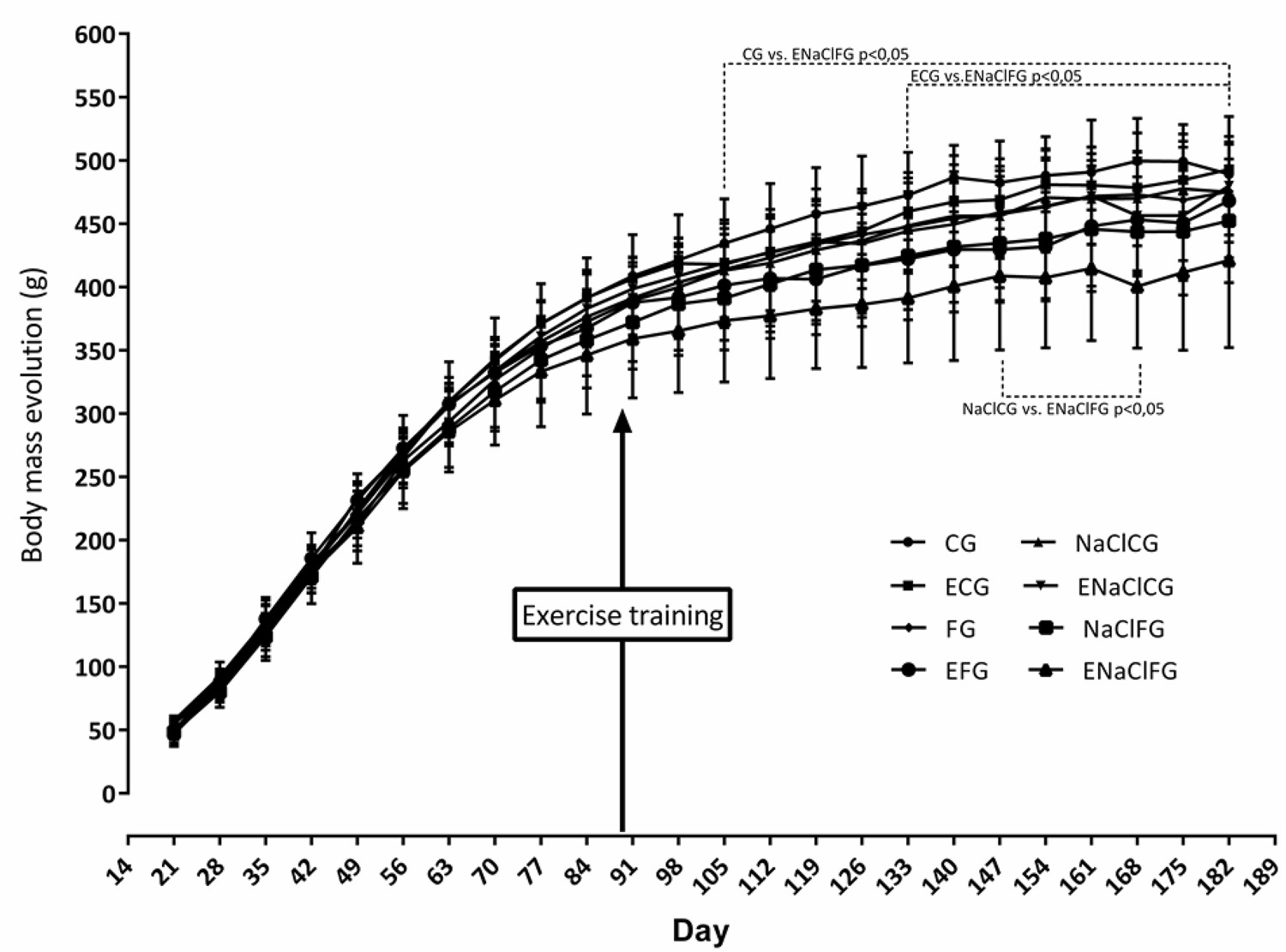
Female rats were fed with a control diet or a flaxseed diet during lactation. At weaning, two male offspring of each rat dam were allocated into eight groups for 180 days: four groups received a control diet e four received a flaxseed diet, with /without exercise and with/without NaCl solution supply. Aorta was collected for histomorphometric analysis. The one-way analysis of variance was used and P value < 0.05 was considered statistically significant.

Results

The chronic use of 1% NaCl solution led to changes in aortic histoarchitecture in the control group: increase in aortic intima-media thickness (10,4%, p<0.0001) and reduced number of elastic lamellae (-8,1%, p<0.0001). Groups of offspring of mother that consumed flaxseed during lactation, the chronic use of 1% NaCl alone did not lead to an increase in the aortic intima-media thickness. Exercise training of adult offspring increased aortic intima-media thickness (13.3%, p<0.0001), with preservation of elastic components and aortic flexibility.

Conclusion

Chronic salt overload caused adverse effects on the aorta of rats, and maternal consumption of the flaxseed diet during lactation protected against aortic remodeling. Int J Cardiovasc Sci. 2020; [online].ahead print, PP.0-0

  • Exercise
  • Fatty Acids,Omega-3
  • Flaxseed Diet
  • Lactation
  • Metabolism/physiology
  • Rats
Read Full Article
Creative Commons Attribution (CC BY) Creative Commons license
06/11/2020 DOI: 10.36660/ijcs.20190165 Views 2

Could not load more articles. Please try again.

How to cite this article

EndNote RIS

Electronic Document Format (Vancouver)

Nelson OE, Simeon GG, Borobuebi OJ, Wankasi MM, Chukwuma EF. Garlic Extract Reverses Ischemic Heart Disease in Female Rats Exposed to Combined Oral Contraceptive Pills. International Journal of Cardiovascular Sciences 2024;37:e20230060.

Electronic Document Format (ABNT)

Nelson, Onitsha Enebrayi; Simeon, Gborienemi George; Borobuebi, Okutu Jackson; Wankasi, Mie-Ebi Martin; Chukwuma, Ezeiruaku Ferdinand. Garlic Extract Reverses Ischemic Heart Disease in Female Rats Exposed to Combined Oral Contraceptive Pills. International Journal of Cardiovascular Sciences, v. 37, e20230060, Jan. 2024.

Electronic Document Format (APA)

Nelson, O. E., Simeon, G. G., Borobuebi, O. J., Wankasi, M. M., & Chukwuma, E. F. (2024). Garlic Extract Reverses Ischemic Heart Disease in Female Rats Exposed to Combined Oral Contraceptive Pills. International Journal of Cardiovascular Sciences, 37, e20230060.

Electronic Document Format (ISO)

Nelson, Onitsha Enebrayi and Simeon, Gborienemi George and Borobuebi, Okutu Jackson and Wankasi, Mie-Ebi Martin and Chukwuma, Ezeiruaku Ferdinand. Garlic Extract Reverses Ischemic Heart Disease in Female Rats Exposed to Combined Oral Contraceptive Pills. International Journal of Cardiovascular Sciences [online]. 2024, vol. 37, [cited 2026-10-14], e20230060. Available from: <https://journals.cardiol.br/article/garlic-extract-reverses-ischemic-heart-disease-in-female-rats-exposed-to-combined-oral-contraceptive-pills/>. ISSN 2359-4802

EndNote RIS

Electronic Document Format (Vancouver)

Chen Y, Chen H, Chen Y, Yang Z, Zhou T, Xu W. Dexmedetomidine Preconditioning Attenuates Myocardial Ischemia/Reperfusion Injury in Rats by Suppressing Mitophagy Via Activating Α2-Adrenergic Receptor. Arquivos Brasileiros de Cardiologia 2023;120(10):e20220750.

Electronic Document Format (ABNT)

Chen, YaHua; Chen, Hui; Chen, YuJiao; Yang, ZaiQun; Zhou, Tao; Xu, Wei. Dexmedetomidine Preconditioning Attenuates Myocardial Ischemia/Reperfusion Injury in Rats by Suppressing Mitophagy Via Activating Α2-Adrenergic Receptor. Arquivos Brasileiros de Cardiologia, v. 120, n. 10, e20220750, Oct. 2023.

Electronic Document Format (APA)

Chen, Y., Chen, H., Chen, Y., Yang, Z., Zhou, T., & Xu, W. (2023). Dexmedetomidine Preconditioning Attenuates Myocardial Ischemia/Reperfusion Injury in Rats by Suppressing Mitophagy Via Activating Α2-Adrenergic Receptor. Arquivos Brasileiros de Cardiologia, 120(10), e20220750.

Electronic Document Format (ISO)

Chen, YaHua and Chen, Hui and Chen, YuJiao and Yang, ZaiQun and Zhou, Tao and Xu, Wei. Dexmedetomidine Preconditioning Attenuates Myocardial Ischemia/Reperfusion Injury in Rats by Suppressing Mitophagy Via Activating Α2-Adrenergic Receptor. Arquivos Brasileiros de Cardiologia [online]. 2023, vol. 120, n. 10, [cited 2026-10-14], e20220750. Available from: <https://journals.cardiol.br/en/article/dexmedetomidine-preconditioning-attenuates-myocardial-ischemia-reperfusion-injury-in-rats-by-suppressing-mitophagy-via-activating-%ce%b12-adrenergic-receptor/>. ISSN 0066-782X

EndNote RIS

Electronic Document Format (Vancouver)

Souza Neto EG, Peixoto JVC, Rank Filho C, Petterle RR, Fogaça RTH, Wolska BM, Dias FAL, et al. Effects of High-Intensity Interval Training and Continuous Training on Exercise Capacity, Heart Rate Variability and Isolated Hearts in Diabetic Rats. Arquivos Brasileiros de Cardiologia 2023;120(1):e20220396.

Electronic Document Format (ABNT)

Souza Neto, Eduardo Gomes de; Peixoto, João Victor Capelli; Rank Filho, Claucio; Petterle, Ricardo Rasmussen; Fogaça, Rosalvo Tadeu Hochmuller; Wolska, Beata Maria; Dias, Fernando Augusto Lavezzo. Effects of High-Intensity Interval Training and Continuous Training on Exercise Capacity, Heart Rate Variability and Isolated Hearts in Diabetic Rats. Arquivos Brasileiros de Cardiologia, v. 120, n. 1, e20220396, Jan. 2023.

Electronic Document Format (APA)

Souza Neto, E. G. , Peixoto, J. V. C., Rank Filho, C., Petterle, R. R., Fogaça, R. T. H., Wolska, B. M., & Dias, F. A. L. (2023). Effects of High-Intensity Interval Training and Continuous Training on Exercise Capacity, Heart Rate Variability and Isolated Hearts in Diabetic Rats. Arquivos Brasileiros de Cardiologia, 120(1), e20220396.

Electronic Document Format (ISO)

Souza Neto, Eduardo Gomes de and Peixoto, João Victor Capelli and Rank Filho, Claucio and Petterle, Ricardo Rasmussen and Fogaça, Rosalvo Tadeu Hochmuller and Wolska, Beata Maria and Dias, Fernando Augusto Lavezzo. Effects of High-Intensity Interval Training and Continuous Training on Exercise Capacity, Heart Rate Variability and Isolated Hearts in Diabetic Rats. Arquivos Brasileiros de Cardiologia [online]. 2023, vol. 120, n. 1, [cited 2026-10-14], e20220396. Available from: <https://journals.cardiol.br/en/article/effects-of-high-intensity-interval-training-and-continuous-training-on-exercise-capacity-heart-rate-variability-and-isolated-hearts-in-diabetic-rats/>. ISSN 0066-782X

EndNote RIS

Electronic Document Format (Vancouver)

Pastore CA. Applicability of Body Surface Potential Mapping Through Exercise in Small Animals. Arquivos Brasileiros de Cardiologia 2022;119(5):776-7.

Electronic Document Format (ABNT)

Pastore, Carlos Alberto. Applicability of Body Surface Potential Mapping Through Exercise in Small Animals. Arquivos Brasileiros de Cardiologia, v. 119, n. 5, p. 776-777, Nov. 2022.

Electronic Document Format (APA)

Pastore, C. A. (2022). Applicability of Body Surface Potential Mapping Through Exercise in Small Animals. Arquivos Brasileiros de Cardiologia, 119(5), 776-777.

Electronic Document Format (ISO)

Pastore, Carlos Alberto. Applicability of Body Surface Potential Mapping Through Exercise in Small Animals. Arquivos Brasileiros de Cardiologia [online]. 2022, vol. 119, n. 5, [cited 2026-10-14], pp. 776-777. Available from: <https://journals.cardiol.br/en/article/applicability-of-body-surface-potential-mapping-through-exercise-in-small-animals/>. ISSN 0066-782X

EndNote RIS

Electronic Document Format (Vancouver)

Ivonin AG, Smirnova SL, Roshchevskaya IM. Body Surface Potential Mapping during Ventricular Depolarization in Rats after Acute Exhaustive Exercise. Arquivos Brasileiros de Cardiologia 2022;119(5):766-75.

Electronic Document Format (ABNT)

Ivonin, Alexey G.; Smirnova, Svetlana L.; Roshchevskaya, Irina M.. Body Surface Potential Mapping during Ventricular Depolarization in Rats after Acute Exhaustive Exercise. Arquivos Brasileiros de Cardiologia, v. 119, n. 5, p. 766-775, Sep. 2022.

Electronic Document Format (APA)

Ivonin, A. G., Smirnova, S. L., & Roshchevskaya, I. M. (2022). Body Surface Potential Mapping during Ventricular Depolarization in Rats after Acute Exhaustive Exercise. Arquivos Brasileiros de Cardiologia, 119(5), 766-775.

Electronic Document Format (ISO)

Ivonin, Alexey G. and Smirnova, Svetlana L. and Roshchevskaya, Irina M.. Body Surface Potential Mapping during Ventricular Depolarization in Rats after Acute Exhaustive Exercise. Arquivos Brasileiros de Cardiologia [online]. 2022, vol. 119, n. 5, [cited 2026-10-14], pp. 766-775. Available from: <https://journals.cardiol.br/en/article/body-surface-potential-mapping-during-ventricular-depolarization-in-rats-after-acute-exhaustive-exercise/>. ISSN 0066-782X

EndNote RIS

Electronic Document Format (Vancouver)

Soares LL, Leite LB, Ervilha LOG, Silva BAF, Freitas MO, Portes AMO, Rezende LMT, et al. Resistance Exercise Training Mitigates Left Ventricular Dysfunctions in Pulmonary Artery Hypertension Model. Arquivos Brasileiros de Cardiologia 2022;119(4):574-8.

Electronic Document Format (ABNT)

Soares, Leôncio Lopes; Leite, Luciano Bernardes; Ervilha, Luiz Otávio Guimarães; Silva, Bruna Aparecida Fonseca da; Freitas, Maíra Oliveira de; Portes, Alexandre Martins Oliveira; Rezende, Leonardo Mateus Teixeira; Drummond, Filipe Rios; Carneiro-Júnior, Miguel Araújo; Neves, Mariana Machado; Reis, Emily Correna Carlo; Natali, Antônio José. Resistance Exercise Training Mitigates Left Ventricular Dysfunctions in Pulmonary Artery Hypertension Model. Arquivos Brasileiros de Cardiologia, v. 119, n. 4, p. 574-584, Sep. 2022.

Electronic Document Format (APA)

Soares, L. L., Leite, L. B., Ervilha, L. O. G., Silva, B. A. F. , Freitas, M. O. , Portes, A. M. O., Rezende, L. M. T., Drummond, F. R., Carneiro-Júnior, M. A., Neves, M. M., Reis, E. C. C., & Natali, A. J. (2022). Resistance Exercise Training Mitigates Left Ventricular Dysfunctions in Pulmonary Artery Hypertension Model. Arquivos Brasileiros de Cardiologia, 119(4), 574-584.

Electronic Document Format (ISO)

Soares, Leôncio Lopes and Leite, Luciano Bernardes and Ervilha, Luiz Otávio Guimarães and Silva, Bruna Aparecida Fonseca da and Freitas, Maíra Oliveira de and Portes, Alexandre Martins Oliveira and Rezende, Leonardo Mateus Teixeira and Drummond, Filipe Rios and Carneiro-Júnior, Miguel Araújo and Neves, Mariana Machado and Reis, Emily Correna Carlo and Natali, Antônio José. Resistance Exercise Training Mitigates Left Ventricular Dysfunctions in Pulmonary Artery Hypertension Model. Arquivos Brasileiros de Cardiologia [online]. 2022, vol. 119, n. 4, [cited 2026-10-14], pp. 574-584. Available from: <https://journals.cardiol.br/en/article/resistance-exercise-training-mitigates-left-ventricular-dysfunctions-in-pulmonary-artery-hypertension-model/>. ISSN 0066-782X

EndNote RIS

Electronic Document Format (Vancouver)

Silva GBA, Souza DS, Menezes-Filho JER, Silva-Neto JA, Cruz JS, Roman-Campos DR, Quintans-Júnior LJ, et al. (-)-Carvone Modulates Intracellular Calcium Signaling with Antiarrhythmic Action in Rat Hearts. Arquivos Brasileiros de Cardiologia 2022;119(2):294-30.

Electronic Document Format (ABNT)

Silva, Gilmara Beatriz Andrade da; Souza, Diego Santos; Menezes-Filho, José Evaldo Rodrigues; Silva-Neto, Júlio Alves da; Cruz, Jader dos Santos; Roman-Campos, Danilo R.; Quintans-Júnior, Lucindo José; Vasconcelos, Carla Maria Lins de. (-)-Carvone Modulates Intracellular Calcium Signaling with Antiarrhythmic Action in Rat Hearts. Arquivos Brasileiros de Cardiologia, v. 119, n. 2, p. 294-304, Aug. 2022.

Electronic Document Format (APA)

Silva, G. B. A. , Souza, D. S., Menezes-Filho, J. E. R., Silva-Neto, J. A. , Cruz, J. S., Roman-Campos, D. R., Quintans-Júnior, L. J., & Vasconcelos, C. M. L. (2022). (-)-Carvone Modulates Intracellular Calcium Signaling with Antiarrhythmic Action in Rat Hearts. Arquivos Brasileiros de Cardiologia, 119(2), 294-304.

Electronic Document Format (ISO)

Silva, Gilmara Beatriz Andrade da and Souza, Diego Santos and Menezes-Filho, José Evaldo Rodrigues and Silva-Neto, Júlio Alves da and Cruz, Jader dos Santos and Roman-Campos, Danilo R. and Quintans-Júnior, Lucindo José and Vasconcelos, Carla Maria Lins de. (-)-Carvone Modulates Intracellular Calcium Signaling with Antiarrhythmic Action in Rat Hearts. Arquivos Brasileiros de Cardiologia [online]. 2022, vol. 119, n. 2, [cited 2026-10-14], pp. 294-304. Available from: <https://journals.cardiol.br/en/article/carvone-modulates-intracellular-calcium-signaling-with-antiarrhythmic-action-in-rat-hearts/>. ISSN 0066-782X

EndNote RIS

Electronic Document Format (Vancouver)

Chachamovitz DSO. Hyperthyroidism and Cardiac Contractility. International Journal of Cardiovascular Sciences 2022;35(4):465-6.

Electronic Document Format (ABNT)

Chachamovitz, Dhiãnah Santini de Oliveira. Hyperthyroidism and Cardiac Contractility. International Journal of Cardiovascular Sciences, v. 35, n. 4, p. 465-466, Jul. 2022.

Electronic Document Format (APA)

Chachamovitz, D. S. O. (2022). Hyperthyroidism and Cardiac Contractility. International Journal of Cardiovascular Sciences, 35(4), 465-466.

Electronic Document Format (ISO)

Chachamovitz, Dhiãnah Santini de Oliveira. Hyperthyroidism and Cardiac Contractility. International Journal of Cardiovascular Sciences [online]. 2022, vol. 35, n. 4, [cited 2026-10-14], pp. 465-466. Available from: <https://journals.cardiol.br/en/article/hyperthyroidism-and-cardiac-contractility/>. ISSN 2359-4802

EndNote RIS

Electronic Document Format (Vancouver)

Tasca S, Campos C, Lacerda D, Ortiz VD, Turck P, Bianchi SE, Castro AL, et al. Pterostilbene Reduces Experimental Myocardial Infarction-Induced Oxidative Stress in Lung and Right Ventricle. Arquivos Brasileiros de Cardiologia 2022;118(2):435-4.

Electronic Document Format (ABNT)

Tasca, Silvio; Campos, Cristina; Lacerda, Denise; Ortiz, Vanessa D.; Turck, Patrick; Bianchi, Sara E.; Castro, Alexandre L. de; Belló-Klein, Adriane; Bassani, Valquiria; Araújo, Alex Sander da Rosa. Pterostilbene Reduces Experimental Myocardial Infarction-Induced Oxidative Stress in Lung and Right Ventricle. Arquivos Brasileiros de Cardiologia, v. 118, n. 2, p. 435-445, Mar. 2022.

Electronic Document Format (APA)

Tasca, S., Campos, C., Lacerda, D., Ortiz, V. D., Turck, P., Bianchi, S. E., Castro, A. L. , Belló-Klein, A., Bassani, V., & Araújo, A. S. R. (2022). Pterostilbene Reduces Experimental Myocardial Infarction-Induced Oxidative Stress in Lung and Right Ventricle. Arquivos Brasileiros de Cardiologia, 118(2), 435-445.

Electronic Document Format (ISO)

Tasca, Silvio and Campos, Cristina and Lacerda, Denise and Ortiz, Vanessa D. and Turck, Patrick and Bianchi, Sara E. and Castro, Alexandre L. de and Belló-Klein, Adriane and Bassani, Valquiria and Araújo, Alex Sander da Rosa. Pterostilbene Reduces Experimental Myocardial Infarction-Induced Oxidative Stress in Lung and Right Ventricle. Arquivos Brasileiros de Cardiologia [online]. 2022, vol. 118, n. 2, [cited 2026-10-14], pp. 435-445. Available from: <https://journals.cardiol.br/en/article/pterostilbene-reduces-experimental-myocardial-infarction-induced-oxidative-stress-in-lung-and-right-ventricle/>. ISSN 0066-782X

EndNote RIS

Electronic Document Format (Vancouver)

Souza DS, Roman-Campos D. The Importance of Time-Course Studies Using Experimental Models of Cardiac Diseases. Arquivos Brasileiros de Cardiologia 2022;118(2):476-7.

Electronic Document Format (ABNT)

Souza, Diego Santos; Roman-Campos, Danilo. The Importance of Time-Course Studies Using Experimental Models of Cardiac Diseases. Arquivos Brasileiros de Cardiologia, v. 118, n. 2, p. 476-477, Mar. 2022.

Electronic Document Format (APA)

Souza, D. S., & Roman-Campos, D. (2022). The Importance of Time-Course Studies Using Experimental Models of Cardiac Diseases. Arquivos Brasileiros de Cardiologia, 118(2), 476-477.

Electronic Document Format (ISO)

Souza, Diego Santos and Roman-Campos, Danilo. The Importance of Time-Course Studies Using Experimental Models of Cardiac Diseases. Arquivos Brasileiros de Cardiologia [online]. 2022, vol. 118, n. 2, [cited 2026-10-14], pp. 476-477. Available from: <https://journals.cardiol.br/en/article/the-importance-of-time-course-studies-using-experimental-models-of-cardiac-diseases/>. ISSN 0066-782X

EndNote RIS

Electronic Document Format (Vancouver)

Rambo AM, Peixoto JVC, Albuquerque RAL, Silva IK, Fogaça RTH. Effects of Hyperthyroidism on Contractility and Na+/Ca2+ Exchanger Activity in the Isolated Papillary Muscle of Rats. International Journal of Cardiovascular Sciences 2022;35(4):459-64.

Electronic Document Format (ABNT)

Rambo, Angela Mara; Peixoto, João Victor Capelli; Albuquerque, Rebeca Alves Lins de; Silva, Ilana Kassouf; Fogaça, Rosalvo Tadeu Hochmueller. Effects of Hyperthyroidism on Contractility and Na+/Ca2+ Exchanger Activity in the Isolated Papillary Muscle of Rats. International Journal of Cardiovascular Sciences, v. 35, n. 4, p. 459-464, Feb. 2022.

Electronic Document Format (APA)

Rambo, A. M., Peixoto, J. V. C., Albuquerque, R. A. L. , Silva, I. K., & Fogaça, R. T. H. (2022). Effects of Hyperthyroidism on Contractility and Na+/Ca2+ Exchanger Activity in the Isolated Papillary Muscle of Rats. International Journal of Cardiovascular Sciences, 35(4), 459-464.

Electronic Document Format (ISO)

Rambo, Angela Mara and Peixoto, João Victor Capelli and Albuquerque, Rebeca Alves Lins de and Silva, Ilana Kassouf and Fogaça, Rosalvo Tadeu Hochmueller. Effects of Hyperthyroidism on Contractility and Na+/Ca2+ Exchanger Activity in the Isolated Papillary Muscle of Rats. International Journal of Cardiovascular Sciences [online]. 2022, vol. 35, n. 4, [cited 2026-10-14], pp. 459-464. Available from: <https://journals.cardiol.br/en/article/effects-of-hyperthyroidism-on-contractility-and-na-ca2-exchanger-activity-in-the-isolated-papillary-muscle-of-rats/>. ISSN 2359-4802

EndNote RIS

Electronic Document Format (Vancouver)

Kaplan M, Demir E, Yavuz F, Kaplan GI, Taysi MR, Taysi S, Sucu MM, et al. Radioprotective Effect of Nigella Sativa Oil on Heart Tissues of Rats Exposed to Irradition. International Journal of Cardiovascular Sciences 2022;35(2):214-9.

Electronic Document Format (ABNT)

Kaplan, Mehmet; Demir, Elif; Yavuz, Fethi; Kaplan, Gizem Ilgin; Taysi, Mehmet Resit; Taysi, Seyithan; Sucu, Mehmet Murat. Radioprotective Effect of Nigella Sativa Oil on Heart Tissues of Rats Exposed to Irradition. International Journal of Cardiovascular Sciences, v. 35, n. 2, p. 214-219, Jan. 2022.

Electronic Document Format (APA)

Kaplan, M., Demir, E., Yavuz, F., Kaplan, G. I., Taysi, M. R., Taysi, S., & Sucu, M. M. (2022). Radioprotective Effect of Nigella Sativa Oil on Heart Tissues of Rats Exposed to Irradition. International Journal of Cardiovascular Sciences, 35(2), 214-219.

Electronic Document Format (ISO)

Kaplan, Mehmet and Demir, Elif and Yavuz, Fethi and Kaplan, Gizem Ilgin and Taysi, Mehmet Resit and Taysi, Seyithan and Sucu, Mehmet Murat. Radioprotective Effect of Nigella Sativa Oil on Heart Tissues of Rats Exposed to Irradition. International Journal of Cardiovascular Sciences [online]. 2022, vol. 35, n. 2, [cited 2026-10-14], pp. 214-219. Available from: <https://journals.cardiol.br/en/article/radioprotective-effect-of-nigella-sativa-oil-on-heart-tissues-of-rats-exposed-to-irradition/>. ISSN 2359-4802

EndNote RIS

Electronic Document Format (Vancouver)

Gatto M, Mota GAF, Pagan LU, Gomes MJ, Okoshi MP. Preconditioning in Ischemia-Reperfusion Lesion. Arquivos Brasileiros de Cardiologia 2021;117(6):1145-6.

Electronic Document Format (ABNT)

Gatto, Mariana; Mota, Gustavo Augusto Ferreira; Pagan, Luana Urbano; Gomes, Mariana Janini; Okoshi, Marina Politi. Preconditioning in Ischemia-Reperfusion Lesion. Arquivos Brasileiros de Cardiologia, v. 117, n. 6, p. 1145-1146, Dec. 2021.

Electronic Document Format (APA)

Gatto, M., Mota, G. A. F., Pagan, L. U., Gomes, M. J., & Okoshi, M. P. (2021). Preconditioning in Ischemia-Reperfusion Lesion. Arquivos Brasileiros de Cardiologia, 117(6), 1145-1146.

Electronic Document Format (ISO)

Gatto, Mariana and Mota, Gustavo Augusto Ferreira and Pagan, Luana Urbano and Gomes, Mariana Janini and Okoshi, Marina Politi. Preconditioning in Ischemia-Reperfusion Lesion. Arquivos Brasileiros de Cardiologia [online]. 2021, vol. 117, n. 6, [cited 2026-10-14], pp. 1145-1146. Available from: <https://journals.cardiol.br/en/article/preconditioning-in-ischemia-reperfusion-lesion/>. ISSN 0066-782X

EndNote RIS

Electronic Document Format (Vancouver)

Souza DS, Roman-Campos D. Searching Naturally Occurring Compounds to Treat Hypertension. Arquivos Brasileiros de Cardiologia 2021;117(6):1104-5.

Electronic Document Format (ABNT)

Souza, Diego Santos; Roman-Campos, Danilo. Searching Naturally Occurring Compounds to Treat Hypertension. Arquivos Brasileiros de Cardiologia, v. 117, n. 6, p. 1104-1105, Dec. 2021.

Electronic Document Format (APA)

Souza, D. S., & Roman-Campos, D. (2021). Searching Naturally Occurring Compounds to Treat Hypertension. Arquivos Brasileiros de Cardiologia, 117(6), 1104-1105.

Electronic Document Format (ISO)

Souza, Diego Santos and Roman-Campos, Danilo. Searching Naturally Occurring Compounds to Treat Hypertension. Arquivos Brasileiros de Cardiologia [online]. 2021, vol. 117, n. 6, [cited 2026-10-14], pp. 1104-1105. Available from: <https://journals.cardiol.br/en/article/searching-naturally-occurring-compounds-to-treat-hypertension/>. ISSN 0066-782X

EndNote RIS

Electronic Document Format (Vancouver)

Gelpi RJ. A New Therapeutic Alternative for the Treatment of Pulmonary Hypertension?. Arquivos Brasileiros de Cardiologia 2021;117(6):1113-4.

Electronic Document Format (ABNT)

Gelpi, Ricardo J. A New Therapeutic Alternative for the Treatment of Pulmonary Hypertension?. Arquivos Brasileiros de Cardiologia, v. 117, n. 6, p. 1113-1114, Dec. 2021.

Electronic Document Format (APA)

Gelpi, R. J. (2021). A New Therapeutic Alternative for the Treatment of Pulmonary Hypertension?. Arquivos Brasileiros de Cardiologia, 117(6), 1113-1114.

Electronic Document Format (ISO)

Gelpi, Ricardo J. A New Therapeutic Alternative for the Treatment of Pulmonary Hypertension?. Arquivos Brasileiros de Cardiologia [online]. 2021, vol. 117, n. 6, [cited 2026-10-14], pp. 1113-1114. Available from: <https://journals.cardiol.br/en/article/a-new-therapeutic-alternative-for-the-treatment-of-pulmonary-hypertension/>. ISSN 0066-782X

EndNote RIS

Electronic Document Format (Vancouver)

Izar MCO, Fonseca FAH. Can We Pretreat Vein Grafts with Adiponectin to Improve Their Patency?. Arquivos Brasileiros de Cardiologia 2021;117(6):1189-90.

Electronic Document Format (ABNT)

Izar, Maria Cristina de Oliveira; Fonseca, Francisco A. H.. Can We Pretreat Vein Grafts with Adiponectin to Improve Their Patency?. Arquivos Brasileiros de Cardiologia, v. 117, n. 6, p. 1189-1190, Dec. 2021.

Electronic Document Format (APA)

Izar, M. C. O., & Fonseca, F. A. H. (2021). Can We Pretreat Vein Grafts with Adiponectin to Improve Their Patency?. Arquivos Brasileiros de Cardiologia, 117(6), 1189-1190.

Electronic Document Format (ISO)

Izar, Maria Cristina de Oliveira and Fonseca, Francisco A. H.. Can We Pretreat Vein Grafts with Adiponectin to Improve Their Patency?. Arquivos Brasileiros de Cardiologia [online]. 2021, vol. 117, n. 6, [cited 2026-10-14], pp. 1189-1190. Available from: <https://journals.cardiol.br/en/article/can-we-pretreat-vein-grafts-with-adiponectin-to-improve-their-patency/>. ISSN 0066-782X

EndNote RIS

Electronic Document Format (Vancouver)

Chen Y, Cao S, Chen H, Yin C, Xu X, Yang Z. Dexmedetomidine Preconditioning Reduces Myocardial Ischemia-Reperfusion Injury in Rats by Inhibiting the PERK Pathway. Arquivos Brasileiros de Cardiologia 2021;117(6):1134-4.

Electronic Document Format (ABNT)

Chen, YuJiao; Cao, Song; Chen, Hui; Yin, CunZhi; Xu, XinPeng; Yang, ZaiQun. Dexmedetomidine Preconditioning Reduces Myocardial Ischemia-Reperfusion Injury in Rats by Inhibiting the PERK Pathway. Arquivos Brasileiros de Cardiologia, v. 117, n. 6, p. 1134-1144, Oct. 2021.

Electronic Document Format (APA)

Chen, Y., Cao, S., Chen, H., Yin, C., Xu, X., & Yang, Z. (2021). Dexmedetomidine Preconditioning Reduces Myocardial Ischemia-Reperfusion Injury in Rats by Inhibiting the PERK Pathway. Arquivos Brasileiros de Cardiologia, 117(6), 1134-1144.

Electronic Document Format (ISO)

Chen, YuJiao and Cao, Song and Chen, Hui and Yin, CunZhi and Xu, XinPeng and Yang, ZaiQun. Dexmedetomidine Preconditioning Reduces Myocardial Ischemia-Reperfusion Injury in Rats by Inhibiting the PERK Pathway. Arquivos Brasileiros de Cardiologia [online]. 2021, vol. 117, n. 6, [cited 2026-10-14], pp. 1134-1144. Available from: <https://journals.cardiol.br/en/article/dexmedetomidine-preconditioning-reduces-myocardial-ischemia-reperfusion-injury-in-rats-by-inhibiting-the-perk-pathway/>. ISSN 0066-782X

EndNote RIS

Electronic Document Format (Vancouver)

Brito VB, Nascimento LVM, Moura DJ, Saffi J. Cardioprotective Effect of Maternal Supplementation with Resveratrol on Toxicity Induced by Doxorubicin in Offspring Cardiomyocytes. Arquivos Brasileiros de Cardiologia 2021;117(6):1147-58.

Electronic Document Format (ABNT)

Brito, Verônica Bidinotto; Nascimento, Leopoldo Vinicius Martins; Moura, Dinara Jaqueline; Saffi, Jenifer. Cardioprotective Effect of Maternal Supplementation with Resveratrol on Toxicity Induced by Doxorubicin in Offspring Cardiomyocytes. Arquivos Brasileiros de Cardiologia, v. 117, n. 6, p. 1147-1158, Oct. 2021.

Electronic Document Format (APA)

Brito, V. B., Nascimento, L. V. M., Moura, D. J., & Saffi, J. (2021). Cardioprotective Effect of Maternal Supplementation with Resveratrol on Toxicity Induced by Doxorubicin in Offspring Cardiomyocytes. Arquivos Brasileiros de Cardiologia, 117(6), 1147-1158.

Electronic Document Format (ISO)

Brito, Verônica Bidinotto and Nascimento, Leopoldo Vinicius Martins and Moura, Dinara Jaqueline and Saffi, Jenifer. Cardioprotective Effect of Maternal Supplementation with Resveratrol on Toxicity Induced by Doxorubicin in Offspring Cardiomyocytes. Arquivos Brasileiros de Cardiologia [online]. 2021, vol. 117, n. 6, [cited 2026-10-14], pp. 1147-1158. Available from: <https://journals.cardiol.br/en/article/cardioprotective-effect-of-maternal-supplementation-with-resveratrol-on-toxicity-induced-by-doxorubicin-in-offspring-cardiomyocytes/>. ISSN 0066-782X

EndNote RIS

Electronic Document Format (Vancouver)

Rabia B, Salma U, Bashir K, Khan T, Shah AJ. Antihypertensive Activity of Sauromatum guttatum Mediated by Vasorelaxation and Myocardial Depressant Effects. Arquivos Brasileiros de Cardiologia 2021;117(6):1093-10.

Electronic Document Format (ABNT)

Rabia, Bibi; Salma, Umme; Bashir, Kashif; Khan, Taous; Shah, Abdul Jabbar. Antihypertensive Activity of Sauromatum guttatum Mediated by Vasorelaxation and Myocardial Depressant Effects. Arquivos Brasileiros de Cardiologia, v. 117, n. 6, p. 1093-1103, Nov. 2020.

Electronic Document Format (APA)

Rabia, B., Salma, U., Bashir, K., Khan, T., & Shah, A. J. (2021). Antihypertensive Activity of Sauromatum guttatum Mediated by Vasorelaxation and Myocardial Depressant Effects. Arquivos Brasileiros de Cardiologia, 117(6), 1093-1103.

Electronic Document Format (ISO)

Rabia, Bibi and Salma, Umme and Bashir, Kashif and Khan, Taous and Shah, Abdul Jabbar. Antihypertensive Activity of Sauromatum guttatum Mediated by Vasorelaxation and Myocardial Depressant Effects. Arquivos Brasileiros de Cardiologia [online]. 2021, vol. 117, n. 6, [cited 2026-10-14], pp. 1093-1103. Available from: <https://journals.cardiol.br/en/article/antihypertensive-activity-of-sauromatum-guttatum-mediated-by-vasorelaxation-and-myocardial-depressant-effects/>. ISSN 0066-782X

EndNote RIS

Electronic Document Format (Vancouver)

Santos PP, Rafacho BPM, Gonçalves AF, Pires VCM, Roscani MG, Azevedo PS, Polegato BF, et al. Vitamin D Supplementation Induces Cardiac Remodeling in Rats: Association with Thioredoxin-Interacting Protein and Thioredoxin. Arquivos Brasileiros de Cardiologia 2021;116(5):970-8.

Electronic Document Format (ABNT)

Santos, Priscila P. dos; Rafacho, Bruna P. M.; Gonçalves, Andrea F.; Pires, Vanessa C. M.; Roscani, Meliza G.; Azevedo, Paula S.; Polegato, Bertha F.; Minicucci, Marcos F.; Fernandes, Ana Angélica H.; Tanni, Suzana E.; Zornoff, Leonardo A. M.; Paiva, Sergio A. R. de. Vitamin D Supplementation Induces Cardiac Remodeling in Rats: Association with Thioredoxin-Interacting Protein and Thioredoxin. Arquivos Brasileiros de Cardiologia, v. 116, n. 5, p. 970-978, May. 2021.

Electronic Document Format (APA)

Santos, P. P. , Rafacho, B. P. M., Gonçalves, A. F., Pires, V. C. M., Roscani, M. G., Azevedo, P. S., Polegato, B. F., Minicucci, M. F., Fernandes, A. A. H., Tanni, S. E., Zornoff, L. A. M., & Paiva, S. A. R. (2021). Vitamin D Supplementation Induces Cardiac Remodeling in Rats: Association with Thioredoxin-Interacting Protein and Thioredoxin. Arquivos Brasileiros de Cardiologia, 116(5), 970-978.

Electronic Document Format (ISO)

Santos, Priscila P. dos and Rafacho, Bruna P. M. and Gonçalves, Andrea F. and Pires, Vanessa C. M. and Roscani, Meliza G. and Azevedo, Paula S. and Polegato, Bertha F. and Minicucci, Marcos F. and Fernandes, Ana Angélica H. and Tanni, Suzana E. and Zornoff, Leonardo A. M. and Paiva, Sergio A. R. de. Vitamin D Supplementation Induces Cardiac Remodeling in Rats: Association with Thioredoxin-Interacting Protein and Thioredoxin. Arquivos Brasileiros de Cardiologia [online]. 2021, vol. 116, n. 5, [cited 2026-10-14], pp. 970-978. Available from: <https://journals.cardiol.br/en/article/vitamin-d-supplementation-induces-cardiac-remodeling-in-rats-association-with-thioredoxin-interacting-protein-and-thioredoxin/>. ISSN 0066-782X

EndNote RIS

Electronic Document Format (Vancouver)

Xu C, Fang Q. Inhibiting Glucose Metabolism By miR-34a and miR-125b Protects Against Hyperglycemia-Induced Cardiomyocyte Cell Death. Arquivos Brasileiros de Cardiologia 2021;116(3):415-22.

Electronic Document Format (ABNT)

Xu, Chao-rui; Fang, Qiu-ju. Inhibiting Glucose Metabolism By miR-34a and miR-125b Protects Against Hyperglycemia-Induced Cardiomyocyte Cell Death. Arquivos Brasileiros de Cardiologia, v. 116, n. 3, p. 415-422, Apr. 2021.

Electronic Document Format (APA)

Xu, C., & Fang, Q. (2021). Inhibiting Glucose Metabolism By miR-34a and miR-125b Protects Against Hyperglycemia-Induced Cardiomyocyte Cell Death. Arquivos Brasileiros de Cardiologia, 116(3), 415-422.

Electronic Document Format (ISO)

Xu, Chao-rui and Fang, Qiu-ju. Inhibiting Glucose Metabolism By miR-34a and miR-125b Protects Against Hyperglycemia-Induced Cardiomyocyte Cell Death. Arquivos Brasileiros de Cardiologia [online]. 2021, vol. 116, n. 3, [cited 2026-10-14], pp. 415-422. Available from: <https://journals.cardiol.br/en/article/inhibiting-glucose-metabolism-by-mir-34a-and-mir-125b-protects-against-hyperglycemia-induced-cardiomyocyte-cell-death/>. ISSN 0066-782X

EndNote RIS

Electronic Document Format (Vancouver)

Souza LM, Okoshi MP, Gomes MJ, Gatto M, Rodrigues EA, Pontes THD, Damatto FC, et al. Effects of Late Aerobic Exercise on Cardiac Remodeling of Rats with Small-Sized Myocardial Infarction. Arquivos Brasileiros de Cardiologia 2021;116(4):784-92.

Electronic Document Format (ABNT)

Souza, Lidiane M.; Okoshi, Marina P.; Gomes, Mariana J.; Gatto, Mariana; Rodrigues, Eder A.; Pontes, Thierres H. D.; Damatto, Felipe C.; Oliveira, Leiliane R. S.; Borim, Patrícia Aparecida; Lima, Aline R. R.; Zornoff, Leonardo A. M.; Okoshi, Katashi; Pagan, Luana U.. Effects of Late Aerobic Exercise on Cardiac Remodeling of Rats with Small-Sized Myocardial Infarction. Arquivos Brasileiros de Cardiologia, v. 116, n. 4, p. 784-792, Apr. 2021.

Electronic Document Format (APA)

Souza, L. M., Okoshi, M. P., Gomes, M. J., Gatto, M., Rodrigues, E. A., Pontes, T. H. D., Damatto, F. C., Oliveira, L. R. S., Borim, P. A., Lima, A. R. R., Zornoff, L. A. M., Okoshi, K., & Pagan, L. U. (2021). Effects of Late Aerobic Exercise on Cardiac Remodeling of Rats with Small-Sized Myocardial Infarction. Arquivos Brasileiros de Cardiologia, 116(4), 784-792.

Electronic Document Format (ISO)

Souza, Lidiane M. and Okoshi, Marina P. and Gomes, Mariana J. and Gatto, Mariana and Rodrigues, Eder A. and Pontes, Thierres H. D. and Damatto, Felipe C. and Oliveira, Leiliane R. S. and Borim, Patrícia Aparecida and Lima, Aline R. R. and Zornoff, Leonardo A. M. and Okoshi, Katashi and Pagan, Luana U.. Effects of Late Aerobic Exercise on Cardiac Remodeling of Rats with Small-Sized Myocardial Infarction. Arquivos Brasileiros de Cardiologia [online]. 2021, vol. 116, n. 4, [cited 2026-10-14], pp. 784-792. Available from: <https://journals.cardiol.br/en/article/effects-of-late-aerobic-exercise-on-cardiac-remodeling-of-rats-with-small-sized-myocardial-infarction/>. ISSN 0066-782X

EndNote RIS

Electronic Document Format (Vancouver)

Teixeira JAC. The Importance of Post-Infarction Exercise Programs. Arquivos Brasileiros de Cardiologia 2021;116(4):793-4.

Electronic Document Format (ABNT)

Teixeira, José Antônio Caldas. The Importance of Post-Infarction Exercise Programs. Arquivos Brasileiros de Cardiologia, v. 116, n. 4, p. 793-794, Apr. 2021.

Electronic Document Format (APA)

Teixeira, J. A. C. (2021). The Importance of Post-Infarction Exercise Programs. Arquivos Brasileiros de Cardiologia, 116(4), 793-794.

Electronic Document Format (ISO)

Teixeira, José Antônio Caldas. The Importance of Post-Infarction Exercise Programs. Arquivos Brasileiros de Cardiologia [online]. 2021, vol. 116, n. 4, [cited 2026-10-14], pp. 793-794. Available from: <https://journals.cardiol.br/en/article/the-importance-of-post-infarction-exercise-programs/>. ISSN 0066-782X

EndNote RIS

Electronic Document Format (Vancouver)

Silva-Couto S, Correia-Santos AM, Vicente GC, Castro CLC, Barreto VLM, Martins JEC, Lenzi Q, et al. Maternal Intake of Flaxseed During Lactation and Exercise Training Protect Against Salt Overload-Induced Aortic Remodeling in Adult Offspring. International Journal of Cardiovascular Sciences 2020;34(2):124-33.

Electronic Document Format (ABNT)

Silva-Couto, Simoni; Correia-Santos, André Manoel; Vicente, Gabriela Câmara; Castro, Caroline Luiza Codonho; Barreto, Vanessa de Lana Melo; Martins, Joyce Eduarda Campos; Lenzi, Queila; Boaventura, Gilson Teles; Chagas, Maurício Alves. Maternal Intake of Flaxseed During Lactation and Exercise Training Protect Against Salt Overload-Induced Aortic Remodeling in Adult Offspring. International Journal of Cardiovascular Sciences, v. 34, n. 2, p. 124-133, Nov. 2020.

Electronic Document Format (APA)

Silva-Couto, S., Correia-Santos, A. M., Vicente, G. C., Castro, C. L. C., Barreto, V. L. M., Martins, J. E. C., Lenzi, Q., Boaventura, G. T., & Chagas, M. A. (2020). Maternal Intake of Flaxseed During Lactation and Exercise Training Protect Against Salt Overload-Induced Aortic Remodeling in Adult Offspring. International Journal of Cardiovascular Sciences, 34(2), 124-133.

Electronic Document Format (ISO)

Silva-Couto, Simoni and Correia-Santos, André Manoel and Vicente, Gabriela Câmara and Castro, Caroline Luiza Codonho and Barreto, Vanessa de Lana Melo and Martins, Joyce Eduarda Campos and Lenzi, Queila and Boaventura, Gilson Teles and Chagas, Maurício Alves. Maternal Intake of Flaxseed During Lactation and Exercise Training Protect Against Salt Overload-Induced Aortic Remodeling in Adult Offspring. International Journal of Cardiovascular Sciences [online]. 2020, vol. 34, n. 2, [cited 2026-10-14], pp. 124-133. Available from: <https://journals.cardiol.br/en/article/maternal-intake-of-flaxseed-during-lactation-and-exercise-training-protect-against-salt-overload-induced-aortic-remodeling-in-adult-offspring/>. ISSN 2359-4802

  • About ABC Family
  • Internal Regulation
  • Editorial Board
  • Brazilian Society of Cardiology (SBC)

Issues

SBC Guidelines

  • Videos
  • Podcasts
  • News