ABC Family Arquivos Brasileiros de Cardiologia International Journal of Cardiovascular Sciences ABC Heart Failure & Cardiomyopathy ABC Imagem Cardiovascular
Português English
ABC Family
Português English
  • About
    • About ABC Family
    • Internal Regulation
    • Editorial Board
    • Brazilian Society of Cardiology (SBC)
  • Issues
  • SBC Guidelines
  • Content
    • Videos
    • Podcasts
    • News
  • About
    • About ABC Family
    • Internal Regulation
    • Editorial Board
    • Brazilian Society of Cardiology (SBC)
  • Issues
  • SBC Guidelines
  • Content
    • Videos
    • Podcasts
    • News

ABC Family

  • ABC Family
  • Arquivos Brasileiros de Cardiologia
  • International Journal of Cardiovascular Sciences
  • ABC Heart Failure & Cardiomyopathy
  • ABC Imagem Cardiovascular
Search in

No content found.

Journals
Ordering
Article types
Others

  1. Home
  2. Keyword: Cardiogenic
ABCHF
Case Report

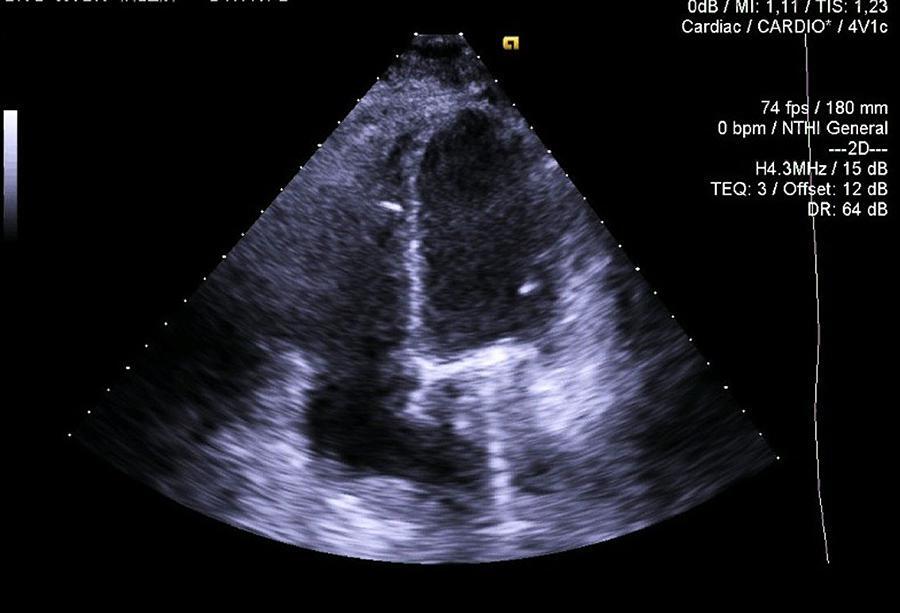
Cardiogenic Shock with High Pressure: A Case Report

Fiamma Ferreira Nogueira et al. Patricia Bezerra Rocha Montenegro Ana Carla Alves de Souza Lyra Taciana Queiroz Medeiros Gomes Carlos Eduardo Lucena Montenegro

Introduction

Shock is defined as a state of tissue hypoperfusion due to reduced supply, increased consumption, inadequate use of oxygen, or a combination of these processes. When it is of cardiogenic etiology, it occurs as a result of left or right ventricular or biventricular dysfunction with reduced cardiac output (CO) or increased filling pressures and normal intravascular volume. Although the most classic manifestation of shock is arterial hypotension, it is essential to recognize that a patient in shock may present with normal, elevated, or decreased blood pressure (BP). Therefore, early identification of clinical, laboratory, and hemodynamic signs of tissue hypoperfusion is crucial. Timely and appropriate treatment can prevent deterioration and signs of multiple organ dysfunction.

[…]
  • Cardiogenic
  • Hemodynamic Monitoring
  • Hypertension
  • Shock
Read Full Article
Creative Commons Attribution (CC BY) Creative Commons license
31/12/2023 DOI: 10.36660/abchf.20230084 Views 1
Figure 1
ABC
Original Article

Revascularization Strategies in Patients with Acute Myocardial Infarction and Cardiogenic Shock: Results from the Portuguese Registry on Acute Coronary Syndromes

Sofia Alegria et al. Ana Marques Ana Catarina Gomes Ana Rita F. Pereira … Daniel Sebaiti Gonçalo Morgado Rita Calé Cristina Martins Adriana Belo Inês Rangel Hélder Pereira

Abstract

Background:

In patients with acute myocardial infarction (MI), cardiogenic shock (CS), and multivessel disease (MVD) questions remain unanswered when it comes to intervention on non-culprit arteries.

Objective:

This article aims to 1) characterize patients with MI, CS and MVD included in the Portuguese Registry on Acute Coronary Syndromes (ProACS); 2) compare different revascularization strategies in the sample; 3) identify predictors of in-hospital mortality among these patients.

Methods:

Observational retrospective study of patients with MI, CS and MVD included in the ProACS between 2010 and 2018. Two revascularization strategies were compared: complete during the index procedure (group 1); and complete or incomplete during the index hospitalization (groups 2-3). The primary endpoint was a composite of in-hospital death or MI. Statistical significance was defined by a p-value <0.05.

Results:

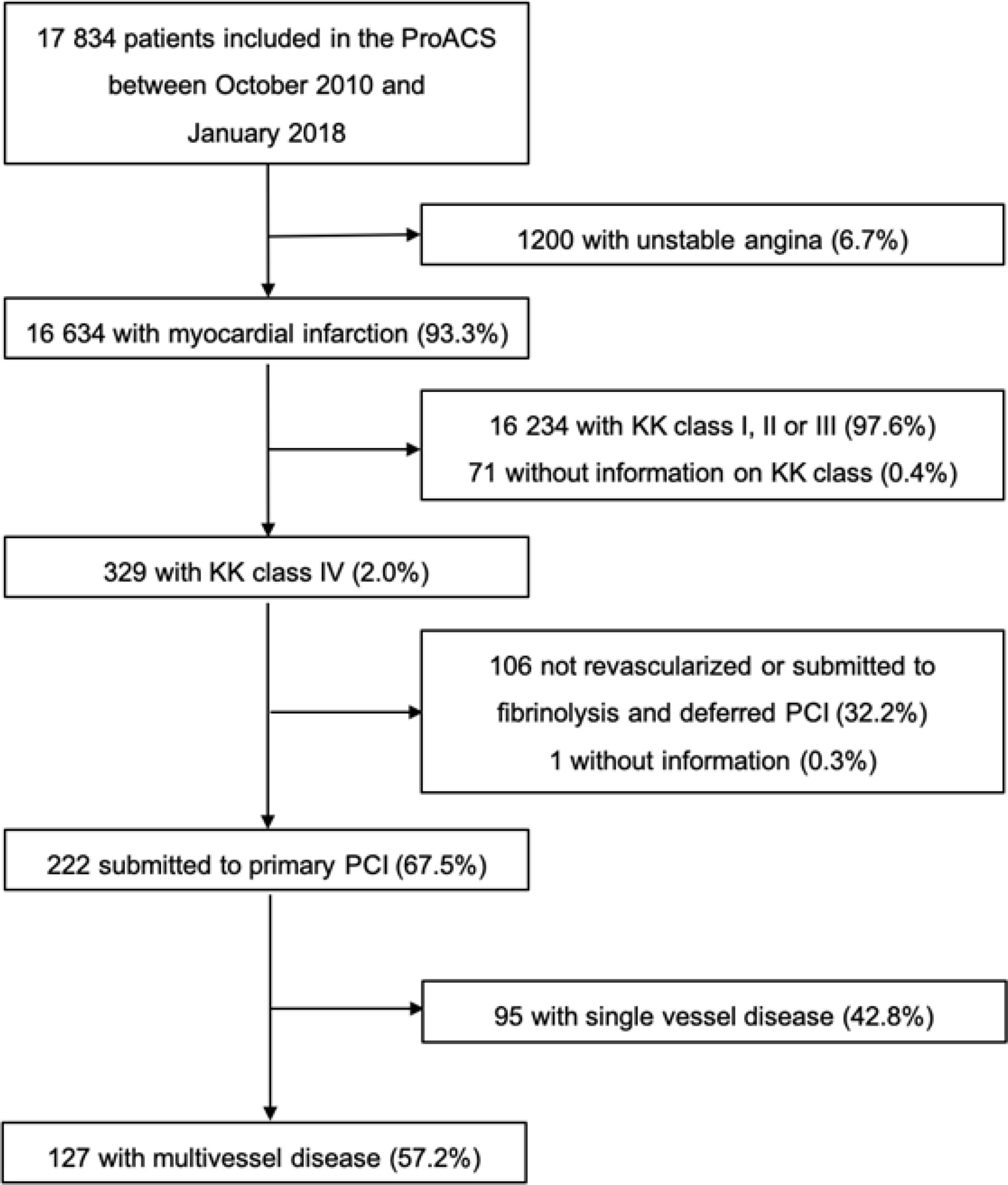
We identified 127 patients with MI, CS, and MVD (18.1% in group 1, and 81.9% in groups 2-3), with a mean age of 7012 years, and 92.9% of the sample being diagnosed with ST-segment elevation MI (STEMI). The primary endpoint occurred in 47.8% of the patients in group 1 and 37.5% in group 2-3 (p = 0.359). The rates of in-hospital death, recurrent MI, stroke, and major bleeding were also similar. The predictors of in-hospital death in this sample were the presence of left ventricle systolic dysfunction on admission (OR 16.8), right bundle branch block (OR 7.6), and anemia (OR 5.2) (p ≤ 0.02 for both).

Conclusions:

Among patients with MI, CS, and MVD included in the ProACS, there was no significant difference between complete and incomplete revascularization during the index hospitalization regarding the occurrence of in-hospital death or MI. (Arq Bras Cardiol. 2021; 116(5):867-876)

  • Acute coronary syndrome
  • Biomarkers
  • Cardiogenic
  • Intracranial Hemorrhage
  • left
  • Mortality
  • Myocardial Infarction
  • Myocardial Revascularization
  • Shock
  • Ventricular Dysfunction
Read Full Article
Creative Commons Attribution (CC BY) Creative Commons license
17/05/2021 DOI: 10.36660/abc.20190739
Figure 1
IJCS
Case Report

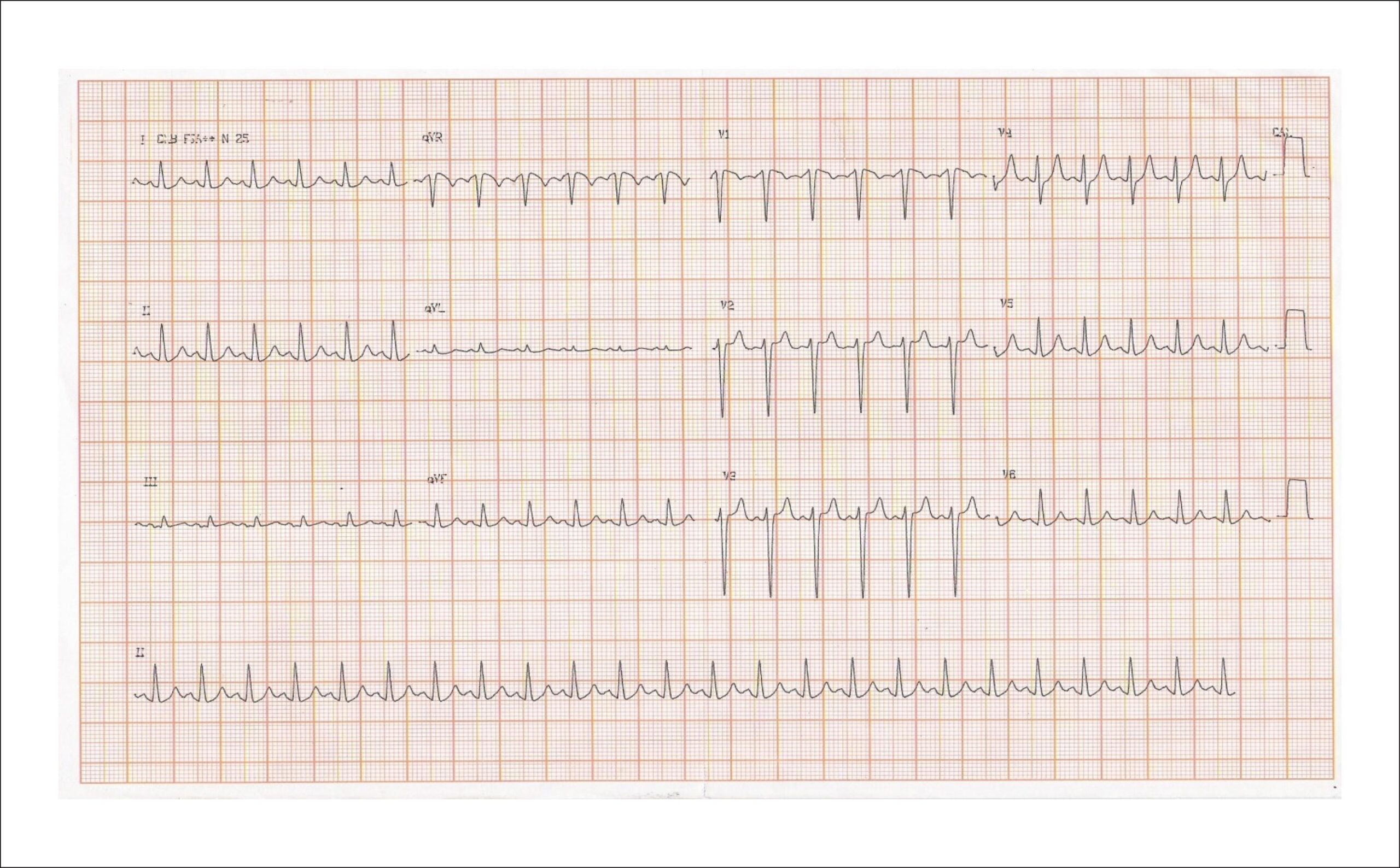
Tachycardiomyopathy and Extracorporeal Membrane Oxygenation: A Case Report

Joana Malheiro et al. João Almeida Daniel Caeiro Adelaide Dias … Marlene Fonseca Vasco Gama

Introduction

Tachycardiomyopathy (TCM) is a rare, but potentially reversible cause of cardiomyopathy and cardiogenic shock. It is defined by a global left ventricular systolic dysfunction secondary to persistent tachyarrhythmia, with partial (in patients with previous structural disease), or total recovery (in patients without previous structural disease) after cardiac rhythm normalization. The most commonly implicated arrhythmia is atrial fibrillation. The hemodynamic changes that characterize the patient with TCM include: increase in ventricular telediastolic and telesystolic volumes, global hypokinesis, increase in ventricular and pulmonary artery filling pressures, and, finally, decrease in ejection fraction (EF)., It manifests clinically by congestive heart failure, and, in some cases, it may develop into cardiogenic shock. There are no specific methods to identify the presence of TCM. The diagnosis is usually attained retrospectively with normalization or improvement of left ventricular dysfunction, through tachyarrhythmia reversion or control. The most frequent complications of TCM are embolic events, complications due to the evolution of arrhythmia severity with degeneration to Ventricular Tachycardia (VT)/Ventricular Fibrillation (VF) and cardiogenic shock.

The treatment includes measures of hemodynamic support, frequency control, and reversion to sinus rhythm, when possible. Extracorporeal Membrane Oxygenation (ECMO) is a mechanical device that ensures blood oxygenation and perfusion of the main organs for prolonged periods of time in patients with lung and/or heart failure. The use of this device allows the patient to remain alive and hemodynamically stable, working as a bridge to eventual recovery, transplantation, decision-making or even as a “bridge to another bridge” (for instance, as a bridge to left ventricular assist device – LVAD – as target therapeutics).

[…]

  • Atrial Fibrillation
  • Cardiogenic
  • Cardiomyopathies
  • Extracorporeal Membrane Oxygenation
  • Shock
  • Tachycardia
Read Full Article
Creative Commons Attribution (CC BY) Creative Commons license
01/01/2017 DOI: 10.5935/2359-4802.20170079
Figure 1
ABC
Anatomopathological Session

Case 1/2014 – Syncope Due to Cardiogenic Shock in a 25-year-old Male Patient

Tiago Rodrigues Politi et al. Paulo Gutierrez

Clinical aspects

This is a case of a male patient, 25 years of age with no previously described clinical history that sought medical attention complaining of malaise and feeling faint. The clinical picture had started 1 hour before he sought the local hospital emergency room. The patient clinical evolution was dramatic, presenting at the examination as shock, initially of undetermined etiology, going to aortic dissection and cardiac tamponade, and culminating in death within hours of symptom onset, before any surgical intervention. Acute dissection of the ascending aorta was then identified, with rapid and catastrophic clinical deterioration, a determining factor for the diagnosis to be attained as early as possible, as well as an early and accurate intervention.

Acute aortic dissection is a cardiovascular emergency with high mortality, ranging from 50 to 68% in 48 hours, 70% at 1 week and 85% in 1 month. The intimal tear is transversal, located in 70% of cases in the aorta ascending (just above the aortic valve), 20% in the descending aorta after the aortic arch, and 10% in the transverse aorta. Once started, the dissection progression can be distal, retrograde or occur in both directions and be of varying extension , . In the present case, the aortic dissection started in the ascending portion, retrograde, with bending of the anterior plan between the true and false lumen, generating a mechanical obstruction to the left ventricular outflow tract ().

[…]

  • Aneurysm, Dissecting
  • Aortic Aneurysm
  • Cardiogenic
  • Shock
  • Syncope
Read Full Article
Creative Commons Attribution (CC BY) Creative Commons license
25/03/2014 DOI: 10.5935/abc.20140020

How to cite this article

EndNote RIS

Electronic Document Format (Vancouver)

Nogueira FF, Montenegro PBR, Lyra ACAS, Gomes TQM, Montenegro CEL. Cardiogenic Shock with High Pressure: A Case Report. ABC Heart Fail Cardiomyop 2023;3(2):e20230084.

Electronic Document Format (ABNT)

Nogueira, Fiamma Ferreira; Montenegro, Patricia Bezerra Rocha; Lyra, Ana Carla Alves de Souza; Gomes, Taciana Queiroz Medeiros; Montenegro, Carlos Eduardo Lucena. Cardiogenic Shock with High Pressure: A Case Report. ABC Heart Fail Cardiomyop, v. 3, n. 2, e20230084, Dec. 2023.

Electronic Document Format (APA)

Nogueira, F. F., Montenegro, P. B. R., Lyra, A. C. A. S., Gomes, T. Q. M., & Montenegro, C. E. L. (2023). Cardiogenic Shock with High Pressure: A Case Report. ABC Heart Fail Cardiomyop, 3(2), e20230084.

Electronic Document Format (ISO)

Nogueira, Fiamma Ferreira and Montenegro, Patricia Bezerra Rocha and Lyra, Ana Carla Alves de Souza and Gomes, Taciana Queiroz Medeiros and Montenegro, Carlos Eduardo Lucena. Cardiogenic Shock with High Pressure: A Case Report. ABC Heart Fail Cardiomyop [online]. 2023, vol. 3, n. 2, [cited 2026-10-14], e20230084. Available from: <https://journals.cardiol.br/en/article/cardiogenic-shock-with-high-pressure-a-case-report/>

EndNote RIS

Electronic Document Format (Vancouver)

Alegria S, Marques A, Gomes AC, Pereira ARF, Sebaiti D, Morgado G, Calé R, et al. Revascularization Strategies in Patients with Acute Myocardial Infarction and Cardiogenic Shock: Results from the Portuguese Registry on Acute Coronary Syndromes. Arquivos Brasileiros de Cardiologia 2021;116(5):867-76.

Electronic Document Format (ABNT)

Alegria, Sofia; Marques, Ana; Gomes, Ana Catarina; Pereira, Ana Rita F.; Sebaiti, Daniel; Morgado, Gonçalo; Calé, Rita; Martins, Cristina; Belo, Adriana; Rangel, Inês; Pereira, Hélder. Revascularization Strategies in Patients with Acute Myocardial Infarction and Cardiogenic Shock: Results from the Portuguese Registry on Acute Coronary Syndromes. Arquivos Brasileiros de Cardiologia, v. 116, n. 5, p. 867-876, May. 2021.

Electronic Document Format (APA)

Alegria, S., Marques, A., Gomes, A. C., Pereira, A. R. F., Sebaiti, D., Morgado, G., Calé, R., Martins, C., Belo, A., Rangel, I., & Pereira, H. (2021). Revascularization Strategies in Patients with Acute Myocardial Infarction and Cardiogenic Shock: Results from the Portuguese Registry on Acute Coronary Syndromes. Arquivos Brasileiros de Cardiologia, 116(5), 867-876.

Electronic Document Format (ISO)

Alegria, Sofia and Marques, Ana and Gomes, Ana Catarina and Pereira, Ana Rita F. and Sebaiti, Daniel and Morgado, Gonçalo and Calé, Rita and Martins, Cristina and Belo, Adriana and Rangel, Inês and Pereira, Hélder. Revascularization Strategies in Patients with Acute Myocardial Infarction and Cardiogenic Shock: Results from the Portuguese Registry on Acute Coronary Syndromes. Arquivos Brasileiros de Cardiologia [online]. 2021, vol. 116, n. 5, [cited 2026-10-14], pp. 867-876. Available from: <https://journals.cardiol.br/en/article/revascularization-strategies-in-patients-with-acute-myocardial-infarction-and-cardiogenic-shock-results-from-the-portuguese-registry-on-acute-coronary-syndromes/>. ISSN 0066-782X

EndNote RIS

Electronic Document Format (Vancouver)

Malheiro J, Almeida J, Caeiro D, Dias A, Fonseca M, Gama V. Tachycardiomyopathy and Extracorporeal Membrane Oxygenation: A Case Report. International Journal of Cardiovascular Sciences 2017;30(6):545-9.

Electronic Document Format (ABNT)

Malheiro, Joana; Almeida, João; Caeiro, Daniel; Dias, Adelaide; Fonseca, Marlene; Gama, Vasco. Tachycardiomyopathy and Extracorporeal Membrane Oxygenation: A Case Report. International Journal of Cardiovascular Sciences, v. 30, n. 6, p. 545-549, Dec. 2016.

Electronic Document Format (APA)

Malheiro, J., Almeida, J., Caeiro, D., Dias, A., Fonseca, M., & Gama, V. (2017). Tachycardiomyopathy and Extracorporeal Membrane Oxygenation: A Case Report. International Journal of Cardiovascular Sciences, 30(6), 545-549.

Electronic Document Format (ISO)

Malheiro, Joana and Almeida, João and Caeiro, Daniel and Dias, Adelaide and Fonseca, Marlene and Gama, Vasco. Tachycardiomyopathy and Extracorporeal Membrane Oxygenation: A Case Report. International Journal of Cardiovascular Sciences [online]. 2017, vol. 30, n. 6, [cited 2026-10-14], pp. 545-549. Available from: <https://journals.cardiol.br/en/article/tachycardiomyopathy-and-extracorporeal-membrane-oxygenation-a-case-report/>. ISSN 2359-4802

EndNote RIS

Electronic Document Format (Vancouver)

Politi TR, Gutierrez P. Case 1/2014 – Syncope Due to Cardiogenic Shock in a 25-year-old Male Patient. Arquivos Brasileiros de Cardiologia 2014;102(2):e11.

Electronic Document Format (ABNT)

Politi, Tiago Rodrigues; Gutierrez, Paulo. Case 1/2014 – Syncope Due to Cardiogenic Shock in a 25-year-old Male Patient. Arquivos Brasileiros de Cardiologia, v. 102, n. 2, e11, Mar. 2014.

Electronic Document Format (APA)

Politi, T. R., & Gutierrez, P. (2014). Case 1/2014 – Syncope Due to Cardiogenic Shock in a 25-year-old Male Patient. Arquivos Brasileiros de Cardiologia, 102(2), e11.

Electronic Document Format (ISO)

Politi, Tiago Rodrigues and Gutierrez, Paulo. Case 1/2014 – Syncope Due to Cardiogenic Shock in a 25-year-old Male Patient. Arquivos Brasileiros de Cardiologia [online]. 2014, vol. 102, n. 2, [cited 2026-10-14], e11. Available from: <https://journals.cardiol.br/en/article/case-1-2014-syncope-due-to-cardiogenic-shock-in-a-25-year-old-male-patient/>. ISSN 0066-782X

  • About ABC Family
  • Internal Regulation
  • Editorial Board
  • Brazilian Society of Cardiology (SBC)

Issues

SBC Guidelines

  • Videos
  • Podcasts
  • News