ABC Family Arquivos Brasileiros de Cardiologia International Journal of Cardiovascular Sciences ABC Heart Failure & Cardiomyopathy ABC Imagem Cardiovascular
Português English
ABC Family
Português English
  • About
    • About ABC Family
    • Internal Regulation
    • Editorial Board
    • Brazilian Society of Cardiology (SBC)
  • Issues
  • SBC Guidelines
  • Content
    • Videos
    • Podcasts
    • News
  • About
    • About ABC Family
    • Internal Regulation
    • Editorial Board
    • Brazilian Society of Cardiology (SBC)
  • Issues
  • SBC Guidelines
  • Content
    • Videos
    • Podcasts
    • News

ABC Family

  • ABC Family
  • Arquivos Brasileiros de Cardiologia
  • International Journal of Cardiovascular Sciences
  • ABC Heart Failure & Cardiomyopathy
  • ABC Imagem Cardiovascular
Search in

No content found.

Journals
Ordering
Article types
Others

  1. Home
  2. Keyword: Myocardial Infarction
Myocardial Infarction with Non-Obstructive Coronary Arteries: Clinical Profile, Diagnostic Investigation, and Outcomes in a Tertiary Center Cohort
IJCS
Original Article

Myocardial Infarction with Non-Obstructive Coronary Arteries: Clinical Profile, Diagnostic Investigation, and Outcomes in a Tertiary Center Cohort

Kelvyn Vital et al. Ricardo Pavanello Barbara Porto Valente Bruno Noshang Blaas … Bianca Fernandes Tavora Arruda Raphael Rossi Maria Isabel Del Monaco Fausto Feres

Abstract

Background:

Myocardial infarction with non-obstructive coronary arteries (MINOCA) represents a heterogeneous clinical syndrome associated with diverse pathophysiological mechanisms and a non-negligible prognosis. Despite conceptual advances, diagnostic uncertainties and significant variations in etiological investigation and clinical management persist in real-world practice, particularly in centers with limited access to advanced imaging modalities.

Objectives:

To describe the clinical profile, diagnostic strategies employed, and clinical outcomes of patients with MINOCA followed at a Brazilian tertiary center.

Methods:

Observational, retrospective study including consecutive patients diagnosed with MINOCA, defined according to the Fourth Universal Definition of Myocardial Infarction and European guidelines. Clinical, angiographic, and complementary diagnostic data, as well as the treatment instituted and clinical outcomes during follow-up, were collected.

Results:

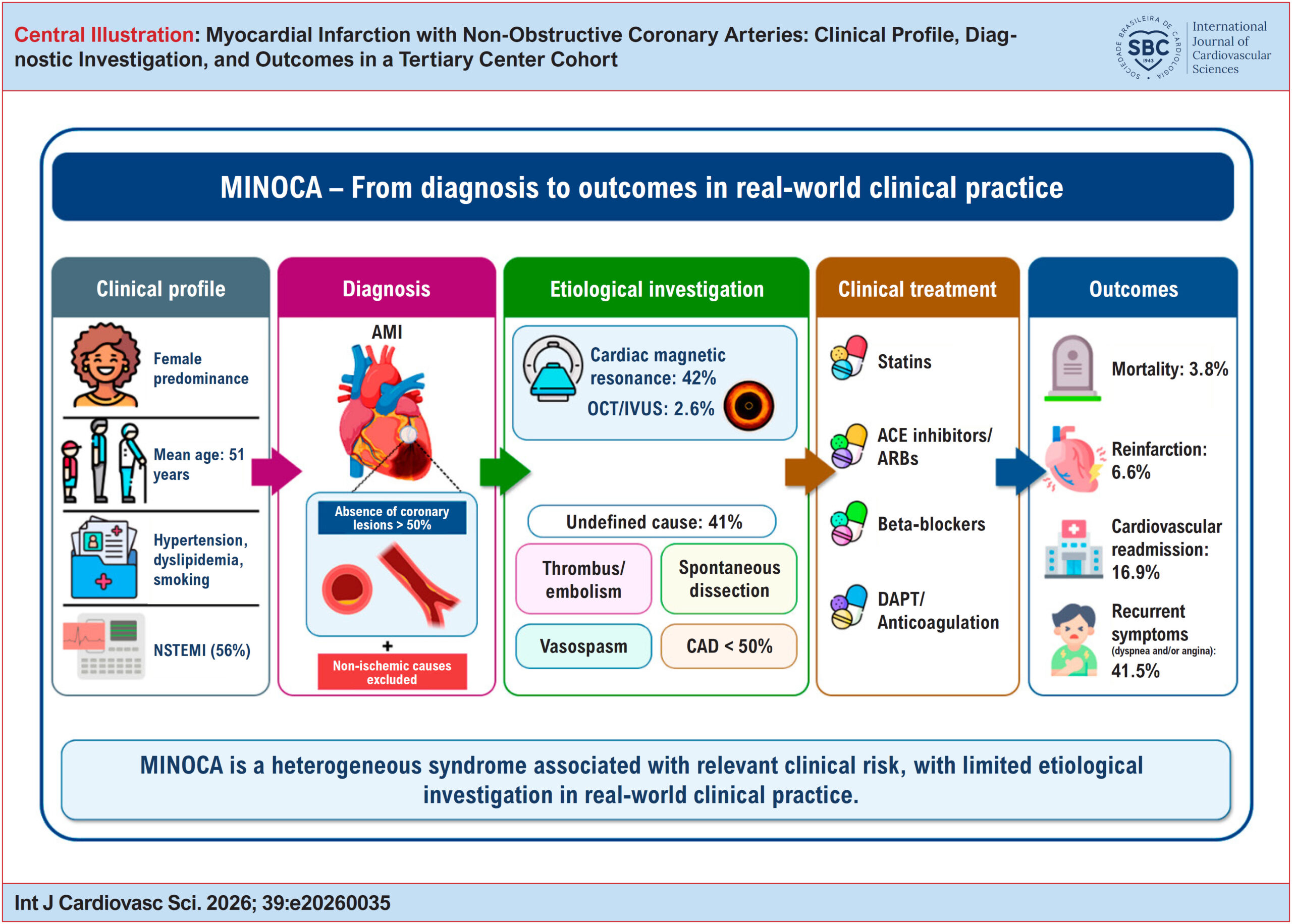
A total of 196 patients were included, with a mean age of 50.6 ± 11.8 years and a slight female predominance (52.6%). Systemic arterial hypertension (60.2%), dyslipidemia (45.9%), and current or former smoking (48.0%) were frequent. Cardiac magnetic resonance imaging was performed in 42.3% of cases, whereas intracoronary imaging methods were rarely used (2.6%). In 40.8% of patients, a definitive etiology could not be established. During follow-up (n = 183), mortality was 3.8%, reinfarction occurred in 6.6%, and new cardiovascular hospitalizations occurred in 16.9%.

Conclusions:

Patients with MINOCA present an intermediate-risk clinical profile and a relevant incidence of cardiovascular events during follow-up. The high proportion of cases without a defined etiological diagnosis reflects limitations in investigation and reinforces the need for more structured diagnostic strategies and individualized clinical management.
  • Coronary Artery Disease
  • MINOCA
  • Myocardial Infarction
Read Full Article
Creative Commons Attribution (CC BY) Creative Commons license
11/09/2026 DOI: 10.36660/ijcs.20260035 Views 4
Reversal of Therapeutic Recommendations in the American College of Cardiology Coronary Artery Disease Guidelines
IJCS
Original Article

Reversal of Therapeutic Recommendations in the American College of Cardiology Coronary Artery Disease Guidelines

Alessandra Carvalho Caldas et al. Denise Matias Daniel Medina Luis Claudio Lemos Correia

Abstract

Background:

Medical reversal is defined as the discontinuation of a procedure’s recommendation due to new evidence regarding its efficacy or safety. Cardiology is the specialty with the highest number of documented reversals, yet there is no information available about the probability of reversal.

Objectives:

To describe the frequency of medical reversal in the ischemic heart disease guidelines published by the American College of Cardiology/American Heart Association (ACC/AHA), according to levels of evidence.

Methods:

The most recent guidelines for stable coronary disease, non-ST-elevation acute coronary syndrome, and ST-elevation myocardial infarction were compared with the first version. Medical reversal was defined as a shift from a recommended procedure to a contraindicated one or the removal of the recommendation. The quality of evidence was categorized by the guidelines as high, moderate, or low.

Results:

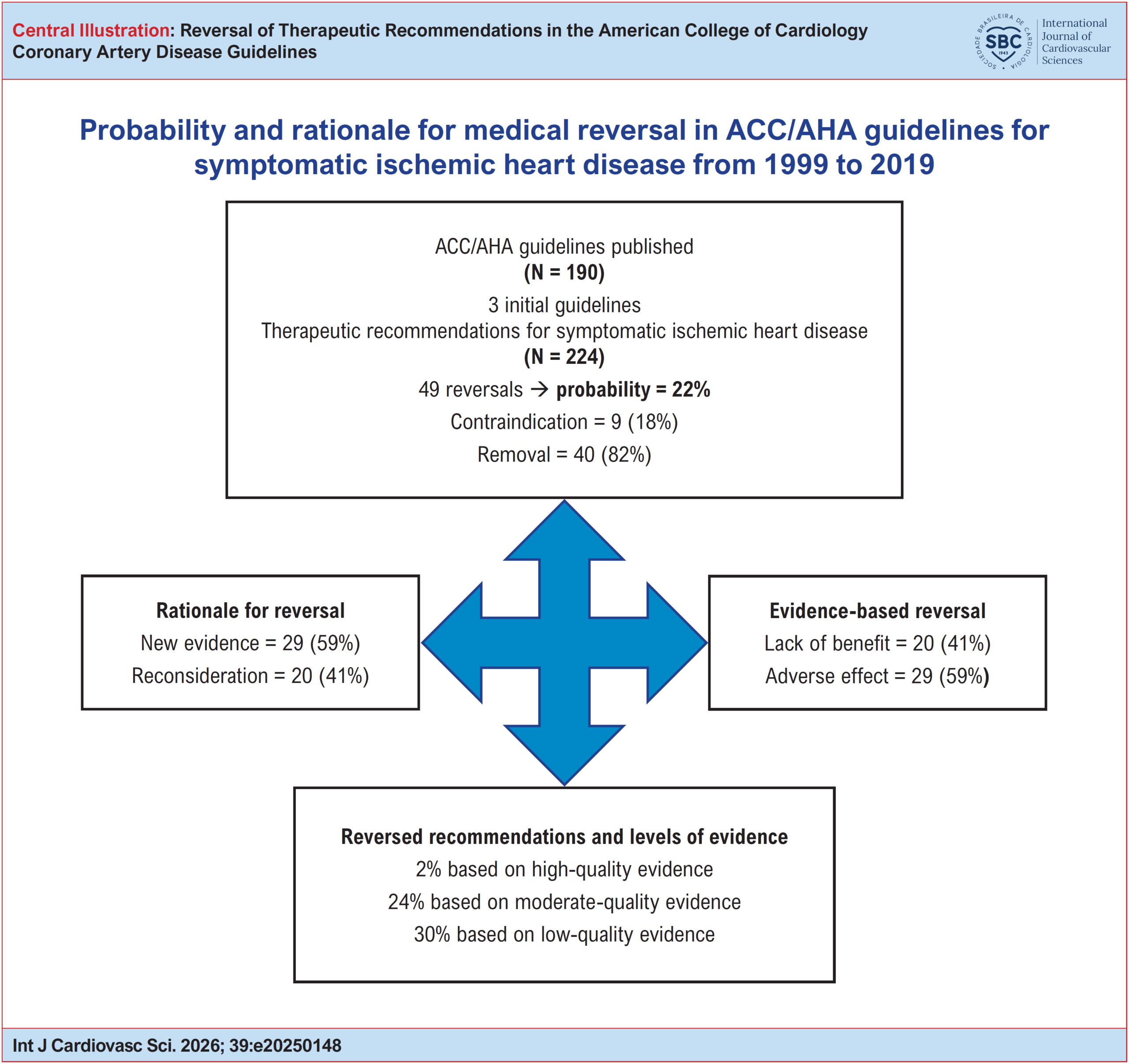
A total of 224 therapeutic recommendations were identified, with 19% based on high-quality evidence, 42% on moderate-quality evidence, and 39% on low-quality evidence. Forty-nine medical reversals were observed, constituting 22% of all therapeutic recommendations included in the first version of the guidelines. The probability of reversal for procedures based on high-quality evidence was 2%, compared with 25% for procedures with moderate-quality evidence and 30% for procedures with low-quality evidence.

Conclusion:

In the ACC/AHA ischemic heart disease guidelines, medical reversal is common in recommendations based on moderate or low-quality evidence, but rare in those with high-quality evidence.

  • Acute coronary syndrome
  • Coronary Artery Disease
  • Myocardial Infarction
Read Full Article
Creative Commons Attribution (CC BY) Creative Commons license
07/09/2026 DOI: 10.36660/ijcs.20250148 Views 2
Association between the Neutrophil-to-HDL-Cholesterol Ratio and Myocardial Infarction: A Cross-Sectional Study
ABC
Original Article

Association between the Neutrophil-to-HDL-Cholesterol Ratio and Myocardial Infarction: A Cross-Sectional Study

Youpeng Wang et al. Qian Yin Ying Lei Juncang Duan

Abstract

Background

Myocardial infarction (MI) remains a major global health burden. Inflammation and lipid metabolism’s roles in MI pathogenesis have drawn more attention. The neutrophil-to-high-density lipoprotein cholesterol ratio (NHR) is a new composite biomarker integrating inflammation and lipid metabolism markers, but its association with MI is unclear.

Objectives

We investigated the association between NHR and MI.

Methods

We analyzed data from 25,248 eligible participants from NHANES between 2005 and 2016. A history of MI was determined using questionnaire data, and NHR values were derived from laboratory measurements. Logistic regression models were used to assess the associations of NHR, neutrophil count, and high-density lipoprotein cholesterol (HDL-C) with the odds of MI. Restricted cubic spline (RCS) analysis was used to evaluate potential nonlinear associations. Subgroup analyses and interaction tests were performed to explore potential heterogeneity across demographic and clinical subgroups. Sensitivity analyses were performed to evaluate the robustness of the primary findings. A two-sided P value of <0.05 was considered statistically significant.

Results

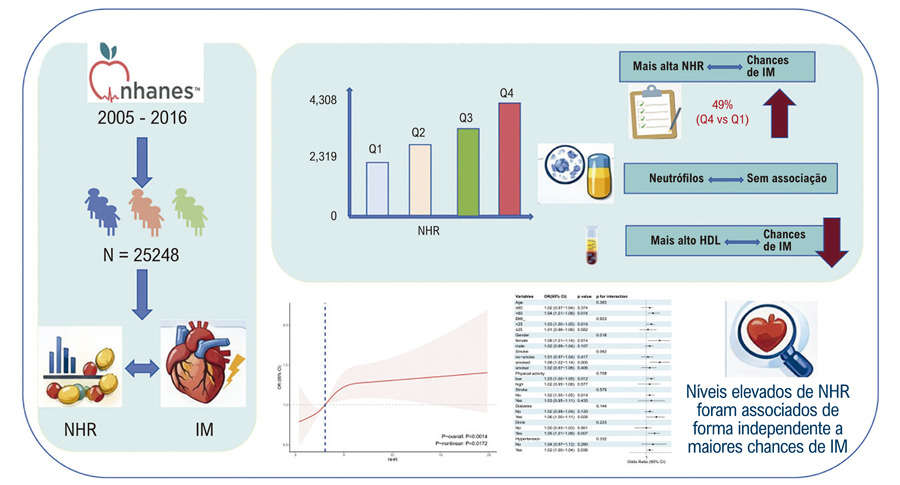
Higher NHR was independently associated with higher odds of MI. In the fully adjusted model, participants in the highest NHR quartile had 49% higher odds of MI than those in the lowest quartile. Neutrophil count alone was not significantly associated with MI, whereas HDL-C levels were inversely associated with MI. RCS suggested a modest nonlinear association between NHR and MI. Although a data-driven inflection point was identified at 6.93, this result should be interpreted as exploratory and descriptive rather than a clinically meaningful threshold. Subgroup analyses suggested a stronger association in women, and the interaction by sex was statistically significant. Sensitivity analyses confirmed the robustness of these findings.

Conclusion

In this large, representative sample, elevated NHR was independently associated with higher odds of MI, suggesting that NHR may serve as a potentially informative epidemiological marker for MI. Prospective studies are needed to determine causality and elucidate the underlying mechanisms.

  • HDL, Cholesterol
  • Myocardial Infarction
  • Neutrophils
  • Nutrition Surveys
Read Full Article
Creative Commons Attribution (CC BY) Creative Commons license
28/08/2026 DOI: 10.36660/abc.20250718i Views 1
ABCIC
Editorial

A New Frontier in Cardiovascular Prevention: Beyond Prohibition, Clinical Management of Anabolic Steroid Users

Fabio Roston et al. Alexandre Aby Azar Ribeiro Naiara Caroline Makiniks Luiz Felipe Branco Ribeiro Liliana Ludwing Ziegler

Subclinical Diagnosis: The Role of Advanced Echocardiography

Conventional cardiac assessment often fails to detect early damage, as Left Ventricular Ejection Fraction (LVEF) may remain within normal limits despite established myocardial injury. The literature highlights that AAS users exhibit alterations in cardiac geometry and function, including pathological hypertrophy, diastolic dysfunction, and biventricular impairment.,

In this setting, echocardiography incorporating advanced measurements such as myocardial strain has emerged as an essential diagnostic tool. Although LVEF may remain preserved during the early stages, myocardial deformation (strain) analysis enables the detection of incipient systolic dysfunction resulting from fibrosis and myofibrillar destruction caused by the direct toxic effects of androgens. Recent studies have demonstrated that both current and former AAS users may exhibit persistent biventricular cardiomyopathy, reinforcing the need for continuous monitoring.

[…]

  • Anabolic Androgenic Steroids
  • Cardiomyopathies
  • Myocardial Infarction
Read Full Article
Creative Commons Attribution (CC BY) Creative Commons license
31/07/2026 DOI: 10.36660/abcimg.20260076i Views 1
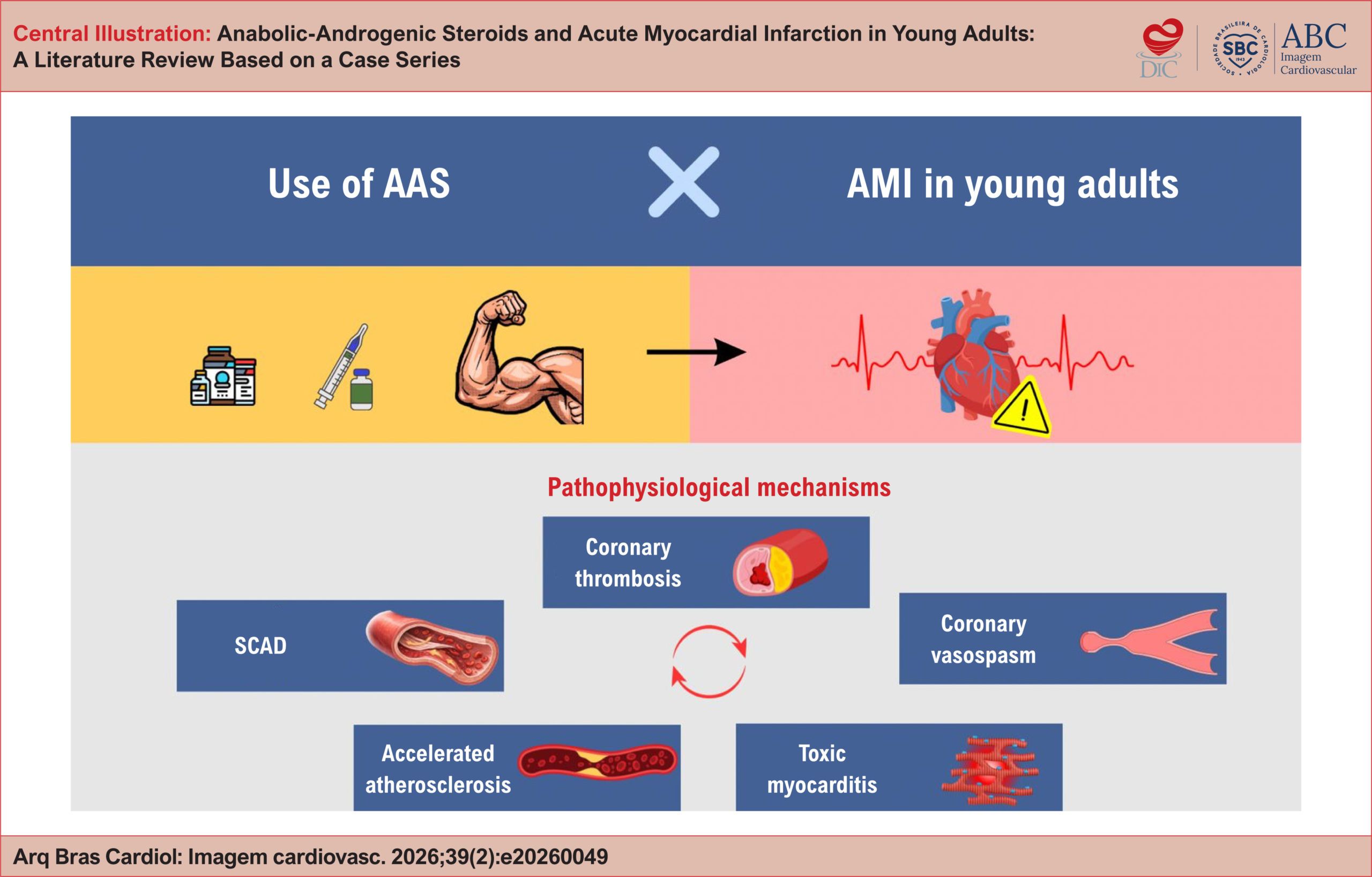
Anabolic-Androgenic Steroids and Acute Myocardial Infarction in Young Adults: A Literature Review Based on a Case Series
ABCIC
Original Article

Anabolic-Androgenic Steroids and Acute Myocardial Infarction in Young Adults: A Literature Review Based on a Case Series

Fabiana Rocha Botelho de Oliveira et al. Danielli Oliveira de Costa Lino Germano Freire Bezerra Filho Bruno Cavalcante Linhares … Leonardo Brito De Souza Luiz Filipe Torres de Alencar Matheus Rolim Santa Cruz Mateus Paiva Marques Feitosa

Abstract

Background:

The use of anabolic-androgenic steroids (AAS) has increased substantially, especially among young adults seeking aesthetic enhancement and improved physical performance. Scientific evidence demonstrates a significant association between the abuse of these substances and severe cardiovascular events, including acute myocardial infarction (AMI), often occurring in individuals without traditional cardiovascular risk factors.

Objective:

To describe the adverse effects of AAS on the cardiovascular system and the main pathophysiological mechanisms involved in the development of AMI through the analysis of a clinical case series combined with a review of medical literature.

Methods:

A systematic literature review was conducted using the PubMed and SciELO databases, complemented by the analysis of three clinical cases. Demographic variables and characteristics related to AAS use, including duration of exposure and route of administration, were evaluated, with emphasis on the pathophysiological mechanisms associated with AMI.

Results:

Analysis of the clinical cases identified different mechanisms related to AMI, including coronary thrombosis, atherosclerosis with plaque rupture, and spontaneous coronary artery dissection. The literature review also identified other relevant mechanisms, such as coronary vasospasm and toxic myocarditis. A predominance of male patients was observed, with the highest incidence occurring among individuals aged 20-40 years, and testosterone esters were the most frequently used AAS.

Conclusions:

AAS abuse represents a major threat to cardiovascular health and is associated with AMI through multiple pathophysiological mechanisms. These findings reinforce the need for public awareness as well as the development of preventive strategies and clinical guidelines aimed at managing this emerging condition.

  • Anabolic Androgenic Steroids
  • Atherosclerosis
  • Myocardial Infarction
  • Myocarditis
Read Full Article
Creative Commons Attribution (CC BY) Creative Commons license
27/07/2026 DOI: 10.36660/abcimg.20260049i Views 1
ABC
Letter to the Editor

Prognostic Value of the Inflammatory Burden Index (IBI) in Coronary Events

Luis Antonio Cavalcanti Matias et al. Pedro Pereira Tenório

Dear Editor,

We read with great interest the original article entitled “Cardiac CT-Detected Vulnerable Plaques and Risk of Future Acute Myocardial Infarction: Predictive Value of CAC Scores and Inflammatory Burden Index”. We want to congratulate the authors, Ömür et al., on their timely investigation into the integration of anatomical and inflammatory markers for predicting acute coronary events.

[…]

  • Atherosclerotic Plaque
  • Myocardial Infarction
  • X-Ray Computed Tomography
Read Full Article
Creative Commons Attribution (CC BY) Creative Commons license
01/06/2026 DOI: 10.36660/abc.20260174i Views 2
The Causal Association between Plasma Metabolites-Mediated Immune Cells and Myocardial Infarction: A Mendelian Randomization Study
ABC
Original Article

The Causal Association between Plasma Metabolites-Mediated Immune Cells and Myocardial Infarction: A Mendelian Randomization Study

Yue Liu et al. Xing Chen Yingzhi Liu Yvwen Lu … Yun Zhu Lingli Chen Jie Li

Abstract

Background

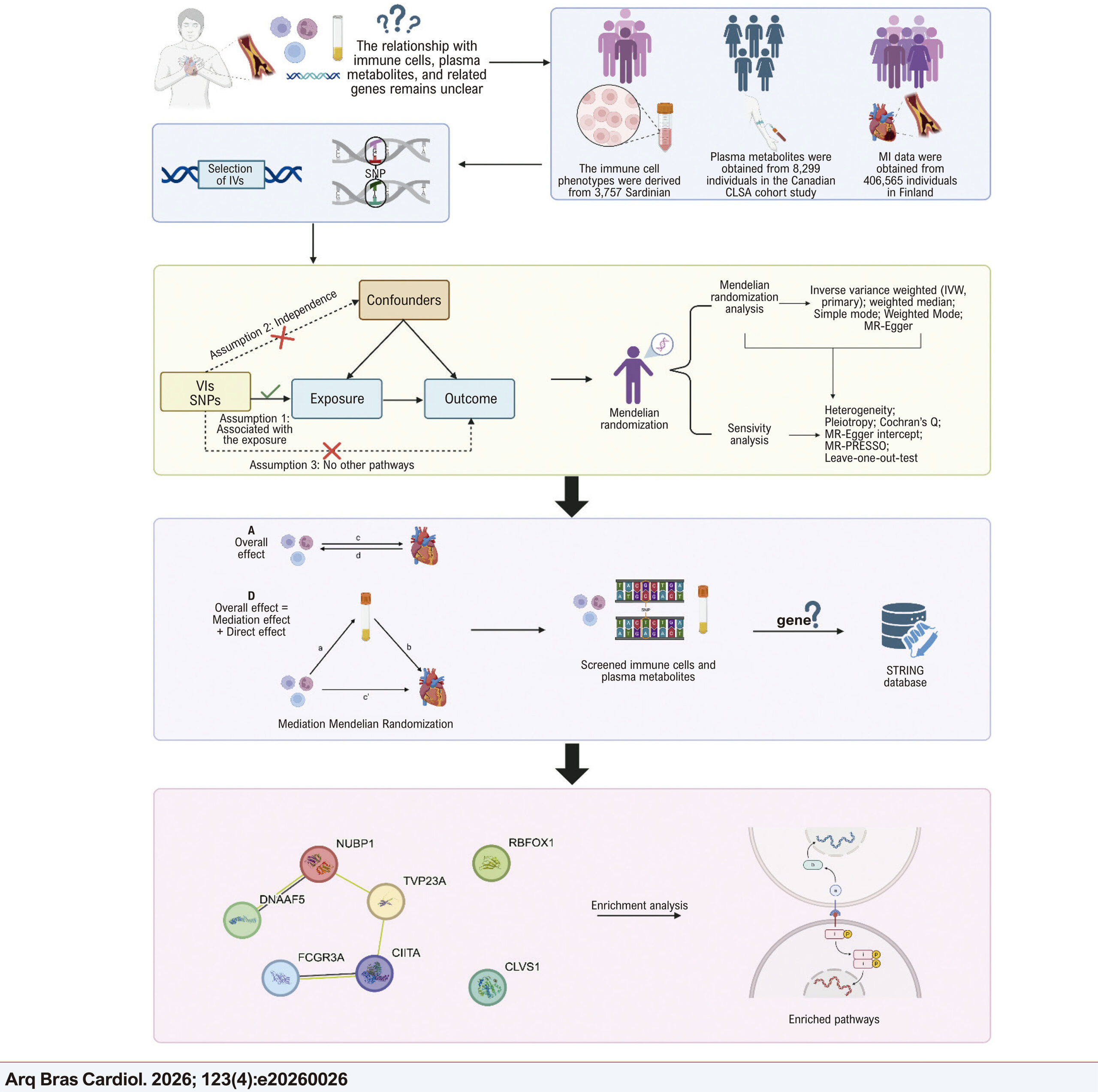
blaMyocardial infarction (MI), as an acute cardiovascular event, has been shown in previous studies to be associated with immune responses and metabolites. However, the causal relationship between immune cells and MI, as well as the mediating role of plasma metabolites, has not been clearly confirmed.

Objectives

Systematic analysis of the causal association between 731 immune cells and MI, as well as the mediating roles of 1400 plasma metabolites.

Methods

Bidirectional Mendelian randomization (MR) analysis was used to explore the causal relationship between immune cells and MI, and one-step and two-step mediation analyses were performed to identify plasma metabolites. The analysis methods included inverse variance weighted (p<0.05), weighted median (p<0.05), simple mode (p<0.05), weighted mode (p<0.05), MR-Egger regression (p0.05) and MR-PRESSO (p>0.05) to assess the reliability of the results. SNPs associated with immune cells and metabolites were subjected to gene selection using the STRING database, followed by enrichment analysis.

Results

A total of 44 immune cells were identified to have a causal association with MI (p<0.05), among which HLA DR on Dendritic Cell (ebi-a-GCST90002106) showed the strongest significance (p0.05). Plasma metabolites, including Deoxycholic acid glucuronide levels, Phosphate to N-acetylneuraminate ratio, and Glycosyl ceramide, played a mediating role in immune cells and MI, with mediation effects of 7.0%, 4.6%, and 6.6%, respectively. STRING database analysis identified eight key genes and one signaling pathway that potentially link the immune phenotypes and the three metabolites (p< 0.05).

Conclusions

This study identified a causal relationship between immune cells and MI. The metabolites Deoxycholic acid glucuronide levels, Phosphate to N-acetylneuraminate ratio, and Glycosyl ceramide played a partial mediating role in this causal relationship.

  • Biomarkers
  • Mendelian Randomization Analysis
  • Myocardial Infarction
Read Full Article
Creative Commons Attribution (CC BY) Creative Commons license
29/05/2026 DOI: 10.36660/abc.20250026i Views 2
Figure 1
ABC
Case Report

Kounis Syndrome Type II after Diclofenac Exposure: Unmasking a Link Between Drug Allergy and Acute Coronary Syndrome

Rafaella Avakian Mansur et al. Solange Desirée Avakian Antonio de Padua Mansur

Introduction

Kounis syndrome (KS), first identified in 1991 as “allergic angina,” marks a significant intersection between cardiology and allergology. It involves episodes of acute coronary syndrome (ACS), such as vasospasm, myocardial infarction, or stent thrombosis, occurring during allergic, anaphylactic, or hypersensitivity reactions. This syndrome demonstrates the direct impact of systemic inflammation on coronary vessels, primarily through mast cell activation and degranulation. Although it was first described more than 30 years ago, KS remains highly underdiagnosed and frequently overlooked, leading to delays in proper treatment. Its pathophysiology includes the release of various inflammatory mediators like histamine, leukotrienes, tryptase, chymase, and platelet-activating factor. These substances can cause coronary artery vasospasm, trigger plaque erosion or rupture in existing atheromatous plaques, and promote a prothrombotic environment, resulting in ACS., Systematic reviews of existing literature, mainly case reports and series, are beginning to clarify KS’s epidemiological and clinical features. A recent comprehensive review by Cahuapaza-Gutierrez et al. of 214 patients showed a male predominance (69.6%), with an average age of 54.4 years, and hypertension was the most common comorbidity (33.6%). The most frequent triggers are medications (38.3%), especially antibiotics and non-steroidal anti-inflammatory drugs (NSAIDs), followed by insect stings (26.2%). KS is classified into three main types: type I (coronary spasm without pre-existing disease), type II (myocardial infarction with underlying coronary artery disease), and type III (stent thrombosis). A proposed “type IV” involves thrombosis of coronary artery bypass grafts. Recognizing this classification is crucial for clinicians, as treatment must address both the acute cardiac ischemia and the allergic reaction. This case report of typical type II KS triggered by diclofenac sodium aims to contribute to the growing body of evidence and underscore the importance of heightened clinical awareness.

[…]

  • Diclofenac
  • Drug Hypersensitivity
  • Kounis Syndrome
  • Myocardial Infarction
Read Full Article
Creative Commons Attribution (CC BY) Creative Commons license
11/05/2026 DOI: 10.36660/abc.20250698i Views 1
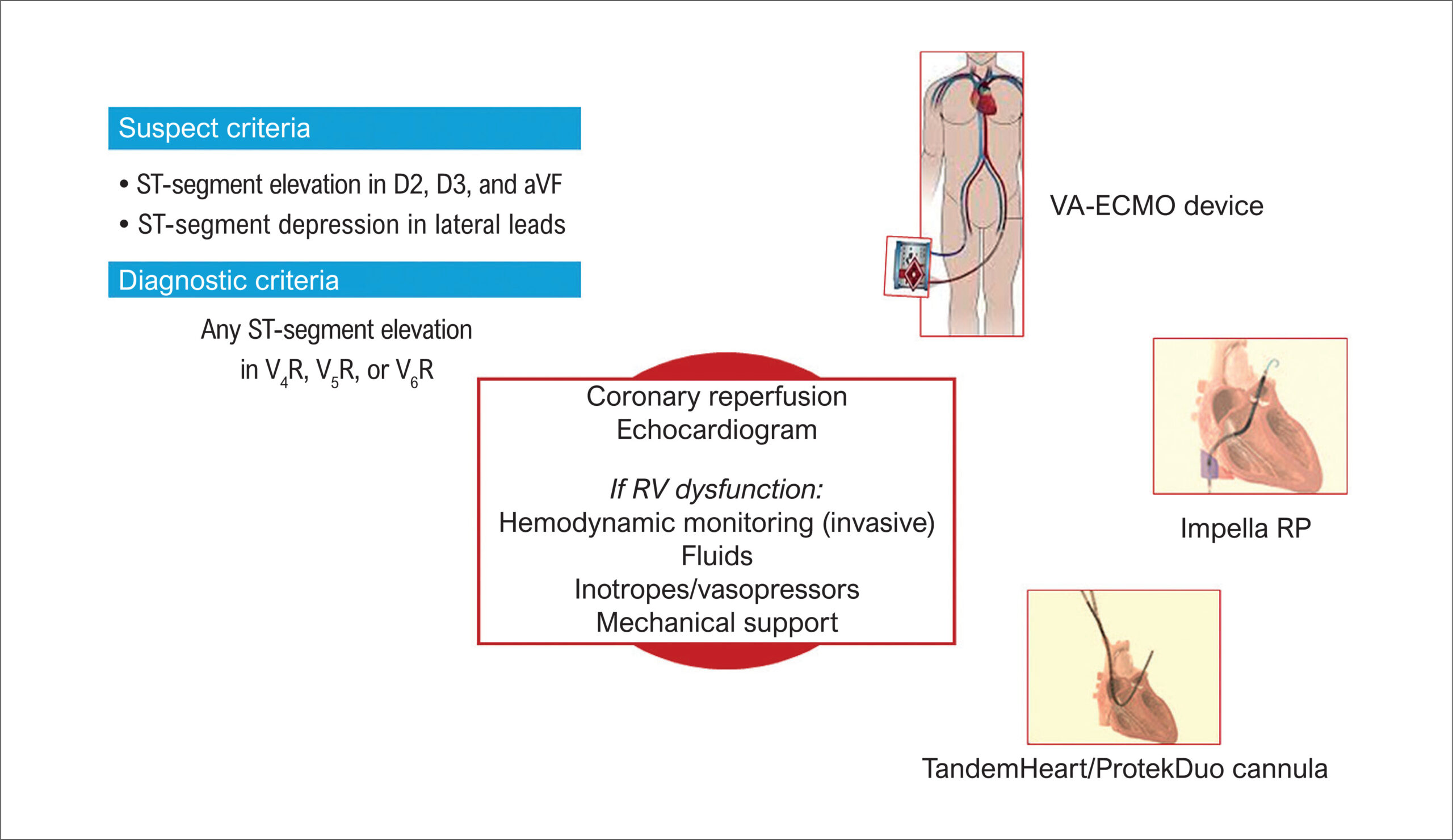
Right Ventricle Infarction in Current Practice: Insights from a Contemporary Registry at a High-Volume Tertiary Center in Brazil
IJCS
Original Article

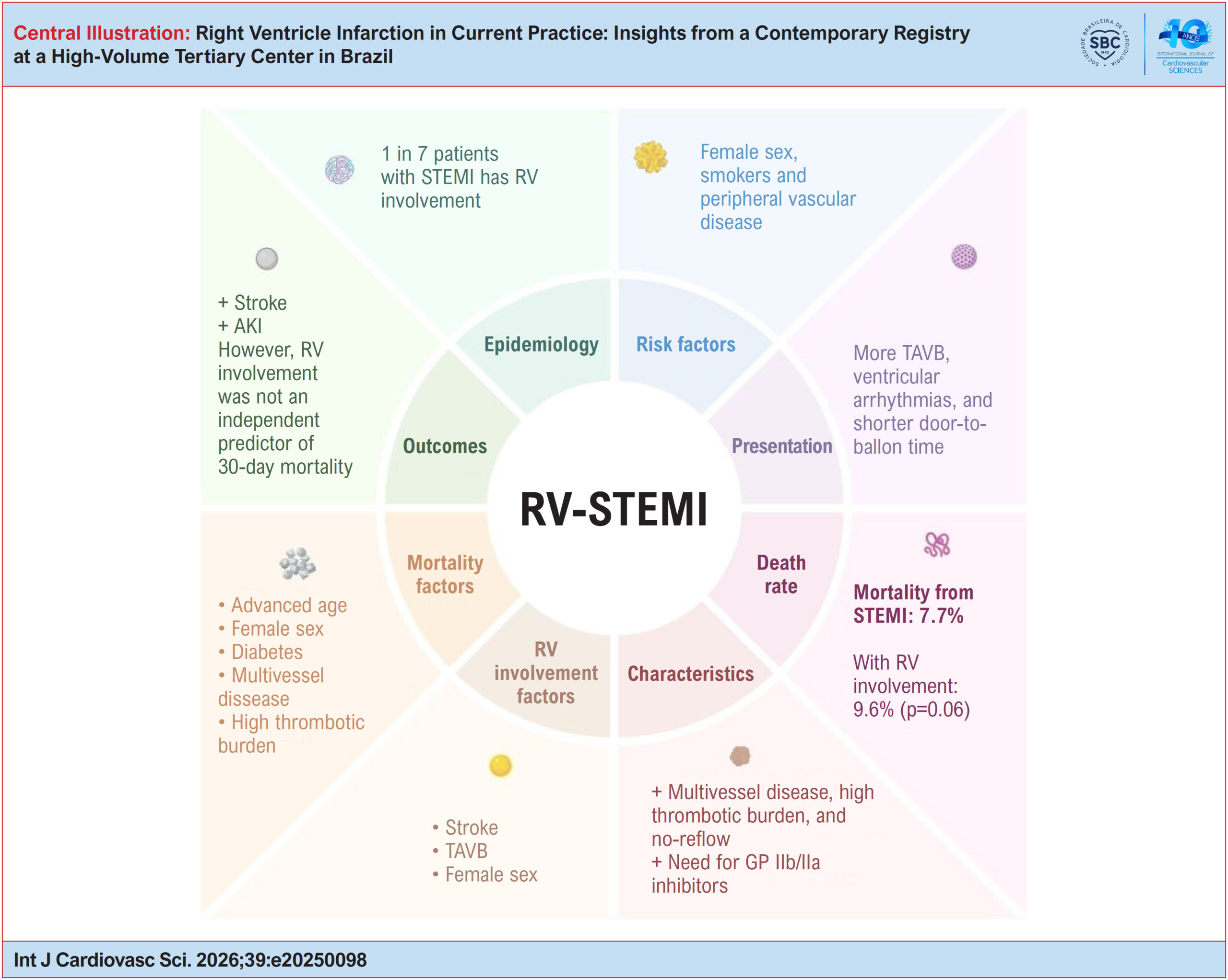
Right Ventricle Infarction in Current Practice: Insights from a Contemporary Registry at a High-Volume Tertiary Center in Brazil

Giulia Bonatto Reichert et al. Pedro Henrique Torres Tietz Vitoria Silva Marcia Moura Schmidt … Carlos A. M. Gottschall Alexandre Schaan de Quadros

Abstract

Background:

Right ventricular (RV) involvement in acute ST-segment elevation myocardial infarction (STEMI) has scarcely been studied in contemporary cardiology practice.

Objective:

To evaluate the clinical, angiographic, procedural characteristics and outcomes of patients with STEMI and RV involvement undergoing primary percutaneous coronary intervention (pPCI).

Methods:

This prospective cohort included consecutive patients with STEMI presenting within 12 hours of symptom onset and undergoing pPCI between 2009 and 2023 at a high-volume tertiary cardiology center in Brazil. Clinical characteristics and outcomes of patients with RV infarction were compared to those without RV involvement. Continuous and categorical variables were analyzed using appropriate statistical tests, with a significance level of 5% (p < 0.05). Logistic regression models were used to identify independent predictors.

Results:

Among 5,611 patients, 13% had RV involvement. These individuals were more frequently female, had right coronary artery as the culprit vessel, had greater thrombotic burden, and more often presented with total atrioventricular block (TAVB). Acute kidney injury (5.8% versus 4.1%, p = 0.03) and stroke (1.6% versus 0.8%, p = 0.04) were more common in the RV group. Thirty-day (10.5% versus 8.7%, p = 0.16) and 2-year mortality (19.5% versus 18.5%, p = 0.11) were higher among patients with RV infarction, although not statistically significant. In multivariable analysis, TAVB and female sex were independently associated with RV involvement. RV infarction was not an independent predictor of 30-day mortality.

Conclusion:

In current practice, approximately 1 in 7 STEMI patients present with RV involvement. These patients have a higher-risk profile, though RV infarction was not independently associated with short-term mortality.

  • Acute coronary syndrome
  • Myocardial Infarction
  • Right Ventricular
  • ST-segment Elevation Myocardial Infarction
Read Full Article
Creative Commons Attribution (CC BY) Creative Commons license
13/03/2026 DOI: 10.36660/ijcs.20250098 Views 1
Figure 1
IJCS
Editorial

The "Right" Side of Myocardial Infarction: Sinister Outcomes?

Monica Verdoia

Right ventricular myocardial infarction (RVI) is rarely an isolated event; rather, it generally complicates 10% to 50% of cases of acute inferior ST-segment elevation myocardial infarction (STEMI)., Proximal right coronary artery occlusion, impairing right ventricular (RV) branch flow, is most frequently the culprit vessel, although it depends on coronary tree anatomy.

Previous studies underlined that RVI is often unrecognized, since RV ischemic dysfunction is generally transient, due to the different composition and higher resistance to hypoxia of the RV wall. In addition, the diagnostic criteria for RVI, which are mainly based on electrocardiogram (), can lead to underestimation, unless RV involvement becomes clinically manifest with hemodynamic complications. In fact, acute RV dysfunction can lead to reduced output, insufficient left heart filling, and cardiogenic shock, despite preserved left contractility. Moreover, intrapericardial ventricular interaction can translate into an abrupt RV dilation and further compression of the left chambers.

[…]

  • Heart Ventricles
  • Myocardial Infarction
  • Percutaneous Coronary Intervention
Read Full Article
Creative Commons Attribution (CC BY) Creative Commons license
13/03/2026 DOI: 10.36660/ijcs.20250249
Geographic Variation in Door-to-Needle Time among Patients with STEMI from the Metropolitan Region of Rio de Janeiro: Results of the EQUITY-MI Cohort
ABC
Original Article

Geographic Variation in Door-to-Needle Time among Patients with STEMI from the Metropolitan Region of Rio de Janeiro: Results of the EQUITY-MI Cohort

Eric Costa de Almeida et al. Felipe Neves Albuquerque Esmeralci Ferreira Roberto Pozzan … Pedro Pimenta de Mello Spineti Pâmela Sousa Monteiro Williana Oliveira de Araújo Rhayana Vitória da Rosa Silva Carla Maciel Caminhas Thales Cardoso Whately João Gabriel Monteiro Junqueira Denilson Campos de Albuquerque

Abstract

Background

There is a gap in information regarding the reperfusion strategies used and the evolution of patients with ST-segment elevation myocardial infarction (STEMI) in the state of Rio de Janeiro.

Objective

To assess thrombolysis time in the diverse regions of the state capital and metropolitan area of Rio de Janeiro, as well as the outcome of post-infarction heart failure.

Methods

EQUITY-MI is a prospective cohort study of patients diagnosed with STEMI and referred to a single reperfusion center. Continuous variables were analyzed using the Kruskal–Wallis test, and categorical variables were analyzed using the chi-square test. In order to estimate the effect of door-to-needle time (DNT), generalized linear regression models with gamma distribution and log link function were applied, in addition to quantile regression to estimate the effect at the 25%, 50%, and 75% quantiles, both adjusted for sex, age, race, and education level. The significance level applied was 0.05.

Results

The study included 457 patients, with a mean age of 60.4 years, 79% of whom received thrombolysis, with a median DNT of 77 minutes, and 20.9% were thrombolyzed within 30 minutes, with no statistical difference between regions (p = 0.23). The Baixada Fluminense region presented the highest adjusted mean DNT (165.9 minutes), with a time difference compared to the North Zone (0.61; 0.44 to 0.87; p = 0.003) and West Zone (0.69; 0.51 to 0.96; p = 0.022). It also presented the highest DNT in all intervals (Q25, Q50, Q75). After infarction, 63.5% of patients presented heart failure.

Conclusion

There was a general delay in DNT for patients included in the EQUITY-MI study, with worse systematic performance in the Baixada Fluminense region, in addition to a high incidence of post-infarction heart failure.

  • Health Policy
  • Mortality
  • Myocardial Infarction
  • Myocardial Reperfusion
  • Thrombolytic Therapy
Read Full Article
Creative Commons Attribution (CC BY) Creative Commons license
27/02/2026 DOI: 10.36660/abc.20250401i Views 24
Cost-Effectiveness Analysis of Coronary Computed Tomography Angiography as the Preferred Exam in the Investigation of Stable Chest Pain in the Brazilian Private Healthcare System
ABC
Original Article

Cost-Effectiveness Analysis of Coronary Computed Tomography Angiography as the Preferred Exam in the Investigation of Stable Chest Pain in the Brazilian Private Healthcare System

Afonso Shiozaki et al. Jorge Torreão Isabela Bispo Santos da Silva Costa Anuncia Bouzas Suarez … Marcelo Tozatti da Silva Thiago Godoy de Oliveira Luana Emanuelly Sinhori Lopes Marcelo Eidi Nita Henrique Trad Carlos E. Rochitte

Abstract

Background

Cardiovascular disease is the leading cause of mortality worldwide. Strategies that prioritize early diagnosis can reduce the incidence of related complications and cost.

Objective

To assess the cost-effectiveness of coronary computed tomography angiography (CCTA) as the initial diagnostic strategy for stable chest pain in patients with intermediate pre-test probability of stable coronary artery disease (CAD), in comparison with invasive coronary angiography (ICA).

Methods

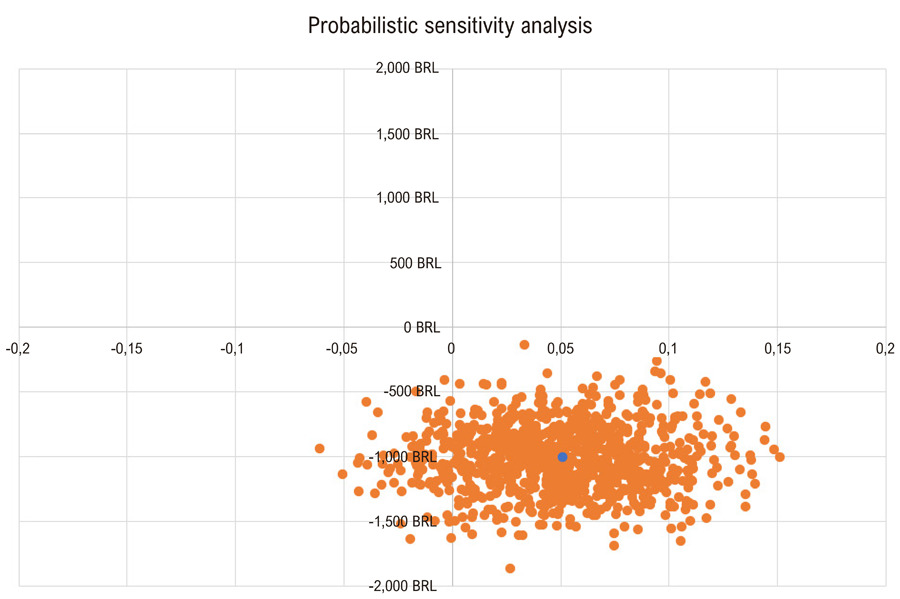
A cost-effectiveness analysis was conducted comparing CCTA and ICA, considering data from the Brazilian private healthcare system. The model considered the direct costs of diagnostic exams, medical supplies, hospitalization for myocardial infarction, and myocardial revascularization in the 5 regions of Brazil. A budget impact analysis was performed regarding the gradual incorporation of CCTA over 5 years, considering 100,000 lives as the eligible population.

Results

The cost-effectiveness analysis comparing CCTA to ICA, estimated for a population of 100,000 lives, demonstrated cost savings of BRL 1,021.00 per life or a total of BRL 102,069,703.00 by the end of the fifth year. When considering the regional average cost of CCTA, for a population of 100,000 over 5 years, we observed the following cost savings per life and in 5 years, respectively: BRL 1,226.00 and BRL 122,577,793.00 in the North Region; BRL 1,460.00 and BRL 145,988,367.00 in the Northeast Region; BRL 1,625.00 and BRL 162,502,626.00 in the Central-West Region; BRL 1,313.00 and BRL 131,270,230.00 in the Southeast Region; and BRL 1,043.00 and BRL 104,268,937.00 in the South Region.

Conclusion

As an initial strategy for investigating stable chest pain, CCTA is cost-effective compared to ICA and is associated with significant cost reductions in the Brazilian private healthcare system.

  • Coronary Artery Disease
  • Cost-Effectiveness Analysis
  • Myocardial Infarction
  • X-Ray Computed Tomography
Read Full Article
Creative Commons Attribution (CC BY) Creative Commons license
30/01/2026 DOI: 10.36660/abc.20250204i Views 2
Cardiac CT-Detected Vulnerable Plaques and Risk of Future Acute Myocardial Infarction: Predictive Value of CAC Scores and Inflammatory Burden Index
ABC
Original Article

Cardiac CT-Detected Vulnerable Plaques and Risk of Future Acute Myocardial Infarction: Predictive Value of CAC Scores and Inflammatory Burden Index

Sefa Erdi Ömür et al. Emin Koyun Gökhan Cabri

Abstract

Background

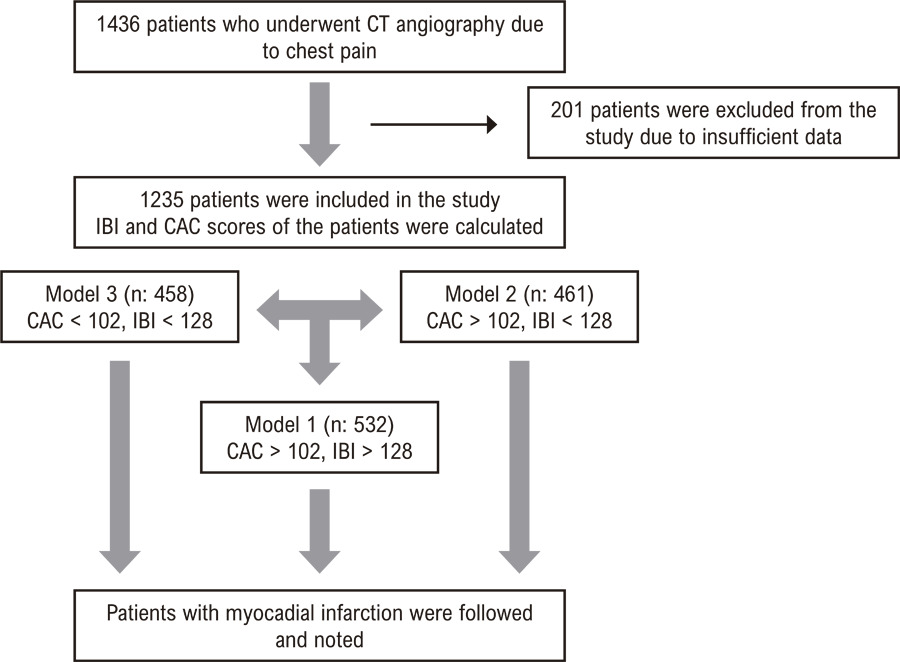
Computed Tomography (CT) angiography is widely used as a basic non-invasive modality to evaluate coronary artery disease. Inflammatory burden index (IBI) is a systemic inflammation indicator reflecting the inflammatory status. It is still difficult to determine the high risk of future acute myocardial infarction (MI) in patients with plaque detected by CT angiography.

Objective

This study aimed to evaluate the effectiveness of CAC scores and IBI in predicting MI risk among patients undergoing CT angiography for chest pain. We sought to assess the individual and combined predictive value of these indices, determine their optimal cut-off values, and compare MI risk across patient groups with varying CAC and IBI scores. We also aimed to evaluate the potential role of these markers in identifying ‘vulnerable patients’ at high risk for future cardiovascular events.

Methods

This retrospective study included 1235 patients who underwent CT angiography due to chest pain and were followed for 3 years (2.8-3.4). Patients were categorized into three models based on their CAC and IBI scores. The primary outcome was the occurrence of MI during the follow-up period. Statistical significance was established at p < 0.05 for all analyses.

Results

Patients who experienced MI had significantly higher IBI and CAC scores compared to those without MI. Logistic regression analysis identified CAC score and IBI as independent predictors of MI. ROC analysis determined optimal cut-off values for IBI (128) and CAC (102) in predicting MI. Kaplan-Meier analysis revealed a significant gradient in MI risk across the three models, with the highest risk observed in patients with both high IBI and CAC scores.

Conclusion

The combination of IBI and CAC scores provides improved risk stratification for the prediction of future MI (vulnerable plaque) in patients with plaque detected by CT angiography. This approach may facilitate more specific treatment strategies for high-risk patients.

  • Computed Tomography Angiography
  • Coronary Vessels
  • Myocardial Infarction
Read Full Article
Creative Commons Attribution (CC BY) Creative Commons license
09/01/2026 DOI: 10.36660/abc.20250052i Views 1
Association of Plasma Osmolality with Cardiovascular Disease Risk: Evidence from the National Health and Nutrition Examination Survey Database
ABC
Original Article

Association of Plasma Osmolality with Cardiovascular Disease Risk: Evidence from the National Health and Nutrition Examination Survey Database

Feng Gao et al. Yicheng Shi Yi Chen Shu Lu

Abstract

Background

Cardiovascular disease (CVD) remains the world’s leading cause of death. Because of its substantial public health burden, further research is needed to define risk factors that are both modifiable and measurable.

Objective

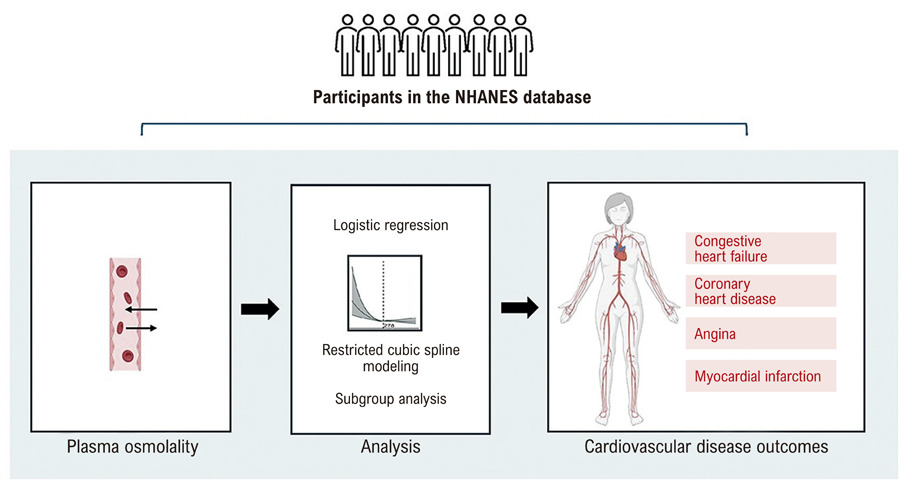
We examined the association between plasma osmolality (Osm) and CVDs — namely, heart failure, coronary heart disease, angina, and myocardial infarction — using data from the National Health and Nutrition Examination Survey (NHANES).

Methods

We analyzed nine NHANES cycles (1999-2018). Associations between Osm and CVD were assessed with weighted logistic regression. Odds ratios (ORs) and 95% CIs were estimated, and subgroup analyses were conducted. Restricted cubic spline (RCS) models were used to evaluate potential nonlinear relationships. Statistical significance was set at p < 0.05.

Results

Higher Osm was associated with increased odds of heart failure, coronary heart disease, angina, and myocardial infarction in unadjusted and partially adjusted models. After full adjustment, the associations remained significant for all outcomes except angina. RCS analyses indicated a significant U-shaped relationship for heart failure and angina across all models, with the lowest risk around 278 mmol/kg. Subgroup analyses were consistent with the primary results.

Conclusion

Increased Osm is significantly associated with CVD risk. Osm may serve as a useful biomarker for assessment and management of CVD risk in clinical practice, pending confirmation in prospective cohort studies.

  • Cardiovascular Diseases
  • Coronary Disease
  • Heart Failure
  • Myocardial Infarction
Read Full Article
Creative Commons Attribution (CC BY) Creative Commons license
09/01/2026 DOI: 10.36660/abc.20250176i Views 1
ABC
Editorial

LBBB and the Paradigm Shift from STEMI to Occlusion MI

Jesse T.T McLaren et al. Hans C. Helseth Stephen W. Smith

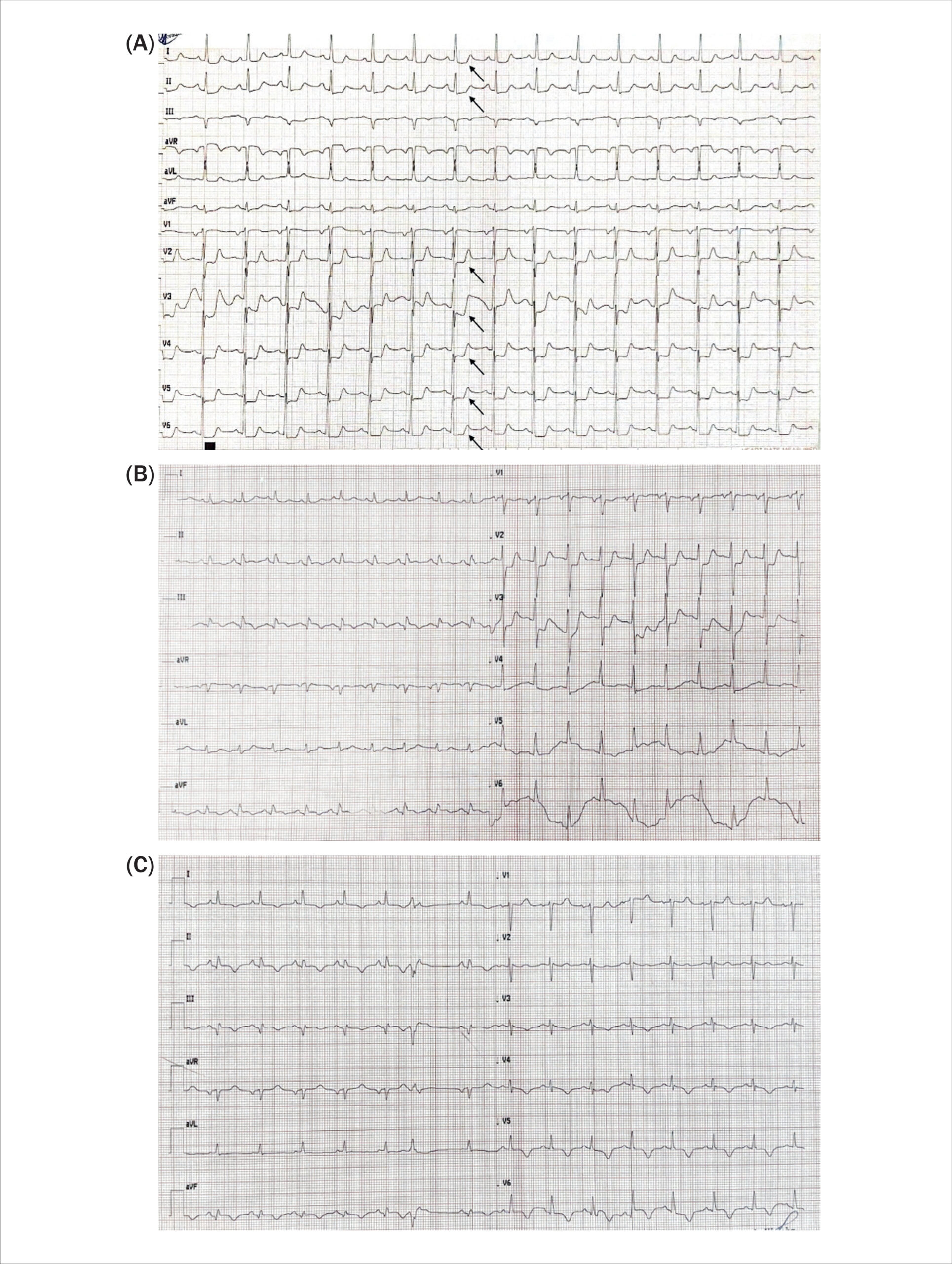
The current paradigm for acute coronary syndrome (ACS) is based on ST elevation myocardial infarction (STEMI) electrocardiogram (ECG) criteria. This is defined as ST elevation in the absence of left bundle branch block (LBBB). Nevertheless, this creates an obvious dilemma: what about patients with LBBB? In their systematic review and meta-analysis of 51 studies, Alencar et al. help resolve longstanding debates by comparing guidelines with evidence. This not only clarifies how to address this specific diagnostic dilemma, but also how a paradigm shift from STEMI to Occlusion MI (OMI) could transform patient care.

As Alencar found, LBBB appeared in only 3.3% of ACS, but had higher mortality than acute MI without BBB. The current paradigm creates the twin dangers of unnecessary cath lab activation or even thrombolytics for LBBB without OMI, or delayed reperfusion for LBBB with OMI.

[…]

  • Electrocardiography
  • Myocardial Infarction
  • Non-ST Elevated Myocardial Infarction
Read Full Article
Creative Commons Attribution (CC BY) Creative Commons license
03/11/2025 DOI: 10.36660/abc.20250497i Views 1
Accuracy of Left Bundle Branch Block Chronology and Electrocardiography Criteria for Acute Myocardial Infarction Diagnosis: A Systematic Review and Meta-analysis
ABC
Original Article

Accuracy of Left Bundle Branch Block Chronology and Electrocardiography Criteria for Acute Myocardial Infarction Diagnosis: A Systematic Review and Meta-analysis

José Nunes de Alencar et al. Gleydson Wesley Freire Lima Haissa Assad dos Santos Geraldo Rinaldo Carvalho Fernandes … Matheus Kiszka Scheffer Sandro Pinelli Felicioni Mariana Fuziy Nogueira De Marchi

Abstract

Background

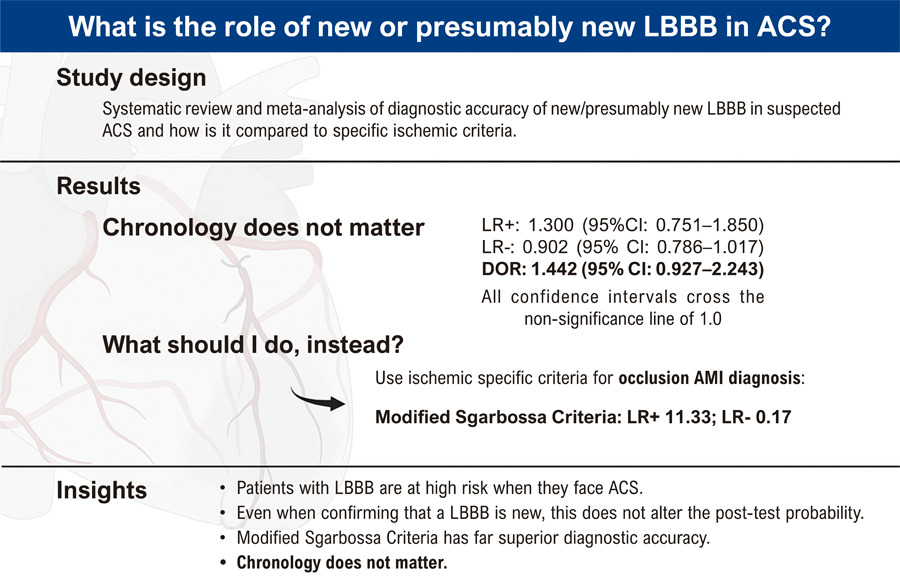
The diagnostic utility of new or presumed new left bundle branch block (LBBB) for acute myocardial infarction (AMI) in the setting of acute coronary syndrome (ACS) remains controversial.

Objective

To evaluate whether the timing of LBBB predicts AMI and to compare its diagnostic accuracy with ischemic electrocardiography (ECG) criteria, particularly the Modified Sgarbossa Criteria (MSC).

Methods

We searched PubMed and Scopus for studies involving patients with ACS with LBBB through December 2023. Sensitivity, specificity, positive (LR+) and negative (LR–) likelihood ratios, and diagnostic odds ratios (DOR) were calculated to assess diagnostic accuracy. Incidence and mortality data were also analyzed. Risk of bias was evaluated using the Newcastle-Ottawa Scale (NOS) and the revised Quality Assessment of Diagnostic Accuracy Studies (QUADAS-2) tool.

Results

A total of 51 studies were included. LBBB occurred in 3.3% of ACS presentations and was associated with higher in-hospital mortality. Differentiating new from old LBBB was diagnostically neutral: LR+ 1.30 (95% CI: 0.75 to 1.85), LR– 0.90 (95% CI: 0.79 to 1.02), and DOR 1.44 (95% CI: 0.93 to 2.24); all confidence intervals crossed the null value of 1.0. In contrast, MSC demonstrated 83.6% sensitivity (95% CI: 55.4 to 95.5%) and 92.6% specificity (95% CI: 78.9 to 97.7%) for angiographically confirmed occlusive AMI, with LR+ 11.34 (95% CI: 3.67 to 34.99) and LR– 0.18 (95% CI: 0.054 to 0.575).

Conclusion

LBBB chronology alone does not significantly impact the likelihood of AMI. Ischemic ECG criteria — especially the MSC — provide substantially greater diagnostic accuracy and should guide clinical decision-making in ACS patients with LBBB.

  • Acute coronary syndrome
  • Electrocardiography
  • Myocardial Infarction
Read Full Article
Creative Commons Attribution (CC BY) Creative Commons license
03/11/2025 DOI: 10.36660/abc.20250109i
ABC
Editorial

Inflammation and Contrast-Induced Nephropathy: The Emerging Role of the Glucose-to-Lymphocyte Ratio

Rafaela Andrade Penalva Freitas

The interplay between systemic inflammation, glucose metabolism, and cardiovascular outcomes has been extensively explored in the literature, with significant implications for clinical practice. The article titled “Association between Glucose/lymphocytes Ratio and ContrastInduced Acute Kidney Injury in Patients with Myocardial Infarction without Diabetes Mellitus” provides a valuable contribution by investigating the glucose-to-lymphocyte ratio (GLR) as an independent predictor of contrast-induced acute kidney injury (CI-AKI) in patients with ST-elevation myocardial infarction (STEMI) undergoing primary percutaneous coronary intervention (PCI). This editorial examines the study’s findings, contextualizes their significance, and discusses clinical implications and future research.

CI-AKI is a significant iatrogenic complication following procedures involving iodinated contrast media, with reported incidence rates ranging from 5% to 20% in STEMI populations. This condition is associated with worse outcomes, including higher mortality and progression to chronic kidney disease., Factors such as systemic inflammation and metabolic stress, often exacerbated in the context of acute myocardial infarction (AMI), play critical roles in the pathogenesis of CI-AKI., The study introduces the GLR as a composite biomarker that integrates information on glucose metabolism and inflammatory response, offering an innovative approach to risk stratification.

[…]

  • Inflammation
  • Kidney, Diseases
  • Myocardial Infarction
Read Full Article
Creative Commons Attribution (CC BY) Creative Commons license
19/09/2025 DOI: 10.36660/abc.20250424i Views 1
Figure 1
ABC
Image

Multiple Thrombotic Complications in a Patient With Polycythemia Vera

Barbara Zdzierak et al. Bernadeta Chyrchel Andrzej Surdacki Stanisław Bartuś Artur Dziewierz

Introduction

Polycythemia vera (PV) is a rare Philadelphia chromosome–negative myeloproliferative neoplasm characterized by the clonal proliferation of multipotent bone marrow progenitor cells, leading to erythrocytosis and increased red blood cell mass. It may coexist with other hematologic disorders. PV results in blood hyperviscosity, which predisposes patients to thrombosis — the most common and clinically significant complication of PV. Post-PV myelofibrosis (post-PV MF) represents an advanced stage in the natural progression of PV. In patients with post-PV MF, thrombosis also remains one of the major complications. We present a case of multiple thrombotic events, namely acute coronary syndrome, digital arterial thrombosis, and ischemic stroke, in a patient with PV.

[…]

  • Myocardial Infarction
  • Polycythemia Vera
  • Thrombosis
Read Full Article
Creative Commons Attribution (CC BY) Creative Commons license
25/08/2025 DOI: 10.36660/abc.20250153i
Figure 1
ABC
Original Article

Association between Glucose/lymphocytes Ratio and Contrast-Induced Acute Kidney Injury in Patients with Myocardial Infarction without Diabetes Mellitus

Murat Gök et al. Alparslan Kurtul Orçun Demir Kenan Yalta

Abstract

Background

Glucose metabolism and systemic inflammation appears to be strongly related to many cardiovascular diseases. Glucose to lymphocyte ratio (GLR), a novel promising marker, has been recognized as a reliable predictor of prognosis in various cancers. However, there are still no studies on the association of cardiovascular disease with GLR.

Objectives

This analysis aimed to uncover the potential association between GLR and the risk for contrast-induced acute kidney injury (CI-AKI) after primary percutaneous coronary intervention (PPCI) in a ST-elevation acute myocardial infarction (STEMI) population.

Methods

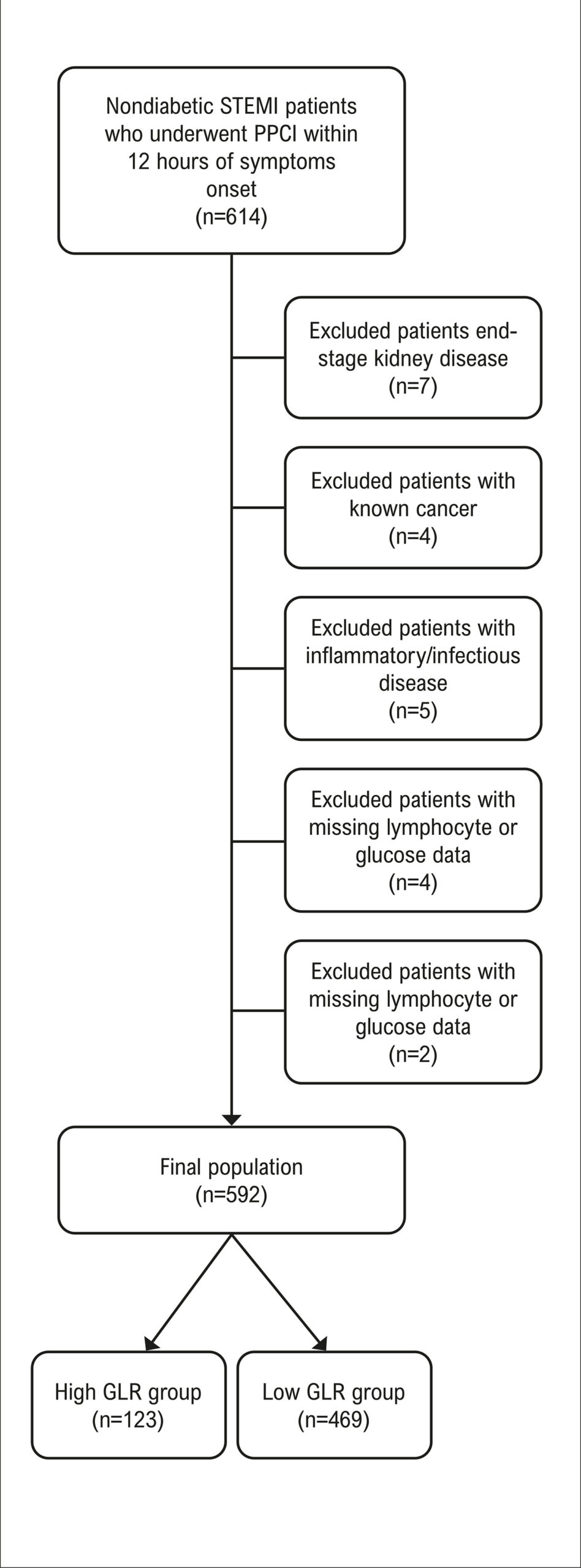
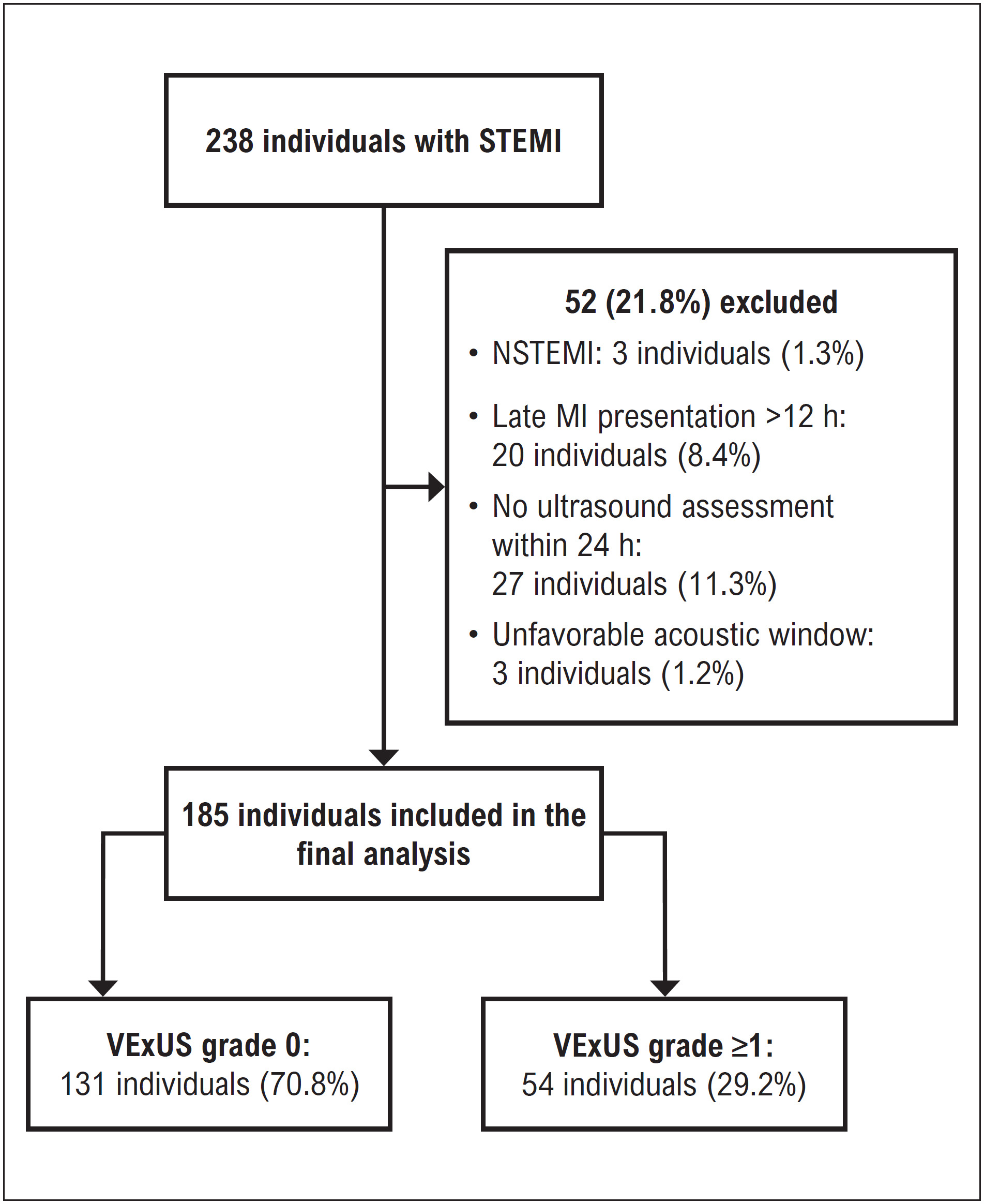
Clinical data of 592 nondiabetic STEMI patients managed with PPCI from February 2021 to February 2023 were retrospectively analyzed. Patients with end-stage kidney disease, missing laboratory data, cancers, inflammatory/infectious diseases, or died during the procedure or within 24 hours after the procedure were excluded. The receiver operating characteristic curve was used to determine the optimal cutoff of GLR in CI-AKI. Based on the cutoff value, the study population was categorized into high-GLR (≥4.16) and low-GLR (<4.16) groups. The level of significance adopted in the statistical analysis was 5%.

Results

The overall CI-AKI incidence was 7.4%. The high-GLR group showed a higher CI-AKI incidence in comparison to the low-GLR group (30.9%vs1.3%, p<0.001). Following adjustment for potential confounders, high-GLR still served as an independent predictor for CI-AKI (odds ratio [OR] 45.100, 95% confidence interval [CI] 7.312-278.174, p<0.001), as well as creatinine at admission (OR:10.459, 95%CI 1.169-93.583, p=0.036).

Conclusions

In conclusion, a high GLR level served as an independent risk factor for CI-AKI evolution after PPCI in subjects with STEMI without diabetes mellitus.

  • Acute Kidney Injury
  • Contrast Media
  • Myocardial Infarction
Read Full Article
Creative Commons Attribution (CC BY) Creative Commons license
18/08/2025 DOI: 10.36660/abc.20240869i Views 2
Association between Renal Function and the Incidence of Major Adverse Cardiovascular Outcomes 1 Year After the First Acute Myocardial Infarction
ABC
Original Article

Association between Renal Function and the Incidence of Major Adverse Cardiovascular Outcomes 1 Year After the First Acute Myocardial Infarction

Daniel Medeiros Moreira et al. Marco Antônio de Sousa Maria Fernanda Scarduelli Cechinel Roberto Léo da Silva … Tammuz Fattah Rodrigo de Moura Joaquim

Abstract

Background

Cardiovascular diseases are the leading cause of death worldwide, with substantial social and economic impacts. These conditions are frequently associated with comorbidities, including renal dysfunction.

Objectives

To evaluate the association between creatinine clearance and the incidence of cardiovascular outcomes within 1 year in patients diagnosed with acute myocardial infarction (AMI).

Methods

This prospective cohort study included patients hospitalized for their first AMI. Creatinine clearance was assessed in relation to cardiovascular outcomes, including recurrent AMI, stroke, and cardiovascular death. A p-value of <0.05 was considered statistically significant.

Results

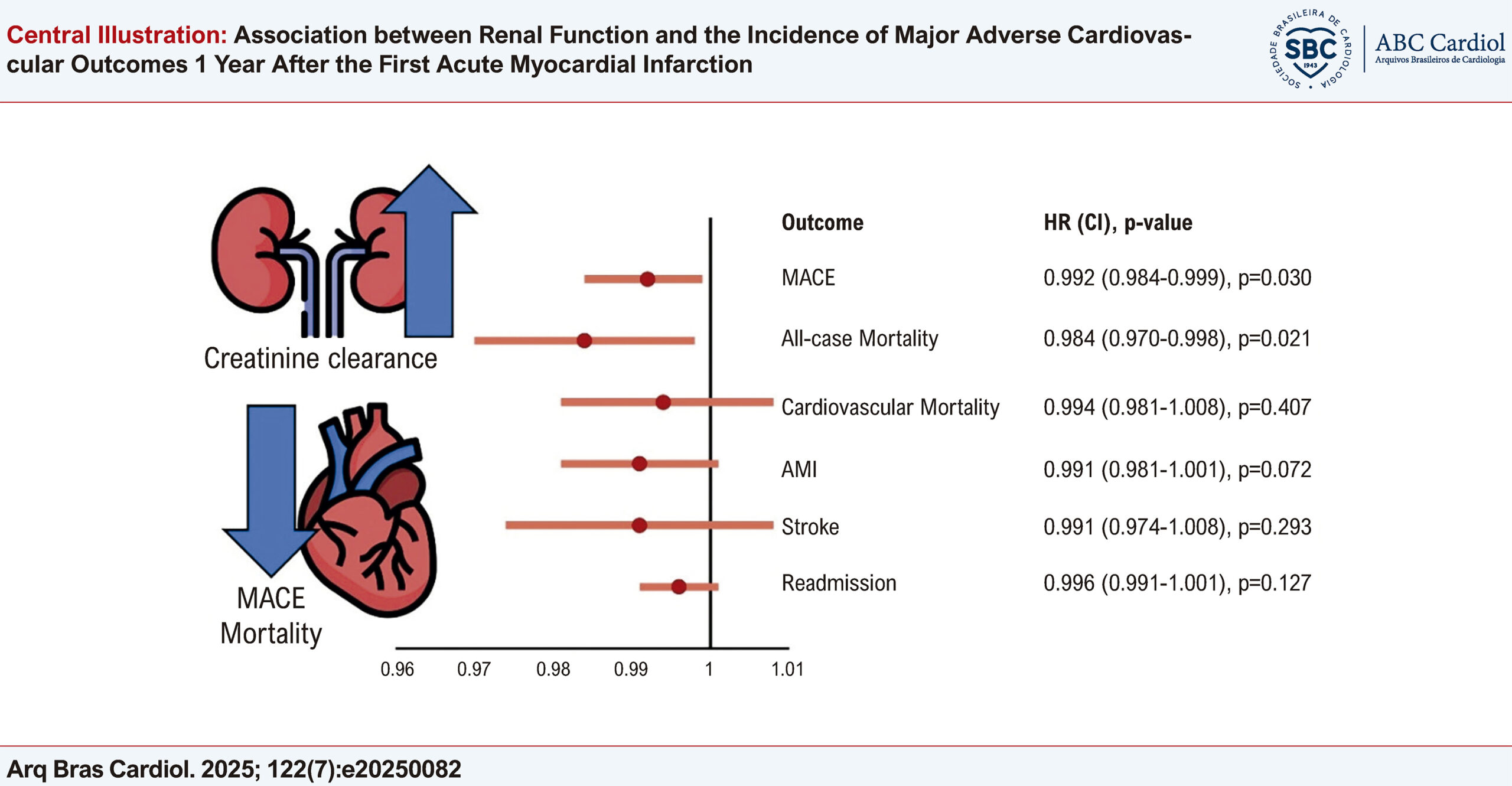
A total of 1,324 patients were analyzed, with a mean age of 60.9 ± 11.4 years; 67.4% were male. Creatinine clearance <60 mL/min was significantly associated with systemic arterial hypertension (79.6% vs. 55.1%, p<0.001), diabetes mellitus (40.8% vs. 24.5%, p<0.001), and dyslipidemia (38.8% vs. 31.4%, p=0.043). Higher creatinine clearance values were associated with a reduced risk of major adverse cardiovascular events (MACE) at 1 year (HR: 0.992; 95% CI: 0.984-0.999; p=0.030). Additionally, higher clearance was linked to lower overall mortality (HR: 0.984; 95% CI: 0.970-0.998; p=0.021).

Conclusion

Higher creatinine clearance values are associated with a lower hazard ratio for MACE and overall mortality within 1 year following AMI.

  • Creatinine
  • Kidney
  • Myocardial Infarction
Read Full Article
Creative Commons Attribution (CC BY) Creative Commons license
18/08/2025 DOI: 10.36660/abc.20250082i Views 1
Figure 1
ABC
Research Letter

Venous Excess Ultrasound (VExUS) Score in Patients with ST-Elevation Myocardial Infarction to Predict In-Hospital Mortality

Guilherme Pinheiro Machado et al. Guilherme Heiden Telo João Pedro da Rosa Barbato Marina Petersen Saadi … Gustavo Neves de Araujo Angelo Chies Julia Carvalho da Silva Rodrigo Wainstein Marco Wainstein

Key points

[…]

  • Acute coronary syndrome
  • Acute Kidney Injury
  • Myocardial Infarction
Read Full Article
Creative Commons Attribution (CC BY) Creative Commons license
28/07/2025 DOI: 10.36660/abc.20250093i
Figure 1
IJCS
Case Report

Spontaneous Multivessel Coronary Artery Dissection: Case Report

Ana Paula Schonarth et al. Ottávia Zainho Helbok Caroline de Oliveira Fischer Bacca Arieli Carini Michels

Abstract

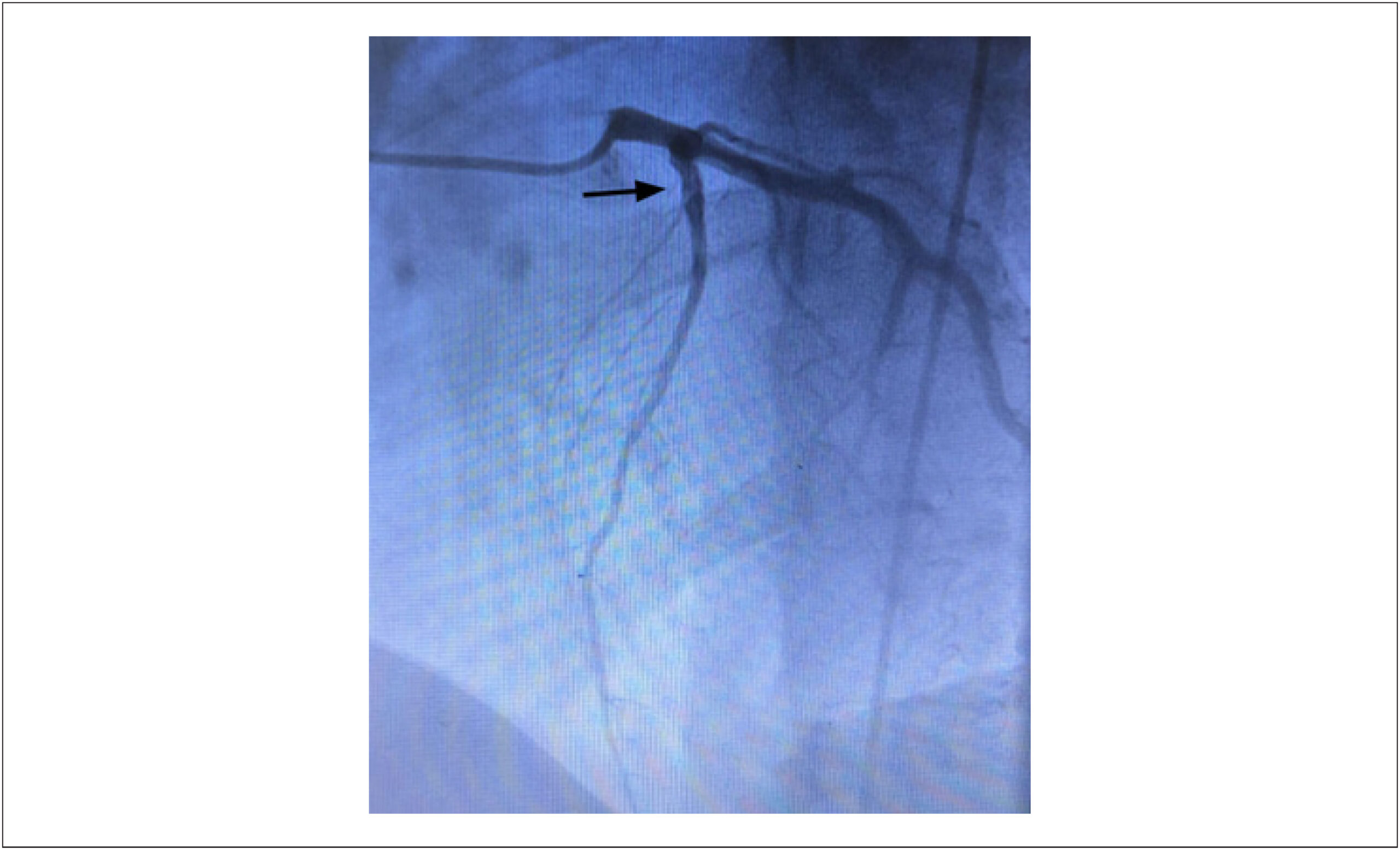
Spontaneous coronary artery dissection (SCAD) is a rare condition that can cause acute myocardial infarction (AMI), especially in young women without risk factors for coronary artery disease. Diagnosis is made by cardiac catheterization, and treatment varies from conservative to surgical approaches, depending on the severity. We report the case of a woman with a history of AMI who underwent initial catheterization without requiring percutaneous coronary intervention due to the absence of an obstructive lesion. Subsequently, the patient presented episodes of angina, and a new catheterization was performed, which revealed dissection in the left anterior descending and right coronary arteries. Given the lack of spontaneous resolution of the dissection, which was initially unilateral and progressed to bilateral, the patient underwent myocardial revascularization with mammary artery and saphenous vein bypass grafts. The objective of this study is to document a case of SCAD and to describe its characteristics, diagnosis, and therapeutic management.

  • Acute coronary syndrome
  • Aortic Dissection
  • Myocardial Infarction
Read Full Article
Creative Commons Attribution (CC BY) Creative Commons license
16/06/2025 DOI: 10.36660/ijcs.20240013 Views 1
Naples Prognostic Score Predicts New-Onset Atrial Fibrillation in Patients with ST-Elevated Myocardial Infarction Undergoing Primary Angioplasty
ABC
Original Article

Naples Prognostic Score Predicts New-Onset Atrial Fibrillation in Patients with ST-Elevated Myocardial Infarction Undergoing Primary Angioplasty

Dogac Oksen et al. Sukru Arslan Muhammed Heja Gecit Esra Erturk Tekin … Veysel Oktay Okay Abaci

Abstract

Background

New-onset atrial fibrillation (NOAF) is a typical complication in patients with ST-segment elevated myocardial infarction (STEMI) patients undergoing primary percutaneous coronary intervention (pPCI). Previous studies have investigated inflammation as a NOAF predictor. The Naples prognostic score (NPS) is a novel marker of inflammation and nutritional status.

Objective

The objective of this study was to evaluate the predictive power of the NPS for NOAF.

Methods

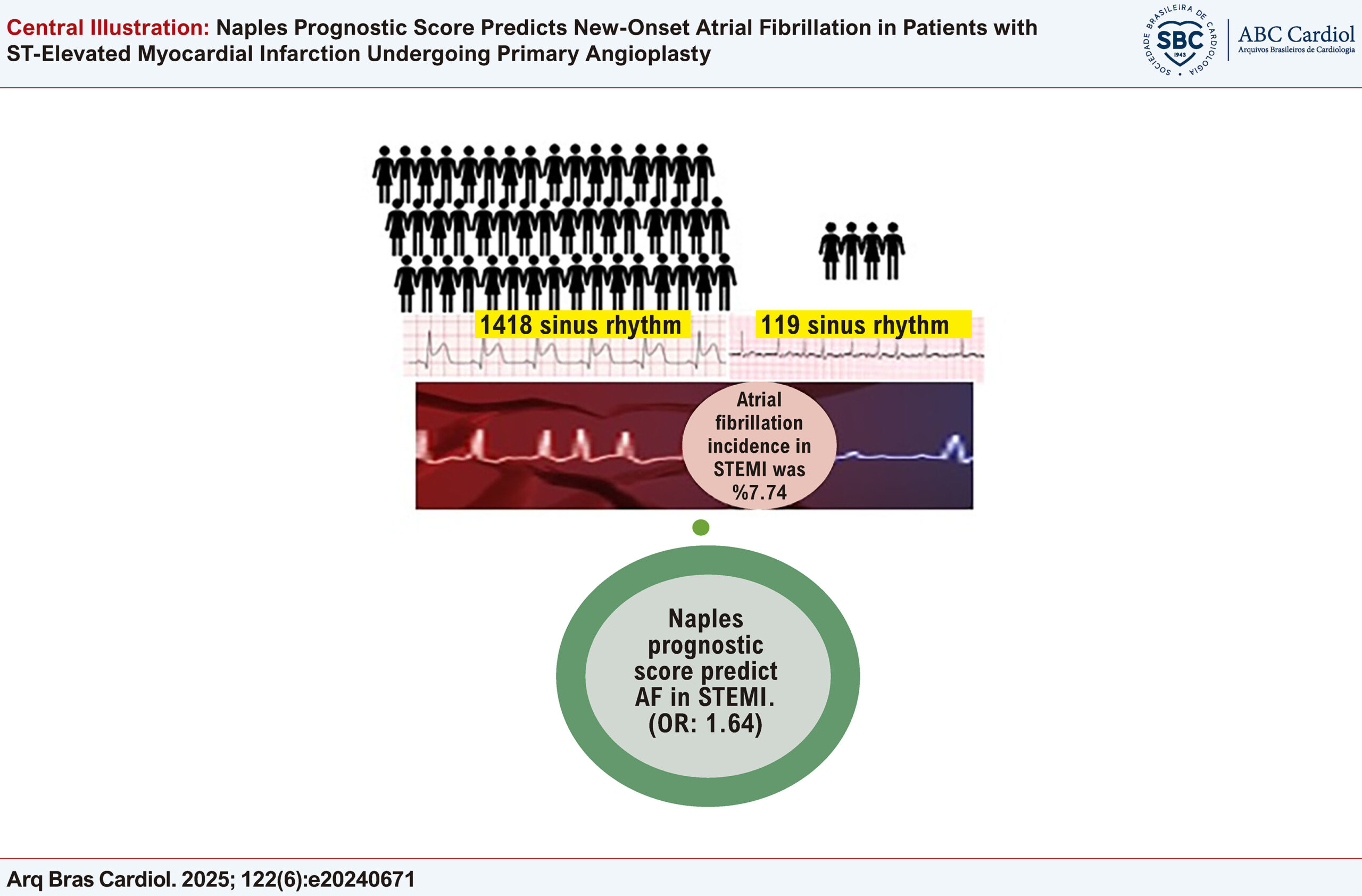
This study enrolled 1537 consecutive STEMI who underwent pPCI. The patients who presented NOAF during hospital admission and those who remained in sinus rhythm (RSR) were compared in terms of baseline characteristics. Univariate and multivariate analyses were carried out to identify variables predicting NOAF development, and p< 0.05 was considered statistically significant.

Results

NOAF was detected in 7.74% (n: 119) of the participants. The mean age (67.03±13.48 vs 57.84±11.31; p <0.001) and NPS (2.53±1.17 vs 2.25±1.10, p=0.008) were significantly higher in the NOAF group. Multivariate analysis revealed age (Odds ratio [OR]: 1.045 for a year, 95% confidence interval [CI]: 1.019–1.071, p=0.001), NPS (OR: 1.645, 95% CI: 0.984–2.748, p=0.037) and left atrial dimensions (OR: 2.542 for cm, 95% CI: 1.488–4.342, p=0.001) as independent predictors of NOAF.

Conclusions

The NPS was an independent predictor of NOAF in STEMI patients, in addition to classical factors such as age and left atrial dimensions. This score, mostly related to an inflammatory burden, may help to predict NOAF incidence and select better potential therapies aimed at abating inflammation after myocardial infarction.

  • Angioplasty
  • Atrial Fibrillation
  • Myocardial Infarction
  • Prognosis
Read Full Article
Creative Commons Attribution (CC BY) Creative Commons license
06/06/2025 DOI: 10.36660/abc.20240671i Views 2
Detection and Location of Myocardial Infarction Using Electrocardiogram: Validation by Cardiovascular Magnetic Resonance Imaging
ABC
Original Article

Detection and Location of Myocardial Infarction Using Electrocardiogram: Validation by Cardiovascular Magnetic Resonance Imaging

Maria Catarina de Melo Dias Guerra et al. André Gustavo da Silva Rezende Tiago Augusto Magalhães William Azem Chalela … Augusto Hiroshi Uchida Rafael Almeida Fonseca Nevelton Heringer Filho Jürgen Beuther Guilherme Garcia Eduardo Cavalcanti Lapa dos Santos Ulisses Ramos Montarroyos Renata Ávila Cintra José Antônio Franchine Ramires Carlos Eduardo Rochitte

Abstract

Background

In the assessment of ischemic heart disease, cardiac magnetic resonance (CMR) is considered the gold standard for detecting and locating myocardial infarction (MI), but electrocardiogram (ECG) is less expensive and more widely available. Recognition of MI on ECG outside the acute phase is challenging; Q waves are absent in a significant proportion of patients and may reduce or disappear over time. Although ECG is widely used in the initial assessment of previous infarction, studies to validate ECG using CMR as a reference in the context of chronic coronary disease are limited.

Objectives

To evaluate the diagnostic performance of ECG in detecting and locating CMR-defined MI.

Methods

This study included 352 individuals who underwent CMR and ECG, 241 patients with previous MI confirmed by CMR and 111 controls with normal CMR. Their ECG tracings were analyzed by 2 observers, who were blinded to the CMR, for detection and location of MI following to the Fourth Brazilian Society of Cardiology Guidelines on the Analysis and Issuance of Electrocardiographic Reports. The significance level adopted was 5% (p < 0.05).

Results

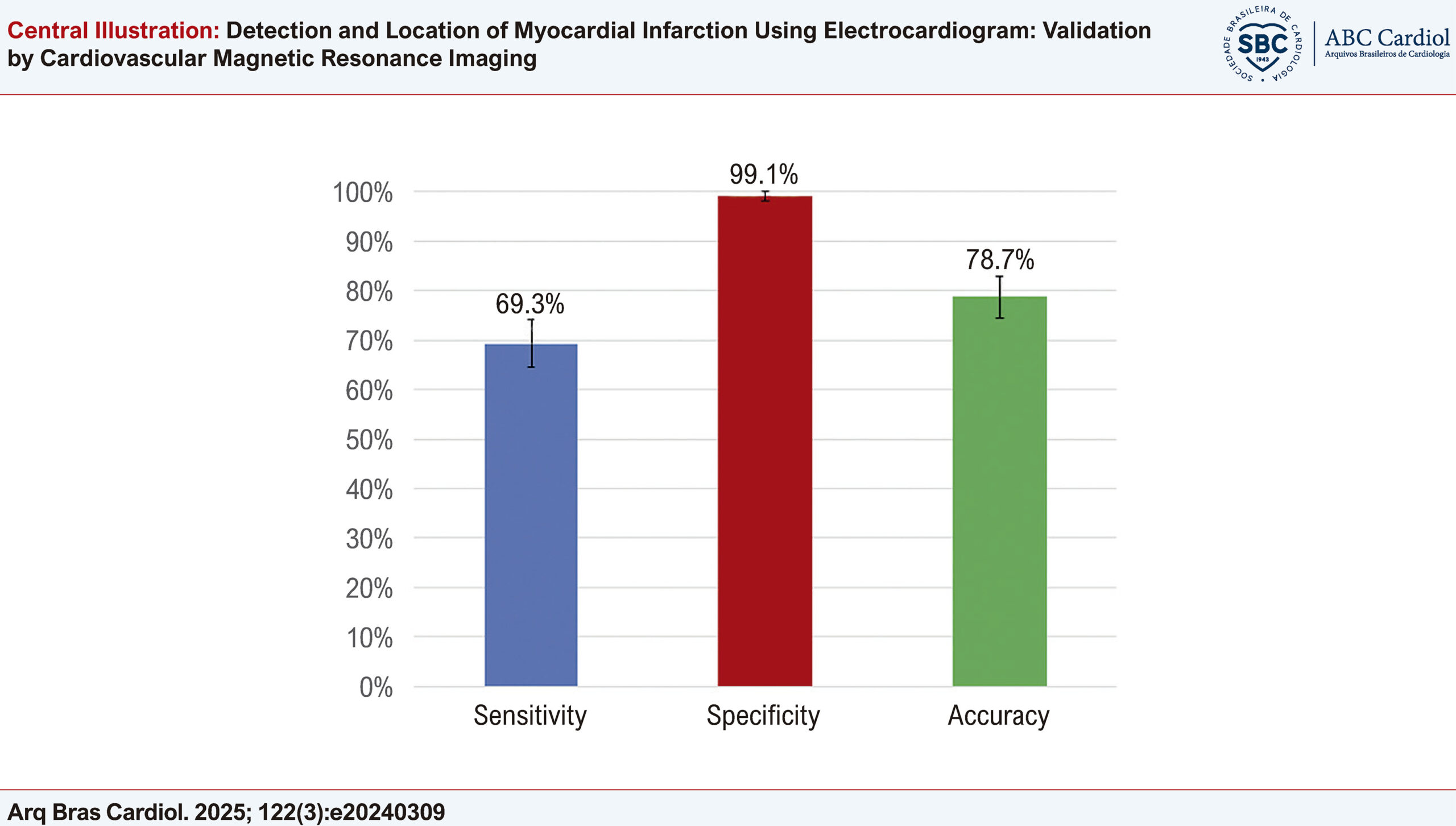
ECG showed good performance for detecting previous MI, with sensitivity of 69.3% (64.5% to 74.1%), specificity of 99.1% (98.1% to 100%), and accuracy of 78.7% (74.4% to 83.0%). However, in locating MI in accordance with CMR, its accuracy was unsatisfactory.

Conclusions

When compared to CMR, ECG was shown to be a method with good accuracy for detecting previous MI, but not for defining its location.

  • Coronary Artery Disease
  • Electrocardiography
  • Magnetic Resonance Imaging
  • Myocardial Infarction
Read Full Article
Creative Commons Attribution (CC BY) Creative Commons license
12/05/2025 DOI: 10.36660/abc.20240309i Views 3

Could not load more articles. Please try again.

How to cite this article

EndNote RIS

Electronic Document Format (Vancouver)

Vital K, Pavanello R, Valente BP, Blaas BN, Arruda BFT, Rossi R, Monaco MID, et al. Myocardial Infarction with Non-Obstructive Coronary Arteries: Clinical Profile, Diagnostic Investigation, and Outcomes in a Tertiary Center Cohort. International Journal of Cardiovascular Sciences 2026;39:e20260035.

Electronic Document Format (ABNT)

Vital, Kelvyn; Pavanello, Ricardo; Valente, Barbara Porto; Blaas, Bruno Noshang; Arruda, Bianca Fernandes Tavora; Rossi, Raphael; Monaco, Maria Isabel Del; Feres, Fausto. Myocardial Infarction with Non-Obstructive Coronary Arteries: Clinical Profile, Diagnostic Investigation, and Outcomes in a Tertiary Center Cohort. International Journal of Cardiovascular Sciences, v. 39, e20260035, Sep. 2026.

Electronic Document Format (APA)

Vital, K., Pavanello, R., Valente, B. P., Blaas, B. N., Arruda, B. F. T., Rossi, R., Monaco, M. I. D., & Feres, F. (2026). Myocardial Infarction with Non-Obstructive Coronary Arteries: Clinical Profile, Diagnostic Investigation, and Outcomes in a Tertiary Center Cohort. International Journal of Cardiovascular Sciences, 39, e20260035.

Electronic Document Format (ISO)

Vital, Kelvyn and Pavanello, Ricardo and Valente, Barbara Porto and Blaas, Bruno Noshang and Arruda, Bianca Fernandes Tavora and Rossi, Raphael and Monaco, Maria Isabel Del and Feres, Fausto. Myocardial Infarction with Non-Obstructive Coronary Arteries: Clinical Profile, Diagnostic Investigation, and Outcomes in a Tertiary Center Cohort. International Journal of Cardiovascular Sciences [online]. 2026, vol. 39, [cited 2026-10-14], e20260035. Available from: <https://journals.cardiol.br/en/article/myocardial-infarction-with-non-obstructive-coronary-arteries-clinical-profile-diagnostic-investigation-and-outcomes-in-a-tertiary-center-cohort/>. ISSN 2359-4802

EndNote RIS

Electronic Document Format (Vancouver)

Caldas AC, Matias D, Medina D, Correia LCL. Reversal of Therapeutic Recommendations in the American College of Cardiology Coronary Artery Disease Guidelines. International Journal of Cardiovascular Sciences 2026;39:e20250148.

Electronic Document Format (ABNT)

Caldas, Alessandra Carvalho; Matias, Denise; Medina, Daniel; Correia, Luis Claudio Lemos. Reversal of Therapeutic Recommendations in the American College of Cardiology Coronary Artery Disease Guidelines. International Journal of Cardiovascular Sciences, v. 39, e20250148, Sep. 2026.

Electronic Document Format (APA)

Caldas, A. C., Matias, D., Medina, D., & Correia, L. C. L. (2026). Reversal of Therapeutic Recommendations in the American College of Cardiology Coronary Artery Disease Guidelines. International Journal of Cardiovascular Sciences, 39, e20250148.

Electronic Document Format (ISO)

Caldas, Alessandra Carvalho and Matias, Denise and Medina, Daniel and Correia, Luis Claudio Lemos. Reversal of Therapeutic Recommendations in the American College of Cardiology Coronary Artery Disease Guidelines. International Journal of Cardiovascular Sciences [online]. 2026, vol. 39, [cited 2026-10-14], e20250148. Available from: <https://journals.cardiol.br/en/article/reversal-of-therapeutic-recommendations-in-the-american-college-of-cardiology-coronary-artery-disease-guidelines/>. ISSN 2359-4802

EndNote RIS

Electronic Document Format (Vancouver)

Wang Y, Yin Q, Lei Y, Duan J. Association between the Neutrophil-to-HDL-Cholesterol Ratio and Myocardial Infarction: A Cross-Sectional Study. Arquivos Brasileiros de Cardiologia 2026;123(8):e20250718.

Electronic Document Format (ABNT)

Wang, Youpeng; Yin, Qian; Lei, Ying; Duan, Juncang. Association between the Neutrophil-to-HDL-Cholesterol Ratio and Myocardial Infarction: A Cross-Sectional Study. Arquivos Brasileiros de Cardiologia, v. 123, n. 8, e20250718, Aug. 2026.

Electronic Document Format (APA)

Wang, Y., Yin, Q., Lei, Y., & Duan, J. (2026). Association between the Neutrophil-to-HDL-Cholesterol Ratio and Myocardial Infarction: A Cross-Sectional Study. Arquivos Brasileiros de Cardiologia, 123(8), e20250718.

Electronic Document Format (ISO)

Wang, Youpeng and Yin, Qian and Lei, Ying and Duan, Juncang. Association between the Neutrophil-to-HDL-Cholesterol Ratio and Myocardial Infarction: A Cross-Sectional Study. Arquivos Brasileiros de Cardiologia [online]. 2026, vol. 123, n. 8, [cited 2026-10-14], e20250718. Available from: <https://journals.cardiol.br/en/article/association-between-the-neutrophil-to-hdl-cholesterol-ratio-and-myocardial-infarction-a-cross-sectional-study/>. ISSN 0066-782X

EndNote RIS

Electronic Document Format (Vancouver)

Roston F, Ribeiro AAA, Makiniks NC, Ribeiro LFB, Ziegler LL. A New Frontier in Cardiovascular Prevention: Beyond Prohibition, Clinical Management of Anabolic Steroid Users. ABC Imagem Cardiovascular 2026;39(2):e20260076.

Electronic Document Format (ABNT)

Roston, Fabio; Ribeiro, Alexandre Aby Azar; Makiniks, Naiara Caroline; Ribeiro, Luiz Felipe Branco; Ziegler, Liliana Ludwing. A New Frontier in Cardiovascular Prevention: Beyond Prohibition, Clinical Management of Anabolic Steroid Users. ABC Imagem Cardiovascular, v. 39, n. 2, e20260076, Jul. 2026.

Electronic Document Format (APA)

Roston, F., Ribeiro, A. A. A., Makiniks, N. C., Ribeiro, L. F. B., & Ziegler, L. L. (2026). A New Frontier in Cardiovascular Prevention: Beyond Prohibition, Clinical Management of Anabolic Steroid Users. ABC Imagem Cardiovascular, 39(2), e20260076.

Electronic Document Format (ISO)

Roston, Fabio and Ribeiro, Alexandre Aby Azar and Makiniks, Naiara Caroline and Ribeiro, Luiz Felipe Branco and Ziegler, Liliana Ludwing. A New Frontier in Cardiovascular Prevention: Beyond Prohibition, Clinical Management of Anabolic Steroid Users. ABC Imagem Cardiovascular [online]. 2026, vol. 39, n. 2, [cited 2026-10-14], e20260076. Available from: <https://journals.cardiol.br/en/article/a-new-frontier-in-cardiovascular-prevention-beyond-prohibition-clinical-management-of-anabolic-steroid-users/>. ISSN 2318-8219

EndNote RIS

Electronic Document Format (Vancouver)

Oliveira FRB, Lino DOC, Bezerra Filho GF, Linhares BC, Souza LBD, Alencar LFT, Cruz MRS, et al. Anabolic-Androgenic Steroids and Acute Myocardial Infarction in Young Adults: A Literature Review Based on a Case Series. ABC Imagem Cardiovascular 2026;39(2):e20260049.

Electronic Document Format (ABNT)

Oliveira, Fabiana Rocha Botelho de; Lino, Danielli Oliveira de Costa; Bezerra Filho, Germano Freire; Linhares, Bruno Cavalcante; Souza, Leonardo Brito De; Alencar, Luiz Filipe Torres de; Cruz, Matheus Rolim Santa; Feitosa, Mateus Paiva Marques. Anabolic-Androgenic Steroids and Acute Myocardial Infarction in Young Adults: A Literature Review Based on a Case Series. ABC Imagem Cardiovascular, v. 39, n. 2, e20260049, Jul. 2026.

Electronic Document Format (APA)

Oliveira, F. R. B. , Lino, D. O. C., Bezerra Filho, G. F., Linhares, B. C., Souza, L. B. D., Alencar, L. F. T. , Cruz, M. R. S., & Feitosa, M. P. M. (2026). Anabolic-Androgenic Steroids and Acute Myocardial Infarction in Young Adults: A Literature Review Based on a Case Series. ABC Imagem Cardiovascular, 39(2), e20260049.

Electronic Document Format (ISO)

Oliveira, Fabiana Rocha Botelho de and Lino, Danielli Oliveira de Costa and Bezerra Filho, Germano Freire and Linhares, Bruno Cavalcante and Souza, Leonardo Brito De and Alencar, Luiz Filipe Torres de and Cruz, Matheus Rolim Santa and Feitosa, Mateus Paiva Marques. Anabolic-Androgenic Steroids and Acute Myocardial Infarction in Young Adults: A Literature Review Based on a Case Series. ABC Imagem Cardiovascular [online]. 2026, vol. 39, n. 2, [cited 2026-10-14], e20260049. Available from: <https://journals.cardiol.br/en/article/anabolic-androgenic-steroids-and-acute-myocardial-infarction-in-young-adults-a-literature-review-based-on-a-case-series/>. ISSN 2318-8219

EndNote RIS

Electronic Document Format (Vancouver)

Matias LAC, Tenório PP. Prognostic Value of the Inflammatory Burden Index (IBI) in Coronary Events. Arquivos Brasileiros de Cardiologia 2026;123(4):e20260174.

Electronic Document Format (ABNT)

Matias, Luis Antonio Cavalcanti; Tenório, Pedro Pereira. Prognostic Value of the Inflammatory Burden Index (IBI) in Coronary Events. Arquivos Brasileiros de Cardiologia, v. 123, n. 4, e20260174, May. 2026.

Electronic Document Format (APA)

Matias, L. A. C., & Tenório, P. P. (2026). Prognostic Value of the Inflammatory Burden Index (IBI) in Coronary Events. Arquivos Brasileiros de Cardiologia, 123(4), e20260174.

Electronic Document Format (ISO)

Matias, Luis Antonio Cavalcanti and Tenório, Pedro Pereira. Prognostic Value of the Inflammatory Burden Index (IBI) in Coronary Events. Arquivos Brasileiros de Cardiologia [online]. 2026, vol. 123, n. 4, [cited 2026-10-14], e20260174. Available from: <https://journals.cardiol.br/en/article/prognostic-value-of-the-inflammatory-burden-index-ibi-in-coronary-events/>. ISSN 0066-782X

EndNote RIS

Electronic Document Format (Vancouver)

Liu Y, Chen X, Liu Y, Lu Y, Zhu Y, Chen L, Li J, et al. The Causal Association between Plasma Metabolites-Mediated Immune Cells and Myocardial Infarction: A Mendelian Randomization Study. Arquivos Brasileiros de Cardiologia 2026;123(4):e20260026.

Electronic Document Format (ABNT)

Liu, Yue; Chen, Xing; Liu, Yingzhi; Lu, Yvwen; Zhu, Yun; Chen, Lingli; Li, Jie. The Causal Association between Plasma Metabolites-Mediated Immune Cells and Myocardial Infarction: A Mendelian Randomization Study. Arquivos Brasileiros de Cardiologia, v. 123, n. 4, e20260026, May. 2026.

Electronic Document Format (APA)

Liu, Y., Chen, X., Liu, Y., Lu, Y., Zhu, Y., Chen, L., & Li, J. (2026). The Causal Association between Plasma Metabolites-Mediated Immune Cells and Myocardial Infarction: A Mendelian Randomization Study. Arquivos Brasileiros de Cardiologia, 123(4), e20260026.

Electronic Document Format (ISO)

Liu, Yue and Chen, Xing and Liu, Yingzhi and Lu, Yvwen and Zhu, Yun and Chen, Lingli and Li, Jie. The Causal Association between Plasma Metabolites-Mediated Immune Cells and Myocardial Infarction: A Mendelian Randomization Study. Arquivos Brasileiros de Cardiologia [online]. 2026, vol. 123, n. 4, [cited 2026-10-14], e20260026. Available from: <https://journals.cardiol.br/en/article/the-causal-association-between-plasma-metabolites-mediated-immune-cells-and-myocardial-infarction-a-mendelian-randomization-study/>. ISSN 0066-782X

EndNote RIS

Electronic Document Format (Vancouver)

Mansur RA, Avakian SD, Mansur AP. Kounis Syndrome Type II after Diclofenac Exposure: Unmasking a Link Between Drug Allergy and Acute Coronary Syndrome. Arquivos Brasileiros de Cardiologia 2026;123(3):e20250698.

Electronic Document Format (ABNT)

Mansur, Rafaella Avakian; Avakian, Solange Desirée; Mansur, Antonio de Padua. Kounis Syndrome Type II after Diclofenac Exposure: Unmasking a Link Between Drug Allergy and Acute Coronary Syndrome. Arquivos Brasileiros de Cardiologia, v. 123, n. 3, e20250698, May. 2026.

Electronic Document Format (APA)

Mansur, R. A., Avakian, S. D., & Mansur, A. P. (2026). Kounis Syndrome Type II after Diclofenac Exposure: Unmasking a Link Between Drug Allergy and Acute Coronary Syndrome. Arquivos Brasileiros de Cardiologia, 123(3), e20250698.

Electronic Document Format (ISO)

Mansur, Rafaella Avakian and Avakian, Solange Desirée and Mansur, Antonio de Padua. Kounis Syndrome Type II after Diclofenac Exposure: Unmasking a Link Between Drug Allergy and Acute Coronary Syndrome. Arquivos Brasileiros de Cardiologia [online]. 2026, vol. 123, n. 3, [cited 2026-10-14], e20250698. Available from: <https://journals.cardiol.br/en/article/kounis-syndrome-type-ii-after-diclofenac-exposure-unmasking-a-link-between-drug-allergy-and-acute-coronary-syndrome/>. ISSN 0066-782X

EndNote RIS

Electronic Document Format (Vancouver)

Reichert GB, Tietz PHT, Silva V, Schmidt MM, Gottschall CAM, Quadros AS. Right Ventricle Infarction in Current Practice: Insights from a Contemporary Registry at a High-Volume Tertiary Center in Brazil. International Journal of Cardiovascular Sciences 2026;39:e20250098.

Electronic Document Format (ABNT)

Reichert, Giulia Bonatto; Tietz, Pedro Henrique Torres; Silva, Vitoria; Schmidt, Marcia Moura; Gottschall, Carlos A. M.; Quadros, Alexandre Schaan de. Right Ventricle Infarction in Current Practice: Insights from a Contemporary Registry at a High-Volume Tertiary Center in Brazil. International Journal of Cardiovascular Sciences, v. 39, e20250098, Mar. 2026.

Electronic Document Format (APA)

Reichert, G. B., Tietz, P. H. T., Silva, V., Schmidt, M. M., Gottschall, C. A. M., & Quadros, A. S. (2026). Right Ventricle Infarction in Current Practice: Insights from a Contemporary Registry at a High-Volume Tertiary Center in Brazil. International Journal of Cardiovascular Sciences, 39, e20250098.

Electronic Document Format (ISO)

Reichert, Giulia Bonatto and Tietz, Pedro Henrique Torres and Silva, Vitoria and Schmidt, Marcia Moura and Gottschall, Carlos A. M. and Quadros, Alexandre Schaan de. Right Ventricle Infarction in Current Practice: Insights from a Contemporary Registry at a High-Volume Tertiary Center in Brazil. International Journal of Cardiovascular Sciences [online]. 2026, vol. 39, [cited 2026-10-14], e20250098. Available from: <https://journals.cardiol.br/en/article/right-ventricle-infarction-in-current-practice-insights-from-a-contemporary-registry-at-a-high-volume-tertiary-center-in-brazil/>. ISSN 2359-4802

EndNote RIS

Electronic Document Format (Vancouver)

Verdoia M. The “Right” Side of Myocardial Infarction: Sinister Outcomes?. International Journal of Cardiovascular Sciences 2026;39:e20250249.

Electronic Document Format (ABNT)

Verdoia, Monica. The “Right” Side of Myocardial Infarction: Sinister Outcomes?. International Journal of Cardiovascular Sciences, v. 39, e20250249, Mar. 2026.

Electronic Document Format (APA)

Verdoia, M. (2026). The “Right” Side of Myocardial Infarction: Sinister Outcomes?. International Journal of Cardiovascular Sciences, 39, e20250249.

Electronic Document Format (ISO)

Verdoia, Monica. The “Right” Side of Myocardial Infarction: Sinister Outcomes?. International Journal of Cardiovascular Sciences [online]. 2026, vol. 39, [cited 2026-10-14], e20250249. Available from: <https://journals.cardiol.br/en/article/the-right-side-of-myocardial-infarction-sinister-outcomes/>. ISSN 2359-4802

EndNote RIS

Electronic Document Format (Vancouver)

Almeida EC, Albuquerque FN, Ferreira E, Pozzan R, Spineti PPM, Monteiro PS, Araújo WO, et al. Geographic Variation in Door-to-Needle Time among Patients with STEMI from the Metropolitan Region of Rio de Janeiro: Results of the EQUITY-MI Cohort. Arquivos Brasileiros de Cardiologia 2026;122(12):e20250401.

Electronic Document Format (ABNT)

Almeida, Eric Costa de; Albuquerque, Felipe Neves; Ferreira, Esmeralci; Pozzan, Roberto; Spineti, Pedro Pimenta de Mello; Monteiro, Pâmela Sousa; Araújo, Williana Oliveira de; Silva, Rhayana Vitória da Rosa; Caminhas, Carla Maciel; Whately, Thales Cardoso; Junqueira, João Gabriel Monteiro; Albuquerque, Denilson Campos de. Geographic Variation in Door-to-Needle Time among Patients with STEMI from the Metropolitan Region of Rio de Janeiro: Results of the EQUITY-MI Cohort. Arquivos Brasileiros de Cardiologia, v. 122, n. 12, e20250401, Feb. 2026.

Electronic Document Format (APA)

Almeida, E. C. , Albuquerque, F. N., Ferreira, E., Pozzan, R., Spineti, P. P. M., Monteiro, P. S., Araújo, W. O. , Silva, R. V. R., Caminhas, C. M., Whately, T. C., Junqueira, J. G. M., & Albuquerque, D. C. (2026). Geographic Variation in Door-to-Needle Time among Patients with STEMI from the Metropolitan Region of Rio de Janeiro: Results of the EQUITY-MI Cohort. Arquivos Brasileiros de Cardiologia, 122(12), e20250401.

Electronic Document Format (ISO)

Almeida, Eric Costa de and Albuquerque, Felipe Neves and Ferreira, Esmeralci and Pozzan, Roberto and Spineti, Pedro Pimenta de Mello and Monteiro, Pâmela Sousa and Araújo, Williana Oliveira de and Silva, Rhayana Vitória da Rosa and Caminhas, Carla Maciel and Whately, Thales Cardoso and Junqueira, João Gabriel Monteiro and Albuquerque, Denilson Campos de. Geographic Variation in Door-to-Needle Time among Patients with STEMI from the Metropolitan Region of Rio de Janeiro: Results of the EQUITY-MI Cohort. Arquivos Brasileiros de Cardiologia [online]. 2026, vol. 122, n. 12, [cited 2026-10-14], e20250401. Available from: <https://journals.cardiol.br/en/article/geographic-variation-in-door-to-needle-time-among-patients-with-stemi-from-the-metropolitan-region-of-rio-de-janeiro-results-of-the-equity-mi-cohort/>. ISSN 0066-782X

EndNote RIS

Electronic Document Format (Vancouver)

Shiozaki A, Torreão J, Costa IBSS, Suarez AB, Silva MT, Oliveira TG, Lopes LES, et al. Cost-Effectiveness Analysis of Coronary Computed Tomography Angiography as the Preferred Exam in the Investigation of Stable Chest Pain in the Brazilian Private Healthcare System. Arquivos Brasileiros de Cardiologia 2026;122(12):e20250204.

Electronic Document Format (ABNT)

Shiozaki, Afonso; Torreão, Jorge; Costa, Isabela Bispo Santos da Silva; Suarez, Anuncia Bouzas; Silva, Marcelo Tozatti da; Oliveira, Thiago Godoy de; Lopes, Luana Emanuelly Sinhori; Nita, Marcelo Eidi; Trad, Henrique; Rochitte, Carlos E.. Cost-Effectiveness Analysis of Coronary Computed Tomography Angiography as the Preferred Exam in the Investigation of Stable Chest Pain in the Brazilian Private Healthcare System. Arquivos Brasileiros de Cardiologia, v. 122, n. 12, e20250204, Jan. 2026.

Electronic Document Format (APA)

Shiozaki, A., Torreão, J., Costa, I. B. S. S., Suarez, A. B., Silva, M. T. , Oliveira, T. G. , Lopes, L. E. S., Nita, M. E., Trad, H., & Rochitte, C. E. (2026). Cost-Effectiveness Analysis of Coronary Computed Tomography Angiography as the Preferred Exam in the Investigation of Stable Chest Pain in the Brazilian Private Healthcare System. Arquivos Brasileiros de Cardiologia, 122(12), e20250204.

Electronic Document Format (ISO)

Shiozaki, Afonso and Torreão, Jorge and Costa, Isabela Bispo Santos da Silva and Suarez, Anuncia Bouzas and Silva, Marcelo Tozatti da and Oliveira, Thiago Godoy de and Lopes, Luana Emanuelly Sinhori and Nita, Marcelo Eidi and Trad, Henrique and Rochitte, Carlos E.. Cost-Effectiveness Analysis of Coronary Computed Tomography Angiography as the Preferred Exam in the Investigation of Stable Chest Pain in the Brazilian Private Healthcare System. Arquivos Brasileiros de Cardiologia [online]. 2026, vol. 122, n. 12, [cited 2026-10-14], e20250204. Available from: <https://journals.cardiol.br/en/article/cost-effectiveness-analysis-of-coronary-computed-tomography-angiography-as-the-preferred-exam-in-the-investigation-of-stable-chest-pain-in-the-brazilian-private-healthcare-system/>. ISSN 0066-782X

EndNote RIS

Electronic Document Format (Vancouver)

Ömür SE, Koyun E, Cabri G. Cardiac CT-Detected Vulnerable Plaques and Risk of Future Acute Myocardial Infarction: Predictive Value of CAC Scores and Inflammatory Burden Index. Arquivos Brasileiros de Cardiologia 2026;122(11):e20250052.

Electronic Document Format (ABNT)

Ömür, Sefa Erdi; Koyun, Emin; Cabri, Gökhan. Cardiac CT-Detected Vulnerable Plaques and Risk of Future Acute Myocardial Infarction: Predictive Value of CAC Scores and Inflammatory Burden Index. Arquivos Brasileiros de Cardiologia, v. 122, n. 11, e20250052, Jan. 2026.

Electronic Document Format (APA)

Ömür, S. E., Koyun, E., & Cabri, G. (2026). Cardiac CT-Detected Vulnerable Plaques and Risk of Future Acute Myocardial Infarction: Predictive Value of CAC Scores and Inflammatory Burden Index. Arquivos Brasileiros de Cardiologia, 122(11), e20250052.

Electronic Document Format (ISO)

Ömür, Sefa Erdi and Koyun, Emin and Cabri, Gökhan. Cardiac CT-Detected Vulnerable Plaques and Risk of Future Acute Myocardial Infarction: Predictive Value of CAC Scores and Inflammatory Burden Index. Arquivos Brasileiros de Cardiologia [online]. 2026, vol. 122, n. 11, [cited 2026-10-14], e20250052. Available from: <https://journals.cardiol.br/en/article/cardiac-ct-detected-vulnerable-plaques-and-risk-of-future-acute-myocardial-infarction-predictive-value-of-cac-scores-and-inflammatory-burden-index/>. ISSN 0066-782X

EndNote RIS

Electronic Document Format (Vancouver)

Gao F, Shi Y, Chen Y, Lu S. Association of Plasma Osmolality with Cardiovascular Disease Risk: Evidence from the National Health and Nutrition Examination Survey Database. Arquivos Brasileiros de Cardiologia 2026;122(11):e20250176.

Electronic Document Format (ABNT)

Gao, Feng; Shi, Yicheng; Chen, Yi; Lu, Shu. Association of Plasma Osmolality with Cardiovascular Disease Risk: Evidence from the National Health and Nutrition Examination Survey Database. Arquivos Brasileiros de Cardiologia, v. 122, n. 11, e20250176, Jan. 2026.

Electronic Document Format (APA)

Gao, F., Shi, Y., Chen, Y., & Lu, S. (2026). Association of Plasma Osmolality with Cardiovascular Disease Risk: Evidence from the National Health and Nutrition Examination Survey Database. Arquivos Brasileiros de Cardiologia, 122(11), e20250176.

Electronic Document Format (ISO)

Gao, Feng and Shi, Yicheng and Chen, Yi and Lu, Shu. Association of Plasma Osmolality with Cardiovascular Disease Risk: Evidence from the National Health and Nutrition Examination Survey Database. Arquivos Brasileiros de Cardiologia [online]. 2026, vol. 122, n. 11, [cited 2026-10-14], e20250176. Available from: <https://journals.cardiol.br/en/article/association-of-plasma-osmolality-with-cardiovascular-disease-risk-evidence-from-the-national-health-and-nutrition-examination-survey-database/>. ISSN 0066-782X

EndNote RIS

Electronic Document Format (Vancouver)

McLaren JT, Helseth HC, Smith SW. LBBB and the Paradigm Shift from STEMI to Occlusion MI. Arquivos Brasileiros de Cardiologia 2025;122(10):e20250497.

Electronic Document Format (ABNT)

McLaren, Jesse T.T; Helseth, Hans C.; Smith, Stephen W.. LBBB and the Paradigm Shift from STEMI to Occlusion MI. Arquivos Brasileiros de Cardiologia, v. 122, n. 10, e20250497, Nov. 2025.

Electronic Document Format (APA)

McLaren, J. T., Helseth, H. C., & Smith, S. W. (2025). LBBB and the Paradigm Shift from STEMI to Occlusion MI. Arquivos Brasileiros de Cardiologia, 122(10), e20250497.

Electronic Document Format (ISO)

McLaren, Jesse T.T and Helseth, Hans C. and Smith, Stephen W.. LBBB and the Paradigm Shift from STEMI to Occlusion MI. Arquivos Brasileiros de Cardiologia [online]. 2025, vol. 122, n. 10, [cited 2026-10-14], e20250497. Available from: <https://journals.cardiol.br/en/article/lbbb-and-the-paradigm-shift-from-stemi-to-occlusion-mi/>. ISSN 0066-782X

EndNote RIS

Electronic Document Format (Vancouver)

Alencar JN, Lima GWF, Geraldo HAS, Fernandes RC, Scheffer MK, Felicioni SP, Marchi MFND, et al. Accuracy of Left Bundle Branch Block Chronology and Electrocardiography Criteria for Acute Myocardial Infarction Diagnosis: A Systematic Review and Meta-analysis. Arquivos Brasileiros de Cardiologia 2025;122(10):e20250109.

Electronic Document Format (ABNT)

Alencar, José Nunes de; Lima, Gleydson Wesley Freire; Geraldo, Haissa Assad dos Santos; Fernandes, Rinaldo Carvalho; Scheffer, Matheus Kiszka; Felicioni, Sandro Pinelli; Marchi, Mariana Fuziy Nogueira De. Accuracy of Left Bundle Branch Block Chronology and Electrocardiography Criteria for Acute Myocardial Infarction Diagnosis: A Systematic Review and Meta-analysis. Arquivos Brasileiros de Cardiologia, v. 122, n. 10, e20250109, Nov. 2025.

Electronic Document Format (APA)

Alencar, J. N. , Lima, G. W. F., Geraldo, H. A. S., Fernandes, R. C., Scheffer, M. K., Felicioni, S. P., & Marchi, M. F. N. D. (2025). Accuracy of Left Bundle Branch Block Chronology and Electrocardiography Criteria for Acute Myocardial Infarction Diagnosis: A Systematic Review and Meta-analysis. Arquivos Brasileiros de Cardiologia, 122(10), e20250109.

Electronic Document Format (ISO)

Alencar, José Nunes de and Lima, Gleydson Wesley Freire and Geraldo, Haissa Assad dos Santos and Fernandes, Rinaldo Carvalho and Scheffer, Matheus Kiszka and Felicioni, Sandro Pinelli and Marchi, Mariana Fuziy Nogueira De. Accuracy of Left Bundle Branch Block Chronology and Electrocardiography Criteria for Acute Myocardial Infarction Diagnosis: A Systematic Review and Meta-analysis. Arquivos Brasileiros de Cardiologia [online]. 2025, vol. 122, n. 10, [cited 2026-10-14], e20250109. Available from: <https://journals.cardiol.br/en/article/accuracy-of-left-bundle-branch-block-chronology-and-electrocardiography-criteria-for-acute-myocardial-infarction-diagnosis-a-systematic-review-and-meta-analysis/>. ISSN 0066-782X

EndNote RIS

Electronic Document Format (Vancouver)

Freitas RAP. Inflammation and Contrast-Induced Nephropathy: The Emerging Role of the Glucose-to-Lymphocyte Ratio. Arquivos Brasileiros de Cardiologia 2025;122(8):e20250424.

Electronic Document Format (ABNT)

Freitas, Rafaela Andrade Penalva. Inflammation and Contrast-Induced Nephropathy: The Emerging Role of the Glucose-to-Lymphocyte Ratio. Arquivos Brasileiros de Cardiologia, v. 122, n. 8, e20250424, Sep. 2025.

Electronic Document Format (APA)

Freitas, R. A. P. (2025). Inflammation and Contrast-Induced Nephropathy: The Emerging Role of the Glucose-to-Lymphocyte Ratio. Arquivos Brasileiros de Cardiologia, 122(8), e20250424.

Electronic Document Format (ISO)

Freitas, Rafaela Andrade Penalva. Inflammation and Contrast-Induced Nephropathy: The Emerging Role of the Glucose-to-Lymphocyte Ratio. Arquivos Brasileiros de Cardiologia [online]. 2025, vol. 122, n. 8, [cited 2026-10-14], e20250424. Available from: <https://journals.cardiol.br/en/article/inflammation-and-contrast-induced-nephropathy-the-emerging-role-of-the-glucose-to-lymphocyte-ratio/>. ISSN 0066-782X

EndNote RIS

Electronic Document Format (Vancouver)

Zdzierak B, Chyrchel B, Surdacki A, Bartuś S, Dziewierz A. Multiple Thrombotic Complications in a Patient With Polycythemia Vera. Arquivos Brasileiros de Cardiologia 2025;122(7):e20250153.

Electronic Document Format (ABNT)

Zdzierak, Barbara; Chyrchel, Bernadeta; Surdacki, Andrzej; Bartuś, Stanisław; Dziewierz, Artur. Multiple Thrombotic Complications in a Patient With Polycythemia Vera. Arquivos Brasileiros de Cardiologia, v. 122, n. 7, e20250153, Aug. 2025.

Electronic Document Format (APA)

Zdzierak, B., Chyrchel, B., Surdacki, A., Bartuś, S., & Dziewierz, A. (2025). Multiple Thrombotic Complications in a Patient With Polycythemia Vera. Arquivos Brasileiros de Cardiologia, 122(7), e20250153.

Electronic Document Format (ISO)

Zdzierak, Barbara and Chyrchel, Bernadeta and Surdacki, Andrzej and Bartuś, Stanisław and Dziewierz, Artur. Multiple Thrombotic Complications in a Patient With Polycythemia Vera. Arquivos Brasileiros de Cardiologia [online]. 2025, vol. 122, n. 7, [cited 2026-10-14], e20250153. Available from: <https://journals.cardiol.br/en/article/multiple-thrombotic-complications-in-a-patient-with-polycythemia-vera/>. ISSN 0066-782X

EndNote RIS

Electronic Document Format (Vancouver)

Gök M, Kurtul A, Demir O, Yalta K. Association between Glucose/lymphocytes Ratio and Contrast-Induced Acute Kidney Injury in Patients with Myocardial Infarction without Diabetes Mellitus. Arquivos Brasileiros de Cardiologia 2025;122(8):e20240869.

Electronic Document Format (ABNT)

Gök, Murat; Kurtul, Alparslan; Demir, Orçun; Yalta, Kenan. Association between Glucose/lymphocytes Ratio and Contrast-Induced Acute Kidney Injury in Patients with Myocardial Infarction without Diabetes Mellitus. Arquivos Brasileiros de Cardiologia, v. 122, n. 8, e20240869, Aug. 2025.

Electronic Document Format (APA)

Gök, M., Kurtul, A., Demir, O., & Yalta, K. (2025). Association between Glucose/lymphocytes Ratio and Contrast-Induced Acute Kidney Injury in Patients with Myocardial Infarction without Diabetes Mellitus. Arquivos Brasileiros de Cardiologia, 122(8), e20240869.

Electronic Document Format (ISO)

Gök, Murat and Kurtul, Alparslan and Demir, Orçun and Yalta, Kenan. Association between Glucose/lymphocytes Ratio and Contrast-Induced Acute Kidney Injury in Patients with Myocardial Infarction without Diabetes Mellitus. Arquivos Brasileiros de Cardiologia [online]. 2025, vol. 122, n. 8, [cited 2026-10-14], e20240869. Available from: <https://journals.cardiol.br/en/article/association-between-glucose-lymphocytes-ratio-and-contrast-induced-acute-kidney-injury-in-patients-with-myocardial-infarction-without-diabetes-mellitus/>. ISSN 0066-782X

EndNote RIS

Electronic Document Format (Vancouver)

Moreira DM, Sousa MA, Cechinel MFS, Silva RL, Fattah T, Joaquim RM. Association between Renal Function and the Incidence of Major Adverse Cardiovascular Outcomes 1 Year After the First Acute Myocardial Infarction. Arquivos Brasileiros de Cardiologia 2025;122(7):e20250082.

Electronic Document Format (ABNT)

Moreira, Daniel Medeiros; Sousa, Marco Antônio de; Cechinel, Maria Fernanda Scarduelli; Silva, Roberto Léo da; Fattah, Tammuz; Joaquim, Rodrigo de Moura. Association between Renal Function and the Incidence of Major Adverse Cardiovascular Outcomes 1 Year After the First Acute Myocardial Infarction. Arquivos Brasileiros de Cardiologia, v. 122, n. 7, e20250082, Aug. 2025.

Electronic Document Format (APA)

Moreira, D. M., Sousa, M. A. , Cechinel, M. F. S., Silva, R. L. , Fattah, T., & Joaquim, R. M. (2025). Association between Renal Function and the Incidence of Major Adverse Cardiovascular Outcomes 1 Year After the First Acute Myocardial Infarction. Arquivos Brasileiros de Cardiologia, 122(7), e20250082.

Electronic Document Format (ISO)

Moreira, Daniel Medeiros and Sousa, Marco Antônio de and Cechinel, Maria Fernanda Scarduelli and Silva, Roberto Léo da and Fattah, Tammuz and Joaquim, Rodrigo de Moura. Association between Renal Function and the Incidence of Major Adverse Cardiovascular Outcomes 1 Year After the First Acute Myocardial Infarction. Arquivos Brasileiros de Cardiologia [online]. 2025, vol. 122, n. 7, [cited 2026-10-14], e20250082. Available from: <https://journals.cardiol.br/en/article/association-between-renal-function-and-the-incidence-of-major-adverse-cardiovascular-outcomes-1-year-after-the-first-acute-myocardial-infarction/>. ISSN 0066-782X

EndNote RIS

Electronic Document Format (Vancouver)

Machado GP, Telo GH, Barbato JPR, Saadi MP, Araujo GN, Chies A, Silva JC, et al. Venous Excess Ultrasound (VExUS) Score in Patients with ST-Elevation Myocardial Infarction to Predict In-Hospital Mortality. Arquivos Brasileiros de Cardiologia 2025;122(6):e20250093.

Electronic Document Format (ABNT)

Machado, Guilherme Pinheiro; Telo, Guilherme Heiden; Barbato, João Pedro da Rosa; Saadi, Marina Petersen; Araujo, Gustavo Neves de; Chies, Angelo; Silva, Julia Carvalho da; Wainstein, Rodrigo; Wainstein, Marco. Venous Excess Ultrasound (VExUS) Score in Patients with ST-Elevation Myocardial Infarction to Predict In-Hospital Mortality. Arquivos Brasileiros de Cardiologia, v. 122, n. 6, e20250093, Jul. 2025.

Electronic Document Format (APA)

Machado, G. P., Telo, G. H., Barbato, J. P. R., Saadi, M. P., Araujo, G. N. , Chies, A., Silva, J. C. , Wainstein, R., & Wainstein, M. (2025). Venous Excess Ultrasound (VExUS) Score in Patients with ST-Elevation Myocardial Infarction to Predict In-Hospital Mortality. Arquivos Brasileiros de Cardiologia, 122(6), e20250093.

Electronic Document Format (ISO)

Machado, Guilherme Pinheiro and Telo, Guilherme Heiden and Barbato, João Pedro da Rosa and Saadi, Marina Petersen and Araujo, Gustavo Neves de and Chies, Angelo and Silva, Julia Carvalho da and Wainstein, Rodrigo and Wainstein, Marco. Venous Excess Ultrasound (VExUS) Score in Patients with ST-Elevation Myocardial Infarction to Predict In-Hospital Mortality. Arquivos Brasileiros de Cardiologia [online]. 2025, vol. 122, n. 6, [cited 2026-10-14], e20250093. Available from: <https://journals.cardiol.br/en/article/venous-excess-ultrasound-vexus-score-in-patients-with-st-elevation-myocardial-infarction-to-predict-in-hospital-mortality/>. ISSN 0066-782X

EndNote RIS

Electronic Document Format (Vancouver)

Schonarth AP, Helbok OZ, Bacca COF, Michels AC. Spontaneous Multivessel Coronary Artery Dissection: Case Report. International Journal of Cardiovascular Sciences 2025;38:e20240013.

Electronic Document Format (ABNT)

Schonarth, Ana Paula; Helbok, Ottávia Zainho; Bacca, Caroline de Oliveira Fischer; Michels, Arieli Carini. Spontaneous Multivessel Coronary Artery Dissection: Case Report. International Journal of Cardiovascular Sciences, v. 38, e20240013, Jun. 2025.

Electronic Document Format (APA)

Schonarth, A. P., Helbok, O. Z., Bacca, C. O. F., & Michels, A. C. (2025). Spontaneous Multivessel Coronary Artery Dissection: Case Report. International Journal of Cardiovascular Sciences, 38, e20240013.

Electronic Document Format (ISO)

Schonarth, Ana Paula and Helbok, Ottávia Zainho and Bacca, Caroline de Oliveira Fischer and Michels, Arieli Carini. Spontaneous Multivessel Coronary Artery Dissection: Case Report. International Journal of Cardiovascular Sciences [online]. 2025, vol. 38, [cited 2026-10-14], e20240013. Available from: <https://journals.cardiol.br/en/article/spontaneous-multivessel-coronary-artery-dissection-case-report/>. ISSN 2359-4802

EndNote RIS

Electronic Document Format (Vancouver)

Oksen D, Arslan S, Gecit MH, Tekin EE, Oktay V, Abaci O. Naples Prognostic Score Predicts New-Onset Atrial Fibrillation in Patients with ST-Elevated Myocardial Infarction Undergoing Primary Angioplasty. Arquivos Brasileiros de Cardiologia 2025;122(6):e20240671.

Electronic Document Format (ABNT)

Oksen, Dogac; Arslan, Sukru; Gecit, Muhammed Heja; Tekin, Esra Erturk; Oktay, Veysel; Abaci, Okay. Naples Prognostic Score Predicts New-Onset Atrial Fibrillation in Patients with ST-Elevated Myocardial Infarction Undergoing Primary Angioplasty. Arquivos Brasileiros de Cardiologia, v. 122, n. 6, e20240671, Jun. 2025.

Electronic Document Format (APA)

Oksen, D., Arslan, S., Gecit, M. H., Tekin, E. E., Oktay, V., & Abaci, O. (2025). Naples Prognostic Score Predicts New-Onset Atrial Fibrillation in Patients with ST-Elevated Myocardial Infarction Undergoing Primary Angioplasty. Arquivos Brasileiros de Cardiologia, 122(6), e20240671.

Electronic Document Format (ISO)

Oksen, Dogac and Arslan, Sukru and Gecit, Muhammed Heja and Tekin, Esra Erturk and Oktay, Veysel and Abaci, Okay. Naples Prognostic Score Predicts New-Onset Atrial Fibrillation in Patients with ST-Elevated Myocardial Infarction Undergoing Primary Angioplasty. Arquivos Brasileiros de Cardiologia [online]. 2025, vol. 122, n. 6, [cited 2026-10-14], e20240671. Available from: <https://journals.cardiol.br/en/article/naples-prognostic-score-predicts-new-onset-atrial-fibrillation-in-patients-with-st-elevated-myocardial-infarction-undergoing-primary-angioplasty/>. ISSN 0066-782X

EndNote RIS

Electronic Document Format (Vancouver)

Guerra MCMD, Rezende AGS, Magalhães TA, Chalela WA, Uchida AH, Fonseca RA, Heringer Filho N, et al. Detection and Location of Myocardial Infarction Using Electrocardiogram: Validation by Cardiovascular Magnetic Resonance Imaging. Arquivos Brasileiros de Cardiologia 2025;122(3):e20240309.

Electronic Document Format (ABNT)

Guerra, Maria Catarina de Melo Dias; Rezende, André Gustavo da Silva; Magalhães, Tiago Augusto; Chalela, William Azem; Uchida, Augusto Hiroshi; Fonseca, Rafael Almeida; Heringer Filho, Nevelton; Beuther, Jürgen; Garcia, Guilherme; Santos, Eduardo Cavalcanti Lapa dos; Montarroyos, Ulisses Ramos; Cintra, Renata Ávila; Ramires, José Antônio Franchine; Rochitte, Carlos Eduardo. Detection and Location of Myocardial Infarction Using Electrocardiogram: Validation by Cardiovascular Magnetic Resonance Imaging. Arquivos Brasileiros de Cardiologia, v. 122, n. 3, e20240309, May. 2025.

Electronic Document Format (APA)

Guerra, M. C. M. D., Rezende, A. G. S., Magalhães, T. A., Chalela, W. A., Uchida, A. H., Fonseca, R. A., Heringer Filho, N., Beuther, J., Garcia, G., Santos, E. C. L. , Montarroyos, U. R., Cintra, R. , Ramires, J. A. F., & Rochitte, C. E. (2025). Detection and Location of Myocardial Infarction Using Electrocardiogram: Validation by Cardiovascular Magnetic Resonance Imaging. Arquivos Brasileiros de Cardiologia, 122(3), e20240309.

Electronic Document Format (ISO)

Guerra, Maria Catarina de Melo Dias and Rezende, André Gustavo da Silva and Magalhães, Tiago Augusto and Chalela, William Azem and Uchida, Augusto Hiroshi and Fonseca, Rafael Almeida and Heringer Filho, Nevelton and Beuther, Jürgen and Garcia, Guilherme and Santos, Eduardo Cavalcanti Lapa dos and Montarroyos, Ulisses Ramos and Cintra, Renata Ávila and Ramires, José Antônio Franchine and Rochitte, Carlos Eduardo. Detection and Location of Myocardial Infarction Using Electrocardiogram: Validation by Cardiovascular Magnetic Resonance Imaging. Arquivos Brasileiros de Cardiologia [online]. 2025, vol. 122, n. 3, [cited 2026-10-14], e20240309. Available from: <https://journals.cardiol.br/en/article/detection-and-location-of-myocardial-infarction-using-electrocardiogram-validation-by-cardiovascular-magnetic-resonance-imaging/>. ISSN 0066-782X

  • About ABC Family
  • Internal Regulation
  • Editorial Board
  • Brazilian Society of Cardiology (SBC)

Issues

SBC Guidelines

  • Videos
  • Podcasts
  • News