ABC Family Arquivos Brasileiros de Cardiologia International Journal of Cardiovascular Sciences ABC Heart Failure & Cardiomyopathy ABC Imagem Cardiovascular
Português English
ABC Family
Português English
  • About
    • About ABC Family
    • Internal Regulation
    • Editorial Board
    • Brazilian Society of Cardiology (SBC)
  • Issues
  • SBC Guidelines
  • Content
    • Videos
    • Podcasts
    • News
  • About
    • About ABC Family
    • Internal Regulation
    • Editorial Board
    • Brazilian Society of Cardiology (SBC)
  • Issues
  • SBC Guidelines
  • Content
    • Videos
    • Podcasts
    • News

ABC Family

  • ABC Family
  • Arquivos Brasileiros de Cardiologia
  • International Journal of Cardiovascular Sciences
  • ABC Heart Failure & Cardiomyopathy
  • ABC Imagem Cardiovascular
Search in

No content found.

Journals
Ordering
Article types
Others

  1. Home
  2. Keyword: Oxygen Consumption
ABC
Editorial

Is There an Association Between Timed Up and Go Test Performance Results and Directly Measured Peak Oxygen Consumption in Patients with Heart Disease?

Filipe Ferrari et al. Ricardo Stein

Functional capacity, the ability to perform daily activities independently, is commonly assessed using standardized tests like the 6-minute walk test, Timed Up and Go Test (TUGT), and one-minute sit-to-stand test. However, the gold standard for evaluating functional or cardiorespiratory capacity is cardiopulmonary exercise testing (CPET), which measures peak oxygen consumption (VO2peak). CPET involves gradually increasing exercise intensity until exhaustion or symptom onset.

Numerous studies consistently demonstrate a strong inverse association between VO2peak and cardiovascular events, cardiovascular mortality, and all-cause mortality,, underscoring the pivotal role of functional capacity in the context of cardiovascular diseases. Moreover, in heart failure, regardless of ejection fraction status, poor performance on the 6-minute walk test has been linked to elevated risks of all-cause mortality and heart failure.

[…]

  • Cardiovascular Diseases
  • health care
  • outcome assessment
  • Oxygen Consumption
  • Postural Balance
  • Test Timed Up and Go
Read Full Article
Creative Commons Attribution (CC BY) Creative Commons license
04/03/2024 DOI: 10.36660/abc.20230832 Views 1
Prediction of Peak Oxygen Consumption in Patients with Heart Disease Based on Performance on the Timed Up and Go Test
ABC
Original Article

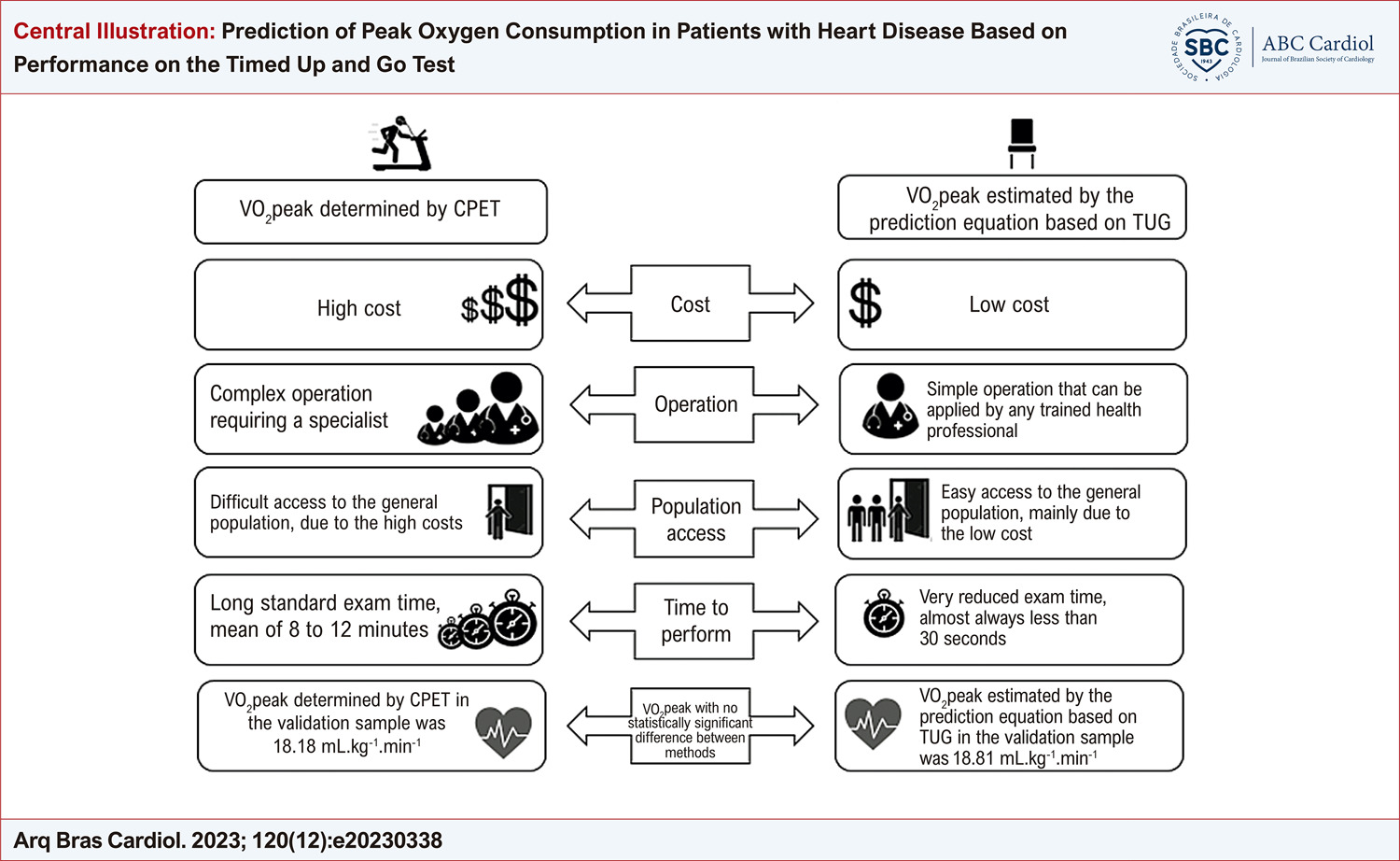
Prediction of Peak Oxygen Consumption in Patients with Heart Disease Based on Performance on the Timed Up and Go Test

Danilo Silva dos Santos et al. Ciro Oliveira Queiroz Cristiane Maria Carvalho Costa Dias Gerson Cipriano Junior … Queila Oliveira Borges Luiz Eduardo Fonteles Ritt

Abstract

Background

The use of the timed up and go (TUG) test to assess cardiorespiratory fitness in patients with heart disease has not been well defined in the literature.

Objectives

Test the association between TUG and peak oxygen consumption (VO2peak), construct an equation based on TUG to predict VO2peak, and determine a cutoff point to estimate VO2peak ≥ 20 mL/kg/min.

Methods

This cross-sectional study included 201 patients with coronary artery disease or heart failure, between 36 and 92 years of age, who underwent TUG and cardiopulmonary exercise test. Correlation, ROC curve, multiple linear regression, and Bland-Altman analyses were performed. The significance level was set at p < 0.05.

Results

The mean age of the total sample was 67 ± 13 years, and 70% of participants were male. The mean VO2peak was 17 ± 6 mL/kg/min, and the mean TUG time was 7 ± 2.5 seconds. The correlation between VO2peak and TUG was r = −0.54 (p < 0.001), and R2 was 0.30. The following equation was developed based on ; a value of 0 was assigned to the male sex and 1 to the female sex (adjusted R: 0.41; adjusted R2: 0.40). The VO2peak estimated by the equation was 18.81 ± 3.2 mL/kg/min, and the VO2peak determined by cardiopulmonary exercise test was 18.18 ± 5.9 mL/kg/min (p > 0.05). The best cutoff point in the TUG for VO2peak ≥ 20 mL/kg/min was ≤ 5.47 seconds (area under the curve: 0.80; 95% confidence interval: 0.74 to 0.86).

Conclusions

TUG and VO2peak showed a significant association. A prediction equation for VO2peak was developed and validated internally with good performance. The cutoff point in the TUG to predict VO2peak ≥ 20 mL/kg/min was ≤ 5.47 seconds.

  • Cardiovascular Diseases
  • Exercise Test
  • Oxygen Consumption
Read Full Article
Creative Commons Attribution (CC BY) Creative Commons license
22/12/2023 DOI: 10.36660/abc.20230338 Views 2
IJCS
Editorial

Cardiorespiratory Optimal Point: A New Kid in the Block or an Established Star?

Miguel Mendes

Summary

COP researchers have already conducted very important research that must be expanded, including larger and more diverse and better defined populations, with patients around the world, different cardiovascular and non-cardiovascular diseases, tests using a treadmill (more experience with treadmill CPET is needed), and evaluation of the prognostic values of sub-maximal parameters, such as COP and eventually VO 2 at VT1, versus the maximal parameters, such as pVO 2 , VE/VCO 2 slope, and OUES.

A clear answer is needed: Is the information obtained from a submaximal CPET enough, or should it be considered only as an alternative when it is not possible to perform a maximal CPET or when peak VO 2 was not reached?

[…]

  • Cardiopulmonary exercise test
  • Cardiorespiratory Fitness
  • Oxygen Consumption
  • Survival
Read Full Article
Creative Commons Attribution (CC BY) Creative Commons license
20/10/2023 DOI: 10.36660/ijcs.20230124 Views 2
Figure 1
ABC
Original Article

Predictive Ability of Cardiopulmonary Exercise Test Parameters in Heart Failure Patients with Cardiac Resynchronization Therapy

João Ferreira Reis et al. António Valentim Gonçalves Pedro Garcia Brás Rita Ilhão Moreira … Pedro Rio Ana Teresa Timóteo Rui M. Soares Rui Cruz Ferreira

Abstract

Background

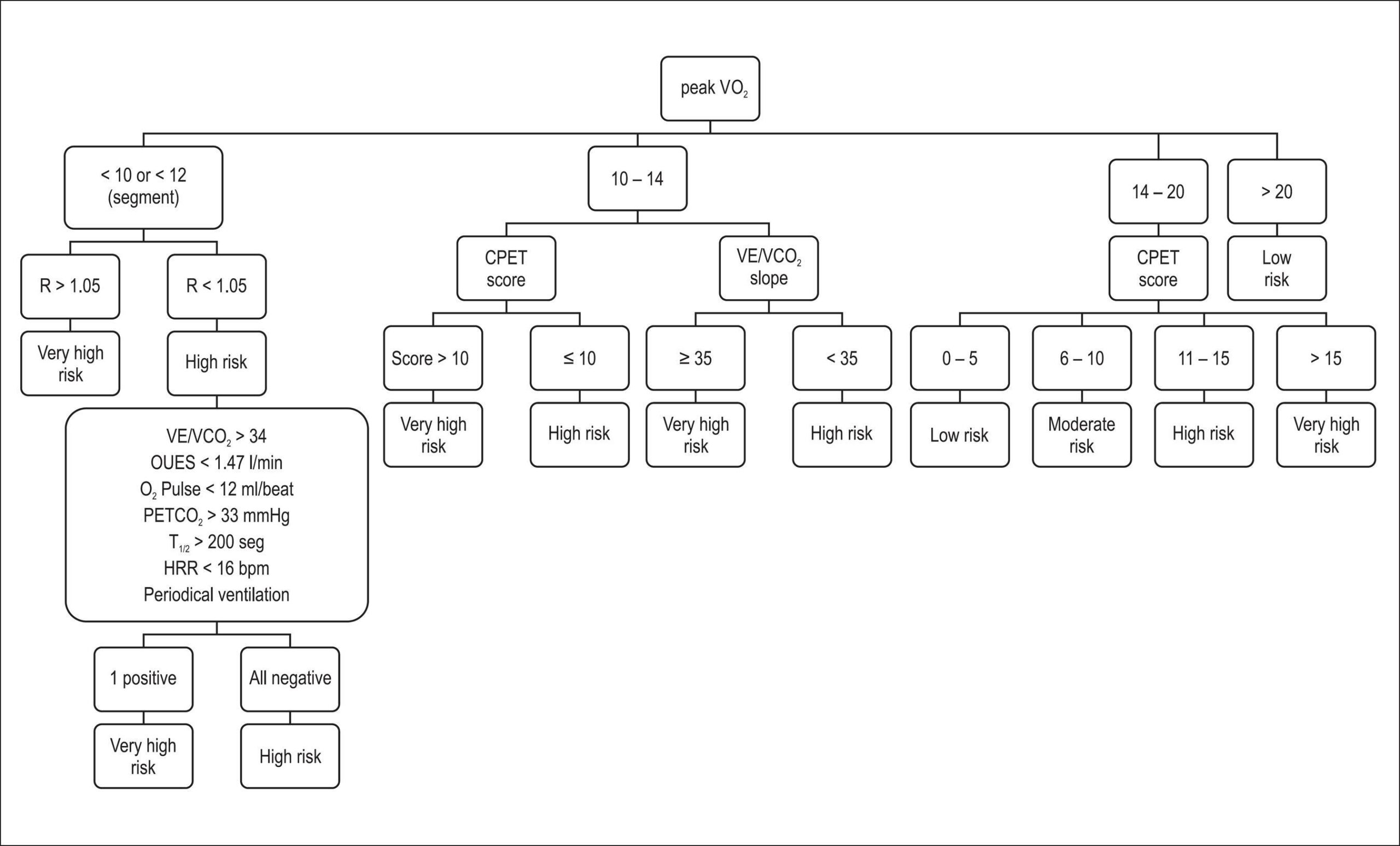
There is evidence suggesting that a peak oxygen uptake (pVO2) cut-off of 10ml/kg/min provides a more precise risk stratification in cardiac resynchronization therapy (CRT) patients.

Objective

To compare the prognostic power of several cardiopulmonary exercise testing (CPET) parameters in this population and assess the discriminative ability of the guideline-recommended pVO2cut-off values.

Methods

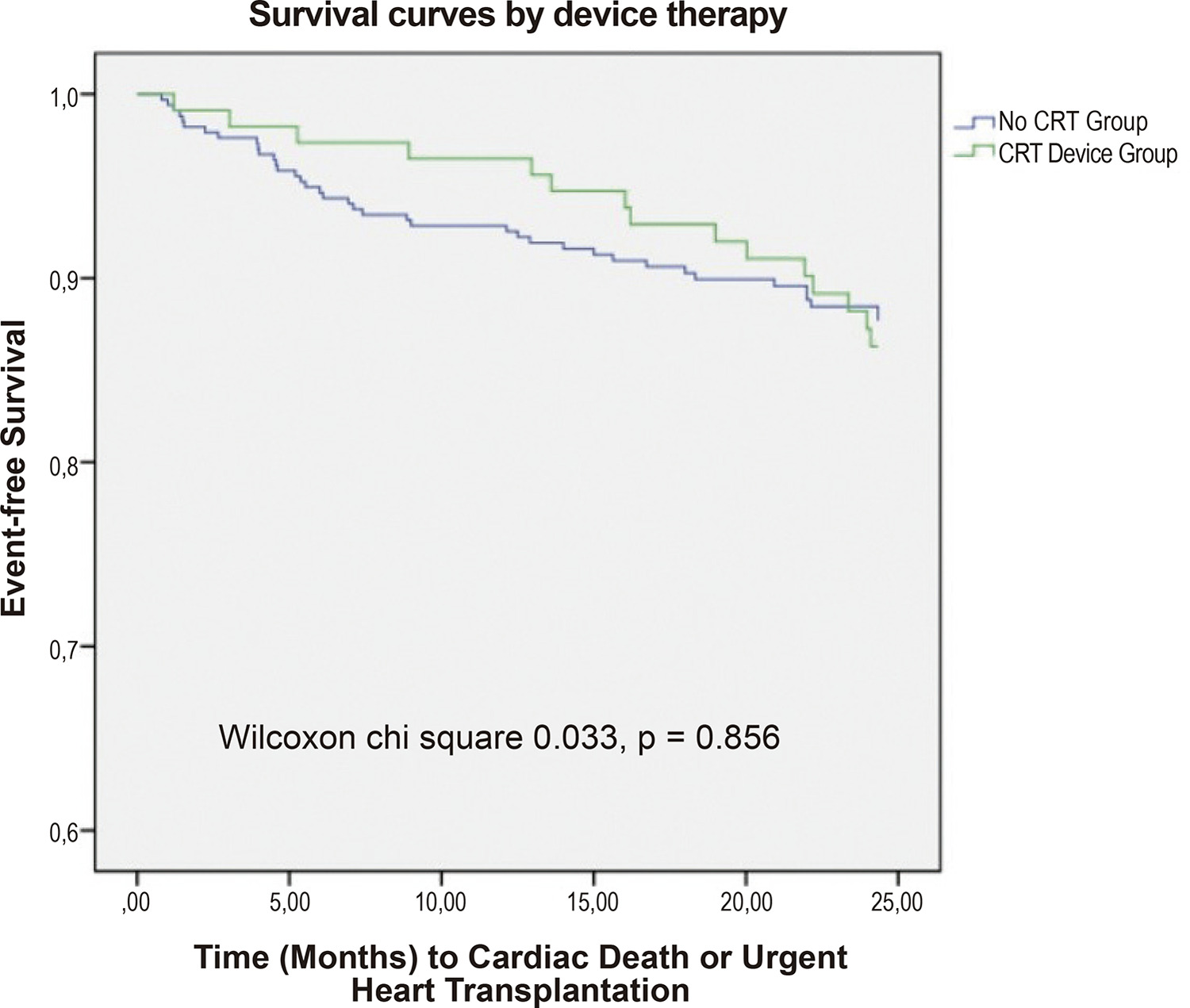
Prospective evaluation of consecutive heart failure (HF) patients with left ventricular ejection fraction ≤40%. The primary endpoint was a composite of cardiac death and urgent heart transplantation (HT) in the first 24 follow-up months, and was analysed by several CPET parameters for the highest area under the curve (AUC) in the CRT group. A survival analysis was performed to evaluate the risk stratification provided by several different cut-offs. p values <0.05 were considered significant.

Results

A total of 450 HF patients, of which 114 had a CRT device. These patients had a higher baseline risk profile, but there was no difference regarding the primary outcome (13.2% vs 11.6%, p =0.660). End-tidal carbon dioxide pressure at anaerobic threshold (PETCO2AT)had the highest AUC value, which was significantly higher than that of pVO2in the CRT group (0.951 vs 0.778, p =0.046). The currently recommended pVO2cut-off provided accurate risk stratification in this setting (p <0.001), and the suggested cut-off value of 10 ml/min/kg did not improve risk discrimination in device patients (p =0.772).

Conclusion

PETCO2ATmay outperform pVO2’s prognostic power for adverse events in CRT patients. The current guideline-recommended pVO2 cut-off can precisely risk-stratify this population.

  • Cardiac resynchronization Therapy/methods
  • Exercise Test/methods
  • Heart Failure
  • Heart Transplantation
  • Oxygen Consumption
Read Full Article
Creative Commons Attribution (CC BY) Creative Commons license
18/07/2022 DOI: 10.36660/abc.20210620 Views 1
ABC
Editorial

NYHA Classification and Cardiopulmonary Exercise Test Variables in Patients with Heart Failure

Ricardo Vivacqua Cardoso Costa

Heart failure (HF) is considered a prevalent disease, limiting survival and constituting one of the leading causes of hospitalization or death in several countries, including Brazil. Therefore, clinical classification in patients with HF can be considered important as an initial reference, as it informs the functional condition of these patients. Classically, the subjective classification of the New York Heart Association (NYHA) and the objective classification of Weber are the most used. The NYHA functional classification and oxygen consumption at peak exertion were decisive in determining the functional condition of patients with Chagas disease. However, certain patients with minor symptoms are at high risk of hospitalization or death.

In patients with HF, the 6-minute walk test is also considered in assessing functional and prognostic capacity. This test has a predictive value for mortality in patients with HF functional class II and III (NYHA).

[…]

  • Exercise Test
  • Heart Failure
  • Hospitalization
  • Life Style
  • Mortality
  • Oxygen Consumption
  • Physical activity
  • Walk Test
Read Full Article
Creative Commons Attribution (CC BY) Creative Commons license
10/06/2022 DOI: 10.36660/abc.20220196 Views 2
Figure 1
ABC
Case Report

The Effect of Respiratory Protective Surgical Mask on Physiological Markers of Endurance Performance in a Recreational Runner

Danilo Marcelo Leite do Prado et al. Valmir Oliveira Silvino Ewerton Gomes Vieira Bruno Viana Rosa … Acácio Salvador Veras e Silva Marcos Antonio Pereira dos Santos

Introduction

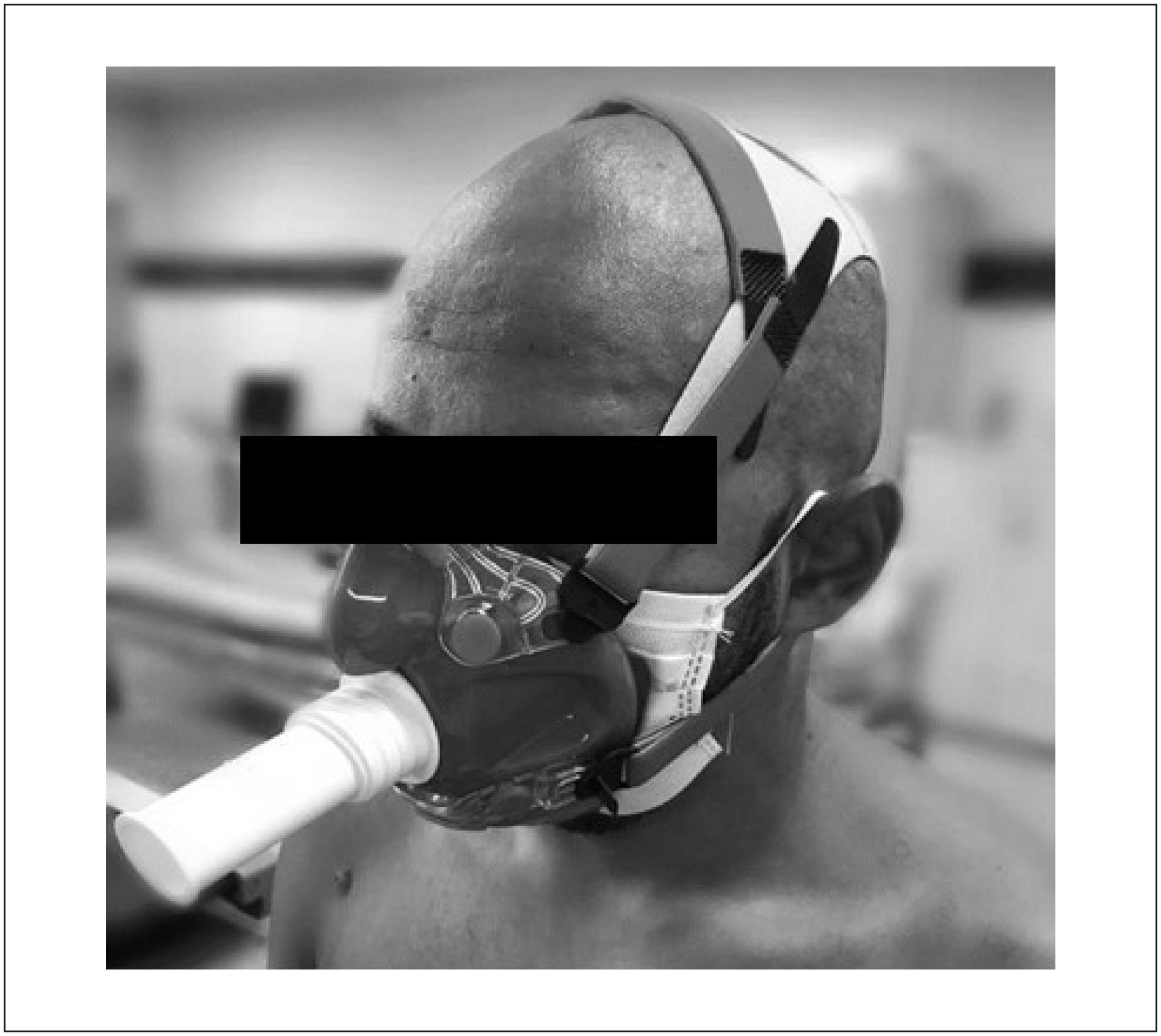
The advent of the Coronavirus 19 (COVID-19) pandemic, which has quickly spread worldwide, has raised the attention regarding the use of respiratory protective face masks (PFM) not only by healthcare personnel, but also the general population. In this context, wearing a PFM during physical exercise in an external environment can reduce COVID-19 infection risks. On the other hand, the use of PFM can increase the subjective perception of breathing difficulty through the formation of microclimates inside the face mask (i.e., temperature and humidity) and airflow restriction.

In recent years, the number of amateur runners has significantly increased among many populations around the world, as running can be performed with minimal equipment, and by a broad variety of people. Interestingly, during endurance exercise, the adaptability of the cardiorespiratory system is of paramount importance, as it increases both convective and diffusive oxygen transport, thus enabling the body to meet the demands for oxygen, substrate delivery, and carbon dioxide removal. Moreover, the so-called physiological markers of endurance performance, such as ventilatory anaerobic threshold, respiratory compensation point, running economy, and maximal oxygen uptake, also seem to be important in determining absolute exercise intensity (i.e., pace, power output).

[…]

  • Coronavirus-19
  • Coronavirus-19 Infection
  • Exercise
  • Facial Mask
  • Oxygen Consumption
  • Pandemics
  • Physical activity
  • Population Education
  • Resistance Performance
  • Respiratory Protective Devices
Read Full Article
Creative Commons Attribution (CC BY) Creative Commons license
19/07/2021 DOI: 10.36660/abc.20200792 Views 1
Figure 1
ABC
Original Article

The Six-Minute Step Test as a Predictor of Functional Capacity according to Peak VO2 in Cardiac Patients

Luiz Eduardo Fonteles Ritt et al. Eduardo Sahade Darzé Gustavo Freitas Feitosa Jessica Santana Porto … Gabriela Bastos Renata Braga Linhares de Albuquerque Cristiane Miura Feitosa Thaissa Costa Claro Eloisa Ferreira Prado Queila Borges de Oliveira Ricardo Stein

Abstract

Background:

Six-minute step test (6MST) is a simple way to evaluate functional capacity, although it has not been well studied in patients with coronary artery disease (CAD) or heart failure (HF).

Objective:

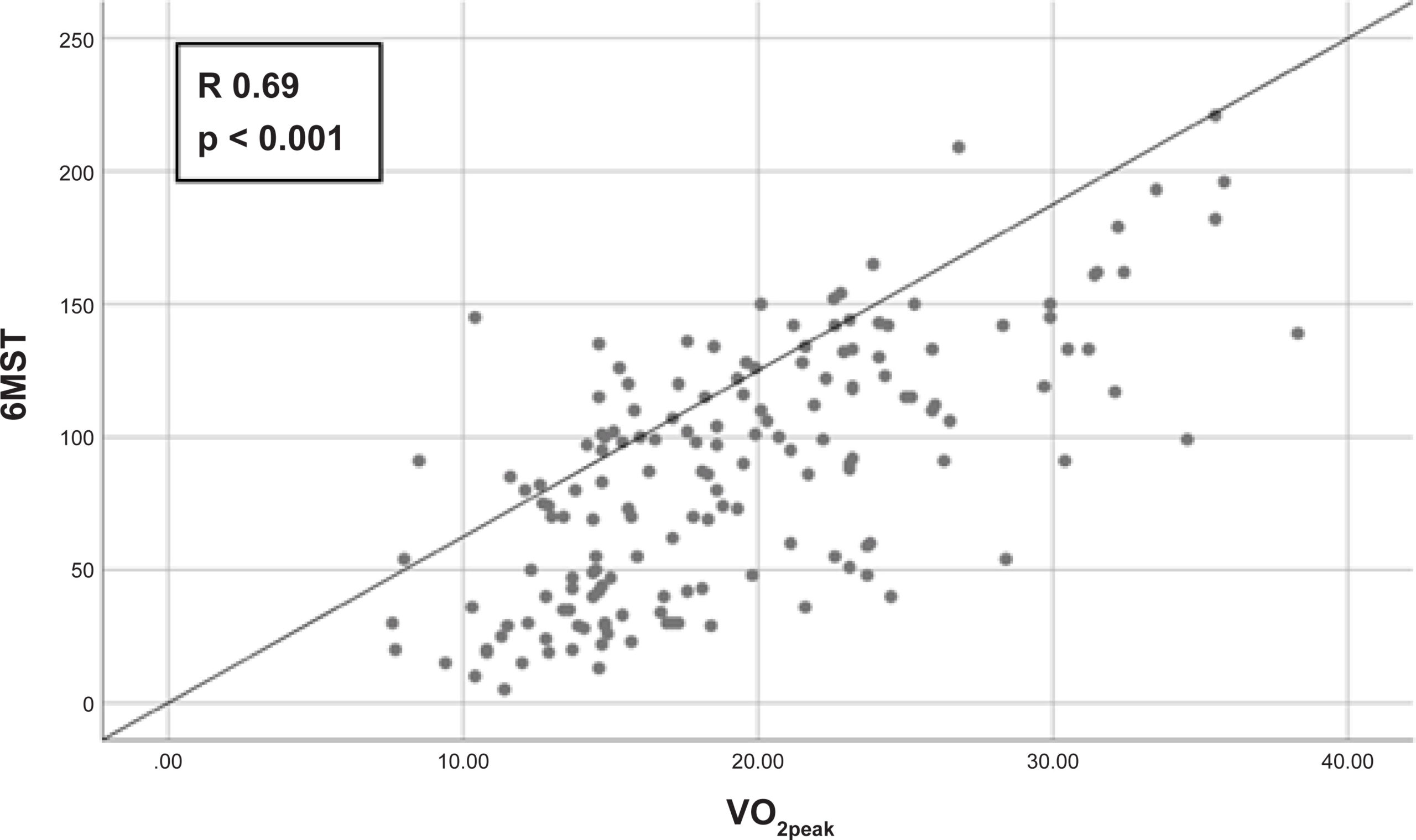
Analyze the association between the 6MST and peak oxygen uptake (VO2peak) and develop an equation for estimating VO2peak based on the 6MST, as well as to determine a cutoff point for the 6MST that predicts a VO2peak ≥20 mL.Kg-1.min-1

Methods:

In 171 patients who underwent the 6MST and a cardiopulmonary exercise test, correlation, regression, and ROC analysis were used and a p < 0.05 was admitted as significant.

Results:

mean age was 60±14 years and 74% were male. Mean left ventricle ejection fraction was 57±16%, 74% had CAD and 28% had HF. Mean VO2peak was 19±6 mL.Kg-1.min-1 and mean 6MST performance was 87±45 steps. Association between 6MST and VO2peak was r 0.69 (p <0.001). The model VO2peak =19.6 + (0.075 x 6MST) – (0.10 x age) for men and VO2peak =19.6 + (0.075 x 6MST) – (0.10 x age) – 2 for women could predict VO2peak based on 6MST results (adjusted R 0.72; adjusted R2 0.53). The most accurate cutoff point for 6MST to predict a VO2peak ≥20 mL.Kg-1.min-1 was >105 steps (AUC 0.85; 95% CI 0.79 -0.90; p <0.001).

Conclusion:

An equation for predicting VO2peak based on 6MST results was derived, and a significant association was found between 6MST and VO2peak. The cutoff point for 6MST, which predicts a VO2peak ≥20 mL.Kg-1.min-1, was >105 steps. (Arq Bras Cardiol. 2021; 116(5):889-895)

  • Exercise Test
  • Heart Failure
  • Mortalidade
  • Oxygen Consumption
  • Prognóstico
  • Respiratoty Capacity
  • Tidal Volume
Read Full Article
Creative Commons Attribution (CC BY) Creative Commons license
17/05/2021 DOI: 10.36660/abc.20190624 Views 1
ABC
Original Article

Maximal Oxygen Uptake and Ventilation Improvement Following Sacubitril-Valsartan Therapy

António Valentim Gonçalves et al. Tiago Pereira-da-Silva Ana Galrinho Pedro Rio … Rui Soares Joana Feliciano Rita Ilhão Moreira Sofia Silva Sandra Alves Eunice Capilé Rui Cruz Ferreira

Abstract

Background

Sacubitril/valsartan had its prognosis benefit confirmed in the PARADIGM-HF trial. However, data on cardiopulmonary exercise testing (CPET) changes with sacubitril-valsartan therapy are scarce.

Objective

This study aimed to compare CPET parameters before and after sacubitril-valsartan therapy.

Methods

Prospective evaluation of chronic heart failure (HF) patients with left ventricular ejection fraction ≤40% despite optimized standard of care therapy, who started sacubitril-valsartan therapy, expecting no additional HF treatment. CPET data were gathered in the week before and 6 months after sacubitril-valsartan therapy. Statistical differences with a p-value <0.05 were considered significant.

Results

Out of 42 patients, 35 (83.3%) completed the 6-month follow-up, since 2 (4.8%) patients died and 5 (11.9%) discontinued treatment for adverse events. Mean age was 58.6±11.1 years. New York Heart Association class improved in 26 (74.3%) patients. Maximal oxygen uptake (VO2max) (14.4 vs. 18.3 ml/kg/min, p<0.001), VE/VCO2slope (36.7 vs. 31.1, p<0.001), and exercise duration (487.8 vs. 640.3 sec, p<0.001) also improved with sacubitril-valsartan. Benefit was maintained even with the 24/26 mg dose (13.5 vs. 19.2 ml/kg/min, p=0.018) of sacubitril-valsartan, as long as this was the highest tolerated dose.

Conclusions

Sacubitril-valsartan therapy is associated with marked CPET improvement in VO2max, VE/VCO2slope, and exercise duration. (Arq Bras Cardiol. 2020; [online].ahead print, PP.0-0)

  • antihypertensive agents
  • Heart Failure
  • Hypertension
  • Oxygen Consumption
  • Pulmonary Ventilation
  • Sacubitril-Valsartan
  • Stroke Volume
Read Full Article
Creative Commons Attribution (CC BY) Creative Commons license
19/10/2020 DOI: 10.36660/abc.20190443 Views 1
Figure 1
ABC
Original Article

Prognostic Prediction of Cardiopulmonary Exercise Test Parameters in Heart Failure Patients with Atrial Fibrillation

António Valentim Gonçalves et al. Tiago Pereira-da-Silva Rui Soares Joana Feliciano … Rita Ilhão Moreira Pedro Rio Ana Abreu Rui Cruz Ferreira

Abstract

Background:

Atrial fibrillation (AF) is associated with increased mortality in heart failure (HF) patients.

Objective:

To evaluate whether the risk of AF patients can be precisely stratified by relation with cardiopulmonary exercise test (CPET) cut-offs for heart transplantation (HT) selection.

Methods:

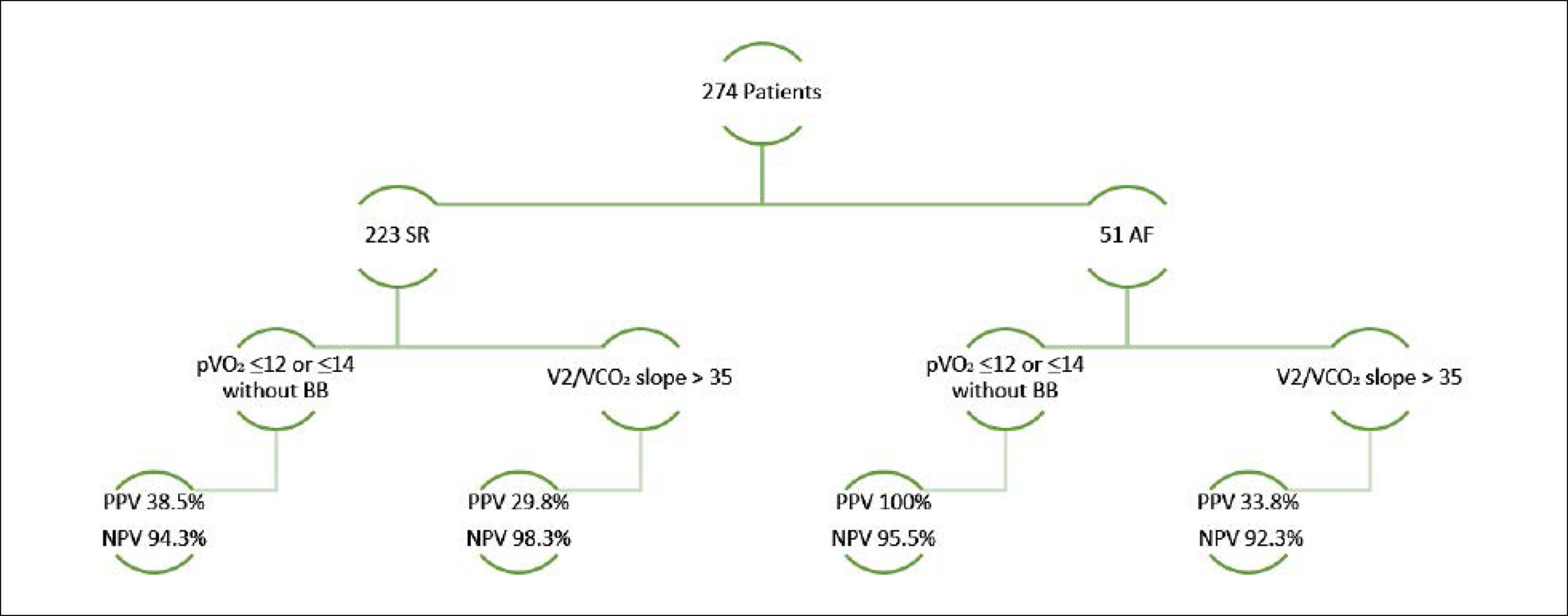
Prospective evaluation of 274 consecutive HF patients with left ventricular ejection fraction ≤ 40%. The primary endpoint was a composite of cardiac death or urgent HT in 1-year follow-up. The primary endpoint was analysed by several CPET parameters for the highest area under the curve and for positive (PPV) and negative predictive value (NPV) in AF and sinus rhythm (SR) patients to detect if the current cut-offs for HT selection can precisely stratify the AF group. Statistical differences with a p-value <0.05 were considered significant.

Results:

There were 51 patients in the AF group and 223 in the SR group. The primary outcome was higher in the AF group (17.6% vs 8.1%, p = 0.038). The cut-off value of pVO2 for HT selection showed a PPV of 100% and an NPV of 95.5% for the primary outcome in the AF group, with a PPV of 38.5% and an NPV of 94.3% in the SR group. The cut-off value of VE/VCO2 slope showed lower values of PPV (33.3%) and similar NPV (92.3%) to pVO2 results in the AF group.

Conclusion:

Despite the fact that AF carries a worse prognosis for HF patients, the current cut-off of pVO2 for HT selection can precisely stratify this high-risk group.

  • Atrial Fibrillation / mortality
  • Exercise Test
  • Heart Failure
  • Oxygen Consumption
  • Peak Expiratory Flow Rate
  • Prognosis
Read Full Article
Creative Commons Attribution (CC BY) Creative Commons license
20/03/2020 DOI: 10.36660/abc.20180193 Views 1
Figure 1
IJCS
Original Article

Classification System for Cardiorespiratory Fitness Based on a Sample of the Brazilian Population

Antonio Eduardo Monteiro de Almeida et al. Igor Rafael Miranda Ferreira Santander Maria Izabel Macedo Campos Jorge René Garcia Arévalo … João Agnaldo do Nascimento Luiz Eduardo Fonteles Ritt Karlyse Claudino Belli Jorge Pinto Ribeiro Ricardo Stein

Abstract

Background:

Peak oxygen consumption (VO2peak) is an important prognostic marker and its classification helps the cardiologist in the therapeutic decision-making process. The most commonly used cardiorespiratory fitness (CRF) classification has not been validated for the Brazilian population.

Objective:

To elaborate a CRF classification using a Brazilian sample and to compare it with the American Heart Association (AHA), Cooper and UNIFESP classifications.

Methods:

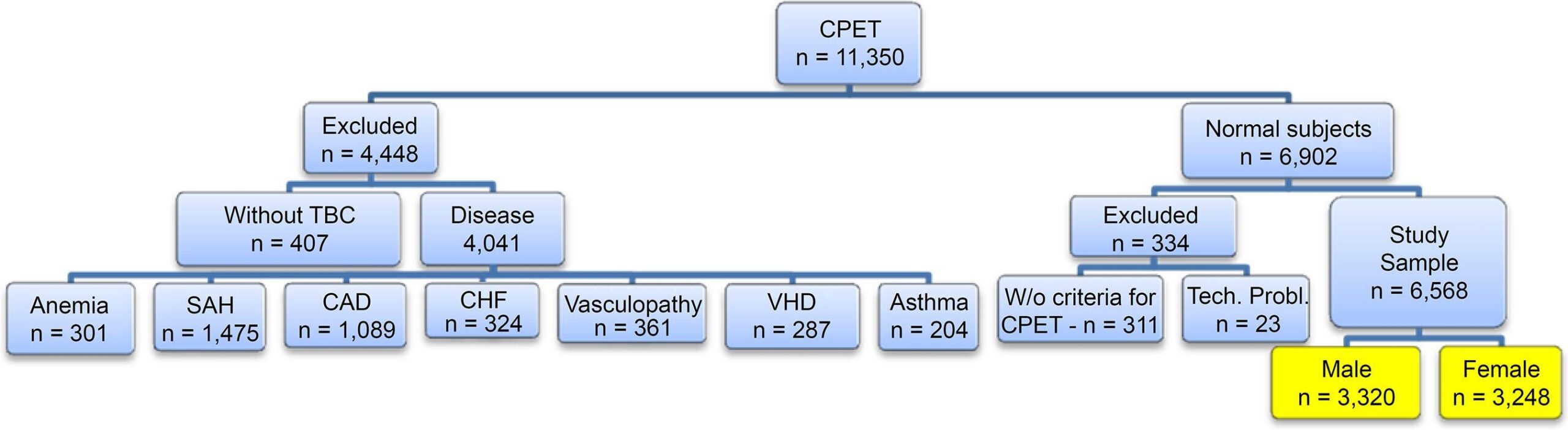
A total of 6,568 healthy subjects were analyzed through cardiopulmonary exercise testing (CPET). They were distributed by sex and the following age groups (years): 7-12, 13-19, 20-79 (per decades) and > 80 years. After measurement of the VO2peak, participants were distributed into quintiles of CRF in very poor, poor, moderate, high and very high (AEMA Table). The CRF classifications by AEMA, AHA, Cooper, and UNIFESP were compared using the Wilcoxon, Kappa and concordance percentages.

Results:

VO2peak presented an inverse and moderate correlation with age considering both sexes (R = -0.488, p < 0.001). All paired comparisons between CRF classification systems showed differences (p < 0.001) and disagreement percentage – AEMA versus AHA (k = 0.291, 56.7%), AEMA versus Cooper (k = 0.220, 62.4%) and AEMA versus UNIFESP (k = 0.201, 63.9 %).

Conclusion:

The AEMA table showed important discrepancies in the classification of CRF when compared to other tables widely used in our setting. Because it was obtained from a large sample of the Brazilian population, the AEMA table should be preferred over other classification systems in our population.

  • Cardiorespiratory Fitness
  • Exercise
  • Exercise Tests
  • Oxygen Consumption
  • Population Health
  • Respiratory Function Tests
Read Full Article
Creative Commons Attribution (CC BY) Creative Commons license
12/08/2019 DOI: 10.5935/2359-4802.20190057 Views 2
Figure 1
IJCS
Original Article

Comparative Analysis of Direct and Indirect Methods for the Determination of Maximal Oxygen Uptake in Sedentary Young Adults

Alfredo Moreira da Rocha Neto et al. Artur Haddad Herdy Pablo de Souza

Abstract

Background:

Maximal oxygen uptake is a powerful prognostic indicator and a reliable measure of physical conditioning. It can be measured directly by cardiopulmonary exercise testing (CPET) or indirectly by formulas derived from conventional protocols.

Objective:

We compared the VO2 max obtained by formula using exercise testing with Bruce protocol (BP) with the VO2 max obtained by CPET on the treadmill.

Methods:

We selected 41 healthy, non-obese, physically inactive young volunteers, aged between 21 and 50 years, residents of Florianópolis, Brazil.

Results:

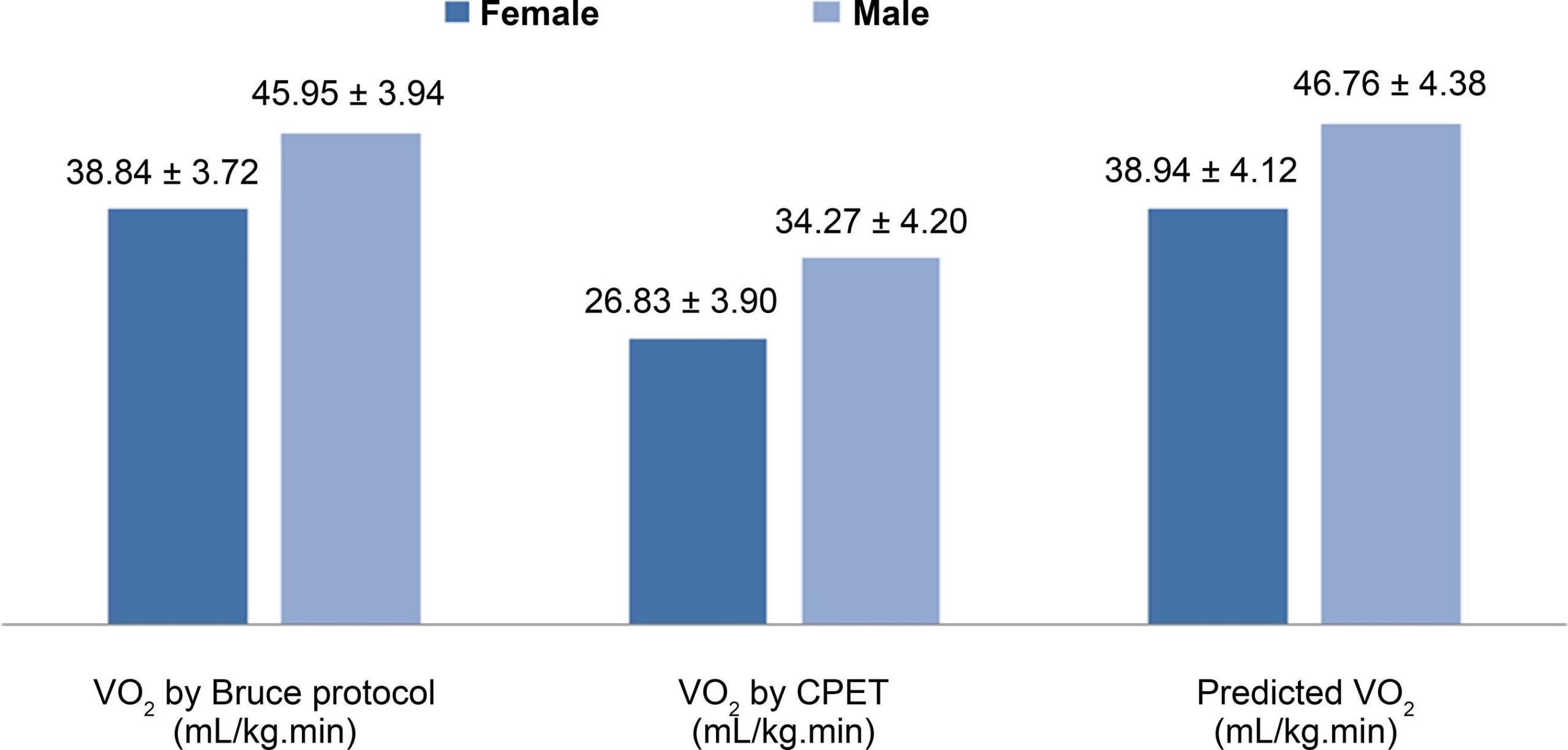
Twenty-one women (52%) with mean age of 35.62 ± 8.83 years, and 20 males, with mean age of 32.5 ± 7.18 years participated in the study. Statistically significant differences were found for VO2 max between the two methods (BP – 42.31 ± 5.21 ml/kg.min vs. CPET – 30.46 ± 5.50 ml/kg.min., p < 0.0001). The Bruce formula overestimated the result by 34.1% (BP – 45.95 ± 3.94 ml/kg.min vs. CPX – 34.27 ± 4.20 ml/kg.min, p < 0.0001) for men, and by 44.8% (BP – 38.84 ± 3.72 ml/kg.min vs. CPX – 26.83 ± 3.90, p < 0.0001) for women. A moderate correlation was observed between the methods (r = 0.65). When classifying the results according to the table of aerobic capacity of the American Heart Association, the agreement was null (kappa = 0.0034; Pearson chi2 = 0.001).

Conclusion:

VO2 estimated by BP is not capable of demonstrating the true aerobic capacity in these individuals, while CPET is an important tool for early detection of diminished functional capacity in sedentary young men and women.

  • Adolescent
  • Cardiovascular Diseases
  • Exercise Test
  • Oxygen Consumption
  • physical fitness
  • Sedentarism
Read Full Article
Creative Commons Attribution (CC BY) Creative Commons license
12/08/2019 DOI: 10.5935/2359-4802.20190052
Figure 1
IJCS
Original Article

Correlation between Exercise Stress Test and Echocardiographic Parameters in Elderly Individuals

Liz Andréa Villela Baroncini et al. Camila Varotto Baroncini Juliana Ferreira Leal

Abstract

Background:

Maximum oxygen consumption (VO2 max) in healthy individuals decreases approximately 10% per decade of life, and such decrease is more pronounced after the seventh decade.

Objectives:

To assess functional capacity of individuals aged 75 years or older, submitted to ergometric test and transthoracic echocardiogram exam, by means of metabolic equivalent (MET) and VO2 max measurements.

Methods:

A total of 381 patients (205 women; 79 ± 3.7 years) were evaluated. Exclusion criteria were: presence of left ventricular (LV) systolic dysfunction, LV diastolic dysfunction grade II and III, significant valve disease, or coronary artery disease with systolic LV dysfunction or dilatation. Associations between quantitative variables were analyzed by Pearson and Spearman correlation coefficients, and comparisons of quantitative data by Student’s t-test for independent samples.

Results:

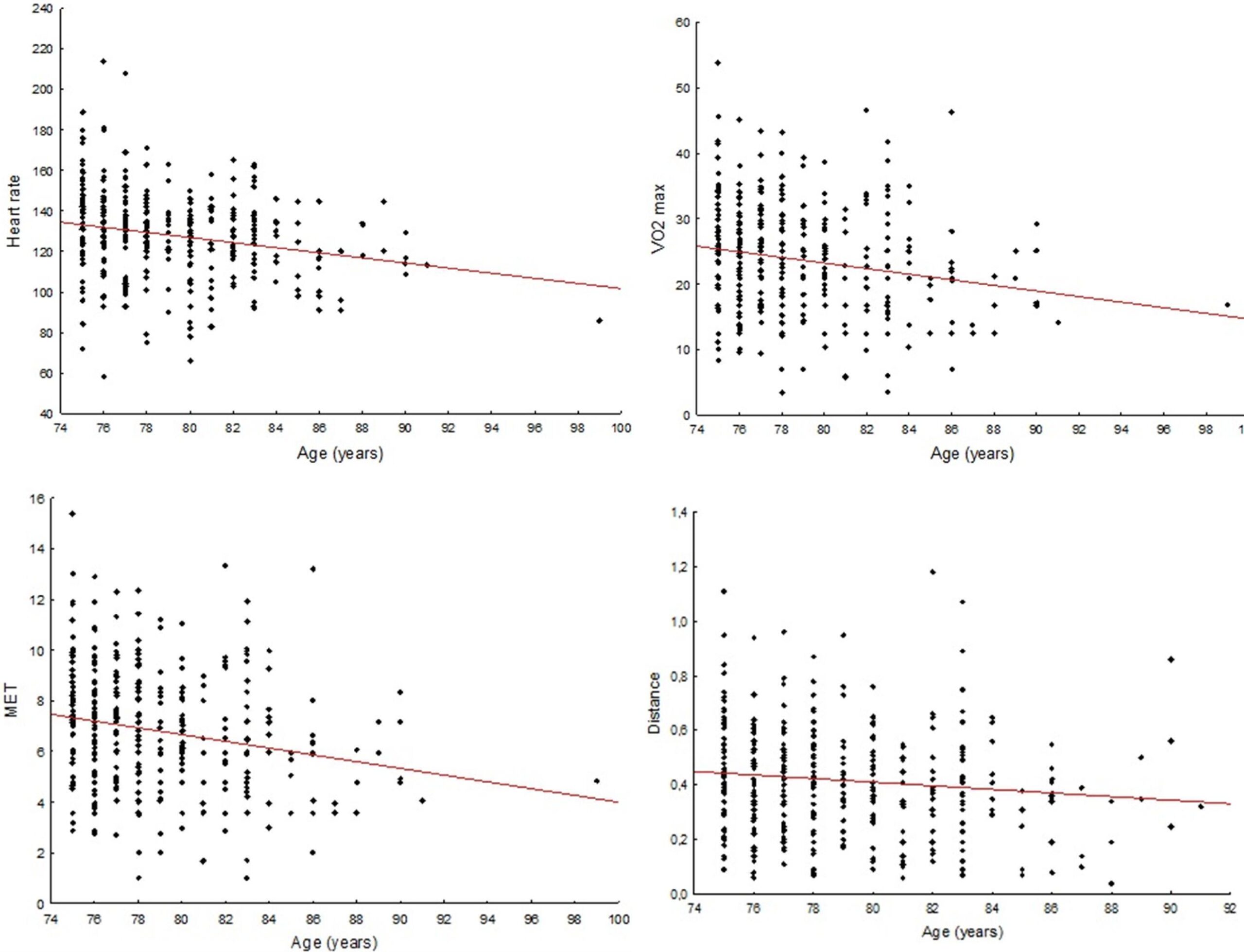
Increasing age was associated with a progressive decrease in the distance covered (p = 0.021), in the expected increase in HR (p < 0.001), in VO2 max (p < 0.001), and METs (p < 0.001) in both genders. There was no correlation of exercise test parameters with the echocardiographic parameters.

Conclusions:

Relatively healthy older individuals, with global systolic and diastolic functions of the left ventricle preserved, presented a progressive decrease in their functional capacity due to their natural aging process, comorbidities related to their age range and physical deconditioning.

  • aging
  • Cardiovascular Diseases
  • Echocardiography/methods
  • Exercise
  • Exercise Test
  • Oxygen Consumption
  • Risk Factors
Read Full Article
Creative Commons Attribution (CC BY) Creative Commons license
01/01/2019 DOI: 10.5935/2359-4802.20180085
IJCS
Original Article

Influence of Pulmonary Rehabilitation on Clinical Characteristics in Patients with Chronic Heart Failure and Chronic Obstructive Pulmonary Disease

Ganna S. Smyrnova et al. Tetiana M. Babkina Gennadii G. Taradin Mykola T. Vatutin

Abstract

Background:

The improvement of treatment strategies in patients with chronic obstructive pulmonary disease (COPD) and especially with comorbid pathology should provide rational conversion of standard schemes of therapy and rehabilitation in accordance with their clinical, pathogenic, functional and economic feasibility.

Objective:

To assess the influence of pulmonary rehabilitation on clinical characteristics in patients with chronic heart failure (CHF) and concomitant COPD.

Methods:

The study included 102 patients with CHF and concomitant COPD (males, 62%; mean age, 68.2 ± 4.5 years). All patients were divided into two groups: control group (CG) (n = 54), received only standard therapy of CHF and COPD; and intervention group (IG) (n = 48) were additionally taught the full yogic breathing as a program of pulmonary rehabilitation. Calculation of points by clinical evaluation scale (CES), assessment of CHF functional class (FC) (NYHA) and 6-minute walk test (6MWT – with the evaluation of dyspnea by the Borg scale) were performed in all patients on admission to the department and at discharge. Significant association was defined by p value < 0.05.

Results:

At baseline, there were no significant differences in clinical characteristics of the patients and studied parameters between the groups. At discharge both groups showed significant reduction of dyspnea by the Borg scale (in CG: from 7.2 ± 0.8 points to 5.2 ± 0.3; in IG: from 7.4 ± 0.6 points to 3.2 ± 0.4), the number of points by CES (in CG: from 10.8 ± 0.3 points to 7.2 ± 0.4; in IG: from 10.7 ± 0.6 points to 5.9 ± 0.6). Increase in exercise tolerance (by the distance of 6MWT) was observed in both groups (in CG: from 215 ± 24 m to 275 ± 22 m; in IG: from 219 ± 21 m to 308 ± 24 m). The changes were more significant in IG compared to CG. We observed the prominent decrease in CHF FC and length of hospital stay in IG.

Conclusions:

Application of full yogic breathing as the program of pulmonary rehabilitation in addition to standard therapy of the patients with CHF and COPD is associated with a significant decrease in CHF FC, an increase in exercise tolerance and a reduced length of hospital stay.

  • Cardiac Insufficiency / physiopathology
  • Exercise Therapy
  • Oxygen Consumption
  • Pulmonary Disease, Chronic Obstructive / rehabilitation
Read Full Article
Creative Commons Attribution (CC BY) Creative Commons license
30/07/2018 DOI: 10.5935/2359-4802.20180051
Figure 1
ABC
Original Article

Pre-Participation Physical Fitness does not Influence Adherence to a Supervised Exercise Program

Fábio Akio Nishijuka et al. Christina Grüne de Souza e Silva Carlos Vieira Duarte Claudio Gil Soares de Araújo

Abstract

Background:

Exercise-based cardiac rehabilitation tends to reduce mortality. However, it requires medium/long-term adherence to regular physical exercise. It is relevant to identify the variables that affect adherence to an supervised exercise program (SEP).

Objective:

To evaluate the influence of pre-participation levels of aerobic and non-aerobic physical fitness components in medium-term adherence to SEP.

Methods:

A total of 567 SEP participants (65 ± 12 years) (68% men) were studied. Participants adherent to the program for less than 6 months (48%) (non-adherent – NAD) were compared with 52% of participants who were adherent for 6 months or more (adherents – AD). In the non-aerobic fitness, flexibility (FLX) (Flexitest) and muscle power (MPW)/body weight in standing rowing (watts/kg) were evaluated while aerobic fitness was obtained by direct measure of VO2max/body weight (VO2). These measurements were normatized for sex and age based on percentiles (P) (P-FLX/P-MPW) of reference data or percentages of predicted (P-VO2). Additionally, AD and NAD with extreme results (tertiles) were simultaneously compared for the three variables.

Results:

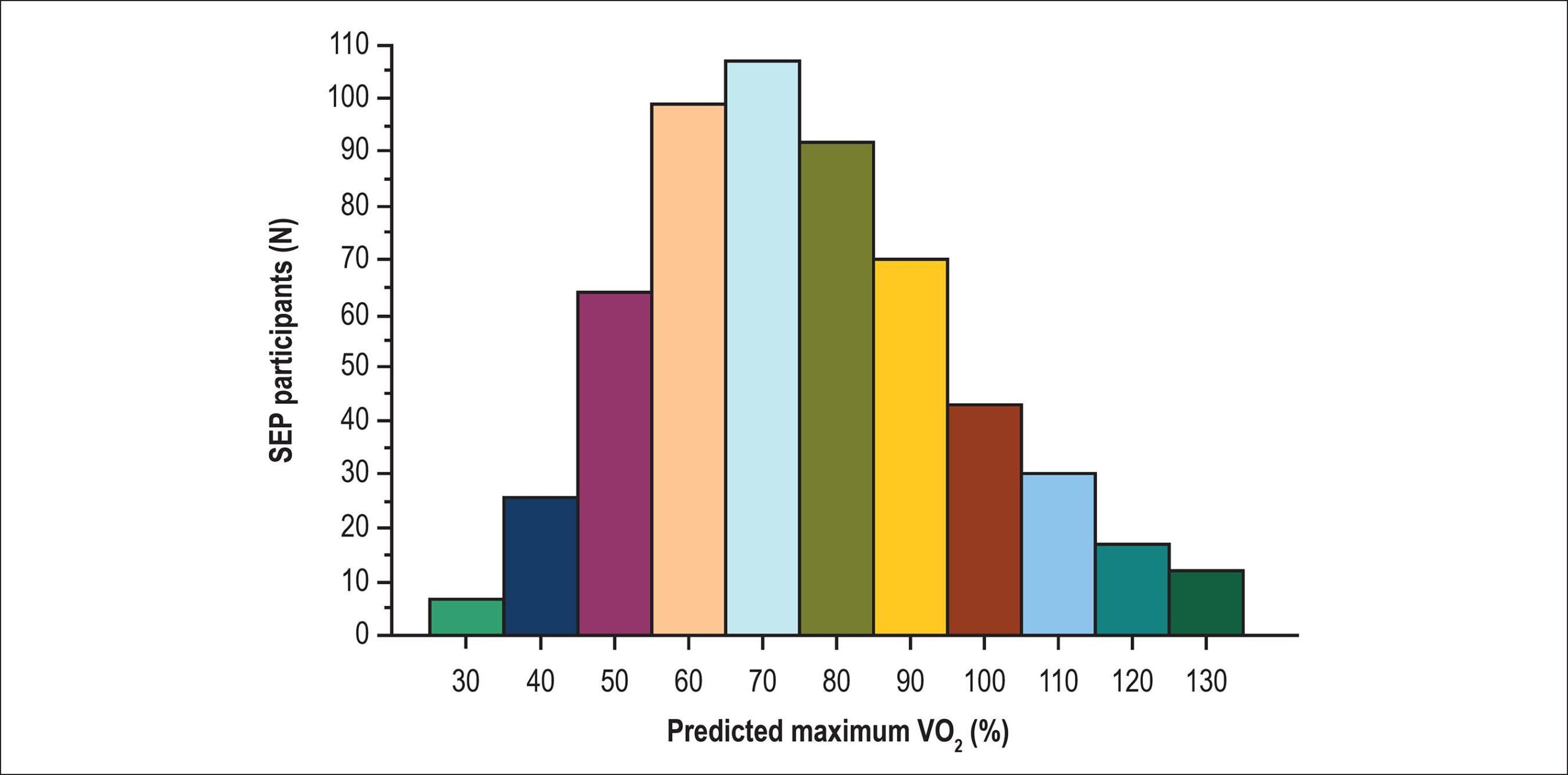
There was no difference between AD and NAD for non-aerobic results, in median [P25-P75], P-FLX: 30 [13-56] and 31 [9-52], respectively, (p = 0.69) and P-MPW: 34 [17-58] and 36 [16-62], respectively (p = 0.96), and for aerobic results (mean ± standard error) P-VO2 (75.9 ± 1.3% and 75.0 ± 1.3%, respectively) (p = 0.83). When comparing extreme tertiles, a difference was found for P-MPW in the lower tertile only, with a slight advantage of AD over NAD- 9 [5-16] versus 4 [1-11] (p = 0.04).

Conclusion:

Although awareness of the pre-participation levels of aerobic and non-aerobic physical fitness components is useful for individualized exercise prescription, these variables do not seem to influence medium-term adherence to SEP.

  • Muscle Strength
  • Oxygen Consumption
  • Physical and Rehabilitation Medicine
  • Sports Medicine
Read Full Article
Creative Commons Attribution (CC BY) Creative Commons license
17/08/2017 DOI: 10.5935/abc.20170132 Views 1
Figure 1
IJCS
Original Article

Cardiopulmonary Exercise Testing in Patients With Left Bundle Branch Block and Preserved Ejection Fraction

Milena dos Santos Barros et al. Rívia Siqueira Amorim Romerito Oliveira Rocha Enaldo Vieira de Melo … José Augusto Barreto-Filho Antônio Carlos Sobral Sousa Romeu Sérgio Meneghelo Joselina Luzia Menezes Oliveira

Abstract

Background:

Left bundle branch block (LBBB) has prognostic significance in patients with congestive heart failure. However, its influence is not well established in patients with preserved systolic ventricular function.

Objective:

To evaluate the implications of LBBB presence in the cardiovascular performance of patients with preserved left ventricular systolic function (LVEF).

Methods:

26 LBBB patients (61.3 ± 8.2 years of age) and 23 healthy individuals (58 ± 6.8 years of age) with LVEF > 0.5 underwent cardiopulmonary exercise testing (CPET).

Results:

CPET analysis revealed: peak oxygen consumption (VO2) predicted in the LBBB group was 87.2 ± 15.0% versus 105.0 ± 15.6% (p < 0.0001); peak oxygen pulse predicted in LBBB group was 98.6 ± 18.6% vs 109.9 ± 13.5% (p = 0.02); VO2 predicted anaerobic threshold in LBBB group was 67.9 ± 13.6% vs 70.2 ± 12.8% (p = 0.55); ΔVO2/Δload in the LBBB group was 15.5 ± 5.51 versus 20.7 ± 7.3 ml.min-1.watts-1 (p = 0.006); ventilation / carbon dioxide production (VE/VCO2 slope) in LBBB group was 29.8 ± 2.9 versus 26.2 ± 2.9 (p = 0.0001) and VO2 recovery time in the LBBB group was 85.2 ± 11.8 vs. 71.5 ± 11.0 seconds (p = 0.0001). LBBB was an independent marker for VE/VCO2 slope increase.

Conclusion:

LBBB presence in individuals with preserved LVEF did not affect cardiovascular performance, but there was an increase of the VE/VCO2 slope in comparison to the control group.

  • Bundle Branch Block
  • Exercise
  • Exercise Test
  • Heart Failure
  • Oxygen Consumption
  • Stroke Volume
Read Full Article
Creative Commons Attribution (CC BY) Creative Commons license
01/01/2017 DOI: 10.5935/2359-4802.20170018 Views 2
Figure 1
ABC
Review Article

Cardiopulmonary Exercise Test: Background, Applicability and Interpretation

Artur Haddad Herdy et al. Luiz Eduardo Fonteles Ritt Ricardo Stein Claudio Gil Soares de Araújo … Mauricio Milani Romeu Sérgio Meneghelo Almir Sérgio Ferraz Carlos Hossri Antonio Eduardo Monteiro de Almeida Miguel Morita Fernandes-Silva Salvador Manoel Serra

Abstract

Cardiopulmonary exercise test (CPET) has been gaining importance as a method of functional assessment in Brazil and worldwide. In its most frequent applications, CPET consists in applying a gradually increasing intensity exercise until exhaustion or until the appearance of limiting symptoms and/or signs. The following parameters are measured: ventilation; oxygen consumption (VO2); carbon dioxide production (VCO2); and the other variables of conventional exercise testing. In addition, in specific situations, pulse oximetry and flow-volume loops during and after exertion are measured. The CPET provides joint data analysis that allows complete assessment of the cardiovascular, respiratory, muscular and metabolic systems during exertion, being considered gold standard for cardiorespiratory functional assessment.–

The CPET allows defining mechanisms related to low functional capacity that can cause symptoms, such as dyspnea, and correlate them with changes in the cardiovascular, pulmonary and skeletal muscle systems. Furthermore, it can be used to provide the prognostic assessment of patients with heart or lung diseases, and in the preoperative period, in addition to aiding in a more careful exercise prescription to healthy subjects, athletes and patients with heart or lung diseases.

Similarly to CPET clinical use, its research also increases, with the publication of several scientific contributions from Brazilian researchers in high-impact journals.

Therefore, this study aimed at providing a comprehensive review on the applicability of CPET to different clinical situations, in addition to serving as a practical guide for the interpretation of that test.

  • Evaluation
  • Exercise
  • Exercise Test
  • lung volume measurements
  • Oxygen Consumption
Read Full Article
Creative Commons Attribution (CC BY) Creative Commons license
01/11/2016 DOI: 10.5935/abc.20160171 Views 3
Figure 1
ABC
Original Article

Brazilian Cardiorespiratory Fitness Classification Based on Maximum Oxygen Consumption

Artur Haddad Herdy et al. Ananda Caixeta

Abstract

Background:

Cardiopulmonary exercise test (CPET) is the most complete tool available to assess functional aerobic capacity (FAC). Maximum oxygen consumption (VO2 max), an important biomarker, reflects the real FAC.

Objective:

To develop a cardiorespiratory fitness (CRF) classification based on VO2 max in a Brazilian sample of healthy and physically active individuals of both sexes.

Methods:

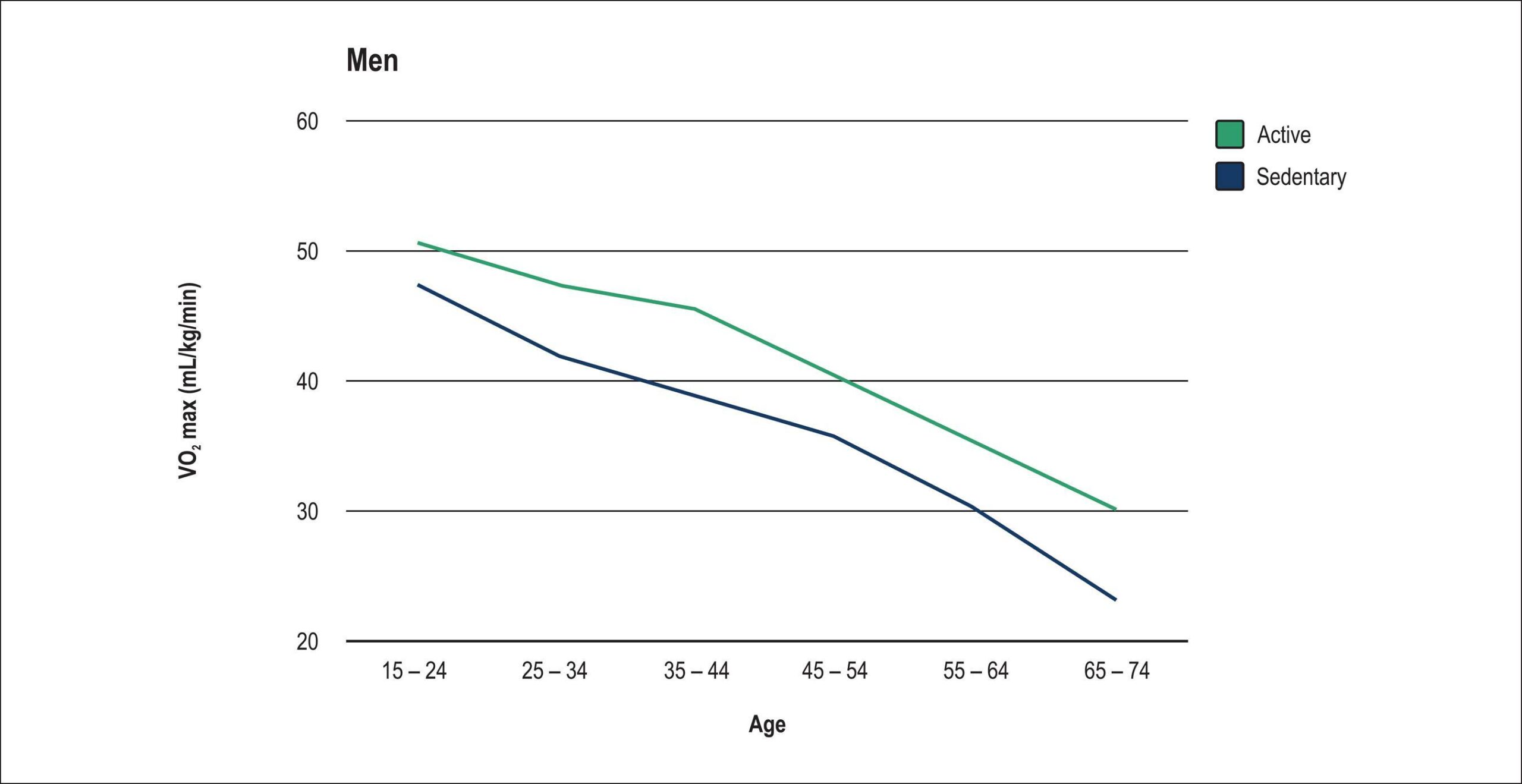
We selected 2837 CEPT from 2837 individuals aged 15 to 74 years, distributed as follows: G1 (15 to 24); G2 (25 to 34); G3 (35 to 44); G4 (45 to 54); G5 (55 to 64) and G6 (65 to 74). Good CRF was the mean VO2 max obtained for each group, generating the following subclassification: Very Low (VL): VO2 105%.

Results:

Conclusions:

This chart stratifies VO2 max measured on a treadmill in a robust Brazilian sample and can be used as an alternative for the real functional evaluation of physically and healthy individuals stratified by age and sex.

  • Exercise
  • Exercise Test
  • Oxygen Consumption
  • Respiratory Function Tests
Read Full Article
Creative Commons Attribution (CC BY) Creative Commons license
01/05/2016 DOI: 10.5935/abc.20160070 Views 1
ABC
Original Article

Reduction in Post-Marathon Peak Oxygen Consumption: Sign of Cardiac Fatigue in Amateur Runners?

Ana Paula Rennó Sierra et al. Anderson Donelli da Silveira Ricardo Contesini Francisco Rodrigo Bellios de Mattos Barretto … Carlos Anibal Sierra Romeu Sergio Meneghelo Maria Augusta Peduti Dal Molin Kiss Nabil Ghorayeb Ricardo Stein

Abstract

Background:

Prolonged aerobic exercise, such as running a marathon, produces supraphysiological stress that can affect the athlete’s homeostasis. Some degree of transient myocardial dysfunction (“cardiac fatigue”) can be observed for several days after the race.

Objective:

To verify if there are changes in the cardiopulmonary capacity, and cardiac inotropy and lusitropy in amateur marathoners after running a marathon.

Methods:

The sample comprised 6 male amateur runners. All of them underwent cardiopulmonary exercise testing (CPET) one week before the São Paulo Marathon, and 3 to 4 days after that race. They underwent echocardiography 24 hours prior to and immediately after the marathon. All subjects were instructed not to exercise, to maintain their regular diet, ingest the same usual amount of liquids, and rest at least 8 hours a day in the period preceding the CPET.

Results:

The athletes completed the marathon in 221.5 (207; 250) minutes. In the post-marathon CPET, there was a significant reduction in peak oxygen consumption and peak oxygen pulse compared to the results obtained before the race (50.75 and 46.35 mL.kg-1 .min-1; 19.4 and 18.1 mL.btm, respectively). The echocardiography showed a significant reduction in the s’ wave (inotropic marker), but no significant change in the E/e’ ratio (lusitropic marker).

Conclusions:

In amateur runners, the marathon seems to promote changes in the cardiopulmonary capacity identified within 4 days after the race, with a reduction in the cardiac contractility. Such changes suggest that some degree of “cardiac fatigue” can occur.

  • Exercise
  • Homeostasis
  • Oxygen Consumption
  • Running
  • Sports
  • Ventricular Dysfunction
Read Full Article
Creative Commons Attribution (CC BY) Creative Commons license
12/01/2016 DOI: 10.5935/abc.20150148
Figure 1
ABC
Original Article

Sex-Specific Equations to Estimate Maximum Oxygen Uptake in Cycle Ergometry

Christina G. de Souza e Silva et al. Claudio Gil S. Araújo

Abstract

Background:

Aerobic fitness, assessed by measuring VO2max in maximum cardiopulmonary exercise testing (CPX) or by estimating VO2max through the use of equations in exercise testing, is a predictor of mortality. However, the error resulting from this estimate in a given individual can be high, affecting clinical decisions.

Objective:

To determine the error of estimate of VO2max in cycle ergometry in a population attending clinical exercise testing laboratories, and to propose sex-specific equations to minimize that error.

Methods:

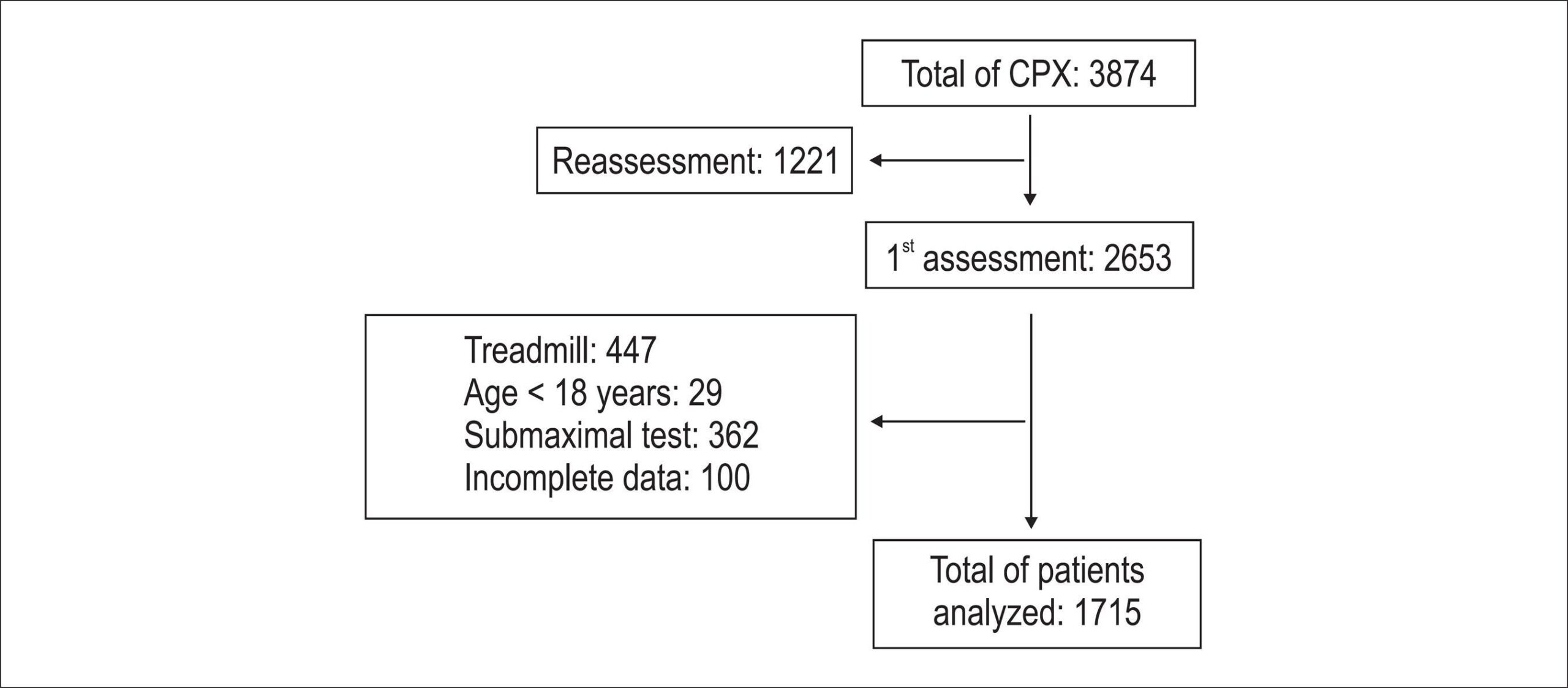
This study assessed 1715 adults (18 to 91 years, 68% men) undertaking maximum CPX in a lower limbs cycle ergometer (LLCE) with ramp protocol. The percentage error (E%) between measured VO2max and that estimated from the modified ACSM equation (Lang et al. MSSE, 1992) was calculated. Then, estimation equations were developed: 1) for all the population tested (C-GENERAL); and 2) separately by sex (C-MEN and C-WOMEN).

Results:

Measured VO2max was higher in men than in WOMEN: -29.4 ± 10.5 and 24.2 ± 9.2 mL.(kg.min)-1 (p < 0.01). The equations for estimating VO2max [in mL.(kg.min)-1] were: C-GENERAL = [final workload (W)/body weight (kg)] x 10.483 + 7; C-MEN = [final workload (W)/body weight (kg)] x 10.791 + 7; and C-WOMEN = [final workload (W)/body weight (kg)] x 9.820 + 7. The E% for MEN was: -3.4 ± 13.4% (modified ACSM); 1.2 ± 13.2% (C-GENERAL); and -0.9 ± 13.4% (C-MEN) (p < 0.01). For WOMEN: -14.7 ± 17.4% (modified ACSM); -6.3 ± 16.5% (C-GENERAL); and -1.7 ± 16.2% (C-WOMEN) (p < 0.01).

Conclusion:

The error of estimate of VO2max by use of sex-specific equations was reduced, but not eliminated, in exercise tests on LLCE.

  • Breathing Exercise / utilization
  • cardiopulmonary exercise testing
  • Demographic Data
  • Ergometry
  • Oxygen Consumption
  • Physical Exertion
Read Full Article
Creative Commons Attribution (CC BY) Creative Commons license
31/07/2015 DOI: 10.5935/abc.20150089 Views 2
Figure 1
ABC
Original Article

An Equation for the Prediction of Oxygen Consumption in a Brazilian Population

Antonio Eduardo Monteiro de Almeida et al. Charles de Moraes Stefani João Agnaldo do Nascimento Narla Miranda de Almeida … Amilton da Cruz Santos Jorge Pinto Ribeiro (in memoriam) Ricardo Stein

Background:

The equations predicting maximal oxygen uptake (VO2max or peak) presently in use in cardiopulmonary exercise testing (CPET) softwares in Brazil have not been adequately validated. These equations are very important for the diagnostic capacity of this method.

Objective:

Build and validate a Brazilian Equation (BE) for prediction of VO2peak in comparison to the equation cited by Jones (JE) and the Wasserman algorithm (WA).

Methods:

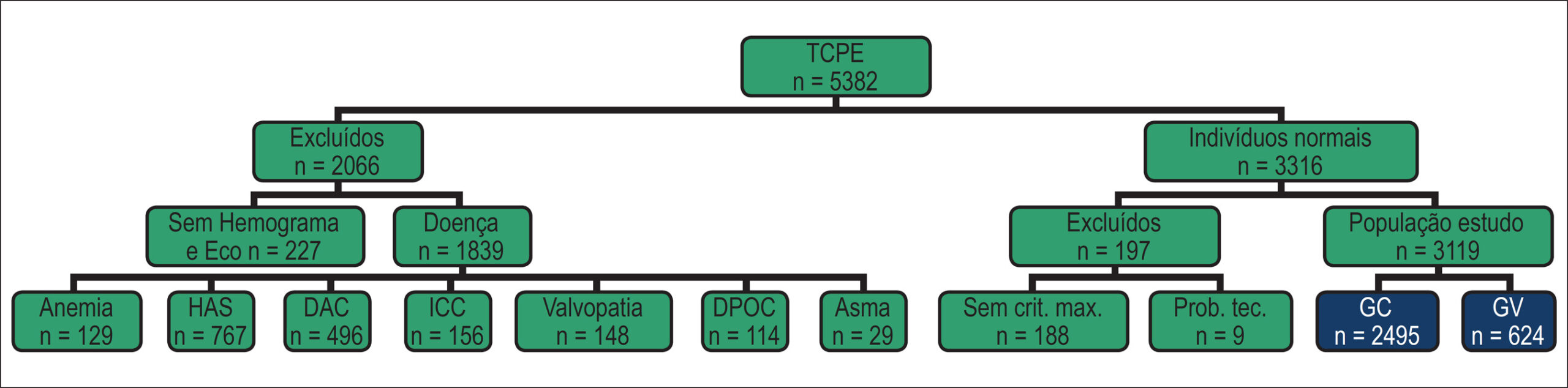
Treadmill evaluation was performed on 3119 individuals with CPET (breath by breath). The construction group (CG) of the equation consisted of 2495 healthy participants. The other 624 individuals were allocated to the external validation group (EVG). At the BE (derived from a multivariate regression model), age, gender, body mass index (BMI) and physical activity level were considered. The same equation was also tested in the EVG. Dispersion graphs and Bland-Altman analyses were built.

Results:

In the CG, the mean age was 42.6 years, 51.5% were male, the average BMI was 27.2, and the physical activity distribution level was: 51.3% sedentary, 44.4% active and 4.3% athletes. An optimal correlation between the BE and the CPET measured VO2peak was observed (0.807). On the other hand, difference came up between the average VO2peak expected by the JE and WA and the CPET measured VO2peak, as well as the one gotten from the BE (p = 0.001).

Conclusion:

BE presents VO2peak values close to those directly measured by CPET, while Jones and Wasserman differ significantly from the real VO2peak.

  • Brazil
  • Forecasting
  • Oxygen Consumption
  • population
  • Respiratory Function Tests
Read Full Article
Creative Commons Attribution (CC BY) Creative Commons license
12/09/2014 DOI: 10.5935/abc.20140137 Views 1
Cardiorespiratory optimal point: a submaximal variable of the cardiopulmonary exercise testing
ABC
Artigo Original

Cardiorespiratory optimal point: a submaximal variable of the cardiopulmonary exercise testing

Plínio Santos Ramos et al. Djalma Rabelo Ricardo Claudio Gil Soares de Araújo

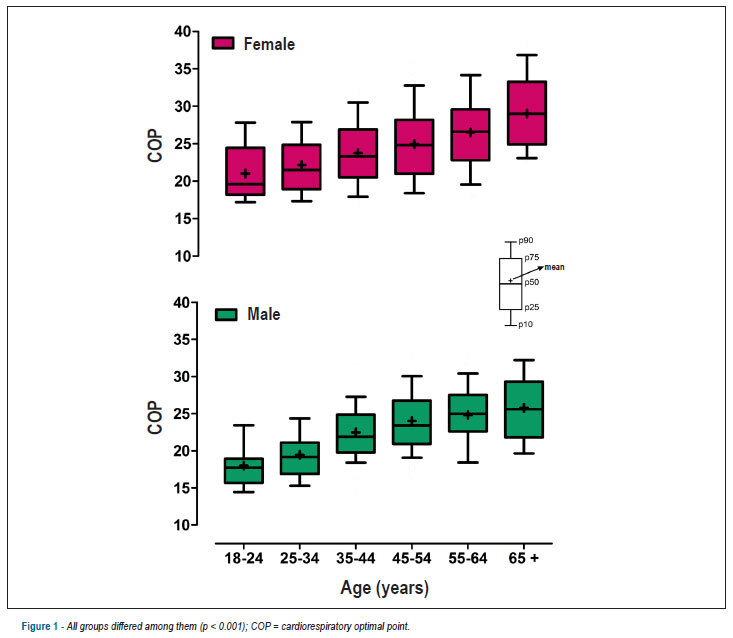
BACKGROUND: At the maximal Cardiopulmonary Exercise Testing (CPET), several ventilatory variables are analyzed, including the ventilatory equivalent for oxygen (VE/VO2). The minimum VE/VO2 value reflects the best integration between the respiratory and cardiovascular systems and may be called “Cardiorespiratory Optimal Point (COP)”. OBJECTIVE: To determine the behavior of the COP according to gender and age in healthy adults and verify its association with other CPET variables. METHODS: Of 2,237 individuals, 624 were selected (62% men and 48 ± 12 years), non- athletes, healthy, who were submitted to maximal CPET. COP or minimum VE/VO2 was obtained from the analysis of ventilation and oxygen consumption in every minute of CPET. We investigated the association between age and COP for both genders, as well as associations with: VO2max, VO2 at anaerobic threshold (VO2AT), oxygen uptake efficiency slope (OUES) and with maximum VE. We also compared the intensity of exertion (MET) at the COP, AT and VO2max. RESULTS: COP increases with age, being 23.2 ± 4.48 and 25.0 ± 5.14, respectively, in men and women = (p < 0.001). There are moderate and inverse associations with VO2max (r = -0.47; p < 0.001), with VO2AT (r = -0.42; p < 0.001) and with OUES (r = -0.34; p < 0.001). COP occurred, on average, at 44% do VO2max and before AT (67% of VO2max) (p < 0.001). CONCLUSION: COP, a submaximal variable, increases with age and is slightly higher in women. Being modestly associated with other ventilation measures, there seems to be an independent contribution to the interpretation of the cardiorespiratory response to CPET.

  • Exercise
  • Oxygen Consumption
  • Respiratory Function Tests
  • Spirometry
  • ventilation-perfusion ratio
Read Full Article
Creative Commons Attribution (CC BY) Creative Commons license
02/10/2012 DOI: 10.1590/S0066-782X2012005000091
Cardiorespiratory fitness of a Brazilian regional sample distributed in different tables
ABC
Artigo Original

Cardiorespiratory fitness of a Brazilian regional sample distributed in different tables

Karlyse Claudino Belli et al. Carine Calegaro Cleusa Maria Richter Jonatas Zeni Klafke … Ricardo Stein Paulo Ricardo Nazario Viecili

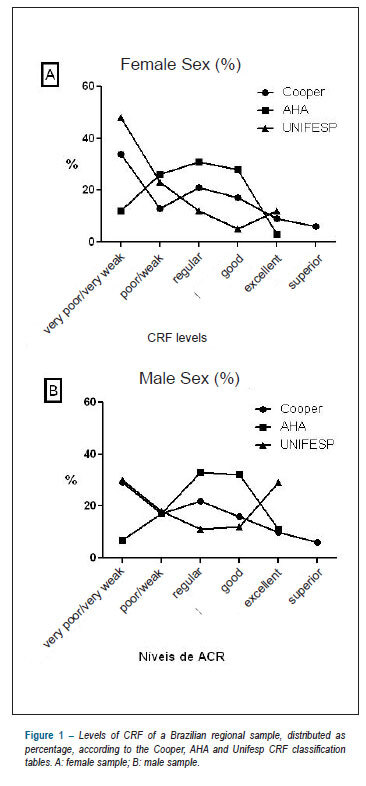
BACKGROUND: Most classification tables of cardiorespiratory fitness (CRF) used in clinical practice are international and have not been validated for the Brazilian population. That can result in important discrepancies when that classification is extrapolated to our population. OBJECTIVE: To assess the use of major CRF tables available in a Brazilian population sample of the Central High Plan of the state of Rio Grande do Sul (RS). METHODS: This study assessed the retrospective data of 2,930 individuals, living in 36 cities of the Central High Plan of the state of RS, and considered the following: presence of risk factors for cardiovascular disease and estimated maximum oxygen consumption (VO2peak) values obtained through exercise test with Bruce protocol. To classify CRF, the individuals were distributed according to sex, inserted in their respective age groups in the Cooper, American Heart Association (AHA) and Universidade Federal de São Paulo (Unifesp) tables, and classified according to their VO2peak. RESULTS: Women had lower VO2peak values as compared with those of men (23.5 ± 8.5 vs. 31.7 ± 10.8 mL.kg-1.min-1, p < 0.001). Considering both sexes, VO2peak showed an inverse and moderate correlation with age (R = -0.48, p < 0.001). An important discrepancy in the CRF classification levels was observed between the tables, ranging from 49% (Cooper x AHA) to 75% (Unifesp x AHA). CONCLUSION: Our findings indicate important discrepancy in the CRF classification levels of the tables assessed. Future studies could assess whether international tables could be used for the Brazilian population and populations of different regions of Brazil.

  • Classification
  • Exercise Test
  • Oxygen Consumption
  • physical fitness
  • Urban Population
Read Full Article
Creative Commons Attribution (CC BY) Creative Commons license
09/08/2012 DOI: 10.1590/S0066-782X2012005000075 Views 2
Effects of the continuous positive airway pressure on the airways of patients with chronic heart failure
ABC
Artigo Original

Effects of the continuous positive airway pressure on the airways of patients with chronic heart failure

João Carlos Moreno de Azevedo et al. Edison Ramos Migowisk de Carvalho Luis Augusto Feijó Fátima Palha de Oliveira … Sara Lúcia Silveira de Menezes Henrique Murad

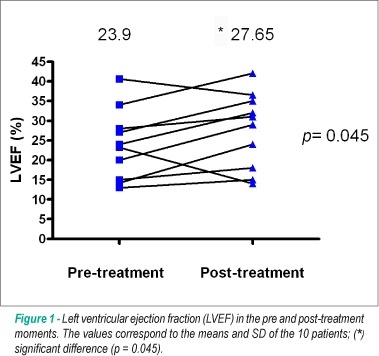
BACKGROUND: Heart failure can present with asymptomatic dysfunction at decompensation, with limitations and decrease in the productive capacity. The Continuous Positive Airway Pressure (CPAP) is a non-pharmacological means to decrease afterload. OBJECTIVE: To analyze the effects of CPAP (10 cmH2O), for 30 days in patients with chronic heart failure. METHODS: We assessed 10 patients with heart failure (6 males, 4 females) of several etiologies, with a mean age of 54 ± 14 years, with a BMI of 21 ± 0.04 kg/m². The therapy was applied for 60 min., 5 times a week for 30 days, during the daytime. The echocardiogram and the ergospirometry were analyzed, before and 30 days after the therapy. RESULTS: There was a 19.59% increase in the left ventricular ejection fraction (LVEF): 23.9 ± 8.91 vs 27.65 ± 9.56%; p = 0.045. At the ergospirometry, the exercise time (ET) showed a significant increase from 547 ± 151.319 vs 700 ± 293.990 sec., p = 0.02; oxygen consumption (VO2) was 9.59 ± 6.1 vs 4.51 ± 2.67 ml.kg-1.min.-1, p = 0.01, whereas the carbon dioxide production (VCO2) at rest (9.85 ± 4.38 vs 6.44 ± 2.88 ml.kg-1.min.-1, p = 0.03) decreased. CONCLUSION: The CPAP resulted in an increase in the LVEF and ET, decreased the oxygen consumption and the carbon dioxide production at rest.

  • continuous positive airway pressure
  • Echocardiography
  • Heart Failure
  • Oxygen Consumption
Read Full Article
Creative Commons Attribution (CC BY) Creative Commons license
11/06/2010 DOI: 10.1590/S0066-782X2010005000068 Views 1
Cardiorespiratory and perceptual responses to walking and running at the same speed
ABC
Artigo Original

Cardiorespiratory and perceptual responses to walking and running at the same speed

Walace David Monteiro et al. Claudio Gil Soares de Araújo

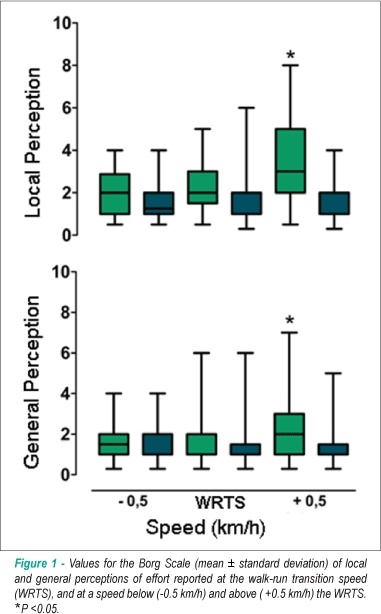
BACKGROUND: It is possible that different forms of locomotion, when carried out at the same speed, may have a distinct influence on the physiological and perceptual responses to exercise. OBJECTIVE: To compare the cardiorespiratory responses and the subjective perception of the effort to walk and run at the same speed, as determined from the walk-run transition speed (WRTS). METHODS: From an initial sample of 453 subjects enrolled in the compulsory military service, 12 young adult men were selected and carefully homogenized as to age, sex, anthropometric characteristics, aerobic condition and experience in a treadmill. In preliminary sessions, the individual WRTS was determined. Thereafter, on three different days, the subjects walked and ran in balanced order, in each of the following speeds: WRTS; WRTS – 0.5 km/h; WRTS + 0.5 km/h, so as to obtain exhaled gases, heart rate (HR) and perception of effort measurements. RESULTS: The protocol for WRTS detection was highly reproducible (r = 0.92, p <0.05). In an intensity of exercise above the WRTS, the perceived effort, the HR, and the ventilatory variables-VE, VO2, VCO2 and R-showed higher values during walking than during running (p 0.05). CONCLUSION: Walking at a speed above the WRTS tends to be more stressful to the subject, from a physiological and perceptual point of view. It seems appropriate to individualize the WRTS and standardize the form of locomotion for determining a more accurate and physiological intensity of the aerobe exercises.

  • Exercise
  • Heart Rate
  • Oxygen Consumption
  • Running
  • walking
Read Full Article
Creative Commons Attribution (CC BY) Creative Commons license
24/11/2009 DOI: 10.1590/S0066-782X2009001000016 Views 1

Could not load more articles. Please try again.

How to cite this article

EndNote RIS

Electronic Document Format (Vancouver)

Ferrari F, Stein R. Is There an Association Between Timed Up and Go Test Performance Results and Directly Measured Peak Oxygen Consumption in Patients with Heart Disease?. Arquivos Brasileiros de Cardiologia 2024;120(12):e20230832.

Electronic Document Format (ABNT)

Ferrari, Filipe; Stein, Ricardo. Is There an Association Between Timed Up and Go Test Performance Results and Directly Measured Peak Oxygen Consumption in Patients with Heart Disease?. Arquivos Brasileiros de Cardiologia, v. 120, n. 12, e20230832, Mar. 2024.

Electronic Document Format (APA)

Ferrari, F., & Stein, R. (2024). Is There an Association Between Timed Up and Go Test Performance Results and Directly Measured Peak Oxygen Consumption in Patients with Heart Disease?. Arquivos Brasileiros de Cardiologia, 120(12), e20230832.

Electronic Document Format (ISO)

Ferrari, Filipe and Stein, Ricardo. Is There an Association Between Timed Up and Go Test Performance Results and Directly Measured Peak Oxygen Consumption in Patients with Heart Disease?. Arquivos Brasileiros de Cardiologia [online]. 2024, vol. 120, n. 12, [cited 2026-10-14], e20230832. Available from: <https://journals.cardiol.br/en/article/is-there-an-association-between-timed-up-and-go-test-performance-results-and-directly-measured-peak-oxygen-consumption-in-patients-with-heart-disease/>. ISSN 0066-782X

EndNote RIS

Electronic Document Format (Vancouver)

Santos DS, Queiroz CO, Dias CMCC, Cipriano Junior G, Borges QO, Ritt LEF. Prediction of Peak Oxygen Consumption in Patients with Heart Disease Based on Performance on the Timed Up and Go Test. Arquivos Brasileiros de Cardiologia 2023;120(12):e20230338.

Electronic Document Format (ABNT)

Santos, Danilo Silva dos; Queiroz, Ciro Oliveira; Dias, Cristiane Maria Carvalho Costa; Cipriano Junior, Gerson; Borges, Queila Oliveira; Ritt, Luiz Eduardo Fonteles. Prediction of Peak Oxygen Consumption in Patients with Heart Disease Based on Performance on the Timed Up and Go Test. Arquivos Brasileiros de Cardiologia, v. 120, n. 12, e20230338, Dec. 2023.

Electronic Document Format (APA)

Santos, D. S. , Queiroz, C. O., Dias, C. M. C. C., Cipriano Junior, G., Borges, Q. O., & Ritt, L. E. F. (2023). Prediction of Peak Oxygen Consumption in Patients with Heart Disease Based on Performance on the Timed Up and Go Test. Arquivos Brasileiros de Cardiologia, 120(12), e20230338.

Electronic Document Format (ISO)

Santos, Danilo Silva dos and Queiroz, Ciro Oliveira and Dias, Cristiane Maria Carvalho Costa and Cipriano Junior, Gerson and Borges, Queila Oliveira and Ritt, Luiz Eduardo Fonteles. Prediction of Peak Oxygen Consumption in Patients with Heart Disease Based on Performance on the Timed Up and Go Test. Arquivos Brasileiros de Cardiologia [online]. 2023, vol. 120, n. 12, [cited 2026-10-14], e20230338. Available from: <https://journals.cardiol.br/en/article/prediction-of-peak-oxygen-consumption-in-patients-with-heart-disease-based-on-performance-on-the-timed-up-and-go-test/>. ISSN 0066-782X

EndNote RIS

Electronic Document Format (Vancouver)

Mendes M. Cardiorespiratory Optimal Point: A New Kid in the Block or an Established Star?. International Journal of Cardiovascular Sciences 2023;36:e20230124.

Electronic Document Format (ABNT)

Mendes, Miguel. Cardiorespiratory Optimal Point: A New Kid in the Block or an Established Star?. International Journal of Cardiovascular Sciences, v. 36, e20230124, Oct. 2023.

Electronic Document Format (APA)

Mendes, M. (2023). Cardiorespiratory Optimal Point: A New Kid in the Block or an Established Star?. International Journal of Cardiovascular Sciences, 36, e20230124.

Electronic Document Format (ISO)

Mendes, Miguel. Cardiorespiratory Optimal Point: A New Kid in the Block or an Established Star?. International Journal of Cardiovascular Sciences [online]. 2023, vol. 36, [cited 2026-10-14], e20230124. Available from: <https://journals.cardiol.br/en/article/cardiorespiratory-optimal-point-a-new-kid-in-the-block-or-an-established-star/>. ISSN 2359-4802

EndNote RIS

Electronic Document Format (Vancouver)

Reis JF, Gonçalves AV, Brás PG, Moreira RI, Rio P, Timóteo AT, Soares RM, et al. Predictive Ability of Cardiopulmonary Exercise Test Parameters in Heart Failure Patients with Cardiac Resynchronization Therapy. Arquivos Brasileiros de Cardiologia 2022;119(3):413-2.

Electronic Document Format (ABNT)

Reis, João Ferreira; Gonçalves, António Valentim; Brás, Pedro Garcia; Moreira, Rita Ilhão; Rio, Pedro; Timóteo, Ana Teresa; Soares, Rui M.; Ferreira, Rui Cruz. Predictive Ability of Cardiopulmonary Exercise Test Parameters in Heart Failure Patients with Cardiac Resynchronization Therapy. Arquivos Brasileiros de Cardiologia, v. 119, n. 3, p. 413-423, Jul. 2022.

Electronic Document Format (APA)

Reis, J. F., Gonçalves, A. V., Brás, P. G., Moreira, R. I., Rio, P., Timóteo, A. T., Soares, R. M., & Ferreira, R. C. (2022). Predictive Ability of Cardiopulmonary Exercise Test Parameters in Heart Failure Patients with Cardiac Resynchronization Therapy. Arquivos Brasileiros de Cardiologia, 119(3), 413-423.

Electronic Document Format (ISO)

Reis, João Ferreira and Gonçalves, António Valentim and Brás, Pedro Garcia and Moreira, Rita Ilhão and Rio, Pedro and Timóteo, Ana Teresa and Soares, Rui M. and Ferreira, Rui Cruz. Predictive Ability of Cardiopulmonary Exercise Test Parameters in Heart Failure Patients with Cardiac Resynchronization Therapy. Arquivos Brasileiros de Cardiologia [online]. 2022, vol. 119, n. 3, [cited 2026-10-14], pp. 413-423. Available from: <https://journals.cardiol.br/en/article/predictive-ability-of-cardiopulmonary-exercise-test-parameters-in-heart-failure-patients-with-cardiac-resynchronization-therapy/>. ISSN 0066-782X

EndNote RIS

Electronic Document Format (Vancouver)

Costa RVC. NYHA Classification and Cardiopulmonary Exercise Test Variables in Patients with Heart Failure. Arquivos Brasileiros de Cardiologia 2022;118(6):1124-5.

Electronic Document Format (ABNT)

Costa, Ricardo Vivacqua Cardoso. NYHA Classification and Cardiopulmonary Exercise Test Variables in Patients with Heart Failure. Arquivos Brasileiros de Cardiologia, v. 118, n. 6, p. 1124-1125, Jun. 2022.

Electronic Document Format (APA)

Costa, R. V. C. (2022). NYHA Classification and Cardiopulmonary Exercise Test Variables in Patients with Heart Failure. Arquivos Brasileiros de Cardiologia, 118(6), 1124-1125.

Electronic Document Format (ISO)

Costa, Ricardo Vivacqua Cardoso. NYHA Classification and Cardiopulmonary Exercise Test Variables in Patients with Heart Failure. Arquivos Brasileiros de Cardiologia [online]. 2022, vol. 118, n. 6, [cited 2026-10-14], pp. 1124-1125. Available from: <https://journals.cardiol.br/en/article/nyha-classification-and-cardiopulmonary-exercise-test-variables-in-patients-with-heart-failure/>. ISSN 0066-782X

EndNote RIS

Electronic Document Format (Vancouver)

Prado DML, Silvino VO, Vieira EG, Rosa BV, Silva ASV, Santos MAP. The Effect of Respiratory Protective Surgical Mask on Physiological Markers of Endurance Performance in a Recreational Runner. Arquivos Brasileiros de Cardiologia 2021;117(1 suppl 1):23-8.

Electronic Document Format (ABNT)

Prado, Danilo Marcelo Leite do; Silvino, Valmir Oliveira; Vieira, Ewerton Gomes; Rosa, Bruno Viana; Silva, Acácio Salvador Veras e; Santos, Marcos Antonio Pereira dos. The Effect of Respiratory Protective Surgical Mask on Physiological Markers of Endurance Performance in a Recreational Runner. Arquivos Brasileiros de Cardiologia, v. 117, n. 1 suppl 1, p. 23-28, Jul. 2021.

Electronic Document Format (APA)

Prado, D. M. L. , Silvino, V. O., Vieira, E. G., Rosa, B. V., Silva, A. S. V. , & Santos, M. A. P. (2021). The Effect of Respiratory Protective Surgical Mask on Physiological Markers of Endurance Performance in a Recreational Runner. Arquivos Brasileiros de Cardiologia, 117(1 suppl 1), 23-28.

Electronic Document Format (ISO)

Prado, Danilo Marcelo Leite do and Silvino, Valmir Oliveira and Vieira, Ewerton Gomes and Rosa, Bruno Viana and Silva, Acácio Salvador Veras e and Santos, Marcos Antonio Pereira dos. The Effect of Respiratory Protective Surgical Mask on Physiological Markers of Endurance Performance in a Recreational Runner. Arquivos Brasileiros de Cardiologia [online]. 2021, vol. 117, n. 1 suppl 1, [cited 2026-10-14], pp. 23-28. Available from: <https://journals.cardiol.br/en/article/the-effect-of-respiratory-protective-surgical-mask-on-physiological-markers-of-endurance-performance-in-a-recreational-runner/>. ISSN 0066-782X

EndNote RIS

Electronic Document Format (Vancouver)

Ritt LEF, Darzé ES, Feitosa GF, Porto JS, Bastos G, Albuquerque RBL, Feitosa CM, et al. The Six-Minute Step Test as a Predictor of Functional Capacity according to Peak VO2 in Cardiac Patients. Arquivos Brasileiros de Cardiologia 2021;116(5):889-95.

Electronic Document Format (ABNT)

Ritt, Luiz Eduardo Fonteles; Darzé, Eduardo Sahade; Feitosa, Gustavo Freitas; Porto, Jessica Santana; Bastos, Gabriela; Albuquerque, Renata Braga Linhares de; Feitosa, Cristiane Miura; Claro, Thaissa Costa; Prado, Eloisa Ferreira; Oliveira, Queila Borges de; Stein, Ricardo. The Six-Minute Step Test as a Predictor of Functional Capacity according to Peak VO2 in Cardiac Patients. Arquivos Brasileiros de Cardiologia, v. 116, n. 5, p. 889-895, May. 2021.

Electronic Document Format (APA)

Ritt, L. E. F., Darzé, E. S., Feitosa, G. F., Porto, J. S., Bastos, G., Albuquerque, R. B. L. , Feitosa, C. M., Claro, T. C., Prado, E. F., Oliveira, Q. B. , & Stein, R. (2021). The Six-Minute Step Test as a Predictor of Functional Capacity according to Peak VO2 in Cardiac Patients. Arquivos Brasileiros de Cardiologia, 116(5), 889-895.

Electronic Document Format (ISO)

Ritt, Luiz Eduardo Fonteles and Darzé, Eduardo Sahade and Feitosa, Gustavo Freitas and Porto, Jessica Santana and Bastos, Gabriela and Albuquerque, Renata Braga Linhares de and Feitosa, Cristiane Miura and Claro, Thaissa Costa and Prado, Eloisa Ferreira and Oliveira, Queila Borges de and Stein, Ricardo. The Six-Minute Step Test as a Predictor of Functional Capacity according to Peak VO2 in Cardiac Patients. Arquivos Brasileiros de Cardiologia [online]. 2021, vol. 116, n. 5, [cited 2026-10-14], pp. 889-895. Available from: <https://journals.cardiol.br/en/article/the-six-minute-step-test-as-a-predictor-of-functional-capacity-according-to-peak-vo2-in-cardiac-patients/>. ISSN 0066-782X

EndNote RIS

Electronic Document Format (Vancouver)

Gonçalves AV, Pereira-da-Silva T, Galrinho A, Rio P, Soares R, Feliciano J, Moreira RI, et al. Maximal Oxygen Uptake and Ventilation Improvement Following Sacubitril-Valsartan Therapy. Arquivos Brasileiros de Cardiologia 2020;115(5):821-7.

Electronic Document Format (ABNT)

Gonçalves, António Valentim; Pereira-da-Silva, Tiago; Galrinho, Ana; Rio, Pedro; Soares, Rui; Feliciano, Joana; Moreira, Rita Ilhão; Silva, Sofia; Alves, Sandra; Capilé, Eunice; Ferreira, Rui Cruz. Maximal Oxygen Uptake and Ventilation Improvement Following Sacubitril-Valsartan Therapy. Arquivos Brasileiros de Cardiologia, v. 115, n. 5, p. 821-827, Oct. 2020.

Electronic Document Format (APA)

Gonçalves, A. V., Pereira-da-Silva, T., Galrinho, A., Rio, P., Soares, R., Feliciano, J., Moreira, R. I., Silva, S., Alves, S., Capilé, E., & Ferreira, R. C. (2020). Maximal Oxygen Uptake and Ventilation Improvement Following Sacubitril-Valsartan Therapy. Arquivos Brasileiros de Cardiologia, 115(5), 821-827.

Electronic Document Format (ISO)

Gonçalves, António Valentim and Pereira-da-Silva, Tiago and Galrinho, Ana and Rio, Pedro and Soares, Rui and Feliciano, Joana and Moreira, Rita Ilhão and Silva, Sofia and Alves, Sandra and Capilé, Eunice and Ferreira, Rui Cruz. Maximal Oxygen Uptake and Ventilation Improvement Following Sacubitril-Valsartan Therapy. Arquivos Brasileiros de Cardiologia [online]. 2020, vol. 115, n. 5, [cited 2026-10-14], pp. 821-827. Available from: <https://journals.cardiol.br/en/article/maximal-oxygen-uptake-and-ventilation-improvement-following-sacubitril-valsartan-therapy/>. ISSN 0066-782X

EndNote RIS

Electronic Document Format (Vancouver)

Gonçalves AV, Pereira-da-Silva T, Soares R, Feliciano J, Moreira RI, Rio P, Abreu A, et al. Prognostic Prediction of Cardiopulmonary Exercise Test Parameters in Heart Failure Patients with Atrial Fibrillation. Arquivos Brasileiros de Cardiologia 2020;114(2):209-18.

Electronic Document Format (ABNT)

Gonçalves, António Valentim; Pereira-da-Silva, Tiago; Soares, Rui; Feliciano, Joana; Moreira, Rita Ilhão; Rio, Pedro; Abreu, Ana; Ferreira, Rui Cruz. Prognostic Prediction of Cardiopulmonary Exercise Test Parameters in Heart Failure Patients with Atrial Fibrillation. Arquivos Brasileiros de Cardiologia, v. 114, n. 2, p. 209-218, Mar. 2020.

Electronic Document Format (APA)

Gonçalves, A. V., Pereira-da-Silva, T., Soares, R., Feliciano, J., Moreira, R. I., Rio, P., Abreu, A., & Ferreira, R. C. (2020). Prognostic Prediction of Cardiopulmonary Exercise Test Parameters in Heart Failure Patients with Atrial Fibrillation. Arquivos Brasileiros de Cardiologia, 114(2), 209-218.

Electronic Document Format (ISO)

Gonçalves, António Valentim and Pereira-da-Silva, Tiago and Soares, Rui and Feliciano, Joana and Moreira, Rita Ilhão and Rio, Pedro and Abreu, Ana and Ferreira, Rui Cruz. Prognostic Prediction of Cardiopulmonary Exercise Test Parameters in Heart Failure Patients with Atrial Fibrillation. Arquivos Brasileiros de Cardiologia [online]. 2020, vol. 114, n. 2, [cited 2026-10-14], pp. 209-218. Available from: <https://journals.cardiol.br/en/article/prognostic-prediction-of-cardiopulmonary-exercise-test-parameters-in-heart-failure-patients-with-atrial-fibrillation/>. ISSN 0066-782X

EndNote RIS

Electronic Document Format (Vancouver)

Almeida AEM, Santander IRMF, Campos MIM, Arévalo JRG, Nascimento JA, Ritt LEF, Belli KC, et al. Classification System for Cardiorespiratory Fitness Based on a Sample of the Brazilian Population. International Journal of Cardiovascular Sciences 2019;32(4):343-54.

Electronic Document Format (ABNT)

Almeida, Antonio Eduardo Monteiro de; Santander, Igor Rafael Miranda Ferreira; Campos, Maria Izabel Macedo; Arévalo, Jorge René Garcia; Nascimento, João Agnaldo do; Ritt, Luiz Eduardo Fonteles; Belli, Karlyse Claudino; Ribeiro, Jorge Pinto; Stein, Ricardo. Classification System for Cardiorespiratory Fitness Based on a Sample of the Brazilian Population. International Journal of Cardiovascular Sciences, v. 32, n. 4, p. 343-354, Aug. 2019.

Electronic Document Format (APA)

Almeida, A. E. M. , Santander, I. R. M. F., Campos, M. I. M., Arévalo, J. R. G., Nascimento, J. A. , Ritt, L. E. F., Belli, K. C., Ribeiro, J. P., & Stein, R. (2019). Classification System for Cardiorespiratory Fitness Based on a Sample of the Brazilian Population. International Journal of Cardiovascular Sciences, 32(4), 343-354.

Electronic Document Format (ISO)

Almeida, Antonio Eduardo Monteiro de and Santander, Igor Rafael Miranda Ferreira and Campos, Maria Izabel Macedo and Arévalo, Jorge René Garcia and Nascimento, João Agnaldo do and Ritt, Luiz Eduardo Fonteles and Belli, Karlyse Claudino and Ribeiro, Jorge Pinto and Stein, Ricardo. Classification System for Cardiorespiratory Fitness Based on a Sample of the Brazilian Population. International Journal of Cardiovascular Sciences [online]. 2019, vol. 32, n. 4, [cited 2026-10-14], pp. 343-354. Available from: <https://journals.cardiol.br/en/article/classification-system-for-cardiorespiratory-fitness-based-on-a-sample-of-the-brazilian-population/>. ISSN 2359-4802

EndNote RIS

Electronic Document Format (Vancouver)

Rocha Neto AM, Herdy AH, Souza P. Comparative Analysis of Direct and Indirect Methods for the Determination of Maximal Oxygen Uptake in Sedentary Young Adults. International Journal of Cardiovascular Sciences 2019;32(4):362-7.

Electronic Document Format (ABNT)

Rocha Neto, Alfredo Moreira da; Herdy, Artur Haddad; Souza, Pablo de. Comparative Analysis of Direct and Indirect Methods for the Determination of Maximal Oxygen Uptake in Sedentary Young Adults. International Journal of Cardiovascular Sciences, v. 32, n. 4, p. 362-367, Aug. 2019.

Electronic Document Format (APA)

Rocha Neto, A. M. , Herdy, A. H., & Souza, P. (2019). Comparative Analysis of Direct and Indirect Methods for the Determination of Maximal Oxygen Uptake in Sedentary Young Adults. International Journal of Cardiovascular Sciences, 32(4), 362-367.

Electronic Document Format (ISO)

Rocha Neto, Alfredo Moreira da and Herdy, Artur Haddad and Souza, Pablo de. Comparative Analysis of Direct and Indirect Methods for the Determination of Maximal Oxygen Uptake in Sedentary Young Adults. International Journal of Cardiovascular Sciences [online]. 2019, vol. 32, n. 4, [cited 2026-10-14], pp. 362-367. Available from: <https://journals.cardiol.br/en/article/comparative-analysis-of-direct-and-indirect-methods-for-the-determination-of-maximal-oxygen-uptake-in-sedentary-young-adults/>. ISSN 2359-4802

EndNote RIS

Electronic Document Format (Vancouver)

Baroncini LAV, Baroncini CV, Leal JF. Correlation between Exercise Stress Test and Echocardiographic Parameters in Elderly Individuals. International Journal of Cardiovascular Sciences 2019;32(1):19-27.

Electronic Document Format (ABNT)

Baroncini, Liz Andréa Villela; Baroncini, Camila Varotto; Leal, Juliana Ferreira. Correlation between Exercise Stress Test and Echocardiographic Parameters in Elderly Individuals. International Journal of Cardiovascular Sciences, v. 32, n. 1, p. 19-27, Dec. 2018.

Electronic Document Format (APA)

Baroncini, L. A. V., Baroncini, C. V., & Leal, J. F. (2019). Correlation between Exercise Stress Test and Echocardiographic Parameters in Elderly Individuals. International Journal of Cardiovascular Sciences, 32(1), 19-27.

Electronic Document Format (ISO)

Baroncini, Liz Andréa Villela and Baroncini, Camila Varotto and Leal, Juliana Ferreira. Correlation between Exercise Stress Test and Echocardiographic Parameters in Elderly Individuals. International Journal of Cardiovascular Sciences [online]. 2019, vol. 32, n. 1, [cited 2026-10-14], pp. 19-27. Available from: <https://journals.cardiol.br/en/article/correlation-between-exercise-stress-test-and-echocardiographic-parameters-in-elderly-individuals/>. ISSN 2359-4802

EndNote RIS

Electronic Document Format (Vancouver)

Smyrnova GS, Babkina TM, Taradin GG, Vatutin MT. Influence of Pulmonary Rehabilitation on Clinical Characteristics in Patients with Chronic Heart Failure and Chronic Obstructive Pulmonary Disease. International Journal of Cardiovascular Sciences 2018;31(5):499-504.

Electronic Document Format (ABNT)

Smyrnova, Ganna S.; Babkina, Tetiana M.; Taradin, Gennadii G.; Vatutin, Mykola T.. Influence of Pulmonary Rehabilitation on Clinical Characteristics in Patients with Chronic Heart Failure and Chronic Obstructive Pulmonary Disease. International Journal of Cardiovascular Sciences, v. 31, n. 5, p. 499-504, Jul. 2018.

Electronic Document Format (APA)

Smyrnova, G. S., Babkina, T. M., Taradin, G. G., & Vatutin, M. T. (2018). Influence of Pulmonary Rehabilitation on Clinical Characteristics in Patients with Chronic Heart Failure and Chronic Obstructive Pulmonary Disease. International Journal of Cardiovascular Sciences, 31(5), 499-504.

Electronic Document Format (ISO)

Smyrnova, Ganna S. and Babkina, Tetiana M. and Taradin, Gennadii G. and Vatutin, Mykola T.. Influence of Pulmonary Rehabilitation on Clinical Characteristics in Patients with Chronic Heart Failure and Chronic Obstructive Pulmonary Disease. International Journal of Cardiovascular Sciences [online]. 2018, vol. 31, n. 5, [cited 2026-10-14], pp. 499-504. Available from: <https://journals.cardiol.br/en/article/influence-of-pulmonary-rehabilitation-on-clinical-characteristics-in-patients-with-chronic-heart-failure-and-chronic-obstructive-pulmonary-disease/>. ISSN 2359-4802

EndNote RIS

Electronic Document Format (Vancouver)

Nishijuka FA, Silva CGS, Duarte CV, Araújo CGS. Pre-Participation Physical Fitness does not Influence Adherence to a Supervised Exercise Program. Arquivos Brasileiros de Cardiologia 2017;109(4):340-7.

Electronic Document Format (ABNT)

Nishijuka, Fábio Akio; Silva, Christina Grüne de Souza e; Duarte, Carlos Vieira; Araújo, Claudio Gil Soares de. Pre-Participation Physical Fitness does not Influence Adherence to a Supervised Exercise Program. Arquivos Brasileiros de Cardiologia, v. 109, n. 4, p. 340-347, Aug. 2017.

Electronic Document Format (APA)

Nishijuka, F. A., Silva, C. G. S. , Duarte, C. V., & Araújo, C. G. S. (2017). Pre-Participation Physical Fitness does not Influence Adherence to a Supervised Exercise Program. Arquivos Brasileiros de Cardiologia, 109(4), 340-347.

Electronic Document Format (ISO)

Nishijuka, Fábio Akio and Silva, Christina Grüne de Souza e and Duarte, Carlos Vieira and Araújo, Claudio Gil Soares de. Pre-Participation Physical Fitness does not Influence Adherence to a Supervised Exercise Program. Arquivos Brasileiros de Cardiologia [online]. 2017, vol. 109, n. 4, [cited 2026-10-14], pp. 340-347. Available from: <https://journals.cardiol.br/en/article/pre-participation-physical-fitness-does-not-influence-adherence-to-a-supervised-exercise-program/>. ISSN 0066-782X

EndNote RIS

Electronic Document Format (Vancouver)

Barros MS, Amorim RS, Rocha RO, Melo EV, Barreto-Filho JA, Sousa ACS, Meneghelo RS, et al. Cardiopulmonary Exercise Testing in Patients With Left Bundle Branch Block and Preserved Ejection Fraction. International Journal of Cardiovascular Sciences 2017;30(1):11-9.

Electronic Document Format (ABNT)

Barros, Milena dos Santos; Amorim, Rívia Siqueira; Rocha, Romerito Oliveira; Melo, Enaldo Vieira de; Barreto-Filho, José Augusto; Sousa, Antônio Carlos Sobral; Meneghelo, Romeu Sérgio; Oliveira, Joselina Luzia Menezes. Cardiopulmonary Exercise Testing in Patients With Left Bundle Branch Block and Preserved Ejection Fraction. International Journal of Cardiovascular Sciences, v. 30, n. 1, p. 11-19, Dec. 2016.

Electronic Document Format (APA)

Barros, M. S., Amorim, R. S., Rocha, R. O., Melo, E. V. , Barreto-Filho, J. A., Sousa, A. C. S., Meneghelo, R. S., & Oliveira, J. L. M. (2017). Cardiopulmonary Exercise Testing in Patients With Left Bundle Branch Block and Preserved Ejection Fraction. International Journal of Cardiovascular Sciences, 30(1), 11-19.

Electronic Document Format (ISO)

Barros, Milena dos Santos and Amorim, Rívia Siqueira and Rocha, Romerito Oliveira and Melo, Enaldo Vieira de and Barreto-Filho, José Augusto and Sousa, Antônio Carlos Sobral and Meneghelo, Romeu Sérgio and Oliveira, Joselina Luzia Menezes. Cardiopulmonary Exercise Testing in Patients With Left Bundle Branch Block and Preserved Ejection Fraction. International Journal of Cardiovascular Sciences [online]. 2017, vol. 30, n. 1, [cited 2026-10-14], pp. 11-19. Available from: <https://journals.cardiol.br/en/article/cardiopulmonary-exercise-testing-in-patients-with-left-bundle-branch-block-and-preserved-ejection-fraction/>. ISSN 2359-4802

EndNote RIS

Electronic Document Format (Vancouver)

Herdy AH, Ritt LEF, Stein R, Araújo CGS, Milani M, Meneghelo RS, Ferraz AS, et al. Cardiopulmonary Exercise Test: Background, Applicability and Interpretation. Arquivos Brasileiros de Cardiologia 2016;107(5):467-81.

Electronic Document Format (ABNT)

Herdy, Artur Haddad; Ritt, Luiz Eduardo Fonteles; Stein, Ricardo; Araújo, Claudio Gil Soares de; Milani, Mauricio; Meneghelo, Romeu Sérgio; Ferraz, Almir Sérgio; Hossri, Carlos; Almeida, Antonio Eduardo Monteiro de; Fernandes-Silva, Miguel Morita; Serra, Salvador Manoel. Cardiopulmonary Exercise Test: Background, Applicability and Interpretation. Arquivos Brasileiros de Cardiologia, v. 107, n. 5, p. 467-481, Oct. 2016.

Electronic Document Format (APA)

Herdy, A. H., Ritt, L. E. F., Stein, R., Araújo, C. G. S. , Milani, M., Meneghelo, R. S., Ferraz, A. S., Hossri, C., Almeida, A. E. M. , Fernandes-Silva, M. M., & Serra, S. M. (2016). Cardiopulmonary Exercise Test: Background, Applicability and Interpretation. Arquivos Brasileiros de Cardiologia, 107(5), 467-481.

Electronic Document Format (ISO)

Herdy, Artur Haddad and Ritt, Luiz Eduardo Fonteles and Stein, Ricardo and Araújo, Claudio Gil Soares de and Milani, Mauricio and Meneghelo, Romeu Sérgio and Ferraz, Almir Sérgio and Hossri, Carlos and Almeida, Antonio Eduardo Monteiro de and Fernandes-Silva, Miguel Morita and Serra, Salvador Manoel. Cardiopulmonary Exercise Test: Background, Applicability and Interpretation. Arquivos Brasileiros de Cardiologia [online]. 2016, vol. 107, n. 5, [cited 2026-10-14], pp. 467-481. Available from: <https://journals.cardiol.br/en/article/cardiopulmonary-exercise-test-background-applicability-and-interpretation/>. ISSN 0066-782X

EndNote RIS

Electronic Document Format (Vancouver)

Herdy AH, Caixeta A. Brazilian Cardiorespiratory Fitness Classification Based on Maximum Oxygen Consumption. Arquivos Brasileiros de Cardiologia 2016;106(5):389-95.

Electronic Document Format (ABNT)

Herdy, Artur Haddad; Caixeta, Ananda. Brazilian Cardiorespiratory Fitness Classification Based on Maximum Oxygen Consumption. Arquivos Brasileiros de Cardiologia, v. 106, n. 5, p. 389-395, Apr. 2016.

Electronic Document Format (APA)

Herdy, A. H., & Caixeta, A. (2016). Brazilian Cardiorespiratory Fitness Classification Based on Maximum Oxygen Consumption. Arquivos Brasileiros de Cardiologia, 106(5), 389-395.

Electronic Document Format (ISO)

Herdy, Artur Haddad and Caixeta, Ananda. Brazilian Cardiorespiratory Fitness Classification Based on Maximum Oxygen Consumption. Arquivos Brasileiros de Cardiologia [online]. 2016, vol. 106, n. 5, [cited 2026-10-14], pp. 389-395. Available from: <https://journals.cardiol.br/en/article/brazilian-cardiorespiratory-fitness-classification-based-on-maximum-oxygen-consumption/>. ISSN 0066-782X

EndNote RIS

Electronic Document Format (Vancouver)

Sierra APR, Silveira AD, Francisco RC, Barretto RBM, Sierra CA, Meneghelo RS, Kiss MAPDM, et al. Reduction in Post-Marathon Peak Oxygen Consumption: Sign of Cardiac Fatigue in Amateur Runners?. Arquivos Brasileiros de Cardiologia 2016;106(2):92-6.

Electronic Document Format (ABNT)

Sierra, Ana Paula Rennó; Silveira, Anderson Donelli da; Francisco, Ricardo Contesini; Barretto, Rodrigo Bellios de Mattos; Sierra, Carlos Anibal; Meneghelo, Romeu Sergio; Kiss, Maria Augusta Peduti Dal Molin; Ghorayeb, Nabil; Stein, Ricardo. Reduction in Post-Marathon Peak Oxygen Consumption: Sign of Cardiac Fatigue in Amateur Runners?. Arquivos Brasileiros de Cardiologia, v. 106, n. 2, p. 92-96, Jan. 2016.

Electronic Document Format (APA)

Sierra, A. P. R., Silveira, A. D. , Francisco, R. C., Barretto, R. B. M., Sierra, C. A., Meneghelo, R. S., Kiss, M. A. P. D. M., Ghorayeb, N., & Stein, R. (2016). Reduction in Post-Marathon Peak Oxygen Consumption: Sign of Cardiac Fatigue in Amateur Runners?. Arquivos Brasileiros de Cardiologia, 106(2), 92-96.

Electronic Document Format (ISO)

Sierra, Ana Paula Rennó and Silveira, Anderson Donelli da and Francisco, Ricardo Contesini and Barretto, Rodrigo Bellios de Mattos and Sierra, Carlos Anibal and Meneghelo, Romeu Sergio and Kiss, Maria Augusta Peduti Dal Molin and Ghorayeb, Nabil and Stein, Ricardo. Reduction in Post-Marathon Peak Oxygen Consumption: Sign of Cardiac Fatigue in Amateur Runners?. Arquivos Brasileiros de Cardiologia [online]. 2016, vol. 106, n. 2, [cited 2026-10-14], pp. 92-96. Available from: <https://journals.cardiol.br/en/article/reduction-in-post-marathon-peak-oxygen-consumption-sign-of-cardiac-fatigue-in-amateur-runners/>. ISSN 0066-782X

EndNote RIS

Electronic Document Format (Vancouver)

Silva CGS, Araújo CGS. Sex-Specific Equations to Estimate Maximum Oxygen Uptake in Cycle Ergometry. Arquivos Brasileiros de Cardiologia 2015;105(4):381-9.

Electronic Document Format (ABNT)

Silva, Christina G. de Souza e; Araújo, Claudio Gil S.. Sex-Specific Equations to Estimate Maximum Oxygen Uptake in Cycle Ergometry. Arquivos Brasileiros de Cardiologia, v. 105, n. 4, p. 381-389, Jul. 2015.

Electronic Document Format (APA)

Silva, C. G. S. , & Araújo, C. G. S. (2015). Sex-Specific Equations to Estimate Maximum Oxygen Uptake in Cycle Ergometry. Arquivos Brasileiros de Cardiologia, 105(4), 381-389.

Electronic Document Format (ISO)

Silva, Christina G. de Souza e and Araújo, Claudio Gil S.. Sex-Specific Equations to Estimate Maximum Oxygen Uptake in Cycle Ergometry. Arquivos Brasileiros de Cardiologia [online]. 2015, vol. 105, n. 4, [cited 2026-10-14], pp. 381-389. Available from: <https://journals.cardiol.br/en/article/sex-specific-equations-to-estimate-maximum-oxygen-uptake-in-cycle-ergometry/>. ISSN 0066-782X

EndNote RIS

Electronic Document Format (Vancouver)

Almeida AEM, Stefani CM, Nascimento JA, Almeida NM, Santos AC, memoriam) JPR, Stein R, et al. An Equation for the Prediction of Oxygen Consumption in a Brazilian Population. Arquivos Brasileiros de Cardiologia 2014;103(4):299-307.

Electronic Document Format (ABNT)

Almeida, Antonio Eduardo Monteiro de; Stefani, Charles de Moraes; Nascimento, João Agnaldo do; Almeida, Narla Miranda de; Santos, Amilton da Cruz; memoriam), Jorge Pinto Ribeiro (in; Stein, Ricardo. An Equation for the Prediction of Oxygen Consumption in a Brazilian Population. Arquivos Brasileiros de Cardiologia, v. 103, n. 4, p. 299-307, Sep. 2014.

Electronic Document Format (APA)

Almeida, A. E. M. , Stefani, C. M., Nascimento, J. A. , Almeida, N. M. , Santos, A. C., memoriam), J. P. R. , & Stein, R. (2014). An Equation for the Prediction of Oxygen Consumption in a Brazilian Population. Arquivos Brasileiros de Cardiologia, 103(4), 299-307.

Electronic Document Format (ISO)

Almeida, Antonio Eduardo Monteiro de and Stefani, Charles de Moraes and Nascimento, João Agnaldo do and Almeida, Narla Miranda de and Santos, Amilton da Cruz and memoriam), Jorge Pinto Ribeiro (in and Stein, Ricardo. An Equation for the Prediction of Oxygen Consumption in a Brazilian Population. Arquivos Brasileiros de Cardiologia [online]. 2014, vol. 103, n. 4, [cited 2026-10-14], pp. 299-307. Available from: <https://journals.cardiol.br/en/article/an-equation-for-the-prediction-of-oxygen-consumption-in-a-brazilian-population/>. ISSN 0066-782X

EndNote RIS

Electronic Document Format (Vancouver)

Ramos PS, Ricardo DR, Araújo CGS. Cardiorespiratory optimal point: a submaximal variable of the cardiopulmonary exercise testing. Arquivos Brasileiros de Cardiologia 2012;99(5):988-96.

Electronic Document Format (ABNT)

Ramos, Plínio Santos; Ricardo, Djalma Rabelo; Araújo, Claudio Gil Soares de. Cardiorespiratory optimal point: a submaximal variable of the cardiopulmonary exercise testing. Arquivos Brasileiros de Cardiologia, v. 99, n. 5, p. 988-996, Oct. 2012.

Electronic Document Format (APA)

Ramos, P. S., Ricardo, D. R., & Araújo, C. G. S. (2012). Cardiorespiratory optimal point: a submaximal variable of the cardiopulmonary exercise testing. Arquivos Brasileiros de Cardiologia, 99(5), 988-996.

Electronic Document Format (ISO)

Ramos, Plínio Santos and Ricardo, Djalma Rabelo and Araújo, Claudio Gil Soares de. Cardiorespiratory optimal point: a submaximal variable of the cardiopulmonary exercise testing. Arquivos Brasileiros de Cardiologia [online]. 2012, vol. 99, n. 5, [cited 2026-10-14], pp. 988-996. Available from: <https://journals.cardiol.br/en/article/cardiorespiratory-optimal-point-a-submaximal-variable-of-the-cardiopulmonary-exercise-testing/>. ISSN 0066-782X

EndNote RIS

Electronic Document Format (Vancouver)

Belli KC, Calegaro C, Richter CM, Klafke JZ, Stein R, Viecili PRN. Cardiorespiratory fitness of a Brazilian regional sample distributed in different tables. Arquivos Brasileiros de Cardiologia 2012;99(3):811-7.

Electronic Document Format (ABNT)

Belli, Karlyse Claudino; Calegaro, Carine; Richter, Cleusa Maria; Klafke, Jonatas Zeni; Stein, Ricardo; Viecili, Paulo Ricardo Nazario. Cardiorespiratory fitness of a Brazilian regional sample distributed in different tables. Arquivos Brasileiros de Cardiologia, v. 99, n. 3, p. 811-817, Aug. 2012.

Electronic Document Format (APA)

Belli, K. C., Calegaro, C., Richter, C. M., Klafke, J. Z., Stein, R., & Viecili, P. R. N. (2012). Cardiorespiratory fitness of a Brazilian regional sample distributed in different tables. Arquivos Brasileiros de Cardiologia, 99(3), 811-817.

Electronic Document Format (ISO)

Belli, Karlyse Claudino and Calegaro, Carine and Richter, Cleusa Maria and Klafke, Jonatas Zeni and Stein, Ricardo and Viecili, Paulo Ricardo Nazario. Cardiorespiratory fitness of a Brazilian regional sample distributed in different tables. Arquivos Brasileiros de Cardiologia [online]. 2012, vol. 99, n. 3, [cited 2026-10-14], pp. 811-817. Available from: <https://journals.cardiol.br/en/article/cardiorespiratory-fitness-of-a-brazilian-regional-sample-distributed-in-different-tables/>. ISSN 0066-782X

EndNote RIS

Electronic Document Format (Vancouver)

Azevedo JCM, Carvalho ERM, Feijó LA, Oliveira FP, Menezes SLS, Murad H. Effects of the continuous positive airway pressure on the airways of patients with chronic heart failure. Arquivos Brasileiros de Cardiologia 2010;95(1):115-21.

Electronic Document Format (ABNT)

Azevedo, João Carlos Moreno de; Carvalho, Edison Ramos Migowisk de; Feijó, Luis Augusto; Oliveira, Fátima Palha de; Menezes, Sara Lúcia Silveira de; Murad, Henrique. Effects of the continuous positive airway pressure on the airways of patients with chronic heart failure. Arquivos Brasileiros de Cardiologia, v. 95, n. 1, p. 115-121, Jun. 2010.

Electronic Document Format (APA)

Azevedo, J. C. M. , Carvalho, E. R. M. , Feijó, L. A., Oliveira, F. P. , Menezes, S. L. S. , & Murad, H. (2010). Effects of the continuous positive airway pressure on the airways of patients with chronic heart failure. Arquivos Brasileiros de Cardiologia, 95(1), 115-121.

Electronic Document Format (ISO)

Azevedo, João Carlos Moreno de and Carvalho, Edison Ramos Migowisk de and Feijó, Luis Augusto and Oliveira, Fátima Palha de and Menezes, Sara Lúcia Silveira de and Murad, Henrique. Effects of the continuous positive airway pressure on the airways of patients with chronic heart failure. Arquivos Brasileiros de Cardiologia [online]. 2010, vol. 95, n. 1, [cited 2026-10-14], pp. 115-121. Available from: <https://journals.cardiol.br/en/article/effects-of-the-continuous-positive-airway-pressure-on-the-airways-of-patients-with-chronic-heart-failure/>. ISSN 0066-782X

EndNote RIS

Electronic Document Format (Vancouver)

Monteiro WD, Araújo CGS. Cardiorespiratory and perceptual responses to walking and running at the same speed. Arquivos Brasileiros de Cardiologia 2009;93(4):418-25.

Electronic Document Format (ABNT)

Monteiro, Walace David; Araújo, Claudio Gil Soares de. Cardiorespiratory and perceptual responses to walking and running at the same speed. Arquivos Brasileiros de Cardiologia, v. 93, n. 4, p. 418-425, Nov. 2009.

Electronic Document Format (APA)

Monteiro, W. D., & Araújo, C. G. S. (2009). Cardiorespiratory and perceptual responses to walking and running at the same speed. Arquivos Brasileiros de Cardiologia, 93(4), 418-425.

Electronic Document Format (ISO)

Monteiro, Walace David and Araújo, Claudio Gil Soares de. Cardiorespiratory and perceptual responses to walking and running at the same speed. Arquivos Brasileiros de Cardiologia [online]. 2009, vol. 93, n. 4, [cited 2026-10-14], pp. 418-425. Available from: <https://journals.cardiol.br/en/article/cardiorespiratory-and-perceptual-responses-to-walking-and-running-at-the-same-speed/>. ISSN 0066-782X

  • About ABC Family
  • Internal Regulation
  • Editorial Board
  • Brazilian Society of Cardiology (SBC)

Issues

SBC Guidelines

  • Videos
  • Podcasts
  • News