ABC Family Arquivos Brasileiros de Cardiologia International Journal of Cardiovascular Sciences ABC Heart Failure & Cardiomyopathy ABC Imagem Cardiovascular
Português English
ABC Family
Português English
  • About
    • About ABC Family
    • Internal Regulation
    • Editorial Board
    • Brazilian Society of Cardiology (SBC)
  • Issues
  • SBC Guidelines
  • Content
    • Videos
    • Podcasts
    • News
  • About
    • About ABC Family
    • Internal Regulation
    • Editorial Board
    • Brazilian Society of Cardiology (SBC)
  • Issues
  • SBC Guidelines
  • Content
    • Videos
    • Podcasts
    • News

ABC Family

  • ABC Family
  • Arquivos Brasileiros de Cardiologia
  • International Journal of Cardiovascular Sciences
  • ABC Heart Failure & Cardiomyopathy
  • ABC Imagem Cardiovascular
Search in

No content found.

Journals
Ordering
Article types
Others

  1. Home
  2. Keyword: Oxidative Stress
Orientin Alleviates Oxidative Stress And Apoptosis In Diabetic Cardiomyopathy Via The Lncrna H19/Mir-103-3p/ALDH2/PI3K/AKT Axis
ABC
Research Article

Orientin Alleviates Oxidative Stress And Apoptosis In Diabetic Cardiomyopathy Via The Lncrna H19/Mir-103-3p/ALDH2/PI3K/AKT Axis

Xun Wang et al. Xiaofang Xiong Wei Jiang Shanshan Xu Jun Li

Abstract

Background

Diabetic cardiomyopathy (DCM) is an irreversible cardiovascular complication of diabetes mellitus characterized by detrimental cardiac remodeling. Orientin, a water-soluble flavonoid present in many medicinal plants, exerts various pharmacological effects.

Objectives

To investigate the cardioprotective effects of orientin in diabetic conditions and elucidate the mechanisms associated with non-coding RNAs.

Methods

The streptozotocin-induced DCM model was established by a combined use of streptozotocin and a high-fat diet. Cardiac structure and function in diabetes mellitus mice were evaluated using histological and echocardiographic analyses. Masson, TUNEL, western blot, and ELISA in mouse hearts were performed to analyze cardiac fibrosis, apoptosis, and oxidative stress. Expression levels of lncRNA H19, miR-103-3p, ALDH2, and PI3K/AKT-related proteins in mouse heart and HL-1 cells were evaluated using real-time qPCR or western blot. The significance level was set at p<0.05.

Results

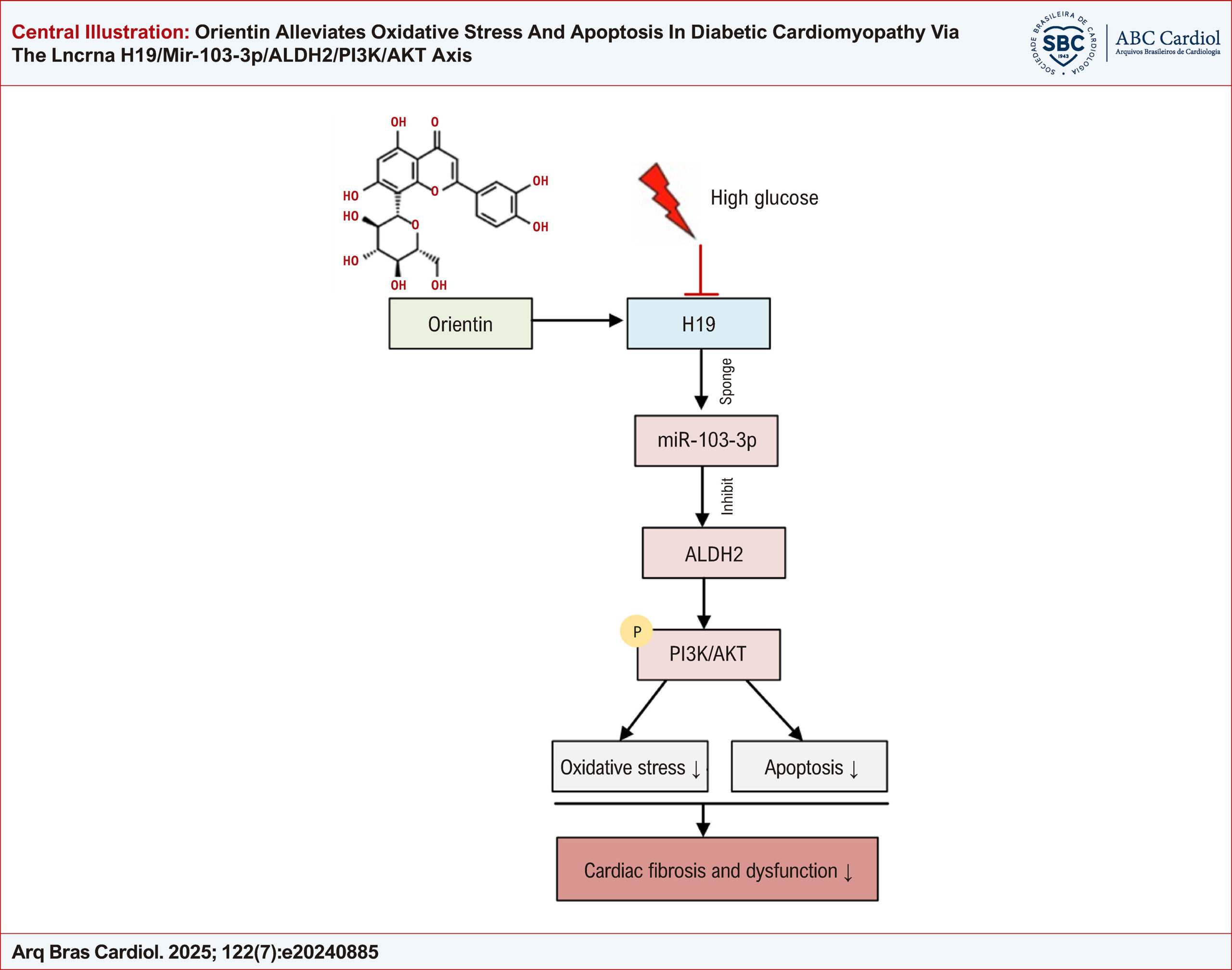
Orientin improved cardiac function and ameliorated cardiac injury in diabetic mice. Orientin inhibited cardiac fibrosis, reduced cardiomyocyte apoptosis, and increased the activities of antioxidant enzymes. In pathological conditions, H19 and ALDH2 levels were reduced while miR-103-3p levels increased, which were reversed by orientin. H19 upregulated ALDH2 expression by binding to miR-103-3p and activated the PI3K/AKT pathway in high glucose-treated HL-1 cells. H19 depletion or PI3K inhibitor reversed the effects of orientin on apoptosis and oxidative stress in HL-1 cells under high glucose conditions.

Conclusions

These findings reveal a protective mechanism of orientin in DCM, which involves the regulation of the H19/miR-103-3p/ALDH2/PI3K/AKT signaling axis, providing a potential strategy for treating DCM.
  • Apoptosis
  • Cardiomyopathies
  • Oxidative Stress
Read Full Article
Creative Commons Attribution (CC BY) Creative Commons license
15/08/2025 DOI: 10.36660/abc.20240885i Views 1
ABC
Editorial

Long Non-Coding RNA, Apoptosis, and Doxorubicin-Induced Cardiotoxicity

Carolina R. Tonon et al. Bertha F. Polegato

Doxorubicin is one of the most effective chemotherapy drugs used in the treatment of many types of solid and hematologic malignancies. However, it causes several adverse effects. Cardiotoxicity is the most important collateral effect because it can lead to the development of heart failure, a chronic condition with high mortality, reaching with a 1-year risk of 15-30% and a 5-year risk of up to 75% in specific populations.

The pathophysiology of doxorubicin-induced cardiotoxicity is not completely understood. Classical pathways are involved such as direct damage to DNA, oxidative stress, inflammation, alteration in intracellular calcium transient, inhibition of muscle protein-related genes, mitochondrial dysfunction, and activation of cell death pathways, such as apoptosis. However, new mechanisms have gained more importance in the last decade, mainly in the genetic field.

[…]

  • Apoptosis Inducing Factor
  • Cardiotoxicity
  • Doxorubicin/toxicity
  • Heart Failure
  • Oxidative Stress
  • RNA, Long Noncoding
Read Full Article
Creative Commons Attribution (CC BY) Creative Commons license
23/08/2024 DOI: 10.36660/abc.20240331i Views 1
Is Trimethylamine N-oxide (TMAO) Associated with NF-κB mRNA Expression in Patients with Coronary Artery Disease?
IJCS
Original Article

Is Trimethylamine N-oxide (TMAO) Associated with NF-κB mRNA Expression in Patients with Coronary Artery Disease?

Beatriz Da Cruz et al. Karen Salve Coutinho-Wolino Ludmila Cardozo Aline D'Avila Pereira … Claudio Tinoco Mesquita Peter Stenvinkel Peter Bergman Denise Mafra Milena Barcza Stockler-Pinto

Abstract

Background:

Trimethylamine N-oxide (TMAO), a gut microbiota metabolite, is associated with cardiovascular disease (CVD) development. TMAO can trigger an inflammatory response by inducing the nuclear factor-kappa B (NF-κB) signaling cascade and increasing the expression of pro-inflammatory cytokines, contributing to the worsening of CVD. This study aimed to evaluate the association between TMAO plasma levels and inflammation in patients with coronary artery disease (CAD).

Methods:

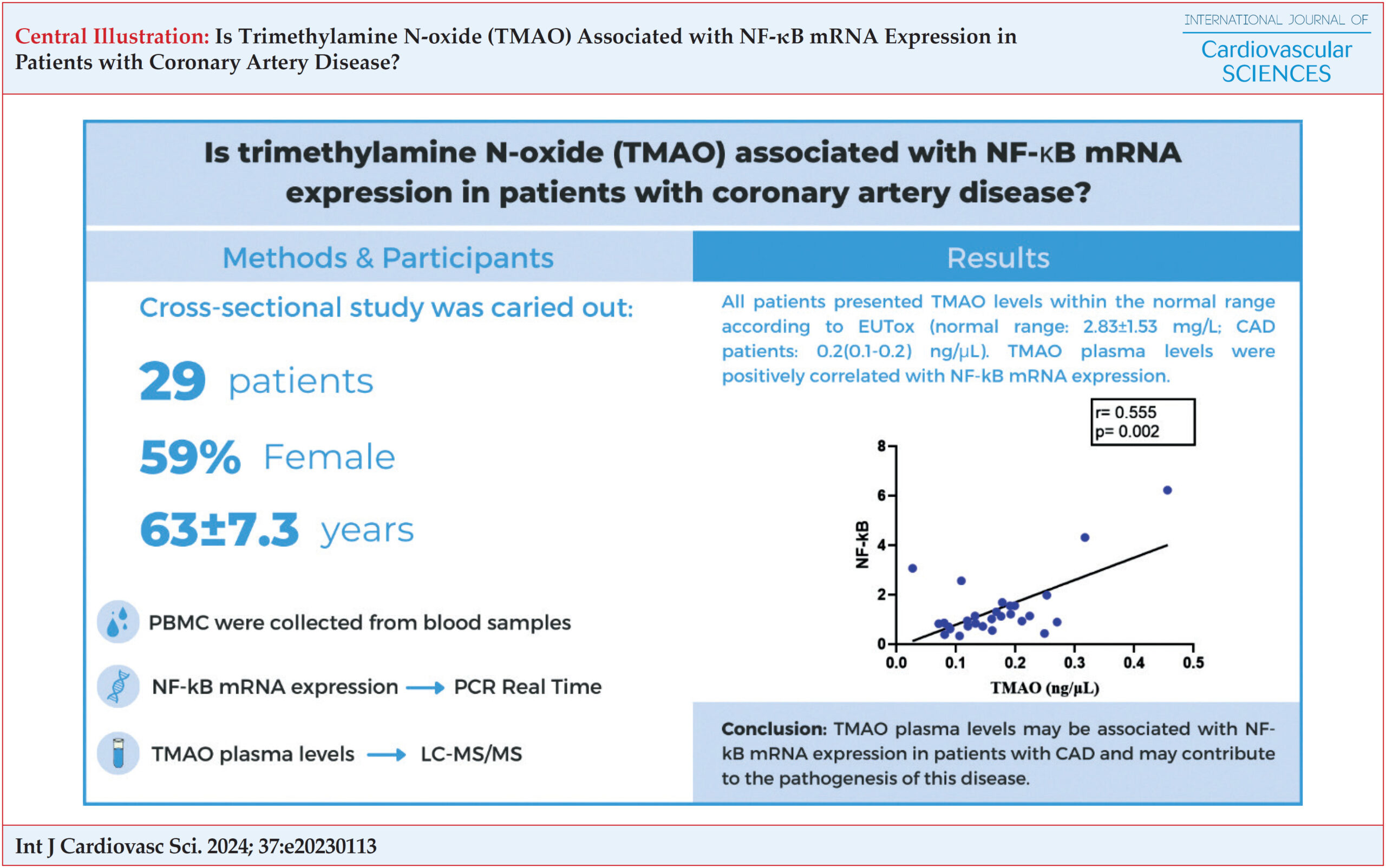
A cross-sectional study was carried out including 29 patients with CAD. Peripheral blood mononuclear cells (PBMC) were isolated from fasting blood samples, and NF-κB and vascular cell adhesion protein 1 (VCAM1) mRNA expression were estimated using real-time quantitative PCR. We determined TMAO plasma levels by LC-MS/MS and TNF-α by ELISA. Routine biochemical parameters were evaluated using an automatic biochemical analyzer. Correlations were estimated by Spearman or Pearson test. Statistical significance was set at the level of p < 0.05.

Results:

All patients presented TMAO levels within the normal range according to EUTox (normal range: 2.83 ± 1.53 mg/L; CAD patients: 0.2 [0.1 to 0.2] ng/μL). TMAO plasma levels were positively correlated with NF-κB mRNA expression (0.555; p = 0.002).

Conclusion:

TMAO plasma levels may be associated with NF-κB mRNA expression in patients with CAD and may contribute to the pathogenesis of this disease.

  • Coronary Artery Disease
  • Inflammation
  • NF-kappa B
  • Oxidative Stress
Read Full Article
Creative Commons Attribution (CC BY) Creative Commons license
18/03/2024 DOI: 10.36660/ijcs.20230113
Figure 1
ABC
Editorial

The Environment and the Heart

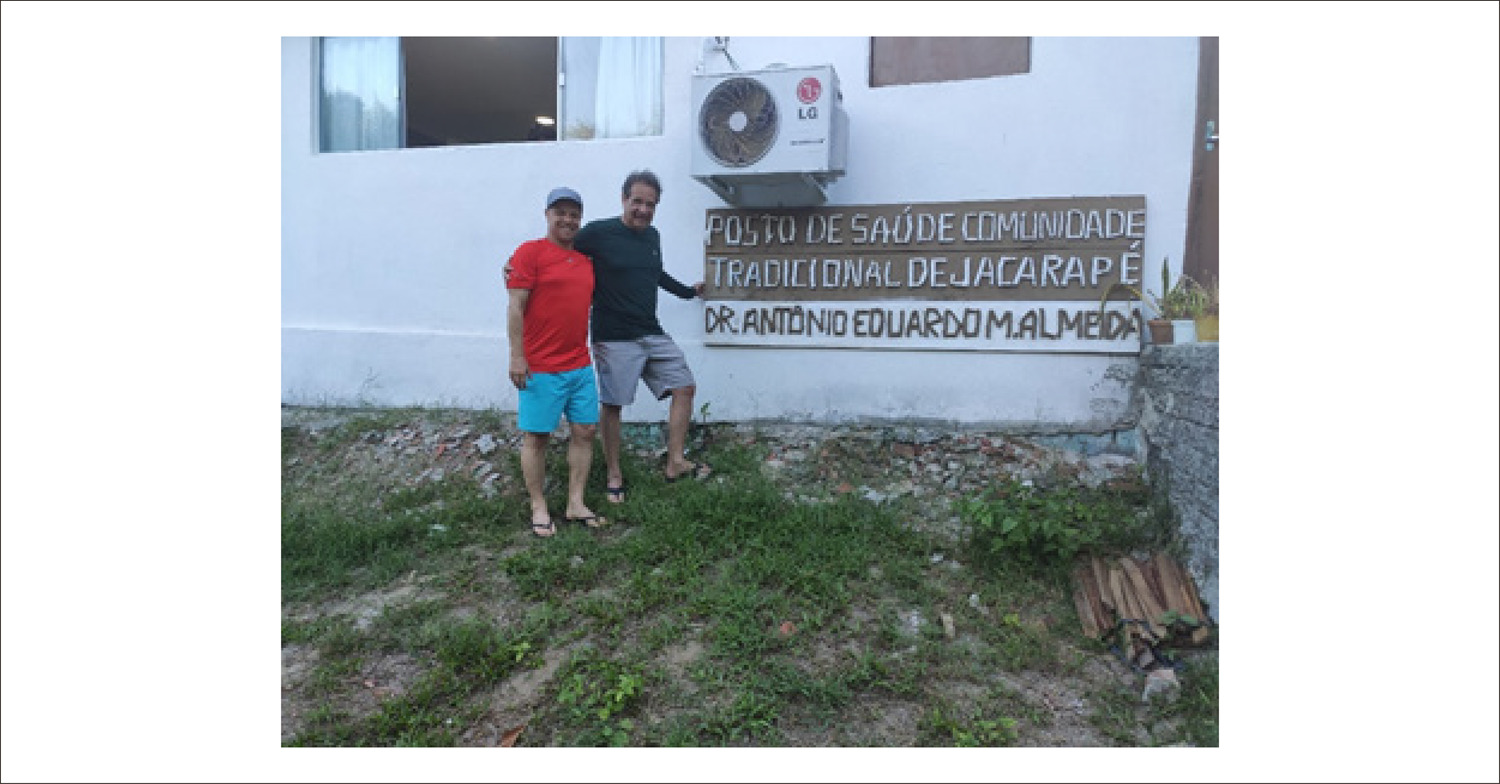
Antonio Eduardo Monteiro de Almeida et al. Ricardo Stein

Our planet is facing an unprecedented crisis related to climate change and the loss of biodiversity, and there is evidence that this crisis has threatened the health of our ecosystems and communities, in addition to modifying the lifestyle of living beings on Earth. Moreover, multiple scientists have stated that “we have years rather than decades to fight this crisis.”

Since elementary school, we learn about the importance of oxygen for human life. It is estimated that 50% to 80% of the oxygen on Earth is produced in the oceans (“the planet’s lungs”), which is also the largest means of absorbing carbon, playing a fundamental role in regulating the global climate. , Forests and other ecosystems produce the rest of the oxygen we use. Going against the dichotomy of producing oxygen and absorbing carbon, the destruction of these environments increases the degree of pollution; the consequences are severe and can be even more detrimental.

[…]

  • Cardiovascular Diseases
  • Ecological Equilibrium/methods
  • Environment
  • Environmental, Pollution
  • Oxidative Stress
  • Prevention and Control
Read Full Article
Creative Commons Attribution (CC BY) Creative Commons license
17/07/2023 DOI: 10.36660/abc.20230119
ABC
Editorial

SAGE Score and Pulse Wave Velocity in Non-Hypertensive Individuals

Alfredo José Mansur

An important step of physical examination is the evaluation of arterial pulses. On inspection, palpation and auscultation we are able to study the characteristics of the arterial pulses – symmetry, rate, rhythm, rigidity of arterial wall (mainly in carotid arteries), pulse pressure, contour, velocity of ascension of the ulse wave, thrill, bruits and murmurs. Current day technology made possible to register graphically the pulse wave and to make serial evaluations of arterial rigidity by studying central and peripheral blood pressure, central and peripheral pulse pressure, pulse wave velocity e augmentation index. , An increase in arterial rigidity leads to increase in the pulse wave velocity and the interaction between the forward pulse wave with the backward reflexion is observed in the augmentation index. Anatomical and functional changes of the arteries is one of the mechanisms involved in senescence and may constitute per se a cardiovascular risk factor. Studies of arterial rigidity were performed in patients with arterial hypertension. Indeed, the study of arterial rigidity is also interesting in samples of individuals without hypertension.

In the study researchers reported a study devised to evaluate clinical (age, peripheral systolic arterial pressure) and metabolic (serum glucose, estimated glomerular filtration rate) characteristics in a previously published score (SAGE) relative to variables of arterial rigidity evaluated non-invasively in a sample of 100 participants with normal blood pressure (n=80) or pre-hypertensive (n=20) out of a large sample of 1594 patients; diagnosis of arterial hypertension (n=1349) was an exclusion criteria for this analysis. The maximal score value is 17. The distribution of the score in this study sample ranged between 0 and 3 (64% of the sample). Median of pulse wave velocity in this study sample was 7,3 m.seg-1. The increase in cut off value of pulse wave velocity (percentis 50% – 7,3 m.seg-1e 75% – 9,8 m.seg-1) was associated with an increase in positive and negative predictive values on the basis of scores SAGE observed in the study sample. In participants with pulse wave velocity higher than 10 m.seg-1the most frequent score was 7. The authors concluded that the SAGE score might be useful to screening non hypertensive subjects with higher risk of increase in arterial rigidity. Additional studies might be of help of therapeutic interventions in these clinical scenarios, including follow-up studies provided appropriate reproducibility of the measurements.

[…]

  • Aging/physiology
  • Carotid Arteries
  • Circadian Rhythm
  • Hypertension
  • Oxidative Stress
  • Pulse Wave Analysis/methods, trends
  • Risk Factors
  • Vascular Calcification
  • Vascular Stiffness
Read Full Article
Creative Commons Attribution (CC BY) Creative Commons license
27/02/2023 DOI: 10.36660/abc.20220881 Views 1
Figure 1
ABC
Original Article

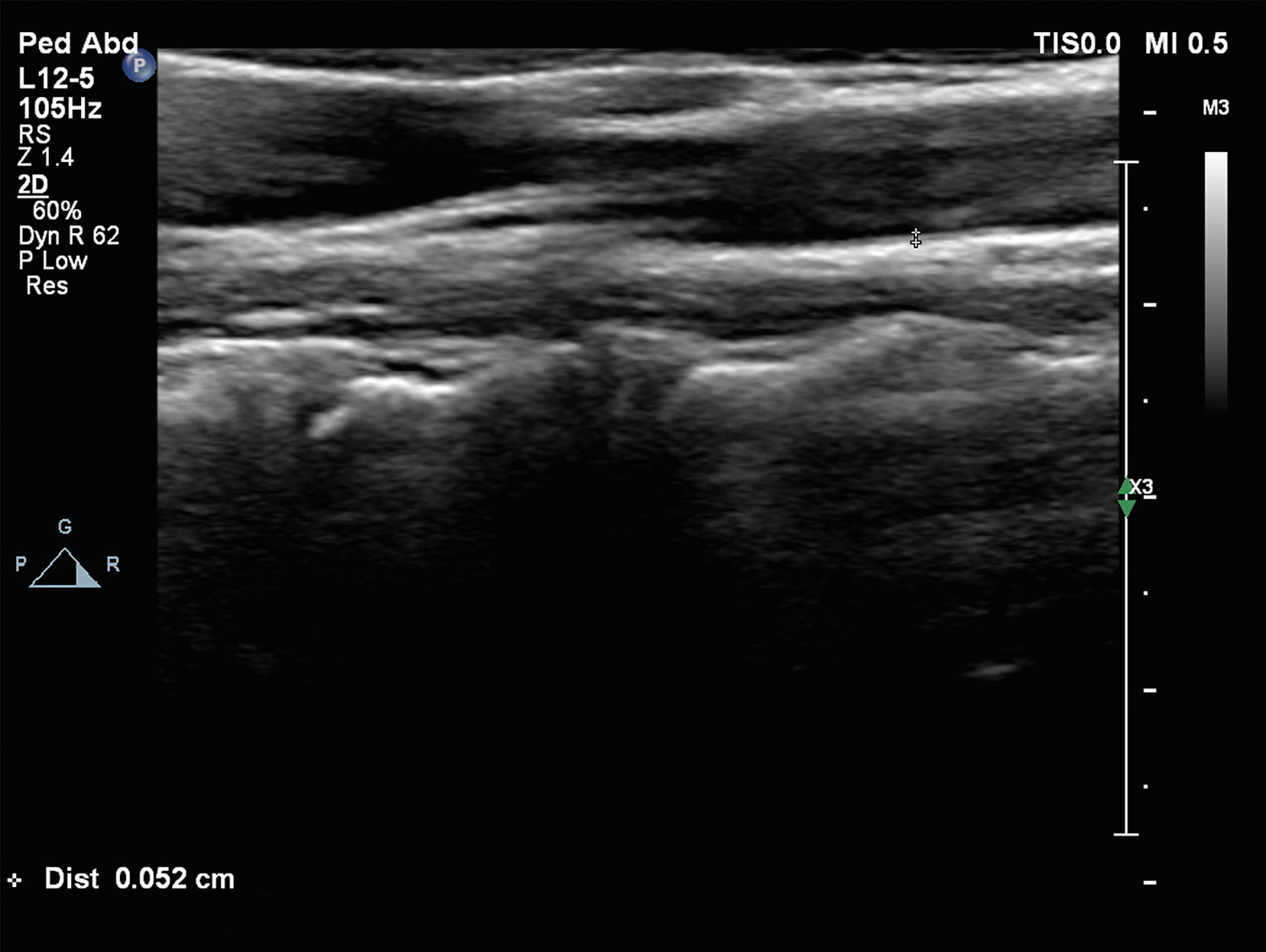
Aortic Intima Media Thickness is Increased and Closely Related to Elevated Oxidative Stress Increases in Beta Thalassemia Minor

Cansu Tumer et al. Tayyibe Saler Muhammed Zubeyir Aslan Ayse Selcan Koc … Mevlüt Koc Ozcan Erel Salim Neselioglu Erdinc Gulumsek Begum Seyda Avci Akkan Avci Hilmi Erdem Sumbul

Abstract

Background

Abdominal aortic intima media thickness (A-IMT) may be an early marker of subclinical atherosclerosis and an objective indicator of increased oxidative stress in beta-thalassemia minor patients.

Objective

To evaluate whether aortic and carotid IMTs change with oxidative stress and to assess the relationship between these parameters in beta-thalassemia minor patients.

Methods

The study included 80 patients diagnosed with beta-thalassemia minor, and 50 healthy individuals with similar age and gender. After routine procedures, blood samples were collected from the study groups for thiol-disulfide hemostasis and ischemia-modified albumin (IMA). C-IMT measurements were performed in four different regions (right and left internal and external carotid artery) by ultrasonography. In addition, A-IMT measurement was performed by abdominal ultrasonography. Statistically significant p value was set as <0.05 for all comparisons.

Results

In beta-thalassemia minor patients, native thiol, total thiol and native thiol / total thiol ratio were lower, and the IMA, disulfide / native thiol ratio and disulfide / total thiol ratios were higher than in healthy control group. A-IMT measurement was significantly higher in beta-thalassemia minor group than controls (1.46±0.37 vs 1.23±0.22 and p<0.001). When the parameters associated with A-IMT in univariate analysis were evaluated by multivariate linear regression analysis, A-IMT was positively related, and native thiol and total thiol levels were negatively and closely related to IMA (p<0.01).

Conclusion

We demonstrated, for the first time, that oxidative stress status increased with increased A-IMT, while C-IMT remained unchanged in beta-thalassemia minor patients.

  • beta-Thalassemia
  • Carotid Intima-Media Thickness
  • Oxidative Stress
Read Full Article
Creative Commons Attribution (CC BY) Creative Commons license
10/06/2022 DOI: 10.36660/abc.20210666
ABC
Editorial

Pterostilbene after Acute Myocardial Infarction: Effect on Heart and Lung Tissues

Bruna Paola Murino Rafacho

Cardiovascular diseases are the main cause of death worldwide. , In Brazil, ischemic heart diseases are the leading cause of cardiovascular death, and acute myocardial infarction presented a mortality rate of 9.06% until October 2021.

Myocardial ischemia generates reactive oxygen species (ROS) and reactive nitrogen species (RNS), which, in turn, increases pro-inflammatory mediators that might activate different pathways to promote repairing of the infarcted region, a process known as cardiac remodeling. – However, when there is prolonged production of reactive species, incapacity of the antioxidant system and amplification of inflammatory and metabolic changes in the heart, non-infarcted region is impaired, leading to progressive changes in ventricular geometry. Progressively, changes can occur in the left and right ventricles associated with hemodynamic changes in the pulmonary vessels and consequent pulmonary hypertension. , In this context, the search for treatments that might attenuate cardiac and pulmonary changes focusing on redox balance stand out.

[…]

  • Acute Myocardial Infarction
  • Oxidative Stress
  • Pterostilbene
Read Full Article
Creative Commons Attribution (CC BY) Creative Commons license
07/03/2022 DOI: 10.36660/abc.20211017
ABC
Editorial

A New Therapeutic Alternative for the Treatment of Pulmonary Hypertension?

Ricardo J Gelpi

In this issue of the journal Arquivos Brasileiros de Cardiologia, important and original research work on rats is published. The work is important because pulmonary hypertension represents a serious pathology that is very difficult to treat. The only way to relieve patients is lung transplantation, but are very well known the difficulties and limitations of this treatment. The work is also original because a lot has been published about the beneficial effects of copaiba oil, such as its anti-inflammatory action, analgesic effect, and ability to prevent infections and improve the healing process. However, the beneficial effect of copaiba oil on pulmonary hypertension had not been described. In this sense, the group led by Adriane Belló Klein has been working for several years on this important issue of pulmonary hypertension in general,– and the effects of copaiba oil on this particular pathology,, which has made this research group an international benchmark on this theme.

It is important to mention that pulmonary hypertension induced in rats by monocrotaline produces vascular lesions very similar to those found in patients with this pathology., In essence, what the work published in this issue of the journal Arquivos Brasileiros de Cardiologia shows is that the administration of copaiba oil to a group of rats with pulmonary hypertension induced by monocrotaline produces a clear beneficial effect, through the decrease in peripheral blood indicators of oxidative stress, a reduction in pulmonary vascular resistance, and a favorable remodeling of the right ventricle, with a reduction in hypertrophy, which translates into a better systolic function of that ventricle. This finding is very important because it is well known that myocardial hypertrophy is one of the most important causes of heart failure and sudden death. The positive relationship between the degree of hypertrophy and the decrease in oxidative stress shown by the authors is clearly proven in this work by the high r-value obtained when these two variables were correlated. However, and beyond this important correlation, future studies should determine if the beneficial effect on the right ventricle is due to the reduction of oxidative stress or if there is also a direct effect of copaiba oil on myocardial fibers. Perhaps experiments that could be carried out on isolated hearts would make it possible to detect or not a direct impact of this natural agent. In this sense, it is important to mention that the authors of this study also published an interesting work previously where they showed that the administration of copaiba oil decreased apoptosis signals in the hypertrophic right ventricle and attributed the better remodeling to a possible decrease in the apoptosis mentioned above; obviously this same mechanism could be acting in the work that we are commenting now. Nevertheless, here it is important to make some clarifications that may allow a better understanding of what is happening in these hearts with hypertrophy secondary to pulmonary hypertension.

[…]

  • Cardiomegaly
  • Copaiba Oil
  • Cor Pulmonale
  • Fabaceae
  • Heart Failure
  • Hypertension,Pulmonary
  • Lung Transplantation
  • Monocrotaline
  • Oxidative Stress
  • phytotherapy
  • Rats
Read Full Article
Creative Commons Attribution (CC BY) Creative Commons license
03/12/2021 DOI: 10.36660/abc.20210935
ABC
Editorial

Cardioprotection during Chemotherapy: Prospects of Antioxidant Strategies

Thiago Gomes Heck

The concept of oxidative stress, well defined as a situation in which cells, tissues, or the whole body present an imbalance between reactive oxygen species (ROS) and antioxidant defenses in favor of ROS levels, is found in several acute and chronic diseases, including cancer. The equilibrium between ROS production and the ability of cells to avoid oxidative damage is a natural challenge for mammalian species since the energy production by oxidative pathways in mitochondria allows the continuous production of free radical and oxidative molecules. Pharmacological agents may generally use the modulation of oxidative balance to treat some diseases, or oxidative imbalance may represent a side effect of the drugs. Also, we need to keep in mind that oxidative stress caused by environmental (e.g., air pollution) and metabolic (e.g., obesity and diabetes) conditions is also associated with an increased risk of a variety of cancers.

Hyperproliferation of tumor cells is accompanied by high ROS production, but it is well known that cell stress response, antioxidant defenses, and resistance against the cytotoxic effects of chemotherapy is quite different in tumor compared to immune cells and other tissues. Thus, the tumor is able to adapt to conditions of oxidative burden while other cells may not present sufficient self-defense against oxidative damage. The mechanism of tumor self-protection involves increasing the levels of the major non-enzymatic antioxidant defense, glutathione (GSH). As a “hungry” cell, considering the common high-energy demand mainly by glucose uptake, tumors activate glucose-6-phosphate dehydrogenase (G6PD) and reroute glucose metabolism from glycolysis through the oxidative arm of the pentose phosphate pathway (PPP) toward nucleotide synthesis. In turn, the increase in nicotinamide adenine dinucleotide phosphate (NADPH) allows the increase in GSH and other antioxidant systems. Also, at a molecular level, the tumor evocates many transcription factors, including activator protein 1 (AP-1), heat shock factor 1 (HSF1), nuclear factor κB (NF-κB), nuclear factor-erythroid 2 p45-related factor 2 (NRF2), and tumor protein p53, representing a proliferative strategy accompanied by a robust cell stress defense.,

[…]

  • Antioxidants
  • Cardioprotection
  • Drug Therapy
  • Oxidative Stress
  • Resveratrol
Read Full Article
Creative Commons Attribution (CC BY) Creative Commons license
03/12/2021 DOI: 10.36660/abc.20210914 Views 1
Figure 1
ABC
Original Article

Effects of Copaiba Oil in Peripheral Markers of Oxidative Stress in a Model of Cor Pulmonale in Rats

Cristina Campos et al. Patrick Turck Angela Maria Vicente Tavares Giana Corssac … Denise Lacerda Alex Araujo Susana Llesuy Adriane Bello Klein

Abstract

Background

To date, copaiba oil’s systemic effects have never documented in Cor pulmonale induced by monocrotaline.

Objectives

To investigate copaiba oil’s effects in peripheral markers of oxidative stress in rats with Cor pulmonale.

Methods

Male Wistar rats (170±20g, n=7/group) were divided into four groups: control (CO), monocrotaline (MCT), copaiba oil (O), and monocrotaline+copaiba oil (MCT-O). MCT (60 mg/kg i.p.) was administered, and after one week, treatment with copaiba oil (400 mg/kg/day-gavage-14 days) was begun. Echocardiography was performed and, later, trunk blood collection was performed for oxidative stress evaluations. Statistical analysis: two-way ANOVA with Student-Newman-Keuls post-hoc test. P values<0.05 were considered significant.

Results

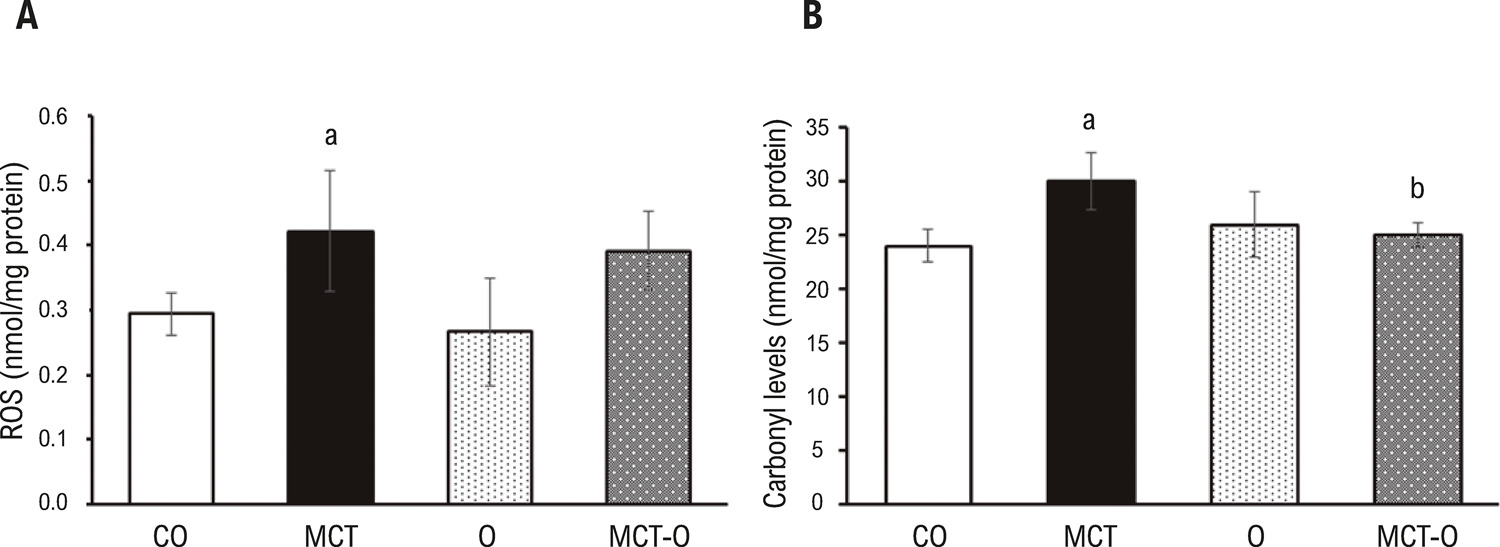
Copaiba oil reduced pulmonary vascular resistance and right ventricle (RV) hypertrophy (Fulton index (mg/mg): MCT-O=0.39±0.03; MCT=0.49±0.01), and improved RV systolic function (RV shortening fraction, %) in the MCT-O group (17.8±8.2) as compared to the MCT group (9.4±3.1; p<0.05). Moreover, in the MCT-O group, reactive oxygen species and carbonyl levels were reduced, and antioxidant parameters were increased in the peripheral blood (p<0.05). Conclusions: Our results suggest that copaiba oil has an interesting systemic antioxidant effect, which is reflected in the improvements in function and RV morphometry in this Cor pulmonale model. Cor pulmonale attenuation promoted by copaiba oil coincided with a reduction in systemic oxidative stress.

  • Copaiba Oil
  • Cor Pulmonale
  • Fabaceae
  • Hypertrophy, Right Ventricular
  • Monocrotaline,Rats
  • Oxidative Stress
  • phytotherapy
Read Full Article
Creative Commons Attribution (CC BY) Creative Commons license
08/10/2021 DOI: 10.36660/abc.20200929 Views 2
ABC
Editorial

Naringin, Trimetazidine and Baroreflex in Renal Ischemia-Reperfusion Injury

Luis Cuadrado Martin

The paper “Naringin and trimetazidine improve baroreflex sensitivity and electrical activity of solitary tract nucleus in renal ischemia-reperfusion injury,” published in this journal, found improvement in baroreflex sensitivity in an acute ischemia/reperfusion kidney injury model in rats treated by naringin and/or trimetazidine.

Trimetazidine and naringin are substances capable of reducing oxidative stress, documented in many situations. Trimetazidine is a drug with anti-ischemic properties, which acts directly on mitochondria and is able to decrease oxidative stress. Naringin is a polyphenol with antioxidant properties present in several citrus fruits.

[…]

  • Flavanones
  • Flavonoids
  • Heart Failure
  • Hypertension
  • Oxidative Stress
  • Renal Reperfusion
  • Trimetazidine
  • Vasodilatador Agents
Read Full Article
Creative Commons Attribution (CC BY) Creative Commons license
06/09/2021 DOI: 10.36660/abc.20210453 Views 1
ABC
Original Article

Physiological Responses to Maximal and Submaximal Walking in Patients with Symptomatic Peripheral Artery Disease

Marcel Chehuen et al. Aluisio Andrade-Lima Natan Silva Junior Roberto Miyasato … Rodrigo W. Alves de Souza Anthony Leicht Patricia Chakur Brum Edilamar M. Oliveira Nelson Wolosker Claudia Lucia de Moraes Forjaz

Abstract

Background:

Although maximal and submaximal walking are recommended for patients with peripheral artery disease (PAD), performing these exercises may induce different physiological responses.

Objectives:

To compare the acute effects of maximal and submaximal walking on post-exercise cardiovascular function, regulation, and associated pathophysiological processes in patients with symptomatic PAD.

Methods:

Thirty male patients underwent 2 sessions: maximal walking (Gardner’s protocol) and submaximal walking (15 bouts of 2 minutes of walking separated by 2 minutes of upright rest). In each session, blood pressure (BP), heart rate (HR), cardiac autonomic modulation (HR variability), forearm and calf blood flows (BF), vasodilatory capacity (reactive hyperemia), nitric oxide (NO), oxidative stress (lipid peroxidation), and inflammation (four markers) were measured pre- and post-walking. ANOVAs were employed, and p < 0.05 was considered significant.

Results:

Systolic and mean BP decreased after the submaximal session, but they increased after the maximal session (interactions, p 0.05), and it increased after maximal walking (interaction, p < 0.001). HR, sympathovagal balance, and BF increased similarly after both sessions (moment, p < 0.001, p = 0.04, and p 0.05). Vascular and intercellular adhesion molecules increased similarly after both maximal and submaximal walking sessions (moment, p = 0.001).

Conclusions:

In patients with symptomatic PAD, submaximal, but not maximal walking reduced post-exercise BP, while maximal walking maintained elevated cardiac overload during the recovery period. On the other hand, maximal and submaximal walking sessions similarly increased post-exercise HR, cardiac sympathovagal balance, and inflammation, while they did not change post-exercise NO bioavailability and oxidative stress.

  • Byomarkers
  • Hemodynamic Monitoring
  • Intermittent Claudication
  • Oxidative Stress
  • Peripheral Arterial Disease
  • walking
  • Walking Speed
Read Full Article
Creative Commons Attribution (CC BY) Creative Commons license
06/09/2021 DOI: 10.36660/abc.20200156 Views 2
Figure 1
ABC
Original Article

Association between Plasma Thiol Parameters and Troponin Levels in Patients with Acute Coronary Syndrome and Prediction of In-Hospital Ventricular Arrhythmia

Mehmet Erdoğan et al. Selcuk Ozturk Elçin Özdemir Tutar Esma Arslan … Muhammet Cihat Çelik Serdal Baştuğ Salim Neşelioğlu

Abstract

Background

Ventricular arrhythmias (VAs) are the main cause of in-hospital mortality and morbidity in acute coronary syndrome (ACS) patients and its relationship with thiol is not known.

Objective

To investigate the relationship between plasma thiol levels and troponin levels in patients with ACS and to estimate in-hospital VA development during hospital stay.

Method

The study included 231 consecutive ST-segment elevation ACS (STE-ACS) and non-ST-segment elevation ACS (NSTE-ACS) patients. After application of exclusion criteria, 191 patients were included in the statistical analysis. Patients were classified into two groups: STE-ACS group (n=94) and NSTE-ACS group (n=97). Plasma thiol, disulphide and troponin levels were measured and troponin-to-native thiol ratio (TNTR) was calculated. A two-sided p value of less than 0.05 was considered to be statistically significant.

Results

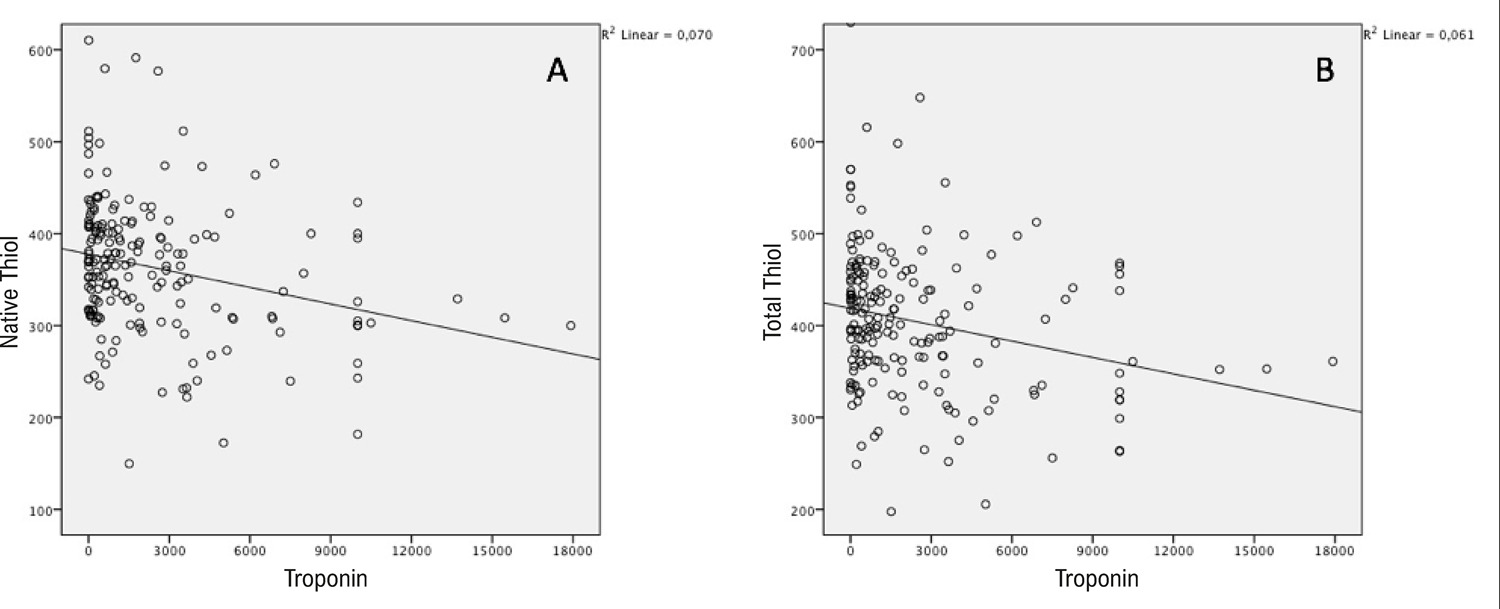
Plasma native thiol, total thiol, disulphide and their ratios were similar between the groups. TNTR was significantly higher in the STE-ACS group compared to the NSTE-ACS group. Troponin and thiol levels correlated negatively and significantly. Native thiol was found to be an independent predictor of VA development in STE-ACS patients and in all ACS patients. TNTR was found to be an independent predictor of VA development in NSTE-ACS patients and in all ACS patients.

Conclusion

Plasma thiol levels can be used to identify ACS patients at high risk for in-hospital VA development. Correlation between troponin and thiol levels may suggest that thiols may be an important marker for diagnosis and prognosis of ACS with the help of future studies.

  • Acetyl- CoA-Acyltransferase
  • Arrhythmias Cardiacs
  • Atherosclerosis
  • Coronary Acute, Syndrome
  • Coronary Artery Disease
  • Oxidative Stress
Read Full Article
Creative Commons Attribution (CC BY) Creative Commons license
16/07/2021 DOI: 10.36660/abc.20190672
ABC
Original Article

Serum Thiol Levels and Thiol/Disulfide Homeostasis in Patients with Rheumatic Mitral Valve Disease and Healthy Subjects

Ahmet Korkmaz et al. Birsen Doğanay Funda Basyigit Cem Çöteli … Abdulkadir Yildiz Tugba Gursoy Umit Guray Ozgul Ucar Elalmis

Abstract

Background

Rheumatic mitral valve disease (RMVD) is the most common presentation of rheumatic heart disease (RHD). Inflammation and fibrosis processes also play significant roles in its pathogenesis. Recent studies showed that thiols and thiol-disulfide are promising novel oxidative stress markers.

Objectives

The present study aimed to evaluate differences in the serum thiol and thiol-disulfide levels in patients with RMVD and the control group.

Methods

Ninety-two patients with RMVD were enrolled in the study. Fifty-four healthy subjects, age, and gender-matched with the study group, were also included in the study as a control group. This study investigated thiol levels in patients with RMVD and the control group. P-values lower than 0.05 were considered statistically significant.

Results

The patients with RMVD presented higher systolic pulmonary artery pressure (SPAP) and left atrial (LA) diameter levels than the control group. Native thiol (407±83 μmol/L vs. 297±65 μmol/L, p<0.001) and total thiol (442±82 μmol/L vs. 329±65 μmol/L, p<0.001) levels were higher in the control group. Disulfide (16.7±4.9 μmol/L vs. 14.8±3.7 μmol/L, p=0.011) levels were higher in the group of patients with RMVD. A positive correlation was found between disulfide/native and disulfide/total thiols ratio with SPAP, LA diameter, and MS severity. Disulfide/total thiols ratio was significantly higher in patients with severe MS than with mild to moderate MS patients.

Conclusions

To the best of our knowledge, this is the only study of its kind that has evaluated thiol/disulfide homeostasis as a novel predictor, which was more closely related to RMVD and the severity of MS.

  • Echocardiography/methods
  • Homeostasis
  • Mitral Valve Stenosis
  • Oxidative Stress
  • rheumatic diseases
  • Tiol/Dissulfide
Read Full Article
Creative Commons Attribution (CC BY) Creative Commons license
02/07/2021 DOI: 10.36660/abc.20200161
ABC
Editorial

Antioxidant and Anti-Inflammatory Effects of Orange Juice

Paula Felippe Martinez et al. Marianna Rabelo de Carvalho Maria Lua Marques Mendonça Marina Politi Okoshi Silvio Assis de Oliveira-Junior

Post myocardial infarction cardiac remodelling progression is a complex event involving several biological reactions; these include oxidative stress and inflammatory response. – The release of reactive oxygen species (ROS) after myocardial ischemia stimulates pro-inflammatory mediators involved in fibroblast proliferation and tissue repair in the infarcted area. However, sustained ROS production in combination with hemodynamic overload and antioxidant system incapacity leads to oxidative stress in non-infarcted areas, which also undergo cardiac remodelling. – These changes, associated with energy metabolism disorders, metalloproteinases activation, cardiomyocyte death and hypertrophy, interstitial fibrosis, and cardiac dysfunction characterize the cardiac remodelling process.

Studies on various bioactive compounds, often extracted from food, have been undertaken to assess their attenuating powers on disorders common to cardiac remodelling, such as oxidative stress and inflammation. – However, the extraction and isolation of these substances can require a complex network of costly specialized technical procedures making it financially difficult for a large part of the population to access this resource. Additionally, taken in isolation one cannot evaluate the potential effects of interactions between food matrix components and the organism which may alter the metabolic effects. Alternatively, consuming the food in its entirety acts as a buffer in the digestive system allowing greater bioavailability of its active compounds. Therefore, nutritional approaches involving ingestion of natural foods, such as fruits and their products (peels, juices, pulps, puree, and jams, etc), which contain substances with antioxidant and anti-inflammatory properties, have increasingly gained interest. , It is worth mentioning citrus fruits, which are rich in bioactive compounds that may change the metabolism and protect tissues from ROS accumulation injuries. Citrus fruit juices, in general, are abundant sources of vitamin C and other nutrients, such as potassium, folate, magnesium, vitamin A, and polyphenolic compounds. In this sense, orange juice is a complex food matrix with cardioprotective potential due to its antioxidant and anti-inflammatory capacity. –

[…]

  • Anti-Inflammatory Agents
  • Antioxidants
  • Citrus Sinensis
  • Fruit and Vegetable Juices
  • Metabolism
  • Oxidative Stress
  • Ventricular Remodeling
Read Full Article
Creative Commons Attribution (CC BY) Creative Commons license
14/06/2021 DOI: 10.36660/abc.20210418 Views 1
ABC
Editorial

Still Trying to Understand the Role of Uric Acid in Cardiovascular Diseases

Gilson Soares Feitosa

In this issue of Arquivos Brasileiros de Cardiologia , Zhu et al. report an association between uric acid and the presence of pre-hypertension or hypertension in a cross-sectional study done in a population in North China, bringing about, once more, a possible role of uric acid in the determination of cardiovascular disease. In the study, the authors call our attention to the possibility of a relationship even though the measured uric acid serum level is relatively low as compared to what is referred to as normal in several Western populations, which presents a cutoff value of ≥7.0 mg/dL for men and ≥6.3 mg/dL for women in the United States and also so considered, a cutoff value of ≥7.0 mg/dL for men and ≥ 6.0 mg/dL for women in a Brazilian population of healthy individuals aged 20 to 55, in Rio de Janeiro, whereas in their the cut off values were ≥4.75 mg/dL and ≥4.04 mg/dL for men and women, respectively.

In workers from the Company of Generation and Distribution of Energy in Rio de Janeiro, Brazil, from both sexes, aged predominantly between 50 and 59, the mean uric acid level was 4.7±1.3 mg/dL.

[…]

  • Cardiovascular Diseases
  • Endothelium
  • Hyperurisemia
  • Obesity
  • Oxidative Stress
  • Risk Factors
  • uric acid
Read Full Article
Creative Commons Attribution (CC BY) Creative Commons license
14/06/2021 DOI: 10.36660/abc.20210390
Figure 1
ABC
Original Article

Vitamin D Supplementation Induces Cardiac Remodeling in Rats: Association with Thioredoxin-Interacting Protein and Thioredoxin

Priscila P. dos Santos et al. Bruna P. M. Rafacho Andrea F. Gonçalves Vanessa C. M. Pires … Meliza G. Roscani Paula S. Azevedo Bertha F. Polegato Marcos F. Minicucci Ana Angélica H. Fernandes Suzana E. Tanni Leonardo A. M. Zornoff Sergio A. R. de Paiva

Abstract

Background:

Vitamin D (VD) has been shown to play an important role in cardiac function. However, this vitamin exerts a biphasic “dose response” curve in cardiovascular pathophysiology and may cause deleterious effects, even in non-toxic doses. VD exerts its cellular functions by binding to VD receptor. Additionally, it was identified that the thioredoxin-interacting protein (TXNIP) expression is positively regulated by VD. TXNIP modulate different cell signaling pathways that may be important for cardiac remodeling.

Objective:

To evaluate whether VD supplementation lead to cardiac remodeling and if TXNIP and thioredoxin (Trx) proteins are associated with the process.

Methods:

A total of 250 Male Wistar rats were allocated into three groups: control (C, n=21), with no VD supplementation; VD3 (n = 22) and VD10 (n=21), supplemented with 3,000 and 10,000 IU of VD/ kg of chow respectively, for two months. The groups were compared by one-way analysis of variance (ANOVA) and Holm-Sidak post hoc analysis, (variables with normal distribution), or by Kruskal-Wallis test and Dunn’s test post hoc analysis. The significance level for all tests was 5%.

Results:

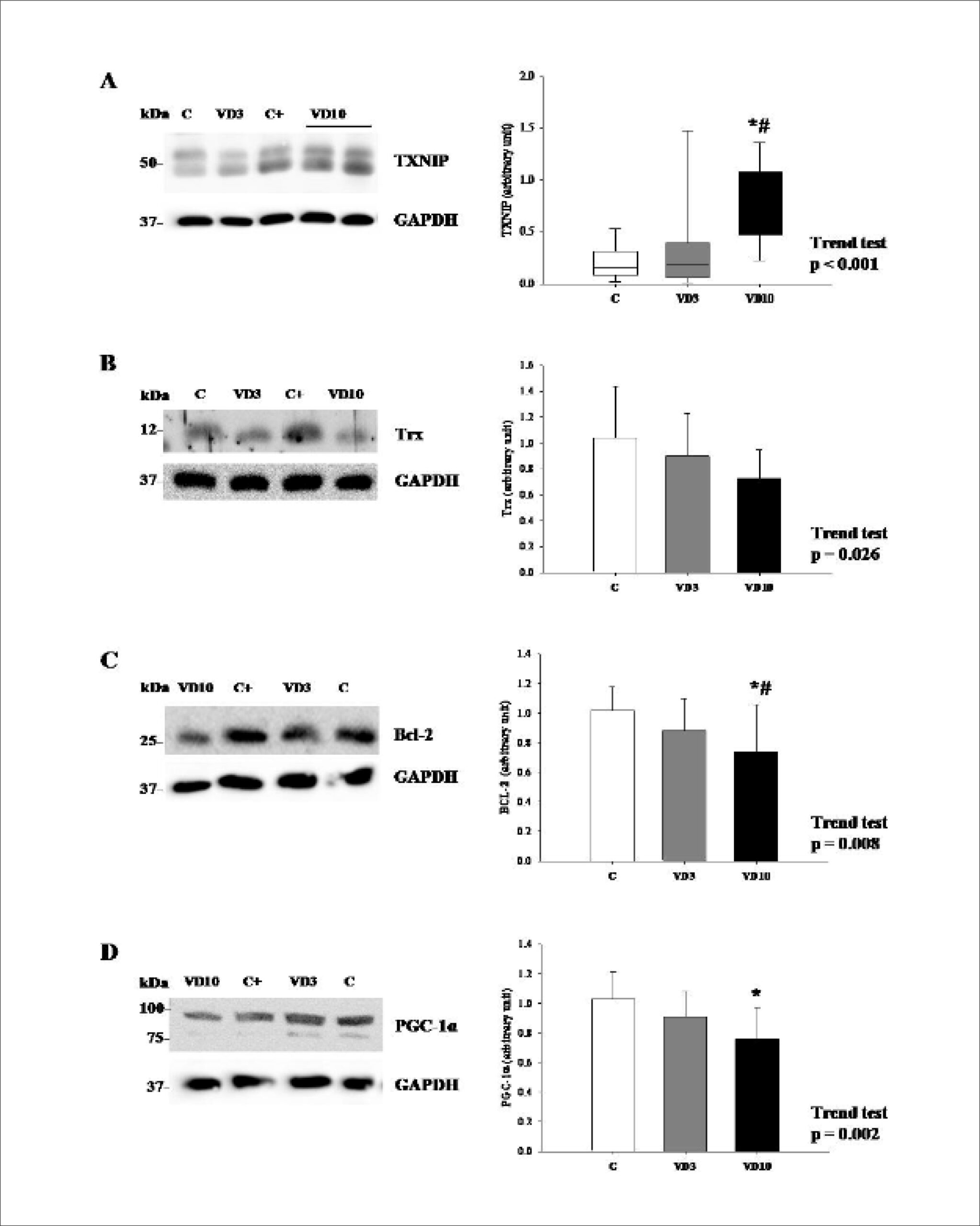
TXNIP protein expression was higher and Trx activity was lower in VD10. The animals supplemented with VD showed increased lipid hydroperoxide and decreased superoxide dismutase and glutathione peroxidase. The protein Bcl-2 was lower in VD10. There was a decrease in fatty acid β-oxidation, tricarboxylic acid cycle and electron transport chain with shift to increase in glycolytic pathway.

Conclusion:

VD supplementation led to cardiac remodeling and this process may be modulated by TXNIP and Trx proteins and consequently oxidative stress.

  • Oxidative Stress
  • Rats
  • Thioredoxins
  • Ventricular Remodeling
  • Vitamin D
Read Full Article
Creative Commons Attribution (CC BY) Creative Commons license
17/05/2021 DOI: 10.36660/abc.20190633 Views 1
ABC
Editorial

The Relationship between CAR and CAE: Association of C-Reactive Protein to Albumin Ratio in Patients with Isolated Coronary Artery Ectasia

Iran Castro et al. Hugo Antonio Fontana Filho

Coronary artery ectasia (CAE), defined as an increase in coronary diameter 1.5 times the diameter of the normal adjacent bed, is an uncommon finding in coronary angiography, with an incidence of 1.2 to 4.9%. Most of the times, it is related to coronary atherosclerotic disease (CAD), and they have several factors in common, such as lipoprotein accumulation f in the intimal layer, inflammatory cell infiltration, activation of the renin-angiotensin system and oxidative stress generation, with arterial expansion and remodeling. The high levels of nitric oxide cause vasodilation and excessive activation of extracellular matrix metalloproteinases, resulting in vascular dilation. Less commonly, it can also be related to Kawasaky disease, connective tissue, infectious or autoimmune diseases.

The incidence is higher in men, hypertensive individuals and smokers. Cocaine users have a higher incidence of CAE and coronary aneurysms. Interestingly, Diabetes Mellitus (DM) seems to be unrelated to CAE, and may even be a protective factor, a fact related to the inhibition of the expression of extracellular matrix metalloproteinases.

[…]

  • Atherosclerosis
  • Coronary Artery Disease
  • Dilatation, Pathologic
  • Lipoproteins
  • Oxidative Stress
  • Risk Factors
Read Full Article
Creative Commons Attribution (CC BY) Creative Commons license
03/02/2021 DOI: 10.36660/abc.20200580 Views 1
Figure 1
ABC
Original Article

Strength Training Reduces Cardiac and Renal Oxidative Stress in Rats with Renovascular Hypertension

Rodrigo Miguel-dos-Santos et al. Jucilene Freitas dos Santos Fabricio Nunes Macedo Anderson Carlos Marçal … Valter J. Santana Filho Rogerio Brandão Wichi Sandra Lauton-Santos

Abstract

Background

Strength training has beneficial effects on kidney disease, in addition to helping improve antioxidant defenses in healthy animals.

Objective

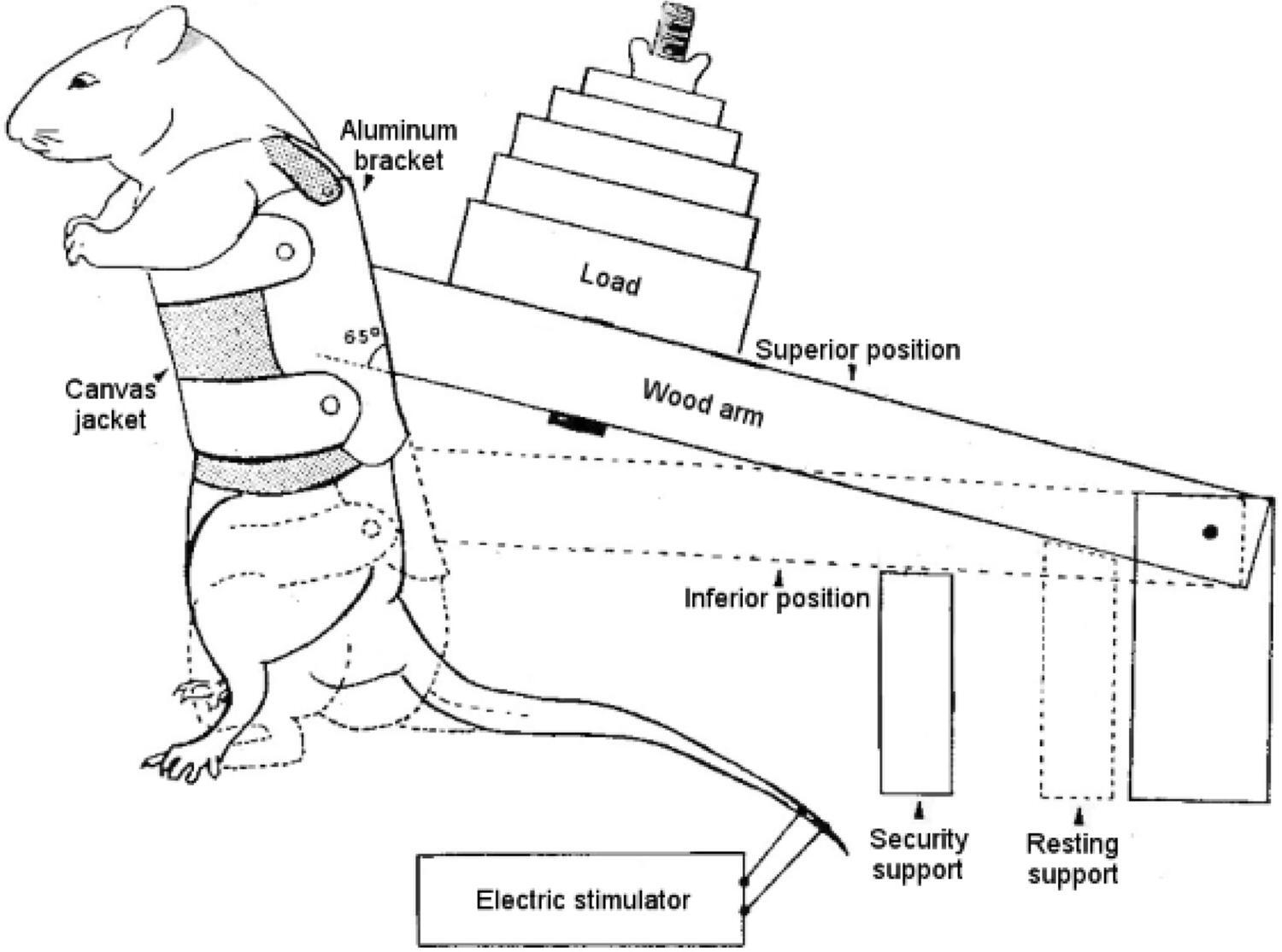
To verify if strength training reduces oxidative damage to the heart and contralateral kidney caused by the renovascular hypertension induction surgery, as well as to evaluate alterations in the activity of superoxide dismutase (SOD), catalase (CAT), and glutathione peroxidase (GPx) endogenous antioxidant enzymes.

Methods

Eighteen male rats were divided into three groups (n=6/group): sham, hypertensive, and trained hypertensive. The animals were induced to renovascular hypertension through left renal artery ligation. Strength training was initiated four weeks after the induction of renovascular hypertension, continued for a 12-weeks period, and was performed at 70% of 1RM. After the training period, the animals were euthanized and the right kidney and heart were removed for quantitation of hydroperoxides, malondialdehyde and sulfhydryl groups, which are markers of oxidative damage. In addition, the activity of SOD, CAT, and GPx antioxidant enzymes was also measured. The adopted significance level was 5% (p < 0.05).

Results

After strength training, a reduction in oxidative damage to lipids and proteins was observed, as could be seen by reducing hydroperoxides and total sulfhydryl levels, respectively. Furthermore, an increased activity of superoxide dismutase, catalase, and glutathione peroxidase antioxidant enzymes was observed.

Conclusion

Strength training is able to potentially reduce oxidative damage by increasing the activity of antioxidant enzymes. (Arq Bras Cardiol. 2021; 116(1):4-11)

  • Antioxidants
  • hypertension, renovascular
  • Oxidation-Reduction
  • Oxidative Stress
  • Renal Arterial Obstruction
  • Resistance Training
Read Full Article
Creative Commons Attribution (CC BY) Creative Commons license
03/02/2021 DOI: 10.36660/abc.20190391
ABC
Editorial

Moderate-Intensity Resistance Training Improves Oxidative Stress in Heart

Marcelo Diarcadia Mariano Cezar et al. Silvio Assis de Oliveira Junior Ricardo Luiz Damatto

Renovascular hypertension (RVHT) is one of the main causes of secondary hypertension, often leading to resistant hypertension, that is, that does not respond well to aggressive medical treatment. This condition is defined as systemic hypertension that manifests as a result of compromised blood supply to the kidneys., In an epidemiological context, RVHT accounts for 1 to 5% of all cases of hypertension and 5.4% of secondary hypertension among young adults.

Studies have shown an association this disease with low levels of physical activity or physical fitness in hypertensive individuals., It is known that physical training has a protective action against cardiovascular diseases.– In 2016, the 7th Brazilian Guideline of Arterial Hypertension, by the Brazilian Society of Cardiology, stated that blood pressure reduction is the most effective measure to decrease cardiovascular risk and slow kidney damage progression, regardless of the antihypertensive drug used. Endurance/aerobic exercise training promotes an important hypotensive effect in hypertensive patients and, therefore, has been recommended as the preferential type of exercise for arterial hypertension prevention and treatment.,

[…]

  • Blood Pressure/prevention and control
  • Hypertension
  • Oxidative Stress
  • Resistance Training
  • Ventricular Remodeling
Read Full Article
Creative Commons Attribution (CC BY) Creative Commons license
03/02/2021 DOI: 10.36660/abc.20200561 Views 1
ABC
Editorial

Do Microvascular Reactivity Studies Contribute to Clinical Practice?

Claudio Leinig Pereira da Cunha

We appraise in this publication the article “Microvascular Reactivity in Hypertensive Patients with High Body Adiposity”, by D’El-Rei et al. This is a complex investigation, assessing patients with Arterial Hypertension undergoing treatment, with the inclusion of several models for obesity assessment and several hemodynamic and circulatory parameters, which are studied in this scenario. Microvascular reactivity was evaluated using the Laser Speckle Contrast Image method in combination with Post-occlusive Reactive Hyperemia, therefore studying the endothelial function in this patient population.

Endothelial cells constitute an organ that is distributed throughout the body, comprising a dynamic interface with all other organs. The endothelium mediates vasomotor tone, regulates cell and nutrient traffic, maintains body fluidity, contributes to the balance between pro- and anti-inflammatory mediators, modulates procoagulant and anticoagulant activity, participates in the formation of new blood vessels, orchestrates organ development, participates in immunity, interacts with circulating blood cells and undergoes programmed cell death.

[…]

  • Adiposity
  • Biomarkers
  • Cardiovascular Diseases
  • Endothelium/function
  • Hypertension
  • Obesity
  • Oxidative Stress
Read Full Article
Creative Commons Attribution (CC BY) Creative Commons license
07/12/2020 DOI: 10.36660/abc.20200574 Views 1
ABC
Editorial

The Impact Of Exercise On Inflammation, Oxidative Stress And Remodelling In Cardiac Muscle

Fernando Mendes et al. Diana Martins

Aging is naturally connected with a decline, in some if not all physiological functions, namely loss of bone mass density (BMD) and strength associated with the loss of muscle mass.–

This muscle loss happens mainly due to an imbalance between muscle protein synthesis and muscle protein breakdown. The increase of catabolic factors such as oxidative stress and inflammation contribute significantly to the above process. Nevertheless, the weakening of strength and muscle loss is not linear, occurring differently in all sexes. Other factors such as a decline in hormonal levels due to menopause phenomenon are thought to be also implicated in this process. In fact, some authors proposed that, in females, an accelerated loss of muscle mass and strength arises at an earlier age than in males, around the time of menopause. A good body of evidence supports that the decline in muscle mass may be in line with the estrogen decrease that typifies menopausal years.

[…]

  • collagen
  • Coronary Artery Disease
  • Dyslipidemias
  • Exercise
  • Inflammation
  • Menopause
  • Mice
  • Oxidative Stress
  • Physical activity
Read Full Article
Creative Commons Attribution (CC BY) Creative Commons license
10/02/2020 DOI: 10.36660/abc.20190735 Views 1
Figure 1
ABC
Original Article

Euterpe Oleracea Mart. (Açaí) Reduces Oxidative Stress and Improves Energetic Metabolism in Myocardial Ischemia-Reperfusion Injury in Rats

Patricia Alegre et al. Livia Mathias Maria Angelica Lourenço Priscila Portugal dos Santos … Andrea Gonçalves Ana Angélica Fernandes Paula Schmidt Azevedo Gaiolla Marcos Ferreira Minicucci Leonardo Zornoff Sergio Alberto Rupp Paiva Bertha Furlan Polegato

Abstract

Background:

Euterpe oleracea Mart. (açaí) is a fruit with high antioxidant capacity and could be an adjuvant strategy to attenuate ischemia-reperfusion injury.

Objective:

To evaluate the influence of açaí in global ischemia-reperfusion model in rats.

Methods:

Wistar rats were assigned to 2 groups: Control (C: receiving standard chow; n = 9) and Açaí (A: receiving standard chow supplemented with 5% açaí; n = 10). After six weeks, the animals were subjected to the global ischemia-reperfusion protocol and an isolated heart study to evaluate left ventricular function. Level of significance adopted: 5%.

Results:

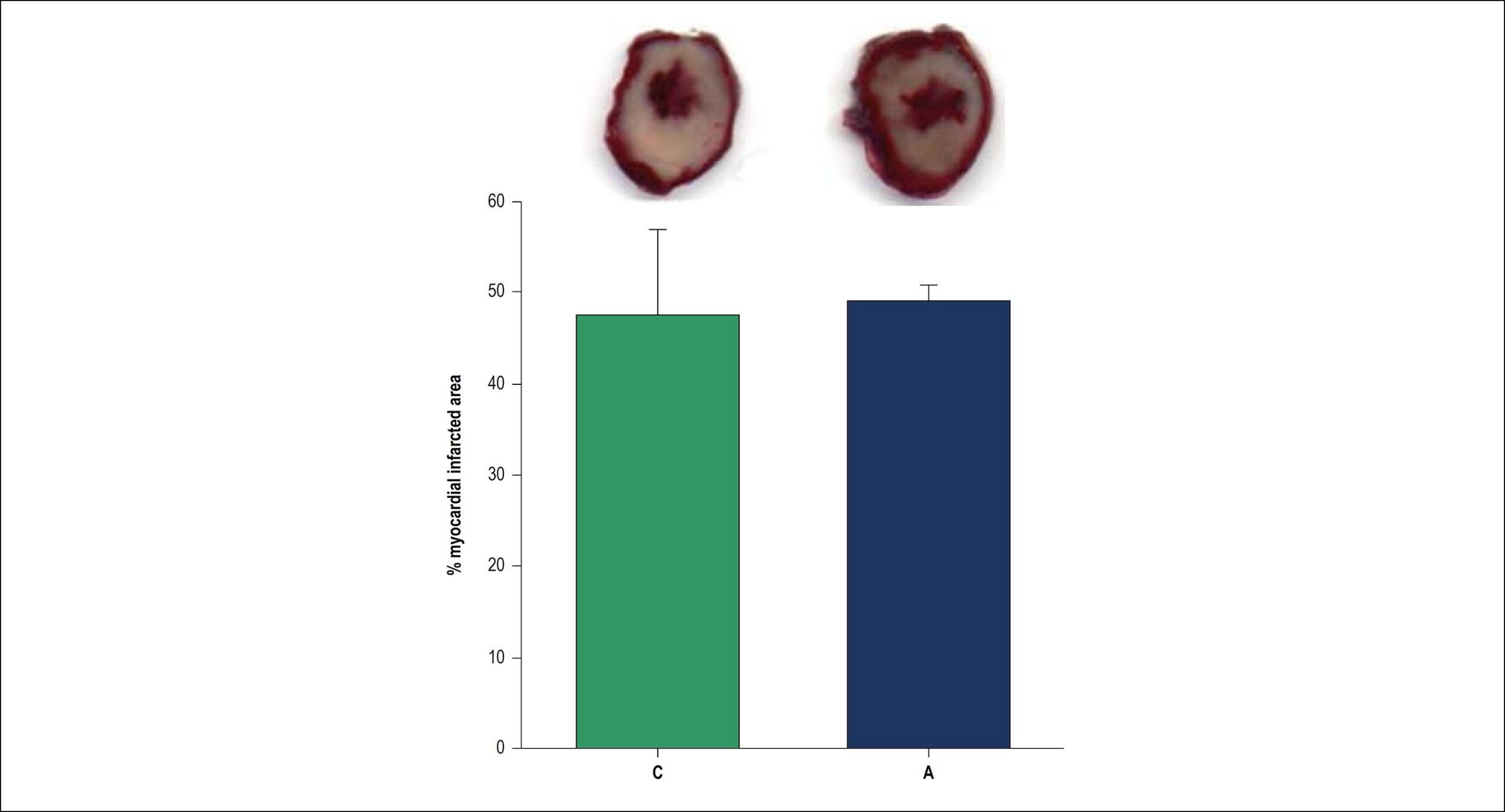
There was no difference between the groups in initial body weight, final body weight and daily feed intake. Group A presented lower lipid hydroperoxide myocardial concentration and higher catalase activity, superoxide dismutase and glutathione peroxidase than group C. We also observed increased myocardial activity of b-hydroxyacyl coenzyme-A dehydrogenase, pyruvate dehydrogenase, citrate synthase, complex I, complex II and ATP synthase in the A group as well as lower activity of the lactate dehydrogenase and phosphofructokinase enzymes. The systolic function was similar between the groups, and the A group presented poorer diastolic function than the C group. We did not observe any difference between the groups in relation to myocardial infarction area, total and phosphorylated NF-kB, total and acetylated FOXO1, SIRT1 and Nrf-2 protein expression.

Conclusion:

despite improving energy metabolism and attenuating oxidative stress, açai supplementation did not decrease the infarcted area or improve left ventricular function in the global ischemia-reperfusion model.

  • Chemical Reactions
  • Energy metabolism
  • Euterpe Olerácea
  • Myocardial Ischemia
  • myocardial reperfusion, injury
  • Oxidative Stress
  • Rats
Read Full Article
Creative Commons Attribution (CC BY) Creative Commons license
14/11/2019 DOI: 10.36660/abc.20180140
ABC
Editorial

Evaluation of Serum Levels of Inflammation, Fibrinolysis and Oxidative Stress Markers in Coronary Artery Disease Prediction: A Cross-Sectional Study

Iran Castro et al. Hugo Fontana Filho

When assessing patients with coronary artery disease (CAD) traditional risk factors such as diabetes mellitus, hypertension, dyslipidemia, smoking, stress, physical inactivity, obesity, and family history are not found in 20% of the patients, and up to 40% of patients have only 1 risk factor. Considering the high prevalence of CAD and the fact that despite the numerous efforts made in primary prevention, the disease still has a high incidence, identifying markers that can predict at-risk patients is a goal that should always be pursued.

However, when evaluating a possible marker of disease, it must meet certain criteria. It should identify individuals at risk (accuracy), its results should be the same when repeated in other patients (reliability) and, especially, it should allow early intervention aiming at reducing the incidence of the problem (therapeutic impact).

[…]

  • Biomarkers
  • Coronary Artery Diseases/physiopathology
  • Fibrinolysis
  • Inflammation
  • Oxidative Stress
Read Full Article
Creative Commons Attribution (CC BY) Creative Commons license
04/11/2019 DOI: 10.5935/abc.20190214 Views 1

Could not load more articles. Please try again.

How to cite this article

EndNote RIS

Electronic Document Format (Vancouver)

Wang X, Xiong X, Jiang W, Xu S, Li J. Orientin Alleviates Oxidative Stress And Apoptosis In Diabetic Cardiomyopathy Via The Lncrna H19/Mir-103-3p/ALDH2/PI3K/AKT Axis. Arquivos Brasileiros de Cardiologia 2025;122(7):e20240885.

Electronic Document Format (ABNT)

Wang, Xun; Xiong, Xiaofang; Jiang, Wei; Xu, Shanshan; Li, Jun. Orientin Alleviates Oxidative Stress And Apoptosis In Diabetic Cardiomyopathy Via The Lncrna H19/Mir-103-3p/ALDH2/PI3K/AKT Axis. Arquivos Brasileiros de Cardiologia, v. 122, n. 7, e20240885, Aug. 2025.

Electronic Document Format (APA)

Wang, X., Xiong, X., Jiang, W., Xu, S., & Li, J. (2025). Orientin Alleviates Oxidative Stress And Apoptosis In Diabetic Cardiomyopathy Via The Lncrna H19/Mir-103-3p/ALDH2/PI3K/AKT Axis. Arquivos Brasileiros de Cardiologia, 122(7), e20240885.

Electronic Document Format (ISO)

Wang, Xun and Xiong, Xiaofang and Jiang, Wei and Xu, Shanshan and Li, Jun. Orientin Alleviates Oxidative Stress And Apoptosis In Diabetic Cardiomyopathy Via The Lncrna H19/Mir-103-3p/ALDH2/PI3K/AKT Axis. Arquivos Brasileiros de Cardiologia [online]. 2025, vol. 122, n. 7, [cited 2026-10-14], e20240885. Available from: <https://journals.cardiol.br/en/article/orientin-alleviates-oxidative-stress-and-apoptosis-in-diabetic-cardiomyopathy-via-the-lncrna-h19-mir-103-3p-aldh2-pi3k-akt-axis/>. ISSN 0066-782X

EndNote RIS

Electronic Document Format (Vancouver)

Tonon CR, Polegato BF. Long Non-Coding RNA, Apoptosis, and Doxorubicin-Induced Cardiotoxicity. Arquivos Brasileiros de Cardiologia 2024;121(6):e20240331.

Electronic Document Format (ABNT)

Tonon, Carolina R.; Polegato, Bertha F.. Long Non-Coding RNA, Apoptosis, and Doxorubicin-Induced Cardiotoxicity. Arquivos Brasileiros de Cardiologia, v. 121, n. 6, e20240331, Aug. 2024.

Electronic Document Format (APA)

Tonon, C. R., & Polegato, B. F. (2024). Long Non-Coding RNA, Apoptosis, and Doxorubicin-Induced Cardiotoxicity. Arquivos Brasileiros de Cardiologia, 121(6), e20240331.

Electronic Document Format (ISO)

Tonon, Carolina R. and Polegato, Bertha F.. Long Non-Coding RNA, Apoptosis, and Doxorubicin-Induced Cardiotoxicity. Arquivos Brasileiros de Cardiologia [online]. 2024, vol. 121, n. 6, [cited 2026-10-14], e20240331. Available from: <https://journals.cardiol.br/en/article/long-non-coding-rna-apoptosis-and-doxorubicin-induced-cardiotoxicity/>. ISSN 0066-782X

EndNote RIS

Electronic Document Format (Vancouver)

Cruz BD, Coutinho-Wolino KS, Cardozo L, Pereira AD, Mesquita CT, Stenvinkel P, Bergman P, et al. Is Trimethylamine N-oxide (TMAO) Associated with NF-κB mRNA Expression in Patients with Coronary Artery Disease?. International Journal of Cardiovascular Sciences 2024;37:e20230113.

Electronic Document Format (ABNT)

Cruz, Beatriz Da; Coutinho-Wolino, Karen Salve; Cardozo, Ludmila; Pereira, Aline D’Avila; Mesquita, Claudio Tinoco; Stenvinkel, Peter; Bergman, Peter; Mafra, Denise; Stockler-Pinto, Milena Barcza. Is Trimethylamine N-oxide (TMAO) Associated with NF-κB mRNA Expression in Patients with Coronary Artery Disease?. International Journal of Cardiovascular Sciences, v. 37, e20230113, Mar. 2024.

Electronic Document Format (APA)

Cruz, B. D., Coutinho-Wolino, K. S., Cardozo, L., Pereira, A. D., Mesquita, C. T., Stenvinkel, P., Bergman, P., Mafra, D., & Stockler-Pinto, M. B. (2024). Is Trimethylamine N-oxide (TMAO) Associated with NF-κB mRNA Expression in Patients with Coronary Artery Disease?. International Journal of Cardiovascular Sciences, 37, e20230113.

Electronic Document Format (ISO)

Cruz, Beatriz Da and Coutinho-Wolino, Karen Salve and Cardozo, Ludmila and Pereira, Aline D’Avila and Mesquita, Claudio Tinoco and Stenvinkel, Peter and Bergman, Peter and Mafra, Denise and Stockler-Pinto, Milena Barcza. Is Trimethylamine N-oxide (TMAO) Associated with NF-κB mRNA Expression in Patients with Coronary Artery Disease?. International Journal of Cardiovascular Sciences [online]. 2024, vol. 37, [cited 2026-10-14], e20230113. Available from: <https://journals.cardiol.br/en/article/is-trimethylamine-n-oxide-tmao-associated-with-nf-%ce%bab-mrna-expression-in-patients-with-coronary-artery-disease/>. ISSN 2359-4802

EndNote RIS

Electronic Document Format (Vancouver)

Almeida AEM, Stein R. The Environment and the Heart. Arquivos Brasileiros de Cardiologia 2023;120(7):e20230119.

Electronic Document Format (ABNT)

Almeida, Antonio Eduardo Monteiro de; Stein, Ricardo. The Environment and the Heart. Arquivos Brasileiros de Cardiologia, v. 120, n. 7, e20230119, Jul. 2023.

Electronic Document Format (APA)

Almeida, A. E. M. , & Stein, R. (2023). The Environment and the Heart. Arquivos Brasileiros de Cardiologia, 120(7), e20230119.

Electronic Document Format (ISO)

Almeida, Antonio Eduardo Monteiro de and Stein, Ricardo. The Environment and the Heart. Arquivos Brasileiros de Cardiologia [online]. 2023, vol. 120, n. 7, [cited 2026-10-14], e20230119. Available from: <https://journals.cardiol.br/en/article/the-environment-and-the-heart/>. ISSN 0066-782X

EndNote RIS

Electronic Document Format (Vancouver)

Mansur AJ. SAGE Score and Pulse Wave Velocity in Non-Hypertensive Individuals. Arquivos Brasileiros de Cardiologia 2023;120(2):e20220881.

Electronic Document Format (ABNT)

Mansur, Alfredo José. SAGE Score and Pulse Wave Velocity in Non-Hypertensive Individuals. Arquivos Brasileiros de Cardiologia, v. 120, n. 2, e20220881, Feb. 2023.

Electronic Document Format (APA)

Mansur, A. J. (2023). SAGE Score and Pulse Wave Velocity in Non-Hypertensive Individuals. Arquivos Brasileiros de Cardiologia, 120(2), e20220881.

Electronic Document Format (ISO)

Mansur, Alfredo José. SAGE Score and Pulse Wave Velocity in Non-Hypertensive Individuals. Arquivos Brasileiros de Cardiologia [online]. 2023, vol. 120, n. 2, [cited 2026-10-14], e20220881. Available from: <https://journals.cardiol.br/en/article/sage-score-and-pulse-wave-velocity-in-non-hypertensive-individuals/>. ISSN 0066-782X

EndNote RIS

Electronic Document Format (Vancouver)

Tumer C, Saler T, Aslan MZ, Koc AS, Koc M, Erel O, Neselioglu S, et al. Aortic Intima Media Thickness is Increased and Closely Related to Elevated Oxidative Stress Increases in Beta Thalassemia Minor. Arquivos Brasileiros de Cardiologia 2022;119(3):426-35.

Electronic Document Format (ABNT)

Tumer, Cansu; Saler, Tayyibe; Aslan, Muhammed Zubeyir; Koc, Ayse Selcan; Koc, Mevlüt; Erel, Ozcan; Neselioglu, Salim; Gulumsek, Erdinc; Avci, Begum Seyda; Avci, Akkan; Sumbul, Hilmi Erdem. Aortic Intima Media Thickness is Increased and Closely Related to Elevated Oxidative Stress Increases in Beta Thalassemia Minor. Arquivos Brasileiros de Cardiologia, v. 119, n. 3, p. 426-435, Jun. 2022.

Electronic Document Format (APA)

Tumer, C., Saler, T., Aslan, M. Z., Koc, A. S., Koc, M., Erel, O., Neselioglu, S., Gulumsek, E., Avci, B. S., Avci, A., & Sumbul, H. E. (2022). Aortic Intima Media Thickness is Increased and Closely Related to Elevated Oxidative Stress Increases in Beta Thalassemia Minor. Arquivos Brasileiros de Cardiologia, 119(3), 426-435.

Electronic Document Format (ISO)

Tumer, Cansu and Saler, Tayyibe and Aslan, Muhammed Zubeyir and Koc, Ayse Selcan and Koc, Mevlüt and Erel, Ozcan and Neselioglu, Salim and Gulumsek, Erdinc and Avci, Begum Seyda and Avci, Akkan and Sumbul, Hilmi Erdem. Aortic Intima Media Thickness is Increased and Closely Related to Elevated Oxidative Stress Increases in Beta Thalassemia Minor. Arquivos Brasileiros de Cardiologia [online]. 2022, vol. 119, n. 3, [cited 2026-10-14], pp. 426-435. Available from: <https://journals.cardiol.br/en/article/aortic-intima-media-thickness-is-increased-and-closely-related-to-elevated-oxidative-stress-increases-in-beta-thalassemia-minor/>. ISSN 0066-782X

EndNote RIS

Electronic Document Format (Vancouver)

Rafacho BPM. Pterostilbene after Acute Myocardial Infarction: Effect on Heart and Lung Tissues. Arquivos Brasileiros de Cardiologia 2022;118(2):446-7.

Electronic Document Format (ABNT)

Rafacho, Bruna Paola Murino. Pterostilbene after Acute Myocardial Infarction: Effect on Heart and Lung Tissues. Arquivos Brasileiros de Cardiologia, v. 118, n. 2, p. 446-447, Mar. 2022.

Electronic Document Format (APA)

Rafacho, B. P. M. (2022). Pterostilbene after Acute Myocardial Infarction: Effect on Heart and Lung Tissues. Arquivos Brasileiros de Cardiologia, 118(2), 446-447.

Electronic Document Format (ISO)

Rafacho, Bruna Paola Murino. Pterostilbene after Acute Myocardial Infarction: Effect on Heart and Lung Tissues. Arquivos Brasileiros de Cardiologia [online]. 2022, vol. 118, n. 2, [cited 2026-10-14], pp. 446-447. Available from: <https://journals.cardiol.br/en/article/pterostilbene-after-acute-myocardial-infarction-effect-on-heart-and-lung-tissues/>. ISSN 0066-782X

EndNote RIS

Electronic Document Format (Vancouver)

Gelpi RJ. A New Therapeutic Alternative for the Treatment of Pulmonary Hypertension?. Arquivos Brasileiros de Cardiologia 2021;117(6):1113-4.

Electronic Document Format (ABNT)

Gelpi, Ricardo J. A New Therapeutic Alternative for the Treatment of Pulmonary Hypertension?. Arquivos Brasileiros de Cardiologia, v. 117, n. 6, p. 1113-1114, Dec. 2021.

Electronic Document Format (APA)

Gelpi, R. J. (2021). A New Therapeutic Alternative for the Treatment of Pulmonary Hypertension?. Arquivos Brasileiros de Cardiologia, 117(6), 1113-1114.

Electronic Document Format (ISO)

Gelpi, Ricardo J. A New Therapeutic Alternative for the Treatment of Pulmonary Hypertension?. Arquivos Brasileiros de Cardiologia [online]. 2021, vol. 117, n. 6, [cited 2026-10-14], pp. 1113-1114. Available from: <https://journals.cardiol.br/en/article/a-new-therapeutic-alternative-for-the-treatment-of-pulmonary-hypertension/>. ISSN 0066-782X

EndNote RIS

Electronic Document Format (Vancouver)

Heck TG. Cardioprotection during Chemotherapy: Prospects of Antioxidant Strategies. Arquivos Brasileiros de Cardiologia 2021;117(6):1159-60.

Electronic Document Format (ABNT)

Heck, Thiago Gomes. Cardioprotection during Chemotherapy: Prospects of Antioxidant Strategies. Arquivos Brasileiros de Cardiologia, v. 117, n. 6, p. 1159-1160, Dec. 2021.

Electronic Document Format (APA)

Heck, T. G. (2021). Cardioprotection during Chemotherapy: Prospects of Antioxidant Strategies. Arquivos Brasileiros de Cardiologia, 117(6), 1159-1160.

Electronic Document Format (ISO)

Heck, Thiago Gomes. Cardioprotection during Chemotherapy: Prospects of Antioxidant Strategies. Arquivos Brasileiros de Cardiologia [online]. 2021, vol. 117, n. 6, [cited 2026-10-14], pp. 1159-1160. Available from: <https://journals.cardiol.br/en/article/cardioprotection-during-chemotherapy-prospects-of-antioxidant-strategies/>. ISSN 0066-782X

EndNote RIS

Electronic Document Format (Vancouver)

Campos C, Turck P, Tavares AMV, Corssac G, Lacerda D, Araujo A, Llesuy S, et al. Effects of Copaiba Oil in Peripheral Markers of Oxidative Stress in a Model of Cor Pulmonale in Rats. Arquivos Brasileiros de Cardiologia 2021;117(6):1106-12.

Electronic Document Format (ABNT)

Campos, Cristina; Turck, Patrick; Tavares, Angela Maria Vicente; Corssac, Giana; Lacerda, Denise; Araujo, Alex; Llesuy, Susana; Klein, Adriane Bello. Effects of Copaiba Oil in Peripheral Markers of Oxidative Stress in a Model of Cor Pulmonale in Rats. Arquivos Brasileiros de Cardiologia, v. 117, n. 6, p. 1106-1112, Oct. 2021.

Electronic Document Format (APA)

Campos, C., Turck, P., Tavares, A. M. V., Corssac, G., Lacerda, D., Araujo, A., Llesuy, S., & Klein, A. B. (2021). Effects of Copaiba Oil in Peripheral Markers of Oxidative Stress in a Model of Cor Pulmonale in Rats. Arquivos Brasileiros de Cardiologia, 117(6), 1106-1112.

Electronic Document Format (ISO)

Campos, Cristina and Turck, Patrick and Tavares, Angela Maria Vicente and Corssac, Giana and Lacerda, Denise and Araujo, Alex and Llesuy, Susana and Klein, Adriane Bello. Effects of Copaiba Oil in Peripheral Markers of Oxidative Stress in a Model of Cor Pulmonale in Rats. Arquivos Brasileiros de Cardiologia [online]. 2021, vol. 117, n. 6, [cited 2026-10-14], pp. 1106-1112. Available from: <https://journals.cardiol.br/en/article/effects-of-copaiba-oil-in-peripheral-markers-of-oxidative-stress-in-a-model-of-cor-pulmonale-in-rats/>. ISSN 0066-782X

EndNote RIS

Electronic Document Format (Vancouver)

Martin LC. Naringin, Trimetazidine and Baroreflex in Renal Ischemia-Reperfusion Injury. Arquivos Brasileiros de Cardiologia 2021;117(2):298-9.

Electronic Document Format (ABNT)

Martin, Luis Cuadrado. Naringin, Trimetazidine and Baroreflex in Renal Ischemia-Reperfusion Injury. Arquivos Brasileiros de Cardiologia, v. 117, n. 2, p. 298-299, Sep. 2021.

Electronic Document Format (APA)

Martin, L. C. (2021). Naringin, Trimetazidine and Baroreflex in Renal Ischemia-Reperfusion Injury. Arquivos Brasileiros de Cardiologia, 117(2), 298-299.

Electronic Document Format (ISO)

Martin, Luis Cuadrado. Naringin, Trimetazidine and Baroreflex in Renal Ischemia-Reperfusion Injury. Arquivos Brasileiros de Cardiologia [online]. 2021, vol. 117, n. 2, [cited 2026-10-14], pp. 298-299. Available from: <https://journals.cardiol.br/en/article/naringin-trimetazidine-and-baroreflex-in-renal-ischemia-reperfusion-injury/>. ISSN 0066-782X

EndNote RIS

Electronic Document Format (Vancouver)

Chehuen M, Andrade-Lima A, Silva Junior N, Miyasato R, Souza RWA, Leicht A, Brum PC, et al. Physiological Responses to Maximal and Submaximal Walking in Patients with Symptomatic Peripheral Artery Disease. Arquivos Brasileiros de Cardiologia 2021;117(2):309-16.

Electronic Document Format (ABNT)

Chehuen, Marcel; Andrade-Lima, Aluisio; Silva Junior, Natan; Miyasato, Roberto; Souza, Rodrigo W. Alves de; Leicht, Anthony; Brum, Patricia Chakur; Oliveira, Edilamar M.; Wolosker, Nelson; Forjaz, Claudia Lucia de Moraes. Physiological Responses to Maximal and Submaximal Walking in Patients with Symptomatic Peripheral Artery Disease. Arquivos Brasileiros de Cardiologia, v. 117, n. 2, p. 309-316, Sep. 2021.

Electronic Document Format (APA)

Chehuen, M., Andrade-Lima, A., Silva Junior, N., Miyasato, R., Souza, R. W. A. , Leicht, A., Brum, P. C., Oliveira, E. M., Wolosker, N., & Forjaz, C. L. M. (2021). Physiological Responses to Maximal and Submaximal Walking in Patients with Symptomatic Peripheral Artery Disease. Arquivos Brasileiros de Cardiologia, 117(2), 309-316.

Electronic Document Format (ISO)

Chehuen, Marcel and Andrade-Lima, Aluisio and Silva Junior, Natan and Miyasato, Roberto and Souza, Rodrigo W. Alves de and Leicht, Anthony and Brum, Patricia Chakur and Oliveira, Edilamar M. and Wolosker, Nelson and Forjaz, Claudia Lucia de Moraes. Physiological Responses to Maximal and Submaximal Walking in Patients with Symptomatic Peripheral Artery Disease. Arquivos Brasileiros de Cardiologia [online]. 2021, vol. 117, n. 2, [cited 2026-10-14], pp. 309-316. Available from: <https://journals.cardiol.br/en/article/physiological-responses-to-maximal-and-submaximal-walking-in-patients-with-symptomatic-peripheral-artery-disease/>. ISSN 0066-782X

EndNote RIS

Electronic Document Format (Vancouver)

Erdoğan M, Ozturk S, Tutar E, Arslan E, Çelik MC, Baştuğ S, Neşelioğlu S, et al. Association between Plasma Thiol Parameters and Troponin Levels in Patients with Acute Coronary Syndrome and Prediction of In-Hospital Ventricular Arrhythmia. Arquivos Brasileiros de Cardiologia 2021;117(3):465-73.

Electronic Document Format (ABNT)

Erdoğan, Mehmet; Ozturk, Selcuk; Tutar, Elçin Özdemir; Arslan, Esma; Çelik, Muhammet Cihat; Baştuğ, Serdal; Neşelioğlu, Salim. Association between Plasma Thiol Parameters and Troponin Levels in Patients with Acute Coronary Syndrome and Prediction of In-Hospital Ventricular Arrhythmia. Arquivos Brasileiros de Cardiologia, v. 117, n. 3, p. 465-473, Jul. 2021.

Electronic Document Format (APA)

Erdoğan, M., Ozturk, S., Tutar, E. , Arslan, E., Çelik, M. C., Baştuğ, S., & Neşelioğlu, S. (2021). Association between Plasma Thiol Parameters and Troponin Levels in Patients with Acute Coronary Syndrome and Prediction of In-Hospital Ventricular Arrhythmia. Arquivos Brasileiros de Cardiologia, 117(3), 465-473.

Electronic Document Format (ISO)

Erdoğan, Mehmet and Ozturk, Selcuk and Tutar, Elçin Özdemir and Arslan, Esma and Çelik, Muhammet Cihat and Baştuğ, Serdal and Neşelioğlu, Salim. Association between Plasma Thiol Parameters and Troponin Levels in Patients with Acute Coronary Syndrome and Prediction of In-Hospital Ventricular Arrhythmia. Arquivos Brasileiros de Cardiologia [online]. 2021, vol. 117, n. 3, [cited 2026-10-14], pp. 465-473. Available from: <https://journals.cardiol.br/en/article/association-between-plasma-thiol-parameters-and-troponin-levels-in-patients-with-acute-coronary-syndrome-and-prediction-of-in-hospital-ventricular-arrhythmia/>. ISSN 0066-782X

EndNote RIS

Electronic Document Format (Vancouver)

Korkmaz A, Doğanay B, Basyigit F, Çöteli C, Yildiz A, Gursoy T, Guray U, et al. Serum Thiol Levels and Thiol/Disulfide Homeostasis in Patients with Rheumatic Mitral Valve Disease and Healthy Subjects. Arquivos Brasileiros de Cardiologia 2021;117(3):437-43.

Electronic Document Format (ABNT)

Korkmaz, Ahmet; Doğanay, Birsen; Basyigit, Funda; Çöteli, Cem; Yildiz, Abdulkadir; Gursoy, Tugba; Guray, Umit; Elalmis, Ozgul Ucar. Serum Thiol Levels and Thiol/Disulfide Homeostasis in Patients with Rheumatic Mitral Valve Disease and Healthy Subjects. Arquivos Brasileiros de Cardiologia, v. 117, n. 3, p. 437-443, Jul. 2021.

Electronic Document Format (APA)

Korkmaz, A., Doğanay, B., Basyigit, F., Çöteli, C., Yildiz, A., Gursoy, T., Guray, U., & Elalmis, O. U. (2021). Serum Thiol Levels and Thiol/Disulfide Homeostasis in Patients with Rheumatic Mitral Valve Disease and Healthy Subjects. Arquivos Brasileiros de Cardiologia, 117(3), 437-443.

Electronic Document Format (ISO)

Korkmaz, Ahmet and Doğanay, Birsen and Basyigit, Funda and Çöteli, Cem and Yildiz, Abdulkadir and Gursoy, Tugba and Guray, Umit and Elalmis, Ozgul Ucar. Serum Thiol Levels and Thiol/Disulfide Homeostasis in Patients with Rheumatic Mitral Valve Disease and Healthy Subjects. Arquivos Brasileiros de Cardiologia [online]. 2021, vol. 117, n. 3, [cited 2026-10-14], pp. 437-443. Available from: <https://journals.cardiol.br/en/article/serum-thiol-levels-and-thiol-disulfide-homeostasis-in-patients-with-rheumatic-mitral-valve-disease-and-healthy-subjects/>. ISSN 0066-782X

EndNote RIS

Electronic Document Format (Vancouver)

Martinez PF, Carvalho MR, Mendonça MLM, Okoshi MP, Oliveira-Junior SA. Antioxidant and Anti-Inflammatory Effects of Orange Juice. Arquivos Brasileiros de Cardiologia 2021;116(6):1137-8.

Electronic Document Format (ABNT)

Martinez, Paula Felippe; Carvalho, Marianna Rabelo de; Mendonça, Maria Lua Marques; Okoshi, Marina Politi; Oliveira-Junior, Silvio Assis de. Antioxidant and Anti-Inflammatory Effects of Orange Juice. Arquivos Brasileiros de Cardiologia, v. 116, n. 6, p. 1137-1138, Jun. 2021.

Electronic Document Format (APA)

Martinez, P. F., Carvalho, M. R. , Mendonça, M. L. M., Okoshi, M. P., & Oliveira-Junior, S. A. (2021). Antioxidant and Anti-Inflammatory Effects of Orange Juice. Arquivos Brasileiros de Cardiologia, 116(6), 1137-1138.

Electronic Document Format (ISO)

Martinez, Paula Felippe and Carvalho, Marianna Rabelo de and Mendonça, Maria Lua Marques and Okoshi, Marina Politi and Oliveira-Junior, Silvio Assis de. Antioxidant and Anti-Inflammatory Effects of Orange Juice. Arquivos Brasileiros de Cardiologia [online]. 2021, vol. 116, n. 6, [cited 2026-10-14], pp. 1137-1138. Available from: <https://journals.cardiol.br/en/article/antioxidant-and-anti-inflammatory-effects-of-orange-juice/>. ISSN 0066-782X

EndNote RIS

Electronic Document Format (Vancouver)

Feitosa GS. Still Trying to Understand the Role of Uric Acid in Cardiovascular Diseases. Arquivos Brasileiros de Cardiologia 2021;116(6):1079.

Electronic Document Format (ABNT)

Feitosa, Gilson Soares. Still Trying to Understand the Role of Uric Acid in Cardiovascular Diseases. Arquivos Brasileiros de Cardiologia, v. 116, n. 6, p. 1079-1079, Jun. 2021.

Electronic Document Format (APA)

Feitosa, G. S. (2021). Still Trying to Understand the Role of Uric Acid in Cardiovascular Diseases. Arquivos Brasileiros de Cardiologia, 116(6), 1079-1079.

Electronic Document Format (ISO)

Feitosa, Gilson Soares. Still Trying to Understand the Role of Uric Acid in Cardiovascular Diseases. Arquivos Brasileiros de Cardiologia [online]. 2021, vol. 116, n. 6, [cited 2026-10-14], pp. 1079-1079. Available from: <https://journals.cardiol.br/en/article/still-trying-to-understand-the-role-of-uric-acid-in-cardiovascular-diseases/>. ISSN 0066-782X

EndNote RIS

Electronic Document Format (Vancouver)

Santos PP, Rafacho BPM, Gonçalves AF, Pires VCM, Roscani MG, Azevedo PS, Polegato BF, et al. Vitamin D Supplementation Induces Cardiac Remodeling in Rats: Association with Thioredoxin-Interacting Protein and Thioredoxin. Arquivos Brasileiros de Cardiologia 2021;116(5):970-8.

Electronic Document Format (ABNT)

Santos, Priscila P. dos; Rafacho, Bruna P. M.; Gonçalves, Andrea F.; Pires, Vanessa C. M.; Roscani, Meliza G.; Azevedo, Paula S.; Polegato, Bertha F.; Minicucci, Marcos F.; Fernandes, Ana Angélica H.; Tanni, Suzana E.; Zornoff, Leonardo A. M.; Paiva, Sergio A. R. de. Vitamin D Supplementation Induces Cardiac Remodeling in Rats: Association with Thioredoxin-Interacting Protein and Thioredoxin. Arquivos Brasileiros de Cardiologia, v. 116, n. 5, p. 970-978, May. 2021.

Electronic Document Format (APA)

Santos, P. P. , Rafacho, B. P. M., Gonçalves, A. F., Pires, V. C. M., Roscani, M. G., Azevedo, P. S., Polegato, B. F., Minicucci, M. F., Fernandes, A. A. H., Tanni, S. E., Zornoff, L. A. M., & Paiva, S. A. R. (2021). Vitamin D Supplementation Induces Cardiac Remodeling in Rats: Association with Thioredoxin-Interacting Protein and Thioredoxin. Arquivos Brasileiros de Cardiologia, 116(5), 970-978.

Electronic Document Format (ISO)

Santos, Priscila P. dos and Rafacho, Bruna P. M. and Gonçalves, Andrea F. and Pires, Vanessa C. M. and Roscani, Meliza G. and Azevedo, Paula S. and Polegato, Bertha F. and Minicucci, Marcos F. and Fernandes, Ana Angélica H. and Tanni, Suzana E. and Zornoff, Leonardo A. M. and Paiva, Sergio A. R. de. Vitamin D Supplementation Induces Cardiac Remodeling in Rats: Association with Thioredoxin-Interacting Protein and Thioredoxin. Arquivos Brasileiros de Cardiologia [online]. 2021, vol. 116, n. 5, [cited 2026-10-14], pp. 970-978. Available from: <https://journals.cardiol.br/en/article/vitamin-d-supplementation-induces-cardiac-remodeling-in-rats-association-with-thioredoxin-interacting-protein-and-thioredoxin/>. ISSN 0066-782X

EndNote RIS

Electronic Document Format (Vancouver)

Castro I, Fontana Filho HA. The Relationship between CAR and CAE: Association of C-Reactive Protein to Albumin Ratio in Patients with Isolated Coronary Artery Ectasia. Arquivos Brasileiros de Cardiologia 2021;116(1):55.

Electronic Document Format (ABNT)

Castro, Iran; Fontana Filho, Hugo Antonio. The Relationship between CAR and CAE: Association of C-Reactive Protein to Albumin Ratio in Patients with Isolated Coronary Artery Ectasia. Arquivos Brasileiros de Cardiologia, v. 116, n. 1, p. 55-55, Feb. 2021.

Electronic Document Format (APA)

Castro, I., & Fontana Filho, H. A. (2021). The Relationship between CAR and CAE: Association of C-Reactive Protein to Albumin Ratio in Patients with Isolated Coronary Artery Ectasia. Arquivos Brasileiros de Cardiologia, 116(1), 55-55.

Electronic Document Format (ISO)

Castro, Iran and Fontana Filho, Hugo Antonio. The Relationship between CAR and CAE: Association of C-Reactive Protein to Albumin Ratio in Patients with Isolated Coronary Artery Ectasia. Arquivos Brasileiros de Cardiologia [online]. 2021, vol. 116, n. 1, [cited 2026-10-14], pp. 55-55. Available from: <https://journals.cardiol.br/en/article/the-relationship-between-car-and-cae-association-of-c-reactive-protein-to-albumin-ratio-in-patients-with-isolated-coronary-artery-ectasia/>. ISSN 0066-782X

EndNote RIS

Electronic Document Format (Vancouver)

Miguel-dos-Santos R, Santos JF, Macedo FN, Marçal AC, Santana Filho VJ, Wichi RB, Lauton-Santos S, et al. Strength Training Reduces Cardiac and Renal Oxidative Stress in Rats with Renovascular Hypertension. Arquivos Brasileiros de Cardiologia 2021;116(1):4-11.

Electronic Document Format (ABNT)

Miguel-dos-Santos, Rodrigo; Santos, Jucilene Freitas dos; Macedo, Fabricio Nunes; Marçal, Anderson Carlos; Santana Filho, Valter J.; Wichi, Rogerio Brandão; Lauton-Santos, Sandra. Strength Training Reduces Cardiac and Renal Oxidative Stress in Rats with Renovascular Hypertension. Arquivos Brasileiros de Cardiologia, v. 116, n. 1, p. 4-11, Feb. 2021.

Electronic Document Format (APA)

Miguel-dos-Santos, R., Santos, J. F. , Macedo, F. N., Marçal, A. C., Santana Filho, V. J., Wichi, R. B., & Lauton-Santos, S. (2021). Strength Training Reduces Cardiac and Renal Oxidative Stress in Rats with Renovascular Hypertension. Arquivos Brasileiros de Cardiologia, 116(1), 4-11.

Electronic Document Format (ISO)

Miguel-dos-Santos, Rodrigo and Santos, Jucilene Freitas dos and Macedo, Fabricio Nunes and Marçal, Anderson Carlos and Santana Filho, Valter J. and Wichi, Rogerio Brandão and Lauton-Santos, Sandra. Strength Training Reduces Cardiac and Renal Oxidative Stress in Rats with Renovascular Hypertension. Arquivos Brasileiros de Cardiologia [online]. 2021, vol. 116, n. 1, [cited 2026-10-14], pp. 4-11. Available from: <https://journals.cardiol.br/en/article/strength-training-reduces-cardiac-and-renal-oxidative-stress-in-rats-with-renovascular-hypertension/>. ISSN 0066-782X

EndNote RIS

Electronic Document Format (Vancouver)

Cezar MDM, Oliveira Junior SA, Damatto RL. Moderate-Intensity Resistance Training Improves Oxidative Stress in Heart. Arquivos Brasileiros de Cardiologia 2021;116(1):12-3.

Electronic Document Format (ABNT)

Cezar, Marcelo Diarcadia Mariano; Oliveira Junior, Silvio Assis de; Damatto, Ricardo Luiz. Moderate-Intensity Resistance Training Improves Oxidative Stress in Heart. Arquivos Brasileiros de Cardiologia, v. 116, n. 1, p. 12-13, Feb. 2021.

Electronic Document Format (APA)

Cezar, M. D. M., Oliveira Junior, S. A. , & Damatto, R. L. (2021). Moderate-Intensity Resistance Training Improves Oxidative Stress in Heart. Arquivos Brasileiros de Cardiologia, 116(1), 12-13.

Electronic Document Format (ISO)

Cezar, Marcelo Diarcadia Mariano and Oliveira Junior, Silvio Assis de and Damatto, Ricardo Luiz. Moderate-Intensity Resistance Training Improves Oxidative Stress in Heart. Arquivos Brasileiros de Cardiologia [online]. 2021, vol. 116, n. 1, [cited 2026-10-14], pp. 12-13. Available from: <https://journals.cardiol.br/en/article/moderate-intensity-resistance-training-improves-oxidative-stress-in-heart/>. ISSN 0066-782X

EndNote RIS

Electronic Document Format (Vancouver)

Cunha CLP. Do Microvascular Reactivity Studies Contribute to Clinical Practice?. Arquivos Brasileiros de Cardiologia 2020;115(5):905-6.

Electronic Document Format (ABNT)

Cunha, Claudio Leinig Pereira da. Do Microvascular Reactivity Studies Contribute to Clinical Practice?. Arquivos Brasileiros de Cardiologia, v. 115, n. 5, p. 905-906, Dec. 2020.

Electronic Document Format (APA)

Cunha, C. L. P. (2020). Do Microvascular Reactivity Studies Contribute to Clinical Practice?. Arquivos Brasileiros de Cardiologia, 115(5), 905-906.

Electronic Document Format (ISO)

Cunha, Claudio Leinig Pereira da. Do Microvascular Reactivity Studies Contribute to Clinical Practice?. Arquivos Brasileiros de Cardiologia [online]. 2020, vol. 115, n. 5, [cited 2026-10-14], pp. 905-906. Available from: <https://journals.cardiol.br/en/article/do-microvascular-reactivity-studies-contribute-to-clinical-practice/>. ISSN 0066-782X

EndNote RIS

Electronic Document Format (Vancouver)

Mendes F, Martins D. The Impact Of Exercise On Inflammation, Oxidative Stress And Remodelling In Cardiac Muscle. Arquivos Brasileiros de Cardiologia 2020;114(1):106-8.

Electronic Document Format (ABNT)

Mendes, Fernando; Martins, Diana. The Impact Of Exercise On Inflammation, Oxidative Stress And Remodelling In Cardiac Muscle. Arquivos Brasileiros de Cardiologia, v. 114, n. 1, p. 106-108, Feb. 2020.

Electronic Document Format (APA)

Mendes, F., & Martins, D. (2020). The Impact Of Exercise On Inflammation, Oxidative Stress And Remodelling In Cardiac Muscle. Arquivos Brasileiros de Cardiologia, 114(1), 106-108.

Electronic Document Format (ISO)

Mendes, Fernando and Martins, Diana. The Impact Of Exercise On Inflammation, Oxidative Stress And Remodelling In Cardiac Muscle. Arquivos Brasileiros de Cardiologia [online]. 2020, vol. 114, n. 1, [cited 2026-10-14], pp. 106-108. Available from: <https://journals.cardiol.br/en/article/the-impact-of-exercise-on-inflammation-oxidative-stress-and-remodelling-in-cardiac-muscle/>. ISSN 0066-782X

EndNote RIS

Electronic Document Format (Vancouver)

Alegre P, Mathias L, Lourenço MA, Santos PP, Gonçalves A, Fernandes AA, Gaiolla PSA, et al. Euterpe Oleracea Mart. (Açaí) Reduces Oxidative Stress and Improves Energetic Metabolism in Myocardial Ischemia-Reperfusion Injury in Rats. Arquivos Brasileiros de Cardiologia 2019;114(1):78-86.

Electronic Document Format (ABNT)

Alegre, Patricia; Mathias, Livia; Lourenço, Maria Angelica; Santos, Priscila Portugal dos; Gonçalves, Andrea; Fernandes, Ana Angélica; Gaiolla, Paula Schmidt Azevedo; Minicucci, Marcos Ferreira; Zornoff, Leonardo; Paiva, Sergio Alberto Rupp; Polegato, Bertha Furlan. Euterpe Oleracea Mart. (Açaí) Reduces Oxidative Stress and Improves Energetic Metabolism in Myocardial Ischemia-Reperfusion Injury in Rats. Arquivos Brasileiros de Cardiologia, v. 114, n. 1, p. 78-86, Nov. 2019.

Electronic Document Format (APA)

Alegre, P., Mathias, L., Lourenço, M. A., Santos, P. P. , Gonçalves, A., Fernandes, A. A., Gaiolla, P. S. A., Minicucci, M. F., Zornoff, L., Paiva, S. A. R., & Polegato, B. F. (2019). Euterpe Oleracea Mart. (Açaí) Reduces Oxidative Stress and Improves Energetic Metabolism in Myocardial Ischemia-Reperfusion Injury in Rats. Arquivos Brasileiros de Cardiologia, 114(1), 78-86.

Electronic Document Format (ISO)

Alegre, Patricia and Mathias, Livia and Lourenço, Maria Angelica and Santos, Priscila Portugal dos and Gonçalves, Andrea and Fernandes, Ana Angélica and Gaiolla, Paula Schmidt Azevedo and Minicucci, Marcos Ferreira and Zornoff, Leonardo and Paiva, Sergio Alberto Rupp and Polegato, Bertha Furlan. Euterpe Oleracea Mart. (Açaí) Reduces Oxidative Stress and Improves Energetic Metabolism in Myocardial Ischemia-Reperfusion Injury in Rats. Arquivos Brasileiros de Cardiologia [online]. 2019, vol. 114, n. 1, [cited 2026-10-14], pp. 78-86. Available from: <https://journals.cardiol.br/en/article/euterpe-oleracea-mart-acai-reduces-oxidative-stress-and-improves-energetic-metabolism-in-myocardial-ischemia-reperfusion-injury-in-rats/>. ISSN 0066-782X

EndNote RIS

Electronic Document Format (Vancouver)

Castro I, Fontana Filho H. Evaluation of Serum Levels of Inflammation, Fibrinolysis and Oxidative Stress Markers in Coronary Artery Disease Prediction: A Cross-Sectional Study. Arquivos Brasileiros de Cardiologia 2019;113(4):675-6.

Electronic Document Format (ABNT)

Castro, Iran; Fontana Filho, Hugo. Evaluation of Serum Levels of Inflammation, Fibrinolysis and Oxidative Stress Markers in Coronary Artery Disease Prediction: A Cross-Sectional Study. Arquivos Brasileiros de Cardiologia, v. 113, n. 4, p. 675-676, Nov. 2019.

Electronic Document Format (APA)

Castro, I., & Fontana Filho, H. (2019). Evaluation of Serum Levels of Inflammation, Fibrinolysis and Oxidative Stress Markers in Coronary Artery Disease Prediction: A Cross-Sectional Study. Arquivos Brasileiros de Cardiologia, 113(4), 675-676.

Electronic Document Format (ISO)

Castro, Iran and Fontana Filho, Hugo. Evaluation of Serum Levels of Inflammation, Fibrinolysis and Oxidative Stress Markers in Coronary Artery Disease Prediction: A Cross-Sectional Study. Arquivos Brasileiros de Cardiologia [online]. 2019, vol. 113, n. 4, [cited 2026-10-14], pp. 675-676. Available from: <https://journals.cardiol.br/en/article/evaluation-of-serum-levels-of-inflammation-fibrinolysis-and-oxidative-stress-markers-in-coronary-artery-disease-prediction-a-cross-sectional-study-2/>. ISSN 0066-782X

  • About ABC Family
  • Internal Regulation
  • Editorial Board
  • Brazilian Society of Cardiology (SBC)

Issues

SBC Guidelines

  • Videos
  • Podcasts
  • News