ABC Family Arquivos Brasileiros de Cardiologia International Journal of Cardiovascular Sciences ABC Heart Failure & Cardiomyopathy ABC Imagem Cardiovascular
Português English
ABC Family
Português English
  • About
    • About ABC Family
    • Internal Regulation
    • Editorial Board
    • Brazilian Society of Cardiology (SBC)
  • Issues
  • SBC Guidelines
  • Content
    • Videos
    • Podcasts
    • News
  • About
    • About ABC Family
    • Internal Regulation
    • Editorial Board
    • Brazilian Society of Cardiology (SBC)
  • Issues
  • SBC Guidelines
  • Content
    • Videos
    • Podcasts
    • News

ABC Family

  • ABC Family
  • Arquivos Brasileiros de Cardiologia
  • International Journal of Cardiovascular Sciences
  • ABC Heart Failure & Cardiomyopathy
  • ABC Imagem Cardiovascular
Search in

No content found.

Journals
Ordering
Article types
Others

  1. Home
  2. Keyword: Endurance Training
ABC
Letter to the Editor

Reply to the Letter to the Editor: "Should Resistance Training Also Be Considered a Mandatory Component?"

Cibele Isaac Saad Rodrigues et al. Claudia Lucia de Moraes Forjaz Luiz Aparecido Bortolotto Wilson Nadruz Andréa A. Brandão

Resistance training (RT) is undoubtedly an essential component of a comprehensive exercise program for improving and maintaining physical fitness, global health, and quality of life. Aerobic, resistance, and stretching exercises performed together on a regular basis promote significant physiological, motor, cognitive, and emotional benefits and are recommended for adults and older adults.,

Although both aerobic training (AT) and RT have impacts on different health dimensions, there is high quality, robust evidence that RT is the most efficient mode of training for improving muscle structure and function, and it is mandatory for prevention and treatment of musculoskeletal diseases, making it particularly important for older adults.– On the other hand, evidence about the effects of RT on cardiovascular parameters and diseases is more recent and less robust.

[…]
  • Endurance Training
  • Hypertension
  • Physical Conditioning Human
  • Practice Guideline
  • Resistance Training
Read Full Article
Creative Commons Attribution (CC BY) Creative Commons license
27/07/2026 DOI: 10.36660/abc.20260362i Views 1
ABC
Letter to the Editor

Should Resistance Training Also Be Considered a Mandatory Component?

Odilon Abrahin

I have read with interest the Brazilian Guidelines for Hypertension 2025, specifically Chapter 6: Nonpharmacological Measures (Physical Activity and Exercise). Although the current guideline has interesting practical applications for endurance training, some methodological issues might be of interest to readers, especially regarding the practice of resistance training (RT) for hypertensive patients.

The guideline states that aerobic training is a mandatory component, whereas RT is considered only complementary. However, this approach underestimates the clinical relevance of RT. Recent international guidelines– recommend a structured exercise program that includes both aerobic exercise and/or RT. Notably, the Japanese Society of Hypertension highlights that regular aerobic and RT are equally effective in lowering blood pressure, and both are therefore strongly recommended.

[…]

  • Arterial Pressure
  • Endurance Training
  • Resistance Training
Read Full Article
Creative Commons Attribution (CC BY) Creative Commons license
13/02/2026 DOI: 10.36660/abc.20250653i
Photobiomodulation Combined with Moderate or High-Intensity Interval Training on Oxygen Consumption and Exercise Tolerance in Patients with Heart Failure
ABC
Original Article

Photobiomodulation Combined with Moderate or High-Intensity Interval Training on Oxygen Consumption and Exercise Tolerance in Patients with Heart Failure

Diego Busin et al. Leandro Tolfo Franzoni Douglas Turella Olga Sergueevna Tairova … Anderson Donelli da Silveira Ricardo Stein Gabriel Lopes Amorim Pedro Dal Lago Ramiro Barcos Nunes

Abstract

Background

Aerobic training (AT), whether moderate or high intensity, is widely employed in cardiovascular rehabilitation. Photobiomodulation therapy (PBMT) has shown potential to enhance exercise performance in athletes; however, its effects in patients with heart failure (HF) remain uncertain.

Objective

To investigate whether the addition of PBMT to moderate- or high-intensity AT improves cardiopulmonary exercise performance in individuals with HF.

Methods

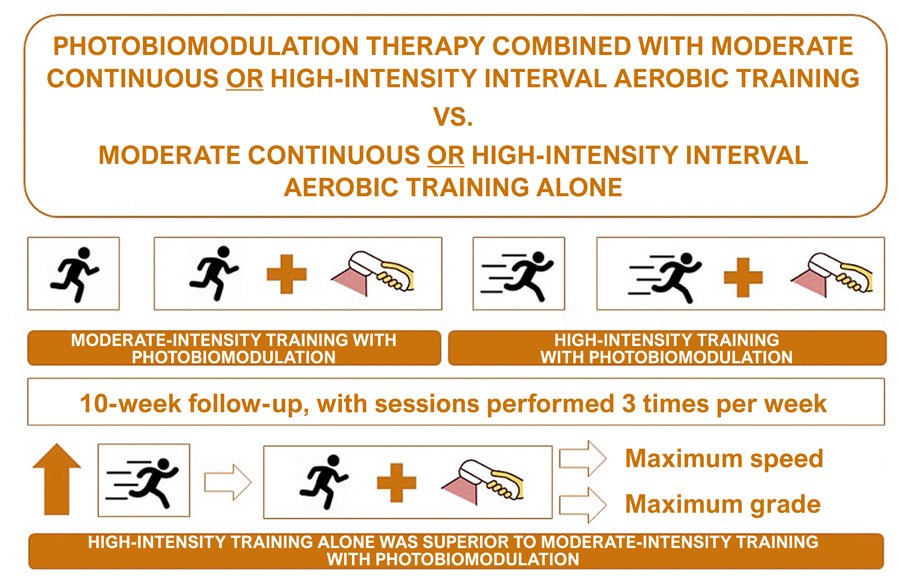
This nonrandomized clinical trial included 49 patients with HF (mean age 62.7 years; ejection fraction < 40%), allocated into 5 groups: i) moderate training alone, ii) moderate training + PBMT, iii) high-intensity training alone, iv) high-intensity training + PBMT, and iv) control group. All participants underwent a 10-week intervention. Cardiopulmonary exercise testing was used to assess VO2peak, ventilatory efficiency, and exercise tolerance. Statistical analysis was performed using Generalized Estimating Equations, with alpha set at 5% (p < 0.05).

Results

Significant improvements in speed and grade during the exercise test were observed in the training groups, particularly in the high-intensity training group. This group demonstrated a greater increase in oxygen consumption (mean difference: 1.80 ml.kg-1.min-1 ± 0.59 ml.kg-1.min-1; p = 0.002) and superior performance in time to exhaustion (speed: p = 0.05; grade: p < 0.01). Comparisons across groups revealed that PBMT did not provide any relevant additional effects when combined with training.

Conclusion

AT, especially at high intensity, enhances exercise performance in patients with HF. The addition of PBMT did not confer significant additional benefits in this study. Further trials using optimized PBMT protocols are warranted.

  • Endurance Training
  • Exercise Test
  • Insuficiência Cardíaca
  • Low-Level Light Therapy
Read Full Article
Creative Commons Attribution (CC BY) Creative Commons license
09/01/2026 DOI: 10.36660/abc.20250086i Views 1
Examining the Role of Exercise Training in Enhancing Life for Adult Congenital Heart Disease: Systematic Review
ABC
Original Article

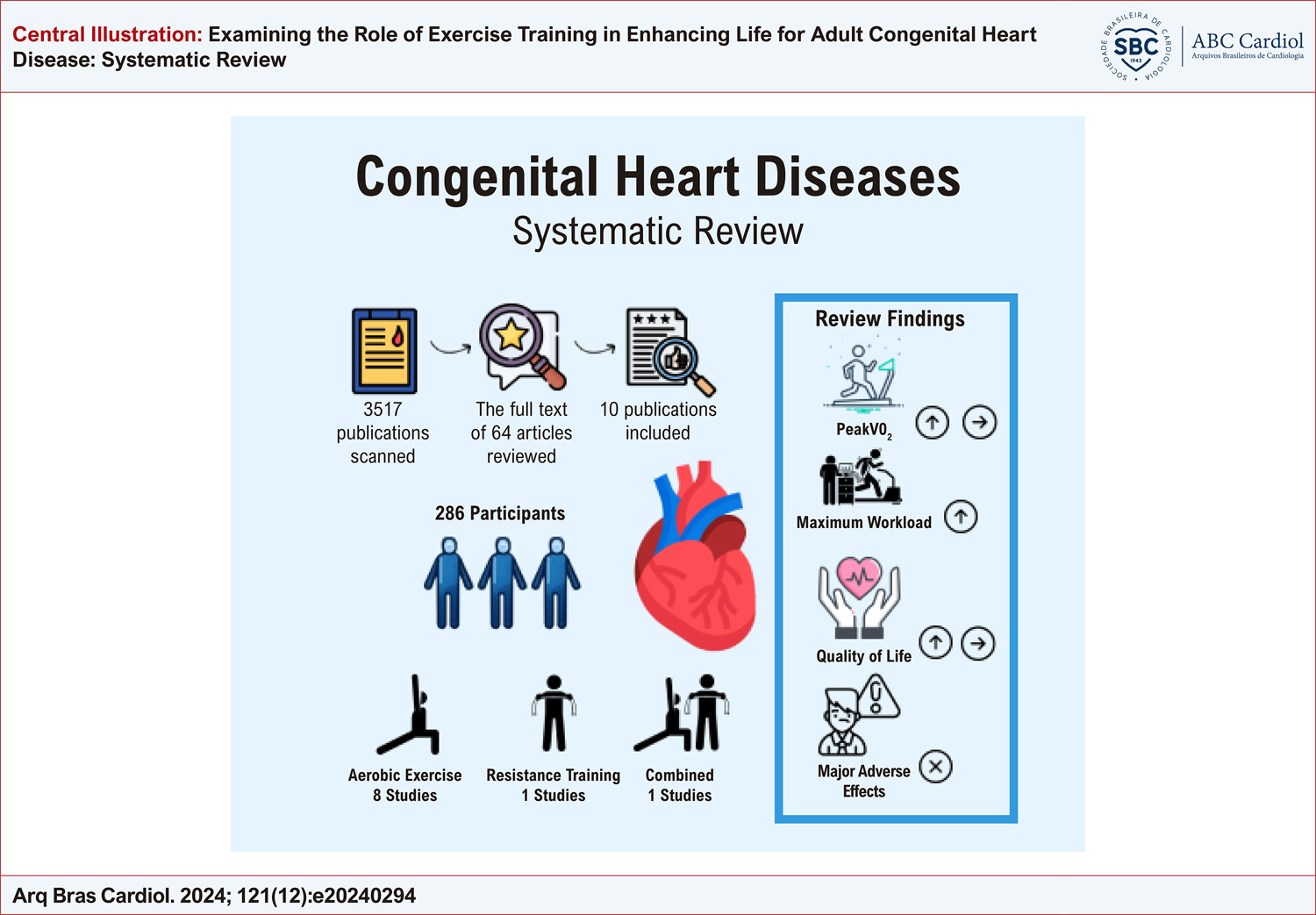
Examining the Role of Exercise Training in Enhancing Life for Adult Congenital Heart Disease: Systematic Review

Tugba Siyah et al. Naciye Vardar Yagli Ilker Ertugrul Hayrettin Hakan Aykan Melda Saglam

Abstract

Background

Current guidelines advise exercise for most congenital heart disease patients (CHD). However, physical activity remains low in CHD individuals, with limited research on exercise’s effects in adults.

Objectives

The aim of this study is to evaluate the safety and efficacy of exercise training on exercise capacity and quality of life in adult congenital heart disease (ACHD) patients.

Methods

We searched PubMed/Medline, Cochrane Library, Web of Science, and Scopus through December 2022 for randomized controlled trials assessing aerobic and resistance training effects on exercise capacity and quality of life in ACHD. Out of 3,517 citations, ten eligible articles were included.

Results

Meta-analysis of the included randomized controlled trials (286 participants) found no significant change in peak oxygen consumption or quality of life in ACHD with exercise training (pooled mean difference = 0.33 ml/kg/min [95% CI, -0.88 to 1.54 ml/kg/min]; p = 0.60; I2= 3%). However, the increase in maximum workload was significant (pooled mean difference = 8.86 watts [95% CI, 0.78 to 16.93], p = 0.03, I2 = 0%).

Conclusions

Our review confirms that exercise training increases the maximum workload in ACHD patients. However, the lack of a standardized protocol among exercise interventions in this population may have contributed to the absence of a significant change in peak VO2 and quality of life observed in the conducted studies. The heterogeneity of exercise programs could be a contributing factor to the inconsistency of the results. In this context, the implementation of standardized exercise protocols in future research, particularly with larger sample sizes, is crucial to enhance the comparability of outcomes. Well-designed randomized controlled trials studying structured exercise training in ACHD patients will provide clearer insights.

  • Congenital Heart Defects
  • Endurance Training
  • Exercise
  • Quality of life
Read Full Article
Creative Commons Attribution (CC BY) Creative Commons license
13/12/2024 DOI: 10.36660/abc.20240294i Views 1
Figure 1
ABC
Review Article

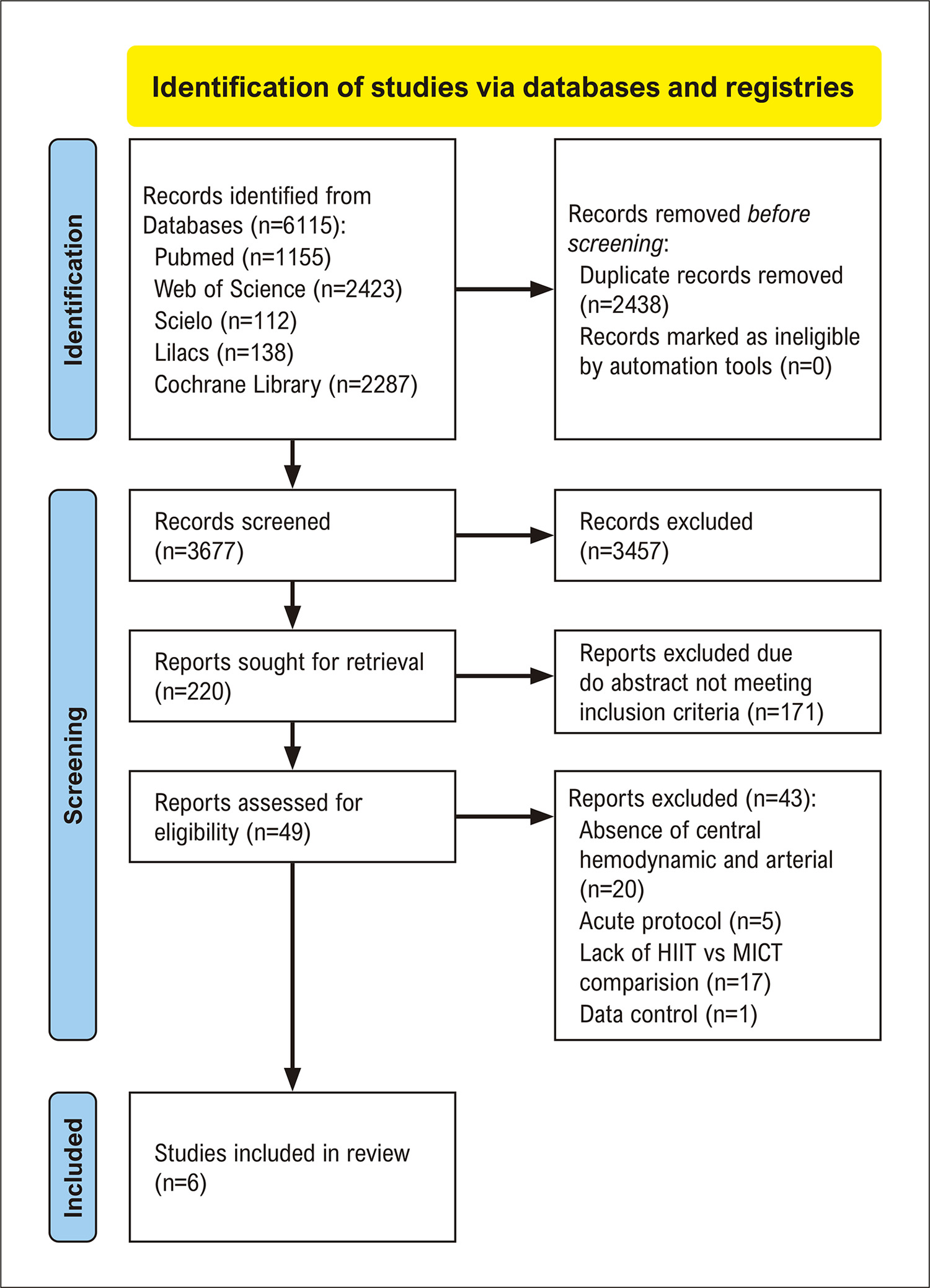
Effects of High-Intensity Interval Training on Central Blood Pressure: A Systematic Review and Meta-Analysis

Gustavo Henrique de Oliveira et al. Rogério Toshiro Passos Okawa Caroline Ferraz Simões João Carlos Locatelli … Victor Hugo de Souza Mendes Higor Barbosa Reck Wendell Arthur Lopes

Abstract

Central blood pressure (cBP) is considered an independent predictor of organ damage, cardiovascular events and all-cause mortality. Evidence has shown that high intensity interval training (HIIT) is superior to moderate-intensity continuous training (MICT) for improving cardiorespiratory fitness and vascular function. However, the effects of these aerobic training modalities on cBP have not yet been properly reviewed.This meta-analysis aims to investigate to effects of HIIT versus MICT on cBP.We conducted a meta-analysis of randomized controlled trials that compared HIIT versus MICT on cBP. Primary outcomes were measures of central systolic blood pressure (cSBP) and central diastolic blood pressure (cDBP). Peripheral systolic blood pressure (pSBP) and diastolic blood pressure (pDBP), pulse wave velocity (PWV) and maximal oxygen uptake (VO2max) were analyzed as second outcomes. Meta-analysis of mean differences (MD) was conducted using the random effects model.Our study included 163 patients enrolled in six trials. We found that HIIT was superior to MICT in reducing the cSBP (MD = -3.12 mmHg, 95% CI: -4.75 to -1.50, p = 0.0002) and SBP (MD = -2.67 mmHg, 95% CI: -5.18 to -0.16, p = 0.04), and increasing VO2max(MD = 2.49 mL/kg/min, 95% CI: 1.25 to 3.73, p = 0.001). However, no significant differences were reported for cDBP, DBP and PWV.HIIT was superior to MICT in reducing the cSBP, which suggests its potential role as a non-pharmacological therapy for high blood pressure.

  • Blood Pressure
  • Endurance Training
  • Hemodynamics
  • High-Intensity Interval Training
  • Vascular Stiffness
Read Full Article
Creative Commons Attribution (CC BY) Creative Commons license
21/04/2023 DOI: 10.36660/abc.20220398 Views 1
ABC
Editorial

Exercise Training and Endothelial Function in Hypertension: Effects of Aerobic and Resistance Training

Gustavo F. Oliveira et al. Thais C. Marin Cláudia L. M. Forjaz Leandro C. Brito

Hypertension is one of the most important risk factors for cardiovascular events, which is strongly related with endothelial dysfunction. Endothelial function assessed by flow-mediated dilation (FMD) is 3.2% lower in hypertensives than in normotensives. The negative balance between damage and regeneration of endothelial cells indicated by a high number of circulating endothelial microparticles (EMP) and reduced levels of endothelial progenitor cells (EPC) is predictor of cardiovascular events in hypertensives. Thus, therapies able to positively influence endothelial function are important to improve prognosis in hypertension.

Regular practice of exercise is recommended not only for the benefit of lowering blood pressure, but also for reducing cardiovascular morbidity and mortality in hypertensives. Important exercise-induced vascular adaptations, mainly resulting in increased endothelium-dependent vasodilation, may partially explain these exercise benefits. A previous meta-analysis showed positive effects of aerobic exercise on the endothelial function of hypertensives. However, the variation of results suggests that different exercise protocols (types and intensity) and subjects’ characteristics may influence the response of endothelial function to exercise training. In addition, the underlying mechanisms for endothelial improvement need to be known.

[…]

  • Endothelium, Vascular
  • Endurance Training
  • Exercise
  • Hypertension
  • Physical Resistance
Read Full Article
Creative Commons Attribution (CC BY) Creative Commons license
17/05/2021 DOI: 10.36660/abc.20210111 Views 2
Figure 1
ABC
Original Article

Walking Training Improves Ambulatory Blood Pressure Variability in Claudication

Marcel da Rocha Chehuen et al. Gabriel Grizzo Cucato Celso Ricardo Fernandes de Carvalho Antonio Eduardo Zerati … Anthony Leicht Nelson Wolosker Raphael Mendes Ritti-Dias Claudia Lucia de Moraes Forjaz

Background:

Walking training (WT) improves walking capacity and reduces clinic blood pressure (BP) in patients with peripheral artery disease (PAD), but its effects on ambulatory BP remains unknown.

Objective:

To investigate the effect of 12 weeks of WT on ambulatory BP and its variability in patients with PAD.

Methods:

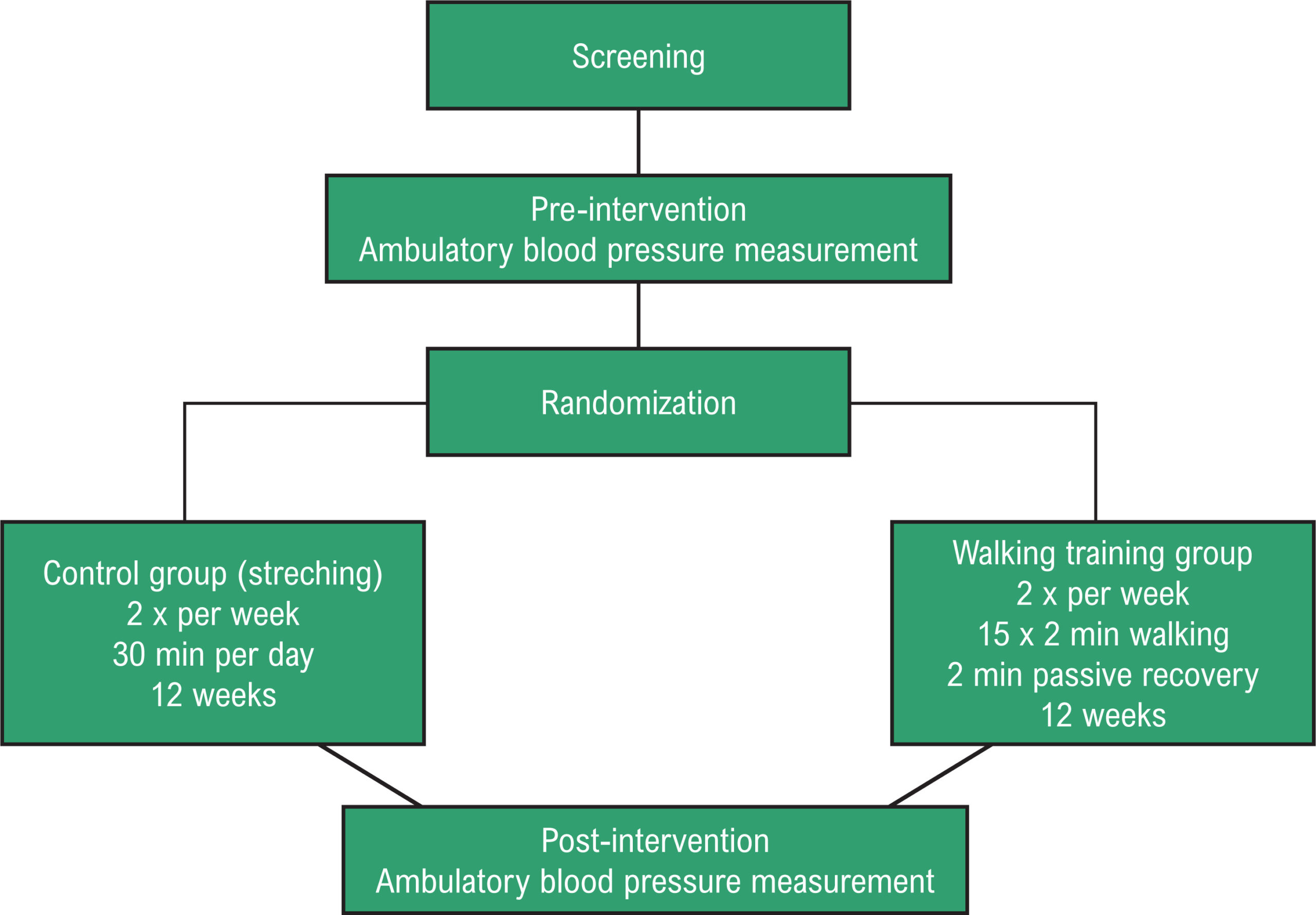
Thirty-five male patients with PAD and claudication symptoms were randomly allocated into two groups: control (n = 16, 30 min of stretching) and WT (n = 19, 15 bouts of 2 min of walking at the heart rate of leg pain threshold interspersed by 2 min of upright rest). Before and after 12 weeks, 24-hour ambulatory BP was assessed. Ambulatory BP variability indices assessed at both time points included the 24-hour standard deviation (SD24), the awake and asleep weighted standard deviation (SDdn), and the 24-hour average real variability (ARV24). Data were analyzed by mixed two-way ANOVAs, considering P<0.05 as significant.

Results:

After 12 weeks, neither group had significant changes in 24-hour, awake and sleep BPs. The WT decreased systolic and mean BP variabilities (Systolic BP – 13.3±2.8 vs 11.8±2.3, 12.1±2.84 vs 10.7±2.5 and 9.4±2.3 vs 8.8±2.2 mmHg); Mean BP – 11.0±1.7 vs 10.4±1.9, 10.1±1.6 vs 9.1±1.7 and 8.0.±1.7 vs 7.2±1.5 mmHg) for SD24, SDdn and ARV24, respectively). Neither group had significant changes in diastolic BP variabilities after 12 weeks.

Conclusions:

The WT does not change ambulatory BP levels but decreases ambulatory BP variability in patients with PAD. This improvement may have a favorable impact on the cardiovascular risk of patients with symptomatic PAD. (Arq Bras Cardiol. 2021; 116(5):898-905)

  • Blood Pressure
  • Blood Pressure Monitoring, Ambulatory
  • Endurance Training
  • Intermittent Claudication
  • Muscle Weakness
  • walking
Read Full Article
Creative Commons Attribution (CC BY) Creative Commons license
17/05/2021 DOI: 10.36660/abc.20190822 Views 1
Figure 1
ABC
Original Article

VO2max-Based Physical Fitness Categories in a Brazilian Population with Supposed High Socioeconomic Status and without Structural Heart Disease

João Manoel Rossi Neto et al. Antonio Sergio Tebexreni Alexandre Novakoski F. Alves Floriana Bertini Abreu … Priscilla Ayumi Nishio Mauricio Cruz Thomazi Ivana Antelmi Paola Emanuela P. Smanio

Abstract

Background

The most widely used data for cardiorespiratory fitness (CRF) referrals are from the Cooper Clinic, which uses calculated maximal oxygen uptake (VO2max) values.

Objective

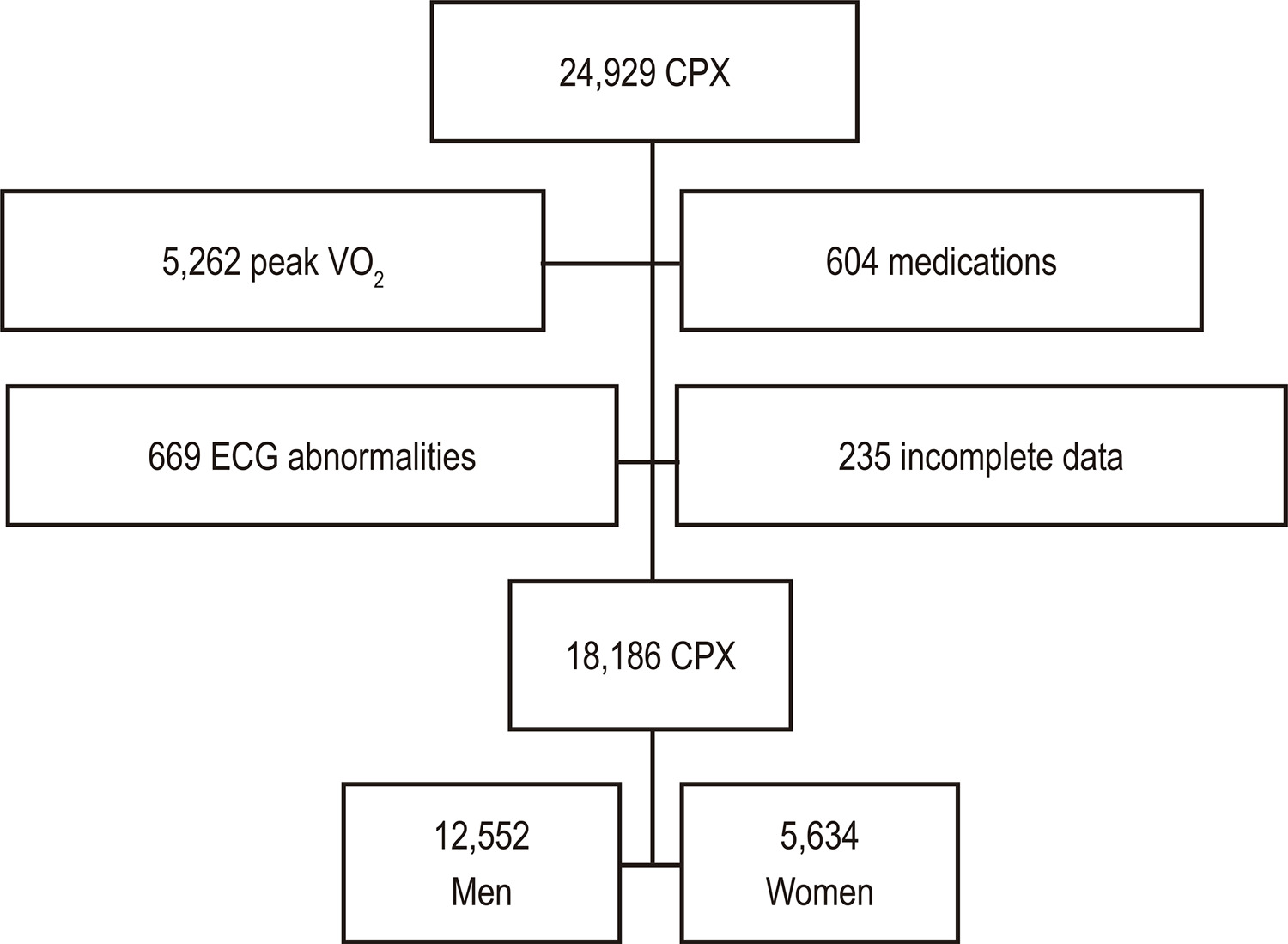
To develop CRF values from cardiopulmonary exercise testing (CPX) in a Brazilian population with high socioeconomic level and free of structural heart disease. VO2max testing results were compared with the Cooper Clinic and FRIEND Registry data.

Methods

CPX data from consecutive individuals between January 1,2000, and May 31,2016 were used in this study. Inclusion criteria were: VO2max by a pre-specified definition. We built a CRF chart according to VO2max percentiles: very poor (≤20%), poor (20-40%), fair (40-60%), good (60-80%), excellent (80-90%), and superior (≥90%). Kappa correlation was used to analyze our data in comparison with that of the other two databases. Statistical tests with p<0.005 were considered significant.

Results

Final cohort included 18,186 tests: 12,552 men, 5,634 women (7–84 years). The most recurrent response was “good” (20.2%). There was a mean difference in weight, height, body mass index (BMI), and age in the CRF chart. An inverse correlation existed between VO2max and age, weight, and BMI. Using a linear regression and these variables, a predictive equation was developed for VO2max. Our findings differed from that of the other databases.

Conclusion

We developed a classification for CRF and found higher values in all classification ranges of functional capacity in contrast to the Cooper Clinic and FRIEND Registry. Our findings offer a more accurate interpretation of ACR in this large Brazilian population sample when compared to previous standards based on the estimated VO2max. (Arq Bras Cardiol. 2020; 115(3):468-477)

  • Cooper Test
  • Endurance Training
  • Exercise
  • Life Style Healthy
  • Physical activity
  • Physical Endurance
  • Social Class
Read Full Article
Creative Commons Attribution (CC BY) Creative Commons license
28/09/2020 DOI: 10.36660/abc.20190189 Views 1
ABC
Editorial

Oxygen Consumption and Cardiorespiratory Fitness. The Difference between Chronological and Biological Age

Artur Haddad Herdy et al. Amberson Vieira Assis

Oxygen is undoubtedly one of the main elements for the life of an aerobic organism. Animals with more complex structures, including humans, developed oxidative metabolism in the evolutionary process as the main source of energy production. Therefore, our ability to consume and use oxygen represents our main power plant and is closely associated with our vitality. Its measurement should undoubtedly be considered as another vital sign. When assessing athletes or people with severe pathologies, oxygen consumption (VO2) is an important marker of performance or survival. VO2 also defines essential therapies in critically-ill patients with CHF. In a series of 715 patients referred for heart transplantation, the event-free survival, such as death and transplantation in one year, was 87% with VO2 > 14, 77% between 10.1 and 14, and 65% when VO2 ≤ 10 mL/kg.min., On the other hand, values above 20 mL/kg.min are considered to have a better prognosis and may continue with the pharmacological therapy.

Recently, in the current coronavirus-19 pandemic (Sars-CoV-2), the value of arterial oxygen levels showed to be an important tool in the assessment of the severity of these patients. In the initial cases of lung injury, patients were relatively well, despite oxygen desaturation, which is not very responsive to oxygen therapy, in a clear gap between the severity of hypoxemia and symptoms, which has been described as “Happy hypoxemia”. The early monitoring of oxygen saturation since the home phase allowed the anticipation of the dyspnea onset, which already represents an indication of the advanced stage of pulmonary impairment and the imminent need for oxygen supplementation and/or invasive ventilation.

[…]

  • Endurance Training
  • Exercise
  • Healthy Lifestyle
  • Motor Activity
  • Myocardial Ischemia/prevention and control
  • Physical Endurance
  • Sedentarism
  • Social Class
Read Full Article
Creative Commons Attribution (CC BY) Creative Commons license
18/09/2020 DOI: 10.36660/abc.20200648

How to cite this article

EndNote RIS

Electronic Document Format (Vancouver)

Rodrigues CIS, Forjaz CLM, Bortolotto LA, Nadruz W, Brandão AA. Reply to the Letter to the Editor: “Should Resistance Training Also Be Considered a Mandatory Component?”. Arquivos Brasileiros de Cardiologia 2026;123(6):e20260362.

Electronic Document Format (ABNT)

Rodrigues, Cibele Isaac Saad; Forjaz, Claudia Lucia de Moraes; Bortolotto, Luiz Aparecido; Nadruz, Wilson; Brandão, Andréa A.. Reply to the Letter to the Editor: “Should Resistance Training Also Be Considered a Mandatory Component?”. Arquivos Brasileiros de Cardiologia, v. 123, n. 6, e20260362, Jul. 2026.

Electronic Document Format (APA)

Rodrigues, C. I. S., Forjaz, C. L. M., Bortolotto, L. A., Nadruz, W., & Brandão, A. A. (2026). Reply to the Letter to the Editor: “Should Resistance Training Also Be Considered a Mandatory Component?”. Arquivos Brasileiros de Cardiologia, 123(6), e20260362.

Electronic Document Format (ISO)

Rodrigues, Cibele Isaac Saad and Forjaz, Claudia Lucia de Moraes and Bortolotto, Luiz Aparecido and Nadruz, Wilson and Brandão, Andréa A.. Reply to the Letter to the Editor: “Should Resistance Training Also Be Considered a Mandatory Component?”. Arquivos Brasileiros de Cardiologia [online]. 2026, vol. 123, n. 6, [cited 2026-10-14], e20260362. Available from: <https://journals.cardiol.br/en/article/reply-to-the-letter-to-the-editor-should-resistance-training-also-be-considered-a-mandatory-component/>. ISSN 0066-782X

EndNote RIS

Electronic Document Format (Vancouver)

Abrahin O. Should Resistance Training Also Be Considered a Mandatory Component?. Arquivos Brasileiros de Cardiologia 2026;123(1):e20250653.

Electronic Document Format (ABNT)

Abrahin, Odilon. Should Resistance Training Also Be Considered a Mandatory Component?. Arquivos Brasileiros de Cardiologia, v. 123, n. 1, e20250653, Feb. 2026.

Electronic Document Format (APA)

Abrahin, O. (2026). Should Resistance Training Also Be Considered a Mandatory Component?. Arquivos Brasileiros de Cardiologia, 123(1), e20250653.

Electronic Document Format (ISO)

Abrahin, Odilon. Should Resistance Training Also Be Considered a Mandatory Component?. Arquivos Brasileiros de Cardiologia [online]. 2026, vol. 123, n. 1, [cited 2026-10-14], e20250653. Available from: <https://journals.cardiol.br/en/article/should-resistance-training-also-be-considered-a-mandatory-component/>. ISSN 0066-782X

EndNote RIS

Electronic Document Format (Vancouver)

Busin D, Franzoni LT, Turella D, Tairova OS, Silveira AD, Stein R, Amorim GL, et al. Photobiomodulation Combined with Moderate or High-Intensity Interval Training on Oxygen Consumption and Exercise Tolerance in Patients with Heart Failure. Arquivos Brasileiros de Cardiologia 2026;122(11):e20250086.

Electronic Document Format (ABNT)

Busin, Diego; Franzoni, Leandro Tolfo; Turella, Douglas; Tairova, Olga Sergueevna; Silveira, Anderson Donelli da; Stein, Ricardo; Amorim, Gabriel Lopes; Lago, Pedro Dal; Nunes, Ramiro Barcos. Photobiomodulation Combined with Moderate or High-Intensity Interval Training on Oxygen Consumption and Exercise Tolerance in Patients with Heart Failure. Arquivos Brasileiros de Cardiologia, v. 122, n. 11, e20250086, Jan. 2026.

Electronic Document Format (APA)

Busin, D., Franzoni, L. T., Turella, D., Tairova, O. S., Silveira, A. D. , Stein, R., Amorim, G. L., Lago, P. D., & Nunes, R. B. (2026). Photobiomodulation Combined with Moderate or High-Intensity Interval Training on Oxygen Consumption and Exercise Tolerance in Patients with Heart Failure. Arquivos Brasileiros de Cardiologia, 122(11), e20250086.

Electronic Document Format (ISO)

Busin, Diego and Franzoni, Leandro Tolfo and Turella, Douglas and Tairova, Olga Sergueevna and Silveira, Anderson Donelli da and Stein, Ricardo and Amorim, Gabriel Lopes and Lago, Pedro Dal and Nunes, Ramiro Barcos. Photobiomodulation Combined with Moderate or High-Intensity Interval Training on Oxygen Consumption and Exercise Tolerance in Patients with Heart Failure. Arquivos Brasileiros de Cardiologia [online]. 2026, vol. 122, n. 11, [cited 2026-10-14], e20250086. Available from: <https://journals.cardiol.br/en/article/photobiomodulation-combined-with-moderate-or-high-intensity-interval-training-on-oxygen-consumption-and-exercise-tolerance-in-patients-with-heart-failure/>. ISSN 0066-782X

EndNote RIS

Electronic Document Format (Vancouver)

Siyah T, Yagli NV, Ertugrul I, Aykan HH, Saglam M. Examining the Role of Exercise Training in Enhancing Life for Adult Congenital Heart Disease: Systematic Review. Arquivos Brasileiros de Cardiologia 2024;121(12):e20240294.

Electronic Document Format (ABNT)

Siyah, Tugba; Yagli, Naciye Vardar; Ertugrul, Ilker; Aykan, Hayrettin Hakan; Saglam, Melda. Examining the Role of Exercise Training in Enhancing Life for Adult Congenital Heart Disease: Systematic Review. Arquivos Brasileiros de Cardiologia, v. 121, n. 12, e20240294, Dec. 2024.

Electronic Document Format (APA)

Siyah, T., Yagli, N. V., Ertugrul, I., Aykan, H. H., & Saglam, M. (2024). Examining the Role of Exercise Training in Enhancing Life for Adult Congenital Heart Disease: Systematic Review. Arquivos Brasileiros de Cardiologia, 121(12), e20240294.

Electronic Document Format (ISO)

Siyah, Tugba and Yagli, Naciye Vardar and Ertugrul, Ilker and Aykan, Hayrettin Hakan and Saglam, Melda. Examining the Role of Exercise Training in Enhancing Life for Adult Congenital Heart Disease: Systematic Review. Arquivos Brasileiros de Cardiologia [online]. 2024, vol. 121, n. 12, [cited 2026-10-14], e20240294. Available from: <https://journals.cardiol.br/en/article/examining-the-role-of-exercise-training-in-enhancing-life-for-adult-congenital-heart-disease-systematic-review/>. ISSN 0066-782X

EndNote RIS

Electronic Document Format (Vancouver)

Oliveira GH, Okawa RTP, Simões CF, Locatelli JC, Mendes VHS, Reck HB, Lopes WA, et al. Effects of High-Intensity Interval Training on Central Blood Pressure: A Systematic Review and Meta-Analysis. Arquivos Brasileiros de Cardiologia 2023;120(4):e20220398.

Electronic Document Format (ABNT)

Oliveira, Gustavo Henrique de; Okawa, Rogério Toshiro Passos; Simões, Caroline Ferraz; Locatelli, João Carlos; Mendes, Victor Hugo de Souza; Reck, Higor Barbosa; Lopes, Wendell Arthur. Effects of High-Intensity Interval Training on Central Blood Pressure: A Systematic Review and Meta-Analysis. Arquivos Brasileiros de Cardiologia, v. 120, n. 4, e20220398, Apr. 2023.

Electronic Document Format (APA)

Oliveira, G. H. , Okawa, R. T. P., Simões, C. F., Locatelli, J. C., Mendes, V. H. S., Reck, H. B., & Lopes, W. A. (2023). Effects of High-Intensity Interval Training on Central Blood Pressure: A Systematic Review and Meta-Analysis. Arquivos Brasileiros de Cardiologia, 120(4), e20220398.

Electronic Document Format (ISO)

Oliveira, Gustavo Henrique de and Okawa, Rogério Toshiro Passos and Simões, Caroline Ferraz and Locatelli, João Carlos and Mendes, Victor Hugo de Souza and Reck, Higor Barbosa and Lopes, Wendell Arthur. Effects of High-Intensity Interval Training on Central Blood Pressure: A Systematic Review and Meta-Analysis. Arquivos Brasileiros de Cardiologia [online]. 2023, vol. 120, n. 4, [cited 2026-10-14], e20220398. Available from: <https://journals.cardiol.br/en/article/effects-of-high-intensity-interval-training-on-central-blood-pressure-a-systematic-review-and-meta-analysis/>. ISSN 0066-782X

EndNote RIS

Electronic Document Format (Vancouver)

Oliveira GF, Marin TC, Forjaz CLM, Brito LC. Exercise Training and Endothelial Function in Hypertension: Effects of Aerobic and Resistance Training. Arquivos Brasileiros de Cardiologia 2021;116(5):948-9.

Electronic Document Format (ABNT)

Oliveira, Gustavo F.; Marin, Thais C.; Forjaz, Cláudia L. M.; Brito, Leandro C.. Exercise Training and Endothelial Function in Hypertension: Effects of Aerobic and Resistance Training. Arquivos Brasileiros de Cardiologia, v. 116, n. 5, p. 948-949, May. 2021.

Electronic Document Format (APA)

Oliveira, G. F., Marin, T. C., Forjaz, C. L. M., & Brito, L. C. (2021). Exercise Training and Endothelial Function in Hypertension: Effects of Aerobic and Resistance Training. Arquivos Brasileiros de Cardiologia, 116(5), 948-949.

Electronic Document Format (ISO)

Oliveira, Gustavo F. and Marin, Thais C. and Forjaz, Cláudia L. M. and Brito, Leandro C.. Exercise Training and Endothelial Function in Hypertension: Effects of Aerobic and Resistance Training. Arquivos Brasileiros de Cardiologia [online]. 2021, vol. 116, n. 5, [cited 2026-10-14], pp. 948-949. Available from: <https://journals.cardiol.br/en/article/exercise-training-and-endothelial-function-in-hypertension-effects-of-aerobic-and-resistance-training/>. ISSN 0066-782X

EndNote RIS

Electronic Document Format (Vancouver)

Chehuen MR, Cucato GG, Carvalho CRF, Zerati AE, Leicht A, Wolosker N, Ritti-Dias RM, et al. Walking Training Improves Ambulatory Blood Pressure Variability in Claudication. Arquivos Brasileiros de Cardiologia 2021;116(5):898-905.

Electronic Document Format (ABNT)

Chehuen, Marcel da Rocha; Cucato, Gabriel Grizzo; Carvalho, Celso Ricardo Fernandes de; Zerati, Antonio Eduardo; Leicht, Anthony; Wolosker, Nelson; Ritti-Dias, Raphael Mendes; Forjaz, Claudia Lucia de Moraes. Walking Training Improves Ambulatory Blood Pressure Variability in Claudication. Arquivos Brasileiros de Cardiologia, v. 116, n. 5, p. 898-905, May. 2021.

Electronic Document Format (APA)

Chehuen, M. R., Cucato, G. G., Carvalho, C. R. F. , Zerati, A. E., Leicht, A., Wolosker, N., Ritti-Dias, R. M., & Forjaz, C. L. M. (2021). Walking Training Improves Ambulatory Blood Pressure Variability in Claudication. Arquivos Brasileiros de Cardiologia, 116(5), 898-905.

Electronic Document Format (ISO)

Chehuen, Marcel da Rocha and Cucato, Gabriel Grizzo and Carvalho, Celso Ricardo Fernandes de and Zerati, Antonio Eduardo and Leicht, Anthony and Wolosker, Nelson and Ritti-Dias, Raphael Mendes and Forjaz, Claudia Lucia de Moraes. Walking Training Improves Ambulatory Blood Pressure Variability in Claudication. Arquivos Brasileiros de Cardiologia [online]. 2021, vol. 116, n. 5, [cited 2026-10-14], pp. 898-905. Available from: <https://journals.cardiol.br/en/article/walking-training-improves-ambulatory-blood-pressure-variability-in-claudication/>. ISSN 0066-782X

EndNote RIS

Electronic Document Format (Vancouver)

Rossi Neto JM, Tebexreni AS, Alves ANF, Abreu FB, Nishio PA, Thomazi MC, Antelmi I, et al. VO2max-Based Physical Fitness Categories in a Brazilian Population with Supposed High Socioeconomic Status and without Structural Heart Disease. Arquivos Brasileiros de Cardiologia 2020;115(3):468-77.

Electronic Document Format (ABNT)

Rossi Neto, João Manoel; Tebexreni, Antonio Sergio; Alves, Alexandre Novakoski F.; Abreu, Floriana Bertini; Nishio, Priscilla Ayumi; Thomazi, Mauricio Cruz; Antelmi, Ivana; Smanio, Paola Emanuela P.. VO2max-Based Physical Fitness Categories in a Brazilian Population with Supposed High Socioeconomic Status and without Structural Heart Disease. Arquivos Brasileiros de Cardiologia, v. 115, n. 3, p. 468-477, Sep. 2020.

Electronic Document Format (APA)

Rossi Neto, J. M., Tebexreni, A. S., Alves, A. N. F., Abreu, F. B., Nishio, P. A., Thomazi, M. C., Antelmi, I., & Smanio, P. E. P. (2020). VO2max-Based Physical Fitness Categories in a Brazilian Population with Supposed High Socioeconomic Status and without Structural Heart Disease. Arquivos Brasileiros de Cardiologia, 115(3), 468-477.

Electronic Document Format (ISO)

Rossi Neto, João Manoel and Tebexreni, Antonio Sergio and Alves, Alexandre Novakoski F. and Abreu, Floriana Bertini and Nishio, Priscilla Ayumi and Thomazi, Mauricio Cruz and Antelmi, Ivana and Smanio, Paola Emanuela P.. VO2max-Based Physical Fitness Categories in a Brazilian Population with Supposed High Socioeconomic Status and without Structural Heart Disease. Arquivos Brasileiros de Cardiologia [online]. 2020, vol. 115, n. 3, [cited 2026-10-14], pp. 468-477. Available from: <https://journals.cardiol.br/en/article/vo2max-based-physical-fitness-categories-in-a-brazilian-population-with-supposed-high-socioeconomic-status-and-without-structural-heart-disease/>. ISSN 0066-782X

EndNote RIS

Electronic Document Format (Vancouver)

Herdy AH, Assis AV. Oxygen Consumption and Cardiorespiratory Fitness. The Difference between Chronological and Biological Age. Arquivos Brasileiros de Cardiologia 2020;115(3):478-9.

Electronic Document Format (ABNT)

Herdy, Artur Haddad; Assis, Amberson Vieira. Oxygen Consumption and Cardiorespiratory Fitness. The Difference between Chronological and Biological Age. Arquivos Brasileiros de Cardiologia, v. 115, n. 3, p. 478-479, Sep. 2020.

Electronic Document Format (APA)

Herdy, A. H., & Assis, A. V. (2020). Oxygen Consumption and Cardiorespiratory Fitness. The Difference between Chronological and Biological Age. Arquivos Brasileiros de Cardiologia, 115(3), 478-479.

Electronic Document Format (ISO)

Herdy, Artur Haddad and Assis, Amberson Vieira. Oxygen Consumption and Cardiorespiratory Fitness. The Difference between Chronological and Biological Age. Arquivos Brasileiros de Cardiologia [online]. 2020, vol. 115, n. 3, [cited 2026-10-14], pp. 478-479. Available from: <https://journals.cardiol.br/en/article/oxygen-consumption-and-cardiorespiratory-fitness-the-difference-between-chronological-and-biological-age/>. ISSN 0066-782X

  • About ABC Family
  • Internal Regulation
  • Editorial Board
  • Brazilian Society of Cardiology (SBC)

Issues

SBC Guidelines

  • Videos
  • Podcasts
  • News