ABC Family Arquivos Brasileiros de Cardiologia International Journal of Cardiovascular Sciences ABC Heart Failure & Cardiomyopathy ABC Imagem Cardiovascular
Português English
ABC Family
Português English
  • About
    • About ABC Family
    • Internal Regulation
    • Editorial Board
    • Brazilian Society of Cardiology (SBC)
  • Issues
  • SBC Guidelines
  • Content
    • Videos
    • Podcasts
    • News
  • About
    • About ABC Family
    • Internal Regulation
    • Editorial Board
    • Brazilian Society of Cardiology (SBC)
  • Issues
  • SBC Guidelines
  • Content
    • Videos
    • Podcasts
    • News

ABC Family

  • ABC Family
  • Arquivos Brasileiros de Cardiologia
  • International Journal of Cardiovascular Sciences
  • ABC Heart Failure & Cardiomyopathy
  • ABC Imagem Cardiovascular
Search in

No content found.

Journals
Ordering
Article types
Others

  1. Home
  2. Keyword: Hypertension
ABC
Special Article

Cardiovascular Statistics – Brazil 2026

Gláucia Maria Moraes de Oliveira et al. Luisa Campos Caldeira Brant Carisi Anne Polanczyk Deborah Carvalho Malta … Andreia Biolo Bruno Ramos Nascimento Maria de Fatima Marinho de Souza Andrea Rocha De Lorenzo Antonio Aurélio de Paiva Fagundes Júnior Arthur Gus Manfro Beatriz D. Schaan Christina Grüne de Souza e Silva Fábio Morato de Castilho Fernando Henpin Yue Cesena Gabriel Porto Soares Gesner Francisco Xavier Junior Jose Augusto Soares Barreto Filho Lucia Campos Pellanda Luciana Nicolau Aranha Luis Eduardo Paim Rohde Luiz Guilherme Passaglia Marcelo Martins Pinto-Filho M. Julia Machline-Carrion Marcio Sommer Bittencourt Octavio M. Pontes Neto Paolo Blanco Villela Paulo Henrique Godoy Renato Azeredo Teixeira Ricardo Stein Roney Orismar Sampaio Thais Rocha Salim Thomas A. Gaziano Pablo Perel Gregory A. Roth Antonio Luiz Pinho Ribeiro

Cardiovascular Statistics – Brazil was established to provide a periodic, comprehensive, evidence-based assessment of cardiovascular health in Brazil and to support clinical practice, research, public health planning, and policy development. Developed under the auspices of the Brazilian Society of Cardiology, the initiative brings together a multidisciplinary network of investigators from academic institutions across the country who are responsible for reviewing, analyzing, and interpreting data from multiple complementary sources. Since its first edition in 2020, Cardiovascular Statistics – Brazil has sought not only to quantify the burden of cardiovascular diseases (CVDs) and their risk factors but also to identify temporal trends, regional disparities, gaps in care, and emerging challenges for the Brazilian health system. The project is modeled on international initiatives such as the American Heart Association’s Heart Disease and Stroke Statistics Update, while incorporating data sources and perspectives that reflect Brazil’s unique epidemiological, demographic, and healthcare characteristics.

(…)

  • Atrial Fibrillation
  • Atrial flutter
  • Brazil
  • Cardiomyopathies
  • Cardiovascular Diseases
  • Cerebrovascular Disorders
  • chronic renal insufficiency
  • Congenital Heart Defects
  • Coronary Disease
  • Diabetes Mellitus
  • Diet
  • Dyslipidemias
  • Exercise
  • Heart Failure
  • Heart Valve Diseases
  • Hypertension
  • Obesity
  • Overweight
  • Statistics
  • Tobacco Use Disorder
Read Full Article
Creative Commons Attribution (CC BY) Creative Commons license
07/10/2026 DOI: 10.36660/abc.20260832i Views 1
ABCHF
Viewpoint

The Adipokine Hypothesis: Does it Play a Major or Minor Role in HFpEF?

Luís Beck-da-Silva et al. Flávio D. Fuchs

We read with great interest the paper “The Adipokine Hypothesis of Heart Failure With a Preserved Ejection Fraction”.

The adipokine hypothesis explores biological mechanisms beyond the well-known risk factors for heart failure with preserved ejection fraction (HFpEF). The article presents a well-supported hypothesis based on data from bench research, animal studies, preclinical findings, and epidemiological evidence. The biological plausibility of the hypothesis is sound. However, certain considerations merit further discussion regarding the interpretation of HFpEF risk factors.

[…]

  • Diastolic Heart Failure
  • Heart Failure
  • Hypertension
  • Obesity
Read Full Article
Creative Commons Attribution (CC BY) Creative Commons license
29/09/2026 DOI: 10.36660/abchf.2060037i Views 2
IJCS
Letter to the Editor

Metabolic Challenges in The Semiarid Region: A Critical Analysis of Nutritional Transition and Early Cardiovascular Risk

Leonardo Alves Santos et al. Álvaro Eduardo Santos Oliveira Beatriz Vitória Carvalho Lordêlo Luis Antonio Cavalcanti Matias … Rodrigo Mendes Pedro Pereira Tenório

Dear Editor,

We had the opportunity to review the article entitled “Assessment of Overweight/Obesity and Elevation of Blood Pressure in Schools in Rural and Urban Area in the Backlands of Bahia.” We would like to congratulate the authors for their initiative in investigating a pediatric cohort in a region marked by social and climatic vulnerability, frequently underrepresented in scientific literature, as well as for highlighting the relevance of addressing childhood obesity and arterial hypertension – two major cardiovascular risk factors with direct impact on future morbidity and mortality.

[…]

  • Heart Disease Risk Factors
  • Hypertension
  • Metabolism
  • Obesity
Read Full Article
Creative Commons Attribution (CC BY) Creative Commons license
21/08/2026 DOI: 10.36660/ijcs.20260059 Views 2
Effects of Acupuncture on Arterial Hypertension and Endothelial Dysfunction: The AHEaD Trial
ABC
Original Article

Effects of Acupuncture on Arterial Hypertension and Endothelial Dysfunction: The AHEaD Trial

Amanda Rodrigues Bitencourt et al. Ana Luiza Lima Sousa Paulo Cesar B. Veiga Jardim Alexandre Massao Yoshizumi … Mikaelle Costa Correia Priscila Valverde de Oliveira Vitorino Sandro Rogério Rodrigues Batista Weimar Kunz Sebba Barroso

Abstract

Background

Sympathetic overactivity, oxidative stress, and impaired nitric oxide (NO)-mediated vasodilation are key mechanisms involved in the pathogenesis of hypertension. Acupuncture may decrease blood pressure by modulating autonomic nervous system activity, increasing NO bioavailability, attenuating sympathoexcitatory responses, and promoting vasodilation.

Objective

To evaluate whether acupuncture decreases peripheral systolic blood pressure (pSBP), peripheral diastolic blood pressure (pDBP), central systolic blood pressure (cSBP), central diastolic blood pressure (cDBP), and pulse wave velocity (PWV), and improves flow-mediated dilation (FMD).

Methods

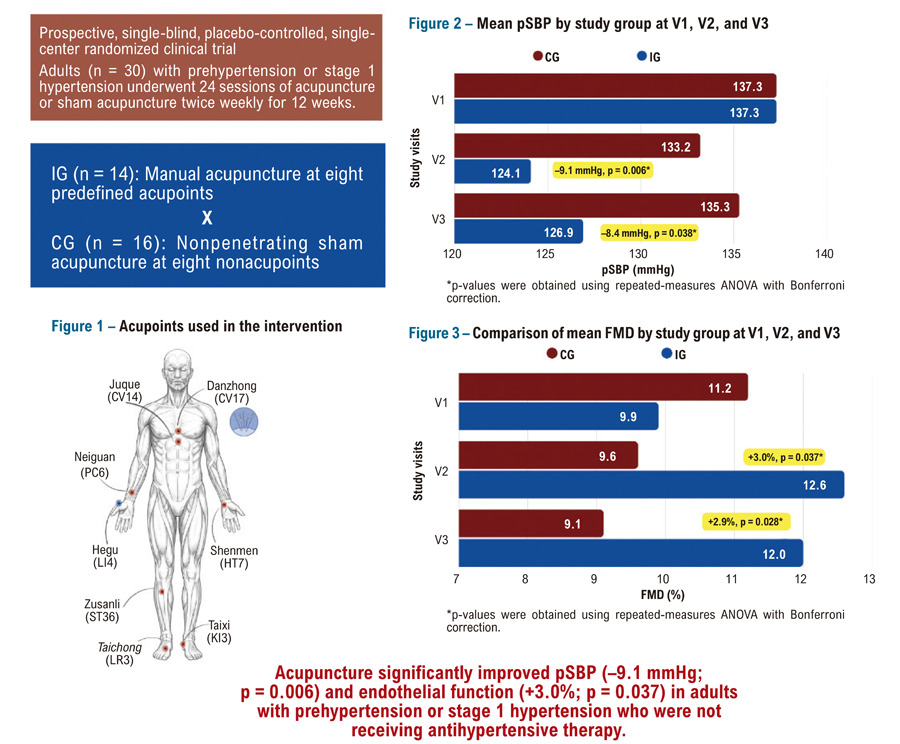
This prospective, single-blind, placebo-controlled, single-center randomized clinical trial included adults with prehypertension or stage 1 hypertension who were at low cardiovascular risk and were not receiving antihypertensive therapy. Participants were randomly assigned to an intervention group receiving manual acupuncture (n = 14) or a control group receiving nonpenetrating sham acupuncture (n = 16). Both groups underwent two 30-minute sessions per week for 12 weeks. The primary outcome was the between-group difference in pSBP measured at baseline (V1), after 12 weeks of treatment (V2), and at the 30-day end-study visit (V3). Statistical significance was defined as p < 0.05.

Results

Baseline characteristics were comparable between the groups. At V2, acupuncture decreased pSBP by 13.2 mmHg (p = 0.003) and increased FMD by 2.7% (p = 0.016). In the control group, pSBP decreased by 4.1 mmHg (p = 0.035), whereas FMD increased by 1.6% (p = 0.029). Compared with the control group, the intervention group demonstrated significantly greater improvements in pSBP (−9.1 mmHg, p = 0.006) and FMD (+3.0%, p = 0.037) at V2. These between-group differences remained significant at V3 (pSBP: −8.4 mmHg, p = 0.038; FMD: +2.9%, p = 0.028).

Conclusion

Acupuncture significantly improved endothelial function and decreased pSBP in adults with prehypertension or stage 1 hypertension who were not receiving antihypertensive therapy after 12 weeks of treatment.

  • Acupuncture
  • Hypertension
  • vascular endothelium
Read Full Article
Creative Commons Attribution (CC BY) Creative Commons license
17/08/2026 DOI: 10.36660/abc.20260462i Views 2
ABC
Letter to the Editor

Methodological Considerations on Ethno-Racial Disparities and Blood Pressure Control

Maikon Lucian Madeira Quarti et al. Arina Peixoto Nobre Gabriel Kaleb Martins

Dear Editor,

We read with interest the Original Article by Euzébio et al., “Comparison of Blood Pressure Values and Antihypertensive Medications Used in Non-Afro-Descendant and Afro-Descendant Brazilians with Hypertension”, published in the Arquivos Brasileiros de Cardiologia. The topic is relevant given the ethnic-racial inequalities in cardiovascular outcomes in Brazil. However, some methodological and analytical aspects deserve consideration.

[…]

  • Ethnicity
  • Health Status Disparities
  • Hypertension
  • Methodology as a Subject
Read Full Article
Creative Commons Attribution (CC BY) Creative Commons license
07/08/2026 DOI: 10.36660/abc.20260128i Views 2
Is Hypertension a Predictor of Mortality in People Living With HIV/AIDS?
IJCS
Original Article

Is Hypertension a Predictor of Mortality in People Living With HIV/AIDS?

Gustavo Eduardo Fante et al. Pedro Antonio Pagote Dall’Omo Karina Bobato do Valle Arcelio Benetoli … Jean Fernando Sandeski Zuber Camila Marineli Martins Erildo Vicente Muller

Abstract

Background:

Hypertension is a chronic non-communicable disease that increases cardiovascular risk and significantly contributes to mortality. It is one of the most prevalent conditions among people living with human immunodeficiency virus/acquired immunodeficiency syndrome (HIV/AIDS).

Objectives:

The objective of this study was to investigate hypertension as a predictor of mortality in people living with HIV/AIDS, analyzing the association of prior diagnosis of hypertension with morbidity and mortality in this population.

Methods:

This retrospective cohort study evaluated the medical records of 1207 patients receiving treatment at the Specialized Care Service (SAE) of a city in the state of Paraná over 264 months.

Results:

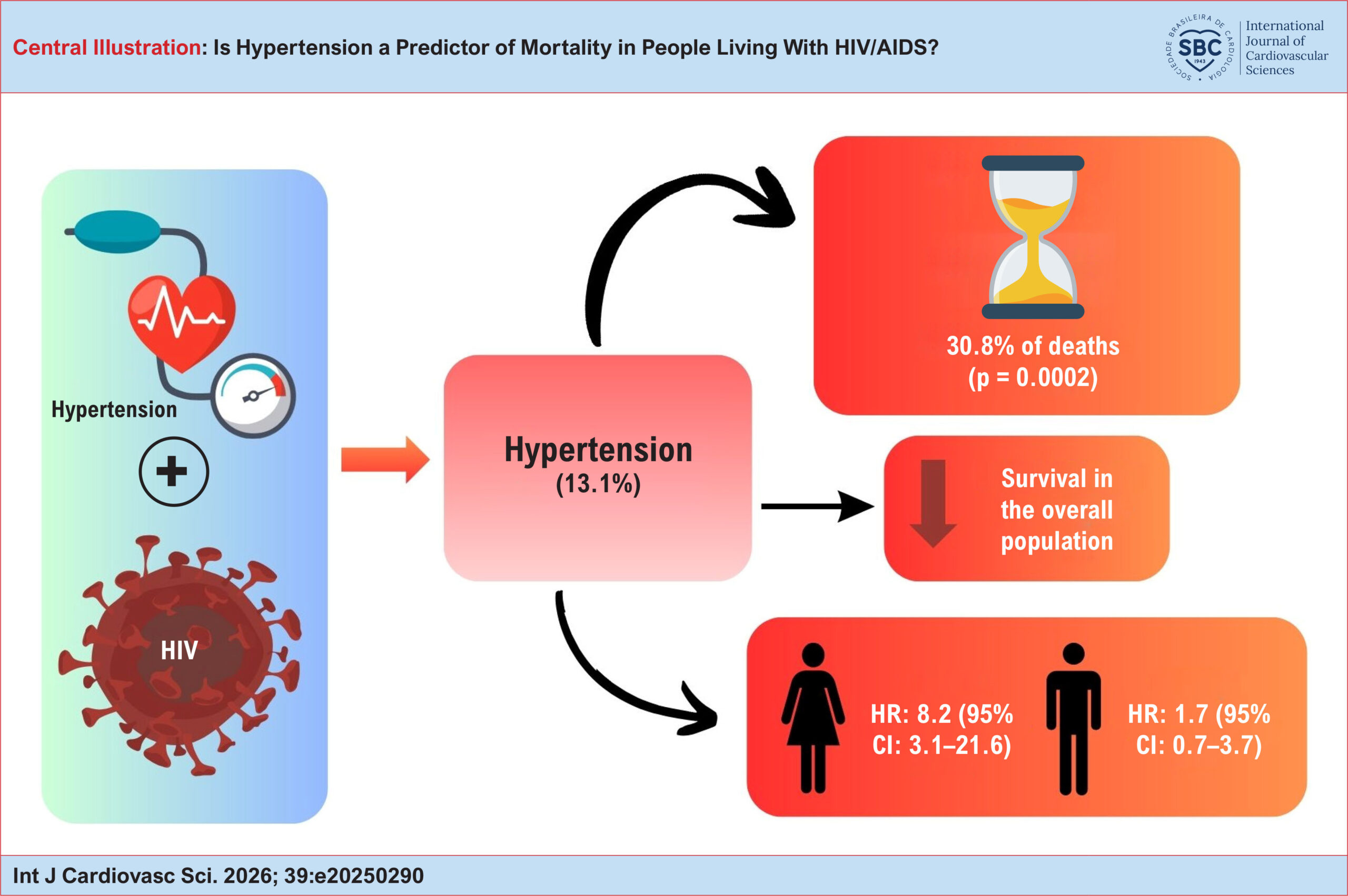
Among patients diagnosed with HIV/AIDS, 13.1% had hypertension. During the analyzed period, 52 deaths were recorded (4.31%), 30.77% of which occurred among patients with hypertension (p = 0.0002). Lower survival was observed among patients with hypertension (p < 0.0001), and mortality was significantly higher among women with hypertension (p < 0.0001). The hazard ratio (HR) for the general population was 3.1 (95% confidence interval [CI]: 1.7–5.6), with an HR of 1.7 for men (95% CI: 0.7–3.7) and 8.2 for women (95% CI: 3.1–21.6).

Conclusions:

Hypertension was a significant predictor of mortality in people living with HIV/AIDS, with a particularly strong impact among women.

  • Acquired Immunodeficiency Syndrome
  • Hypertension
  • Mortality
  • Survival
Read Full Article
Creative Commons Attribution (CC BY) Creative Commons license
07/08/2026 DOI: 10.36660/ijcs.20250290 Views 2
IJCS
Original Article

Epidemiological Profile of Arterial Hypertension in the Municipality of Rio de Janeiro, Brazil, 2011 and 2019

Catia Martins Cristina Oliveira et al. Anna Carolina Pinho da Silva Bianca Ramos Marins Silva Ana Clara Campos

Abstract

Background:

Cardiovascular diseases are currently the leading global cause of morbidity and premature mortality. High blood pressure is one of the precursors to the disease, which, when undetected, can lead to other serious complications such as thrombosis, acute myocardial infarction, and stroke.

Objective:

To analyze the profile of hypertension and associated factors in the municipality of Rio de Janeiro in the years 2011 and 2019.

Method:

This is a population-based cross-sectional study that used data from the Vigitel telephone survey implemented by the Ministry of Health. The eligible population was that of the municipality of Rio de Janeiro, aged eighteen or older, in 2011 and 2019. To analyze the association between the outcome and the independent variables, multivariate logistic regression was used, estimating the Odds Ratio and its respective 95% confidence intervals.

Results:

The predominant sociodemographic profile remained similar in 2011 and 2019: a majority of women, 18-39 years, and with 9-12 years of schooling. Education level in 2011 appeared as a protective factor among individuals with 12 or more years of schooling (OR: 0.64, 95% CI: 0.43; 0.97). Obese individuals had a 2.81- and 2.96-times greater chance, in 2011 and 2019, respectively, of reporting hypertension, compared to non-obese individuals.

Conclusion:

The study highlights the need to expand the healthcare network to implement more effective strategies that consider the determinants of hypertension in order to achieve a greater impact on the management and control of the disease.

  • Delivery of Health Care
  • Health Surveys
  • Hypertension
  • Risk Factors
Read Full Article
Creative Commons Attribution (CC BY) Creative Commons license
03/08/2026 DOI: 10.36660/ijcs.20240165
Protocol for a Structured, Health Policy and Systems–Oriented Scoping Review of Determinants of Single-Pill Combination Availability in Sub-Saharan Africa
IJCS
Original Article

Protocol for a Structured, Health Policy and Systems–Oriented Scoping Review of Determinants of Single-Pill Combination Availability in Sub-Saharan Africa

Milena Soriano Marcolino et al. Michelle Ralil da Costa Isabella Viana Gomes Schettini Mayank Dalakoti … Hueiming Liu Mundih Noelar Njohjam

Abstract

Background:

Although international guidelines recommend single-pill combinations (SPCs) as first-line therapy for hypertension, their availability and use remain limited. Evidence on access to essential medicines is largely not specific to SPCs, and the determinants influencing their availability are dispersed across heterogeneous sources that are not well captured by traditional systematic review approaches.

Objective:

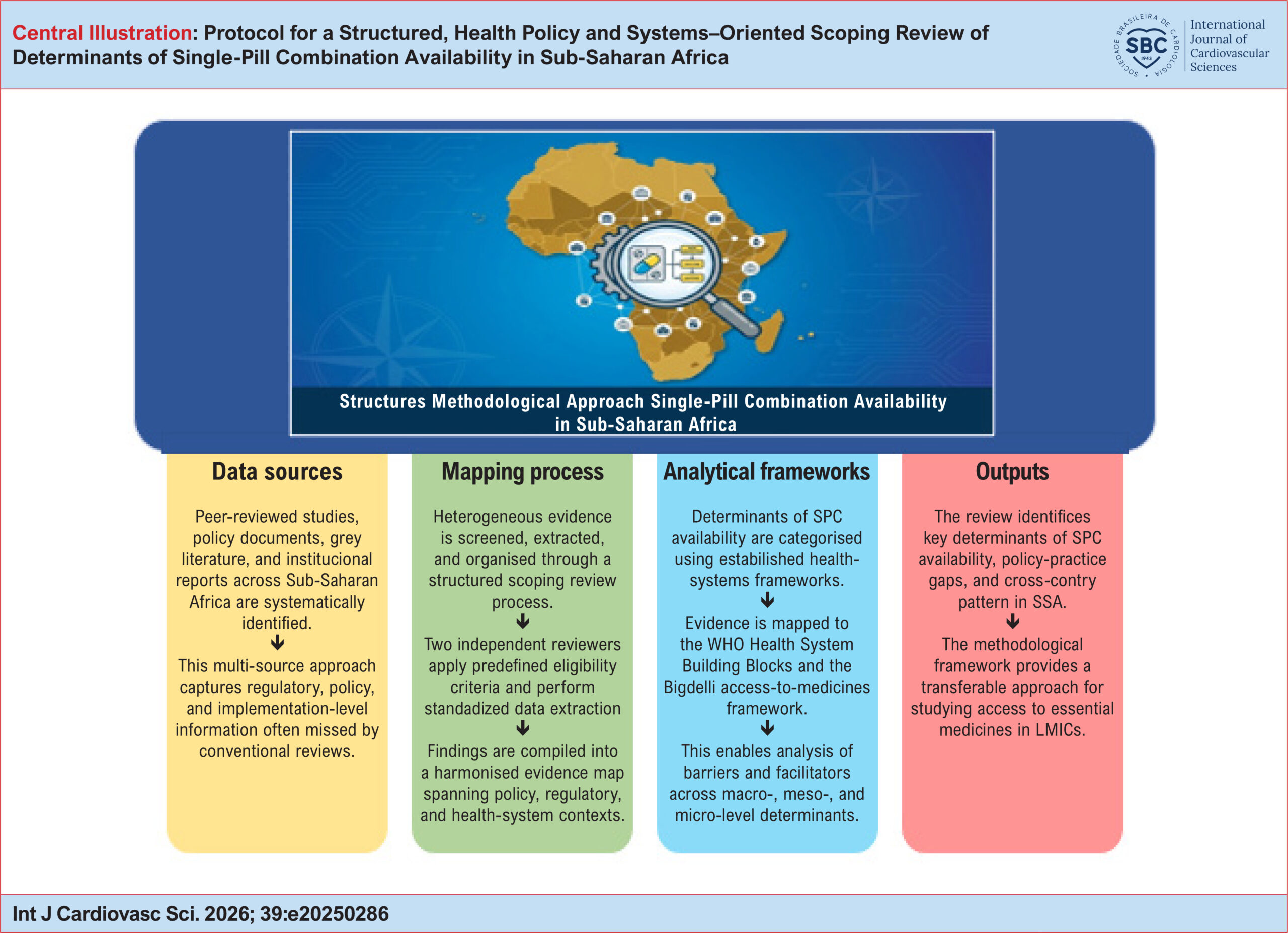
To describe the protocol for a structured, health policy and systems–oriented scoping review designed to map and synthesize the determinants of availability of antihypertensive SPCs in Sub-Saharan Africa (SSA) and to propose a transferable methodological framework applicable to other essential medicines and health system contexts.

Methods:

A comprehensive scoping review of peer-reviewed literature, grey literature, and policy documents will be conducted in accordance with the PRISMA extension for scoping reviews (PRISMA-ScR). Searches will be performed across bibliographic databases, government repositories, and relevant non governmental organization (NGO) sources. Eligible sources will include empirical studies, policy analyses, and institutional reports addressing SPC availability. Two independent reviewers will screen studies and extract data. Evidence will be synthesized narratively and mapped to the World Health Organization (WHO) Health System Building Blocks and the Bigdeli access-to-medicines framework.

Expected results:

The review will generate a structured mapping of regulatory, economic, health system, and sociocultural determinants influencing SPC availability in SSA and will identify key barriers, facilitators, and policy gaps relevant to hypertension management.

Conclusions:

This protocol outlines a replicable methodological approach for synthesizing heterogeneous evidence on access to essential medicines. The framework may be adapted to other therapeutic areas and low- and middle-income contexts, potentially supporting more informed policy and implementation decisions to reduce cardiovascular morbidity and mortality.

  • Africa South of the Sahara
  • Drug Combinations
  • Hypertension
Read Full Article
Creative Commons Attribution (CC BY) Creative Commons license
03/08/2026 DOI: 10.36660/ijcs.20250286 Views 2
ABC
Letter to the Editor

Reply to the Letter to the Editor: "Should Resistance Training Also Be Considered a Mandatory Component?"

Cibele Isaac Saad Rodrigues et al. Claudia Lucia de Moraes Forjaz Luiz Aparecido Bortolotto Wilson Nadruz Andréa A. Brandão

Resistance training (RT) is undoubtedly an essential component of a comprehensive exercise program for improving and maintaining physical fitness, global health, and quality of life. Aerobic, resistance, and stretching exercises performed together on a regular basis promote significant physiological, motor, cognitive, and emotional benefits and are recommended for adults and older adults.,

Although both aerobic training (AT) and RT have impacts on different health dimensions, there is high quality, robust evidence that RT is the most efficient mode of training for improving muscle structure and function, and it is mandatory for prevention and treatment of musculoskeletal diseases, making it particularly important for older adults.– On the other hand, evidence about the effects of RT on cardiovascular parameters and diseases is more recent and less robust.

[…]

  • Endurance Training
  • Hypertension
  • Physical Conditioning Human
  • Practice Guideline
  • Resistance Training
Read Full Article
Creative Commons Attribution (CC BY) Creative Commons license
27/07/2026 DOI: 10.36660/abc.20260362i Views 1
Figure 1
IJCS
Case Report

A Fixed-Dose Triple-Combination Therapy for the Initial Steps of Hypertension Treatment: Protocol for the NEXT Randomized Clinical Trial

Rogerio Orlow et al. Caroline Consuelo de Sousa Sayuri Inuzuka Audes Feitosa … Andréa Araujo Brandão Marco Mota Gomes Vanildo da Silva Guimarães Neto Elizabeth do Espírito Santo Cestario Eduardo Costa Duarte Barbosa Rodrigo Bezerra Mayara Cedrim Santos Ana Luiza Lima Sousa Sandro Rodrigues Batista Priscila Valverde de Oliveira Vitorino Weimar Kunz Sebba Barroso

Introduction

Complications from arterial hypertension account for an estimated 18 deaths per minute worldwide, establishing it as the second leading risk factor for global mortality. Between 1990 and 2019, the number of adults with arterial hypertension doubled from 650 million to 1.3 billion. Of these, only 54% are diagnosed, 42% are treated, and a mere 21% of those treated achieve adequate blood pressure (BP) control.

Although effective BP control often requires the use of multiple drugs, monotherapy remains a predominant initial approach to arterial hypertension management globally, which limits the timely achievement of therapeutic goals. This is significant because even modest reductions in systolic BP of 5 mmHg are associated with an approximate 10% reduction in the risk of major cardiovascular events, irrespective of pre-existing cardiovascular disease.

[…]

  • Cardiology
  • Cardiovascular Diseases
  • Hypertension
  • Randomized Controlled Trial
Read Full Article
Creative Commons Attribution (CC BY) Creative Commons license
24/07/2026 DOI: 10.36660/ijcs.20260025 Views 2
ABC
Letter to the Editor

Hypertension in Indigenous Populations: Diagnostic Challenges and Nuances of the Epidemiological Transition

Letícia Lemos Belo et al. Maria Clara Gomes Pontes Thalisson Gonçalves Almeida Tales Gabriel Ferro de Oliveira Pedro Pereira Tenório

Dear editor,

We are submitting this letter to offer our considerations on the relevant article entitled: “Prevalence of Systemic Arterial Hypertension and Associated Factors in Indigenous People Attended at a Specialized Outpatient Clinic in Southern Brazil”. The study addresses a critical gap in the epidemiological knowledge of the native populations of the Southern region, offering valuable insight into the epidemiological transition affecting them. The work stands out for its social and technical importance in filling a data void on indigenous people in Southern Brazil, a group that faces unique challenges in accessing healthcare and preserving their culture.

[…]

  • Health of Indigenous Peoples
  • Health Profile
  • Hypertension
  • Indigenous Peoples
  • Risk Factors
Read Full Article
Creative Commons Attribution (CC BY) Creative Commons license
20/07/2026 DOI: 10.36660/abc.20260138i Views 2
ABC
Editorial

Reduction of Salt in the Diet and Improvement in Blood Pressure: Low Cost, Robust Evidence, and Challenges in Implementation

Paulo César B. Veiga Jardim

We must see the topic of “reducing salt in the diet and its benefits on blood pressure” addressed technically, thereby reinforcing the evidence of the positive results of this practice, which are always demonstrated but almost never effectively adopted.

First, let us focus on the excellent work by Kelly et al. From a quality standpoint, this is a Systematic Review and Meta-Analysis conducted with extremely careful methodology, making this article yet another reference on this crucial topic. The care taken by the authors ensures the reliability of the results, which demonstrate, once again, that reducing sodium intake effectively affects blood pressure in a manner equivalent to the use of an antihypertensive drug. The authors, elegantly concluding this finding, are also careful to point out that more information is needed in this regard, with larger studies, over longer periods, and demonstrating benefits in blood pressure control and cardiovascular outcomes.

[…]

  • Arterial Pressure
  • Dietary Sodium Chloride
  • Hypertension
Read Full Article
Creative Commons Attribution (CC BY) Creative Commons license
15/06/2026 DOI: 10.36660/abc.20260262i Views 2
Figure 1
ABC
Editorial

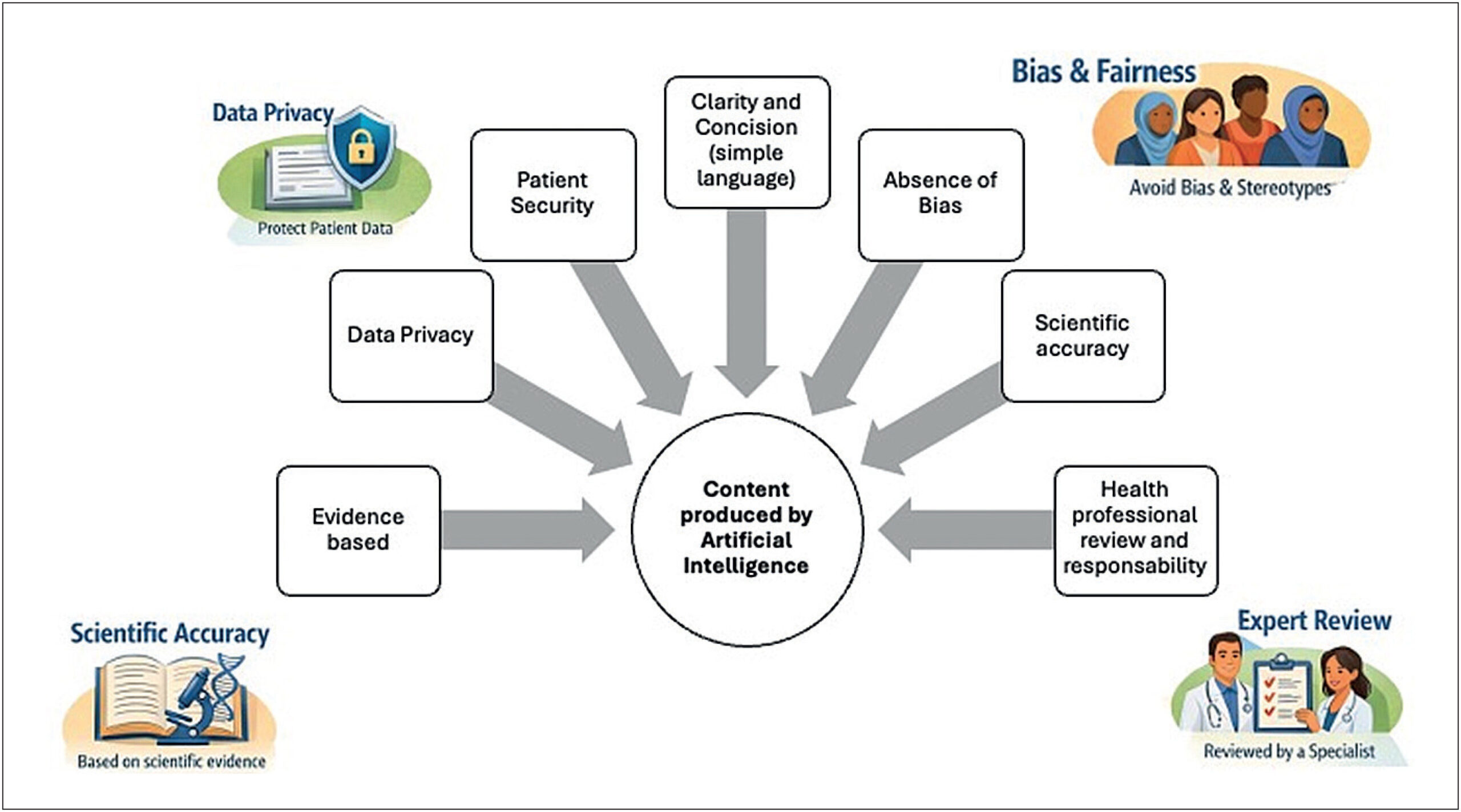
Validating Artificial Intelligence before the Bedside: ChatGPT-4 vs Mini in Guideline-Based Hypertension Content

Cláudio Tinoco Mesquita et al. Fernanda Azevedo Silva Ana Beatriz Costa do Couto

The rapid integration of artificial intelligence (AI) into medical practice is a reality. From clinical decision support and study design to chatbot tools and the production of educational materials, large language models (LLMs) are increasingly used in daily practice. In this context, studies like the study of Ataídes et al., evaluating the performance of LLM-based materials, are crucial.

Hypertension is one of the leading causes of premature death; therefore, the World Health Organization (WHO) invests in prevention campaigns. It is a disease that affects multiple organs, causing a major impact on the entire body. The condition is defined by a systolic blood pressure (BP) of 140 mmHg or higher, or a diastolic BP of 90 mmHg, according to Brazilian Society of Cardiology guidelines. The number of individuals diagnosed with hypertension increases each year, and studies indicate that the population’s eating habits are characterized by high consumption of ultra-processed foods.

[…]

  • Artificial Intelligence
  • ChatGPT
  • Clinical Guidelines
  • Hypertension
  • validation
Read Full Article
Creative Commons Attribution (CC BY) Creative Commons license
05/06/2026 DOI: 10.36660/abc.20260254i Views 4
Protocol for Improving Hypertension and Diabetes Control Through Lifestyle Intervention in a Cluster Randomized Clinical Trial
IJCS
Original Article

Protocol for Improving Hypertension and Diabetes Control Through Lifestyle Intervention in a Cluster Randomized Clinical Trial

Daisy Motta-Santos et al. Thiago Barbabela de Castro Soares Maria Cecília Ramos de Carvalho Regina Márcia Faria de Moura … Sueli Ferreira da Fonseca Larissa Morelli Ferraz Guimarães Reginaldo Gonçalves Clara Rodrigues Alves de Oliveira Aline Cristine Souza Lopes Milena Soriano Marcolino

Abstract

Background:

Hypertension and Diabetes Mellitus (DM) are prevalent chronic conditions and major risk factors for cardiovascular diseases. Adequate control of these conditions is challenging, and lifestyle changes are crucial to achieving better management.

Objectives:

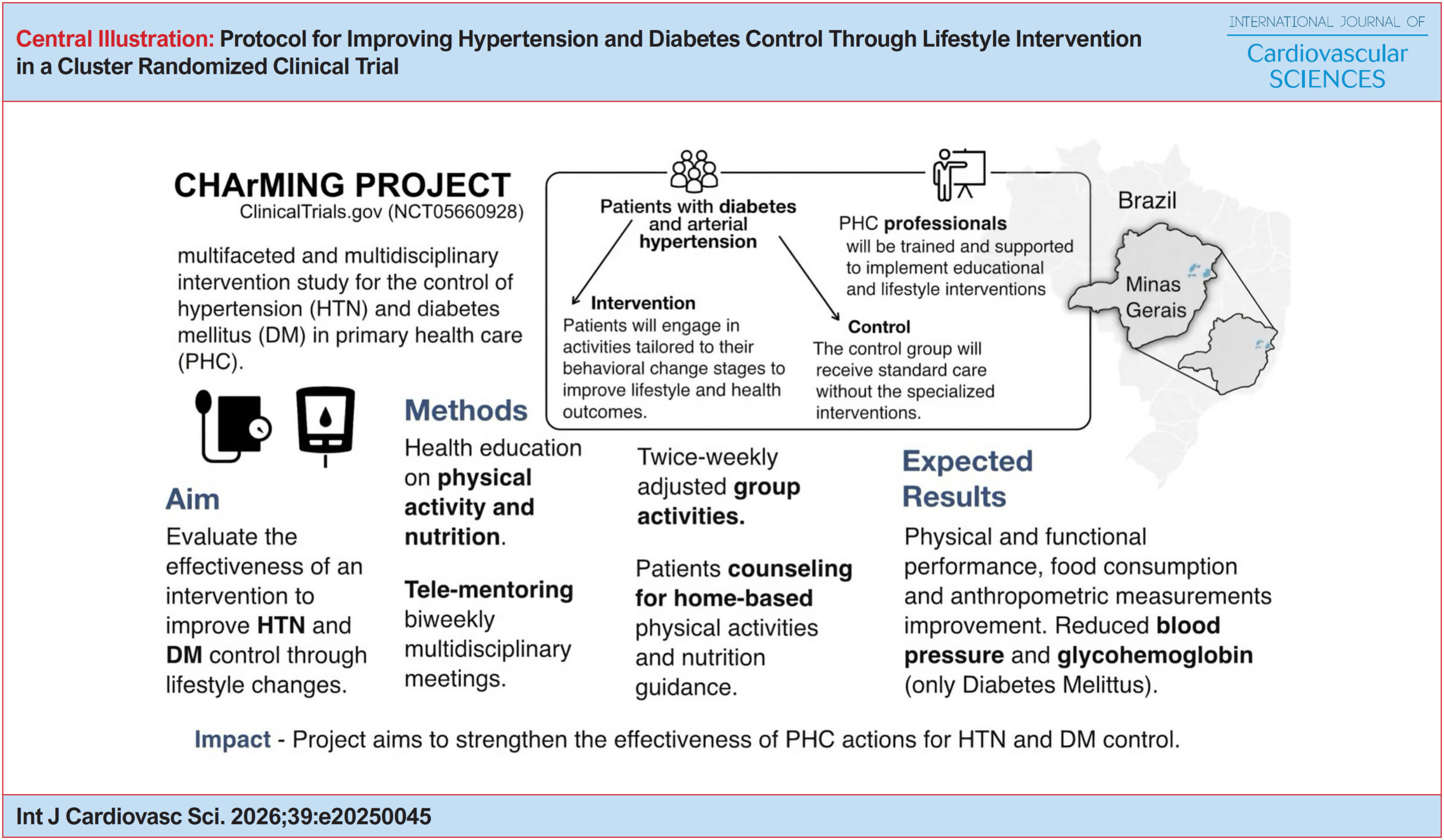
To evaluate the effectiveness of a multifaceted and multidisciplinary intervention to improve the control of hypertension and DM in the primary care setting.

Methods:

This cluster randomized clinical trial focuses on lifestyle modifications for managing hypertension and DM, addressing gaps in current non-pharmacological interventions. Primary care professionals are trained to promote health education on physical activity and nutrition. Support is provided through a telementoring program, including messaging app communication, biweekly online meetings (teletutoring), and asynchronous teleconsultations. Primary care professionals conduct twice-weekly group activities with structured intensity adjustments and biweekly health education sessions using interactive methods like conversations, games, and group dynamics. For patients unable to join group activities, brief counseling and guidance on unsupervised physical activity are offered.

Results:

The primary outcomes are blood pressure and glycated hemoglobin values. The innovative intervention program aims to empower primary care professionals and reduce barriers to care through lifestyle changes, improved health education, and support systems for both supervised and unsupervised interventions. Conclusions: Supporting primary care professionals through education and remote assistance can enhance the effectiveness of lifestyle interventions, contributing significantly to the control of hypertension and DM in primary care settings. Trial registration: Previously registered with .

  • Exercise
  • Glycemic Control
  • Healthy Diet
  • Hypertension
  • Primary Health Care
Read Full Article
Creative Commons Attribution (CC BY) Creative Commons license
01/06/2026 DOI: 10.36660/ijcs.20250045 Views 1
Efficacy of a Salt Substitute on the Incidence of Hypertension: A Systematic Review with Meta-Analysis
ABC
Original Article

Efficacy of a Salt Substitute on the Incidence of Hypertension: A Systematic Review with Meta-Analysis

Francinny Alves Kelly et al. Clara Rocha Dantas Luis Eduardo Rodrigues Sobreira Artur Menegaz de Almeida … Fernando Baía Bezerra Márcio Gonçalves de Sousa Fernanda Consolim Antonio Gabriele Laurinavicius

Abstract

Background

A potassium-enriched salt substitute, in which part of sodium chloride is replaced with potassium chloride, has shown considerable potential as a population-level strategy to reduce sodium intake and prevent cardiovascular disease. In recent years, research has focused primarily on individuals with hypertension, demonstrating that salt substitutes can influence blood pressure (BP).

Objective

To perform a meta-analysis quantifying the magnitude of BP reduction in patients with hypertension using regular salt compared with those using a salt substitute.

Methods

PubMed, Scopus, and Web of Science were searched for randomized controlled trials (RCTs) comparing regular salt with a salt substitute. Mean differences (MD) with 95% CIs were calculated using a random-effects model. Heterogeneity was assessed using the I2 statistic. A p-value < 0.05 was considered statistically significant.

Results

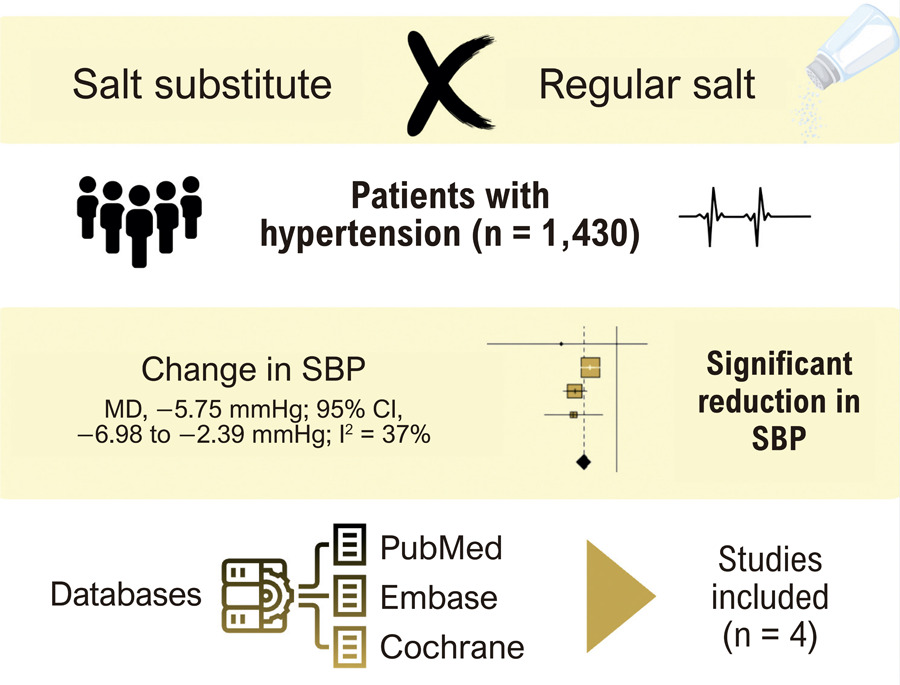
Four RCTs involving 1,430 participants were included, of whom 725 (49.57%) received the salt substitute. The use of a salt substitute was associated with a significant reduction in systolic BP (SBP) (MD, −5.75 mmHg; 95% CI, −6.98 to −2.39 mmHg; I2 = 37%; p < 0.01) and a significant reduction in diastolic BP (DBP) (MD, −1.62 mmHg; 95% CI, −2.34 to −0.91 mmHg; I2 = 0%; p < 0.001).

Conclusion

In patients with hypertension, the use of a salt substitute is associated with a significant reduction in both SBP and DBP compared with regular salt.

  • Arterial Pressure
  • Cardiovascular Diseases
  • Hypertension
Read Full Article
Creative Commons Attribution (CC BY) Creative Commons license
01/05/2026 DOI: 10.36660/abc.20250440i Views 2
Figure 1
IJCS
Editorial

The Relationship Between Obesity and the Risk of Systemic Arterial Hypertension in Children and Adolescents: Lessons Learned

John Jairo Araujo

One out of five children around the world is overweight or obese. This is shown in the meta-analysis published by Zhang X et al. in 2024, which included 2,033 studies from 154 different countries or regions. Although the prevalence of childhood obesity varies between global regions, it is evident that its incidence is growing significantly. According to the latest United Nations International Children’s Emergency Fund (UNICEF) and World Bank estimates, 33.6% of children and adolescents 5-19 years old are affected by overweight or obesity, as are 8% of children under the age of five. Recently, Muyulema SL et al. published the results of global childhood overweight and obesity trends over the last 20 years. In this study, they analyzed 194 countries around the world, showing that the global prevalence of childhood overweight and obesity increased from 5.4% to 5.7% between 2000 and 2022.

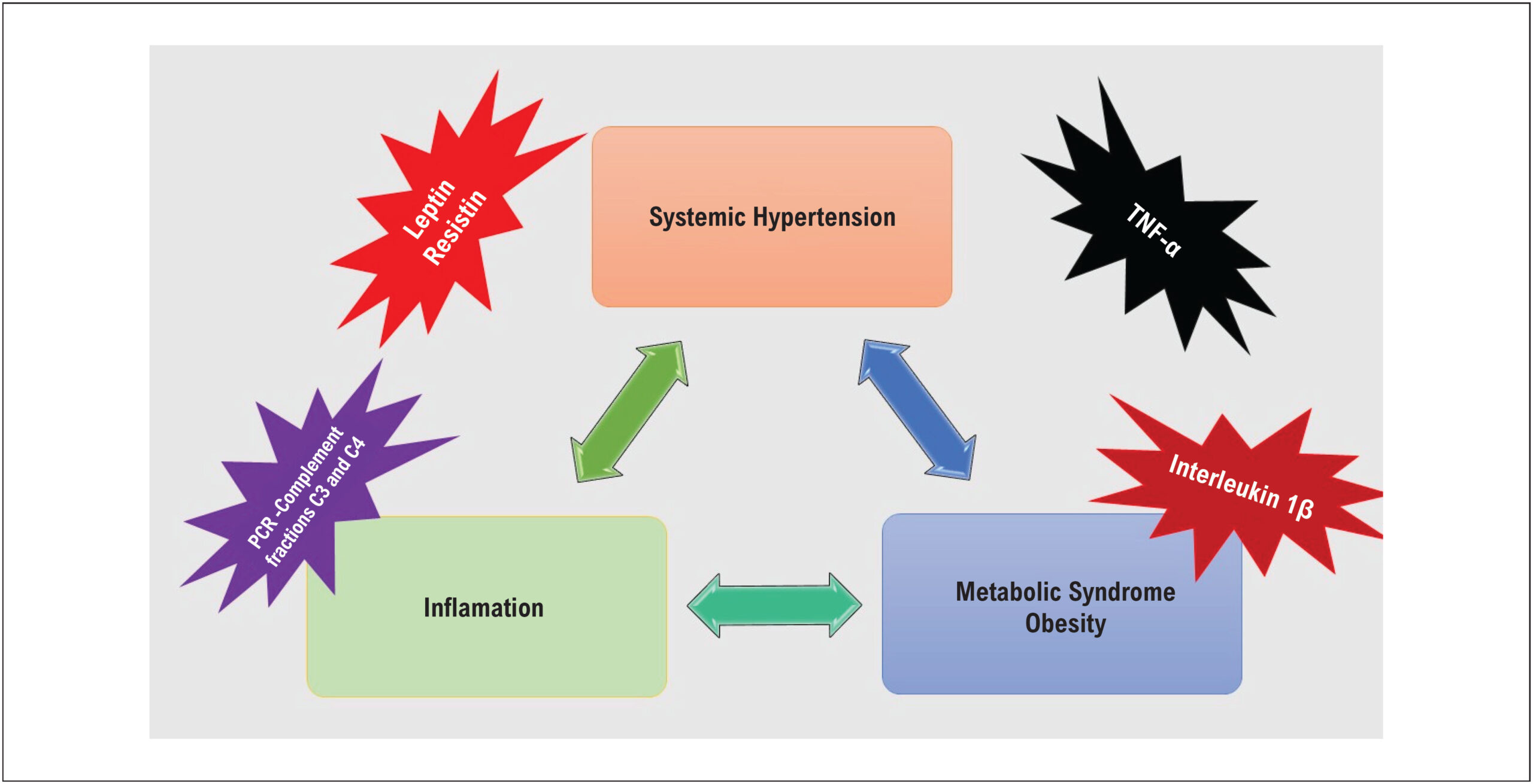
Inflammation, Metabolic Syndrome and Systemic Hypertension: “a dangerous and synergistic triad”: Metabolic Syndrome (MS) has been well defined in adults, and includes various conditions like Systemic Arterial Hypertension (SAH), elevated fasting blood sugar levels (greater than 100 mg/dl) or type 2 diabetes mellitus, low HDL cholesterol levels (less than 40 mg/dl in men or 50 mg/dl in women), high triglyceride concentrations (greater than 150 mg/dl), and a waist circumference greater than 101 cm (men) or 90 cm (women). It is not clearly defined in children, due to the imprecision of the various factors that compose it and the changes in different stages of life. However, risk factors like obesity, increased waist circumference (increased visceral fat), insulin resistance, and, in certain cases, lipid profile abnormalities, are compatible with MS, especially in children over the age of 10.

[…]

  • Child
  • Hypertension
  • Obesity
  • Risk Factors
Read Full Article
Creative Commons Attribution (CC BY) Creative Commons license
27/04/2026 DOI: 10.36660/ijcs.20250178 Views 2
ABC
Editorial

Beyond the Scale: Obesity as a Structural Driver of Refractory Hypertension

Eduardo Tibirica

Arterial hypertension remains a global challenge, yet its extreme phenotypes—Resistant Hypertension (RAH) and Refractory (RefH) Hypertension—represent the forefront of cardiovascular risk. While RAH involves uncontrolled blood pressure (BP) despite three drug classes, RefH is its most severe manifestation, defined by failure with five or more drugs. In Brazil, RAH is highly prevalent; the ELSA-Brasil study reported an 11% prevalence among treated patients, with higher risks for older, Black, and obese individuals.

Expanding this landscape, Costa et al. provide a timely analysis of a high-complexity cohort. Their findings reveal a striking correlation between body mass index and pharmacological burden (r = 0.45; p < 0.01). This "dose-response" relationship suggests that in obese individuals, the "ceiling effect" of conventional therapy is reached sooner, necessitating an escalation of polypharmacy. Furthermore, by focusing on a cohort predominantly composed of Afro-descendant women over 60 years of age, the authors address a critical gap regarding vulnerable groups often underrepresented in clinical research.

[…]

  • Arterial Pressure
  • Hypertension
  • Obesity
Read Full Article
Creative Commons Attribution (CC BY) Creative Commons license
20/04/2026 DOI: 10.36660/abc.20260139i
Childhood Obesity and Systemic Arterial Hypertension in Children and Adolescents: A Cross-Sectional Study
IJCS
Original Article

Childhood Obesity and Systemic Arterial Hypertension in Children and Adolescents: A Cross-Sectional Study

Rafaella Farias da Franca Almeida et al. Lívia Menezes Escorel Letícia Odete Guedes de Andrade Carvalho Camila Batista Gaudêncio … Lara Ataide Diniz Marcela Leite Marina Romero Costa Alice Barbosa Maia Berenice Lempek dos Santos Michelle Barros de Aguiar Patrícia Vidal de Negreiros Nóbrega Eugênia Moreira Fernandes Montenegro Débora Alencar de Menezes Athayde Jessica Laureano Martins

Abstract

Background:

The increase in obesity cases and the lack of screening and diagnosis of childhood hypertension highlight the need to examine these comorbidities in children.

Objectives:

To investigate the relationships between systemic arterial hypertension (SAH) and childhood obesity (CO) in pediatrics and correlate the obesity level, abdominal circumference (AC), family history, and physical activity (PA) variables.

Methods:

This cross-sectional study assessed age, sex, height, weight, body mass index (BMI), AC, family history, PA, CO, and blood pressure (BP) percentiles. The Chi-square test, Fisher’s Exact test, and Spearman’s correlation were used for data analysis, with a statistical significance level of 5%.

Results:

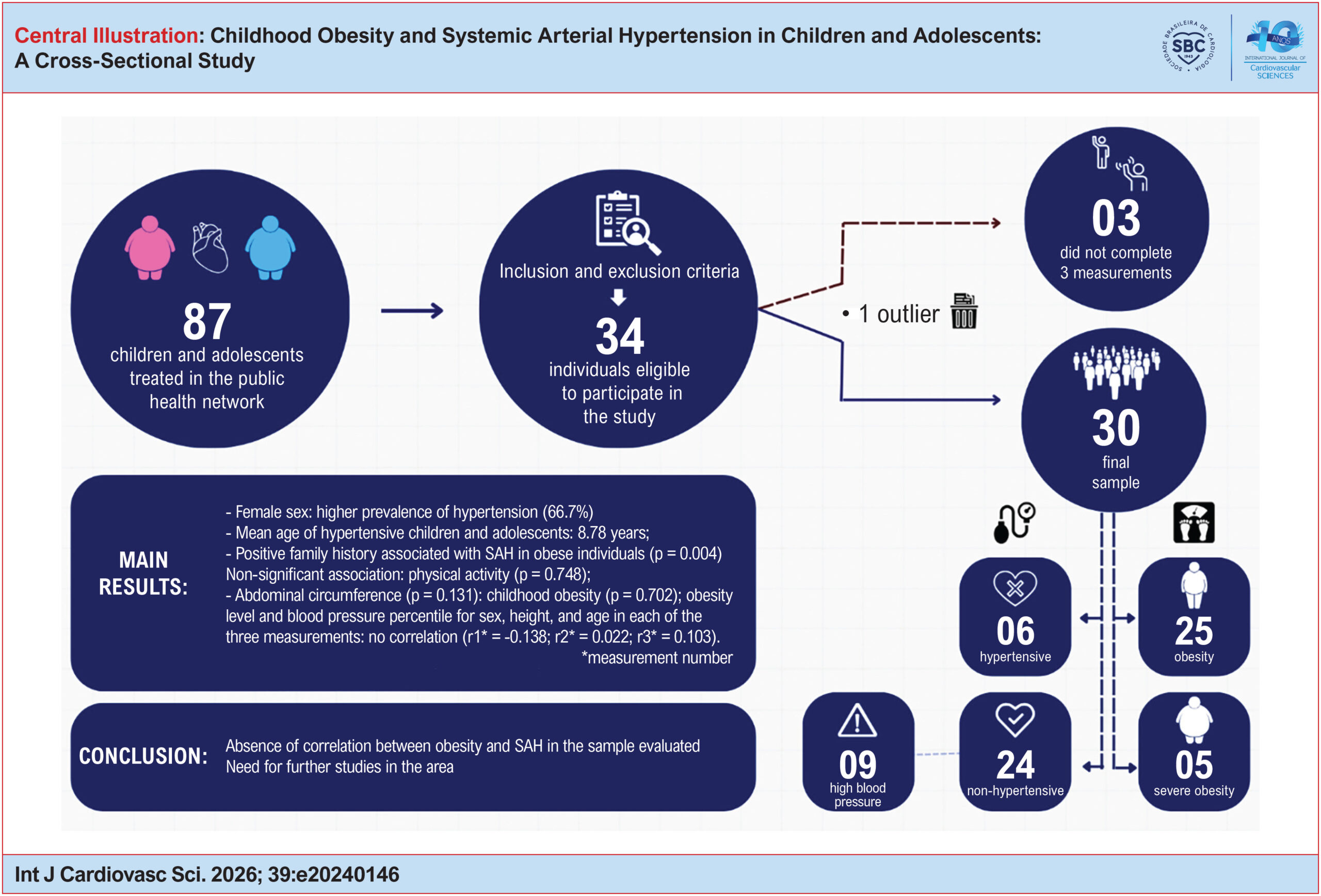
After applying the inclusion and exclusion criteria, 30 patients aged between 3 and 18 years (incomplete) were evaluated at three different moments. The results showed that 83.3% (n = 25) of the patients were obese and 16.70% (n = 5) had severe obesity. Among them, 20% (n = 6) were diagnosed with SAH. Data showed an independence between CO and SAH (p = 0.702) and between SAH and PA time (p = 0.748). No correlations were observed between SAH and AC (p = 0.313). The history of SAH in first-degree relatives was significantly associated with the diagnosis of SAH (p = 0.004).

Conclusion:

This study showed no correlation between CO and SAH in the evaluated sample, supporting the need for further research in the area.

  • Hypertension
  • Pediatric Obesity
  • Pediatrics
Read Full Article
Creative Commons Attribution (CC BY) Creative Commons license
20/03/2026 DOI: 10.36660/ijcs.20240146
Assessment of ChatGPT-4.0 versus ChatGPT-Mini in Generating Guideline-Based Hypertension Content
ABC
Original Article

Assessment of ChatGPT-4.0 versus ChatGPT-Mini in Generating Guideline-Based Hypertension Content

Rômullo José Costa Ataídes et al. Marcos Adriano Garcia Campos João Vítor Perez de Souza Rafael Cardoso Rocha … Almir Alamino Lacalle Ciro Bezerra Vieira Thiago Artioli Tiago Cordeiro Medeiros Erito Marques de Souza Filho Ronaldo Gismondi Érika Maria Gonçalves Campana Francisco José Romeo Victor Razuk João Ricardo Nickenig Vissoci Renato Delascio Lopes

Abstract

Background

Artificial intelligence (AI) language models are increasingly used to generate patient education materials. However, their accuracy, completeness, and adherence to clinical guidelines remain uncertain.

Objectives

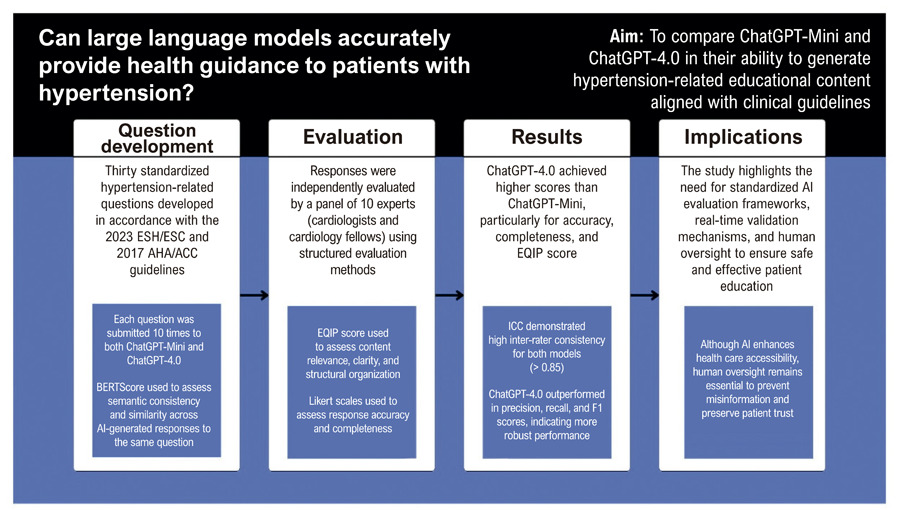
To compare ChatGPT-Mini and ChatGPT-4.0 in the generation of hypertension education content with respect to accuracy, completeness, structural quality using the Ensuring Quality Information for Patients (EQIP), response consistency, and alignment with established guidelines.

Methods

A standardized set of 31 hypertension-related questions was submitted to both models. Outputs were independently evaluated by 10 blinded clinicians using a modified EQIP score, a 5-point accuracy scale, and a 3-point completeness scale. Response consistency was assessed using BERTScore. Between-model comparisons were performed using the two-sided Wilcoxon rank-sum test (p < 0.05). Effect sizes were reported as Hodges–Lehmann (HL) median differences and Cliff’s delta (δ), both with 95% CIs. Inter-rater reliability was estimated using the intraclass correlation coefficient (ICC; two-way random effects model, absolute agreement).

Results

Central tendency measures favored ChatGPT-4.0, although differences were small. Median scores were as follows: accuracy, 4.10 (3.70-4.20) versus 3.73 (3.60-4.05); completeness, 1.26 (1.17-1.41) versus 1.10 (0.96-1.23); and total EQIP score, 19.5 (18.0-25.0) versus 18.5 (16.0-23.0) for ChatGPT-4.0 and ChatGPT-Mini, respectively. HL median differences were small, with 95% CIs crossing zero (accuracy: +0.37, −0.25 to +0.50; completeness: +0.16, −0.06 to +0.36; EQIP: +1.0, −1.0 to +6.0). Cliff’s δ values were consistently small and positive across primary outcomes, indicating only modest stochastic dominance of ChatGPT-4.0. Identification clarity tended to be higher with ChatGPT-4.0, whereas response consistency measured by BERTScore F1 was generally higher for ChatGPT-Mini (> 0.92 versus 0.885-0.932). Inter-rater reliability was good to excellent across all measures (ICC > 0.80).

Conclusions

ChatGPT-4.0 demonstrated small, non-significant improvements in accuracy, completeness, and structural quality compared with ChatGPT-Mini. Effect sizes were modest, and all 95% CIs included zero. ChatGPT-Mini produced more consistent responses. These findings underscore the importance of routinely reporting effect sizes with 95% CIs and support the use of standardized evaluation methods and real-time validation frameworks for AI-generated medical education content.

  • Artificial Intelligence
  • Hypertension
  • Patient Education as Topic
Read Full Article
Creative Commons Attribution (CC BY) Creative Commons license
16/03/2026 DOI: 10.36660/abc.20250498i Views 1
Comparison of Blood Pressure Values and Antihypertensive Medications Used in Non-Afro-Descendant and Afro-Descendant Brazilians with Hypertension
ABC
Original Article

Comparison of Blood Pressure Values and Antihypertensive Medications Used in Non-Afro-Descendant and Afro-Descendant Brazilians with Hypertension

Maicon Borges Euzébio et al. Priscila Valverde de Oliveira Vitorino Andrea A. Brandão Eduardo Costa Duarte Barbosa … Celso Amodeo Audes Feitosa Marcus Vinicius Bolivar Malachias Marco Antonio MotaGomes Rui Manoel dos Santos Póvoa Renato Delascio Lopes Paulo Cesar B Veiga Jardim Ana Luiza Lima Souza Antonio Coca Weimar Kunz Sebba Barroso

Abstract

Background

The prevalence of hypertension (HTN) is high in ethnic communities, particularly among Afro-descendant adults in the United States. Moreover, there is a lack of studies addressing this issue in the Brazilian Afro-descendant population.

Objective

To analyze blood pressure control and the use of antihypertensive medications among Afro-descendant and non-Afro-descendant Brazilians.

Methods

This cross-sectional study evaluated data from the First Brazilian Registry of Hypertension, which included individuals over 18 years of age, self-identified as Afro-descendant or non-Afro-descendant, with HTN for at least four weeks or using antihypertensive medication. Comparisons were performed using t-tests or the Mann-Whitney test. A significance level of p < 0.05 was adopted.

Results

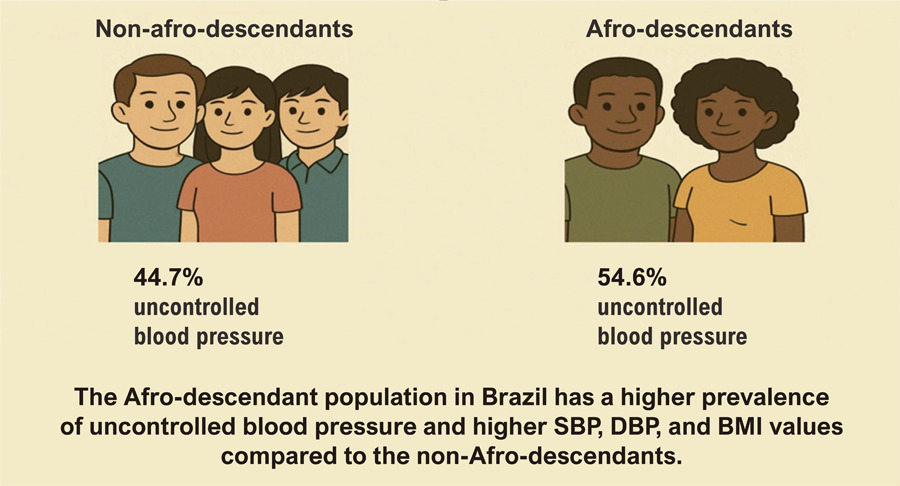
A total of 2,643 participants were included, of whom 82.8% were non–Afro-descendant and 17.1% were Afro-descendant. The rates of uncontrolled HTN were 44.68% among non–Afro-descendants and 54.64% among Afro-descendants. Median values of systolic blood pressure (SBP), diastolic blood pressure (DBP), and body mass index (BMI) were higher in Afro-descendants compared to non–Afro-descendants (p < .001). The distribution of antihypertensive medication classes varied between the populations. No significant differences in HTN control were observed between beta-blocker users in the Afro-descendant and non–Afro-descendant groups, even when stratified by sex.

Conclusion

The Afro-descendant population in Brazil demonstrated a higher prevalence of uncontrolled HTN and higher SBP, DBP, and BMI values compared to the non–Afro-descendant population. The choice of antihypertensive medications differed between groups, with thiazides more commonly prescribed for Afro-descendants and ARBs for non–Afro-descendants. However, no significant differences in blood pressure control were observed between groups using beta-blockers, regardless of sex.

  • antihypertensive agents
  • Hypertension
  • Population Characteristics
  • Race Factors
Read Full Article
Creative Commons Attribution (CC BY) Creative Commons license
27/02/2026 DOI: 10.36660/abc.20250316i Views 2
ABC
Editorial

Beta-blockers for Hypertension: To Be or Not to Be a First-line Drug?

José Augusto Soares Barreto-Filho et al. Felipe Vieira Santana Thiago Augusto da Silva Nascimento Pedro Gabriel Melo de Barros e Silva

Nobel laureate Sir James Black pioneered the concept and design of beta-blockers for cardiovascular use. The first human data published on beta-blockers appeared in 1964, and ever since, beta-blockers have been widely utilized across various cardiovascular conditions. In hypertension, the landmark Medical Research Council (MRC) trial was the first to demonstrate that either propranolol or bendrofluazide reduced the risk of stroke in patients with mild hypertension; however, no significant reduction in mortality was observed. Comparative analyses between propranolol and bendrofluazide showed similar outcomes, with a non-significant trend favoring bendrofluazide for stroke prevention and propranolol for coronary event reduction in non-smokers.

Historically, beta-blockers became a mainstay in hypertension management. In 1984, the Joint National Committee on Detection, Evaluation, and Treatment of High Blood Pressure (JNC III) classified beta-blockers alongside thiazide diuretics as first-line therapy. In 1998, Messerli et al. published a systematic review questioning the appropriateness of beta-blockers as first-line agents, concluding that in elderly hypertensive patients, beta-blockers were inferior to diuretics in reducing cardiovascular outcomes.

[…]

  • beta-blockers
  • Hypertension
Read Full Article
Creative Commons Attribution (CC BY) Creative Commons license
27/02/2026 DOI: 10.36660/abc.20250684i Views 4
Impact of Obesity on Patients with Resistant and Refractory Arterial Hypertension: A Cross-Sectional Study
ABC
Original Article

Impact of Obesity on Patients with Resistant and Refractory Arterial Hypertension: A Cross-Sectional Study

Bárbara Victória Peixoto Lima da Costa et al. Fábio Bulhões Cristiano Macedo Alex Cleber Improta-Caria Roque Aras Júnior

Abstract

Background

Obesity is a serious public health problem and is associated with activation of the sympathetic nervous system and the development of resistant or refractory hypertension.

Objectives

To estimate the prevalence of obesity in the population of outpatients with refractory or resistant hypertension and its relationship between body mass index and hypertension severity.

Methods

A cross-sectional study was carried out in a referral outpatient clinic for severe arterial hypertension. Patients with resistant and refractory hypertension were included. Information related to demographic characteristics, anthropometric measurements, systolic and diastolic blood pressure, comorbidities, alcoholism, smoking, and sedentary lifestyle was collected. Continuous variables were compared using the Student’s t-test or Mann Whitney, and categorical variables were compared using the chi-square test. Pearson’s correlation test was used for anthropometric measurements and blood pressure. A significance level of p < 0.05 was adopted.

Results

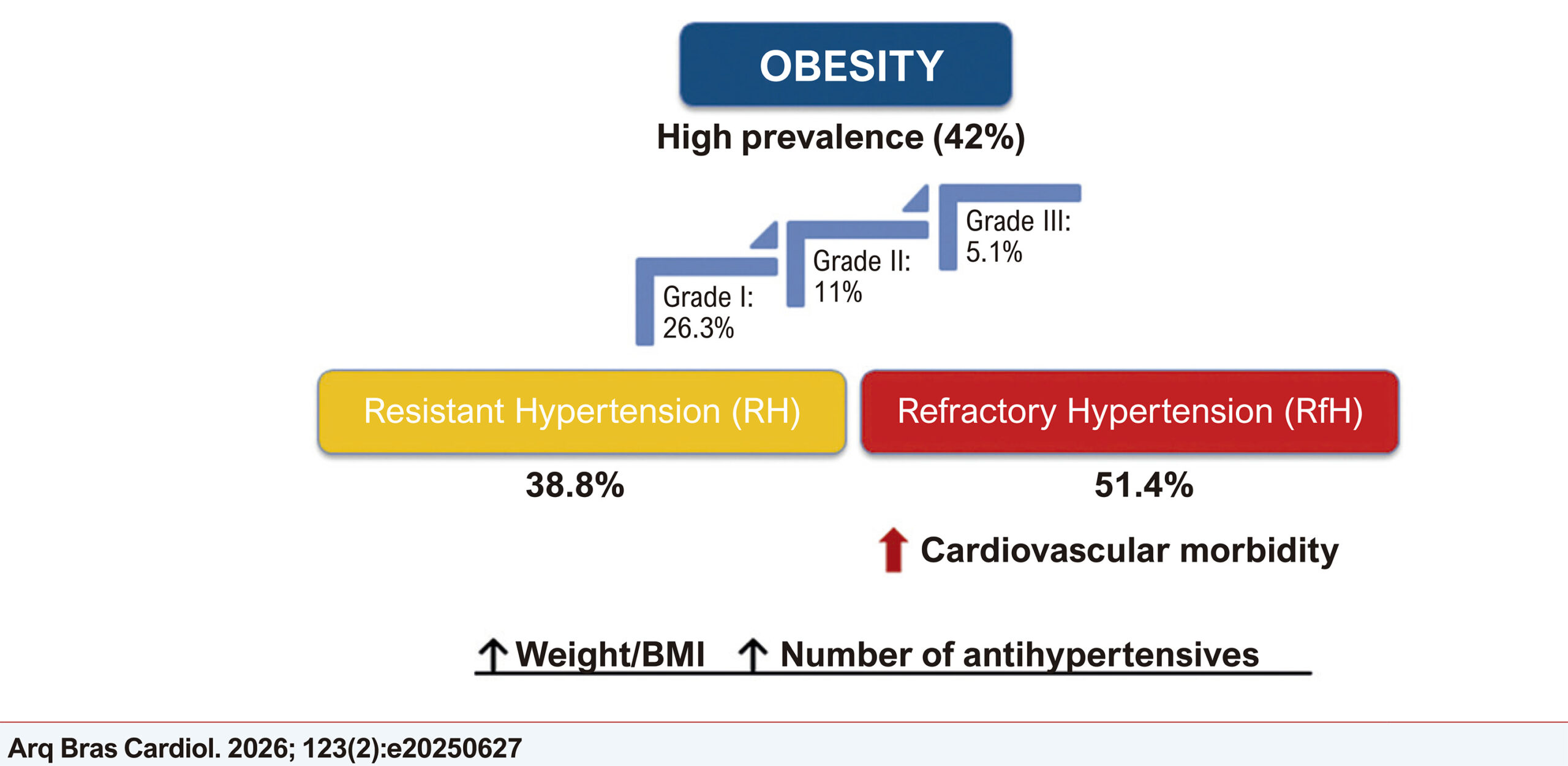
A total of 138 patients were collected, of whom 74.7% had resistant hypertension and 25.3% had refractory hypertension. There was a predominance of females and black ethnicities, representing 79.7% (p=0.307) and 91.3% (p=0.315), respectively. The mean age was 64.7± 10.8 (p=0.566). Obesity (BMI ≥ 30 kg/m2) was present in 42% (p=0.379), being higher in refractory hypertension (51.4% vs. 38.8%). Higher body mass index values were directly associated with an increased number of antihypertensive medications required for blood pressure control (r = 0.45; p < 0.01). Additionally, 74.6% of the patients had dyslipidemia (p=0.400).

Conclusion

In our population of patients with severe hypertension, obesity was prevalent and significantly influenced both the presentation and the control of blood pressure levels.

  • Hypertension
  • Obesity
  • Prevalence
Read Full Article
Creative Commons Attribution (CC BY) Creative Commons license
26/02/2026 DOI: 10.36660/abc.20250627i Views 1
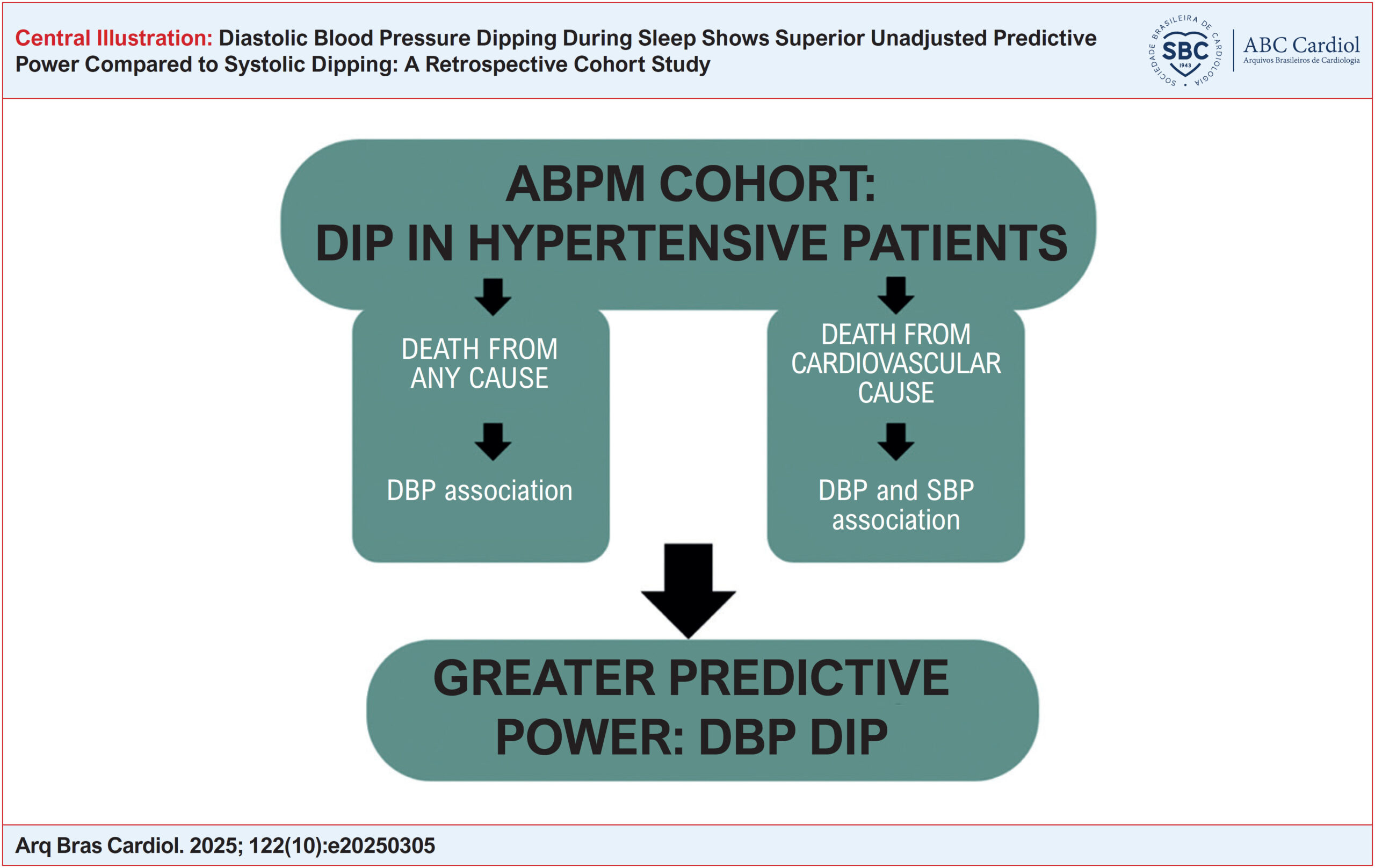
Diastolic Blood Pressure Dipping During Sleep Shows Superior Unadjusted Predictive Power Compared to Systolic Dipping: A Retrospective Cohort Study
ABC
Original Article

Diastolic Blood Pressure Dipping During Sleep Shows Superior Unadjusted Predictive Power Compared to Systolic Dipping: A Retrospective Cohort Study

Mateus de Carvalho Gonçalves et al. Daniely Santos da Silva Vitória Nogueira Ribeiro Vanessa Burgugi Banin … Vanessa dos Santos Silva Rodrigo Bazan Silméia Garcia Zanati Bazan Pasqual Barretti Luis Cuadrado Martin

ABSTRACT

Background:

Sleep blood pressure (BP) fall is a prognostic marker. Few studies have evaluated whether systolic BP (SBP) or diastolic BP (DBP) dipping more accurately predicts clinical outcomes.

Objective:

To determine which type of BP dipping has greater predictive value for clinical outcomes.

Methods:

This retrospective cohort evaluated patients who underwent ambulatory blood pressure monitoring (ABPM) between January 27, 2004, and February 16,2012. Patients were followed until the occurrence of the primary outcome (death from any cause), or until the end of follow-up period (February 01, 2022). Cox survival curves were constructed to assess which dipping classification – SBP or DBP – better distinguished the occurrence of outcomes. Dipping was defined as a nocturnal BP reduction of 10-20%. Absent and attenuated dipping were defined as reductions of ≤ 0% and 0-10%, respectively. Statistical significance was set at p < 0.05.

Results:

A total of 756 patients were included, with a mean age of 54±16.4 years; 42% were male. In predicting the primary outcome (all-cause mortality), the absence of DBP dipping, adjusted for 24-hour SBP, was associated with a hazard-ratio (HR) of 2.051 (95% confidence interval [95%CI]: 1.147 – 3.670 (p=0.015). For the secondary outcome (cardiovascular mortality), the absence of DBP dipping, also adjusted for 24-hour SBP, showed a HR of 3.329 (95%CI: 1.317-8.412; p=0.011). In contrast, the absence of SBP dipping, when adjusted for 24-hour SBP, was not significantly associated with either outcome. In the fully adjusted model, which included age, diabetes, smoking, atherosclerotic vascular disease and chronic kidney disease, both SBP and DBP dipping lost statistically significant associations.

Conclusion:

DBP dipping demonstrates superior predictive power for outcomes compared to SBP dipping, and adds to the prognostic value of mean 24-hour SBP. ().

  • Ambulatory Blood Pressure Monitoring
  • Hypertension
  • Mortality
Read Full Article
Creative Commons Attribution (CC BY) Creative Commons license
15/12/2025 DOI: 10.36660/abc.20250305i Views 2
ABC
Editorial

The Importance of Identifying Phenotypes in Arterial Hypertension

Rui Póvoa

Assessing blood pressure (BP) levels involves understanding the relationship between BP and overall health. This requires accurate measurement, following the criteria recommended in the guidelines, to determine the true meaning of the measurement in the office and beyond. Within this hypertensive spectrum, with measurements at varying times, we can define various hypertensive phenotypes and their significance for cardiovascular risk. This knowledge has accumulated over time and has been increasingly refined with the advancement of medical and technological knowledge.

The first experimental measurement of BP was made in 1711 by Stephen Halles using a cannula in the crural artery of a horse and connecting it to a glass tube that raised the blood two and a half meters above the height of the animal. However, arterial hypertension was only clinically valued in 1896 with the invention of the first mercury column sphygmomanometer by the Italian Scipione Riva-Rocci, using a 4.4 cm wide cuff.

[…]

  • Arterial Pressure
  • Hypertension
  • Phenotype
Read Full Article
Creative Commons Attribution (CC BY) Creative Commons license
01/12/2025 DOI: 10.36660/abc.20250530i Views 2

Could not load more articles. Please try again.

How to cite this article

EndNote RIS

Electronic Document Format (Vancouver)

Oliveira GMM, Brant LCC, Polanczyk CA, Malta DC, Biolo A, Nascimento BR, Souza MFM, et al. Cardiovascular Statistics – Brazil 2026. Arquivos Brasileiros de Cardiologia 2026;:e20260832.

Electronic Document Format (ABNT)

Oliveira, Gláucia Maria Moraes de; Brant, Luisa Campos Caldeira; Polanczyk, Carisi Anne; Malta, Deborah Carvalho; Biolo, Andreia; Nascimento, Bruno Ramos; Souza, Maria de Fatima Marinho de; Lorenzo, Andrea Rocha De; Fagundes Júnior, Antonio Aurélio de Paiva; Manfro, Arthur Gus; Schaan, Beatriz D.; Silva, Christina Grüne de Souza e; Castilho, Fábio Morato de; Cesena, Fernando Henpin Yue; Soares, Gabriel Porto; Xavier Junior, Gesner Francisco; Barreto Filho, Jose Augusto Soares; Pellanda, Lucia Campos; Aranha, Luciana Nicolau; Rohde, Luis Eduardo Paim; Passaglia, Luiz Guilherme; Pinto-Filho, Marcelo Martins; Machline-Carrion, M. Julia; Bittencourt, Marcio Sommer; Pontes Neto, Octavio M.; Villela, Paolo Blanco; Godoy, Paulo Henrique; Teixeira, Renato Azeredo; Stein, Ricardo; Sampaio, Roney Orismar; Salim, Thais Rocha; Gaziano, Thomas A.; Perel, Pablo; Roth, Gregory A.; Ribeiro, Antonio Luiz Pinho. Cardiovascular Statistics – Brazil 2026. Arquivos Brasileiros de Cardiologia, e20260832, Oct. 2026.

Electronic Document Format (APA)

Oliveira, G. M. M. , Brant, L. C. C., Polanczyk, C. A., Malta, D. C., Biolo, A., Nascimento, B. R., Souza, M. F. M. , Lorenzo, A. R. D., Fagundes Júnior, A. A. P., Manfro, A. G., Schaan, B. D., Silva, C. G. S. , Castilho, F. M. , Cesena, F. H. Y., Soares, G. P., Xavier Junior, G. F., Barreto Filho, J. A. S., Pellanda, L. C., Aranha, L. N., Rohde, L. E. P., Passaglia, L. G., Pinto-Filho, M. M., Machline-Carrion, M. J., Bittencourt, M. S., Pontes Neto, O. M., Villela, P. B., Godoy, P. H., Teixeira, R. A., Stein, R., Sampaio, R. O., Salim, T. R., Gaziano, T. A., Perel, P., Roth, G. A., & Ribeiro, A. L. P. (2026). Cardiovascular Statistics – Brazil 2026. Arquivos Brasileiros de Cardiologia, , e20260832.

Electronic Document Format (ISO)

Oliveira, Gláucia Maria Moraes de and Brant, Luisa Campos Caldeira and Polanczyk, Carisi Anne and Malta, Deborah Carvalho and Biolo, Andreia and Nascimento, Bruno Ramos and Souza, Maria de Fatima Marinho de and Lorenzo, Andrea Rocha De and Fagundes Júnior, Antonio Aurélio de Paiva and Manfro, Arthur Gus and Schaan, Beatriz D. and Silva, Christina Grüne de Souza e and Castilho, Fábio Morato de and Cesena, Fernando Henpin Yue and Soares, Gabriel Porto and Xavier Junior, Gesner Francisco and Barreto Filho, Jose Augusto Soares and Pellanda, Lucia Campos and Aranha, Luciana Nicolau and Rohde, Luis Eduardo Paim and Passaglia, Luiz Guilherme and Pinto-Filho, Marcelo Martins and Machline-Carrion, M. Julia and Bittencourt, Marcio Sommer and Pontes Neto, Octavio M. and Villela, Paolo Blanco and Godoy, Paulo Henrique and Teixeira, Renato Azeredo and Stein, Ricardo and Sampaio, Roney Orismar and Salim, Thais Rocha and Gaziano, Thomas A. and Perel, Pablo and Roth, Gregory A. and Ribeiro, Antonio Luiz Pinho. Cardiovascular Statistics – Brazil 2026. Arquivos Brasileiros de Cardiologia [online]. 2026, [cited 2026-10-14], e20260832. Available from: <https://journals.cardiol.br/en/article/cardiovascular-statistics-brazil-2026/>. ISSN 0066-782X

EndNote RIS

Electronic Document Format (Vancouver)

Beck-da-Silva L, Fuchs FD. The Adipokine Hypothesis: Does it Play a Major or Minor Role in HFpEF?. ABC Heart Fail Cardiomyop 2026;6:e20260037.

Electronic Document Format (ABNT)

Beck-da-Silva, Luís; Fuchs, Flávio D.. The Adipokine Hypothesis: Does it Play a Major or Minor Role in HFpEF?. ABC Heart Fail Cardiomyop, v. 6, e20260037, Sep. 2026.

Electronic Document Format (APA)

Beck-da-Silva, L., & Fuchs, F. D. (2026). The Adipokine Hypothesis: Does it Play a Major or Minor Role in HFpEF?. ABC Heart Fail Cardiomyop, 6, e20260037.

Electronic Document Format (ISO)

Beck-da-Silva, Luís and Fuchs, Flávio D.. The Adipokine Hypothesis: Does it Play a Major or Minor Role in HFpEF?. ABC Heart Fail Cardiomyop [online]. 2026, vol. 6, [cited 2026-10-14], e20260037. Available from: <https://journals.cardiol.br/en/article/the-adipokine-hypothesis-does-it-play-a-major-or-minor-role-in-hfpef/>

EndNote RIS

Electronic Document Format (Vancouver)

Santos LA, Oliveira ES, Lordêlo BVC, Matias LAC, Mendes R, Tenório PP. Metabolic Challenges in The Semiarid Region: A Critical Analysis of Nutritional Transition and Early Cardiovascular Risk. International Journal of Cardiovascular Sciences 2026;39:e20260059.

Electronic Document Format (ABNT)

Santos, Leonardo Alves; Oliveira, Álvaro Eduardo Santos; Lordêlo, Beatriz Vitória Carvalho; Matias, Luis Antonio Cavalcanti; Mendes, Rodrigo; Tenório, Pedro Pereira. Metabolic Challenges in The Semiarid Region: A Critical Analysis of Nutritional Transition and Early Cardiovascular Risk. International Journal of Cardiovascular Sciences, v. 39, e20260059, Aug. 2026.

Electronic Document Format (APA)

Santos, L. A., Oliveira, E. S., Lordêlo, B. V. C., Matias, L. A. C., Mendes, R., & Tenório, P. P. (2026). Metabolic Challenges in The Semiarid Region: A Critical Analysis of Nutritional Transition and Early Cardiovascular Risk. International Journal of Cardiovascular Sciences, 39, e20260059.

Electronic Document Format (ISO)

Santos, Leonardo Alves and Oliveira, Álvaro Eduardo Santos and Lordêlo, Beatriz Vitória Carvalho and Matias, Luis Antonio Cavalcanti and Mendes, Rodrigo and Tenório, Pedro Pereira. Metabolic Challenges in The Semiarid Region: A Critical Analysis of Nutritional Transition and Early Cardiovascular Risk. International Journal of Cardiovascular Sciences [online]. 2026, vol. 39, [cited 2026-10-14], e20260059. Available from: <https://journals.cardiol.br/en/article/metabolic-challenges-in-the-semiarid-region-a-critical-analysis-of-nutritional-transition-and-early-cardiovascular-risk/>. ISSN 2359-4802

EndNote RIS

Electronic Document Format (Vancouver)

Bitencourt AR, Sousa ALL, Jardim PCBV, Yoshizumi AM, Correia MC, Vitorino PVO, Batista SRR, et al. Effects of Acupuncture on Arterial Hypertension and Endothelial Dysfunction: The AHEaD Trial. Arquivos Brasileiros de Cardiologia 2026;123(7):e20260462.

Electronic Document Format (ABNT)

Bitencourt, Amanda Rodrigues; Sousa, Ana Luiza Lima; Jardim, Paulo Cesar B. Veiga; Yoshizumi, Alexandre Massao; Correia, Mikaelle Costa; Vitorino, Priscila Valverde de Oliveira; Batista, Sandro Rogério Rodrigues; Barroso, Weimar Kunz Sebba. Effects of Acupuncture on Arterial Hypertension and Endothelial Dysfunction: The AHEaD Trial. Arquivos Brasileiros de Cardiologia, v. 123, n. 7, e20260462, Aug. 2026.

Electronic Document Format (APA)

Bitencourt, A. R., Sousa, A. L. L., Jardim, P. C. B. V., Yoshizumi, A. M., Correia, M. C., Vitorino, P. V. O., Batista, S. R. R., & Barroso, W. K. S. (2026). Effects of Acupuncture on Arterial Hypertension and Endothelial Dysfunction: The AHEaD Trial. Arquivos Brasileiros de Cardiologia, 123(7), e20260462.

Electronic Document Format (ISO)

Bitencourt, Amanda Rodrigues and Sousa, Ana Luiza Lima and Jardim, Paulo Cesar B. Veiga and Yoshizumi, Alexandre Massao and Correia, Mikaelle Costa and Vitorino, Priscila Valverde de Oliveira and Batista, Sandro Rogério Rodrigues and Barroso, Weimar Kunz Sebba. Effects of Acupuncture on Arterial Hypertension and Endothelial Dysfunction: The AHEaD Trial. Arquivos Brasileiros de Cardiologia [online]. 2026, vol. 123, n. 7, [cited 2026-10-14], e20260462. Available from: <https://journals.cardiol.br/en/article/effects-of-acupuncture-on-arterial-hypertension-and-endothelial-dysfunction-the-ahead-trial/>. ISSN 0066-782X

EndNote RIS

Electronic Document Format (Vancouver)

Quarti MLM, Nobre AP, Martins GK. Methodological Considerations on Ethno-Racial Disparities and Blood Pressure Control. Arquivos Brasileiros de Cardiologia 2026;123(5):e20260128.

Electronic Document Format (ABNT)

Quarti, Maikon Lucian Madeira; Nobre, Arina Peixoto; Martins, Gabriel Kaleb. Methodological Considerations on Ethno-Racial Disparities and Blood Pressure Control. Arquivos Brasileiros de Cardiologia, v. 123, n. 5, e20260128, Aug. 2026.

Electronic Document Format (APA)

Quarti, M. L. M., Nobre, A. P., & Martins, G. K. (2026). Methodological Considerations on Ethno-Racial Disparities and Blood Pressure Control. Arquivos Brasileiros de Cardiologia, 123(5), e20260128.

Electronic Document Format (ISO)

Quarti, Maikon Lucian Madeira and Nobre, Arina Peixoto and Martins, Gabriel Kaleb. Methodological Considerations on Ethno-Racial Disparities and Blood Pressure Control. Arquivos Brasileiros de Cardiologia [online]. 2026, vol. 123, n. 5, [cited 2026-10-14], e20260128. Available from: <https://journals.cardiol.br/en/article/methodological-considerations-on-ethno-racial-disparities-and-blood-pressure-control/>. ISSN 0066-782X

EndNote RIS

Electronic Document Format (Vancouver)

Fante GE, Dall’Omo PAP, Valle KB, Benetoli A, Zuber JFS, Martins CM, Muller EV, et al. Is Hypertension a Predictor of Mortality in People Living With HIV/AIDS?. International Journal of Cardiovascular Sciences 2026;39:e20250290.

Electronic Document Format (ABNT)

Fante, Gustavo Eduardo; Dall’Omo, Pedro Antonio Pagote; Valle, Karina Bobato do; Benetoli, Arcelio; Zuber, Jean Fernando Sandeski; Martins, Camila Marineli; Muller, Erildo Vicente. Is Hypertension a Predictor of Mortality in People Living With HIV/AIDS?. International Journal of Cardiovascular Sciences, v. 39, e20250290, Aug. 2026.

Electronic Document Format (APA)

Fante, G. E., Dall’Omo, P. A. P., Valle, K. B. , Benetoli, A., Zuber, J. F. S., Martins, C. M., & Muller, E. V. (2026). Is Hypertension a Predictor of Mortality in People Living With HIV/AIDS?. International Journal of Cardiovascular Sciences, 39, e20250290.

Electronic Document Format (ISO)

Fante, Gustavo Eduardo and Dall’Omo, Pedro Antonio Pagote and Valle, Karina Bobato do and Benetoli, Arcelio and Zuber, Jean Fernando Sandeski and Martins, Camila Marineli and Muller, Erildo Vicente. Is Hypertension a Predictor of Mortality in People Living With HIV/AIDS?. International Journal of Cardiovascular Sciences [online]. 2026, vol. 39, [cited 2026-10-14], e20250290. Available from: <https://journals.cardiol.br/en/article/is-hypertension-a-predictor-of-mortality-in-people-living-with-hiv-aids/>. ISSN 2359-4802

EndNote RIS

Electronic Document Format (Vancouver)

Oliveira CMC, Silva ACP, Silva BRM, Campos AC. Epidemiological Profile of Arterial Hypertension in the Municipality of Rio de Janeiro, Brazil, 2011 and 2019. International Journal of Cardiovascular Sciences 2026;39:e20240165.

Electronic Document Format (ABNT)

Oliveira, Catia Martins Cristina; Silva, Anna Carolina Pinho da; Silva, Bianca Ramos Marins; Campos, Ana Clara. Epidemiological Profile of Arterial Hypertension in the Municipality of Rio de Janeiro, Brazil, 2011 and 2019. International Journal of Cardiovascular Sciences, v. 39, e20240165, Aug. 2026.

Electronic Document Format (APA)

Oliveira, C. M. C., Silva, A. C. P. , Silva, B. R. M., & Campos, A. C. (2026). Epidemiological Profile of Arterial Hypertension in the Municipality of Rio de Janeiro, Brazil, 2011 and 2019. International Journal of Cardiovascular Sciences, 39, e20240165.

Electronic Document Format (ISO)

Oliveira, Catia Martins Cristina and Silva, Anna Carolina Pinho da and Silva, Bianca Ramos Marins and Campos, Ana Clara. Epidemiological Profile of Arterial Hypertension in the Municipality of Rio de Janeiro, Brazil, 2011 and 2019. International Journal of Cardiovascular Sciences [online]. 2026, vol. 39, [cited 2026-10-14], e20240165. Available from: <https://journals.cardiol.br/en/article/epidemiological-profile-of-arterial-hypertension-in-the-municipality-of-rio-de-janeiro-brazil-2011-and-2019/>. ISSN 2359-4802

EndNote RIS

Electronic Document Format (Vancouver)

Marcolino MS, Costa MR, Schettini IVG, Dalakoti M, Liu H, Njohjam MN. Protocol for a Structured, Health Policy and Systems–Oriented Scoping Review of Determinants of Single-Pill Combination Availability in Sub-Saharan Africa. International Journal of Cardiovascular Sciences 2026;39:e20250286.

Electronic Document Format (ABNT)

Marcolino, Milena Soriano; Costa, Michelle Ralil da; Schettini, Isabella Viana Gomes; Dalakoti, Mayank; Liu, Hueiming; Njohjam, Mundih Noelar. Protocol for a Structured, Health Policy and Systems–Oriented Scoping Review of Determinants of Single-Pill Combination Availability in Sub-Saharan Africa. International Journal of Cardiovascular Sciences, v. 39, e20250286, Aug. 2026.

Electronic Document Format (APA)

Marcolino, M. S., Costa, M. R. , Schettini, I. V. G., Dalakoti, M., Liu, H., & Njohjam, M. N. (2026). Protocol for a Structured, Health Policy and Systems–Oriented Scoping Review of Determinants of Single-Pill Combination Availability in Sub-Saharan Africa. International Journal of Cardiovascular Sciences, 39, e20250286.

Electronic Document Format (ISO)

Marcolino, Milena Soriano and Costa, Michelle Ralil da and Schettini, Isabella Viana Gomes and Dalakoti, Mayank and Liu, Hueiming and Njohjam, Mundih Noelar. Protocol for a Structured, Health Policy and Systems–Oriented Scoping Review of Determinants of Single-Pill Combination Availability in Sub-Saharan Africa. International Journal of Cardiovascular Sciences [online]. 2026, vol. 39, [cited 2026-10-14], e20250286. Available from: <https://journals.cardiol.br/en/article/protocol-for-a-structured-health-policy-and-systems-oriented-scoping-review-of-determinants-of-single-pill-combination-availability-in-sub-saharan-africa/>. ISSN 2359-4802

EndNote RIS

Electronic Document Format (Vancouver)

Rodrigues CIS, Forjaz CLM, Bortolotto LA, Nadruz W, Brandão AA. Reply to the Letter to the Editor: “Should Resistance Training Also Be Considered a Mandatory Component?”. Arquivos Brasileiros de Cardiologia 2026;123(6):e20260362.

Electronic Document Format (ABNT)

Rodrigues, Cibele Isaac Saad; Forjaz, Claudia Lucia de Moraes; Bortolotto, Luiz Aparecido; Nadruz, Wilson; Brandão, Andréa A.. Reply to the Letter to the Editor: “Should Resistance Training Also Be Considered a Mandatory Component?”. Arquivos Brasileiros de Cardiologia, v. 123, n. 6, e20260362, Jul. 2026.

Electronic Document Format (APA)

Rodrigues, C. I. S., Forjaz, C. L. M., Bortolotto, L. A., Nadruz, W., & Brandão, A. A. (2026). Reply to the Letter to the Editor: “Should Resistance Training Also Be Considered a Mandatory Component?”. Arquivos Brasileiros de Cardiologia, 123(6), e20260362.

Electronic Document Format (ISO)

Rodrigues, Cibele Isaac Saad and Forjaz, Claudia Lucia de Moraes and Bortolotto, Luiz Aparecido and Nadruz, Wilson and Brandão, Andréa A.. Reply to the Letter to the Editor: “Should Resistance Training Also Be Considered a Mandatory Component?”. Arquivos Brasileiros de Cardiologia [online]. 2026, vol. 123, n. 6, [cited 2026-10-14], e20260362. Available from: <https://journals.cardiol.br/en/article/reply-to-the-letter-to-the-editor-should-resistance-training-also-be-considered-a-mandatory-component/>. ISSN 0066-782X

EndNote RIS

Electronic Document Format (Vancouver)

Orlow R, Sousa CC, Inuzuka S, Feitosa A, Brandão AA, Gomes MM, Guimarães Neto VS, et al. A Fixed-Dose Triple-Combination Therapy for the Initial Steps of Hypertension Treatment: Protocol for the NEXT Randomized Clinical Trial. International Journal of Cardiovascular Sciences 2026;39:e20260025.

Electronic Document Format (ABNT)

Orlow, Rogerio; Sousa, Caroline Consuelo de; Inuzuka, Sayuri; Feitosa, Audes; Brandão, Andréa Araujo; Gomes, Marco Mota; Guimarães Neto, Vanildo da Silva; Cestario, Elizabeth do Espírito Santo; Barbosa, Eduardo Costa Duarte; Bezerra, Rodrigo; Santos, Mayara Cedrim; Sousa, Ana Luiza Lima; Batista, Sandro Rodrigues; Vitorino, Priscila Valverde de Oliveira; Barroso, Weimar Kunz Sebba. A Fixed-Dose Triple-Combination Therapy for the Initial Steps of Hypertension Treatment: Protocol for the NEXT Randomized Clinical Trial. International Journal of Cardiovascular Sciences, v. 39, e20260025, Jul. 2026.

Electronic Document Format (APA)

Orlow, R., Sousa, C. C. , Inuzuka, S., Feitosa, A., Brandão, A. A., Gomes, M. M., Guimarães Neto, V. S., Cestario, E. E. S., Barbosa, E. C. D., Bezerra, R., Santos, M. C., Sousa, A. L. L., Batista, S. R., Vitorino, P. V. O., & Barroso, W. K. S. (2026). A Fixed-Dose Triple-Combination Therapy for the Initial Steps of Hypertension Treatment: Protocol for the NEXT Randomized Clinical Trial. International Journal of Cardiovascular Sciences, 39, e20260025.

Electronic Document Format (ISO)

Orlow, Rogerio and Sousa, Caroline Consuelo de and Inuzuka, Sayuri and Feitosa, Audes and Brandão, Andréa Araujo and Gomes, Marco Mota and Guimarães Neto, Vanildo da Silva and Cestario, Elizabeth do Espírito Santo and Barbosa, Eduardo Costa Duarte and Bezerra, Rodrigo and Santos, Mayara Cedrim and Sousa, Ana Luiza Lima and Batista, Sandro Rodrigues and Vitorino, Priscila Valverde de Oliveira and Barroso, Weimar Kunz Sebba. A Fixed-Dose Triple-Combination Therapy for the Initial Steps of Hypertension Treatment: Protocol for the NEXT Randomized Clinical Trial. International Journal of Cardiovascular Sciences [online]. 2026, vol. 39, [cited 2026-10-14], e20260025. Available from: <https://journals.cardiol.br/en/article/a-fixed-dose-triple-combination-therapy-for-the-initial-steps-of-hypertension-treatment-protocol-for-the-next-randomized-clinical-trial/>. ISSN 2359-4802

EndNote RIS

Electronic Document Format (Vancouver)

Belo LL, Pontes MCG, Almeida TG, Oliveira TGF, Tenório PP. Hypertension in Indigenous Populations: Diagnostic Challenges and Nuances of the Epidemiological Transition. Arquivos Brasileiros de Cardiologia 2026;123(5):e20260138.

Electronic Document Format (ABNT)

Belo, Letícia Lemos; Pontes, Maria Clara Gomes; Almeida, Thalisson Gonçalves; Oliveira, Tales Gabriel Ferro de; Tenório, Pedro Pereira. Hypertension in Indigenous Populations: Diagnostic Challenges and Nuances of the Epidemiological Transition. Arquivos Brasileiros de Cardiologia, v. 123, n. 5, e20260138, Jul. 2026.

Electronic Document Format (APA)

Belo, L. L., Pontes, M. C. G., Almeida, T. G., Oliveira, T. G. F. , & Tenório, P. P. (2026). Hypertension in Indigenous Populations: Diagnostic Challenges and Nuances of the Epidemiological Transition. Arquivos Brasileiros de Cardiologia, 123(5), e20260138.

Electronic Document Format (ISO)

Belo, Letícia Lemos and Pontes, Maria Clara Gomes and Almeida, Thalisson Gonçalves and Oliveira, Tales Gabriel Ferro de and Tenório, Pedro Pereira. Hypertension in Indigenous Populations: Diagnostic Challenges and Nuances of the Epidemiological Transition. Arquivos Brasileiros de Cardiologia [online]. 2026, vol. 123, n. 5, [cited 2026-10-14], e20260138. Available from: <https://journals.cardiol.br/en/article/hypertension-in-indigenous-populations-diagnostic-challenges-and-nuances-of-the-epidemiological-transition/>. ISSN 0066-782X

EndNote RIS

Electronic Document Format (Vancouver)

Jardim PCBV. Reduction of Salt in the Diet and Improvement in Blood Pressure: Low Cost, Robust Evidence, and Challenges in Implementation. Arquivos Brasileiros de Cardiologia 2026;123(3):e20260252.

Electronic Document Format (ABNT)

Jardim, Paulo César B. Veiga. Reduction of Salt in the Diet and Improvement in Blood Pressure: Low Cost, Robust Evidence, and Challenges in Implementation. Arquivos Brasileiros de Cardiologia, v. 123, n. 3, e20260252, Jun. 2026.

Electronic Document Format (APA)

Jardim, P. C. B. V. (2026). Reduction of Salt in the Diet and Improvement in Blood Pressure: Low Cost, Robust Evidence, and Challenges in Implementation. Arquivos Brasileiros de Cardiologia, 123(3), e20260252.

Electronic Document Format (ISO)

Jardim, Paulo César B. Veiga. Reduction of Salt in the Diet and Improvement in Blood Pressure: Low Cost, Robust Evidence, and Challenges in Implementation. Arquivos Brasileiros de Cardiologia [online]. 2026, vol. 123, n. 3, [cited 2026-10-14], e20260252. Available from: <https://journals.cardiol.br/en/article/reduction-of-salt-in-the-diet-and-improvement-in-blood-pressure-low-cost-robust-evidence-and-challenges-in-implementation/>. ISSN 0066-782X

EndNote RIS

Electronic Document Format (Vancouver)

Mesquita CT, Silva FA, Couto ABC. Validating Artificial Intelligence before the Bedside: ChatGPT-4 vs Mini in Guideline-Based Hypertension Content. Arquivos Brasileiros de Cardiologia 2026;123(2):e20260254.

Electronic Document Format (ABNT)

Mesquita, Cláudio Tinoco; Silva, Fernanda Azevedo; Couto, Ana Beatriz Costa do. Validating Artificial Intelligence before the Bedside: ChatGPT-4 vs Mini in Guideline-Based Hypertension Content. Arquivos Brasileiros de Cardiologia, v. 123, n. 2, e20260254, Jun. 2026.

Electronic Document Format (APA)

Mesquita, C. T., Silva, F. A., & Couto, A. B. C. (2026). Validating Artificial Intelligence before the Bedside: ChatGPT-4 vs Mini in Guideline-Based Hypertension Content. Arquivos Brasileiros de Cardiologia, 123(2), e20260254.

Electronic Document Format (ISO)

Mesquita, Cláudio Tinoco and Silva, Fernanda Azevedo and Couto, Ana Beatriz Costa do. Validating Artificial Intelligence before the Bedside: ChatGPT-4 vs Mini in Guideline-Based Hypertension Content. Arquivos Brasileiros de Cardiologia [online]. 2026, vol. 123, n. 2, [cited 2026-10-14], e20260254. Available from: <https://journals.cardiol.br/en/article/validating-artificial-intelligence-before-the-bedside-chatgpt-4-vs-mini-in-guideline-based-hypertension-content/>. ISSN 0066-782X

EndNote RIS

Electronic Document Format (Vancouver)

Motta-Santos D, Soares TBC, Carvalho MCR, Moura RMF, Fonseca SF, Guimarães LMF, Gonçalves R, et al. Protocol for Improving Hypertension and Diabetes Control Through Lifestyle Intervention in a Cluster Randomized Clinical Trial. International Journal of Cardiovascular Sciences 2026;39:e20250045.

Electronic Document Format (ABNT)

Motta-Santos, Daisy; Soares, Thiago Barbabela de Castro; Carvalho, Maria Cecília Ramos de; Moura, Regina Márcia Faria de; Fonseca, Sueli Ferreira da; Guimarães, Larissa Morelli Ferraz; Gonçalves, Reginaldo; Oliveira, Clara Rodrigues Alves de; Lopes, Aline Cristine Souza; Marcolino, Milena Soriano. Protocol for Improving Hypertension and Diabetes Control Through Lifestyle Intervention in a Cluster Randomized Clinical Trial. International Journal of Cardiovascular Sciences, v. 39, e20250045, May. 2026.

Electronic Document Format (APA)

Motta-Santos, D., Soares, T. B. C., Carvalho, M. C. R. , Moura, R. M. F. , Fonseca, S. F. , Guimarães, L. M. F., Gonçalves, R., Oliveira, C. R. A. , Lopes, A. C. S., & Marcolino, M. S. (2026). Protocol for Improving Hypertension and Diabetes Control Through Lifestyle Intervention in a Cluster Randomized Clinical Trial. International Journal of Cardiovascular Sciences, 39, e20250045.

Electronic Document Format (ISO)

Motta-Santos, Daisy and Soares, Thiago Barbabela de Castro and Carvalho, Maria Cecília Ramos de and Moura, Regina Márcia Faria de and Fonseca, Sueli Ferreira da and Guimarães, Larissa Morelli Ferraz and Gonçalves, Reginaldo and Oliveira, Clara Rodrigues Alves de and Lopes, Aline Cristine Souza and Marcolino, Milena Soriano. Protocol for Improving Hypertension and Diabetes Control Through Lifestyle Intervention in a Cluster Randomized Clinical Trial. International Journal of Cardiovascular Sciences [online]. 2026, vol. 39, [cited 2026-10-14], e20250045. Available from: <https://journals.cardiol.br/en/article/protocol-for-improving-hypertension-and-diabetes-control-through-lifestyle-intervention-in-a-cluster-randomized-clinical-trial/>. ISSN 2359-4802

EndNote RIS

Electronic Document Format (Vancouver)

Kelly FA, Dantas CR, Sobreira LER, Almeida AM, Bezerra FB, Sousa MG, Consolim F, et al. Efficacy of a Salt Substitute on the Incidence of Hypertension: A Systematic Review with Meta-Analysis. Arquivos Brasileiros de Cardiologia 2026;123(3):e20250440.

Electronic Document Format (ABNT)

Kelly, Francinny Alves; Dantas, Clara Rocha; Sobreira, Luis Eduardo Rodrigues; Almeida, Artur Menegaz de; Bezerra, Fernando Baía; Sousa, Márcio Gonçalves de; Consolim, Fernanda; Laurinavicius, Antonio Gabriele. Efficacy of a Salt Substitute on the Incidence of Hypertension: A Systematic Review with Meta-Analysis. Arquivos Brasileiros de Cardiologia, v. 123, n. 3, e20250440, Apr. 2026.

Electronic Document Format (APA)

Kelly, F. A., Dantas, C. R., Sobreira, L. E. R., Almeida, A. M. , Bezerra, F. B., Sousa, M. G. , Consolim, F., & Laurinavicius, A. G. (2026). Efficacy of a Salt Substitute on the Incidence of Hypertension: A Systematic Review with Meta-Analysis. Arquivos Brasileiros de Cardiologia, 123(3), e20250440.

Electronic Document Format (ISO)

Kelly, Francinny Alves and Dantas, Clara Rocha and Sobreira, Luis Eduardo Rodrigues and Almeida, Artur Menegaz de and Bezerra, Fernando Baía and Sousa, Márcio Gonçalves de and Consolim, Fernanda and Laurinavicius, Antonio Gabriele. Efficacy of a Salt Substitute on the Incidence of Hypertension: A Systematic Review with Meta-Analysis. Arquivos Brasileiros de Cardiologia [online]. 2026, vol. 123, n. 3, [cited 2026-10-14], e20250440. Available from: <https://journals.cardiol.br/en/article/efficacy-of-a-salt-substitute-on-the-incidence-of-hypertension-a-systematic-review-with-meta-analysis/>. ISSN 0066-782X

EndNote RIS

Electronic Document Format (Vancouver)

Araujo JJ. The Relationship Between Obesity and the Risk of Systemic Arterial Hypertension in Children and Adolescents: Lessons Learned. International Journal of Cardiovascular Sciences 2026;39:e20250178.

Electronic Document Format (ABNT)

Araujo, John Jairo. The Relationship Between Obesity and the Risk of Systemic Arterial Hypertension in Children and Adolescents: Lessons Learned. International Journal of Cardiovascular Sciences, v. 39, e20250178, Apr. 2026.

Electronic Document Format (APA)

Araujo, J. J. (2026). The Relationship Between Obesity and the Risk of Systemic Arterial Hypertension in Children and Adolescents: Lessons Learned. International Journal of Cardiovascular Sciences, 39, e20250178.

Electronic Document Format (ISO)

Araujo, John Jairo. The Relationship Between Obesity and the Risk of Systemic Arterial Hypertension in Children and Adolescents: Lessons Learned. International Journal of Cardiovascular Sciences [online]. 2026, vol. 39, [cited 2026-10-14], e20250178. Available from: <https://journals.cardiol.br/en/article/the-relationship-between-obesity-and-the-risk-of-systemic-arterial-hypertension-in-children-and-adolescents-lessons-learned/>. ISSN 2359-4802

EndNote RIS

Electronic Document Format (Vancouver)

Tibirica E. Beyond the Scale: Obesity as a Structural Driver of Refractory Hypertension. Arquivos Brasileiros de Cardiologia 2026;123(2):e20260139.

Electronic Document Format (ABNT)

Tibirica, Eduardo. Beyond the Scale: Obesity as a Structural Driver of Refractory Hypertension. Arquivos Brasileiros de Cardiologia, v. 123, n. 2, e20260139, Apr. 2026.

Electronic Document Format (APA)

Tibirica, E. (2026). Beyond the Scale: Obesity as a Structural Driver of Refractory Hypertension. Arquivos Brasileiros de Cardiologia, 123(2), e20260139.

Electronic Document Format (ISO)

Tibirica, Eduardo. Beyond the Scale: Obesity as a Structural Driver of Refractory Hypertension. Arquivos Brasileiros de Cardiologia [online]. 2026, vol. 123, n. 2, [cited 2026-10-14], e20260139. Available from: <https://journals.cardiol.br/en/article/beyond-the-scale-obesity-as-a-structural-driver-of-refractory-hypertension/>. ISSN 0066-782X

EndNote RIS

Electronic Document Format (Vancouver)

Almeida RFF, Escorel LM, Carvalho LOGA, Gaudêncio CB, Diniz LA, Leite M, Costa MR, et al. Childhood Obesity and Systemic Arterial Hypertension in Children and Adolescents: A Cross-Sectional Study. International Journal of Cardiovascular Sciences 2026;39:e20240146.

Electronic Document Format (ABNT)

Almeida, Rafaella Farias da Franca; Escorel, Lívia Menezes; Carvalho, Letícia Odete Guedes de Andrade; Gaudêncio, Camila Batista; Diniz, Lara Ataide; Leite, Marcela; Costa, Marina Romero; Maia, Alice Barbosa; Santos, Berenice Lempek dos; Aguiar, Michelle Barros de; Nóbrega, Patrícia Vidal de Negreiros; Montenegro, Eugênia Moreira Fernandes; Athayde, Débora Alencar de Menezes; Martins, Jessica Laureano. Childhood Obesity and Systemic Arterial Hypertension in Children and Adolescents: A Cross-Sectional Study. International Journal of Cardiovascular Sciences, v. 39, e20240146, Mar. 2026.

Electronic Document Format (APA)

Almeida, R. F. F., Escorel, L. M., Carvalho, L. O. G. A., Gaudêncio, C. B., Diniz, L. A., Leite, M., Costa, M. R., Maia, A. B., Santos, B. L. , Aguiar, M. B. , Nóbrega, P. V. N., Montenegro, E. M. F., Athayde, D. A. M., & Martins, J. L. (2026). Childhood Obesity and Systemic Arterial Hypertension in Children and Adolescents: A Cross-Sectional Study. International Journal of Cardiovascular Sciences, 39, e20240146.

Electronic Document Format (ISO)

Almeida, Rafaella Farias da Franca and Escorel, Lívia Menezes and Carvalho, Letícia Odete Guedes de Andrade and Gaudêncio, Camila Batista and Diniz, Lara Ataide and Leite, Marcela and Costa, Marina Romero and Maia, Alice Barbosa and Santos, Berenice Lempek dos and Aguiar, Michelle Barros de and Nóbrega, Patrícia Vidal de Negreiros and Montenegro, Eugênia Moreira Fernandes and Athayde, Débora Alencar de Menezes and Martins, Jessica Laureano. Childhood Obesity and Systemic Arterial Hypertension in Children and Adolescents: A Cross-Sectional Study. International Journal of Cardiovascular Sciences [online]. 2026, vol. 39, [cited 2026-10-14], e20240146. Available from: <https://journals.cardiol.br/en/article/childhood-obesity-and-systemic-arterial-hypertension-in-children-and-adolescents-a-cross-sectional-study/>. ISSN 2359-4802

EndNote RIS

Electronic Document Format (Vancouver)

Ataídes RJC, Campos MAG, Souza JVP, Rocha RC, Lacalle AA, Vieira CB, Artioli T, et al. Assessment of ChatGPT-4.0 versus ChatGPT-Mini in Generating Guideline-Based Hypertension Content. Arquivos Brasileiros de Cardiologia 2026;123(2):e20250498.

Electronic Document Format (ABNT)

Ataídes, Rômullo José Costa; Campos, Marcos Adriano Garcia; Souza, João Vítor Perez de; Rocha, Rafael Cardoso; Lacalle, Almir Alamino; Vieira, Ciro Bezerra; Artioli, Thiago; Medeiros, Tiago Cordeiro; Souza Filho, Erito Marques de; Gismondi, Ronaldo; Campana, Érika Maria Gonçalves; Romeo, Francisco José; Razuk, Victor; Vissoci, João Ricardo Nickenig; Lopes, Renato Delascio. Assessment of ChatGPT-4.0 versus ChatGPT-Mini in Generating Guideline-Based Hypertension Content. Arquivos Brasileiros de Cardiologia, v. 123, n. 2, e20250498, Mar. 2026.

Electronic Document Format (APA)

Ataídes, R. J. C., Campos, M. A. G., Souza, J. V. P. , Rocha, R. C., Lacalle, A. A., Vieira, C. B., Artioli, T., Medeiros, T. C., Souza Filho, E. M. , Gismondi, R., Campana, M. G., Romeo, F. J., Razuk, V., Vissoci, J. R. N., & Lopes, R. D. (2026). Assessment of ChatGPT-4.0 versus ChatGPT-Mini in Generating Guideline-Based Hypertension Content. Arquivos Brasileiros de Cardiologia, 123(2), e20250498.

Electronic Document Format (ISO)

Ataídes, Rômullo José Costa and Campos, Marcos Adriano Garcia and Souza, João Vítor Perez de and Rocha, Rafael Cardoso and Lacalle, Almir Alamino and Vieira, Ciro Bezerra and Artioli, Thiago and Medeiros, Tiago Cordeiro and Souza Filho, Erito Marques de and Gismondi, Ronaldo and Campana, Érika Maria Gonçalves and Romeo, Francisco José and Razuk, Victor and Vissoci, João Ricardo Nickenig and Lopes, Renato Delascio. Assessment of ChatGPT-4.0 versus ChatGPT-Mini in Generating Guideline-Based Hypertension Content. Arquivos Brasileiros de Cardiologia [online]. 2026, vol. 123, n. 2, [cited 2026-10-14], e20250498. Available from: <https://journals.cardiol.br/en/article/assessment-of-chatgpt-4-0-versus-chatgpt-mini-in-generating-guideline-based-hypertension-content/>. ISSN 0066-782X

EndNote RIS

Electronic Document Format (Vancouver)

Euzébio MB, Vitorino PVO, Brandão AA, Barbosa ECD, Amodeo C, Feitosa A, Malachias MVB, et al. Comparison of Blood Pressure Values and Antihypertensive Medications Used in Non-Afro-Descendant and Afro-Descendant Brazilians with Hypertension. Arquivos Brasileiros de Cardiologia 2026;122(12):e20250316.

Electronic Document Format (ABNT)

Euzébio, Maicon Borges; Vitorino, Priscila Valverde de Oliveira; Brandão, Andrea A.; Barbosa, Eduardo Costa Duarte; Amodeo, Celso; Feitosa, Audes; Malachias, Marcus Vinicius Bolivar; MotaGomes, Marco Antonio; Póvoa, Rui Manoel dos Santos; Lopes, Renato Delascio; Jardim, Paulo Cesar B Veiga; Souza, Ana Luiza Lima; Coca, Antonio; Barroso, Weimar Kunz Sebba. Comparison of Blood Pressure Values and Antihypertensive Medications Used in Non-Afro-Descendant and Afro-Descendant Brazilians with Hypertension. Arquivos Brasileiros de Cardiologia, v. 122, n. 12, e20250316, Feb. 2026.

Electronic Document Format (APA)

Euzébio, M. B., Vitorino, P. V. O., Brandão, A. A., Barbosa, E. C. D., Amodeo, C., Feitosa, A., Malachias, M. V. B., MotaGomes, M. A., Póvoa, R. M. S., Lopes, R. D., Jardim, P. C. B. V., Souza, A. L. L., Coca, A., & Barroso, W. K. S. (2026). Comparison of Blood Pressure Values and Antihypertensive Medications Used in Non-Afro-Descendant and Afro-Descendant Brazilians with Hypertension. Arquivos Brasileiros de Cardiologia, 122(12), e20250316.

Electronic Document Format (ISO)

Euzébio, Maicon Borges and Vitorino, Priscila Valverde de Oliveira and Brandão, Andrea A. and Barbosa, Eduardo Costa Duarte and Amodeo, Celso and Feitosa, Audes and Malachias, Marcus Vinicius Bolivar and MotaGomes, Marco Antonio and Póvoa, Rui Manoel dos Santos and Lopes, Renato Delascio and Jardim, Paulo Cesar B Veiga and Souza, Ana Luiza Lima and Coca, Antonio and Barroso, Weimar Kunz Sebba. Comparison of Blood Pressure Values and Antihypertensive Medications Used in Non-Afro-Descendant and Afro-Descendant Brazilians with Hypertension. Arquivos Brasileiros de Cardiologia [online]. 2026, vol. 122, n. 12, [cited 2026-10-14], e20250316. Available from: <https://journals.cardiol.br/en/article/comparison-of-blood-pressure-values-and-antihypertensive-medications-used-in-non-afro-descendant-and-afro-descendant-brazilians-with-hypertension/>. ISSN 0066-782X

EndNote RIS

Electronic Document Format (Vancouver)

Barreto-Filho JAS, Santana FV, Nascimento TAS, Silva PGMB. Beta-blockers for Hypertension: To Be or Not to Be a First-line Drug?. Arquivos Brasileiros de Cardiologia 2026;122(9):e20250684.

Electronic Document Format (ABNT)

Barreto-Filho, José Augusto Soares; Santana, Felipe Vieira; Nascimento, Thiago Augusto da Silva; Silva, Pedro Gabriel Melo de Barros e. Beta-blockers for Hypertension: To Be or Not to Be a First-line Drug?. Arquivos Brasileiros de Cardiologia, v. 122, n. 9, e20250684, Feb. 2026.

Electronic Document Format (APA)

Barreto-Filho, J. A. S., Santana, F. V., Nascimento, T. A. S., & Silva, P. G. M. B. (2026). Beta-blockers for Hypertension: To Be or Not to Be a First-line Drug?. Arquivos Brasileiros de Cardiologia, 122(9), e20250684.

Electronic Document Format (ISO)

Barreto-Filho, José Augusto Soares and Santana, Felipe Vieira and Nascimento, Thiago Augusto da Silva and Silva, Pedro Gabriel Melo de Barros e. Beta-blockers for Hypertension: To Be or Not to Be a First-line Drug?. Arquivos Brasileiros de Cardiologia [online]. 2026, vol. 122, n. 9, [cited 2026-10-14], e20250684. Available from: <https://journals.cardiol.br/en/article/beta-blockers-for-hypertension-to-be-or-not-to-be-a-first-line-drug/>. ISSN 0066-782X

EndNote RIS

Electronic Document Format (Vancouver)

Costa BVPL, Bulhões F, Macedo C, Improta-Caria AC, Aras Júnior R. Impact of Obesity on Patients with Resistant and Refractory Arterial Hypertension: A Cross-Sectional Study. Arquivos Brasileiros de Cardiologia 2026;123(2):e20250627.

Electronic Document Format (ABNT)

Costa, Bárbara Victória Peixoto Lima da; Bulhões, Fábio; Macedo, Cristiano; Improta-Caria, Alex Cleber; Aras Júnior, Roque. Impact of Obesity on Patients with Resistant and Refractory Arterial Hypertension: A Cross-Sectional Study. Arquivos Brasileiros de Cardiologia, v. 123, n. 2, e20250627, Feb. 2026.

Electronic Document Format (APA)

Costa, B. V. P. L. , Bulhões, F., Macedo, C., Improta-Caria, A. C., & Aras Júnior, R. (2026). Impact of Obesity on Patients with Resistant and Refractory Arterial Hypertension: A Cross-Sectional Study. Arquivos Brasileiros de Cardiologia, 123(2), e20250627.

Electronic Document Format (ISO)

Costa, Bárbara Victória Peixoto Lima da and Bulhões, Fábio and Macedo, Cristiano and Improta-Caria, Alex Cleber and Aras Júnior, Roque. Impact of Obesity on Patients with Resistant and Refractory Arterial Hypertension: A Cross-Sectional Study. Arquivos Brasileiros de Cardiologia [online]. 2026, vol. 123, n. 2, [cited 2026-10-14], e20250627. Available from: <https://journals.cardiol.br/en/article/impact-of-obesity-on-patients-with-resistant-and-refractory-arterial-hypertension-a-cross-sectional-study/>. ISSN 0066-782X

EndNote RIS

Electronic Document Format (Vancouver)

Gonçalves MC, Silva DS, Ribeiro VN, Banin VB, Silva VS, Bazan R, Bazan SGZ, et al. Diastolic Blood Pressure Dipping During Sleep Shows Superior Unadjusted Predictive Power Compared to Systolic Dipping: A Retrospective Cohort Study. Arquivos Brasileiros de Cardiologia 2025;122(10):e20250305.

Electronic Document Format (ABNT)

Gonçalves, Mateus de Carvalho; Silva, Daniely Santos da; Ribeiro, Vitória Nogueira; Banin, Vanessa Burgugi; Silva, Vanessa dos Santos; Bazan, Rodrigo; Bazan, Silméia Garcia Zanati; Barretti, Pasqual; Martin, Luis Cuadrado. Diastolic Blood Pressure Dipping During Sleep Shows Superior Unadjusted Predictive Power Compared to Systolic Dipping: A Retrospective Cohort Study. Arquivos Brasileiros de Cardiologia, v. 122, n. 10, e20250305, Dec. 2025.

Electronic Document Format (APA)

Gonçalves, M. C., Silva, D. S. , Ribeiro, V. N., Banin, V. B., Silva, V. S., Bazan, R., Bazan, S. G. Z., Barretti, P., & Martin, L. C. (2025). Diastolic Blood Pressure Dipping During Sleep Shows Superior Unadjusted Predictive Power Compared to Systolic Dipping: A Retrospective Cohort Study. Arquivos Brasileiros de Cardiologia, 122(10), e20250305.

Electronic Document Format (ISO)

Gonçalves, Mateus de Carvalho and Silva, Daniely Santos da and Ribeiro, Vitória Nogueira and Banin, Vanessa Burgugi and Silva, Vanessa dos Santos and Bazan, Rodrigo and Bazan, Silméia Garcia Zanati and Barretti, Pasqual and Martin, Luis Cuadrado. Diastolic Blood Pressure Dipping During Sleep Shows Superior Unadjusted Predictive Power Compared to Systolic Dipping: A Retrospective Cohort Study. Arquivos Brasileiros de Cardiologia [online]. 2025, vol. 122, n. 10, [cited 2026-10-14], e20250305. Available from: <https://journals.cardiol.br/en/article/diastolic-blood-pressure-dipping-during-sleep-shows-superior-unadjusted-predictive-power-compared-to-systolic-dipping-a-retrospective-cohort-study/>. ISSN 0066-782X

EndNote RIS

Electronic Document Format (Vancouver)

Póvoa R. The Importance of Identifying Phenotypes in Arterial Hypertension. Arquivos Brasileiros de Cardiologia 2025;122(9):e20250530.

Electronic Document Format (ABNT)

Póvoa, Rui. The Importance of Identifying Phenotypes in Arterial Hypertension. Arquivos Brasileiros de Cardiologia, v. 122, n. 9, e20250530, Nov. 2025.

Electronic Document Format (APA)

Póvoa, R. (2025). The Importance of Identifying Phenotypes in Arterial Hypertension. Arquivos Brasileiros de Cardiologia, 122(9), e20250530.

Electronic Document Format (ISO)

Póvoa, Rui. The Importance of Identifying Phenotypes in Arterial Hypertension. Arquivos Brasileiros de Cardiologia [online]. 2025, vol. 122, n. 9, [cited 2026-10-14], e20250530. Available from: <https://journals.cardiol.br/en/article/the-importance-of-identifying-phenotypes-in-arterial-hypertension/>. ISSN 0066-782X

  • About ABC Family
  • Internal Regulation
  • Editorial Board
  • Brazilian Society of Cardiology (SBC)

Issues

SBC Guidelines

  • Videos
  • Podcasts
  • News