ABC Family Arquivos Brasileiros de Cardiologia International Journal of Cardiovascular Sciences ABC Heart Failure & Cardiomyopathy ABC Imagem Cardiovascular
Português English
ABC Family
Português English
  • About
    • About ABC Family
    • Internal Regulation
    • Editorial Board
    • Brazilian Society of Cardiology (SBC)
  • Issues
  • SBC Guidelines
  • Content
    • Videos
    • Podcasts
    • News
  • About
    • About ABC Family
    • Internal Regulation
    • Editorial Board
    • Brazilian Society of Cardiology (SBC)
  • Issues
  • SBC Guidelines
  • Content
    • Videos
    • Podcasts
    • News

ABC Family

  • ABC Family
  • Arquivos Brasileiros de Cardiologia
  • International Journal of Cardiovascular Sciences
  • ABC Heart Failure & Cardiomyopathy
  • ABC Imagem Cardiovascular
Search in

No content found.

Journals
Ordering
Article types
Others

  1. Home
  2. Keyword: Ankle Brachial Index
ABC
Editorial

Walking Training Improve Ambulatorial Blood Pressure Variability in Claudicants

Leandro Franzoni et al. Gabriel Pereira de Reis Zubaran Stephanie Bastos da Motta

Peripheral arterial disease (PAD) has been shown to be increasingly prevalent worldwide. Clinical diagnosis is based on evaluation of the ankle brachial index (ABI), where the ankle systolic blood pressure (BP) is divided by the systolic BP of the arm.² Value <0.9 indicate the presence of PAD. Reduction in systolic BP of the ankle is due to atherosclerosis in the lower limbs. Individuals with PAD have significant hemodynamic abnormalities, such as an increase in BP levels. In addition, high BP variability is correlated with the development of PAD in diabetic individuals.

It is important to reduce BP levels in PAD individuals. Physical training is a useful tool that can assist the treatment of clinical symptoms., It was what Chehuen et al. did; they investigated the effect of walking training (WT) on ambulatory BP variability in PAD individuals. It is an elegant randomized clinical trial in which individuals with PAD and claudication symptoms were divided into two groups: control (n=16) and WT (n=19). 24-hour ambulatory BP was assessed before and after 12 weeks. As an outcome, they evaluated the mean systolic BP and ambulatory diastolic BP, as well as variables representing systolic, diastolic and average BP variability (24-hour standard deviation – SD24, awake and asleep weighted standard deviation – SDdn, and 24-hour average real variability – ARV24).

[…]
  • Ankle Brachial Index
  • Arterial Pressure
  • Atherosclerosis
  • Diabetes Melllitus
  • Intermittent Clauduication
  • Peripheral Arterial Disease
  • Prevalence
  • walking
Read Full Article
Creative Commons Attribution (CC BY) Creative Commons license
17/05/2021 DOI: 10.36660/abc.20210140
ABC
Editorial

Aspects of Non-Pharmacological Treatment in Peripheral Arterial Disease

Maria Janieire de N. Nunes Alves et al. Francis Ribeiro de Souza

Peripheral arterial disease (PAD) is one of the main atherosclerotic diseases in the elderly population which limits the performance of physical activity. Patients with PAD who have intermittent claudication may have gait impairment, which compromises daily living activities. In addition, these patients have other comorbidities that may increase cardiovascular risk., Regular exercise is a non-drug treatment recommended for the prevention and treatment of cardiovascular disease. On the other hand, maintaining adherence to a physical training program becomes a major challenge.

The present study exposes the physical activity pattern of patients with PAD and demonstrates the high rate of a sedentary lifestyle with aging. In fact, the disease itself leads to physical limitation, which in turn is also a worsening factor of the disease, since the recommendation of vigorous physical activity has therapeutic effects that contribute, in addition to the chronic use of arterial vasodilator drugs. In addition, chronic arterial vasodilation due to the use of medications may lead to reduced long-term peripheral flow, as arterial vasodilation promoted by medication further reduces perfusion pressure in the lower limb peripheral muscles and intensifies the low level of physical activity in patients with PAD, according to current physical activity recommendations.

[…]

  • Aged
  • Ankle Brachial Index
  • Exercise
  • Intermittent Claudication
  • Peripheral Arterial Disease/drug therapy
  • Peripheral Arterial Disease/physiopathology
  • Prevention and Control
Read Full Article
Creative Commons Attribution (CC BY) Creative Commons license
10/10/2019 DOI: 10.5935/abc.20190208 Views 1
Figure 1
IJCS
Original Article

Prevalence of Peripheral Artery Disease and Associated Risk Factors in a Brazilian Rural Population: The Baependi Heart Study

Rafael de Oliveira Alvim et al. Fernando Augusto Lavezzo Dias Camila Maciel de Oliveira Andréa Roseli Vançan Russo Horimoto … Anderson Zampier Ulbrich José Eduardo Krieger Alexandre da Costa Pereira

Abstract

Background:

The identification of peripheral artery disease (PAD) can help prevent further progression of the disease and additional complications, considering that this condition is a risk factor for all-cause mortality and cardiovascular death.

Objective:

To assess the prevalence of PAD in the Baependi Heart Study and investigate associated risk factors in different age groups.

Methods:

A total of 1,627 individuals (of both genders and aged 18 – 102 years) residing in the municipality of Baependi (Minas Gerais, Brazil) were selected for this study. Anthropometric and biochemical parameters were evaluated by standard techniques. Physical activity level was determined by the International Physical Activity Questionnaire – Short Form (IPAQ-SF). The screening of PAD was performed by determination of the ankle-brachial index (ABI). The level of statistical significance was set at 5%.

Results:

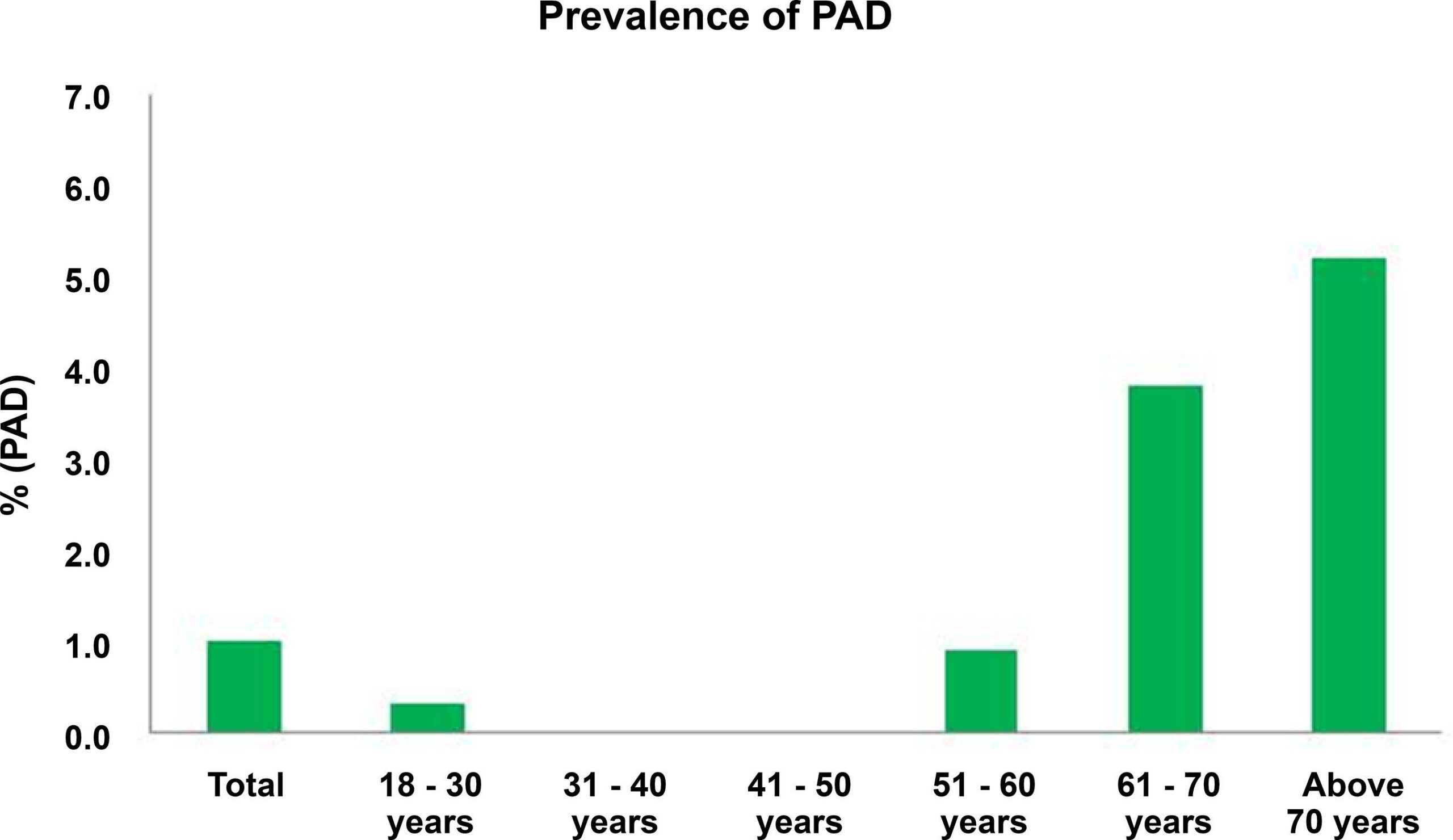
In the overall sample, the prevalence of PAD was 1.05%, and reached 5.2% after the age of 70 years. The frequency and intensity of smoking were higher in individuals with PAD. A prior history of myocardial infarction and a higher prevalence of hypertension, diabetes, obesity, and sedentary lifestyle were also associated with PAD. In addition, PAD was more frequent in blacks than whites. In multivariable analysis, age, diabetes, smoking, and physical inactivity remained independently associated with PAD.

Conclusion:

The prevalence of PAD was low and increased clearly with age in our sample from a Brazilian rural population. Furthermore, the main risk factors for PAD in the investigated sample were smoking, sedentary lifestyle, diabetes mellitus, and age. (Int J Cardiovasc Sci. 2018; [online].ahead print, PP.0-0)

  • Ankle Brachial Index
  • Peripheral Arterial Disease / prevalence
  • Risk Factors
  • Rural Population
  • Tobacco Use Disorder
Read Full Article
Creative Commons Attribution (CC BY) Creative Commons license
11/06/2018 DOI: 10.5935/2359-4802.20180031 Views 1
Figure 1
IJCS
Original Article

Assessment of the Relationship of Ankle-Brachial Index With Coronary Artery Disease Severity

Andrea Mabilde Petracco et al. Luiz Carlos Bodanese Gustavo Farias Porciúncula Gabriel Santos Teixeira … Denise de Oliveira Pellegrini Luiz Claudio Danzmann Ricardo Medeiros Pianta João Batista Petracco

Abstract

Background:

Peripheral Artery Disease (PAD) is associated with cardiovascular events and can be diagnosed and estimated by use of the Ankle-Brachial Index (ABI). ABI is a worsening factor in the stratification of cardiovascular risk, but its contribution to define the severity of coronary artery disease has not been well established.

Objectives:

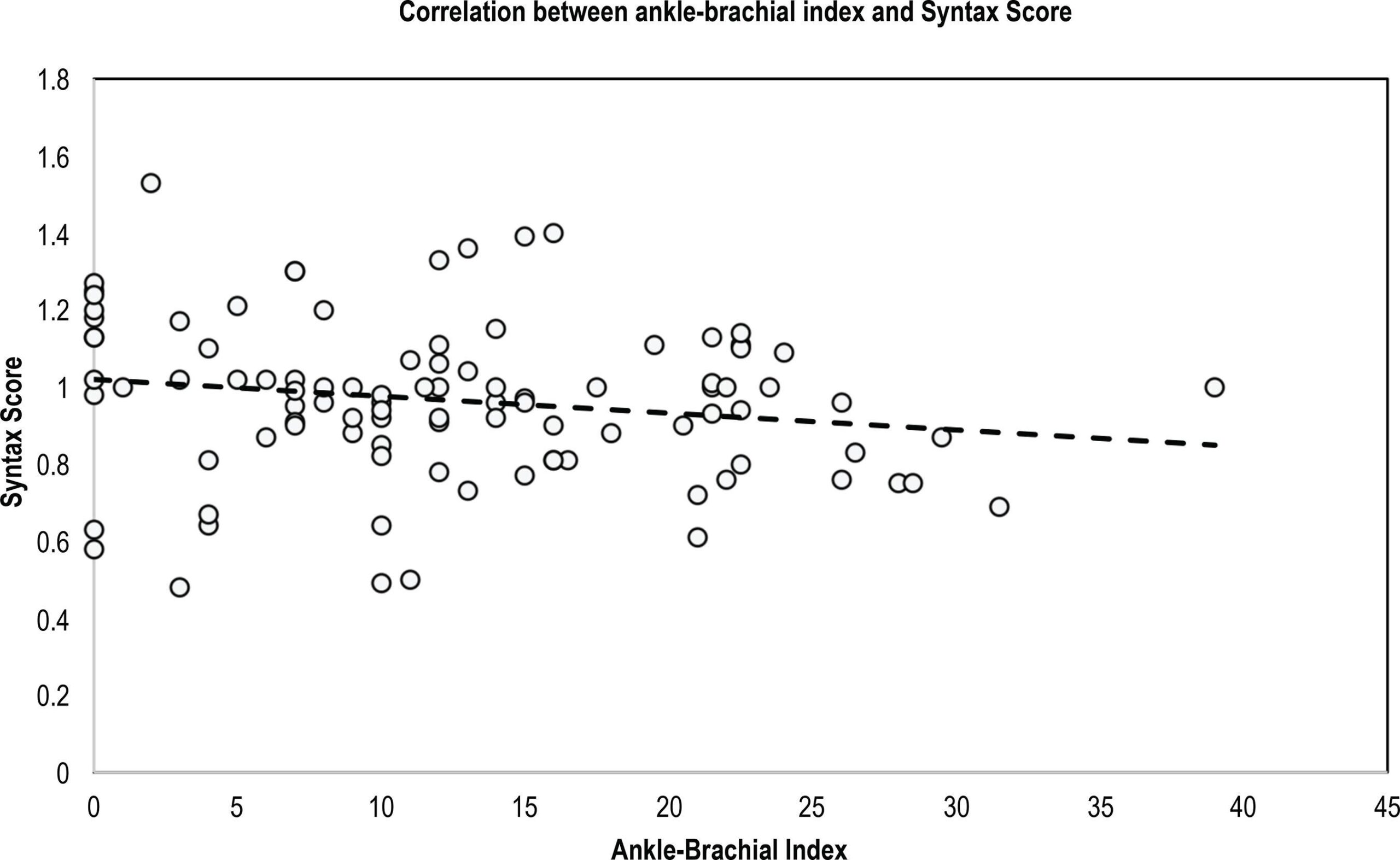
To compare the ABI value with the coronary atherosclerotic disease severity by use of the Syntax Score (SS) in patients with Acute Coronary Syndrome (ACS).

Methods:

This prospective study measured the ABI of all patients with ACS consecutively admitted to the São Lucas Hospital of PUCRS from May to September 2016, and compared the ABI values with the SS and ACS types of those patients. The analyzes were performed considering the 95%confidence interval (a = 5%).

Results:

This study assessed 101 patients [mean age, 62.6 ± 12.0 years; 58 men (57.4%)], 74 (82.2%) were hypertensive, 33 (45.8%) had diabetes and 46 (45,5%) had ST-elevation acute myocardial infarction (STEMI). The PAD severity was not related to the anatomical severity of the coronary artery disease (CAD). We found a significant association of intermediate SS with non-ST-elevation acute myocardial infarction (NSTEMI), and of low SS with unstable angina (UA) [OR (95% CI): 1.11 (1.03-1.20) (p = 0.004)], which remained after multivariate analysis adjusted to age, smoking, family history of CAD and previous CAD [(OR 95%): 1.13 (1.02-1.25) (p = 0.019)].

Conclusions:

Patients with ABI < 0.9 showed no association with higher disease complexity determined by the SS in patients with ACS. Patients with NSTEMI were more associated with an intermediate risk on the SS.

  • Acute Coronary Syndrome, Coronary Artery Disease
  • Ankle Brachial Index
  • Atherosclerosis, Peripheral Arterial Disease
  • Severity of Illness Index
Read Full Article
Creative Commons Attribution (CC BY) Creative Commons license
01/01/2018 DOI: 10.5935/2359-4802.20170094 Views 1
Figure 1
ABC
Original Article

Intima-Media Thickness in the Carotid and Femoral Arteries for Detection of Arteriosclerosis in Human Immunodeficiency Virus-Positive Individuals

Emmanuelle Tenório Albuquerque Madruga Godoi et al. Carlos Teixeira Brandt Heloisa Ramos Lacerda Jocelene Tenório Albuquerque Madruga Godoi … Dinaldo Cavalcanti de Oliveira Gabriela Farias Araujo Sousa Costa Gerson Gomes dos Santos Junior Kaliene Maria Estevão Leite Juannicelle Tenório Albuquerque Madruga Godoi Adriana Ferraz de Vasconcelos

Abstract

Background:

The prevalence of atherosclerosis is higher in HIV-positive people, who also experience it earlier than the general population.

Objectives:

To assess and compare the prevalence of atherosclerosis evaluated by the intima-media thickness of carotid and femoral arteries, and by the ankle-brachial pressure index (ABPI) in HIV patients treated or not treated with protease inhibitors (PIs) and controls.

Methods:

Eighty HIV+ subjects (40 using PIs and 40 not using PIs) and 65 controls were included in the study. Atherosclerosis was diagnosed by (carotid and femoral) ITM measurement and ABPI. Classical risk factors for atherosclerosis and HIV were compared between the groups by statistical tests. A p ≤ 0.05 was considered significant.

Results:

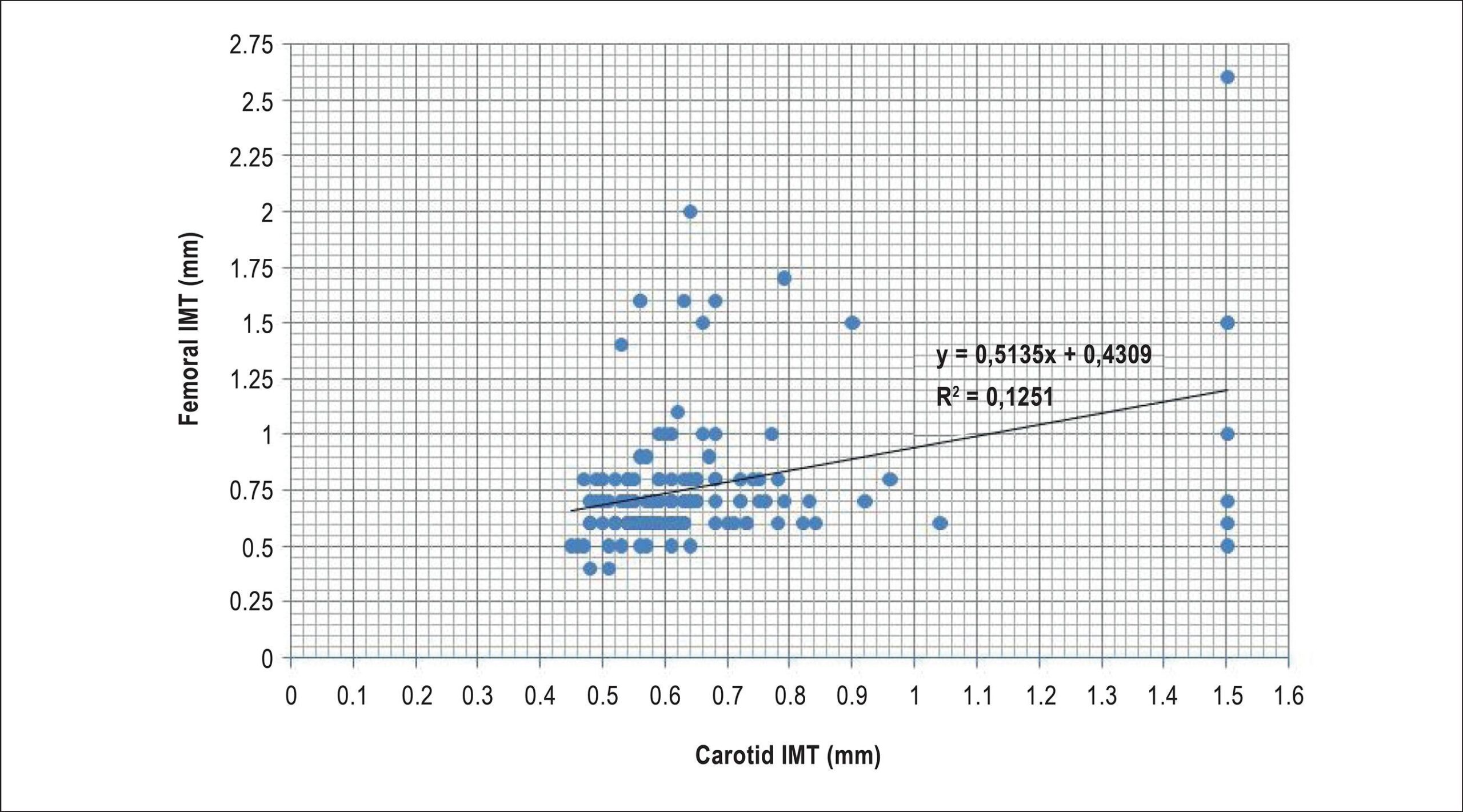
An IMT > P75 or the presence of plaque was higher in the HIV+ than in the control group (37.5% vs 19%, p = 0.04). Comparative analysis showed a significant difference (p=0.014) in carotid IMT between HIV+ with PIs (0.71 ± 0.28 mm), without PIs 0.63 ± 0.11 mm and, and controls (0.59 ± 0.11 mm). There was no significant difference in femoral IMT between the groups or in ABPI between HIV+ subjects and controls. However, a significant difference (p=0.015) was found between HIV+ patients not treated with PIs (1.17 [1.08 – 1.23]), and controls 1.08 [1.07 – 1.17]).

Conclusion:

In HIV patients, atherosclerosis is more prevalent and seems to occur earlier with particular characteristics compared with HIV-negative subjects.

  • Ankle Brachial Index
  • Atherosclerosis
  • Carotid Artery Disease
  • Carotid Intima-Media Thickness
  • HIV
Read Full Article
Creative Commons Attribution (CC BY) Creative Commons license
01/01/2017 DOI: 10.5935/abc.20160197 Views 2
Figure 1
IJCS
Case Report

Familial Hypercholesterolemia: the Importance of Early Diagnosis and Management

Ana Flavia Cassini Cunha et al. Iliana Ribeiro

Introduction

Familial Hypercholesterolemia (FH) is an autosomal dominant hereditary disease, a genetic disease of lipoprotein metabolism, mainly due to a defect in the LDLR gene encoding the LDL receptor.– The diagnosis is established by clinical and laboratory criteria and should always be a diagnostic hypothesis in patients with low-density lipoprotein cholesterol (LDLc) levels greater than 190 mg/dL; and can be confirmed by genetic tests that determine the mutation., Some diagnostic criteria have been proposed in an attempt to standardize and formalize the diagnosis of FH, such as the Dutch Lipid Clinic Network (Dutch MEDPED). This calculates a patient score based on anamnesis data and physical and laboratory tests such as elevated rates of LDLc; characteristics such as tendinous xanthomas and corneal arch; family history of hypercholesterolemia and/or early coronary artery disease (man < 55 years and woman < 60 years) and identification of genetic mutations., The score determines the probability of an FH diagnosis as possible, probable or definitive FH. The most common mutation related to FH is in the gene encoding the LDL receptor, resulting in LDL receptors with functional reductions in their ability to remove LDLc from the circulation. There are two distinct phenotypes: the homozygous form, where two defective genes are inherited and LDL receptors have no functionality; a rare form,1 in 1 million individuals and in this case are observed LDL levels > 650 mg/dL; and the heterozygous form, where a gene defective to the LDL receptor is inherited from one parent and a normal gene from the other. The absence of a functional gene causes an increase in the plasma level of LDLc; most frequently affects 1 in 500 individuals with LDL levels > 200 mg/dL. The homozygous form tends to present cardiovascular involvement already in childhood. The mutation may also be secondary to defects in the APOB gene encoding apolipoprotein B100, or by functional gain mutations in the pro-protein convertase subutilisin/kexin type 9 (PCSK) gene. -9).,, In patients with heterozygous FH the LDL particles circulate longer, being more subject to oxidation and chemical transformations that result in high uptake of LDL modified by macrophages, triggering pro-atherogenic mechanisms, causing atherosclerosis, coronary artery disease and arterial disease peripheral. The nutritional therapies, medication, and regular physical exercises help to control LDL levels and to prevent cardiovascular disease.– It is recommended to reduce the intake of foods rich in cholesterol and saturated fatty acids.– Pharmacological therapy is performed with high-potency statins, such as Atorvastatin (10-80 mg) and Rosuvastatin (10-40mg), in order to obtain a reduction of more than 50% of the baseline level. In patients with intolerant to statin therapy, other hypolipidemic agents, such as ezetimibe, niacin or cholestyramine may be used; and may be also combined with each others in patients who are poorly responding to single statin therapy., Drug therapy should be individually prescribed and maintained in the long term, with regular medical follow-up always evaluating liver (TGO/TGP) and muscular (CPK) enzymes., Lipid profile screening is recommended in all individuals over 10 years of age and in all first degree relatives of individuals diagnosed as having FH. In the presence of risk factors, clinical signs of FH or atherosclerotic disease, the lipid profile should be considered from 02 years old on.

In this report, we describe the case of a patient in the fourth decade of life with Familial Hypercholesterolemia, who was successfully treated with high-potency statin.

[…]

  • Ankle Brachial Index
  • Atherosclerosis
  • Hyperlipoproteinemia Type II
  • Peripheral Arterial Disease
Read Full Article
Creative Commons Attribution (CC BY) Creative Commons license
01/01/2017 DOI: 10.5935/2359-4802.20170077
Figure 1
ABC
Original Article

Association of Peripheral Arterial and Cardiovascular Diseases in Familial Hypercholesterolemia

Carolina Pereira et al. Marcio Miname Marcia Makdisse Roberto Kalil Filho Raul D. Santos

Background:

Familial hypercholesterolemia (FH) is an autosomal dominant genetic disease characterized by an elevation in the serum levels of total cholesterol and of low-density lipoproteins (LDL- c). Known to be closely related to the atherosclerotic process, FH can determine the development of early obstructive lesions in different arterial beds. In this context, FH has also been proposed to be a risk factor for peripheral arterial disease (PAD).

Objective:

This observational cross-sectional study assessed the association of PAD with other manifestations of cardiovascular disease (CVD), such as coronary artery and cerebrovascular disease, in patients with heterozygous FH.

Methods:

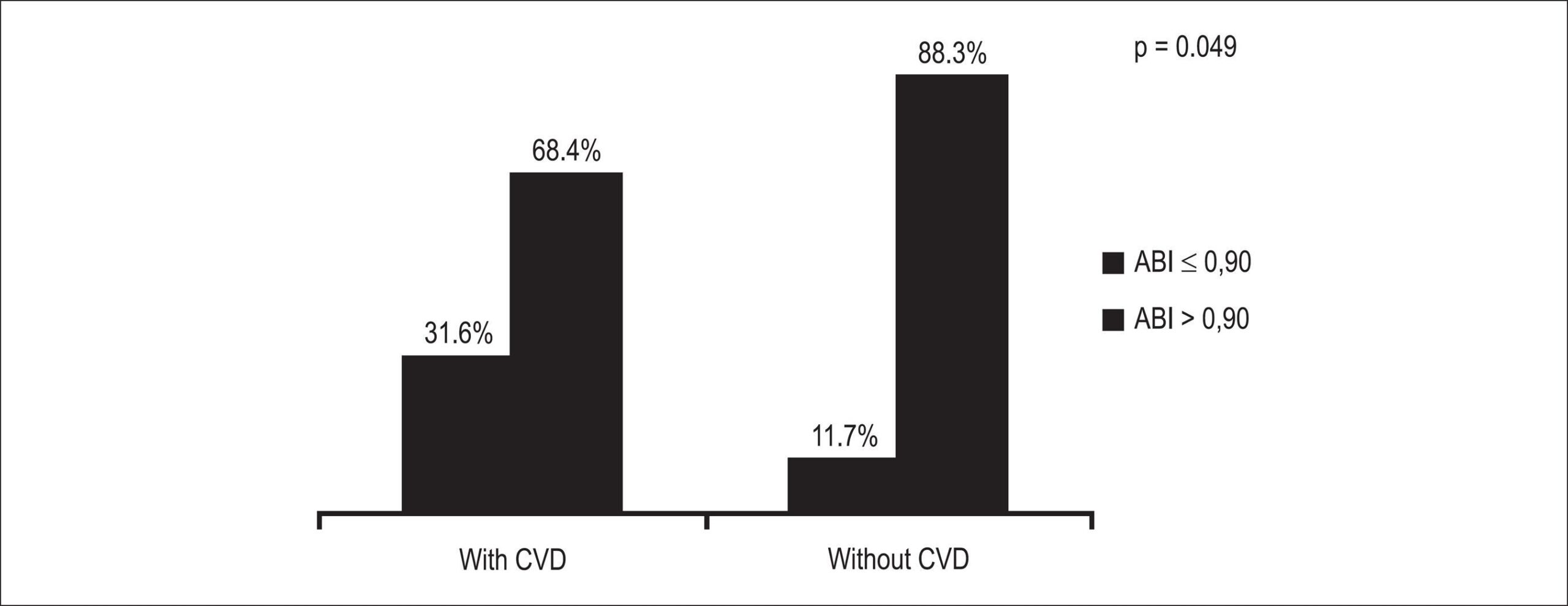
The diagnosis of PAD was established by ankle-brachial index (ABI) values ≤ 0.90. This study assessed 202 patients (35% of men) with heterozygous FH (90.6% with LDL receptor mutations), mean age of 51 ± 14 years and total cholesterol levels of 342 ± 86 mg /dL.

Results:

The prevalences of PAD and previous CVD were 17% and 28.2 %, respectively. On multivariate analysis, an independent association between CVD and the diagnosis of PAD was observed (OR = 2.50; 95% CI: 1.004 – 6.230; p = 0.049).

Conclusion:

Systematic screening for PAD by use of ABI is feasible to assess patients with FH, and it might indicate an increased risk for CVD. However, further studies are required to determine the role of ABI as a tool to assess the cardiovascular risk of those patients.

  • Ankle Brachial Index
  • Atherosclerosis
  • Peripheral Arterial Disease
  • Type II Hyperlipoproteinemia
Read Full Article
Creative Commons Attribution (CC BY) Creative Commons license
15/07/2014 DOI: 10.5935/abc.20140097
Association between ankle-brachial index and carotid atherosclerotic disease
ABC
Artigo Original

Association between ankle-brachial index and carotid atherosclerotic disease

Augusto Cezar Lacerda Brasileiro et al. Dinaldo Cavalcanti de Oliveira Edgar Guimarães Victor Danielle A. G. Cavalcanti Oliveira Laecio Leitão Batista

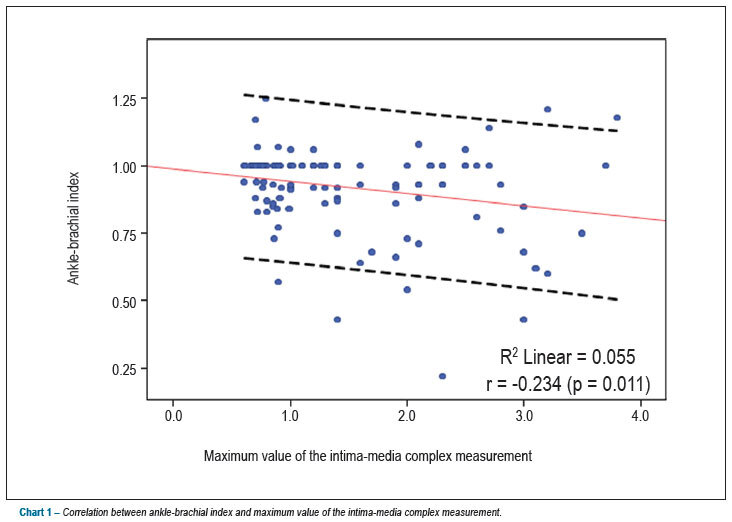
BACKGROUND: The association between the ankle brachial index (ABI) and the measurement of intimal medial thickness (IMT) has not been fully studied. OBJECTIVE: We aimed to evaluate whether the prevalence of carotid atherosclerosis was higher in patients with ABI 0.9. METHODS: From January 2011 to December 2011, 118 patients (48 men and 70 women) were enrolled. ABI and IMT Measurements were performed in all patients. Patients were divided in Group 1 (ABI 0.9) according to ABI values. Mann-Whitney, Chi-square and Fischer tests were used for comparison among the groups. Pearson’s correlation was used to assess correlation between ABI and IMT. RESULTS: The prevalence of ABI 1.5 mm was 34.7 %. Clinical characteristics were similar between groups 1 and 2: mean age (64 ± 9 vs. 62 ± 7.2 years, p = 0.1), male gender (40% vs. 41%, p = 0.9), hypertension (74% vs. 59%, p = 0.1), diabetes mellitus (54% vs. 35%, p = 0.051), dyslipidemia (26% vs. 24%, p = 0.8), smoking (57% vs. 65%, p = 0.4). The prevalence of carotid atherosclerosis was higher in group 1 (48.6% vs. 28.9%, p = 0.04). Pearson’s correlation between ABI and IMT was -0.235, with a p value = 0.01. CONCLUSION: Patients with ABI < 0.9 showed a higher prevalence of carotid atherosclerosis. There was a negative correlation between ABI and IMT.

  • Ankle Brachial Index
  • Carotid Artery Diseases
  • Ultrasonography
Read Full Article
Creative Commons Attribution (CC BY) Creative Commons license
09/04/2013 DOI: 10.5935/abc.20130057
Ankle-brachial index and ventricular hypertrophy in arterial hypertension
ABC
Brief Communication

Ankle-brachial index and ventricular hypertrophy in arterial hypertension

Pedro Ferreira de Albuquerque et al. Pedro Henrique Oliveira de Albuquerque Gustavo Oliveira de Albuquerque Denise Maria Servantes … Saskya Meneses de Carvalho Japy Angelini Oliveira Filho

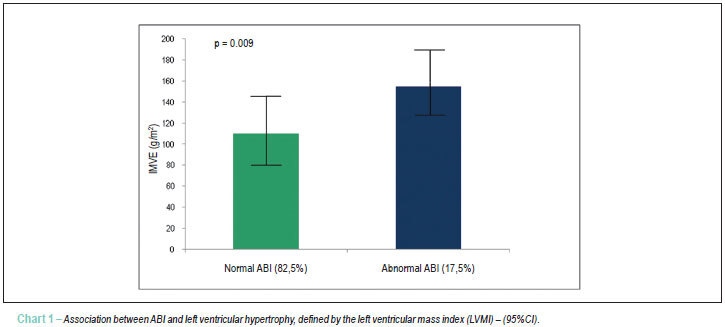
The ankle-brachial index (ABI) is a marker of peripheral arterial disease. Very few reports have correlated this index with left ventricular hypertrophy (LVH), functional capacity (FC) and Framingham risk score (FRS). The objective of this study was to verify the correlation between ABI, LVH, FC and FRS in men with arterial hypertension (AH). Prospective and cross-sectional study of male patients (n = 40) with a mean age of 57.92 ± 7.61 years and no cardiovascular complications. This population was submitted to ABI measurements, echocardiography (ECHO), exercise test (ET) and laboratory tests. The ABI (right and left) was considered abnormal when the ratio between the highest mean systolic pressures of the ankles and arms was 0.9 or higher than 1.3 mmHg. LVH was identified by transthoracic ECHO and the FC by the ET. Peripheral blood samples were collected to calculate the FRS. Normal ABI values were observed in 33 patients (82.5%), who were included in Group I; seven patients (17.5%) with abnormal ABI constituted Group II. Left ventricular mass index (LVMI) at the ECO were 111.18 ± 34.34 g/m2 (Group I) and 150.29 ± 34.06 g/m² (Group II) (p = 0.009). The prevalence of LVH was 4% (Group I) and 35.3% (Group II) (p = 0.01), demonstrating a significant difference between the groups. As for the FC in ET, there was no difference between the groups. Regarding the FRS, the mean in Group I was below that in Group II: 13.18 ± 2.11 versus 15.28 ± 1.79 (p = 0.019). In hypertensive patients, the presence of LVH defined by the LVMI was more frequent in cases with abnormal ABI, identifying a higher cardiovascular risk.

  • Ankle Brachial Index
  • Hypertension
  • Hypertrophy Left Ventricular
  • Risk Assessment
  • Risk Factors
Read Full Article
Creative Commons Attribution (CC BY) Creative Commons license
08/02/2012 DOI: 10.1590/S0066-782X2012000100013
ABC
Artigo Original

Association of ankle-arm index with inflammation and mineral bone disorder in hemodialysis patients

Jair B. Miguel et al. Jorge P. Strogoff de Matos Frederico Ruzany Claudia S. Miguel … Sebastião J. S. Miguel Luiz T. Naveiro Jocemir R. Lugon

BACKGROUND: Reduced ankle-arm index (AAI), inflammation and mineral bone disorder (MBD) are all associated with increased risk of death and cardiovascular complications in patients on hemodialysis (HD), but the association between them deserves clarification. OBJECTIVE: To evaluate the association between abnormal AAI with MBD and inflammation in patients on HD. METHODS: This was a cross-sectional analysis of 478 patients on hemodialysis for at least one year. The AAI was evaluated using a portable Doppler and mercury column manometer. Patients were divided into 3 groups, according to AAI (low: 1.3). C-reactive protein measurement was used as an inflammatory marker, whereas MBD was evaluated by calcium, phosphorus and intact parathyroid hormone levels. RESULTS: Participants were 54 (18 to 75) years old, 56% males, 17% diabetics, and had been on hemodialysis for a mean of 5 (1 to 35) years. The prevalence of low, normal and high AAI was 26.8%, 64.6% and 8.6%, respectively. Using a backward conditional logistic regression model, age (p6 mg/L (p= 0.006) were associated with the presence of low AAI, whereas male gender (p<0.001), diabetes (p= 0.001) and elevated calcium x phosphorus product (p= 0.026) were associated with high AAI. CONCLUSION: In patients on hemodialysis, the presence of diabetes was associated with both low and high AAI. The risk of having low AAI seems to be increased by aging and inflammation, whereas BMD was associated with high AAI.

  • Ankle Brachial Index
  • Calcinosis
  • Inflammation
  • renal dialysis
Read Full Article
Creative Commons Attribution (CC BY) Creative Commons license
18/03/2011 DOI: 10.1590/S0066-782X2011005000031

How to cite this article

EndNote RIS

Electronic Document Format (Vancouver)

Franzoni L, Zubaran GPR, Motta SB. Walking Training Improve Ambulatorial Blood Pressure Variability in Claudicants. Arquivos Brasileiros de Cardiologia 2021;116(5):906-7.

Electronic Document Format (ABNT)

Franzoni, Leandro; Zubaran, Gabriel Pereira de Reis; Motta, Stephanie Bastos da. Walking Training Improve Ambulatorial Blood Pressure Variability in Claudicants. Arquivos Brasileiros de Cardiologia, v. 116, n. 5, p. 906-907, May. 2021.

Electronic Document Format (APA)

Franzoni, L., Zubaran, G. P. R., & Motta, S. B. (2021). Walking Training Improve Ambulatorial Blood Pressure Variability in Claudicants. Arquivos Brasileiros de Cardiologia, 116(5), 906-907.

Electronic Document Format (ISO)

Franzoni, Leandro and Zubaran, Gabriel Pereira de Reis and Motta, Stephanie Bastos da. Walking Training Improve Ambulatorial Blood Pressure Variability in Claudicants. Arquivos Brasileiros de Cardiologia [online]. 2021, vol. 116, n. 5, [cited 2026-10-14], pp. 906-907. Available from: <https://journals.cardiol.br/en/article/walking-training-improve-ambulatorial-blood-pressure-variability-in-claudicants/>. ISSN 0066-782X

EndNote RIS

Electronic Document Format (Vancouver)

Alves MJNN, Souza FR. Aspects of Non-Pharmacological Treatment in Peripheral Arterial Disease. Arquivos Brasileiros de Cardiologia 2019;113(3):417-8.

Electronic Document Format (ABNT)

Alves, Maria Janieire de N. Nunes; Souza, Francis Ribeiro de. Aspects of Non-Pharmacological Treatment in Peripheral Arterial Disease. Arquivos Brasileiros de Cardiologia, v. 113, n. 3, p. 417-418, Oct. 2019.

Electronic Document Format (APA)

Alves, M. J. N. N., & Souza, F. R. (2019). Aspects of Non-Pharmacological Treatment in Peripheral Arterial Disease. Arquivos Brasileiros de Cardiologia, 113(3), 417-418.

Electronic Document Format (ISO)

Alves, Maria Janieire de N. Nunes and Souza, Francis Ribeiro de. Aspects of Non-Pharmacological Treatment in Peripheral Arterial Disease. Arquivos Brasileiros de Cardiologia [online]. 2019, vol. 113, n. 3, [cited 2026-10-14], pp. 417-418. Available from: <https://journals.cardiol.br/en/article/aspects-of-non-pharmacological-treatment-in-peripheral-arterial-disease/>. ISSN 0066-782X

EndNote RIS

Electronic Document Format (Vancouver)

Alvim RO, Dias FAL, Oliveira CM, Horimoto ARVR, Ulbrich AZ, Krieger JE, Pereira AC, et al. Prevalence of Peripheral Artery Disease and Associated Risk Factors in a Brazilian Rural Population: The Baependi Heart Study. International Journal of Cardiovascular Sciences 2018;31(4):405-13.

Electronic Document Format (ABNT)

Alvim, Rafael de Oliveira; Dias, Fernando Augusto Lavezzo; Oliveira, Camila Maciel de; Horimoto, Andréa Roseli Vançan Russo; Ulbrich, Anderson Zampier; Krieger, José Eduardo; Pereira, Alexandre da Costa. Prevalence of Peripheral Artery Disease and Associated Risk Factors in a Brazilian Rural Population: The Baependi Heart Study. International Journal of Cardiovascular Sciences, v. 31, n. 4, p. 405-413, Jun. 2018.

Electronic Document Format (APA)

Alvim, R. O., Dias, F. A. L., Oliveira, C. M. , Horimoto, A. R. V. R., Ulbrich, A. Z., Krieger, J. E., & Pereira, A. C. (2018). Prevalence of Peripheral Artery Disease and Associated Risk Factors in a Brazilian Rural Population: The Baependi Heart Study. International Journal of Cardiovascular Sciences, 31(4), 405-413.

Electronic Document Format (ISO)

Alvim, Rafael de Oliveira and Dias, Fernando Augusto Lavezzo and Oliveira, Camila Maciel de and Horimoto, Andréa Roseli Vançan Russo and Ulbrich, Anderson Zampier and Krieger, José Eduardo and Pereira, Alexandre da Costa. Prevalence of Peripheral Artery Disease and Associated Risk Factors in a Brazilian Rural Population: The Baependi Heart Study. International Journal of Cardiovascular Sciences [online]. 2018, vol. 31, n. 4, [cited 2026-10-14], pp. 405-413. Available from: <https://journals.cardiol.br/en/article/prevalence-of-peripheral-artery-disease-and-associated-risk-factors-in-a-brazilian-rural-population-the-baependi-heart-study/>. ISSN 2359-4802

EndNote RIS

Electronic Document Format (Vancouver)

Petracco AM, Bodanese LC, Porciúncula GF, Teixeira GS, Pellegrini DO, Danzmann LC, Pianta RM, et al. Assessment of the Relationship of Ankle-Brachial Index With Coronary Artery Disease Severity. International Journal of Cardiovascular Sciences 2018;31(1):47-55.

Electronic Document Format (ABNT)

Petracco, Andrea Mabilde; Bodanese, Luiz Carlos; Porciúncula, Gustavo Farias; Teixeira, Gabriel Santos; Pellegrini, Denise de Oliveira; Danzmann, Luiz Claudio; Pianta, Ricardo Medeiros; Petracco, João Batista. Assessment of the Relationship of Ankle-Brachial Index With Coronary Artery Disease Severity. International Journal of Cardiovascular Sciences, v. 31, n. 1, p. 47-55, Dec. 2017.

Electronic Document Format (APA)

Petracco, A. M., Bodanese, L. C., Porciúncula, G. F., Teixeira, G. S., Pellegrini, D. O., Danzmann, L. C., Pianta, R. M., & Petracco, J. B. (2018). Assessment of the Relationship of Ankle-Brachial Index With Coronary Artery Disease Severity. International Journal of Cardiovascular Sciences, 31(1), 47-55.

Electronic Document Format (ISO)

Petracco, Andrea Mabilde and Bodanese, Luiz Carlos and Porciúncula, Gustavo Farias and Teixeira, Gabriel Santos and Pellegrini, Denise de Oliveira and Danzmann, Luiz Claudio and Pianta, Ricardo Medeiros and Petracco, João Batista. Assessment of the Relationship of Ankle-Brachial Index With Coronary Artery Disease Severity. International Journal of Cardiovascular Sciences [online]. 2018, vol. 31, n. 1, [cited 2026-10-14], pp. 47-55. Available from: <https://journals.cardiol.br/en/article/assessment-of-the-relationship-of-ankle-brachial-index-with-coronary-artery-disease-severity/>. ISSN 2359-4802

EndNote RIS

Electronic Document Format (Vancouver)

Godoi ETAM, Brandt CT, Lacerda HR, Godoi JTAM, Oliveira DC, Costa GFAS, Santos Junior GG, et al. Intima-Media Thickness in the Carotid and Femoral Arteries for Detection of Arteriosclerosis in Human Immunodeficiency Virus-Positive Individuals. Arquivos Brasileiros de Cardiologia 2017;108(1):3-11.

Electronic Document Format (ABNT)

Godoi, Emmanuelle Tenório Albuquerque Madruga; Brandt, Carlos Teixeira; Lacerda, Heloisa Ramos; Godoi, Jocelene Tenório Albuquerque Madruga; Oliveira, Dinaldo Cavalcanti de; Costa, Gabriela Farias Araujo Sousa; Santos Junior, Gerson Gomes dos; Leite, Kaliene Maria Estevão; Godoi, Juannicelle Tenório Albuquerque Madruga; Vasconcelos, Adriana Ferraz de. Intima-Media Thickness in the Carotid and Femoral Arteries for Detection of Arteriosclerosis in Human Immunodeficiency Virus-Positive Individuals. Arquivos Brasileiros de Cardiologia, v. 108, n. 1, p. 3-11, Dec. 2016.

Electronic Document Format (APA)

Godoi, E. T. A. M., Brandt, C. T., Lacerda, H. R., Godoi, J. T. A. M., Oliveira, D. C. , Costa, G. F. A. S., Santos Junior, G. G. , Leite, K. M. E., Godoi, J. T. A. M., & Vasconcelos, A. F. (2017). Intima-Media Thickness in the Carotid and Femoral Arteries for Detection of Arteriosclerosis in Human Immunodeficiency Virus-Positive Individuals. Arquivos Brasileiros de Cardiologia, 108(1), 3-11.

Electronic Document Format (ISO)

Godoi, Emmanuelle Tenório Albuquerque Madruga and Brandt, Carlos Teixeira and Lacerda, Heloisa Ramos and Godoi, Jocelene Tenório Albuquerque Madruga and Oliveira, Dinaldo Cavalcanti de and Costa, Gabriela Farias Araujo Sousa and Santos Junior, Gerson Gomes dos and Leite, Kaliene Maria Estevão and Godoi, Juannicelle Tenório Albuquerque Madruga and Vasconcelos, Adriana Ferraz de. Intima-Media Thickness in the Carotid and Femoral Arteries for Detection of Arteriosclerosis in Human Immunodeficiency Virus-Positive Individuals. Arquivos Brasileiros de Cardiologia [online]. 2017, vol. 108, n. 1, [cited 2026-10-14], pp. 3-11. Available from: <https://journals.cardiol.br/en/article/intima-media-thickness-in-the-carotid-and-femoral-arteries-for-detection-of-arteriosclerosis-in-human-immunodeficiency-virus-positive-individuals/>. ISSN 0066-782X

EndNote RIS

Electronic Document Format (Vancouver)

Cunha AFC, Ribeiro I. Familial Hypercholesterolemia: the Importance of Early Diagnosis and Management. International Journal of Cardiovascular Sciences 2017;30(6):550-3.

Electronic Document Format (ABNT)

Cunha, Ana Flavia Cassini; Ribeiro, Iliana. Familial Hypercholesterolemia: the Importance of Early Diagnosis and Management. International Journal of Cardiovascular Sciences, v. 30, n. 6, p. 550-553, Dec. 2016.

Electronic Document Format (APA)

Cunha, A. F. C., & Ribeiro, I. (2017). Familial Hypercholesterolemia: the Importance of Early Diagnosis and Management. International Journal of Cardiovascular Sciences, 30(6), 550-553.

Electronic Document Format (ISO)

Cunha, Ana Flavia Cassini and Ribeiro, Iliana. Familial Hypercholesterolemia: the Importance of Early Diagnosis and Management. International Journal of Cardiovascular Sciences [online]. 2017, vol. 30, n. 6, [cited 2026-10-14], pp. 550-553. Available from: <https://journals.cardiol.br/en/article/familial-hypercholesterolemia-the-importance-of-early-diagnosis-and-management/>. ISSN 2359-4802

EndNote RIS

Electronic Document Format (Vancouver)

Pereira C, Miname M, Makdisse M, Kalil Filho R, Santos RD. Association of Peripheral Arterial and Cardiovascular Diseases in Familial Hypercholesterolemia. Arquivos Brasileiros de Cardiologia 2014;103(2):118-23.

Electronic Document Format (ABNT)

Pereira, Carolina; Miname, Marcio; Makdisse, Marcia; Kalil Filho, Roberto; Santos, Raul D.. Association of Peripheral Arterial and Cardiovascular Diseases in Familial Hypercholesterolemia. Arquivos Brasileiros de Cardiologia, v. 103, n. 2, p. 118-123, Jul. 2014.

Electronic Document Format (APA)

Pereira, C., Miname, M., Makdisse, M., Kalil Filho, R., & Santos, R. D. (2014). Association of Peripheral Arterial and Cardiovascular Diseases in Familial Hypercholesterolemia. Arquivos Brasileiros de Cardiologia, 103(2), 118-123.

Electronic Document Format (ISO)

Pereira, Carolina and Miname, Marcio and Makdisse, Marcia and Kalil Filho, Roberto and Santos, Raul D.. Association of Peripheral Arterial and Cardiovascular Diseases in Familial Hypercholesterolemia. Arquivos Brasileiros de Cardiologia [online]. 2014, vol. 103, n. 2, [cited 2026-10-14], pp. 118-123. Available from: <https://journals.cardiol.br/en/article/association-of-peripheral-arterial-and-cardiovascular-diseases-in-familial-hypercholesterolemia/>. ISSN 0066-782X

EndNote RIS

Electronic Document Format (Vancouver)

Brasileiro ACL, Oliveira DC, Victor EG, Oliveira DAGC, Batista LL. Association between ankle-brachial index and carotid atherosclerotic disease. Arquivos Brasileiros de Cardiologia 2013;100(5):422-8.

Electronic Document Format (ABNT)

Brasileiro, Augusto Cezar Lacerda; Oliveira, Dinaldo Cavalcanti de; Victor, Edgar Guimarães; Oliveira, Danielle A. G. Cavalcanti; Batista, Laecio Leitão. Association between ankle-brachial index and carotid atherosclerotic disease. Arquivos Brasileiros de Cardiologia, v. 100, n. 5, p. 422-428, Apr. 2013.

Electronic Document Format (APA)

Brasileiro, A. C. L., Oliveira, D. C. , Victor, E. G., Oliveira, D. A. G. C., & Batista, L. L. (2013). Association between ankle-brachial index and carotid atherosclerotic disease. Arquivos Brasileiros de Cardiologia, 100(5), 422-428.

Electronic Document Format (ISO)

Brasileiro, Augusto Cezar Lacerda and Oliveira, Dinaldo Cavalcanti de and Victor, Edgar Guimarães and Oliveira, Danielle A. G. Cavalcanti and Batista, Laecio Leitão. Association between ankle-brachial index and carotid atherosclerotic disease. Arquivos Brasileiros de Cardiologia [online]. 2013, vol. 100, n. 5, [cited 2026-10-14], pp. 422-428. Available from: <https://journals.cardiol.br/en/article/association-between-ankle-brachial-index-and-carotid-atherosclerotic-disease/>. ISSN 0066-782X

EndNote RIS

Electronic Document Format (Vancouver)

Albuquerque PF, Albuquerque PHO, Albuquerque GO, Servantes DM, Carvalho SM, Oliveira Filho JA. Ankle-brachial index and ventricular hypertrophy in arterial hypertension. Arquivos Brasileiros de Cardiologia 2012;98(1):84-6.

Electronic Document Format (ABNT)

Albuquerque, Pedro Ferreira de; Albuquerque, Pedro Henrique Oliveira de; Albuquerque, Gustavo Oliveira de; Servantes, Denise Maria; Carvalho, Saskya Meneses de; Oliveira Filho, Japy Angelini. Ankle-brachial index and ventricular hypertrophy in arterial hypertension. Arquivos Brasileiros de Cardiologia, v. 98, n. 1, p. 84-86, Feb. 2012.

Electronic Document Format (APA)

Albuquerque, P. F. , Albuquerque, P. H. O. , Albuquerque, G. O. , Servantes, D. M., Carvalho, S. M. , & Oliveira Filho, J. A. (2012). Ankle-brachial index and ventricular hypertrophy in arterial hypertension. Arquivos Brasileiros de Cardiologia, 98(1), 84-86.

Electronic Document Format (ISO)

Albuquerque, Pedro Ferreira de and Albuquerque, Pedro Henrique Oliveira de and Albuquerque, Gustavo Oliveira de and Servantes, Denise Maria and Carvalho, Saskya Meneses de and Oliveira Filho, Japy Angelini. Ankle-brachial index and ventricular hypertrophy in arterial hypertension. Arquivos Brasileiros de Cardiologia [online]. 2012, vol. 98, n. 1, [cited 2026-10-14], pp. 84-86. Available from: <https://journals.cardiol.br/en/article/ankle-brachial-index-and-ventricular-hypertrophy-in-arterial-hypertension/>. ISSN 0066-782X

EndNote RIS

Electronic Document Format (Vancouver)

Miguel JB, Matos JPS, Ruzany F, Miguel CS, Miguel SJS, Naveiro LT, Lugon JR, et al. Association of ankle-arm index with inflammation and mineral bone disorder in hemodialysis patients. Arquivos Brasileiros de Cardiologia 2011;96(5):405-10.

Electronic Document Format (ABNT)

Miguel, Jair B.; Matos, Jorge P. Strogoff de; Ruzany, Frederico; Miguel, Claudia S.; Miguel, Sebastião J. S.; Naveiro, Luiz T.; Lugon, Jocemir R.. Association of ankle-arm index with inflammation and mineral bone disorder in hemodialysis patients. Arquivos Brasileiros de Cardiologia, v. 96, n. 5, p. 405-410, Mar. 2011.

Electronic Document Format (APA)

Miguel, J. B., Matos, J. P. S. , Ruzany, F., Miguel, C. S., Miguel, S. J. S., Naveiro, L. T., & Lugon, J. R. (2011). Association of ankle-arm index with inflammation and mineral bone disorder in hemodialysis patients. Arquivos Brasileiros de Cardiologia, 96(5), 405-410.

Electronic Document Format (ISO)

Miguel, Jair B. and Matos, Jorge P. Strogoff de and Ruzany, Frederico and Miguel, Claudia S. and Miguel, Sebastião J. S. and Naveiro, Luiz T. and Lugon, Jocemir R.. Association of ankle-arm index with inflammation and mineral bone disorder in hemodialysis patients. Arquivos Brasileiros de Cardiologia [online]. 2011, vol. 96, n. 5, [cited 2026-10-14], pp. 405-410. Available from: <https://journals.cardiol.br/en/article/association-of-ankle-arm-index-with-inflammation-and-mineral-bone-disorder-in-hemodialysis-patients/>. ISSN 0066-782X

  • About ABC Family
  • Internal Regulation
  • Editorial Board
  • Brazilian Society of Cardiology (SBC)

Issues

SBC Guidelines

  • Videos
  • Podcasts
  • News