| ABC
ABC Family Arquivos Brasileiros de Cardiologia International Journal of Cardiovascular Sciences ABC Heart Failure & Cardiomyopathy ABC Imagem Cardiovascular
Português English
ABC Family | ABC
Português English
  • About
    • About the Journal
    • Internal Regulation
    • Editors Section
    • Editorial Board
    • History
    • SBC Award
  • Instructions to Authors
    • Guidelines for Publication
    • Editorial Policy
    • Ethics Policy
    • Policy on the Use of Artificial Intelligence
    • Mandatory Publication Form
    • Publication Fee
  • Issues
  • SBC Guidelines
  • Abstracts
    • How to Publish an Abstract Supplement?
    • Supplements from the Brazilian Congress of Cardiology
  • About
    • About the Journal
    • Internal Regulation
    • Editors Section
    • Editorial Board
    • History
    • SBC Award
  • Instructions to Authors
    • Guidelines for Publication
    • Editorial Policy
    • Ethics Policy
    • Policy on the Use of Artificial Intelligence
    • Mandatory Publication Form
    • Publication Fee
  • Issues
  • SBC Guidelines
  • Abstracts
    • How to Publish an Abstract Supplement?
    • Supplements from the Brazilian Congress of Cardiology

ABC Family

  • ABC Family
  • Arquivos Brasileiros de Cardiologia
  • International Journal of Cardiovascular Sciences
  • ABC Heart Failure & Cardiomyopathy
  • ABC Imagem Cardiovascular
Search in

No content found.

Journals
Ordering
Article types
Others

  1. Home
  2. ABC
  3. Issues
  4. 2021, Volume 116, Number 4
Original Article

Recent Trends in Cardiovascular Mortality in Rio de Janeiro State Health Regions and Capital

Maria Luiza Garcia Rosa et al. Claudio Tinoco Mesquita Lucas Zanetti de Albuquerque Willian Douglas de Souza Silva … Vinicius de Padua Vieira Alves Roger Freitas Ramirez Jordan Ricardo Cardoso de Matos Ana Luisa Guedes de França e Silva Erito Marques de Souza Filho

Abstract

Background:

Cardiovascular disease (CVD) mortality, after several decades of decrease, has shown a tendency towards the stabilization in some countries, including Brazil and Rio de Janeiro state. This new tendency was not further analyzed by gender, age group and region of the Rio de Janeiro state.

Objective:

To analyze the trends of premature and late mortality from CVD, ischemic heart disease (IHD) and cerebrovascular disease (CBVD) by gender in the city of Rio de Janeiro (capital) and the health regions of Rio de Janeiro state (from 1996 to 2016.

Methods:

Data on deaths and the population were obtained from DATASUS/MS. The rates were compensated by ill-defined codes, corrected by Ill-Defined Cardiovascular codes and gender and age-adjusted by the direct method (reference population – population of the state of Rio de Janeiro – 2000 census). The Joinpoint Trend Analysis Software was employed.

Results:

IHD mortality stabilized or even increased for at least 50% of the analyzed areas (EAPC≥0). No change was observed. in the “North” and “Northwest” regions For CBVD, just one region showed stability regarding mortality (EAPC close to 0). For the other regions, the rate continued to decrease (APC<0) until 2016.

Conclusion:

These results observed in Rio de Janeiro are possibly appropriate to various Brazilian regions and demonstrate that a serious public health response is needed to address lifestyle behaviors. Primary care physicians should also be familiar with the unfavorable tendency in coronary heart disease among younger adults in recent years and actively screen for risk factors for cardiovascular disease, paying special attention to women.
  • Cardiovascular Diseases/prevention and control
  • Cerebrovascular Diseases/prevention and control
  • Disease Prevention
  • Epidemiology
  • Life Style
  • Risk Factors
Read Full Article
Creative Commons Attribution (CC BY) Creative Commons license
16/04/2021 DOI: 10.36660/abc.20190742 Views 1
Figure 1
Original Article

Association between Serum Serglycin Levels and St-Segment Elevation Myocardial Infarction

Burcu Ugurlu Ilgın et al. Emrullah Kızıltunç Murat Gök Ender Ornek … Canan Topcuoglu Mustafa Çetin Orhan Karayiğit

Abstract

Background:

It is suggested that serglycin has important functions in fibrin stabilization and inflammation but there is limited information on its clinical value for atherosclerotic heart disease.

Objective:

The purpose of this study is to find out serum serglycin levels in acute myocardial infarction patients and in the control group individuals; and to investigate the association between serglycin levels with inflammation markers and infarct size markers.

Methods:

The study population consisted of 75 patients with ST-segment elevation myocardial infarction (STEMI) and 57 patients with normal coronary arteries (NCA) (control group). Patient characteristics, serum serglycin levels, high-sensitivity C-reactive protein (hs-CRP) levels, peak troponin T levels and other biochemical parameters were recorded. A p value <0.05 was considered statistically significant.

Results:

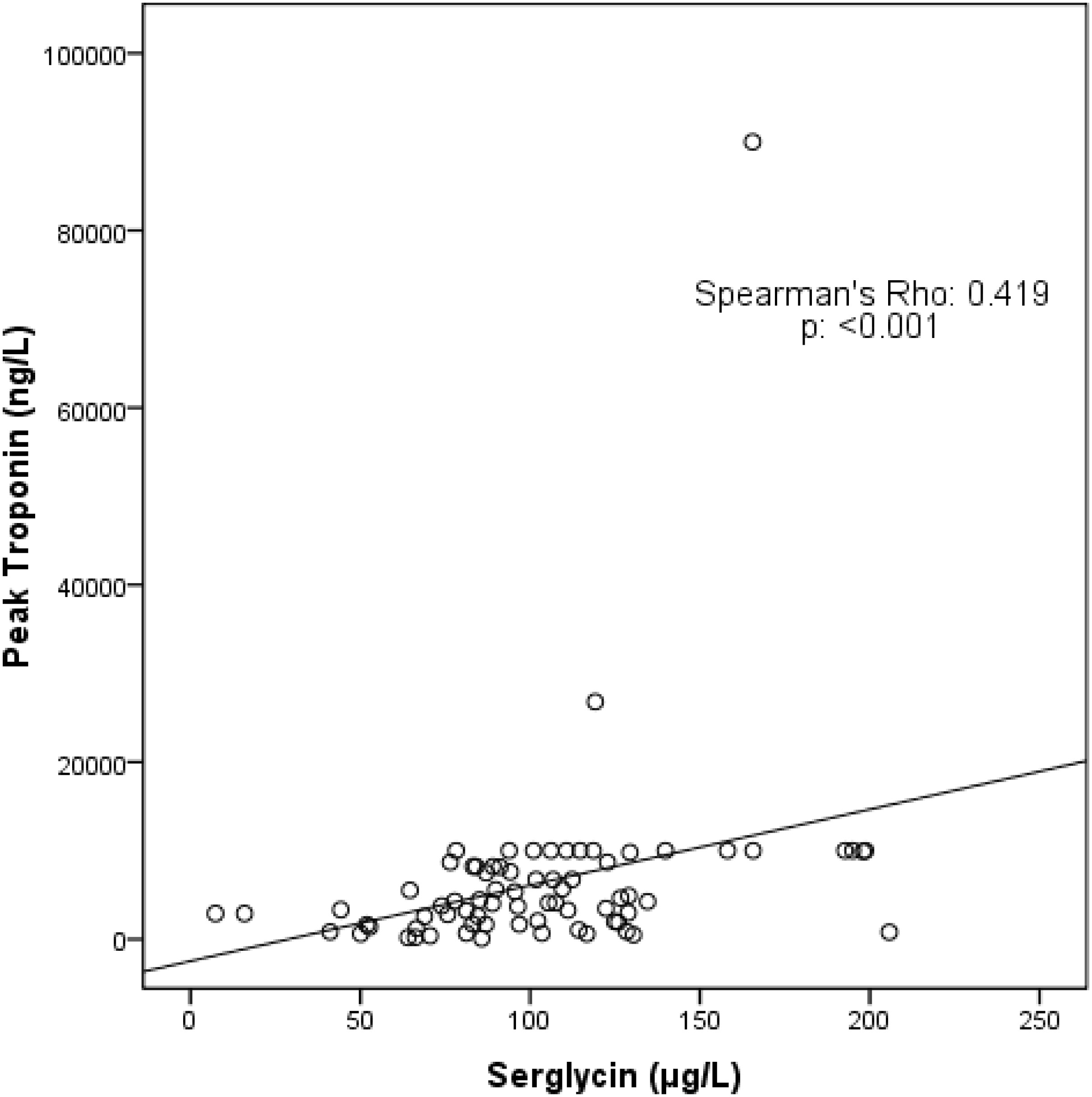
The control group consisted of individuals who are younger and smoke less than those of the STEMI group. The number of females in the control group was higher than in the STEMI group. Serum serglycin levels were significantly higher in the STEMI group than in control group (102.81±39.42 vs. 57.13±32.25, p<0.001). Correlation analyses revealed a significant positive correlation between serglycin and troponin (Spearman's Rho: 0.419; p<0.001) and between serglycin and hs CRP (Spearman's Rho: 0.336; p<0.001). Multivariate logistic regression analysis demonstrated that serum serglycin levels were independently associated with STEMI. Using a cutoff level of 80,47 μg/L, the serglycin level predicted the presence of STEMI with a sensitivity of 75.7% and specificity of 68.4%.

Conclusion:

Serum serglycin levels were significantly higher in the STEMI group than in the control group. Serum serglycin levels were positively correlated with both hs CRP levels and troponin levels.

  • Atherosclerosis
  • Biomarkers
  • Cardiovascular Diseases
  • Coronary Artery Disease
  • Inflammation
  • Myocardial Infarction
  • Serglycin
Read Full Article
Creative Commons Attribution (CC BY) Creative Commons license
16/04/2021 DOI: 10.36660/abc.20190554
Editorial

The Importance of Post-Infarction Exercise Programs

José Antônio Caldas Teixeira

Physical activity and exercising are said to reduce the risk of cardiovascular mortality in the general population by 30%–50%, and mortality from any cause by 20%–50%. In cardiac patients, for each 1 Met increment (3.5 mL O2 kg−1 min−1) in functional capacity (FC) obtained in a cardiac rehabilitation program (CRP), we have a reduction in overall mortality of up to 13%., They reduce global hospitalization by 18%, and improve quality of life (QoL) in this population., After an angioplasty, CRP results in a 20% reduction in cardiac events and in the number of hospitalizations compared to individuals who remained sedentary.,,

In this context, CRPs have established themselves as a safe therapeutic strategy, which mitigates the effects of progressive physical deconditioning resulting from cardiovascular diseases (CD). Well-oriented exercise is the cornerstone in handling CD and its main risk factors.– CRPs, especially in post-acute coronary syndrome (ACS) and patients with ventricular dysfunction, bring important benefits of clinical impact, with an evidence level IA in this population, referenced by numerous consensuses, meta analyses and guidelines.–,,

[…]

  • Cardiac Rehabilitation
  • Echocardiography/methods
  • Exercise
  • Myocardial Infarction/mortality
  • Physical activity
  • Rats
  • Ventricular Dysfunction
Read Full Article
Creative Commons Attribution (CC BY) Creative Commons license
16/04/2021 DOI: 10.36660/abc.20210109 Views 1
Erratum

Erratum

October 2019 Issue, vol. 113 (4), pages 787-891

In the “Updated Cardiovascular Prevention Guideline of the Brazilian Society of Cardiology – 2019”, with DOI: , published in the journal Arquivos Brasileiros de Cardiologia, on page 862, correct item “Non-HDL-cholesterol” in table 11.3, “> 145” to “ 145” to “< 145”, in columns 1 and 2.

[…]

Read Full Article
Creative Commons Attribution (CC BY) Creative Commons license
16/04/2021 DOI: 10.36660/abc.20210278
Figure 1
Editorial

Use of Diuretic Therapy in Patients with Decompensated Heart Failure and Acute Kidney Injury. What to do in this Dilemma?

Rafael Marques Calazans et al. Mariana Bellaguarda de Castro Sepulvida Egli Belinazzi Quadrado Roberto Dischinger Miranda

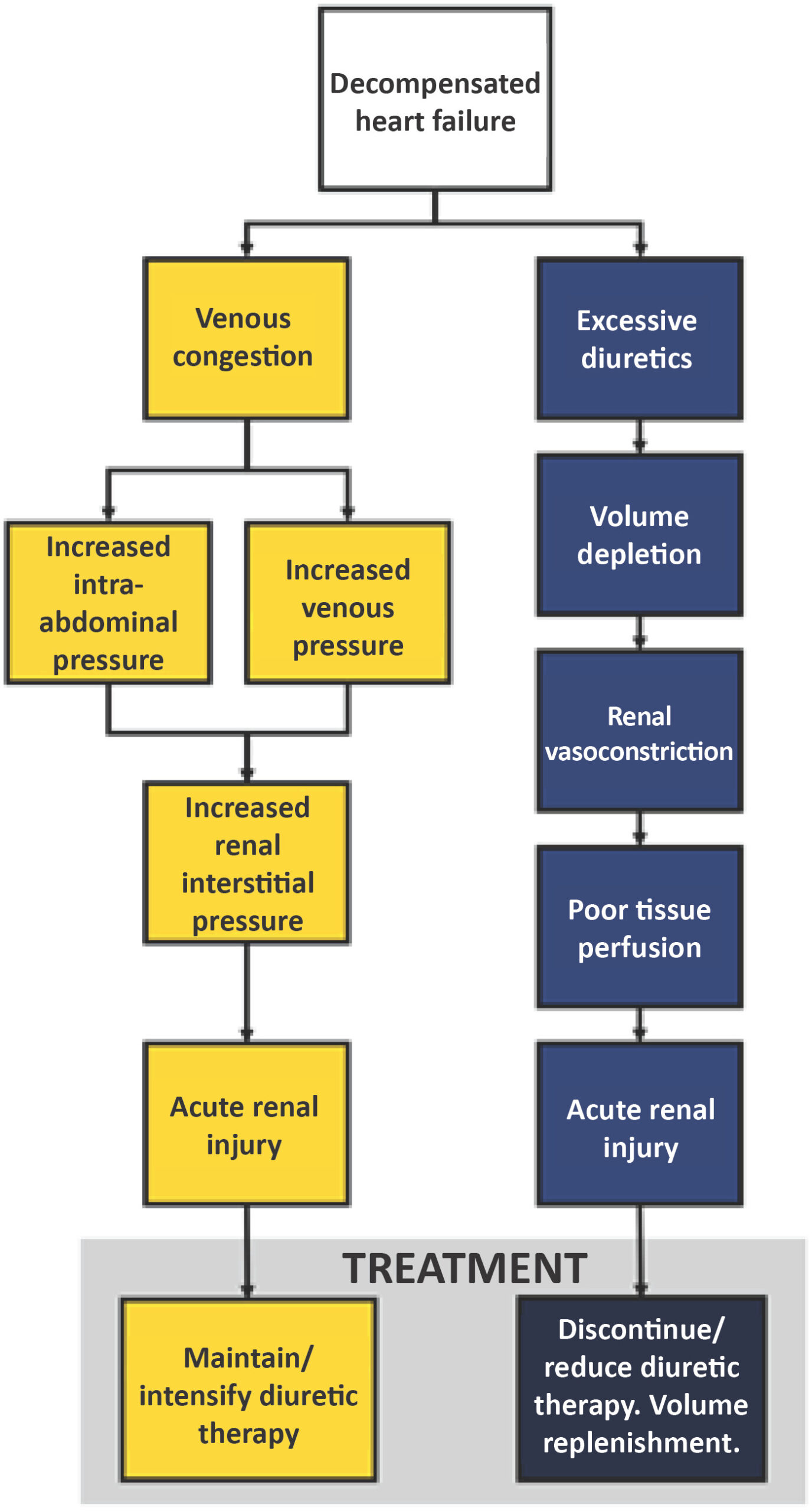
Heart failure (HF) is a severe public health problem due to its high prevalence, morbidity and mortality. It is the main cause of hospitalization in the United States. The prevalence of the disease increases with age, making elderly patients even more susceptible to the repercussions of this disease. This increases the importance of precise treatment of HF and its complications, including decompensated HF (dHF).

In patients with dHF, who require diuretic therapy, concomitant acute kidney injury (AKI) is a common finding. The big question when it comes to treatment with diuretics in situations where kidney function is altered is to know the reason for the dysfunction: Is the patient is still congested, requiring optimization of diuretic therapy (type I cardiorenal syndrome)? Or is it a patient whose diuretic therapy was carried out excessively, causing hypovolemia, which led to low renal perfusion (pre-renal AKI) or even an acute tubular necrosis?

[…]

  • aging
  • Creatinine
  • Diuretics
  • Electric Impedance
  • Health Public
  • Heart Failure/complications
  • Hospitalization
  • Lipocalins
  • Markers Biological
  • Mortality
  • Renal Insufficiency Chronic/complications
Read Full Article
Creative Commons Attribution (CC BY) Creative Commons license
16/04/2021 DOI: 10.36660/abc.20210238 Views 1
Figure 1
Original Article

Neurological Complications in Patients with Infective Endocarditis: Insights from a Tertiary Centre

Sofia Alegria et al. Ana Marques Inês Cruz Ana Luísa Broa … Ana Rita F. Pereira Isabel João Otília Simões Hélder Pereira

Background:

Neurological complications are common in patients with infective endocarditis (IE). Recent data suggest that neurologic events are a major determinant of prognosis, and that surgery is critical in improving the outcome.

Objective:

To characterize patients with IE and neurological complications and to determine predictors of embolization to the central nervous system (CNS) and mortality.

Methods:

Retrospective analysis of patients admitted to a tertiary center with the diagnosis of IE from 2006 to 2016. Statistical significance was defined by a p-value < 0.05.

Results:

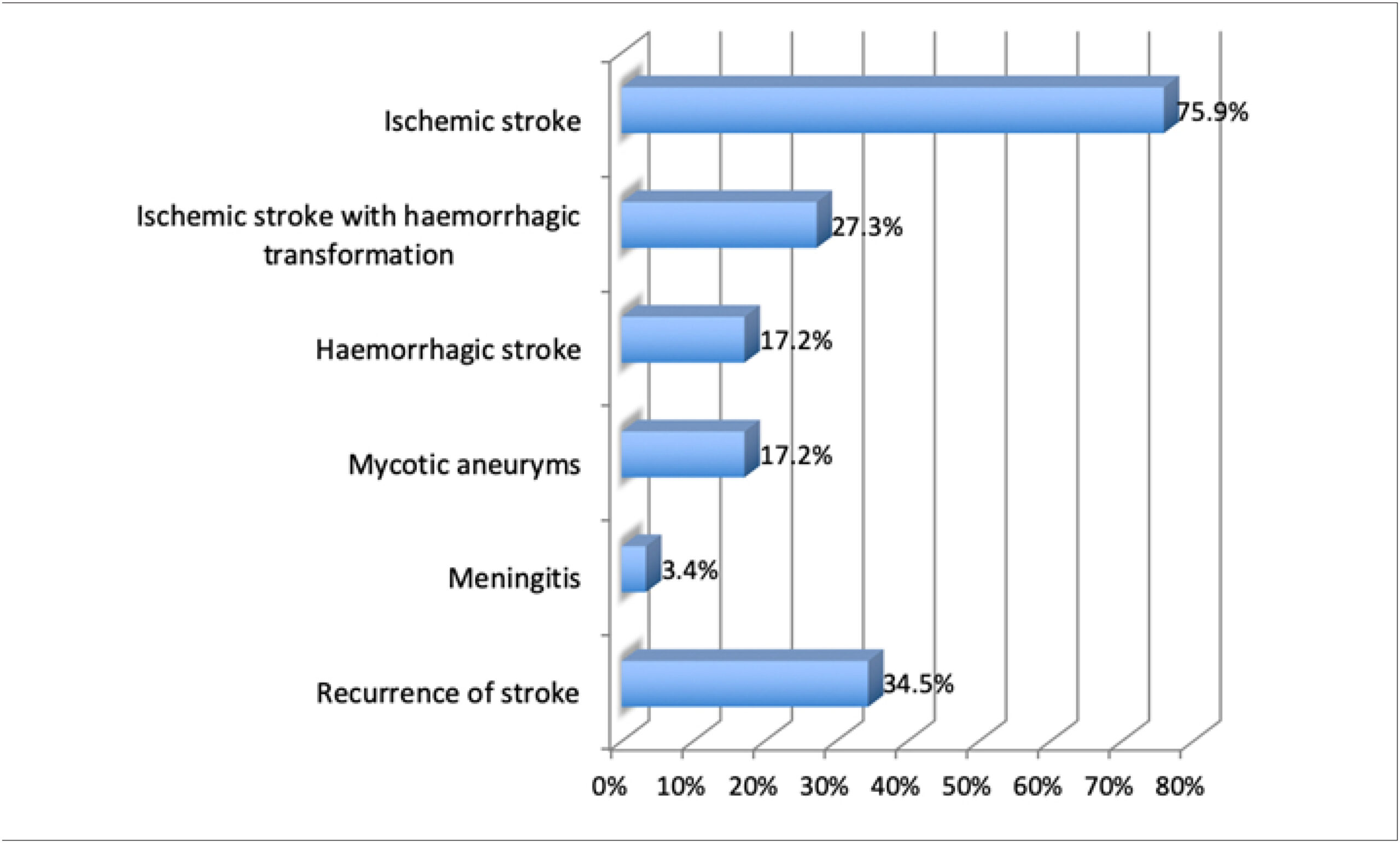
We identified 148 episodes of IE, 20% of which had evidence of CNS embolization. In patients with CNS embolization, 76% presented with ischemic stroke. During follow-up, 35% were submitted to surgery and both in-hospital and one-year mortality were 39%. These patients had longer hospitalizations, but there were no significant differences regarding mortality in patients with and without CNS embolization. The independent predictors of neurological complications were diabetes (p=0.005) and the absence of fever at presentation (p=0.049). Surgery was associated with lower mortality (0 vs. 58%; p=0.003), while patients with septic shock had a poorer prognosis (75 vs. 25%; p=0.014). In multivariate Cox regression, human immunodeficiency virus (HIV) infection was the only independent predictor of in-hospital and 1-year mortality (p=0.011 in both).

Conclusions:

In this population, embolization to the CNS was common, more often presented as ischemic stroke, and was associated with longer hospitalization, although without significant differences in mortality. In patients with CNS embolization, those submitted to surgery had a good clinical evolution, while patients with septic shock and HIV infection had a worse outcome. These results should be interpreted with caution, taking into consideration that patients with more severe complications or more fragile were probably less often considered for surgery, resulting in selection bias.

  • Central Nervous System/complications
  • Embolization
  • Endocarditis
  • Endocarditis, Infectious/complications
  • Infectious/surgery
  • Mortality
  • Prognosis
  • Stroke
Read Full Article
Creative Commons Attribution (CC BY) Creative Commons license
16/04/2021 DOI: 10.36660/abc.20190586
Letter to the Editor

Troponin-T and B-Type Natriuretic Peptide in COVID-19

Sora Yasri et al. Viroj Wiwanitkit

Dear Editor,

We would like to share ideas on the publication “Prognostic Value of Troponin-T and B-Type Natriuretic Peptide in Patients Hospitalized for COVID-19 [1].” Almeida Jr. et al. reported using Memory box as a tool to support grief and concluded that “In the first 24h of admission, TnT, but not BNP, was an independent marker of mortality or need for invasive mechanical ventilation.” In COVID-19, cardiac complication is possible and is common in severe infection. Myocardial involvement is a common cardiac problem and immunological myocarditis is an important severe manifestation of COVID-19. Therefore, troponin-T, which is a good biomarker for myocardial injury, might have good prognostic factor for severity of COVID-19. Nevertheless, it should be noted that renal problems can also induce troponin-T abnormality. If the patient has an underlying renal problem, the interpretation of troponin-T in COVID-19 patients must be careful.

[…]

  • Betacoronavirus
  • Biomarkers
  • Covid-19/complications
  • Hospitalization
  • Mortality
  • Myocarditis
  • Natriuretic B-Type
  • Troponi-T
Read Full Article
Creative Commons Attribution (CC BY) Creative Commons license
16/04/2021 DOI: 10.36660/abc.20201191 Views 1
Figure 1
Original Article

Cardiovascular Risk Factors in Cardiology Specialists from the Brazilian Society of Cardiology

Maria Emília Figueiredo Teixeira et al. Priscila Valverde de O. Vitorino Celso Amodeo Tânia Martinez … Andréa Araujo Brandão Eduardo Costa Duarte Barbosa Audes Diógenes Magalhães Feitosa Paulo Cesar B. Veiga Jardim Ana Luiza Lima Souza Weimar Kunz Sebba Barroso

Abstract

Background:

A major cause of death worldwide, cardiovascular diseases and their prevalence in cardiologists are little known.

Objectives:

To describe life habits and cardiovascular risk factors (CVRF) and to investigate the prevalence of diagnosis, awareness, and control of these CVRF among cardiologists members affiliated to and specialists from the Brazilian Society of Cardiology.

Methods:

National multicenter cross-sectional study to assess Brazilian cardiologists using a questionnaire on life habits, preexisting diseases, current medications, anthropometric measurements, blood pressure, and levels of glucose and lipids.

Results:

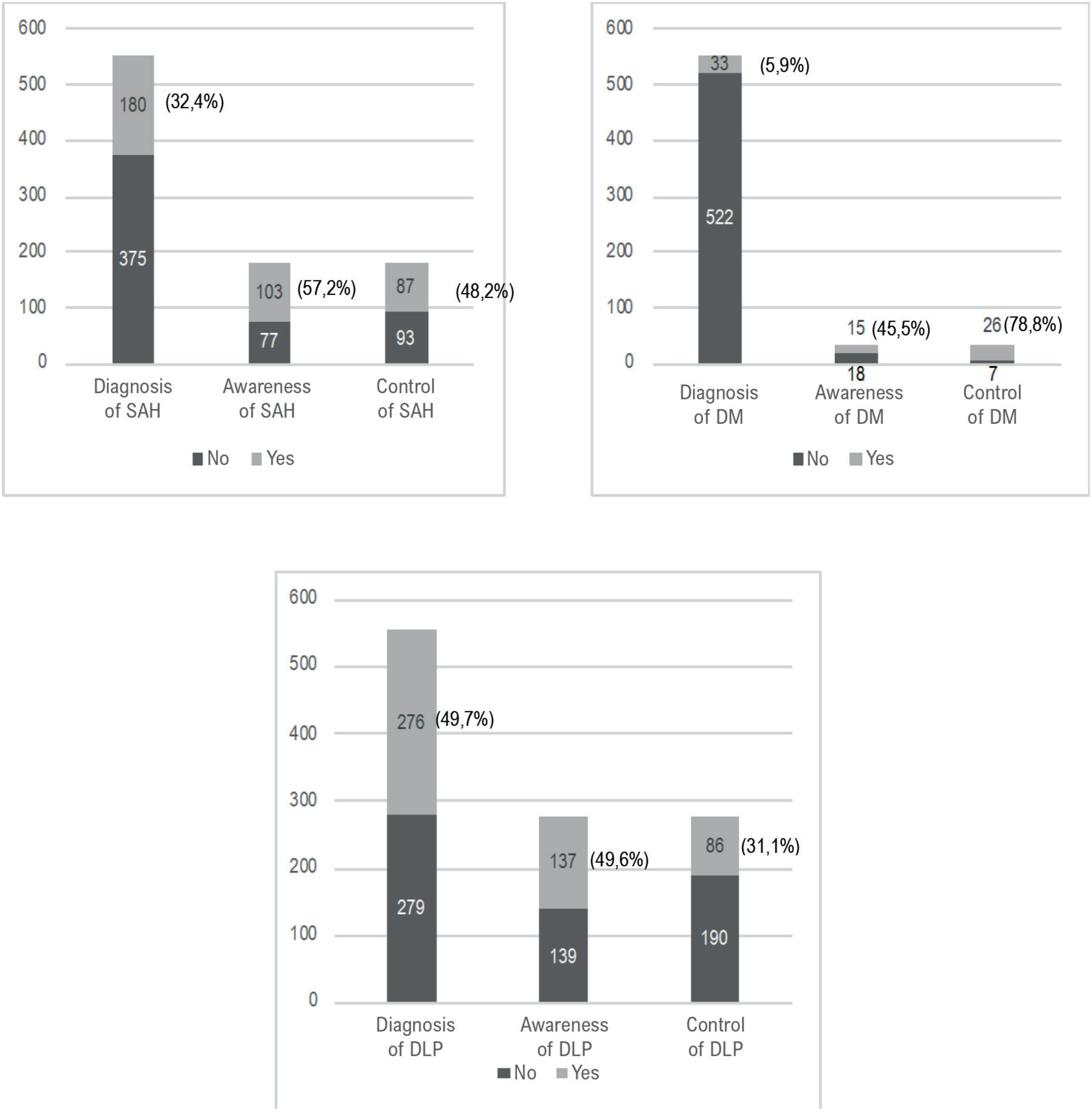
A total of 555 cardiologists were evaluated, of which 67.9% were male, with a mean age of 47.2±11.7 years. Most were non-smoker (88.7%) and physically active (77.1%), consumed alcohol (78.2%), had normal weight circumference (51.7%), and were overweight (56.1%). The prevalence of systemic arterial hypertension (SAH), diabetes mellitus (DM), and dyslipidemia (DLP) were 32.4%, 5.9%, and 49.7%, respectively, of which only 57.2%, 45.5%, and 49.6%, respectively, were aware of the diseases.

Conclusions:

The Brazilian cardiologists participating in the study had a high prevalence of SAH, DM and DLP, but only a half of participants were aware of these conditions and, among these, the rates of controlled disease were low for SAH and DLP, although cardiologists are professionals with great knowledge about these CVRF. These findings represent a warning sign for the approach of CVRF in Brazilian cardiologists and encourage the conduction of future studies.

  • antropometry
  • Cardiologists
  • Cardiovascular Diseases
  • Diabetes Mellitus
  • Dsylipidemias
  • Hypertension
  • Life Style
  • Risk Factors
Read Full Article
Creative Commons Attribution (CC BY) Creative Commons license
16/04/2021 DOI: 10.36660/abc.20200125
Editorial

Statin Use and Hypercholesterolemia: Are the Current Guidelines' Recommendations Being Followed?

Renato Jorge Alves

Despite advances in treating cardiovascular diseases, acute myocardial infarction and stroke are still the main causes of death worldwide.

The prevention of coronary atherosclerotic disease (CAD), represented by the treatment of low-density lipoprotein cholesterol (LDL-c), is one of the main alternatives for increasing the survival of patients with cardiovascular risk factors. Case-control, observational, and genetic studies confirm the importance of increased cholesterol level as one of the main modifiable risk factors for cardiovascular disease, especially for CAD and ischemic stroke. The reduction in LDL-c throughout life has been associated with a lower risk of developing CAD. There seems to be a causal relationship between LDL-c and CAD, which is continuous and which depends on the magnitude of the reduction in LDL-c.–

[…]

  • Atherosclerosis
  • Cardiovascular Diseases
  • Hospitalization
  • Hospitals, Public
  • Hydroxymethylglutaryl-CoA Reductase Inhibitors
  • Mortality
  • Myocardial Infarction
  • Risk Factors
  • Stroke
Read Full Article
Creative Commons Attribution (CC BY) Creative Commons license
16/04/2021 DOI: 10.36660/abc.20210089
Figure 1
Editorial

Radi Macruz – The Legacy of an Icon

Edmar Atik et al. Charles Mady Jose Antonio Franchini Ramires

Radi Macruz, Associate Professor in the Department of Cardio-Pulmonology at Faculdade de Medicina da Universidade de São Paulo, died in São Paulo on November 30, 2020, at the age of 95.

He was born on July 5, 1925 in São Paulo, son of the Lebanese couple Kalil and Nini Macruz. Attended medical school at FMUSP and became the great pioneer physician, introducing many advances that made him one of the most relevant icons. He was an idealizer in pursuit of the most appropriate dynamics of science and scientific discoveries.

[…]

  • Cardiologists/trends
  • Cardiology
  • Ethics
  • Faculty
  • medical
  • Physicians
  • Radi Macruz
Read Full Article
Creative Commons Attribution (CC BY) Creative Commons license
16/04/2021 DOI: 10.36660/abc.20201341
Figure 1
Original Article

Increased Pulmonary Arterial Stiffness and Impaired Right Ventricle-Pulmonary Artery Coupling In PCOS

Ozge Ozcan Abacioglu et al. Erdinc Gulumsek Hilmi Erdem Sumbul Mehmet Kaplan Fethi Yavuz

Abstract

Background:

Polycystic ovary syndrome (PCOS) is the most common endocrine-metabolic disease in women in reproductive age, and occurs in one of 10 women. The disease includes menstrual irregularity and excess of male hormones and is the most common cause of female infertility. Dyspnea is a frequent symptom and is often thought to be due to obesity, and whether it is due to cardiac dysfunction is unknown.

Objective:

To evaluate right ventricle-pulmonary artery (RV-PA) coupling and pulmonary arterial stiffness in patients with PCOS.

Methods:

44 PCOS patients and 60 controls were included; venous blood samples were taken for laboratory tests and 2-D, m-mode and tissue doppler transthoracic echocardiography were performed for all the participants. P<0,05 was considered as statistically significant.

Results:

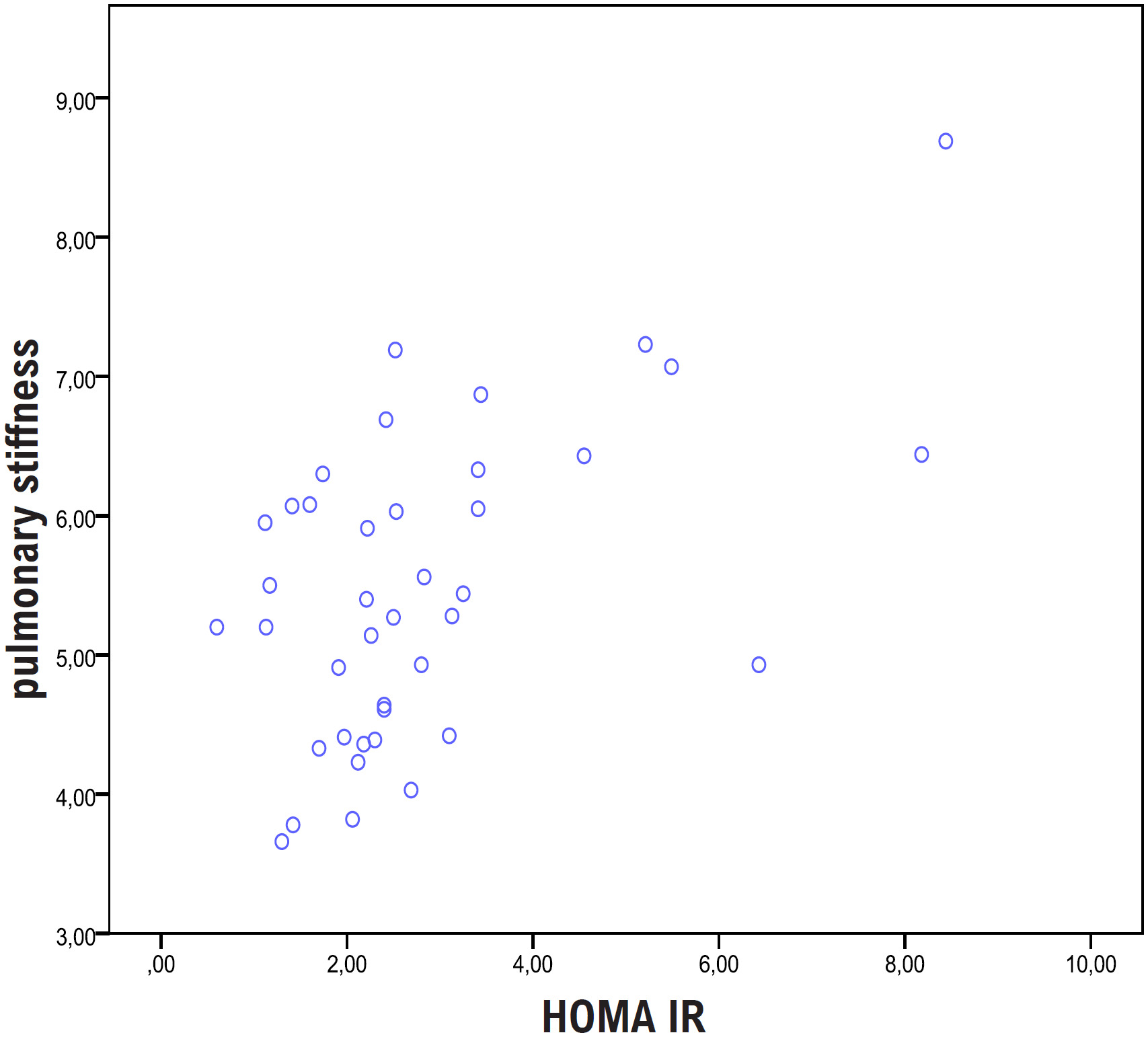
When compared to the control group, PCOS patients had higher pulmonary artery stiffness values (p=0,001), which were positively correlated with HOMA-IR (r=0,545 and p<0,001). RV-PA coupling was also impaired in 34% of the study patients.

Conclusion:

Pulmonary artery stiffness is increased and RV-PA coupling is impaired in patients with PCOS. (Arq Bras Cardiol. 2021; 116(4):806-811)

  • Arterial Stiffness
  • Diseases of the Endocrine System
  • Dyspnea
  • Female infertility
  • Obesity
  • Pulmonary Hypertension
Read Full Article
Creative Commons Attribution (CC BY) Creative Commons license
16/04/2021 DOI: 10.36660/abc.20190762 Views 1
Figure 1
Original Article

Visceral Obesity and High Systolic Blood Pressure as the Substrate of Endothelial Dysfunction in Obese Adolescents

Maria Fernanda Hussid et al. Felipe Xerez Cepeda Camila P. Jordão Rafaela R. P. Lopes-Vicente … Leslie Virmondes Keyla Y. Katayama Ezequiel F. de Oliveira Luis V. F. Oliveira Fernanda Marciano Consolim-Colombo Ivani Credidio Trombetta

Abstract

Background:

Obesity affects adolescence and may lead to metabolic syndrome (MetS) and endothelial dysfunction, an early marker of cardiovascular risk. Albeit obesity is strongly associated with obstructive sleep apnea (OSA), it is not clear the role of OSA in endothelial function in adolescents with obesity.

Objective:

To investigate whether obesity during adolescence leads to MetS and/or OSA; and causes endothelial dysfunction. In addition, we studied the possible association of MetS risk factors and apnea hypopnea index (AHI) with endothelial dysfunction.

Methods:

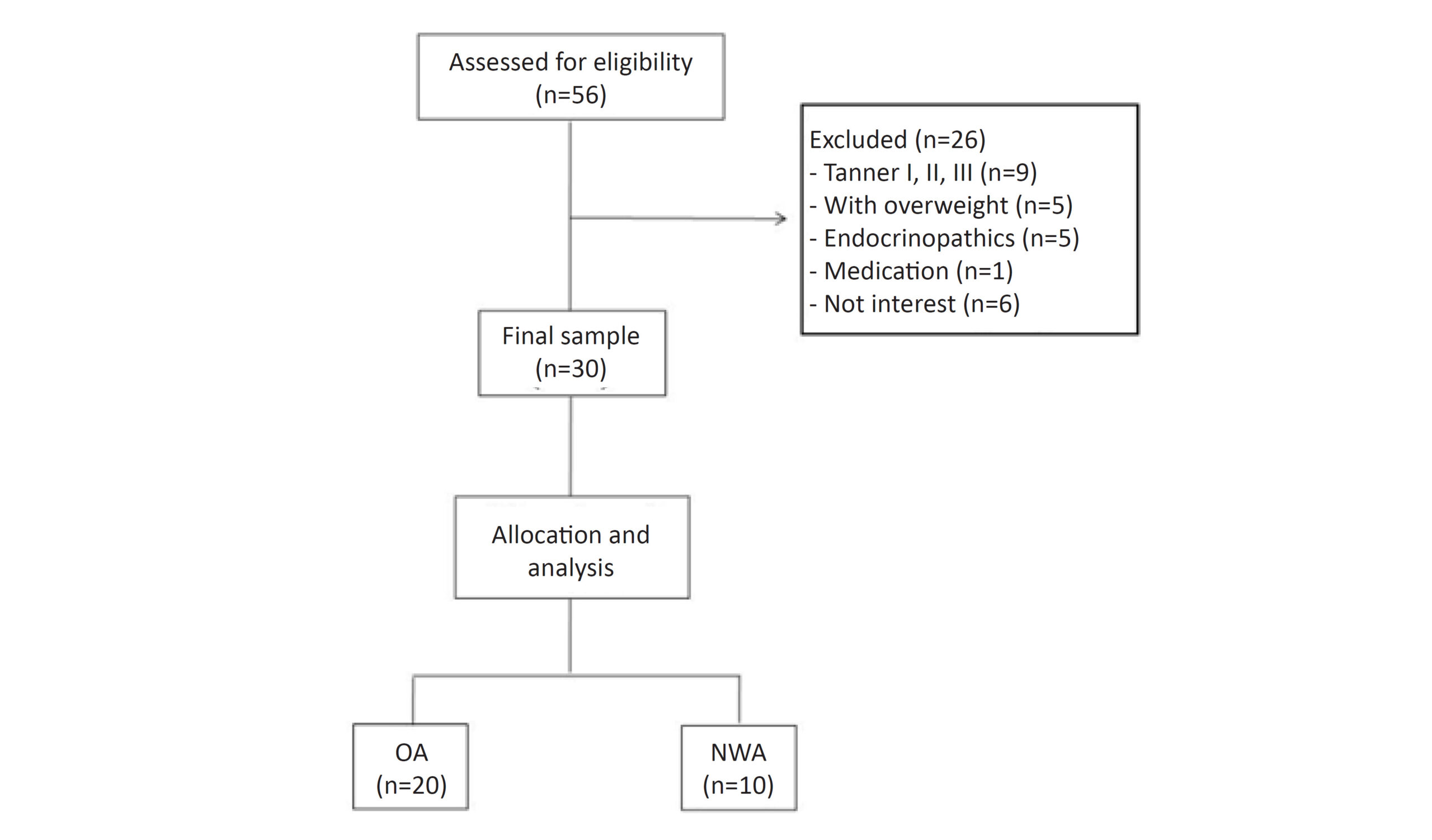
We studied 20 sedentary obese adolescents (OA; 14.2±1.6 years, 100.9±20.3kg), and 10 normal-weight adolescents (NWA, 15.2±1.2 years, 54.4±5.3kg) paired for sex. We assessed MetS risk factors (International Diabetes Federation criteria), vascular function (Flow-Mediated Dilation, FMD), functional capacity (VO2peak) and the presence of OSA (AHI>1event/h, by polysomnography). We considered statistically significant a P<0.05.

Results:

OA presented higher waist (WC), body fat, triglycerides, systolic (SBP) and diastolic blood pressure (DBP), LDL-c and lower HDL-c and VO2peak than NWA. MetS was presented in the 35% of OA, whereas OSA was present in 86.6% of OA and 50% of EA. There was no difference between groups in the AHI. The OA had lower FMD than NWA (6.17±2.72 vs. 9.37±2.20%, p=0.005). There was an association between FMD and WC (R=-0.506, p=0.008) and FMD and SBP (R=-0.493, p=0.006).

Conclusion:

In adolescents, obesity was associates with MetS and caused endothelial dysfunction. Increased WC and SBP could be involved in this alteration. OSA was observed in most adolescents, regardless of obesity. (Arq Bras Cardiol. 2021; 116(4):795-803)

  • Adolescent
  • diabetes
  • Endothelium
  • Hypertension
  • Metabolic Syndrome
  • Obesity
  • Risk Factors
  • Sleep Apnea, Obstructive
  • Waist Circumference
Read Full Article
Creative Commons Attribution (CC BY) Creative Commons license
16/04/2021 DOI: 10.36660/abc.20190541 Views 2
Figure 1
Brief Communication

HIV-Infected Naïve Patients Exhibit Endothelial Dysfunction Concomitant with Decreased Natural Antibodies Against Defined Apolipoprotein B Autoantigens

Henrique Andrade R. Fonseca et al. Magnus Gidlund Viviane Rodrigues Sant’Anna Esteferson Rodrigues Fernandes … Francisco A. H. Fonseca Maria Cristina Izar

Abstract

Backgorund:

Traditional and HIV-defined risk factors may be associated with an increase in cardiovascular events. Recent studies have suggested that the humoral immune response to modified LDL may be associated with the process of atherosclerosis.

Objectives:

To evaluate the presence of anti-oxLDL and apolipoprotein B-derived peptides in the blood, and their association with the endothelial function in HIV-infection.

Methods:

This study consecutively included subjects matched for age, gender, and demographic data in two groups: (1) HIV-infected and naïve for antiviral therapy and (2) uninfected individuals. Subclinical atherosclerosis was assessed by intimal-media thickness, using ultrasonography of the carotid arteries. Endothelial function was determined by flow-mediated dilatation (FMD) of the brachial artery by ultrasonography. Autoantibodies (IgM, IgG) anti-oxidized low-density lipoprotein (oxLDL), anti-apolipoprotein B-peptide fragments (ApoB-D and 0033G-Cys peptides), and cytokine levels were evaluated by ELISA.

Results:

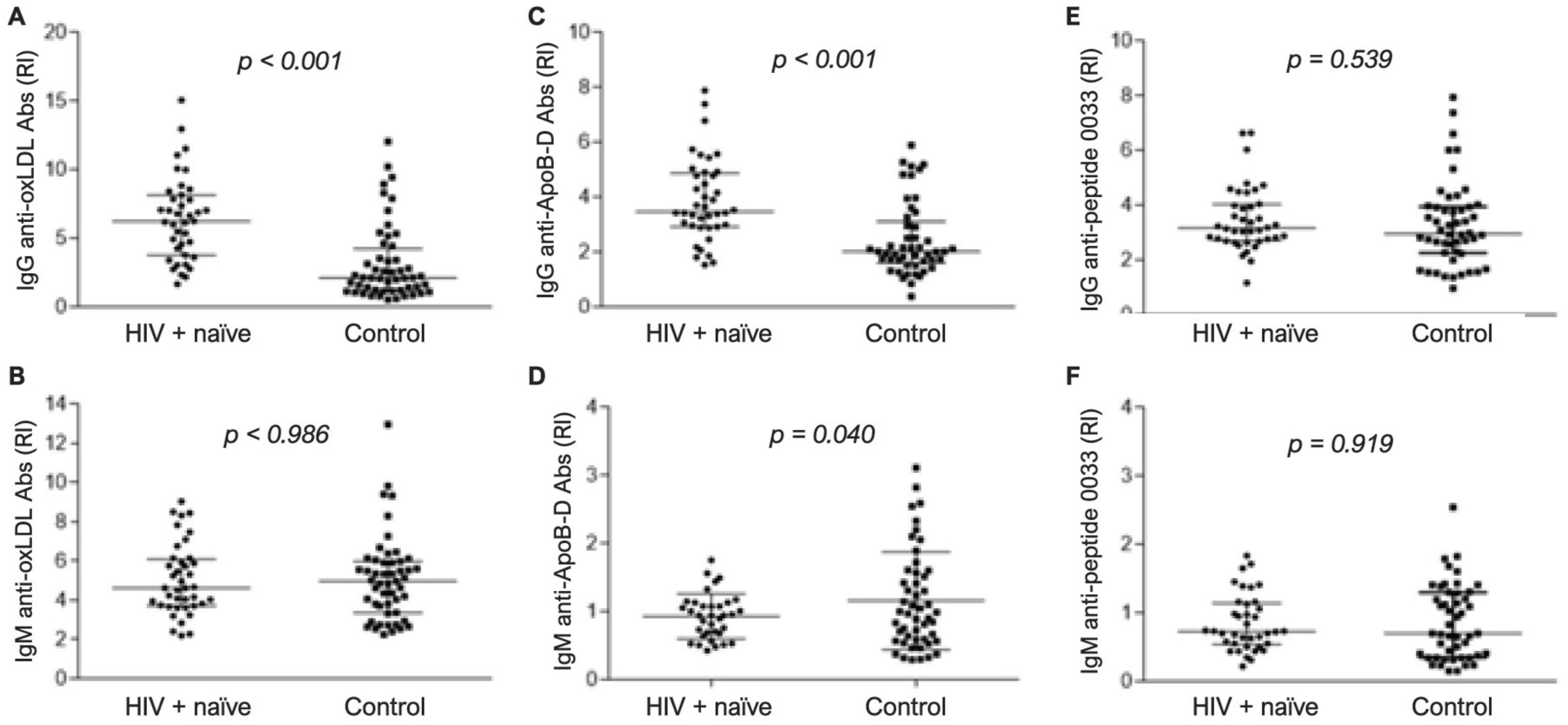
This study’s results showed no difference in subclinical atherosclerosis between groups; however, HIV-infected subjects showed a lower FMD, when compared to non-infected subjects. Therefore, HIV-infected subjects showed higher levels of inflammatory cytokines, titers of IgG anti-oxLDL, and IgG anti-ApoB-D. In contrast, titers of IgM anti-ApoB-D were lower in HIV-infected individuals and associated with reduced endothelial functions.

Conclusions:

This study’s results show that HIV infection, in naïve subjects, is associated with endothelial dysfunction and a decline of natural antibodies to apo-B antigens.

  • Apolipoproteunes B, Carotid Arteries/ultrasonography
  • Atherosclerosis
  • Endothelium, Vascular
  • HIV Infection
Read Full Article
Creative Commons Attribution (CC BY) Creative Commons license
16/04/2021 DOI: 10.36660/abc.20200062 Views 1
Editorial

Pulmonary Hypertension in Polycystic Ovarian Syndrome

Yogesh N. V. Reddy

Polycystic Ovarian Syndrome (PCOS) is a complex endocrinological syndrome that presents in women with obesity, insulin resistance and sex hormone abnormalities. It is intriguing that in otherwise ‘idiopathic’ pulmonary hypertension, there also seems to be a high prevalence of the same features of obesity, insulin resistance, and sex hormone abnormalities.– However, despite this overlap and a theoretical risk of pulmonary hypertension in PCOS, little is known about the intersection of the two conditions. Given the young age of patients at the time of PCOS diagnosis, only subtle impairments in left heart function have been consistently described,, with overt cardiovascular disease often manifesting many decades later., But, surprisingly, little is known about subclinical right heart remodeling or pulmonary hypertension in this condition.

On this background, Abacioglu et al. provide novel information on cardiac structural remodeling in patients with PCOS, with careful attention to right heart structure and function. They included 44 patients with PCOS and 60 matched controls who underwent comprehensive echocardiography and insulin resistance assessment by the Homeostatic Model Assessment for Insulin Resistance (HOMA-IR). In addition to left heart measures of diastolic function, the authors also performed pulse wave Doppler of the right ventricular outflow tract to estimate pulmonary arterial stiffness, and used the well validated TAPSE/RVSP ratio to quantify RV-PA coupling.

[…]

  • body mass index
  • Echocardiography/methods
  • Insulin Resistance
  • Obesity
  • Polycystic Ovary Syndrome
  • Pulmonary Hypertension
  • Ventricular Remodeling
Read Full Article
Creative Commons Attribution (CC BY) Creative Commons license
16/04/2021 DOI: 10.36660/abc.20210106
Editorial

The Unknown Risk of Familial Hypercholesterolemia in the Development of Atherosclerotic Cardiovascular Disease

Elizabeth do Nascimento et al. José Luiz de Brito Alves

Cardiovascular diseases (CVD) are recognized as the main causes of death in adulthood in the world., A number of factors, such as smoking, arterial hypertension, obesity, metabolic syndrome and hypercholesterolemia have been described as important risk factors in the development of CVD and premature death. Hypercholesterolemia can be classified as primary or secondary in origin. Primary hypercholesterolemia is due to genetically determined defects in lipid or lipoprotein metabolism; secondary hypercholesterolemia can be caused by inadequate lifestyle, diseases or medications.

Familial hypercholesterolemia (FH) is an autosomal-dominant disorder characterized by mutations in genes in the encoding of proteins involved in low-density lipoprotein (LDL) metabolism that occur in the presence of high plasma cholesterol and LDL levels associated with clinical signs of tendon xanthoma. FH is responsible for approximately 10% of cardiovascular events in people under 50 years of age.– In FH, mutations may be present in the LDL receptor gene, in the gene-encoding Apoprotein B-100 or in autosomal recessive LDLRAP1 gene and in autosomal dominant familial hypercholesterolemia (HCHOLA3) variant of the PCSK9 gene. These mutations lead to an impairment in the apoprotein-receptor interaction and result in high plasma cholesterol, high LDL levels and risk of development of atherosclerotic disease.,

[…]

  • Atherosclerosis
  • Cardiovascular Diseases, mortality
  • Early diagnosis
  • Hyperlipoproteinemia Type II
  • Lipid Metabolism Disorders
  • Risk Factors
Read Full Article
Creative Commons Attribution (CC BY) Creative Commons license
16/04/2021 DOI: 10.36660/abc.20210168 Views 1
Editorial

Cardiovascular Risk Factors in Cardiologists Certified by the Brazilian Society of Cardiology: Lessons to be Learned

Claudio Tinoco Mesquita et al. Wilter dos Santos Ker

Cardiovascular diseases (CVD) remain the leading cause of death in the world. Risk factors such as systemic arterial hypertension (SAH), diabetes mellitus (DM), dyslipidemia, obesity, smoking and alcoholism associated with sedentary behavior, sleep deprivation, stress and family history favor atherosclerosis. The complexity of pathophysiology in the process of atherosclerosis formation and the variety of risk factors for artery disease have important impacts on mortality.– SAH is an important risk factor, being the most prevalent for CVD and its relationship is the result of vascular lesions that cause hyperplasia and hypertrophy of the middle layer of the vessel. Cardiovascular disease is the main cause of mortality and morbidity in people with diabetes. It is the result of hyperglycemia and insulin resistance, leading to chronic inflammation, oxidative stress and, ultimately, endothelial dysfunction. DM has increased significantly in recent years, making it one of the main causes of mortality. Insulin resistance promotes dyslipidemia, accelerating atherosclerosis in diabetic patients.– Obesity prevalence has grown greatly in recent decades. It is a complex condition that has a great impact on cardiovascular diseases and plays an important role in affecting risk factors (SAH, DM and dyslipidemia). Sudden death is increased in obese patients, usually by frequent and complex ventricular arrhythmias. Smoking, alcohol intake and sedentary lifestyle are related to increased cardiovascular risk affecting all phases of atherosclerosis., Unhealthy eating is related to factors that interfere with the prevention and control of CVD, being of great importance for early mortality around the world. The adoption of healthy habits requires constant personal efforts and resilience.– Improvement in lifestyle associated with healthy eating provides new perspectives on cardiovascular prevention. Physical activity has positive effects on lipid metabolism, glucose, and blood pressure combined with new classes of drugs to control risk factors has resulted in lower cardiovascular outcomes. Tobacco control is an important instrument in primary prevention which, through continuing education in recent years, has seen an important reduction in the number of people dependent on smoking.–

In a new study with cardiologists, Teixeira et al. found lower prevalence of sedentary lifestyle and smoking, but a higher prevalence of alcohol consumption. The prevalence of dyslipidemia was higher than SAH and DM. Although specialists had greater knowledge about the disease, it was not possible to observe healthier habits than the rest of the population.– In contrast, in Canada, a cohort study of 17,071 practicing physicians and 5,306,038 members of the general population found that physicians used fewer guideline-recommended preventive services and had lower rates of cardiac risk factors. After 8 years’ follow-up, physicians had a substantially lower risk of adverse outcomes than the general population. These results could lead us to speculate about the possible causes for these differences. A stressful lifestyle and excessive working hours linked to medical practice in Brazil could be responsible for part of these findings.

[…]

  • Atherosclerosis
  • Cardiologists
  • Coronary Artery Disease / mortality
  • Diabetes Mellitus
  • Dyslipidemias
  • Obesity
  • Risk Factors
Read Full Article
Creative Commons Attribution (CC BY) Creative Commons license
16/04/2021 DOI: 10.36660/abc.20210153
Editorial

Carotid Artery Atherosclerotic Profile as a Progression Marker for Cardiovascular Disease

Guilherme Brasileiro de Aguiar et al. José Guilherme Mendes Pereira Caldas

Conditions directly linked to atherosclerosis are among the main causes of mortality worldwide, notably ischemic stroke and coronary artery disease (CAD). Diagnosing cardiovascular disease or its progression in the early stages, aiming to apply measures that can prevent or delay its progression and subsequent complications is currently a major challenge. The identification and characterization of atherosclerotic plaques allows the identification of a significant number of patients with low or intermediate risk scores. Many of these patients would not be identified by the available algorithms for cardiovascular diseases, which could result in the lack of correct management.

The quantification of the carotid artery plaque may be a measure of atherosclerosis, which should be associated with future risk of atherosclerotic cardiovascular disease, encompassing coronary, cerebrovascular, and peripheral arterial diseases. It is already known that impaired endothelial function and increased carotid intima-media thickness are substantial events in the atherosclerotic process,, with imaging of carotid features being used to predict the risk of cardiovascular events.

[…]

  • Atherosclerosis
  • Cardiovascular Diseases
  • Coronary Artery Disease
  • Mortality
  • Plaque, Atherosclerosis
  • Stroke
Read Full Article
Creative Commons Attribution (CC BY) Creative Commons license
16/04/2021 DOI: 10.36660/abc.20210229
Video 1
Image

Transthyretin Amyloid Cardiomyopathy Mimicking Hypertrophic Cardiomyopathy in an Older Patient

José Pedro Alves Guimarães et al. Joana Trigo Fernando Gonçalves J. Ilídio Moreira

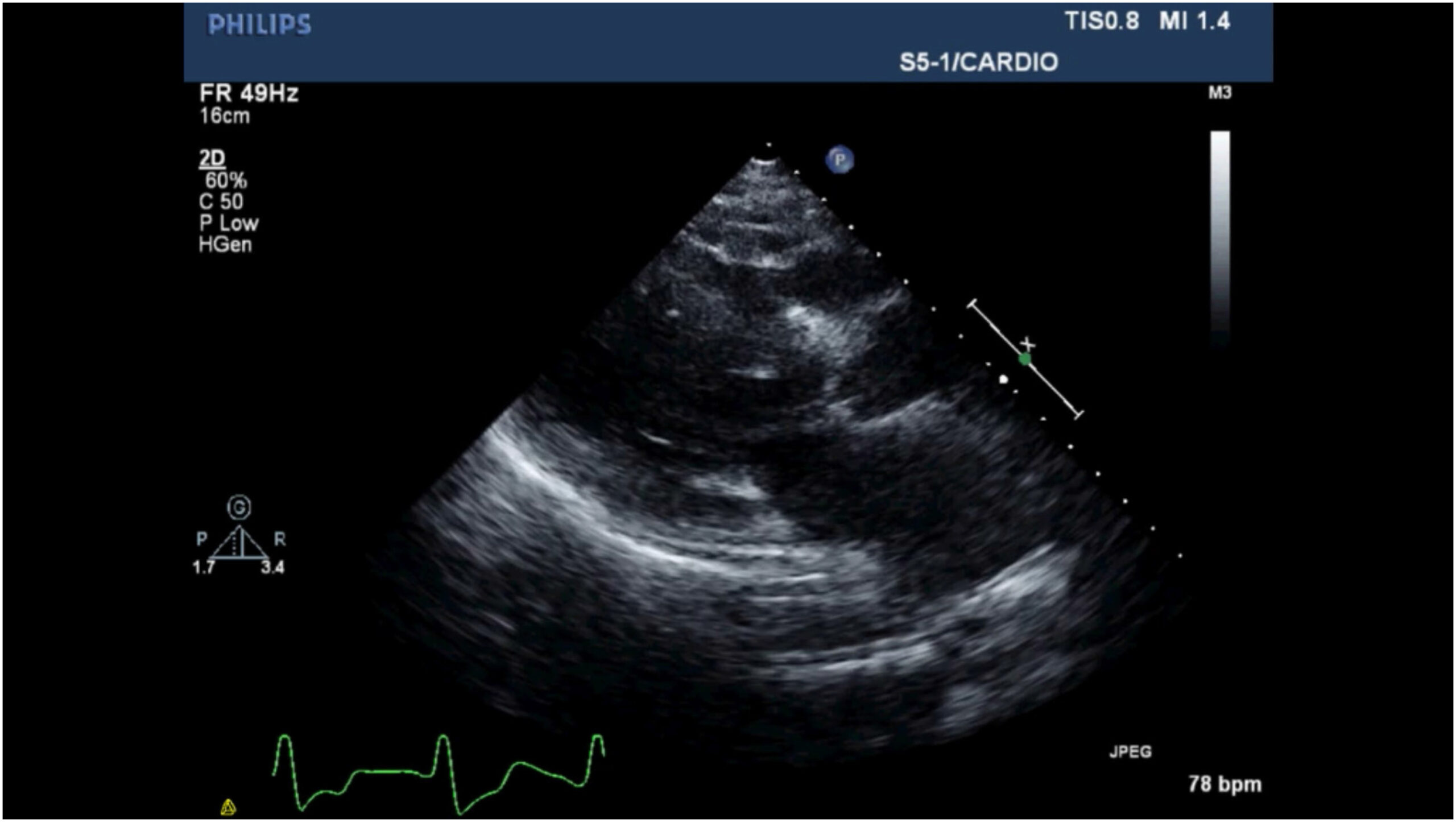
Wild-type transthyretin amyloid cardiomyopathy (wt-ATTR-CM) is increasingly recognized due to the recognition of the increasing prevalence, advances in diagnostic methods, and the development of effective treatments.

We report the case of an 88-year-old female with history of hypertension, chronic kidney disease (CKD), heart failure with preserved ejection fraction, and no relevant family history. She presented to the emergency department with history of syncope, productive cough, worsening dyspnea, and fever. The auscultation showed a grade III/VI systolic murmur in her left sternal border, no breath sounds in the right lung base and bilateral rhonchi.

[…]

  • Amyloidosis
  • Cardiomyopathy, Hypertrophic
  • Echocardiography/methods
  • Heart Failure
  • Hypertension
  • Renal Insufficiency, Chronic
  • Stroke
Read Full Article
Creative Commons Attribution (CC BY) Creative Commons license
16/04/2021 DOI: 10.36660/abc.20200236 Views 1
Figure 1
Research Letter

Double Outlet Right Ventricle with Unrelated Ventricular Septal Defect and Pulmonary Stenosis, in Natural Evolution, in a 36-Year-Old Woman

Edmar Atik

Introduction

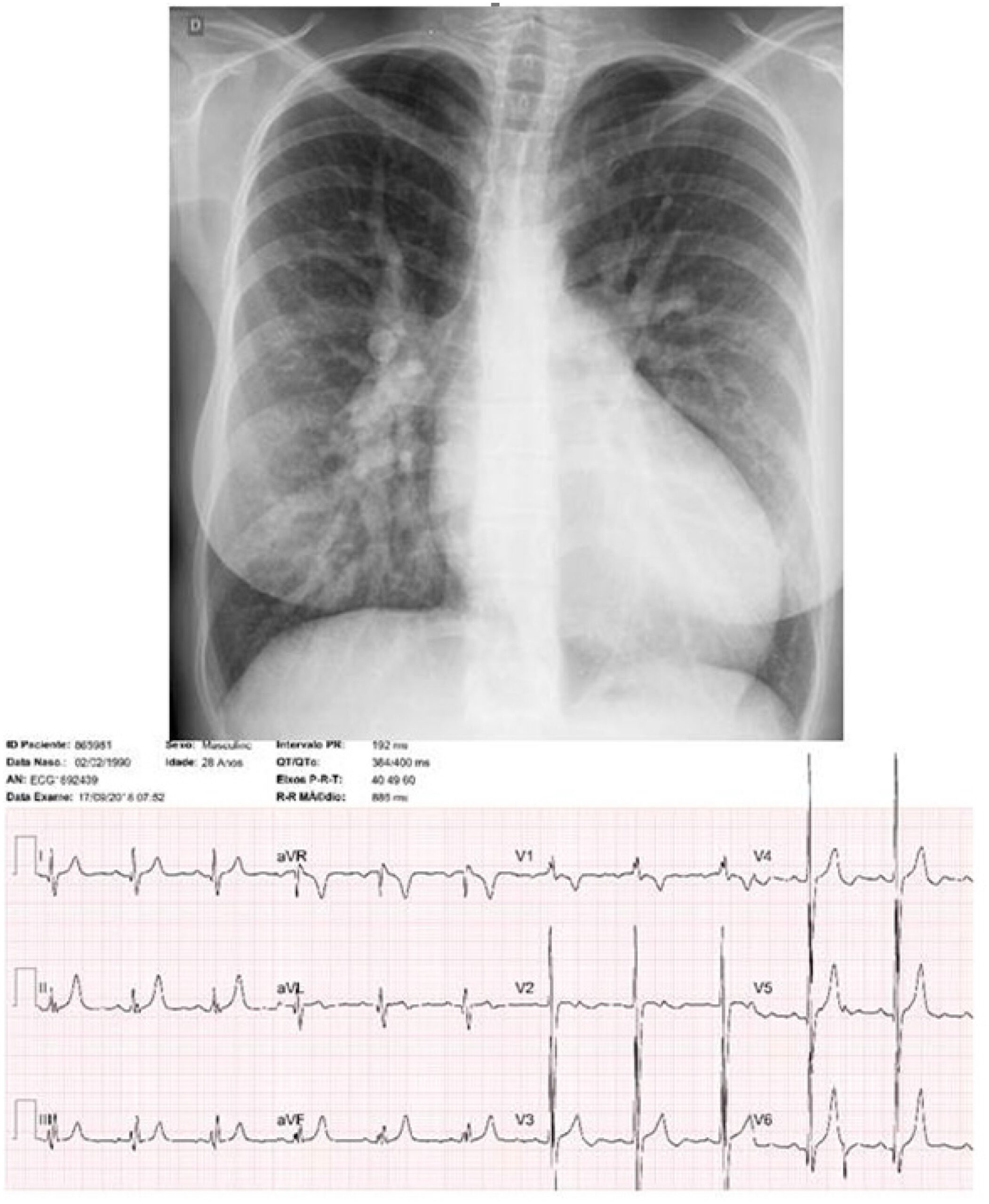
The congenital defect, characterized by the exit of both large arteries from the right ventricle (RV), completely or even when overlapping more than 50% of one of the arteries over the interventricular septum, presents variable relationships between these arteries and the ventricular septal defect (VSD), as well as association with other anatomical and functional variables.

In the most common associated defect, the isolated VSD, in a subaortic position or in that unrelated to the large arteries, the functional condition is expressed with a predominance of volume overload of the heart as a whole, increased by pressure overload, causing early heart failure.

[…]

  • Adult
  • Congenital/surgery
  • diagnostic
  • Double outlet Right Ventricle
  • Heart Defects
  • Heart Septal Defects, Ventricular
  • Imaging
  • Pulmonary Valve Stenosis
Read Full Article
Creative Commons Attribution (CC BY) Creative Commons license
16/04/2021 DOI: 10.36660/abc.20200971 Views 1
Figure 1
Original Article

Worsening Renal Function and Congestion in Patients with Acute Heart Failure: A Study with Bioelectrical Impedance Vector Analysis (BIVA) and Neutrophil Gelatinase-Associated Lipocalin (NGAL)

Humberto Villacorta et al. Aline Sterque Villacorta Leonardo Simões de Castro Villacorta Analucia Rampazzo Xavier … Salim Kanaan Felipe Mafort Rohen Leonardo Dinis Albuquerque Daniele Dantas Bastilho Cecília de Oliveira Cudischevitch

Abstract

Background:

Worsening renal function (WRF) is frequently observed in the setting of aggressive diuresis for the treatment of acute decompensated heart failure (ADHF) and is associated with poor outcomes in some studies.

Objective:

We sought to assess the relationship of WRF and congestion at discharge with events (cardiac death or heart failure hospitalization).

Methods:

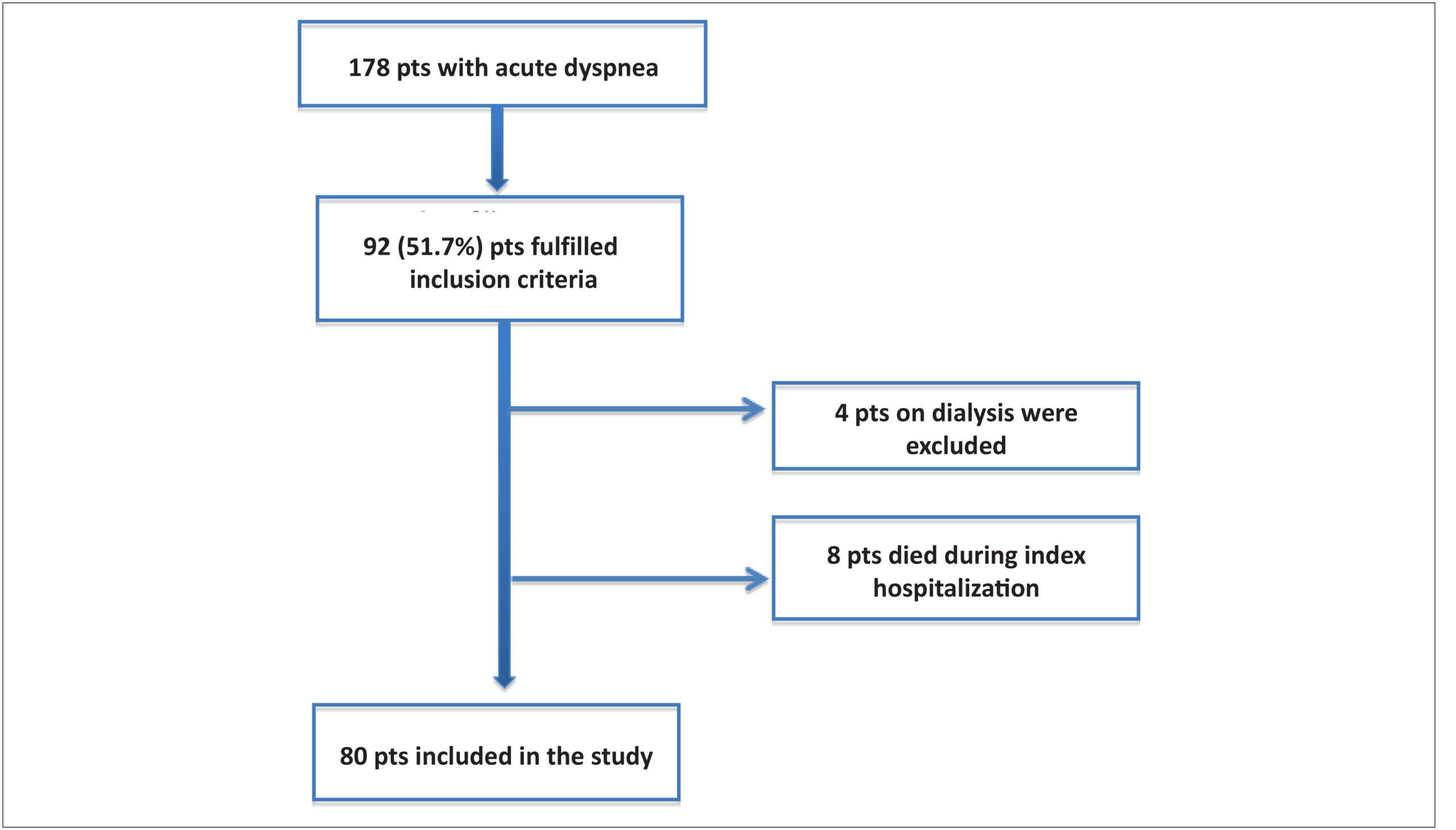
Eighty patients with ADHF were studied. WRF was defined by an absolute increase in serum creatinine of ≥0.5 mg/dL from the values measured at the time of admission. B-type natriuretic peptide (BNP) and plasma neutrophil gelatinase-associated lipocalin (NGAL) were measured at admission and at discharge. Congestive state at discharge was assessed using bioelectrical impedance vector analysis (BIVA). Primary endpoint was time to first event defined as a combination of cardiac death or heart failure hospitalization. Receiver operating characteristic (ROC) curve analysis was used to determine the best hydration index cutoff to predict events. Kaplan-Meier event-free survival curves were constructed and compared using the log-rank test. Cox proportional hazards models were used to investigate the association with events. The criterion for determining statistical significance was p<0.05.

Results:

Mean age was 60.6±15 years, and 48 (60%) were male. Mean ejection fraction was 35.3±7.8%. WRF occurred in 37.5% of the sample. Baseline creatinine was associated with WRF (p<0.001), but neither admission BNP (p=0.35) nor admission NGAL (p=0.18) was predictor of WRF. Using Cox proportional hazard models, hydration index at discharge calculated with BIVA was significantly associated with events (HR 1.39, 95% CI 1.25-1.54, p<0.0001) but not WRF (HR 2.14, 95% CI 0.62-7.35, p=0.22).

Conclusion:

Persistent congestion at discharge was associated with worse outcomes. WRF seems to be related to hemodynamic changes during the decongestion process but not to kidney tubular injuries.

  • Diuretics/therapeutic use
  • Electric Impedance
  • Heart Failure
  • Hemodynamic
  • Hospitalization
  • Mortality
  • Patient Discharge
  • Renal Insufficiency
Read Full Article
Creative Commons Attribution (CC BY) Creative Commons license
16/04/2021 DOI: 10.36660/abc.20190465
Figure 1
Original Article

Carotid Artery Atherosclerotic Profile as Risk Predictor for Restenosis After Coronary Stenting

Cássia da Silva Antico Rodrigues et al. Rodrigo Bazan Fabrício Moreira Reis Caroline F. S. Mazeto Pupo da Silveira … Lívia Maria Severino Hueb Fábio Cardoso de Carvalho Hélio Rubens de Carvalho Nunes Katashi Okoshi João Carlos Hueb Silméia Garcia Zanati Bazan

Abstract

Background:

The incidence of restenosis of the coronary artery after a bare-metal stent implant has been lower than in simple balloon angioplasty; however, it still shows relatively high rates.

Objective:

The aim of this study was to find new risk indicators for in-stent restenosis using carotid ultrasonography, that, in addition to the already existing indicators, would help in decision-making for stent selection.

Methods:

We carried out a cross-sectional prospective study including 121 consecutive patients with chronic coronary artery disease who had undergone percutaneous coronary intervention with repeat angiography in the previous 12 months. After all cases of in-stent restenosis were identified, patients underwent carotid ultrasonography to evaluate carotid intima-media thickness and atherosclerosis plaques. The data were analyzed by Cox multiple regression. The significance level was set a p<0.05.

Results:

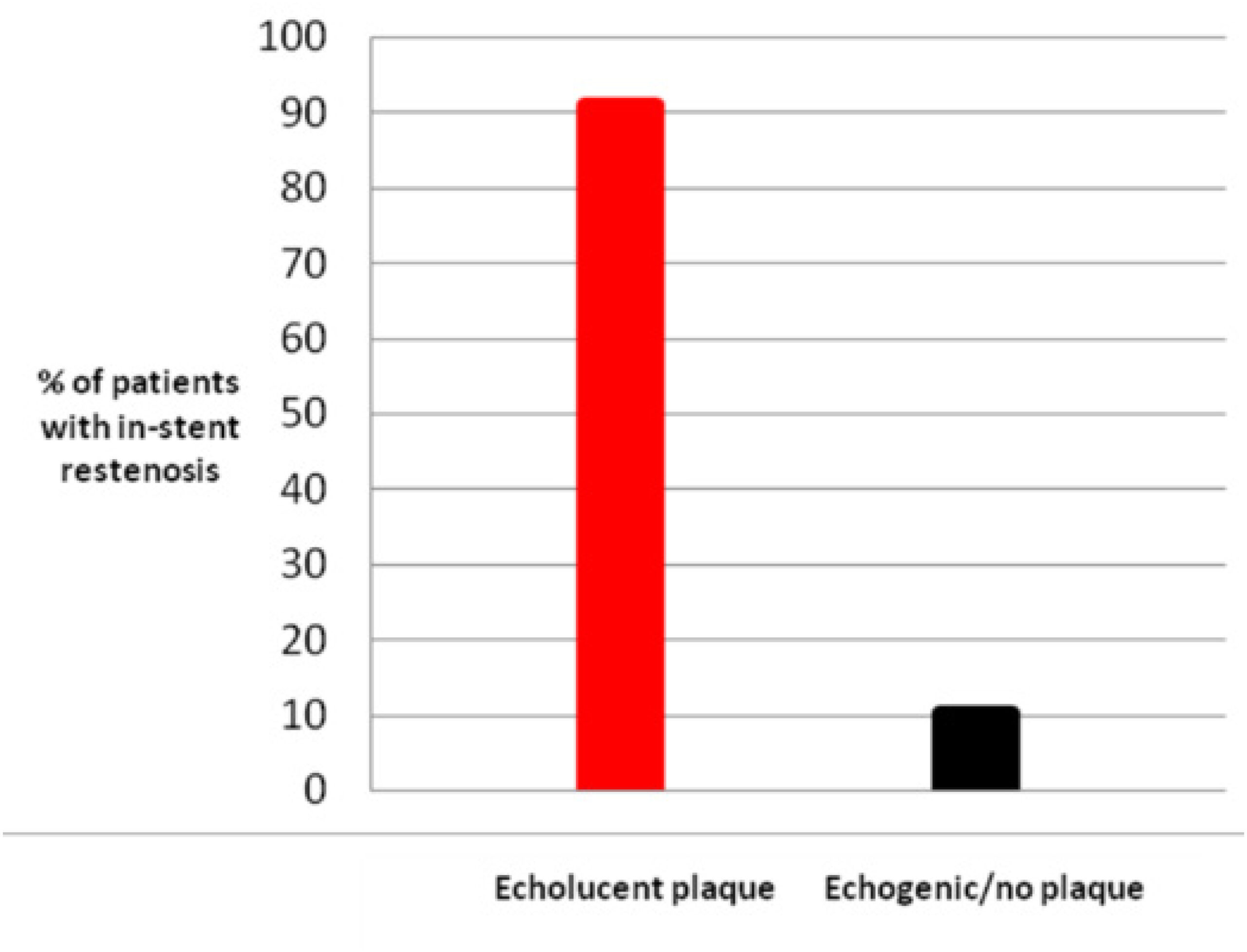
Median age of patients was 60 years (1st quartile = 55, 3rd quartile = 68), and 64.5% of patients were male. Coronary angiography showed that 57 patients (47.1%) presented in-stent restenosis. Fifty-five patients (45.5%) had echolucent atherosclerotic plaques in carotid arteries and 54.5% had echogenic plaques or no plaques. Of patients with who had echolucent plaques, 90.9% presented coronary in-stent restenosis. Of those who had echogenic plaques or no plaques, 10.6% presented in-stent restenosis. The presence of echolucent plaques in carotid arteries increased the risk of coronary in-stent restenosis by 8.21 times (RR=8.21; 95%CI: 3.58-18.82; p<0.001).

Conclusions:

The presence of echolucent atherosclerotic plaques in carotid artery constitutes a risk predictor of coronary instent restenosis and should be considered in the selection of the type of stent to be used in coronary angioplasty.

  • Angioplasty, Balloon, Coronary
  • Atherosclerosis
  • Carotid Arteries Ultrasonography
  • Coronary Artery Disease
  • Coronary Restenosis
  • Plaque, Atherosclerotic
  • Stents
Read Full Article
Creative Commons Attribution (CC BY) Creative Commons license
16/04/2021 DOI: 10.36660/abc.20190650 Views 1
Figure 1
Original Article

Access to Reperfusion Therapy and Mortality in Women with ST-Segment–Elevation Myocardial Infarction: VICTIM Register

Jussiely Cunha Oliveira et al. Mayse Pereira Souza Barros Ikaro Daniel de Carvalho Barreto Rubens Cruz Silva Filho … Volfanio Araújo Andrade André de Melo Oliveira Ticiane Clair Remacre Munareto Lima Jeferson Cunha Oliveira Larissa Andreline Maia Arcelino Laís Costa Souza Oliveira Eduesley Santana-Santos Marcos Antônio Almeida-Santos Antônio Carlos Sousa José Augusto Soares Barreto Filho

Abstract

Background:

Myocardial reperfusion is a fundamental part of the treatment for ST elevation myocardial infarction (STEMI) and is responsible for reducing morbidity and mortality in affected patients. However, reperfusion rates are usually lower and mortality rates higher in women compared to men.

Objectives:

To evaluate the prevalence of the use of reperfusion therapies among women and men with STEMI in hospitals where percutaneous coronary intervention (PCI) is available in the state of Sergipe.

Methods:

This is a cross-sectional study that used data from the VICTIM Register. Patients diagnosed with STEMI admitted to the four hospitals (one public and three private) where PCI is available in the state of Sergipe were evaluated, from December 2014 to June 2018. A multivariate analysis with adjusted model using mortality as a dependent variable was made. In all analyses, the level of significance adopted was 5% (p < 0.05).

Results:

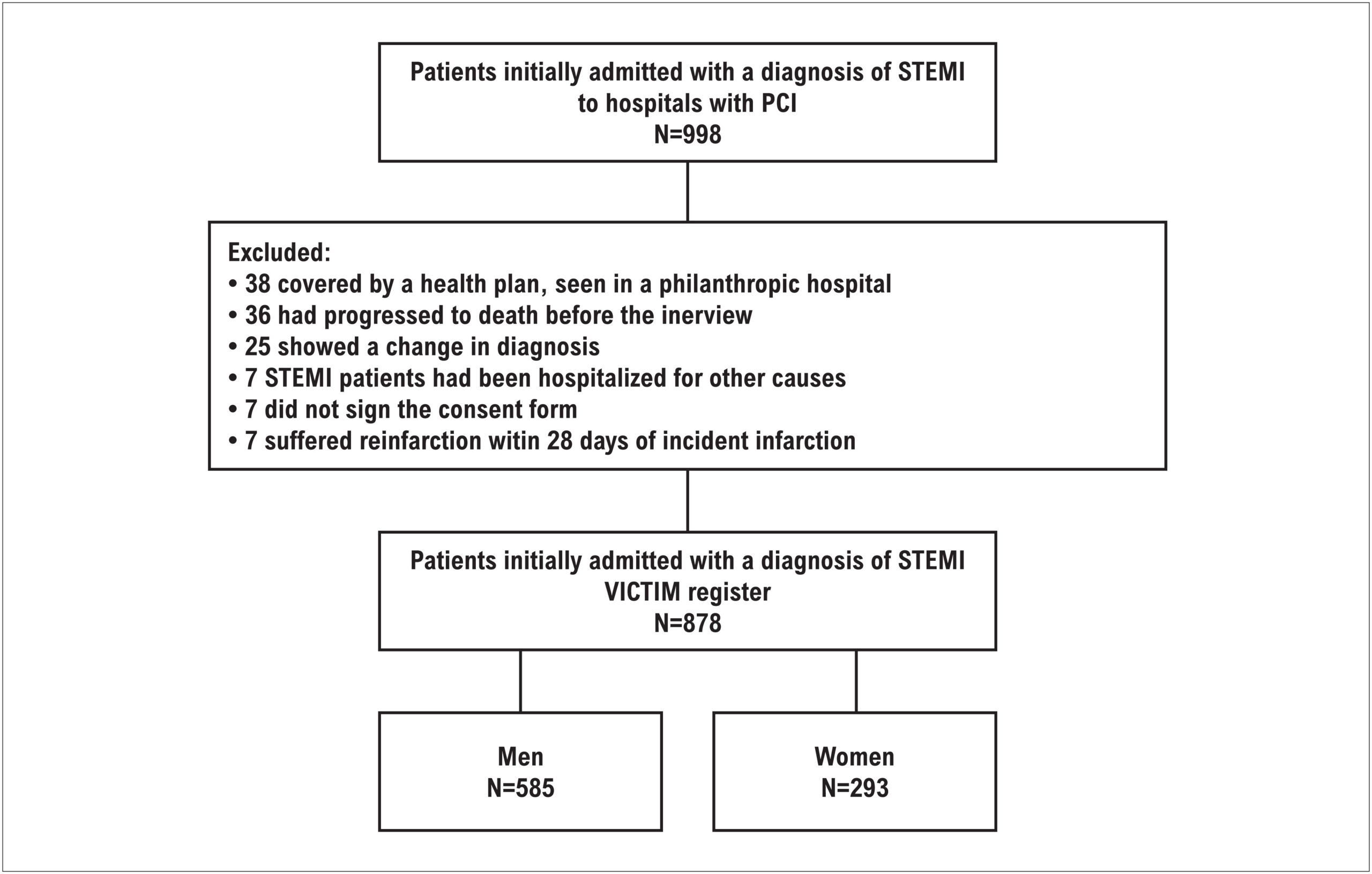
A total of 878 volunteers with a confirmed diagnosis of STEMI, of which 33.4% were women, were included in the study. Only 53.3% of the patients underwent myocardial reperfusion (134 women versus 334 men). Fibrinolysis was performed only in 2.3% of all patients (1.7% of women versus 2.6% of men; p = 0.422). The rate of primary PCI was lower (44% versus 54.5%; p = 0.003) and hospital mortality was higher (16.1% versus 6.7%; p < 0.001) in women than in men.

Conclusion:

Women have significantly lower rates of primary PCI and higher hospital mortality. Reperfusion rates were low in both sexes and there was a clear underutilization of thrombolytic agents.

  • Gender and Health
  • Healthcare Disparities
  • Morbimortality
  • Myocardial Infarction
  • Myocardial Reperfusion
  • Percutaneous Coronary Intervention
  • Women
Read Full Article
Creative Commons Attribution (CC BY) Creative Commons license
16/04/2021 DOI: 10.36660/abc.20190468 Views 1
Figure 1
Original Article

Effects of Late Aerobic Exercise on Cardiac Remodeling of Rats with Small-Sized Myocardial Infarction

Lidiane M. Souza et al. Marina P. Okoshi Mariana J. Gomes Mariana Gatto … Eder A. Rodrigues Thierres H. D. Pontes Felipe C. Damatto Leiliane R. S. Oliveira Patrícia Aparecida Borim Aline R. R. Lima Leonardo A. M. Zornoff Katashi Okoshi Luana U. Pagan

Abstract

Background:

Physical exercise has been considered an important non-pharmacological therapy for the prevention and treatment of cardiovascular diseases. However, its effects on minor cardiac remodeling are not clear.

Objective:

To evaluate the influence of aerobic exercise on the functional capacity, cardiac structure, left ventricular (LV) function, and gene expression of NADPH oxidase subunits in rats with small-sized myocardial infarction (MI).

Methods:

Three months after MI induction, Wistar rats were divided into three groups: Sham; sedentary MI (MI-SED); and aerobic exercised MI (MI-AE). The rats exercised on a treadmill three times a week for 12 weeks. An echocardiogram was performed before and after training. The infarction size was evaluated by histology, and gene expression was assessed by RT-PCR. The significance level for statistical analysis was set at 5%.

Results:

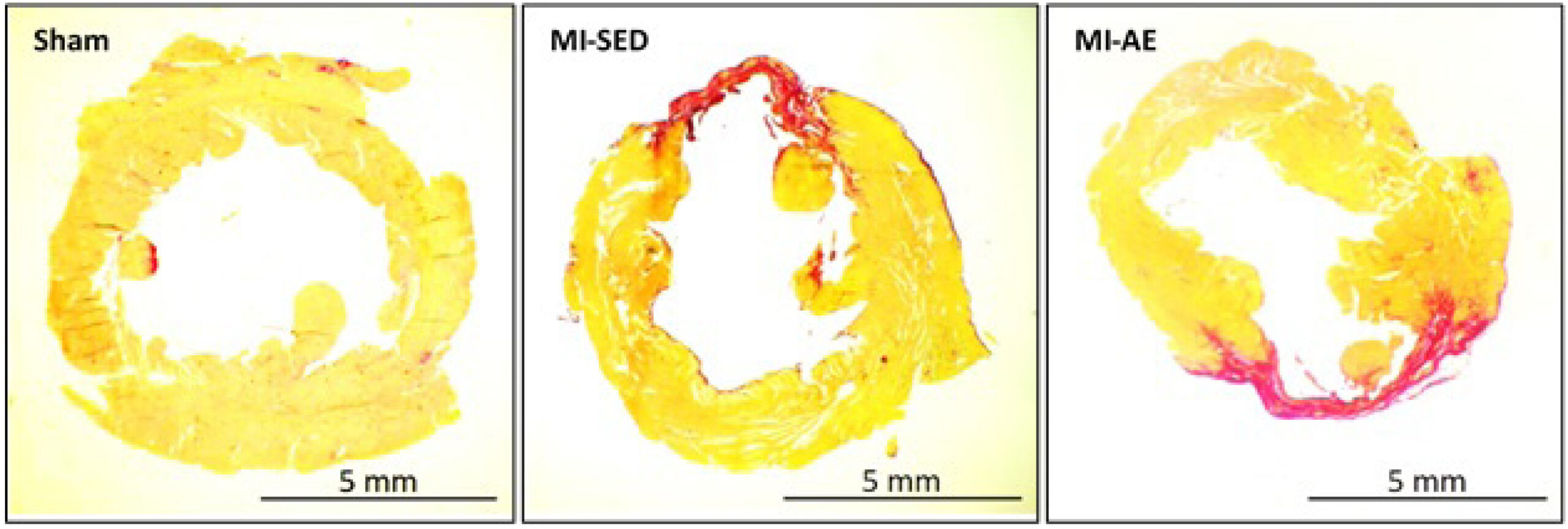
Rats with MI lower than 30% of the LV total area were included in the study. Functional capacity was higher in MI-AE than in Sham and MI-SED rats. The infarction size did not differ between groups. Infarcted rats had increased LV diastolic and systolic diameter, left atrial diameter, and LV mass, with systolic dysfunction. Relative wall thickness was lower in MI-SED than in the MI-AE and Sham groups. Gene expression of the NADPH oxidase subunits NOX2, NOX4, p22phox, and p47phox did not differ between groups.

Conclusion:

Small-sized MI changes cardiac structure and LV systolic function. Late aerobic exercise is able to improve functional capacity and cardiac remodeling by preserving the left ventricular geometry. NADPH oxidase subunits gene expression is not involved in cardiac remodeling or modulated by aerobic exercise in rats with small-sized MI.

  • Echocardiography/methods
  • Exercise, Physical Exercise
  • Myocardial Infarction
  • NADPH Oxidase
  • Rats
  • Ventricular Dysfunction
  • Ventricular Remodeling
Read Full Article
Creative Commons Attribution (CC BY) Creative Commons license
16/04/2021 DOI: 10.36660/abc.20190813 Views 1
Editorial

Managing Patients with Infectious Endocarditis and Neurological Complication — The Big Dilemma that Persists Until these Days

Claudio Querido Fortes et al. Natália Rodrigues Querido Fortes

Endocarditis is an extremely challenging disease, both regarding diagnosis and due to the diversity of its presentation, as well as its management, which requires an endocarditis team including professionals from different specialties. An infectious disease specialist, clinical microbiologist, cardiologist, cardiac surgeon, neurologist and imaging specialist are of the essence, and assistance from other specialists is also desirable depending on each case. Its incidence has been increasing in recent decades, especially due to population aging, the growing number of individuals undergoing renal replacement therapy, the higher frequency of patients with prosthetic valves and cardiac electrical devices and also due to the technological advances in invasive diagnostic and therapeutic methods, in addition to the current “epidemic” of recreational intravenous drugs, which have become a serious public health problem in some countries. Despite all the progress made in the diagnosis and treatment of endocarditis, its mortality remains alarmingly high. The persistence of this high mortality may be partially explained by the increase in the number of older fragile patients with multiple comorbidities and patients with prostheses.

The main objectives of the article “ Neurological Complications in Patients with Infective Endocarditis: Insights from a Tertiary Centre” are to evaluate the predictors of neurological complications in patients with infective endocarditis, the predictors of mortality in this group, and to compare the results of clinical treatment with a general practitioner and a surgeon, both among the study population, and stratifying the group of patients with neurological complications.

[…]

  • aging
  • Bacterial/complications
  • Embolization
  • Endocarditis
  • Heart Valve Prosthesis
  • Mortality
  • Neurologic, Complications
  • Pandemics/complications
  • Renal Insufficiency
Read Full Article
Creative Commons Attribution (CC BY) Creative Commons license
16/04/2021 DOI: 10.36660/abc.20210198 Views 1

Could not load more articles. Please try again.

How to cite this article

EndNote RIS

Electronic Document Format (Vancouver)

Rosa MLG, Mesquita CT, Albuquerque LZ, Silva WDS, Alves VPV, Jordan RFR, Matos RC, et al. Recent Trends in Cardiovascular Mortality in Rio de Janeiro State Health Regions and Capital. Arquivos Brasileiros de Cardiologia 2021;116(4):763-71.

Electronic Document Format (ABNT)

Rosa, Maria Luiza Garcia; Mesquita, Claudio Tinoco; Albuquerque, Lucas Zanetti de; Silva, Willian Douglas de Souza; Alves, Vinicius de Padua Vieira; Jordan, Roger Freitas Ramirez; Matos, Ricardo Cardoso de; Silva, Ana Luisa Guedes de França e; Souza Filho, Erito Marques de. Recent Trends in Cardiovascular Mortality in Rio de Janeiro State Health Regions and Capital. Arquivos Brasileiros de Cardiologia, v. 116, n. 4, p. 763-771, Apr. 2021.

Electronic Document Format (APA)

Rosa, M. L. G., Mesquita, C. T., Albuquerque, L. Z. , Silva, W. D. S., Alves, V. P. V., Jordan, R. F. R., Matos, R. C. , Silva, A. L. G. F. , & Souza Filho, E. M. (2021). Recent Trends in Cardiovascular Mortality in Rio de Janeiro State Health Regions and Capital. Arquivos Brasileiros de Cardiologia, 116(4), 763-771.

Electronic Document Format (ISO)

Rosa, Maria Luiza Garcia and Mesquita, Claudio Tinoco and Albuquerque, Lucas Zanetti de and Silva, Willian Douglas de Souza and Alves, Vinicius de Padua Vieira and Jordan, Roger Freitas Ramirez and Matos, Ricardo Cardoso de and Silva, Ana Luisa Guedes de França e and Souza Filho, Erito Marques de. Recent Trends in Cardiovascular Mortality in Rio de Janeiro State Health Regions and Capital. Arquivos Brasileiros de Cardiologia [online]. 2021, vol. 116, n. 4, [cited 2026-10-14], pp. 763-771. Available from: <https://journals.cardiol.br/en/article/recent-trends-in-cardiovascular-mortality-in-rio-de-janeiro-state-health-regions-and-capital/>. ISSN 0066-782X

EndNote RIS

Electronic Document Format (Vancouver)

Ilgın BU, Kızıltunç E, Gök M, Ornek E, Topcuoglu C, Çetin M, Karayiğit O, et al. Association between Serum Serglycin Levels and St-Segment Elevation Myocardial Infarction. Arquivos Brasileiros de Cardiologia 2021;116(4):756-62.

Electronic Document Format (ABNT)

Ilgın, Burcu Ugurlu; Kızıltunç, Emrullah; Gök, Murat; Ornek, Ender; Topcuoglu, Canan; Çetin, Mustafa; Karayiğit, Orhan. Association between Serum Serglycin Levels and St-Segment Elevation Myocardial Infarction. Arquivos Brasileiros de Cardiologia, v. 116, n. 4, p. 756-762, Apr. 2021.

Electronic Document Format (APA)

Ilgın, B. U., Kızıltunç, E., Gök, M., Ornek, E., Topcuoglu, C., Çetin, M., & Karayiğit, O. (2021). Association between Serum Serglycin Levels and St-Segment Elevation Myocardial Infarction. Arquivos Brasileiros de Cardiologia, 116(4), 756-762.

Electronic Document Format (ISO)

Ilgın, Burcu Ugurlu and Kızıltunç, Emrullah and Gök, Murat and Ornek, Ender and Topcuoglu, Canan and Çetin, Mustafa and Karayiğit, Orhan. Association between Serum Serglycin Levels and St-Segment Elevation Myocardial Infarction. Arquivos Brasileiros de Cardiologia [online]. 2021, vol. 116, n. 4, [cited 2026-10-14], pp. 756-762. Available from: <https://journals.cardiol.br/en/article/association-between-serum-serglycin-levels-and-st-segment-elevation-myocardial-infarction/>. ISSN 0066-782X

EndNote RIS

Electronic Document Format (Vancouver)

Teixeira JAC. The Importance of Post-Infarction Exercise Programs. Arquivos Brasileiros de Cardiologia 2021;116(4):793-4.

Electronic Document Format (ABNT)

Teixeira, José Antônio Caldas. The Importance of Post-Infarction Exercise Programs. Arquivos Brasileiros de Cardiologia, v. 116, n. 4, p. 793-794, Apr. 2021.

Electronic Document Format (APA)

Teixeira, J. A. C. (2021). The Importance of Post-Infarction Exercise Programs. Arquivos Brasileiros de Cardiologia, 116(4), 793-794.

Electronic Document Format (ISO)

Teixeira, José Antônio Caldas. The Importance of Post-Infarction Exercise Programs. Arquivos Brasileiros de Cardiologia [online]. 2021, vol. 116, n. 4, [cited 2026-10-14], pp. 793-794. Available from: <https://journals.cardiol.br/en/article/the-importance-of-post-infarction-exercise-programs/>. ISSN 0066-782X

EndNote RIS

Electronic Document Format (Vancouver)

. Erratum. Arquivos Brasileiros de Cardiologia 2021;116(4):855.

Electronic Document Format (ABNT)

. Erratum. Arquivos Brasileiros de Cardiologia, v. 116, n. 4, p. 855-855, Apr. 2021.

Electronic Document Format (APA)

(2021). Erratum. Arquivos Brasileiros de Cardiologia, 116(4), 855-855.

Electronic Document Format (ISO)

. Erratum. Arquivos Brasileiros de Cardiologia [online]. 2021, vol. 116, n. 4, [cited 2026-10-14], pp. 855-855. Available from: <https://journals.cardiol.br/en/article/erratum-29/>. ISSN 0066-782X

EndNote RIS

Electronic Document Format (Vancouver)

Calazans RM, Sepulvida MBC, Quadrado EB, Miranda RD. Use of Diuretic Therapy in Patients with Decompensated Heart Failure and Acute Kidney Injury. What to do in this Dilemma?. Arquivos Brasileiros de Cardiologia 2021;116(4):725-6.

Electronic Document Format (ABNT)

Calazans, Rafael Marques; Sepulvida, Mariana Bellaguarda de Castro; Quadrado, Egli Belinazzi; Miranda, Roberto Dischinger. Use of Diuretic Therapy in Patients with Decompensated Heart Failure and Acute Kidney Injury. What to do in this Dilemma?. Arquivos Brasileiros de Cardiologia, v. 116, n. 4, p. 725-726, Apr. 2021.

Electronic Document Format (APA)

Calazans, R. M., Sepulvida, M. B. C., Quadrado, E. B., & Miranda, R. D. (2021). Use of Diuretic Therapy in Patients with Decompensated Heart Failure and Acute Kidney Injury. What to do in this Dilemma?. Arquivos Brasileiros de Cardiologia, 116(4), 725-726.

Electronic Document Format (ISO)

Calazans, Rafael Marques and Sepulvida, Mariana Bellaguarda de Castro and Quadrado, Egli Belinazzi and Miranda, Roberto Dischinger. Use of Diuretic Therapy in Patients with Decompensated Heart Failure and Acute Kidney Injury. What to do in this Dilemma?. Arquivos Brasileiros de Cardiologia [online]. 2021, vol. 116, n. 4, [cited 2026-10-14], pp. 725-726. Available from: <https://journals.cardiol.br/en/article/use-of-diuretic-therapy-in-patients-with-decompensated-heart-failure-and-acute-kidney-injury-what-to-do-in-this-dilemma/>. ISSN 0066-782X

EndNote RIS

Electronic Document Format (Vancouver)

Alegria S, Marques A, Cruz I, Broa AL, Pereira ARF, João I, Simões O, et al. Neurological Complications in Patients with Infective Endocarditis: Insights from a Tertiary Centre. Arquivos Brasileiros de Cardiologia 2021;116(4):682-91.

Electronic Document Format (ABNT)

Alegria, Sofia; Marques, Ana; Cruz, Inês; Broa, Ana Luísa; Pereira, Ana Rita F.; João, Isabel; Simões, Otília; Pereira, Hélder. Neurological Complications in Patients with Infective Endocarditis: Insights from a Tertiary Centre. Arquivos Brasileiros de Cardiologia, v. 116, n. 4, p. 682-691, Apr. 2021.

Electronic Document Format (APA)

Alegria, S., Marques, A., Cruz, I., Broa, A. L., Pereira, A. R. F., João, I., Simões, O., & Pereira, H. (2021). Neurological Complications in Patients with Infective Endocarditis: Insights from a Tertiary Centre. Arquivos Brasileiros de Cardiologia, 116(4), 682-691.

Electronic Document Format (ISO)

Alegria, Sofia and Marques, Ana and Cruz, Inês and Broa, Ana Luísa and Pereira, Ana Rita F. and João, Isabel and Simões, Otília and Pereira, Hélder. Neurological Complications in Patients with Infective Endocarditis: Insights from a Tertiary Centre. Arquivos Brasileiros de Cardiologia [online]. 2021, vol. 116, n. 4, [cited 2026-10-14], pp. 682-691. Available from: <https://journals.cardiol.br/en/article/neurological-complications-in-patients-with-infective-endocarditis-insights-from-a-tertiary-centre/>. ISSN 0066-782X

EndNote RIS

Electronic Document Format (Vancouver)

Yasri S, Wiwanitkit V. Troponin-T and B-Type Natriuretic Peptide in COVID-19. Arquivos Brasileiros de Cardiologia 2021;116(4):854.

Electronic Document Format (ABNT)

Yasri, Sora; Wiwanitkit, Viroj. Troponin-T and B-Type Natriuretic Peptide in COVID-19. Arquivos Brasileiros de Cardiologia, v. 116, n. 4, p. 854-854, Apr. 2021.

Electronic Document Format (APA)

Yasri, S., & Wiwanitkit, V. (2021). Troponin-T and B-Type Natriuretic Peptide in COVID-19. Arquivos Brasileiros de Cardiologia, 116(4), 854-854.

Electronic Document Format (ISO)

Yasri, Sora and Wiwanitkit, Viroj. Troponin-T and B-Type Natriuretic Peptide in COVID-19. Arquivos Brasileiros de Cardiologia [online]. 2021, vol. 116, n. 4, [cited 2026-10-14], pp. 854-854. Available from: <https://journals.cardiol.br/en/article/troponin-t-and-b-type-natriuretic-peptide-in-covid-19/>. ISSN 0066-782X

EndNote RIS

Electronic Document Format (Vancouver)

Teixeira MEF, Vitorino PVO, Amodeo C, Martinez T, Brandão AA, Barbosa ECD, Feitosa ADM, et al. Cardiovascular Risk Factors in Cardiology Specialists from the Brazilian Society of Cardiology. Arquivos Brasileiros de Cardiologia 2021;116(4):774-81.

Electronic Document Format (ABNT)

Teixeira, Maria Emília Figueiredo; Vitorino, Priscila Valverde de O.; Amodeo, Celso; Martinez, Tânia; Brandão, Andréa Araujo; Barbosa, Eduardo Costa Duarte; Feitosa, Audes Diógenes Magalhães; Jardim, Paulo Cesar B. Veiga; Souza, Ana Luiza Lima; Barroso, Weimar Kunz Sebba. Cardiovascular Risk Factors in Cardiology Specialists from the Brazilian Society of Cardiology. Arquivos Brasileiros de Cardiologia, v. 116, n. 4, p. 774-781, Apr. 2021.

Electronic Document Format (APA)

Teixeira, M. E. F., Vitorino, P. V. O., Amodeo, C., Martinez, T., Brandão, A. A., Barbosa, E. C. D., Feitosa, A. D. M., Jardim, P. C. B. V., Souza, A. L. L., & Barroso, W. K. S. (2021). Cardiovascular Risk Factors in Cardiology Specialists from the Brazilian Society of Cardiology. Arquivos Brasileiros de Cardiologia, 116(4), 774-781.

Electronic Document Format (ISO)

Teixeira, Maria Emília Figueiredo and Vitorino, Priscila Valverde de O. and Amodeo, Celso and Martinez, Tânia and Brandão, Andréa Araujo and Barbosa, Eduardo Costa Duarte and Feitosa, Audes Diógenes Magalhães and Jardim, Paulo Cesar B. Veiga and Souza, Ana Luiza Lima and Barroso, Weimar Kunz Sebba. Cardiovascular Risk Factors in Cardiology Specialists from the Brazilian Society of Cardiology. Arquivos Brasileiros de Cardiologia [online]. 2021, vol. 116, n. 4, [cited 2026-10-14], pp. 774-781. Available from: <https://journals.cardiol.br/en/article/cardiovascular-risk-factors-in-cardiology-specialists-from-the-brazilian-society-of-cardiology/>. ISSN 0066-782X

EndNote RIS

Electronic Document Format (Vancouver)

Alves RJ. Statin Use and Hypercholesterolemia: Are the Current Guidelines’ Recommendations Being Followed?. Arquivos Brasileiros de Cardiologia 2021;116(4):742-3.

Electronic Document Format (ABNT)

Alves, Renato Jorge. Statin Use and Hypercholesterolemia: Are the Current Guidelines’ Recommendations Being Followed?. Arquivos Brasileiros de Cardiologia, v. 116, n. 4, p. 742-743, Apr. 2021.

Electronic Document Format (APA)

Alves, R. J. (2021). Statin Use and Hypercholesterolemia: Are the Current Guidelines’ Recommendations Being Followed?. Arquivos Brasileiros de Cardiologia, 116(4), 742-743.

Electronic Document Format (ISO)

Alves, Renato Jorge. Statin Use and Hypercholesterolemia: Are the Current Guidelines’ Recommendations Being Followed?. Arquivos Brasileiros de Cardiologia [online]. 2021, vol. 116, n. 4, [cited 2026-10-14], pp. 742-743. Available from: <https://journals.cardiol.br/en/article/statin-use-and-hypercholesterolemia-are-the-current-guidelines-recommendations-being-followed/>. ISSN 0066-782X

EndNote RIS

Electronic Document Format (Vancouver)

Atik E, Mady C, Ramires JAF. Radi Macruz – The Legacy of an Icon. Arquivos Brasileiros de Cardiologia 2021;116(4):679-81.

Electronic Document Format (ABNT)

Atik, Edmar; Mady, Charles; Ramires, Jose Antonio Franchini. Radi Macruz – The Legacy of an Icon. Arquivos Brasileiros de Cardiologia, v. 116, n. 4, p. 679-681, Apr. 2021.

Electronic Document Format (APA)

Atik, E., Mady, C., & Ramires, J. A. F. (2021). Radi Macruz – The Legacy of an Icon. Arquivos Brasileiros de Cardiologia, 116(4), 679-681.

Electronic Document Format (ISO)

Atik, Edmar and Mady, Charles and Ramires, Jose Antonio Franchini. Radi Macruz – The Legacy of an Icon. Arquivos Brasileiros de Cardiologia [online]. 2021, vol. 116, n. 4, [cited 2026-10-14], pp. 679-681. Available from: <https://journals.cardiol.br/en/article/radi-macruz-the-legacy-of-an-icon/>. ISSN 0066-782X

EndNote RIS

Electronic Document Format (Vancouver)

Abacioglu OO, Gulumsek E, Sumbul HE, Kaplan M, Yavuz F. Increased Pulmonary Arterial Stiffness and Impaired Right Ventricle-Pulmonary Artery Coupling In PCOS. Arquivos Brasileiros de Cardiologia 2021;116(4):806-11.

Electronic Document Format (ABNT)

Abacioglu, Ozge Ozcan; Gulumsek, Erdinc; Sumbul, Hilmi Erdem; Kaplan, Mehmet; Yavuz, Fethi. Increased Pulmonary Arterial Stiffness and Impaired Right Ventricle-Pulmonary Artery Coupling In PCOS. Arquivos Brasileiros de Cardiologia, v. 116, n. 4, p. 806-811, Apr. 2021.

Electronic Document Format (APA)

Abacioglu, O. O., Gulumsek, E., Sumbul, H. E., Kaplan, M., & Yavuz, F. (2021). Increased Pulmonary Arterial Stiffness and Impaired Right Ventricle-Pulmonary Artery Coupling In PCOS. Arquivos Brasileiros de Cardiologia, 116(4), 806-811.

Electronic Document Format (ISO)

Abacioglu, Ozge Ozcan and Gulumsek, Erdinc and Sumbul, Hilmi Erdem and Kaplan, Mehmet and Yavuz, Fethi. Increased Pulmonary Arterial Stiffness and Impaired Right Ventricle-Pulmonary Artery Coupling In PCOS. Arquivos Brasileiros de Cardiologia [online]. 2021, vol. 116, n. 4, [cited 2026-10-14], pp. 806-811. Available from: <https://journals.cardiol.br/en/article/increased-pulmonary-arterial-stiffness-and-impaired-right-ventricle-pulmonary-artery-coupling-in-pcos/>. ISSN 0066-782X

EndNote RIS

Electronic Document Format (Vancouver)

Hussid MF, Cepeda FX, Jordão CP, Lopes-Vicente RRP, Virmondes L, Katayama KY, Oliveira EF, et al. Visceral Obesity and High Systolic Blood Pressure as the Substrate of Endothelial Dysfunction in Obese Adolescents. Arquivos Brasileiros de Cardiologia 2021;116(4):795-803.

Electronic Document Format (ABNT)

Hussid, Maria Fernanda; Cepeda, Felipe Xerez; Jordão, Camila P.; Lopes-Vicente, Rafaela R. P.; Virmondes, Leslie; Katayama, Keyla Y.; Oliveira, Ezequiel F. de; Oliveira, Luis V. F.; Consolim-Colombo, Fernanda Marciano; Trombetta, Ivani Credidio. Visceral Obesity and High Systolic Blood Pressure as the Substrate of Endothelial Dysfunction in Obese Adolescents. Arquivos Brasileiros de Cardiologia, v. 116, n. 4, p. 795-803, Apr. 2021.

Electronic Document Format (APA)

Hussid, M. F., Cepeda, F. X., Jordão, C. P., Lopes-Vicente, R. R. P., Virmondes, L., Katayama, K. Y., Oliveira, E. F. , Oliveira, L. V. F., Consolim-Colombo, F. M., & Trombetta, I. C. (2021). Visceral Obesity and High Systolic Blood Pressure as the Substrate of Endothelial Dysfunction in Obese Adolescents. Arquivos Brasileiros de Cardiologia, 116(4), 795-803.

Electronic Document Format (ISO)

Hussid, Maria Fernanda and Cepeda, Felipe Xerez and Jordão, Camila P. and Lopes-Vicente, Rafaela R. P. and Virmondes, Leslie and Katayama, Keyla Y. and Oliveira, Ezequiel F. de and Oliveira, Luis V. F. and Consolim-Colombo, Fernanda Marciano and Trombetta, Ivani Credidio. Visceral Obesity and High Systolic Blood Pressure as the Substrate of Endothelial Dysfunction in Obese Adolescents. Arquivos Brasileiros de Cardiologia [online]. 2021, vol. 116, n. 4, [cited 2026-10-14], pp. 795-803. Available from: <https://journals.cardiol.br/en/article/visceral-obesity-and-high-systolic-blood-pressure-as-the-substrate-of-endothelial-dysfunction-in-obese-adolescents/>. ISSN 0066-782X

EndNote RIS

Electronic Document Format (Vancouver)

Fonseca HAR, Gidlund M, Sant’Anna VR, Fernandes ER, Fonseca FAH, Izar MC. HIV-Infected Naïve Patients Exhibit Endothelial Dysfunction Concomitant with Decreased Natural Antibodies Against Defined Apolipoprotein B Autoantigens. Arquivos Brasileiros de Cardiologia 2021;116(4):844-9.

Electronic Document Format (ABNT)

Fonseca, Henrique Andrade R.; Gidlund, Magnus; Sant’Anna, Viviane Rodrigues; Fernandes, Esteferson Rodrigues; Fonseca, Francisco A. H.; Izar, Maria Cristina. HIV-Infected Naïve Patients Exhibit Endothelial Dysfunction Concomitant with Decreased Natural Antibodies Against Defined Apolipoprotein B Autoantigens. Arquivos Brasileiros de Cardiologia, v. 116, n. 4, p. 844-849, Apr. 2021.

Electronic Document Format (APA)

Fonseca, H. A. R., Gidlund, M., Sant’Anna, V. R., Fernandes, E. R., Fonseca, F. A. H., & Izar, M. C. (2021). HIV-Infected Naïve Patients Exhibit Endothelial Dysfunction Concomitant with Decreased Natural Antibodies Against Defined Apolipoprotein B Autoantigens. Arquivos Brasileiros de Cardiologia, 116(4), 844-849.

Electronic Document Format (ISO)

Fonseca, Henrique Andrade R. and Gidlund, Magnus and Sant’Anna, Viviane Rodrigues and Fernandes, Esteferson Rodrigues and Fonseca, Francisco A. H. and Izar, Maria Cristina. HIV-Infected Naïve Patients Exhibit Endothelial Dysfunction Concomitant with Decreased Natural Antibodies Against Defined Apolipoprotein B Autoantigens. Arquivos Brasileiros de Cardiologia [online]. 2021, vol. 116, n. 4, [cited 2026-10-14], pp. 844-849. Available from: <https://journals.cardiol.br/en/article/hiv-infected-naive-patients-exhibit-endothelial-dysfunction-concomitant-with-decreased-natural-antibodies-against-defined-apolipoprotein-b-autoantigens/>. ISSN 0066-782X

EndNote RIS

Electronic Document Format (Vancouver)

Reddy YNV. Pulmonary Hypertension in Polycystic Ovarian Syndrome. Arquivos Brasileiros de Cardiologia 2021;116(4):812-3.

Electronic Document Format (ABNT)

Reddy, Yogesh N. V.. Pulmonary Hypertension in Polycystic Ovarian Syndrome. Arquivos Brasileiros de Cardiologia, v. 116, n. 4, p. 812-813, Apr. 2021.

Electronic Document Format (APA)

Reddy, Y. N. V. (2021). Pulmonary Hypertension in Polycystic Ovarian Syndrome. Arquivos Brasileiros de Cardiologia, 116(4), 812-813.

Electronic Document Format (ISO)

Reddy, Yogesh N. V.. Pulmonary Hypertension in Polycystic Ovarian Syndrome. Arquivos Brasileiros de Cardiologia [online]. 2021, vol. 116, n. 4, [cited 2026-10-14], pp. 812-813. Available from: <https://journals.cardiol.br/en/article/pulmonary-hypertension-in-polycystic-ovarian-syndrome/>. ISSN 0066-782X

EndNote RIS

Electronic Document Format (Vancouver)

Nascimento E, Alves JLB. The Unknown Risk of Familial Hypercholesterolemia in the Development of Atherosclerotic Cardiovascular Disease. Arquivos Brasileiros de Cardiologia 2021;116(4):713-4.

Electronic Document Format (ABNT)

Nascimento, Elizabeth do; Alves, José Luiz de Brito. The Unknown Risk of Familial Hypercholesterolemia in the Development of Atherosclerotic Cardiovascular Disease. Arquivos Brasileiros de Cardiologia, v. 116, n. 4, p. 713-714, Apr. 2021.

Electronic Document Format (APA)

Nascimento, E. , & Alves, J. L. B. (2021). The Unknown Risk of Familial Hypercholesterolemia in the Development of Atherosclerotic Cardiovascular Disease. Arquivos Brasileiros de Cardiologia, 116(4), 713-714.

Electronic Document Format (ISO)

Nascimento, Elizabeth do and Alves, José Luiz de Brito. The Unknown Risk of Familial Hypercholesterolemia in the Development of Atherosclerotic Cardiovascular Disease. Arquivos Brasileiros de Cardiologia [online]. 2021, vol. 116, n. 4, [cited 2026-10-14], pp. 713-714. Available from: <https://journals.cardiol.br/en/article/the-unknown-risk-of-familial-hypercholesterolemia-in-the-development-of-atherosclerotic-cardiovascular-disease/>. ISSN 0066-782X

EndNote RIS

Electronic Document Format (Vancouver)

Mesquita CT, Ker WS. Cardiovascular Risk Factors in Cardiologists Certified by the Brazilian Society of Cardiology: Lessons to be Learned. Arquivos Brasileiros de Cardiologia 2021;116(4):782-3.

Electronic Document Format (ABNT)

Mesquita, Claudio Tinoco; Ker, Wilter dos Santos. Cardiovascular Risk Factors in Cardiologists Certified by the Brazilian Society of Cardiology: Lessons to be Learned. Arquivos Brasileiros de Cardiologia, v. 116, n. 4, p. 782-783, Apr. 2021.

Electronic Document Format (APA)

Mesquita, C. T., & Ker, W. S. (2021). Cardiovascular Risk Factors in Cardiologists Certified by the Brazilian Society of Cardiology: Lessons to be Learned. Arquivos Brasileiros de Cardiologia, 116(4), 782-783.

Electronic Document Format (ISO)

Mesquita, Claudio Tinoco and Ker, Wilter dos Santos. Cardiovascular Risk Factors in Cardiologists Certified by the Brazilian Society of Cardiology: Lessons to be Learned. Arquivos Brasileiros de Cardiologia [online]. 2021, vol. 116, n. 4, [cited 2026-10-14], pp. 782-783. Available from: <https://journals.cardiol.br/en/article/cardiovascular-risk-factors-in-cardiologists-certified-by-the-brazilian-society-of-cardiology-lessons-to-be-learned/>. ISSN 0066-782X

EndNote RIS

Electronic Document Format (Vancouver)

Aguiar GB, Caldas JGMP. Carotid Artery Atherosclerotic Profile as a Progression Marker for Cardiovascular Disease. Arquivos Brasileiros de Cardiologia 2021;116(4):734-5.

Electronic Document Format (ABNT)

Aguiar, Guilherme Brasileiro de; Caldas, José Guilherme Mendes Pereira. Carotid Artery Atherosclerotic Profile as a Progression Marker for Cardiovascular Disease. Arquivos Brasileiros de Cardiologia, v. 116, n. 4, p. 734-735, Apr. 2021.

Electronic Document Format (APA)

Aguiar, G. B. , & Caldas, J. G. M. P. (2021). Carotid Artery Atherosclerotic Profile as a Progression Marker for Cardiovascular Disease. Arquivos Brasileiros de Cardiologia, 116(4), 734-735.

Electronic Document Format (ISO)

Aguiar, Guilherme Brasileiro de and Caldas, José Guilherme Mendes Pereira. Carotid Artery Atherosclerotic Profile as a Progression Marker for Cardiovascular Disease. Arquivos Brasileiros de Cardiologia [online]. 2021, vol. 116, n. 4, [cited 2026-10-14], pp. 734-735. Available from: <https://journals.cardiol.br/en/article/carotid-artery-atherosclerotic-profile-as-a-progression-marker-for-cardiovascular-disease/>. ISSN 0066-782X

EndNote RIS

Electronic Document Format (Vancouver)

Guimarães JPA, Trigo J, Gonçalves F, Moreira JI. Transthyretin Amyloid Cardiomyopathy Mimicking Hypertrophic Cardiomyopathy in an Older Patient. Arquivos Brasileiros de Cardiologia 2021;116(4):850-3.

Electronic Document Format (ABNT)

Guimarães, José Pedro Alves; Trigo, Joana; Gonçalves, Fernando; Moreira, J. Ilídio. Transthyretin Amyloid Cardiomyopathy Mimicking Hypertrophic Cardiomyopathy in an Older Patient. Arquivos Brasileiros de Cardiologia, v. 116, n. 4, p. 850-853, Apr. 2021.

Electronic Document Format (APA)

Guimarães, J. P. A., Trigo, J., Gonçalves, F., & Moreira, J. I. (2021). Transthyretin Amyloid Cardiomyopathy Mimicking Hypertrophic Cardiomyopathy in an Older Patient. Arquivos Brasileiros de Cardiologia, 116(4), 850-853.

Electronic Document Format (ISO)

Guimarães, José Pedro Alves and Trigo, Joana and Gonçalves, Fernando and Moreira, J. Ilídio. Transthyretin Amyloid Cardiomyopathy Mimicking Hypertrophic Cardiomyopathy in an Older Patient. Arquivos Brasileiros de Cardiologia [online]. 2021, vol. 116, n. 4, [cited 2026-10-14], pp. 850-853. Available from: <https://journals.cardiol.br/en/article/transthyretin-amyloid-cardiomyopathy-mimicking-hypertrophic-cardiomyopathy-in-an-older-patient/>. ISSN 0066-782X

EndNote RIS

Electronic Document Format (Vancouver)

Atik E. Double Outlet Right Ventricle with Unrelated Ventricular Septal Defect and Pulmonary Stenosis, in Natural Evolution, in a 36-Year-Old Woman. Arquivos Brasileiros de Cardiologia 2021;116(4):836-9.

Electronic Document Format (ABNT)

Atik, Edmar. Double Outlet Right Ventricle with Unrelated Ventricular Septal Defect and Pulmonary Stenosis, in Natural Evolution, in a 36-Year-Old Woman. Arquivos Brasileiros de Cardiologia, v. 116, n. 4, p. 836-839, Apr. 2021.

Electronic Document Format (APA)

Atik, E. (2021). Double Outlet Right Ventricle with Unrelated Ventricular Septal Defect and Pulmonary Stenosis, in Natural Evolution, in a 36-Year-Old Woman. Arquivos Brasileiros de Cardiologia, 116(4), 836-839.

Electronic Document Format (ISO)

Atik, Edmar. Double Outlet Right Ventricle with Unrelated Ventricular Septal Defect and Pulmonary Stenosis, in Natural Evolution, in a 36-Year-Old Woman. Arquivos Brasileiros de Cardiologia [online]. 2021, vol. 116, n. 4, [cited 2026-10-14], pp. 836-839. Available from: <https://journals.cardiol.br/en/article/double-outlet-right-ventricle-with-unrelated-ventricular-septal-defect-and-pulmonary-stenosis-in-natural-evolution-in-a-36-year-old-woman/>. ISSN 0066-782X

EndNote RIS

Electronic Document Format (Vancouver)

Villacorta H, Villacorta AS, Villacorta LSC, Xavier AR, Kanaan S, Rohen FM, Albuquerque LD, et al. Worsening Renal Function and Congestion in Patients with Acute Heart Failure: A Study with Bioelectrical Impedance Vector Analysis (BIVA) and Neutrophil Gelatinase-Associated Lipocalin (NGAL). Arquivos Brasileiros de Cardiologia 2021;116(4):715-24.

Electronic Document Format (ABNT)

Villacorta, Humberto; Villacorta, Aline Sterque; Villacorta, Leonardo Simões de Castro; Xavier, Analucia Rampazzo; Kanaan, Salim; Rohen, Felipe Mafort; Albuquerque, Leonardo Dinis; Bastilho, Daniele Dantas; Cudischevitch, Cecília de Oliveira. Worsening Renal Function and Congestion in Patients with Acute Heart Failure: A Study with Bioelectrical Impedance Vector Analysis (BIVA) and Neutrophil Gelatinase-Associated Lipocalin (NGAL). Arquivos Brasileiros de Cardiologia, v. 116, n. 4, p. 715-724, Apr. 2021.

Electronic Document Format (APA)

Villacorta, H., Villacorta, A. S., Villacorta, L. S. C., Xavier, A. R., Kanaan, S., Rohen, F. M., Albuquerque, L. D., Bastilho, D. D., & Cudischevitch, C. O. (2021). Worsening Renal Function and Congestion in Patients with Acute Heart Failure: A Study with Bioelectrical Impedance Vector Analysis (BIVA) and Neutrophil Gelatinase-Associated Lipocalin (NGAL). Arquivos Brasileiros de Cardiologia, 116(4), 715-724.

Electronic Document Format (ISO)

Villacorta, Humberto and Villacorta, Aline Sterque and Villacorta, Leonardo Simões de Castro and Xavier, Analucia Rampazzo and Kanaan, Salim and Rohen, Felipe Mafort and Albuquerque, Leonardo Dinis and Bastilho, Daniele Dantas and Cudischevitch, Cecília de Oliveira. Worsening Renal Function and Congestion in Patients with Acute Heart Failure: A Study with Bioelectrical Impedance Vector Analysis (BIVA) and Neutrophil Gelatinase-Associated Lipocalin (NGAL). Arquivos Brasileiros de Cardiologia [online]. 2021, vol. 116, n. 4, [cited 2026-10-14], pp. 715-724. Available from: <https://journals.cardiol.br/en/article/worsening-renal-function-and-congestion-in-patients-with-acute-heart-failure-a-study-with-bioelectrical-impedance-vector-analysis-biva-and-neutrophil-gelatinase-associated-lipocalin-ngal/>. ISSN 0066-782X

EndNote RIS

Electronic Document Format (Vancouver)

Rodrigues CSA, Bazan R, Reis FM, Silveira CFSMP, Hueb LMS, Carvalho FC, Nunes HRC, et al. Carotid Artery Atherosclerotic Profile as Risk Predictor for Restenosis After Coronary Stenting. Arquivos Brasileiros de Cardiologia 2021;116(4):727-33.

Electronic Document Format (ABNT)

Rodrigues, Cássia da Silva Antico; Bazan, Rodrigo; Reis, Fabrício Moreira; Silveira, Caroline F. S. Mazeto Pupo da; Hueb, Lívia Maria Severino; Carvalho, Fábio Cardoso de; Nunes, Hélio Rubens de Carvalho; Okoshi, Katashi; Hueb, João Carlos; Bazan, Silméia Garcia Zanati. Carotid Artery Atherosclerotic Profile as Risk Predictor for Restenosis After Coronary Stenting. Arquivos Brasileiros de Cardiologia, v. 116, n. 4, p. 727-733, Apr. 2021.

Electronic Document Format (APA)

Rodrigues, C. S. A., Bazan, R., Reis, F. M., Silveira, C. F. S. M. P. , Hueb, L. M. S., Carvalho, F. C. , Nunes, H. R. C., Okoshi, K., Hueb, J. C., & Bazan, S. G. Z. (2021). Carotid Artery Atherosclerotic Profile as Risk Predictor for Restenosis After Coronary Stenting. Arquivos Brasileiros de Cardiologia, 116(4), 727-733.

Electronic Document Format (ISO)

Rodrigues, Cássia da Silva Antico and Bazan, Rodrigo and Reis, Fabrício Moreira and Silveira, Caroline F. S. Mazeto Pupo da and Hueb, Lívia Maria Severino and Carvalho, Fábio Cardoso de and Nunes, Hélio Rubens de Carvalho and Okoshi, Katashi and Hueb, João Carlos and Bazan, Silméia Garcia Zanati. Carotid Artery Atherosclerotic Profile as Risk Predictor for Restenosis After Coronary Stenting. Arquivos Brasileiros de Cardiologia [online]. 2021, vol. 116, n. 4, [cited 2026-10-14], pp. 727-733. Available from: <https://journals.cardiol.br/en/article/carotid-artery-atherosclerotic-profile-as-risk-predictor-for-restenosis-after-coronary-stenting/>. ISSN 0066-782X

EndNote RIS

Electronic Document Format (Vancouver)

Oliveira JC, Barros MPS, Barreto IDC, Silva Filho RC, Andrade VA, Oliveira AM, Lima TCRM, et al. Access to Reperfusion Therapy and Mortality in Women with ST-Segment–Elevation Myocardial Infarction: VICTIM Register. Arquivos Brasileiros de Cardiologia 2021;116(4):695-703.

Electronic Document Format (ABNT)

Oliveira, Jussiely Cunha; Barros, Mayse Pereira Souza; Barreto, Ikaro Daniel de Carvalho; Silva Filho, Rubens Cruz; Andrade, Volfanio Araújo; Oliveira, André de Melo; Lima, Ticiane Clair Remacre Munareto; Oliveira, Jeferson Cunha; Arcelino, Larissa Andreline Maia; Oliveira, Laís Costa Souza; Santana-Santos, Eduesley; Almeida-Santos, Marcos Antônio; Sousa, Antônio Carlos; Barreto Filho, José Augusto Soares. Access to Reperfusion Therapy and Mortality in Women with ST-Segment–Elevation Myocardial Infarction: VICTIM Register. Arquivos Brasileiros de Cardiologia, v. 116, n. 4, p. 695-703, Apr. 2021.

Electronic Document Format (APA)

Oliveira, J. C., Barros, M. P. S., Barreto, I. D. C., Silva Filho, R. C., Andrade, V. A., Oliveira, A. M., Lima, T. C. R. M., Oliveira, J. C., Arcelino, L. A. M., Oliveira, L. C. S., Santana-Santos, E., Almeida-Santos, M. A., Sousa, A. C., & Barreto Filho, J. A. S. (2021). Access to Reperfusion Therapy and Mortality in Women with ST-Segment–Elevation Myocardial Infarction: VICTIM Register. Arquivos Brasileiros de Cardiologia, 116(4), 695-703.

Electronic Document Format (ISO)

Oliveira, Jussiely Cunha and Barros, Mayse Pereira Souza and Barreto, Ikaro Daniel de Carvalho and Silva Filho, Rubens Cruz and Andrade, Volfanio Araújo and Oliveira, André de Melo and Lima, Ticiane Clair Remacre Munareto and Oliveira, Jeferson Cunha and Arcelino, Larissa Andreline Maia and Oliveira, Laís Costa Souza and Santana-Santos, Eduesley and Almeida-Santos, Marcos Antônio and Sousa, Antônio Carlos and Barreto Filho, José Augusto Soares. Access to Reperfusion Therapy and Mortality in Women with ST-Segment–Elevation Myocardial Infarction: VICTIM Register. Arquivos Brasileiros de Cardiologia [online]. 2021, vol. 116, n. 4, [cited 2026-10-14], pp. 695-703. Available from: <https://journals.cardiol.br/en/article/access-to-reperfusion-therapy-and-mortality-in-women-with-st-segment-elevation-myocardial-infarction-victim-register/>. ISSN 0066-782X

EndNote RIS

Electronic Document Format (Vancouver)

Souza LM, Okoshi MP, Gomes MJ, Gatto M, Rodrigues EA, Pontes THD, Damatto FC, et al. Effects of Late Aerobic Exercise on Cardiac Remodeling of Rats with Small-Sized Myocardial Infarction. Arquivos Brasileiros de Cardiologia 2021;116(4):784-92.

Electronic Document Format (ABNT)

Souza, Lidiane M.; Okoshi, Marina P.; Gomes, Mariana J.; Gatto, Mariana; Rodrigues, Eder A.; Pontes, Thierres H. D.; Damatto, Felipe C.; Oliveira, Leiliane R. S.; Borim, Patrícia Aparecida; Lima, Aline R. R.; Zornoff, Leonardo A. M.; Okoshi, Katashi; Pagan, Luana U.. Effects of Late Aerobic Exercise on Cardiac Remodeling of Rats with Small-Sized Myocardial Infarction. Arquivos Brasileiros de Cardiologia, v. 116, n. 4, p. 784-792, Apr. 2021.

Electronic Document Format (APA)

Souza, L. M., Okoshi, M. P., Gomes, M. J., Gatto, M., Rodrigues, E. A., Pontes, T. H. D., Damatto, F. C., Oliveira, L. R. S., Borim, P. A., Lima, A. R. R., Zornoff, L. A. M., Okoshi, K., & Pagan, L. U. (2021). Effects of Late Aerobic Exercise on Cardiac Remodeling of Rats with Small-Sized Myocardial Infarction. Arquivos Brasileiros de Cardiologia, 116(4), 784-792.

Electronic Document Format (ISO)

Souza, Lidiane M. and Okoshi, Marina P. and Gomes, Mariana J. and Gatto, Mariana and Rodrigues, Eder A. and Pontes, Thierres H. D. and Damatto, Felipe C. and Oliveira, Leiliane R. S. and Borim, Patrícia Aparecida and Lima, Aline R. R. and Zornoff, Leonardo A. M. and Okoshi, Katashi and Pagan, Luana U.. Effects of Late Aerobic Exercise on Cardiac Remodeling of Rats with Small-Sized Myocardial Infarction. Arquivos Brasileiros de Cardiologia [online]. 2021, vol. 116, n. 4, [cited 2026-10-14], pp. 784-792. Available from: <https://journals.cardiol.br/en/article/effects-of-late-aerobic-exercise-on-cardiac-remodeling-of-rats-with-small-sized-myocardial-infarction/>. ISSN 0066-782X

EndNote RIS

Electronic Document Format (Vancouver)

Fortes CQ, Fortes NRQ. Managing Patients with Infectious Endocarditis and Neurological Complication — The Big Dilemma that Persists Until these Days. Arquivos Brasileiros de Cardiologia 2021;116(4):692-4.

Electronic Document Format (ABNT)

Fortes, Claudio Querido; Fortes, Natália Rodrigues Querido. Managing Patients with Infectious Endocarditis and Neurological Complication — The Big Dilemma that Persists Until these Days. Arquivos Brasileiros de Cardiologia, v. 116, n. 4, p. 692-694, Apr. 2021.

Electronic Document Format (APA)

Fortes, C. Q., & Fortes, N. R. Q. (2021). Managing Patients with Infectious Endocarditis and Neurological Complication — The Big Dilemma that Persists Until these Days. Arquivos Brasileiros de Cardiologia, 116(4), 692-694.

Electronic Document Format (ISO)

Fortes, Claudio Querido and Fortes, Natália Rodrigues Querido. Managing Patients with Infectious Endocarditis and Neurological Complication — The Big Dilemma that Persists Until these Days. Arquivos Brasileiros de Cardiologia [online]. 2021, vol. 116, n. 4, [cited 2026-10-14], pp. 692-694. Available from: <https://journals.cardiol.br/en/article/managing-patients-with-infectious-endocarditis-and-neurological-complication-the-big-dilemma-that-persists-until-these-days/>. ISSN 0066-782X

Sede – Rio de Janeiro
Av. Marechal Câmara, 160
3º andar – Sala: 330 – Centro
Rio de Janeiro – CEP: 20020-907
Tel.: (55 +21) 3478-2700
ou (21) 99386-3961
E-mail: revista@cardiol.br

Sede – São Paulo
Alameda Santos, 705 – 11º andar
Cerqueira César | São Paulo
CEP: 01419-001
Tel.: (55 +11) 3411-5500
E-mail: revista@cardiol.br

  • About the Journal
  • Internal Regulation
  • Editors Section
  • Editorial Board
  • History
  • SBC Award

  • Guidelines for Publication
  • Editorial Policy
  • Ethics Policy
  • Policy on the Use of Artificial Intelligence
  • Mandatory Publication Form
  • Publication Fee

Issues

SBC Guidelines

  • How to Publish an Abstract Supplement?
  • Supplements from the Brazilian Congress of Cardiology