ABC Family Arquivos Brasileiros de Cardiologia International Journal of Cardiovascular Sciences ABC Heart Failure & Cardiomyopathy ABC Imagem Cardiovascular
Português English
ABC Family
Português English
  • About
    • About ABC Family
    • Internal Regulation
    • Editorial Board
    • Brazilian Society of Cardiology (SBC)
  • Issues
  • SBC Guidelines
  • Content
    • Videos
    • Podcasts
    • News
  • About
    • About ABC Family
    • Internal Regulation
    • Editorial Board
    • Brazilian Society of Cardiology (SBC)
  • Issues
  • SBC Guidelines
  • Content
    • Videos
    • Podcasts
    • News

ABC Family

  • ABC Family
  • Arquivos Brasileiros de Cardiologia
  • International Journal of Cardiovascular Sciences
  • ABC Heart Failure & Cardiomyopathy
  • ABC Imagem Cardiovascular
Search in

No content found.

Journals
Ordering
Article types
Others

  1. Home
  2. Keyword: Cardiac Rehabilitation
Home-Based Vs. Usual and Center-Based Cardiac Rehabilitation: Effects on Aerobic Fitness and Quality of Life
IJCS
Review Article

Home-Based Vs. Usual and Center-Based Cardiac Rehabilitation: Effects on Aerobic Fitness and Quality of Life

Cauã Teixeira Mota et al. Claudia Lucia de Moraes Forjaz

Abstract

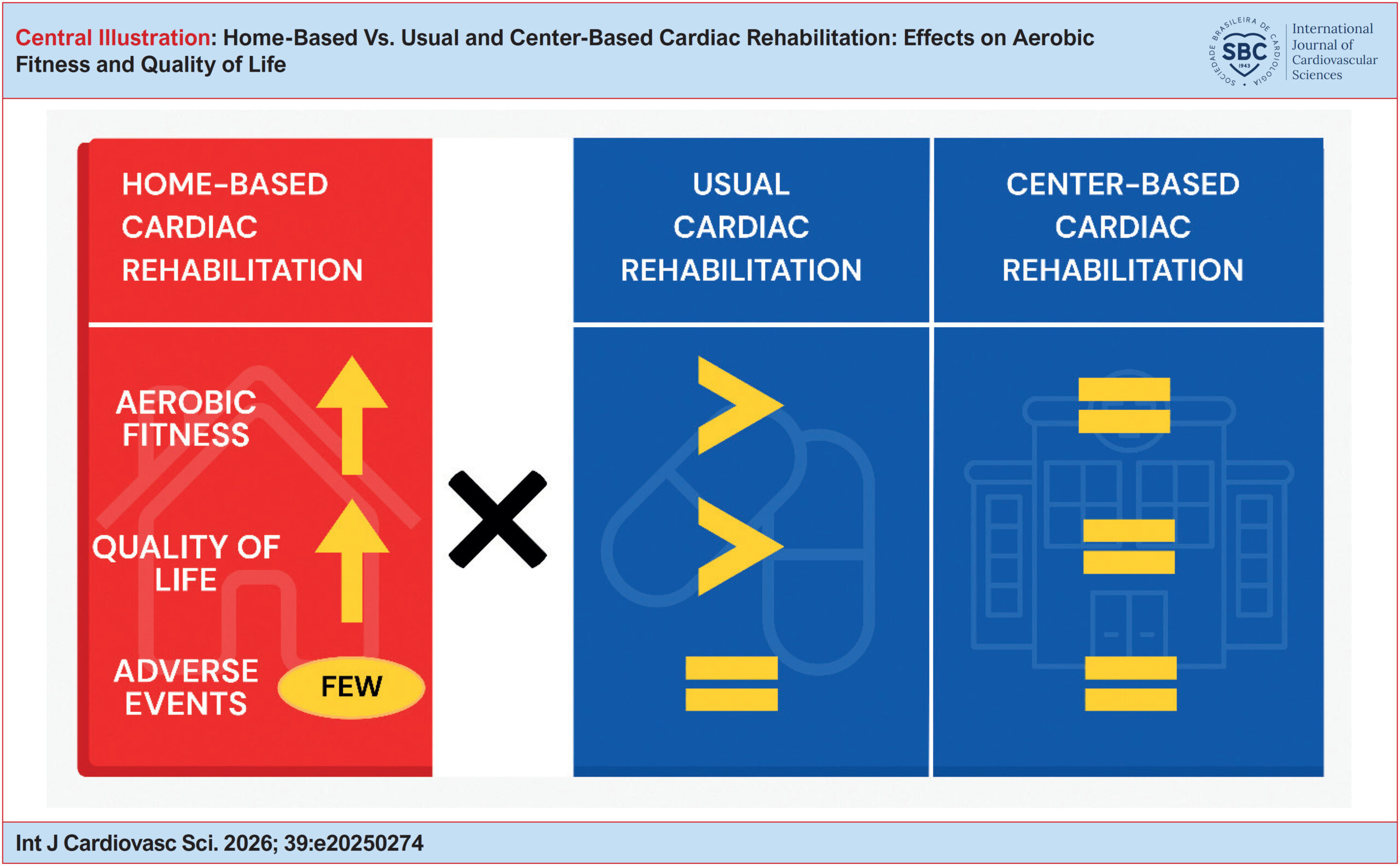
Home-based cardiac rehabilitation has been proposed as an alternative to expand access to treatment for patients with cardiovascular diseases. This systematic review evaluated the effects of home-based cardiac rehabilitation, with emphasis on physical exercise, on aerobic fitness, quality of life, and adverse events compared with usual cardiac rehabilitation and center-based cardiac rehabilitation. A literature search was conducted in the PubMed database, including only randomized controlled clinical trials involving adults and older adults with coronary artery disease or heart failure. Twenty-three studies conducted in different countries were identified; however, none was performed in Brazil. The total sample comprised 2,298 participants, of whom 24% were women. All studies implemented aerobic training, either alone or combined with resistance training, and the vast majority maintained remote contact with participants every one to two weeks. Comparisons between pre- and post-intervention outcomes showed that home-based cardiac rehabilitation improved aerobic fitness and/or quality of life in 22 studies, with greater improvements than those observed with usual cardiac rehabilitation and outcomes comparable to those achieved with center-based cardiac rehabilitation. Furthermore, the incidence of adverse events was low and similar across the three rehabilitation models. Overall, home-based cardiac rehabilitation improves aerobic fitness and quality of life more effectively than usual cardiac rehabilitation and provides benefits comparable to those of center-based cardiac rehabilitation without increasing the risk of adverse events, supporting its use in the treatment of cardiovascular diseases. Nevertheless, the absence of studies conducted in Brazil highlights the need for further research on this rehabilitation model in the Brazilian context.

  • Cardiac Rehabilitation
  • Exercise
  • Quality of life
Read Full Article
Creative Commons Attribution (CC BY) Creative Commons license
21/08/2026 DOI: 10.36660/ijcs.20250274 Views 2
ABC
Letter to the Editor

Technology-Based Cardiac Rehabilitation and Exercise Capacity in Coronary Artery Disease: An Artificial Intelligence Analysis

Benil Nesli Ata

I read with great interest the article by Saklica et al. entitled “The Impact of Technology-Based Cardiac Rehabilitation on Exercise Capacity and Adherence in Patients with Coronary Artery Disease: An Artificial Intelligence Analysis,” recently published in Arquivos Brasileiros de Cardiologia. The study addresses an important and timely topic by examining the potential role of technology-supported cardiac rehabilitation programs and exploring the integration of artificial intelligence (AI)–based analyses in the evaluation of rehabilitation outcomes. Considering the persistent global underutilization of cardiac rehabilitation programs, studies exploring innovative and accessible rehabilitation strategies are of clear clinical importance.

One methodological aspect that warrants further consideration is the assessment of exercise capacity. In the present study, functional improvement was evaluated using the incremental shuttle walk test (ISWT). Although the ISWT is a practical and validated field test frequently used in rehabilitation settings, it remains a submaximal and effort-dependent measure. In patients with coronary artery disease, cardiopulmonary exercise testing (CPET) is generally regarded as the reference standard for evaluating exercise capacity because it provides objective physiological parameters such as peak oxygen uptake and ventilatory thresholds. The inclusion of CPET-derived variables could therefore have offered a more comprehensive evaluation of cardiopulmonary adaptations and strengthened the interpretation of the observed improvements in functional capacity.

[…]

  • Artificial Intelligence
  • Cardiac Rehabilitation
  • Coronary Artery Disease
  • digital health
  • Exercise
Read Full Article
Creative Commons Attribution (CC BY) Creative Commons license
20/07/2026 DOI: 10.36660/abc.20260179i Views 2
Figure 1
ABC
Viewpoint

Beyond Humor: Laughter as a Cardiovascular Stimulus

Ricardo Stein et al. Cleidiane da Silva Andrade Filipe Ferrari

Why Laughter Matters to the Cardiovascular System

Cardiovascular disease (CVD) remains the leading cause of mortality worldwide, despite substantial advances in pharmacological and interventional therapies. In this context, non-pharmacological strategies that are low-cost, scalable, and accessible have attracted growing interest. Laughter therapy (LT), traditionally associated with psychological well-being, has emerged as a potential adjunctive physiological stimulus capable of eliciting measurable cardiovascular responses.–

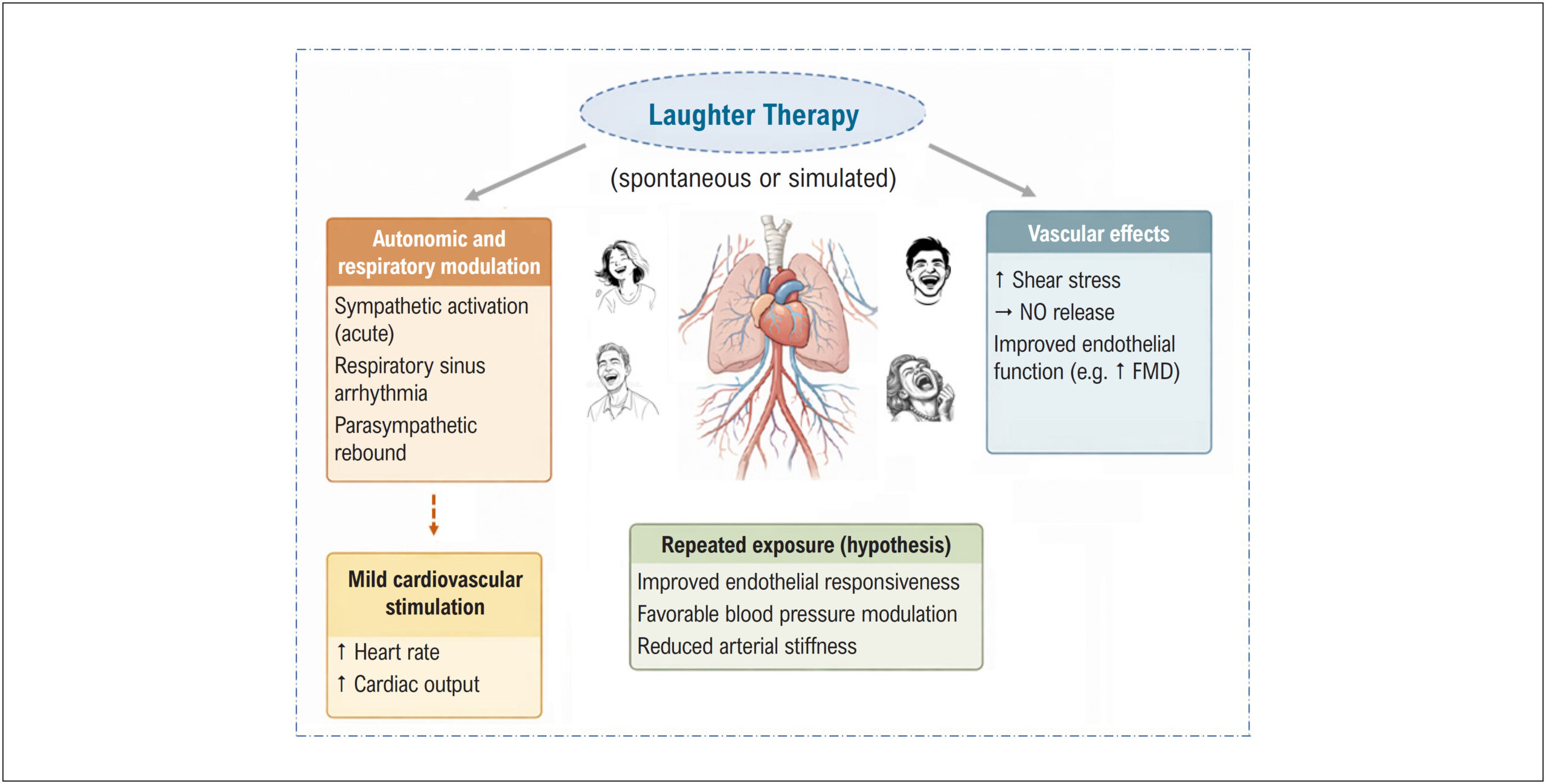
Observational data suggest that individuals with coronary artery disease laugh less frequently and exhibit higher levels of anger and hostility – psychological traits associated with adverse cardiovascular outcomes. Moreover, lower daily laughter frequency has been linked to increased CVD incidence and mortality., While these associations do not establish causality, they raise an important physiological question: can laughter itself act as a meaningful cardiovascular stimulus? The hypothesized physiological pathways through which LT may influence autonomic regulation, hemodynamics, and vascular function are summarized in .

[…]

  • Cardiac Rehabilitation
  • Cardiovascular Diseases
  • Laughter Therapy
Read Full Article
Creative Commons Attribution (CC BY) Creative Commons license
01/06/2026 DOI: 10.36660/abc.20250886i Views 1
Safety and Efficacy of Exercise-based Cardiac Rehabilitation in Patients with Refractory Angina
ABC
Original Article

Safety and Efficacy of Exercise-based Cardiac Rehabilitation in Patients with Refractory Angina

Luciana Oliveira Cascaes Dourado et al. Camila Paixão Jordão Marcelo Luiz Campos Vieira Luis Henrique Wolff Gowdak … Carlos Eduardo Negrão Luiz Antonio Machado Cesar Luciana Diniz Nagem Janot de Matos

Abstract

Background

Evidence on the safety and anti-ischemic effects of exercise-based cardiac rehabilitation (ECR) in patients with refractory angina (RA) remains limited.

Objective

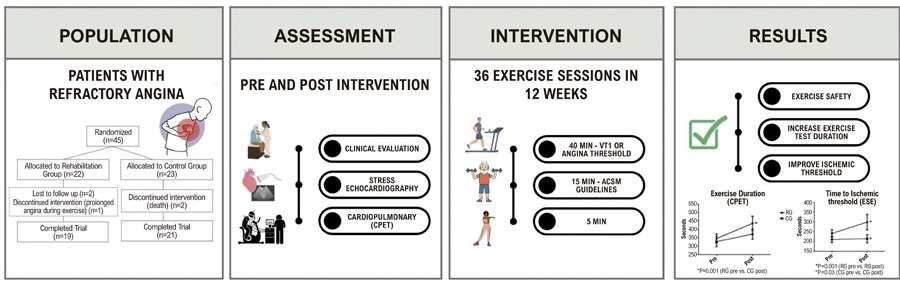
To evaluate the safety and efficacy of a 12-week ECR program in patients with RA, focusing on improvements in symptoms, functional capacity, and ischemic burden assessed by exercise stress echocardiography (ESE).

Methods

This was a prospective, single-center, randomized controlled trial evaluating a 12-week ECR program in patients with RA. Forty-five patients were randomized to either the rehabilitation group (RG), receiving ECR, or the control group (CG), receiving medical treatment (MT) alone. Outcomes included mortality, cardiovascular events, anginal symptoms, and parameters from ESE and cardiopulmonary exercise testing (CPET). Statistical significance was set at p < 0.05.

Results

In ESE, exercise duration was significantly greater in RGpost (after ECR) compared to RGpre (before ECR) (∆ = 63.24 ± 19.87 s; p < 0.01). Angina quantification was lower in RGpost than in RGpre, CGpost (after MT alone), and CGpre (before MT alone) (∆ = –1.64 ± 0.48 n, p < 0.01; –3.10 ± 0.97 n, p < 0.01; and –2.73 ± 0.92 n, p = 0.01, respectively). The angina threshold was higher in RGpost than in RGpre and CGpost (∆ = 89.66 ± 33.16 s, p = 0.04; and 111.76 ± 42.25 s, p = 0.04, respectively). Improvement in ischemic burden on ESE was demonstrated by increased time to ischemic threshold in RGpost compared to RGpre, CGpost, and CGpre (∆ = 83.23 ± 21.84 s, p < 0.01; 98.44 ± 35.11 s, p = 0.03; and 109.34 ± 34.00 s, p < 0.01, respectively). In CPET, RGpost showed increased exercise duration (∆ = 104.54 ± 28.09 s, p < 0.01) and distance covered (∆ = 131.23 ± 30.48 m, p < 0.01) compared to RGpre. No significant differences in VO2 were observed between groups. Two patients in the CG group died. One patient in the RG group experienced prolonged angina during training. No significant differences in major cardiovascular events were observed between groups.

Conclusion

The 12-week ECR-program was safe and effective in improving exercise duration, distance covered and ischemic burden on ESE in patients with RA.

  • angina
  • Cardiac Rehabilitation
  • Myocardial Ischemia
Read Full Article
Creative Commons Attribution (CC BY) Creative Commons license
02/02/2026 DOI: 10.36660/abc.20250331i Views 4
Implementing Cardiac Prehabilitation in Brazil: Building an Evidence-based Framework for Surgical Outcomes
ABC
Review Article

Implementing Cardiac Prehabilitation in Brazil: Building an Evidence-based Framework for Surgical Outcomes

Flavia Mazzoli-Rocha et al. Ricardo Stein Carolin Steinmetz Monika Sadlonova … Audrey Borghi-Silva Thomas Schmidt

Abstract

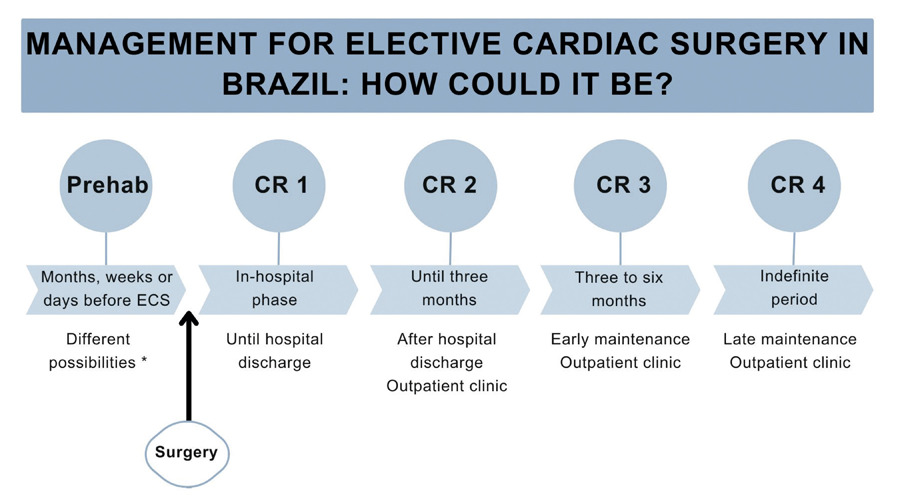
Patients undergoing cardiac surgery often face multiple challenges, including comorbidities, frailty, and psychosocial factors, which complicate recovery. Multimodal prehabilitation programs have emerged as a promising strategy to address these issues, aiming to reduce the length of hospital stay, mitigate pulmonary complications, and enhance functional recovery.

This Review Article examines the components and benefits of a comprehensive cardiac prehabilitation program, with a focus on exercise-based prehabilitation. Additionally, it underscores the importance of integrating prehabilitation into Brazilian clinical guidelines as a valuable preoperative opportunity.

Emerging evidence, albeit of low to moderate quality, suggests that exercise-based prehabilitation, as a unimodal approach or integrating a multimodal program, can significantly improve functional capacity and postoperative outcomes in patients undergoing elective cardiac surgery. International guidelines have already supported cardiac prehabilitation as a valuable approach in this context. Globally, ongoing multicenter intervention trials seek to refine this evidence, pinpointing the ideal patient population and the most effective cardiac prehabilitation program. Given the growing burden of cardiovascular disease in Brazil, there is an unmet need for local research to assess the benefits of prehabilitation in patients undergoing cardiac surgery.

  • Cardiac Rehabilitation
  • Preoperative Exercise
  • Thoracic Surgery
Read Full Article
Creative Commons Attribution (CC BY) Creative Commons license
26/01/2026 DOI: 10.36660/abc.20250377i Views 1
ABC
Editorial

Photobiomodulation Therapy with Cardiac Rehabilitation in HFrEF/HFmrEF: Promise, Parameters, and the Primacy of Exercise

Ricardo Carvalheiro et al. Ana Raquel Santos António Valentim Gonçalves

Exercise intolerance in heart failure (HF) is not solely a central pump problem. Peripheral mechanisms, such as impaired skeletal-muscle oxygen extraction and mitochondrial dysfunction, are major limiting factors and correlate with early fatigue and poorer outcomes. On this basis, low-level light/laser photobiomodulation therapy (PBMT) has attracted interest as an adjunct to rehabilitation: by targeting cytochrome-c oxidase, PBMT may boost mitochondrial ATP generation, modulate redox signaling, and enhance microvascular perfusion.

In this edition, the article by Busin et al. evaluates whether the addition of PBMT to either continuous moderate-intensity training (CMT) or high-intensity interval training (HIIT) augments gains in peak oxygen uptake (VO2peak) and other CPET indices among symptomatic, clinically stable HFrEF/HFmrEF patients. In a non-randomized, five-arm design (CMT, HIIT, CMT+PBMT, HIIT+PBMT, and a control group) with 49 participants, the authors observed significant improvements in exercise tolerance across all intervention groups, but no additional benefit from PBMT on VO2peak, ventilatory efficiency (VE/VCO2 slope), or oxygen uptake efficiency slope (OUES). Numerical trends favored some PBMT arms, yet between-group differences were not statistically significant. The HIIT arms performed particularly well, but PBMT (applied only before sessions and at a modest dose) did not yield additional improvements.

[…]

  • Cardiac Rehabilitation
  • cardiopulmonary exercise testing
  • Heart failure with reduced ejection fraction
  • High-Intensity Interval Training
  • Photobiomodulation Therapy
Read Full Article
Creative Commons Attribution (CC BY) Creative Commons license
19/01/2026 DOI: 10.36660/abc.20250677i
Central Illustration
ABCHF
Original Article

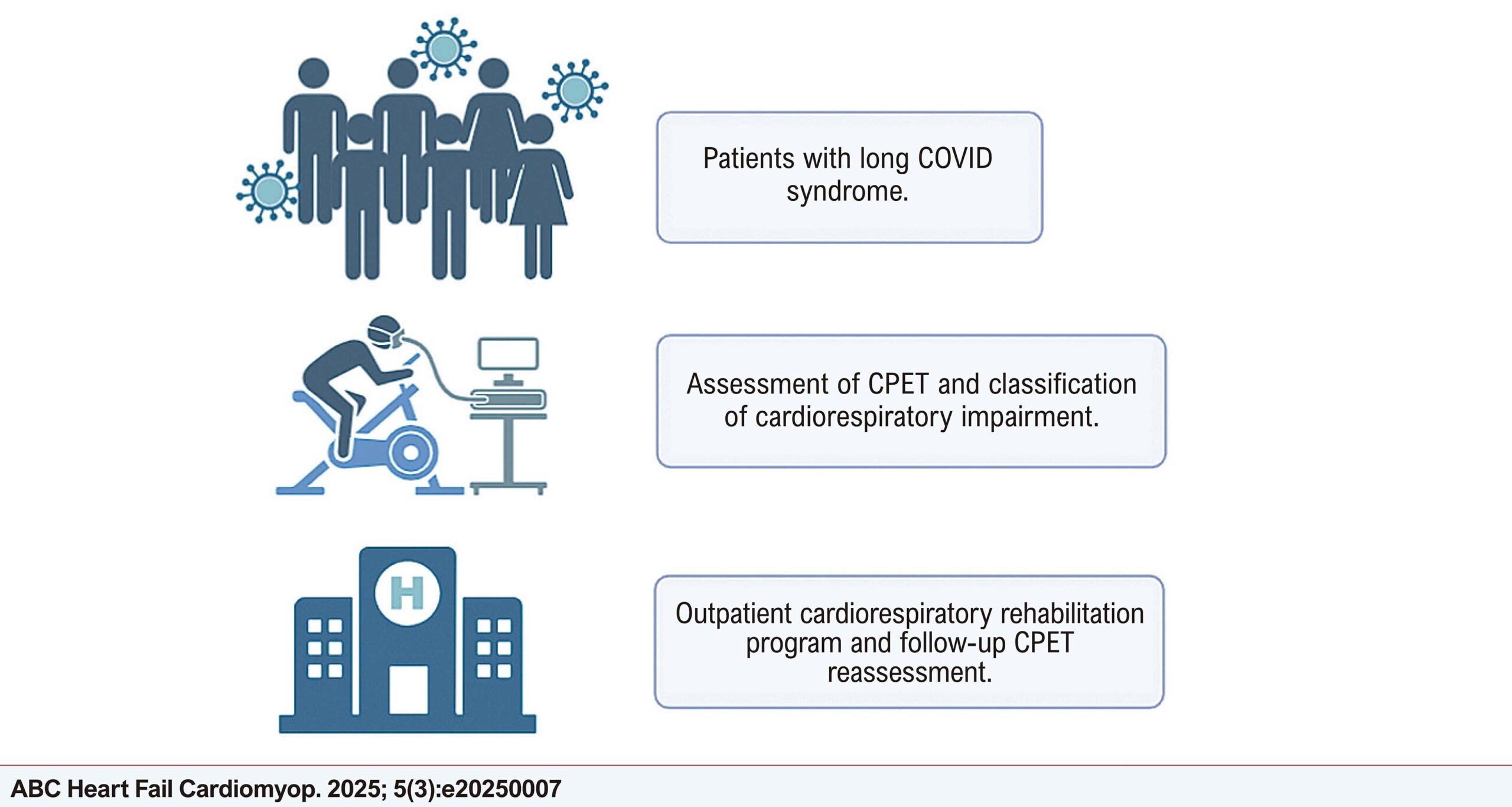
Efficacy of Cardiopulmonary Rehabilitation on Cardiorespiratory Function in Patients with Long COVID Syndrome

Silvia Sarullo et al. Cinzia Nugara Annamaria Lo Voi Antonino Zarcone … Gabriele Di Francesco Sergio Bosco Sergio Carollo Luigi Mazzara Francesco Giallauria Francesco Cappello Filippo M. Sarullo

Abstract

Background

Long COVID syndrome (LCS) refers to persistent sequelae following acute SARS-CoV-2 infection and affects approximately 5%-20% of individuals.

Objective

This study evaluated functional capacity limitations in patients with LCS using cardiopulmonary exercise testing (CPET) and quantified the effects of a structured cardiorespiratory rehabilitation (CR) program.

Methods

In this prospective observational study, 67 outpatients with LCS completed CPET before and after participation in a supervised CR program. At baseline, patients demonstrated reduced functional capacity, including decreased VO2peak (19.47 ± 7.86 mL/kg/min), lower O2 pulse (10.65 ± 3.11 mL/beat), increased VE/VCO2 slope (31.26 ± 7.98), and impaired ventilation (VE = 57.83 ± 17.37%). Most participants either did not achieve the anaerobic threshold (AT) or reached it prematurely, although VO2/work slope values remained within normal limits.

Results

After a median 45-day CR intervention, significant improvements were observed in several parameters: resting heart rate decreased by 8.88% (p < 0.0001), minute ventilation increased by 30.46% (p < 0.0001), VO2peak rose by 18.85% (p < 0.0001), and peak workload increased by 26.82% (p < 0.0001). Additionally, 95% of patients achieved AT following CR, with a 16.21% delay in AT onset (p < 0.0001). The VE/VCO2 slope showed a modest but significant reduction of 4.03% (p = 0.0443).

Conclusions

Exercise-based CR substantially improved functional capacity in patients with LCS, demonstrated by increases in VO2peak, O2 pulse, and ventilatory efficiency. Although these results support CR as a beneficial therapeutic strategy, the underlying pathophysiological mechanisms of LCS remain incompletely understood.

  • Cardiac Rehabilitation
  • exercise capacity
  • Exercise Test
  • Post-Acute COVID-19 Syndrome
Read Full Article
Creative Commons Attribution (CC BY) Creative Commons license
31/12/2025 DOI: 10.36660/abchf.20250007i
Cardiopulmonary Exercise Testing in Heart Failure: Updating the Theory into Clinical Practice
ABCHF
Review Article

Cardiopulmonary Exercise Testing in Heart Failure: Updating the Theory into Clinical Practice

João Manoel Rossi Neto et al. Raphael Machado Rossi Victor B. M. Mattos Plinio J. W. Wolf … Marco Aurelio A. Finger Carolina Casadei dos Santos

Abstract

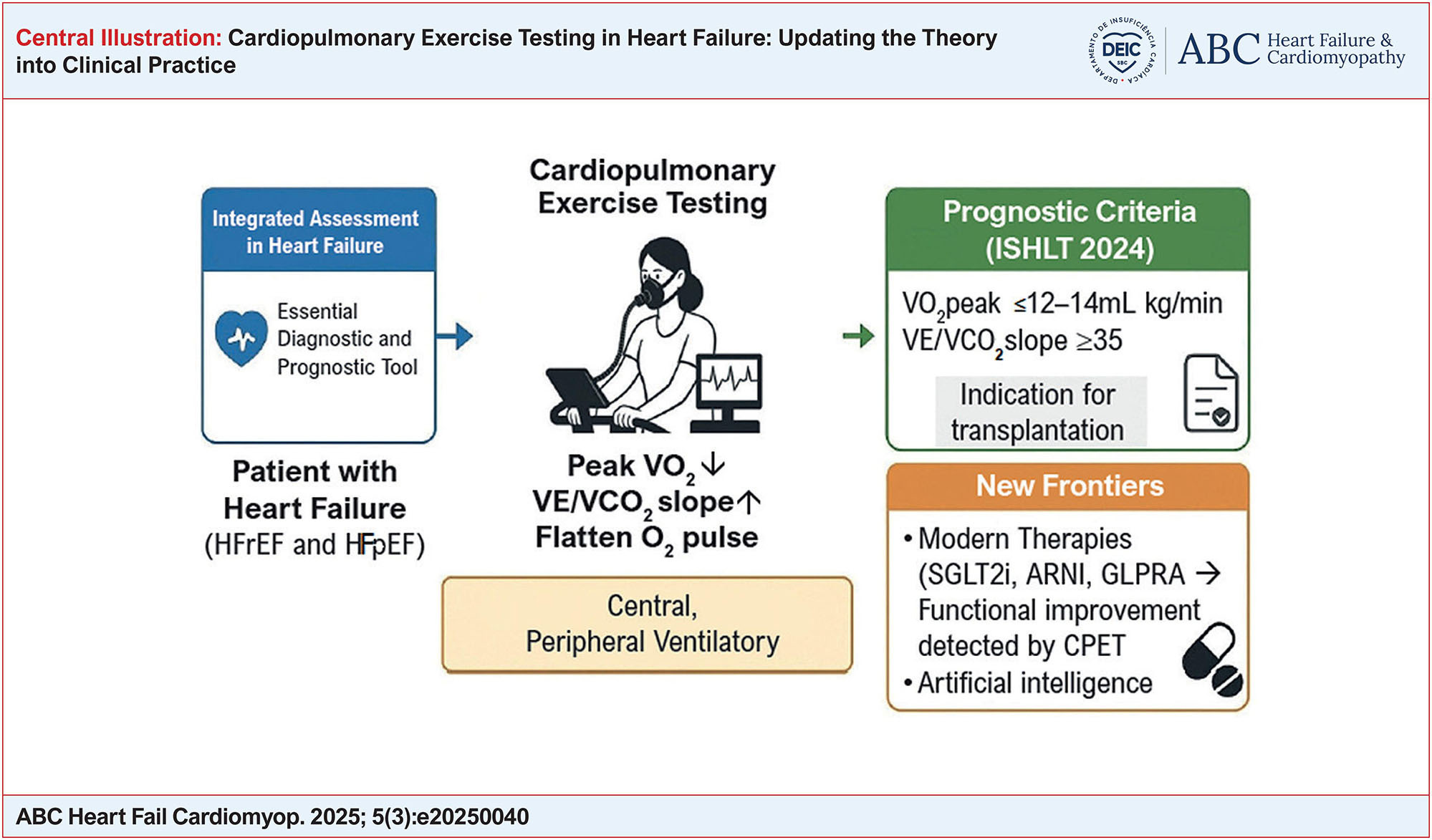
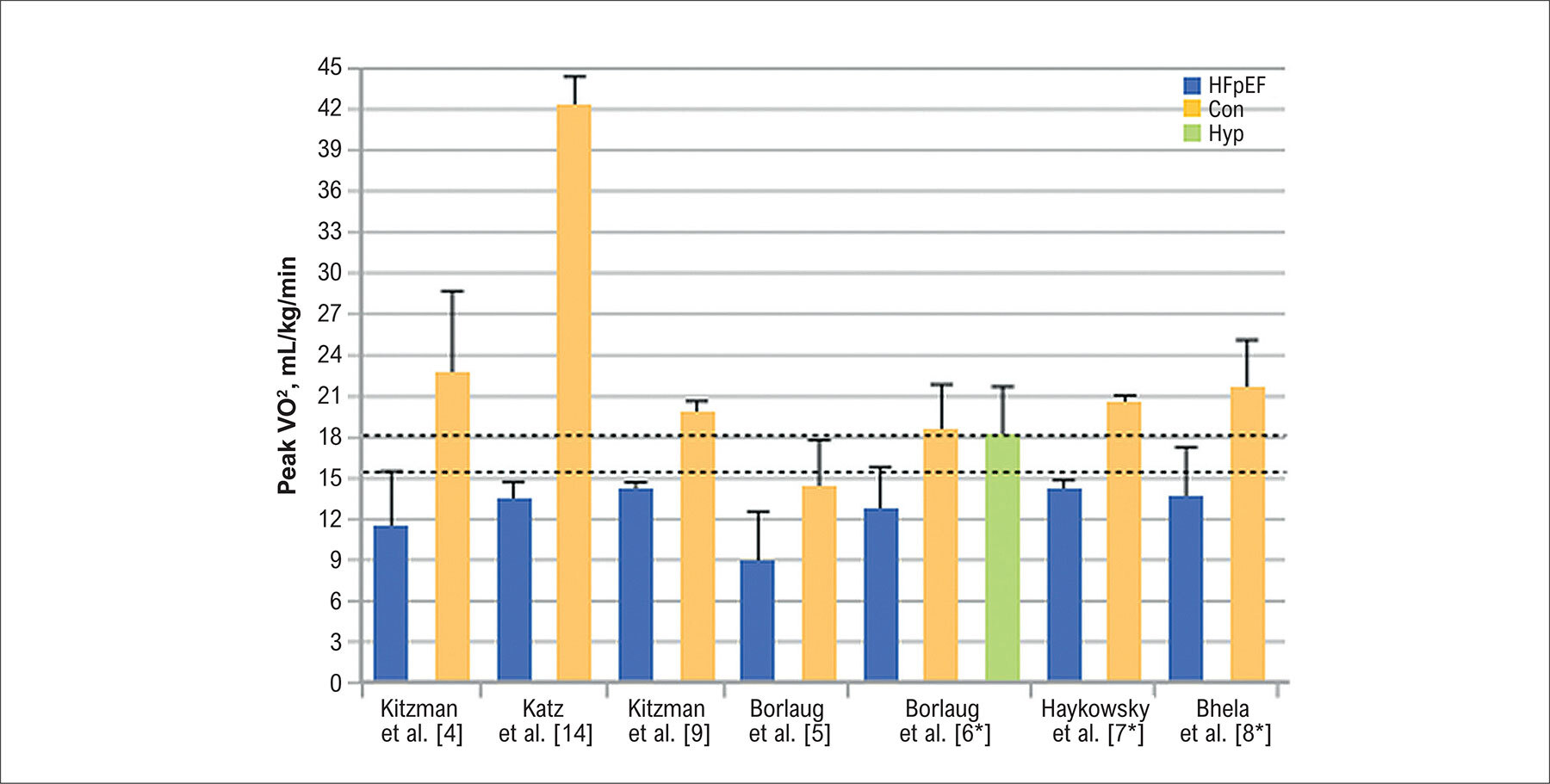
Cardiopulmonary exercise testing (CPET) is a central tool in the functional assessment of heart failure (HF), integrating cardiovascular, ventilatory, and metabolic responses into a single examination. In light of evidence published between 2023 and 2025, its diagnostic and prognostic role has been expanded, incorporating more refined pathophysiological foundations, submaximal parameters, and updated criteria for heart transplantation according to ISHLT 2024. This narrative review, based on studies indexed in PubMed, international consensus statements, and contemporary analyses, addresses the main mechanisms of exercise limitation in HF with reduced ejection fraction (HFrEF) and preserved ejection fraction (HFpEF), as well as the clinical relevance of key CPET variables, including peak VO2, VE/VCO2 slope, OUES, O2 pulse, chronotropic response, and VO2 recovery kinetics.

The body of evidence confirms that the CPET is the most comprehensive tool for characterizing cardiocirculatory, ventilatory, and peripheral limitations, with reduced peak VO2 and elevated VE/VCO2 slope remaining the most robust prognostic markers, even in submaximal tests. Recent studies also demonstrate that emerging therapies — such as SGLT2 inhibitors, ARNIs, and GLP-1 agonists — promote functional benefits detectable by CPET before cardiac structural changes, highlighting its role as a monitor of therapeutic response. Additionally, CPET remains fundamental in risk stratification and transplant decision-making, following the updated thresholds of the ISHLT. Thus, the examination is consolidated as an essential instrument in modern HF practice, integrating diagnosis, prognosis, and therapeutic monitoring, as well as guiding rehabilitation strategies and the selection of advanced therapies.

  • Cardiac Rehabilitation
  • Exercise Test
  • Gas exchange
  • Heart Failure
  • Prognosis
Read Full Article
Creative Commons Attribution (CC BY) Creative Commons license
31/12/2025 DOI: 10.36660/abchf.20250040i Views 2
ABC
Editorial

Adherence and Performance in Cardiac Rehabilitation: The Role of Technological Innovation

Sevda Ece Kizilkilic et al. Juliana Goulart Prata Oliveira Milani Gerson Cipriano Jr. Paul Dendale Mauricio Milani

Cardiac rehabilitation (CR) plays a central role in secondary prevention of coronary artery disease (CAD) and is classified as a Class IA recommendation in guidelines. Yet, despite its proven benefits, participation rates remain disappointingly low. In response, telerehabilitation (TR) has gained attention as a practical alternative that offers similar improvements in clinical outcomes to traditional, center-based programs.

In parallel, artificial intelligence (AI) integration is growing in interest in healthcare due to its potential in different clinical settings. Among the various AI applications, natural language processing (NLP) is increasingly used across medical domains. However, its application in the context of CR to interpret patients’ subjective experiences remains limited.

[…]

  • Cardiac Rehabilitation
  • Telemedicine
Read Full Article
Creative Commons Attribution (CC BY) Creative Commons license
28/07/2025 DOI: 10.36660/abc.20250337i Views 1
The Impact of Technology-Based Cardiac Rehabilitation on Exercise Capacity and Adherence in Patients with Coronary Artery Disease: An Artificial Intelligence Analysis
ABC
Original Article

The Impact of Technology-Based Cardiac Rehabilitation on Exercise Capacity and Adherence in Patients with Coronary Artery Disease: An Artificial Intelligence Analysis

Dilara Saklica et al. Naciye Vardar-Yagli Melda Saglam Deniz Yuce … Ahmet Hakan Ates Hikmet Yorgun

Abstract

Background

Exercise training programs improve exercise capacity and quality of life (QoL) in patients with coronary artery disease (CAD). Although artificial intelligence (AI) has been used to design such programs, there are still few studies evaluating their effectiveness.

Objectives

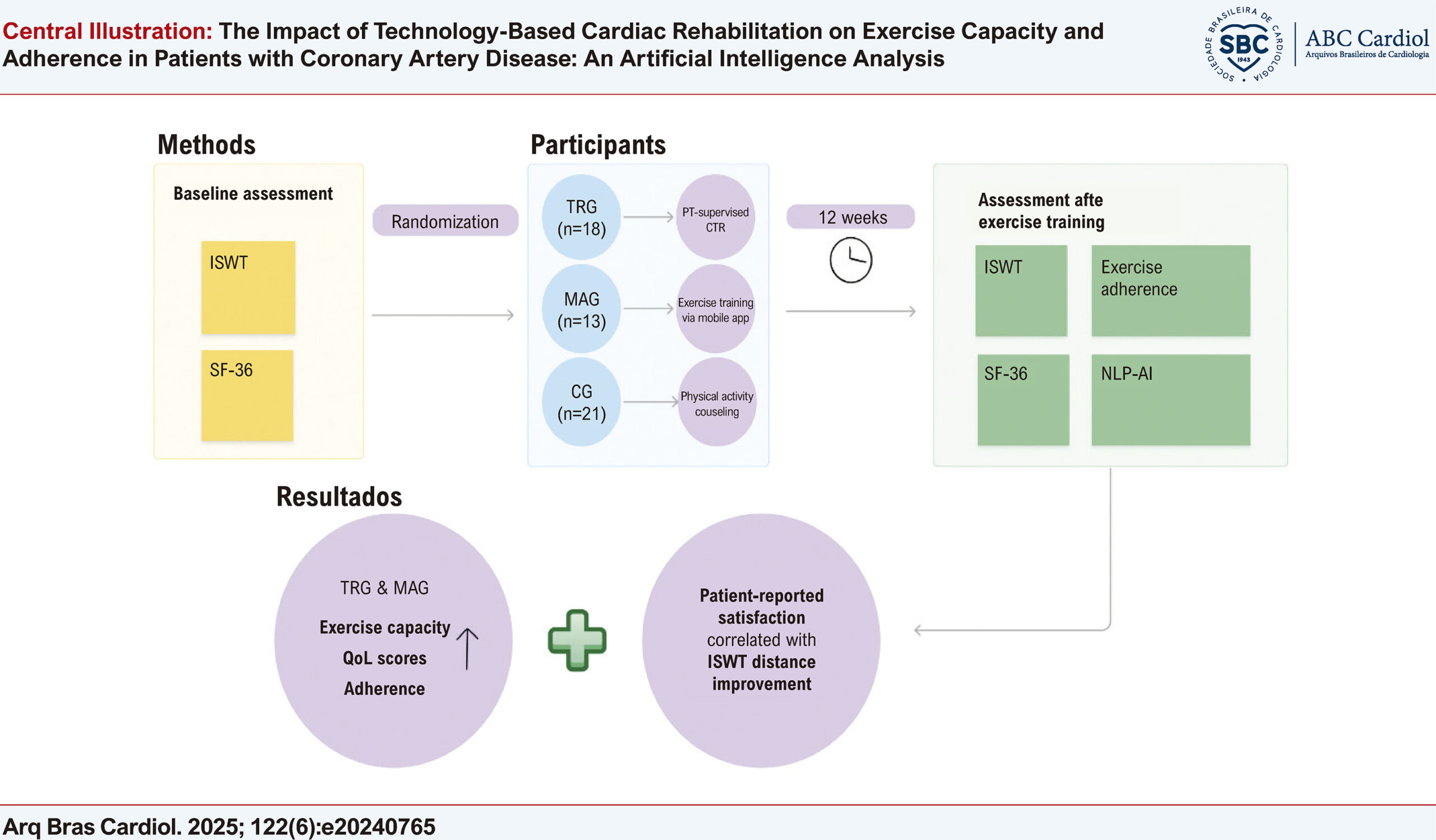
This study compared the effects of technology-based and traditional programs for cardiac rehabilitation (CR) on exercise capacity and participation in patients with CAD using AI for data analysis.

Methods

A total of 52 patients with CAD were randomly assigned to three groups: i) telerehabilitation group (TRG) (n=18); ii) mobile application group (MAG) (n=13); and iii) control group (CG), which received only physical activity recommendations (n=21). TRG and MAG participants completed a 12-week program with calisthenic and resistance exercises three times a week. Exercise capacity was assessed using the Incremental Shuttle Walk Test (ISWT), and QoL was measured with the Short Form-36 (SF-36). Patient feedback was analyzed using a fine-tuned BERT-based natural language processing (NLP) model. Anomaly detection methods were applied to find mismatches between self-reported adherence and ISWT results. Statistical significance was set at p<0.05.

Results

Both TRG [44.4% female] (Δ=87.2±15.2 m) and MAG [50% female] (Δ=89.4±70.4 m) had significant ISWT improvements compared to CG [47.6% female] (Δ=10.9±28.2 m) (p=0.001). Adherence was higher in TRG (100%) and MAG (80%) than in CG (30%) (p<0.001). Patient-reported satisfaction, analyzed via NLP, showed a significant positive correlation with ISWT improvements (r=0.75, p<0.001). Findings show the potential of AI to support outcome assessment in CR.

Conclusions

Technology-based CR programs improve exercise capacity and adherence in patients with CAD, supporting the use of AI-driven tools. NLP analysis helped link patient feedback to exercise outcomes and detect inconsistencies, showing its value in enhancing CR evaluation.

  • Artificial Intelligence
  • Cardiac Rehabilitation
  • Coronary Artery Disease
  • Exercise
Read Full Article
Creative Commons Attribution (CC BY) Creative Commons license
06/06/2025 DOI: 10.36660/abc.20240765i Views 1
Cardiovascular Telerehabilitation: An Alternative for Greater Availability of Cardiovascular and Metabolic Rehabilitation in Brazil
ABC
Viewpoint

Cardiovascular Telerehabilitation: An Alternative for Greater Availability of Cardiovascular and Metabolic Rehabilitation in Brazil

Artur Haddad Herdy et al. Ariella Sebastião Mangia Magnus Benetti

Cardiovascular telerehabilitation – concept

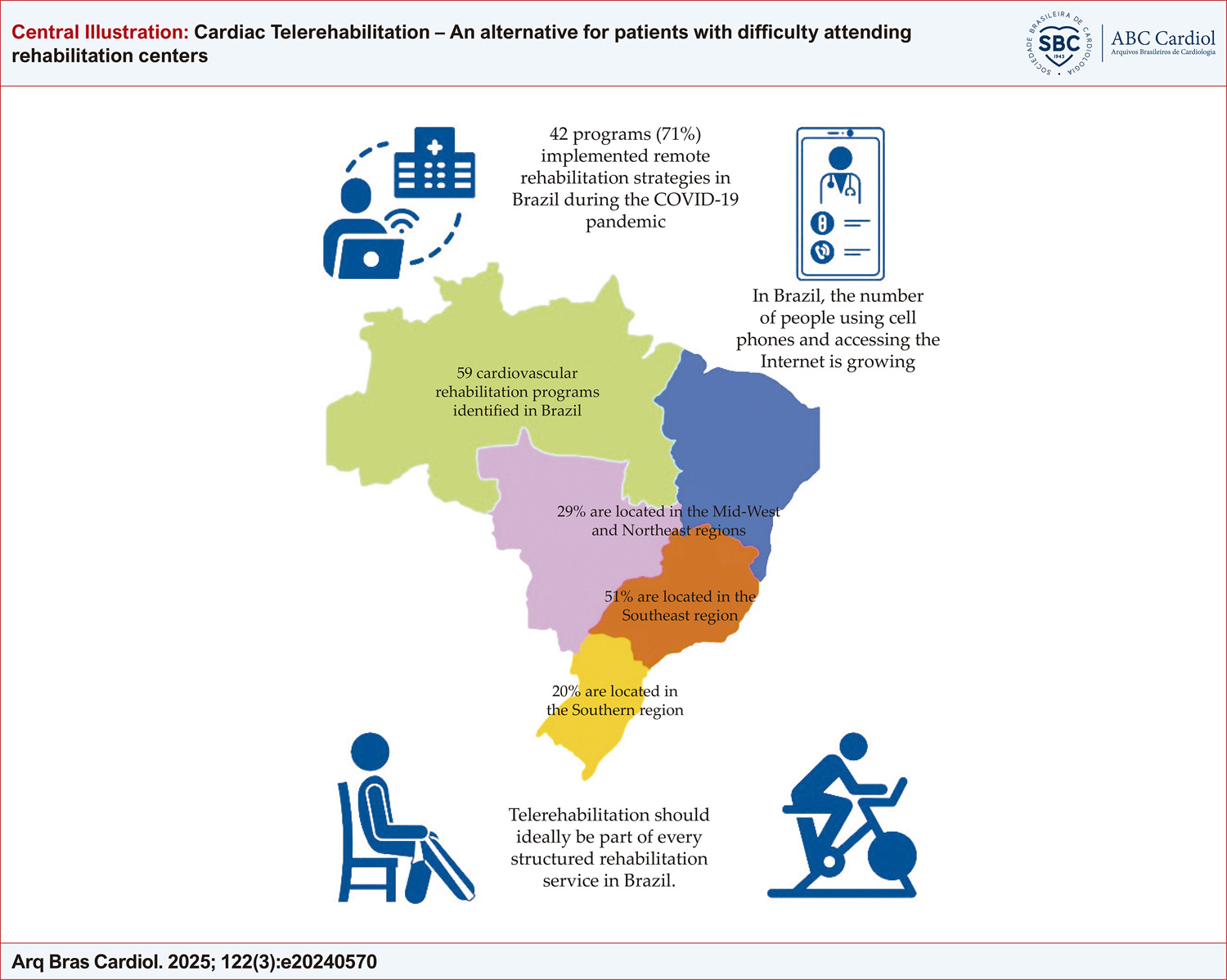
CTR is a program that comprises one or more components of traditional CVR, commonly offered in CVR programs at home or outside a hospital/specialized center environment; it is delivered through digital technology (telemonitoring, e-learning, telecoaching).

Its objective is to manage CVD and improve different physical, emotional, psychological, and social aspects of patients, especially those located in areas with low levels of access, whether due to their place of residence or difficulty in accessing advanced care.,

[…]

  • Cardiac Rehabilitation
  • Cardiovascular Diseases
  • COVID-19
  • Telemonitoring
  • Telerehabilitation
Read Full Article
Creative Commons Attribution (CC BY) Creative Commons license
07/04/2025 DOI: 10.36660/abc.20240570i
IJCS
Editorial

HFrEF, HFmrEF, and HFpEF: Are They a Continuum or Different Faces of a Syndrome?

Even Edilce Mol et al. Camila Hartmann Lídia Ana Zytynski Moura

Heart failure (HF) is a significant and growing public health problem. Recent projections have shown that the prevalence of HF in the United States will increase by 46% between 2012 and 2030. This is driven by an increase in the life expectancy of the population combined with a reduction in mortality from the disease resulting from advances in therapies in recent years.

Of all the classifications of HF, the most used one is based on left ventricular ejection fraction (LVEF), which is categorized into three groups: HF with preserved ejection fraction (HFpEF) (LVEF ≥50%), HF with reduced ejection fraction (HFrEF) (LVEF ≤40%), and HF with moderate or mildly reduced ejection fraction (HFmrEF) (LVEF 41–49%). Although the prognosis appears to be similar among HF subtypes based on ejection fraction, , there are differences between the groups in terms of clinical-epidemiologic profile and functional capacity.

[…]

  • Cardiac Rehabilitation
  • Heart Failure
  • Stroke Volume
Read Full Article
Creative Commons Attribution (CC BY) Creative Commons license
07/06/2024 DOI: 10.36660/ijcs.20240048
Figure 1
ABC
Case Report

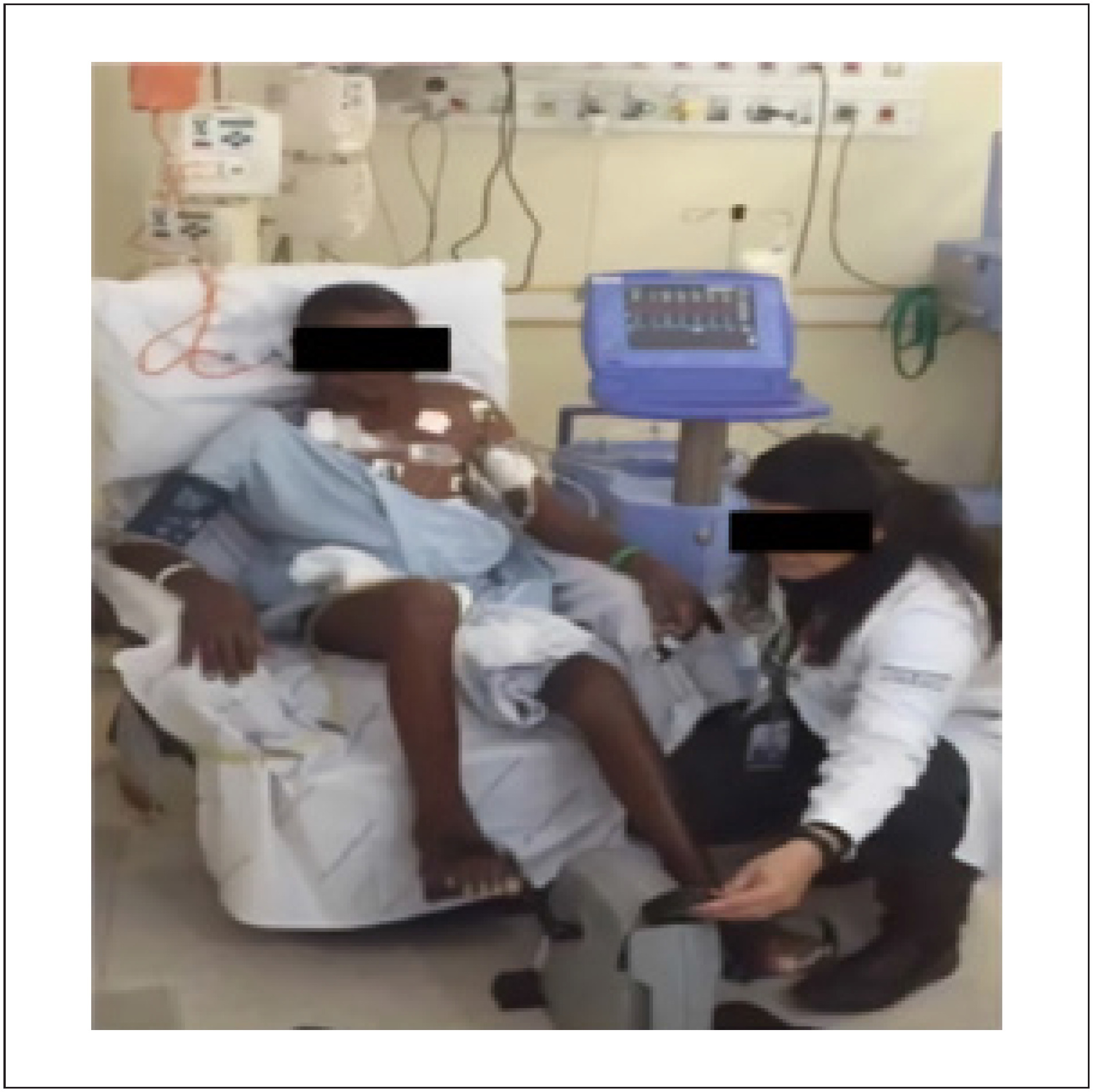
The Effects of Exercise on Cardiogenic Shock with an Intra-Aortic Balloon Pump: A Case Report

Vanessa M. Ferreira et al. Dayane Nunes Rodrigues Carlos Alberto Mendez Contreras João M. Rossi … Rui Fernando Ramos Gustavo Oliveira Mayron F. Oliveira

Abstract

This case report describes the exercise program on a hospitalized 54-year-old male patient with cardiogenic shock waiting for a heart transplant assisted by an intra-aortic balloon pump, a temporary mechanical circulatory support device.

The temporary mechanical circulatory support device, an intra-aortic balloon pump, was placed in the left subclavian artery, enabling the exercise protocol. Measurements and values from Swan-Ganz catheter, blood sample, brain natriuretic peptide (NT-proBNP), and high-sensitivity C-reactive protein (hs-CRP), as well as the six-minute walk test (6MWT) and venous oxygen saturation (SvO2) were obtained before and after an exercise protocol. The exercise training protocol involved the use of an unloaded bed cycle ergometer once a day, for a maximum of 30 minutes, to the tolerance limit.

No adverse events or events related to the dislocation of the intra-aortic balloon pump were observed during the exercise protocol. The exercise program resulted in higher SvO2 levels, with an increased 6MWT with lower Borg dyspnea scores (312 meters vs. 488 meters and five points vs. three points, respectively). After completing the ten-day exercise protocol, the patient underwent a non-complicated heart transplant surgery and a full recovery in the ICU.

This study showed that exercise is a feasible option for patients with cardiogenic shock who are using an intra-aortic balloon pump and that it is well-tolerated with no reported adverse events.

  • Cardiac Rehabilitation
  • Cardiogenic shock
  • Exercise
  • Intra-Aortic Balloon Pumping
  • physical therapy modalities
Read Full Article
Creative Commons Attribution (CC BY) Creative Commons license
18/03/2024 DOI: 10.36660/abc.20230537 Views 1
ABC
Editorial

The Right Way to Identify Bad Cardiorespiratory Fitness: Look to the Right

Willian R. Menegazzo et al. Anderson Donelli da Silveira

The right ventricle (RV), previously known as the forgotten ventricle, is progressively gaining attention as a strong indicator of poorer prognosis in heart disease., Besides prognostic implications, RV dysfunction is associated with worse cardiorespiratory fitness (CRF), independently of other anatomic and functional variables., Unfortunately, the current treatment strategies for RV failure do not confer the same clinical and prognostic benefits of the left ventricle (LV) failure,, which limits its management and warrants new treatment strategies.

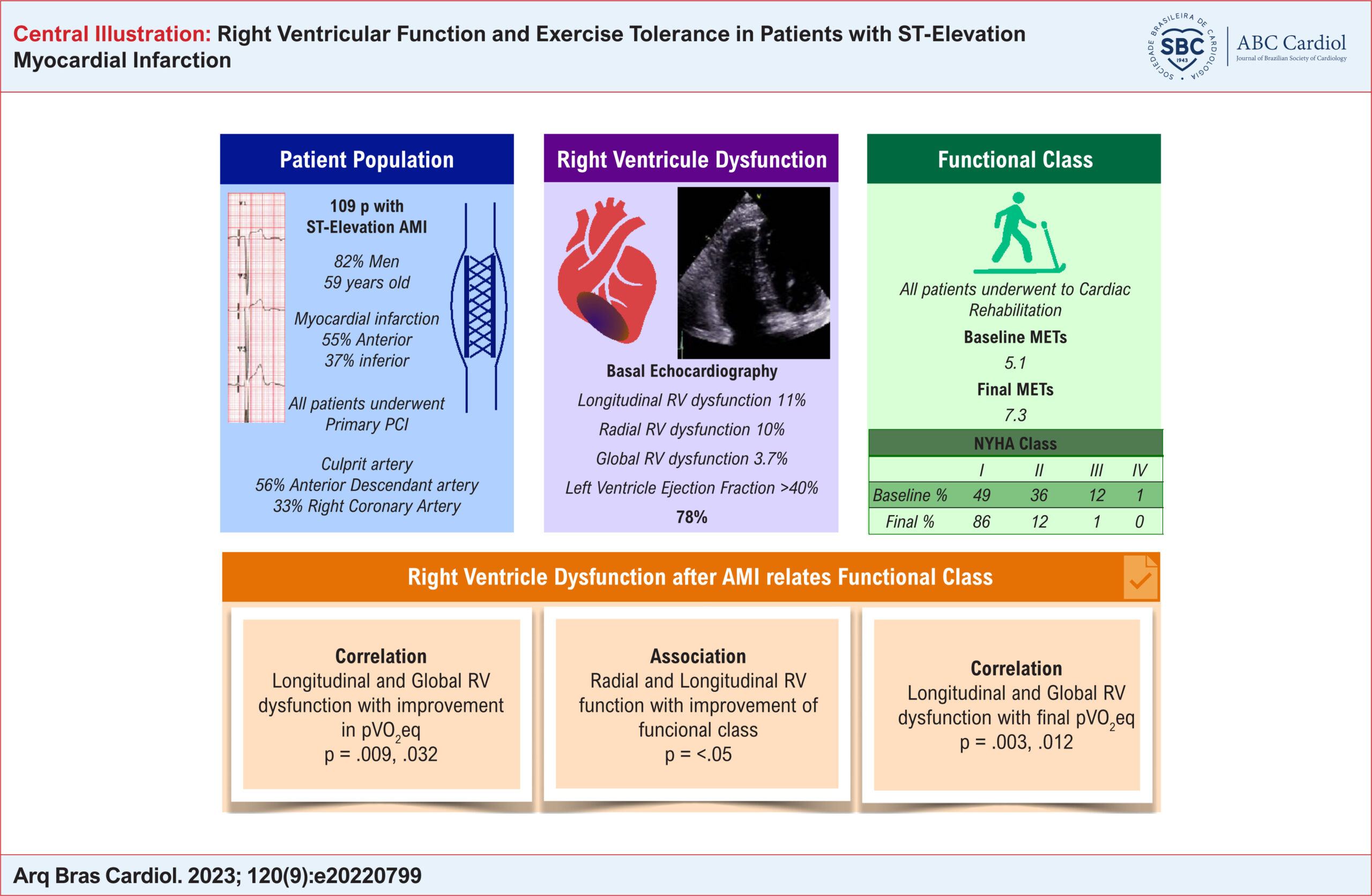
Ramirez et al. accessed this important topic by studying the RV function on 109 patients with ST-elevation myocardial (STEMI), its association with CRF, and its improvement after cardiac rehabilitation (CR) in a single center in Monterrey, Mexico. Their primary goal was to evaluate the association between RV function and CRF in this population, and the secondary objectives were to analyze the CRF before and after a program of CR in patients with or without RV dysfunction. They evaluated exercise tolerance through cardiopulmonary exercise testing and RV longitudinal function through echocardiographic measurement of the S’ Doppler wave of the tricuspid annulus and the tricuspid annular posterior systolic excursion and RV radial function through RV fractional area change. The population was mainly male gender (83%), with anterior STEMI (55%), median LV ejection fraction of 49%, and normal RV function (90%). They have shown an association and correlation between RV radial and longitudinal dysfunction and CRF before and after CR. The main finding is that RV dysfunction evaluated after STEMI and before CR, being radial or longitudinal, was associated with a lack of improvement of at least 1 Metabolic Equivalent Task after a program of CR (p = 0.028 for RV radial dysfunction and p = 0.008 for RV longitudinal dysfunction). The authors concluded that RV dysfunction in STEMI patients is associated and correlated with poorer exercise capacity and functional class before CR and that CR improved CRF. This helps to identify a subgroup of patients with a higher risk of being symptomatic, with a worse prognosis and possibly better candidates for CR.

[…]

  • Cardiac Rehabilitation
  • Cardiorespiratory Fitness
  • Echocardiography, Doppler/methods
  • Exercise Test/methods
  • Myocardial Infarction
  • Ventricular Dysfunction Right
Read Full Article
Creative Commons Attribution (CC BY) Creative Commons license
27/10/2023 DOI: 10.36660/abc.20230630
Figure 1
ABC
Research Letter

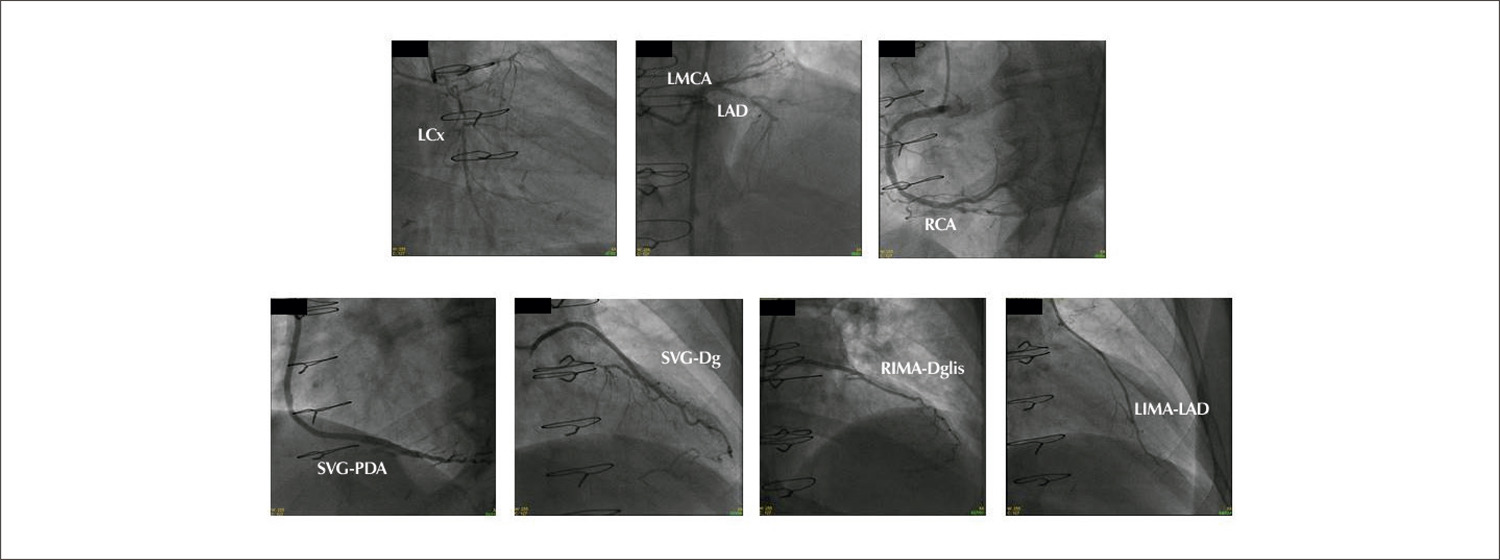
In the Cardiac Rehabilitation Era, is There a “No-Option” Refractory Angina Patient?: A Case Report

Luciana Oliveira Cascaes Dourado et al. Camila Paixão Jordão Camila Regina Alves Assumpção Luciana Diniz Nagem Janot de Matos

Abstract

Exercise-based cardiac rehabilitation, an effective and safe adjuvant treatment recommended to patients with coronary artery disease, is scarcely applied to patients with refractory angina (RA) due to difficulties related to safety, trainning prescription and their clinical management. This case report presents an instance of a “no-option” patient with RA, who was included in a 12-week exercise program, in sessions consisted of 40 minutes of treadmill aerobic exercise, three times a week, and intensity prescribed between ischemic/angina threshold and ventilatory threshold 1, obtained in the cardiopulmonary exercise test; mild to moderate angina was allowed during training. Furthermore, 15 minutes of moderate-intensity resistance training (large group muscle exercises, two sets of 8 to 12 repetitions) was performed. At the end of the protocol, the patient presented an important improvement in functional performance (VO 2 peak 17.0 ml/kg/min to 27.3 ml/kg/min), angina threshold (HR 68 bpm to 95 bpm), and intensity chest pain (levels 7 to 5) with no clinical adverse events during the period. Exercise-based cardiac rehabilitation was safe, even in the occurrence of angina/ischemia during training, according to tolerability to symptoms and other warning clinical signs.

  • Angina Pectoris
  • Cardiac Rehabilitation
  • Exercise
Read Full Article
Creative Commons Attribution (CC BY) Creative Commons license
23/10/2023 DOI: 10.36660/abc.20230007 Views 1
Aerobic Exercise Prescription in Cardiac Rehabilitation Based on Heart Rate from Talk Test Stages and 6-Minute Walk Test
ABC
Original Article

Aerobic Exercise Prescription in Cardiac Rehabilitation Based on Heart Rate from Talk Test Stages and 6-Minute Walk Test

Amanda Althoff et al. Ariany Marques Vieira Lucas Santos da Silveira Magnus Benetti Marlus Karsten

Abstract

Background

Although the Talk Test (TT) is a reliable and low-cost test, its use for aerobic exercise prescription is still limited.

Objective

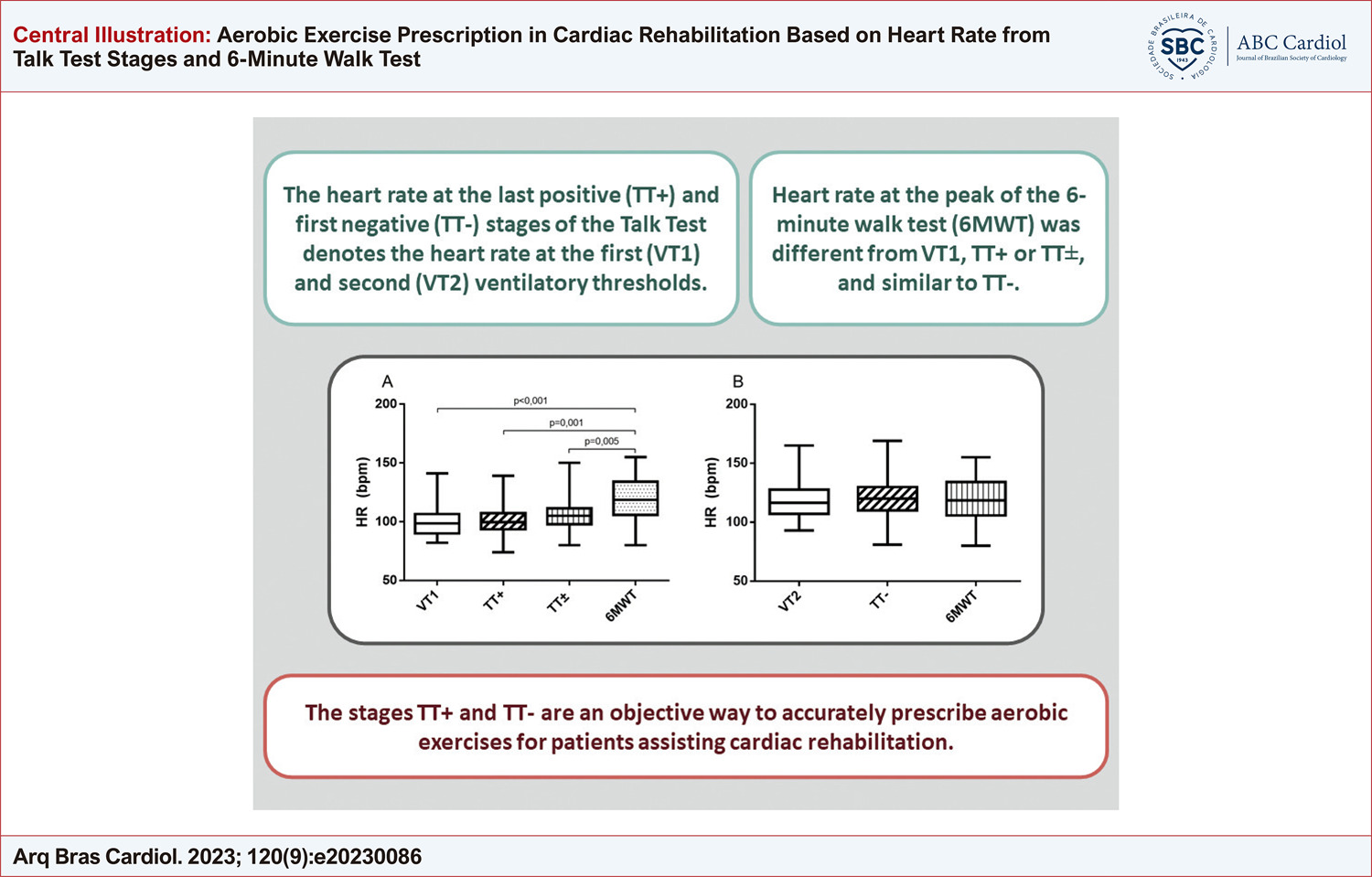
To analyze the heart rate (HR) in the stages of the TT and at the peak of the 6-minute walk test (6MWT) as a parameter to prescribe aerobic exercise compared with HR at the first and second ventilatory thresholds (VT1 and VT2) of cardiopulmonary exercise test (CPET).

Methods

Individuals with cardiovascular disease attended three assessment days: 1) anamnesis and CPET; 2) 6MWT; and 3) TT. One-way repeated measures ANOVA or Friedman’s test were used to compare HR at VT1 and VT2 with HR at TT stages: last positive (TT+), first equivocal (TT±), and negative (TT−), and at the peak of the 6MWT. Pearson’s or Spearman’s test assessed correlations between HR at VTs, TT stages, and 6MWT. Statistical significance was set at 5%.

Results

The study included 22 cardiac patients (13 men, 61 ± 8 years). HR at VT1 was similar to HR at TT+ (p = 0.987) and TT± (p = 0.154), and moderately correlated with TT+ (r = 0.479, p = 0.024). HR at VT2 was similar to TT− (p = 0.383), with a strong correlation (r = 0.757, p < 0.001). HR at the peak of the 6MWT was significantly different from HR at TT+, TT±, and VT1 (p = 0.001, p = 0.005, and p < 0.001, respectively) but similar to TT− (p = 0.68).

Conclusions

HR at TT+ and TT− reflect HR at VT1 and VT2, respectively, differently from 6MWT, which was similar only to VT2. TT may be an objective test to assist aerobic exercise prescription in cardiac rehabilitation.

  • Cardiac Rehabilitation
  • Exercise
  • Talk Test
Read Full Article
Creative Commons Attribution (CC BY) Creative Commons license
09/10/2023 DOI: 10.36660/abc.20230086 Views 2
Right Ventricular Function and Exercise Tolerance in Patients with ST-Elevation Myocardial Infarction
ABC
Original Article

Right Ventricular Function and Exercise Tolerance in Patients with ST-Elevation Myocardial Infarction

Denisse Guzman-Ramirez et al. Anival Trujillo-Garcia Meredith Lopez-Rincon Roxella Botello Lopez

Introduction

Right ventricle (RV) dysfunction has a prevalence of 10% in anterior myocardial infarctions and up to 50% in inferior myocardial infarctions. It is responsible for cardiogenic shock secondary to an acute coronary syndrome in 5% of cases. In patients with myocardial infarction, RV dysfunction is an important prognostic factor of mortality, ventricular arrhythmias, mechanical complications, cardiogenic shock, stent thrombosis, and increased in-hospital and one-year mortality. –

Tajima et al. investigated RV function, its association with exercise tolerance, and the efficacy of phase II cardiac rehabilitation (CR) in patients with ischemic heart disease. RV dysfunction was significantly associated with reduced exercise tolerance by 9% before rehabilitation. However, CR was effective in these patients.

[…]

  • Cardiac Rehabilitation
  • Echocardiography
  • ST Elevation Myocardial Infarction
  • Ventricular Function
Read Full Article
Creative Commons Attribution (CC BY) Creative Commons license
08/09/2023 DOI: 10.36660/abc.20220799 Views 1
Figure 1
IJCS
Original Article

Home-based Virtual Reality Exercise Program During the Maintenance Stage of Cardiac Rehabilitation: A Randomized Controlled Trial

Ágata Vieira et al. Cristina Melo Andreia Noites Jorge Machado Joaquim Mendes

Abstract

Background:

Home-based virtual reality technology may become an alternative to cardiac rehabilitation.

Objectives:

To evaluate the effects of a specific, home-based exercise program, performed either through a virtual reality (Kinect) or a conventional format (booklet) in the maintenance stage of cardiac rehabilitation for six months on functional muscle strength of the lower limbs, physical activity and exercise tolerance.

Methodology:

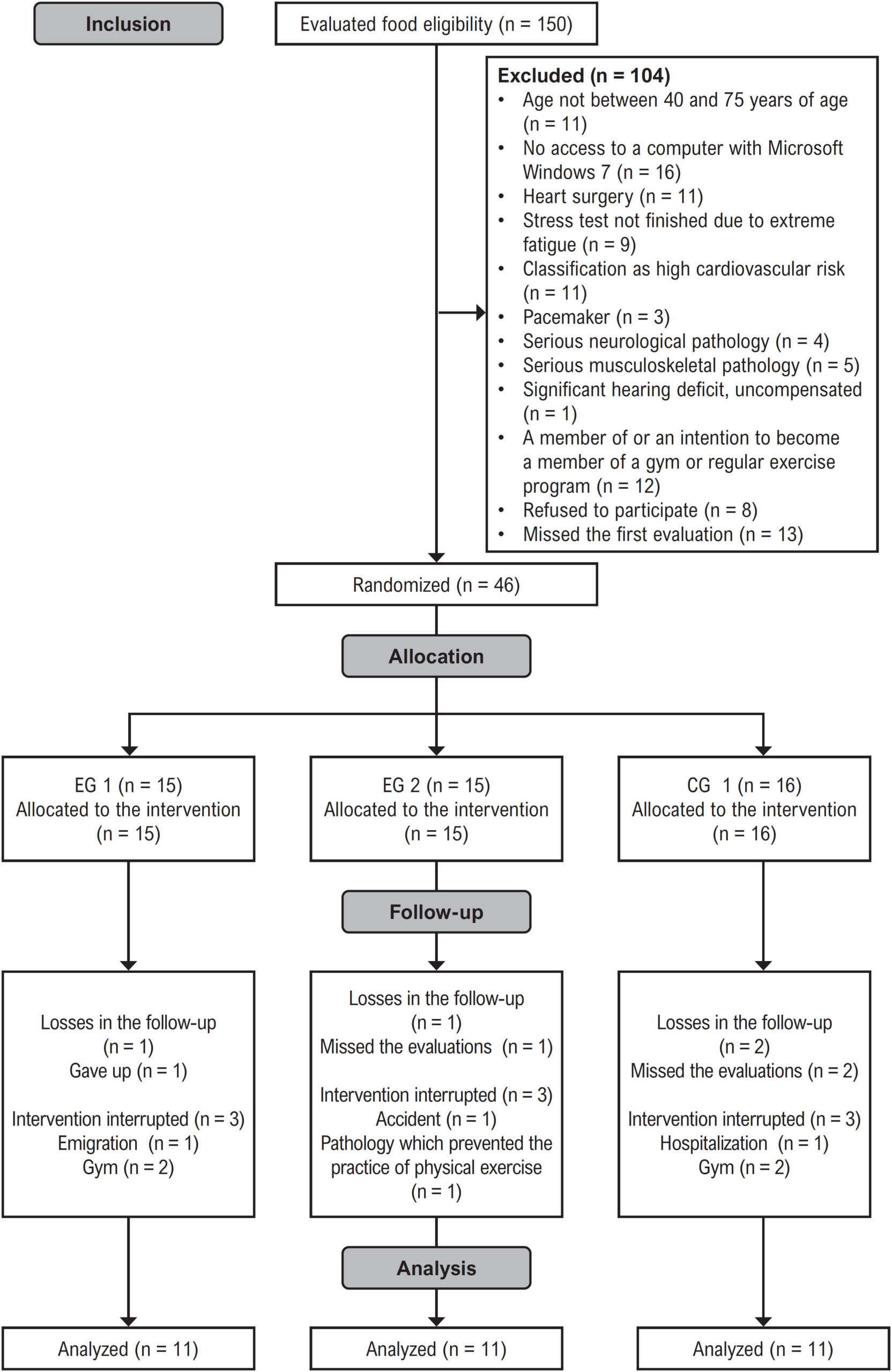
This is a randomized clinical trial (ClinicalTrials.gov — NCT02753829) with individuals with coronary artery disease from a hospital in Porto, Portugal, randomly allocated to an experimental group “1” (EG1; n = 11), submitted to a virtual reality exercise program (Kinect); an experimental group “2” (EG2; n = 11), submitted to an exercise program described in a booklet (conventional format); or a control group (CG) (n=11), submitted to routine care. Parameters of functional muscle strength of the lower limbs (sit-to-stand test), physical activity (accelerometer) and exercise tolerance (stress test) were assessed and compared between the groups. Descriptive and inferential statistics were applied, with 95% with a significance level of 0.05.

Results:

Significant improvements in functional muscle strength of the lower limbs were observed in EG1 compared to EG2, at three months (19.5 ± 7.7 versus 11.9 ± 4.7, p = 0.042), and at six months (23.0 ± 7.7 versus 14.6 ± 4.6, p = 0.027) of intervention.

Conclusions:

The program did not demonstrate superior results, in relation to the control group and among the different formats, in physical activity and effort tolerance. In relation to the functional muscle strength of the lower limbs, the virtual reality format showed significantly better results when compared to the conventional format only.

  • Cardiac Rehabilitation
  • Coronary Disease
  • Exercise
  • Technology
Read Full Article
Creative Commons Attribution (CC BY) Creative Commons license
28/08/2023 DOI: 10.36660/ijcs.20190177 Views 2
ABC
Research Letter

Cardiac Rehabilitation in a Transplanted Person with Emery-Dreifuss Muscular Dystrophy

Maria Loureiro et al. Carlos Branco João Duarte Gonçalo Coutinho … Maria Manuela Martins André Novo

Abstract

Emery-Dreifuss muscular dystrophy is a rare hereditary neuromuscular disease. Its manifestations begin primarily in childhood. The most frequent manifestations are progressive muscle weakness, atrophy that usually begins in the scapula-vertebral region, extending later to the pelvic girdle, and spinal stiffness. Patients can also manifest cardiac involvement as palpitations, syncope, exercise intolerance, congestive heart failure, and variable heart rhythm disturbances. – The presence and severity of these manifestations can vary according to the individual and the disease’s subtypes. Cardiac involvement is the most worrisome feature of this disease, and there are some reports of the need for heart transplantation in this dystrophy.

  • Cardiac Rehabilitation
  • Emery-Dreifuss Muscular Dystrophy
  • Heart Transplant
Read Full Article
Creative Commons Attribution (CC BY) Creative Commons license
17/07/2023 DOI: 10.36660/abc.20220560 Views 1
ABC
Editorial

Exercise-Based Cardiac Rehabilitation (ECBR): New Frontiers in the Post-Novel Coronavirus

Rosane Maria Nery et al. Antonio Cardoso dos Santos Eduardo Lima Garcia

The coronavirus disease 2019 (COVID-19) pandemic, in addition to physical, emotional, and social repercussions, has generated important changes in non-pharmacological measures to aid in treating patients with heart disease, such as Exercise-Based Cardiac Rehabilitation (ECBR). The disability associated with the post-COVID-19 syndrome seems to have a considerable impact on health services, as the treatment of these patients implies a very high demand for care and a high economic cost.

Scientific evidence has shown a close association between sedentary behavior and the development and worsening of cardiovascular disease (CVD) and early mortality. Many of these deaths could be avoided or postponed with preventive care and therapeutic measures, where EBCR is a fundamental pillar.,

[…]

  • Cardiac Rehabilitation
  • Coronavirus
  • Covid-19/complications
  • Exercise Therapy
  • Pandemics
  • Physical activity
  • Recovery of function
Read Full Article
Creative Commons Attribution (CC BY) Creative Commons license
07/04/2023 DOI: 10.36660/abc.20230120
ABC
Editorial

Is There a Role for Religion and Spirituality in Cardiac Rehabilitation?

Christina Grüne de Souza e Silva

Cardiac rehabilitation (CR) is a secondary prevention intervention offered to promote cardiac recovery by reducing morbidity, mortality, and disability. As such, CR has been recognized as integral to the comprehensive care of patients with cardiovascular disease, and, in most current guidelines of cardiovascular societies globally, CR is a class I recommendation.

At first, the standard “cardiac rehabilitation” approach focused almost exclusively on supervised exercise, since many previous studies had confirmed a positive impact of regular physical activities on cardiac outcomes. However, currently, the exercise-centric model of CR has been considered outdated. As increasing evidence has shown that cardiac events affect patients not only physically, but also emotionally, socially, and spiritually, contemporary CR programs are now viewed as a multidisciplinary intervention. Among well-recognized core components such as management and control of cardiovascular risk factors, physical activity counseling, and exercise prescription, specific approaches that aim to influence favorably mental and social conditions, improving quality of life and psychological well-being, are now considered key players to cardiac recovery.

[…]

  • Cardiac Rehabilitation
  • Cardiovascular Diseases
  • Quality of life
  • Spiritual Therapies
  • Spirituality, Religiosity
Read Full Article
Creative Commons Attribution (CC BY) Creative Commons license
03/04/2023 DOI: 10.36660/abc.20230088
ABCHF
Viewpoint

Functional Capacity in Cardiotoxicity: Effects of Physical Exercise

Amanda Gonzales Rodrigues et al. Adriano Cavalcante Trindade

Abstract

Heart failure induced by chemotherapy is an adverse event of cancer treatment that results in high morbidity and mortality. Previous studies have shown that physical exercise improves functional capacity in patients with heart failure due to other etiologies. However, studies with a multimodal approach, including exercise interventions in patients with cardiotoxicity, are still scarce in the literature. The objective of this article was to discuss the effects of physical training in patients with heart failure induced by chemotherapy and the role of cardio-oncological rehabilitation as a tool to improve functional capacity and quality of life in this group of patients.

  • Cardiac Rehabilitation
  • Cardiotoxicity
  • Exercise
Read Full Article
Creative Commons Attribution (CC BY) Creative Commons license
18/12/2022 DOI: 10.36660/abchf.20220089 Views 1
Figure 1
ABCHF
Viewpoint

Physical Training in Heart Failure with Preserved Ejection Fraction

Carlos Eduardo Lucena Montenegro et al. Dilane Cristina Ferreira Tavares Fiamma Ferreira Nogueira Ana Carla Alves de Souza Lyra … Taciana Queiroz Medeiros Gomes Maria Inês Remígio de Aguiar

[…]

  • Cardiac Rehabilitation
  • Heart Failure
  • Physical training
  • Preserved Ejection Fraction
Read Full Article
Creative Commons Attribution (CC BY) Creative Commons license
01/12/2022 DOI: 10.36660/abchf.20220064 Views 2
ABC
Editorial

Refractory Angina Referral to Cardiovascular Rehabilitation: A Neglected Patient

Mauricio Milani et al. Juliana Goulart Prata Oliveira Milani Gerson Cipriano Junior

Cardiovascular rehabilitation (CR) is an effective and safe treatment for stable coronary artery disease (CAD) patients, with established benefits to improving quality of life and reducing cardiovascular mortality and hospital admission. The effects of CR on reducing myocardial ischemia have been documented,– justifying the CR Class IA recommendation. However, CR is still neglected and underused worldwide.

Refractory angina (RA) is a disabling condition affecting CAD patients under optimized medical therapy with a residual ischemic burden for more than three months who are ineligible for revascularization interventions. RA is associated with reduced quality of life, exercise limitation, and biopsychosocial disorders. Ideally, clinical management should be guided by specialized centers aiming to optimize multiple pharmacologic therapies and evaluated interventional options. In this context, comprehensive CR is a valuable treatment for RA considering its multi-component approach, including risk factor management, psychological support, and exercise training, although the latter possess limited evidence.

[…]

  • Angina, Stable
  • Cardiac Rehabilitation
  • Coronary Artery Disease
  • Exercise
  • Myocardial Ischemia/drug therapy
Read Full Article
Creative Commons Attribution (CC BY) Creative Commons license
25/11/2022 DOI: 10.36660/abc.20220695 Views 1

Could not load more articles. Please try again.

How to cite this article

EndNote RIS

Electronic Document Format (Vancouver)

Mota CT, Forjaz CLM. Home-Based Vs. Usual and Center-Based Cardiac Rehabilitation: Effects on Aerobic Fitness and Quality of Life. International Journal of Cardiovascular Sciences 2026;39:e20250274.

Electronic Document Format (ABNT)

Mota, Cauã Teixeira; Forjaz, Claudia Lucia de Moraes. Home-Based Vs. Usual and Center-Based Cardiac Rehabilitation: Effects on Aerobic Fitness and Quality of Life. International Journal of Cardiovascular Sciences, v. 39, e20250274, Aug. 2026.

Electronic Document Format (APA)

Mota, C. T., & Forjaz, C. L. M. (2026). Home-Based Vs. Usual and Center-Based Cardiac Rehabilitation: Effects on Aerobic Fitness and Quality of Life. International Journal of Cardiovascular Sciences, 39, e20250274.

Electronic Document Format (ISO)

Mota, Cauã Teixeira and Forjaz, Claudia Lucia de Moraes. Home-Based Vs. Usual and Center-Based Cardiac Rehabilitation: Effects on Aerobic Fitness and Quality of Life. International Journal of Cardiovascular Sciences [online]. 2026, vol. 39, [cited 2026-10-14], e20250274. Available from: <https://journals.cardiol.br/en/article/home-based-vs-usual-and-center-based-cardiac-rehabilitation-effects-on-aerobic-fitness-and-quality-of-life/>. ISSN 2359-4802

EndNote RIS

Electronic Document Format (Vancouver)

Ata BN. Technology-Based Cardiac Rehabilitation and Exercise Capacity in Coronary Artery Disease: An Artificial Intelligence Analysis. Arquivos Brasileiros de Cardiologia 2026;123(5):e20260179.

Electronic Document Format (ABNT)

Ata, Benil Nesli. Technology-Based Cardiac Rehabilitation and Exercise Capacity in Coronary Artery Disease: An Artificial Intelligence Analysis. Arquivos Brasileiros de Cardiologia, v. 123, n. 5, e20260179, Jul. 2026.

Electronic Document Format (APA)

Ata, B. N. (2026). Technology-Based Cardiac Rehabilitation and Exercise Capacity in Coronary Artery Disease: An Artificial Intelligence Analysis. Arquivos Brasileiros de Cardiologia, 123(5), e20260179.

Electronic Document Format (ISO)

Ata, Benil Nesli. Technology-Based Cardiac Rehabilitation and Exercise Capacity in Coronary Artery Disease: An Artificial Intelligence Analysis. Arquivos Brasileiros de Cardiologia [online]. 2026, vol. 123, n. 5, [cited 2026-10-14], e20260179. Available from: <https://journals.cardiol.br/en/article/technology-based-cardiac-rehabilitation-and-exercise-capacity-in-coronary-artery-disease-an-artificial-intelligence-analysis/>. ISSN 0066-782X

EndNote RIS

Electronic Document Format (Vancouver)

Stein R, Andrade CS, Ferrari F. Beyond Humor: Laughter as a Cardiovascular Stimulus. Arquivos Brasileiros de Cardiologia 2026;123(3):e20250886.

Electronic Document Format (ABNT)

Stein, Ricardo; Andrade, Cleidiane da Silva; Ferrari, Filipe. Beyond Humor: Laughter as a Cardiovascular Stimulus. Arquivos Brasileiros de Cardiologia, v. 123, n. 3, e20250886, May. 2026.

Electronic Document Format (APA)

Stein, R., Andrade, C. S., & Ferrari, F. (2026). Beyond Humor: Laughter as a Cardiovascular Stimulus. Arquivos Brasileiros de Cardiologia, 123(3), e20250886.

Electronic Document Format (ISO)

Stein, Ricardo and Andrade, Cleidiane da Silva and Ferrari, Filipe. Beyond Humor: Laughter as a Cardiovascular Stimulus. Arquivos Brasileiros de Cardiologia [online]. 2026, vol. 123, n. 3, [cited 2026-10-14], e20250886. Available from: <https://journals.cardiol.br/en/article/beyond-humor-laughter-as-a-cardiovascular-stimulus/>. ISSN 0066-782X

EndNote RIS

Electronic Document Format (Vancouver)

Dourado LOC, Jordão CP, Vieira MLC, Gowdak LHW, Negrão CE, Cesar LAM, Matos LDNJ, et al. Safety and Efficacy of Exercise-based Cardiac Rehabilitation in Patients with Refractory Angina. Arquivos Brasileiros de Cardiologia 2026;122(12):e20250331.

Electronic Document Format (ABNT)

Dourado, Luciana Oliveira Cascaes; Jordão, Camila Paixão; Vieira, Marcelo Luiz Campos; Gowdak, Luis Henrique Wolff; Negrão, Carlos Eduardo; Cesar, Luiz Antonio Machado; Matos, Luciana Diniz Nagem Janot de. Safety and Efficacy of Exercise-based Cardiac Rehabilitation in Patients with Refractory Angina. Arquivos Brasileiros de Cardiologia, v. 122, n. 12, e20250331, Feb. 2026.

Electronic Document Format (APA)

Dourado, L. O. C., Jordão, C. P., Vieira, M. L. C., Gowdak, L. H. W., Negrão, C. E., Cesar, L. A. M., & Matos, L. D. N. J. (2026). Safety and Efficacy of Exercise-based Cardiac Rehabilitation in Patients with Refractory Angina. Arquivos Brasileiros de Cardiologia, 122(12), e20250331.

Electronic Document Format (ISO)

Dourado, Luciana Oliveira Cascaes and Jordão, Camila Paixão and Vieira, Marcelo Luiz Campos and Gowdak, Luis Henrique Wolff and Negrão, Carlos Eduardo and Cesar, Luiz Antonio Machado and Matos, Luciana Diniz Nagem Janot de. Safety and Efficacy of Exercise-based Cardiac Rehabilitation in Patients with Refractory Angina. Arquivos Brasileiros de Cardiologia [online]. 2026, vol. 122, n. 12, [cited 2026-10-14], e20250331. Available from: <https://journals.cardiol.br/en/article/safety-and-efficacy-of-exercise-based-cardiac-rehabilitation-in-patients-with-refractory-angina/>. ISSN 0066-782X

EndNote RIS

Electronic Document Format (Vancouver)

Mazzoli-Rocha F, Stein R, Steinmetz C, Sadlonova M, Borghi-Silva A, Schmidt T. Implementing Cardiac Prehabilitation in Brazil: Building an Evidence-based Framework for Surgical Outcomes. Arquivos Brasileiros de Cardiologia 2026;122(10):e20250377.

Electronic Document Format (ABNT)

Mazzoli-Rocha, Flavia; Stein, Ricardo; Steinmetz, Carolin; Sadlonova, Monika; Borghi-Silva, Audrey; Schmidt, Thomas. Implementing Cardiac Prehabilitation in Brazil: Building an Evidence-based Framework for Surgical Outcomes. Arquivos Brasileiros de Cardiologia, v. 122, n. 10, e20250377, Jan. 2026.

Electronic Document Format (APA)

Mazzoli-Rocha, F., Stein, R., Steinmetz, C., Sadlonova, M., Borghi-Silva, A., & Schmidt, T. (2026). Implementing Cardiac Prehabilitation in Brazil: Building an Evidence-based Framework for Surgical Outcomes. Arquivos Brasileiros de Cardiologia, 122(10), e20250377.

Electronic Document Format (ISO)

Mazzoli-Rocha, Flavia and Stein, Ricardo and Steinmetz, Carolin and Sadlonova, Monika and Borghi-Silva, Audrey and Schmidt, Thomas. Implementing Cardiac Prehabilitation in Brazil: Building an Evidence-based Framework for Surgical Outcomes. Arquivos Brasileiros de Cardiologia [online]. 2026, vol. 122, n. 10, [cited 2026-10-14], e20250377. Available from: <https://journals.cardiol.br/en/article/implementing-cardiac-prehabilitation-in-brazil-building-an-evidence-based-framework-for-surgical-outcomes/>. ISSN 0066-782X

EndNote RIS

Electronic Document Format (Vancouver)

Carvalheiro R, Santos AR, Gonçalves AV. Photobiomodulation Therapy with Cardiac Rehabilitation in HFrEF/HFmrEF: Promise, Parameters, and the Primacy of Exercise. Arquivos Brasileiros de Cardiologia 2026;122(11):e20250677.

Electronic Document Format (ABNT)

Carvalheiro, Ricardo; Santos, Ana Raquel; Gonçalves, António Valentim. Photobiomodulation Therapy with Cardiac Rehabilitation in HFrEF/HFmrEF: Promise, Parameters, and the Primacy of Exercise. Arquivos Brasileiros de Cardiologia, v. 122, n. 11, e20250677, Jan. 2026.

Electronic Document Format (APA)

Carvalheiro, R., Santos, A. R., & Gonçalves, A. V. (2026). Photobiomodulation Therapy with Cardiac Rehabilitation in HFrEF/HFmrEF: Promise, Parameters, and the Primacy of Exercise. Arquivos Brasileiros de Cardiologia, 122(11), e20250677.

Electronic Document Format (ISO)

Carvalheiro, Ricardo and Santos, Ana Raquel and Gonçalves, António Valentim. Photobiomodulation Therapy with Cardiac Rehabilitation in HFrEF/HFmrEF: Promise, Parameters, and the Primacy of Exercise. Arquivos Brasileiros de Cardiologia [online]. 2026, vol. 122, n. 11, [cited 2026-10-14], e20250677. Available from: <https://journals.cardiol.br/en/article/photobiomodulation-therapy-with-cardiac-rehabilitation-in-hfref-hfmref-promise-parameters-and-the-primacy-of-exercise/>. ISSN 0066-782X

EndNote RIS

Electronic Document Format (Vancouver)

Sarullo S, Nugara C, Voi AL, Zarcone A, Francesco GD, Bosco S, Carollo S, et al. Efficacy of Cardiopulmonary Rehabilitation on Cardiorespiratory Function in Patients with Long COVID Syndrome. ABC Heart Fail Cardiomyop 2025;5(3):e20250007.

Electronic Document Format (ABNT)

Sarullo, Silvia; Nugara, Cinzia; Voi, Annamaria Lo; Zarcone, Antonino; Francesco, Gabriele Di; Bosco, Sergio; Carollo, Sergio; Mazzara, Luigi; Giallauria, Francesco; Cappello, Francesco; Sarullo, Filippo M.. Efficacy of Cardiopulmonary Rehabilitation on Cardiorespiratory Function in Patients with Long COVID Syndrome. ABC Heart Fail Cardiomyop, v. 5, n. 3, e20250007, Dec. 2025.

Electronic Document Format (APA)

Sarullo, S., Nugara, C., Voi, A. L., Zarcone, A., Francesco, G. D., Bosco, S., Carollo, S., Mazzara, L., Giallauria, F., Cappello, F., & Sarullo, F. M. (2025). Efficacy of Cardiopulmonary Rehabilitation on Cardiorespiratory Function in Patients with Long COVID Syndrome. ABC Heart Fail Cardiomyop, 5(3), e20250007.

Electronic Document Format (ISO)

Sarullo, Silvia and Nugara, Cinzia and Voi, Annamaria Lo and Zarcone, Antonino and Francesco, Gabriele Di and Bosco, Sergio and Carollo, Sergio and Mazzara, Luigi and Giallauria, Francesco and Cappello, Francesco and Sarullo, Filippo M.. Efficacy of Cardiopulmonary Rehabilitation on Cardiorespiratory Function in Patients with Long COVID Syndrome. ABC Heart Fail Cardiomyop [online]. 2025, vol. 5, n. 3, [cited 2026-10-14], e20250007. Available from: <https://journals.cardiol.br/en/article/efficacy-of-cardiopulmonary-rehabilitation-on-cardiorespiratory-function-in-patients-with-long-covid-syndrome/>

EndNote RIS

Electronic Document Format (Vancouver)

Rossi Neto JM, Rossi RM, Mattos VBM, Wolf PJW, Finger MAA, Santos CC. Cardiopulmonary Exercise Testing in Heart Failure: Updating the Theory into Clinical Practice. ABC Heart Fail Cardiomyop 2025;5(3):e20250040.

Electronic Document Format (ABNT)

Rossi Neto, João Manoel; Rossi, Raphael Machado; Mattos, Victor B. M.; Wolf, Plinio J. W.; Finger, Marco Aurelio A.; Santos, Carolina Casadei dos. Cardiopulmonary Exercise Testing in Heart Failure: Updating the Theory into Clinical Practice. ABC Heart Fail Cardiomyop, v. 5, n. 3, e20250040, Dec. 2025.

Electronic Document Format (APA)

Rossi Neto, J. M., Rossi, R. M., Mattos, V. B. M., Wolf, P. J. W., Finger, M. A. A., & Santos, C. C. (2025). Cardiopulmonary Exercise Testing in Heart Failure: Updating the Theory into Clinical Practice. ABC Heart Fail Cardiomyop, 5(3), e20250040.

Electronic Document Format (ISO)

Rossi Neto, João Manoel and Rossi, Raphael Machado and Mattos, Victor B. M. and Wolf, Plinio J. W. and Finger, Marco Aurelio A. and Santos, Carolina Casadei dos. Cardiopulmonary Exercise Testing in Heart Failure: Updating the Theory into Clinical Practice. ABC Heart Fail Cardiomyop [online]. 2025, vol. 5, n. 3, [cited 2026-10-14], e20250040. Available from: <https://journals.cardiol.br/en/article/cardiopulmonary-exercise-testing-in-heart-failure-updating-the-theory-into-clinical-practice/>

EndNote RIS

Electronic Document Format (Vancouver)

Kizilkilic SE, Milani JGPO, Cipriano Jr. G, Dendale P, Milani M. Adherence and Performance in Cardiac Rehabilitation: The Role of Technological Innovation. Arquivos Brasileiros de Cardiologia 2025;122(6):e20250337.

Electronic Document Format (ABNT)

Kizilkilic, Sevda Ece; Milani, Juliana Goulart Prata Oliveira; Cipriano Jr., Gerson; Dendale, Paul; Milani, Mauricio. Adherence and Performance in Cardiac Rehabilitation: The Role of Technological Innovation. Arquivos Brasileiros de Cardiologia, v. 122, n. 6, e20250337, Jul. 2025.

Electronic Document Format (APA)

Kizilkilic, S. E., Milani, J. G. P. O., Cipriano Jr., G., Dendale, P., & Milani, M. (2025). Adherence and Performance in Cardiac Rehabilitation: The Role of Technological Innovation. Arquivos Brasileiros de Cardiologia, 122(6), e20250337.

Electronic Document Format (ISO)

Kizilkilic, Sevda Ece and Milani, Juliana Goulart Prata Oliveira and Cipriano Jr., Gerson and Dendale, Paul and Milani, Mauricio. Adherence and Performance in Cardiac Rehabilitation: The Role of Technological Innovation. Arquivos Brasileiros de Cardiologia [online]. 2025, vol. 122, n. 6, [cited 2026-10-14], e20250337. Available from: <https://journals.cardiol.br/en/article/adherence-and-performance-in-cardiac-rehabilitation-the-role-of-technological-innovation/>. ISSN 0066-782X

EndNote RIS

Electronic Document Format (Vancouver)

Saklica D, Vardar-Yagli N, Saglam M, Yuce D, Ates AH, Yorgun H. The Impact of Technology-Based Cardiac Rehabilitation on Exercise Capacity and Adherence in Patients with Coronary Artery Disease: An Artificial Intelligence Analysis. Arquivos Brasileiros de Cardiologia 2025;122(6):e20240765.

Electronic Document Format (ABNT)

Saklica, Dilara; Vardar-Yagli, Naciye; Saglam, Melda; Yuce, Deniz; Ates, Ahmet Hakan; Yorgun, Hikmet. The Impact of Technology-Based Cardiac Rehabilitation on Exercise Capacity and Adherence in Patients with Coronary Artery Disease: An Artificial Intelligence Analysis. Arquivos Brasileiros de Cardiologia, v. 122, n. 6, e20240765, Jun. 2025.

Electronic Document Format (APA)

Saklica, D., Vardar-Yagli, N., Saglam, M., Yuce, D., Ates, A. H., & Yorgun, H. (2025). The Impact of Technology-Based Cardiac Rehabilitation on Exercise Capacity and Adherence in Patients with Coronary Artery Disease: An Artificial Intelligence Analysis. Arquivos Brasileiros de Cardiologia, 122(6), e20240765.

Electronic Document Format (ISO)

Saklica, Dilara and Vardar-Yagli, Naciye and Saglam, Melda and Yuce, Deniz and Ates, Ahmet Hakan and Yorgun, Hikmet. The Impact of Technology-Based Cardiac Rehabilitation on Exercise Capacity and Adherence in Patients with Coronary Artery Disease: An Artificial Intelligence Analysis. Arquivos Brasileiros de Cardiologia [online]. 2025, vol. 122, n. 6, [cited 2026-10-14], e20240765. Available from: <https://journals.cardiol.br/en/article/the-impact-of-technology-based-cardiac-rehabilitation-on-exercise-capacity-and-adherence-in-patients-with-coronary-artery-disease-an-artificial-intelligence-analysis/>. ISSN 0066-782X

EndNote RIS

Electronic Document Format (Vancouver)

Herdy AH, Mangia AS, Benetti M. Cardiovascular Telerehabilitation: An Alternative for Greater Availability of Cardiovascular and Metabolic Rehabilitation in Brazil. Arquivos Brasileiros de Cardiologia 2025;122(3):e20240570.

Electronic Document Format (ABNT)

Herdy, Artur Haddad; Mangia, Ariella Sebastião; Benetti, Magnus. Cardiovascular Telerehabilitation: An Alternative for Greater Availability of Cardiovascular and Metabolic Rehabilitation in Brazil. Arquivos Brasileiros de Cardiologia, v. 122, n. 3, e20240570, Apr. 2025.

Electronic Document Format (APA)

Herdy, A. H., Mangia, A. S., & Benetti, M. (2025). Cardiovascular Telerehabilitation: An Alternative for Greater Availability of Cardiovascular and Metabolic Rehabilitation in Brazil. Arquivos Brasileiros de Cardiologia, 122(3), e20240570.

Electronic Document Format (ISO)

Herdy, Artur Haddad and Mangia, Ariella Sebastião and Benetti, Magnus. Cardiovascular Telerehabilitation: An Alternative for Greater Availability of Cardiovascular and Metabolic Rehabilitation in Brazil. Arquivos Brasileiros de Cardiologia [online]. 2025, vol. 122, n. 3, [cited 2026-10-14], e20240570. Available from: <https://journals.cardiol.br/en/article/cardiovascular-telerehabilitation-an-alternative-for-greater-availability-of-cardiovascular-and-metabolic-rehabilitation-in-brazil/>. ISSN 0066-782X

EndNote RIS

Electronic Document Format (Vancouver)

Mol EE, Hartmann C, Moura LAZ. HFrEF, HFmrEF, and HFpEF: Are They a Continuum or Different Faces of a Syndrome?. International Journal of Cardiovascular Sciences 2024;37:e20240048.

Electronic Document Format (ABNT)

Mol, Even Edilce; Hartmann, Camila; Moura, Lídia Ana Zytynski. HFrEF, HFmrEF, and HFpEF: Are They a Continuum or Different Faces of a Syndrome?. International Journal of Cardiovascular Sciences, v. 37, e20240048, Jun. 2024.

Electronic Document Format (APA)

Mol, E. E., Hartmann, C., & Moura, L. A. Z. (2024). HFrEF, HFmrEF, and HFpEF: Are They a Continuum or Different Faces of a Syndrome?. International Journal of Cardiovascular Sciences, 37, e20240048.

Electronic Document Format (ISO)

Mol, Even Edilce and Hartmann, Camila and Moura, Lídia Ana Zytynski. HFrEF, HFmrEF, and HFpEF: Are They a Continuum or Different Faces of a Syndrome?. International Journal of Cardiovascular Sciences [online]. 2024, vol. 37, [cited 2026-10-14], e20240048. Available from: <https://journals.cardiol.br/en/article/hfref-hfmref-and-hfpef-are-they-a-continuum-or-different-faces-of-a-syndrome/>. ISSN 2359-4802

EndNote RIS

Electronic Document Format (Vancouver)

Ferreira VM, Rodrigues DN, Contreras CAM, Rossi JM, Ramos RF, Oliveira G, Oliveira MF, et al. The Effects of Exercise on Cardiogenic Shock with an Intra-Aortic Balloon Pump: A Case Report. Arquivos Brasileiros de Cardiologia 2024;121(1):e20230537.

Electronic Document Format (ABNT)

Ferreira, Vanessa M.; Rodrigues, Dayane Nunes; Contreras, Carlos Alberto Mendez; Rossi, João M.; Ramos, Rui Fernando; Oliveira, Gustavo; Oliveira, Mayron F.. The Effects of Exercise on Cardiogenic Shock with an Intra-Aortic Balloon Pump: A Case Report. Arquivos Brasileiros de Cardiologia, v. 121, n. 1, e20230537, Mar. 2024.

Electronic Document Format (APA)

Ferreira, V. M., Rodrigues, D. N., Contreras, C. A. M., Rossi, J. M., Ramos, R. F., Oliveira, G., & Oliveira, M. F. (2024). The Effects of Exercise on Cardiogenic Shock with an Intra-Aortic Balloon Pump: A Case Report. Arquivos Brasileiros de Cardiologia, 121(1), e20230537.

Electronic Document Format (ISO)

Ferreira, Vanessa M. and Rodrigues, Dayane Nunes and Contreras, Carlos Alberto Mendez and Rossi, João M. and Ramos, Rui Fernando and Oliveira, Gustavo and Oliveira, Mayron F.. The Effects of Exercise on Cardiogenic Shock with an Intra-Aortic Balloon Pump: A Case Report. Arquivos Brasileiros de Cardiologia [online]. 2024, vol. 121, n. 1, [cited 2026-10-14], e20230537. Available from: <https://journals.cardiol.br/en/article/the-effects-of-exercise-on-cardiogenic-shock-with-an-intra-aortic-balloon-pump-a-case-report/>. ISSN 0066-782X

EndNote RIS

Electronic Document Format (Vancouver)

Menegazzo WR, Silveira AD. The Right Way to Identify Bad Cardiorespiratory Fitness: Look to the Right. Arquivos Brasileiros de Cardiologia 2023;120(9):e20230630.

Electronic Document Format (ABNT)

Menegazzo, Willian R.; Silveira, Anderson Donelli da. The Right Way to Identify Bad Cardiorespiratory Fitness: Look to the Right. Arquivos Brasileiros de Cardiologia, v. 120, n. 9, e20230630, Oct. 2023.

Electronic Document Format (APA)

Menegazzo, W. R., & Silveira, A. D. (2023). The Right Way to Identify Bad Cardiorespiratory Fitness: Look to the Right. Arquivos Brasileiros de Cardiologia, 120(9), e20230630.

Electronic Document Format (ISO)

Menegazzo, Willian R. and Silveira, Anderson Donelli da. The Right Way to Identify Bad Cardiorespiratory Fitness: Look to the Right. Arquivos Brasileiros de Cardiologia [online]. 2023, vol. 120, n. 9, [cited 2026-10-14], e20230630. Available from: <https://journals.cardiol.br/en/article/the-right-way-to-identify-bad-cardiorespiratory-fitness-look-to-the-right/>. ISSN 0066-782X

EndNote RIS

Electronic Document Format (Vancouver)

Dourado LOC, Jordão CP, Assumpção CRA, Matos LDNJ. In the Cardiac Rehabilitation Era, is There a “No-Option” Refractory Angina Patient?: A Case Report. Arquivos Brasileiros de Cardiologia 2023;120(9):e20230007.

Electronic Document Format (ABNT)

Dourado, Luciana Oliveira Cascaes; Jordão, Camila Paixão; Assumpção, Camila Regina Alves; Matos, Luciana Diniz Nagem Janot de. In the Cardiac Rehabilitation Era, is There a “No-Option” Refractory Angina Patient?: A Case Report. Arquivos Brasileiros de Cardiologia, v. 120, n. 9, e20230007, Oct. 2023.

Electronic Document Format (APA)

Dourado, L. O. C., Jordão, C. P., Assumpção, C. R. A., & Matos, L. D. N. J. (2023). In the Cardiac Rehabilitation Era, is There a “No-Option” Refractory Angina Patient?: A Case Report. Arquivos Brasileiros de Cardiologia, 120(9), e20230007.

Electronic Document Format (ISO)

Dourado, Luciana Oliveira Cascaes and Jordão, Camila Paixão and Assumpção, Camila Regina Alves and Matos, Luciana Diniz Nagem Janot de. In the Cardiac Rehabilitation Era, is There a “No-Option” Refractory Angina Patient?: A Case Report. Arquivos Brasileiros de Cardiologia [online]. 2023, vol. 120, n. 9, [cited 2026-10-14], e20230007. Available from: <https://journals.cardiol.br/en/article/in-the-cardiac-rehabilitation-era-is-there-a-no-option-refractory-angina-patient-a-case-report/>. ISSN 0066-782X

EndNote RIS

Electronic Document Format (Vancouver)

Althoff A, Vieira AM, Silveira LS, Benetti M, Karsten M. Aerobic Exercise Prescription in Cardiac Rehabilitation Based on Heart Rate from Talk Test Stages and 6-Minute Walk Test. Arquivos Brasileiros de Cardiologia 2023;120(9):e20230086.

Electronic Document Format (ABNT)

Althoff, Amanda; Vieira, Ariany Marques; Silveira, Lucas Santos da; Benetti, Magnus; Karsten, Marlus. Aerobic Exercise Prescription in Cardiac Rehabilitation Based on Heart Rate from Talk Test Stages and 6-Minute Walk Test. Arquivos Brasileiros de Cardiologia, v. 120, n. 9, e20230086, Oct. 2023.

Electronic Document Format (APA)

Althoff, A., Vieira, A. M., Silveira, L. S. , Benetti, M., & Karsten, M. (2023). Aerobic Exercise Prescription in Cardiac Rehabilitation Based on Heart Rate from Talk Test Stages and 6-Minute Walk Test. Arquivos Brasileiros de Cardiologia, 120(9), e20230086.

Electronic Document Format (ISO)

Althoff, Amanda and Vieira, Ariany Marques and Silveira, Lucas Santos da and Benetti, Magnus and Karsten, Marlus. Aerobic Exercise Prescription in Cardiac Rehabilitation Based on Heart Rate from Talk Test Stages and 6-Minute Walk Test. Arquivos Brasileiros de Cardiologia [online]. 2023, vol. 120, n. 9, [cited 2026-10-14], e20230086. Available from: <https://journals.cardiol.br/en/article/aerobic-exercise-prescription-in-cardiac-rehabilitation-based-on-heart-rate-from-talk-test-stages-and-6-minute-walk-test/>. ISSN 0066-782X

EndNote RIS

Electronic Document Format (Vancouver)

Guzman-Ramirez D, Trujillo-Garcia A, Lopez-Rincon M, Lopez RB. Right Ventricular Function and Exercise Tolerance in Patients with ST-Elevation Myocardial Infarction. Arquivos Brasileiros de Cardiologia 2023;120(9):e20220799.

Electronic Document Format (ABNT)

Guzman-Ramirez, Denisse; Trujillo-Garcia, Anival; Lopez-Rincon, Meredith; Lopez, Roxella Botello. Right Ventricular Function and Exercise Tolerance in Patients with ST-Elevation Myocardial Infarction. Arquivos Brasileiros de Cardiologia, v. 120, n. 9, e20220799, Sep. 2023.

Electronic Document Format (APA)

Guzman-Ramirez, D., Trujillo-Garcia, A., Lopez-Rincon, M., & Lopez, R. B. (2023). Right Ventricular Function and Exercise Tolerance in Patients with ST-Elevation Myocardial Infarction. Arquivos Brasileiros de Cardiologia, 120(9), e20220799.

Electronic Document Format (ISO)

Guzman-Ramirez, Denisse and Trujillo-Garcia, Anival and Lopez-Rincon, Meredith and Lopez, Roxella Botello. Right Ventricular Function and Exercise Tolerance in Patients with ST-Elevation Myocardial Infarction. Arquivos Brasileiros de Cardiologia [online]. 2023, vol. 120, n. 9, [cited 2026-10-14], e20220799. Available from: <https://journals.cardiol.br/en/article/right-ventricular-function-and-exercise-tolerance-in-patients-with-st-elevation-myocardial-infarction/>. ISSN 0066-782X

EndNote RIS

Electronic Document Format (Vancouver)

Vieira , Melo C, Noites A, Machado J, Mendes J. Home-based Virtual Reality Exercise Program During the Maintenance Stage of Cardiac Rehabilitation: A Randomized Controlled Trial. International Journal of Cardiovascular Sciences 2023;36:e20190177.

Electronic Document Format (ABNT)

Vieira, Ágata; Melo, Cristina; Noites, Andreia; Machado, Jorge; Mendes, Joaquim. Home-based Virtual Reality Exercise Program During the Maintenance Stage of Cardiac Rehabilitation: A Randomized Controlled Trial. International Journal of Cardiovascular Sciences, v. 36, e20190177, Aug. 2023.

Electronic Document Format (APA)

Vieira, , Melo, C., Noites, A., Machado, J., & Mendes, J. (2023). Home-based Virtual Reality Exercise Program During the Maintenance Stage of Cardiac Rehabilitation: A Randomized Controlled Trial. International Journal of Cardiovascular Sciences, 36, e20190177.

Electronic Document Format (ISO)

Vieira, Ágata and Melo, Cristina and Noites, Andreia and Machado, Jorge and Mendes, Joaquim. Home-based Virtual Reality Exercise Program During the Maintenance Stage of Cardiac Rehabilitation: A Randomized Controlled Trial. International Journal of Cardiovascular Sciences [online]. 2023, vol. 36, [cited 2026-10-14], e20190177. Available from: <https://journals.cardiol.br/en/article/home-based-virtual-reality-exercise-program-during-the-maintenance-stage-of-cardiac-rehabilitation-a-randomized-controlled-trial/>. ISSN 2359-4802

EndNote RIS

Electronic Document Format (Vancouver)

Loureiro M, Branco C, Duarte J, Coutinho G, Martins MM, Novo A. Cardiac Rehabilitation in a Transplanted Person with Emery-Dreifuss Muscular Dystrophy. Arquivos Brasileiros de Cardiologia 2023;120(7):e20220560.

Electronic Document Format (ABNT)

Loureiro, Maria; Branco, Carlos; Duarte, João; Coutinho, Gonçalo; Martins, Maria Manuela; Novo, André. Cardiac Rehabilitation in a Transplanted Person with Emery-Dreifuss Muscular Dystrophy. Arquivos Brasileiros de Cardiologia, v. 120, n. 7, e20220560, Jul. 2023.

Electronic Document Format (APA)

Loureiro, M., Branco, C., Duarte, J., Coutinho, G., Martins, M. M., & Novo, A. (2023). Cardiac Rehabilitation in a Transplanted Person with Emery-Dreifuss Muscular Dystrophy. Arquivos Brasileiros de Cardiologia, 120(7), e20220560.

Electronic Document Format (ISO)

Loureiro, Maria and Branco, Carlos and Duarte, João and Coutinho, Gonçalo and Martins, Maria Manuela and Novo, André. Cardiac Rehabilitation in a Transplanted Person with Emery-Dreifuss Muscular Dystrophy. Arquivos Brasileiros de Cardiologia [online]. 2023, vol. 120, n. 7, [cited 2026-10-14], e20220560. Available from: <https://journals.cardiol.br/en/article/cardiac-rehabilitation-in-a-transplanted-person-with-emery-dreifuss-muscular-dystrophy/>. ISSN 0066-782X

EndNote RIS

Electronic Document Format (Vancouver)

Nery RM, Santos AC, Garcia EL. Exercise-Based Cardiac Rehabilitation (ECBR): New Frontiers in the Post-Novel Coronavirus. Arquivos Brasileiros de Cardiologia 2023;120(3):e20230120.

Electronic Document Format (ABNT)

Nery, Rosane Maria; Santos, Antonio Cardoso dos; Garcia, Eduardo Lima. Exercise-Based Cardiac Rehabilitation (ECBR): New Frontiers in the Post-Novel Coronavirus. Arquivos Brasileiros de Cardiologia, v. 120, n. 3, e20230120, Apr. 2023.

Electronic Document Format (APA)

Nery, R. M., Santos, A. C. , & Garcia, E. L. (2023). Exercise-Based Cardiac Rehabilitation (ECBR): New Frontiers in the Post-Novel Coronavirus. Arquivos Brasileiros de Cardiologia, 120(3), e20230120.

Electronic Document Format (ISO)

Nery, Rosane Maria and Santos, Antonio Cardoso dos and Garcia, Eduardo Lima. Exercise-Based Cardiac Rehabilitation (ECBR): New Frontiers in the Post-Novel Coronavirus. Arquivos Brasileiros de Cardiologia [online]. 2023, vol. 120, n. 3, [cited 2026-10-14], e20230120. Available from: <https://journals.cardiol.br/en/article/exercise-based-cardiac-rehabilitation-ecbr-new-frontiers-in-the-post-novel-coronavirus/>. ISSN 0066-782X

EndNote RIS

Electronic Document Format (Vancouver)

Silva CGS. Is There a Role for Religion and Spirituality in Cardiac Rehabilitation?. Arquivos Brasileiros de Cardiologia 2023;120(3):e20230088.

Electronic Document Format (ABNT)

Silva, Christina Grüne de Souza e. Is There a Role for Religion and Spirituality in Cardiac Rehabilitation?. Arquivos Brasileiros de Cardiologia, v. 120, n. 3, e20230088, Apr. 2023.

Electronic Document Format (APA)

Silva, C. G. S. (2023). Is There a Role for Religion and Spirituality in Cardiac Rehabilitation?. Arquivos Brasileiros de Cardiologia, 120(3), e20230088.

Electronic Document Format (ISO)

Silva, Christina Grüne de Souza e. Is There a Role for Religion and Spirituality in Cardiac Rehabilitation?. Arquivos Brasileiros de Cardiologia [online]. 2023, vol. 120, n. 3, [cited 2026-10-14], e20230088. Available from: <https://journals.cardiol.br/en/article/is-there-a-role-for-religion-and-spirituality-in-cardiac-rehabilitation/>. ISSN 0066-782X

EndNote RIS

Electronic Document Format (Vancouver)

Rodrigues AG, Trindade AC. Functional Capacity in Cardiotoxicity: Effects of Physical Exercise. ABC: Heart Failure & Cardiomyopathy 2022;2(4):410-4.

Electronic Document Format (ABNT)

Rodrigues, Amanda Gonzales; Trindade, Adriano Cavalcante. Functional Capacity in Cardiotoxicity: Effects of Physical Exercise. ABC: Heart Failure & Cardiomyopathy, v. 2, n. 4, p. 410-414, Dec. 2022.

Electronic Document Format (APA)

Rodrigues, A. G., & Trindade, A. C. (2022). Functional Capacity in Cardiotoxicity: Effects of Physical Exercise. ABC: Heart Failure & Cardiomyopathy, 2(4), 410-414.

Electronic Document Format (ISO)

Rodrigues, Amanda Gonzales and Trindade, Adriano Cavalcante. Functional Capacity in Cardiotoxicity: Effects of Physical Exercise. ABC: Heart Failure & Cardiomyopathy [online]. 2022, vol. 2, n. 4, [cited 2026-10-14], pp. 410-414. Available from: <https://journals.cardiol.br/en/article/functional-capacity-in-cardiotoxicity-effects-of-physical-exercise/>

EndNote RIS

Electronic Document Format (Vancouver)

Montenegro CEL, Tavares DCF, Nogueira FF, Lyra ACAS, Gomes TQM, Aguiar MIR. Physical Training in Heart Failure with Preserved Ejection Fraction. ABC: Heart Failure & Cardiomyopathy 2022;2(3):310-5.

Electronic Document Format (ABNT)

Montenegro, Carlos Eduardo Lucena; Tavares, Dilane Cristina Ferreira; Nogueira, Fiamma Ferreira; Lyra, Ana Carla Alves de Souza; Gomes, Taciana Queiroz Medeiros; Aguiar, Maria Inês Remígio de. Physical Training in Heart Failure with Preserved Ejection Fraction. ABC: Heart Failure & Cardiomyopathy, v. 2, n. 3, p. 310-315, Nov. 2022.

Electronic Document Format (APA)

Montenegro, C. E. L., Tavares, D. C. F., Nogueira, F. F., Lyra, A. C. A. S., Gomes, T. Q. M., & Aguiar, M. I. R. (2022). Physical Training in Heart Failure with Preserved Ejection Fraction. ABC: Heart Failure & Cardiomyopathy, 2(3), 310-315.

Electronic Document Format (ISO)

Montenegro, Carlos Eduardo Lucena and Tavares, Dilane Cristina Ferreira and Nogueira, Fiamma Ferreira and Lyra, Ana Carla Alves de Souza and Gomes, Taciana Queiroz Medeiros and Aguiar, Maria Inês Remígio de. Physical Training in Heart Failure with Preserved Ejection Fraction. ABC: Heart Failure & Cardiomyopathy [online]. 2022, vol. 2, n. 3, [cited 2026-10-14], pp. 310-315. Available from: <https://journals.cardiol.br/en/article/physical-training-in-heart-failure-with-preserved-ejection-fraction/>

EndNote RIS

Electronic Document Format (Vancouver)

Milani M, Milani JGPO, Cipriano Junior G. Refractory Angina Referral to Cardiovascular Rehabilitation: A Neglected Patient. Arquivos Brasileiros de Cardiologia 2022;119(5):754-5.

Electronic Document Format (ABNT)

Milani, Mauricio; Milani, Juliana Goulart Prata Oliveira; Cipriano Junior, Gerson. Refractory Angina Referral to Cardiovascular Rehabilitation: A Neglected Patient. Arquivos Brasileiros de Cardiologia, v. 119, n. 5, p. 754-755, Nov. 2022.

Electronic Document Format (APA)

Milani, M., Milani, J. G. P. O., & Cipriano Junior, G. (2022). Refractory Angina Referral to Cardiovascular Rehabilitation: A Neglected Patient. Arquivos Brasileiros de Cardiologia, 119(5), 754-755.

Electronic Document Format (ISO)

Milani, Mauricio and Milani, Juliana Goulart Prata Oliveira and Cipriano Junior, Gerson. Refractory Angina Referral to Cardiovascular Rehabilitation: A Neglected Patient. Arquivos Brasileiros de Cardiologia [online]. 2022, vol. 119, n. 5, [cited 2026-10-14], pp. 754-755. Available from: <https://journals.cardiol.br/en/article/refractory-angina-referral-to-cardiovascular-rehabilitation-a-neglected-patient/>. ISSN 0066-782X

  • About ABC Family
  • Internal Regulation
  • Editorial Board
  • Brazilian Society of Cardiology (SBC)

Issues

SBC Guidelines

  • Videos
  • Podcasts
  • News