ABC Family Arquivos Brasileiros de Cardiologia International Journal of Cardiovascular Sciences ABC Heart Failure & Cardiomyopathy ABC Imagem Cardiovascular
Português English
ABC Family
Português English
  • About
    • About ABC Family
    • Internal Regulation
    • Editorial Board
    • Brazilian Society of Cardiology (SBC)
  • Issues
  • SBC Guidelines
  • Content
    • Videos
    • Podcasts
    • News
  • About
    • About ABC Family
    • Internal Regulation
    • Editorial Board
    • Brazilian Society of Cardiology (SBC)
  • Issues
  • SBC Guidelines
  • Content
    • Videos
    • Podcasts
    • News

ABC Family

  • ABC Family
  • Arquivos Brasileiros de Cardiologia
  • International Journal of Cardiovascular Sciences
  • ABC Heart Failure & Cardiomyopathy
  • ABC Imagem Cardiovascular
Search in

No content found.

Journals
Ordering
Article types
Others

  1. Home
  2. Keyword: Hydroxymethylglutaryl-CoA Reductase Inhibitors
Cardiovascular Risk Stratification and Low-Density Lipoprotein Cholesterol Target Achievement in Primary Health Care: A Cross-Sectional Study
IJCS
Original Article

Cardiovascular Risk Stratification and Low-Density Lipoprotein Cholesterol Target Achievement in Primary Health Care: A Cross-Sectional Study

Gabriel Olivo Leandro et al. Pedro Henrique Daniel Abreu Samantha Cristiane Lopes Silvia Rozauria Froes Toniazzo

Abstract

Background:

Cardiovascular diseases (CVDs) remain the leading cause of mortality in Brazil. Effective dyslipidemia management is essential for preventing major adverse cardiovascular events (MACE); however, previous studies have reported low rates of lipid target achievement and inadequate statin prescribing in primary health care (PHC) settings.

Objective:

To evaluate low-density lipoprotein cholesterol (LDL-C) target achievement and the appropriateness of statin prescriptions according to cardiovascular risk among patients receiving PHC in a medium-sized Brazilian city.

Methods:

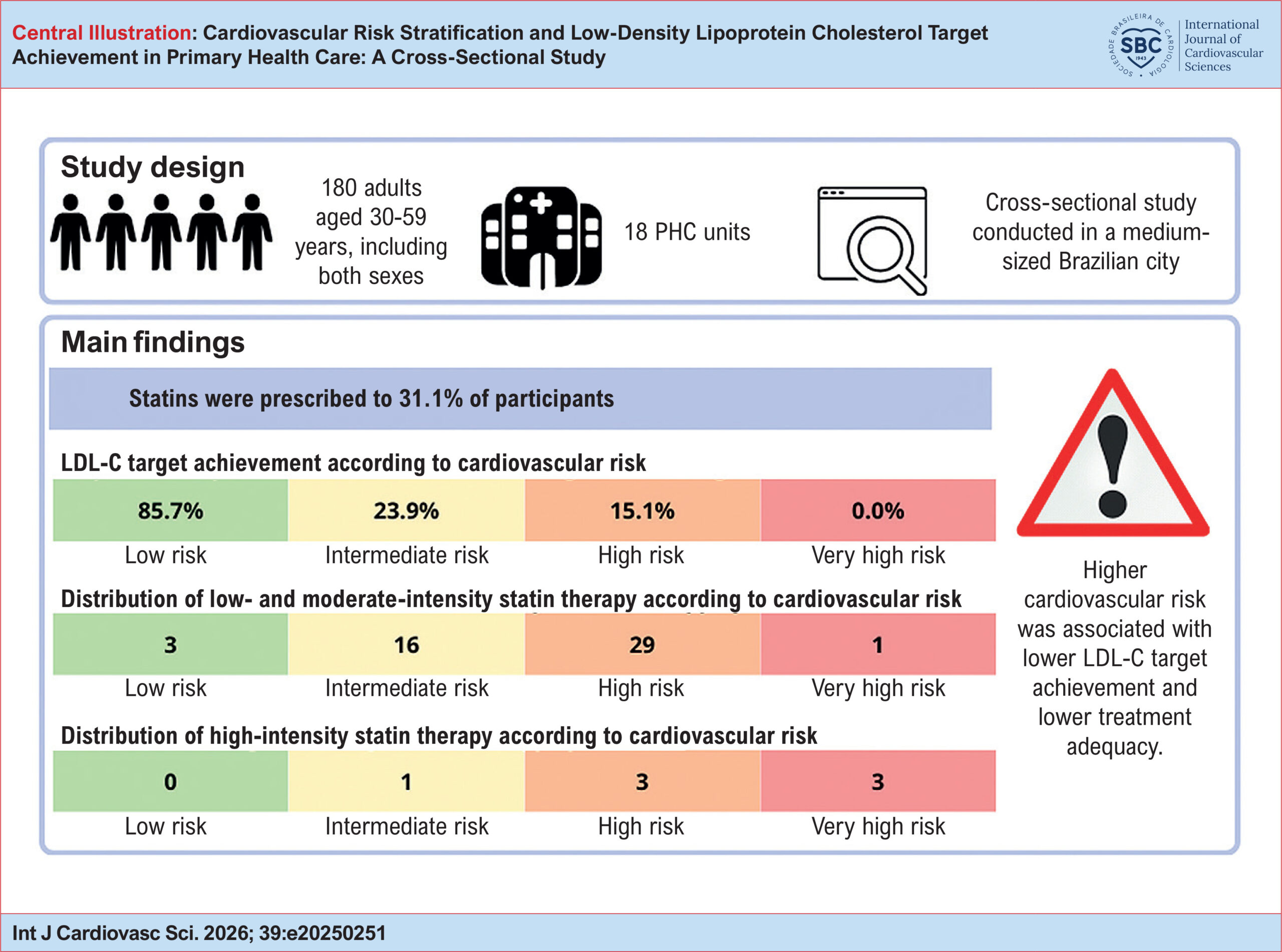
This cross-sectional study was conducted in 18 PHC units in Rio do Sul, Santa Catarina, Brazil, between January 13 and May 30, 2025. The study included 180 adults aged 30-59 years of both sexes who had been followed for at least 6 months and had a lipid profile assessment within the previous year. Cardiovascular risk was estimated using the Framingham Risk Score. Data were analyzed using the chi-square, Mann-Whitney, and Kruskal-Wallis tests. Statistical significance was set at p < 0.05.

Results:

Among the 180 participants, 95 (52.7%) did not achieve LDL-C targets. LDL-C goal attainment was more frequent among low-risk (85.7%) and intermediate-risk (23.9%) individuals and less frequent among high-risk (15.1%) and very high-risk (0.0%) individuals. Cardiovascular risk was significantly associated with lipid control (p < 0.05). Median LDL-C was 106.8 mg/dL (Interquartile Range (IQR), 88.4-136.2), with significant differences across risk categories (p < 0.05). Among the 56 statin prescriptions identified, only 26 (46.4%) were consistent with guideline-recommended statin intensity.

Conclusion:

The low rate of LDL-C target achievement and the high prevalence of inadequate statin therapy highlight the need for more effective lipid management strategies and structured interventions in PHC.
  • Heart Disease Risk Factors
  • Hydroxymethylglutaryl-CoA Reductase Inhibitors
  • LDL-colesterol
  • Observational Study
  • Primary Health Care
Read Full Article
Creative Commons Attribution (CC BY) Creative Commons license
03/08/2026 DOI: 10.36660/ijcs.20250251 Views 1
Critical Analysis of the Clinical and Lipidic Profile of Patients with Acute Coronary Syndrome in a Public Hospital in São Paulo
IJCS
Original Article

Critical Analysis of the Clinical and Lipidic Profile of Patients with Acute Coronary Syndrome in a Public Hospital in São Paulo

Giovanna Ristori Costa et al. Luís Fernando Ferreira Cavalcante Renato Jorge Alves

Abstract

Background:

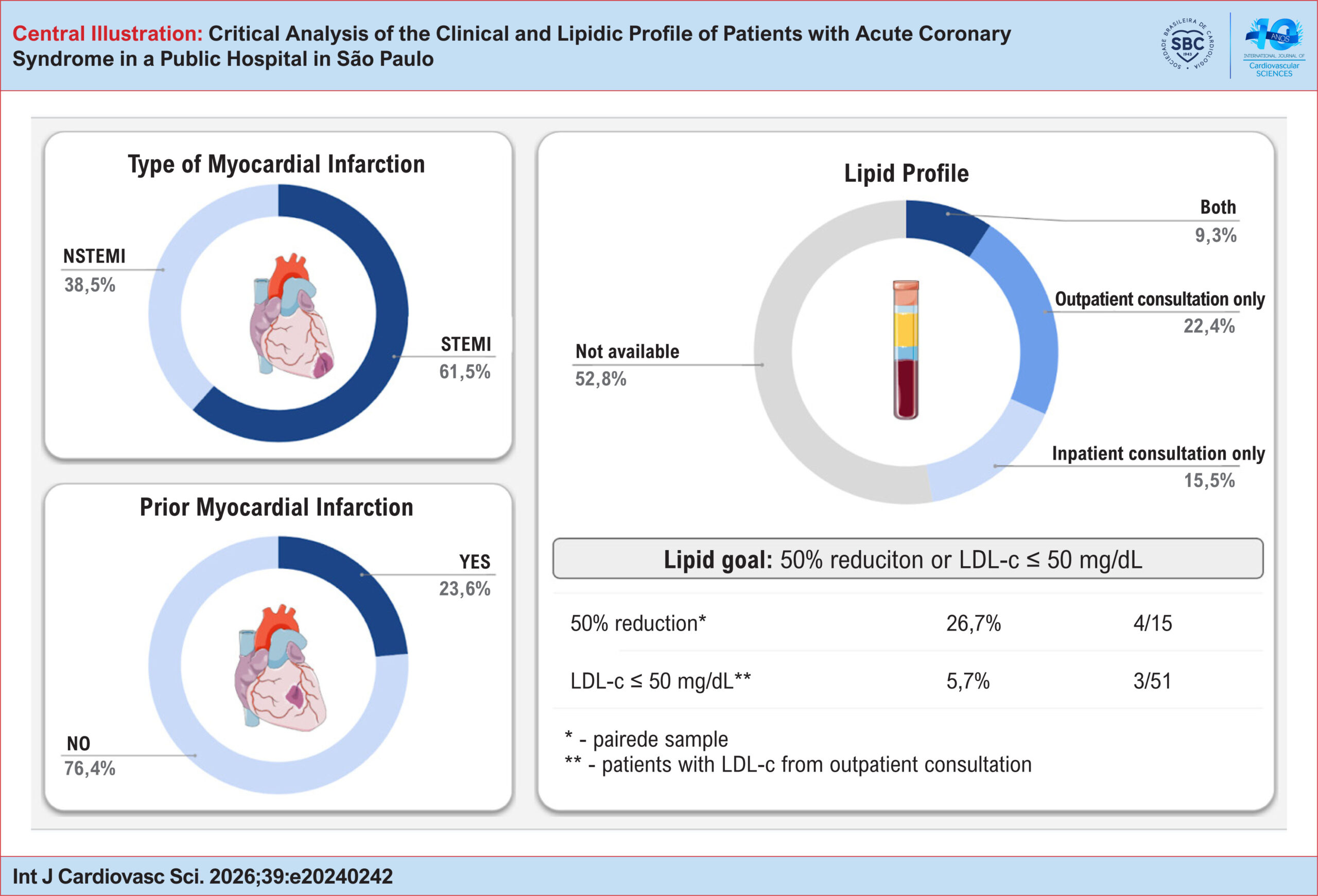
Myocardial infarction (MI) is highly influenced by risk factors such as dyslipidemia. Achieving low-density lipoprotein cholesterol (LDL-C) goals is key to reducing the residual cardiovascular risk. However, the proportion of patients with MI who accomplish this goal is unknown.

Objective:

Assess risk factors, lipid profile evolution from admission to the first outpatient consultation, and the therapy administered.

Methods:

This is a descriptive study of patient charts from a public hospital in São Paulo from June 2021 to March 2022. The statistical analyses employed were the Chi-square test and the paired t-test, with significance defined as p-values < 0.05.

Results:

ST-elevation MI (STEMI) occurred in 61% of the patients. Among the patients with previous MI, 50% did not use statins. There was a correlation between STEMI and no statin use (p < 0.05). At hospital discharge, 12%, 17%, and 13% lacked prescriptions for aspirin, clopidogrel, and statins, respectively. At the first outpatient consultation, only 8% of patients with available data reached the absolute LDL-C goal of <50 mg/dL. Only 9% of patients had their cholesterol levels assessed at admission and at the first outpatient consultation, while 26.7% of those achieved at least a 50% LDL-C reduction. The mean LDL-C reduction was 25% (p < 0.05).

Conclusion:

Considering the severity of the assessed patients, the cardiovascular risk stratification was ineffective, the pharmacologic therapy was not optimized, and the achievement of the LDL-C goals according to guidelines was unsatisfactory in this population.

  • Hydroxymethylglutaryl-CoA Reductase Inhibitors
  • LDL-cholesterol
  • Lipids
Read Full Article
Creative Commons Attribution (CC BY) Creative Commons license
13/03/2026 DOI: 10.36660/ijcs.20240242 Views 1
ABC
Editorial

Statins and Pregnancy – New FDA Recommendations

Marcio Sommer Bittencourt

The Food and Drug Administration (FDA), the agency responsible for controlling the safety and efficacy of drugs in the United States, has traditionally adopted a risk classification for the use of drugs during pregnancy. Statins were considered a Category X drug, which indicates that the demonstrated risk of these drugs to cause birth defects surpassed their benefits. However, in July 2021, the FDA withdrew this recommendation.

Before this change, the FDA recommended the discontinuation of statins from conception attempts until the end of breastfeeding. In cases where dyslipidemia is not severe, statin discontinuation may confer no additional risk. However, based on this recommendation, the duration of discontinuation may be substantial. In a study with more than 100 women with familial hypercholesterolemia in Norway and Netherlands, the mean length of time without statins was longer than two years for each pregnancy. Although two years is a long period, it still may be a conservative estimate. In this study, the mean interval between conception planning and pregnancy was two months. Data in the literature, however, suggest that the median time to pregnancy is longer, probably around six months for nulliparous women. Also, in this study, mean breastfeeding duration was four months. Considering that the World Health Organization recommends exclusive breastfeeding for the first six months of life, and continued breastfeeding along with introducing complementary foods after this period, the real impact of statin discontinuation during the gestation period may be even greater than two years. Also, many women who use statins are older and may desire more than one child, which may prolong the period of time without statins for more than five years during their reproductive period.

[…]

  • Dyslipidemias
  • Hydroxymethylglutaryl-CoA Reductase Inhibitors
  • Pregnancy
Read Full Article
Creative Commons Attribution (CC BY) Creative Commons license
11/07/2022 DOI: 10.36660/abc.20220413
ABC
Editorial

Statin Use and Hypercholesterolemia: Are the Current Guidelines' Recommendations Being Followed?

Renato Jorge Alves

Despite advances in treating cardiovascular diseases, acute myocardial infarction and stroke are still the main causes of death worldwide.

The prevention of coronary atherosclerotic disease (CAD), represented by the treatment of low-density lipoprotein cholesterol (LDL-c), is one of the main alternatives for increasing the survival of patients with cardiovascular risk factors. Case-control, observational, and genetic studies confirm the importance of increased cholesterol level as one of the main modifiable risk factors for cardiovascular disease, especially for CAD and ischemic stroke. The reduction in LDL-c throughout life has been associated with a lower risk of developing CAD. There seems to be a causal relationship between LDL-c and CAD, which is continuous and which depends on the magnitude of the reduction in LDL-c.–

[…]

  • Atherosclerosis
  • Cardiovascular Diseases
  • Hospitalization
  • Hospitals, Public
  • Hydroxymethylglutaryl-CoA Reductase Inhibitors
  • Mortality
  • Myocardial Infarction
  • Risk Factors
  • Stroke
Read Full Article
Creative Commons Attribution (CC BY) Creative Commons license
16/04/2021 DOI: 10.36660/abc.20210089
ABC
Editorial

Changes in Our Times and in Cholesterol Targets

Tania Leme da Rocha Martinez

Since the 80s, many approaches have emerged regarding the interpretation of cholesterol levels in clinical practice.

There have even been medical meetings with titles such as: “Cholesterol: Myth or Truth”?

[…]

  • Cardiovascular Diseases/prevention and control
  • Cholesterol, LDL
  • Hydroxymethylglutaryl-CoA Reductase Inhibitors
  • Risk Factors
Read Full Article
Creative Commons Attribution (CC BY) Creative Commons license
28/09/2020 DOI: 10.36660/abc.20200670 Views 1
Figure 1
ABC
Original Article

Statin Treatments And Dosages In Children With Familial Hypercholesterolemia: Meta-Analysis

Graciane Radaelli et al. Grasiele Sausen Claudia Ciceri Cesa Francisco de Souza Santos … Vera Lucia Portal Jeruza Lavanholi Neyeloff Lucia Campos Pellanda

Abstract

Background:

Children with familial hypercholesterolemia may develop early endothelial damage leading to a high risk for the development of cardiovascular disease (CVD). Statins have been shown to be effective in lowering LDL cholesterol levels and cardiovascular events in adults. The effect of statin treatment in the pediatric population is not clearly demonstrated.

Objective:

To systematically review the literature to evaluate the effects of different statins and dosages in total cholesterol levels in children and adolescents with familial hypercholesterolemia. We also aimed to evaluate statin safety in this group.

Methods:

PubMed, EMBASE, Bireme, Web of Science, Cochrane Library, SciELO and LILACS databases, were searched for articles published from inception until February 2016. Two independent reviewers performed the quality assessment of the included studies. We performed a meta-analysis with random effects and inverse variance, and subgroup analyses were performed.

Results:

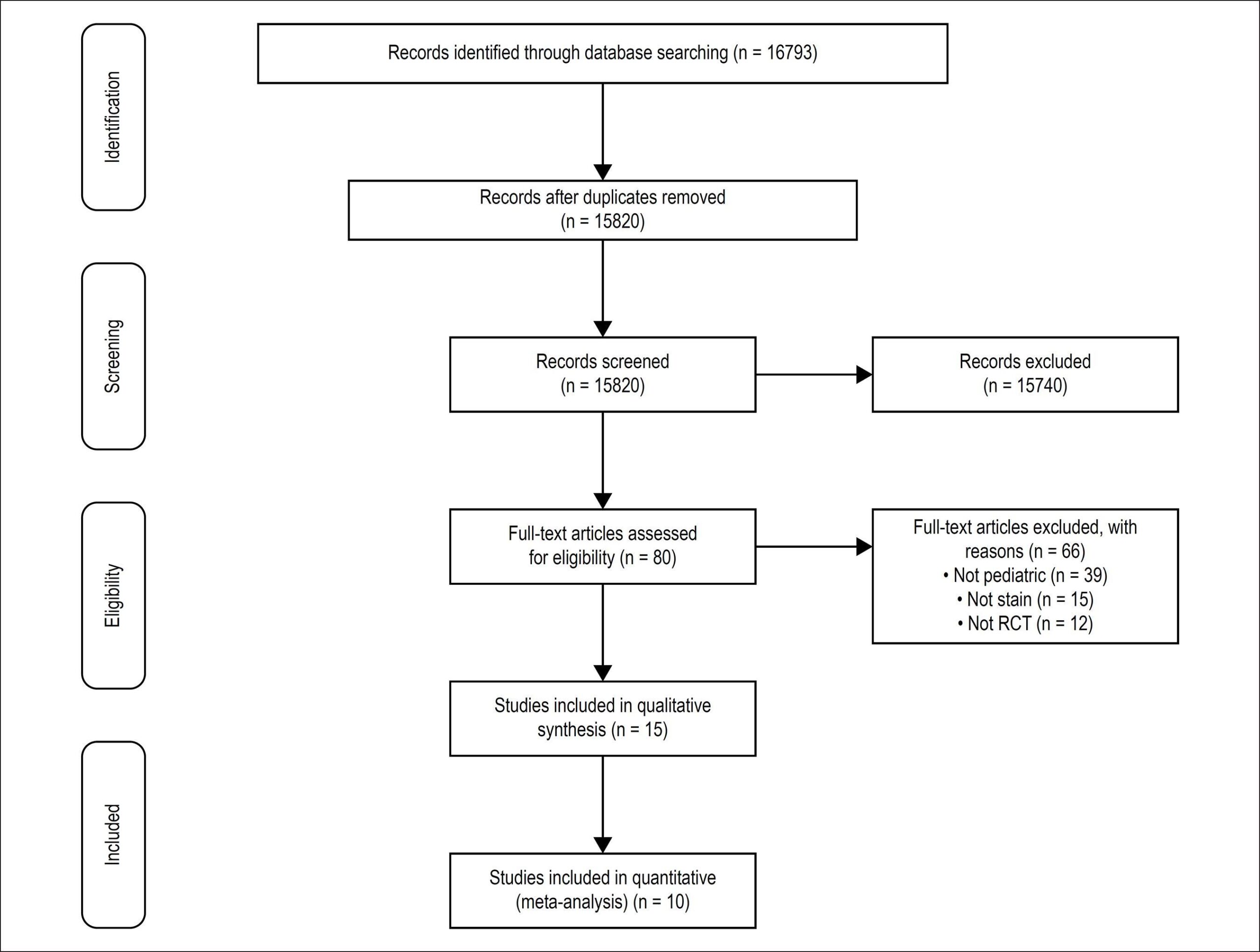
Ten trials involving a total of 1543 patients met the inclusion criteria. Our study showed reductions in cholesterol levels according to the intensity of statin doses (high, intermediate and low): (-104.61 mg/dl, -67.60 mg/dl, -56.96 mg/dl) and in the low-density lipoprotein cholesterol level: [-105.03 mg/dl (95% CI -115.76, -94.30), I2 19.2%], [-67.85 mg/dl (95% CI -83.36, -52.35), I2 99.8%], [-58.97 mg/dl (95% CI -67.83, -50.11), I2 93.8%. The duration of statin therapy in the studies ranged from 8 to 104 weeks, precluding conclusions about long-term effects.

Conclusion:

Statin treatment is efficient in lowering lipids in children with FH. There is need of large, long-term and randomized controlled trials to establish the long-term safety of statins.

  • Children
  • Hydroxymethylglutaryl-CoA Reductase Inhibitors
  • Hypercholesterolemia Type II/genetic
  • Meta-Analysis
  • Statins
Read Full Article
Creative Commons Attribution (CC BY) Creative Commons license
18/10/2018 DOI: 10.5935/abc.20180180 Views 2
Figure 1
ABC
Original Article

Secondary Dyslipidemia In Obese Children – Is There Evidence For Pharmacological Treatment?

Graciane Radaelli et al. Grasiele Sausen Claudia Ciceri Cesa Vera Lucia Portal Lucia Campos Pellanda

Abstract

Background:

Long-term safety, effectiveness and criteria for treatment with statins in children are still unclear in clinical practice. There is very limited evidence for the use of medication to treat children with dyslipidemia secondary to obesity who do not respond well to lifestyle modification.

Objective:

Systematic review of randomized clinical trials of statin use to treat children and adolescents with dyslipidemia secondary to obesity.

Methods:

We performed a search in PubMed, EMBASE, Bireme, Web of Science, Cochrane Library, SciELO, and LILACS for data to evaluate the effect of statins on: improvement of surrogate markers of coronary artery disease in clinical outcomes of adulthood; increased serum levels of total cholesterol (TC), low-density lipoprotein cholesterol (LDL-C) and apolipropotein B (APOB); and decreased serum levels of high-density lipoprotein cholesterol (HDL-C) from inception to February 2016. Participants were children and adolescents.

Results:

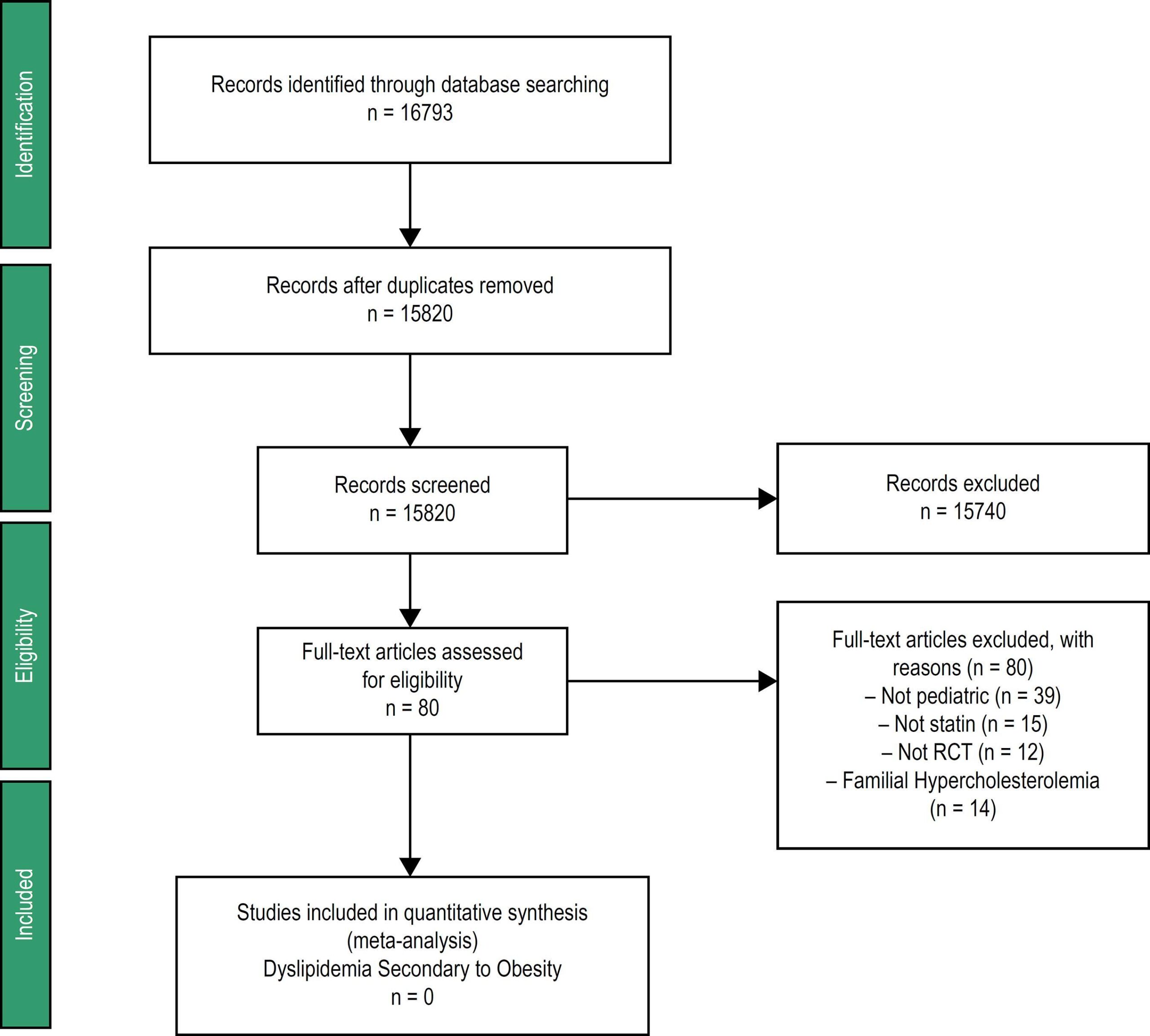
Of the 16793 potentially relevant citations recovered from the electronic databases, no randomized clinical trials fulfilled the inclusion criteria for children with dyslipidemia secondary to obesity.

Conclusions:

We found no specific evidence to consider statins in the treatment of hypercholesterolemia secondary to obesity in children. The usual practice of extrapolating findings from studies in genetic dyslipidemia ignores the differences in long-term cardiovascular risks and the long-term drug treatment risks, when compared to recommendation of lifestyle changes. Randomized clinical trials are needed to understand drug treatment in dyslipidemia secondary to obesity.

  • Adolescents
  • Child
  • Cholesterol
  • Dyslipidemias
  • Hydroxymethylglutaryl-CoA Reductase Inhibitors
  • Obesity
Read Full Article
Creative Commons Attribution (CC BY) Creative Commons license
23/08/2018 DOI: 10.5935/abc.20180155 Views 1
Figure 1
ABC
Review Article

Treatment of Dyslipidemia with Statins and Physical Exercises: Recent Findings of Skeletal Muscle Responses

Mariana Rotta Bonfim et al. Acary Souza Bulle Oliveira Sandra Lia do Amaral Henrique Luiz Monteiro

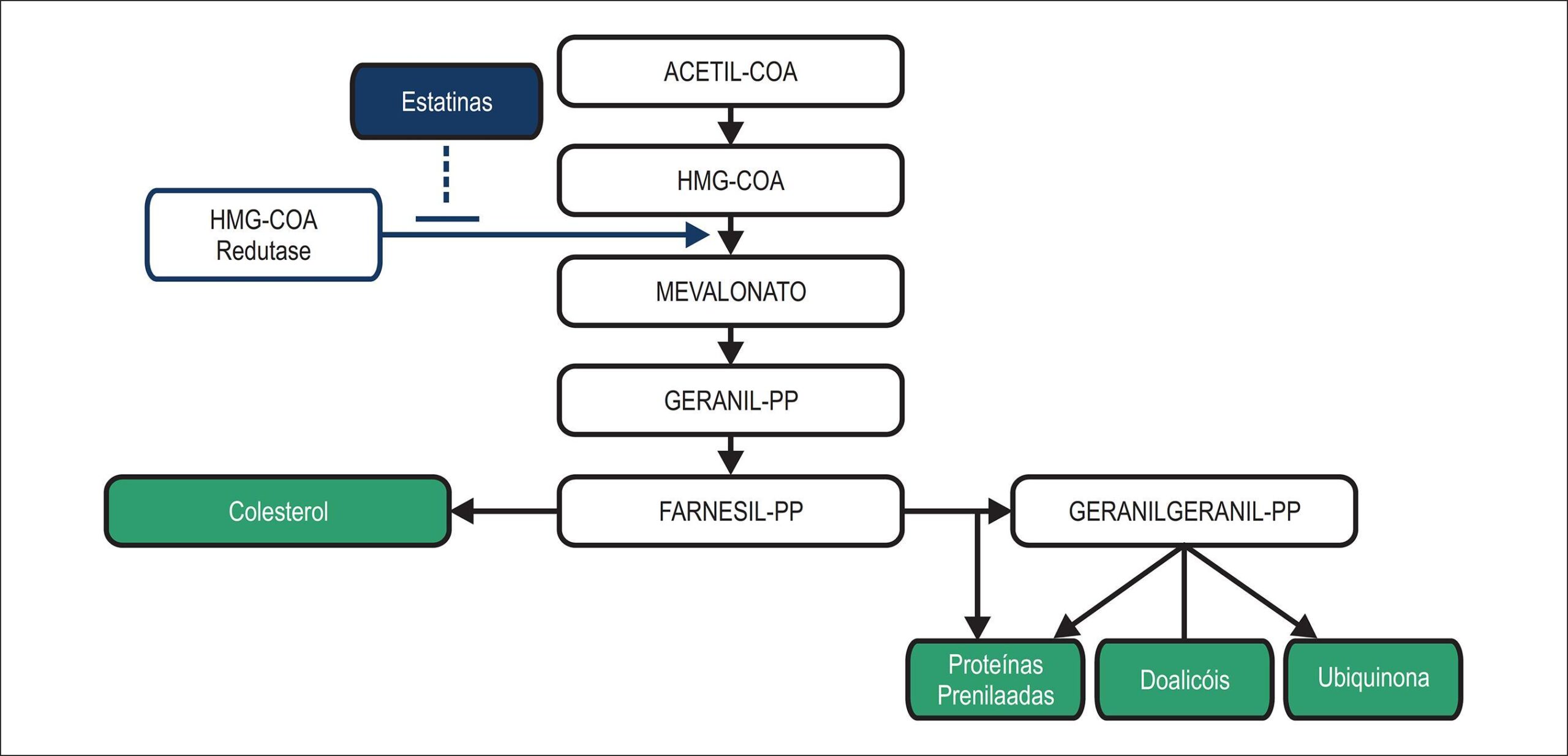
Statin treatment in association with physical exercise practice can substantially reduce cardiovascular mortality risk of dyslipidemic individuals, but this practice is associated with myopathic event exacerbation. This study aimed to present the most recent results of specific literature about the effects of statins and its association with physical exercise on skeletal musculature. Thus, a literature review was performed using PubMed and SciELO databases, through the combination of the keywords “statin” AND “exercise” AND “muscle”, restricting the selection to original studies published between January 1990 and November 2013. Sixteen studies evaluating the effects of statins in association with acute or chronic exercises on skeletal muscle were analyzed. Study results indicate that athletes using statins can experience deleterious effects on skeletal muscle, as the exacerbation of skeletal muscle injuries are more frequent with intense training or acute eccentric and strenuous exercises. Moderate physical training, in turn, when associated to statins does not increase creatine kinase levels or pain reports, but improves muscle and metabolic functions as a consequence of training. Therefore, it is suggested that dyslipidemic patients undergoing statin treatment should be exposed to moderate aerobic training in combination to resistance exercises three times a week, and the provision of physical training prior to drug administration is desirable, whenever possible.

  • dyslipidemia
  • Exercise
  • Hydroxymethylglutaryl-CoA Reductase Inhibitors
  • muscle, skeletal
Read Full Article
Creative Commons Attribution (CC BY) Creative Commons license
13/02/2015 DOI: 10.5935/abc.20150005 Views 1
Figure 1
ABC
Original Article

Role of microRNAs 221/222 on Statin Induced Nitric Oxide Release in Human Endothelial Cells

Alvaro Cerda et al. Cristina Moreno Fajardo Rodrigo Gouveia Basso Mario Hiroyuki Hirata Rosario Dominguez Crespo Hirata

Background:

Nitric oxide (NO) has been largely associated with cardiovascular protection through improvement of endothelial function. Recently, new evidence about modulation of NO release by microRNAs (miRs) has been reported, which could be involved with statin-dependent pleiotropic effects, including anti-inflammatory properties related to vascular endothelium function.

Objective:

To evaluate the effects of cholesterol-lowering drugs including the inhibitors of cholesterol synthesis, atorvastatin and simvastatin, and the inhibitor of cholesterol absorption ezetimibe on NO release, NOS3 mRNA expression and miRs potentially involved in NO bioavailability.

Methods:

Human umbilical vein endothelial cells (HUVEC) were exposed to atorvastatin, simvastatin or ezetimibe (0 to 5.0 μM). Cells were submitted to total RNA extraction and relative quantification of NOS3 mRNA and miRs -221, -222 and -1303 by qPCR. NO release was measured in supernatants by ozone-chemiluminescence.

Results:

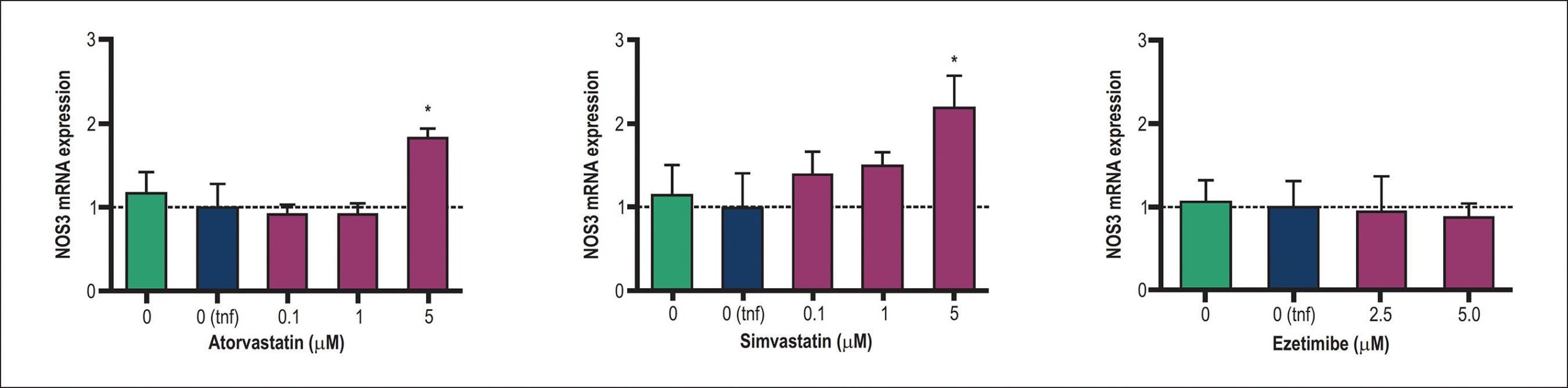
Both statins increased NO levels and NOS3 mRNA expression but no influence was observed for ezetimibe treatment. Atorvastatin, simvastatin and ezetimibe down-regulated the expression of miR-221, whereas miR-222 was reduced only after the atorvastatin treatment. The magnitude of the reduction of miR-221 and miR-222 after treatment with statins correlated with the increment in NOS3 mRNA levels. No influence was observed on the miR-1303 expression after treatments.

Conclusion:

NO release in endothelial cells is increased by statins but not by the inhibitor of cholesterol absorption, ezetimibe. Our results provide new evidence about the participation of regulatory miRs 221/222 on NO release induction mediated by statins. Although ezetimibe did not modulate NO levels, the down-regulation of miR-221 could involve potential effects on endothelial function.

  • Cholesterol
  • Endothelial Cells
  • Hydroxymethylglutaryl-CoA Reductase Inhibitors
  • MicroRNAs
  • Nitric Oxide
Read Full Article
Creative Commons Attribution (CC BY) Creative Commons license
16/12/2014 DOI: 10.5935/abc.20140192
Figure 1
ABC
Original Article

Cost-Effectiveness of High, Moderate and Low-Dose Statins in the Prevention of Vascular Events in the Brazilian Public Health System

Rodrigo Antonini Ribeiro et al. Bruce Bartholow Duncan Patricia Klarmann Ziegelmann Steffan Frosi Stella … Jose Luiz da Costa Vieira Luciane Maria Fabian Restelatto Carisi Anne Polanczyk

Background:

Statins have proven efficacy in the reduction of cardiovascular events, but the financial impact of its widespread use can be substantial.

Objective:

To conduct a cost-effectiveness analysis of three statin dosing schemes in the Brazilian Unified National Health System (SUS) perspective.

Methods:

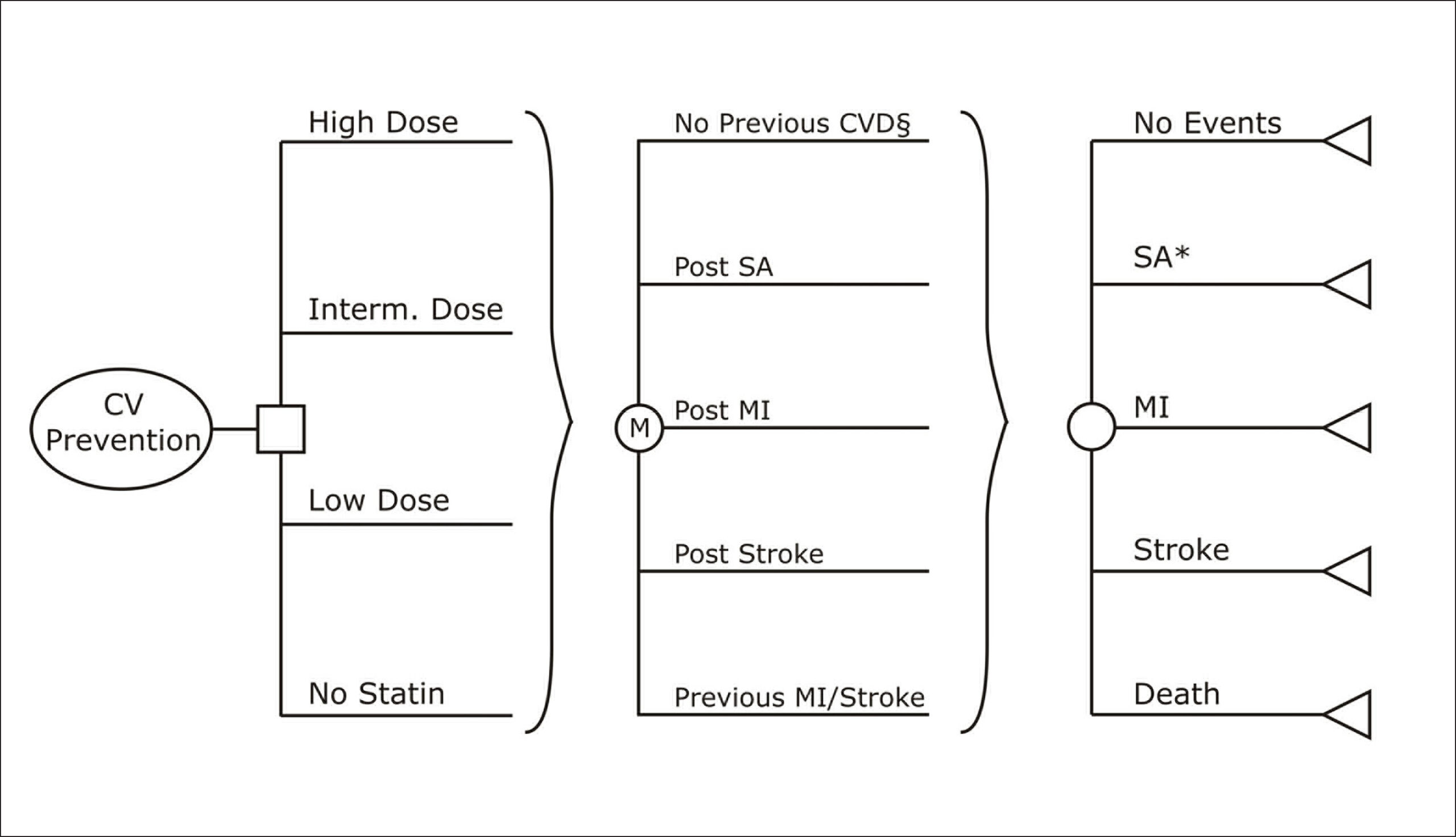
We developed a Markov model to evaluate the incremental cost-effectiveness ratios (ICERs) of low, intermediate and high intensity dose regimens in secondary and four primary scenarios (5%, 10%, 15% and 20% ten-year risk) of prevention of cardiovascular events. Regimens with expected low-density lipoprotein cholesterol reduction below 30% (e.g. simvastatin 10mg) were considered as low dose; between 30-40%, (atorvastatin 10mg, simvastatin 40mg), intermediate dose; and above 40% (atorvastatin 20-80mg, rosuvastatin 20mg), high-dose statins. Effectiveness data were obtained from a systematic review with 136,000 patients. National data were used to estimate utilities and costs (expressed as International Dollars – Int$). A willingness-to-pay (WTP) threshold equal to the Brazilian gross domestic product per capita (circa Int$11,770) was applied.

Results:

Low dose was dominated by extension in the primary prevention scenarios. In the five scenarios, the ICER of intermediate dose was below Int$10,000 per QALY. The ICER of the high versus intermediate dose comparison was above Int$27,000 per QALY in all scenarios. In the cost-effectiveness acceptability curves, intermediate dose had a probability above 50% of being cost-effective with ICERs between Int$ 9,000-20,000 per QALY in all scenarios.

Conclusions:

Considering a reasonable WTP threshold, intermediate dose statin therapy is economically attractive, and should be a priority intervention in prevention of cardiovascular events in Brazil.

  • Cardiovascular Diseases
  • Cost-Benefit Analysis
  • Hydroxymethylglutaryl-CoA Reductase Inhibitors
  • Prevention
  • Unified Health System
Read Full Article
Creative Commons Attribution (CC BY) Creative Commons license
18/11/2014 DOI: 10.5935/abc.20140173 Views 1
Figure 1
ABC
Original Article

Effect of Pitavastatin on Vascular Reactivity in Hypercholesterolemic Rabbits

Eros Antonio de Almeida et al. Michiko Regina Ozaki

Background:

Pitavastatin is the newest statin available in Brazil and likely the one with fewer side effects. Thus, pitavastatin was evaluated in hypercholesterolemic rabbits in relation to its action on vascular reactivity.

Objective:

To assess the lowest dose of pitavastatin necessary to reduce plasma lipids, cholesterol and tissue lipid peroxidation, as well as endothelial function in hypercholesterolemic rabbits.

Methods:

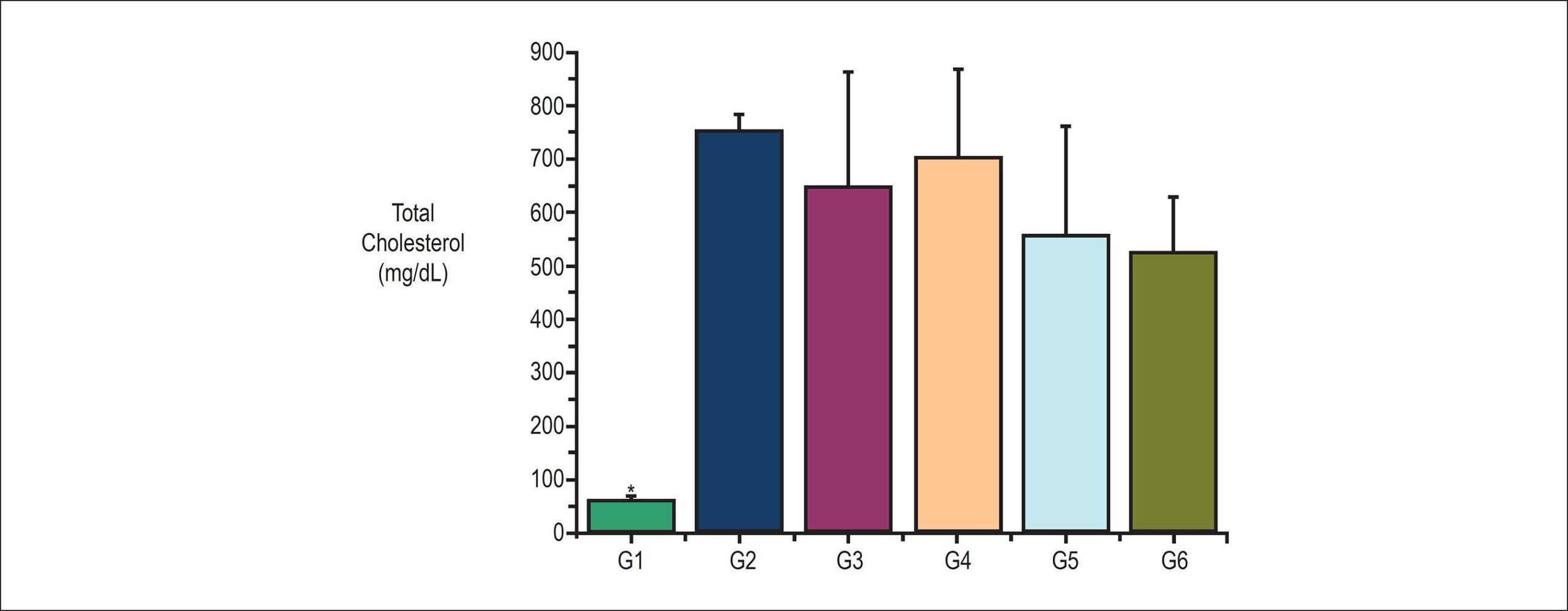
Thirty rabbits divided into six groups (n = 5): G1 – standard chow diet; G2 – hypercholesterolemic diet for 30 days; G3 – hypercholesterolemic diet and after the 16th day, diet supplemented with pitavastatin (0.1 mg); G4 – hypercholesterolemic diet supplemented with pitavastatin (0.25 mg); G5 – hypercholesterolemic diet supplemented with pitavastatin (0.5 mg); G6 – hypercholesterolemic diet supplemented with pitavastatin (1.0 mg). After 30 days, total cholesterol, HDL, triglycerides, glucose, creatine kinase (CK), aspartate aminotransferase (AST), alanine aminotransferase (ALT) were measured and LDL was calculated. In-depth anesthesia was performed with sodium thiopental and aortic segments were removed to study endothelial function, cholesterol and tissue lipid peroxidation. The significance level for statistical tests was 5%.

Results:

Total cholesterol and LDL were significantly elevated in relation to G1. HDL was significantly reduced in G4, G5 and G6 when compared to G2. Triglycerides, CK, AST, ALT, cholesterol and tissue lipid peroxidation showed no statistical difference between G2 and G3-G6. Significantly endothelial dysfunction reversion was observed in G5 and G6 when compared to G2.

Conclusion:

Pitavastatin starting at a 0.5 mg dose was effective in reverting endothelial dysfunction in hypercholesterolemic rabbits.

  • endothelial dysfunction
  • Hydroxymethylglutaryl-CoA Reductase Inhibitors
  • Hypercholesterolemia
  • Rabbits
Read Full Article
Creative Commons Attribution (CC BY) Creative Commons license
09/07/2014 DOI: 10.5935/abc.20140090 Views 2
ABC
Review Article

Statins in acute coronary syndromes

Alexandre Russo Sposito et al. Gentil Barreira de Aguiar Filho Amanda Rezende Aarão Francisco Thiago Tomaz de Sousa Marcelo Chiara Bertolami

Statins are the main resource available to reduce LDL-cholesterol levels. Their continuous use decreases cardiovascular morbidity and mortality due to atherosclerosis. The administration of these medications demonstrated to be effective in primary and secondary prevention clinical trials in low and high risk patients. Specialists believe that a possible benefit of hypolipidemic therapy in preventing complications of atherosclerotic diseases is in the reduction of deposition of atherogenic lipoproteins in vulnerable areas of the vasculature. Experimental studies with statins have shown an enormous variety of other effects that could extend the clinical benefit beyond the lipid profile modification itself. Statinbased therapies benefit other important components of the atherothrombotic process: inflammation, oxidation, coagulation, fibrinolysis, endothelial function, vasoreactivity and platelet function. The demonstration of the effects that do not depend on cholesterol lowering or the pleiotropic effects of statins provides the theoretical basis for their potential role as adjunctive therapy in acute coronary syndromes. Retrospective analyses of a variety of studies indicate the potential benefit of statins during acute coronary events. Recent clinical studies have addressed this important issue in prospective controlled trials showing strong evidence for the administration of statins as adjunctive therapy in acute coronary syndromes.

  • Acute coronary syndrome
  • Atherosclerosis
  • genetic pleiotropy
  • Hydroxymethylglutaryl-CoA Reductase Inhibitors
  • Lipids
Read Full Article
Creative Commons Attribution (CC BY) Creative Commons license
30/11/2011 DOI: 10.1590/S0066-782X2011001300012 Views 1
Lipid transfer to HDL in type-2 diabetic patients: associations with microalbuminuria, statin, and insulin
ABC
Artigo Original

Lipid transfer to HDL in type-2 diabetic patients: associations with microalbuminuria, statin, and insulin

Gilson Soares Feitosa-Filho et al. Talita de Mattos Seydell Alina Coutinho Rodrigues Feitosa Raul Cavalcante Maranhão José Antônio Franchini Ramires

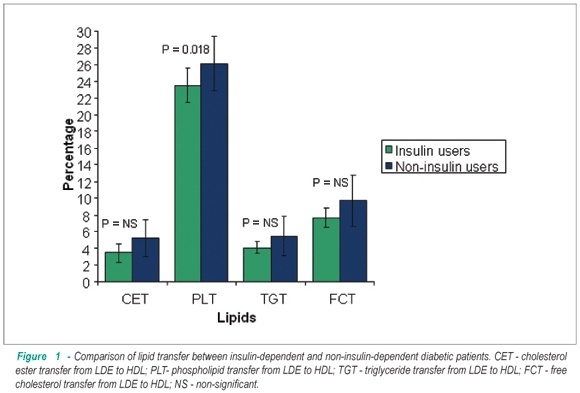
BACKGROUND: Type-2 diabetes mellitus (T2DM) is an isolated risk factor for coronary artery disease, especially when associated with microalbuminuria (MA). Structural and functional changes in lipoproteins have not yet been fully elucidated in this context. OBJECTIVE: To assess lipid transfer (T) to HDL in type-2 diabetic patients and its association with microalbuminuria and treatment with statins or insulin. METHODS: Thirty-three patients with type-2 diabetes mellitus and 34 age-matched control subjects were studied. A synthetic cholesterol-rich nanoemulsion radiolabeled with ³H- triglycerides (TG) and 14C-free cholesterol (FC) or ³H- cholesteryl ester (CE) and 14C-phospholipids (PL) was incubated with plasma. Both the nanoemulsion and lipoproteins were precipitated, except for HDL, which was counted for radioactivity. RESULTS: PLT (%) was higher in the T2DM group than in the control group (25.2 ± 3.2 and 19.7 ± 3.2 respectively; p < 0.001), as was free cholesterol (% FC): 9.1 ± 2.7 and 6.3 ± 1.5 respectively; p < 0.001. The diagnosis of microalbuminuria (MA) was not associated with changes in lipid transfers. Insulin therapy was associated with lower PLT rates: 23.5 ± 2.1 versus 26.1 ± 3.3; p = 0.018. Statin therapy, in turn, was associated with a drop in all lipid transfers – CET 3.5 ± 0.9; PLT: 23.8 ± 2.0; TGT: 3.9 ± 0.8; FCT: 7.4 ± 1.3 – as compared to the group that was not on statin therapy (CET: 5.9 ± 2.4; PLT: 26.9 ± 3.6; TGT: 6.4 ± 2.2; FCT: 11.1 ± 2.6). CONCLUSION:Type-2 diabetes mellitus increased lipid transfer to HDL particles, whereas statin therapy decreased all lipid transfers. The presence of MA was not associated with changes in lipid transfer.

  • albuminuria
  • Cholesterol, HDL
  • Diabetes Mellitus, Type 2
  • diabetic nephropathies
  • Hydroxymethylglutaryl-CoA Reductase Inhibitors
  • Insulin
  • Lipoproteins
Read Full Article
Creative Commons Attribution (CC BY) Creative Commons license
06/04/2009 DOI: 10.1590/S0066-782X2009000200005
Intermittent doses of statin in hemodialysis patients with spontaneous low LDL cholesterol levels
ABC
Artigo Original

Intermittent doses of statin in hemodialysis patients with spontaneous low LDL cholesterol levels

Paulo Giovanni de Albuquerque Suassuna et al. Marcus Gomes Bastos

BACKGROUND: Mortality in dialysis patients remains high and is due mainly to cardiovascular causes. Inflammation has a role in the genesis of accelerated atherosclerosis, vascular calcification, malnutrition and anemia, and a huge impact on the survival of these patients. The pleiotropic effects of statins can be a therapeutic option for reducing chronic inflammatory processes of patients undergoing hemodialysis. OBJECTIVE: To evaluate the effects of low doses of simvastatin on inflammatory markers, hematimetric and nutritional parameters of patients undergoing hemodialysis. METHODS: Clinically-stable patients undergoing hemodialysis were classified according to their baseline LDL-cholesterol levels in two groups: those with levels below 100mg/dl (Group 1) and those with levels equal to or greater than 100mg/dl (Group-2), and were treated with simvastatin during eight weeks. Group 1 received 20mg only after each session of hemodialysis (intermittent dose), whereas Group 2 received 20mg/daily. Laboratory data, erythropoietin resistance index and nutritional parameters were obtained before and after treatment. RESULTS: A significant and equivalent reduction in C-reactive protein levels in both groups was observed (35.97±49.23% vs 38.32±32.69%, p=0.86). In group 1, there was also a tendency towards reduced resistance to erythropoietin (228.6±16.2 vs 208.9±16.2, p=0.058) and improvement of hematimetric parameters (hematocrit: 33.1±5.9% vs 36.1±4.5%, p=0.021). CONCLUSION: Intermittent doses proved to be as effective as the usual dose in reducing C-reactive protein levels and resistance to erythropoietin, besides improving the hematimetric parameters, indicating an important reduction of the cardiovascular risk evaluated by these parameters.

  • C-Reactive Protein
  • Hydroxymethylglutaryl-CoA Reductase Inhibitors
  • Inflammation
  • renal dialysis
Read Full Article
Creative Commons Attribution (CC BY) Creative Commons license
28/04/2008 DOI: 10.1590/S0066-782X2008000200007

How to cite this article

EndNote RIS

Electronic Document Format (Vancouver)

Leandro GO, Abreu PHD, Lopes SC, Toniazzo SRF. Cardiovascular Risk Stratification and Low-Density Lipoprotein Cholesterol Target Achievement in Primary Health Care: A Cross-Sectional Study. International Journal of Cardiovascular Sciences 2026;39:e20250251.

Electronic Document Format (ABNT)

Leandro, Gabriel Olivo; Abreu, Pedro Henrique Daniel; Lopes, Samantha Cristiane; Toniazzo, Silvia Rozauria Froes. Cardiovascular Risk Stratification and Low-Density Lipoprotein Cholesterol Target Achievement in Primary Health Care: A Cross-Sectional Study. International Journal of Cardiovascular Sciences, v. 39, e20250251, Aug. 2026.

Electronic Document Format (APA)

Leandro, G. O., Abreu, P. H. D., Lopes, S. C., & Toniazzo, S. R. F. (2026). Cardiovascular Risk Stratification and Low-Density Lipoprotein Cholesterol Target Achievement in Primary Health Care: A Cross-Sectional Study. International Journal of Cardiovascular Sciences, 39, e20250251.

Electronic Document Format (ISO)

Leandro, Gabriel Olivo and Abreu, Pedro Henrique Daniel and Lopes, Samantha Cristiane and Toniazzo, Silvia Rozauria Froes. Cardiovascular Risk Stratification and Low-Density Lipoprotein Cholesterol Target Achievement in Primary Health Care: A Cross-Sectional Study. International Journal of Cardiovascular Sciences [online]. 2026, vol. 39, [cited 2026-10-14], e20250251. Available from: <https://journals.cardiol.br/en/article/cardiovascular-risk-stratification-and-low-density-lipoprotein-cholesterol-target-achievement-in-primary-health-care-a-cross-sectional-study/>. ISSN 2359-4802

EndNote RIS

Electronic Document Format (Vancouver)

Costa GR, Cavalcante LFF, Alves RJ. Critical Analysis of the Clinical and Lipidic Profile of Patients with Acute Coronary Syndrome in a Public Hospital in São Paulo. International Journal of Cardiovascular Sciences 2026;39:e20240242.

Electronic Document Format (ABNT)

Costa, Giovanna Ristori; Cavalcante, Luís Fernando Ferreira; Alves, Renato Jorge. Critical Analysis of the Clinical and Lipidic Profile of Patients with Acute Coronary Syndrome in a Public Hospital in São Paulo. International Journal of Cardiovascular Sciences, v. 39, e20240242, Mar. 2026.

Electronic Document Format (APA)

Costa, G. R., Cavalcante, L. F. F., & Alves, R. J. (2026). Critical Analysis of the Clinical and Lipidic Profile of Patients with Acute Coronary Syndrome in a Public Hospital in São Paulo. International Journal of Cardiovascular Sciences, 39, e20240242.

Electronic Document Format (ISO)

Costa, Giovanna Ristori and Cavalcante, Luís Fernando Ferreira and Alves, Renato Jorge. Critical Analysis of the Clinical and Lipidic Profile of Patients with Acute Coronary Syndrome in a Public Hospital in São Paulo. International Journal of Cardiovascular Sciences [online]. 2026, vol. 39, [cited 2026-10-14], e20240242. Available from: <https://journals.cardiol.br/en/article/critical-analysis-of-the-clinical-and-lipidic-profile-of-patients-with-acute-coronary-syndrome-in-a-public-hospital-in-sao-paulo/>. ISSN 2359-4802

EndNote RIS

Electronic Document Format (Vancouver)

Bittencourt MS. Statins and Pregnancy – New FDA Recommendations. Arquivos Brasileiros de Cardiologia 2022;119(1):1-2.

Electronic Document Format (ABNT)

Bittencourt, Marcio Sommer. Statins and Pregnancy – New FDA Recommendations. Arquivos Brasileiros de Cardiologia, v. 119, n. 1, p. 1-2, Jul. 2022.

Electronic Document Format (APA)

Bittencourt, M. S. (2022). Statins and Pregnancy – New FDA Recommendations. Arquivos Brasileiros de Cardiologia, 119(1), 1-2.

Electronic Document Format (ISO)

Bittencourt, Marcio Sommer. Statins and Pregnancy – New FDA Recommendations. Arquivos Brasileiros de Cardiologia [online]. 2022, vol. 119, n. 1, [cited 2026-10-14], pp. 1-2. Available from: <https://journals.cardiol.br/en/article/statins-and-pregnancy-new-fda-recommendations/>. ISSN 0066-782X

EndNote RIS

Electronic Document Format (Vancouver)

Alves RJ. Statin Use and Hypercholesterolemia: Are the Current Guidelines’ Recommendations Being Followed?. Arquivos Brasileiros de Cardiologia 2021;116(4):742-3.

Electronic Document Format (ABNT)

Alves, Renato Jorge. Statin Use and Hypercholesterolemia: Are the Current Guidelines’ Recommendations Being Followed?. Arquivos Brasileiros de Cardiologia, v. 116, n. 4, p. 742-743, Apr. 2021.

Electronic Document Format (APA)

Alves, R. J. (2021). Statin Use and Hypercholesterolemia: Are the Current Guidelines’ Recommendations Being Followed?. Arquivos Brasileiros de Cardiologia, 116(4), 742-743.

Electronic Document Format (ISO)

Alves, Renato Jorge. Statin Use and Hypercholesterolemia: Are the Current Guidelines’ Recommendations Being Followed?. Arquivos Brasileiros de Cardiologia [online]. 2021, vol. 116, n. 4, [cited 2026-10-14], pp. 742-743. Available from: <https://journals.cardiol.br/en/article/statin-use-and-hypercholesterolemia-are-the-current-guidelines-recommendations-being-followed/>. ISSN 0066-782X

EndNote RIS

Electronic Document Format (Vancouver)

Martinez TLR. Changes in Our Times and in Cholesterol Targets. Arquivos Brasileiros de Cardiologia 2020;115(3):450-1.

Electronic Document Format (ABNT)

Martinez, Tania Leme da Rocha. Changes in Our Times and in Cholesterol Targets. Arquivos Brasileiros de Cardiologia, v. 115, n. 3, p. 450-451, Sep. 2020.

Electronic Document Format (APA)

Martinez, T. L. R. (2020). Changes in Our Times and in Cholesterol Targets. Arquivos Brasileiros de Cardiologia, 115(3), 450-451.

Electronic Document Format (ISO)

Martinez, Tania Leme da Rocha. Changes in Our Times and in Cholesterol Targets. Arquivos Brasileiros de Cardiologia [online]. 2020, vol. 115, n. 3, [cited 2026-10-14], pp. 450-451. Available from: <https://journals.cardiol.br/en/article/changes-in-our-times-and-in-cholesterol-targets/>. ISSN 0066-782X

EndNote RIS

Electronic Document Format (Vancouver)

Radaelli G, Sausen G, Cesa CC, Santos FS, Portal VL, Neyeloff JL, Pellanda LC, et al. Statin Treatments And Dosages In Children With Familial Hypercholesterolemia: Meta-Analysis. Arquivos Brasileiros de Cardiologia 2018;111(6):810-21.

Electronic Document Format (ABNT)

Radaelli, Graciane; Sausen, Grasiele; Cesa, Claudia Ciceri; Santos, Francisco de Souza; Portal, Vera Lucia; Neyeloff, Jeruza Lavanholi; Pellanda, Lucia Campos. Statin Treatments And Dosages In Children With Familial Hypercholesterolemia: Meta-Analysis. Arquivos Brasileiros de Cardiologia, v. 111, n. 6, p. 810-821, Oct. 2018.

Electronic Document Format (APA)

Radaelli, G., Sausen, G., Cesa, C. C., Santos, F. S., Portal, V. L., Neyeloff, J. L., & Pellanda, L. C. (2018). Statin Treatments And Dosages In Children With Familial Hypercholesterolemia: Meta-Analysis. Arquivos Brasileiros de Cardiologia, 111(6), 810-821.

Electronic Document Format (ISO)

Radaelli, Graciane and Sausen, Grasiele and Cesa, Claudia Ciceri and Santos, Francisco de Souza and Portal, Vera Lucia and Neyeloff, Jeruza Lavanholi and Pellanda, Lucia Campos. Statin Treatments And Dosages In Children With Familial Hypercholesterolemia: Meta-Analysis. Arquivos Brasileiros de Cardiologia [online]. 2018, vol. 111, n. 6, [cited 2026-10-14], pp. 810-821. Available from: <https://journals.cardiol.br/en/article/statin-treatments-and-dosages-in-children-with-familial-hypercholesterolemia-meta-analysis/>. ISSN 0066-782X

EndNote RIS

Electronic Document Format (Vancouver)

Radaelli G, Sausen G, Cesa CC, Portal VL, Pellanda LC. Secondary Dyslipidemia In Obese Children – Is There Evidence For Pharmacological Treatment?. Arquivos Brasileiros de Cardiologia 2018;111(3):356-61.

Electronic Document Format (ABNT)

Radaelli, Graciane; Sausen, Grasiele; Cesa, Claudia Ciceri; Portal, Vera Lucia; Pellanda, Lucia Campos. Secondary Dyslipidemia In Obese Children – Is There Evidence For Pharmacological Treatment?. Arquivos Brasileiros de Cardiologia, v. 111, n. 3, p. 356-361, Aug. 2018.

Electronic Document Format (APA)

Radaelli, G., Sausen, G., Cesa, C. C., Portal, V. L., & Pellanda, L. C. (2018). Secondary Dyslipidemia In Obese Children – Is There Evidence For Pharmacological Treatment?. Arquivos Brasileiros de Cardiologia, 111(3), 356-361.

Electronic Document Format (ISO)

Radaelli, Graciane and Sausen, Grasiele and Cesa, Claudia Ciceri and Portal, Vera Lucia and Pellanda, Lucia Campos. Secondary Dyslipidemia In Obese Children – Is There Evidence For Pharmacological Treatment?. Arquivos Brasileiros de Cardiologia [online]. 2018, vol. 111, n. 3, [cited 2026-10-14], pp. 356-361. Available from: <https://journals.cardiol.br/en/article/secondary-dyslipidemia-in-obese-children-is-there-evidence-for-pharmacological-treatment/>. ISSN 0066-782X

EndNote RIS

Electronic Document Format (Vancouver)

Bonfim MR, Oliveira ASB, Amaral SL, Monteiro HL. Treatment of Dyslipidemia with Statins and Physical Exercises: Recent Findings of Skeletal Muscle Responses. Arquivos Brasileiros de Cardiologia 2015;104(4):324-31.

Electronic Document Format (ABNT)

Bonfim, Mariana Rotta; Oliveira, Acary Souza Bulle; Amaral, Sandra Lia do; Monteiro, Henrique Luiz. Treatment of Dyslipidemia with Statins and Physical Exercises: Recent Findings of Skeletal Muscle Responses. Arquivos Brasileiros de Cardiologia, v. 104, n. 4, p. 324-331, Feb. 2015.

Electronic Document Format (APA)

Bonfim, M. R., Oliveira, A. S. B., Amaral, S. L. , & Monteiro, H. L. (2015). Treatment of Dyslipidemia with Statins and Physical Exercises: Recent Findings of Skeletal Muscle Responses. Arquivos Brasileiros de Cardiologia, 104(4), 324-331.

Electronic Document Format (ISO)

Bonfim, Mariana Rotta and Oliveira, Acary Souza Bulle and Amaral, Sandra Lia do and Monteiro, Henrique Luiz. Treatment of Dyslipidemia with Statins and Physical Exercises: Recent Findings of Skeletal Muscle Responses. Arquivos Brasileiros de Cardiologia [online]. 2015, vol. 104, n. 4, [cited 2026-10-14], pp. 324-331. Available from: <https://journals.cardiol.br/en/article/treatment-of-dyslipidemia-with-statins-and-physical-exercises-recent-findings-of-skeletal-muscle-responses/>. ISSN 0066-782X

EndNote RIS

Electronic Document Format (Vancouver)

Cerda A, Fajardo CM, Basso RG, Hirata MH, Hirata RDC. Role of microRNAs 221/222 on Statin Induced Nitric Oxide Release in Human Endothelial Cells. Arquivos Brasileiros de Cardiologia 2014;104(3):195-201.

Electronic Document Format (ABNT)

Cerda, Alvaro; Fajardo, Cristina Moreno; Basso, Rodrigo Gouveia; Hirata, Mario Hiroyuki; Hirata, Rosario Dominguez Crespo. Role of microRNAs 221/222 on Statin Induced Nitric Oxide Release in Human Endothelial Cells. Arquivos Brasileiros de Cardiologia, v. 104, n. 3, p. 195-201, Dec. 2014.

Electronic Document Format (APA)

Cerda, A., Fajardo, C. M., Basso, R. G., Hirata, M. H., & Hirata, R. D. C. (2014). Role of microRNAs 221/222 on Statin Induced Nitric Oxide Release in Human Endothelial Cells. Arquivos Brasileiros de Cardiologia, 104(3), 195-201.

Electronic Document Format (ISO)

Cerda, Alvaro and Fajardo, Cristina Moreno and Basso, Rodrigo Gouveia and Hirata, Mario Hiroyuki and Hirata, Rosario Dominguez Crespo. Role of microRNAs 221/222 on Statin Induced Nitric Oxide Release in Human Endothelial Cells. Arquivos Brasileiros de Cardiologia [online]. 2014, vol. 104, n. 3, [cited 2026-10-14], pp. 195-201. Available from: <https://journals.cardiol.br/en/article/role-of-micrornas-221-222-on-statin-induced-nitric-oxide-release-in-human-endothelial-cells/>. ISSN 0066-782X

EndNote RIS

Electronic Document Format (Vancouver)

Ribeiro RA, Duncan BB, Ziegelmann PK, Stella SF, Vieira JLC, Restelatto LMF, Polanczyk CA, et al. Cost-Effectiveness of High, Moderate and Low-Dose Statins in the Prevention of Vascular Events in the Brazilian Public Health System. Arquivos Brasileiros de Cardiologia 2014;104(1):32-44.

Electronic Document Format (ABNT)

Ribeiro, Rodrigo Antonini; Duncan, Bruce Bartholow; Ziegelmann, Patricia Klarmann; Stella, Steffan Frosi; Vieira, Jose Luiz da Costa; Restelatto, Luciane Maria Fabian; Polanczyk, Carisi Anne. Cost-Effectiveness of High, Moderate and Low-Dose Statins in the Prevention of Vascular Events in the Brazilian Public Health System. Arquivos Brasileiros de Cardiologia, v. 104, n. 1, p. 32-44, Nov. 2014.

Electronic Document Format (APA)

Ribeiro, R. A., Duncan, B. B., Ziegelmann, P. K., Stella, S. F., Vieira, J. L. C., Restelatto, L. M. F., & Polanczyk, C. A. (2014). Cost-Effectiveness of High, Moderate and Low-Dose Statins in the Prevention of Vascular Events in the Brazilian Public Health System. Arquivos Brasileiros de Cardiologia, 104(1), 32-44.

Electronic Document Format (ISO)

Ribeiro, Rodrigo Antonini and Duncan, Bruce Bartholow and Ziegelmann, Patricia Klarmann and Stella, Steffan Frosi and Vieira, Jose Luiz da Costa and Restelatto, Luciane Maria Fabian and Polanczyk, Carisi Anne. Cost-Effectiveness of High, Moderate and Low-Dose Statins in the Prevention of Vascular Events in the Brazilian Public Health System. Arquivos Brasileiros de Cardiologia [online]. 2014, vol. 104, n. 1, [cited 2026-10-14], pp. 32-44. Available from: <https://journals.cardiol.br/en/article/cost-effectiveness-of-high-moderate-and-low-dose-statins-in-the-prevention-of-vascular-events-in-the-brazilian-public-health-system/>. ISSN 0066-782X

EndNote RIS

Electronic Document Format (Vancouver)

Almeida EA, Ozaki MR. Effect of Pitavastatin on Vascular Reactivity in Hypercholesterolemic Rabbits. Arquivos Brasileiros de Cardiologia 2014;103(1):4-12.

Electronic Document Format (ABNT)

Almeida, Eros Antonio de; Ozaki, Michiko Regina. Effect of Pitavastatin on Vascular Reactivity in Hypercholesterolemic Rabbits. Arquivos Brasileiros de Cardiologia, v. 103, n. 1, p. 4-12, Jul. 2014.

Electronic Document Format (APA)

Almeida, E. A. , & Ozaki, M. R. (2014). Effect of Pitavastatin on Vascular Reactivity in Hypercholesterolemic Rabbits. Arquivos Brasileiros de Cardiologia, 103(1), 4-12.

Electronic Document Format (ISO)

Almeida, Eros Antonio de and Ozaki, Michiko Regina. Effect of Pitavastatin on Vascular Reactivity in Hypercholesterolemic Rabbits. Arquivos Brasileiros de Cardiologia [online]. 2014, vol. 103, n. 1, [cited 2026-10-14], pp. 4-12. Available from: <https://journals.cardiol.br/en/article/effect-of-pitavastatin-on-vascular-reactivity-in-hypercholesterolemic-rabbits/>. ISSN 0066-782X

EndNote RIS

Electronic Document Format (Vancouver)

Sposito AR, Aguiar Filho GB, Aarão AR, Sousa FTT, Bertolami MC. Statins in acute coronary syndromes. Arquivos Brasileiros de Cardiologia 2011;97(4):350-6.

Electronic Document Format (ABNT)

Sposito, Alexandre Russo; Aguiar Filho, Gentil Barreira de; Aarão, Amanda Rezende; Sousa, Francisco Thiago Tomaz de; Bertolami, Marcelo Chiara. Statins in acute coronary syndromes. Arquivos Brasileiros de Cardiologia, v. 97, n. 4, p. 350-356, Nov. 2011.

Electronic Document Format (APA)

Sposito, A. R., Aguiar Filho, G. B. , Aarão, A. R., Sousa, F. T. T. , & Bertolami, M. C. (2011). Statins in acute coronary syndromes. Arquivos Brasileiros de Cardiologia, 97(4), 350-356.

Electronic Document Format (ISO)

Sposito, Alexandre Russo and Aguiar Filho, Gentil Barreira de and Aarão, Amanda Rezende and Sousa, Francisco Thiago Tomaz de and Bertolami, Marcelo Chiara. Statins in acute coronary syndromes. Arquivos Brasileiros de Cardiologia [online]. 2011, vol. 97, n. 4, [cited 2026-10-14], pp. 350-356. Available from: <https://journals.cardiol.br/en/article/statins-in-acute-coronary-syndromes/>. ISSN 0066-782X

EndNote RIS

Electronic Document Format (Vancouver)

Feitosa-Filho GS, Seydell TM, Feitosa ACR, Maranhão RC, Ramires JAF. Lipid transfer to HDL in type-2 diabetic patients: associations with microalbuminuria, statin, and insulin. Arquivos Brasileiros de Cardiologia 2009;92(2):100-6.

Electronic Document Format (ABNT)

Feitosa-Filho, Gilson Soares; Seydell, Talita de Mattos; Feitosa, Alina Coutinho Rodrigues; Maranhão, Raul Cavalcante; Ramires, José Antônio Franchini. Lipid transfer to HDL in type-2 diabetic patients: associations with microalbuminuria, statin, and insulin. Arquivos Brasileiros de Cardiologia, v. 92, n. 2, p. 100-106, Apr. 2009.

Electronic Document Format (APA)

Feitosa-Filho, G. S., Seydell, T. M., Feitosa, A. C. R., Maranhão, R. C., & Ramires, J. A. F. (2009). Lipid transfer to HDL in type-2 diabetic patients: associations with microalbuminuria, statin, and insulin. Arquivos Brasileiros de Cardiologia, 92(2), 100-106.

Electronic Document Format (ISO)

Feitosa-Filho, Gilson Soares and Seydell, Talita de Mattos and Feitosa, Alina Coutinho Rodrigues and Maranhão, Raul Cavalcante and Ramires, José Antônio Franchini. Lipid transfer to HDL in type-2 diabetic patients: associations with microalbuminuria, statin, and insulin. Arquivos Brasileiros de Cardiologia [online]. 2009, vol. 92, n. 2, [cited 2026-10-14], pp. 100-106. Available from: <https://journals.cardiol.br/en/article/lipid-transfer-to-hdl-in-type-2-diabetic-patients-associations-with-microalbuminuria-statin-and-insulin/>. ISSN 0066-782X

EndNote RIS

Electronic Document Format (Vancouver)

Suassuna PGA, Bastos MG. Intermittent doses of statin in hemodialysis patients with spontaneous low LDL cholesterol levels. Arquivos Brasileiros de Cardiologia 2008;90(2):114-21.

Electronic Document Format (ABNT)

Suassuna, Paulo Giovanni de Albuquerque; Bastos, Marcus Gomes. Intermittent doses of statin in hemodialysis patients with spontaneous low LDL cholesterol levels. Arquivos Brasileiros de Cardiologia, v. 90, n. 2, p. 114-121, Apr. 2008.

Electronic Document Format (APA)

Suassuna, P. G. A., & Bastos, M. G. (2008). Intermittent doses of statin in hemodialysis patients with spontaneous low LDL cholesterol levels. Arquivos Brasileiros de Cardiologia, 90(2), 114-121.

Electronic Document Format (ISO)

Suassuna, Paulo Giovanni de Albuquerque and Bastos, Marcus Gomes. Intermittent doses of statin in hemodialysis patients with spontaneous low LDL cholesterol levels. Arquivos Brasileiros de Cardiologia [online]. 2008, vol. 90, n. 2, [cited 2026-10-14], pp. 114-121. Available from: <https://journals.cardiol.br/en/article/intermittent-doses-of-statin-in-hemodialysis-patients-with-spontaneous-low-ldl-cholesterol-levels/>. ISSN 0066-782X

  • About ABC Family
  • Internal Regulation
  • Editorial Board
  • Brazilian Society of Cardiology (SBC)

Issues

SBC Guidelines

  • Videos
  • Podcasts
  • News