ABC Family Arquivos Brasileiros de Cardiologia International Journal of Cardiovascular Sciences ABC Heart Failure & Cardiomyopathy ABC Imagem Cardiovascular
Português English
ABC Family
Português English
  • About
    • About ABC Family
    • Internal Regulation
    • Editorial Board
    • Brazilian Society of Cardiology (SBC)
  • Issues
  • SBC Guidelines
  • Content
    • Videos
    • Podcasts
    • News
  • About
    • About ABC Family
    • Internal Regulation
    • Editorial Board
    • Brazilian Society of Cardiology (SBC)
  • Issues
  • SBC Guidelines
  • Content
    • Videos
    • Podcasts
    • News

ABC Family

  • ABC Family
  • Arquivos Brasileiros de Cardiologia
  • International Journal of Cardiovascular Sciences
  • ABC Heart Failure & Cardiomyopathy
  • ABC Imagem Cardiovascular
Search in

No content found.

Journals
Ordering
Article types
Others

  1. Home
  2. Keyword: Myocarditis
Central Illustration
ABCHF
Original Article

Global Mapping of Research on Artificial Intelligence Applied to Myocarditis

Guilherme Cesar Fernandes de Oliveira da Costa et al. Jose Gregorio Valero Rodriguez Giulia Fernandes de Oliveira da Costa Adriana Munford Lima Pimentel Evandro Tinoco Mesquita

Abstract

Background

Myocarditis remains a diagnostic challenge, and interest in using artificial intelligence to support noninvasive diagnostic evaluation has grown rapidly. Although the literature at the intersection of artificial intelligence and myocarditis has expanded substantially, it remains fragmented and lacks comprehensive synthesis.

Objectives

To map the global scientific output on the application of artificial intelligence to myocarditis by identifying leading contributors, collaboration patterns, and emerging thematic trends.

Methods

We conducted a bibliometric analysis of articles on artificial intelligence applied to myocarditis indexed in the Web of Science Core Collection. The R package bibliometrix and VOSviewer were used to perform bibliometric network and thematic analyses.

Results

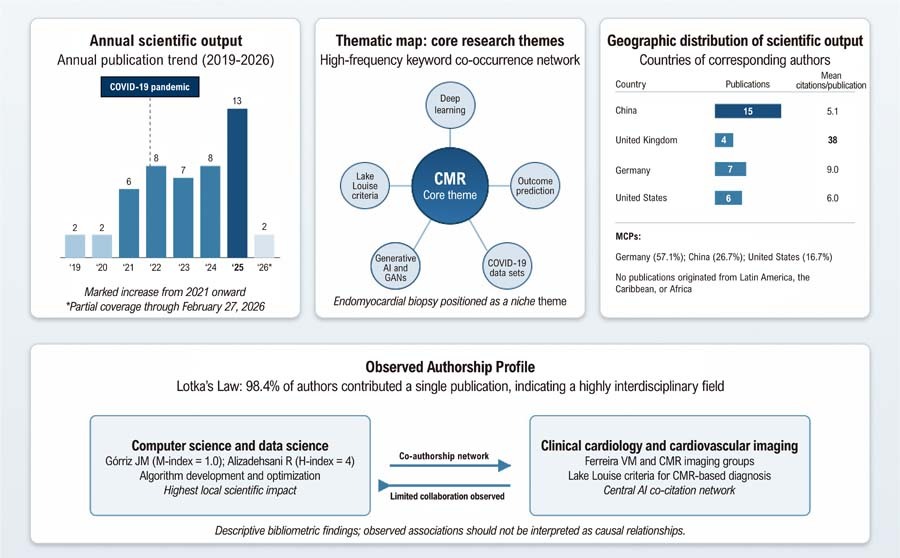
A total of 47 articles were included. Scientific output increased markedly after 2021, coinciding with the COVID-19 pandemic, and peaked in 2025. China led in publication volume, whereas the United Kingdom and Germany achieved the greatest citation impact. No publications originated from Latin America, the Caribbean, or Africa. International collaboration networks remain fragmented. Keyword and thematic analyses identified the integration of deep learning with cardiovascular magnetic resonance imaging as the principal motor theme, reflecting a shift away from traditional endomyocardial biopsy. The most highly cited authors were primarily computer and data scientists.

Conclusions

Research at the intersection of artificial intelligence and myocarditis is an emerging field undergoing methodological consolidation, with growth accelerated by the COVID-19 pandemic. Cardiovascular magnetic resonance imaging has become the primary data source for artificial intelligence-based applications. The principal challenge appears to be translational, underscoring the need for stronger collaboration between algorithm developers and clinicians. The successful integration of these models into routine clinical practice will likely depend on multidisciplinary collaboration and validation across diverse, multicenter populations.
  • Artificial Intelligence
  • Deep Learning
  • Machine Learning
  • Myocarditis
Read Full Article
Creative Commons Attribution (CC BY) Creative Commons license
21/08/2026 DOI: 10.36660/abchf.20260016i Views 1
Anabolic-Androgenic Steroids and Acute Myocardial Infarction in Young Adults: A Literature Review Based on a Case Series
ABCIC
Original Article

Anabolic-Androgenic Steroids and Acute Myocardial Infarction in Young Adults: A Literature Review Based on a Case Series

Fabiana Rocha Botelho de Oliveira et al. Danielli Oliveira de Costa Lino Germano Freire Bezerra Filho Bruno Cavalcante Linhares … Leonardo Brito De Souza Luiz Filipe Torres de Alencar Matheus Rolim Santa Cruz Mateus Paiva Marques Feitosa

Abstract

Background:

The use of anabolic-androgenic steroids (AAS) has increased substantially, especially among young adults seeking aesthetic enhancement and improved physical performance. Scientific evidence demonstrates a significant association between the abuse of these substances and severe cardiovascular events, including acute myocardial infarction (AMI), often occurring in individuals without traditional cardiovascular risk factors.

Objective:

To describe the adverse effects of AAS on the cardiovascular system and the main pathophysiological mechanisms involved in the development of AMI through the analysis of a clinical case series combined with a review of medical literature.

Methods:

A systematic literature review was conducted using the PubMed and SciELO databases, complemented by the analysis of three clinical cases. Demographic variables and characteristics related to AAS use, including duration of exposure and route of administration, were evaluated, with emphasis on the pathophysiological mechanisms associated with AMI.

Results:

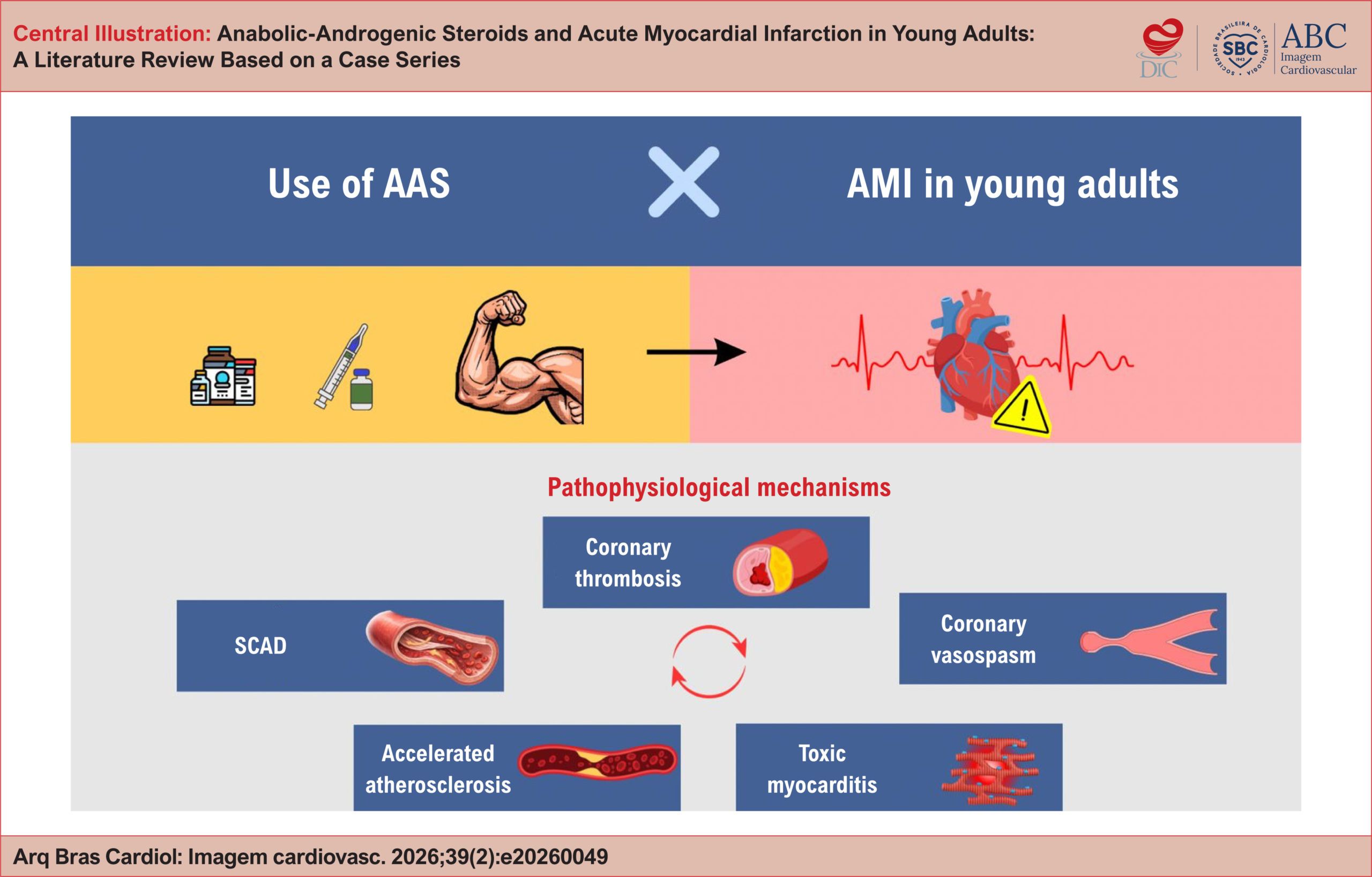
Analysis of the clinical cases identified different mechanisms related to AMI, including coronary thrombosis, atherosclerosis with plaque rupture, and spontaneous coronary artery dissection. The literature review also identified other relevant mechanisms, such as coronary vasospasm and toxic myocarditis. A predominance of male patients was observed, with the highest incidence occurring among individuals aged 20-40 years, and testosterone esters were the most frequently used AAS.

Conclusions:

AAS abuse represents a major threat to cardiovascular health and is associated with AMI through multiple pathophysiological mechanisms. These findings reinforce the need for public awareness as well as the development of preventive strategies and clinical guidelines aimed at managing this emerging condition.

  • Anabolic Androgenic Steroids
  • Atherosclerosis
  • Myocardial Infarction
  • Myocarditis
Read Full Article
Creative Commons Attribution (CC BY) Creative Commons license
27/07/2026 DOI: 10.36660/abcimg.20260049i Views 1
ABC
Letter to the Editor

Troponin-to-Lymphocyte Ratio in ICI Associated Myocarditis: A Useful Marker with Limitations

Gökhan Ceyhun

Dear Editor,

We read with great interest the article by Chen et al. on the prognostic role of the troponin-to-lymphocyte ratio (cTn/ALC) in patients with immune checkpoint inhibitor (ICI) associated myocarditis. This complication, although infrequent, carries a disproportionately high risk of morbidity and mortality among cancer patients receiving immunotherapy. The authors should be commended for exploring a simple and widely available marker that reflects both myocardial injury and immune status. Such an approach is clinically attractive because both troponin and lymphocyte count are routinely measured, inexpensive, and easily standardized. Previous reports have already highlighted the prognostic role of troponin elevation and lymphocyte dynamics in ICI associated myocarditis,– and the integration of these two markers into a composite index is a logical and potentially valuable step forward.

[…]

  • Myocarditis
  • T-Lymphocytes
  • Troponin
Read Full Article
Creative Commons Attribution (CC BY) Creative Commons license
02/03/2026 DOI: 10.36660/abc.20250648i Views 2
Central Illustration
ABC
Original Article

Prognostic Value of Troponin to Lymphocyte Ratio in Patients with Immune Checkpoint Inhibitor-associated Myocarditis

Wanwen Chen et al. Wenhao Zhang Caiyin Luo Junying Cai … Xinqing Lin Chengzhi Zhou Yuwen He

Abstract

Background

Immune checkpoint inhibitor (ICI)-associated myocarditis is a rare but life-threatening immune-related adverse event (irAE). Cardiac troponin (cTn) and absolute lymphocyte count (ALC) have been reported to be associated with ICI-myocarditis.

Objective

We aimed to investigate the prognostic value of the combination of these two features (cTn/ALC ratio) in ICI-associated myocarditis.

Methods

Our center performed a retrospective analysis of 46 patients with ICI myocarditis (cases) and 46 patients without myocarditis after receiving ICI (controls). We obtained data on cardiac enzymes, routine blood parameters, and other clinical biomarkers. Statistical significance was defined as a two-sided α level of 0.05. The association between these covariates and the clinical outcomes of ICI-mediated myocarditis was also tested.

Results

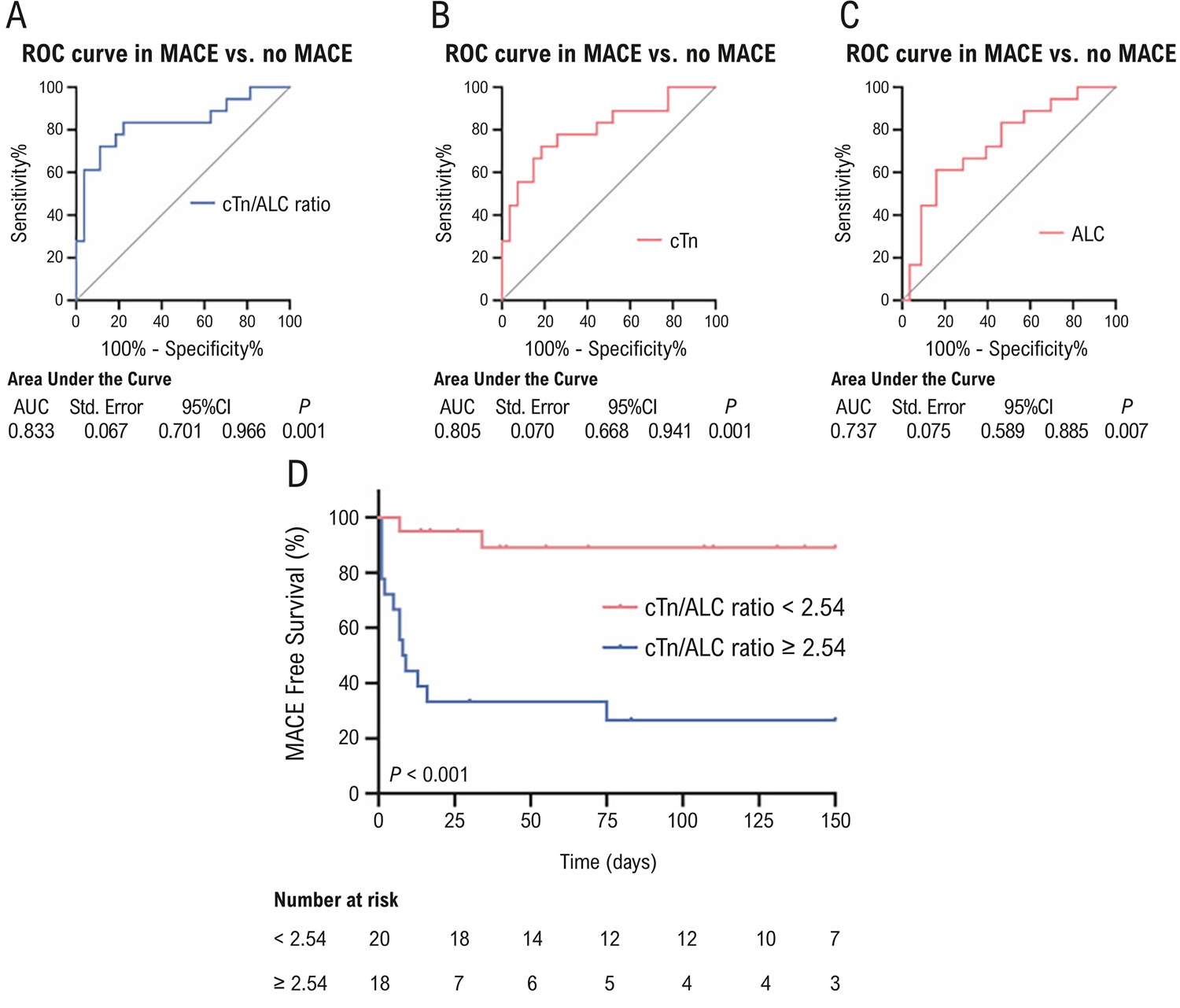
Abnormally elevated cTn (p < 0.001), cTn/ALC ratio (p < 0.001), and decreased ALC (p < 0.001) were observed in patients who developed ICI-myocarditis. The cTn/ALC ratio was associated with the development of severe myocarditis (OR, 5.05; 95% CI, 1.22-20.84; p = 0.025). Survival analysis and Cox regression analysis indicated that a higher cTn/ALC ratio emerged as a significant independent predictor for major adverse cardiac events (MACE) [HR, 5.64; 95%CI, 1.43-22.34; p = 0.014].

Conclusions

An increase in the cTn/ALC ratio was associated with the severity of ICI-myocarditis and could be an effective predictor of poor prognosis in patients with ICI-associated myocarditis.

  • Immune Checkpoint Inhibitors
  • Lymphocyte Count
  • Myocarditis
  • Prognosis
  • Troponin
Read Full Article
Creative Commons Attribution (CC BY) Creative Commons license
18/08/2025 DOI: 10.36660/abc.20250047i Views 1
Figure 1
ABC
Case Report

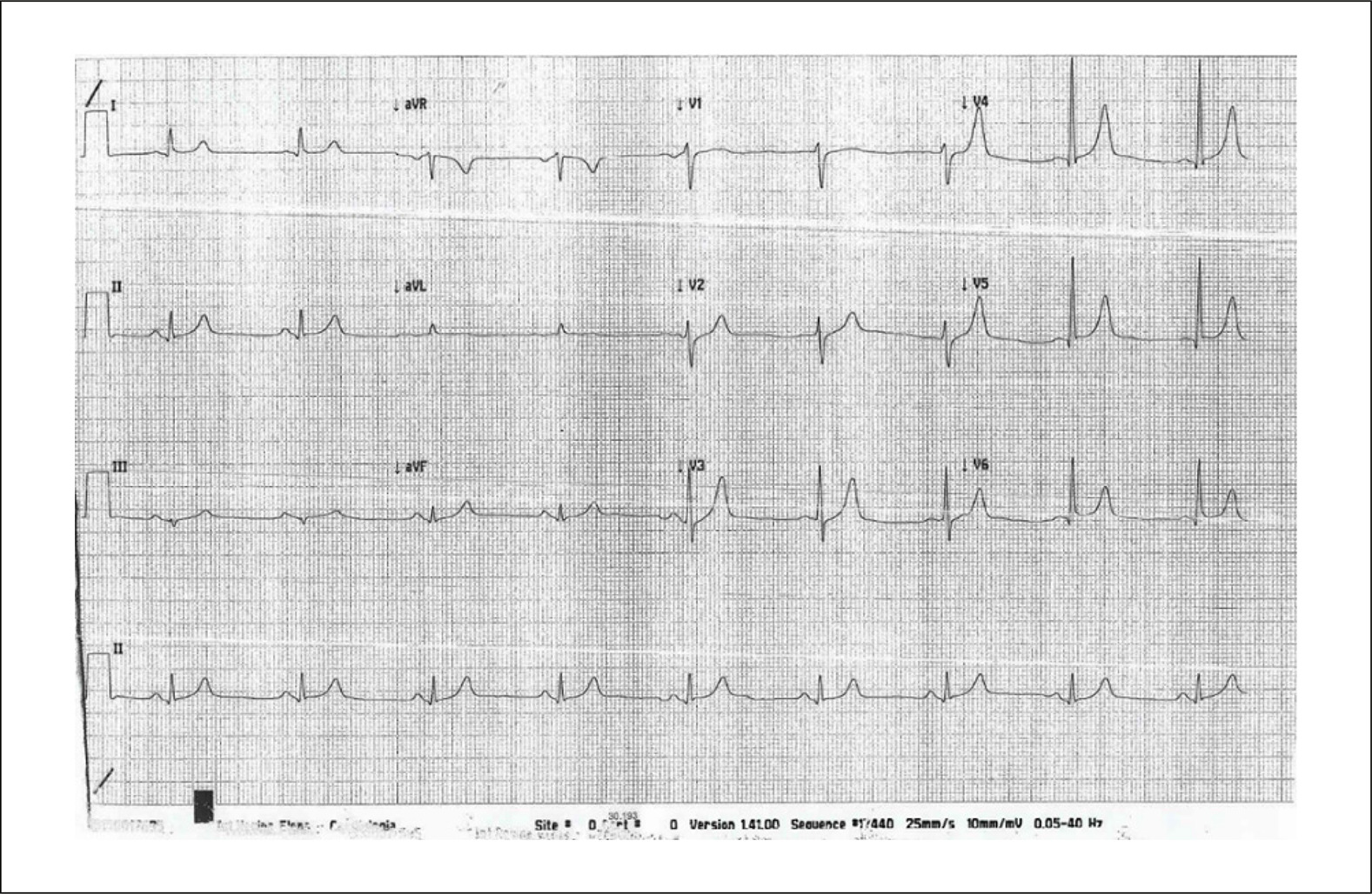
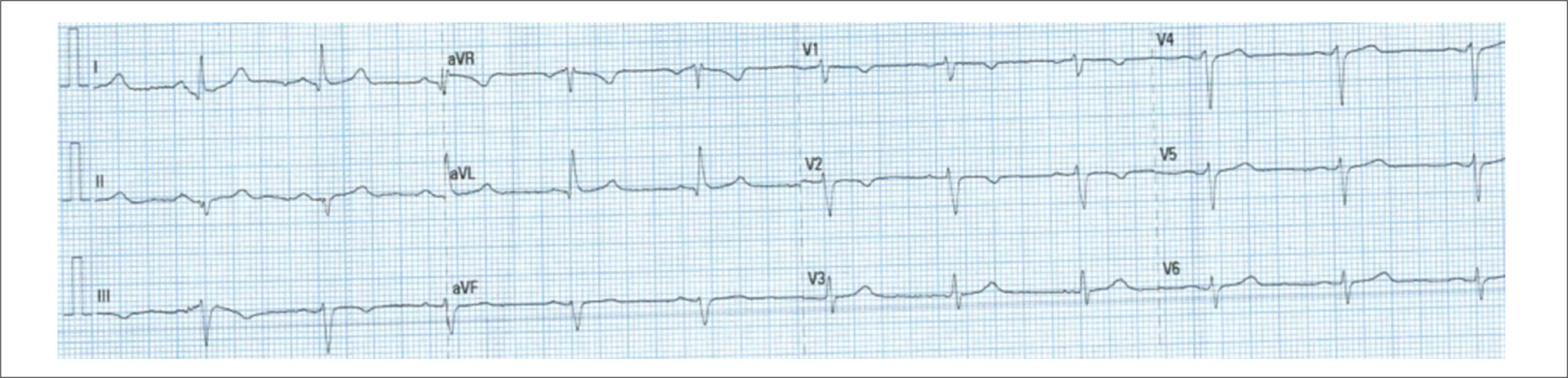
Biventricular Fatal Fulminant Myocarditis Infarct-Like Presentation in a Patient with Thymoma

Fabio Maramao et al. Fabio Stefano Maramao Laura Sanchez Monteso Mirella Marino

Introduction

Thymomas are rare epithelial tumors of the mediastinum frequently associated with paraneoplastic diseases, myocarditis on the other hand is a rare complication in patients affected by thymoma. Polymyositis and myocarditis associated with thymoma are exceptionally rare conditions and are usually accompanied by myasthenia gravis (MG).

Myocarditis, an inflammatory disease of cardiac muscle, may result from a wide variety of infectious, toxic, and autoimmune origins. Although the course of the disease is usually self-limiting, acute, non-fulminant myocarditis may progress to fulminant myocarditis. Non-fulminant myocarditis is typically insidious in presentation and may go unnoticed as it progresses into the chronic phase of the disease. The definition of fulminant myocarditis has evolved since its original description in 1991. In its fulminant form, myocarditis is an illness with hemodynamic derangement and ventricular arrhythmias due to a severe inflammatory process requiring support of cardiac pump function and/or urgent management of serious arrhythmias. Early recognition and aggressive management are essential for a favorable outcome. Acute myocarditis may occasionally have an infarct-like presentation, with chest pain, ST‐segment elevation on electrocardiogram, and elevated troponin levels.

[…]

  • Myocardial Infarction
  • Myocarditis
  • Thymoma
Read Full Article
Creative Commons Attribution (CC BY) Creative Commons license
16/09/2024 DOI: 10.36660/abc.20230868i Views 2
Exercise Training Reduces Inflammation and Fibrosis and Preserves Myocardial Function and Perfusion in a Model of Chronic Chagas Cardiomyopathy
ABC
Original Article

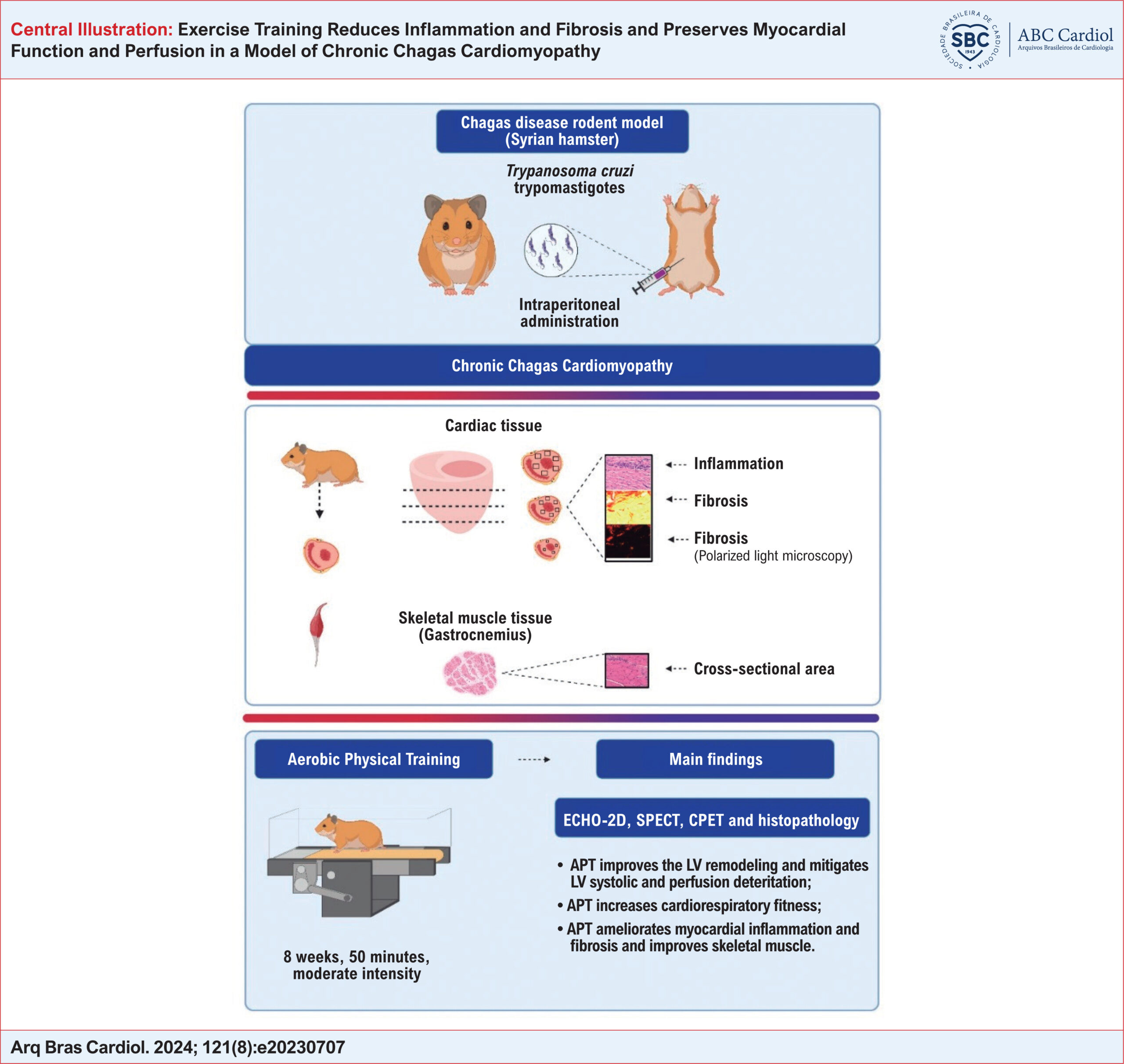
Exercise Training Reduces Inflammation and Fibrosis and Preserves Myocardial Function and Perfusion in a Model of Chronic Chagas Cardiomyopathy

Thayrine R. Damasceno et al. Denise M. Tanaka Enrico F. Magnani Rafael D. B. Oliveira … Danielle A. G. Pereira Ildernandes Vieira-Alves Virginia S. Lemos Jorge M. Cabeza Camila G. Fabricio Alessandra A. Resende Dawit A. P. Gonçalves Gustavo de Oliveira Zanetti Eduardo E. Vieira de Carvalho Marcus V. Simões Luciano F. L. Oliveira

Abstract

Background:

Chronic Chagas cardiomyopathy (CCC) is caused by an inflammatory process induced by Trypanosoma cruzi, which leads to myocarditis with reactive and reparative fibrosis. CCC progresses with myocardial perfusion abnormalities and histopathological events that affect cardiorespiratory fitness (CRF).

Objectives:

We evaluated the effects of aerobic physical training (APT) on myocardial perfusion and on morphological and functional impairments related with inflammation and fibrosis in Syrian hamsters with CCC. As a secondary objective, we analyzed the cross-sectional areas of the skeletal muscle.

Methods:

Hamsters with CCC and their respective controls were divided into four groups: CCC sedentary, CCC-APT, sedentary control and APT control. Seven months after infection, the animals underwent echocardiography, myocardial perfusion scintigraphy and cardiopulmonary exercise testing. Moderate-intensity APT was performed for fifty minutes, five times a week, for eight weeks. Subsequently, the animals were reassessed. Histopathological analysis was conducted after the above-mentioned procedures. The level of significance was set at 5% in all analyses (p<0.05).

Results:

CCC sedentary animals presented worse myocardial perfusion defects (MPD) over time, reduced left ventricle ejection fraction (LVEF) and showed more inflammation and fibrosis when compared to other groups (mixed ANOVA analysis). Conversely, APT was able to mitigate the progression of MPD, ameliorate inflammation and fibrosis and improve CRF efficiency in CCC-APT animals.

Conclusions:

Our study demonstrated that APT ameliorated cardiac dysfunction, MPD, and reduced inflammation and fibrosis in CCC hamster models. Additionally, CCC-SED animals presented skeletal muscle atrophy while CCC-APT animals showed preserved skeletal muscle CSA. Understanding APT’s effects on CCC’s pathophysiological dimensions is crucial for future research and therapeutic interventions.

  • Cardiorespiratory Fitness
  • Chagas Cardiomyopathy
  • Exercise
  • Myocardial Perfusion Imaging
  • Myocarditis
Read Full Article
Creative Commons Attribution (CC BY) Creative Commons license
09/09/2024 DOI: 10.36660/abc.20230707i Views 1
Figure 1
IJCS
Case Report

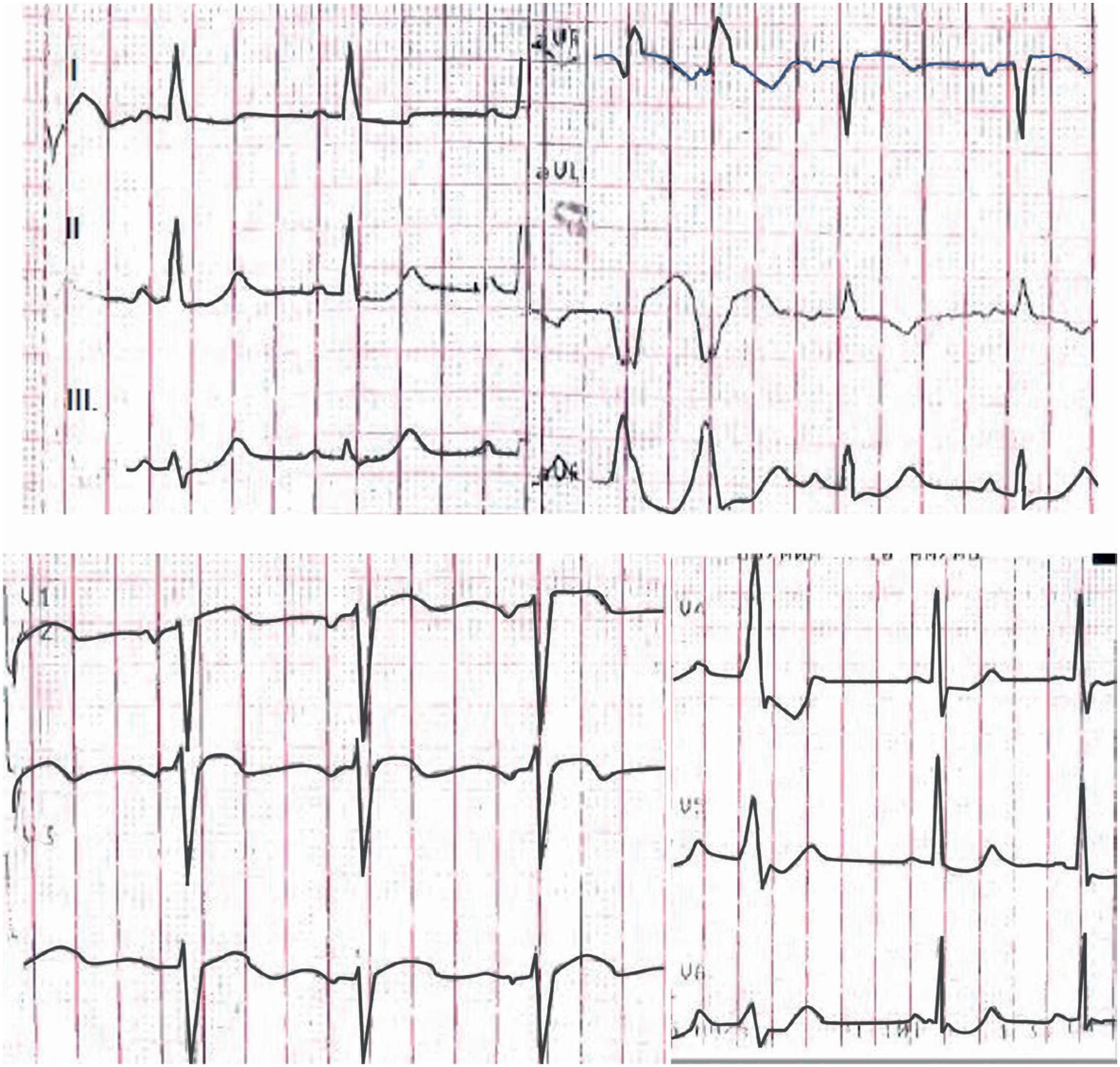
Inflammatory Cardiomyopathy as a Cause of Recurrent Ventricular Tachycardia Requiring Heart Transplant

Flora Elisa Cabello Montoya et al. Yulia Vadimovna Stavtseva Marina Teterina Anton Vorobiev Zhanna Kobalava

Introduction

The most common setting for ventricular tachycardia (VT) is ischemic heart disease, in which myocardial scar tissue is the substrate for arrhythmia., However, in some myocardial diseases (i.e., myocarditis, arrhythmogenic and dilated cardiomyopathies [DCM]), electrical abnormalities can precede apparent structural changes rendering diagnosis and treatment difficult.

The present study describes a case of inflammatory cardiomyopathy that appeared as a recurrent VT and required a heart transplant as the only therapeutic alternative after 20 years of the disease.

[…]

  • Heart Failure
  • Heart Transplantation
  • Myocarditis
  • Ventricular tachycardia
Read Full Article
Creative Commons Attribution (CC BY) Creative Commons license
12/02/2024 DOI: 10.36660/ijcs.20230081
Video 1
IJCS
Case Report

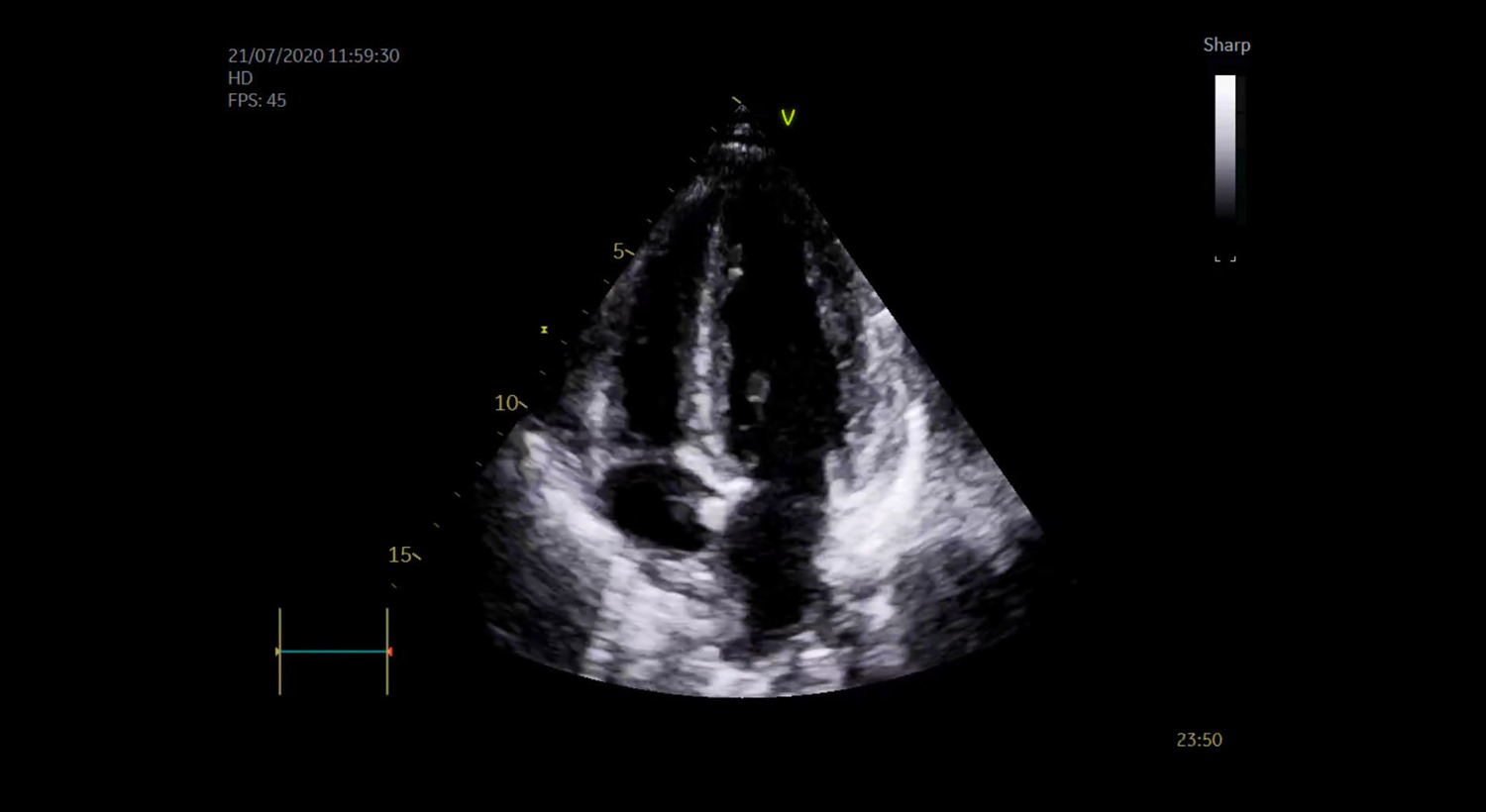
Fulminant Necrotizing Eosinophilic Myocarditis Successfully Treated With Veno-Arterial Extracorporeal Membrane Oxygenation and High-Dose Steroids

Tamara Pereira et al. Mariana Tinoco Bebiana Faria Olga Azevedo … Roberto Roncon Albuquerque António Lourenço

Abstract

Fulminant necrotizing eosinophilic myocarditis (FNEM) is a rare form of EM characterized by biventricular heart failure with hemodynamic deterioration, often requiring inotropes or mechanical circulatory support. Here, we report a case of a 43-year-old healthy woman with FNEM who was admitted with acute heart failure that rapidly progressed to cardiogenic shock and electrical storm, culminating in cardiac arrest. Early diagnosis and prompt administration of corticosteroids in combination with veno-arterial extracorporeal membrane oxygenation allowed complete recovery of biventricular systolic function.

  • Biopsy
  • Extracorporeal Membrane Oxygenation
  • Myocarditis
  • Steroids
Read Full Article
Creative Commons Attribution (CC BY) Creative Commons license
09/02/2024 DOI: 10.36660/ijcs.20230071 Views 1
Figure 1
ABCHF
Case Report

Post-COVID Tachycardia Syndrome: Could It Be Myocarditis? A Case Report of a Patient Treated with Ivabradine

Davyson Gerhardt de Souza et al. Vanessa do Amaral Tinoco Ligia Cordeiro Matos Faial Humberto Villacorta

Abstract

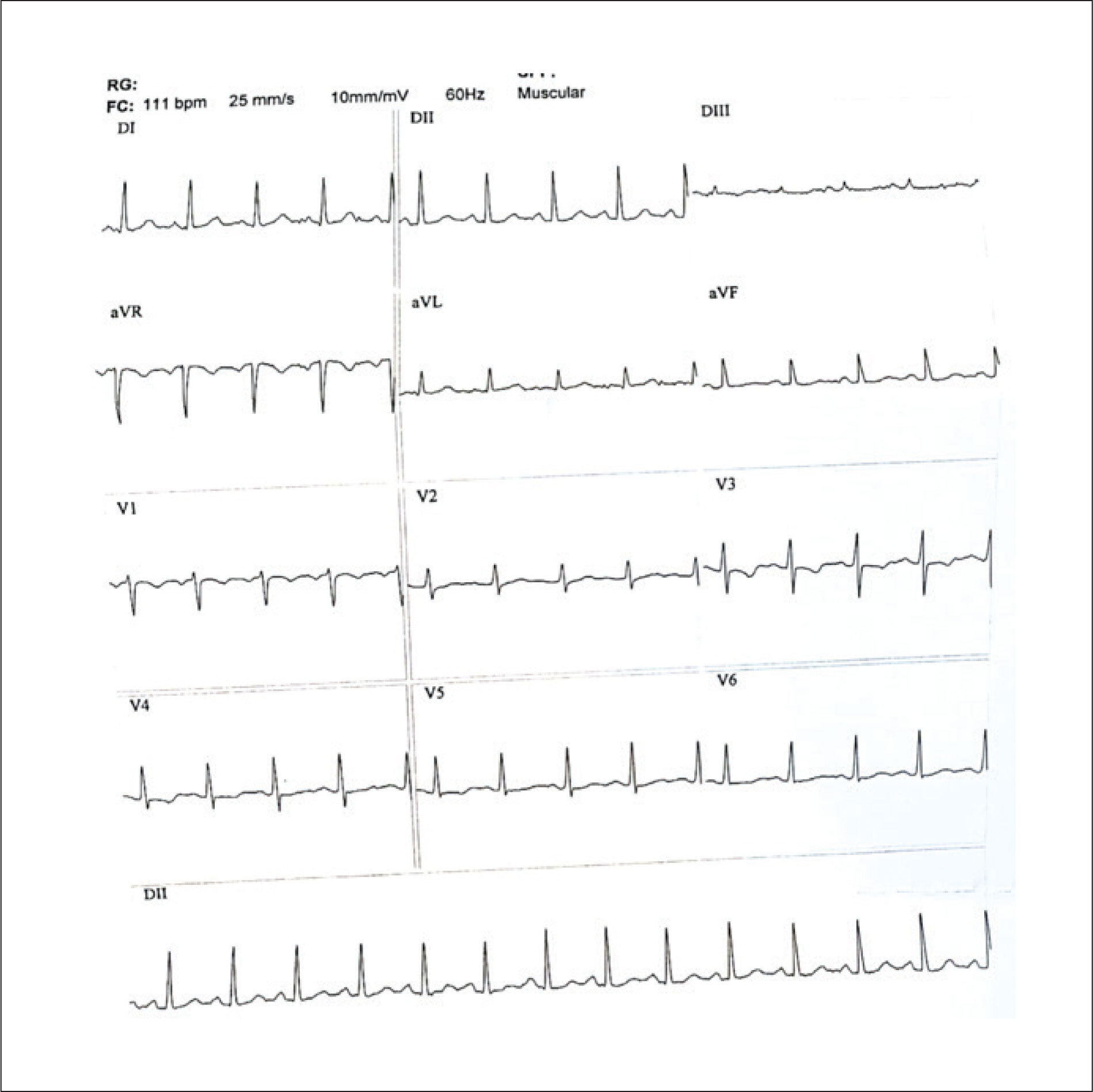
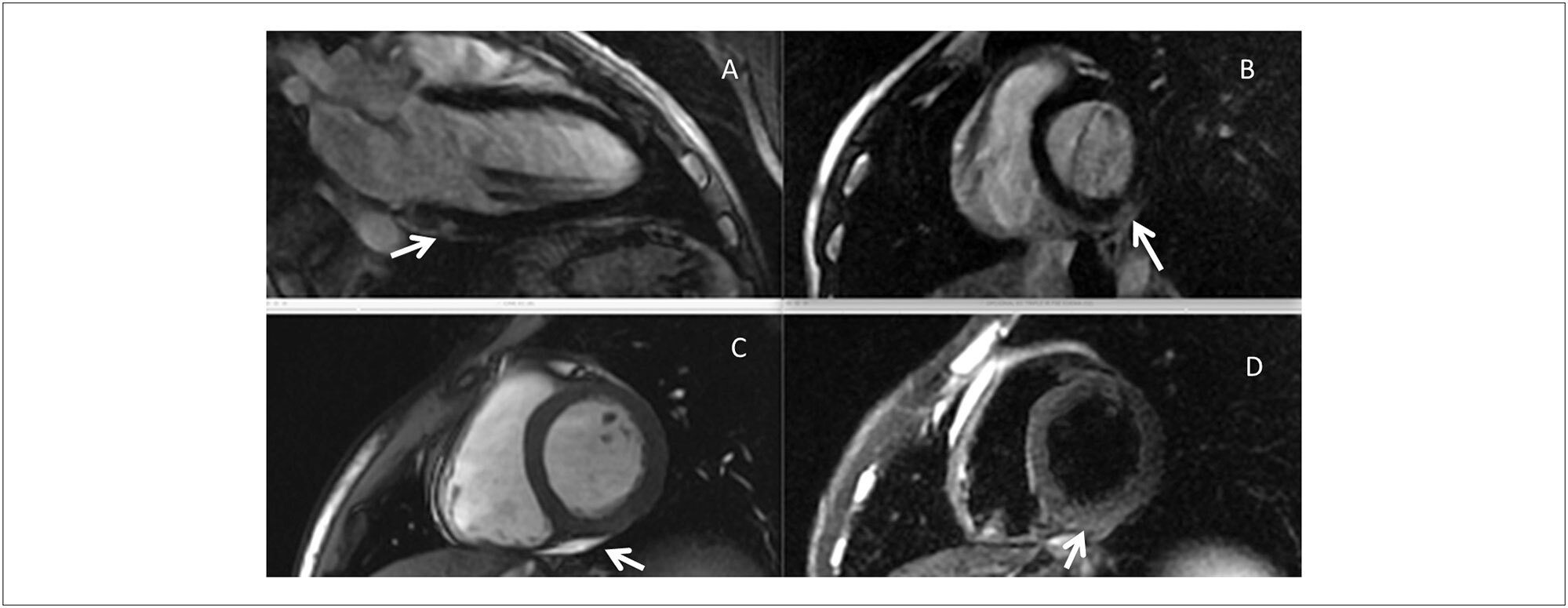
This report illustrates a case of acute myocarditis in a patient who was recently hospitalized for COVID-19. Myocarditis was suspected based on the presence of tachycardia, the only abnormality present on physical examination, as well as high levels of B-type natriuretic peptide. The diagnosis was confirmed with cardiac magnetic resonance image, which showed the presence of late enhancement, predominantly subepicardial, in the inferolateral and inferior walls of the left ventricle. The patient did not meet any of the criteria for endomyocardial biopsy (progressive heart failure, severe cardiac dysfunction, ventricular arrhythmias, atrioventricular blocks). Therefore, the treatment was focused on heart rate control. Beta-blocker is the first option for rate control, but the patient had a contraindication. Thus, ivabradine, a selective heart rate reducer was used. This drug has been poorly studied in the context of post-COVID-19 syndromes, and the present case suggests a benefit for heart rate control in patients with post-COVID-19 tachycardia syndrome.

  • Heart Injuries
  • Ivabradine
  • Myocarditis
  • Post-Acute COVID-19 Syndrome
  • Tachycardia
Read Full Article
Creative Commons Attribution (CC BY) Creative Commons license
31/12/2023 DOI: 10.36660/abchf.20230066 Views 3
ABC
Editorial

Is There a Relationship Between Acute Myocarditis and Intestinal Permeability? Two Biomarkers Help Us Answer this Question

Fernando Arturo Effio Solis et al. Adriana Brentegani Marcelo Luiz Campos Vieira

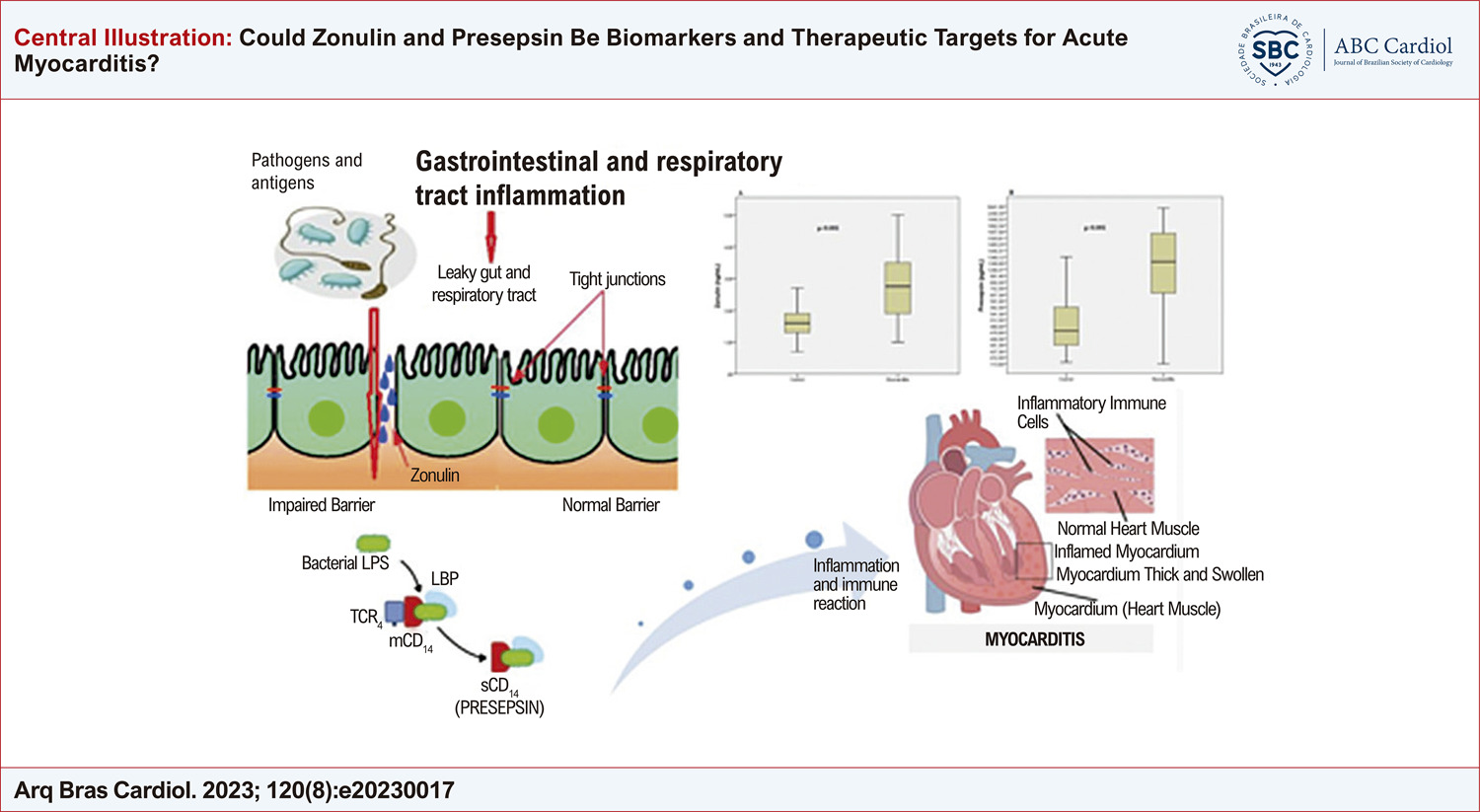
Myocarditis is an inflammatory heart disease triggered by the action of infectious agents or toxins, which lead to myocyte damage by direct action or by exacerbated activation of the immune system. It can culminate in cardiac dilation, drop in ejection fraction, arrhythmias, or even sudden death. We call “acute myocarditis,” the clinical condition that begins less than 30 days ago. According to recent records, acute myocarditis is more prevalent in young adults, mainly women, and its cause is predominantly infectious, with enterovirus, coxsackie virus, parvovirus B19, and, more recently, the COVID-19 virus as examples of viral etiological agentes., Enteropathogenic bacteria such as Salmonella, Shigella, and Campylobacter are also some of the main causes of myocarditis identified in case series. Zonulin is a protein that modulates intestinal permeability. Its expression leads to the weakening of occlusion junctions present in intestinal epithelial cells. This expression is stimulated by certain enteropathogens, facilitating the translocation of agents and toxins into the body,, leading to a state of endotoxemia. Presepsin is considered a reliable marker of low-grade endotoxemia and an indirect marker of increased intestinal permeability.,

In this observational cross-sectional study, researchers evaluated the possible relationship between intestinal permeability and acute myocarditis by analyzing serum levels of zonulin and presepsin in patients with acute myocarditis compared to individuals without the disease. Acute myocarditis was defined based on clinical history and laboratory elevation of biomarkers such as CK-MB and troponin-I. A total of 138 consecutive individuals were observed, 68 with acute myocarditis and 70 in the control group, with no difference in basic demographic characteristics between groups. C-reactive protein (CRP) levels, fibrinogen, peak CK-MB and peak troponin-I were significantly higher in the myocarditis group than in the control group. It is also interesting to mention that the group of patients with myocarditis had a significantly higher history of COVID-19 or vaccination against COVID-19 in the last six months compared to the control group. The researchers found that zonulin and presepsin levels were statistically higher in the group of patients with myocarditis (p<0.001). Even patients with higher levels of zonulin had lower left ventricular ejection fraction, higher arrhythmia rates, and greater gastrointestinal complaints. It was also observed that zonulin levels are positively related to presepsin (r=0.461), CK-MB peak (r=0.744), and troponin peak (r=0.627); such results show that zonulin and presepsin levels are positively associated with the severity of cardiac injury, as measured by CK MB and troponin markers. In multivariate binary logistic regression analysis, presepsin and zonulin were identified as independent predictors of the disease. Analysis of the ROC curve was performed, showing that the predictive values for acute myocarditis of zonulin and presepsin were statistically significant (p < 0.001, for both).

[…]

  • Biomarkers
  • Intestinal Permeability
  • Myocarditis
  • Preserpsin
  • Zonulin
Read Full Article
Creative Commons Attribution (CC BY) Creative Commons license
10/11/2023 DOI: 10.36660/abc.20230493
ABC
Editorial

Health-related Quality of Life and Long-term Outcomes after Mildly Symptomatic COVID-19: Exploring the Protocol

Lucas Borges Pereira et al. João Paulo Vilela Rodrigues Fabiana Rossi Varallo Leonardo Régis Leira Pereira

The post-COVID-19 condition has been defined by the World Health Organization as a “condition that occurs in individuals with a history of probable or confirmed SARS-CoV-2 infection, typically after three months from the onset of COVID-19, with symptoms lasting at least two months and that an alternative diagnosis can not explain.” The primary symptoms associated with this condition include fatigue, muscle and joint pain, shortness of breath, sleep difficulties, mental and neurological symptoms such as depression and anxiety, loss of smell and taste, headache, and difficulty in thinking and concentrating. , The cytopathic effect of the virus on the endothelium, along with endothelial damage as a consequence of systemic inflammation, has been associated with cardiovascular events such as myocarditis, myocardial infarction, arrhythmias, and thromboembolic events.

Various studies conducted worldwide have also found evidence of other signs and symptoms. – However, the incidence of these symptoms has shown significant variation due to the heterogeneity of the studies. This variation may be associated with factors such as the post-COVID study period, the region where the study was conducted, and the severity of the disease.

[…]

  • Arrhythmias Cardiac
  • COVID-19
  • Inflammation/complications
  • Myocardial Infarction
  • Myocarditis
  • SARS-CoV-2
  • Thromboembolism
Read Full Article
Creative Commons Attribution (CC BY) Creative Commons license
23/10/2023 DOI: 10.36660/abc.20230639
Figure 1
ABCHF
Viewpoint

Viewpoint – Brazilian Guideline for Myocarditis

Marcelo Westerlund Montera et al. Daniella Motta da Costa Dan Fabiana G. Marcondes-Braga

Diagnosis

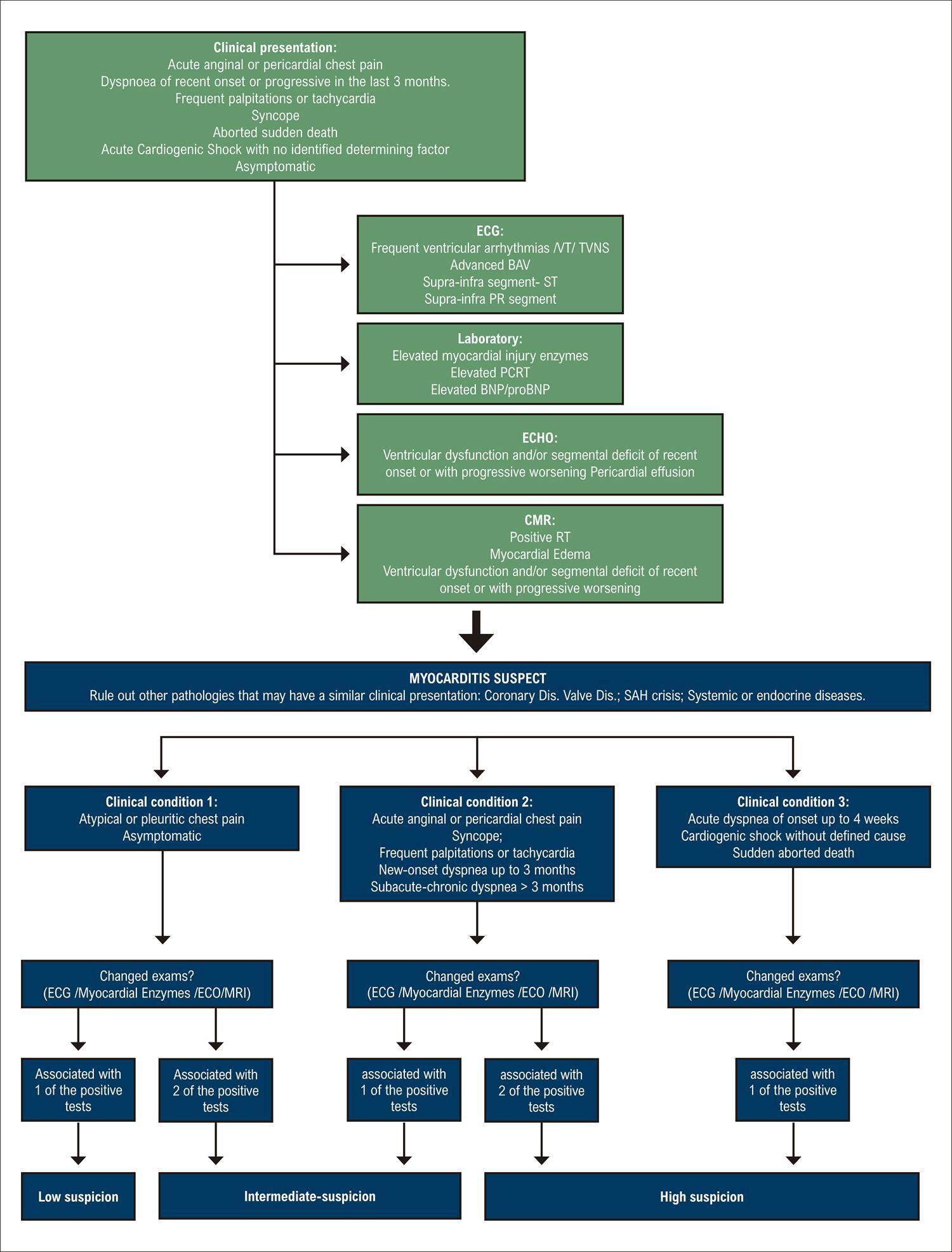
The criterion for the diagnostic confirmation of myocarditis defined by the 2013 European and Brazilian Myocarditis Guidelines is the identification of myocardial inflammation by endomyocardial biopsy (EMB)., This diagnostic criterion, used solely without the option of classifying clinical suspicion, does not mirror clinical practice in the real world, where only a minority of patients in specialized centers are referred for diagnostic investigation through EMB with diagnostic confirmation or exclusion, and most have the diagnosis of clinical suspicion of myocarditis. As an innovation, the 2022 Brazilian Guideline introduces an organizational chart to establish the degrees of suspected diagnosis of myocarditis, which correspond to clinical practice in the real world, where most patients will have a diagnosis of suspected myocarditis rather than confirmation. This organization chart is based on clinical history, myocardial injury biomarkers, electrocardiogram, echocardiogram, and cardiac magnetic resonance, to establish a diagnostic suspicion of myocarditis (), which will define different approaches regarding follow-up, treatment, and the need for EMB. Patients with low suspicion of myocarditis have a favorable prognosis with a low risk of developing ventricular dysfunction or cardiovascular mortality, and clinical follow-up is indicated without the need for cardioprotective drugs. Cardioprotective drugs and clinical and ventricular function follow-up by echocardiogram and magnetic resonance imaging are indicated for patients with an intermediate degree of suspicion of miocarditis. Patients with high diagnostic suspicion or with intermediate suspicion with worsening clinical or ventricular function have a worse long-term prognosis, with lower survival, being indicated in this group the EMB for the investigation of the inflammatory activity and the etiological agent to evaluate treatment with immunosuppressants and therapy directed towards the identified etiological factor (). With the diagnostic suspicion classification, the new Guideline approaches clinical practice, standardizing the clinical management of most patients with suspected myocarditis and reserving the indication of EMB for those with greater potential for clinical benefit from immunosuppressive therapy.

[…]

  • Diagnosis
  • Myocarditis
  • Treatment
Read Full Article
Creative Commons Attribution (CC BY) Creative Commons license
19/09/2023 DOI: 10.36660/abchf.20230037 Views 1
Central Illustration
ABC
Original Article

Could Zonulin and Presepsin Be Biomarkers and Therapeutic Targets for Acute Myocarditis?

Kenan Toprak et al. Mehmet Inanır Tolga Memioğlu Mustafa Kaplangoray … Ali Palice Mustafa Begenc Tascanov

Abstract

Background

The diagnosis of acute myocarditis is usually made with clinical and laboratory parameters. This can sometimes be mixed up with diseases that have similar clinical features, making the diagnosis difficult. Therefore, the use of more specific biomarkers, in addition to the classically used biomarkers such as troponin, will accelerate the diagnosis. In addition, these biomarkers may help us to understand the mechanism of myocarditis development and thus predict unpredictable clinical outcomes.

Objective

This study aims to reveal the possible relationship between intestinal permeability and acute myocarditis.

Methods

In this study, we wanted to evaluate serum levels of zonulin and presepsin in 138 consecutive subjects, including 68 patients with myocarditis and another 70 as the control group, matched for age, gender, and cardiovascular risk factors. P-values <0.05 were considered to be statistically significant.

Results

Compared to the control group, zonulin and presepsin were significantly higher in the patient group with myocarditis (p < 0.001, for all). Zonulin levels were positively correlated with presepsin, peak CK-MB, and peak troponin levels (r = 0.461, p < 0.001; r = 0.744, p < 0.001; r = 0.627, p < 0.001; respectively). In regression analysis, presepsin and zonulin were determined as independent predictors for myocarditis (OR 1.002, 95% CI 1.001-1.003, p = 0.025; OR 12.331, 95% CI 4.261-35.689; p < 0.001; respectively). The predictive value of acute myocarditis of presepsin and zonulin in ROC curve analysis was statistically significant (p < 0.001, for both).

Conclusion

This study showed that zonulin and presepsin could be biomarkers that can be used in the diagnosis of myocarditis, and they can also be therapeutic targets by shedding light on the developmental mechanism of myocarditis.

  • Biomarkers
  • Myocarditis
  • Permeability
Read Full Article
Creative Commons Attribution (CC BY) Creative Commons license
07/08/2023 DOI: 10.36660/abc.20230017 Views 1
Figure 1
ABCHF
Viewpoint

Advances in Diagnosis and Treatment of Cancer Immunotherapy and CAR-T Cell–Related Myocarditis

Ariane Vieira Scarlatelli Macedo et al. Aurea Grippa Katia Regina Medeiros Luz Nathalia Coelho de Castro Nunes Sandrigo Mangini

Immune checkpoint inhibitors

The incidence of myocarditis in patients using ICI is low, around 1%. However, several series describe mortality between 30% and 40%. This is the primary reason that every effort is made for myocardial protection and early identification of signs of inflammatory response onset, in addition to understanding of T cell and macrophage stimulation and cytokine production., The onset of the lesion is most frequently observed observed early after the first dose of immunotherapy with a median time to onset of 30 days, with an average resolution of 90 to 120 days. Patients over 60 years of age are the most affected in the majority of series.

Patients with suspected ICI-associated myocarditis may develop from asymptomatic conditions with increased biomarkers to severe presentations including cardiogenic shock, ventricular arrhythmias, and sudden death. Dyspnea and asthenia are the most common complaints related to ICI-associated myocarditis; chest pain may also occur. The combination of ICI appears to be an important risk factor compared to monotherapy.

[…]

  • Adoptive Immunotherapy
  • Immune Checkpoint Inhibitors
  • Immunotherapy
  • Myocarditis
  • Neoplasms
Read Full Article
Creative Commons Attribution (CC BY) Creative Commons license
20/07/2023 DOI: 10.36660/abchf.20230025
Figure 1
ABCIC
Editorial

Hypothesis on the Pathogenesis of Sub-Epicardial Scar Associated with Myocarditis

João A. C. Lima et al. David A. Bluemke Joshua Hare Katherine Wu … Leonardo Sara Carlos E. Rochitte

The typical pattern of myocardial injury and subsequent fibrosis in patients with viral myocarditis is subepicardial. However, other patterns of injury and scar, as detected by contrast enhanced magnetic resonance imaging (cMRI), commonly occur, including sub-endocardial injury mimicking the ischemic heart disease pattern, and mid-wall circumferential scar seen more often in patients with advanced disease and dilated cardiomyopathies. In patients with myocarditis, who present malignant arrhythmias in the scenario of a preserved left ventricle (LV) function, it is not uncommon to find the typical subepicardial scar pattern in the presence of normal or mildly abnormal LV systolic function. However, the pathogenesis of sub-epicardial scars in patients with myocarditis accompanied or not by significant LV dysfunction remains obscure.

In addition to myocarditis, subepicardial myocardial scar is found in association with various disease processes that are not believed to be secondary to a virally induced myocardial injury. The list includes disease processes with disparate etiologies, such Duchenne and Fabry’s disease, Chagas cardiomyopathy, and rheumatic heart disease, among others.– Therefore, different theories have been proposed to explain this pattern of scar formation in patients with different pathologies. Increase in excessive regional stress and local perfusion alterations have been postulated as contributing mechanisms, but both fall short as main mechanisms. Calculated wall stress is greater at the level of the subendocardium, and reversible perfusion defects secondary to ischemia are commonly subendocardial. After scar formation, perfusion is diminished in proportion to capillary density reduction (fixed defect), but that does not implicate local ischemia as the pathogenetic mechanism underlying subepicardial scar formation.

[…]

  • Cardiac resonance
  • COVID-19
  • epicardial injury
  • Myocarditis
Read Full Article
Creative Commons Attribution (CC BY) Creative Commons license
31/03/2023 DOI: 10.36660/abcimg.20230001i Views 2
Figure 1
IJCS
Original Article

Covid-19 and Heart Involvement: A Systematic Review of Literature

Francisco Cezar Aquino de Moraes et al. Rafael Reis do Espírito Santos Joel Campos de Moraes Aline Carolina Castro Mota … Fernando Rocha Pessoa Dayanne Coutinho Sarges Davi Alexandrino Moraes Dilma do Socorro Moraes de Souza

Abstract

Background

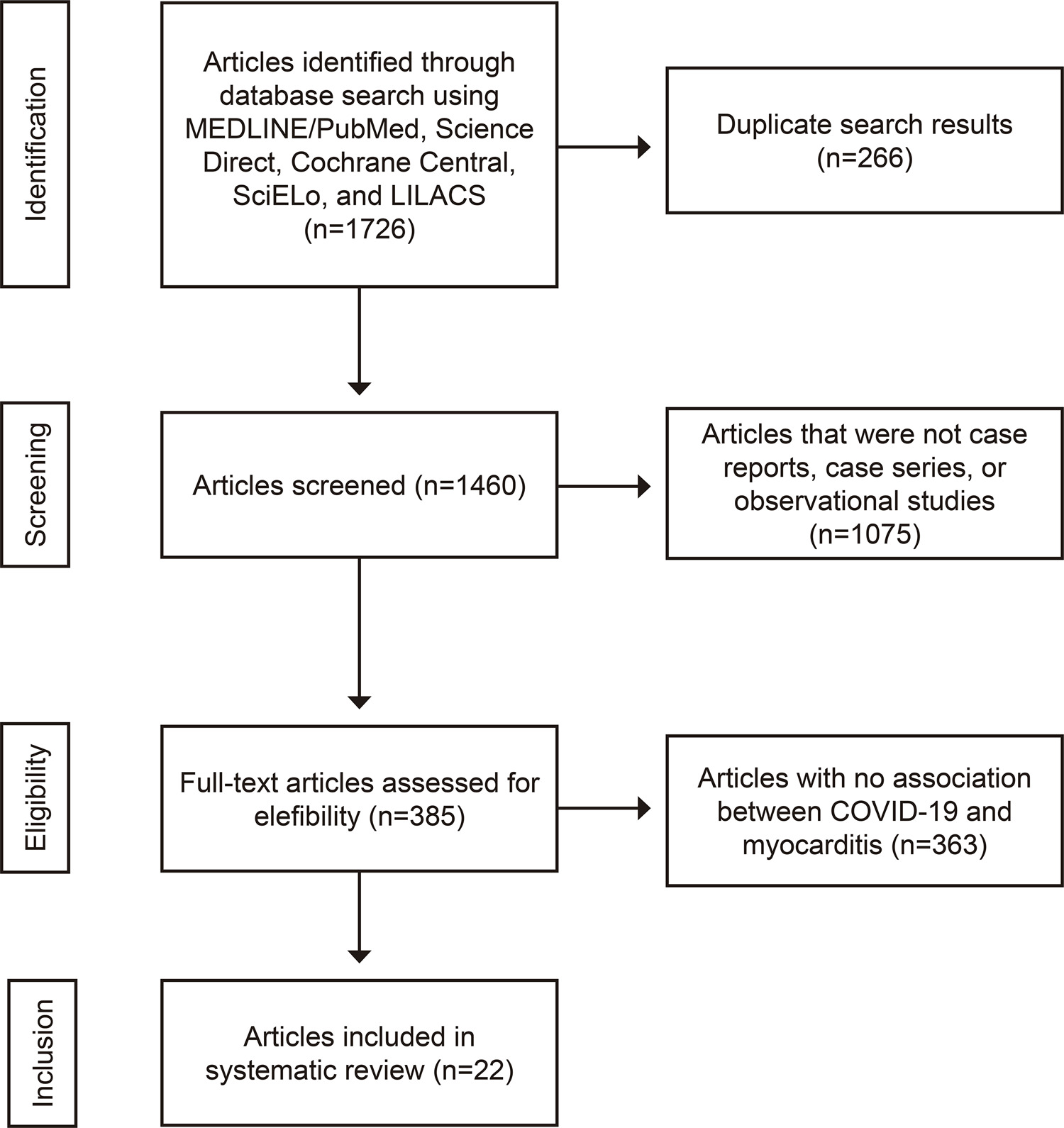
Recent reports in the literature have indicated that infection by coronavirus disease 2019 (COVID-19) causes cardiac complications, such as heart failure, arrhythmia, myocardial infarction, and even fulminant myocarditis. These complications have been identified as the cause of death in some patients infected with SARS-CoV-2.

Objectives

To analyze echocardiographic and electrocardiographic changes, treatments used, and clinical outcomes in patients with myocarditis and COVID-19.

Methods

The items described for Preferred Reporting Items for Systematic Reviews and Meta-Analyses (PRISMA) were followed. This review included articles in English, Portuguese, and Spanish that reported cardiac involvement, injury, or myocardial inflammation in patients who acquired COVID-19 (SARS-CoV-2).

Results

Five databases were consulted to find 1,726 articles. After applying the eligibility criteria, a total of 22 studies were considered qualified. ST-segment (section of the electrocardiogram corresponding the end of the S wave to the beginning of the T wave) elevation and tachyarrhythmia were the most common changes found in the electrocardiographic analysis of patients affected with COVID-19. Concerning echocardiography, there was a high frequency of decreased ejection fraction and occurrence of pericardial effusion.

Conclusion

This systematic review provides a potential tool for the analysis of cardiac changes and implications caused in patients affected by SARS-CoV-2 infection, with emphasis on the presence of tachyarrhythmia on electrocardiogram (ECG) and decreased ejection fraction on echocardiogram.

  • COVID-19
  • Myocarditis
  • systematic review
Read Full Article
Creative Commons Attribution (CC BY) Creative Commons license
03/03/2023 DOI: 10.36660/ijcs.20220035 Views 1
ABC
Editorial

Persistent Chest Pain after COVID-19 Infection. Can Strain Echo Parameters Play a Role in Diagnosis and Prognostication?

Marisa Trabulo

Almost three years after the outbreak of the COVID-19 pandemic, the number of serious cases is decreasing with the large-scale implementation of the vaccine, but many long-term side effects are still affecting many patients who have previously contracted the virus.

In a 2021 meta-analysis, the five most common long-term effects of COVID-19 infection were fatigue (58%), headache (44%), attention disorder (27%), hair loss (25%), and dyspnea (24%). Chest pain was present in 16% of the patients, and a similar prevalence was found in other studies.

[…]

  • COVID-19
  • Myocarditis
  • Stress Echocardiographies
Read Full Article
Creative Commons Attribution (CC BY) Creative Commons license
10/02/2023 DOI: 10.36660/abc.20220860 Views 1
Figure 1
ABC
Original Article

Strain Echocardiographic Evaluation of Myocardial Involvement in Patients with Continuing Chest Pain after COVID-19 Infection

Emre Özdemir et al. Uğur Karagöz Sadık Volkan Emren Sedat Altay … Nihan Kahya Eren Selin Özdemir Mehmet Tokaç

Abstract

Background

A new clinical manifestation called post or long coronavirus disease (p/l COVID) has walked into our lives after the acute COVID-19 phase. P/l COVID may lead to myocardial injury with subsequent cardiac problems. Diagnosing these patients quickly and simply has become more important due to the increasing number of patients with p/l COVID.

Objectives

We compared strain echocardiography (SE) parameters of patients who suffered from atypical chest pain and had sequel myocarditis findings on cardiac magnetic resonance (CMR). We aimed to investigate the value of SE for detection of myocardial involvement in patients with p/l COVID.

Methods

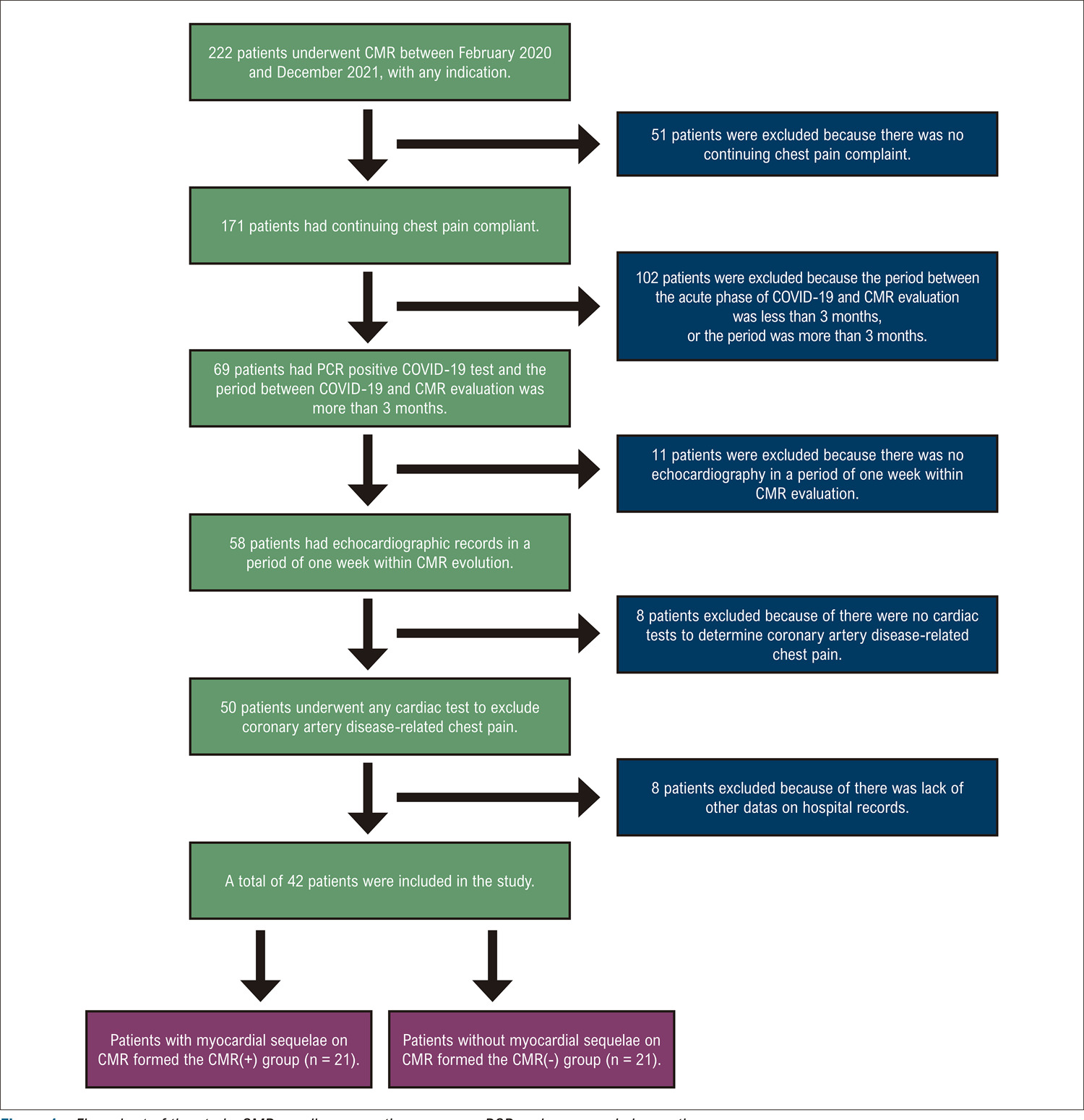
A total of 42 patients were enrolled. Our population was separated into two groups. The CMR(-) group (n = 21) had no myocardial sequelae on CMR, whereas the CMR(+) group had myocardial sequelae on CMR (n = 21). The predictive value of SE for myocarditis was also evaluated by age-adjusted multivariate analysis. P values < 0.05 were considered statistically significant.

Results

When compared with left ventricular ejection fraction (LVEF), global longitudinal strain (GLS) and global circumferential strain (GCS) had a stronger relationship (LVEF, p = 0.05; GLS, p < 0.001; GCS, p < 0.001) with p/l COVID associated myocardial involvement. GLS < 20.35 had 85.7% sensitivity and 81% specificity; GCS < 21.35 had 81% sensitivity and 81% specificity as diagnostic values for myocardial sequelae detected with CMR. While there was no difference between the groups in terms of inflammatory markers (C-reactive protein, p = 0.31), a difference was observed between biochemical markers, which are indicators of cardiac involvement (brain natriuretic peptide, p < 0.001).

Conclusion

SE is more useful than traditional echocardiography for making diagnosis quickly and accurately in order not to delay treatment in the presence of myocardial involvement.

  • COVID-19
  • Echocardiography
  • Myocarditis
Read Full Article
Creative Commons Attribution (CC BY) Creative Commons license
09/01/2023 DOI: 10.36660/abc.20220287 Views 2
ABC
Letter to the Editor

Acute Myocarditis after mRNA COVID-19 Vaccine: A Correspondence

Rujittika Mungmunpuntipantip et al. Viroj Wiwanitkit

Dear Editor,

We would like to share ideas on the publication “Acute Myocarditis Following mRNA COVID-19 Vaccine.” Gomes et al. examine the potential side effects of COVID-19 vaccination and the current state of acute myocarditis. COVID-19 immunization will probably cause heart abnormalities. We agree that this is a possibility. However, it should be noted that there is frequently inadequate information on the health/cardiac status of the troublesome cases before immunization. Although a post-vaccination analysis, which includes an EKG, can confirm the presence of myocarditis, it is impossible to establish a link between heart disease and the COVID-19 vaccine. There is still a potential that you will have medical issues simultaneously. Dengue fever, for example, can induce cardiac problems if it co-occurs.

[…]

  • COVID-19
  • mRNA
  • Myocarditis
  • Vaccine
Read Full Article
Creative Commons Attribution (CC BY) Creative Commons license
19/12/2022 DOI: 10.36660/abc.20220331
Figure 1
ABCHF
Review Article

Myocarditis in Cancer Patients: A Review of an Emerging Problem in Cardio-Oncology

Wolney de Andrade Martins et al. Eduardo Schlabendorff

Abstract

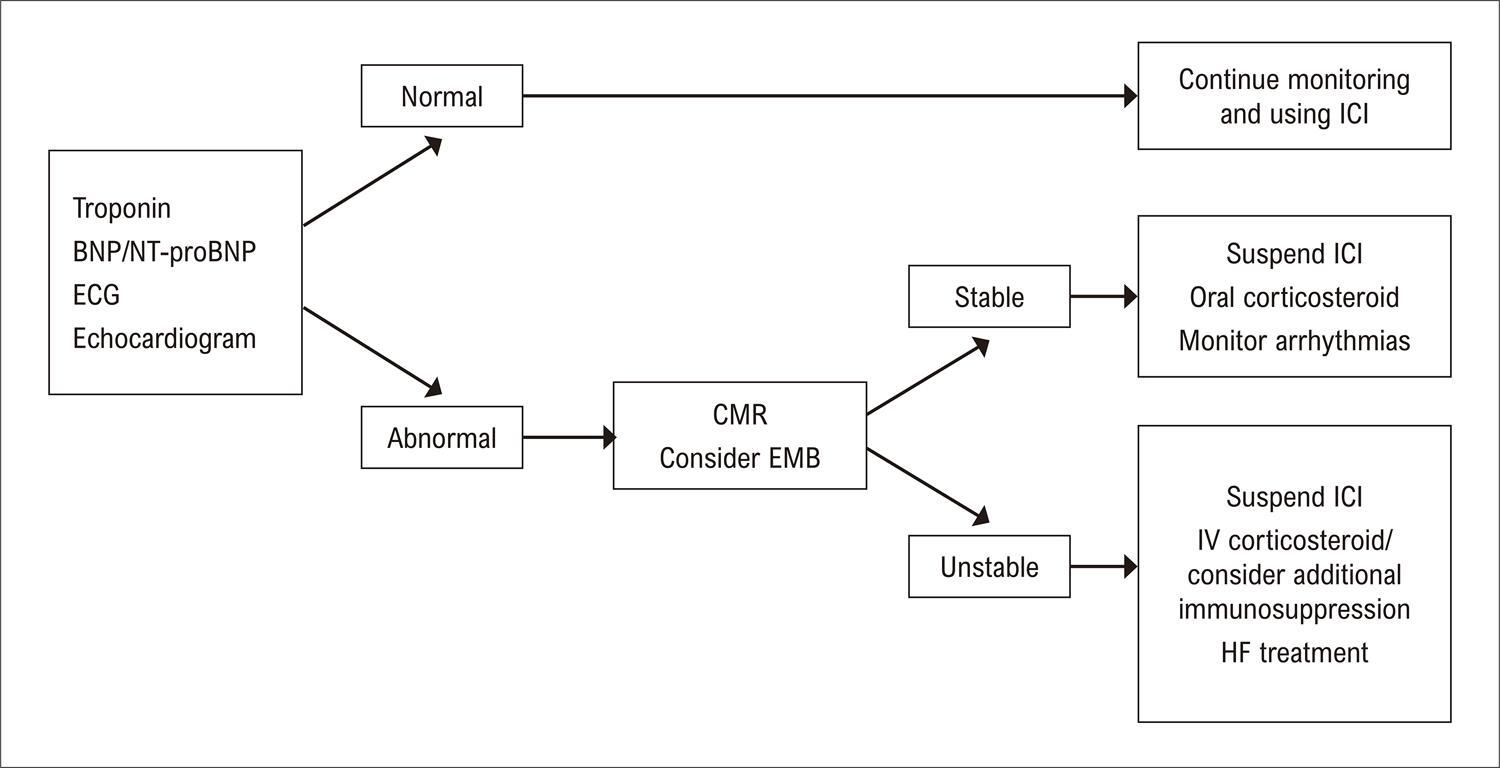
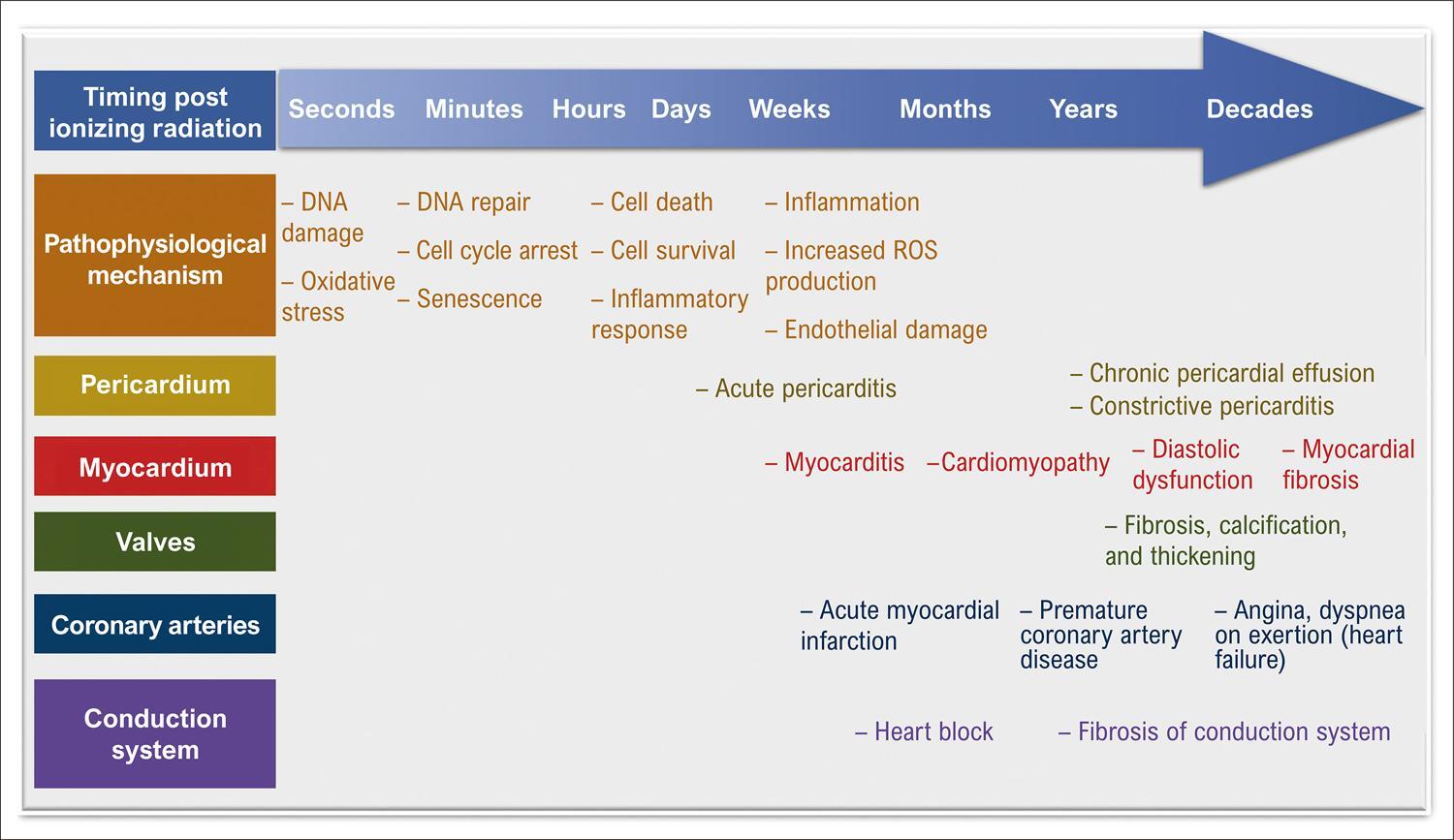
Patients with cancer have a multitude of etiological factors for developing myocarditis. Classical or conventional chemotherapy, radiation therapy, and, more recently, immunotherapy have all been described as possible etiologies of myocarditis. Furthermore, patients with cancer are immunosuppressed and more susceptible to bacterial and viral infections that can cause myocarditis. This narrative review addresses the many possible causes of myocarditis in patients with cancer. Particular emphasis will be given to immune checkpoint inhibitor (ICI)-induced myocarditis. ICI myocarditis generally affects male patients, over the age of 50, who are being treated for lung cancer, melanoma, or renal cell carcinoma and have multiple comorbidities. Clinical manifestations present early, with elevated troponin and electrocardiogram changes. The case fatality rate is high. Treatment consists of discontinuation of the offending ICI and corticosteroid therapy. Myocarditis due to cyclophosphamide, anthracyclines, 5-fluorouracil, cisplatin, carboplatin, proteasome inhibitors, immunomodulators, tyrosine kinase inhibitors, and radiation therapy will also be addressed.

  • Cardiotoxicity
  • Drug Therapy
  • Immune Checkpoint Inhibitors
  • Immunotherapy
  • Myocarditis
  • Neoplasms
Read Full Article
Creative Commons Attribution (CC BY) Creative Commons license
18/12/2022 DOI: 10.36660/abchf.20230009 Views 3
Figure 1
ABCHF
Original Article

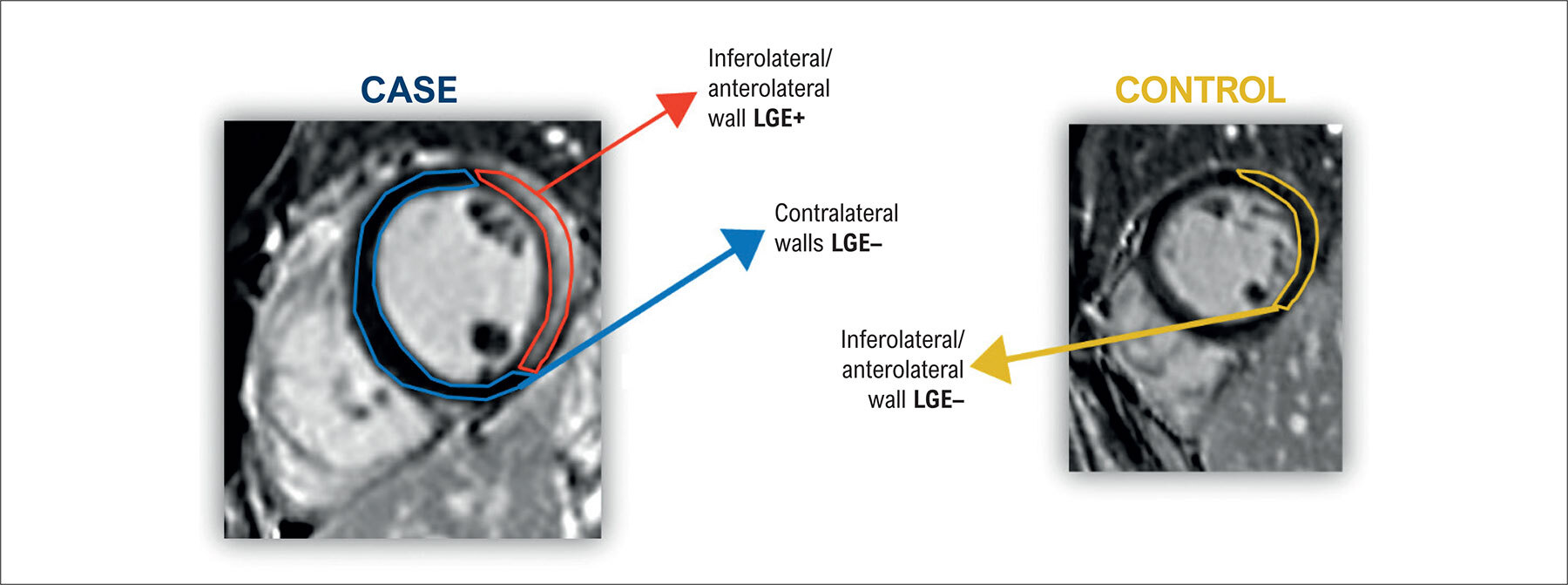
Myocarditis: Whole Heart Involvement Revealed by Cardiac Magnetic Resonance Mapping. A Case-control Study

Tiago Bartzen Pereira et al. Maurício Balk Gabriela Bartzen Pereira Victória Schmidt Ramos … Luciano Giordani Paulo R. Schvartzman Luís Beck-da-Silva

Abstract

Background:

Late gadolinium enhancement (LGE) on cardiac magnetic resonance (CMR) only demonstrates regional abnormalities in myocarditis and does not adequately assess diffuse myocardial involvement.

Objective:

To evaluate possible differences in T1 and T2 mapping between ventricular wall segments with and without LGE in patients with myocarditis, compared to control subjects.

Methods:

In a case-control design, 22 patients with CMR evidence of myocarditis and 18 controls with normal CMR were assessed. The study included: (1) T1 mapping (shortened modified Look-Locker Inversion recovery); (2) LGE; (3) T2 mapping (steady-state free precession); and (4) the T2 signal intensity of the myocardium divided by that of skeletal muscle (T2 ratio). T1 and T2 mapping of affected (LGE+) and unaffected (LGE−) ventricular segments of cases were compared, as were those of controls versus cases. The level of significance was set at a two-sided alpha level of 0.05.

Results:

Comparing only patients with myocarditis, ventricular segments with evidence of late enhancement (LGE+) showed a mean T1 value significantly different from that of unaffected (LGE−) ventricular walls (1057 ± 30 versus 1028 ± 48; p = 0.0001). Comparing myocarditis versus controls, the mean T1 value of negative LGE segments in cases (myocarditis +) was significantly different from the mean of the corresponding walls in controls (1028 ± 48 versus 996 ± 10; p < 0.0001). The mean T2 maps of negative LGE walls in cases were not statistically different from those of controls (49 ± 4 versus 49 ± 1; p = 0.9229).

Conclusion:

This case-control study suggests that T1 mapping demonstrates significant involvement of the myocardium of patients with myocarditis, even in the absence of LGE. Specifically, T1 mapping could reveal diffuse myocardial involvement not evidenced by LGE imaging. T2 mapping was noncontributory.

  • Contrast Media
  • Magnetic Resonance Imaging
  • Myocarditis
Read Full Article
Creative Commons Attribution (CC BY) Creative Commons license
01/12/2022 DOI: 10.36660/abchf.20220075 Views 2
Figure 1
ABC
Research Letter

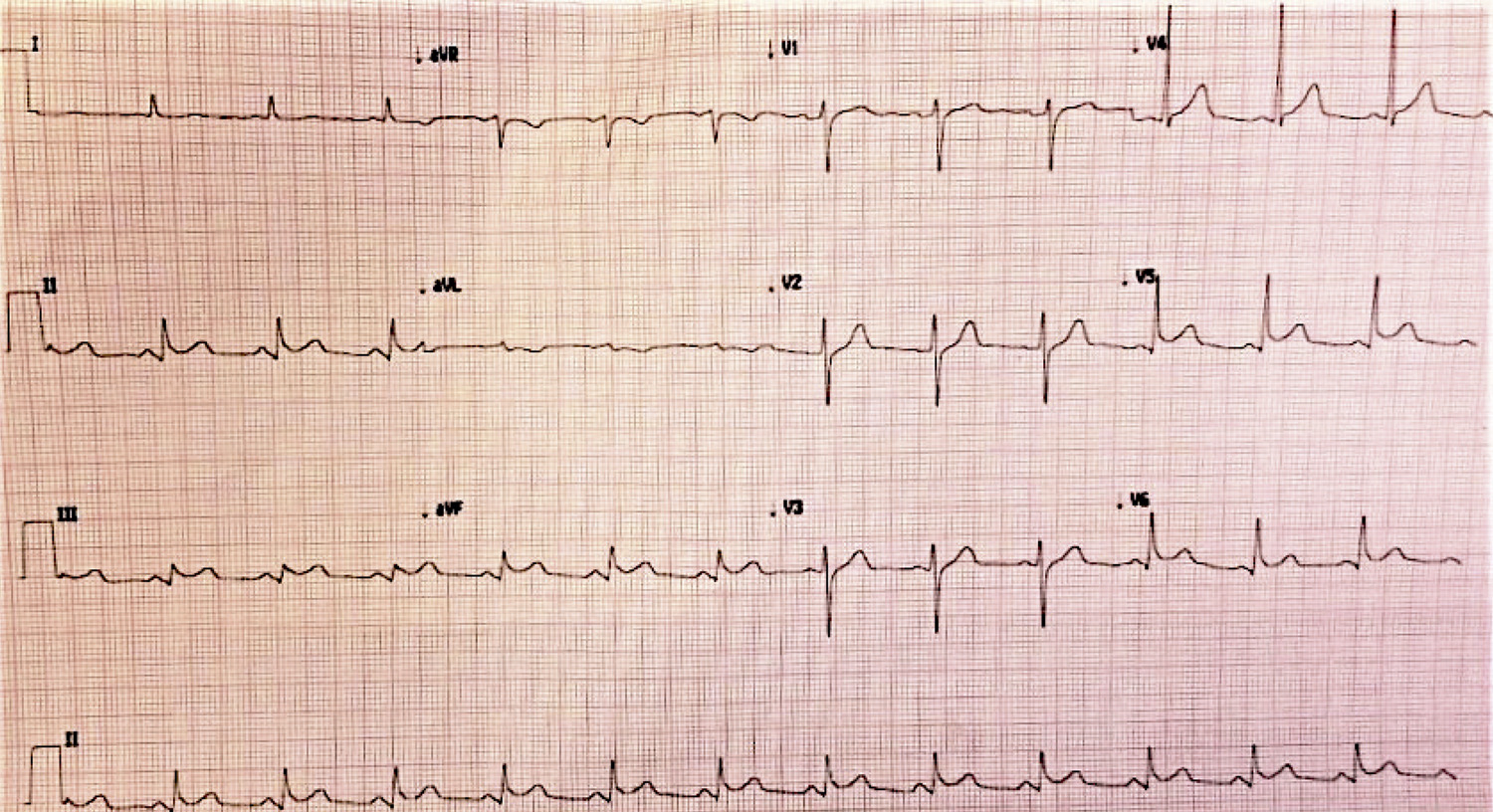
COVID-19 Myocarditis Mimicking ST-Segment Elevation Myocardial Infarction

Anthony Medina Conceição et al. César A. C. Pereira Maria Júlia Rahal Walther Yoshiharu Ishikawa Carlos E. Rochitte

Introduction

The new SARS-CoV-2, that causes the coronavirus disease 2019 (COVID-19) has proven to be a virus that affect not only the respiratory system, but to cause several systemic manifestations, including cardiovascular ones. , Patients with previous cardiovascular disease who develop myocardial injury usually have worse outcomes, , such as acute coronary syndrome (ACS) , and myocarditis. – Myocarditis is mostly asymptomatic but can manifest with angina, cardiac failure, and arrythmias. –

The clinical diagnosis of myocarditis without the aid of complementary exams is usually difficult to be made. A meta-analysis with 2,866 with myocardial infarction without obstructive coronary artery disease (MINOCA) who underwent cardiac magnetic resonance (CMR) showed a prevalence of myocarditis of 34.5%. In COVID-19, a study carried out in Germany reported that 60% of recently recovered patients had signs of myocardial inflammation at CMR.

[…]

  • Acute coronary syndrome
  • COVID-19
  • Magnetic Resonance Imaging
  • Myocarditis
Read Full Article
Creative Commons Attribution (CC BY) Creative Commons license
18/07/2022 DOI: 10.36660/abc.20210749 Views 1
Figure 1
ABCIC
Case Report

Late Presentation of COVID-19-Associated Transmural Myocardial Infarction with Non-Obstructive Coronary Atherosclerosis

Jaime Paula Pessoa Linhares Filho et al. Matheus Cardoso de Aragão João Bosco Breckenfeld Bastos Filho Ricardo Paulo de Souza Rocha … Fábio Holanda Lacerda Francisco de Assis Carvalho de Santana

Introduction

There has been an increased incidence of coronavirus-associated thromboembolic events during the coronavirus disease 2019 (COVID-19) pandemic. However, most cases presented with venous thrombotic events, mainly deep vein thrombosis and pulmonary thromboembolism, whereas arterial and coronary phenomena are rare.

Several pathophysiological factors can explain the relationship between COVID-19 infection and increased embolic phenomena. The main factors are increased inflammatory mediators, the release of prothrombotic factors, and endothelial dysfunction.,

[…]

  • Biomarkers
  • Coronavirus
  • COVID-19
  • Myocardial Infarction
  • Myocarditis
Read Full Article
Creative Commons Attribution (CC BY) Creative Commons license
13/06/2022 DOI: 10.47593/2675-312X/20223502eabc290 Views 3
Figure 1
ABC
Research Letter

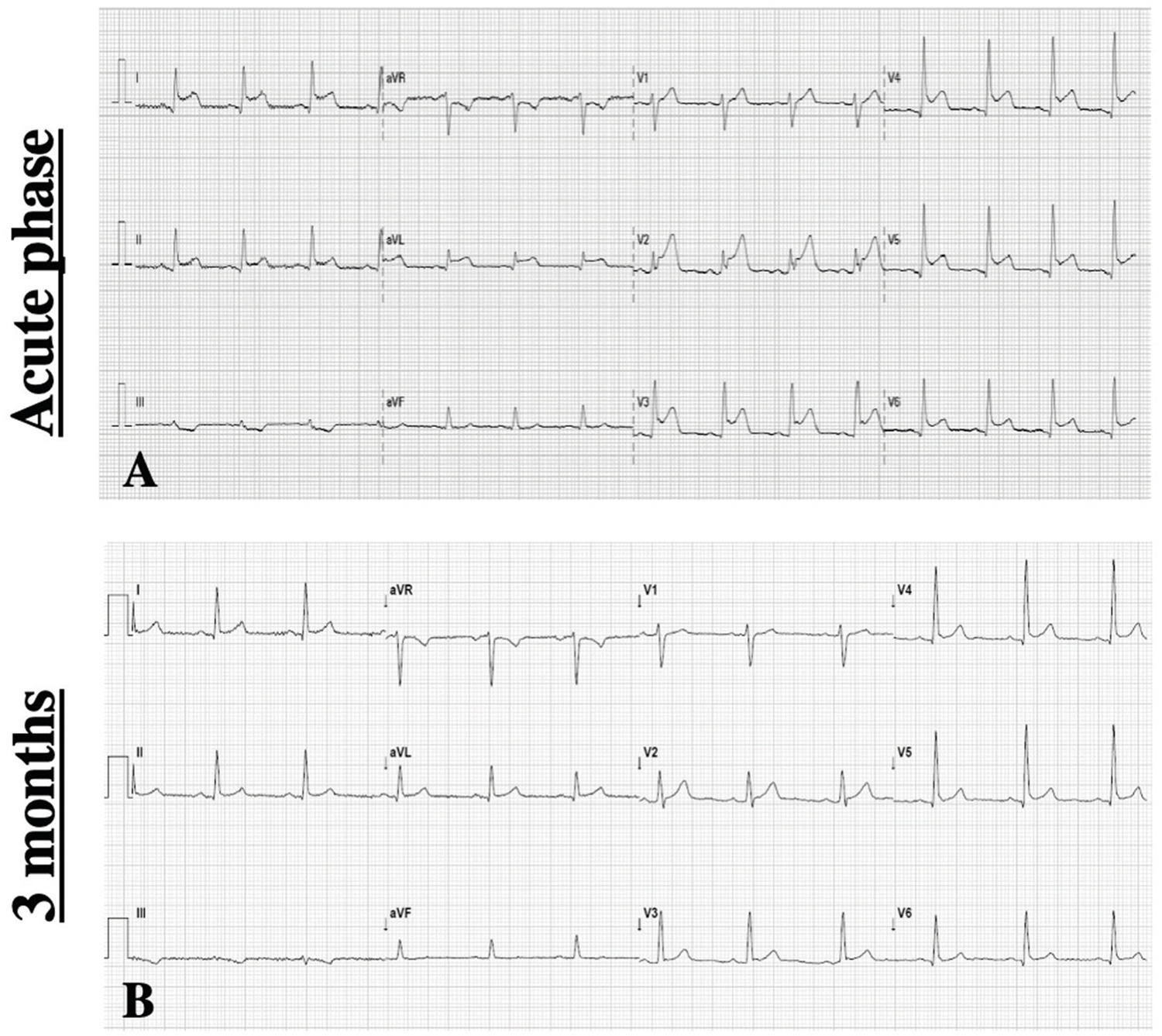
Acute Myocarditis Following mRNA COVID-19 Vaccine

Daniel A. Gomes et al. Rita R. Santos Pedro Freitas Mariana S. Paiva … Jorge Ferreira Marisa Trabulo

Introduction

Vaccination is one of the most important breakthroughs of modern medicine and constitute a major advance in the prevention of infectious diseases.Overall, vaccines are effective and have an excellent general safety profile.In fact, reports of severe adverse effects following vaccination are extremely rare and idiosyncratic.

As the vaccine’s mechanism of action is based on the host immune response, a close relationship with autoimmunity cannot be disregarded.Cases of immunologic reactogenicity, such as Guillain-Barré syndrome and acute myocarditis following vaccination have been previously reported.,

[…]

  • Coronavirus-19
  • COVID-19
  • Diagnostic Imaging
  • Immunogenicity Vaccine
  • Molecular Mimicry
  • Myocarditis
  • Vaccine/adverse effects
Read Full Article
Creative Commons Attribution (CC BY) Creative Commons license
29/04/2022 DOI: 10.36660/abc.20210469 Views 1

Could not load more articles. Please try again.

How to cite this article

EndNote RIS

Electronic Document Format (Vancouver)

Costa GCFO, Rodriguez JGV, Costa GFO, Pimentel AML, Mesquita ET. Global Mapping of Research on Artificial Intelligence Applied to Myocarditis. ABC Heart Fail Cardiomyop 2026;6:e20260016.

Electronic Document Format (ABNT)

Costa, Guilherme Cesar Fernandes de Oliveira da; Rodriguez, Jose Gregorio Valero; Costa, Giulia Fernandes de Oliveira da; Pimentel, Adriana Munford Lima; Mesquita, Evandro Tinoco. Global Mapping of Research on Artificial Intelligence Applied to Myocarditis. ABC Heart Fail Cardiomyop, v. 6, e20260016, Aug. 2026.

Electronic Document Format (APA)

Costa, G. C. F. O. , Rodriguez, J. G. V., Costa, G. F. O. , Pimentel, A. M. L., & Mesquita, E. T. (2026). Global Mapping of Research on Artificial Intelligence Applied to Myocarditis. ABC Heart Fail Cardiomyop, 6, e20260016.

Electronic Document Format (ISO)

Costa, Guilherme Cesar Fernandes de Oliveira da and Rodriguez, Jose Gregorio Valero and Costa, Giulia Fernandes de Oliveira da and Pimentel, Adriana Munford Lima and Mesquita, Evandro Tinoco. Global Mapping of Research on Artificial Intelligence Applied to Myocarditis. ABC Heart Fail Cardiomyop [online]. 2026, vol. 6, [cited 2026-10-14], e20260016. Available from: <https://journals.cardiol.br/en/article/global-mapping-of-research-on-artificial-intelligence-applied-to-myocarditis/>

EndNote RIS

Electronic Document Format (Vancouver)

Oliveira FRB, Lino DOC, Bezerra Filho GF, Linhares BC, Souza LBD, Alencar LFT, Cruz MRS, et al. Anabolic-Androgenic Steroids and Acute Myocardial Infarction in Young Adults: A Literature Review Based on a Case Series. ABC Imagem Cardiovascular 2026;39(2):e20260049.

Electronic Document Format (ABNT)

Oliveira, Fabiana Rocha Botelho de; Lino, Danielli Oliveira de Costa; Bezerra Filho, Germano Freire; Linhares, Bruno Cavalcante; Souza, Leonardo Brito De; Alencar, Luiz Filipe Torres de; Cruz, Matheus Rolim Santa; Feitosa, Mateus Paiva Marques. Anabolic-Androgenic Steroids and Acute Myocardial Infarction in Young Adults: A Literature Review Based on a Case Series. ABC Imagem Cardiovascular, v. 39, n. 2, e20260049, Jul. 2026.

Electronic Document Format (APA)

Oliveira, F. R. B. , Lino, D. O. C., Bezerra Filho, G. F., Linhares, B. C., Souza, L. B. D., Alencar, L. F. T. , Cruz, M. R. S., & Feitosa, M. P. M. (2026). Anabolic-Androgenic Steroids and Acute Myocardial Infarction in Young Adults: A Literature Review Based on a Case Series. ABC Imagem Cardiovascular, 39(2), e20260049.

Electronic Document Format (ISO)

Oliveira, Fabiana Rocha Botelho de and Lino, Danielli Oliveira de Costa and Bezerra Filho, Germano Freire and Linhares, Bruno Cavalcante and Souza, Leonardo Brito De and Alencar, Luiz Filipe Torres de and Cruz, Matheus Rolim Santa and Feitosa, Mateus Paiva Marques. Anabolic-Androgenic Steroids and Acute Myocardial Infarction in Young Adults: A Literature Review Based on a Case Series. ABC Imagem Cardiovascular [online]. 2026, vol. 39, n. 2, [cited 2026-10-14], e20260049. Available from: <https://journals.cardiol.br/en/article/anabolic-androgenic-steroids-and-acute-myocardial-infarction-in-young-adults-a-literature-review-based-on-a-case-series/>. ISSN 2318-8219

EndNote RIS

Electronic Document Format (Vancouver)

Ceyhun G. Troponin-to-Lymphocyte Ratio in ICI Associated Myocarditis: A Useful Marker with Limitations. Arquivos Brasileiros de Cardiologia 2026;123(1):e20250648.

Electronic Document Format (ABNT)

Ceyhun, Gökhan. Troponin-to-Lymphocyte Ratio in ICI Associated Myocarditis: A Useful Marker with Limitations. Arquivos Brasileiros de Cardiologia, v. 123, n. 1, e20250648, Mar. 2026.

Electronic Document Format (APA)

Ceyhun, G. (2026). Troponin-to-Lymphocyte Ratio in ICI Associated Myocarditis: A Useful Marker with Limitations. Arquivos Brasileiros de Cardiologia, 123(1), e20250648.

Electronic Document Format (ISO)

Ceyhun, Gökhan. Troponin-to-Lymphocyte Ratio in ICI Associated Myocarditis: A Useful Marker with Limitations. Arquivos Brasileiros de Cardiologia [online]. 2026, vol. 123, n. 1, [cited 2026-10-14], e20250648. Available from: <https://journals.cardiol.br/en/article/troponin-to-lymphocyte-ratio-in-ici-associated-myocarditis-a-useful-marker-with-limitations/>. ISSN 0066-782X

EndNote RIS

Electronic Document Format (Vancouver)

Chen W, Zhang W, Luo C, Cai J, Lin X, Zhou C, He Y, et al. Prognostic Value of Troponin to Lymphocyte Ratio in Patients with Immune Checkpoint Inhibitor-associated Myocarditis. Arquivos Brasileiros de Cardiologia 2025;122(8):e20250047.

Electronic Document Format (ABNT)

Chen, Wanwen; Zhang, Wenhao; Luo, Caiyin; Cai, Junying; Lin, Xinqing; Zhou, Chengzhi; He, Yuwen. Prognostic Value of Troponin to Lymphocyte Ratio in Patients with Immune Checkpoint Inhibitor-associated Myocarditis. Arquivos Brasileiros de Cardiologia, v. 122, n. 8, e20250047, Aug. 2025.

Electronic Document Format (APA)

Chen, W., Zhang, W., Luo, C., Cai, J., Lin, X., Zhou, C., & He, Y. (2025). Prognostic Value of Troponin to Lymphocyte Ratio in Patients with Immune Checkpoint Inhibitor-associated Myocarditis. Arquivos Brasileiros de Cardiologia, 122(8), e20250047.

Electronic Document Format (ISO)

Chen, Wanwen and Zhang, Wenhao and Luo, Caiyin and Cai, Junying and Lin, Xinqing and Zhou, Chengzhi and He, Yuwen. Prognostic Value of Troponin to Lymphocyte Ratio in Patients with Immune Checkpoint Inhibitor-associated Myocarditis. Arquivos Brasileiros de Cardiologia [online]. 2025, vol. 122, n. 8, [cited 2026-10-14], e20250047. Available from: <https://journals.cardiol.br/en/article/prognostic-value-of-troponin-to-lymphocyte-ratio-in-patients-with-immune-checkpoint-inhibitor-associated-myocarditis/>. ISSN 0066-782X

EndNote RIS

Electronic Document Format (Vancouver)

Maramao F, Maramao FS, Monteso LS, Marino M. Biventricular Fatal Fulminant Myocarditis Infarct-Like Presentation in a Patient with Thymoma. Arquivos Brasileiros de Cardiologia 2024;121(8):e20230868.

Electronic Document Format (ABNT)

Maramao, Fabio; Maramao, Fabio Stefano; Monteso, Laura Sanchez; Marino, Mirella. Biventricular Fatal Fulminant Myocarditis Infarct-Like Presentation in a Patient with Thymoma. Arquivos Brasileiros de Cardiologia, v. 121, n. 8, e20230868, Sep. 2024.

Electronic Document Format (APA)

Maramao, F., Maramao, F. S., Monteso, L. S., & Marino, M. (2024). Biventricular Fatal Fulminant Myocarditis Infarct-Like Presentation in a Patient with Thymoma. Arquivos Brasileiros de Cardiologia, 121(8), e20230868.

Electronic Document Format (ISO)

Maramao, Fabio and Maramao, Fabio Stefano and Monteso, Laura Sanchez and Marino, Mirella. Biventricular Fatal Fulminant Myocarditis Infarct-Like Presentation in a Patient with Thymoma. Arquivos Brasileiros de Cardiologia [online]. 2024, vol. 121, n. 8, [cited 2026-10-14], e20230868. Available from: <https://journals.cardiol.br/en/article/biventricular-fatal-fulminant-myocarditis-infarct-like-presentation-in-a-patient-with-thymoma/>. ISSN 0066-782X

EndNote RIS

Electronic Document Format (Vancouver)

Damasceno TR, Tanaka DM, Magnani EF, Oliveira RDB, Pereira DAG, Vieira-Alves I, Lemos VS, et al. Exercise Training Reduces Inflammation and Fibrosis and Preserves Myocardial Function and Perfusion in a Model of Chronic Chagas Cardiomyopathy. Arquivos Brasileiros de Cardiologia 2024;121(8):e20230707.

Electronic Document Format (ABNT)

Damasceno, Thayrine R.; Tanaka, Denise M.; Magnani, Enrico F.; Oliveira, Rafael D. B.; Pereira, Danielle A. G.; Vieira-Alves, Ildernandes; Lemos, Virginia S.; Cabeza, Jorge M.; Fabricio, Camila G.; Resende, Alessandra A.; Gonçalves, Dawit A. P.; Zanetti, Gustavo de Oliveira; Carvalho, Eduardo E. Vieira de; Simões, Marcus V.; Oliveira, Luciano F. L.. Exercise Training Reduces Inflammation and Fibrosis and Preserves Myocardial Function and Perfusion in a Model of Chronic Chagas Cardiomyopathy. Arquivos Brasileiros de Cardiologia, v. 121, n. 8, e20230707, Sep. 2024.

Electronic Document Format (APA)

Damasceno, T. R., Tanaka, D. M., Magnani, E. F., Oliveira, R. D. B., Pereira, D. A. G., Vieira-Alves, I., Lemos, V. S., Cabeza, J. M., Fabricio, C. G., Resende, A. A., Gonçalves, D. A. P., Zanetti, G. O., Carvalho, E. E. V. , Simões, M. V., & Oliveira, L. F. L. (2024). Exercise Training Reduces Inflammation and Fibrosis and Preserves Myocardial Function and Perfusion in a Model of Chronic Chagas Cardiomyopathy. Arquivos Brasileiros de Cardiologia, 121(8), e20230707.

Electronic Document Format (ISO)

Damasceno, Thayrine R. and Tanaka, Denise M. and Magnani, Enrico F. and Oliveira, Rafael D. B. and Pereira, Danielle A. G. and Vieira-Alves, Ildernandes and Lemos, Virginia S. and Cabeza, Jorge M. and Fabricio, Camila G. and Resende, Alessandra A. and Gonçalves, Dawit A. P. and Zanetti, Gustavo de Oliveira and Carvalho, Eduardo E. Vieira de and Simões, Marcus V. and Oliveira, Luciano F. L.. Exercise Training Reduces Inflammation and Fibrosis and Preserves Myocardial Function and Perfusion in a Model of Chronic Chagas Cardiomyopathy. Arquivos Brasileiros de Cardiologia [online]. 2024, vol. 121, n. 8, [cited 2026-10-14], e20230707. Available from: <https://journals.cardiol.br/en/article/exercise-training-reduces-inflammation-and-fibrosis-and-preserves-myocardial-function-and-perfusion-in-a-model-of-chronic-chagas-cardiomyopathy/>. ISSN 0066-782X

EndNote RIS

Electronic Document Format (Vancouver)

Montoya FEC, Stavtseva YV, Teterina M, Vorobiev A, Kobalava Z. Inflammatory Cardiomyopathy as a Cause of Recurrent Ventricular Tachycardia Requiring Heart Transplant. International Journal of Cardiovascular Sciences 2024;37:e20230081.

Electronic Document Format (ABNT)

Montoya, Flora Elisa Cabello; Stavtseva, Yulia Vadimovna; Teterina, Marina; Vorobiev, Anton; Kobalava, Zhanna. Inflammatory Cardiomyopathy as a Cause of Recurrent Ventricular Tachycardia Requiring Heart Transplant. International Journal of Cardiovascular Sciences, v. 37, e20230081, Feb. 2024.

Electronic Document Format (APA)

Montoya, F. E. C., Stavtseva, Y. V., Teterina, M., Vorobiev, A., & Kobalava, Z. (2024). Inflammatory Cardiomyopathy as a Cause of Recurrent Ventricular Tachycardia Requiring Heart Transplant. International Journal of Cardiovascular Sciences, 37, e20230081.

Electronic Document Format (ISO)

Montoya, Flora Elisa Cabello and Stavtseva, Yulia Vadimovna and Teterina, Marina and Vorobiev, Anton and Kobalava, Zhanna. Inflammatory Cardiomyopathy as a Cause of Recurrent Ventricular Tachycardia Requiring Heart Transplant. International Journal of Cardiovascular Sciences [online]. 2024, vol. 37, [cited 2026-10-14], e20230081. Available from: <https://journals.cardiol.br/en/article/inflammatory-cardiomyopathy-as-a-cause-of-recurrent-ventricular-tachycardia-requiring-heart-transplant/>. ISSN 2359-4802

EndNote RIS

Electronic Document Format (Vancouver)

Pereira T, Tinoco M, Faria B, Azevedo O, Albuquerque RR, Lourenço A. Fulminant Necrotizing Eosinophilic Myocarditis Successfully Treated With Veno-Arterial Extracorporeal Membrane Oxygenation and High-Dose Steroids. International Journal of Cardiovascular Sciences 2024;37:e20230071.

Electronic Document Format (ABNT)

Pereira, Tamara; Tinoco, Mariana; Faria, Bebiana; Azevedo, Olga; Albuquerque, Roberto Roncon; Lourenço, António. Fulminant Necrotizing Eosinophilic Myocarditis Successfully Treated With Veno-Arterial Extracorporeal Membrane Oxygenation and High-Dose Steroids. International Journal of Cardiovascular Sciences, v. 37, e20230071, Feb. 2024.

Electronic Document Format (APA)

Pereira, T., Tinoco, M., Faria, B., Azevedo, O., Albuquerque, R. R., & Lourenço, A. (2024). Fulminant Necrotizing Eosinophilic Myocarditis Successfully Treated With Veno-Arterial Extracorporeal Membrane Oxygenation and High-Dose Steroids. International Journal of Cardiovascular Sciences, 37, e20230071.

Electronic Document Format (ISO)

Pereira, Tamara and Tinoco, Mariana and Faria, Bebiana and Azevedo, Olga and Albuquerque, Roberto Roncon and Lourenço, António. Fulminant Necrotizing Eosinophilic Myocarditis Successfully Treated With Veno-Arterial Extracorporeal Membrane Oxygenation and High-Dose Steroids. International Journal of Cardiovascular Sciences [online]. 2024, vol. 37, [cited 2026-10-14], e20230071. Available from: <https://journals.cardiol.br/en/article/fulminant-necrotizing-eosinophilic-myocarditis-successfully-treated-with-veno-arterial-extracorporeal-membrane-oxygenation-and-high-dose-steroids/>. ISSN 2359-4802

EndNote RIS

Electronic Document Format (Vancouver)

Souza DG, Tinoco VA, Faial LCM, Villacorta H. Post-COVID Tachycardia Syndrome: Could It Be Myocarditis? A Case Report of a Patient Treated with Ivabradine. ABC Heart Fail Cardiomyop 2023;3(3):e20230066.

Electronic Document Format (ABNT)

Souza, Davyson Gerhardt de; Tinoco, Vanessa do Amaral; Faial, Ligia Cordeiro Matos; Villacorta, Humberto. Post-COVID Tachycardia Syndrome: Could It Be Myocarditis? A Case Report of a Patient Treated with Ivabradine. ABC Heart Fail Cardiomyop, v. 3, n. 3, e20230066, Dec. 2023.

Electronic Document Format (APA)

Souza, D. G. , Tinoco, V. A., Faial, L. C. M., & Villacorta, H. (2023). Post-COVID Tachycardia Syndrome: Could It Be Myocarditis? A Case Report of a Patient Treated with Ivabradine. ABC Heart Fail Cardiomyop, 3(3), e20230066.

Electronic Document Format (ISO)

Souza, Davyson Gerhardt de and Tinoco, Vanessa do Amaral and Faial, Ligia Cordeiro Matos and Villacorta, Humberto. Post-COVID Tachycardia Syndrome: Could It Be Myocarditis? A Case Report of a Patient Treated with Ivabradine. ABC Heart Fail Cardiomyop [online]. 2023, vol. 3, n. 3, [cited 2026-10-14], e20230066. Available from: <https://journals.cardiol.br/en/article/post-covid-tachycardia-syndrome-could-it-be-myocarditis-a-case-report-of-a-patient-treated-with-ivabradine/>

EndNote RIS

Electronic Document Format (Vancouver)

Solis FAE, Brentegani A, Vieira MLC. Is There a Relationship Between Acute Myocarditis and Intestinal Permeability? Two Biomarkers Help Us Answer this Question. Arquivos Brasileiros de Cardiologia 2023;120(8):e20230493.

Electronic Document Format (ABNT)

Solis, Fernando Arturo Effio; Brentegani, Adriana; Vieira, Marcelo Luiz Campos. Is There a Relationship Between Acute Myocarditis and Intestinal Permeability? Two Biomarkers Help Us Answer this Question. Arquivos Brasileiros de Cardiologia, v. 120, n. 8, e20230493, Nov. 2023.

Electronic Document Format (APA)

Solis, F. A. E., Brentegani, A., & Vieira, M. L. C. (2023). Is There a Relationship Between Acute Myocarditis and Intestinal Permeability? Two Biomarkers Help Us Answer this Question. Arquivos Brasileiros de Cardiologia, 120(8), e20230493.

Electronic Document Format (ISO)

Solis, Fernando Arturo Effio and Brentegani, Adriana and Vieira, Marcelo Luiz Campos. Is There a Relationship Between Acute Myocarditis and Intestinal Permeability? Two Biomarkers Help Us Answer this Question. Arquivos Brasileiros de Cardiologia [online]. 2023, vol. 120, n. 8, [cited 2026-10-14], e20230493. Available from: <https://journals.cardiol.br/en/article/is-there-a-relationship-between-acute-myocarditis-and-intestinal-permeability-two-biomarkers-help-us-answer-this-question/>. ISSN 0066-782X

EndNote RIS

Electronic Document Format (Vancouver)

Pereira LB, Rodrigues JPV, Varallo FR, Pereira LRL. Health-related Quality of Life and Long-term Outcomes after Mildly Symptomatic COVID-19: Exploring the Protocol. Arquivos Brasileiros de Cardiologia 2023;120(9):e20230639.

Electronic Document Format (ABNT)

Pereira, Lucas Borges; Rodrigues, João Paulo Vilela; Varallo, Fabiana Rossi; Pereira, Leonardo Régis Leira. Health-related Quality of Life and Long-term Outcomes after Mildly Symptomatic COVID-19: Exploring the Protocol. Arquivos Brasileiros de Cardiologia, v. 120, n. 9, e20230639, Oct. 2023.

Electronic Document Format (APA)

Pereira, L. B., Rodrigues, J. P. V., Varallo, F. R., & Pereira, L. R. L. (2023). Health-related Quality of Life and Long-term Outcomes after Mildly Symptomatic COVID-19: Exploring the Protocol. Arquivos Brasileiros de Cardiologia, 120(9), e20230639.

Electronic Document Format (ISO)

Pereira, Lucas Borges and Rodrigues, João Paulo Vilela and Varallo, Fabiana Rossi and Pereira, Leonardo Régis Leira. Health-related Quality of Life and Long-term Outcomes after Mildly Symptomatic COVID-19: Exploring the Protocol. Arquivos Brasileiros de Cardiologia [online]. 2023, vol. 120, n. 9, [cited 2026-10-14], e20230639. Available from: <https://journals.cardiol.br/en/article/health-related-quality-of-life-and-long-term-outcomes-after-mildly-symptomatic-covid-19-exploring-the-protocol/>. ISSN 0066-782X

EndNote RIS

Electronic Document Format (Vancouver)

Montera MW, Dan MC, Marcondes-Braga FG. Viewpoint – Brazilian Guideline for Myocarditis. ABC Heart Fail Cardiomyop 2023;3(1):e20230037.

Electronic Document Format (ABNT)

Montera, Marcelo Westerlund; Dan, iella Motta da Costa; Marcondes-Braga, Fabiana G.. Viewpoint – Brazilian Guideline for Myocarditis. ABC Heart Fail Cardiomyop, v. 3, n. 1, e20230037, Sep. 2023.

Electronic Document Format (APA)

Montera, M. W., Dan, M. C., & Marcondes-Braga, F. G. (2023). Viewpoint – Brazilian Guideline for Myocarditis. ABC Heart Fail Cardiomyop, 3(1), e20230037.

Electronic Document Format (ISO)

Montera, Marcelo Westerlund and Dan, iella Motta da Costa and Marcondes-Braga, Fabiana G.. Viewpoint – Brazilian Guideline for Myocarditis. ABC Heart Fail Cardiomyop [online]. 2023, vol. 3, n. 1, [cited 2026-10-14], e20230037. Available from: <https://journals.cardiol.br/en/article/viewpoint-brazilian-guideline-for-myocarditis/>

EndNote RIS

Electronic Document Format (Vancouver)

Toprak K, Inanır M, Memioğlu T, Kaplangoray M, Palice A, Tascanov MB. Could Zonulin and Presepsin Be Biomarkers and Therapeutic Targets for Acute Myocarditis?. Arquivos Brasileiros de Cardiologia 2023;120(8):e20230017.

Electronic Document Format (ABNT)

Toprak, Kenan; Inanır, Mehmet; Memioğlu, Tolga; Kaplangoray, Mustafa; Palice, Ali; Tascanov, Mustafa Begenc. Could Zonulin and Presepsin Be Biomarkers and Therapeutic Targets for Acute Myocarditis?. Arquivos Brasileiros de Cardiologia, v. 120, n. 8, e20230017, Aug. 2023.

Electronic Document Format (APA)

Toprak, K., Inanır, M., Memioğlu, T., Kaplangoray, M., Palice, A., & Tascanov, M. B. (2023). Could Zonulin and Presepsin Be Biomarkers and Therapeutic Targets for Acute Myocarditis?. Arquivos Brasileiros de Cardiologia, 120(8), e20230017.

Electronic Document Format (ISO)

Toprak, Kenan and Inanır, Mehmet and Memioğlu, Tolga and Kaplangoray, Mustafa and Palice, Ali and Tascanov, Mustafa Begenc. Could Zonulin and Presepsin Be Biomarkers and Therapeutic Targets for Acute Myocarditis?. Arquivos Brasileiros de Cardiologia [online]. 2023, vol. 120, n. 8, [cited 2026-10-14], e20230017. Available from: <https://journals.cardiol.br/en/article/could-zonulin-and-presepsin-be-biomarkers-and-therapeutic-targets-for-acute-myocarditis/>. ISSN 0066-782X

EndNote RIS

Electronic Document Format (Vancouver)

Macedo AVS, Grippa A, Luz KRM, Nunes NCC, Mangini S. Advances in Diagnosis and Treatment of Cancer Immunotherapy and CAR-T Cell–Related Myocarditis. ABC Heart Fail Cardiomyop 2023;3(1):e20230025.

Electronic Document Format (ABNT)

Macedo, Ariane Vieira Scarlatelli; Grippa, Aurea; Luz, Katia Regina Medeiros; Nunes, Nathalia Coelho de Castro; Mangini, Sandrigo. Advances in Diagnosis and Treatment of Cancer Immunotherapy and CAR-T Cell–Related Myocarditis. ABC Heart Fail Cardiomyop, v. 3, n. 1, e20230025, Jul. 2023.

Electronic Document Format (APA)

Macedo, A. V. S., Grippa, A., Luz, K. R. M., Nunes, N. C. C., & Mangini, S. (2023). Advances in Diagnosis and Treatment of Cancer Immunotherapy and CAR-T Cell–Related Myocarditis. ABC Heart Fail Cardiomyop, 3(1), e20230025.

Electronic Document Format (ISO)

Macedo, Ariane Vieira Scarlatelli and Grippa, Aurea and Luz, Katia Regina Medeiros and Nunes, Nathalia Coelho de Castro and Mangini, Sandrigo. Advances in Diagnosis and Treatment of Cancer Immunotherapy and CAR-T Cell–Related Myocarditis. ABC Heart Fail Cardiomyop [online]. 2023, vol. 3, n. 1, [cited 2026-10-14], e20230025. Available from: <https://journals.cardiol.br/en/article/advances-in-diagnosis-and-treatment-of-cancer-immunotherapy-and-car-t-cell-related-myocarditis/>

EndNote RIS

Electronic Document Format (Vancouver)

Lima JAC, Bluemke DA, Hare J, Wu K, Sara L, Rochitte CE. Hypothesis on the Pathogenesis of Sub-Epicardial Scar Associated with Myocarditis. ABC Imagem Cardiovascular 2023;36(1):e20230001.

Electronic Document Format (ABNT)

Lima, João A. C.; Bluemke, David A.; Hare, Joshua; Wu, Katherine; Sara, Leonardo; Rochitte, Carlos E.. Hypothesis on the Pathogenesis of Sub-Epicardial Scar Associated with Myocarditis. ABC Imagem Cardiovascular, v. 36, n. 1, e20230001, Mar. 2023.

Electronic Document Format (APA)

Lima, J. A. C., Bluemke, D. A., Hare, J., Wu, K., Sara, L., & Rochitte, C. E. (2023). Hypothesis on the Pathogenesis of Sub-Epicardial Scar Associated with Myocarditis. ABC Imagem Cardiovascular, 36(1), e20230001.

Electronic Document Format (ISO)

Lima, João A. C. and Bluemke, David A. and Hare, Joshua and Wu, Katherine and Sara, Leonardo and Rochitte, Carlos E.. Hypothesis on the Pathogenesis of Sub-Epicardial Scar Associated with Myocarditis. ABC Imagem Cardiovascular [online]. 2023, vol. 36, n. 1, [cited 2026-10-14], e20230001. Available from: <https://journals.cardiol.br/en/article/hypothesis-on-the-pathogenesis-of-sub-epicardial-scar-associated-with-myocarditis/>. ISSN 2318-8219

EndNote RIS

Electronic Document Format (Vancouver)

Moraes FCA, Santos RRE, Moraes JC, Mota ACC, Pessoa FR, Sarges DC, Moraes DA, et al. Covid-19 and Heart Involvement: A Systematic Review of Literature. International Journal of Cardiovascular Sciences 2023;36:e20220035.

Electronic Document Format (ABNT)

Moraes, Francisco Cezar Aquino de; Santos, Rafael Reis do Espírito; Moraes, Joel Campos de; Mota, Aline Carolina Castro; Pessoa, Fernando Rocha; Sarges, Dayanne Coutinho; Moraes, Davi Alexandrino; Souza, Dilma do Socorro Moraes de. Covid-19 and Heart Involvement: A Systematic Review of Literature. International Journal of Cardiovascular Sciences, v. 36, e20220035, Mar. 2023.

Electronic Document Format (APA)

Moraes, F. C. A. , Santos, R. R. E., Moraes, J. C. , Mota, A. C. C., Pessoa, F. R., Sarges, D. C., Moraes, D. A., & Souza, D. S. M. (2023). Covid-19 and Heart Involvement: A Systematic Review of Literature. International Journal of Cardiovascular Sciences, 36, e20220035.

Electronic Document Format (ISO)

Moraes, Francisco Cezar Aquino de and Santos, Rafael Reis do Espírito and Moraes, Joel Campos de and Mota, Aline Carolina Castro and Pessoa, Fernando Rocha and Sarges, Dayanne Coutinho and Moraes, Davi Alexandrino and Souza, Dilma do Socorro Moraes de. Covid-19 and Heart Involvement: A Systematic Review of Literature. International Journal of Cardiovascular Sciences [online]. 2023, vol. 36, [cited 2026-10-14], e20220035. Available from: <https://journals.cardiol.br/en/article/covid-19-and-heart-involvement-a-systematic-review-of-literature/>. ISSN 2359-4802

EndNote RIS

Electronic Document Format (Vancouver)

Trabulo M. Persistent Chest Pain after COVID-19 Infection. Can Strain Echo Parameters Play a Role in Diagnosis and Prognostication?. Arquivos Brasileiros de Cardiologia 2023;120(1):e20220860.

Electronic Document Format (ABNT)

Trabulo, Marisa. Persistent Chest Pain after COVID-19 Infection. Can Strain Echo Parameters Play a Role in Diagnosis and Prognostication?. Arquivos Brasileiros de Cardiologia, v. 120, n. 1, e20220860, Feb. 2023.

Electronic Document Format (APA)

Trabulo, M. (2023). Persistent Chest Pain after COVID-19 Infection. Can Strain Echo Parameters Play a Role in Diagnosis and Prognostication?. Arquivos Brasileiros de Cardiologia, 120(1), e20220860.

Electronic Document Format (ISO)

Trabulo, Marisa. Persistent Chest Pain after COVID-19 Infection. Can Strain Echo Parameters Play a Role in Diagnosis and Prognostication?. Arquivos Brasileiros de Cardiologia [online]. 2023, vol. 120, n. 1, [cited 2026-10-14], e20220860. Available from: <https://journals.cardiol.br/en/article/persistent-chest-pain-after-covid-19-infection-can-strain-echo-parameters-play-a-role-in-diagnosis-and-prognostication/>. ISSN 0066-782X

EndNote RIS

Electronic Document Format (Vancouver)

Özdemir E, Karagöz U, Emren SV, Altay S, Eren NK, Özdemir S, Tokaç M, et al. Strain Echocardiographic Evaluation of Myocardial Involvement in Patients with Continuing Chest Pain after COVID-19 Infection. Arquivos Brasileiros de Cardiologia 2023;120(1):e20220287.

Electronic Document Format (ABNT)

Özdemir, Emre; Karagöz, Uğur; Emren, Sadık Volkan; Altay, Sedat; Eren, Nihan Kahya; Özdemir, Selin; Tokaç, Mehmet. Strain Echocardiographic Evaluation of Myocardial Involvement in Patients with Continuing Chest Pain after COVID-19 Infection. Arquivos Brasileiros de Cardiologia, v. 120, n. 1, e20220287, Jan. 2023.

Electronic Document Format (APA)

Özdemir, E., Karagöz, U., Emren, S. V., Altay, S., Eren, N. K., Özdemir, S., & Tokaç, M. (2023). Strain Echocardiographic Evaluation of Myocardial Involvement in Patients with Continuing Chest Pain after COVID-19 Infection. Arquivos Brasileiros de Cardiologia, 120(1), e20220287.

Electronic Document Format (ISO)

Özdemir, Emre and Karagöz, Uğur and Emren, Sadık Volkan and Altay, Sedat and Eren, Nihan Kahya and Özdemir, Selin and Tokaç, Mehmet. Strain Echocardiographic Evaluation of Myocardial Involvement in Patients with Continuing Chest Pain after COVID-19 Infection. Arquivos Brasileiros de Cardiologia [online]. 2023, vol. 120, n. 1, [cited 2026-10-14], e20220287. Available from: <https://journals.cardiol.br/en/article/strain-echocardiographic-evaluation-of-myocardial-involvement-in-patients-with-continuing-chest-pain-after-covid-19-infection/>. ISSN 0066-782X

EndNote RIS

Electronic Document Format (Vancouver)

Mungmunpuntipantip R, Wiwanitkit V. Acute Myocarditis after mRNA COVID-19 Vaccine: A Correspondence. Arquivos Brasileiros de Cardiologia 2022;119(6):1006-7.

Electronic Document Format (ABNT)

Mungmunpuntipantip, Rujittika; Wiwanitkit, Viroj. Acute Myocarditis after mRNA COVID-19 Vaccine: A Correspondence. Arquivos Brasileiros de Cardiologia, v. 119, n. 6, p. 1006-1007, Dec. 2022.

Electronic Document Format (APA)

Mungmunpuntipantip, R., & Wiwanitkit, V. (2022). Acute Myocarditis after mRNA COVID-19 Vaccine: A Correspondence. Arquivos Brasileiros de Cardiologia, 119(6), 1006-1007.

Electronic Document Format (ISO)

Mungmunpuntipantip, Rujittika and Wiwanitkit, Viroj. Acute Myocarditis after mRNA COVID-19 Vaccine: A Correspondence. Arquivos Brasileiros de Cardiologia [online]. 2022, vol. 119, n. 6, [cited 2026-10-14], pp. 1006-1007. Available from: <https://journals.cardiol.br/en/article/acute-myocarditis-after-mrna-covid-19-vaccine-a-correspondence/>. ISSN 0066-782X

EndNote RIS

Electronic Document Format (Vancouver)

Martins WA, Schlabendorff E. Myocarditis in Cancer Patients: A Review of an Emerging Problem in Cardio-Oncology. ABC: Heart Failure & Cardiomyopathy 2022;2(4):354-61.

Electronic Document Format (ABNT)

Martins, Wolney de Andrade; Schlabendorff, Eduardo. Myocarditis in Cancer Patients: A Review of an Emerging Problem in Cardio-Oncology. ABC: Heart Failure & Cardiomyopathy, v. 2, n. 4, p. 354-361, Dec. 2022.

Electronic Document Format (APA)

Martins, W. A., & Schlabendorff, E. (2022). Myocarditis in Cancer Patients: A Review of an Emerging Problem in Cardio-Oncology. ABC: Heart Failure & Cardiomyopathy, 2(4), 354-361.

Electronic Document Format (ISO)

Martins, Wolney de Andrade and Schlabendorff, Eduardo. Myocarditis in Cancer Patients: A Review of an Emerging Problem in Cardio-Oncology. ABC: Heart Failure & Cardiomyopathy [online]. 2022, vol. 2, n. 4, [cited 2026-10-14], pp. 354-361. Available from: <https://journals.cardiol.br/en/article/myocarditis-in-cancer-patients-a-review-of-an-emerging-problem-in-cardio-oncology/>

EndNote RIS

Electronic Document Format (Vancouver)

Pereira TB, Balk M, Pereira GB, Ramos VS, Giordani L, Schvartzman PR, Beck-da-Silva L, et al. Myocarditis: Whole Heart Involvement Revealed by Cardiac Magnetic Resonance Mapping. A Case-control Study. ABC: Heart Failure & Cardiomyopathy 2022;2(3):250-8.

Electronic Document Format (ABNT)

Pereira, Tiago Bartzen; Balk, Maurício; Pereira, Gabriela Bartzen; Ramos, Victória Schmidt; Giordani, Luciano; Schvartzman, Paulo R.; Beck-da-Silva, Luís. Myocarditis: Whole Heart Involvement Revealed by Cardiac Magnetic Resonance Mapping. A Case-control Study. ABC: Heart Failure & Cardiomyopathy, v. 2, n. 3, p. 250-258, Nov. 2022.

Electronic Document Format (APA)

Pereira, T. B., Balk, M., Pereira, G. B., Ramos, V. S., Giordani, L., Schvartzman, P. R., & Beck-da-Silva, L. (2022). Myocarditis: Whole Heart Involvement Revealed by Cardiac Magnetic Resonance Mapping. A Case-control Study. ABC: Heart Failure & Cardiomyopathy, 2(3), 250-258.

Electronic Document Format (ISO)

Pereira, Tiago Bartzen and Balk, Maurício and Pereira, Gabriela Bartzen and Ramos, Victória Schmidt and Giordani, Luciano and Schvartzman, Paulo R. and Beck-da-Silva, Luís. Myocarditis: Whole Heart Involvement Revealed by Cardiac Magnetic Resonance Mapping. A Case-control Study. ABC: Heart Failure & Cardiomyopathy [online]. 2022, vol. 2, n. 3, [cited 2026-10-14], pp. 250-258. Available from: <https://journals.cardiol.br/en/article/myocarditis-whole-heart-involvement-revealed-by-cardiac-magnetic-resonance-mapping-a-case-control-study/>

EndNote RIS

Electronic Document Format (Vancouver)

Conceição AM, Pereira CAC, Rahal MJ, Ishikawa WY, Rochitte CE. COVID-19 Myocarditis Mimicking ST-Segment Elevation Myocardial Infarction. Arquivos Brasileiros de Cardiologia 2022;119(3):480-4.

Electronic Document Format (ABNT)

Conceição, Anthony Medina; Pereira, César A. C.; Rahal, Maria Júlia; Ishikawa, Walther Yoshiharu; Rochitte, Carlos E.. COVID-19 Myocarditis Mimicking ST-Segment Elevation Myocardial Infarction. Arquivos Brasileiros de Cardiologia, v. 119, n. 3, p. 480-484, Jul. 2022.

Electronic Document Format (APA)

Conceição, A. M., Pereira, C. A. C., Rahal, M. J., Ishikawa, W. Y., & Rochitte, C. E. (2022). COVID-19 Myocarditis Mimicking ST-Segment Elevation Myocardial Infarction. Arquivos Brasileiros de Cardiologia, 119(3), 480-484.

Electronic Document Format (ISO)

Conceição, Anthony Medina and Pereira, César A. C. and Rahal, Maria Júlia and Ishikawa, Walther Yoshiharu and Rochitte, Carlos E.. COVID-19 Myocarditis Mimicking ST-Segment Elevation Myocardial Infarction. Arquivos Brasileiros de Cardiologia [online]. 2022, vol. 119, n. 3, [cited 2026-10-14], pp. 480-484. Available from: <https://journals.cardiol.br/en/article/covid-19-myocarditis-mimicking-st-segment-elevation-myocardial-infarction/>. ISSN 0066-782X

EndNote RIS

Electronic Document Format (Vancouver)

Linhares Filho JPP, Aragão MC, Bastos Filho JBB, Rocha RPS, Lacerda FH, Santana FAC. Late Presentation of COVID-19-Associated Transmural Myocardial Infarction with Non-Obstructive Coronary Atherosclerosis. ABC Imagem Cardiovascular 2022;35(2):eabc290.

Electronic Document Format (ABNT)

Linhares Filho, Jaime Paula Pessoa; Aragão, Matheus Cardoso de; Bastos Filho, João Bosco Breckenfeld; Rocha, Ricardo Paulo de Souza; Lacerda, Fábio Holanda; Santana, Francisco de Assis Carvalho de. Late Presentation of COVID-19-Associated Transmural Myocardial Infarction with Non-Obstructive Coronary Atherosclerosis. ABC Imagem Cardiovascular, v. 35, n. 2, eabc290, Jun. 2022.

Electronic Document Format (APA)

Linhares Filho, J. P. P., Aragão, M. C. , Bastos Filho, J. B. B., Rocha, R. P. S., Lacerda, F. H., & Santana, F. A. C. (2022). Late Presentation of COVID-19-Associated Transmural Myocardial Infarction with Non-Obstructive Coronary Atherosclerosis. ABC Imagem Cardiovascular, 35(2), eabc290.

Electronic Document Format (ISO)

Linhares Filho, Jaime Paula Pessoa and Aragão, Matheus Cardoso de and Bastos Filho, João Bosco Breckenfeld and Rocha, Ricardo Paulo de Souza and Lacerda, Fábio Holanda and Santana, Francisco de Assis Carvalho de. Late Presentation of COVID-19-Associated Transmural Myocardial Infarction with Non-Obstructive Coronary Atherosclerosis. ABC Imagem Cardiovascular [online]. 2022, vol. 35, n. 2, [cited 2026-10-14], eabc290. Available from: <https://journals.cardiol.br/en/article/late-presentation-of-covid-19-associated-transmural-myocardial-infarction-with-non-obstructive-coronary-atherosclerosis/>. ISSN 2318-8219

EndNote RIS

Electronic Document Format (Vancouver)

Gomes DA, Santos RR, Freitas P, Paiva MS, Ferreira J, Trabulo M. Acute Myocarditis Following mRNA COVID-19 Vaccine. Arquivos Brasileiros de Cardiologia 2022;118(4):783-6.

Electronic Document Format (ABNT)

Gomes, Daniel A.; Santos, Rita R.; Freitas, Pedro; Paiva, Mariana S.; Ferreira, Jorge; Trabulo, Marisa. Acute Myocarditis Following mRNA COVID-19 Vaccine. Arquivos Brasileiros de Cardiologia, v. 118, n. 4, p. 783-786, Apr. 2022.

Electronic Document Format (APA)

Gomes, D. A., Santos, R. R., Freitas, P., Paiva, M. S., Ferreira, J., & Trabulo, M. (2022). Acute Myocarditis Following mRNA COVID-19 Vaccine. Arquivos Brasileiros de Cardiologia, 118(4), 783-786.

Electronic Document Format (ISO)

Gomes, Daniel A. and Santos, Rita R. and Freitas, Pedro and Paiva, Mariana S. and Ferreira, Jorge and Trabulo, Marisa. Acute Myocarditis Following mRNA COVID-19 Vaccine. Arquivos Brasileiros de Cardiologia [online]. 2022, vol. 118, n. 4, [cited 2026-10-14], pp. 783-786. Available from: <https://journals.cardiol.br/en/article/acute-myocarditis-following-mrna-covid-19-vaccine/>. ISSN 0066-782X

  • About ABC Family
  • Internal Regulation
  • Editorial Board
  • Brazilian Society of Cardiology (SBC)

Issues

SBC Guidelines

  • Videos
  • Podcasts
  • News