ABC Family Arquivos Brasileiros de Cardiologia International Journal of Cardiovascular Sciences ABC Heart Failure & Cardiomyopathy ABC Imagem Cardiovascular
Português English
ABC Family
Português English
  • About
    • About ABC Family
    • Internal Regulation
    • Editorial Board
    • Brazilian Society of Cardiology (SBC)
  • Issues
  • SBC Guidelines
  • Content
    • Videos
    • Podcasts
    • News
  • About
    • About ABC Family
    • Internal Regulation
    • Editorial Board
    • Brazilian Society of Cardiology (SBC)
  • Issues
  • SBC Guidelines
  • Content
    • Videos
    • Podcasts
    • News

ABC Family

  • ABC Family
  • Arquivos Brasileiros de Cardiologia
  • International Journal of Cardiovascular Sciences
  • ABC Heart Failure & Cardiomyopathy
  • ABC Imagem Cardiovascular
Search in

No content found.

Journals
Ordering
Article types
Others

  1. Home
  2. Keyword: Cardiology
ABC
Research Letter

Simulation in Cardiovascular Medicine Education: Innovation, Safety, and Competency-Based Training

André Luiz Lisboa Cordeiro et al. Tiago Veltri Ormastroni da Trindade Rinaldo Antunes Barros

The incorporation of simulators into cardiovascular medicine education represents one of the most significant transformations in contemporary medical training. In a scenario marked by high clinical complexity, rapid technological evolution, and time-dependent decision-making, simulation emerges as a pedagogical strategy capable of integrating theoretical knowledge, technical skills, and non-technical competencies in a structured and safe manner., However, despite its growing adoption, simulation-based education should be interpreted within the context of its current evidence base, which still presents important limitations, particularly regarding its direct impact on patient-centered outcomes.

Contemporary cardiology, characterized by rapid advances in pharmacological therapies, complex interventional procedures, and sophisticated cardiac imaging, requires professionals not only to acquire new skills but also to maintain continuous proficiency. In this context of rapid evolution and increasing demands for safety and effectiveness, simulation positions itself as an important ally. Nevertheless, its role should be understood as complementary rather than substitutive to real clinical exposure. These needs are reinforced by the newly established National Curricular Guidelines for the Undergraduate Medical Course (DCNs 2025), which explicitly advocate the provision of “protected, controlled, and technically adequate learning environments, such as skills laboratories and clinical simulation,” aiming at patient safety and the analysis of error as a pedagogical tool, while also emphasizing that clinical training in real healthcare environments must remain predominant throughout medical education. This vision aligns with the already consolidated experience of programs that train simulation multipliers, which are essential for the continuing education of health professionals within the SUS and for the training of students and residents.

[…]
  • Cardiology
  • Medical Education
  • Patient Safety
  • Professional Competence
  • Simulation Training
Read Full Article
Creative Commons Attribution (CC BY) Creative Commons license
10/08/2026 DOI: 10.36660/abc.20260233i
ABC
Editorial

Population Precision Medicine in Cardiology: Bridging Health Gaps Through Integrated Risk Stratification

Leonardo Pinto de Carvalho et al. Mark Y. Chan

Introduction

The paradigm of cardiovascular medicine is undergoing a profound transformation. For decades, the cornerstone of evidence-based cardiology has been the application of findings from large randomized clinical trials to individual patients. While this “one-size-fits-all” approach has undeniably reduced cardiovascular morbidity and mortality worldwide, it inherently assumes that the “average” patient represented in clinical trials accurately reflects the individual sitting in the consultation room. In practice, clinicians continue to struggle with substantial patient variability, delayed or imprecise diagnosis of both rare and common diseases, and treatments designed for the average patient often show limited effectiveness when applied across diverse populations.

We are now entering the era of precision medicine, which promises to replace imprecise care with data-driven strategies that integrate population-level information with molecular insights. This approach aims to generate targeted treatment and care plans based on each patient’s unique clinical, genomic, and lifestyle characteristics.

[…]

  • Cardiology
  • Integrated Risk Stratification
  • Population Precision Medicine
Read Full Article
Creative Commons Attribution (CC BY) Creative Commons license
10/08/2026 DOI: 10.36660/abc.20260546i Views 1
ABC
Letter to the Editor

Development of 3D-Printed Congenital Heart Disease Models Using Feasible Low-Cost Workflow

Hinpetch Daungsupawong et al. Viroj Wiwanitkit

Dear Editor

The publication on “Development of 3D-Printed Congenital Heart Disease Models Using Feasible Low-Cost Workflow – A Potential Tool to Improve Pediatric Cardiology Education” is hereby discussed. This study presents an interesting concept of using 3D printing technology to create low-cost models of congenital heart disease, a potential approach to support anatomical and pathophysiological learning. However, a significant limitation of the study lies in its evaluation of outcomes, which relies primarily on subjective opinions from participants. Only resident physician satisfaction questionnaires were used, without quantitative learning achievement measures such as pre- and post-test scores or comparisons with other teaching aids like 2D images or digital models. Furthermore, the sample size of the evaluators was not clearly specified, potentially limiting the reliability of conclusions regarding educational effectiveness. Additionally, the “100% agreement” rating on several issues may reflect social desirability bias.

[…]

  • Cardiology
  • Three-Dimensional Printing
Read Full Article
Creative Commons Attribution (CC BY) Creative Commons license
07/08/2026 DOI: 10.36660/abc.20260186i Views 2
Figure 1
ABCIC
Editorial

Beyond Imaging: The Silent Impact of Depression on Coronary Artery Disease

Priscila Cestari Quagliato

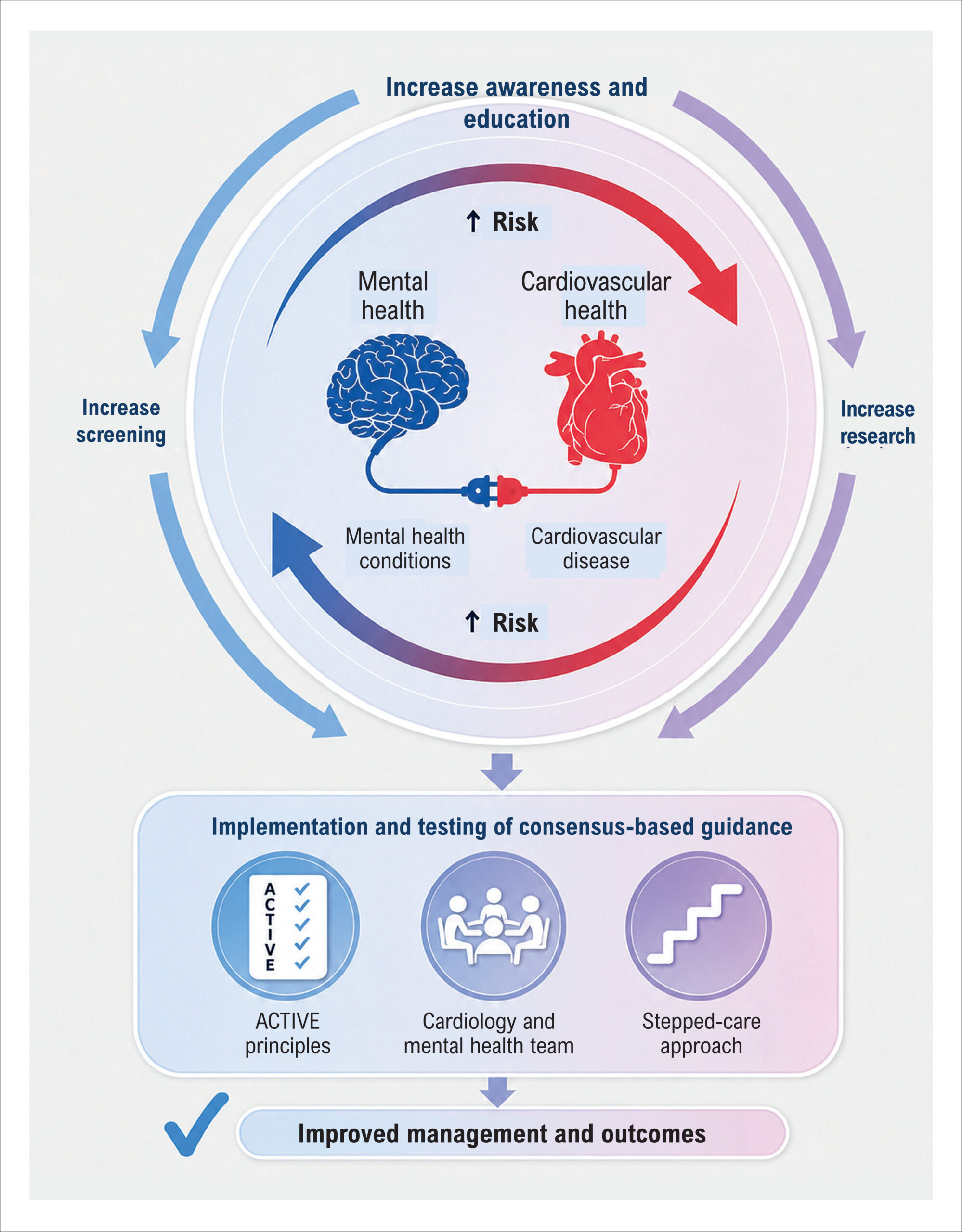
Coronary artery disease (CAD) remains the leading cause of global morbidity and mortality, and its intersection with mental health has received prominent attention in contemporary cardiology discussions. In 2025, the European Society of Cardiology published a guideline specifically addressing the multidirectional association between mental health and cardiovascular disease. Key issues were highlighted, including healthcare professionals’ limited awareness regarding the prevalence of mental disorders and their direct impacts on cardiovascular health, as well as inadequate recognition of severe mental illness and the stigmas associated with these conditions.

Mental disorders play a detrimental role in cardiovascular prevention, affecting treatment adherence and management of acute decompensations. The overlapping symptoms of the two conditions and the difficulties in monitoring chronic disease negatively impact patient prognosis.

[…]

  • Cardiology
  • Coronary Artery Disease
  • Depression
  • Mental Health
Read Full Article
Creative Commons Attribution (CC BY) Creative Commons license
27/07/2026 DOI: 10.36660/abcimg.20260074i Views 1
Figure 1
IJCS
Case Report

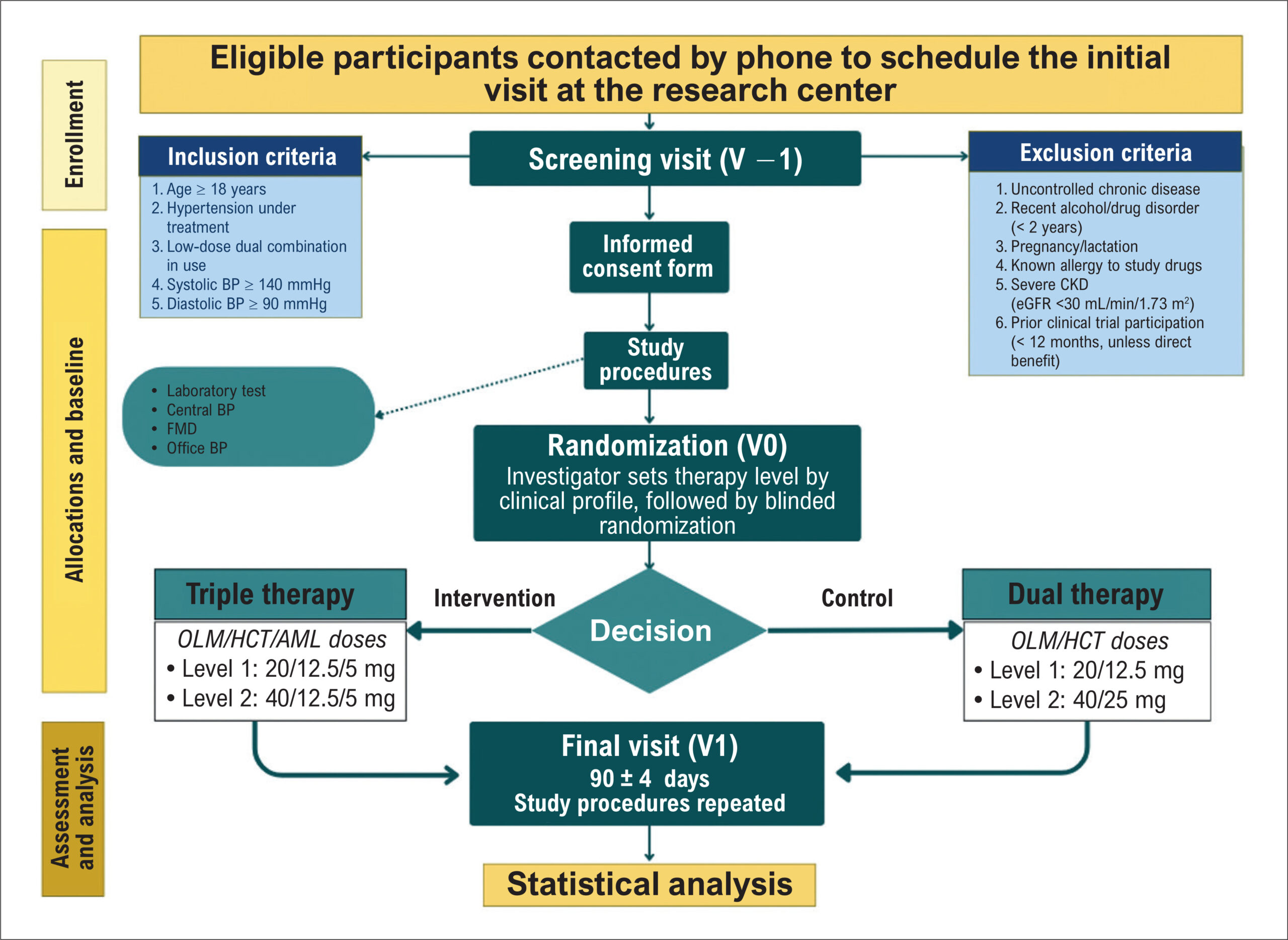
A Fixed-Dose Triple-Combination Therapy for the Initial Steps of Hypertension Treatment: Protocol for the NEXT Randomized Clinical Trial

Rogerio Orlow et al. Caroline Consuelo de Sousa Sayuri Inuzuka Audes Feitosa … Andréa Araujo Brandão Marco Mota Gomes Vanildo da Silva Guimarães Neto Elizabeth do Espírito Santo Cestario Eduardo Costa Duarte Barbosa Rodrigo Bezerra Mayara Cedrim Santos Ana Luiza Lima Sousa Sandro Rodrigues Batista Priscila Valverde de Oliveira Vitorino Weimar Kunz Sebba Barroso

Introduction

Complications from arterial hypertension account for an estimated 18 deaths per minute worldwide, establishing it as the second leading risk factor for global mortality. Between 1990 and 2019, the number of adults with arterial hypertension doubled from 650 million to 1.3 billion. Of these, only 54% are diagnosed, 42% are treated, and a mere 21% of those treated achieve adequate blood pressure (BP) control.

Although effective BP control often requires the use of multiple drugs, monotherapy remains a predominant initial approach to arterial hypertension management globally, which limits the timely achievement of therapeutic goals. This is significant because even modest reductions in systolic BP of 5 mmHg are associated with an approximate 10% reduction in the risk of major cardiovascular events, irrespective of pre-existing cardiovascular disease.

[…]

  • Cardiology
  • Cardiovascular Diseases
  • Hypertension
  • Randomized Controlled Trial
Read Full Article
Creative Commons Attribution (CC BY) Creative Commons license
24/07/2026 DOI: 10.36660/ijcs.20260025 Views 2
iCardio: Applying Business Intelligence to Assess Regional Disparity in Cardiovascular Care with Real-World Data
ABC
Original Article

iCardio: Applying Business Intelligence to Assess Regional Disparity in Cardiovascular Care with Real-World Data

Letícia Cunha Pereira de Souza et al. Miriam Allein Zago Marcolino Pedro Henrique Engster Yohan Casiraghi … Thiago Brusca da Costa Linn Jerry Eduardo de Almeida de Bairos Luciana Rodrigues de Lara Nayê Balzan Schneider Ana Paula Beck da Silva Etges Carisi Anne Polanczyk

Abstract

Background

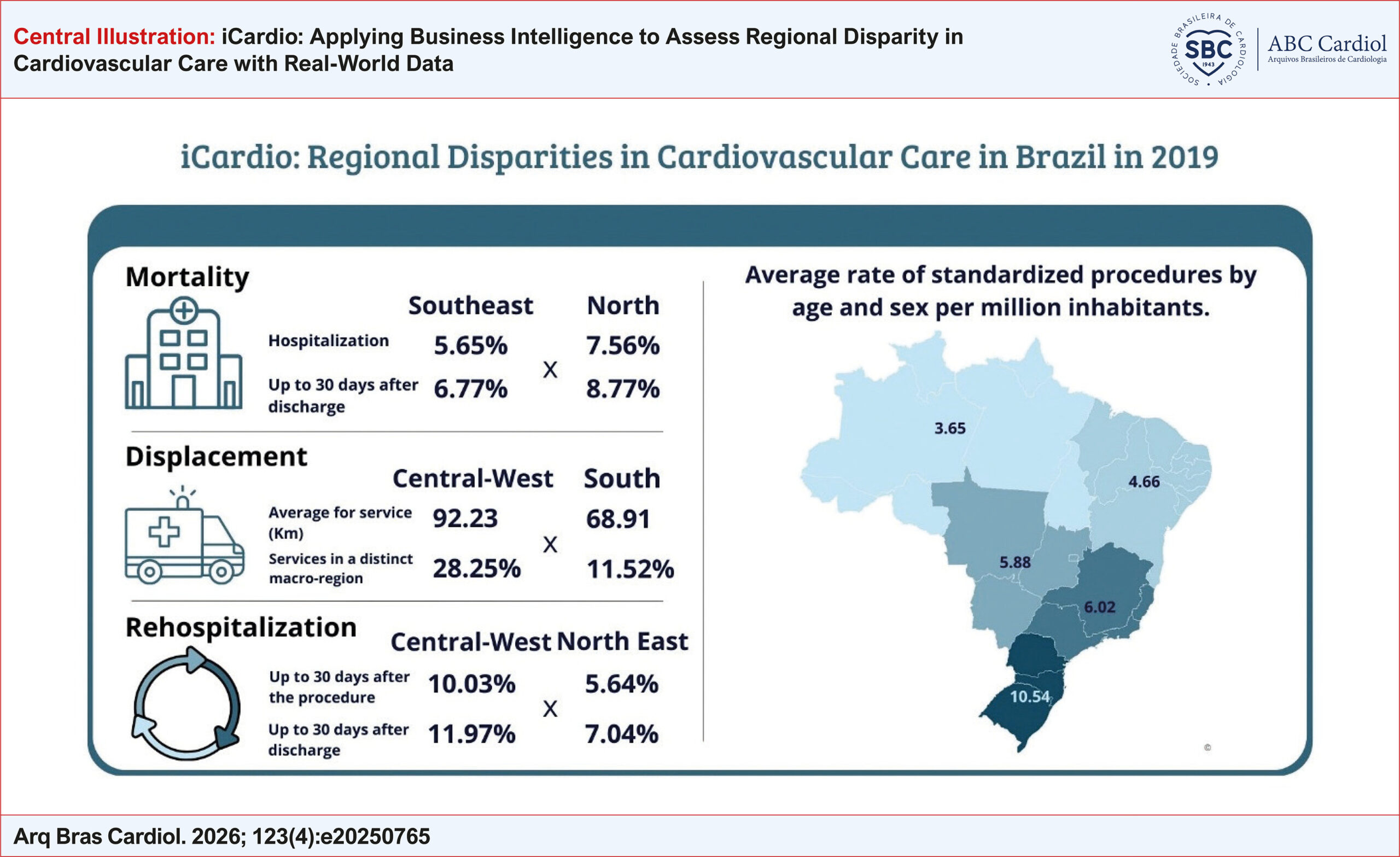
The assessment of cardiovascular care in Brazil is challenged by the country’s vast territory and the large volume of data. Business Intelligence (BI) tools may enhance the visualization and utilization of such information to support public health decision-making.

Objectives

To demonstrate the practical application of the interactive dashboard iCardio in analyzing regional inequalities in high-complexity cardiovascular care in Brazil.

Methods

Descriptive study based on secondary data made available by the iCardio dashboard, which integrates healthcare information from the Brazilian Unified Health System (SUS). Variables from 2019 were analyzed by region, considering service volume, mortality rates, hospital readmissions, and patient travel distance.

Results

Analyses of cardiovascular surgery and interventional cardiology procedures indicated that the Southeast region exhibited the lowest mortality rates (in-hospital: 5.65%, 30 days after procedure: 5.73%, and 30 days after discharge: 6.77%). The North had the highest mortality rates (in-hospital: 7.56%, within 30 days after the procedure: 7.7%, and within 30 days after discharge: 8.7%). The South and Central-West regions registered the highest readmission rates within 30 days after the procedure (9.79% and 10.3%, respectively) and within 30 days after discharge (11.7% and 11.97%, respectively). The South also presented the highest standardized procedure rate (10.54), nearly double that of the Southeast (6.02). The Northeast showed the longest mean patient travel distance (94.59 km).

Conclusions

The use of BI through the iCardio dashboard enables rapid and accessible analysis of healthcare data, with the potential to inform evidence-based decision-making, optimize resource allocation, and identify regional disparities in cardiovascular care.

  • Cardiology
  • Health Care Quality Indicators
  • Routinely Collected Health Data
Read Full Article
Creative Commons Attribution (CC BY) Creative Commons license
06/07/2026 DOI: 10.36660/abc.20250765i Views 1
Figure 1
ABC
Editorial

Eugene Braunwald: Lessons and Stories from the Father of Modern Cardiology

Marcus Vinicius Bolivar Malachias

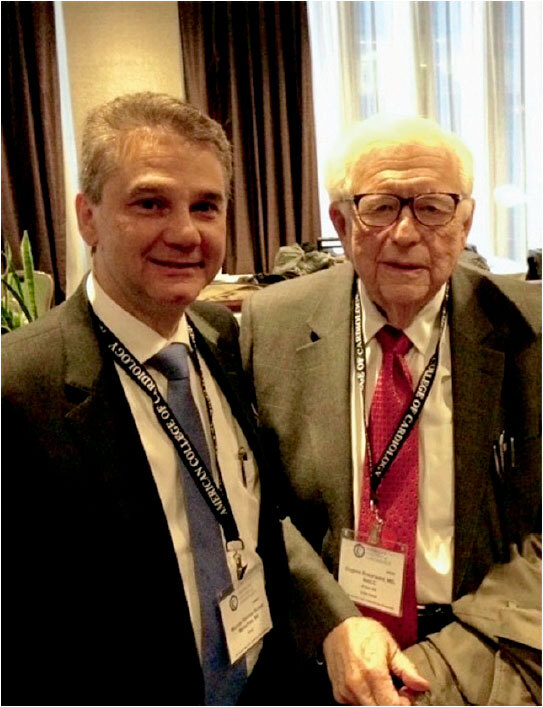
On April 22, 2026, we received the news of the death of Eugene Braunwald in Boston at the age of 96, leaving orphaned thousands of cardiologists around the world who, like me, unanimously regard him as the father of modern cardiology. Upon receiving the honorable invitation from the Editor of the Arquivos Brasileiros de Cardiologia , Glaucia Maria Moraes de Oliveira, to write this editorial, I was faced with the difficult challenge of summarizing, in a few words, his trajectory, his teachings, and his importance to our specialty—a task I undertake from the personal perspective of a cardiologist.

I came to know Braunwald through books. During my Internal Medicine residency, I devoured Harrison’s Principles of Internal Medicine , in which Braunwald was the lead editor. Later, during my Cardiology residency, our bible was his Braunwald’s Heart Disease .

[…]

  • Cardiology
  • Cardiovascular Diseases
  • History
Read Full Article
Creative Commons Attribution (CC BY) Creative Commons license
22/06/2026 DOI: 10.36660/abc.20260349i
Applicability of SAPS 3 and APACHE II Scores in a Cardiac Intensive Care Unit: A Prospective Study
IJCS
Original Article

Applicability of SAPS 3 and APACHE II Scores in a Cardiac Intensive Care Unit: A Prospective Study

Rafael Petri Pinheiro et al. Leonardo Castro Luna Vanessa dos Reis von Doellinger Marcelo Goulart Correia … Bernardo Tura Stephan Lachtermacher

Abstract

Background

Prognostic scores such as the Simplified Acute Physiology Score (SAPS) and the Acute Physiology and Chronic Health Evaluation (APACHE) are essential for assessing performance and predicting mortality in Intensive Care Units (ICUs).

Objectives

To evaluate the performance of SAPS 3 (including the Latin America [LA] and Brazil [BR] versions) and APACHE II in predicting mortality in a cardiac intensive care unit (CICU).

Methods

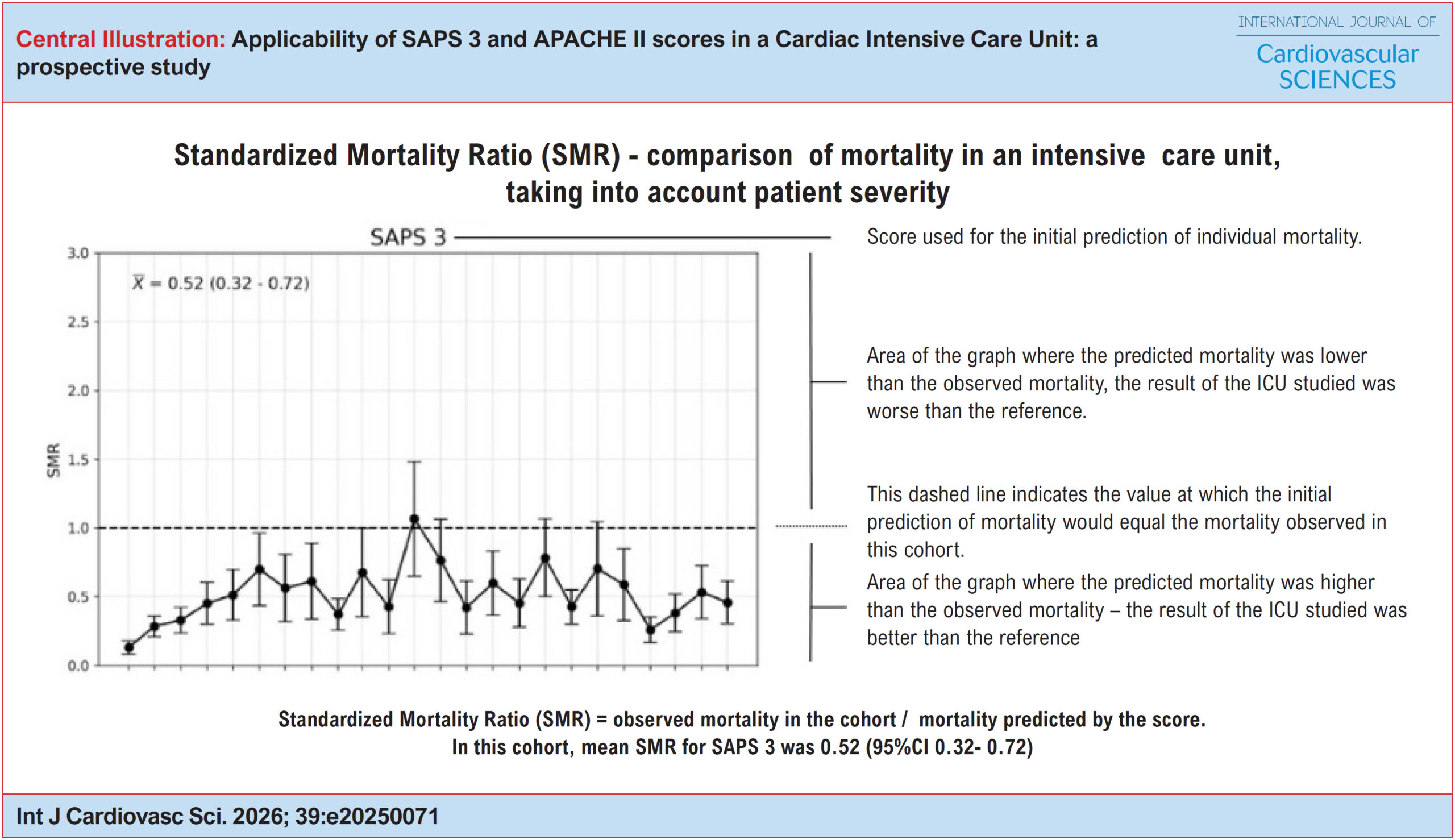
Prospective cohort of patients admitted between June 2022 and May 2024, followed until discharge or death. Data were extracted from electronic medical records. The relationship between observed and predicted mortality was calculated using the Standardized Mortality Ratio (SMR), and discrimination was assessed by the Receiver Operating Characteristic (ROC) curve.

Results

A total of 573 patients were included, 288 (50%) with three or more comorbidities, median age 63 years [IQR: 53–72], and 344 (60%) male. Cardiovascular diseases accounted for 76% of admissions. Overall mortality was 15%. Mean SMR values were: 0.52 (95% CI: 0.32–0.72) for SAPS 3; 0.40 (95% CI: 0.26–0.54) for SAPS 3 Latin America (AL); 0.79 (95% CI: 0.41–1.16) for SAPS 3 Brazil (BR); and 0.86 (95% CI: 0.42–1.29) for APACHE II. The analysis of the area under the curve (AUC) was 0.805 for SAPS 3 and its adapted versions, and 0.704 for APACHE II.

Conclusions

SAPS 3, particularly SAPS 3 Brazil (BR), demonstrated greater accuracy than APACHE II. Despite mortality being above the national average, the SMR indicated that observed mortality was lower than predicted, suggesting good care performance in the unit.

  • APACHE
  • Cardiology
  • Hospital Mortality
  • Intensive Care Units
  • Simplified Acute Physiology Score
Read Full Article
Creative Commons Attribution (CC BY) Creative Commons license
27/04/2026 DOI: 10.36660/ijcs.20250071 Views 1
IJCS
Editorial

The Growing Role of Simulation-Based Learning in Cardiology Education

Diandro Marinho Mota et al. Fabiano Barcellos Filho

Introduction

Simulation-based learning has emerged as a cornerstone in modern medical education, offering a safe and controlled environment for trainees to acquire and refine complex clinical skills.– This pedagogical approach is particularly pertinent in dynamic and high-stakes specialties such as cardiology, where precision, rapid decision-making, and technical proficiency are paramount. The systematic review by Silva, Souza, and Santos titled “The Use of Simulation-Based Learning in Cardiology Education: A Systematic Review” provides a comprehensive overview of the current evidence supporting the integration of simulation into cardiology curricula. This mini-editorial aims to reflect on the significant contributions of this review and to articulate the journal’s perspective on the evolving landscape of simulation in cardiovascular education.

[…]

  • Cardiology
  • Learning
  • Medical Education
  • systematic review
Read Full Article
Creative Commons Attribution (CC BY) Creative Commons license
13/03/2026 DOI: 10.36660/ijcs.20250180
Figure 1
ABC
Editorial

The Continuous Evolution of the Arquivos Brasileiros de Cardiologia: 77 Years and Beyond

Gláucia Maria Moraes de Oliveira et al. Fausto J. Pinto

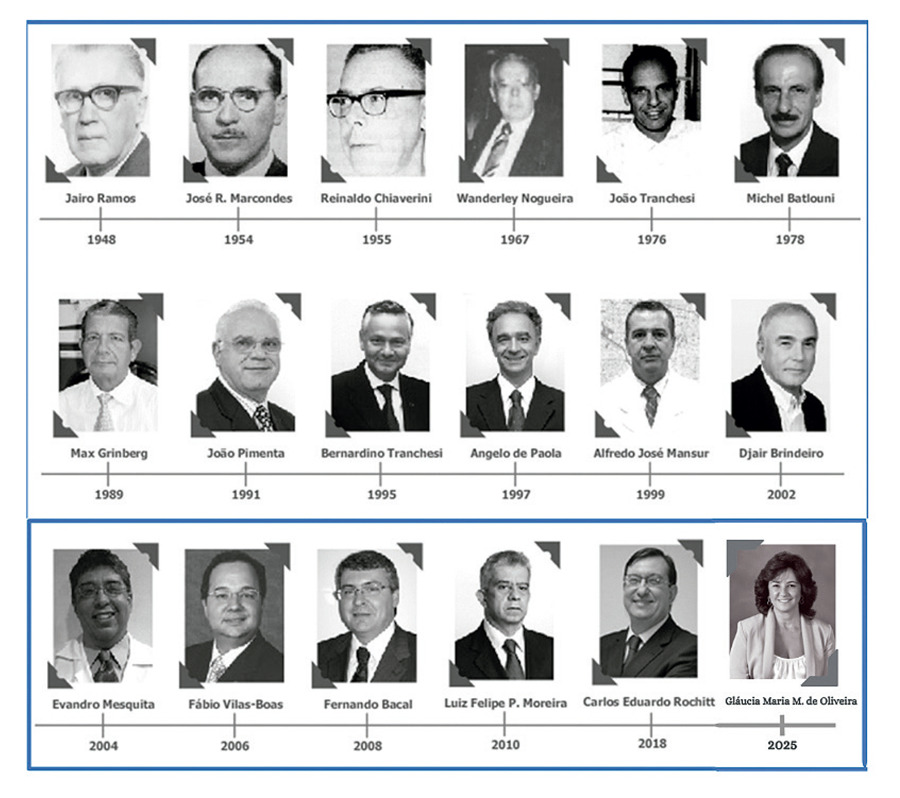
The Arquivos Brasileiros de Cardiologia (ABC Cardiol) is the most influential Brazilian scientific journal dedicated to the dissemination of research in cardiology and cardiovascular sciences. Founded in 1948 and published by the Brazilian Society of Cardiology (in Portuguese, SBC), it is over 70 years old and recognized as the highest-impact cardiology journal in Latin America. The ABC Cardiol is a monthly, bilingual publication, indexed in major international databases (PMC, PubMed Medline, Web of Science, Scopus, SciELO, Lilacs, DOAJ), adopts open access policies, and, in 2025, achieved an impact factor of 1.9 (JCR). In addition, ABC Cardiol is classified as Qualis A2, according to the scientific journal classification from the Coordination for Enhancement of Higher-Level Personnel (in Portuguese, CAPES) ().

[…]

  • Cardiology
  • Periodical
  • Scientific Communication and Diffusion
Read Full Article
Creative Commons Attribution (CC BY) Creative Commons license
02/03/2026 DOI: 10.36660/abc.20250847i Views 1
Development of 3D-Printed Congenital Heart Disease Models Using Feasible Low-Cost Workflow – A Potential Tool to Improve Pediatric Cardiology Education
ABC
Original Article

Development of 3D-Printed Congenital Heart Disease Models Using Feasible Low-Cost Workflow – A Potential Tool to Improve Pediatric Cardiology Education

Francisco Candido Monteiro Cajueiro et al. Ulisses Alexandre Croti Raimundo Francisco de Amorim Júnior Mariana Ribeiro Rodero Cardoso … Carlos Henrique Costa Carlos Henrique De Marchi Bruna Cury Borim Moacir Fernandes de Godoy Milton Benevides de Freitas Airton Camacho Moscardini

Abstract

Background

Congenital heart diseases (CHD) require an in-depth anatomopathological understanding. 3D printing is a promising educational tool for creating physical prototypes from imaging data, but costs are a major issue.

Objective

This study aimed to describe a feasible low-cost workflow for the development of 3D-printed (3DP) CHD models and create a shareable educational set.

Methods

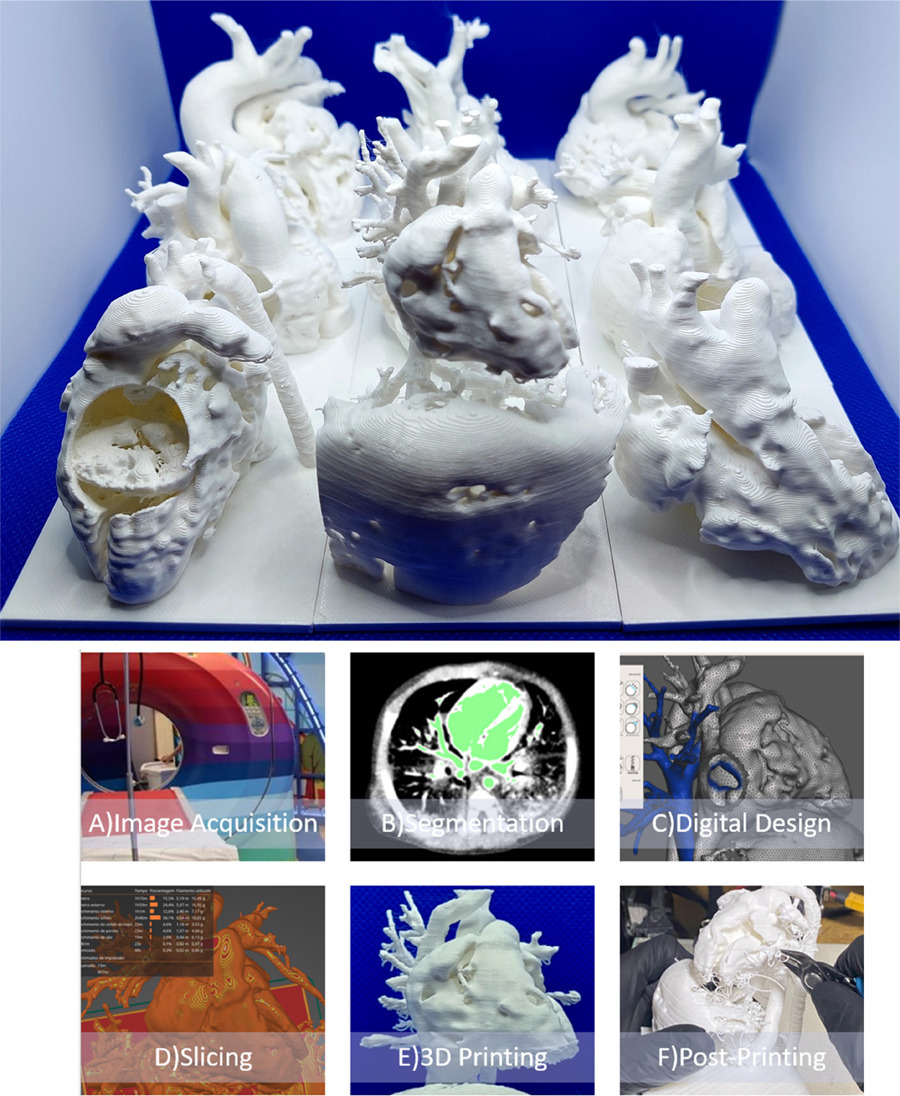
Data from cardiac tomography images were used, following the steps of image acquisition, segmentation, digital design, slicing, 3D printing, and post-printing. Valvar structures were created from echocardiographic data using the cartographic heightmap technique and inserted into prototypes. 3DP models were evaluated by an expert team, enhanced, and applied to medical residents during an educational session. Free software, a desktop 3D printer, and low-cost materials were used.

Results

Twelve 3DP models were developed, including ventricular septal defect with patent ductus arteriosus, atrial septal defect, Tetralogy of Fallot, transposition of the great arteries, atrioventricular septal defect, coarctation of the Aorta, hypoplastic left heart syndrome, tricuspid atresia, pulmonary atresia, total anomalous pulmonary venous connection, Truncus arteriosus, and interrupted aortic arch. All residents (100%) agreed that prototypes were “faithful to the anatomy”, “visually appealing”, “motivated the study”, and “allowed better spatial conceptualization”. They related 3DP CHD models “are an important pedagogical resource” and can potentially benefit the education of “undergraduate students” (100%), “interdisciplinary team” (100%), “cardiologists, surgeons and residents” (100%), and “families” (93%).

Conclusion

Development of 3DP CHD models using a low-cost workflow is feasible. Models developed are freely available for download and printing, intending to promote education to all interested in CHD.

  • Cardiology
  • Congenital Heart Defects
  • Three-Dimensional Printing
Read Full Article
Creative Commons Attribution (CC BY) Creative Commons license
05/02/2026 DOI: 10.36660/abc.20250419i Views 2
The Use of Simulation-Based Learning in Cardiology Education: A Systematic Review
IJCS
Review Article

The Use of Simulation-Based Learning in Cardiology Education: A Systematic Review

André Luiz Lisboa Cordeiro et al. Washington Luiz Abreu de Jesus Tiago Veltri Osmastroni da Trindade Rodolfo Macedo Cruz Pimenta Rodolfo Prado da Silva

Abstract

The use of simulation in medical education is now a well-established practice. Many articles currently explore various simulation methods and the impacts reported by students. In cardiology, this is no exception; however, reviews on the topic do not focus on a specific area.

The objective of this study was to evaluate the existing evidence on the use of simulation in medical education, with a specific focus on cardiology.

This systematic review followed the Preferred Reporting Items for Systematic Reviews and Meta-Analyses (PRISMA) guidelines and searched the Ovid MEDLINE, Literatura Latino-Americana e do Caribe em Ciências da Saúde (LILACS), CINAHL, and CENTRAL databases. Clinical trials reporting the use of realistic simulation for teaching cardiology were included. Two independent reviewers assessed the studies for eligibility. The simulation methods and topics, along with their evaluations, were analyzed.

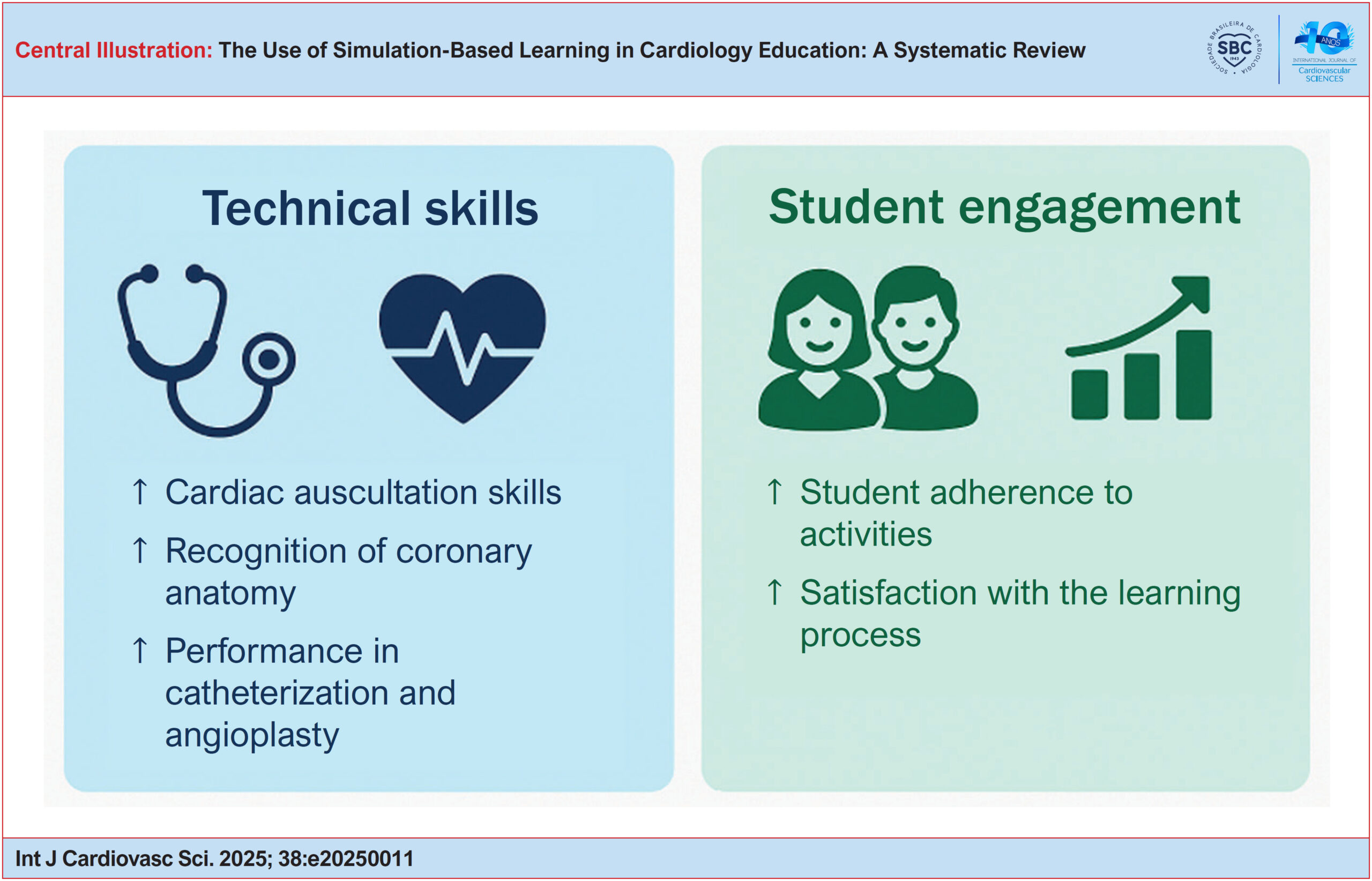
A total of 435 articles were initially identified based on the search criteria. Seven articles were selected for detailed analysis. Three of these studies reported an improvement in cardiac auscultation skills through simulation. One study showed improved ability to recognize coronary anatomy; another demonstrated enhanced performance during catheterization, and one highlighted better outcomes during angioplasty. Only one study showed a slight improvement in the diagnosis of acute myocardial infarction. In addition to these clinical improvements, there was also a noted increase in student engagement and satisfaction.

Realistic simulation, when integrated as a complement to existing curricula, enhances the performance of cardiology students.

  • Cardiology
  • Medical Education
  • Medicine
  • Simulation Training
Read Full Article
Creative Commons Attribution (CC BY) Creative Commons license
09/01/2026 DOI: 10.36660/ijcs.20250011 Views 4
Left Versus Right Radial Access in Elderly Patients for Coronary Procedures: A Systematic Review and Meta-Analysis
IJCS
Original Article

Left Versus Right Radial Access in Elderly Patients for Coronary Procedures: A Systematic Review and Meta-Analysis

Anna Loise da Cruz Gonçalves et al. Deivyd Vieira Silva Cavalcante Brenda de Adonai Rodrigues Martins Caroline de Oliveira Fischer Bacca … Júlia Gonçalves Gadelha Suelen Queiroz Gabriel Erzinger Octávio Drummond Guina

Abstract

Background:

Radial artery access is widely used in coronary procedures, but the optimal choice between left (LRA) and right (RRA) radial access remains controversial, especially in older patients.

Objective:

Compare LRA and RRA in patients ≥ 70 years undergoing coronary procedures.

Methods:

This study conducted a systematic review and meta-analysis of observational studies and randomized clinical trials (RCTs), adopting a significance level of 5% for all statistical analyses. We searched PubMed, Embase, and Cochrane Central for studies comparing LRA and RRA in patients aged ≥ 70 years. The main outcomes were fluoroscopy time, contrast volume, and procedure difficulty.

Results:

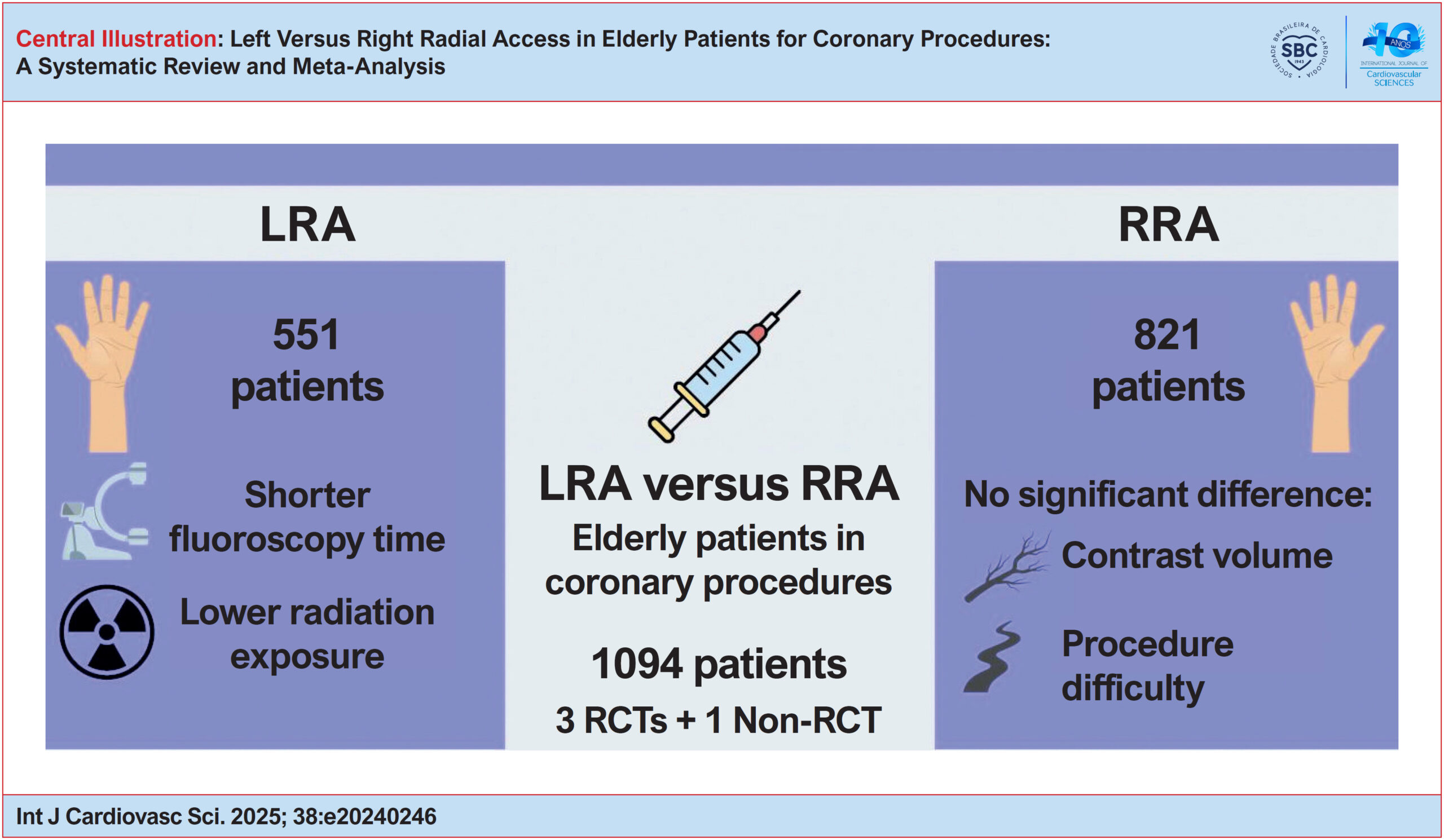
We included 1,094 patients from 4 studies, of which 3 were RCTs. Among them, 821 (75%) patients underwent the procedure via RRA. The LRA group showed a significantly shorter fluoroscopy time (standard mean difference [MD]: −0.41; 95% confidence interval [CI]: −0.67 to −0.42; p < 0.01; I2 = 80%), and there was a significant reduction in the contrast volume between the groups, favoring LRA (MD: −13.04 milliliters; 95% CI: −18.0 to −8.20; p < 0.01; I2 = 0%). However, there was no significant difference in the perceived difficulty level between the groups (risk ratio [RR]: 1.03; 95% CI: 0.61 to 1.73; p = 0.92; I2 = 0%).

Conclusion:

LRA is associated with a significantly shorter fluoroscopy time, suggesting a greater efficiency in terms of radiation exposure. These findings imply that, while LRA may offer some efficiency benefits, the choice between LRA and RRA should consider other clinical and technical factors, such as operator preference and experience.

  • Aged
  • Cardiology
  • Radial Artery
Read Full Article
Creative Commons Attribution (CC BY) Creative Commons license
09/01/2026 DOI: 10.36660/ijcs.20240246 Views 31
Central Illustration
ABCHF
Review Article

History and Application of Mechanical Assist Devices as a Bridge to Heart Transplant: A Review and Perspectives in Brazil

Alvaro Perazzo et al. Fabio Antônio Gaiotto Samuel Padovani Steffen Shirlyne Fabianni Dias Gaspar … Vanessa Simioni Faria Rebeca Cavalcante Silva Ferreira Aline Carbonera Danielle Louvet Guazzelli Jael Andrea Rioja Gamboa Leonardo Flud Ideal Helen Lima Gomes Alexandre Targino Gomes Falcão Filho Andre Loureiro Fernandes Luiza Hermanny Campos Camila Lambert Steffen Carolina Limongi Renato Leal Varjão Monica Samuel Avila Luis Fernando Bernal da Costa Seguro Sandrigo Mangini Fabiana Goulart Marcondes-Braga Gabriel Barros Aulicino Iascara Wozniak de Campos Ronaldo Honorato Barros Santos Domingos Dias Lourenço Filho Mariusz Kowalewski Daniele Ronco Matteo Matteucci Paolo Meani Claudio Francesco Russo Michele di Mauro Silvia Mariani Antonio Loforte Dominik Wiedmann Fernando Bacal Glenn Whitman Prakash Punjabi Roberto Lorusso Fabio Biscegli Jatene

Abstract

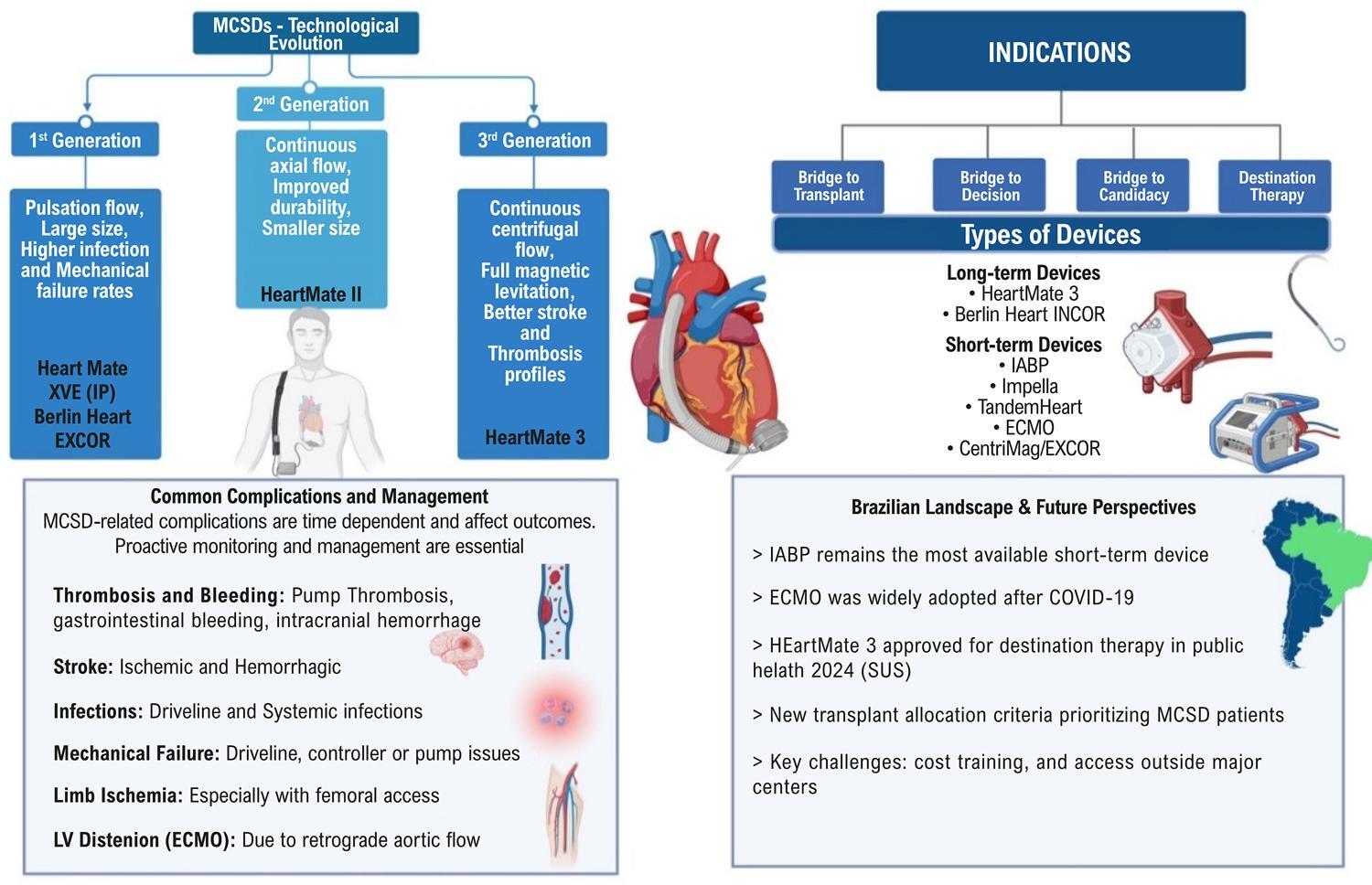
Mechanical circulatory support (MCS) devices have evolved significantly over the past decades and play a vital role in managing end-stage heart failure, especially as a bridge to heart transplantation. From the pioneering heart-lung machines to third-generation ventricular assist devices (VADs), MCS technology has advanced to provide more durable, efficient, and safer options for both short- and long-term support. This review outlines the historical development of mechanical assist devices, the types of available supports – ranging from intra-aortic balloon pumps and extracorporeal membrane oxygenation to implantable devices like HeartMate 3 – and their clinical indications and complications. Special attention is given to right ventricular dysfunction, thromboembolic and hemorrhagic complications, and infections, which remain major challenges in the management of patients with MCS devices. In Brazil, despite the growing evidence supporting MCS in critically ill patients, access remains limited due to financial and systemic constraints. The review explores the current landscape of device availability in the country, national guidelines, cost-effectiveness data, and the impact of recent changes in transplant allocation criteria that prioritize patients receiving mechanical support. Notably, the approval of long-term VADs for destination therapy in the public health system in 2024 marks a significant milestone. This review offers a comprehensive perspective on MCS utilization, highlighting both global advances and Brazil-specific challenges. By identifying gaps in access and proposing future directions, it advocates for expanded use of these life-saving technologies to improve survival and quality of life in advanced heart failure patients.

  • Cardiology
  • Heart Transplantation
  • Heart-Assist Devices
  • Thoracic Surgery
Read Full Article
Creative Commons Attribution (CC BY) Creative Commons license
14/08/2025 DOI: 10.36660/abchf.20250016i Views 2
ABC
Editorial

Will You Tell Them When They Are Wrong? Automation Bias and Artificial Intelligence in Medicine

Marcio Sommer Bittencourt

The use of decision support tools and automation in medical practice is not new. Early tools employed simple regression models to reduce heterogeneity and offer more structured care. In cardiology, initial examples of decision support tools included the Framingham risk scores for primary prevention risk stratification and automated sliding scale dose adjustments for heparin or warfarin. Since then, automation processes have become more sophisticated and are now widespread in many routine aspects of medical practice. In cardiology, these include automated preliminary interpretations of electrocardiography (ECG) tracings as well as automated measurements and image analysis in echocardiography, nuclear medicine, and cardiac magnetic resonance imaging. Other automated clinical decision support systems help reduce prescribing errors by alerting clinicians to drug-drug interactions or incorrect dosages, for example. With recent advances in artificial intelligence (AI), expectations for the future of such tools have grown dramatically. Yet, the potential negative implications of these technologies have received considerably less attention.

Clinical decision support systems can improve medical decision-making and patient outcomes. However, these systems are not flawless and may produce incorrect outputs. Most studies assessing their performance rely on conventional medical metrics such as sensitivity, specificity, accuracy, and area under the receiver operating characteristic curve. Yet, it is far more important to evaluate the real-world impact of these tools, particularly in light of how clinicians interact with them. This is especially relevant given that the European Union Artificial Intelligence Act mandates human oversight for high-risk AI systems. The issue becomes even more critical with the widespread use of generative AI chatbots, as the current generation of complex AI tools has led to a growing trend of overreliance on imperfect automation.

[…]

  • Artificial Intelligence
  • Bias
  • Cardiology
Read Full Article
Creative Commons Attribution (CC BY) Creative Commons license
14/07/2025 DOI: 10.36660/abc.20250300i Views 2
Figure 1
ABCIC
Editorial

Photon-Counting Computed Tomography in Cardiovascular Imaging: Where We Are and What Lies Ahead

Paulo Savoia et al. Rodrigo Bello

Computed Tomography Angiography (CTA) has been an important asset in cardiovascular diagnosis for decades. The continuous improvement of rapid data acquisition with often higher spatial resolution has established the method as indispensable for diagnosing and managing multiple cardiovascular entities such as aneurysms, aortic dissection, and pulmonary embolism., The use of CTA in heart and coronary imaging has also gained important territory and relevance., Computed Tomography (CT) techniques have been advancing significantly since its introduction in the medical field. Starting with single detectors, then helicoidal scanners, multidetector scanners with high pitch, improvement of reconstruction algorithms, the appearance of dual-energy technology, and lately the ability to acquire images of the whole heart in just one heartbeat with information from the entire cardiac cycle, are incredible milestones. Fractional Flow Reserve CT (FFR-CT) is also a very promising technique. Progression does not come without downsides: ionizing radiation is still concerning, and despite ways to reduce it such as dose modulation, some cardiovascular CTA exams still show relatively high levels of absorbed radiation, especially exams with multiple series, extremely thin slices, and retrospective reconstruction of larger parts of the cardiac cycle. Following this trend of improving image quality with less ionizing radiation as possible, a new complex technique emerged: Photon-counting CT (PCCT).

The main distinction between conventional CT and PCCT is in the detectors of X-rays. The conventional CT detector is based on receiving the X-ray photons that interact with the patient, converting them into light photons (it is an indirect system), and then converting this light into electrical signals that ultimately are going to be converted into digital signals. This system is called an Energy-Integrating Detector (EID). Basically, more light means more X-rays arriving and less interaction / more penetration in the patient’s tissues. It is not possible to differentiate exactly how many X-rays are arriving, nor the different energy levels of each X-ray photon. Moreover, the septa between each of the detectors also limit the reception of X-rays., On the other hand, PCCT detectors can detect separately each X-ray photon that is arriving and measure the energy of each one of the X-ray photons directly. This is possible because the PCCT detector has a high-voltage crystal layer that relocates electrons for each X-ray photon received, and the number of electrons relocated is proportional to the energy of each X-ray. The relocated electrons generate the electrical pulse that is going to be finally converted into the digital signal. And even smaller energy X-rays can be detected, improving the image contrast-to-noise ratio. It is a direct system, and there is no septa between the detectors. In the end, less X-rays are necessary (therefore less radiation) and it is possible to separate the X-rays according to the energy of each one, leading to applications of tissue recognition (different known energy X-rays are likely to have interacted with different known tissues) functioning as a dual energy CT.,

[…]

  • Cardiology
  • Cardiovascular Diagnostic Techniques
  • Computed Tomography Angiography
  • Radiology
Read Full Article
Creative Commons Attribution (CC BY) Creative Commons license
27/06/2025 DOI: 10.36660/abcimg.20250035i Views 1
Figure 1
IJCS
Original Article

Performance Benchmarking of Open-Source Large Language Models on the Brazilian Society of Cardiology's Certification Exam

João Victor Bruneti Severino et al. Matheus Nespolo Berger Pedro Angelo Basei de Paula Filipe Silveira Loures … Solano Amadori Todeschini Eduardo Augusto Roeder Maria Han Veiga José Knopfholz Gustavo Lenci Marques

Abstract

Background:

Large language models (LLMs) have made a significant impact in medicine and demonstrate substantial promise for further development. However, most of the existing research has predominantly centered on English-language tasks with lower medical complexity. This underscores the importance of investigating the performance of state-of-the-art LLMs in more complex specialties, such as cardiology, and in languages beyond English, such as Portuguese.

Objective:

This study aimed to evaluate and compare leading LLMs based on their performance on the validated cardiology knowledge assessed by the Brazilian Society of Cardiology’s (SBC) Certification Exam.

Methods:

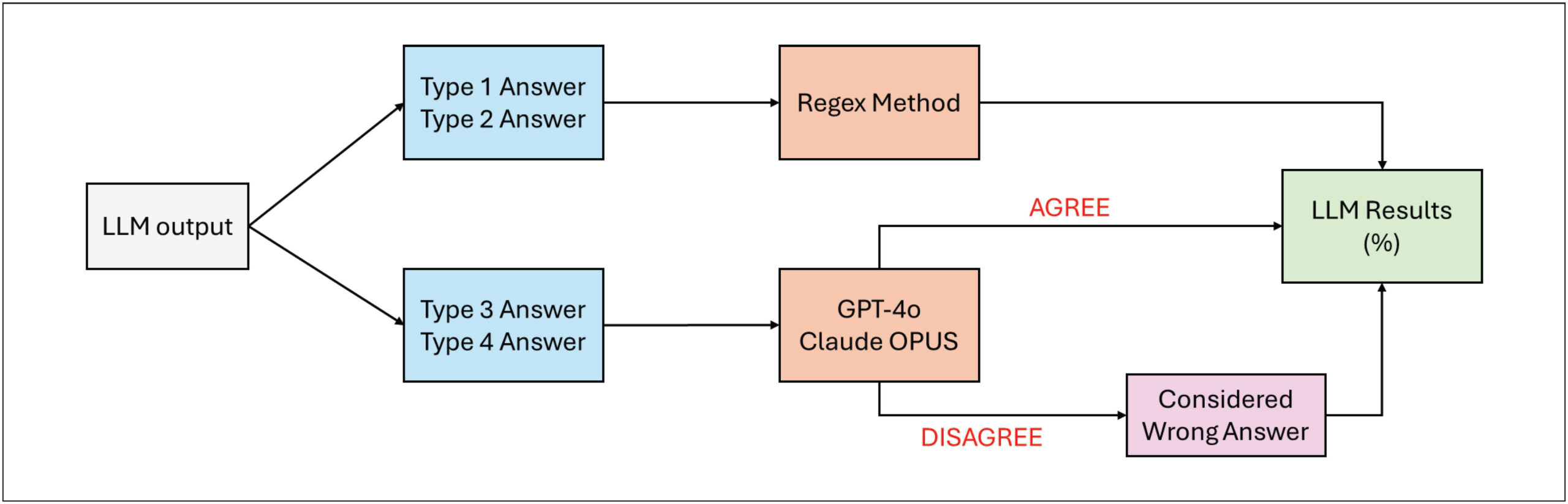
This study conducted a comparative analysis of 23 LLMs in the context of the SBC’s Certification Exam. The exam consists of 100 multiple-choice questions, 20 of which include images that cannot be processed by all LLMs. Therefore, these image-based questions were excluded from the analysis.

Results:

Proprietary LLMs showed a varying performance, with GPT-4o achieving the highest success rate at 62.25%, followed by Claude Opus at 60.25%. In the medium-sized model category (up to 100 billion parameters), Claude Haiku reached 47.25%. Among open-source models, Llama3 70B Instruct scored 53.50% in the large model category (over 100 billion parameters), while Llama3 8B achieved 36.25% in the small model category (under 20 billion parameters).

Conclusions:

Both proprietary and open-source LLMs underperformed on the test, failing to meet the exam’s cutoff score. Although larger models generally achieved better results, some medium-sized models — such as Llama3 70B Instruct and Claude Haiku—showed noteworthy results. The LLMs lacked specialized knowledge in cardiology and faced challenges in understanding Portuguese, revealing a significant gap in current AI capabilities and emphasizing the need for improvements.

  • Artificial Intelligence
  • Benchmarking
  • Cardiology
Read Full Article
Creative Commons Attribution (CC BY) Creative Commons license
27/06/2025 DOI: 10.36660/ijcs.20240231 Views 1
ABC
Viewpoint

The Culprit Valve: A New Concept for Reducing the Risk of Intervention in Patients with Severe Valve Disease

Roberto Cintra de Azevedo Aragão et al. José Augusto Soares Barreto-Filho Roney Orismar Sampaio

In clinical practice, it is not unusual to come across two relatively serious clinical conditions that occur concomitantly and may justify the patient’s symptoms. For example, associations between aortic stenosis and coronary artery disease, or between aortic stenosis and primary or secondary mitral regurgitation, both moderate to severe, are common in the real world. In the case of patients with low surgical risk, combined treatment is a consensus at the time of surgical intervention despite the consequences of these combined procedures, such as increased cardiovascular morbidity and mortality. For example, aortic valve (AV) replacement, when combined with coronary artery bypass graft surgery, increases the risk of mortality by almost twofold, just as AV replacement, when combined with mitral valve (MiV) surgery, increases this risk by more than threefold. However, in patients with high perioperative risk, especially when a less invasive isolated procedure can be used, the decision to indicate a broader treatment but with higher morbidity and mortality versus an isolated treatment but with lower morbidity and mortality is not trivial.

Recently, in Heart Team (HT) discussions, thanks to the advent of AV treatment by transcatheter aortic valve implantion (TAVI) or even MiV “edge-to-edge” repair and “valve in valve” procedure, the idea that the isolated treatment of the most severe lesion, which is likely the main cause of the patient’s symptoms, can optimize the patient’s outcome, reducing the expected morbidity and mortality and substantially improving the patient’s quality of life, has gained momentum.

[…]

  • Cardiology
  • Heart Valve Diseases
  • Prognosis
Read Full Article
Creative Commons Attribution (CC BY) Creative Commons license
12/05/2025 DOI: 10.36660/abc.20240492i Views 1
ABC
Editorial

Spirituality and Cardiovascular Disease: Valuing Cultural Sensitivity in Cardiology

Giancarlo Lucchetti

Health professionals should be sensitive to the fact that their patients have different health values, which could be influenced by cultural and spiritual aspects. Current evidence has shown that spiritual and religious (S/R) beliefs can have both a positive and negative association with different health outcomes, such as depression, anxiety, mortality, quality of life, hospitalization, chronic illnesses, and substance use, among others.

In this context, the field of “Spirituality and Health” has been constantly growing in the scientific community, driven by the number of studies, the interest of medical schools, and its incorporation into guidelines from different medical organizations.

[…]

  • Cardiology
  • Cardiovascular Diseases
  • Cultural Competency
  • Religion
  • Spirituality
Read Full Article
Creative Commons Attribution (CC BY) Creative Commons license
14/04/2025 DOI: 10.36660/abc.20250143i Views 1
Figure 1
ABCIC
Viewpoint

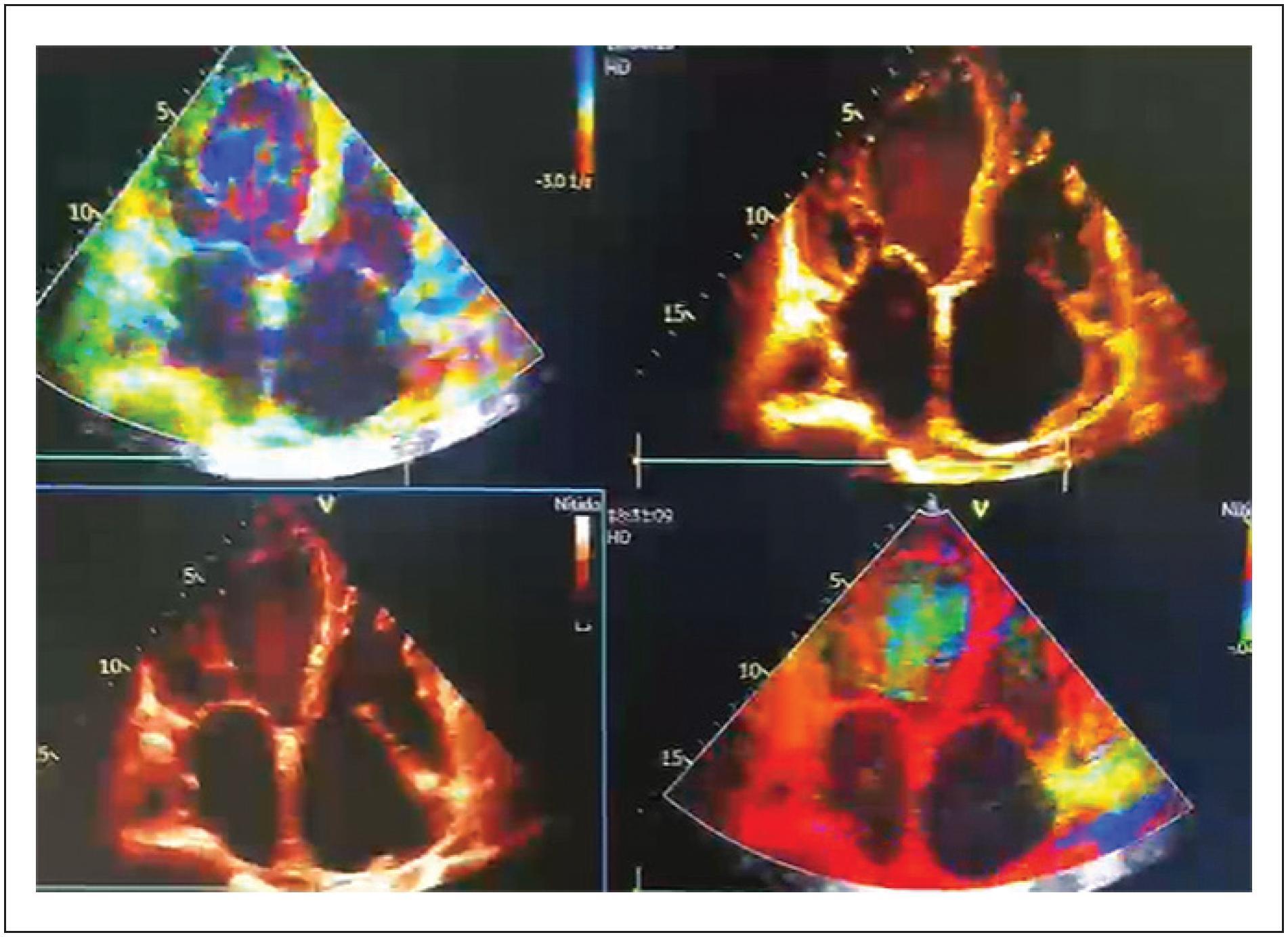
An Explosion of Colors, Fauvism in Echocardiography, a New Proposal

Jaime Andres Nieto Zarate et al. Maria Jose Amaya Mahecha

Limitations

The article offers an intriguing perspective, but further scientific validation is needed for broader acceptance in clinical practice. The connection between art and medical imaging is fascinating, yet requires more exploration to establish its practical relevance and impact on patient outcomes.

[…]

  • Cardiology
  • Cardiovascular Diagnostic Techniques
  • Echocardiography
  • Medicine in the Arts
Read Full Article
Creative Commons Attribution (CC BY) Creative Commons license
05/12/2024 DOI: 10.36660/abcimg.20240081i
Figure 1
ABC
Editorial

One Hundred Years of the Nobel Prize for Electrocardiography: A Technology Still Essential and Fit for the Next Century

Eduardo M. Vilela et al. Nuno Bettencourt

Willem Einthoven – A Brief Biographical Overview

In 1924, the Nobel prize for Physiology or Medicine was awarded to Willem Einthoven for “the discovery of the mechanism of the electrocardiogram” (ECG). This prestigious award illustrated the relevance of Einthoven’s research, which provided crucial data on cardiovascular pathophysiology, and that would go on to form one of the pillars of modern Cardiology. Willem Einthoven was born in 1860 in Semarang, on the island of Java, then part of the Dutch East Indies (now Indonesia), the son of a military physician., After his father’s death, he moved with his family to the Netherlands, where he pursued his studies, earning a medical degree at the University of Utrecht.– During this formative period, he was deeply influenced by the renowned Dutch physiologist Donders, who later supported him in obtaining a position at the University of Leiden, where he remained as professor of Physiology for the rest of his career ()., Described as modest, courteous, and devoted to his work, besides his continued research in the ECG, Einthoven was also fluent in several languages and a proponent of physical exercise, practicing rowing and being known for riding his bicycle to work.,,, He married one of his cousins and had four children, passing away in 1927 at the age of 67 from cancer.– Despite building on a diverse research background over decades, from Galvani’s and later Matteucci’s, von Kolliker and Muller’s reports on electrical currents to Lippman’s capillary electrometer and Waller’s depiction of the human “electrogram,” Einthoven’s application of technology, coupled with far-reaching insights into its potential utility, proved pivotal in harnessing its potential.–

[…]

  • Acute coronary syndrome
  • Cardiology
  • Electrocardiography
Read Full Article
Creative Commons Attribution (CC BY) Creative Commons license
23/09/2024 DOI: 10.36660/abc.20240494i Views 1
Brazilian Policies and Programs in Urgent and Emergency Care Services in the Context of Cardiovascular Diseases: A Scoping Review
IJCS
Original Article

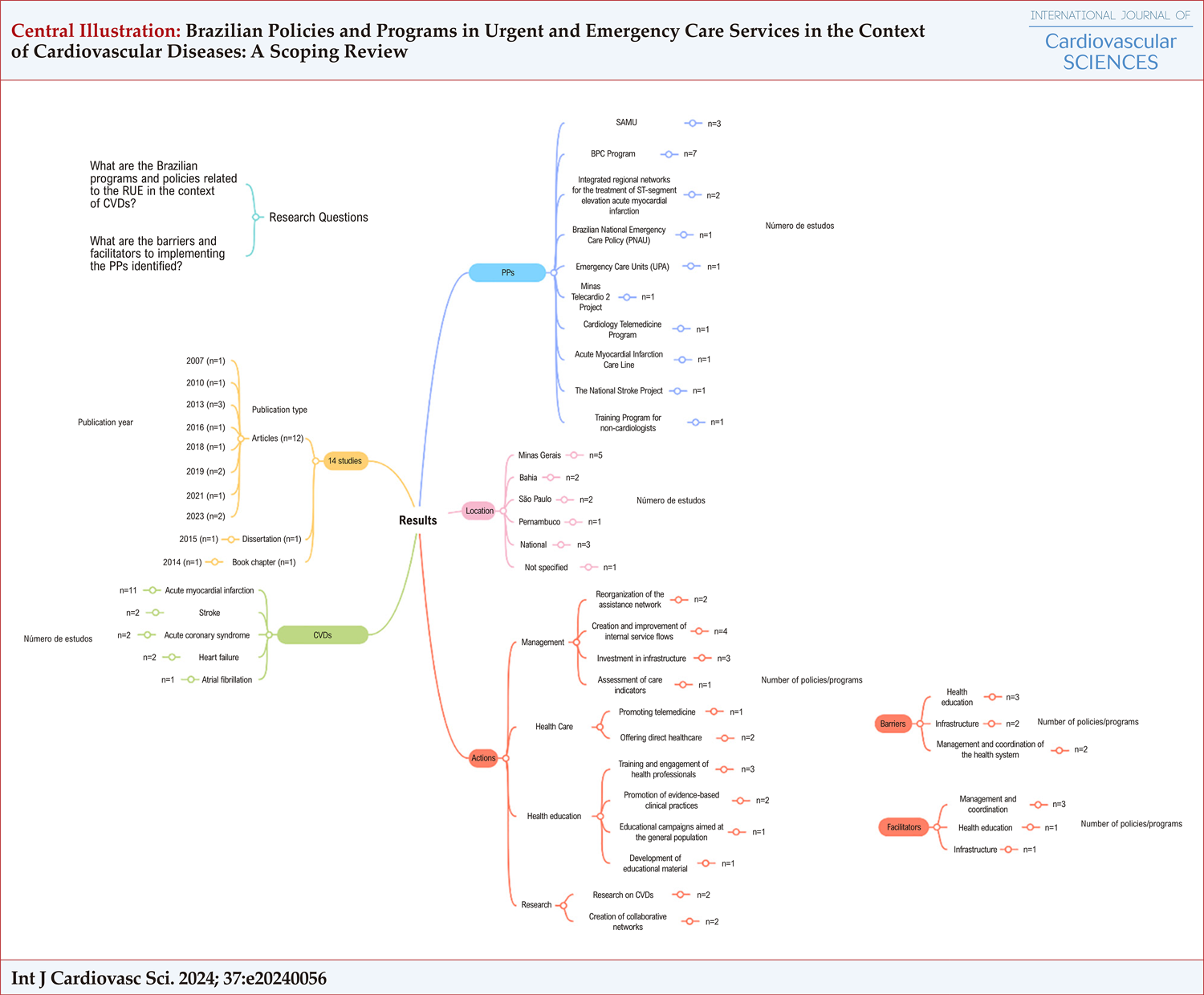
Brazilian Policies and Programs in Urgent and Emergency Care Services in the Context of Cardiovascular Diseases: A Scoping Review

Liza Yurie Teruya Uchimura et al. Cintia de Freitas Oliveira Mabel Fernandes Figueiró Camila Pereira Pinto Toth … Camila Roncon de Lima Patricia Vendramim

Abstract

Introduction

Cardiovascular diseases (CVD) are a major cause of mortality in Brazil, requiring the improvement of healthcare mechanisms that can promote rapid and effective care for patients.

Objectives

To identify and characterize Brazilian policies and programs (PP) regarding urgency and emergency care in the context of CVD.

Method

The scoping review followed recommendations from the Joanna Briggs Institute (JBI). The search for studies was conducted across seven databases. The screening and eligibility steps were performed by reviewers independently, with conflicts resolved by consensus or consultation with a third reviewer. The data extraction was done in a spreadsheet and the information was analyzed and grouped by content similarity.

Results

Through the analysis of 14 studies, a systematic and contextualized understanding was gained regarding 10 PPs implemented in the urgency and emergency network (RUE) for individuals with CVDs. SAMU emerged as the most extensively studied PP, predominantly in the state of Minas Gerais. The diseases most commonly addressed in these studies included acute myocardial infarction (featured in 80% of publications), stroke, acute coronary syndrome, heart failure, and atrial fibrillation. These PP have demonstrated significant improvements in clinical outcomes, particularly in reducing morbidity and mortality rates. The studies also revealed important insights into barriers and drivers related to infrastructure, health education, and system management and coordination.

Conclusion

The evidence gathered provides significant contributions to guide future policy development and improve decision-making in clinical management for cardiologists.

  • Cardiology
  • Cardiovascular Diseases
  • Emergencies
  • Health Policy
Read Full Article
Creative Commons Attribution (CC BY) Creative Commons license
19/08/2024 DOI: 10.36660/ijcs.20240056 Views 1
Computer-Interpreted Electrocardiograms: Impact on Cardiology Practice
IJCS
Review Article

Computer-Interpreted Electrocardiograms: Impact on Cardiology Practice

Shyla Gupta et al. Anthony H. Kashou Robert Herman Stephen Smith … Adam May Ana G. Múnera Echeverri Mildren Del Sueldo Ana C. Berni Juan Farina Sebastian Garcia-Zamora Adrian Baranchuk

Abstract

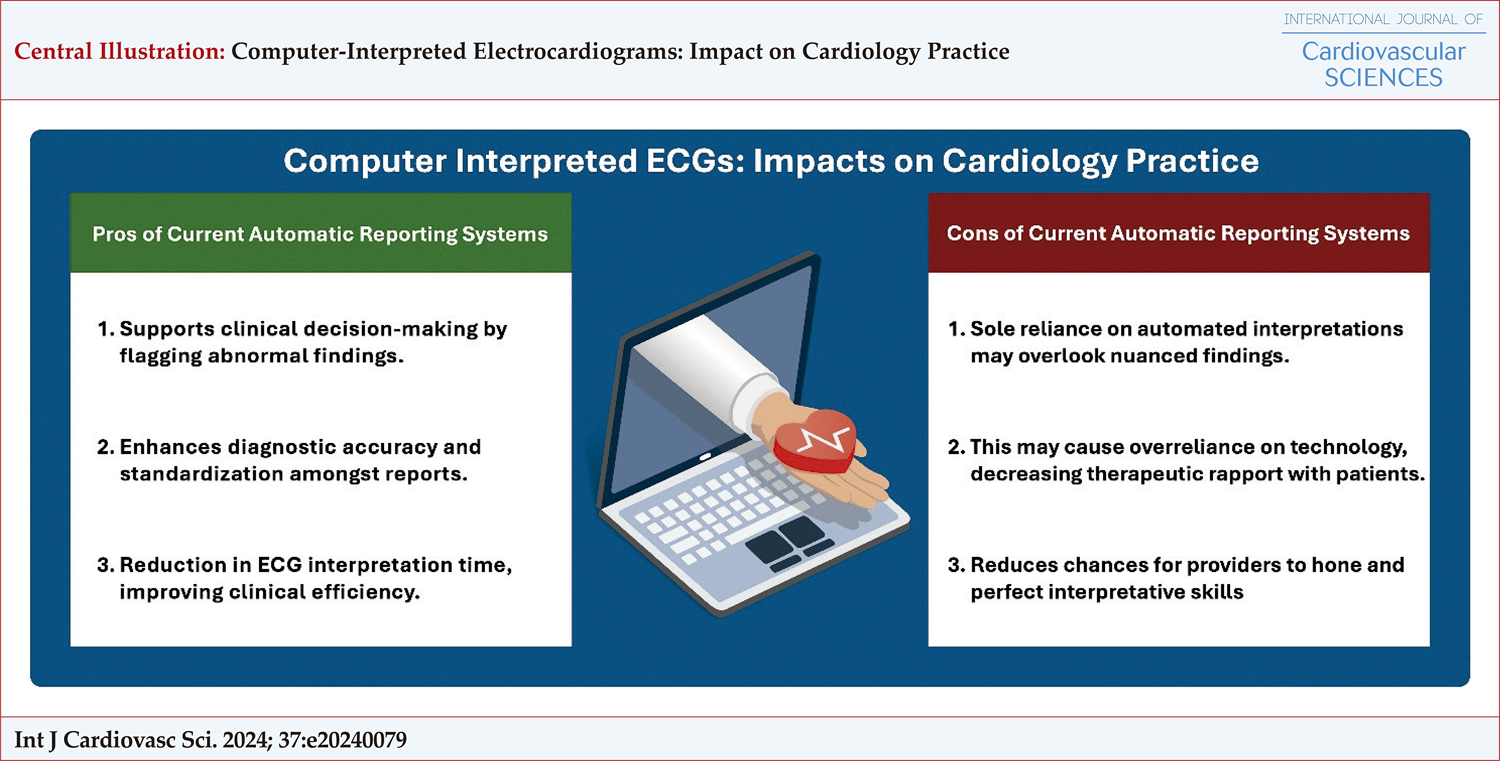
In the realm of modern cardiology, the integration of computer-interpreted electrocardiograms (CI-ECGs) has marked the beginning of a new era of diagnostic precision and efficiency. Contemporary electrocardiogram (ECG) integration systems, applying algorithms and artificial intelligence, have modernized the interpretation of heart rhythms and cardiac morphology. Due to their ability to rapidly analyze and interpret ECG recordings CI-ECGs have already profoundly impacted clinical practice. This review explores the evolution of computer interpreted ECG technology, evaluates the pros and cons of current automatic reporting systems, analyzes the growing role of artificial intelligence on ECG interpretation technologies, and discusses emerging applications that may have transformative effects on patient outcomes. Emphasis is placed on the role of ECGs in the automatic diagnosis of occlusion myocardial infarctions (OMI). AI models enhance accuracy and efficiency in ECG interpretation, offering insights into cardiac function and aiding timely detection of concerning patterns for accurate clinical diagnoses. The shift to AI-driven diagnostics has emphasized the importance of data in the realm of cardiology by improving patient care. The integration of novel AI models in ECG analysis has created a promising future for ECG diagnostics through a synergistic fusion of feature-based machine learning models, deep learning approaches, and clinical acumen. Overall, CI-ECGs have transformed cardiology practice, offering rapid, accurate, and standardized analyses. These systems reduce interpretation time significantly, allowing for quick identification of abnormalities. However, sole reliance on automated interpretations may overlook nuanced findings, risking diagnostic errors. Therefore, a balanced approach in integrating automated analysis with clinical judgment is necessary.

  • Artificial Intelligence
  • Cardiology
  • Electrocardiography
  • Machine Learning
Read Full Article
Creative Commons Attribution (CC BY) Creative Commons license
05/07/2024 DOI: 10.36660/ijcs.20240079 Views 1
IJCS
Editorial

The Old Problem of Adherence in the Control of Arterial Hypertension

Fernando Stuardo Wyss Quintana

In medical treatment of chronic diseases, for example, arterial hypertension, diabetes mellitus, and dyslipidemia, the main objective is the implementation of primary prevention or, failing that, secondary prevention of cardiovascular events, to achieve adequate control of cardiovascular prevention. Thus, the following measures are very necessary: 1. adequate patient education, 2. pharmacological prescription based on cardiovascular risk, and 3. adequate adherence to the prescribed treatment. This last point is, without a doubt, the most difficult to achieve.

The health interventions recommended by the World Health Organization for the control of these diseases focus on pharmacological treatments and general recommendations to take care of one’s diet and adopt healthy lifestyles, but the growth in prevalence shows that until now these treatments have been insufficient; that is, the therapeutic adherence of patients suffering from these diseases is low. This low adherence occurs because of personal therapeutic barriers and those of health systems.

[…]

  • Cardiology
  • Doenças Cardiovasculares
  • Internal Medicine
Read Full Article
Creative Commons Attribution (CC BY) Creative Commons license
05/04/2024 DOI: 10.36660/ijcs.20240024

Could not load more articles. Please try again.

How to cite this article

EndNote RIS

Electronic Document Format (Vancouver)

Cordeiro ALL, Trindade TVO, Barros RA. Simulation in Cardiovascular Medicine Education: Innovation, Safety, and Competency-Based Training. Arquivos Brasileiros de Cardiologia 2026;123(6):e20260233.

Electronic Document Format (ABNT)

Cordeiro, André Luiz Lisboa; Trindade, Tiago Veltri Ormastroni da; Barros, Rinaldo Antunes. Simulation in Cardiovascular Medicine Education: Innovation, Safety, and Competency-Based Training. Arquivos Brasileiros de Cardiologia, v. 123, n. 6, e20260233, Aug. 2026.

Electronic Document Format (APA)

Cordeiro, A. L. L., Trindade, T. V. O. , & Barros, R. A. (2026). Simulation in Cardiovascular Medicine Education: Innovation, Safety, and Competency-Based Training. Arquivos Brasileiros de Cardiologia, 123(6), e20260233.

Electronic Document Format (ISO)

Cordeiro, André Luiz Lisboa and Trindade, Tiago Veltri Ormastroni da and Barros, Rinaldo Antunes. Simulation in Cardiovascular Medicine Education: Innovation, Safety, and Competency-Based Training. Arquivos Brasileiros de Cardiologia [online]. 2026, vol. 123, n. 6, [cited 2026-10-14], e20260233. Available from: <https://journals.cardiol.br/en/article/simulation-in-cardiovascular-medicine-education-innovation-safety-and-competency-based-training/>. ISSN 0066-782X

EndNote RIS

Electronic Document Format (Vancouver)

Carvalho LP, Chan MY. Population Precision Medicine in Cardiology: Bridging Health Gaps Through Integrated Risk Stratification. Arquivos Brasileiros de Cardiologia 2026;123(7):e20260546.

Electronic Document Format (ABNT)

Carvalho, Leonardo Pinto de; Chan, Mark Y.. Population Precision Medicine in Cardiology: Bridging Health Gaps Through Integrated Risk Stratification. Arquivos Brasileiros de Cardiologia, v. 123, n. 7, e20260546, Aug. 2026.

Electronic Document Format (APA)

Carvalho, L. P. , & Chan, M. Y. (2026). Population Precision Medicine in Cardiology: Bridging Health Gaps Through Integrated Risk Stratification. Arquivos Brasileiros de Cardiologia, 123(7), e20260546.

Electronic Document Format (ISO)

Carvalho, Leonardo Pinto de and Chan, Mark Y.. Population Precision Medicine in Cardiology: Bridging Health Gaps Through Integrated Risk Stratification. Arquivos Brasileiros de Cardiologia [online]. 2026, vol. 123, n. 7, [cited 2026-10-14], e20260546. Available from: <https://journals.cardiol.br/en/article/population-precision-medicine-in-cardiology-bridging-health-gaps-through-integrated-risk-stratification/>. ISSN 0066-782X

EndNote RIS

Electronic Document Format (Vancouver)

Daungsupawong H, Wiwanitkit V. Development of 3D-Printed Congenital Heart Disease Models Using Feasible Low-Cost Workflow. Arquivos Brasileiros de Cardiologia 2026;123(5):e20260186.

Electronic Document Format (ABNT)

Daungsupawong, Hinpetch; Wiwanitkit, Viroj. Development of 3D-Printed Congenital Heart Disease Models Using Feasible Low-Cost Workflow. Arquivos Brasileiros de Cardiologia, v. 123, n. 5, e20260186, Aug. 2026.

Electronic Document Format (APA)

Daungsupawong, H., & Wiwanitkit, V. (2026). Development of 3D-Printed Congenital Heart Disease Models Using Feasible Low-Cost Workflow. Arquivos Brasileiros de Cardiologia, 123(5), e20260186.

Electronic Document Format (ISO)

Daungsupawong, Hinpetch and Wiwanitkit, Viroj. Development of 3D-Printed Congenital Heart Disease Models Using Feasible Low-Cost Workflow. Arquivos Brasileiros de Cardiologia [online]. 2026, vol. 123, n. 5, [cited 2026-10-14], e20260186. Available from: <https://journals.cardiol.br/en/article/development-of-3d-printed-congenital-heart-disease-models-using-feasible-low-cost-workflow/>. ISSN 0066-782X

EndNote RIS

Electronic Document Format (Vancouver)

Quagliato PC. Beyond Imaging: The Silent Impact of Depression on Coronary Artery Disease. ABC Imagem Cardiovascular 2026;39(2):e20260074.

Electronic Document Format (ABNT)

Quagliato, Priscila Cestari. Beyond Imaging: The Silent Impact of Depression on Coronary Artery Disease. ABC Imagem Cardiovascular, v. 39, n. 2, e20260074, Jul. 2026.

Electronic Document Format (APA)

Quagliato, P. C. (2026). Beyond Imaging: The Silent Impact of Depression on Coronary Artery Disease. ABC Imagem Cardiovascular, 39(2), e20260074.

Electronic Document Format (ISO)

Quagliato, Priscila Cestari. Beyond Imaging: The Silent Impact of Depression on Coronary Artery Disease. ABC Imagem Cardiovascular [online]. 2026, vol. 39, n. 2, [cited 2026-10-14], e20260074. Available from: <https://journals.cardiol.br/en/article/beyond-imaging-the-silent-impact-of-depression-on-coronary-artery-disease/>. ISSN 2318-8219

EndNote RIS

Electronic Document Format (Vancouver)

Orlow R, Sousa CC, Inuzuka S, Feitosa A, Brandão AA, Gomes MM, Guimarães Neto VS, et al. A Fixed-Dose Triple-Combination Therapy for the Initial Steps of Hypertension Treatment: Protocol for the NEXT Randomized Clinical Trial. International Journal of Cardiovascular Sciences 2026;39:e20260025.

Electronic Document Format (ABNT)

Orlow, Rogerio; Sousa, Caroline Consuelo de; Inuzuka, Sayuri; Feitosa, Audes; Brandão, Andréa Araujo; Gomes, Marco Mota; Guimarães Neto, Vanildo da Silva; Cestario, Elizabeth do Espírito Santo; Barbosa, Eduardo Costa Duarte; Bezerra, Rodrigo; Santos, Mayara Cedrim; Sousa, Ana Luiza Lima; Batista, Sandro Rodrigues; Vitorino, Priscila Valverde de Oliveira; Barroso, Weimar Kunz Sebba. A Fixed-Dose Triple-Combination Therapy for the Initial Steps of Hypertension Treatment: Protocol for the NEXT Randomized Clinical Trial. International Journal of Cardiovascular Sciences, v. 39, e20260025, Jul. 2026.

Electronic Document Format (APA)

Orlow, R., Sousa, C. C. , Inuzuka, S., Feitosa, A., Brandão, A. A., Gomes, M. M., Guimarães Neto, V. S., Cestario, E. E. S., Barbosa, E. C. D., Bezerra, R., Santos, M. C., Sousa, A. L. L., Batista, S. R., Vitorino, P. V. O., & Barroso, W. K. S. (2026). A Fixed-Dose Triple-Combination Therapy for the Initial Steps of Hypertension Treatment: Protocol for the NEXT Randomized Clinical Trial. International Journal of Cardiovascular Sciences, 39, e20260025.

Electronic Document Format (ISO)

Orlow, Rogerio and Sousa, Caroline Consuelo de and Inuzuka, Sayuri and Feitosa, Audes and Brandão, Andréa Araujo and Gomes, Marco Mota and Guimarães Neto, Vanildo da Silva and Cestario, Elizabeth do Espírito Santo and Barbosa, Eduardo Costa Duarte and Bezerra, Rodrigo and Santos, Mayara Cedrim and Sousa, Ana Luiza Lima and Batista, Sandro Rodrigues and Vitorino, Priscila Valverde de Oliveira and Barroso, Weimar Kunz Sebba. A Fixed-Dose Triple-Combination Therapy for the Initial Steps of Hypertension Treatment: Protocol for the NEXT Randomized Clinical Trial. International Journal of Cardiovascular Sciences [online]. 2026, vol. 39, [cited 2026-10-14], e20260025. Available from: <https://journals.cardiol.br/en/article/a-fixed-dose-triple-combination-therapy-for-the-initial-steps-of-hypertension-treatment-protocol-for-the-next-randomized-clinical-trial/>. ISSN 2359-4802

EndNote RIS

Electronic Document Format (Vancouver)

Souza LCP, Marcolino MAZ, Engster PH, Casiraghi Y, Linn TBC, Bairos JEA, Lara LR, et al. iCardio: Applying Business Intelligence to Assess Regional Disparity in Cardiovascular Care with Real-World Data. Arquivos Brasileiros de Cardiologia 2026;123(4):e20250765.

Electronic Document Format (ABNT)

Souza, Letícia Cunha Pereira de; Marcolino, Miriam Allein Zago; Engster, Pedro Henrique; Casiraghi, Yohan; Linn, Thiago Brusca da Costa; Bairos, Jerry Eduardo de Almeida de; Lara, Luciana Rodrigues de; Schneider, Nayê Balzan; Etges, Ana Paula Beck da Silva; Polanczyk, Carisi Anne. iCardio: Applying Business Intelligence to Assess Regional Disparity in Cardiovascular Care with Real-World Data. Arquivos Brasileiros de Cardiologia, v. 123, n. 4, e20250765, Jul. 2026.

Electronic Document Format (APA)

Souza, L. C. P. , Marcolino, M. A. Z., Engster, P. H., Casiraghi, Y., Linn, T. B. C., Bairos, J. E. A. , Lara, L. R. , Schneider, N. B., Etges, A. P. B. S., & Polanczyk, C. A. (2026). iCardio: Applying Business Intelligence to Assess Regional Disparity in Cardiovascular Care with Real-World Data. Arquivos Brasileiros de Cardiologia, 123(4), e20250765.

Electronic Document Format (ISO)

Souza, Letícia Cunha Pereira de and Marcolino, Miriam Allein Zago and Engster, Pedro Henrique and Casiraghi, Yohan and Linn, Thiago Brusca da Costa and Bairos, Jerry Eduardo de Almeida de and Lara, Luciana Rodrigues de and Schneider, Nayê Balzan and Etges, Ana Paula Beck da Silva and Polanczyk, Carisi Anne. iCardio: Applying Business Intelligence to Assess Regional Disparity in Cardiovascular Care with Real-World Data. Arquivos Brasileiros de Cardiologia [online]. 2026, vol. 123, n. 4, [cited 2026-10-14], e20250765. Available from: <https://journals.cardiol.br/en/article/icardio-applying-business-intelligence-to-assess-regional-disparity-in-cardiovascular-care-with-real-world-data/>. ISSN 0066-782X

EndNote RIS

Electronic Document Format (Vancouver)

Malachias MVB. Eugene Braunwald: Lessons and Stories from the Father of Modern Cardiology. Arquivos Brasileiros de Cardiologia 2026;123(4):e20260349.

Electronic Document Format (ABNT)

Malachias, Marcus Vinicius Bolivar. Eugene Braunwald: Lessons and Stories from the Father of Modern Cardiology. Arquivos Brasileiros de Cardiologia, v. 123, n. 4, e20260349, Jun. 2026.

Electronic Document Format (APA)

Malachias, M. V. B. (2026). Eugene Braunwald: Lessons and Stories from the Father of Modern Cardiology. Arquivos Brasileiros de Cardiologia, 123(4), e20260349.

Electronic Document Format (ISO)

Malachias, Marcus Vinicius Bolivar. Eugene Braunwald: Lessons and Stories from the Father of Modern Cardiology. Arquivos Brasileiros de Cardiologia [online]. 2026, vol. 123, n. 4, [cited 2026-10-14], e20260349. Available from: <https://journals.cardiol.br/en/article/eugene-braunwald-lessons-and-stories-from-the-father-of-modern-cardiology/>. ISSN 0066-782X

EndNote RIS

Electronic Document Format (Vancouver)

Pinheiro RP, Luna LC, Doellinger VR, Correia MG, Tura B, Lachtermacher S. Applicability of SAPS 3 and APACHE II Scores in a Cardiac Intensive Care Unit: A Prospective Study. International Journal of Cardiovascular Sciences 2026;39:e20250071.

Electronic Document Format (ABNT)

Pinheiro, Rafael Petri; Luna, Leonardo Castro; Doellinger, Vanessa dos Reis von; Correia, Marcelo Goulart; Tura, Bernardo; Lachtermacher, Stephan. Applicability of SAPS 3 and APACHE II Scores in a Cardiac Intensive Care Unit: A Prospective Study. International Journal of Cardiovascular Sciences, v. 39, e20250071, Apr. 2026.

Electronic Document Format (APA)

Pinheiro, R. P., Luna, L. C., Doellinger, V. R. , Correia, M. G., Tura, B., & Lachtermacher, S. (2026). Applicability of SAPS 3 and APACHE II Scores in a Cardiac Intensive Care Unit: A Prospective Study. International Journal of Cardiovascular Sciences, 39, e20250071.

Electronic Document Format (ISO)

Pinheiro, Rafael Petri and Luna, Leonardo Castro and Doellinger, Vanessa dos Reis von and Correia, Marcelo Goulart and Tura, Bernardo and Lachtermacher, Stephan. Applicability of SAPS 3 and APACHE II Scores in a Cardiac Intensive Care Unit: A Prospective Study. International Journal of Cardiovascular Sciences [online]. 2026, vol. 39, [cited 2026-10-14], e20250071. Available from: <https://journals.cardiol.br/en/article/applicability-of-saps-3-and-apache-ii-scores-in-a-cardiac-intensive-care-unit-a-prospective-study/>. ISSN 2359-4802

EndNote RIS

Electronic Document Format (Vancouver)

Mota DM, Barcellos Filho F. The Growing Role of Simulation-Based Learning in Cardiology Education. International Journal of Cardiovascular Sciences 2026;39:e20250180.

Electronic Document Format (ABNT)

Mota, Diandro Marinho; Barcellos Filho, Fabiano. The Growing Role of Simulation-Based Learning in Cardiology Education. International Journal of Cardiovascular Sciences, v. 39, e20250180, Mar. 2026.

Electronic Document Format (APA)

Mota, D. M., & Barcellos Filho, F. (2026). The Growing Role of Simulation-Based Learning in Cardiology Education. International Journal of Cardiovascular Sciences, 39, e20250180.

Electronic Document Format (ISO)

Mota, Diandro Marinho and Barcellos Filho, Fabiano. The Growing Role of Simulation-Based Learning in Cardiology Education. International Journal of Cardiovascular Sciences [online]. 2026, vol. 39, [cited 2026-10-14], e20250180. Available from: <https://journals.cardiol.br/en/article/the-growing-role-of-simulation-based-learning-in-cardiology-education/>. ISSN 2359-4802

EndNote RIS

Electronic Document Format (Vancouver)

Oliveira GMM, Pinto FJ. The Continuous Evolution of the Arquivos Brasileiros de Cardiologia: 77 Years and Beyond. Arquivos Brasileiros de Cardiologia 2026;123(1):e20250847.

Electronic Document Format (ABNT)

Oliveira, Gláucia Maria Moraes de; Pinto, Fausto J.. The Continuous Evolution of the Arquivos Brasileiros de Cardiologia: 77 Years and Beyond. Arquivos Brasileiros de Cardiologia, v. 123, n. 1, e20250847, Mar. 2026.

Electronic Document Format (APA)

Oliveira, G. M. M. , & Pinto, F. J. (2026). The Continuous Evolution of the Arquivos Brasileiros de Cardiologia: 77 Years and Beyond. Arquivos Brasileiros de Cardiologia, 123(1), e20250847.

Electronic Document Format (ISO)

Oliveira, Gláucia Maria Moraes de and Pinto, Fausto J.. The Continuous Evolution of the Arquivos Brasileiros de Cardiologia: 77 Years and Beyond. Arquivos Brasileiros de Cardiologia [online]. 2026, vol. 123, n. 1, [cited 2026-10-14], e20250847. Available from: <https://journals.cardiol.br/en/article/the-continuous-evolution-of-the-arquivos-brasileiros-de-cardiologia-77-years-and-beyond/>. ISSN 0066-782X

EndNote RIS

Electronic Document Format (Vancouver)

Cajueiro FCM, Croti UA, Amorim Júnior RF, Cardoso MRR, Costa CH, Marchi CHD, Borim BC, et al. Development of 3D-Printed Congenital Heart Disease Models Using Feasible Low-Cost Workflow – A Potential Tool to Improve Pediatric Cardiology Education. Arquivos Brasileiros de Cardiologia 2026;123(1):e20250419.

Electronic Document Format (ABNT)

Cajueiro, Francisco Candido Monteiro; Croti, Ulisses Alexandre; Amorim Júnior, Raimundo Francisco de; Cardoso, Mariana Ribeiro Rodero; Costa, Carlos Henrique; Marchi, Carlos Henrique De; Borim, Bruna Cury; Godoy, Moacir Fernandes de; Freitas, Milton Benevides de; Moscardini, Airton Camacho. Development of 3D-Printed Congenital Heart Disease Models Using Feasible Low-Cost Workflow – A Potential Tool to Improve Pediatric Cardiology Education. Arquivos Brasileiros de Cardiologia, v. 123, n. 1, e20250419, Feb. 2026.

Electronic Document Format (APA)

Cajueiro, F. C. M., Croti, U. A., Amorim Júnior, R. F. , Cardoso, M. R. R., Costa, C. H., Marchi, C. H. D., Borim, B. C., Godoy, M. F. , Freitas, M. B. , & Moscardini, A. C. (2026). Development of 3D-Printed Congenital Heart Disease Models Using Feasible Low-Cost Workflow – A Potential Tool to Improve Pediatric Cardiology Education. Arquivos Brasileiros de Cardiologia, 123(1), e20250419.

Electronic Document Format (ISO)

Cajueiro, Francisco Candido Monteiro and Croti, Ulisses Alexandre and Amorim Júnior, Raimundo Francisco de and Cardoso, Mariana Ribeiro Rodero and Costa, Carlos Henrique and Marchi, Carlos Henrique De and Borim, Bruna Cury and Godoy, Moacir Fernandes de and Freitas, Milton Benevides de and Moscardini, Airton Camacho. Development of 3D-Printed Congenital Heart Disease Models Using Feasible Low-Cost Workflow – A Potential Tool to Improve Pediatric Cardiology Education. Arquivos Brasileiros de Cardiologia [online]. 2026, vol. 123, n. 1, [cited 2026-10-14], e20250419. Available from: <https://journals.cardiol.br/en/article/development-of-3d-printed-congenital-heart-disease-models-using-feasible-low-cost-workflow-a-potential-tool-to-improve-pediatric-cardiology-education/>. ISSN 0066-782X

EndNote RIS

Electronic Document Format (Vancouver)

Cordeiro ALL, Jesus WLA, Trindade TVO, Pimenta RMC, Silva RP. The Use of Simulation-Based Learning in Cardiology Education: A Systematic Review. International Journal of Cardiovascular Sciences 2026;38:e20250011.

Electronic Document Format (ABNT)

Cordeiro, André Luiz Lisboa; Jesus, Washington Luiz Abreu de; Trindade, Tiago Veltri Osmastroni da; Pimenta, Rodolfo Macedo Cruz; Silva, Rodolfo Prado da. The Use of Simulation-Based Learning in Cardiology Education: A Systematic Review. International Journal of Cardiovascular Sciences, v. 38, e20250011, Jan. 2026.

Electronic Document Format (APA)

Cordeiro, A. L. L., Jesus, W. L. A. , Trindade, T. V. O. , Pimenta, R. M. C., & Silva, R. P. (2026). The Use of Simulation-Based Learning in Cardiology Education: A Systematic Review. International Journal of Cardiovascular Sciences, 38, e20250011.

Electronic Document Format (ISO)

Cordeiro, André Luiz Lisboa and Jesus, Washington Luiz Abreu de and Trindade, Tiago Veltri Osmastroni da and Pimenta, Rodolfo Macedo Cruz and Silva, Rodolfo Prado da. The Use of Simulation-Based Learning in Cardiology Education: A Systematic Review. International Journal of Cardiovascular Sciences [online]. 2026, vol. 38, [cited 2026-10-14], e20250011. Available from: <https://journals.cardiol.br/en/article/the-use-of-simulation-based-learning-in-cardiology-education-a-systematic-review/>. ISSN 2359-4802

EndNote RIS

Electronic Document Format (Vancouver)

Gonçalves ALC, Cavalcante DVS, Martins BAR, Bacca COF, Gadelha JG, Queiroz S, Erzinger G, et al. Left Versus Right Radial Access in Elderly Patients for Coronary Procedures: A Systematic Review and Meta-Analysis. International Journal of Cardiovascular Sciences 2026;38:e20240246.

Electronic Document Format (ABNT)

Gonçalves, Anna Loise da Cruz; Cavalcante, Deivyd Vieira Silva; Martins, Brenda de Adonai Rodrigues; Bacca, Caroline de Oliveira Fischer; Gadelha, Júlia Gonçalves; Queiroz, Suelen; Erzinger, Gabriel; Guina, Octávio Drummond. Left Versus Right Radial Access in Elderly Patients for Coronary Procedures: A Systematic Review and Meta-Analysis. International Journal of Cardiovascular Sciences, v. 38, e20240246, Jan. 2026.

Electronic Document Format (APA)

Gonçalves, A. L. C., Cavalcante, D. V. S., Martins, B. A. R., Bacca, C. O. F., Gadelha, J. G., Queiroz, S., Erzinger, G., & Guina, O. D. (2026). Left Versus Right Radial Access in Elderly Patients for Coronary Procedures: A Systematic Review and Meta-Analysis. International Journal of Cardiovascular Sciences, 38, e20240246.

Electronic Document Format (ISO)

Gonçalves, Anna Loise da Cruz and Cavalcante, Deivyd Vieira Silva and Martins, Brenda de Adonai Rodrigues and Bacca, Caroline de Oliveira Fischer and Gadelha, Júlia Gonçalves and Queiroz, Suelen and Erzinger, Gabriel and Guina, Octávio Drummond. Left Versus Right Radial Access in Elderly Patients for Coronary Procedures: A Systematic Review and Meta-Analysis. International Journal of Cardiovascular Sciences [online]. 2026, vol. 38, [cited 2026-10-14], e20240246. Available from: <https://journals.cardiol.br/en/article/left-versus-right-radial-access-in-elderly-patients-for-coronary-procedures-a-systematic-review-and-meta-analysis/>. ISSN 2359-4802

EndNote RIS

Electronic Document Format (Vancouver)

Perazzo A, Gaiotto FA, Steffen SP, Gaspar SFD, Faria VS, Ferreira RCS, Carbonera A, et al. History and Application of Mechanical Assist Devices as a Bridge to Heart Transplant: A Review and Perspectives in Brazil. ABC Heart Fail Cardiomyop 2025;5(2):e20250016.

Electronic Document Format (ABNT)

Perazzo, Alvaro; Gaiotto, Fabio Antônio; Steffen, Samuel Padovani; Gaspar, Shirlyne Fabianni Dias; Faria, Vanessa Simioni; Ferreira, Rebeca Cavalcante Silva; Carbonera, Aline; Guazzelli, Danielle Louvet; Gamboa, Jael Andrea Rioja; Ideal, Leonardo Flud; Gomes, Helen Lima; Falcão Filho, Alexandre Targino Gomes; Fernandes, Andre Loureiro; Campos, Luiza Hermanny; Steffen, Camila Lambert; Limongi, Carolina; Varjão, Renato Leal; Avila, Monica Samuel; Seguro, Luis Fernando Bernal da Costa; Mangini, Sandrigo; Marcondes-Braga, Fabiana Goulart; Aulicino, Gabriel Barros; Campos, Iascara Wozniak de; Santos, Ronaldo Honorato Barros; Lourenço Filho, Domingos Dias; Kowalewski, Mariusz; Ronco, Daniele; Matteucci, Matteo; Meani, Paolo; Russo, Claudio Francesco; Mauro, Michele di; Mariani, Silvia; Loforte, Antonio; Wiedmann, Dominik; Bacal, Fernando; Whitman, Glenn; Punjabi, Prakash; Lorusso, Roberto; Jatene, Fabio Biscegli. History and Application of Mechanical Assist Devices as a Bridge to Heart Transplant: A Review and Perspectives in Brazil. ABC Heart Fail Cardiomyop, v. 5, n. 2, e20250016, Aug. 2025.

Electronic Document Format (APA)

Perazzo, A., Gaiotto, F. A., Steffen, S. P., Gaspar, S. F. D., Faria, V. S., Ferreira, R. C. S., Carbonera, A., Guazzelli, D. L., Gamboa, J. A. R., Ideal, L. F., Gomes, H. L., Falcão Filho, A. T. G., Fernandes, A. L., Campos, L. H., Steffen, C. L., Limongi, C., Varjão, R. L., Avila, M. S., Seguro, L. F. B. C., Mangini, S., Marcondes-Braga, F. G., Aulicino, G. B., Campos, I. W. , Santos, R. H. B., Lourenço Filho, D. D., Kowalewski, M., Ronco, D., Matteucci, M., Meani, P., Russo, C. F., Mauro, M. , Mariani, S., Loforte, A., Wiedmann, D., Bacal, F., Whitman, G., Punjabi, P., Lorusso, R., & Jatene, F. B. (2025). History and Application of Mechanical Assist Devices as a Bridge to Heart Transplant: A Review and Perspectives in Brazil. ABC Heart Fail Cardiomyop, 5(2), e20250016.

Electronic Document Format (ISO)

Perazzo, Alvaro and Gaiotto, Fabio Antônio and Steffen, Samuel Padovani and Gaspar, Shirlyne Fabianni Dias and Faria, Vanessa Simioni and Ferreira, Rebeca Cavalcante Silva and Carbonera, Aline and Guazzelli, Danielle Louvet and Gamboa, Jael Andrea Rioja and Ideal, Leonardo Flud and Gomes, Helen Lima and Falcão Filho, Alexandre Targino Gomes and Fernandes, Andre Loureiro and Campos, Luiza Hermanny and Steffen, Camila Lambert and Limongi, Carolina and Varjão, Renato Leal and Avila, Monica Samuel and Seguro, Luis Fernando Bernal da Costa and Mangini, Sandrigo and Marcondes-Braga, Fabiana Goulart and Aulicino, Gabriel Barros and Campos, Iascara Wozniak de and Santos, Ronaldo Honorato Barros and Lourenço Filho, Domingos Dias and Kowalewski, Mariusz and Ronco, Daniele and Matteucci, Matteo and Meani, Paolo and Russo, Claudio Francesco and Mauro, Michele di and Mariani, Silvia and Loforte, Antonio and Wiedmann, Dominik and Bacal, Fernando and Whitman, Glenn and Punjabi, Prakash and Lorusso, Roberto and Jatene, Fabio Biscegli. History and Application of Mechanical Assist Devices as a Bridge to Heart Transplant: A Review and Perspectives in Brazil. ABC Heart Fail Cardiomyop [online]. 2025, vol. 5, n. 2, [cited 2026-10-14], e20250016. Available from: <https://journals.cardiol.br/en/article/history-and-application-of-mechanical-assist-devices-as-a-bridge-to-heart-transplant-a-review-and-perspectives-in-brazil/>

EndNote RIS

Electronic Document Format (Vancouver)

Bittencourt MS. Will You Tell Them When They Are Wrong? Automation Bias and Artificial Intelligence in Medicine. Arquivos Brasileiros de Cardiologia 2025;122(5):e20250300.

Electronic Document Format (ABNT)

Bittencourt, Marcio Sommer. Will You Tell Them When They Are Wrong? Automation Bias and Artificial Intelligence in Medicine. Arquivos Brasileiros de Cardiologia, v. 122, n. 5, e20250300, Jul. 2025.

Electronic Document Format (APA)

Bittencourt, M. S. (2025). Will You Tell Them When They Are Wrong? Automation Bias and Artificial Intelligence in Medicine. Arquivos Brasileiros de Cardiologia, 122(5), e20250300.

Electronic Document Format (ISO)

Bittencourt, Marcio Sommer. Will You Tell Them When They Are Wrong? Automation Bias and Artificial Intelligence in Medicine. Arquivos Brasileiros de Cardiologia [online]. 2025, vol. 122, n. 5, [cited 2026-10-14], e20250300. Available from: <https://journals.cardiol.br/en/article/will-you-tell-them-when-they-are-wrong-automation-bias-and-artificial-intelligence-in-medicine/>. ISSN 0066-782X

EndNote RIS

Electronic Document Format (Vancouver)

Savoia P, Bello R. Photon-Counting Computed Tomography in Cardiovascular Imaging: Where We Are and What Lies Ahead. ABC Imagem Cardiovascular 2025;38(2):e20250035.

Electronic Document Format (ABNT)

Savoia, Paulo; Bello, Rodrigo. Photon-Counting Computed Tomography in Cardiovascular Imaging: Where We Are and What Lies Ahead. ABC Imagem Cardiovascular, v. 38, n. 2, e20250035, Jun. 2025.

Electronic Document Format (APA)

Savoia, P., & Bello, R. (2025). Photon-Counting Computed Tomography in Cardiovascular Imaging: Where We Are and What Lies Ahead. ABC Imagem Cardiovascular, 38(2), e20250035.

Electronic Document Format (ISO)

Savoia, Paulo and Bello, Rodrigo. Photon-Counting Computed Tomography in Cardiovascular Imaging: Where We Are and What Lies Ahead. ABC Imagem Cardiovascular [online]. 2025, vol. 38, n. 2, [cited 2026-10-14], e20250035. Available from: <https://journals.cardiol.br/en/article/photon-counting-computed-tomography-in-cardiovascular-imaging-where-we-are-and-what-lies-ahead/>. ISSN 2318-8219

EndNote RIS

Electronic Document Format (Vancouver)

Severino JVB, Berger MN, Paula PAB, Loures FS, Todeschini SA, Roeder EA, Veiga MH, et al. Performance Benchmarking of Open-Source Large Language Models on the Brazilian Society of Cardiology’s Certification Exam. International Journal of Cardiovascular Sciences 2025;38:e20240231.

Electronic Document Format (ABNT)

Severino, João Victor Bruneti; Berger, Matheus Nespolo; Paula, Pedro Angelo Basei de; Loures, Filipe Silveira; Todeschini, Solano Amadori; Roeder, Eduardo Augusto; Veiga, Maria Han; Knopfholz, José; Marques, Gustavo Lenci. Performance Benchmarking of Open-Source Large Language Models on the Brazilian Society of Cardiology’s Certification Exam. International Journal of Cardiovascular Sciences, v. 38, e20240231, Jun. 2025.

Electronic Document Format (APA)

Severino, J. V. B., Berger, M. N., Paula, P. A. B. , Loures, F. S., Todeschini, S. A., Roeder, E. A., Veiga, M. H., Knopfholz, J., & Marques, G. L. (2025). Performance Benchmarking of Open-Source Large Language Models on the Brazilian Society of Cardiology’s Certification Exam. International Journal of Cardiovascular Sciences, 38, e20240231.

Electronic Document Format (ISO)

Severino, João Victor Bruneti and Berger, Matheus Nespolo and Paula, Pedro Angelo Basei de and Loures, Filipe Silveira and Todeschini, Solano Amadori and Roeder, Eduardo Augusto and Veiga, Maria Han and Knopfholz, José and Marques, Gustavo Lenci. Performance Benchmarking of Open-Source Large Language Models on the Brazilian Society of Cardiology’s Certification Exam. International Journal of Cardiovascular Sciences [online]. 2025, vol. 38, [cited 2026-10-14], e20240231. Available from: <https://journals.cardiol.br/en/article/performance-benchmarking-of-open-source-large-language-models-on-the-brazilian-society-of-cardiologys-certification-exam/>. ISSN 2359-4802

EndNote RIS

Electronic Document Format (Vancouver)

Aragão RCA, Barreto-Filho JAS, Sampaio RO. The Culprit Valve: A New Concept for Reducing the Risk of Intervention in Patients with Severe Valve Disease. Arquivos Brasileiros de Cardiologia 2025;122(4):e20240492.

Electronic Document Format (ABNT)

Aragão, Roberto Cintra de Azevedo; Barreto-Filho, José Augusto Soares; Sampaio, Roney Orismar. The Culprit Valve: A New Concept for Reducing the Risk of Intervention in Patients with Severe Valve Disease. Arquivos Brasileiros de Cardiologia, v. 122, n. 4, e20240492, May. 2025.

Electronic Document Format (APA)

Aragão, R. C. A., Barreto-Filho, J. A. S., & Sampaio, R. O. (2025). The Culprit Valve: A New Concept for Reducing the Risk of Intervention in Patients with Severe Valve Disease. Arquivos Brasileiros de Cardiologia, 122(4), e20240492.

Electronic Document Format (ISO)

Aragão, Roberto Cintra de Azevedo and Barreto-Filho, José Augusto Soares and Sampaio, Roney Orismar. The Culprit Valve: A New Concept for Reducing the Risk of Intervention in Patients with Severe Valve Disease. Arquivos Brasileiros de Cardiologia [online]. 2025, vol. 122, n. 4, [cited 2026-10-14], e20240492. Available from: <https://journals.cardiol.br/en/article/the-culprit-valve-a-new-concept-for-reducing-the-risk-of-intervention-in-patients-with-severe-valve-disease/>. ISSN 0066-782X

EndNote RIS

Electronic Document Format (Vancouver)

Lucchetti G. Spirituality and Cardiovascular Disease: Valuing Cultural Sensitivity in Cardiology. Arquivos Brasileiros de Cardiologia 2025;122(2):e20250143.

Electronic Document Format (ABNT)

Lucchetti, Giancarlo. Spirituality and Cardiovascular Disease: Valuing Cultural Sensitivity in Cardiology. Arquivos Brasileiros de Cardiologia, v. 122, n. 2, e20250143, Apr. 2025.

Electronic Document Format (APA)

Lucchetti, G. (2025). Spirituality and Cardiovascular Disease: Valuing Cultural Sensitivity in Cardiology. Arquivos Brasileiros de Cardiologia, 122(2), e20250143.

Electronic Document Format (ISO)

Lucchetti, Giancarlo. Spirituality and Cardiovascular Disease: Valuing Cultural Sensitivity in Cardiology. Arquivos Brasileiros de Cardiologia [online]. 2025, vol. 122, n. 2, [cited 2026-10-14], e20250143. Available from: <https://journals.cardiol.br/en/article/spirituality-and-cardiovascular-disease-valuing-cultural-sensitivity-in-cardiology/>. ISSN 0066-782X

EndNote RIS

Electronic Document Format (Vancouver)

Zarate JAN, Mahecha MJA. An Explosion of Colors, Fauvism in Echocardiography, a New Proposal. ABC Imagem Cardiovascular 2024;37(4):e20240081.

Electronic Document Format (ABNT)

Zarate, Jaime Andres Nieto; Mahecha, Maria Jose Amaya. An Explosion of Colors, Fauvism in Echocardiography, a New Proposal. ABC Imagem Cardiovascular, v. 37, n. 4, e20240081, Dec. 2024.

Electronic Document Format (APA)

Zarate, J. A. N., & Mahecha, M. J. A. (2024). An Explosion of Colors, Fauvism in Echocardiography, a New Proposal. ABC Imagem Cardiovascular, 37(4), e20240081.

Electronic Document Format (ISO)

Zarate, Jaime Andres Nieto and Mahecha, Maria Jose Amaya. An Explosion of Colors, Fauvism in Echocardiography, a New Proposal. ABC Imagem Cardiovascular [online]. 2024, vol. 37, n. 4, [cited 2026-10-14], e20240081. Available from: <https://journals.cardiol.br/en/article/an-explosion-of-colors-fauvism-in-echocardiography-a-new-proposal/>. ISSN 2318-8219

EndNote RIS

Electronic Document Format (Vancouver)

Vilela EM, Bettencourt N. One Hundred Years of the Nobel Prize for Electrocardiography: A Technology Still Essential and Fit for the Next Century. Arquivos Brasileiros de Cardiologia 2024;121(8):e20240494.

Electronic Document Format (ABNT)

Vilela, Eduardo M.; Bettencourt, Nuno. One Hundred Years of the Nobel Prize for Electrocardiography: A Technology Still Essential and Fit for the Next Century. Arquivos Brasileiros de Cardiologia, v. 121, n. 8, e20240494, Sep. 2024.

Electronic Document Format (APA)

Vilela, E. M., & Bettencourt, N. (2024). One Hundred Years of the Nobel Prize for Electrocardiography: A Technology Still Essential and Fit for the Next Century. Arquivos Brasileiros de Cardiologia, 121(8), e20240494.

Electronic Document Format (ISO)

Vilela, Eduardo M. and Bettencourt, Nuno. One Hundred Years of the Nobel Prize for Electrocardiography: A Technology Still Essential and Fit for the Next Century. Arquivos Brasileiros de Cardiologia [online]. 2024, vol. 121, n. 8, [cited 2026-10-14], e20240494. Available from: <https://journals.cardiol.br/en/article/one-hundred-years-of-the-nobel-prize-for-electrocardiography-a-technology-still-essential-and-fit-for-the-next-century/>. ISSN 0066-782X

EndNote RIS

Electronic Document Format (Vancouver)

Uchimura LYT, Oliveira CF, Figueiró MF, Toth CPP, Lima CR, Vendramim P. Brazilian Policies and Programs in Urgent and Emergency Care Services in the Context of Cardiovascular Diseases: A Scoping Review. International Journal of Cardiovascular Sciences 2024;37:e20240056.

Electronic Document Format (ABNT)

Uchimura, Liza Yurie Teruya; Oliveira, Cintia de Freitas; Figueiró, Mabel Fernandes; Toth, Camila Pereira Pinto; Lima, Camila Roncon de; Vendramim, Patricia. Brazilian Policies and Programs in Urgent and Emergency Care Services in the Context of Cardiovascular Diseases: A Scoping Review. International Journal of Cardiovascular Sciences, v. 37, e20240056, Aug. 2024.

Electronic Document Format (APA)

Uchimura, L. Y. T., Oliveira, C. F., Figueiró, M. F., Toth, C. P. P., Lima, C. R. , & Vendramim, P. (2024). Brazilian Policies and Programs in Urgent and Emergency Care Services in the Context of Cardiovascular Diseases: A Scoping Review. International Journal of Cardiovascular Sciences, 37, e20240056.

Electronic Document Format (ISO)

Uchimura, Liza Yurie Teruya and Oliveira, Cintia de Freitas and Figueiró, Mabel Fernandes and Toth, Camila Pereira Pinto and Lima, Camila Roncon de and Vendramim, Patricia. Brazilian Policies and Programs in Urgent and Emergency Care Services in the Context of Cardiovascular Diseases: A Scoping Review. International Journal of Cardiovascular Sciences [online]. 2024, vol. 37, [cited 2026-10-14], e20240056. Available from: <https://journals.cardiol.br/en/article/brazilian-policies-and-programs-in-urgent-and-emergency-care-services-in-the-context-of-cardiovascular-diseases-a-scoping-review/>. ISSN 2359-4802

EndNote RIS

Electronic Document Format (Vancouver)

Gupta S, Kashou AH, Herman R, Smith S, May A, Echeverri AGM, Sueldo MD, et al. Computer-Interpreted Electrocardiograms: Impact on Cardiology Practice. International Journal of Cardiovascular Sciences 2024;37:e20240079.

Electronic Document Format (ABNT)

Gupta, Shyla; Kashou, Anthony H.; Herman, Robert; Smith, Stephen; May, Adam; Echeverri, Ana G. Múnera; Sueldo, Mildren Del; Berni, Ana C.; Farina, Juan; Garcia-Zamora, Sebastian; Baranchuk, Adrian. Computer-Interpreted Electrocardiograms: Impact on Cardiology Practice. International Journal of Cardiovascular Sciences, v. 37, e20240079, Jul. 2024.

Electronic Document Format (APA)

Gupta, S., Kashou, A. H., Herman, R., Smith, S., May, A., Echeverri, A. G. M., Sueldo, M. D., Berni, A. C., Farina, J., Garcia-Zamora, S., & Baranchuk, A. (2024). Computer-Interpreted Electrocardiograms: Impact on Cardiology Practice. International Journal of Cardiovascular Sciences, 37, e20240079.

Electronic Document Format (ISO)

Gupta, Shyla and Kashou, Anthony H. and Herman, Robert and Smith, Stephen and May, Adam and Echeverri, Ana G. Múnera and Sueldo, Mildren Del and Berni, Ana C. and Farina, Juan and Garcia-Zamora, Sebastian and Baranchuk, Adrian. Computer-Interpreted Electrocardiograms: Impact on Cardiology Practice. International Journal of Cardiovascular Sciences [online]. 2024, vol. 37, [cited 2026-10-14], e20240079. Available from: <https://journals.cardiol.br/en/article/computer-interpreted-electrocardiograms-impact-on-cardiology-practice/>. ISSN 2359-4802

EndNote RIS

Electronic Document Format (Vancouver)

Quintana FSW. The Old Problem of Adherence in the Control of Arterial Hypertension. International Journal of Cardiovascular Sciences 2024;37:e20240024.

Electronic Document Format (ABNT)

Quintana, Fernando Stuardo Wyss. The Old Problem of Adherence in the Control of Arterial Hypertension. International Journal of Cardiovascular Sciences, v. 37, e20240024, Apr. 2024.

Electronic Document Format (APA)

Quintana, F. S. W. (2024). The Old Problem of Adherence in the Control of Arterial Hypertension. International Journal of Cardiovascular Sciences, 37, e20240024.

Electronic Document Format (ISO)

Quintana, Fernando Stuardo Wyss. The Old Problem of Adherence in the Control of Arterial Hypertension. International Journal of Cardiovascular Sciences [online]. 2024, vol. 37, [cited 2026-10-14], e20240024. Available from: <https://journals.cardiol.br/en/article/the-old-problem-of-adherence-in-the-control-of-arterial-hypertension/>. ISSN 2359-4802

  • About ABC Family
  • Internal Regulation
  • Editorial Board
  • Brazilian Society of Cardiology (SBC)

Issues

SBC Guidelines

  • Videos
  • Podcasts
  • News