ABC Family Arquivos Brasileiros de Cardiologia International Journal of Cardiovascular Sciences ABC Heart Failure & Cardiomyopathy ABC Imagem Cardiovascular
Português English
ABC Family
Português English
  • About
    • About ABC Family
    • Internal Regulation
    • Editorial Board
    • Brazilian Society of Cardiology (SBC)
  • Issues
  • SBC Guidelines
  • Content
    • Videos
    • Podcasts
    • News
  • About
    • About ABC Family
    • Internal Regulation
    • Editorial Board
    • Brazilian Society of Cardiology (SBC)
  • Issues
  • SBC Guidelines
  • Content
    • Videos
    • Podcasts
    • News

ABC Family

  • ABC Family
  • Arquivos Brasileiros de Cardiologia
  • International Journal of Cardiovascular Sciences
  • ABC Heart Failure & Cardiomyopathy
  • ABC Imagem Cardiovascular
Search in

No content found.

Journals
Ordering
Article types
Others

  1. Home
  2. Keyword: Dyslipidemias
ABC
Special Article

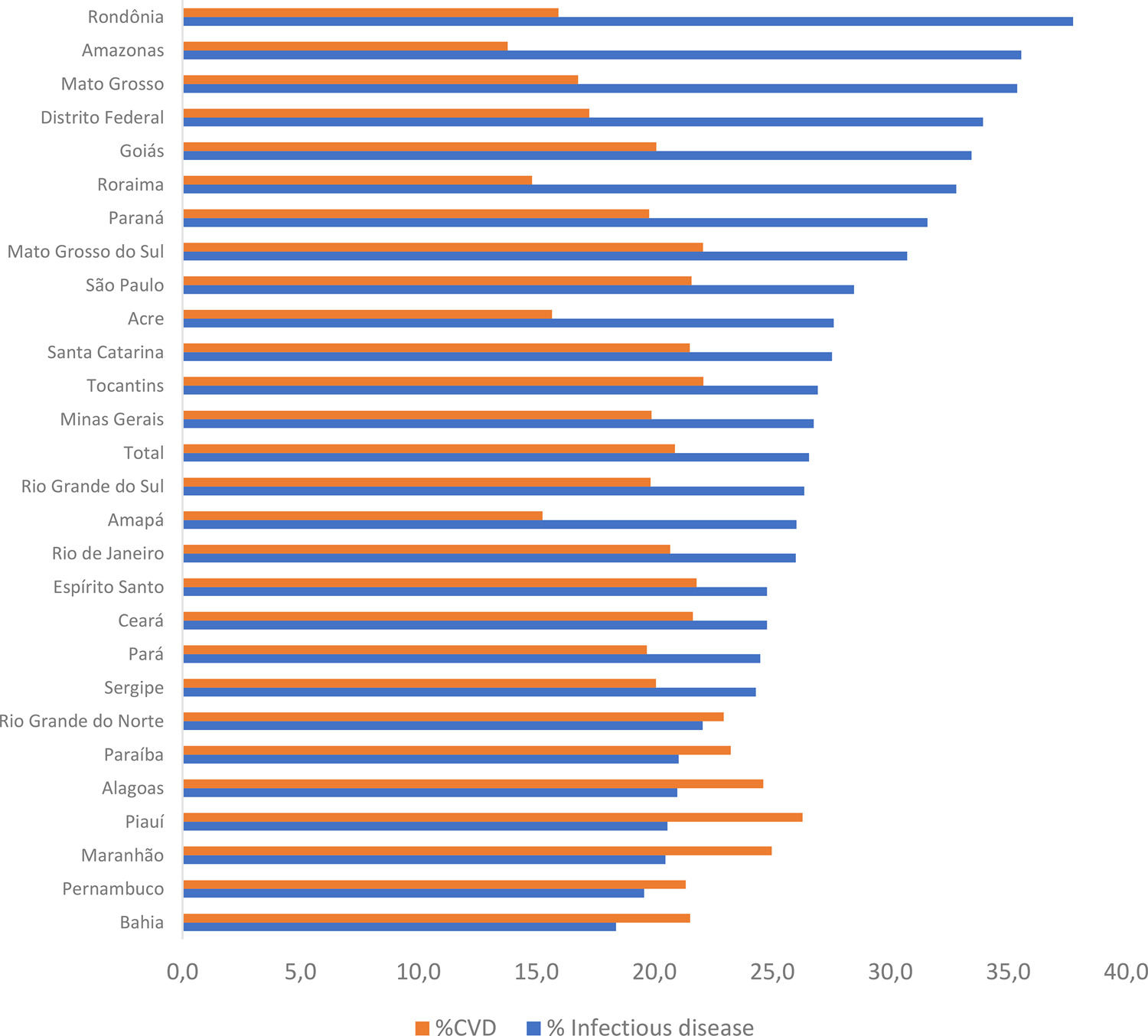
Cardiovascular Statistics – Brazil 2026

Gláucia Maria Moraes de Oliveira et al. Luisa Campos Caldeira Brant Carisi Anne Polanczyk Deborah Carvalho Malta … Andreia Biolo Bruno Ramos Nascimento Maria de Fatima Marinho de Souza Andrea Rocha De Lorenzo Antonio Aurélio de Paiva Fagundes Júnior Arthur Gus Manfro Beatriz D. Schaan Christina Grüne de Souza e Silva Fábio Morato de Castilho Fernando Henpin Yue Cesena Gabriel Porto Soares Gesner Francisco Xavier Junior Jose Augusto Soares Barreto Filho Lucia Campos Pellanda Luciana Nicolau Aranha Luis Eduardo Paim Rohde Luiz Guilherme Passaglia Marcelo Martins Pinto-Filho M. Julia Machline-Carrion Marcio Sommer Bittencourt Octavio M. Pontes Neto Paolo Blanco Villela Paulo Henrique Godoy Renato Azeredo Teixeira Ricardo Stein Roney Orismar Sampaio Thais Rocha Salim Thomas A. Gaziano Pablo Perel Gregory A. Roth Antonio Luiz Pinho Ribeiro

Cardiovascular Statistics – Brazil was established to provide a periodic, comprehensive, evidence-based assessment of cardiovascular health in Brazil and to support clinical practice, research, public health planning, and policy development. Developed under the auspices of the Brazilian Society of Cardiology, the initiative brings together a multidisciplinary network of investigators from academic institutions across the country who are responsible for reviewing, analyzing, and interpreting data from multiple complementary sources. Since its first edition in 2020, Cardiovascular Statistics – Brazil has sought not only to quantify the burden of cardiovascular diseases (CVDs) and their risk factors but also to identify temporal trends, regional disparities, gaps in care, and emerging challenges for the Brazilian health system. The project is modeled on international initiatives such as the American Heart Association’s Heart Disease and Stroke Statistics Update, while incorporating data sources and perspectives that reflect Brazil’s unique epidemiological, demographic, and healthcare characteristics.

(…)

  • Atrial Fibrillation
  • Atrial flutter
  • Brazil
  • Cardiomyopathies
  • Cardiovascular Diseases
  • Cerebrovascular Disorders
  • chronic renal insufficiency
  • Congenital Heart Defects
  • Coronary Disease
  • Diabetes Mellitus
  • Diet
  • Dyslipidemias
  • Exercise
  • Heart Failure
  • Heart Valve Diseases
  • Hypertension
  • Obesity
  • Overweight
  • Statistics
  • Tobacco Use Disorder
Read Full Article
Creative Commons Attribution (CC BY) Creative Commons license
07/10/2026 DOI: 10.36660/abc.20260832i Views 1
Figure 1
ABC
Brief Communication

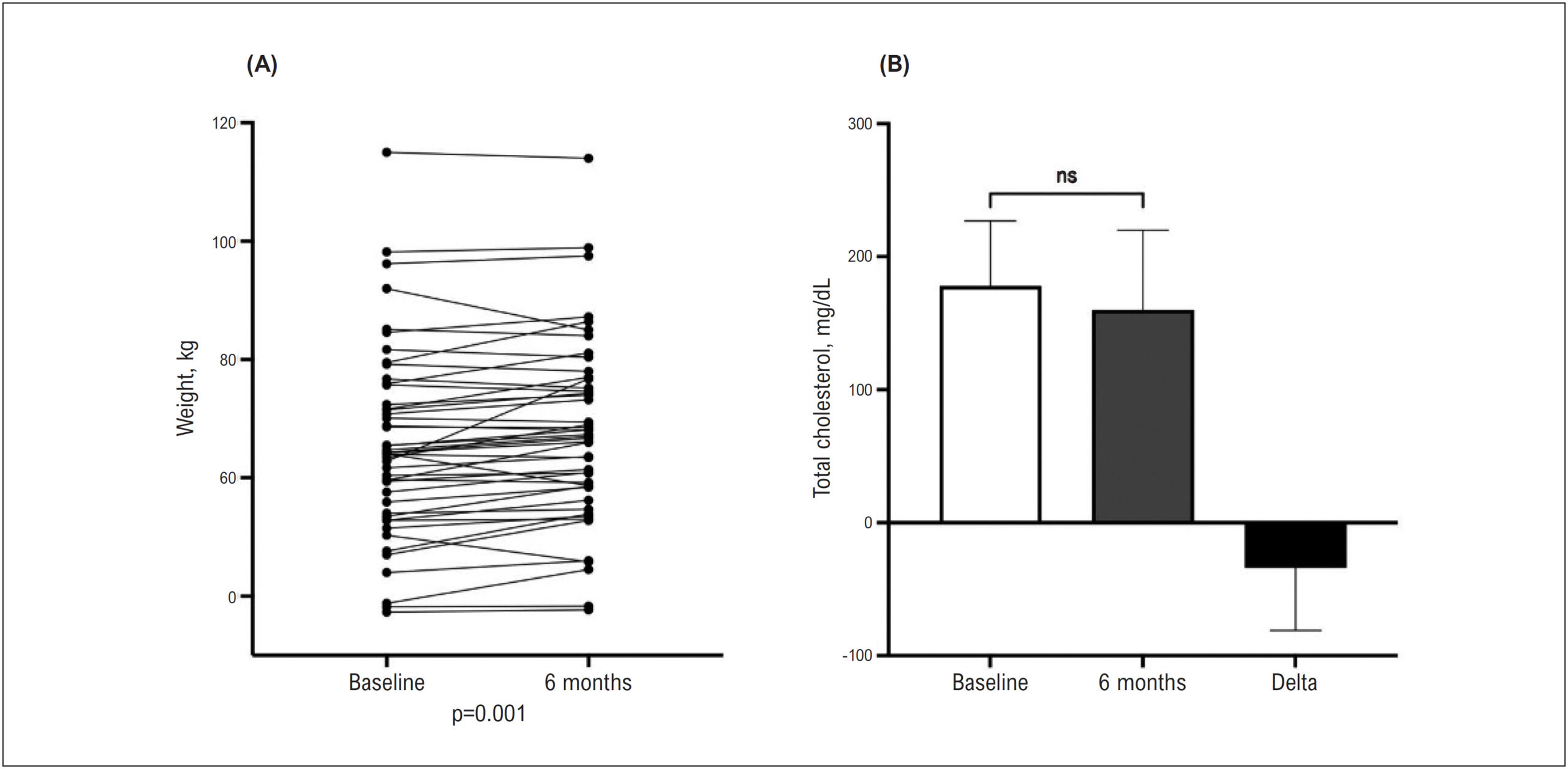
A Prospective Study of Lipid Profile in Incident Patients on Peritoneal Dialysis

Luiza K. R. P. Araújo et al. Dayana B. Dias Monique F. M. Santana Benedito J. Pereira … Hugo Abensur Rosa Moyses Marisa Passarelli Rosilene M. Elias

Introduction

Dyslipidemia is a common metabolic complication in patients with chronic kidney disease (CKD). Although the underlying mechanisms are not fully understood, oxidative stress, inflammation, and insulin resistance are thought to contribute to accelerated atherosclerosis.

Peritoneal dialysis (PD) is a home-based therapy for patients with advanced CKD. In this modality, glucose is the predominant osmotic agent in the dialysate, leading to systemic metabolic effects., Patients undergoing PD tend to have a more atherogenic lipid profile than those receiving conservative treatment or hemodialysis. This atherogenic profile is generated both by protein loss in the dialysate and by the use of high-glucose dialysis solutions that stimulate cytokines promoting chronic inflammation.

[…]

  • Cholesterol
  • Chronic Kidney Failure
  • Dyslipidemias
Read Full Article
Creative Commons Attribution (CC BY) Creative Commons license
10/08/2026 DOI: 10.36660/abc.20260013i Views 1
Screening for Lysosomal Acid Lipase Deficiency in a Lipid Clinic
ABC
Original Article

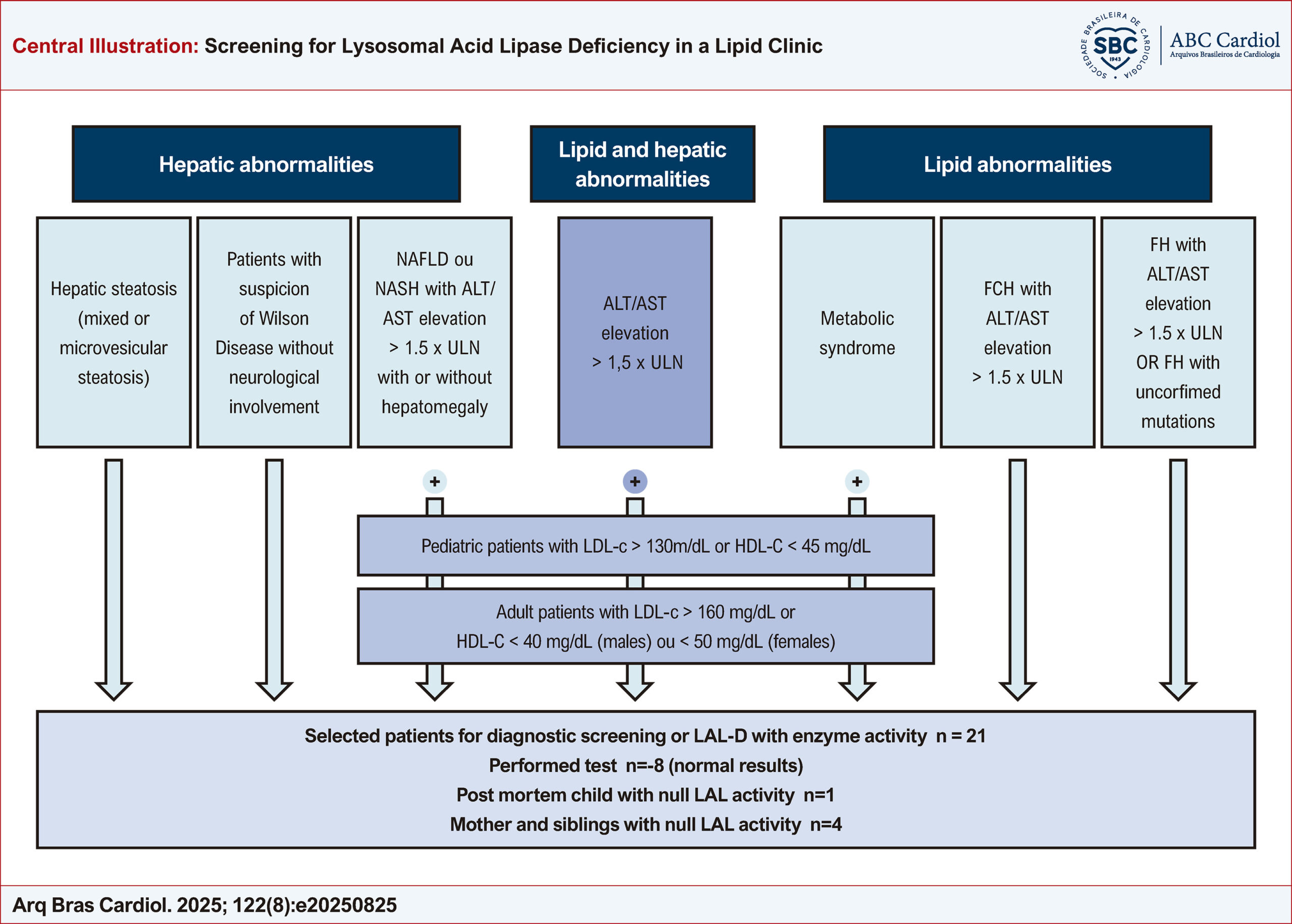
Screening for Lysosomal Acid Lipase Deficiency in a Lipid Clinic

Zenia Brasil et al. Francisco Antonio H. Fonseca Marco Antonio Curiati Sandra Obikawa Kyosen … Vanessa Gonçalves Pereira Waleria Toledo Fonzar João Bosco Pesquero Francy Reis da Silva Patrício Marcelo Hideki Yamamoto Joyce Umbelino Yamamoto Vania D’Almeida Ana Maria Martins Maria Cristina Izar

Abstract

Background

Lysosomal acid lipase deficiency (LAL-D) is a rare autosomal recessive disease, with massive accumulation of cholesteryl esters and triglycerides in many organs, leading to hepatosplenomegaly, microvesicular steatosis, cirrhosis and premature death. Early recognition is crucial for timely enzyme replacement therapy.

Objectives

To screen for LAL-D in subjects with dyslipidemias and/or liver disease at an outpatient lipid clinic.

Methods

We retrospectively assessed records from 2,018 adults and children using a screening algorithm including ALT/AST elevation >1.5 x upper limit of normality, LDL-C>160 mg/dL, HDL-C<40 (males) or 130 mg/dL, HDL-C<45 mg/dL, in children. High-risk patients for LAL-D were selected for LAL enzymatic activity assay in dried blood spots using LAL inhibitor, Lalistat-2.

Results

Among 2,018 screened patients, 21 (0.92%) were selected for LAL activity test, but only eight performed the test with normal results [mean LAL activity 0.077 ± 0.03 nmol/punch/h (reference value >0.024 nmol/punch/h)]. A child whose mother did not perform the test, had a post-mortem undetectable LAL activity. Further, the mother and three half-brothers confirmed LAL-D. Sequencing (NGS) of LIPA gene did not find pathogenic variants, not allowing to discard changes in non-coding region of the gene analyzed.

Conclusions

Identifying LAL-D remains a challenge, and an algorithm based on clinical and laboratory criteria may assist in selecting patients for LAL-D screening. Given its rarity and overlapping features with other genetic dyslipidemias, LAL-D is primarily a diagnosis of exclusion, often considered when other conditions have been ruled out.

  • Dyslipidemias
  • Hepatomegaly
  • Lipase
  • Splenomegaly
Read Full Article
Creative Commons Attribution (CC BY) Creative Commons license
15/08/2025 DOI: 10.36660/abc.20240825i
Cascade Screening in Adolescents with Lipid Disorders Suggestive of Familial Hypercholesterolemia: Findings from the ERICA Study in Curitiba
ABC
Original Article

Cascade Screening in Adolescents with Lipid Disorders Suggestive of Familial Hypercholesterolemia: Findings from the ERICA Study in Curitiba

Vivian Freitas Rezende Bento et al. Tatiana Lorena da Luz Kaestner Amauri de Vargas Junior Renan Barbosa Lopes … Fernando Pinotti Scariot Leiza Loiane Hollas Marcia Olandoski Cristina Pellegrino Baena Katia Vergetti Bloch José Rocha Faria Neto

Abstract

Background

Familial hypercholesterolemia (FH) is a common genetic cause of premature coronary heart disease due to prolonged exposure to high levels of LDL cholesterol (LDL-C). Its prevalence in the heterozygous form ranges from 1:200 to 1:500, and early diagnosis is fundamental for treatment and risk reduction. Cascade screening is recommended upon the identification of index cases.

Objectives

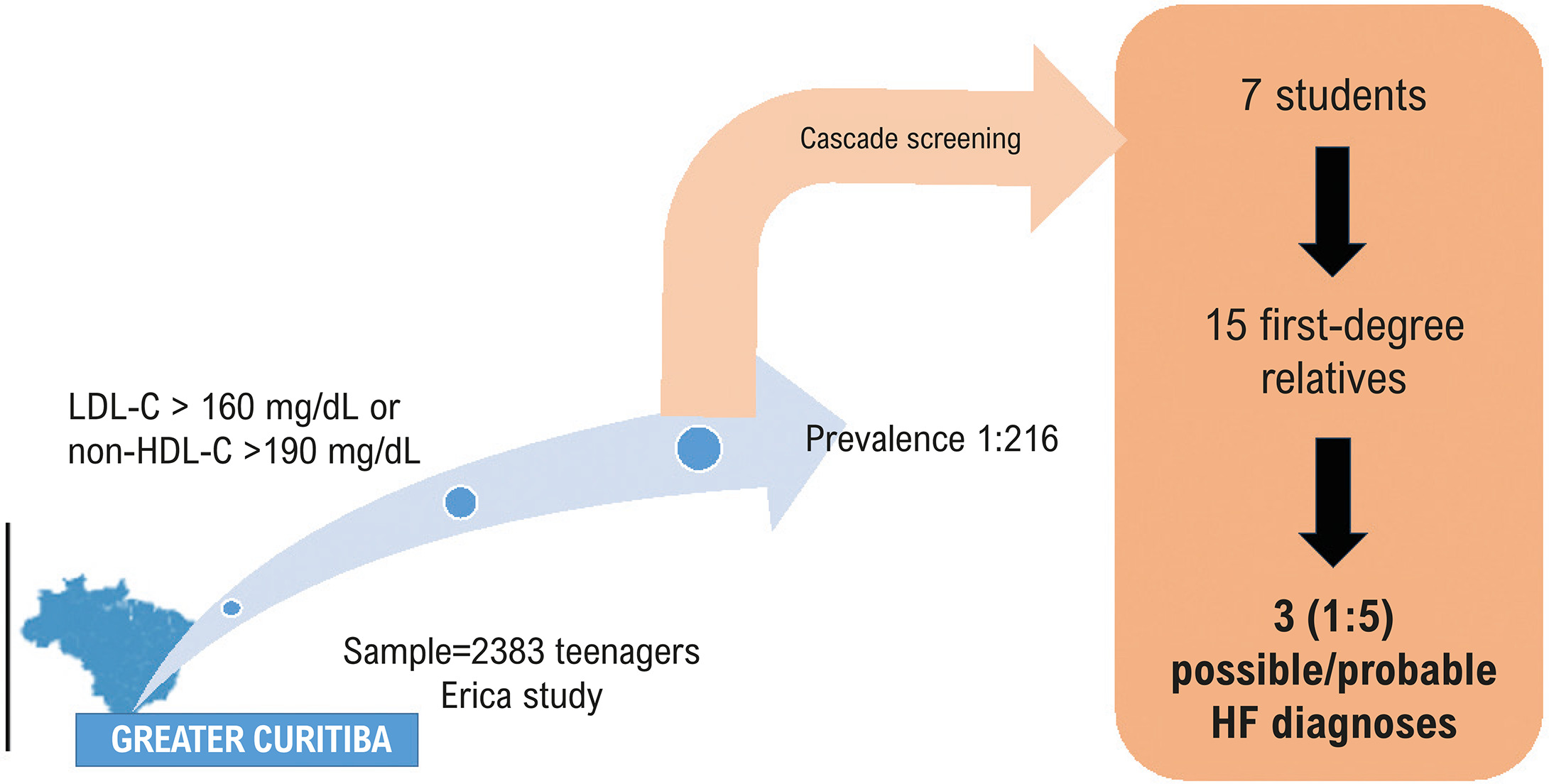
To assess the prevalence of lipid disorders suggestive of FH in students aged 12 to 17 years participating in the ERICA study in Curitiba and to determine the prevalence of FH based on clinical and laboratory criteria in these adolescents and their first-degree relatives undergoing cascade screening.

Methods

Using data from the ERICA study, adolescents with LDL-C levels > 160 mg/dL or non-HDL cholesterol > 190 mg/dL were identified, along with their first-degree relatives. The clinical diagnosis of the study participants was based on the DUTCH MedPed criteria. Statistical significance was defined as P < 0.05.

Results

Eleven adolescents with lipid disorders suggestive of FH were identified among the 2,383 evaluated (1:216). Of these, 7 students and 15 first-degree relatives were assessed. None of the adolescents had a diagnosis of possible FH confirmed by the clinical score. However, 3 family members (20%) were diagnosed with possible/probable FH.

Conclusion

Although the clinical score application did not confirm any cases among adolescents with lipid disorders suggestive of FH, indicating a limitation of the diagnostic method in this population, cascade screening identified potential cases in first-degree relatives.

  • Cholesterol
  • Dyslipidemias
  • Familial hypercholesterolemia
Read Full Article
Creative Commons Attribution (CC BY) Creative Commons license
31/03/2025 DOI: 10.36660/abc.20240468i Views 1
Body Profile Impact on Blood Pressure and Lipid Profile in Rural and Urban Schoolchildren of a Brazilian Semiarid Region in The State of Bahia
IJCS
Original Article

Body Profile Impact on Blood Pressure and Lipid Profile in Rural and Urban Schoolchildren of a Brazilian Semiarid Region in The State of Bahia

Lívia Assis Mendonça et al. Alexvon Gomes Renata Lago Camilla Menezes … Sérgio Roberto Lemos de Carvalho Ana Marice Teixeira Ladeia

Abstract

Background:

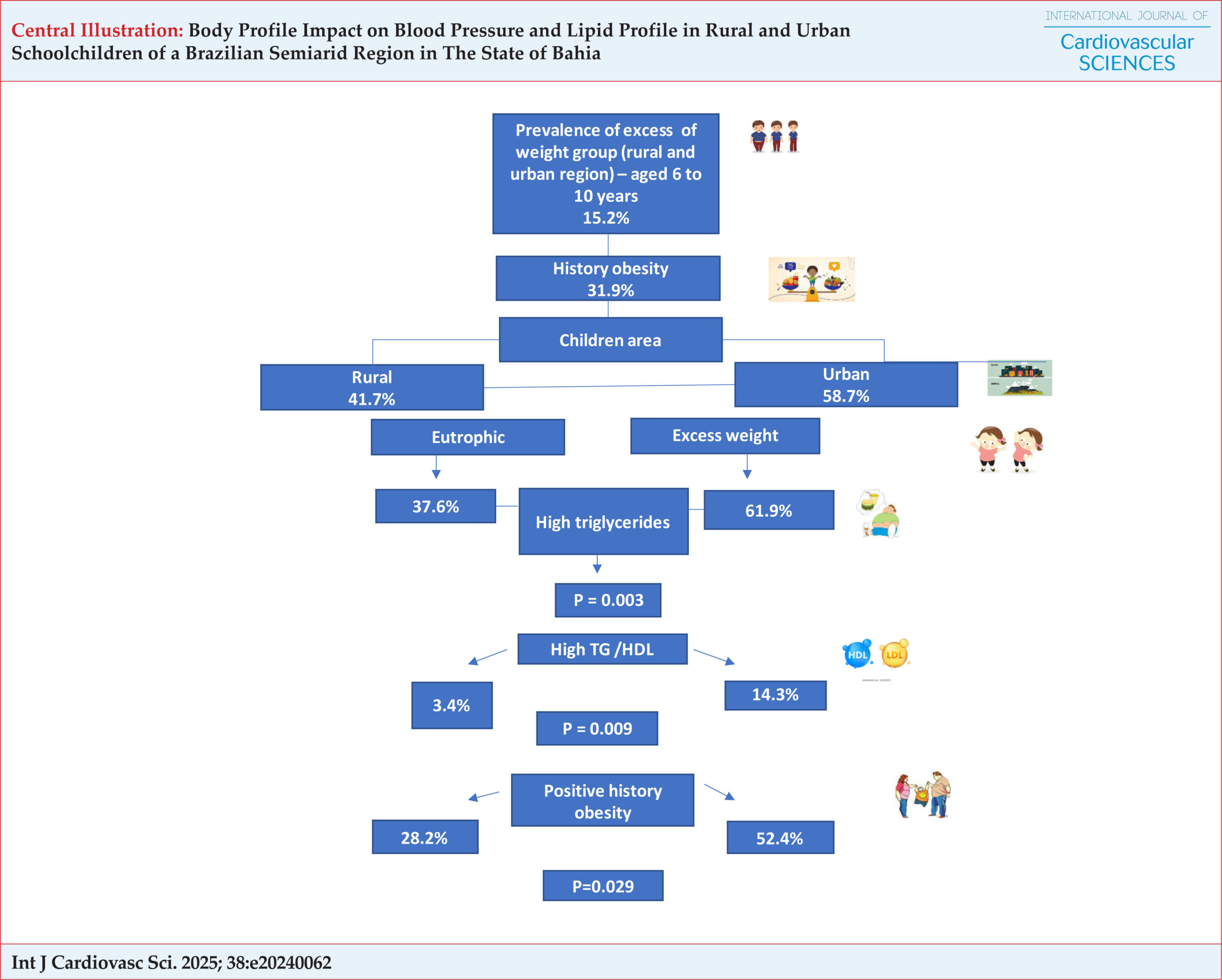
The present study describes the prevalence of excess weight, obesity, and high blood pressure (BP) in children from a Brazilian semiarid region (Sertão) and its association with lipid profile and area of residence.

Objective:

To describe the prevalence of excess weight, obesity, and high BP in children, as well as the association between these variables, lipid profile, and area of residence.

Methods:

Thi work is a cross-sectional study conducted with schoolchildren, aged 6 to 10 years, from three municipalities in the countryside of Brazil. Weight, height, waist circumference (WC), and BP, together with the analysis of lipid markers, were assessed. Z-scores (BMI-Age) were used to determine the anthropometric classification. Total cholesterol (TC), high-density lipoprotein (HDL), low-density lipoprotein (LDL), and triglycerides (TG) were meseared with eight hours of fasting. The Student’s t-test and the Mann-Whitney test were aplied. Perceptual maps were constructed through multiple correspondence analysis. A p-value<0.05 was considered statistically significant. The Institution's Ethics Committee approved this study (CAAE: 35038914.3.0000.5544).

Results:

Among 138 schoolchildren in this study, 76 (55.07%) were female and 81 (58.7%) were from urban areas. Twenty-one children (15.2%) were overweight, and 44 (31.9%) had a family history of obesity. Children from rural areas showed higher levels of TC (p = 0.041) and systolic BP (p = 0.028). The correlation between excess weight and a family history of obesity (p = 0.029), TG (p = 0.003), TG/HDL ratio (p = 0.009), systolic BP (p = 0.000), and WC (p = 0.000) were observed. In the correspondence analysis, the eutrophic group presented expected values for lipid variables.

Conclusion:

Overweight indicators are associated with cardiometabolic risk factors, reinforcing the need for early monitoring.

  • Child
  • Dyslipidemias
  • Hypertension
  • Obesity
Read Full Article
Creative Commons Attribution (CC BY) Creative Commons license
24/03/2025 DOI: 10.36660/ijcs.20240062 Views 1
Chart 1-1
ABC
Special Article

Cardiovascular Statistics – Brazil 2023

Gláucia Maria Moraes de Oliveira et al. Luisa Campos Caldeira Brant Carisi Anne Polanczyk Deborah Carvalho Malta … Andreia Biolo Bruno Ramos Nascimento Maria de Fatima Marinho de Souza Andrea Rocha De Lorenzo Antonio Aurélio de Paiva Fagundes Júnior Beatriz D. Schaan Christina Grüne de Souza e Silva Fábio Morato de Castilho Fernando Henpin Yue Cesena Gabriel Porto Soares Gesner Francisco Xavier Junior Jose Augusto Soares Barreto Filho Luiz Guilherme Passaglia Marcelo Martins Pinto Filho M. Julia Machline-Carrion Marcio Sommer Bittencourt Octavio M. Pontes Neto Paolo Blanco Villela Renato Azeredo Teixeira Ricardo Stein Roney Orismar Sampaio Thomaz A. Gaziano Pablo Perel Gregory A. Roth Antonio Luiz Pinho Ribeiro

ABOUT THESE STATISTICS

The publication Cardiovascular Statistics – Brazil aims to provide an annual compilation of data and research on the epidemiology of CVDs in Brazil. The report integrates official statistics from the Brazilian Ministry of Health and other governmental entities alongside data from the GBD project, coordinated by the IHME at the University of Washington. Additionally, it incorporates data derived from various sources and scientific studies, including cohorts and registries, that relate to CVDs and their associated risk factors. This publication is intended for a wide range of individuals, including researchers, clinicians, patients, healthcare policymakers, media professionals, the general public, and other interested parties seeking extensive national data about heart disease and stroke. Volunteer researchers from various Brazilian universities and research institutions carry out the project. The group is led by a five-member steering committee (ALPR, CAP, DCM, GMMO, and LCCB). The Brazilian Society of Cardiology fully supports this initiative, and the project receives collaborative support from the GBD Brazil Networkand an International Committee (GAR, PP, and TAG) from both the IHME/University of Washington (GAR) and the World Heart Federation (PP and TAG).

[…]

  • Atrial Fibrillation
  • Atrial flutter
  • Brazil
  • Cardiomyopathies
  • Cardiovascular Diseases
  • Cerebrovascular Disorders
  • Coronary Disease
  • Diabetes Mellitus
  • Dyslipidemias
  • Exercise
  • Heart Failure
  • Heart Valve Diseases
  • Hypertension
  • Obesity
  • Overweight
  • Statistics
  • Tobacco Use Disorder
Read Full Article
Creative Commons Attribution (CC BY) Creative Commons license
17/06/2024 DOI: 10.36660/abc.20240079 Views 1
Figure 1
ABC
Research Letter

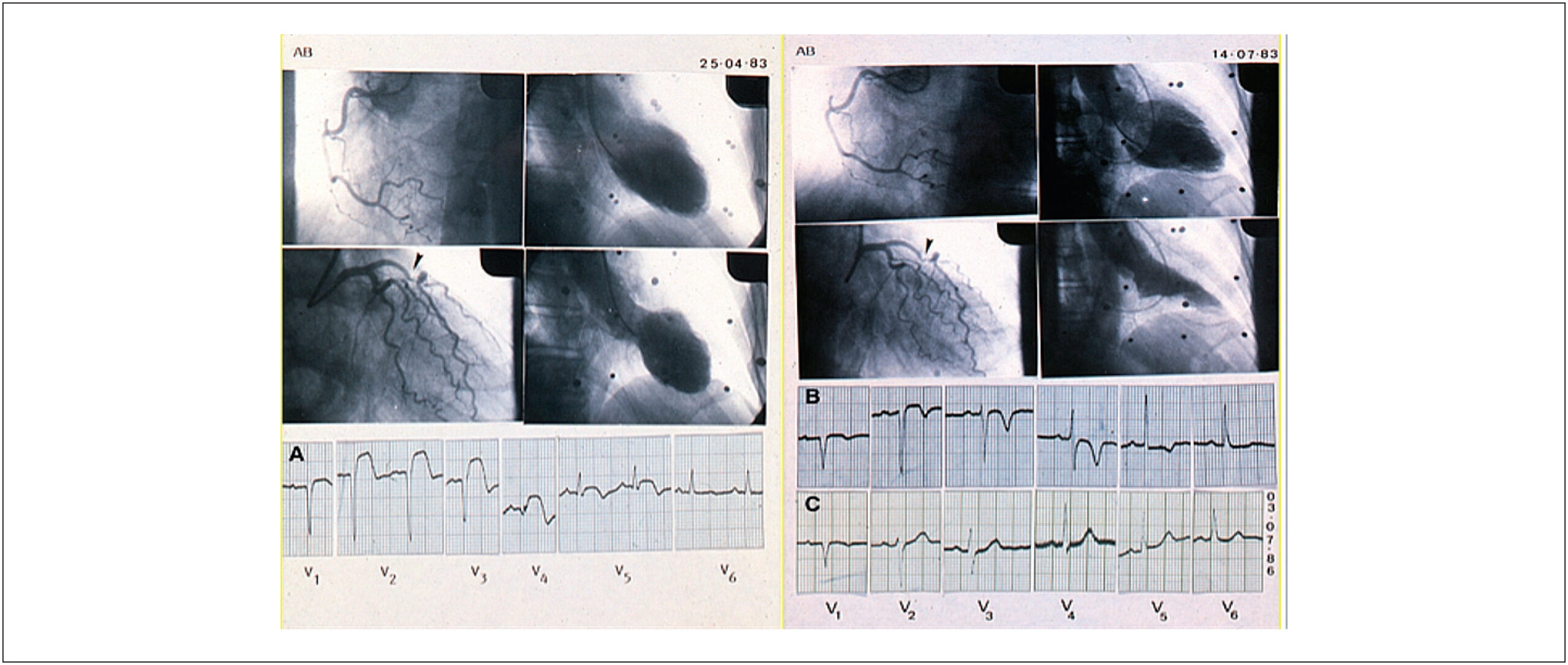
Interpreting Acute Myocardial Infarction 40 Years Later. Evolution of Knowledge: What is the Best Explanation?

Vitor Coutinho Andrade et al. Paulo Cury Rezende Whady Hueb José Antonio Franchini Ramires

Introduction

Plaque rupture and erosion are the most common immediate pathologies associated with acute myocardial infarction. However, other mechanisms must be considered. The reported case occurred at a time when percutaneous or pharmacological coronary revascularization were not the standard treatment, which sparked discussion about these other mechanisms, as well as the possible advantages associated with the myocardial revascularization procedures.

[…]

  • Coronary Vasoespasm
  • Diagnostic Imaging/methods
  • Dyslipidemias
  • Myocardial Infarction
  • Myocardial Stunning
Read Full Article
Creative Commons Attribution (CC BY) Creative Commons license
29/04/2024 DOI: 10.36660/abc.2023-0757i Views 1
Associations between Normal-Weight Obesity and Disturbances in the Lipid Profile of Young Adults
ABC
Original Article

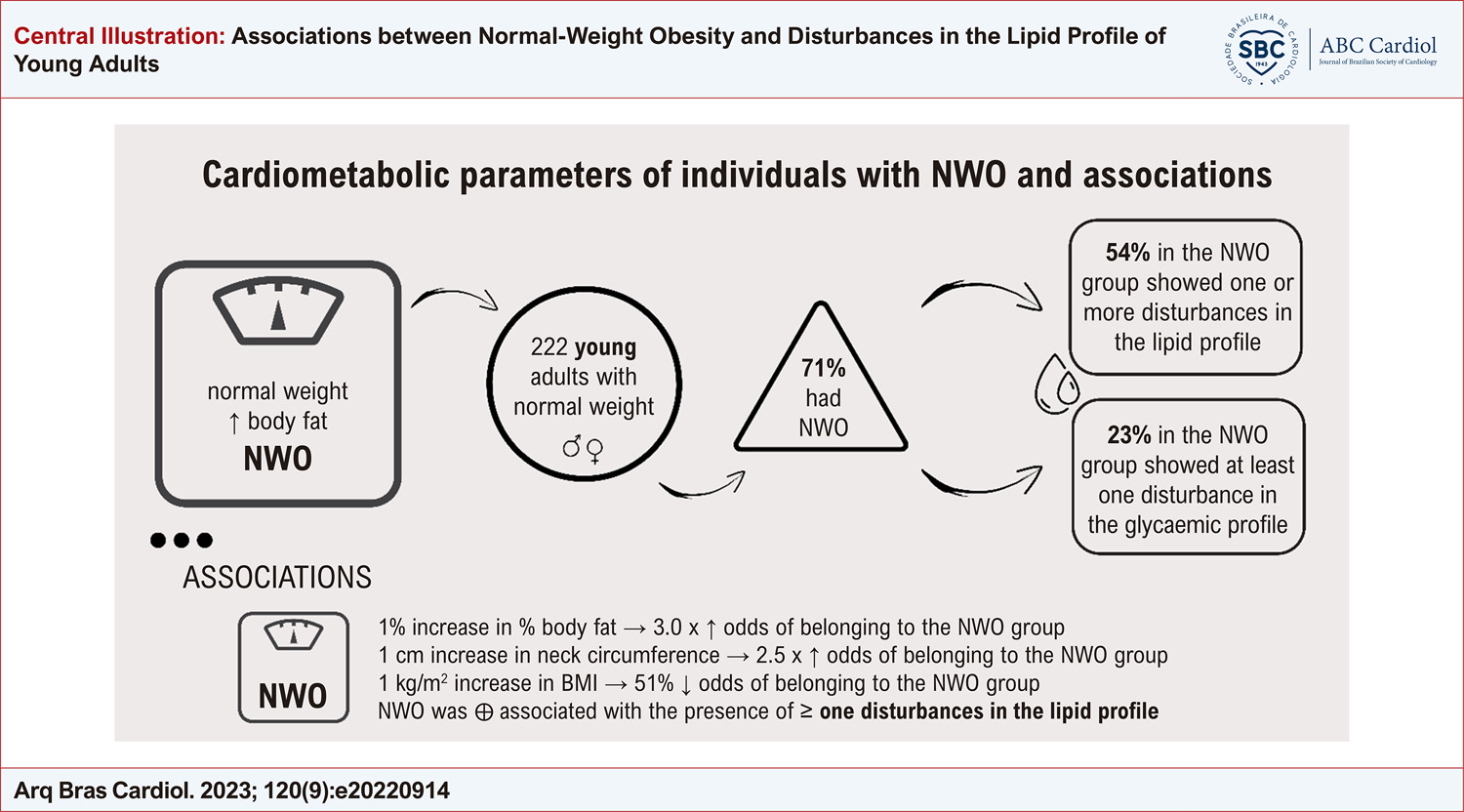
Associations between Normal-Weight Obesity and Disturbances in the Lipid Profile of Young Adults

Anna Flavia Ferreira Passos et al. Acsa de Castro Santos Alexandre Siqueira Guedes Coelho Cristiane Cominetti

Abstract

Background

Normal-weight obesity (NWO) is characterized by normal body mass index (BMI) but high body fat percentage (%BF) that increases the risks of cardiometabolic comorbidities. Accurate assessment and interpretation of body composition data are necessary to reduce these risks.

Objectives

To compare the cardiometabolic profile of individuals with NWO and normal %BF and evaluate the associated risk factors.

Methods

A cross-sectional study was conducted with 222 Brazilian adults from a university community, of whom 157 had NWO and 65 had normal BMI and %BF (non-NWO). All participants reported being asymptomatic and without underlying health conditions. Socioeconomic, lifestyle, food intake, anthropometry, body composition measures (using dual-energy radiological absorptiometry), and lipid and glycemic profiles were evaluated. A p < 0.05 was established as significant.

Results

The median age of the participants was 23 years (interquartile range: 21 to 25), and most were female (67.1%). No significant differences were found in blood pressure, age, or physical activity levels between the NWO and non-NWO groups. However, the frequency of lipid profile disturbances was higher in the NWO group (54%) compared to the non-NWO group (34%) (p < 0.006). Neck circumference, %BF, and lipid profile disturbances were positively associated with NWO.

Conclusion

Individuals with NWO have a worse cardiometabolic profile than those without NWO, and this condition is associated with important biomarkers. Addressing these outcomes is important for preventing long-term cardiometabolic complications. Accurate assessment and interpretation of body composition data, regardless of BMI, are crucial in this scenario.

  • Apolipoproteins
  • Blood Glucose
  • Body Composition
  • Cardiovascular Diseases
  • Dyslipidemias
Read Full Article
Creative Commons Attribution (CC BY) Creative Commons license
23/10/2023 DOI: 10.36660/abc.20220914 Views 2
ABC
Editorial

Coronary Tortuosity as a New Phenotype for Ischemia without Coronary Artery Disease

Mohammad Eltahlawi

Coronary artery disease constitutes a great burden in many countries. In many cases, the detection of coronary ischemia by non-invasive imaging may not correlate with the presence of significant coronary stenosis. Therefore, the term “Ischemia with non-obstructive coronary artery (INOCA)” has emerged. Many theories have been proposed for such a phenomenon. Coronary tortuosity (CorT) is one of these etiologies that was found to be associated with subclinical atherosclerosis and increased coronary artery calcium score. Besides, CorT is associated with the same risk factors of ischemia, such as smoking, old age, arterial hypertension and dyslipidemia. CorT was thought to be a phenomenon; however, the association of this phenomenon with multiple cardiovascular disorders augments its clinical impact. Li et al. found that Hypertensive patients with CorT have more incidence of lacunar infarct. Turgut et al. concluded that CorT might indicate impaired left ventricular relaxation. Dogdus et al. proved that CorT negatively affects left ventricular function evaluated by 3D strain parameters with considerable depression of longitudinal deformation of the myocardium.

In this study by Estrada et al., the investigators found a highly significant association between CorT and ischemia. The presence of ischemia in territories with CorT was more frequent than those without CorT (67% versus 28% (p<0.0001)) detected by myocardial perfusion imaging (MPI). This study analyzed the specific features of tortuosity concerning the presence of myocardial ischemia. They found that the number of bend angles detected in systole during coronary angiography is associated with a high risk of myocardial ischemia (p = 0.021). Some previous studies considered the geometry of CorT and suggested indices for grading such tortuosity depending mainly on the degree of angulation or bending.–

[…]

  • Atherosclerosis
  • Calcium Metabolism Disorders/complications
  • Coronary Artery Disease / complications
  • Diagnostic Imaging/methods
  • Dyslipidemias
  • Myocardial Ischemia/complications
  • Risk Factors
Read Full Article
Creative Commons Attribution (CC BY) Creative Commons license
19/12/2022 DOI: 10.36660/abc.20220826
Figure 1
IJCS
Editorial

Lipids and Sickle Cell Disease

Fernanda Azevedo-Silva

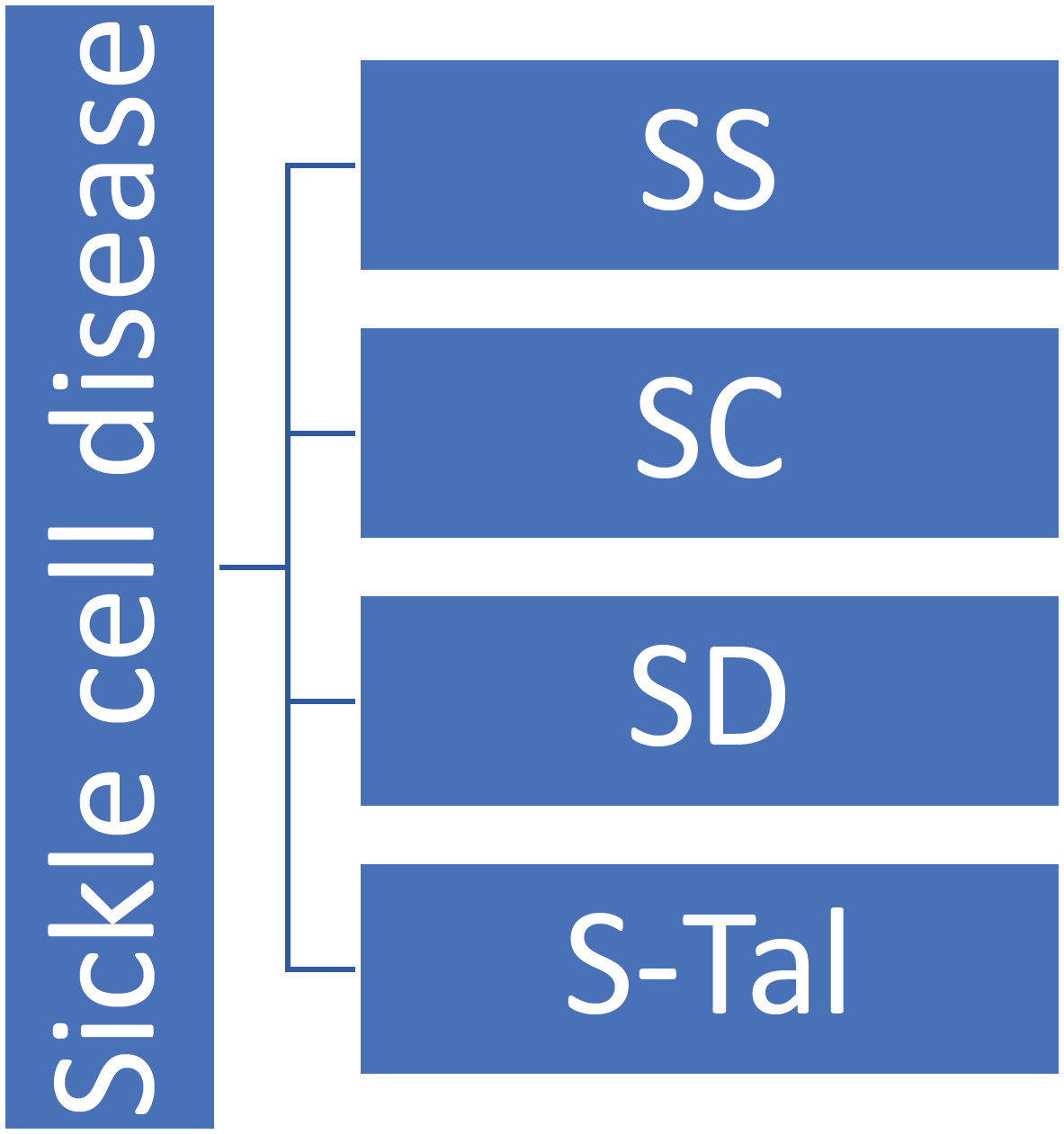
Sickle cell disease is a hereditary, autosomal recessive pathology caused by the replacement of adenine by thymin in position 6 of the beta globin gene, producing anomalous hemoglobin (hemoglobin S- HbS). It is characterized by a chronic inflammatory state with hemolytic anemia and vaso-occlusive phenomena and occurs when the HbS gene is in homozygosis (SS) or heterozygosis, in association with other variant hemoglobins (SD, SC, SE) or thalassemia (). Sickle cell disease is recognized by the World Health Organization (WHO) as a serious public health problem, and, despite advances in treatment, patients with sickle cell disease have a life expectancy of nearly 30 years lower than the general population.

About 4% of the Brazilian population has a sickle cell trait, and between 60,000 and 100,000 Brazilians have the disease, which translates into an economic burden of more than US$ 400,000,000/year for the Brazilian society. The number of patients affected by this pathology is increasing due to the evolution of treatment and improvement in early diagnosis, as a result of the institution of neonatal screening. Early identification of the disease is important in reducing its morbidity and mortality, especially with the prophylaxis of infections, which are a significant cause of death in children. This improvement in survival leads to the development of chronic complications resulting from vasculopathy and to more frequent cases of chronic ischemia.

[…]

  • Dyslipidemias
  • Hemoglobinopathies
  • Sickle Cell Anemia
  • Sickle cell disease
Read Full Article
Creative Commons Attribution (CC BY) Creative Commons license
28/11/2022 DOI: 10.36660/ijcs.20220169 Views 1
ABC
Letter to the Editor

Impact of Active Helicobacter pylori Infection-related Metabolic Syndrome on Systemic Arterial Hypertension

Jannis Kountouras et al. Apostolis Papaefthymiou Stergios A. Polyzos Evangelos Kazakos … Elisabeth Vardaka Maria Touloumtzi Maria Tzitiridou-Chatzopoulou Christos Liatsos Ioanna-Konstantina Sgantzou Jürg Knuchel Michael Doulberis

To the Editor,

In their meta-analysis, Huang et al. concluded that Helicobacter pylori infection ( H. pylori infection) is positively associated with systemic arterial hypertension, particularly by introducing the diagnostic 13C-urea breath test, signifying current H. pylori infection.

[…]

  • Atherosclerosis
  • Dyslipidemias
  • Helicobacter Pylori
  • Hypertension
  • Metabolic Syndrome
Read Full Article
Creative Commons Attribution (CC BY) Creative Commons license
05/09/2022 DOI: 10.36660/abc.20210931 Views 2
ABC
Editorial

Waist Circumference: A Parameter of Vascular Health

Erika Maria Gonçalves Campana et al. Andréa Araujo Brandão

Obesity plays a central role in chronic noncommunicable diseases due to its high prevalence and strong correlation with risk factors like hypertension, dyslipidemia, diabetes mellitus, and morbidity and mortality. In particular, abdominal obesity has been renowned as an emerging risk factor for an inflammatory and prothrombotic state, which is associated with an increased prevalence of hypertension and increased risk of cardiovascular (CV) events. These data are of utmost importance in the scenario of increasing prevalence of obesity not only in adults, but also among children and adolescents., Results of a study conducted in Rio de Janeiro showed an unfavorable relationship of elevated blood pressure (BP) and excess weight in adolescents with increased BP levels and anthropometric and metabolic variables in young adults.

Over the last years, the understanding of the CV continuum has grown, and CV disease has been seen in the context of vascular damage. In this sense, endothelial dysfunction, which results in atherosclerotic disease and its complications, involves the tunica media of large arteries, affected by an accelerated aging of the vessel, resulting in early arterial stiffness and arteriosclerosis, which in turn contributes to CV morbidity and mortality.–

[…]

  • Atherosclerosis
  • Blood Pressure
  • Cardiovascular Diseases/complications
  • Dyslipidemias
  • Outcome Assessment (Health Care)
  • Pulse Wave Analysis
  • Vascular Stiffness
  • Waist Circumference
Read Full Article
Creative Commons Attribution (CC BY) Creative Commons license
05/08/2022 DOI: 10.36660/abc.20220508
ABC
Editorial

The Influence of Obesity and Physical Activity on Cardiovascular Risk

Claudio Leinig Pereira da Cunha

Atherosclerotic cardiovascular disease (ACVD) is common in the general population, affecting most adults over 60 years of age. The disease includes four main areas: (1) Coronary heart disease, (2) Cerebrovascular disease, (3) Peripheral arterial disease, and (4) Aortic atherosclerosis with aneurysms. The conditions traditionally associated with the installation of ACVD (the so-called “risk factors”) are dyslipidemia, diabetes mellitus, arterial hypertension, smoking, obesity, sedentary lifestyle and a family history of ACVD. Atherosclerotic vascular changes may begin in childhood, setting the stage for cardiovascular events in adulthood. Tornquist et al. present in this issue of Arquivos Brasileiros de Cardiologia some aspects of obesity and cardiorespiratory fitness in relation to cardiometabolic risk in children.

Obesity is a public health problem that has expanded worldwide. According to a report by the World Health Organization in 2016, obesity has tripled since 1980. The prevalence of obesity and overweight also increased among young people, from 16% in 1980 to 23% in 2013.

[…]

  • Cardiovascular Diseases
  • diabetes
  • Dyslipidemias
  • Life Style
  • Obesity
  • Risk Factors
  • Sedentarism, Peripheral Artery Disease
Read Full Article
Creative Commons Attribution (CC BY) Creative Commons license
05/08/2022 DOI: 10.36660/abc.20220381 Views 1
ABC
Editorial

Statins and Pregnancy – New FDA Recommendations

Marcio Sommer Bittencourt

The Food and Drug Administration (FDA), the agency responsible for controlling the safety and efficacy of drugs in the United States, has traditionally adopted a risk classification for the use of drugs during pregnancy. Statins were considered a Category X drug, which indicates that the demonstrated risk of these drugs to cause birth defects surpassed their benefits. However, in July 2021, the FDA withdrew this recommendation.

Before this change, the FDA recommended the discontinuation of statins from conception attempts until the end of breastfeeding. In cases where dyslipidemia is not severe, statin discontinuation may confer no additional risk. However, based on this recommendation, the duration of discontinuation may be substantial. In a study with more than 100 women with familial hypercholesterolemia in Norway and Netherlands, the mean length of time without statins was longer than two years for each pregnancy. Although two years is a long period, it still may be a conservative estimate. In this study, the mean interval between conception planning and pregnancy was two months. Data in the literature, however, suggest that the median time to pregnancy is longer, probably around six months for nulliparous women. Also, in this study, mean breastfeeding duration was four months. Considering that the World Health Organization recommends exclusive breastfeeding for the first six months of life, and continued breastfeeding along with introducing complementary foods after this period, the real impact of statin discontinuation during the gestation period may be even greater than two years. Also, many women who use statins are older and may desire more than one child, which may prolong the period of time without statins for more than five years during their reproductive period.

[…]

  • Dyslipidemias
  • Hydroxymethylglutaryl-CoA Reductase Inhibitors
  • Pregnancy
Read Full Article
Creative Commons Attribution (CC BY) Creative Commons license
11/07/2022 DOI: 10.36660/abc.20220413
Figure 1
ABC
Original Article

Achievement of LDL-Cholesterol Goals after Acute Myocardial Infarction: Real-World Data from the City of Curitiba Public Health System

André Bernardi et al. Marcia Olandoski Lucas Olandoski Erbano Luiz Cesar Guarita-Souza … Cristina Pellegrino Baena José Rocha Faria-Neto

Abstract

Background

Reduction of LDL-cholesterol (LDL-c) levels is the cornerstone in risk reduction, but many high-risk patients are not achieving the recommended lipid goals, even in high-income countries.

Objective

To evaluate whether patients seen in the city of Curitiba public health system are reaching LDL-c goals after an acute myocardial infarction (AMI).

Methods

This retrospective cohort explored the data of patients admitted with AMI between 2008 and 2015 in public hospitals from the city of Curitiba. In order to evaluate the attainment of the LDL-c target, we have used the last value registered in the database for each patient up to 2016. For those who had at least one LDL-c registered in the year before AMI, percentage of reduction was calculated. The level of significance adopted for statistical analysis was p<0.05.

Results

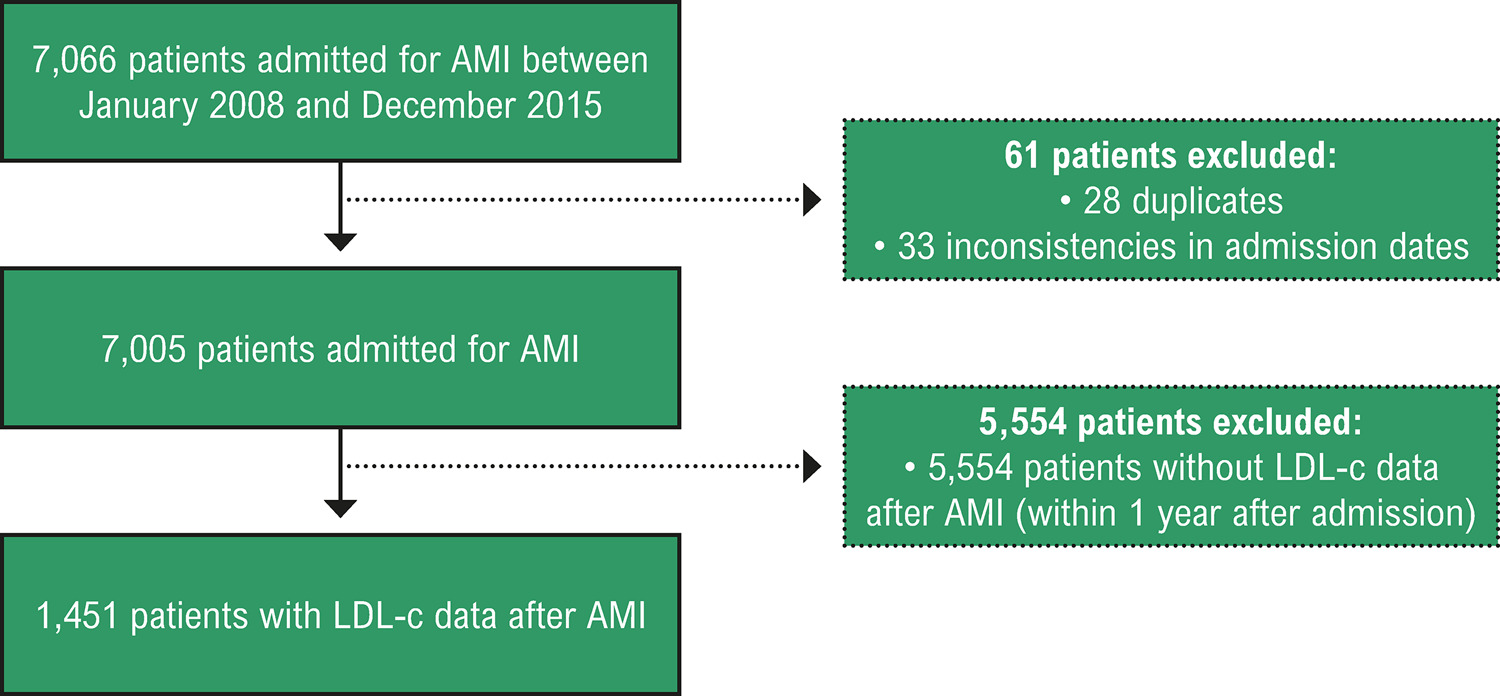
Of 7,066 patients admitted for AMI, 1,451 were followed up in an out-patient setting and had at least one evaluation of LDL-c. Mean age was 60.8±11.4 years and 35.8%, 35.2%, 21.5%, and 7.4% of patients had LDL-c levels ≥100, 70–99, 50–69 and <50 mg/dL, respectively. Of these, 377 patients also had at least one LDL-c evaluation before the AMI. Mean LDL-c concentrations were 128.0 and 92.2 mg/dL before and after AMI, with a mean reduction of 24.3% (35.7 mg/dL). LDL-c levels were reduced by more than 50% in only 18.3% of the cases.

Conclusion

In the city of Curitiba public health system patients, after myocardial infarction, are not achieving adequate LDL-c levels after AMI.

  • Cardiovascular Diseases
  • Choleterol LDL
  • Diabetes Mellitus
  • Dyslipidemias
  • Epidemiology
  • Myocardial Infarction
  • Prevention and Control
  • Risk Factors
  • Secondary Prevention
Read Full Article
Creative Commons Attribution (CC BY) Creative Commons license
09/05/2022 DOI: 10.36660/abc.20210328 Views 2
IJCS
Editorial

TG/HDL-c Ratio as a Predictor of Cardiovascular Risk

Luciana Nicolau Aranha

Cardiovascular diseases (CVD) continue to be an important public health problem and one of the main causes of morbidity and mortality worldwide, generating economic and social impacts., In Brazil, CVD costs have been increasing significantly and are the highest when compared to other causes of hospitalization. Moreover, as the population ages, and with the increase in CVD prevalence, these expenses tend to be even higher. Therefore, early detection and possible changes in cardiovascular risk factors can be important in order to reduce hospitalization and negative outcomes, as well as to improve the population’s quality of life.

In an attempt to identify asymptomatic individuals with a greater predisposition for the disease and define therapeutic goals, many evaluation tools have been developed to estimate risks for CVD, such as Framingham’s Global Risk Score (GRS), adopted by the Department of Atherosclerosis of the Brazilian Society of Cardiology (SBC-DA, in Portuguese) and which evaluates the risk of cardiovascular events over a 10-year period through the variables of age, sex, high-density lipoprotein cholesterol (HDL-c), total cholesterol, systolic blood pressure, smoking, and diabetes.

[…]

  • Cardiovascular disease
  • Diabetes Mellitus
  • Dyslipidemias
  • Hypertension
  • Risk Fators
Read Full Article
Creative Commons Attribution (CC BY) Creative Commons license
01/11/2021 DOI: 10.36660/ijcs.20210245 Views 1
Figure 1
ABC
Research Letter

Unusual Finding of Rare Exuberant Xanthomatosis in Hyperlipidemia

Enrico Manfredini et al. Renato Jorge Alves

Introduction

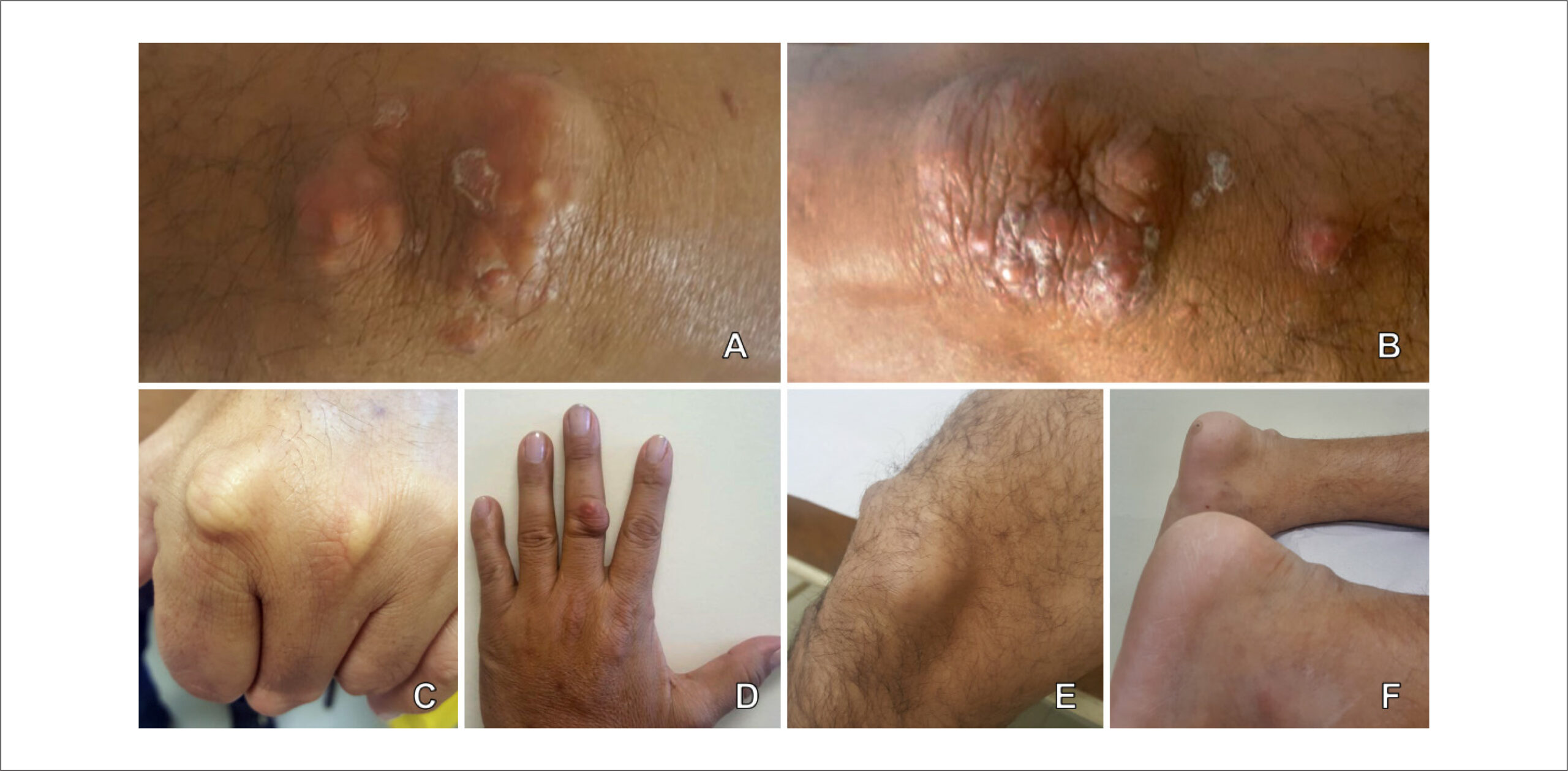
Hyperlipidemia can increase morbidity and mortality. This condition has been classified by Fredrickson into the following phenotypes: I, IIa, IIb, III, IV and V.– In the mixed ones, the following conditions are present: hypercholesterolemia and hypertriglyceridemia, phenotypes IIb and III, with cholesterolemia and triglyceridemia of 250 to 300 mg/dL in phenotype IIb, and 500 to 600 mg/dL or more, in III, respectively. Pancreatitis is uncommon in both, as well as xanthomatosis in IIb. Xanthomas and cardiovascular complications are more frequent in phenotype III.,

We present a case of hyperlipidemia with relevant lipid abnormalities, pancreatitis and exuberant xanthomatosis.

[…]

  • Dyslipidemias
  • Hyperlipidemias
  • Hypolipidemic Agents
  • Xanthomatosis
Read Full Article
Creative Commons Attribution (CC BY) Creative Commons license
06/09/2021 DOI: 10.36660/abc.20200999
Figure 1
IJCS
Original Article

Optimal Cutoff of the TG/HDL-c ratio for Cardiovascular Risk in Hypertensive and Diabetic Patients Monitored by Primary Health Care in a city in Minas Gerais

Eunice Ferreira da Silva et al. Rosângela Minardi Mitre Cotta Érica Toledo Mendonça Deíse Moura de Oliveira … Silvia Almeida Cardoso Renata Maria Colodette Tiago Ricardo Moreira

Abstract

Background

The analysis of the atherogenic potential of the lipid profile for biomarkers, such as the TG/HDL-c ratio, predicts cardiovascular risk better than isolated lipids.

Objective

To identify the TG/HDL-c cutoff points for multiple risks (hypertension, Diabetes Mellitus, obesity) and to evaluate the association between sociodemographic, clinical, laboratory, anthropometric, and life habit variables and the TG/HDL-c ratio in hypertensive and/or diabetic individuals in the context of Primary Health Care.

Methods

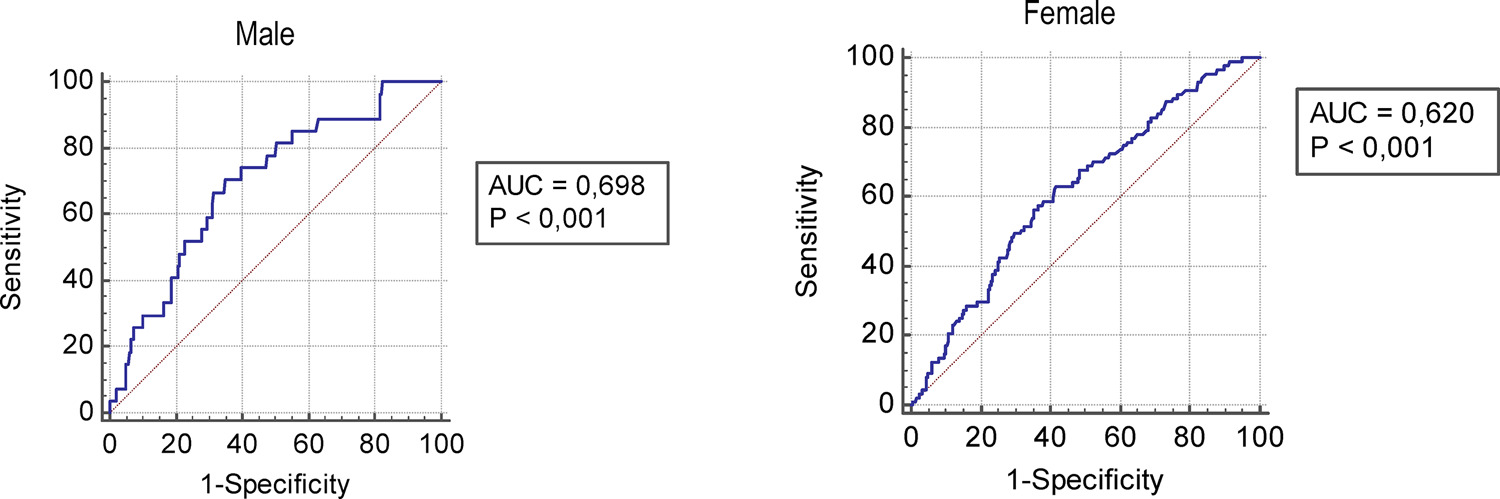
This was a cross-sectional study with 833 hypertensive and/or diabetic patients, conducted between August 2017 and April 2018. The cutoff point of the TG/HDL-c were obtained by the ROC curve. Cardiovascular risk was discriminated by TG/HDL-c, categorized by the cutoff and evaluated in relation to multiple risks. The magnitude of the association between TG/HDL-c and independent variables was estimated by logistic regression. The significance level of p<0.05 was adopted for all tests.

Results

The cutoff values of TG/HDL-c (3.26 for men and 2.72 for women) were more sensitive and less specific than those in the literature. Women (OR=1.90 and 95% CI 1.13-3.20) and men (OR=4.58 and 95% CI 1.78-11.76) with multiple risks, and white men, alcohol users, with a history of stroke, had a higher chance of altered GT/HDL-c. Increases in glycosylated hemoglobin, glycemia, and phosphorus in women, and cholesterol, glycemia, and microalbuminuria in men increased the chances of altered TG/HDL-c. Being a former smoker and black reduced the chance of altered TG/HDL-c in women.

Conclusions

TG/HDL-c proved to be a good indicator for habitual use in Primary Care.

  • Biomarkers
  • Diabetes Mellitus
  • Dyslipidemias
  • Hypertension
  • Primary Health Care
Read Full Article
Creative Commons Attribution (CC BY) Creative Commons license
20/08/2021 DOI: 10.36660/ijcs.20200290 Views 1
IJCS
Original Article

Lifestyle Intervention in Reducing Cardiometabolic Risk Factors in Students with Dyslipidemia and Abdominal Obesity: A Randomized Study

Heloisa Pamplona-Cunha et al. Nilton Rosini Roberta Caetano Marcos José Machado Edson Luiz da Silva

Abstract

Background

The long incubation periods of cardiovascular diseases offer opportunities for controlling risk factors. In addition, preventive interventions in childhood are more likely to succeed because lifestyle habits become ingrained as they are repeated.

Objective

To investigate the effects of recreational physical activities, in combination or not with a qualitative nutritional counseling, in cardiometabolic risk factors of students with dyslipidemia and abdominal obesity.

Methods

Students (8-14 years old) were randomly divided into three groups (n=23 each): i ) Control; ii ) PANC, students undergoing Physical Activity and Nutritional Counseling, and iii ) PA, students submitted to Physical Activity, only. Blood samples (12-h fasting) were collected for biochemical analysis and anthropometric markers were also assessed. Two-Way RM-ANOVA and Holm-Sidak’s test, and Friedman ANOVA on Ranks and Dunn’s test were applied. P ≤ 0.05 was considered significant. Effect sizes were evaluated by Hedges’ g and Cliff’s δ for normal and non-Gaussian data, respectively.

Results

Compared to the control group and to baseline values, both interventions caused significant average reductions in total cholesterol (11%; p <0.001), LDL-c (19%; p=0.002), and non-HDL-c (19%; p=0.003). Furthermore, students in the PANC group also experienced a significant decrease in body fat compared to baseline (p=0.005) and to control (5.2%; g=0.541).

Conclusions

The proposed strategies were effective to reduce cardiometabolic risk factors in children and adolescents. The low cost of these interventions allows the implementation of health care programs in schools to improve the students’ quality of life.

  • Adolescent, Students
  • Child
  • Dyslipidemias
  • Exercise
  • Glycemic Profile
  • Lifestyle
  • Nutritional Orientation
  • Obesity
  • Risk Factors
Read Full Article
Creative Commons Attribution (CC BY) Creative Commons license
07/07/2021 DOI: 10.36660/ijcs.20200286 Views 2
Figure 1
ABC
Original Article

Atorvastatin Attenuates Vascular Remodeling in Mice with Metabolic Syndrome

Karine Ferreira da Silva Carvalho et al. Amanda Araújo Marques Ferreira Nayara Carvalho Barbosa Juliano Vilela Alves Rafael Menezes da Costa

Abstract

Background

Metabolic syndrome is characterized by an array of comorbidities. During this syndrome, structural changes are observed in the cardiovascular system, especially vascular remodeling. One of the predisposing causes for these changes is chronic inflammation resulting from changes in the structure and composition of perivascular adipose tissue. Atorvastatin is effective in the treatment of dyslipidemias. However, its pleiotropic effects have not been completely understood. We hypothesize that metabolic syndrome may lead to vascular remodeling and that atorvastatin therapy may be able to attenuate this condition.

Objectives

To assess the effects of atorvastatin therapy on vascular remodeling in an experimental model of metabolic syndrome.

Methods

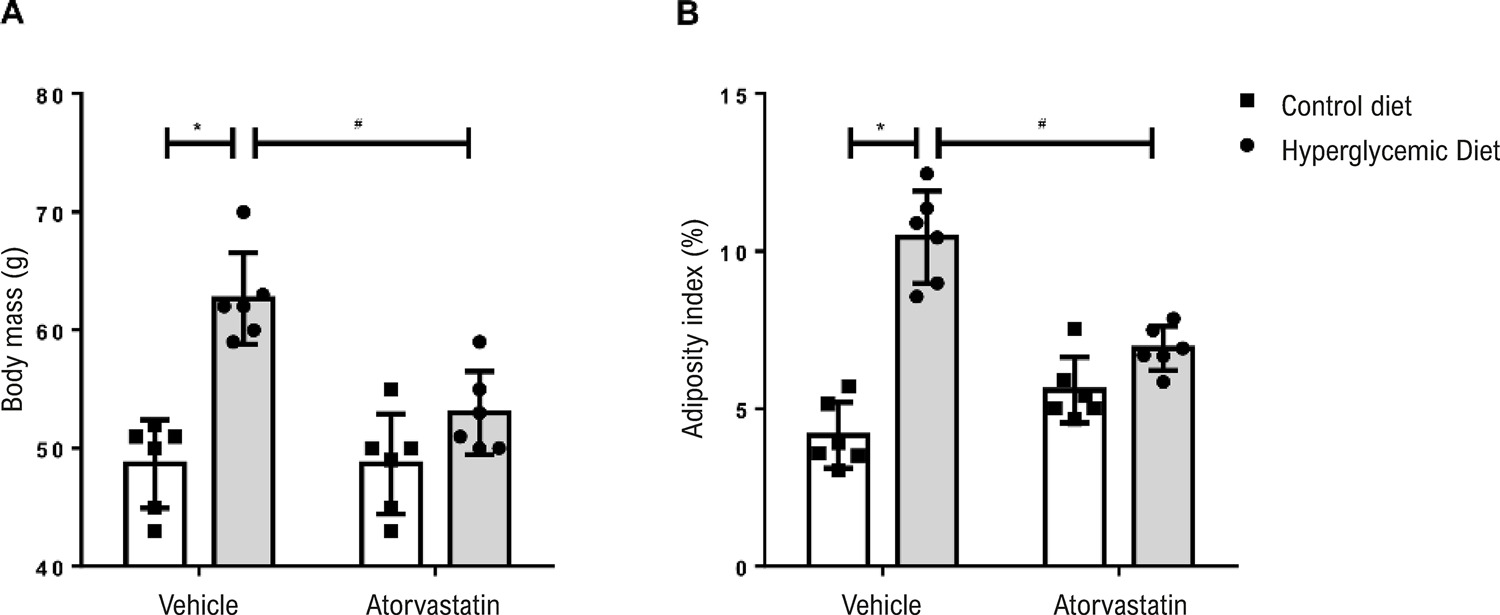
Swiss mice received a control diet or a hyperglicemic diet for 18 weeks. After 14 weeks of diet, mice were treated with vehicle or atorvastatin (20mg/kg) during for 4 weeks. Nutritional and metabolic profiles were assessed by biochemical tests; moreover, a histological assessment of aorta structure was conducted, and cytokine levels were determined by the immunoenzyme assay. The acceptable level of significance for the results was set at p<0.05.

Results

Hyperglicemic diet promoted the development of metabolic syndrome. It indeed culminated in hypertrophic remodeling of vascular smooth muscle and perivascular adipose tissue. Furthermore, there were increases in the levels of circulating TNF-α and IL-6 and in the perivascular adipose tissue. Atorvastatin therapy significantly reduced metabolic damages, vascular remodeling, and cytokine levels.

Conclusion

Atorvastatin attenuate metabolic damages associated with metabolic syndrome induced by hyperglycemic diet, in addition to attenuating vascular remodeling; both effects are associated with reduced levels of pro-inflammatory cytokines.

  • Atorvastatin
  • Dietary Carbohydrates
  • Dyslipidemias
  • Inflammation
  • Metabolic Syndrome
  • Mice
  • Vascular Remodeling
Read Full Article
Creative Commons Attribution (CC BY) Creative Commons license
18/06/2021 DOI: 10.36660/abc.20200322
ABC
Editorial

Cardiovascular Risk Factors in Cardiologists Certified by the Brazilian Society of Cardiology: Lessons to be Learned

Claudio Tinoco Mesquita et al. Wilter dos Santos Ker

Cardiovascular diseases (CVD) remain the leading cause of death in the world. Risk factors such as systemic arterial hypertension (SAH), diabetes mellitus (DM), dyslipidemia, obesity, smoking and alcoholism associated with sedentary behavior, sleep deprivation, stress and family history favor atherosclerosis. The complexity of pathophysiology in the process of atherosclerosis formation and the variety of risk factors for artery disease have important impacts on mortality.– SAH is an important risk factor, being the most prevalent for CVD and its relationship is the result of vascular lesions that cause hyperplasia and hypertrophy of the middle layer of the vessel. Cardiovascular disease is the main cause of mortality and morbidity in people with diabetes. It is the result of hyperglycemia and insulin resistance, leading to chronic inflammation, oxidative stress and, ultimately, endothelial dysfunction. DM has increased significantly in recent years, making it one of the main causes of mortality. Insulin resistance promotes dyslipidemia, accelerating atherosclerosis in diabetic patients.– Obesity prevalence has grown greatly in recent decades. It is a complex condition that has a great impact on cardiovascular diseases and plays an important role in affecting risk factors (SAH, DM and dyslipidemia). Sudden death is increased in obese patients, usually by frequent and complex ventricular arrhythmias. Smoking, alcohol intake and sedentary lifestyle are related to increased cardiovascular risk affecting all phases of atherosclerosis., Unhealthy eating is related to factors that interfere with the prevention and control of CVD, being of great importance for early mortality around the world. The adoption of healthy habits requires constant personal efforts and resilience.– Improvement in lifestyle associated with healthy eating provides new perspectives on cardiovascular prevention. Physical activity has positive effects on lipid metabolism, glucose, and blood pressure combined with new classes of drugs to control risk factors has resulted in lower cardiovascular outcomes. Tobacco control is an important instrument in primary prevention which, through continuing education in recent years, has seen an important reduction in the number of people dependent on smoking.–

In a new study with cardiologists, Teixeira et al. found lower prevalence of sedentary lifestyle and smoking, but a higher prevalence of alcohol consumption. The prevalence of dyslipidemia was higher than SAH and DM. Although specialists had greater knowledge about the disease, it was not possible to observe healthier habits than the rest of the population.– In contrast, in Canada, a cohort study of 17,071 practicing physicians and 5,306,038 members of the general population found that physicians used fewer guideline-recommended preventive services and had lower rates of cardiac risk factors. After 8 years’ follow-up, physicians had a substantially lower risk of adverse outcomes than the general population. These results could lead us to speculate about the possible causes for these differences. A stressful lifestyle and excessive working hours linked to medical practice in Brazil could be responsible for part of these findings.

[…]

  • Atherosclerosis
  • Cardiologists
  • Coronary Artery Disease / mortality
  • Diabetes Mellitus
  • Dyslipidemias
  • Obesity
  • Risk Factors
Read Full Article
Creative Commons Attribution (CC BY) Creative Commons license
16/04/2021 DOI: 10.36660/abc.20210153
Figure 1
ABC
Research Letter

Statins and COVID-19: To Suspend or Not to Suspend? That is the Question!

Filipe Ferrari et al. Raul D. Santos

Introduction

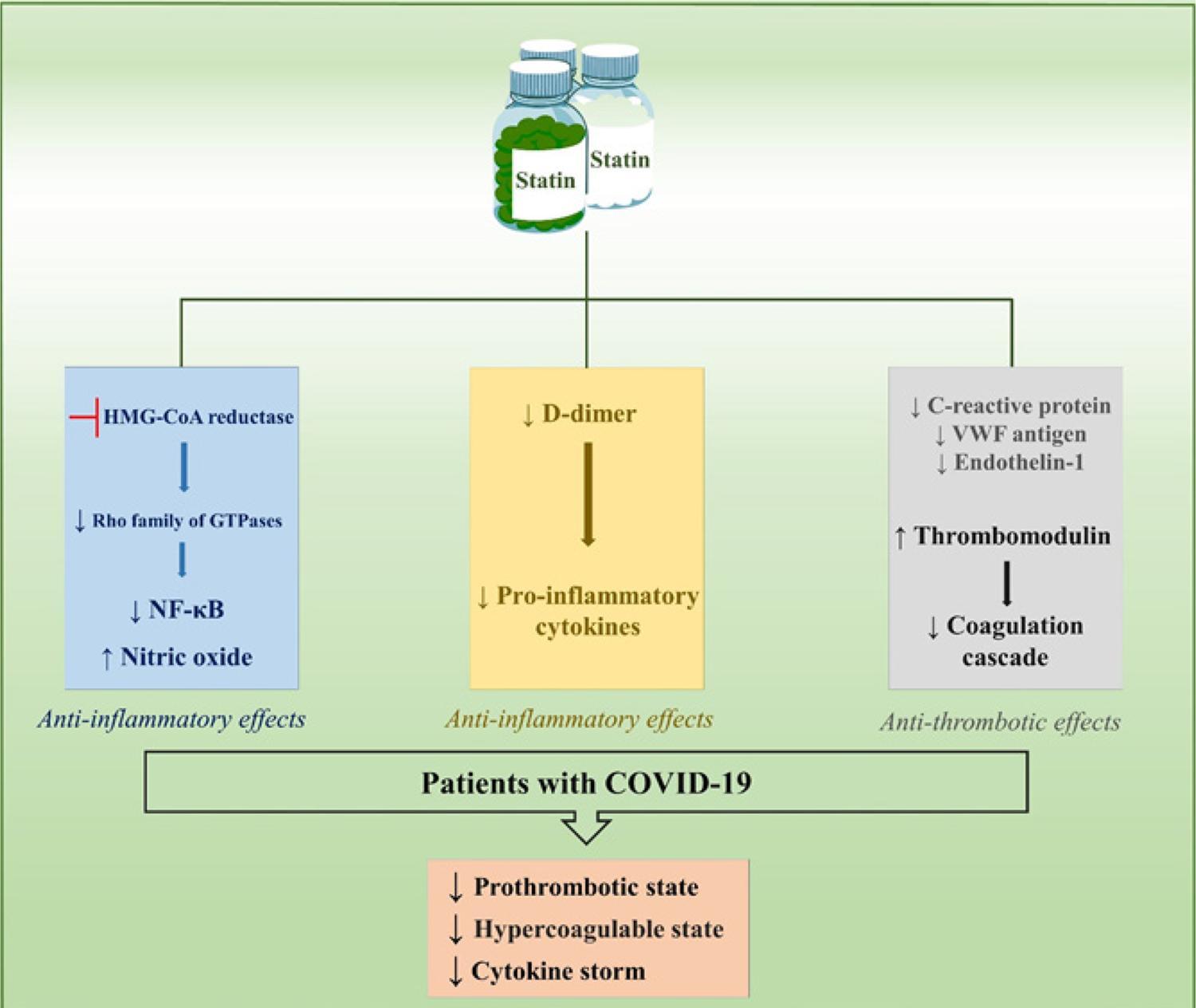
In the midst of so many uncertainties that permeate the new coronavirus disease 2019 (COVID-19), the evidence relating the presence of dyslipidemia to disease severity and consequent prognostic implications are still scarce. In May 2020, a retrospective Chinese study investigated the association between changes in cholesterol levels and prognosis in approximately 600 patients with COVID-19, who were paired by age and sex with healthy controls. First, it was observed that low-density lipoprotein cholesterol (LDL-C) and total cholesterol levels were significantly lower in patients with COVID-19. Second, there was a trend for LDL-C and total cholesterol levels to decrease as the severity of infection increased (mild, severe, and critical, respectively). In that study, high-density lipoprotein cholesterol (HDL-C) levels were also decreased in severe cases. Similar data were observed by Fan et al.,where levels of LDL-C were inversely associated with the severity of COVID-19. These data suggested a possible relation between low cholesterol levels and worsening of COVID-19 infection. In addition, experimental studies have shown that statins might increase the abundance of the angiotensin-converting enzyme 2 (ACE2), which could in part contribute to the entry of the virus into the cell and increase the risk of infectivity.

Based on these previous findings, it was hypothesized that use of lipid-lowering therapies like statins could aggravate COVID-19 infection. However, it is known that serum cholesterol levels may drop in patients with active viral or bacterial infections,, since LDL and HDL have a role in the immune system. On the other hand, hyperlipidemia can compromise the immune response and further exacerbate the inflammatory status of COVID-19 patients, increasing cardiovascular risk.So, the question that ensues is, should statins be suspended or not in patients with COVID-19?

[…]

  • Betacoronavirus
  • Cholesterol
  • Coronavirus
  • COVID-19
  • Dydroxymethylglutaryl-CoA Reductase Inhibitors
  • Dyslipidemias
  • Infection
  • Lipoproteins
  • Pandemics
Read Full Article
Creative Commons Attribution (CC BY) Creative Commons license
03/02/2021 DOI: 10.36660/abc.20200949 Views 2
Figure 1
ABC
Original Article

Coronary Calcium Score and Stratification of Coronary Artery Disease Risk in Patients with Atherosclerotic and Non-Atherosclerotic Ischemic Stroke

Edson Marcio Negrão et al. Maria Cristina Del Negro Barroso Freitas Patricia Beatriz Christino Marinho Thiago Falcão Hora … Vinicius Viana Abreu Montanaro Bernardo Jose Alves Ferreira Martins Sergio Henrique Rodolpho Ramalho

Abstract

Background

Ischemic Stroke (IS) and Coronary Artery Disease (CAD) frequently coexist and share atherosclerotic disease risk factors. According to the American Heart Association, IS subtypes may be considered CAD risk equivalents, but the evidence for non-atherosclerotic IS is uncertain. Additionally, the Coronary Calcium Score (CCS) is an accurate marker to address CAD risk; however, CCS distribution between IS subtypes is not well characterized.

Objectives

To compare the CCS between atherosclerotic and non-atherosclerotic IS groups; and to determine which covariates were associated with high CCS in IS.

Methods

This cross-sectional design included all patients with IS, 45 to 70 years of age at the time of the stroke, consecutively admitted to a rehabilitation hospital between August 2014 and December 2016, without prevalent CAD. All patients underwent CT scanning for CCS measurement. CCS≥100 was considered a high risk for CAD, with a significance level of p<0.05.

Results

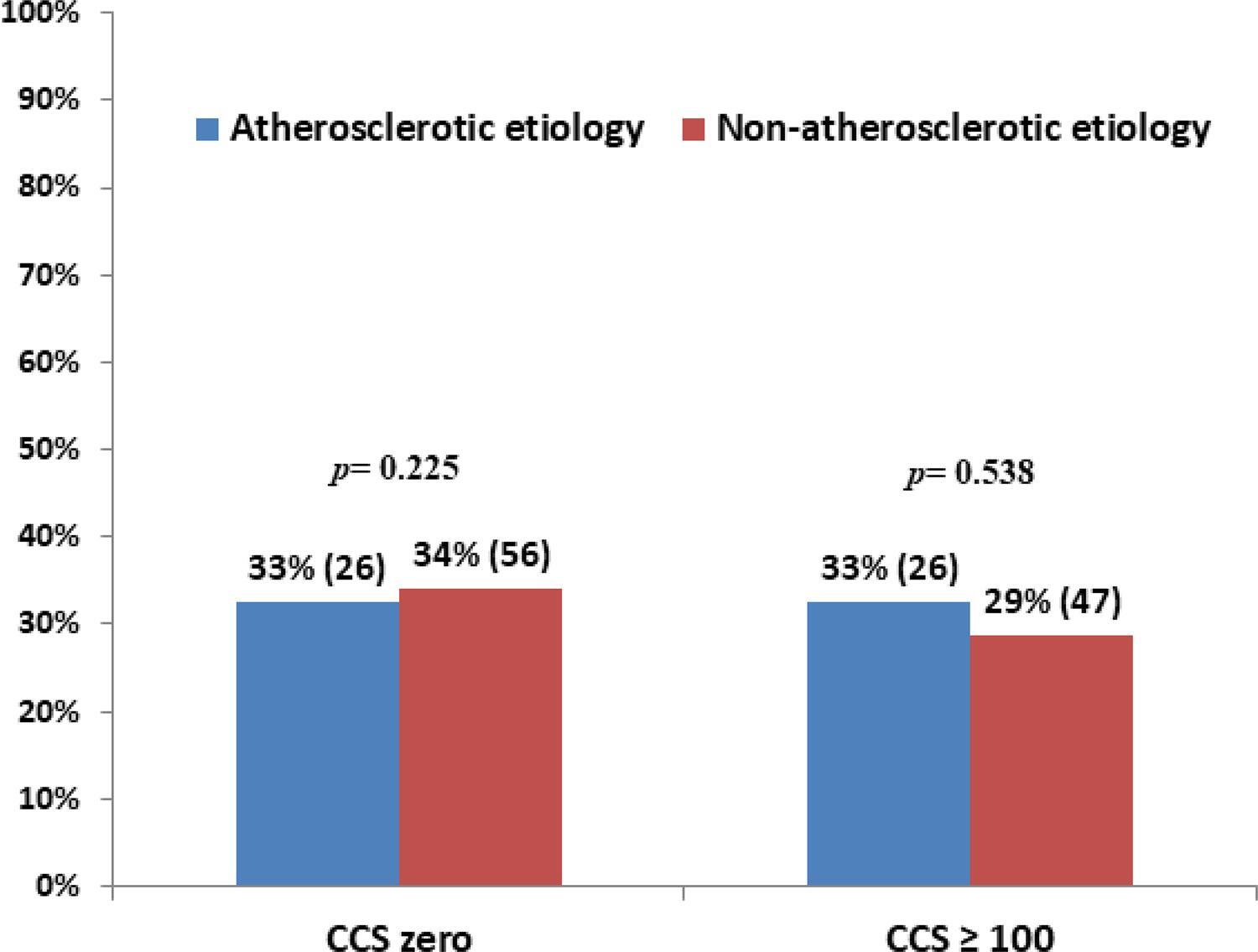
From the 244 studied patients (mean age 58.4±6.8 years; 49% female), 164 (67%) had non-atherosclerotic etiology. The proportions of CCS≥100 were similar between the atherosclerotic and the non-atherosclerotic groups (33% [n=26] x 29% [n=47]; p= 0.54). Among all IS patients, only age ≥60 years was independently associated with CCS≥100 (OR 3.5; 95%CI 1.7-7.1), accounting for hypertension, dyslipidemia, diabetes, sedentarism, and family history of CAD.

Conclusion

Atherosclerotic IS did not present a greater risk of CAD when compared to non-atherosclerotic IS according to CCS. Only age ≥60 years, but not etiology, was independently associated with CCS≥100.

  • Calcium Signaling
  • Coronary Artery Disease
  • Diabetes Mellitus
  • Dyslipidemias
  • Hypertension
  • Stroke
Read Full Article
Creative Commons Attribution (CC BY) Creative Commons license
18/01/2021 DOI: 10.36660/abc.20190616
Figure 1
ABC
Original Article

Cardiovascular Risk and Statin Eligibility in Primary Prevention: A Comparison between the Brazilian and the AHA/ACC Guidelines

Fernando H. Y. Cesena et al. Viviane A. Valente Raul D. Santos Márcio S. Bittencourt

Abstract

Background

Differences between the updated versions of the Brazilian Guideline on Dyslipidemias and the American Heart Association (AHA)/American College of Cardiology (ACC) Cholesterol Guideline regarding cardiovascular risk stratification and statin eligibility are unknown.

Objectives

To compare cardiovascular risk categorization and statin eligibility based on the Brazilian guideline with those based on the AHA/ACC guideline in primary prevention patients.

Methods

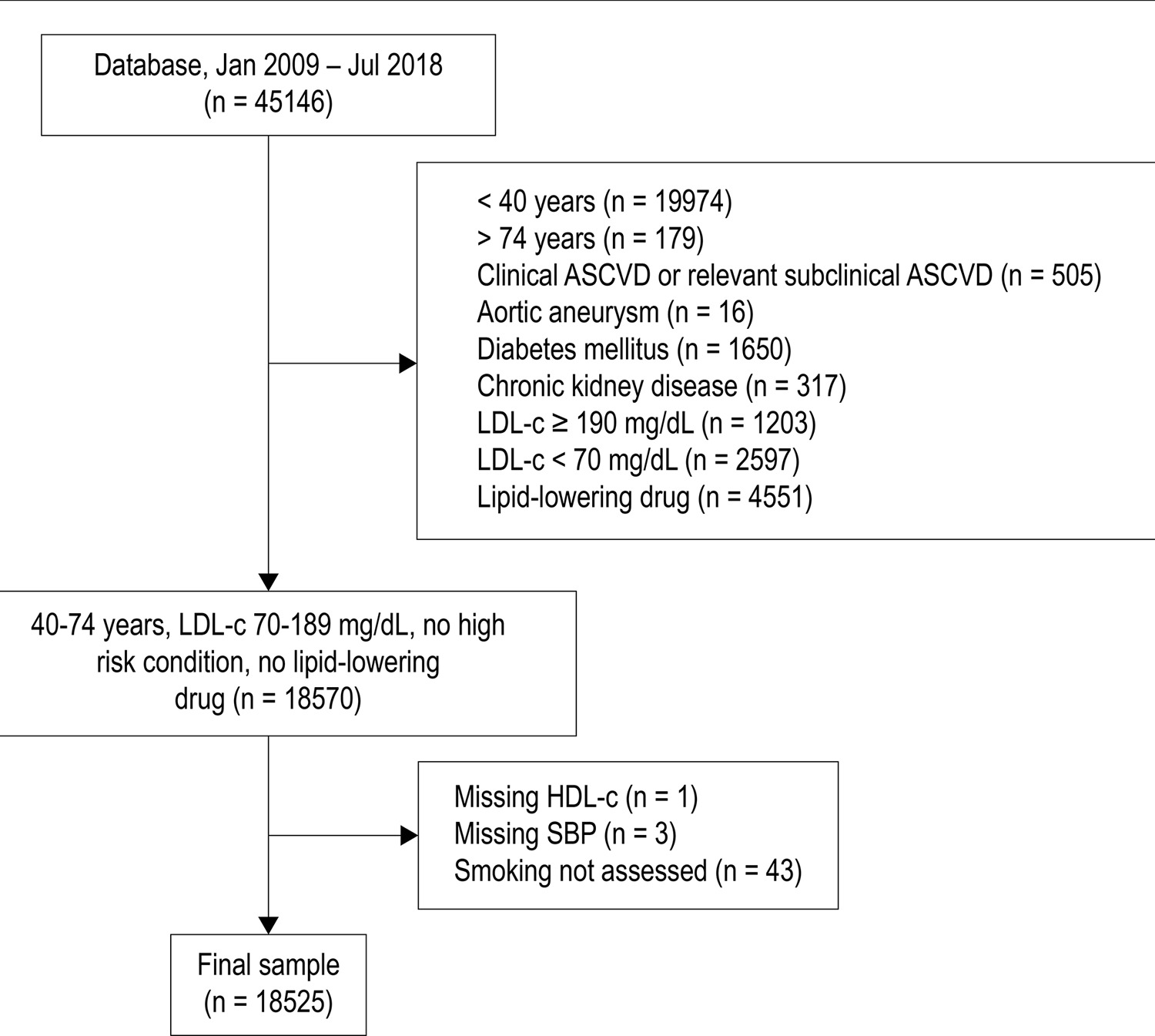
We retrospectively analyzed individuals aged 40-74 years without high-risk conditions, with LDL-c 70 to < 190 mg/dL, not on lipid-lowering drugs, who underwent routine clinical assessment. Cardiovascular risk was stratified according to the Brazilian and the AHA/ACC guidelines. Subjects were considered eligible for statin therapy if LDL-c was at least 30 mg/dL above the target for the cardiovascular risk (Brazilian guideline) or the 10-year atherosclerotic cardiovascular disease risk was ≥7.5% (AHA/ACC guideline). A p-value < 0.05 was considered statistically significant.

Results

The study sample consisted of 18,525 subjects (69% male, age 48 ± 6 years). Among subjects considered at intermediate or high risk by the Brazilian guideline, over 80% would be in a lower risk category by the AHA/ACC guideline. Among men, 45% and 16% would be statin eligible by the Brazilian and the AHA/ACC guidelines criteria, respectively (p < 0.001). Among women, the respective proportions would be 16% and 1% (p < 0.001). Eighty-two percent of women and 57% of men eligible for statins based on the Brazilian guideline criterion would not be eligible according to the AHA/ACC guideline criterion.

Conclusions

Compared with the AHA/ACC guideline, the Brazilian guideline classifies a larger proportion of primary prevention patients into higher-risk categories and substantially increases statin eligibility. (Arq Bras Cardiol. 2020; 115(3):440-449)

  • Atherosclerosis
  • Cardiovascular Diseases
  • Dyslipidemias
  • Hydroxymethylglutaryl-CoA Reductase Inhibitors / therapeutic use
  • Prevention and Control
  • Primary Prevention
  • Risk Factors
Read Full Article
Creative Commons Attribution (CC BY) Creative Commons license
28/09/2020 DOI: 10.36660/abc.20190519 Views 2

Could not load more articles. Please try again.

How to cite this article

EndNote RIS

Electronic Document Format (Vancouver)

Oliveira GMM, Brant LCC, Polanczyk CA, Malta DC, Biolo A, Nascimento BR, Souza MFM, et al. Cardiovascular Statistics – Brazil 2026. Arquivos Brasileiros de Cardiologia 2026;:e20260832.

Electronic Document Format (ABNT)

Oliveira, Gláucia Maria Moraes de; Brant, Luisa Campos Caldeira; Polanczyk, Carisi Anne; Malta, Deborah Carvalho; Biolo, Andreia; Nascimento, Bruno Ramos; Souza, Maria de Fatima Marinho de; Lorenzo, Andrea Rocha De; Fagundes Júnior, Antonio Aurélio de Paiva; Manfro, Arthur Gus; Schaan, Beatriz D.; Silva, Christina Grüne de Souza e; Castilho, Fábio Morato de; Cesena, Fernando Henpin Yue; Soares, Gabriel Porto; Xavier Junior, Gesner Francisco; Barreto Filho, Jose Augusto Soares; Pellanda, Lucia Campos; Aranha, Luciana Nicolau; Rohde, Luis Eduardo Paim; Passaglia, Luiz Guilherme; Pinto-Filho, Marcelo Martins; Machline-Carrion, M. Julia; Bittencourt, Marcio Sommer; Pontes Neto, Octavio M.; Villela, Paolo Blanco; Godoy, Paulo Henrique; Teixeira, Renato Azeredo; Stein, Ricardo; Sampaio, Roney Orismar; Salim, Thais Rocha; Gaziano, Thomas A.; Perel, Pablo; Roth, Gregory A.; Ribeiro, Antonio Luiz Pinho. Cardiovascular Statistics – Brazil 2026. Arquivos Brasileiros de Cardiologia, e20260832, Oct. 2026.

Electronic Document Format (APA)

Oliveira, G. M. M. , Brant, L. C. C., Polanczyk, C. A., Malta, D. C., Biolo, A., Nascimento, B. R., Souza, M. F. M. , Lorenzo, A. R. D., Fagundes Júnior, A. A. P., Manfro, A. G., Schaan, B. D., Silva, C. G. S. , Castilho, F. M. , Cesena, F. H. Y., Soares, G. P., Xavier Junior, G. F., Barreto Filho, J. A. S., Pellanda, L. C., Aranha, L. N., Rohde, L. E. P., Passaglia, L. G., Pinto-Filho, M. M., Machline-Carrion, M. J., Bittencourt, M. S., Pontes Neto, O. M., Villela, P. B., Godoy, P. H., Teixeira, R. A., Stein, R., Sampaio, R. O., Salim, T. R., Gaziano, T. A., Perel, P., Roth, G. A., & Ribeiro, A. L. P. (2026). Cardiovascular Statistics – Brazil 2026. Arquivos Brasileiros de Cardiologia, , e20260832.

Electronic Document Format (ISO)

Oliveira, Gláucia Maria Moraes de and Brant, Luisa Campos Caldeira and Polanczyk, Carisi Anne and Malta, Deborah Carvalho and Biolo, Andreia and Nascimento, Bruno Ramos and Souza, Maria de Fatima Marinho de and Lorenzo, Andrea Rocha De and Fagundes Júnior, Antonio Aurélio de Paiva and Manfro, Arthur Gus and Schaan, Beatriz D. and Silva, Christina Grüne de Souza e and Castilho, Fábio Morato de and Cesena, Fernando Henpin Yue and Soares, Gabriel Porto and Xavier Junior, Gesner Francisco and Barreto Filho, Jose Augusto Soares and Pellanda, Lucia Campos and Aranha, Luciana Nicolau and Rohde, Luis Eduardo Paim and Passaglia, Luiz Guilherme and Pinto-Filho, Marcelo Martins and Machline-Carrion, M. Julia and Bittencourt, Marcio Sommer and Pontes Neto, Octavio M. and Villela, Paolo Blanco and Godoy, Paulo Henrique and Teixeira, Renato Azeredo and Stein, Ricardo and Sampaio, Roney Orismar and Salim, Thais Rocha and Gaziano, Thomas A. and Perel, Pablo and Roth, Gregory A. and Ribeiro, Antonio Luiz Pinho. Cardiovascular Statistics – Brazil 2026. Arquivos Brasileiros de Cardiologia [online]. 2026, [cited 2026-10-14], e20260832. Available from: <https://journals.cardiol.br/en/article/cardiovascular-statistics-brazil-2026/>. ISSN 0066-782X

EndNote RIS

Electronic Document Format (Vancouver)

Araújo LKRP, Dias DB, Santana MFM, Pereira BJ, Abensur H, Moyses R, Passarelli M, et al. A Prospective Study of Lipid Profile in Incident Patients on Peritoneal Dialysis. Arquivos Brasileiros de Cardiologia 2026;123(7):e20260013.

Electronic Document Format (ABNT)

Araújo, Luiza K. R. P.; Dias, Dayana B.; Santana, Monique F. M.; Pereira, Benedito J.; Abensur, Hugo; Moyses, Rosa; Passarelli, Marisa; Elias, Rosilene M.. A Prospective Study of Lipid Profile in Incident Patients on Peritoneal Dialysis. Arquivos Brasileiros de Cardiologia, v. 123, n. 7, e20260013, Aug. 2026.

Electronic Document Format (APA)

Araújo, L. K. R. P., Dias, D. B., Santana, M. F. M., Pereira, B. J., Abensur, H., Moyses, R., Passarelli, M., & Elias, R. M. (2026). A Prospective Study of Lipid Profile in Incident Patients on Peritoneal Dialysis. Arquivos Brasileiros de Cardiologia, 123(7), e20260013.

Electronic Document Format (ISO)

Araújo, Luiza K. R. P. and Dias, Dayana B. and Santana, Monique F. M. and Pereira, Benedito J. and Abensur, Hugo and Moyses, Rosa and Passarelli, Marisa and Elias, Rosilene M.. A Prospective Study of Lipid Profile in Incident Patients on Peritoneal Dialysis. Arquivos Brasileiros de Cardiologia [online]. 2026, vol. 123, n. 7, [cited 2026-10-14], e20260013. Available from: <https://journals.cardiol.br/en/article/a-prospective-study-of-lipid-profile-in-incident-patients-on-peritoneal-dialysis/>. ISSN 0066-782X

EndNote RIS

Electronic Document Format (Vancouver)

Brasil Z, Fonseca FAH, Curiati MA, Kyosen SO, Pereira VG, Fonzar WT, Pesquero JB, et al. Screening for Lysosomal Acid Lipase Deficiency in a Lipid Clinic. Arquivos Brasileiros de Cardiologia 2025;122(7):e20250825.

Electronic Document Format (ABNT)

Brasil, Zenia; Fonseca, Francisco Antonio H.; Curiati, Marco Antonio; Kyosen, Sandra Obikawa; Pereira, Vanessa Gonçalves; Fonzar, Waleria Toledo; Pesquero, João Bosco; Patrício, Francy Reis da Silva; Yamamoto, Marcelo Hideki; Yamamoto, Joyce Umbelino; D’Almeida, Vania; Martins, Ana Maria; Izar, Maria Cristina. Screening for Lysosomal Acid Lipase Deficiency in a Lipid Clinic. Arquivos Brasileiros de Cardiologia, v. 122, n. 7, e20250825, Aug. 2025.

Electronic Document Format (APA)

Brasil, Z., Fonseca, F. A. H., Curiati, M. A., Kyosen, S. O., Pereira, V. G., Fonzar, W. T., Pesquero, J. B., Patrício, F. R. S., Yamamoto, M. H., Yamamoto, J. U., D’Almeida, V., Martins, A. M., & Izar, M. C. (2025). Screening for Lysosomal Acid Lipase Deficiency in a Lipid Clinic. Arquivos Brasileiros de Cardiologia, 122(7), e20250825.

Electronic Document Format (ISO)

Brasil, Zenia and Fonseca, Francisco Antonio H. and Curiati, Marco Antonio and Kyosen, Sandra Obikawa and Pereira, Vanessa Gonçalves and Fonzar, Waleria Toledo and Pesquero, João Bosco and Patrício, Francy Reis da Silva and Yamamoto, Marcelo Hideki and Yamamoto, Joyce Umbelino and D’Almeida, Vania and Martins, Ana Maria and Izar, Maria Cristina. Screening for Lysosomal Acid Lipase Deficiency in a Lipid Clinic. Arquivos Brasileiros de Cardiologia [online]. 2025, vol. 122, n. 7, [cited 2026-10-14], e20250825. Available from: <https://journals.cardiol.br/en/article/screening-for-lysosomal-acid-lipase-deficiency-in-a-lipid-clinic/>. ISSN 0066-782X

EndNote RIS

Electronic Document Format (Vancouver)

Bento VFR, Kaestner TLL, Vargas Junior A, Lopes RB, Scariot FP, Hollas LL, Olandoski M, et al. Cascade Screening in Adolescents with Lipid Disorders Suggestive of Familial Hypercholesterolemia: Findings from the ERICA Study in Curitiba. Arquivos Brasileiros de Cardiologia 2025;122(3):e20240468.

Electronic Document Format (ABNT)

Bento, Vivian Freitas Rezende; Kaestner, Tatiana Lorena da Luz; Vargas Junior, Amauri de; Lopes, Renan Barbosa; Scariot, Fernando Pinotti; Hollas, Leiza Loiane; Olandoski, Marcia; Baena, Cristina Pellegrino; Bloch, Katia Vergetti; Faria Neto, José Rocha. Cascade Screening in Adolescents with Lipid Disorders Suggestive of Familial Hypercholesterolemia: Findings from the ERICA Study in Curitiba. Arquivos Brasileiros de Cardiologia, v. 122, n. 3, e20240468, Mar. 2025.

Electronic Document Format (APA)

Bento, V. F. R., Kaestner, T. L. L., Vargas Junior, A. , Lopes, R. B., Scariot, F. P., Hollas, L. L., Olandoski, M., Baena, C. P., Bloch, K. V., & Faria Neto, J. R. (2025). Cascade Screening in Adolescents with Lipid Disorders Suggestive of Familial Hypercholesterolemia: Findings from the ERICA Study in Curitiba. Arquivos Brasileiros de Cardiologia, 122(3), e20240468.

Electronic Document Format (ISO)

Bento, Vivian Freitas Rezende and Kaestner, Tatiana Lorena da Luz and Vargas Junior, Amauri de and Lopes, Renan Barbosa and Scariot, Fernando Pinotti and Hollas, Leiza Loiane and Olandoski, Marcia and Baena, Cristina Pellegrino and Bloch, Katia Vergetti and Faria Neto, José Rocha. Cascade Screening in Adolescents with Lipid Disorders Suggestive of Familial Hypercholesterolemia: Findings from the ERICA Study in Curitiba. Arquivos Brasileiros de Cardiologia [online]. 2025, vol. 122, n. 3, [cited 2026-10-14], e20240468. Available from: <https://journals.cardiol.br/en/article/cascade-screening-in-adolescents-with-lipid-disorders-suggestive-of-familial-hypercholesterolemia-findings-from-the-erica-study-in-curitiba/>. ISSN 0066-782X

EndNote RIS

Electronic Document Format (Vancouver)

Mendonça LA, Gomes A, Lago R, Menezes C, Carvalho SRL, Ladeia AMT. Body Profile Impact on Blood Pressure and Lipid Profile in Rural and Urban Schoolchildren of a Brazilian Semiarid Region in The State of Bahia. International Journal of Cardiovascular Sciences 2025;38:e20240062.

Electronic Document Format (ABNT)

Mendonça, Lívia Assis; Gomes, Alexvon; Lago, Renata; Menezes, Camilla; Carvalho, Sérgio Roberto Lemos de; Ladeia, Ana Marice Teixeira. Body Profile Impact on Blood Pressure and Lipid Profile in Rural and Urban Schoolchildren of a Brazilian Semiarid Region in The State of Bahia. International Journal of Cardiovascular Sciences, v. 38, e20240062, Mar. 2025.

Electronic Document Format (APA)

Mendonça, L. A., Gomes, A., Lago, R., Menezes, C., Carvalho, S. R. L. , & Ladeia, A. M. T. (2025). Body Profile Impact on Blood Pressure and Lipid Profile in Rural and Urban Schoolchildren of a Brazilian Semiarid Region in The State of Bahia. International Journal of Cardiovascular Sciences, 38, e20240062.

Electronic Document Format (ISO)

Mendonça, Lívia Assis and Gomes, Alexvon and Lago, Renata and Menezes, Camilla and Carvalho, Sérgio Roberto Lemos de and Ladeia, Ana Marice Teixeira. Body Profile Impact on Blood Pressure and Lipid Profile in Rural and Urban Schoolchildren of a Brazilian Semiarid Region in The State of Bahia. International Journal of Cardiovascular Sciences [online]. 2025, vol. 38, [cited 2026-10-14], e20240062. Available from: <https://journals.cardiol.br/en/article/body-profile-impact-on-blood-pressure-and-lipid-profile-in-rural-and-urban-schoolchildren-of-a-brazilian-semiarid-region-in-the-state-of-bahia/>. ISSN 2359-4802

EndNote RIS

Electronic Document Format (Vancouver)

Oliveira GMM, Brant LCC, Polanczyk CA, Malta DC, Biolo A, Nascimento BR, Souza MFM, et al. Cardiovascular Statistics – Brazil 2023. Arquivos Brasileiros de Cardiologia 2024;121(2):e20240079.

Electronic Document Format (ABNT)

Oliveira, Gláucia Maria Moraes de; Brant, Luisa Campos Caldeira; Polanczyk, Carisi Anne; Malta, Deborah Carvalho; Biolo, Andreia; Nascimento, Bruno Ramos; Souza, Maria de Fatima Marinho de; Lorenzo, Andrea Rocha De; Fagundes Júnior, Antonio Aurélio de Paiva; Schaan, Beatriz D.; Silva, Christina Grüne de Souza e; Castilho, Fábio Morato de; Cesena, Fernando Henpin Yue; Soares, Gabriel Porto; Xavier Junior, Gesner Francisco; Barreto Filho, Jose Augusto Soares; Passaglia, Luiz Guilherme; Pinto Filho, Marcelo Martins; Machline-Carrion, M. Julia; Bittencourt, Marcio Sommer; Pontes Neto, Octavio M.; Villela, Paolo Blanco; Teixeira, Renato Azeredo; Stein, Ricardo; Sampaio, Roney Orismar; Gaziano, Thomaz A.; Perel, Pablo; Roth, Gregory A.; Ribeiro, Antonio Luiz Pinho. Cardiovascular Statistics – Brazil 2023. Arquivos Brasileiros de Cardiologia, v. 121, n. 2, e20240079, Jun. 2024.

Electronic Document Format (APA)

Oliveira, G. M. M. , Brant, L. C. C., Polanczyk, C. A., Malta, D. C., Biolo, A., Nascimento, B. R., Souza, M. F. M. , Lorenzo, A. R. D., Fagundes Júnior, A. A. P., Schaan, B. D., Silva, C. G. S. , Castilho, F. M. , Cesena, F. H. Y., Soares, G. P., Xavier Junior, G. F., Barreto Filho, J. A. S., Passaglia, L. G., Pinto Filho, M. M., Machline-Carrion, M. J., Bittencourt, M. S., Pontes Neto, O. M., Villela, P. B., Teixeira, R. A., Stein, R., Sampaio, R. O., Gaziano, T. A., Perel, P., Roth, G. A., & Ribeiro, A. L. P. (2024). Cardiovascular Statistics – Brazil 2023. Arquivos Brasileiros de Cardiologia, 121(2), e20240079.

Electronic Document Format (ISO)

Oliveira, Gláucia Maria Moraes de and Brant, Luisa Campos Caldeira and Polanczyk, Carisi Anne and Malta, Deborah Carvalho and Biolo, Andreia and Nascimento, Bruno Ramos and Souza, Maria de Fatima Marinho de and Lorenzo, Andrea Rocha De and Fagundes Júnior, Antonio Aurélio de Paiva and Schaan, Beatriz D. and Silva, Christina Grüne de Souza e and Castilho, Fábio Morato de and Cesena, Fernando Henpin Yue and Soares, Gabriel Porto and Xavier Junior, Gesner Francisco and Barreto Filho, Jose Augusto Soares and Passaglia, Luiz Guilherme and Pinto Filho, Marcelo Martins and Machline-Carrion, M. Julia and Bittencourt, Marcio Sommer and Pontes Neto, Octavio M. and Villela, Paolo Blanco and Teixeira, Renato Azeredo and Stein, Ricardo and Sampaio, Roney Orismar and Gaziano, Thomaz A. and Perel, Pablo and Roth, Gregory A. and Ribeiro, Antonio Luiz Pinho. Cardiovascular Statistics – Brazil 2023. Arquivos Brasileiros de Cardiologia [online]. 2024, vol. 121, n. 2, [cited 2026-10-14], e20240079. Available from: <https://journals.cardiol.br/en/article/cardiovascular-statistics-brazil-2023/>. ISSN 0066-782X

EndNote RIS

Electronic Document Format (Vancouver)

Andrade VC, Rezende PC, Hueb W, Ramires JAF. Interpreting Acute Myocardial Infarction 40 Years Later. Evolution of Knowledge: What is the Best Explanation?. Arquivos Brasileiros de Cardiologia 2024;121(3):e20230757.

Electronic Document Format (ABNT)

Andrade, Vitor Coutinho; Rezende, Paulo Cury; Hueb, Whady; Ramires, José Antonio Franchini. Interpreting Acute Myocardial Infarction 40 Years Later. Evolution of Knowledge: What is the Best Explanation?. Arquivos Brasileiros de Cardiologia, v. 121, n. 3, e20230757, Apr. 2024.

Electronic Document Format (APA)

Andrade, V. C., Rezende, P. C., Hueb, W., & Ramires, J. A. F. (2024). Interpreting Acute Myocardial Infarction 40 Years Later. Evolution of Knowledge: What is the Best Explanation?. Arquivos Brasileiros de Cardiologia, 121(3), e20230757.

Electronic Document Format (ISO)

Andrade, Vitor Coutinho and Rezende, Paulo Cury and Hueb, Whady and Ramires, José Antonio Franchini. Interpreting Acute Myocardial Infarction 40 Years Later. Evolution of Knowledge: What is the Best Explanation?. Arquivos Brasileiros de Cardiologia [online]. 2024, vol. 121, n. 3, [cited 2026-10-14], e20230757. Available from: <https://journals.cardiol.br/en/article/interpreting-acute-myocardial-infarction-40-years-later-evolution-of-knowledge-what-is-the-best-explanation/>. ISSN 0066-782X

EndNote RIS

Electronic Document Format (Vancouver)

Passos AFF, Santos AC, Coelho ASG, Cominetti C. Associations between Normal-Weight Obesity and Disturbances in the Lipid Profile of Young Adults. Arquivos Brasileiros de Cardiologia 2023;120(9):e20220914.

Electronic Document Format (ABNT)

Passos, Anna Flavia Ferreira; Santos, Acsa de Castro; Coelho, Alexandre Siqueira Guedes; Cominetti, Cristiane. Associations between Normal-Weight Obesity and Disturbances in the Lipid Profile of Young Adults. Arquivos Brasileiros de Cardiologia, v. 120, n. 9, e20220914, Oct. 2023.

Electronic Document Format (APA)

Passos, A. F. F., Santos, A. C., Coelho, A. S. G., & Cominetti, C. (2023). Associations between Normal-Weight Obesity and Disturbances in the Lipid Profile of Young Adults. Arquivos Brasileiros de Cardiologia, 120(9), e20220914.

Electronic Document Format (ISO)

Passos, Anna Flavia Ferreira and Santos, Acsa de Castro and Coelho, Alexandre Siqueira Guedes and Cominetti, Cristiane. Associations between Normal-Weight Obesity and Disturbances in the Lipid Profile of Young Adults. Arquivos Brasileiros de Cardiologia [online]. 2023, vol. 120, n. 9, [cited 2026-10-14], e20220914. Available from: <https://journals.cardiol.br/en/article/associations-between-normal-weight-obesity-and-disturbances-in-the-lipid-profile-of-young-adults/>. ISSN 0066-782X

EndNote RIS

Electronic Document Format (Vancouver)

Eltahlawi M. Coronary Tortuosity as a New Phenotype for Ischemia without Coronary Artery Disease. Arquivos Brasileiros de Cardiologia 2022;119(6):891-2.

Electronic Document Format (ABNT)

Eltahlawi, Mohammad. Coronary Tortuosity as a New Phenotype for Ischemia without Coronary Artery Disease. Arquivos Brasileiros de Cardiologia, v. 119, n. 6, p. 891-892, Dec. 2022.

Electronic Document Format (APA)

Eltahlawi, M. (2022). Coronary Tortuosity as a New Phenotype for Ischemia without Coronary Artery Disease. Arquivos Brasileiros de Cardiologia, 119(6), 891-892.

Electronic Document Format (ISO)

Eltahlawi, Mohammad. Coronary Tortuosity as a New Phenotype for Ischemia without Coronary Artery Disease. Arquivos Brasileiros de Cardiologia [online]. 2022, vol. 119, n. 6, [cited 2026-10-14], pp. 891-892. Available from: <https://journals.cardiol.br/en/article/coronary-tortuosity-as-a-new-phenotype-for-ischemia-without-coronary-artery-disease/>. ISSN 0066-782X

EndNote RIS

Electronic Document Format (Vancouver)

Azevedo-Silva F. Lipids and Sickle Cell Disease. International Journal of Cardiovascular Sciences 2022;35(6):780-3.

Electronic Document Format (ABNT)

Azevedo-Silva, Fernanda. Lipids and Sickle Cell Disease. International Journal of Cardiovascular Sciences, v. 35, n. 6, p. 780-783, Nov. 2022.

Electronic Document Format (APA)

Azevedo-Silva, F. (2022). Lipids and Sickle Cell Disease. International Journal of Cardiovascular Sciences, 35(6), 780-783.

Electronic Document Format (ISO)

Azevedo-Silva, Fernanda. Lipids and Sickle Cell Disease. International Journal of Cardiovascular Sciences [online]. 2022, vol. 35, n. 6, [cited 2026-10-14], pp. 780-783. Available from: <https://journals.cardiol.br/en/article/lipids-and-sickle-cell-disease/>. ISSN 2359-4802

EndNote RIS

Electronic Document Format (Vancouver)

Kountouras J, Papaefthymiou A, Polyzos SA, Kazakos E, Vardaka E, Touloumtzi M, Tzitiridou-Chatzopoulou M, et al. Impact of Active Helicobacter pylori Infection-related Metabolic Syndrome on Systemic Arterial Hypertension. Arquivos Brasileiros de Cardiologia 2022;119(3):502-4.

Electronic Document Format (ABNT)

Kountouras, Jannis; Papaefthymiou, Apostolis; Polyzos, Stergios A.; Kazakos, Evangelos; Vardaka, Elisabeth; Touloumtzi, Maria; Tzitiridou-Chatzopoulou, Maria; Liatsos, Christos; Sgantzou, Ioanna-Konstantina; Knuchel, Jürg; Doulberis, Michael. Impact of Active Helicobacter pylori Infection-related Metabolic Syndrome on Systemic Arterial Hypertension. Arquivos Brasileiros de Cardiologia, v. 119, n. 3, p. 502-504, Sep. 2022.

Electronic Document Format (APA)

Kountouras, J., Papaefthymiou, A., Polyzos, S. A., Kazakos, E., Vardaka, E., Touloumtzi, M., Tzitiridou-Chatzopoulou, M., Liatsos, C., Sgantzou, I., Knuchel, J., & Doulberis, M. (2022). Impact of Active Helicobacter pylori Infection-related Metabolic Syndrome on Systemic Arterial Hypertension. Arquivos Brasileiros de Cardiologia, 119(3), 502-504.

Electronic Document Format (ISO)

Kountouras, Jannis and Papaefthymiou, Apostolis and Polyzos, Stergios A. and Kazakos, Evangelos and Vardaka, Elisabeth and Touloumtzi, Maria and Tzitiridou-Chatzopoulou, Maria and Liatsos, Christos and Sgantzou, Ioanna-Konstantina and Knuchel, Jürg and Doulberis, Michael. Impact of Active Helicobacter pylori Infection-related Metabolic Syndrome on Systemic Arterial Hypertension. Arquivos Brasileiros de Cardiologia [online]. 2022, vol. 119, n. 3, [cited 2026-10-14], pp. 502-504. Available from: <https://journals.cardiol.br/en/article/impact-of-active-helicobacter-pylori-infection-related-metabolic-syndrome-on-systemic-arterial-hypertension/>. ISSN 0066-782X

EndNote RIS

Electronic Document Format (Vancouver)

Campana EMG, Brandão AA. Waist Circumference: A Parameter of Vascular Health. Arquivos Brasileiros de Cardiologia 2022;119(2):265-6.

Electronic Document Format (ABNT)

Campana, Erika Maria Gonçalves; Brandão, Andréa Araujo. Waist Circumference: A Parameter of Vascular Health. Arquivos Brasileiros de Cardiologia, v. 119, n. 2, p. 265-266, Aug. 2022.

Electronic Document Format (APA)

Campana, E. M. G., & Brandão, A. A. (2022). Waist Circumference: A Parameter of Vascular Health. Arquivos Brasileiros de Cardiologia, 119(2), 265-266.

Electronic Document Format (ISO)

Campana, Erika Maria Gonçalves and Brandão, Andréa Araujo. Waist Circumference: A Parameter of Vascular Health. Arquivos Brasileiros de Cardiologia [online]. 2022, vol. 119, n. 2, [cited 2026-10-14], pp. 265-266. Available from: <https://journals.cardiol.br/en/article/waist-circumference-a-parameter-of-vascular-health/>. ISSN 0066-782X

EndNote RIS

Electronic Document Format (Vancouver)

Cunha CLP. The Influence of Obesity and Physical Activity on Cardiovascular Risk. Arquivos Brasileiros de Cardiologia 2022;119(2):244-5.

Electronic Document Format (ABNT)

Cunha, Claudio Leinig Pereira da. The Influence of Obesity and Physical Activity on Cardiovascular Risk. Arquivos Brasileiros de Cardiologia, v. 119, n. 2, p. 244-245, Aug. 2022.

Electronic Document Format (APA)

Cunha, C. L. P. (2022). The Influence of Obesity and Physical Activity on Cardiovascular Risk. Arquivos Brasileiros de Cardiologia, 119(2), 244-245.

Electronic Document Format (ISO)

Cunha, Claudio Leinig Pereira da. The Influence of Obesity and Physical Activity on Cardiovascular Risk. Arquivos Brasileiros de Cardiologia [online]. 2022, vol. 119, n. 2, [cited 2026-10-14], pp. 244-245. Available from: <https://journals.cardiol.br/en/article/the-influence-of-obesity-and-physical-activity-on-cardiovascular-risk/>. ISSN 0066-782X

EndNote RIS

Electronic Document Format (Vancouver)

Bittencourt MS. Statins and Pregnancy – New FDA Recommendations. Arquivos Brasileiros de Cardiologia 2022;119(1):1-2.

Electronic Document Format (ABNT)

Bittencourt, Marcio Sommer. Statins and Pregnancy – New FDA Recommendations. Arquivos Brasileiros de Cardiologia, v. 119, n. 1, p. 1-2, Jul. 2022.

Electronic Document Format (APA)

Bittencourt, M. S. (2022). Statins and Pregnancy – New FDA Recommendations. Arquivos Brasileiros de Cardiologia, 119(1), 1-2.

Electronic Document Format (ISO)

Bittencourt, Marcio Sommer. Statins and Pregnancy – New FDA Recommendations. Arquivos Brasileiros de Cardiologia [online]. 2022, vol. 119, n. 1, [cited 2026-10-14], pp. 1-2. Available from: <https://journals.cardiol.br/en/article/statins-and-pregnancy-new-fda-recommendations/>. ISSN 0066-782X

EndNote RIS

Electronic Document Format (Vancouver)

Bernardi A, Olandoski M, Erbano LO, Guarita-Souza LC, Baena CP, Faria-Neto JR. Achievement of LDL-Cholesterol Goals after Acute Myocardial Infarction: Real-World Data from the City of Curitiba Public Health System. Arquivos Brasileiros de Cardiologia 2022;118(6):1018-25.

Electronic Document Format (ABNT)

Bernardi, André; Olandoski, Marcia; Erbano, Lucas Olandoski; Guarita-Souza, Luiz Cesar; Baena, Cristina Pellegrino; Faria-Neto, José Rocha. Achievement of LDL-Cholesterol Goals after Acute Myocardial Infarction: Real-World Data from the City of Curitiba Public Health System. Arquivos Brasileiros de Cardiologia, v. 118, n. 6, p. 1018-1025, May. 2022.

Electronic Document Format (APA)

Bernardi, A., Olandoski, M., Erbano, L. O., Guarita-Souza, L. C., Baena, C. P., & Faria-Neto, J. R. (2022). Achievement of LDL-Cholesterol Goals after Acute Myocardial Infarction: Real-World Data from the City of Curitiba Public Health System. Arquivos Brasileiros de Cardiologia, 118(6), 1018-1025.

Electronic Document Format (ISO)

Bernardi, André and Olandoski, Marcia and Erbano, Lucas Olandoski and Guarita-Souza, Luiz Cesar and Baena, Cristina Pellegrino and Faria-Neto, José Rocha. Achievement of LDL-Cholesterol Goals after Acute Myocardial Infarction: Real-World Data from the City of Curitiba Public Health System. Arquivos Brasileiros de Cardiologia [online]. 2022, vol. 118, n. 6, [cited 2026-10-14], pp. 1018-1025. Available from: <https://journals.cardiol.br/en/article/achievement-of-ldl-cholesterol-goals-after-acute-myocardial-infarction-real-world-data-from-the-city-of-curitiba-public-health-system/>. ISSN 0066-782X

EndNote RIS

Electronic Document Format (Vancouver)

Aranha LN. TG/HDL-c Ratio as a Predictor of Cardiovascular Risk. International Journal of Cardiovascular Sciences 2021;34(5 Supl 1):66-7.

Electronic Document Format (ABNT)

Aranha, Luciana Nicolau. TG/HDL-c Ratio as a Predictor of Cardiovascular Risk. International Journal of Cardiovascular Sciences, v. 34, n. 5 Supl 1, p. 66-67, Oct. 2021.

Electronic Document Format (APA)

Aranha, L. N. (2021). TG/HDL-c Ratio as a Predictor of Cardiovascular Risk. International Journal of Cardiovascular Sciences, 34(5 Supl 1), 66-67.

Electronic Document Format (ISO)

Aranha, Luciana Nicolau. TG/HDL-c Ratio as a Predictor of Cardiovascular Risk. International Journal of Cardiovascular Sciences [online]. 2021, vol. 34, n. 5 Supl 1, [cited 2026-10-14], pp. 66-67. Available from: <https://journals.cardiol.br/en/article/tg-hdl-c-ratio-as-a-predictor-of-cardiovascular-risk/>. ISSN 2359-4802

EndNote RIS

Electronic Document Format (Vancouver)

Manfredini E, Alves RJ. Unusual Finding of Rare Exuberant Xanthomatosis in Hyperlipidemia. Arquivos Brasileiros de Cardiologia 2021;117(2):407-10.

Electronic Document Format (ABNT)

Manfredini, Enrico; Alves, Renato Jorge. Unusual Finding of Rare Exuberant Xanthomatosis in Hyperlipidemia. Arquivos Brasileiros de Cardiologia, v. 117, n. 2, p. 407-410, Sep. 2021.

Electronic Document Format (APA)

Manfredini, E., & Alves, R. J. (2021). Unusual Finding of Rare Exuberant Xanthomatosis in Hyperlipidemia. Arquivos Brasileiros de Cardiologia, 117(2), 407-410.

Electronic Document Format (ISO)

Manfredini, Enrico and Alves, Renato Jorge. Unusual Finding of Rare Exuberant Xanthomatosis in Hyperlipidemia. Arquivos Brasileiros de Cardiologia [online]. 2021, vol. 117, n. 2, [cited 2026-10-14], pp. 407-410. Available from: <https://journals.cardiol.br/en/article/unusual-finding-of-rare-exuberant-xanthomatosis-in-hyperlipidemia/>. ISSN 0066-782X

EndNote RIS

Electronic Document Format (Vancouver)

Silva EF, Cotta RMM, Mendonça T, Oliveira DM, Cardoso SA, Colodette RM, Moreira TR, et al. Optimal Cutoff of the TG/HDL-c ratio for Cardiovascular Risk in Hypertensive and Diabetic Patients Monitored by Primary Health Care in a city in Minas Gerais. International Journal of Cardiovascular Sciences 2021;34(5 Supl 1):55-6.

Electronic Document Format (ABNT)

Silva, Eunice Ferreira da; Cotta, Rosângela Minardi Mitre; Mendonça, Érica Toledo; Oliveira, Deíse Moura de; Cardoso, Silvia Almeida; Colodette, Renata Maria; Moreira, Tiago Ricardo. Optimal Cutoff of the TG/HDL-c ratio for Cardiovascular Risk in Hypertensive and Diabetic Patients Monitored by Primary Health Care in a city in Minas Gerais. International Journal of Cardiovascular Sciences, v. 34, n. 5 Supl 1, p. 55-65, Aug. 2021.

Electronic Document Format (APA)

Silva, E. F. , Cotta, R. M. M., Mendonça, T., Oliveira, D. M. , Cardoso, S. A., Colodette, R. M., & Moreira, T. R. (2021). Optimal Cutoff of the TG/HDL-c ratio for Cardiovascular Risk in Hypertensive and Diabetic Patients Monitored by Primary Health Care in a city in Minas Gerais. International Journal of Cardiovascular Sciences, 34(5 Supl 1), 55-65.

Electronic Document Format (ISO)

Silva, Eunice Ferreira da and Cotta, Rosângela Minardi Mitre and Mendonça, Érica Toledo and Oliveira, Deíse Moura de and Cardoso, Silvia Almeida and Colodette, Renata Maria and Moreira, Tiago Ricardo. Optimal Cutoff of the TG/HDL-c ratio for Cardiovascular Risk in Hypertensive and Diabetic Patients Monitored by Primary Health Care in a city in Minas Gerais. International Journal of Cardiovascular Sciences [online]. 2021, vol. 34, n. 5 Supl 1, [cited 2026-10-14], pp. 55-65. Available from: <https://journals.cardiol.br/en/article/optimal-cutoff-of-the-tg-hdl-c-ratio-for-cardiovascular-risk-in-hypertensive-and-diabetic-patients-monitored-by-primary-health-care-in-a-city-in-minas-gerais/>. ISSN 2359-4802

EndNote RIS

Electronic Document Format (Vancouver)

Pamplona-Cunha H, Rosini N, Caetano R, Machado MJ, Silva EL. Lifestyle Intervention in Reducing Cardiometabolic Risk Factors in Students with Dyslipidemia and Abdominal Obesity: A Randomized Study. International Journal of Cardiovascular Sciences 2021;35(1):68-79.

Electronic Document Format (ABNT)

Pamplona-Cunha, Heloisa; Rosini, Nilton; Caetano, Roberta; Machado, Marcos José; Silva, Edson Luiz da. Lifestyle Intervention in Reducing Cardiometabolic Risk Factors in Students with Dyslipidemia and Abdominal Obesity: A Randomized Study. International Journal of Cardiovascular Sciences, v. 35, n. 1, p. 68-79, Jul. 2021.

Electronic Document Format (APA)

Pamplona-Cunha, H., Rosini, N., Caetano, R., Machado, M. J., & Silva, E. L. (2021). Lifestyle Intervention in Reducing Cardiometabolic Risk Factors in Students with Dyslipidemia and Abdominal Obesity: A Randomized Study. International Journal of Cardiovascular Sciences, 35(1), 68-79.

Electronic Document Format (ISO)

Pamplona-Cunha, Heloisa and Rosini, Nilton and Caetano, Roberta and Machado, Marcos José and Silva, Edson Luiz da. Lifestyle Intervention in Reducing Cardiometabolic Risk Factors in Students with Dyslipidemia and Abdominal Obesity: A Randomized Study. International Journal of Cardiovascular Sciences [online]. 2021, vol. 35, n. 1, [cited 2026-10-14], pp. 68-79. Available from: <https://journals.cardiol.br/en/article/lifestyle-intervention-in-reducing-cardiometabolic-risk-factors-in-students-with-dyslipidemia-and-abdominal-obesity-a-randomized-study/>. ISSN 2359-4802

EndNote RIS

Electronic Document Format (Vancouver)

Carvalho KFS, Ferreira AAM, Barbosa NC, Alves JV, Costa RM. Atorvastatin Attenuates Vascular Remodeling in Mice with Metabolic Syndrome. Arquivos Brasileiros de Cardiologia 2021;117(4):737-4.

Electronic Document Format (ABNT)

Carvalho, Karine Ferreira da Silva; Ferreira, Amanda Araújo Marques; Barbosa, Nayara Carvalho; Alves, Juliano Vilela; Costa, Rafael Menezes da. Atorvastatin Attenuates Vascular Remodeling in Mice with Metabolic Syndrome. Arquivos Brasileiros de Cardiologia, v. 117, n. 4, p. 737-747, Jun. 2021.

Electronic Document Format (APA)

Carvalho, K. F. S., Ferreira, A. A. M., Barbosa, N. C., Alves, J. V., & Costa, R. M. (2021). Atorvastatin Attenuates Vascular Remodeling in Mice with Metabolic Syndrome. Arquivos Brasileiros de Cardiologia, 117(4), 737-747.

Electronic Document Format (ISO)

Carvalho, Karine Ferreira da Silva and Ferreira, Amanda Araújo Marques and Barbosa, Nayara Carvalho and Alves, Juliano Vilela and Costa, Rafael Menezes da. Atorvastatin Attenuates Vascular Remodeling in Mice with Metabolic Syndrome. Arquivos Brasileiros de Cardiologia [online]. 2021, vol. 117, n. 4, [cited 2026-10-14], pp. 737-747. Available from: <https://journals.cardiol.br/en/article/atorvastatin-attenuates-vascular-remodeling-in-mice-with-metabolic-syndrome/>. ISSN 0066-782X

EndNote RIS

Electronic Document Format (Vancouver)

Mesquita CT, Ker WS. Cardiovascular Risk Factors in Cardiologists Certified by the Brazilian Society of Cardiology: Lessons to be Learned. Arquivos Brasileiros de Cardiologia 2021;116(4):782-3.

Electronic Document Format (ABNT)

Mesquita, Claudio Tinoco; Ker, Wilter dos Santos. Cardiovascular Risk Factors in Cardiologists Certified by the Brazilian Society of Cardiology: Lessons to be Learned. Arquivos Brasileiros de Cardiologia, v. 116, n. 4, p. 782-783, Apr. 2021.

Electronic Document Format (APA)

Mesquita, C. T., & Ker, W. S. (2021). Cardiovascular Risk Factors in Cardiologists Certified by the Brazilian Society of Cardiology: Lessons to be Learned. Arquivos Brasileiros de Cardiologia, 116(4), 782-783.

Electronic Document Format (ISO)

Mesquita, Claudio Tinoco and Ker, Wilter dos Santos. Cardiovascular Risk Factors in Cardiologists Certified by the Brazilian Society of Cardiology: Lessons to be Learned. Arquivos Brasileiros de Cardiologia [online]. 2021, vol. 116, n. 4, [cited 2026-10-14], pp. 782-783. Available from: <https://journals.cardiol.br/en/article/cardiovascular-risk-factors-in-cardiologists-certified-by-the-brazilian-society-of-cardiology-lessons-to-be-learned/>. ISSN 0066-782X

EndNote RIS

Electronic Document Format (Vancouver)

Ferrari F, Santos RD. Statins and COVID-19: To Suspend or Not to Suspend? That is the Question!. Arquivos Brasileiros de Cardiologia 2021;116(1):147-52.

Electronic Document Format (ABNT)

Ferrari, Filipe; Santos, Raul D.. Statins and COVID-19: To Suspend or Not to Suspend? That is the Question!. Arquivos Brasileiros de Cardiologia, v. 116, n. 1, p. 147-152, Feb. 2021.

Electronic Document Format (APA)

Ferrari, F., & Santos, R. D. (2021). Statins and COVID-19: To Suspend or Not to Suspend? That is the Question!. Arquivos Brasileiros de Cardiologia, 116(1), 147-152.

Electronic Document Format (ISO)

Ferrari, Filipe and Santos, Raul D.. Statins and COVID-19: To Suspend or Not to Suspend? That is the Question!. Arquivos Brasileiros de Cardiologia [online]. 2021, vol. 116, n. 1, [cited 2026-10-14], pp. 147-152. Available from: <https://journals.cardiol.br/en/article/statins-and-covid-19-to-suspend-or-not-to-suspend-that-is-the-question/>. ISSN 0066-782X

EndNote RIS

Electronic Document Format (Vancouver)

Negrão EM, Freitas MCDNB, Marinho PBC, Hora TF, Montanaro VVA, Martins BJAF, Ramalho SHR, et al. Coronary Calcium Score and Stratification of Coronary Artery Disease Risk in Patients with Atherosclerotic and Non-Atherosclerotic Ischemic Stroke. Arquivos Brasileiros de Cardiologia 2021;115(6):1144-51.

Electronic Document Format (ABNT)

Negrão, Edson Marcio; Freitas, Maria Cristina Del Negro Barroso; Marinho, Patricia Beatriz Christino; Hora, Thiago Falcão; Montanaro, Vinicius Viana Abreu; Martins, Bernardo Jose Alves Ferreira; Ramalho, Sergio Henrique Rodolpho. Coronary Calcium Score and Stratification of Coronary Artery Disease Risk in Patients with Atherosclerotic and Non-Atherosclerotic Ischemic Stroke. Arquivos Brasileiros de Cardiologia, v. 115, n. 6, p. 1144-1151, Jan. 2021.

Electronic Document Format (APA)

Negrão, E. M., Freitas, M. C. D. N. B., Marinho, P. B. C., Hora, T. F., Montanaro, V. V. A., Martins, B. J. A. F., & Ramalho, S. H. R. (2021). Coronary Calcium Score and Stratification of Coronary Artery Disease Risk in Patients with Atherosclerotic and Non-Atherosclerotic Ischemic Stroke. Arquivos Brasileiros de Cardiologia, 115(6), 1144-1151.

Electronic Document Format (ISO)

Negrão, Edson Marcio and Freitas, Maria Cristina Del Negro Barroso and Marinho, Patricia Beatriz Christino and Hora, Thiago Falcão and Montanaro, Vinicius Viana Abreu and Martins, Bernardo Jose Alves Ferreira and Ramalho, Sergio Henrique Rodolpho. Coronary Calcium Score and Stratification of Coronary Artery Disease Risk in Patients with Atherosclerotic and Non-Atherosclerotic Ischemic Stroke. Arquivos Brasileiros de Cardiologia [online]. 2021, vol. 115, n. 6, [cited 2026-10-14], pp. 1144-1151. Available from: <https://journals.cardiol.br/en/article/coronary-calcium-score-and-stratification-of-coronary-artery-disease-risk-in-patients-with-atherosclerotic-and-non-atherosclerotic-ischemic-stroke/>. ISSN 0066-782X

EndNote RIS

Electronic Document Format (Vancouver)

Cesena FHY, Valente VA, Santos RD, Bittencourt MS. Cardiovascular Risk and Statin Eligibility in Primary Prevention: A Comparison between the Brazilian and the AHA/ACC Guidelines. Arquivos Brasileiros de Cardiologia 2020;115(3):440-9.

Electronic Document Format (ABNT)

Cesena, Fernando H. Y.; Valente, Viviane A.; Santos, Raul D.; Bittencourt, Márcio S.. Cardiovascular Risk and Statin Eligibility in Primary Prevention: A Comparison between the Brazilian and the AHA/ACC Guidelines. Arquivos Brasileiros de Cardiologia, v. 115, n. 3, p. 440-449, Sep. 2020.

Electronic Document Format (APA)

Cesena, F. H. Y., Valente, V. A., Santos, R. D., & Bittencourt, M. S. (2020). Cardiovascular Risk and Statin Eligibility in Primary Prevention: A Comparison between the Brazilian and the AHA/ACC Guidelines. Arquivos Brasileiros de Cardiologia, 115(3), 440-449.

Electronic Document Format (ISO)

Cesena, Fernando H. Y. and Valente, Viviane A. and Santos, Raul D. and Bittencourt, Márcio S.. Cardiovascular Risk and Statin Eligibility in Primary Prevention: A Comparison between the Brazilian and the AHA/ACC Guidelines. Arquivos Brasileiros de Cardiologia [online]. 2020, vol. 115, n. 3, [cited 2026-10-14], pp. 440-449. Available from: <https://journals.cardiol.br/en/article/cardiovascular-risk-and-statin-eligibility-in-primary-prevention-a-comparison-between-the-brazilian-and-the-aha-acc-guidelines/>. ISSN 0066-782X

  • About ABC Family
  • Internal Regulation
  • Editorial Board
  • Brazilian Society of Cardiology (SBC)

Issues

SBC Guidelines

  • Videos
  • Podcasts
  • News