ABC Family Arquivos Brasileiros de Cardiologia International Journal of Cardiovascular Sciences ABC Heart Failure & Cardiomyopathy ABC Imagem Cardiovascular
Português English
ABC Family
Português English
  • About
    • About ABC Family
    • Internal Regulation
    • Editorial Board
    • Brazilian Society of Cardiology (SBC)
  • Issues
  • SBC Guidelines
  • Content
    • Videos
    • Podcasts
    • News
  • About
    • About ABC Family
    • Internal Regulation
    • Editorial Board
    • Brazilian Society of Cardiology (SBC)
  • Issues
  • SBC Guidelines
  • Content
    • Videos
    • Podcasts
    • News

ABC Family

  • ABC Family
  • Arquivos Brasileiros de Cardiologia
  • International Journal of Cardiovascular Sciences
  • ABC Heart Failure & Cardiomyopathy
  • ABC Imagem Cardiovascular
Search in

No content found.

Journals
Ordering
Article types
Others

  1. Home
  2. Keyword: Early diagnosis
Figure 1
ABC
Editorial

Cardiovascular Magnetic Resonance and Cardiovascular Computed Tomography in the Present and Future Cardiology

Carlos E. Rochitte

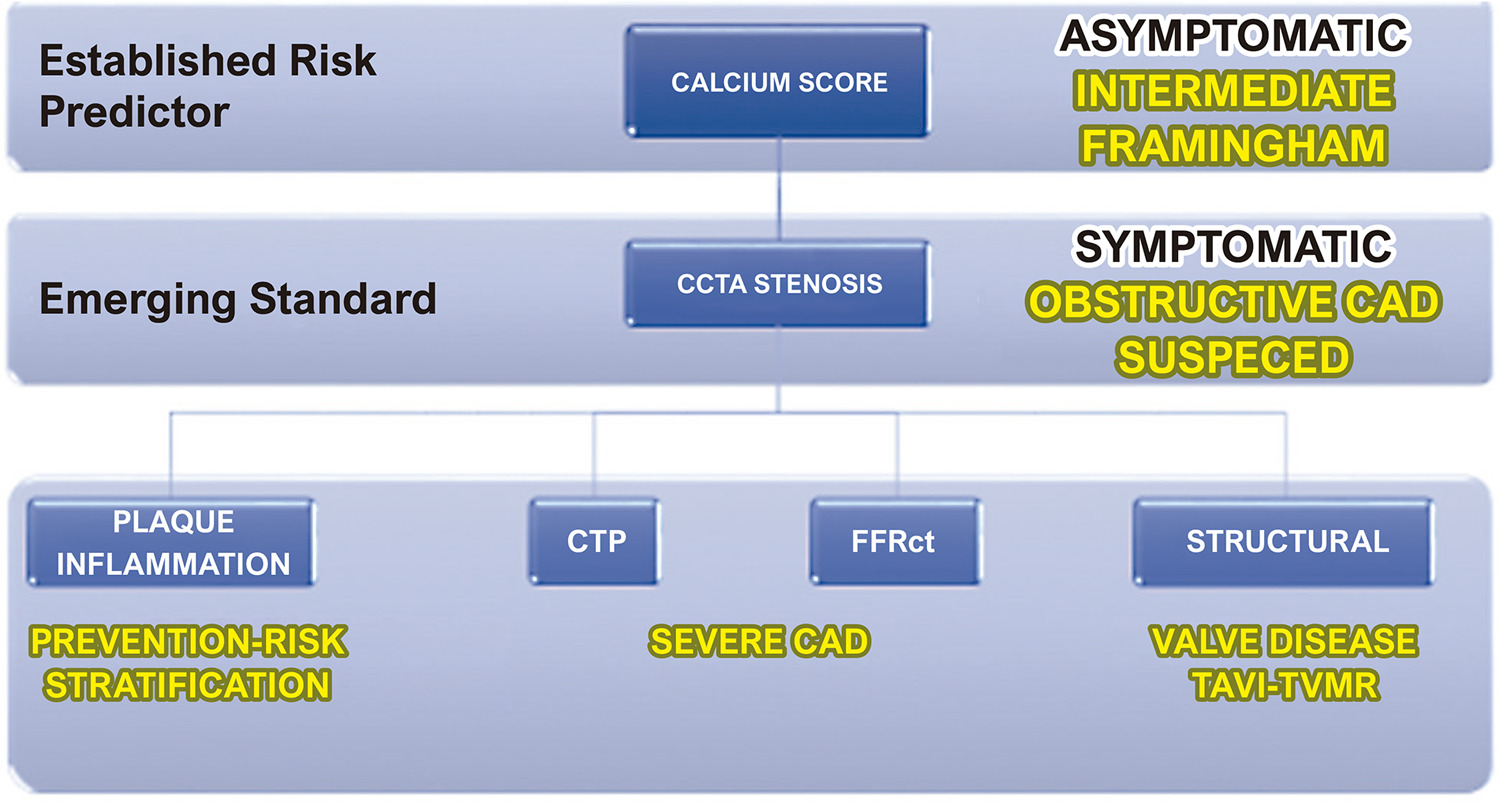
Modern non-invasive imaging techniques like cardiovascular computed tomography (CCT) and cardiovascular magnetic resonance (CMR) can diagnose and monitor a wide range of cardiovascular diseases with unprecedented accuracy and safety. – With advances in the understanding of cardiovascular diseases and increasing availability of new and revolutionary therapies, detailed and quantitative information of disease stage have become crucial for the appropriate decision-making for each patient, which is one of the pillars of personalized medicine.

As an example, we can mention the high accuracy of CCT in the diagnosis and quantification of coronary atherosclerosis and stenosis ( ), and assessment of functional significance by the fractional flow reserve (FFR) technique. Considering recent knowledge of the role of characteristics of the plaque and the global burden of the atherosclerotic plaque involving the coronary tree on the prognosis of coronary artery disease (CAD), CCT has turned out to be a key tool in therapeutic decision making, be it for stenosis revascularization, be it for prevention of adverse cardiovascular events. Another example is the ability of CCT in monitoring the response of atherosclerotic plaques to advanced therapies, like those including PCSK9 inhibition by monoclonal antibodies or RNA interference. – , –

[…]

  • Atherosclerosis
  • Coronary Artery Disease
  • Coronary stenosis
  • Diagnostic Imaging/trends/methods
  • Early diagnosis
  • Fhenotype
  • Genotype
Read Full Article
Creative Commons Attribution (CC BY) Creative Commons license
06/03/2023 DOI: 10.36660/abc.20230021
ABC
Editorial

Differences among Angiotensin Receptor Blockers (BRA) in the Treatment of Arterial Hypertension

José Geraldo Mill

Cardiovascular diseases (CVD) are the main cause of death and disability in Brazil, and arterial hypertension (AH) is the main risk factor for cardiovascular morbidity and mortality. Early diagnosis and correct treatment are priority actions to face the problem. The National Health Survey conducted by the Ministry of Health in 2013 (PNS-2013) determined the prevalence of AH by direct measurement of blood pressure (BP) and use of antihypertensive drugs in a representative sample of the Brazilian adult population. Prevalence of 32.3% (95%CI: 31.7 – 33.0) indicated nearly 50 million hypertensive patients. Around 70% depend on the Unified Health System (SUS) for both diagnosis and pharmaceutical care, an essential aspect of the Chronic Noncommunicable Diseases (NCD) plan.

According to the current guidelines, the initial treatment of AH should be carried out with general measures, including regular aerobic physical activity, reduction of salt intake, increased consumption of fruits and vegetables and weight reduction when obesity or overweight is present. These measures benefit everyone and not only hypertensive patients indeed. Even adopting these strategies, many patients still depend on the regular use of drugs to get high BP control. Thus, the use of these drugs shows great importance because, given the dimension of the problem, even small pressure reductions generate a positive impact for millions of individuals affecting the morbidity and mortality rates due to CVD. Thus, the search for effective treatments for BP control has paramount importance to adopt public policies in this area.

[…]

  • Angiotensin-Converting Enzyme Inhibitors
  • Early diagnosis
  • Hypertension
  • Losartana
Read Full Article
Creative Commons Attribution (CC BY) Creative Commons license
10/06/2022 DOI: 10.36660/abc.20220281
ABC
Original Article

Cytogenomics Investigation of Infants with Congenital Heart Disease: Experience of a Brazilian Center

Marcília Sierro Grassi et al. Marília Montenegro Evelin Aline Zanardo Antonio Carlos Pastorino … Mayra Barros Dorna Chong Kim Marcelo Jatene Nana Miura Leslie Kulikowski Magda Carneiro-Sampaio

Abstract

Background

Some syndromes have specific and easily recognizable features, while others may be more complex to identify and may present different phenotypic manifestations, for example. An etiological diagnosis is important to understand the nature of the disease, to establish the prognosis and to start the treatment, allowing the inclusion of patients in society and reducing the financial cost of such diseases.

Objective

The initial proposal of this study was cytogenetic screening for the detection of the 22q11.2 deletion syndrome in consecutive newborns and infants with congenital heart disease using the multiplex ligation-dependent probe amplification (MLPA) technique. Therefore, throughout our research, other genomic alterations were identified in these cardiac patients. Thus, our objective was extended to investigate these other cytogenetic alterations.

Methods

We investigated 118 neonates with congenital heart diseases born consecutively during one year using the MLPA technique.

Results

The MLPA technique allowed the detection of 22q11.2DS in 10/118 patients (8.5%). Other genomic alterations were also identified in 6/118 patients (5%): 1p36 del, 8p23 del (2 cases), 7q dup, 12 dup and 8q24 dup.

Conclusion

This study highlights the relevance of detecting genomic alterations that are present in newborns and infants with congenital cardiac diseases using cytogenomic tools.

  • Chromosome deletion
  • Congenital
  • Congenital Abnormalities
  • DiGeorge Syndrome
  • Early diagnosis
  • Heart Defects
  • Newborn
Read Full Article
Creative Commons Attribution (CC BY) Creative Commons license
21/02/2022 DOI: 10.36660/abc.20190894 Views 1
ABCIC
Editorial

What Does the Cardiologist Expect from the Echocardiogram in Amyloidosis?

Aristóteles Comte de Alencar Neto et al. Fabio Fernandes

[…]

  • Diastole
  • Early diagnosis
  • Strain
Read Full Article
Creative Commons Attribution (CC BY) Creative Commons license
14/01/2022 DOI: 10.5935/2318-8219.20200016
Figure 1
ABC
Original Article

Macroscopic Evaluation of Atherosclerosis in the Arteries: An Autopsy Assessment Tool

Mariana Silva Oliveira et al. Bianca Gonçalves Silva Torquato Maria Helena Soares Maria Luiza Gonçalves dos Reis Monteiro … Guilherme Ribeiro Juliano Laura Sanches Aguiar Vicente de Paula Antunes Teixeira Mara Lúcia da Fonseca Ferraz

Abstract

Background

Atherosclerosis, in some cases, is an asymptomatic condition, and it is important to know the degree of arterial impairment caused by plaques and its association with risk factors. Autopsy examination provides understanding of basic disease processes and assessment to data about macroscopic characteristic of atherosclerotic involvement.

Objective

To macroscopically assess and standardize atherosclerotic involvement of aorta, carotid and iliac arteries and compare with age, gender and causes of death.

Methods

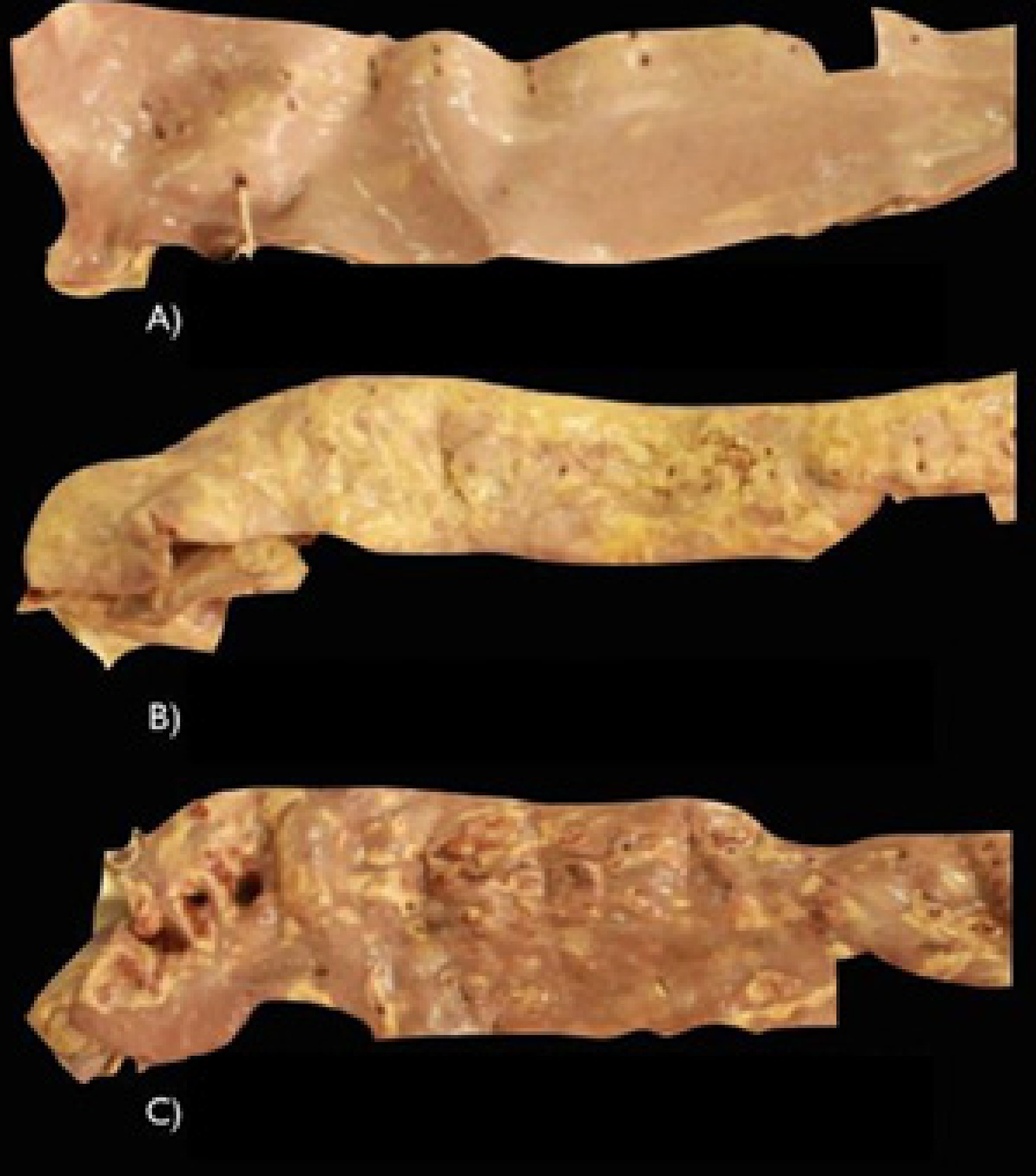
We collected 53 aortic arteries, 53 right carotid arteries, 53 left carotid arteries, 53 right iliac arteries and 53 left iliac arteries. For this assessment, the extension of fatty streaks, atheromatous plaques, fibrosis and calcification were considered, being the reference to score the degree of atherosclerotic involvement. Many degrees of atherosclerosis and accurate values were observed for mild, moderate and severe classification. For statistical analysis, data were analyzed using the software GraphPad Prism® 7.0. Differences were considered statistically significant if p-value was less than 5% (p <0.05).

Results

Carotid arteries had greater atherosclerotic involvement compared to the other arteries (K = 15.73, p = 0.0004). Atherosclerosis was progressive and significant with increasing age (carotid arteries: t = 6.321; p <0.0001; aorta: U = 83.5; p <0.0001; iliac: U = 306; p <0.0001) and as cause of cardiovascular death (carotids: t = 5.047; p <0.0001; aorta: U = 98.5; p = 0.0068; iliac: U = 467.5; p = 0.0012).

Conclusion

Macroscopic assessment of atherosclerosis is an innovative and low-cost way of direct visualization of atherosclerotic plaques, enabling an association with risk factors such as increasing age and cardiovascular diseases, providing important data for clinical practice.

  • Arteries
  • Asymptomatic Disease
  • Atherosclerosis
  • autopsy
  • Cardiovascular Diseases
  • Early diagnosis
  • Heredity
  • Risk Factors
Read Full Article
Creative Commons Attribution (CC BY) Creative Commons license
14/06/2021 DOI: 10.36660/abc.20190846 Views 1
ABC
Editorial

The Unknown Risk of Familial Hypercholesterolemia in the Development of Atherosclerotic Cardiovascular Disease

Elizabeth do Nascimento et al. José Luiz de Brito Alves

Cardiovascular diseases (CVD) are recognized as the main causes of death in adulthood in the world., A number of factors, such as smoking, arterial hypertension, obesity, metabolic syndrome and hypercholesterolemia have been described as important risk factors in the development of CVD and premature death. Hypercholesterolemia can be classified as primary or secondary in origin. Primary hypercholesterolemia is due to genetically determined defects in lipid or lipoprotein metabolism; secondary hypercholesterolemia can be caused by inadequate lifestyle, diseases or medications.

Familial hypercholesterolemia (FH) is an autosomal-dominant disorder characterized by mutations in genes in the encoding of proteins involved in low-density lipoprotein (LDL) metabolism that occur in the presence of high plasma cholesterol and LDL levels associated with clinical signs of tendon xanthoma. FH is responsible for approximately 10% of cardiovascular events in people under 50 years of age.– In FH, mutations may be present in the LDL receptor gene, in the gene-encoding Apoprotein B-100 or in autosomal recessive LDLRAP1 gene and in autosomal dominant familial hypercholesterolemia (HCHOLA3) variant of the PCSK9 gene. These mutations lead to an impairment in the apoprotein-receptor interaction and result in high plasma cholesterol, high LDL levels and risk of development of atherosclerotic disease.,

[…]

  • Atherosclerosis
  • Cardiovascular Diseases, mortality
  • Early diagnosis
  • Hyperlipoproteinemia Type II
  • Lipid Metabolism Disorders
  • Risk Factors
Read Full Article
Creative Commons Attribution (CC BY) Creative Commons license
16/04/2021 DOI: 10.36660/abc.20210168 Views 1
Intima-media thickness in the origin of right subclavian artery as an early marker of cardiovascular risk
ABC
Artigo Original

Intima-media thickness in the origin of right subclavian artery as an early marker of cardiovascular risk

Carlos Alberto Engelhorn et al. Ana Luiza Engelhorn Maria Fernanda Cassou Cassiana Casagrande Zanoni … Carlos José Gosalan Emerson Ribas Adriana Pacholok Marcela de Fátima Koehler

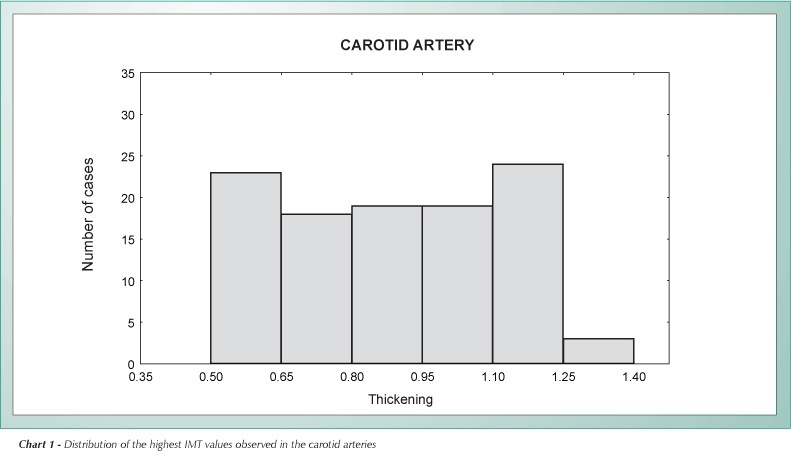
OBJECTIVE: Common carotid artery intima-media thickness (IMT) is considered a factor of cardiovascular risk and an early marker of coronary artery disease. This study aimed to investigate the existence of a correlation between IMT in the carotid arteries and at the origin of the right subclavian artery, as well as to evaluate IMT in the subclavian artery as an earlier marker of cardiovascular risk. METHODS: One hundred and six consecutive patients, 52 males and 54 females, average age 51 years, underwent color Doppler ultrasonography to evaluate carotid and right subclavian arteries. The relationship between carotid IMT and right subclavian IMT was assessed using the Pearson’s correlation coefficient analysis and a 95% confidence interval. Reliability of right subclavian artery IMT measurement for the diagnosis of early thickening (considering a > 0.8 mm carotid thickness as reference) was described as to sensitivity, specificity, positive predictive value, negative predictive value, and accuracy. Cut-off values for the right subclavian IMT were indicated by the ROC curve, and p values 0.8 mm. The mean IMT value for the carotid artery was 0.87 mm (SD = 0.23) and for the subclavian artery, 1.17 mm (SD = 0.46), with a 0.31 correlation coefficient (95% CI: 0.12; 0.47). The ROC curve analysis indicated a cut-off value of 0.7 mm for the right subclavian artery IMT, using as reference a 0.8 mm cut-off value for the carotid artery (91% sensitivity, 27% specificity, 66% PPV, 65% NPV, and 66% accuracy). CONCLUSION: Our study showed that carotid artery IMT correlates well with right subclavian artery IMT. With a 0.7 mm cut-off value, it is possible to detect IMT in the right subclavian artery earlier than in the carotid arteries. The IMT at the origin of the right subclavian artery can be considered an earlier marker for the assessment of cardiovascular risk.

  • coronary arteriosclerosis
  • Early diagnosis
  • Media-intima thickening
  • Myocardial Infarction
Read Full Article
Creative Commons Attribution (CC BY) Creative Commons license
06/03/2007 DOI: 10.1590/S0066-782X2006001800010 Views 1

How to cite this article

EndNote RIS

Electronic Document Format (Vancouver)

Rochitte CE. Cardiovascular Magnetic Resonance and Cardiovascular Computed Tomography in the Present and Future Cardiology. Arquivos Brasileiros de Cardiologia 2023;120(1):e20230021.

Electronic Document Format (ABNT)

Rochitte, Carlos E.. Cardiovascular Magnetic Resonance and Cardiovascular Computed Tomography in the Present and Future Cardiology. Arquivos Brasileiros de Cardiologia, v. 120, n. 1, e20230021, Mar. 2023.

Electronic Document Format (APA)

Rochitte, C. E. (2023). Cardiovascular Magnetic Resonance and Cardiovascular Computed Tomography in the Present and Future Cardiology. Arquivos Brasileiros de Cardiologia, 120(1), e20230021.

Electronic Document Format (ISO)

Rochitte, Carlos E.. Cardiovascular Magnetic Resonance and Cardiovascular Computed Tomography in the Present and Future Cardiology. Arquivos Brasileiros de Cardiologia [online]. 2023, vol. 120, n. 1, [cited 2026-10-14], e20230021. Available from: <https://journals.cardiol.br/en/article/cardiovascular-magnetic-resonance-and-cardiovascular-computed-tomography-in-the-present-and-future-cardiology/>. ISSN 0066-782X

EndNote RIS

Electronic Document Format (Vancouver)

Mill JG. Differences among Angiotensin Receptor Blockers (BRA) in the Treatment of Arterial Hypertension. Arquivos Brasileiros de Cardiologia 2022;118(6):1083-4.

Electronic Document Format (ABNT)

Mill, José Geraldo. Differences among Angiotensin Receptor Blockers (BRA) in the Treatment of Arterial Hypertension. Arquivos Brasileiros de Cardiologia, v. 118, n. 6, p. 1083-1084, Jun. 2022.

Electronic Document Format (APA)

Mill, J. G. (2022). Differences among Angiotensin Receptor Blockers (BRA) in the Treatment of Arterial Hypertension. Arquivos Brasileiros de Cardiologia, 118(6), 1083-1084.

Electronic Document Format (ISO)

Mill, José Geraldo. Differences among Angiotensin Receptor Blockers (BRA) in the Treatment of Arterial Hypertension. Arquivos Brasileiros de Cardiologia [online]. 2022, vol. 118, n. 6, [cited 2026-10-14], pp. 1083-1084. Available from: <https://journals.cardiol.br/en/article/differences-among-angiotensin-receptor-blockers-bra-in-the-treatment-of-arterial-hypertension/>. ISSN 0066-782X

EndNote RIS

Electronic Document Format (Vancouver)

Grassi MS, Montenegro M, Zanardo EA, Pastorino AC, Dorna MB, Kim C, Jatene M, et al. Cytogenomics Investigation of Infants with Congenital Heart Disease: Experience of a Brazilian Center. Arquivos Brasileiros de Cardiologia 2022;118(1):61-7.

Electronic Document Format (ABNT)

Grassi, Marcília Sierro; Montenegro, Marília; Zanardo, Evelin Aline; Pastorino, Antonio Carlos; Dorna, Mayra Barros; Kim, Chong; Jatene, Marcelo; Miura, Nana; Kulikowski, Leslie; Carneiro-Sampaio, Magda. Cytogenomics Investigation of Infants with Congenital Heart Disease: Experience of a Brazilian Center. Arquivos Brasileiros de Cardiologia, v. 118, n. 1, p. 61-67, Feb. 2022.

Electronic Document Format (APA)

Grassi, M. S., Montenegro, M., Zanardo, E. A., Pastorino, A. C., Dorna, M. B., Kim, C., Jatene, M., Miura, N., Kulikowski, L., & Carneiro-Sampaio, M. (2022). Cytogenomics Investigation of Infants with Congenital Heart Disease: Experience of a Brazilian Center. Arquivos Brasileiros de Cardiologia, 118(1), 61-67.

Electronic Document Format (ISO)

Grassi, Marcília Sierro and Montenegro, Marília and Zanardo, Evelin Aline and Pastorino, Antonio Carlos and Dorna, Mayra Barros and Kim, Chong and Jatene, Marcelo and Miura, Nana and Kulikowski, Leslie and Carneiro-Sampaio, Magda. Cytogenomics Investigation of Infants with Congenital Heart Disease: Experience of a Brazilian Center. Arquivos Brasileiros de Cardiologia [online]. 2022, vol. 118, n. 1, [cited 2026-10-14], pp. 61-67. Available from: <https://journals.cardiol.br/en/article/cytogenomics-investigation-of-infants-with-congenital-heart-disease-experience-of-a-brazilian-center/>. ISSN 0066-782X

EndNote RIS

Electronic Document Format (Vancouver)

Alencar Neto AC, Fernandes F. What Does the Cardiologist Expect from the Echocardiogram in Amyloidosis?. Arquivos Brasileiros de Cardiologia Imagem cardiovascular 2022;33(2):1-4.

Electronic Document Format (ABNT)

Alencar Neto, Aristóteles Comte de; Fernandes, Fabio. What Does the Cardiologist Expect from the Echocardiogram in Amyloidosis?. Arquivos Brasileiros de Cardiologia Imagem cardiovascular, v. 33, n. 2, p. 1-4, Jan. 2022.

Electronic Document Format (APA)

Alencar Neto, A. C. , & Fernandes, F. (2022). What Does the Cardiologist Expect from the Echocardiogram in Amyloidosis?. Arquivos Brasileiros de Cardiologia Imagem cardiovascular, 33(2), 1-4.

Electronic Document Format (ISO)

Alencar Neto, Aristóteles Comte de and Fernandes, Fabio. What Does the Cardiologist Expect from the Echocardiogram in Amyloidosis?. Arquivos Brasileiros de Cardiologia Imagem cardiovascular [online]. 2022, vol. 33, n. 2, [cited 2026-10-14], pp. 1-4. Available from: <https://journals.cardiol.br/en/article/what-does-the-cardiologist-expect-from-the-echocardiogram-in-amyloidosis/>. ISSN 2318-8219

EndNote RIS

Electronic Document Format (Vancouver)

Oliveira MS, Torquato BGS, Soares MH, Monteiro MLGR, Juliano GR, Aguiar LS, Teixeira VPA, et al. Macroscopic Evaluation of Atherosclerosis in the Arteries: An Autopsy Assessment Tool. Arquivos Brasileiros de Cardiologia 2021;116(6):1119-26.

Electronic Document Format (ABNT)

Oliveira, Mariana Silva; Torquato, Bianca Gonçalves Silva; Soares, Maria Helena; Monteiro, Maria Luiza Gonçalves dos Reis; Juliano, Guilherme Ribeiro; Aguiar, Laura Sanches; Teixeira, Vicente de Paula Antunes; Ferraz, Mara Lúcia da Fonseca. Macroscopic Evaluation of Atherosclerosis in the Arteries: An Autopsy Assessment Tool. Arquivos Brasileiros de Cardiologia, v. 116, n. 6, p. 1119-1126, Jun. 2021.

Electronic Document Format (APA)

Oliveira, M. S., Torquato, B. G. S., Soares, M. H., Monteiro, M. L. G. R., Juliano, G. R., Aguiar, L. S., Teixeira, V. P. A., & Ferraz, M. L. F. (2021). Macroscopic Evaluation of Atherosclerosis in the Arteries: An Autopsy Assessment Tool. Arquivos Brasileiros de Cardiologia, 116(6), 1119-1126.

Electronic Document Format (ISO)

Oliveira, Mariana Silva and Torquato, Bianca Gonçalves Silva and Soares, Maria Helena and Monteiro, Maria Luiza Gonçalves dos Reis and Juliano, Guilherme Ribeiro and Aguiar, Laura Sanches and Teixeira, Vicente de Paula Antunes and Ferraz, Mara Lúcia da Fonseca. Macroscopic Evaluation of Atherosclerosis in the Arteries: An Autopsy Assessment Tool. Arquivos Brasileiros de Cardiologia [online]. 2021, vol. 116, n. 6, [cited 2026-10-14], pp. 1119-1126. Available from: <https://journals.cardiol.br/en/article/macroscopic-evaluation-of-atherosclerosis-in-the-arteries-an-autopsy-assessment-tool/>. ISSN 0066-782X

EndNote RIS

Electronic Document Format (Vancouver)

Nascimento E, Alves JLB. The Unknown Risk of Familial Hypercholesterolemia in the Development of Atherosclerotic Cardiovascular Disease. Arquivos Brasileiros de Cardiologia 2021;116(4):713-4.

Electronic Document Format (ABNT)

Nascimento, Elizabeth do; Alves, José Luiz de Brito. The Unknown Risk of Familial Hypercholesterolemia in the Development of Atherosclerotic Cardiovascular Disease. Arquivos Brasileiros de Cardiologia, v. 116, n. 4, p. 713-714, Apr. 2021.

Electronic Document Format (APA)

Nascimento, E. , & Alves, J. L. B. (2021). The Unknown Risk of Familial Hypercholesterolemia in the Development of Atherosclerotic Cardiovascular Disease. Arquivos Brasileiros de Cardiologia, 116(4), 713-714.

Electronic Document Format (ISO)

Nascimento, Elizabeth do and Alves, José Luiz de Brito. The Unknown Risk of Familial Hypercholesterolemia in the Development of Atherosclerotic Cardiovascular Disease. Arquivos Brasileiros de Cardiologia [online]. 2021, vol. 116, n. 4, [cited 2026-10-14], pp. 713-714. Available from: <https://journals.cardiol.br/en/article/the-unknown-risk-of-familial-hypercholesterolemia-in-the-development-of-atherosclerotic-cardiovascular-disease/>. ISSN 0066-782X

EndNote RIS

Electronic Document Format (Vancouver)

Engelhorn CA, Engelhorn AL, Cassou MF, Zanoni CC, Gosalan CJ, Ribas E, Pacholok A, et al. Intima-media thickness in the origin of right subclavian artery as an early marker of cardiovascular risk. Arquivos Brasileiros de Cardiologia 2007;87(5):609-14.

Electronic Document Format (ABNT)

Engelhorn, Carlos Alberto; Engelhorn, Ana Luiza; Cassou, Maria Fernanda; Zanoni, Cassiana Casagrande; Gosalan, Carlos José; Ribas, Emerson; Pacholok, Adriana; Koehler, Marcela de Fátima. Intima-media thickness in the origin of right subclavian artery as an early marker of cardiovascular risk. Arquivos Brasileiros de Cardiologia, v. 87, n. 5, p. 609-614, Mar. 2007.

Electronic Document Format (APA)

Engelhorn, C. A., Engelhorn, A. L., Cassou, M. F., Zanoni, C. C., Gosalan, C. J., Ribas, E., Pacholok, A., & Koehler, M. F. (2007). Intima-media thickness in the origin of right subclavian artery as an early marker of cardiovascular risk. Arquivos Brasileiros de Cardiologia, 87(5), 609-614.

Electronic Document Format (ISO)

Engelhorn, Carlos Alberto and Engelhorn, Ana Luiza and Cassou, Maria Fernanda and Zanoni, Cassiana Casagrande and Gosalan, Carlos José and Ribas, Emerson and Pacholok, Adriana and Koehler, Marcela de Fátima. Intima-media thickness in the origin of right subclavian artery as an early marker of cardiovascular risk. Arquivos Brasileiros de Cardiologia [online]. 2007, vol. 87, n. 5, [cited 2026-10-14], pp. 609-614. Available from: <https://journals.cardiol.br/en/article/intima-media-thickness-in-the-origin-of-right-subclavian-artery-as-an-early-marker-of-cardiovascular-risk/>. ISSN 0066-782X

  • About ABC Family
  • Internal Regulation
  • Editorial Board
  • Brazilian Society of Cardiology (SBC)

Issues

SBC Guidelines

  • Videos
  • Podcasts
  • News