ABC Family Arquivos Brasileiros de Cardiologia International Journal of Cardiovascular Sciences ABC Heart Failure & Cardiomyopathy ABC Imagem Cardiovascular
Português English
ABC Family
Português English
  • About
    • About ABC Family
    • Internal Regulation
    • Editorial Board
    • Brazilian Society of Cardiology (SBC)
  • Issues
  • SBC Guidelines
  • Content
    • Videos
    • Podcasts
    • News
  • About
    • About ABC Family
    • Internal Regulation
    • Editorial Board
    • Brazilian Society of Cardiology (SBC)
  • Issues
  • SBC Guidelines
  • Content
    • Videos
    • Podcasts
    • News

ABC Family

  • ABC Family
  • Arquivos Brasileiros de Cardiologia
  • International Journal of Cardiovascular Sciences
  • ABC Heart Failure & Cardiomyopathy
  • ABC Imagem Cardiovascular
Search in

No content found.

Journals
Ordering
Article types
Others

  1. Home
  2. Keyword: Pulmonary Hypertension
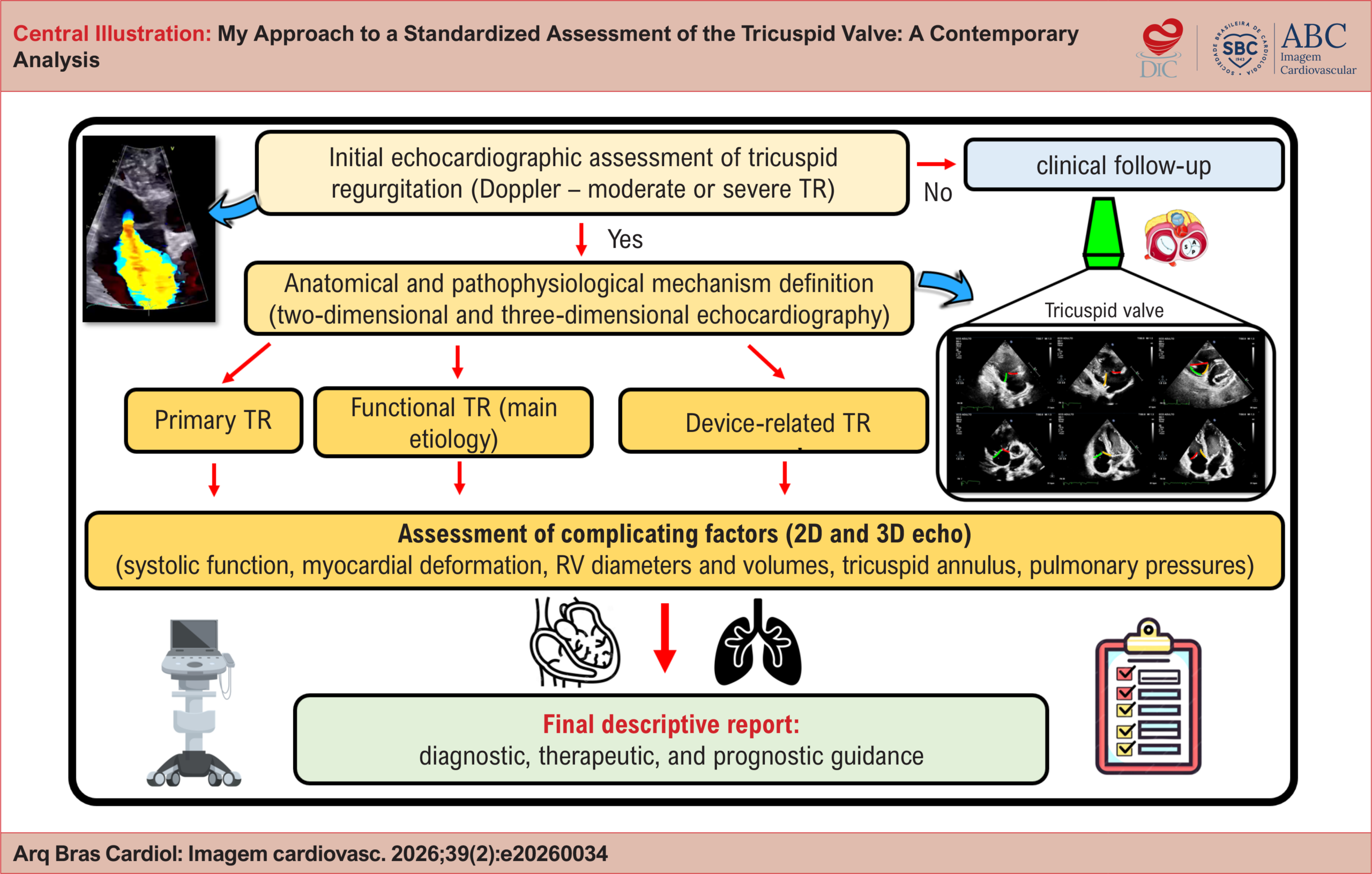
My Approach to a Standardized Assessment of the Tricuspid Valve: A Contemporary Analysis
ABCIC
Review Article

My Approach to a Standardized Assessment of the Tricuspid Valve: A Contemporary Analysis

Halsted Alarcão Gomes Pereira da Silva et al. Alexandre Costa Souza Adenalva Beck

Abstract

Tricuspid regurgitation (TR) remains one of the most frequent valvular diseases encountered in echocardiographic practice. Mild cases generally do not require further investigation or specific treatment. Moderate and severe valvular disease, however, require more detailed anatomical and etiological assessment to better understand the underlying pathophysiological mechanism.

Two-dimensional echocardiographic analysis is the initial examination of choice and should be performed in a standardized manner, with individual identification of the leaflets using the main transthoracic echocardiographic windows. The description of complementary parameters – such as right ventricular (RV) systolic function, myocardial deformation assessed by longitudinal strain, right-sided chamber diameters and volumes, and estimation of pulmonary pressures – guides the clinician regarding potential therapeutic strategies and provides relevant prognostic information.

In this context, the 2025 European Society of Cardiology (ESC) guideline reinforces the importance of a standardized and comprehensive evaluation of the tricuspid valve and its hemodynamic repercussions. Most of this assessment can be performed using widely available two-dimensional transthoracic echocardiography.

  • Pulmonary Hypertension
  • Tricuspid Valve
  • Tricuspid Valve Insufficiency
Read Full Article
Creative Commons Attribution (CC BY) Creative Commons license
24/07/2026 DOI: 10.36660/abcimg.20260034i Views 1
Figure 1
ABC
Research Letter

Never Stop Looking – the Heart is Not Always the Answer

Daniel Inácio Cazeiro et al. Diogo Ferreira Lia Bruno Ana Isabel Ferreira … João Leitão Fausto J. Pinto Rui Plácido

Case presentation

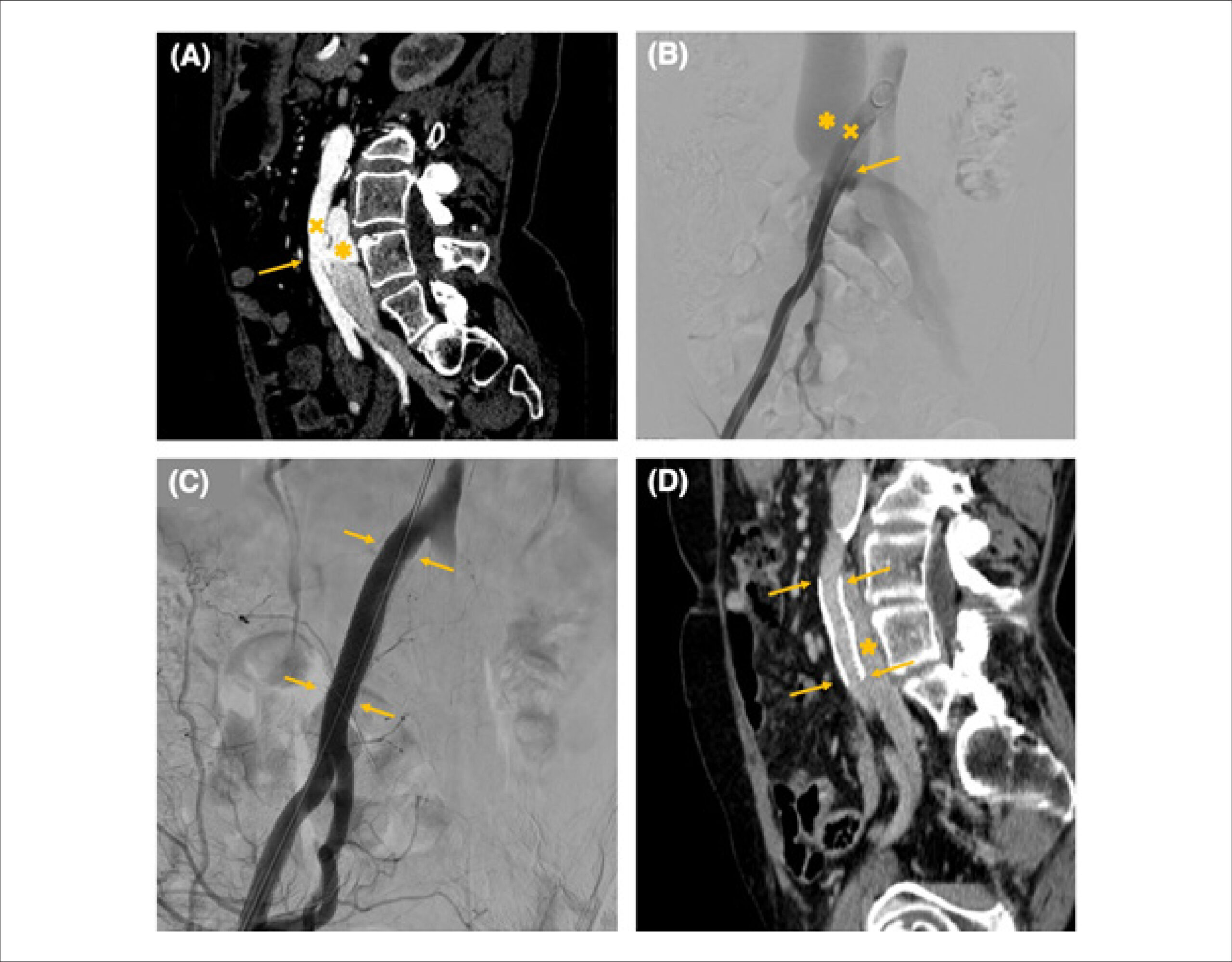
A 63-year-old woman presented with a two-year history of worsening fatigue, dyspnea (World Health Organization functional class III), and palpitations. The echocardiogram had demonstrated a high probability of pulmonary hypertension (PH), and she was subsequently referred to a PH expert center. Her past medical history included systemic arterial hypertension, iron deficiency anemia secondary to gastrointestinal bleeding from duodenal telangiectasias (endoscopically treated), and a previous extraforaminal L3-L4 discectomy due to lumbar herniated disk with associated radiculopathy, performed at another hospital two years before the first appointment. The post-operative period was complicated by severe acute anemia of unclear etiology, which required nine red blood cell transfusions.

At the time of referral, the patient was taking furosemide 40 mg once daily (OD), candesartan 16 mg + hydrochlorothiazide 12.5 mg OD, simvastatin 20 mg OD, and alprazolam 0.25 mg OD. She had a history of smoking but no significant occupational exposures, and her family history was unremarkable.

[…]

  • Arteriovenous Fistula
  • Pulmonary Hypertension
  • Therapeutics
Read Full Article
Creative Commons Attribution (CC BY) Creative Commons license
02/03/2026 DOI: 10.36660/abc.20250425i Views 1
Figure 1
ABC
Case Report

Systemic Sclerosis Associated Pulmonary Arterial Hypertension with Venous Involvement – a Novel ABCC8 Pathogenic Variant

Daniel Inácio Cazeiro et al. João Cravo Mariana Pereira Silva João R. Inácio … Oana Moldovan Catarina Sousa Catarina Lopes Resende João Eurico Fonseca Fausto J. Pinto Rui Plácido

Discussion

PAH with venous/capillary involvement (formerly referred to as pulmonary veno-occlusive disease [PVOD] /capillary hemangiomatosis) is a rare, severe form of PH, with an incidence of 0.1-0.5 cases/million/year. This condition comprises a fibroproliferative process of pulmonary venous and capillary compartments, with small vein occlusion caused by smooth muscle hypertrophy and collagen deposition.

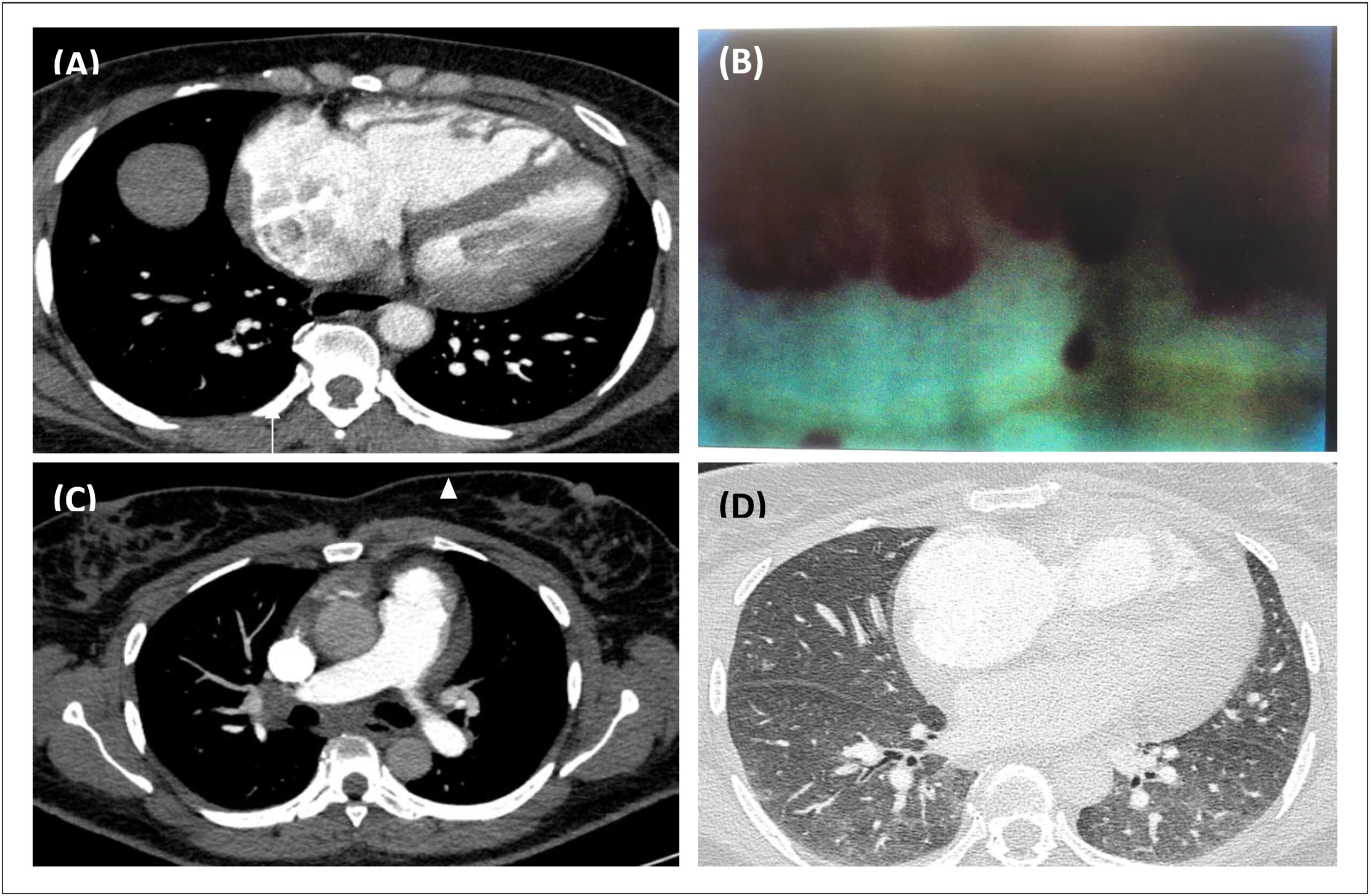
The diagnosis of PVOD is challenging due to its non-specific presentation, often mimicking PAH. Moreover, histological confirmation via lung biopsy is contraindicated due to the significant risk of hemorrhage. Certain clinical and imaging features can facilitate a presumptive diagnosis, which include typical findings on CCTA – centrilobular ground-glass opacities, septal lines, and mediastinal lymphadenopathy, severely reduced DLCO on PFTs, and low oxygen saturation nadir during the 6MWT. PVOD manifests in two forms: hereditary, which is associated with autosomal recessive biallelic mutations in the EIF2AK4 gene, and sporadic, which presents later in life and more frequently in males. Several risk factors are linked to sporadic PVOD, including prior exposure to chemotherapy (particularly alkylating agents),, tobacco, and organic solvents such as trichloroethylene.,

[…]

  • Genetics
  • Pulmonary Hypertension
  • Therapeutics
Read Full Article
Creative Commons Attribution (CC BY) Creative Commons license
19/01/2026 DOI: 10.36660/abc.20250175i Views 3
Figure 1
ABCIC
Case Report

Lutembacher Syndrome Associated With Pulmonary Hypertension: The Importance of Early Diagnosis for Enabling Surgical Treatment

Ana Luiza Caldeira Lopes et al. Maria Estefânia Bosco Otto Bianca Corrêa Rocha de Mello Michelle Bruna da Silva Sena Wagner Luis Gali

Introduction

Lutembacher syndrome (LS) is defined by the simultaneous presence of an atrial septal defect (ASD) and mitral stenosis (MS). Although it is a rare condition, its clinical significance lies in the considerable hemodynamic impact and the potential for early progression to irreversible pulmonary hypertension (PH).

The exact prevalence of LS remains unknown. However, for estimation purposes, MS is considered the most frequent manifestation of rheumatic fever (RF) in young women, and the prevalence of RF in developing countries ranges from 5 to 10 cases per 1,000 children. Furthermore, the incidence of congenital ASD in patients with MS is estimated at 0.6% to 0.7%.

[…]

  • Atrial Heart Septal Defects
  • Lutembacher Syndrome
  • Mitral Valve Stenosis
  • Pulmonary Hypertension
Read Full Article
Creative Commons Attribution (CC BY) Creative Commons license
14/11/2025 DOI: 10.36660/abcimg.20250043i Views 2
Central Illustration
ABCHF
Review Article

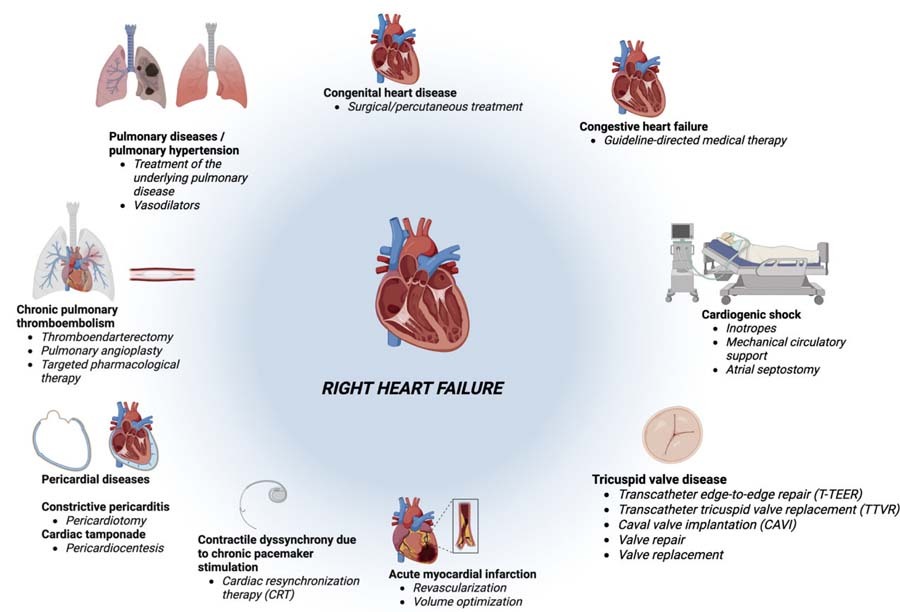
Advanced Management of Right Heart Failure: An Illustrative Case

Pedro Castilhos de Freitas Crivelaro et al. Guilherme Pinheiro Machado Marcelo Basso Gazzana William Lorenzi … Igor Gorski Benedetto Felipe Homem Valle Rodrigo Vugman Wainstein

Abstract

Right heart failure (RHF) is a serious condition characterized by the inability of the right ventricle (RV) to generate sufficient output for pulmonary circulation, leading to systemic congestion and hypoperfusion. Proper management of RHF is essential to improve prognosis and quality of life, requiring individualized treatment based on hemodynamic assessment.

This article reviews pathophysiology, diagnosis, and therapeutic options for RHF, including strategies for preload optimization, afterload reduction, and advanced circulatory support. Additionally, it presents a clinical case of a patient with severe RHF secondary to chronic pulmonary thromboembolism and primary tricuspid regurgitation, treated with a hybrid approach involving balloon pulmonary angioplasty and pulmonary thromboendarterectomy combined with surgical valve repair, resulting in significant functional improvement. This review highlights the importance of personalized strategies and combined therapies in the management of advanced RHF.

  • Heart Failure
  • Heart Ventricles
  • Pulmonary Hypertension
Read Full Article
Creative Commons Attribution (CC BY) Creative Commons license
03/11/2025 DOI: 10.36660/abchf.20250017i
ABC
Editorial

Coronary Compression in Pulmonary Hypertension: A Treatable Threat Hidden in Plain Sight

Allan K. N. Alencar

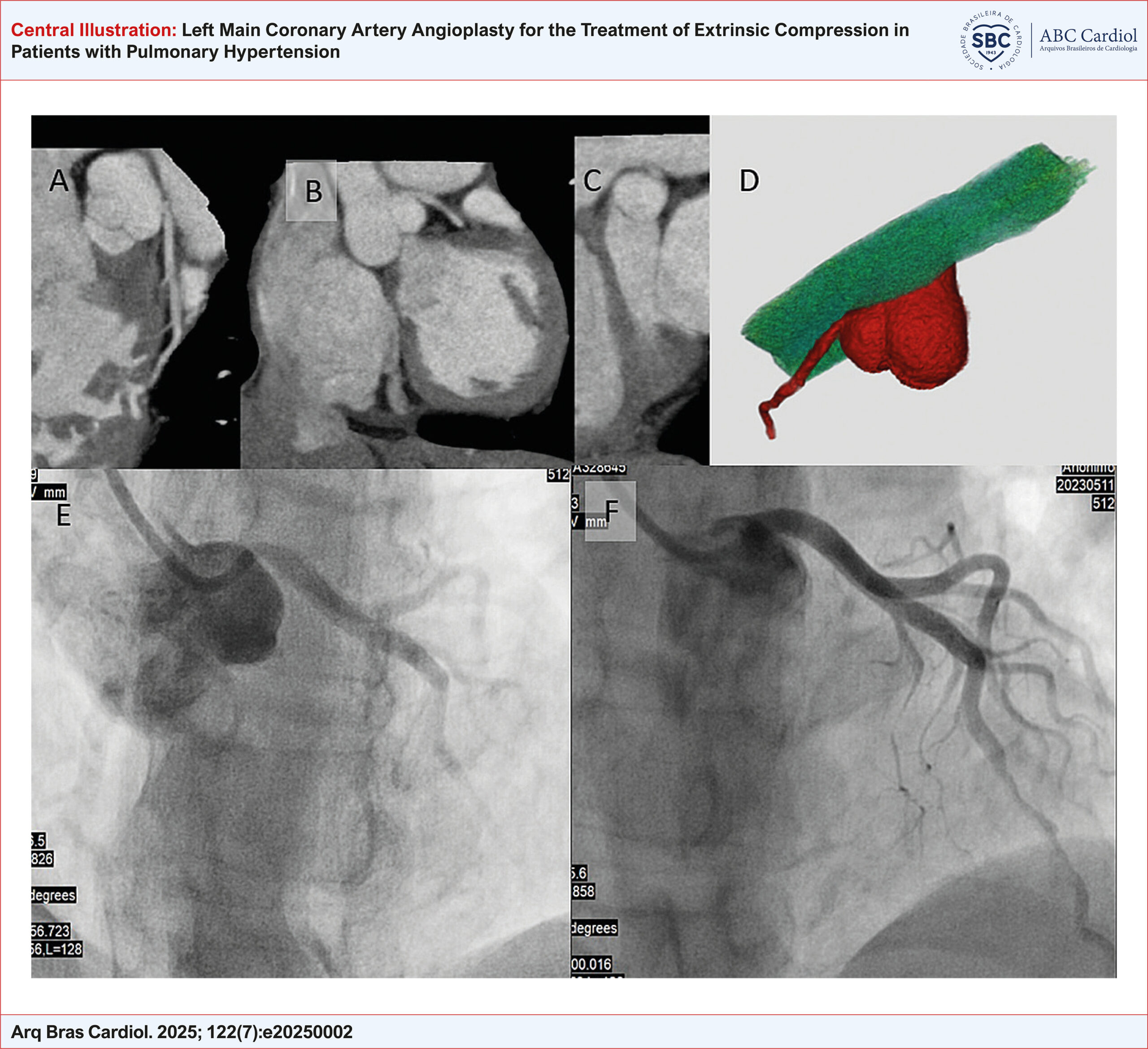
Pulmonary hypertension (PH) represents a severe, progressive condition associated with right ventricular failure, impaired functional capacity, and increased mortality., Although angina is not a hallmark symptom of PH, it can affect up to 30% of patients and is frequently overlooked in clinical practice. The study published in this issue of Arquivos Brasileiros de Cardiologia addresses a rare yet critical cause of chest pain in PH: extrinsic compression of the left main coronary artery (LMCA) by a dilated pulmonary artery. The authors present an observational case series of 12 patients undergoing percutaneous coronary intervention (PCI) with stenting for LMCA compression, reporting both feasibility and sustained symptom relief.

While LMCA atherosclerosis is well recognized for its prognostic impact, compression of this vessel due to pulmonary artery dilation in PH remains underdiagnosed. The authors highlight that up to 76% of patients with advanced PH exhibit pulmonary artery enlargement, which may result in significant extrinsic compression of the LMCA, even in the absence of coronary atherosclerosis., Importantly, LMCA compression has been associated with sudden cardiac death in PH cohorts, emphasizing the need for high clinical suspicion.–

[…]

  • Angioplasty
  • Percutaneous Coronary Intervention
  • Pulmonary Hypertension
Read Full Article
Creative Commons Attribution (CC BY) Creative Commons license
18/08/2025 DOI: 10.36660/abc.20250352i Views 1
Left Main Coronary Artery Angioplasty for the Treatment of Extrinsic Compression in Patients with Pulmonary Hypertension
ABC
Original Article

Left Main Coronary Artery Angioplasty for the Treatment of Extrinsic Compression in Patients with Pulmonary Hypertension

Luciana Dornfeld Bichuette et al. Daniela Calderaro Pedro Alves Lemos Neto Eduardo Kaiser Ururahy Nunes Fonseca … Luiza Sarmento Tatagiba Tulio Martins Vieira Yally Priscila Pessoa Nascimento Marcela Araujo Castro Taysa Antônia Félix Silva Yuri de Deus Montalverne Parente Caio Julio Fernandes Francisco Akira Malta Cardozo Cesar Higa Nomura Pedro Henrique Almeida Marins Rogerio Souza Carlos Vianna Poyares Jardim

Abstract

Background

The most common clinical presentation of pulmonary hypertension (PH) includes exertional dyspnea, signs of systemic congestion, and syncope. Angina pectoris can also be a relevant manifestation, especially in cases where the left main coronary artery (LMCA) is externally compressed by a dilated pulmonary artery. However, significant gaps remain regarding the most appropriate diagnostic and therapeutic strategies for coronary obstruction in this clinical scenario.

Objectives

To assess the feasibility and impact of coronary angioplasty with stent implantation on symptom relief in patients with PH and extrinsic compression of LMCA.

Methods

This descriptive study included 12 patients with PH who were followed at the Pulmonary Circulation Outpatient Clinic of the Instituto do Coração, Hospital das Clínicas da Faculdade de Medicina da Universidade de São Paulo. All patients underwent coronary angioplasty with stent implantation to treat extrinsic compression of LMCA.

Results

A total of 12 patients were analyzed, with a mean age of 47.9 years, predominantly with group 1 PH and under specific therapy. All procedures achieved excellent immediate results, with angina relief observed at 30 days. During a mean follow-up of 33 months, no procedure-related complications were reported, and angina symptoms remained controlled. Four patients died due to progressive heart failure.

Conclusion

The findings support the feasibility of coronary angioplasty as a strategy for symptomatic relief of angina in patients with LMCA compression associated with PH. Further studies are needed to evaluate the impact of this intervention on hard clinical outcomes, as well as the role of screening in asymptomatic patients.

  • Angioplasty
  • Coronary Vessels
  • Pulmonary Hypertension
Read Full Article
Creative Commons Attribution (CC BY) Creative Commons license
01/08/2025 DOI: 10.36660/abc.20250002i Views 3
My Approach to Estimate Pulmonary Pressures: Practical Aspects
ABCIC
Review Article

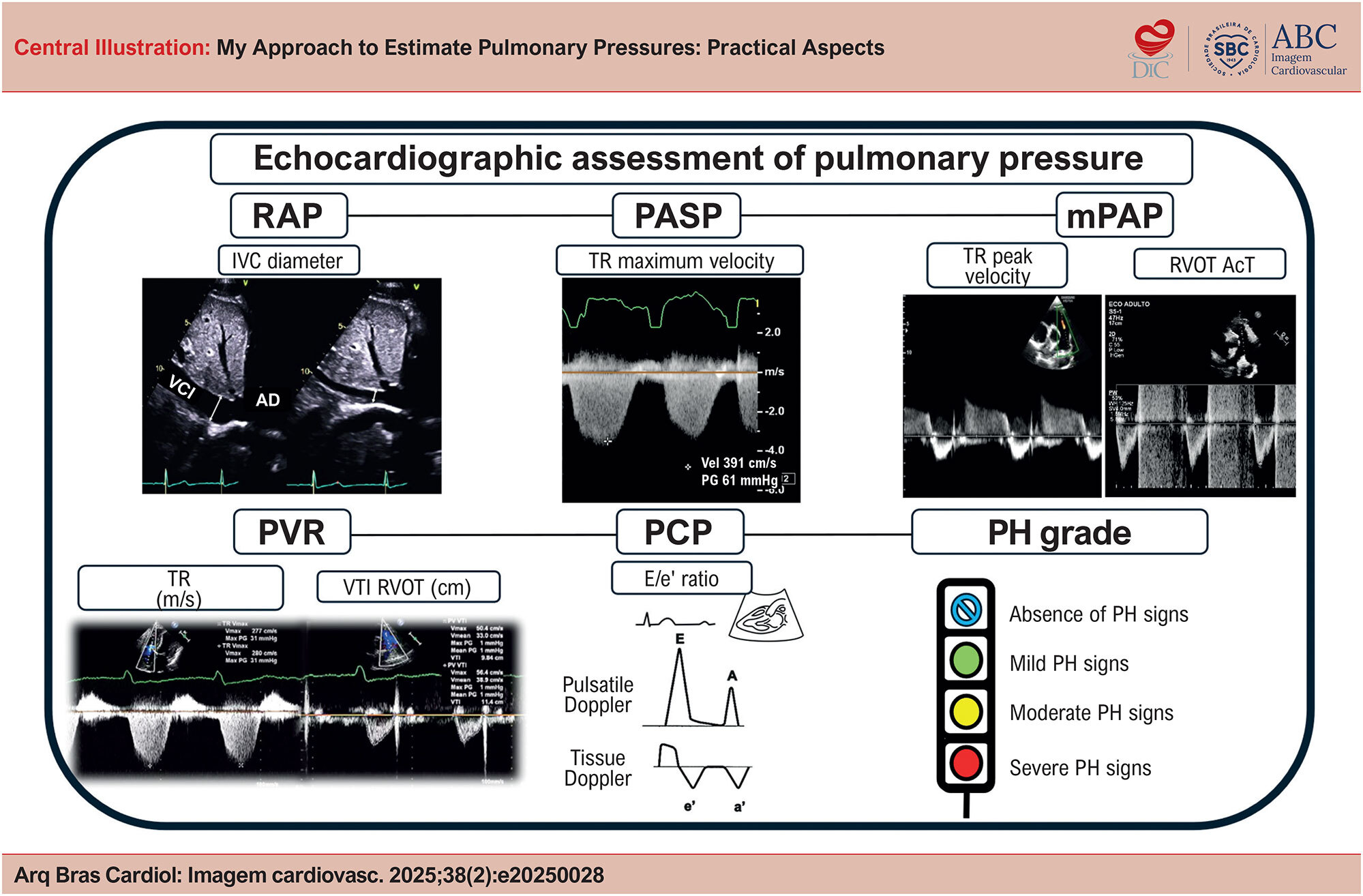
My Approach to Estimate Pulmonary Pressures: Practical Aspects

Halsted Alarcão Gomes Pereira da Silva et al. Helder Moura Gomes

Abstract

Pulmonary hypertension (PH) is a global disease and is increasingly present in echocardiography laboratories, given the progressive rise in its prevalence with population aging. Previously diagnosed only through invasive methods, echocardiographic assessment of pulmonary pressures has become fundamental in screening and monitoring patients with PH. This topic was revisited by the American Society of Echocardiography in a new guideline published in March 2025, reinforcing the importance of echocardiography in clinical stratification, considering recent updates in the definition of PH. Among the main assessment parameters, systolic pulmonary artery pressure, mean pulmonary artery pressure (mPAP), pulmonary vascular resistance (PVR), and pulmonary capillary pressure (PCP) are described, along with a series of precautions for the correct estimation and interpretation of these values. The classification of PH levels has also been revised in a new framework. As an accessible and reproducible method, the assessment of pulmonary pressures through echocardiography stands out as an essential tool in the evaluation and follow-up of PH.

  • Doppler ultrasonography
  • Echocardiography
  • Pulmonary Hypertension
  • Pulmonary Wedge Pressure
Read Full Article
Creative Commons Attribution (CC BY) Creative Commons license
30/06/2025 DOI: 10.36660/abcimg.20250028i Views 1
Figure 1
ABCHF
Case Report

Reversal of Type 2 Pulmonary Hypertension after Levosimendan: A Challenging Approach Bringing New Insights

Helena Garcia Betinardi Bernardi et al. Deborah de Sá Pereira Belfort Bruno Biselli Paulo Roberto Chizzola … Robinson Tadeu Munhoz Silvia M. Ayub-Ferreira Edimar Alcides Bocchi

Abstract

Among the inotropic agents used in the management of heart failure, levosimendan, in particular, has a selective venodilator property that appears to explain its clinical benefit during pulmonary hypertension (PH). Most of the evidence refers to patients with group 2 PH and consequent right ventricular (RV) dysfunction. In this scenario, the observed benefits may be due to the effect of levosimendan on RV contractility and pulmonary vessel dilation, or to the improvement of left ventricular function and consequent reduction of pulmonary congestion. What we have noticed is that more and more studies are being done on this action and applicability of the drug, appearing in small studies, reviews and formal indications.

  • Heart Failure
  • Heart Transplantation
  • Pulmonary Hypertension
  • Simendan
Read Full Article
Creative Commons Attribution (CC BY) Creative Commons license
30/04/2025 DOI: 10.36660/abchf.20250012i Views 1
In Vivo Anti-Inflammatory Activity of D-Limonene in a Rat Model of Monocrotaline-Induced Pulmonary Hypertension: Implications to the Heart Function
ABC
Original Article

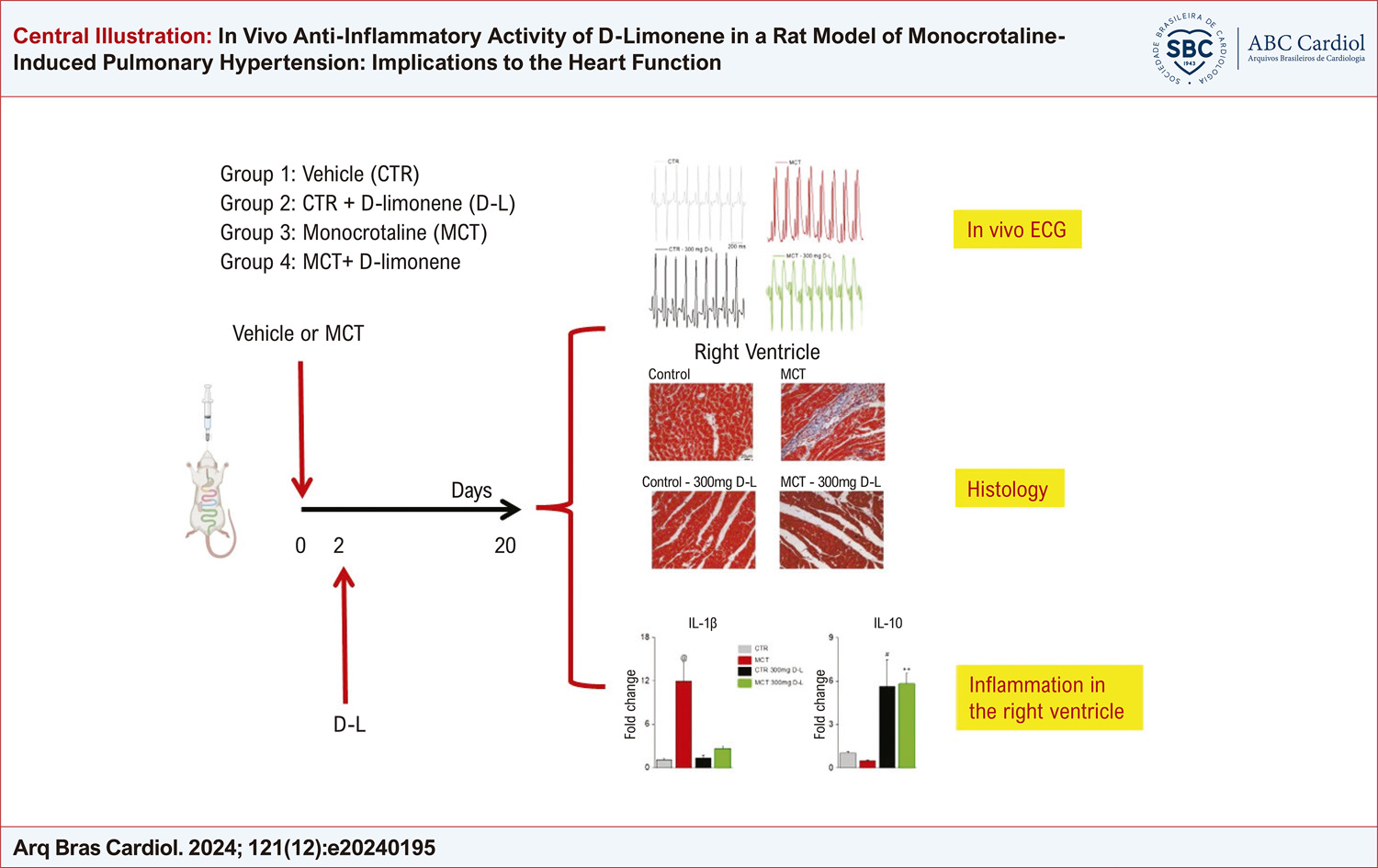
In Vivo Anti-Inflammatory Activity of D-Limonene in a Rat Model of Monocrotaline-Induced Pulmonary Hypertension: Implications to the Heart Function

Jorge Lucas Teixeira-Fonseca et al. Diego Jose Belato y Orts Polyana Leal da Silva Michael Ramon de Lima Conceição … Hernan Hermes Carlos R. Prudencio Danilo Roman-Campos

Abstract

Background

D-limonene (D-L) is the major monocyclic monoterpene in citrus plants with anti-inflammatory properties. Pulmonary hypertension (PH) can cause right heart dysfunction and increases the risk of death, partially due to inflammatory response in the heart.

Objective

To evaluate the possible protective effect of D-L on cardiac function in a rat model of monocrotaline-induced PH (MCT-PH).

Methods

Electrocardiogram was monitored in vivo. Masson Trichrome technique was deployed to verify fibrosis in the heart. Contractility function of isolated atrial tissue was studied using organ bath chamber. Real-time quantitative PCR was applied to quantify inflammation in the right ventricle.

Results

The MCT-PH group showed electrical and structural heart remodeling, with the presence of fibrosis in the cardiac tissue and in vivo electrocardiographic changes. Treatment with D-L partially prevented the development of tissue fibrosis and the increase in P wave duration in the MCT-PH group. The contraction and relaxation velocity of isolated right and left atrium were accelerated in CTR and MCT-PH animals treated with D-L. Finally, D-L was able to prevent the abnormal expression of the key inflammatory cytokines (interleukin 1-β, interleukin 6 and tumor necrosis factor-α) in the right ventricle of MCT-PH animals. D-L was able to enhance the production of the anti-inflammatory cytokine Interleukin-10.

Conclusion

Our results showed that in vivo administration of D-L partially prevented the molecular, structural and functional remodeling of the heart in the MCT-PH model with attenuation of the inflammatory response in the heart.

  • Anti-Inflammatory Agents
  • Biological Products
  • Pulmonary Hypertension
Read Full Article
Creative Commons Attribution (CC BY) Creative Commons license
13/12/2024 DOI: 10.36660/abc.20240195i Views 1
Electrocardiographic Prognostic Marker in Pulmonary Arterial Hypertension: RS Time
ABC
Original Article

Electrocardiographic Prognostic Marker in Pulmonary Arterial Hypertension: RS Time

Emin Koyun et al. Anil Sahin Ahmet Yilmaz Ferhat Dindas … Idris Bugra Cerik Gorkem Berna Koyun

Abstract

Background:

Pulmonary hypertension is a condition that involves the remodeling of the right ventricle. Ongoing remodeling is also associated with disease prognosis. During the restructuring process, complex changes such as hypertrophy and dilatation may also be reflected in electrocardiographic parameters.

Objectives:

Our study aimed to investigate the relationship between prognosis and electrocardiographic parameters in patients with pulmonary arterial hypertension.

Methods:

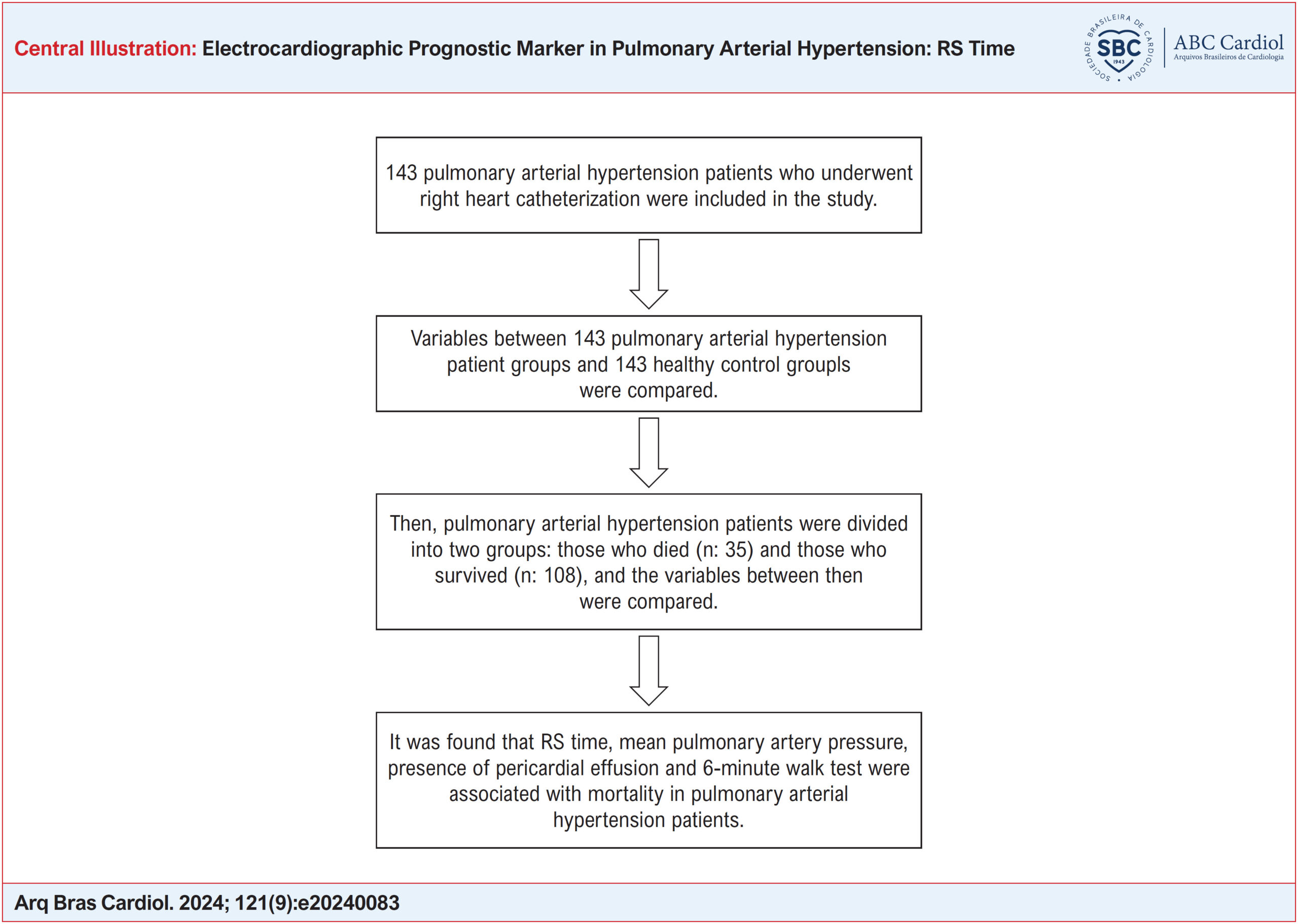
The study was designed retrospectively and included patients diagnosed with pulmonary arterial hypertension between 2010 and 2022. The patients were divided into two groups based on their survival outcome. Various parameters, including electrocardiographic, demographic, echocardiographic, catheter, and blood parameters, were compared between the two groups. A p-value of <0.05 was considered statistically significant.

Results:

In the multivariate Cox analyses, the parameters that were found to be independently associated with survival were the 6-minute walk test, mean pulmonary artery pressure, presence of pericardial effusion, and time between the beginning of the QRS and the peak of the S wave (RS time) (p<0.05 for each). Of all the parameters, RS time demonstrated the best diagnostic performance (AUC:0.832). In the survival analysis, a significant correlation was found between RS time and survival when using a cut-off value of 59.5 ms (HR: 0.06 [0.02-0.17], p < 0.001).

Conclusions:

According to the results of our study, a longer RS time is associated with poor prognosis in patients with pulmonary arterial hypertension. We can obtain information about the course of the disease with a simple, non-invasive parameter.

  • Electrocardiography
  • Prognosis
  • Pulmonary Hypertension
Read Full Article
Creative Commons Attribution (CC BY) Creative Commons license
06/09/2024 DOI: 10.36660/abc.20240083i Views 1
Figure 1
ABC
Case Report

Unveiling Arrhythmogenic Right Ventricular Cardiomyopathy in Scleroderma

Mehmet Rasih Sonsöz et al. Uğur Ozan Demirhan Cemal Bes

Introduction

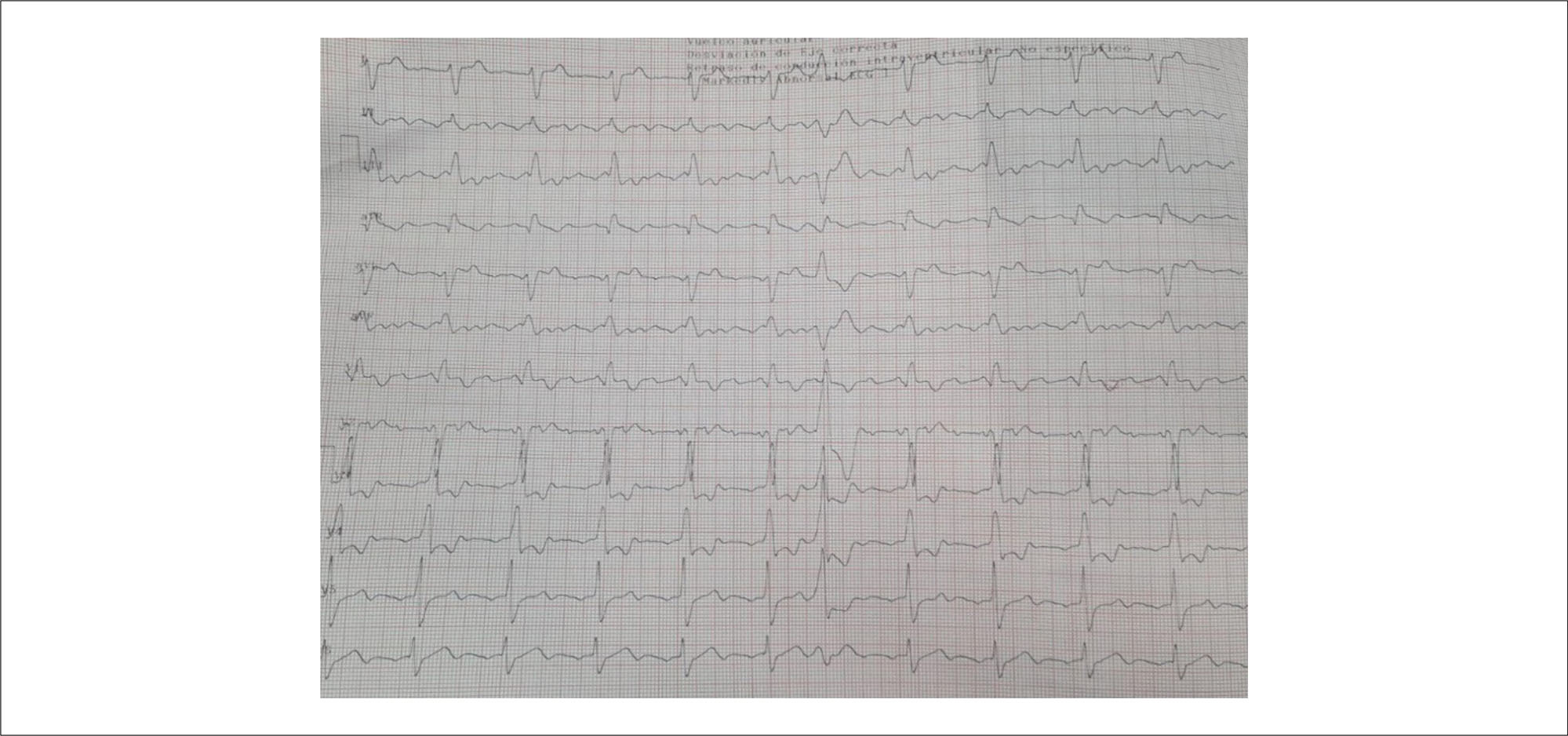
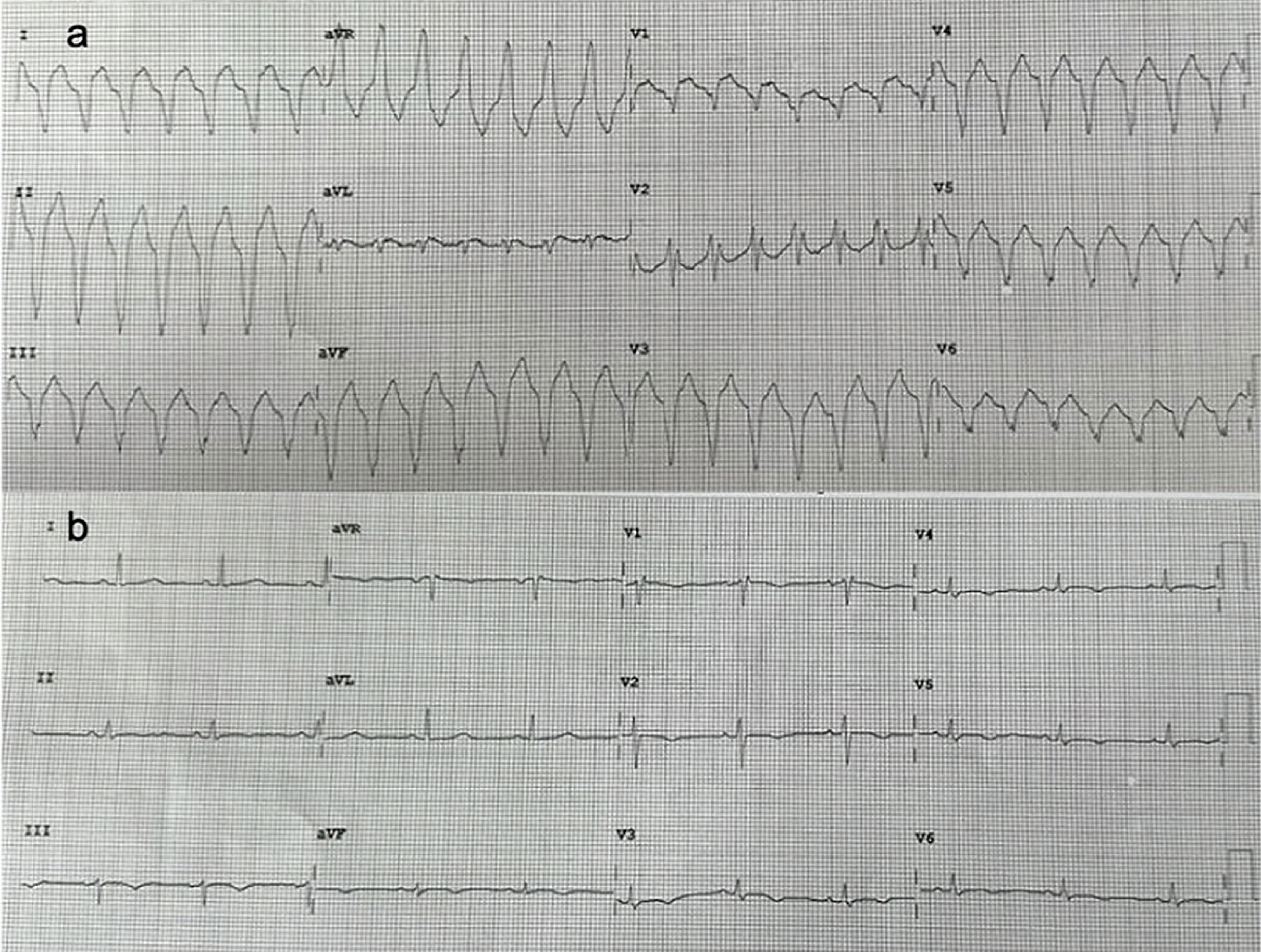
Systemic sclerosis (SSc) patients commonly report exertional dyspnea and pulmonary hypertension should be first suspected, as the prevalence in these patients is reported to be 5-19% and it is associated with worse clinical outcomes. Additional differential diagnosis includes congenital left-to-right shunt and arrhythmogenic right ventricular cardiomyopathy (ARVC) when right ventricular dilatation and systolic dysfunction are present. Our case concerns an elderly lady with SSc who was initially diagnosed with precapillary pulmonary hypertension.

[…]

  • Arrhythmogenic right ventricular dysplasia;
  • Echocardiography
  • Pulmonary Hypertension
  • Systemic Scleroderma
  • Ventricular tachycardia
Read Full Article
Creative Commons Attribution (CC BY) Creative Commons license
26/08/2024 DOI: 10.36660/abc.20230815i Views 1
New Incremental Model for Predicting Mortality in Pre-Capillary Pulmonary Hypertension
ABC
Original Article

New Incremental Model for Predicting Mortality in Pre-Capillary Pulmonary Hypertension

Andressa Alves de Carvalho et al. Wanessa Alves de Carvalho Eliauria Rosa Martins Agostinho Hermes de Medeiros Neto … Fernando Bacal Marcelo Dantas Tavares de Melo

Abstract

Background:

In pulmonary hypertension (PH), the identification of easily obtainable prognostic markers associated with right ventricular (RV) dysfunction and survival is needed.

Objective:

To evaluate the association of red cell distribution width (RDW) with clinical, echocardiographic parameters and survival in patients with pre-capillary PH, with the development of a mortality prediction model.

Methods:

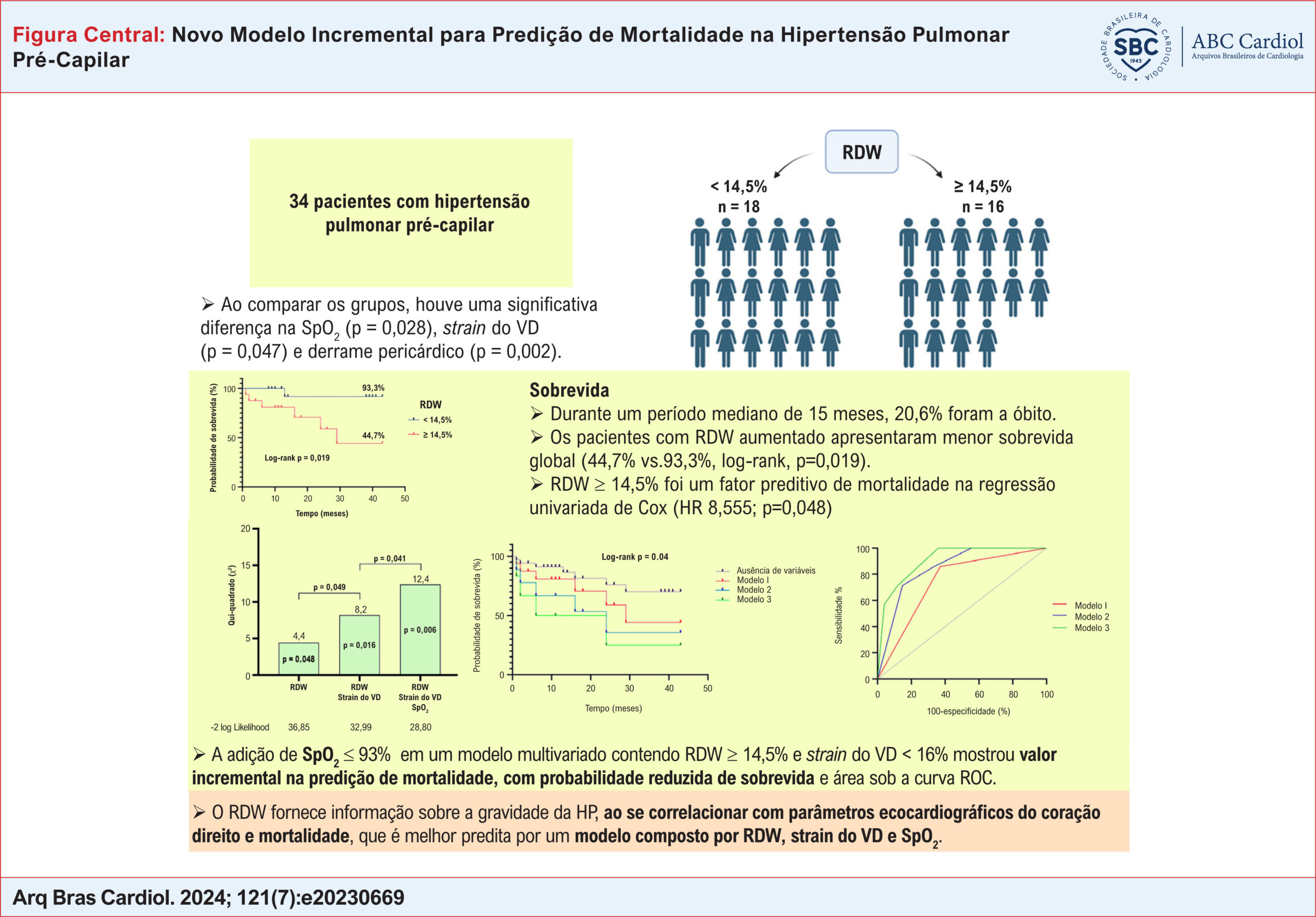
Observational, longitudinal, and prospective study conducted from May 2019 to December 2022. Thirty-four patients with pre-capillary PH underwent two-dimensional echocardiography and complete blood count. A cutoff point of 14.5% was considered to define RDW as altered (≥14.5%) or normal (<14.5%). P values <0.05 were considered significant.

Results:

The median RDW was 14.4%. There was a significant difference in peripheral arterial oxygen saturation (SpO2) (p=0.028), RV strain (p=0.047), and pericardial effusion (p=0.002) between the normal and elevated RDW groups. During a median follow-up of 15 months, 20.6% died. Patients with increased RDW had a shorter overall survival (44.7%, log-rank p=0.019), which was a predictor of mortality in univariate Cox regression (HR 8.55, p=0.048). The addition of RV strain <16% and SpO2 ≤93% to the model including RDW alone showed incremental value in predicting mortality (χ2=8.2, p=0.049; χ2=12.4, p=0.041), with increased area under the receiver operating characteristic curve (0.729 vs. 0.837 vs. 0.909) and decreased probability of survival (44.7% vs. 35.6% vs. 25%, log-rank p=0.019).

Conclusions:

RDW provides information on the severity of pre-capillary PH by correlating with echocardiographic parameters of RV dysfunction and mortality, which is best predicted by a model including RDW, RV strain and SpO2.

  • Erythrocytes
  • Global Longitudinal Strain
  • Pulmonary Hypertension
Read Full Article
Creative Commons Attribution (CC BY) Creative Commons license
12/08/2024 DOI: 10.36660/abc.20240026i
Echocardiographic Evaluation of Right Atrial Function in Patients with Precapillary Pulmonary Hypertension
ABCIC
Original Article

Echocardiographic Evaluation of Right Atrial Function in Patients with Precapillary Pulmonary Hypertension

Wanessa Alves de Carvalho et al. Andressa Alves de Carvalho Eliauria Rosa Martins Agostinho Hermes de Medeiros Neto … Fernando Bacal Marcelo Dantas Tavares de Melo

Abstract

Background:

Considering that the effect of right ventricular (RV) failure on the right atrium (RA) is an essential part of the pathophysiology of pulmonary hypertension (PH), the assessment of RA function seems to have prognostic value in the course of the disease, but there are still few studies on this subject.

Objective:

To evaluate myocardial strain of the RA in patients with precapillary PH.

Methods:

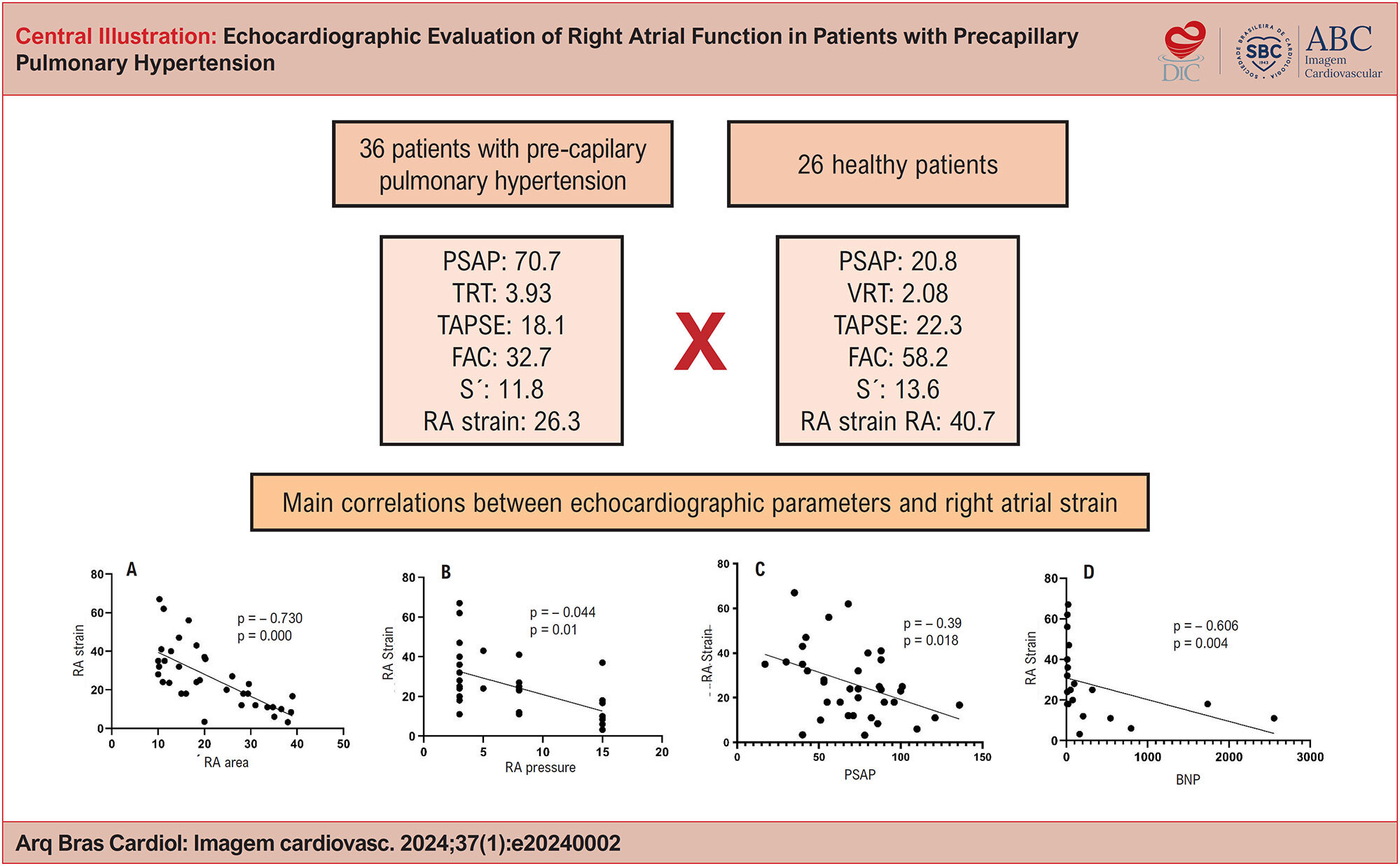
This is an observational, longitudinal, prospective study involving 36 patients with precapillary PH, in whom two-dimensional Doppler echocardiography was performed. A control group consisting of 26 healthy individuals was used.

Results:

There was a statistically significant difference in mean RA strain between the group with PH (26.3%) and the control group (40.7%). Regarding RA strain of the patients, there was a negative and moderate correlation with RA pressure, RV diameter, and RV hypokinesia; negative and weak correlation with pulmonary artery systolic pressure (PASP); negative and strong correlation with RA area; and positive and moderate correlation with, tricuspid annular plane systolic excursion (TAPSE), TAPSE/PASP, and RV strain. Patients with RA strain ≤ 23 had significantly reduced overall survival compared with patients with RA strain > 23, but this value was not a predictor of mortality.

Conclusion:

It was possible to demonstrate that the analysis of myocardial strain of the RA provides more accurate information about RA function and can be used as an additional parameter in the follow-up of patients with PH, given the early evaluation of atrial dysfunction.

  • Doppler Echocardiography
  • Pulmonary Hypertension
  • Right Atrial Function
Read Full Article
Creative Commons Attribution (CC BY) Creative Commons license
27/03/2024 DOI: 10.36660/abcimg.20240002i Views 1
ABC
Editorial

The Role of Atrial Fibrosis for Atrial Fibrillation: Not Always Essential?

Rodrigo Miguel-dos-Santos

The most common cardiac arrhythmia, atrial fibrillation (AF), is estimated to affect ∼2% of the worldwide population and is expected to impact more people as the population ages.– This scenario is not different in Brazil, where ∼2.5% of the population is projected to be affected by AF., The situation is more alarming among pulmonary hypertension patients, in which ∼30% may present AF episodes and ∼70% atrial flutter., Hence, a better understanding of the mechanisms and substrates of AF is constantly needed in order to tailor patients’ treatment better.

In a recent publication of the Arquivos Brasileiros de Cardiologia, Teixeira-Fonseca et al. investigated the effects of the left atrial morphofunctional changes induced by pulmonary hypertension in the arrhythmogenesis in isolated left atria. Monocrotaline-induced pulmonary hypertension led to left atria hypertrophy, tissue fibrosis, and electrophysiological remodeling. Curiously, ex vivo electrical burst pacing of the left atrial tissue did not elicit increased atrial arrhythmias in the tissue from pulmonary hypertension animals. As pointed out by the authors, some factors may have contributed to the absence of arrhythmias ex vivo. Here, I am going to focus on the trigger and substrate relationship in AF and discuss the potential cause for the lack of arrhythmias inducibility.

[…]

  • Arrhythmias Cardiac
  • Arrhythmogenic Substrates
  • Atrial Fibrillation
  • Pulmonary Hypertension
Read Full Article
Creative Commons Attribution (CC BY) Creative Commons license
05/01/2024 DOI: 10.36660/abc.20230766 Views 1
Isolated Left Atrium Morphofunctional Study of an Experimental Pulmonary Hypertension Model in Rats
ABC
Original Article

Isolated Left Atrium Morphofunctional Study of an Experimental Pulmonary Hypertension Model in Rats

Jorge Lucas Teixeira-Fonseca et al. Julliane Vasconcelos Joviano-Santos Fabiana da Silva Alcântara Polyana Leal da Silva … Michael Ramon Lima Conceição Danilo Roman-Campos

Abstract

Background

The high incidence of atrial arrhythmias in pulmonary hypertension (PH) might be associated with poor prognosis, and the left atrium (LA) may play a role in this. An important finding in PH studies is that LA remodeling is underestimated.

Objective

This study investigated LA morphology and mechanical function, as well as the susceptibility to develop arrhythmias in a monocrotaline-induced PH (MCT-PH) model.

Methods

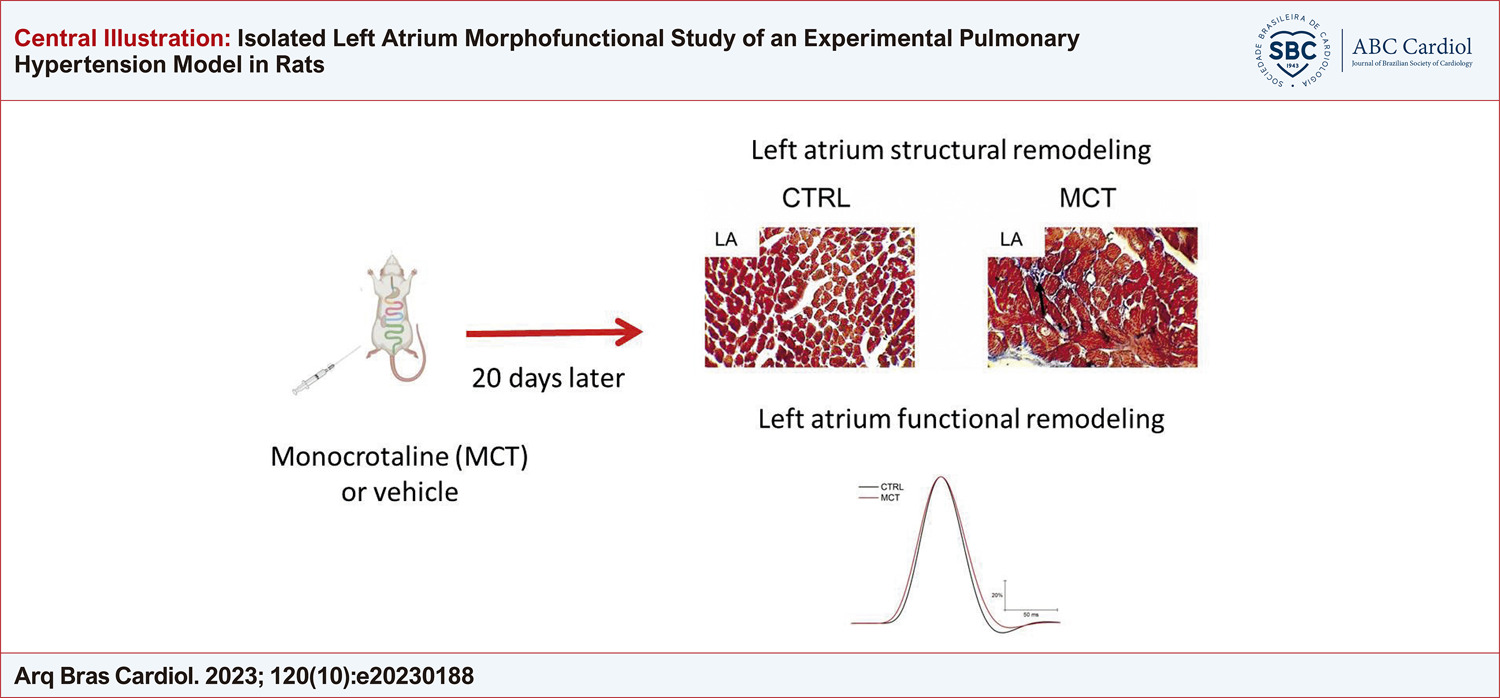
Wistar rats aged 4 weeks received 50 mg/kg of MCT. Electrocardiography and histology analysis were performed to evaluate the establishment of the MCT-PH model. The tissue was mounted in an isolated organ bath to characterize the LA mechanical function

Results

Compared with the control group (CTRL), the MCT-PH model presented LA hypertrophy and changes in cardiac electrical activity, as evidenced by increased P wave duration, PR and QT interval in MCT-PH rats. In LA isolated from MCT-PH rats, no alteration in inotropism was observed; however, the time to peak contraction was delayed in the experimental MCT-PH group. Finally, there was no difference in arrhythmia susceptibility of LA from MCT-PH animals after the burst pacing protocol.

Conclusion

The morphofunctional remodeling of the LA did not lead to increased susceptibility to ex vivo arrhythmia after application of the burst pacing protocol.

  • Cardiac Arrhythmias
  • Fibrosis
  • Heart Atria
  • Monocrotaline
  • Pulmonary Hypertension
Read Full Article
Creative Commons Attribution (CC BY) Creative Commons license
20/10/2023 DOI: 10.36660/abc.20230188 Views 2
Figure 1
ABCIC
Review Article

My Approach to Echocardiographic Assessment of the Premature Newborn

Karen Saori Shiraishi Sawamura et al. Márcio Miranda Brito

Abstract

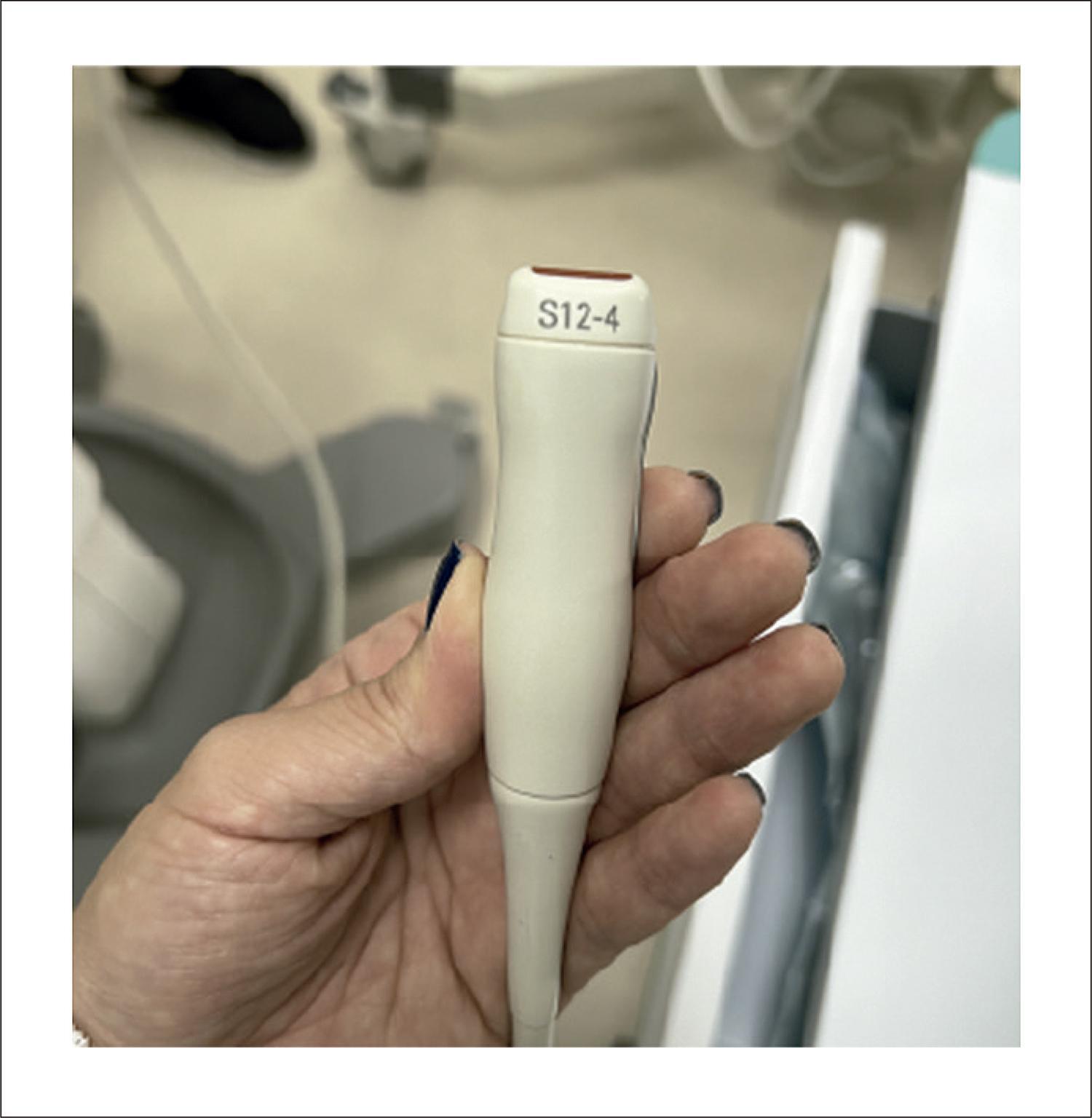
Echocardiographic assessment of preterm infants, why do it? The incidence of premature births has been increasing worldwide and already affects about 10% of live births. Extremely preterm newborns (PTNB) are at increased risk of developing pulmonary immaturity, leading to pulmonary hypertension (PH), in addition to cardiovascular immaturity and patent ductus arteriosus (PDA).Hemodynamic monitoring of this population is challenging and differs from critically ill pediatric patients due to hemodynamic lability. Thus, minimal manipulation is essential to avoid complications. In this context, non-invasive monitoring methods such as transthoracic echocardiography (TTE) gain importance for hemodynamic assessment. It is a low-cost, radiation-free test that offers good anatomical and functional visualization in pediatric patients, making it a useful tool in the clinical management of severe preterm newborns.What you will find in this article:We will take an objective, didactic, and at times humorous approach to the use of echocardiography in premature newborns in the neonatal intensive care unit (NICU), and we will discuss the echocardiographic particularities of premature infants, especially regarding equipment adjustments, PH, and persistence of the ductus arteriosus (DA).

  • Ductus Arteriosus
  • Echocardiography
  • Neonatology
  • Premature Infant
  • Pulmonary Hypertension
Read Full Article
Creative Commons Attribution (CC BY) Creative Commons license
27/06/2023 DOI: 10.36660/abcimg.20230035i Views 1
ABCIC
Editorial

How to Proceed in a Multimodality Analysis for the Diagnosis and Risk Stratification of Pulmonary Hypertension?

Pedro Gutiérrez-Fajardo

Transthoracic echocardiography

TTE is considered a highly useful, inexpensive, safe, and available imaging modality for initial approach to differential diagnosis of PH. Although a normal TTE does not rule out diagonsis, it decreases the likelihood of PH. Neither CT nor CMRI are part of the initial line of PH; however, in selected patients they can provide additional information before proceeding to right heart catheterization. ,

It is important to be familiar with normal ranges of RV size and function. , TTE showing right heart structure and function abnormalities increases suspicion of PH. It also allows detection of left heart (systolic and diastolic dysfunction, valvular heart disease) and congenital heart disease as potential causes of PH. RV function surrogates such as RV fractional area change, right atrial size, pericardial effusion, tricuspid annular plane systolic excursion (TAPSE), systolic pulmonary artery pressure (SPAP)/TAPSE ratio, and eccentricity index are recommended in follow-up and assessment of therapy response. However, it is important to note that these surrogates should be interpreted in the context of other clinical and imaging parameters, as they are not standalone diagnostic tools. Doppler can be used to estimate the possibility of PH by measuring tricuspid regurgitant jet velocity (TR) and calculating SPAP using the modified Bernoulli equation. When no TR is present or the signal is inadequate, pulmonary acceleration time can be used to calculate mPAP obtained from pulse wave Doppler signal of pulmonary flow. Pulmonary artery diastolic pressure can be estimated if pulmonary regurgitation is present. The velocity at end-diastole is converted into a pressure gradient, adding the estimated right atrial pressure to the resulting value. Finally, both left ventricle and RV output can be calculated. In clinical practice, differentiating acute, chronic, and chronic acute PH can be challenging ( ).

[…]

  • Diagnosis
  • Pulmonary Hypertension
  • Risk Factors
Read Full Article
Creative Commons Attribution (CC BY) Creative Commons license
21/06/2023 DOI: 10.36660/abcimg.20230041i Views 1
Graph 1
ABCIC
Original Article

Long-Term Evolution of Patients with Important Pulmonary Hypertension due to Schistosomiasis

José Maria Del Castillo et al. Katarina Barros de Oliveira Rafael Ricardo de Oliveira Travassos Ângela Maria Pontes Bandeira … Carlos Antônio da Mota Silveira Djair Brindeiro Filho

Abstract

Introduction

Hepatosplenic schistosomiasis mansoni, associated with pulmonary arterial hypertension (PAH), causes cardiac chamber remodeling. Little is known about its long-term evolution.

Objective

To evaluate the alterations caused by PAH in patients with schistosomiasis and analyze the clinical and echocardiographic evolution over a period of 10 years.

Methods

The study included 60 patients with PAH due to schistosomiasis and 50 healthy control patients. Clinical and echocardiographic data were evaluated, including dimensions, parietal thickness, function of the right and left chambers, and parameters of myocardial strain. Patients in the group with PAH due to schistosomiasis were followed for 10 years. Data were compared using Student’s t test for unpaired samples with significance level of < 5%.

Results

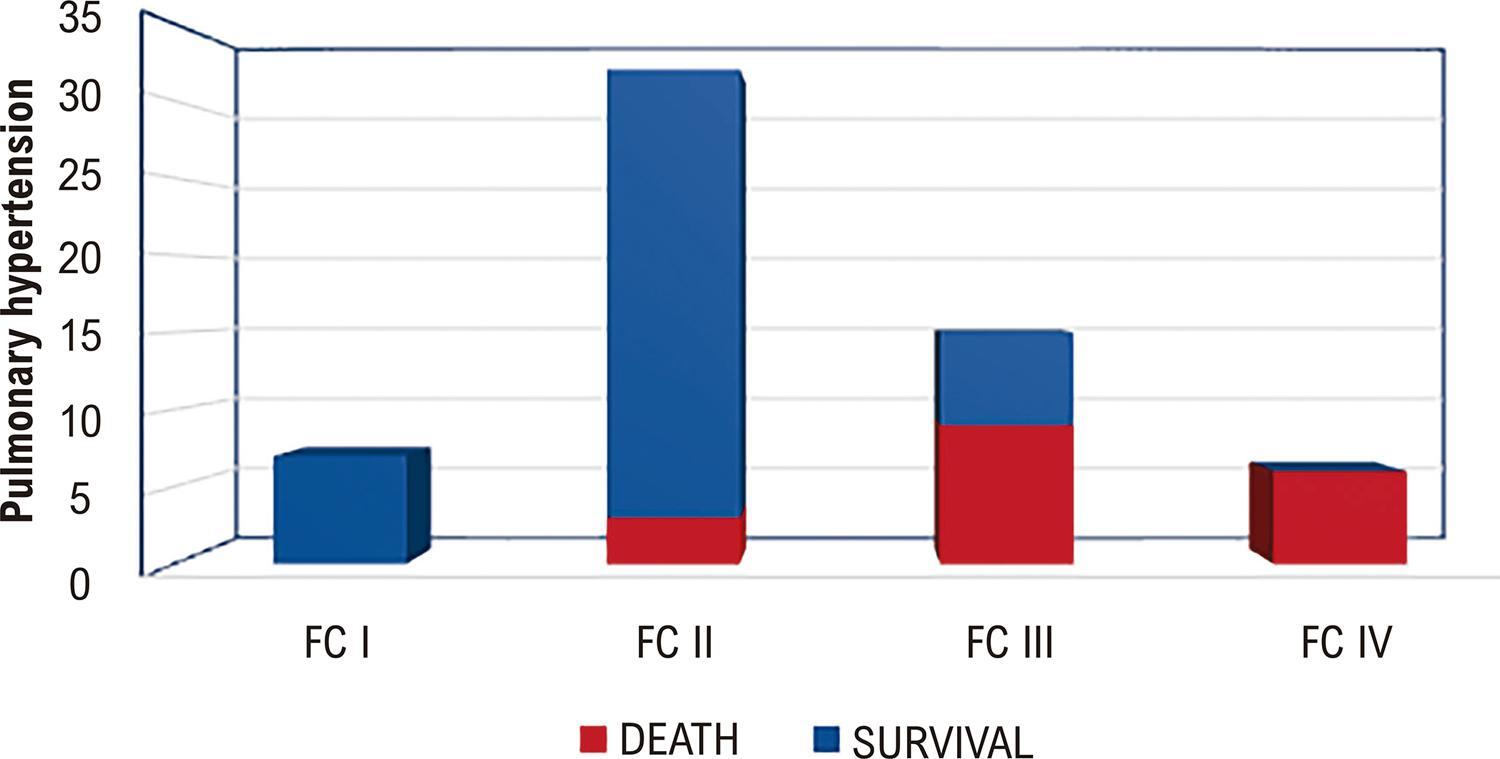
Patients with PAH had smaller left ventricular dimension without alteration in the ejection fraction, but with decreased left ventricular global longitudinal strain and left atrial reservoir strain. The right ventricular dimensions and parietal thickness were increased, and the parameters of systolic function (tricuspid annular plane systolic excursion, fractional area change, tricuspid s’ wave, and the right ventricular global longitudinal strain) were significantly reduced. During the follow-up period, 18 patients (32%) died, and death was associated with higher functional class, decreased right ventricular longitudinal strain, larger right ventricular size, decreased fractional area change, and decreased tricuspid annular s’ wave velocity.

Conclusion

PAH related to schistosomiasis causes remodeling of the right chambers, with decreased parameters of systolic function and myocardial strain. The long-term evolution, with elevated mortality, presents with larger right ventricular dimensions, lower fractional area change, lower tricuspid annular systolic velocity, lower right ventricular global longitudinal strain, and more advanced functional class.

  • Echocardiography
  • Pulmonary Hypertension
  • Schistosomiasis
Read Full Article
Creative Commons Attribution (CC BY) Creative Commons license
24/05/2023 DOI: 10.36660/abcimg.2023373i
ABCIC
Review Article

My Approach to Imaging in Sickle Cell Anemia

João Carlos Moron Saes Braga et al. Fábio Villaça Guimarães Filho Alexandre Rodrigues Raphael Aparecido Barreto

Abstract

Sickle cell disease (SCD) is recognized as a global problem in public health, characterized by the alteration in the red blood cells to the sickle form. Moreover, chronic anemia can also be observed through the change in the rheology of the red blood cells, leading to a scenario of inflammation and oxidative stress, making SCD a multisystem disease.

Cardiac output (CO) proved to be high, leading to an overall increase in the heart chambers and an eccentric myocardial hypertrophy. These heart alterations were attributed only to adaptive reactions to chronic anemia. Recent studies have more clearly recognized an association with pulmonary hypertension (PH), left ventricular diastolic dysfunction, arrhythmias, and sudden death. Moreover, what has also arisen in this context is the hypothesis of the existence of a sickle-cell cardiomyopathy, characterized by diastolic dysfunction and restrictive physiology. The echocardiogram represents a key tool in determining cavitary volumes, diastolic dysfunction, and the estimation of pulmonary pressure, as well as constitutes a valuable resource in the diagnosis and therapeutic treatment of acute chest syndrome. The myocardial strain, rotational variables, myocardial work, and 3D echocardiography can be applied in an attempt to aid in the early detection of patients who are at a higher risk of developing complications and evolving to death related to SCD.

  • Diastolic Dysfunction
  • Pulmonary Hypertension
  • Sickle Cell Anemia
Read Full Article
Creative Commons Attribution (CC BY) Creative Commons license
24/03/2023 DOI: 10.36660/abcimg.20230009i Views 2
ABCHF
Review Article

Pathophysiological Bases of Pulmonary Hypertension in Heart Failure with Preserved Ejection Fraction and Implications for Management

Aguinaldo F. Freitas Jr. et al. Daniela do Carmo Rassi Frota Salvador Rassi

Prevalence, definition, and diagnosis

The prevalence of PH in patients with HFpEF is widely heterogeneous, with frequencies ranging from 36% to 81%, and this is due to the diagnostic means used, to the time of progression of the underlying disease, and to the different ejection fraction cut-off points used to define HFpEF. For example, in a subanalysis of the PARAGON study, the prevalence of PH in patients with HFpEF was 31%. Moreover, the different phenotypes of HFpEF may present with a lower or higher degree of PH, depending on the increase in pulmonary vascular resistance, the increase in right atrial pressure, and associated concomitant chronic kidney disease.

Group 2 PH is defined as mean pulmonary artery pressure > 20 mmHg and pulmonary capillary pressure > 15 mmHg. Right heart catheterization is considered the gold standard for accurate measurement of pulmonary pressures, and it is valuable in evaluation of the hemodynamic response to physical exertion, providing important information for differentiating between group 2 PH and other etiologies.

[…]

  • Heart Failure
  • HFpEF
  • Pulmonary Hypertension
Read Full Article
Creative Commons Attribution (CC BY) Creative Commons license
01/12/2022 DOI: 10.36660/abchf.20220061
Figure 1
ABC
Original Article

Resistance Exercise Training Mitigates Left Ventricular Dysfunctions in Pulmonary Artery Hypertension Model

Leôncio Lopes Soares et al. Luciano Bernardes Leite Luiz Otávio Guimarães Ervilha Bruna Aparecida Fonseca da Silva … Maíra Oliveira de Freitas Alexandre Martins Oliveira Portes Leonardo Mateus Teixeira Rezende Filipe Rios Drummond Miguel Araújo Carneiro-Júnior Mariana Machado Neves Emily Correna Carlo Reis Antônio José Natali

Abstract

Background

The right ventricular hypertrophy and dilation observed in pulmonary artery hypertension (PAH) damages the left ventricle (LV) dynamics by flattening the interventricular septum.

Objective

To investigate whether low- to moderate-intensity resistance exercise training (RT) is beneficial to LV and cardiomyocyte contractile functions in rats during the development of monocrotaline (MCT)-induced PAH.

Methods

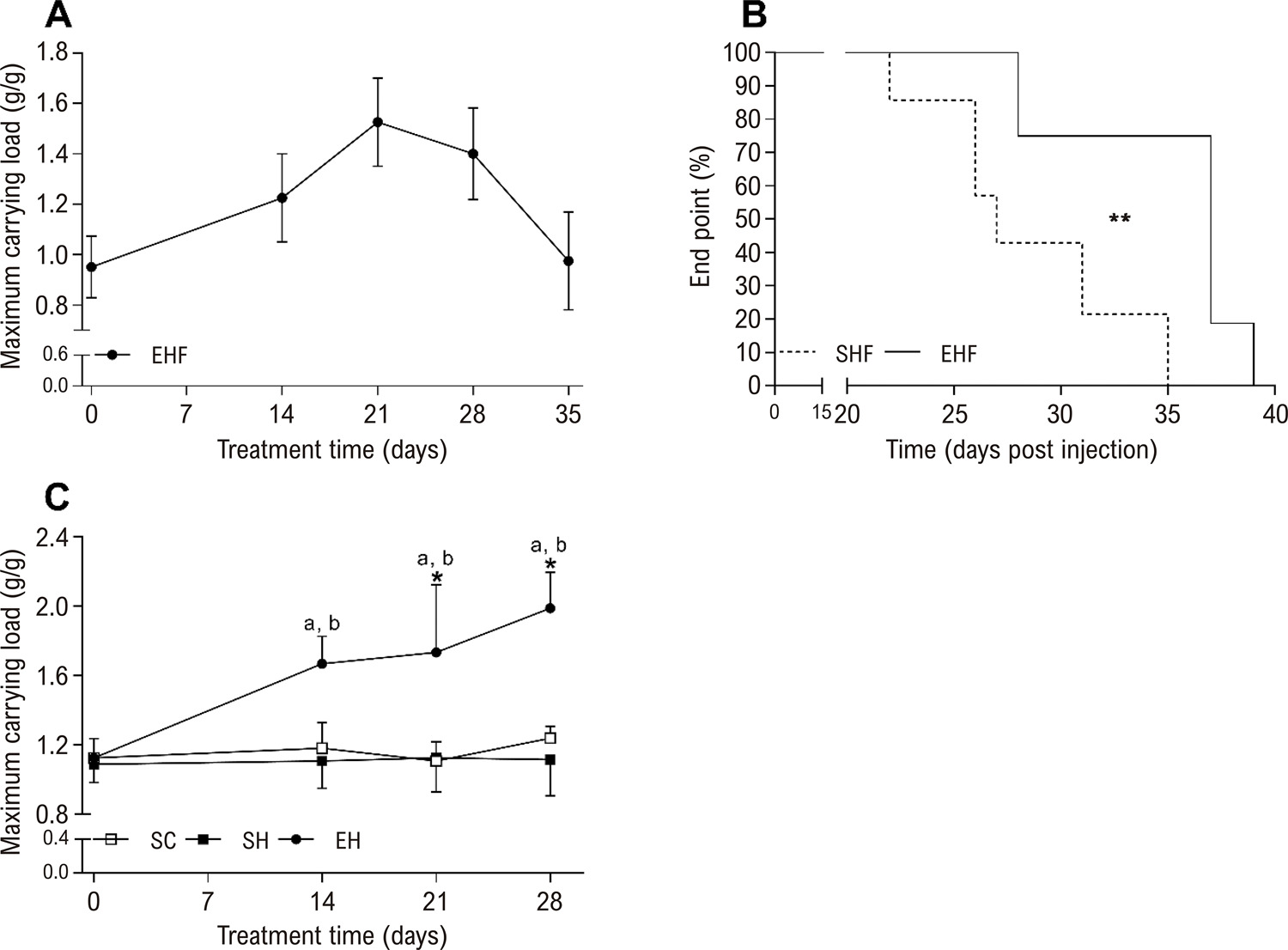
Male Wistar rats (Body weight: ~ 200 g) were used. To assess the time to potential heart failure onset (i.e., end point), rats were divided into sedentary hypertension until failure (SHF, n=6) and exercise hypertension until failure (EHF, n=6) groups. To test RT effects, rats were divided into sedentary control (SC, n = 7), sedentary hypertension (SH, n=7), and exercise hypertension (EH, n=7) groups. PAH was induced by two MCT injections (20 mg/kg, with 7 days interval). Exercise groups were submitted to an RT protocol (Ladder climbing; 55-65% of carrying maximal load), 5 times/week. Statistical significance was assumed at P < 0.05.

Results

RT prolonged the end point (~25 %), enhanced the physical effort tolerance (~ 55%), and mitigated the LV and cardiomyocyte contractility dysfunctions promoted by MCT by preserving the ejection fraction and fractional shortening, the amplitude of shortening, and the velocities of contraction and relaxation in cardiomyocytes. RT also prevented increases in left ventricle fibrosis and type I collagen caused by MCT, and maintained the type III collagen and myocyte dimensions reduced by MCT.

Conclusion

Low- to moderate-intensity RT benefits LV and cardiomyocyte contractile functions in rats during the development of MCT-induced PAH.

  • Exercise
  • Heart Failure
  • Myocytes, Cardiac
  • Physical Conditioning, Animal/methods
  • Pulmonary Hypertension
  • Rats
  • Ventricular Dysfunction, Left
Read Full Article
Creative Commons Attribution (CC BY) Creative Commons license
02/09/2022 DOI: 10.36660/abc.20210681 Views 1
Figure 1
ABCHF
Review Article

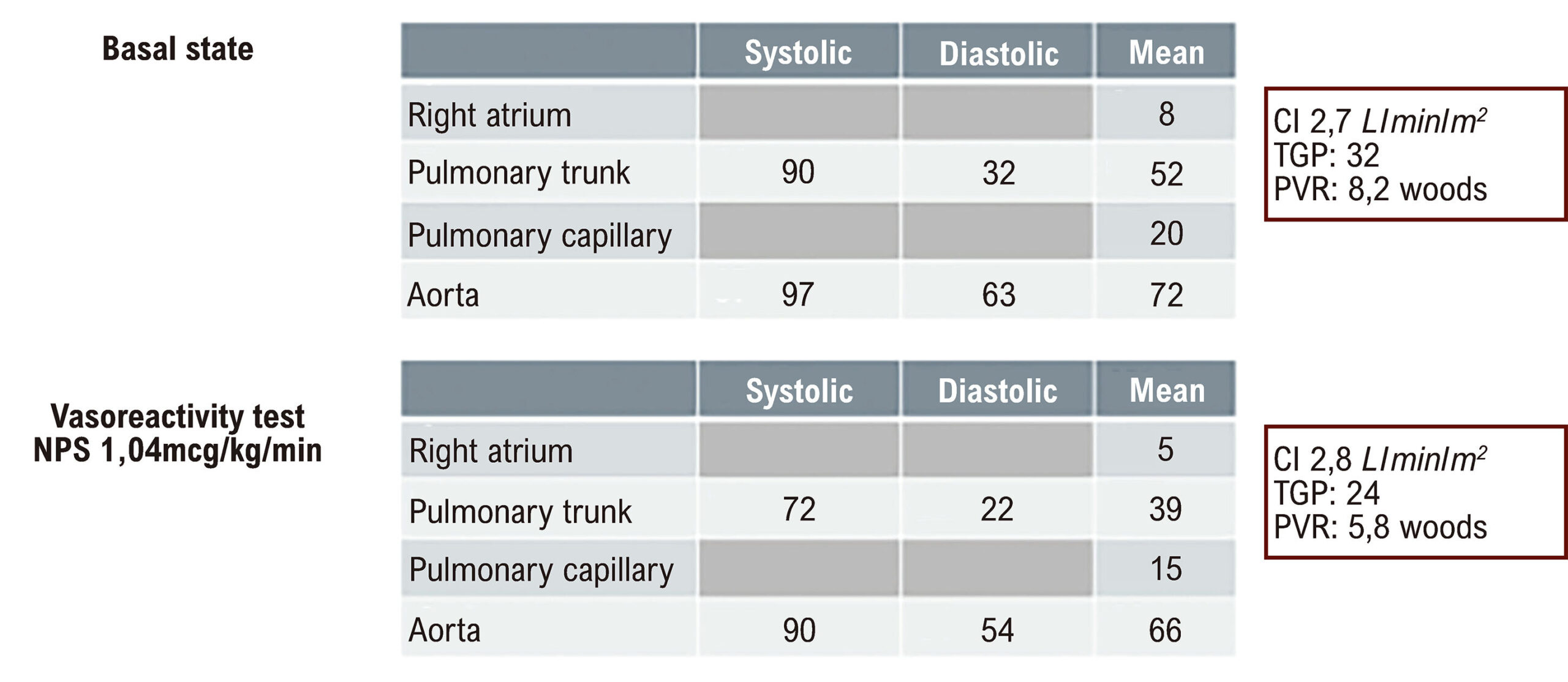
Invasive Cardiopulmonary Hemodynamic Assessment in Patients with Advanced Heart Failure: How to Interpret?

Bruno Biselli et al. Luis Fernando Bernal da Costa Seguro

Abstract

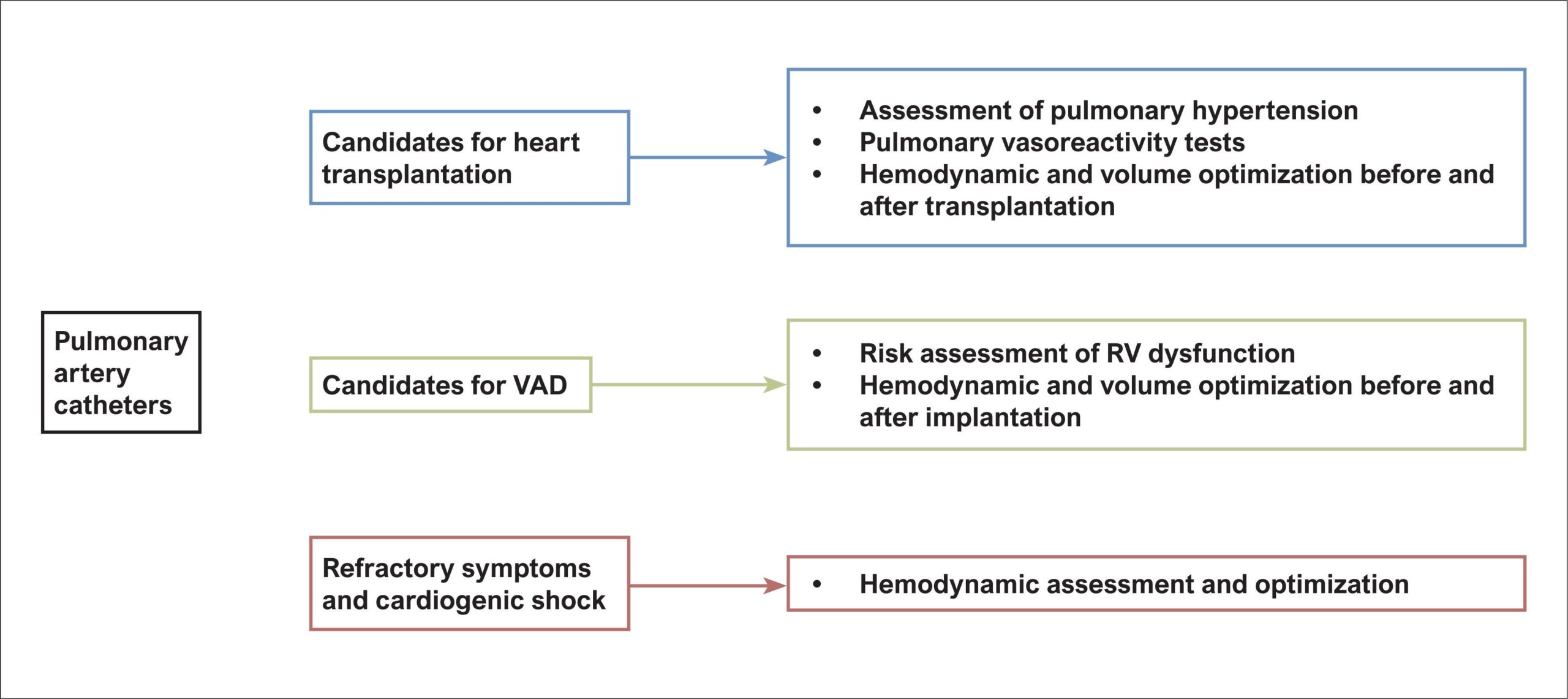
Invasive cardiopulmonary hemodynamic assessment by means of a pulmonary artery catheter is an important tool for evaluating patients with advanced heart failure. It makes it possible to definitively diagnose pulmonary hypertension and, when pulmonary hypertension is present, to classify it as isolated post-capillary or combined pre- and post-capillary. Its use is mandatory in evaluation for heart transplantation and mechanical circulatory assist device implantation. Furthermore, it can be very useful in the management of cardiogenic shock.

  • Heart Failure
  • Hemodynamic Monitoring
  • Pulmonary Hypertension
Read Full Article
Creative Commons Attribution (CC BY) Creative Commons license
29/06/2022 DOI: 10.36660/abchf.20220042 Views 1
ABC
Editorial

Should we Consider the Stimulation of Soluble Guanylyl Cyclase as Beneficial for Treating Pre-Capillary Pulmonary Hypertension?

Allan Kardec Nogueira de Alencar

One of the rarest and most complex group of diseases that affects the cardiopulmonary system is known as pulmonary hypertension (PH), a life-threatening clinical condition that in advanced stages eventually results in irreversible dysfunction of the right heart chamber and sudden cardiac death. Pulmonary arterial hypertension (PAH) and chronic thromboembolic PH (CTEPH) are two different groups within the PH clinical classification system, in which loss and obstructive remodeling of the lung vessels is responsible for a significant rise in pulmonary arterial (PA) pressure and pulmonary vascular resistance (PVR), resulting in a functional decline of the heart performance and progressive right ventricle (RV) failure.

PAH is a pre-capillary-type PH (Group 1), hemodynamically defined by a mean pulmonary arterial pressure (mPAP) >20 mmHg, PA wedge pressure ≤15 mmHg, and PVR ≥3 Wood units. Remodeling of pulmonary vessels in PAH is depicted by the accumulation of pulmonary artery smooth muscle (PASMCs) and endothelial cells (PAECs), fibroblasts, myofibroblasts, and pericytes in the PA walls. In addition, this remodeling process results in a loss of pre-capillary arteries and exacerbates perivascular inflammation. The excessive loss of PAECs is a key pathobiological feature of PAH. This phenomenon triggers the development of an apoptosis-resistant and hyperproliferative phenotype of PAECs. Subsequently, an intense proliferation of PAECs induces the formation of plexogenic lesions in the lung vessels, a histopathologic hallmark of PAH.

[…]

  • Pulmonary Arterial Wedge Pressure
  • Pulmonary Ciruculation
  • Pulmonary Hypertension
  • Riociguat
  • Soluble Guanylyl Cyclase Stimulators
Read Full Article
Creative Commons Attribution (CC BY) Creative Commons license
10/06/2022 DOI: 10.36660/abc.20220261

Could not load more articles. Please try again.

How to cite this article

EndNote RIS

Electronic Document Format (Vancouver)

Silva HAGP, Souza AC, Beck A. My Approach to a Standardized Assessment of the Tricuspid Valve: A Contemporary Analysis. ABC Imagem Cardiovascular 2026;39(2):e20260034.

Electronic Document Format (ABNT)

Silva, Halsted Alarcão Gomes Pereira da; Souza, Alexandre Costa; Beck, Adenalva. My Approach to a Standardized Assessment of the Tricuspid Valve: A Contemporary Analysis. ABC Imagem Cardiovascular, v. 39, n. 2, e20260034, Jul. 2026.

Electronic Document Format (APA)

Silva, H. A. G. P. , Souza, A. C., & Beck, A. (2026). My Approach to a Standardized Assessment of the Tricuspid Valve: A Contemporary Analysis. ABC Imagem Cardiovascular, 39(2), e20260034.

Electronic Document Format (ISO)

Silva, Halsted Alarcão Gomes Pereira da and Souza, Alexandre Costa and Beck, Adenalva. My Approach to a Standardized Assessment of the Tricuspid Valve: A Contemporary Analysis. ABC Imagem Cardiovascular [online]. 2026, vol. 39, n. 2, [cited 2026-10-14], e20260034. Available from: <https://journals.cardiol.br/en/article/my-approach-to-a-standardized-assessment-of-the-tricuspid-valve-a-contemporary-analysis/>. ISSN 2318-8219

EndNote RIS

Electronic Document Format (Vancouver)

Cazeiro DI, Ferreira D, Bruno L, Ferreira AI, Leitão J, Pinto FJ, Plácido R, et al. Never Stop Looking – the Heart is Not Always the Answer. Arquivos Brasileiros de Cardiologia 2026;123(1):e20250425.

Electronic Document Format (ABNT)

Cazeiro, Daniel Inácio; Ferreira, Diogo; Bruno, Lia; Ferreira, Ana Isabel; Leitão, João; Pinto, Fausto J.; Plácido, Rui. Never Stop Looking – the Heart is Not Always the Answer. Arquivos Brasileiros de Cardiologia, v. 123, n. 1, e20250425, Mar. 2026.

Electronic Document Format (APA)

Cazeiro, D. I., Ferreira, D., Bruno, L., Ferreira, A. I., Leitão, J., Pinto, F. J., & Plácido, R. (2026). Never Stop Looking – the Heart is Not Always the Answer. Arquivos Brasileiros de Cardiologia, 123(1), e20250425.

Electronic Document Format (ISO)

Cazeiro, Daniel Inácio and Ferreira, Diogo and Bruno, Lia and Ferreira, Ana Isabel and Leitão, João and Pinto, Fausto J. and Plácido, Rui. Never Stop Looking – the Heart is Not Always the Answer. Arquivos Brasileiros de Cardiologia [online]. 2026, vol. 123, n. 1, [cited 2026-10-14], e20250425. Available from: <https://journals.cardiol.br/en/article/never-stop-looking-the-heart-is-not-always-the-answer/>. ISSN 0066-782X

EndNote RIS

Electronic Document Format (Vancouver)

Cazeiro DI, Cravo J, Silva MP, Inácio JR, Moldovan O, Sousa C, Resende CL, et al. Systemic Sclerosis Associated Pulmonary Arterial Hypertension with Venous Involvement – a Novel ABCC8 Pathogenic Variant. Arquivos Brasileiros de Cardiologia 2026;122(11):e20250175.

Electronic Document Format (ABNT)

Cazeiro, Daniel Inácio; Cravo, João; Silva, Mariana Pereira; Inácio, João R.; Moldovan, Oana; Sousa, Catarina; Resende, Catarina Lopes; Fonseca, João Eurico; Pinto, Fausto J.; Plácido, Rui. Systemic Sclerosis Associated Pulmonary Arterial Hypertension with Venous Involvement – a Novel ABCC8 Pathogenic Variant. Arquivos Brasileiros de Cardiologia, v. 122, n. 11, e20250175, Jan. 2026.

Electronic Document Format (APA)

Cazeiro, D. I., Cravo, J., Silva, M. P., Inácio, J. R., Moldovan, O., Sousa, C., Resende, C. L., Fonseca, J. E., Pinto, F. J., & Plácido, R. (2026). Systemic Sclerosis Associated Pulmonary Arterial Hypertension with Venous Involvement – a Novel ABCC8 Pathogenic Variant. Arquivos Brasileiros de Cardiologia, 122(11), e20250175.

Electronic Document Format (ISO)

Cazeiro, Daniel Inácio and Cravo, João and Silva, Mariana Pereira and Inácio, João R. and Moldovan, Oana and Sousa, Catarina and Resende, Catarina Lopes and Fonseca, João Eurico and Pinto, Fausto J. and Plácido, Rui. Systemic Sclerosis Associated Pulmonary Arterial Hypertension with Venous Involvement – a Novel ABCC8 Pathogenic Variant. Arquivos Brasileiros de Cardiologia [online]. 2026, vol. 122, n. 11, [cited 2026-10-14], e20250175. Available from: <https://journals.cardiol.br/en/article/systemic-sclerosis-associated-pulmonary-arterial-hypertension-with-venous-involvement-a-novel-abcc8-pathogenic-variant/>. ISSN 0066-782X

EndNote RIS

Electronic Document Format (Vancouver)

Lopes ALC, Otto MEB, Mello BCR, Sena MBS, Gali WL. Lutembacher Syndrome Associated With Pulmonary Hypertension: The Importance of Early Diagnosis for Enabling Surgical Treatment. ABC Imagem Cardiovascular 2025;38(3):e20250043.

Electronic Document Format (ABNT)

Lopes, Ana Luiza Caldeira; Otto, Maria Estefânia Bosco; Mello, Bianca Corrêa Rocha de; Sena, Michelle Bruna da Silva; Gali, Wagner Luis. Lutembacher Syndrome Associated With Pulmonary Hypertension: The Importance of Early Diagnosis for Enabling Surgical Treatment. ABC Imagem Cardiovascular, v. 38, n. 3, e20250043, Nov. 2025.

Electronic Document Format (APA)

Lopes, A. L. C., Otto, M. E. B., Mello, B. C. R. , Sena, M. B. S., & Gali, W. L. (2025). Lutembacher Syndrome Associated With Pulmonary Hypertension: The Importance of Early Diagnosis for Enabling Surgical Treatment. ABC Imagem Cardiovascular, 38(3), e20250043.

Electronic Document Format (ISO)

Lopes, Ana Luiza Caldeira and Otto, Maria Estefânia Bosco and Mello, Bianca Corrêa Rocha de and Sena, Michelle Bruna da Silva and Gali, Wagner Luis. Lutembacher Syndrome Associated With Pulmonary Hypertension: The Importance of Early Diagnosis for Enabling Surgical Treatment. ABC Imagem Cardiovascular [online]. 2025, vol. 38, n. 3, [cited 2026-10-14], e20250043. Available from: <https://journals.cardiol.br/en/article/lutembacher-syndrome-associated-with-pulmonary-hypertension-the-importance-of-early-diagnosis-for-enabling-surgical-treatment/>. ISSN 2318-8219

EndNote RIS

Electronic Document Format (Vancouver)

Crivelaro PCF, Machado GP, Gazzana MB, Lorenzi W, Benedetto IG, Valle FH, Wainstein RV, et al. Advanced Management of Right Heart Failure: An Illustrative Case. ABC Heart Fail Cardiomyop 2025;5(2):e20250017.

Electronic Document Format (ABNT)

Crivelaro, Pedro Castilhos de Freitas; Machado, Guilherme Pinheiro; Gazzana, Marcelo Basso; Lorenzi, William; Benedetto, Igor Gorski; Valle, Felipe Homem; Wainstein, Rodrigo Vugman. Advanced Management of Right Heart Failure: An Illustrative Case. ABC Heart Fail Cardiomyop, v. 5, n. 2, e20250017, Nov. 2025.

Electronic Document Format (APA)

Crivelaro, P. C. F., Machado, G. P., Gazzana, M. B., Lorenzi, W., Benedetto, I. G., Valle, F. H., & Wainstein, R. V. (2025). Advanced Management of Right Heart Failure: An Illustrative Case. ABC Heart Fail Cardiomyop, 5(2), e20250017.

Electronic Document Format (ISO)

Crivelaro, Pedro Castilhos de Freitas and Machado, Guilherme Pinheiro and Gazzana, Marcelo Basso and Lorenzi, William and Benedetto, Igor Gorski and Valle, Felipe Homem and Wainstein, Rodrigo Vugman. Advanced Management of Right Heart Failure: An Illustrative Case. ABC Heart Fail Cardiomyop [online]. 2025, vol. 5, n. 2, [cited 2026-10-14], e20250017. Available from: <https://journals.cardiol.br/en/article/advanced-management-of-right-heart-failure-an-illustrative-case/>

EndNote RIS

Electronic Document Format (Vancouver)

Alencar AKN. Coronary Compression in Pulmonary Hypertension: A Treatable Threat Hidden in Plain Sight. Arquivos Brasileiros de Cardiologia 2025;122(7):e20250352.

Electronic Document Format (ABNT)

Alencar, Allan K. N.. Coronary Compression in Pulmonary Hypertension: A Treatable Threat Hidden in Plain Sight. Arquivos Brasileiros de Cardiologia, v. 122, n. 7, e20250352, Aug. 2025.

Electronic Document Format (APA)

Alencar, A. K. N. (2025). Coronary Compression in Pulmonary Hypertension: A Treatable Threat Hidden in Plain Sight. Arquivos Brasileiros de Cardiologia, 122(7), e20250352.

Electronic Document Format (ISO)

Alencar, Allan K. N.. Coronary Compression in Pulmonary Hypertension: A Treatable Threat Hidden in Plain Sight. Arquivos Brasileiros de Cardiologia [online]. 2025, vol. 122, n. 7, [cited 2026-10-14], e20250352. Available from: <https://journals.cardiol.br/en/article/coronary-compression-in-pulmonary-hypertension-a-treatable-threat-hidden-in-plain-sight/>. ISSN 0066-782X

EndNote RIS

Electronic Document Format (Vancouver)

Bichuette LD, Calderaro D, Lemos Neto PA, Fonseca EKUN, Tatagiba LS, Vieira TM, Nascimento YPP, et al. Left Main Coronary Artery Angioplasty for the Treatment of Extrinsic Compression in Patients with Pulmonary Hypertension. Arquivos Brasileiros de Cardiologia 2025;122(7):e20250002.

Electronic Document Format (ABNT)

Bichuette, Luciana Dornfeld; Calderaro, Daniela; Lemos Neto, Pedro Alves; Fonseca, Eduardo Kaiser Ururahy Nunes; Tatagiba, Luiza Sarmento; Vieira, Tulio Martins; Nascimento, Yally Priscila Pessoa; Castro, Marcela Araujo; Silva, Taysa Antônia Félix; Parente, Yuri de Deus Montalverne; Fernandes, Caio Julio; Cardozo, Francisco Akira Malta; Nomura, Cesar Higa; Marins, Pedro Henrique Almeida; Souza, Rogerio; Jardim, Carlos Vianna Poyares. Left Main Coronary Artery Angioplasty for the Treatment of Extrinsic Compression in Patients with Pulmonary Hypertension. Arquivos Brasileiros de Cardiologia, v. 122, n. 7, e20250002, Jul. 2025.

Electronic Document Format (APA)

Bichuette, L. D., Calderaro, D., Lemos Neto, P. A., Fonseca, E. K. U. N., Tatagiba, L. S., Vieira, T. M., Nascimento, Y. P. P., Castro, M. A., Silva, T. A. F., Parente, Y. D. M., Fernandes, C. J., Cardozo, F. A. M., Nomura, C. H., Marins, P. H. A., Souza, R., & Jardim, C. V. P. (2025). Left Main Coronary Artery Angioplasty for the Treatment of Extrinsic Compression in Patients with Pulmonary Hypertension. Arquivos Brasileiros de Cardiologia, 122(7), e20250002.

Electronic Document Format (ISO)

Bichuette, Luciana Dornfeld and Calderaro, Daniela and Lemos Neto, Pedro Alves and Fonseca, Eduardo Kaiser Ururahy Nunes and Tatagiba, Luiza Sarmento and Vieira, Tulio Martins and Nascimento, Yally Priscila Pessoa and Castro, Marcela Araujo and Silva, Taysa Antônia Félix and Parente, Yuri de Deus Montalverne and Fernandes, Caio Julio and Cardozo, Francisco Akira Malta and Nomura, Cesar Higa and Marins, Pedro Henrique Almeida and Souza, Rogerio and Jardim, Carlos Vianna Poyares. Left Main Coronary Artery Angioplasty for the Treatment of Extrinsic Compression in Patients with Pulmonary Hypertension. Arquivos Brasileiros de Cardiologia [online]. 2025, vol. 122, n. 7, [cited 2026-10-14], e20250002. Available from: <https://journals.cardiol.br/en/article/left-main-coronary-artery-angioplasty-for-the-treatment-of-extrinsic-compression-in-patients-with-pulmonary-hypertension/>. ISSN 0066-782X

EndNote RIS

Electronic Document Format (Vancouver)

Silva HAGP, Gomes HM. My Approach to Estimate Pulmonary Pressures: Practical Aspects. ABC Imagem Cardiovascular 2025;38(2):e20250028.

Electronic Document Format (ABNT)

Silva, Halsted Alarcão Gomes Pereira da; Gomes, Helder Moura. My Approach to Estimate Pulmonary Pressures: Practical Aspects. ABC Imagem Cardiovascular, v. 38, n. 2, e20250028, Jun. 2025.

Electronic Document Format (APA)

Silva, H. A. G. P. , & Gomes, H. M. (2025). My Approach to Estimate Pulmonary Pressures: Practical Aspects. ABC Imagem Cardiovascular, 38(2), e20250028.

Electronic Document Format (ISO)

Silva, Halsted Alarcão Gomes Pereira da and Gomes, Helder Moura. My Approach to Estimate Pulmonary Pressures: Practical Aspects. ABC Imagem Cardiovascular [online]. 2025, vol. 38, n. 2, [cited 2026-10-14], e20250028. Available from: <https://journals.cardiol.br/en/article/my-approach-to-estimate-pulmonary-pressures-practical-aspects/>. ISSN 2318-8219

EndNote RIS

Electronic Document Format (Vancouver)

Bernardi HGB, Belfort DSP, Biselli B, Chizzola PR, Munhoz RT, Ayub-Ferreira SM, Bocchi EA, et al. Reversal of Type 2 Pulmonary Hypertension after Levosimendan: A Challenging Approach Bringing New Insights. ABC Heart Fail Cardiomyop 2025;5(1):e20250012.

Electronic Document Format (ABNT)

Bernardi, Helena Garcia Betinardi; Belfort, Deborah de Sá Pereira; Biselli, Bruno; Chizzola, Paulo Roberto; Munhoz, Robinson Tadeu; Ayub-Ferreira, Silvia M.; Bocchi, Edimar Alcides. Reversal of Type 2 Pulmonary Hypertension after Levosimendan: A Challenging Approach Bringing New Insights. ABC Heart Fail Cardiomyop, v. 5, n. 1, e20250012, Apr. 2025.

Electronic Document Format (APA)

Bernardi, H. G. B., Belfort, D. S. P., Biselli, B., Chizzola, P. R., Munhoz, R. T., Ayub-Ferreira, S. M., & Bocchi, E. A. (2025). Reversal of Type 2 Pulmonary Hypertension after Levosimendan: A Challenging Approach Bringing New Insights. ABC Heart Fail Cardiomyop, 5(1), e20250012.

Electronic Document Format (ISO)

Bernardi, Helena Garcia Betinardi and Belfort, Deborah de Sá Pereira and Biselli, Bruno and Chizzola, Paulo Roberto and Munhoz, Robinson Tadeu and Ayub-Ferreira, Silvia M. and Bocchi, Edimar Alcides. Reversal of Type 2 Pulmonary Hypertension after Levosimendan: A Challenging Approach Bringing New Insights. ABC Heart Fail Cardiomyop [online]. 2025, vol. 5, n. 1, [cited 2026-10-14], e20250012. Available from: <https://journals.cardiol.br/en/article/reversal-of-type-2-pulmonary-hypertension-after-levosimendan-a-challenging-approach-bringing-new-insights/>

EndNote RIS

Electronic Document Format (Vancouver)

Teixeira-Fonseca JL, Orts DJB, Silva PL, Conceição MRL, Hermes H, Prudencio CR, Roman-Campos D, et al. In Vivo Anti-Inflammatory Activity of D-Limonene in a Rat Model of Monocrotaline-Induced Pulmonary Hypertension: Implications to the Heart Function. Arquivos Brasileiros de Cardiologia 2024;121(12):e20240195.

Electronic Document Format (ABNT)

Teixeira-Fonseca, Jorge Lucas; Orts, Diego Jose Belato y; Silva, Polyana Leal da; Conceição, Michael Ramon de Lima; Hermes, Hernan; Prudencio, Carlos R.; Roman-Campos, Danilo. In Vivo Anti-Inflammatory Activity of D-Limonene in a Rat Model of Monocrotaline-Induced Pulmonary Hypertension: Implications to the Heart Function. Arquivos Brasileiros de Cardiologia, v. 121, n. 12, e20240195, Dec. 2024.

Electronic Document Format (APA)

Teixeira-Fonseca, J. L., Orts, D. J. B. , Silva, P. L. , Conceição, M. R. L., Hermes, H., Prudencio, C. R., & Roman-Campos, D. (2024). In Vivo Anti-Inflammatory Activity of D-Limonene in a Rat Model of Monocrotaline-Induced Pulmonary Hypertension: Implications to the Heart Function. Arquivos Brasileiros de Cardiologia, 121(12), e20240195.

Electronic Document Format (ISO)

Teixeira-Fonseca, Jorge Lucas and Orts, Diego Jose Belato y and Silva, Polyana Leal da and Conceição, Michael Ramon de Lima and Hermes, Hernan and Prudencio, Carlos R. and Roman-Campos, Danilo. In Vivo Anti-Inflammatory Activity of D-Limonene in a Rat Model of Monocrotaline-Induced Pulmonary Hypertension: Implications to the Heart Function. Arquivos Brasileiros de Cardiologia [online]. 2024, vol. 121, n. 12, [cited 2026-10-14], e20240195. Available from: <https://journals.cardiol.br/en/article/in-vivo-anti-inflammatory-activity-of-d-limonene-in-a-rat-model-of-monocrotaline-induced-pulmonary-hypertension-implications-to-the-heart-function/>. ISSN 0066-782X

EndNote RIS

Electronic Document Format (Vancouver)

Koyun E, Sahin A, Yilmaz A, Dindas F, Cerik IB, Koyun GB. Electrocardiographic Prognostic Marker in Pulmonary Arterial Hypertension: RS Time. Arquivos Brasileiros de Cardiologia 2024;121(9):e20240083.

Electronic Document Format (ABNT)

Koyun, Emin; Sahin, Anil; Yilmaz, Ahmet; Dindas, Ferhat; Cerik, Idris Bugra; Koyun, Gorkem Berna. Electrocardiographic Prognostic Marker in Pulmonary Arterial Hypertension: RS Time. Arquivos Brasileiros de Cardiologia, v. 121, n. 9, e20240083, Sep. 2024.

Electronic Document Format (APA)

Koyun, E., Sahin, A., Yilmaz, A., Dindas, F., Cerik, I. B., & Koyun, G. B. (2024). Electrocardiographic Prognostic Marker in Pulmonary Arterial Hypertension: RS Time. Arquivos Brasileiros de Cardiologia, 121(9), e20240083.

Electronic Document Format (ISO)

Koyun, Emin and Sahin, Anil and Yilmaz, Ahmet and Dindas, Ferhat and Cerik, Idris Bugra and Koyun, Gorkem Berna. Electrocardiographic Prognostic Marker in Pulmonary Arterial Hypertension: RS Time. Arquivos Brasileiros de Cardiologia [online]. 2024, vol. 121, n. 9, [cited 2026-10-14], e20240083. Available from: <https://journals.cardiol.br/en/article/electrocardiographic-prognostic-marker-in-pulmonary-arterial-hypertension-rs-time/>. ISSN 0066-782X

EndNote RIS

Electronic Document Format (Vancouver)

Sonsöz MR, Demirhan UO, Bes C. Unveiling Arrhythmogenic Right Ventricular Cardiomyopathy in Scleroderma. Arquivos Brasileiros de Cardiologia 2024;121(7):e20230815.

Electronic Document Format (ABNT)

Sonsöz, Mehmet Rasih; Demirhan, Uğur Ozan; Bes, Cemal. Unveiling Arrhythmogenic Right Ventricular Cardiomyopathy in Scleroderma. Arquivos Brasileiros de Cardiologia, v. 121, n. 7, e20230815, Aug. 2024.

Electronic Document Format (APA)

Sonsöz, M. R., Demirhan, U. O., & Bes, C. (2024). Unveiling Arrhythmogenic Right Ventricular Cardiomyopathy in Scleroderma. Arquivos Brasileiros de Cardiologia, 121(7), e20230815.

Electronic Document Format (ISO)

Sonsöz, Mehmet Rasih and Demirhan, Uğur Ozan and Bes, Cemal. Unveiling Arrhythmogenic Right Ventricular Cardiomyopathy in Scleroderma. Arquivos Brasileiros de Cardiologia [online]. 2024, vol. 121, n. 7, [cited 2026-10-14], e20230815. Available from: <https://journals.cardiol.br/en/article/unveiling-arrhythmogenic-right-ventricular-cardiomyopathy-in-scleroderma/>. ISSN 0066-782X

EndNote RIS

Electronic Document Format (Vancouver)

Carvalho AA, Carvalho WA, Martins ER, Medeiros Neto AH, Bacal F, Melo MDT. New Incremental Model for Predicting Mortality in Pre-Capillary Pulmonary Hypertension. Arquivos Brasileiros de Cardiologia 2024;121(7):e20230669.

Electronic Document Format (ABNT)

Carvalho, Andressa Alves de; Carvalho, Wanessa Alves de; Martins, Eliauria Rosa; Medeiros Neto, Agostinho Hermes de; Bacal, Fernando; Melo, Marcelo Dantas Tavares de. New Incremental Model for Predicting Mortality in Pre-Capillary Pulmonary Hypertension. Arquivos Brasileiros de Cardiologia, v. 121, n. 7, e20230669, Aug. 2024.

Electronic Document Format (APA)

Carvalho, A. A. , Carvalho, W. A. , Martins, E. R., Medeiros Neto, A. H. , Bacal, F., & Melo, M. D. T. (2024). New Incremental Model for Predicting Mortality in Pre-Capillary Pulmonary Hypertension. Arquivos Brasileiros de Cardiologia, 121(7), e20230669.

Electronic Document Format (ISO)

Carvalho, Andressa Alves de and Carvalho, Wanessa Alves de and Martins, Eliauria Rosa and Medeiros Neto, Agostinho Hermes de and Bacal, Fernando and Melo, Marcelo Dantas Tavares de. New Incremental Model for Predicting Mortality in Pre-Capillary Pulmonary Hypertension. Arquivos Brasileiros de Cardiologia [online]. 2024, vol. 121, n. 7, [cited 2026-10-14], e20230669. Available from: <https://journals.cardiol.br/en/article/new-incremental-model-for-predicting-mortality-in-pre-capillary-pulmonary-hypertension/>. ISSN 0066-782X

EndNote RIS

Electronic Document Format (Vancouver)

Carvalho WA, Carvalho AA, Martins ER, Medeiros Neto AH, Bacal F, Melo MDT. Echocardiographic Evaluation of Right Atrial Function in Patients with Precapillary Pulmonary Hypertension. ABC Imagem Cardiovascular 2024;37(1):e20240002.

Electronic Document Format (ABNT)

Carvalho, Wanessa Alves de; Carvalho, Andressa Alves de; Martins, Eliauria Rosa; Medeiros Neto, Agostinho Hermes de; Bacal, Fernando; Melo, Marcelo Dantas Tavares de. Echocardiographic Evaluation of Right Atrial Function in Patients with Precapillary Pulmonary Hypertension. ABC Imagem Cardiovascular, v. 37, n. 1, e20240002, Mar. 2024.

Electronic Document Format (APA)

Carvalho, W. A. , Carvalho, A. A. , Martins, E. R., Medeiros Neto, A. H. , Bacal, F., & Melo, M. D. T. (2024). Echocardiographic Evaluation of Right Atrial Function in Patients with Precapillary Pulmonary Hypertension. ABC Imagem Cardiovascular, 37(1), e20240002.

Electronic Document Format (ISO)

Carvalho, Wanessa Alves de and Carvalho, Andressa Alves de and Martins, Eliauria Rosa and Medeiros Neto, Agostinho Hermes de and Bacal, Fernando and Melo, Marcelo Dantas Tavares de. Echocardiographic Evaluation of Right Atrial Function in Patients with Precapillary Pulmonary Hypertension. ABC Imagem Cardiovascular [online]. 2024, vol. 37, n. 1, [cited 2026-10-14], e20240002. Available from: <https://journals.cardiol.br/en/article/echocardiographic-evaluation-of-right-atrial-function-in-patients-with-precapillary-pulmonary-hypertension/>. ISSN 2318-8219

EndNote RIS

Electronic Document Format (Vancouver)

Miguel-dos-Santos R. The Role of Atrial Fibrosis for Atrial Fibrillation: Not Always Essential?. Arquivos Brasileiros de Cardiologia 2024;120(10):e20230766.

Electronic Document Format (ABNT)

Miguel-dos-Santos, Rodrigo. The Role of Atrial Fibrosis for Atrial Fibrillation: Not Always Essential?. Arquivos Brasileiros de Cardiologia, v. 120, n. 10, e20230766, Jan. 2024.

Electronic Document Format (APA)

Miguel-dos-Santos, R. (2024). The Role of Atrial Fibrosis for Atrial Fibrillation: Not Always Essential?. Arquivos Brasileiros de Cardiologia, 120(10), e20230766.

Electronic Document Format (ISO)

Miguel-dos-Santos, Rodrigo. The Role of Atrial Fibrosis for Atrial Fibrillation: Not Always Essential?. Arquivos Brasileiros de Cardiologia [online]. 2024, vol. 120, n. 10, [cited 2026-10-14], e20230766. Available from: <https://journals.cardiol.br/en/article/the-role-of-atrial-fibrosis-for-atrial-fibrillation-not-always-essential/>. ISSN 0066-782X

EndNote RIS

Electronic Document Format (Vancouver)

Teixeira-Fonseca JL, Joviano-Santos JV, Alcântara FS, Silva PL, Conceição MRL, Roman-Campos D. Isolated Left Atrium Morphofunctional Study of an Experimental Pulmonary Hypertension Model in Rats. Arquivos Brasileiros de Cardiologia 2023;120(10):e20230188.

Electronic Document Format (ABNT)

Teixeira-Fonseca, Jorge Lucas; Joviano-Santos, Julliane Vasconcelos; Alcântara, Fabiana da Silva; Silva, Polyana Leal da; Conceição, Michael Ramon Lima; Roman-Campos, Danilo. Isolated Left Atrium Morphofunctional Study of an Experimental Pulmonary Hypertension Model in Rats. Arquivos Brasileiros de Cardiologia, v. 120, n. 10, e20230188, Oct. 2023.

Electronic Document Format (APA)

Teixeira-Fonseca, J. L., Joviano-Santos, J. V., Alcântara, F. S., Silva, P. L. , Conceição, M. R. L., & Roman-Campos, D. (2023). Isolated Left Atrium Morphofunctional Study of an Experimental Pulmonary Hypertension Model in Rats. Arquivos Brasileiros de Cardiologia, 120(10), e20230188.

Electronic Document Format (ISO)

Teixeira-Fonseca, Jorge Lucas and Joviano-Santos, Julliane Vasconcelos and Alcântara, Fabiana da Silva and Silva, Polyana Leal da and Conceição, Michael Ramon Lima and Roman-Campos, Danilo. Isolated Left Atrium Morphofunctional Study of an Experimental Pulmonary Hypertension Model in Rats. Arquivos Brasileiros de Cardiologia [online]. 2023, vol. 120, n. 10, [cited 2026-10-14], e20230188. Available from: <https://journals.cardiol.br/en/article/isolated-left-atrium-morphofunctional-study-of-an-experimental-pulmonary-hypertension-model-in-rats/>. ISSN 0066-782X

EndNote RIS

Electronic Document Format (Vancouver)

Sawamura KSS, Brito MM. My Approach to Echocardiographic Assessment of the Premature Newborn. ABC Imagem Cardiovascular 2023;36(2):e20230035.

Electronic Document Format (ABNT)

Sawamura, Karen Saori Shiraishi; Brito, Márcio Miranda. My Approach to Echocardiographic Assessment of the Premature Newborn. ABC Imagem Cardiovascular, v. 36, n. 2, e20230035, Jun. 2023.

Electronic Document Format (APA)

Sawamura, K. S. S., & Brito, M. M. (2023). My Approach to Echocardiographic Assessment of the Premature Newborn. ABC Imagem Cardiovascular, 36(2), e20230035.

Electronic Document Format (ISO)

Sawamura, Karen Saori Shiraishi and Brito, Márcio Miranda. My Approach to Echocardiographic Assessment of the Premature Newborn. ABC Imagem Cardiovascular [online]. 2023, vol. 36, n. 2, [cited 2026-10-14], e20230035. Available from: <https://journals.cardiol.br/en/article/my-approach-to-echocardiographic-assessment-of-the-premature-newborn/>. ISSN 2318-8219

EndNote RIS

Electronic Document Format (Vancouver)

Gutiérrez-Fajardo P. How to Proceed in a Multimodality Analysis for the Diagnosis and Risk Stratification of Pulmonary Hypertension?. ABC Imagem Cardiovascular 2023;36(2):e20230041.

Electronic Document Format (ABNT)

Gutiérrez-Fajardo, Pedro. How to Proceed in a Multimodality Analysis for the Diagnosis and Risk Stratification of Pulmonary Hypertension?. ABC Imagem Cardiovascular, v. 36, n. 2, e20230041, Jun. 2023.

Electronic Document Format (APA)

Gutiérrez-Fajardo, P. (2023). How to Proceed in a Multimodality Analysis for the Diagnosis and Risk Stratification of Pulmonary Hypertension?. ABC Imagem Cardiovascular, 36(2), e20230041.

Electronic Document Format (ISO)

Gutiérrez-Fajardo, Pedro. How to Proceed in a Multimodality Analysis for the Diagnosis and Risk Stratification of Pulmonary Hypertension?. ABC Imagem Cardiovascular [online]. 2023, vol. 36, n. 2, [cited 2026-10-14], e20230041. Available from: <https://journals.cardiol.br/en/article/how-to-proceed-in-a-multimodality-analysis-for-the-diagnosis-and-risk-stratification-of-pulmonary-hypertension/>. ISSN 2318-8219

EndNote RIS

Electronic Document Format (Vancouver)

Castillo JMD, Oliveira KB, Travassos RRO, Bandeira MP, Silveira CAM, Brindeiro Filho D. Long-Term Evolution of Patients with Important Pulmonary Hypertension due to Schistosomiasis. ABC Imagem Cardiovascular 2023;36(2):e2023373.

Electronic Document Format (ABNT)

Castillo, José Maria Del; Oliveira, Katarina Barros de; Travassos, Rafael Ricardo de Oliveira; Bandeira, Ângela Maria Pontes; Silveira, Carlos Antônio da Mota; Brindeiro Filho, Djair. Long-Term Evolution of Patients with Important Pulmonary Hypertension due to Schistosomiasis. ABC Imagem Cardiovascular, v. 36, n. 2, e2023373, May. 2023.

Electronic Document Format (APA)

Castillo, J. M. D., Oliveira, K. B. , Travassos, R. R. O., Bandeira, M. P., Silveira, C. A. M., & Brindeiro Filho, D. (2023). Long-Term Evolution of Patients with Important Pulmonary Hypertension due to Schistosomiasis. ABC Imagem Cardiovascular, 36(2), e2023373.

Electronic Document Format (ISO)

Castillo, José Maria Del and Oliveira, Katarina Barros de and Travassos, Rafael Ricardo de Oliveira and Bandeira, Ângela Maria Pontes and Silveira, Carlos Antônio da Mota and Brindeiro Filho, Djair. Long-Term Evolution of Patients with Important Pulmonary Hypertension due to Schistosomiasis. ABC Imagem Cardiovascular [online]. 2023, vol. 36, n. 2, [cited 2026-10-14], e2023373. Available from: <https://journals.cardiol.br/en/article/long-term-evolution-of-patients-with-important-pulmonary-hypertension-due-to-schistosomiasis/>. ISSN 2318-8219

EndNote RIS

Electronic Document Format (Vancouver)

Braga JCMS, Guimarães Filho FV, Rodrigues A, Barreto RA. My Approach to Imaging in Sickle Cell Anemia. Arquivos Brasileiros de Cardiologia Imagem cardiovascular 2023;36(1):e20230009.

Electronic Document Format (ABNT)

Braga, João Carlos Moron Saes; Guimarães Filho, Fábio Villaça; Rodrigues, Alexandre; Barreto, Raphael Aparecido. My Approach to Imaging in Sickle Cell Anemia. Arquivos Brasileiros de Cardiologia Imagem cardiovascular, v. 36, n. 1, e20230009, Mar. 2023.

Electronic Document Format (APA)

Braga, J. C. M. S., Guimarães Filho, F. V., Rodrigues, A., & Barreto, R. A. (2023). My Approach to Imaging in Sickle Cell Anemia. Arquivos Brasileiros de Cardiologia Imagem cardiovascular, 36(1), e20230009.

Electronic Document Format (ISO)

Braga, João Carlos Moron Saes and Guimarães Filho, Fábio Villaça and Rodrigues, Alexandre and Barreto, Raphael Aparecido. My Approach to Imaging in Sickle Cell Anemia. Arquivos Brasileiros de Cardiologia Imagem cardiovascular [online]. 2023, vol. 36, n. 1, [cited 2026-10-14], e20230009. Available from: <https://journals.cardiol.br/en/article/my-approach-to-imaging-in-sickle-cell-anemia/>. ISSN 2318-8219

EndNote RIS

Electronic Document Format (Vancouver)

Freitas Jr. AF, Frota DCR, Rassi S. Pathophysiological Bases of Pulmonary Hypertension in Heart Failure with Preserved Ejection Fraction and Implications for Management. ABC: Heart Failure & Cardiomyopathy 2022;2(3):296-8.

Electronic Document Format (ABNT)

Freitas Jr., Aguinaldo F.; Frota, Daniela do Carmo Rassi; Rassi, Salvador. Pathophysiological Bases of Pulmonary Hypertension in Heart Failure with Preserved Ejection Fraction and Implications for Management. ABC: Heart Failure & Cardiomyopathy, v. 2, n. 3, p. 296-298, Nov. 2022.

Electronic Document Format (APA)

Freitas Jr., A. F., Frota, D. C. R., & Rassi, S. (2022). Pathophysiological Bases of Pulmonary Hypertension in Heart Failure with Preserved Ejection Fraction and Implications for Management. ABC: Heart Failure & Cardiomyopathy, 2(3), 296-298.

Electronic Document Format (ISO)

Freitas Jr., Aguinaldo F. and Frota, Daniela do Carmo Rassi and Rassi, Salvador. Pathophysiological Bases of Pulmonary Hypertension in Heart Failure with Preserved Ejection Fraction and Implications for Management. ABC: Heart Failure & Cardiomyopathy [online]. 2022, vol. 2, n. 3, [cited 2026-10-14], pp. 296-298. Available from: <https://journals.cardiol.br/en/article/pathophysiological-bases-of-pulmonary-hypertension-in-heart-failure-with-preserved-ejection-fraction-and-implications-for-management/>

EndNote RIS

Electronic Document Format (Vancouver)

Soares LL, Leite LB, Ervilha LOG, Silva BAF, Freitas MO, Portes AMO, Rezende LMT, et al. Resistance Exercise Training Mitigates Left Ventricular Dysfunctions in Pulmonary Artery Hypertension Model. Arquivos Brasileiros de Cardiologia 2022;119(4):574-8.

Electronic Document Format (ABNT)

Soares, Leôncio Lopes; Leite, Luciano Bernardes; Ervilha, Luiz Otávio Guimarães; Silva, Bruna Aparecida Fonseca da; Freitas, Maíra Oliveira de; Portes, Alexandre Martins Oliveira; Rezende, Leonardo Mateus Teixeira; Drummond, Filipe Rios; Carneiro-Júnior, Miguel Araújo; Neves, Mariana Machado; Reis, Emily Correna Carlo; Natali, Antônio José. Resistance Exercise Training Mitigates Left Ventricular Dysfunctions in Pulmonary Artery Hypertension Model. Arquivos Brasileiros de Cardiologia, v. 119, n. 4, p. 574-584, Sep. 2022.

Electronic Document Format (APA)

Soares, L. L., Leite, L. B., Ervilha, L. O. G., Silva, B. A. F. , Freitas, M. O. , Portes, A. M. O., Rezende, L. M. T., Drummond, F. R., Carneiro-Júnior, M. A., Neves, M. M., Reis, E. C. C., & Natali, A. J. (2022). Resistance Exercise Training Mitigates Left Ventricular Dysfunctions in Pulmonary Artery Hypertension Model. Arquivos Brasileiros de Cardiologia, 119(4), 574-584.

Electronic Document Format (ISO)

Soares, Leôncio Lopes and Leite, Luciano Bernardes and Ervilha, Luiz Otávio Guimarães and Silva, Bruna Aparecida Fonseca da and Freitas, Maíra Oliveira de and Portes, Alexandre Martins Oliveira and Rezende, Leonardo Mateus Teixeira and Drummond, Filipe Rios and Carneiro-Júnior, Miguel Araújo and Neves, Mariana Machado and Reis, Emily Correna Carlo and Natali, Antônio José. Resistance Exercise Training Mitigates Left Ventricular Dysfunctions in Pulmonary Artery Hypertension Model. Arquivos Brasileiros de Cardiologia [online]. 2022, vol. 119, n. 4, [cited 2026-10-14], pp. 574-584. Available from: <https://journals.cardiol.br/en/article/resistance-exercise-training-mitigates-left-ventricular-dysfunctions-in-pulmonary-artery-hypertension-model/>. ISSN 0066-782X

EndNote RIS

Electronic Document Format (Vancouver)

Biselli B, Seguro LFBC. Invasive Cardiopulmonary Hemodynamic Assessment in Patients with Advanced Heart Failure: How to Interpret?. ABC: Heart Failure & Cardiomyopathy 2022;2(2):165-72.

Electronic Document Format (ABNT)

Biselli, Bruno; Seguro, Luis Fernando Bernal da Costa. Invasive Cardiopulmonary Hemodynamic Assessment in Patients with Advanced Heart Failure: How to Interpret?. ABC: Heart Failure & Cardiomyopathy, v. 2, n. 2, p. 165-172, Jun. 2022.

Electronic Document Format (APA)

Biselli, B., & Seguro, L. F. B. C. (2022). Invasive Cardiopulmonary Hemodynamic Assessment in Patients with Advanced Heart Failure: How to Interpret?. ABC: Heart Failure & Cardiomyopathy, 2(2), 165-172.

Electronic Document Format (ISO)

Biselli, Bruno and Seguro, Luis Fernando Bernal da Costa. Invasive Cardiopulmonary Hemodynamic Assessment in Patients with Advanced Heart Failure: How to Interpret?. ABC: Heart Failure & Cardiomyopathy [online]. 2022, vol. 2, n. 2, [cited 2026-10-14], pp. 165-172. Available from: <https://journals.cardiol.br/en/article/invasive-cardiopulmonary-hemodynamic-assessment-in-patients-with-advanced-heart-failure-how-to-interpret/>

EndNote RIS

Electronic Document Format (Vancouver)

Alencar AKN. Should we Consider the Stimulation of Soluble Guanylyl Cyclase as Beneficial for Treating Pre-Capillary Pulmonary Hypertension?. Arquivos Brasileiros de Cardiologia 2022;118(6):1067-8.

Electronic Document Format (ABNT)

Alencar, Allan Kardec Nogueira de. Should we Consider the Stimulation of Soluble Guanylyl Cyclase as Beneficial for Treating Pre-Capillary Pulmonary Hypertension?. Arquivos Brasileiros de Cardiologia, v. 118, n. 6, p. 1067-1068, Jun. 2022.

Electronic Document Format (APA)

Alencar, A. K. N. (2022). Should we Consider the Stimulation of Soluble Guanylyl Cyclase as Beneficial for Treating Pre-Capillary Pulmonary Hypertension?. Arquivos Brasileiros de Cardiologia, 118(6), 1067-1068.

Electronic Document Format (ISO)

Alencar, Allan Kardec Nogueira de. Should we Consider the Stimulation of Soluble Guanylyl Cyclase as Beneficial for Treating Pre-Capillary Pulmonary Hypertension?. Arquivos Brasileiros de Cardiologia [online]. 2022, vol. 118, n. 6, [cited 2026-10-14], pp. 1067-1068. Available from: <https://journals.cardiol.br/en/article/should-we-consider-the-stimulation-of-soluble-guanylyl-cyclase-as-beneficial-for-treating-pre-capillary-pulmonary-hypertension/>. ISSN 0066-782X

  • About ABC Family
  • Internal Regulation
  • Editorial Board
  • Brazilian Society of Cardiology (SBC)

Issues

SBC Guidelines

  • Videos
  • Podcasts
  • News