ABC Family Arquivos Brasileiros de Cardiologia International Journal of Cardiovascular Sciences ABC Heart Failure & Cardiomyopathy ABC Imagem Cardiovascular
Português English
ABC Family
Português English
  • About
    • About ABC Family
    • Internal Regulation
    • Editorial Board
    • Brazilian Society of Cardiology (SBC)
  • Issues
  • SBC Guidelines
  • Content
    • Videos
    • Podcasts
    • News
  • About
    • About ABC Family
    • Internal Regulation
    • Editorial Board
    • Brazilian Society of Cardiology (SBC)
  • Issues
  • SBC Guidelines
  • Content
    • Videos
    • Podcasts
    • News

ABC Family

  • ABC Family
  • Arquivos Brasileiros de Cardiologia
  • International Journal of Cardiovascular Sciences
  • ABC Heart Failure & Cardiomyopathy
  • ABC Imagem Cardiovascular
Search in

No content found.

Journals
Ordering
Article types
Others

  1. Home
  2. Keyword: Coronary Restenosis
Figure 1
ABC
Editorial

Small Vessels, Big Decisions

José Airton de Arruda et al. José de Ribamar Costa Junior

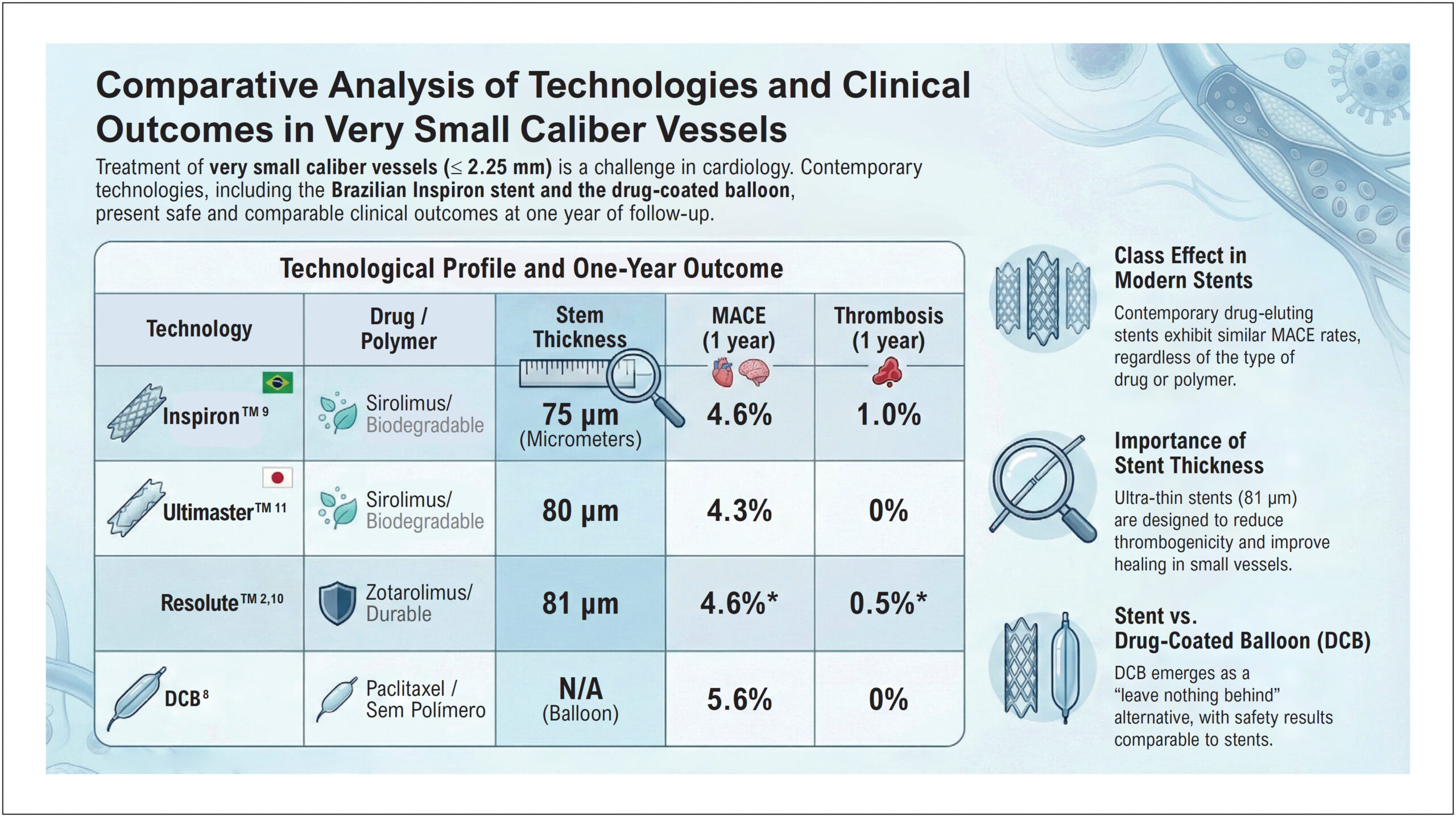
Percutaneous coronary intervention (PCI) in small-caliber vessels remains one of the most challenging scenarios in contemporary interventional cardiology.

Historically, a small vessel was considered to be one with a diameter ≤2.75 mm. With the technological evolution of devices and the greater refinement of interventional techniques, this concept has been progressively redefined. In contemporary practice, small vessels are standardized as those with a diameter <2.5 mm, while very small or extremely small vessels often include segments <2.25 mm.,

[…]

  • Coronary Restenosis
  • Coronary Vessels
  • Drug-Eluting Stents
  • Percutaneous Coronary Intervention
  • Sirolimus
Read Full Article
Creative Commons Attribution (CC BY) Creative Commons license
01/06/2026 DOI: 10.36660/abc.20260207i Views 2
ABC
Editorial

Macrophages and Neovascularization in In-Stent Neoatherosclerosis: An Accelerated Inflammatory Phenotype by OCT with Therapeutic Implications

Maria Cristina Oliveira Izar et al. Francisco A. H. Fonseca

In this edition of Arquivos Brasileiros de Cardiologia, Pinheiro et al. show optical coherence tomography (OCT) data with clear differences in inflammation and neovascularization among de novo atherosclerosis, in-stent restenosis due to intimal hyperplasia, and in-stent neoatherosclerosis.

Patients undergoing percutaneous coronary intervention with stent implantation may have recurrent symptoms of coronary heart disease due to in-stent restenosis due to vascular injury that triggers an intimal proliferative response, minimized by current techniques and stents of new generation. However, the neointimal lesion secondary to a delay in neoendothelialization can lead to symptom recurrence, usually during the first year of coronary intervention.

[…]

  • Atherosclerosis
  • Coronary Restenosis
  • Diagnostic Imaging/methods
  • Percutaneous Coronary Intervention
  • Phenotype/inflammation
Read Full Article
Creative Commons Attribution (CC BY) Creative Commons license
19/12/2022 DOI: 10.36660/abc.20220732 Views 1
Figure 1
ABC
Original Article

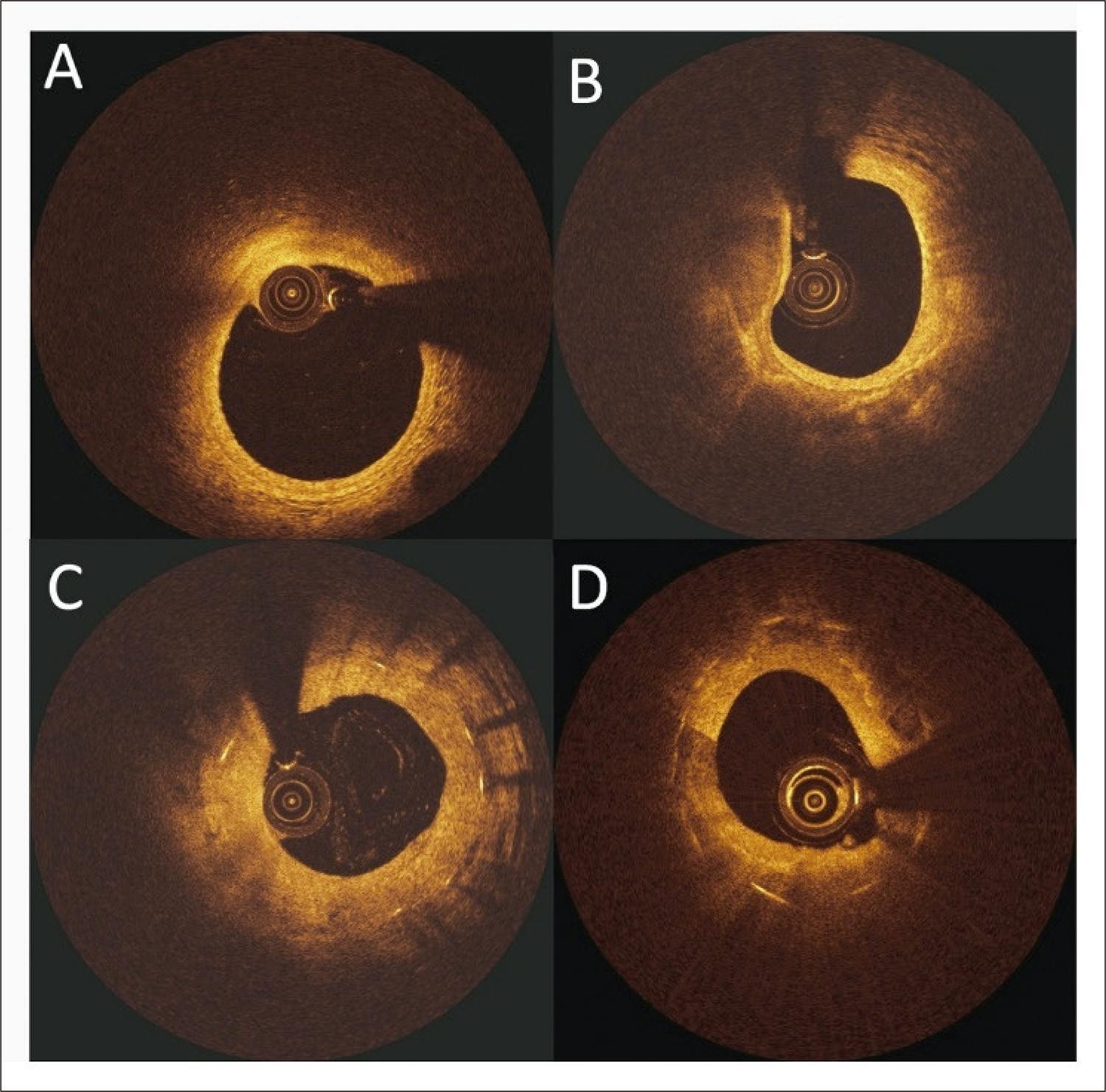
Inflammatory Phenotype by OCT Coronary Imaging: Specific Features Among De Novo Lesions, In-Stent Neointima, and In-Stent Neo-Atherosclerosis

Luiz Fernando M Pinheiro et al. Stefano Garzon José Mariani Jr. Guy F. Almeida Prado … Adriano Mendes Caixeta Breno Oliveira Almeida Pedro Alves Lemos

Abstract

Background

Coronary stenosis can be caused de novo atherosclerosis, in-stent restenosis, and in-stent neoatherosclerosis, three entities that develop from a diverse pathophysiological milieu.

Objective

This study aims to investigate, using optical coherence tomography (OCT), whether or not coronary lesions related to these processes differ in their local inflammatory profile.

Methods

Retrospective analysis of patients with diagnosed or suspected coronary lesions who had undergone OCT imaging for clinical reasons. Macrophage and intra-plaque neovascularization were assessed by OCT and used as surrogates of local inflammation. A significance level of < 0.05 was adopted as statistically significant.

Results

From the 121 lesions, 74 were de novo, 29 were restenosis, and 18 were neoatherosclerosis. Neovascularization was found in 65.8% of de novo, 10.3% in restenosis, and 94.4% in neoatherosclerosis (p<0.01 for all). The volume of neovascularization was different among lesion types (950 vs. 0 vs. 6220, respectively [median values in 1000 x µm3/mm]; p<0.01 for all), which were significantly higher in neoatherosclerosis and lower in restenosis. The presence of macrophages differed among the lesions (95.9% in de novo vs. 6.9% in restenosis vs. 100% in neoatherosclerosis [p<0.01 for all]). Moreover, the intensity of macrophagic infiltration was different among lesion types (2.5 vs. 0.0 vs. 4.5, respectively [median values of macrophage score]; p<0.01 for all), significantly higher in neoatheroscleosis and lower in restenosis.

Conclusion

When compared using coronary OCT, de novo atherosclerosis, in-stent restenosis, and neoatherosclerosis presented markedly different inflammatory phenotypes.

  • Atherosclerosis
  • Coronary Restenosis
  • Stents
Read Full Article
Creative Commons Attribution (CC BY) Creative Commons license
10/10/2022 DOI: 10.36660/abc.20220045
Figure 1
ABC
Original Article

Carotid Artery Atherosclerotic Profile as Risk Predictor for Restenosis After Coronary Stenting

Cássia da Silva Antico Rodrigues et al. Rodrigo Bazan Fabrício Moreira Reis Caroline F. S. Mazeto Pupo da Silveira … Lívia Maria Severino Hueb Fábio Cardoso de Carvalho Hélio Rubens de Carvalho Nunes Katashi Okoshi João Carlos Hueb Silméia Garcia Zanati Bazan

Abstract

Background:

The incidence of restenosis of the coronary artery after a bare-metal stent implant has been lower than in simple balloon angioplasty; however, it still shows relatively high rates.

Objective:

The aim of this study was to find new risk indicators for in-stent restenosis using carotid ultrasonography, that, in addition to the already existing indicators, would help in decision-making for stent selection.

Methods:

We carried out a cross-sectional prospective study including 121 consecutive patients with chronic coronary artery disease who had undergone percutaneous coronary intervention with repeat angiography in the previous 12 months. After all cases of in-stent restenosis were identified, patients underwent carotid ultrasonography to evaluate carotid intima-media thickness and atherosclerosis plaques. The data were analyzed by Cox multiple regression. The significance level was set a p<0.05.

Results:

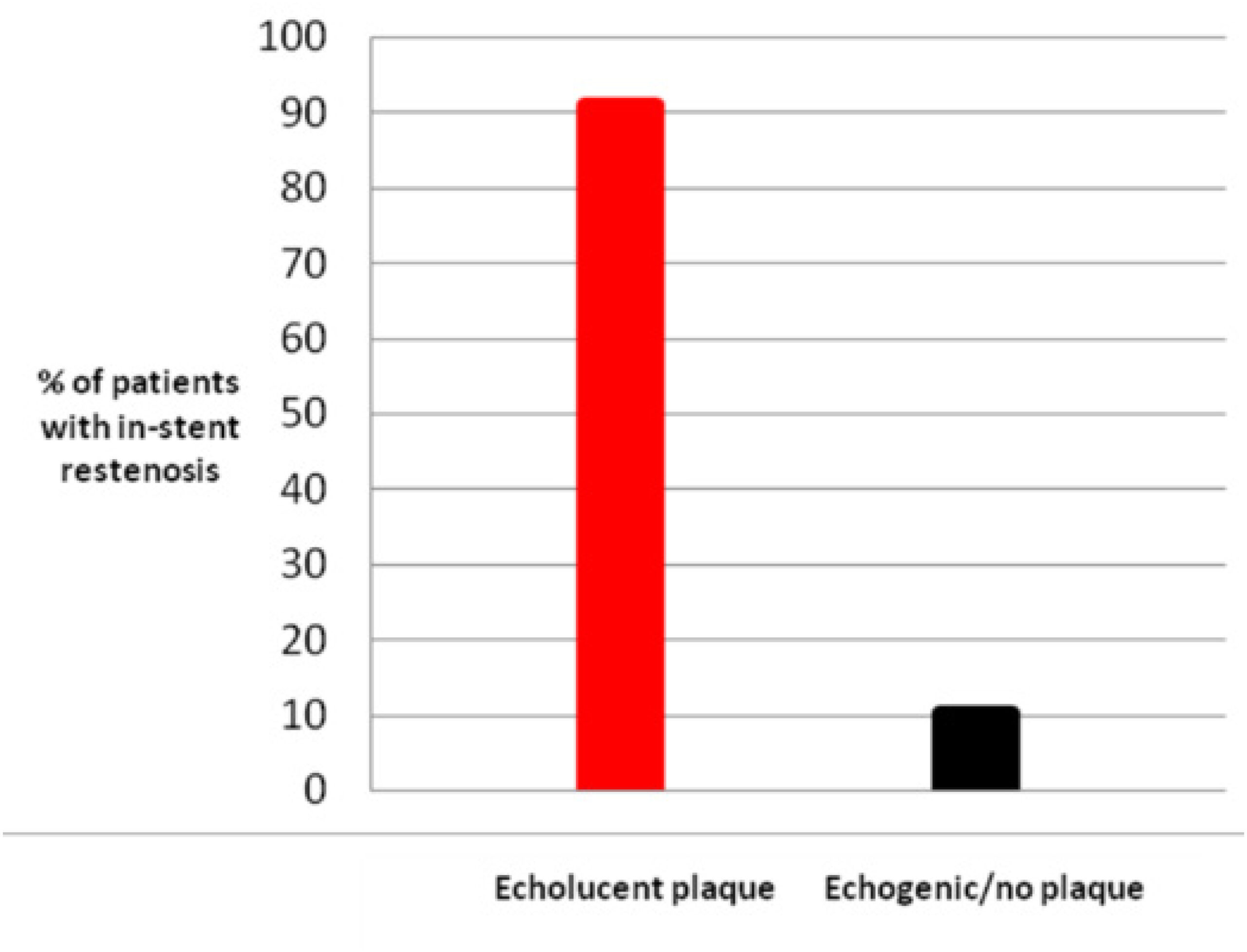
Median age of patients was 60 years (1st quartile = 55, 3rd quartile = 68), and 64.5% of patients were male. Coronary angiography showed that 57 patients (47.1%) presented in-stent restenosis. Fifty-five patients (45.5%) had echolucent atherosclerotic plaques in carotid arteries and 54.5% had echogenic plaques or no plaques. Of patients with who had echolucent plaques, 90.9% presented coronary in-stent restenosis. Of those who had echogenic plaques or no plaques, 10.6% presented in-stent restenosis. The presence of echolucent plaques in carotid arteries increased the risk of coronary in-stent restenosis by 8.21 times (RR=8.21; 95%CI: 3.58-18.82; p<0.001).

Conclusions:

The presence of echolucent atherosclerotic plaques in carotid artery constitutes a risk predictor of coronary instent restenosis and should be considered in the selection of the type of stent to be used in coronary angioplasty.

  • Angioplasty, Balloon, Coronary
  • Atherosclerosis
  • Carotid Arteries Ultrasonography
  • Coronary Artery Disease
  • Coronary Restenosis
  • Plaque, Atherosclerotic
  • Stents
Read Full Article
Creative Commons Attribution (CC BY) Creative Commons license
16/04/2021 DOI: 10.36660/abc.20190650 Views 1
Figure 1
ABC
Original Article

Patients' Preferences after Recurrent Coronary Narrowing: Discrete Choice Experiments

Carlos Alberto da Silva Magliano et al. Andrea Liborio Monteiro Amanda Rebeca de Oliveira Rebelo Giovanna Francisconi Santos … Claudia Cristina de Aguiar Pereira Nikolas Krucien Roberto Magalhães Saraiva

Abstract

Background:

Selecting the optimal treatment strategy for coronary revascularization is challenging. A crucial endpoint to be considered when making this choice is the necessity to repeat revascularization since it is much more frequent after percutaneous coronary intervention (PCI) than after coronary artery bypass grafting (CABG).

Objective:

This study intends to provide insights on patients’ preferences for revascularization, strategies in the perspective of patients who had to repeat revascularization.

Methods:

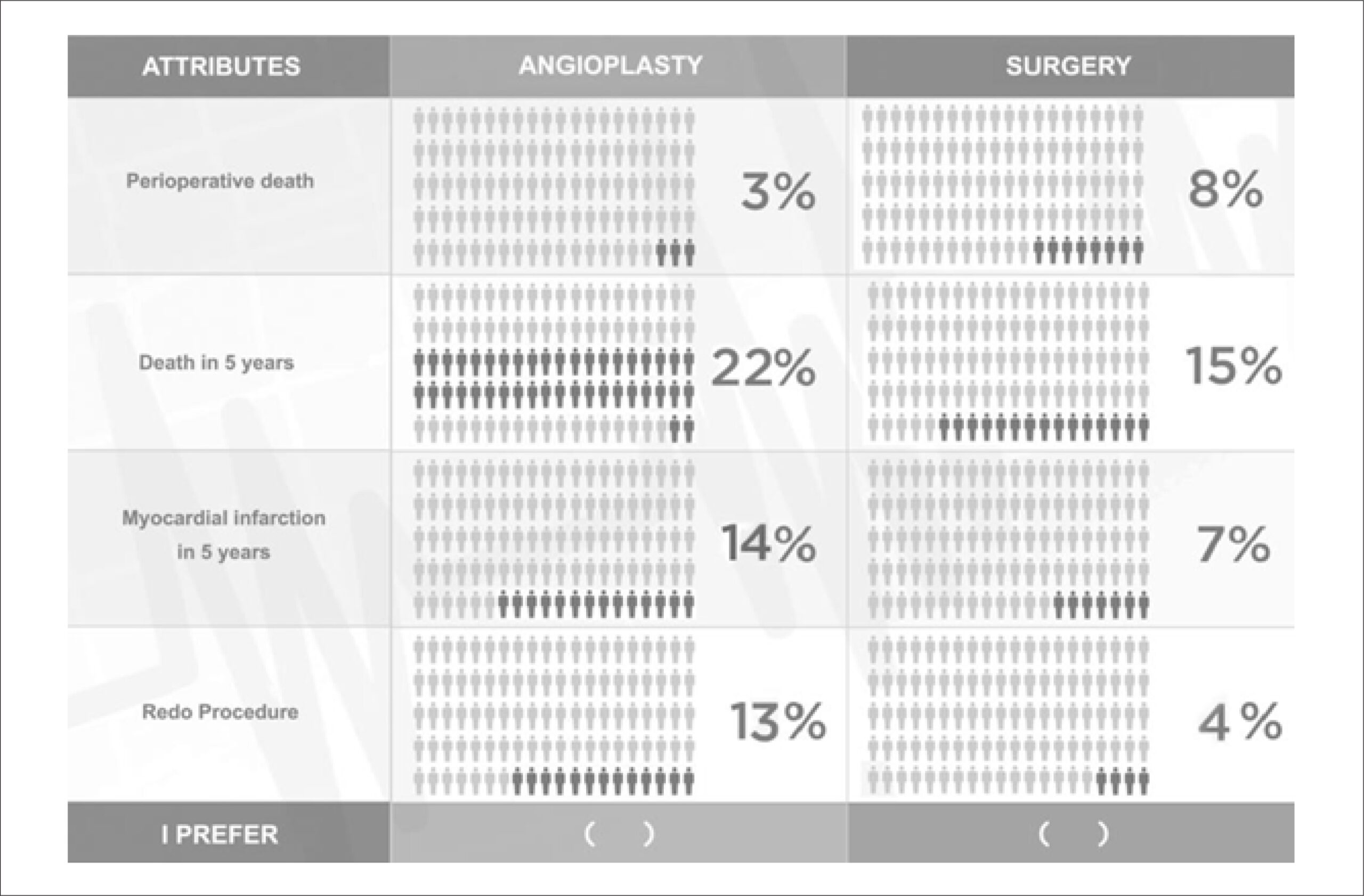
We selected a sample of patients who had undergone PCI and were hospitalized to repeat coronary revascularization and elicited their preferences for a new PCI or CABG. Perioperative death, long-term death, myocardial infarction, and repeat revascularization were used to design scenarios describing hypothetical treatments that were labeled as PCI or CABG. PCI was always presented as the option with lower perioperative death risk and a higher necessity to repeat procedure. A conditional logit model was used to analyze patients’ choices using R software. A p value < 0.05 was considered statistically significant.

Results:

A total of 144 patients participated, most of them (73.7%) preferred CABG over PCI (p < 0.001). The regression coefficients were statistically significant for PCI label, PCI long-term death, CABG perioperative death, CABG long-term death and repeat CABG. The PCI label was the most important parameter (p < 0.05).

Conclusion:

Most patients who face the necessity to repeat coronary revascularization reject a new PCI, considering realistic levels of risks and benefits. Incorporating patients’ preferences into benefit-risk calculation and treatment recommendations could enhance patient-centered care.

  • Coronary Artery Disease/surgery
  • Coronary Restenosis
  • Intervention Coronary Percutaneous
  • Myocardial Revascularization
  • Patient Preference
  • Surveys and Questionnaires
Read Full Article
Creative Commons Attribution (CC BY) Creative Commons license
23/10/2020 DOI: 10.36660/abc.20190305
Figure 1
IJCS
Viewpoint

Controversies in the Indications of Percutaneous Angioplasty Or Coronary Artery Bypass Grafting In The Treatment Of Left Main Disease

Renato A. K. Kalil et al. Roberto T. Sant´Anna Felipe Borsu de Salles

Introduction

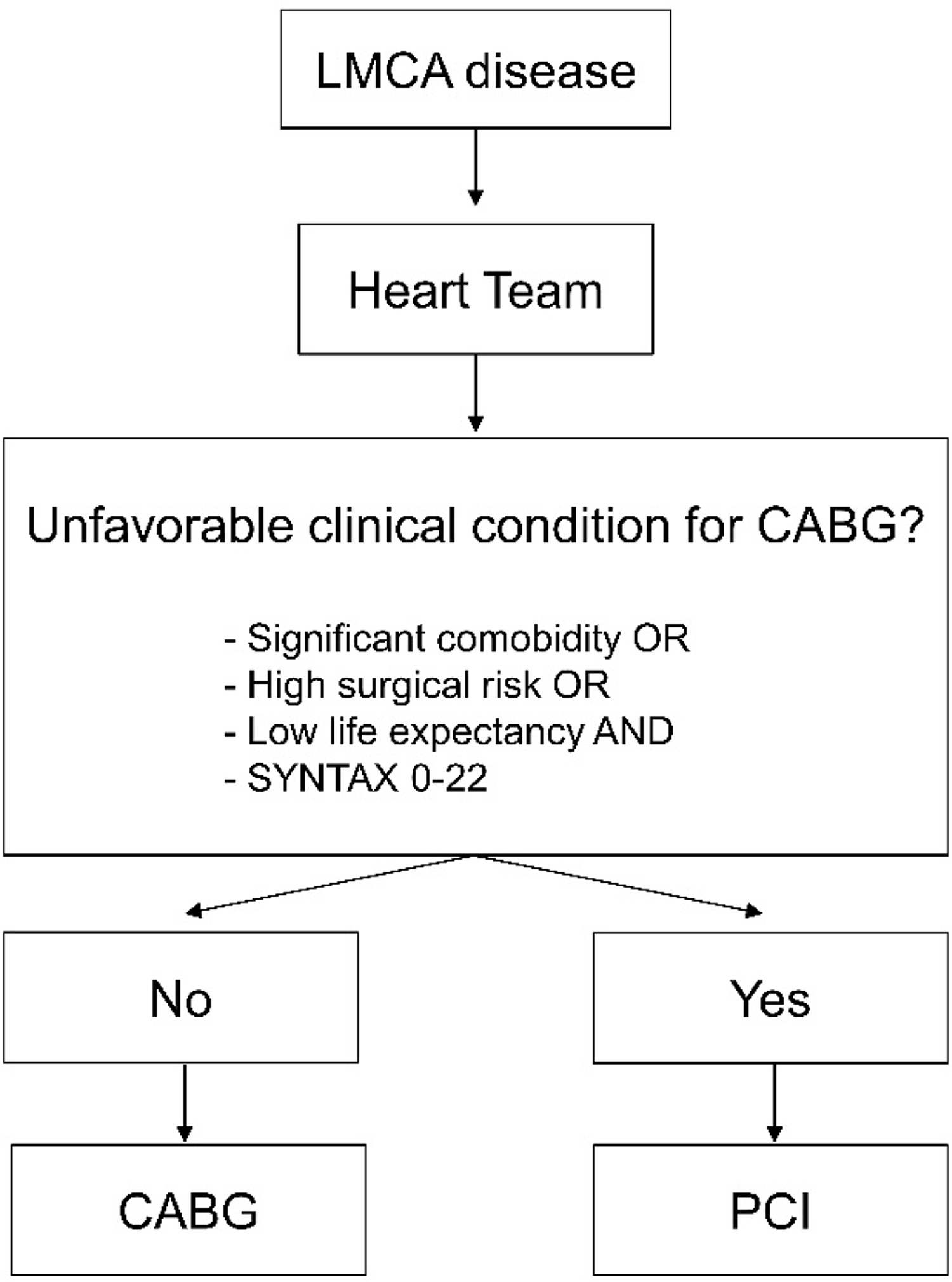
Left main coronary artery (LMCA) disease is a high-risk clinical situation, since this artery is responsible for the irrigation of more than two-thirds of the myocardial tissue, LMCA disease is associated with increased risk of adverse cardiac events. Traditionally, the gold standard of treatment for significant LMCA disase, understood as a stenosis> 50%, is coronary artery bypass grafting (CABG) surgery. –

The technological evolution of percutaneous treatment and its safe application for LMCA disease in the PRECOMBAT study made it a viable alternative, initially restricted to patients at high surgical risk and with LMCA disease confined to the proximal portion of the trunk. Subsequent studies have suggested the equivalence of percutaneous coronary intervention (PCI) and CABG in low and moderate complexity LMCA disease, which was reflected in the most recent guidelines ( ). Clinical registries, with real-patient outcomes, – and long-term results from the EXCEL study, contest this notion of equivalence between therapies in terms of mortality. The study was controversial, especially regarding the definition of clinical outcomes.

[…]

  • Coronary Angiography
  • Coronary Artery Bypass
  • Coronary Artery Disease
  • Coronary Restenosis
  • Left Main Coronary Artery
  • Myocardial Revascularization
  • Percutaneous Coronary Intervention
Read Full Article
Creative Commons Attribution (CC BY) Creative Commons license
17/07/2020 DOI: 10.36660/ijcs.20200037 Views 1
ABC
Editorial

Rosuvastatin Decreases the Formation of Neointima by Increasing Apo J, Reducing Restenosis after Balloon Injury in Rats

Paulo Magno Martins Dourado

The study by Yang et al. brings new light on the action of Apolipoprotein (Apo) J, also called clusterin (CLU), a heterodimeric glycoprotein consisting of α and β subunits linked by disulfide bond., The coding gene of Apo J is located on chromosome 8p21-p12, encoding two main isoforms, including secreted (sCLU) and nuclear (nCLU) on restenosis following balloon percutaneous transluminal carotid angioplasty (PTCA) in an experimental model in rats; this was published in this edition of the Brazilian Archives of Cardiology, because there is a controversy in the literature whether Apo J, which is elevated in atherosclerosis and post-angioplasty, plays a protective or promoting role for restenosis. Apo J is involved in several important pathological processes in the transport of lipids, and in the differentiation of vascular smooth muscle cells (VSMC), including cell death by apoptosis, cell cycle regulation, cell adhesion, tissue remodeling, regulation of the immune system and oxidative stress, playing a role in the development of clinical atherosclerosis., In the process of attenuating atherosclerosis, Apo J can promote the export of cholesterol and phospholipids from foam cells of macrophages, and show cytoprotective and anti-inflammatory actions interacting with many known inflammatory proteins that may act in the initial phase of clinical cardiovascular events, and may play an important role in mediating atherosclerotic disease, such as C-reactive protein, paraoxonase and leptin. There are studies reporting that Apo J can stimulate the proliferation and migration of VSMC, and promote restenosis,, and there have been studies showing that overexpression of CLUs can inhibit migration and proliferation of VSMC, and inhibit cellular apoptosis. In view of these controversial results, the authors sought to elucidate the role of Apo J in neointimal hyperplasia, using the rat carotid artery in vivo, with or without rosuvastatin.

The results of the study published here suggest that rosuvastatin can inhibit intimal hyperplasia due to the high expression of Apo J in the active proliferation and migration phase of VSMC, after balloon injury in rats. In the present study, the authors evidenced an increase in the intimal/media (I/M) area rate after the balloon injury that reached the maximum value in the fourth week in the model group; in addition, I/M was increased at week 2, and such increase ceased after the administration of rosuvastatin. These results suggest that rosuvastatin can significantly reduce the degree of intimal hyperplasia in the balloon-injured carotid arteries in rats. The levels of Messenger Ribonucleic Acid (mRNA) and Apo J were increased in the carotid arteries in the group using rosuvastatin, when compared to the model group, reaching the maximum in the second week, earlier than in the model group, suggesting that rosuvastatin can inhibit intimal hyperplasia by increasing Apo J after balloon injury in rats. Therefore, Apo J has been identified as having a central role in the migration, adhesion and vascular proliferation process, and that it can contribute significantly to restenosis after vascular injury.

[…]

  • Angioplasty
  • Carotid Arteries
  • Clusterin/genetic
  • Coronary Restenosis
  • Percutaneous Coronary Intervention/trends
  • Rats
Read Full Article
Creative Commons Attribution (CC BY) Creative Commons license
01/10/2018 DOI: 10.5935/abc.20180204 Views 1
ABC
Editorial

Persistent Inflammatory Activity in Blood Cells and Artery Tissue from Patients with Previous Bare Metal Stent

Francisco Antonio Helfenstein Fonseca

The interesting article by Farsky et al. examined the persistence of inflammatory activity after bare metal stent implantation in patients later submitted to coronary artery bypass grafting (CABG).

The authors evidenced a higher systemic expression of the gene that encodes tumor necrosis factor-alpha (TNF-alpha) in peripheral blood cells, as well as a higher tissue expression of TNF-alpha and interleukin-6 (IL-6) in patients with previous bare metal stent implantation as compared to those of revascularized individuals without previous percutaneous stent placement.

[…]

  • Anti-Inflammatory Agents/therapy
  • Coronary Restenosis
  • Myocardial Revascularization
  • Stents, Inflammation
Read Full Article
Creative Commons Attribution (CC BY) Creative Commons license
01/08/2018 DOI: 10.5935/abc.20180142
Figure 1
ABC
Original Article

Impact of Paclitaxel-Eluting Balloons Compared to Second-Generation Drug-Eluting Stents for of In-Stent Restenosis in a Primarily Acute Coronary Syndrome Population

Guillaume Marquis-Gravel et al. Alexis Matteau Brian J Potter François Gobeil … Nicolas Noiseux Louis-Mathieu Stevens Samer Mansour

Abstract

Background:

The place of drug-eluting balloons (DEB) in the treatment of in-stent restenosis (ISR) is not well-defined, particularly in a population of all-comers with acute coronary syndromes (ACS).

Objective:

Compare the clinical outcomes of DEB with second-generation drug-eluting stents (DES) for the treatment of ISR in a real-world population with a high proportion of ACS.

Methods:

A retrospective analysis of consecutive patients with ISR treated with a DEB compared to patients treated with a second-generation DES was performed. The primary endpoint was a composite of major adverse cardiovascular events (MACE: all-cause death, non-fatal myocardial infarction, and target lesion revascularization). Comparisons were performed using Cox proportional hazards multivariate adjustment and Kaplan-Meier analysis with log-rank.

Results:

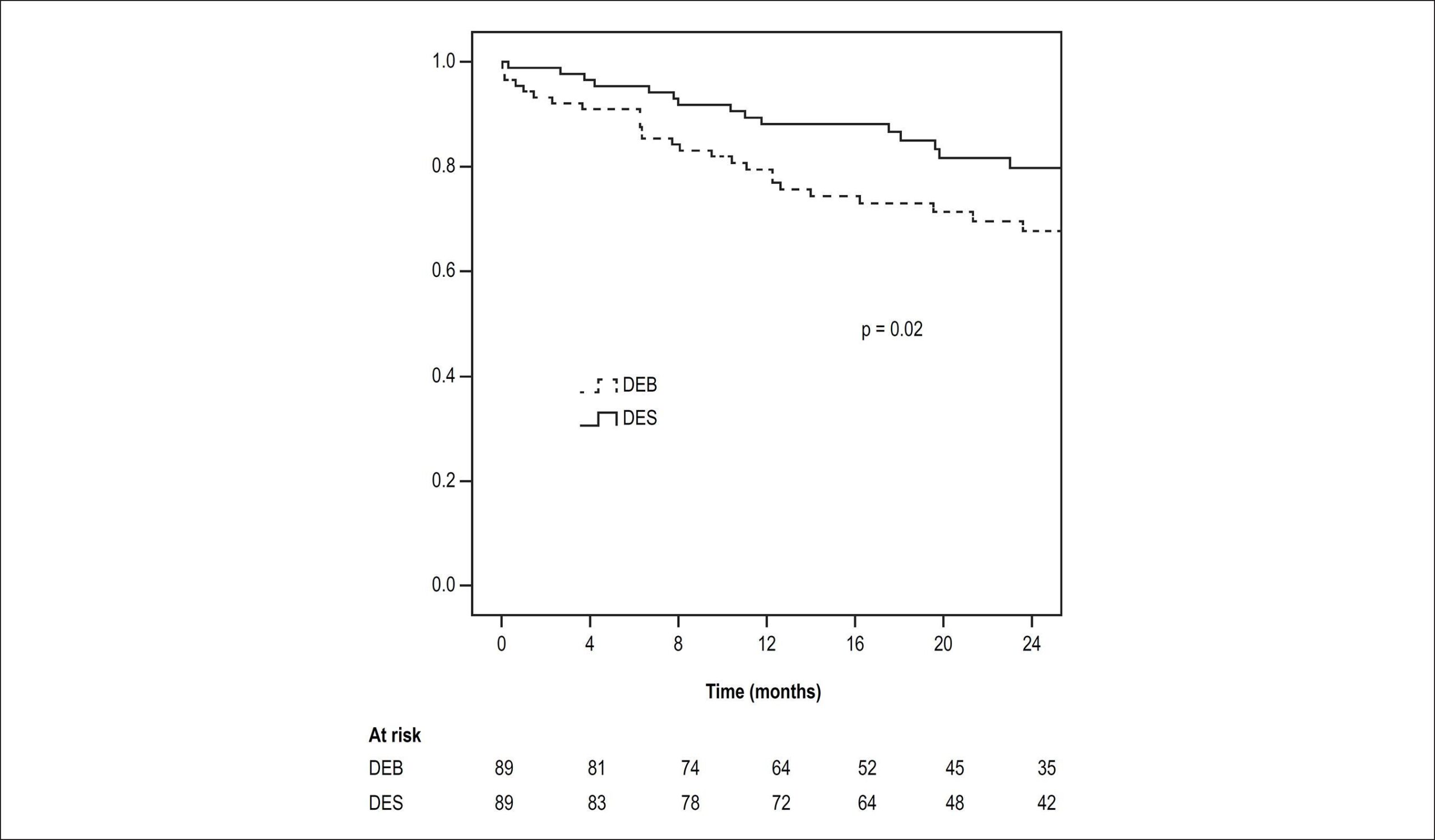
The cohort included 91 patients treated with a DEB and 89 patients treated with a DES (74% ACS). Median follow-up was 26 months. MACE occurred in 33 patients (36%) in the DEB group, compared to 17 patients (19%) in the DES group (p log-rank = 0.02). After multivariate adjustment, there was no significant difference between the groups (HR for DEB = 1.45 [95%CI: 0.75-2.83]; p = 0.27). Mortality rates at 1 year were 11% with DEB, and 3% with DES (p = 0.04; adjusted HR = 2.85 [95%CI: 0.98-8.32]; p = 0.06).

Conclusion:

In a population with a high proportion of ACS, a non-significant numerical signal towards increased rates of MACE with DEB compared to second-generation DES for the treatment of ISR was observed, mainly driven by a higher mortality rate. An adequately-powered randomized controlled trial is necessary to confirm these findings.

  • Acute coronary syndrome
  • Angioplasty, Balloon
  • Coronary Restenosis
  • Drug-Eluting Stents
  • Paclitaxel
Read Full Article
Creative Commons Attribution (CC BY) Creative Commons license
28/09/2017 DOI: 10.5935/abc.20170142
ABC
Original Article

Which Coronary Lesions Are More Prone to Cause Acute Myocardial Infarction?

Taner Sen et al. Mehmet Ali Astarcioglu Osman Beton Lale Dinc Asarcikli Celal Kilit

Abstract

Background:

According to common belief, most myocardial infarctions (MIs) are due to the rupture of nonsevere, vulnerable plaques with < 70% obstruction. Data from recent trials challenge this belief, suggesting that the risk of coronary occlusion is, in fact, much higher after severe stenosis. The aim of this study was to investigate whether or not acute ST-elevation MIs result from high-grade stenoses by evaluating the presence of coronary collateral circulation (CCC).

Methods:

We retrospectively included 207 consecutive patients who had undergone primary percutaneous coronary intervention for acute ST-elevation MI. Collateral blood flow distal to the culprit lesion was assessed by two investigators using the Rentrop scoring system.

Results:

Out of the 207 patients included in the study, 153 (73.9%) had coronary collateral vessels (Rentrop 1-3). The Rentrop scores were 0, 1, 2, and 3 in 54 (26.1%), 50 (24.2%), 51 (24.6%), and 52 (25.1%) patients, respectively. Triglycerides, mean platelet volume (MPV), white cell (WBC) count, and neutrophil count were significantly lower in the group with good collateral vessels (p = 0.013, p = 0.002, p = 0.003, and p = 0.021, respectively).

Conclusion:

More than 70% of the patients with acute MI had CCC with Rentrop scores of 1-3 during primary coronary angiography. This shows that most cases of acute MI in our study originated from underlying high-grade stenoses, challenging the common believe. Higher serum triglycerides levels, greater MPV, and increased WBC and neutrophil counts were independently associated with impaired development of collateral vessels.

  • Collateral Circulation
  • Coronary Restenosis
  • Myocardial Infarction
  • Plaque, Atherosclerotic
  • Rupture
Read Full Article
Creative Commons Attribution (CC BY) Creative Commons license
16/01/2017 DOI: 10.5935/abc.20170003
Figure 1
ABC
Case Report

Drug-Coated Balloon Treatment of Very Late Stent Thrombosis Due to Complicated Neoatherosclerosis

Fernando Alfonso et al. Teresa Bastante Javier Cuesta Amparo Benedicto Fernando Rivero

Abstract

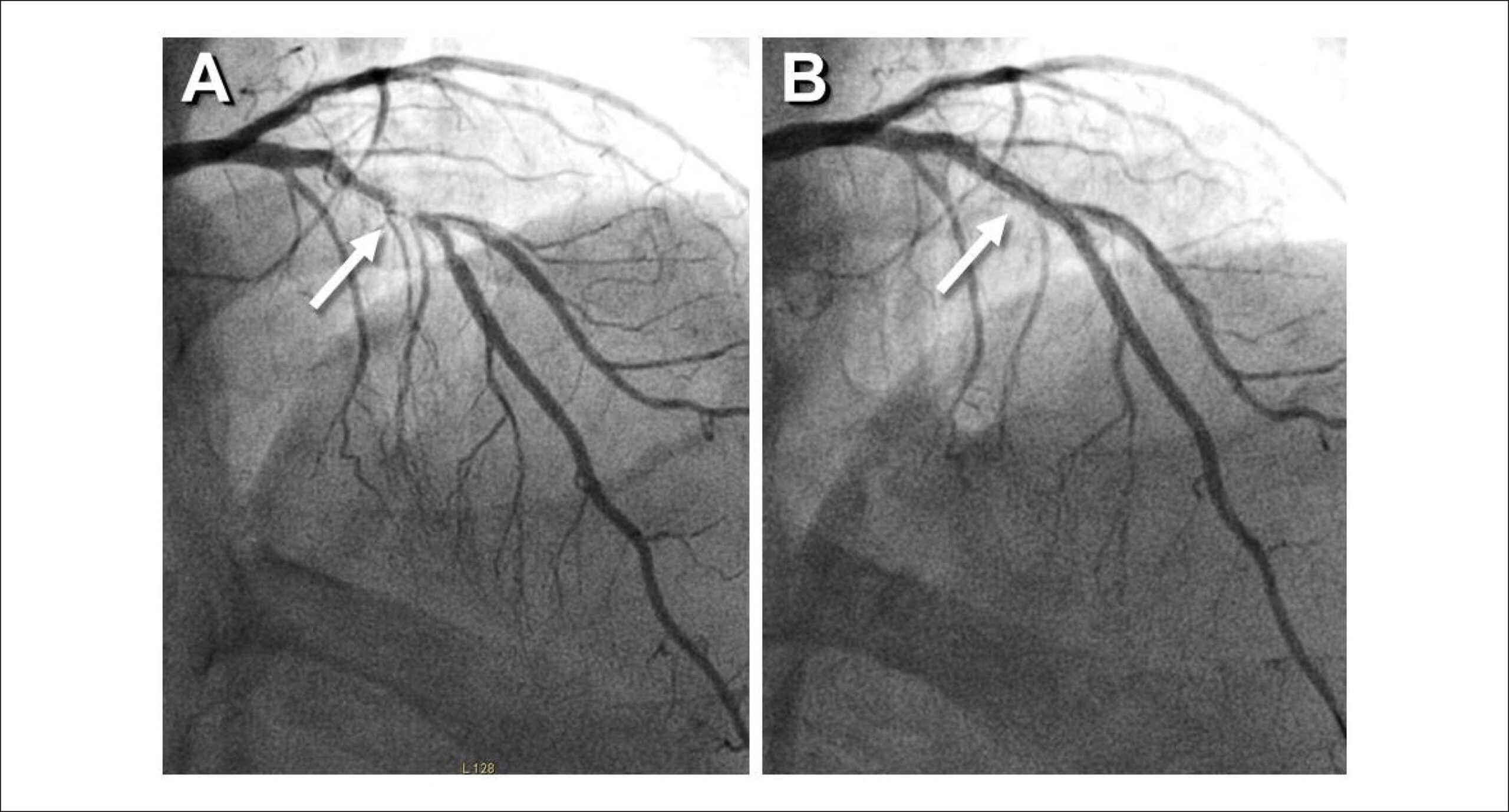
We describe the treatment of a patient presenting with very-late stent thrombosis with the use of a drug-coated balloon. In this patient, optical coherence tomography disclosed that ruptured and complicated neoatherosclerosis was the underlying substrate responsible for the episode of very-late stent thrombosis. The potential use of drug-coated balloons in this unique scenario is discussed.

  • Coronary Artery Disease
  • Coronary Restenosis
  • Coronary Thrombosis/complications
  • Drug-Eluting Stents / adverse effects
  • Percutaneous Coronary Intervention
Read Full Article
Creative Commons Attribution (CC BY) Creative Commons license
01/06/2016 DOI: 10.5935/abc.20160089
Graph 1
ABC
Original Article

Clinical Coronary In-Stent Restenosis Follow-Up after Treatment and Analyses of Clinical Outcomes

Barbara Campos Abreu Marino et al. Guilherme Abreu Nascimento Walter Rabelo Marcos Antônio Marino … Roberto Luiz Marino Antonio Luiz Pinho Ribeiro

Background:

Clinical in-stent restenosis (CISR) is the main limitation of coronary angioplasty with stent implantation.

Objective:

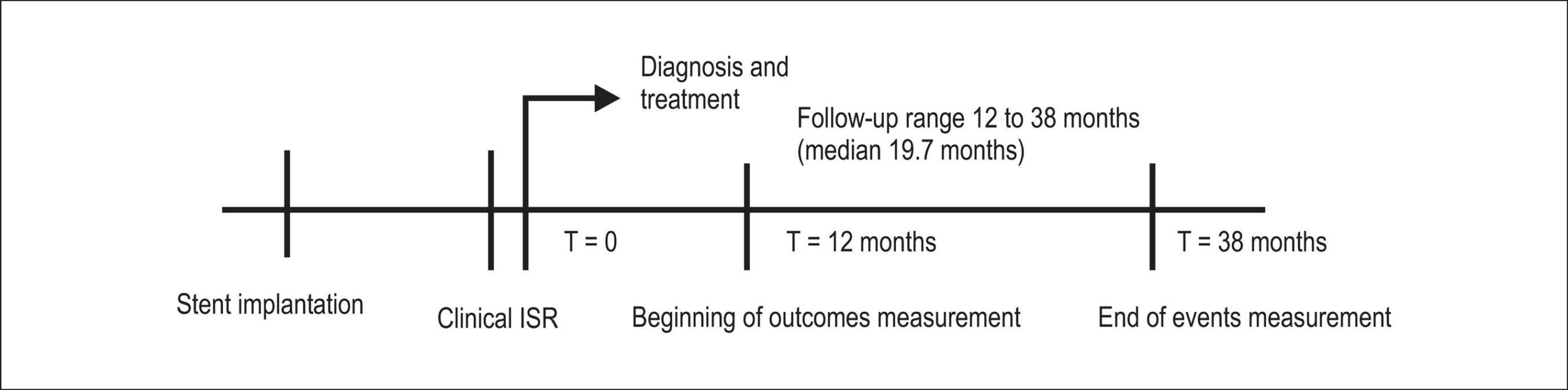
Describe the clinical and angiographic characteristics of CISR and the outcomes over a minimum follow-up of 12 months after its diagnosis and treatment.

Methods:

We analyzed in 110 consecutive patients with CISR the clinical presentation, angiographic characteristics, treatment and combined primary outcomes (cardiovascular death, nonfatal acute myocardial infarction [AMI]) and combined secondary (unstable angina with hospitalization, target vessel revascularization and target lesion revascularization) during a minimal follow-up of one year.

Results:

Mean age was 61 ± 11 years (68.2% males). Clinical presentations included acute coronary syndrome (ACS) in 62.7% and proliferative ISR in 34.5%. CISR was treated with implantation of drug-eluting stents (DES) in 36.4%, Bare Metal Stent (BMS) in 23.6%, myocardial revascularization surgery in 18.2%, balloon angioplasty in 15.5% and clinical treatment in 6.4%. During a median follow-up of 19.7 months, the primary outcome occurred in 18 patients, including 6 (5.5%) deaths and 13 (11.8%) AMI events. Twenty-four patients presented a secondary outcome. Predictors of the primary outcome were CISR with DES (HR = 4.36 [1.44–12.85]; p = 0.009) and clinical treatment for CISR (HR = 10.66 [2.53–44.87]; p = 0.001). Treatment of CISR with BMS (HR = 4.08 [1.75–9.48]; p = 0.001) and clinical therapy (HR = 6.29 [1.35–29.38]; p = 0.019) emerged as predictors of a secondary outcome.

Conclusion:

Patients with CISR present in most cases with ACS and with a high frequency of adverse events during a medium-term follow-up.

  • Coronary Restenosis
  • Graft Occlusion, Vascular
  • Myocardial Infarction
  • Myocardial Ischemia
  • Stents
Read Full Article
Creative Commons Attribution (CC BY) Creative Commons license
03/02/2015 DOI: 10.5935/abc.20140216 Views 2
Clinical outcomes by geographic region for patients implanted with the zotarolimus-eluting stent
ABC
Artigo Original

Clinical outcomes by geographic region for patients implanted with the zotarolimus-eluting stent

Chaim Lotan et al. Ian T. Meredith Ajay Jain Fausto Feres … A. Firszt A. Frutos Garcia Martin T. Rothman

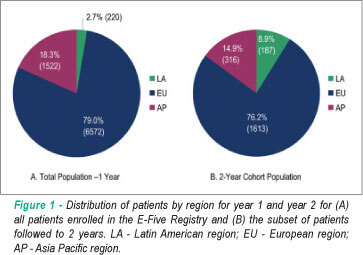
BACKGROUND: Differences between geographic regions in patient characteristics and outcomes, particularly for acute coronary syndromes, have been demonstrated in clinical trials. Clinical outcomes after percutaneous coronary interventions with the Zotarolimus-eluting stent in a real-world population were assessed over time. OBJECTIVE: The influence of geographic location on clinical outcomes with the Zotarolimus-eluting stent was assessed in 3 regions: Asia Pacific, Europe, and Latin America. METHODS: A total of 8,314 patients (6,572 Europe, 1,522 Asia Pacific, and 220 Latin America) were followed for 1 year; 2,116 of these (1,613, 316, and 187, respectively) were followed for 2 years. Patient and lesion characteristics, dual antiplatelet therapy, and clinical outcomes were compared between Latin America and the other regions. RESULTS: Patients in Latin America had the highest proportions of risk factors and prior myocardial infarction. Dual antiplatelet therapy usage rapidly declined in Latin America, from 44.9% at 6 months to 22.5% at 1 year and 7.8% at 2 years (Europe: 87.4%, 61.5%, 19.7%; Asia Pacific: 82.4%, 67.0%, 45.7%). There were no significant differences between Latin America and Europe or Asia Pacific for any outcome at either time point. The incidence of Academic Research Consortium definite and probable stent thrombosis was low (<1.2%) among all patients at 1 year and 2 years. CONCLUSION: Clinical outcomes were comparable between patients in Latin America and Europe, and Latin America and Asia Pacific, despite less favorable clinical subsets in Latin America, a higher risk profile, and markedly lower use of dual antiplatelet therapy over time.

  • Angioplasty transluminal percutaneous coronary
  • Coronary Restenosis
  • craft occlusion, vascular
  • Eluting stents
  • Multicenter Studies
Read Full Article
Creative Commons Attribution (CC BY) Creative Commons license
01/04/2011 DOI: 10.1590/S0066-782X2011005000033
ABC
Artigo Original

Noninvasive assessment of patients undergoing percutaneous intervention in myocardial infarction

Rica Dodo Delmar Buchler et al. Expedito E. Ribeiro Antonio de Padua Mansur Paola Smanio … Romeu Sergio Meneghelo William Azem Chalela Carlos Alberto Buchpiguel Jorge Roberto Buchler Eric R. Bates Eulogio E. Martinez

BACKGROUND: Restenosis after primary percutaneous coronary intervention (PPCI) remains an important clinical problem, even with stent implantation. The ability of noninvasive testing to diagnose restenosis has had only inconsistent demonstration. OBJECTIVE: Our objective was to evaluate the ability of exercise treadmill testing (ETT) and myocardial perfusion imaging (MPI) to diagnose restenosis in patients treated by PPCI within 12 hours of ST-elevation myocardial infarction (STEMI). METHODS: From August 2003 to January 2006, 64 patients (mean age of 56.2±10.2 years, 53 males) were enrolled after PPCI. Only patients with left ventricular ejection fraction (LVEF) > 40%, as assessed by resting transthoracic echocardiography (TTE), were included. ETT with 12-lead ECG monitoring and right precordial leads, as also MPI were performed at 6 weeks, 6 months, and one year after intervention. Coronary angiography was performed at six months. RESULTS: Single-vessel disease was observed in 46.9% of the patients. The left anterior descending coronary artery was treated in 48.4% of the patients. Angiographic restenosis occurred in 28.8%. Sensitivity, specificity, positive predictive value (PPV), negative predictive value (NPV), and accuracy of ETT in detecting restenosis were not significant. Right precordial leads did not add information. MPI sensitivity, specificity, PPV, NPV, and accuracy correlated with restenosis only in the 6-month follow-up, both when considering summed difference score >2 (p=0.006) and >4 (p=0.014). CONCLUSION: ETT did not discriminate restenosis in this population. MPI performed at 6 months correlated with restenosis and proved useful during follow-up.

  • Angioplasty
  • Coronary Restenosis
  • critical pathways
  • Myocardial Infarction
  • stent
Read Full Article
Creative Commons Attribution (CC BY) Creative Commons license
22/10/2010 DOI: 10.1590/S0066-782X2010005000139 Views 1
ABC
Artigo Original

Rationale and design for the PAINT randomized trial

Pedro A. Lemos et al. Bruno Moulin Marco A. Perin Ludmilla A.R.R. Oliveira … J. Airton Arruda Valter C. Lima Antonio A.G. Lima Paulo R.A. Caramori Cesar R. Medeiros Mauricio R. Barbosa Fabio S. Brito Jr Expedito E. Ribeiro Eulógio E. Martinez

BACKGROUND: We describe the rationale and design for the “PercutAneous INTervention with biodegradable-polymer based paclitaxel-eluting or sirolimus-eluting versus bare stents for de novo coronary lesions – PAINT trial”. OBJECTIVES: To evaluate two novel formulations of paclitaxel-eluting stent and the sirolimus-eluting stent against a stent with the same metallic structure but without polymer coating or drug elution. METHODS: The PAINT is a multicenter 3-arm randomized trial, conducted in Brazilian tertiary institutions, which included 275 patients allocated for the InfinniumR paclitaxel-eluting stent, the SupralimusR sirolimus-eluting stent or the Milennium MatrixR bare metal stent in a 2:2:1 ratio. Patients had de novo coronary lesions in native vessels with a diameter between 2.5 and 3.5 mm, amenable for treatment with a single stent of 29 mm or less in length. The primary objetive was to compare the in-stent late loss at 9 months of both paclitaxel- and sirolimus-eluting versus the late loss of control bare metal stents. Important secondary objectives included the comparison in outcomes between sirolimus and paclitaxel stents, as well as the analysis of the incidence of major adverse cardiac events. RESULTS AND CONCLUSIONS: The PAINT trial had a unique design that allowed for the evaluation of the safety and efficacy profiles of two novel drug-eluting stent formulations, with a biodegradable-polymer carrier and releasing paclitaxel or sirolimus, which were compared against a bare metal stent (primary objective). As the drug-eluting stents differed by the drug, but were identical otherwise, the trial also allowed the comparison of the anti-restenosis effects of sirolimus versus paclitaxel (secondary objective).

  • Coronary Restenosis
  • Drug-Eluting Stents
  • Multicenter Study
  • Paclitaxel
  • Sirolimus
Read Full Article
Creative Commons Attribution (CC BY) Creative Commons license
05/05/2010 DOI: 10.1590/S0066-782X2009001200006 Views 1
Use of drug-eluting stents in Brazil: the CENIC (National Registry of Cardiovascular Interventions) registry
ABC
Artigo Original

Use of drug-eluting stents in Brazil: the CENIC (National Registry of Cardiovascular Interventions) registry

Cristiano O. Cardoso et al. Alexandre S. de Quadros Luiz A. Mattos Carlos A. Gottschall … Rogério E. Sarmento-Leite José A. Marin-Neto

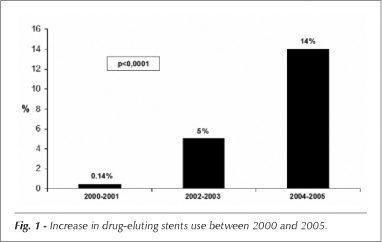
BACKGROUND: Drug-eluting stents (DES) represent a major advance in the management of ischemic heart disease, but the extrapolation of favorable results from clinical trials to the real-world practice has been criticized. OBJECTIVE: To assess the use of DES in Brazil between 2000 and 2005. METHODS: Using the database of the National Registry of Cardiovascular Interventions (CENIC – Central Nacional de Intervenções Cardiovasculares) of the Brazilian Society of Hemodynamics and Interventional Cardiology (SBHCI – Sociedade Brasileira de Hemodinâmica e Cardiologia Intervencionista), all PCI procedures with DES implantation performed between 2000 and 2005 were analyzed. The groups were divided into the following biennia: 2000-2001(A), 2002-2003 (B), and 2004-2005 (C), and patient’s clinical and angiographic characteristics were compared, as well as their short-term clinical outcome. Statistical analyses were performed using the chi-square test or ANOVA, and p values of less than 0.05 were considered to be statistically significant. RESULTS: A total of 154,406 PCI procedures were studied, and DES was used in 10,426 (7%) interventions. A progressive and statistically significant increase was found in the use of DES during the period studied: 0.14% from 2000 to 2001, 5% from 2002 to 2003, and 14% from 2004 to 2005 (p < 0.0001). After 2001, there was an increase in success rates (96.58% in 2000-2001 (A), 99.69% in 2002-2003 (B), and 99.56% in 2004-2005 (C), A x B with p < 0.001; B x C with p = 0.015) and a decrease in hospital mortality rates (1.59% in group A, 0.38% in group B, and 0.66% in group C, with p = 0.59 for A x B and p < 0.0001 for B x C). CONCLUSION: In Brazil, the use of drug-eluting stents increased significantly during recent years, resulting in higher success rates and lower hospital mortality.

  • coronary arteriosclerosis
  • Coronary Restenosis
  • Drug-Eluting Stents
  • Stents
Read Full Article
Creative Commons Attribution (CC BY) Creative Commons license
18/04/2008 DOI: 10.1590/S0066-782X2007001800002
The importance of the interaction between leukocyte integrin Mac-1 and platelet glycoprotein Ib-a for leukocyte recruitment by platelets and for the inflammatory response to vascular injury
ABC
Artigo Original

The importance of the interaction between leukocyte integrin Mac-1 and platelet glycoprotein Ib-a for leukocyte recruitment by platelets and for the inflammatory response to vascular injury

Alexandre C. Zago et al. Daniel I. Simon Yunmei Wang Masashi Sakuma … Zhiping Chen Kevin Croce Valentin Ustinov Can Shi Eulógio E. Martinez Filho

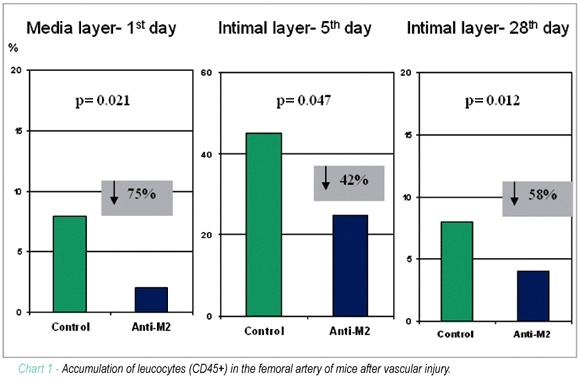
OBJECTIVE: To assess the importance of the interaction between leukocyte integrin Mac-1 (a Mb 2) and platelet glycoprotein (GP) Ib-a for leukocyte recruitment after vascular injury and the effect of the neutralization of the Mac-1-GPIba interaction on cell proliferation and the neointimal hyperplasia triggered by the vascular injury. METHODS: A peptide called M2 or anti-M2 antibody was developed to block the Mac-1-GPIba interaction. This peptide was injected and compared to a control-peptide in C57B1/6J mice submitted to vascular injury of the femoral artery with a guide wire. One, five or 28 days after the vascular injury, the femoral arteries were removed for morphometric and immunohistochemical analyses. RESULTS: The blocking of the Mac-1-GPIba interaction promoted a statistically significant reduction in the number of leukocytes in the neointimal layer on the first day after the vascular injury (control: 7.9±5.0% of the cell total versus anti-M2: 2.0±1.6%, p=0.021), as well as determined a statistically significant decrease in leukocyte accumulation in the neointimal layer on days 5 and 28 (control: 42.3±12.9% versus anti-M2: 24.6±10.8%, p=0.047 and control: 7.9±3.0% versus anti-M2: 3.3±1.3%, p=0.012; respectively). Cell proliferation in the neointimal layer of the vessel five days post-injury was reduced with the blocking of the Mac-1-GPIba interaction (control: 5.0±2.9% of the cell total versus anti-M2: 1.8±0.5%; p=0.043), along with a significant decrease in cell proliferation in the vessel neointimal layer 28 days post-injury (control: 3.8±1.7% versus anti-M2: 2.0±1.2%; p=0.047). The blocking of the Mac-1-GPIba interaction also determined a statistically significant decrease of the intimal thickening 28 days post-injury (control: 10,395±3,549 µm² versus anti-M2: 4,561±4,915 µm²; p=0.012). CONCLUSION: Leukocyte recruitment after a vascular injury depends on the Mac-1-GPIba interaction and the neutralization of this interaction inhibits cell proliferation and neointimal formation.

  • Blood Platelets
  • Cell adhesion molecules
  • Coronary Restenosis
  • Inflammation
  • Leukocytes
Read Full Article
Creative Commons Attribution (CC BY) Creative Commons license
22/02/2008 DOI: 10.1590/S0066-782X2008000100009
ABC
Artigo Original

Randomized comparative study of diamond-like carbon coated stainless steel stent versus uncoated stent implantation in patients with coronary artery disease

George César Ximenes Meireles et al. Luciano Mauricio de Abreu Antonio Artur da Cruz Forte Marcos Kiyoshi Sumita … Jorge Hideki Sumita Jose Del Carmen Solano Aliaga

OBJECTIVE: To compare restenosis and major cardiac event rates at one and six months after DLC-coated stent implantation with those of uncoated stents. METHODS: Randomized, prospective, comparative study of 180 patients with coronary insufficiency undergoing DLC coated stent (Phytis™) or uncoated stent (Penta™) implantation, from January, 2003 to July, 2004. Inclusion criteria were: de novo lesion with >50% diameter stenosis in a coronary artery with reference diameter > 2,5 mm and < 4 mm, and length < 20 mm. Exclusion criteria were: left main coronary artery and bifurcation lesions, chronic total occlusion, and in-stent restenosis. RESULTS: Clinical and angiographic baseline characteristics of the groups were similar. Procedural success was achieved in 98.9% of the patients in both groups. One cardiac death occurred in each group during hospitalization. Reference diameter and acute gain were greater in the Penta™ group (3.21±0.37 mm vs. 3.34±0.8 mm, p=0.02 and 2.3±0.5 vs. 2.49±0.5, p=0.009, respectively). Angiographic follow-up at six months showed similar rates of restenosis (24.3% vs. 21.8%, p=0.84) and of major cardiac events (16.8% vs. 17.5%, p=1). CONCLUSION: DLC coated stents did not provide better outcomes in relation to uncoated stents.

  • Angioplasty transluminal percutaneous coronary
  • Coronary Disease
  • Coronary Restenosis
Read Full Article
Creative Commons Attribution (CC BY) Creative Commons license
24/05/2007 DOI: 10.1590/S0066-782X2007000400004
ABC
Artigo Original

Multicenter study of intracoronary stent implantation in Rio de Janeiro

Norival Romão et al. Esmeralci Ferreira Cláudio A. Feldman Renato Vilella … Noé Costa Cyro V. Rodrigues André Pessanha Valério Fuks Sérgio M. Leandro

PURPOSE: To evaluate retrospectively stent implantation (SI) in patients with coronary artery disease (CAD) performed in 7 hospitals in Rio de Janeiro. METHODS: From June/94 to December/96 2,220 procedures were performed among which we analyzed 783 SI in 660 (29.7%) patients using coronary angiography without digital subtraction. Several types of stents were used: Palmaz-Schatz (40.9%), Gianturco-Roubin (29.1%) e NIR (22.0%). Indications for SI: 1- de novo lesion (67.9%); 2) restenotic lesion (16.0%); 3) sub-optimal results after PTCA (8.2%); 4) abrupt or threatened closure after PTCA (4.9%); 5) chronic occlusion (3.0%). All stents were implanted using high pressure balloon inflation without intracoronary ultrasound guidance. Sub-acute stent thrombosis prevention, in the majority of patients (87.8%) was done with ticlopidine and aspirin. RESULTS: Early outcome: a) the success rate of SI in 770 lesions was 98.0% in 646 (97.9%) patients; b) the clinical success rate in 634 patients was 96.0%; c) the major complications were acute myocardial infarction (1.1%); coronary artery bypass graft (1.4%) and death (0.8%); d) vascular complications with surgical correction and/or bleeding occurred in 3.0%. Late outcome: a) the clinical follow-up of 399 (60.4%) and the coronary angiographies of 121 patients (30.3%) showed in-stent lesion in 79 (19.8%); b) other event rates: myocardial infarction (1.5%); coronary bypass (2.3%); death: 1.0% and other PTCA or similar procedure (12.5%). CONCLUSION: This multicentric study showed that SI for CAD can be performed with safety, high early success rate, few complications and low rate of cardiac events during the late follow-up.

  • Coronary Artery Disease
  • Coronary Restenosis
  • stents implantation
Read Full Article
Creative Commons Attribution (CC BY) Creative Commons license
08/01/2002 DOI: 10.1590/S0066-782X1998000100008 Views 1

How to cite this article

EndNote RIS

Electronic Document Format (Vancouver)

Arruda JA, Costa Junior JR. Small Vessels, Big Decisions. Arquivos Brasileiros de Cardiologia 2026;123(2):e20260207.

Electronic Document Format (ABNT)

Arruda, José Airton de; Costa Junior, José de Ribamar. Small Vessels, Big Decisions. Arquivos Brasileiros de Cardiologia, v. 123, n. 2, e20260207, May. 2026.

Electronic Document Format (APA)

Arruda, J. A. , & Costa Junior, J. R. (2026). Small Vessels, Big Decisions. Arquivos Brasileiros de Cardiologia, 123(2), e20260207.

Electronic Document Format (ISO)

Arruda, José Airton de and Costa Junior, José de Ribamar. Small Vessels, Big Decisions. Arquivos Brasileiros de Cardiologia [online]. 2026, vol. 123, n. 2, [cited 2026-10-14], e20260207. Available from: <https://journals.cardiol.br/en/article/small-vessels-big-decisions/>. ISSN 0066-782X

EndNote RIS

Electronic Document Format (Vancouver)

Izar MCO, Fonseca FAH. Macrophages and Neovascularization in In-Stent Neoatherosclerosis: An Accelerated Inflammatory Phenotype by OCT with Therapeutic Implications. Arquivos Brasileiros de Cardiologia 2022;119(6):938-9.

Electronic Document Format (ABNT)

Izar, Maria Cristina Oliveira; Fonseca, Francisco A. H.. Macrophages and Neovascularization in In-Stent Neoatherosclerosis: An Accelerated Inflammatory Phenotype by OCT with Therapeutic Implications. Arquivos Brasileiros de Cardiologia, v. 119, n. 6, p. 938-939, Dec. 2022.

Electronic Document Format (APA)

Izar, M. C. O., & Fonseca, F. A. H. (2022). Macrophages and Neovascularization in In-Stent Neoatherosclerosis: An Accelerated Inflammatory Phenotype by OCT with Therapeutic Implications. Arquivos Brasileiros de Cardiologia, 119(6), 938-939.

Electronic Document Format (ISO)

Izar, Maria Cristina Oliveira and Fonseca, Francisco A. H.. Macrophages and Neovascularization in In-Stent Neoatherosclerosis: An Accelerated Inflammatory Phenotype by OCT with Therapeutic Implications. Arquivos Brasileiros de Cardiologia [online]. 2022, vol. 119, n. 6, [cited 2026-10-14], pp. 938-939. Available from: <https://journals.cardiol.br/en/article/macrophages-and-neovascularization-in-in-stent-neoatherosclerosis-an-accelerated-inflammatory-phenotype-by-oct-with-therapeutic-implications/>. ISSN 0066-782X

EndNote RIS

Electronic Document Format (Vancouver)

Pinheiro LFM, Garzon S, Mariani Jr. J, Prado GFA, Caixeta AM, Almeida BO, Lemos PA, et al. Inflammatory Phenotype by OCT Coronary Imaging: Specific Features Among De Novo Lesions, In-Stent Neointima, and In-Stent Neo-Atherosclerosis. Arquivos Brasileiros de Cardiologia 2022;119(6):931-7.

Electronic Document Format (ABNT)

Pinheiro, Luiz Fernando M; Garzon, Stefano; Mariani Jr., José; Prado, Guy F. Almeida; Caixeta, Adriano Mendes; Almeida, Breno Oliveira; Lemos, Pedro Alves. Inflammatory Phenotype by OCT Coronary Imaging: Specific Features Among De Novo Lesions, In-Stent Neointima, and In-Stent Neo-Atherosclerosis. Arquivos Brasileiros de Cardiologia, v. 119, n. 6, p. 931-937, Oct. 2022.

Electronic Document Format (APA)

Pinheiro, L. F. M., Garzon, S., Mariani Jr., J., Prado, G. F. A., Caixeta, A. M., Almeida, B. O., & Lemos, P. A. (2022). Inflammatory Phenotype by OCT Coronary Imaging: Specific Features Among De Novo Lesions, In-Stent Neointima, and In-Stent Neo-Atherosclerosis. Arquivos Brasileiros de Cardiologia, 119(6), 931-937.

Electronic Document Format (ISO)

Pinheiro, Luiz Fernando M and Garzon, Stefano and Mariani Jr., José and Prado, Guy F. Almeida and Caixeta, Adriano Mendes and Almeida, Breno Oliveira and Lemos, Pedro Alves. Inflammatory Phenotype by OCT Coronary Imaging: Specific Features Among De Novo Lesions, In-Stent Neointima, and In-Stent Neo-Atherosclerosis. Arquivos Brasileiros de Cardiologia [online]. 2022, vol. 119, n. 6, [cited 2026-10-14], pp. 931-937. Available from: <https://journals.cardiol.br/en/article/inflammatory-phenotype-by-oct-coronary-imaging-specific-features-among-de-novo-lesions-in-stent-neointima-and-in-stent-neo-atherosclerosis/>. ISSN 0066-782X

EndNote RIS

Electronic Document Format (Vancouver)

Rodrigues CSA, Bazan R, Reis FM, Silveira CFSMP, Hueb LMS, Carvalho FC, Nunes HRC, et al. Carotid Artery Atherosclerotic Profile as Risk Predictor for Restenosis After Coronary Stenting. Arquivos Brasileiros de Cardiologia 2021;116(4):727-33.

Electronic Document Format (ABNT)

Rodrigues, Cássia da Silva Antico; Bazan, Rodrigo; Reis, Fabrício Moreira; Silveira, Caroline F. S. Mazeto Pupo da; Hueb, Lívia Maria Severino; Carvalho, Fábio Cardoso de; Nunes, Hélio Rubens de Carvalho; Okoshi, Katashi; Hueb, João Carlos; Bazan, Silméia Garcia Zanati. Carotid Artery Atherosclerotic Profile as Risk Predictor for Restenosis After Coronary Stenting. Arquivos Brasileiros de Cardiologia, v. 116, n. 4, p. 727-733, Apr. 2021.

Electronic Document Format (APA)

Rodrigues, C. S. A., Bazan, R., Reis, F. M., Silveira, C. F. S. M. P. , Hueb, L. M. S., Carvalho, F. C. , Nunes, H. R. C., Okoshi, K., Hueb, J. C., & Bazan, S. G. Z. (2021). Carotid Artery Atherosclerotic Profile as Risk Predictor for Restenosis After Coronary Stenting. Arquivos Brasileiros de Cardiologia, 116(4), 727-733.

Electronic Document Format (ISO)

Rodrigues, Cássia da Silva Antico and Bazan, Rodrigo and Reis, Fabrício Moreira and Silveira, Caroline F. S. Mazeto Pupo da and Hueb, Lívia Maria Severino and Carvalho, Fábio Cardoso de and Nunes, Hélio Rubens de Carvalho and Okoshi, Katashi and Hueb, João Carlos and Bazan, Silméia Garcia Zanati. Carotid Artery Atherosclerotic Profile as Risk Predictor for Restenosis After Coronary Stenting. Arquivos Brasileiros de Cardiologia [online]. 2021, vol. 116, n. 4, [cited 2026-10-14], pp. 727-733. Available from: <https://journals.cardiol.br/en/article/carotid-artery-atherosclerotic-profile-as-risk-predictor-for-restenosis-after-coronary-stenting/>. ISSN 0066-782X

EndNote RIS

Electronic Document Format (Vancouver)

Magliano CAS, Monteiro AL, Rebelo ARO, Santos GF, Pereira CCA, Krucien N, Saraiva RM, et al. Patients’ Preferences after Recurrent Coronary Narrowing: Discrete Choice Experiments. Arquivos Brasileiros de Cardiologia 2020;115(4):613-9.

Electronic Document Format (ABNT)

Magliano, Carlos Alberto da Silva; Monteiro, Andrea Liborio; Rebelo, Amanda Rebeca de Oliveira; Santos, Giovanna Francisconi; Pereira, Claudia Cristina de Aguiar; Krucien, Nikolas; Saraiva, Roberto Magalhães. Patients’ Preferences after Recurrent Coronary Narrowing: Discrete Choice Experiments. Arquivos Brasileiros de Cardiologia, v. 115, n. 4, p. 613-619, Oct. 2020.

Electronic Document Format (APA)

Magliano, C. A. S., Monteiro, A. L., Rebelo, A. R. O., Santos, G. F., Pereira, C. C. A., Krucien, N., & Saraiva, R. M. (2020). Patients’ Preferences after Recurrent Coronary Narrowing: Discrete Choice Experiments. Arquivos Brasileiros de Cardiologia, 115(4), 613-619.

Electronic Document Format (ISO)

Magliano, Carlos Alberto da Silva and Monteiro, Andrea Liborio and Rebelo, Amanda Rebeca de Oliveira and Santos, Giovanna Francisconi and Pereira, Claudia Cristina de Aguiar and Krucien, Nikolas and Saraiva, Roberto Magalhães. Patients’ Preferences after Recurrent Coronary Narrowing: Discrete Choice Experiments. Arquivos Brasileiros de Cardiologia [online]. 2020, vol. 115, n. 4, [cited 2026-10-14], pp. 613-619. Available from: <https://journals.cardiol.br/en/article/patients-preferences-after-recurrent-coronary-narrowing-discrete-choice-experiments/>. ISSN 0066-782X

EndNote RIS

Electronic Document Format (Vancouver)

Kalil RAK, Sant´Anna RT, Salles FB. Controversies in the Indications of Percutaneous Angioplasty Or Coronary Artery Bypass Grafting In The Treatment Of Left Main Disease. International Journal of Cardiovascular Sciences 2020;33(5):565-71.

Electronic Document Format (ABNT)

Kalil, Renato A. K.; Sant´Anna, Roberto T.; Salles, Felipe Borsu de. Controversies in the Indications of Percutaneous Angioplasty Or Coronary Artery Bypass Grafting In The Treatment Of Left Main Disease. International Journal of Cardiovascular Sciences, v. 33, n. 5, p. 565-571, Jul. 2020.

Electronic Document Format (APA)

Kalil, R. A. K., Sant´Anna, R. T., & Salles, F. B. (2020). Controversies in the Indications of Percutaneous Angioplasty Or Coronary Artery Bypass Grafting In The Treatment Of Left Main Disease. International Journal of Cardiovascular Sciences, 33(5), 565-571.

Electronic Document Format (ISO)

Kalil, Renato A. K. and Sant´Anna, Roberto T. and Salles, Felipe Borsu de. Controversies in the Indications of Percutaneous Angioplasty Or Coronary Artery Bypass Grafting In The Treatment Of Left Main Disease. International Journal of Cardiovascular Sciences [online]. 2020, vol. 33, n. 5, [cited 2026-10-14], pp. 565-571. Available from: <https://journals.cardiol.br/en/article/controversies-in-the-indications-of-percutaneous-angioplasty-or-coronary-artery-bypass-grafting-in-the-treatment-of-left-main-disease/>. ISSN 2359-4802

EndNote RIS

Electronic Document Format (Vancouver)

Dourado PMM. Rosuvastatin Decreases the Formation of Neointima by Increasing Apo J, Reducing Restenosis after Balloon Injury in Rats. Arquivos Brasileiros de Cardiologia 2018;111(4):569-70.

Electronic Document Format (ABNT)

Dourado, Paulo Magno Martins. Rosuvastatin Decreases the Formation of Neointima by Increasing Apo J, Reducing Restenosis after Balloon Injury in Rats. Arquivos Brasileiros de Cardiologia, v. 111, n. 4, p. 569-570, Sep. 2018.

Electronic Document Format (APA)

Dourado, P. M. M. (2018). Rosuvastatin Decreases the Formation of Neointima by Increasing Apo J, Reducing Restenosis after Balloon Injury in Rats. Arquivos Brasileiros de Cardiologia, 111(4), 569-570.

Electronic Document Format (ISO)

Dourado, Paulo Magno Martins. Rosuvastatin Decreases the Formation of Neointima by Increasing Apo J, Reducing Restenosis after Balloon Injury in Rats. Arquivos Brasileiros de Cardiologia [online]. 2018, vol. 111, n. 4, [cited 2026-10-14], pp. 569-570. Available from: <https://journals.cardiol.br/en/article/rosuvastatin-decreases-the-formation-of-neointima-by-increasing-apo-j-reducing-restenosis-after-balloon-injury-in-rats/>. ISSN 0066-782X

EndNote RIS

Electronic Document Format (Vancouver)

Fonseca FAH. Persistent Inflammatory Activity in Blood Cells and Artery Tissue from Patients with Previous Bare Metal Stent. Arquivos Brasileiros de Cardiologia 2018;111(2):142-3.

Electronic Document Format (ABNT)

Fonseca, Francisco Antonio Helfenstein. Persistent Inflammatory Activity in Blood Cells and Artery Tissue from Patients with Previous Bare Metal Stent. Arquivos Brasileiros de Cardiologia, v. 111, n. 2, p. 142-143, Jul. 2018.

Electronic Document Format (APA)

Fonseca, F. A. H. (2018). Persistent Inflammatory Activity in Blood Cells and Artery Tissue from Patients with Previous Bare Metal Stent. Arquivos Brasileiros de Cardiologia, 111(2), 142-143.

Electronic Document Format (ISO)

Fonseca, Francisco Antonio Helfenstein. Persistent Inflammatory Activity in Blood Cells and Artery Tissue from Patients with Previous Bare Metal Stent. Arquivos Brasileiros de Cardiologia [online]. 2018, vol. 111, n. 2, [cited 2026-10-14], pp. 142-143. Available from: <https://journals.cardiol.br/en/article/persistent-inflammatory-activity-in-blood-cells-and-artery-tissue-from-patients-with-previous-bare-metal-stent/>. ISSN 0066-782X

EndNote RIS

Electronic Document Format (Vancouver)

Marquis-Gravel G, Matteau A, Potter BJ, Gobeil F, Noiseux N, Stevens L, Mansour S, et al. Impact of Paclitaxel-Eluting Balloons Compared to Second-Generation Drug-Eluting Stents for of In-Stent Restenosis in a Primarily Acute Coronary Syndrome Population. Arquivos Brasileiros de Cardiologia 2017;109(4):277-83.

Electronic Document Format (ABNT)

Marquis-Gravel, Guillaume; Matteau, Alexis; Potter, Brian J; Gobeil, François; Noiseux, Nicolas; Stevens, Louis-Mathieu; Mansour, Samer. Impact of Paclitaxel-Eluting Balloons Compared to Second-Generation Drug-Eluting Stents for of In-Stent Restenosis in a Primarily Acute Coronary Syndrome Population. Arquivos Brasileiros de Cardiologia, v. 109, n. 4, p. 277-283, Sep. 2017.

Electronic Document Format (APA)

Marquis-Gravel, G., Matteau, A., Potter, B. J., Gobeil, F., Noiseux, N., Stevens, L., & Mansour, S. (2017). Impact of Paclitaxel-Eluting Balloons Compared to Second-Generation Drug-Eluting Stents for of In-Stent Restenosis in a Primarily Acute Coronary Syndrome Population. Arquivos Brasileiros de Cardiologia, 109(4), 277-283.

Electronic Document Format (ISO)

Marquis-Gravel, Guillaume and Matteau, Alexis and Potter, Brian J and Gobeil, François and Noiseux, Nicolas and Stevens, Louis-Mathieu and Mansour, Samer. Impact of Paclitaxel-Eluting Balloons Compared to Second-Generation Drug-Eluting Stents for of In-Stent Restenosis in a Primarily Acute Coronary Syndrome Population. Arquivos Brasileiros de Cardiologia [online]. 2017, vol. 109, n. 4, [cited 2026-10-14], pp. 277-283. Available from: <https://journals.cardiol.br/en/article/impact-of-paclitaxel-eluting-balloons-compared-to-second-generation-drug-eluting-stents-for-of-in-stent-restenosis-in-a-primarily-acute-coronary-syndrome-population/>. ISSN 0066-782X

EndNote RIS

Electronic Document Format (Vancouver)

Sen T, Astarcioglu MA, Beton O, Asarcikli LD, Kilit C. Which Coronary Lesions Are More Prone to Cause Acute Myocardial Infarction?. Arquivos Brasileiros de Cardiologia 2017;108(2):149-53.

Electronic Document Format (ABNT)

Sen, Taner; Astarcioglu, Mehmet Ali; Beton, Osman; Asarcikli, Lale Dinc; Kilit, Celal. Which Coronary Lesions Are More Prone to Cause Acute Myocardial Infarction?. Arquivos Brasileiros de Cardiologia, v. 108, n. 2, p. 149-153, Jan. 2017.

Electronic Document Format (APA)

Sen, T., Astarcioglu, M. A., Beton, O., Asarcikli, L. D., & Kilit, C. (2017). Which Coronary Lesions Are More Prone to Cause Acute Myocardial Infarction?. Arquivos Brasileiros de Cardiologia, 108(2), 149-153.

Electronic Document Format (ISO)

Sen, Taner and Astarcioglu, Mehmet Ali and Beton, Osman and Asarcikli, Lale Dinc and Kilit, Celal. Which Coronary Lesions Are More Prone to Cause Acute Myocardial Infarction?. Arquivos Brasileiros de Cardiologia [online]. 2017, vol. 108, n. 2, [cited 2026-10-14], pp. 149-153. Available from: <https://journals.cardiol.br/en/article/which-coronary-lesions-are-more-prone-to-cause-acute-myocardial-infarction/>. ISSN 0066-782X

EndNote RIS

Electronic Document Format (Vancouver)

Alfonso F, Bastante T, Cuesta J, Benedicto A, Rivero F. Drug-Coated Balloon Treatment of Very Late Stent Thrombosis Due to Complicated Neoatherosclerosis. Arquivos Brasileiros de Cardiologia 2016;106(6):541-3.

Electronic Document Format (ABNT)

Alfonso, Fernando; Bastante, Teresa; Cuesta, Javier; Benedicto, Amparo; Rivero, Fernando. Drug-Coated Balloon Treatment of Very Late Stent Thrombosis Due to Complicated Neoatherosclerosis. Arquivos Brasileiros de Cardiologia, v. 106, n. 6, p. 541-543, May. 2016.

Electronic Document Format (APA)

Alfonso, F., Bastante, T., Cuesta, J., Benedicto, A., & Rivero, F. (2016). Drug-Coated Balloon Treatment of Very Late Stent Thrombosis Due to Complicated Neoatherosclerosis. Arquivos Brasileiros de Cardiologia, 106(6), 541-543.

Electronic Document Format (ISO)

Alfonso, Fernando and Bastante, Teresa and Cuesta, Javier and Benedicto, Amparo and Rivero, Fernando. Drug-Coated Balloon Treatment of Very Late Stent Thrombosis Due to Complicated Neoatherosclerosis. Arquivos Brasileiros de Cardiologia [online]. 2016, vol. 106, n. 6, [cited 2026-10-14], pp. 541-543. Available from: <https://journals.cardiol.br/en/article/drug-coated-balloon-treatment-of-very-late-stent-thrombosis-due-to-complicated-neoatherosclerosis/>. ISSN 0066-782X

EndNote RIS

Electronic Document Format (Vancouver)

Marino BCA, Nascimento GA, Rabelo W, Marino MA, Marino RL, Ribeiro ALP. Clinical Coronary In-Stent Restenosis Follow-Up after Treatment and Analyses of Clinical Outcomes. Arquivos Brasileiros de Cardiologia 2015;104(5):375-86.

Electronic Document Format (ABNT)

Marino, Barbara Campos Abreu; Nascimento, Guilherme Abreu; Rabelo, Walter; Marino, Marcos Antônio; Marino, Roberto Luiz; Ribeiro, Antonio Luiz Pinho. Clinical Coronary In-Stent Restenosis Follow-Up after Treatment and Analyses of Clinical Outcomes. Arquivos Brasileiros de Cardiologia, v. 104, n. 5, p. 375-386, Feb. 2015.

Electronic Document Format (APA)

Marino, B. C. A., Nascimento, G. A., Rabelo, W., Marino, M. A., Marino, R. L., & Ribeiro, A. L. P. (2015). Clinical Coronary In-Stent Restenosis Follow-Up after Treatment and Analyses of Clinical Outcomes. Arquivos Brasileiros de Cardiologia, 104(5), 375-386.

Electronic Document Format (ISO)

Marino, Barbara Campos Abreu and Nascimento, Guilherme Abreu and Rabelo, Walter and Marino, Marcos Antônio and Marino, Roberto Luiz and Ribeiro, Antonio Luiz Pinho. Clinical Coronary In-Stent Restenosis Follow-Up after Treatment and Analyses of Clinical Outcomes. Arquivos Brasileiros de Cardiologia [online]. 2015, vol. 104, n. 5, [cited 2026-10-14], pp. 375-386. Available from: <https://journals.cardiol.br/en/article/clinical-coronary-in-stent-restenosis-follow-up-after-treatment-and-analyses-of-clinical-outcomes/>. ISSN 0066-782X

EndNote RIS

Electronic Document Format (Vancouver)

Lotan C, Meredith IT, Jain A, Feres F, Firszt A, Garcia AF, Rothman MT, et al. Clinical outcomes by geographic region for patients implanted with the zotarolimus-eluting stent. Arquivos Brasileiros de Cardiologia 2011;96(5):353-62.

Electronic Document Format (ABNT)

Lotan, Chaim; Meredith, Ian T.; Jain, Ajay; Feres, Fausto; Firszt, A.; Garcia, A. Frutos; Rothman, Martin T.. Clinical outcomes by geographic region for patients implanted with the zotarolimus-eluting stent. Arquivos Brasileiros de Cardiologia, v. 96, n. 5, p. 353-362, Mar. 2011.

Electronic Document Format (APA)

Lotan, C., Meredith, I. T., Jain, A., Feres, F., Firszt, A., Garcia, A. F., & Rothman, M. T. (2011). Clinical outcomes by geographic region for patients implanted with the zotarolimus-eluting stent. Arquivos Brasileiros de Cardiologia, 96(5), 353-362.

Electronic Document Format (ISO)

Lotan, Chaim and Meredith, Ian T. and Jain, Ajay and Feres, Fausto and Firszt, A. and Garcia, A. Frutos and Rothman, Martin T.. Clinical outcomes by geographic region for patients implanted with the zotarolimus-eluting stent. Arquivos Brasileiros de Cardiologia [online]. 2011, vol. 96, n. 5, [cited 2026-10-14], pp. 353-362. Available from: <https://journals.cardiol.br/en/article/clinical-outcomes-by-geographic-region-for-patients-implanted-with-the-zotarolimus-eluting-stent/>. ISSN 0066-782X

EndNote RIS

Electronic Document Format (Vancouver)

Buchler RDD, Ribeiro EE, Mansur AP, Smanio P, Meneghelo RS, Chalela WA, Buchpiguel CA, et al. Noninvasive assessment of patients undergoing percutaneous intervention in myocardial infarction. Arquivos Brasileiros de Cardiologia 2010;95(5):555-62.

Electronic Document Format (ABNT)

Buchler, Rica Dodo Delmar; Ribeiro, Expedito E.; Mansur, Antonio de Padua; Smanio, Paola; Meneghelo, Romeu Sergio; Chalela, William Azem; Buchpiguel, Carlos Alberto; Buchler, Jorge Roberto; Bates, Eric R.; Martinez, Eulogio E.. Noninvasive assessment of patients undergoing percutaneous intervention in myocardial infarction. Arquivos Brasileiros de Cardiologia, v. 95, n. 5, p. 555-562, Oct. 2010.

Electronic Document Format (APA)

Buchler, R. D. D., Ribeiro, E. E., Mansur, A. P., Smanio, P., Meneghelo, R. S., Chalela, W. A., Buchpiguel, C. A., Buchler, J. R., Bates, E. R., & Martinez, E. E. (2010). Noninvasive assessment of patients undergoing percutaneous intervention in myocardial infarction. Arquivos Brasileiros de Cardiologia, 95(5), 555-562.

Electronic Document Format (ISO)

Buchler, Rica Dodo Delmar and Ribeiro, Expedito E. and Mansur, Antonio de Padua and Smanio, Paola and Meneghelo, Romeu Sergio and Chalela, William Azem and Buchpiguel, Carlos Alberto and Buchler, Jorge Roberto and Bates, Eric R. and Martinez, Eulogio E.. Noninvasive assessment of patients undergoing percutaneous intervention in myocardial infarction. Arquivos Brasileiros de Cardiologia [online]. 2010, vol. 95, n. 5, [cited 2026-10-14], pp. 555-562. Available from: <https://journals.cardiol.br/en/article/noninvasive-assessment-of-patients-undergoing-percutaneous-intervention-in-myocardial-infarction/>. ISSN 0066-782X

EndNote RIS

Electronic Document Format (Vancouver)

Lemos PA, Moulin B, Perin MA, Oliveira LA, Arruda JA, Lima VC, Lima AA, et al. Rationale and design for the PAINT randomized trial. Arquivos Brasileiros de Cardiologia 2010;93(6):590-7.

Electronic Document Format (ABNT)

Lemos, Pedro A.; Moulin, Bruno; Perin, Marco A.; Oliveira, Ludmilla A.R.R.; Arruda, J. Airton; Lima, Valter C.; Lima, Antonio A.G.; Caramori, Paulo R.A.; Medeiros, Cesar R.; Barbosa, Mauricio R.; Brito Jr, Fabio S.; Ribeiro, Expedito E.; Martinez, Eulógio E.. Rationale and design for the PAINT randomized trial. Arquivos Brasileiros de Cardiologia, v. 93, n. 6, p. 590-597, May. 2010.

Electronic Document Format (APA)

Lemos, P. A., Moulin, B., Perin, M. A., Oliveira, L. A., Arruda, J. A., Lima, V. C., Lima, A. A., Caramori, P. R., Medeiros, C. R., Barbosa, M. R., Brito Jr, F. S., Ribeiro, E. E., & Martinez, E. E. (2010). Rationale and design for the PAINT randomized trial. Arquivos Brasileiros de Cardiologia, 93(6), 590-597.

Electronic Document Format (ISO)

Lemos, Pedro A. and Moulin, Bruno and Perin, Marco A. and Oliveira, Ludmilla A.R.R. and Arruda, J. Airton and Lima, Valter C. and Lima, Antonio A.G. and Caramori, Paulo R.A. and Medeiros, Cesar R. and Barbosa, Mauricio R. and Brito Jr, Fabio S. and Ribeiro, Expedito E. and Martinez, Eulógio E.. Rationale and design for the PAINT randomized trial. Arquivos Brasileiros de Cardiologia [online]. 2010, vol. 93, n. 6, [cited 2026-10-14], pp. 590-597. Available from: <https://journals.cardiol.br/en/article/rationale-and-design-for-the-paint-randomized-trial/>. ISSN 0066-782X

EndNote RIS

Electronic Document Format (Vancouver)

Cardoso CO, Quadros AS, Mattos LA, Gottschall CA, Sarmento-Leite RE, Marin-Neto JA. Use of drug-eluting stents in Brazil: the CENIC (National Registry of Cardiovascular Interventions) registry. Arquivos Brasileiros de Cardiologia 2008;89(6):356-61.

Electronic Document Format (ABNT)

Cardoso, Cristiano O.; Quadros, Alexandre S. de; Mattos, Luiz A.; Gottschall, Carlos A.; Sarmento-Leite, Rogério E.; Marin-Neto, José A.. Use of drug-eluting stents in Brazil: the CENIC (National Registry of Cardiovascular Interventions) registry. Arquivos Brasileiros de Cardiologia, v. 89, n. 6, p. 356-361, Apr. 2008.

Electronic Document Format (APA)

Cardoso, C. O., Quadros, A. S. , Mattos, L. A., Gottschall, C. A., Sarmento-Leite, R. E., & Marin-Neto, J. A. (2008). Use of drug-eluting stents in Brazil: the CENIC (National Registry of Cardiovascular Interventions) registry. Arquivos Brasileiros de Cardiologia, 89(6), 356-361.

Electronic Document Format (ISO)

Cardoso, Cristiano O. and Quadros, Alexandre S. de and Mattos, Luiz A. and Gottschall, Carlos A. and Sarmento-Leite, Rogério E. and Marin-Neto, José A.. Use of drug-eluting stents in Brazil: the CENIC (National Registry of Cardiovascular Interventions) registry. Arquivos Brasileiros de Cardiologia [online]. 2008, vol. 89, n. 6, [cited 2026-10-14], pp. 356-361. Available from: <https://journals.cardiol.br/en/article/use-of-drug-eluting-stents-in-brazil-the-cenic-national-registry-of-cardiovascular-interventions-registry/>. ISSN 0066-782X

EndNote RIS

Electronic Document Format (Vancouver)

Zago AC, Simon DI, Wang Y, Sakuma M, Chen Z, Croce K, Ustinov V, et al. The importance of the interaction between leukocyte integrin Mac-1 and platelet glycoprotein Ib-a for leukocyte recruitment by platelets and for the inflammatory response to vascular injury. Arquivos Brasileiros de Cardiologia 2008;90(1):54-63.

Electronic Document Format (ABNT)

Zago, Alexandre C.; Simon, Daniel I.; Wang, Yunmei; Sakuma, Masashi; Chen, Zhiping; Croce, Kevin; Ustinov, Valentin; Shi, Can; Martinez Filho, Eulógio E.. The importance of the interaction between leukocyte integrin Mac-1 and platelet glycoprotein Ib-a for leukocyte recruitment by platelets and for the inflammatory response to vascular injury. Arquivos Brasileiros de Cardiologia, v. 90, n. 1, p. 54-63, Feb. 2008.

Electronic Document Format (APA)

Zago, A. C., Simon, D. I., Wang, Y., Sakuma, M., Chen, Z., Croce, K., Ustinov, V., Shi, C., & Martinez Filho, E. E. (2008). The importance of the interaction between leukocyte integrin Mac-1 and platelet glycoprotein Ib-a for leukocyte recruitment by platelets and for the inflammatory response to vascular injury. Arquivos Brasileiros de Cardiologia, 90(1), 54-63.

Electronic Document Format (ISO)

Zago, Alexandre C. and Simon, Daniel I. and Wang, Yunmei and Sakuma, Masashi and Chen, Zhiping and Croce, Kevin and Ustinov, Valentin and Shi, Can and Martinez Filho, Eulógio E.. The importance of the interaction between leukocyte integrin Mac-1 and platelet glycoprotein Ib-a for leukocyte recruitment by platelets and for the inflammatory response to vascular injury. Arquivos Brasileiros de Cardiologia [online]. 2008, vol. 90, n. 1, [cited 2026-10-14], pp. 54-63. Available from: <https://journals.cardiol.br/article/the-importance-of-the-interaction-between-leukocyte-integrin-mac-1-and-platelet-glycoprotein-ib-a-for-leukocyte-recruitment-by-platelets-and-for-the-inflammatory-response-to-vascular-injury/>. ISSN 0066-782X

EndNote RIS

Electronic Document Format (Vancouver)

Meireles GCX, Abreu LM, Forte AAC, Sumita MK, Sumita JH, Aliaga JDCS. Randomized comparative study of diamond-like carbon coated stainless steel stent versus uncoated stent implantation in patients with coronary artery disease. Arquivos Brasileiros de Cardiologia 2007;88(4):390-5.

Electronic Document Format (ABNT)

Meireles, George César Ximenes; Abreu, Luciano Mauricio de; Forte, Antonio Artur da Cruz; Sumita, Marcos Kiyoshi; Sumita, Jorge Hideki; Aliaga, Jose Del Carmen Solano. Randomized comparative study of diamond-like carbon coated stainless steel stent versus uncoated stent implantation in patients with coronary artery disease. Arquivos Brasileiros de Cardiologia, v. 88, n. 4, p. 390-395, May. 2007.

Electronic Document Format (APA)

Meireles, G. C. X., Abreu, L. M. , Forte, A. A. C., Sumita, M. K., Sumita, J. H., & Aliaga, J. D. C. S. (2007). Randomized comparative study of diamond-like carbon coated stainless steel stent versus uncoated stent implantation in patients with coronary artery disease. Arquivos Brasileiros de Cardiologia, 88(4), 390-395.

Electronic Document Format (ISO)

Meireles, George César Ximenes and Abreu, Luciano Mauricio de and Forte, Antonio Artur da Cruz and Sumita, Marcos Kiyoshi and Sumita, Jorge Hideki and Aliaga, Jose Del Carmen Solano. Randomized comparative study of diamond-like carbon coated stainless steel stent versus uncoated stent implantation in patients with coronary artery disease. Arquivos Brasileiros de Cardiologia [online]. 2007, vol. 88, n. 4, [cited 2026-10-14], pp. 390-395. Available from: <https://journals.cardiol.br/en/article/randomized-comparative-study-of-diamond-like-carbon-coated-stainless-steel-stent-versus-uncoated-stent-implantation-in-patients-with-coronary-artery-disease/>. ISSN 0066-782X

EndNote RIS

Electronic Document Format (Vancouver)

Romão N, Ferreira E, Feldman CA, Vilella R, Costa N, Rodrigues CV, Pessanha A, et al. Multicenter study of intracoronary stent implantation in Rio de Janeiro. Arquivos Brasileiros de Cardiologia 2002;70(1):37-42.

Electronic Document Format (ABNT)

Romão, Norival; Ferreira, Esmeralci; Feldman, Cláudio A.; Vilella, Renato; Costa, Noé; Rodrigues, Cyro V.; Pessanha, André; Fuks, Valério; Leandro, Sérgio M.. Multicenter study of intracoronary stent implantation in Rio de Janeiro. Arquivos Brasileiros de Cardiologia, v. 70, n. 1, p. 37-42, Jan. 2002.

Electronic Document Format (APA)

Romão, N., Ferreira, E., Feldman, C. A., Vilella, R., Costa, N., Rodrigues, C. V., Pessanha, A., Fuks, V., & Leandro, S. M. (2002). Multicenter study of intracoronary stent implantation in Rio de Janeiro. Arquivos Brasileiros de Cardiologia, 70(1), 37-42.

Electronic Document Format (ISO)

Romão, Norival and Ferreira, Esmeralci and Feldman, Cláudio A. and Vilella, Renato and Costa, Noé and Rodrigues, Cyro V. and Pessanha, André and Fuks, Valério and Leandro, Sérgio M.. Multicenter study of intracoronary stent implantation in Rio de Janeiro. Arquivos Brasileiros de Cardiologia [online]. 2002, vol. 70, n. 1, [cited 2026-10-14], pp. 37-42. Available from: <https://journals.cardiol.br/en/article/multicenter-study-of-intracoronary-stent-implantation-in-rio-de-janeiro/>. ISSN 0066-782X

  • About ABC Family
  • Internal Regulation
  • Editorial Board
  • Brazilian Society of Cardiology (SBC)

Issues

SBC Guidelines

  • Videos
  • Podcasts
  • News