ABC Family Arquivos Brasileiros de Cardiologia International Journal of Cardiovascular Sciences ABC Heart Failure & Cardiomyopathy ABC Imagem Cardiovascular
Português English
ABC Family
Português English
  • About
    • About ABC Family
    • Internal Regulation
    • Editorial Board
    • Brazilian Society of Cardiology (SBC)
  • Issues
  • SBC Guidelines
  • Content
    • Videos
    • Podcasts
    • News
  • About
    • About ABC Family
    • Internal Regulation
    • Editorial Board
    • Brazilian Society of Cardiology (SBC)
  • Issues
  • SBC Guidelines
  • Content
    • Videos
    • Podcasts
    • News

ABC Family

  • ABC Family
  • Arquivos Brasileiros de Cardiologia
  • International Journal of Cardiovascular Sciences
  • ABC Heart Failure & Cardiomyopathy
  • ABC Imagem Cardiovascular
Search in

No content found.

Journals
Ordering
Article types
Others

  1. Home
  2. Keyword: Coronary Artery Disease / mortality
ABC
Editorial

Cardiovascular Risk Factors in Cardiologists Certified by the Brazilian Society of Cardiology: Lessons to be Learned

Claudio Tinoco Mesquita et al. Wilter dos Santos Ker

Cardiovascular diseases (CVD) remain the leading cause of death in the world. Risk factors such as systemic arterial hypertension (SAH), diabetes mellitus (DM), dyslipidemia, obesity, smoking and alcoholism associated with sedentary behavior, sleep deprivation, stress and family history favor atherosclerosis. The complexity of pathophysiology in the process of atherosclerosis formation and the variety of risk factors for artery disease have important impacts on mortality.– SAH is an important risk factor, being the most prevalent for CVD and its relationship is the result of vascular lesions that cause hyperplasia and hypertrophy of the middle layer of the vessel. Cardiovascular disease is the main cause of mortality and morbidity in people with diabetes. It is the result of hyperglycemia and insulin resistance, leading to chronic inflammation, oxidative stress and, ultimately, endothelial dysfunction. DM has increased significantly in recent years, making it one of the main causes of mortality. Insulin resistance promotes dyslipidemia, accelerating atherosclerosis in diabetic patients.– Obesity prevalence has grown greatly in recent decades. It is a complex condition that has a great impact on cardiovascular diseases and plays an important role in affecting risk factors (SAH, DM and dyslipidemia). Sudden death is increased in obese patients, usually by frequent and complex ventricular arrhythmias. Smoking, alcohol intake and sedentary lifestyle are related to increased cardiovascular risk affecting all phases of atherosclerosis., Unhealthy eating is related to factors that interfere with the prevention and control of CVD, being of great importance for early mortality around the world. The adoption of healthy habits requires constant personal efforts and resilience.– Improvement in lifestyle associated with healthy eating provides new perspectives on cardiovascular prevention. Physical activity has positive effects on lipid metabolism, glucose, and blood pressure combined with new classes of drugs to control risk factors has resulted in lower cardiovascular outcomes. Tobacco control is an important instrument in primary prevention which, through continuing education in recent years, has seen an important reduction in the number of people dependent on smoking.–

In a new study with cardiologists, Teixeira et al. found lower prevalence of sedentary lifestyle and smoking, but a higher prevalence of alcohol consumption. The prevalence of dyslipidemia was higher than SAH and DM. Although specialists had greater knowledge about the disease, it was not possible to observe healthier habits than the rest of the population.– In contrast, in Canada, a cohort study of 17,071 practicing physicians and 5,306,038 members of the general population found that physicians used fewer guideline-recommended preventive services and had lower rates of cardiac risk factors. After 8 years’ follow-up, physicians had a substantially lower risk of adverse outcomes than the general population. These results could lead us to speculate about the possible causes for these differences. A stressful lifestyle and excessive working hours linked to medical practice in Brazil could be responsible for part of these findings.

[…]
  • Atherosclerosis
  • Cardiologists
  • Coronary Artery Disease / mortality
  • Diabetes Mellitus
  • Dyslipidemias
  • Obesity
  • Risk Factors
Read Full Article
Creative Commons Attribution (CC BY) Creative Commons license
16/04/2021 DOI: 10.36660/abc.20210153
Figure 1
ABC
Research Letter

Safety of Interventional Cardiology Procedures in Chronic Coronary Syndrome during the COVID-19 Pandemic

Esmeralci Ferreira et al. Thales Siqueira Alves Ricardo Mourilhe-Rocha Ana Luiza Iannarella Lacerda … Felipe Neves Albuquerque Pedro Pimenta de Mello Spineti Daniel Xavier de Brito Setta Roberto Esporcatte Denilson Campos Albuquerque

Methods

In this prospective study conducted during the COVID-19 pandemic, 105 SUS patients with CCS undergoing elective coronary angiography at a teaching hospital between March and May 2020 were evaluated. Four patients were excluded for not attending the test on the scheduled date. All patients were previously evaluated by a cardiologist in a medical appointment, including data on each patient’s clinical profile. During the appointment and when signing the informed consent form, patients were advised to make social isolation, and the guidance was understood by all. The procedures were performed safely with both staff and patients wearing personal protective equipment (PPE). The approaches were taken based on the coronary lesions. Those above 70% of the lumen in epicardial coronary vessels and those above 50% in the left main coronary artery (LMCA) were considered severe. The lesions were assessed by two or more experienced observers. The assessment of clinical symptoms for presence of COVID-19 was made during the appointment, in the hospital stay, and after 15 days of being at the hospital. The guidance for performing the test was scheduled only in case of suspicion of the disease. The study was approved by the institution’s research ethics committee (registration number: CAAE 31784420.7.0000.5259; opinion number: 4.035.853).

[…]

  • Betacoronavirus
  • Coronary Artery Disease / mortality
  • Health Profile
  • Pandemics
  • Percutaneous Coronary Intervention
  • SARS-CoV-2
Read Full Article
Creative Commons Attribution (CC BY) Creative Commons license
23/10/2020 DOI: 10.36660/abc.20200704 Views 1
Figure 1
ABC
Review Article

PCSK9 Inhibitors: Clinical Relevance, Molecular Mechanisms, and Safety in Clinical Practice

Filipe Ferrari et al. Ricardo Stein Marcelo Trotte Motta Emilio Hideyuki Moriguchi

Abstract

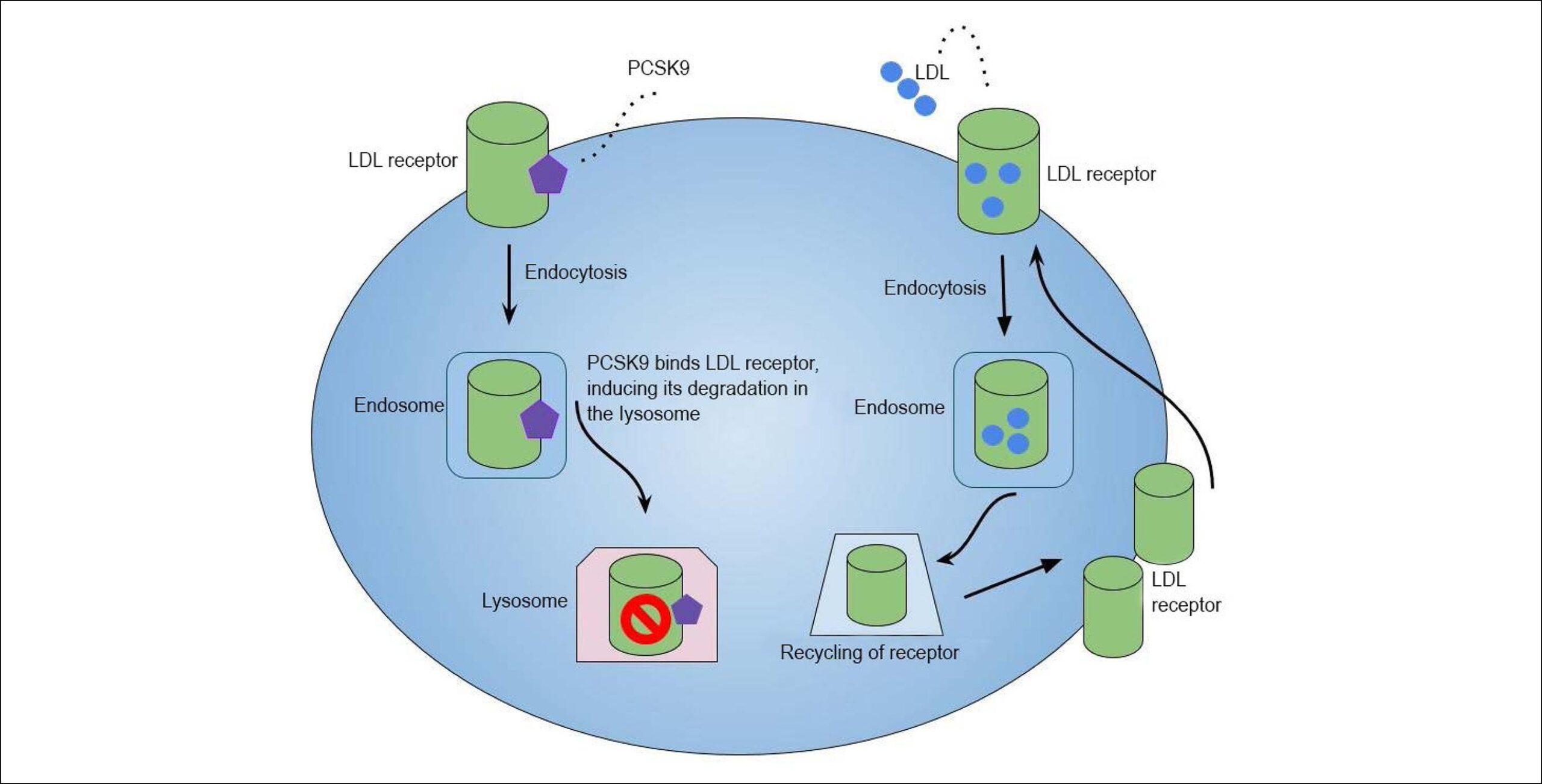
Coronary artery disease (CAD) is one of the leading causes of mortality. High circulating levels of low-density lipoprotein (LDL) in the blood are associated with cardiovascular mortality, whether through an etiological role or through its association with the progression of CAD per se. Randomized clinical trials have shown that, when LDL levels are reduced, cardiovascular risk is also reduced, which reinforces this association. The first major trial involving a hypolipidemic agent of the statin family, the Scandinavian Simvastatin Survival Study (4S), was published in 1994 and found a significant reduction in mortality in patients at high cardiovascular risk. However, even in subsequent studies with different statins, a residual risk persisted, and this seems not to have changed over time; it is speculated that this risk may be due to statin intolerance. In this scenario, the potential exists for novel hypolipidemic agents to drive a true revolution in the therapy of dyslipidemia. The recent discovery of PCSK9 inhibitors (PCSK9i), a class of hypolipidemic monoclonal antibodies, is extremely promising. PCSK9 inhibition is capable of promoting a mean LDL reduction of up to 60%, with potential for very significant clinical repercussions, as every 38 mg/dL reduction in LDL appears to be associated with a 22% reduction in cardiovascular risk. This review addresses a brief history of PCSK9i, major trials of these drugs, cardiovascular outcomes, and aspects related to their efficacy and safety. Finally, the molecular mechanisms and possible pleiotropic effects of PCSK9i are also discussed.

  • Anticholesteromic Agents
  • Cardiovascular Diseases/physiopathology
  • Cholesterol, LDL
  • Coronary Artery Disease / mortality
  • Lipoproteins
  • Proprotein Convertase 9
Read Full Article
Creative Commons Attribution (CC BY) Creative Commons license
28/02/2019 DOI: 10.5935/abc.20190029 Views 1
Figure 1
ABC
Original Article

Elevated High-Sensitivity Troponin I in the Stabilized Phase after an Acute Coronary Syndrome Predicts All-Cause and Cardiovascular Mortality in a Highly Admixed Population: A 7-Year Cohort

Leandro Teixeira de Castro et al. Itamar de Souza Santos Alessandra C. Goulart Alexandre da Costa Pereira … Henrique Lane Staniak Marcio Sommer Bittencourt Paulo Andrade Lotufo Isabela Martins Bensenor

Abstract

Background:

High-sensitivity cardiac troponin I (hs-cTnI) has played an important role in the risk stratification of patients during the in-hospital phase of acute coronary syndrome (ACS), but few studies have determined its role as a long-term prognostic marker in the outpatient setting.

Objective:

To investigate the association between levels of hs-cTnI measured in the subacute phase after an ACS event and long-term prognosis in a highly admixed population.

Methods:

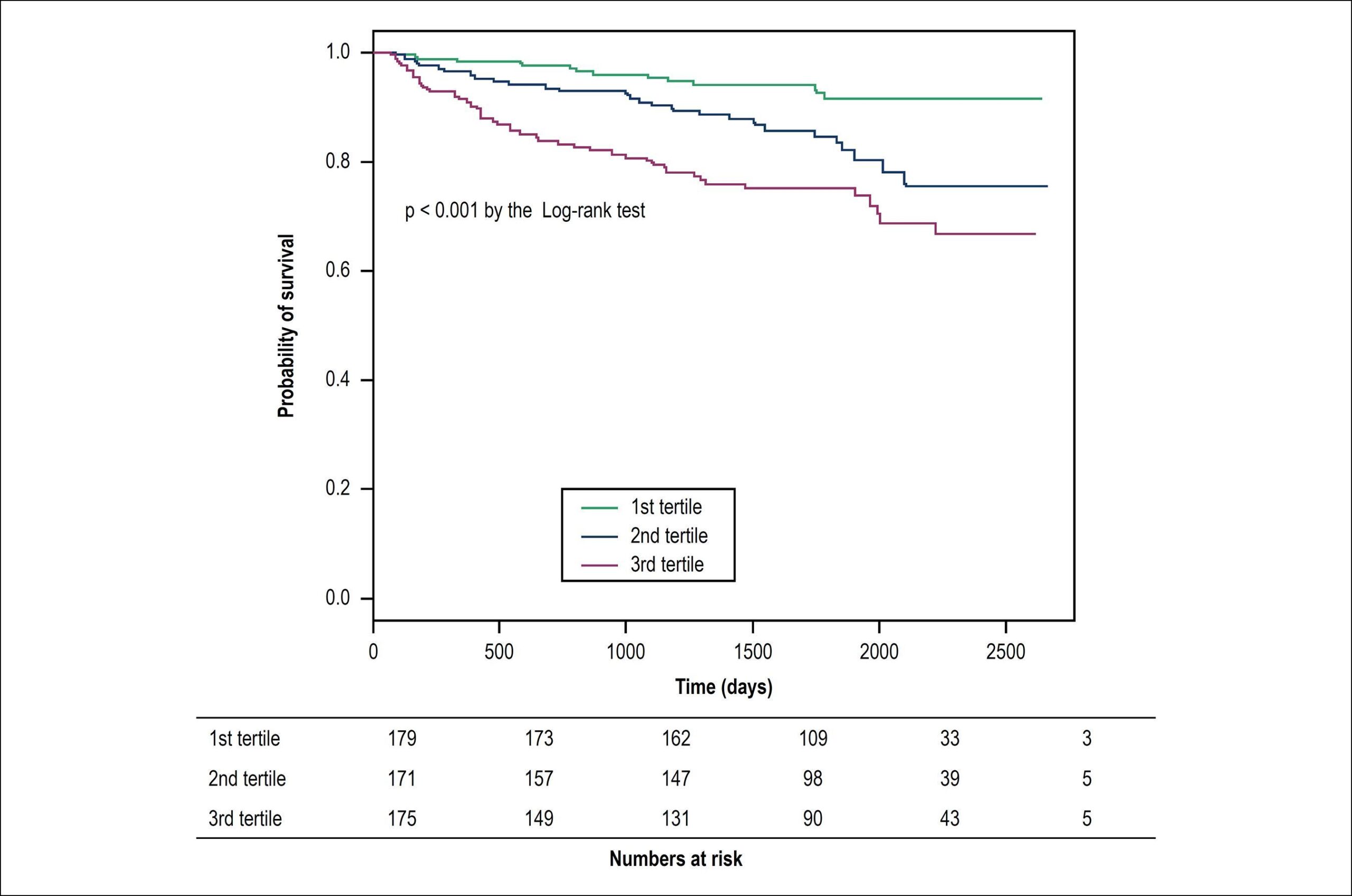
We measured levels of hs-cTnI in 525 patients 25 to 90 days after admission for an ACS event; these patients were then divided into tertiles according to hs-cTnI levels and followed for up to 7 years. We compared all-cause and cardiovascular mortality using Cox proportional hazards models and adopting a significance level of 5%.

Results:

After a median follow-up of 51 months, patients in the highest tertile had a greater hazard ratio (HR) for all-cause mortality after adjustment for age, sex, known cardiovascular risk factors, medication use, and demographic factors (HR: 3.84, 95% CI: 1.92-8.12). These findings persisted after further adjustment for estimated glomerular filtration rate < 60 ml/min/1.73 m2 and left ventricular ejection fraction < 0.40 (HR: 6.53, 95% CI: 2.12-20.14). Cardiovascular mortality was significantly higher in the highest tertile after adjustment for age and sex (HR: 5.65, 95% CI: 1.94-16.47) and both in the first (HR: 4.90, 95% CI: 1.35-17.82) and second models of multivariate adjustment (HR: 5.89, 95% CI: 1.08-32.27).

Conclusions:

Elevated hs-cTnI levels measured in the stabilized phase after an ACS event are independent predictors of all-cause and cardiovascular mortality in a highly admixed population.

  • Biological Variation, Population
  • Coronary Artery Disease / mortality
  • Metabolic Syndrome
  • Prognosis
  • Risk Factors
  • Troponin I
Read Full Article
Creative Commons Attribution (CC BY) Creative Commons license
07/01/2019 DOI: 10.5935/abc.20180268 Views 1
Figure 1
ABC
Original Article

Anger and Coronary Artery Disease in Women Submitted to Coronary Angiography: A 48-Month Follow-Up

Karine Elisa Schwarzer Schmidt et al. Alexandre Schaan de Quadros Mauro Regis Moura Carlos Antonio Mascia Gottschall Márcia Moura Schmidt

Abstract

Background:

Anger control was significantly lower in patients with coronary artery disease (CAD), regardless of traditionally known risk factors, occurrence of prior events or other anger aspects in a previous study of our research group.

Objective:

To assess the association between anger and CAD, its clinical course and predictors of low anger control in women submitted to coronary angiography.

Methods:

This is a cohort prospective study. Anger was assessed by use of Spielberger’s State-Trait Anger Expression Inventory (STAXI). Women were consecutively scheduled to undergo coronary angiography, considering CAD definition as ≥ 50% stenosis of one epicardial coronary artery.

Results:

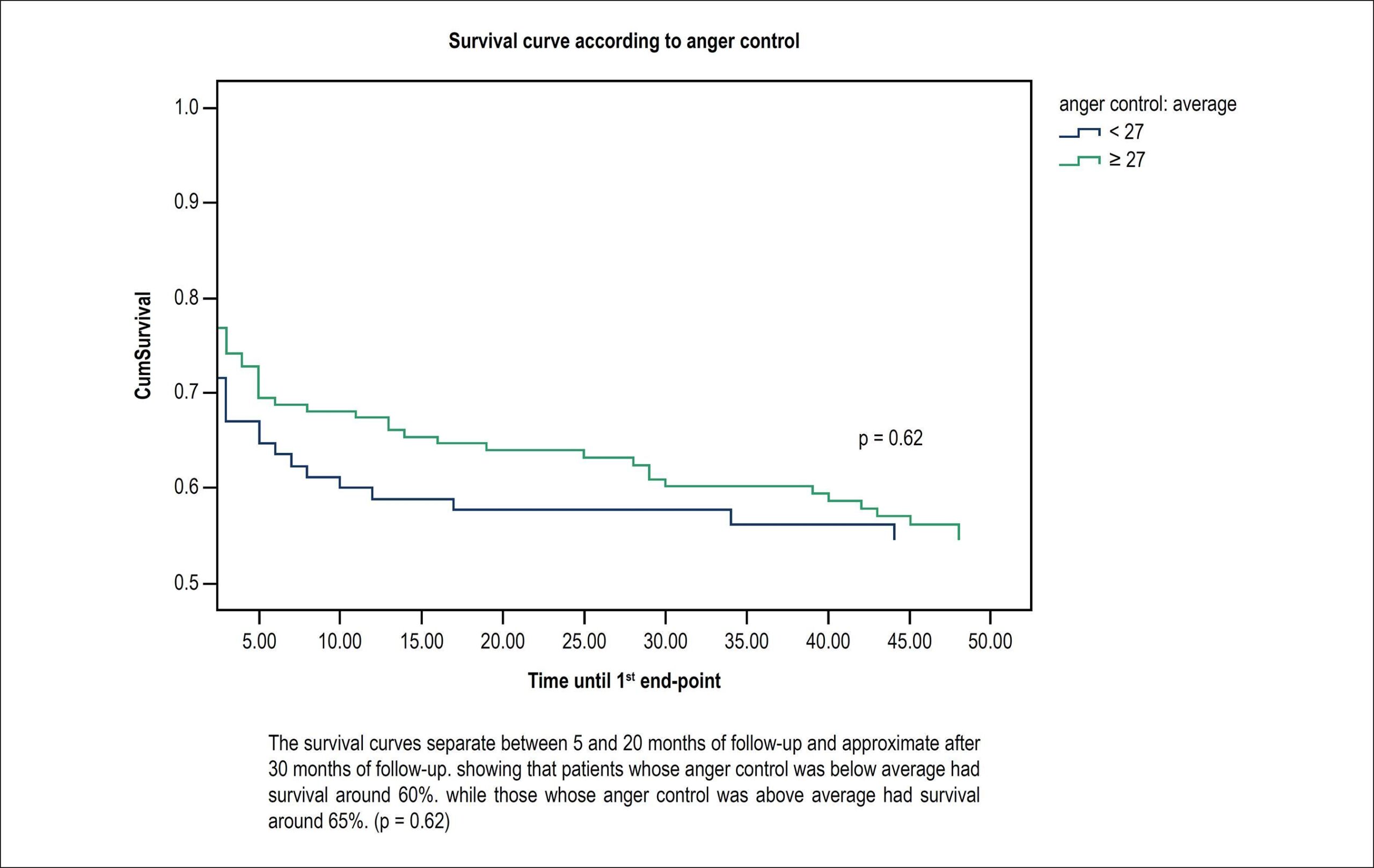
During the study, 255 women were included, being divided into two groups according to their anger control average (26.99). Those with anger control below average were younger and had a family history of CAD. Patients were followed up for 48 months to verify the occurrence of major cardiovascular events.

Conclusion:

Women with CAD undergoing coronary angiography had lower anger control, which was associated with age and CAD family history. On clinical follow-up, event-free survival did not significantly differ between patients with anger control above or below average.

  • Anger
  • Coronary Artery Disease / mortality
  • Personality Inventory
  • STAXI
Read Full Article
Creative Commons Attribution (CC BY) Creative Commons license
21/09/2018 DOI: 10.5935/abc.20180165
Figure 1
IJCS
Editorial

Cardiology and Sustainable Development

Claudio Tinoco Mesquita et al. Mauricio Leão

Brazil is one of the major economies of the planet, with a territory of continental extension (fifth greatest) and a population over 200 million inhabitants. Nevertheless, Brazil has a huge social inequality, evidenced by its health indicators. Ribeiro et al. have reported that cardiovascular diseases account for 31% of all deaths, most of which resulting from ischemic heart disease and cerebrovascular disease.

[…]

  • Cardiovascular Diseases / prevention & control
  • Coronary Artery Disease / mortality
  • NucleAR Medicine/trends
  • Quality of life
  • Symptom Assessment / trends
Read Full Article
Creative Commons Attribution (CC BY) Creative Commons license
01/01/2018 DOI: 10.5935/2359-4802.20170101 Views 1
Figure 1
ABC
Original Article

Comparative Study between Perfusion Changes and Positive Findings on Coronary Flow Reserve

Costantino Roberto Frack Costantini et al. Jose Antonio Ramires Costantino Ortiz Costantini Marcos Antonio Denk … Sergio Gustavo Tarbine Marcelo de Freitas Santos Daniel Aníbal Zanuttini Carmen Weigert Silveira Admar Moraes de Souza Rafael Michel de Macedo

Abstract

Background:

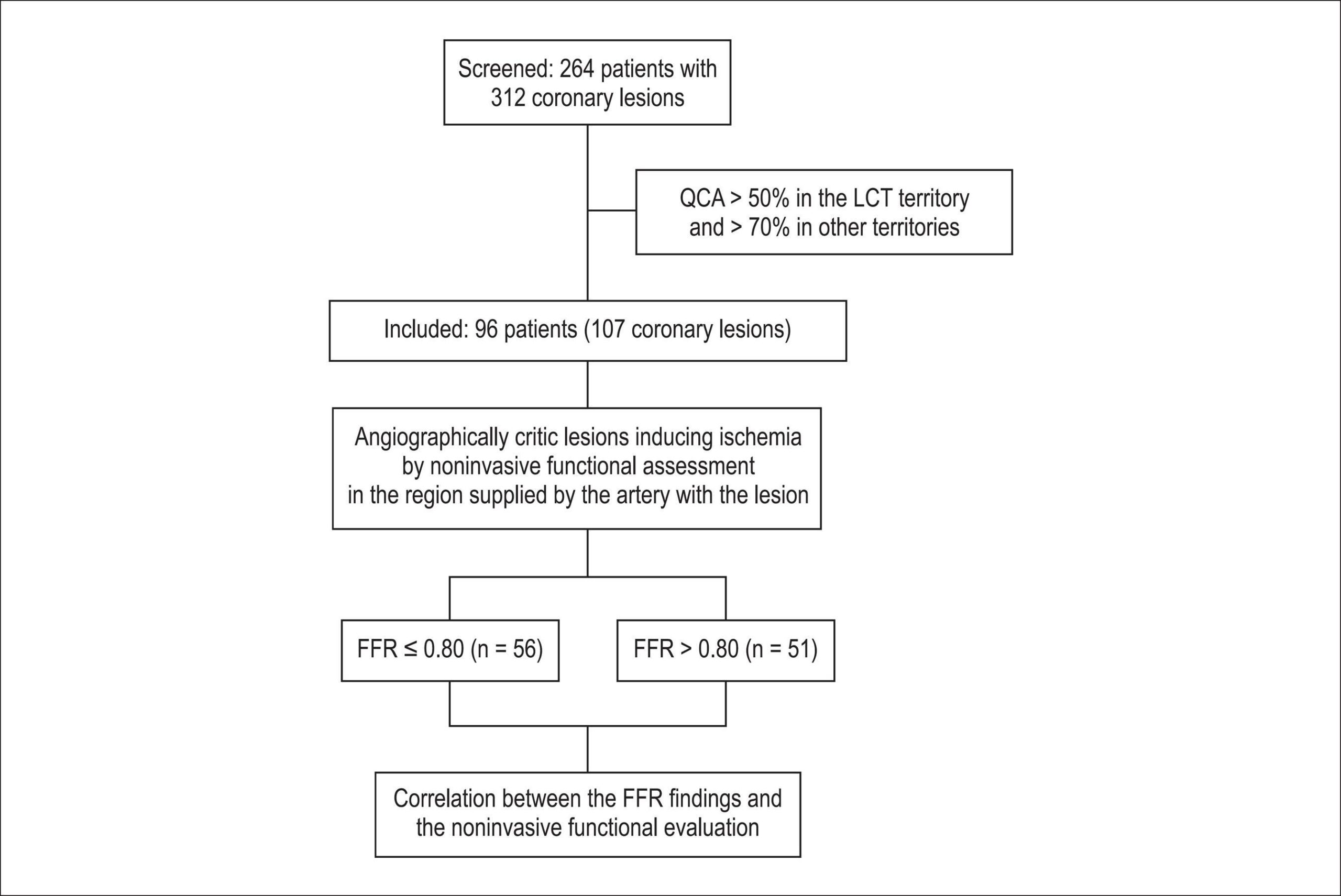
Functional assessment of coronary artery obstruction is used in cardiology practice to correlate anatomic obstructions with flow decrease. Among such assessments, the study of the coronary fractional flow reserve (FFR) has become the most widely used.

Objective:

To evaluate the correlation between FFR and findings of ischemia obtained by noninvasive methods including stress echocardiography and nuclear medicine and the presence of critical coronary artery obstruction.

Methods:

Retrospective study of cases treated with systematized and standardized procedures for coronary disease between March 2011 and August 2014. We included 96 patients with 107 critical coronary obstructions (> 50% in the coronary trunk and/or ≥ 70% in other segments) estimated by quantitative coronary angiography (QCA) and intracoronary ultrasound (ICUS). All cases presented ischemia in one of the noninvasive studies.

Results:

All 96 patients presented ischemia (100%) in one of the functional tests. On FFR study with adenosine 140 g/kg/min, 52% of the cases had values ≤ 0.80. On correlation analysis for FFR ≤ 0.80, the evaluation of sensitivity, specificity, positive and negative predictive values, accuracy, and ROC curve in relation to the stenosis degree and length, and presence of ischemia, no significant values or strong correlation were observed.

Conclusion:

Coronary FFR using a cut-off value of 0.80 showed no correlation with noninvasive ischemia tests in patients with severe coronary artery obstructions on QCA and ICUS.

  • Coronary Artery Disease / mortality
  • Fractional Flow Reserve Myocardial/physiology
  • Myocardial Ischemia
  • Percutaneous Coronary Intervention
Read Full Article
Creative Commons Attribution (CC BY) Creative Commons license
08/12/2016 DOI: 10.5935/abc.20160184
ABC
Viewpoint

Sudden Death in Brazil: Epilepsy Should be in Horizon

Fulvio Scorza et al. Paulo José Ferreira Tucci

To date, a considerable amount of valuable information about the problem of sudden cardiac death (SCD) has been described. The incidence of SCD in the United States ranges between 180000-400000 cases per year. Martinelli et al demonstrated an incidence of 21270 cases of SCD per year in the Metropolitan Area of São Paulo. Recently, Braggion-Santos et al. described the characteristics of SCD in Ribeirão Preto, Brazil, according to autopsy reports. Revising 4501 autopsies, they identified 899 cases of SCD (20%); the rate was 30/100000 residents/year. The vast majority of SCD cases involved coronary artery disease (64%). Based on available scientific knowledge related to SCD, it is extremely important to identify new areas of research that might improve understanding of this problem and to establish effective preventive measures to minimize or even control the occurrence of SCD.

Although studies have shown that the increase in the number of SCD caused by a combination of factors,, an equally important risk factor for SCD which is not reported and not explored in cardiologic research is epilepsy. Indeed, a series of data could be put forward to explain it.

[…]

  • Coronary Artery Disease / mortality
  • Death, Sudden / prevention & control
  • Death, Sudden, Cardiac
  • Epilepsy / mortality
Read Full Article
Creative Commons Attribution (CC BY) Creative Commons license
01/08/2015 DOI: 10.5935/abc.20150072
Figure 1
ABC
Original Article

Assessment of Myocardial Ischemia in Obese Individuals Undergoing Physical Stress Echocardiography (PSE)

Mara Graziele Maciel Silveira et al. Antônio Carlos Sobral Sousa Marcos Antônio Almeida Santos Irlaneide da Silva Tavares … Stephanie Macedo Andrade Luiza Dantas Melo Loren Suyane Oliveira de Andrade Emmanuel Lima Almeida Santos Joselina Luzia Menezes Oliveira

Background:

Physical stress echocardiography is an established methodology for diagnosis and risk stratification of coronary artery disease in patients with physical capacity. In obese (body mass index ≥ 30 kg/m2) the usefulness of pharmacological stress echocardiography has been demonstrated; however, has not been reported the use of physical stress echocardiography in this growing population group.

Objective:

To assess the frequency of myocardial ischemia in obese and non-obese patients undergoing physical stress echocardiography and compare their clinical and echocardiographic differences.

Methods:

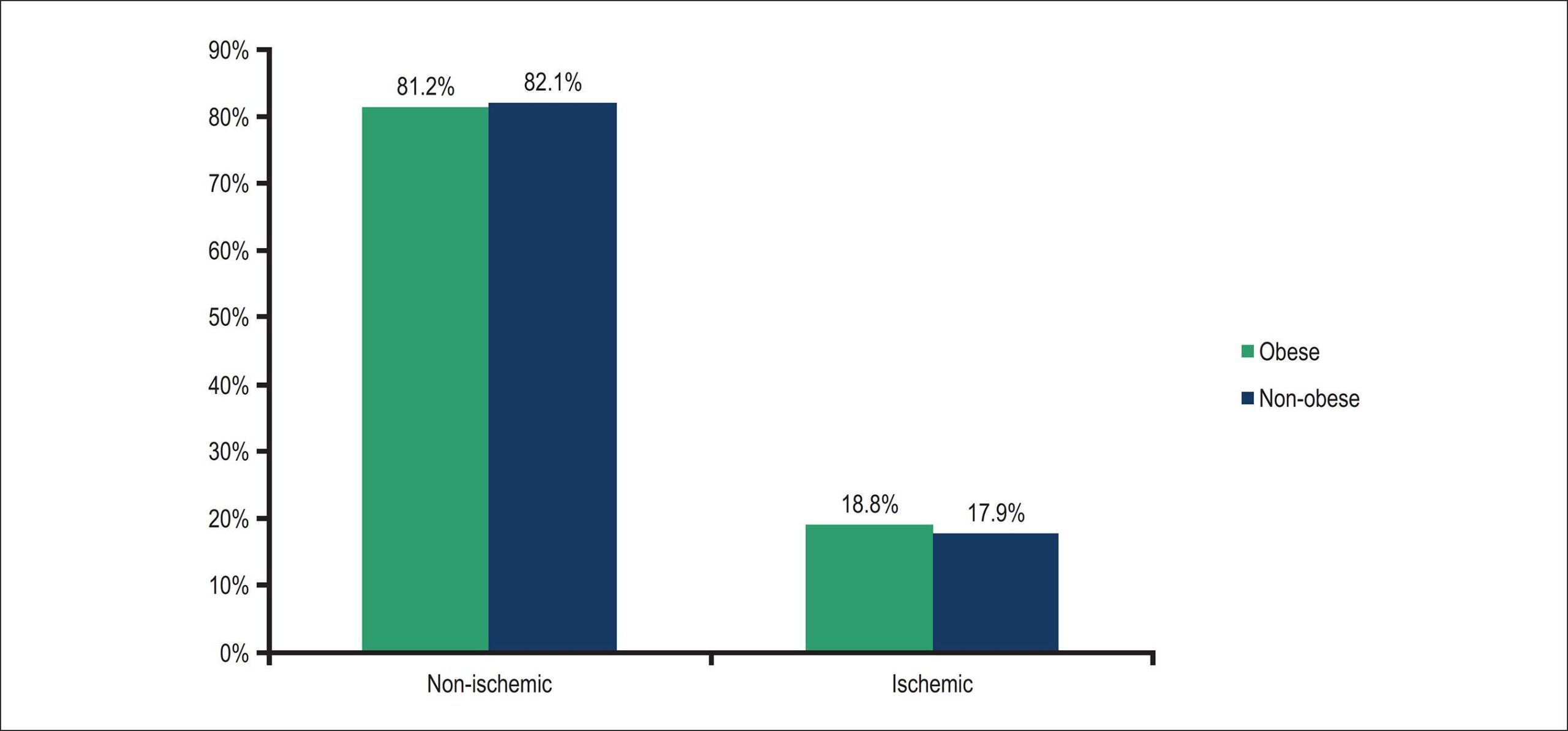
4,050 patients who underwent treadmill physical stress echocardiography were studied according to the Bruce protocol, divided into two groups: obese (n = 945; 23.3%) and non-obese (n = 3,105; 76.6%).

Results:

There was no difference regarding gender. Obese patients were younger (55.4 ± 10.9 vs. 57.56 ± 11.67) and had a higher frequency of hypertension (75.2% vs. 57, 2%; p < 0.0001), diabetis mellitus (15.2% vs. 10.9%; p < 0.0001), dyslipidemia (59.5% vs 51.9%; p < 0.0001), family history of coronary artery disease (59.3% vs. 55.1%; p = 0.023) and physical inactivity (71.4% vs. 52.9%, p < 0.0001). The obese had greater aortic dimensions (3.27 vs. 3.14 cm; p < 0.0001), left atrium (3.97 vs. 3.72 cm; p < 0.0001) and the relative thickness of the ventricule (33.7 vs. 32.8 cm; p < 0.0001). Regarding the presence of myocardial ischemia, there was no difference between groups (19% vs. 17.9%; p = 0.41). In adjusted logistic regression, the presence of myocardial ischemia remained independently associated with age, female gender, diabetes and hypertension.

Conclusion:

Obesity did not behave as a predictor of the presence of ischemia and the physical stress echocardiography. The application of this assessment tool in large scale sample demonstrates the feasibility of the methodology, also in obese.

  • Coronary Artery Disease / mortality
  • Echocardiography, Stress / methods
  • Myocardial Ischemia
  • Obesity
Read Full Article
Creative Commons Attribution (CC BY) Creative Commons license
13/02/2015 DOI: 10.5935/abc.20150006 Views 1

How to cite this article

EndNote RIS

Electronic Document Format (Vancouver)

Mesquita CT, Ker WS. Cardiovascular Risk Factors in Cardiologists Certified by the Brazilian Society of Cardiology: Lessons to be Learned. Arquivos Brasileiros de Cardiologia 2021;116(4):782-3.

Electronic Document Format (ABNT)

Mesquita, Claudio Tinoco; Ker, Wilter dos Santos. Cardiovascular Risk Factors in Cardiologists Certified by the Brazilian Society of Cardiology: Lessons to be Learned. Arquivos Brasileiros de Cardiologia, v. 116, n. 4, p. 782-783, Apr. 2021.

Electronic Document Format (APA)

Mesquita, C. T., & Ker, W. S. (2021). Cardiovascular Risk Factors in Cardiologists Certified by the Brazilian Society of Cardiology: Lessons to be Learned. Arquivos Brasileiros de Cardiologia, 116(4), 782-783.

Electronic Document Format (ISO)

Mesquita, Claudio Tinoco and Ker, Wilter dos Santos. Cardiovascular Risk Factors in Cardiologists Certified by the Brazilian Society of Cardiology: Lessons to be Learned. Arquivos Brasileiros de Cardiologia [online]. 2021, vol. 116, n. 4, [cited 2026-10-14], pp. 782-783. Available from: <https://journals.cardiol.br/en/article/cardiovascular-risk-factors-in-cardiologists-certified-by-the-brazilian-society-of-cardiology-lessons-to-be-learned/>. ISSN 0066-782X

EndNote RIS

Electronic Document Format (Vancouver)

Ferreira E, Alves TS, Mourilhe-Rocha R, Lacerda ALI, Albuquerque FN, Spineti PPM, Setta DXB, et al. Safety of Interventional Cardiology Procedures in Chronic Coronary Syndrome during the COVID-19 Pandemic. Arquivos Brasileiros de Cardiologia 2020;115(4):712-6.

Electronic Document Format (ABNT)

Ferreira, Esmeralci; Alves, Thales Siqueira; Mourilhe-Rocha, Ricardo; Lacerda, Ana Luiza Iannarella; Albuquerque, Felipe Neves; Spineti, Pedro Pimenta de Mello; Setta, Daniel Xavier de Brito; Esporcatte, Roberto; Albuquerque, Denilson Campos. Safety of Interventional Cardiology Procedures in Chronic Coronary Syndrome during the COVID-19 Pandemic. Arquivos Brasileiros de Cardiologia, v. 115, n. 4, p. 712-716, Oct. 2020.

Electronic Document Format (APA)

Ferreira, E., Alves, T. S., Mourilhe-Rocha, R., Lacerda, A. L. I., Albuquerque, F. N., Spineti, P. P. M., Setta, D. X. B., Esporcatte, R., & Albuquerque, D. C. (2020). Safety of Interventional Cardiology Procedures in Chronic Coronary Syndrome during the COVID-19 Pandemic. Arquivos Brasileiros de Cardiologia, 115(4), 712-716.

Electronic Document Format (ISO)

Ferreira, Esmeralci and Alves, Thales Siqueira and Mourilhe-Rocha, Ricardo and Lacerda, Ana Luiza Iannarella and Albuquerque, Felipe Neves and Spineti, Pedro Pimenta de Mello and Setta, Daniel Xavier de Brito and Esporcatte, Roberto and Albuquerque, Denilson Campos. Safety of Interventional Cardiology Procedures in Chronic Coronary Syndrome during the COVID-19 Pandemic. Arquivos Brasileiros de Cardiologia [online]. 2020, vol. 115, n. 4, [cited 2026-10-14], pp. 712-716. Available from: <https://journals.cardiol.br/en/article/safety-of-interventional-cardiology-procedures-in-chronic-coronary-syndrome-during-the-covid-19-pandemic/>. ISSN 0066-782X

EndNote RIS

Electronic Document Format (Vancouver)

Ferrari F, Stein R, Motta MT, Moriguchi EH. PCSK9 Inhibitors: Clinical Relevance, Molecular Mechanisms, and Safety in Clinical Practice. Arquivos Brasileiros de Cardiologia 2019;112(4):453-60.

Electronic Document Format (ABNT)

Ferrari, Filipe; Stein, Ricardo; Motta, Marcelo Trotte; Moriguchi, Emilio Hideyuki. PCSK9 Inhibitors: Clinical Relevance, Molecular Mechanisms, and Safety in Clinical Practice. Arquivos Brasileiros de Cardiologia, v. 112, n. 4, p. 453-460, Feb. 2019.

Electronic Document Format (APA)

Ferrari, F., Stein, R., Motta, M. T., & Moriguchi, E. H. (2019). PCSK9 Inhibitors: Clinical Relevance, Molecular Mechanisms, and Safety in Clinical Practice. Arquivos Brasileiros de Cardiologia, 112(4), 453-460.

Electronic Document Format (ISO)

Ferrari, Filipe and Stein, Ricardo and Motta, Marcelo Trotte and Moriguchi, Emilio Hideyuki. PCSK9 Inhibitors: Clinical Relevance, Molecular Mechanisms, and Safety in Clinical Practice. Arquivos Brasileiros de Cardiologia [online]. 2019, vol. 112, n. 4, [cited 2026-10-14], pp. 453-460. Available from: <https://journals.cardiol.br/en/article/pcsk9-inhibitors-clinical-relevance-molecular-mechanisms-and-safety-in-clinical-practice/>. ISSN 0066-782X

EndNote RIS

Electronic Document Format (Vancouver)

Castro LT, Santos IS, Goulart AC, Pereira AC, Staniak HL, Bittencourt MS, Lotufo PA, et al. Elevated High-Sensitivity Troponin I in the Stabilized Phase after an Acute Coronary Syndrome Predicts All-Cause and Cardiovascular Mortality in a Highly Admixed Population: A 7-Year Cohort. Arquivos Brasileiros de Cardiologia 2019;112(3):230-7.

Electronic Document Format (ABNT)

Castro, Leandro Teixeira de; Santos, Itamar de Souza; Goulart, Alessandra C.; Pereira, Alexandre da Costa; Staniak, Henrique Lane; Bittencourt, Marcio Sommer; Lotufo, Paulo Andrade; Bensenor, Isabela Martins. Elevated High-Sensitivity Troponin I in the Stabilized Phase after an Acute Coronary Syndrome Predicts All-Cause and Cardiovascular Mortality in a Highly Admixed Population: A 7-Year Cohort. Arquivos Brasileiros de Cardiologia, v. 112, n. 3, p. 230-237, Jan. 2019.

Electronic Document Format (APA)

Castro, L. T. , Santos, I. S., Goulart, A. C., Pereira, A. C., Staniak, H. L., Bittencourt, M. S., Lotufo, P. A., & Bensenor, I. M. (2019). Elevated High-Sensitivity Troponin I in the Stabilized Phase after an Acute Coronary Syndrome Predicts All-Cause and Cardiovascular Mortality in a Highly Admixed Population: A 7-Year Cohort. Arquivos Brasileiros de Cardiologia, 112(3), 230-237.

Electronic Document Format (ISO)

Castro, Leandro Teixeira de and Santos, Itamar de Souza and Goulart, Alessandra C. and Pereira, Alexandre da Costa and Staniak, Henrique Lane and Bittencourt, Marcio Sommer and Lotufo, Paulo Andrade and Bensenor, Isabela Martins. Elevated High-Sensitivity Troponin I in the Stabilized Phase after an Acute Coronary Syndrome Predicts All-Cause and Cardiovascular Mortality in a Highly Admixed Population: A 7-Year Cohort. Arquivos Brasileiros de Cardiologia [online]. 2019, vol. 112, n. 3, [cited 2026-10-14], pp. 230-237. Available from: <https://journals.cardiol.br/en/article/elevated-high-sensitivity-troponin-i-in-the-stabilized-phase-after-an-acute-coronary-syndrome-predicts-all-cause-and-cardiovascular-mortality-in-a-highly-admixed-population-a-7-year-cohort/>. ISSN 0066-782X

EndNote RIS

Electronic Document Format (Vancouver)

Schmidt KES, Quadros AS, Moura MR, Gottschall CAM, Schmidt MM. Anger and Coronary Artery Disease in Women Submitted to Coronary Angiography: A 48-Month Follow-Up. Arquivos Brasileiros de Cardiologia 2018;111(3):410-6.

Electronic Document Format (ABNT)

Schmidt, Karine Elisa Schwarzer; Quadros, Alexandre Schaan de; Moura, Mauro Regis; Gottschall, Carlos Antonio Mascia; Schmidt, Márcia Moura. Anger and Coronary Artery Disease in Women Submitted to Coronary Angiography: A 48-Month Follow-Up. Arquivos Brasileiros de Cardiologia, v. 111, n. 3, p. 410-416, Sep. 2018.

Electronic Document Format (APA)

Schmidt, K. E. S., Quadros, A. S. , Moura, M. R., Gottschall, C. A. M., & Schmidt, M. M. (2018). Anger and Coronary Artery Disease in Women Submitted to Coronary Angiography: A 48-Month Follow-Up. Arquivos Brasileiros de Cardiologia, 111(3), 410-416.

Electronic Document Format (ISO)

Schmidt, Karine Elisa Schwarzer and Quadros, Alexandre Schaan de and Moura, Mauro Regis and Gottschall, Carlos Antonio Mascia and Schmidt, Márcia Moura. Anger and Coronary Artery Disease in Women Submitted to Coronary Angiography: A 48-Month Follow-Up. Arquivos Brasileiros de Cardiologia [online]. 2018, vol. 111, n. 3, [cited 2026-10-14], pp. 410-416. Available from: <https://journals.cardiol.br/en/article/anger-and-coronary-artery-disease-in-women-submitted-to-coronary-angiography-a-48-month-follow-up/>. ISSN 0066-782X

EndNote RIS

Electronic Document Format (Vancouver)

Mesquita CT, Leão M. Cardiology and Sustainable Development. International Journal of Cardiovascular Sciences 2018;31(1):1-3.

Electronic Document Format (ABNT)

Mesquita, Claudio Tinoco; Leão, Mauricio. Cardiology and Sustainable Development. International Journal of Cardiovascular Sciences, v. 31, n. 1, p. 1-3, Dec. 2017.

Electronic Document Format (APA)

Mesquita, C. T., & Leão, M. (2018). Cardiology and Sustainable Development. International Journal of Cardiovascular Sciences, 31(1), 1-3.

Electronic Document Format (ISO)

Mesquita, Claudio Tinoco and Leão, Mauricio. Cardiology and Sustainable Development. International Journal of Cardiovascular Sciences [online]. 2018, vol. 31, n. 1, [cited 2026-10-14], pp. 1-3. Available from: <https://journals.cardiol.br/en/article/cardiology-and-sustainable-development/>. ISSN 2359-4802

EndNote RIS

Electronic Document Format (Vancouver)

Costantini CRF, Ramires JA, Costantini CO, Denk MA, Tarbine SG, Santos MF, Zanuttini DA, et al. Comparative Study between Perfusion Changes and Positive Findings on Coronary Flow Reserve. Arquivos Brasileiros de Cardiologia 2016;108(1):38-46.

Electronic Document Format (ABNT)

Costantini, Costantino Roberto Frack; Ramires, Jose Antonio; Costantini, Costantino Ortiz; Denk, Marcos Antonio; Tarbine, Sergio Gustavo; Santos, Marcelo de Freitas; Zanuttini, Daniel Aníbal; Silveira, Carmen Weigert; Souza, Admar Moraes de; Macedo, Rafael Michel de. Comparative Study between Perfusion Changes and Positive Findings on Coronary Flow Reserve. Arquivos Brasileiros de Cardiologia, v. 108, n. 1, p. 38-46, Dec. 2016.

Electronic Document Format (APA)

Costantini, C. R. F., Ramires, J. A., Costantini, C. O., Denk, M. A., Tarbine, S. G., Santos, M. F., Zanuttini, D. A., Silveira, C. W., Souza, A. M. , & Macedo, R. M. (2016). Comparative Study between Perfusion Changes and Positive Findings on Coronary Flow Reserve. Arquivos Brasileiros de Cardiologia, 108(1), 38-46.

Electronic Document Format (ISO)

Costantini, Costantino Roberto Frack and Ramires, Jose Antonio and Costantini, Costantino Ortiz and Denk, Marcos Antonio and Tarbine, Sergio Gustavo and Santos, Marcelo de Freitas and Zanuttini, Daniel Aníbal and Silveira, Carmen Weigert and Souza, Admar Moraes de and Macedo, Rafael Michel de. Comparative Study between Perfusion Changes and Positive Findings on Coronary Flow Reserve. Arquivos Brasileiros de Cardiologia [online]. 2016, vol. 108, n. 1, [cited 2026-10-14], pp. 38-46. Available from: <https://journals.cardiol.br/en/article/comparative-study-between-perfusion-changes-and-positive-findings-on-coronary-flow-reserve/>. ISSN 0066-782X

EndNote RIS

Electronic Document Format (Vancouver)

Scorza F, Tucci PJF. Sudden Death in Brazil: Epilepsy Should be in Horizon. Arquivos Brasileiros de Cardiologia 2015;105(2):197-8.

Electronic Document Format (ABNT)

Scorza, Fulvio; Tucci, Paulo José Ferreira. Sudden Death in Brazil: Epilepsy Should be in Horizon. Arquivos Brasileiros de Cardiologia, v. 105, n. 2, p. 197-198, Jul. 2015.

Electronic Document Format (APA)

Scorza, F., & Tucci, P. J. F. (2015). Sudden Death in Brazil: Epilepsy Should be in Horizon. Arquivos Brasileiros de Cardiologia, 105(2), 197-198.

Electronic Document Format (ISO)

Scorza, Fulvio and Tucci, Paulo José Ferreira. Sudden Death in Brazil: Epilepsy Should be in Horizon. Arquivos Brasileiros de Cardiologia [online]. 2015, vol. 105, n. 2, [cited 2026-10-14], pp. 197-198. Available from: <https://journals.cardiol.br/en/article/sudden-death-in-brazil-epilepsy-should-be-in-horizon/>. ISSN 0066-782X

EndNote RIS

Electronic Document Format (Vancouver)

Silveira MGM, Sousa ACS, Santos MAA, Tavares IS, Andrade SM, Melo LD, Andrade LSO, et al. Assessment of Myocardial Ischemia in Obese Individuals Undergoing Physical Stress Echocardiography (PSE). Arquivos Brasileiros de Cardiologia 2015;104(5):394-400.

Electronic Document Format (ABNT)

Silveira, Mara Graziele Maciel; Sousa, Antônio Carlos Sobral; Santos, Marcos Antônio Almeida; Tavares, Irlaneide da Silva; Andrade, Stephanie Macedo; Melo, Luiza Dantas; Andrade, Loren Suyane Oliveira de; Santos, Emmanuel Lima Almeida; Oliveira, Joselina Luzia Menezes. Assessment of Myocardial Ischemia in Obese Individuals Undergoing Physical Stress Echocardiography (PSE). Arquivos Brasileiros de Cardiologia, v. 104, n. 5, p. 394-400, Feb. 2015.

Electronic Document Format (APA)

Silveira, M. G. M., Sousa, A. C. S., Santos, M. A. A., Tavares, I. S., Andrade, S. M., Melo, L. D., Andrade, L. S. O. , Santos, E. L. A., & Oliveira, J. L. M. (2015). Assessment of Myocardial Ischemia in Obese Individuals Undergoing Physical Stress Echocardiography (PSE). Arquivos Brasileiros de Cardiologia, 104(5), 394-400.

Electronic Document Format (ISO)

Silveira, Mara Graziele Maciel and Sousa, Antônio Carlos Sobral and Santos, Marcos Antônio Almeida and Tavares, Irlaneide da Silva and Andrade, Stephanie Macedo and Melo, Luiza Dantas and Andrade, Loren Suyane Oliveira de and Santos, Emmanuel Lima Almeida and Oliveira, Joselina Luzia Menezes. Assessment of Myocardial Ischemia in Obese Individuals Undergoing Physical Stress Echocardiography (PSE). Arquivos Brasileiros de Cardiologia [online]. 2015, vol. 104, n. 5, [cited 2026-10-14], pp. 394-400. Available from: <https://journals.cardiol.br/en/article/assessment-of-myocardial-ischemia-in-obese-individuals-undergoing-physical-stress-echocardiography-pse/>. ISSN 0066-782X

  • About ABC Family
  • Internal Regulation
  • Editorial Board
  • Brazilian Society of Cardiology (SBC)

Issues

SBC Guidelines

  • Videos
  • Podcasts
  • News