ABC Family Arquivos Brasileiros de Cardiologia International Journal of Cardiovascular Sciences ABC Heart Failure & Cardiomyopathy ABC Imagem Cardiovascular
Português English
ABC Family
Português English
  • About
    • About ABC Family
    • Internal Regulation
    • Editorial Board
    • Brazilian Society of Cardiology (SBC)
  • Issues
  • SBC Guidelines
  • Content
    • Videos
    • Podcasts
    • News
  • About
    • About ABC Family
    • Internal Regulation
    • Editorial Board
    • Brazilian Society of Cardiology (SBC)
  • Issues
  • SBC Guidelines
  • Content
    • Videos
    • Podcasts
    • News

ABC Family

  • ABC Family
  • Arquivos Brasileiros de Cardiologia
  • International Journal of Cardiovascular Sciences
  • ABC Heart Failure & Cardiomyopathy
  • ABC Imagem Cardiovascular
Search in

No content found.

Journals
Ordering
Article types
Others

  1. Home
  2. Keyword: Morbimortality
Figure 1
IJCS
Original Article

Is Frailty Syndrome a Predictor of Morbimortality in Postoperative Cardiac Surgery? – A Retrospective Cohort Study

Daniela Meirelles do Nascimento et al. Cíntia Ehlers Botton Felipe Vargas Santos Márcia Cristina Rover … Marília Santos Moura Bruna Müller Leão Beatriz D. Schaan

Abstract

Background

Frailty is a biological syndrome suggested as a better predictor of morbimortality than chronological age.

Objective

To assess associations between frailty and morbimortality outcomes in postoperative cardiac surgery.

Methods

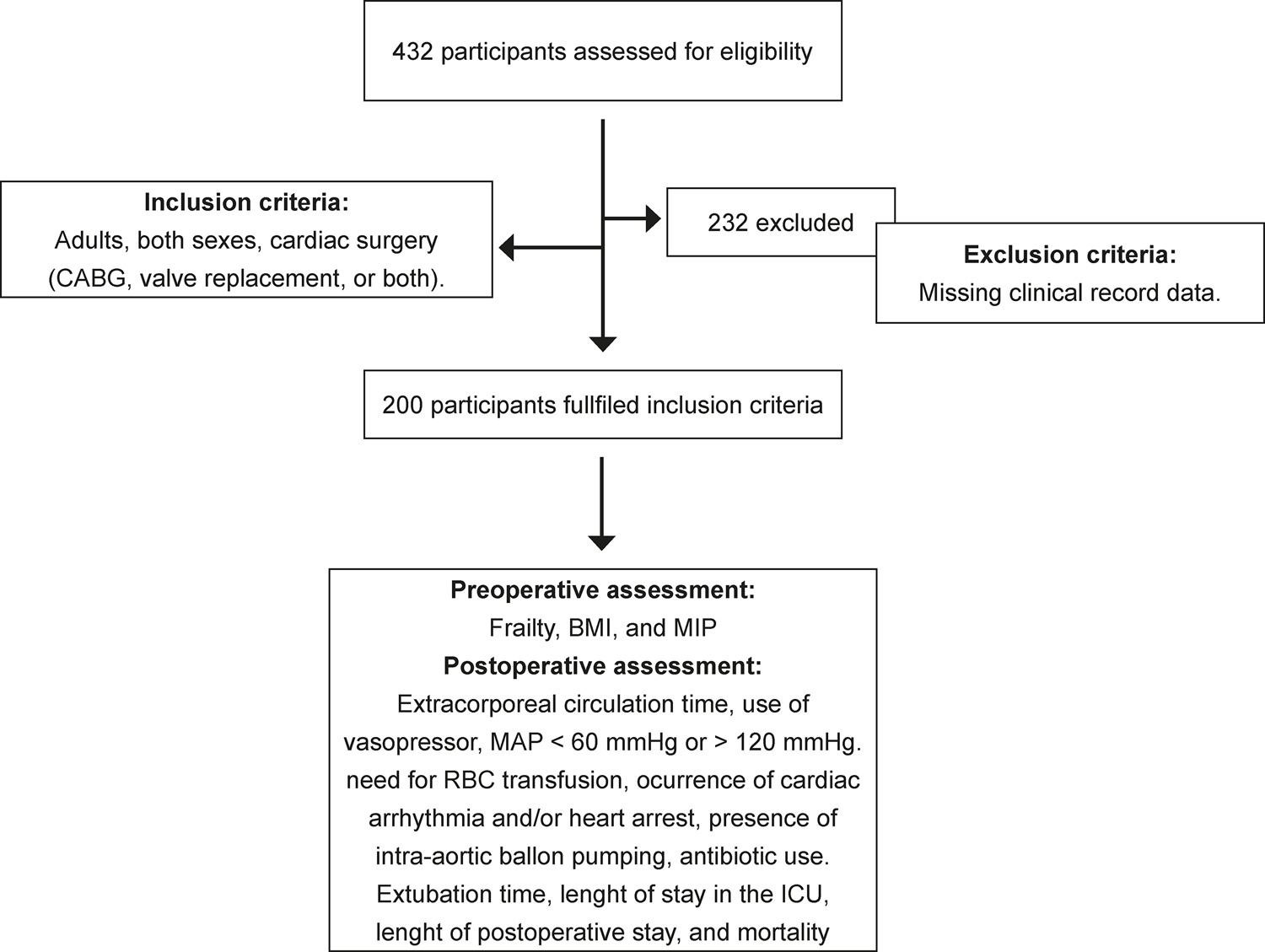
A retrospective cohort study was conducted with cardiac surgery patients. Frailty and maximal inspiratory pressure (MIP) were assessed before surgery. Postoperative outcomes were: extracorporeal circulation time; use of vasopressor; mean arterial pressure (MAP); red blood cell (RBC) transfusion; cardiac arrhythmia and/or heart arrest; presence of intra-aortic balloon pump; antibiotic use; extubation time; length of stay in the intensive care unit (ICU); length of postoperative stay; mortality. One-way ANOVA was used to compare postoperative variables between frailty categories; Spearman was used to evaluate the correlations between frailty and postoperative variables. Age, sex, and MIP were introduced into multiple regression models to find the independent association between postoperative variables and frailty. A significance level of p < 0.05 was adopted.

Results

The medical records of 200 patients were analyzed (65.7±7.2 years; 68.5% men; 63.5% non-frail, 22.5% pre-frail, 14% frail). Frailty was not a predictor of postoperative outcomes. Age was an independent predictor for alterations in MAP (PR: 1.028, 95% CI: 1.003-1.053, p=0.025), need for RBC transfusion (PR: 1.034, 95% CI: 1.007-1.062, p=0.014), longer extubation time (PR: 1.052, 95% CI: 1.023-1.083, p<0.001), length of stay in the ICU (ß: 0.031, 95% CI: 0.010-0.053, p=0.005), length of postoperative stay (ß: 0.017, 95% CI: 0.003-0.031, p=0.015).

Conclusions

Frailty was not a predictor of morbimortality following cardiac surgery in middle-aged and older adults; however, age did predict morbidities in this setting.
  • Cardiac Surgery
  • Fragility Syndrome
  • Morbimortality
  • postoperative complications
Read Full Article
Creative Commons Attribution (CC BY) Creative Commons license
09/05/2022 DOI: 10.36660/ijcs.20210180
ABC
Editorial

The Importance of Assessing Malnutrition and Cachexia in Chagas Cardiomyopathy

Salvador Rassi et al. Daniela do Carmo Rassi Aguinaldo Figueiredo Freitas Júnior

Chagas cardiomyopathy, described by Carlos Chagas more than 100 years ago, is still a cause of significant morbidity and mortality, and has a negative effect on socioeconomic status of Latin America countries, including Brazil.

Malnutrition and cachexia in heart failure (HF), especially in Chagas disease patients, has a multifactorial etiology. Decreased food intake may be caused either by a reduced supply of foods to these usually underprivileged patients or by anorexia, which is common in this syndrome. Many factors may be involved in anorexia and weight loss, including tasteless food (mainly due to the low sodium diet) and due to visceral (mainly hepatic and intestinal) congestion. Hepatomegaly, usually dense, causes gastric discomfort due to left lobe enlargement and compression of the stomach. Pain in the right hypochondrium is caused by stretching of the liver capsule. Intestinal mucosal edema causes protein and fat malabsorption, ultimately affecting nutrition. Neuroendocrine and immunological changes are also involved in the development of cachexia in HF patients. Patients with cachexia have increased plasma levels of tumor necrosis factor-alpha (TNF-α) and other inflammatory cytokines, particularly interleukin (IL)-6 and IL-1. This results from bacterial translocation, in which abnormalities of the gastrointestinal tract are involved in the development of cachexia and systemic inflammation. Effects of these cytokines include proteolysis and loss of skeletal muscle mass, with aggravation of cachexia.

[…]

  • Cachexia
  • Chagas Cardiomyopathy
  • Epidemiology
  • Heart Failure/complications
  • Hospitalization
  • malnutrition
  • Morbimortality
  • Prognosis
  • Weight Loss
Read Full Article
Creative Commons Attribution (CC BY) Creative Commons license
21/02/2022 DOI: 10.36660/abc.20210919 Views 1
ABC
Editorial

The Importance of Recognizing the Co-Occurrence of Cardiometabolic Risk Factors in the Population to Establish Priorities in Public Policies

Helena Cramer Veiga Rey

Cardiometabolic disease (CMD) is the leading cause of morbidity and mortality around the globe. Metabolic syndrome (MS) is a collection of risk factors for metabolic disease, including elevated blood pressure, hypertension, hyperglycemia, dyslipidemia, and obesity. When these risk factors are present in combination, the likelihood of future cardiovascular issues increases more than when any of these risks is present alone.

MS has an estimated frequency between 20% and 25% in the adult population worldwide, and the prevalence increases with age.;

[…]

  • C-Reactive Protein
  • Carotid Intima-Media Thickness
  • Diabetes Mellitus
  • Hypertension
  • Metabolic Syndrome X
  • Morbimortality
  • Obesity
  • Public Health
  • Risk Factors
Read Full Article
Creative Commons Attribution (CC BY) Creative Commons license
26/07/2021 DOI: 10.36660/abc.20210511 Views 2
ABC
Editorial

Mitral Regurgitation and Transcatheter Aortic Valve Replacement: Are There Any Other Prognostic Implications?

Antonio de Santis

There is a variable prevalence of moderate to severe mitral regurgitation (13 to 74%) in patients with severe degenerative aortic stenosis. – In elderly and frail patients, this association can generate clinical dilemmas in cardiological practice: should I submit my patient to combined valve surgery, exposing him to higher morbidity and mortality, or contemplate only the severe aortic stenosis with a less aggressive treatment represented by the transcatheter aortic valve replacement (TAVR)? The variable degrees of severity associated with the commonly functional etiology (up to 80%) of the associated mitral regurgitation, places aortic valve stenosis in a high prominent position at this clinical hierarchy, with a resultant predilection for performing TAVR in these scenarios. In fact, some studies showed an improvement in the mitral regurgitation severity after TAVR, especially in patients with functional etiology and without pulmonary hypertension or atrial fibrillation. –

The impact of baseline mitral regurgitation on patients undergoing TAVR is still controversial. Toggweiler et al. found that moderate to severe baseline mitral regurgitation in patients undergoing TAVR was associated with higher early mortality rates (first 30 days), with no difference in late mortality. Conversely, Barbanti et al., using data from the randomized Placement of Aortic Transcatheter Valve (PARTNER) trial cohort A, found that moderate to severe baseline mitral regurgitation was associated with higher late mortality only in the surgical aortic valve replacement group, with no prognostic implication in the TAVR group.

[…]

  • Elderly
  • Mitral Valve Insufficiency / surgery
  • Morbimortality
  • Transcatheter Aortic Valve Replacement
Read Full Article
Creative Commons Attribution (CC BY) Creative Commons license
14/06/2021 DOI: 10.36660/abc.20210392
Figure 1
ABC
Original Article

Access to Reperfusion Therapy and Mortality in Women with ST-Segment–Elevation Myocardial Infarction: VICTIM Register

Jussiely Cunha Oliveira et al. Mayse Pereira Souza Barros Ikaro Daniel de Carvalho Barreto Rubens Cruz Silva Filho … Volfanio Araújo Andrade André de Melo Oliveira Ticiane Clair Remacre Munareto Lima Jeferson Cunha Oliveira Larissa Andreline Maia Arcelino Laís Costa Souza Oliveira Eduesley Santana-Santos Marcos Antônio Almeida-Santos Antônio Carlos Sousa José Augusto Soares Barreto Filho

Abstract

Background:

Myocardial reperfusion is a fundamental part of the treatment for ST elevation myocardial infarction (STEMI) and is responsible for reducing morbidity and mortality in affected patients. However, reperfusion rates are usually lower and mortality rates higher in women compared to men.

Objectives:

To evaluate the prevalence of the use of reperfusion therapies among women and men with STEMI in hospitals where percutaneous coronary intervention (PCI) is available in the state of Sergipe.

Methods:

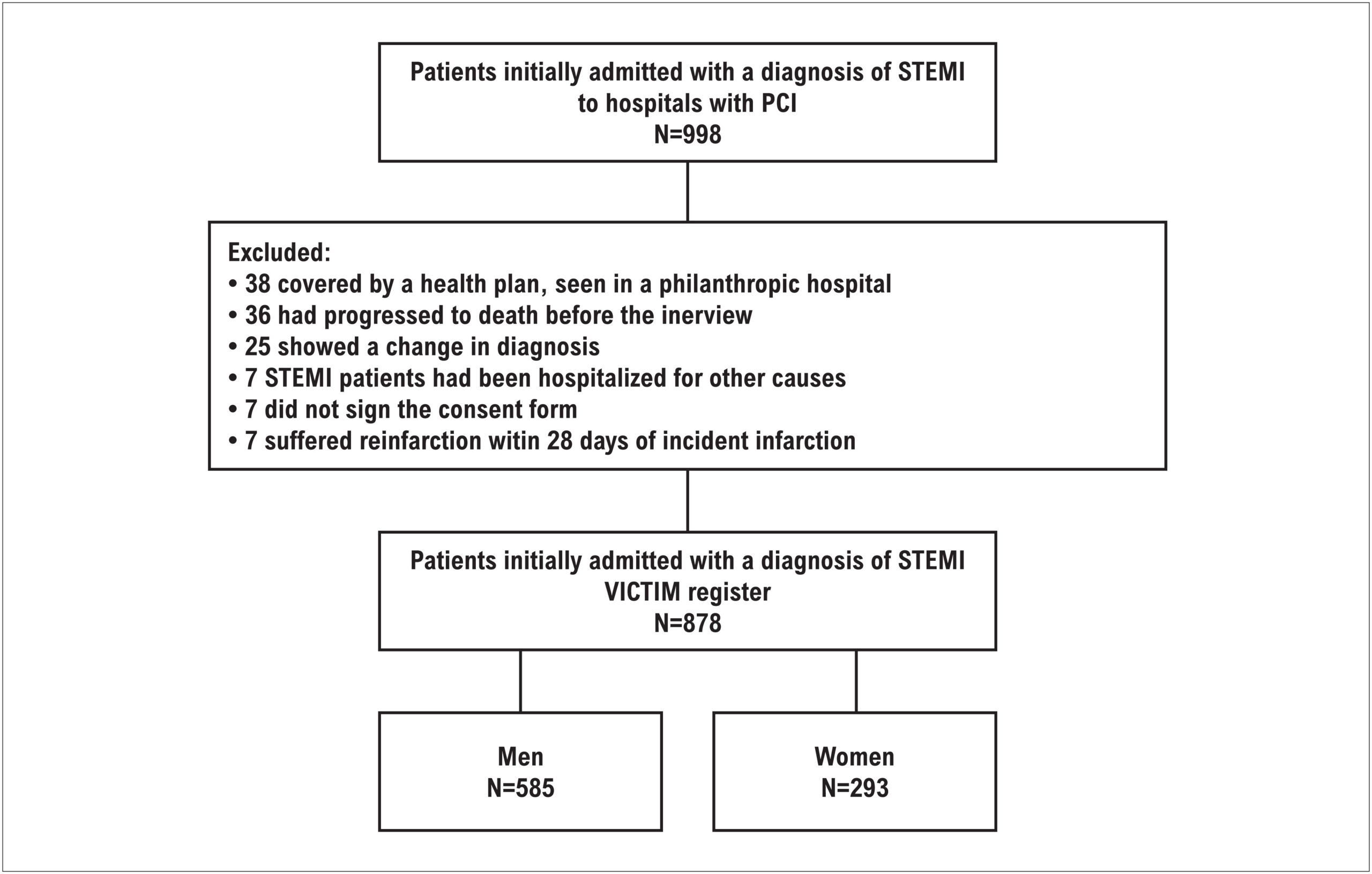
This is a cross-sectional study that used data from the VICTIM Register. Patients diagnosed with STEMI admitted to the four hospitals (one public and three private) where PCI is available in the state of Sergipe were evaluated, from December 2014 to June 2018. A multivariate analysis with adjusted model using mortality as a dependent variable was made. In all analyses, the level of significance adopted was 5% (p < 0.05).

Results:

A total of 878 volunteers with a confirmed diagnosis of STEMI, of which 33.4% were women, were included in the study. Only 53.3% of the patients underwent myocardial reperfusion (134 women versus 334 men). Fibrinolysis was performed only in 2.3% of all patients (1.7% of women versus 2.6% of men; p = 0.422). The rate of primary PCI was lower (44% versus 54.5%; p = 0.003) and hospital mortality was higher (16.1% versus 6.7%; p < 0.001) in women than in men.

Conclusion:

Women have significantly lower rates of primary PCI and higher hospital mortality. Reperfusion rates were low in both sexes and there was a clear underutilization of thrombolytic agents.

  • Gender and Health
  • Healthcare Disparities
  • Morbimortality
  • Myocardial Infarction
  • Myocardial Reperfusion
  • Percutaneous Coronary Intervention
  • Women
Read Full Article
Creative Commons Attribution (CC BY) Creative Commons license
16/04/2021 DOI: 10.36660/abc.20190468 Views 1
ABC
Editorial

Can Transthoracic Echocardiography Replace Chest Radiography in the Evaluation of Cardiomegaly in Chagas Cardiomyopathy?

Tiago Senra

Chagas cardiomyopathy (CCM), first described in 1909 by Carlos Chagas, is still associated with high morbidity and mortality and socioeconomic impact, especially in Latin American countries.

The search for epidemiological, clinical, laboratory, electrocardiographic, and image markers associated with its prognosis plays an important role in the risk stratification of these patients.

[…]

  • Cardiomegaly
  • Chagas Cardiomyopathy
  • Echocardiography/methods
  • Epidemiology
  • Heart Failure
  • Morbimortality
  • Radiography, Thoracic/methods
  • Socioeconomic Factors
Read Full Article
Creative Commons Attribution (CC BY) Creative Commons license
03/02/2021 DOI: 10.36660/abc.20200625 Views 2
ABC
Editorial

Rediscovering Brazil: How We Prevent and Treat Cardiovascular Disease

Letícia Rodrigues Costa et al. Eduardo Vasconcelos Passos Odilson Marcos Silvestre

In Brazil, cardiovascular diseases (CVD) represent 27% of total deaths. These are mainly due to coronary heart disease (32%), stroke (28%) and heart failure (18%). , Although CVD are the leading cause of death in all five Brazilian regions, the percentage of deaths from CVD is higher in the more developed regions, i.e., South and Southeast.

Preventing cardiovascular disease is preventing deaths from heart attack, stroke and heart failure. In addition to non-pharmacological measures, pharmacological measures are effective and should be applied following the stratification of cardiovascular risk and use of evidence-based drugs. Among subjects with high cardiovascular risk, i.e., those with the greatest chance of cardiovascular events in the next ten years, using pharmacological therapies saves lives. Optimized medical therapy promotes a 36% reduction in mortality, 27% reduction of death/myocardial infarction/stroke and improves the quality of life of patients with heart disease. However, despite the efficacy established and proven in clinical trials, in real life the adherence to therapy is low, even in developed countries, with about 40% of patients receiving optimized therapy after 5 years of diagnosis.

[…]

  • Cardiovascular Diseases / epidemiology
  • Cardiovascular Diseases, mortality
  • Cardiovascular Diseases/complications
  • Morbimortality
  • Myocardial Infarction
  • Prevention and Control
  • Risk Factors
  • Stroke
Read Full Article
Creative Commons Attribution (CC BY) Creative Commons license
03/02/2021 DOI: 10.36660/abc.20201295 Views 1
Figure 1
ABC
Original Article

Cerebrovascular Disease Mortality Trend in Brazil (1996 To 2015) and Association with Human Development Index and Social Vulnerability

Carlos Dornels Freire de Souza et al. Denilson José de Oliveira Leonardo Feitosa da Silva Camila Damasceno dos Santos … Monaliza Coelho Pereira João Paulo Silva de Paiva Thiago Cavalcanti Leal Renato de Souza Mariano Amanda Karine Barros Ferreira de Araújo Jussara Almeida de Oliveira Baggio

Abstract

Background

Cerebrovascular diseases (CBVD) are the second major cause of death in the world.

Objective

To analyze the mortality trend of CBVD in Brazil (1996 to 2015) and its association with Human Development Index (HDI) and the Social Vulnerability Index (SVI).

Methods

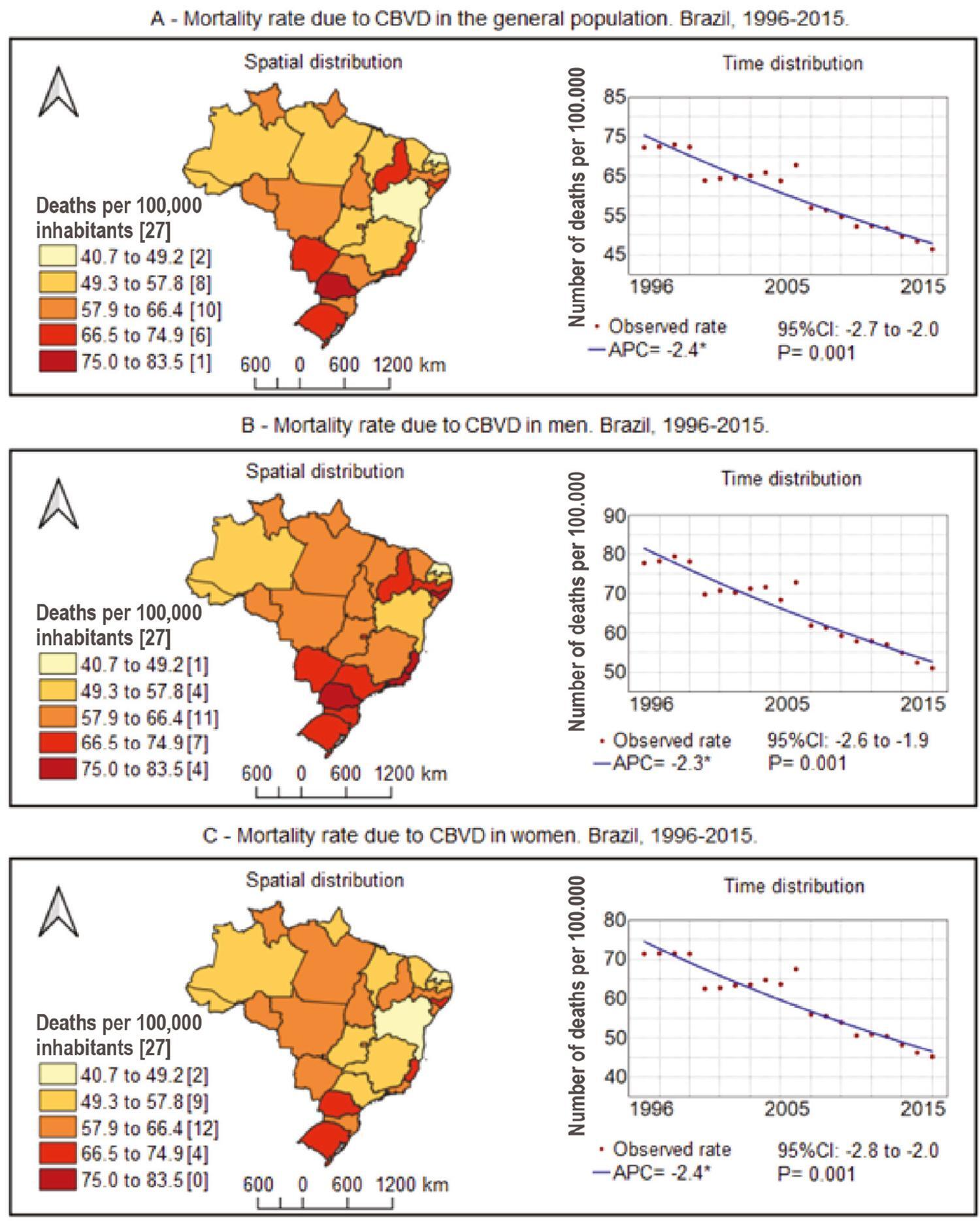
This is an ecological study. We analyzed the mortality rate standardized by CBVD. Death data were obtained from the Mortality Information System (SIM) and populational data from the Brazilian Institute of Geography and Statistics (IBGE). The model of regression by inflection points (Joinpoint regression) was used to perform the temporal analysis, calculating the Annual Percent Change (APC) and Average Annual Percent Change (AAPC), with 95% of confidence interval and a significance of 5%. Trends were classified as increasing, decreasing or stationary. A multivariate regression model was used to analyze the association between mortality by CBVD, HDI and SVI.

Results

During this period, 1,850,811 deaths by CBVD were recorded. We observed a reduction in the national mortality rate (APC -2.4; p = 0.001). Twenty federation units showed a significant trend, of which 13 showed reduction, including all states in the Midwest (n=4), Southeast (n=4) and South (n=3). The HDI was positively associated and the SVI was negatively associated with mortality (p = 0.046 and p = 0.026, respectively).

Conclusion

An unequal epidemiological course of mortality was observed between the regions, being higher in the Southeast and South states, with a significative tendency of reduction, and lower in the North and Northeast states, but with a significative tendency of increase. HDI and SVI showed an association with mortality. (Arq Bras Cardiol. 2021; 116(1):89-99)

  • Brain Diseases/mortality
  • Community Development
  • Emergency Medical Emergencies/organization and administration
  • Epidemiology
  • Morbimortality
  • Social Vulnerability
  • Stroke / mortality
  • Time Seies Studies
Read Full Article
Creative Commons Attribution (CC BY) Creative Commons license
03/02/2021 DOI: 10.36660/abc.20190532

How to cite this article

EndNote RIS

Electronic Document Format (Vancouver)

Nascimento DM, Botton CE, Santos FV, Rover MC, Moura MS, Leão BM, Schaan BD, et al. Is Frailty Syndrome a Predictor of Morbimortality in Postoperative Cardiac Surgery? – A Retrospective Cohort Study. International Journal of Cardiovascular Sciences 2022;35(6):760-9.

Electronic Document Format (ABNT)

Nascimento, Daniela Meirelles do; Botton, Cíntia Ehlers; Santos, Felipe Vargas; Rover, Márcia Cristina; Moura, Marília Santos; Leão, Bruna Müller; Schaan, Beatriz D.. Is Frailty Syndrome a Predictor of Morbimortality in Postoperative Cardiac Surgery? – A Retrospective Cohort Study. International Journal of Cardiovascular Sciences, v. 35, n. 6, p. 760-769, May. 2022.

Electronic Document Format (APA)

Nascimento, D. M. , Botton, C. E., Santos, F. V., Rover, M. C., Moura, M. S., Leão, B. M., & Schaan, B. D. (2022). Is Frailty Syndrome a Predictor of Morbimortality in Postoperative Cardiac Surgery? – A Retrospective Cohort Study. International Journal of Cardiovascular Sciences, 35(6), 760-769.

Electronic Document Format (ISO)

Nascimento, Daniela Meirelles do and Botton, Cíntia Ehlers and Santos, Felipe Vargas and Rover, Márcia Cristina and Moura, Marília Santos and Leão, Bruna Müller and Schaan, Beatriz D.. Is Frailty Syndrome a Predictor of Morbimortality in Postoperative Cardiac Surgery? – A Retrospective Cohort Study. International Journal of Cardiovascular Sciences [online]. 2022, vol. 35, n. 6, [cited 2026-10-14], pp. 760-769. Available from: <https://journals.cardiol.br/en/article/is-frailty-syndrome-a-predictor-of-morbimortality-in-postoperative-cardiac-surgery-a-retrospective-cohort-study/>. ISSN 2359-4802

EndNote RIS

Electronic Document Format (Vancouver)

Rassi S, Rassi DC, Freitas Júnior AF. The Importance of Assessing Malnutrition and Cachexia in Chagas Cardiomyopathy. Arquivos Brasileiros de Cardiologia 2022;118(1):12-3.

Electronic Document Format (ABNT)

Rassi, Salvador; Rassi, Daniela do Carmo; Freitas Júnior, Aguinaldo Figueiredo. The Importance of Assessing Malnutrition and Cachexia in Chagas Cardiomyopathy. Arquivos Brasileiros de Cardiologia, v. 118, n. 1, p. 12-13, Feb. 2022.

Electronic Document Format (APA)

Rassi, S., Rassi, D. C., & Freitas Júnior, A. F. (2022). The Importance of Assessing Malnutrition and Cachexia in Chagas Cardiomyopathy. Arquivos Brasileiros de Cardiologia, 118(1), 12-13.

Electronic Document Format (ISO)

Rassi, Salvador and Rassi, Daniela do Carmo and Freitas Júnior, Aguinaldo Figueiredo. The Importance of Assessing Malnutrition and Cachexia in Chagas Cardiomyopathy. Arquivos Brasileiros de Cardiologia [online]. 2022, vol. 118, n. 1, [cited 2026-10-14], pp. 12-13. Available from: <https://journals.cardiol.br/en/article/the-importance-of-assessing-malnutrition-and-cachexia-in-chagas-cardiomyopathy/>. ISSN 0066-782X

EndNote RIS

Electronic Document Format (Vancouver)

Rey HCV. The Importance of Recognizing the Co-Occurrence of Cardiometabolic Risk Factors in the Population to Establish Priorities in Public Policies. Arquivos Brasileiros de Cardiologia 2021;117(1):49-50.

Electronic Document Format (ABNT)

Rey, Helena Cramer Veiga. The Importance of Recognizing the Co-Occurrence of Cardiometabolic Risk Factors in the Population to Establish Priorities in Public Policies. Arquivos Brasileiros de Cardiologia, v. 117, n. 1, p. 49-50, Jul. 2021.

Electronic Document Format (APA)

Rey, H. C. V. (2021). The Importance of Recognizing the Co-Occurrence of Cardiometabolic Risk Factors in the Population to Establish Priorities in Public Policies. Arquivos Brasileiros de Cardiologia, 117(1), 49-50.

Electronic Document Format (ISO)

Rey, Helena Cramer Veiga. The Importance of Recognizing the Co-Occurrence of Cardiometabolic Risk Factors in the Population to Establish Priorities in Public Policies. Arquivos Brasileiros de Cardiologia [online]. 2021, vol. 117, n. 1, [cited 2026-10-14], pp. 49-50. Available from: <https://journals.cardiol.br/en/article/the-importance-of-recognizing-the-co-occurrence-of-cardiometabolic-risk-factors-in-the-population-to-establish-priorities-in-public-policies/>. ISSN 0066-782X

EndNote RIS

Electronic Document Format (Vancouver)

Santis A. Mitral Regurgitation and Transcatheter Aortic Valve Replacement: Are There Any Other Prognostic Implications?. Arquivos Brasileiros de Cardiologia 2021;116(6):1070-1.

Electronic Document Format (ABNT)

Santis, Antonio de. Mitral Regurgitation and Transcatheter Aortic Valve Replacement: Are There Any Other Prognostic Implications?. Arquivos Brasileiros de Cardiologia, v. 116, n. 6, p. 1070-1071, Jun. 2021.

Electronic Document Format (APA)

Santis, A. (2021). Mitral Regurgitation and Transcatheter Aortic Valve Replacement: Are There Any Other Prognostic Implications?. Arquivos Brasileiros de Cardiologia, 116(6), 1070-1071.

Electronic Document Format (ISO)

Santis, Antonio de. Mitral Regurgitation and Transcatheter Aortic Valve Replacement: Are There Any Other Prognostic Implications?. Arquivos Brasileiros de Cardiologia [online]. 2021, vol. 116, n. 6, [cited 2026-10-14], pp. 1070-1071. Available from: <https://journals.cardiol.br/en/article/mitral-regurgitation-and-transcatheter-aortic-valve-replacement-are-there-any-other-prognostic-implications/>. ISSN 0066-782X

EndNote RIS

Electronic Document Format (Vancouver)

Oliveira JC, Barros MPS, Barreto IDC, Silva Filho RC, Andrade VA, Oliveira AM, Lima TCRM, et al. Access to Reperfusion Therapy and Mortality in Women with ST-Segment–Elevation Myocardial Infarction: VICTIM Register. Arquivos Brasileiros de Cardiologia 2021;116(4):695-703.

Electronic Document Format (ABNT)

Oliveira, Jussiely Cunha; Barros, Mayse Pereira Souza; Barreto, Ikaro Daniel de Carvalho; Silva Filho, Rubens Cruz; Andrade, Volfanio Araújo; Oliveira, André de Melo; Lima, Ticiane Clair Remacre Munareto; Oliveira, Jeferson Cunha; Arcelino, Larissa Andreline Maia; Oliveira, Laís Costa Souza; Santana-Santos, Eduesley; Almeida-Santos, Marcos Antônio; Sousa, Antônio Carlos; Barreto Filho, José Augusto Soares. Access to Reperfusion Therapy and Mortality in Women with ST-Segment–Elevation Myocardial Infarction: VICTIM Register. Arquivos Brasileiros de Cardiologia, v. 116, n. 4, p. 695-703, Apr. 2021.

Electronic Document Format (APA)

Oliveira, J. C., Barros, M. P. S., Barreto, I. D. C., Silva Filho, R. C., Andrade, V. A., Oliveira, A. M., Lima, T. C. R. M., Oliveira, J. C., Arcelino, L. A. M., Oliveira, L. C. S., Santana-Santos, E., Almeida-Santos, M. A., Sousa, A. C., & Barreto Filho, J. A. S. (2021). Access to Reperfusion Therapy and Mortality in Women with ST-Segment–Elevation Myocardial Infarction: VICTIM Register. Arquivos Brasileiros de Cardiologia, 116(4), 695-703.

Electronic Document Format (ISO)

Oliveira, Jussiely Cunha and Barros, Mayse Pereira Souza and Barreto, Ikaro Daniel de Carvalho and Silva Filho, Rubens Cruz and Andrade, Volfanio Araújo and Oliveira, André de Melo and Lima, Ticiane Clair Remacre Munareto and Oliveira, Jeferson Cunha and Arcelino, Larissa Andreline Maia and Oliveira, Laís Costa Souza and Santana-Santos, Eduesley and Almeida-Santos, Marcos Antônio and Sousa, Antônio Carlos and Barreto Filho, José Augusto Soares. Access to Reperfusion Therapy and Mortality in Women with ST-Segment–Elevation Myocardial Infarction: VICTIM Register. Arquivos Brasileiros de Cardiologia [online]. 2021, vol. 116, n. 4, [cited 2026-10-14], pp. 695-703. Available from: <https://journals.cardiol.br/en/article/access-to-reperfusion-therapy-and-mortality-in-women-with-st-segment-elevation-myocardial-infarction-victim-register/>. ISSN 0066-782X

EndNote RIS

Electronic Document Format (Vancouver)

Senra T. Can Transthoracic Echocardiography Replace Chest Radiography in the Evaluation of Cardiomegaly in Chagas Cardiomyopathy?. Arquivos Brasileiros de Cardiologia 2021;116(1):75-6.

Electronic Document Format (ABNT)

Senra, Tiago. Can Transthoracic Echocardiography Replace Chest Radiography in the Evaluation of Cardiomegaly in Chagas Cardiomyopathy?. Arquivos Brasileiros de Cardiologia, v. 116, n. 1, p. 75-76, Feb. 2021.

Electronic Document Format (APA)

Senra, T. (2021). Can Transthoracic Echocardiography Replace Chest Radiography in the Evaluation of Cardiomegaly in Chagas Cardiomyopathy?. Arquivos Brasileiros de Cardiologia, 116(1), 75-76.

Electronic Document Format (ISO)

Senra, Tiago. Can Transthoracic Echocardiography Replace Chest Radiography in the Evaluation of Cardiomegaly in Chagas Cardiomyopathy?. Arquivos Brasileiros de Cardiologia [online]. 2021, vol. 116, n. 1, [cited 2026-10-14], pp. 75-76. Available from: <https://journals.cardiol.br/en/article/can-transthoracic-echocardiography-replace-chest-radiography-in-the-evaluation-of-cardiomegaly-in-chagas-cardiomyopathy/>. ISSN 0066-782X

EndNote RIS

Electronic Document Format (Vancouver)

Costa LR, Passos EV, Silvestre OM. Rediscovering Brazil: How We Prevent and Treat Cardiovascular Disease. Arquivos Brasileiros de Cardiologia 2021;116(1):117-8.

Electronic Document Format (ABNT)

Costa, Letícia Rodrigues; Passos, Eduardo Vasconcelos; Silvestre, Odilson Marcos. Rediscovering Brazil: How We Prevent and Treat Cardiovascular Disease. Arquivos Brasileiros de Cardiologia, v. 116, n. 1, p. 117-118, Feb. 2021.

Electronic Document Format (APA)

Costa, L. R., Passos, E. V., & Silvestre, O. M. (2021). Rediscovering Brazil: How We Prevent and Treat Cardiovascular Disease. Arquivos Brasileiros de Cardiologia, 116(1), 117-118.

Electronic Document Format (ISO)

Costa, Letícia Rodrigues and Passos, Eduardo Vasconcelos and Silvestre, Odilson Marcos. Rediscovering Brazil: How We Prevent and Treat Cardiovascular Disease. Arquivos Brasileiros de Cardiologia [online]. 2021, vol. 116, n. 1, [cited 2026-10-14], pp. 117-118. Available from: <https://journals.cardiol.br/en/article/rediscovering-brazil-how-we-prevent-and-treat-cardiovascular-disease/>. ISSN 0066-782X

EndNote RIS

Electronic Document Format (Vancouver)

Souza CDF, Oliveira DJ, Silva LF, Santos CD, Pereira MC, Paiva JPS, Leal TC, et al. Cerebrovascular Disease Mortality Trend in Brazil (1996 To 2015) and Association with Human Development Index and Social Vulnerability. Arquivos Brasileiros de Cardiologia 2021;116(1):89-9.

Electronic Document Format (ABNT)

Souza, Carlos Dornels Freire de; Oliveira, Denilson José de; Silva, Leonardo Feitosa da; Santos, Camila Damasceno dos; Pereira, Monaliza Coelho; Paiva, João Paulo Silva de; Leal, Thiago Cavalcanti; Mariano, Renato de Souza; Araújo, Amanda Karine Barros Ferreira de; Baggio, Jussara Almeida de Oliveira. Cerebrovascular Disease Mortality Trend in Brazil (1996 To 2015) and Association with Human Development Index and Social Vulnerability. Arquivos Brasileiros de Cardiologia, v. 116, n. 1, p. 89-99, Feb. 2021.

Electronic Document Format (APA)

Souza, C. D. F. , Oliveira, D. J. , Silva, L. F. , Santos, C. D. , Pereira, M. C., Paiva, J. P. S. , Leal, T. C., Mariano, R. S., Araújo, A. K. B. F. , & Baggio, J. A. O. (2021). Cerebrovascular Disease Mortality Trend in Brazil (1996 To 2015) and Association with Human Development Index and Social Vulnerability. Arquivos Brasileiros de Cardiologia, 116(1), 89-99.

Electronic Document Format (ISO)

Souza, Carlos Dornels Freire de and Oliveira, Denilson José de and Silva, Leonardo Feitosa da and Santos, Camila Damasceno dos and Pereira, Monaliza Coelho and Paiva, João Paulo Silva de and Leal, Thiago Cavalcanti and Mariano, Renato de Souza and Araújo, Amanda Karine Barros Ferreira de and Baggio, Jussara Almeida de Oliveira. Cerebrovascular Disease Mortality Trend in Brazil (1996 To 2015) and Association with Human Development Index and Social Vulnerability. Arquivos Brasileiros de Cardiologia [online]. 2021, vol. 116, n. 1, [cited 2026-10-14], pp. 89-99. Available from: <https://journals.cardiol.br/en/article/cerebrovascular-disease-mortality-trend-in-brazil-1996-to-2015-and-association-with-human-development-index-and-social-vulnerability/>. ISSN 0066-782X

  • About ABC Family
  • Internal Regulation
  • Editorial Board
  • Brazilian Society of Cardiology (SBC)

Issues

SBC Guidelines

  • Videos
  • Podcasts
  • News