ABC Family Arquivos Brasileiros de Cardiologia International Journal of Cardiovascular Sciences ABC Heart Failure & Cardiomyopathy ABC Imagem Cardiovascular
Português English
ABC Family
Português English
  • About
    • About ABC Family
    • Internal Regulation
    • Editorial Board
    • Brazilian Society of Cardiology (SBC)
  • Issues
  • SBC Guidelines
  • Content
    • Videos
    • Podcasts
    • News
  • About
    • About ABC Family
    • Internal Regulation
    • Editorial Board
    • Brazilian Society of Cardiology (SBC)
  • Issues
  • SBC Guidelines
  • Content
    • Videos
    • Podcasts
    • News

ABC Family

  • ABC Family
  • Arquivos Brasileiros de Cardiologia
  • International Journal of Cardiovascular Sciences
  • ABC Heart Failure & Cardiomyopathy
  • ABC Imagem Cardiovascular
Search in

No content found.

Journals
Ordering
Article types
Others

  1. Home
  2. Keyword: Cardiomyopathy, Hypertrophic
Prognostic Evaluation of Microvolt T-Wave Alternans in Hypertrophic Cardiomyopathy: 9-year Clinical Follow-up
ABC
Original Article

Prognostic Evaluation of Microvolt T-Wave Alternans in Hypertrophic Cardiomyopathy: 9-year Clinical Follow-up

Murillo Oliveira Antunes et al. Edmundo Arteaga-Fernandez Nelson Samesima Horácio Gomes Pereira Filho … Afonso Yoshikiro Matsumoto Richard L. Verrier Carlos Alberto Pastore Charles Mady

Abstract

Background:

Sudden cardiac death (SCD) resulting from ventricular arrhythmia is the main complication of hypertrophic cardiomyopathy (HCM). Microvolt T-wave alternans (MTWA) is associated with the occurrence of ventricular arrhythmias in several heart diseases, but its role in HCM remains uncertain.

Objective:

To evaluate the association of MTWA with the occurrence of SCD or potentially fatal ventricular arrhythmias in HCM patients in a long-term follow-up.

Methods:

Patients diagnosed with HCM and NYHA functional class I-II were consecutively selected. At the beginning of the follow-up, the participants performed the MTWA evaluation using the modified moving average during the stress test. The results were classified as altered or normal. The composite endpoint of SCD, ventricular fibrillation, sustained ventricular tachycardia (SVT) or appropriate implantable cardiac defibrillation (ICD) therapy was assessed. The level of significance was set at 5%.

Results:

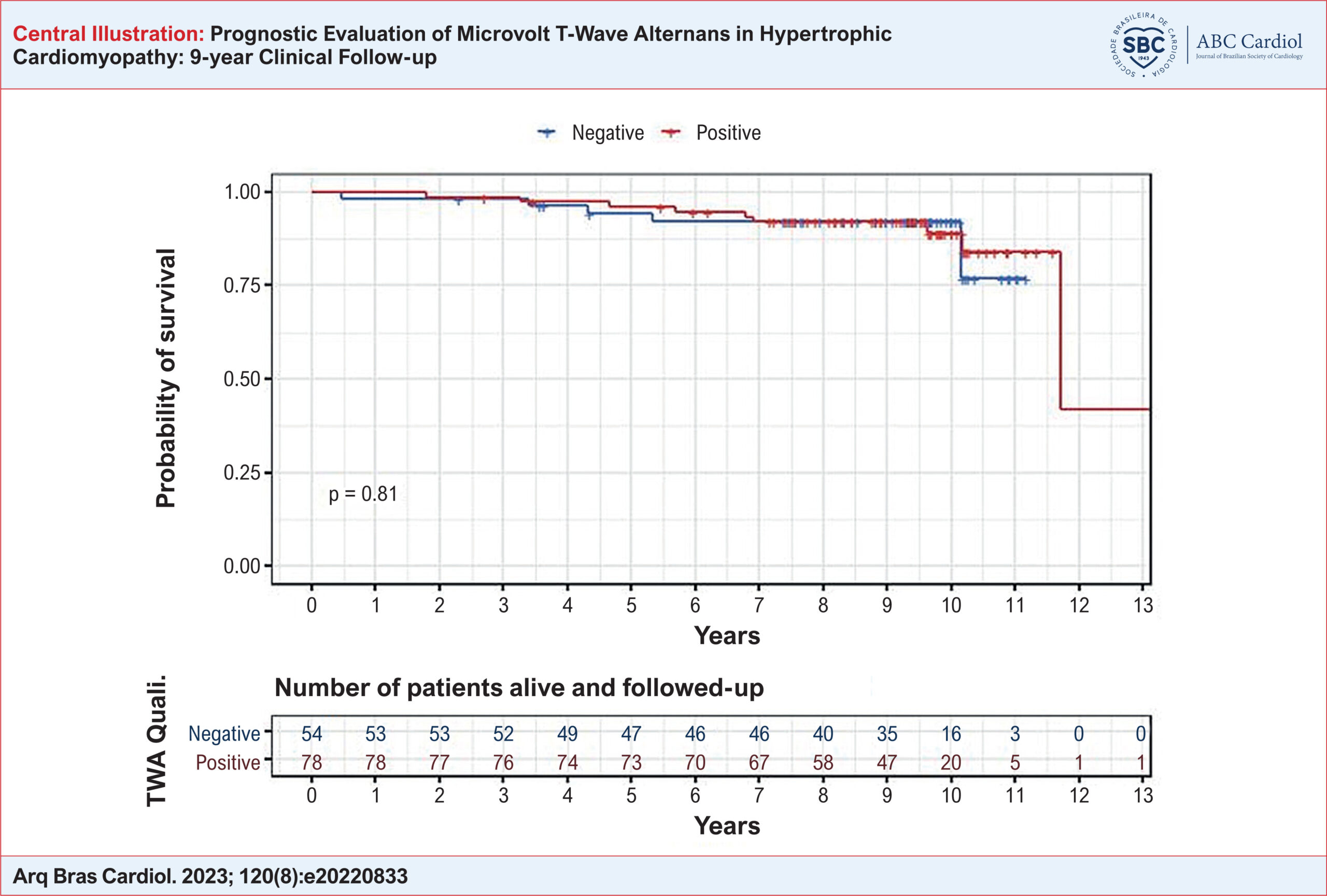
A total of 132 patients (mean age of 39.5 ± 12.6 years) were recruited and followed for a mean of 9.5 years. The MTWA test was altered in 74 (56%) participants and normal in 58 (44%). Nine events (6.8%) occurred during the follow-up, with a prevalence of 1.0%/year – six SCDs, two appropriate ICD shocks and one episode of (SVT). Altered MTWA was associated with non-sustained ventricular tachycardia on Holter (p = 0.016), septal thickness ≥30 mm (p < 0.001) and inadequate blood pressure response to effort (p = 0.046). Five patients with altered MTWA (7%) and four patients with normal MTWA (7%) had the primary outcome [OR = 0.85 (95% CI: 0.21 – 3.35, p=0.83)]. Kaplan-Meir event curves showed no differences between normal and altered MTWA.

Conclusion:

Altered MTWA was not associated with the occurrence of SCD or potentially fatal ventricular arrhythmias in HCM patients, and the low rate of these events during long-term follow-up suggests the good prognosis of this heart disease.
  • Arrhythmias Cardiac
  • Cardiomyopathy, Hypertrophic
  • Death, Sudden
  • Defibrillators, Implantable
Read Full Article
Creative Commons Attribution (CC BY) Creative Commons license
04/09/2023 DOI: 10.36660/abc.20220833 Views 1
Central Illustration
ABCIC
Review Article

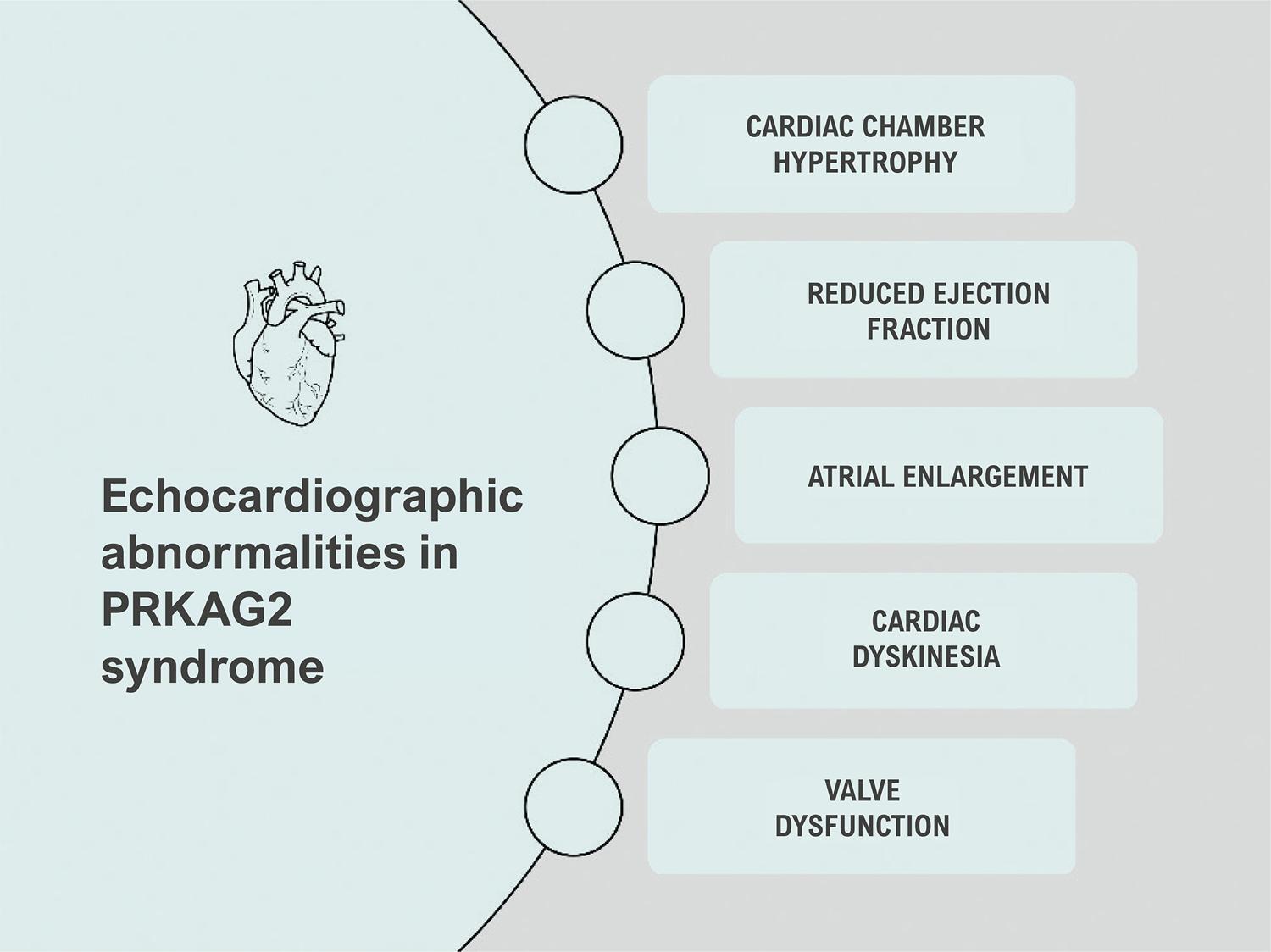
Echocardiographic Characteristics of PRKAG2 Syndrome: An Integrative Review

José Luiz Barros Pena et al. Igor de Souza Neto Alice Pinheiro Barbosa Dinamar Amador dos Santos Neto

Abstract

PRKAG2 syndrome is a rare, early-onset, autosomal dominant, inherited lysosomal glycogen storage disease that develops with ventricular preexcitation syndrome, supraventricular arrhythmias, and cardiac hypertrophy. The disease is caused by mutations in the gene encoding the adenosine monophosphate-activated protein kinase (AMPK) protein, leading to glycogen accumulation in cardiomyocytes. Echocardiography is a noninvasive, widely available, and highly effective technique for identifying and quantifying left ventricular hypertrophy (LVH). Therefore, this review focuses mainly on echocardiographic patterns, describing the main alterations in patients with PRKAG2 syndrome. O objective of this paper is to conduct an integrative review of the echocardiographic features presented by patients with PRKAG2 syndrome. We conducted an integrative review of echocardiographic features in PRKAG2 syndrome by searching PubMed, SciELO, IBECS, and LILACS electronic databases using the following keywords: “PRKAG2 syndrome” and “PRKAG2.” The predominant echocardiographic finding in patients with PRKAG2 syndrome was cardiac chamber hypertrophy, particularly affecting the left ventricle. In addition, other findings included abnormal ejection fraction, changes in strain patterns, and heart valve abnormalities. Cardiac chamber hypertrophy was demonstrated in most studies, with a predominance of LVH. Reduced ejection fraction was also described, both in the left and right ventricles. Other features reported included atrial enlargement, cardiac dyskinesia, and valve dysfunction. However, the findings varied widely, highlighting the phenotypic variability of this syndrome.

  • Cardiomyopathy, Hypertrophic
  • Echocardiography
  • Glycogen Storage Disease
Read Full Article
Creative Commons Attribution (CC BY) Creative Commons license
09/08/2023 DOI: 10.36660/abcimg.20230047i Views 1
ABCHF
Review Article

Diagnosis and Treatment of Hypertrophic Cardiomyopathy

Fernando Saraiva et al. Fabio Fernandes Minna Moreira Dias Romano Juliano Novaes Cardoso … Marília Taily Soliani Mariani Mendes Madisson Bernardo André Schmidt Marcus Vinicius Simões

Abstract

The concept of hypertrophic cardiomyopathy has undergone profound changes with the advent of cardiogenomics and the increase in knowledge about the sarcomeric structure and the mutations that lead to cardiomyocyte hypertrophy. In this review article, we address the state of the art in terms of diagnosis, contemplating the genetic heart diseases responsible for differential diagnoses of hypertrophic cardiomyopathy, known as phenocopies, which are a major challenge in clinical practice. We also discuss the current evidence that guides treatment.

  • Cardiomyopathy, Hypertrophic
  • Death, Sudden, Cardiac
  • Diagnostic Imaging
  • Drug Therapy
Read Full Article
Creative Commons Attribution (CC BY) Creative Commons license
01/08/2023 DOI: 10.36660/abchf.20230040 Views 1
Figure 1
ABCIC
Review Article

Hypertrophic Cardiomyopathy: A Review Using Magnetic Resonance Imaging

Raul Serra Valério et al. Marcio Sommer Bittencourt Marly M. Uellendahl

Abstract

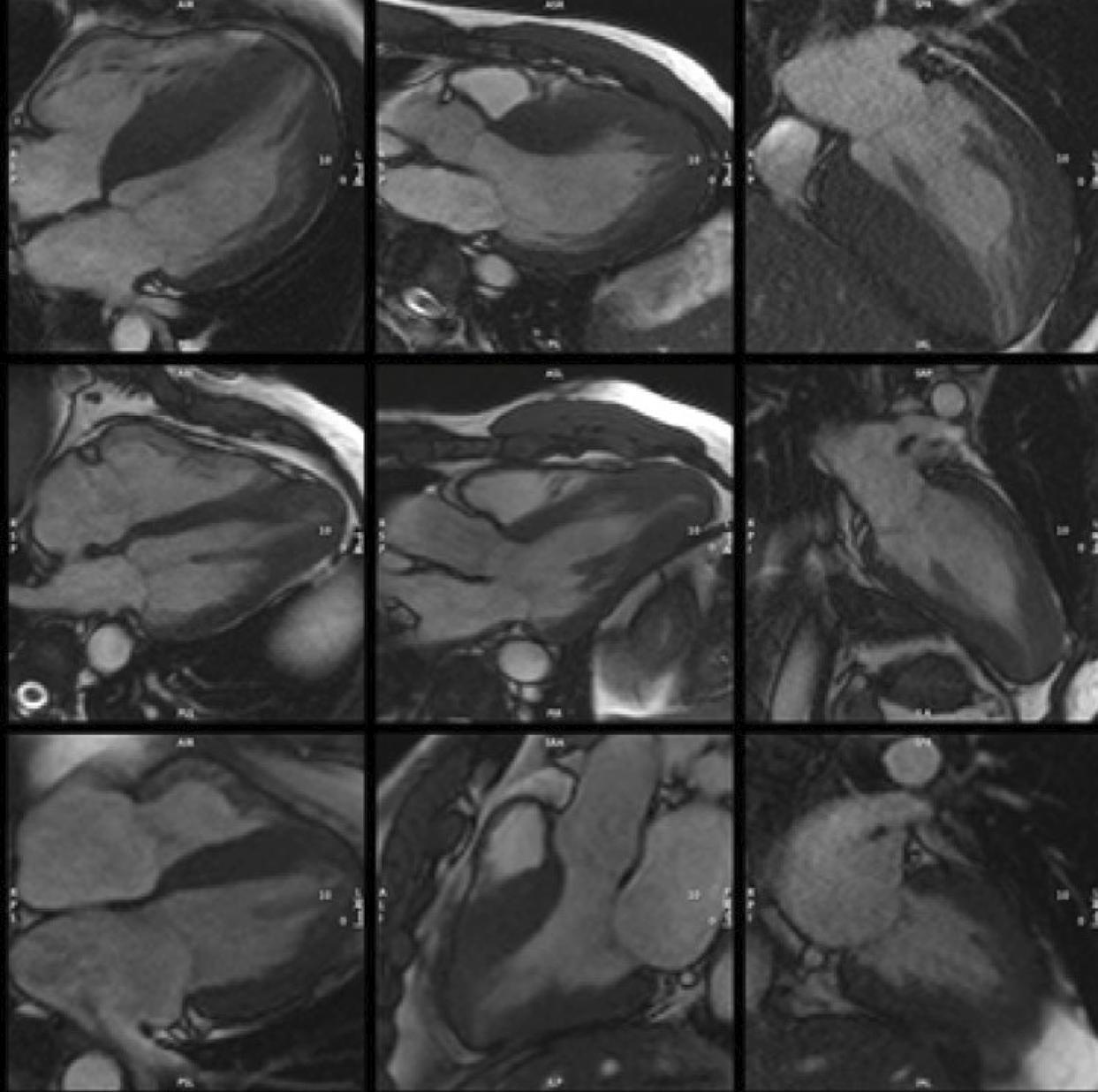
Hypertrophic cardiomyopathy, the most common genetic cardiopathy in the general population, is characterized by asymmetric left ventricular hypertrophy. However, the phenotypic changes in this cardiomyopathy extend beyond ventricular hypertrophy and include changes in the mitral valve apparatus, papillary muscles, and right ventricle. Due to the difficult differential diagnosis among multiple causes of hypertrophy, cardiac magnetic resonance has played a fundamental role in its diagnostic and prognostic evaluation; magnetic cine-resonance in defining the location and extent of hypertrophy; late enhancement, in the detection of areas of myocardial fibrosis; more recent techniques such as T1 mapping that assesses interstitial fibrosis and extracellular volume; and finally tissue tracking in the analysis of myocardial deformation.

  • Cardiac Imaging Techniques
  • Cardiomyopathy, Hypertrophic
  • Magnetic Resonance
Read Full Article
Creative Commons Attribution (CC BY) Creative Commons license
21/12/2022 DOI: 10.47593/2675-312X/20223504erer_15i
ABC
Editorial

PRKAG2 Cardiomyopathy

Eduardo Back Sternick

Magalhães et al. assessed atrial flutter’s clinical, electrocardiographic, and electrophysiologic characteristics in patients with and without PRKAG2 cardiomyopathy. Although genetic sequencing was not carried out in their control patients, the absence of clinical features of this pathology is acceptable evidence of a non-carrier state. In humans, mutations in the PRKAG2 gene result in a highly penetrant phenotype. It is dominated by the cardiac features of left ventricular hypertrophy, ventricular pre-excitation, atrial tachyarrhythmia, cardiac conduction disease, and myocardial glycogen storage. It would be very unlikely to find a patient with a positive genotype for PRKAG2 in the setting of a negative phenotype.

Our group pioneered the study of PRKAG2 cardiomyopathy in Brazil. The first patient was assessed in 1994, a 36-years old male, with mild hypertension, with recurrent episodes of common atrial flutter. The electrocardiogram showed ventricular pre-excitation, enlarged P waves, a significant increase in the QRS voltage, and sinus bradycardia. Of 8 brothers, six had very similar electrocardiographic findings. Their mother had had a pacemaker implanted at the age of 42. The echocardiogram showed a non-obstructive form of asymmetric left ventricular hypertrophy and mild left atrial enlargement. There were sufficient elements to allow a presumptive diagnosis of a phenocopy of hypertrophic cardiomyopathy! In 1994, however, we were not able to make the diagnosis. The mutations of the PRKAG2 gene had yet to be reported in 1994, but it would be 7 years later. Then, in 2004, we undertook genetic sequencing of the patients. We presented our experience during the NASPE Congress of 2005. Our research received the first prize in clinical arrhythmia during the Brazilian Congress of Cardiac Arrhythmias of 2004.

[…]

  • Arrhythmias Cardiac
  • Atrial flutter
  • Atrioventricular block
  • Cardiomyopathy, Hypertrophic
  • Glycogen Storage Disease
  • Hypertrophy Left Ventricular
Read Full Article
Creative Commons Attribution (CC BY) Creative Commons license
25/11/2022 DOI: 10.36660/abc.20220694 Views 1
Figure 1
ABC
Original Article

Atrial Flutter in PRKAG2 Syndrome: Clinical and Electrophysiological Characteristics

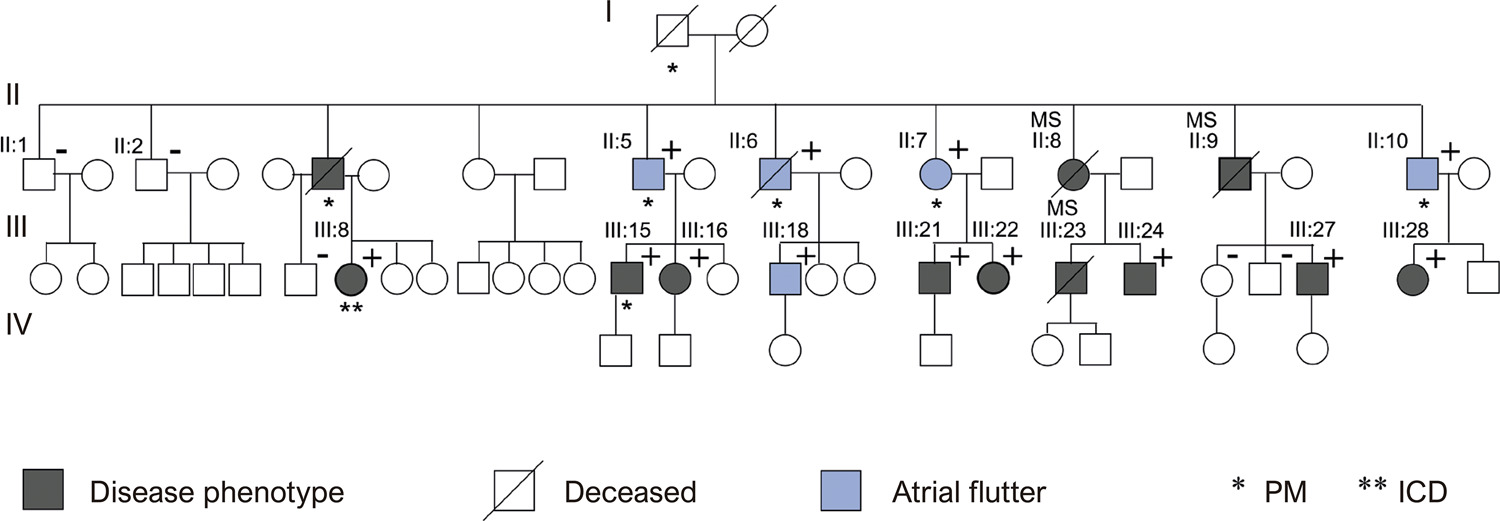
Eduardo Faria Soares de Magalhães et al. Luiz Pereira de Magalhães Jussara de Oliveira Pinheiro Alex Teixeira Guabiru Roque Aras

Abstract

Background

PRKAG2 syndrome is a rare autosomal dominant disease, a phenocopy of hypertrophic cardiomyopathy characterized by intracellular glycogen accumulation. Clinical manifestations include ventricular preexcitation, cardiac conduction disorder, ventricular hypertrophy, and atrial arrhythmias.

Objective

To compare the clinical and electrophysiological characteristics observed in patients with atrial flutter, with and without PRKAG2 syndrome.

Methods

An observational study comparing patients with atrial flutter: group A consisted of five patients with PRKAG2 syndrome from a family, and group B consisted of 25 patients without phenotype of PRKAG2 syndrome. The level of significance was 5%.

Results

All patients in group A had ventricular preexcitation and right branch block, and four had pacemakers (80%). Patients in group A were younger (39±5.4 vs 58.6±17.6 years, p=0.021), had greater interventricular septum (median=18 vs 10 mm; p<0.001) and posterior wall thickness (median=14 vs 10 mm; p=0.001). In group A, four patients were submitted to an electrophysiological study, showing a fasciculoventricular pathway, and atrial flutter ablation was performed in tree. All patients in group B were submitted to ablation of atrial flutter, with no evidence of accessory pathway. Group B had a higher prevalence of hypertension, diabetes mellitus, coronary artery disease and sleep apnea, with no statistically significant difference.

Conclusion

Patients with PRKAG2 syndrome presented atrial flutter at an earlier age and had fewer comorbidities when compared to patients with atrial flutter without mutation phenotype. The occurrence of atrial flutter in young individuals, especially in the presence of ventricular preexcitation and familial ventricular hypertrophy, should raise the suspicion of PRKAG2 syndrome.

  • Atrial flutter
  • Atrioventricular block
  • Cardiac Arrhythmias
  • Cardiomyopathy, Hypertrophic
  • Glycogen Storage Disease
  • Hypertrophy Left Ventricular
Read Full Article
Creative Commons Attribution (CC BY) Creative Commons license
06/09/2022 DOI: 10.36660/abc.20210792 Views 1
Figure 1
IJCS
Case Report

Danon Disease in an Asymptomatic Woman: A Five-Year Follow Up

Ricardo Cardoso de Matos et al. Amanda Cunha Soares Raquel Tavares Boy da Silva Evandro Tinoco Mesquita

Introdução

Danon disease (DD) is a rare, dominant X-linked disease caused by mutation of the LAMP2 gene, which encodes a lysosome-associated membrane glycoprotein, thereby affecting lysosomal deposition. DD is characterized by a classic triad of cardiomyopathy (featured by hypertrophic cardiomyopathy [HC]), skeletal myopathy, and cognitive changes. While female patients tend to have milder phenotypic manifestations, an isolated cardiac involvement, in addition to a later onset of symptoms, without the need for heart transplantation before the fourth decade of life, male patients commonly have the presentation of the classic triad of disease.

The clues of the involvement of HC with pre-excitation and persistent increased troponin I in these individuals are related to the process of autophagy that contributes to cardiac remodeling. However, there is still no specific treatment for DD. The approach to cardiac manifestations includes implantable cardioverter defibrillator (ICD) and ablation to improve symptoms and decrease the risk of sudden death. In cases of advanced heart failure (HF), heart transplantation is an effective and safe measure. Studies for gene therapy are currently in progress. ,

[…]

  • Cardiomyopathy, Hypertrophic
  • Glycogen Storage Disease Type II/genetics
  • Lysosomal-Assoiated Membrane Protein 2/genetics (DD Danon Disease)
  • Phenotype
Read Full Article
Creative Commons Attribution (CC BY) Creative Commons license
28/02/2022 DOI: 10.36660/ijcs.20210038
Figure 1
ABC
Original Article

Atrial Mechanics in Hypertrophic Cardiomyopathy: Discriminating between Ventricular Hypertrophy and Fibrosis

Patrícia Marques-Alves et al. João André Ferreira André Azul Freitas José Paulo Almeida … Rui Baptista Graça Castro Rui Martins Paulo Donato Maria João Ferreira Lino Gonçalves

Abstract

Background

Hypertrophic cardiomyopathy (HCM) and left ventricular hypertrophy (LVH) secondary to systemic hypertension (HTN) may be associated with left atrial (LA) functional abnormalities.

Objectives

We aimed to characterize LA mechanics in HCM and HTN and determine any correlation with the extent of left ventricular (LV) fibrosis measured by cardiac magnetic resonance (CMR) in HCM patients.

Methods

Two-dimensional speckle tracking-derived longitudinal LA function was acquired from apical views in 60 HCM patients, 60 HTN patients, and 34 age-matched controls. HCM patients also underwent CMR, with measurement of late gadolinium enhancement (LGE) extension. Association with LA strain parameters was analyzed. Statistical significance was set at p<0.05.

Results

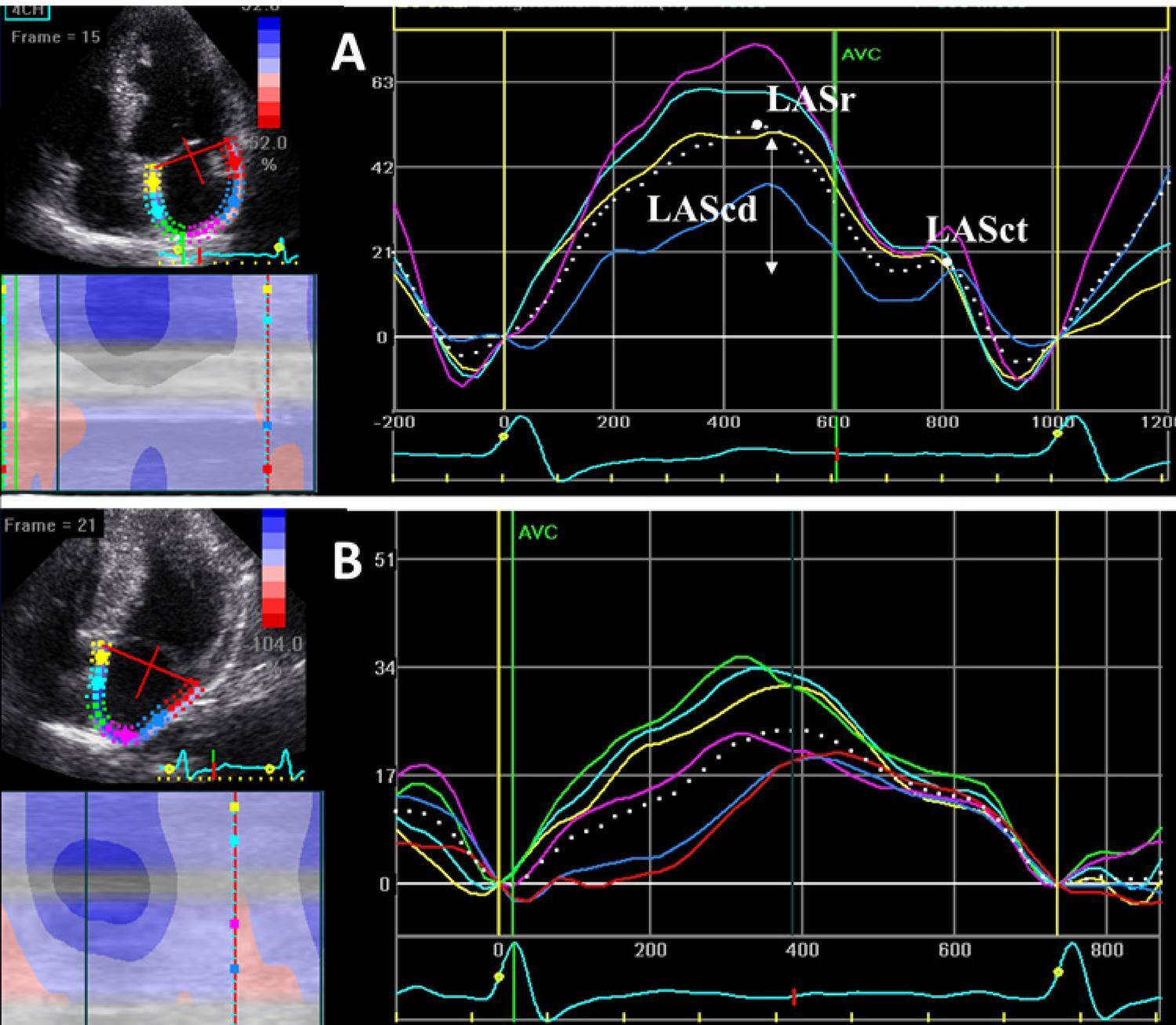
Mean LV ejection fraction was not different between the groups. The E/e’ ratio was impaired in the HCM group and preserved in the control group. LA mechanics was significantly reduced in HCM, compared to the HTN group. LA strain rate in reservoir (LASRr) and in contractile (LASRct) phases were the best discriminators of HCM, with an area under the curve (AUC) of 0.8, followed by LA strain in reservoir phase (LASr) (AUC 0.76). LASRr and LASR-ct had high specificity (89% and 91%, respectively) and LASr had sensitivity of 80%. A decrease in 2.79% of LA strain rate in conduit phase (LASRcd) predicted an increase of 1cm in LGE extension (r2=0.42, β 2.79, p=0.027).

Conclusions

LASRr and LASRct were the best discriminators for LVH secondary to HCM. LASRcd predicted the degree of LV fibrosis assessed by CMR. These findings suggest that LA mechanics is a potential predictor of disease severity in HCM.

  • Cardiomyopathy, Hypertrophic
  • Echocardiography/methods
  • Hypertension
  • Left Ventricular Hypertrophy
  • Magnetic Resonance Spectroscopy/ methods
Read Full Article
Creative Commons Attribution (CC BY) Creative Commons license
21/02/2022 DOI: 10.36660/abc.20200890 Views 1
ABCIC
Original Article

Ecocardiographic Evaluation of Mitral Insufficiency in Patients with Hypertrophic Cardiomyopathy

Marina Braga Oliveira et al. Angélica Fonseca Noriega Jéssica Richard Miranda Gabriel Andrey Ricci … Bruna Basaglia Maria Beatriz Marques Ribeiro Marina Bragheto Oliveira Jamil Ali Murad Junior

Abstract

Background

Hypertrophic Cardiomyopathy (HCM) is a genetic disease that affects thousands of people around the world.

Objectives

The present study aims to evaluate the presence of mitral regurgitation in patients with HCM, as well as its relationship with left ventricular Doppler echocardiographic variables. The mitral valve failure found in these patients is an extremely important finding, since it is able to predict the survival and mortality rate of the patients affected by HCM.

Materials and Methods

All echocardiograms performed from 2006 to 2016 in the echocardiographic service of Hospital de Base de São José do Rio Preto were evaluated. A total of 112,930 tests were gathered, of which those with HCM diagnosis or wall thickness >15 mm were selected and 132 patients were included in the analysis.

Results

Moderate and major mitral valve regurgitation is present in 25% and 5.3% of the patients, respectively, and MRI is independently correlated with the obstructive form of HCM.

Conclusion

Mitral regurgitation is a frequent finding in patients with CMP, however, significant MI is extremely uncommon and is correlated with the obstructive form of the disease.

  • Cardiomyopathy, Hypertrophic
  • Echocardiography
  • Mitral Valve Insufficiency
Read Full Article
Creative Commons Attribution (CC BY) Creative Commons license
14/01/2022 DOI: 10.5935/2318-8219.20190047
Figure 1
ABC
Research Letter

Left Ventricular Hypertrophy: One Phenotype, Two Hypotheses, Three Lessons

Patrícia Rodrigues et al. Ana Rita Soares Ricardo Taipa Sofia Ferreira Hipólito Reis

Past medical history

A 58-year-old woman with familial amyloid polyneuropathy caused by the Val30Met (p.Val50Met) mutation in the transthyretin (TTR) gene started showing neuropathic symptoms by the age of 37 and a salivary gland biopsy confirmed TTR amyloid deposition. She was submitted to liver transplantation 7 years after symptom onset and was under immunosuppressive drugs, with stable neurological changes since then. She also had chronic kidney failure (stage 3b) and a pacemaker implanted due to sick sinus syndrome.

[…]

  • Amyloid Neuropathies, Familial/diagnostic imaging
  • Amyloidosis
  • Cardiomyopathy, Hypertrophic
  • Heart Failure
  • Hypertrophy Left Ventricular
Read Full Article
Creative Commons Attribution (CC BY) Creative Commons license
22/11/2021 DOI: 10.36660/abc.20210103 Views 1
ABC
Editorial

Electrocardiographic Diagnosis of Left Ventricular Hypertrophy

Claudio Leinig Pereira da Cunha

Left Ventricular Hypertrophy (LVH) is defined as an increase in left ventricular (LV) mass, which may be secondary to an increase in wall thickness (concentric LVH), increased cavity size (eccentric LVH), or both. The presentation of hypertrophied LV depends mainly on the underlying disease, with concentric LVH resulting in most cases from LV pressure overload (hypertension or aortic stenosis), while eccentric LVH mainly depends on LV volume overloads (mitral and aortic insufficiency) and dilated cardiomyopathies. Other causes of LVH include ventricular septal defects, hypertrophic cardiomyopathy, and physiological changes associated with athletic training.

The presence of LVH is clinically meaningful because it is associated with an increased incidence of heart failure, ventricular arrhythmias, peripheral vascular insufficiency, aortic dilatation, cerebrovascular events and sudden death or after myocardial infarction.

[…]

  • Cardiomyopathy, Hypertrophic
  • Diagnostic Imaging
  • Echocardiography/methods
  • Electrocardiography/methods
  • Hypertrophy, Left Ventriculat
  • Ventricular Dysfunction, Left
Read Full Article
Creative Commons Attribution (CC BY) Creative Commons license
22/11/2021 DOI: 10.36660/abc.20210868 Views 2
Figure 1
ABC
Original Article

Cost-Effectiveness Analysis of Evolocumab Therapy in Patients at High Risk of Cardiovascular Events in the Context of the Brazilian Unified Health System

Luiza Latado et al. Rodrigo Morel Vieira de Melo Sóstenes Mistro Adriana Lopes Latado … Harrison Floriano do Nascimento Yasmin Menezes Lira Natalia Ferreira Cardoso de Oliveira Yuri de Santana Galindo Tainá Viana Luiz Carlos Santana Passos

Abstract

Background:

Hypertrophic cardiomyopathy (HCM) and left ventricular hypertrophy (LVH) secondary to systemic hypertension (HTN) may be associated with left atrial (LA) functional abnormalities.

Objectives:

We aimed to characterize LA mechanics in HCM and HTN and determine any correlation with the extent of left ventricular (LV) fibrosis measured by cardiac magnetic resonance (CMR) in HCM patients.

Methods:

Two-dimensional speckle tracking-derived longitudinal LA function was acquired from apical views in 60 HCM patients, 60 HTN patients, and 34 age-matched controls. HCM patients also underwent CMR, with measurement of late gadolinium enhancement (LGE) extension. Association with LA strain parameters was analyzed. Statistical significance was set at p<0.05.

Results:

Mean LV ejection fraction was not different between the groups. The E/e’ ratio was impaired in the HCM group and preserved in the control group. LA mechanics was significantly reduced in HCM, compared to the HTN group. LA strain rate in reservoir (LASRr) and in contractile (LASRct) phases were the best discriminators of HCM, with an area under the curve (AUC) of 0.8, followed by LA strain in reservoir phase (LASr) (AUC 0.76). LASRr and LASR-ct had high specificity (89% and 91%, respectively) and LASr had sensitivity of 80%. A decrease in 2.79% of LA strain rate in conduit phase (LASRcd) predicted an increase of 1cm in LGE extension (r2=0.42, β 2.79, p=0.027).

Conclusions:

LASRr and LASRct were the best discriminators for LVH secondary to HCM. LASRcd predicted the degree of LV fibrosis assessed by CMR. These findings suggest that LA mechanics is a potential predictor of disease severity in HCM.

  • Cardiomyopathy, Hypertrophic
  • Echocardiography/methods
  • Hypertension
  • Left Ventricular Hypertrophy
  • Magnetic Resonance Spectroscopy/ methods
Read Full Article
Creative Commons Attribution (CC BY) Creative Commons license
22/11/2021 DOI: 10.36660/abc.20200690 Views 1
Video 1
ABC
Image

Transthyretin Amyloid Cardiomyopathy Mimicking Hypertrophic Cardiomyopathy in an Older Patient

José Pedro Alves Guimarães et al. Joana Trigo Fernando Gonçalves J. Ilídio Moreira

Wild-type transthyretin amyloid cardiomyopathy (wt-ATTR-CM) is increasingly recognized due to the recognition of the increasing prevalence, advances in diagnostic methods, and the development of effective treatments.

We report the case of an 88-year-old female with history of hypertension, chronic kidney disease (CKD), heart failure with preserved ejection fraction, and no relevant family history. She presented to the emergency department with history of syncope, productive cough, worsening dyspnea, and fever. The auscultation showed a grade III/VI systolic murmur in her left sternal border, no breath sounds in the right lung base and bilateral rhonchi.

[…]

  • Amyloidosis
  • Cardiomyopathy, Hypertrophic
  • Echocardiography/methods
  • Heart Failure
  • Hypertension
  • Renal Insufficiency, Chronic
  • Stroke
Read Full Article
Creative Commons Attribution (CC BY) Creative Commons license
16/04/2021 DOI: 10.36660/abc.20200236 Views 1
Figure 1
ABC
Image

Non-Progressive Hepatic Form of Andersen Disease as a Mimic of Hypertrophic Cardiomyopathy

Fabio Mastrocola et al. William Santos de Oliveira Adalberto Atsushi Porto Roberto Moreno Mendonça Nestor Rodrigues de Oliveira Neto

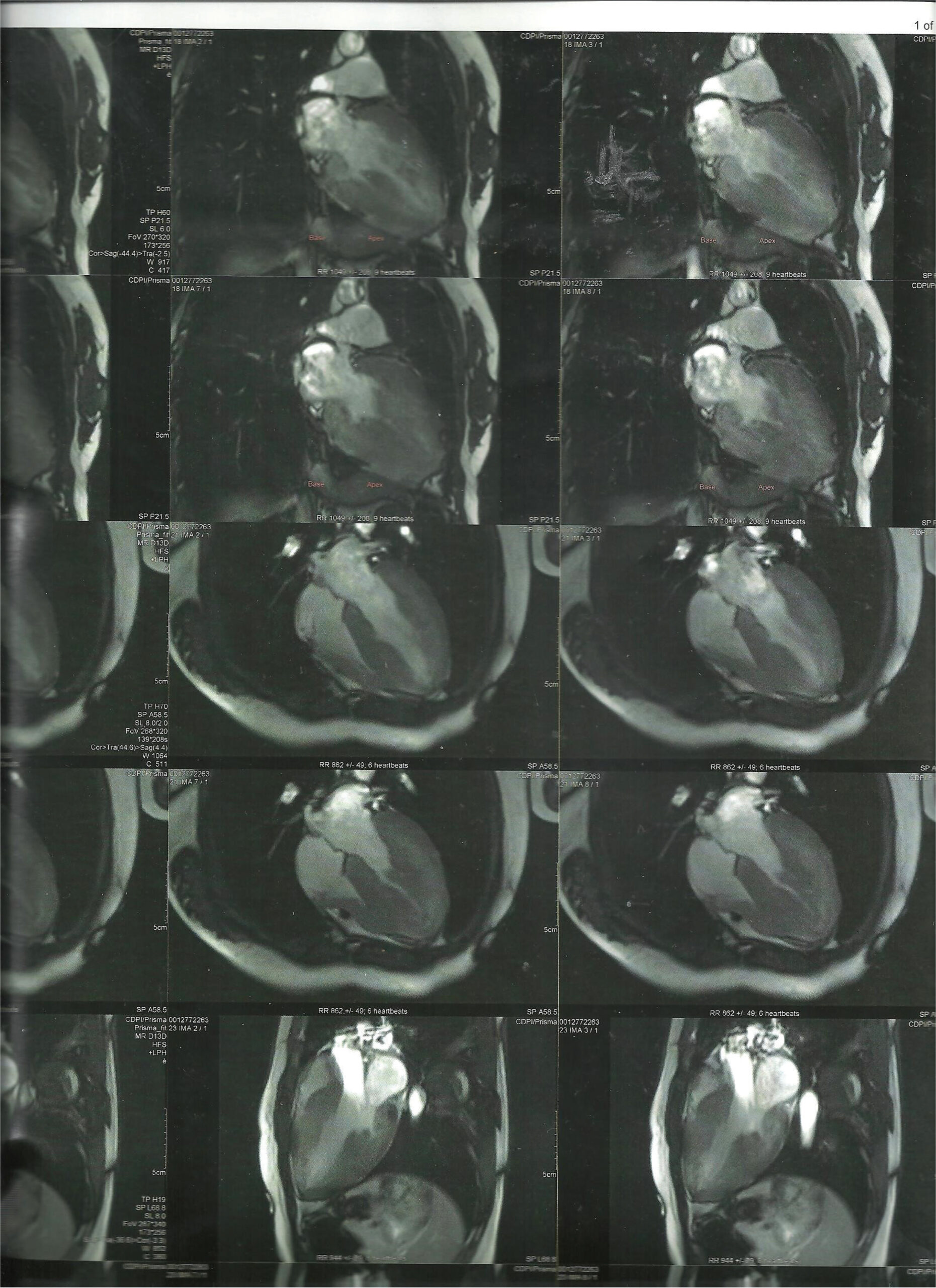
An 18-year-old male patient presented to our ambulatory services due to a 3-month course of progressive dyspnea and non-productive cough. Symptoms were present even at rest, and he exhibited severe limitation at physical activity. He had a diagnosis of glycogen storage disease (GSD) type IV attained by liver biopsy since three years of age, when he developed hepatomegaly and mild hepatic dysfunction. At the time, histopathological examination showed grade 2 fibrosis along with numerous intracytoplasmic PAS-positive deposits that were resistant to diastase. Thenceforth, his liver function remained stable, and he persisted otherwise asymptomatic. His physical examination was unremarkable, and routine laboratory evaluation was within the normal ranges. However, his basal ECG () showed signs of left ventricular hypertrophy. He was submitted to a cardiovascular magnetic resonance (CMR), which showed asymmetrical hypertrophy with predominance in the interventricular septum (). Late gadolinium enhancement (LGE) was present in a patchy, multifocal pattern (). Medical therapy for heart failure was initiated; the patient is now asymptomatic and maintains regular follow-up in our ambulatory.

Patients with classic GSD type IV have unrelenting liver disease with fast progression to cirrhosis during childhood; however, a small subset of affected individuals may present with milder hepatic dysfunction that does not advance to end-stage liver disease., Accordingly, our patient had the diagnosis of GSD type IV by three years of age, but did not develop cirrhosis afterwards.

[…]

  • Cardiomyopathy, Hypertrophic
  • Fibrosis
  • Glycogen Storage Disease Type IV
  • Heart Failure
  • Magnetic Resonance Spectroscopy/ methods
  • PRKAG2 Syndrome
  • Prognosis
Read Full Article
Creative Commons Attribution (CC BY) Creative Commons license
07/12/2020 DOI: 10.36660/abc.20200218
Figure 1
ABC
Image

One Patient, Two Cardiomyopathies

Christopher Strong et al. Pedro Freitas António Ferreira Gustavo Rodrigues Miguel Mendes

A 50-year-old male patient, with history of well-controlled hypertension and no known personal or family history of cardiac disease, presented with chest pain followed by syncope during strenuous physical activity. The electrocardiogram showed sustained monomorphic ventricular tachycardia. Electrical cardioversion was performed, with conversion to sinus rhythm with Q waves on leads V2-5 and III-aVF (). Transthoracic echocardiography (TTE) showed asymmetric left ventricular (LV) hypertrophy, preserved ejection fraction (EF) with apical akinesia, and hypertrabeculated right ventricle (RV). Coronary angiography showed no significant lesions. Cardiac MRI confirmed the TTE findings, showing a maximum LV wall thickness of 17 mm at the interventricular septum (Figure S1 — supplementary material), apical LV aneurysm and abnormal insertion of papillary muscles. The right side was remarkable for hypertrabeculated and hypokinetic free and inferior walls, and mildly dilated RV with reduced EF (33%). Besides having transmural delayed enhancement (DE) on the LV apex, there was also nodular DE on the LV/RV junction and on the free and inferior basal walls of the RV (; –; Figure S2 of supplementary material). Genetic analysis found a heterozygous mutation on the PKP2 gene (p.Thr50Serfs*61), a pathogenic variant associated with arrhythmogenic RV cardiomyopathy. However, no known mutation on genes related to hypertrophic cardiomyopathy (HCM) were found on a panel of 204 genes, 118 related to HCM. No association has been firmly made between mutations on the PKP2 gene and HCM. The overlap between genetics and cardiomyopathy phenotypes is a well-known phenomenon. We hypothesize that this patient either had an additional unknown HCM gene mutation or, less likely, a phenotypic expression of two different cardiomyopathies in the context a PKP2 gene mutation.

[…]

  • Arrhythmogenic right ventricular dysplasia;
  • Cardiomyopathy, Hypertrophic
  • Electric Countershock
  • Exercise
  • Mutagenesis
  • Syncope
  • Tachycardia, Ventricular
Read Full Article
Creative Commons Attribution (CC BY) Creative Commons license
28/09/2020 DOI: 10.36660/abc.20190853
ABC
Letter to the Editor

Left Ventricle Mass Index, a Confounding Variable of Global Longitudinal Strain to be Noticed

Eduardo Thadeu de Oliveira Correia et al. Letícia Mara dos Santos Barbetta

Dear Editor,

We read with great interest the article entitled as “Strain Analysis of Left Ventricular Function in the Association of Hypertrophic Cardiomyopathy and Systemic Arterial Hypertension”. In this paper, the authors evaluated the global longitudinal strain (GLS) of the left ventricle (LV) in two distinct groups: patients with hypertrophic cardiomyopathy (HCM) and patients with HCM and systemic arterial hypertension (SAH) and demonstrated that GLS was lower in the second group. This important finding may indicate greater impairment of LV function in patients with SAH and HCM.

[…]

  • Cardiomyopathy, Hypertrophic
  • Heart Failure
  • Hypertension
  • Hypertrophy Left Ventricular
  • Strain
  • Ventricular Function, Left
Read Full Article
Creative Commons Attribution (CC BY) Creative Commons license
10/02/2020 DOI: 10.36660/abc.20190708 Views 1
ABC
Editorial

At Last, a Sensitive Method to Detect Incipient Systolic Dysfunction!

Carlos Eduardo Suaide Silva

Left ventricular systolic function evaluation has always been one of the main attributions of echocardiography. The degree of ventricular systolic dysfunction is an important predictor of outcome for a large number of diseases, including ischemic heart disease, cardiomyopathy, valvular heart disease, and congenital heart disease. In this area, the ejection fraction has been sovereign for many decades, but despite being a parameter that can, in most cases, inform the real state of global ventricular function, in many situations it may be normal in the presence of evident systolic or diastolic dysfunction.

Known clinical examples are the several cases of heart failure with preserved ejection fraction (HFpEF) or patients with hypertrophic cardiomyopathy, among others. For this reason, an index that can identify early ventricular dysfunction that is not connected with the ejection fraction has been sought for a long time.

[…]

  • Antiretroviral Therapy Highly Active
  • Cardiomyopathy, Hypertrophic
  • Echocardiography/methods
  • Heart Failure
  • HIV
  • Myocardial Contraction
  • Ventricular Dysfunction, Left
Read Full Article
Creative Commons Attribution (CC BY) Creative Commons license
04/11/2019 DOI: 10.5935/abc.20190198 Views 1
Figure 1
ABC
Original Article

Strain Analysis of Left Ventricular Function in the Association of Hypertrophic Cardiomyopathy and Systemic Arterial Hypertension

Thereza Cristina Pereira Gil et al. Marcia Bueno Castier Alyne Freitas Pereira Gondar Ana Ferreira Sales … Marceli de Oliveira Santos Fernanda Cristina da Silva de Lima Ricardo Mourilhe-Rocha

Abstract

Background:

Hypertrophic cardiomyopathy (HCM) is the most common heart disease of genetic origin in the world population, with a prevalence of at least 1/500. The association with systemic arterial hypertension (SAH) is not uncommon, as it affects approximately 25% of the world population. Most studies aim at the differential diagnosis between these diseases, but little is known about the magnitude of this association.

Objective:

To compare left ventricular global longitudinal strain (GLS) in HCM patients with and without associated SAH.

Methods:

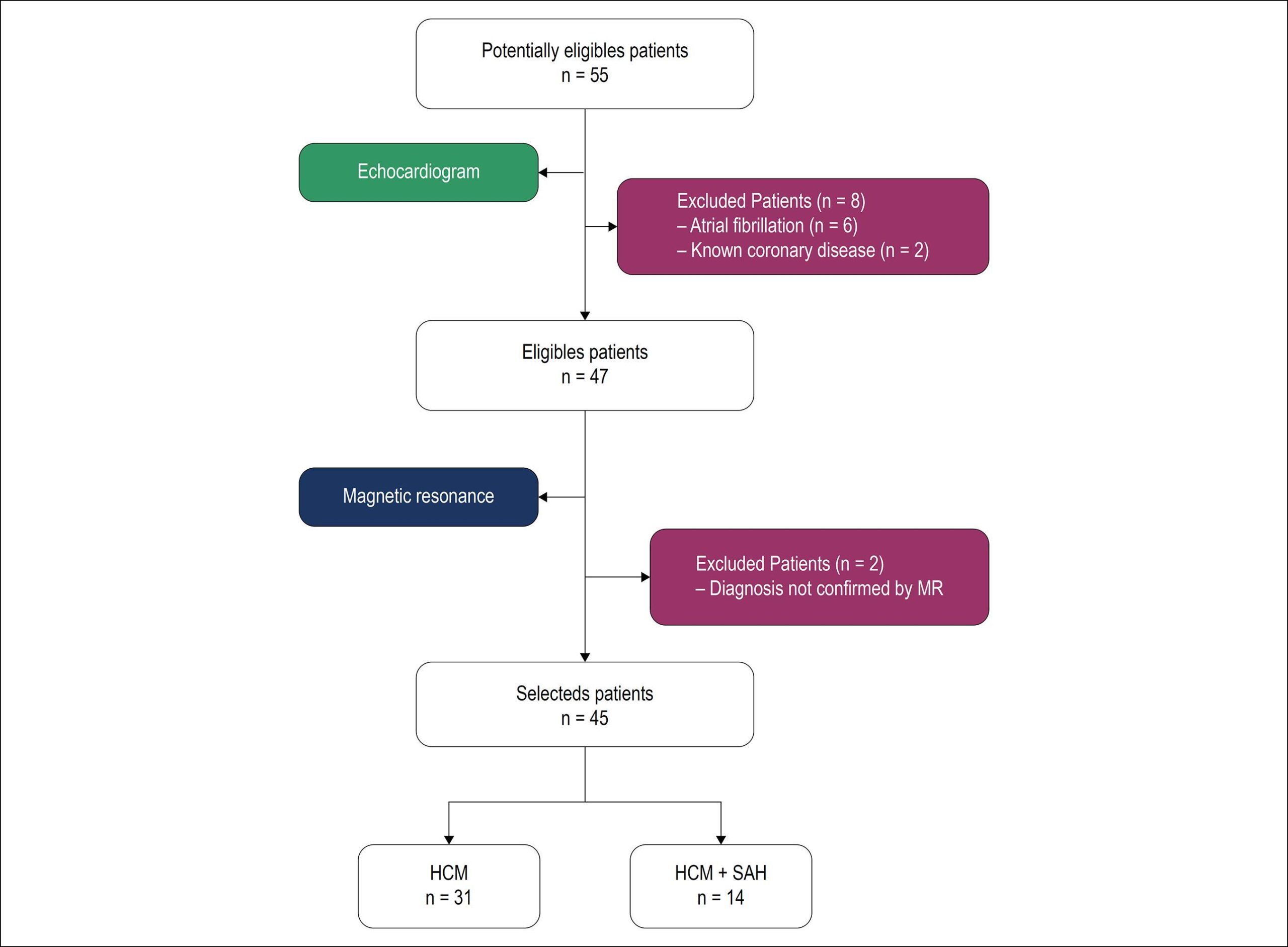
Retrospective cross-sectional study that included 45 patients with HCM and preserved ejection fraction, with diagnosis confirmed by magnetic resonance imaging, including 14 hypertensive patients. Transthoracic echocardiography was performed, with emphasis on left ventricular myocardial strain analysis using GLS. In this study, p < 0.05 was considered statistically significant.

Results:

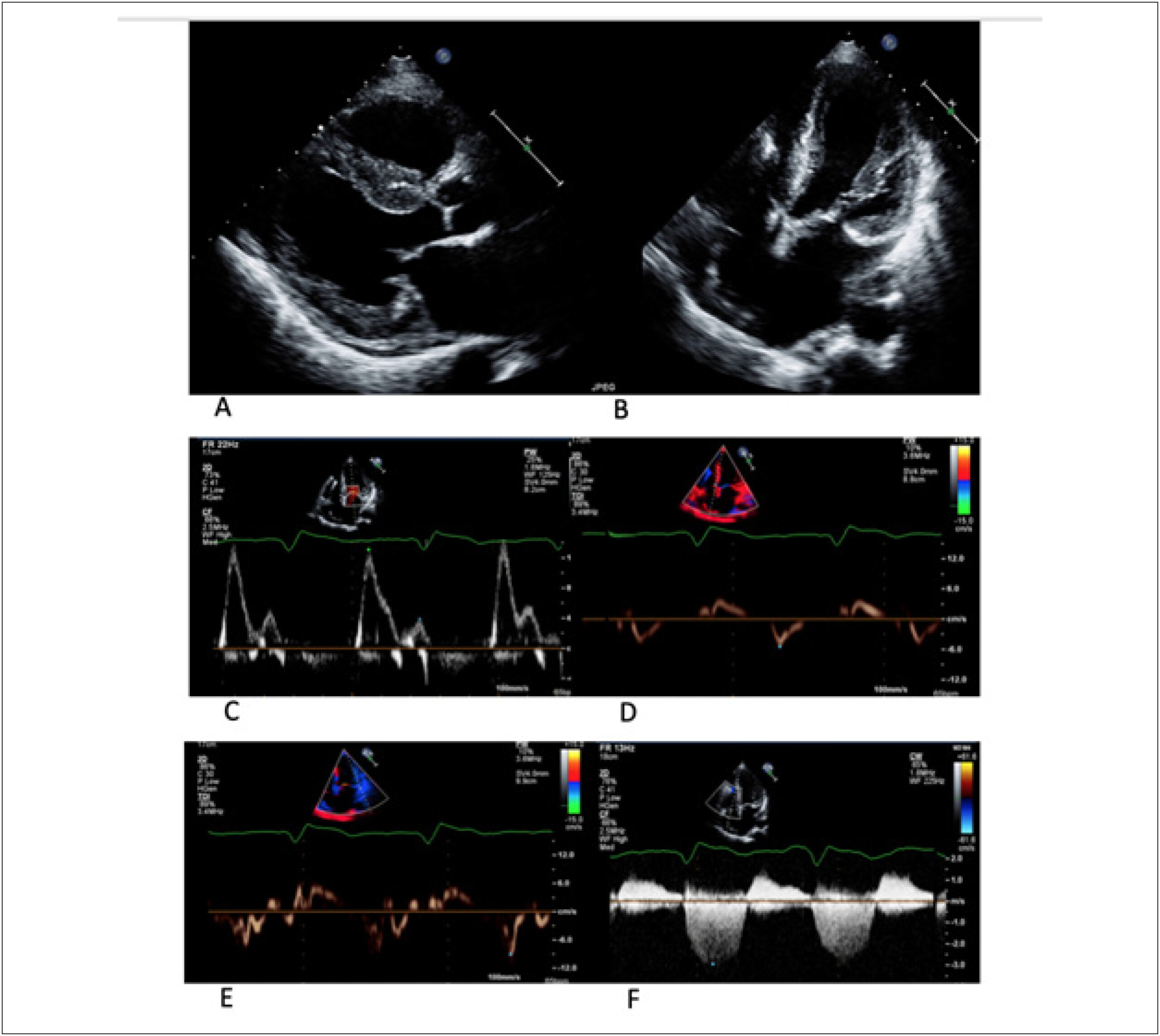
Left ventricular strain was significantly lower in hypertensive individuals compared to normotensive individuals (-10.29 ± 2.46 vs. -12.35% ± 3.55%, p = 0.0303), indicating greater impairment of ventricular function in that group. Mean age was also significantly higher in hypertensive patients (56.1 ± 13.9 vs. 40.2 ± 12.7 years, p = 0.0001). Diastolic dysfunction was better characterized in hypertensive patients (p = 0.0242).

Conclusion:

Myocardial strain was significantly lower in the group of patients with HCM and SAH, suggesting greater impairment of ventricular function. This finding may be related to a worse prognosis with early evolution to heart failure. Prospective studies are required to confirm this hypothesis.

  • Cardiomyopathy, Hypertrophic
  • Heart Failure
  • Hypertension
  • Strain
  • Ventricular Function, Left
Read Full Article
Creative Commons Attribution (CC BY) Creative Commons license
02/09/2019 DOI: 10.5935/abc.20190176
IJCS
Review Article

Sudden Cardiac Death in Sports: Why Its Prevalence is So Different by Gender?

Cléa Simone Sabino de Souza Colombo et al. Nabil Ghorayeb Thiago Ghorayeb Garcia Ricardo Contesini Francisco

Abstract

Sports competition can be a trigger to fatal arrhythmias in predisposed individuals, leading to sudden cardiac death. Athletes have 2.8 fold more risk of sudden cardiac death than non-athletes. However, female athletes seem to have some cardiac protection, dying suddenly much less than men during sports. Although the mechanisms for this protection have not been well established until now, hormonal, genetic and molecular factors may play a role in it. The so-called “fair sex” might harbour the key for sudden cardiac death prevention.

  • Arrhythimias, Cardiac
  • Cardiomyopathy, Hypertrophic
  • Coronary Artery Disease
  • Death, Sudden, Cardiac/prevalence
  • Death, Sudden, Cardiac/prevention and control
  • Exercises
  • Sports/physiology
  • Women
Read Full Article
Creative Commons Attribution (CC BY) Creative Commons license
12/08/2019 DOI: 10.5935/2359-4802.20190053
ABC
Editorial

Description of a New GLA Gene Variant in a Patient with Hypertrophic Cardiomyopathy. Is it Fabry Disease?

Marcelo Imbroinise Bittencourt

Hypertrophic cardiomyopathy (HCM) is the most common monogenic cardiovascular disease in Brazil, with a prevalence of approximately 1:500 individuals. The autosomal dominant inheritance pattern is the most common one. More than 20 genes have been reported as being associated with the disease, and most of them encode sarcomeric proteins.,

Fabry disease (FD) is a lysosomal storage disorder caused by a-galactosidase-A deficiency due to a mutation in the GLA gene, with X-linked inheritance. It causes alterations in multiple organs, including the heart, mimicking HCM.

[…]

  • Alpha-Galactosidase/deficiency
  • Cardiomyopathy, Hypertrophic
  • Fabry Disease/genetics
  • Fabry Disease/metabolismo
  • Multiple Chronic Conditions
Read Full Article
Creative Commons Attribution (CC BY) Creative Commons license
08/08/2019 DOI: 10.5935/abc.20190126
Figure 1
ABC
Original Article

GLA Gene Mutation in Hypertrophic Cardiomyopathy with a New Variant Description: Is it Fabry's Disease?

Ândrea Virgínia Chaves-Markman et al. Manuel Markman Eveline Barros Calado Ricardo Flores Pires … Marcelo Antônio Oliveira Santos-Veloso Catarina Maria Fonseca Pereira Andréa Bezerra de Melo da Silveira Lordsleem Sandro Gonçalves de Lima Brivaldo Markman Filho Dinaldo Cavalcanti de Oliveira

Abstract

Background:

Fabry disease (FD) is an X-linked lysosomal storage disorder caused by mutations in the alpha galactosidase A gene (GLA) that lead to the enzymatic deficiency of alpha galactosidase (α-Gal A), resulting in the accumulation of globotriaosylceramide (Gb3) and globotriaosylsphingosine (lyso-Gb3), causing multiple organ dysfunctions.

Objective:

To perform GLA gene screening in a group of patients with echocardiographic diagnosis of hypertrophic cardiomyopathy (HCM).

Methods:

a cross-sectional study was conducted with HCM patients from a university hospital. Patients with coronary artery disease and valvulopathies were excluded. Mutation analysis of the GLA gene was performed. In male subjects, the analysis was performed after evidence of low α-Gal A activity.

Results:

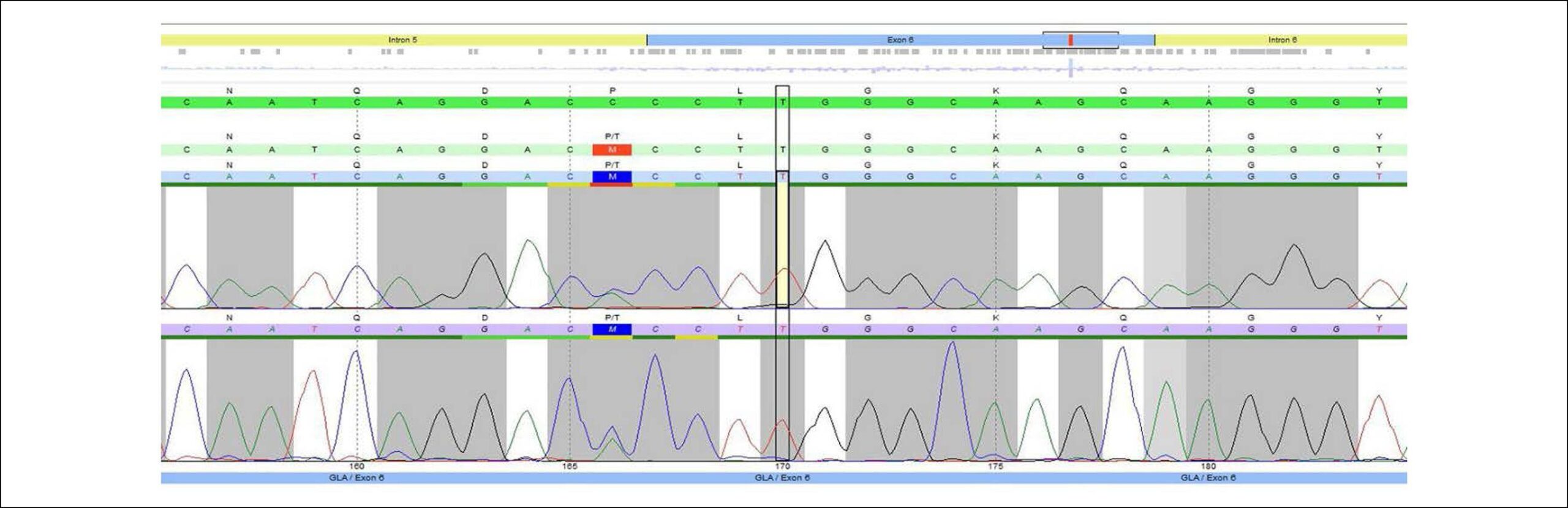
60 patients with echocardiographic diagnosis of HCM were included. Age ranged from 12 to 85 years and 60% were women. Mean myocardial fibrosis percentage on MRI was 10.7 ± 13.1% and mean ventricular thickness was18.7 ± 6.7 mm. Four patients had the following GLA gene mutations: c.967C>A (p.Pro323Thr), not yet described in the literature; c.937G>T (p.Asp313Tyr); and c.352C>T (p.Arg118Cys). All patients had normal levels of lyso-Gb3 and non-ischemic myocardial fibrosis on magnetic resonance imaging; one patient had proteinuria and one patient had ventricular tachycardia.

Conclusion:

in this study, the frequency of mutation in the GLA gene in patients with HCM was 6.7%. A novel mutation in exon 6 of the GLA gene, c.967C>A (p.Pro323Thr), was identified. Patients with HCM may have GLA mutations and FD should be ruled out. Plasma (lyso-Gb3) levels do not seem to be sufficient to attain a diagnosis and organ biopsy should be considered.

  • Cardiomyopathy, Hypertrophic
  • Fabry Disease/genetic
  • Glycosphingolipids
  • Hypertrophy Left Ventricular
Read Full Article
Creative Commons Attribution (CC BY) Creative Commons license
10/07/2019 DOI: 10.5935/abc.20190112 Views 2
ABC
Editorial

Myocardial Fibrosis in Hypertrophic Cardiomyopathy: What Remains to be Proven?

Leonardo Sara

Hypertrophic cardiomyopathy (HCM) is a complex and well-characterized disease. Its prevalence in the general population is 1 in 500 individuals, with some data suggesting an even higher prevalence when using associated genetic criteria. This means that, based on a conservative estimate, cities such as Goiânia-GO or Recife-PE have approximately more than 3,000 individuals with the disease, a figure that can be as high as 25,000 individuals in a large city such as São Paulo.

Although HCM is perceived as a rare and usually very severe disease, related to dramatic episodes of sudden death (SD) in young individuals and athletes, it is a disease with low mortality. Due to advances in the diagnosis, treatment and prevention of SD, current estimates indicate a mortality rate of 0.5% a year, similar to that found in the general population, with most patients with the disease being asymptomatic or minimally symptomatic. In this scenario, the correct identification of subgroups of individuals with a higher risk of unfavorable outcome and, therefore, a greater chance of benefit when submitted to specific therapeutic strategies, such as the use of implantable cardioverter defibrillators (ICD), is of utmost importance.

[…]

  • Cardiomyopathy, Hypertrophic
  • Death, Sudden, Cardiac/prevention & control
  • Heart Failure
  • Magnetic Resonance Spectroscopy/ methods
  • Prevalence
Read Full Article
Creative Commons Attribution (CC BY) Creative Commons license
01/03/2019 DOI: 10.5935/abc.20190043
Figure 1
IJCS
Original Article

Evaluation of Galectin-3 and Myocardial Fibrosis in Patients with Hypertrophic Cardiomyopathy

Murillo de Oliveira Antunes et al. Edmundo Arteaga-Fernández Fabio Fernandes Carla David Soffiatti … Paula de Cássia Buck Ester Cerdeira Sabino Carlos Henrique Valente Moreira Charles Mady

Abstract

Background:

Galectin-3 is the designation given to the protein that binds to ß-galactosides, expressed by activated macrophages and described as a cardiac fibrosis mediator. In hypertrophic cardiomyopathy (HCM), myocardial fibrosis is an independent predictor of adverse outcome; however, the association between Galectin-3 and myocardial fibrosis has not been studied in this cardiopathy.

Objective:

To evaluate the association of Galectin-3 and the presence of myocardial fibrosis in a patient with hypertrophic cardiomyopathy.

Methods:

Galectin-3 was measured in automated equipment using the Elisa technique in 100 participants divided into two groups: 50 patients with hypertrophic cardiomyopathy and 50 healthy control subjects. All patients with hypertrophic cardiomyopathy underwent magnetic nuclear resonance with the late enhancement technique to investigate myocardial fibrosis. For the statistical analysis, p values < 0.05 were considered statistically significant.

Results:

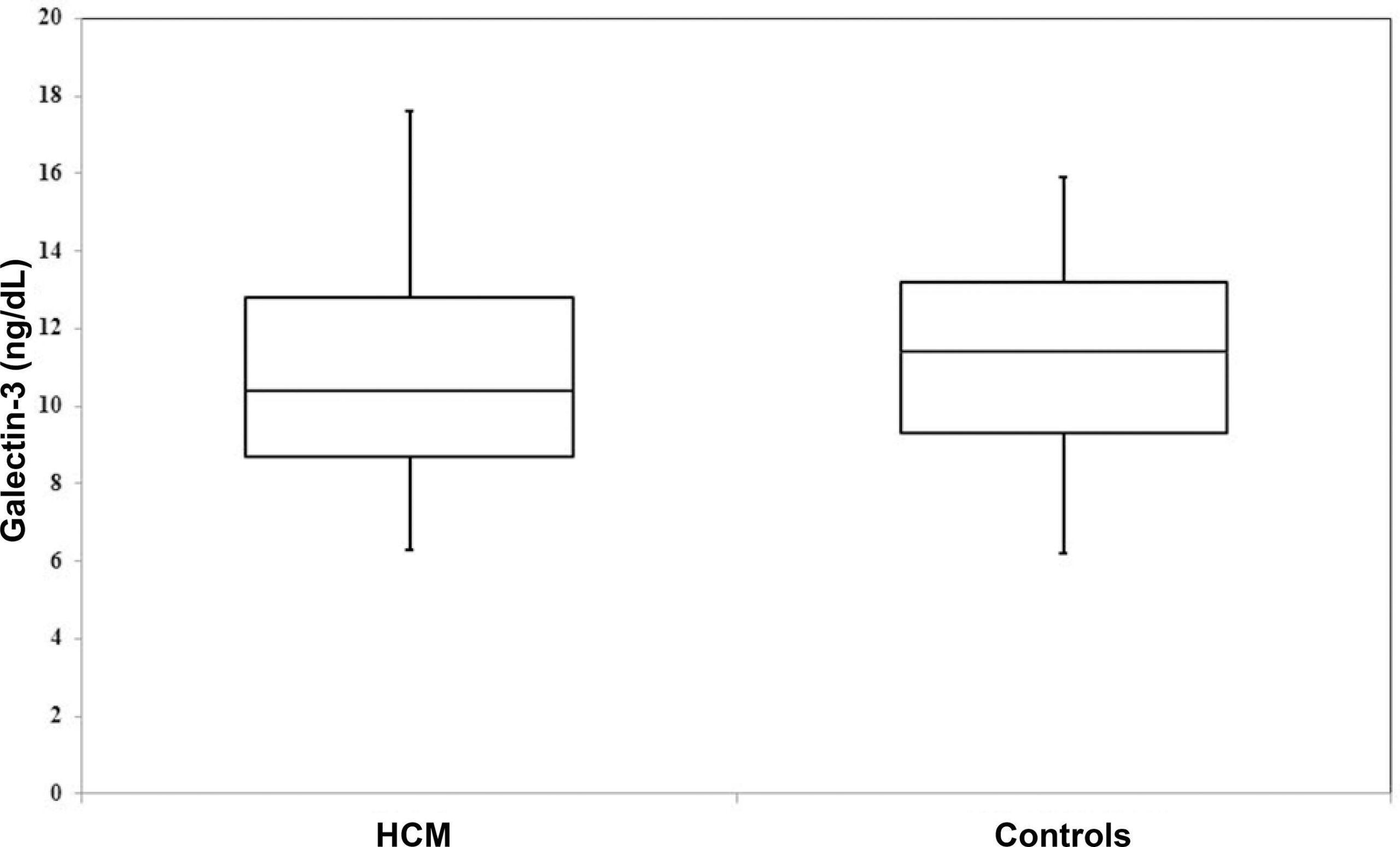
Galectin-3 levels were low and did not show significant differences between patients with hypertrophic cardiomyopathy and the control group, 10.3 ± 3.1 ng/dL and 11.3 ± 2.6 ng/dL (p = 0.12) respectively. Myocardial fibrosis was a common finding and was identified in 84% (42/50) of patients with HCM, but no differences were observed between Galectin-3 levels when comparing patients with and without fibrosis, 10.3 ± 2.4 ng/dL and 10.1 ± 2.1 ng/dL (p = 0.59).

Conclusion:

The results did not show an association between Galectin-3 and myocardial fibrosis in patients with hypertrophic cardiomyopathy, suggesting that non-inflammatory mechanisms of myocardial fibrosis formation and cardiac remodeling are involved in this cardiopathy.

  • Arrhythmias Cardiac
  • Cardiomyopathy, Hypertrophic
  • Diagnostic Imaging
  • Endomyocardial Fibrosis
  • Galectin 3
Read Full Article
Creative Commons Attribution (CC BY) Creative Commons license
18/02/2019 DOI: 10.5935/2359-4802.20180102 Views 1
ABC
Editorial

Prevention of Sudden Death in Hypertrophic Cardiomyopathy

Edmundo Arteaga-Fernández et al. Murillo de Oliveira Antunes

Hypertrophic cardiomyopathy (HCM) is the most common congenital disease, and sudden death (SD), its most feared complication, was already mentioned by Donald Teare in the first description of the disease, being observed in 7 out of 8 patients. SD occurs during daily activities, after exercises and even during sleep; it may affect young athletes, which has a great impact on the media. This has required considerable effort by researchers in defining clinical factors and complementary tests that could be used in the screening of individuals at higher risk that could benefit from implantable cardioverter defibrillator (ICD) and also to prevent SD, since it is caused by tachycardia and ventricular fibrillation. HCM favors the occurrence of ventricular arrythmias – hypertrophy causes repolarization dispersion; myocyte disarray and increased fibrosis create areas of conduction block and predispose to reentry arrhythmias; and abnormalities in ion fluxes, such as calcium, during repolarization may also trigger arrhythmias. In addition, this complex arrhythmogenic substrate may be modulated by impaired autonomic response, myocardial ischemia and left ventricular outflow tract obstruction.– If we consider deaths from cardiovascular causes, in patients with HCM, they account for 0.5%-1.5% deaths a year, which is near to that of the general population. In HCM patients considered as high risk, SD may reach 2.5% of deaths a year. However, the accurate identification of these patients for preventive therapy with ICD may be challenging.

Before the guidelines were published, it was known that manifestations of HCM in children younger than 10 years old with diastolic or systolic dysfunction, SD in first-degree relatives younger than 50 years, nonsustained ventricular tachycardia, syncope and myocardial hypertrophy > 30 mm were factors associated with SD, and the last four fully considered as indications for ICD in the first guideline (2011).

[…]

  • Cardiomyopathy, Hypertrophic
  • Death, Sudden, Cardiac/prevention & control
  • Heart Defects, Congenital
Read Full Article
Creative Commons Attribution (CC BY) Creative Commons license
01/06/2018 DOI: 10.5935/abc.20180101

Could not load more articles. Please try again.

How to cite this article

EndNote RIS

Electronic Document Format (Vancouver)

Antunes MO, Arteaga-Fernandez E, Samesima N, Pereira Filho HG, Matsumoto AY, Verrier RL, Pastore CA, et al. Prognostic Evaluation of Microvolt T-Wave Alternans in Hypertrophic Cardiomyopathy: 9-year Clinical Follow-up. Arquivos Brasileiros de Cardiologia 2023;120(8):e20220833.

Electronic Document Format (ABNT)

Antunes, Murillo Oliveira; Arteaga-Fernandez, Edmundo; Samesima, Nelson; Pereira Filho, Horácio Gomes; Matsumoto, Afonso Yoshikiro; Verrier, Richard L.; Pastore, Carlos Alberto; Mady, Charles. Prognostic Evaluation of Microvolt T-Wave Alternans in Hypertrophic Cardiomyopathy: 9-year Clinical Follow-up. Arquivos Brasileiros de Cardiologia, v. 120, n. 8, e20220833, Sep. 2023.

Electronic Document Format (APA)

Antunes, M. O., Arteaga-Fernandez, E., Samesima, N., Pereira Filho, H. G., Matsumoto, A. Y., Verrier, R. L., Pastore, C. A., & Mady, C. (2023). Prognostic Evaluation of Microvolt T-Wave Alternans in Hypertrophic Cardiomyopathy: 9-year Clinical Follow-up. Arquivos Brasileiros de Cardiologia, 120(8), e20220833.

Electronic Document Format (ISO)

Antunes, Murillo Oliveira and Arteaga-Fernandez, Edmundo and Samesima, Nelson and Pereira Filho, Horácio Gomes and Matsumoto, Afonso Yoshikiro and Verrier, Richard L. and Pastore, Carlos Alberto and Mady, Charles. Prognostic Evaluation of Microvolt T-Wave Alternans in Hypertrophic Cardiomyopathy: 9-year Clinical Follow-up. Arquivos Brasileiros de Cardiologia [online]. 2023, vol. 120, n. 8, [cited 2026-10-14], e20220833. Available from: <https://journals.cardiol.br/en/article/prognostic-evaluation-of-microvolt-t-wave-alternans-in-hypertrophic-cardiomyopathy-9-year-clinical-follow-up/>. ISSN 0066-782X

EndNote RIS

Electronic Document Format (Vancouver)

Pena JLB, Souza Neto I, Barbosa AP, Santos Neto DA. Echocardiographic Characteristics of PRKAG2 Syndrome: An Integrative Review. ABC Imagem Cardiovascular 2023;36(3):e20230047.

Electronic Document Format (ABNT)

Pena, José Luiz Barros; Souza Neto, Igor de; Barbosa, Alice Pinheiro; Santos Neto, Dinamar Amador dos. Echocardiographic Characteristics of PRKAG2 Syndrome: An Integrative Review. ABC Imagem Cardiovascular, v. 36, n. 3, e20230047, Aug. 2023.

Electronic Document Format (APA)

Pena, J. L. B., Souza Neto, I. , Barbosa, A. P., & Santos Neto, D. A. (2023). Echocardiographic Characteristics of PRKAG2 Syndrome: An Integrative Review. ABC Imagem Cardiovascular, 36(3), e20230047.

Electronic Document Format (ISO)

Pena, José Luiz Barros and Souza Neto, Igor de and Barbosa, Alice Pinheiro and Santos Neto, Dinamar Amador dos. Echocardiographic Characteristics of PRKAG2 Syndrome: An Integrative Review. ABC Imagem Cardiovascular [online]. 2023, vol. 36, n. 3, [cited 2026-10-14], e20230047. Available from: <https://journals.cardiol.br/en/article/echocardiographic-characteristics-of-prkag2-syndrome-an-integrative-review/>. ISSN 2318-8219

EndNote RIS

Electronic Document Format (Vancouver)

Saraiva F, Fernandes F, Romano MMD, Cardoso JN, Soliani MT, Bernardo MMM, Schmidt A, et al. Diagnosis and Treatment of Hypertrophic Cardiomyopathy. ABC Heart Fail Cardiomyop 2023;3(1):e20230040.

Electronic Document Format (ABNT)

Saraiva, Fernando; Fernandes, Fabio; Romano, Minna Moreira Dias; Cardoso, Juliano Novaes; Soliani, Marília Taily; Bernardo, Mariani Mendes Madisson; Schmidt, André; Simões, Marcus Vinicius. Diagnosis and Treatment of Hypertrophic Cardiomyopathy. ABC Heart Fail Cardiomyop, v. 3, n. 1, e20230040, Jul. 2023.

Electronic Document Format (APA)

Saraiva, F., Fernandes, F., Romano, M. M. D., Cardoso, J. N., Soliani, M. T., Bernardo, M. M. M., Schmidt, A., & Simões, M. V. (2023). Diagnosis and Treatment of Hypertrophic Cardiomyopathy. ABC Heart Fail Cardiomyop, 3(1), e20230040.

Electronic Document Format (ISO)

Saraiva, Fernando and Fernandes, Fabio and Romano, Minna Moreira Dias and Cardoso, Juliano Novaes and Soliani, Marília Taily and Bernardo, Mariani Mendes Madisson and Schmidt, André and Simões, Marcus Vinicius. Diagnosis and Treatment of Hypertrophic Cardiomyopathy. ABC Heart Fail Cardiomyop [online]. 2023, vol. 3, n. 1, [cited 2026-10-14], e20230040. Available from: <https://journals.cardiol.br/en/article/diagnosis-and-treatment-of-hypertrophic-cardiomyopathy/>

EndNote RIS

Electronic Document Format (Vancouver)

Valério RS, Bittencourt MS, Uellendahl MM. Hypertrophic Cardiomyopathy: A Review Using Magnetic Resonance Imaging. ABC Imagem Cardiovascular 2022;35(4):erer_15.

Electronic Document Format (ABNT)

Valério, Raul Serra; Bittencourt, Marcio Sommer; Uellendahl, Marly M.. Hypertrophic Cardiomyopathy: A Review Using Magnetic Resonance Imaging. ABC Imagem Cardiovascular, v. 35, n. 4, erer_15, Dec. 2022.

Electronic Document Format (APA)

Valério, R. S., Bittencourt, M. S., & Uellendahl, M. M. (2022). Hypertrophic Cardiomyopathy: A Review Using Magnetic Resonance Imaging. ABC Imagem Cardiovascular, 35(4), erer_15.

Electronic Document Format (ISO)

Valério, Raul Serra and Bittencourt, Marcio Sommer and Uellendahl, Marly M.. Hypertrophic Cardiomyopathy: A Review Using Magnetic Resonance Imaging. ABC Imagem Cardiovascular [online]. 2022, vol. 35, n. 4, [cited 2026-10-14], erer_15. Available from: <https://journals.cardiol.br/en/article/hypertrophic-cardiomyopathy-a-review-using-magnetic-resonance-imaging/>. ISSN 2318-8219

EndNote RIS

Electronic Document Format (Vancouver)

Sternick EB. PRKAG2 Cardiomyopathy. Arquivos Brasileiros de Cardiologia 2022;119(5):689-90.

Electronic Document Format (ABNT)

Sternick, Eduardo Back. PRKAG2 Cardiomyopathy. Arquivos Brasileiros de Cardiologia, v. 119, n. 5, p. 689-690, Nov. 2022.

Electronic Document Format (APA)

Sternick, E. B. (2022). PRKAG2 Cardiomyopathy. Arquivos Brasileiros de Cardiologia, 119(5), 689-690.

Electronic Document Format (ISO)

Sternick, Eduardo Back. PRKAG2 Cardiomyopathy. Arquivos Brasileiros de Cardiologia [online]. 2022, vol. 119, n. 5, [cited 2026-10-14], pp. 689-690. Available from: <https://journals.cardiol.br/en/article/prkag2-cardiomyopathy/>. ISSN 0066-782X

EndNote RIS

Electronic Document Format (Vancouver)

Magalhães EFS, Magalhães LP, Pinheiro JO, Guabiru AT, Aras R. Atrial Flutter in PRKAG2 Syndrome: Clinical and Electrophysiological Characteristics. Arquivos Brasileiros de Cardiologia 2022;119(5):681-8.

Electronic Document Format (ABNT)

Magalhães, Eduardo Faria Soares de; Magalhães, Luiz Pereira de; Pinheiro, Jussara de Oliveira; Guabiru, Alex Teixeira; Aras, Roque. Atrial Flutter in PRKAG2 Syndrome: Clinical and Electrophysiological Characteristics. Arquivos Brasileiros de Cardiologia, v. 119, n. 5, p. 681-688, Sep. 2022.

Electronic Document Format (APA)

Magalhães, E. F. S. , Magalhães, L. P. , Pinheiro, J. O., Guabiru, A. T., & Aras, R. (2022). Atrial Flutter in PRKAG2 Syndrome: Clinical and Electrophysiological Characteristics. Arquivos Brasileiros de Cardiologia, 119(5), 681-688.

Electronic Document Format (ISO)

Magalhães, Eduardo Faria Soares de and Magalhães, Luiz Pereira de and Pinheiro, Jussara de Oliveira and Guabiru, Alex Teixeira and Aras, Roque. Atrial Flutter in PRKAG2 Syndrome: Clinical and Electrophysiological Characteristics. Arquivos Brasileiros de Cardiologia [online]. 2022, vol. 119, n. 5, [cited 2026-10-14], pp. 681-688. Available from: <https://journals.cardiol.br/en/article/atrial-flutter-in-prkag2-syndrome-clinical-and-electrophysiological-characteristics/>. ISSN 0066-782X

EndNote RIS

Electronic Document Format (Vancouver)

Matos RC, Soares AC, Silva RTB, Mesquita ET. Danon Disease in an Asymptomatic Woman: A Five-Year Follow Up. International Journal of Cardiovascular Sciences 2022;35(5):681-6.

Electronic Document Format (ABNT)

Matos, Ricardo Cardoso de; Soares, Amanda Cunha; Silva, Raquel Tavares Boy da; Mesquita, Evandro Tinoco. Danon Disease in an Asymptomatic Woman: A Five-Year Follow Up. International Journal of Cardiovascular Sciences, v. 35, n. 5, p. 681-686, Feb. 2022.

Electronic Document Format (APA)

Matos, R. C. , Soares, A. C., Silva, R. T. B. , & Mesquita, E. T. (2022). Danon Disease in an Asymptomatic Woman: A Five-Year Follow Up. International Journal of Cardiovascular Sciences, 35(5), 681-686.

Electronic Document Format (ISO)

Matos, Ricardo Cardoso de and Soares, Amanda Cunha and Silva, Raquel Tavares Boy da and Mesquita, Evandro Tinoco. Danon Disease in an Asymptomatic Woman: A Five-Year Follow Up. International Journal of Cardiovascular Sciences [online]. 2022, vol. 35, n. 5, [cited 2026-10-14], pp. 681-686. Available from: <https://journals.cardiol.br/en/article/danon-disease-in-an-asymptomatic-woman-a-five-year-follow-up/>. ISSN 2359-4802

EndNote RIS

Electronic Document Format (Vancouver)

Marques-Alves P, Ferreira JA, Freitas AA, Almeida JP, Baptista R, Castro G, Martins R, et al. Atrial Mechanics in Hypertrophic Cardiomyopathy: Discriminating between Ventricular Hypertrophy and Fibrosis. Arquivos Brasileiros de Cardiologia 2022;118(1):77-8.

Electronic Document Format (ABNT)

Marques-Alves, Patrícia; Ferreira, João André; Freitas, André Azul; Almeida, José Paulo; Baptista, Rui; Castro, Graça; Martins, Rui; Donato, Paulo; Ferreira, Maria João; Gonçalves, Lino. Atrial Mechanics in Hypertrophic Cardiomyopathy: Discriminating between Ventricular Hypertrophy and Fibrosis. Arquivos Brasileiros de Cardiologia, v. 118, n. 1, p. 77-87, Feb. 2022.

Electronic Document Format (APA)

Marques-Alves, P., Ferreira, J. A., Freitas, A. A., Almeida, J. P., Baptista, R., Castro, G., Martins, R., Donato, P., Ferreira, M. J., & Gonçalves, L. (2022). Atrial Mechanics in Hypertrophic Cardiomyopathy: Discriminating between Ventricular Hypertrophy and Fibrosis. Arquivos Brasileiros de Cardiologia, 118(1), 77-87.

Electronic Document Format (ISO)

Marques-Alves, Patrícia and Ferreira, João André and Freitas, André Azul and Almeida, José Paulo and Baptista, Rui and Castro, Graça and Martins, Rui and Donato, Paulo and Ferreira, Maria João and Gonçalves, Lino. Atrial Mechanics in Hypertrophic Cardiomyopathy: Discriminating between Ventricular Hypertrophy and Fibrosis. Arquivos Brasileiros de Cardiologia [online]. 2022, vol. 118, n. 1, [cited 2026-10-14], pp. 77-87. Available from: <https://journals.cardiol.br/en/article/atrial-mechanics-in-hypertrophic-cardiomyopathy-discriminating-between-ventricular-hypertrophy-and-fibrosis/>. ISSN 0066-782X

EndNote RIS

Electronic Document Format (Vancouver)

Oliveira MB, Noriega AF, Miranda JR, Ricci GA, Basaglia B, Ribeiro MBM, Oliveira MB, et al. Ecocardiographic Evaluation of Mitral Insufficiency in Patients with Hypertrophic Cardiomyopathy. Arquivos Brasileiros de Cardiologia Imagem cardiovascular 2022;32(4):303-8.

Electronic Document Format (ABNT)

Oliveira, Marina Braga; Noriega, Angélica Fonseca; Miranda, Jéssica Richard; Ricci, Gabriel Andrey; Basaglia, Bruna; Ribeiro, Maria Beatriz Marques; Oliveira, Marina Bragheto; Murad Junior, Jamil Ali. Ecocardiographic Evaluation of Mitral Insufficiency in Patients with Hypertrophic Cardiomyopathy. Arquivos Brasileiros de Cardiologia Imagem cardiovascular, v. 32, n. 4, p. 303-308, Jan. 2022.

Electronic Document Format (APA)

Oliveira, M. B., Noriega, A. F., Miranda, J. R., Ricci, G. A., Basaglia, B., Ribeiro, M. B. M., Oliveira, M. B., & Murad Junior, J. A. (2022). Ecocardiographic Evaluation of Mitral Insufficiency in Patients with Hypertrophic Cardiomyopathy. Arquivos Brasileiros de Cardiologia Imagem cardiovascular, 32(4), 303-308.

Electronic Document Format (ISO)

Oliveira, Marina Braga and Noriega, Angélica Fonseca and Miranda, Jéssica Richard and Ricci, Gabriel Andrey and Basaglia, Bruna and Ribeiro, Maria Beatriz Marques and Oliveira, Marina Bragheto and Murad Junior, Jamil Ali. Ecocardiographic Evaluation of Mitral Insufficiency in Patients with Hypertrophic Cardiomyopathy. Arquivos Brasileiros de Cardiologia Imagem cardiovascular [online]. 2022, vol. 32, n. 4, [cited 2026-10-14], pp. 303-308. Available from: <https://journals.cardiol.br/en/article/ecocardiographic-evaluation-of-mitral-insufficiency-in-patients-with-hypertrophic-cardiomyopathy/>. ISSN 2318-8219

EndNote RIS

Electronic Document Format (Vancouver)

Rodrigues P, Soares AR, Taipa R, Ferreira S, Reis H. Left Ventricular Hypertrophy: One Phenotype, Two Hypotheses, Three Lessons. Arquivos Brasileiros de Cardiologia 2021;117(5):1056-9.

Electronic Document Format (ABNT)

Rodrigues, Patrícia; Soares, Ana Rita; Taipa, Ricardo; Ferreira, Sofia; Reis, Hipólito. Left Ventricular Hypertrophy: One Phenotype, Two Hypotheses, Three Lessons. Arquivos Brasileiros de Cardiologia, v. 117, n. 5, p. 1056-1059, Nov. 2021.

Electronic Document Format (APA)

Rodrigues, P., Soares, A. R., Taipa, R., Ferreira, S., & Reis, H. (2021). Left Ventricular Hypertrophy: One Phenotype, Two Hypotheses, Three Lessons. Arquivos Brasileiros de Cardiologia, 117(5), 1056-1059.

Electronic Document Format (ISO)

Rodrigues, Patrícia and Soares, Ana Rita and Taipa, Ricardo and Ferreira, Sofia and Reis, Hipólito. Left Ventricular Hypertrophy: One Phenotype, Two Hypotheses, Three Lessons. Arquivos Brasileiros de Cardiologia [online]. 2021, vol. 117, n. 5, [cited 2026-10-14], pp. 1056-1059. Available from: <https://journals.cardiol.br/en/article/left-ventricular-hypertrophy-one-phenotype-two-hypotheses-three-lessons/>. ISSN 0066-782X

EndNote RIS

Electronic Document Format (Vancouver)

Cunha CLP. Electrocardiographic Diagnosis of Left Ventricular Hypertrophy. Arquivos Brasileiros de Cardiologia 2021;117(5):932-3.

Electronic Document Format (ABNT)

Cunha, Claudio Leinig Pereira da. Electrocardiographic Diagnosis of Left Ventricular Hypertrophy. Arquivos Brasileiros de Cardiologia, v. 117, n. 5, p. 932-933, Nov. 2021.

Electronic Document Format (APA)

Cunha, C. L. P. (2021). Electrocardiographic Diagnosis of Left Ventricular Hypertrophy. Arquivos Brasileiros de Cardiologia, 117(5), 932-933.

Electronic Document Format (ISO)

Cunha, Claudio Leinig Pereira da. Electrocardiographic Diagnosis of Left Ventricular Hypertrophy. Arquivos Brasileiros de Cardiologia [online]. 2021, vol. 117, n. 5, [cited 2026-10-14], pp. 932-933. Available from: <https://journals.cardiol.br/en/article/electrocardiographic-diagnosis-of-left-ventricular-hypertrophy/>. ISSN 0066-782X

EndNote RIS

Electronic Document Format (Vancouver)

Latado L, Melo RMV, Mistro S, Latado AL, Nascimento HF, Lira YM, Oliveira NFC, et al. Cost-Effectiveness Analysis of Evolocumab Therapy in Patients at High Risk of Cardiovascular Events in the Context of the Brazilian Unified Health System. Arquivos Brasileiros de Cardiologia 2021;117(5):988-96.

Electronic Document Format (ABNT)

Latado, Luiza; Melo, Rodrigo Morel Vieira de; Mistro, Sóstenes; Latado, Adriana Lopes; Nascimento, Harrison Floriano do; Lira, Yasmin Menezes; Oliveira, Natalia Ferreira Cardoso de; Galindo, Yuri de Santana; Viana, Tainá; Passos, Luiz Carlos Santana. Cost-Effectiveness Analysis of Evolocumab Therapy in Patients at High Risk of Cardiovascular Events in the Context of the Brazilian Unified Health System. Arquivos Brasileiros de Cardiologia, v. 117, n. 5, p. 988-996, Nov. 2021.

Electronic Document Format (APA)

Latado, L., Melo, R. M. V. , Mistro, S., Latado, A. L., Nascimento, H. F. , Lira, Y. M., Oliveira, N. F. C. , Galindo, Y. S., Viana, T., & Passos, L. C. S. (2021). Cost-Effectiveness Analysis of Evolocumab Therapy in Patients at High Risk of Cardiovascular Events in the Context of the Brazilian Unified Health System. Arquivos Brasileiros de Cardiologia, 117(5), 988-996.

Electronic Document Format (ISO)

Latado, Luiza and Melo, Rodrigo Morel Vieira de and Mistro, Sóstenes and Latado, Adriana Lopes and Nascimento, Harrison Floriano do and Lira, Yasmin Menezes and Oliveira, Natalia Ferreira Cardoso de and Galindo, Yuri de Santana and Viana, Tainá and Passos, Luiz Carlos Santana. Cost-Effectiveness Analysis of Evolocumab Therapy in Patients at High Risk of Cardiovascular Events in the Context of the Brazilian Unified Health System. Arquivos Brasileiros de Cardiologia [online]. 2021, vol. 117, n. 5, [cited 2026-10-14], pp. 988-996. Available from: <https://journals.cardiol.br/en/article/cost-effectiveness-analysis-of-evolocumab-therapy-in-patients-at-high-risk-of-cardiovascular-events-in-the-context-of-the-brazilian-unified-health-system/>. ISSN 0066-782X

EndNote RIS

Electronic Document Format (Vancouver)

Guimarães JPA, Trigo J, Gonçalves F, Moreira JI. Transthyretin Amyloid Cardiomyopathy Mimicking Hypertrophic Cardiomyopathy in an Older Patient. Arquivos Brasileiros de Cardiologia 2021;116(4):850-3.

Electronic Document Format (ABNT)

Guimarães, José Pedro Alves; Trigo, Joana; Gonçalves, Fernando; Moreira, J. Ilídio. Transthyretin Amyloid Cardiomyopathy Mimicking Hypertrophic Cardiomyopathy in an Older Patient. Arquivos Brasileiros de Cardiologia, v. 116, n. 4, p. 850-853, Apr. 2021.

Electronic Document Format (APA)

Guimarães, J. P. A., Trigo, J., Gonçalves, F., & Moreira, J. I. (2021). Transthyretin Amyloid Cardiomyopathy Mimicking Hypertrophic Cardiomyopathy in an Older Patient. Arquivos Brasileiros de Cardiologia, 116(4), 850-853.

Electronic Document Format (ISO)

Guimarães, José Pedro Alves and Trigo, Joana and Gonçalves, Fernando and Moreira, J. Ilídio. Transthyretin Amyloid Cardiomyopathy Mimicking Hypertrophic Cardiomyopathy in an Older Patient. Arquivos Brasileiros de Cardiologia [online]. 2021, vol. 116, n. 4, [cited 2026-10-14], pp. 850-853. Available from: <https://journals.cardiol.br/en/article/transthyretin-amyloid-cardiomyopathy-mimicking-hypertrophic-cardiomyopathy-in-an-older-patient/>. ISSN 0066-782X

EndNote RIS

Electronic Document Format (Vancouver)

Mastrocola F, Oliveira WS, Porto AA, Mendonça RM, Oliveira Neto NR. Non-Progressive Hepatic Form of Andersen Disease as a Mimic of Hypertrophic Cardiomyopathy. Arquivos Brasileiros de Cardiologia 2020;115(5):964-6.

Electronic Document Format (ABNT)

Mastrocola, Fabio; Oliveira, William Santos de; Porto, Adalberto Atsushi; Mendonça, Roberto Moreno; Oliveira Neto, Nestor Rodrigues de. Non-Progressive Hepatic Form of Andersen Disease as a Mimic of Hypertrophic Cardiomyopathy. Arquivos Brasileiros de Cardiologia, v. 115, n. 5, p. 964-966, Dec. 2020.

Electronic Document Format (APA)

Mastrocola, F., Oliveira, W. S. , Porto, A. A., Mendonça, R. M., & Oliveira Neto, N. R. (2020). Non-Progressive Hepatic Form of Andersen Disease as a Mimic of Hypertrophic Cardiomyopathy. Arquivos Brasileiros de Cardiologia, 115(5), 964-966.

Electronic Document Format (ISO)

Mastrocola, Fabio and Oliveira, William Santos de and Porto, Adalberto Atsushi and Mendonça, Roberto Moreno and Oliveira Neto, Nestor Rodrigues de. Non-Progressive Hepatic Form of Andersen Disease as a Mimic of Hypertrophic Cardiomyopathy. Arquivos Brasileiros de Cardiologia [online]. 2020, vol. 115, n. 5, [cited 2026-10-14], pp. 964-966. Available from: <https://journals.cardiol.br/en/article/non-progressive-hepatic-form-of-andersen-disease-as-a-mimic-of-hypertrophic-cardiomyopathy/>. ISSN 0066-782X

EndNote RIS

Electronic Document Format (Vancouver)

Strong C, Freitas P, Ferreira A, Rodrigues G, Mendes M. One Patient, Two Cardiomyopathies. Arquivos Brasileiros de Cardiologia 2020;115(3):584-6.

Electronic Document Format (ABNT)

Strong, Christopher; Freitas, Pedro; Ferreira, António; Rodrigues, Gustavo; Mendes, Miguel. One Patient, Two Cardiomyopathies. Arquivos Brasileiros de Cardiologia, v. 115, n. 3, p. 584-586, Sep. 2020.

Electronic Document Format (APA)

Strong, C., Freitas, P., Ferreira, A., Rodrigues, G., & Mendes, M. (2020). One Patient, Two Cardiomyopathies. Arquivos Brasileiros de Cardiologia, 115(3), 584-586.

Electronic Document Format (ISO)

Strong, Christopher and Freitas, Pedro and Ferreira, António and Rodrigues, Gustavo and Mendes, Miguel. One Patient, Two Cardiomyopathies. Arquivos Brasileiros de Cardiologia [online]. 2020, vol. 115, n. 3, [cited 2026-10-14], pp. 584-586. Available from: <https://journals.cardiol.br/en/article/one-patient-two-cardiomyopathies/>. ISSN 0066-782X

EndNote RIS

Electronic Document Format (Vancouver)

Correia ETO, Barbetta LMS. Left Ventricle Mass Index, a Confounding Variable of Global Longitudinal Strain to be Noticed. Arquivos Brasileiros de Cardiologia 2020;114(1):136.

Electronic Document Format (ABNT)

Correia, Eduardo Thadeu de Oliveira; Barbetta, Letícia Mara dos Santos. Left Ventricle Mass Index, a Confounding Variable of Global Longitudinal Strain to be Noticed. Arquivos Brasileiros de Cardiologia, v. 114, n. 1, p. 136-136, Feb. 2020.

Electronic Document Format (APA)

Correia, E. T. O., & Barbetta, L. M. S. (2020). Left Ventricle Mass Index, a Confounding Variable of Global Longitudinal Strain to be Noticed. Arquivos Brasileiros de Cardiologia, 114(1), 136-136.

Electronic Document Format (ISO)

Correia, Eduardo Thadeu de Oliveira and Barbetta, Letícia Mara dos Santos. Left Ventricle Mass Index, a Confounding Variable of Global Longitudinal Strain to be Noticed. Arquivos Brasileiros de Cardiologia [online]. 2020, vol. 114, n. 1, [cited 2026-10-14], pp. 136-136. Available from: <https://journals.cardiol.br/en/article/left-ventricle-mass-index-a-confounding-variable-of-global-longitudinal-strain-to-be-noticed/>. ISSN 0066-782X

EndNote RIS

Electronic Document Format (Vancouver)

Silva CES. At Last, a Sensitive Method to Detect Incipient Systolic Dysfunction!. Arquivos Brasileiros de Cardiologia 2019;113(4):746-7.

Electronic Document Format (ABNT)

Silva, Carlos Eduardo Suaide. At Last, a Sensitive Method to Detect Incipient Systolic Dysfunction!. Arquivos Brasileiros de Cardiologia, v. 113, n. 4, p. 746-747, Nov. 2019.

Electronic Document Format (APA)

Silva, C. E. S. (2019). At Last, a Sensitive Method to Detect Incipient Systolic Dysfunction!. Arquivos Brasileiros de Cardiologia, 113(4), 746-747.

Electronic Document Format (ISO)

Silva, Carlos Eduardo Suaide. At Last, a Sensitive Method to Detect Incipient Systolic Dysfunction!. Arquivos Brasileiros de Cardiologia [online]. 2019, vol. 113, n. 4, [cited 2026-10-14], pp. 746-747. Available from: <https://journals.cardiol.br/en/article/at-last-a-sensitive-method-to-detect-incipient-systolic-dysfunction/>. ISSN 0066-782X

EndNote RIS

Electronic Document Format (Vancouver)

Gil TCP, Castier MB, Gondar AFP, Sales AF, Santos MO, Lima FCS, Mourilhe-Rocha R, et al. Strain Analysis of Left Ventricular Function in the Association of Hypertrophic Cardiomyopathy and Systemic Arterial Hypertension. Arquivos Brasileiros de Cardiologia 2019;113(4):677-84.

Electronic Document Format (ABNT)

Gil, Thereza Cristina Pereira; Castier, Marcia Bueno; Gondar, Alyne Freitas Pereira; Sales, Ana Ferreira; Santos, Marceli de Oliveira; Lima, Fernanda Cristina da Silva de; Mourilhe-Rocha, Ricardo. Strain Analysis of Left Ventricular Function in the Association of Hypertrophic Cardiomyopathy and Systemic Arterial Hypertension. Arquivos Brasileiros de Cardiologia, v. 113, n. 4, p. 677-684, Sep. 2019.

Electronic Document Format (APA)

Gil, T. C. P., Castier, M. B., Gondar, A. F. P., Sales, A. F., Santos, M. O., Lima, F. C. S. , & Mourilhe-Rocha, R. (2019). Strain Analysis of Left Ventricular Function in the Association of Hypertrophic Cardiomyopathy and Systemic Arterial Hypertension. Arquivos Brasileiros de Cardiologia, 113(4), 677-684.

Electronic Document Format (ISO)

Gil, Thereza Cristina Pereira and Castier, Marcia Bueno and Gondar, Alyne Freitas Pereira and Sales, Ana Ferreira and Santos, Marceli de Oliveira and Lima, Fernanda Cristina da Silva de and Mourilhe-Rocha, Ricardo. Strain Analysis of Left Ventricular Function in the Association of Hypertrophic Cardiomyopathy and Systemic Arterial Hypertension. Arquivos Brasileiros de Cardiologia [online]. 2019, vol. 113, n. 4, [cited 2026-10-14], pp. 677-684. Available from: <https://journals.cardiol.br/en/article/strain-analysis-of-left-ventricular-function-in-the-association-of-hypertrophic-cardiomyopathy-and-systemic-arterial-hypertension/>. ISSN 0066-782X

EndNote RIS

Electronic Document Format (Vancouver)

Colombo CSSS, Ghorayeb N, Garcia TG, Francisco RC. Sudden Cardiac Death in Sports: Why Its Prevalence is So Different by Gender?. International Journal of Cardiovascular Sciences 2019;32(4):414-7.

Electronic Document Format (ABNT)

Colombo, Cléa Simone Sabino de Souza; Ghorayeb, Nabil; Garcia, Thiago Ghorayeb; Francisco, Ricardo Contesini. Sudden Cardiac Death in Sports: Why Its Prevalence is So Different by Gender?. International Journal of Cardiovascular Sciences, v. 32, n. 4, p. 414-417, Aug. 2019.

Electronic Document Format (APA)

Colombo, C. S. S. S., Ghorayeb, N., Garcia, T. G., & Francisco, R. C. (2019). Sudden Cardiac Death in Sports: Why Its Prevalence is So Different by Gender?. International Journal of Cardiovascular Sciences, 32(4), 414-417.

Electronic Document Format (ISO)

Colombo, Cléa Simone Sabino de Souza and Ghorayeb, Nabil and Garcia, Thiago Ghorayeb and Francisco, Ricardo Contesini. Sudden Cardiac Death in Sports: Why Its Prevalence is So Different by Gender?. International Journal of Cardiovascular Sciences [online]. 2019, vol. 32, n. 4, [cited 2026-10-14], pp. 414-417. Available from: <https://journals.cardiol.br/en/article/sudden-cardiac-death-in-sports-why-its-prevalence-is-so-different-by-gender/>. ISSN 2359-4802

EndNote RIS

Electronic Document Format (Vancouver)

Bittencourt MI. Description of a New GLA Gene Variant in a Patient with Hypertrophic Cardiomyopathy. Is it Fabry Disease?. Arquivos Brasileiros de Cardiologia 2019;113(1):85-6.

Electronic Document Format (ABNT)

Bittencourt, Marcelo Imbroinise. Description of a New GLA Gene Variant in a Patient with Hypertrophic Cardiomyopathy. Is it Fabry Disease?. Arquivos Brasileiros de Cardiologia, v. 113, n. 1, p. 85-86, Aug. 2019.

Electronic Document Format (APA)

Bittencourt, M. I. (2019). Description of a New GLA Gene Variant in a Patient with Hypertrophic Cardiomyopathy. Is it Fabry Disease?. Arquivos Brasileiros de Cardiologia, 113(1), 85-86.

Electronic Document Format (ISO)

Bittencourt, Marcelo Imbroinise. Description of a New GLA Gene Variant in a Patient with Hypertrophic Cardiomyopathy. Is it Fabry Disease?. Arquivos Brasileiros de Cardiologia [online]. 2019, vol. 113, n. 1, [cited 2026-10-14], pp. 85-86. Available from: <https://journals.cardiol.br/en/article/description-of-a-new-gla-gene-variant-in-a-patient-with-hypertrophic-cardiomyopathy-is-it-fabry-disease/>. ISSN 0066-782X

EndNote RIS

Electronic Document Format (Vancouver)

Chaves-Markman V, Markman M, Calado EB, Pires RF, Santos-Veloso MAO, Pereira CMF, Lordsleem ABMS, et al. GLA Gene Mutation in Hypertrophic Cardiomyopathy with a New Variant Description: Is it Fabry’s Disease?. Arquivos Brasileiros de Cardiologia 2019;113(1):77-84.

Electronic Document Format (ABNT)

Chaves-Markman, Ândrea Virgínia; Markman, Manuel; Calado, Eveline Barros; Pires, Ricardo Flores; Santos-Veloso, Marcelo Antônio Oliveira; Pereira, Catarina Maria Fonseca; Lordsleem, Andréa Bezerra de Melo da Silveira; Lima, Sandro Gonçalves de; Markman Filho, Brivaldo; Oliveira, Dinaldo Cavalcanti de. GLA Gene Mutation in Hypertrophic Cardiomyopathy with a New Variant Description: Is it Fabry’s Disease?. Arquivos Brasileiros de Cardiologia, v. 113, n. 1, p. 77-84, Jul. 2019.

Electronic Document Format (APA)

Chaves-Markman, V., Markman, M., Calado, E. B., Pires, R. F., Santos-Veloso, M. A. O., Pereira, C. M. F., Lordsleem, A. B. M. S., Lima, S. G. , Markman Filho, B., & Oliveira, D. C. (2019). GLA Gene Mutation in Hypertrophic Cardiomyopathy with a New Variant Description: Is it Fabry’s Disease?. Arquivos Brasileiros de Cardiologia, 113(1), 77-84.

Electronic Document Format (ISO)

Chaves-Markman, Ândrea Virgínia and Markman, Manuel and Calado, Eveline Barros and Pires, Ricardo Flores and Santos-Veloso, Marcelo Antônio Oliveira and Pereira, Catarina Maria Fonseca and Lordsleem, Andréa Bezerra de Melo da Silveira and Lima, Sandro Gonçalves de and Markman Filho, Brivaldo and Oliveira, Dinaldo Cavalcanti de. GLA Gene Mutation in Hypertrophic Cardiomyopathy with a New Variant Description: Is it Fabry’s Disease?. Arquivos Brasileiros de Cardiologia [online]. 2019, vol. 113, n. 1, [cited 2026-10-14], pp. 77-84. Available from: <https://journals.cardiol.br/en/article/gla-gene-mutation-in-hypertrophic-cardiomyopathy-with-a-new-variant-description-is-it-fabrys-disease/>. ISSN 0066-782X

EndNote RIS

Electronic Document Format (Vancouver)

Sara L. Myocardial Fibrosis in Hypertrophic Cardiomyopathy: What Remains to be Proven?. Arquivos Brasileiros de Cardiologia 2019;112(3):290-1.

Electronic Document Format (ABNT)

Sara, Leonardo. Myocardial Fibrosis in Hypertrophic Cardiomyopathy: What Remains to be Proven?. Arquivos Brasileiros de Cardiologia, v. 112, n. 3, p. 290-291, Feb. 2019.

Electronic Document Format (APA)

Sara, L. (2019). Myocardial Fibrosis in Hypertrophic Cardiomyopathy: What Remains to be Proven?. Arquivos Brasileiros de Cardiologia, 112(3), 290-291.

Electronic Document Format (ISO)

Sara, Leonardo. Myocardial Fibrosis in Hypertrophic Cardiomyopathy: What Remains to be Proven?. Arquivos Brasileiros de Cardiologia [online]. 2019, vol. 112, n. 3, [cited 2026-10-14], pp. 290-291. Available from: <https://journals.cardiol.br/en/article/myocardial-fibrosis-in-hypertrophic-cardiomyopathy-what-remains-to-be-proven/>. ISSN 0066-782X

EndNote RIS

Electronic Document Format (Vancouver)

Antunes MO, Arteaga-Fernández E, Fernandes F, Soffiatti CD, Buck PC, Sabino EC, Moreira CHV, et al. Evaluation of Galectin-3 and Myocardial Fibrosis in Patients with Hypertrophic Cardiomyopathy. International Journal of Cardiovascular Sciences 2019;32(2):152-7.

Electronic Document Format (ABNT)

Antunes, Murillo de Oliveira; Arteaga-Fernández, Edmundo; Fernandes, Fabio; Soffiatti, Carla David; Buck, Paula de Cássia; Sabino, Ester Cerdeira; Moreira, Carlos Henrique Valente; Mady, Charles. Evaluation of Galectin-3 and Myocardial Fibrosis in Patients with Hypertrophic Cardiomyopathy. International Journal of Cardiovascular Sciences, v. 32, n. 2, p. 152-157, Feb. 2019.

Electronic Document Format (APA)

Antunes, M. O., Arteaga-Fernández, E., Fernandes, F., Soffiatti, C. D., Buck, P. C., Sabino, E. C., Moreira, C. H. V., & Mady, C. (2019). Evaluation of Galectin-3 and Myocardial Fibrosis in Patients with Hypertrophic Cardiomyopathy. International Journal of Cardiovascular Sciences, 32(2), 152-157.

Electronic Document Format (ISO)

Antunes, Murillo de Oliveira and Arteaga-Fernández, Edmundo and Fernandes, Fabio and Soffiatti, Carla David and Buck, Paula de Cássia and Sabino, Ester Cerdeira and Moreira, Carlos Henrique Valente and Mady, Charles. Evaluation of Galectin-3 and Myocardial Fibrosis in Patients with Hypertrophic Cardiomyopathy. International Journal of Cardiovascular Sciences [online]. 2019, vol. 32, n. 2, [cited 2026-10-14], pp. 152-157. Available from: <https://journals.cardiol.br/en/article/evaluation-of-galectin-3-and-myocardial-fibrosis-in-patients-with-hypertrophic-cardiomyopathy/>. ISSN 2359-4802

EndNote RIS

Electronic Document Format (Vancouver)

Arteaga-Fernández E, Antunes MO. Prevention of Sudden Death in Hypertrophic Cardiomyopathy. Arquivos Brasileiros de Cardiologia 2018;110(6):532-3.

Electronic Document Format (ABNT)

Arteaga-Fernández, Edmundo; Antunes, Murillo de Oliveira. Prevention of Sudden Death in Hypertrophic Cardiomyopathy. Arquivos Brasileiros de Cardiologia, v. 110, n. 6, p. 532-533, May. 2018.

Electronic Document Format (APA)

Arteaga-Fernández, E., & Antunes, M. O. (2018). Prevention of Sudden Death in Hypertrophic Cardiomyopathy. Arquivos Brasileiros de Cardiologia, 110(6), 532-533.

Electronic Document Format (ISO)

Arteaga-Fernández, Edmundo and Antunes, Murillo de Oliveira. Prevention of Sudden Death in Hypertrophic Cardiomyopathy. Arquivos Brasileiros de Cardiologia [online]. 2018, vol. 110, n. 6, [cited 2026-10-14], pp. 532-533. Available from: <https://journals.cardiol.br/en/article/prevention-of-sudden-death-in-hypertrophic-cardiomyopathy/>. ISSN 0066-782X

  • About ABC Family
  • Internal Regulation
  • Editorial Board
  • Brazilian Society of Cardiology (SBC)

Issues

SBC Guidelines

  • Videos
  • Podcasts
  • News