ABC Family Arquivos Brasileiros de Cardiologia International Journal of Cardiovascular Sciences ABC Heart Failure & Cardiomyopathy ABC Imagem Cardiovascular
Português English
ABC Family
Português English
  • About
    • About ABC Family
    • Internal Regulation
    • Editorial Board
    • Brazilian Society of Cardiology (SBC)
  • Issues
  • SBC Guidelines
  • Content
    • Videos
    • Podcasts
    • News
  • About
    • About ABC Family
    • Internal Regulation
    • Editorial Board
    • Brazilian Society of Cardiology (SBC)
  • Issues
  • SBC Guidelines
  • Content
    • Videos
    • Podcasts
    • News

ABC Family

  • ABC Family
  • Arquivos Brasileiros de Cardiologia
  • International Journal of Cardiovascular Sciences
  • ABC Heart Failure & Cardiomyopathy
  • ABC Imagem Cardiovascular
Search in

No content found.

Journals
Ordering
Article types
Others

  1. Home
  2. Keyword: Hospitalization
Overview of Heart Failure in Brazil over 15 Years of Analysis: Impacts and Perspectives for the Health System
IJCS
Original Article

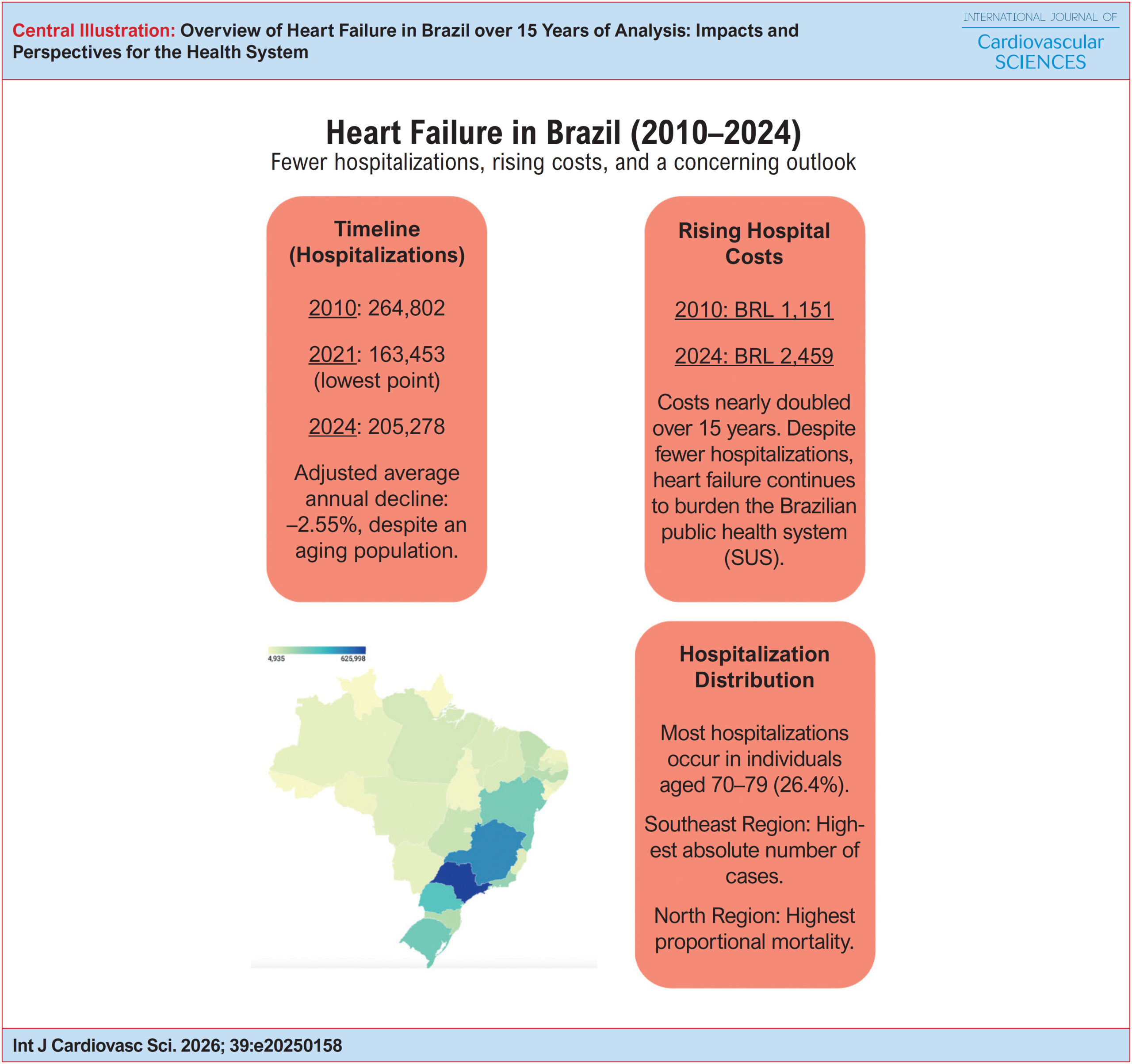
Overview of Heart Failure in Brazil over 15 Years of Analysis: Impacts and Perspectives for the Health System

Gabriel Dalves Lauretti Betez et al. Eduarda Braga Rossi Sofia Liz Gutierrez Natalia Puschnick Gimenez Giovanna Brian de Moura

Abstract

Background:

Heart failure (HF) remains one of the leading causes of hospital admissions and in-hospital mortality in Brazil. As the population ages, understanding how these hospitalizations have evolved over time is crucial for improving healthcare planning and reducing the burden on the public health system.

Objectives:

To evaluate temporal trends in HF hospitalizations in Brazil from 2010 to 2024, considering factors such as time, region, patient profile, and hospital-related costs.

Methods:

This observational study used data from the Brazilian Unified Health System’s Hospital Information System (SIH/SUS). Hospitalization rates per 100,000 inhabitants were adjusted using population estimates from the Brazilian Institute of Geography and Statistics. Temporal trends were assessed using annual percent change (APC) and average annual percent change (AAPC), with statistical significance set at p < 0.05.

Results:

Over 3 million HF hospitalizations were recorded during the study period. Annual admissions declined from 264,000 in 2010 to 205,000 in 2024, representing an average annual decrease of 1.8%. Adjusted rates fell from 135.3 to 94.3 per 100,000 inhabitants (AAPC: −2.55%; p < 0.001). In-hospital mortality peaked in 2021, reaching 13.5%. The average cost per hospitalization more than doubled, rising from BRL 1,151.42 to BRL 2,459.57.

Conclusion:

Despite a significant reduction in hospitalization rates, HF continues to pose a major challenge to Brazil’s healthcare system due to its high case volume and the steadily rising economic burden.
  • Health Services
  • Heart Failure
  • Hospitalization
Read Full Article
Creative Commons Attribution (CC BY) Creative Commons license
01/06/2026 DOI: 10.36660/ijcs.20250158 Views 1
Hyperkalemia in Heart Failure Hospitalizations: An Underreported Contributor to Poor Outcomes and Higher Costs in Brazil
ABC
Brief Communication

Hyperkalemia in Heart Failure Hospitalizations: An Underreported Contributor to Poor Outcomes and Higher Costs in Brazil

Roberto Pecoits-Filho et al. Pedro Tulio Rocha Maristela Carvalho da Costa Pedro Schwartzmann … Lídia Ana Zytynski Moura Mauricio Longato Nicolas Segre Tamisa Rego Cinthia Montenegro Thyago Proença de Moraes

Abstract

Hyperkalemia is associated with poor prognosis in heart failure (HF), but its reporting in administrative data is likely suboptimal.

The aim was to evaluate the frequency and impact of hyperkalemia ICD coding during HF hospitalizations in Brazil.

We analyzed 3,551,738 HF hospitalizations from the DATASUS database (2008–2024). ICD codes were used to identify hyperkalemia. Logistic and Cox regression analyses assessed associations between comorbidities, outcomes, and resource utilization.

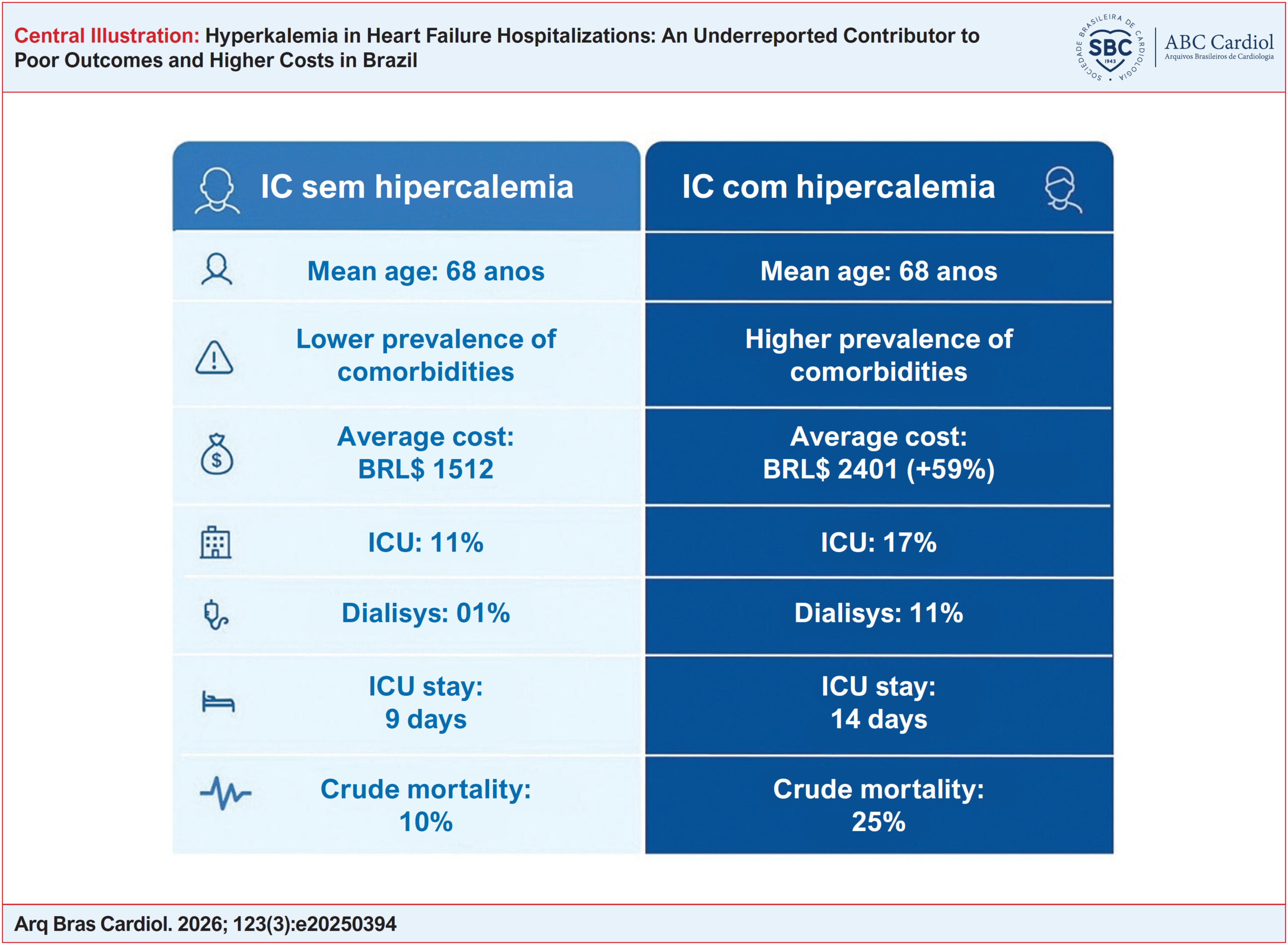
Only 491 hospitalizations (0.014%) were coded for hyperkalemia. These patients were older (mean 70.3 vs. 66.6 years) and had higher rates of chronic kidney disease, diabetes, and cardiovascular disease. Hyperkalemia was associated with increased in-hospital mortality (25% vs. 10%), ICU admissions (17% vs. 11%), dialysis (11% vs. 1%), and longer ICU stays (9.45 vs. 5.36 days). Average costs were 59% higher (2,402 vs. 1,512 BRL).

Hyperkalemia is severely underreported in Brazilian HF hospitalizations, despite being a clear marker of clinical severity and higher resource use. Improved awareness and coding may support better outcomes and planning.

  • Heart Failure
  • Hospitalization
  • hyperkalemia
  • International Classification of Diseases
Read Full Article
Creative Commons Attribution (CC BY) Creative Commons license
22/05/2026 DOI: 10.36660/abc.20250394i Views 1
IJCS
Editorial

The Burden of Cardiovascular Disease in Brazil: Insights From a Decade of Emergency Hospital Admissions

Fernando Yue Cesena

Cardiovascular disease (CVD) remains the leading cause of death both globally and in Brazil., Although cancer has surpassed CVD as the top cause in some countries, projections indicate that CVD will continue to be the primary cause of mortality in Brazil for the decades to come.,

Epidemiological analyses are essential for evaluating current public health strategies and informing future policy decisions. In this issue of the International Journal of Cardiovascular Sciences, an epidemiological study of recent emergency hospital admissions for CVD in Brazil is presented. Using data from the Department of Informatics of the Brazilian Unified Health System (DATASUS), the authors report data from over eight million hospital admissions from 2013 to 2023.

[…]

  • Cardiovascular Diseases
  • COVID-19
  • Epidemiology
  • Hospitalization
Read Full Article
Creative Commons Attribution (CC BY) Creative Commons license
09/01/2026 DOI: 10.36660/ijcs.20250128 Views 1
Feasibility and Safety of One-Minute Step Test in Patients with Heart Failure Hospitalized in the Cardio-Intensive Care Unit: A Pilot Study.
IJCS
Original Article

Feasibility and Safety of One-Minute Step Test in Patients with Heart Failure Hospitalized in the Cardio-Intensive Care Unit: A Pilot Study.

Andresa Narcizo Volotão et al. Clara Pinto Diniz Ana Carolina Cossio Rodriguez Vivian de Freitas Martins da Silva … Juliana Rega de Oliveira Ana Paula Nunes Carneiro Mariana Barcellos de Avila Carolina Nigro Di Leone

Abstract

Background:

The One-Minute Step Test (1MST) seems to be a useful tool for exploring the component of energy metabolism used in Activities of Daily Living (ADL), but it is still little explored in patients with Heart Failure (HF) in the hospital environment.

Objective:

To evaluate the feasibility and safety of performing 1MST in hospitalized patients with HF.

Methods:

Data were collected using electronic medical records and evaluative tests from patients with HF. The safety of the 1MST was assessed through vital signs records, perceived exertion, adverse events, and feasibility based on the ability to complete the test. The paired Student’s T-test and Wilcoxon test were employed to compare the data before and after the test, depending on the distribution of the data, while the relationship between the variables was examined using Pearson’s correlation test. The significance level set was p < 0.05.

Results:

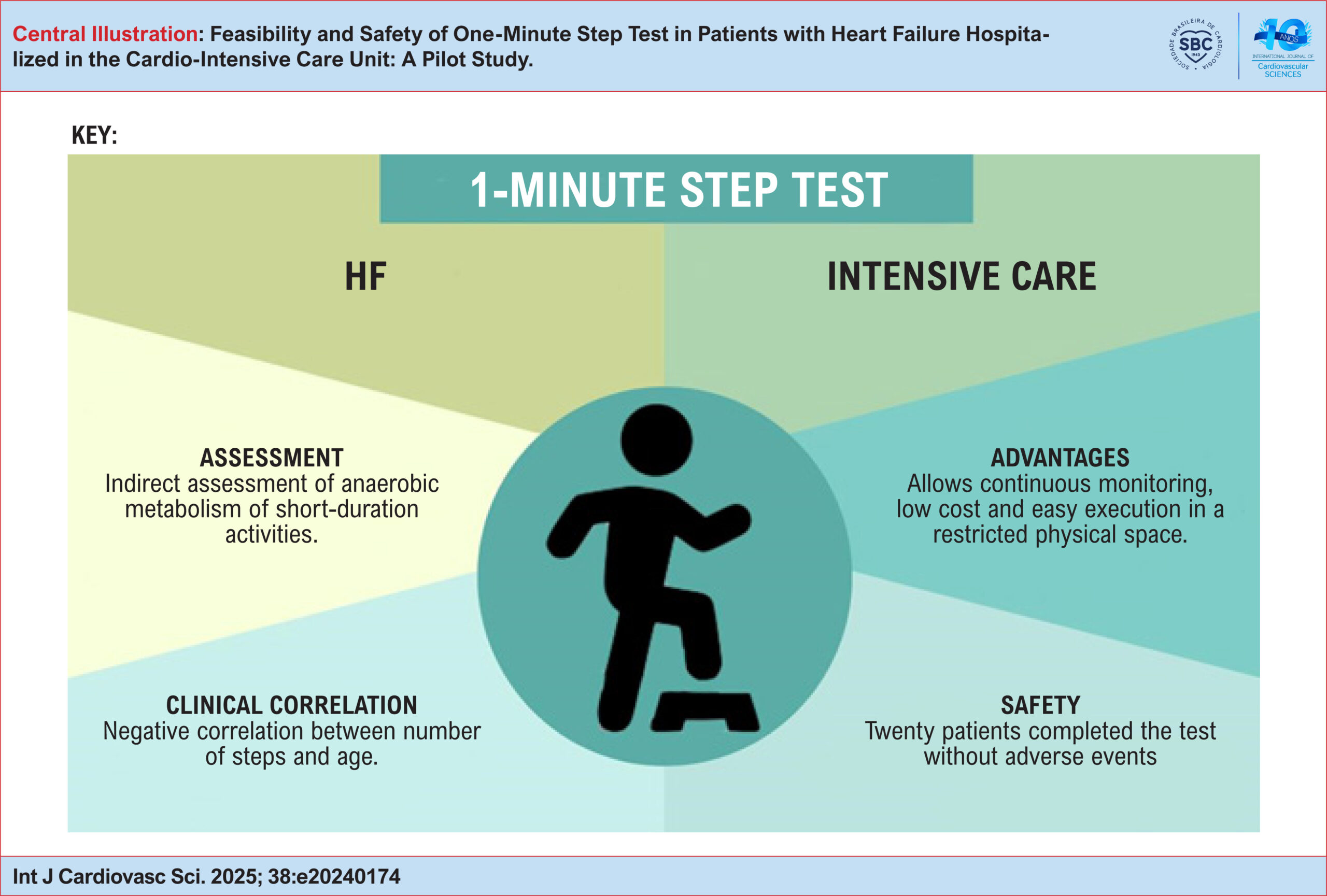
Twenty patients were evaluated between May and December 2022. All patients completed the test, and no adverse events were recorded. Heart rate (HR) (p < 0.001), systolic blood pressure (SBP) (p = 0.01), mean arterial pressure (MBP) (p = 0.03), and respiratory rate (p < 0.001), and peripheral oxygen saturation showed a reduction (p = 0.04). A negative correlation was observed between 1MST and age (r = −0.46; p = 0.03) and a positive correlation between 1MST and length of stay in the CICU (r = 0.44; p = 0.04).

Conclusion:

It is concluded that the 1MST is a safe and viable tool for assessing the anaerobic metabolism of patients with HF.

  • Exercise Test
  • Heart Failure
  • Hospitalization
Read Full Article
Creative Commons Attribution (CC BY) Creative Commons license
15/08/2025 DOI: 10.36660/ijcs.20240174
Temporal Trends in the Epidemiology of Acute Rheumatic Fever: A Nationwide Analysis from 2008 to 2022
ABC
Original Article

Temporal Trends in the Epidemiology of Acute Rheumatic Fever: A Nationwide Analysis from 2008 to 2022

Antonio Mutarelli et al. Larissa Armelin Alexandre Negrão Pantaleão Alleh Nogueira … Carla Jorge Machado José Luiz P Silva Jagdip Kang Walderez O. Dutra Maria C. P. Nunes

Abstract

Background

Acute rheumatic fever (ARF) remains a significant public health challenge, especially in low- and middle-income countries. It disproportionately affects non-white populations in underprivileged regions and may lead to rheumatic heart disease (RHD), which has high morbidity and mortality.

Objectives

Analyze hospitalizations and deaths related to ARF in Brazil between 2008 and 2022, highlighting regional and demographic inequalities.

Methods

We conducted a cross-sectional study analyzing hospitalization and mortality data caused by ARF from 2008 to 2022 in Brazil, collected through the Hospital Information System (SIH/SUS). Data were stratified by demographics, region, and hospital visit type (urgent or elective) and analyzed using generalized linear autoregressive moving average models to assess the impact of age, sex, and race. Statistical significance was set at p < 0.05.

Results

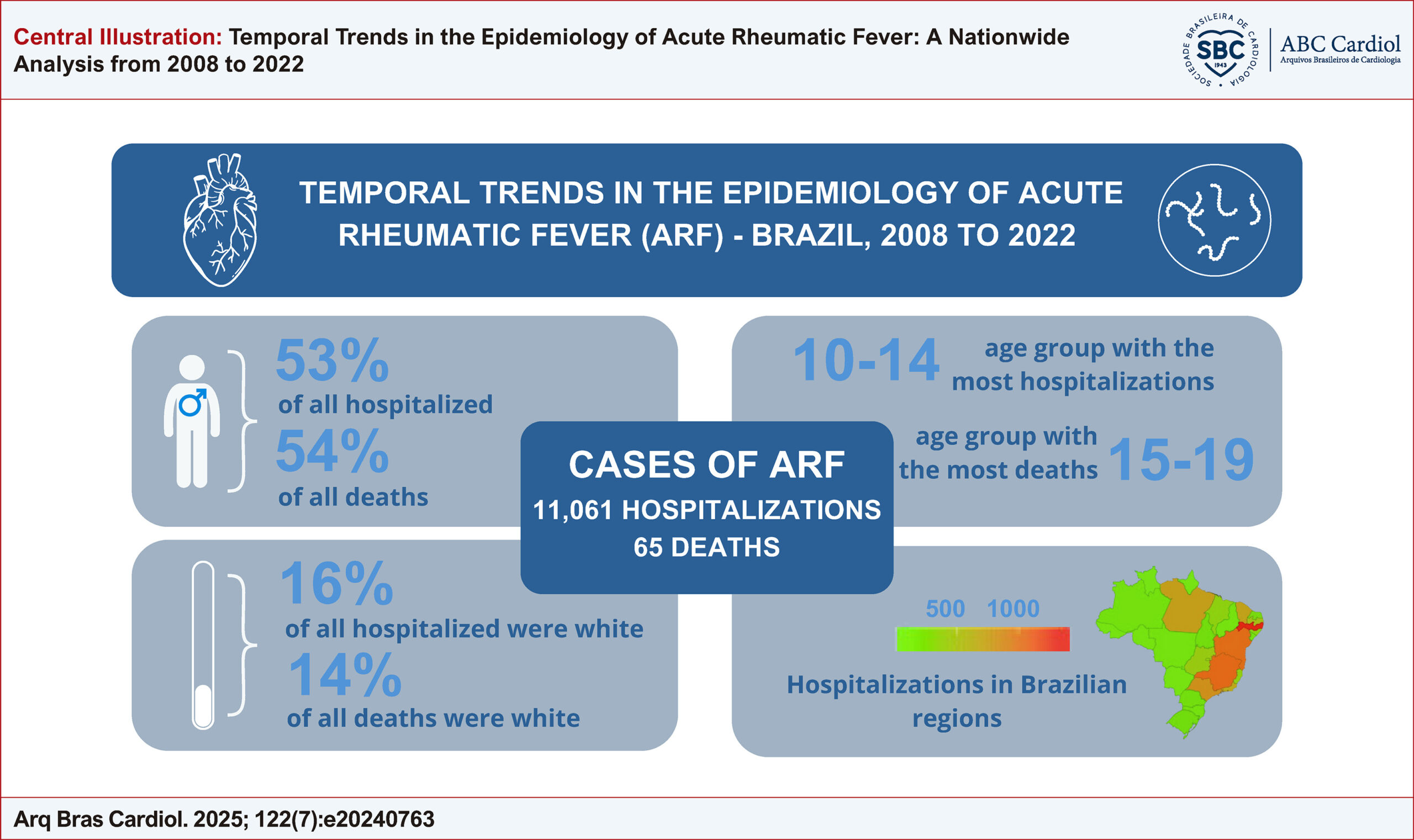
Of 11,061 hospitalizations and 65 deaths from ARF, 53% were male and 16% were white. The 10–14-year-old age group had the highest hospitalization rates, while the 15–19-year-old group had more deaths. Hospitalizations were higher among non-white individuals and concentrated in Brazil’s Northeast. Over time, ARF-related hospitalizations declined across all demographics, with a gradual convergence between male and female rates by 2022.

Conclusion

Our findings highlight a decline in ARF-related hospitalizations across regions and demographics, though disparities remain. There is no significant difference in ARF cases between men and women. The study highlights a correlation between socioeconomic factors and disease burden, with low-income groups experiencing a higher rate of ARF hospitalizations.

  • Acute Rheumatic Fever
  • Brazil
  • Epidemiology
  • Hospitalization
  • Prevalence
Read Full Article
Creative Commons Attribution (CC BY) Creative Commons license
15/08/2025 DOI: 10.36660/abc.20240763i
ABC
Editorial

Hospitalizations and In-Hospital Mortality from Heart Failure in Brazil: An Updated Overview

Adriana Lopes Latado

Heart failure (HF) accounts for a growing burden of disease and healthcare costs both globally and in Brazil. It represents the final common pathway of several cardiovascular diseases, including specific and well-defined conditions such as ischemic heart disease. Prevalence and incidence data have shown progressive increases over recent decades, with the current HF prevalence estimated at 2.5% among U.S. adults, and projected to reach 3.0% by 2030., HF-related hospital admissions are also on the rise in the United States. Meanwhile, adjusted in-hospital mortality has declined, from 6.8% in 2002 to 4.9% in 2016, consistent across age groups, sex, and racial/ethnic categories.

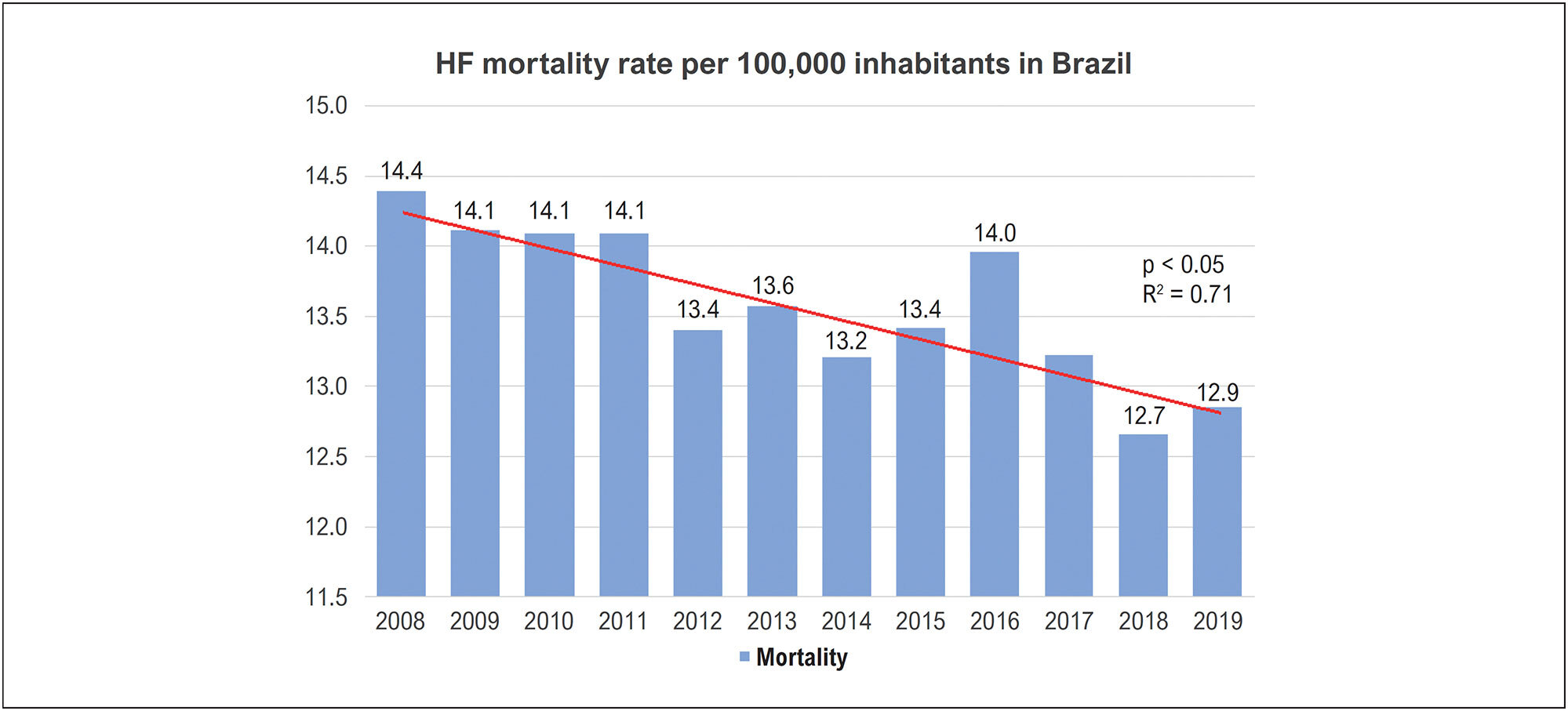
In Brazil, the self-reported prevalence of HF is estimated at 1.1% among adults over 18 years old and 3.3% in individuals over 60. Regarding hospitalizations and in-hospital mortality, temporal trend studies indicate a decline in the number of HF-related admissions, with hospital mortality ranging from 9% to 17%, also showing a decreasing trend, especially over the past decade.,, However, national data remain scarce, with limitations in population representativeness and a need for regular updates.

[…]

  • Heart Failure
  • Hospital Mortality
  • Hospitalization
  • Prognosis
Read Full Article
Creative Commons Attribution (CC BY) Creative Commons license
04/07/2025 DOI: 10.36660/abc.20250284i Views 1
Figure 1
IJCS
Original Article

Epidemiological Analysis of Emergency Hospitalizations in Brazil Due to Cardiovascular Diseases From 2013 to 2023

Yago Souza Luiz et al. Vitor Moreira Alvarenga Mikaela de Miranda Lopes Lara Gomes Silva

Abstract

Introduction:

Cardiovascular diseases (CVDs) remain among the leading causes of morbidity and mortality worldwide, posing a significant public health challenge. Thus, analyzing their prevalence over time is crucial.

Objective:

To perform an epidemiological analysis of emergency hospital admissions due to CVD in Brazil between 2013 and 2023.

Methods:

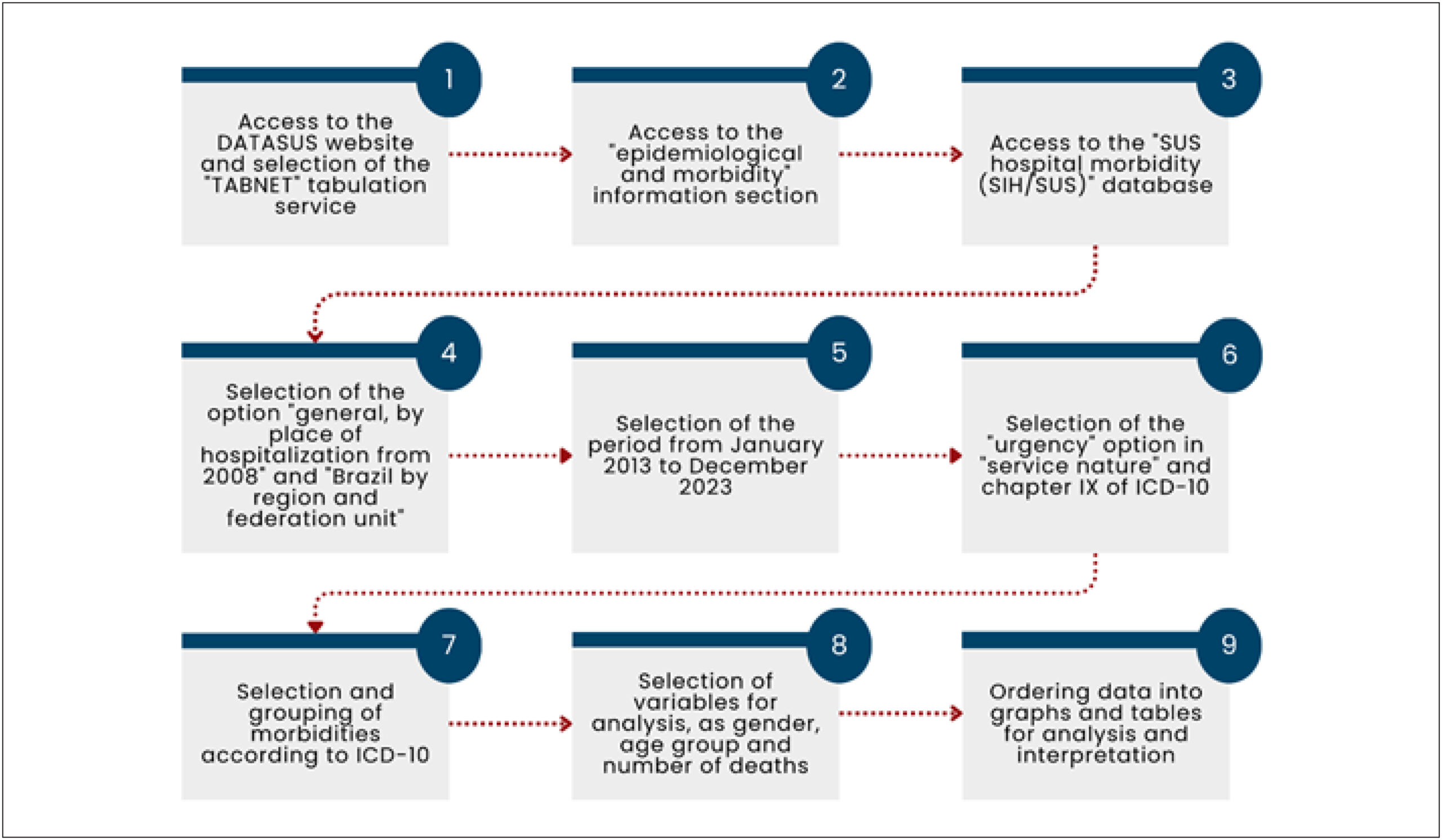
This is an ecological, descriptive study based on data from the DATASUS database. Cardiovascular morbidities classified by ICD-10, along with variables such as sex and age group, were selected for analysis. Data was collected in October 2024 and organized into graphs and tables.

Results:

From January 2013 to December 2023, 8,208,282 patients were admitted for emergency cardiovascular conditions, 53.7% of whom were male, with 26% aged between 60 and 69 years. A significant reduction in hospital admissions was observed in 2020 and 2021. Ischemic heart diseases were the most frequent cause of hospitalization, accounting for 29.72% of cases. A notable increase in mortality was recorded in 2021 and 2022, with higher mortality rates among male patients and those admitted for cerebrovascular diseases.

Conclusion:

The observed increase in hospitalizations is attributed to the demographic transition occurring in the country, while the sharp decline in 2020 and 2021 appears to be a consequence of COVID-19-related measures, which is a trend also observed in other countries. These findings underscore the importance of studying the epidemiology of CVD in Brazil and reinforce the need for public investment aimed at reducing their prevalence.

  • Brazil
  • Cardiovascular Diseases
  • Epidemiology
  • Hospitalization
Read Full Article
Creative Commons Attribution (CC BY) Creative Commons license
27/06/2025 DOI: 10.36660/ijcs.20240200 Views 2
Temporal Trends of Hospital Admissions Due to Heart Failure in Brazil
ABC
Original Article

Temporal Trends of Hospital Admissions Due to Heart Failure in Brazil

José Marcos Girardi et al. Isadora Araújo Girardi Ana Clara Silva Nascimento Daniel Monteiro de Lauro Silva … Luisa Venture Gibaile Soares Sarah Alessandrini Lauriano Dias Sarah Quick Lourenço de Lima Flávia Araújo Girardi

Abstract

Background

Heart failure is a global pandemic that causes a significant reduction in quality of life, with an impact on hospital expenses. It is important to know the temporal trends of hospitalizations and mortality in order to outline coping strategies.

Objective

The objective of this study was to describe the temporal trends of hospitalizations due to heart failure and mortality during hospitalizations between 2000 and 2021 in Brazil.

Methods

We conducted a study on temporal trends in the rates of hospitalization and mortality during hospitalization, using data from the Department of Information Technology of the Brazilian Unified Health System, by means of joinpoint regression. We calculated the annual percentage change of the rates with respective 95% confidence intervals and alpha significance level of 0.05.

Results

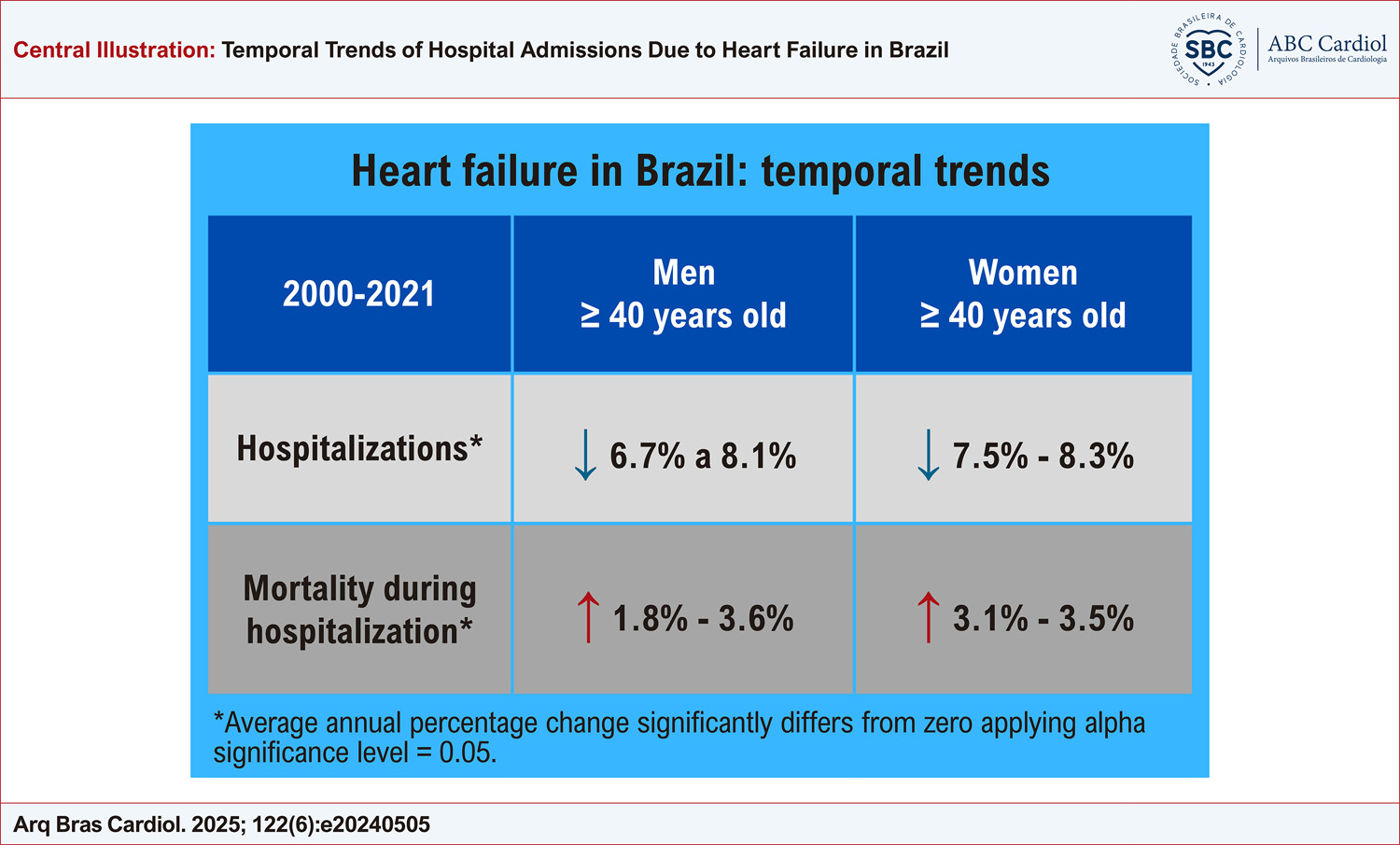
We analyzed 2,851,437 hospitalizations in men and 2,749,424 hospitalizations in women between 2000 and 2021 in Brazil. Regarding hospitalization rates, there was an annual percentage decrease of 6.7% to 8.1% in men and a decrease of 7.5% to 8.3% in women. With respect to mortality rates, there was an annual percentage increase of 1.8% to 3.6% in men and an increase of 3.1% to 3.5% in women.

Conclusion

We observed a decrease in the rates of hospitalization due to heart failure and an increase in the mortality rates in all age ranges assessed, in both sexes, between 2000 and 2021 in Brazil. These findings may reflect better disease control and hospitalization only for more severe cases, but we emphasize the need for continued management of risk factors for the disease.

  • Heart Failure
  • Hospitalization
  • Mortality
Read Full Article
Creative Commons Attribution (CC BY) Creative Commons license
02/06/2025 DOI: 10.36660/abc.20240505i Views 2
Figure 1
ABCHF
Viewpoint

What is Happening with Heart Failure in Brazil? An Insight from DATASUS Data Analysis

Tainá Clayton Pellini Simões et al. Rosane Aparecida Monteiro Afonso Diniz C. Passos Marcus V. Simões

Introduction

Heart failure (HF) is a chronic and progressive clinical syndrome caused by a structural or functional cardiac abnormality, whose symptoms include dyspnea and fatigue and are accompanied by physical signs such as peripheral edema, pulmonary rales, and jugular venous distension. The natural history of HF often involves rapid worsening of symptoms and signs, leading to severe manifestations at rest, characterizing acute decompensated HF (AHF), usually requiring hospitalization for its control.

AHF is responsible for a large part of the costs of HF for the health system and represents a serious clinical problem with an in-hospital mortality rate of around 4%.

[…]

  • Epidemiology
  • Heart Failure
  • Hospitalization
Read Full Article
Creative Commons Attribution (CC BY) Creative Commons license
15/05/2025 DOI: 10.36660/abchf.20250001i Views 1
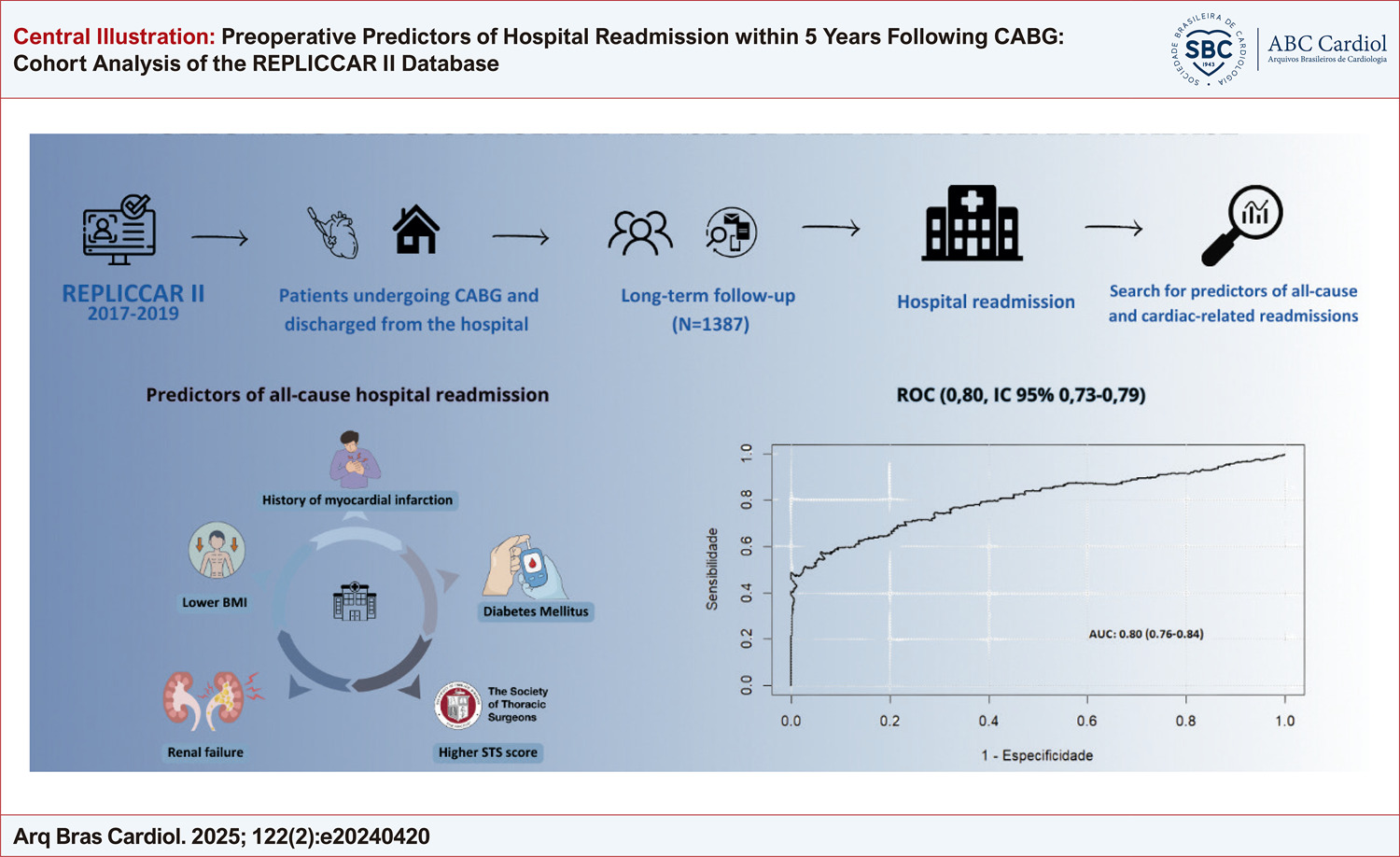
Preoperative Predictors of Hospital Readmission within 5 Years Following CABG: Cohort Analysis of the REPLICCAR II Database
ABC
Original Article

Preoperative Predictors of Hospital Readmission within 5 Years Following CABG: Cohort Analysis of the REPLICCAR II Database

Carlos Alberto Sancio Junior et al. Fabiane Letícia de Freitas Gabrielle Barbosa Borgomoni Daniella de Lima Pes … Pedro Horigoshi Reis Pedro Gabriel Melo de Barros e Silva Marcelo Arruda Nakazone Marcos Gradim Tiveron Valquiria Pelisser Campagnucci Luiz Augusto Lisboa Luís Alberto Oliveira Dallan Fabio Biscegli Jatene Omar Asdrúbal Vilca Mejia

Abstract

Background

Reducing hospital readmissions following coronary artery bypass grafting (CABG) surgeries is essential to optimizing medium- and long-term patient outcomes.

Objective

To analyze preoperative predictors associated with all-cause and cardiac readmissions within 5 years following CABG.

Methods

We analyzed 1,387 patients who underwent CABG between June 2017 and July 2019 using data from the multicenter REPLICCAR II registry. Follow-up was carried out by telephone interviews using a questionnaire structured in the REDCap platform. Statistical analysis included univariate and multivariate methods, with Cox regression and internal validation through calibration and discrimination tests. A significance level of 5% was applied.

Results

The cumulative incidence of all-cause readmission was 27.69%, with a mean follow-up of 4.3 years and a mean time to readmission of 2.4 years. Multivariate regression analysis indicated the following predictors of higher all-cause readmission risk: lower body mass index (HR=0.97, p=0.032), history of myocardial infarction (HR=1.27, p=0.024), diabetes mellitus (HR=1.35, p=0.004), renal failure (HR=1.62, p=0.004), and higher STS score (HR=1.22, p<0.001). A moderate correlation was observed between readmission and mortality (Rho=0.55).

Conclusions

This analysis demonstrates that lower body mass index, history of myocardial infarction, diabetes mellitus, renal failure, and elevated STS scores are significant predictors of increased hospital readmission risk following CABG.

  • Coronary Artery Disease
  • Hospitalization
  • Myocardial Revascularization
Read Full Article
Creative Commons Attribution (CC BY) Creative Commons license
17/03/2025 DOI: 10.36660/abc.20240420i Views 2
ABC
Editorial

Monitoring Systemic Congestion in Heart Failure: Is Clinical Evaluation Sufficient?

Silvia Moreira Ayub-Ferreira et al. Danielle Louvet Guazzelli

The management of acute decompensated heart failure (ADHF) remains a significant challenge in cardiology, particularly in preventing hospital readmissions. In this context, signs and symptoms related to congestion are among the most common causes of hospitalization for heart failure and subsequent readmissions.

In this edition of Arquivos Brasileiros de Cardiologia the authors present a cohort study that incorporates the use of the VExUS score to assess residual venous congestion before hospital discharge (VExUS Score at Hospital Discharge as a Predictor of Readmission in Patients with Acutely Decompensated Heart Failure: A Cohort Study). This study highlights the complexity of managing patients with heart failure and suggests a potentially useful tool to improve clinical outcomes.

[…]

  • Heart Failure
  • Hospitalization
  • Patient Readmission
  • Ultrasonography
Read Full Article
Creative Commons Attribution (CC BY) Creative Commons license
02/08/2024 DOI: 10.36660/abc.20240354i Views 1
Figure 1
ABC
Editorial

Inflammation and Prognosis in Acute Heart Failure: Is There a Role for Pan-Immune-Inflammation Value?

Humberto Villacorta

Heart failure (HF) is a major health problem, with high morbidity and mortality rates. Patients with HF are frequently hospitalized. Inflammation plays a role in the pathophysiology of HF and several cytokines, such as tumor necrosis factor (TNF), transforming growth factor-ß (TGF-ß), and interleukins 6 and 1, are elevated in HF. In acute decompensated HF (ADHF) the triggers of this inflammatory cascade are secondary to neurohormonal activation and oxidative stress, but in addition, there is evidence for elevated bacterial or endotoxin translocation, due to gut edema or relative hypoperfusion., The measurement of cytokines is not appropriate for day-to-day clinical practice and C-reactive protein (CRP),, another biomarker of inflammation, is usually chosen to assess inflammation. However, a more robust and convenient marker is warranted.

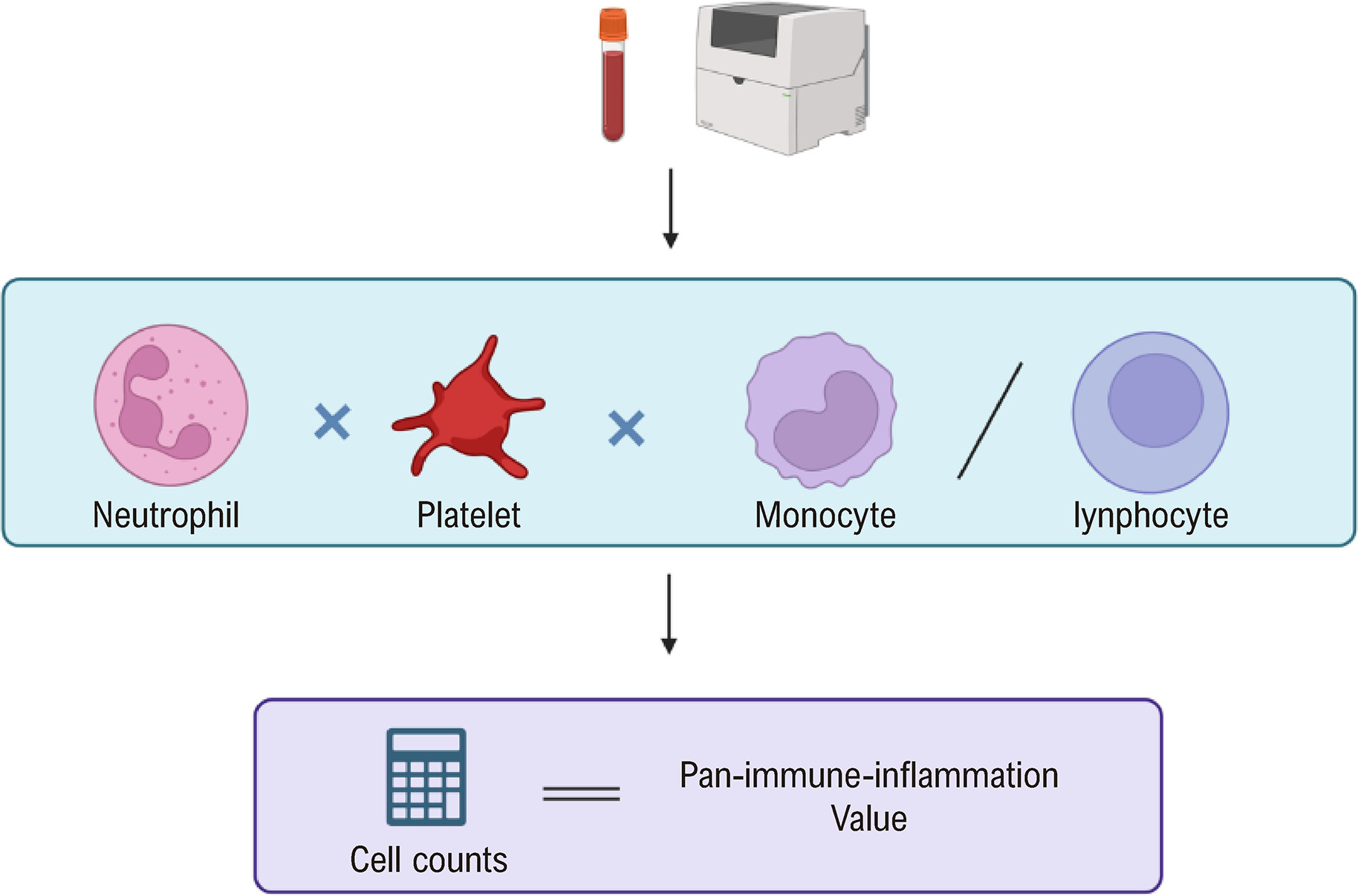
A new marker of inflammation has been recently introduced. Pan-immune-inflammation value (PIV) is calculated from peripheral blood immune-inflammatory components, including neutrophil, platelet, monocyte, and lymphocyte counts, as shown in . PIV has been shown to be prognostic in some cardiovascular disorders and also in non-cardiovascular diseases, such as cancer and advanced renal disease.–

[…]

  • Biomarkers
  • Endotoxins
  • Heart Failure
  • Hospitalization
  • Inflammation
  • Prognosis
Read Full Article
Creative Commons Attribution (CC BY) Creative Commons license
02/08/2024 DOI: 10.36660/abc.20240286i
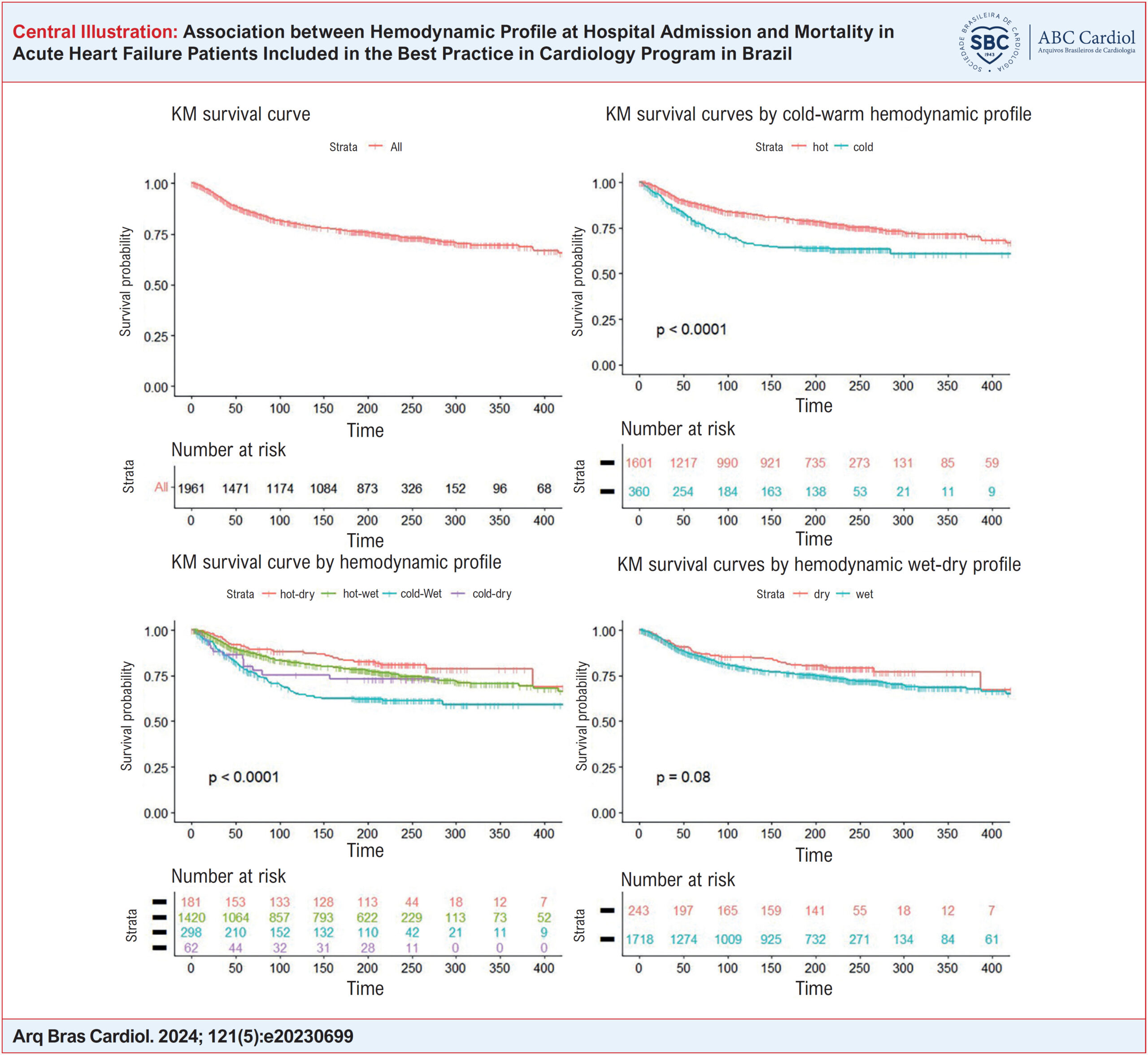
Association between Hemodynamic Profile at Hospital Admission and Mortality in Acute Heart Failure Patients Included in the Best Practice in Cardiology Program in Brazil
ABC
Original Article

Association between Hemodynamic Profile at Hospital Admission and Mortality in Acute Heart Failure Patients Included in the Best Practice in Cardiology Program in Brazil

André Silva Rodrigues et al. Fábio Morato de Castilho Aloisio Joaquim Freitas Ribeiro Luiz Guilherme Passaglia … Fabio Papa Taniguchi Antonio L. Ribeiro

Abstract

Background:

Heart failure (HF) contributes to a high burden of hospitalization, and its form of presentation is associated with disease prognosis.

Objectives:

To describe the association of hemodynamic profile of acute HF patients at hospital admission, based on congestion (wet/dry) and perfusion (cold/warm), with mortality, hospital length of stay and risk of readmission.

Methods:

Cohort study, with patients participating in the “Best Practice in Cardiology” program, admitted for acute HF in Brazilian public hospitals between March 2016 and December 2019, with a six-month follow-up. Characteristics of the population and hemodynamic profile at admission were analyzed, in addition to survival analysis using Cox proportional hazard model for associations between hemodynamic profile at admission and mortality, and logistic regression for the risk of rehospitalization, using a statistical significance level of 5%.

Results:

A total of 1,978 patients were assessed, with mean age of 60.2 (±14.8) years and mean left ventricular ejection fraction of 39.8% (±17.3%). A high six-month mortality rate (22%) was observed, with an association of cold hemodynamic profiles with in-hospital mortality (HR=1.72, 95%CI 1.27-2.31; p < 0.001) and six-month mortality (HR= 1.61, 95%CI 1.29-2.02). Six-month rehospitalization rate was 22%, and higher among patients with wet profiles (OR 2.30; 95%CI 1.45-3.65; p < 0.001).

Conclusions:

Acute HF is associated with high mortality and rehospitalization rates. Patient hemodynamic profile at admission is a good prognostic marker of this condition.

  • Heart Failure
  • Hospitalization
  • Mortality
Read Full Article
Creative Commons Attribution (CC BY) Creative Commons license
24/06/2024 DOI: 10.36660/abc.20230699i Views 2
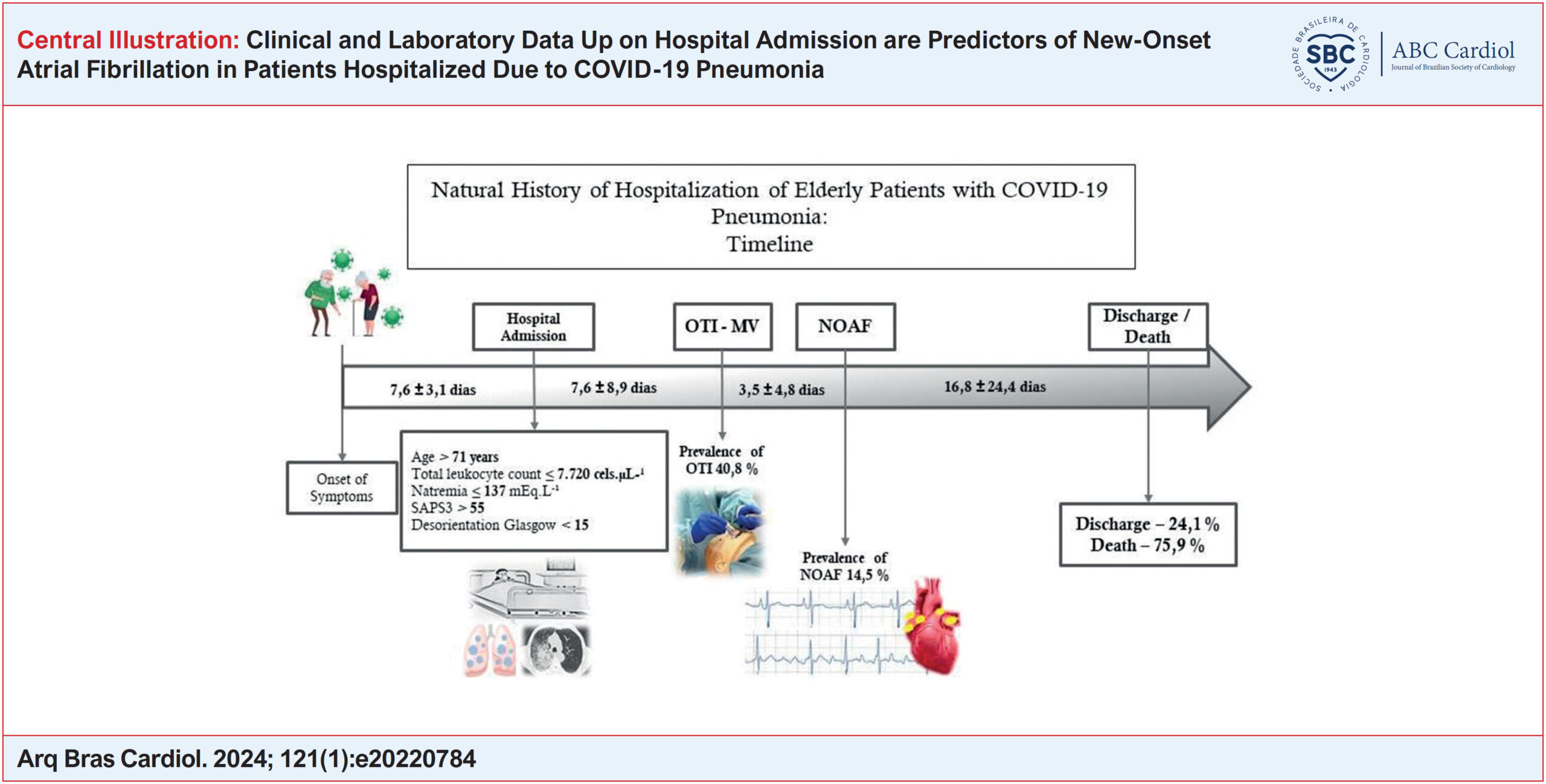
Clinical and Laboratory Data Up on Hospital Admission are Predictors of New-Onset Atrial Fibrillation in Patients Hospitalized Due to COVID-19 Pneumonia
ABC
Original Article

Clinical and Laboratory Data Up on Hospital Admission are Predictors of New-Onset Atrial Fibrillation in Patients Hospitalized Due to COVID-19 Pneumonia

Bruno Rustum Andrea et al. Paulo Roberto Benchimol-Barbosa Simone Farah Alexandra Monteiro

Abstract

Background

New-onset atrial fibrillation (NOAF) occurs in patients hospitalized due to COVID-19. It is still unknown whether clinical and laboratory data assessed upon hospital admission have predictive value for NOAF.

Objectives

To analyze, upon hospital admission, variables with predictive potential for the occurrence of NOAF in patients with COVID-19 pneumonia.

Methods

Observational, retrospective, case-control study. Electronic medical reports of consecutive patients, 60 years of age or older, hospitalized due to COVID-19 pneumonia between March 1st and July 15th, 2020, were reviewed. Non-paired Student or chi-squared tests compared variables. A Cox proportional hazard model was employed to identify independent predictors of NOAF. P value < 0.05 was considered statistically significant.

Results

Among 667 patients hospitalized due to COVID-19, 201 (30.1%) fulfilled the inclusion criteria. NOAF was documented in 29 patients (14.4%), composing group 1. Group 2 was composed of 162 patients without NOAF. Ten patients were excluded due to the AF rhythm upon hospital admission. In groups 1 and 2, there were differences in overall in-hospital survival rate (24.1 % vs. 67.9%; p<0.001), length of stay in ICU (11.1 ± 10.5 days vs. 4.9 ± 7.5 days; p=0.004) and need for mechanical ventilation rate (82.9% vs. 32.7%; p 71 y/o (HR=6.8; p<0.001), total leukocyte count ≤ 7,720 cels.μL-¹ (HR=6.6; p 55 (HR=5.6; p=0.002), and disorientation (HR=2.5; p=0.04) on admission were independent predictors of NOAF.

Conclusion

NOAF is a common arrhythmia in elderly hospitalized patients with COVID-19 pneumonia. Clinical and laboratory parameters evaluated on admission have a predictive value for the occurrence of NOAF during hospitalization.

  • Atrial Fibrillation
  • COVID-19
  • Hospitalization
  • Predictive Value of Tests
  • Prognosis
Read Full Article
Creative Commons Attribution (CC BY) Creative Commons license
08/04/2024 DOI: 10.36660/abc.20220784 Views 2
ABC
Editorial

How Can COVID-19 Influence the Evolution of Patients with Acute Coronary Syndromes?

Alexandre de Matos Soeiro

The pandemic caused by the COVID-19 virus has changed the way we view infectious diseases. In a more intense way than in other situations, COVID-19 was from the beginning related to a greater number of thrombotic events, whether in its acute presentation, with pulmonary microthrombi worsening the hypoxia, or even in its late evolution with a large number of pulmonary embolic events. The interface between the endothelium and the coagulation cascade was modified, and different pro-thrombotic mechanisms were deregulated, with elevated expression of tissue factor, CD40, leukocyte adhesion molecules, pro-inflammatory cytokines, thromboxane, and reduced production of nitric oxide. Along with the lungs, the heart is one of the organs most affected by the disease with global involvement, whether myocardial, arrhythmogenic, or coronary.–

Thus, the study presented by Baytugan et al. describes patients with ST-elevation acute coronary syndrome (ST-ACS) with COVID-19, comparing them with the group without COVID-19 in relation to the clinical outcomes found. Some interesting points should be highlighted, including the fact that it takes longer for patients to present themselves to the hospital. This was very common during the pandemic and certainly worsened outcomes related to ACS. It was also observed that patients with COVID-19 were older and had more comorbidities, such as diabetes and chronic obstructive pulmonary disease. Finally, in an incisive and clear way, patients with COVID-19 developed worse outcomes, such as a greater number of stent thromboses, more cardiogenic shock, and higher mortality. A curious fact was the description of higher troponin levels in the COVID-19 group. More simply, we can relate this to the greater diagnostic delay; however, it is worth highlighting the possibility of direct cardiac aggression caused by COVID-19, in addition to the greater thrombotic and inflammatory load that the disease can cause.

[…]

  • Coronavirus infections
  • COVID-19
  • Hospitalization
  • Percutaneous Coronary Intervention/methods
  • Pulmonary embolism
  • ST Elevation Myocardial Infarction
Read Full Article
Creative Commons Attribution (CC BY) Creative Commons license
18/03/2024 DOI: 10.36660/abc.20230888 Views 2
Association of soluble ST2 Level with 6-month Mortality and/or Recurrent Cardiovascular-Related Hospitalization in Pulmonary Embolism
ABC
Original Article

Association of soluble ST2 Level with 6-month Mortality and/or Recurrent Cardiovascular-Related Hospitalization in Pulmonary Embolism

Hakan Gunes et al. Handan Gunes Musa Dagli Mehmet Kirişçi … Meryem Özbek Nurhan Atilla Mehmet Birhan Yılmaz

Abstract

Background:

The association of soluble suppression of tumorigenesis-2 (sST2) levels with prognosis in pulmonary embolism (PE) is unknown.

Objective:

This study aimed to investigate the relationship between sST2 levels in patients with acute PE and 6-month mortality and recurrent hospitalizations.

Methods:

This prospective study included 100 patients with acute PE. Patients were classified into two groups according to 6-month mortality and the presence of recurrent Cardiovascular-Related hospitalizations. Two groups were compared. A p-value of 0.05 was considered statistically significant.

Results:

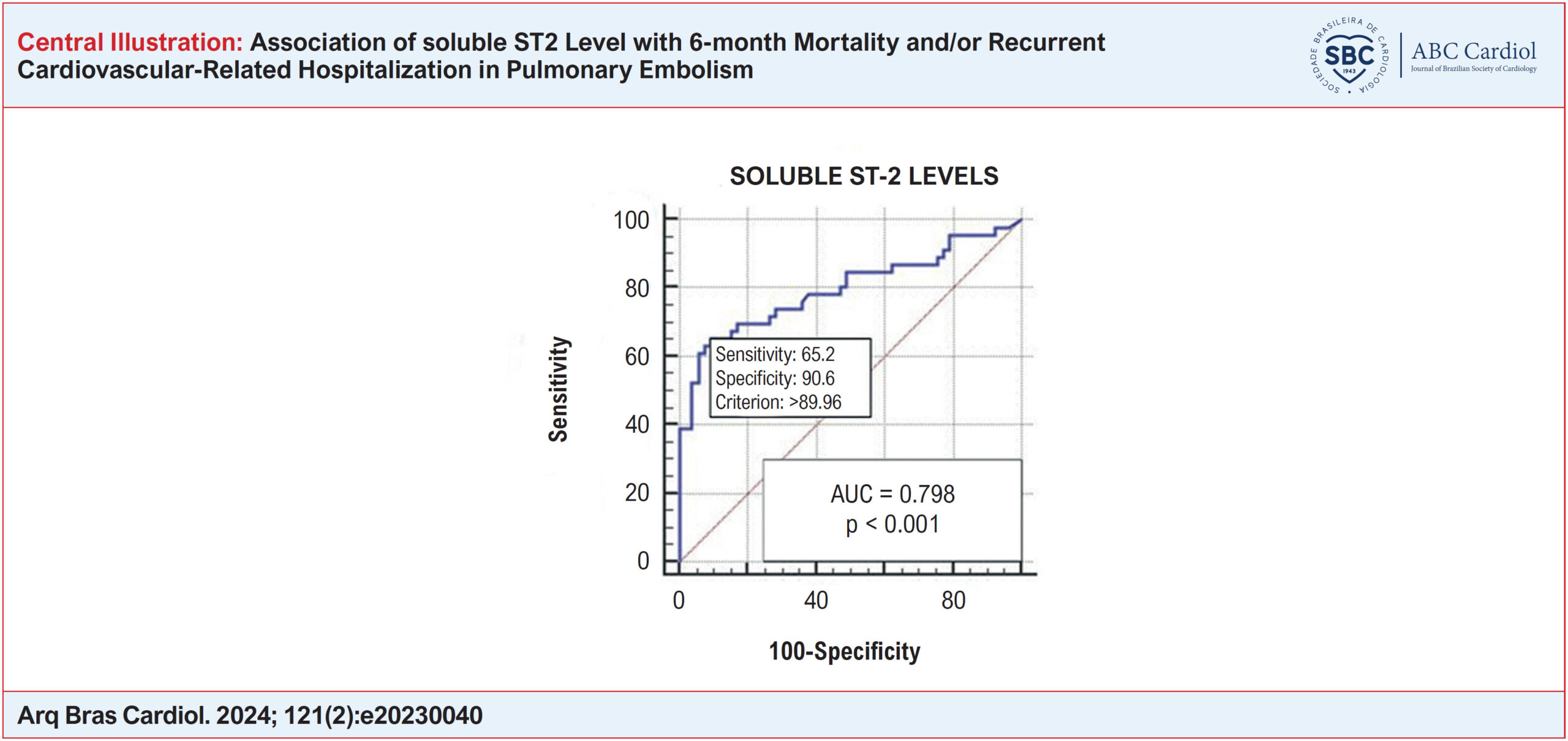
Soluble ST2 levels were significantly higher in the group with mortality and recurrent hospitalizations. (138.6 ng/mL (56.7-236.8) vs. 38 ng/mL (26.3-75.4); p89.9 with a specificity of 90.6% and a sensitivity of 65.2%, according to the receiver operating characteristic curve (area under the curve = 0.798; 95% CI, 0.705–0.891; p <0.0001). After adjusting for confounding factors that were either statistically significant in the univariate analysis or for the variables correlated with the sST2 levels, sST2 level (OR = 1.019, 95% CI: 1.009-1.028, p 0.001) and C-reactive protein (CRP ) (OR = 1.010, 95% CI: 1.001-1.021, p = 0.046) continued to be significant predictors of 6-month mortality and/or recurrent Cardiovascular-Related hospitalization in the multiple logistic regression model via backward stepwise method.

Conclusion:

Soluble ST2 level seems to be a biomarker to predict 6-month mortality and/or recurrent Cardiovascular-Related hospitalization in patients with acute PE.

  • Hospitalization
  • Mortality
  • Pulmonary embolism
Read Full Article
Creative Commons Attribution (CC BY) Creative Commons license
23/02/2024 DOI: 10.36660/abc.20230040 Views 2
Figure 1
ABC
Image

Beat-to-Beat Alternating Bundle-Branch Block

Margarida Temtem et al. Joel Ponte Monteiro Marco Gomes Serrão Drumond Freitas

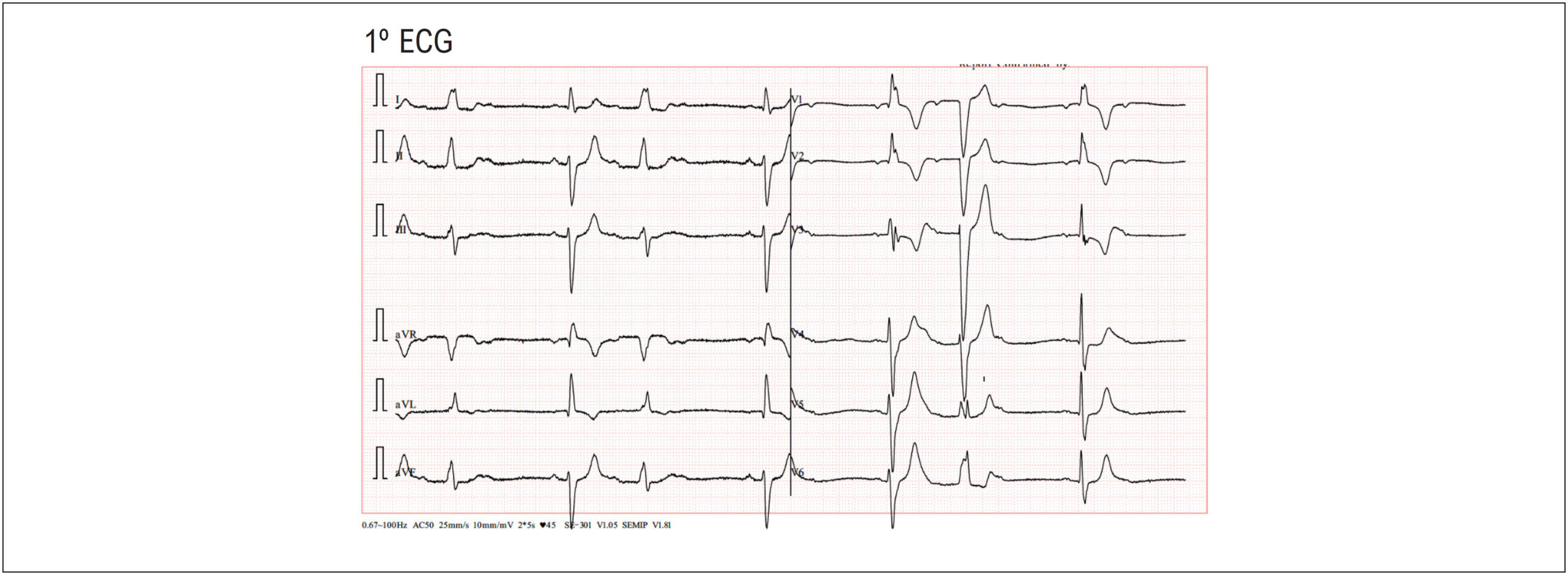
A 67-year-old man was admitted to the primary healthcare emergency department due to dizziness. During the physical examination, an irregular heart rhythm was detected, prompting a request for a 12-lead electrocardiogram (ECG). The ECG () revealed a beat-to-beat alternating pattern of right and left bundle branch blocks (RBBB and LBBB) with Mobitz I second-degree atrioventricular (AV) block.

The patient was transferred to the hospital emergency department, where two consecutive ECGs were performed. One ECG () showed persistent LBBB with first-degree AV block (PR interval of 320ms), and the subsequent ECG () indicated persistent RBBB with left anterior fascicular block and fixed 2:1 second-degree AV block.

[…]

  • Arrhythmias Cardiac
  • Atrioventricular block
  • Electrocardiography/methods
  • Hospitalization
  • Permanent Pacemaker
Read Full Article
Creative Commons Attribution (CC BY) Creative Commons license
08/01/2024 DOI: 10.36660/abc.20230162 Views 1
Figure 2
ABCHF
Review Article

How to Change the Medical History of Patients with Heart Failure and Recurrent Hospitalizations?

Fernanda Almeida Andrade et al. Luana Monferdini Jefferson Luís Vieira

Abstract

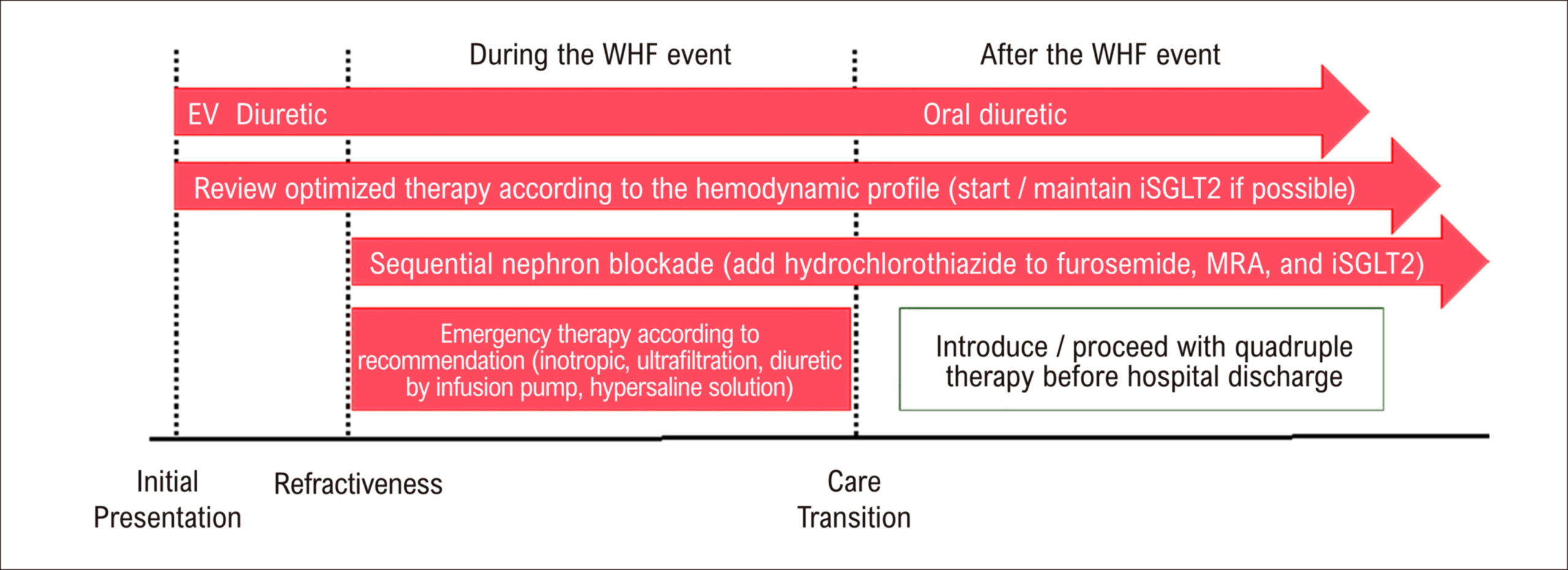
Heart failure (HF) is a progressive condition, characterized by variable periods of symptomatic stability frequently interrupted by episodes of A worsening condition. These moments of clinical deterioration have been recognized as a distinct phase in the course of HF and indicate a considerably worse prognosis. Preventing readmissions of patients with HF is a growing priority for medical providers, researchers, and healthcare managers. Although evidence-based therapies for treating patients with HF have increased, consistent implementation of these therapies and the development of new strategies to prevent readmissions continue to be areas for continued improvement. In this review, we will discuss some proposals and challenges associated with reducing readmissions due to HF.

  • Diuretics
  • Heart Failure
  • Hospitalization
  • Mortality
Read Full Article
Creative Commons Attribution (CC BY) Creative Commons license
31/12/2023 DOI: 10.36660/abchf.20230092 Views 1
The Relationship between Nocturnal Dipping Status, Morning Blood Pressure Surge, and Hospital Admissions in Patients with Systolic Heart Failure
ABC
Original Article

The Relationship between Nocturnal Dipping Status, Morning Blood Pressure Surge, and Hospital Admissions in Patients with Systolic Heart Failure

Ümmü Taş et al. Sedat Taş Efe Edem

Abstract

Background

Hypertension is a known risk factor for developing heart failure. However, there is limited data to investigate the association between morning blood pressure surge (MBPS), dipping status, echocardiographic parameters, and hospital admissions in patients with systolic heart failure.

Objectives

To evaluate the relationship between morning blood pressure surge, non-dipper blood pressure pattern, echocardiographic parameters, and hospital admissions in patients with systolic heart failure.

Methods

We retrospectively analyzed data from 206 consecutive patients with hypertension and a left ventricular ejection fraction below 40%. We divided the patients into two groups according to 24-hour ambulatory blood pressure monitoring (ABPM) results: dippers (n=110) and non-dippers (n=96). Morning blood pressure surge was calculated. Echocardiographic findings and hospital admissions during follow-up were noted. Statistical significance was defined as p < 0.05.

Results

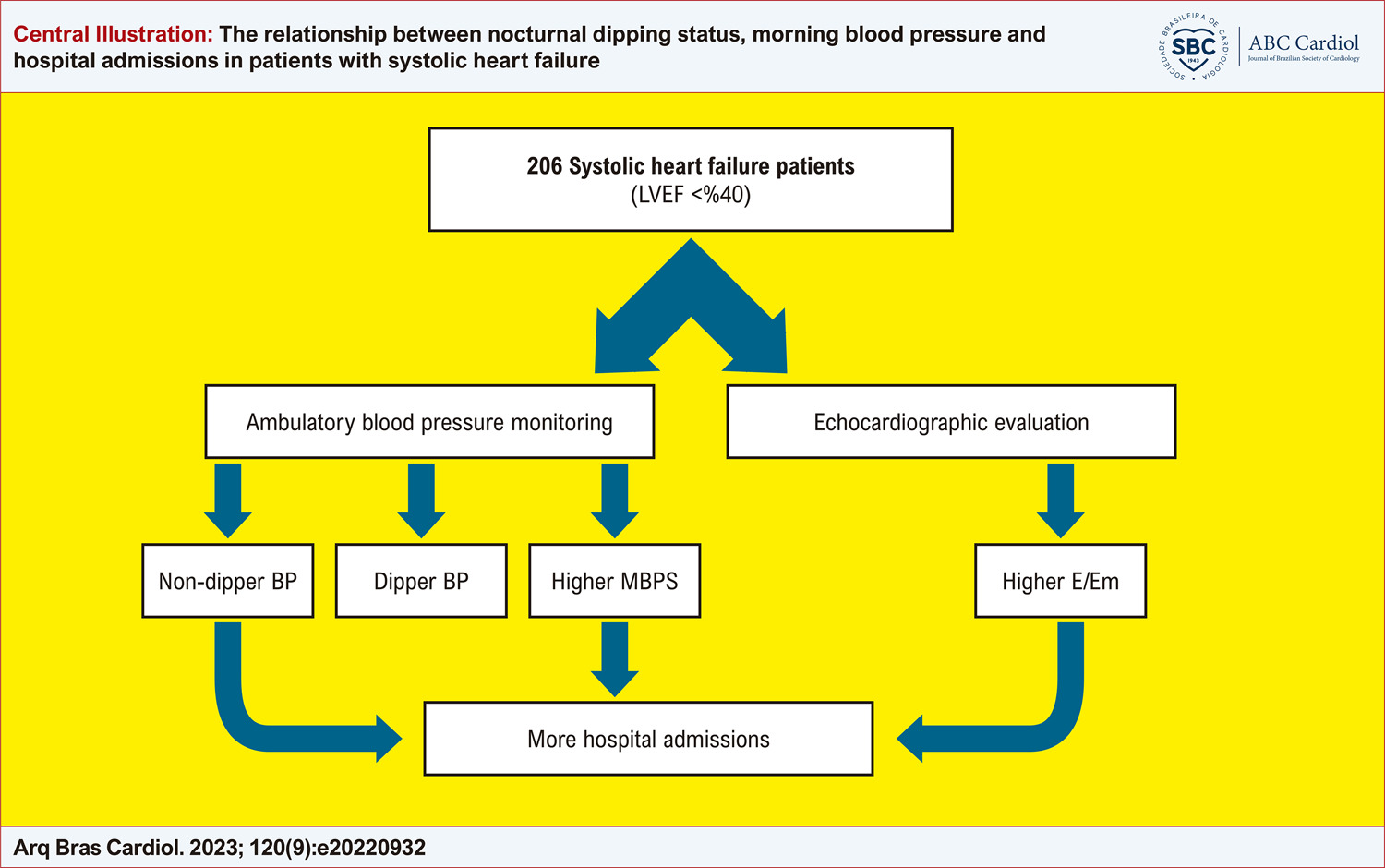
The study group comprised 206 patients with a male predominance and mean age of 63.5 ± 16.1 years. The non-dipper group had significantly more hospital admissions compared to dippers. There was a positive correlation between MBPS and left atrial volume index (r=0.331, p=0.001), the ratio between early mitral inflow velocity and flow propagation velocity (r= 0.326, p=0.001), and the ratio between early mitral inflow velocity and mitral annular early diastolic velocity (E/Em) (r= 0.314, p=0.001). Non-dipper BP, MBPS, and E/Em pattern were found to be independently associated with increased hospital admissions.

Conclusion

MBPS is associated with diastolic dysfunction and may be a sensitive predictor of hospital admission in patients with systolic heart failure.

  • Arterial Pressure
  • Blood Pressure Monitoring, Ambulatory
  • Heart Failure
  • Hospitalization
Read Full Article
Creative Commons Attribution (CC BY) Creative Commons license
18/09/2023 DOI: 10.36660/abc.20220932 Views 2
Central Illustration
ABC
Original Article

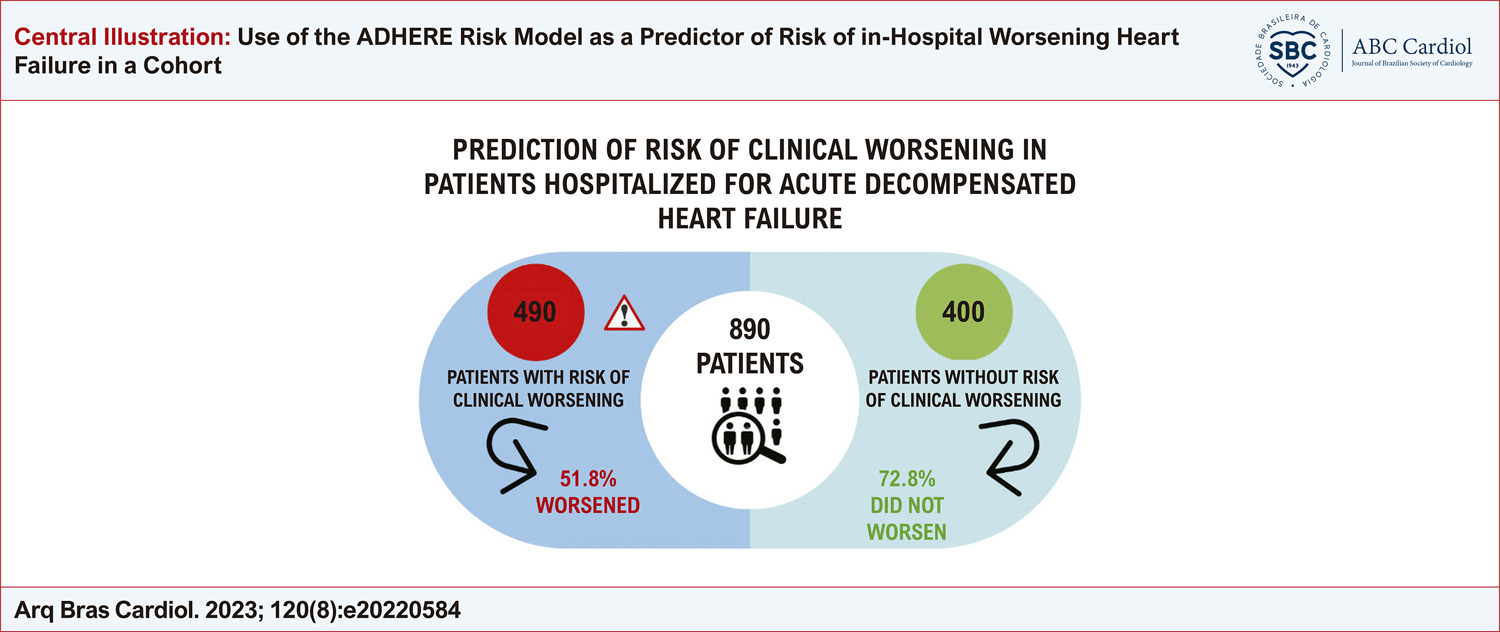
Use of the ADHERE Risk Model as a Predictor of Risk of in-Hospital Worsening Heart Failure in a Cohort

Daniela de Souza Bernardes et al. Marina Scherer Santos Vanessa Monteiro Mantovani Omar Pereira de Almeida Neto … Livia Adams Goldraich Nadine Clausell Eneida Rejane Rabelo-Silva

Abstract

Background

Patients admitted with acute decompensated heart failure (HF) are subject to developing worsening episodes that require more complex interventions. The Acute Decompensated Heart Failure National Registry (ADHERE) risk model was developed in the United States to predict the risk of in-hospital worsening HF.

Objective

To use the ADHERE risk model in the assessment of risk of in-hospital worsening HF and to determine its sensitivity and specificity in hospitalized patients.

Methods

This cohort study was conducted at a Brazilian public university hospital, and data from 2013 to 2020 were retrospectively collected. P values < 0.05 were considered statistically significant.

Results

A total of 890 patients with a mean age of 74 ± 8 years were included. The model showed that, in the group of 490 patients at risk, 254 (51.8%) developed in-hospital worsening HF. In the group of 400 patients not at risk, only 109 (27.2%) experienced worsening HF. The results demonstrated a statistically significant curve (area under the curve = 0.665; standard error = 0.018; P < 0.01; confidence interval = 0.609 to 0.701), indicating good accuracy. The model had a sensitivity of 69.9% and a specificity of 55.2%, with a positive predictive value of 52% and a negative predictive value of 72.7%.

Conclusions

In this cohort, we showed that the ADHERE risk model was able to discriminate patients who in fact developed worsening HF during the admission period, from those who did not.

  • Heart Failure
  • Hospitalization
  • Risk Groups
Read Full Article
Creative Commons Attribution (CC BY) Creative Commons license
01/09/2023 DOI: 10.36660/abc.20220584 Views 2
Central Illustration
ABC
Original Article

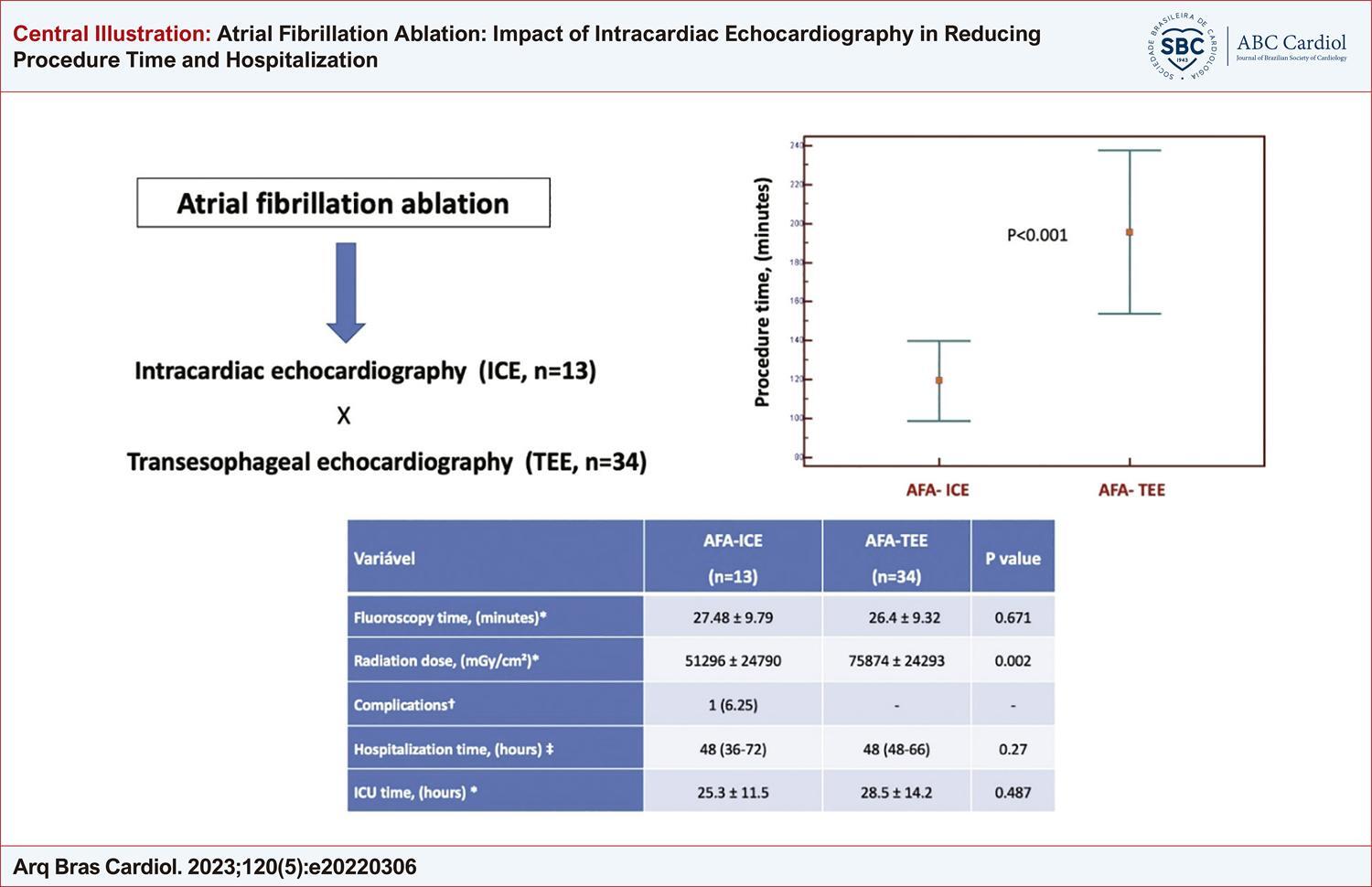
Atrial Fibrillation Ablation: Impact of Intracardiac Echocardiography in Reducing Procedure Time and Hospitalization

Roberto Tofani Sant`Anna et al. Gustavo Glotz de Lima Marco Aurélio Lumertz Saffi Marcelo Lapa Kruse Tiago Luiz Luz Leiria

Abstract

Background

Intracardiac echocardiography (ICE) allows visualization of cardiac structures and recognition of complications during atrial fibrillation ablation (AFA). Compared to transesophageal echocardiography (TEE), ICE is less sensitive to detecting thrombus in the atrial appendage but requires minimal sedation and fewer operators, making it attractive in a resource-constrained setting.

Objective

To compare 13 cases of AFA using ICE (AFA-ICE group) with 36 cases of AFA using TEE (AFA-TEE group).

Methods

This is a single-center prospective cohort study. The main outcome was procedure time. Secondary outcomes: fluoroscopy time, radiation dose (mGy/cm2), major complications, and length of hospital stay in hours. The clinical profile was compared using the CHA2DS2-VASc score. A p-value <0.05 was considered a statistically significant difference between groups.

Results

The median CHA2DS2-VASc score was 1 (0-3) in the AFA-ICE group and 1 (0-4) in the AFA-TEE group. The total procedure time was 129 ± 27 min in the AFA-ICE group and 189 ± 41 min in the AFA-TEE group (p<0.001); the AFA-ICE group received a lower dose of radiation (mGy/cm2, 51296 ± 24790 vs. 75874 ± 24293; p=0.002), despite the similar fluoroscopy time (27.48 ± 9. 79 vs. 26.4 ± 9.32; p=0.671). The median length of hospital stay did not differ; 48 (36-72) hours (AFA-ICE) and 48 (48-66) hours (AFA-TEE) (p=0.27).

Conclusions

In this cohort, AFA-ICE was related to shorter procedure times and less exposure to radiation without increasing the risk of complications or the length of hospital stay.

  • Atrial Fibrillation/complications
  • Catheter Ablation
  • Echocadiography/methods
  • Hospitalization
  • Pulmonary Veins/diagnostic imaging
Read Full Article
Creative Commons Attribution (CC BY) Creative Commons license
15/05/2023 DOI: 10.36660/abc.20220306 Views 1
ABC
Editorial

Does the BUN/Cr Ratio Confer a Worse Prognosis in All Ejection Fraction Spectra?

Giovanni Possamai Dutra et al. Bruno Ferraz de Oliveira Gomes

Neurohormonal activation is one of the most relevant pathophysiological features in Heart Failure (HF), promoting long-term deleterious effects that contribute to the development of cardiorenal syndrome. This hyperactivation is associated with the prognosis of acute heart failure; therefore, it is plausible to hypothesize that its activity is associated with the prognosis of heart failure.

The current universal classification of heart failure, updated in 2021, modified the classification of HF according to ejection fraction (EF), replacing the mid-range EF (HFmrEF) with mildly reduced EF for those with an EF of 41% to 49%, maintaining the classification of reduced ejection fraction (HFrEF) for those with EF less than 40% and preserved (HFpEF) for patients with EF above 50%. The most used classification system today is based on this categorization of patients into groups based on left ventricular ejection fraction (LVEF), and this model has become the main model used by guidelines to provide recommendations for treatment.

[…]

  • Blood Ureia Nitrogen
  • Heart Failure
  • Hospitalization
  • Kidney Diseases/complications
  • Mortality
  • Stroke Volume/pysiology
Read Full Article
Creative Commons Attribution (CC BY) Creative Commons license
07/04/2023 DOI: 10.36660/abc.20230107
Central Illustration
ABC
Original Article

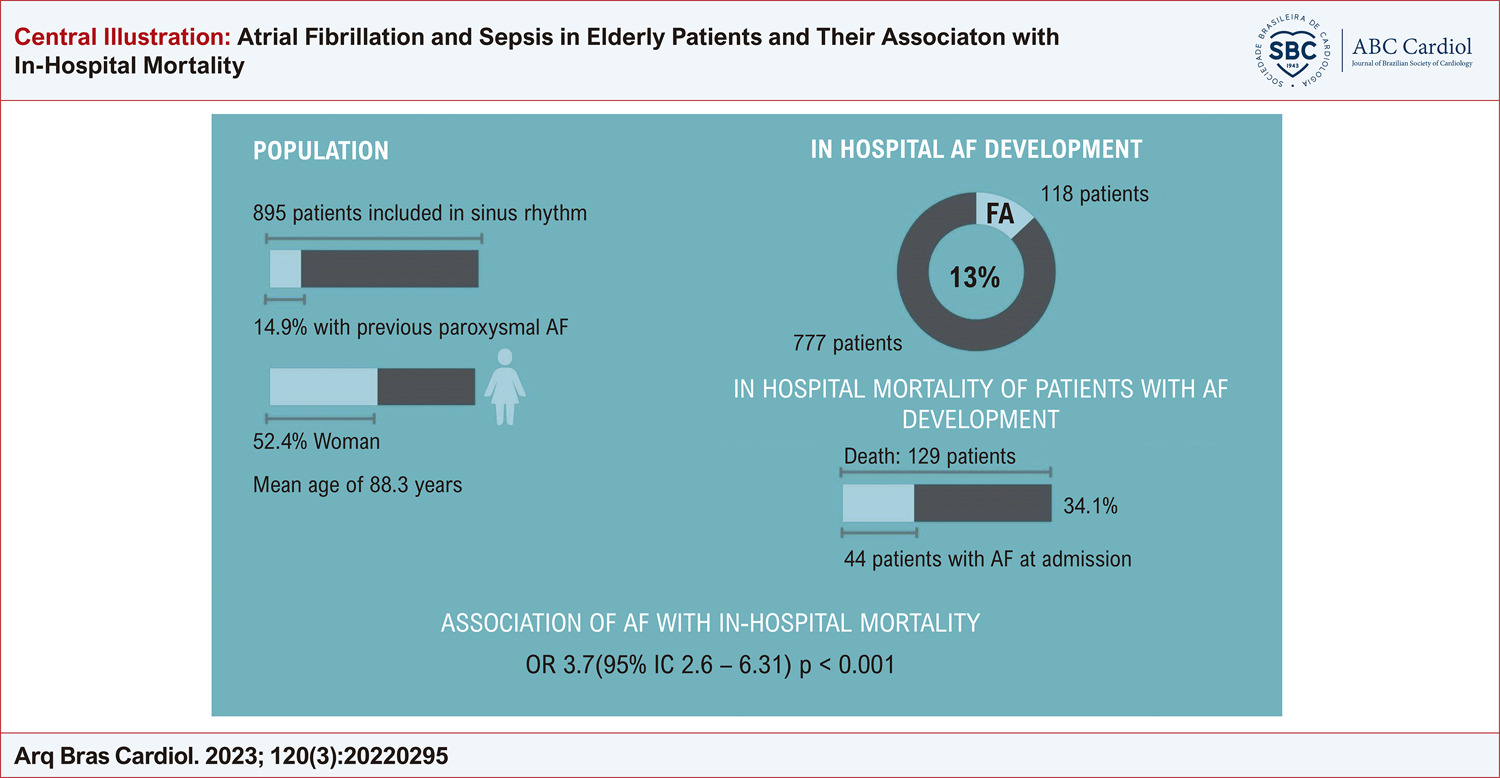
Atrial Fibrillation and Sepsis in Elderly Patients and Their Associaton with In-Hospital Mortality

Michele Ouriques Honorato et al. Juscelio Trajano de Sousa Filho Luiz Frederico Bezerra Honorato Junior Nathalia Watanabe … Gabriela Machado Goulart Rogério Ruscitto do Prado

Abstract

Background

Atrial fibrillation (AF) affects about 2% to 4% of the world population, and in patients hospitalized in intensive care units, this incidence can reach up to 23% in those with septic shock. The impact of AF in patients with sepsis is reflected in worse clinical outcomes, and the identification of the triggering factors can be a target for future prevention and treatment strategies.

Objectives

To verify the relationship between the development of AF and mortality in patients over 80 years of age included in the sepsis protocol and to identify the risk factors that contribute to the development of AF in this population.

Methods

Retrospective observational study, with a review of electronic medical records and inclusion of 895 patients aged 80 years or older, included in the sepsis protocol of a high-complexity private hospital in São Paulo, SP, from January 2018 to December 2020. All tests were performed with a significance level of 5%.

Results

The incidence of AF in the sample was 13%. After multivariate analysis, using multiple logistic regression, it was possible to demonstrate an association of mortality, in the studied population, with the SOFA score (odds ratio [OR] 1.21 [1.09 – 1.35]), higher values of C-reactive protein (OR 1.04 [1.01 – 1.06]), need for vasoactive drugs (OR 2.4 [1.38 – 4.18]), use of mechanical ventilation (OR 3.49 [1.82 – 6.71]), and mainly AF (OR 3.7 [2.16 – 6.31])

Conclusion

In very elderly patients (80 years of age and older) with sepsis, the development of AF was shown to be an independent risk factor for in-hospital mortality.

  • Arrhythmias Cardiac
  • Atrial Fibrillation
  • Hospital Mortality
  • Hospitalization
  • Sepsis
Read Full Article
Creative Commons Attribution (CC BY) Creative Commons license
10/03/2023 DOI: 10.36660/abc.20220295
ABC
Letter to the Editor

A Simple Clinical Risk Score to Predict Post-Discharge Mortality in Chinese Patients Hospitalized with Heart Failure

Guillermo Alberto Arana Morales et al. Hugo Alpaca-Salvador Ricardo Salazar-Ramírez

We have read with great interest the article published by Wang et al. on the clinical risk score to predict mortality in Chinese patients hospitalized for heart failure (HF). The authors developed a scale with five variables to predict mortality from HF after hospital discharge within one year: age, female sex, New York Heart Association (NYHA) score >3, left atrial diameter, and body mass index; with good predictive ability. One limitation of the study is the design of random division into two groups, one for the development of the predictive model and the other to evaluate its performance, which, when drawn from the same cohort, have similar characteristics and therefore the predictive performance may be overestimated.

A very interesting aspect of the study is that it focuses on the evaluation of patients with HF at hospital discharge, uses simple, easily assessable predictive variables, and predicts mortality at one year. There are a variety of studies of prognostic scores for HF, in outpatient, hospitalized, or emergency patients, and they predict mortality during hospitalization, within the first 30 days, or a year; many of them with biases that limit their validity.

[…]

  • China
  • Heart Failure / mortality
  • Hospitalization
  • Latin America
  • population
Read Full Article
Creative Commons Attribution (CC BY) Creative Commons license
27/02/2023 DOI: 10.36660/abc.2022050

Could not load more articles. Please try again.

How to cite this article

EndNote RIS

Electronic Document Format (Vancouver)

Betez GDL, Rossi EB, Gutierrez SL, Gimenez NP, Moura GB. Overview of Heart Failure in Brazil over 15 Years of Analysis: Impacts and Perspectives for the Health System. International Journal of Cardiovascular Sciences 2026;39:e20250158.

Electronic Document Format (ABNT)

Betez, Gabriel Dalves Lauretti; Rossi, Eduarda Braga; Gutierrez, Sofia Liz; Gimenez, Natalia Puschnick; Moura, Giovanna Brian de. Overview of Heart Failure in Brazil over 15 Years of Analysis: Impacts and Perspectives for the Health System. International Journal of Cardiovascular Sciences, v. 39, e20250158, May. 2026.

Electronic Document Format (APA)

Betez, G. D. L., Rossi, E. B., Gutierrez, S. L., Gimenez, N. P., & Moura, G. B. (2026). Overview of Heart Failure in Brazil over 15 Years of Analysis: Impacts and Perspectives for the Health System. International Journal of Cardiovascular Sciences, 39, e20250158.

Electronic Document Format (ISO)

Betez, Gabriel Dalves Lauretti and Rossi, Eduarda Braga and Gutierrez, Sofia Liz and Gimenez, Natalia Puschnick and Moura, Giovanna Brian de. Overview of Heart Failure in Brazil over 15 Years of Analysis: Impacts and Perspectives for the Health System. International Journal of Cardiovascular Sciences [online]. 2026, vol. 39, [cited 2026-10-14], e20250158. Available from: <https://journals.cardiol.br/en/article/overview-of-heart-failure-in-brazil-over-15-years-of-analysis-impacts-and-perspectives-for-the-health-system/>. ISSN 2359-4802

EndNote RIS

Electronic Document Format (Vancouver)

Pecoits-Filho R, Rocha PT, Costa MC, Schwartzmann P, Moura LAZ, Longato M, Segre N, et al. Hyperkalemia in Heart Failure Hospitalizations: An Underreported Contributor to Poor Outcomes and Higher Costs in Brazil. Arquivos Brasileiros de Cardiologia 2026;123(3):e20250394.

Electronic Document Format (ABNT)

Pecoits-Filho, Roberto; Rocha, Pedro Tulio; Costa, Maristela Carvalho da; Schwartzmann, Pedro; Moura, Lídia Ana Zytynski; Longato, Mauricio; Segre, Nicolas; Rego, Tamisa; Montenegro, Cinthia; Moraes, Thyago Proença de. Hyperkalemia in Heart Failure Hospitalizations: An Underreported Contributor to Poor Outcomes and Higher Costs in Brazil. Arquivos Brasileiros de Cardiologia, v. 123, n. 3, e20250394, May. 2026.

Electronic Document Format (APA)

Pecoits-Filho, R., Rocha, P. T., Costa, M. C. , Schwartzmann, P., Moura, L. A. Z., Longato, M., Segre, N., Rego, T., Montenegro, C., & Moraes, T. P. (2026). Hyperkalemia in Heart Failure Hospitalizations: An Underreported Contributor to Poor Outcomes and Higher Costs in Brazil. Arquivos Brasileiros de Cardiologia, 123(3), e20250394.

Electronic Document Format (ISO)

Pecoits-Filho, Roberto and Rocha, Pedro Tulio and Costa, Maristela Carvalho da and Schwartzmann, Pedro and Moura, Lídia Ana Zytynski and Longato, Mauricio and Segre, Nicolas and Rego, Tamisa and Montenegro, Cinthia and Moraes, Thyago Proença de. Hyperkalemia in Heart Failure Hospitalizations: An Underreported Contributor to Poor Outcomes and Higher Costs in Brazil. Arquivos Brasileiros de Cardiologia [online]. 2026, vol. 123, n. 3, [cited 2026-10-14], e20250394. Available from: <https://journals.cardiol.br/en/article/hyperkalemia-in-heart-failure-hospitalizations-an-underreported-contributor-to-poor-outcomes-and-higher-costs-in-brazil/>. ISSN 0066-782X

EndNote RIS

Electronic Document Format (Vancouver)

Cesena FY. The Burden of Cardiovascular Disease in Brazil: Insights From a Decade of Emergency Hospital Admissions. International Journal of Cardiovascular Sciences 2026;38:e20250128.

Electronic Document Format (ABNT)

Cesena, Fernando Yue. The Burden of Cardiovascular Disease in Brazil: Insights From a Decade of Emergency Hospital Admissions. International Journal of Cardiovascular Sciences, v. 38, e20250128, Jan. 2026.

Electronic Document Format (APA)

Cesena, F. Y. (2026). The Burden of Cardiovascular Disease in Brazil: Insights From a Decade of Emergency Hospital Admissions. International Journal of Cardiovascular Sciences, 38, e20250128.

Electronic Document Format (ISO)

Cesena, Fernando Yue. The Burden of Cardiovascular Disease in Brazil: Insights From a Decade of Emergency Hospital Admissions. International Journal of Cardiovascular Sciences [online]. 2026, vol. 38, [cited 2026-10-14], e20250128. Available from: <https://journals.cardiol.br/en/article/the-burden-of-cardiovascular-disease-in-brazil-insights-from-a-decade-of-emergency-hospital-admissions/>. ISSN 2359-4802

EndNote RIS

Electronic Document Format (Vancouver)

Volotão AN, Diniz CP, Rodriguez ACC, Silva VFM, Oliveira JR, Carneiro APN, Avila MB, et al. Feasibility and Safety of One-Minute Step Test in Patients with Heart Failure Hospitalized in the Cardio-Intensive Care Unit: A Pilot Study.. International Journal of Cardiovascular Sciences 2025;38:e20240174.

Electronic Document Format (ABNT)

Volotão, Andresa Narcizo; Diniz, Clara Pinto; Rodriguez, Ana Carolina Cossio; Silva, Vivian de Freitas Martins da; Oliveira, Juliana Rega de; Carneiro, Ana Paula Nunes; Avila, Mariana Barcellos de; Leone, Carolina Nigro Di. Feasibility and Safety of One-Minute Step Test in Patients with Heart Failure Hospitalized in the Cardio-Intensive Care Unit: A Pilot Study.. International Journal of Cardiovascular Sciences, v. 38, e20240174, Aug. 2025.

Electronic Document Format (APA)

Volotão, A. N., Diniz, C. P., Rodriguez, A. C. C., Silva, V. F. M. , Oliveira, J. R. , Carneiro, A. P. N., Avila, M. B. , & Leone, C. N. D. (2025). Feasibility and Safety of One-Minute Step Test in Patients with Heart Failure Hospitalized in the Cardio-Intensive Care Unit: A Pilot Study.. International Journal of Cardiovascular Sciences, 38, e20240174.

Electronic Document Format (ISO)

Volotão, Andresa Narcizo and Diniz, Clara Pinto and Rodriguez, Ana Carolina Cossio and Silva, Vivian de Freitas Martins da and Oliveira, Juliana Rega de and Carneiro, Ana Paula Nunes and Avila, Mariana Barcellos de and Leone, Carolina Nigro Di. Feasibility and Safety of One-Minute Step Test in Patients with Heart Failure Hospitalized in the Cardio-Intensive Care Unit: A Pilot Study.. International Journal of Cardiovascular Sciences [online]. 2025, vol. 38, [cited 2026-10-14], e20240174. Available from: <https://journals.cardiol.br/en/article/feasibility-and-safety-of-one-minute-step-test-in-patients-with-heart-failure-hospitalized-in-the-cardio-intensive-care-unit-a-pilot-study/>. ISSN 2359-4802

EndNote RIS

Electronic Document Format (Vancouver)

Mutarelli A, Armelin L, Pantaleão AN, Nogueira A, Machado CJ, Silva JLP, Kang J, et al. Temporal Trends in the Epidemiology of Acute Rheumatic Fever: A Nationwide Analysis from 2008 to 2022. Arquivos Brasileiros de Cardiologia 2025;122(7):e20240763.

Electronic Document Format (ABNT)

Mutarelli, Antonio; Armelin, Larissa; Pantaleão, Alexandre Negrão; Nogueira, Alleh; Machado, Carla Jorge; Silva, José Luiz P; Kang, Jagdip; Dutra, Walderez O.; Nunes, Maria C. P.. Temporal Trends in the Epidemiology of Acute Rheumatic Fever: A Nationwide Analysis from 2008 to 2022. Arquivos Brasileiros de Cardiologia, v. 122, n. 7, e20240763, Aug. 2025.

Electronic Document Format (APA)

Mutarelli, A., Armelin, L., Pantaleão, A. N., Nogueira, A., Machado, C. J., Silva, J. L. P., Kang, J., Dutra, W. O., & Nunes, M. C. P. (2025). Temporal Trends in the Epidemiology of Acute Rheumatic Fever: A Nationwide Analysis from 2008 to 2022. Arquivos Brasileiros de Cardiologia, 122(7), e20240763.

Electronic Document Format (ISO)

Mutarelli, Antonio and Armelin, Larissa and Pantaleão, Alexandre Negrão and Nogueira, Alleh and Machado, Carla Jorge and Silva, José Luiz P and Kang, Jagdip and Dutra, Walderez O. and Nunes, Maria C. P.. Temporal Trends in the Epidemiology of Acute Rheumatic Fever: A Nationwide Analysis from 2008 to 2022. Arquivos Brasileiros de Cardiologia [online]. 2025, vol. 122, n. 7, [cited 2026-10-14], e20240763. Available from: <https://journals.cardiol.br/en/article/temporal-trends-in-the-epidemiology-of-acute-rheumatic-fever-a-nationwide-analysis-from-2008-to-2022/>. ISSN 0066-782X

EndNote RIS

Electronic Document Format (Vancouver)

Latado AL. Hospitalizations and In-Hospital Mortality from Heart Failure in Brazil: An Updated Overview. Arquivos Brasileiros de Cardiologia 2025;122(6):e20250284.

Electronic Document Format (ABNT)

Latado, Adriana Lopes. Hospitalizations and In-Hospital Mortality from Heart Failure in Brazil: An Updated Overview. Arquivos Brasileiros de Cardiologia, v. 122, n. 6, e20250284, Jul. 2025.

Electronic Document Format (APA)

Latado, A. L. (2025). Hospitalizations and In-Hospital Mortality from Heart Failure in Brazil: An Updated Overview. Arquivos Brasileiros de Cardiologia, 122(6), e20250284.

Electronic Document Format (ISO)

Latado, Adriana Lopes. Hospitalizations and In-Hospital Mortality from Heart Failure in Brazil: An Updated Overview. Arquivos Brasileiros de Cardiologia [online]. 2025, vol. 122, n. 6, [cited 2026-10-14], e20250284. Available from: <https://journals.cardiol.br/en/article/hospitalizations-and-in-hospital-mortality-from-heart-failure-in-brazil-an-updated-overview/>. ISSN 0066-782X

EndNote RIS

Electronic Document Format (Vancouver)

Luiz YS, Alvarenga VM, Lopes MM, Silva LG. Epidemiological Analysis of Emergency Hospitalizations in Brazil Due to Cardiovascular Diseases From 2013 to 2023. International Journal of Cardiovascular Sciences 2025;38:e20240200.

Electronic Document Format (ABNT)

Luiz, Yago Souza; Alvarenga, Vitor Moreira; Lopes, Mikaela de Miranda; Silva, Lara Gomes. Epidemiological Analysis of Emergency Hospitalizations in Brazil Due to Cardiovascular Diseases From 2013 to 2023. International Journal of Cardiovascular Sciences, v. 38, e20240200, Jun. 2025.

Electronic Document Format (APA)

Luiz, Y. S., Alvarenga, V. M., Lopes, M. M., & Silva, L. G. (2025). Epidemiological Analysis of Emergency Hospitalizations in Brazil Due to Cardiovascular Diseases From 2013 to 2023. International Journal of Cardiovascular Sciences, 38, e20240200.

Electronic Document Format (ISO)

Luiz, Yago Souza and Alvarenga, Vitor Moreira and Lopes, Mikaela de Miranda and Silva, Lara Gomes. Epidemiological Analysis of Emergency Hospitalizations in Brazil Due to Cardiovascular Diseases From 2013 to 2023. International Journal of Cardiovascular Sciences [online]. 2025, vol. 38, [cited 2026-10-14], e20240200. Available from: <https://journals.cardiol.br/en/article/epidemiological-analysis-of-emergency-hospitalizations-in-brazil-due-to-cardiovascular-diseases-from-2013-to-2023/>. ISSN 2359-4802

EndNote RIS

Electronic Document Format (Vancouver)

Girardi JM, Girardi IA, Nascimento ACS, Silva DML, Soares LVG, Dias SAL, Lima SQL, et al. Temporal Trends of Hospital Admissions Due to Heart Failure in Brazil. Arquivos Brasileiros de Cardiologia 2025;122(6):e20240505.

Electronic Document Format (ABNT)

Girardi, José Marcos; Girardi, Isadora Araújo; Nascimento, Ana Clara Silva; Silva, Daniel Monteiro de Lauro; Soares, Luisa Venture Gibaile; Dias, Sarah Alessandrini Lauriano; Lima, Sarah Quick Lourenço de; Girardi, Flávia Araújo. Temporal Trends of Hospital Admissions Due to Heart Failure in Brazil. Arquivos Brasileiros de Cardiologia, v. 122, n. 6, e20240505, Jun. 2025.

Electronic Document Format (APA)

Girardi, J. M., Girardi, I. A., Nascimento, A. C. S., Silva, D. M. L., Soares, L. V. G., Dias, S. A. L., Lima, S. Q. L. , & Girardi, F. A. (2025). Temporal Trends of Hospital Admissions Due to Heart Failure in Brazil. Arquivos Brasileiros de Cardiologia, 122(6), e20240505.

Electronic Document Format (ISO)

Girardi, José Marcos and Girardi, Isadora Araújo and Nascimento, Ana Clara Silva and Silva, Daniel Monteiro de Lauro and Soares, Luisa Venture Gibaile and Dias, Sarah Alessandrini Lauriano and Lima, Sarah Quick Lourenço de and Girardi, Flávia Araújo. Temporal Trends of Hospital Admissions Due to Heart Failure in Brazil. Arquivos Brasileiros de Cardiologia [online]. 2025, vol. 122, n. 6, [cited 2026-10-14], e20240505. Available from: <https://journals.cardiol.br/en/article/temporal-trends-of-hospital-admissions-due-to-heart-failure-in-brazil/>. ISSN 0066-782X

EndNote RIS

Electronic Document Format (Vancouver)

Simões TCP, Monteiro RA, Passos ADC, Simões MV. What is Happening with Heart Failure in Brazil? An Insight from DATASUS Data Analysis. ABC Heart Fail Cardiomyop 2025;5(2):e20250001.

Electronic Document Format (ABNT)

Simões, Tainá Clayton Pellini; Monteiro, Rosane Aparecida; Passos, Afonso Diniz C.; Simões, Marcus V.. What is Happening with Heart Failure in Brazil? An Insight from DATASUS Data Analysis. ABC Heart Fail Cardiomyop, v. 5, n. 2, e20250001, May. 2025.

Electronic Document Format (APA)

Simões, T. C. P., Monteiro, R. A., Passos, A. D. C., & Simões, M. V. (2025). What is Happening with Heart Failure in Brazil? An Insight from DATASUS Data Analysis. ABC Heart Fail Cardiomyop, 5(2), e20250001.

Electronic Document Format (ISO)

Simões, Tainá Clayton Pellini and Monteiro, Rosane Aparecida and Passos, Afonso Diniz C. and Simões, Marcus V.. What is Happening with Heart Failure in Brazil? An Insight from DATASUS Data Analysis. ABC Heart Fail Cardiomyop [online]. 2025, vol. 5, n. 2, [cited 2026-10-14], e20250001. Available from: <https://journals.cardiol.br/en/article/what-is-happening-with-heart-failure-in-brazil-an-insight-from-datasus-data-analysis/>

EndNote RIS

Electronic Document Format (Vancouver)

Sancio Junior CA, Freitas FL, Borgomoni GB, Pes DL, Reis PH, Silva PGMB, Nakazone MA, et al. Preoperative Predictors of Hospital Readmission within 5 Years Following CABG: Cohort Analysis of the REPLICCAR II Database. Arquivos Brasileiros de Cardiologia 2025;122(2):e20240420.

Electronic Document Format (ABNT)

Sancio Junior, Carlos Alberto; Freitas, Fabiane Letícia de; Borgomoni, Gabrielle Barbosa; Pes, Daniella de Lima; Reis, Pedro Horigoshi; Silva, Pedro Gabriel Melo de Barros e; Nakazone, Marcelo Arruda; Tiveron, Marcos Gradim; Campagnucci, Valquiria Pelisser; Lisboa, Luiz Augusto; Dallan, Luís Alberto Oliveira; Jatene, Fabio Biscegli; Mejia, Omar Asdrúbal Vilca. Preoperative Predictors of Hospital Readmission within 5 Years Following CABG: Cohort Analysis of the REPLICCAR II Database. Arquivos Brasileiros de Cardiologia, v. 122, n. 2, e20240420, Mar. 2025.

Electronic Document Format (APA)

Sancio Junior, C. A., Freitas, F. L. , Borgomoni, G. B., Pes, D. L., Reis, P. H., Silva, P. G. M. B. , Nakazone, M. A., Tiveron, M. G., Campagnucci, V. P., Lisboa, L. A., Dallan, L. A. O., Jatene, F. B., & Mejia, O. A. V. (2025). Preoperative Predictors of Hospital Readmission within 5 Years Following CABG: Cohort Analysis of the REPLICCAR II Database. Arquivos Brasileiros de Cardiologia, 122(2), e20240420.

Electronic Document Format (ISO)

Sancio Junior, Carlos Alberto and Freitas, Fabiane Letícia de and Borgomoni, Gabrielle Barbosa and Pes, Daniella de Lima and Reis, Pedro Horigoshi and Silva, Pedro Gabriel Melo de Barros e and Nakazone, Marcelo Arruda and Tiveron, Marcos Gradim and Campagnucci, Valquiria Pelisser and Lisboa, Luiz Augusto and Dallan, Luís Alberto Oliveira and Jatene, Fabio Biscegli and Mejia, Omar Asdrúbal Vilca. Preoperative Predictors of Hospital Readmission within 5 Years Following CABG: Cohort Analysis of the REPLICCAR II Database. Arquivos Brasileiros de Cardiologia [online]. 2025, vol. 122, n. 2, [cited 2026-10-14], e20240420. Available from: <https://journals.cardiol.br/en/article/preoperative-predictors-of-hospital-readmission-within-5-years-following-cabg-cohort-analysis-of-the-repliccar-ii-database/>. ISSN 0066-782X

EndNote RIS

Electronic Document Format (Vancouver)

Ayub-Ferreira SM, Guazzelli DL. Monitoring Systemic Congestion in Heart Failure: Is Clinical Evaluation Sufficient?. Arquivos Brasileiros de Cardiologia 2024;121(5):e20240354.

Electronic Document Format (ABNT)

Ayub-Ferreira, Silvia Moreira; Guazzelli, Danielle Louvet. Monitoring Systemic Congestion in Heart Failure: Is Clinical Evaluation Sufficient?. Arquivos Brasileiros de Cardiologia, v. 121, n. 5, e20240354, Aug. 2024.

Electronic Document Format (APA)

Ayub-Ferreira, S. M., & Guazzelli, D. L. (2024). Monitoring Systemic Congestion in Heart Failure: Is Clinical Evaluation Sufficient?. Arquivos Brasileiros de Cardiologia, 121(5), e20240354.

Electronic Document Format (ISO)

Ayub-Ferreira, Silvia Moreira and Guazzelli, Danielle Louvet. Monitoring Systemic Congestion in Heart Failure: Is Clinical Evaluation Sufficient?. Arquivos Brasileiros de Cardiologia [online]. 2024, vol. 121, n. 5, [cited 2026-10-14], e20240354. Available from: <https://journals.cardiol.br/en/article/monitoring-systemic-congestion-in-heart-failure-is-clinical-evaluation-sufficient/>. ISSN 0066-782X

EndNote RIS

Electronic Document Format (Vancouver)

Villacorta H. Inflammation and Prognosis in Acute Heart Failure: Is There a Role for Pan-Immune-Inflammation Value?. Arquivos Brasileiros de Cardiologia 2024;121(6):e20240286.

Electronic Document Format (ABNT)

Villacorta, Humberto. Inflammation and Prognosis in Acute Heart Failure: Is There a Role for Pan-Immune-Inflammation Value?. Arquivos Brasileiros de Cardiologia, v. 121, n. 6, e20240286, Aug. 2024.

Electronic Document Format (APA)

Villacorta, H. (2024). Inflammation and Prognosis in Acute Heart Failure: Is There a Role for Pan-Immune-Inflammation Value?. Arquivos Brasileiros de Cardiologia, 121(6), e20240286.

Electronic Document Format (ISO)

Villacorta, Humberto. Inflammation and Prognosis in Acute Heart Failure: Is There a Role for Pan-Immune-Inflammation Value?. Arquivos Brasileiros de Cardiologia [online]. 2024, vol. 121, n. 6, [cited 2026-10-14], e20240286. Available from: <https://journals.cardiol.br/en/article/inflammation-and-prognosis-in-acute-heart-failure-is-there-a-role-for-pan-immune-inflammation-value/>. ISSN 0066-782X

EndNote RIS

Electronic Document Format (Vancouver)

Rodrigues AS, Castilho FM, Ribeiro AJF, Passaglia LG, Taniguchi FP, Ribeiro AL. Association between Hemodynamic Profile at Hospital Admission and Mortality in Acute Heart Failure Patients Included in the Best Practice in Cardiology Program in Brazil. Arquivos Brasileiros de Cardiologia 2024;121(5):e20230699.

Electronic Document Format (ABNT)

Rodrigues, André Silva; Castilho, Fábio Morato de; Ribeiro, Aloisio Joaquim Freitas; Passaglia, Luiz Guilherme; Taniguchi, Fabio Papa; Ribeiro, Antonio L.. Association between Hemodynamic Profile at Hospital Admission and Mortality in Acute Heart Failure Patients Included in the Best Practice in Cardiology Program in Brazil. Arquivos Brasileiros de Cardiologia, v. 121, n. 5, e20230699, Jun. 2024.

Electronic Document Format (APA)

Rodrigues, A. S., Castilho, F. M. , Ribeiro, A. J. F., Passaglia, L. G., Taniguchi, F. P., & Ribeiro, A. L. (2024). Association between Hemodynamic Profile at Hospital Admission and Mortality in Acute Heart Failure Patients Included in the Best Practice in Cardiology Program in Brazil. Arquivos Brasileiros de Cardiologia, 121(5), e20230699.

Electronic Document Format (ISO)

Rodrigues, André Silva and Castilho, Fábio Morato de and Ribeiro, Aloisio Joaquim Freitas and Passaglia, Luiz Guilherme and Taniguchi, Fabio Papa and Ribeiro, Antonio L.. Association between Hemodynamic Profile at Hospital Admission and Mortality in Acute Heart Failure Patients Included in the Best Practice in Cardiology Program in Brazil. Arquivos Brasileiros de Cardiologia [online]. 2024, vol. 121, n. 5, [cited 2026-10-14], e20230699. Available from: <https://journals.cardiol.br/en/article/association-between-hemodynamic-profile-at-hospital-admission-and-mortality-in-acute-heart-failure-patients-included-in-the-best-practice-in-cardiology-program-in-brazil/>. ISSN 0066-782X

EndNote RIS

Electronic Document Format (Vancouver)

Andrea BR, Benchimol-Barbosa PR, Farah S, Monteiro A. Clinical and Laboratory Data Up on Hospital Admission are Predictors of New-Onset Atrial Fibrillation in Patients Hospitalized Due to COVID-19 Pneumonia. Arquivos Brasileiros de Cardiologia 2024;121(1):e20220784.

Electronic Document Format (ABNT)

Andrea, Bruno Rustum; Benchimol-Barbosa, Paulo Roberto; Farah, Simone; Monteiro, Alexandra. Clinical and Laboratory Data Up on Hospital Admission are Predictors of New-Onset Atrial Fibrillation in Patients Hospitalized Due to COVID-19 Pneumonia. Arquivos Brasileiros de Cardiologia, v. 121, n. 1, e20220784, Apr. 2024.

Electronic Document Format (APA)

Andrea, B. R., Benchimol-Barbosa, P. R., Farah, S., & Monteiro, A. (2024). Clinical and Laboratory Data Up on Hospital Admission are Predictors of New-Onset Atrial Fibrillation in Patients Hospitalized Due to COVID-19 Pneumonia. Arquivos Brasileiros de Cardiologia, 121(1), e20220784.

Electronic Document Format (ISO)

Andrea, Bruno Rustum and Benchimol-Barbosa, Paulo Roberto and Farah, Simone and Monteiro, Alexandra. Clinical and Laboratory Data Up on Hospital Admission are Predictors of New-Onset Atrial Fibrillation in Patients Hospitalized Due to COVID-19 Pneumonia. Arquivos Brasileiros de Cardiologia [online]. 2024, vol. 121, n. 1, [cited 2026-10-14], e20220784. Available from: <https://journals.cardiol.br/en/article/clinical-and-laboratory-data-up-on-hospital-admission-are-predictors-of-new-onset-atrial-fibrillation-in-patients-hospitalized-due-to-covid-19-pneumonia/>. ISSN 0066-782X

EndNote RIS

Electronic Document Format (Vancouver)

Soeiro AM. How Can COVID-19 Influence the Evolution of Patients with Acute Coronary Syndromes?. Arquivos Brasileiros de Cardiologia 2024;121(1):e20230888.

Electronic Document Format (ABNT)

Soeiro, Alexandre de Matos. How Can COVID-19 Influence the Evolution of Patients with Acute Coronary Syndromes?. Arquivos Brasileiros de Cardiologia, v. 121, n. 1, e20230888, Mar. 2024.

Electronic Document Format (APA)

Soeiro, A. M. (2024). How Can COVID-19 Influence the Evolution of Patients with Acute Coronary Syndromes?. Arquivos Brasileiros de Cardiologia, 121(1), e20230888.

Electronic Document Format (ISO)

Soeiro, Alexandre de Matos. How Can COVID-19 Influence the Evolution of Patients with Acute Coronary Syndromes?. Arquivos Brasileiros de Cardiologia [online]. 2024, vol. 121, n. 1, [cited 2026-10-14], e20230888. Available from: <https://journals.cardiol.br/en/article/how-can-covid-19-influence-the-evolution-of-patients-with-acute-coronary-syndromes/>. ISSN 0066-782X

EndNote RIS

Electronic Document Format (Vancouver)

Gunes H, Gunes H, Dagli M, Kirişçi M, Özbek M, Atilla N, Yılmaz MB, et al. Association of soluble ST2 Level with 6-month Mortality and/or Recurrent Cardiovascular-Related Hospitalization in Pulmonary Embolism. Arquivos Brasileiros de Cardiologia 2024;121(2):e20230040.

Electronic Document Format (ABNT)

Gunes, Hakan; Gunes, Handan; Dagli, Musa; Kirişçi, Mehmet; Özbek, Meryem; Atilla, Nurhan; Yılmaz, Mehmet Birhan. Association of soluble ST2 Level with 6-month Mortality and/or Recurrent Cardiovascular-Related Hospitalization in Pulmonary Embolism. Arquivos Brasileiros de Cardiologia, v. 121, n. 2, e20230040, Feb. 2024.

Electronic Document Format (APA)

Gunes, H., Gunes, H., Dagli, M., Kirişçi, M., Özbek, M., Atilla, N., & Yılmaz, M. B. (2024). Association of soluble ST2 Level with 6-month Mortality and/or Recurrent Cardiovascular-Related Hospitalization in Pulmonary Embolism. Arquivos Brasileiros de Cardiologia, 121(2), e20230040.

Electronic Document Format (ISO)

Gunes, Hakan and Gunes, Handan and Dagli, Musa and Kirişçi, Mehmet and Özbek, Meryem and Atilla, Nurhan and Yılmaz, Mehmet Birhan. Association of soluble ST2 Level with 6-month Mortality and/or Recurrent Cardiovascular-Related Hospitalization in Pulmonary Embolism. Arquivos Brasileiros de Cardiologia [online]. 2024, vol. 121, n. 2, [cited 2026-10-14], e20230040. Available from: <https://journals.cardiol.br/en/article/association-of-soluble-st2-level-with-6-month-mortality-and-or-recurrent-cardiovascular-related-hospitalization-in-pulmonary-embolism/>. ISSN 0066-782X

EndNote RIS

Electronic Document Format (Vancouver)

Temtem M, Monteiro JP, Serrão MG, Freitas D. Beat-to-Beat Alternating Bundle-Branch Block. Arquivos Brasileiros de Cardiologia 2024;120(12):e20230162.

Electronic Document Format (ABNT)

Temtem, Margarida; Monteiro, Joel Ponte; Serrão, Marco Gomes; Freitas, Drumond. Beat-to-Beat Alternating Bundle-Branch Block. Arquivos Brasileiros de Cardiologia, v. 120, n. 12, e20230162, Jan. 2024.

Electronic Document Format (APA)

Temtem, M., Monteiro, J. P., Serrão, M. G., & Freitas, D. (2024). Beat-to-Beat Alternating Bundle-Branch Block. Arquivos Brasileiros de Cardiologia, 120(12), e20230162.

Electronic Document Format (ISO)

Temtem, Margarida and Monteiro, Joel Ponte and Serrão, Marco Gomes and Freitas, Drumond. Beat-to-Beat Alternating Bundle-Branch Block. Arquivos Brasileiros de Cardiologia [online]. 2024, vol. 120, n. 12, [cited 2026-10-14], e20230162. Available from: <https://journals.cardiol.br/en/article/beat-to-beat-alternating-bundle-branch-block/>. ISSN 0066-782X

EndNote RIS

Electronic Document Format (Vancouver)

Andrade FA, Monferdini L, Vieira JL. How to Change the Medical History of Patients with Heart Failure and Recurrent Hospitalizations?. ABC Heart Fail Cardiomyop 2023;3(2):e20230092.

Electronic Document Format (ABNT)

Andrade, Fernanda Almeida; Monferdini, Luana; Vieira, Jefferson Luís. How to Change the Medical History of Patients with Heart Failure and Recurrent Hospitalizations?. ABC Heart Fail Cardiomyop, v. 3, n. 2, e20230092, Dec. 2023.

Electronic Document Format (APA)

Andrade, F. A., Monferdini, L., & Vieira, J. L. (2023). How to Change the Medical History of Patients with Heart Failure and Recurrent Hospitalizations?. ABC Heart Fail Cardiomyop, 3(2), e20230092.

Electronic Document Format (ISO)

Andrade, Fernanda Almeida and Monferdini, Luana and Vieira, Jefferson Luís. How to Change the Medical History of Patients with Heart Failure and Recurrent Hospitalizations?. ABC Heart Fail Cardiomyop [online]. 2023, vol. 3, n. 2, [cited 2026-10-14], e20230092. Available from: <https://journals.cardiol.br/en/article/how-to-change-the-medical-history-of-patients-with-heart-failure-and-recurrent-hospitalizations/>

EndNote RIS

Electronic Document Format (Vancouver)

Taş , Taş S, Edem E. The Relationship between Nocturnal Dipping Status, Morning Blood Pressure Surge, and Hospital Admissions in Patients with Systolic Heart Failure. Arquivos Brasileiros de Cardiologia 2023;120(9):e20220932.

Electronic Document Format (ABNT)

Taş, Ümmü; Taş, Sedat; Edem, Efe. The Relationship between Nocturnal Dipping Status, Morning Blood Pressure Surge, and Hospital Admissions in Patients with Systolic Heart Failure. Arquivos Brasileiros de Cardiologia, v. 120, n. 9, e20220932, Sep. 2023.

Electronic Document Format (APA)

Taş, , Taş, S., & Edem, E. (2023). The Relationship between Nocturnal Dipping Status, Morning Blood Pressure Surge, and Hospital Admissions in Patients with Systolic Heart Failure. Arquivos Brasileiros de Cardiologia, 120(9), e20220932.

Electronic Document Format (ISO)

Taş, Ümmü and Taş, Sedat and Edem, Efe. The Relationship between Nocturnal Dipping Status, Morning Blood Pressure Surge, and Hospital Admissions in Patients with Systolic Heart Failure. Arquivos Brasileiros de Cardiologia [online]. 2023, vol. 120, n. 9, [cited 2026-10-14], e20220932. Available from: <https://journals.cardiol.br/en/article/the-relationship-between-nocturnal-dipping-status-morning-blood-pressure-surge-and-hospital-admissions-in-patients-with-systolic-heart-failure/>. ISSN 0066-782X

EndNote RIS

Electronic Document Format (Vancouver)

Bernardes DS, Santos MS, Mantovani VM, Almeida Neto OP, Goldraich LA, Clausell N, Rabelo-Silva ER, et al. Use of the ADHERE Risk Model as a Predictor of Risk of in-Hospital Worsening Heart Failure in a Cohort. Arquivos Brasileiros de Cardiologia 2023;120(8):e20220584.

Electronic Document Format (ABNT)

Bernardes, Daniela de Souza; Santos, Marina Scherer; Mantovani, Vanessa Monteiro; Almeida Neto, Omar Pereira de; Goldraich, Livia Adams; Clausell, Nadine; Rabelo-Silva, Eneida Rejane. Use of the ADHERE Risk Model as a Predictor of Risk of in-Hospital Worsening Heart Failure in a Cohort. Arquivos Brasileiros de Cardiologia, v. 120, n. 8, e20220584, Aug. 2023.

Electronic Document Format (APA)

Bernardes, D. S., Santos, M. S., Mantovani, V. M., Almeida Neto, O. P. , Goldraich, L. A., Clausell, N., & Rabelo-Silva, E. R. (2023). Use of the ADHERE Risk Model as a Predictor of Risk of in-Hospital Worsening Heart Failure in a Cohort. Arquivos Brasileiros de Cardiologia, 120(8), e20220584.

Electronic Document Format (ISO)

Bernardes, Daniela de Souza and Santos, Marina Scherer and Mantovani, Vanessa Monteiro and Almeida Neto, Omar Pereira de and Goldraich, Livia Adams and Clausell, Nadine and Rabelo-Silva, Eneida Rejane. Use of the ADHERE Risk Model as a Predictor of Risk of in-Hospital Worsening Heart Failure in a Cohort. Arquivos Brasileiros de Cardiologia [online]. 2023, vol. 120, n. 8, [cited 2026-10-14], e20220584. Available from: <https://journals.cardiol.br/en/article/use-of-the-adhere-risk-model-as-a-predictor-of-risk-of-in-hospital-worsening-heart-failure-in-a-cohort/>. ISSN 0066-782X

EndNote RIS

Electronic Document Format (Vancouver)

Sant`Anna RT, Lima GG, Saffi MAL, Kruse ML, Leiria TLL. Atrial Fibrillation Ablation: Impact of Intracardiac Echocardiography in Reducing Procedure Time and Hospitalization. Arquivos Brasileiros de Cardiologia 2023;120(5):e20220306.

Electronic Document Format (ABNT)

Sant`Anna, Roberto Tofani; Lima, Gustavo Glotz de; Saffi, Marco Aurélio Lumertz; Kruse, Marcelo Lapa; Leiria, Tiago Luiz Luz. Atrial Fibrillation Ablation: Impact of Intracardiac Echocardiography in Reducing Procedure Time and Hospitalization. Arquivos Brasileiros de Cardiologia, v. 120, n. 5, e20220306, May. 2023.

Electronic Document Format (APA)

Sant`Anna, R. T., Lima, G. G. , Saffi, M. A. L., Kruse, M. L., & Leiria, T. L. L. (2023). Atrial Fibrillation Ablation: Impact of Intracardiac Echocardiography in Reducing Procedure Time and Hospitalization. Arquivos Brasileiros de Cardiologia, 120(5), e20220306.

Electronic Document Format (ISO)

Sant`Anna, Roberto Tofani and Lima, Gustavo Glotz de and Saffi, Marco Aurélio Lumertz and Kruse, Marcelo Lapa and Leiria, Tiago Luiz Luz. Atrial Fibrillation Ablation: Impact of Intracardiac Echocardiography in Reducing Procedure Time and Hospitalization. Arquivos Brasileiros de Cardiologia [online]. 2023, vol. 120, n. 5, [cited 2026-10-14], e20220306. Available from: <https://journals.cardiol.br/en/article/atrial-fibrillation-ablation-impact-of-intracardiac-echocardiography-in-reducing-procedure-time-and-hospitalization/>. ISSN 0066-782X

EndNote RIS

Electronic Document Format (Vancouver)

Dutra GP, Gomes BFO. Does the BUN/Cr Ratio Confer a Worse Prognosis in All Ejection Fraction Spectra?. Arquivos Brasileiros de Cardiologia 2023;120(3):e20230107.

Electronic Document Format (ABNT)

Dutra, Giovanni Possamai; Gomes, Bruno Ferraz de Oliveira. Does the BUN/Cr Ratio Confer a Worse Prognosis in All Ejection Fraction Spectra?. Arquivos Brasileiros de Cardiologia, v. 120, n. 3, e20230107, Apr. 2023.

Electronic Document Format (APA)

Dutra, G. P., & Gomes, B. F. O. (2023). Does the BUN/Cr Ratio Confer a Worse Prognosis in All Ejection Fraction Spectra?. Arquivos Brasileiros de Cardiologia, 120(3), e20230107.

Electronic Document Format (ISO)

Dutra, Giovanni Possamai and Gomes, Bruno Ferraz de Oliveira. Does the BUN/Cr Ratio Confer a Worse Prognosis in All Ejection Fraction Spectra?. Arquivos Brasileiros de Cardiologia [online]. 2023, vol. 120, n. 3, [cited 2026-10-14], e20230107. Available from: <https://journals.cardiol.br/en/article/does-the-bun-cr-ratio-confer-a-worse-prognosis-in-all-ejection-fraction-spectra/>. ISSN 0066-782X

EndNote RIS

Electronic Document Format (Vancouver)

Honorato MO, Sousa Filho JT, Honorato Junior LFB, Watanabe N, Goulart GM, Prado RR. Atrial Fibrillation and Sepsis in Elderly Patients and Their Associaton with In-Hospital Mortality. Arquivos Brasileiros de Cardiologia 2023;120(3):e20220295.

Electronic Document Format (ABNT)

Honorato, Michele Ouriques; Sousa Filho, Juscelio Trajano de; Honorato Junior, Luiz Frederico Bezerra; Watanabe, Nathalia; Goulart, Gabriela Machado; Prado, Rogério Ruscitto do. Atrial Fibrillation and Sepsis in Elderly Patients and Their Associaton with In-Hospital Mortality. Arquivos Brasileiros de Cardiologia, v. 120, n. 3, e20220295, Mar. 2023.

Electronic Document Format (APA)

Honorato, M. O., Sousa Filho, J. T. , Honorato Junior, L. F. B., Watanabe, N., Goulart, G. M., & Prado, R. R. (2023). Atrial Fibrillation and Sepsis in Elderly Patients and Their Associaton with In-Hospital Mortality. Arquivos Brasileiros de Cardiologia, 120(3), e20220295.

Electronic Document Format (ISO)

Honorato, Michele Ouriques and Sousa Filho, Juscelio Trajano de and Honorato Junior, Luiz Frederico Bezerra and Watanabe, Nathalia and Goulart, Gabriela Machado and Prado, Rogério Ruscitto do. Atrial Fibrillation and Sepsis in Elderly Patients and Their Associaton with In-Hospital Mortality. Arquivos Brasileiros de Cardiologia [online]. 2023, vol. 120, n. 3, [cited 2026-10-14], e20220295. Available from: <https://journals.cardiol.br/en/article/atrial-fibrillation-and-sepsis-in-elderly-patients-and-their-associaton-with-in-hospital-mortality/>. ISSN 0066-782X

EndNote RIS

Electronic Document Format (Vancouver)

Morales GAA, Alpaca-Salvador H, Salazar-Ramírez R. A Simple Clinical Risk Score to Predict Post-Discharge Mortality in Chinese Patients Hospitalized with Heart Failure. Arquivos Brasileiros de Cardiologia 2023;120(2):e20220250.

Electronic Document Format (ABNT)

Morales, Guillermo Alberto Arana; Alpaca-Salvador, Hugo; Salazar-Ramírez, Ricardo. A Simple Clinical Risk Score to Predict Post-Discharge Mortality in Chinese Patients Hospitalized with Heart Failure. Arquivos Brasileiros de Cardiologia, v. 120, n. 2, e20220250, Feb. 2023.

Electronic Document Format (APA)

Morales, G. A. A., Alpaca-Salvador, H., & Salazar-Ramírez, R. (2023). A Simple Clinical Risk Score to Predict Post-Discharge Mortality in Chinese Patients Hospitalized with Heart Failure. Arquivos Brasileiros de Cardiologia, 120(2), e20220250.

Electronic Document Format (ISO)

Morales, Guillermo Alberto Arana and Alpaca-Salvador, Hugo and Salazar-Ramírez, Ricardo. A Simple Clinical Risk Score to Predict Post-Discharge Mortality in Chinese Patients Hospitalized with Heart Failure. Arquivos Brasileiros de Cardiologia [online]. 2023, vol. 120, n. 2, [cited 2026-10-14], e20220250. Available from: <https://journals.cardiol.br/en/article/a-simple-clinical-risk-score-to-predict-post-discharge-mortality-in-chinese-patients-hospitalized-with-heart-failure-2/>. ISSN 0066-782X

  • About ABC Family
  • Internal Regulation
  • Editorial Board
  • Brazilian Society of Cardiology (SBC)

Issues

SBC Guidelines

  • Videos
  • Podcasts
  • News