| ABC
ABC Family Arquivos Brasileiros de Cardiologia International Journal of Cardiovascular Sciences ABC Heart Failure & Cardiomyopathy ABC Imagem Cardiovascular
Português English
ABC Family | ABC
Português English
  • About
    • About the Journal
    • Internal Regulation
    • Editors Section
    • Editorial Board
    • History
    • SBC Award
  • Instructions to Authors
    • Guidelines for Publication
    • Editorial Policy
    • Ethics Policy
    • Policy on the Use of Artificial Intelligence
    • Mandatory Publication Form
    • Publication Fee
  • Issues
  • SBC Guidelines
  • Abstracts
    • How to Publish an Abstract Supplement?
    • Supplements from the Brazilian Congress of Cardiology
  • About
    • About the Journal
    • Internal Regulation
    • Editors Section
    • Editorial Board
    • History
    • SBC Award
  • Instructions to Authors
    • Guidelines for Publication
    • Editorial Policy
    • Ethics Policy
    • Policy on the Use of Artificial Intelligence
    • Mandatory Publication Form
    • Publication Fee
  • Issues
  • SBC Guidelines
  • Abstracts
    • How to Publish an Abstract Supplement?
    • Supplements from the Brazilian Congress of Cardiology

ABC Family

  • ABC Family
  • Arquivos Brasileiros de Cardiologia
  • International Journal of Cardiovascular Sciences
  • ABC Heart Failure & Cardiomyopathy
  • ABC Imagem Cardiovascular
Search in

No content found.

Journals
Ordering
Article types
Others

  1. Home
  2. ABC
  3. Issues
  4. 2021, Volume 117, Number 2
Editorial

For which HIV Patients Aspirin and Statins are Good?

Théo Pezel et al. Layde R. Paim Otávio R. Coelho-Filho

While advances in antiretroviral treatment have revolutionized the prognosis of human immunodeficiency (HIV)-infected patients, cardiovascular complications remain the leading cause of death in these patients mainly due to an increased cardiovascular risk compared to the general population. Cardiovascular prevention programs have highlighted the importance of controlling traditional risk factors in risk evaluation strategies. However, HIV-infected individuals at low cardiovascular risk have a considerable residual cardiovascular risk for events that may justify additional preventive treatment. Indeed, compared with non-HIV-infected individuals, inflammation levels are higher in HIV-infected patients, even those with viral control, and this inflammation is an important factor in the genesis of atherosclerosis. Therefore, effective cardiovascular prevention strategies targeting HIV population are needed. In the therapeutic arsenal of cardiovascular prevention, aspirin and statins are the cornerstones of the management of HIV-infected patients. Both drugs have pleiotropic effects, including immunomodulatory, anti-thrombogenic, and anti-inflammatory effects, that improve endothelial function and prevent the progression of carotid thickening in these patients. However, the prescription of aspirin and statins in HIV-infected patients remains largely suboptimal, with only 50% of patients adequately treated. Although several studies have investigated the effects of statins and aspirin in decreasing inflammation, the results of these studies are contradictory.,

In this issue of the Arquivos Brasileiros de Cardiologia, Santos Jr et al. report the effect of the use of a combination of atorvastatin and aspirin for six months regarding the endothelial function improvement and carotid thickness in a cohort of 38 patients with HIV infection with viral control. Improvement in endothelial function was assessed using the brachial artery flow-mediated dilation. The authors have shown a relationship between treatment response and age; a stronger response was observed in individuals older than 40 years. This result may be explained by the fact that probably older individuals had a longer exposure to inflammation caused by HIV. Several studies have shown that these same patients also have a higher cardiovascular risk due to chronic inflammation. Therefore, this study supports the prescription of a combination of atorvastatin and aspirin for the primary prevention of cardiovascular events in HIV-infected patients, particularly for those over 40 years of age. In addition, some of the findings of this study suggest that HIV-positive women may have a better response to this drug combination than men. Considering that the currently used triple therapy has a significant effect on inflammation, a mechanism intrinsically linked to the progression of atherosclerosis could explain the greater response in women than in men.

[…]
  • Anti-HIV Agents/therapeutic use
  • Aspirin
  • Atherosclerosis
  • Cardiovascular Diseases/complications
  • Endothelium
  • HIV
  • HIV Infection
  • Mortality
  • Risk Factors
  • Statins
Read Full Article
Creative Commons Attribution (CC BY) Creative Commons license
06/09/2021 DOI: 10.36660/abc.20210560
Erratum

Erratum

May 2019 Issue, vol. 112 (5), pages 649-705

In the “Updated Geriatric Cardiology Guidelines of the Brazilian Society of Cardiology – 2019”, with DOI: , published in the journal Arquivos Brasileiros de Cardiologia, the name of the author Felipe Costa Fuchs was included on page 649, in the authors of chapter 6; on page 650, in the update authors; and on page 652, in the declaration of potential conflict of interest.

[…]

Read Full Article
Creative Commons Attribution (CC BY) Creative Commons license
06/09/2021 DOI: 10.36660/abc.20210642
Letter to the Editor

Cardiovascular Imaging in COVID-19

Rujittika Mungmungpuntitpantip et al. Viroj Wiwanitkit

Dear Editor,

We would like to share ideas on the publication “Cardiovascular Imaging in Patients with COVID-19.” Grossman and Lima concluded that “nuclear cardiologists and nuclear medicine physicians must be aware of incidental findings in asymptomatic patients with COVID-19, and they should optimize MPI protocols, when the procedure is necessary.” The results in this study are concordant with a previous report from Asia. Imaging can help identify both heart and lung problems that might asymptomatically occur due to COVID-19 or a previous silent pathology. An important point is the differential diagnosis of the new lesion and the previous underlying pathology. In tropical countries, there might be a common pathology, such as tuberculosis, that results in difficulty in interpreting new heart and lung problems due to COVID-19. Since image interpretation depends mainly on the radiologist, it is necessary for radiologists to increase awareness and concern when interpreting clinical images during the COVID-19 pandemic.

[…]

  • Asymptomatic Patients
  • Cardiovascular Diseases
  • Coronavirus
  • COVID-19
  • Diagnostic Imaging
  • Lung Diseases
  • Pandemics
Read Full Article
Creative Commons Attribution (CC BY) Creative Commons license
06/09/2021 DOI: 10.36660/abc.20201356 Views 2
Figure 1
Research Letter

SARS-CoV-2 and Myocardical Injury with ST-Elevation without Coronary Disease

Carolina Ragonetti et al. Enzo Oku Martinazzo Felipe Montesano Fazionato Guilherme Osório Guimarães Ferreira … Milena Piccolo Santana Camila Hartmann

Introduction

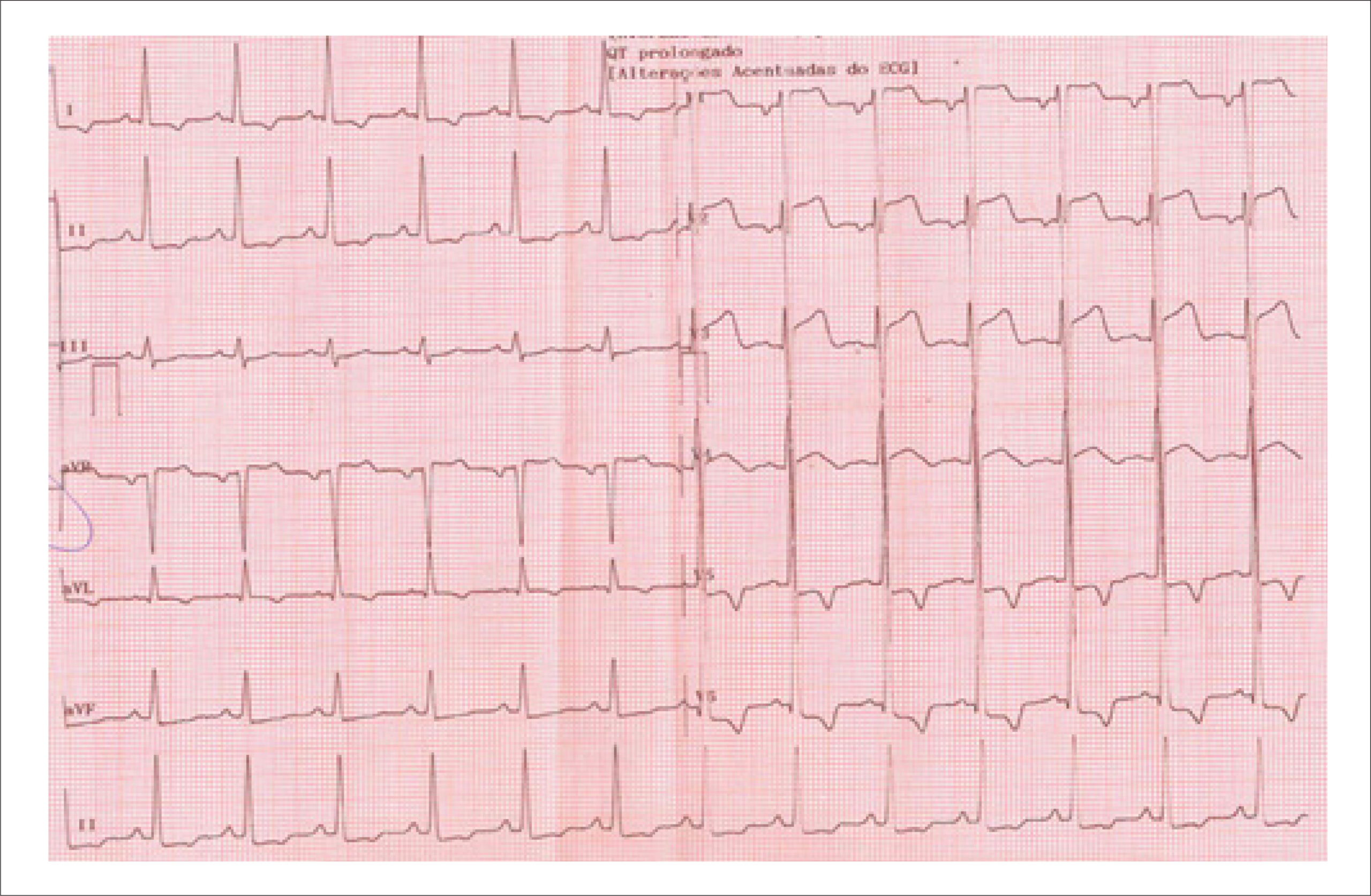
Throughout the SARS-CoV-2 pandemic, there have been reports of infection leading to acute myocardial injury, causing worse clinical outcomes. The manifestations can include troponin elevation, imaging exam abnormalities and electrocardiographic changes. Accordingly, ST-segment elevation (STE) acute myocardial injury has been observed in some patients. However, despite the electrocardiogram (ECG) ischemic changes, complementary exams may not show any obstruction, excluding coronary occlusion as the cause of the injury.

[…]

  • Coronary Angiography/methods
  • Coronavirus-19
  • Electrocardiography/methods
  • Myocarditis/complications
  • Pandemics
  • SARS-CoV-2
  • Takotsubo Cardiomyopathy
Read Full Article
Creative Commons Attribution (CC BY) Creative Commons license
06/09/2021 DOI: 10.36660/abc.20201268 Views 2
Editorial

Successes and Challenges in the Management of Cardiovascular Disease in Brazil: Living Longer and Better

Bruno Fernandes Galdino et al. David Costa Peixoto Ana Carolina Alves Bruno Ramos Nascimento Luisa Campos Caldeira Brant

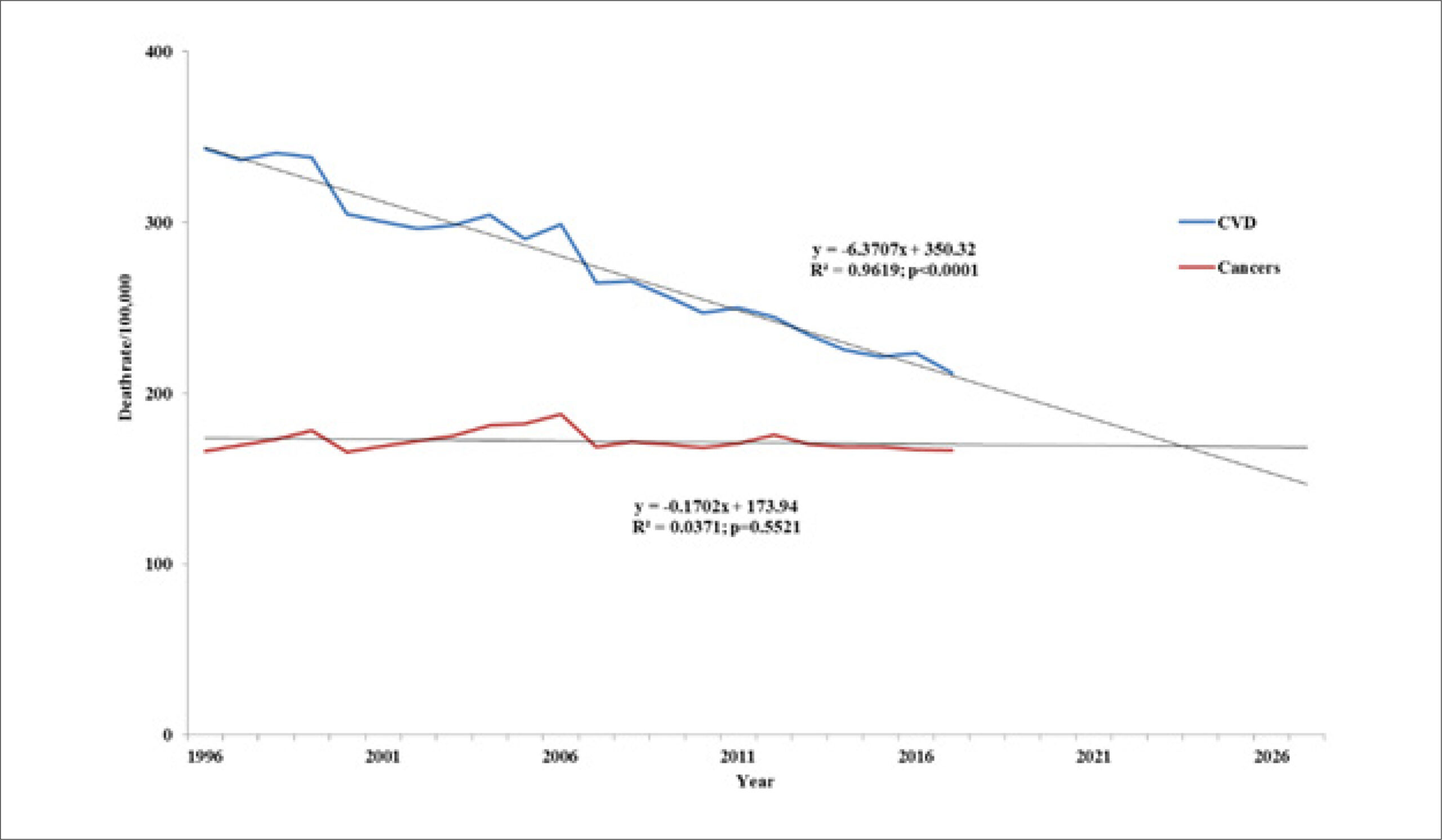
Cardiovascular diseases (CVDs) and cancer are the main causes of death in Brazil and worldwide. Considering this epidemiological relevance, the article “Mortality Rates from Cardiovascular Diseases and Cancer in the Brazilian Population aged 35 to 74 Years, 1996-2017”, through the analysis of mortality data from the DATASUS Vital Statistics (Mortality Information System – SIM), depicts the mortality profile of these groups of diseases, discusses their evolution between 1996 and 2017, and estimates the future contribution of these causes of death, if the trends are maintained. The main findings include the greater current contribution of CVDs to mortality in Brazil, but with a gradual reduction of their age-standardized rates. This trend did not occur for cancer mortality rates – which remain stable – so that, in a few years, cancer will become the main cause of death in the country.

CVDs and cancer, despite having different etiopathogeneses, share risk factors (RF), such as smoking, obesity, diabetes, excessive alcohol consumption and low socioeconomic status. Therefore, maintaining an optimal cardiovascular health is inversely proportional to the incidence of cancer. Thus, it is important to understand the population exposure trends to these common RFs over the last decades, when lifestyle changes resulting from urbanization and population aging contributed to the high incidence and mortality of both diseases. With this information in mind, Mansur and Favarato analyzed mortality data from all causes for men and women, CVD, ischemic heart disease (IHD), cerebrovascular disease (CbVD) and cancer over this 21-year period.

[…]

  • Cancer
  • Cardiovascular Diseases
  • Challenges
  • Epidemiology
  • Successes
Read Full Article
Creative Commons Attribution (CC BY) Creative Commons license
06/09/2021 DOI: 10.36660/abc.20210589 Views 1
Figure 1
Review Article

Peculiar Aspects of Patients with Inherited Arrhythmias during the COVID-19 Pandemic

Luciana Sacilotto et al. Natalia Quintella Sangiorgi Olivetti Cristiano Faria Pisani Tan Chen Wu … Ludhmila Abrahão Hajjar Sissy Lara de Melo Sávia Christina Pereira Bueno Esteban Wisnivesky Rocca Rivarola Muhieddine Omar Chokr Carina Abigail Hardy Denise Tessariol Hachul Francisco Carlos da Costa Darrieux Mauricio Ibrahim Scanavacca

Abstract

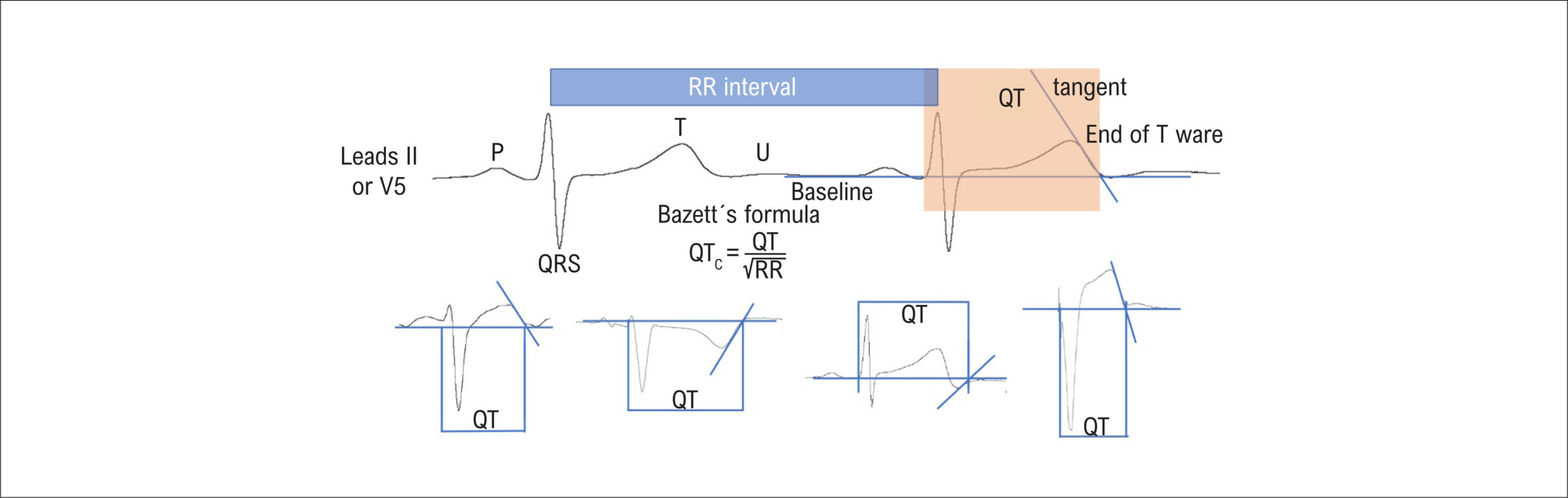
Since December 2019 we have observed the rapid advance of the severe acute respiratory syndrome caused by the new coronavirus (SARS-CoV-2). The impact of the clinical course of a respiratory infection is little known in patients with hereditary arrhythmias, due to the low prevalence of these diseases. Patients who present with infectious conditions may exacerbate hidden or well-controlled primary arrhythmias, due to several factors, such as fever, electrolyte disturbances, drug interactions, adrenergic stress and, eventually, the septic patient’s own myocardial damage. The aim of this review is to highlight the main challenges we may encounter during the Covid 19 pandemic, specifically in patients with hereditary arrhythmias, with emphasis on the congenital long QT syndrome (LQTS), Brugada syndrome (SBr), ventricular tachycardia polymorphic catecholaminergic (CPVT) and arrhythmogenic right ventricular cardiomyopathy.

  • Aarrhythmogenic Right Ventricular Cardiomyopathy
  • Brugada Syndrome
  • Catecholaminergic Polymorphic Ventricular Tachycardia
  • COVID-19
  • Long QT Syndrome
Read Full Article
Creative Commons Attribution (CC BY) Creative Commons license
06/09/2021 DOI: 10.36660/abc.20200391 Views 3
Editorial

Acute Myocardial Infarction Death Rates in Brazil – A Small Light at the End of the Tunnel

Ana Teresa Timóteo

Epidemiological studies are the mainstay to better understand and plan regional healthcare. It is also very important to implement programs for quality-of-care evaluation and improvement. To fulfill that last objective, prospective registries and retrospective analysis of real-life clinical practices are essential. Continuous national registries can support continuous quality improvement at the hospital and country level and have proven to be effective in both Europe and North America. These systems use continuous data collection and provide online reports focusing on the processes of care and outcomes concerning common cardiovascular diseases and interventions. Another approach is to use data from non-dedicated national healthcare databases. However, most databases were not developed for such specific analysis and information is rather limited.

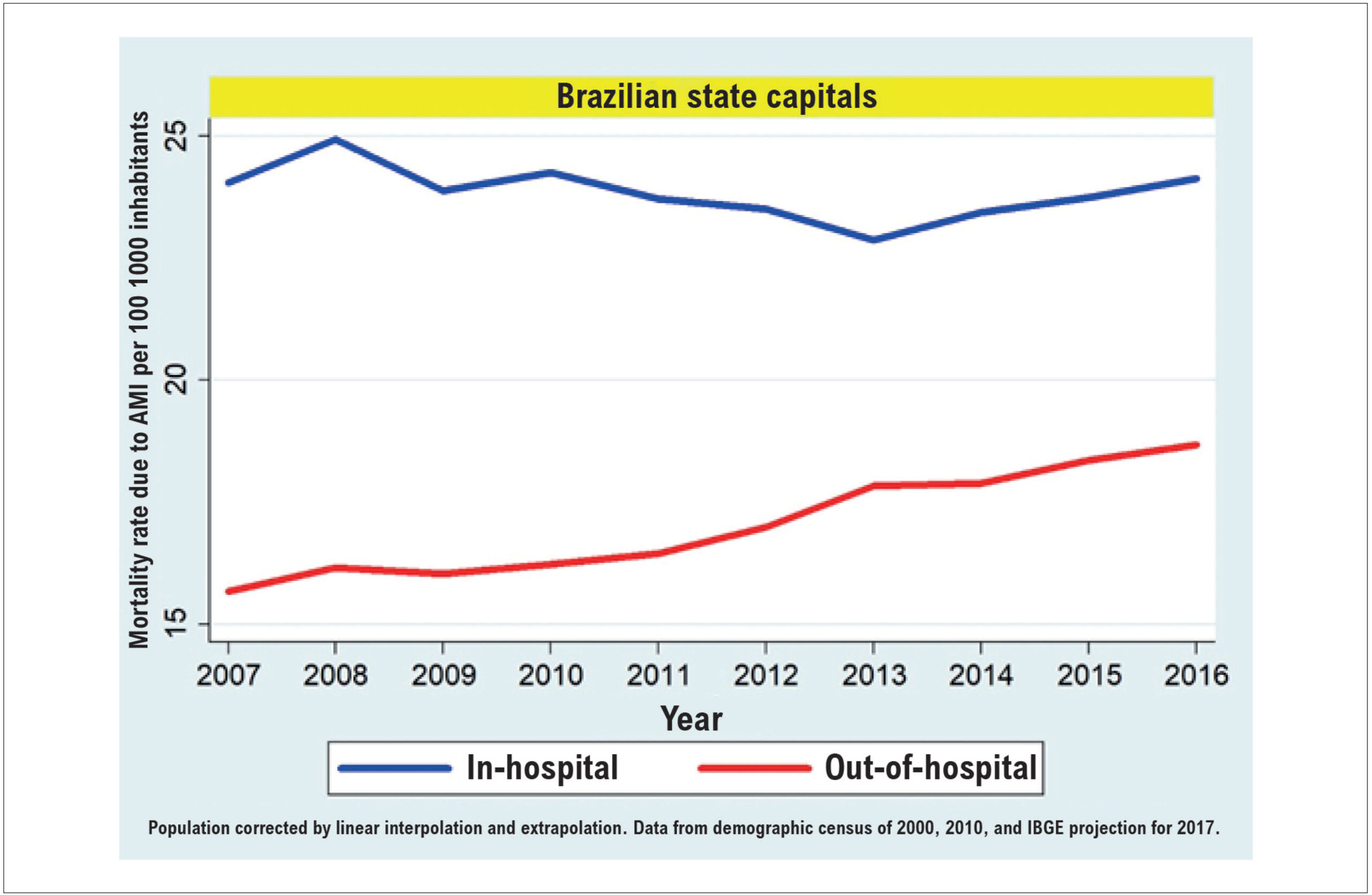
Lucena de Abreu et al. present an interesting study in this journal. They analyzed in-hospital and out-of-hospital death rates by acute myocardial infarction (AMI) from 2007 to 2016 in 27 Brazilian state capitals, representing approximately 24% of the Brazilian population. This topic is important, given that, in a literature review of medical journals over the past ten years, this information is lacking, and, for this reason, the reality in South America is virtually unknown. The last information available was a study published in 2020 with a retrospective review of temporal trends on mortality due to acute myocardial infarction in Brazil from 1996 to 2016, which showed a general decrease, especially in the capital cities, but regional inequalities were also observed.

[…]

  • Brazil
  • Epidemiology
  • Hospitalization
  • Mortality
  • Myocardial Infarction
  • Time Series Studies
Read Full Article
Creative Commons Attribution (CC BY) Creative Commons license
06/09/2021 DOI: 10.36660/abc.20210446 Views 1
Editorial

Naringin, Trimetazidine and Baroreflex in Renal Ischemia-Reperfusion Injury

Luis Cuadrado Martin

The paper “Naringin and trimetazidine improve baroreflex sensitivity and electrical activity of solitary tract nucleus in renal ischemia-reperfusion injury,” published in this journal, found improvement in baroreflex sensitivity in an acute ischemia/reperfusion kidney injury model in rats treated by naringin and/or trimetazidine.

Trimetazidine and naringin are substances capable of reducing oxidative stress, documented in many situations. Trimetazidine is a drug with anti-ischemic properties, which acts directly on mitochondria and is able to decrease oxidative stress. Naringin is a polyphenol with antioxidant properties present in several citrus fruits.

[…]

  • Flavanones
  • Flavonoids
  • Heart Failure
  • Hypertension
  • Oxidative Stress
  • Renal Reperfusion
  • Trimetazidine
  • Vasodilatador Agents
Read Full Article
Creative Commons Attribution (CC BY) Creative Commons license
06/09/2021 DOI: 10.36660/abc.20210453 Views 1
Original Article

Type 1 Cardiorenal Syndrome in Decompensated Heart Failure Patients in a Low-Income Region in Brazil: Incidence of Acute Kidney Injury (AKIN and KDIGO Criteria), Need for Dialysis and Mortality

Ginivaldo Victor Ribeiro do Nascimento et al. Heitor Carlos Domingues de Brito Carlos Eduardo Batista de Lima

Abstract

Background:

Type 1 cardiorenal syndrome is associated with higher mortality in heart failure patients. However, few studies have compared the diagnostic criteria of acute kidney injury (AKI) in this population.

Objective:

To assess clinical and functional features and factors associated AKI in patients with heart failure.

Method:

Retrospective, cohort study on patients with decompensated heart failure or recent acute myocardial infarction, conducted in a tertiary hospital in a low-income region of Brazil. Clinical, laboratory and echocardiographic features were compared between patients with and without AKI according to the Acute Kidney Network (AKIN) and Kidney Disease: Improving Global Outcomes (KDIGO) criteria. The level of statistical significance was set at p < 0.05.

Results:

Of 81 patients, 61.73% had AKI. Mean creatinine and urea levels were 1.79±1.0 mg/dL and 81.5±46.0 mg/dL, respectively, and higher in the group with AKI (p < 0.05). No evidence of a relationship between cardiac changes and reduced renal function. Chronic renal disease was associated with higher prevalence of AKI. Higher mortality was observed in patients with AKI than in patients without AKI (32.0% vs. 9.8%, p = 0.04, OR 8.187 ad 95% confidence interval 1.402-17.190, p = 0.020).

Conclusion:

In this population of patients with heart failure, AKI was highly prevalent and considered an independent risk factor for mortality. Cardiac changes were not associated with AKI, and the KDIGO and AKIN criteria showed similar performance.

  • Acute Kidney, Injury/standards(AKIN)
  • Cardio-Renal Syndrome/complications
  • Kidney Disease Improving Global Outcome/standards(KDIGO)
  • Renal Insufficiency
Read Full Article
Creative Commons Attribution (CC BY) Creative Commons license
06/09/2021 DOI: 10.36660/abc.20200097 Views 2
Figure 1
Original Article

In- and Out-of-Hospital Deaths by Acute Myocardial Infarction in Brazilian State Capitals

Sterffeson Lamare Lucena de Abreu et al. Joana D’Arc Matos França de Abreu Maria dos Remédios Freitas Carvalho Branco Alcione Miranda dos Santos

Abstract

Background:

Acute myocardial infarction (AMI) is the main cause of death in Brazil and the world. Approximately half of these deaths occur outside the hospital.

Objectives:

To analyze the distribution, temporal evolution, and sociodemographic characteristics (SDC) of in- and out-of-hospital deaths by AMI in Brazilian state capitals and their relationship with municipal development indicators (MDI).

Methods:

This is an ecological study of the number of deaths due to AMI reported annually by the 27 Brazilian state capitals from 2007 to 2016; these were divided into 2 groups: in-hospital (H) and out-of-hospital (OH). We evaluated the temporal evolution of mortality rates in each group and differences in SDC. Negative binomial regression models were used to compare the temporal evolution of the number of deaths in each group with the following variables: residing in the South/Southeast regions (S/SE), municipal human development index (MHDI), Gini coefficient, and expected years of schooling (EYS). We considered p-values<0.05 as statisticallysignificant.

Results:

The OH mortality rate increased with time for all state capitals. All studied SDC were different between groups (p<0.001). In the OH group, most deaths were of men and patients aged 80 years or older and not married. S/SE increased the incidence of OH deaths (incidence rate ratio [IRR]=2.84; 95% confidence interval [CI]=1.67–4.85), while higher EYS reduced it (IRR=0.86; 95% CI=0.77–0.97). In the H group, higher MHDI reduced the incidence of deaths (IRR=0.44; 95% CI=0.33–0.58), while higher EYS increased it (IRR=1.09; 95% CI=1.03–1.15).

Conclusions:

In- and out-of-hospital deaths due to AMI in Brazilian state capitals were influenced by MDI, presented sociodemographic differences and a progressive increase in out-of-hospital occurrences.

  • Death
  • Deaths
  • Demographic Indicators
  • Epidemiology
  • Mortality
  • Myocardial Infarction
  • Out-of-Hospital
  • Social Indicators
  • Sudden Cardiac
Read Full Article
Creative Commons Attribution (CC BY) Creative Commons license
06/09/2021 DOI: 10.36660/abc.20200043 Views 1
Editorial

Is Adolescents' Cardiometabolic Health Affected by Prolonged Periods of Inactivity?

Andrea Wendt

The current literature regarding physical activity (PA) and sedentary behavior (SB) highlights the negative effect of considerable amounts of time spent in activities such as sitting, TV viewing, computer use, and some work and study activities on cardiovascular health. SB may be defined as any waking behavior characterized by an energy expenditure ≤ 1.5 metabolic equivalents while in a sitting, reclining, or lying posture., Thus, SB is not the absence or low level of PA, but it can coexist with it. In this sense, a recent review showed an interaction between SB and PA, providing evidence that individuals with higher time spent in SB presented a higher risk of cardiovascular mortality. However, estimates have been less consistent in individuals with higher PA levels.

The literature cites a series of possible mechanisms for SB effects, independent of PA, on metabolic and cardiovascular outcomes. One of these mechanisms is the decrease in enzymatic activity responsible for HDL production and the capture of triglycerides in the blood chain due to sustained inactivity in sitting, reclining, or lying posture. In this regard, strategies reducing the time spent in SB or interrupting sustained inactivity have been studied. Some of these approaches focus on standing up for a while or a short period of movement between periods of sitting time (breaks in SB). A meta-analysis with adults found a positive effect of breaks in SB on adiposity control and glycemia. In addition, an experimental study showed that 1-to-2–minute breaks in sedentary work activities every half an hour resulted in small-to-moderate declines in total cholesterol, triglycerides, and fasting blood glucose.

[…]

  • Adolescent, Cholesterol
  • body mass index
  • Cardiovascular Diseases/physiopathology
  • Epidemiology
  • Metabolic Diseases
  • Motor Activity
  • Sedentarism
  • Triglycerides
Read Full Article
Creative Commons Attribution (CC BY) Creative Commons license
06/09/2021 DOI: 10.36660/abc.20210479
Figure 1
Original Article

Characteristics and Temporal Trends in the Mortality of Different Heart Failure Phenotypes in Primary Care

Antonio José Lagoeiro Jorge et al. Leticia Mara dos Santos Barbetta Eduardo Thadeu de Oliveira Correia Wolney de Andrade Martins … Adson Renato Leite Maria Auxiliadora Nogueira Saad Márcia Maria Sales dos Santos Dayse Mary Correia Maria Luiza Garcia Rosa Sérgio Chermont Cárita Cunha dos Santos Evandro Tinoco Mesquita

Abstract

Background:

The classification of heart failure (HF) by phenotypes has a great relevance in clinical practice.

Objective:

The study aimed to analyze the prevalence, clinical characteristics, and outcomes between HF phenotypes in the primary care setting.

Methods:

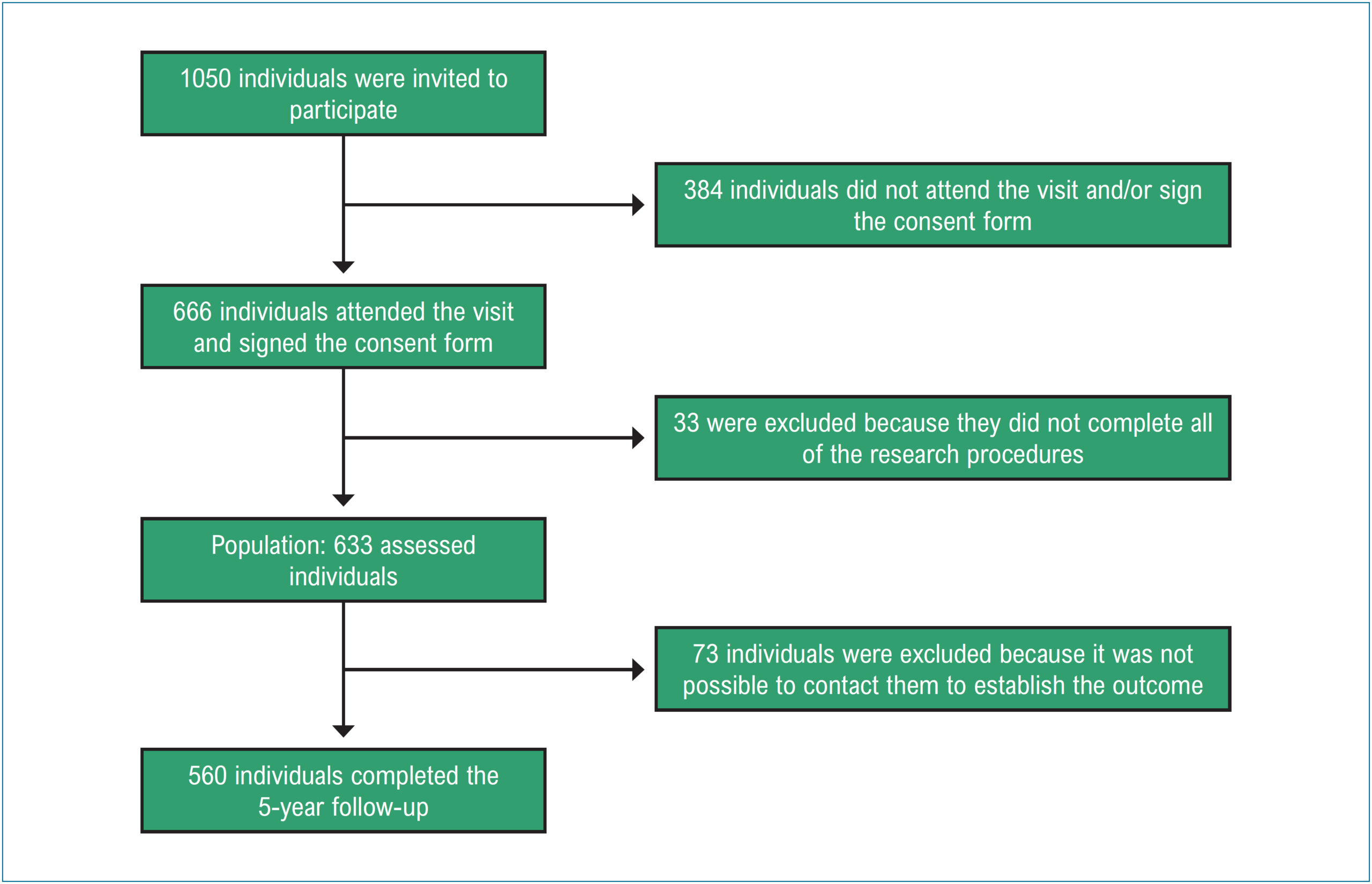
This is an analysis of a cohort study including 560 individuals, aged ≥ 45 years, who were randomly selected in a primary care program. All participants underwent clinical evaluations, b-type natriuretic peptide (BNP) measurements, electrocardiogram, and echocardiography in a single day. HF with left ventricular ejection fraction (LVEF) < 40% was classified as HF with reduced ejection fraction (HFrEF), LVEF 40% to 49% as HF with mid-range ejection fraction (HFmrEF) and LVEF ≥ 50% as HF with preserved ejection fraction (HFpEF). After 5 years, the patients were reassessed as to the occurrence of the composite outcome of death from any cause or hospitalization for cardiovascular disease.

Results:

Of the 560 patients included, 51 patients had HF (9.1%), 11 of whom had HFrEF (21.6%), 10 had HFmrEF (19.6%) and 30 had HFpEF (58.8%). HFmrEF was similar to HFpEF in BNP levels (p < 0.001), left ventricular mass index (p = 0.037), and left atrial volume index (p < 0.001). The HFmrEF phenotype was similar to HFrEF regarding coronary artery disease (p = 0.009). After 5 years, patients with HFmrEF had a better prognosis when compared to patients with HFpEF and HFrEF (p < 0.001).

Conclusion:

The prevalence of ICFEI was similar to that observed in previous studies. ICFEI presented characteristics similar to ICFEP in this study. Our data show that ICFEi had a better prognosis compared to the other two phenotypes.

  • Eidemiology
  • Heart Failure / mortality
  • Heart Failure/trends
  • Prevalence
  • Primary Health Care
  • Prognosis
  • Stroke Volume
Read Full Article
Creative Commons Attribution (CC BY) Creative Commons license
06/09/2021 DOI: 10.36660/abc.20190912
Figure 1
Original Article

Statin Use Improves Cardiometabolic Protection Promoted By Physical Training in an Aquatic Environment: A Randomized Clinical Trial

Rochelle Rocha Costa et al. Alexandra Ferreira Vieira Leandro Coconcelli Alex de Oliveira Fagundes … Adriana Cristine Koch Buttelli Laura Frances Pereira Ricardo Stein Luiz Fernando Martins Kruel

Abstract

Background:

Statin use is highlighted as the most commonly utilized therapy for the treatment of dyslipidemias and can be considered as the most efficient pharmacological intervention for low-density lipoprotein (LDL) reduction. On the other hand, physical training can be considered an efficient and safe non-pharmacological strategy to promote improvements in lipid profile. However, the influence of statins on lipid adaptations arising from water-based training in populations with dyslipidemia is not known.

Objectives:

To analyze the influence of simvastatin use on lipid adaptations arising from water-based aerobics and resistance training in elderly women with dyslipidemia.

Methods:

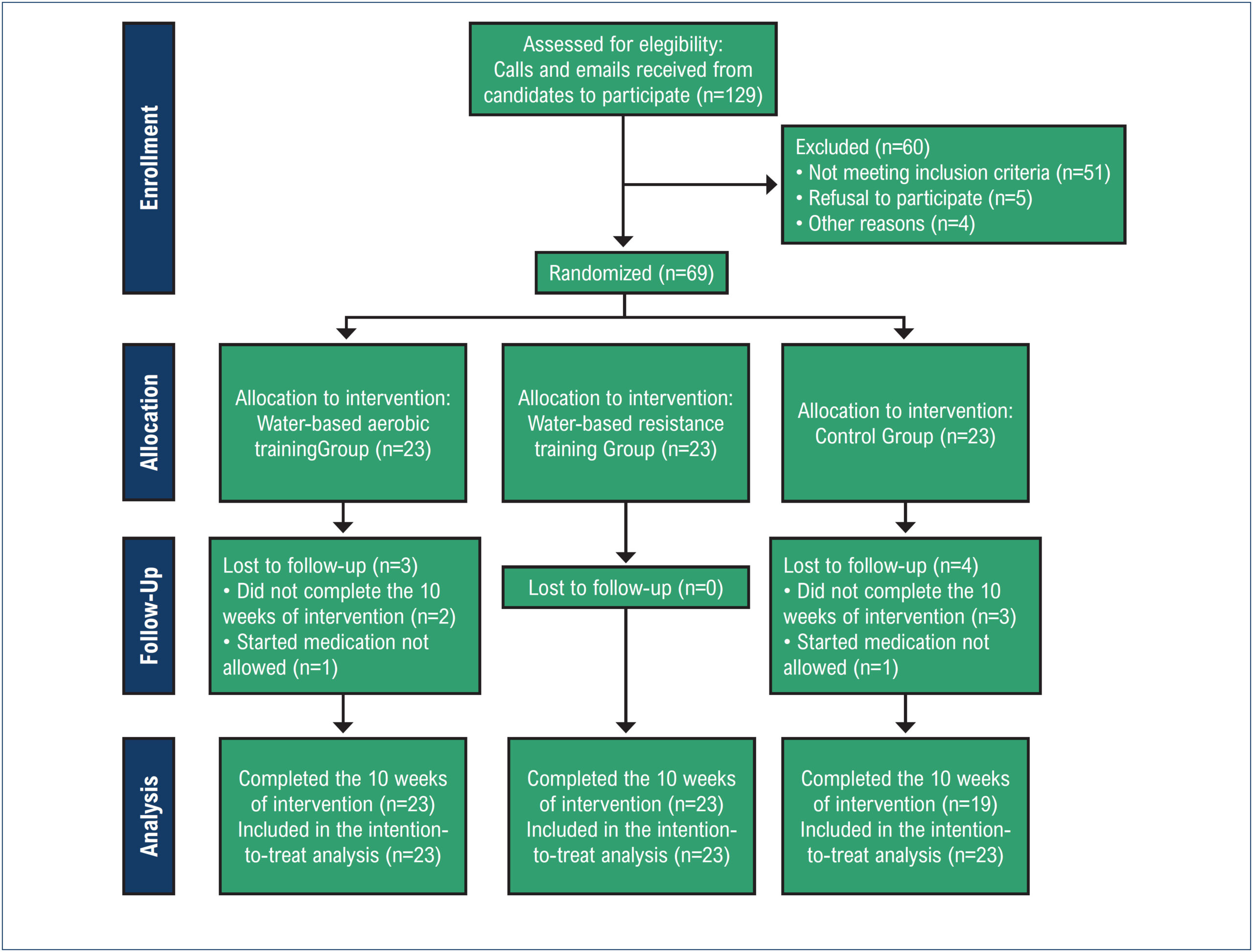
Sixty-nine elderly (66.13 ± 5.13 years), sedentary, and dyslipidemic women, both non-users and users of simvastatin (20 mg and 40 mg), were randomized into the following 3 groups: water-based aerobic training (WA), water-based resistance training (WR), and control group (CG). Total duration of interventions, for all experimental groups consisted of 10 weeks, with 2 weekly sessions. Biochemical analyses were performed before the beginning of the interventions and repeated after the end of the trial. Generalized estimating equations were used to compare these data, setting α = 0.05.

Results:

In intention-to-treat analysis, the medicated participants obtained a greater magnitude of decrease in total cholesterol (TC) (−3.41 to −25.89 mg.dl−1; p = 0.038), LDL (−5.58 to −25.18 mg.dl−1; p = 0.007) and TC/HDL ratio (−0.37 to −0.61; p = 0.022) when compared to the non-medicated participants, and this decrease was statistically significant only in the WR group.

Conclusions:

Statin use enhances the adaptations promoted by water-based physical training in CT, LDL levels, and CT/HDL ratio, and it is more pronounced after WR.

  • Aquatic Environment
  • Diabetes Mellitus
  • Exercise
  • hydroxymethylglutaryl-CoA reductases inhibitors
  • Hypertension
  • Metabolic Syndrome/complications
  • Obesity
  • Physical activity
Read Full Article
Creative Commons Attribution (CC BY) Creative Commons license
06/09/2021 DOI: 10.36660/abc.20200197 Views 2
Figure 1
Brief Communication

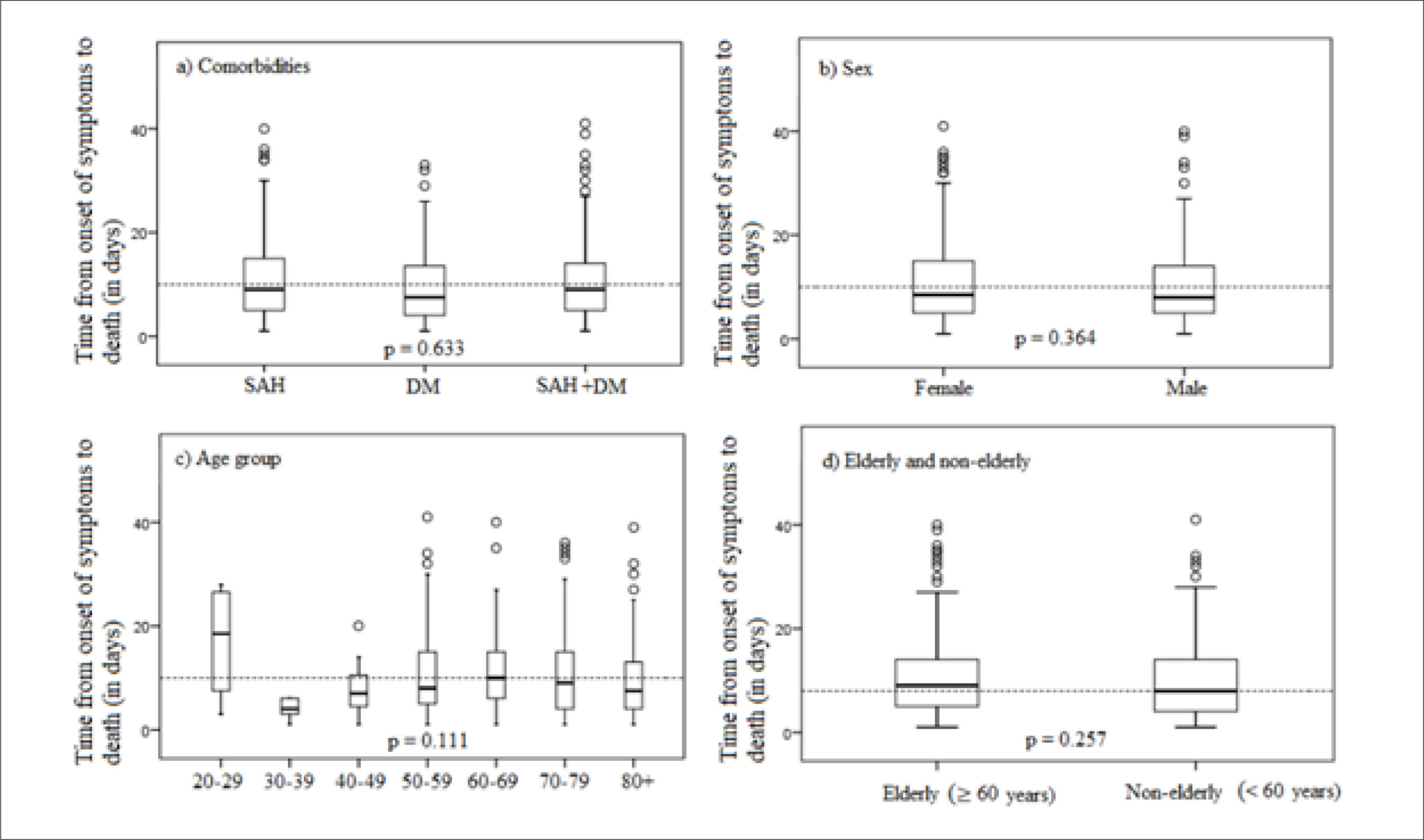
Prevalence of Systemic Arterial Hypertension and Diabetes Mellitus in Individuals with COVID-19: A Retrospective Study of Deaths in Pernambuco, Brazil

Lucas Gomes Santos et al. Jussara Almeida de Oliveira Baggio Thiago Cavalcanti Leal Francisco A. Costa … Tânia Rita Moreno de Oliveira Fernandes Regicley Vieira da Silva Anderson Armstrong Rodrigo Feliciano Carmo Carlos Dornels Freire de Souza

Introduction

In December 2019, health authorities in Hubei province, in the People’s Republic of China, identified and reported to the World Health Organization (WHO) an outbreak of pneumonia with an unknown etiological agent. In early January, the SARS-CoV-2 virus (Severe Acute Respiratory Syndrome Coronavirus 2) was identified and the disease was called COVID-19 (Coronavirus Disease 2019).

On August 4, 2020, the disease has infected 18,316,072 people and caused the death of 694,715. The USA, Brazil and India occupy the first positions in number of infected people. In Brazil, the first case was confirmed on February 26th in the city of São Paulo. Between the first case and August 4, 2020, the country had 2,750,249 people infected and 94,665 deaths.

[…]

  • Aged
  • Coronavirus-19
  • Diabetes Mellitus/complications
  • Hypertension/complications
  • Pandemics
  • Prevalence
  • Risk Factors/prevention and control
  • SARS-CoV-19
Read Full Article
Creative Commons Attribution (CC BY) Creative Commons license
06/09/2021 DOI: 10.36660/abc.20200885 Views 1
Figure 1
Research Letter

Unusual Finding of Rare Exuberant Xanthomatosis in Hyperlipidemia

Enrico Manfredini et al. Renato Jorge Alves

Introduction

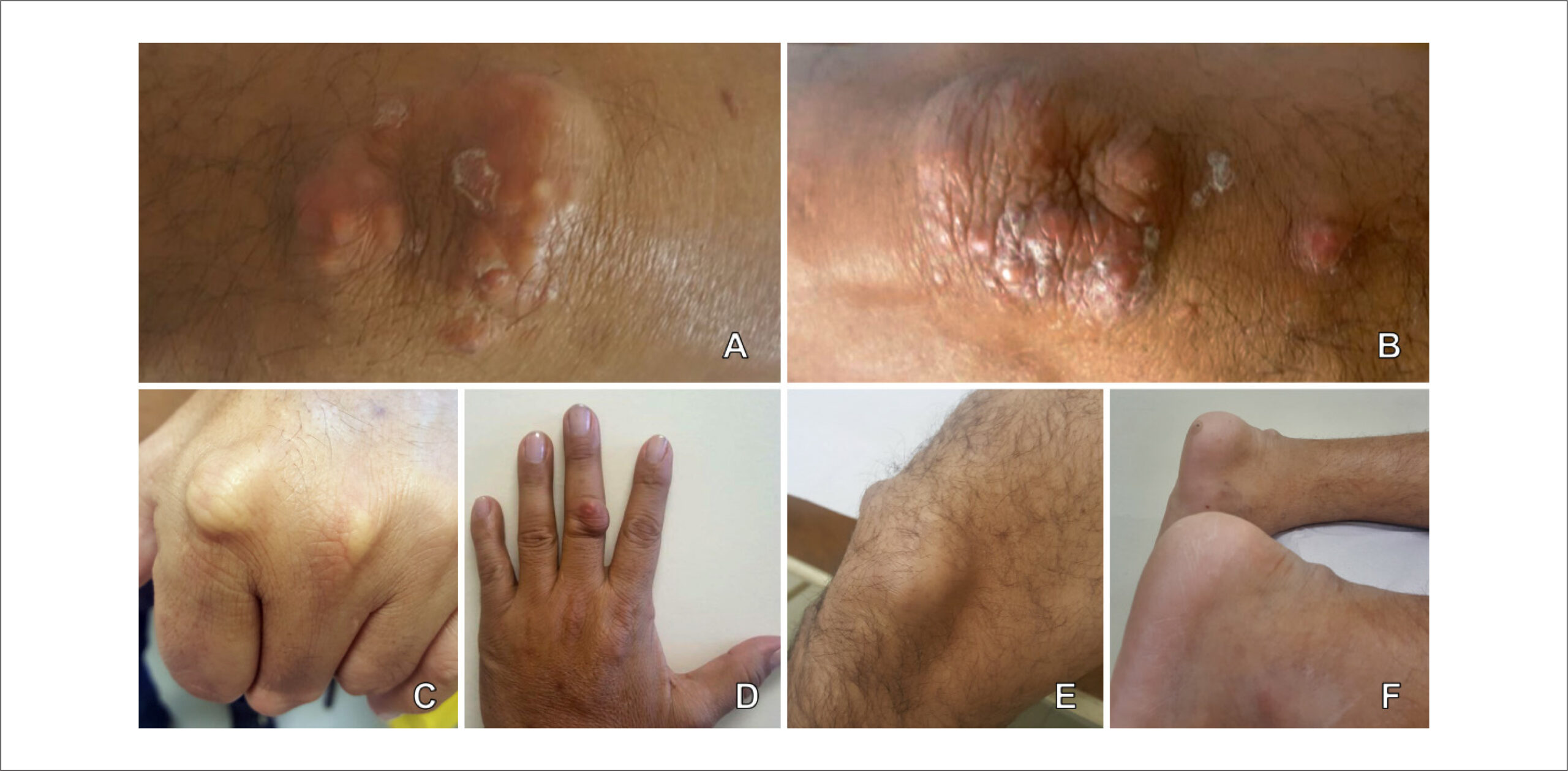
Hyperlipidemia can increase morbidity and mortality. This condition has been classified by Fredrickson into the following phenotypes: I, IIa, IIb, III, IV and V.– In the mixed ones, the following conditions are present: hypercholesterolemia and hypertriglyceridemia, phenotypes IIb and III, with cholesterolemia and triglyceridemia of 250 to 300 mg/dL in phenotype IIb, and 500 to 600 mg/dL or more, in III, respectively. Pancreatitis is uncommon in both, as well as xanthomatosis in IIb. Xanthomas and cardiovascular complications are more frequent in phenotype III.,

We present a case of hyperlipidemia with relevant lipid abnormalities, pancreatitis and exuberant xanthomatosis.

[…]

  • Dyslipidemias
  • Hyperlipidemias
  • Hypolipidemic Agents
  • Xanthomatosis
Read Full Article
Creative Commons Attribution (CC BY) Creative Commons license
06/09/2021 DOI: 10.36660/abc.20200999
Figure 1
Research Letter

Patient in Cardiorespiratory Arrest – Is it Possible to Perform Transcatheter Aortic Valve Implantation (TAVI) in this Scenario?

Alexandre de Matos Soeiro et al. Francisco Akira Cardozo Patrícia Oliveira Guimarães Marcel Paula Pereira … Paulo Vinícius Ramos Souza Gustavo A. B. Boros Viviane Cordeiro Veiga Samolon Soriano Ordinola Rojas Fernanda Marinho Mangione Salvador André Bavaresco Cristóvão Gustavo Alexandre Dutra Adnan Ali Salman Luiz Eduardo Loureiro Bettarello José Armando Mangione

Introduction

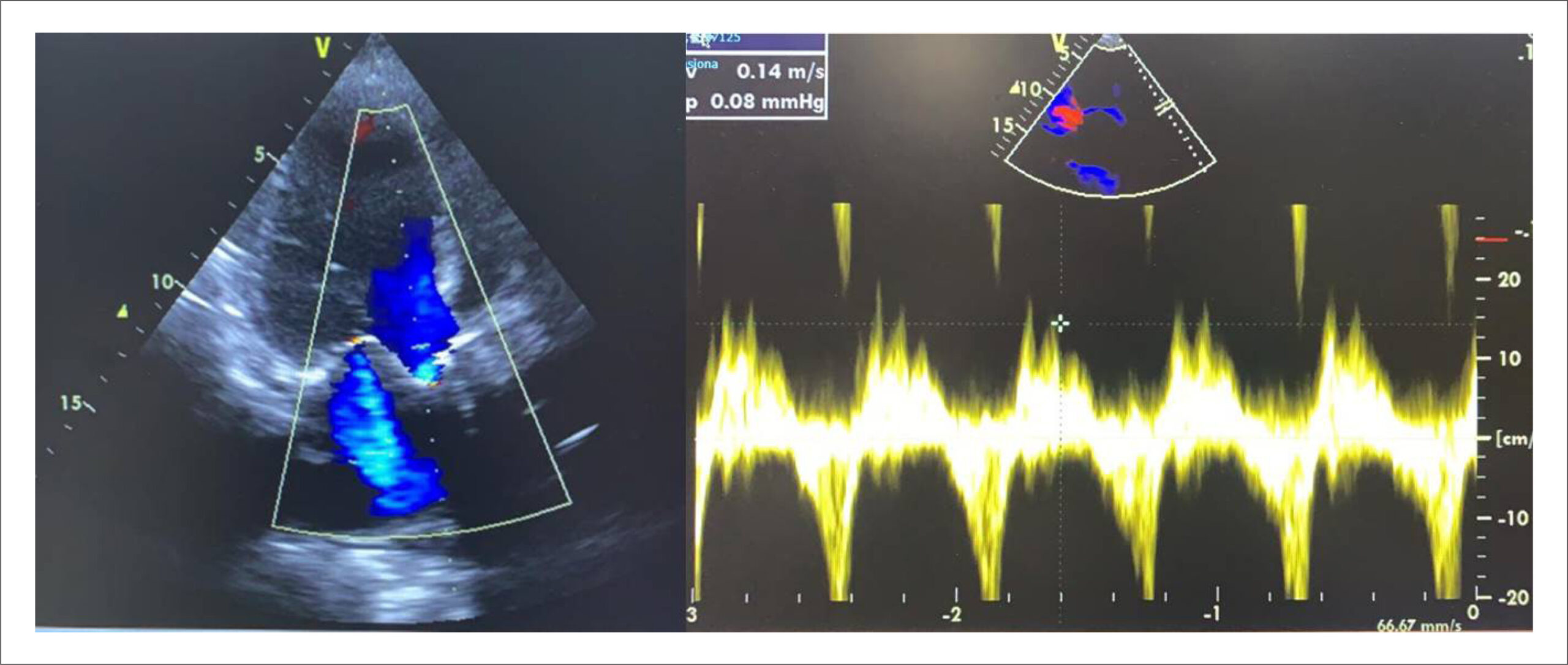
Transcatheter aortic valve implantation (TAVI) is a well-established procedure in reference centers worldwide and is currently accepted as the method of choice in high- and intermediate-risk patients. Although unusual, catastrophic complications can occur before or after its implantation, such as coronary obstruction, rupture of the aortic valve annulus, cardiac tamponade, significant perivalvular insufficiency and prosthesis embolization/displacement.

Data from a recently published North American registry showed that 1,695 patients (2.8%) undergoing TAVI required some type of mechanical circulatory support during hospitalization. It was observed that heart failure, transapical access, respiratory diseases, acute myocardial infarction, cardiorespiratory arrest (CRA) and cardiogenic shock were the factors most frequently associated with the need for mechanical circulatory support.

[…]

  • Aortic Valve
  • Cardiogenic shock
  • Emergencies
  • Heart Arrest
Read Full Article
Creative Commons Attribution (CC BY) Creative Commons license
06/09/2021 DOI: 10.36660/abc.20201097
Editorial

Statin Associated With Physical Training: A Perfect Combination

Stephanie Bastos da Motta et al. Vanessa Caroline Toledes Leandro Franzoni

Dyslipidemia and metabolic syndrome have grown exponentially over the recent years, including in children, mainly due to the low quality of food and the high level of a sedentary lifestyle.– These two diseases are important risk factors for the development of cardiovascular diseases. Reduction of low-density lipoprotein (LDL), as well as total cholesterol (TC) and the TC to high-density lipoprotein ratio (HDL – TC/HDL) are the main forms of cardiometabolic prevention. The use of statins is considered a standard treatment and the most effective pharmacological measure to improve the lipid profile. However, there are non-pharmacological alternatives that are also effective, one of which is physical exercise.

There is evidence on the importance of regular physical training as a form of primary or secondary prevention in the development or worsening of cardiometabolic diseases.– However, there is no consensus on the effect of combining statins with physical training, two powerful tools that, combined, can promote an even greater impact on the lipid profile. This is what the Costa et al. did in this edition of Arquivos Brasileiros de Cardiologia — they analyzed the influence of simvastatin on lipid adaptations resulting from aerobic and strength water training in elderly women with dyslipidemia. To this end, 69 female elderly sedentary dyslipidemic non-users and users of simvastatin (20 mg and 40 mg) (66.13±5.13 years) were analyzed.

[…]

  • Dyslipidemias/prevention and control
  • Exercise
  • Hydroxymethylglutaril-CoA-Reductases
  • Metabolic Syndrome X
  • Risk Factors
  • Sports
  • Swimming
Read Full Article
Creative Commons Attribution (CC BY) Creative Commons license
06/09/2021 DOI: 10.36660/abc.20210509 Views 2
Editorial

The Paradox of Exercise Intensity in Preventing Cardiovascular Events in Peripheral Arterial Occlusive Disease

Pablo de Souza et al. Cássio Perfete

Peripheral arterial disease (PAD) is characterized by narrowing of the arteries of the lower limbs due to atherosclerotic involvement. Its clinical manifestations go far beyond just a reduction in blood flow, leading to chronic ischemia. Current evidence shows that endothelial dysfunction, oxidative stress, arterial stiffness and inflammation also lead to functional impairment, consequently to patient decline.

All these factors end up impacting the quality of life of individuals, as it reduces their walking resistance, with intermittent claudication (IC) as the main symptom. Last but not least, we have also found progressive damage to muscle fibers caused by this chronic ischemia, further worsening the dysfunction of the skeletal muscle and metabolic morphology of the limb. This ends up creating an important barrier to the practice of physical activity, perpetuating and increasing the risk of cardiovascular events.–

[…]

  • Coronary Artery Disease
  • Exercise
  • Intermittent Claudication
  • Motor Activity
  • Rehabilitation
  • Risk Factors
  • walking
Read Full Article
Creative Commons Attribution (CC BY) Creative Commons license
06/09/2021 DOI: 10.36660/abc.20210595 Views 2
Editorial

Heart Failure with Mid-Range Ejection Fraction – A Temporary Condition or a Specific Group?

Eduardo Arrais Rocha et al. Camila Pinto Cavalcante Miná Maria Eduarda Quidute Arrais Rocha

The latest epidemiological report from the American Heart Association indicates that 6.2 million Americans over 20 years of age had heart failure (HF), with the projection that this number could reach 8 million by 2030. In Brazil, between 2008 and 2017, HF was the leading cardiovascular cause of hospitalization, accounting for 2.25% of all hospitalizations, with mortality of 14/100,000. According to Fernandes et al., this rate reaches 19.2/100,000 in less developed states of Brazil.

Faced with the prevalence of the severity of this disease, the study “Characteristics and temporal trends in the mortality of different heart failure phenotypes in primary care” has brought valuable data to better understand, stratify, and treat patients with HF..

[…]

  • Epidemiology
  • Heart Failure/physiopathology
  • Hospitalization
  • Mortality
  • Stroke Volume
Read Full Article
Creative Commons Attribution (CC BY) Creative Commons license
06/09/2021 DOI: 10.36660/abc.20210482
Editorial

NSTE-ACS at the Emergency: Can You Guess What is Under the Umbrella?

Bruno Rocha et al. Carlos Aguiar

The reasoning behind the often-difficult task of deciding whether, when and how to treat the patient with established Cardiovascular Disease (CVD) might be based on two simple questions: (1) Are we treating an acute event?, and (2) What is my patient at risk of in the future? Whilst the first question implies an expedite straightforward treatment, the second premise depends mostly on risk stratification and, thus, the capability of one to anticipate the likelihood of an event. Withal, the physician often encounters a scenario in which the two questions must be addressed altogether. Accordingly, the response is more likely one of a probability rather than a categorical (yes or no) answer. This is the outline in umbrella diagnoses, as is non-ST segment elevation (NSTE) Acute Coronary Syndromes (ACS).,

There are a multitude of clinical tools in Cardiovascular Medicine– that aid physicians in the decision-making process, often surpassing the “educated guess” in acute settings., However, the use of these tools in NSTE-ACS is particularly challenging for a number of reasons:

[…]

  • Acute coronary syndrome
  • Biomarkers
  • Electrocardiography/methods
  • Myocardial Ischemia
  • Non-ST Elevated Myocardial Infarction
  • Troponin
Read Full Article
Creative Commons Attribution (CC BY) Creative Commons license
06/09/2021 DOI: 10.36660/abc.20210516
Figure 1
Original Article

Arterial Hypertension and Serum Uric Acid in Elderly- SEPHAR III Study

Roxana Buzas et al. Vlad-Sabin Ivan Oana-Florentina Gheorghe-Fronea Adina Flavia Morgovan … Melania Ardelean Nicolae Albulescu Maria Dorobantu Daniel Florin Lighezan

Abstract

Background:

Hyperuricemia is a frequent finding in patients with arterial hypertension, and there is increasing evidence that this entity is also a risk factor for cardiovascular disease.

Objective:

In the context of an aging population, this study aims to evaluate serum uric acid levels and arterial hypertension prevalence and control in a subgroup of Romanian adults (>65 years), concerning the influence of age on these parameters.

Method:

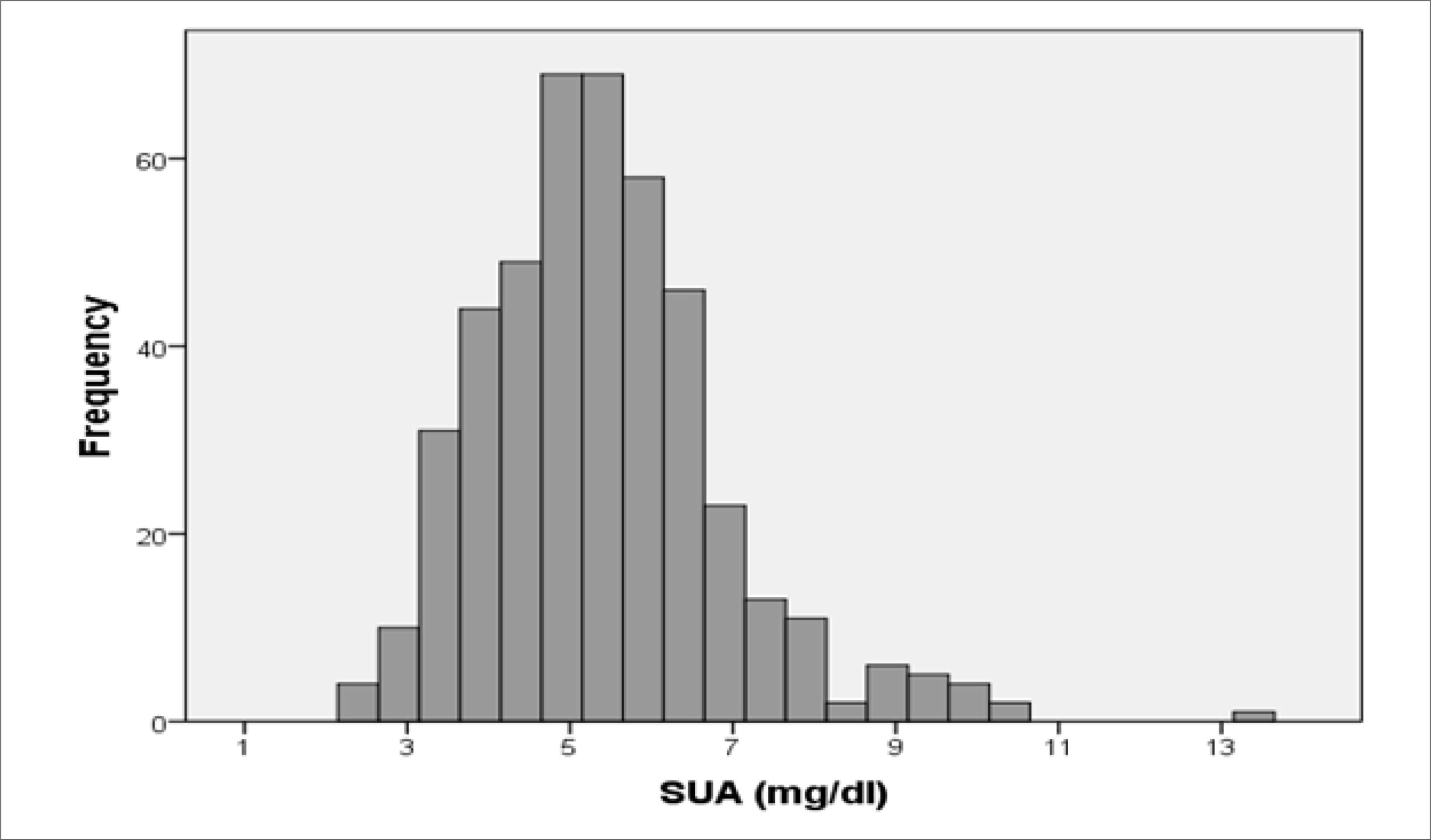
The study sample consists of 1,920 adults included in SEPHAR III survey, of whom 447 were elderly patients (>65 years of age). During the two study visits, three blood pressure (BP) measurements were performed at 1-min intervals and serum uric acid levels, kidney function by estimated glomerular filtration rate, blood pressure, and intima media thickness measurements were conducted. Hypertension and controls were defined according to the current guidelines. Intima-media thickness evaluation was assessed by B-mode Doppler ultrasound evaluation. A significance level p < 0.05 was adopted for the statistical analysis.

Results:

Adult patients had a significant lower serum uric acid levels, compared to elderly patients, regardless of glomerular filtration rate levels. Adult patients showed a significantly lower intima-media thickness levels, when compared to elderly patients.

Conclusion:

Similar to previous studies, in the present study, age represented one of the factors contributing to the increased level of serum uric acid. An increasing prevalence of arterial hypertension with age, together with a poor control of blood pressure, was also obtained.

  • Age-Effect
  • C-Effectardiovascular Diseases
  • Glomerular Filtration
  • Hypertension
  • Hyperuricemia
  • uric acid
Read Full Article
Creative Commons Attribution (CC BY) Creative Commons license
06/09/2021 DOI: 10.36660/abc.20200004
Figure 1
Original Article

Cardiovascular and Cancer Death Rates in the Brazilian Population Aged 35 to 74 Years, 1996-2017

Antonio de Padua Mansur et al. Desiderio Favarato

Abstract

Background:

Cardiovascular diseases (CVD) and cancer are the main causes of death worldwide. These diseases share many risk factors. Control of traditional risk factors for CVD was associated with lower incidence of cancers.

Objective:

To analyze CVD and cancer mortality rate trends in Brazilian population aged 35-74 years from 1996 to 2017.

Methods:

Crude and age-adjusted death rate trends were analyzed for all causes of death, CVD, and cancer. Data were obtained from mortality database of the Ministry of Health. Joinpoint Regression Program performed analysis of trends and adjustments in death rates. The degree of changes was determined by the average annual percent change (AAPC). Level of statistical significance was set at p <0.05.

Results:

Mortality from all causes of death (AAPC=-1.6%; p<0.001), CVD (AAPC=-2.3; p<0.001), ischemic heart disease (IHD) (AAPC=-1.6; p<0.001) and stroke (AAPC=-3.7; p<0.001) declined. Same trends were observed for CVD (p<0.001) in men and women. Death rates from all causes of cancer (AAPC=-0.1; p=0.201), in men (AAPC=-0.1; p=0.193) and in women (AAPC=-0.1; p=0,871) remained unchanged. In 2002, mortality from cancer exceeded the sum of deaths from IHD and stroke. If trends continue, cancer mortality will also exceed mortality from CVD by 2024. In women, death rates from breast, lung and colon cancer increased, and from cervical and gastric cancers decreased. In men, mortality from lung, stomach and esophagus cancer decreased, and from prostate cancer remained unchanged.

Conclusion:

CVD are currently the leading cause of death in Brazil, but death rates from cancer will exceed those from CVD in a few years.

  • Brazil
  • Cardiovascular Diseases, mortality
  • Epidemiology
  • Mortality
  • Myocardial Ischemia
  • Neoplasms
  • Stroke
Read Full Article
Creative Commons Attribution (CC BY) Creative Commons license
06/09/2021 DOI: 10.36660/abc.20200233 Views 1
Editorial

Assessment of Renal Function in Patients with Heart Failure

Alfredo Jose Mansur et al. Victor Sarli Issa

Heart failure is a systemic condition that may lead to impairment of many organ systems and physiological functions that may cause symptoms and may have a negative influence in the prognosis of the patients., Compromising renal function may be one of the ailments of patients with heart failure.,

Prevention, diagnosis and treatment of this complication are key issues in patient care; strategies of categorization of acute renal lesions have been developed and are helpful in clinical practice.

[…]

  • Diabetes Mellitus
  • Heart Failure/complications
  • Hypertension
  • Hypovolemia
  • Kidney Diseases/complications
  • Prevention and Control
  • Prognosis
  • Risk Factors
Read Full Article
Creative Commons Attribution (CC BY) Creative Commons license
06/09/2021 DOI: 10.36660/abc.20210467 Views 2
Figure 1
Original Article

Association between Clinical Risk Score (Heart, Grace and TIMI) and Angiographic Complexity in Acute Coronary Syndrome without ST Segment Elevation

Alexandre Vianna Cedro et al. Diandro Marinho Mota Louis Nakayama Ohe Ari Timerman … José Ribamar Costa Laura de Siqueira Castro

Abstract

Background:

GRACE, TIMI and HEART scores have been previously validated to predict serious untoward events among patients with non-ST elevation acute coronary syndrome (Non-ST ACS). However, the ability of these scores to discriminate the angiographic complexity of coronary artery disease has not been clearly established.

Objectives:

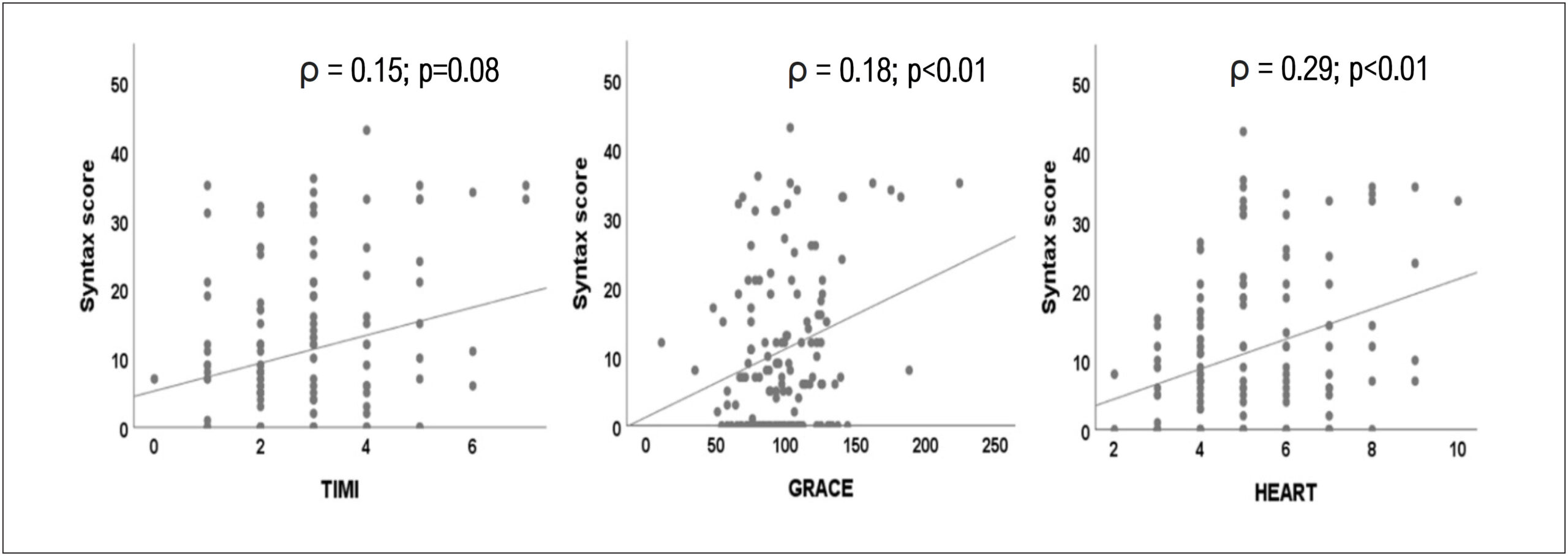
We sought to evaluate the correlation between clinical scores (TIMI, GRACE and HEART) and the anatomical complexity assessed by SYNTAX score, among non-ST ACS patients undergoing cinecoronariography.

Methods:

Transversal cohort encompassing patients with diagnosis of Non-ST ACS referred to invasive stratification in our single center, between July 2018 and February 2019. Association between the scores was established by the Pearson’s linear correlation test while the accuracy of the clinical scores versus SYNTAX score was determined with the ROC curve.

Results:

A total of 138 patients were enrolled. Median GRACE, TIMI and HEART scores were 97, 3 and 5, respectively, whereas the median SYNTAX was 8. There was a positive correlation between the SYNTAX and the HEART (ρ =0.29; p<0.01) and GRACE (ρ =0.18; p 4 presented 100% sensitivity, with 50% specificity; and GRACE> 139 showed 55% sensitivity and 97% specificity for high SYNTAX.

Conclusion:

The clinical scores presented a positive, although modest, association with the SYNTAX score. The combined use of HEART and GRACE offers good accuracy for detecting angiographic complexity.

  • Acute coronary syndrome
  • Angiography/complications
  • Hospitalization
  • Myocardial Infarction
  • Organ Dysfunction Scores
  • Thrombosis
Read Full Article
Creative Commons Attribution (CC BY) Creative Commons license
06/09/2021 DOI: 10.36660/abc.20190417 Views 1

Could not load more articles. Please try again.

How to cite this article

EndNote RIS

Electronic Document Format (Vancouver)

Pezel T, Paim LR, Coelho-Filho OR. For which HIV Patients Aspirin and Statins are Good?. Arquivos Brasileiros de Cardiologia 2021;117(2):376-7.

Electronic Document Format (ABNT)

Pezel, Théo; Paim, Layde R.; Coelho-Filho, Otávio R.. For which HIV Patients Aspirin and Statins are Good?. Arquivos Brasileiros de Cardiologia, v. 117, n. 2, p. 376-377, Sep. 2021.

Electronic Document Format (APA)

Pezel, T., Paim, L. R., & Coelho-Filho, O. R. (2021). For which HIV Patients Aspirin and Statins are Good?. Arquivos Brasileiros de Cardiologia, 117(2), 376-377.

Electronic Document Format (ISO)

Pezel, Théo and Paim, Layde R. and Coelho-Filho, Otávio R.. For which HIV Patients Aspirin and Statins are Good?. Arquivos Brasileiros de Cardiologia [online]. 2021, vol. 117, n. 2, [cited 2026-10-15], pp. 376-377. Available from: <https://journals.cardiol.br/en/article/for-which-hiv-patients-aspirin-and-statins-are-good/>. ISSN 0066-782X

EndNote RIS

Electronic Document Format (Vancouver)

. Erratum. Arquivos Brasileiros de Cardiologia 2021;117(2):423.

Electronic Document Format (ABNT)

. Erratum. Arquivos Brasileiros de Cardiologia, v. 117, n. 2, p. 423-423, Sep. 2021.

Electronic Document Format (APA)

(2021). Erratum. Arquivos Brasileiros de Cardiologia, 117(2), 423-423.

Electronic Document Format (ISO)

. Erratum. Arquivos Brasileiros de Cardiologia [online]. 2021, vol. 117, n. 2, [cited 2026-10-15], pp. 423-423. Available from: <https://journals.cardiol.br/en/article/erratum-45/>. ISSN 0066-782X

EndNote RIS

Electronic Document Format (Vancouver)

Mungmungpuntitpantip R, Wiwanitkit V. Cardiovascular Imaging in COVID-19. Arquivos Brasileiros de Cardiologia 2021;117(2):415.

Electronic Document Format (ABNT)

Mungmungpuntitpantip, Rujittika; Wiwanitkit, Viroj. Cardiovascular Imaging in COVID-19. Arquivos Brasileiros de Cardiologia, v. 117, n. 2, p. 415-415, Sep. 2021.

Electronic Document Format (APA)

Mungmungpuntitpantip, R., & Wiwanitkit, V. (2021). Cardiovascular Imaging in COVID-19. Arquivos Brasileiros de Cardiologia, 117(2), 415-415.

Electronic Document Format (ISO)

Mungmungpuntitpantip, Rujittika and Wiwanitkit, Viroj. Cardiovascular Imaging in COVID-19. Arquivos Brasileiros de Cardiologia [online]. 2021, vol. 117, n. 2, [cited 2026-10-15], pp. 415-415. Available from: <https://journals.cardiol.br/en/article/cardiovascular-imaging-in-covid-19/>. ISSN 0066-782X

EndNote RIS

Electronic Document Format (Vancouver)

Ragonetti C, Martinazzo EO, Fazionato FM, Ferreira GOG, Santana MP, Hartmann C. SARS-CoV-2 and Myocardical Injury with ST-Elevation without Coronary Disease. Arquivos Brasileiros de Cardiologia 2021;117(2):411-4.

Electronic Document Format (ABNT)

Ragonetti, Carolina; Martinazzo, Enzo Oku; Fazionato, Felipe Montesano; Ferreira, Guilherme Osório Guimarães; Santana, Milena Piccolo; Hartmann, Camila. SARS-CoV-2 and Myocardical Injury with ST-Elevation without Coronary Disease. Arquivos Brasileiros de Cardiologia, v. 117, n. 2, p. 411-414, Sep. 2021.

Electronic Document Format (APA)

Ragonetti, C., Martinazzo, E. O., Fazionato, F. M., Ferreira, G. O. G., Santana, M. P., & Hartmann, C. (2021). SARS-CoV-2 and Myocardical Injury with ST-Elevation without Coronary Disease. Arquivos Brasileiros de Cardiologia, 117(2), 411-414.

Electronic Document Format (ISO)

Ragonetti, Carolina and Martinazzo, Enzo Oku and Fazionato, Felipe Montesano and Ferreira, Guilherme Osório Guimarães and Santana, Milena Piccolo and Hartmann, Camila. SARS-CoV-2 and Myocardical Injury with ST-Elevation without Coronary Disease. Arquivos Brasileiros de Cardiologia [online]. 2021, vol. 117, n. 2, [cited 2026-10-15], pp. 411-414. Available from: <https://journals.cardiol.br/en/article/sars-cov-2-and-myocardical-injury-with-st-elevation-without-coronary-disease/>. ISSN 0066-782X

EndNote RIS

Electronic Document Format (Vancouver)

Galdino BF, Peixoto DC, Alves AC, Nascimento BR, Brant LCC. Successes and Challenges in the Management of Cardiovascular Disease in Brazil: Living Longer and Better. Arquivos Brasileiros de Cardiologia 2021;117(2):341-2.

Electronic Document Format (ABNT)

Galdino, Bruno Fernandes; Peixoto, David Costa; Alves, Ana Carolina; Nascimento, Bruno Ramos; Brant, Luisa Campos Caldeira. Successes and Challenges in the Management of Cardiovascular Disease in Brazil: Living Longer and Better. Arquivos Brasileiros de Cardiologia, v. 117, n. 2, p. 341-342, Sep. 2021.

Electronic Document Format (APA)

Galdino, B. F., Peixoto, D. C., Alves, A. C., Nascimento, B. R., & Brant, L. C. C. (2021). Successes and Challenges in the Management of Cardiovascular Disease in Brazil: Living Longer and Better. Arquivos Brasileiros de Cardiologia, 117(2), 341-342.

Electronic Document Format (ISO)

Galdino, Bruno Fernandes and Peixoto, David Costa and Alves, Ana Carolina and Nascimento, Bruno Ramos and Brant, Luisa Campos Caldeira. Successes and Challenges in the Management of Cardiovascular Disease in Brazil: Living Longer and Better. Arquivos Brasileiros de Cardiologia [online]. 2021, vol. 117, n. 2, [cited 2026-10-15], pp. 341-342. Available from: <https://journals.cardiol.br/en/article/successes-and-challenges-in-the-management-of-cardiovascular-disease-in-brazil-living-longer-and-better/>. ISSN 0066-782X

EndNote RIS

Electronic Document Format (Vancouver)

Sacilotto L, Olivetti NQS, Pisani CF, Wu TC, Hajjar LA, Melo SL, Bueno SCP, et al. Peculiar Aspects of Patients with Inherited Arrhythmias during the COVID-19 Pandemic. Arquivos Brasileiros de Cardiologia 2021;117(2):394-403.

Electronic Document Format (ABNT)

Sacilotto, Luciana; Olivetti, Natalia Quintella Sangiorgi; Pisani, Cristiano Faria; Wu, Tan Chen; Hajjar, Ludhmila Abrahão; Melo, Sissy Lara de; Bueno, Sávia Christina Pereira; Rivarola, Esteban Wisnivesky Rocca; Chokr, Muhieddine Omar; Hardy, Carina Abigail; Hachul, Denise Tessariol; Darrieux, Francisco Carlos da Costa; Scanavacca, Mauricio Ibrahim. Peculiar Aspects of Patients with Inherited Arrhythmias during the COVID-19 Pandemic. Arquivos Brasileiros de Cardiologia, v. 117, n. 2, p. 394-403, Sep. 2021.

Electronic Document Format (APA)

Sacilotto, L., Olivetti, N. Q. S., Pisani, C. F., Wu, T. C., Hajjar, L. A., Melo, S. L. , Bueno, S. C. P., Rivarola, E. W. R., Chokr, M. O., Hardy, C. A., Hachul, D. T., Darrieux, F. C. C., & Scanavacca, M. I. (2021). Peculiar Aspects of Patients with Inherited Arrhythmias during the COVID-19 Pandemic. Arquivos Brasileiros de Cardiologia, 117(2), 394-403.

Electronic Document Format (ISO)

Sacilotto, Luciana and Olivetti, Natalia Quintella Sangiorgi and Pisani, Cristiano Faria and Wu, Tan Chen and Hajjar, Ludhmila Abrahão and Melo, Sissy Lara de and Bueno, Sávia Christina Pereira and Rivarola, Esteban Wisnivesky Rocca and Chokr, Muhieddine Omar and Hardy, Carina Abigail and Hachul, Denise Tessariol and Darrieux, Francisco Carlos da Costa and Scanavacca, Mauricio Ibrahim. Peculiar Aspects of Patients with Inherited Arrhythmias during the COVID-19 Pandemic. Arquivos Brasileiros de Cardiologia [online]. 2021, vol. 117, n. 2, [cited 2026-10-15], pp. 394-403. Available from: <https://journals.cardiol.br/en/article/peculiar-aspects-of-patients-with-inherited-arrhythmias-during-the-covid-19-pandemic/>. ISSN 0066-782X

EndNote RIS

Electronic Document Format (Vancouver)

Timóteo AT. Acute Myocardial Infarction Death Rates in Brazil – A Small Light at the End of the Tunnel. Arquivos Brasileiros de Cardiologia 2021;117(2):327-8.

Electronic Document Format (ABNT)

Timóteo, Ana Teresa. Acute Myocardial Infarction Death Rates in Brazil – A Small Light at the End of the Tunnel. Arquivos Brasileiros de Cardiologia, v. 117, n. 2, p. 327-328, Sep. 2021.

Electronic Document Format (APA)

Timóteo, A. T. (2021). Acute Myocardial Infarction Death Rates in Brazil – A Small Light at the End of the Tunnel. Arquivos Brasileiros de Cardiologia, 117(2), 327-328.

Electronic Document Format (ISO)

Timóteo, Ana Teresa. Acute Myocardial Infarction Death Rates in Brazil – A Small Light at the End of the Tunnel. Arquivos Brasileiros de Cardiologia [online]. 2021, vol. 117, n. 2, [cited 2026-10-15], pp. 327-328. Available from: <https://journals.cardiol.br/en/article/acute-myocardial-infarction-death-rates-in-brazil-a-small-light-at-the-end-of-the-tunnel/>. ISSN 0066-782X

EndNote RIS

Electronic Document Format (Vancouver)

Martin LC. Naringin, Trimetazidine and Baroreflex in Renal Ischemia-Reperfusion Injury. Arquivos Brasileiros de Cardiologia 2021;117(2):298-9.

Electronic Document Format (ABNT)

Martin, Luis Cuadrado. Naringin, Trimetazidine and Baroreflex in Renal Ischemia-Reperfusion Injury. Arquivos Brasileiros de Cardiologia, v. 117, n. 2, p. 298-299, Sep. 2021.

Electronic Document Format (APA)

Martin, L. C. (2021). Naringin, Trimetazidine and Baroreflex in Renal Ischemia-Reperfusion Injury. Arquivos Brasileiros de Cardiologia, 117(2), 298-299.

Electronic Document Format (ISO)

Martin, Luis Cuadrado. Naringin, Trimetazidine and Baroreflex in Renal Ischemia-Reperfusion Injury. Arquivos Brasileiros de Cardiologia [online]. 2021, vol. 117, n. 2, [cited 2026-10-15], pp. 298-299. Available from: <https://journals.cardiol.br/en/article/naringin-trimetazidine-and-baroreflex-in-renal-ischemia-reperfusion-injury/>. ISSN 0066-782X

EndNote RIS

Electronic Document Format (Vancouver)

Nascimento GVR, Brito HCD, Lima CEB. Type 1 Cardiorenal Syndrome in Decompensated Heart Failure Patients in a Low-Income Region in Brazil: Incidence of Acute Kidney Injury (AKIN and KDIGO Criteria), Need for Dialysis and Mortality. Arquivos Brasileiros de Cardiologia 2021;117(2):385-91.

Electronic Document Format (ABNT)

Nascimento, Ginivaldo Victor Ribeiro do; Brito, Heitor Carlos Domingues de; Lima, Carlos Eduardo Batista de. Type 1 Cardiorenal Syndrome in Decompensated Heart Failure Patients in a Low-Income Region in Brazil: Incidence of Acute Kidney Injury (AKIN and KDIGO Criteria), Need for Dialysis and Mortality. Arquivos Brasileiros de Cardiologia, v. 117, n. 2, p. 385-391, Sep. 2021.

Electronic Document Format (APA)

Nascimento, G. V. R. , Brito, H. C. D. , & Lima, C. E. B. (2021). Type 1 Cardiorenal Syndrome in Decompensated Heart Failure Patients in a Low-Income Region in Brazil: Incidence of Acute Kidney Injury (AKIN and KDIGO Criteria), Need for Dialysis and Mortality. Arquivos Brasileiros de Cardiologia, 117(2), 385-391.

Electronic Document Format (ISO)

Nascimento, Ginivaldo Victor Ribeiro do and Brito, Heitor Carlos Domingues de and Lima, Carlos Eduardo Batista de. Type 1 Cardiorenal Syndrome in Decompensated Heart Failure Patients in a Low-Income Region in Brazil: Incidence of Acute Kidney Injury (AKIN and KDIGO Criteria), Need for Dialysis and Mortality. Arquivos Brasileiros de Cardiologia [online]. 2021, vol. 117, n. 2, [cited 2026-10-15], pp. 385-391. Available from: <https://journals.cardiol.br/en/article/type-1-cardiorenal-syndrome-in-decompensated-heart-failure-patients-in-a-low-income-region-in-brazil-incidence-of-acute-kidney-injury-akin-and-kdigo-criteria-need-for-dialysis-and-mortality/>. ISSN 0066-782X

EndNote RIS

Electronic Document Format (Vancouver)

Abreu SLL, Abreu JDMF, Branco MRFC, Santos AM. In- and Out-of-Hospital Deaths by Acute Myocardial Infarction in Brazilian State Capitals. Arquivos Brasileiros de Cardiologia 2021;117(2):319-26.

Electronic Document Format (ABNT)

Abreu, Sterffeson Lamare Lucena de; Abreu, Joana D’Arc Matos França de; Branco, Maria dos Remédios Freitas Carvalho; Santos, Alcione Miranda dos. In- and Out-of-Hospital Deaths by Acute Myocardial Infarction in Brazilian State Capitals. Arquivos Brasileiros de Cardiologia, v. 117, n. 2, p. 319-326, Sep. 2021.

Electronic Document Format (APA)

Abreu, S. L. L. , Abreu, J. D. M. F. , Branco, M. R. F. C., & Santos, A. M. (2021). In- and Out-of-Hospital Deaths by Acute Myocardial Infarction in Brazilian State Capitals. Arquivos Brasileiros de Cardiologia, 117(2), 319-326.

Electronic Document Format (ISO)

Abreu, Sterffeson Lamare Lucena de and Abreu, Joana D’Arc Matos França de and Branco, Maria dos Remédios Freitas Carvalho and Santos, Alcione Miranda dos. In- and Out-of-Hospital Deaths by Acute Myocardial Infarction in Brazilian State Capitals. Arquivos Brasileiros de Cardiologia [online]. 2021, vol. 117, n. 2, [cited 2026-10-15], pp. 319-326. Available from: <https://journals.cardiol.br/en/article/in-and-out-of-hospital-deaths-by-acute-myocardial-infarction-in-brazilian-state-capitals/>. ISSN 0066-782X

EndNote RIS

Electronic Document Format (Vancouver)

Wendt A. Is Adolescents’ Cardiometabolic Health Affected by Prolonged Periods of Inactivity?. Arquivos Brasileiros de Cardiologia 2021;117(2):363-4.

Electronic Document Format (ABNT)

Wendt, Andrea. Is Adolescents’ Cardiometabolic Health Affected by Prolonged Periods of Inactivity?. Arquivos Brasileiros de Cardiologia, v. 117, n. 2, p. 363-364, Sep. 2021.

Electronic Document Format (APA)

Wendt, A. (2021). Is Adolescents’ Cardiometabolic Health Affected by Prolonged Periods of Inactivity?. Arquivos Brasileiros de Cardiologia, 117(2), 363-364.

Electronic Document Format (ISO)

Wendt, Andrea. Is Adolescents’ Cardiometabolic Health Affected by Prolonged Periods of Inactivity?. Arquivos Brasileiros de Cardiologia [online]. 2021, vol. 117, n. 2, [cited 2026-10-15], pp. 363-364. Available from: <https://journals.cardiol.br/en/article/is-adolescents-cardiometabolic-health-affected-by-prolonged-periods-of-inactivity/>. ISSN 0066-782X

EndNote RIS

Electronic Document Format (Vancouver)

Jorge AJL, Barbetta LMS, Correia ETO, Martins WA, Leite AR, Saad MAN, Santos MMS, et al. Characteristics and Temporal Trends in the Mortality of Different Heart Failure Phenotypes in Primary Care. Arquivos Brasileiros de Cardiologia 2021;117(2):300-6.

Electronic Document Format (ABNT)

Jorge, Antonio José Lagoeiro; Barbetta, Leticia Mara dos Santos; Correia, Eduardo Thadeu de Oliveira; Martins, Wolney de Andrade; Leite, Adson Renato; Saad, Maria Auxiliadora Nogueira; Santos, Márcia Maria Sales dos; Correia, Dayse Mary; Rosa, Maria Luiza Garcia; Chermont, Sérgio; Santos, Cárita Cunha dos; Mesquita, Evandro Tinoco. Characteristics and Temporal Trends in the Mortality of Different Heart Failure Phenotypes in Primary Care. Arquivos Brasileiros de Cardiologia, v. 117, n. 2, p. 300-306, Sep. 2021.

Electronic Document Format (APA)

Jorge, A. J. L., Barbetta, L. M. S., Correia, E. T. O., Martins, W. A., Leite, A. R., Saad, M. A. N., Santos, M. M. S. , Correia, D. M., Rosa, M. L. G., Chermont, S., Santos, C. C. , & Mesquita, E. T. (2021). Characteristics and Temporal Trends in the Mortality of Different Heart Failure Phenotypes in Primary Care. Arquivos Brasileiros de Cardiologia, 117(2), 300-306.

Electronic Document Format (ISO)

Jorge, Antonio José Lagoeiro and Barbetta, Leticia Mara dos Santos and Correia, Eduardo Thadeu de Oliveira and Martins, Wolney de Andrade and Leite, Adson Renato and Saad, Maria Auxiliadora Nogueira and Santos, Márcia Maria Sales dos and Correia, Dayse Mary and Rosa, Maria Luiza Garcia and Chermont, Sérgio and Santos, Cárita Cunha dos and Mesquita, Evandro Tinoco. Characteristics and Temporal Trends in the Mortality of Different Heart Failure Phenotypes in Primary Care. Arquivos Brasileiros de Cardiologia [online]. 2021, vol. 117, n. 2, [cited 2026-10-15], pp. 300-306. Available from: <https://journals.cardiol.br/en/article/characteristics-and-temporal-trends-in-the-mortality-of-different-heart-failure-phenotypes-in-primary-care/>. ISSN 0066-782X

EndNote RIS

Electronic Document Format (Vancouver)

Costa RR, Vieira AF, Coconcelli L, Fagundes AO, Buttelli ACK, Pereira LF, Stein R, et al. Statin Use Improves Cardiometabolic Protection Promoted By Physical Training in an Aquatic Environment: A Randomized Clinical Trial. Arquivos Brasileiros de Cardiologia 2021;117(2):270-8.

Electronic Document Format (ABNT)

Costa, Rochelle Rocha; Vieira, Alexandra Ferreira; Coconcelli, Leandro; Fagundes, Alex de Oliveira; Buttelli, Adriana Cristine Koch; Pereira, Laura Frances; Stein, Ricardo; Kruel, Luiz Fernando Martins. Statin Use Improves Cardiometabolic Protection Promoted By Physical Training in an Aquatic Environment: A Randomized Clinical Trial. Arquivos Brasileiros de Cardiologia, v. 117, n. 2, p. 270-278, Sep. 2021.

Electronic Document Format (APA)

Costa, R. R., Vieira, A. F., Coconcelli, L., Fagundes, A. O., Buttelli, A. C. K., Pereira, L. F., Stein, R., & Kruel, L. F. M. (2021). Statin Use Improves Cardiometabolic Protection Promoted By Physical Training in an Aquatic Environment: A Randomized Clinical Trial. Arquivos Brasileiros de Cardiologia, 117(2), 270-278.

Electronic Document Format (ISO)

Costa, Rochelle Rocha and Vieira, Alexandra Ferreira and Coconcelli, Leandro and Fagundes, Alex de Oliveira and Buttelli, Adriana Cristine Koch and Pereira, Laura Frances and Stein, Ricardo and Kruel, Luiz Fernando Martins. Statin Use Improves Cardiometabolic Protection Promoted By Physical Training in an Aquatic Environment: A Randomized Clinical Trial. Arquivos Brasileiros de Cardiologia [online]. 2021, vol. 117, n. 2, [cited 2026-10-15], pp. 270-278. Available from: <https://journals.cardiol.br/en/article/statin-use-improves-cardiometabolic-protection-promoted-by-physical-training-in-an-aquatic-environment-a-randomized-clinical-trial-2/>. ISSN 0066-782X

EndNote RIS

Electronic Document Format (Vancouver)

Santos LG, Baggio JAO, Leal TC, Costa FA, Fernandes TRMO, Silva RV, Armstrong A, et al. Prevalence of Systemic Arterial Hypertension and Diabetes Mellitus in Individuals with COVID-19: A Retrospective Study of Deaths in Pernambuco, Brazil. Arquivos Brasileiros de Cardiologia 2021;117(2):416-22.

Electronic Document Format (ABNT)

Santos, Lucas Gomes; Baggio, Jussara Almeida de Oliveira; Leal, Thiago Cavalcanti; Costa, Francisco A.; Fernandes, Tânia Rita Moreno de Oliveira; Silva, Regicley Vieira da; Armstrong, Anderson; Carmo, Rodrigo Feliciano; Souza, Carlos Dornels Freire de. Prevalence of Systemic Arterial Hypertension and Diabetes Mellitus in Individuals with COVID-19: A Retrospective Study of Deaths in Pernambuco, Brazil. Arquivos Brasileiros de Cardiologia, v. 117, n. 2, p. 416-422, Sep. 2021.

Electronic Document Format (APA)

Santos, L. G., Baggio, J. A. O., Leal, T. C., Costa, F. A., Fernandes, T. R. M. O., Silva, R. V. , Armstrong, A., Carmo, R. F., & Souza, C. D. F. (2021). Prevalence of Systemic Arterial Hypertension and Diabetes Mellitus in Individuals with COVID-19: A Retrospective Study of Deaths in Pernambuco, Brazil. Arquivos Brasileiros de Cardiologia, 117(2), 416-422.

Electronic Document Format (ISO)

Santos, Lucas Gomes and Baggio, Jussara Almeida de Oliveira and Leal, Thiago Cavalcanti and Costa, Francisco A. and Fernandes, Tânia Rita Moreno de Oliveira and Silva, Regicley Vieira da and Armstrong, Anderson and Carmo, Rodrigo Feliciano and Souza, Carlos Dornels Freire de. Prevalence of Systemic Arterial Hypertension and Diabetes Mellitus in Individuals with COVID-19: A Retrospective Study of Deaths in Pernambuco, Brazil. Arquivos Brasileiros de Cardiologia [online]. 2021, vol. 117, n. 2, [cited 2026-10-15], pp. 416-422. Available from: <https://journals.cardiol.br/en/article/prevalence-of-systemic-arterial-hypertension-and-diabetes-mellitus-in-individuals-with-covid-19-a-retrospective-study-of-deaths-in-pernambuco-brazil/>. ISSN 0066-782X

EndNote RIS

Electronic Document Format (Vancouver)

Manfredini E, Alves RJ. Unusual Finding of Rare Exuberant Xanthomatosis in Hyperlipidemia. Arquivos Brasileiros de Cardiologia 2021;117(2):407-10.

Electronic Document Format (ABNT)

Manfredini, Enrico; Alves, Renato Jorge. Unusual Finding of Rare Exuberant Xanthomatosis in Hyperlipidemia. Arquivos Brasileiros de Cardiologia, v. 117, n. 2, p. 407-410, Sep. 2021.

Electronic Document Format (APA)

Manfredini, E., & Alves, R. J. (2021). Unusual Finding of Rare Exuberant Xanthomatosis in Hyperlipidemia. Arquivos Brasileiros de Cardiologia, 117(2), 407-410.

Electronic Document Format (ISO)

Manfredini, Enrico and Alves, Renato Jorge. Unusual Finding of Rare Exuberant Xanthomatosis in Hyperlipidemia. Arquivos Brasileiros de Cardiologia [online]. 2021, vol. 117, n. 2, [cited 2026-10-15], pp. 407-410. Available from: <https://journals.cardiol.br/en/article/unusual-finding-of-rare-exuberant-xanthomatosis-in-hyperlipidemia/>. ISSN 0066-782X

EndNote RIS

Electronic Document Format (Vancouver)

Soeiro AM, Cardozo FA, Guimarães PO, Pereira MP, Souza PVR, Boros GAB, Veiga VC, et al. Patient in Cardiorespiratory Arrest – Is it Possible to Perform Transcatheter Aortic Valve Implantation (TAVI) in this Scenario?. Arquivos Brasileiros de Cardiologia 2021;117(2):404-6.

Electronic Document Format (ABNT)

Soeiro, Alexandre de Matos; Cardozo, Francisco Akira; Guimarães, Patrícia Oliveira; Pereira, Marcel Paula; Souza, Paulo Vinícius Ramos; Boros, Gustavo A. B.; Veiga, Viviane Cordeiro; Rojas, Samolon Soriano Ordinola; Mangione, Fernanda Marinho; Cristóvão, Salvador André Bavaresco; Dutra, Gustavo Alexandre; Salman, Adnan Ali; Bettarello, Luiz Eduardo Loureiro; Mangione, José Armando. Patient in Cardiorespiratory Arrest – Is it Possible to Perform Transcatheter Aortic Valve Implantation (TAVI) in this Scenario?. Arquivos Brasileiros de Cardiologia, v. 117, n. 2, p. 404-406, Sep. 2021.

Electronic Document Format (APA)

Soeiro, A. M., Cardozo, F. A., Guimarães, P. O., Pereira, M. P., Souza, P. V. R., Boros, G. A. B., Veiga, V. C., Rojas, S. S. O., Mangione, F. M., Cristóvão, S. A. B., Dutra, G. A., Salman, A. A., Bettarello, L. E. L., & Mangione, J. A. (2021). Patient in Cardiorespiratory Arrest – Is it Possible to Perform Transcatheter Aortic Valve Implantation (TAVI) in this Scenario?. Arquivos Brasileiros de Cardiologia, 117(2), 404-406.

Electronic Document Format (ISO)

Soeiro, Alexandre de Matos and Cardozo, Francisco Akira and Guimarães, Patrícia Oliveira and Pereira, Marcel Paula and Souza, Paulo Vinícius Ramos and Boros, Gustavo A. B. and Veiga, Viviane Cordeiro and Rojas, Samolon Soriano Ordinola and Mangione, Fernanda Marinho and Cristóvão, Salvador André Bavaresco and Dutra, Gustavo Alexandre and Salman, Adnan Ali and Bettarello, Luiz Eduardo Loureiro and Mangione, José Armando. Patient in Cardiorespiratory Arrest – Is it Possible to Perform Transcatheter Aortic Valve Implantation (TAVI) in this Scenario?. Arquivos Brasileiros de Cardiologia [online]. 2021, vol. 117, n. 2, [cited 2026-10-15], pp. 404-406. Available from: <https://journals.cardiol.br/en/article/patient-in-cardiorespiratory-arrest-is-it-possible-to-perform-transcatheter-aortic-valve-implantation-tavi-in-this-scenario/>. ISSN 0066-782X

EndNote RIS

Electronic Document Format (Vancouver)

Motta SB, Toledes VC, Franzoni L. Statin Associated With Physical Training: A Perfect Combination. Arquivos Brasileiros de Cardiologia 2021;117(2):279-80.

Electronic Document Format (ABNT)

Motta, Stephanie Bastos da; Toledes, Vanessa Caroline; Franzoni, Leandro. Statin Associated With Physical Training: A Perfect Combination. Arquivos Brasileiros de Cardiologia, v. 117, n. 2, p. 279-280, Sep. 2021.

Electronic Document Format (APA)

Motta, S. B. , Toledes, V. C., & Franzoni, L. (2021). Statin Associated With Physical Training: A Perfect Combination. Arquivos Brasileiros de Cardiologia, 117(2), 279-280.

Electronic Document Format (ISO)

Motta, Stephanie Bastos da and Toledes, Vanessa Caroline and Franzoni, Leandro. Statin Associated With Physical Training: A Perfect Combination. Arquivos Brasileiros de Cardiologia [online]. 2021, vol. 117, n. 2, [cited 2026-10-15], pp. 279-280. Available from: <https://journals.cardiol.br/en/article/statin-associated-with-physical-training-a-perfect-combination/>. ISSN 0066-782X

EndNote RIS

Electronic Document Format (Vancouver)

Souza P, Perfete C. The Paradox of Exercise Intensity in Preventing Cardiovascular Events in Peripheral Arterial Occlusive Disease. Arquivos Brasileiros de Cardiologia 2021;117(2):317-8.

Electronic Document Format (ABNT)

Souza, Pablo de; Perfete, Cássio. The Paradox of Exercise Intensity in Preventing Cardiovascular Events in Peripheral Arterial Occlusive Disease. Arquivos Brasileiros de Cardiologia, v. 117, n. 2, p. 317-318, Sep. 2021.

Electronic Document Format (APA)

Souza, P. , & Perfete, C. (2021). The Paradox of Exercise Intensity in Preventing Cardiovascular Events in Peripheral Arterial Occlusive Disease. Arquivos Brasileiros de Cardiologia, 117(2), 317-318.

Electronic Document Format (ISO)

Souza, Pablo de and Perfete, Cássio. The Paradox of Exercise Intensity in Preventing Cardiovascular Events in Peripheral Arterial Occlusive Disease. Arquivos Brasileiros de Cardiologia [online]. 2021, vol. 117, n. 2, [cited 2026-10-15], pp. 317-318. Available from: <https://journals.cardiol.br/en/article/the-paradox-of-exercise-intensity-in-preventing-cardiovascular-events-in-peripheral-arterial-occlusive-disease/>. ISSN 0066-782X

EndNote RIS

Electronic Document Format (Vancouver)

Rocha EA, Miná CPC, Rocha MEQA. Heart Failure with Mid-Range Ejection Fraction – A Temporary Condition or a Specific Group?. Arquivos Brasileiros de Cardiologia 2021;117(2):307-8.

Electronic Document Format (ABNT)

Rocha, Eduardo Arrais; Miná, Camila Pinto Cavalcante; Rocha, Maria Eduarda Quidute Arrais. Heart Failure with Mid-Range Ejection Fraction – A Temporary Condition or a Specific Group?. Arquivos Brasileiros de Cardiologia, v. 117, n. 2, p. 307-308, Sep. 2021.

Electronic Document Format (APA)

Rocha, E. A., Miná, C. P. C., & Rocha, M. E. Q. A. (2021). Heart Failure with Mid-Range Ejection Fraction – A Temporary Condition or a Specific Group?. Arquivos Brasileiros de Cardiologia, 117(2), 307-308.

Electronic Document Format (ISO)

Rocha, Eduardo Arrais and Miná, Camila Pinto Cavalcante and Rocha, Maria Eduarda Quidute Arrais. Heart Failure with Mid-Range Ejection Fraction – A Temporary Condition or a Specific Group?. Arquivos Brasileiros de Cardiologia [online]. 2021, vol. 117, n. 2, [cited 2026-10-15], pp. 307-308. Available from: <https://journals.cardiol.br/en/article/heart-failure-with-mid-range-ejection-fraction-a-temporary-condition-or-a-specific-group/>. ISSN 0066-782X

EndNote RIS

Electronic Document Format (Vancouver)

Rocha B, Aguiar C. NSTE-ACS at the Emergency: Can You Guess What is Under the Umbrella?. Arquivos Brasileiros de Cardiologia 2021;117(2):288-9.

Electronic Document Format (ABNT)

Rocha, Bruno; Aguiar, Carlos. NSTE-ACS at the Emergency: Can You Guess What is Under the Umbrella?. Arquivos Brasileiros de Cardiologia, v. 117, n. 2, p. 288-289, Sep. 2021.

Electronic Document Format (APA)

Rocha, B., & Aguiar, C. (2021). NSTE-ACS at the Emergency: Can You Guess What is Under the Umbrella?. Arquivos Brasileiros de Cardiologia, 117(2), 288-289.

Electronic Document Format (ISO)

Rocha, Bruno and Aguiar, Carlos. NSTE-ACS at the Emergency: Can You Guess What is Under the Umbrella?. Arquivos Brasileiros de Cardiologia [online]. 2021, vol. 117, n. 2, [cited 2026-10-15], pp. 288-289. Available from: <https://journals.cardiol.br/en/article/nste-acs-at-the-emergency-can-you-guess-what-is-under-the-umbrella/>. ISSN 0066-782X

EndNote RIS

Electronic Document Format (Vancouver)

Buzas R, Ivan V, Gheorghe-Fronea O, Morgovan AF, Ardelean M, Albulescu N, Dorobantu M, et al. Arterial Hypertension and Serum Uric Acid in Elderly- SEPHAR III Study. Arquivos Brasileiros de Cardiologia 2021;117(2):378-84.

Electronic Document Format (ABNT)

Buzas, Roxana; Ivan, Vlad-Sabin; Gheorghe-Fronea, Oana-Florentina; Morgovan, Adina Flavia; Ardelean, Melania; Albulescu, Nicolae; Dorobantu, Maria; Lighezan, Daniel Florin. Arterial Hypertension and Serum Uric Acid in Elderly- SEPHAR III Study. Arquivos Brasileiros de Cardiologia, v. 117, n. 2, p. 378-384, Sep. 2021.

Electronic Document Format (APA)

Buzas, R., Ivan, V., Gheorghe-Fronea, O., Morgovan, A. F., Ardelean, M., Albulescu, N., Dorobantu, M., & Lighezan, D. F. (2021). Arterial Hypertension and Serum Uric Acid in Elderly- SEPHAR III Study. Arquivos Brasileiros de Cardiologia, 117(2), 378-384.

Electronic Document Format (ISO)

Buzas, Roxana and Ivan, Vlad-Sabin and Gheorghe-Fronea, Oana-Florentina and Morgovan, Adina Flavia and Ardelean, Melania and Albulescu, Nicolae and Dorobantu, Maria and Lighezan, Daniel Florin. Arterial Hypertension and Serum Uric Acid in Elderly- SEPHAR III Study. Arquivos Brasileiros de Cardiologia [online]. 2021, vol. 117, n. 2, [cited 2026-10-15], pp. 378-384. Available from: <https://journals.cardiol.br/en/article/arterial-hypertension-and-serum-uric-acid-in-elderly-sephar-iii-study/>. ISSN 0066-782X

EndNote RIS

Electronic Document Format (Vancouver)

Mansur AP, Favarato D. Cardiovascular and Cancer Death Rates in the Brazilian Population Aged 35 to 74 Years, 1996-2017. Arquivos Brasileiros de Cardiologia 2021;117(2):329-40.

Electronic Document Format (ABNT)

Mansur, Antonio de Padua; Favarato, Desiderio. Cardiovascular and Cancer Death Rates in the Brazilian Population Aged 35 to 74 Years, 1996-2017. Arquivos Brasileiros de Cardiologia, v. 117, n. 2, p. 329-340, Sep. 2021.

Electronic Document Format (APA)

Mansur, A. P., & Favarato, D. (2021). Cardiovascular and Cancer Death Rates in the Brazilian Population Aged 35 to 74 Years, 1996-2017. Arquivos Brasileiros de Cardiologia, 117(2), 329-340.

Electronic Document Format (ISO)

Mansur, Antonio de Padua and Favarato, Desiderio. Cardiovascular and Cancer Death Rates in the Brazilian Population Aged 35 to 74 Years, 1996-2017. Arquivos Brasileiros de Cardiologia [online]. 2021, vol. 117, n. 2, [cited 2026-10-15], pp. 329-340. Available from: <https://journals.cardiol.br/en/article/cardiovascular-and-cancer-death-rates-in-the-brazilian-population-aged-35-to-74-years-1996-2017/>. ISSN 0066-782X

EndNote RIS

Electronic Document Format (Vancouver)

Mansur AJ, Issa VS. Assessment of Renal Function in Patients with Heart Failure. Arquivos Brasileiros de Cardiologia 2021;117(2):392-3.

Electronic Document Format (ABNT)

Mansur, Alfredo Jose; Issa, Victor Sarli. Assessment of Renal Function in Patients with Heart Failure. Arquivos Brasileiros de Cardiologia, v. 117, n. 2, p. 392-393, Sep. 2021.

Electronic Document Format (APA)

Mansur, A. J., & Issa, V. S. (2021). Assessment of Renal Function in Patients with Heart Failure. Arquivos Brasileiros de Cardiologia, 117(2), 392-393.

Electronic Document Format (ISO)

Mansur, Alfredo Jose and Issa, Victor Sarli. Assessment of Renal Function in Patients with Heart Failure. Arquivos Brasileiros de Cardiologia [online]. 2021, vol. 117, n. 2, [cited 2026-10-15], pp. 392-393. Available from: <https://journals.cardiol.br/en/article/assessment-of-renal-function-in-patients-with-heart-failure/>. ISSN 0066-782X

EndNote RIS

Electronic Document Format (Vancouver)

Cedro AV, Mota DM, Ohe LN, Timerman A, Costa JR, Castro LS. Association between Clinical Risk Score (Heart, Grace and TIMI) and Angiographic Complexity in Acute Coronary Syndrome without ST Segment Elevation. Arquivos Brasileiros de Cardiologia 2021;117(2):281-7.

Electronic Document Format (ABNT)

Cedro, Alexandre Vianna; Mota, Diandro Marinho; Ohe, Louis Nakayama; Timerman, Ari; Costa, José Ribamar; Castro, Laura de Siqueira. Association between Clinical Risk Score (Heart, Grace and TIMI) and Angiographic Complexity in Acute Coronary Syndrome without ST Segment Elevation. Arquivos Brasileiros de Cardiologia, v. 117, n. 2, p. 281-287, Sep. 2021.

Electronic Document Format (APA)

Cedro, A. V., Mota, D. M., Ohe, L. N., Timerman, A., Costa, J. R., & Castro, L. S. (2021). Association between Clinical Risk Score (Heart, Grace and TIMI) and Angiographic Complexity in Acute Coronary Syndrome without ST Segment Elevation. Arquivos Brasileiros de Cardiologia, 117(2), 281-287.

Electronic Document Format (ISO)

Cedro, Alexandre Vianna and Mota, Diandro Marinho and Ohe, Louis Nakayama and Timerman, Ari and Costa, José Ribamar and Castro, Laura de Siqueira. Association between Clinical Risk Score (Heart, Grace and TIMI) and Angiographic Complexity in Acute Coronary Syndrome without ST Segment Elevation. Arquivos Brasileiros de Cardiologia [online]. 2021, vol. 117, n. 2, [cited 2026-10-15], pp. 281-287. Available from: <https://journals.cardiol.br/en/article/association-between-clinical-risk-score-heart-grace-and-timi-and-angiographic-complexity-in-acute-coronary-syndrome-without-st-segment-elevation/>. ISSN 0066-782X

Sede – Rio de Janeiro
Av. Marechal Câmara, 160
3º andar – Sala: 330 – Centro
Rio de Janeiro – CEP: 20020-907
Tel.: (55 +21) 3478-2700
ou (21) 99386-3961
E-mail: revista@cardiol.br

Sede – São Paulo
Alameda Santos, 705 – 11º andar
Cerqueira César | São Paulo
CEP: 01419-001
Tel.: (55 +11) 3411-5500
E-mail: revista@cardiol.br

  • About the Journal
  • Internal Regulation
  • Editors Section
  • Editorial Board
  • History
  • SBC Award

  • Guidelines for Publication
  • Editorial Policy
  • Ethics Policy
  • Policy on the Use of Artificial Intelligence
  • Mandatory Publication Form
  • Publication Fee

Issues

SBC Guidelines

  • How to Publish an Abstract Supplement?
  • Supplements from the Brazilian Congress of Cardiology