ABC Family Arquivos Brasileiros de Cardiologia International Journal of Cardiovascular Sciences ABC Heart Failure & Cardiomyopathy ABC Imagem Cardiovascular
Português English
ABC Family
Português English
  • About
    • About ABC Family
    • Internal Regulation
    • Editorial Board
    • Brazilian Society of Cardiology (SBC)
  • Issues
  • SBC Guidelines
  • Content
    • Videos
    • Podcasts
    • News
  • About
    • About ABC Family
    • Internal Regulation
    • Editorial Board
    • Brazilian Society of Cardiology (SBC)
  • Issues
  • SBC Guidelines
  • Content
    • Videos
    • Podcasts
    • News

ABC Family

  • ABC Family
  • Arquivos Brasileiros de Cardiologia
  • International Journal of Cardiovascular Sciences
  • ABC Heart Failure & Cardiomyopathy
  • ABC Imagem Cardiovascular
Search in

No content found.

Journals
Ordering
Article types
Others

  1. Home
  2. Keyword: Heart Arrest
ABC
Editorial

Genetic Evidence Supports a Causal Role for Smoking in Cardiac Arrest

José S. L. Patané et al. Fernando R. Giugni

[…]

  • Air Pollution
  • Heart Arrest
  • Mendelian Randomization Analysis
  • Public Health
  • Tobacco Use Disorder
Read Full Article
Creative Commons Attribution (CC BY) Creative Commons license
01/06/2026 DOI: 10.36660/abc.20260238i Views 2
ABC
Editorial

Extracorporeal Cardiopulmonary Resuscitation in Latin America: It is Not All about the Money

Luiz Fernando Caneo

When conventional cardiopulmonary resuscitation fails to restore circulation after cardiac arrest, the window for survival with a favorable neurological outcome narrows rapidly. Extracorporeal cardiopulmonary resuscitation (ECPR) has emerged as a potential strategy to prolong this window by rapidly establishing circulatory and respiratory support through venoarterial extracorporeal membrane oxygenation (VA-ECMO). According to the Extracorporeal Life Support Organization (ELSO), ECPR is defined as the rapid initiation of VA-ECMO in patients with refractory cardiac arrest who do not achieve sustained return of spontaneous circulation (ROSC) through conventional resuscitation.

ECPR has become an established rescue strategy for refractory cardiac arrest in both in-hospital (IHCA) settings and selected out-of-hospital cases (OHCA) referred to specialized centers. Outcomes after cardiac arrest differ substantially between these settings. Patients with IHCA typically experience better survival and neurological outcomes than those with OHCA, primarily due to earlier recognition, immediate high-quality CPR, and rapid access to advanced interventions such as defibrillation and invasive monitoring. Conversely, OHCA is frequently associated with delays in recognition and treatment, prolonged no-flow and low-flow intervals, and variability in prehospital care. Timely intervention and rapid access to advanced therapies remain critical determinants of survival and neurological recovery.

[…]

  • Cardiopulmonary Resuscitation
  • Extracorporeal Membrane Oxygenation
  • Heart Arrest
Read Full Article
Creative Commons Attribution (CC BY) Creative Commons license
25/05/2026 DOI: 10.36660/abc.20260240i Views 2
A Two-sample Mendelian Randomization Study of Air Pollution/Smoking and Cardiac Arrest
ABC
Original Article

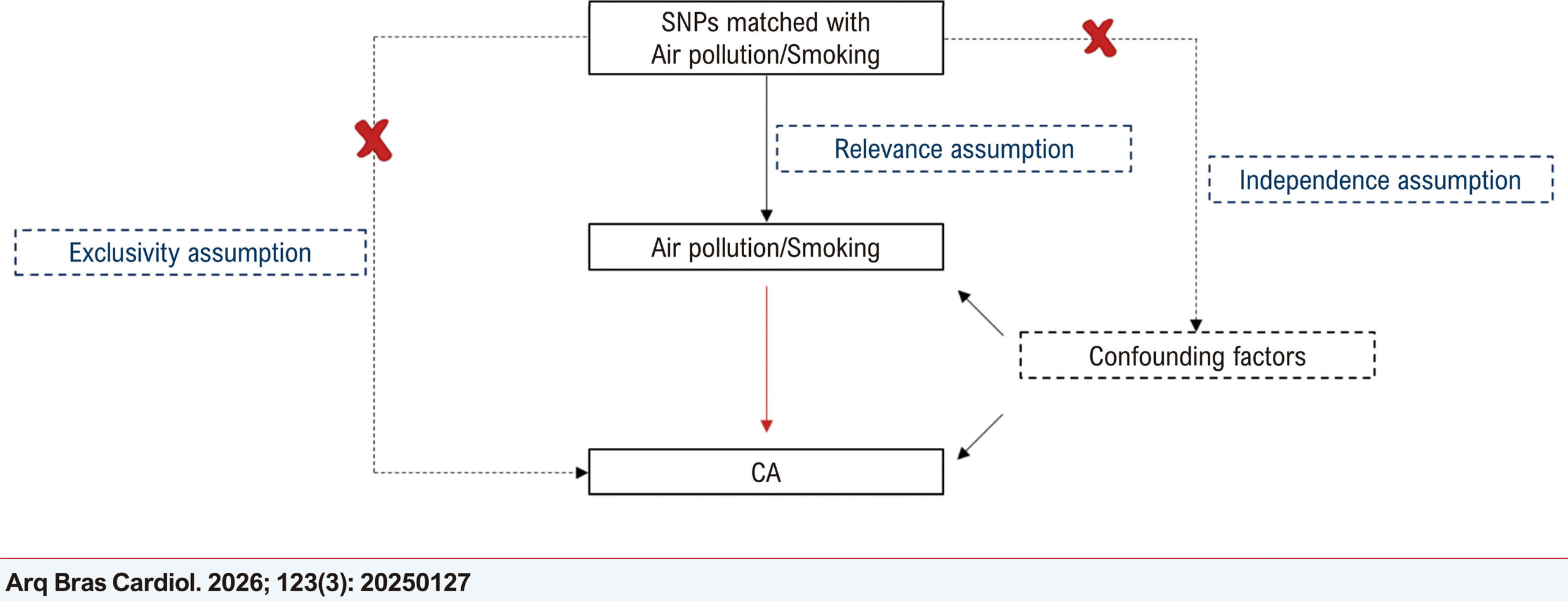
A Two-sample Mendelian Randomization Study of Air Pollution/Smoking and Cardiac Arrest

Xuelin Tian et al. Yu Wang Qingzhao Tan Liying Liu

Abstract

Background

Observational studies have suggested a connection between air pollution/smoking and cardiac arrest (CA); nevertheless, the causal role of air pollution/smoking in CA remains uncertain.

Objectives

This study aimed to elucidate the causal association between air pollution/smoking and CA using a two-sample Mendelian randomization (MR) approach.

Methods

This study utilized summary data from genome-wide association studies (GWAS). The primary analysis employed the inverse-variance weighted (IVW) method, supplemented by MR-Egger, weighted median, and weighted mode methods. For sensitivity analysis, MR-Egger and MR-PRESSO were employed to address horizontal pleiotropy. Cochran’s Q test was used to assess heterogeneity, and leave-one-out analysis was applied to identify the influence of outliers. A two-sided p-value < 0.05 was considered statistically significant for the causal estimates.

Results

IVW method showed a significant association between smoking status and CA (OR = 2.182, 95% CI: 1.137 – 4.188, p = 0.019). No significant causal associations were found for any of the air pollution metrics or other smoking-related traits. Results of MR Egger and weighted median methods revealed an insignificant causal association between air pollution/smoking and CA. Horizontal pleiotropy or outliers were not detected by sensitivity tests.

Conclusions

Findings of this MR study indicate that smoking has a causal effect on the incidence of developing CA. However, the null findings for air pollution should be interpreted with caution, as the statistical power to detect modest effects was limited. More studies are warranted to verify the outcomes of this study.

  • Air Pollution
  • Heart Arrest
  • Mendelian Randomization Analysis
  • Tobacco Use Disorder
Read Full Article
Creative Commons Attribution (CC BY) Creative Commons license
08/05/2026 DOI: 10.36660/abc.20250127i Views 1
IJCS
Editorial

You Can Only Improve What You Measure: The Importance of the Rapid Response Team in Improving Patient Care

Sebastian Garcia-Zamora et al. Zain Somani Adrian Baranchuk

Sudden death among hospitalized patients, most often manifesting as in-hospital cardiac arrest, is a global problem that poses major challenges for prediction, timely diagnosis, and expeditious treatment. Incidence and outcomes vary considerably across health systems but remain sobering. Hospitalized patients with acute illness are vulnerable to intercurrent events that can precipitate rapid deterioration. Caring for these patients requires advanced competencies, such as airway management, treatment of arrhythmias, and hemodynamic support, all of which are challenging to acquire and maintain across all medical professionals on general wards. This is why rapid response teams have been utilized as a system-level strategy to recognize early deterioration of patients and bring concentrated expertise to the bedside.

In this issue of the International Journal of Cardiovascular Sciences, Salvadori et al. report a prospective, single-center, five-year evaluation of a rapid response team program in a quaternary Brazilian hospital. Over the study period, the team attended 4,805 emergencies, consisting of 551 cardiac arrests and 4,254 non-arrest deteriorations. Survival among patients with non-arrest emergencies improved significantly (from 57.1% to 64.5%; p = 0.003), whereas survival after cardiac arrest remained low and unchanged. The study has several strengths: it is a large, real-world, prospective analysis that captures process-of-care metrics beyond outcomes, such as time to epinephrine, time to first shock, and time to advanced airway. This level of granularity in the data is crucial in the care of critically ill patients. Outcomes may be unfavorable despite coordinated, appropriate care because of underlying severity, and conversely, occasional survival may occur despite suboptimal response. Measuring processes in detail allows teams to distinguish signal from noise and thereby improve performance over time.

[…]

  • Death, Sudden, Cardiac
  • Heart Arrest
  • Inpatients
Read Full Article
Creative Commons Attribution (CC BY) Creative Commons license
27/04/2026 DOI: 10.36660/ijcs.20250199 Views 1
Prospective Longitudinal Study on Mortality and Quality of Care for Ward Patients Following Rapid Response Team Implementation in Brazil
IJCS
Original Article

Prospective Longitudinal Study on Mortality and Quality of Care for Ward Patients Following Rapid Response Team Implementation in Brazil

Fernanda Aburesi Salvadori et al. Renata Kobayasi Maria Beatriz Perondi Edison Ferreira de Paiva

Abstract

Background:

A Rapid Response Team (RRT) is a multidisciplinary team trained to assist hospitalized patients experiencing cardiac arrest (CA) or sudden clinical deterioration. Its effectiveness, however, remains debatable.

Objectives:

This study aimed to characterize the changes that occurred in a quaternary, highly complex hospital following the adoption of the RRT and to ascertain whether its implementation was associated with a decline in the mortality rates of patients admitted to wards.

Methods:

This was a prospective observational study conducted from April 1st, 2014, to December 31, 2019. The study compared patient mortality and clinical outcomes after the implementation of the RRT, focusing on the frequency and outcomes of “code blue” (CA) and “code yellow” (other types of clinical deterioration) calls. Pearson’s chi-squared test (χ²) was employed to compare categorical variables, while the Student’s t-test was utilized to compare continuous variables for independent samples. P-values < 0.05 were considered statistically significant.

Results:

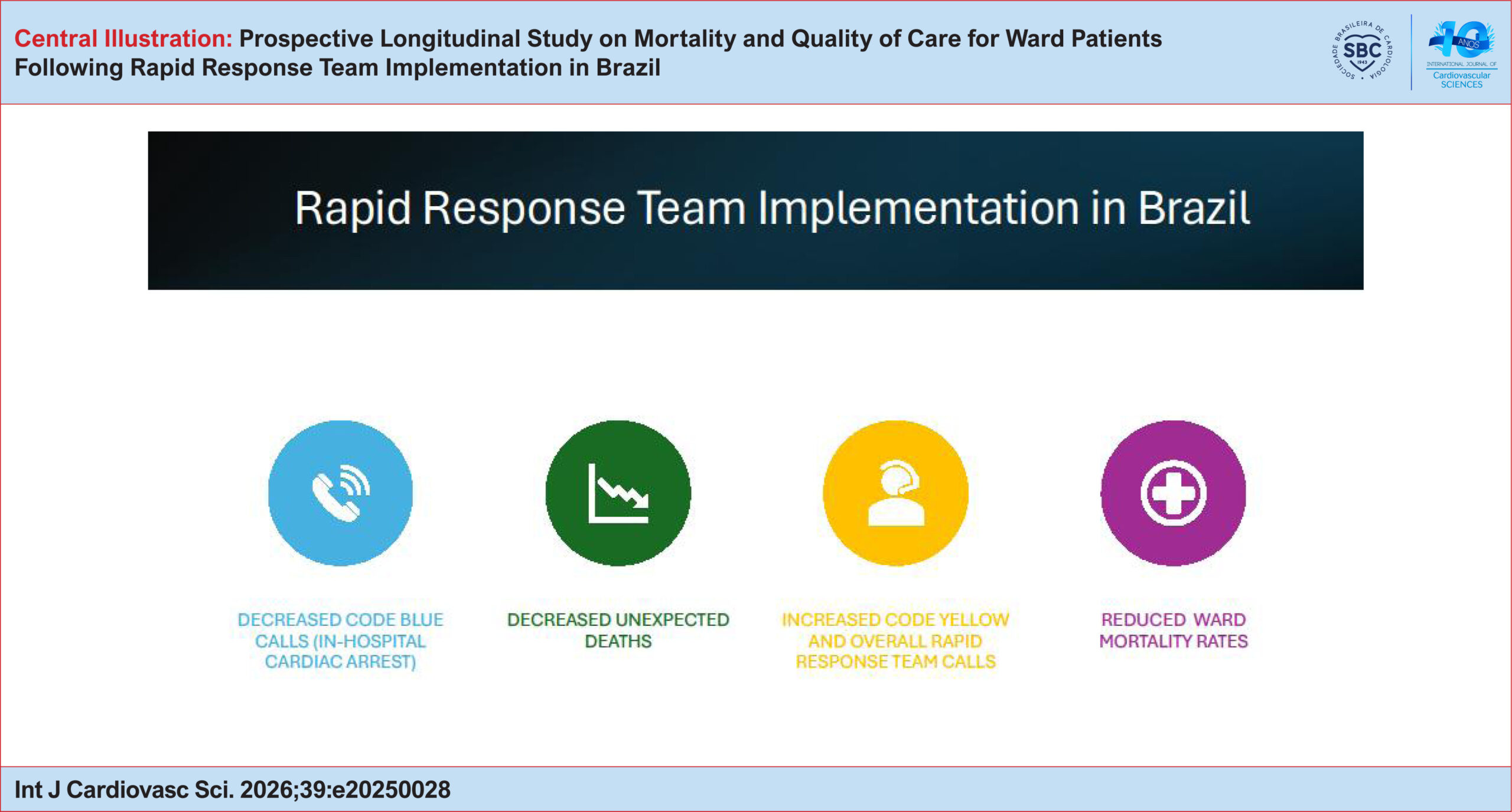
The team responded to a total of 2,194 inpatient calls, 495 for code blue and 1,699 for code yellow. In the years following the team’s implementation, the number of deaths and code blue calls decreased, while the number of code yellow and total RRT calls increased. When comparing the first and second three-year terms, there were no significant differences regarding code blue mortality (276/293 [94.2%] vs. 184/200 [92%], p = 0.338). Still, survival rates for patients assisted during code yellow calls increased (348/609 [57.1%] vs. 648/1,005 [64.5%], p = 0.003). This improvement in code yellow outcomes was associated with a reduction in the overall ward mortality rate (1,078/96,866 [1.1%] vs. 788/85,019 [0.9%], p < 0.001).

Conclusion:

The implementation of the RRT was associated with a decrease in the number of in-hospital CA and unexpected deaths over six years, as well as an increase in the number of code yellow and overall RRT calls. Overall ward mortality also declined.

  • Cardiopulmonary Resuscitation
  • Heart Arrest
  • Hospital Care
  • Hospital Rapid Response Team
  • Quality of Health Care
Read Full Article
Creative Commons Attribution (CC BY) Creative Commons license
13/03/2026 DOI: 10.36660/ijcs.20250028 Views 2
Profile of Mortality Due to All Causes and Patterns of Diseases of the Circulatory System in Childhood Between 2019 and 2022 in Brazil
ABC
Original Article

Profile of Mortality Due to All Causes and Patterns of Diseases of the Circulatory System in Childhood Between 2019 and 2022 in Brazil

Thayanne Mendes de Andrade et al. Mariara Lopes da Costa Marques Julia Pereira Cavalcante Marques Maria Eduarda Miranda de Souza … Gláucia Maria Moraes de Oliveira Thais Rocha Salim

Abstract

Background

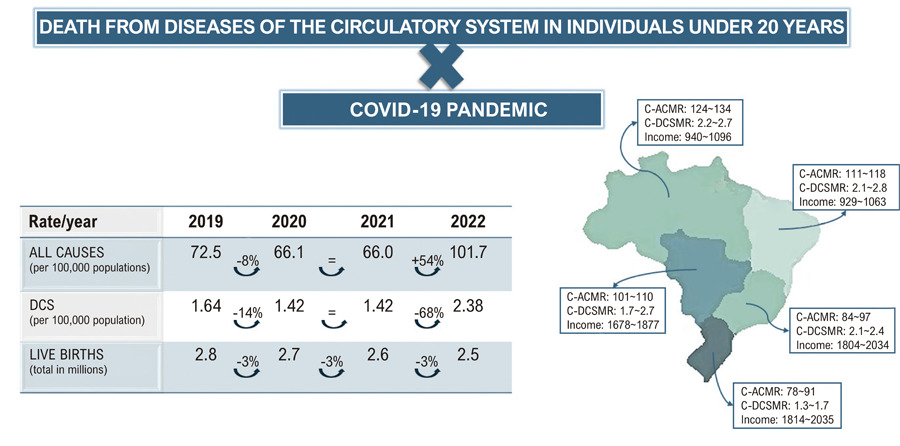
Between 2020 and 2023, the COVID-19 pandemic had a direct impact on population health. In Brazil, there is a lack of studies on the correlation between mortality from diseases of the circulatory system (DCS) and cardiorespiratory arrest (CRA) among people younger than 20 years during this period.

Objective

To analyze, using DCS and CRA, the mortality rates (MRs) due to underlying causes of death among people younger than 20 years in Brazil from 2019 to 2022 to understand the impact of the pandemic.

Methods

Ecological time-series study conducted between 2019 and 2022, focusing on deaths among people younger than 20 years. The analysis included the MRs and proportional mortality (PM) by cause of death, with data obtained from the DATASUS. Stata and Excel were used for statistical analysis.

Results

Between 2019 and 2022, there were 243,358 deaths among people younger than 20 years, with an MR of 101.7 per 100,000 inhabitants, which was higher among children younger than 1 year. The main causes of death were perinatal, external, and congenital malformations. There was a 9% reduction in MR between 2019 and 2020, followed by a 4.08% increase between 2021 and 2022, along with a 10% decrease in the number of live births. The highest MRs were in the North and Northeast regions. The MRs by DCS decreased between 2019 and 2021 but increased in 2022. Reporting of CRA as the cause of death was infrequent.

Conclusion

There was a reduction in MRs due to all causes and an increase in DCS in people older than 15 years during the pandemic, with disparities in lower-income regions.

  • Cardiovascular Diseases
  • Child Mortality
  • Heart Arrest
Read Full Article
Creative Commons Attribution (CC BY) Creative Commons license
19/01/2026 DOI: 10.36660/abc.20250191i Views 2
IJCS
Editorial

Rescuing Lives: Reflecting on the Future of Cardiopulmonary Arrest Care

Sergio Timerman

Current Overview

Between 2018 and 2022, data from 2,154 cases attended by a mobile emergency service were analyzed. This analysis not only reinforced the severity of CPA, with mortality rates still alarmingly high, but also emphasized the impact of early interventions. Bystander-initiated cardiopulmonary resuscitation (CPR), the use of automated external defibrillators (AEDs), and ongoing training of emergency teams are critical pillars for changing this scenario.,

However, the effectiveness of care is still heavily reliant on one critical factor: time. Every minute of delay drastically reduces survival chances, reinforcing the importance of robust and quick response systems, both in urban and rural settings.,

[…]

  • Artificial Intelligence
  • Cardiopulmonary Resuscitation
  • Heart Arrest
Read Full Article
Creative Commons Attribution (CC BY) Creative Commons license
17/04/2025 DOI: 10.36660/ijcs.20250010
Central Illustration
IJCS
Original Article

Cardiopulmonary Resuscitation-Induced Consciousness (CPRIC): Occurrence and Perception of Health Professionals and Firemen

Matheus Sousa Arci et al. Lívia Maria Coura de Sá Lucas Alves Oliveira Giulia Bortoloni Agria … Christian Morinaga Ricardo Toshio Enohi

Abstract

Background:

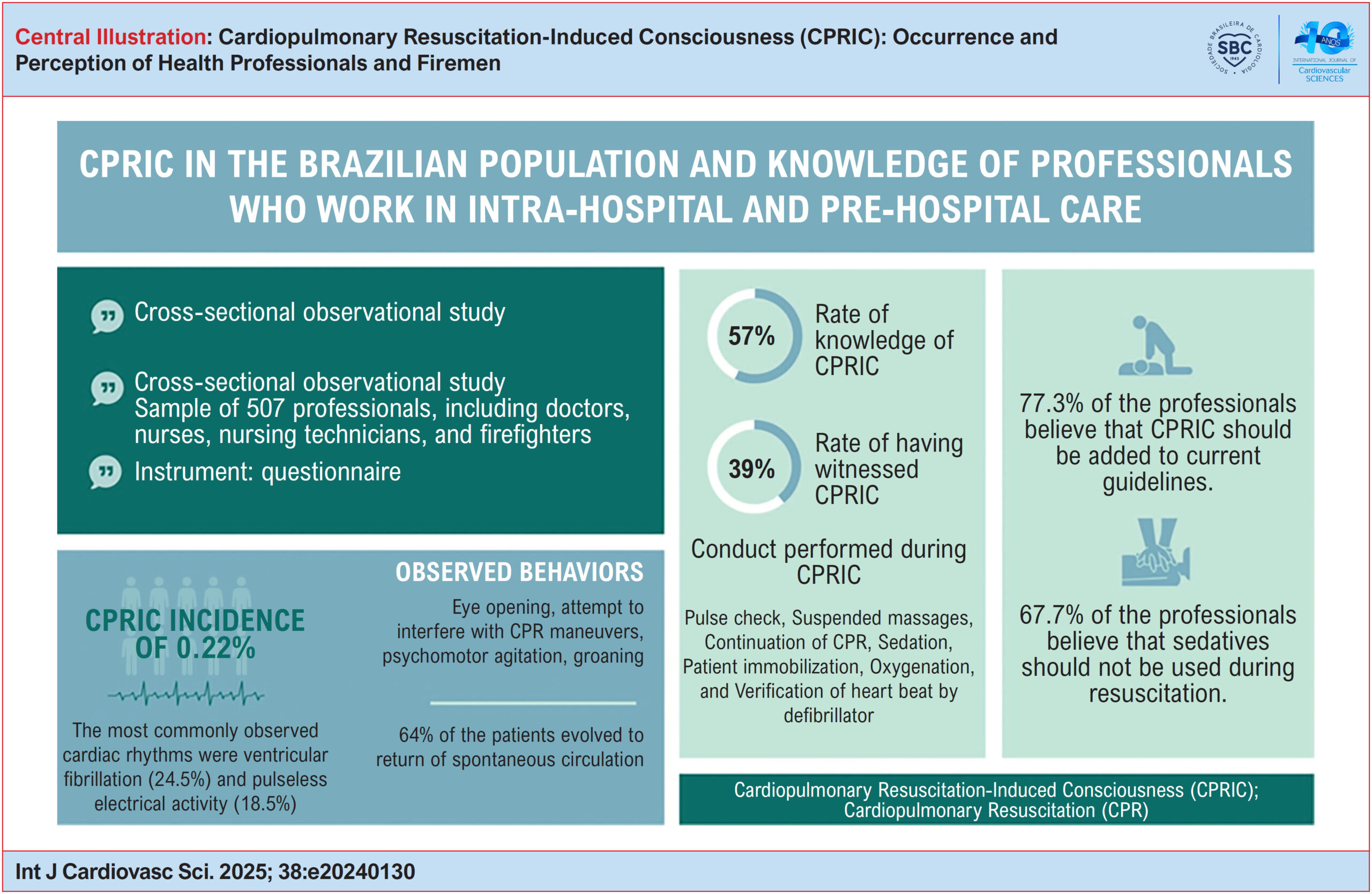
Cardiopulmonary Resuscitation-Induced Consciousness (CPRIC) is rare and poorly understood, impacting the effectiveness of Cardiopulmonary Resuscitation (CPR). In Brazil, investigating the prevalence and characteristics of CPRIC is essential in order to improve protocols and properly train health professionals and firefighters.

Objectives:

To investigate the occurrence of CPRIC and to verify the knowledge and experience of health professionals and firefighters concerning this phenomenon.

Methods:

This work was a cross-sectional observational study conducted with 507 professionals from different regions of Brazil who work directly with resuscitation maneuvers. An online questionnaire, containing 19 questions about professional profile, experience in cardiopulmonary arrest (CPA), and knowledge and recognition of CPRIC, was used. Data were analyzed using descriptive and inferential statistical techniques, including unpaired Student’s t-test and chi-square test, along with logistic regression to calculate the odds ratio (OR). The level of statistical significance was p<0.05.

Results:

The CPRIC presence rate was 0.22%, with 57.2% of the professionals reporting prior knowledge of the phenomenon. Inferential analysis showed that profession, number of CPAs witnessed in the last year, and specialization were significantly associated with CPRIC knowledge.

Conclusion:

Limited understanding and variability in exposure highlight the need to update CPRIC management guidelines, incorporating specific guidance on CPRIC.

  • Cardiopulmonary Resuscitation
  • Consciousness
  • Heart Arrest
Read Full Article
Creative Commons Attribution (CC BY) Creative Commons license
11/04/2025 DOI: 10.36660/ijcs.20240130 Views 2
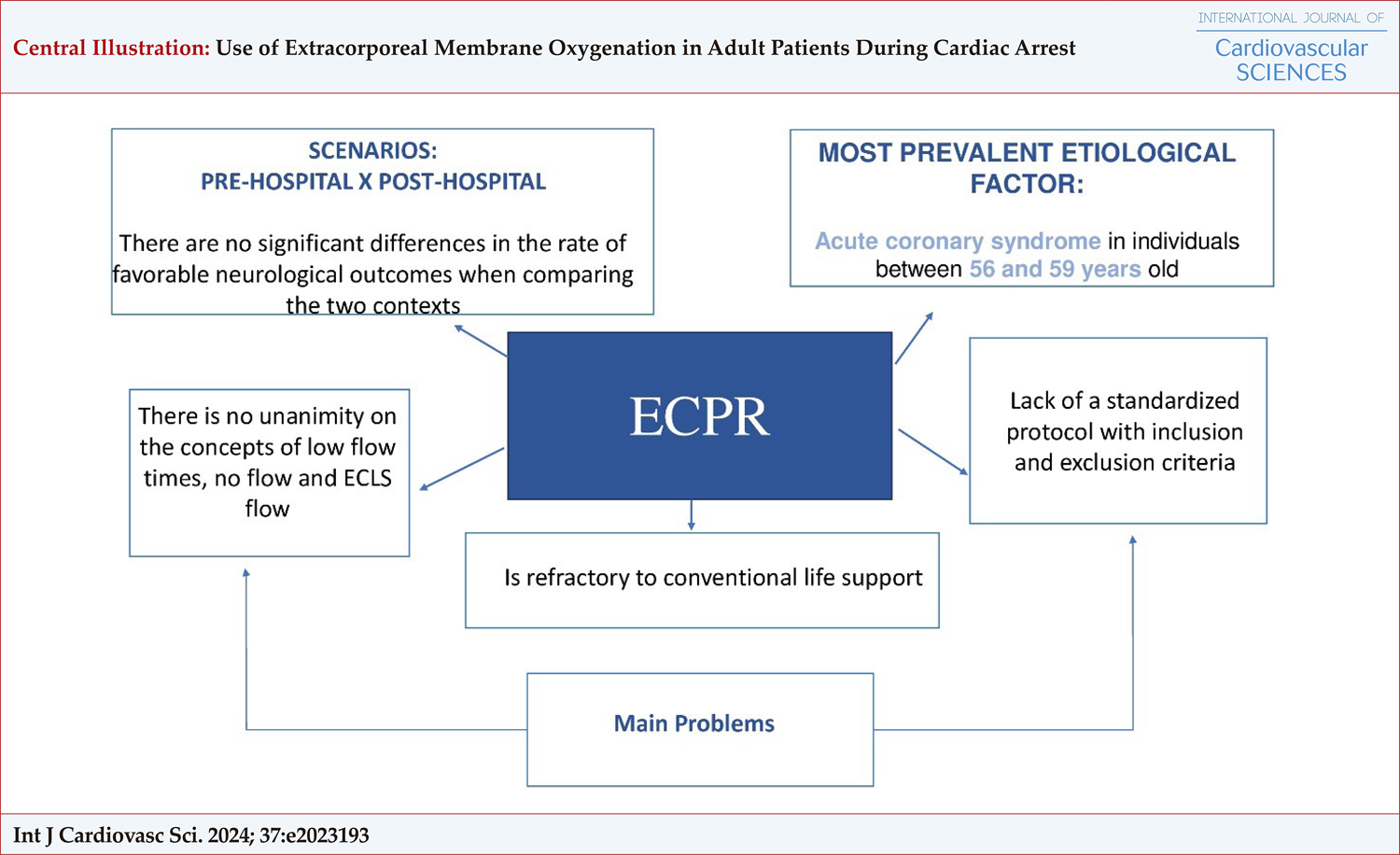
Use of Extracorporeal Membrane Oxygenation in Adult Patients During Cardiac Arrest
IJCS
Review Article

Use of Extracorporeal Membrane Oxygenation in Adult Patients During Cardiac Arrest

Cibelle Alves et al. Sarah Queiroz Pimentel Francine Jomara Lopes

Abstract

Background

Integrated extracorporeal membrane oxygenation (ECMO) in the treatment of cardiopulmonary resuscitation (CPR) is described as extracorporeal cardiopulmonary resuscitation (ECPR). It is used to ensure recovery of cardiac output when it is not possible to obtain sustained return of spontaneous circulation (ROSC) through conventional CPR methods. The comparison between ECPR and conventional CPR is a dilemma that has been frequently discussed.

Objective

To identify in the literature the use of ECMO in adult patients during cardiac arrest (CA) in and pre- and in-hospital settings.

Method

This is an integrative review using the following guiding question: What is the evidence in the literature on the use of ECMO in adult patients with cardiorespiratory arrest in the pre- and in-hospital setting? It consists of primary studies, published in full and available in Portuguese, English, and Spanish.

Results

The search identified 559 publications in the literature, of which 13 were articles read in full, after applying the inclusion criteria. Of these, 3 were disregarded due to unavailability in the complete format; 7 did not respond to the guiding question, and 3 studies were included. The studies were analyzed according to the 2020 version of the PRISMA Model.

Conclusion

ECPR is a practice adopted when CPR is refractory to conventional life support and concomitantly with this management. There are no significant differences in the rate of favorable neurological outcomes when comparing the pre- and in-hospital scenarios. In short, the development of institutional protocols with selection and exclusion criteria for ECPR is considered relevant.

  • Extracorporeal Membrane Oxygenation
  • Health Care Outcome Assessment
  • Heart Arrest
  • Result of Treatment
  • Survival
Read Full Article
Creative Commons Attribution (CC BY) Creative Commons license
15/07/2024 DOI: 10.36660/ijcs.2023193 Views 1
Figure 1
IJCS
Original Article

First Evaluation of the Brazilian Advanced Life Support Training (TECA A)

Fabrício Nogueira Furtado et al. Antonio Carlos de Camargo Carvalho Iran Gonçalves Junior Manoel Fernandes Canesin … Sergio Timerman Rodrigo Marques Gonçalves Daniela Frizon Alfieri Dirceu Almeida

Abstract

Background

Cardiac arrest (CA) is a common condition associated with high mortality. The Brazilian advanced life support training TECA A (Treinamento em Emergências Cardiovasculares Avançado — Advanced Cardiovascular Emergency Training) was created to train healthcare professionals in the management of CA. However, there are no studies evaluating the effectiveness of TECA A.

Objective

To assess the impact of TECA A on the management of CA using a simulated CA situation.

Methods

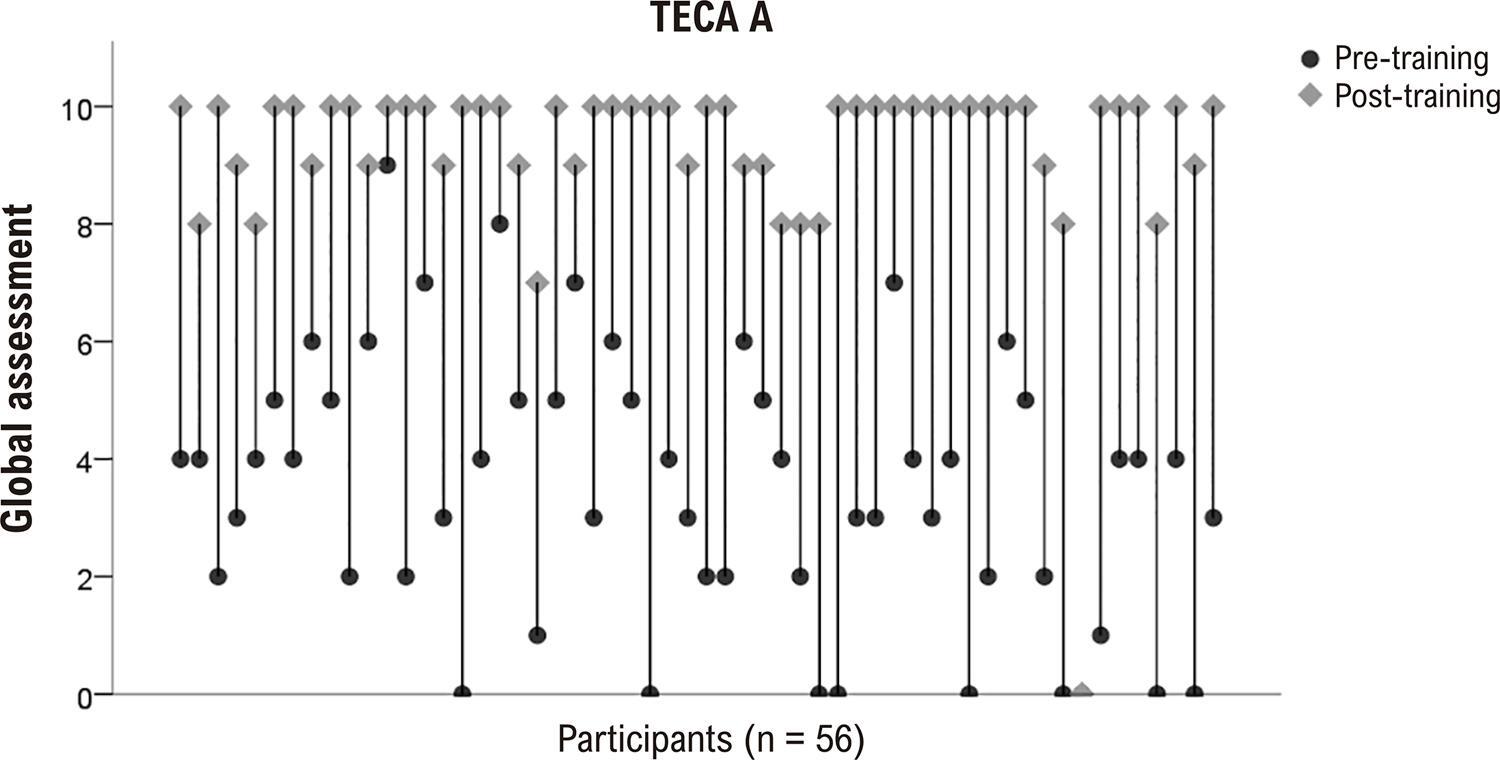
Fifty-six students underwent a simulated case of CA in a manikin. The students’ performance in the management of CA was assessed for the time to first chest compression and defibrillation and for a global assessment score using a structured tool. These items were assessed and compared before and after the TECA A. Exclusion criteria were previous participation in CA trainings and absence from class. Categorical variables were compared using the McNemar test and quantitative variables using the Wilcoxon test. All tests were two-tailed, and statistical significance was set at p < 0.05.

Results

Compared with before TECA A, median global assessment scores were higher after TECA A (pre-training: 4.0 points [2.0-5.0] vs. 10 points [9.0-10.0]; p<0.001), the time to start chest compressions was shorter (pre-training: 25 seconds [15-34] vs. 19 seconds [16.2-23.0]; p=0.002) and so was the time to defibrillation (pre-training: 82.5 seconds [65.0-108.0] vs. 48 seconds [39.0-53.0]; p<0.001).

Conclusions

The TECA A promoted a higher adherence to cardiopulmonary resuscitation (CPR) guidelines and a reduction in the time elapsed from CA to first chest compression and defibrillation.

  • Health Personnel
  • Heart Arrest
  • Simulation Training
  • Teaching
Read Full Article
Creative Commons Attribution (CC BY) Creative Commons license
09/10/2023 DOI: 10.36660/ijcs.20220199 Views 1
ABC
Editorial

Ventilation and Respiratory Parameters in CPR: Where are We and Next Steps!

Hélio Penna Guimarães

The first mention of cardiopulmonary resuscitation refers to the moment of Adam’s creation, in which God “breathed into his mouth, giving him life.” The Bible also mentions, in the book of the Kings, prophet Elisha, a disciple of Elijah, who revived a young son of a Shunamite widow, whose description is less symbolic and more precise in its detailing, being considered by many historians to be the first account of CPR maneuvers. “… and he went up, and lay upon the child, and put his mouth upon his mouth, and his eyes upon his eyes, and his hands upon his hands: and he stretched himself upon the child; the child sneezed seven times, and the child opened his eyes,” maneuver performed by Elisha, narrated in II Kings 4:34-35141.

Paracelsus evaluated, in 1530, the use of fireplace bellows to introduce air into the lungs of apparently dead individuals, characterizing the first and rustic attempts at artificial ventilation, based on the current principle of positive pressure ventilation using the bag-valve-mask units.

[…]

  • Cardiopulmonary Resuscitation
  • Heart Arrest
  • ventilation
Read Full Article
Creative Commons Attribution (CC BY) Creative Commons license
18/09/2023 DOI: 10.36660/abc.20230492
ABC
Editorial

Outcome Analysis after Out-of-Hospital Cardiac Arrest

Thais Rocha Salim et al. Gabriel Porto Soares

Cardiac arrest (CA) is defined as the cessation of mechanical activity of the heart, confirmed by the absence of signs of circulation, clinically manifested by unresponsiveness, absence of pulse, and breathing or gasping. CA is the final pathway and mechanism of death in various clinical or traumatic situations that vary with the patient’s age and the occurrence location. The reversal of CA and the prognosis after the event depend on identifying and implementing high-efficiency resuscitation measures. Rates of Return of Spontaneous Circulation (RSC), survival until hospital discharge, and short- and medium-term neurological condition are imprecise and vary in the literature. A meta-analysis of 141 studies from North America, Europe, Asia, and Oceania showed that RSC occurred in 29.7% of adult patients resuscitated in the out-of-hospital environment, and less than 10% survived until hospital discharge. The highest survival rates occurred in witnessed CA cases with early initiation of resuscitation maneuvers. In another meta-analysis that included 44 studies conducted in Europe, Asia, and North America, the use of extracorporeal circulation in out-of-hospital resuscitation resulted in survival rates of up to 24%, with 18% of patients having favorable neurological conditions. However, in the evaluated studies, the time for arrival of the mobile medical service was less than 5 minutes, which may have influenced the outcomes.

In Brazil, in the out-of-hospital environment, survival rates are related to the rhythm of CA. Shockable rhythms, ventricular tachycardia, or ventricular fibrillation account for nearly 80% of events, and when defibrillation is performed between 3-5 minutes from the onset of CA, the survival rate is around 50% to 70%. Meanwhile, non-shockable rhythms, such as pulseless electrical activity and asystole, have a survival rate of less than 17%. According to the Guidelines for Cardiopulmonary Resuscitation and Emergency Cardiovascular Care of the Sociedade Brasileira de Cardiologia , the survival rate in traumatic CA cases is less than 3%. An article published in the Arquivos Brasileiros de Cardiologia provides important information on survival rates and neurological conditions in out-of-hospital CAs in a Brazilian capital, allowing for the development of strategies to prevent such events and improve the cardiopulmonary resuscitation ( CPR) response teams. It is a cohort study conducted in Campo Grande, Mato Grosso do Sul (MS), Brazil. Retrospective data collection was performed from the Prehospital Care records of the Mobile Emergency Care Service, involving 852 victims over 18 years old who experienced out-of-hospital CA between January 2016 and December 2018. The cohort segment was established by collecting information from the medical records of the hospital units where the survivors were admitted or through interviews with the patients and their family members.

[…]

  • Cardiopulmonary Resuscitation
  • Heart Arrest
  • Out-of-Hospital Cardiac Arrest
Read Full Article
Creative Commons Attribution (CC BY) Creative Commons license
07/08/2023 DOI: 10.36660/abc.20230406
Central Illustration
ABC
Original Article

Outcomes after Clinical and Traumatic Out-of-Hospital Cardiac Arrest

Daiana Terra Nacer et al. Regina Márcia Cardoso de Sousa Anna Leticia Miranda

Abstract

Background

Data on out-of-hospital cardiac arrest are still scarce, very varied, and indicate a poor prognosis for traumatic events.

Objectives

To describe the out-of-hospital/in-hospital survival, survival time, and neurological conditions of those treated by advanced life support units and submitted to cardiopulmonary resuscitation and compare the results of clinical and traumatic cardiac arrests.

Methods

This is a cohort study carried out in three stages; in the first two, data were collected from the Mobile Emergency Care Service forms and medical records; then, the Brain Performance Category Scale was applied in the third stage. The sample consisted of resuscitated victims aged ≥18 years. Fisher’s and log-rank tests were used to compare the causes, considering a significance level of 5%.

Results

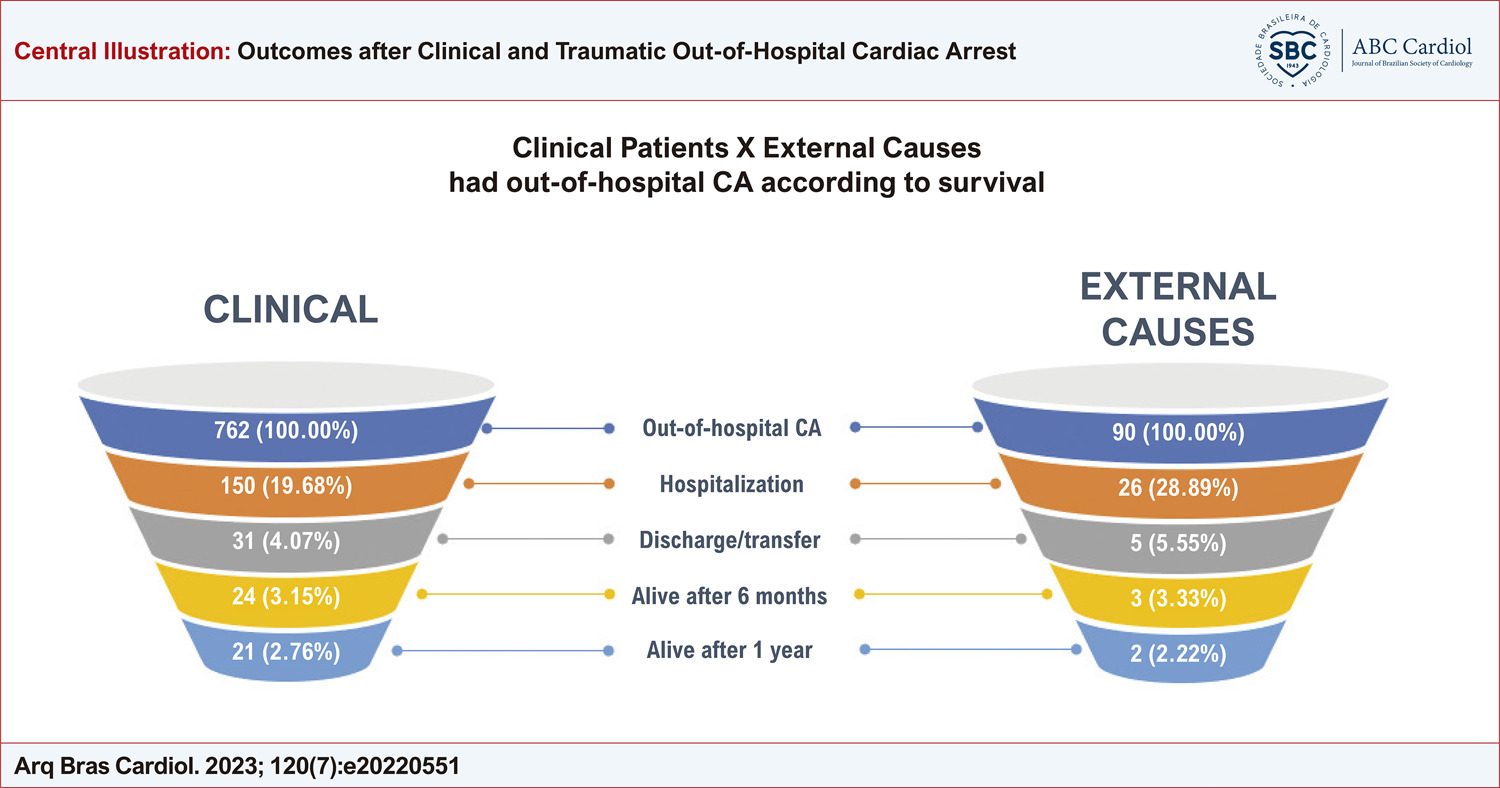
852 patients were analyzed; 20.66% were hospitalized, 4.23% survived until transfer or discharge, and 58.33% had a favorable outcome one year after arrest. There was an association between pre/in-hospital survival and the nature of the occurrence (p=0.026), but there was no difference between the survival curves (p=0.6).

Conclusions

Survival of hospitalization after out-of-hospital cardiac arrest was low; however, most who survived to be discharged achieved a favorable outcome after one year. The survival time of those hospitalized after clinical and traumatic events were similar, but pre-hospital survival was higher among trauma patients.

  • Cardiopulmonary Resuscitation
  • Emergency Medical Services
  • Heart Arrest
  • Out-of-Hospital Cardiac Arrest
  • Survivorship
Read Full Article
Creative Commons Attribution (CC BY) Creative Commons license
24/07/2023 DOI: 10.36660/abc.20220551 Views 1
Figure 1
ABC
Editorial

Electrocardiogram of Brazilian Elite Football Players: Filling a Gap

Ricardo Stein et al. Filipe Ferrari Anderson Donelli da Silveira

Introduction

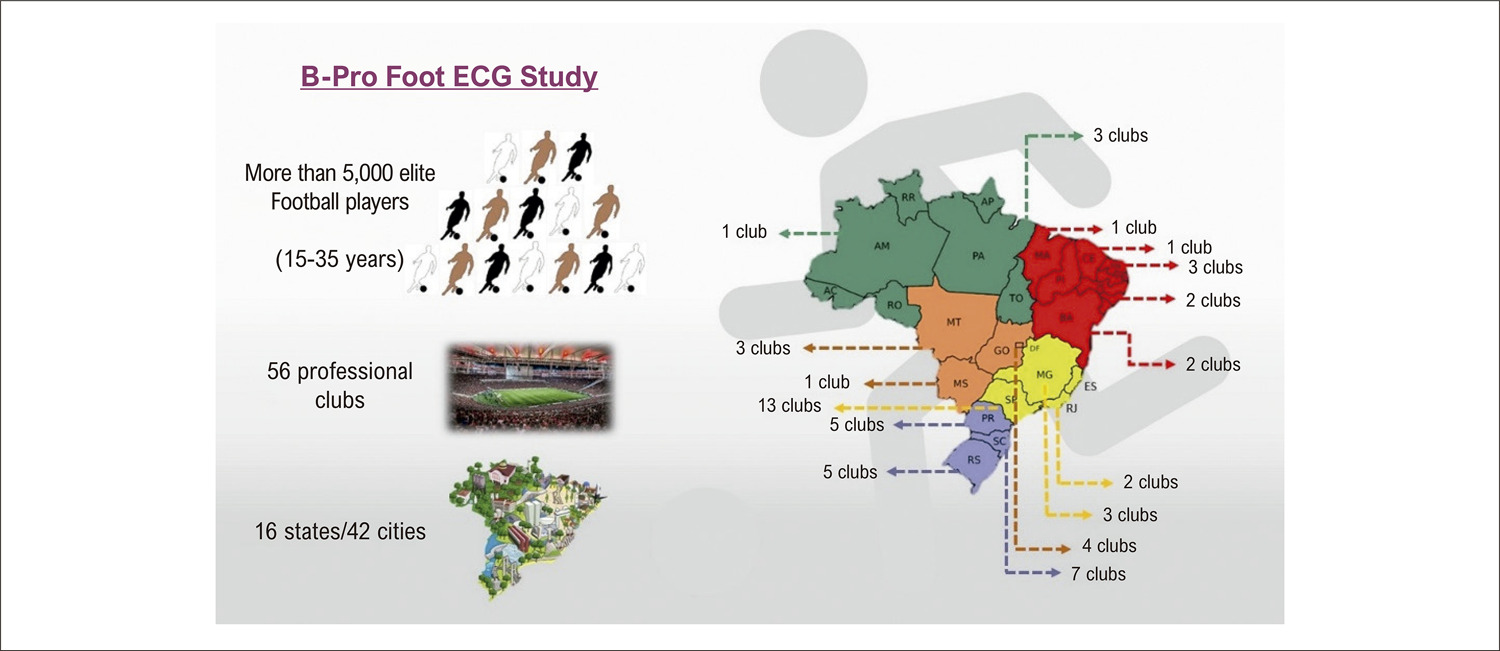
The sudden death of a young, apparently healthy athlete is a tragedy, and the true incidence of sudden cardiac death (SCD) among athletes is controversial. Although estimates from studies in the United States and Europe are limited by various methodological issues, it is known that physical exertion in sports activity and training poses a 2.5 to 4.5 times higher risk of sudden cardiac arrest and SCD in relation to non-athletes and recreational athletes.–On the other hand, a consistent finding across studies is that male athletes have a three to five times higher incidence of SCD than female athletes.

Over the past few decades, much has been discussed about the role of the resting 12-lead electrocardiogram (ECG) in preventing SCD in young athletes. Studies carried out in different parts of the world have been published, and expert consensuses have been developed to standardize a very peculiar type of ECG.–

[…]

  • Athletes
  • Ethnicity and Health
  • Exercise
  • Heart Arrest
  • Mass Sreening
  • Soccer
  • Sudden Cardiac Death
Read Full Article
Creative Commons Attribution (CC BY) Creative Commons license
01/05/2023 DOI: 10.36660/abc.20230090 Views 2
ABC
Editorial

Improving Cardiopulmonary Resuscitation

Paolo Blanco Villela

Cardiopulmonary arrest (CRA) is the most serious event in the health area and its prompt recognition with the consequent initiation of cardiopulmonary resuscitation (CPR) maneuvers are essential for the return of spontaneous circulation (ROSC). Despite the absence of robust epidemiological data, a meta-analysis of 141 studies including countries in North America, Europe, Asia and Oceania, demonstrated a ROSC rate below 30% in cases of out-of-hospital CA, and concluded that the chances of success were linked to the fact that the CPR was witnessed and in cases where CPR had been initiated by a bystander.

In Brazil, according to the guideline on Cardiopulmonary Resuscitation and Emergency Cardiovascular Care of the Brazilian Society of Cardiology, the survival rates of out-of-hospital CPA, when addressed within the first 5 minutes with early defibrillation, vary between 50% and 70% two. On the other hand, in the in-hospital environment, paradoxically, survival rates are less than 20%, probably due to associated clinical conditions and the greater severity of patients, which make asystole and pulseless electrical activity the most prevalent rhythms.

[…]

  • Borg Scale
  • Cardiopulmonary Ressuscitation
  • Eletric Countershock/methods
  • Heart Arrest
  • High Fidelity Simulation Training/methods
  • Hospitalization
  • Nursing Education Research
  • Survival Rate
Read Full Article
Creative Commons Attribution (CC BY) Creative Commons license
10/02/2023 DOI: 10.36660/abc.20220900
Figure 1
ABC
Original Article

The Use of the Borg Rating of Perceived Exertion Scale in Cardiopulmonary Resuscitation

Lucia Tobase et al. Heloisa Helena Ciqueto Peres Thatiane Facholi Polastri Sandra Helena Cardoso … Dhieizom Rodrigo Souza Debora Gugelmin Almeida Sergio Timerman

Abstract

Background

A cardiopulmonary arrest is a critical event whose survival rate is related to the quality of resuscitation maneuvers combined with the use of technology. It is important to understand the perception of fatigue during this procedure, aiming to improve the effectiveness of compressions to increase the chances of survival.

Objectives

To apply the Borg rating of perceived exertion scale (Borg scale) to analyze the exertion perceived by nurses during cardiopulmonary resuscitation maneuvers using a feedback device.

Methods

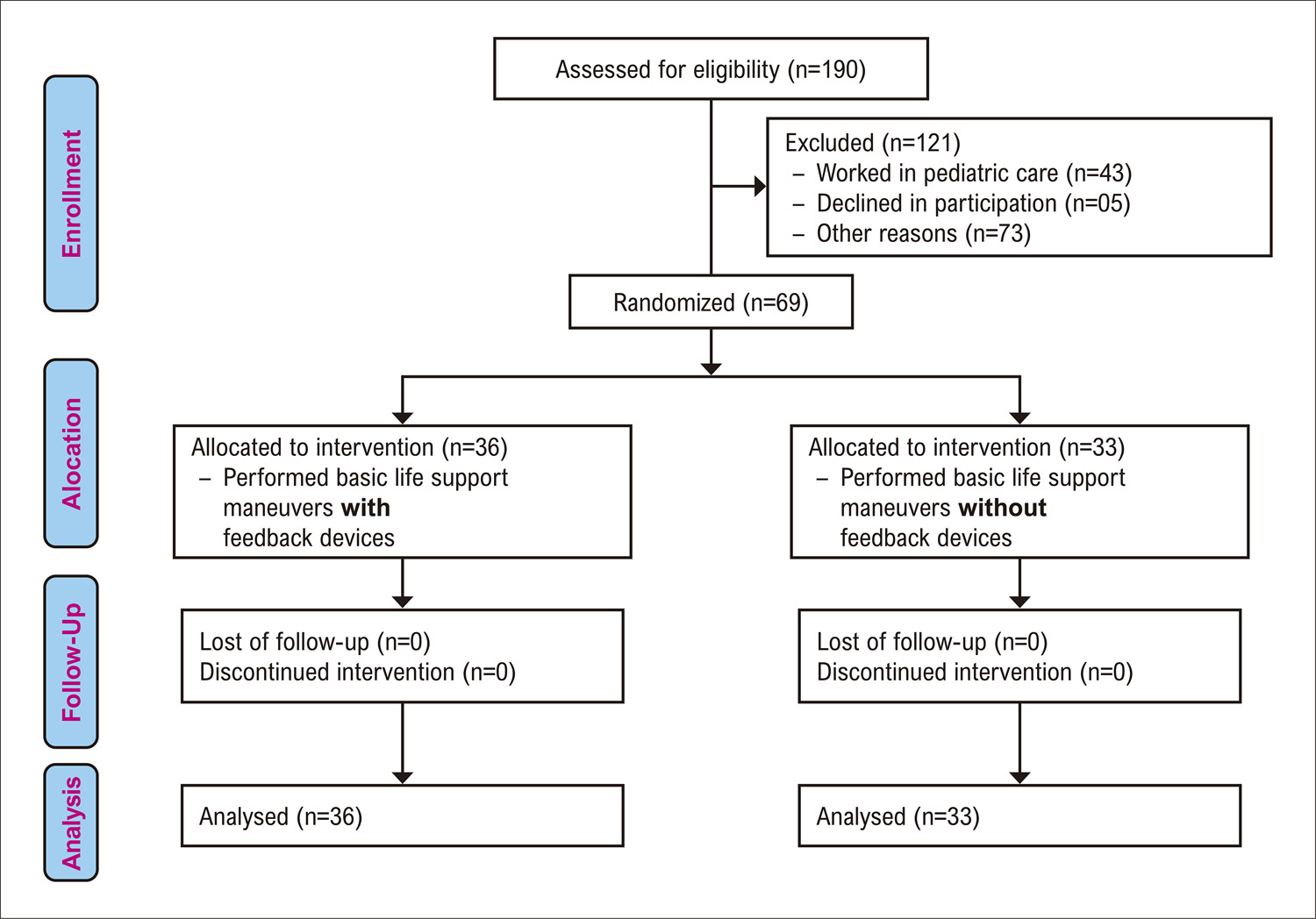
Experimental study with a randomized distribution of nurses in a teaching hospital. Perceived exertion during simulated cardiopulmonary resuscitation with/without a feedback device was assessed using the Borg scale. The statistical significance level of 5% was adopted.

Results

69 nurses working in critical and non-critical adult care units were included. Perceived exertion and heart rate were lower in the intervention group (p<0.001), influenced by the feedback device, with no significant difference between critical and non-critical units.

Conclusions

The Borg scale proved to be adequate for the proposed objectives. The feedback device contributed to lower exertion and heart rate reduction during resuscitation maneuvers. The low cost and ease of application favor its use during training and real-time resuscitation attempts to assess performance using a feedback device to reduce exertion and perception of fatigue. It allows reflection on the intervening factors and resources that can influence the quality of resuscitation attempts and the chances of survival.

  • Cardiopulmonary Resuscitation
  • Emergencies
  • Heart Arrest
  • Nursing Care
  • Physical Exertion
Read Full Article
Creative Commons Attribution (CC BY) Creative Commons license
09/01/2023 DOI: 10.36660/abc.20220240 Views 1
Figure 1
IJCS
Original Article

Efficacy and Risks of Therapeutic Hypothermia after Pediatric Cardiac Arrest: A Systematic Review

Anna Luíza Machado Nogueira et al. Ana Luísa dos Santos Maciel Amanda Campos Querubino Roberta Teixeira Prado Jussara Regina Martins

Abstract

Background:

Therapeutic hypothermia is used in adults and neonates after cardiac arrest, but its efficiency in children under 18 years old is still uncertain.

Objective:

To evaluate the effectiveness and risks of therapeutic hypothermia after cardiac arrest in children under 18 years of age through a systematic review.

Methods:

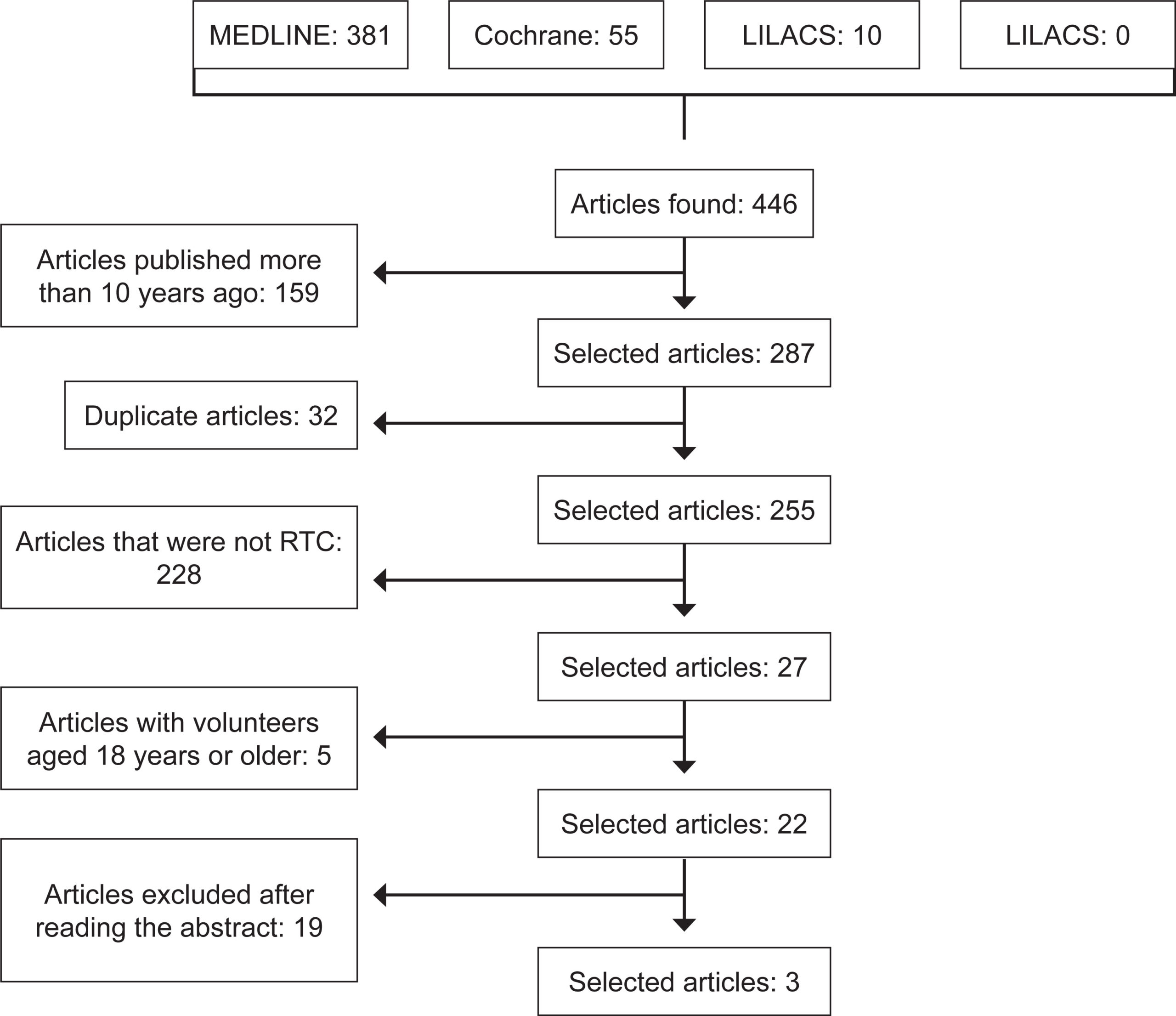
A systematic review was performed in January 2022 in the MEDLINE, SciELO, Cochrane, and LILACS databases. Inclusion criteria: randomized controlled trials (RCTs) performed in humans. Articles from other typologies, published more than 10 years ago, or with volunteers over 18 years old were excluded.

Results:

Four studies were identified, of which 3 were analyzed; all of them were of moderate quality according to the Jadad Scale and the Cochrane Collaboration tool. The studies indicated that lowering the temperature did not improve data on mortality and adverse events. Two studies did not identify statistically significant differences (p > 0.05) considering hypothermia in relation to normothermia in terms of survival, safety, and global neurobehavioral and cognitive function. The other study did not show improved serum biomarker concentrations.

Conclusion:

The results found in this review do not support the use of therapeutic hypothermia after pediatric cardiac arrest, as this intervention did not provide any apparent benefits in terms of safety, adverse events, survival, and neurological impact. We recommend the conduction of new RCTs using the measurement of serum biomarkers to better evaluate the effectiveness of the intervention.

  • Child
  • Heart Arrest
  • hypothermia
  • Induced
  • Meta-Analysis
  • systematic review
Read Full Article
Creative Commons Attribution (CC BY) Creative Commons license
22/04/2022 DOI: 10.36660/ijcs.20210246
Figure 1
ABC
Original Article

Cardiac Arrhythmias in Patients with COVID-19

Mauricio Pimentel et al. Ana Paula Arbo Magalhães Camila Valvassori Novak Bruna Miers May … Luiz Gustavo Bravosi da Rosa Leandro Ioschpe Zimerman

Abstract

Background:

The coronavirus disease 2019 (COVID-19) is associated with cardiovascular clinical manifestations, including cardiac arrhythmias.

Objective:

To assess the incidence of cardiac arrhythmias (atrial tachyarrhythmia, bradyarrhythmia, and sustained ventricular tachycardia) and cardiac arrest (CA) in a cohort of patients hospitalized with COVID-19 in a tertiary university-affiliated hospital.

Methods:

Cohort study with retrospective analysis of electronic medical records. For comparison between groups, a value of p <0.05 was considered statistically significant

Results:

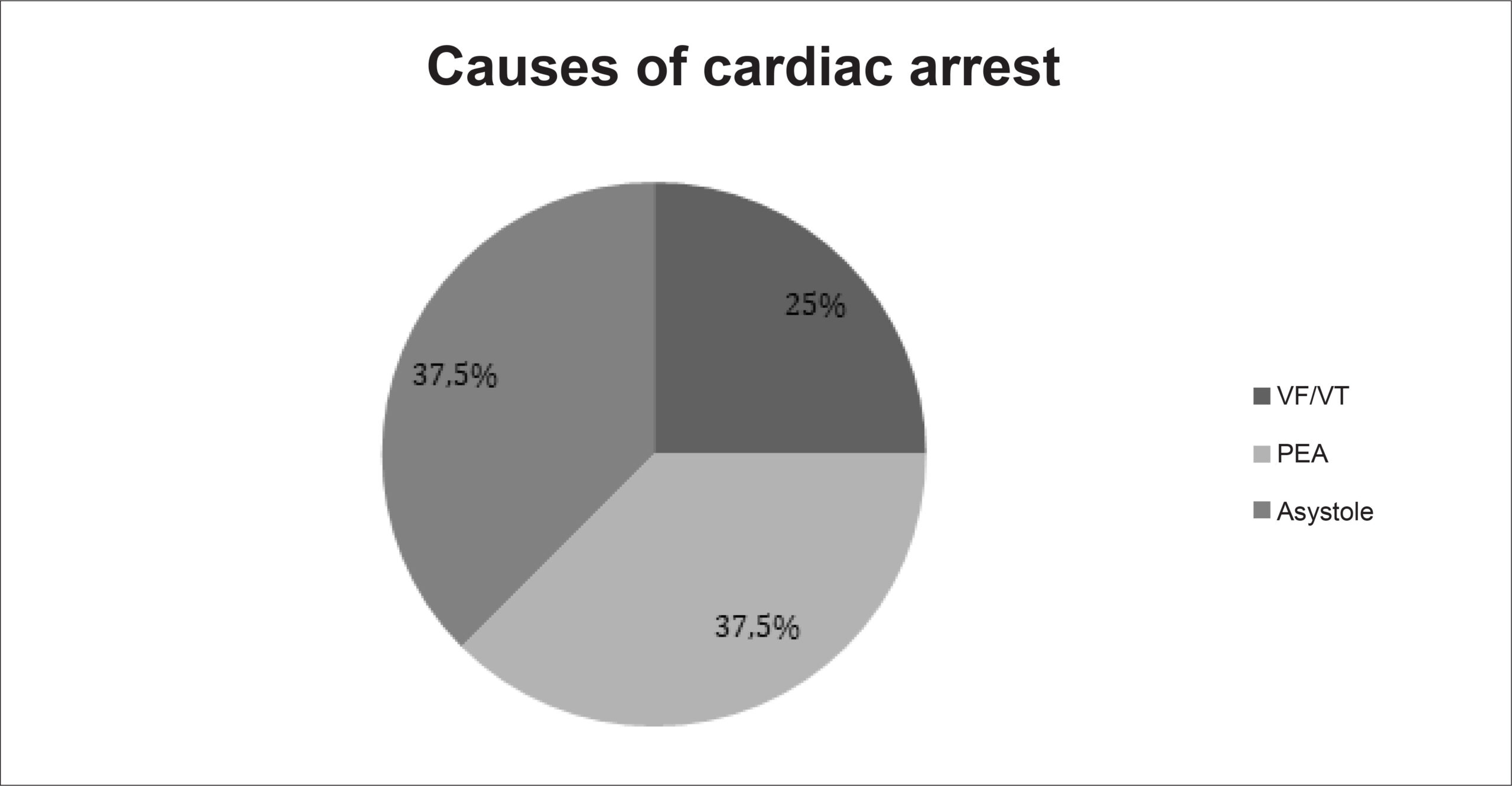
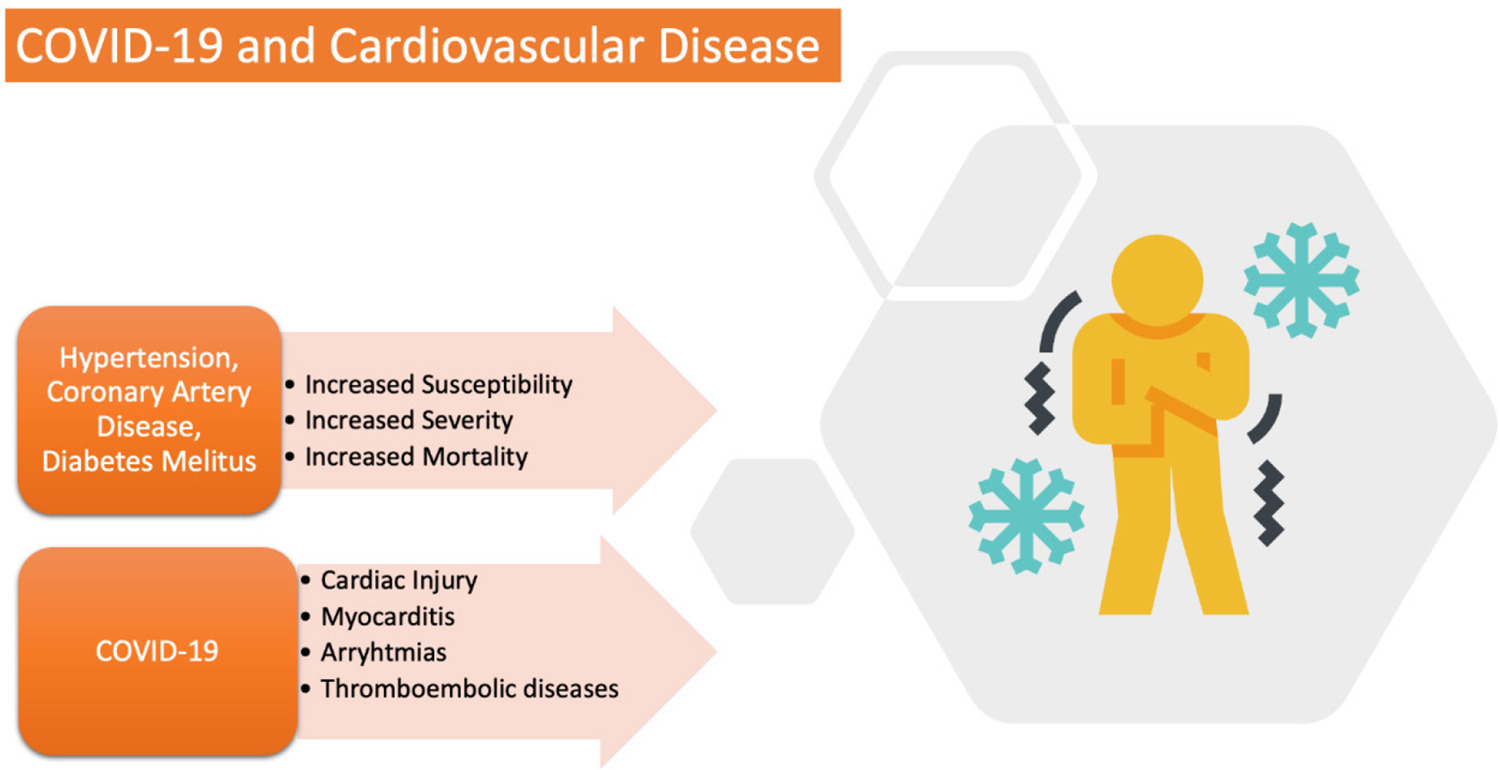
We included 241 consecutive patients diagnosed with COVID-19 (mean age, 57.8 ± 15.0 years; 51.5% men; 80.5% white), 35.3% of whom received invasive mechanical ventilation (MV). The overall mortality was 26.6%, being 58.8% among those on MV. Cardiac arrhythmias were identified in 8.7% of the patients, the most common being atrial tachyarrhythmia (76.2%). Patients with arrhythmias had higher mortality (52.4% versus 24.1%, p = 0.005). On multivariate analysis, only the presence of heart failure (HF) was associated with a higher risk of arrhythmias (hazard ratio, 11.9; 95% CI: 3.6-39.5; p <0.001). During hospitalization, 3.3% of the patients experienced CA, with a predominance of non-shockable rhythms. All patients experiencing CA died during hospitalization.

Conclusions:

The incidence of cardiac arrhythmias in patients admitted with COVID-19 to a Brazilian tertiary hospital was 8.7%, and atrial tachyarrhythmia was the most common. Presence of HF was associated with an increased risk of arrhythmias. Patients with COVID-19 experiencing CA have high mortality.

  • Atrial Fibrillation
  • Cardiac Arrhythmias
  • COVID-19
  • Heart Arrest
Read Full Article
Creative Commons Attribution (CC BY) Creative Commons license
20/09/2021 DOI: 10.36660/abc.20200963 Views 1
Figure 1
ABC
Research Letter

Patient in Cardiorespiratory Arrest – Is it Possible to Perform Transcatheter Aortic Valve Implantation (TAVI) in this Scenario?

Alexandre de Matos Soeiro et al. Francisco Akira Cardozo Patrícia Oliveira Guimarães Marcel Paula Pereira … Paulo Vinícius Ramos Souza Gustavo A. B. Boros Viviane Cordeiro Veiga Samolon Soriano Ordinola Rojas Fernanda Marinho Mangione Salvador André Bavaresco Cristóvão Gustavo Alexandre Dutra Adnan Ali Salman Luiz Eduardo Loureiro Bettarello José Armando Mangione

Introduction

Transcatheter aortic valve implantation (TAVI) is a well-established procedure in reference centers worldwide and is currently accepted as the method of choice in high- and intermediate-risk patients. Although unusual, catastrophic complications can occur before or after its implantation, such as coronary obstruction, rupture of the aortic valve annulus, cardiac tamponade, significant perivalvular insufficiency and prosthesis embolization/displacement.

Data from a recently published North American registry showed that 1,695 patients (2.8%) undergoing TAVI required some type of mechanical circulatory support during hospitalization. It was observed that heart failure, transapical access, respiratory diseases, acute myocardial infarction, cardiorespiratory arrest (CRA) and cardiogenic shock were the factors most frequently associated with the need for mechanical circulatory support.

[…]

  • Aortic Valve
  • Cardiogenic shock
  • Emergencies
  • Heart Arrest
Read Full Article
Creative Commons Attribution (CC BY) Creative Commons license
06/09/2021 DOI: 10.36660/abc.20201097
Figure 1
ABC
Original Article

Retention of Cardiopulmonary Resuscitation Skills in Medical Students

Miguel Antônio Moretti et al. Adriana de Oliveira Camboim Caroline Awoki Ferrandez Isabela Corralo Ramos … Iaggo Bemini Costa Juliana Seidler Canonaco Vanessa Lopes Mathia João Fernando Monteiro Ferreira Antonio Carlos Palandri Chagas

Abstract

Background

Reduction of mortality and sequelae of cardiac arrest depends on an effective and fast intervention, started as soon as possible. Basic life support involves a series of steps that may be initiated out of the hospital setting and taught to any person in specific courses. However, it is important that the rescuers retain the knowledge and skills to perform cardiopulmonary resuscitation (CPR), as one never knows when they will be required. Studies have shown that a loss of skills occurs as early as 30 days after the training course, with variations according to personal and professional characteristics.

Objectives

to assess whether medical students are able to retain skills acquired in a BLS course for more than six months.

Methods

Prospective, case-control, observational study. Medical students attended a 40-hour course on sudden death and cardiac arrest. Skills acquired during the course were evaluated immediately after and six months after the course. Students’ individual scores were compared between these time points, the percentage of correct answers was evaluated, and overall performance was rated as excellent, good, and poor. Observers and evaluation criteria were the same immediately after the course and six months later. Data were analyzed using the paired t-test and the McNemar test. The 95% confidence interval was established, and a p < 0.05 was set as statistically significant.

Results

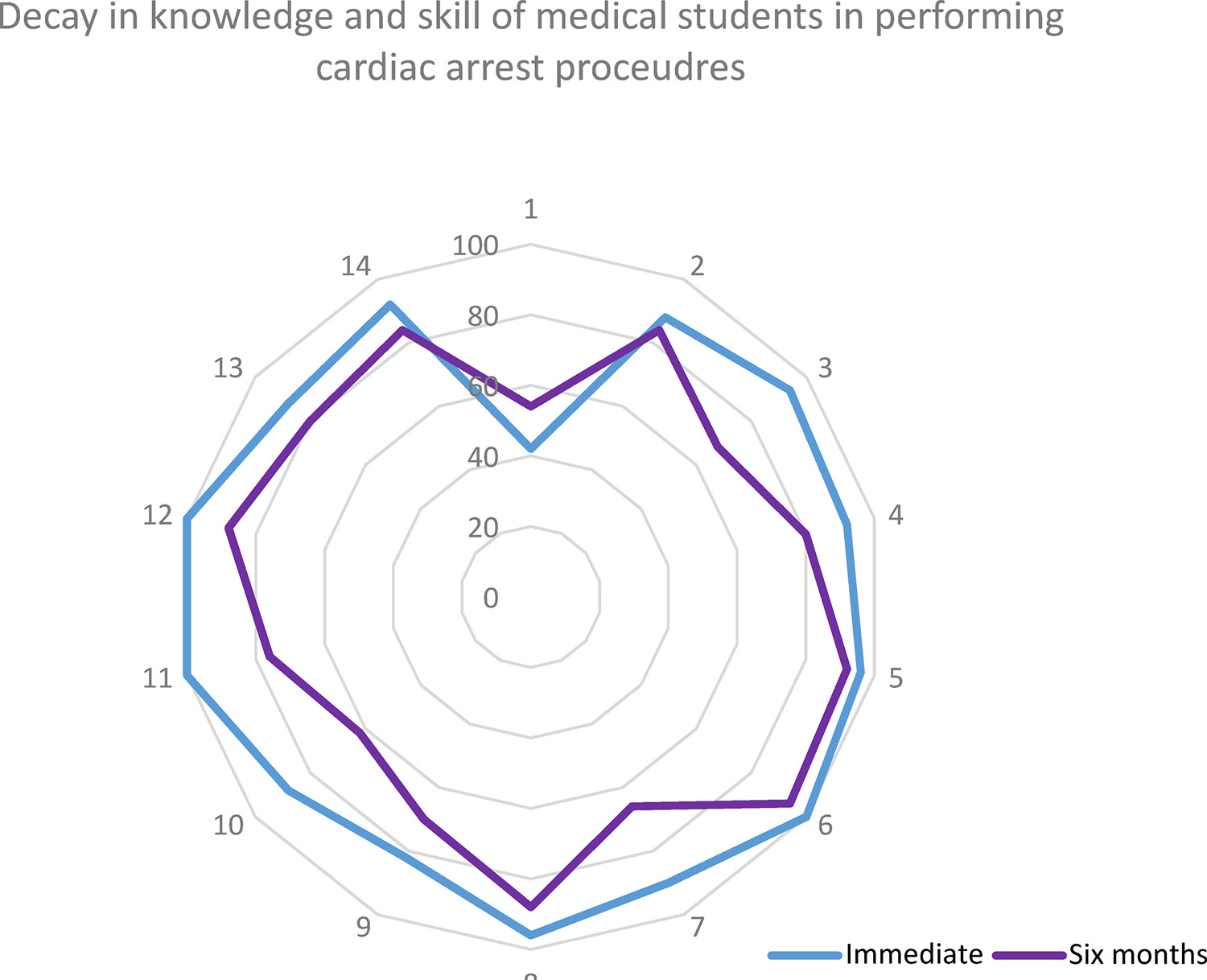
Fifty students (27 female) in the first year of medical school aged from 18 to 24 years (mean of 21 years) attended the course. The number of steps successfully completed by the students at six months was significantly lower than immediately after the course (10.8 vs 12.5 p < 0.001). Neither sex nor age affected the results. Overall performance of 78% of the students was considered excellent immediately after the course, and this percentage was significantly higher than six months later (p < 0.01). After six months, the steps that the students failed to complete at six months were those related to practical skills (such as a correct hand positioning).

Conclusion

A significant loss of skills was detected six months after the BLS course among medical students, compromising their overall performance.

  • Cardiopulmonary Resuscitation
  • Education
  • Hability
  • Heart Arrest
  • Learning
  • Medical Students
  • Mortality
Read Full Article
Creative Commons Attribution (CC BY) Creative Commons license
16/08/2021 DOI: 10.36660/abc.20200546 Views 1
Figure 1
IJCS
Case Report

Commotio Cordis Secondary to Aggression

Luisa Gonçalves et al. Inês Pires João Santos Joana Laranjeira Correia … Davide Moreira Inês Almeida

Case report

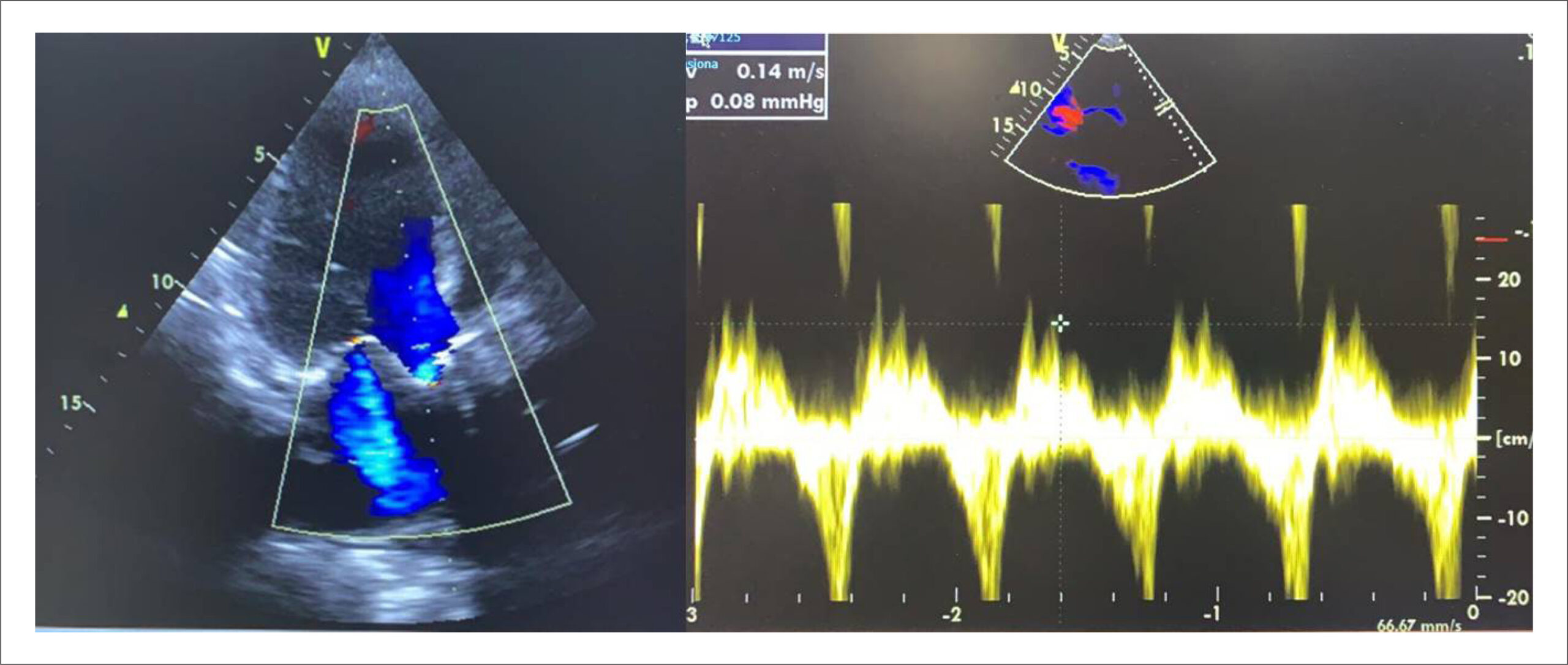
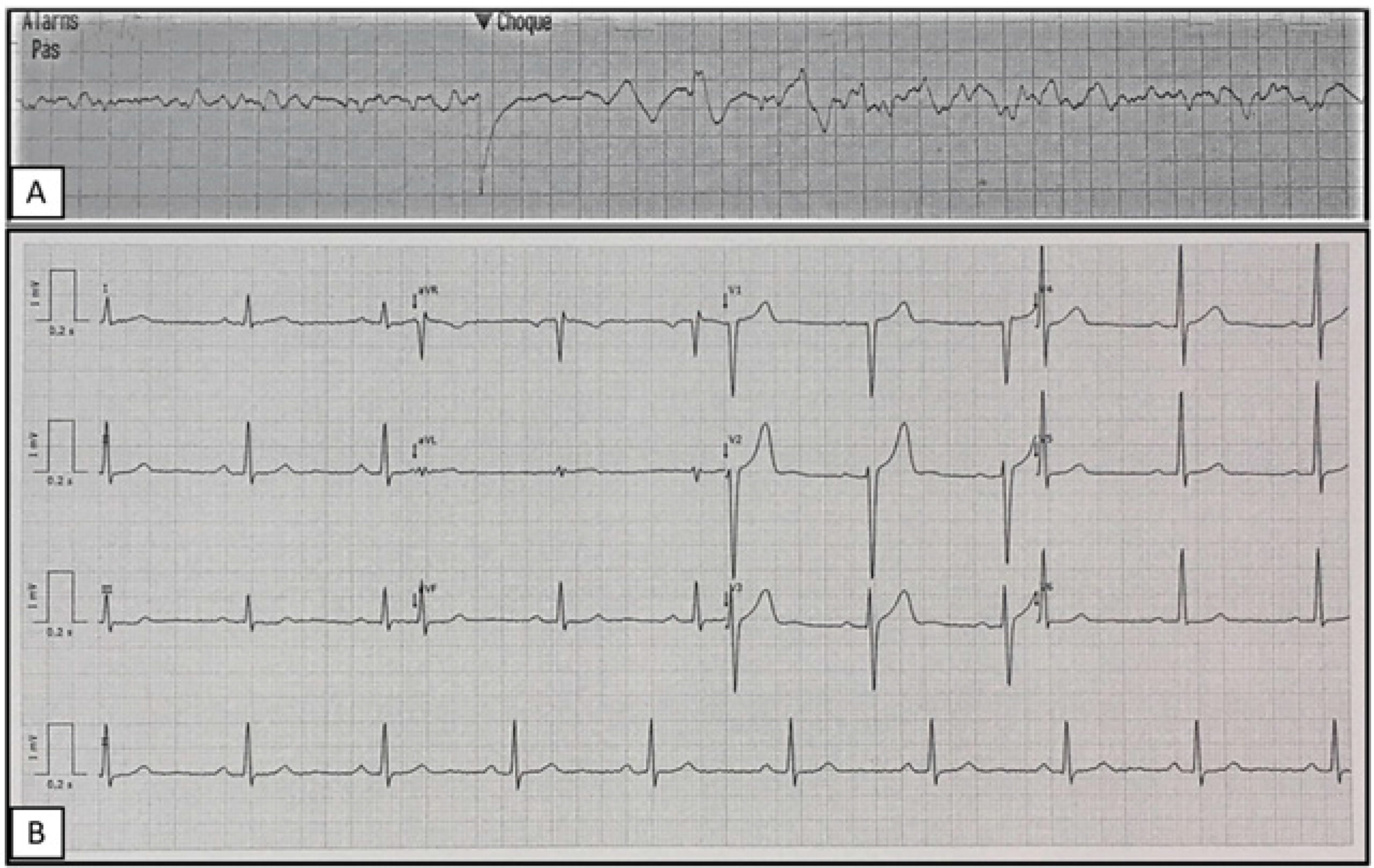
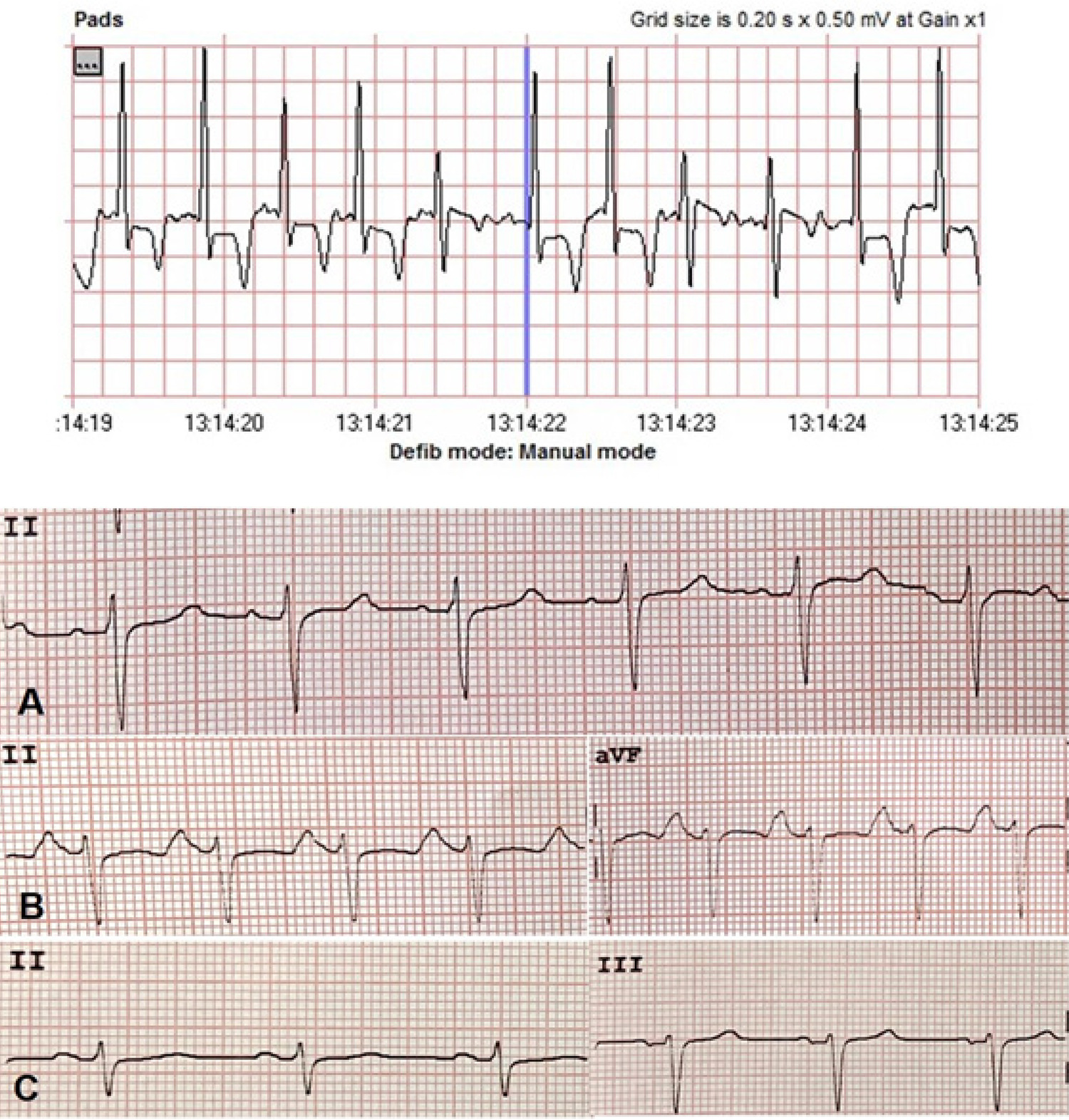
A 35-year-old man was admitted following a recovered cardiorespiratory arrest. He was attacked by another man with multiples blunts by a wood stick in the chest and head. An eyewitness statement indicated that the victim had lost consciousness and collapsed after being hit in the chest. He was in cardiac arrest, and a nearby healthcare professional provided first aid with cardiopulmonary resuscitation. The first electrocardiogram (ECG) rhythm strip, fifteen minutes later, identified ventricular fibrillation (VF) (). Sixteen electrical shocks were delivered, always with VF, before restoration of sinus rhythm and circulation. A 12-lead-ECG revealed sinus rhythm without ST deviations and a corrected QT interval of 414 msec. On admission, he was under ventilatory support, with a heart rate of 80 beats per minute, blood pressure of 121/70mmHg, and no signs of shock. There was no previously known medical condition, besides being an active smoker and a binge drinker, and no family history of early coronary disease, cardiomyopathy, or sudden death. He was under the influence of alcohol, as was confirmed by blood tests (blood alcohol level of 1.31g/L), and had a discretely elevated cardiac troponin-T of 0.9ng/ml (normal range, 0 to 0.08 ng/ml). The remaining analyzes, cranial and cervical CT scan, chest X-ray, and abdominal eco FAST were normal. An initial echocardiogram in the emergency department demonstrated normal-sized chambers and global ventricular systolic dysfunction explained by a prolonged cardiac arrest. He was admitted to the intensive care unit for post-resuscitation care with therapeutic hypothermia and temporary ventilatory support. At 48 hours of admission, there was a normalization of systolic function with a normal ejection fraction by echocardiogram (). Coronary angiography excluded coronary disease (). Serial electrocardiograms were not suggestive of an arrhythmogenic substrate (). The sudden cardiac arrest was assumed secondary to a commotio cordis (CC), and for this reason, the patient was not proposed for an implantable cardioverter-defibrillator (ICD). The clinical outcome was favorable, and the patient was discharged. He remained asymptomatic during three years of follow-up, with normal ECG, echocardiogram with strain-rate imaging, exercise stress test, and 24-hour-Holter. During mid-term follow-up, a cardiac magnetic resonance imaging (MRI) showed normal-sized chambers, global and regional function, and no myocardial edema or myocardial scar by late focal hyperenhancement (-).

[…]

  • Arrhythmias, Cardiac/complications
  • Atrioventricular block
  • Cardiovascular Diseases/complications
  • Commotio Cordis
  • Diagnosis, Dfferential
  • Heart Arrest
  • Ventricular Fibrillation
Read Full Article
Creative Commons Attribution (CC BY) Creative Commons license
09/08/2021 DOI: 10.36660/ijcs.20200356 Views 1
Figure 1
ABC
Editorial

Out-Of-Hospital Cardiac Arrest during the Coronavirus Disease 2019 (COVID-19) Pandemic in Brazil: The Hidden Mortality

Claudio Tinoco Mesquita

Abstract

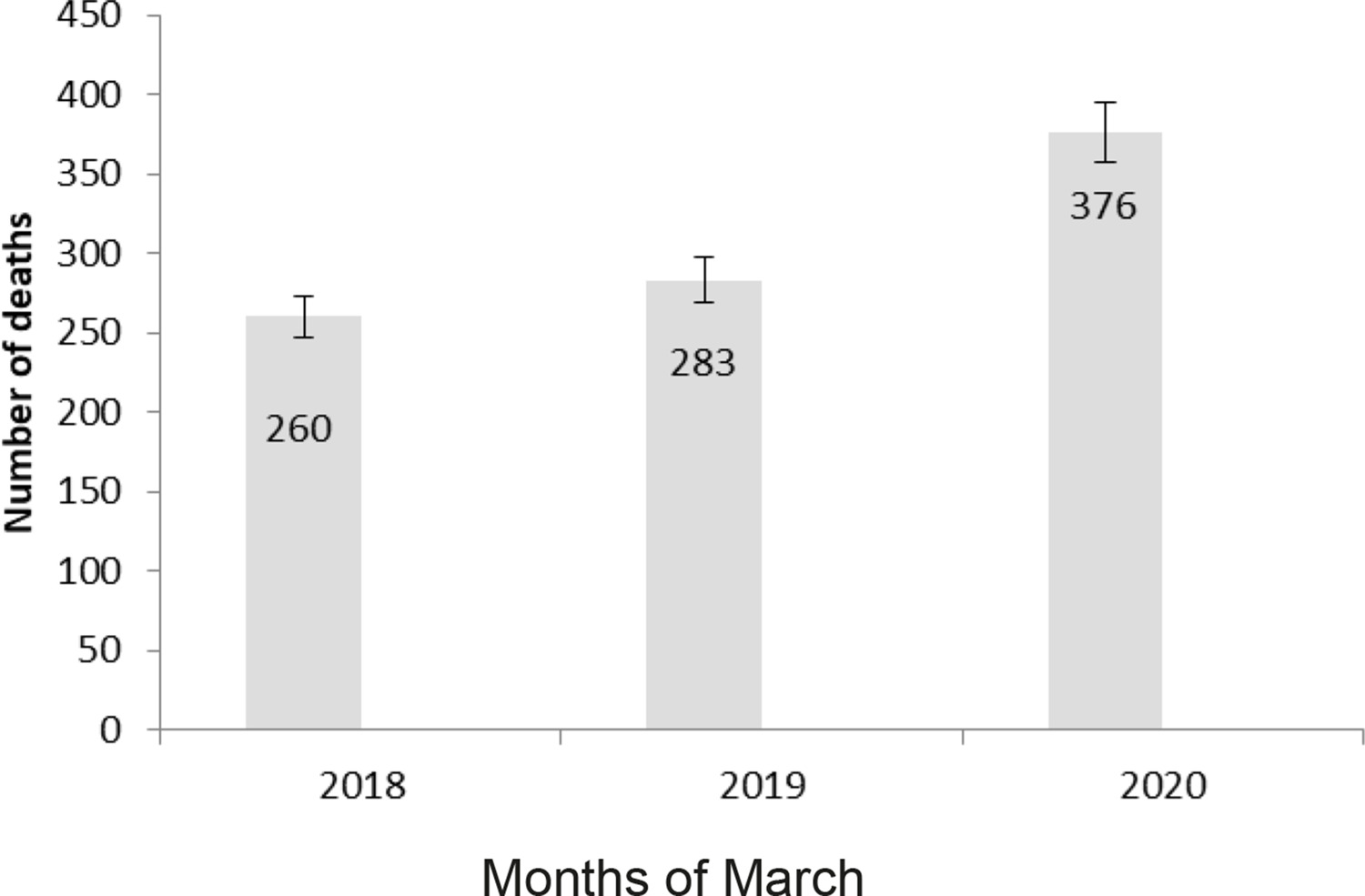
The world changed in just a few months after the emergence of the novel coronavirus disease 2019 (COVID-19), caused by a beta coronavirus named severe acute respiratory syndrome coronavirus 2 (SARS-CoV-2). COVID-19 was declared a pandemic by the World Health Organization (WHO) on March 11, 2020. Brazil currently has the world’s second-highest COVID-19 death toll, second only to the USA. The COVID-19 pandemic is spreading fast in the world with more than 181 countries affected. This editorial refers to the article published in Arquivos Brasileiros de Cardiologia: “Increase in home deaths due to cardiorespiratory arrest in times of COVID-19 pandemic.”1 Their main results show a gradual increase in the rate of out-of-hospital cardiac arrest during the Coronavirus disease 2019 (COVID-19) pandemic in the city of Belo Horizonte, Minas Gerais, Brazil. Their data demonstrate a proportional increase of 33% of home deaths in March 2020 compared to previous periods. Their study is the first Brazilian paper to demonstrate the same trend observed in other countries.

  • Betacoronavirus
  • Cardiovascular Diseases, Pneumopathies
  • Covid-19/complications
  • Heart Arrest
  • Mortality
  • Pandemics
  • Risk Factors, Elderly
Read Full Article
Creative Commons Attribution (CC BY) Creative Commons license
01/03/2021 DOI: 10.36660/abc.20210041 Views 1
Figure 1
ABC
Original Article

Increased Home Death Due to Cardiopulmonary Arrest in Times of COVID-19 Pandemic

Nathalia Sernizon Guimarães et al. Taciana Malheiros Lima Carvalho Jackson Machado-Pinto Roger Lage … Renata Mascarenhas Bernardes Alex Sander Sena Peres Mariana Amaral Raposo Ricardo Machado Carvalhais Renan Avelino Mancini Gabriella Yuka Shiomatsu Bruna Carvalho Oliveira Valéria de Melo Rodrigues Maria do Carmo Barros de Melo Unaí Tupinambás

Abstract

Background

Cardiovascular diseases constitute an important group of causes of death in the country. Ischemic heart diseases that are the main causes of cardiopulmonary arrest, leading to an impact on the mortality of the cardiovascular diseases in the health system.

Objective

Assess the number of home deaths by cardiopulmonary arrest notified by the Mobile Emergency Medical Service (SAMU) in March 2018, 2019 and 2020.

Methods

Observational study carried out from the analysis of cardiopulmonary arrest mortality data of citizens assisted by SAMU in Belo Horizonte, Minas Gerais, Brazil. Social and clinical characteristics and occurrence information of the patients were analyzed. The mortality rate due to cardiopulmonary arrest in relation to the total number of attendances was assessed. A significance level of 95% was considered.

Results

There was increase of home deaths due to cardiopulmonary arrest in March 2020 compared to March 2018 (p<0.001) and March 2019 (p=0.050). Of the deaths reported in 2020, 63.8% of the patients were aged 60 years or older, 63.7% of the occurrences were performed in the afternoon and approximately 87% of the cardiopulmonary arrest notified had associated clinical comorbidities, with systemic arterial hypertension and heart failure represented by 22.87% and 13.03% of the reported cases, respectively. The majority of the evaluated sample of this study did not have any medical care follow-up (88.7%).

Conclusion

Considering the increase in the number of the deaths, we suggest reflections and readjustments regarding the monitoring of chronic non-transmissible diseases during a pandemic, as well as improvements in death surveillance. (Arq Bras Cardiol. 2021; 116(2):266-271)

  • Betacoronavirus
  • COVID-19
  • Deaths
  • Emergency Medical Services
  • Heart Arrest
  • Pandemics
Read Full Article
Creative Commons Attribution (CC BY) Creative Commons license
01/03/2021 DOI: 10.36660/abc.20200547 Views 1
Figure 1
IJCS
Case Report

Cardiac Arrest Due to Hypocalcemia

Fernanda Aburesi Salvadori et al. Eduardo Martelli Moreira Murilo Bacchini Dias Amaro Nunes Duarte-Neto Edison Ferreira de Paiva

Discussion

Long QT syndrome (LQTS) can be congenital or acquired. The causes of acquired LQTS include hypocalcemia, due to prolongation of the phase 2 of the action potential (AP), medications (amiodarone, antidepressants and neuroleptics), hypokalemia, hypomagnesemia and severe bradycardia. – LQTS is associated with a specific polymorphic ventricular tachycardia (VT), named as torsades de pointes (TdP), because of the characteristic shift in the QRS axis that gives the impression of a “torsion”.

The QT interval is a marker of the AP duration. In LQTS patients, the AP is prolonged unevenly across the myocardium, so as to cause high dispersion of repolarization. The AP prolongation favors the formation of early afterdepolarization (EAD), which are deformities in the plateau and rapid repolarization phases (2 and 3) capable of inducing ventricular extrasystoles. EADs in the unevenly repolarized myocardium are the cause of TdP. Tachycardia is sustained due to focal electric activity and/or a reentrant mechanism. It may either cease spontaneously or degenerate into ventricular fibrillation and cardiac arrest , .

[…]

  • Cardiopulmonary Resuscitation
  • Heart Arrest
  • Hypertension
  • Hypocalcemia
  • Kidney Transplantation
  • renal dialysis
  • Renal Insufficiency
  • Tachycardia, Ventricular
Read Full Article
Creative Commons Attribution (CC BY) Creative Commons license
23/11/2020 DOI: 10.36660/ijcs.20200034

Could not load more articles. Please try again.

How to cite this article

EndNote RIS

Electronic Document Format (Vancouver)

Patané JSL, Giugni FR. Genetic Evidence Supports a Causal Role for Smoking in Cardiac Arrest. Arquivos Brasileiros de Cardiologia 2026;123(3):e20260238.

Electronic Document Format (ABNT)

Patané, José S. L.; Giugni, Fernando R.. Genetic Evidence Supports a Causal Role for Smoking in Cardiac Arrest. Arquivos Brasileiros de Cardiologia, v. 123, n. 3, e20260238, May. 2026.

Electronic Document Format (APA)

Patané, J. S. L., & Giugni, F. R. (2026). Genetic Evidence Supports a Causal Role for Smoking in Cardiac Arrest. Arquivos Brasileiros de Cardiologia, 123(3), e20260238.

Electronic Document Format (ISO)

Patané, José S. L. and Giugni, Fernando R.. Genetic Evidence Supports a Causal Role for Smoking in Cardiac Arrest. Arquivos Brasileiros de Cardiologia [online]. 2026, vol. 123, n. 3, [cited 2026-10-14], e20260238. Available from: <https://journals.cardiol.br/en/article/genetic-evidence-supports-a-causal-role-for-smoking-in-cardiac-arrest/>. ISSN 0066-782X

EndNote RIS

Electronic Document Format (Vancouver)

Caneo LF. Extracorporeal Cardiopulmonary Resuscitation in Latin America: It is Not All about the Money. Arquivos Brasileiros de Cardiologia 2026;123(3):e20260240.

Electronic Document Format (ABNT)

Caneo, Luiz Fernando. Extracorporeal Cardiopulmonary Resuscitation in Latin America: It is Not All about the Money. Arquivos Brasileiros de Cardiologia, v. 123, n. 3, e20260240, May. 2026.

Electronic Document Format (APA)

Caneo, L. F. (2026). Extracorporeal Cardiopulmonary Resuscitation in Latin America: It is Not All about the Money. Arquivos Brasileiros de Cardiologia, 123(3), e20260240.

Electronic Document Format (ISO)

Caneo, Luiz Fernando. Extracorporeal Cardiopulmonary Resuscitation in Latin America: It is Not All about the Money. Arquivos Brasileiros de Cardiologia [online]. 2026, vol. 123, n. 3, [cited 2026-10-14], e20260240. Available from: <https://journals.cardiol.br/en/article/extracorporeal-cardiopulmonary-resuscitation-in-latin-america-it-is-not-all-about-the-money/>. ISSN 0066-782X

EndNote RIS

Electronic Document Format (Vancouver)

Tian X, Wang Y, Tan Q, Liu L. A Two-sample Mendelian Randomization Study of Air Pollution/Smoking and Cardiac Arrest. Arquivos Brasileiros de Cardiologia 2026;123(3):20250127.

Electronic Document Format (ABNT)

Tian, Xuelin; Wang, Yu; Tan, Qingzhao; Liu, Liying. A Two-sample Mendelian Randomization Study of Air Pollution/Smoking and Cardiac Arrest. Arquivos Brasileiros de Cardiologia, v. 123, n. 3, 20250127, May. 2026.

Electronic Document Format (APA)

Tian, X., Wang, Y., Tan, Q., & Liu, L. (2026). A Two-sample Mendelian Randomization Study of Air Pollution/Smoking and Cardiac Arrest. Arquivos Brasileiros de Cardiologia, 123(3), 20250127.

Electronic Document Format (ISO)

Tian, Xuelin and Wang, Yu and Tan, Qingzhao and Liu, Liying. A Two-sample Mendelian Randomization Study of Air Pollution/Smoking and Cardiac Arrest. Arquivos Brasileiros de Cardiologia [online]. 2026, vol. 123, n. 3, [cited 2026-10-14], 20250127. Available from: <https://journals.cardiol.br/en/article/a-two-sample-mendelian-randomization-study-of-air-pollution-smoking-and-cardiac-arrest/>. ISSN 0066-782X

EndNote RIS

Electronic Document Format (Vancouver)

Garcia-Zamora S, Somani Z, Baranchuk A. You Can Only Improve What You Measure: The Importance of the Rapid Response Team in Improving Patient Care. International Journal of Cardiovascular Sciences 2026;39:e20250199.

Electronic Document Format (ABNT)

Garcia-Zamora, Sebastian; Somani, Zain; Baranchuk, Adrian. You Can Only Improve What You Measure: The Importance of the Rapid Response Team in Improving Patient Care. International Journal of Cardiovascular Sciences, v. 39, e20250199, Apr. 2026.

Electronic Document Format (APA)

Garcia-Zamora, S., Somani, Z., & Baranchuk, A. (2026). You Can Only Improve What You Measure: The Importance of the Rapid Response Team in Improving Patient Care. International Journal of Cardiovascular Sciences, 39, e20250199.

Electronic Document Format (ISO)

Garcia-Zamora, Sebastian and Somani, Zain and Baranchuk, Adrian. You Can Only Improve What You Measure: The Importance of the Rapid Response Team in Improving Patient Care. International Journal of Cardiovascular Sciences [online]. 2026, vol. 39, [cited 2026-10-14], e20250199. Available from: <https://journals.cardiol.br/en/article/you-can-only-improve-what-you-measure-the-importance-of-the-rapid-response-team-in-improving-patient-care/>. ISSN 2359-4802

EndNote RIS

Electronic Document Format (Vancouver)

Salvadori FA, Kobayasi R, Perondi MB, Paiva EF. Prospective Longitudinal Study on Mortality and Quality of Care for Ward Patients Following Rapid Response Team Implementation in Brazil. International Journal of Cardiovascular Sciences 2026;39:e20250028.

Electronic Document Format (ABNT)

Salvadori, Fernanda Aburesi; Kobayasi, Renata; Perondi, Maria Beatriz; Paiva, Edison Ferreira de. Prospective Longitudinal Study on Mortality and Quality of Care for Ward Patients Following Rapid Response Team Implementation in Brazil. International Journal of Cardiovascular Sciences, v. 39, e20250028, Mar. 2026.

Electronic Document Format (APA)

Salvadori, F. A., Kobayasi, R., Perondi, M. B., & Paiva, E. F. (2026). Prospective Longitudinal Study on Mortality and Quality of Care for Ward Patients Following Rapid Response Team Implementation in Brazil. International Journal of Cardiovascular Sciences, 39, e20250028.

Electronic Document Format (ISO)

Salvadori, Fernanda Aburesi and Kobayasi, Renata and Perondi, Maria Beatriz and Paiva, Edison Ferreira de. Prospective Longitudinal Study on Mortality and Quality of Care for Ward Patients Following Rapid Response Team Implementation in Brazil. International Journal of Cardiovascular Sciences [online]. 2026, vol. 39, [cited 2026-10-14], e20250028. Available from: <https://journals.cardiol.br/en/article/prospective-longitudinal-study-on-mortality-and-quality-of-care-for-ward-patients-following-rapid-response-team-implementation-in-brazil/>. ISSN 2359-4802

EndNote RIS

Electronic Document Format (Vancouver)

Andrade TM, Marques MLC, Marques JPC, Souza MEM, Oliveira GMM, Salim TR. Profile of Mortality Due to All Causes and Patterns of Diseases of the Circulatory System in Childhood Between 2019 and 2022 in Brazil. Arquivos Brasileiros de Cardiologia 2026;122(12):e20250191.

Electronic Document Format (ABNT)

Andrade, Thayanne Mendes de; Marques, Mariara Lopes da Costa; Marques, Julia Pereira Cavalcante; Souza, Maria Eduarda Miranda de; Oliveira, Gláucia Maria Moraes de; Salim, Thais Rocha. Profile of Mortality Due to All Causes and Patterns of Diseases of the Circulatory System in Childhood Between 2019 and 2022 in Brazil. Arquivos Brasileiros de Cardiologia, v. 122, n. 12, e20250191, Jan. 2026.

Electronic Document Format (APA)

Andrade, T. M. , Marques, M. L. C., Marques, J. P. C., Souza, M. E. M. , Oliveira, G. M. M. , & Salim, T. R. (2026). Profile of Mortality Due to All Causes and Patterns of Diseases of the Circulatory System in Childhood Between 2019 and 2022 in Brazil. Arquivos Brasileiros de Cardiologia, 122(12), e20250191.

Electronic Document Format (ISO)

Andrade, Thayanne Mendes de and Marques, Mariara Lopes da Costa and Marques, Julia Pereira Cavalcante and Souza, Maria Eduarda Miranda de and Oliveira, Gláucia Maria Moraes de and Salim, Thais Rocha. Profile of Mortality Due to All Causes and Patterns of Diseases of the Circulatory System in Childhood Between 2019 and 2022 in Brazil. Arquivos Brasileiros de Cardiologia [online]. 2026, vol. 122, n. 12, [cited 2026-10-14], e20250191. Available from: <https://journals.cardiol.br/en/article/profile-of-mortality-due-to-all-causes-and-patterns-of-diseases-of-the-circulatory-system-in-childhood-between-2019-and-2022-in-brazil/>. ISSN 0066-782X

EndNote RIS

Electronic Document Format (Vancouver)

Timerman S. Rescuing Lives: Reflecting on the Future of Cardiopulmonary Arrest Care. International Journal of Cardiovascular Sciences 2025;38:e20250010.

Electronic Document Format (ABNT)

Timerman, Sergio. Rescuing Lives: Reflecting on the Future of Cardiopulmonary Arrest Care. International Journal of Cardiovascular Sciences, v. 38, e20250010, Apr. 2025.

Electronic Document Format (APA)

Timerman, S. (2025). Rescuing Lives: Reflecting on the Future of Cardiopulmonary Arrest Care. International Journal of Cardiovascular Sciences, 38, e20250010.

Electronic Document Format (ISO)

Timerman, Sergio. Rescuing Lives: Reflecting on the Future of Cardiopulmonary Arrest Care. International Journal of Cardiovascular Sciences [online]. 2025, vol. 38, [cited 2026-10-14], e20250010. Available from: <https://journals.cardiol.br/en/article/rescuing-lives-reflecting-on-the-future-of-cardiopulmonary-arrest-care/>. ISSN 2359-4802

EndNote RIS

Electronic Document Format (Vancouver)

Arci MS, Sá LMC, Oliveira LA, Agria GB, Morinaga C, Enohi RT. Cardiopulmonary Resuscitation-Induced Consciousness (CPRIC): Occurrence and Perception of Health Professionals and Firemen. International Journal of Cardiovascular Sciences 2025;38:e20240130.

Electronic Document Format (ABNT)

Arci, Matheus Sousa; Sá, Lívia Maria Coura de; Oliveira, Lucas Alves; Agria, Giulia Bortoloni; Morinaga, Christian; Enohi, Ricardo Toshio. Cardiopulmonary Resuscitation-Induced Consciousness (CPRIC): Occurrence and Perception of Health Professionals and Firemen. International Journal of Cardiovascular Sciences, v. 38, e20240130, Apr. 2025.

Electronic Document Format (APA)

Arci, M. S., Sá, L. M. C. , Oliveira, L. A., Agria, G. B., Morinaga, C., & Enohi, R. T. (2025). Cardiopulmonary Resuscitation-Induced Consciousness (CPRIC): Occurrence and Perception of Health Professionals and Firemen. International Journal of Cardiovascular Sciences, 38, e20240130.

Electronic Document Format (ISO)

Arci, Matheus Sousa and Sá, Lívia Maria Coura de and Oliveira, Lucas Alves and Agria, Giulia Bortoloni and Morinaga, Christian and Enohi, Ricardo Toshio. Cardiopulmonary Resuscitation-Induced Consciousness (CPRIC): Occurrence and Perception of Health Professionals and Firemen. International Journal of Cardiovascular Sciences [online]. 2025, vol. 38, [cited 2026-10-14], e20240130. Available from: <https://journals.cardiol.br/en/article/cardiopulmonary-resuscitation-induced-consciousness-cpric-occurrence-and-perception-of-health-professionals-and-firemen/>. ISSN 2359-4802

EndNote RIS

Electronic Document Format (Vancouver)

Alves C, Pimentel SQ, Lopes FJ. Use of Extracorporeal Membrane Oxygenation in Adult Patients During Cardiac Arrest. International Journal of Cardiovascular Sciences 2024;37:e2023193.

Electronic Document Format (ABNT)

Alves, Cibelle; Pimentel, Sarah Queiroz; Lopes, Francine Jomara. Use of Extracorporeal Membrane Oxygenation in Adult Patients During Cardiac Arrest. International Journal of Cardiovascular Sciences, v. 37, e2023193, Jul. 2024.

Electronic Document Format (APA)

Alves, C., Pimentel, S. Q., & Lopes, F. J. (2024). Use of Extracorporeal Membrane Oxygenation in Adult Patients During Cardiac Arrest. International Journal of Cardiovascular Sciences, 37, e2023193.

Electronic Document Format (ISO)

Alves, Cibelle and Pimentel, Sarah Queiroz and Lopes, Francine Jomara. Use of Extracorporeal Membrane Oxygenation in Adult Patients During Cardiac Arrest. International Journal of Cardiovascular Sciences [online]. 2024, vol. 37, [cited 2026-10-14], e2023193. Available from: <https://journals.cardiol.br/en/article/use-of-extracorporeal-membrane-oxygenation-in-adult-patients-during-cardiac-arrest/>. ISSN 2359-4802

EndNote RIS

Electronic Document Format (Vancouver)

Furtado FN, Carvalho ACC, Gonçalves Junior I, Canesin MF, Timerman S, Gonçalves RM, Alfieri DF, et al. First Evaluation of the Brazilian Advanced Life Support Training (TECA A). International Journal of Cardiovascular Sciences 2023;36:e20220199.

Electronic Document Format (ABNT)

Furtado, Fabrício Nogueira; Carvalho, Antonio Carlos de Camargo; Gonçalves Junior, Iran; Canesin, Manoel Fernandes; Timerman, Sergio; Gonçalves, Rodrigo Marques; Alfieri, Daniela Frizon; Almeida, Dirceu. First Evaluation of the Brazilian Advanced Life Support Training (TECA A). International Journal of Cardiovascular Sciences, v. 36, e20220199, Oct. 2023.

Electronic Document Format (APA)

Furtado, F. N., Carvalho, A. C. C., Gonçalves Junior, I., Canesin, M. F., Timerman, S., Gonçalves, R. M., Alfieri, D. F., & Almeida, D. (2023). First Evaluation of the Brazilian Advanced Life Support Training (TECA A). International Journal of Cardiovascular Sciences, 36, e20220199.

Electronic Document Format (ISO)

Furtado, Fabrício Nogueira and Carvalho, Antonio Carlos de Camargo and Gonçalves Junior, Iran and Canesin, Manoel Fernandes and Timerman, Sergio and Gonçalves, Rodrigo Marques and Alfieri, Daniela Frizon and Almeida, Dirceu. First Evaluation of the Brazilian Advanced Life Support Training (TECA A). International Journal of Cardiovascular Sciences [online]. 2023, vol. 36, [cited 2026-10-14], e20220199. Available from: <https://journals.cardiol.br/en/article/first-evaluation-of-the-brazilian-advanced-life-support-training-teca-a/>. ISSN 2359-4802

EndNote RIS

Electronic Document Format (Vancouver)

Guimarães HP. Ventilation and Respiratory Parameters in CPR: Where are We and Next Steps!. Arquivos Brasileiros de Cardiologia 2023;120(7):e20230492.

Electronic Document Format (ABNT)

Guimarães, Hélio Penna. Ventilation and Respiratory Parameters in CPR: Where are We and Next Steps!. Arquivos Brasileiros de Cardiologia, v. 120, n. 7, e20230492, Sep. 2023.

Electronic Document Format (APA)

Guimarães, H. P. (2023). Ventilation and Respiratory Parameters in CPR: Where are We and Next Steps!. Arquivos Brasileiros de Cardiologia, 120(7), e20230492.

Electronic Document Format (ISO)

Guimarães, Hélio Penna. Ventilation and Respiratory Parameters in CPR: Where are We and Next Steps!. Arquivos Brasileiros de Cardiologia [online]. 2023, vol. 120, n. 7, [cited 2026-10-14], e20230492. Available from: <https://journals.cardiol.br/en/article/ventilation-and-respiratory-parameters-in-cpr-where-are-we-and-next-steps/>. ISSN 0066-782X

EndNote RIS

Electronic Document Format (Vancouver)

Salim TR, Soares GP. Outcome Analysis after Out-of-Hospital Cardiac Arrest. Arquivos Brasileiros de Cardiologia 2023;120(7):e20230406.

Electronic Document Format (ABNT)

Salim, Thais Rocha; Soares, Gabriel Porto. Outcome Analysis after Out-of-Hospital Cardiac Arrest. Arquivos Brasileiros de Cardiologia, v. 120, n. 7, e20230406, Aug. 2023.

Electronic Document Format (APA)

Salim, T. R., & Soares, G. P. (2023). Outcome Analysis after Out-of-Hospital Cardiac Arrest. Arquivos Brasileiros de Cardiologia, 120(7), e20230406.

Electronic Document Format (ISO)

Salim, Thais Rocha and Soares, Gabriel Porto. Outcome Analysis after Out-of-Hospital Cardiac Arrest. Arquivos Brasileiros de Cardiologia [online]. 2023, vol. 120, n. 7, [cited 2026-10-14], e20230406. Available from: <https://journals.cardiol.br/en/article/outcome-analysis-after-out-of-hospital-cardiac-arrest/>. ISSN 0066-782X

EndNote RIS

Electronic Document Format (Vancouver)

Nacer DT, Sousa RMC, Miranda AL. Outcomes after Clinical and Traumatic Out-of-Hospital Cardiac Arrest. Arquivos Brasileiros de Cardiologia 2023;120(7):e20220551.

Electronic Document Format (ABNT)

Nacer, Daiana Terra; Sousa, Regina Márcia Cardoso de; Miranda, Anna Leticia. Outcomes after Clinical and Traumatic Out-of-Hospital Cardiac Arrest. Arquivos Brasileiros de Cardiologia, v. 120, n. 7, e20220551, Jul. 2023.

Electronic Document Format (APA)

Nacer, D. T., Sousa, R. M. C. , & Miranda, A. L. (2023). Outcomes after Clinical and Traumatic Out-of-Hospital Cardiac Arrest. Arquivos Brasileiros de Cardiologia, 120(7), e20220551.

Electronic Document Format (ISO)

Nacer, Daiana Terra and Sousa, Regina Márcia Cardoso de and Miranda, Anna Leticia. Outcomes after Clinical and Traumatic Out-of-Hospital Cardiac Arrest. Arquivos Brasileiros de Cardiologia [online]. 2023, vol. 120, n. 7, [cited 2026-10-14], e20220551. Available from: <https://journals.cardiol.br/en/article/outcomes-after-clinical-and-traumatic-out-of-hospital-cardiac-arrest/>. ISSN 0066-782X

EndNote RIS

Electronic Document Format (Vancouver)

Stein R, Ferrari F, Silveira AD. Electrocardiogram of Brazilian Elite Football Players: Filling a Gap. Arquivos Brasileiros de Cardiologia 2023;120(4):e20230090.

Electronic Document Format (ABNT)

Stein, Ricardo; Ferrari, Filipe; Silveira, Anderson Donelli da. Electrocardiogram of Brazilian Elite Football Players: Filling a Gap. Arquivos Brasileiros de Cardiologia, v. 120, n. 4, e20230090, Apr. 2023.

Electronic Document Format (APA)

Stein, R., Ferrari, F., & Silveira, A. D. (2023). Electrocardiogram of Brazilian Elite Football Players: Filling a Gap. Arquivos Brasileiros de Cardiologia, 120(4), e20230090.

Electronic Document Format (ISO)

Stein, Ricardo and Ferrari, Filipe and Silveira, Anderson Donelli da. Electrocardiogram of Brazilian Elite Football Players: Filling a Gap. Arquivos Brasileiros de Cardiologia [online]. 2023, vol. 120, n. 4, [cited 2026-10-14], e20230090. Available from: <https://journals.cardiol.br/en/article/electrocardiogram-of-brazilian-elite-football-players-filling-a-gap/>. ISSN 0066-782X

EndNote RIS

Electronic Document Format (Vancouver)

Villela PB. Improving Cardiopulmonary Resuscitation. Arquivos Brasileiros de Cardiologia 2023;120(1):e20220900.

Electronic Document Format (ABNT)

Villela, Paolo Blanco. Improving Cardiopulmonary Resuscitation. Arquivos Brasileiros de Cardiologia, v. 120, n. 1, e20220900, Feb. 2023.

Electronic Document Format (APA)

Villela, P. B. (2023). Improving Cardiopulmonary Resuscitation. Arquivos Brasileiros de Cardiologia, 120(1), e20220900.

Electronic Document Format (ISO)

Villela, Paolo Blanco. Improving Cardiopulmonary Resuscitation. Arquivos Brasileiros de Cardiologia [online]. 2023, vol. 120, n. 1, [cited 2026-10-14], e20220900. Available from: <https://journals.cardiol.br/en/article/improving-cardiopulmonary-resuscitation/>. ISSN 0066-782X

EndNote RIS

Electronic Document Format (Vancouver)

Tobase L, Peres HHC, Polastri TF, Cardoso SH, Souza DR, Almeida DG, Timerman S, et al. The Use of the Borg Rating of Perceived Exertion Scale in Cardiopulmonary Resuscitation. Arquivos Brasileiros de Cardiologia 2023;120(1):e20220240.

Electronic Document Format (ABNT)

Tobase, Lucia; Peres, Heloisa Helena Ciqueto; Polastri, Thatiane Facholi; Cardoso, Sandra Helena; Souza, Dhieizom Rodrigo; Almeida, Debora Gugelmin; Timerman, Sergio. The Use of the Borg Rating of Perceived Exertion Scale in Cardiopulmonary Resuscitation. Arquivos Brasileiros de Cardiologia, v. 120, n. 1, e20220240, Jan. 2023.

Electronic Document Format (APA)

Tobase, L., Peres, H. H. C., Polastri, T. F., Cardoso, S. H., Souza, D. R., Almeida, D. G., & Timerman, S. (2023). The Use of the Borg Rating of Perceived Exertion Scale in Cardiopulmonary Resuscitation. Arquivos Brasileiros de Cardiologia, 120(1), e20220240.

Electronic Document Format (ISO)

Tobase, Lucia and Peres, Heloisa Helena Ciqueto and Polastri, Thatiane Facholi and Cardoso, Sandra Helena and Souza, Dhieizom Rodrigo and Almeida, Debora Gugelmin and Timerman, Sergio. The Use of the Borg Rating of Perceived Exertion Scale in Cardiopulmonary Resuscitation. Arquivos Brasileiros de Cardiologia [online]. 2023, vol. 120, n. 1, [cited 2026-10-14], e20220240. Available from: <https://journals.cardiol.br/en/article/the-use-of-the-borg-rating-of-perceived-exertion-scale-in-cardiopulmonary-resuscitation/>. ISSN 0066-782X

EndNote RIS

Electronic Document Format (Vancouver)

Nogueira ALM, Maciel ALS, Querubino AC, Prado RT, Martins JR. Efficacy and Risks of Therapeutic Hypothermia after Pediatric Cardiac Arrest: A Systematic Review. International Journal of Cardiovascular Sciences 2022;35(6):740-8.

Electronic Document Format (ABNT)

Nogueira, Anna Luíza Machado; Maciel, Ana Luísa dos Santos; Querubino, Amanda Campos; Prado, Roberta Teixeira; Martins, Jussara Regina. Efficacy and Risks of Therapeutic Hypothermia after Pediatric Cardiac Arrest: A Systematic Review. International Journal of Cardiovascular Sciences, v. 35, n. 6, p. 740-748, Apr. 2022.

Electronic Document Format (APA)

Nogueira, A. L. M., Maciel, A. L. S., Querubino, A. C., Prado, R. T., & Martins, J. R. (2022). Efficacy and Risks of Therapeutic Hypothermia after Pediatric Cardiac Arrest: A Systematic Review. International Journal of Cardiovascular Sciences, 35(6), 740-748.

Electronic Document Format (ISO)

Nogueira, Anna Luíza Machado and Maciel, Ana Luísa dos Santos and Querubino, Amanda Campos and Prado, Roberta Teixeira and Martins, Jussara Regina. Efficacy and Risks of Therapeutic Hypothermia after Pediatric Cardiac Arrest: A Systematic Review. International Journal of Cardiovascular Sciences [online]. 2022, vol. 35, n. 6, [cited 2026-10-14], pp. 740-748. Available from: <https://journals.cardiol.br/en/article/efficacy-and-risks-of-therapeutic-hypothermia-after-pediatric-cardiac-arrest-a-systematic-review/>. ISSN 2359-4802

EndNote RIS

Electronic Document Format (Vancouver)

Pimentel M, Magalhães APA, Novak CV, May BM, Rosa LGB, Zimerman LI. Cardiac Arrhythmias in Patients with COVID-19. Arquivos Brasileiros de Cardiologia 2021;117(5):1010-5.

Electronic Document Format (ABNT)

Pimentel, Mauricio; Magalhães, Ana Paula Arbo; Novak, Camila Valvassori; May, Bruna Miers; Rosa, Luiz Gustavo Bravosi da; Zimerman, Leandro Ioschpe. Cardiac Arrhythmias in Patients with COVID-19. Arquivos Brasileiros de Cardiologia, v. 117, n. 5, p. 1010-1015, Sep. 2021.

Electronic Document Format (APA)

Pimentel, M., Magalhães, A. P. A., Novak, C. V., May, B. M., Rosa, L. G. B. , & Zimerman, L. I. (2021). Cardiac Arrhythmias in Patients with COVID-19. Arquivos Brasileiros de Cardiologia, 117(5), 1010-1015.

Electronic Document Format (ISO)

Pimentel, Mauricio and Magalhães, Ana Paula Arbo and Novak, Camila Valvassori and May, Bruna Miers and Rosa, Luiz Gustavo Bravosi da and Zimerman, Leandro Ioschpe. Cardiac Arrhythmias in Patients with COVID-19. Arquivos Brasileiros de Cardiologia [online]. 2021, vol. 117, n. 5, [cited 2026-10-14], pp. 1010-1015. Available from: <https://journals.cardiol.br/en/article/cardiac-arrhythmias-in-patients-with-covid-19/>. ISSN 0066-782X

EndNote RIS

Electronic Document Format (Vancouver)

Soeiro AM, Cardozo FA, Guimarães PO, Pereira MP, Souza PVR, Boros GAB, Veiga VC, et al. Patient in Cardiorespiratory Arrest – Is it Possible to Perform Transcatheter Aortic Valve Implantation (TAVI) in this Scenario?. Arquivos Brasileiros de Cardiologia 2021;117(2):404-6.

Electronic Document Format (ABNT)

Soeiro, Alexandre de Matos; Cardozo, Francisco Akira; Guimarães, Patrícia Oliveira; Pereira, Marcel Paula; Souza, Paulo Vinícius Ramos; Boros, Gustavo A. B.; Veiga, Viviane Cordeiro; Rojas, Samolon Soriano Ordinola; Mangione, Fernanda Marinho; Cristóvão, Salvador André Bavaresco; Dutra, Gustavo Alexandre; Salman, Adnan Ali; Bettarello, Luiz Eduardo Loureiro; Mangione, José Armando. Patient in Cardiorespiratory Arrest – Is it Possible to Perform Transcatheter Aortic Valve Implantation (TAVI) in this Scenario?. Arquivos Brasileiros de Cardiologia, v. 117, n. 2, p. 404-406, Sep. 2021.

Electronic Document Format (APA)

Soeiro, A. M., Cardozo, F. A., Guimarães, P. O., Pereira, M. P., Souza, P. V. R., Boros, G. A. B., Veiga, V. C., Rojas, S. S. O., Mangione, F. M., Cristóvão, S. A. B., Dutra, G. A., Salman, A. A., Bettarello, L. E. L., & Mangione, J. A. (2021). Patient in Cardiorespiratory Arrest – Is it Possible to Perform Transcatheter Aortic Valve Implantation (TAVI) in this Scenario?. Arquivos Brasileiros de Cardiologia, 117(2), 404-406.

Electronic Document Format (ISO)

Soeiro, Alexandre de Matos and Cardozo, Francisco Akira and Guimarães, Patrícia Oliveira and Pereira, Marcel Paula and Souza, Paulo Vinícius Ramos and Boros, Gustavo A. B. and Veiga, Viviane Cordeiro and Rojas, Samolon Soriano Ordinola and Mangione, Fernanda Marinho and Cristóvão, Salvador André Bavaresco and Dutra, Gustavo Alexandre and Salman, Adnan Ali and Bettarello, Luiz Eduardo Loureiro and Mangione, José Armando. Patient in Cardiorespiratory Arrest – Is it Possible to Perform Transcatheter Aortic Valve Implantation (TAVI) in this Scenario?. Arquivos Brasileiros de Cardiologia [online]. 2021, vol. 117, n. 2, [cited 2026-10-14], pp. 404-406. Available from: <https://journals.cardiol.br/en/article/patient-in-cardiorespiratory-arrest-is-it-possible-to-perform-transcatheter-aortic-valve-implantation-tavi-in-this-scenario/>. ISSN 0066-782X

EndNote RIS

Electronic Document Format (Vancouver)

Moretti MA, Camboim AO, Ferrandez CA, Ramos IC, Costa IB, Canonaco JS, Mathia VL, et al. Retention of Cardiopulmonary Resuscitation Skills in Medical Students. Arquivos Brasileiros de Cardiologia 2021;117(5):1030-5.

Electronic Document Format (ABNT)

Moretti, Miguel Antônio; Camboim, Adriana de Oliveira; Ferrandez, Caroline Awoki; Ramos, Isabela Corralo; Costa, Iaggo Bemini; Canonaco, Juliana Seidler; Mathia, Vanessa Lopes; Ferreira, João Fernando Monteiro; Chagas, Antonio Carlos Palandri. Retention of Cardiopulmonary Resuscitation Skills in Medical Students. Arquivos Brasileiros de Cardiologia, v. 117, n. 5, p. 1030-1035, Aug. 2021.

Electronic Document Format (APA)

Moretti, M. A., Camboim, A. O., Ferrandez, C. A., Ramos, I. C., Costa, I. B., Canonaco, J. S., Mathia, V. L., Ferreira, J. F. M., & Chagas, A. C. P. (2021). Retention of Cardiopulmonary Resuscitation Skills in Medical Students. Arquivos Brasileiros de Cardiologia, 117(5), 1030-1035.

Electronic Document Format (ISO)

Moretti, Miguel Antônio and Camboim, Adriana de Oliveira and Ferrandez, Caroline Awoki and Ramos, Isabela Corralo and Costa, Iaggo Bemini and Canonaco, Juliana Seidler and Mathia, Vanessa Lopes and Ferreira, João Fernando Monteiro and Chagas, Antonio Carlos Palandri. Retention of Cardiopulmonary Resuscitation Skills in Medical Students. Arquivos Brasileiros de Cardiologia [online]. 2021, vol. 117, n. 5, [cited 2026-10-14], pp. 1030-1035. Available from: <https://journals.cardiol.br/en/article/retention-of-cardiopulmonary-resuscitation-skills-in-medical-students/>. ISSN 0066-782X

EndNote RIS

Electronic Document Format (Vancouver)

Gonçalves L, Pires I, Santos J, Correia JL, Moreira D, Almeida I. Commotio Cordis Secondary to Aggression. International Journal of Cardiovascular Sciences 2021;35(2):293-6.

Electronic Document Format (ABNT)

Gonçalves, Luisa; Pires, Inês; Santos, João; Correia, Joana Laranjeira; Moreira, Davide; Almeida, Inês. Commotio Cordis Secondary to Aggression. International Journal of Cardiovascular Sciences, v. 35, n. 2, p. 293-296, Aug. 2021.

Electronic Document Format (APA)

Gonçalves, L., Pires, I., Santos, J., Correia, J. L., Moreira, D., & Almeida, I. (2021). Commotio Cordis Secondary to Aggression. International Journal of Cardiovascular Sciences, 35(2), 293-296.

Electronic Document Format (ISO)

Gonçalves, Luisa and Pires, Inês and Santos, João and Correia, Joana Laranjeira and Moreira, Davide and Almeida, Inês. Commotio Cordis Secondary to Aggression. International Journal of Cardiovascular Sciences [online]. 2021, vol. 35, n. 2, [cited 2026-10-14], pp. 293-296. Available from: <https://journals.cardiol.br/en/article/commotio-cordis-secondary-to-aggression/>. ISSN 2359-4802

EndNote RIS

Electronic Document Format (Vancouver)

Mesquita CT. Out-Of-Hospital Cardiac Arrest during the Coronavirus Disease 2019 (COVID-19) Pandemic in Brazil: The Hidden Mortality. Arquivos Brasileiros de Cardiologia 2021;116(2):272-4.

Electronic Document Format (ABNT)

Mesquita, Claudio Tinoco. Out-Of-Hospital Cardiac Arrest during the Coronavirus Disease 2019 (COVID-19) Pandemic in Brazil: The Hidden Mortality. Arquivos Brasileiros de Cardiologia, v. 116, n. 2, p. 272-274, Feb. 2021.

Electronic Document Format (APA)

Mesquita, C. T. (2021). Out-Of-Hospital Cardiac Arrest during the Coronavirus Disease 2019 (COVID-19) Pandemic in Brazil: The Hidden Mortality. Arquivos Brasileiros de Cardiologia, 116(2), 272-274.

Electronic Document Format (ISO)

Mesquita, Claudio Tinoco. Out-Of-Hospital Cardiac Arrest during the Coronavirus Disease 2019 (COVID-19) Pandemic in Brazil: The Hidden Mortality. Arquivos Brasileiros de Cardiologia [online]. 2021, vol. 116, n. 2, [cited 2026-10-14], pp. 272-274. Available from: <https://journals.cardiol.br/en/article/out-of-hospital-cardiac-arrest-during-the-coronavirus-disease-2019-covid-19-pandemic-in-brazil-the-hidden-mortality/>. ISSN 0066-782X

EndNote RIS

Electronic Document Format (Vancouver)

Guimarães NS, Carvalho TML, Machado-Pinto J, Lage R, Bernardes RM, Peres ASS, Raposo MA, et al. Increased Home Death Due to Cardiopulmonary Arrest in Times of COVID-19 Pandemic. Arquivos Brasileiros de Cardiologia 2021;116(2):266-71.

Electronic Document Format (ABNT)

Guimarães, Nathalia Sernizon; Carvalho, Taciana Malheiros Lima; Machado-Pinto, Jackson; Lage, Roger; Bernardes, Renata Mascarenhas; Peres, Alex Sander Sena; Raposo, Mariana Amaral; Carvalhais, Ricardo Machado; Mancini, Renan Avelino; Shiomatsu, Gabriella Yuka; Oliveira, Bruna Carvalho; Rodrigues, Valéria de Melo; Melo, Maria do Carmo Barros de; Tupinambás, Unaí. Increased Home Death Due to Cardiopulmonary Arrest in Times of COVID-19 Pandemic. Arquivos Brasileiros de Cardiologia, v. 116, n. 2, p. 266-271, Feb. 2021.

Electronic Document Format (APA)

Guimarães, N. S., Carvalho, T. M. L., Machado-Pinto, J., Lage, R., Bernardes, R. M., Peres, A. S. S., Raposo, M. A., Carvalhais, R. M., Mancini, R. A., Shiomatsu, G. Y., Oliveira, B. C., Rodrigues, V. M., Melo, M. C. B. , & Tupinambás, U. (2021). Increased Home Death Due to Cardiopulmonary Arrest in Times of COVID-19 Pandemic. Arquivos Brasileiros de Cardiologia, 116(2), 266-271.

Electronic Document Format (ISO)

Guimarães, Nathalia Sernizon and Carvalho, Taciana Malheiros Lima and Machado-Pinto, Jackson and Lage, Roger and Bernardes, Renata Mascarenhas and Peres, Alex Sander Sena and Raposo, Mariana Amaral and Carvalhais, Ricardo Machado and Mancini, Renan Avelino and Shiomatsu, Gabriella Yuka and Oliveira, Bruna Carvalho and Rodrigues, Valéria de Melo and Melo, Maria do Carmo Barros de and Tupinambás, Unaí. Increased Home Death Due to Cardiopulmonary Arrest in Times of COVID-19 Pandemic. Arquivos Brasileiros de Cardiologia [online]. 2021, vol. 116, n. 2, [cited 2026-10-14], pp. 266-271. Available from: <https://journals.cardiol.br/en/article/increased-home-death-due-to-cardiopulmonary-arrest-in-times-of-covid-19-pandemic/>. ISSN 0066-782X

EndNote RIS

Electronic Document Format (Vancouver)

Salvadori FA, Moreira EM, Dias MB, Duarte-Neto AN, Paiva EF. Cardiac Arrest Due to Hypocalcemia. International Journal of Cardiovascular Sciences 2020;34(5 Supl 1):154-7.

Electronic Document Format (ABNT)

Salvadori, Fernanda Aburesi; Moreira, Eduardo Martelli; Dias, Murilo Bacchini; Duarte-Neto, Amaro Nunes; Paiva, Edison Ferreira de. Cardiac Arrest Due to Hypocalcemia. International Journal of Cardiovascular Sciences, v. 34, n. 5 Supl 1, p. 154-157, Nov. 2020.

Electronic Document Format (APA)

Salvadori, F. A., Moreira, E. M., Dias, M. B., Duarte-Neto, A. N., & Paiva, E. F. (2020). Cardiac Arrest Due to Hypocalcemia. International Journal of Cardiovascular Sciences, 34(5 Supl 1), 154-157.

Electronic Document Format (ISO)

Salvadori, Fernanda Aburesi and Moreira, Eduardo Martelli and Dias, Murilo Bacchini and Duarte-Neto, Amaro Nunes and Paiva, Edison Ferreira de. Cardiac Arrest Due to Hypocalcemia. International Journal of Cardiovascular Sciences [online]. 2020, vol. 34, n. 5 Supl 1, [cited 2026-10-14], pp. 154-157. Available from: <https://journals.cardiol.br/en/article/cardiac-arrest-due-to-hypocalcemia/>. ISSN 2359-4802

  • About ABC Family
  • Internal Regulation
  • Editorial Board
  • Brazilian Society of Cardiology (SBC)

Issues

SBC Guidelines

  • Videos
  • Podcasts
  • News