ABC Family Arquivos Brasileiros de Cardiologia International Journal of Cardiovascular Sciences ABC Heart Failure & Cardiomyopathy ABC Imagem Cardiovascular
Português English
ABC Family
Português English
  • About
    • About ABC Family
    • Internal Regulation
    • Editorial Board
    • Brazilian Society of Cardiology (SBC)
  • Issues
  • SBC Guidelines
  • Content
    • Videos
    • Podcasts
    • News
  • About
    • About ABC Family
    • Internal Regulation
    • Editorial Board
    • Brazilian Society of Cardiology (SBC)
  • Issues
  • SBC Guidelines
  • Content
    • Videos
    • Podcasts
    • News

ABC Family

  • ABC Family
  • Arquivos Brasileiros de Cardiologia
  • International Journal of Cardiovascular Sciences
  • ABC Heart Failure & Cardiomyopathy
  • ABC Imagem Cardiovascular
Search in

No content found.

Journals
Ordering
Article types
Others

  1. Home
  2. Keyword: Metabolic Syndrome X
ABC
Editorial

Statin Associated With Physical Training: A Perfect Combination

Stephanie Bastos da Motta et al. Vanessa Caroline Toledes Leandro Franzoni

Dyslipidemia and metabolic syndrome have grown exponentially over the recent years, including in children, mainly due to the low quality of food and the high level of a sedentary lifestyle.– These two diseases are important risk factors for the development of cardiovascular diseases. Reduction of low-density lipoprotein (LDL), as well as total cholesterol (TC) and the TC to high-density lipoprotein ratio (HDL – TC/HDL) are the main forms of cardiometabolic prevention. The use of statins is considered a standard treatment and the most effective pharmacological measure to improve the lipid profile. However, there are non-pharmacological alternatives that are also effective, one of which is physical exercise.

There is evidence on the importance of regular physical training as a form of primary or secondary prevention in the development or worsening of cardiometabolic diseases.– However, there is no consensus on the effect of combining statins with physical training, two powerful tools that, combined, can promote an even greater impact on the lipid profile. This is what the Costa et al. did in this edition of Arquivos Brasileiros de Cardiologia — they analyzed the influence of simvastatin on lipid adaptations resulting from aerobic and strength water training in elderly women with dyslipidemia. To this end, 69 female elderly sedentary dyslipidemic non-users and users of simvastatin (20 mg and 40 mg) (66.13±5.13 years) were analyzed.

[…]
  • Dyslipidemias/prevention and control
  • Exercise
  • Hydroxymethylglutaril-CoA-Reductases
  • Metabolic Syndrome X
  • Risk Factors
  • Sports
  • Swimming
Read Full Article
Creative Commons Attribution (CC BY) Creative Commons license
06/09/2021 DOI: 10.36660/abc.20210509 Views 2
ABC
Editorial

The Importance of Recognizing the Co-Occurrence of Cardiometabolic Risk Factors in the Population to Establish Priorities in Public Policies

Helena Cramer Veiga Rey

Cardiometabolic disease (CMD) is the leading cause of morbidity and mortality around the globe. Metabolic syndrome (MS) is a collection of risk factors for metabolic disease, including elevated blood pressure, hypertension, hyperglycemia, dyslipidemia, and obesity. When these risk factors are present in combination, the likelihood of future cardiovascular issues increases more than when any of these risks is present alone.

MS has an estimated frequency between 20% and 25% in the adult population worldwide, and the prevalence increases with age.;

[…]

  • C-Reactive Protein
  • Carotid Intima-Media Thickness
  • Diabetes Mellitus
  • Hypertension
  • Metabolic Syndrome X
  • Morbimortality
  • Obesity
  • Public Health
  • Risk Factors
Read Full Article
Creative Commons Attribution (CC BY) Creative Commons license
26/07/2021 DOI: 10.36660/abc.20210511 Views 3
ABC
Artigo Original

Cystatin C, CRP, log TG/HDLc and metabolic syndrome are associated with microalbuminuria in hypertension

Rafaela do Socorro Souza e Silva Moura et al. Daniel França Vasconcelos Eduardo Freitas Flavio José Dutra de Moura … Tânia Torres Rosa Joel Paulo Russomano Veiga

Background:

In patients with systemic hypertension, microalbuminuria is a marker of endothelial damage and is associated with an increased risk for cardiovascular disease.

Objective:

To determine the factors that may lead to the occurrence of microalbuminuria in hypertensive patients with serum creatinine lower than 1.5 mg/dL.

Methods:

This cross-sectional study included 133 Brazilians with essential hypertension followed up at a hypertension outpatient clinic. Those with serum creatinine higher than 1.5 mg/dL, as well as those with diabetes mellitus, were excluded. Systolic and diastolic blood pressures were measured, and body mass index (BMI) and GFR estimated by using the CKD-EPI formula were calculated. The serum levels of the following were assessed: CysC, creatinine, total cholesterol, HDL cholesterol, LDL cholesterol, triglycerides, C-reactive protein (CRP) and fasting glucose. Microalbuminuria was determined in 24-hour urine. Hypertensive patients were classified according to the presence of one or more criteria for metabolic syndrome.

Results:

In a multiple regression analysis, the serum levels of CysC and CRP, the atherogenic index log TG/HDLc and the presence of three or more criteria for metabolic syndrome were positively correlated with microalbuminuria (r2: 0.277, p < 0.05).

Conclusion:

CysC, CRP, log TG/HDLc, and the presence of three or more criteria for metabolic syndrome, regardless of serum creatinine, were associated with microalbuminuria, an early marker of kidney damage and cardiovascular risk in patients with essential hypertension.

  • albuminuria
  • Hypertension
  • Kidney, Diseases
  • Metabolic Syndrome X
Read Full Article
Creative Commons Attribution (CC BY) Creative Commons license
25/10/2013 DOI: 10.5935/abc.20130210
Serum adiponectin and cardiometabolic risk in patients with acute coronary syndromes
ABC
Artigo Original

Serum adiponectin and cardiometabolic risk in patients with acute coronary syndromes

Gustavo Bernardes de Figueiredo Oliveira et al. João Ítalo Dias França Leopoldo Soares Piegas

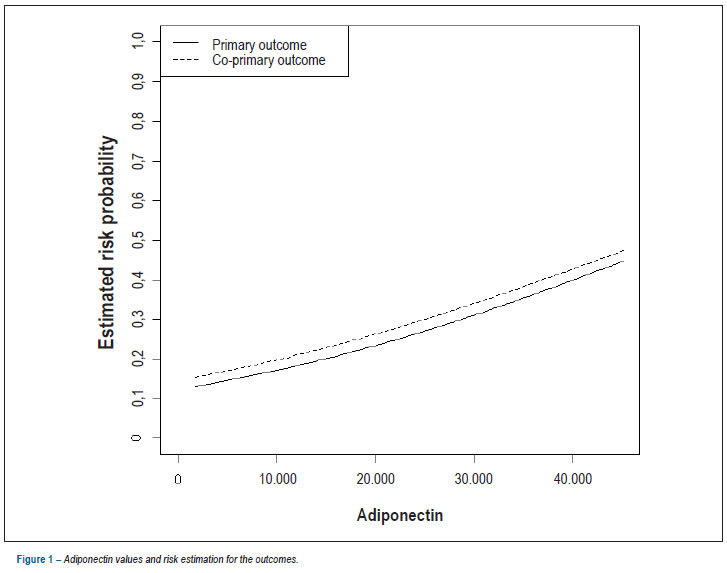
BACKGROUND: The adipose tissue is considered not only a storable energy source, but mainly an endocrine organ that secretes several cytokines. Adiponectin, a novel protein similar to collagen, has been found to be an adipocyte-specific cytokine and a promising cardiovascular risk marker. OBJECTIVES: To evaluate the association between serum adiponectin levels and the risk for cardiovascular events in patients with acute coronary syndromes (ACS), as well as the correlations between adiponectin and metabolic, inflammatory, and myocardial biomarkers. METHODS: We recruited 114 patients with ACS and a mean 1.13-year follow-up to measure clinical outcomes. Clinical characteristics and biomarkers were compared according to adiponectin quartiles. Cox proportional hazard regression models with Firth’s penalization were applied to assess the independent association between adiponectin and the subsequent risk for both primary (composite of cardiovascular death/non-fatal acute myocardial infarction (AMI)/non-fatal stroke) and co-primary outcomes (composite of cardiovascular death/non-fatal AMI/non-fatal stroke/rehospitalization requiring revascularization). RESULTS: There were significant direct correlations between adiponectin and age, HDL-cholesterol, and B-type natriuretic peptide (BNP), and significant inverse correlations between adiponectin and waist circumference, body weight, body mass index, Homeostasis Model Assessment (HOMA) index, triglycerides, and insulin. Adiponectin was associated with higher risk for primary and co-primary outcomes (adjusted HR 1.08 and 1.07/increment of 1000; p = 0.01 and p = 0.02, respectively). CONCLUSION: In ACS patients, serum adiponectin was an independent predictor of cardiovascular events. In addition to the anthropometric and metabolic correlations, there was a significant direct correlation between adiponectin and BNP.

  • Acute coronary syndrome
  • Adiponectin
  • Insulin Resistance
  • Metabolic Syndrome X
  • Risk Factors
Read Full Article
Creative Commons Attribution (CC BY) Creative Commons license
13/09/2013 DOI: 10.5935/abc.20130186 Views 1
ABC
Artigo Original

Lipid profile, cardiovascular risk factors and metabolic syndrome in a group of AIDS patients

Érika Ferrari Rafael da Silva et al. Katia Cristina Bassichetto David Salomão Lewi

BACKGROUND: Since the advent of AIDS, the anti-HIV therapy has developed significantly, including the highly active antiretroviral therapy (HAART) and the disease acquired a chronic characteristic. However, after the introduction of HAART, several metabolic alterations were observed, mainly related to the lipid profile. OBJECTIVES: to evaluate and compare lipid profiles, analyze cardiovascular risk, describe the prevalence of metabolic syndrome in AIDS patients with or without HAART. METHODS: Over an 18-month period, 319 patients treated at outpatient clinics in the city of São Paulo, Brazil were selected. RESULTS: The final sample included 215 patients receiving HAART and 69 HAART-naive patients. The mean age was 39.5 years, and 60.9% were males. The main cardiovascular risk factors were smoking (27%), hypertension (18%) and family history of atherosclerosis (40%). Mean total cholesterol, HDL-cholesterol, triglycerides and glucose were higher in the HAART group than in the non-HAART group (205 vs 180 mg/dl, 51 vs 43 mg/dl, 219 vs 164 mg/dl and 101 vs 93 mg/dl respectively; p < 0.001 for all). According to the Framingham risk score, the cardiovascular risk was moderate to high in 11% of the patients receiving HAART and 4% of the HAART-naïve patients. According to the Adult Treatment Panel III definition, the metabolic syndrome was observed in 13% and 12% of the patients with or without HAART, respectively. CONCLUSIONS: Although the mean values for total cholesterol, HDL-c and triglycerides were higher in the HAART group, a higher cardiovascular risk was not identified in the former. The prevalence of metabolic syndrome was comparable in both groups.

  • Cardiovascular disease
  • highly active antiretroviral therapy
  • Lipid Metabolism Disorders
  • Metabolic Syndrome X
Read Full Article
Creative Commons Attribution (CC BY) Creative Commons license
13/10/2009 DOI: 10.1590/S0066-782X2009000800008 Views 1

How to cite this article

EndNote RIS

Electronic Document Format (Vancouver)

Motta SB, Toledes VC, Franzoni L. Statin Associated With Physical Training: A Perfect Combination. Arquivos Brasileiros de Cardiologia 2021;117(2):279-80.

Electronic Document Format (ABNT)

Motta, Stephanie Bastos da; Toledes, Vanessa Caroline; Franzoni, Leandro. Statin Associated With Physical Training: A Perfect Combination. Arquivos Brasileiros de Cardiologia, v. 117, n. 2, p. 279-280, Sep. 2021.

Electronic Document Format (APA)

Motta, S. B. , Toledes, V. C., & Franzoni, L. (2021). Statin Associated With Physical Training: A Perfect Combination. Arquivos Brasileiros de Cardiologia, 117(2), 279-280.

Electronic Document Format (ISO)

Motta, Stephanie Bastos da and Toledes, Vanessa Caroline and Franzoni, Leandro. Statin Associated With Physical Training: A Perfect Combination. Arquivos Brasileiros de Cardiologia [online]. 2021, vol. 117, n. 2, [cited 2026-10-14], pp. 279-280. Available from: <https://journals.cardiol.br/en/article/statin-associated-with-physical-training-a-perfect-combination/>. ISSN 0066-782X

EndNote RIS

Electronic Document Format (Vancouver)

Rey HCV. The Importance of Recognizing the Co-Occurrence of Cardiometabolic Risk Factors in the Population to Establish Priorities in Public Policies. Arquivos Brasileiros de Cardiologia 2021;117(1):49-50.

Electronic Document Format (ABNT)

Rey, Helena Cramer Veiga. The Importance of Recognizing the Co-Occurrence of Cardiometabolic Risk Factors in the Population to Establish Priorities in Public Policies. Arquivos Brasileiros de Cardiologia, v. 117, n. 1, p. 49-50, Jul. 2021.

Electronic Document Format (APA)

Rey, H. C. V. (2021). The Importance of Recognizing the Co-Occurrence of Cardiometabolic Risk Factors in the Population to Establish Priorities in Public Policies. Arquivos Brasileiros de Cardiologia, 117(1), 49-50.

Electronic Document Format (ISO)

Rey, Helena Cramer Veiga. The Importance of Recognizing the Co-Occurrence of Cardiometabolic Risk Factors in the Population to Establish Priorities in Public Policies. Arquivos Brasileiros de Cardiologia [online]. 2021, vol. 117, n. 1, [cited 2026-10-14], pp. 49-50. Available from: <https://journals.cardiol.br/en/article/the-importance-of-recognizing-the-co-occurrence-of-cardiometabolic-risk-factors-in-the-population-to-establish-priorities-in-public-policies/>. ISSN 0066-782X

EndNote RIS

Electronic Document Format (Vancouver)

Moura RSSS, Vasconcelos DF, Freitas E, Moura FJD, Rosa TT, Veiga JPR. Cystatin C, CRP, log TG/HDLc and metabolic syndrome are associated with microalbuminuria in hypertension. Arquivos Brasileiros de Cardiologia 2013;102(1):54-9.

Electronic Document Format (ABNT)

Moura, Rafaela do Socorro Souza e Silva; Vasconcelos, Daniel França; Freitas, Eduardo; Moura, Flavio José Dutra de; Rosa, Tânia Torres; Veiga, Joel Paulo Russomano. Cystatin C, CRP, log TG/HDLc and metabolic syndrome are associated with microalbuminuria in hypertension. Arquivos Brasileiros de Cardiologia, v. 102, n. 1, p. 54-59, Oct. 2013.

Electronic Document Format (APA)

Moura, R. S. S. S., Vasconcelos, D. F., Freitas, E., Moura, F. J. D. , Rosa, T. T., & Veiga, J. P. R. (2013). Cystatin C, CRP, log TG/HDLc and metabolic syndrome are associated with microalbuminuria in hypertension. Arquivos Brasileiros de Cardiologia, 102(1), 54-59.

Electronic Document Format (ISO)

Moura, Rafaela do Socorro Souza e Silva and Vasconcelos, Daniel França and Freitas, Eduardo and Moura, Flavio José Dutra de and Rosa, Tânia Torres and Veiga, Joel Paulo Russomano. Cystatin C, CRP, log TG/HDLc and metabolic syndrome are associated with microalbuminuria in hypertension. Arquivos Brasileiros de Cardiologia [online]. 2013, vol. 102, n. 1, [cited 2026-10-14], pp. 54-59. Available from: <https://journals.cardiol.br/en/article/cystatin-c-crp-log-tg-hdlc-and-metabolic-syndrome-are-associated-with-microalbuminuria-in-hypertension/>. ISSN 0066-782X

EndNote RIS

Electronic Document Format (Vancouver)

Oliveira GBF, França JD, Piegas LS. Serum adiponectin and cardiometabolic risk in patients with acute coronary syndromes. Arquivos Brasileiros de Cardiologia 2013;101(5):399-40.

Electronic Document Format (ABNT)

Oliveira, Gustavo Bernardes de Figueiredo; França, João Ítalo Dias; Piegas, Leopoldo Soares. Serum adiponectin and cardiometabolic risk in patients with acute coronary syndromes. Arquivos Brasileiros de Cardiologia, v. 101, n. 5, p. 399-409, Sep. 2013.

Electronic Document Format (APA)

Oliveira, G. B. F., França, J. D., & Piegas, L. S. (2013). Serum adiponectin and cardiometabolic risk in patients with acute coronary syndromes. Arquivos Brasileiros de Cardiologia, 101(5), 399-409.

Electronic Document Format (ISO)

Oliveira, Gustavo Bernardes de Figueiredo and França, João Ítalo Dias and Piegas, Leopoldo Soares. Serum adiponectin and cardiometabolic risk in patients with acute coronary syndromes. Arquivos Brasileiros de Cardiologia [online]. 2013, vol. 101, n. 5, [cited 2026-10-14], pp. 399-409. Available from: <https://journals.cardiol.br/en/article/serum-adiponectin-and-cardiometabolic-risk-in-patients-with-acute-coronary-syndromes/>. ISSN 0066-782X

EndNote RIS

Electronic Document Format (Vancouver)

Silva FR, Bassichetto KC, Lewi DS. Lipid profile, cardiovascular risk factors and metabolic syndrome in a group of AIDS patients. Arquivos Brasileiros de Cardiologia 2009;93(2):113-8.

Electronic Document Format (ABNT)

Silva, Érika Ferrari Rafael da; Bassichetto, Katia Cristina; Lewi, David Salomão. Lipid profile, cardiovascular risk factors and metabolic syndrome in a group of AIDS patients. Arquivos Brasileiros de Cardiologia, v. 93, n. 2, p. 113-118, Oct. 2009.

Electronic Document Format (APA)

Silva, F. R. , Bassichetto, K. C., & Lewi, D. S. (2009). Lipid profile, cardiovascular risk factors and metabolic syndrome in a group of AIDS patients. Arquivos Brasileiros de Cardiologia, 93(2), 113-118.

Electronic Document Format (ISO)

Silva, Érika Ferrari Rafael da and Bassichetto, Katia Cristina and Lewi, David Salomão. Lipid profile, cardiovascular risk factors and metabolic syndrome in a group of AIDS patients. Arquivos Brasileiros de Cardiologia [online]. 2009, vol. 93, n. 2, [cited 2026-10-14], pp. 113-118. Available from: <https://journals.cardiol.br/en/article/lipid-profile-cardiovascular-risk-factors-and-metabolic-syndrome-in-a-group-of-aids-patients/>. ISSN 0066-782X

  • About ABC Family
  • Internal Regulation
  • Editorial Board
  • Brazilian Society of Cardiology (SBC)

Issues

SBC Guidelines

  • Videos
  • Podcasts
  • News