ABC Family Arquivos Brasileiros de Cardiologia International Journal of Cardiovascular Sciences ABC Heart Failure & Cardiomyopathy ABC Imagem Cardiovascular
Português English
ABC Family
Português English
  • About
    • About ABC Family
    • Internal Regulation
    • Editorial Board
    • Brazilian Society of Cardiology (SBC)
  • Issues
  • SBC Guidelines
  • Content
    • Videos
    • Podcasts
    • News
  • About
    • About ABC Family
    • Internal Regulation
    • Editorial Board
    • Brazilian Society of Cardiology (SBC)
  • Issues
  • SBC Guidelines
  • Content
    • Videos
    • Podcasts
    • News

ABC Family

  • ABC Family
  • Arquivos Brasileiros de Cardiologia
  • International Journal of Cardiovascular Sciences
  • ABC Heart Failure & Cardiomyopathy
  • ABC Imagem Cardiovascular
Search in

No content found.

Journals
Ordering
Article types
Others

  1. Home
  2. Keyword: Metabolic Diseases
ABC
Letter to the Editor

Analysis of low-density lipoprotein in diabetic patients using the Martin/Hopkins and Sampson equations

Cristian Rodrigues do Nascimento et al. Rodrigo Mendes Carlos Alberto de Lima Botelho Filho Romero Henrique de Almeida Barbosa Pedro Pereira Tenório

Dear Editor,

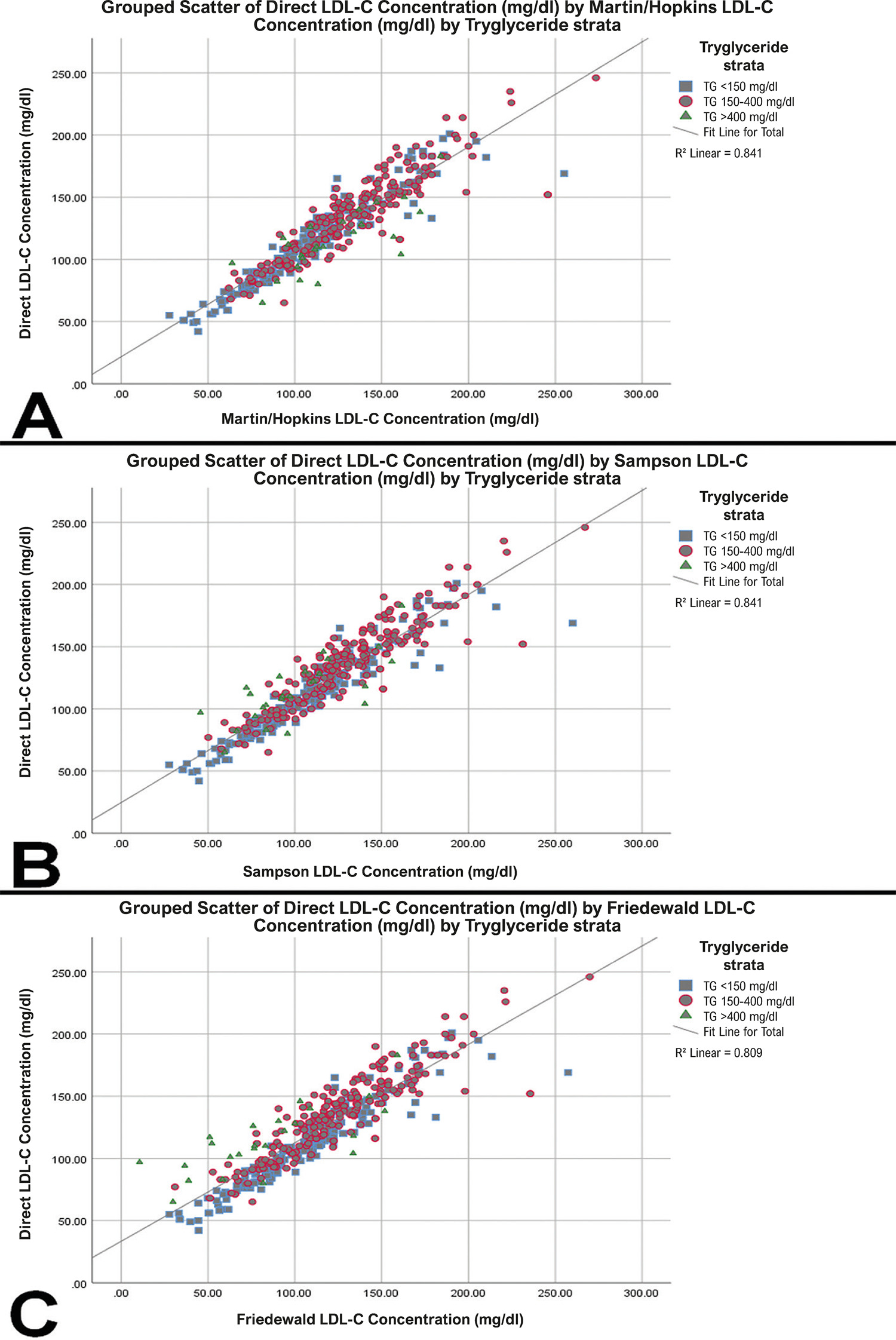
We read with great interest the article: Comparison of Novel Martin/Hopkins and Sampson Equations for Calculation of Low-Density Lipoprotein Cholesterol in Diabetic Patients. The study compared the Martin/Hopkins (LDL-Cmh), Sampson (LDL-Cs), and Friedewald (LDL-Cf) equations with directly obtained low-density lipoprotein (LDL-Cd). The aim was to analyze which would have a greater agreement with LDL-Cd in diabetic patients and investigate how these new equations could change clinical decision-making compared to LDL-Cf.

[…]

  • Coronary Artery Disease
  • Diabetes Mellitus
  • dyslipidemia
  • Lipoprotein LDL
  • Metabolic Diseases
Read Full Article
Creative Commons Attribution (CC BY) Creative Commons license
26/05/2023 DOI: 10.36660/abc.20220859 Views 1
Figure 1
ABC
Original Article

Comparison of Novel Martin/Hopkins and Sampson Equations for Calculation of Low-Density Lipoprotein Cholesterol in Diabetic Patients

Abdulrahman Naser et al. Khagani Isgandarov Tolga Sinan Güvenç Rengin Çetin Güvenç Müslüm Şahin

Abstract

Background

The accurate determination of low-density lipoprotein cholesterol (LDL-C) is important to reach guideline-recommended LDL-C concentrations and to reduce adverse cardiovascular outcomes in diabetic patients. The commonly used Friedewald equation (LDL-Cf), gives inaccurate results in diabetic patients due to accompanying diabetic dyslipidemia. Recently two new equations – Martin/Hopkins (LDL-Cmh) and Sampson (LDL-Cs) – were developed to improve the accuracy of LDL-C estimation, but data are insufficient to suggest the superiority of one equation over the other one.

Objective

The present study compared the accuracy and clinical usefulness of novel Martin/Hopkins and Sampson equations in diabetic patients.

Methods

This study included 402 patients with diabetes. Patients’ cardiovascular risk and LDL-C targets were calculated per European guidelines. Calculated LDL-Cmh, LDL-Cs, and LDL-Cf concentrations were compared with direct LDL-C concentration (LDL-Cd) to test agreement between these equations and LDL-Cd. A p-value <0.05 was accepted as statistically significant.

Results

Both LDL-Cmh and LDL-Cs had a better agreement with LDL-Cd as compared to LDL-Cf, but no statistical differences were found among novel equations for agreement with LDL-Cd (Cronbach’s alpha 0.955 for both, p=1). Likewise, LDL-Cmh and LDL-Cs showed a similar degree of agreement with LDL-Cd in determining whether a patient was in a guideline-recommended LDL-C target (96.3% for LDL-Cmh and 96.0% for LDL-Cs), which were marginally better than LDL-Cf (94.6%). In patients with a triglyceride concentration >400 mg/dl, agreement with LDL-Cd was poor, regardless of the method used.

Conclusion

Martin/Hopkins and Sampson’s equations show a similar accuracy for calculating LDL-C concentrations in patients with diabetes, and both equations were marginally better than the Friedewald equation.
  • Atherosclerosis, Dyslipidemias
  • Cholesterol, LDL
  • Coronary Artery Disease
  • Diabetes Mellitus
  • Lipoproteins, LDL
  • Metabolic Diseases
Read Full Article
Creative Commons Attribution (CC BY) Creative Commons license
27/06/2022 DOI: 10.36660/abc.20210641 Views 2
ABC
Editorial

Is Adolescents' Cardiometabolic Health Affected by Prolonged Periods of Inactivity?

Andrea Wendt

The current literature regarding physical activity (PA) and sedentary behavior (SB) highlights the negative effect of considerable amounts of time spent in activities such as sitting, TV viewing, computer use, and some work and study activities on cardiovascular health. SB may be defined as any waking behavior characterized by an energy expenditure ≤ 1.5 metabolic equivalents while in a sitting, reclining, or lying posture., Thus, SB is not the absence or low level of PA, but it can coexist with it. In this sense, a recent review showed an interaction between SB and PA, providing evidence that individuals with higher time spent in SB presented a higher risk of cardiovascular mortality. However, estimates have been less consistent in individuals with higher PA levels.

The literature cites a series of possible mechanisms for SB effects, independent of PA, on metabolic and cardiovascular outcomes. One of these mechanisms is the decrease in enzymatic activity responsible for HDL production and the capture of triglycerides in the blood chain due to sustained inactivity in sitting, reclining, or lying posture. In this regard, strategies reducing the time spent in SB or interrupting sustained inactivity have been studied. Some of these approaches focus on standing up for a while or a short period of movement between periods of sitting time (breaks in SB). A meta-analysis with adults found a positive effect of breaks in SB on adiposity control and glycemia. In addition, an experimental study showed that 1-to-2–minute breaks in sedentary work activities every half an hour resulted in small-to-moderate declines in total cholesterol, triglycerides, and fasting blood glucose.

[…]

  • Adolescent, Cholesterol
  • body mass index
  • Cardiovascular Diseases/physiopathology
  • Epidemiology
  • Metabolic Diseases
  • Motor Activity
  • Sedentarism
  • Triglycerides
Read Full Article
Creative Commons Attribution (CC BY) Creative Commons license
06/09/2021 DOI: 10.36660/abc.20210479
IJCS
Editorial

A Burden of Physical Inactivity in School-Age Students: The Early Beginning of Cardiometabolic Risk

Pedro Paulo da Silva Soares et al. Gabriel Dias Rodrigues

It is well-known that sedentarism has a close association with the risk of cardiovascular and metabolic diseases. The physical inactivity lifestyle contributes to the prevalence of obesity and hypertension in children, highlighting a big health problem since most individuals who were hypertensive and obese in childhood/adolescence become hypertensive and obese adults. On the other hand, physical exercise is a frontline non-pharmacological strategy to control and treat hypertension, as well as to prevent obesity, which should be encouraged among children/adolescents to reduce cardiometabolic risk in adulthood. In this context, the mapping of risk factors associated with hypertension at the early age should be considered a primary step to plan public policies for disease prevention and health promotion, reducing the burden on healthcare resources. Both obesity and high blood pressure have multifactorial causes, among them low levels of physical activity in adults, children, and adolescents. It is of utmost relevance to investigate the prevalence of physical activity levels in scholars, mainly in a country such as Brazil, with enormous disparities among regions.

In the current issue of the International Journal of Cardiovascular Sciences, Azevêdo et al. investigated physical activity levels, as well as the anthropometric and cardiovascular profile in school-age students attending public schools in the state of Sergipe, northeast of Brazil. The study reported high rates of physical inactivity for both boys and girls, and increased blood pressure in overweight school-age students. Regarding anthropometric profiles, intriguing data showed a high prevalence of low body weight in the age group from 16 to 17 years for both sexes. In contrast, a previous study found a high prevalence of overweight/obesity in school-age students in a city of the Brazilian South region, suggesting a discrepancy between the Brazilian South and Northeast regions that must be considered for Brazilian public policies in health promoting at the primary care level. From a practical perspective, physical education classes, as well as the public schools’ pedagogic programs, must work together for health promoting and health education, and physical activity should be encouraged to prevent cardiovascular risk starting from childhood to adult life.

[…]

  • Adolecents
  • Exercise
  • Metabolic Diseases
  • Physical activity
  • Public Health
  • Risk Factors
  • Sedentarism
  • students
Read Full Article
Creative Commons Attribution (CC BY) Creative Commons license
03/05/2021 DOI: 10.36660/ijcs.20210100 Views 2
ABC
Editorial

A New Rodent Model of Non-Alcoholic Steatohepatitis and Metabolic Syndrome

Fernando Gomes Romeiro et al. Lívia Alves Amaral Santos

Obesity is markedly linked to an increased risk of all-cause mortality and its prevalence has risen to unacceptable levels in the developed world., Obesity and insulin resistance compose the core of most cases of metabolic syndrome (MS), which is a group of conditions and traits associated with an increased risk of cardiovascular disease and diabetes (approximately 2-fold and 5-fold, respectively). Non-alcoholic fatty liver disease (NAFLD) is the hepatic manifestation of MS and has gained attention not only for obesity-related disorders but also for the progression to non-alcoholic steatohepatitis (NASH), liver cirrhosis, and hepatocellular carcinoma. Similar to the other metabolic components involved in MS, NAFLD treatment is based on lifestyle changes that are difficult to achieve in clinical trials, making preclinical studies an excellent option to increase the knowledge about the disease and to test the interventions proposed.

However, in vitro models have severe limitations to evaluate the hepatic and extrahepatic findings of human NASH due to its multifactorial etiology. As a result, data obtained from animals are largely assessed, with a growing interest in the development of mice models. Even if many of these models do not develop steatohepatitis as the strict definition applied to human liver tissue, they are still an outstanding source of knowledge about NAFLD and NASH.

[…]

  • Fatty Liver
  • Inflammation
  • Insulin Resistance
  • Liver Disease
  • Metabolic Diseases
  • Obesity
  • Rats
  • Stress, Oxidative
  • Syndrome Metabolic
Read Full Article
Creative Commons Attribution (CC BY) Creative Commons license
02/12/2019 DOI: 10.5935/abc.20190219

How to cite this article

EndNote RIS

Electronic Document Format (Vancouver)

Nascimento CR, Mendes R, Botelho Filho CAL, Barbosa RHA, Tenório PP. Analysis of low-density lipoprotein in diabetic patients using the Martin/Hopkins and Sampson equations. Arquivos Brasileiros de Cardiologia 2023;120(5):e20220859.

Electronic Document Format (ABNT)

Nascimento, Cristian Rodrigues do; Mendes, Rodrigo; Botelho Filho, Carlos Alberto de Lima; Barbosa, Romero Henrique de Almeida; Tenório, Pedro Pereira. Analysis of low-density lipoprotein in diabetic patients using the Martin/Hopkins and Sampson equations. Arquivos Brasileiros de Cardiologia, v. 120, n. 5, e20220859, May. 2023.

Electronic Document Format (APA)

Nascimento, C. R. , Mendes, R., Botelho Filho, C. A. L., Barbosa, R. H. A., & Tenório, P. P. (2023). Analysis of low-density lipoprotein in diabetic patients using the Martin/Hopkins and Sampson equations. Arquivos Brasileiros de Cardiologia, 120(5), e20220859.

Electronic Document Format (ISO)

Nascimento, Cristian Rodrigues do and Mendes, Rodrigo and Botelho Filho, Carlos Alberto de Lima and Barbosa, Romero Henrique de Almeida and Tenório, Pedro Pereira. Analysis of low-density lipoprotein in diabetic patients using the Martin/Hopkins and Sampson equations. Arquivos Brasileiros de Cardiologia [online]. 2023, vol. 120, n. 5, [cited 2026-10-15], e20220859. Available from: <https://journals.cardiol.br/en/article/analysis-of-low-density-lipoprotein-in-diabetic-patients-using-the-martin-hopkins-and-sampson-equations/>. ISSN 0066-782X

EndNote RIS

Electronic Document Format (Vancouver)

Naser A, Isgandarov K, Güvenç TS, Güvenç R, Şahin M. Comparison of Novel Martin/Hopkins and Sampson Equations for Calculation of Low-Density Lipoprotein Cholesterol in Diabetic Patients. Arquivos Brasileiros de Cardiologia 2022;119(2):225-33.

Electronic Document Format (ABNT)

Naser, Abdulrahman; Isgandarov, Khagani; Güvenç, Tolga Sinan; Güvenç, Rengin Çetin; Şahin, Müslüm. Comparison of Novel Martin/Hopkins and Sampson Equations for Calculation of Low-Density Lipoprotein Cholesterol in Diabetic Patients. Arquivos Brasileiros de Cardiologia, v. 119, n. 2, p. 225-233, Jun. 2022.

Electronic Document Format (APA)

Naser, A., Isgandarov, K., Güvenç, T. S., Güvenç, R. , & Şahin, M. (2022). Comparison of Novel Martin/Hopkins and Sampson Equations for Calculation of Low-Density Lipoprotein Cholesterol in Diabetic Patients. Arquivos Brasileiros de Cardiologia, 119(2), 225-233.

Electronic Document Format (ISO)

Naser, Abdulrahman and Isgandarov, Khagani and Güvenç, Tolga Sinan and Güvenç, Rengin Çetin and Şahin, Müslüm. Comparison of Novel Martin/Hopkins and Sampson Equations for Calculation of Low-Density Lipoprotein Cholesterol in Diabetic Patients. Arquivos Brasileiros de Cardiologia [online]. 2022, vol. 119, n. 2, [cited 2026-10-15], pp. 225-233. Available from: <https://journals.cardiol.br/en/article/comparison-of-novel-martin-hopkins-and-sampson-equations-for-calculation-of-low-density-lipoprotein-cholesterol-in-diabetic-patients/>. ISSN 0066-782X

EndNote RIS

Electronic Document Format (Vancouver)

Wendt A. Is Adolescents’ Cardiometabolic Health Affected by Prolonged Periods of Inactivity?. Arquivos Brasileiros de Cardiologia 2021;117(2):363-4.

Electronic Document Format (ABNT)

Wendt, Andrea. Is Adolescents’ Cardiometabolic Health Affected by Prolonged Periods of Inactivity?. Arquivos Brasileiros de Cardiologia, v. 117, n. 2, p. 363-364, Sep. 2021.

Electronic Document Format (APA)

Wendt, A. (2021). Is Adolescents’ Cardiometabolic Health Affected by Prolonged Periods of Inactivity?. Arquivos Brasileiros de Cardiologia, 117(2), 363-364.

Electronic Document Format (ISO)

Wendt, Andrea. Is Adolescents’ Cardiometabolic Health Affected by Prolonged Periods of Inactivity?. Arquivos Brasileiros de Cardiologia [online]. 2021, vol. 117, n. 2, [cited 2026-10-15], pp. 363-364. Available from: <https://journals.cardiol.br/en/article/is-adolescents-cardiometabolic-health-affected-by-prolonged-periods-of-inactivity/>. ISSN 0066-782X

EndNote RIS

Electronic Document Format (Vancouver)

Soares PPS, Rodrigues GD. A Burden of Physical Inactivity in School-Age Students: The Early Beginning of Cardiometabolic Risk. International Journal of Cardiovascular Sciences 2021;34(3):262-3.

Electronic Document Format (ABNT)

Soares, Pedro Paulo da Silva; Rodrigues, Gabriel Dias. A Burden of Physical Inactivity in School-Age Students: The Early Beginning of Cardiometabolic Risk. International Journal of Cardiovascular Sciences, v. 34, n. 3, p. 262-263, May. 2021.

Electronic Document Format (APA)

Soares, P. P. S., & Rodrigues, G. D. (2021). A Burden of Physical Inactivity in School-Age Students: The Early Beginning of Cardiometabolic Risk. International Journal of Cardiovascular Sciences, 34(3), 262-263.

Electronic Document Format (ISO)

Soares, Pedro Paulo da Silva and Rodrigues, Gabriel Dias. A Burden of Physical Inactivity in School-Age Students: The Early Beginning of Cardiometabolic Risk. International Journal of Cardiovascular Sciences [online]. 2021, vol. 34, n. 3, [cited 2026-10-15], pp. 262-263. Available from: <https://journals.cardiol.br/en/article/a-burden-of-physical-inactivity-in-school-age-students-the-early-beginning-of-cardiometabolic-risk/>. ISSN 2359-4802

EndNote RIS

Electronic Document Format (Vancouver)

Romeiro FG, Santos LAA. A New Rodent Model of Non-Alcoholic Steatohepatitis and Metabolic Syndrome. Arquivos Brasileiros de Cardiologia 2019;113(5):903-4.

Electronic Document Format (ABNT)

Romeiro, Fernando Gomes; Santos, Lívia Alves Amaral. A New Rodent Model of Non-Alcoholic Steatohepatitis and Metabolic Syndrome. Arquivos Brasileiros de Cardiologia, v. 113, n. 5, p. 903-904, Dec. 2019.

Electronic Document Format (APA)

Romeiro, F. G., & Santos, L. A. A. (2019). A New Rodent Model of Non-Alcoholic Steatohepatitis and Metabolic Syndrome. Arquivos Brasileiros de Cardiologia, 113(5), 903-904.

Electronic Document Format (ISO)

Romeiro, Fernando Gomes and Santos, Lívia Alves Amaral. A New Rodent Model of Non-Alcoholic Steatohepatitis and Metabolic Syndrome. Arquivos Brasileiros de Cardiologia [online]. 2019, vol. 113, n. 5, [cited 2026-10-15], pp. 903-904. Available from: <https://journals.cardiol.br/en/article/a-new-rodent-model-of-non-alcoholic-steatohepatitis-and-metabolic-syndrome/>. ISSN 0066-782X

  • About ABC Family
  • Internal Regulation
  • Editorial Board
  • Brazilian Society of Cardiology (SBC)

Issues

SBC Guidelines

  • Videos
  • Podcasts
  • News